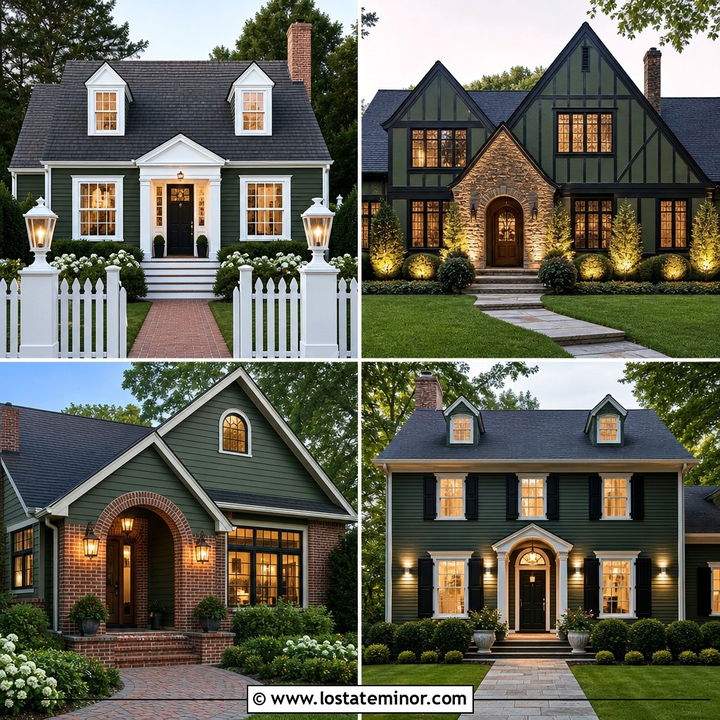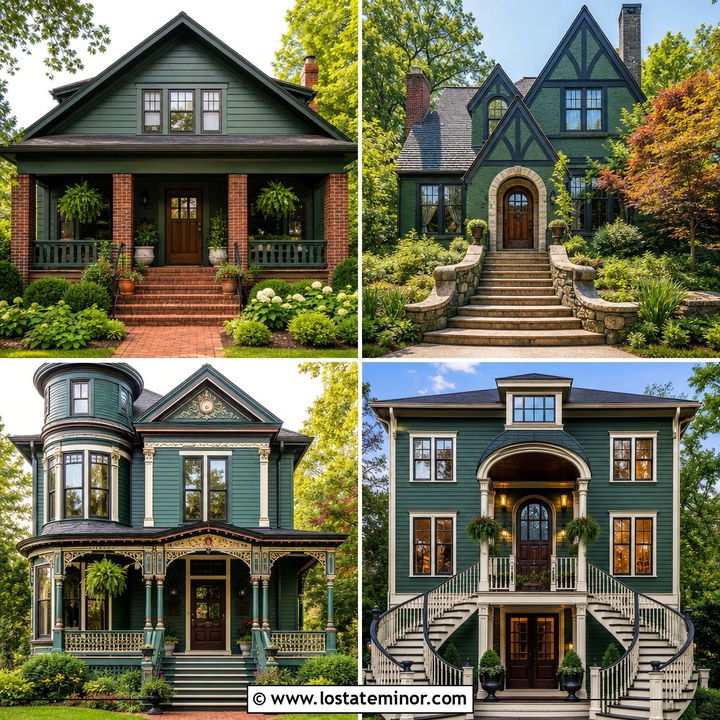
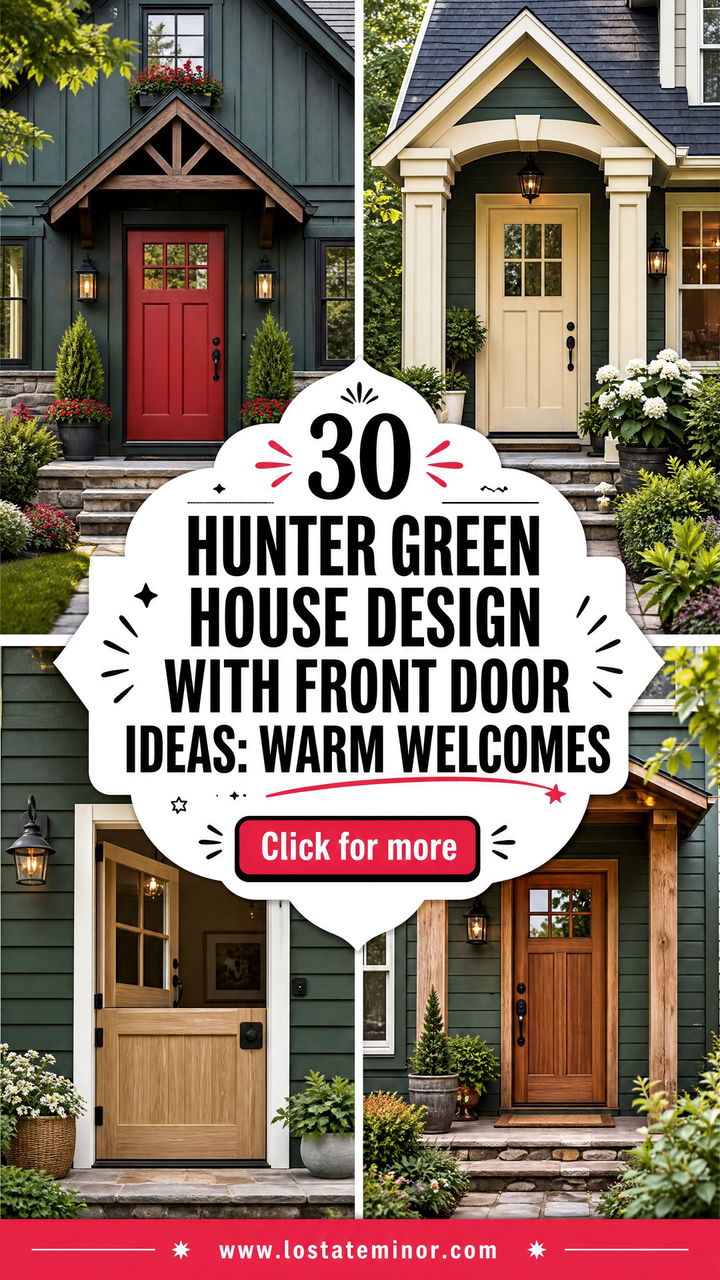
1. Hunter Green House With Natural Wood Front Door
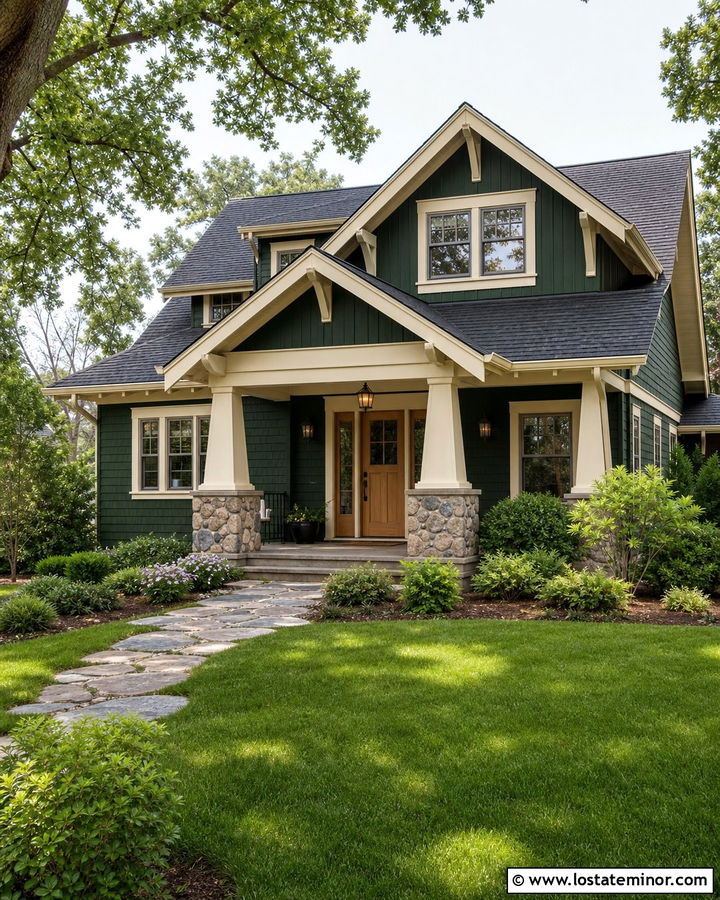
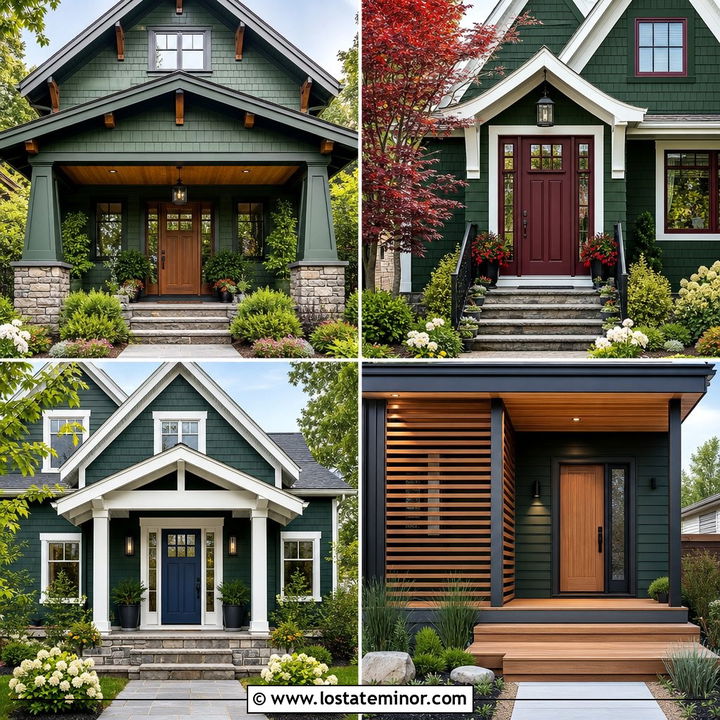
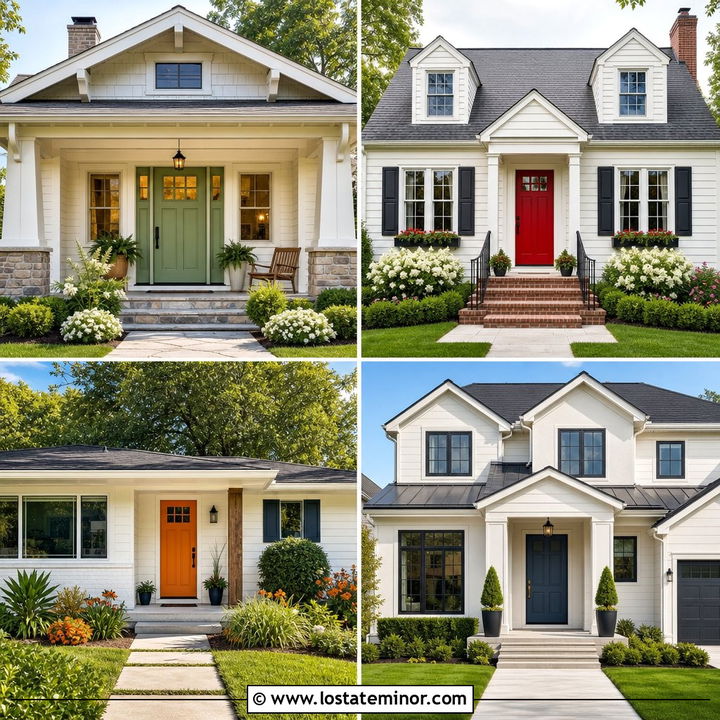
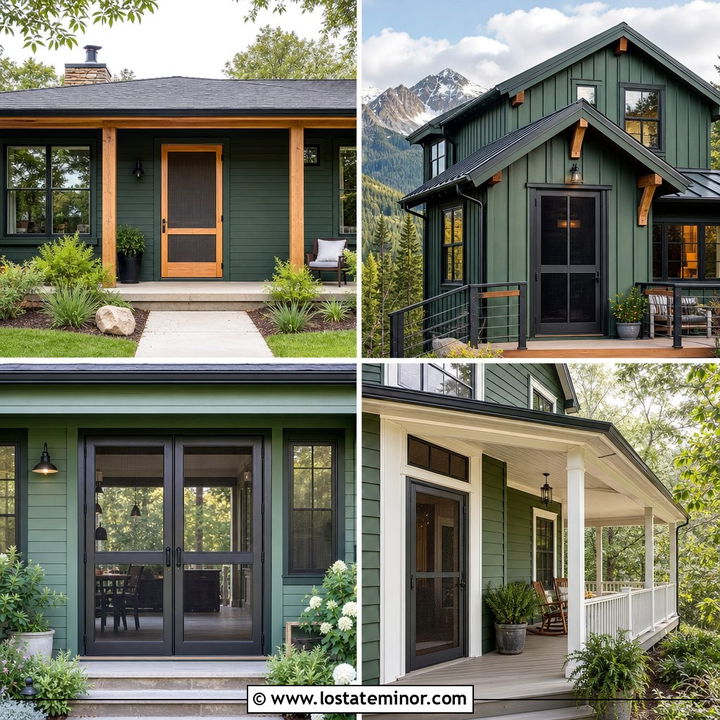
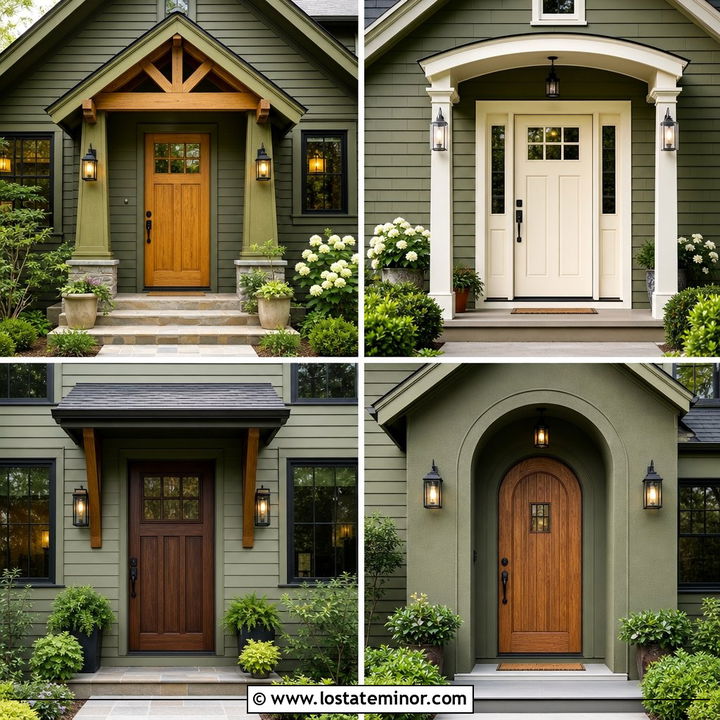
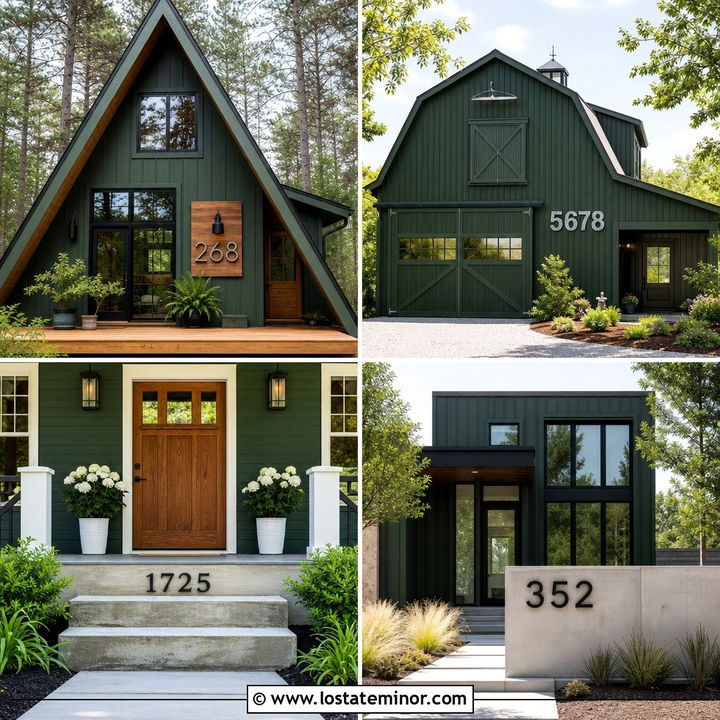
A natural wood front door brings instant warmth to a hunter green house without competing with the rich siding color. This combination feels especially appropriate on a Craftsman home with horizontal lap siding, tapered porch columns, and a low-pitched charcoal roof. Choose medium-toned white oak, cedar, or Douglas fir with a clear protective finish. Warm cream trim softens the contrast around windows, while fieldstone porch piers connect the green and brown tones. Black lanterns and dark bronze hardware add definition without becoming distracting. For a finished curb-appeal look, repeat the door’s wood tone on porch beams, planter boxes, or garage accents. The result feels grounded, welcoming, and connected to mature landscaping.
2. Hunter Green House With Black Front Door
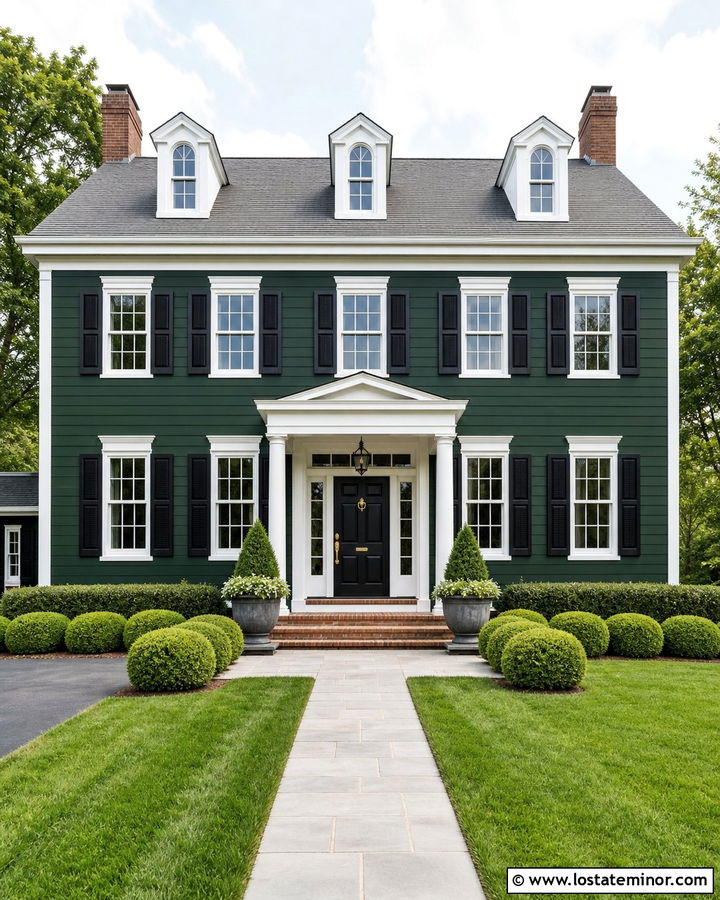
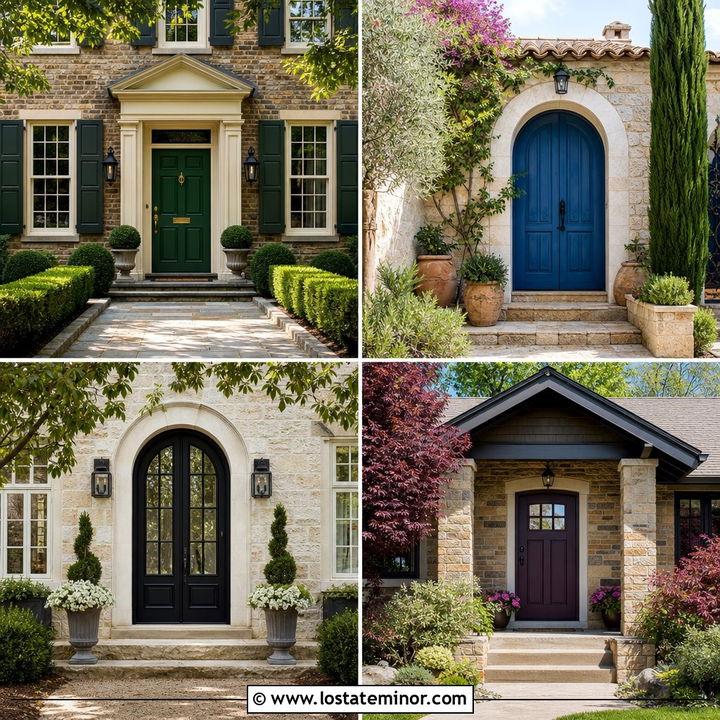
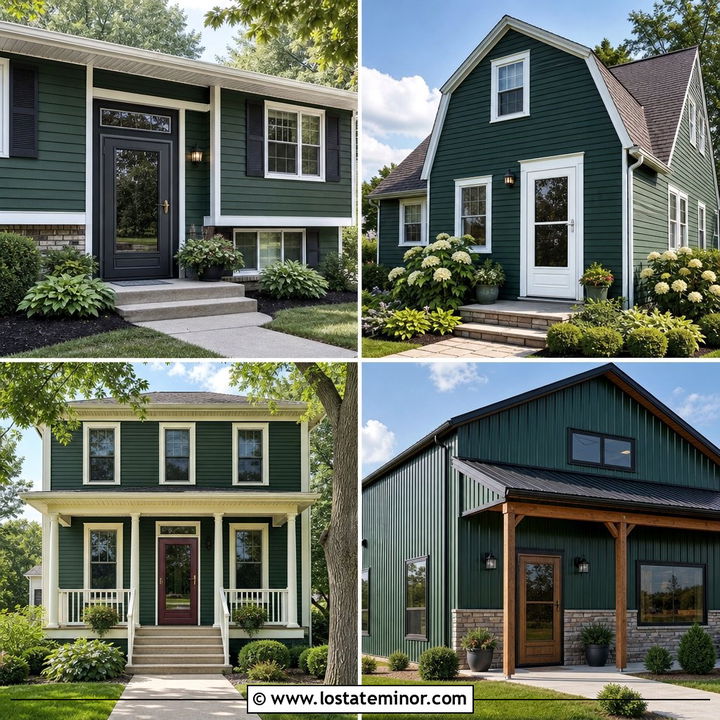
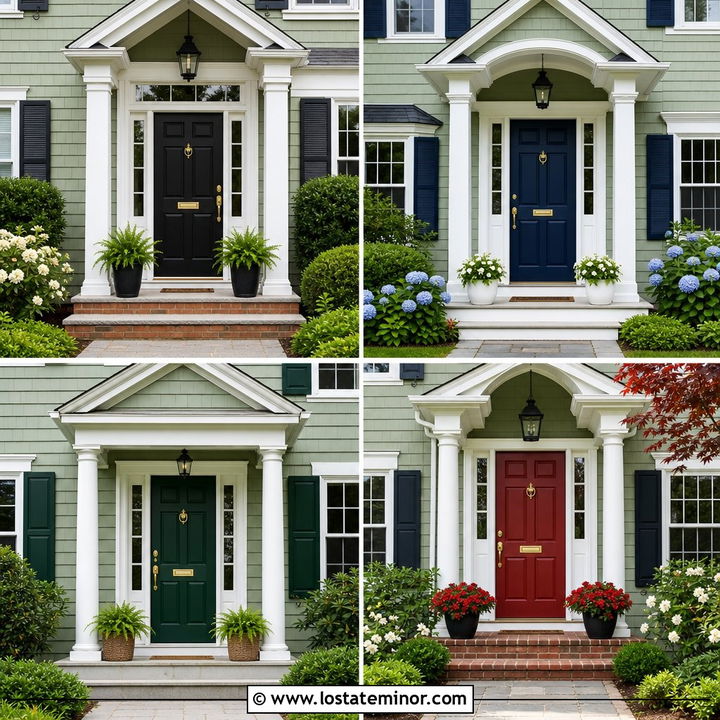
What happens when two deep colors share the same exterior? A black front door can give a hunter green house a polished, dramatic appearance when lighter trim prevents the facade from looking heavy. This scheme suits a symmetrical Colonial with white window trim, black shutters, and a medium-gray architectural shingle roof. Use a clean satin or semigloss finish on the door so it reflects slightly more light than the siding. Polished brass hardware offers a classic touch, while matte black hardware creates a quieter transition. Keep the porch floor natural gray stone or warm brick for added texture. Clipped shrubs, simple planters, and a straight walkway reinforce the orderly architecture and make this dark color pairing feel intentional.
3. Hunter Green House With White Front Door
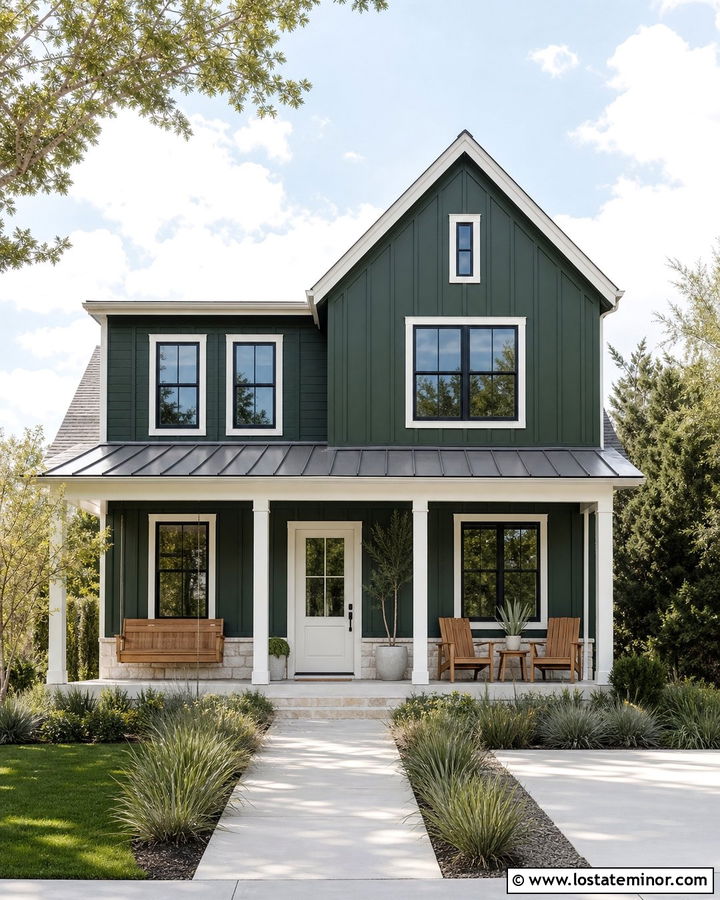
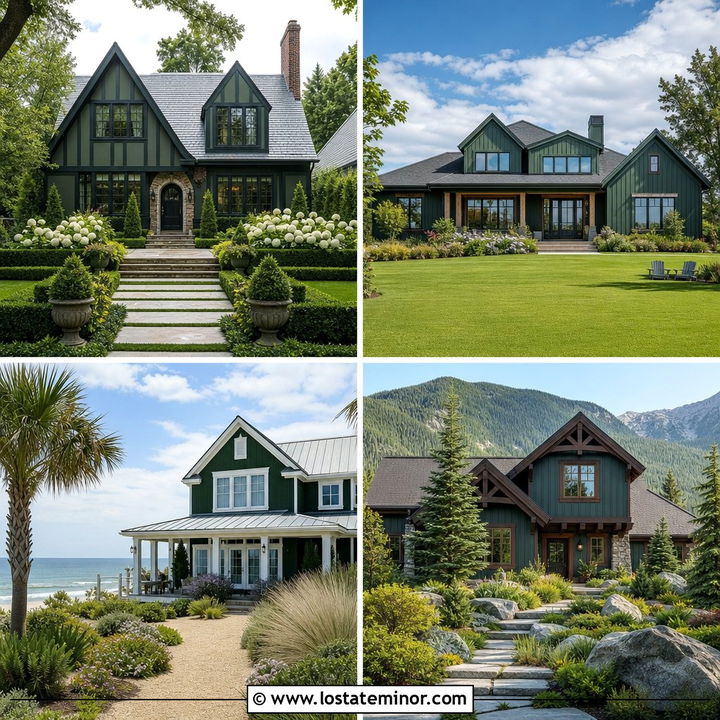
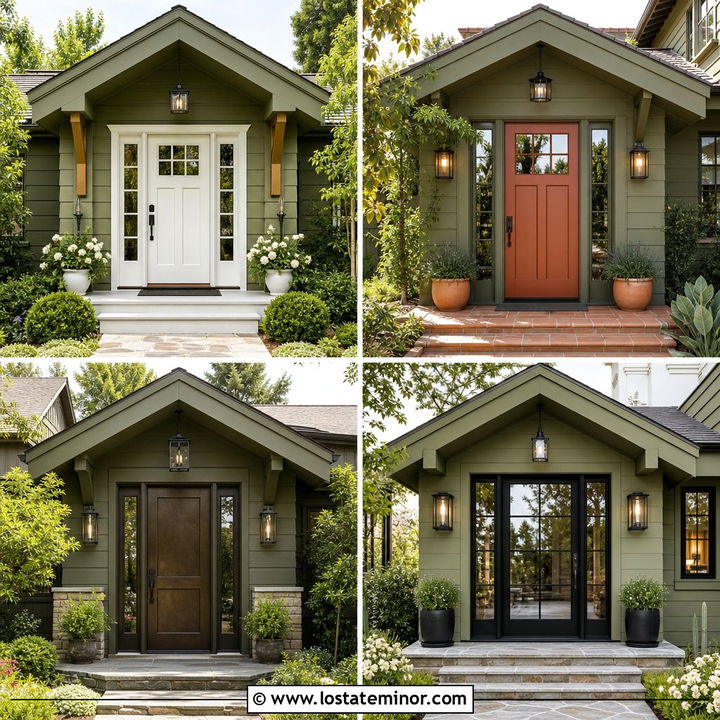
A crisp white front door creates one of the clearest contrasts against hunter green siding. The pairing is bright, familiar, and easy to coordinate with existing white windows or gutters. On a modern farmhouse, use vertical hunter green board-and-batten siding with a white door, white trim, and a light gray metal porch roof. Black sconces and simple black-framed windows keep the exterior from becoming overly traditional. A pale stone foundation can bridge the cool roof and deep green walls. Because white shows dirt more easily, choose a durable exterior finish and keep the surrounding porch materials practical. Natural wood porch furniture and soft ornamental grasses add warmth, creating a balanced farmhouse exterior that feels fresh rather than stark.
4. Hunter Green House With Red Front Door
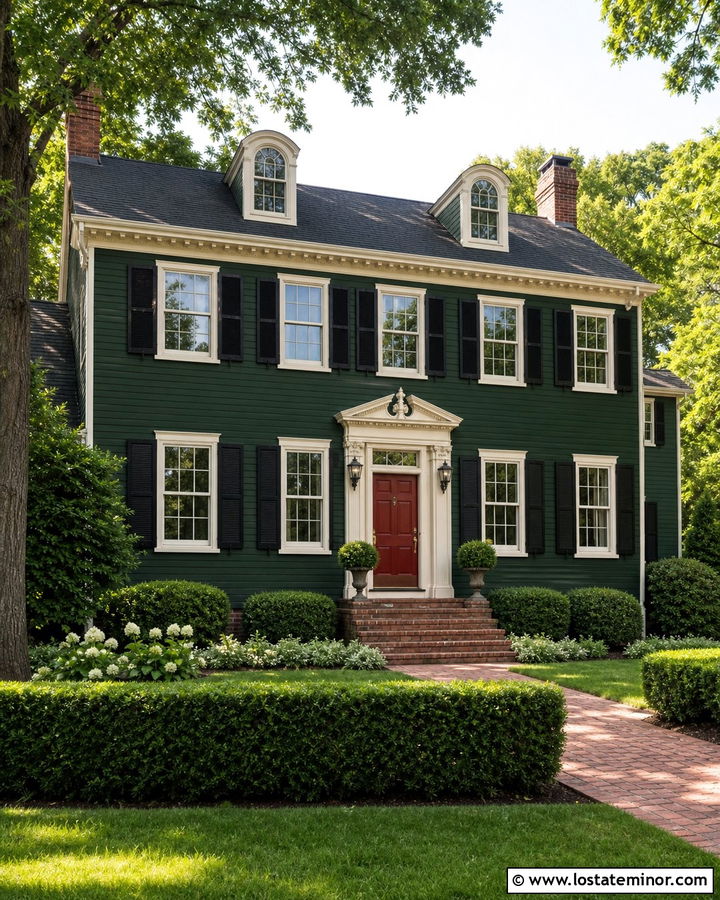
A red front door creates confident contrast, but the exact shade determines whether the exterior looks refined or overly bright. Choose a deep heritage red with brown undertones rather than a vivid primary red. It works beautifully on a hunter green Georgian house with cream trim, red brick steps, and a dark charcoal roof. The brick repeats the warmth of the door, helping the stronger colors feel connected. Use black shutters sparingly and select aged brass door hardware for a traditional finish. Cream-painted columns and window casings provide enough breathing room between the green and red. Mature boxwoods, brick-edged planting beds, and a formal walkway complete this substantial exterior while keeping the color combination elegant throughout the year.
5. Hunter Green House With Navy Blue Front Door
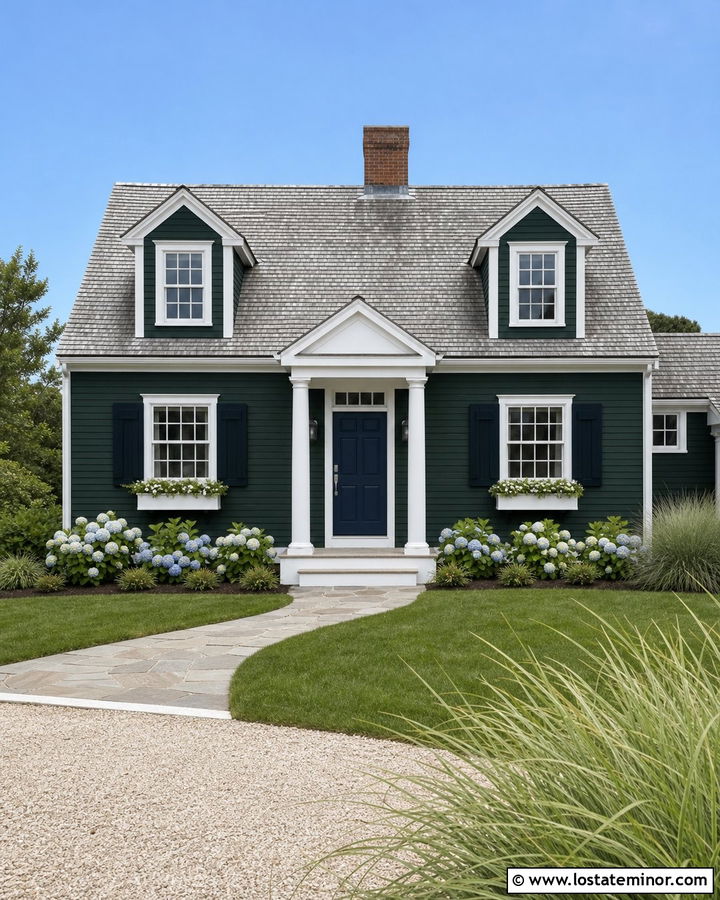
Navy may seem close to hunter green, yet its blue undertone can create subtle depth without a sharp color break. This quieter pairing is ideal for a Cape Cod house with deep green shingles, bright white trim, and a navy front door beneath a simple portico. Add a weathered gray cedar roof or medium-gray shingles to maintain the cool coastal palette. Brushed nickel hardware and clear glass sidelights give the entrance a lighter appearance. White window boxes filled with leafy plants help the siding look lively without introducing unnecessary colors. For better definition, paint the door frame white rather than navy. The finished exterior feels layered, calm, and classic, with enough contrast to make the entrance easy to identify.
6. Hunter Green House With Mustard Yellow Front Door
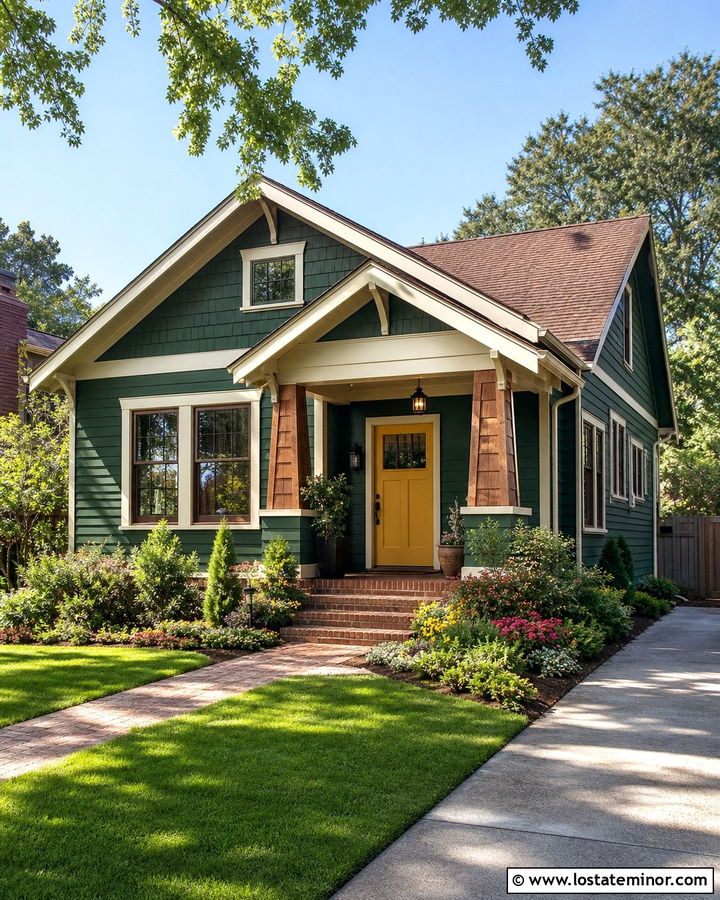
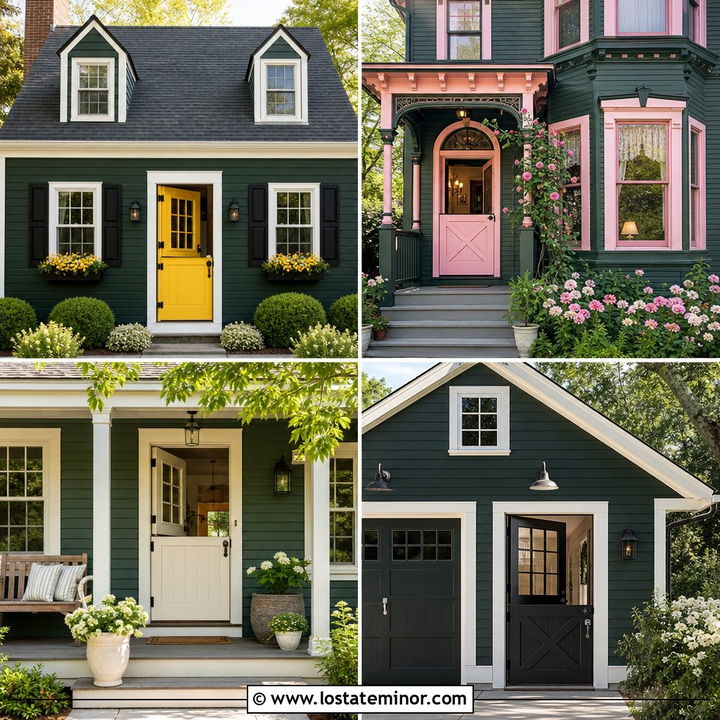
Sunlight seems to gather around a mustard yellow front door, making it a cheerful companion for dark hunter green siding. This look works particularly well on a small bungalow with a deep front porch, exposed rafters, and warm cream trim. Select a muted ochre or mustard shade instead of a sharp lemon yellow. The earthy undertones coordinate more naturally with green, cedar details, and brown roof shingles. Repeat the yellow in small amounts through seasonal flowers rather than additional painted features. A brick walkway, tapered wood columns, and antique bronze hardware support the bungalow’s handcrafted character. The door becomes a lively focal point, while the substantial green body color keeps the overall house grounded and visually balanced.
7. Hunter Green House With Terracotta Front Door
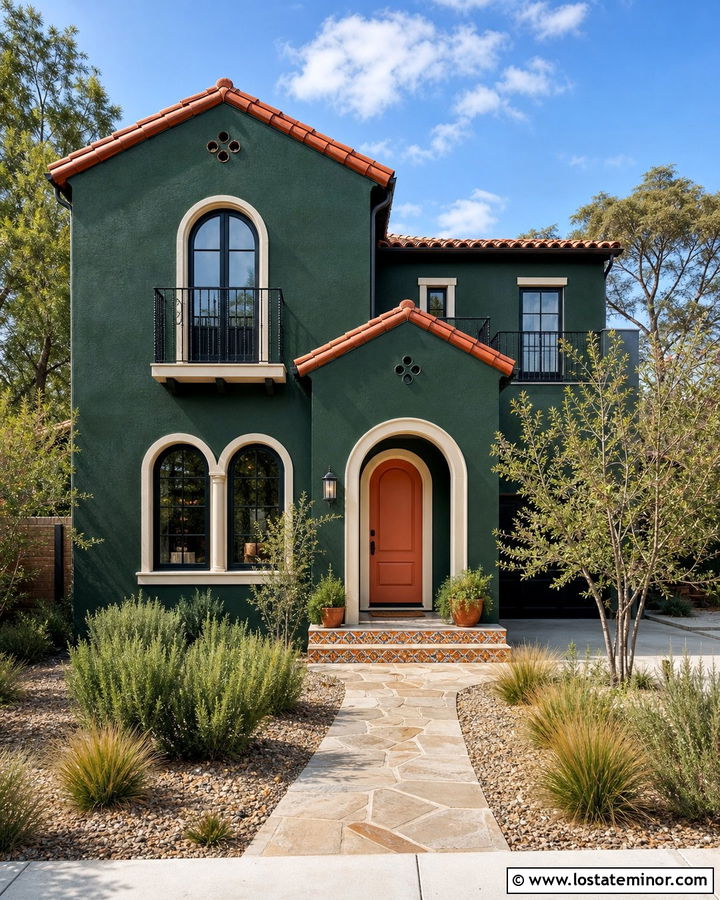
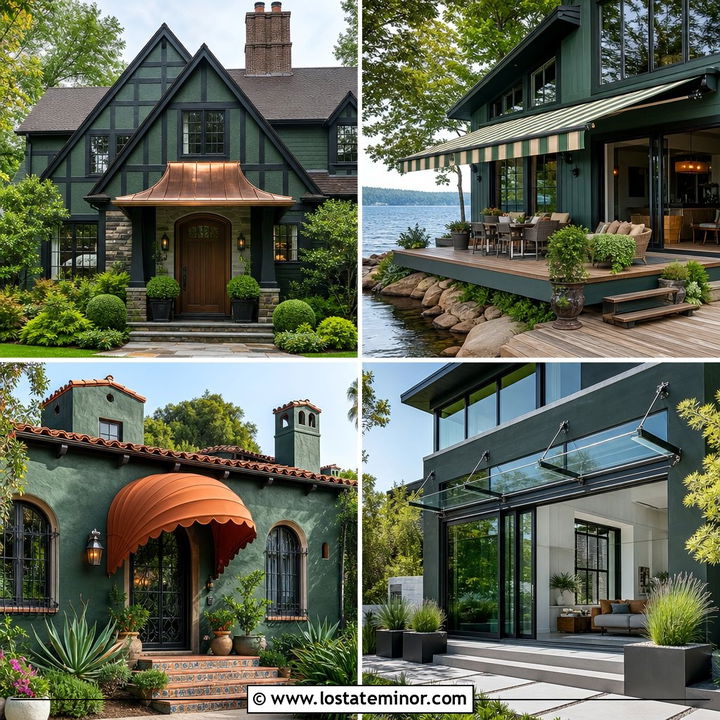
Warm terracotta gives hunter green a sun-baked, earthy contrast that works beyond strictly traditional architecture. On a Spanish Revival house, combine hunter green stucco with a burnt terracotta door, creamy window surrounds, and a clay tile roof. Arched openings and black iron railings add architectural rhythm, while the orange-brown door connects directly to the roof. Keep other painted accents restrained so the two main colors remain clear. A stone or patterned tile entry can introduce texture without adding another dominant hue. Drought-tolerant landscaping, gravel beds, rosemary, and sculptural grasses complement this palette naturally. The completed exterior feels warm and established, with the green walls offering an unexpected update to familiar Mediterranean materials.
8. Hunter Green House With Burgundy Front Door
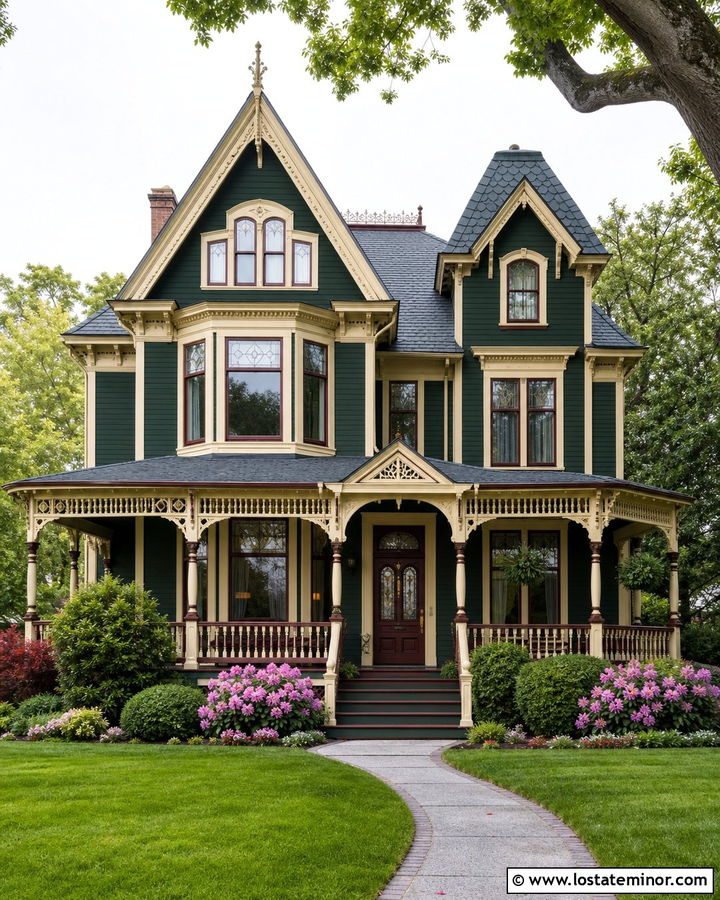
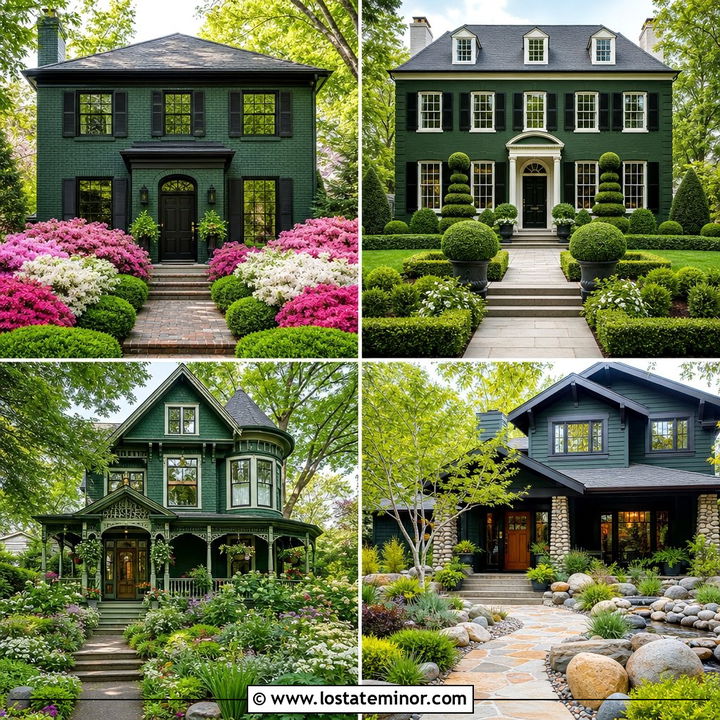
For a richer historic palette, pair hunter green siding with a burgundy front door. The combination is deep and sophisticated, especially on a Victorian house with detailed trim and a tall, narrow facade. Choose warm ivory for window casings, porch spindles, and decorative brackets to separate the dark colors. A charcoal slate roof provides a neutral cap, while burgundy porch accents can repeat the door color in small doses. Avoid using bright red trim, which could make the scheme feel too busy. Antique brass hardware, beveled door glass, and dark wood porch flooring suit the period character. Carefully placed flowering shrubs soften the strong palette and prevent the ornate architecture from becoming visually crowded.
9. Hunter Green House With Teal Front Door
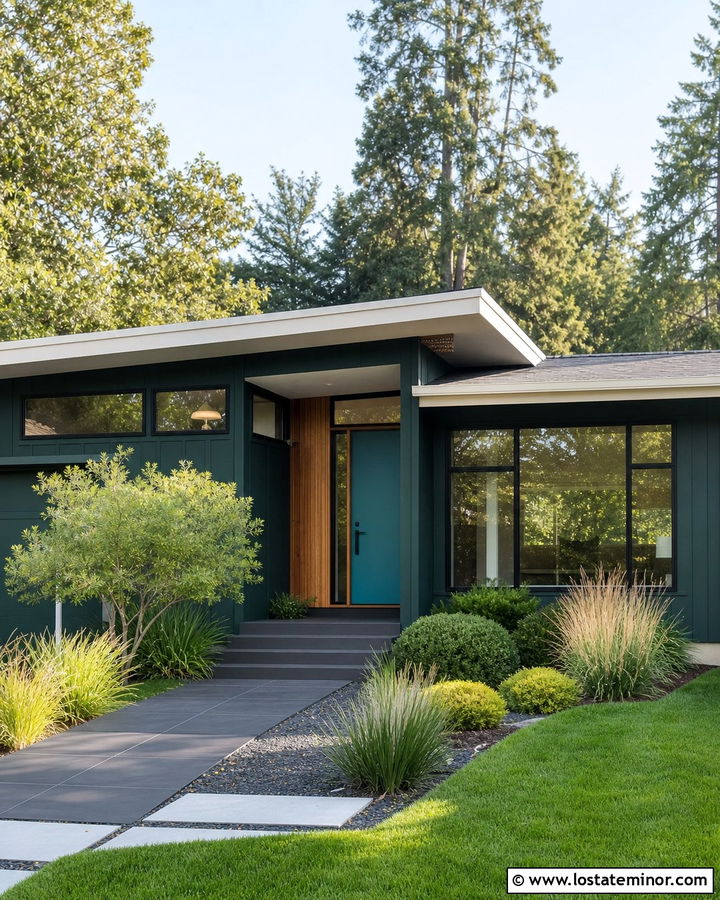
A teal front door can give a hunter green exterior a playful color shift while staying within the green-blue family. Try this combination on a midcentury modern house with low rooflines, wide windows, and simple horizontal siding. Use a medium teal that remains clearly lighter and bluer than the hunter green body. Warm white fascia keeps the roofline crisp, while natural cedar panels around the entry introduce organic contrast. A charcoal front walk and black window frames add clean structure. Keep the landscaping architectural with ornamental grasses, rounded shrubs, and a broad concrete path. The teal door provides personality without overpowering the facade, resulting in a colorful yet controlled update suited to streamlined midcentury forms.
10. Hunter Green House With Charcoal Gray Front Door
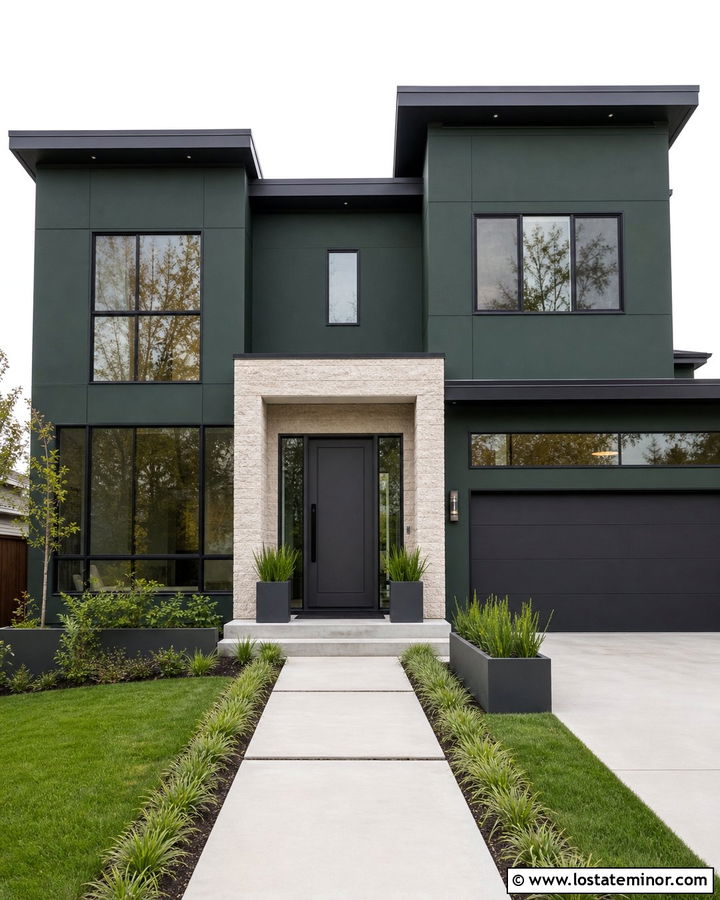
Some homeowners want the entrance defined without turning it into a bright accent. A charcoal gray door offers exactly that effect on a hunter green house. For a contemporary two-story exterior, pair smooth green fiber-cement panels with a charcoal door, black-framed windows, and matching dark roof edges. Light limestone around the entry adds necessary contrast and keeps the composition from appearing flat. Select a charcoal with cool undertones so it feels connected to the green rather than muddy beside it. Stainless steel or matte black hardware maintains the modern direction. A wide concrete walkway, restrained foundation planting, and linear lighting complete the exterior. This scheme looks sophisticated, architectural, and intentionally understated from the street.
11. Hunter Green House With Cream Front Door
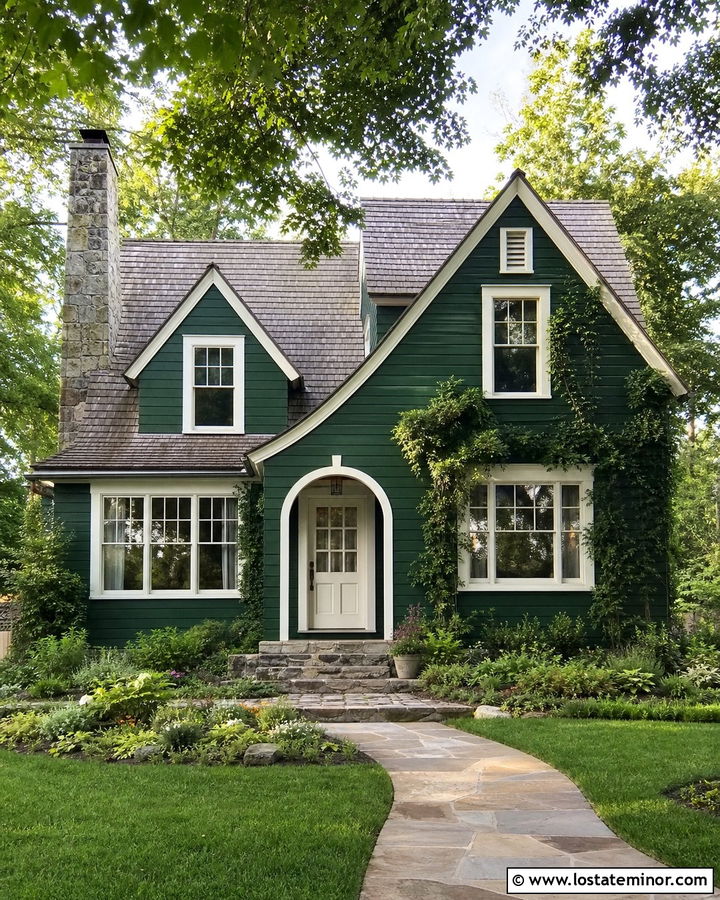
Soft cream provides gentler contrast than bright white, making it a comfortable choice for an older cottage or a house surrounded by lush greenery. Paint the lap siding hunter green, then use a warm cream front door, matching trim, and cream porch columns. A brown-gray shingle roof and stone chimney enhance the natural palette. The cream door should contain enough warmth to coordinate with stone, brick, or aged wood rather than appearing yellow. Dark bronze hardware offers quiet definition. Add a curved flagstone walkway, informal garden beds, and climbing greenery around the porch without covering key architectural details. The finished cottage feels welcoming and relaxed, with the lighter entrance clearly visible against the deep green facade.
12. Hunter Green House With Copper Front Door
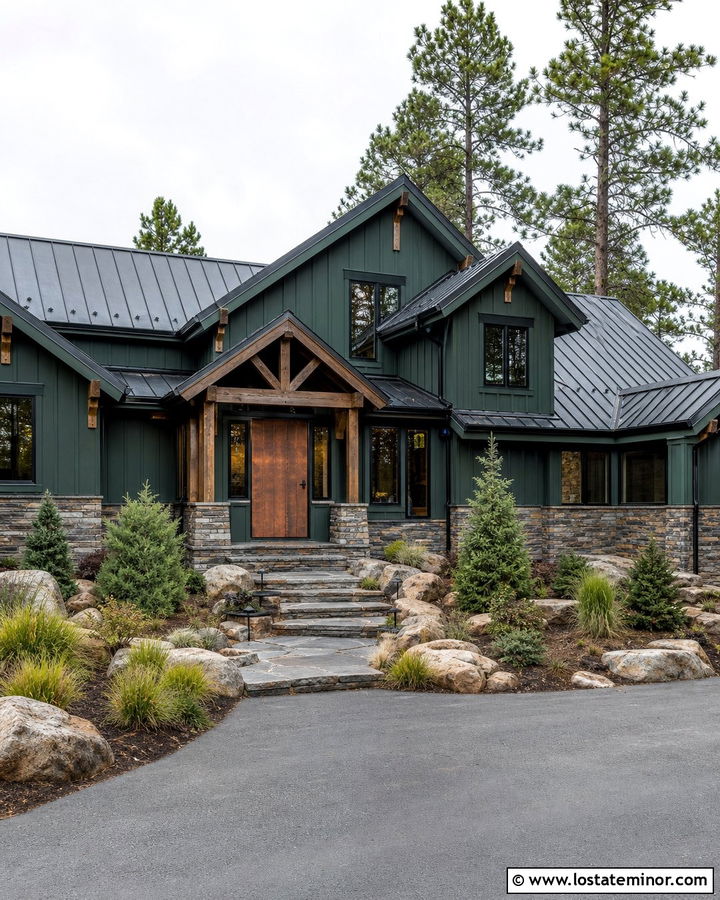
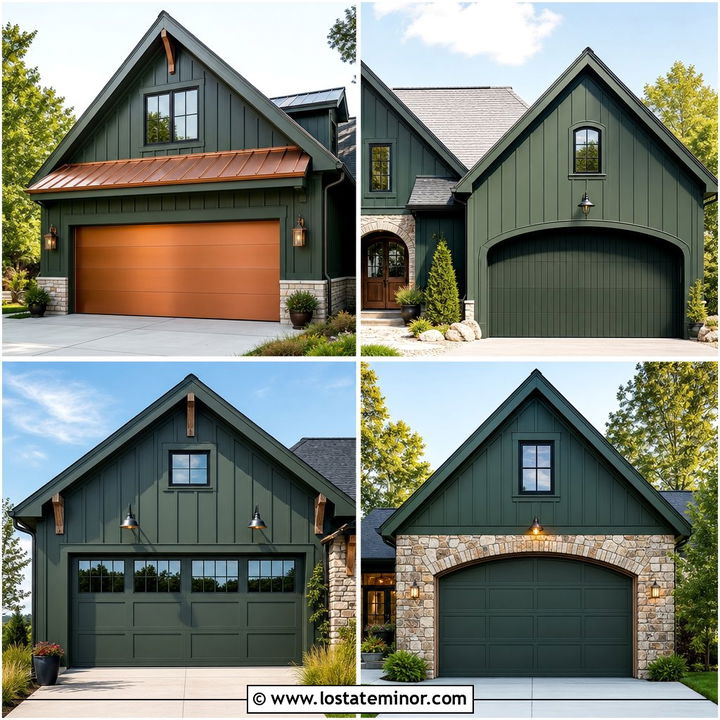
A copper-clad front door can turn a simple hunter green exterior into a distinctive modern-rustic home. New copper appears bright and warm, while weathered copper develops a varied brown-green patina that relates naturally to the siding. Use this feature on a mountain contemporary house with hunter green vertical siding, black window frames, and a charcoal standing-seam roof. A ledgestone foundation introduces rugged texture, while exposed timber beams connect with the metal’s warmth. Keep the trim dark and narrow so the copper remains the focal point. Large grasses, evergreen shrubs, and natural boulders help settle the house into its surroundings. The completed scheme feels durable, crafted, and visually interesting without relying on multiple painted accent colors.
13. Hunter Green House With Blush Pink Front Door
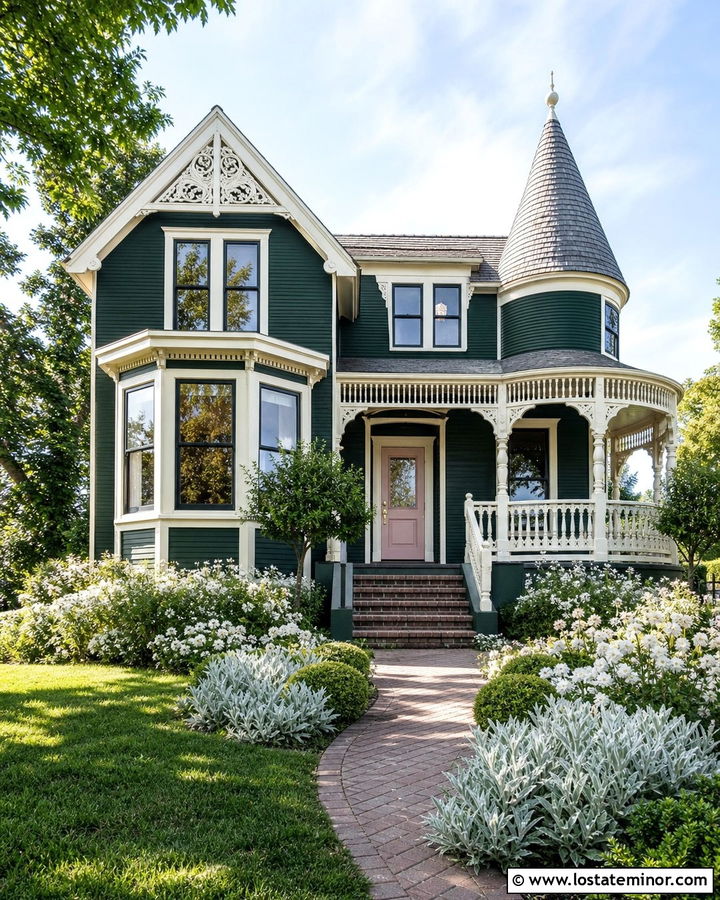
Could a pink front door work on a dark green house? A muted blush with beige or gray undertones can create an attractive contrast that feels softer than red. This pairing is especially effective on a Queen Anne cottage with hunter green siding, warm white gingerbread trim, and a pale blush door. Limit the pink to the entry so it remains intentional. A weathered gray roof, cream porch railings, and natural brick steps give the stronger colors stable surroundings. Choose aged brass hardware to complement the warmth of the pink. Cottage gardens with white flowers and silvery foliage frame the facade beautifully. The finished home feels charming and individual without losing the depth and traditional character of hunter green.
14. Hunter Green House With Powder Blue Front Door
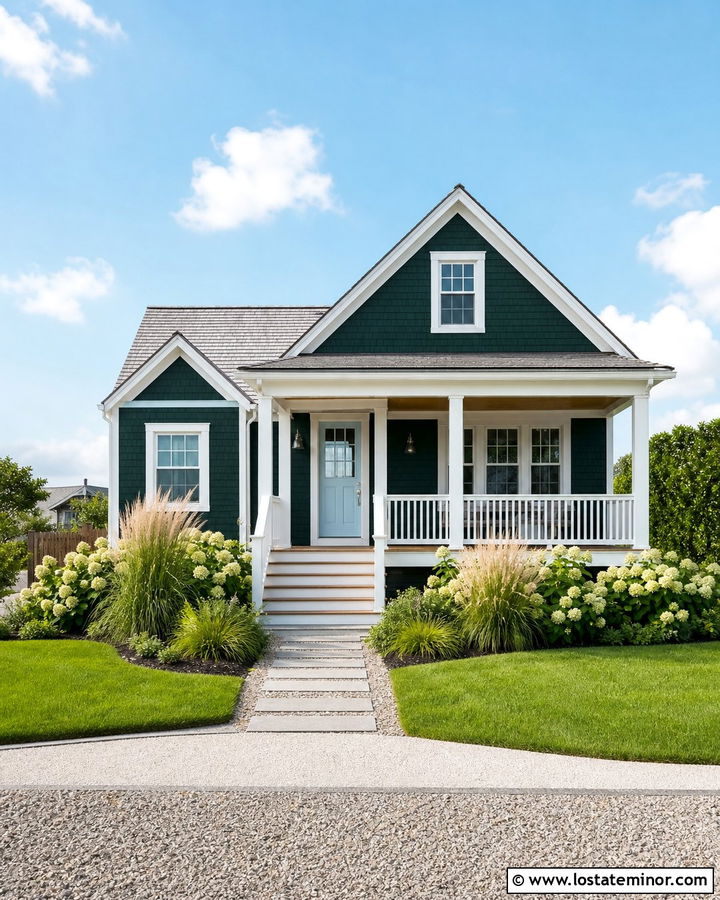
Powder blue introduces a light, cool note that makes a hunter green facade feel less formal. On a coastal cottage, combine deep green clapboard siding with a soft blue front door, white trim, and a weathered gray roof. The blue should be slightly muted rather than overly pastel, helping it coordinate with the substantial body color. Add a white porch railing, nickel hardware, and a natural wood porch floor for a clean but comfortable finish. Blue-gray planters can repeat the door color without making the scheme too coordinated. Hydrangeas, ornamental grasses, and a shell or gravel path support the coastal character. This complete exterior feels breezy and welcoming while remaining rich enough for year-round curb appeal.
15. Hunter Green House With Sage Green Front Door
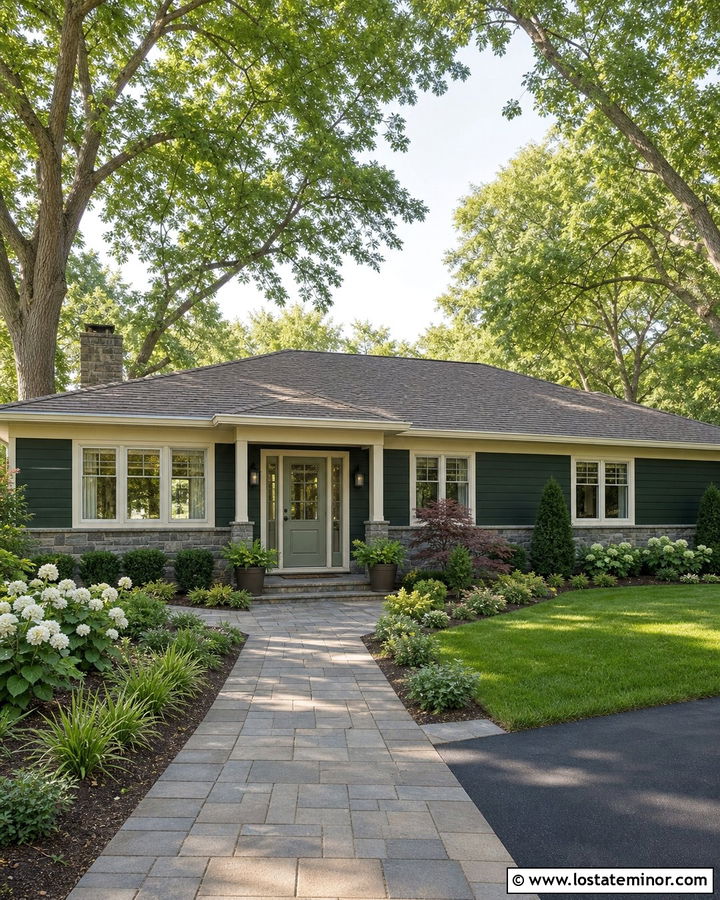
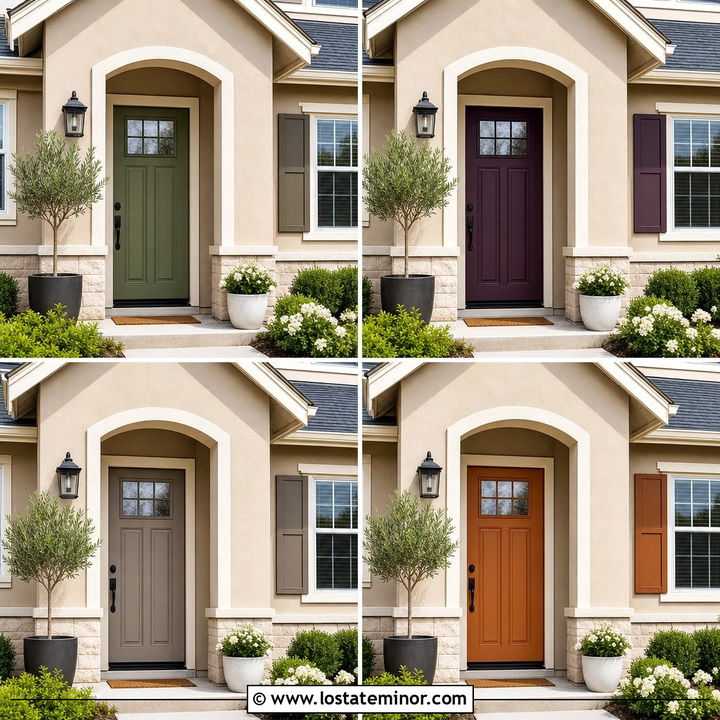
A lighter sage door creates tonal contrast while keeping the full exterior connected to nature. This scheme works well on a low ranch house where a dramatic door color might visually divide the long facade. Use hunter green horizontal siding with a muted sage entry door, creamy trim, and a warm gray roof. Natural stone along the foundation can contain both green and taupe tones, helping every color relate. Choose dark bronze hardware and simple glass panels to define the entry. Repeat sage sparingly on planter boxes or porch furniture rather than shutters. Layered shrubs and a broad walkway lead attention toward the door. The result is calm and cohesive, yet the entrance remains recognizable against the deeper siding.
16. Hunter Green House With Matching Green Front Door
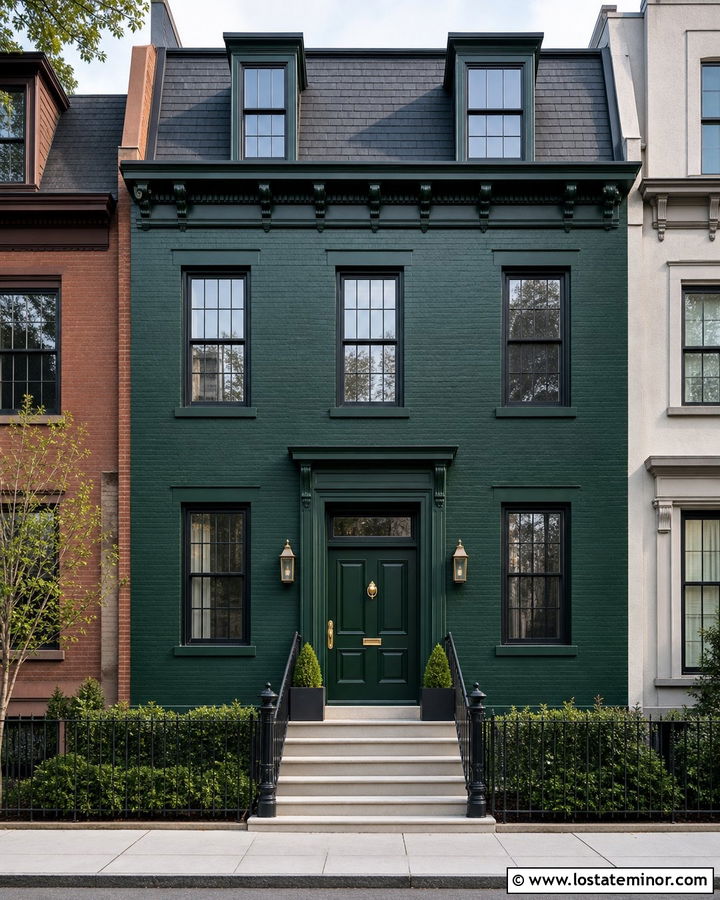
A color-drenched hunter green exterior can make a small house appear cohesive and architecturally confident. Paint the siding, front door, door frame, and selected trim in the same deep green, then use material contrast to define each surface. This approach suits a compact urban townhouse with smooth siding, tall windows, and a narrow entrance. Choose a glossier finish for the door so light creates subtle separation from the lower-sheen walls. Black window frames, brass hardware, and pale limestone steps prevent the facade from becoming one dark block. A charcoal roof and simple metal railing complete the restrained palette. The matching door feels intentional and modern, proving that a clear entrance does not always require a contrasting paint color.
17. Hunter Green House With Gray-Green Front Door
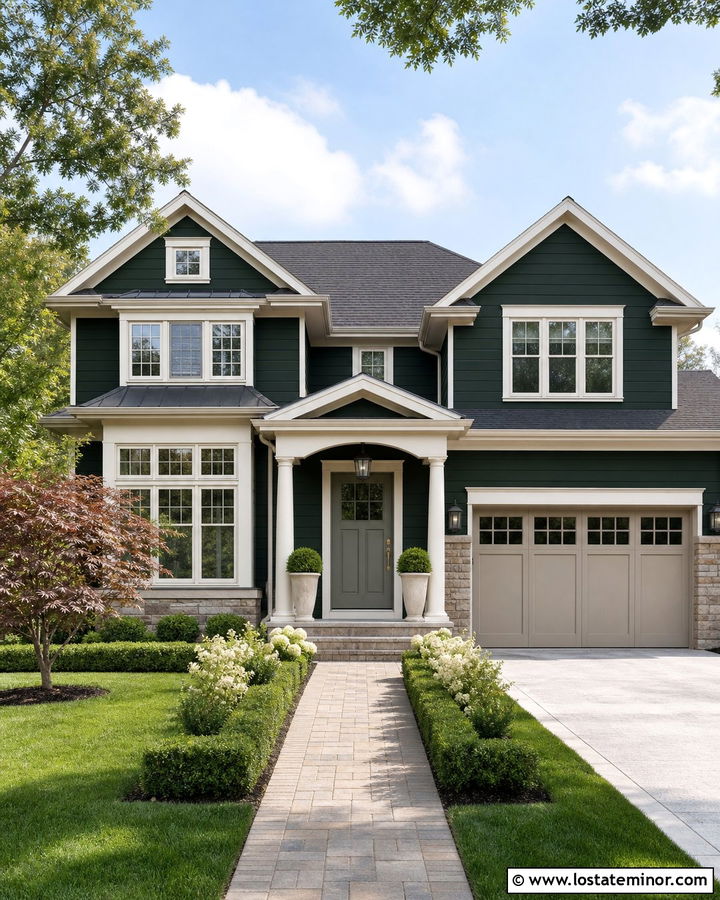
Gray-green offers a subtle doorway transition for anyone who prefers quiet, layered color. On a transitional home, use hunter green siding with a smoky gray-green door, taupe stone accents, and soft off-white trim. The door color should be several shades lighter than the siding so it remains visible in shaded conditions. A medium charcoal roof balances the darker body, while brushed brass hardware adds measured warmth. Paint the garage door in the trim color or a close match to the stone rather than introducing more green. Symmetrical planters, low hedges, and a broad paver walkway give the mixed materials a tidy frame. This nuanced scheme feels polished, natural, and easy to adapt to many suburban settings.
18. Hunter Green House With Burnt Orange Front Door
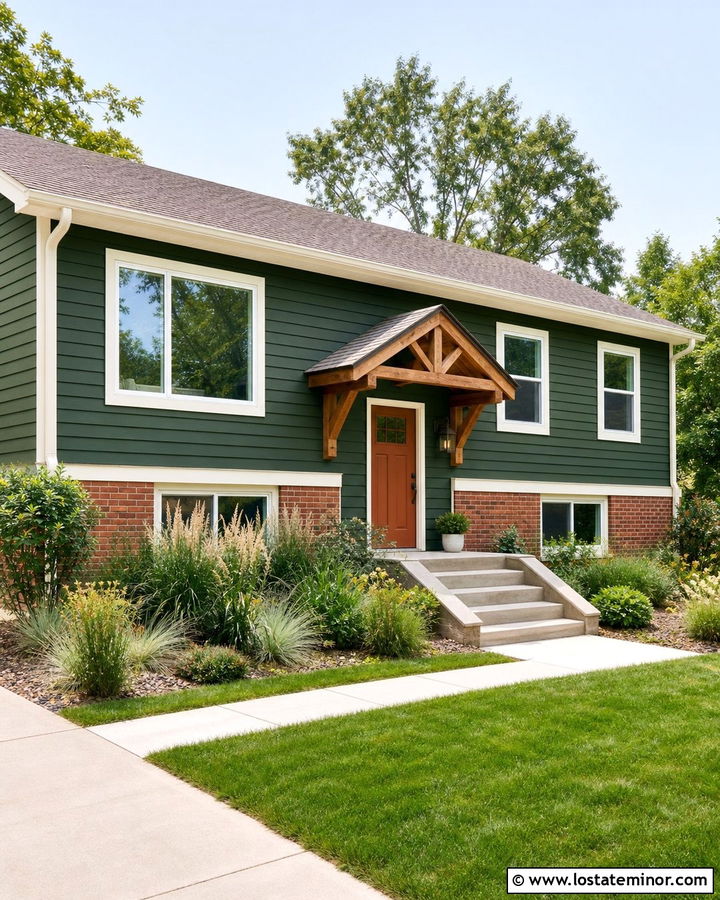
Burnt orange creates an energetic focal point while retaining enough earthiness to complement hunter green. It can transform a familiar split-level house when the remaining finishes are carefully simplified. Paint the main siding green, use warm white around the windows, and place a burnt orange door beneath a small cedar canopy. A brown-gray roof and brick foundation connect the orange and green through natural tones. Replace overly decorative shutters with clean cedar panels or leave the windows unshuttered. Dark bronze lights and hardware add definition without introducing stark black. Native grasses, low shrubs, and refreshed concrete steps complete the update. The finished split-level feels warmer, more current, and far more intentional from the curb.
19. Hunter Green House With Golden Yellow Front Door
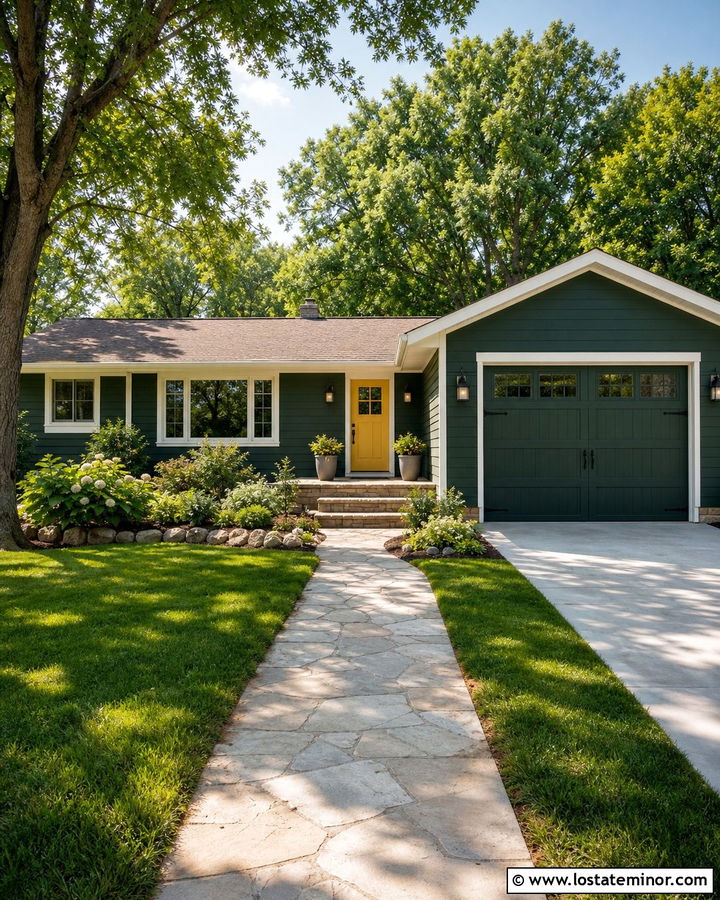
A golden yellow entry can brighten a wide hunter green ranch and help visitors locate the door immediately. Unlike pale yellow, a deeper golden shade has enough visual weight to stand beside dark siding. Pair it with warm white trim, a medium-brown roof, and natural stone around the porch. If the garage dominates the facade, paint it hunter green so it blends with the walls instead of competing with the yellow entry. Black or dark bronze hardware keeps the door crisp. Use a wide walkway, layered foundation plants, and two understated planters to direct attention toward the entrance. This cheerful scheme feels sunny and approachable, yet the earthy green body prevents it from looking overly playful.
20. Hunter Green House With Aubergine Front Door
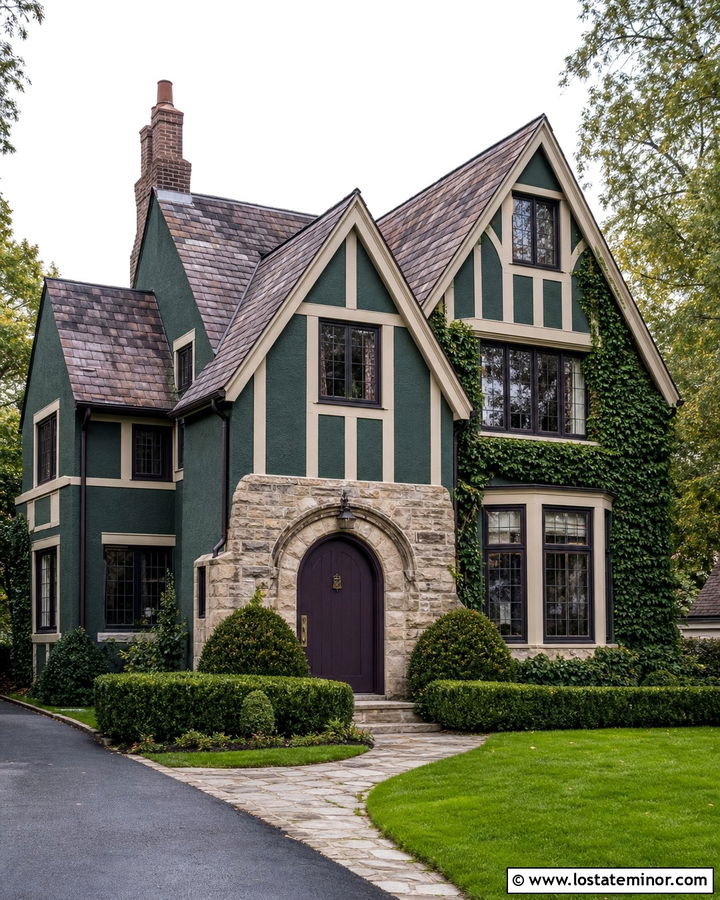
Aubergine is an unexpected but sophisticated partner for hunter green, particularly on an English Tudor exterior. The purple-brown door adds richness while remaining dark enough to respect the home’s traditional character. Use hunter green stucco or siding between creamy half-timber details, then add an aubergine arched door beneath a stone surround. A brown slate roof, leaded windows, and aged brass hardware complete the old-world palette. Keep shutters and secondary doors neutral to avoid crowding the facade with too many dark accents. Ivy, clipped hedges, and an irregular stone path complement the architecture, but plants should not conceal the entrance. The complete scheme feels historic, layered, and distinctive without depending on high-contrast colors.
21. Hunter Green House With Walnut Double Front Doors
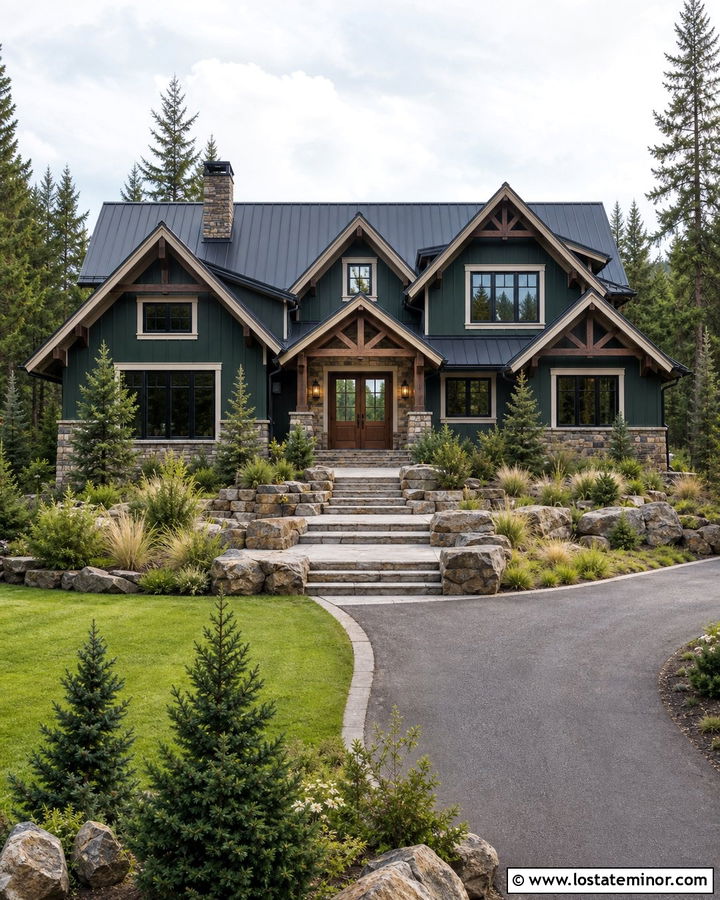
Wide walnut double doors give a large hunter green house an entrance with proper scale. This combination fits a lodge-inspired residence with steep rooflines, substantial stonework, and exposed timber details. Use deep green vertical siding above a rugged gray-brown stone base, then repeat the walnut tone on beams and garage accents. Black-framed windows and a charcoal metal roof add structure. Clear glass panels in the doors can lighten the entry, while dark bronze hardware reinforces the rustic palette. Avoid matching every wood element perfectly; small variations make the materials feel more natural. Evergreen planting, broad stone steps, and a curved driveway complete the setting. The result is impressive but warm, with the doors balancing the strong green facade.
22. Hunter Green House With White Oak Dutch Door
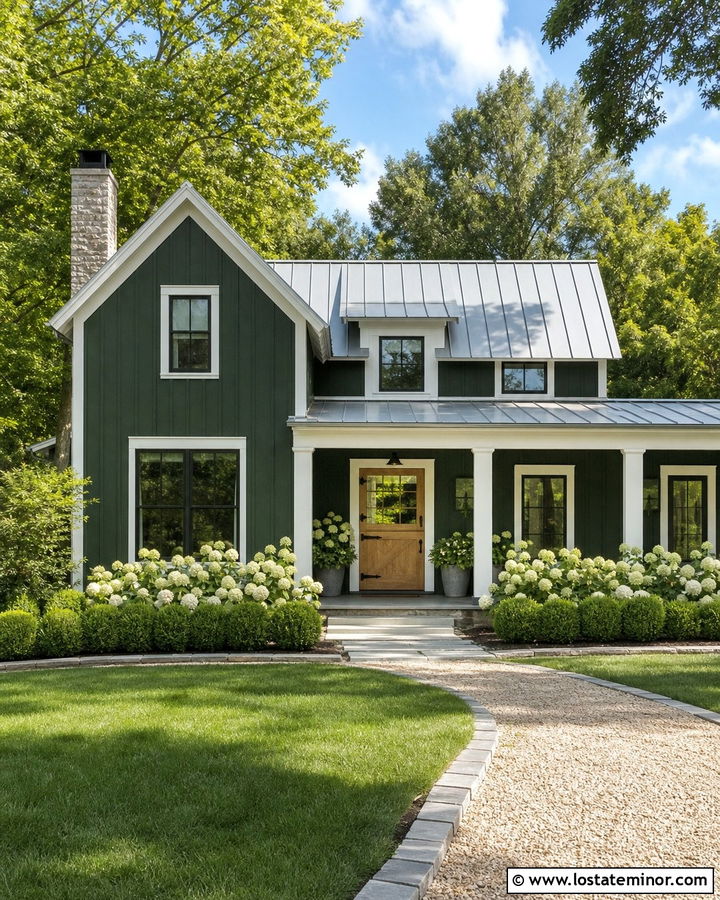
A white oak Dutch door adds craftsmanship and casual charm to a hunter green farmhouse. Keep the door’s grain visible under a clear matte finish, then frame it with warm white trim. Use hunter green board-and-batten siding, a galvanized metal roof, and a welcoming front porch with simple square columns. A brick or bluestone porch floor gives the lighter wood enough visual support. Black strap hinges can emphasize the Dutch-door form, although understated bronze hardware creates a softer appearance. Repeat the oak on porch benches or small gable brackets. Hydrangeas, clipped shrubs, and a straight gravel walkway maintain a relaxed rural character. The complete look feels practical, friendly, and more distinctive than a standard painted farmhouse entrance.
23. Hunter Green House With Black Glass Front Door
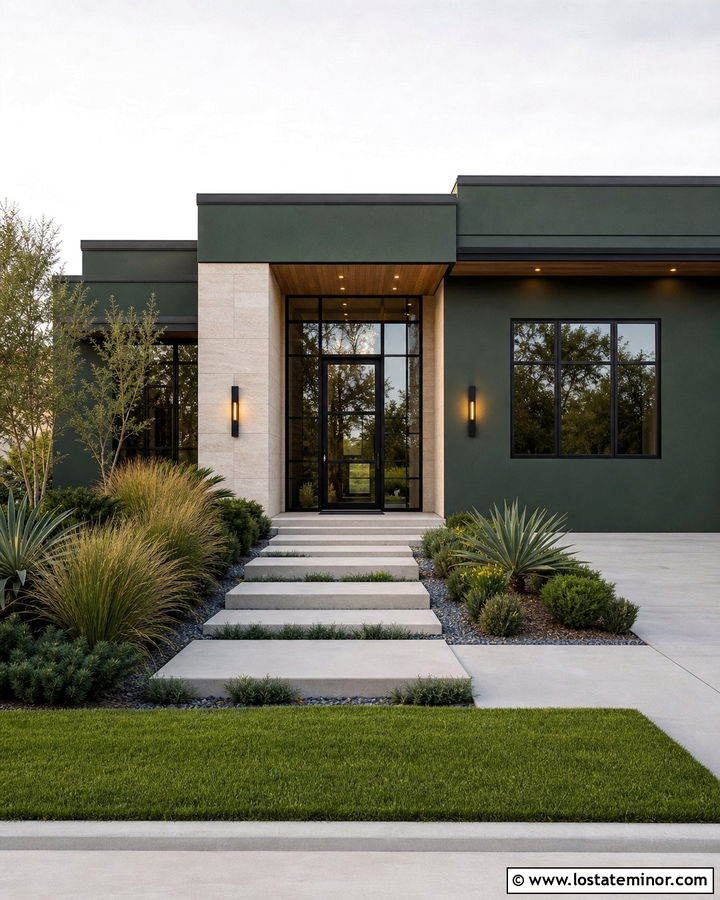
A black-framed glass door brings a lighter, more open quality to a dark hunter green modern house. The glass breaks up the black surface, allowing the entrance to remain defined without appearing solid or heavy. Pair vertical green siding with black windows, a flat or low-sloped roof, and pale concrete or limestone panels around the entry. Use privacy glass if the door faces the street directly. A simple linear handle reinforces the architecture, while a cedar soffit adds warmth above the doorway. Keep landscaping structured with broad grasses, low evergreen forms, and rectangular concrete pavers. The final exterior feels streamlined and bright, with the transparent door creating a clean focal point within the deeper color palette.
24. Hunter Green House With Red Dutch Door
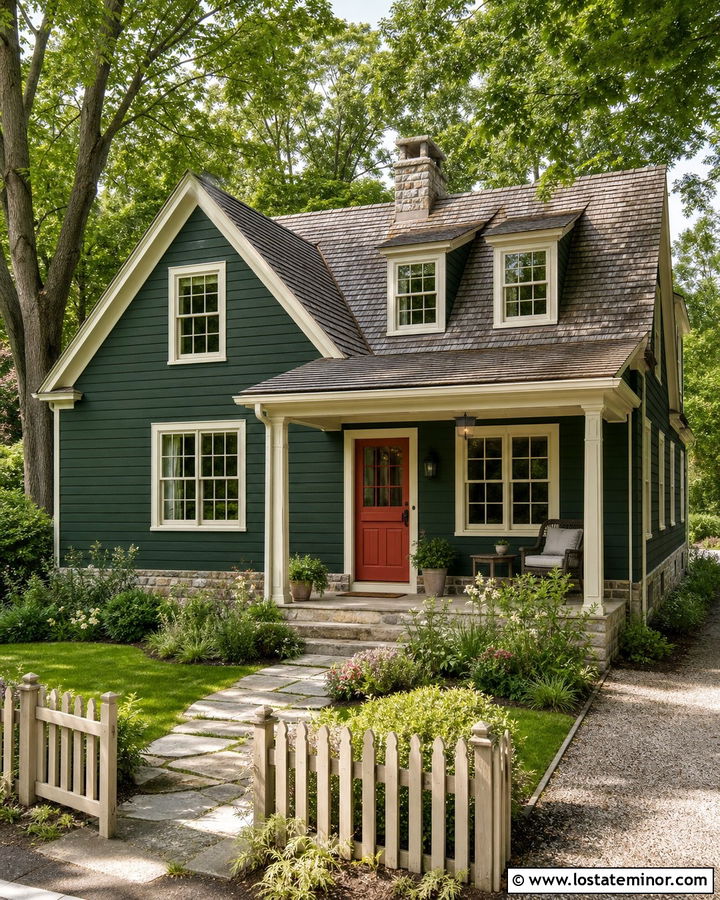
A deep red Dutch door can make a hunter green cottage feel welcoming without turning the entire facade into a strong red-and-green composition. Choose a brick red with muted brown undertones, then surround it with creamy trim and natural stone. Hunter green shingle siding, a gray cedar roof, and a small covered porch support the cottage character. Use black iron or aged bronze hardware to highlight the divided door. Keep shutters cream or remove them if the facade already includes detailed window casings. A flagstone path, informal perennial beds, and low picket fencing provide a fitting setting. Because the red appears only at the entrance, it offers personality while the green siding remains the dominant exterior statement.
25. Hunter Green House With Blue-Gray Front Door
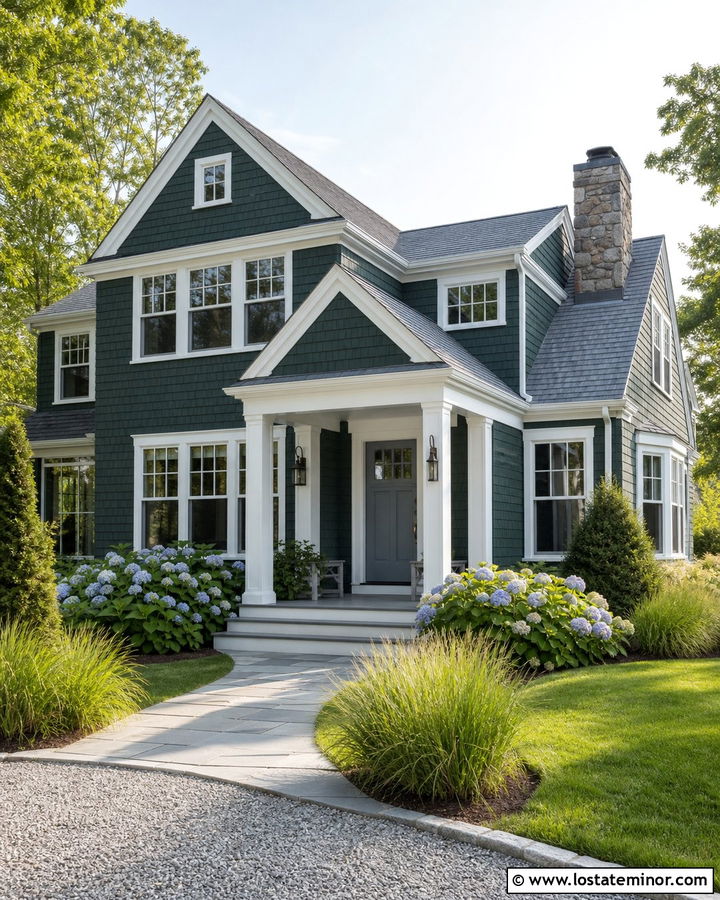
Blue-gray provides a cool, misty contrast that works particularly well with hunter green and weathered natural materials. On a shingle-style home, combine green cedar shingles with a blue-gray door, white window trim, and a medium-gray roof. A stone chimney and gray porch floor repeat the cooler notes throughout the facade. Choose a door shade that is noticeably lighter than the siding but deeper than the white trim. Brushed nickel hardware and divided-light windows reinforce the understated coastal character. Keep the garage doors green or soft gray so the blue-gray entry remains special. Natural grasses, hydrangeas, and a curved stone walkway complete a calm exterior that feels elegant without appearing overly formal or highly decorated.
26. Hunter Green House With Mahogany Front Door
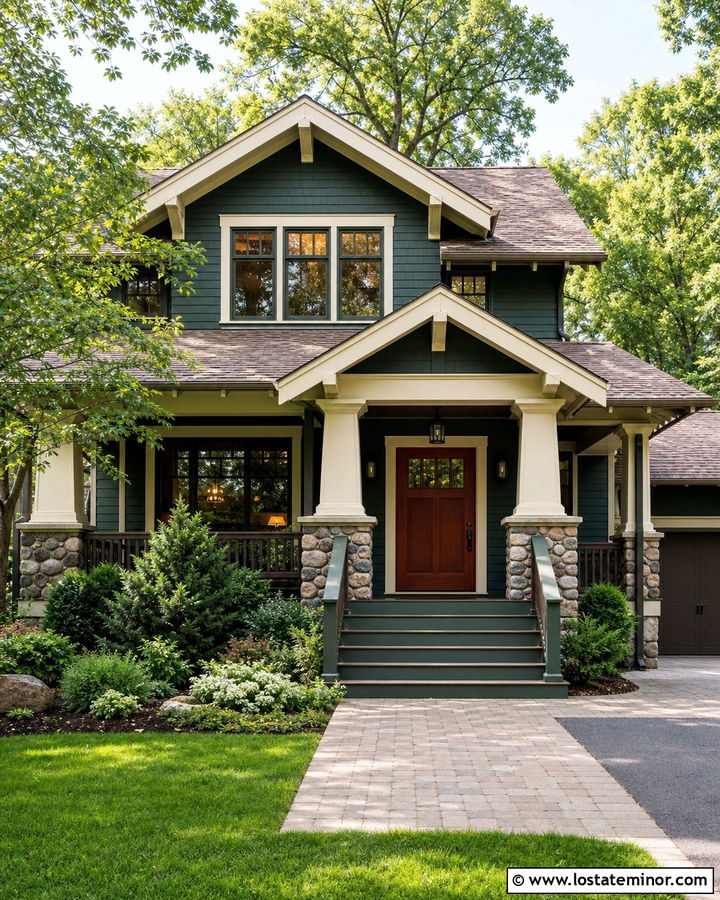
Rich mahogany gives a hunter green Craftsman house a strong, handcrafted centerpiece. Its red-brown undertones contrast with the green while connecting naturally to brick, stone, and warm roof colors. Use hunter green lap siding with creamy trim, chunky porch columns, and a medium-brown shingle roof. A mahogany door with small upper glass panes maintains privacy while displaying the wood grain. Repeat the material on exposed rafters or porch rail caps, but keep larger surfaces green. A river-rock foundation and dark bronze hardware support the traditional Craftsman palette. Deep porch steps, layered shrubs, and a straight paver walk give the entrance presence. The final exterior feels substantial, warm, and thoughtfully detailed from roof to foundation.
27. Hunter Green House With Bright White Front Door
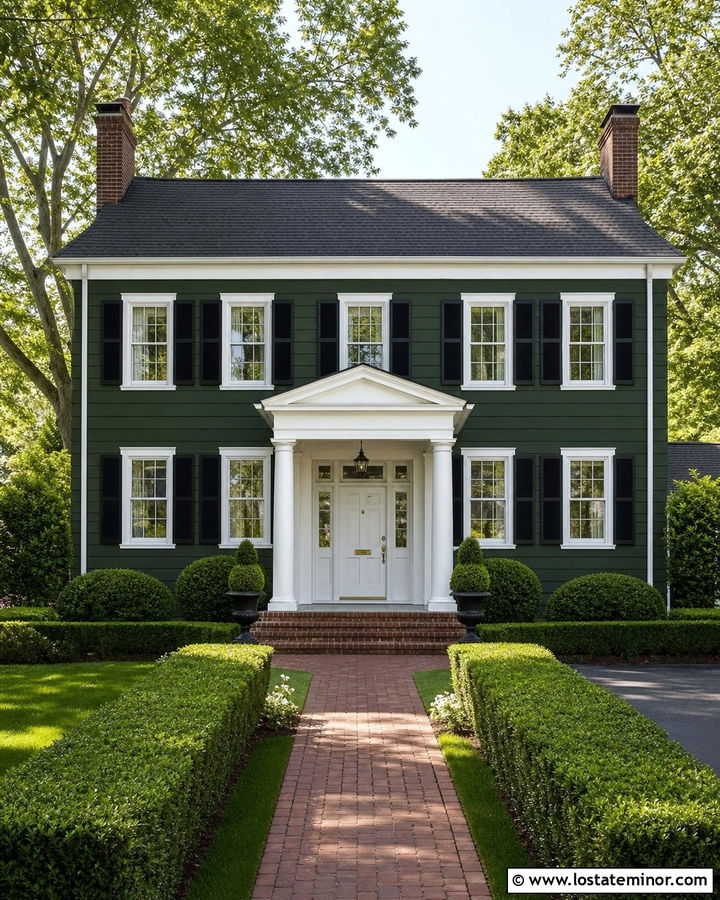
Bright white can create a sharper, more formal entrance than warm cream, especially on a large Colonial Revival house. Paint the symmetrical siding hunter green, then repeat pure white on the front door, columns, cornice, and window trim. Black shutters and a charcoal roof provide classic structure, while polished brass hardware keeps the door from disappearing into the white portico. Red brick steps add warmth at ground level without becoming a competing accent. Keep the garage door hunter green or position it away from the main facade so the central entrance retains visual importance. Formal hedges, matching planters, and a straight brick walkway reinforce the symmetry. This traditional scheme looks clean, balanced, and highly visible from the street.
28. Hunter Green House With Warm Greige Front Door
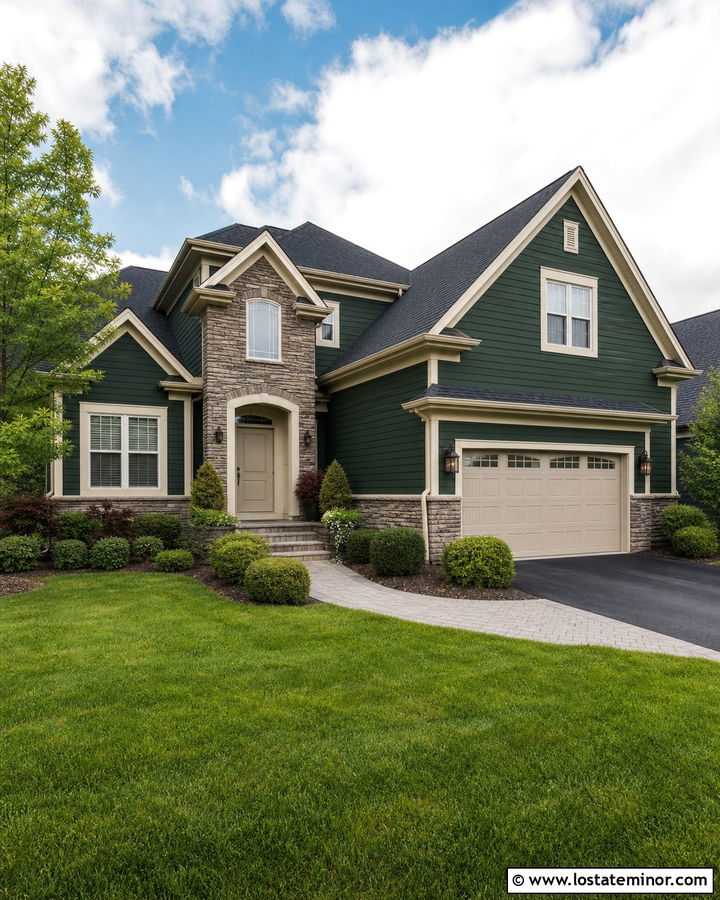
Warm greige can soften a hunter green exterior while connecting the siding to stone, concrete, and taupe roofing. This versatile combination suits a suburban transitional house with multiple gables and a mix of lap siding and masonry. Use the greige on the front door and garage door, then choose creamy white for window trim. A greige door containing subtle brown undertones will feel warmer and more inviting than a cool flat gray. Dark bronze lights and hardware add depth around the entrance. Limit additional accents so the mixed materials do not overwhelm the facade. A paved walkway, rounded shrubs, and ornamental trees finish the composition. The overall result feels updated, practical, and easy to coordinate with existing permanent surfaces.
29. Hunter Green House With Black Double Front Doors
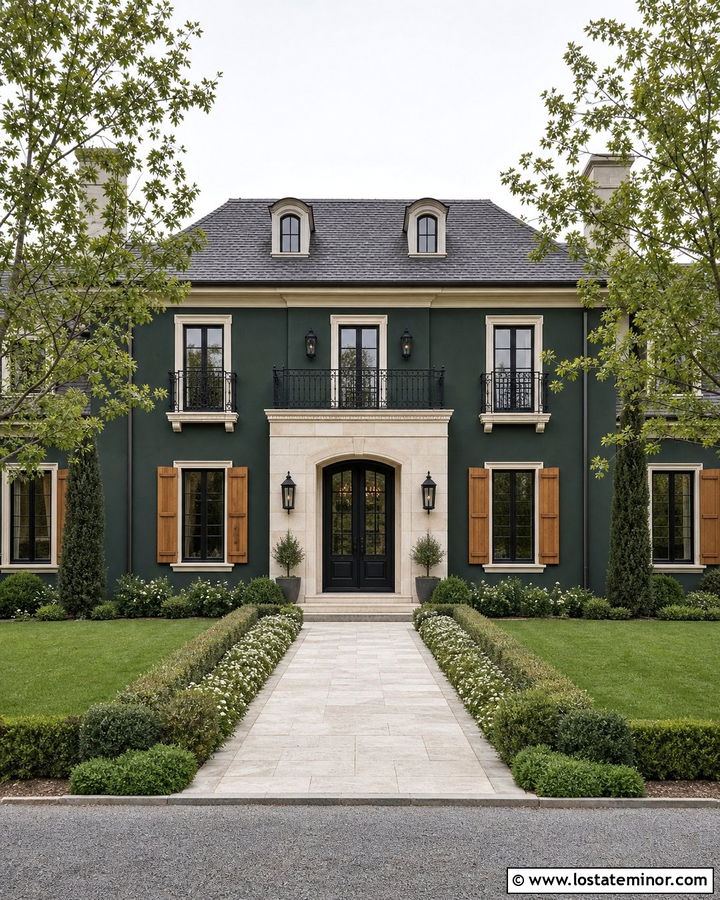
Black double doors can anchor a broad French country facade when surrounded by lighter stone and warm trim. Use hunter green stucco or painted brick on the main walls, limestone around the entrance, and soft cream on window casings. The paired black doors should include divided glass panels to reduce their visual weight. A weathered charcoal roof and black metal balconies repeat the accent color across the home. Natural wood shutters may be added selectively to introduce warmth, but avoid placing them on every window. Symmetrical olive trees, low hedges, and a wide stone walkway support the formal entrance. This complete exterior looks stately and cohesive, with the black doors creating definition instead of overwhelming the deep green body color.
30. Hunter Green House With Cedar Front Door
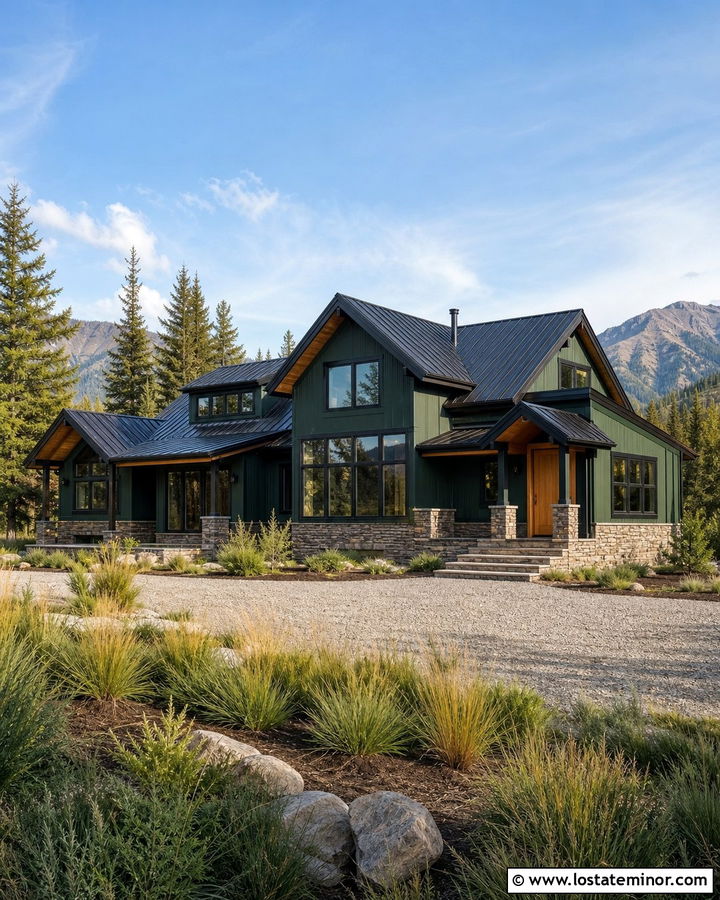
Fresh cedar creates warm contrast on a hunter green mountain contemporary home while echoing the colors of a wooded setting. Combine deep green fiber-cement siding with a clear-finished cedar door, matching cedar soffits, and a dark standing-seam metal roof. Large black-framed windows give the exterior modern structure, while a stacked-stone base introduces natural texture. Choose a simple flush or wide-plank door design rather than ornate panels. Black hardware provides clean definition against the wood. A broad gravel drive, stone steps, native grasses, and evergreen trees frame the house without hiding its architecture. The complete scheme feels modern but approachable, with cedar balancing the cool depth of hunter green through warmth, visible grain, and natural variation.
Conclusion:
These 30 Hunter Green House Design With Front Door Ideas show how one deep exterior color can support many architectural moods. Natural wood, cream, and white doors provide familiar contrast, while red, yellow, teal, terracotta, and aubergine create stronger focal points. Black, charcoal, sage, and gray-green offer quieter alternatives for a more restrained facade. Before committing, compare large color samples beside the roof, masonry, windows, and landscaping at different times of day. Give special attention to undertones and use trim to create separation where dark colors meet. Most importantly, treat the siding, door, roof, porch, and permanent materials as one coordinated design. That approach produces a hunter green exterior with lasting curb appeal.

Related posts: