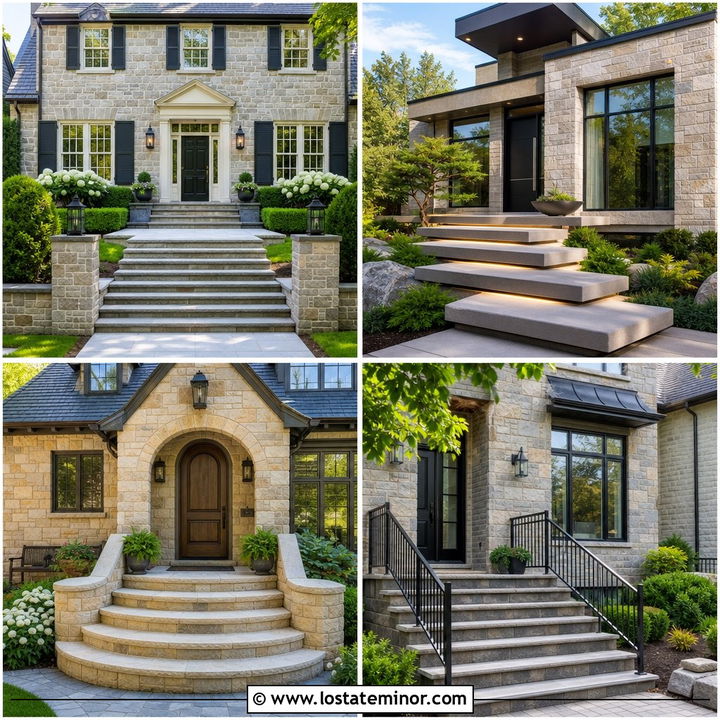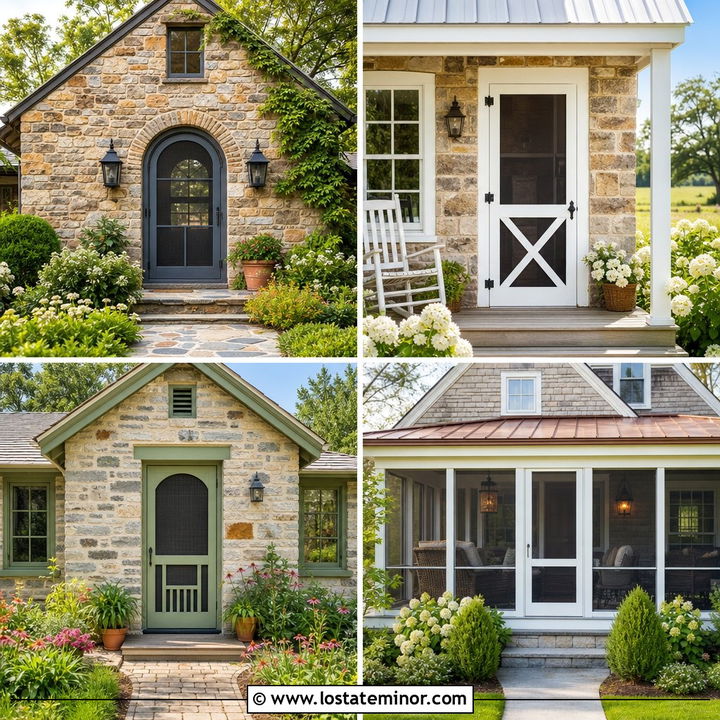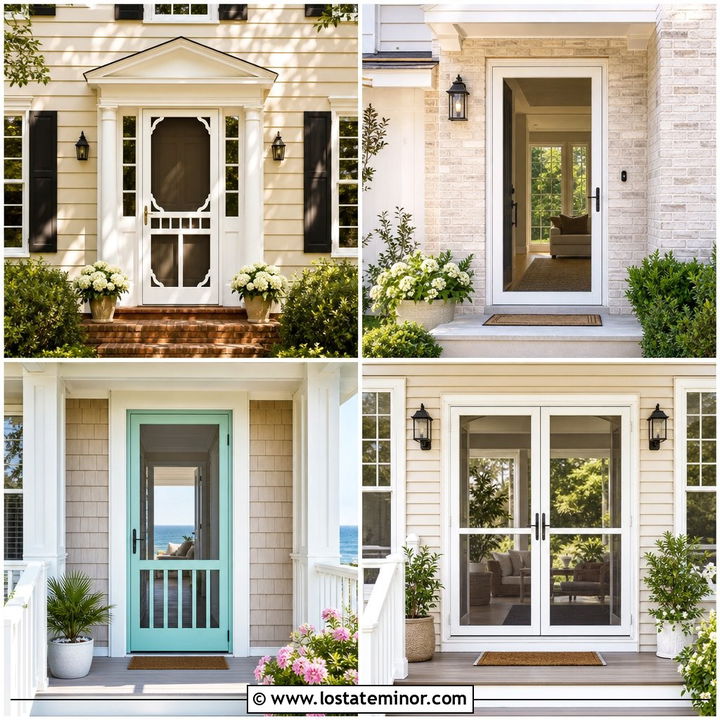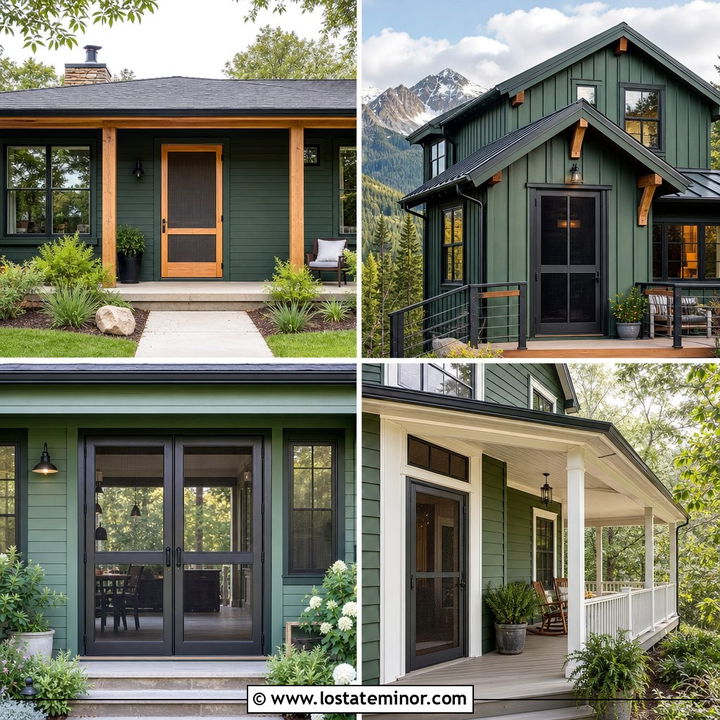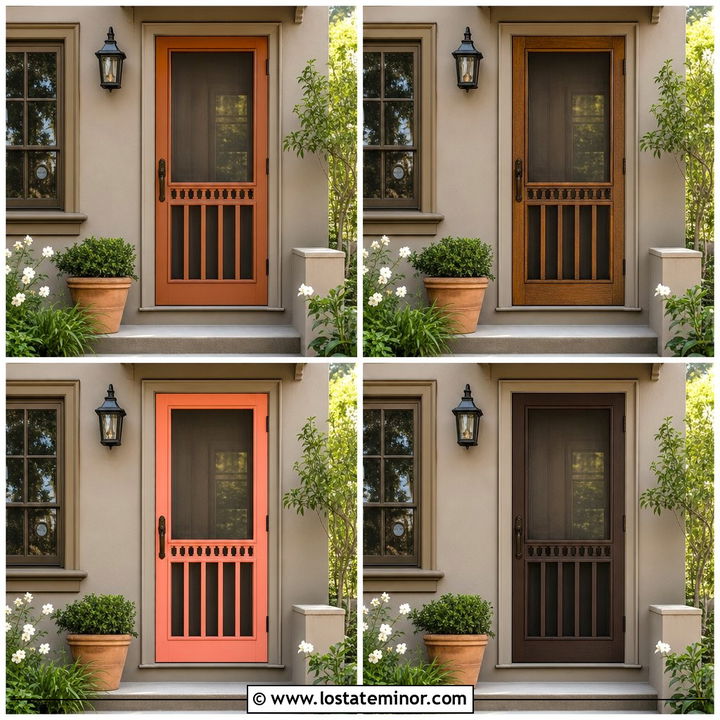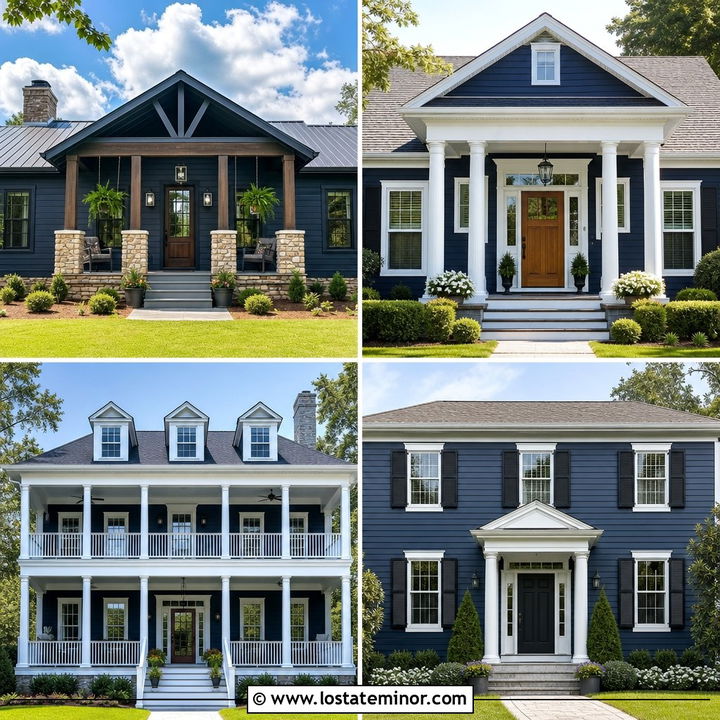
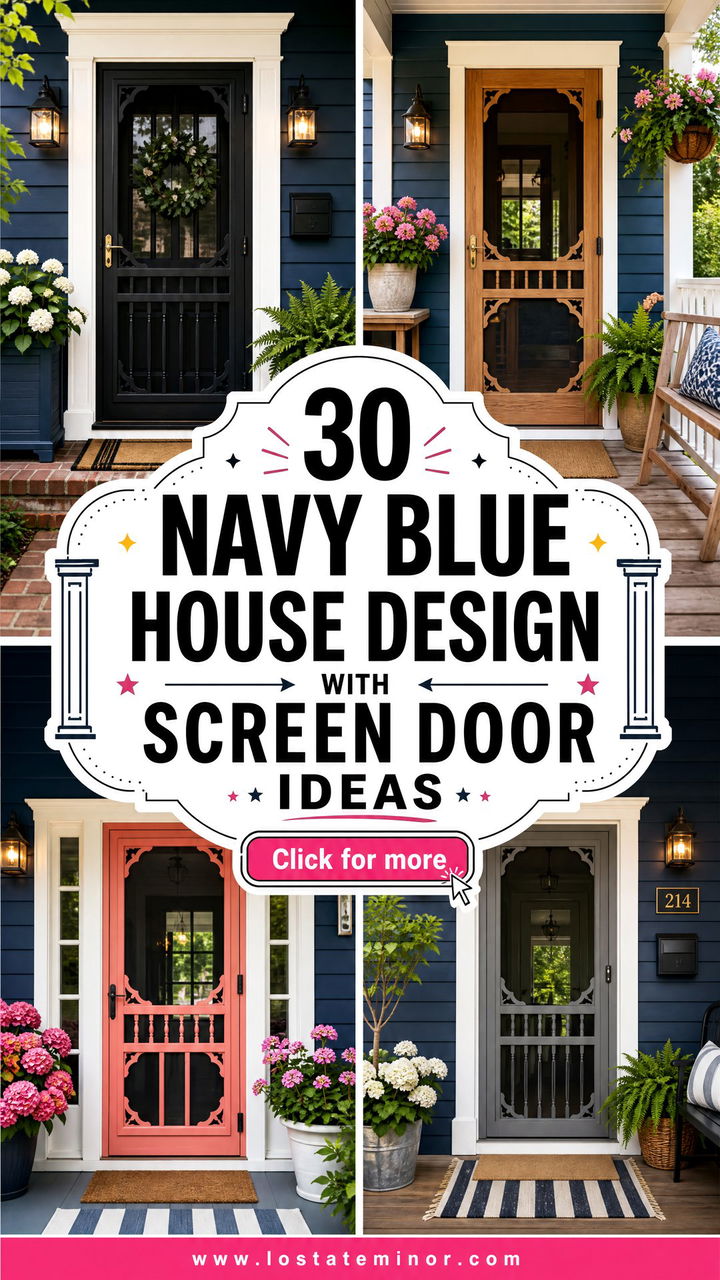
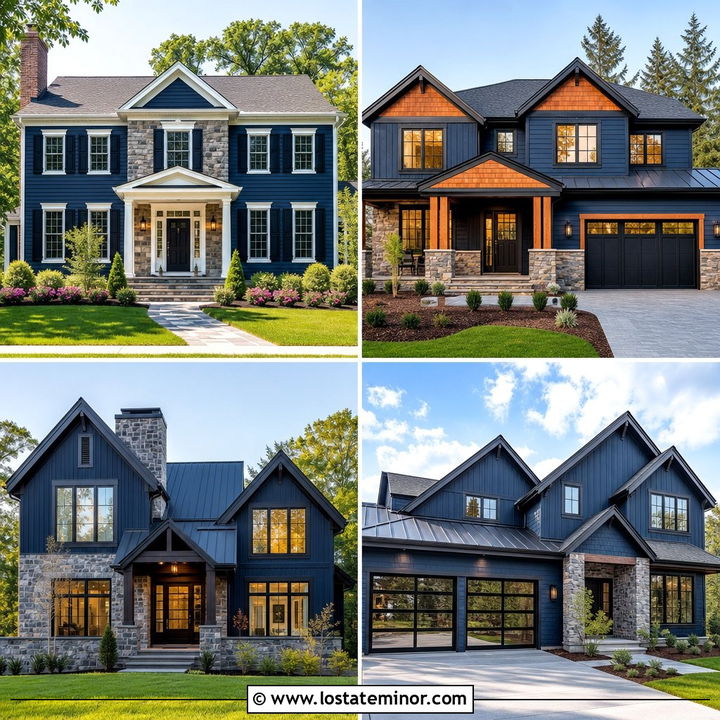
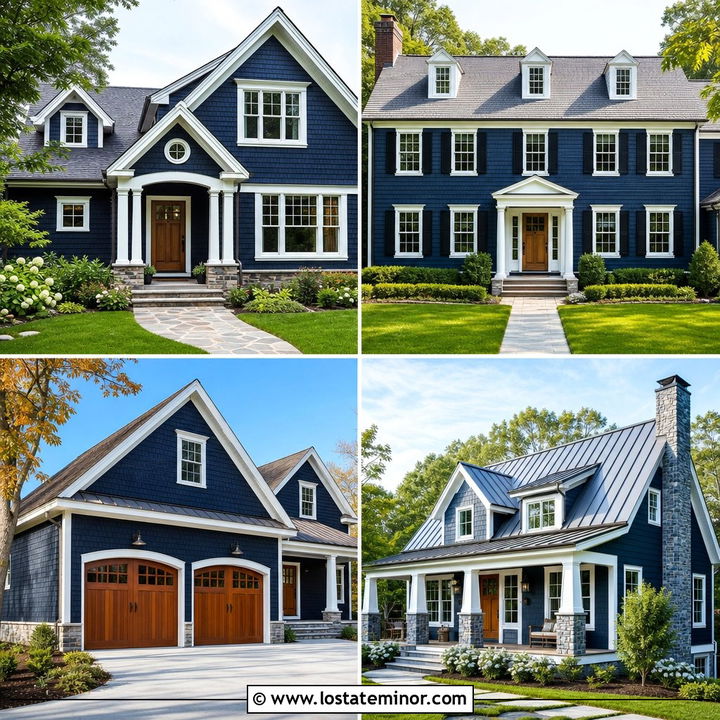
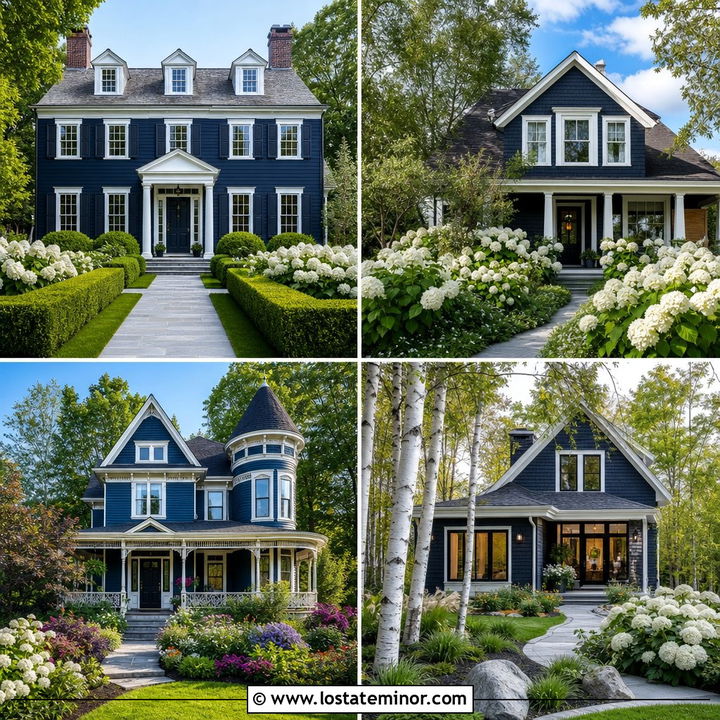
A dark blue facade can feel classic, coastal, modern, or rustic depending on how the entrance is designed. **30 Navy Blue House Design With Screen Door Ideas** explores complete exterior schemes that make this practical feature look intentional rather than added later. Current exterior inspiration frequently combines navy siding with white trim, natural wood, masonry, and coordinated black or white door frames. () The key is connecting the screen door to the roof, windows, porch, and surrounding materials. A full-view model can disappear into a contemporary entry, while a detailed wood door can add character to an older home. Use these combinations to choose balanced colors, durable finishes, and welcoming architectural details from **30 Navy Blue House Design With Screen Door Ideas**.
1. Navy Blue House With White Screen Door
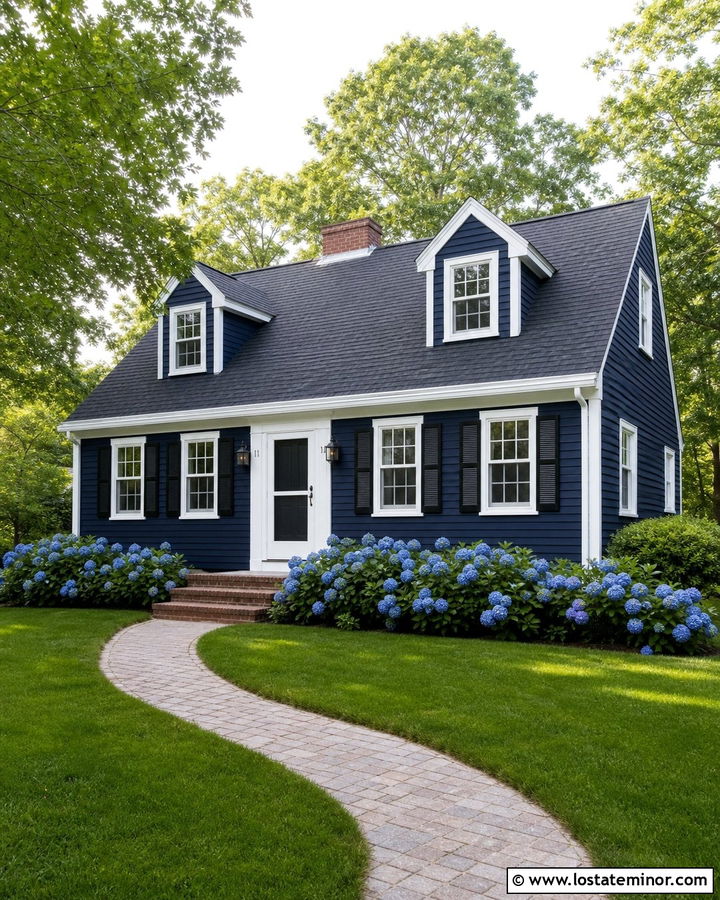
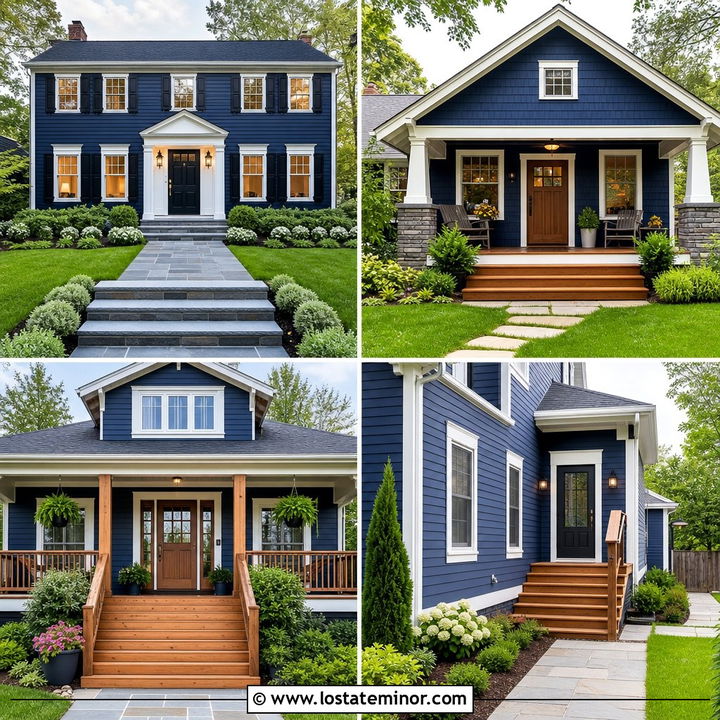
Crisp white framing gives a navy blue house an instantly clean and familiar appearance. Use the same white on the screen door, window casing, corner boards, and porch columns so the entrance feels connected to the entire facade. A white full-view screen door works especially well when the main entry door is navy, pale blue, or stained wood. The generous glass or mesh opening keeps the frame from looking too heavy against dark siding. Finish the scheme with a medium-gray roof, white gutters, and simple black porch lights. Red brick steps can add warmth without competing with the blue-and-white palette. This combination suits Cape Cod, colonial, cottage, and traditional suburban houses because every exterior element has a clear visual role.
2. Navy Blue House With Black Screen Door
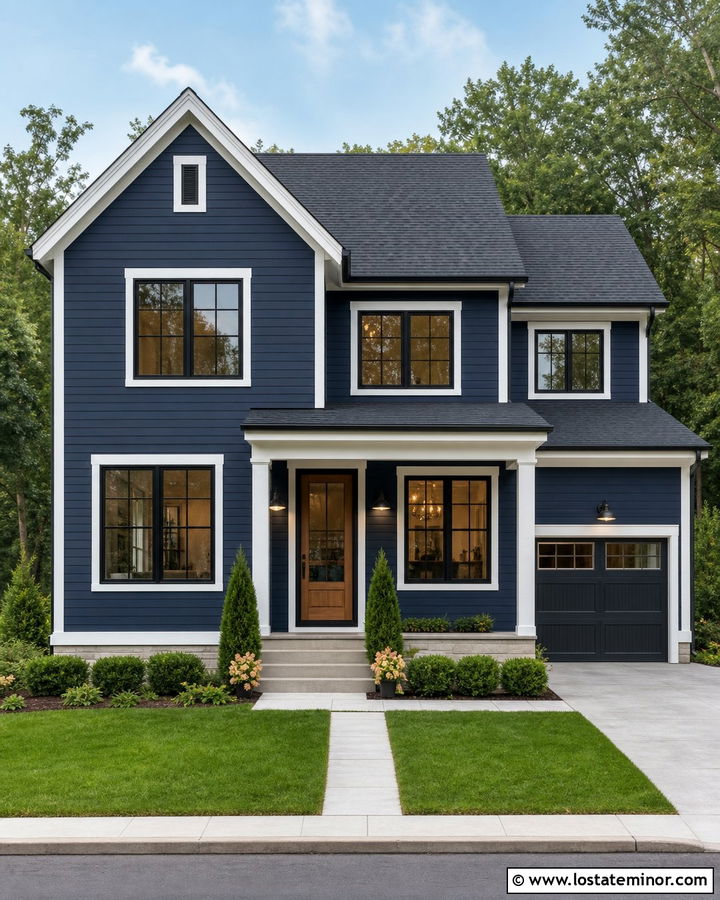
A slim black screen door brings sharper definition to a navy blue exterior without creating a harsh color break. This pairing looks best when black already appears on the windows, roof, lighting, or railings. Choose a full-view model with narrow aluminum framing so the main front door remains visible. A warm wood entry door behind the screen introduces contrast and prevents the dark colors from feeling flat. Soft white trim around the windows and roofline can brighten the larger facade while the black entrance creates a strong focal point. Complete the exterior with charcoal shingles, concrete porch steps, and structured evergreen landscaping. The result feels tailored and current, making it a smart choice for transitional homes, contemporary farmhouses, and updated split-level houses.
3. Navy Blue House With Wood Screen Door
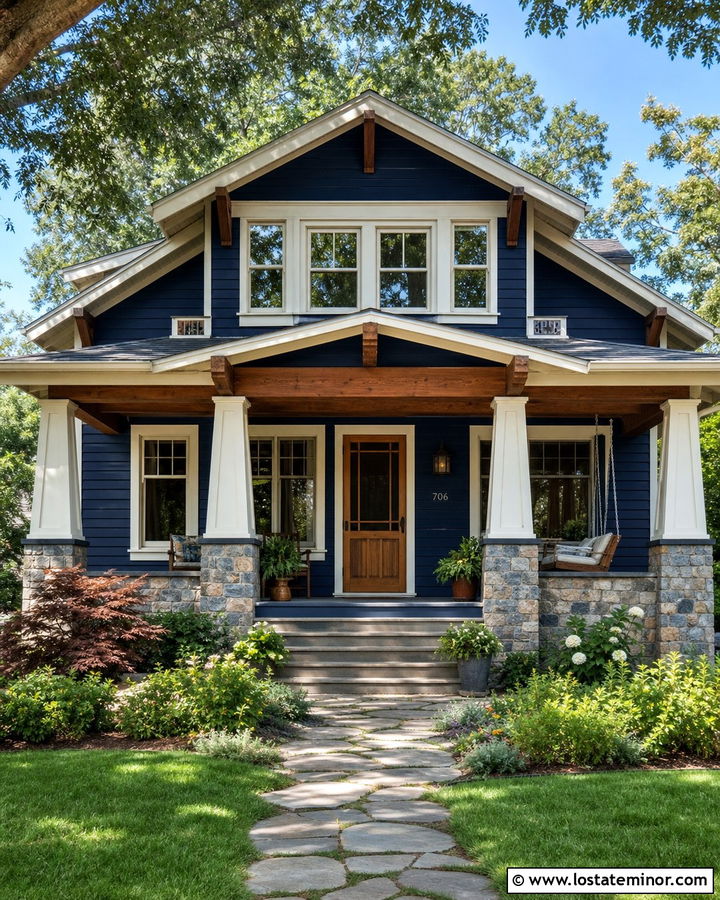
Natural wood creates a welcoming transition between deep navy siding and the front entry. Select a cedar, oak, or fir screen door with a clear exterior finish that allows the grain to remain visible. Repeat that wood tone on porch beams, a bench, window boxes, or garage details for a complete scheme. Warm white trim will soften the contrast more gently than a bright blue-white. A stone foundation with tan, cream, and muted gray variations can further connect the wood to the house. This combination is especially effective on craftsman homes and bungalows with wide porches. Keep the screen-door pattern simple if the facade already has decorative brackets or divided windows. Black hardware and lanterns provide a practical finishing layer without distracting from the wood.
4. Navy Blue House With Retractable Screen Door
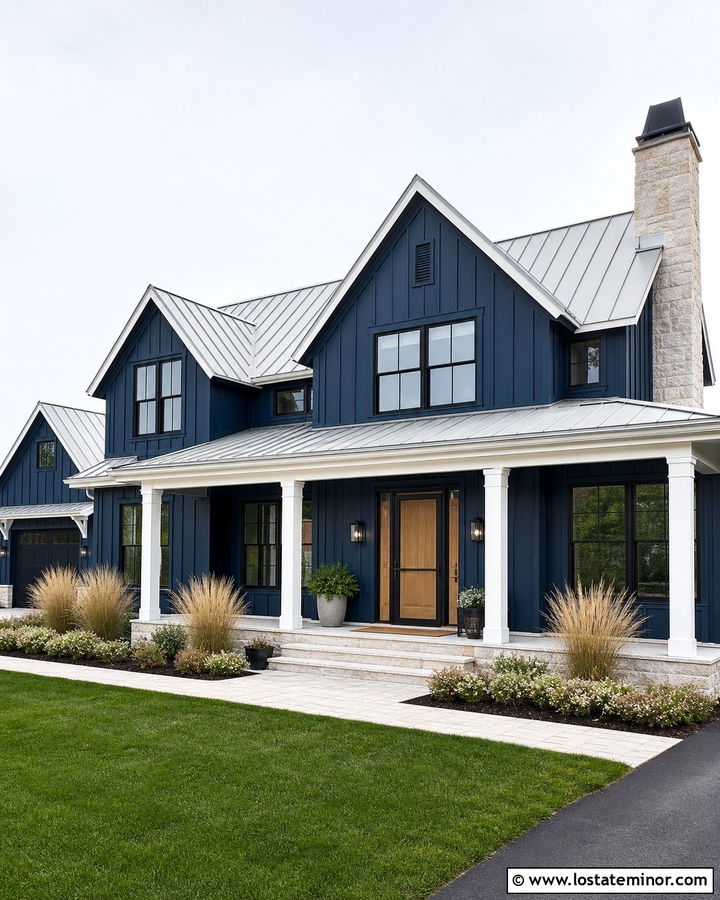
What if you want fresh air without permanently changing the appearance of the entrance? A retractable screen door provides a clean solution because the mesh can roll into a slim housing when it is not being used. Match that housing to the entry trim, which might be white, black, bronze, or navy. On a modern farmhouse, pair deep navy board-and-batten siding with white trim, a stained oak front door, and a discreet black retractable screen. Carry the black into the window frames and exterior sconces. A light-gray metal roof can balance the dark body color, while natural stone porch flooring adds subtle texture. Because the screen remains visually quiet, the architecture and front door become the main curb-appeal features.
5. Navy Blue House With Full-View Screen Door
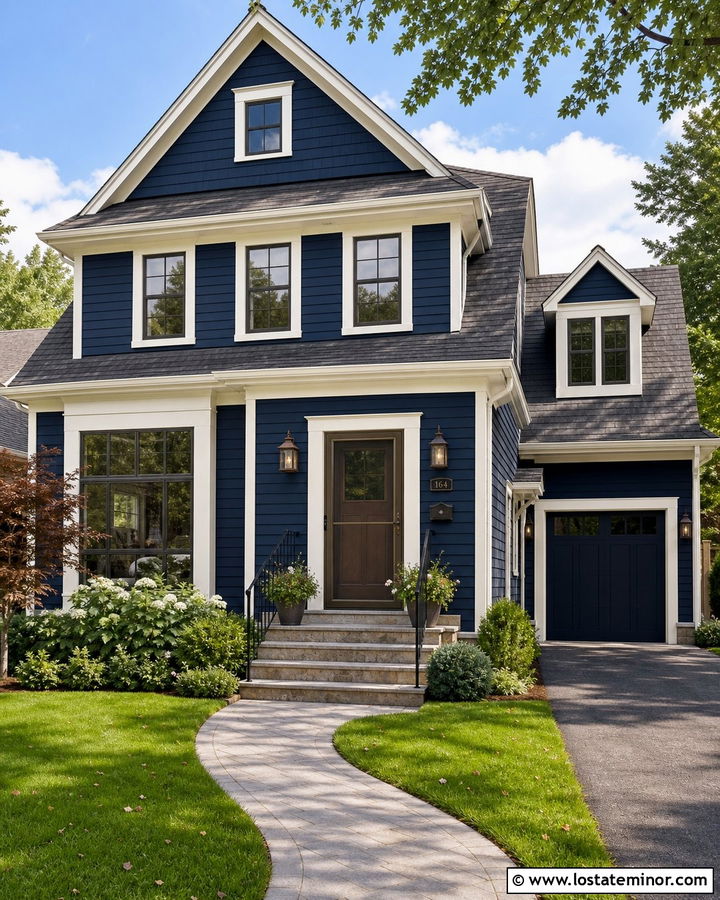
A full-view screen door is ideal when the entry door deserves to remain visible from the street. Its large central opening limits visual clutter and allows a painted or stained door behind it to become part of the complete exterior palette. Pair navy clapboard siding with creamy white trim, a medium-walnut entry door, and a bronze full-view frame. The bronze can reappear on porch lights, house numbers, and cabinet-style garage hardware. Choose stone steps with warm gray and beige tones to bridge the cool siding and warm door. This balanced arrangement works well on traditional two-story homes and newer suburban builds. Avoid adding busy decorative grilles when the windows already feature divided panes, shutters, or substantial trim around the facade.
6. Navy Blue House With Red Front Door And Screen Door
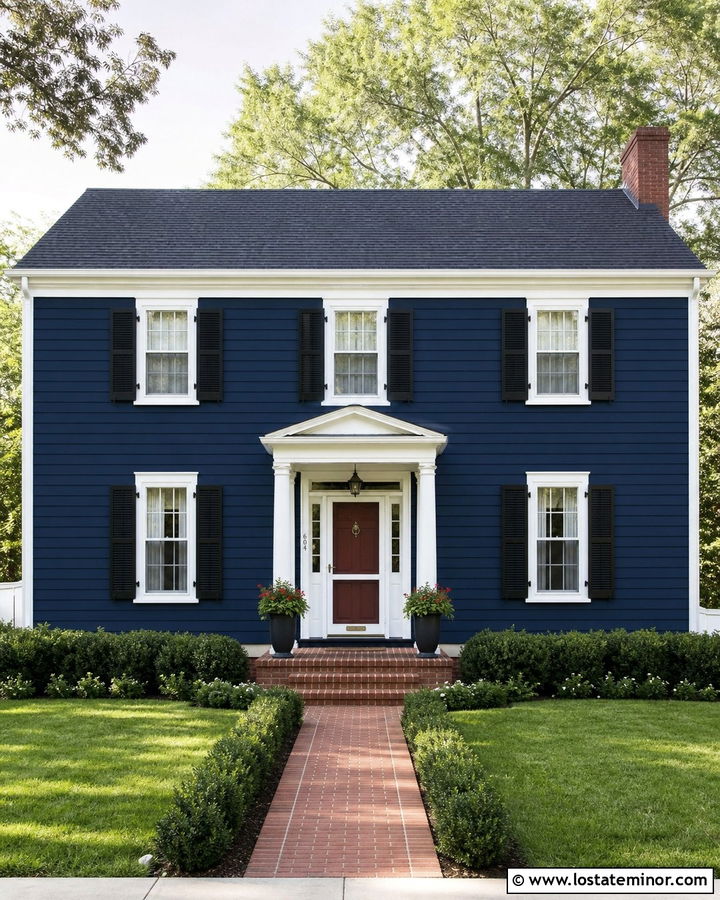
A red entry door can energize navy siding while a simple screen door keeps the combination practical. Choose a subdued brick red or barn red rather than an extremely bright shade. It will feel warmer and more established beside deep blue. A white full-view screen door frames the red cleanly and connects it to white window trim, porch columns, and fascia. Use dark charcoal roof shingles to ground the stronger colors. Traditional brass door hardware can add warmth, while red brick porch steps repeat the entry color in a quieter material. This scheme works naturally on colonial, Cape Cod, and Americana-inspired houses. Keep shutters navy or black so the facade does not become overly colorful. The red door should remain the single bold accent.
7. Navy Blue House With Yellow Front Door And Screen Door
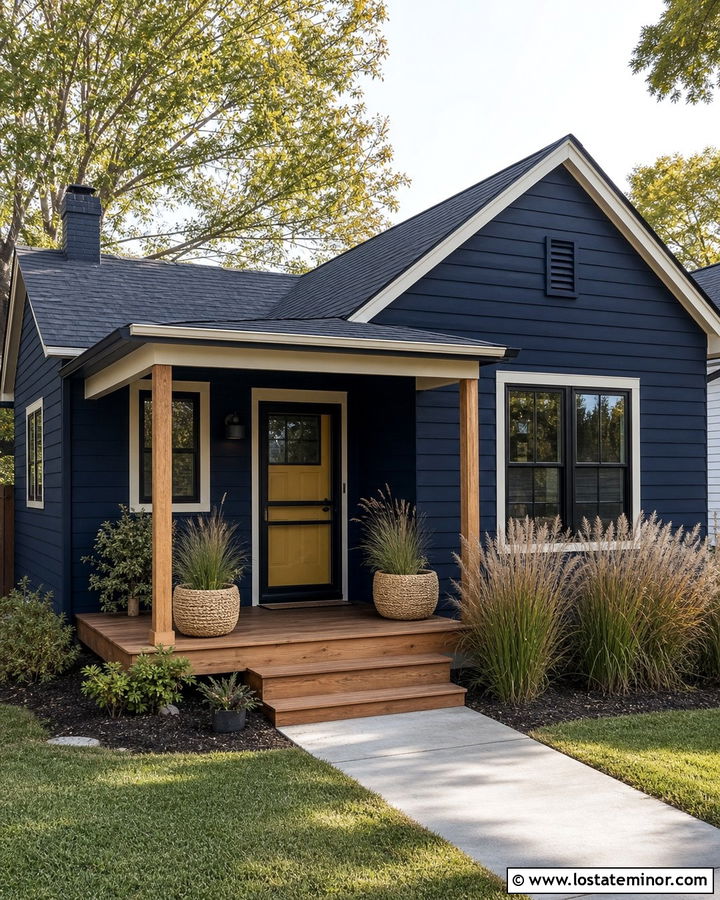
Sunlit yellow creates a cheerful focal point against navy blue siding. A soft golden yellow, ochre, or muted mustard is usually easier to coordinate than a bright lemon shade. Install a black full-view screen door over the yellow entry so the color remains visible while the frame connects to black windows, lighting, and railings. Warm white trim around the roof and openings keeps the overall exterior bright. Add a natural wood porch floor and woven planters to support the warmth of the door. This complete palette suits compact bungalows, lakeside cottages, and casual ranch homes. Use yellow only at the entrance, then repeat it lightly through seasonal flowers. Too many yellow accents could weaken the strong contrast that makes the front door effective.
8. Navy Blue House With Sage Green Door And Screen Door
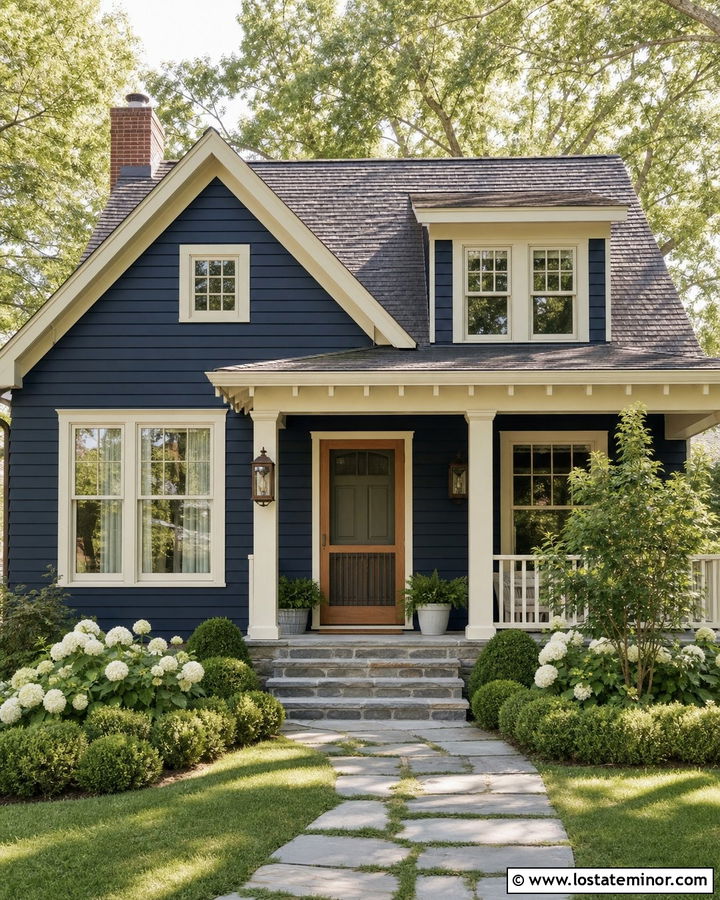
Navy and sage create a calm, nature-inspired exterior when both colors have muted undertones. Paint the main entry door a dusty sage green and cover it with a simple wood screen door stained in medium cedar. The wood becomes a bridge between the cool colors and nearby landscaping. Use soft cream rather than stark white on the window trim, porch posts, and fascia. A roof in weathered charcoal will maintain the understated appearance. This combination looks particularly comfortable on a cottage or craftsman house surrounded by mature trees. Include irregular flagstone steps and layered plantings with ornamental grass, boxwood, and white flowers. Keep hardware in aged bronze so it blends with the natural materials instead of creating another strong color on the facade.
9. Navy Blue House With Coral Door And Screen Door
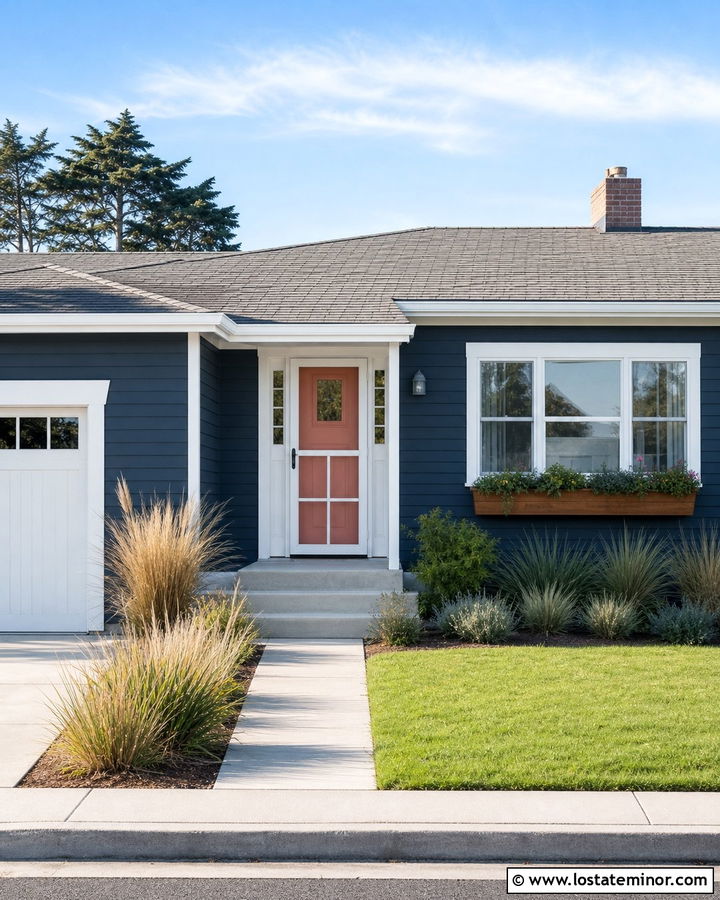
A coral front door gives a navy blue home a lively coastal accent without relying on predictable red. Look for a softened coral with terracotta or salmon undertones. Place a white full-view screen door over it to preserve the color’s visibility and connect the entrance with crisp white window trim. Light-gray roof shingles and a pale concrete walkway will keep the palette airy. Natural cedar porch chairs or window boxes can add warmth around the entrance. This color scheme works especially well on beach cottages, small coastal ranches, and homes with shake siding. Limit coral to the main door and a few flowers near the walkway. Repeating it across shutters or large architectural elements could overpower the calm, grounding effect of the navy exterior.
10. Navy Blue House With Turquoise Door And Screen Door
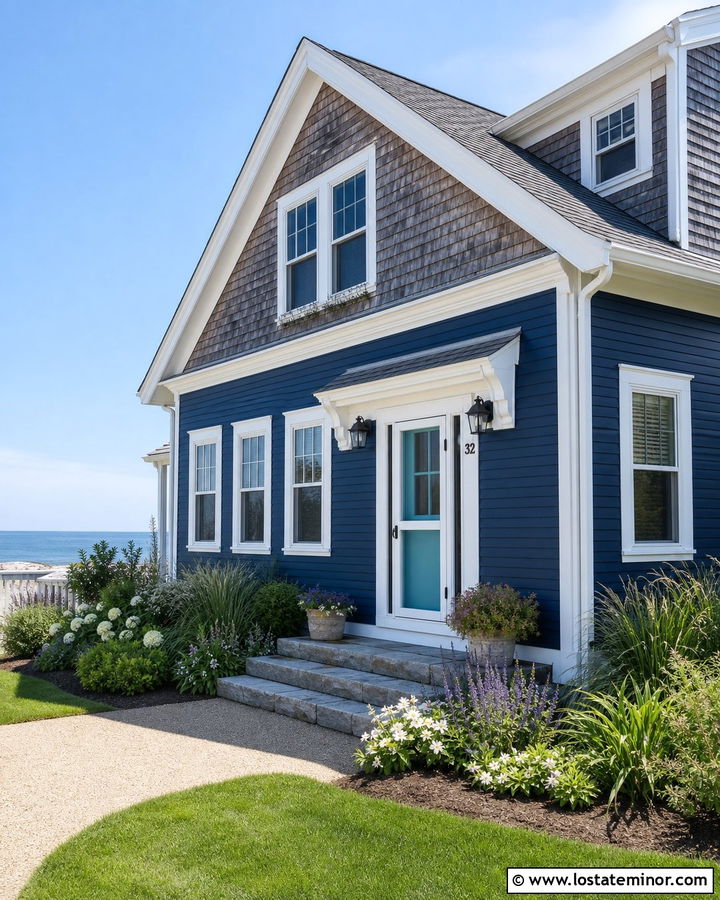
Layering turquoise over navy creates a blue-on-blue exterior that feels playful but still coordinated. Choose a medium turquoise front door with enough green to remain distinct from the siding. A narrow white aluminum screen door will outline the brighter color and tie it to white eaves, corner boards, and window trim. Weathered cedar shingles on the porch roof or gables can add coastal texture without introducing another painted color. Complete the facade with gray stone steps and brushed-nickel or matte-black hardware. This scheme works best on cottages and relaxed coastal homes with simple architectural lines. Use turquoise selectively. The main door can provide all the color variation needed, while navy siding remains the dominant element across the full house.
11. Navy Blue House With Navy Screen Door
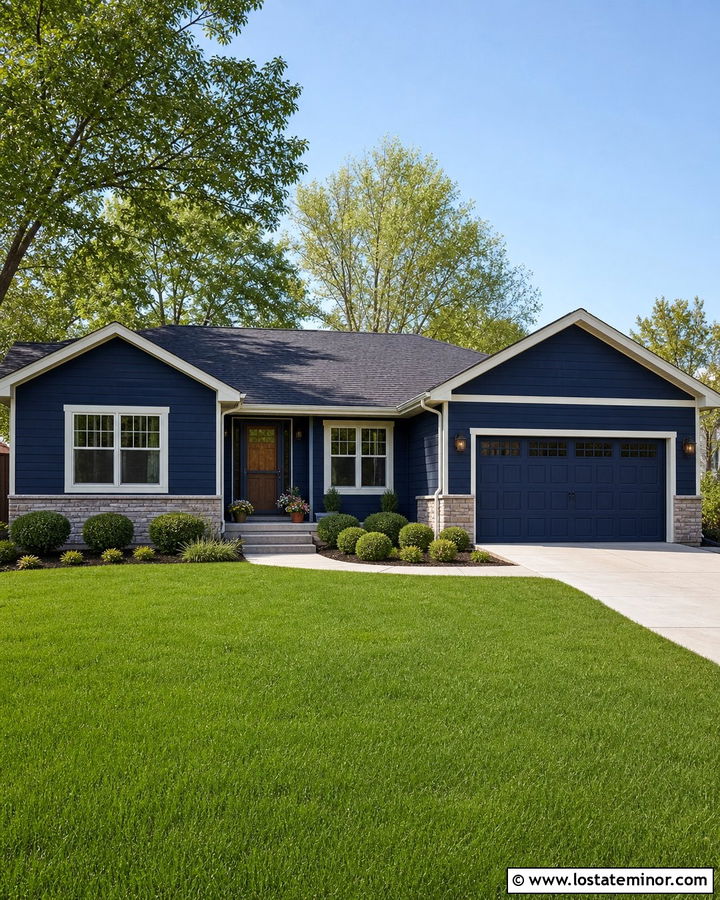
A color-matched screen door creates a smooth, almost built-in appearance. Paint or order the frame in a navy tone that closely matches the siding and entry surround. Behind it, use a warm wood front door or a soft white paneled door to prevent the entrance from disappearing completely. This monochromatic treatment is useful on a small house where strong frame contrast could divide the facade. Add creamy white window trim, natural stone at the foundation, and dark bronze lighting for subtle variation. On a ranch home, extending navy across the siding, screen frame, and garage door can make the low profile feel longer and more unified. Use different textures, such as lap siding and stone, to keep the dark exterior visually layered.
12. Navy Blue House With Bronze Screen Door
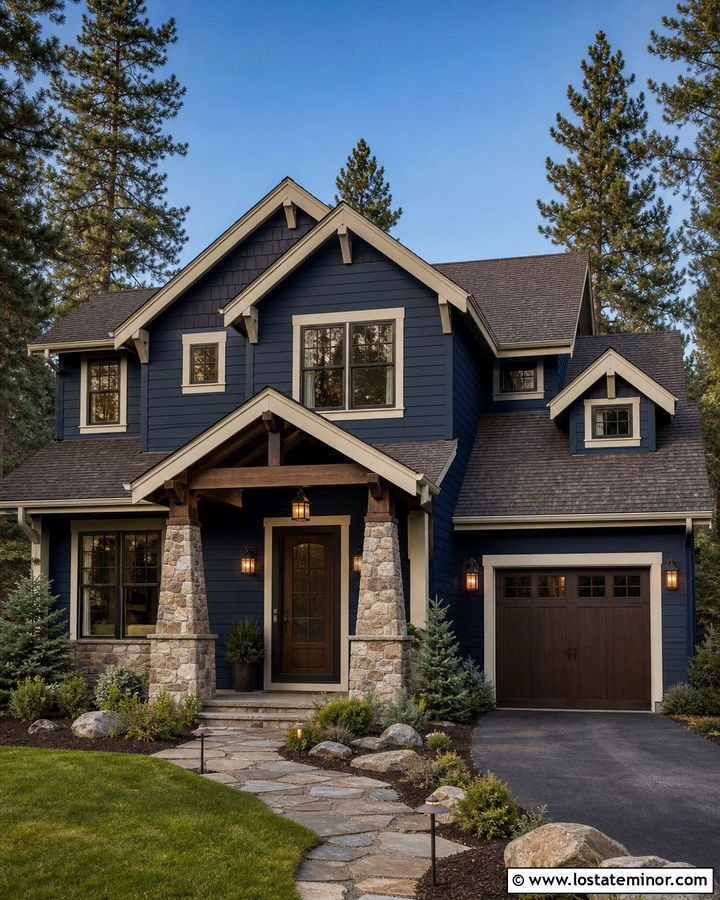
Bronze is a softer alternative to black and works beautifully with warm stone, brick, and wood. Pair navy blue siding with an oil-rubbed bronze screen door over a medium-stained mahogany entry door. Repeat bronze through porch lanterns, house numbers, mailbox details, and railing hardware. Choose cream trim instead of pure white to support the warmer metal finish. A brown-gray roof and variegated stone foundation will make the complete exterior feel cohesive. This palette is especially suitable for craftsman homes, mountain cottages, and traditional houses with substantial porches. Select a full-view screen design to highlight the wood door and avoid a heavy entrance. The bronze frame should act as a quiet connector between the dark blue siding and the warmer architectural materials.
13. Navy Blue House With Gray Screen Door
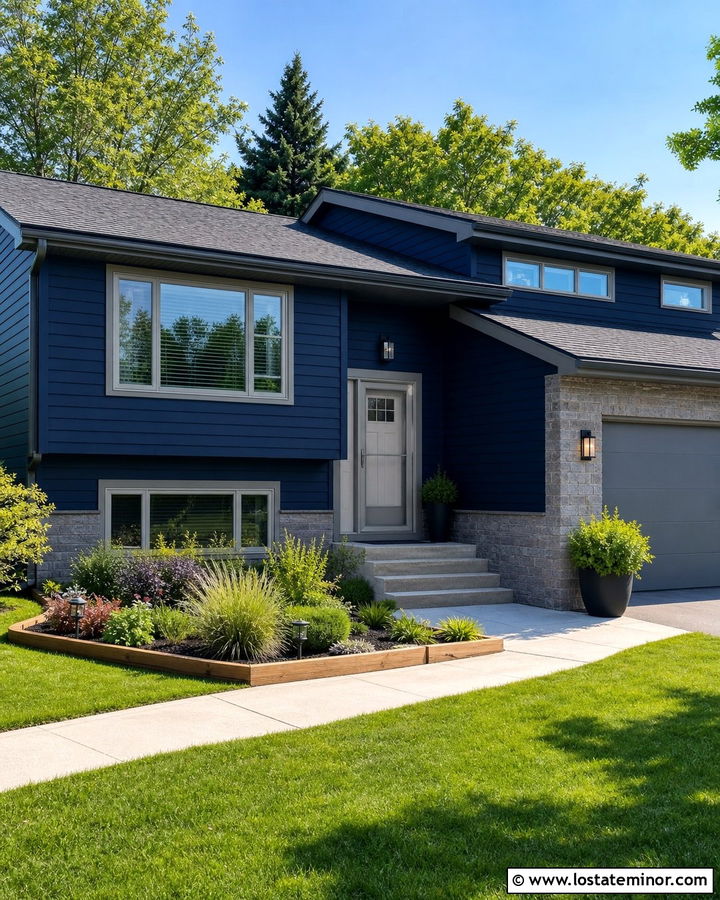
A soft gray screen door provides low-contrast definition for homeowners who find black too strong and white too bright. Match the frame to a gray roof, porch floor, or stone accent so it belongs within the full exterior scheme. Pair deep navy lap siding with light-gray window trim and a medium-gray aluminum screen door over a white or natural wood entry. A concrete path and charcoal planters can continue the gray family throughout the front yard. This subtle palette suits split-level houses, ranch homes, and understated contemporary exteriors. Use warm landscape materials, such as cedar edging or tan gravel, to prevent the combination from feeling cold. The gray screen frame should be clearly different from the navy while remaining quieter than the front door behind it.
14. Navy Blue Craftsman With Wood Screen Door
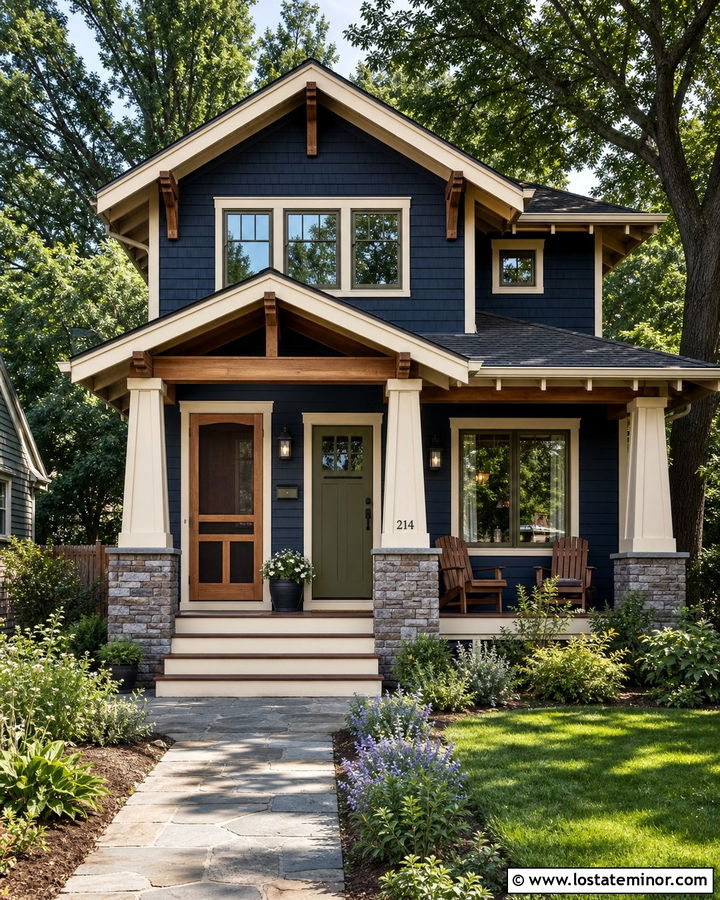
A craftsman facade offers the perfect setting for a substantial wood screen door. Use rich navy clapboard or shingle siding with creamy trim, tapered porch columns, and cedar brackets. Choose a three-panel screen door with visible joinery, then stain it to match the porch beams and front steps. A warm olive, rust, or wood-tone entry door can sit behind the screen without competing with it. Add a stone column base that combines gray, taupe, and brown to connect every color in the design. Dark bronze lanterns and hardware complete the traditional material palette. Keep decorative details aligned with the house’s existing geometry. A simple handcrafted screen door will look more authentic than one covered with ornate scrollwork or unrelated patterns.
15. Navy Blue Colonial With White Screen Door
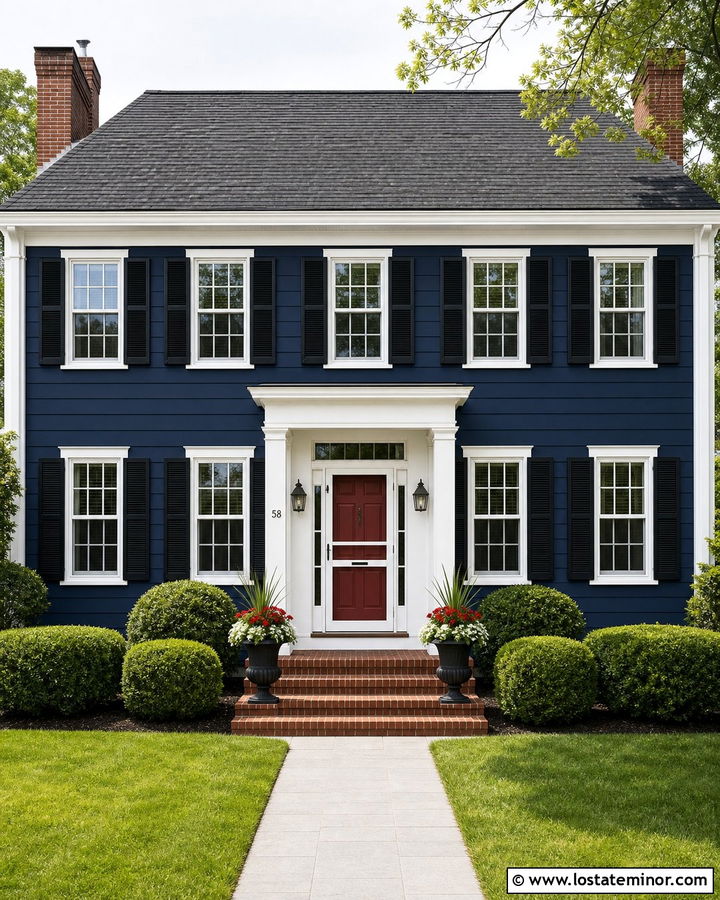
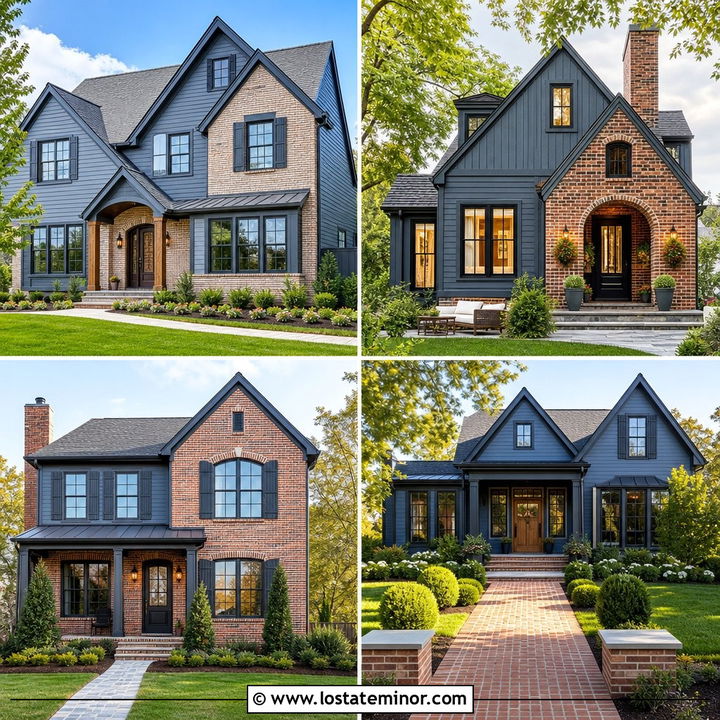
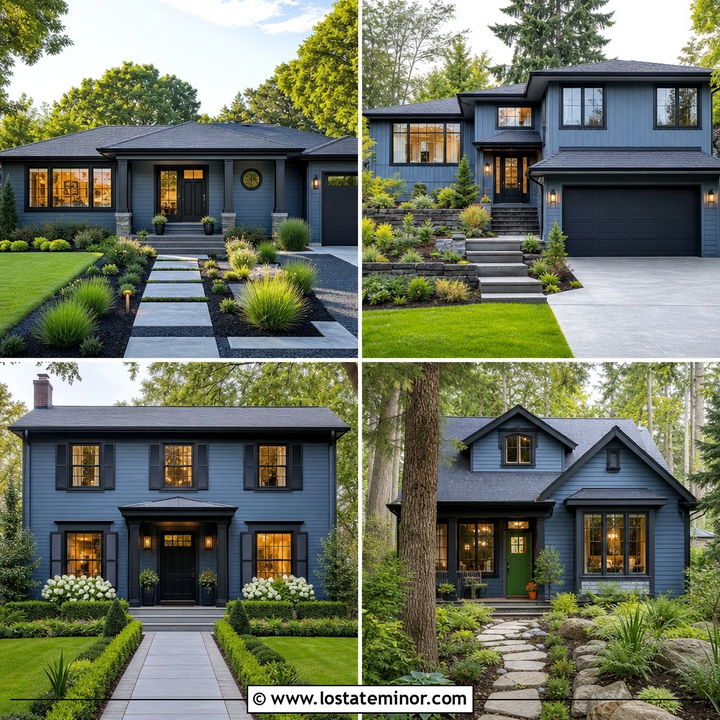
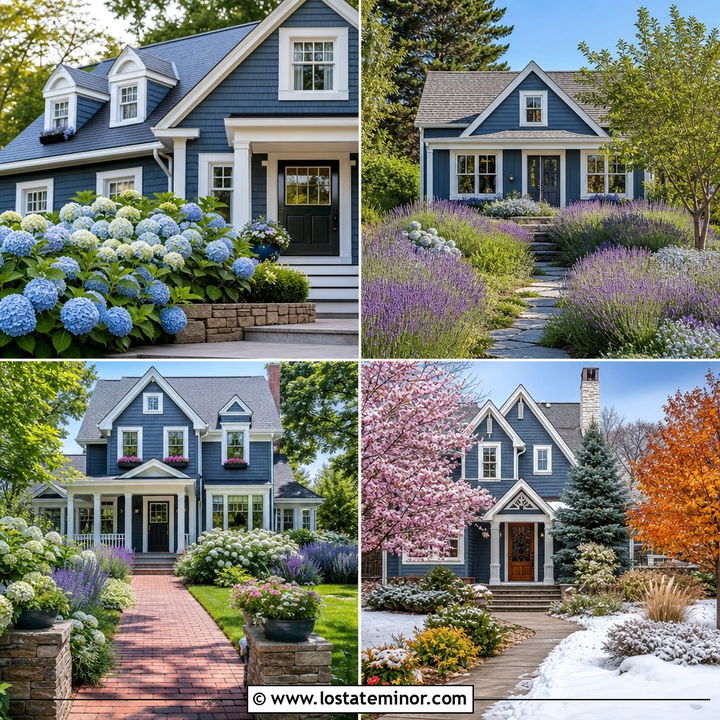
Symmetry makes every entrance detail noticeable on a colonial house, so the screen door should align closely with the surrounding trim. Paint the clapboard siding a dignified navy and use clean white on the corner boards, window casing, cornice, and entry surround. A white full-view screen door placed over a black or deep red front door preserves the formal contrast. Add matching black shutters and a charcoal roof for a balanced three-color palette. Brick steps and a straight walkway reinforce the traditional layout. Keep planters identical on both sides of the entrance to support the architecture’s symmetry. The screen frame should remain slender and uncomplicated, allowing the paneled front door, pediment, sidelights, or transom to remain visible from the curb.
16. Navy Blue Farmhouse With Black Screen Door
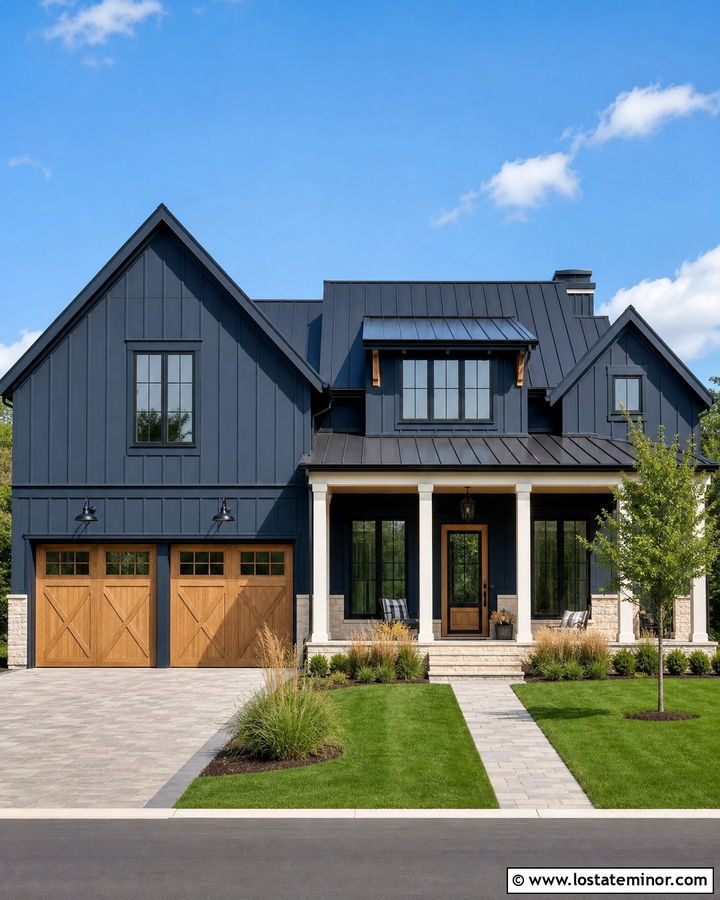
Dark navy board-and-batten siding gives a farmhouse exterior more depth than the familiar all-white palette. Pair it with warm white fascia, window trim, and porch columns to define the simple roofline. A black full-view screen door works well over a light oak entry door, particularly when the windows and metal roof are also black. Repeat the oak tone on porch beams or double garage doors to warm the dark facade. Use pale limestone or light-gray concrete at the foundation for visual balance. This complete scheme feels modern without losing farmhouse character. Choose a screen door with minimal rails and no decorative grille. Strong vertical siding, simple metal framing, and natural wood provide enough detail without extra ornament around the entrance.
17. Navy Blue Cape Cod With White Screen Door
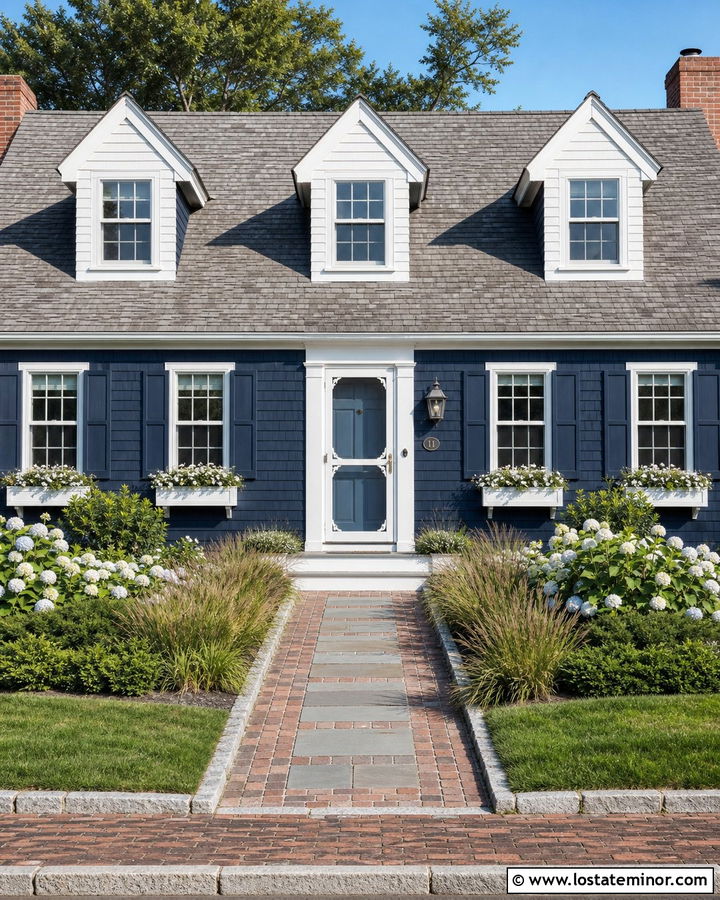
A navy Cape Cod house feels crisp and coastal when paired with white trim and a traditional white screen door. Use navy shingles or narrow clapboards across the body, then highlight dormers, windows, corner boards, and the roofline in bright white. Place the screen over a medium-blue, natural wood, or muted red front door. A gray cedar-look roof and white window boxes enhance the relaxed regional character. Add a brick or bluestone path framed by hydrangeas, grasses, and low evergreen shrubs. A simple wood screen door with a wide bottom rail can look more appropriate than a sleek contemporary model. Keep the porch compact and uncluttered so the entry remains proportional to the Cape Cod facade.
18. Navy Blue Ranch With Natural Wood Screen Door
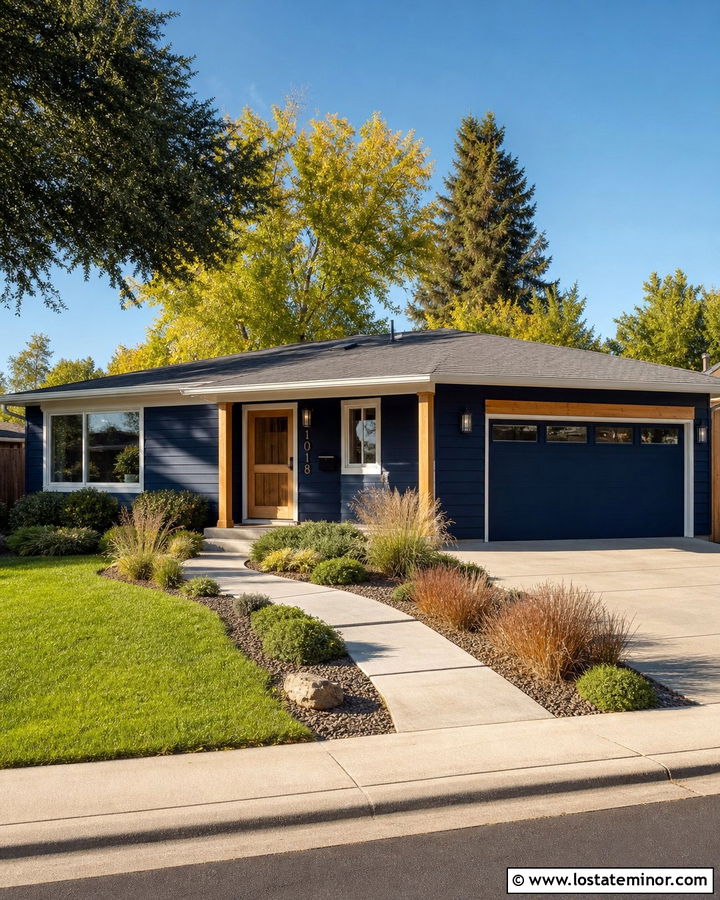
A long ranch facade benefits from warm wood details that break up the horizontal stretch of navy siding. Install a natural cedar screen door over a cream or muted green entry, then repeat cedar on the garage door, porch posts, or privacy screen. Use off-white trim around the windows and roofline to brighten the single-story structure. A low charcoal roof will anchor the house without making it appear taller than it is. Add a broad concrete walkway, layered ornamental grasses, and rounded shrubs to soften the straight architectural lines. The screen door can feature two or three horizontal rails that echo the home’s low profile. This coordinated scheme makes a basic ranch feel more detailed while preserving its simple, accessible character.
19. Navy Blue Bungalow With Decorative Screen Door
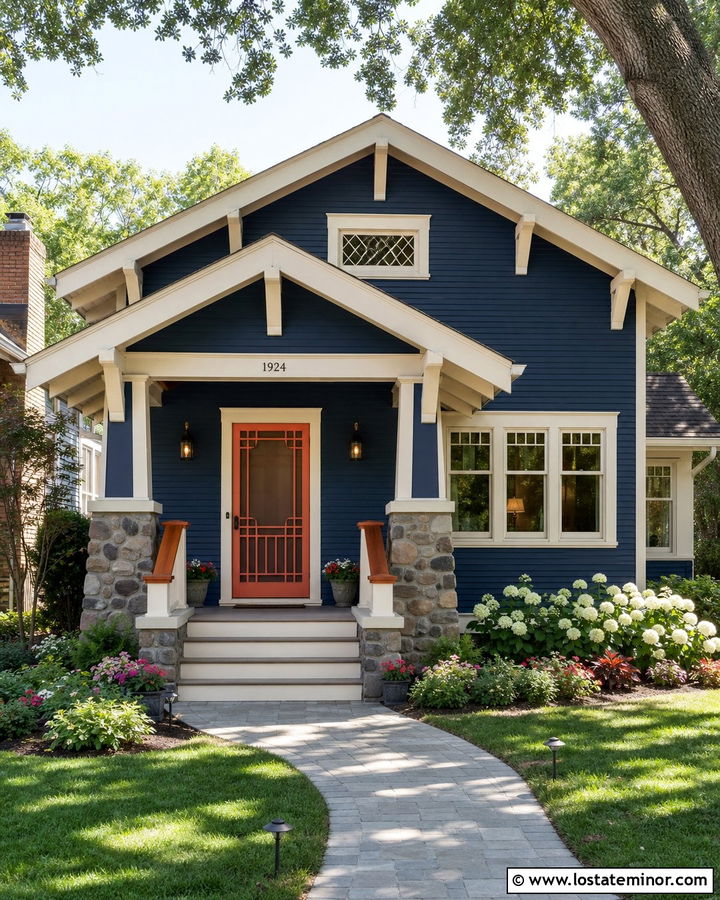
A decorative screen door can add personality to a bungalow when its pattern supports the architecture. Choose a wood door with a straightforward geometric grille, small corner brackets, or a divided lower panel. Stain it warm cedar and place it over a muted terracotta or cream entry door. Deep navy lap siding, ivory trim, exposed rafters, and a stone porch base complete the exterior. Repeat the screen door’s wood tone on porch beams and rail caps so it does not appear isolated. Bronze hardware and classic lanterns will maintain the handcrafted look. Avoid intricate patterns that compete with roof brackets or multi-pane windows. The goal is to add one layer of detail while allowing the bungalow’s porch and low roofline to remain dominant.
20. Navy Blue Cottage With Vintage Screen Door
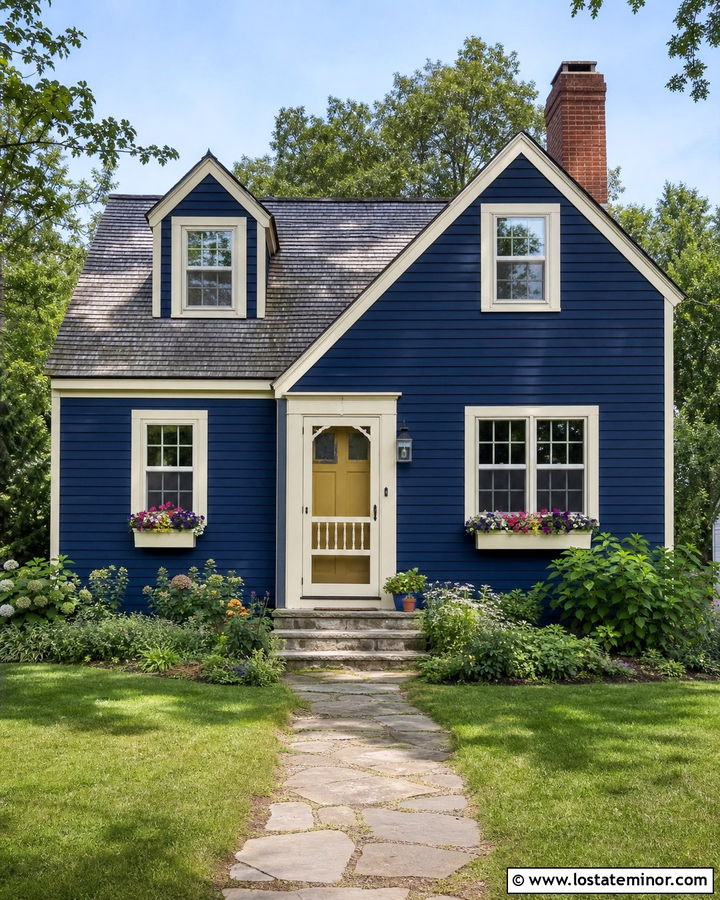
A vintage-inspired screen door brings relaxed charm to a small navy cottage. Select a painted wood model with simple spindle details or a restrained center motif. Soft white, pale gray, or weathered blue will stand out gently against the dark facade. Place it over a warm yellow or natural wood entry door for an inviting layered effect. Use creamy trim around windows and eaves, then add a weathered gray roof and brick chimney. A short flagstone walkway, informal flower beds, and window boxes can reinforce the cottage character. Keep the screen door finish slightly softened but not excessively distressed. The complete exterior should feel cared for and established, rather than intentionally worn or themed. Black or aged-brass hardware provides a practical final accent.
21. Navy Blue Coastal House With White Screen Door
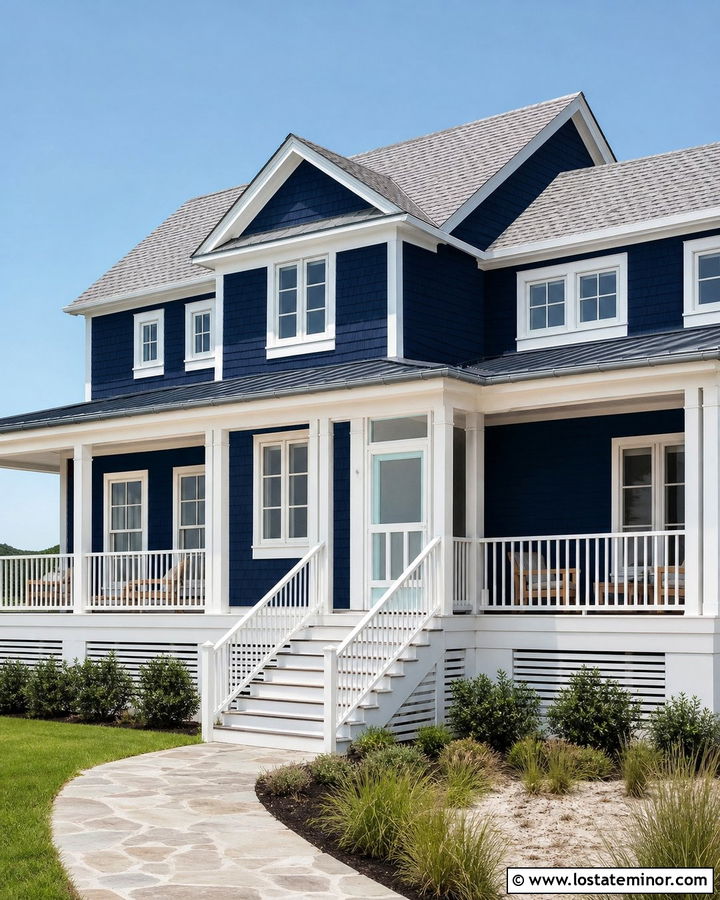
Bright white details give navy siding a fresh coastal quality, especially when used consistently from the roofline to the entry. Choose white trim, porch railings, window casing, and a white full-view screen door. Behind the screen, use a pale aqua or natural teak entry door for subtle warmth. Navy shingle siding and a light weathered-gray roof will create texture across the larger facade. Add a sandy-toned stone walkway, ornamental grasses, and simple wood porch furniture to complete the setting. Avoid excessive nautical decorations; the blue-and-white palette already communicates the coastal influence. A clean screen frame and broad glass or mesh opening keep the house looking open and bright. This scheme works for cottages, raised beach homes, and suburban coastal-inspired builds.
22. Navy Blue Modern House With Black Screen Door
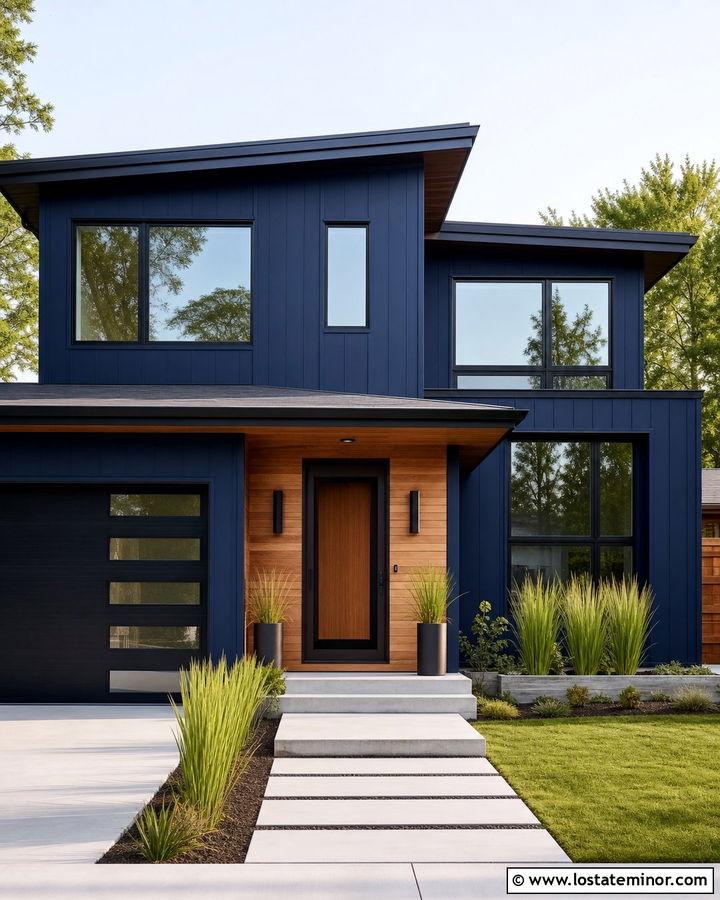
Clean lines call for a screen door that nearly disappears into the entrance. Use a narrow black retractable or full-view frame against deep navy vertical siding. Set it over a flat-panel wood front door, then repeat black on window frames, roof edging, and minimalist wall lights. Concrete steps and a pale-gray walkway introduce a lighter neutral at ground level. Consider a small section of warm cedar cladding near the entry to prevent the navy-and-black scheme from becoming too severe. Landscaping should follow the architecture, with structured grasses, low hedges, and simple rectangular beds. Avoid decorative grille patterns or traditional hardware. The screen door should support the contemporary geometry while keeping the warm wood entry clearly visible within the complete facade.
23. Navy Blue Split-Level With Gray Screen Door
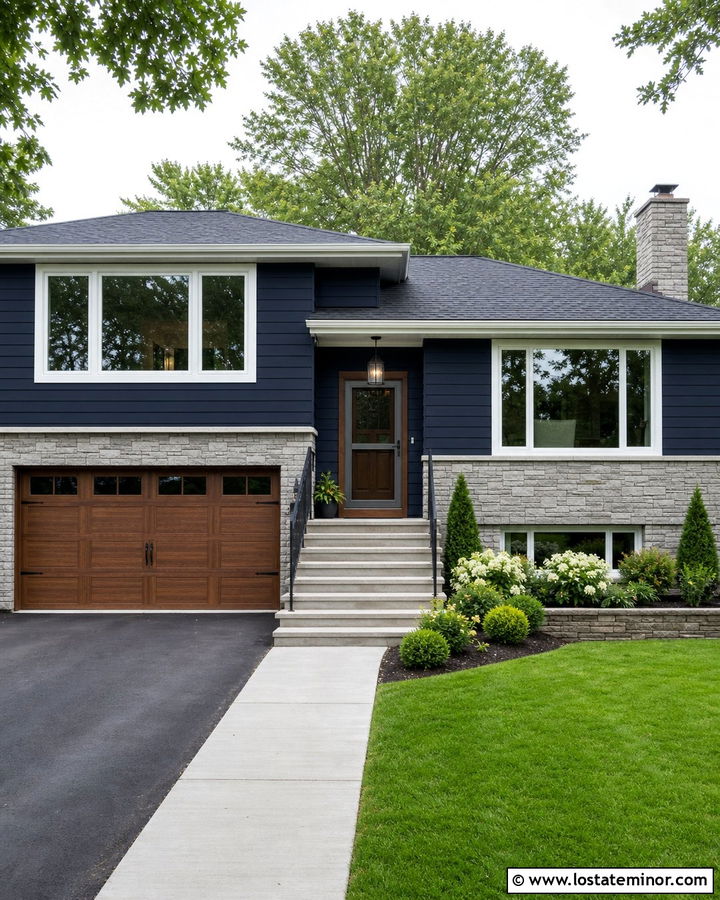
Updating a split-level exterior often means creating stronger connections between different floors and materials. Paint the upper siding deep navy, retain light-gray brick or stone below, and use soft white around the windows. A medium-gray screen door can link the masonry base to the main entrance without introducing a competing color. Place it over a warm walnut entry door and repeat walnut on the garage door or a small porch ceiling. Charcoal roof shingles will help unify the upper and lower sections. Improve the curb appeal further with wider steps, a straight modern railing, and layered foundation plantings. The coordinated gray frame looks purposeful, while the visible wood front door provides warmth at the center of the asymmetrical facade.
24. Navy Blue Victorian With Wood Screen Door
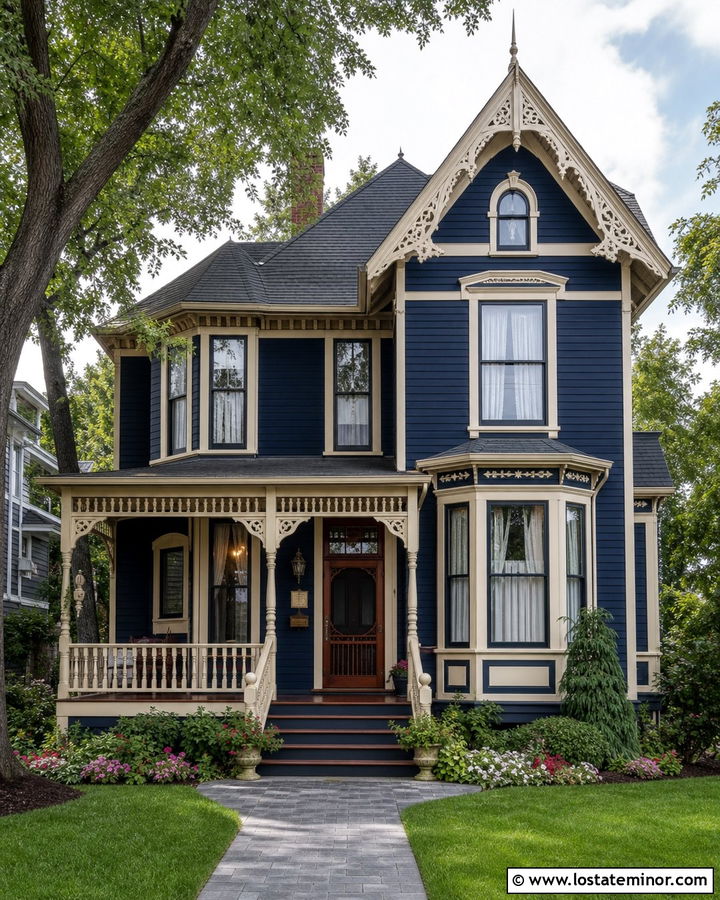
An older Victorian house can carry more screen-door detail than a simple modern facade, but restraint still matters. Pair navy blue siding with creamy trim across the window surrounds, porch brackets, balusters, and decorative gables. Add a stained mahogany screen door with a modest spindle panel or curved corner brackets. A burgundy, forest green, or warm wood entry door can sit behind it. Repeat the mahogany tone on the porch floor and handrail to connect the entrance with the larger structure. Choose a charcoal roof and aged-brass hardware for a historically sympathetic finish. Limit the palette to navy, cream, and two warm accents. Too many painted details could obscure the architecture instead of highlighting its craftsmanship and layered exterior surfaces.
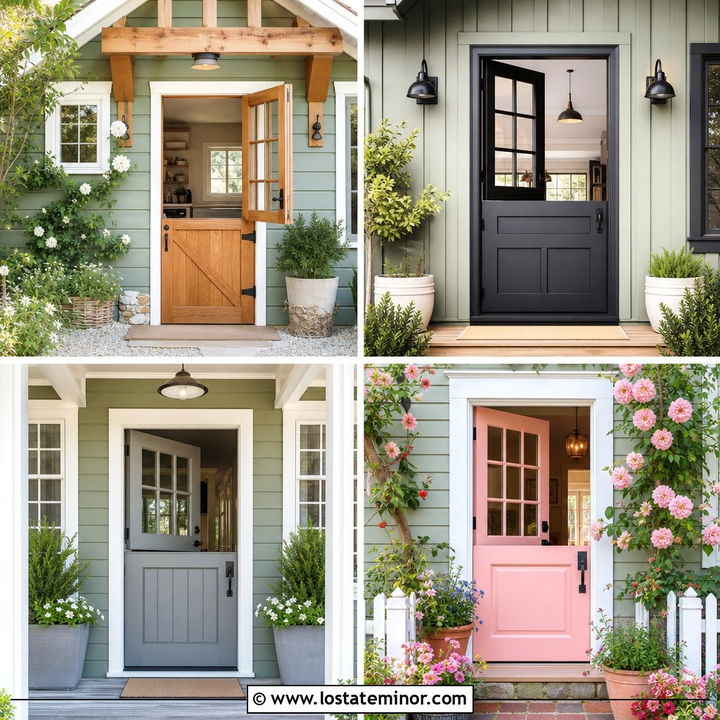
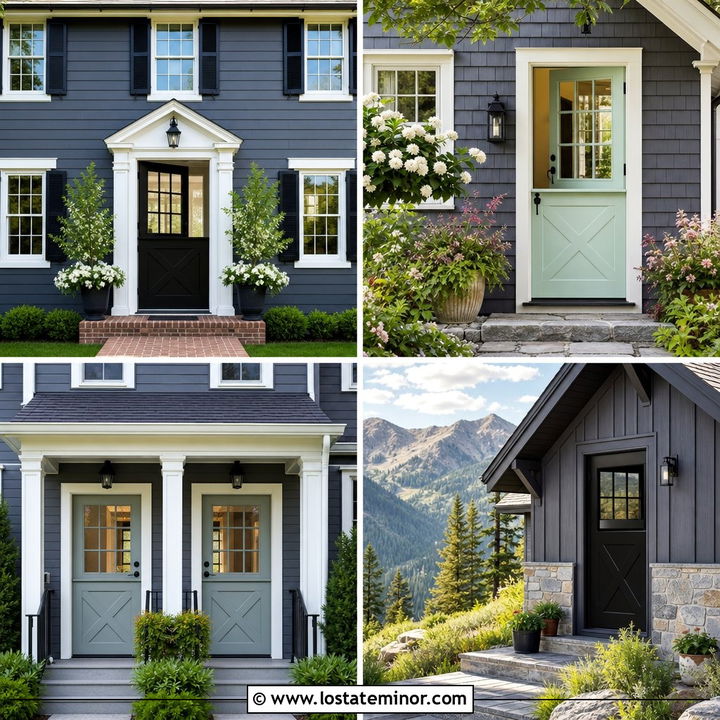
25. Navy Blue House With Double Screen Doors
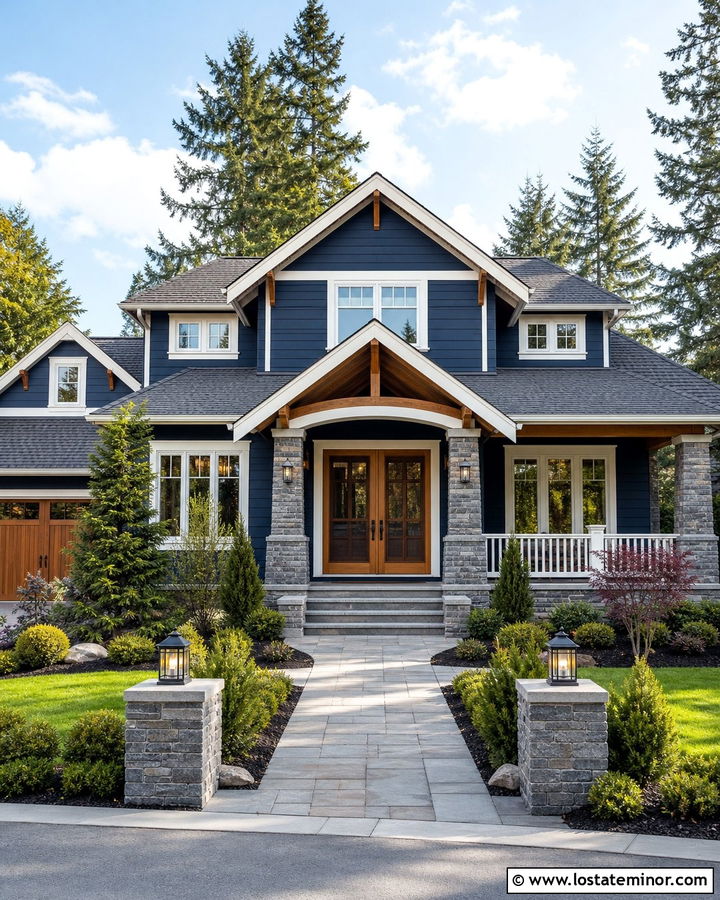
Double screen doors can turn a broad entry into a strong architectural focal point. They work especially well over French doors or a wide pair of wood entry doors. Use deep navy siding with warm white trim and stained cedar screen frames. Match the cedar to porch beams, the ceiling, or garage accents for continuity. Black hinges, handles, and lanterns add definition without interrupting the natural material. A stone porch with broad steps gives the wider opening enough visual support. This arrangement suits large craftsman homes, farmhouse exteriors, and houses with deep covered porches. Make sure the screen doors share equal proportions and simple rail patterns. Balanced doors will reinforce the entrance symmetry while keeping the complete facade welcoming and practical.
26. Navy Blue House With Screen Door And Stone Porch
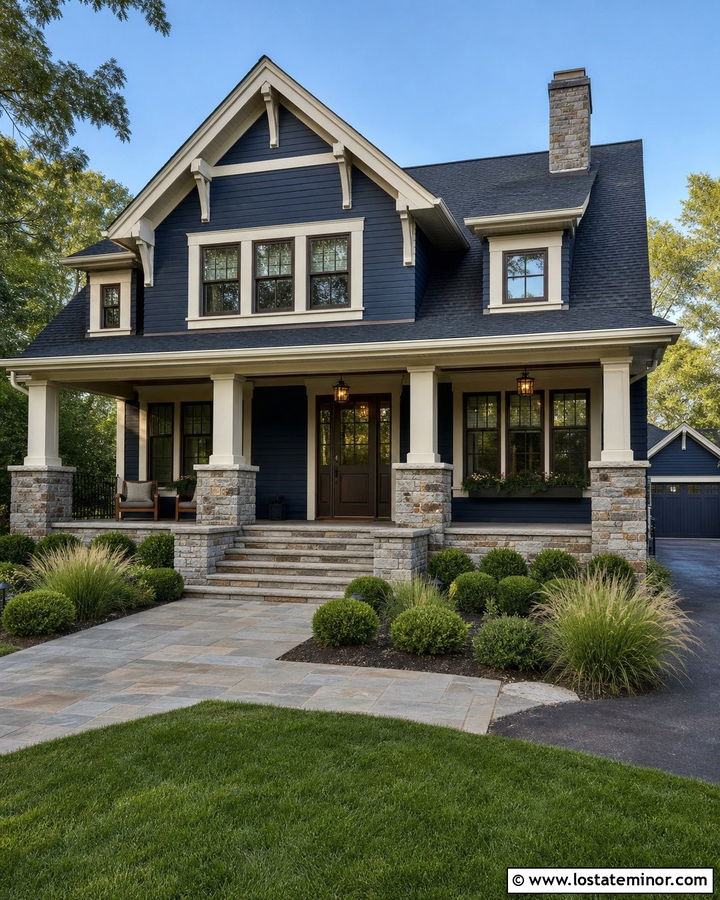
Stone can soften the transition between navy siding and a contrasting screen door. Choose masonry containing a balanced mix of gray, cream, and subtle brown, then repeat one of those tones in the door frame. For example, pair navy lap siding with cream trim, a bronze screen door, and a walnut front door. Use the same stone on porch columns, steps, and a low foundation wall. Dark bronze lighting will connect with the screen frame, while a charcoal roof supports the blue facade. Keep the stone pattern broad and natural rather than overly busy. This complete exterior works well on craftsman, traditional, and mountain-inspired homes. The masonry adds enough texture that shutters and decorative trim can remain simple.
27. Navy Blue House With Screen Door And Brick Steps
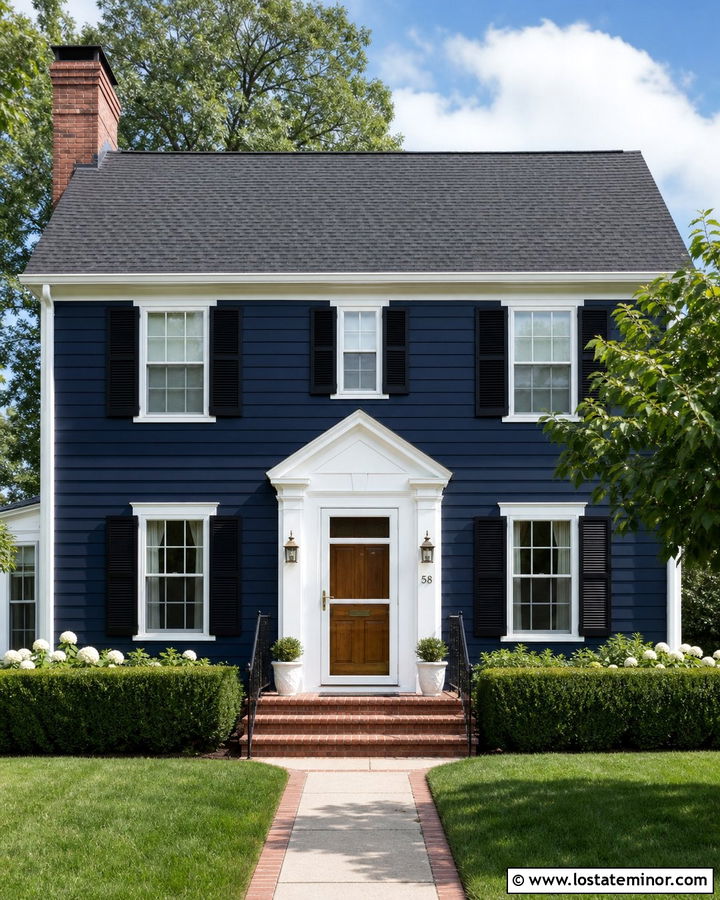
Red brick steps bring familiar warmth to a navy blue facade. Use a navy clapboard body with crisp white trim and a white or black full-view screen door. Behind it, choose a wood, red, or muted yellow entry door depending on how much contrast you want. Traditional red brick works especially well when the chimney or walkway edging uses the same material. Add black shutters, charcoal roof shingles, and simple brass or black door hardware. White planters filled with greenery can brighten the porch without adding another permanent color. This combination fits colonial, Cape Cod, and older suburban houses. Keep mortar and brick repairs consistent, since uneven patches become more noticeable beside the clean, saturated navy siding and bright trim.
28. Navy Blue House With Screen Door And Cedar Porch
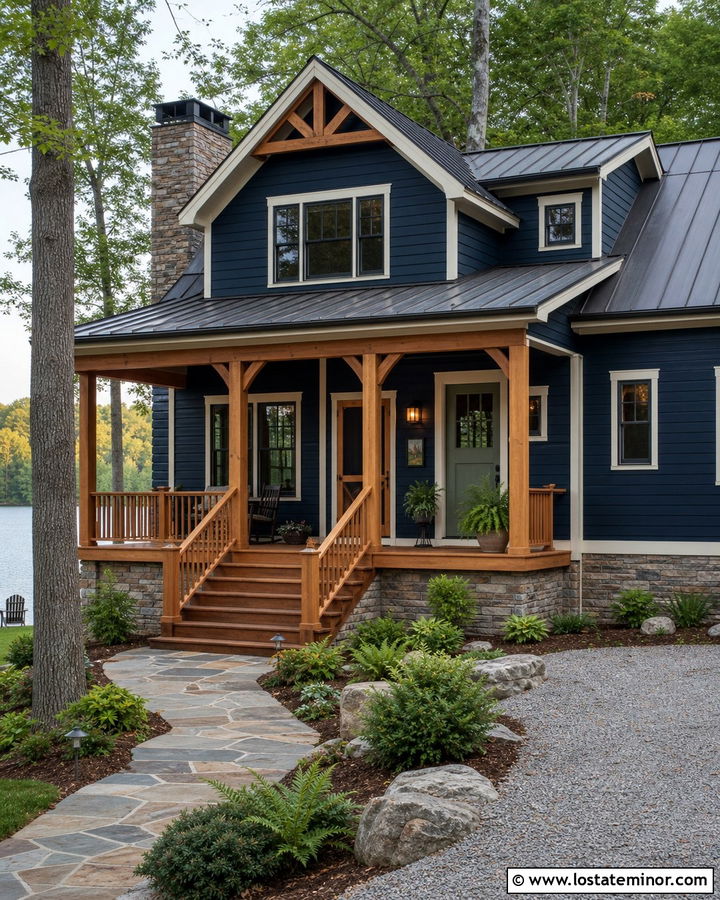
A cedar porch introduces natural color and texture across a dark navy exterior. Use cedar for the floor, steps, beams, and screen door, then protect the wood with a clear or lightly tinted exterior finish. Soft cream trim will blend more comfortably with the warm wood than a stark white. Add a charcoal metal roof or architectural shingles to ground the upper facade. A cream, sage, or matching navy front door can sit behind the cedar screen. This scheme suits cabins, craftsman houses, lake homes, and rustic modern cottages. Repeat the cedar selectively rather than covering every surface. Navy should remain the dominant color, while the porch and screen door create a warm entry zone that feels connected to the surrounding landscape.
29. Navy Blue House With Screen Door And Black Shutters
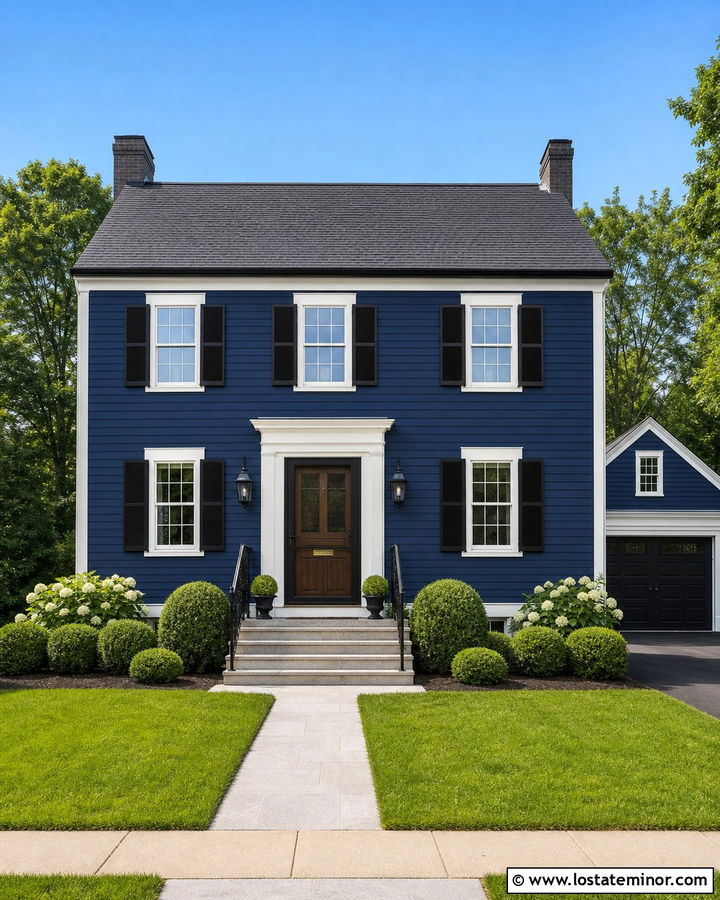
Black shutters can add structure to a navy exterior when enough light trim separates the two dark colors. Paint the siding a rich navy, frame the windows in warm white, and place black shutters outside that trim. Use a matching black full-view screen door over a natural wood or soft white entry door. Carry black onto the roof, porch lanterns, and metal railings for continuity. Brick or pale stone steps can introduce warmth at ground level. This scheme works well on colonial, Georgian-inspired, and traditional two-story homes. Make sure the navy and black are visibly different in daylight. If they are too similar, the shutters may disappear. Wide white casing provides the clean boundary needed to keep every architectural element readable.
30. Navy Blue House With Screen Door And White Porch
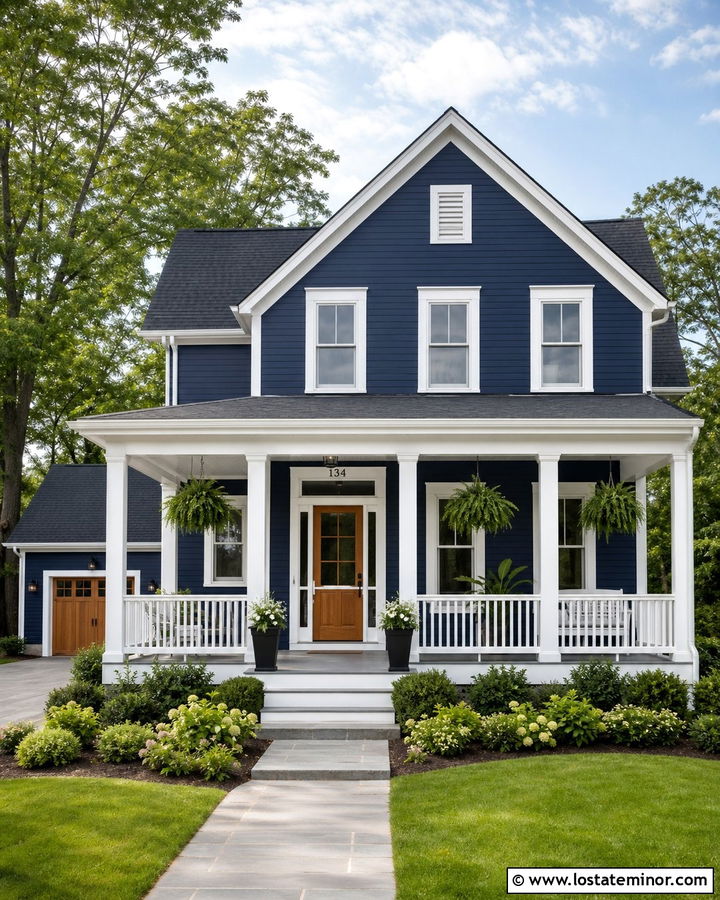
A full white porch creates a bright frame around a navy blue house and makes the entrance easy to notice from the street. Use white on the columns, railings, fascia, ceiling trim, and screen door. A natural wood or muted blue front door can provide warmth behind the screen. Deep navy siding should remain visible between the porch structure and white window casing, preserving the strong color contrast. Add a medium-gray porch floor and charcoal roof to ground the palette. This complete look fits farmhouses, cottages, colonials, and traditional homes with covered entries. Keep furniture and planters simple so the porch architecture remains clear. Natural greenery will supply enough additional color without weakening the timeless navy-and-white exterior scheme.
Conclusion:
The best screen door should look like a planned part of the exterior rather than a separate attachment. Match its frame to the trim for a crisp appearance, connect it to black windows for modern contrast, or use natural wood to warm deep navy siding. Consider the roof, porch, masonry, front door, garage, and landscaping before making the final choice. These surrounding features determine whether the screen door should stand out or blend into the entrance. Always compare exterior samples in bright daylight because dark blue finishes can appear different beside warm and cool materials. Use **30 Navy Blue House Design With Screen Door Ideas** as a practical guide for building a balanced, welcoming, and cohesive facade.

Related posts: