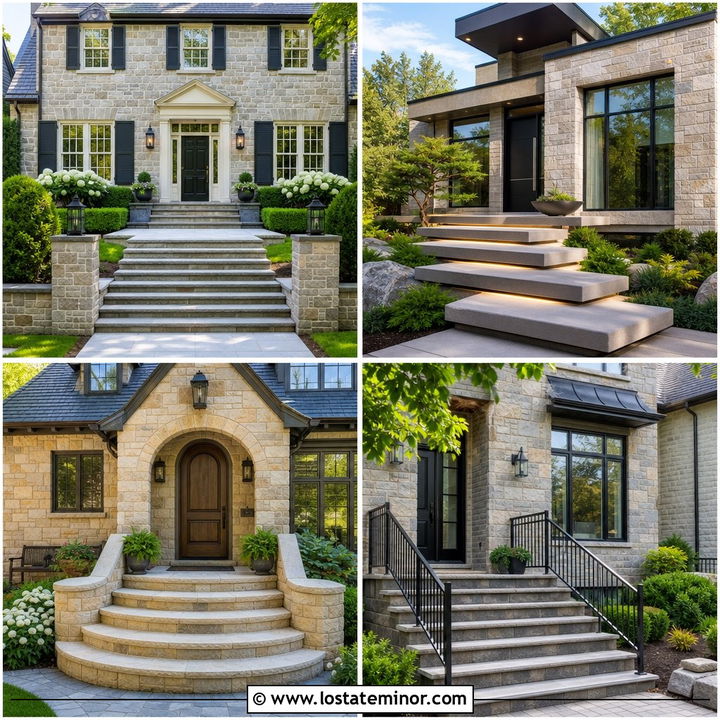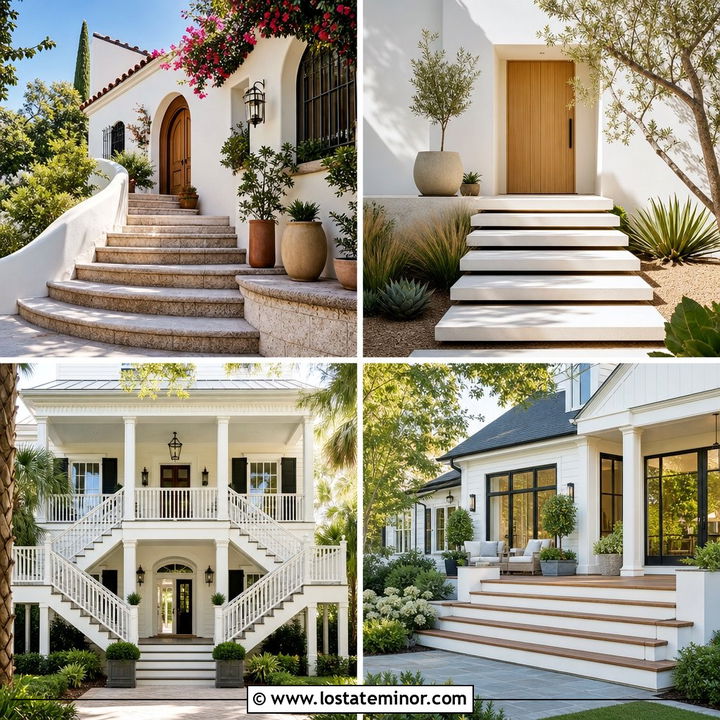
Greige creates a warm, flexible backdrop that works beautifully with stone, brick, wood, concrete, and metal. The right front steps can turn that quiet neutral exterior into a polished, welcoming facade. These 30 Greige House Design With Steps Ideas explore complete exterior combinations rather than treating the staircase as an isolated feature. You will find light and dark greige siding, practical step materials, coordinated railings, distinctive front doors, balanced trim, and landscaping that frames each entrance. The collection also covers ranch homes, Colonials, cottages, Craftsman houses, modern farmhouses, and other familiar American architecture. Whether you are planning a full renovation or updating an existing entry, use these 30 Greige House Design With Steps Ideas to create a cohesive path from the curb to the front door.
1. Greige House With Bluestone Steps
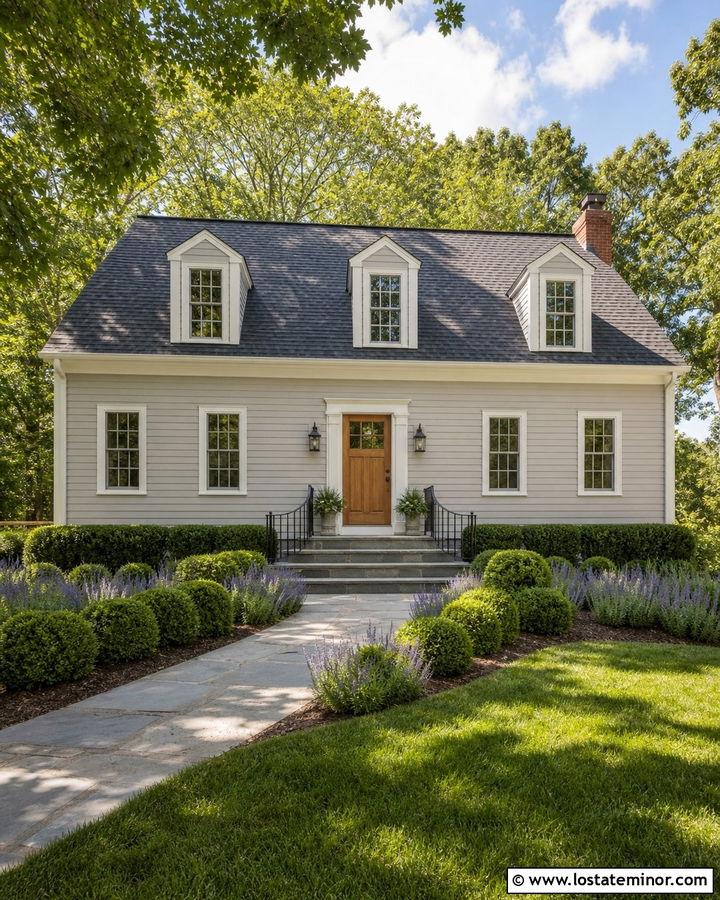
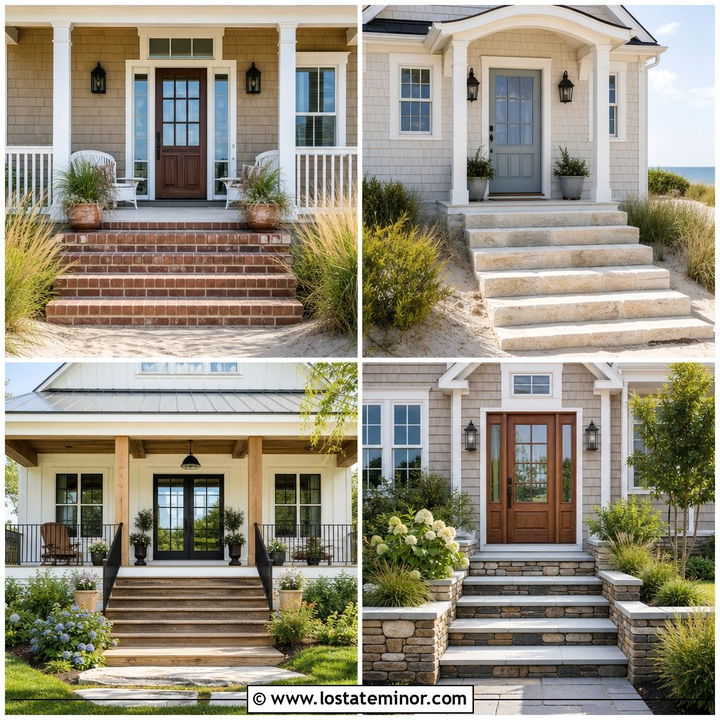
Bluestone steps give a light greige house a grounded, established appearance without making the entrance feel heavy. Use Benjamin Moore Edgecomb Gray on horizontal siding, then add warm white trim to define the windows, fascia, and porch columns. Wide bluestone treads with natural split faces introduce cool charcoal and blue-gray tones that balance the warmer siding. Continue the material along the walkway so the entrance feels connected to the yard. A stained oak front door softens the stone, while slim black railings provide useful contrast. This complete scheme works especially well on a traditional Cape Cod or New England cottage. Low boxwoods, lavender, and ornamental grasses can frame the steps without hiding their handsome texture.
2. Greige House With White Concrete Steps
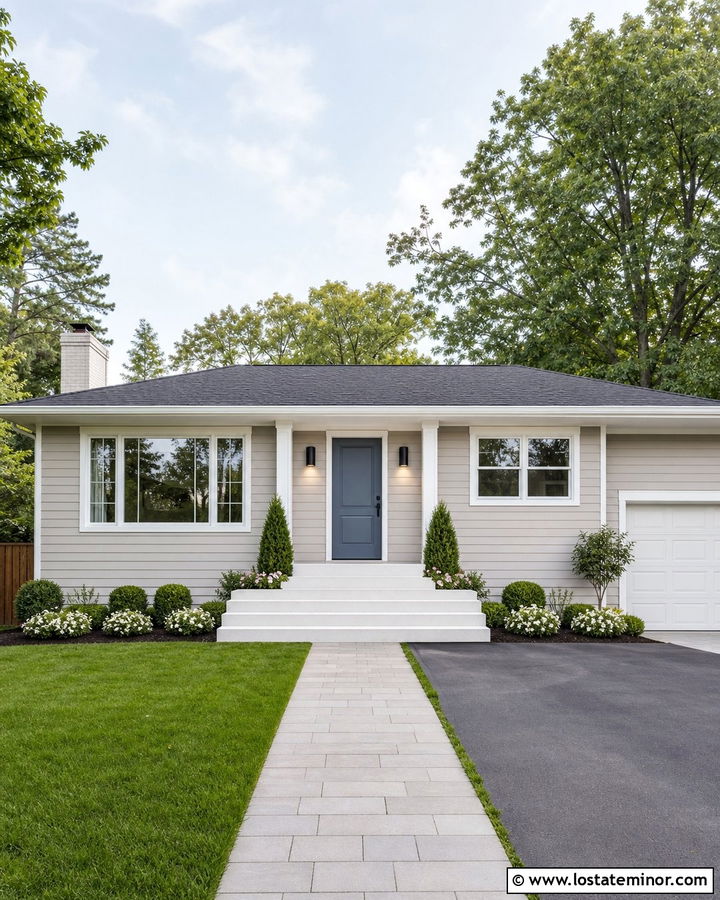
Clean white concrete steps can make a compact greige ranch look brighter and more spacious. Choose Sherwin-Williams Agreeable Gray for the siding, crisp white for the trim, and charcoal gray for the roof. The steps should be broad, simple, and aligned directly with the front door. A smooth white finish connects them visually to the window frames and shallow porch columns. Paint the door a muted blue-gray to introduce color without disrupting the quiet palette. Black sconces and modern house numbers add sharper definition near the entrance. For the landscaping, use a straight paver walkway, clipped evergreen shrubs, and low flowering plants. Keeping every line simple helps the modest ranch exterior appear orderly, updated, and intentionally designed.
3. Greige House With Red Brick Steps
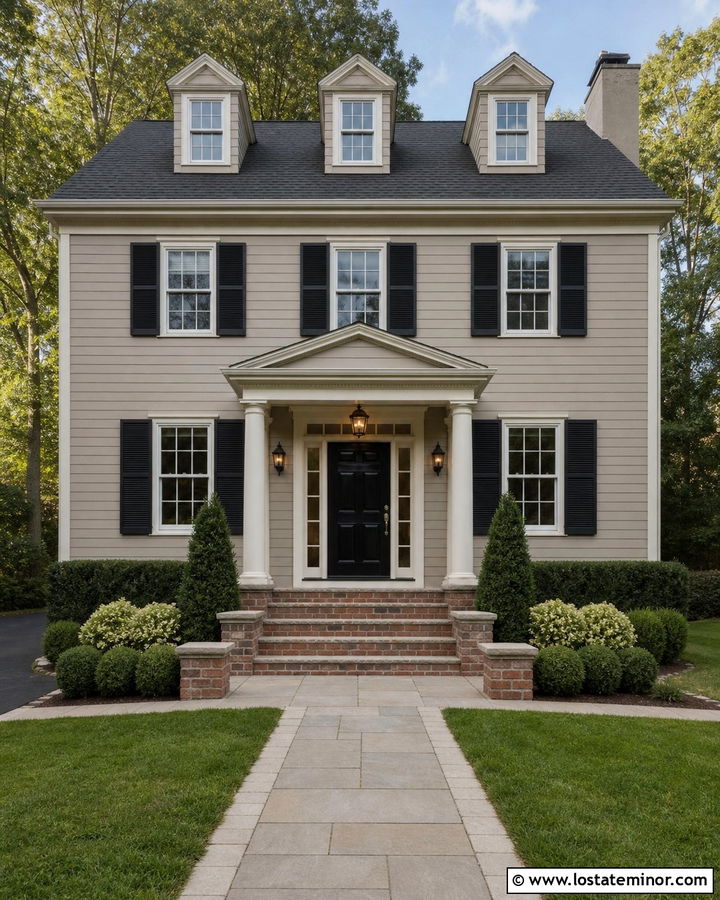
Do you want to preserve traditional character while updating the siding? Red brick steps offer a natural answer. Paint a two-story Colonial in Benjamin Moore Revere Pewter, then use soft ivory trim instead of a stark blue-white. The warm undertones in the greige siding connect easily with weathered red and brown brick. Carry the same brick across the porch floor or around the foundation for a more complete composition. A glossy black front door, black shutters, and dark lanterns create classic contrast. The brick steps can have limestone caps to provide smoother footing and a lighter transition into the entry. Symmetrical shrubs, a straight walkway, and balanced foundation planting reinforce the formal architecture without making the exterior look overly rigid.
4. Greige House With Natural Stone Steps
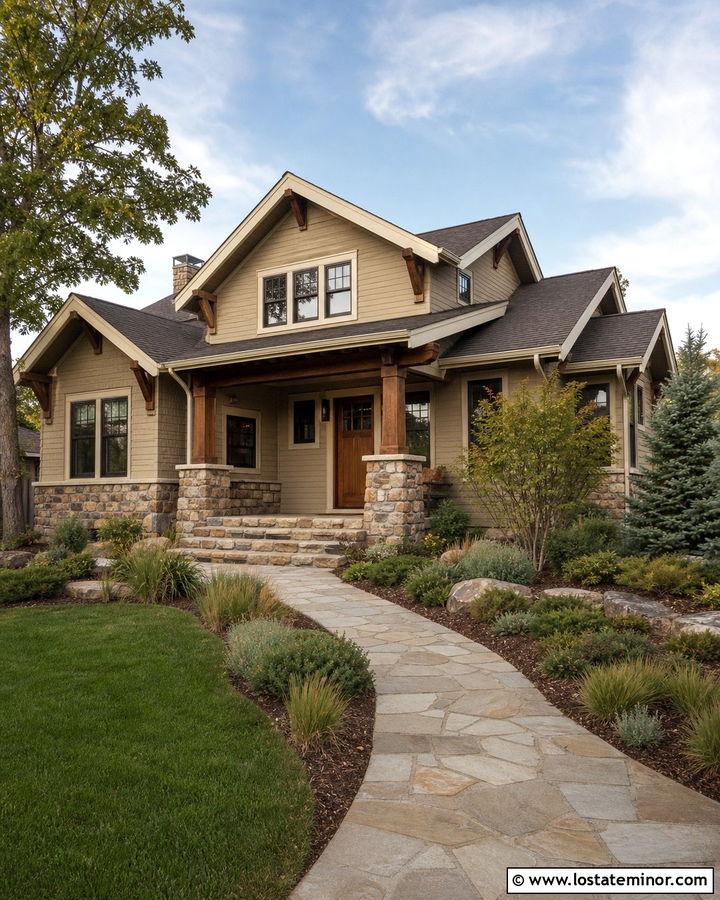
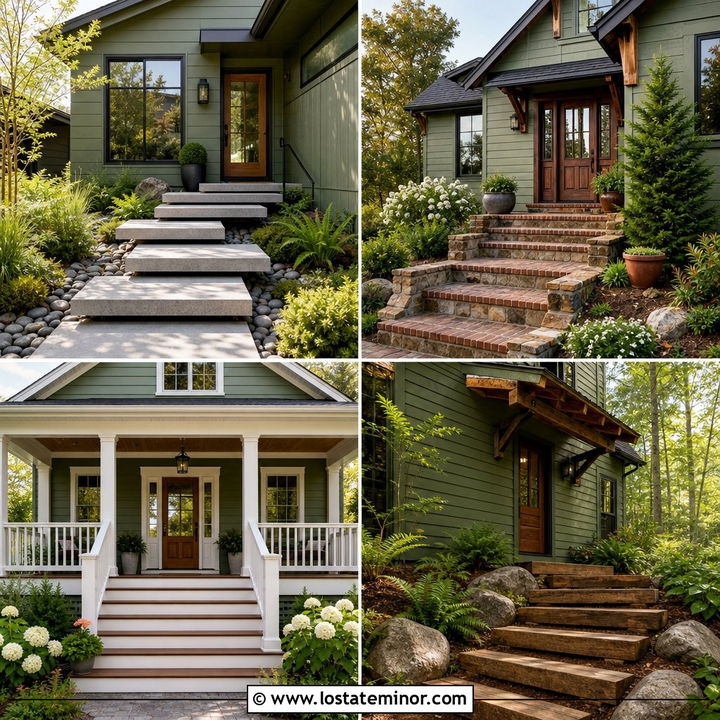
A Craftsman exterior feels especially welcoming when greige siding is paired with irregular natural stone steps. Sherwin-Williams Accessible Beige offers a warm greige body color that complements tan, gray, and brown fieldstone. Use creamy trim around the windows and beneath the deep roof overhangs. Stained cedar brackets, porch beams, and a craftsman-style front door add rich natural color. Build the broad steps with thick stone slabs and repeat the mixed stone around the porch piers and foundation. This repetition prevents the entrance from looking like a separate addition. A curved flagstone path, native grasses, evergreen mounds, and a small ornamental tree complete the setting. The result feels sturdy, comfortable, and connected to the surrounding landscape.
5. Greige House With Black Front Steps
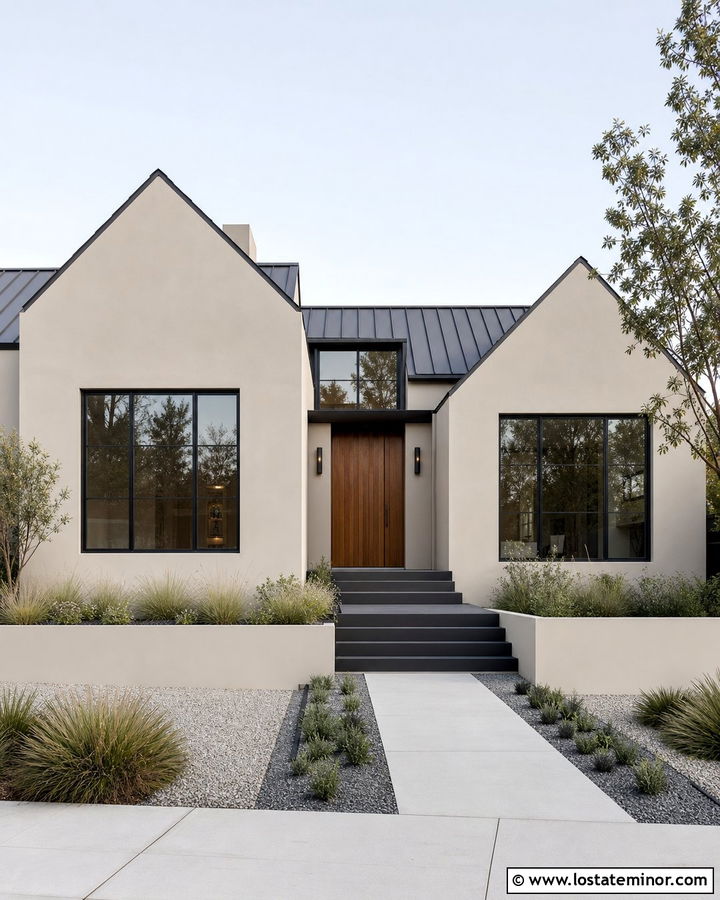
Black steps create a bold base for a pale greige modern house. Use Benjamin Moore Pale Oak on smooth stucco or wide horizontal siding, then select black for the window frames, fascia, and standing-seam roof. The front steps can be poured concrete finished in a deep charcoal-black coating. Keep the risers and treads wide, angular, and uncluttered to support the contemporary architecture. A warm walnut front door prevents the palette from becoming too cold. Consider integrated step lighting for a cleaner appearance than decorative posts or bulky fixtures. Linear planting beds filled with ornamental grasses and compact evergreens echo the strong horizontal lines. A light concrete walkway and simple gravel borders keep the dark staircase clearly visible within the complete exterior.
6. Greige House With Wood Porch Steps
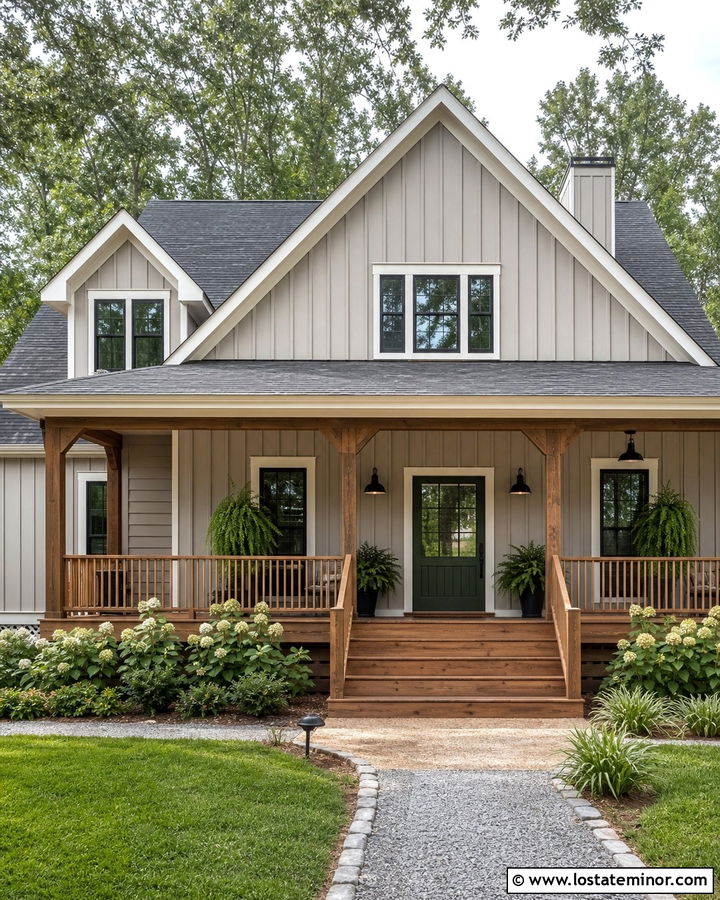
Warm wooden steps can soften the practical shape of a greige farmhouse exterior. Cover the house in Sherwin-Williams Worldly Gray board-and-batten siding, using creamy white for the window trim and porch columns. Natural cedar porch steps, decking, and handrails introduce texture while connecting the entrance to nearby trees and garden beds. Protect the wood with a transparent medium-tone stain that allows the grain to remain visible. A deep forest green front door brings a subtle outdoor color into the scheme. Finish the house with a weathered charcoal roof and simple black barn-style lights. Hydrangeas, ferns, and a gravel-edged walkway create an informal approach. Repeating cedar on porch brackets or shutters makes the staircase feel fully integrated rather than added later.
7. Greige House With Floating Concrete Steps
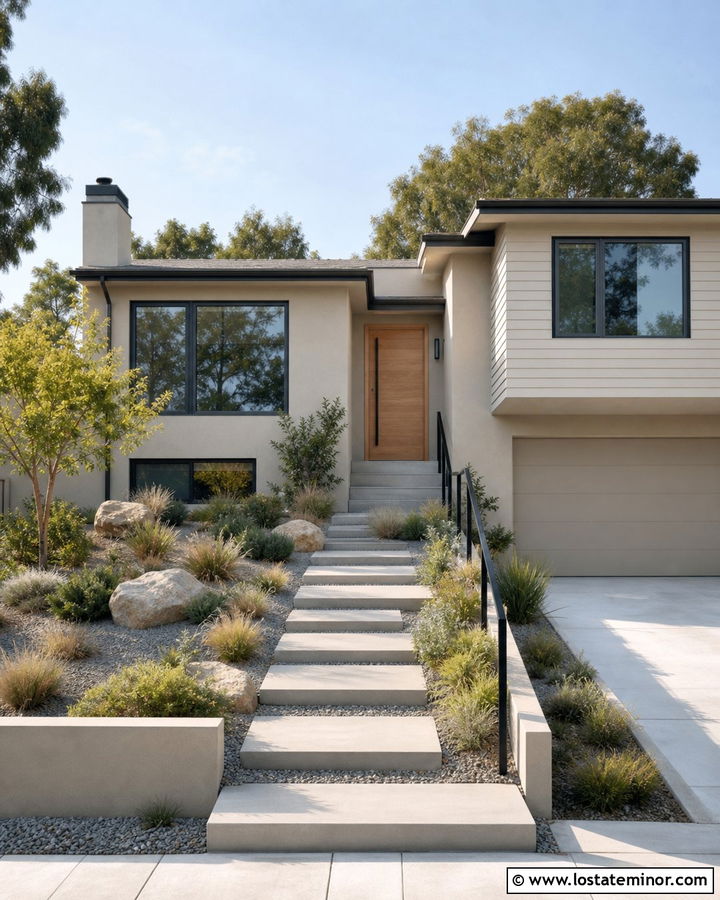
Floating concrete steps can give a greige split-level home a much cleaner entrance. Paint the upper siding Benjamin Moore Balboa Mist and use medium greige stucco on the lower level. Large concrete slabs separated by narrow gravel joints create the floating effect. The steps should rise gradually toward a covered entry with a natural wood door. Black metal handrails, window frames, and lighting add definition without overwhelming the restrained palette. Continue the concrete geometry into a straight walkway and low retaining wall. Drought-tolerant grasses, small boulders, and neatly shaped shrubs soften the hard surfaces. This design is particularly useful when the original entry looks disconnected from the driveway because the wide steps establish a clear, attractive route through the front yard.
8. Greige House With Curved Stone Steps
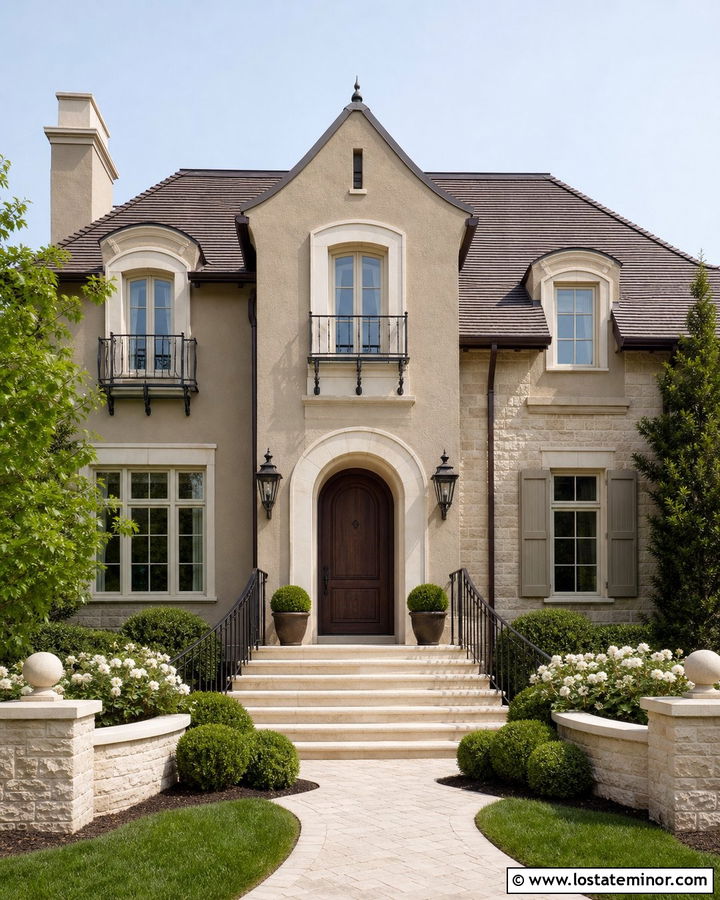
Curved steps can make a stately greige home feel more approachable. Benjamin Moore Pashmina provides a rich mid-tone greige that works well across stucco, brick, or traditional lap siding. Build the staircase from softly colored limestone, allowing the lowest tread to widen toward the walkway. Cream trim, a dark bronze roof, and an arched mahogany door support the graceful shape. Use bronze railings with simple balusters rather than ornate scrollwork, which could compete with the architecture. Repeat limestone on low retaining walls or around the porch base to unify the facade. Rounded planting beds filled with boxwoods, white roses, and seasonal flowers can follow the staircase. The overall composition suits French country, European-inspired, and traditional suburban homes with prominent central entrances.
9. Greige House With Wide Farmhouse Steps
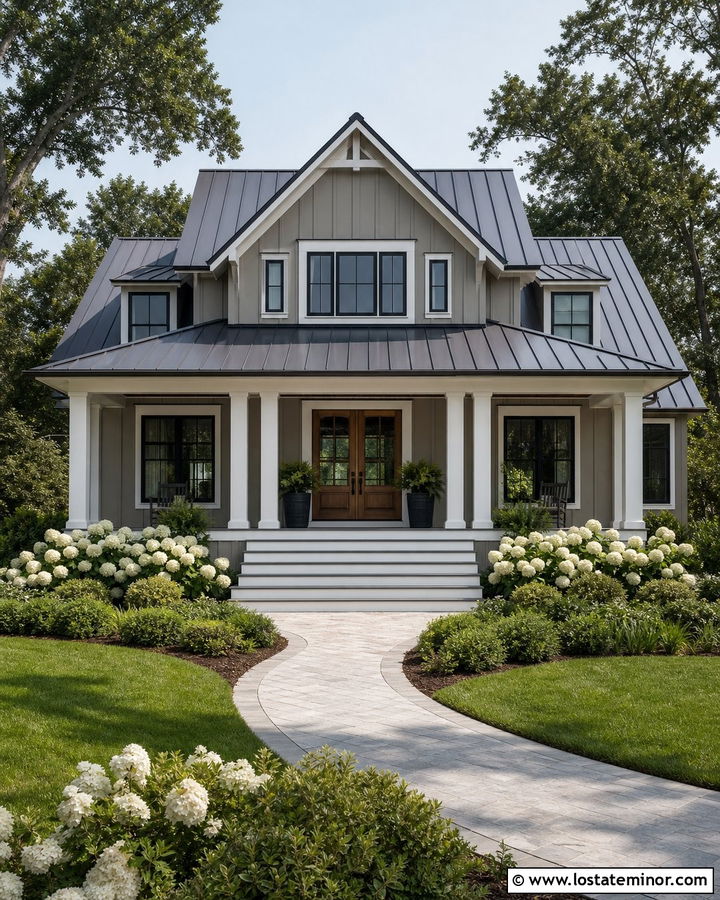
Few details feel as inviting as extra-wide steps leading to a full farmhouse porch. Paint the board-and-batten exterior Sherwin-Williams Anew Gray, then use soft white on the porch columns, window trim, and railing. Wide painted wood steps create enough visual weight to balance the long facade. Add medium-gray tread surfaces to hide everyday marks while preserving white risers for a brighter appearance. A stained double front door can serve as the warm focal point. Use a charcoal metal porch roof, black sconces, and simple square columns to keep the exterior current. Broad planting beds, white hydrangeas, and a gently curving walkway make the staircase feel even more generous. This arrangement works well for both new construction and practical farmhouse renovations.
10. Greige House With Limestone Steps
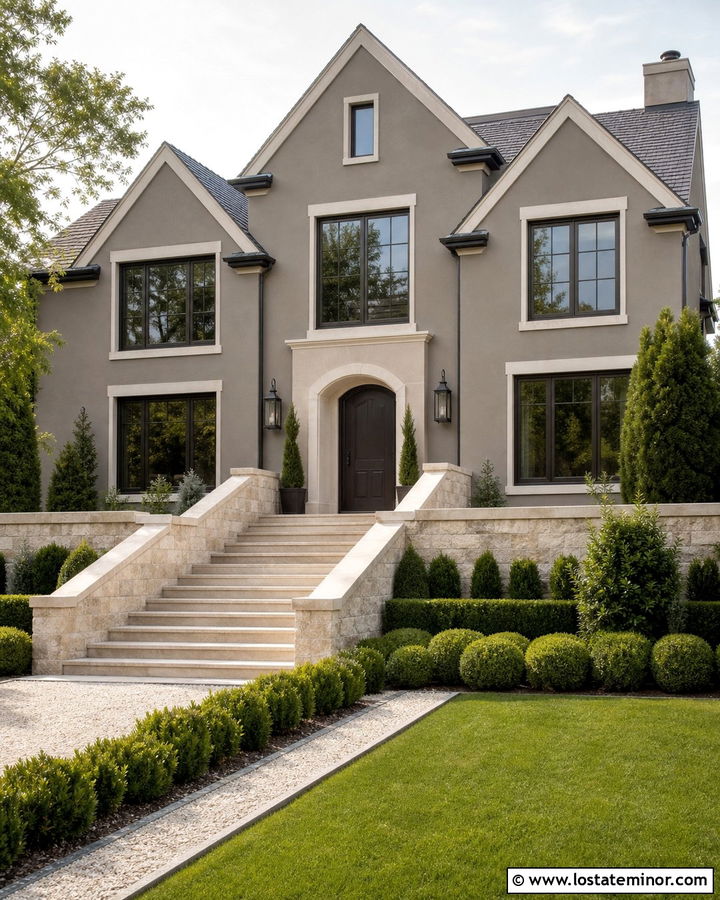
Pale limestone steps create a refined transition into a darker greige exterior. Use Sherwin-Williams Mega Greige on a substantial brick or stucco home, paired with creamy limestone-colored trim. The staircase can feature thick rectangular treads, solid side walls, and matching caps. Because limestone has subtle beige variation, it warms the deeper siding while maintaining enough contrast for the entry to remain visible. Add a dark bronze front door and bronze-framed windows for a softer alternative to black. A weathered brown roof completes the earthy palette. Extend the limestone across the porch floor and onto low garden walls. Layered evergreens, pale gravel, and clipped hedges give the facade structure while allowing the carefully proportioned steps to remain the central feature.
11. Greige House With Charcoal Tile Steps
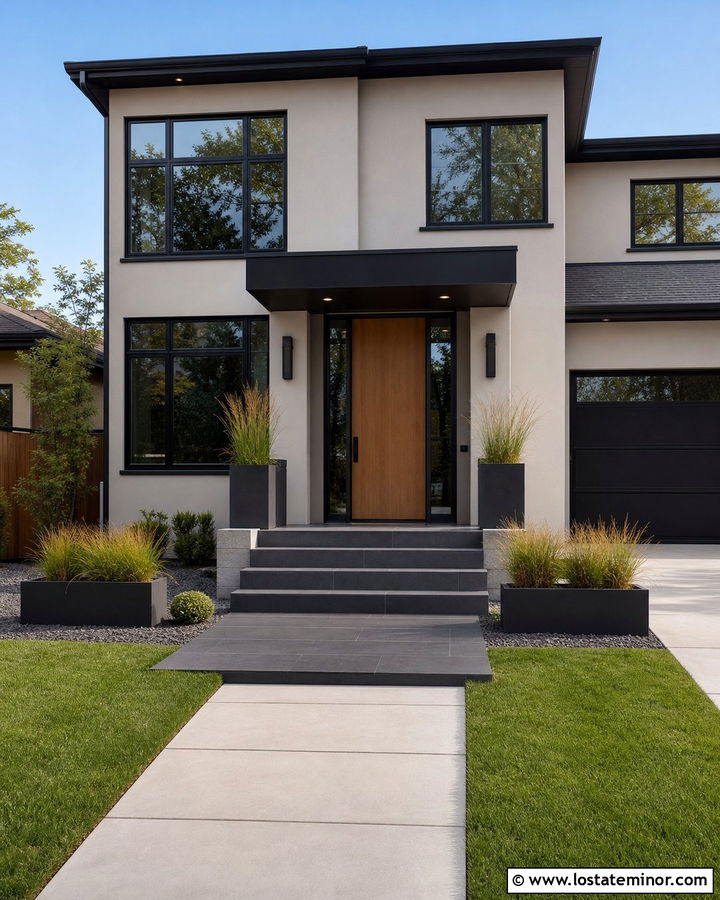
Charcoal porcelain tile can update concrete steps without requiring an overly rustic material. Paint a contemporary two-story house Sherwin-Williams Gossamer Veil, using matching greige trim for a streamlined exterior. Cover the stair treads with large charcoal outdoor-rated tiles and use slightly lighter gray risers to reveal each level. Black-framed windows, a flat black canopy, and a natural oak door complete the modern palette. Repeat the tile on the covered landing so the entrance reads as one continuous feature. A narrow concrete walkway, rectangular planters, and low grasses reinforce the clean architecture. Choose a tile with a subtle stone texture rather than a glossy surface. The texture adds visual depth and helps the steps coordinate with the restrained greige facade.
12. Greige House With Painted Brick Steps
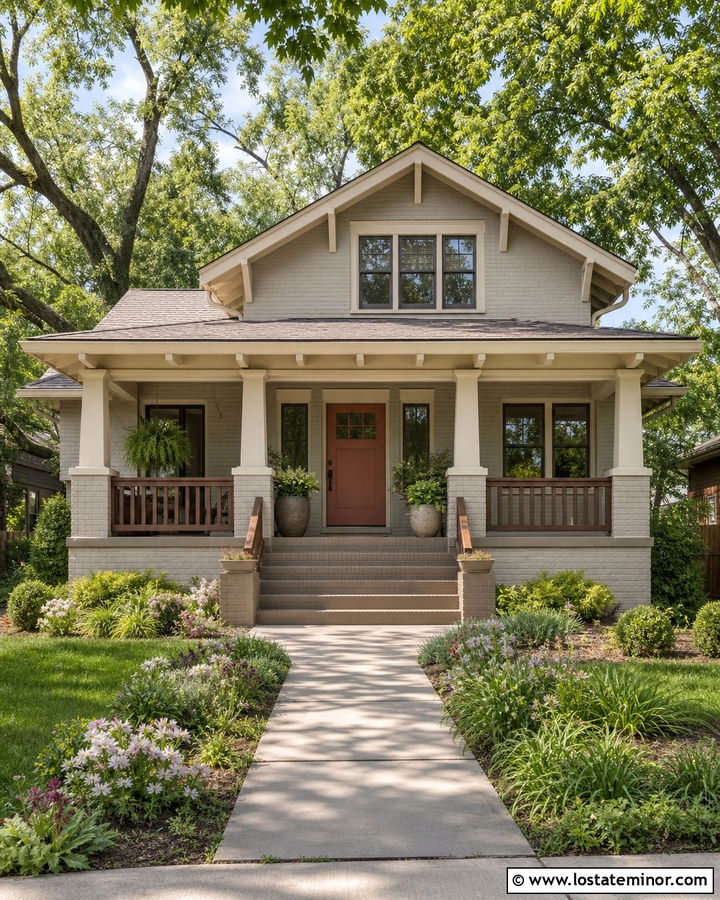
Painted brick steps can refresh an older bungalow while preserving the original masonry texture. Use Benjamin Moore Classic Gray on the siding and a slightly deeper greige on the brick steps and foundation. Creamy white trim highlights the tapered porch columns, exposed rafters, and divided-light windows. A muted terracotta front door introduces warmth without returning the exterior to a strong red brick palette. Paint the step treads medium taupe so routine dirt is less noticeable, while keeping the risers closer to the siding color. A simple wood railing stained walnut brings natural contrast. Complete the look with a concrete walkway, layered cottage plants, and low porch planters. The coordinated colors make an aging entrance feel intentional, clean, and compatible with the bungalow’s character.
13. Greige House With Slate Steps
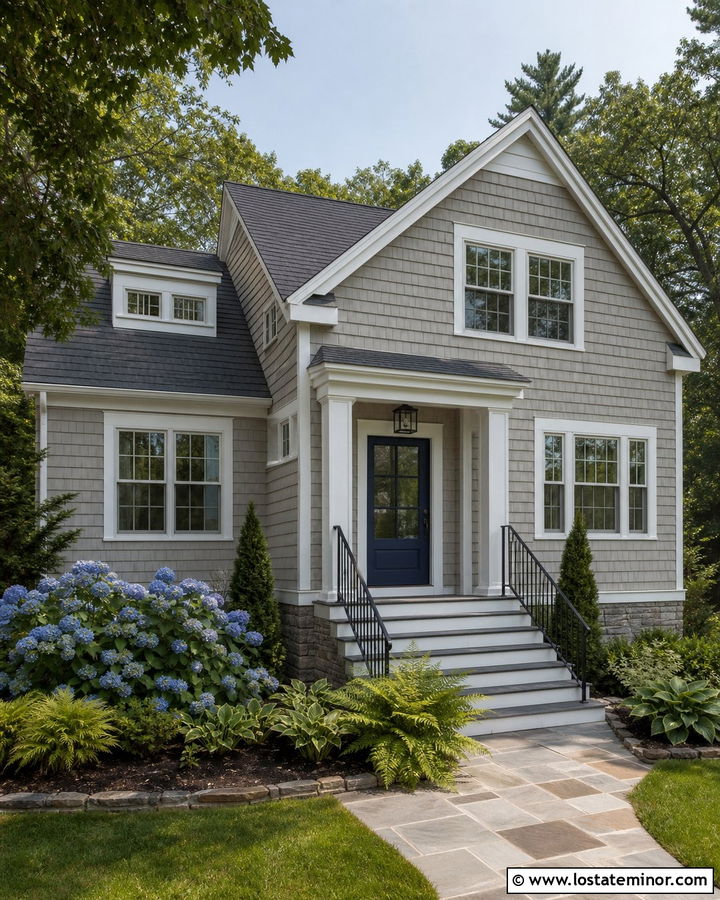
Slate steps complement a cool greige exterior because their layered blue, gray, and charcoal shades add depth. Coat a shingle-style cottage in Sherwin-Williams Mindful Gray, then use white trim and a deep navy front door. Choose large slate treads with neat edges for the steps, landing, and connecting walkway. White risers can visually link the staircase to the porch railing, while dark metal handrails echo the roof. Add gray stone veneer around the foundation to carry the slate tones across the lower facade. Ferns, hostas, blue hydrangeas, and evergreen shrubs create a lush frame in partially shaded yards. The combination feels polished but not formal, making it a strong choice for coastal cottages, wooded homes, and updated suburban houses.
14. Greige House With Cedar Stair Railings
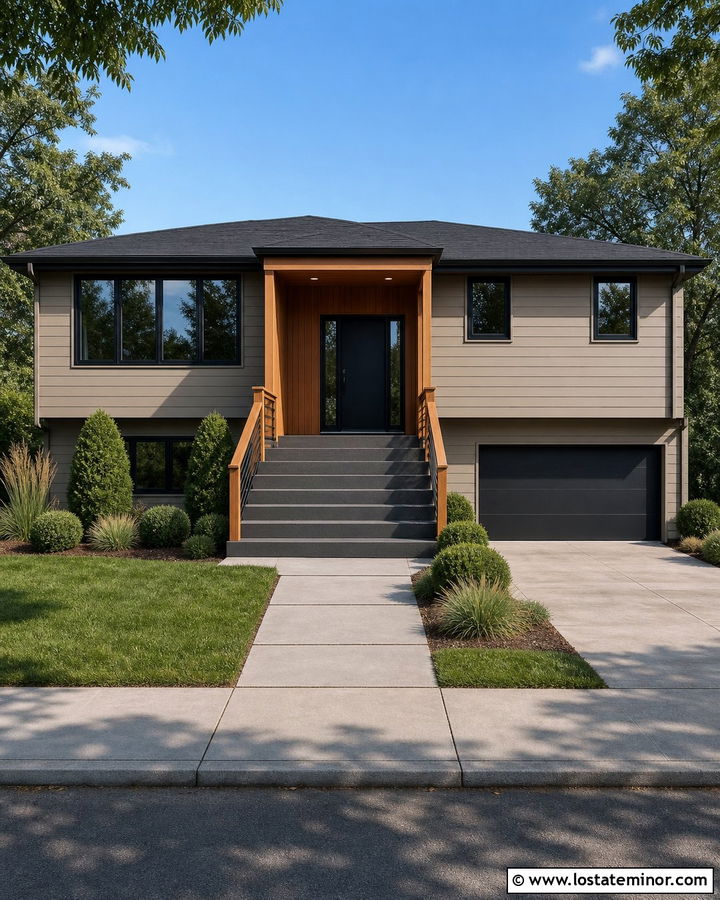
Cedar railings can become a warm architectural feature rather than a purely functional addition. Paint a raised ranch in Benjamin Moore Thunder, a medium greige that holds its presence beside natural wood. Use wide concrete steps with smooth charcoal treads, then install straightforward cedar posts and horizontal railings. Repeat cedar around the front door, beneath the porch roof, or on a small section of vertical siding. Black windows and a charcoal roof sharpen the overall scheme. Because the exterior includes several materials, keep the landscaping simple with rounded evergreens, ornamental grasses, and a broad concrete path. The cedar should have one consistent stain across every feature. This repetition helps the staircase, entry canopy, and greige facade read as a single modern renovation.
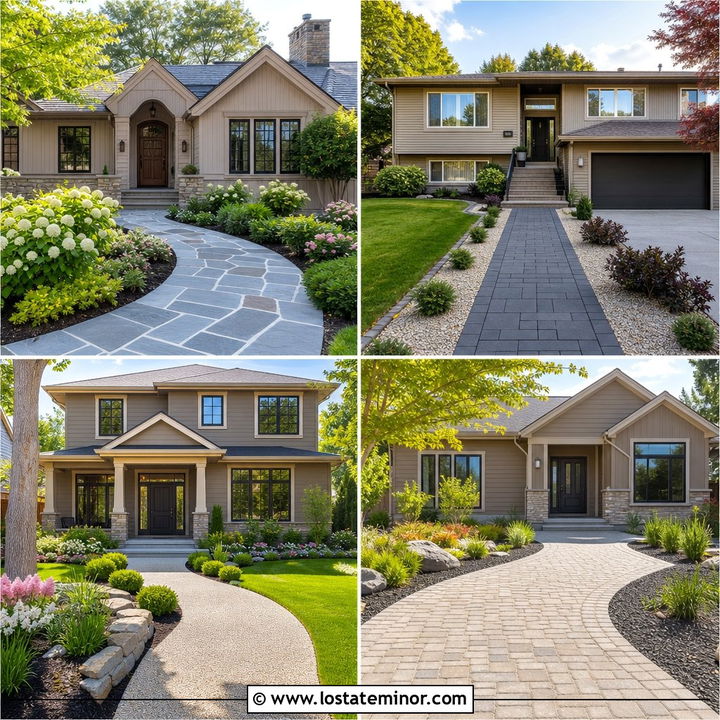
15. Greige House With Black Metal Railings
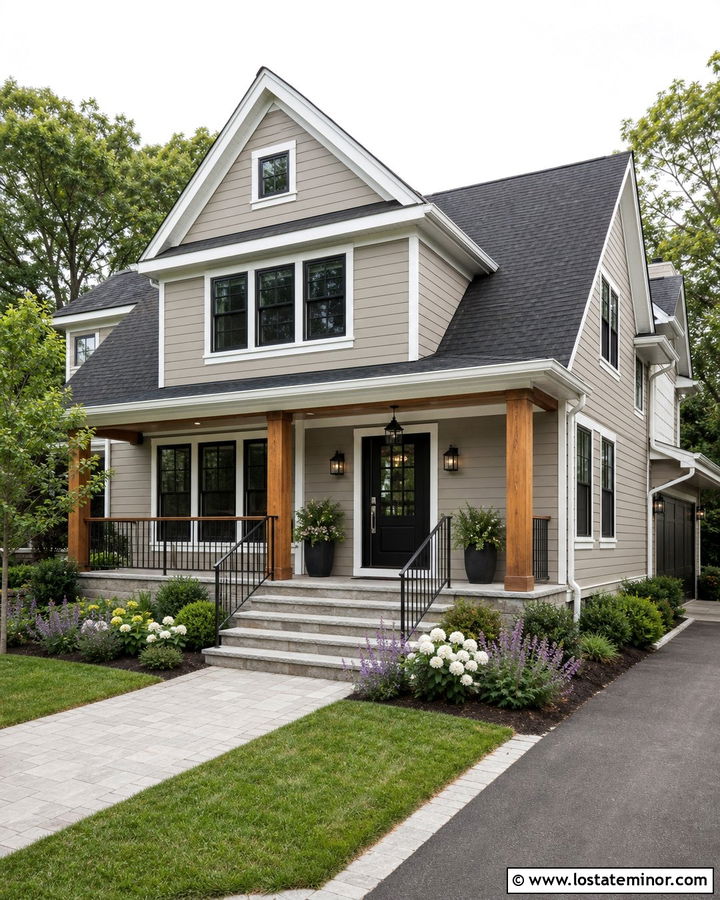
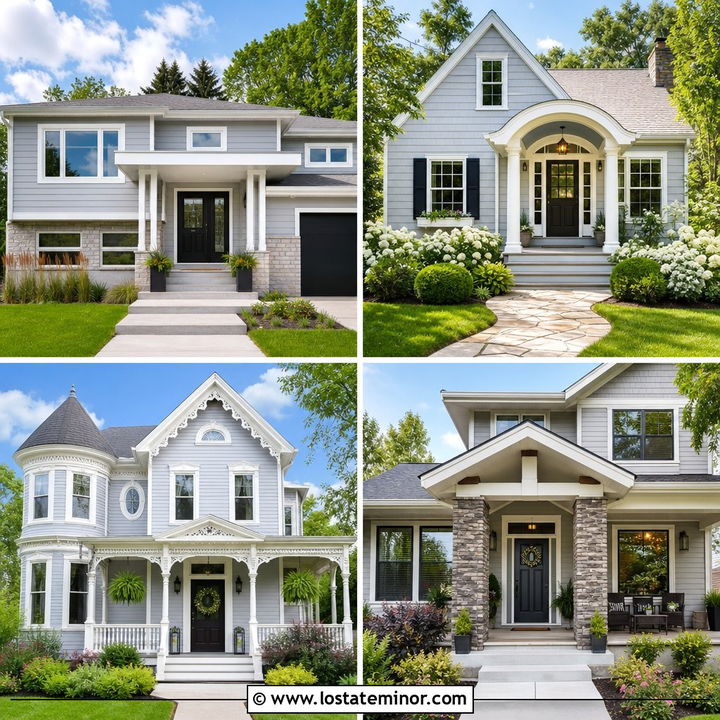
A slim black railing gives greige porch steps definition without hiding the entrance. Sherwin-Williams Requisite Gray works well on a traditional suburban house with horizontal siding and a medium charcoal roof. Build the steps from warm gray concrete or rectangular stone pavers, then add simple black metal rails on both sides. Paint the trim soft white and choose a black front door to repeat the railing color. Natural wood porch furniture or a wood-toned ceiling can prevent the black accents from feeling severe. Continue the step material along the walkway for visual flow. Low hedges, flowering perennials, and balanced porch planters provide softness. This approachable combination updates a familiar facade without requiring major changes to its existing structure or roofline.
16. Greige House With White Stair Railings
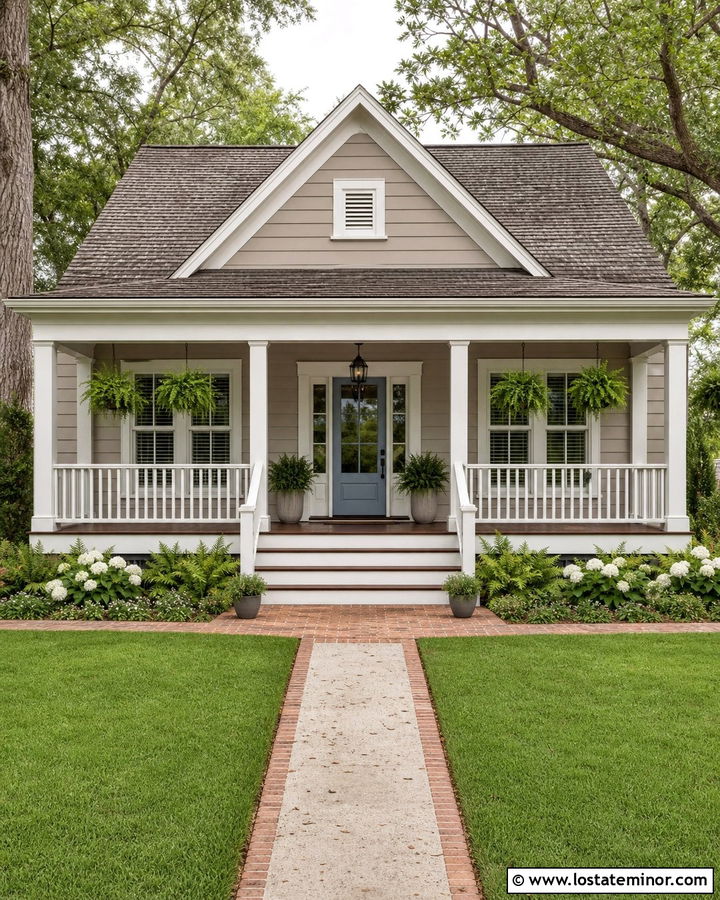
White stair railings can brighten a medium greige exterior and make a covered porch appear larger. Use Sherwin-Williams Perfect Greige on a Southern cottage with wide lap siding. Paint the porch posts, balusters, window casing, and stair risers a warm white. Medium walnut treads and a matching porch floor introduce natural contrast beneath the lighter railing. A dusty blue front door adds a relaxed accent, while a weathered gray roof supports the quiet palette. Keep the staircase wide enough to match the front door and surrounding columns. Ferns, white flowering shrubs, and a brick-edged path create a soft garden approach. Repeating white across the complete porch structure ensures the railings look connected to the architecture rather than placed over darker steps as an afterthought.
17. Greige House With Brick And Stone Steps
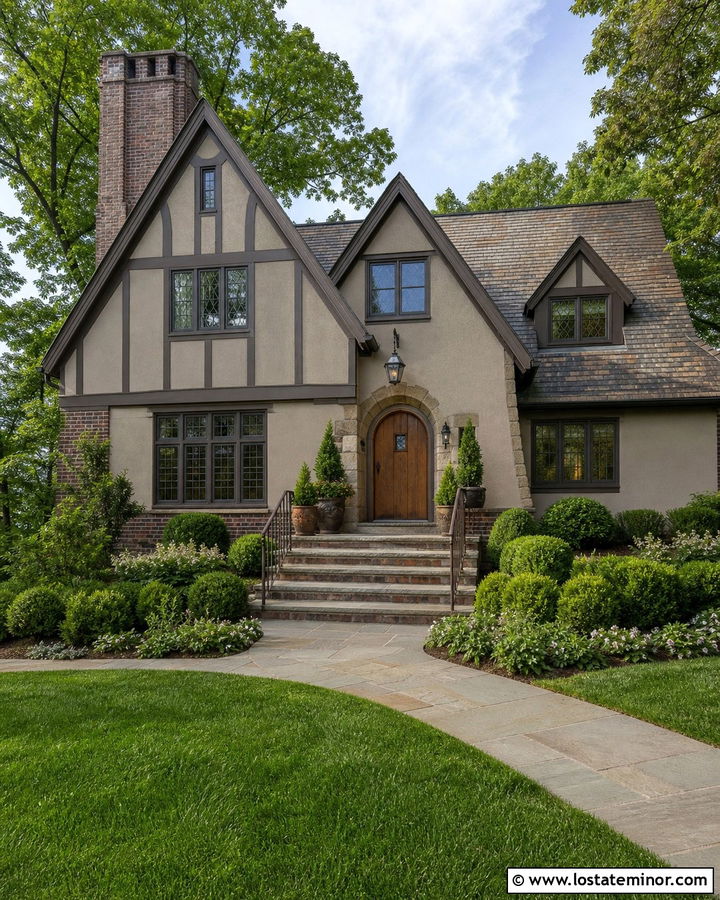
Combining brick and stone can help a greige Tudor exterior retain its detailed character. Paint the stucco Benjamin Moore Stone Hearth and preserve dark brown timber accents beneath the steep rooflines. Construct the steps with weathered brown brick risers and broad limestone treads. The brick relates to traditional masonry, while the pale stone separates each level and brightens the entrance. Use an arched oak front door and dark bronze railings to complete the old-world palette. Repeat brick around the chimney or foundation so the staircase does not stand alone. A gently curved walkway, clipped yews, and informal flowering plants can soften the formal materials. This layered scheme works best when every stone, roof, paint, and wood color shares a warm undertone.
18. Greige House With Tiered Garden Steps
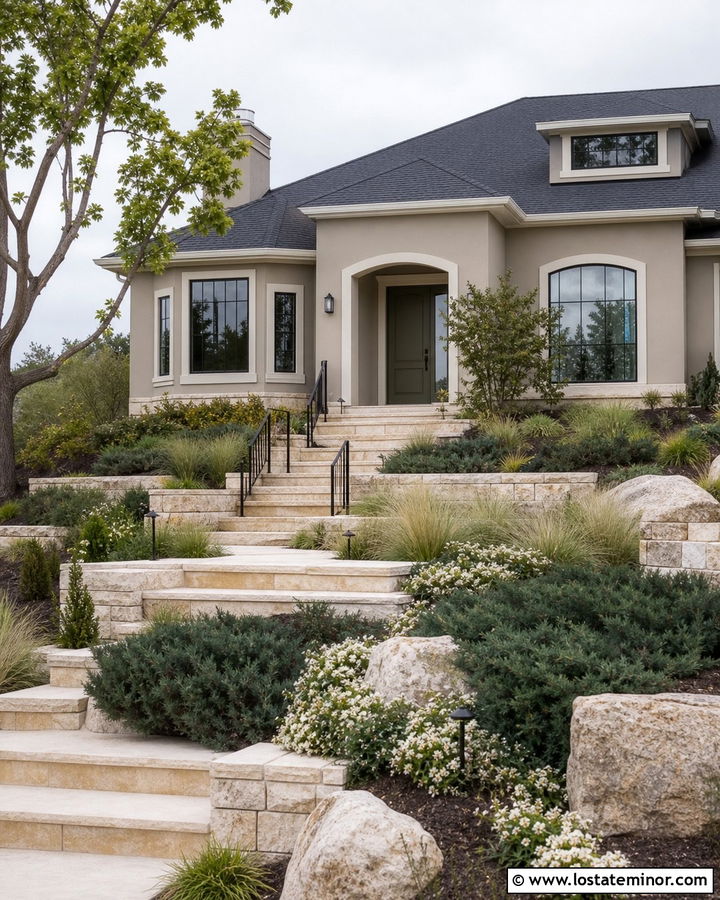
A sloped front yard can become a major curb-appeal feature when the steps are divided into landscaped tiers. Paint a hillside home Sherwin-Williams Alpaca, a soft warm greige, and pair it with ivory trim and a charcoal roof. Use broad concrete or limestone steps separated by small level landings. Low retaining walls can hold ornamental grasses, spreading evergreens, and flowering ground cover beside each tier. A muted olive front door relates naturally to the planting. Black metal railings should follow the staircase without visually dominating it. Continue the greige or stone colors through the retaining walls and foundation. Breaking one steep staircase into several sections creates a calmer approach and allows the landscaping to connect the house to the lower sidewalk or driveway.
19. Greige House With Side Entry Steps
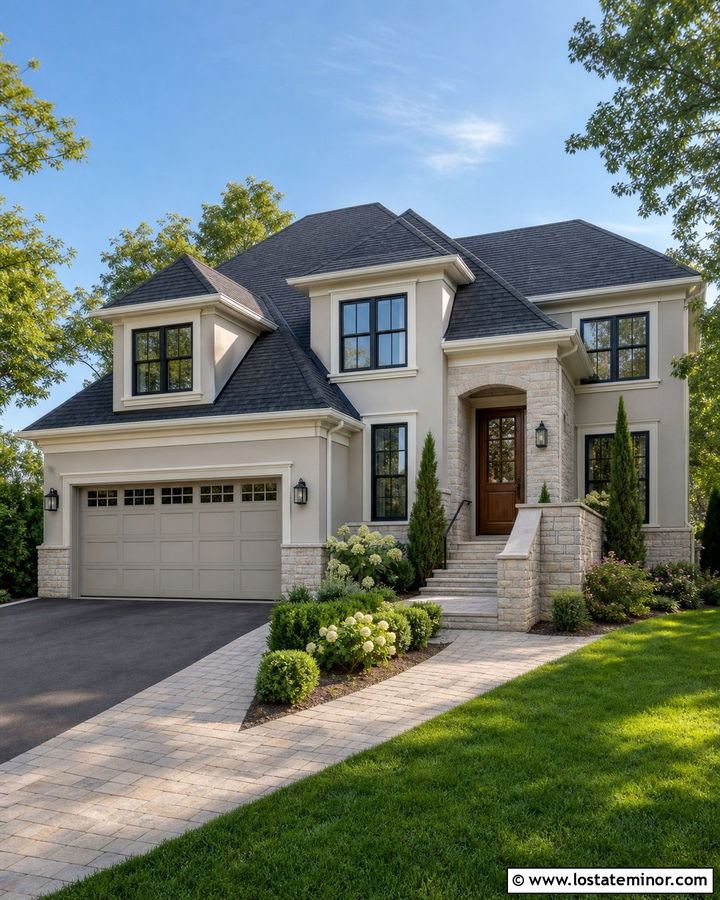
Side-facing steps can improve the balance of a home where the front door sits close to the garage. Coat a transitional two-story exterior in Benjamin Moore Barren Plain, a light neutral greige. Use smooth limestone steps that rise from the side before turning toward a covered entry. A low stone wall can define the staircase and screen it slightly from the driveway. Paint the garage door the same greige as the siding so it recedes, then use warm white trim and a stained wood front door to emphasize the entrance. Black windows and simple lanterns provide contrast. Add a paver path, upright evergreens, and low flowering shrubs around the turn. The complete arrangement directs attention away from the garage and toward the front door.
20. Greige House With Centered Colonial Steps
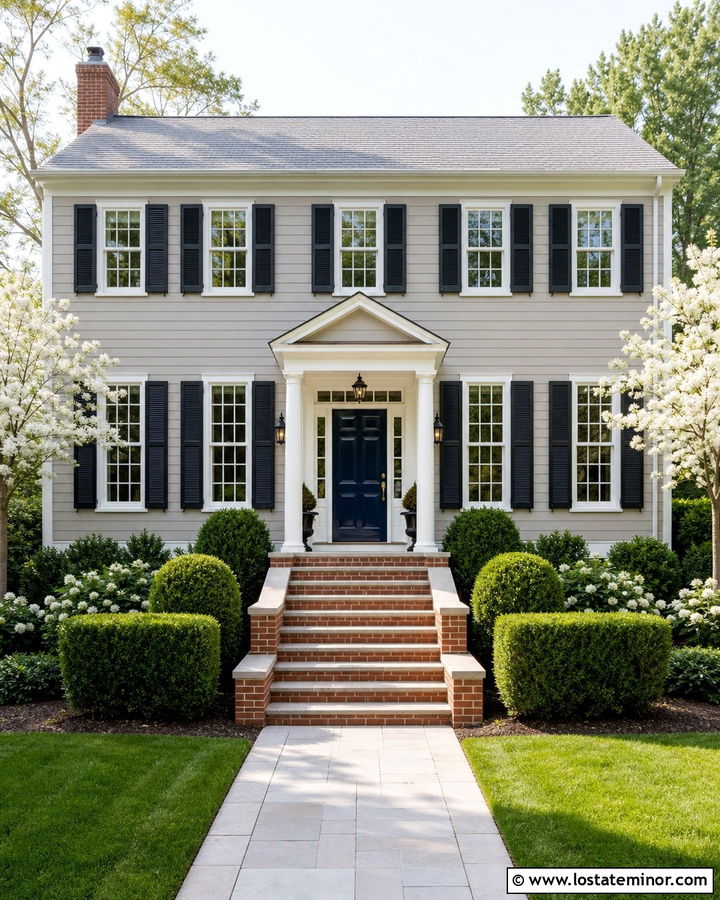
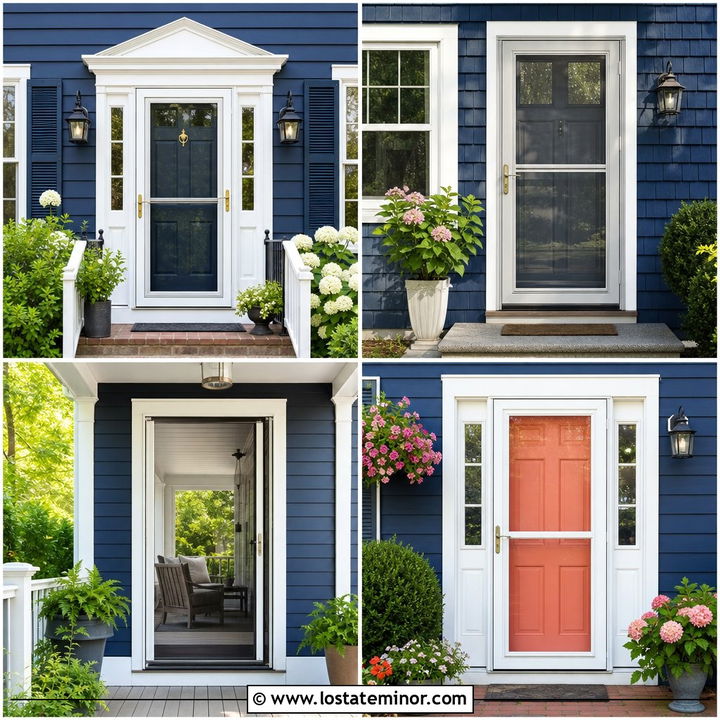
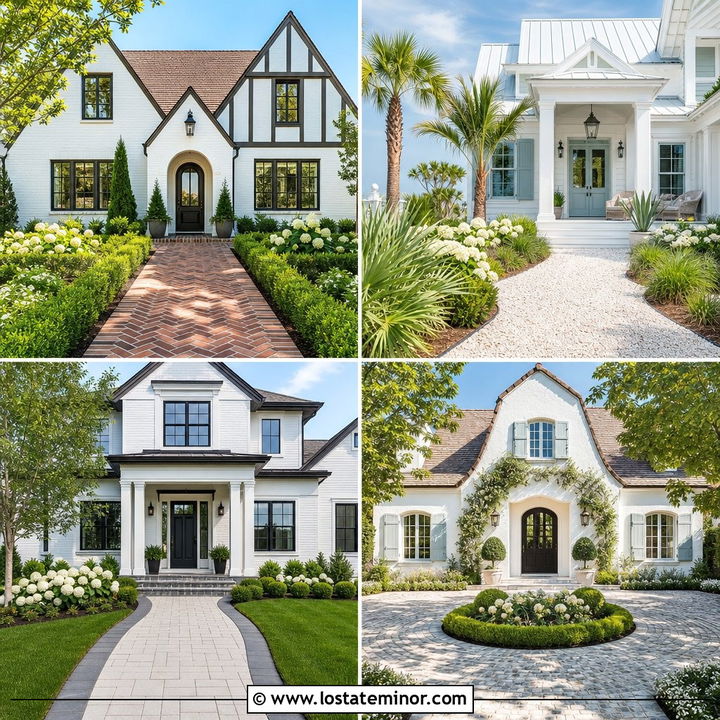
A centered staircase reinforces the strong symmetry of a classic Colonial. Paint the clapboard siding Sherwin-Williams Modern Gray, then outline the windows, cornice, and doorway with creamy white trim. Use straight brick steps capped with pale stone, positioning them precisely beneath a glossy navy front door. Black shutters and traditional lanterns add contrast on both sides of the facade. Keep the handrails slim and symmetrical so they support the architecture without becoming the focal point. A straight walkway should continue from the bottom step toward the sidewalk. Matching boxwoods, small flowering trees, and balanced foundation beds strengthen the formal layout. This scheme feels updated because the greige body color softens the sharper white, black, and navy details while respecting traditional proportions.
21. Greige House With Craftsman Stone Steps
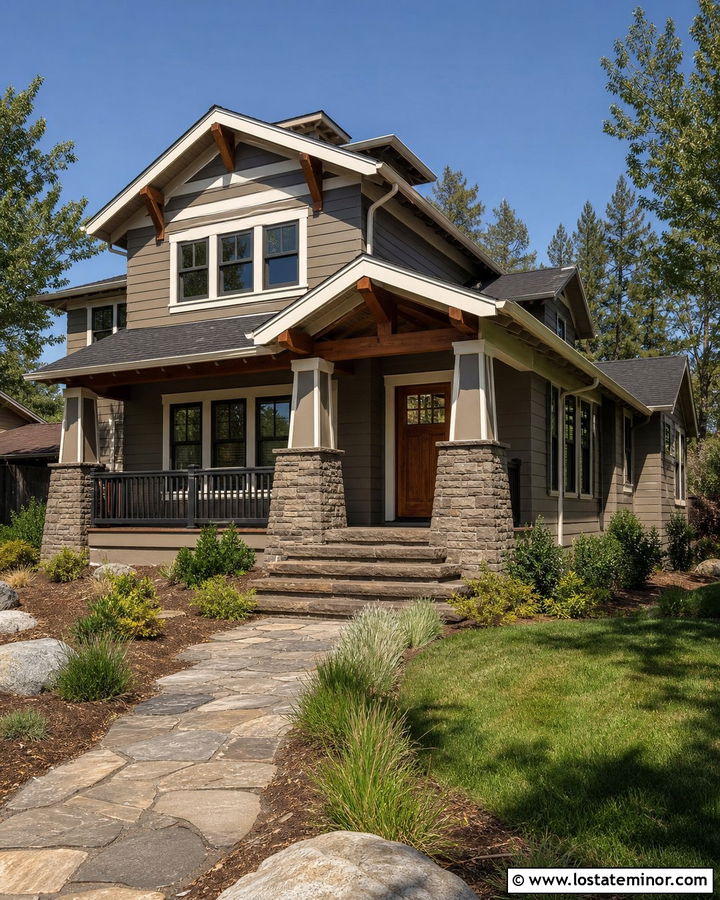
Chunky stone steps belong naturally on a Craftsman house with deep eaves and substantial porch columns. Use Sherwin-Williams Tony Taupe, a deeper earthy greige, on the lap siding. Paint the window trim warm cream and stain the front door and exposed beams a medium cedar brown. Build the broad steps with gray-brown ledgestone and use the same material around the tapered column bases. Charcoal railings can provide contrast while leaving the stone visible. A dark architectural shingle roof gives the design a strong top edge. Create a gently curving path using irregular pavers, then surround it with native shrubs and grasses. Keeping the stone, siding, roof, and wood within a warm natural palette supports the handcrafted character of the complete exterior.
22. Greige House With Modern Wood Steps
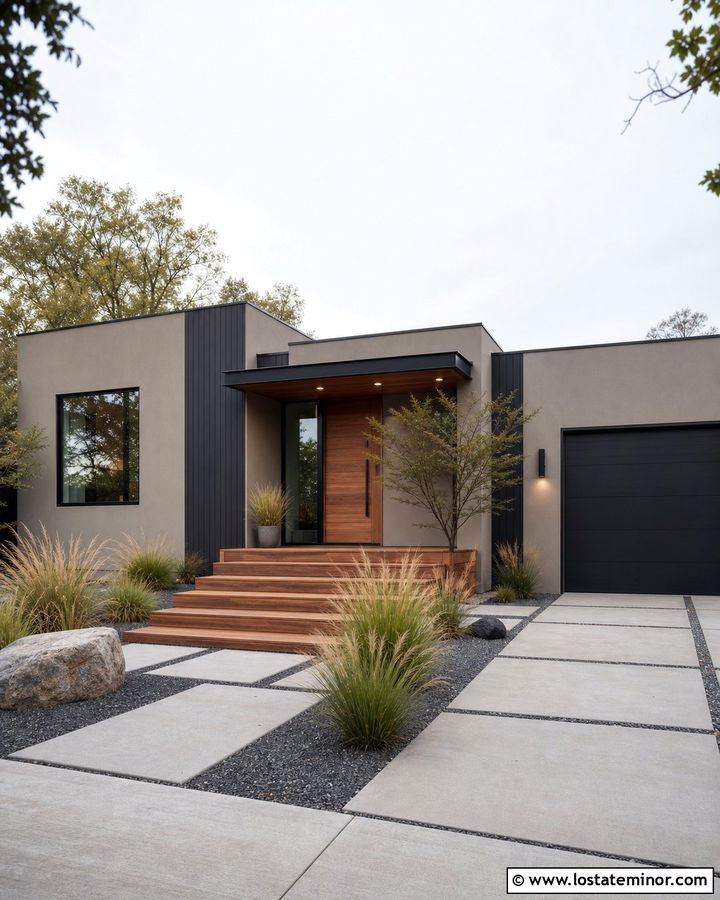
Wood steps can look distinctly modern when they feature broad boards, concealed supports, and clean edges. Cover a low-profile house in Benjamin Moore Ashley Gray, a rich warm greige, with charcoal vertical siding on one accent volume. Build the entrance steps and landing from medium-toned thermally modified wood. A matching wood front door allows the staircase to lead directly toward a clear focal point. Use black-framed windows, a slim metal canopy, and dark fascia to define the roofline. Gravel beds, concrete stepping pads, and sculptural grasses keep the landscaping simple. Avoid decorative railing details; choose a narrow black handrail where needed. The contrast between smooth greige siding, dark metal, and natural wood gives the modest facade greater architectural depth.
23. Greige House With Terracotta Tile Steps
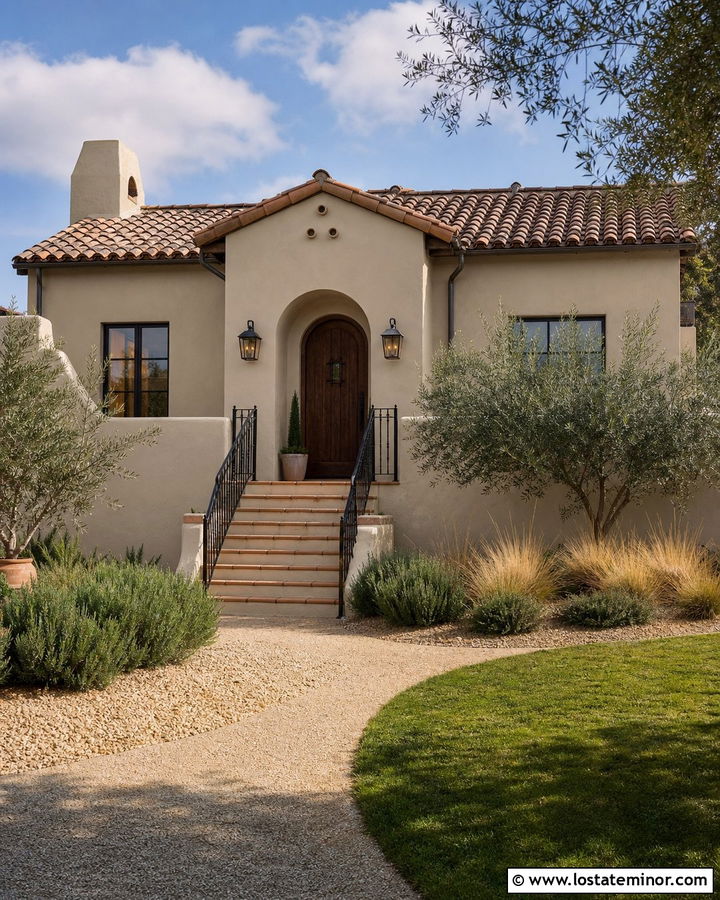
Terracotta tile steps can bring sunny warmth to a greige stucco home. Paint a Spanish-inspired exterior Sherwin-Williams Accessible Beige, which has enough warmth to sit comfortably beside clay tones. Cover the treads and porch floor in matte terracotta tile, using creamy stucco on the risers. A dark stained arched door, bronze lanterns, and black iron railings complete the Mediterranean-influenced entrance. Finish the roof with weathered clay tiles that relate to the steps without matching them too perfectly. Gravel, rosemary, olive trees, and drought-tolerant grasses create an appropriate landscape around the walkway. The subdued greige walls keep the terracotta from overpowering the facade, while the repeated warm materials make the steps feel like an original part of the house.
24. Greige House With Dark Gray Steps
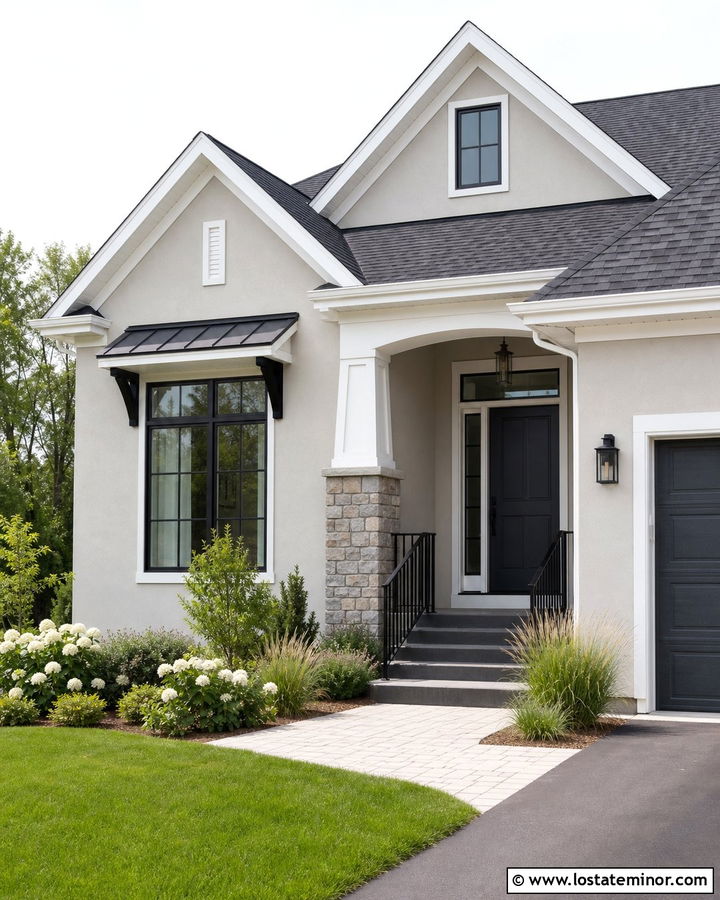
Dark gray steps can anchor a pale greige exterior with a busy roofline or multiple front-facing gables. Use Sherwin-Williams Drift of Mist on the siding and crisp white on the trim. Finish poured concrete steps in a medium charcoal coating, then repeat that tone on the foundation, gutters, and front door. The roof can be a slightly softer weathered charcoal to prevent the palette from appearing flat. Add natural stone around one porch column or garage bay for warmth and texture. Simple black railings preserve the clean color story. A light paver walkway creates enough contrast against the steps, while ornamental grasses and white flowers soften the edges. This practical scheme suits transitional homes that need stronger definition at the base of the facade.
25. Greige House With Wraparound Porch Steps
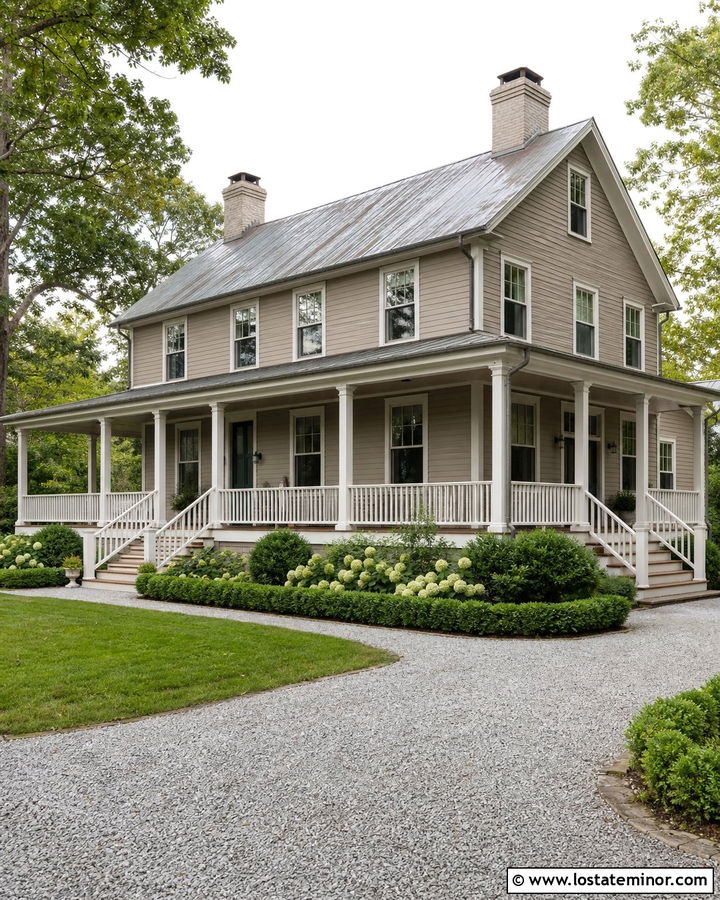
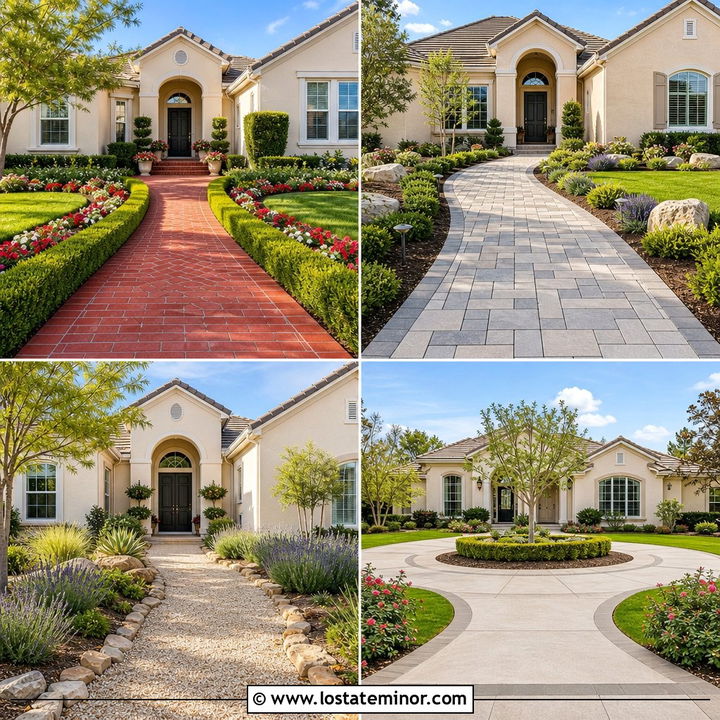
Multiple sets of steps can make a wraparound porch feel connected to the entire yard. Paint a country farmhouse Benjamin Moore Wish, a balanced mid-tone greige, and use soft white on the porch railing, posts, and window trim. Place one broad staircase at the front door and a smaller set near the side yard. Stain the wood treads medium brown while leaving the risers white. A muted black-green door adds depth beneath the covered porch. Use a weathered gray metal roof and simple black lights for contrast. Gravel paths, hydrangeas, and low hedges can connect both staircases without making the landscape formal. Matching the materials and proportions of each set of steps keeps the long porch facade cohesive from every curb angle.
26. Greige House With Split-Level Entry Steps
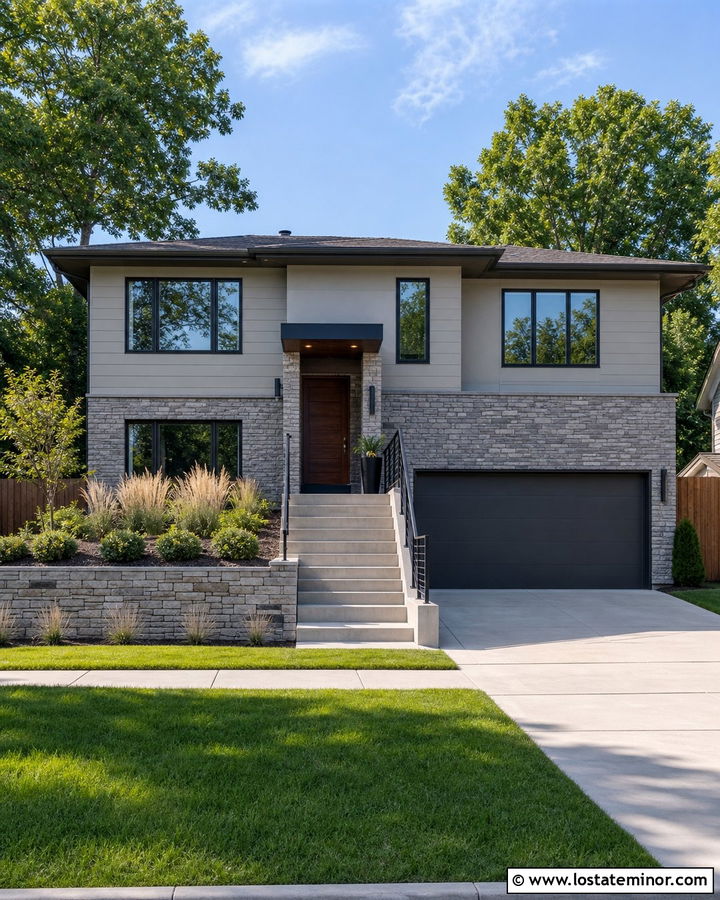
An exposed split-level entrance needs steps that look substantial enough to connect both floors visually. Paint the upper siding Sherwin-Williams Amazing Gray and cover the lower facade with warm gray stone veneer. Wide concrete steps can rise beside a matching retaining wall toward a recessed walnut door. Use black railings, windows, and lighting to sharpen the entrance. A short horizontal canopy above the door makes the destination more obvious from the driveway. Repeat the stone from the lower level on the stair wall rather than introducing another finish. Layered grasses and compact shrubs can soften the change in elevation. This coordinated treatment turns a challenging raised entry into a strong architectural feature and helps the greige upper story feel securely anchored.
27. Greige House With Low Ranch Steps
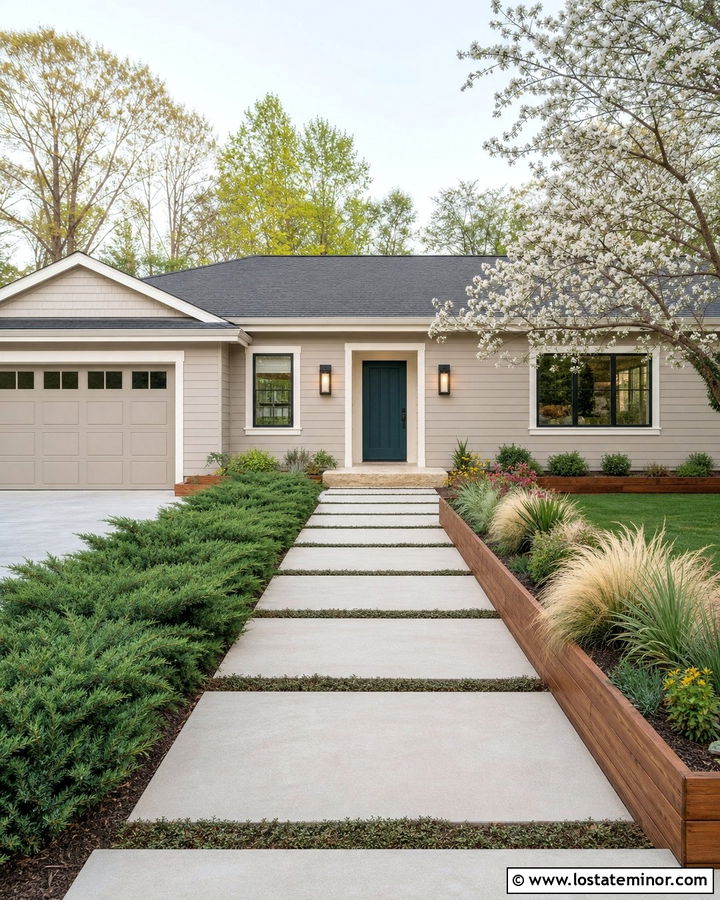
A single broad step may be all a low ranch house needs. Paint the brick and siding Benjamin Moore Cedar Key, a warm light greige, then use ivory trim and a muted charcoal roof. Create one deep limestone or poured concrete step extending beyond the width of the front door. The generous size gives the small entrance greater presence without adding unnecessary height. A rich teal door supplies a controlled pop of color, while bronze lights and wood planters contribute warmth. Continue the step material into large walkway pavers separated by narrow planting joints. Low junipers, ornamental grasses, and a small flowering tree suit the horizontal architecture. Keeping the entry open and uncomplicated helps the entire ranch facade appear wider and more welcoming.
28. Greige House With Porch Landing Steps
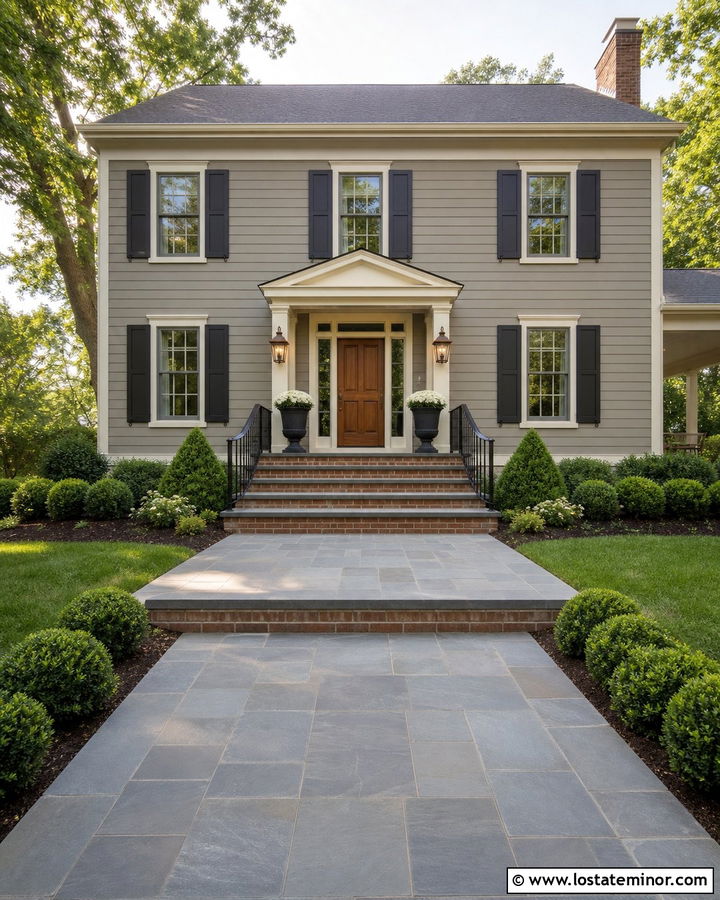
A generous landing creates a comfortable pause between the walkway and a raised front porch. Use Sherwin-Williams Functional Gray on a traditional two-story house, with cream trim and dark charcoal shutters. Build the steps from brick with smooth bluestone treads, then extend the upper landing across the full width of the doorway. A warm oak door and brass-toned lanterns keep the darker greige exterior from feeling too cool. Add black metal railings with clean vertical balusters on both sides. The walkway can widen as it reaches the landing, making the entrance feel deliberate and easy to navigate. Symmetrical planters, clipped shrubs, and a neat lawn complete the composition. The landing also gives the masonry staircase a more substantial, well-proportioned appearance.
29. Greige House With Stepless Entry And Garden Steps
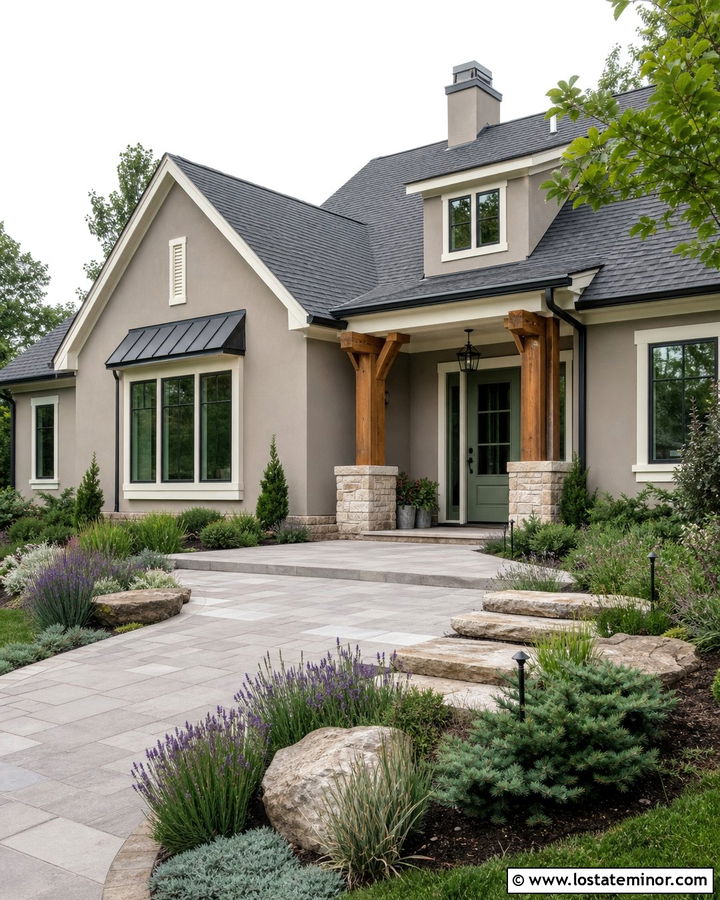
An accessible main entrance can still include attractive garden steps elsewhere in the landscape. Paint a modern cottage Benjamin Moore Olympic Mountains, a soft earthy greige, with warm white trim and a sage green door. Lead a gently sloped paver walkway to the primary porch, keeping the transition broad and visually integrated. Beside it, add two or three low stone garden steps as a shorter route through a planted bed. Use matching limestone on the porch base, walkway border, and secondary steps. Black metal accents and a medium-gray roof provide definition. Lavender, ornamental grasses, and low evergreens soften the graded path. Treating the ramped walk and garden staircase as one landscape composition produces an entry that feels welcoming rather than purely functional.
30. Dark Greige House With Light Stone Steps
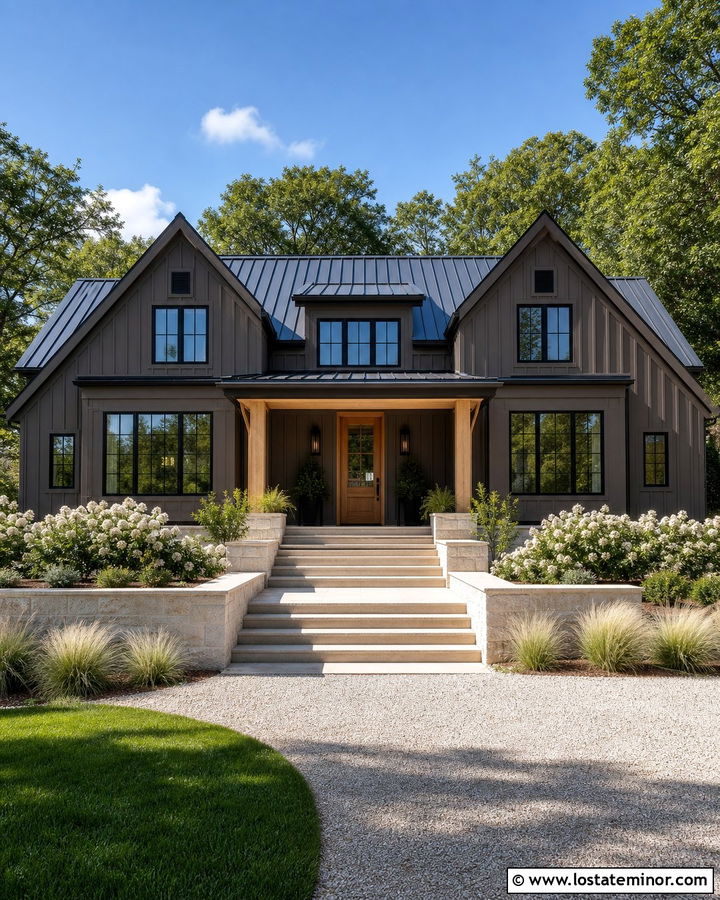
Light stone steps can keep a dark greige house from appearing visually heavy. Paint a modern farmhouse Sherwin-Williams Urbane Bronze, a deep brown-gray greige, and use warm white trim around the windows and porch. Choose pale limestone for the wide front steps, porch floor, and low foundation wall. A natural oak door introduces another light, warm surface at the center of the facade. Black windows and a charcoal metal roof preserve the dramatic architecture without adding a competing color. Keep the railings minimal or use low limestone side walls to maintain a clean entrance. White flowering shrubs, silvery grasses, and a light gravel path brighten the foreground. The strong light-and-dark contrast gives the complete exterior a memorable, balanced, and upscale appearance.
Conclusion:
The most successful greige exterior combines the house color, front steps, trim, door, roof, and landscaping as one connected design. Light greige can support bold charcoal, brick, or slate steps, while deeper greige looks balanced beside pale limestone and concrete. Wood introduces warmth, metal railings add definition, and repeated masonry helps the entrance feel original to the architecture. Before selecting materials, compare samples beside the siding, roof, and existing stone in natural daylight. Also consider the scale and direction of the staircase so it leads clearly toward the door. These 30 Greige House Design With Steps Ideas offer adaptable starting points for creating a practical entrance and a polished, welcoming facade.

Related posts: