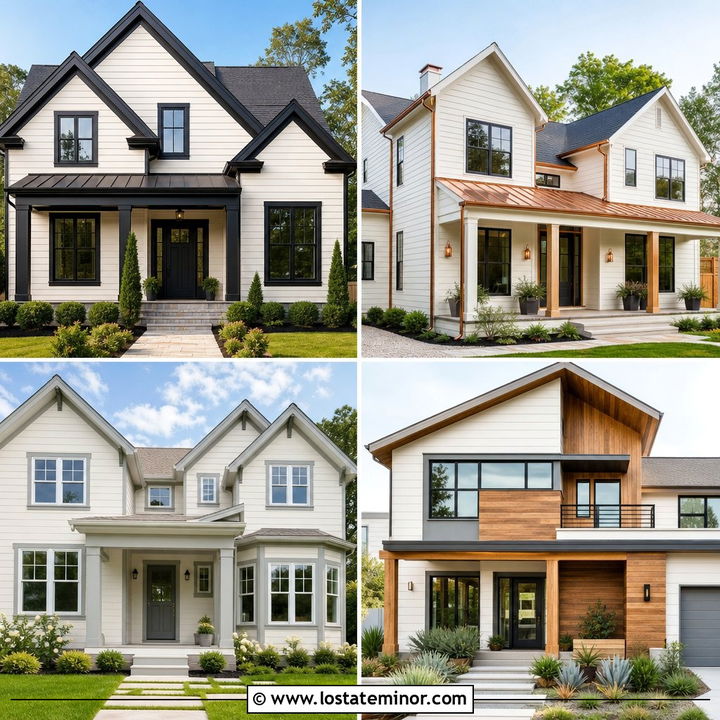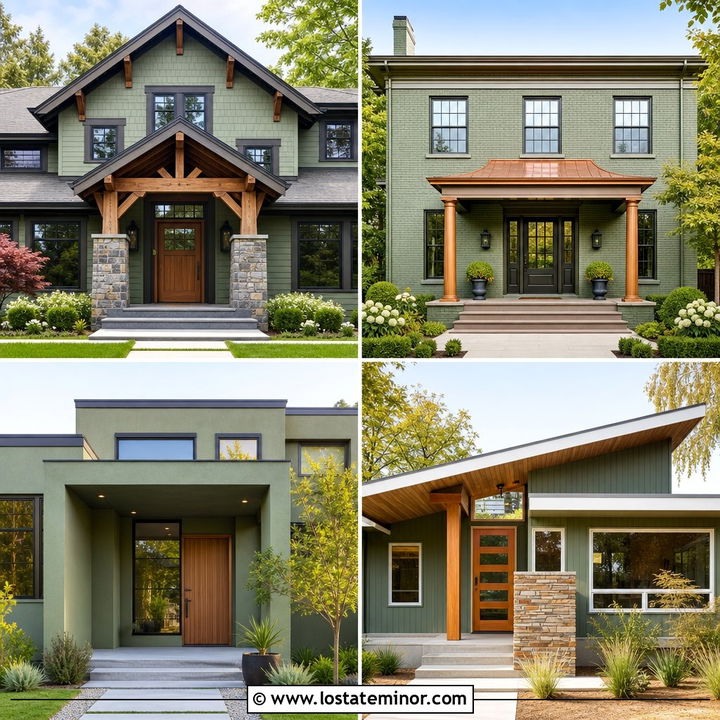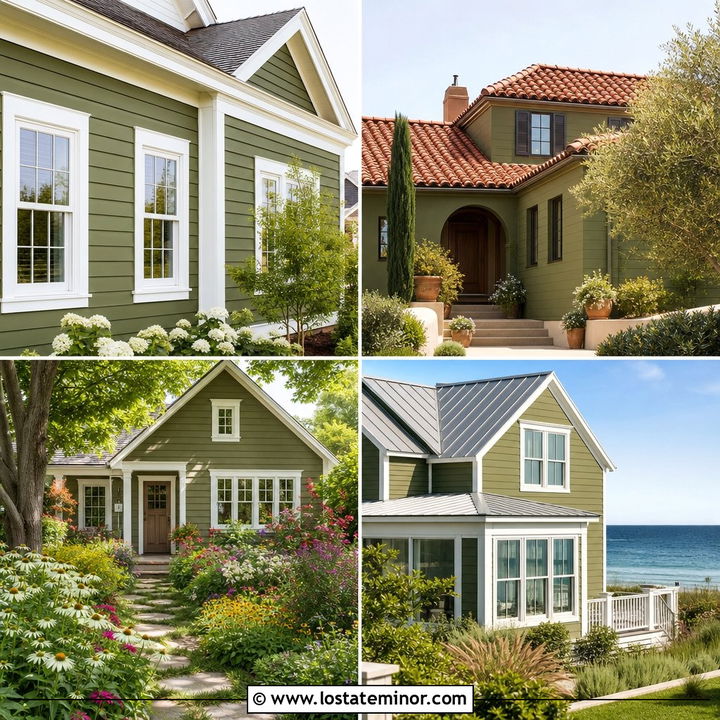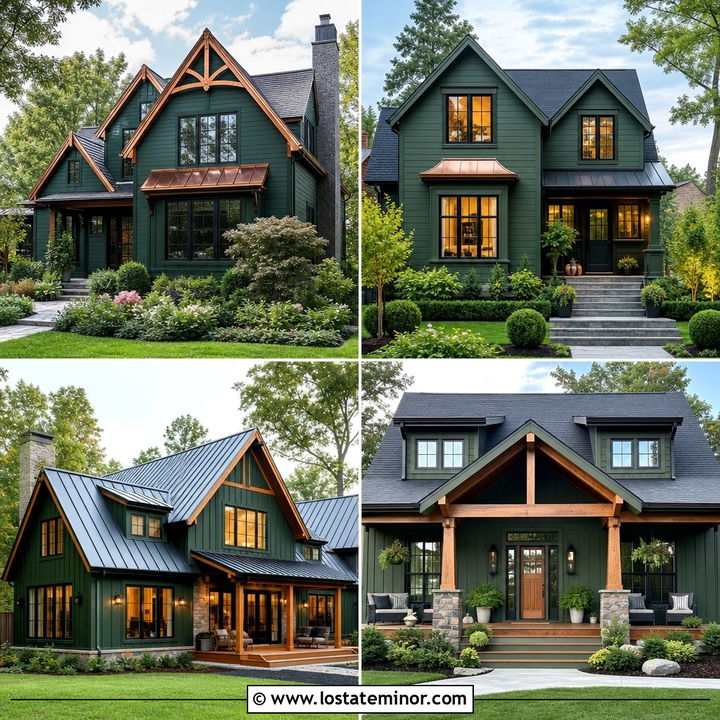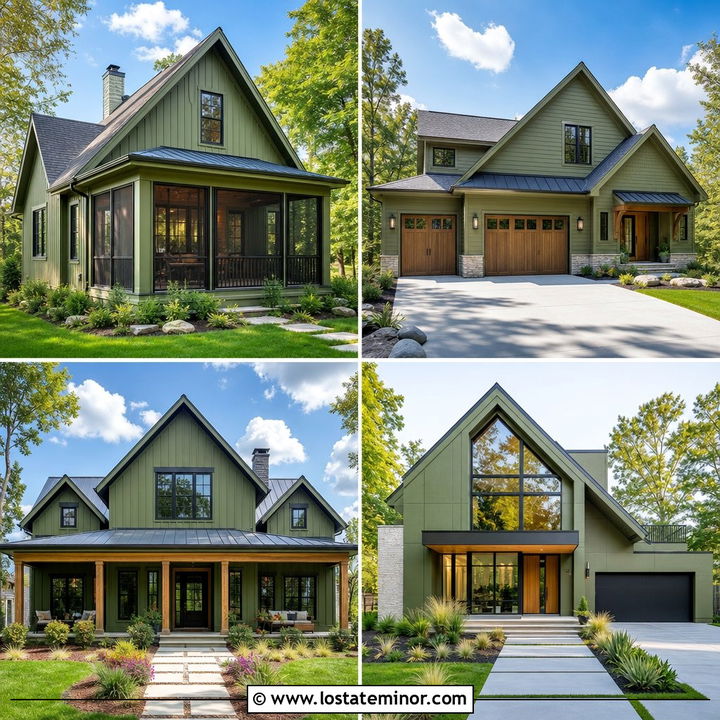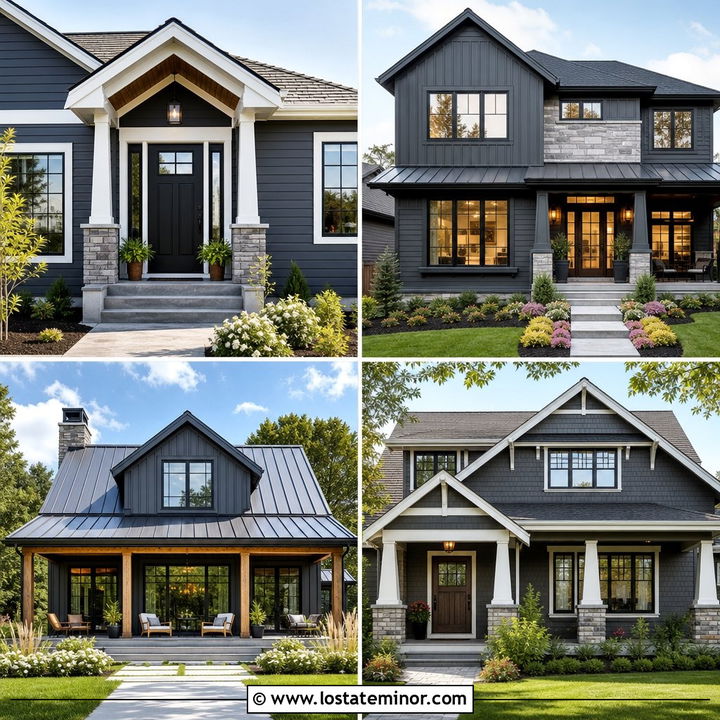
Sage green siding gives a home a calm, welcoming character while still offering enough color to stand apart from ordinary neutrals. It can feel traditional, rustic, coastal, or modern depending on the siding profile and supporting materials. Current exterior trends also favor nature-inspired colors, tonal trim, and organic materials, making sage especially relevant for updated curb appeal. () The strongest designs treat the facade as one connected palette. Roofing, trim, masonry, doors, windows, porches, and landscaping should all support the green rather than compete with it. Whether you are planning new siding or refreshing an existing exterior, the following **30 Sage Green House Design With Siding Ideas** present complete, practical looks for many architectural types and budgets.
1. Sage Green Lap Siding With White Trim
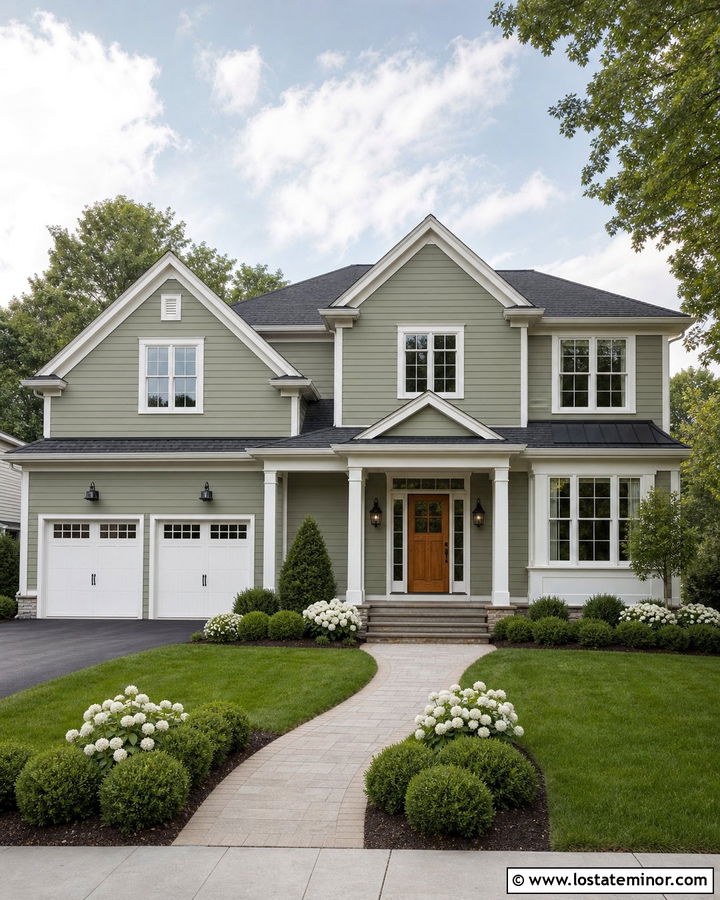
Traditional horizontal lap siding looks clean and inviting when finished in a soft sage green. Add crisp white around the windows, fascia, porch columns, and garage door to sharpen the home’s architectural lines. A medium charcoal shingle roof gives the gentle siding enough visual weight, while a stained oak front door introduces warmth. This combination is especially effective on suburban two-story homes because it keeps a large facade from feeling too heavy. Use black lanterns and simple bronze hardware as small grounding details. Foundation shrubs, white flowering plants, and a curved walkway can reinforce the polished appearance. Choose a slightly muted white rather than an icy shade if the sage siding has warm or yellow undertones.
2. Sage Green Board And Batten Siding With Black Windows
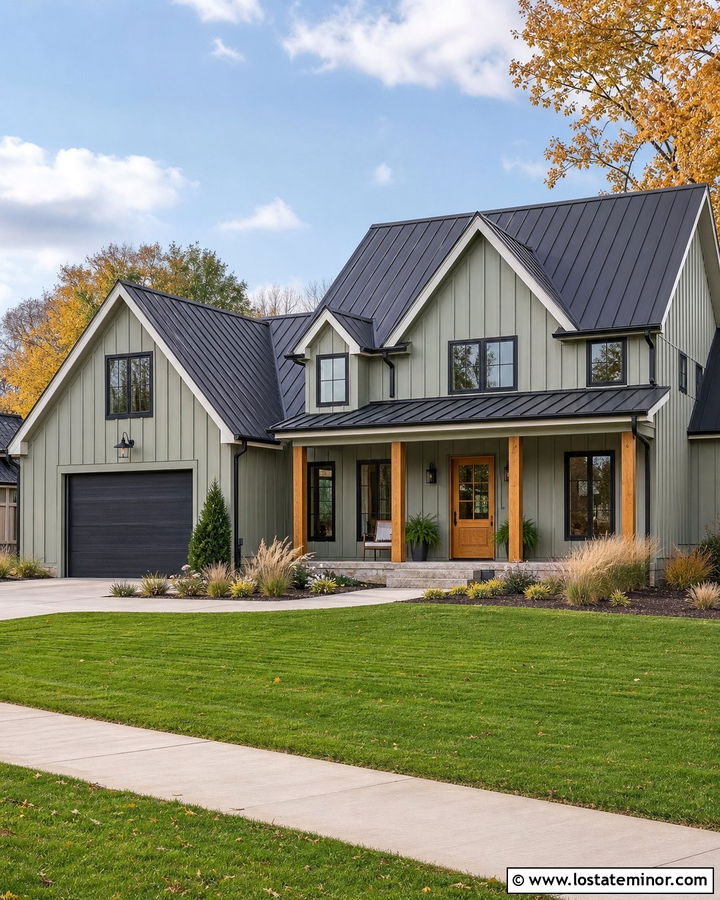
Vertical board and batten siding can make sage green feel noticeably more contemporary. Its strong lines draw the eye upward and give a compact farmhouse greater presence from the street. Black window frames, dark gutters, and a charcoal standing-seam roof provide crisp definition without requiring decorative shutters. Keep the porch ceiling and fascia in a soft warm white so the facade remains open and bright. Natural cedar porch posts and a medium-brown wood door soften the contrast between green and black. For a balanced finish, use dark metal only on narrow details rather than large wall sections. Ornamental grasses, low boxwoods, and a straight concrete walkway complement the uncluttered architecture and create an approachable modern farmhouse exterior.
3. Sage Green Shake Siding With Cream Trim
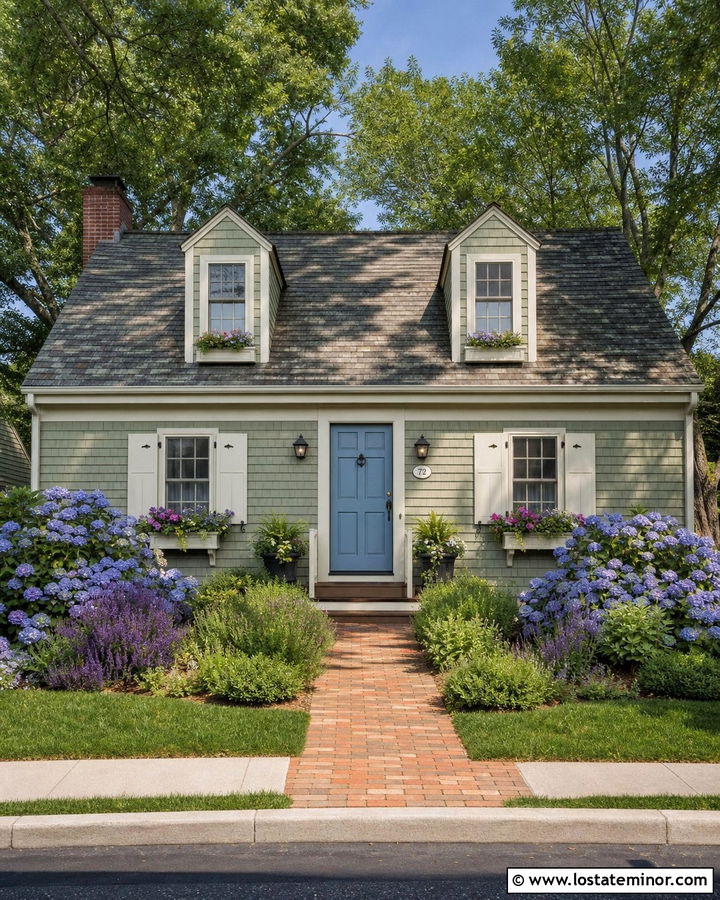
Sage green shake siding brings texture and storybook charm to a cottage or Cape Cod exterior. Cream trim offers a softer transition than brilliant white and works particularly well with the uneven shadow lines created by individual shingles. Carry the cream across window casings, corner boards, porch railings, and roof trim for a connected appearance. A weathered gray roof keeps the palette relaxed, while a muted blue front door adds gentle coastal color. Avoid covering every surface in shakes if the house is small. Using horizontal lap siding below and shakes in the upper gables creates better visual balance. Finish the setting with hydrangeas, lavender, a brick walkway, and simple window boxes that repeat the home’s warm, garden-inspired colors.
4. Sage Green Siding With Natural Stone
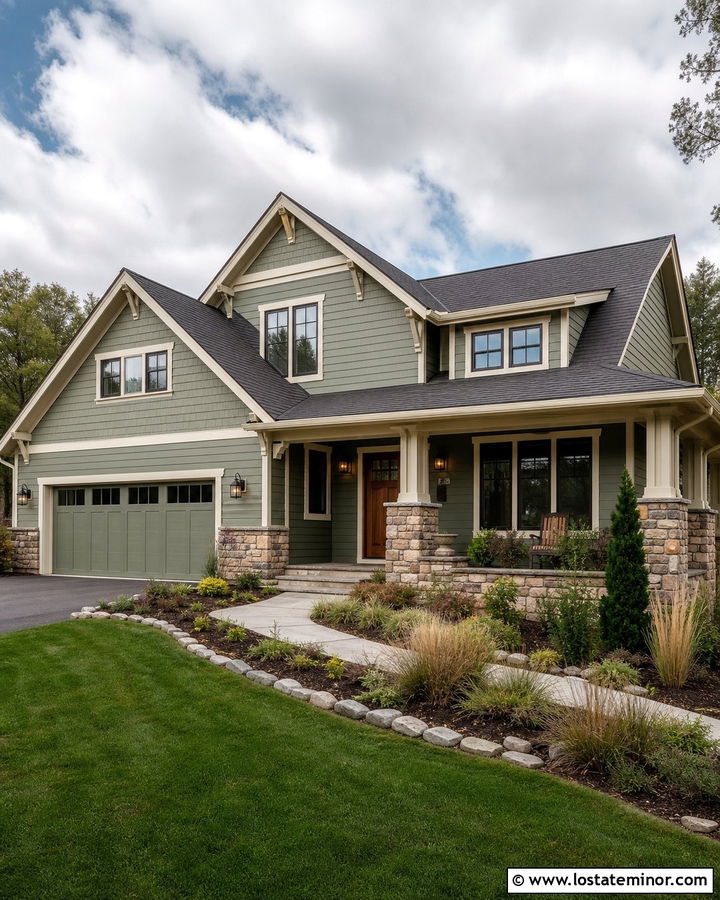
Earthy stone can make a sage green exterior look established and closely connected to its landscape. Place mixed gray and tan stone along the foundation, around the porch columns, or across one prominent entry wall. Horizontal sage lap siding above the masonry prevents the facade from becoming overly rugged. Warm off-white trim connects naturally with lighter minerals in the stone, while a walnut-stained door repeats its deeper brown tones. Select a charcoal-brown roof instead of a blue-gray option to preserve the warmth of the complete scheme. The stone should support the entrance rather than appear randomly attached. Extend similar material into a low landscape wall or walkway border, then add evergreen shrubs and native grasses for cohesive curb appeal.
5. Sage Green Siding With Red Brick
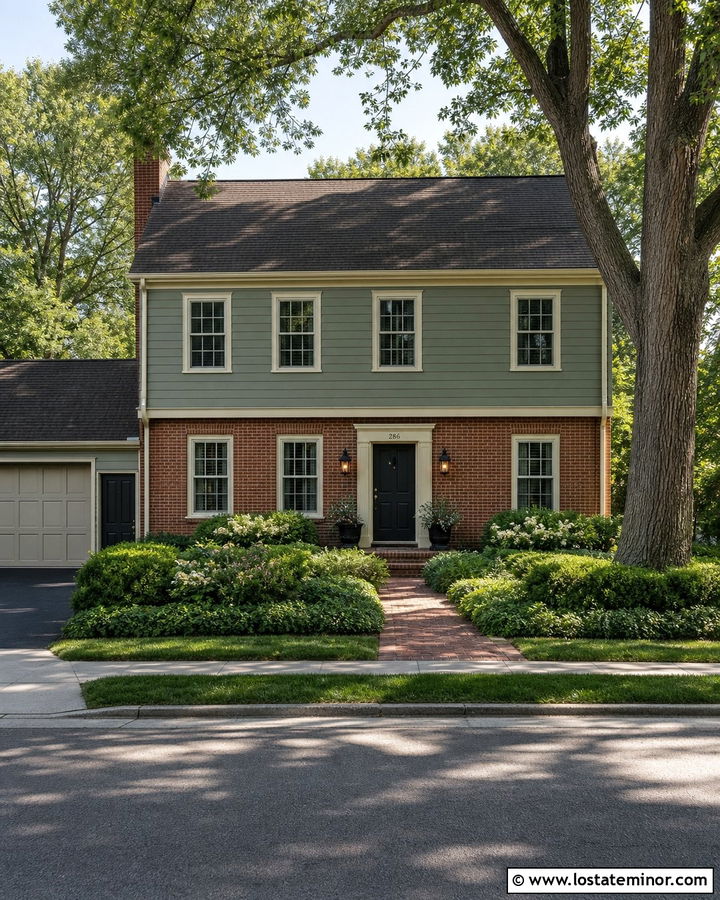
Existing red brick does not have to prevent you from choosing sage green siding. A muted, gray-based sage can calm strong brick tones and make the masonry appear more intentional. Use the green across upper siding, dormers, and side elevations while leaving original brick around the lower story or chimney. Cream trim bridges the warm red and cool green without creating harsh outlines. A deep brown or nearly black front door gives the entrance definition, and aged bronze fixtures reinforce the traditional character. Before selecting the siding, compare samples directly against several bricks because masonry usually contains multiple colors. Match the roof to the darkest brick flecks, then repeat sage near the entry through planters or restrained landscaping for a unified exterior.
6. Sage Green Craftsman Siding With Wood Columns
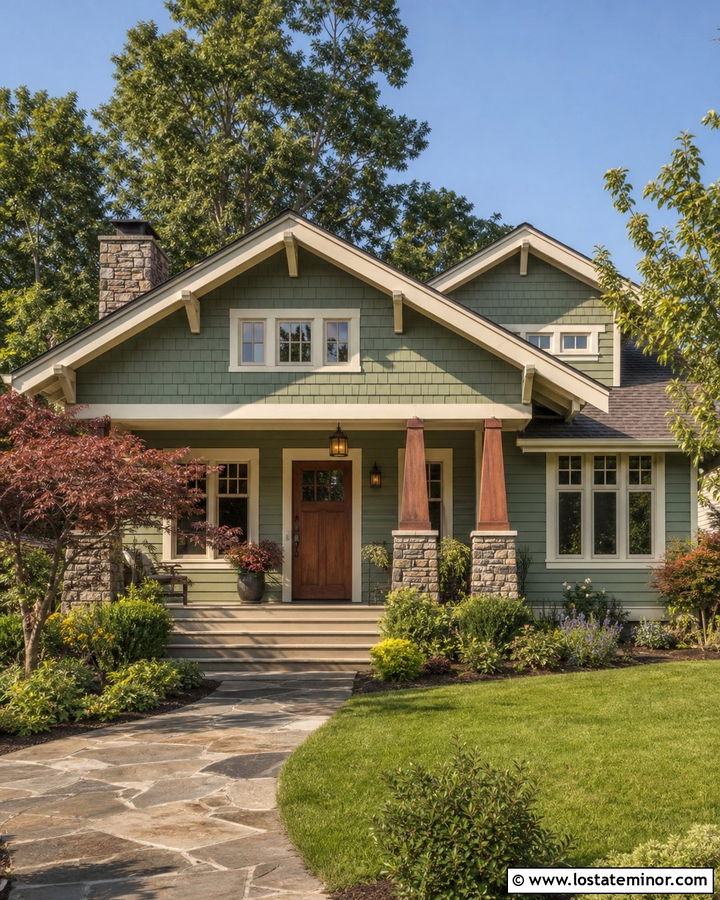
A Craftsman house naturally suits sage green because its architecture already emphasizes grounded proportions and organic materials. Cover the main walls in sage horizontal siding, then use matching shake siding beneath the gables for subtle texture. Tapered porch columns with warm stone bases create a sturdy visual foundation. Stained Douglas fir beams, brackets, and a substantial wood front door supply rich contrast without making the exterior feel busy. Choose creamy trim for rafter tails and window frames, along with a dark brown architectural shingle roof. The porch should remain the main focal point, so limit black accents to lighting and hardware. A flagstone path, layered shrubs, and low ornamental trees complete this comfortable, handcrafted curb-appeal scheme.
7. Sage Green Colonial Siding With Black Shutters
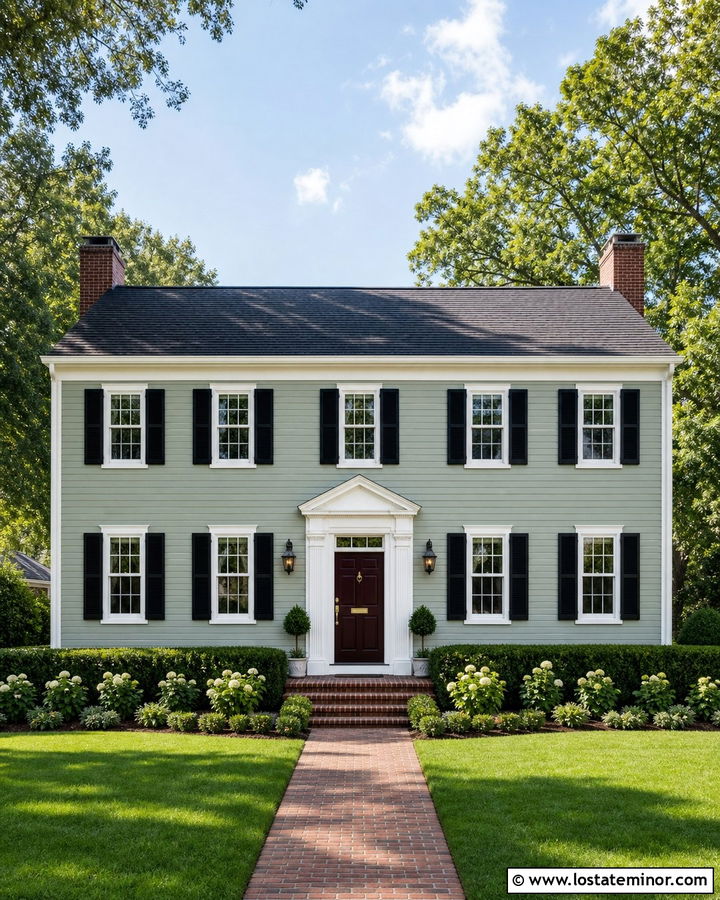
Symmetry gives a sage green Colonial exterior its classic, orderly appearance. Use evenly colored lap siding across the entire facade and frame the windows with clean white trim. Properly sized black shutters add contrast and should look wide enough to cover each window if closed. A centered black or deep burgundy front door creates a formal anchor, while polished brass hardware introduces a small amount of warmth. Keep the roof simple with dark charcoal shingles, and paint gutters to match the trim so they recede. Two matching lanterns and balanced foundation plantings reinforce the home’s architecture. If the facade feels flat, add a modest white entry surround rather than introducing extra colors. The result is traditional but refreshed by the softer green body color.
8. Sage Green Ranch Siding With Charcoal Trim
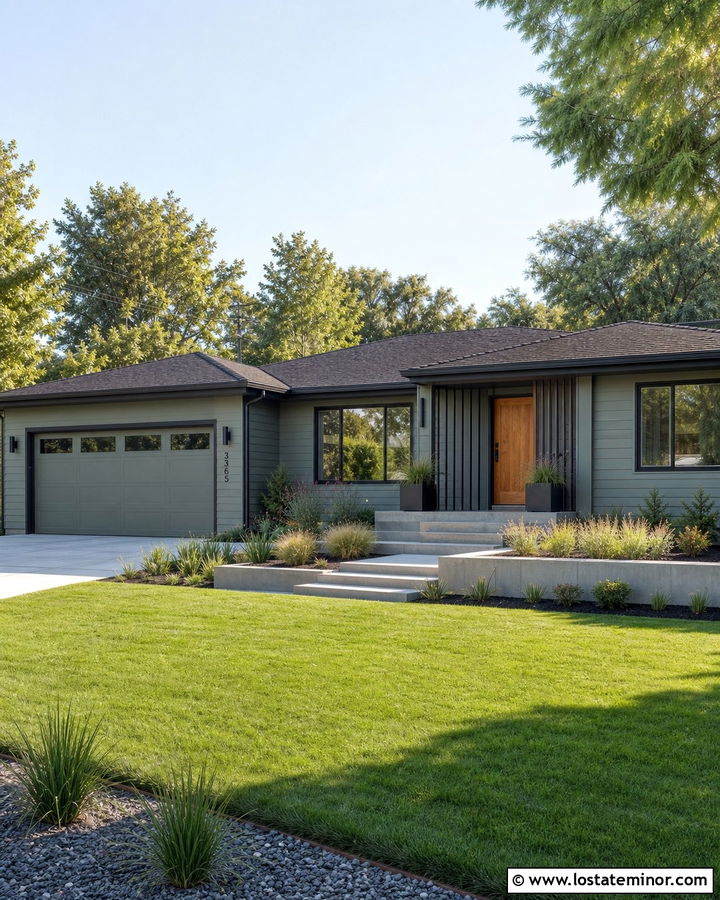
Long ranch homes benefit from a siding palette that breaks up their horizontal proportions without creating clutter. Medium sage green lap siding provides a relaxed base, while charcoal trim around the windows, fascia, and garage adds modern definition. Paint the garage door sage instead of charcoal so it blends into the broad front wall. A natural oak or teak front door then becomes the clear focal point. Add vertical sage panels near the entry to interrupt the horizontal lines and create a sense of height. A low-pitched charcoal roof keeps the scheme streamlined. Wide concrete steps, linear planting beds, and clusters of ornamental grasses suit the architecture. Warm landscape lighting and simple black fixtures finish the exterior without overpowering its low, clean profile.
9. Sage Green Farmhouse Siding With A Metal Roof
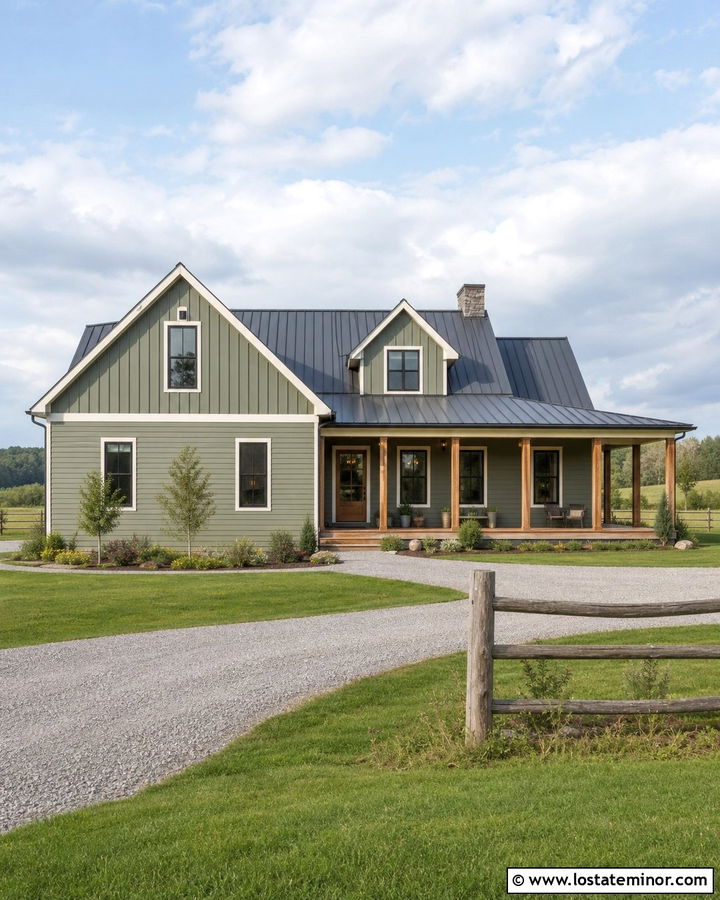
Imagine a broad farmhouse surrounded by open lawn, with soft sage siding changing gently under bright daylight. Horizontal lap siding on the main walls and board and batten in the gables provide variation while maintaining one consistent color. A galvanized or medium-gray standing-seam roof gives the exterior practical rural character without the severity of solid black. Use warm white trim, simple black windows, and natural wood porch beams to complete the palette. A stained front door and matching porch swing can reinforce the organic materials. Keep decorative details restrained because the contrasting siding profiles already create visual movement. A gravel drive, split-rail fencing, broad porch steps, and informal native planting help the complete house feel authentic rather than overly decorated.
10. Sage Green Bungalow Siding With A Terracotta Door
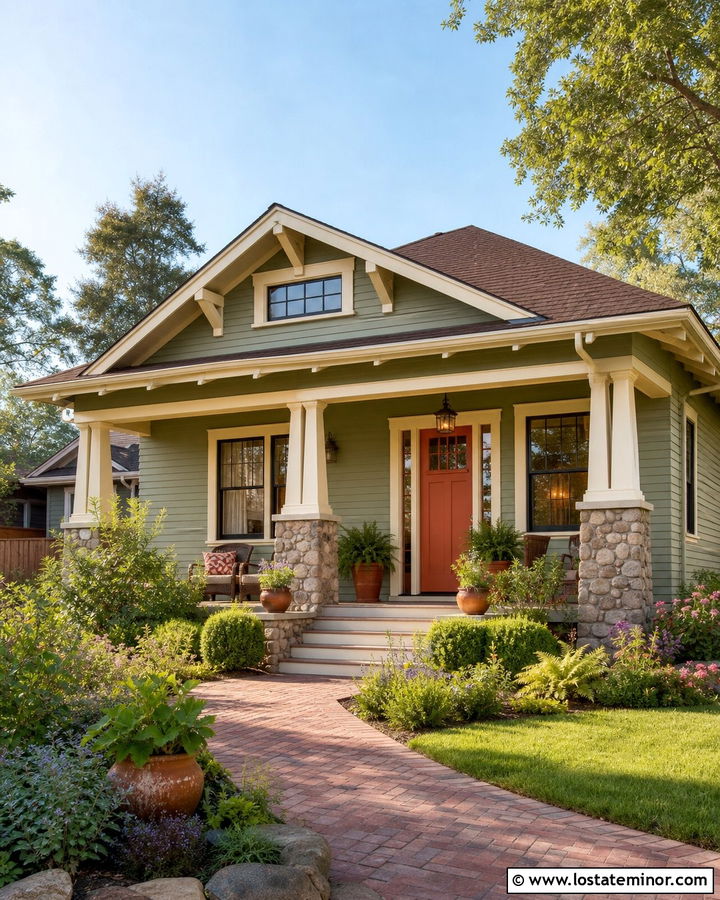
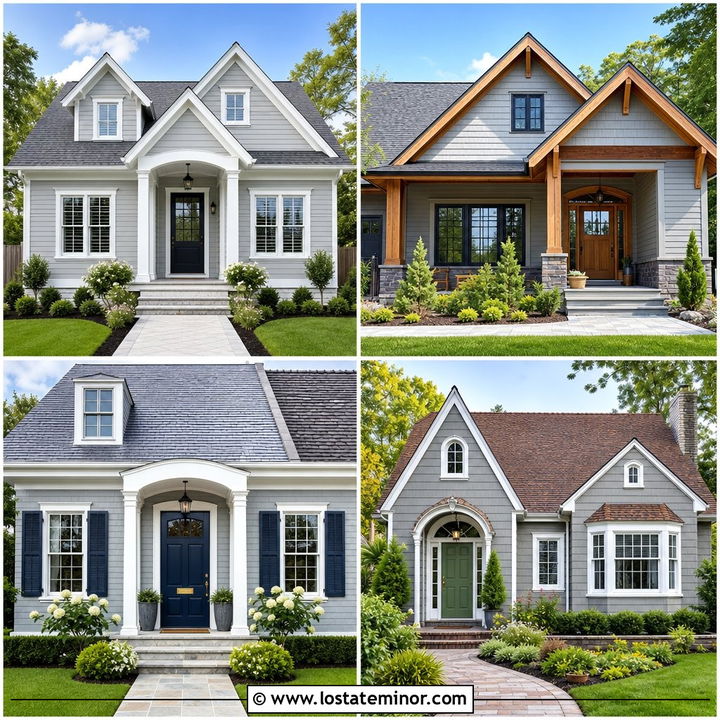
A compact bungalow can handle a warm front-door color because its entrance usually plays a prominent architectural role. Cover the house in muted sage lap siding and use creamy ivory for the broad window casings, exposed rafters, and porch railings. A terracotta or burnt-orange door adds energy while remaining connected to the earthy green. Repeat that warmth through clay planters, copper-toned hardware, or reddish walkway pavers. Choose a dark brown roof that grounds the low profile and works with the orange accent. Stone porch piers can add texture, but keep their colors quiet and natural. Layer ferns, flowering perennials, and rounded shrubs around the porch to make the small house feel settled, friendly, and thoughtfully composed from the sidewalk.
11. Sage Green Siding With A Cedar Front Door
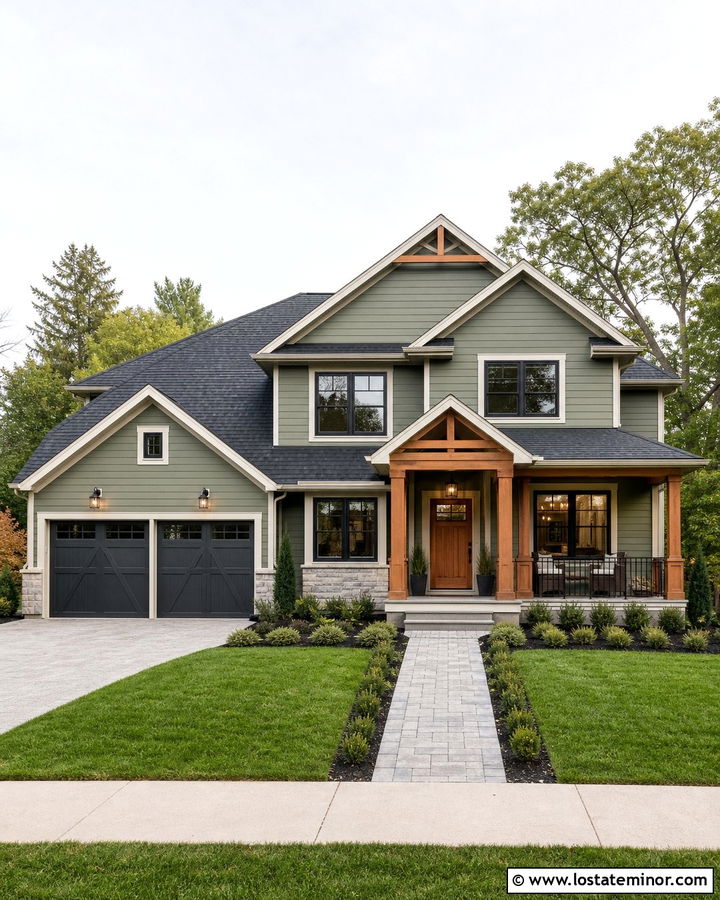
When a sage green exterior needs warmth, a clear-finished cedar front door can transform the entire facade. Use simple horizontal siding as the main surface and repeat sage board and batten around the entry for subtle architectural emphasis. The golden and reddish tones of cedar contrast naturally with the cool, dusty green. Cream trim keeps the transition gentle, while black window frames and fixtures add a modern edge. Consider carrying cedar onto porch posts, soffit details, or a small garage-door accent, but avoid mixing several unrelated wood stains. A charcoal roof and pale gray stone foundation provide neutral support. Complete the design with a straight paver path, clipped evergreens, and warm-toned mulch that echoes the wood without making the landscaping look overly matched.
12. Sage Green Siding With A Navy Front Door
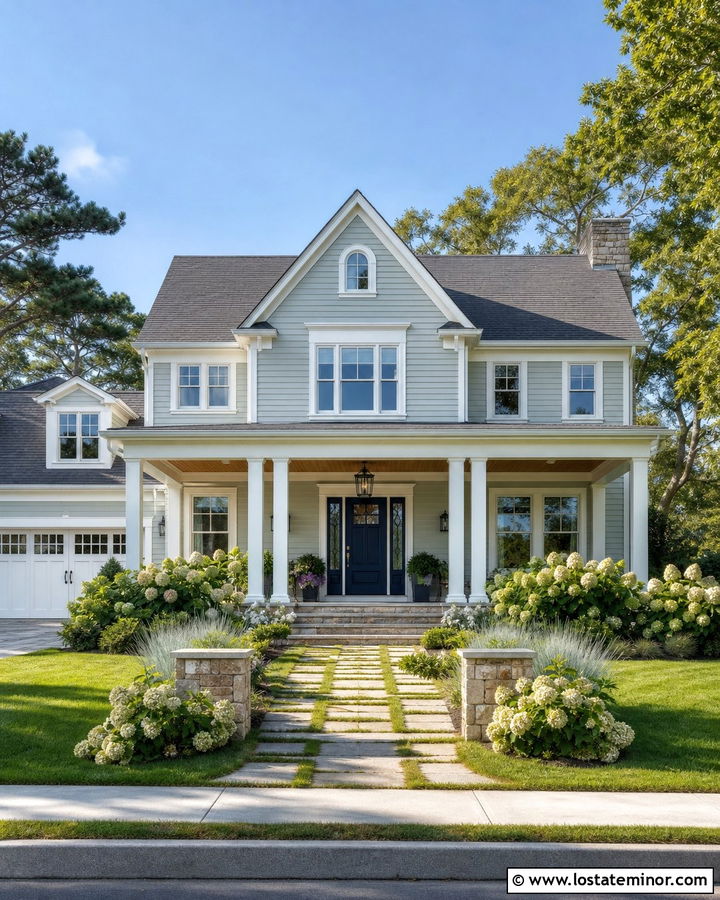
Could sage green and navy work together without making a house look too cool? They can when warm white trim and natural materials are included to soften the palette. Choose light sage lap siding for the walls and a deep navy door for a confident, noticeable entrance. Keep window frames, columns, and fascia in creamy white, then introduce light oak through porch furniture or ceiling details. A medium-gray roof connects the green and blue without competing with either color. This combination looks particularly appropriate on coastal cottages and traditional suburban homes. Use brushed nickel or aged brass door hardware instead of stark chrome. Blue-green grasses, pale hydrangeas, and a light stone walkway finish the exterior while preserving its bright, breezy character.
13. Sage Green Siding With A Black Front Door
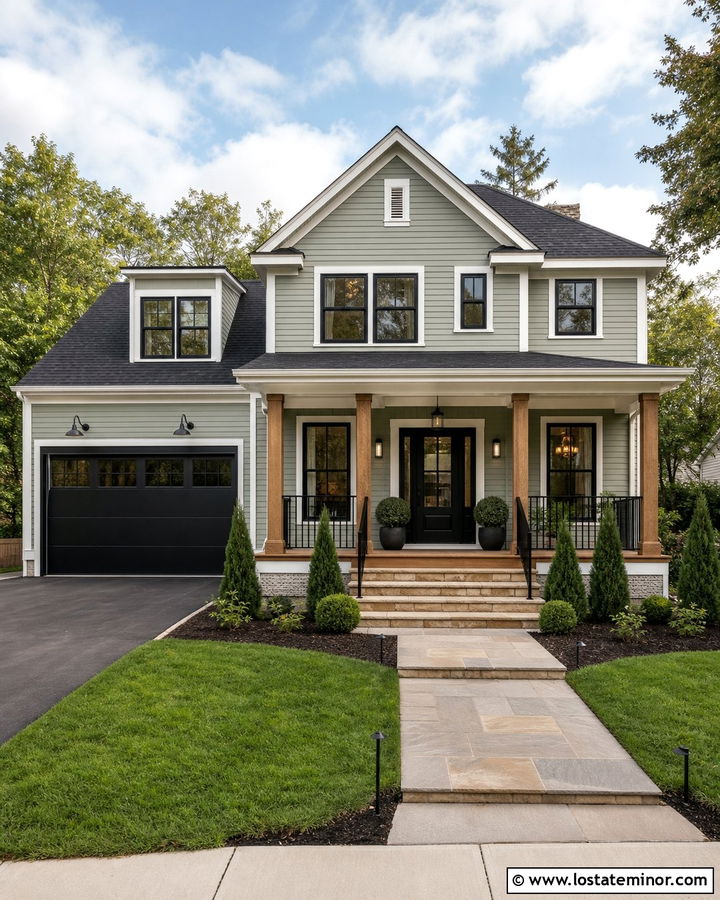
A black door offers strong contrast against sage siding, but the rest of the exterior should remain balanced and welcoming. Select medium-light sage lap siding, soft white trim, and a charcoal roof to establish a simple three-color foundation. Use black for the front door, lanterns, window sashes, and perhaps narrow railings. Avoid painting large porch columns black because they may visually overpower the softer siding. A natural wood porch floor and tan stone steps can introduce needed warmth. This combination works especially well on transitional homes with clean rooflines and limited ornamentation. Frame the entrance with symmetrical planters and low evergreens to strengthen its importance. The finished house feels structured and updated while keeping the calm, nature-inspired quality associated with sage green.
14. Sage Green Siding With A Yellow Front Door
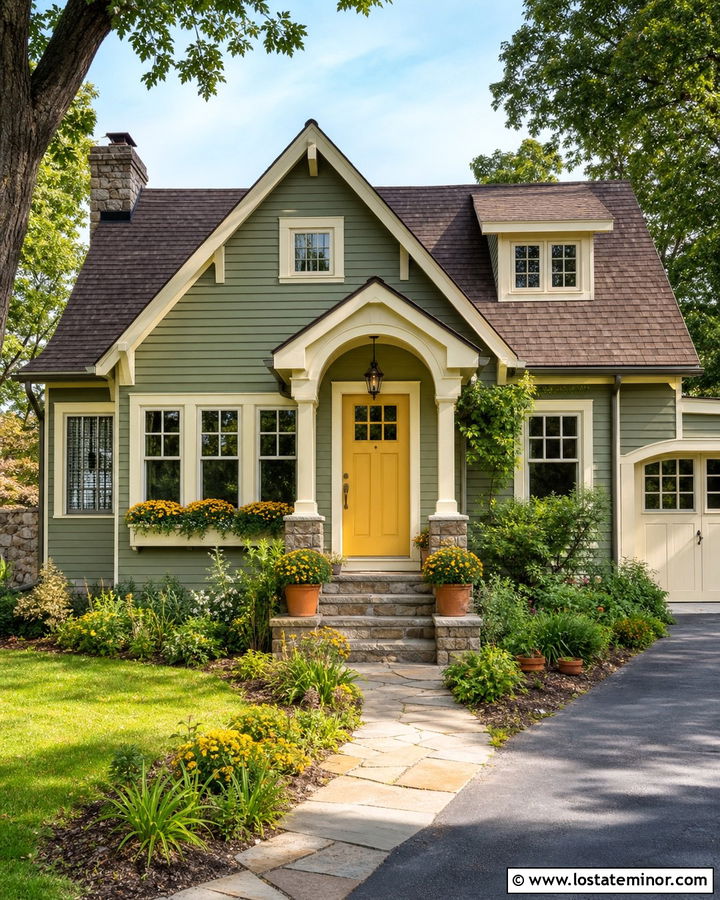
A yellow door can make sage green siding feel cheerful without turning the complete exterior into a high-contrast color statement. Choose a muted ochre, goldenrod, or mustard shade rather than bright lemon. Its earthy quality sits comfortably beside gray-green lap siding, cream window trim, and a weathered brown roof. This scheme is well suited to cottages, small farmhouses, and casual bungalows with visible front porches. Repeat the yellow only through small seasonal flowers or a subtle patterned cushion so the door remains special. Natural stone steps and aged brass hardware add texture and warmth. Keep the garage door and secondary entrances sage or cream. Limiting the stronger accent color to the main entry creates a clear focal point and a friendly arrival.
15. Sage Green Siding With A Deep Green Door
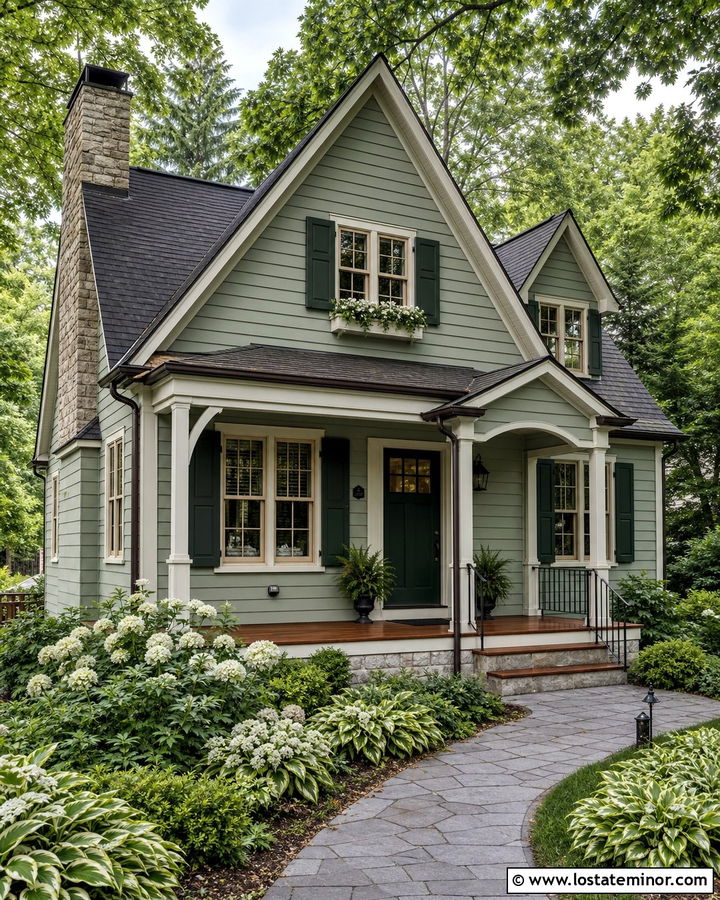
Layering green on green produces a sophisticated, nature-focused exterior with less contrast than a black or navy entrance. Start with light sage horizontal siding, then choose a deep forest green for the front door and shutters. Use warm cream on window frames and porch columns to keep the darker accents from feeling too heavy. A brown-black roof, bronze gutters, and a walnut porch floor support the organic palette. This tonal combination works beautifully on English cottage, Tudor-influenced, and traditional homes surrounded by mature landscaping. Make sure the door is noticeably darker than the siding so it reads as an intentional focal point. Pale stone, white flowers, and variegated foliage can brighten the foreground and prevent the complete house from disappearing into dense greenery.
16. Sage Green Siding With Copper Accents
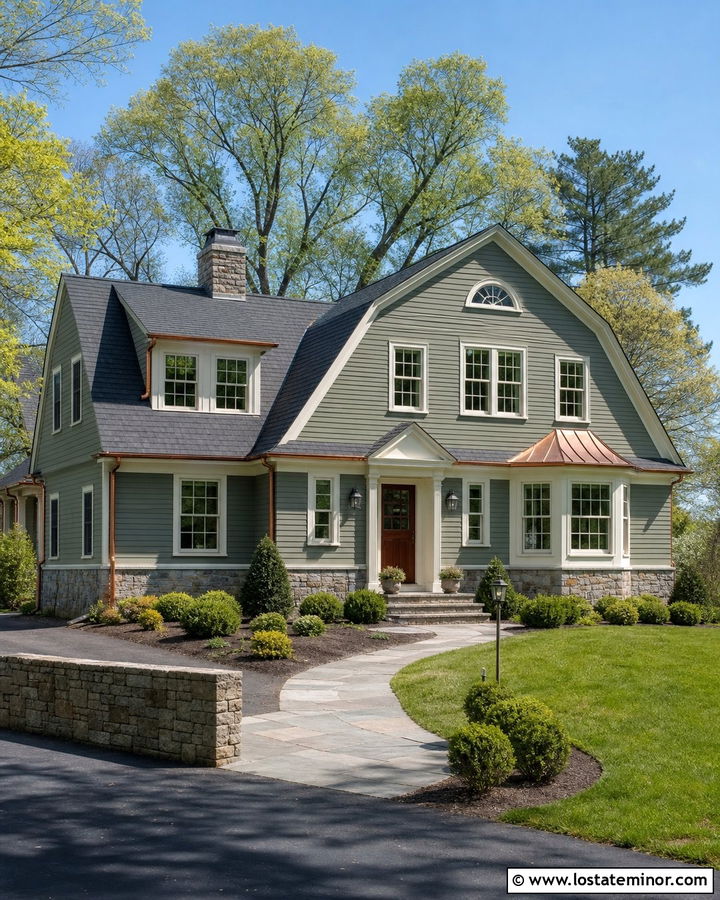
Fresh copper introduces a warm metallic contrast that becomes richer as it ages. Against sage green siding, copper gutters, porch flashing, awnings, or a small bay-window roof can appear both traditional and distinctive. Keep the main walls in simple lap siding and use cream trim so the metal remains the decorative highlight. A stained mahogany door complements the orange-brown copper, while a dark weathered roof gives the facade depth. Limit copper to a few meaningful architectural areas instead of applying it to every available surface. This prevents the house from looking overly ornate. Add gray-tan stone near the foundation and restrained green landscaping around the walkway. Over time, the changing metal finish will continue to coordinate naturally with the soft, botanical siding color.
17. Sage Green Siding With Bronze Trim
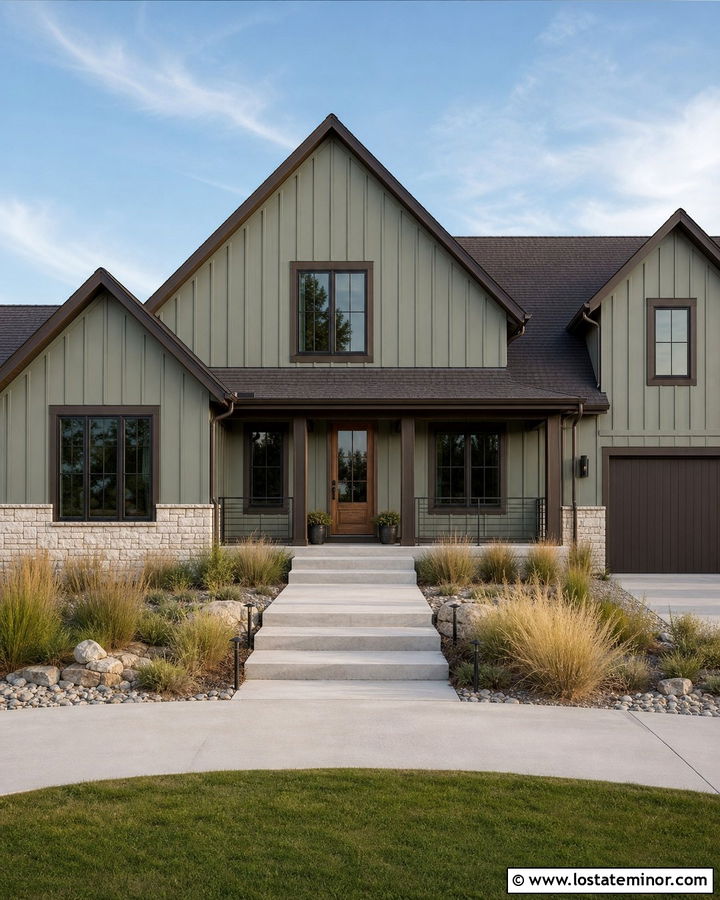
Dark bronze is a softer alternative to pure black and looks especially refined beside warm sage siding. Apply sage board and batten across a contemporary rustic home, then use bronze for the window frames, fascia, gutters, and slim porch railings. A medium walnut front door creates a smooth transition between the green walls and brown-toned metal. Select a deep bronze or charcoal-brown roof to keep the upper portion of the house visually connected. Pale limestone around the entry adds brightness and prevents the complete palette from becoming too dark. This scheme works best when the bronze has a matte or low-sheen finish. Simple prairie grasses, pale gravel, and broad concrete steps complete the look while allowing the siding’s vertical texture and earthy color to remain clearly visible.
18. Sage Green Siding With White Brick
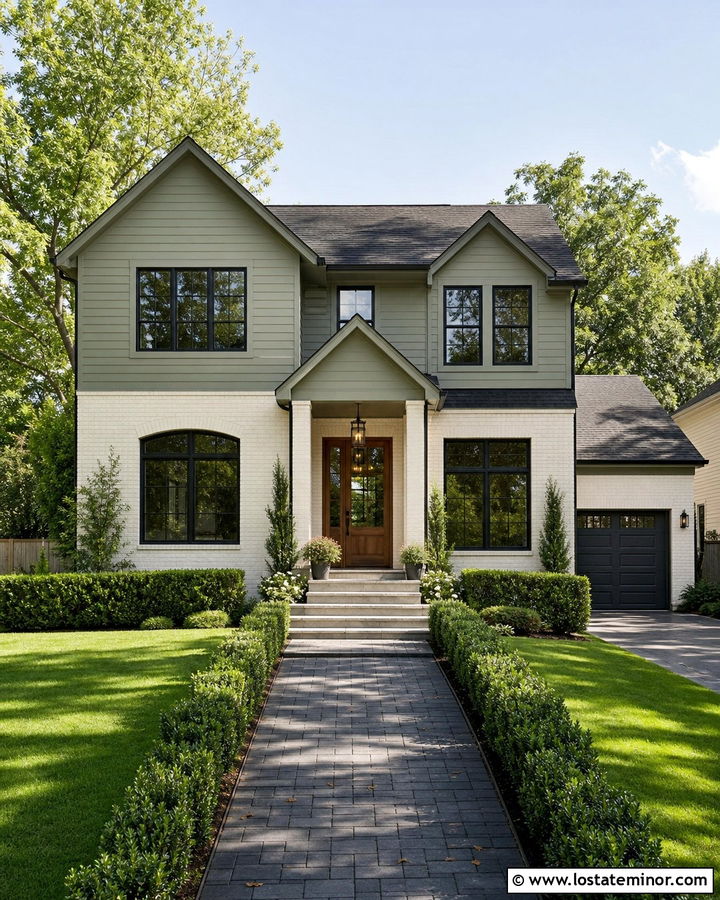
Combining sage siding with painted white brick creates a bright exterior with more texture than an all-siding facade. Use white brick across the lower story or around a central entry volume, then place sage lap or shake siding above it. Choose a soft, warm white instead of a brilliant finish so the masonry complements the muted green. Black windows and a dark gray roof add definition, while a stained wood door keeps the scheme from feeling cold. Align material changes with natural architectural breaks, such as floor lines, gables, or porch sections. Randomly dividing a flat wall can make the exterior look pieced together. Low hedges, broad steps, and a charcoal paver walkway reinforce the structured transitional character of this balanced material combination.
19. Sage Green Siding With Gray Stone
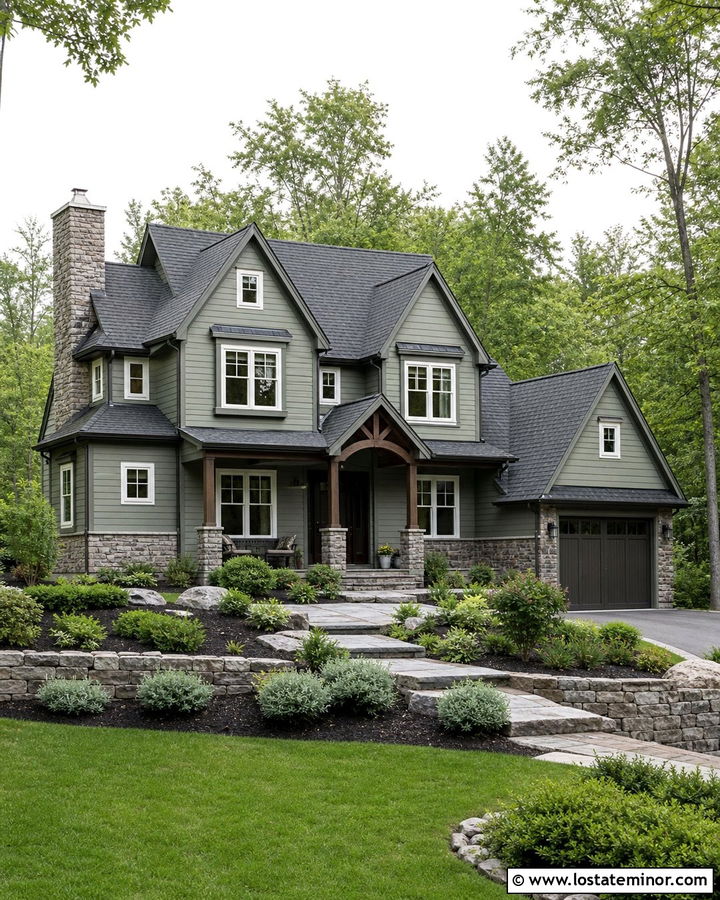
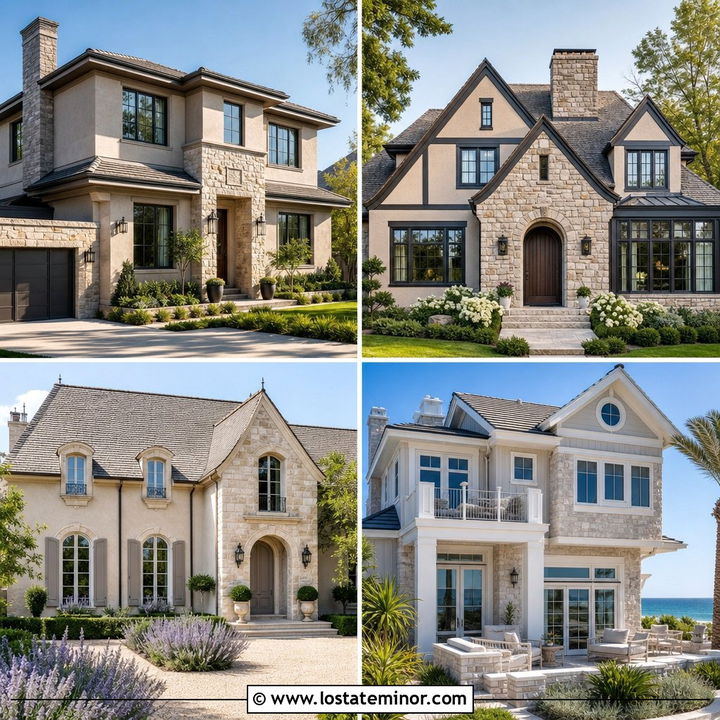
Cool gray stone gives sage siding a restrained, polished quality, especially when both materials share subtle blue or gray undertones. Cover the main walls in light sage horizontal siding and concentrate the stone around the foundation, chimney, or garage wing. Medium-gray trim creates a tonal transition, while white window frames provide enough brightness to define the facade. Select a charcoal roof and a dark stained door for depth. If the stone contains strong blue tones, avoid yellow cream trim because the combination may feel disconnected. Instead, use a soft neutral white with minimal warmth. A slate walkway, silver-green foliage, and dark mulch can carry the palette into the landscape. The completed exterior feels cohesive, durable, and appropriate for both mountain and suburban settings.
20. Sage Green Siding With Tan Stone
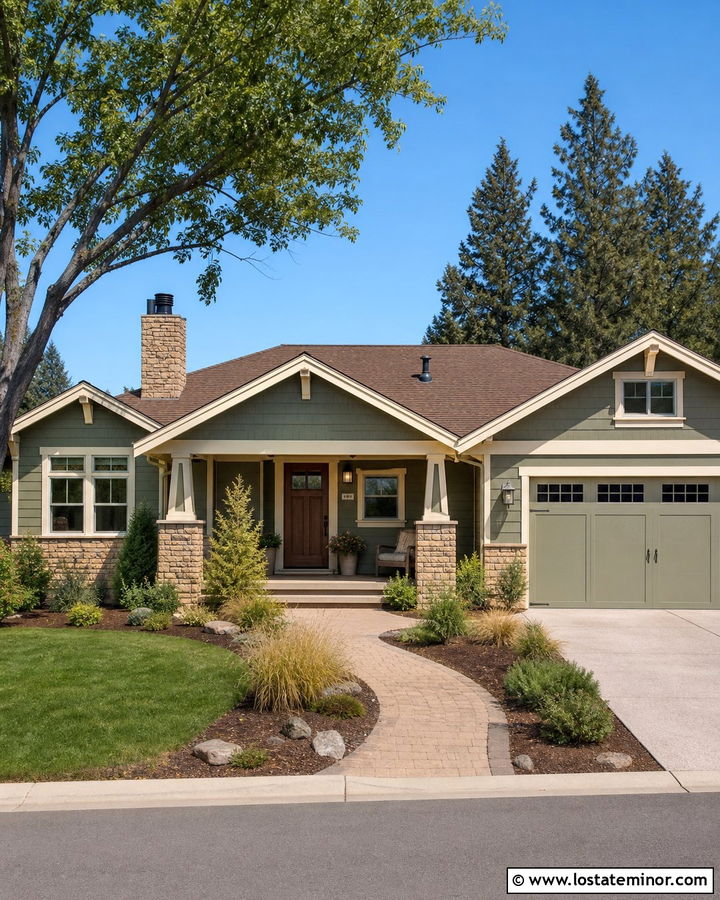
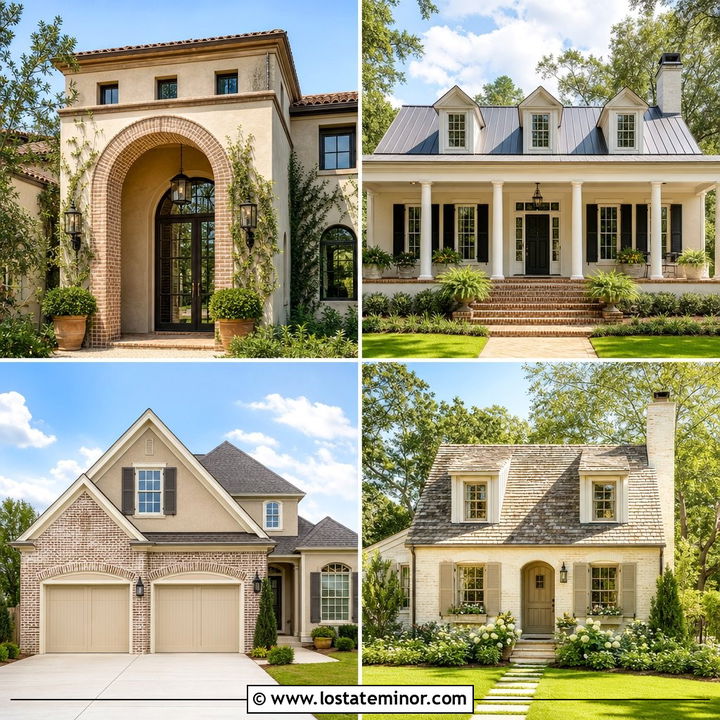
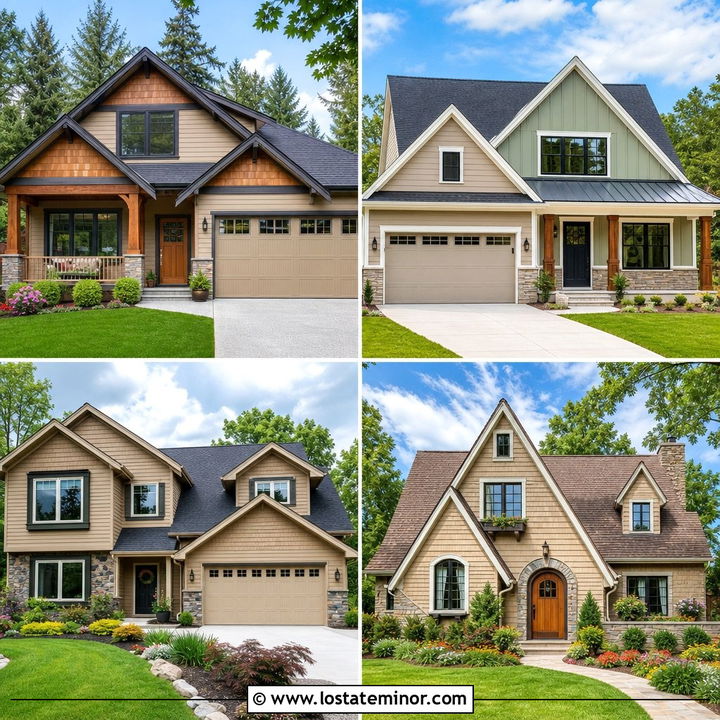
Warm tan stone can pull the golden undertones forward in sage green siding, producing a relaxed and welcoming exterior. Use the stone on porch columns, foundation walls, and a prominent chimney, with sage lap siding covering the larger surfaces. Cream trim and a medium-brown roof connect the two materials without creating excessive contrast. A rich wood door should coordinate with the deepest brown found in the masonry. This combination is a natural fit for Craftsman, ranch, and lodge-inspired homes. Keep mortar close to the stone’s average color rather than using bright white joints. Curved planting beds, warm walkway pavers, ornamental grasses, and soft evergreen shrubs extend the earth-toned palette into the yard. The complete house should feel layered, grounded, and closely tied to its surroundings.
21. Sage Green Mixed Siding With Cedar Shakes
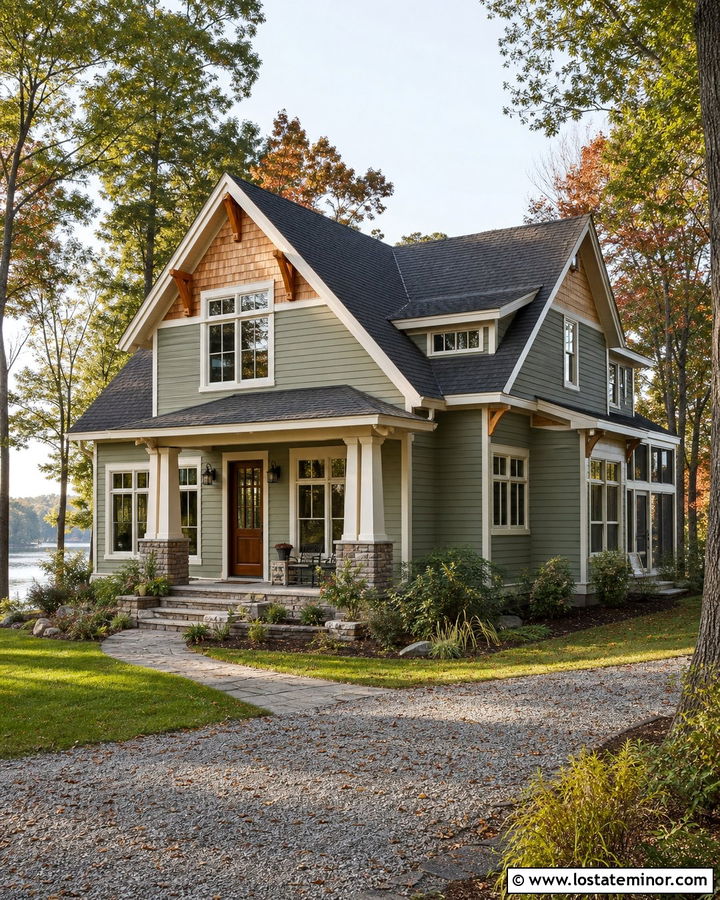
Mixed siding creates depth when each material is assigned to a clear architectural area. Cover the main story in sage horizontal lap siding and use natural cedar shakes in the upper gables. Warm white corner boards and window trim separate the materials cleanly, while a charcoal roof prevents the cedar from dominating the facade. A sage garage door keeps the largest functional feature quiet. Repeat the cedar through porch brackets or a stained front door for a connected appearance. This approach is ideal for lake houses, Craftsman homes, and wooded suburban properties. Allow the shakes to weather naturally or select a protective stain that maintains their honey-brown color. Finish with fieldstone steps, native shrubs, and a gently curving path that supports the casual, textural character.
22. Sage Green Two Tone Siding
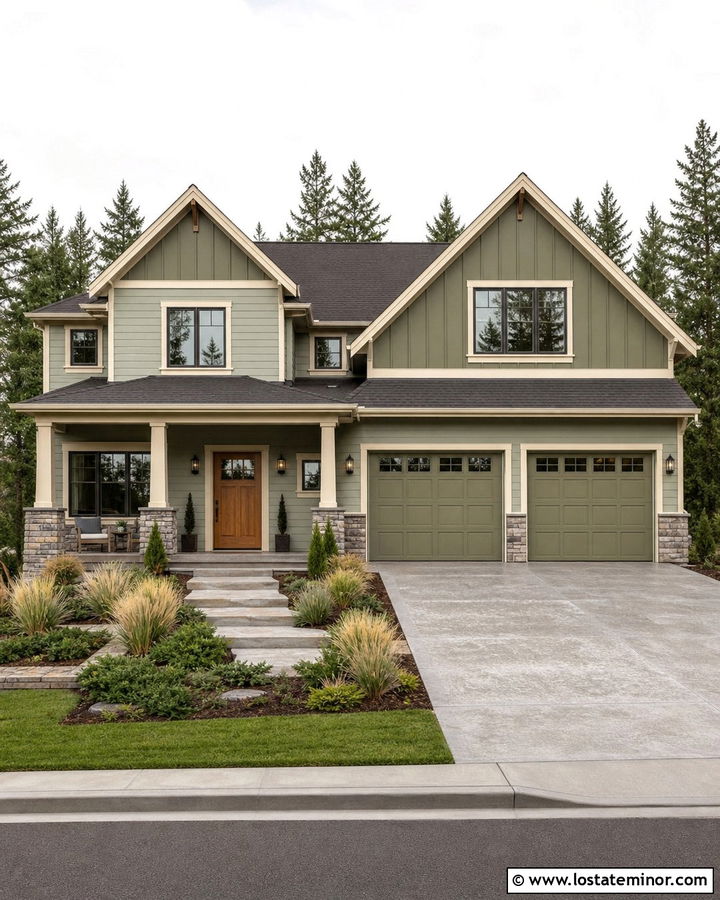
A two-tone green scheme can define a house’s structure without relying on white or black for every transition. Use lighter sage lap siding across the main walls and a deeper olive-sage board and batten treatment on upper gables or the entry projection. Cream trim outlines the windows and clearly separates the two greens. A dark brown roof and natural oak door maintain the earthy direction of the palette. Keep the darker green limited to smaller architectural zones so it adds depth rather than making the upper story look heavy. Matching sage garage doors help simplify the lower facade. Stone porch bases, layered evergreens, and pale ornamental grasses complete the tonal composition. This design is particularly useful for large homes that need visual organization and reduced apparent scale.
23. Sage Green Monochromatic Siding
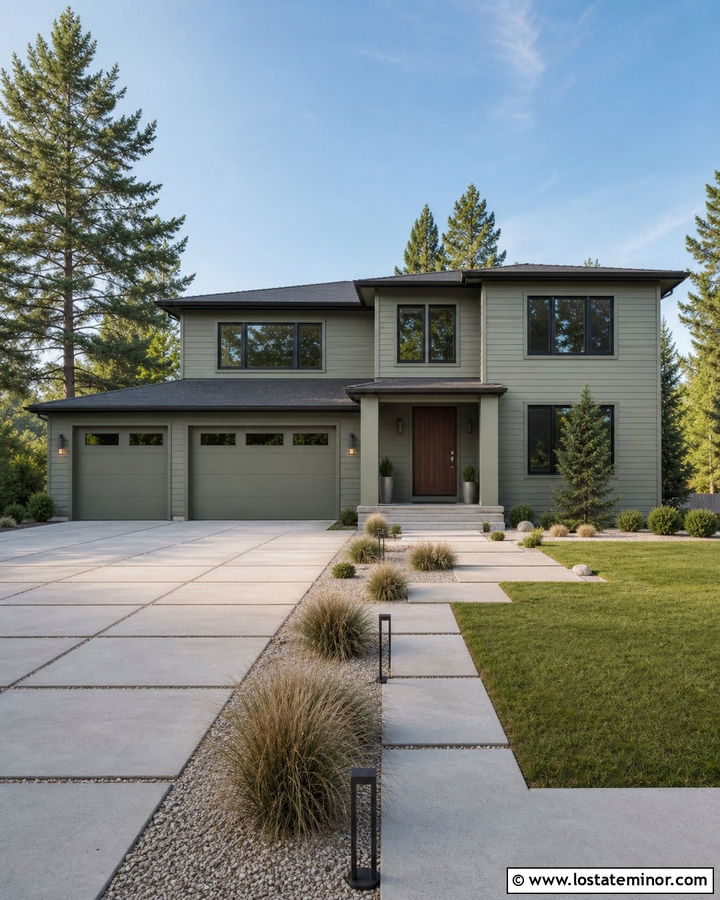
For a modern and understated exterior, paint the siding, trim, corner boards, and garage door in closely related sage tones. Use medium sage on the lap siding and a slightly deeper version on window casings and fascia. This low-contrast approach lets shadows, siding profiles, and architectural forms create definition. Black windows, a charcoal roof, and a dark wood front door supply just enough structure. Monochromatic color works especially well on contemporary homes with asymmetrical rooflines and simple detailing. Avoid using one identical finish everywhere. A subtle shift in value or sheen will keep the facade from appearing flat. Large concrete pavers, sculptural grasses, gravel beds, and a few evergreen trees reinforce the calm, minimal mood while framing the full house with natural texture.
24. Sage Green Split Level Siding
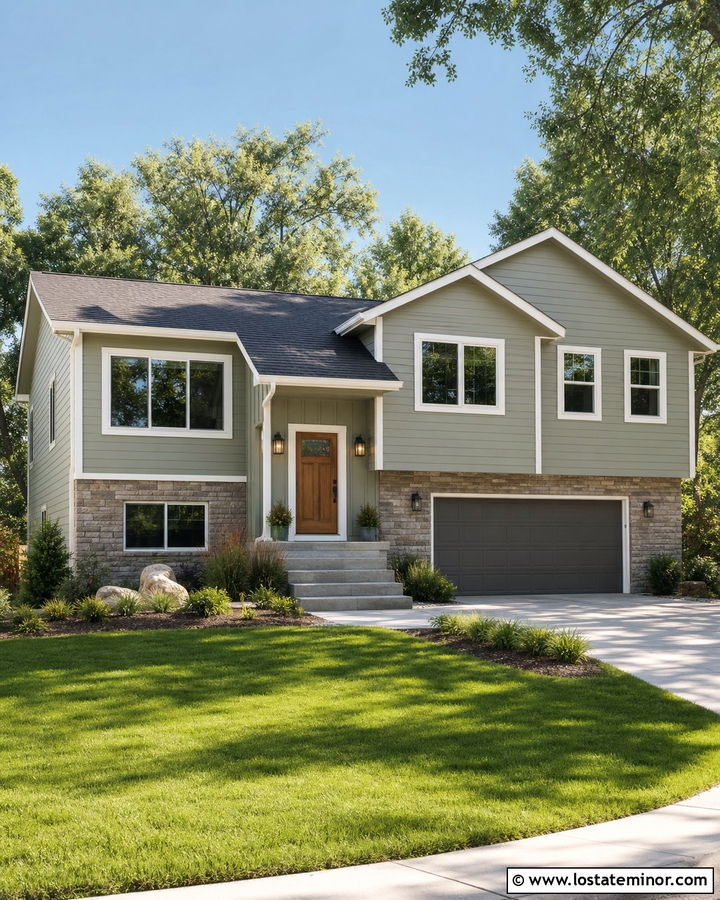
Updating a split-level exterior often requires visually connecting sections built at different heights. Sage green lap siding can unify the upper story, entry volume, and garage wing without hiding the home’s distinctive shape. Add vertical sage panels around the doorway to create height and mark the entrance. Use warm white trim, charcoal window frames, and a dark gray roof for a clear but uncomplicated palette. If the lower level contains brick, leave it natural when its undertones coordinate with the green. Otherwise, use a thin stone veneer in mixed gray and tan. A stained wood door and broad modern steps make the entrance more visible. Layered shrubs should stay low enough to reveal the windows and preserve the refreshed architectural lines.
25. Sage Green Cape Cod Siding With Dormers
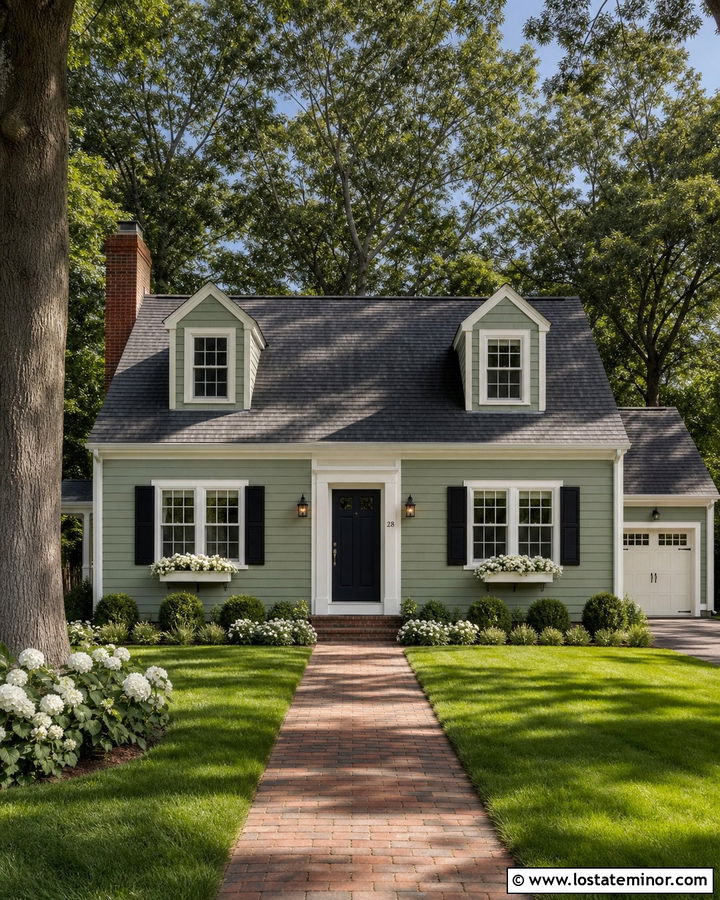
Dormers give a Cape Cod house much of its character, so the siding and trim should make them clear from the street. Use muted sage lap siding on the main walls and matching sage shakes across the dormer faces. Crisp but slightly warm white trim can outline each window, eave, and corner board. Add a dark navy or black central door, simple lanterns, and a weathered charcoal roof for classic contrast. Small window boxes and symmetrical foundation shrubs reinforce the orderly facade without covering its details. If shutters are included, size them correctly and keep them in the same dark color as the door. A brick walkway and white flowering plants bring warmth and brightness to this traditional sage green exterior without making it appear overly decorative.
26. Sage Green Coastal Siding With White Railings
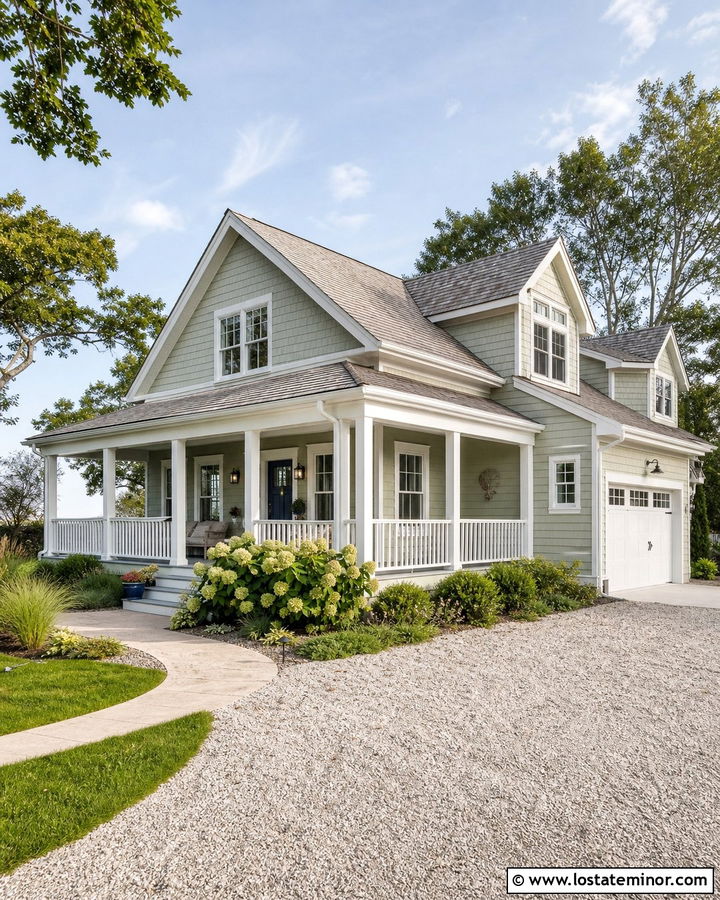
Sage green offers a softer coastal alternative to familiar blue and gray exteriors. Apply pale sage shake siding to the upper walls and lap siding below, then use clean white for porch railings, columns, window trim, and exposed roof details. A medium weathered-gray roof supports the breezy palette, while a muted navy door supplies a restrained nautical accent. Choose light natural wood or gray composite decking to keep the porch bright. Avoid overly dark shutters if the house has a large covered veranda, as deep shadows already create contrast. Hydrangeas, beach grasses, pale gravel, and a shell-colored walkway reinforce the coastal setting. The complete facade should appear fresh and relaxed, with enough green pigment to remain visible under strong natural daylight.
27. Sage Green Cottage Siding With Arched Details
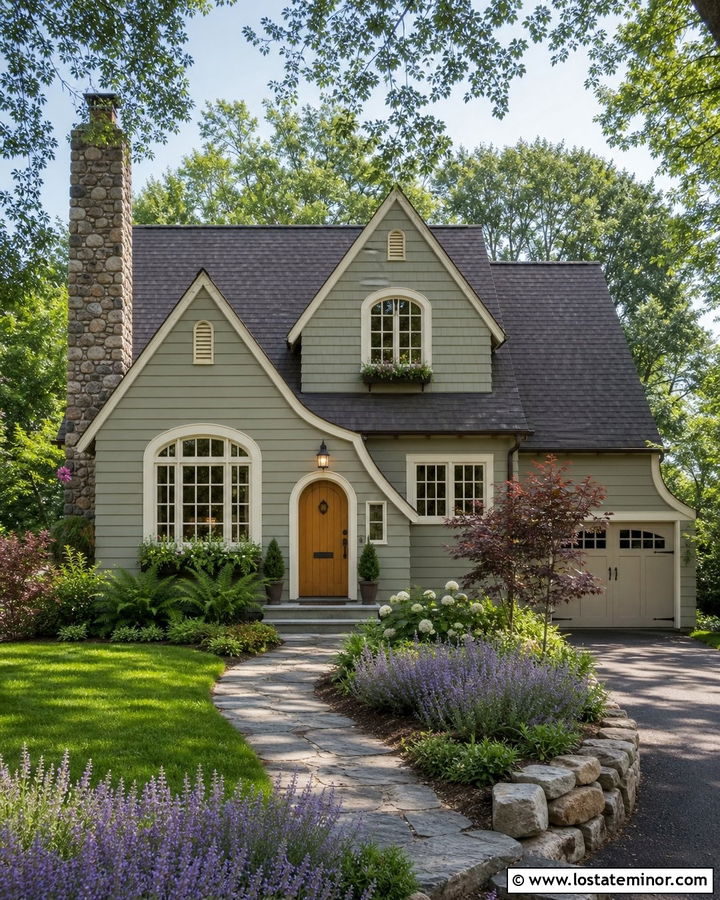
Soft sage siding can highlight the romantic shape of a cottage without depending on elaborate decoration. Cover the exterior in narrow lap siding or textured shakes, then outline arched windows and the curved entry with warm ivory trim. A rounded natural wood door creates a handcrafted focal point, while a steep charcoal-brown roof grounds the whimsical roofline. Add stone along the chimney and porch base to connect the house to its garden. Dark green window boxes can provide gentle tonal contrast without introducing another dominant color. Keep pathways curved and planting beds informal, using lavender, white flowers, ferns, and compact shrubs. The siding, masonry, door, and landscape should work together to create charm while preserving a practical, uncluttered full-house appearance.
28. Sage Green Modern Siding With Wood Panels
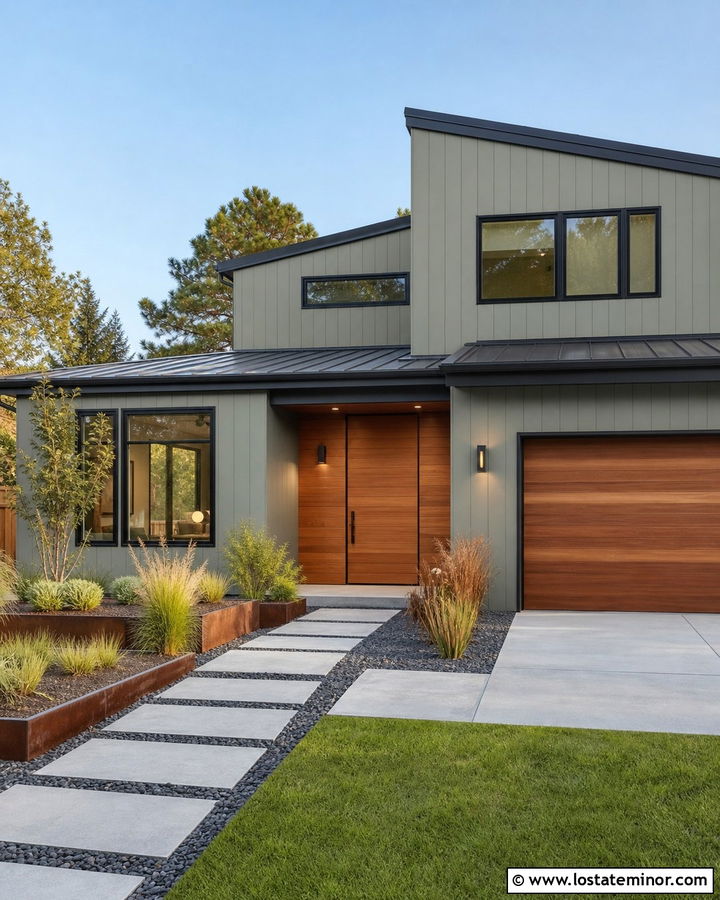
Clean modern architecture benefits from sage green when the color is paired with simple planes and warm natural materials. Use smooth vertical sage siding on the main volumes and place cedar panels around the recessed entrance or beneath a projecting upper story. Black-framed windows and a low charcoal metal roof define the geometry. A flush wood door can blend directly into the cedar entry wall for a streamlined effect. Keep gutters hidden or match them to the siding whenever possible. Pale concrete, dark gravel, and rectangular planting beds strengthen the contemporary composition. Choose only one wood species and one primary green to avoid visual clutter. The finished facade feels modern but not severe because the sage and cedar soften the home’s straight lines and broad surfaces.
29. Sage Green Victorian Siding With Cream Accents
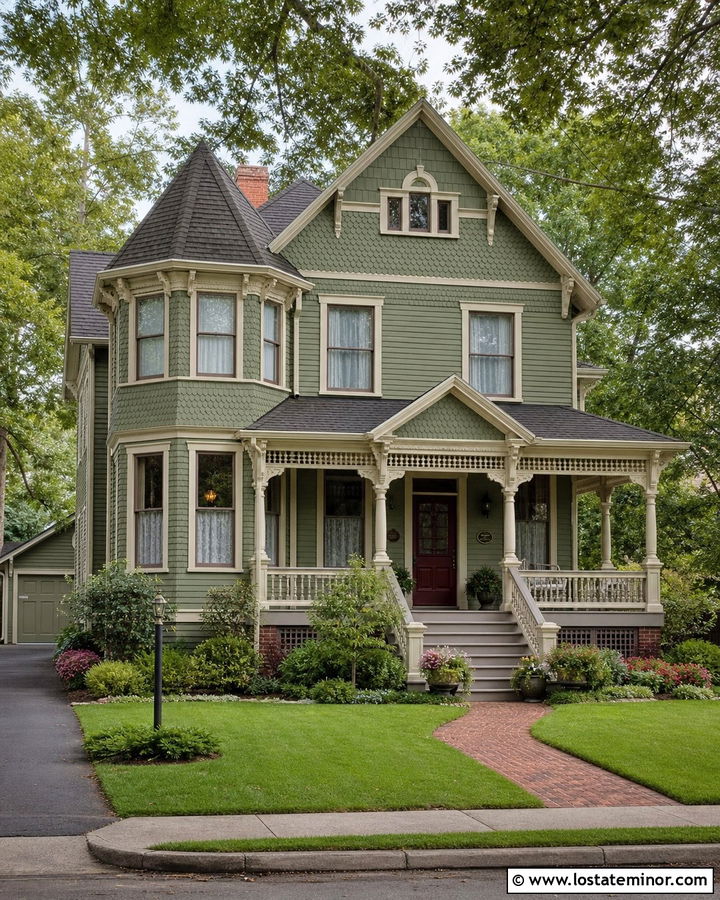
A Victorian house can support several colors, but sage should remain the dominant siding shade for a controlled, elegant result. Apply sage lap siding across the main walls and matching fish-scale shingles in gables or tower sections. Use cream on brackets, porch posts, window casings, and decorative trim. A limited third color, such as deep burgundy, can emphasize the front door and a few small architectural details. Avoid outlining every piece of ornament in a different shade, which may make the exterior look fragmented. A dark charcoal roof and warm gray porch floor ground the richer trim work. Traditional foundation plantings, a brick path, and balanced flower beds complete the facade while allowing its craftsmanship, siding textures, and graceful proportions to remain the focus.
30. Sage Green Siding With A Matching Garage Door
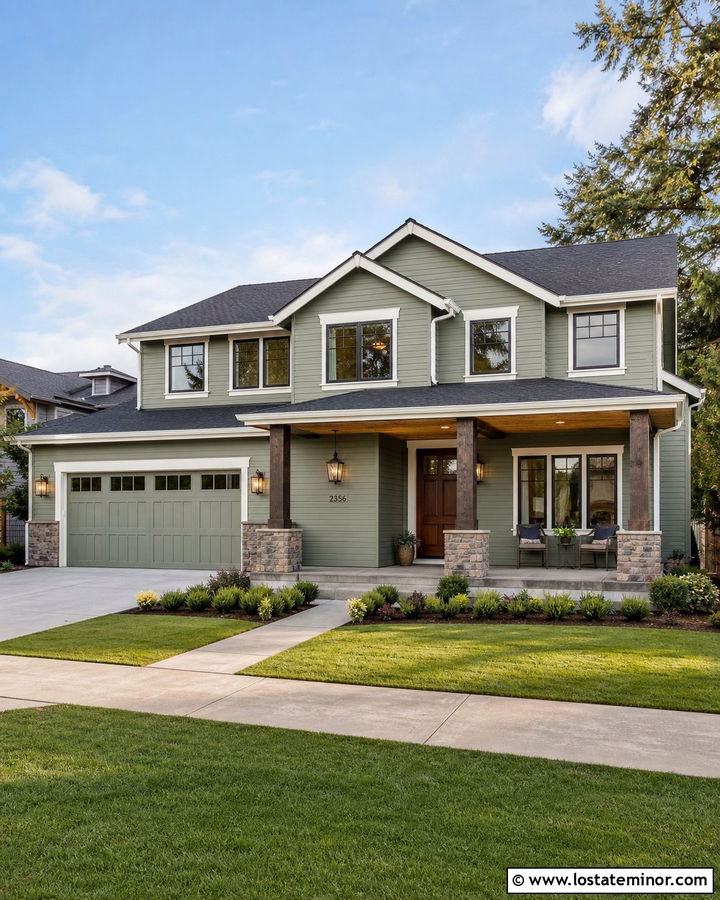
A prominent front-facing garage can overwhelm an otherwise attractive exterior when its color creates a large block of contrast. Painting the garage door in the same sage green as the siding helps it visually recede. Use subtle paneling rather than decorative windows if the door already occupies much of the facade. Warm white trim can outline the opening, while black window frames and a charcoal roof add definition elsewhere. Make the front entrance more noticeable with a walnut-stained door, wood porch ceiling, and two substantial lanterns. A short stone accent wall near the entry can further shift attention away from the garage. Extend the walkway clearly from the driveway to the porch, then use low landscaping to reveal rather than conceal the home’s complete architectural composition.
Conclusion:
The most successful sage exterior is more than a pleasing green swatch. It is a complete palette shaped by siding texture, architecture, roofing, trim, doors, masonry, and landscaping. White and cream create a familiar finish, while black, bronze, navy, and deep green provide stronger definition. Wood, brick, and stone introduce warmth and texture that keep sage from appearing flat. Before committing, view large siding samples beside permanent features at several times of day. Also consider which areas should stand out and which should visually recede. These **30 Sage Green House Design With Siding Ideas** offer adaptable starting points for creating a cohesive home that feels calm, distinctive, and welcoming from the curb.

Related posts: