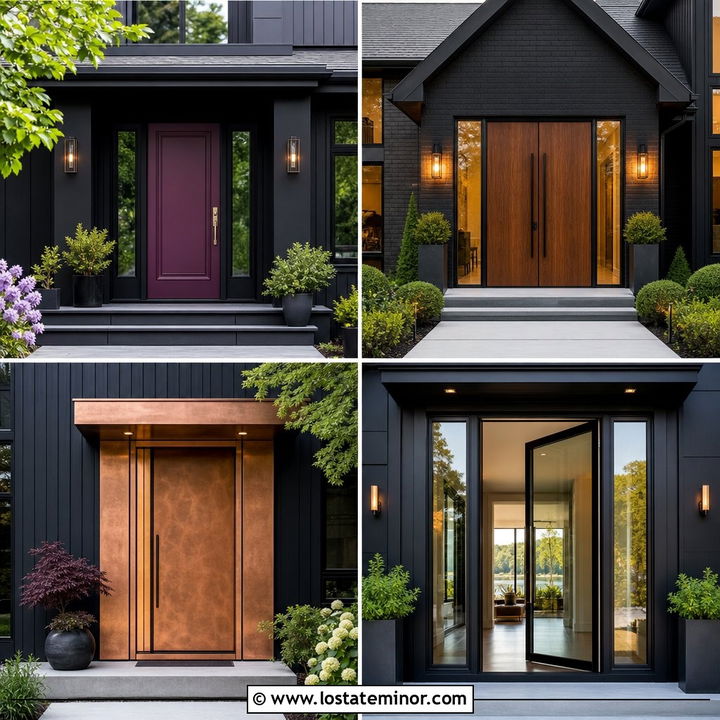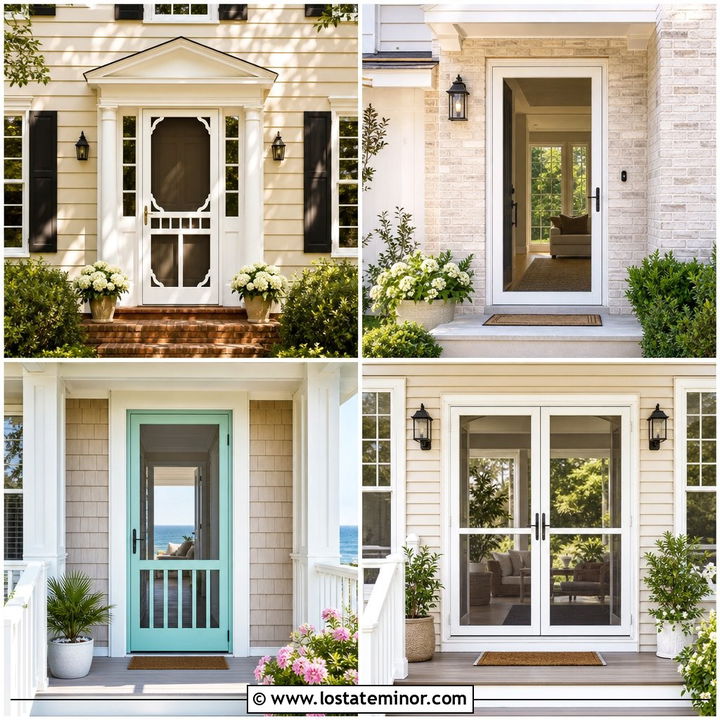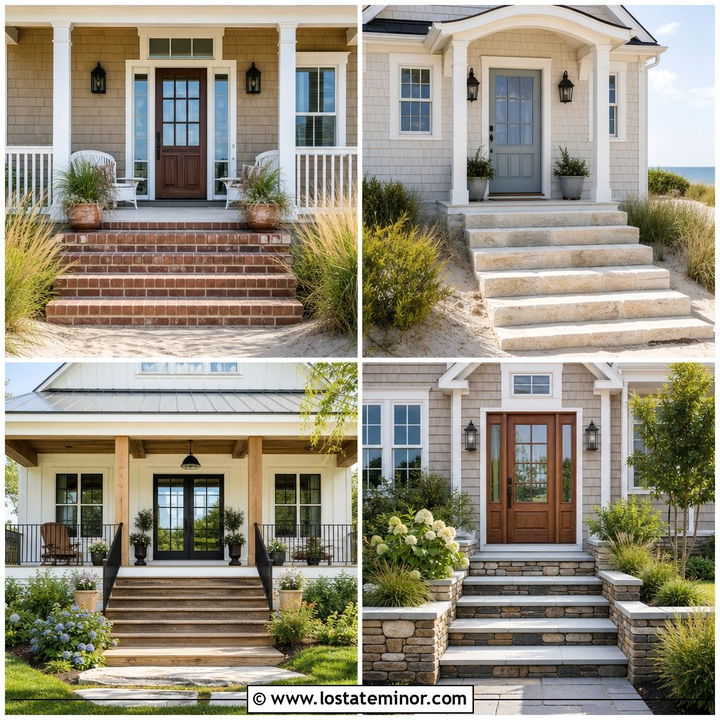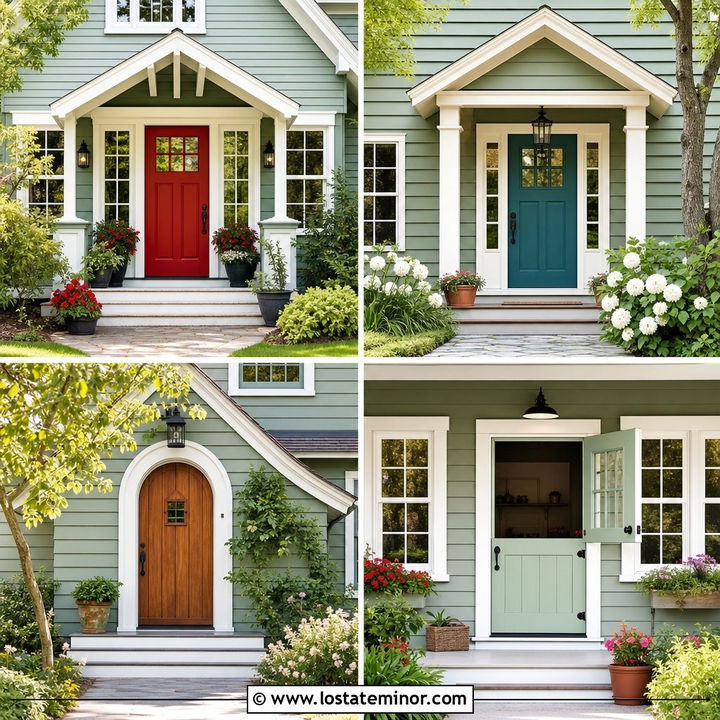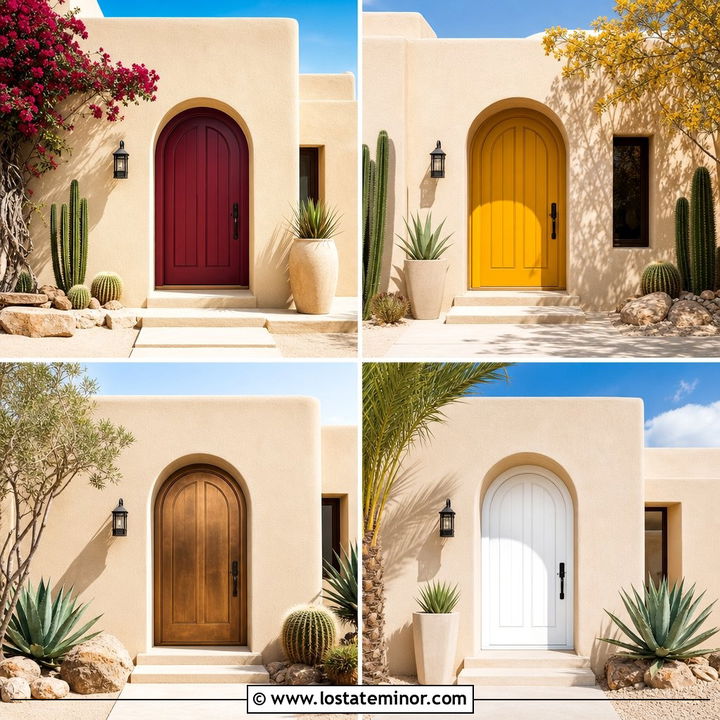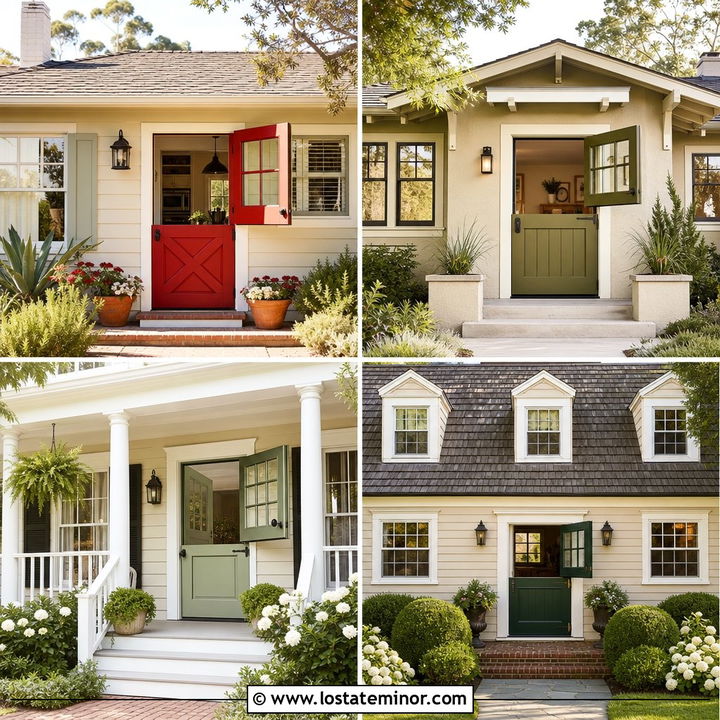
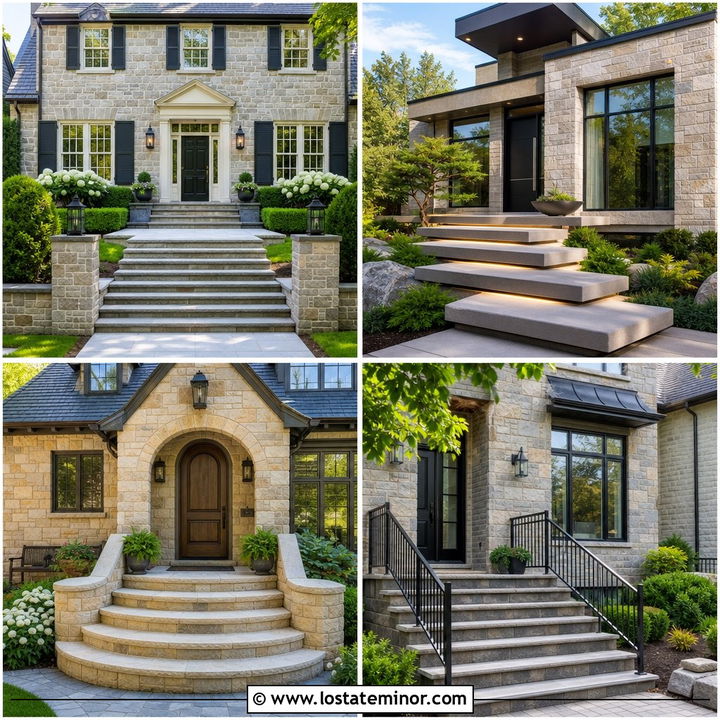
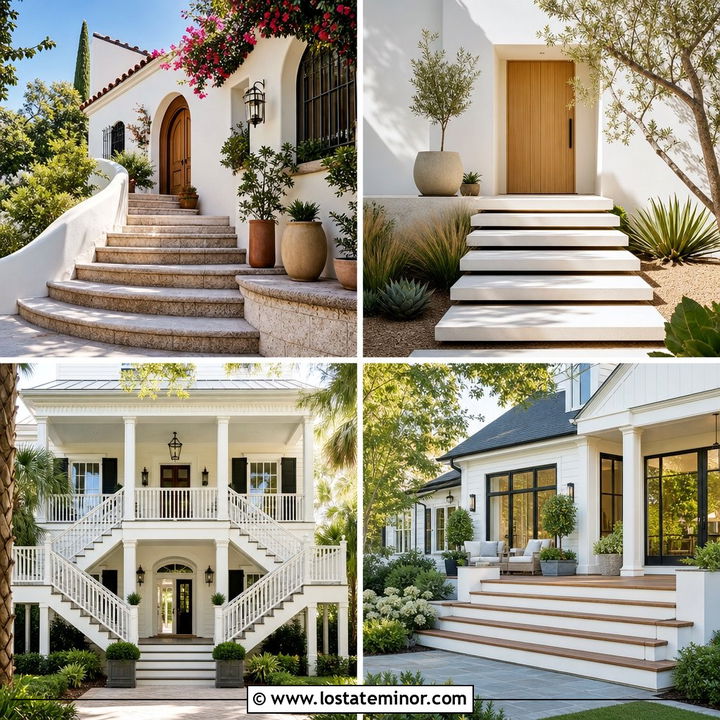
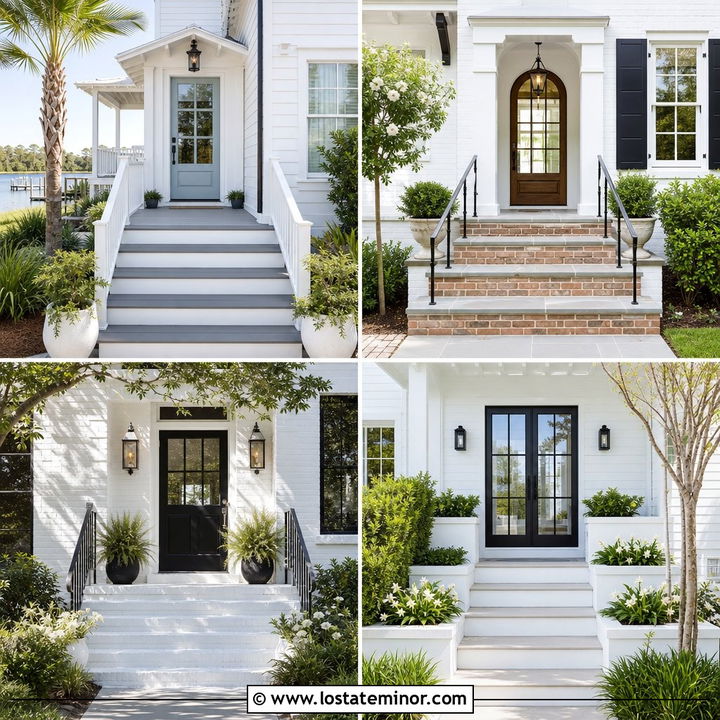
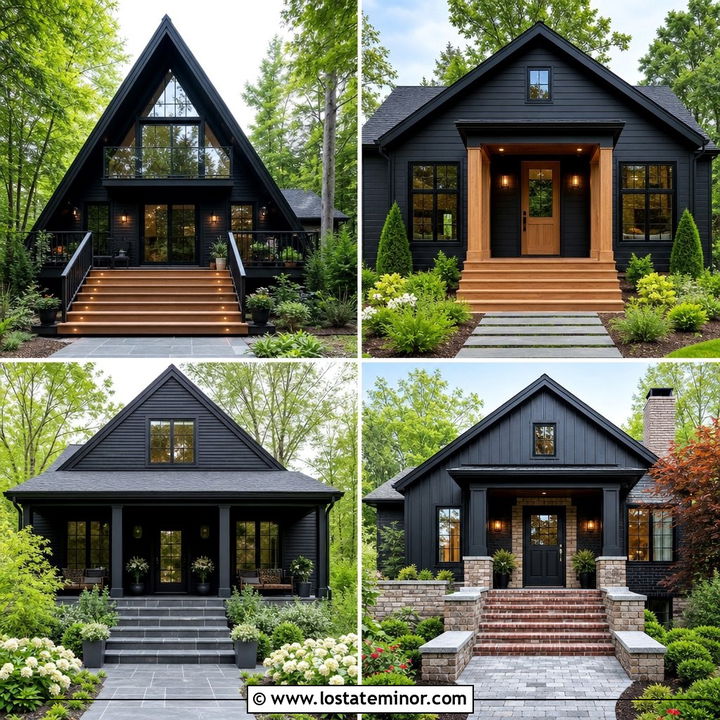
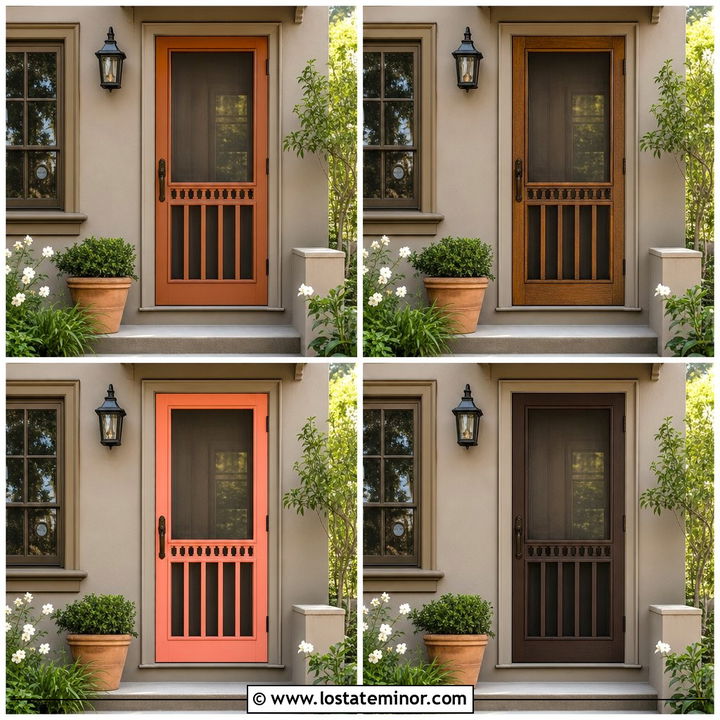
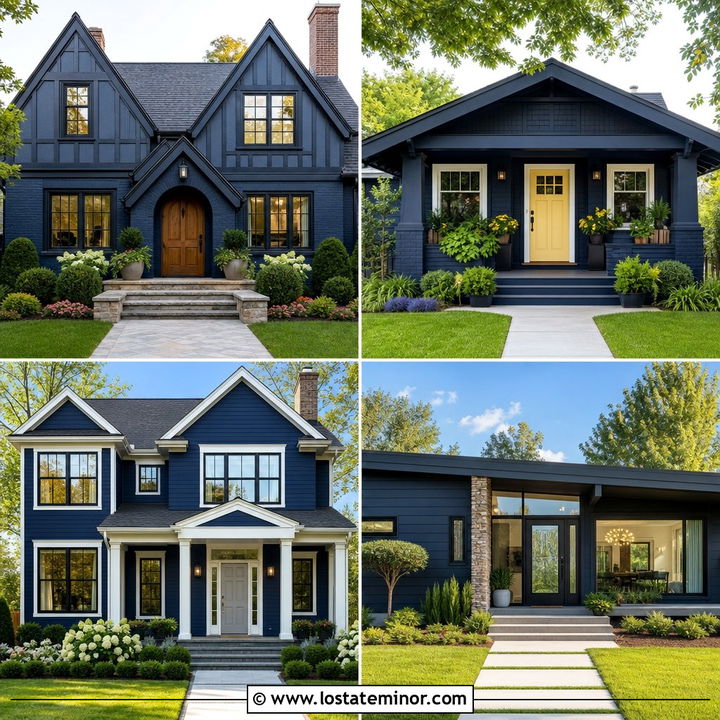
A beige exterior offers a flexible backdrop for creating a welcoming entrance, but the right door should connect with the trim, roof, masonry, and landscaping rather than look like an isolated accent. Current curb-appeal inspiration pairs beige facades with everything from natural wood and quiet green to bold black, red, blue, and teal doors. () The beige undertone matters too. Warm tan works naturally with earthy colors, while cooler greige-beige supports crisp white, charcoal, and blue. Door material, hardware, porch lighting, and architectural style complete the scheme. Whether you prefer traditional contrast or a relaxed tonal palette, the following complete exterior looks offer practical inspiration for **30 Beige House Design With Entry Door Ideas**.
1. Beige House With Black Front Door
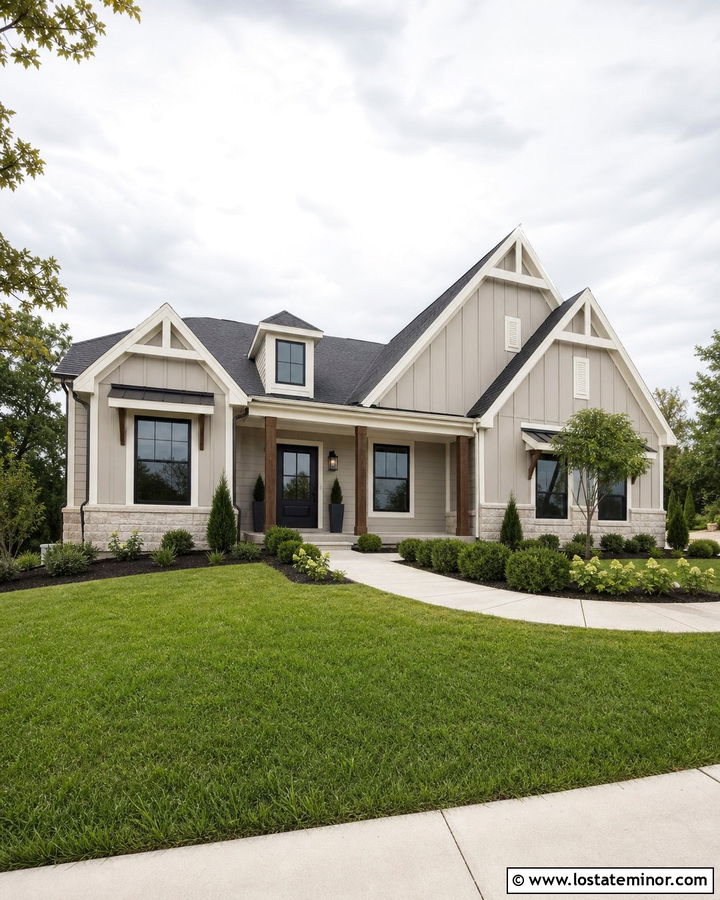
A black front door gives a beige house a clear focal point without making the overall palette feel busy. Use warm beige siding with creamy white trim to soften the contrast, then repeat black on the window frames, porch lights, and small architectural details. A charcoal roof grounds the upper portion of the facade. This combination looks especially polished on a modern farmhouse with board-and-batten siding and a covered front porch. Add pale limestone around the foundation to bridge the warm walls and dark accents. Simple boxwood shrubs, ornamental grasses, and a straight concrete walkway keep the exterior clean. Choose satin or low-gloss black for the door so it looks refined rather than overly shiny.
2. Beige House With White Front Door
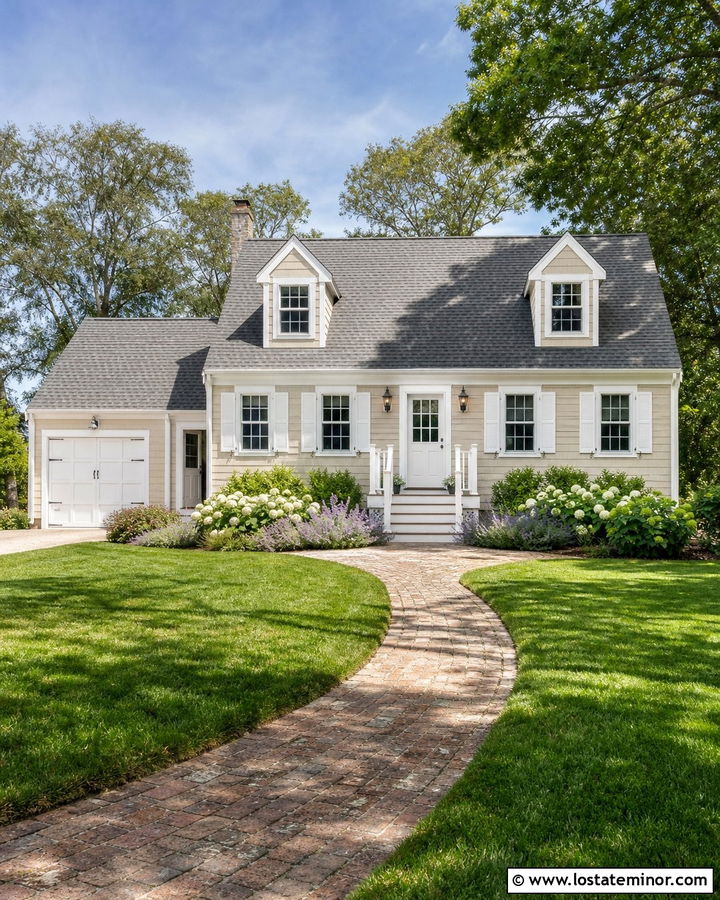
Soft and airy, a white front door can make a compact beige house appear brighter and more open. The most cohesive version uses a warm white that relates to the undertone of the beige siding instead of a sharp blue-white. Carry the same white across the window trim, porch columns, fascia, and garage door. A weathered gray shingle roof adds gentle contrast without overpowering the subtle palette. This scheme works beautifully on a Cape Cod home with symmetrical windows, simple shutters, and a small covered stoop. Add brushed nickel hardware and clear glass sidelights for a fresh finish. Lavender, hydrangeas, and clipped greenery introduce color while preserving the calm, light exterior.
3. Beige House With Natural Wood Front Door
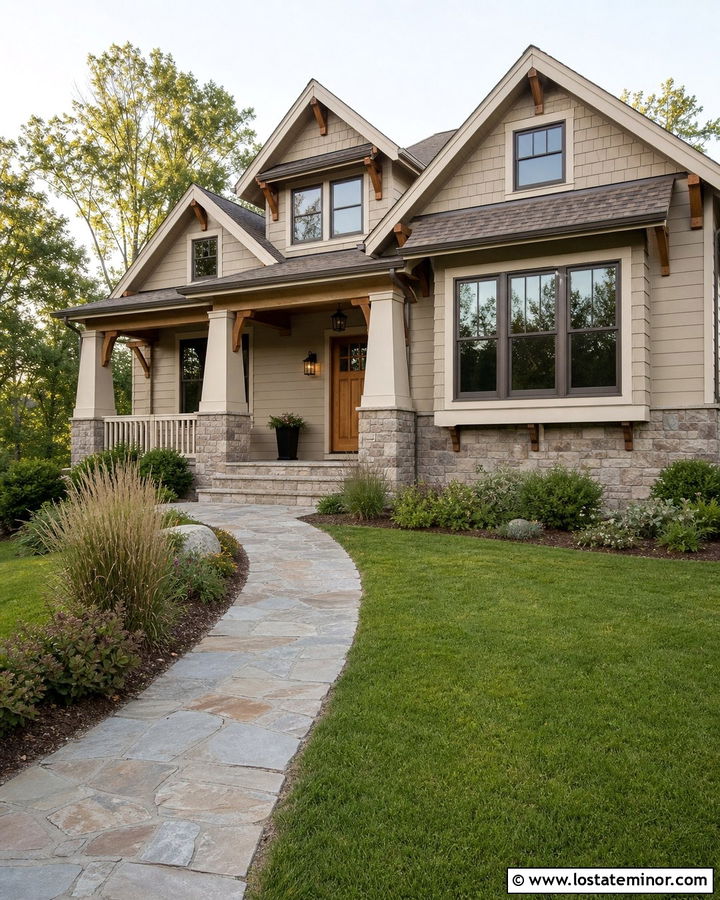
Natural wood brings depth and organic warmth to a beige exterior, especially when the facade includes stone or brick. A medium-stained oak door stands out against light beige lap siding while still feeling understated. Repeat the wood tone on porch ceiling boards, exposed brackets, or a small bench to make the entry feel intentional. Cream trim keeps the exterior warm, while bronze windows and lighting provide definition. This complete look suits a Craftsman house with tapered columns and a broad front porch. Choose stone with beige, gray, and muted brown variation for a smooth transition between materials. A curved walkway and layered native landscaping complete the relaxed, welcoming composition.
4. Beige House With Navy Blue Front Door
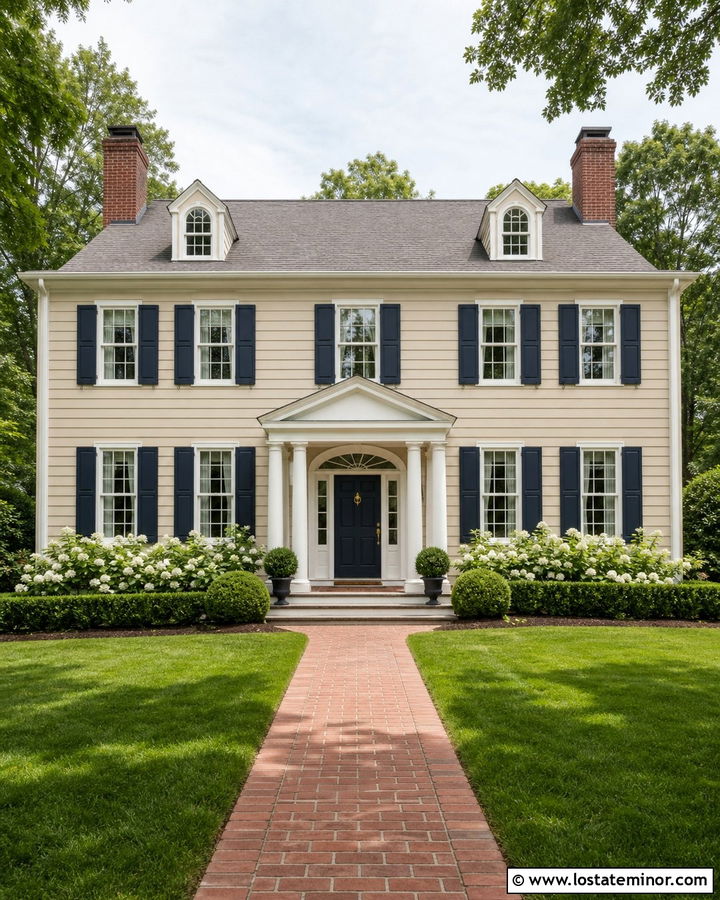
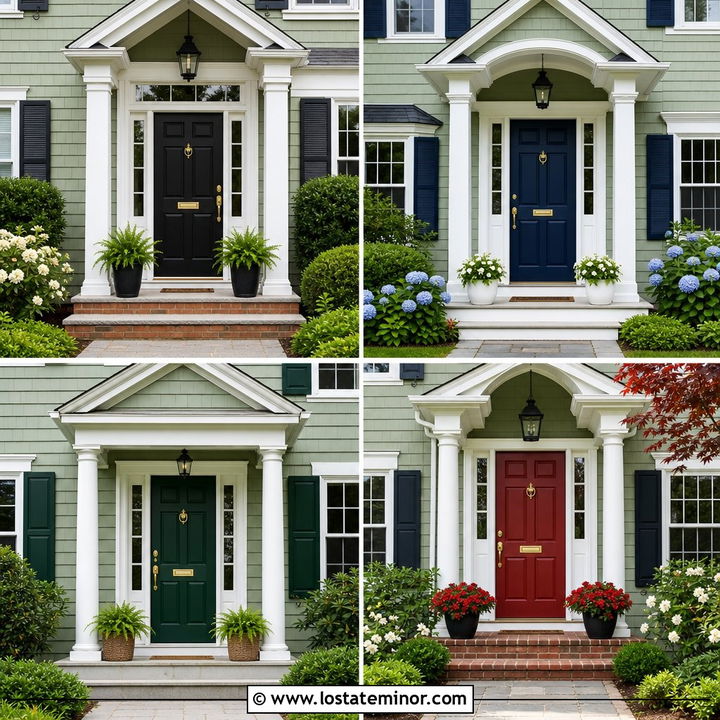
A navy blue entry door gives beige siding a classic contrast that feels colorful without becoming loud. Pair a sandy beige house body with crisp ivory trim, then repeat navy on the shutters for a balanced traditional facade. A medium-gray roof prevents the scheme from becoming too warm, while polished brass hardware adds a refined highlight. This palette is well suited to a two-story Colonial with symmetrical windows and a centered portico. Keep the garage door beige or ivory so it does not compete with the entrance. White flowering shrubs, dark green hedges, and a red brick walkway add familiar curb appeal. Select a deep, slightly muted navy for an elegant result.
5. Beige House With Sage Green Front Door
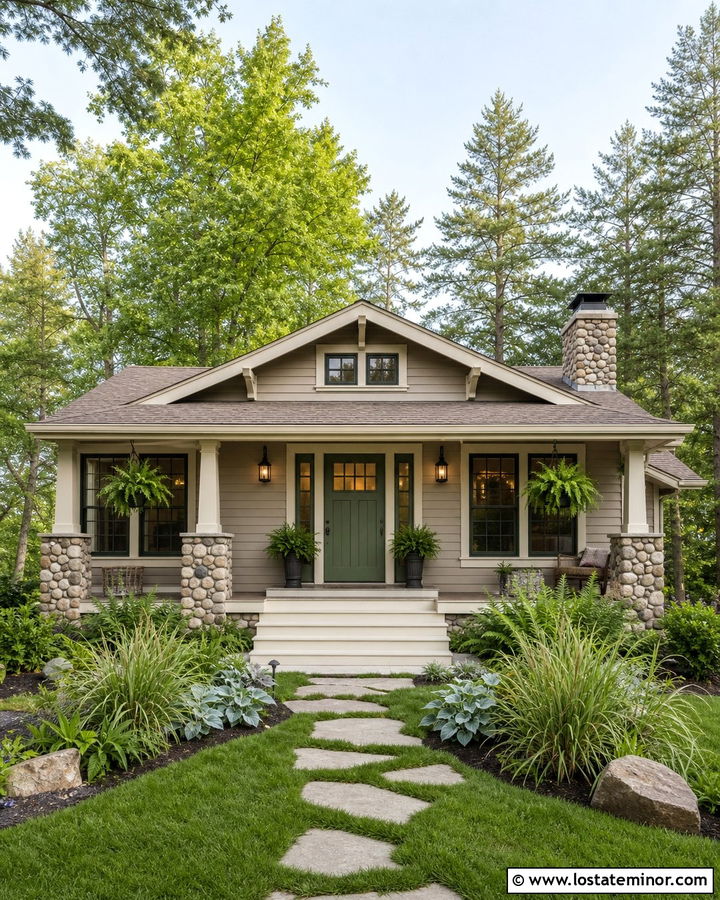
Sage green creates a quiet connection between a beige house and its landscaping. Start with warm greige-beige siding, soft cream trim, and a muted sage door with simple black hardware. The combination looks natural on a bungalow with deep eaves, horizontal siding, and a sheltered porch. Add river-rock foundation accents or light fieldstone columns to reinforce the earthy palette. A brown-gray architectural shingle roof blends smoothly with both beige and green. Instead of matching green shutters, use warm cream around the windows to keep the door special. Ferns, hostas, ornamental grasses, and small flowering trees provide texture. This scheme feels peaceful, approachable, and especially fitting for wooded neighborhoods.
6. Beige House With Dark Green Front Door
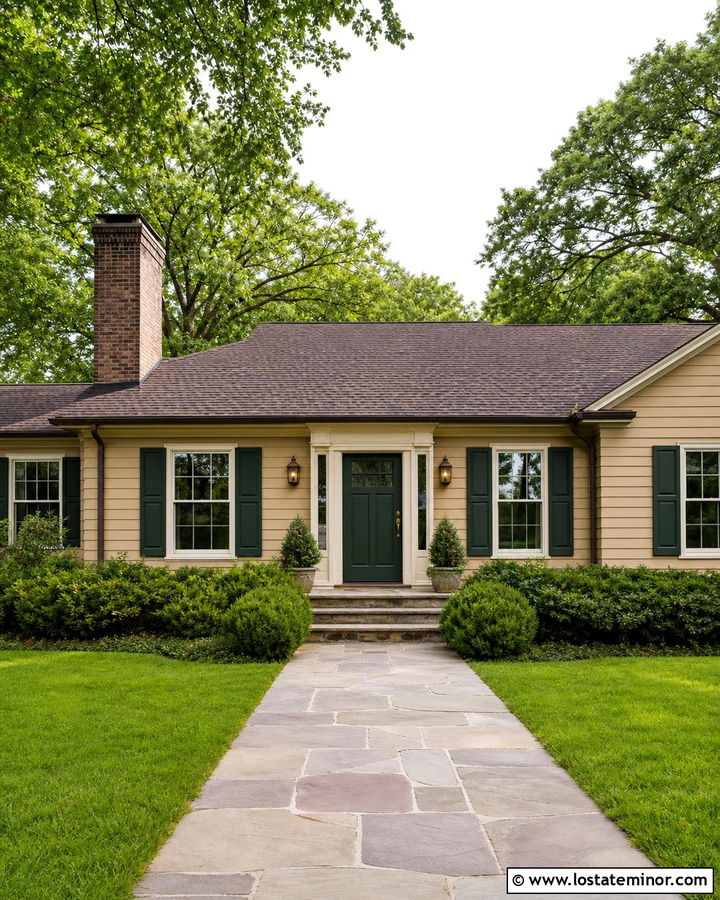
For a stronger nature-inspired statement, choose a dark forest green front door against a light beige facade. The deeper shade adds visual weight while remaining softer than black. Use off-white trim, bronze gutters, and dark green shutters to distribute the accent color across a traditional ranch house. A rustic brick chimney or brown stone base can add needed texture to the long horizontal elevation. Finish the door with aged brass hardware and a simple rectangular glass panel. A charcoal-brown roof supports the rich palette from above. Evergreen shrubs, broad front steps, and a wide flagstone walkway make the entrance feel established. Keep the garage beige so attention stays on the green door.
7. Beige House With Red Front Door
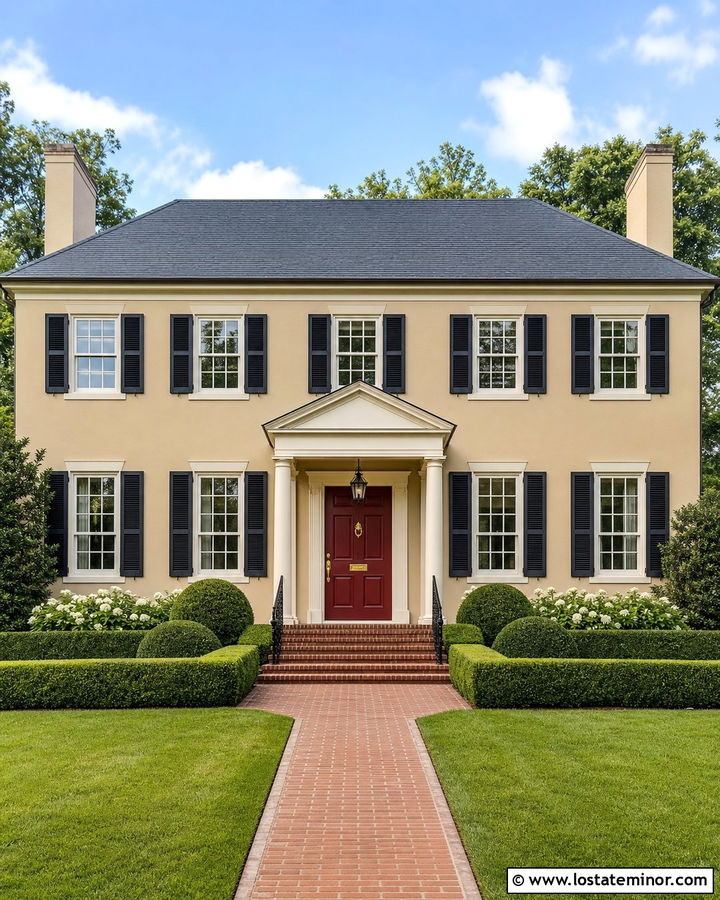
A red front door can energize a beige exterior while preserving a familiar, traditional character. Choose a deep brick red rather than a bright primary red for a more integrated appearance. Warm beige clapboard siding, creamy trim, black shutters, and a dark gray roof create a strong supporting palette. This combination works particularly well on a Georgian or Colonial Revival house with a centered entry and balanced window placement. Use brass hardware and classic lantern sconces to strengthen the timeless look. Red brick porch steps can echo the door without requiring an exact color match. Neatly clipped hedges and white flowers provide a calm frame around the more expressive entrance.
8. Beige House With Burgundy Front Door
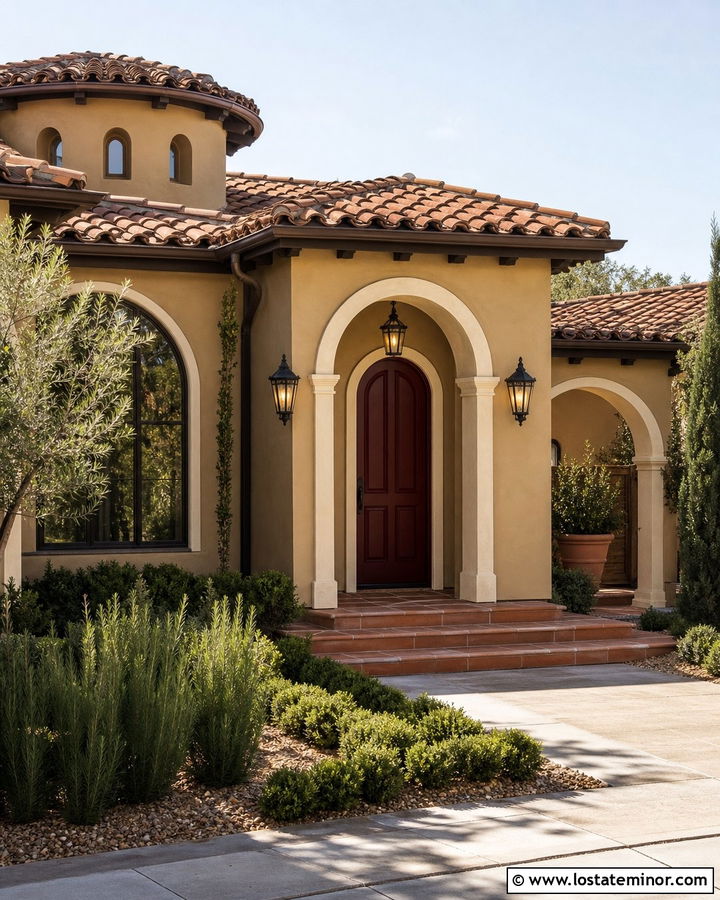
Burgundy offers the warmth of red with a darker, more sophisticated finish. It looks especially appealing against golden beige stucco, where the subtle red undertones complement the sun-warmed wall color. Pair the scheme with creamy trim, dark bronze window frames, and a roof in deep brown or weathered charcoal. A Mediterranean-style house with arched openings and textured stucco provides the right architectural setting. Add terracotta porch tiles and wrought-iron lighting for material variety. The entry door can feature vertical panels or a small arched window to follow the lines of the facade. Olive trees, rosemary, gravel beds, and low hedges complete this elegant, drought-conscious exterior design.
9. Beige House With Teal Front Door
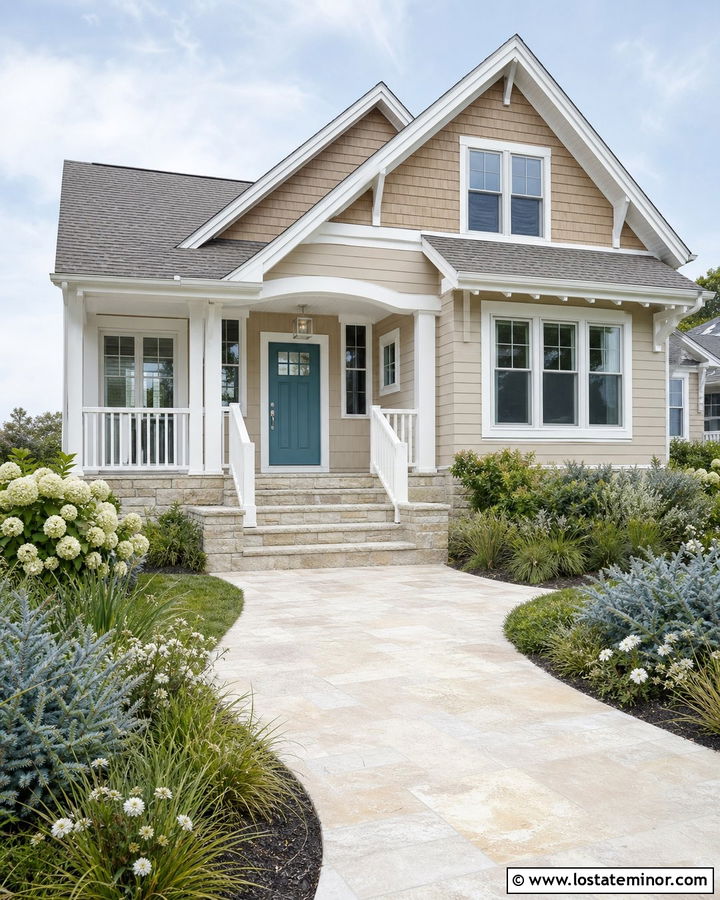
Teal adds a cheerful blue-green accent to a neutral beige home. The most balanced palette uses light sand-beige siding, bright white trim, and a medium muted teal door rather than a highly saturated turquoise. Repeat the teal sparingly in porch planters or a small bench, not across every accent. A coastal cottage with cedar-shake details, white railings, and a gray roof provides a natural setting for this color. Pale stone steps and a shell-toned walkway support the beach-inspired mood without becoming themed. Use brushed nickel or matte black door hardware for a clean finish. Soft grasses, blue-green shrubs, and white flowers tie the landscaping into the colorful entrance.
10. Beige House With Light Blue Front Door
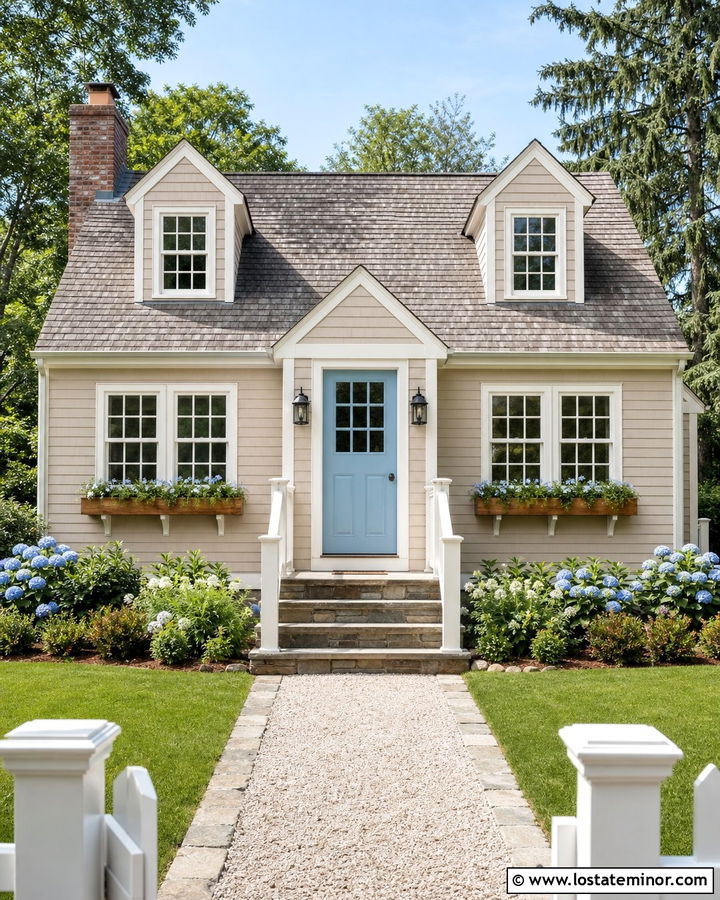
A pale blue front door can refresh a beige exterior while keeping the complete facade soft and restful. Select a dusty blue with gray undertones so the color holds its character in bright daylight. Pair it with light beige shingles, warm white trim, and a weathered gray roof. This scheme looks charming on a small cottage or Cape Cod home with divided-light windows and a modest front stoop. White porch railings keep the entrance bright, while natural cedar window boxes add warmth. Finish the door with satin nickel hardware and a simple wreath-free glass panel. Hydrangeas, pale gravel, and a gently curved walkway reinforce the relaxed blue, beige, and white palette.
11. Beige House With Charcoal Front Door
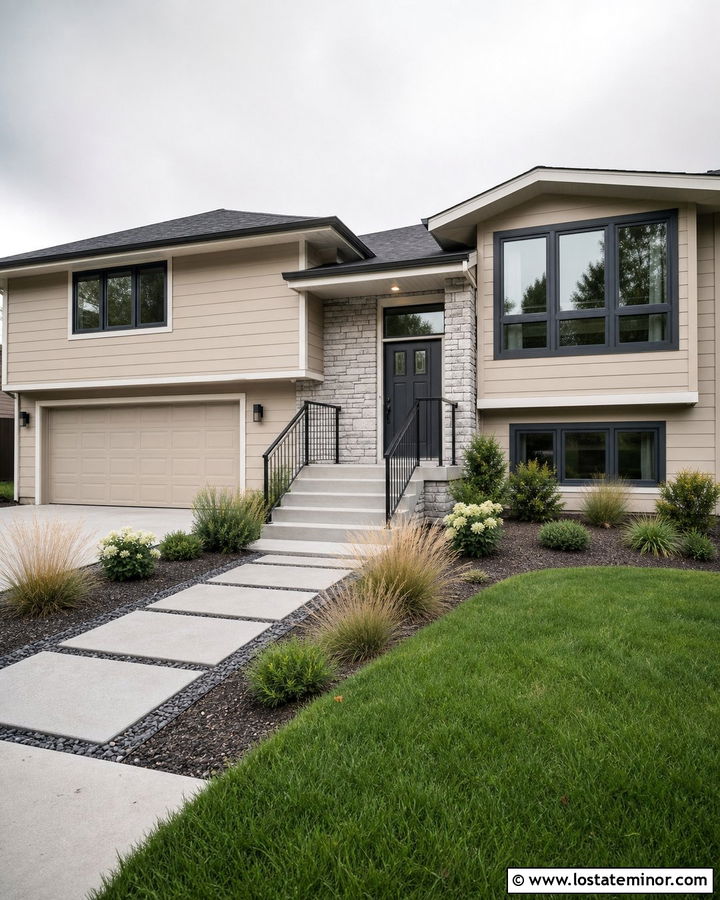
A charcoal door provides modern definition while feeling slightly softer than solid black. Use cool beige or greige siding as the body color, then apply charcoal to the door, window frames, gutters, and metal porch railing. Clean white trim can outline the roofline and prevent the exterior from looking too heavy. This pairing fits a split-level house that needs stronger visual organization. Consider adding charcoal vertical siding around the entry to separate it from a prominent garage. Light gray stone and a medium-gray roof create a layered neutral palette. Rectangular concrete pavers, low ornamental grasses, and streamlined wall sconces finish the update. Keep decorative accents minimal for a crisp, coordinated result.
12. Beige House With Brown Front Door
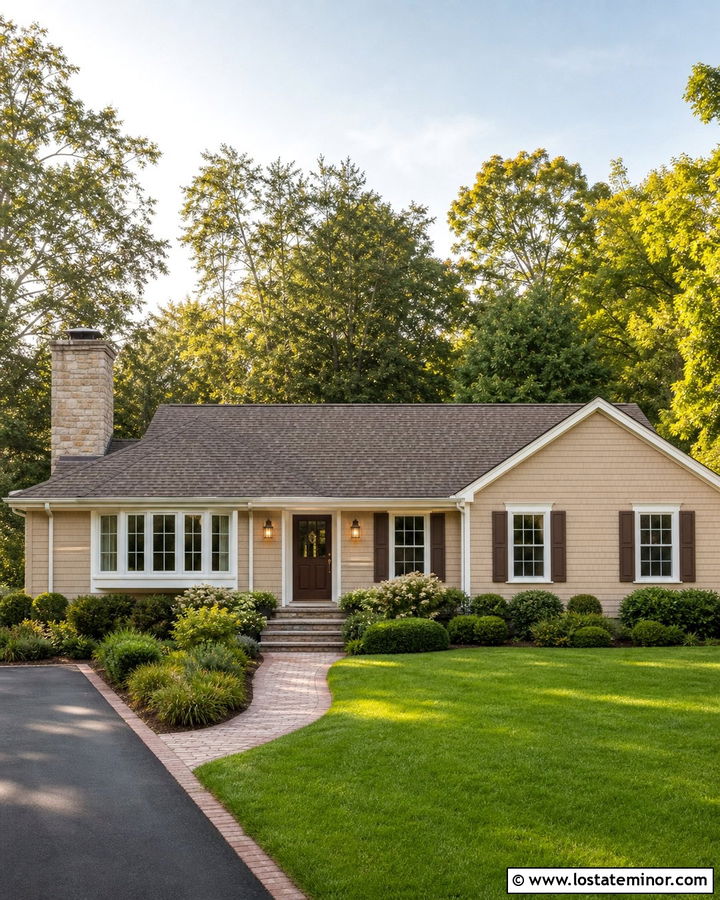
A dark brown front door creates a warm, grounded entrance without introducing a new color family. This tonal approach works well when the beige siding has tan, gold, or taupe undertones. Use creamy trim around the windows and roofline, then add chocolate-brown shutters and bronze lighting for repetition. A traditional ranch home benefits from this simple palette because it adds depth without breaking up the long facade too aggressively. Include tan-and-brown ledgestone at the porch or chimney for texture. A dimensional brown-gray roof blends naturally with the scheme. Layered foundation shrubs, a brick-edged walkway, and warm concrete steps help the house look comfortable, established, and visually connected to its setting.
13. Beige House With Yellow Front Door
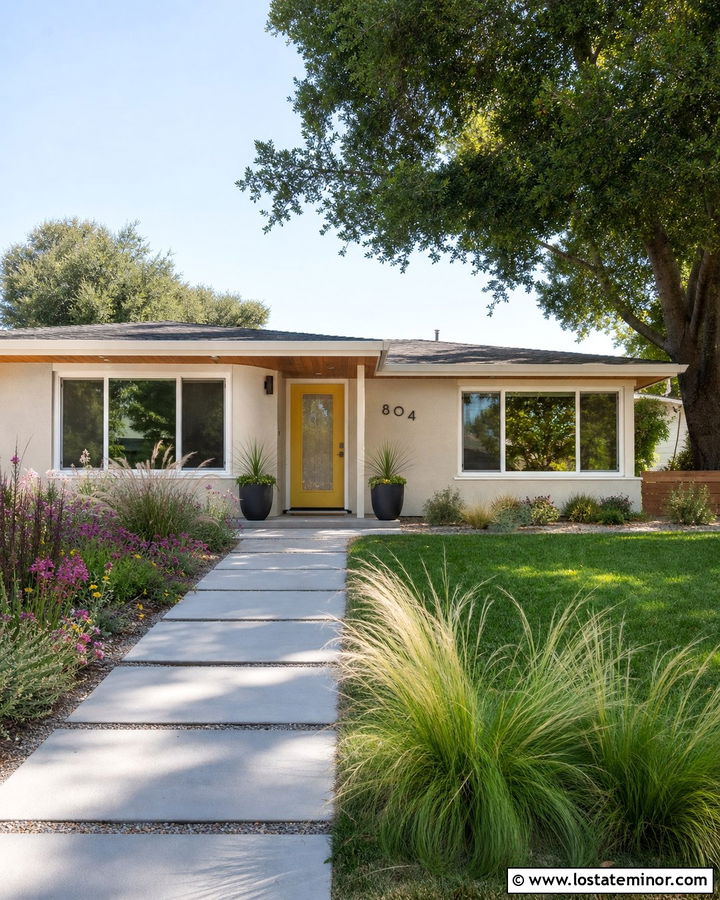
A yellow entry door gives a beige exterior a bright, optimistic focal point. To avoid losing contrast, select a warm golden yellow that is noticeably deeper than the house body. Light oatmeal-beige siding, ivory trim, and a soft gray roof create a gentle background. This colorful combination suits a midcentury ranch with broad windows, simple lines, and a shallow roof pitch. Add charcoal planters and black house numbers to sharpen the otherwise warm palette. Natural wood soffits can bring another period-appropriate detail to the facade. Keep the remaining exterior accents restrained so the door remains special. Drought-tolerant grasses, flowering perennials, and large concrete stepping stones finish the cheerful curb-appeal update.
14. Beige House With Orange Front Door
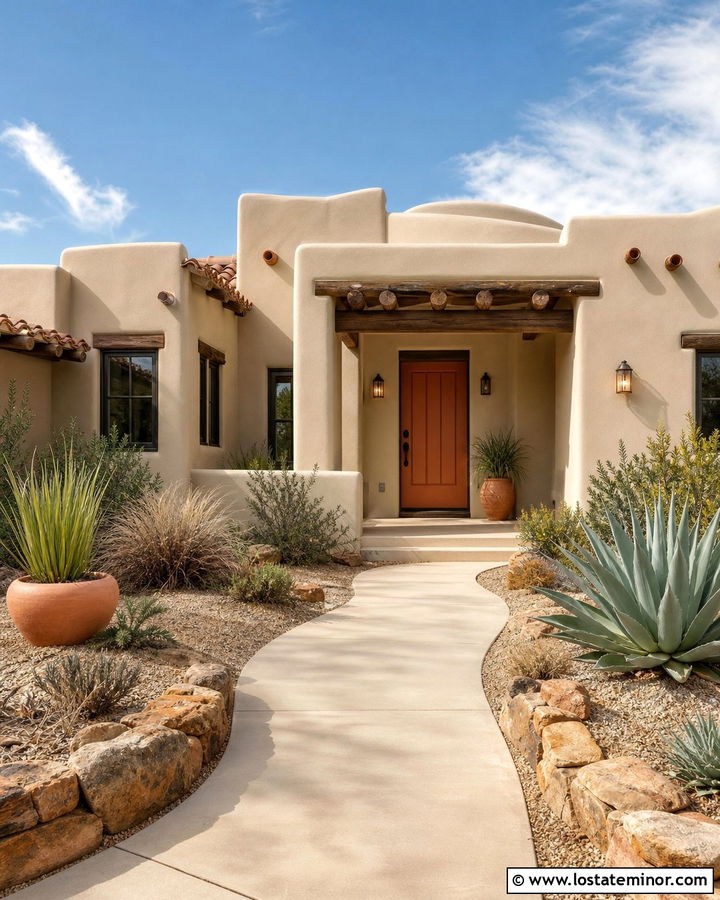
Burnt orange can make a beige home feel energetic and earthy at the same time. Choose a muted clay or persimmon shade rather than vivid citrus orange. It pairs naturally with sandy beige stucco, cream trim, and a terracotta tile roof. This complete scheme is ideal for a Southwestern house with rounded corners, exposed wood beams, and a recessed entry. Repeat the orange tone subtly in clay planters or walkway pavers. Dark bronze hardware and wall lanterns add definition around the door. Gravel landscaping, sculptural agave, native grasses, and warm stone borders suit the architecture while keeping maintenance manageable. The finished facade feels colorful, regionally appropriate, and connected to its natural surroundings.
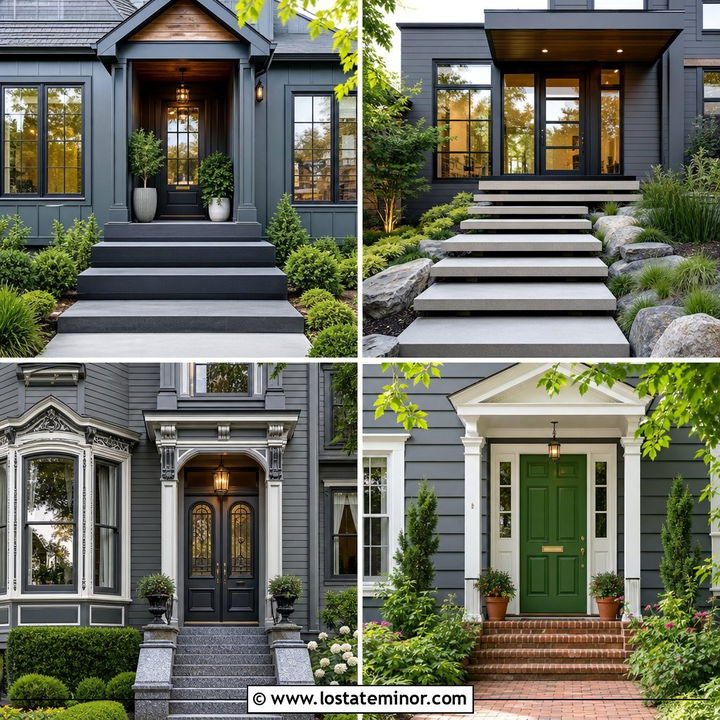
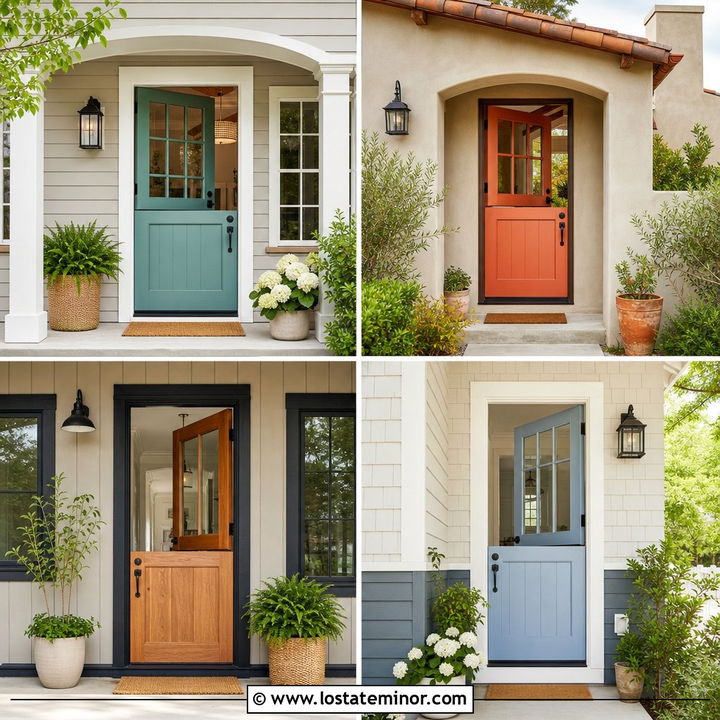
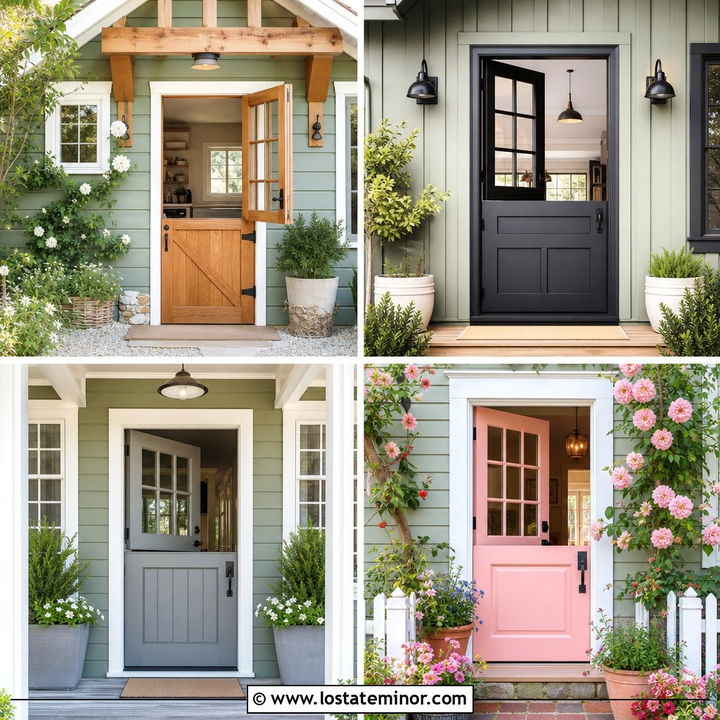
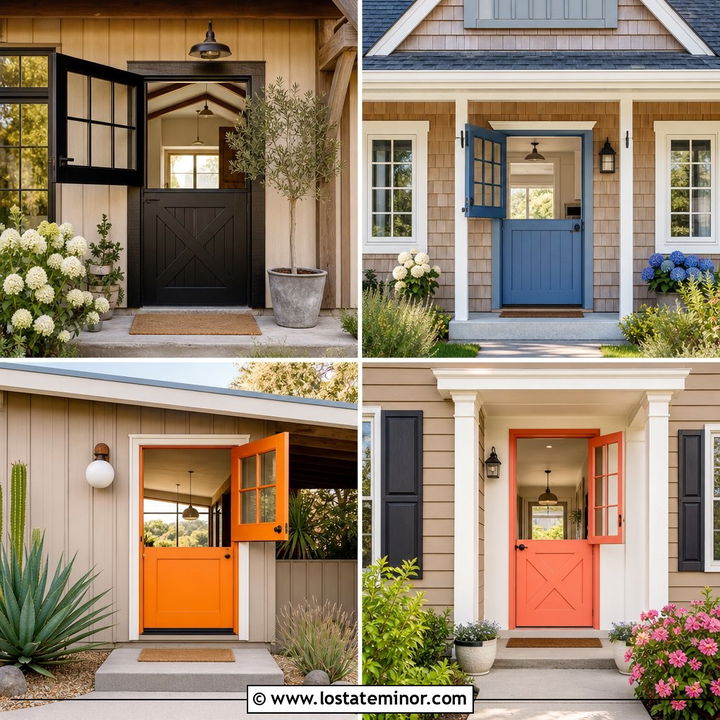
15. Beige House With Terracotta Front Door
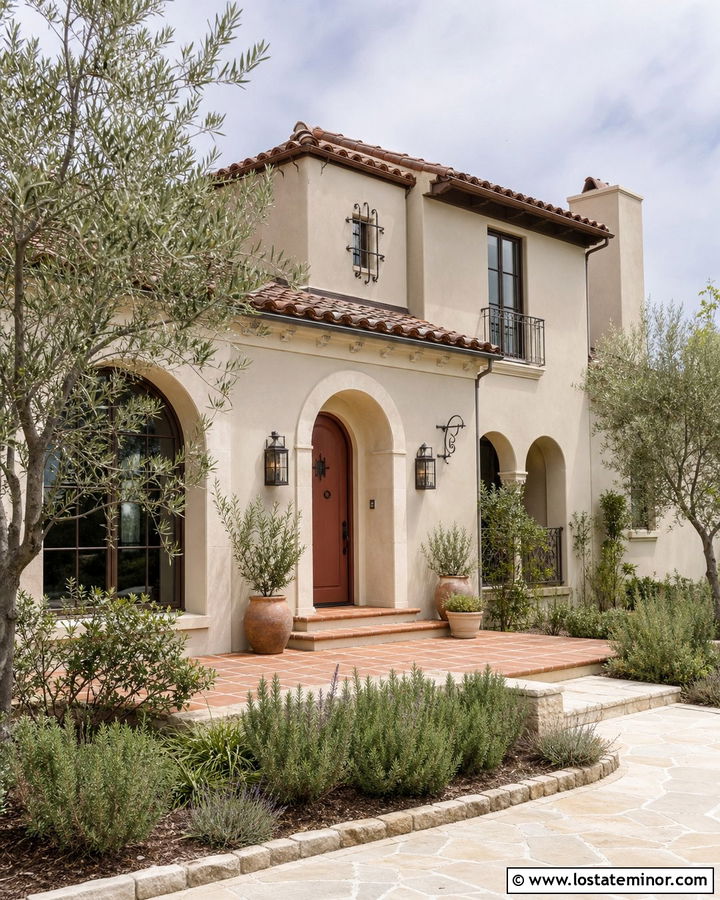
Terracotta is a softer alternative to red or orange and gives beige walls a rich, handcrafted appearance. Pair a light desert beige exterior with a clay-toned entry door, creamy stucco trim, and dark bronze windows. A Spanish Revival house with arches, a low tile roof, and decorative iron details makes the color feel especially natural. Use Saltillo-style porch tile or warm brick steps to carry the earthy door color into the hardscaping. Pale limestone around the foundation can keep the warm scheme from becoming too dense. Add silvery foliage, rosemary, olive trees, and simple ceramic pots. The completed exterior has depth and warmth while retaining the calm versatility that makes beige so useful.
16. Beige House With Olive Green Front Door
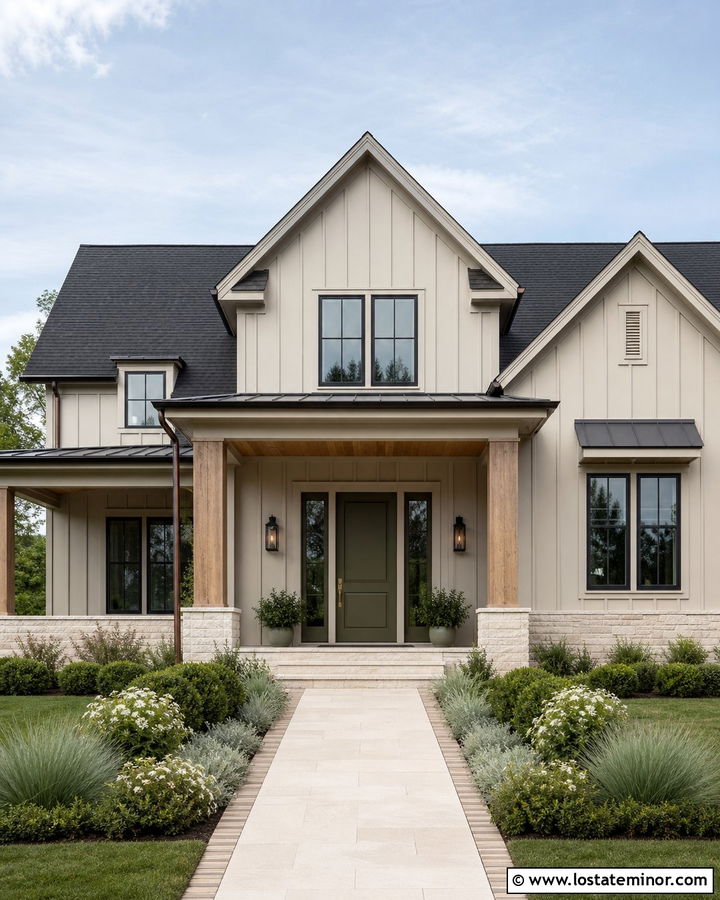
Olive green offers a muted, sophisticated accent for a beige house with natural materials. Use mushroom-beige board-and-batten siding, warm white trim, and an olive entry door with aged brass hardware. A modern farmhouse can carry this palette without relying on the more common black-and-white contrast. Add light limestone at the porch base and natural oak on the porch ceiling to warm the facade. A charcoal roof gives the scheme a clean upper boundary. If shutters are included, paint them beige or deep olive depending on the amount of contrast desired. Layer boxwoods, sage, ornamental grasses, and pale flowering plants along the walkway. The result feels current, grounded, and easy to maintain visually.
17. Beige House With Dusty Blue Front Door
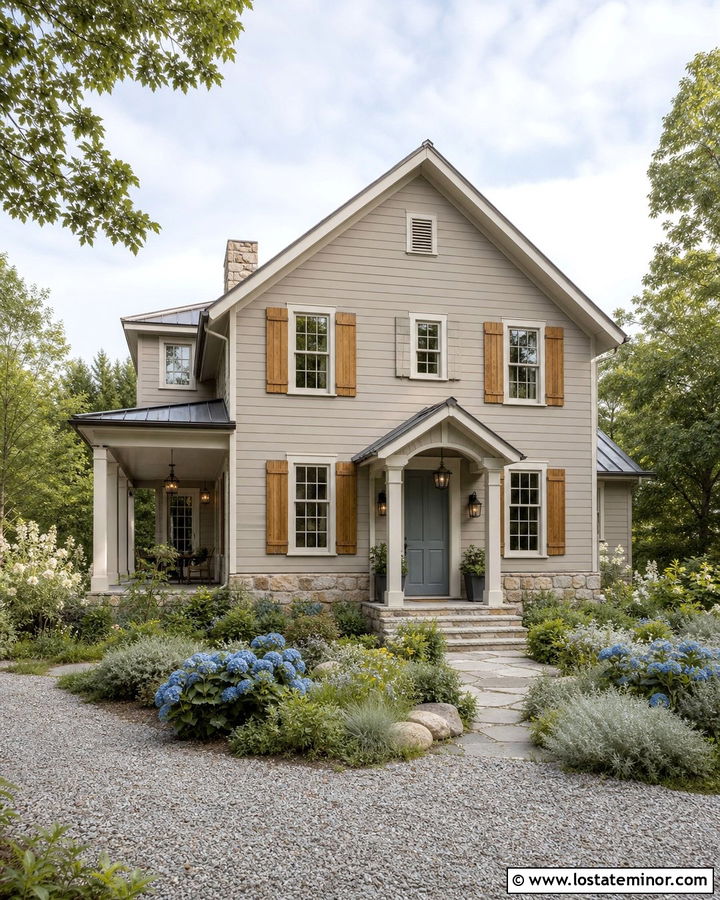
Dusty blue brings gentle color to beige siding while maintaining an understated, lived-in quality. Pair taupe-beige clapboards with a gray-blue door, ivory trim, and natural cedar shutters. This layered combination is particularly attractive on a farmhouse cottage with a simple gabled porch and metal roof accents. Use light gray fieldstone around the foundation to connect the cool door to the warmer house body. Black porch lights and hardware add small points of contrast. A gravel driveway, flagstone path, and informal garden beds keep the exterior relaxed rather than formal. Choose plants with silvery leaves, soft blue blooms, and white flowers to echo the entry while allowing the beige facade to remain the quiet background.
18. Beige House With Cobalt Blue Front Door
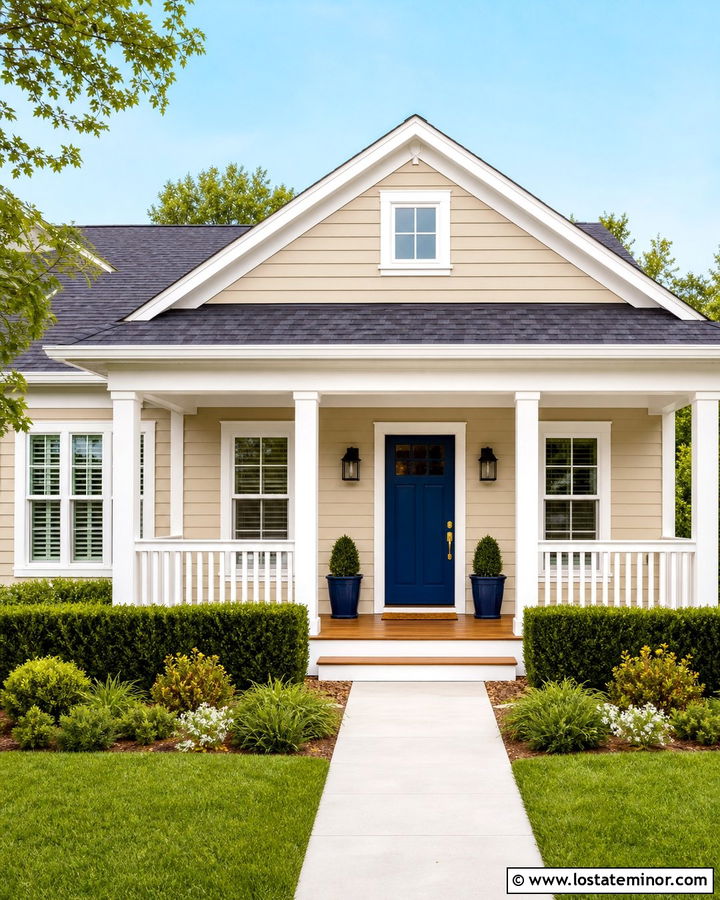
Cobalt blue creates a bold focal point that can revive a simple beige facade. Because the door color is strong, use it on one element and keep the rest of the house controlled. Warm light beige siding, crisp white trim, black lanterns, and a dark gray roof provide a clean frame. This palette works well on a compact urban bungalow with a generous front porch. White columns and railings prevent the bold door from making the entry feel visually heavy. Add a natural wood porch floor for warmth and texture. Structured hedges, blue ceramic planters, and a straight walkway support the vivid entrance. Satin brass hardware offers a bright, polished finishing detail.
19. Beige House With Turquoise Front Door
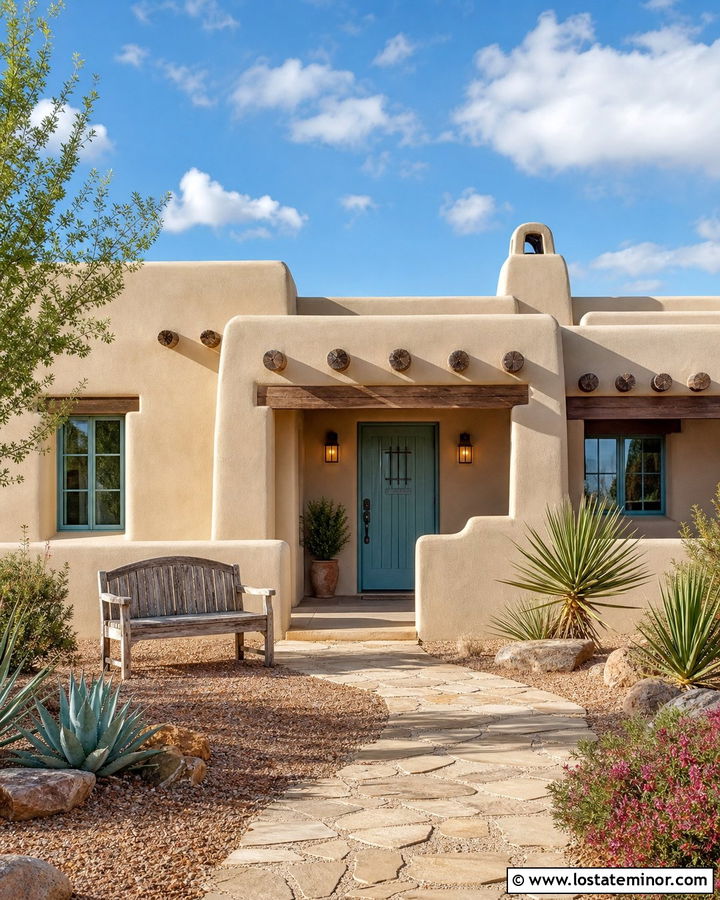
A turquoise entry door can give a beige stucco house a playful, sunlit personality. Select a slightly muted turquoise so it relates to natural stone, desert plants, and blue-green foliage. Use pale sand-beige walls, warm cream trim, and a low brown or terracotta roof. This scheme fits a Pueblo-inspired home with rounded parapets, deep-set windows, and exposed timber details. A weathered wood gate or bench adds rustic texture without competing with the door. Bronze sconces and hardware provide a darker outline around the entrance. Complete the yard with gravel, agave, yucca, and softly curved stone paths. The full exterior remains earthy, while the turquoise door supplies an unmistakable point of character.
20. Beige House With Gray Front Door
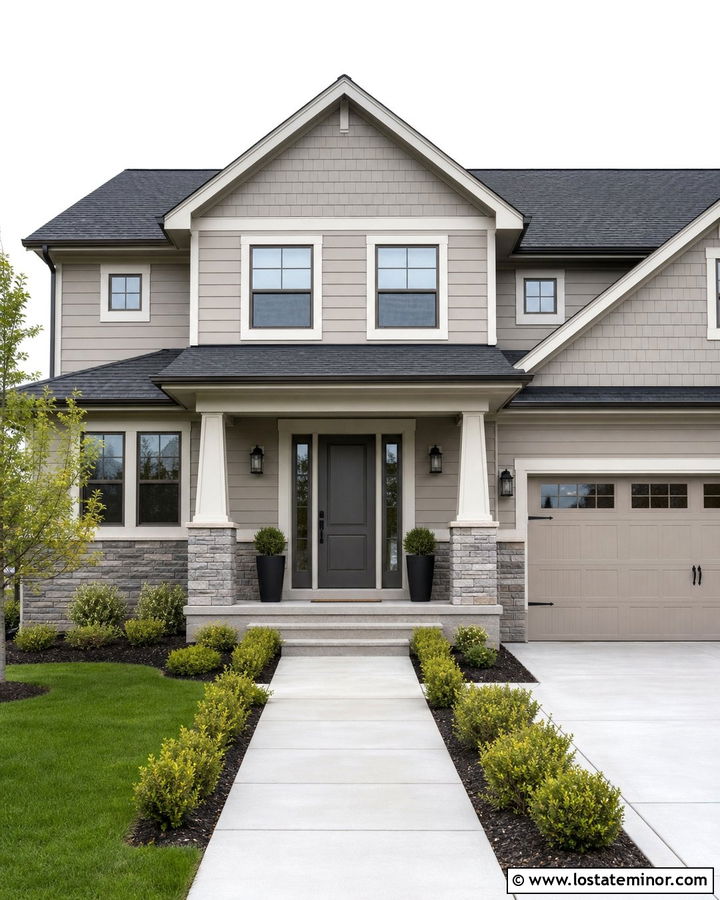
A medium-gray front door creates subtle contrast for homeowners who want a quiet, flexible palette. Choose a gray with warm undertones so it does not appear disconnected from the beige walls. Pair greige-beige lap siding with soft white trim, a slate-gray door, and a charcoal architectural roof. This combination suits a suburban two-story home with mixed siding and restrained stone accents. Paint the garage door the same beige as the house to reduce its visual prominence. Matte black hardware and contemporary porch lights provide enough definition around the entry. Low hedges, a broad concrete walkway, and symmetrical planters give the neutral facade structure. The result feels updated without depending on a dramatic accent color.
21. Beige House With Greige Front Door
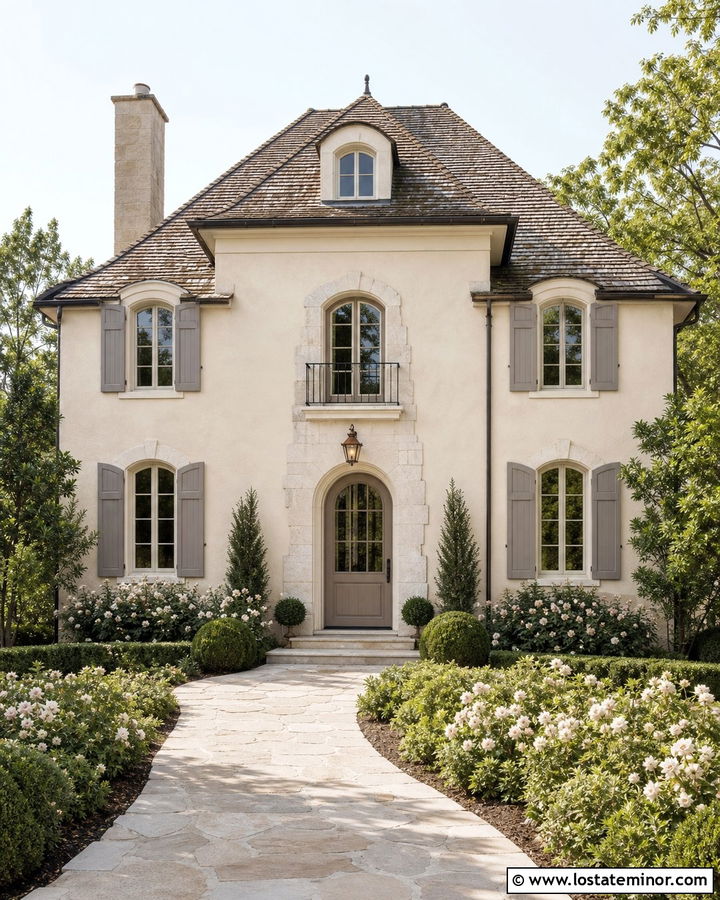
A greige door creates a layered neutral scheme that feels softer than contrasting black or navy. The key is using enough value difference between the house and door. Pair light creamy beige siding with a medium mushroom-greige door, ivory trim, and warm gray shutters. This approach works beautifully on a French country house with steep rooflines, stone details, and arched windows. A weathered brown-gray roof supports the muted palette, while antique brass hardware adds warmth. Consider painting the garage door in the body color so the entry remains easier to locate. Curved planting beds, clipped greenery, pale roses, and a natural stone walkway complete the understated exterior with texture rather than strong color.
22. Beige House With Cream Front Door
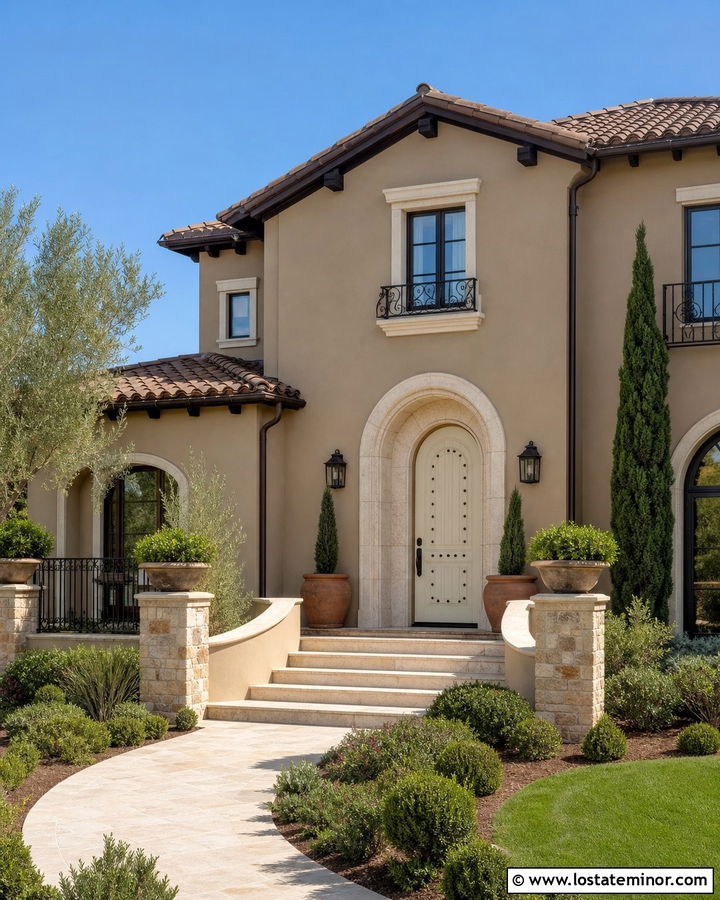
A cream front door blends gently into a beige exterior and can make an ornate entrance feel graceful rather than imposing. Use medium tan-beige stucco with a noticeably lighter vanilla-cream door, matching trim, and soft brown roofing. This palette is well suited to a Tuscan-inspired house with an arched doorway, stone columns, and wrought-iron details. Choose a door with divided glass or carved paneling so texture defines the entrance despite the low color contrast. Bronze hardware and lanterns add visual depth. Warm limestone steps create a smooth material transition from facade to walkway. Evergreen shrubs, slender trees, and terra-cotta planters frame the entry while preserving the relaxed, tonal appearance of the complete home.
23. Beige House With Walnut Front Door
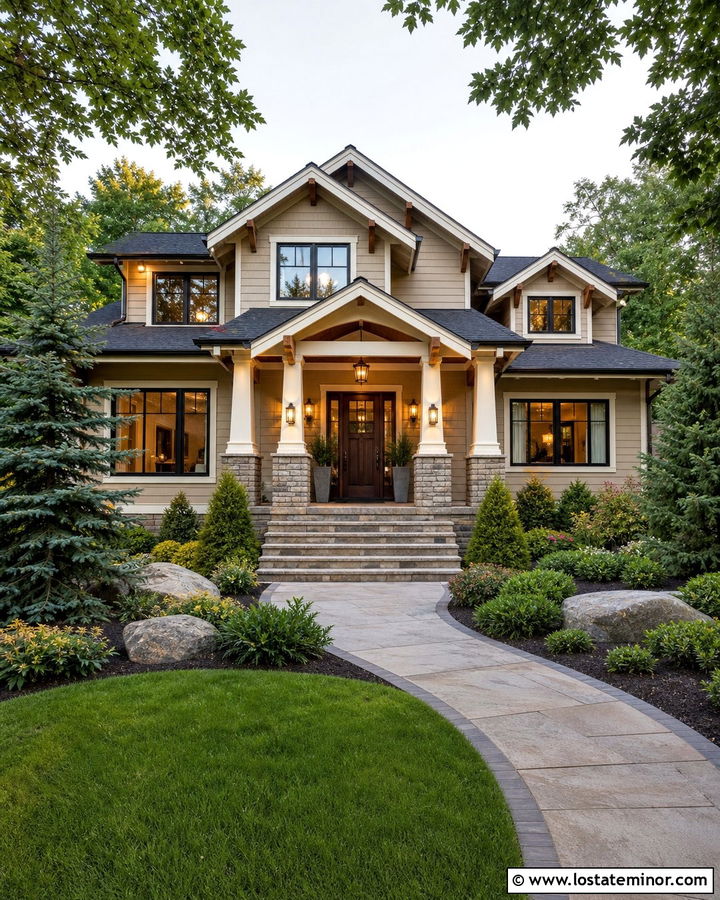
A walnut-stained front door gives beige siding a rich, tailored focal point. The darker wood grain offers more contrast than light oak while maintaining an organic look. Pair warm beige horizontal siding with creamy white trim, dark bronze windows, and a charcoal-brown roof. This complete scheme is especially effective on a Craftsman home with exposed rafters, tapered porch columns, and substantial stone piers. Repeat walnut on the porch ceiling or garage detail, but avoid covering too many large surfaces with dark wood. A clear protective finish should preserve the natural variation in the door. Broad stone steps, copper-toned lighting, and layered evergreen landscaping help the entrance feel solid, welcoming, and carefully composed.
24. Beige House With Cedar Front Door
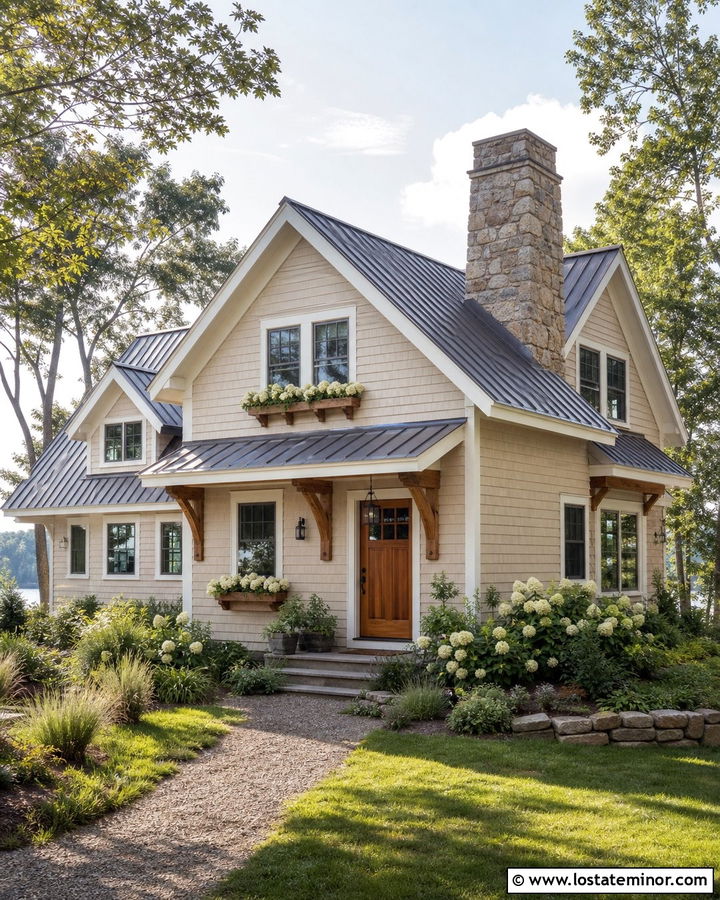
A cedar front door introduces a lighter, more casual wood tone that pairs naturally with pale beige siding. Use soft linen-beige shingles, white trim, and a honey-cedar door on a coastal or lake cottage. Repeat cedar on brackets, window boxes, or a small porch railing to distribute warmth across the facade. A medium-gray metal or shingle roof keeps the exterior fresh and prevents the wood from making the scheme overly rustic. Select black or oil-rubbed bronze hardware for clear definition. A stone chimney in beige and gray tones adds permanence. Native grasses, hydrangeas, a gravel walkway, and mature trees create an easy transition between the natural door and the surrounding landscape.
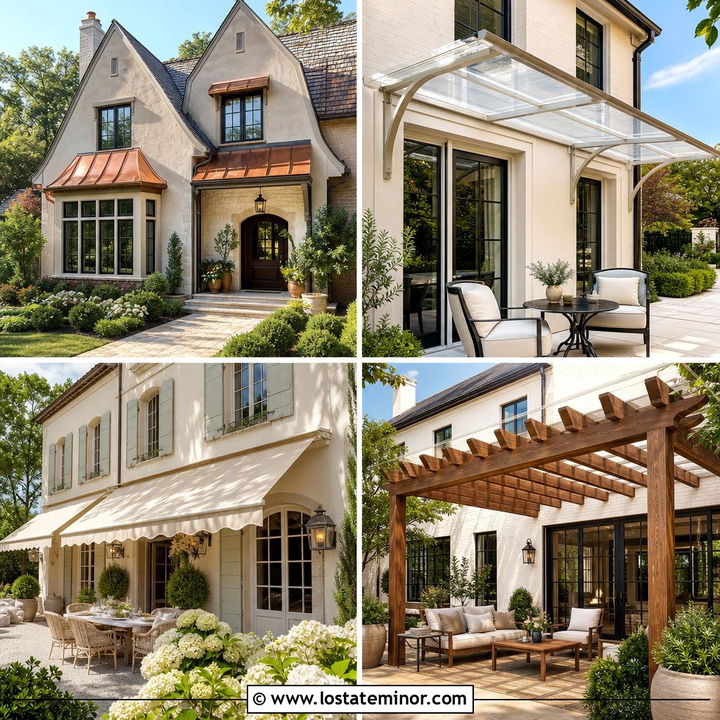
25. Beige House With Double Wood Entry Doors
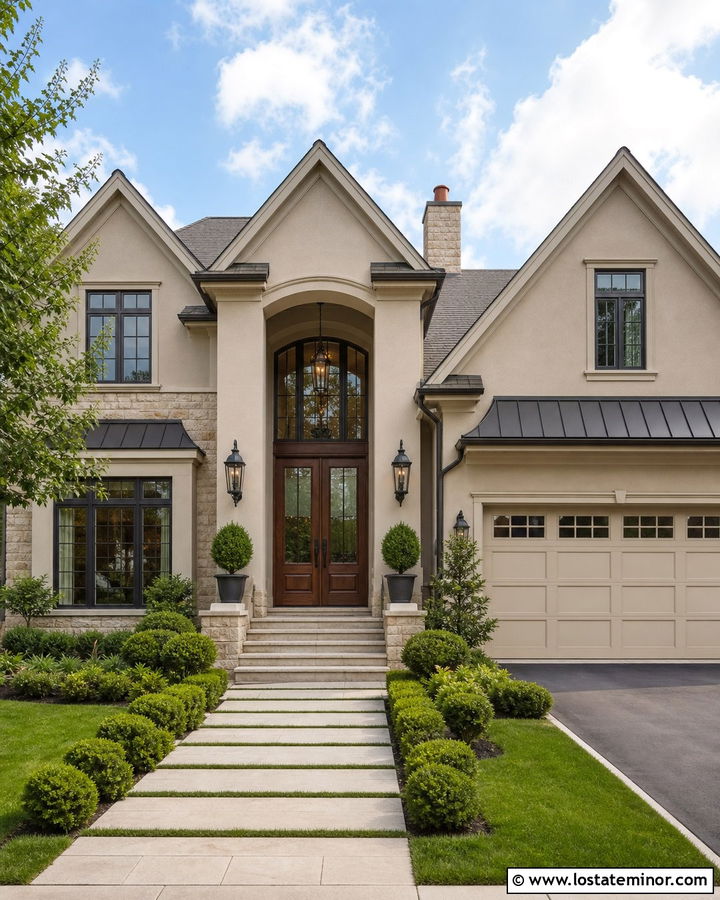
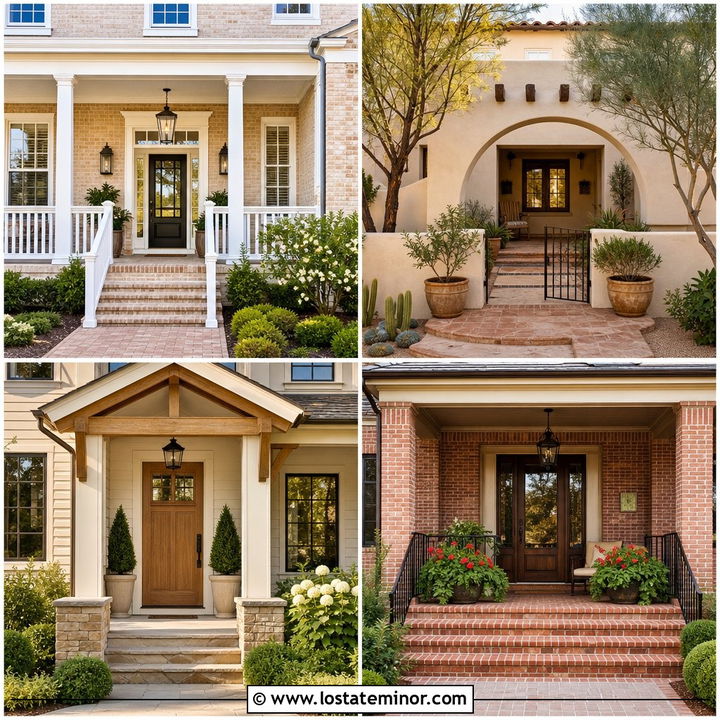
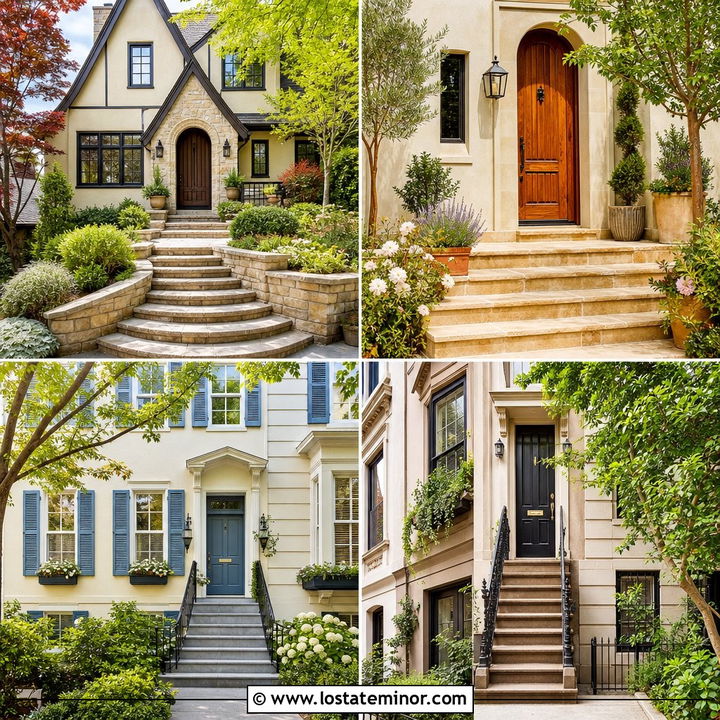
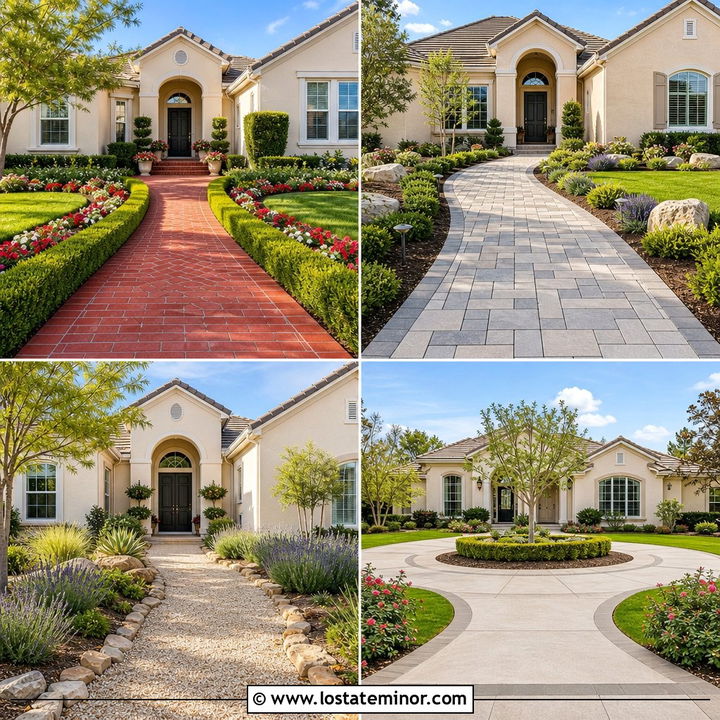
Double wood doors can turn a broad beige facade into a strong, welcoming composition. They work best when the entrance has enough architectural scale, such as a deep porch, tall columns, or an arched opening. Pair light taupe-beige stucco with medium mahogany double doors, creamy trim, and dark bronze windows. A transitional home with a balanced roofline and pale stone cladding supports the substantial entry. Use large glass panels to prevent the dark wood from looking heavy. Matching bronze handles, oversized lanterns, and wide stone steps reinforce the doorway as the focal point. Keep the garage doors close to the beige body color. Formal shrubs and a straight walkway provide a clear visual approach.
26. Beige House With Glass Panel Front Door
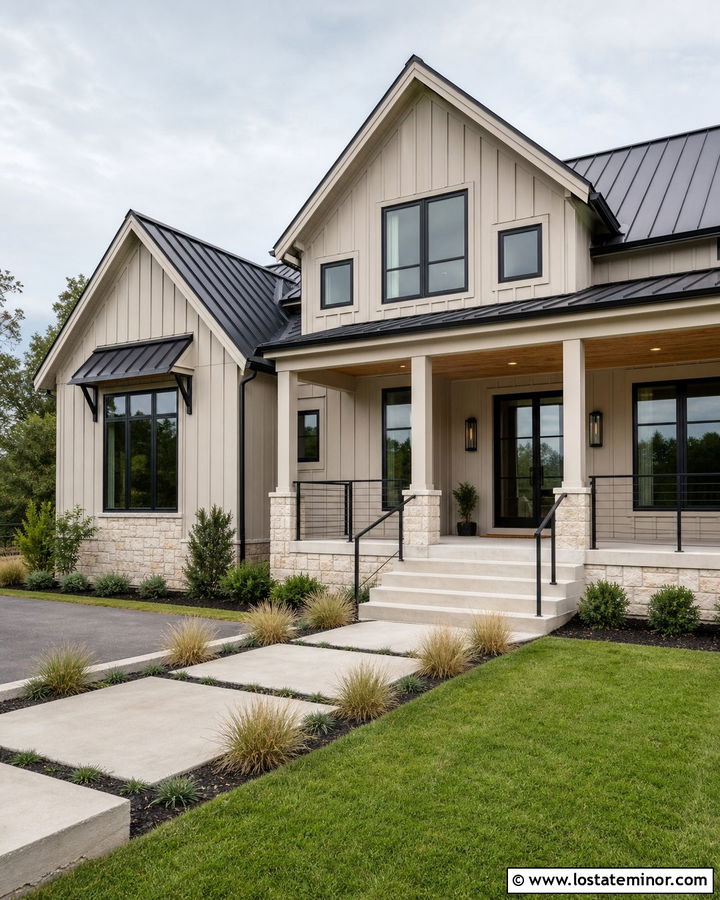
A glass-panel entry door can brighten a covered porch while giving a beige exterior a lighter architectural detail. Choose a black-framed door with large clear or lightly textured glass, then repeat black on the windows and slim porch railing. Warm greige-beige vertical siding and creamy soffits soften the modern contrast. This design suits a contemporary farmhouse with simple gables, restrained stonework, and a wide entrance canopy. Use a natural oak porch ceiling to introduce warmth overhead. A charcoal standing-seam roof completes the clean palette. Broad concrete slabs, clipped grasses, and low shrubs keep the approach uncluttered. The transparent door becomes part of a complete scheme rather than an isolated modern feature.
27. Beige House With Arched Wood Front Door
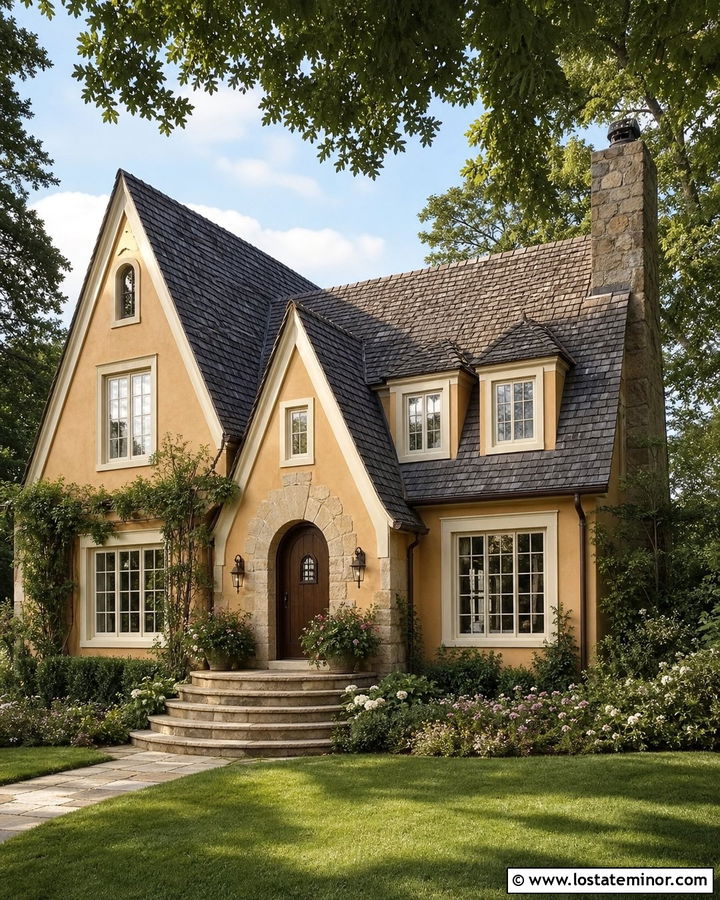
An arched wood door complements a beige exterior with traditional or Old World architecture. Use warm sandstone-beige stucco, off-white trim, and a dark oak door set within a deep arched opening. A European cottage with a steep roof, stone chimney, and divided-light windows provides the right proportions for this statement entrance. Add irregular limestone around the doorway to emphasize its shape without introducing a competing color. Dark bronze hardware, gutters, and lanterns help outline the warm materials. A weathered charcoal roof gives the home a grounded finish. Curved stone steps, climbing greenery, and informal flowering beds soften the masonry and create a welcoming path toward the substantial wooden door.
28. Beige House With Black Double Doors
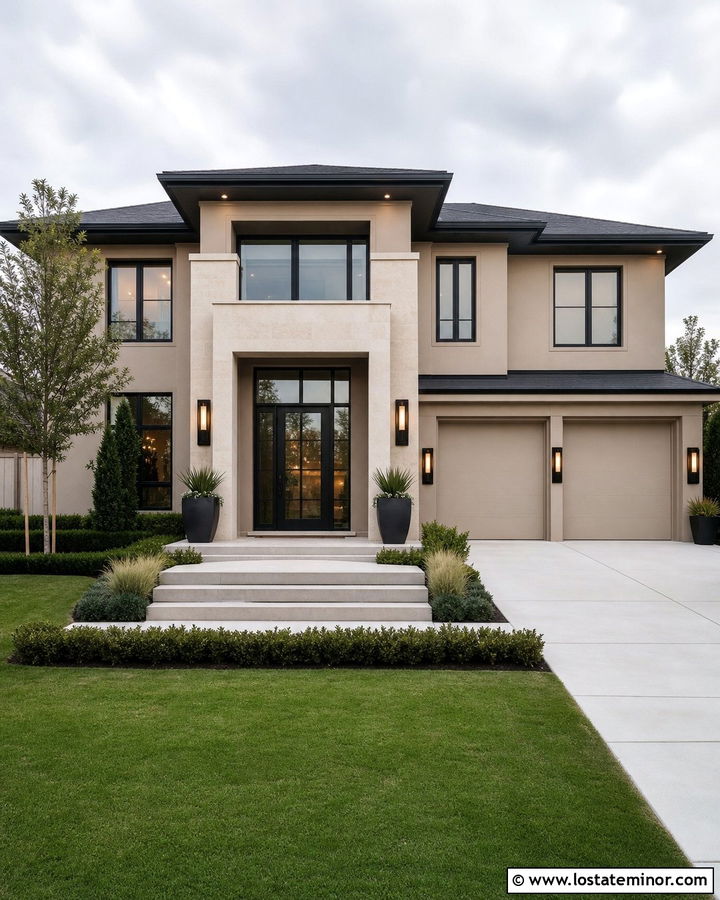
Black double doors can anchor a large beige house and create a clear entrance within an expansive facade. Pair creamy beige stucco with matte black steel-and-glass doors, black window frames, and warm white trim. This combination suits a contemporary two-story home with broad rooflines and a symmetrical front elevation. Add pale limestone panels around the entry to create a lighter transition between the beige walls and dark doors. A charcoal roof and restrained black gutters complete the upper facade. Keep the garage doors beige to prevent them from competing for attention. Wide concrete steps, linear hedges, ornamental grasses, and oversized planters reinforce the entrance. The finished look is bold, balanced, and welcoming.
29. Beige House With Plum Front Door
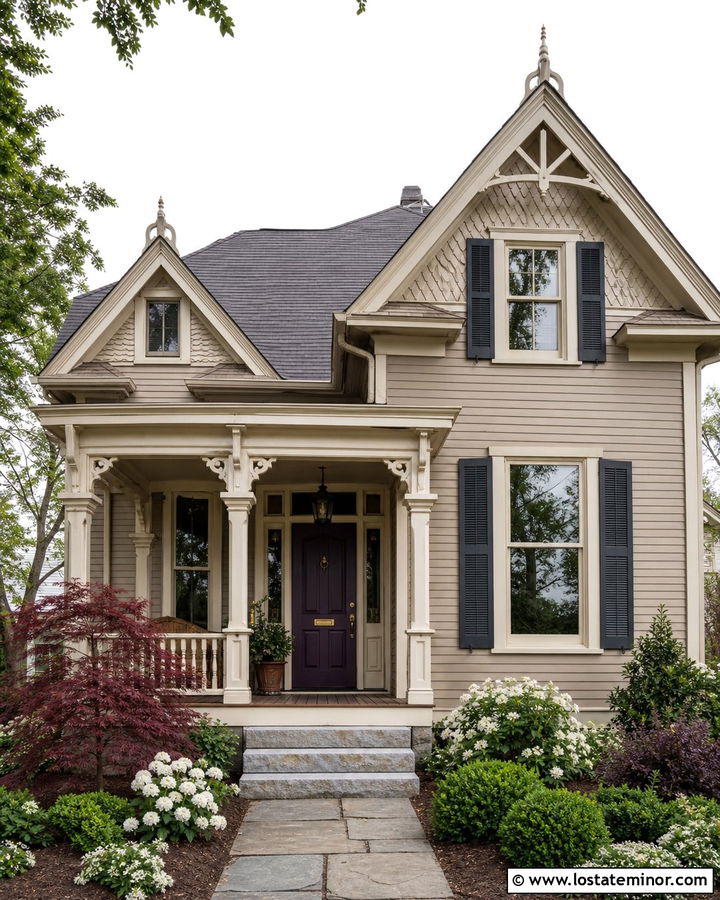
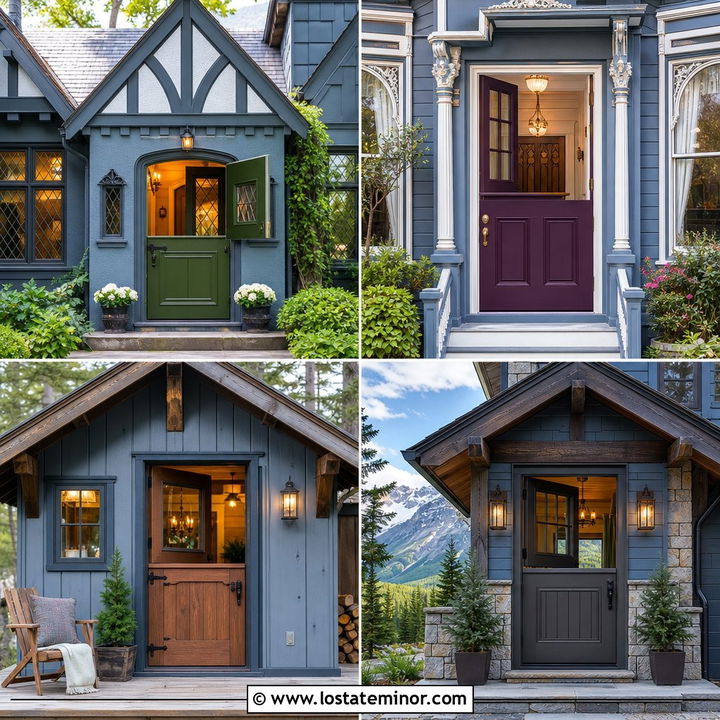
Plum gives a beige exterior a distinctive accent while remaining deeper and more restrained than bright purple. Choose an earthy aubergine-plum with brown or gray undertones. Pair it with soft taupe-beige siding, creamy trim, charcoal shutters, and a medium-gray roof. This palette looks appealing on a Victorian cottage where decorative trim and a sheltered porch already create visual interest. Use the plum color only on the door so the historic details remain clear. Antique brass hardware and warm porch lighting finishes complement the rich shade. Add pale stone steps and a natural wood porch floor. Deep green shrubs, white flowers, and burgundy foliage connect the unusual door color to the landscape.
30. Beige House With Soft Pink Front Door
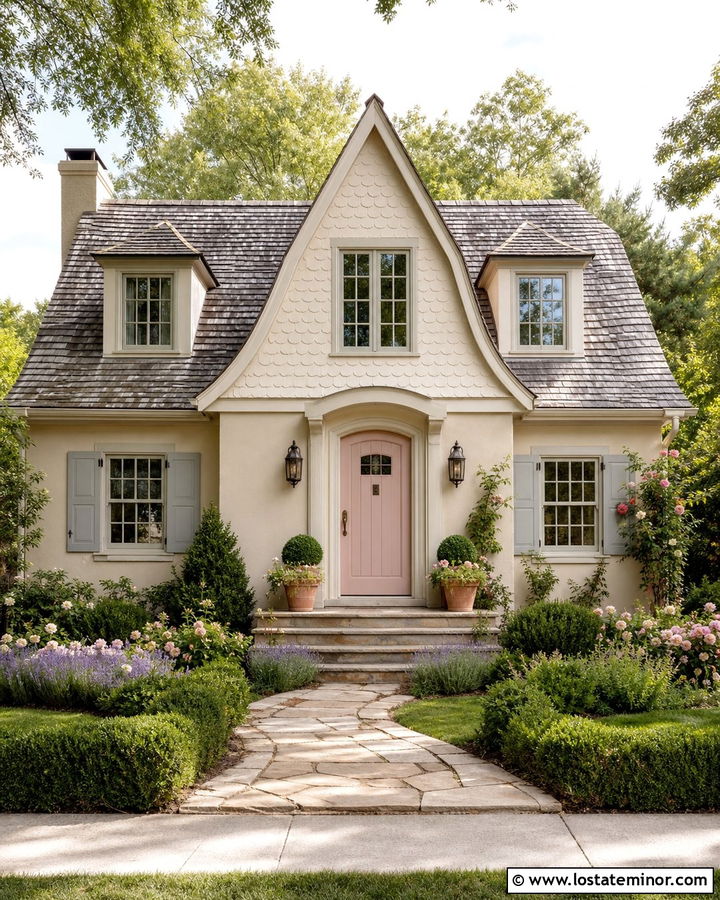
A soft pink front door can make a beige cottage feel cheerful without creating harsh contrast. Look for a dusty blush with warm clay undertones rather than a sugary pastel. Pair light biscuit-beige siding with creamy white trim, pale gray shutters, and a weathered gray roof. This combination suits a small storybook cottage with dormer windows, scalloped shingles, and a curved front path. Use aged brass hardware and traditional lanterns to give the pink door a grounded, grown-up finish. Natural stone steps and terracotta planters add earthy warmth around the entrance. Roses, lavender, boxwoods, and white flowering shrubs complete the garden setting while supporting the gentle beige, blush, and gray exterior palette.
Conclusion:
The best entry door does more than add color to beige siding. It helps organize the entire facade and creates a visible, welcoming destination. Black, navy, charcoal, and dark green offer dependable contrast, while sage, dusty blue, blush, and teal add softer personality. Natural oak, cedar, walnut, and mahogany are ideal when warmth and texture matter most. Before choosing, compare the door finish with the beige undertone, trim, roof, masonry, garage, and landscaping in outdoor light. Repeating the accent through hardware or small architectural details can make the result feel intentional. Use these **30 Beige House Design With Entry Door Ideas** to build a balanced exterior that suits your home’s architecture and setting.

Related posts: