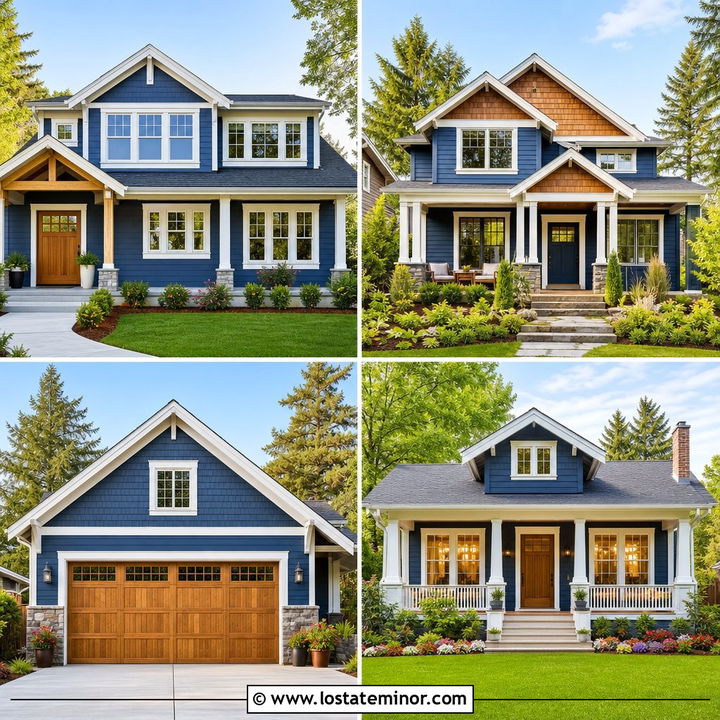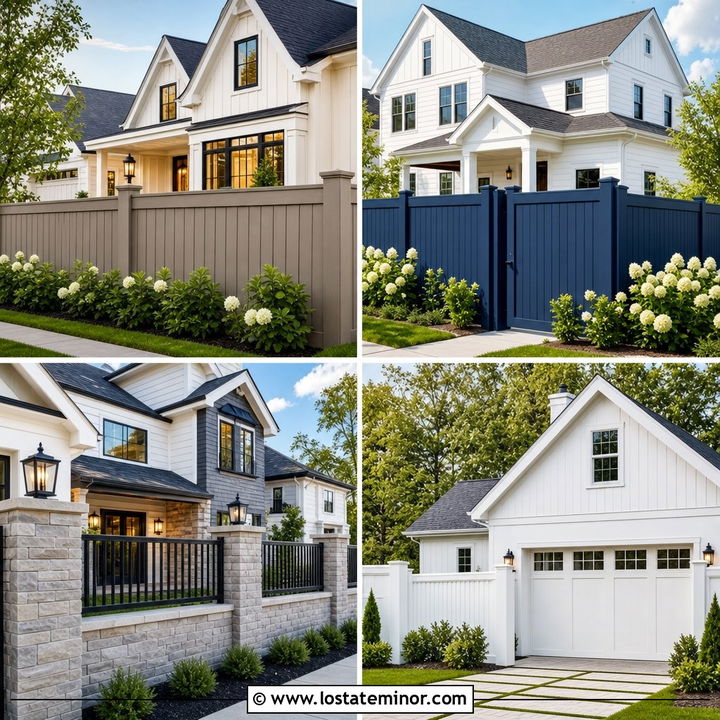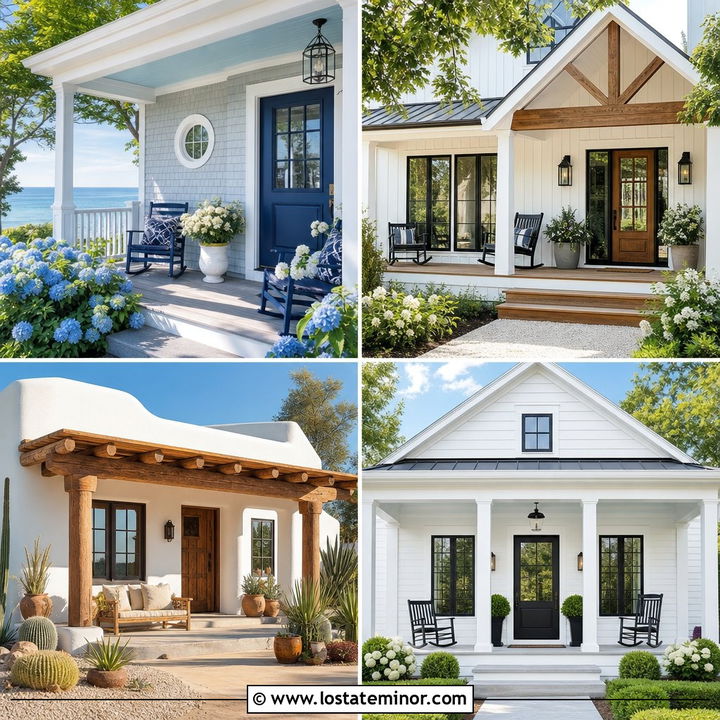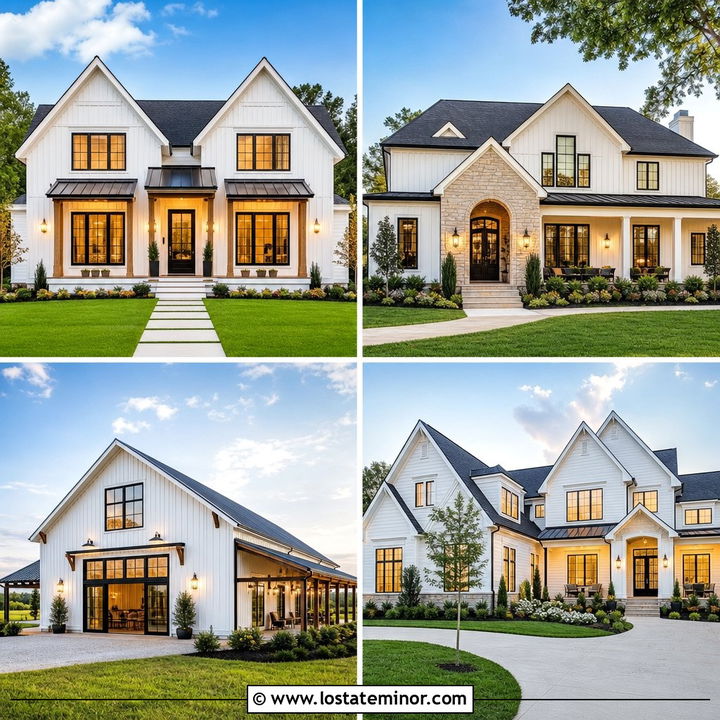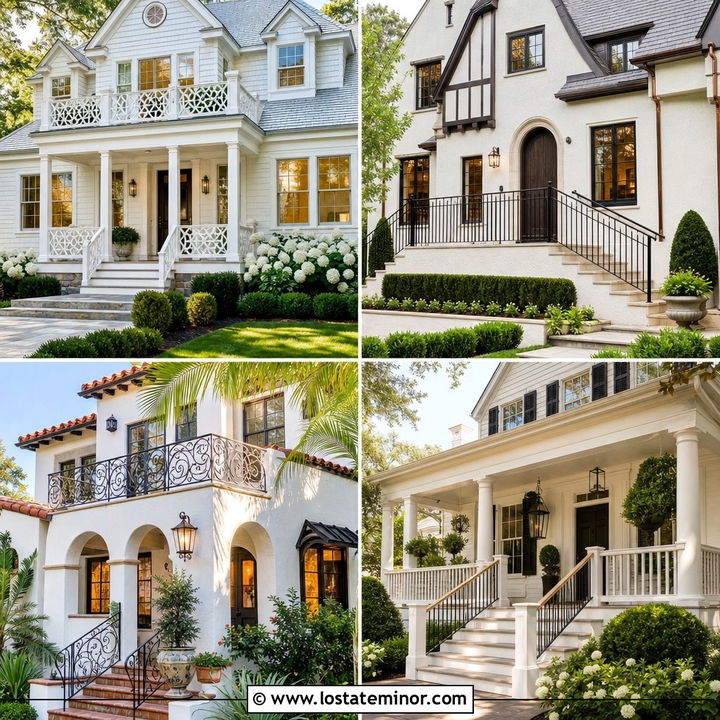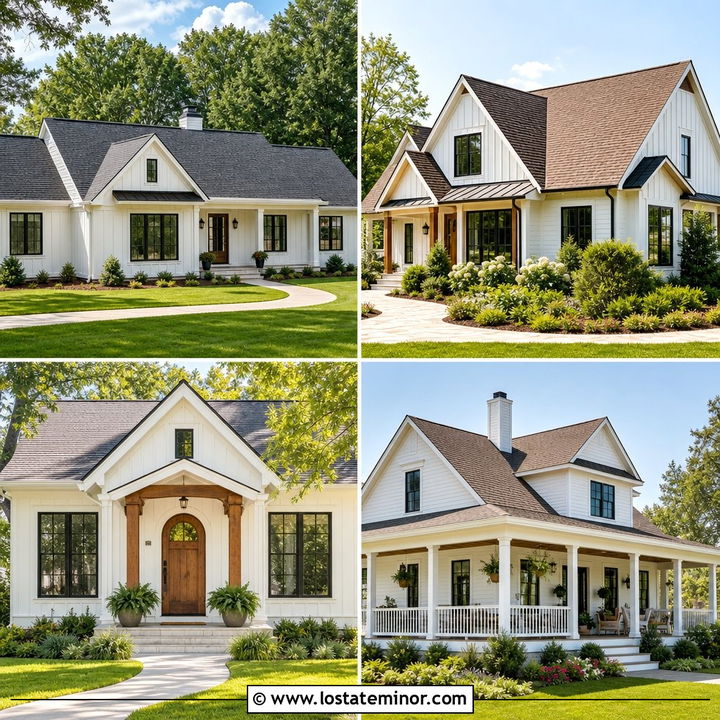
Warm white gives a home the freshness of white without the cold or overly stark appearance. Its subtle cream, beige, or greige undertones also blend easily with natural wood, masonry, dark metals, and colorful doors. The key is creating a complete palette that respects permanent features such as the roof, stonework, brick, and surrounding landscape. Warm whites usually work best when their undertones relate to those fixed materials rather than competing with them. () The following 30 exterior looks cover modern, traditional, coastal, rustic, and budget-friendly approaches. Each one combines the main house color with coordinated trim, doors, roofing, and architectural details. Use these **30 Warm White House Design With Accents Ideas** to build a welcoming, balanced exterior from the curb to the front porch.

1. Warm White House With Black Trim
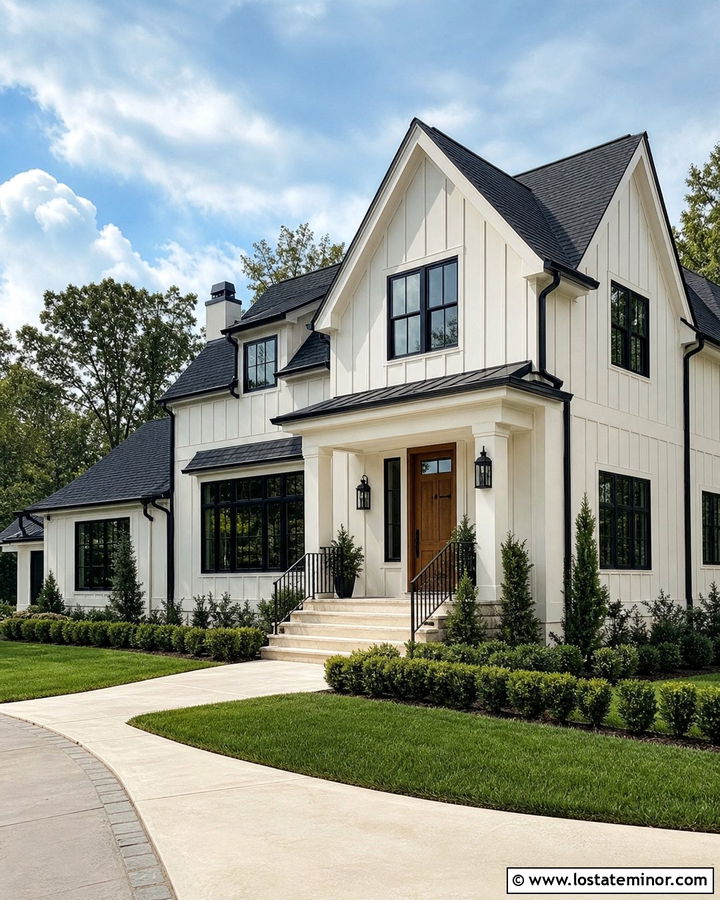
Black trim gives a warm white exterior clear definition and a polished, graphic edge. Use Sherwin-Williams Alabaster on horizontal siding, then repeat soft black on window frames, gutters, porch railings, and exterior lights. A stained oak door prevents the palette from feeling too severe. This combination is especially effective on a modern farmhouse with board-and-batten gables and a charcoal shingle roof. Keep the garage door warm white so it blends into the facade instead of becoming a large dark block. Cream limestone steps and simple evergreen landscaping can soften the contrast further. Black works best as a controlled accent rather than covering every architectural feature, allowing the warm white body and natural materials to remain visually dominant. ()
2. Warm White House With Natural Wood Accents
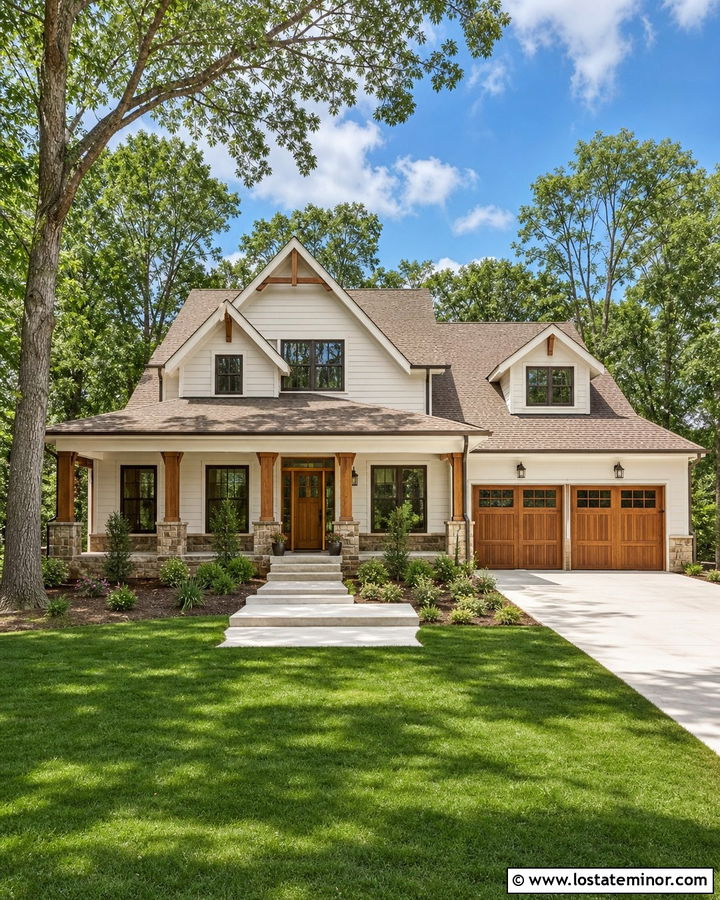
Natural wood brings instant warmth and texture to a creamy white house. Try Benjamin Moore White Dove siding with cedar porch posts, exposed gable brackets, and a medium-toned wood front door. Add bronze window frames and a weathered brown roof to keep the overall palette soft. This complete scheme suits Craftsman homes because the wood can highlight structural details instead of appearing purely decorative. Use the same stain family on porch ceilings, railings, and garage doors, but vary the depth slightly to avoid a flat look. A stone foundation with beige, cream, and muted gray tones will help connect the wood to the house. Choose a UV-resistant exterior stain and sample it beside the siding because natural wood can become more orange outdoors.
3. Warm White House With Sage Green Shutters
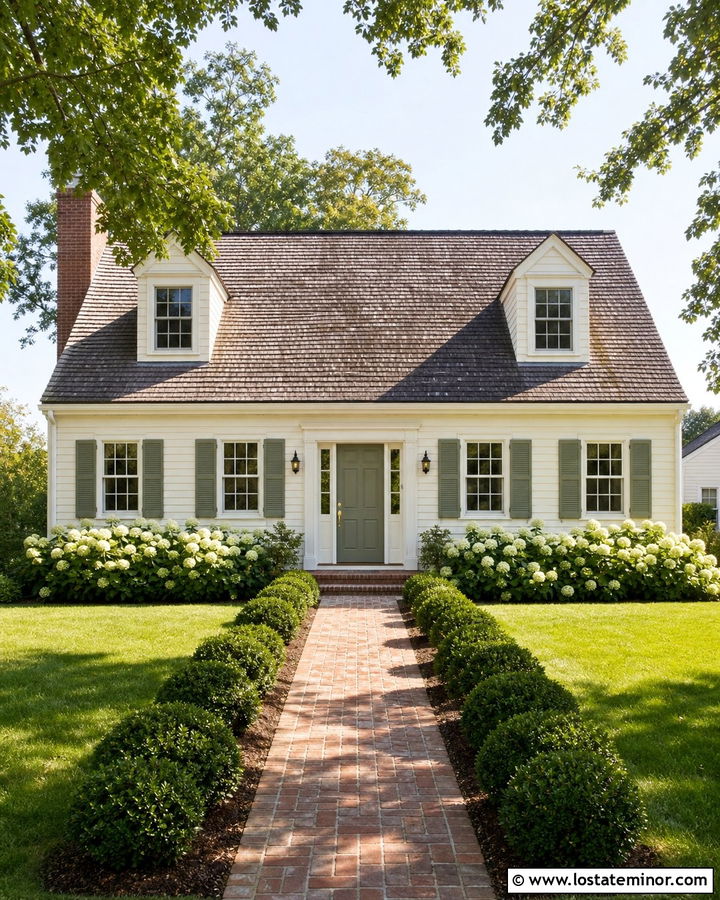
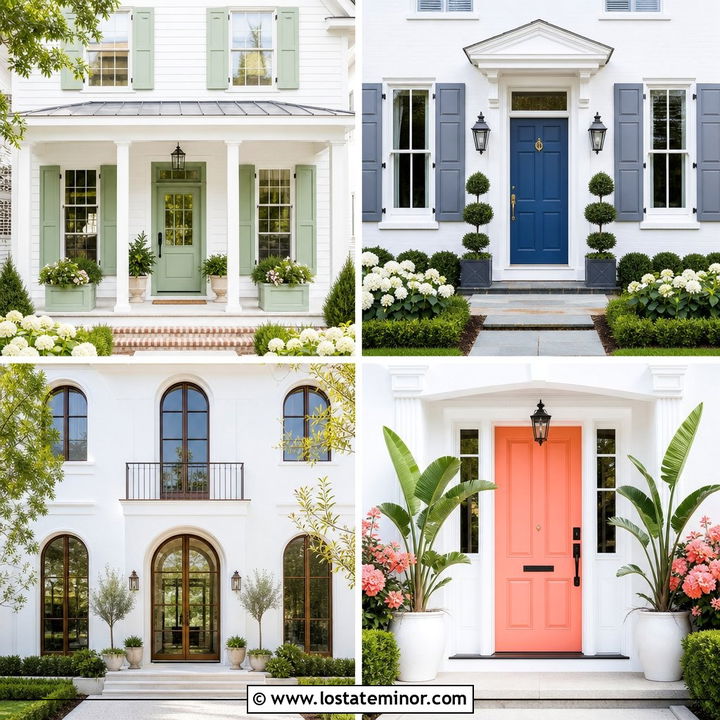
A warm white house with sage green shutters feels calm, welcoming, and connected to the landscape. Cover a Cape Cod facade in Sherwin-Williams Greek Villa, then use a muted gray-green on properly sized shutters and the front door. Cream trim creates a gentle transition between the body color and green accents. Complete the scheme with a weathered gray roof, aged brass hardware, and a brick walkway in softened red and brown tones. Sage looks particularly attractive beside boxwoods, hydrangeas, ornamental grasses, and mature trees. Avoid a highly saturated green, which can overpower the quiet warmth of the siding. For a balanced facade, repeat the shutter color on a small garden gate, porch bench, or side entry rather than introducing another strong accent color.
4. Warm White House With Stone Accents
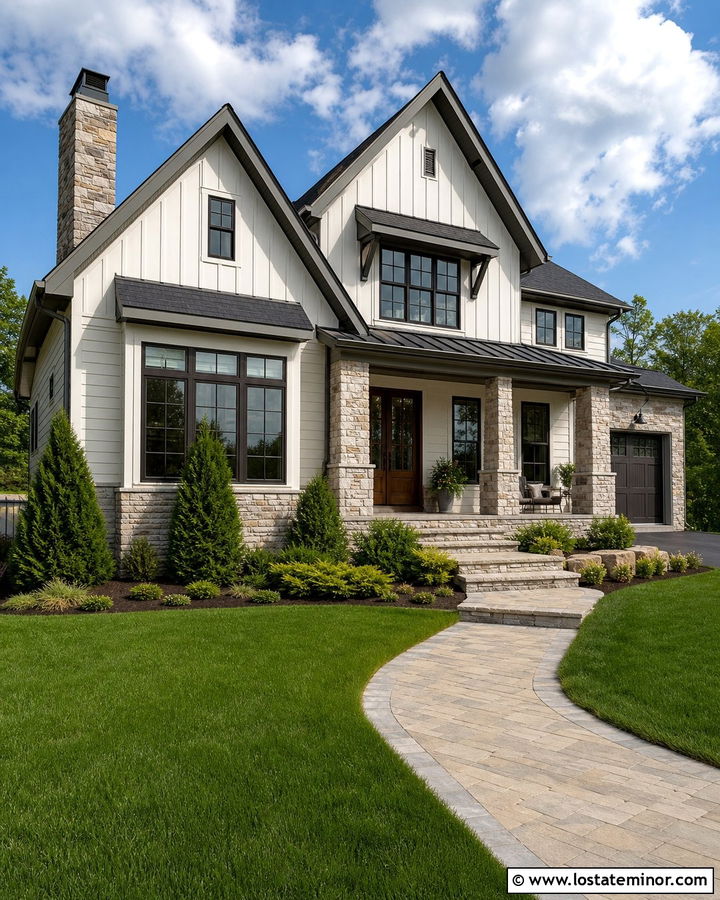
Stone gives a warm white exterior weight, texture, and a strong connection to its setting. Use Benjamin Moore Seapearl on stucco or fiber-cement siding, then add ledgestone around the foundation, chimney, and porch columns. Select stone containing cream, sand, taupe, and soft gray so its undertones relate to the warm white body. A walnut front door and dark bronze windows will provide contrast without producing the sharpness of pure black. Finish the house with a medium charcoal roof that picks up the deepest tones in the masonry. Matching the body color to an undertone already present in the stone usually creates a more intentional result. () Keep landscaping simple near detailed masonry so plants do not hide its natural variation.
5. Warm White House With Red Brick
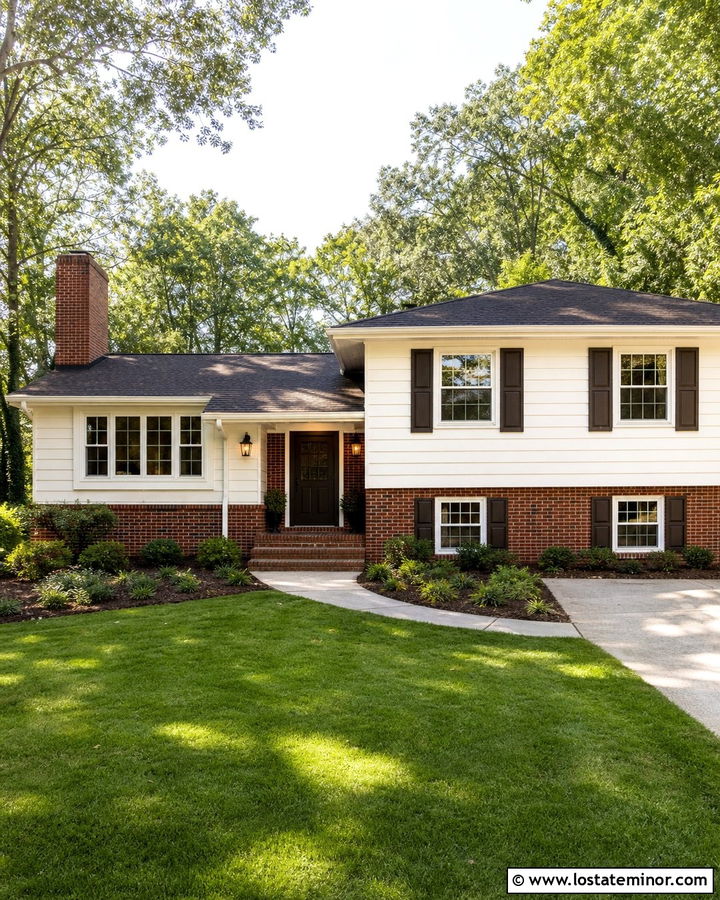
Existing red brick can look richer beside a warm white rather than a cool, blue-based white. Paint the siding Sherwin-Williams Creamy and preserve red brick on the chimney, lower facade, and porch floor. Choose a deep brown front door, bronze lights, and cream trim to support the brick’s earthy color. A brown-and-charcoal roof will bridge the white siding and darker masonry. This palette works well on split-level and traditional suburban houses where removing or painting sound brick is unnecessary. Clean the masonry before making color decisions because dirt can change how its undertones appear. If the brick is visually busy, simplify the remaining exterior. Skip contrasting shutters, match the garage door to the siding, and use restrained landscaping with deep green foliage.
6. Warm White House With Navy Front Door
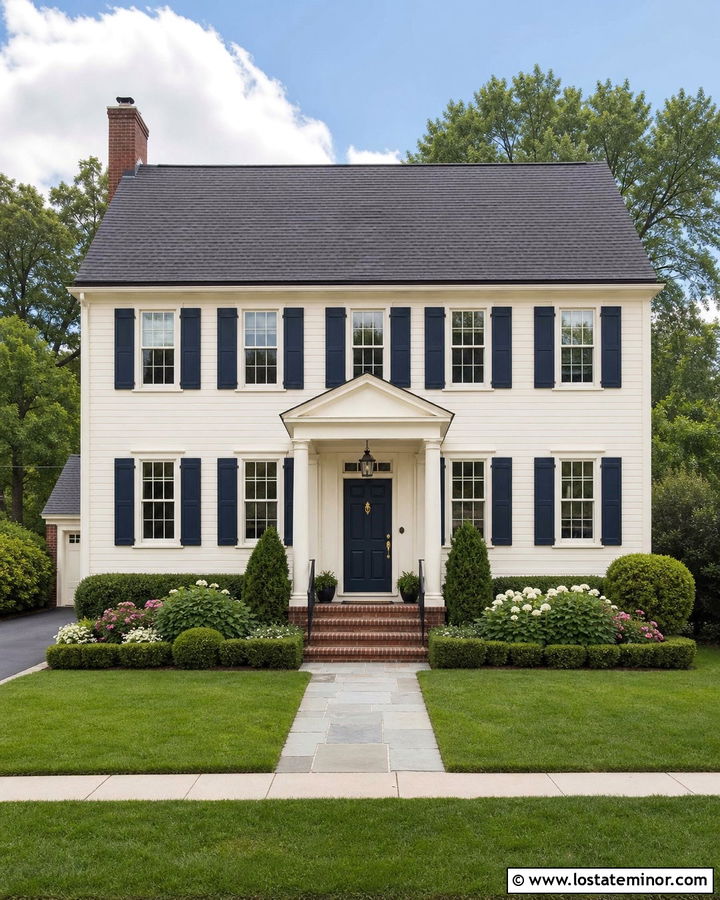
A navy front door adds confident color while preserving the classic character of a warm white exterior. Cover a Colonial house in Benjamin Moore Swiss Coffee, using slightly brighter cream on the window trim and porch columns. Paint the six-panel door a deep navy blue and repeat that shade on traditional shutters. Polished brass hardware adds another warm layer, while a charcoal roof grounds the light facade. Keep railings and gutters close to the body color so the navy accents remain focused around the entrance and windows. This arrangement creates symmetry without making the house look overly formal. Red brick steps, clipped hedges, and a straight stone walkway reinforce the traditional architecture. Select a navy with subtle gray undertones to prevent it from appearing too vivid in direct sunlight.
7. Warm White House With Charcoal Roof
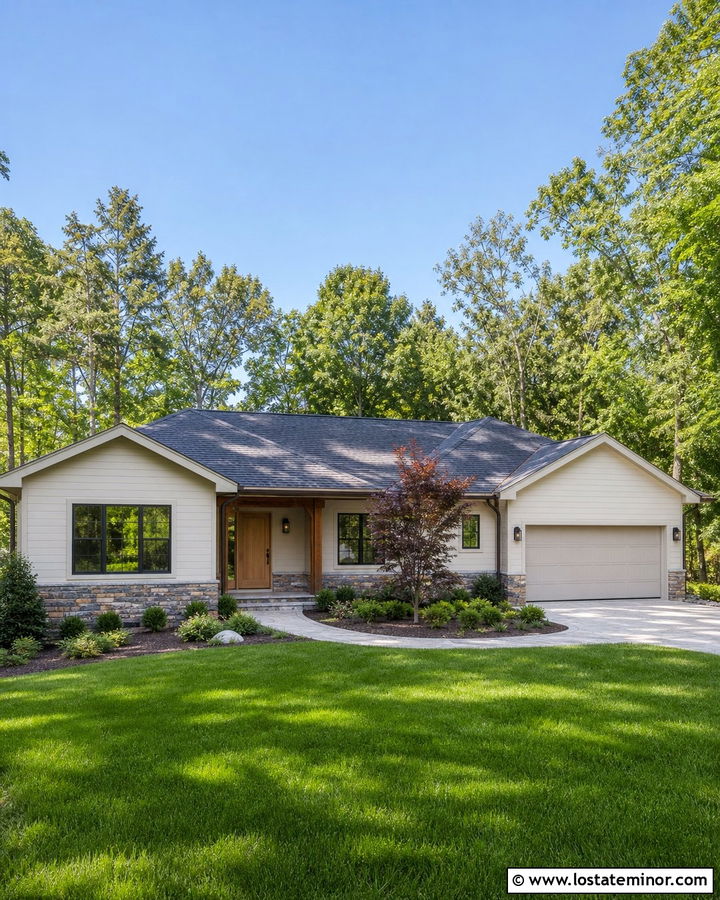
A charcoal roof creates a strong top line that anchors a pale, warm exterior. Pair Sherwin-Williams Shoji White siding with charcoal architectural shingles, dark gray window frames, and a natural fir front door. Warm white fascia offers a softer connection between the roof and walls than black fascia would. This scheme is especially useful for a ranch house because the dark roof adds visual structure to a long, low facade. Introduce fieldstone along the foundation and use charcoal only on small details such as lights and house numbers. The garage door should match the siding to reduce its visual size. Layered foundation plants, a curved walkway, and one ornamental tree can break up the home’s horizontal shape while preserving its clean, relaxed character.
8. Warm White House With Brown Roof
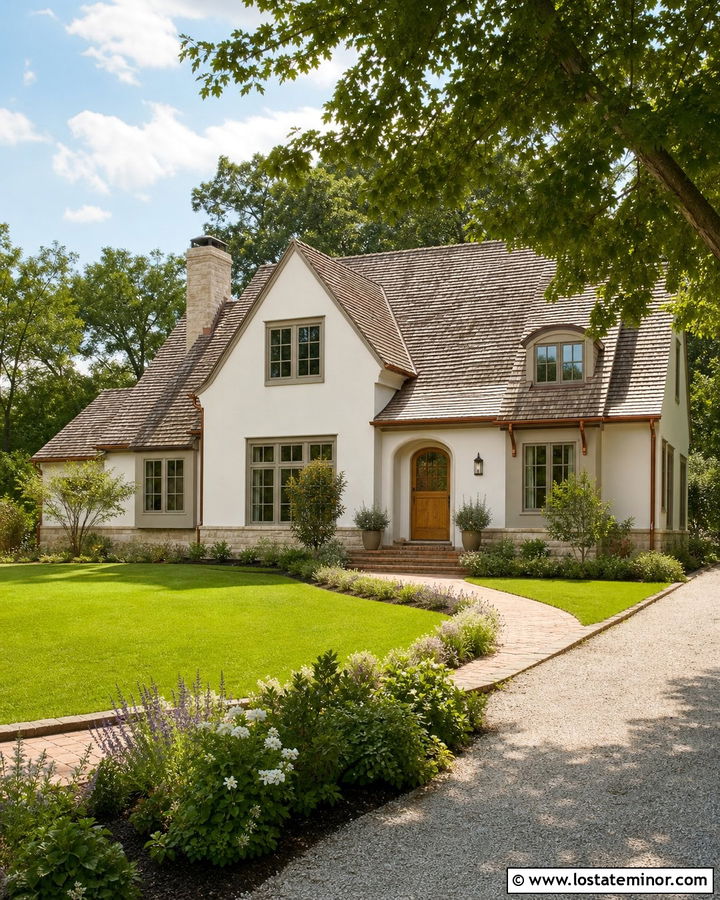
Brown roofing pairs naturally with warm white siding because both colors share soft, earthy undertones. Apply Benjamin Moore White Dove to a cottage exterior and use a dimensional weathered-brown roof containing tan and charcoal variation. Add taupe window trim, copper gutters, and a medium oak door for a gentle, layered palette. Creamy stone around the foundation can make the transition from house to garden feel more natural. This combination is ideal when an existing brown roof must remain, since it treats that fixed feature as part of the design rather than an obstacle. Avoid cool blue-gray accents, which may look disconnected beside the roofing. Instead, use muted olive planters, warm brick pavers, and informal flowering shrubs to create an inviting cottage setting.
9. Warm White House With Black Windows
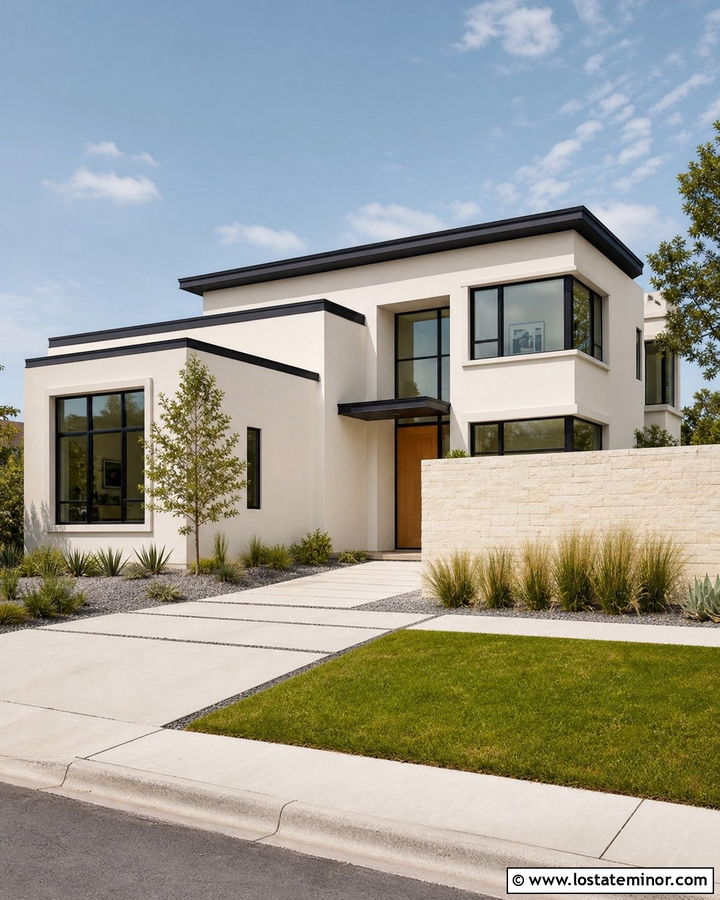
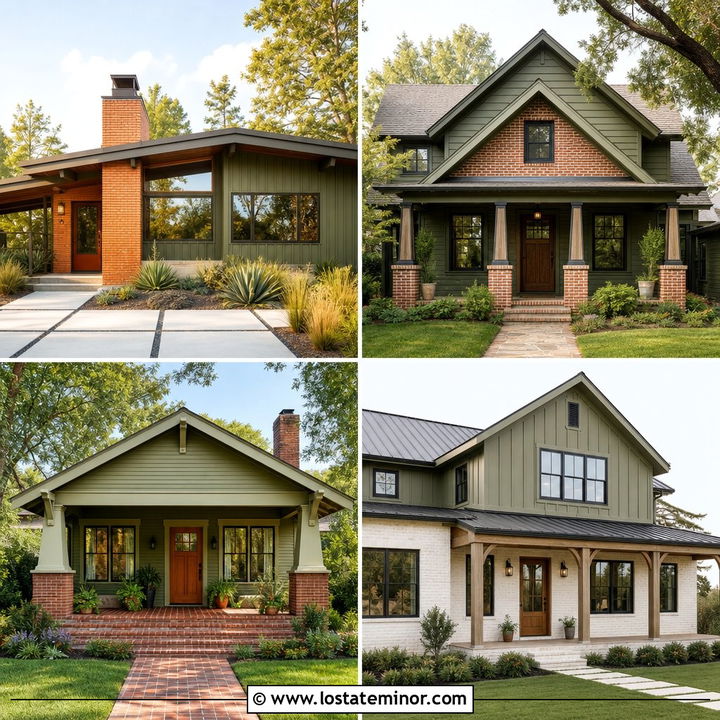
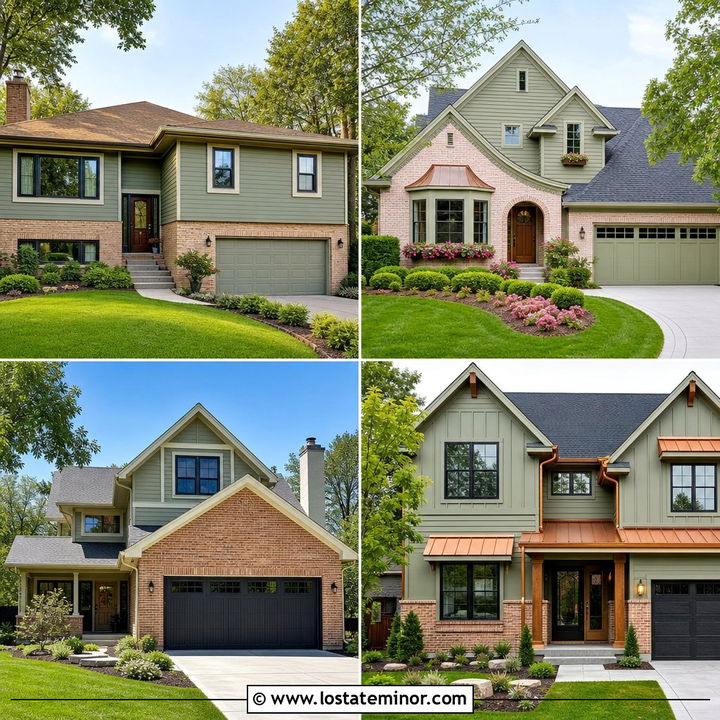
Black windows can give a warm white home a modern outline without requiring heavy black trim everywhere else. Use Sherwin-Williams Natural Choice on smooth stucco, then surround the black window frames with body-colored trim. A wide wood pivot door, pale limestone walls, and a flat charcoal roof complete the contemporary scheme. Restrict black to the windows, lighting, and thin metal railings so the elevation remains bright. Large windows will already create substantial contrast, making dark fascia or a black garage door unnecessary. This approach works especially well on a simple modern house with clean rooflines and limited decorative detail. Soft ornamental grasses, concrete pavers, and gravel planting beds continue the streamlined look while introducing movement and natural texture around the warm white facade.
10. Warm White House With Cedar Garage Doors
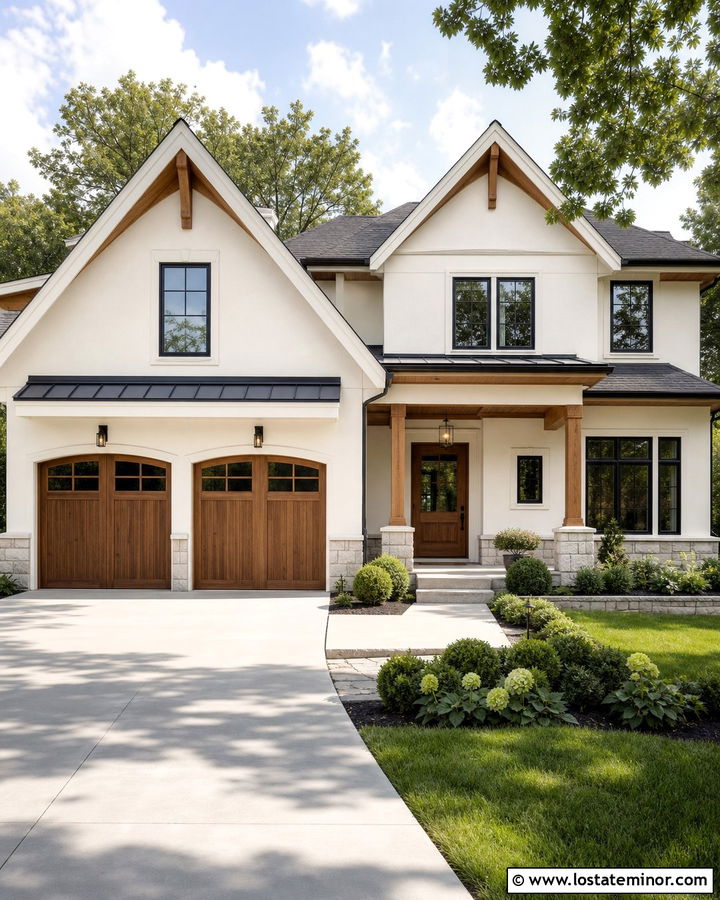
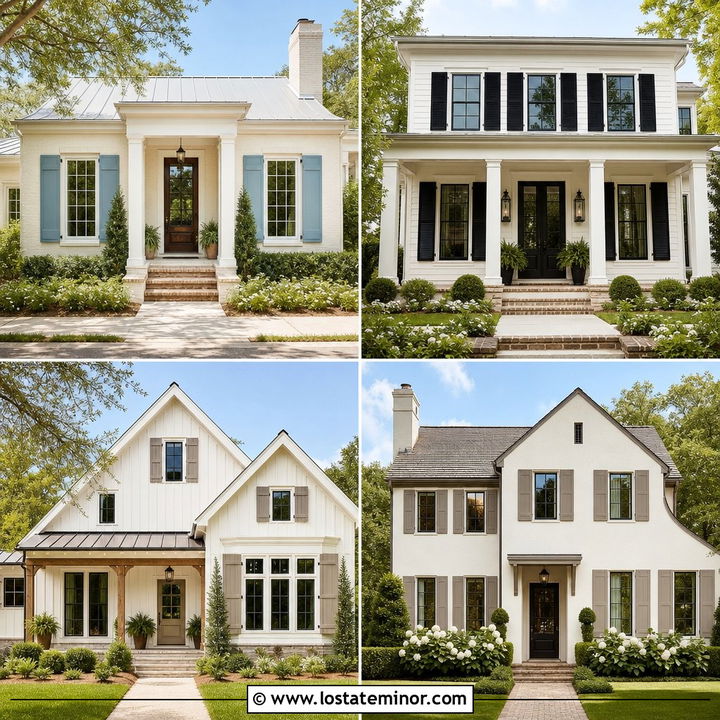
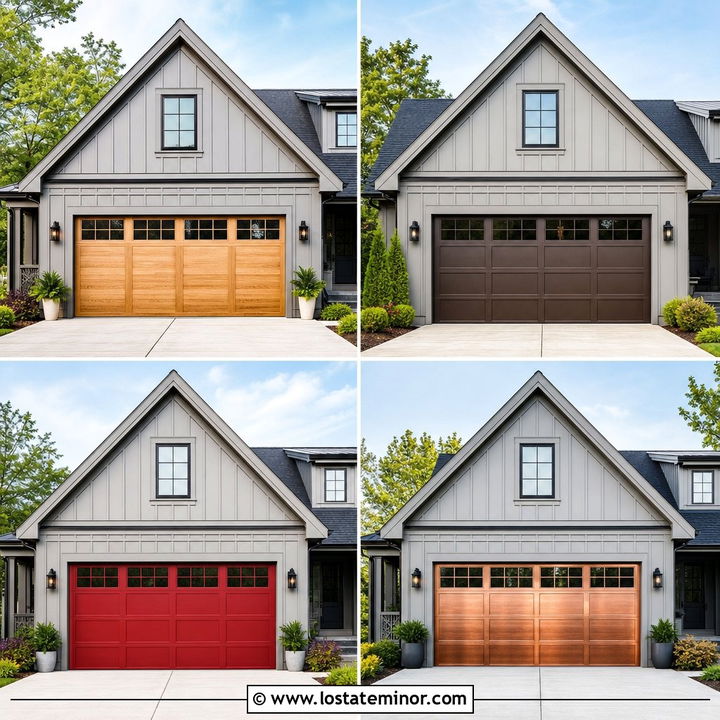
Garage doors occupy considerable visual space, so using cedar can turn them into a coordinated architectural feature. Paint a transitional home Benjamin Moore Swiss Coffee and frame medium-toned cedar garage doors with warm white trim. Repeat the cedar on the front door, porch ceiling, and small gable brackets to distribute the wood across the facade. Black windows and a charcoal roof add crisp structure, while pale stone along the lower walls prevents the palette from appearing too simple. Wood and white are a familiar pairing because the natural grain adds warmth and variation to a light exterior. () Choose a stain that relates to the stone and roof, and avoid strongly orange finishes. Dark bronze hardware can provide definition without interrupting the wood grain.
11. Warm White House With Bronze Accents
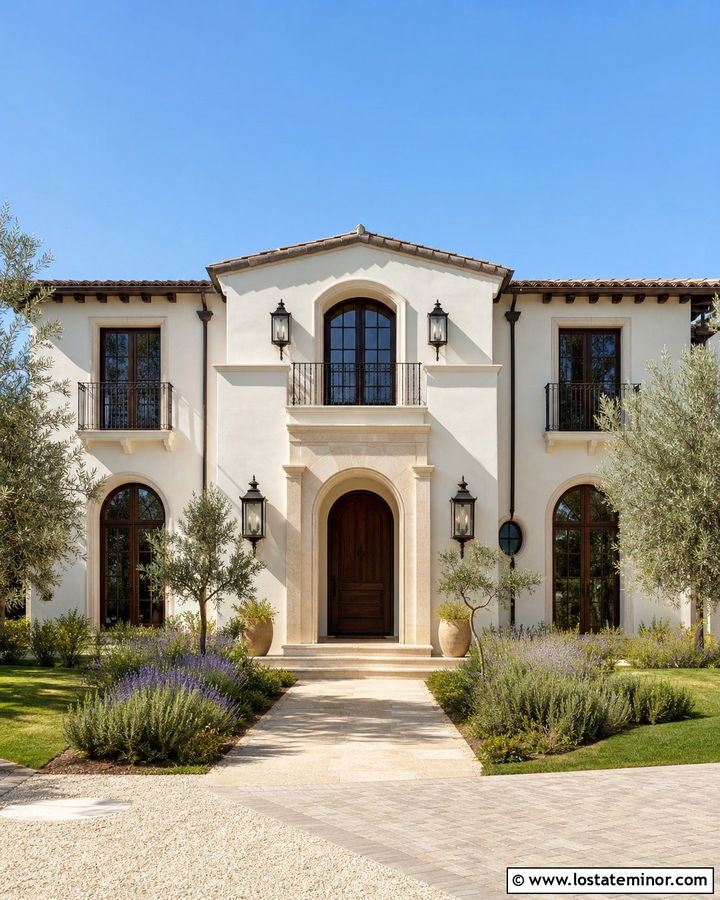
Bronze accents provide softer contrast than black and look especially refined beside creamy white stucco. Cover a Mediterranean-inspired home in Sherwin-Williams Alabaster, then add dark bronze windows, lanterns, gutters, and metal railings. A walnut arched door creates a welcoming focal point under a shallow tiled porch roof. Use warm beige limestone around the entry and foundation to connect the exterior to the surrounding landscape. A muted brown tile roof completes the tonal palette and supports the architecture better than cool gray roofing. Bronze should appear consistently but sparingly, outlining functional features instead of every edge. Olive trees, rosemary, lavender, and pale gravel can extend the warm neutral colors into the yard. The finished house feels detailed and grounded without relying on harsh contrast.
12. Warm White House With Blue Shutters
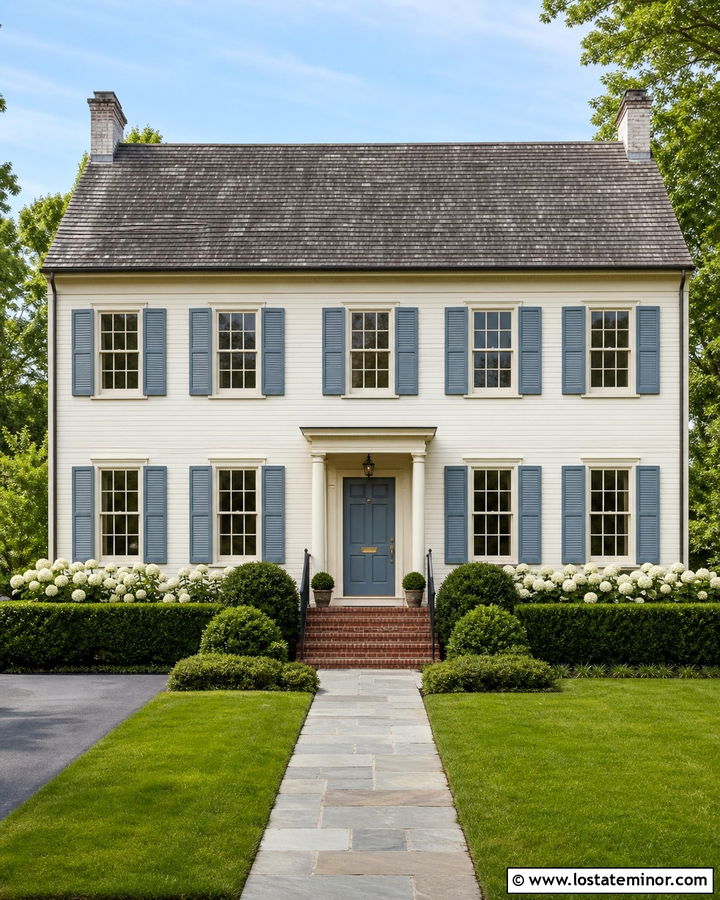
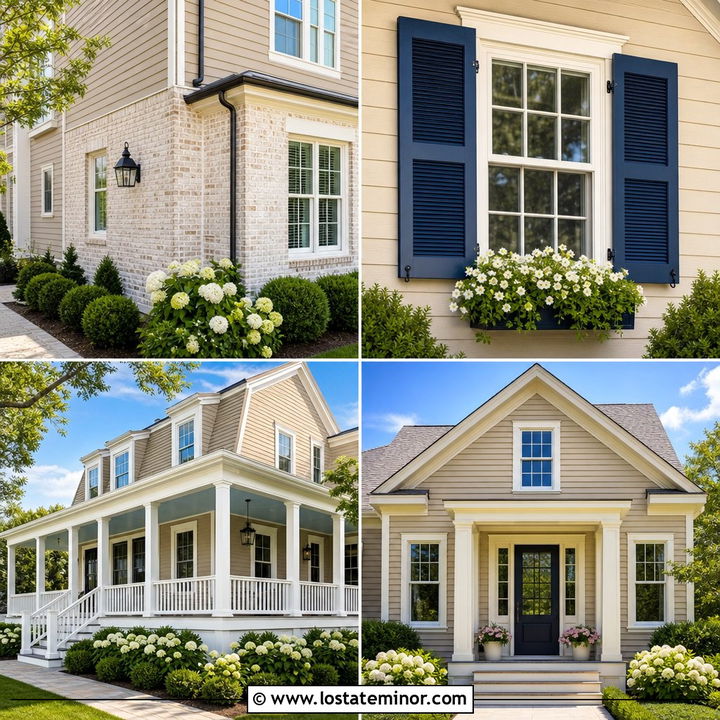
Dusty blue shutters bring gentle color to a warm white exterior while maintaining a traditional, relaxed appearance. Paint a two-story Colonial Benjamin Moore White Dove, using soft cream trim around the windows and entry. Add muted blue-gray shutters, a matching front door, and aged brass hardware. A weathered gray roof and red brick steps balance the cooler blue accents with familiar warm materials. For believable proportions, each shutter should look wide enough to cover half its window when closed. Repeat the blue only on one or two small details, such as a porch bench or side gate. White hydrangeas, deep green hedges, and a straight bluestone path will support the formal symmetry without making the landscaping rigid. The result is colorful but still easy to maintain visually.
13. Warm White House With Olive Green Door
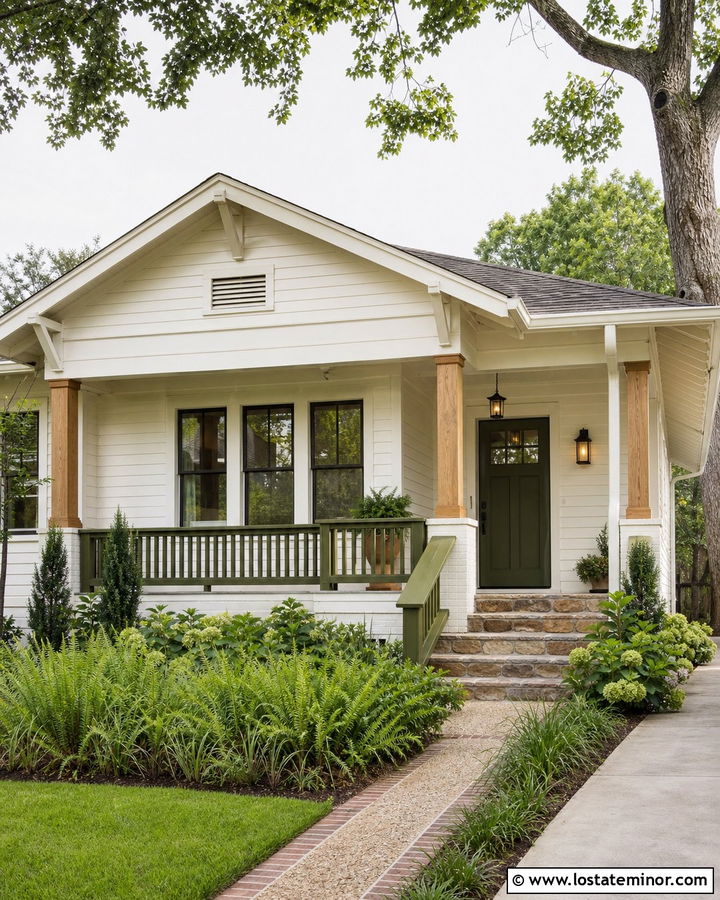
An olive green door adds earthy personality to a warm white house without becoming overly bright. Use Sherwin-Williams Greek Villa on a bungalow with horizontal lap siding and cream trim. Paint the front door a deep, muted olive and repeat the color on porch railings or a small garden gate. Natural cedar columns, bronze lights, and a brown-gray roof create a grounded palette that suits the bungalow’s low, welcoming form. Keep window trim light to preserve an open appearance beneath the broad porch roof. Tumbled stone steps and a brick-edged walkway can add texture at ground level. Olive green looks most connected when surrounded by layered foliage, so use ferns, grasses, and broad-leaf shrubs near the porch while keeping the doorway visible from the street.
14. Warm White House With Terracotta Accents
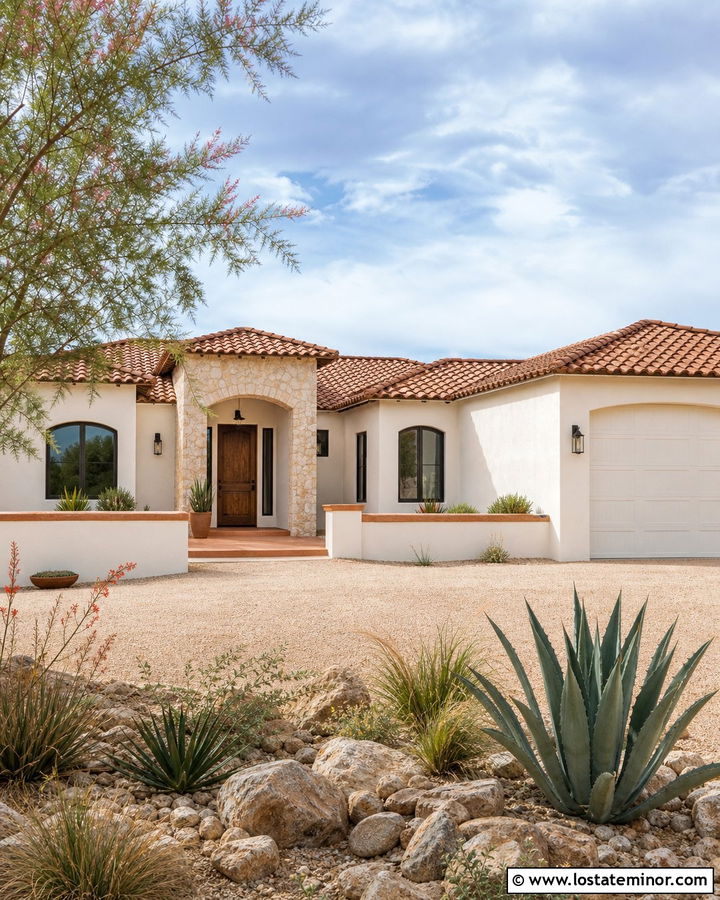
Terracotta introduces sun-warmed color that works naturally with creamy stucco and earthy landscaping. Coat a Southwestern ranch house in Benjamin Moore Swiss Coffee, then use terracotta tiles on the roof, porch floor, and low garden walls. A medium walnut door and dark bronze windows provide depth without creating an overly graphic finish. Keep the fascia and garage door warm white to maintain a continuous facade. Sand-colored stone around the entry can connect the house to gravel beds and drought-tolerant plants. Since terracotta already offers strong color variation, avoid adding bright shutters or competing door colors. Agave, ornamental grasses, desert willow, and large natural rocks will frame the home appropriately. The finished palette feels warm and regional while remaining fresh enough for an updated suburban exterior.
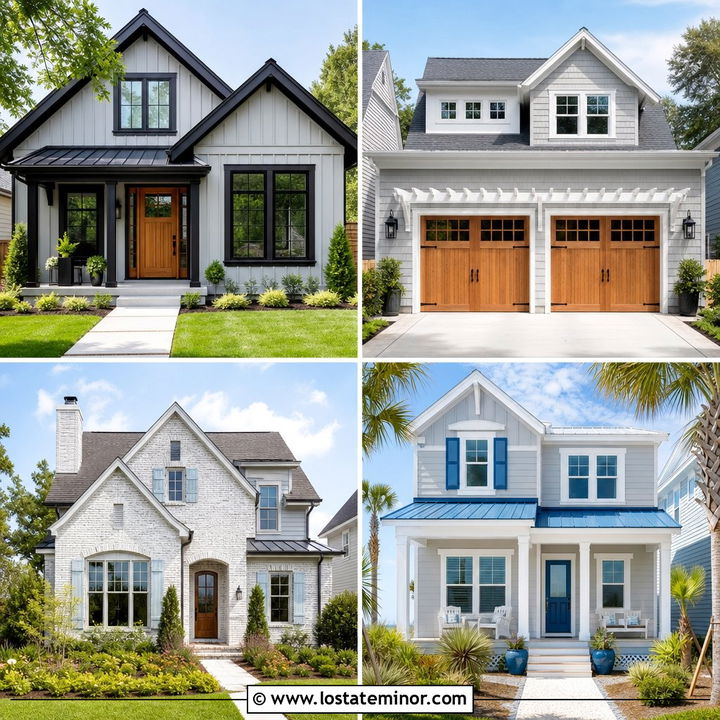
15. Warm White House With Gray Stone
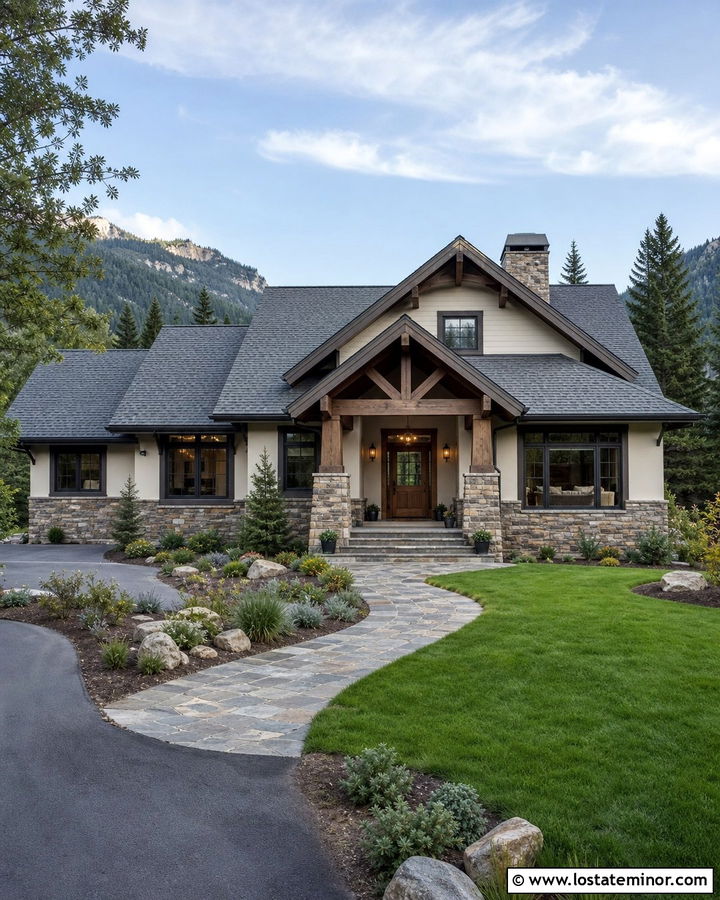
Cool gray stone can still work with warm white when the masonry contains beige or taupe variation. Use Benjamin Moore Seapearl on a mountain Craftsman, pairing it with mixed gray ledgestone across the foundation and porch columns. Add charcoal windows, a slate-colored roof, and a stained fir door to connect the cool and warm sides of the palette. Exposed wood beams under the gables reinforce the home’s natural character. Avoid bright white trim, which could make the stone appear darker and the siding more yellow. Instead, use the body color on fascia, soffits, and corner boards. Broad steps, native shrubs, evergreen trees, and a gently curved stone path will settle the house into its setting. This layered approach gives the facade depth without making it feel visually crowded.
16. Warm White House With Copper Accents
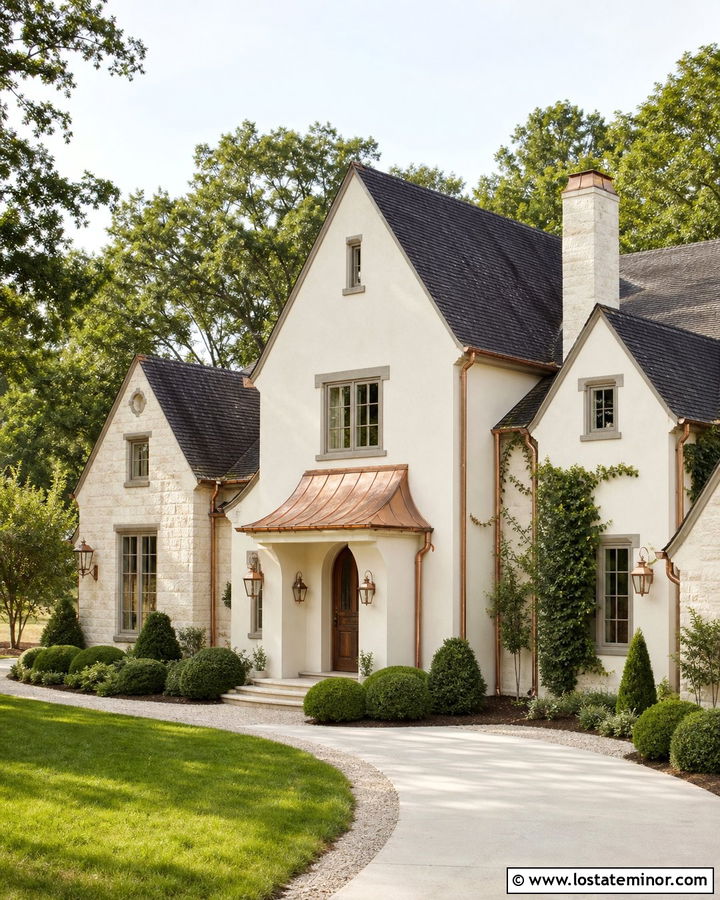
Copper adds rich, changing color to a warm white facade and can highlight important roof and entry details. Paint a French country home Sherwin-Williams Creamy, then use copper on porch roofing, gutters, downspouts, and lanterns. Add pale limestone, a medium brown arched door, and soft taupe window trim. A weathered charcoal roof keeps the main roofline quiet while allowing the copper canopy to become the focal point. Fresh copper will begin bright and gradually develop a deeper, aged finish, so choose surrounding materials that work with both appearances. Keep the garage door close to the siding color and limit dark accents to small hardware details. Rounded shrubs, climbing greenery, and a gravel-edged walkway complement the soft architecture and prevent the metallic details from looking overly formal.
17. Warm White House With Greige Trim
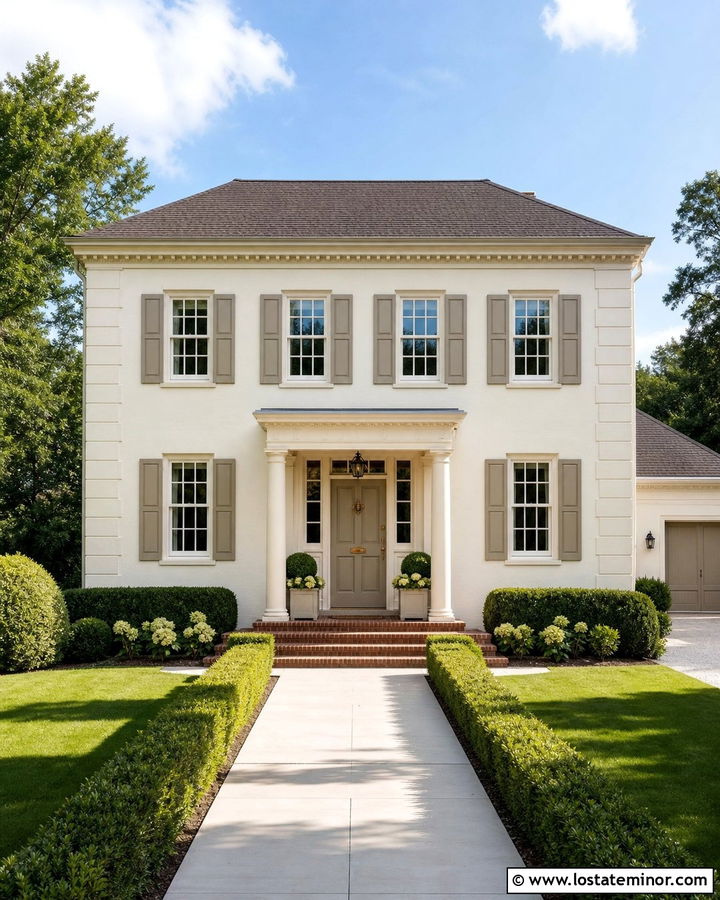
Greige trim creates subtle definition for homeowners who find black too strong and matching white too plain. Cover a Georgian-inspired exterior in Sherwin-Williams Alabaster, then use a medium warm greige around windows, on shutters, and across the front door. Add antique brass hardware, a charcoal-brown roof, and red-brown brick steps to give the restrained palette depth. The greige should be clearly darker than the body color while sharing a similar warm undertone. This keeps the facade layered rather than dirty or mismatched. Use cream on porch columns and dentil molding so detailed architectural features remain easy to read. Formal hedges, symmetrical planters, and a straight walkway support the house’s balanced design. The combination feels softer than black-and-white but more dimensional than a one-color exterior.
18. Warm White House With White Oak Porch
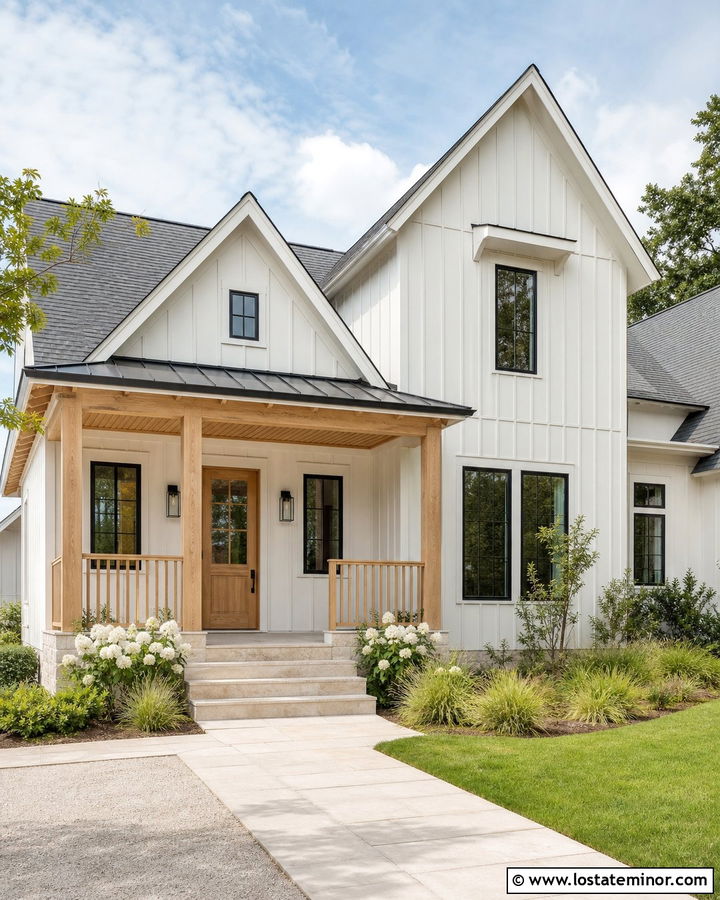
A white oak porch can transform a simple warm white exterior into a welcoming, material-rich design. Use Benjamin Moore White Dove on a modern cottage with board-and-batten siding. Build the porch with white oak posts, beams, railings, and a slatted ceiling finished in a natural matte stain. Add a charcoal metal roof over the porch, black-framed windows, and a matching oak front door. Keep the main roof a softer gray to avoid too much dark color overhead. Light limestone steps can connect the golden wood to the warm siding. Use black only in narrow lines, allowing the porch craftsmanship to command attention. A broad walkway, loose grasses, flowering shrubs, and a neatly edged lawn will create an approachable setting that balances modern simplicity with natural warmth.
19. Warm White House With Black Metal Roof
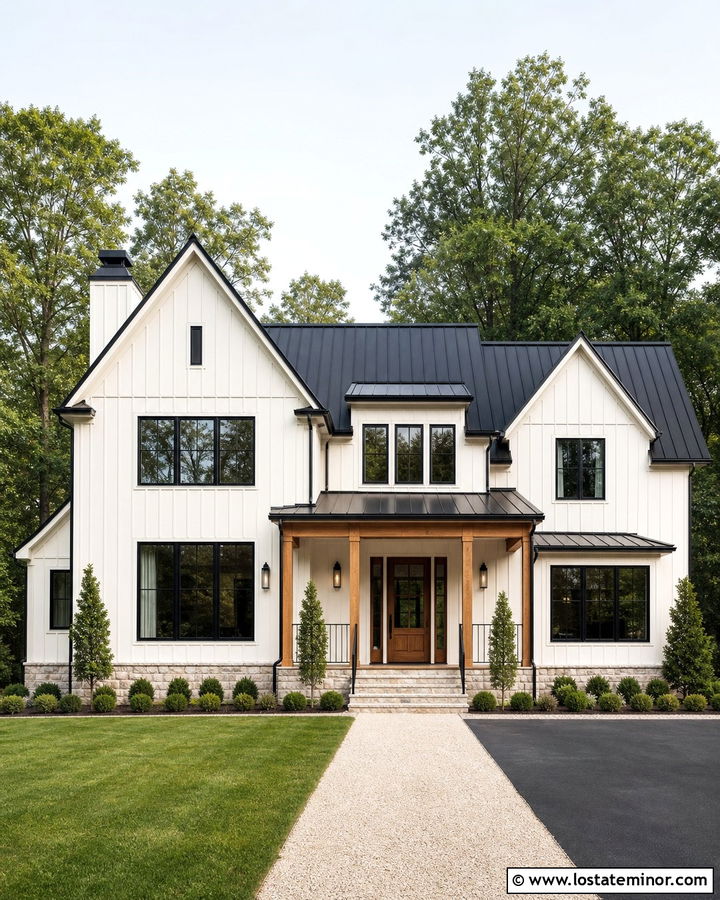
A black metal roof gives a warm white house a crisp silhouette and can emphasize simple architectural lines. Apply Sherwin-Williams Greek Villa to a modern farmhouse with vertical board-and-batten siding. Use black standing-seam roofing across the main structure and porch, then repeat black on windows, gutters, lights, and slim railings. A cedar front door and matching porch beams soften the high contrast. Add a fieldstone foundation containing beige and gray to visually connect the house to the ground. Leave fascia warm white where possible so the roofline does not become excessively heavy. This scheme works best with uncluttered landscaping, such as a wide lawn, structured shrubs, and a straight gravel or concrete path. The overall look remains bold, but the wood and stone keep it comfortable.
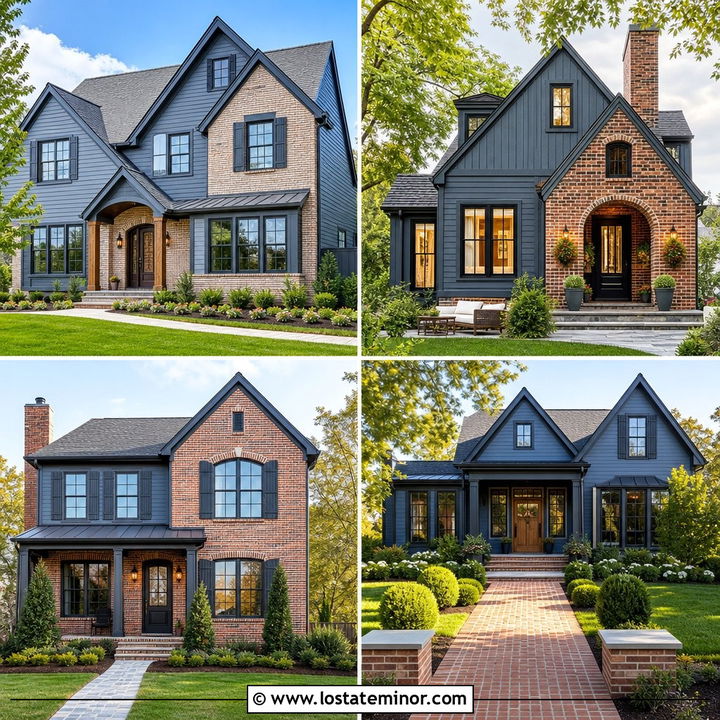
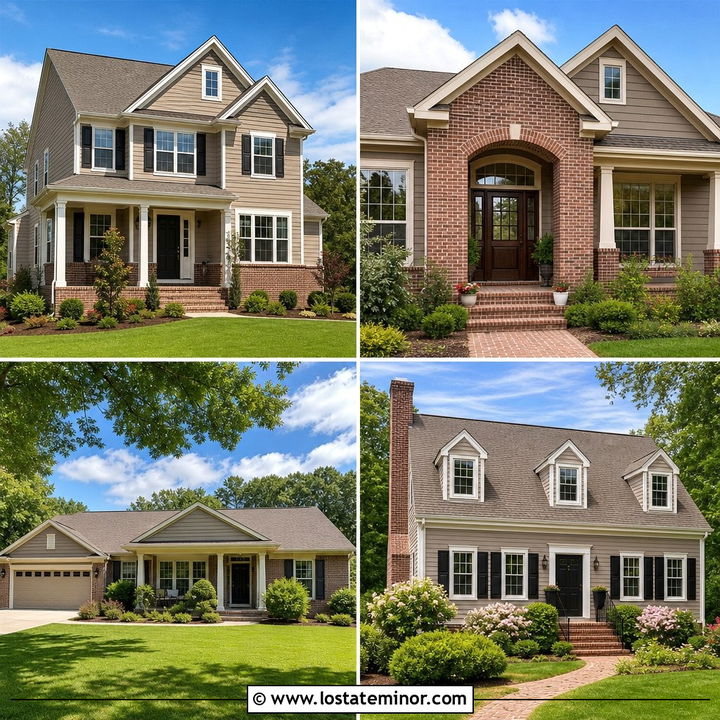
20. Warm White House With Wood Shutters
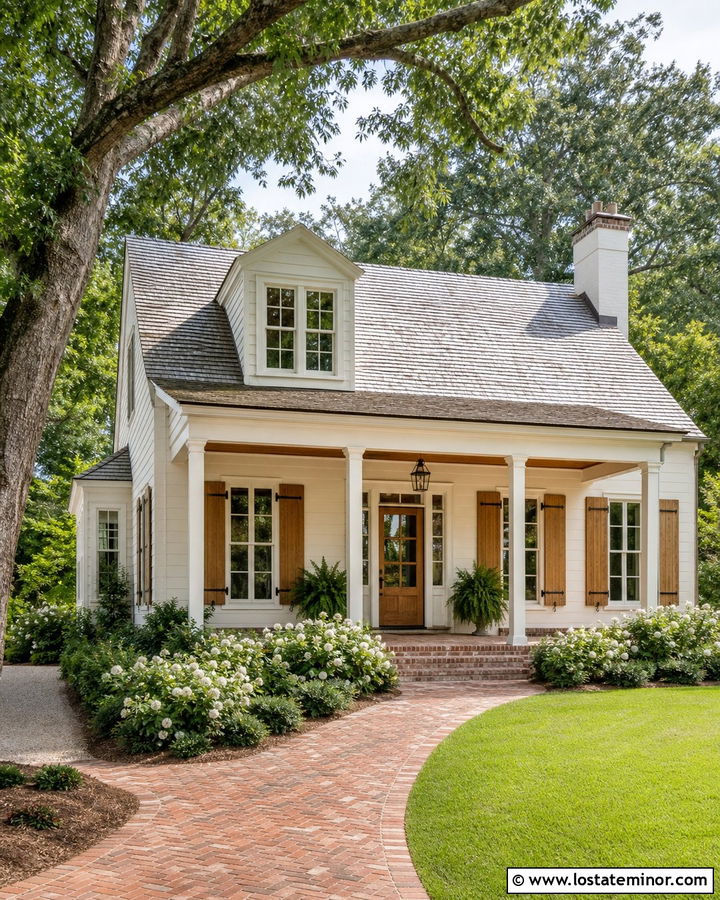
Wood shutters add handcrafted warmth and suit homes with traditional or rustic architecture. Paint a Southern cottage Benjamin Moore Swiss Coffee, then install functional-looking cedar shutters with simple black hinges. Repeat the cedar tone on the front door and porch ceiling, while keeping the columns and railings soft white. A weathered gray roof prevents the palette from leaning too brown. If the porch has brick flooring, choose muted red or clay brick that relates to the wood without matching it exactly. Shutters should fit the window openings and follow the window shape for an authentic appearance. Complete the setting with ferns, white flowering shrubs, and a curved brick walkway. The warm white background allows the grain and construction of the shutters to remain clearly visible from the curb.
21. Warm White House With Dark Green Trim
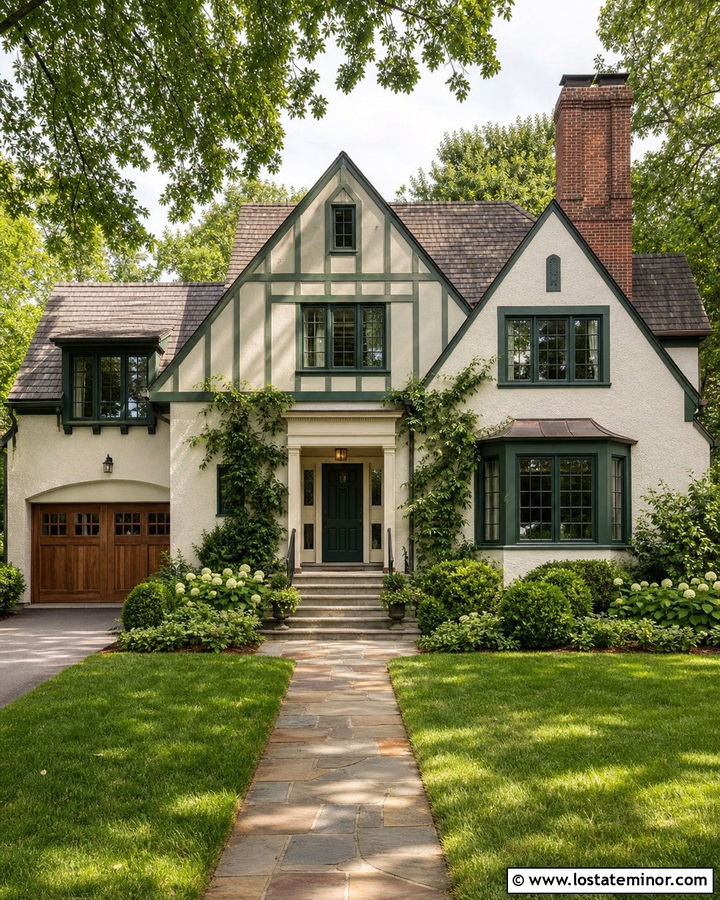
Dark green trim offers the depth of black with a softer, nature-focused character. Use Sherwin-Williams Shoji White on a Tudor revival exterior, applying deep forest green to window frames, half-timber details, gutters, and the front door. Keep some trim warm white so the green does not divide the facade into too many sections. A brown slate roof, aged brick chimney, and oak garage doors reinforce the home’s traditional materials. Select a green with gray or black undertones rather than a bright evergreen shade. This helps it remain sophisticated in changing daylight. Broad foundation shrubs, climbing vines, and a flagstone path can extend the garden influence without covering the architecture. The complete scheme feels historic and established while offering a quieter alternative to the familiar white-and-black combination.
22. Warm White House With Taupe Accents
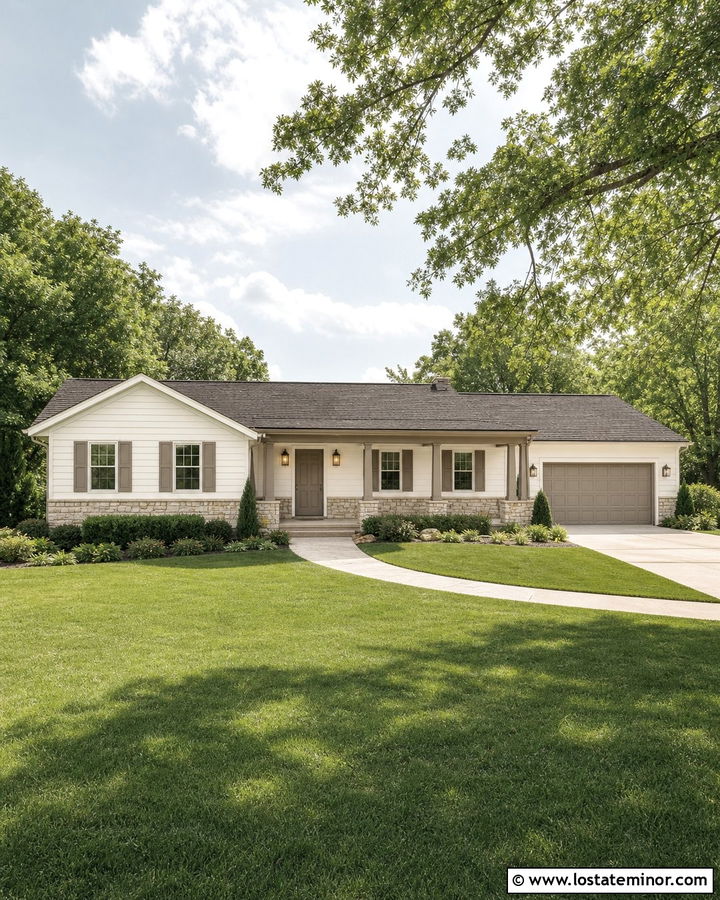
Taupe accents create a low-contrast exterior that feels calm and cohesive. Paint a suburban ranch house Benjamin Moore Ballet White, then use a medium taupe on shutters, the front door, garage door, and porch posts. Add bronze lighting, cream stone at the foundation, and a brown-gray dimensional roof. Because every color is related, introduce variety through materials rather than stronger paint. Horizontal siding, rough stone, stained wood, and brushed metal can keep the neutral scheme interesting. Use slightly deeper taupe on the door if the entrance needs more emphasis. A wide lawn, curved concrete path, and layered green shrubs will provide enough color around the house. This approach is particularly useful for long facades where high-contrast shutters or garage doors could make the elevation feel visually fragmented.
23. Warm White House With Light Blue Door
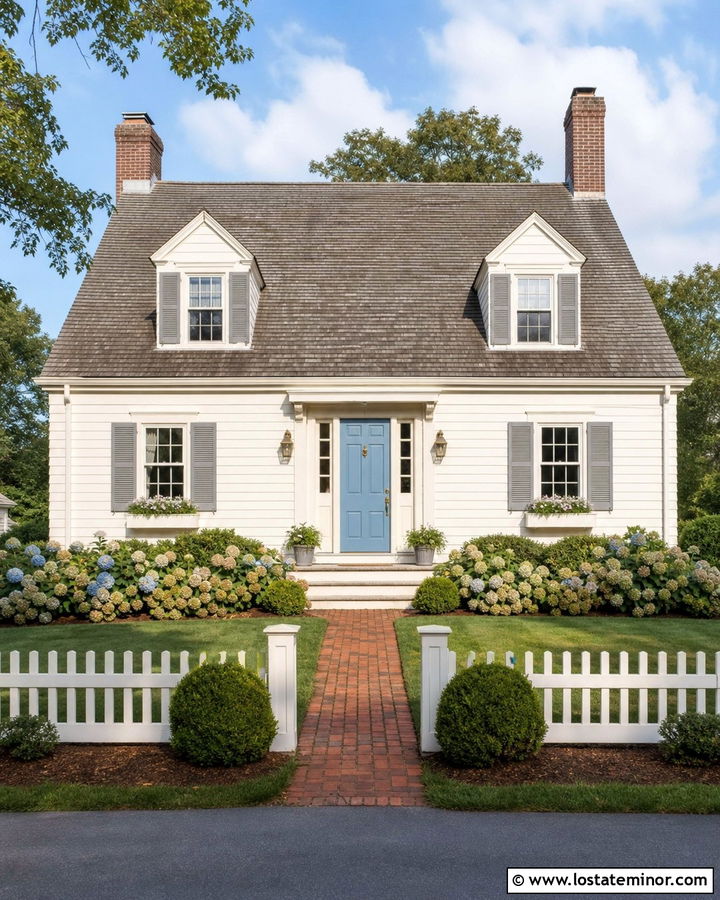
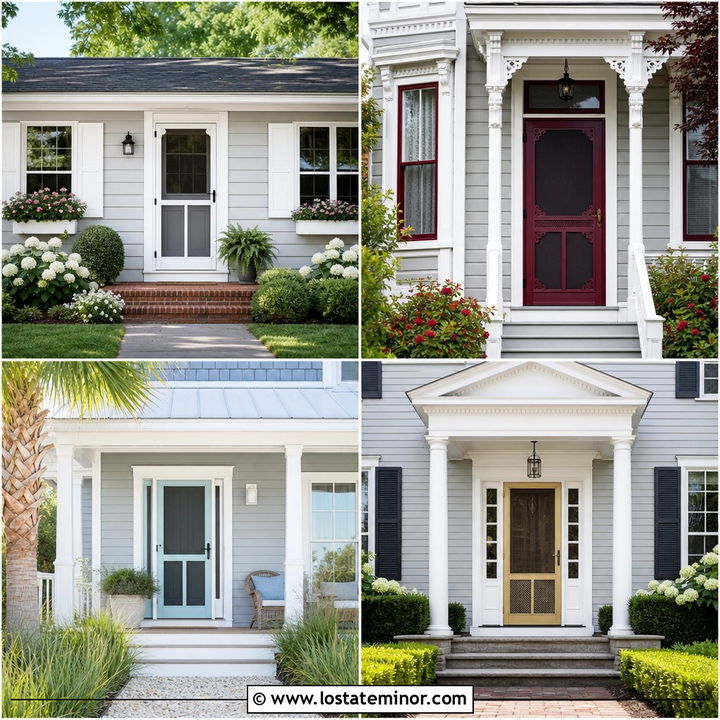
A pale blue door can give a warm white house a cheerful focal point without overwhelming the facade. Use Sherwin-Williams Natural Choice on a small Cape Cod home, pairing it with cream trim and soft gray shutters. Paint the front door a clear but muted sky blue and add satin brass hardware. A weathered gray roof, white window boxes, and a brick walkway create a familiar cottage setting. Repeat the door color sparingly through small planters or garden flowers rather than painting additional architectural features blue. This keeps attention on the entrance. Choose a blue with enough gray to hold its color in bright sunlight. Hydrangeas, clipped boxwoods, and a low picket fence can complete the scene while allowing the warm white siding and welcoming doorway to remain fully visible.
24. Warm White House With Painted Brick
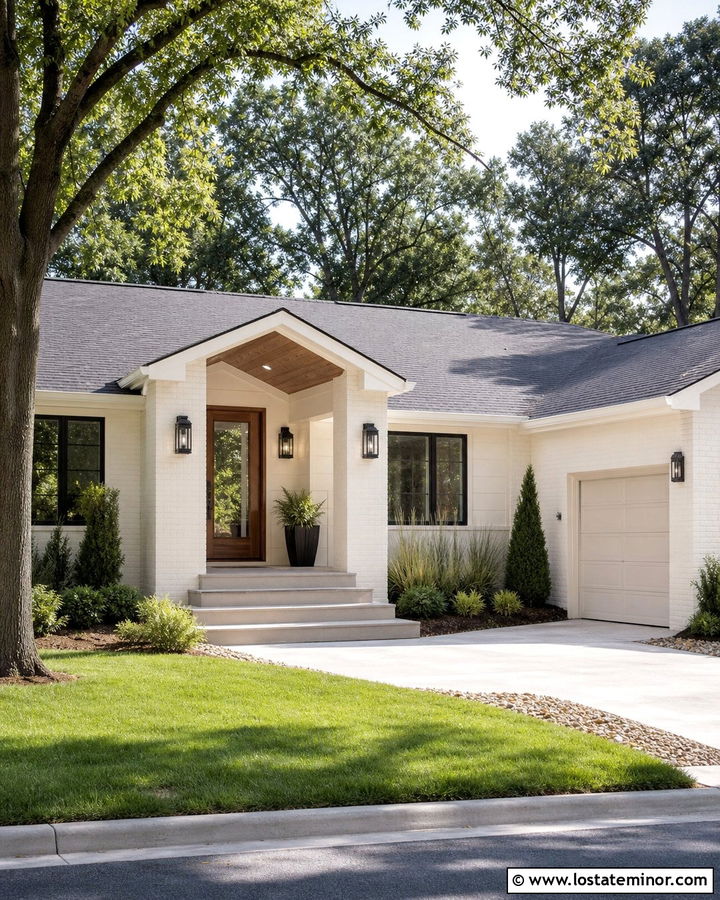
Painting brick warm white can unify a dated facade while preserving its masonry texture. Cover a 1970s ranch in Sherwin-Williams Alabaster, using a breathable coating intended for exterior masonry and following the brick manufacturer’s guidance. Paint adjacent siding and trim in the same color for a broader, cleaner appearance. Add dark bronze windows, a walnut door, charcoal lights, and a medium gray roof. Keep the garage door warm white so it recedes into the long elevation. Natural wood under the porch roof can introduce warmth without adding another painted color. Before coating masonry, address moisture problems and test a less visible area. Finish the update with wide concrete steps, ornamental grasses, and layered shrubs. The result respects the ranch form while giving the entire house a more consistent identity.
25. Warm White House With Limestone
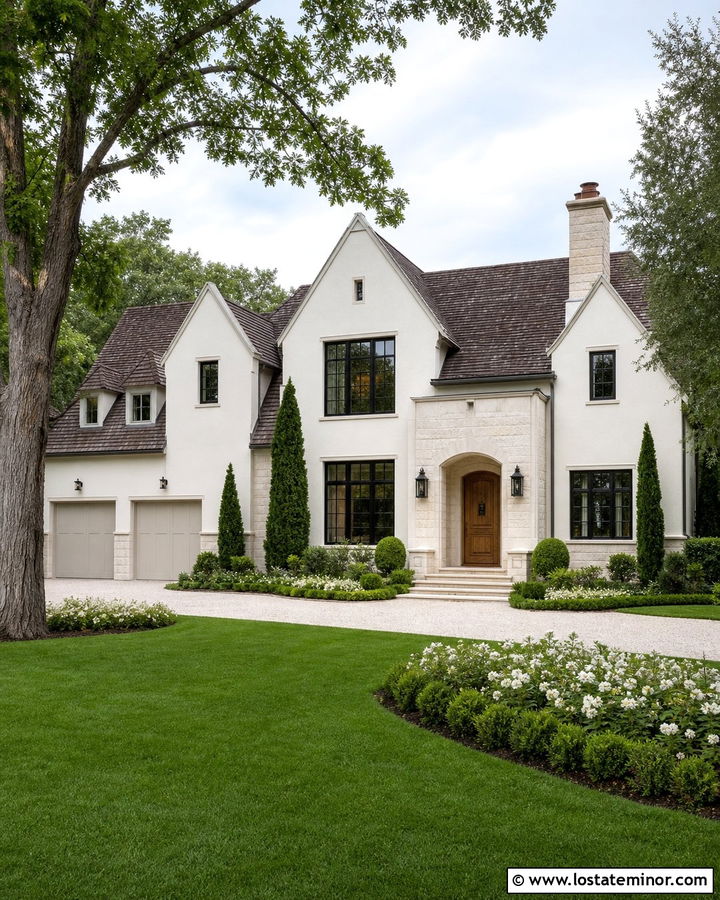
Limestone gives warm white siding a soft, upscale foundation without creating harsh contrast. Paint a European-inspired home Benjamin Moore White Dove and use cream limestone around the entrance, lower walls, and chimney. Choose stone with pale beige, ivory, and restrained gray movement. Add a medium oak door, dark bronze windows, and a weathered brown roof to maintain the warm palette. Matching mortar to the lightest stone tones will create a quieter appearance, while darker mortar will emphasize each individual piece. Use the body color on garage doors and fascia to keep the focus on the entry masonry. Formal evergreens, white flowers, and a pale gravel walkway suit the refined facade. The combination feels layered and substantial, yet still bright enough to maintain welcoming curb appeal throughout the year.
26. Warm White House With Dark Garage Door
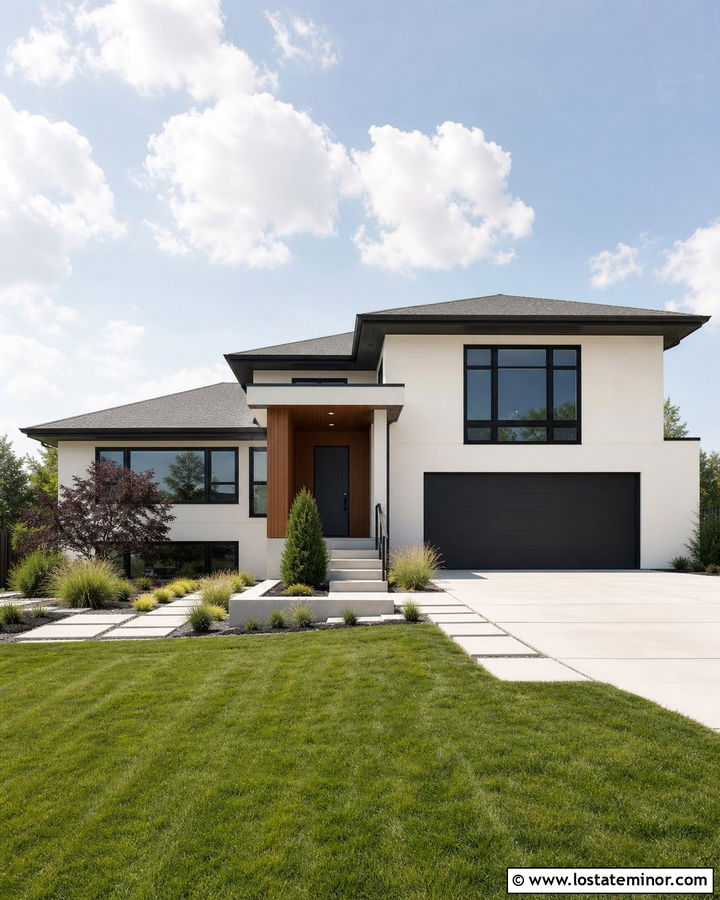
A dark garage door can balance a large facade when its color appears elsewhere in the exterior. Paint a contemporary split-level Sherwin-Williams Greek Villa, then use charcoal on the garage door, window frames, metal railings, and front door. Add warm cedar panels near the entry to prevent the dark lower level from looking heavy. A mixed gray roof and pale concrete steps continue the modern palette. Choose a simple flush-panel garage door rather than a highly decorative design, especially when the house has clean lines. If the garage occupies more than half the front elevation, consider a deep bronze-gray instead of pure black. Low grasses, sculptural shrubs, and large concrete pavers can frame the facade. The repeated charcoal details create continuity while warm white keeps the overall house bright.
27. Warm White House With Coastal Accents
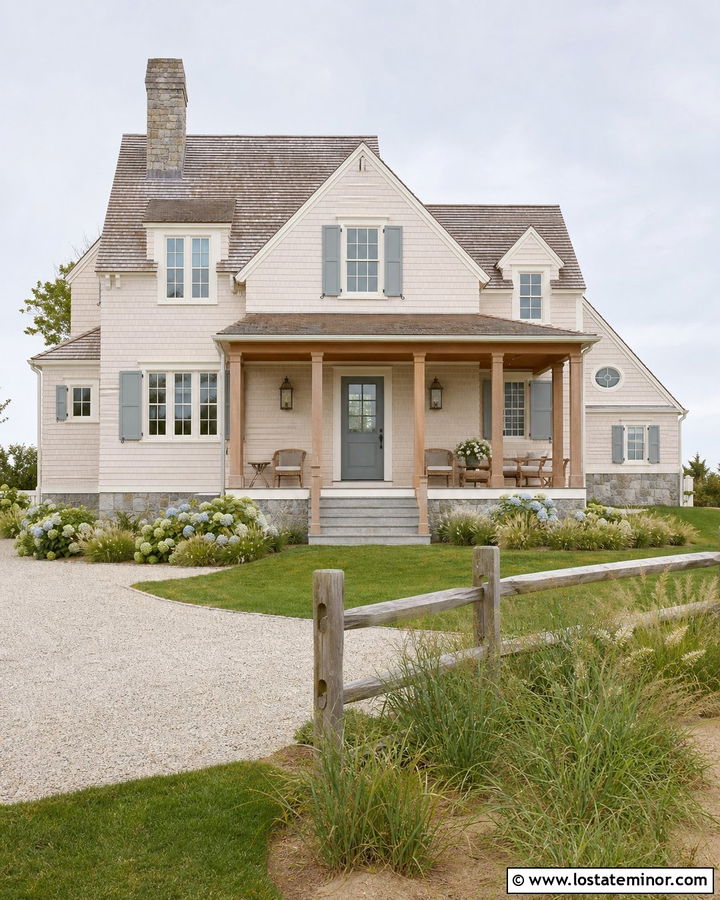
Coastal character comes from a light, weathered palette rather than decorative nautical themes. Cover a shingle-style home in Benjamin Moore Seapearl, using misty blue-gray on shutters and the front door. Add warm white trim, a weathered cedar roof, and natural teak porch details. Pale gray stone at the foundation gives the house a sturdy base without making it feel dark. Use simple lanterns in aged bronze rather than shiny chrome. The blue accents should remain muted so they relate to the soft siding and roofing. Beach grasses, hydrangeas, gravel paths, and a low natural fence will strengthen the relaxed setting. This complete scheme also works away from the coast because it relies on practical materials, gentle color, and an easy connection between the house and its surrounding landscape.
28. Warm White House With Rustic Accents
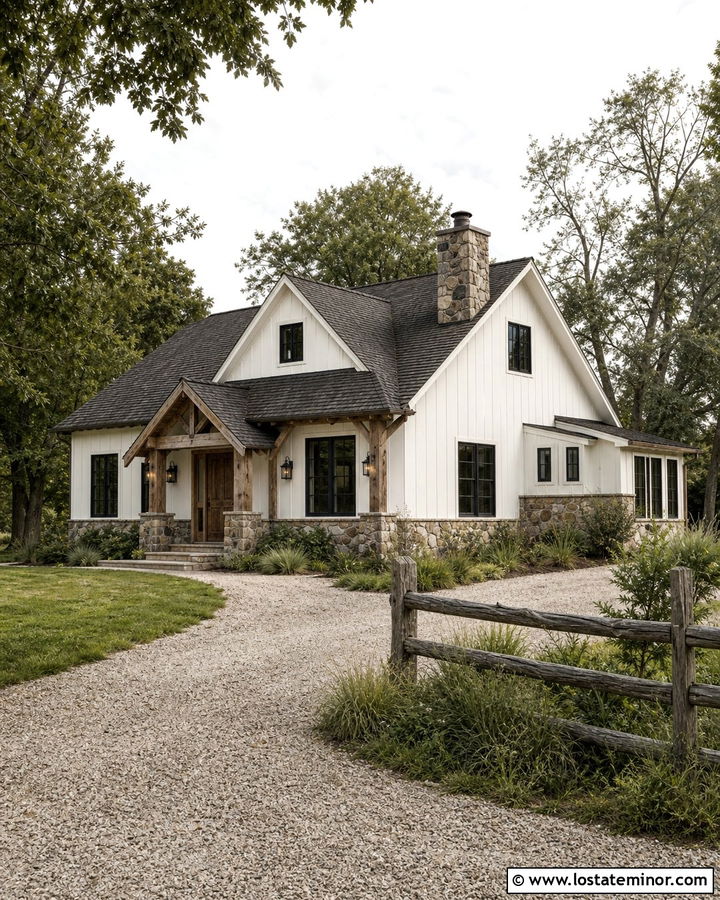
Rustic accents give warm white siding an inviting, handcrafted quality without requiring a fully cabin-like exterior. Paint a country farmhouse Sherwin-Williams Creamy and add reclaimed-look timber beams, porch posts, and a heavy plank front door. Use irregular fieldstone across the foundation and chimney, selecting pieces with brown, gray, and beige variation. A weathered charcoal roof and dark bronze lights provide quiet contrast. Keep window trim and the garage door warm white to prevent the mixed materials from becoming overwhelming. Use the same medium brown stain across all new wood, but allow natural grain differences to remain visible. A gravel driveway, split-rail fence, native grasses, and informal shrubs complete the rural setting. The white body keeps the rough textures bright, balanced, and approachable from the road.
29. Warm White House With Modern Accents
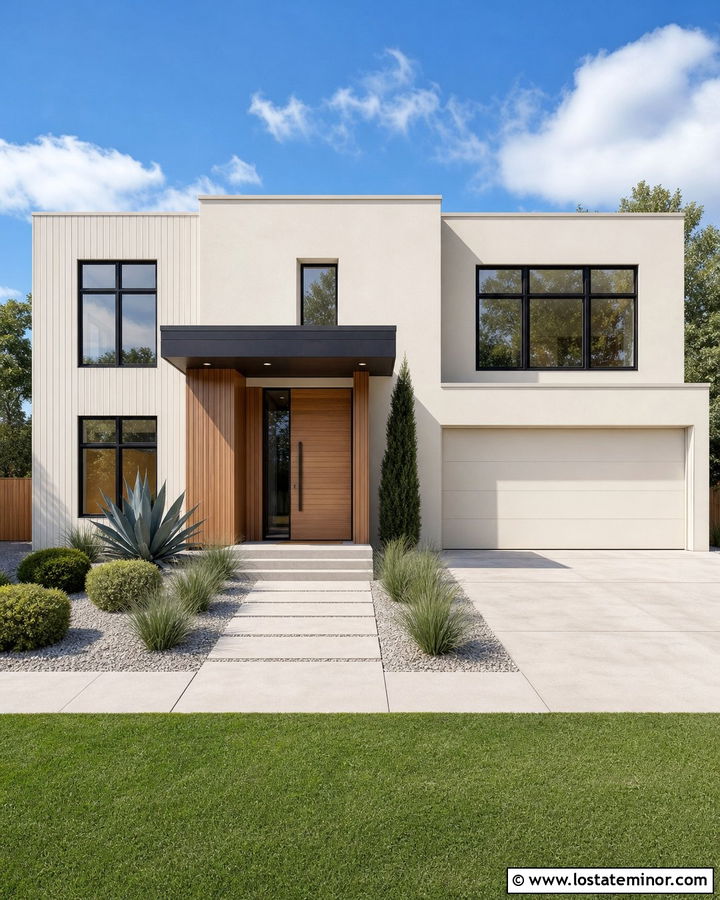
A modern warm white exterior depends on clean proportions, restrained contrast, and purposeful material changes. Use Benjamin Moore Swiss Coffee on smooth stucco and vertical panel siding. Add black-framed windows, a flat charcoal canopy, and narrow wood cladding around the recessed entrance. A wide oak pivot door should match the cladding without disappearing into it. Keep the garage door flush and warm white so it reads as part of the wall. Pale concrete, gravel beds, and linear planting zones reinforce the architecture without making the yard feel bare. Limit the palette to warm white, charcoal, oak, and green landscaping. This creates enough variation for depth while preserving the home’s simple geometry. Concealed gutters and minimal exterior lighting can further support the uncluttered, contemporary curb appeal.
30. Warm White House With Traditional Accents
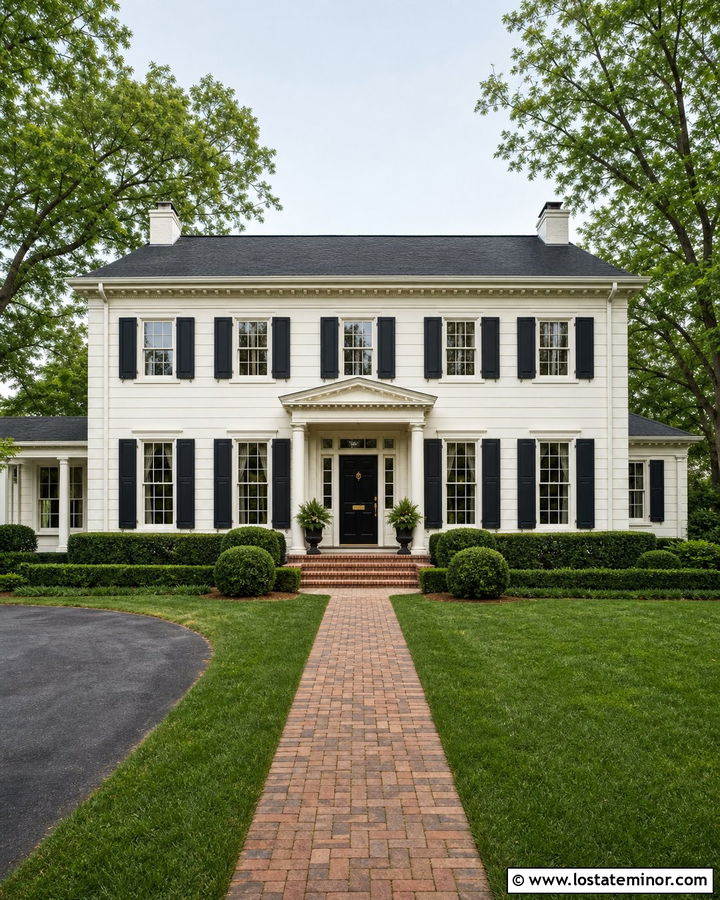
Traditional architecture looks especially welcoming when warm white is paired with dark shutters, brick, and polished metal. Paint a symmetrical Federal-style home Benjamin Moore White Dove, then add deep charcoal shutters and a glossy black front door. Use cream trim on the cornice, window surrounds, and portico columns to keep the facade from appearing stark. Red-brown brick steps, a charcoal roof, and aged brass door hardware supply warmth and familiar texture. Keep the garage or side addition warm white so it remains secondary to the central entrance. Shutters should be appropriately sized and aligned with each window. Frame the house with paired planters, clipped hedges, mature trees, and a straight brick walkway. The completed palette feels established and elegant without relying on colors that may quickly look dated.
Conclusion:
Warm white is more than a safe neutral. It can support sharp black details, earthy stone, traditional brick, colorful doors, weathered metals, and many types of natural wood. The strongest palette starts with the home’s fixed features, including its roofing, masonry, windows, and surrounding landscape. Sample the body color and accents together on several sides of the house, then check them in sun and shade before committing. Keep repeated accents consistent, and let one major feature lead the design. Whether your home is modern, coastal, rustic, or traditional, these **30 Warm White House Design With Accents Ideas** offer practical ways to create a bright exterior with lasting warmth, depth, and curb appeal.

Related posts: