1. Sage Green Board and Batten With White Trim
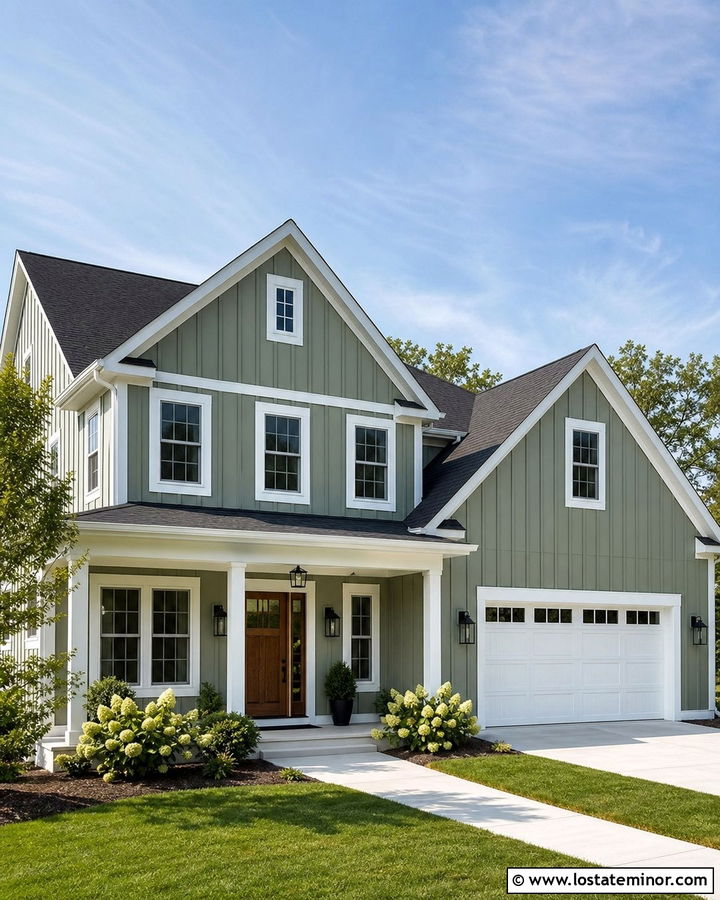
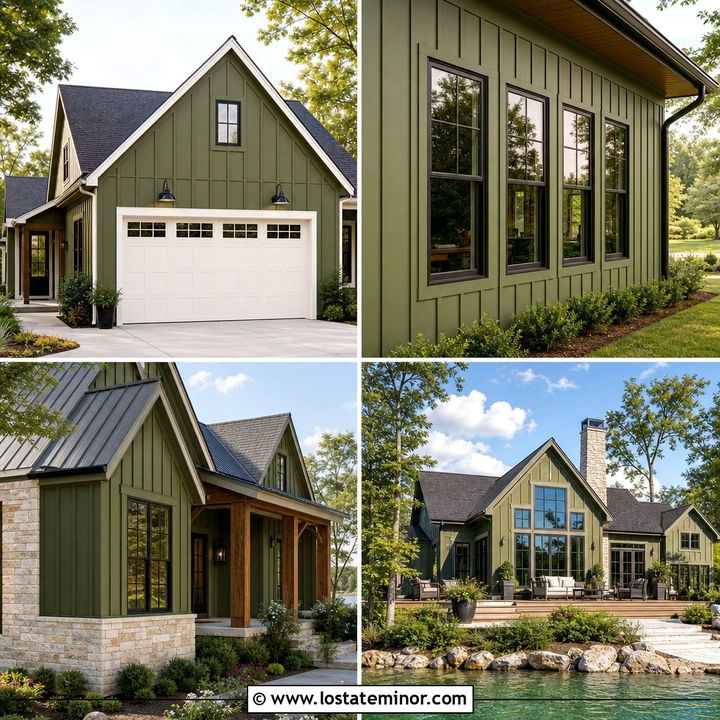
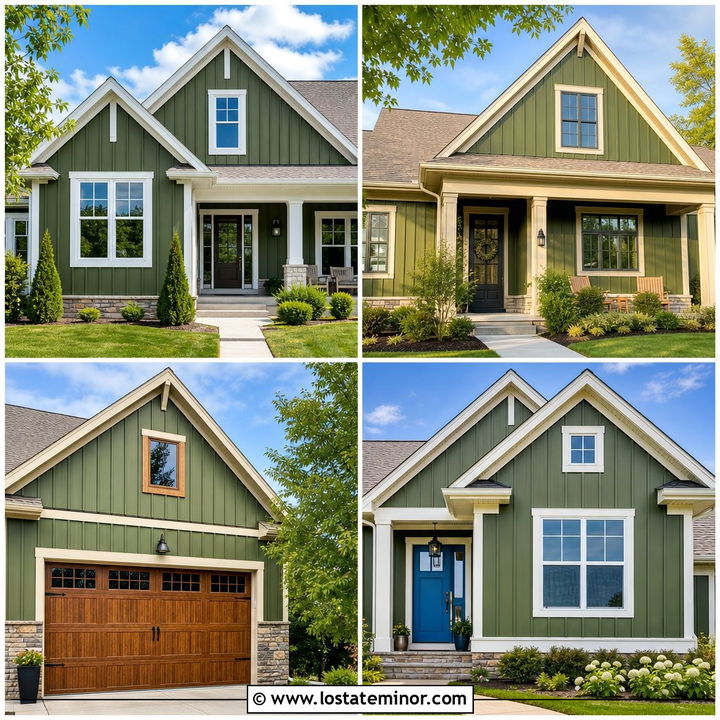
Crisp white trim gives sage green board-and-batten siding a clean, familiar appearance. Use white around the windows, roofline, porch columns, and garage doors to define the architecture without making the facade feel busy. A medium sage works particularly well because it offers enough contrast against the brighter trim. Complete the palette with a charcoal shingle roof, black exterior lights, and a stained wood front door. This combination suits farmhouses, cottages, and traditional suburban homes. Keep landscaping relaxed with hydrangeas, ornamental grasses, and low evergreen shrubs. Before selecting the final colors, test large samples beside the roof and masonry. Bright sunlight can make sage appear lighter, while shaded walls may reveal more of its gray undertone.
2. Sage Green Board and Batten With Black Windows
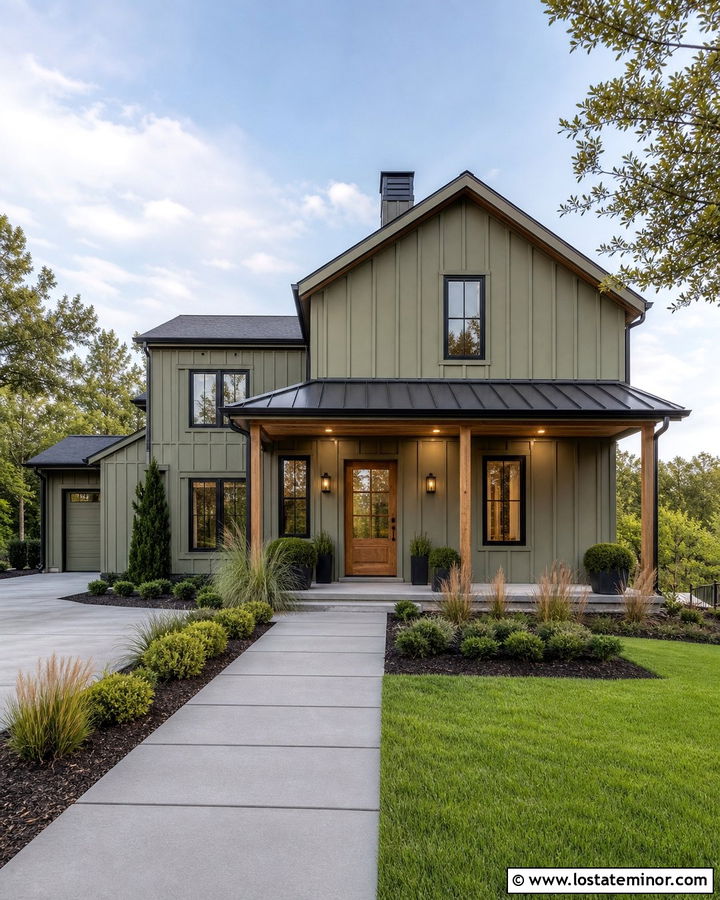
Black windows bring modern definition to a sage green board-and-batten exterior. Their slim, dark frames create strong contrast without requiring decorative shutters. Continue the black on the gutters, porch lights, and metal roof accents so the windows look connected to the full design. Warm white fascia can soften the transition between the green siding and dark roof. For the entrance, consider a natural oak or cedar door instead of another black surface. This adds warmth and keeps the house from looking too cool. The scheme is especially effective on a modern farmhouse with simple gables and an uncluttered porch. Choose restrained landscaping with structured shrubs, flowering perennials, and a straight concrete walkway to reinforce the home’s clean architectural lines.
3. Sage Green Board and Batten With Cedar Accents
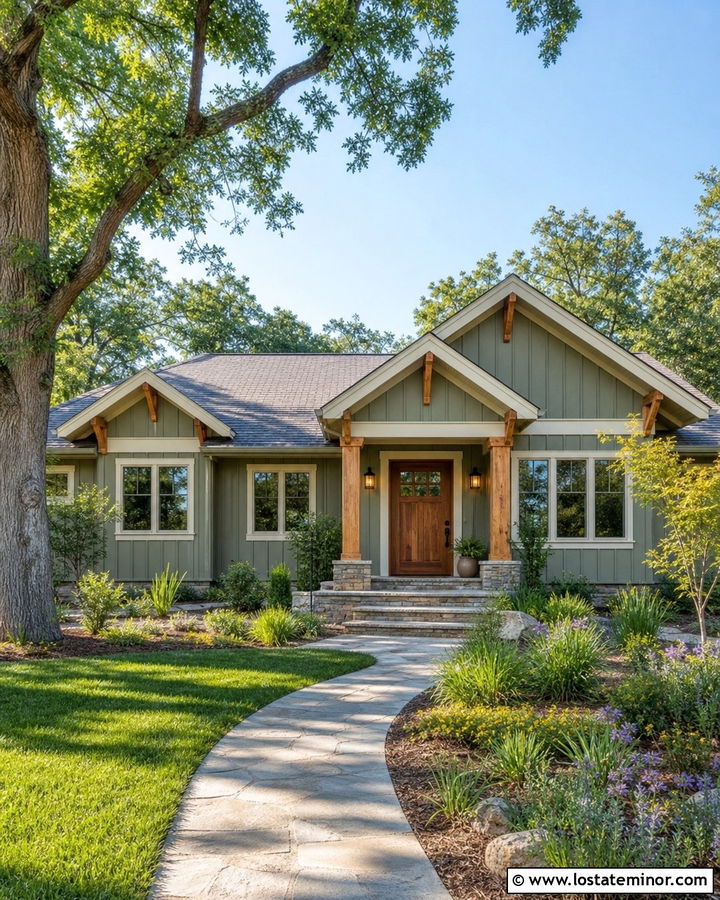
Warm cedar creates an organic contrast against muted sage green siding. Add it to the porch posts, front door, gable brackets, garage doors, or exposed beams, but avoid placing unfinished wood on every surface. A few substantial accents usually look more intentional than many small details. Cream trim and bronze hardware complement cedar’s golden-brown coloring, while a weathered gray roof keeps the overall palette grounded. This complete exterior works beautifully on Craftsman homes, ranch houses, and woodland retreats. Use a semitransparent stain that protects the grain while allowing its natural variation to remain visible. Because cedar gradually changes outdoors, plan for routine maintenance or select a finish that lets it weather evenly. Stone steps and native planting complete the nature-inspired appearance.
4. Sage Green Board and Batten With Stone Siding
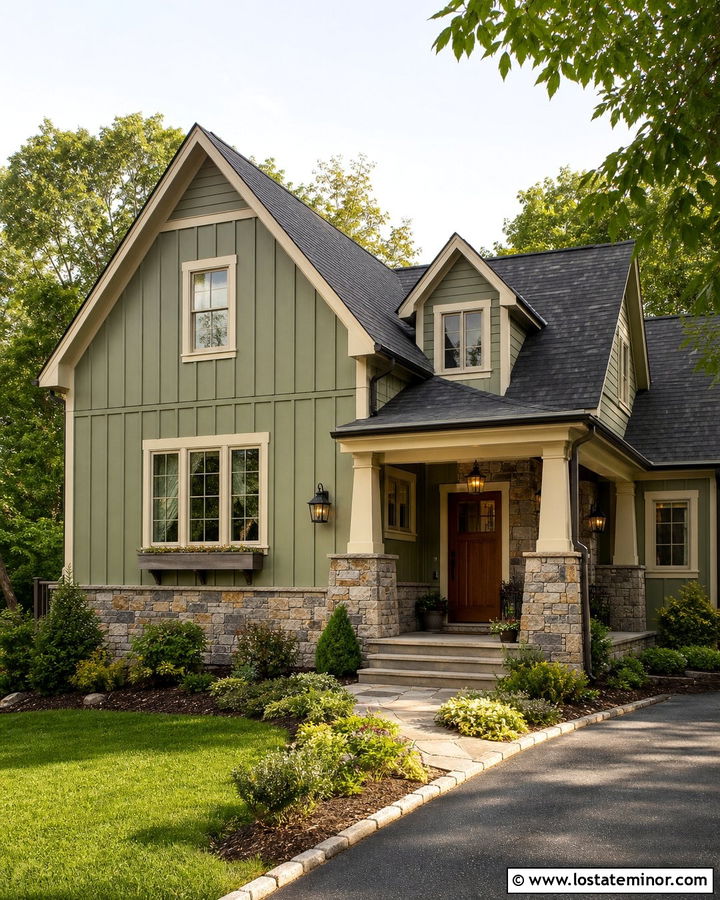
A stone base gives sage green board-and-batten siding visual weight and helps a tall facade feel connected to the ground. Select stone containing warm gray, taupe, cream, or muted brown rather than highly contrasting orange tones. Those softer colors echo the understated quality of sage. Run the stone across the foundation, porch columns, or garage wing to make it feel architectural instead of decorative. Creamy trim, bronze lights, and a medium-brown front door can pull the materials together. This pairing is especially suitable for Craftsman, mountain, and transitional homes. Match the mortar color to the stone’s quieter undertones for a cohesive result. Repeating similar rock in the walkway or landscape edging helps the entire property look planned as one complete exterior composition.
5. Sage Green Board and Batten With Red Brick
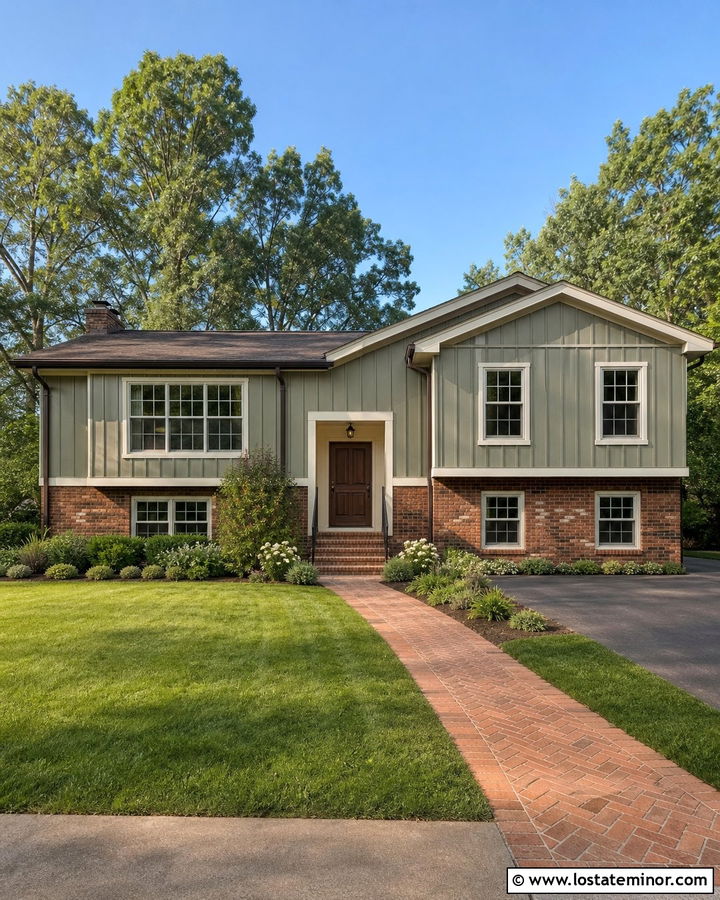
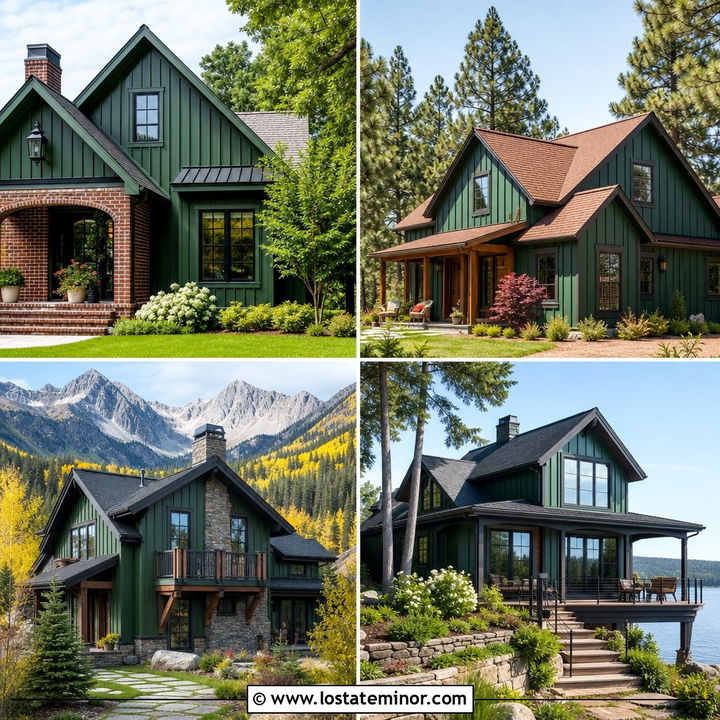
Existing red brick does not prevent you from using sage green board-and-batten siding. The muted green can actually balance the brick’s warmth when its undertone is selected carefully. Look for a slightly gray or olive sage rather than a cool mint color. Use the green on upper gables, additions, or previously sided areas while keeping the original brick visible below. Soft ivory trim provides a gentler bridge than stark white. A walnut-colored door, dark bronze gutters, and a brown-black roof will further unify the materials. This approach is useful for split-level homes, brick ranch renovations, and traditional two-story houses. Clean the brick before comparing paint samples because dirt and fading can change how its permanent color appears beside the proposed siding.
6. Sage Green Board and Batten Modern Farmhouse
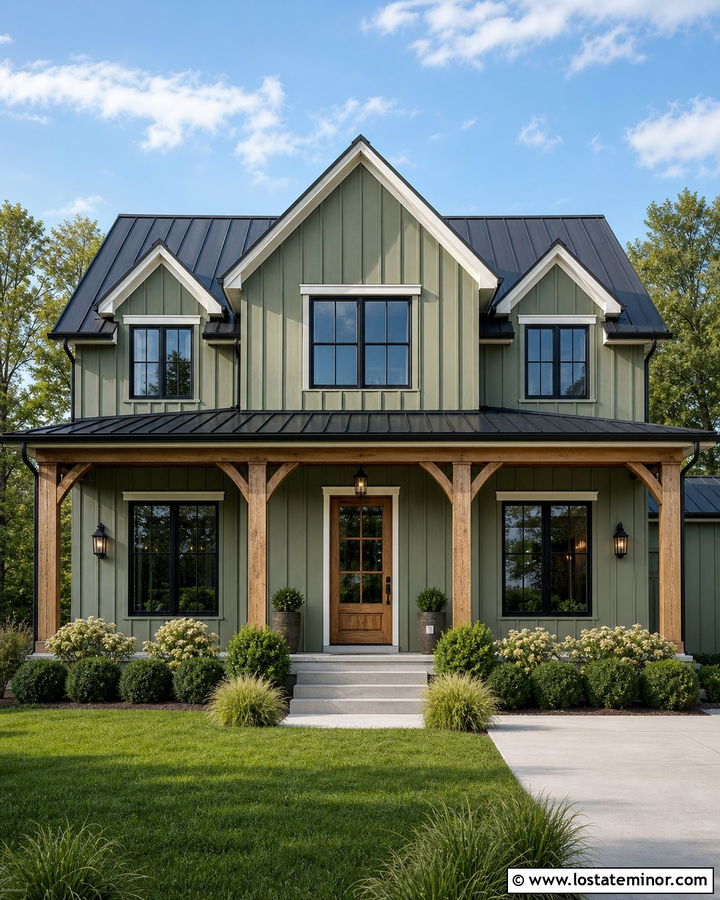
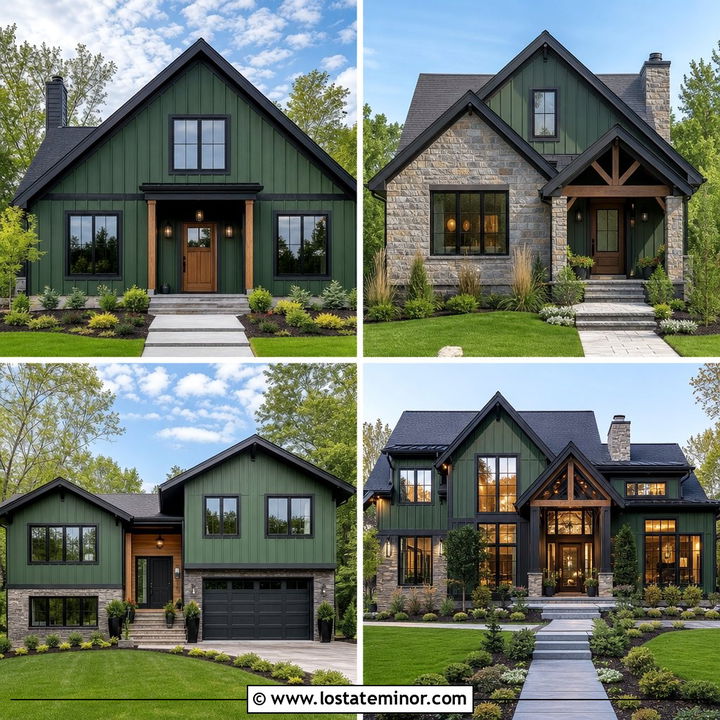
Sage green offers a softer alternative to the white exterior commonly used on modern farmhouses. Cover the primary facade with vertical board-and-batten siding, then add black windows and a charcoal standing-seam metal roof. Warm wood porch beams and a matching front door prevent the palette from feeling severe. Use off-white on the fascia and soffits if you want the roofline to appear lighter. A simple concrete porch, broad steps, and oversized black lights support the farmhouse character without adding unnecessary decoration. Maintain visual balance by keeping the batten spacing consistent across gables and wall sections. This full-house scheme feels current but remains connected to traditional rural architecture. Informal grasses, clipped shrubs, and young shade trees provide an equally relaxed landscape setting.
7. Sage Green Board and Batten Ranch House
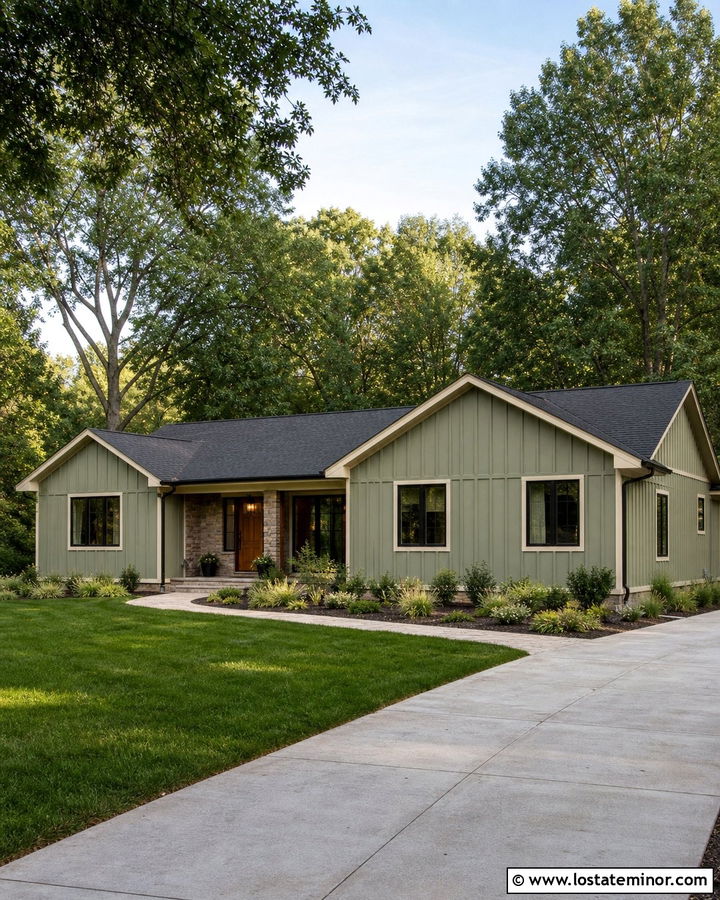
Long ranch homes benefit from the vertical rhythm of board-and-batten siding. The battens visually lift the low facade and make a simple roofline appear more architectural. Choose a light or medium sage that keeps the broad exterior from looking heavy. Cream trim, dark bronze gutters, and a warm wood door create an approachable palette. You can also add thin stone veneer around the entry to establish a clear focal point. If the garage occupies much of the front elevation, paint its door sage green so it blends into the siding. Reserve contrasting wood for the entrance instead. Foundation shrubs should remain low enough to expose the vertical siding. A curved walkway and layered planting beds can soften the home’s horizontal footprint while improving curb appeal.
8. Sage Green Board and Batten Craftsman House
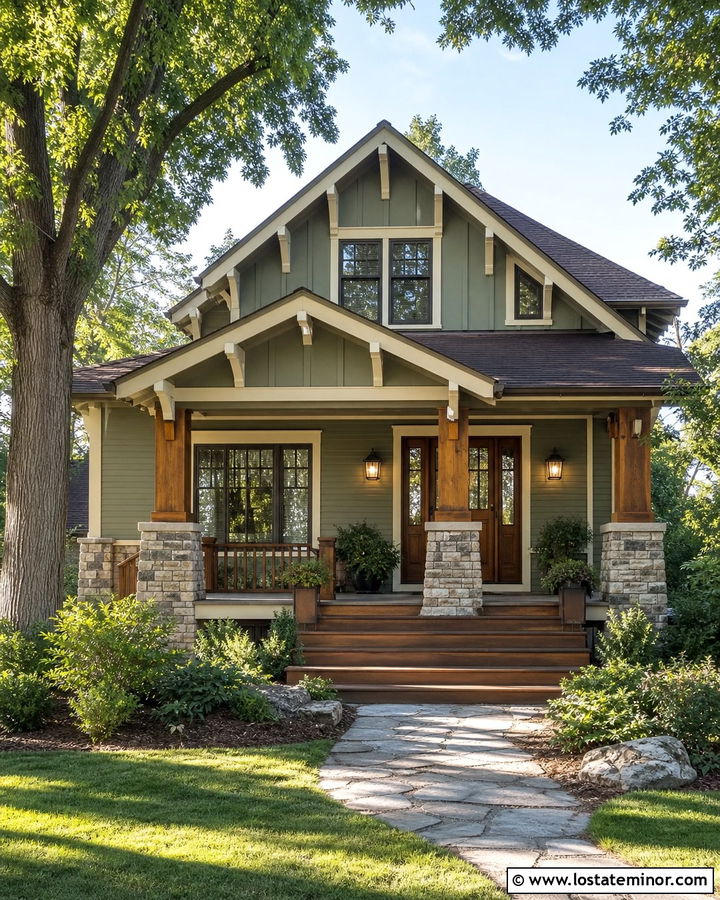
A Craftsman home already contains strong materials and handcrafted details, making sage green a natural fit. Apply board-and-batten siding to the gables or entire facade, then pair it with tapered stone columns and substantial stained wood porch posts. Cream trim highlights deep eaves, window groupings, and exposed rafter tails without looking overly bright. A dark brown shingle roof and aged bronze lights complete the earthy palette. Keep the front door simple, with rich wood grain and a few glass panels. If the house includes horizontal lap siding, use it on the lower story in the same sage for subtle texture rather than a new color. Wide porch steps, native shrubs, and a stone-edged walkway reinforce the grounded, welcoming quality associated with Craftsman architecture.
9. Sage Green Board and Batten Cottage House
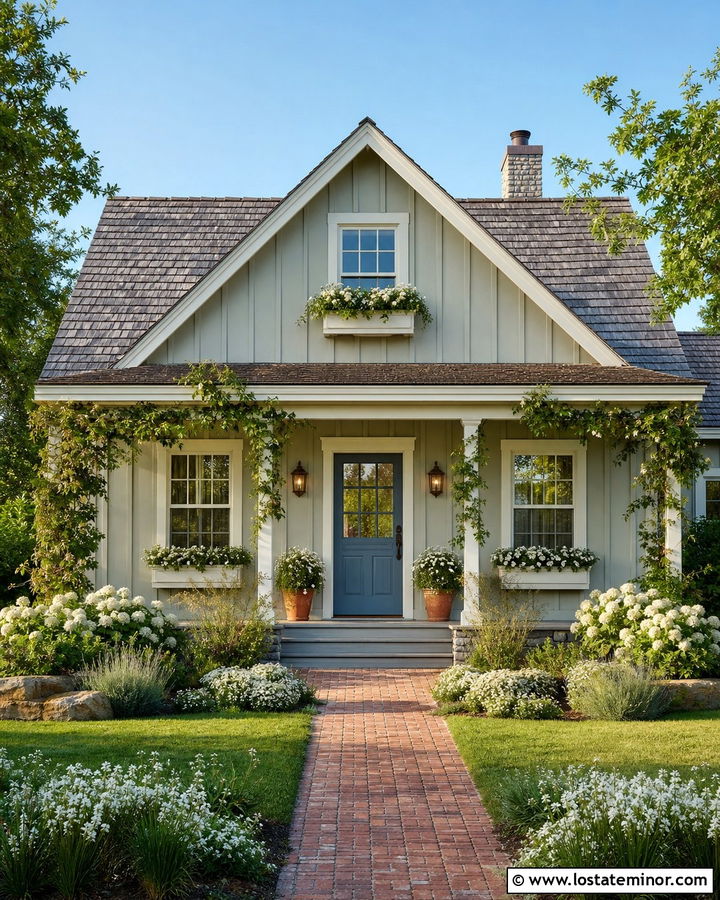
Picture a small cottage surrounded by flowers, with soft sage green siding rising behind a welcoming front porch. Board-and-batten construction gives the modest facade texture without requiring complicated ornament. Pair the green with creamy white trim, a weathered gray roof, and a medium blue or natural wood front door. Simple window boxes can repeat the trim color while seasonal flowers bring controlled color to the exterior. A brick walkway, climbing plants, and loosely layered garden beds support the cottage character. Avoid excessive black accents, which may feel too sharp against the gentle palette. Instead, choose aged bronze lights and muted metal hardware. Keeping the roof, trim, door, and landscaping slightly softened creates a charming house that feels established rather than newly decorated.
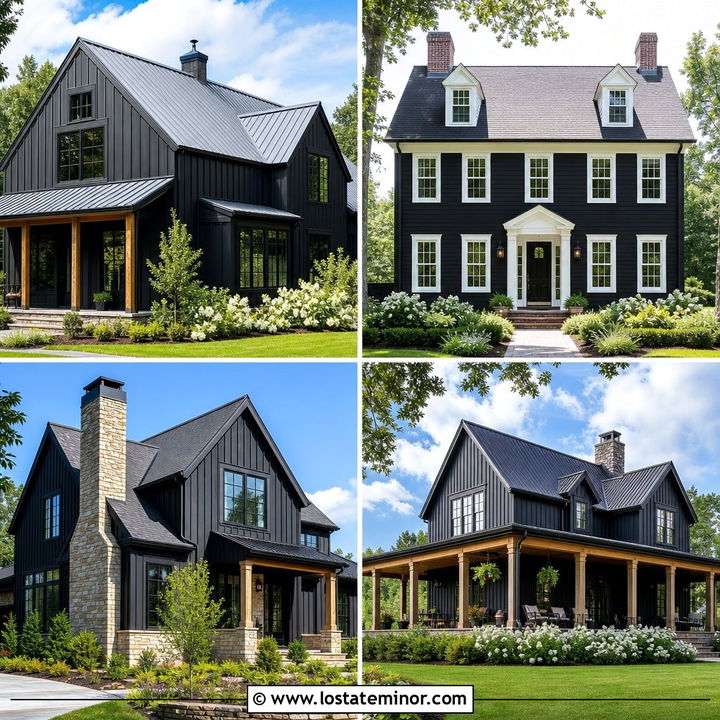
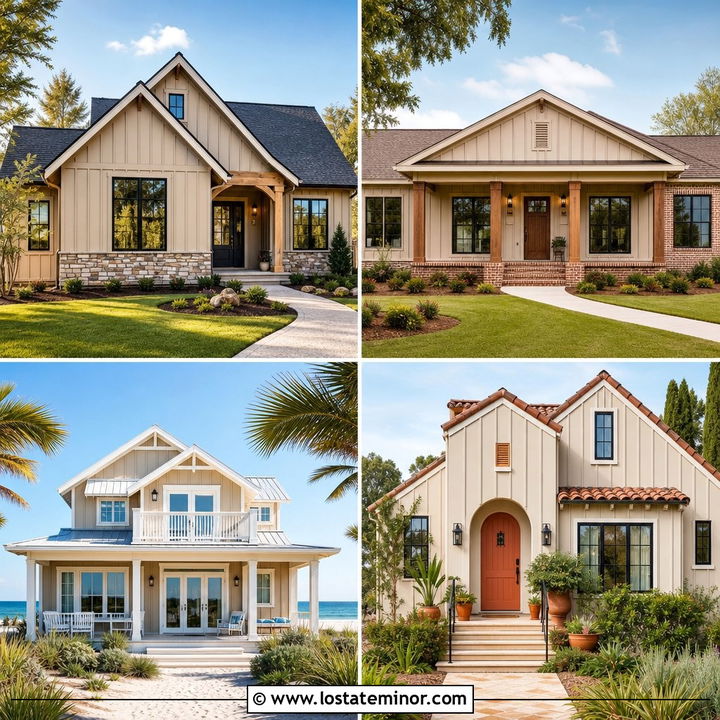
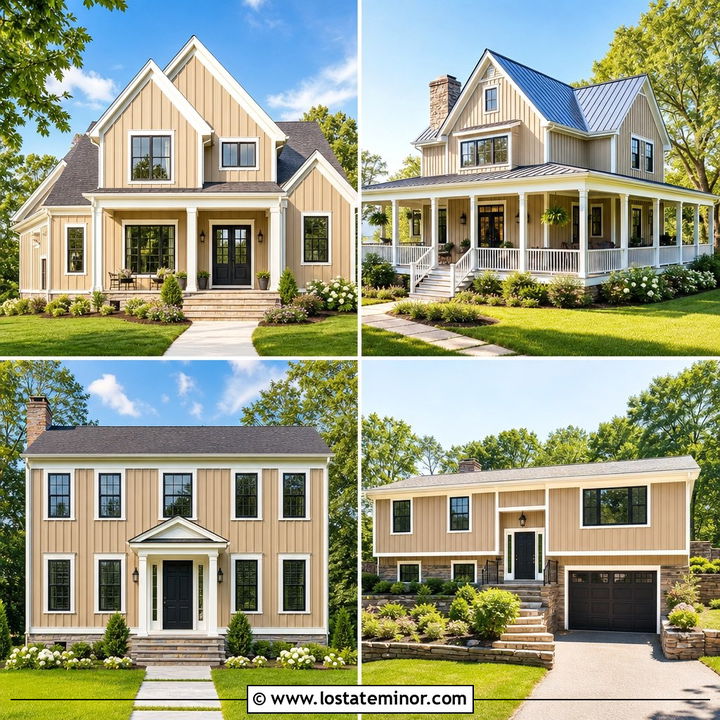
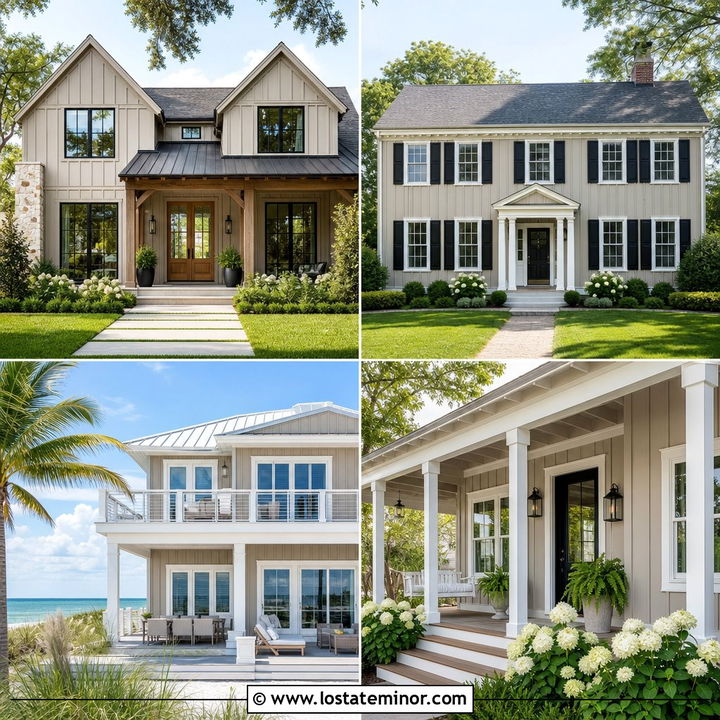
10. Sage Green Board and Batten Colonial House
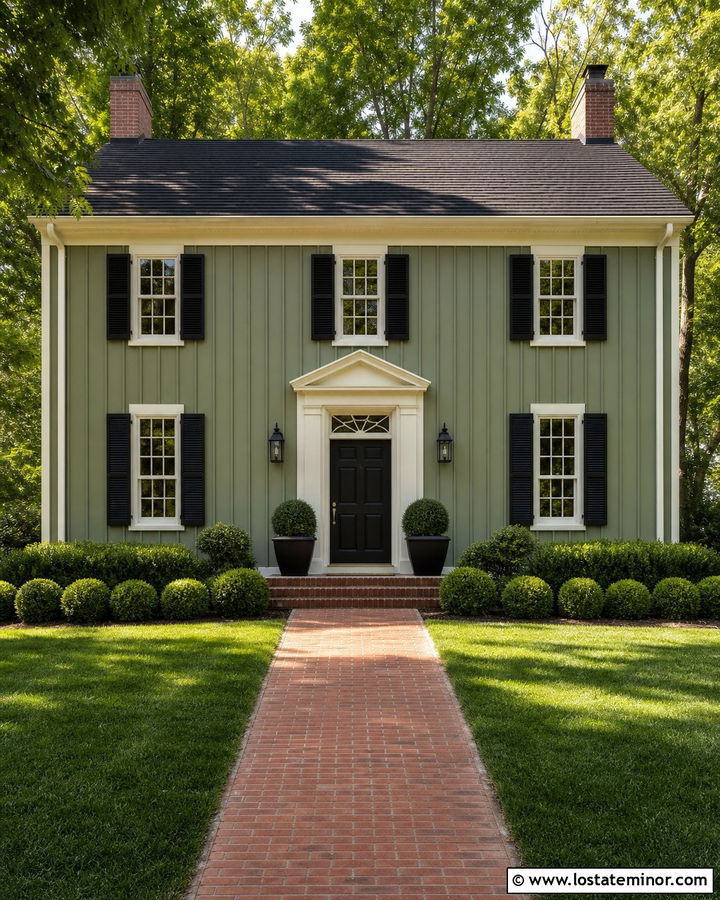
Can board-and-batten siding work on a Colonial home? It can when symmetry remains the focus. Use sage green vertical siding across the facade and frame evenly spaced windows with substantial off-white trim. A centered black or deep burgundy front door creates a traditional focal point, while matching lanterns reinforce the balanced arrangement. Keep shutters limited to windows that are properly sized to accommodate them. Charcoal roofing and white gutters maintain a classic outline without drawing attention away from the architecture. On a two-story facade, consistent batten spacing is essential because irregular lines become more noticeable. Formal boxwood beds, a straight brick walkway, and matching planters beside the entrance complete the orderly composition while allowing the unexpected siding texture to feel polished and appropriate.
11. Sage Green Board and Batten Cape Cod House
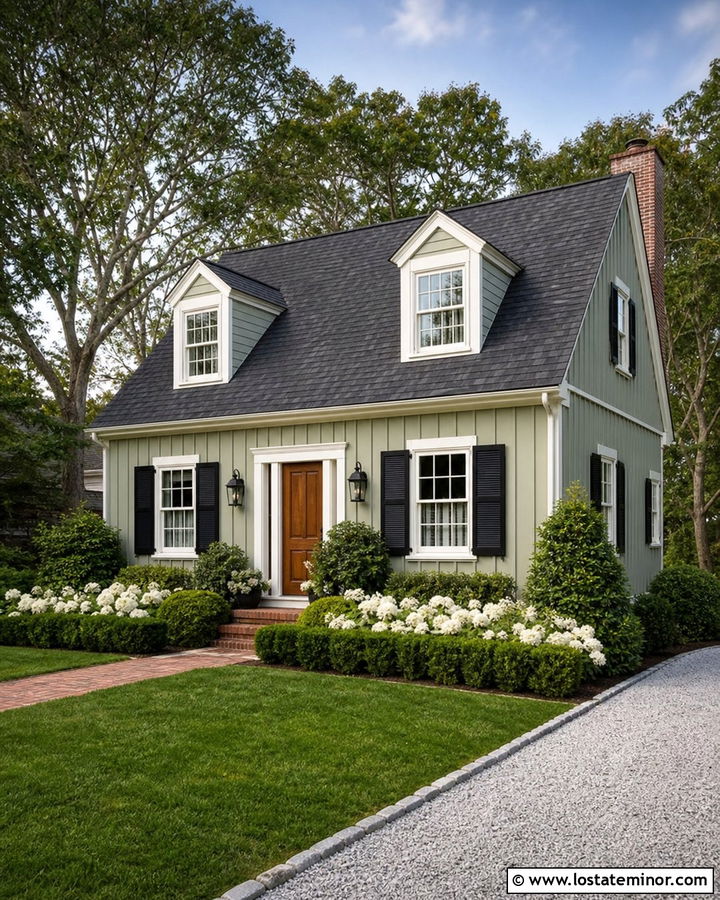
A Cape Cod house looks refreshed in pale sage green board-and-batten siding. The gentle color complements its compact proportions, steep roof, central entrance, and simple dormer windows. Use warm white trim around the dormers and eaves to preserve traditional definition. Black shutters can add contrast, but they should be wide enough to look functional. Complete the palette with a charcoal roof, a medium-stained wood door, and weathered brass hardware. If the facade is small, keep the siding color consistent across the main walls and dormers rather than creating multiple contrasting zones. A crushed-stone driveway, brick path, clipped hedges, and white flowering shrubs establish a classic coastal setting. The result feels familiar and welcoming while the vertical siding introduces a subtle modern update.
12. Sage Green Board and Batten Bungalow
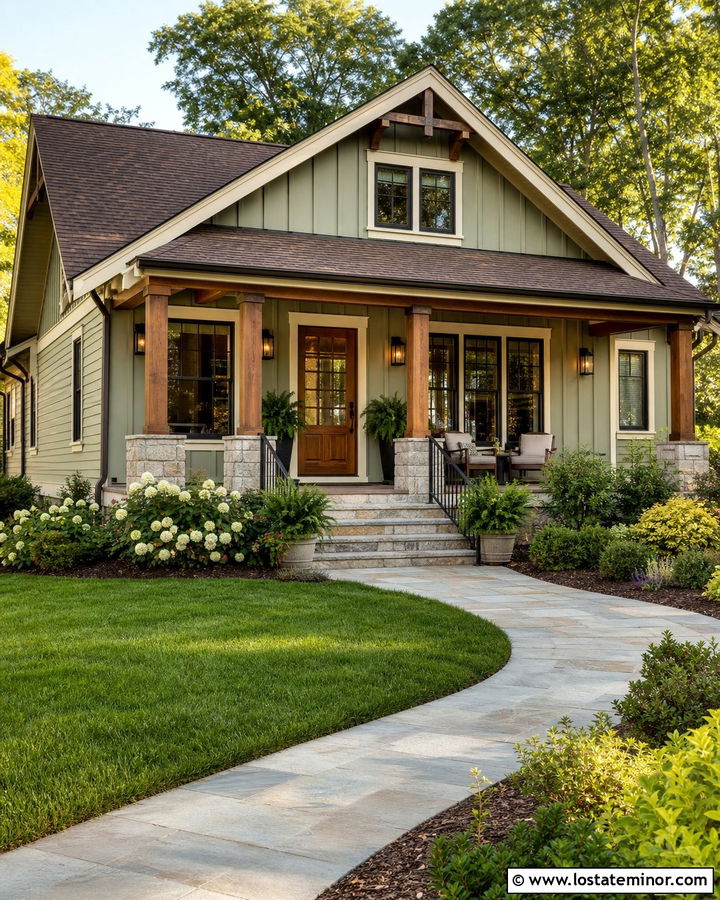
A sage green bungalow can feel cozy without appearing dark or visually crowded. Select a medium-light shade for the board-and-batten siding, then use creamy trim to emphasize the porch roof, windows, and exposed structural details. Natural cedar columns and a craftsman-style door introduce warmth at eye level. A deep brown or charcoal roof anchors the low silhouette. Since bungalows often have prominent porches, repeat the siding color on the porch skirt or foundation panels to create continuity. Stone steps and bronze exterior lights support the handcrafted character. Keep furniture and accessories restrained so the architectural materials remain visible. Layered ferns, flowering shrubs, and a narrow curved walkway will soften the vertical siding and give the compact house a lush, settled appearance.
13. Sage Green Board and Batten Split-Level House
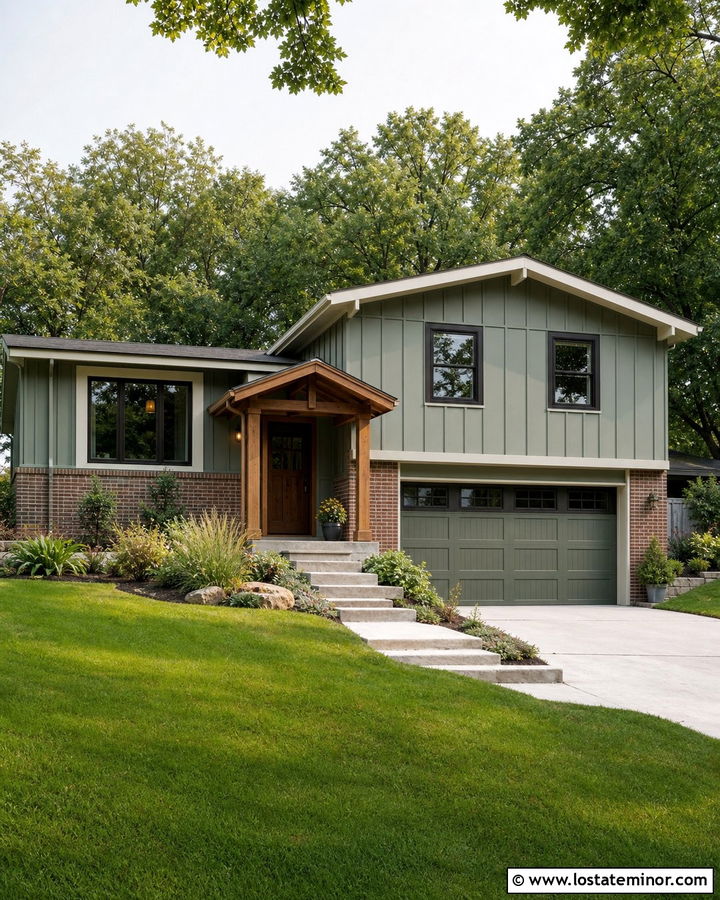
Updating a split-level exterior requires a clear plan for connecting its offset sections. Sage green board-and-batten siding can unify the different heights while adding vertical emphasis. Use the same green across the upper and lower siding areas, then retain existing brick or stone as a warm foundation accent. Paint the trim a soft off-white and repeat dark bronze on the windows, gutters, and lighting. A cedar entry canopy can make the recessed front door more noticeable from the street. Keep the garage door close to the siding color so it does not dominate the uneven facade. Broad planting beds and a stepped walkway can visually connect the home’s levels. This coordinated approach makes the original architecture feel deliberate rather than fragmented or dated.
14. Sage Green Board and Batten With Black Trim
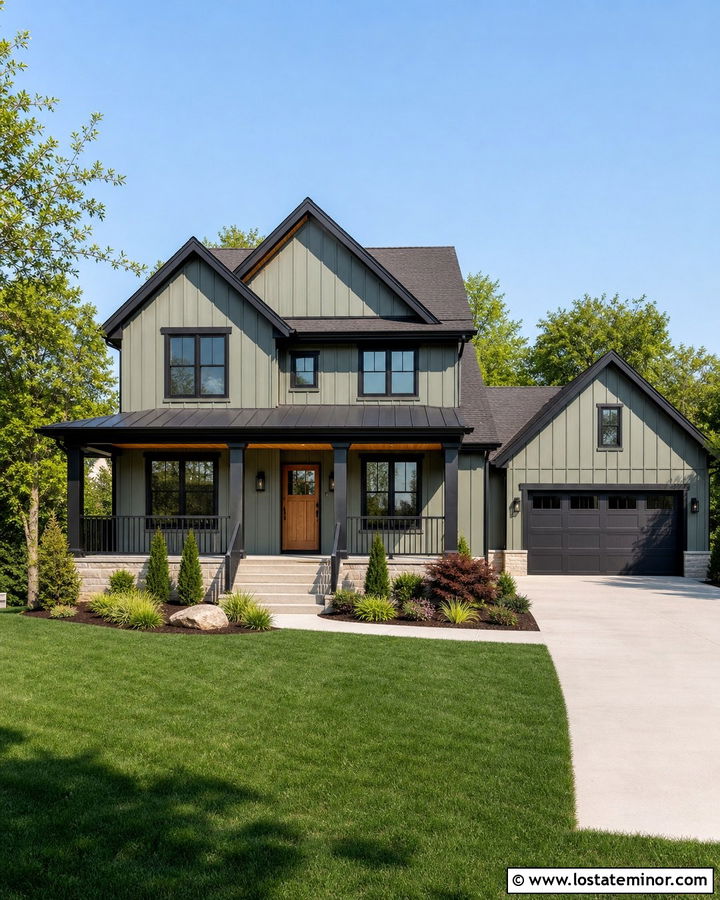
Black trim creates a bold frame around sage green board-and-batten siding. It works best on homes with simple forms, limited decorative detail, and plenty of natural light. Carry black across the fascia, windows, gutters, porch railing, and selected roof sections for a complete exterior scheme. To prevent the result from feeling too dark, bring in a warm cedar door and pale stone around the foundation. A medium sage provides enough body to stand beside black without losing its soft green identity. This combination suits contemporary farmhouses, cabins, and modern gable-front homes. Before committing, compare samples on both shaded and sunny walls. Black absorbs visual attention, so use it consistently and avoid introducing unrelated accent colors that could make the facade look disconnected.
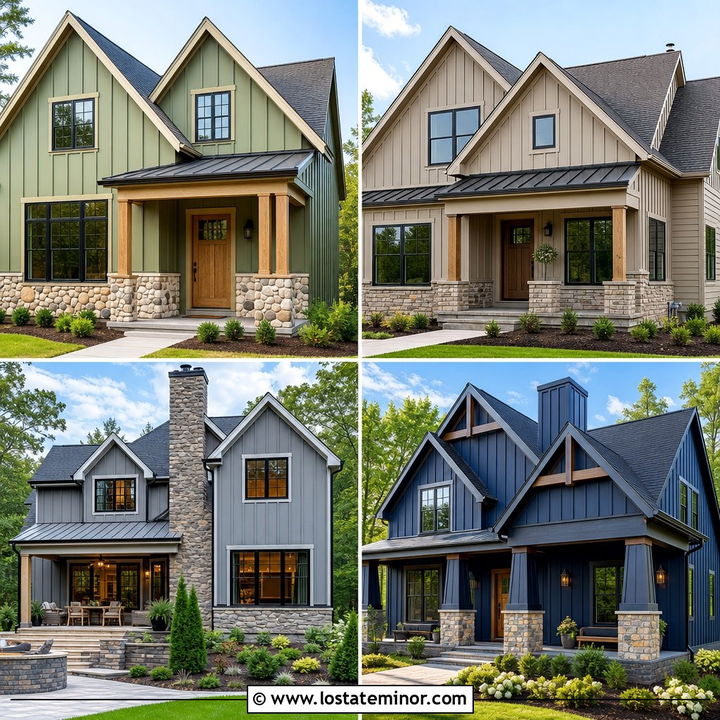
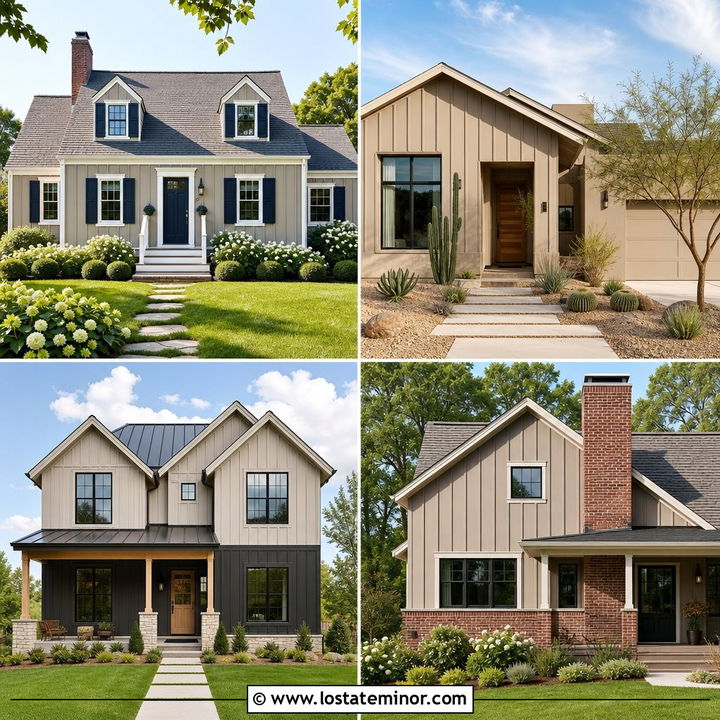
15. Sage Green Board and Batten With Cream Trim
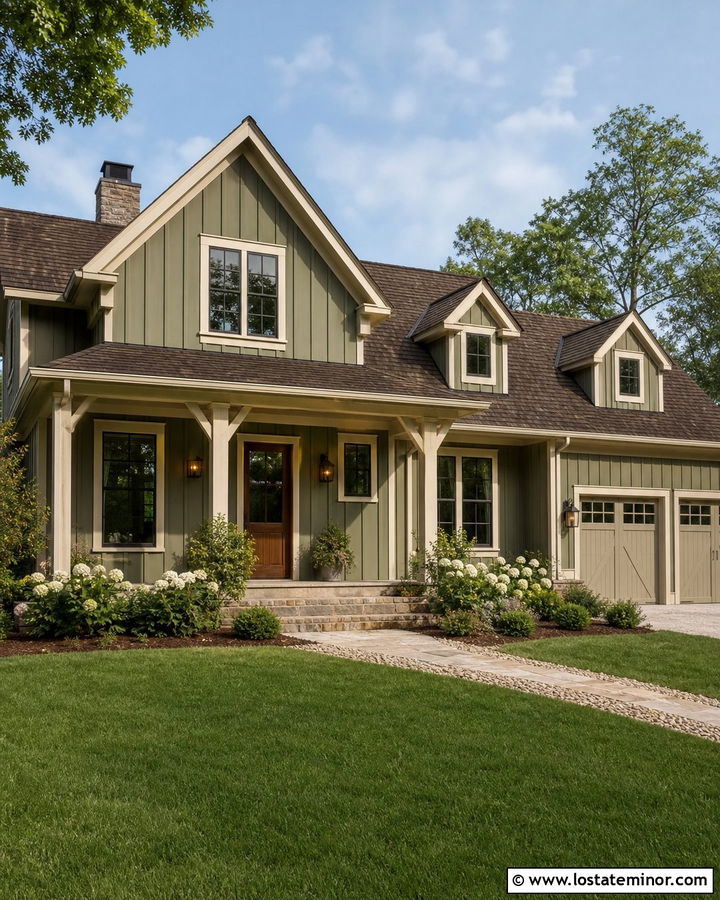
Cream trim produces a warmer, quieter contrast than pure white. It is especially flattering beside an olive-leaning sage green or masonry containing tan and beige. Apply cream to the fascia, window surrounds, porch columns, and garage trim for a continuous outline. A walnut front door, brown roof, and antique bronze lighting reinforce the warm direction of the palette. This complete scheme works well on traditional farmhouses, cottages, and homes in wooded settings. Avoid creams with strong yellow undertones because they may look dated or make the sage appear dull. A lightly warmed neutral is usually enough. Use stone planters, natural mulch, and soft white flowers around the foundation. These finishing details repeat the exterior colors while keeping the landscaping subtle and cohesive.
16. Sage Green Board and Batten With Gray Roof
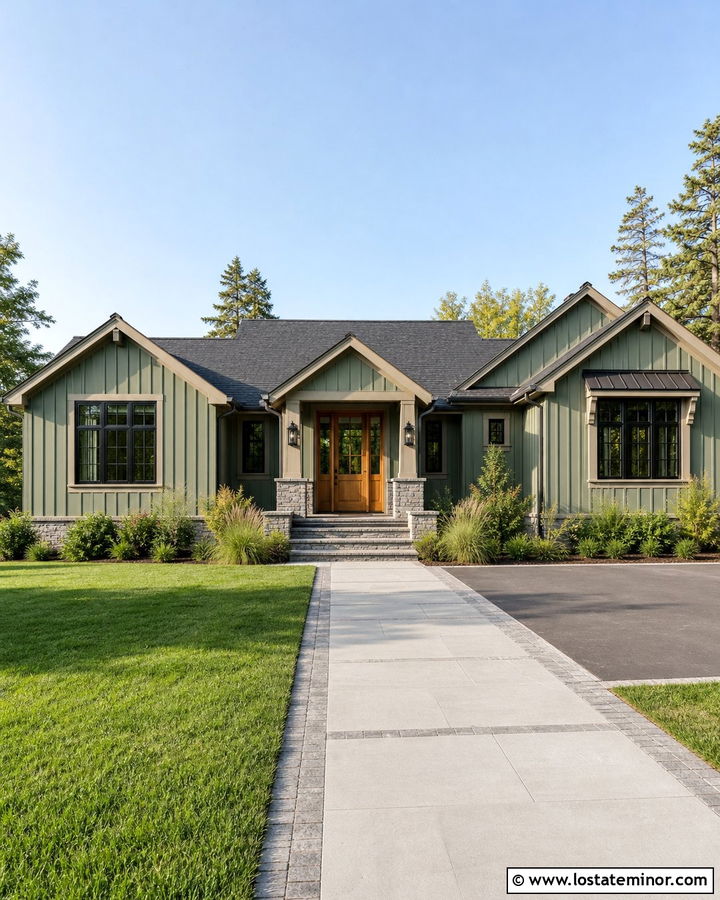
A gray roof provides a neutral foundation for sage green board-and-batten siding. Medium charcoal shingles create clear contrast, while a lighter weathered gray produces a softer coastal effect. Coordinate the roof with gray stone steps, metal gutters, or driveway materials so it feels integrated into the property. White or pale greige trim can brighten the roofline without competing with the green. Add a natural wood front door for warmth and use black only in small amounts on lighting and hardware. This versatile palette suits ranch, farmhouse, Cape Cod, and transitional architecture. Roofs are expensive and long-lasting, so select the sage after evaluating the existing shingle color. View samples outdoors at different times because cool gray roofing can make some greens look bluer than expected.
17. Sage Green Board and Batten With Brown Roof
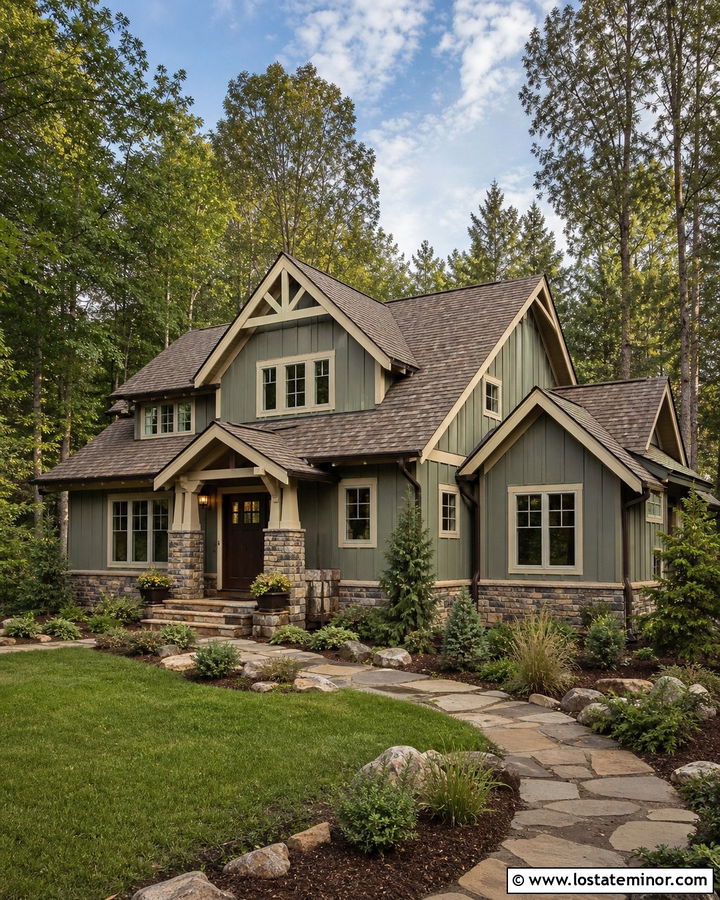
Brown roofing brings out the earthy side of sage green siding. Choose a roof with blended taupe, charcoal, and brown granules rather than a flat reddish tone. These variations connect naturally with vertical board-and-batten panels, cream trim, and stained wood details. A deep bronze front door can provide subtle contrast while remaining within the warm palette. This combination is particularly effective on Craftsman homes, rustic ranches, and cottages surrounded by mature trees. If the house includes stone, select material with similar brown and gray notes to bridge the siding and roof. Copper-toned gutters can also work, although dark bronze is easier to maintain visually. Complete the exterior with natural stone paths and layered evergreens for a grounded, low-contrast curb-appeal design.
18. Sage Green Board and Batten With Metal Roof
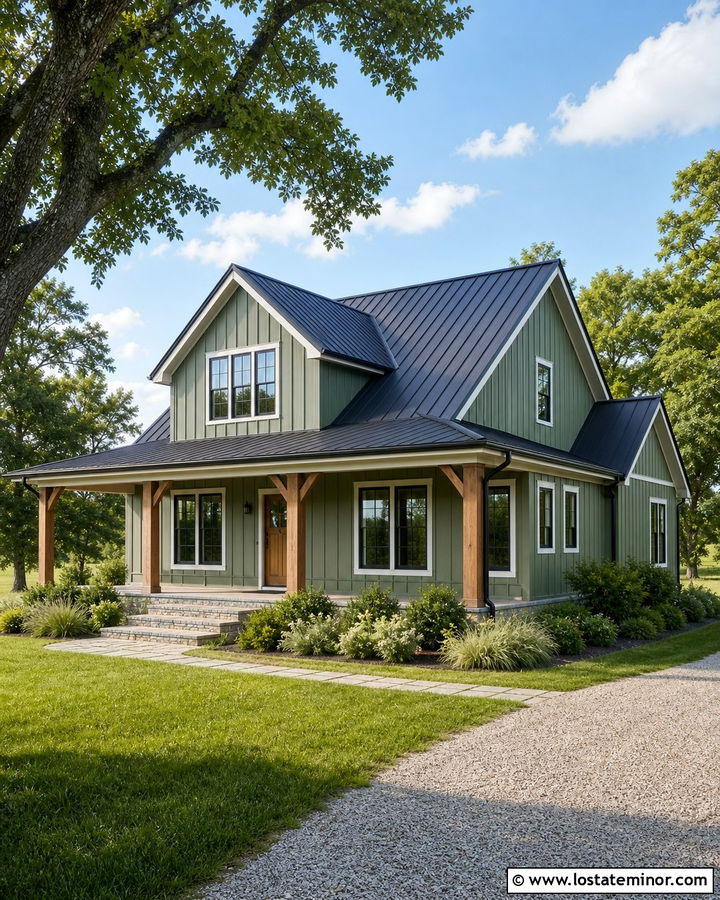
The clean seams of a metal roof pair naturally with the vertical pattern of board-and-batten siding. Use a matte black or charcoal roof over medium sage walls for a modern farmhouse appearance. If you prefer something lighter, weathered silver metal can create a relaxed rural or coastal look. Keep gutters close to the roof color and use warm white trim to separate the metal from the siding. Cedar porch beams, a wood door, and simple stone steps add warmth beneath the crisp roofline. Limit metal roofing to porches or accent gables when a full replacement is outside the budget. Repeating the metal finish on awnings or garage overhangs helps the smaller sections feel intentional and connected to the complete sage green exterior.
19. Sage Green Board and Batten With Wood Garage Doors
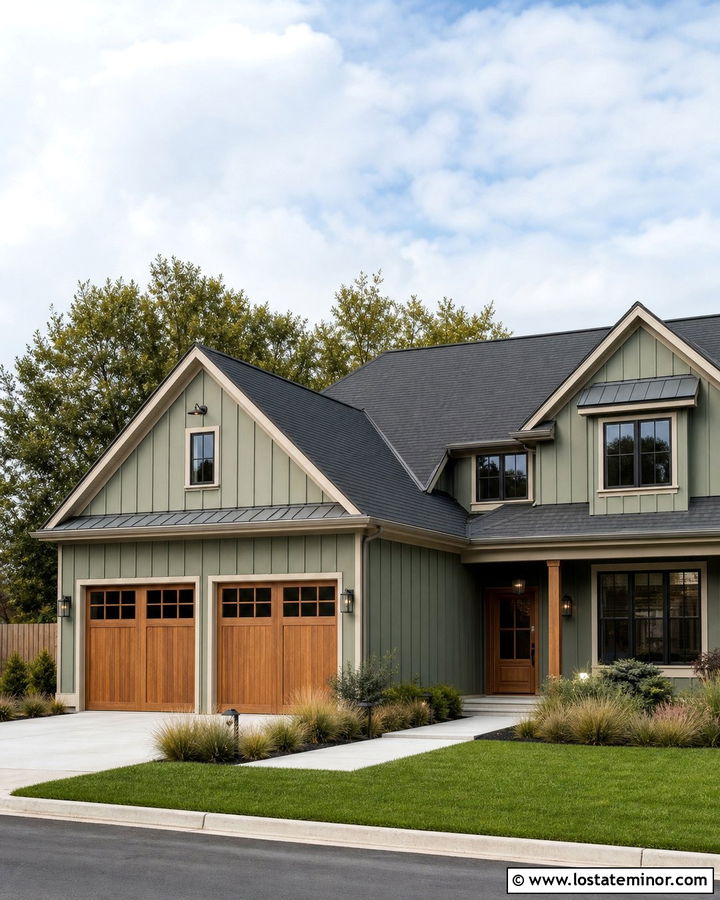
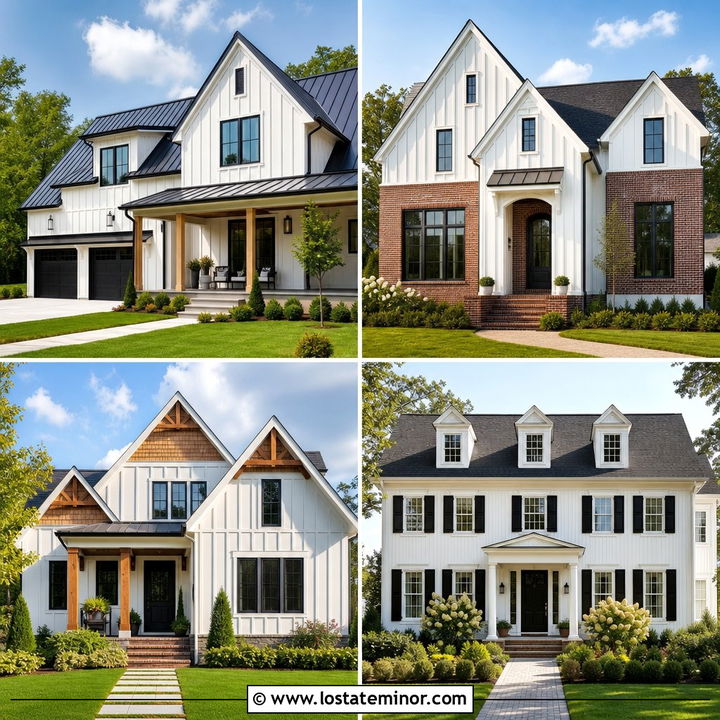
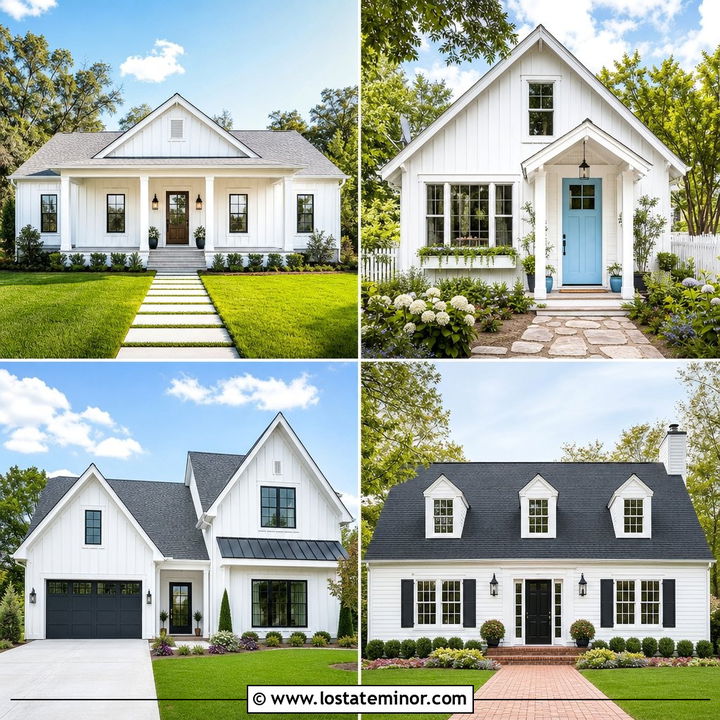
Garage doors cover a large part of many front-facing exteriors, so their finish can shape the entire palette. Warm wood garage doors look rich beside sage green board-and-batten siding and can turn a practical feature into an architectural accent. Match the front door to the same general wood tone, but slight grain variation is acceptable. Use cream trim, charcoal roofing, and dark bronze hardware to connect the colors. Simple plank-style doors usually complement the vertical siding better than highly decorative carriage details. If real wood requires too much upkeep, choose a durable wood-look finish with natural color variation. Frame the driveway with grasses, low shrubs, and a small ornamental tree. This softens the garage area without hiding the carefully coordinated materials.
20. Sage Green Board and Batten With Black Garage Doors
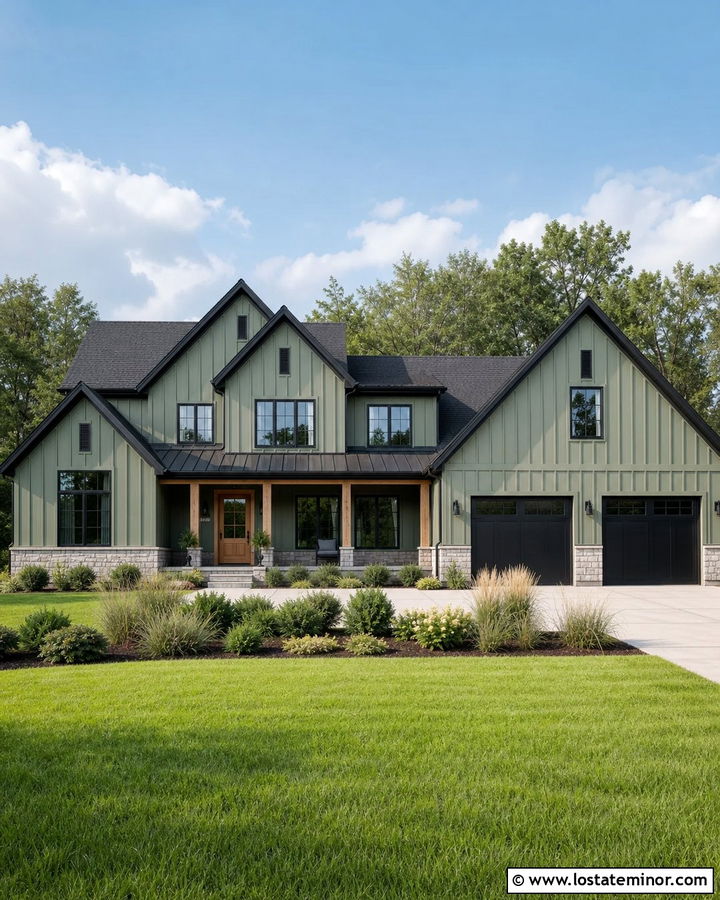
Black garage doors can provide dramatic contrast on a sage green house, especially when the windows and roof are also dark. Use this approach on a broad modern farmhouse or contemporary home where the garage openings are part of a balanced facade. Matte black typically appears more refined than a shiny finish. Repeat the color on window frames, gutters, and exterior lights so the doors do not look like isolated dark blocks. A natural wood front door and light stone foundation introduce warmth. For homes with very large garages, consider sage doors with black trim instead, since solid black may become visually dominant. Keep the driveway pale gray and the planting beds generous to soften the contrast while preserving the home’s clean, modern character.
21. Sage Green Board and Batten With Natural Wood Door
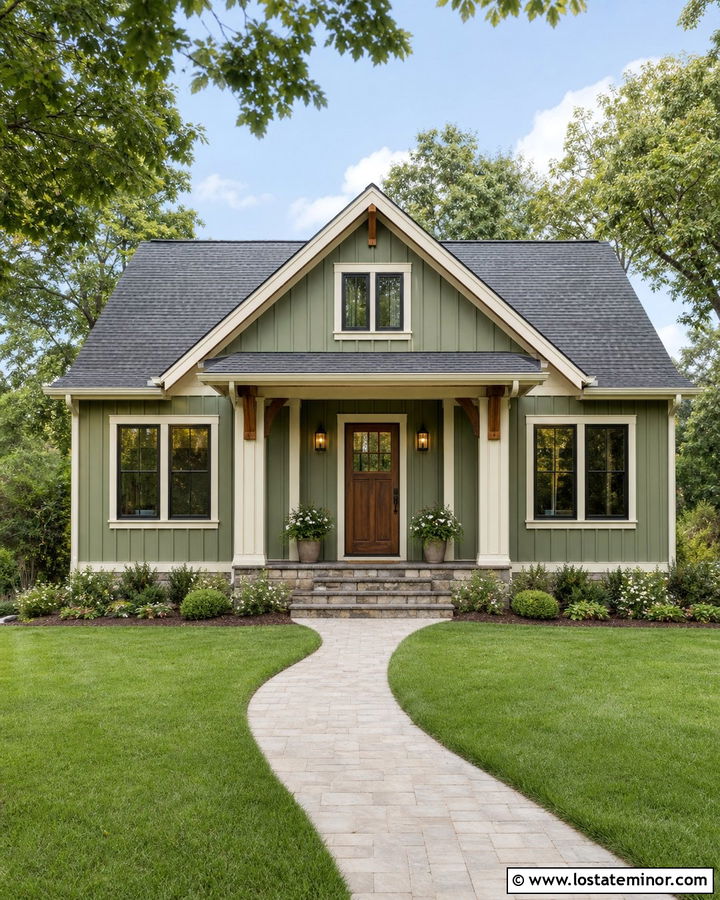
Sometimes one warm detail is enough to complete an exterior. A natural wood front door gives sage green board-and-batten siding a welcoming focal point without introducing another painted color. Choose white oak, cedar, walnut, or a convincing wood-look material based on the home’s architecture. Lighter wood feels casual and modern, while darker walnut creates a more traditional appearance. Repeat the door tone on porch beams, brackets, or a bench, but keep those supporting accents limited. Cream trim, charcoal shingles, and bronze lighting provide a quiet background. Position landscape lighting and low plants so the entrance remains clearly visible from the street. The combination works across cottages, ranch houses, farmhouses, and Craftsman homes because both sage and wood share a naturally grounded quality.
22. Sage Green Board and Batten With Blue Front Door
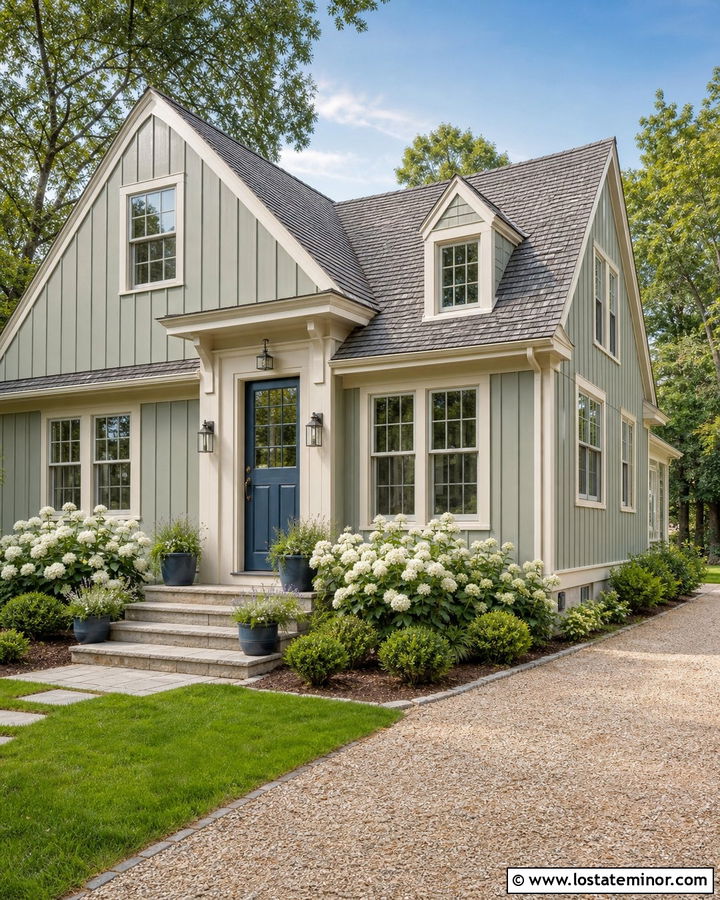
A dusty blue front door creates gentle color contrast without fighting the muted quality of sage green. Look for slate blue, blue-gray, or softened navy rather than a bright primary tone. Surround the door with cream trim and repeat small blue notes in porch planters or flowering plants. A weathered gray roof and brushed nickel or aged bronze hardware can support the cooler palette. This combination feels particularly comfortable on coastal cottages, Cape Cod homes, and small suburban houses. Keep shutters sage or omit them so the door remains the main accent. Always test the green and blue side by side outdoors. Colors that seem separate indoors may appear too similar in shade, while intense sunlight can reveal undertones that were not noticeable on a small sample.
23. Sage Green Board and Batten With Dark Green Door
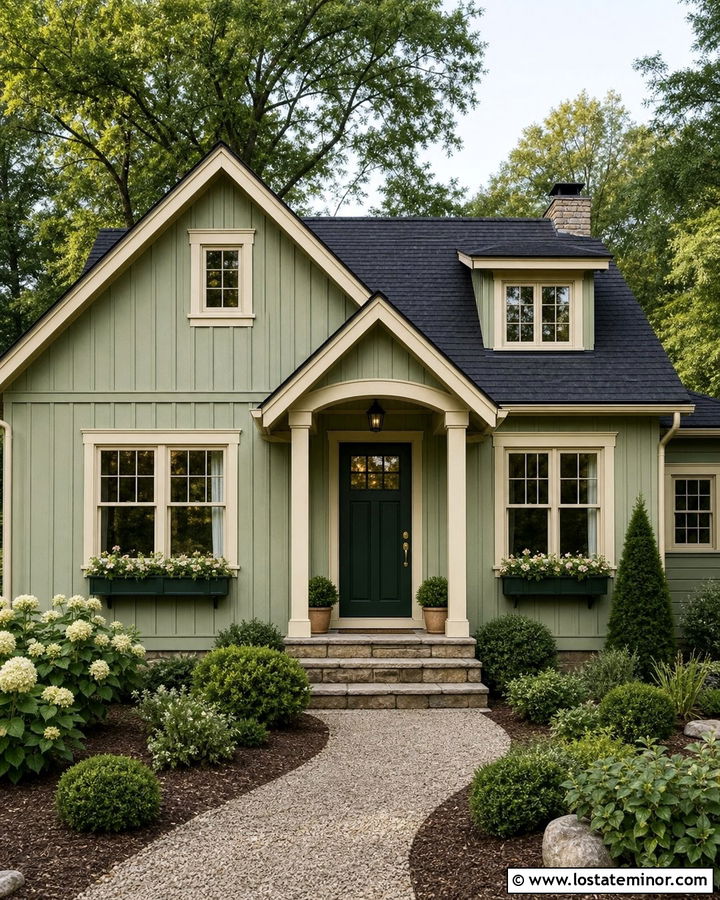
A dark green door creates a sophisticated tonal palette against lighter sage board-and-batten siding. Choose forest, olive, or nearly black green to provide enough distinction around the entrance. Repeat that deeper shade sparingly on window boxes, porch furniture, or shutters. Warm cream trim keeps the two greens from blending together, while brass or bronze hardware adds a small amount of warmth. A brown-black roof and natural stone steps complete the nature-based scheme. This treatment looks especially appropriate on cottages, Colonial homes, and wooded cabins. Keep surrounding plants varied in shape and texture so the landscape does not become one continuous field of green. Pale flowers, gravel paths, and warm mulch can provide necessary separation without disrupting the calm exterior palette.
24. Sage Green Board and Batten With Copper Accents
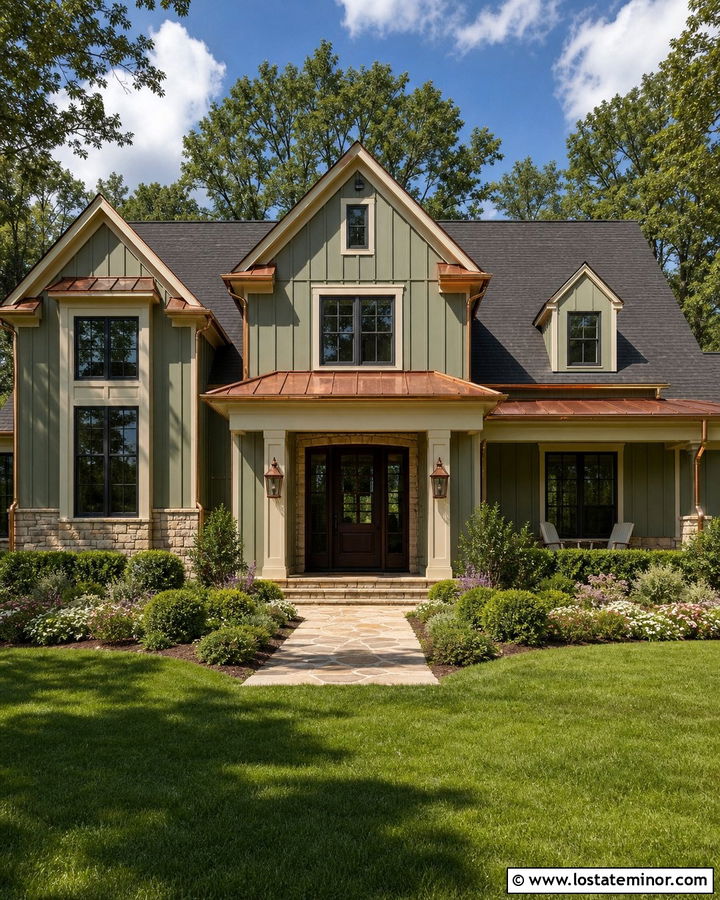
Fresh copper creates a striking glow against sage green, while aged copper develops a patina that blends beautifully with the siding. Use the material on gutters, porch roofs, awnings, light fixtures, or a small bay-window roof. Because copper attracts attention, select only a few visible locations and let them relate to one another. Cream trim, warm stone, and a dark brown front door complete the palette without competing with the metal. This design suits traditional farmhouses, European-inspired cottages, and upscale Craftsman homes. Confirm how the copper will weather before installation, since its color changes naturally over time. If genuine copper exceeds the budget, choose coordinated bronze finishes rather than mixing several imitation coppers. The goal is a complete, controlled exterior rather than excessive metallic decoration.
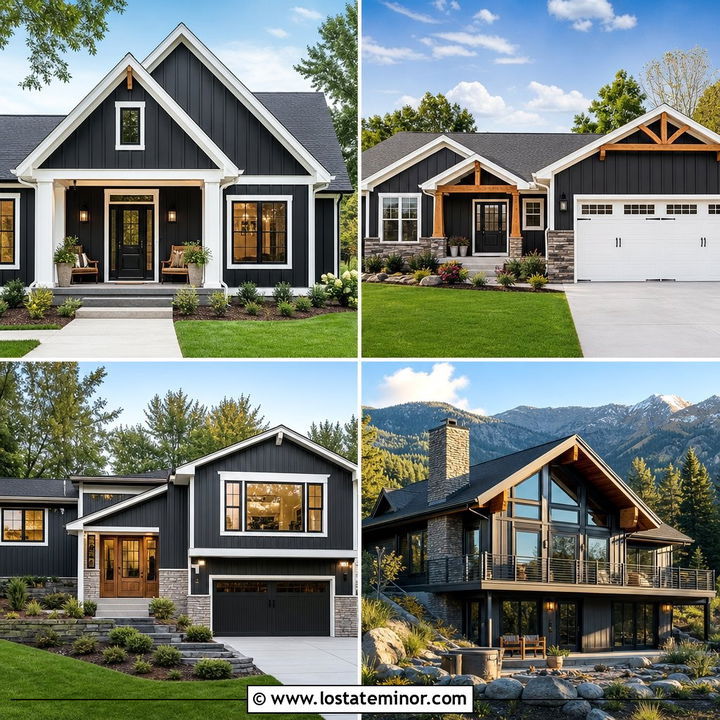
25. Sage Green Board and Batten With Wraparound Porch
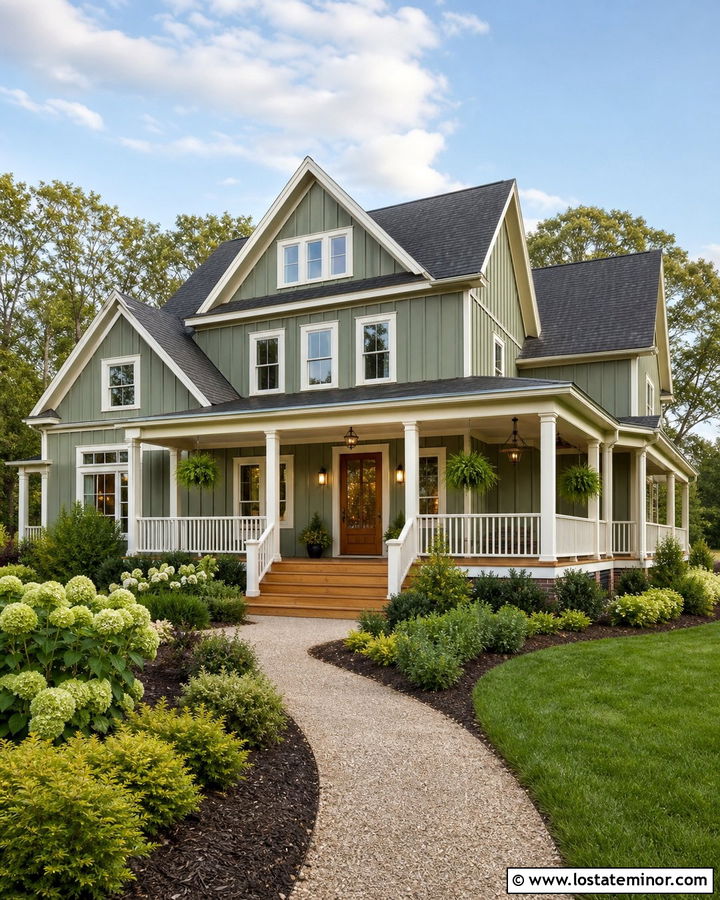
A wraparound porch gives sage green board-and-batten siding room to create a relaxed country appearance. Paint the porch columns and railing warm white so they stand clearly against the green walls. Use a medium wood tone on the floor, front door, and selected ceiling details to add depth beneath the shaded roof. A charcoal or brown shingle roof keeps the large structure grounded. Comfortable furniture should follow the exterior palette rather than introduce many unrelated colors. Black or bronze ceiling fans and lights offer practical contrast. Surround the porch with hydrangeas, ferns, and layered shrubs, leaving enough open space to reveal the architecture. Consistent batten spacing across every visible wall will help the expansive facade feel connected from one side to the other.
26. Sage Green Board and Batten With Brick Porch
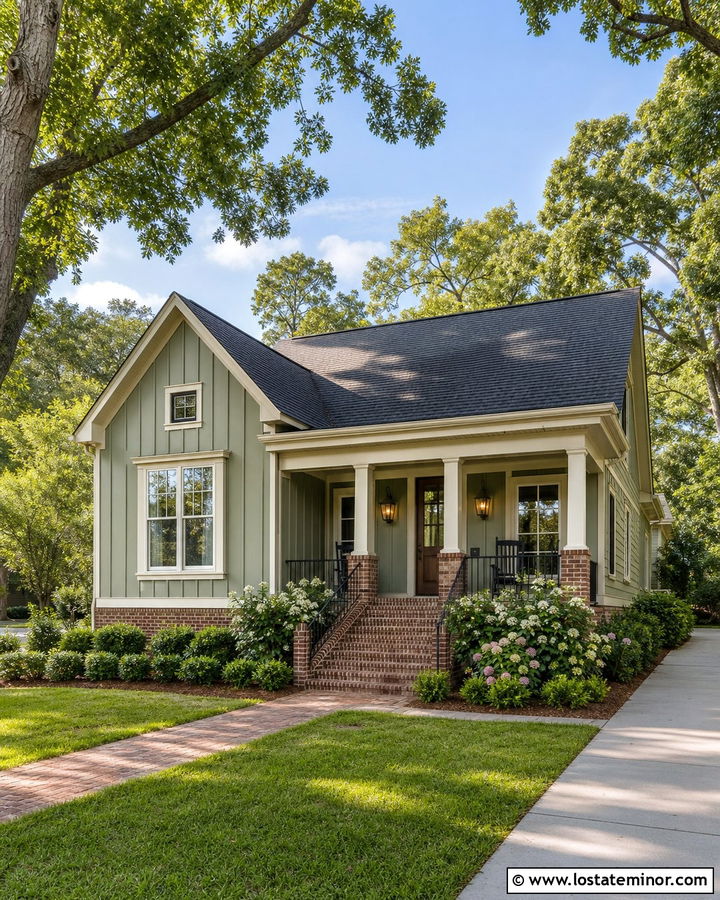
A brick porch adds warmth and age to the clean vertical lines of sage green board-and-batten siding. Select brick that contains muted red, brown, and charcoal variation rather than a uniform orange finish. Repeat it on the steps, porch floor, or walkway so the masonry feels substantial. Soft cream trim can bridge the warm brick and cooler siding, while a dark wood door strengthens the entrance. Use bronze lanterns and a charcoal roof to finish the balanced palette. This exterior works well on traditional cottages, Southern farmhouses, and updated ranch homes. If the property already has brick, use that permanent color as the starting point for the sage selection. Matching the mortar and landscape materials will help old and new surfaces look intentionally combined.
27. Sage Green Board and Batten With Mixed Siding
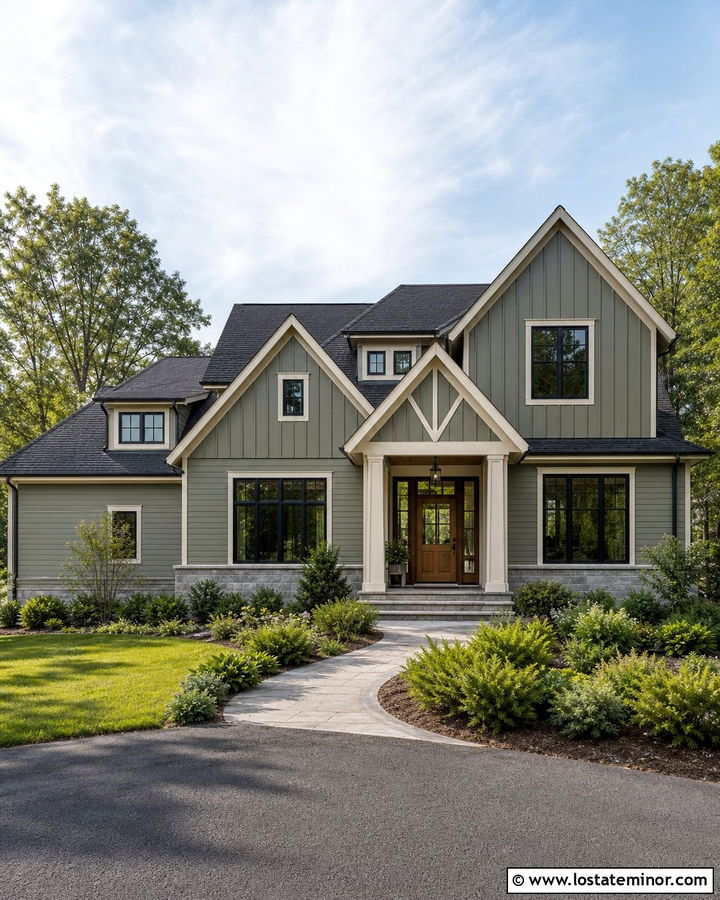
Mixed siding can add depth to a sage green house when the materials share a clear relationship. Use board and batten on upper gables or the main entry, then place horizontal lap siding across wider lower walls. Painting both siding types the same sage creates texture without chopping the facade into competing color blocks. Add cream trim, black windows, and a wood door for controlled contrast. Stone along the foundation can provide a third texture, but keep its coloring quiet. This method is useful for large homes, additions, and split-level remodels where one siding pattern may feel monotonous. Align material transitions with rooflines, corners, or floor levels. Random changes can look unfinished, while architectural transition points make the complete exterior feel thoughtfully organized.
28. Sage Green Board and Batten Mountain House
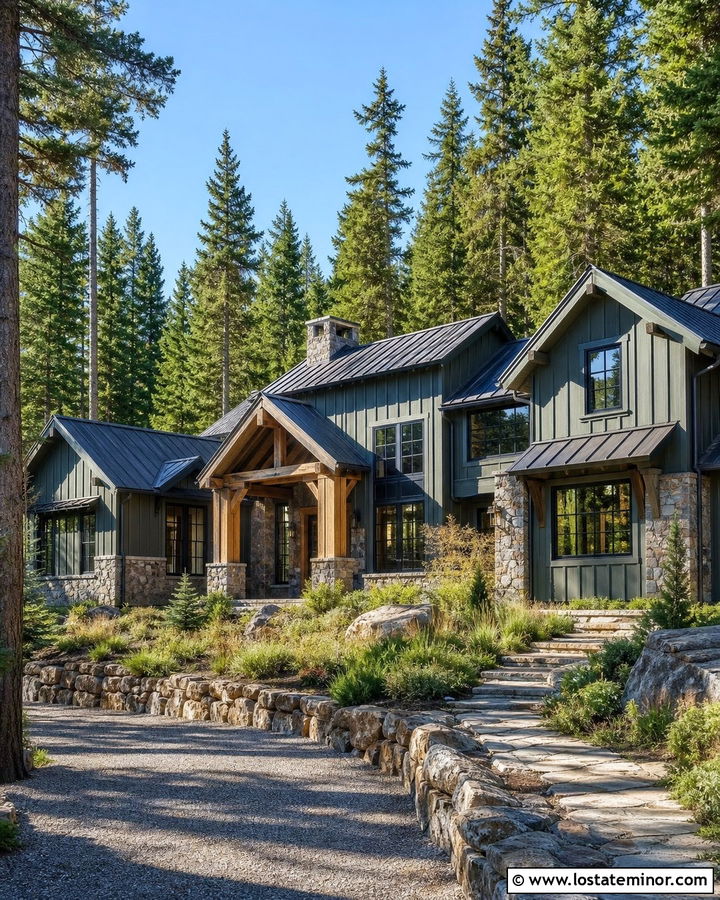
In a mountain setting, sage green allows a home to sit comfortably among trees, stone, and changing seasonal colors. Use a deeper gray-green on wide board-and-batten siding so the facade maintains definition against dense vegetation. Pair it with charcoal roofing, rugged stone walls, and substantial timber beams. Black windows provide a modern edge, while a warm wood door keeps the entrance inviting. Larger battens often suit the scale of broad gables and tall elevations better than narrow spacing. Extend stone into retaining walls and walkway borders to connect the building with the site. Native grasses, evergreen shrubs, and natural gravel reinforce the setting without looking overly landscaped. Bright daylight will reveal the siding’s green character while shaded areas retain a calm, smoky appearance.
29. Sage Green Board and Batten Coastal House
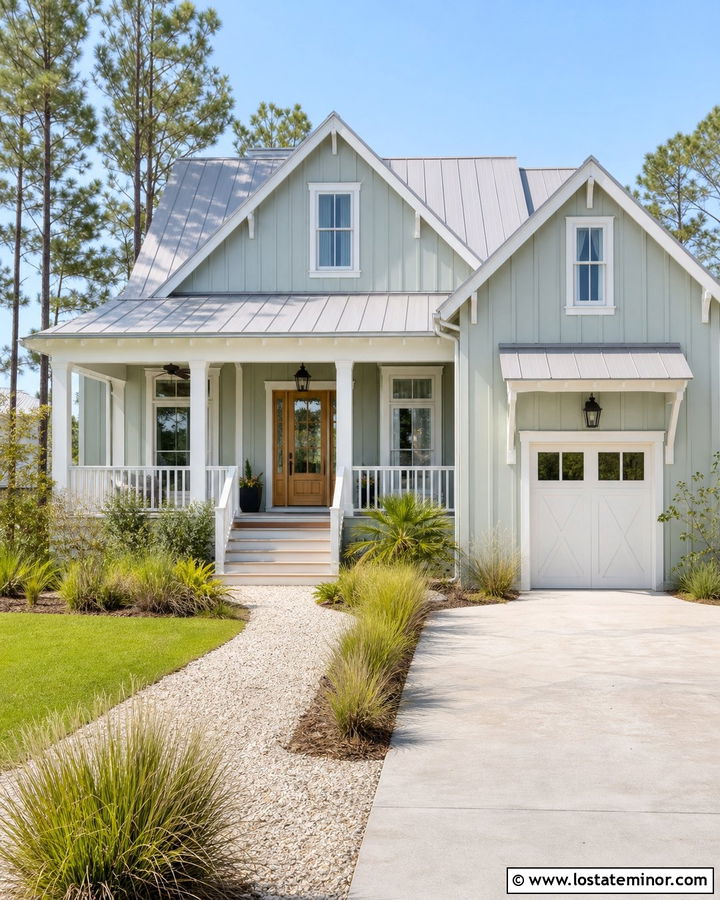
Sage green can feel light and coastal when paired with weathered neutrals instead of heavy rustic materials. Choose a pale, slightly blue sage for the board-and-batten siding, then add crisp white trim and a soft gray metal roof. A washed wood or slate blue door introduces gentle contrast. Use simple porch railings, broad windows, and uncluttered rooflines to maintain an airy facade. Gravel paths, beach grasses, pale stone, and low shrubs complement the palette without relying on obvious themed decorations. Dark accents should remain limited to practical features such as lights and hardware. This complete exterior works well for coastal cottages and relaxed suburban homes alike. The result feels fresh in bright daylight while remaining soft enough for cloudy or misty regional conditions.
30. Sage Green Board and Batten Small House
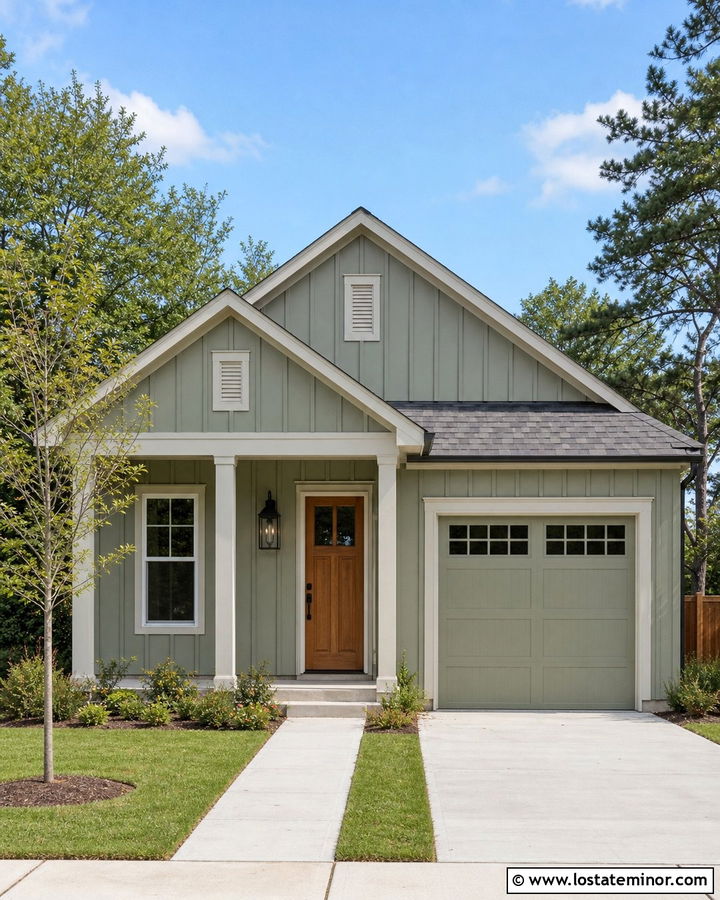
A small home benefits from a limited palette and clearly defined details. Covering the facade in light sage green board-and-batten siding can make it feel taller while maintaining a soft street presence. Use warm white trim around the roofline and windows, then select one focal accent, such as a cedar front door. Keep the garage, utility panels, and downspouts close to the siding color so they visually recede. A medium-gray roof provides contrast without overwhelming the compact structure. Simple porch posts and one substantial exterior light are usually more effective than many decorative additions. Finish the curb appeal with a narrow walkway, low foundation plants, and one small ornamental tree. This restrained design makes every material feel purposeful while allowing the architecture to remain easy to understand.
Conclusion:
The best sage exterior is more than a fashionable siding color. It is a complete scheme that responds to the roof, architecture, permanent masonry, natural light, and surrounding landscape. Board-and-batten siding gives sage green added depth through vertical lines and subtle shadows, while carefully selected trim and accents shape the final mood. White can feel classic, black adds modern definition, and natural wood creates inviting warmth. Stone, brick, metal, and mixed siding offer additional ways to personalize the facade. Before painting or installing materials, compare large samples outdoors on several walls. These 30 Sage Green House Design With Board and Batten Ideas provide a practical starting point for creating balanced, distinctive, and welcoming curb appeal.

Related posts: