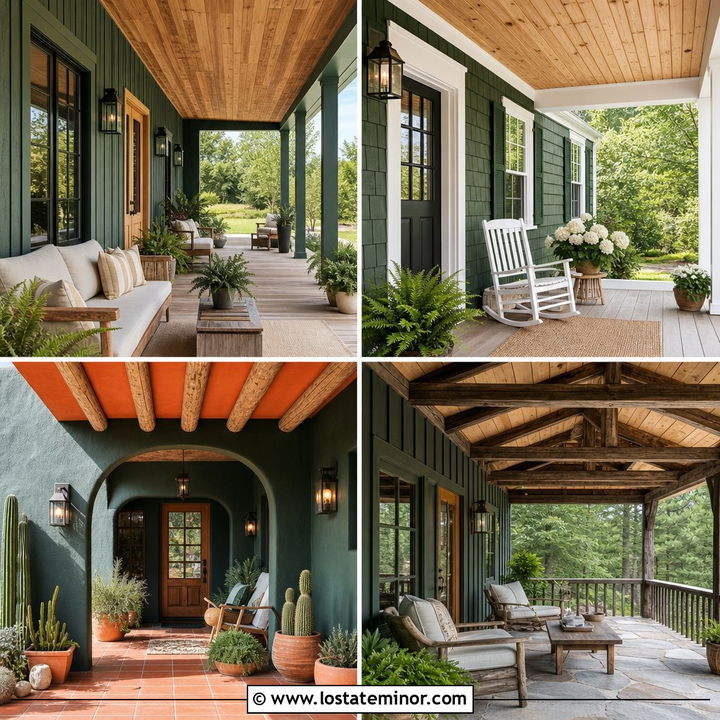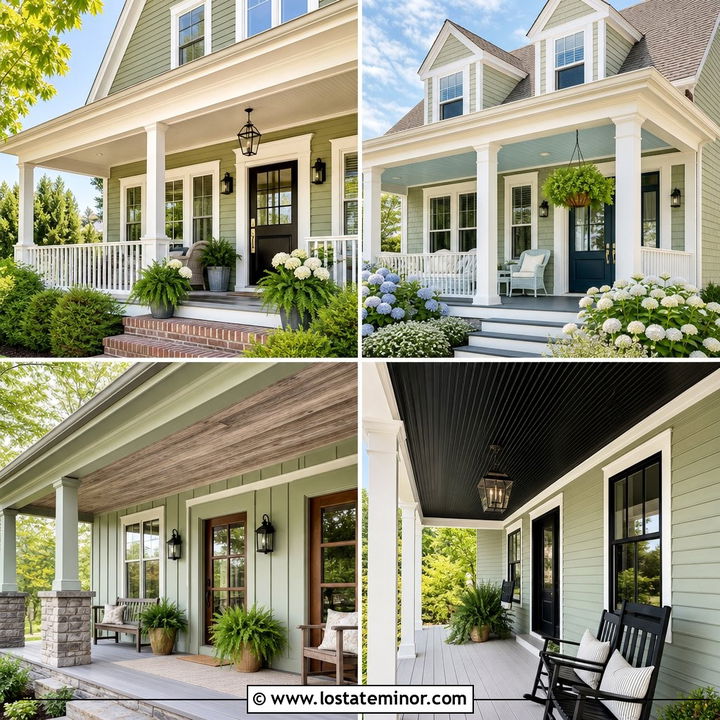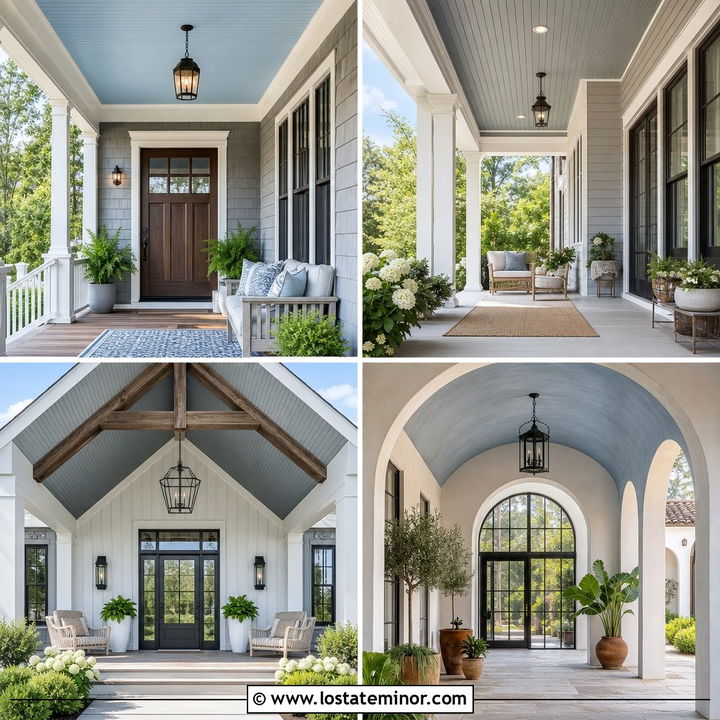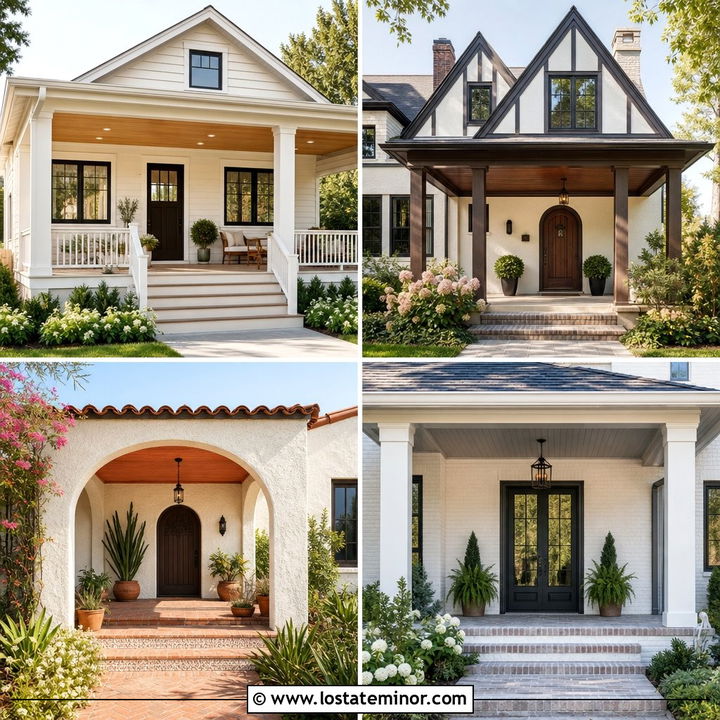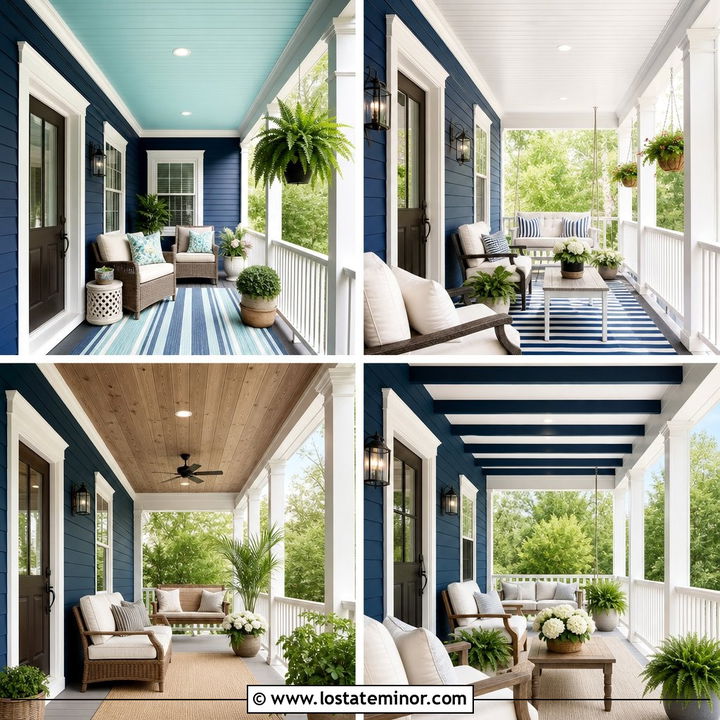
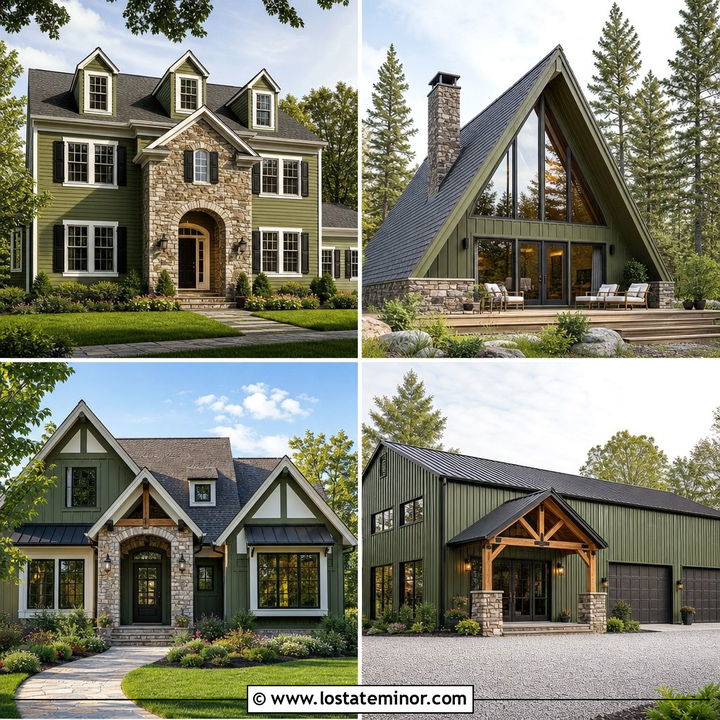
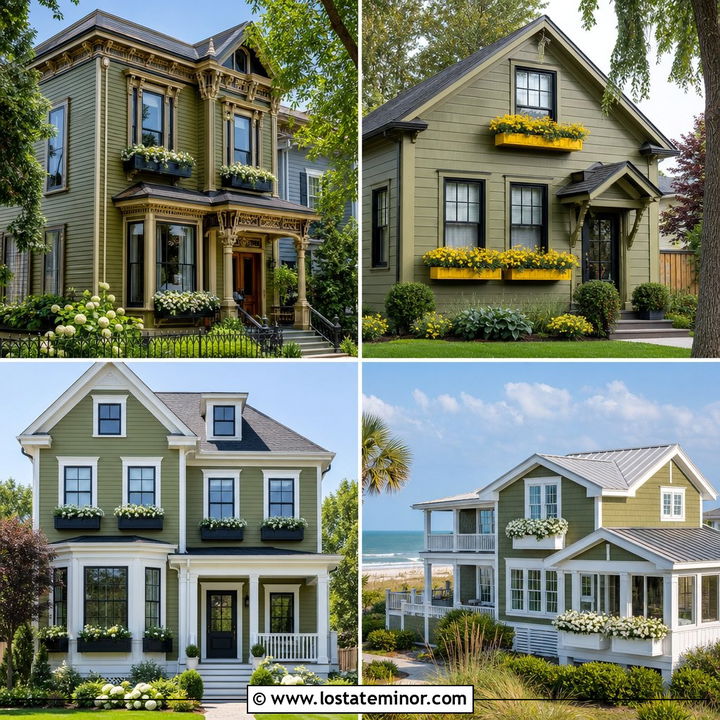
Moss green brings a grounded, natural character to a home exterior, while the right porch ceiling adds warmth, contrast, and architectural depth. The pairing can feel historic, rustic, coastal, modern, or refined depending on the ceiling color and material. Soft blue beadboard creates an airy welcome, natural cedar highlights moss green’s earthy undertones, and crisp white paneling makes shaded entrances appear brighter. The complete exterior matters, too. Trim, roofing, masonry, doors, flooring, and landscaping should connect the porch ceiling to the rest of the facade. These 30 Moss Green House Design With Porch Ceiling Ideas explore practical combinations for different house types, porch sizes, climates, and budgets. Use them to plan a balanced exterior with lasting curb appeal through these 30 Moss Green House Design With Porch Ceiling Ideas.
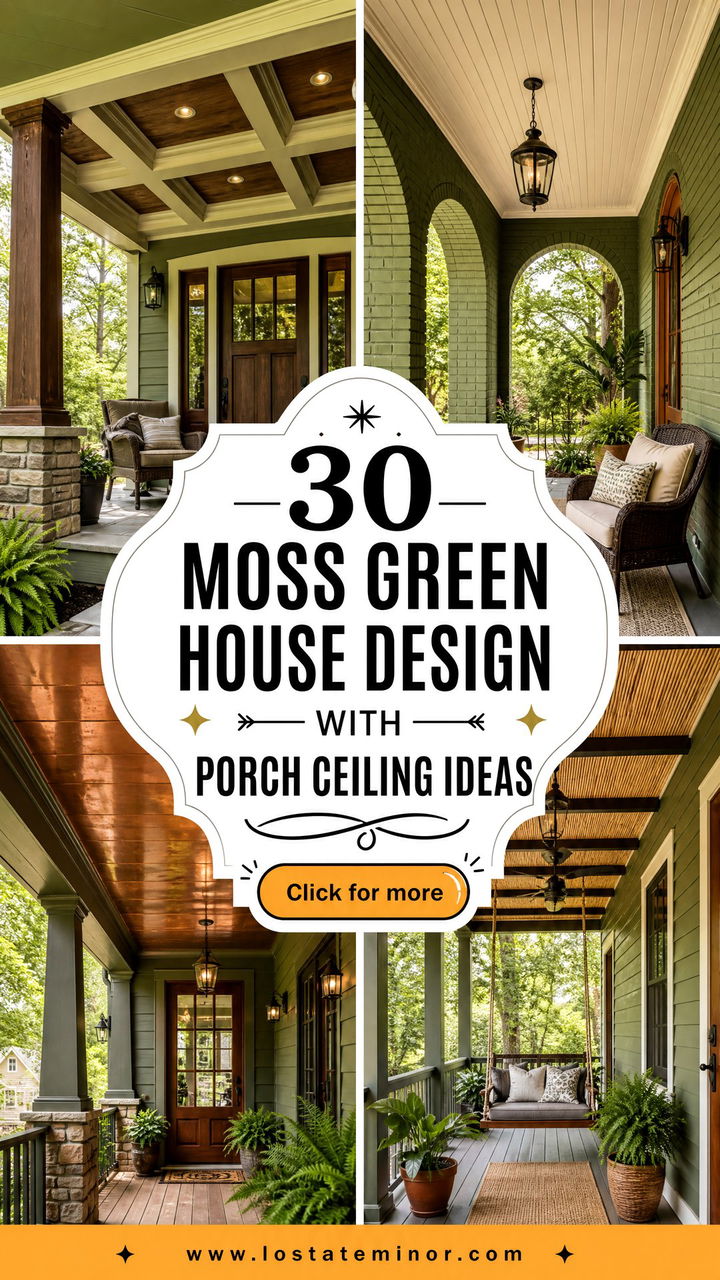
1. Moss Green Craftsman With Haint Blue Porch Ceiling
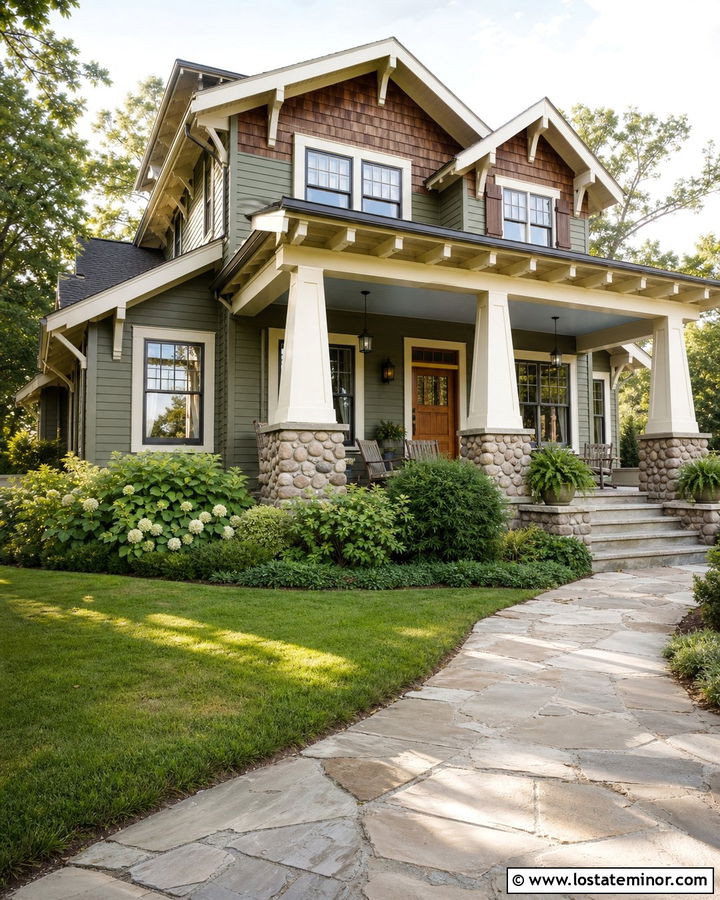
A haint blue porch ceiling gives a moss green Craftsman a lighter, more welcoming entrance. Choose a muted sky blue rather than a highly saturated turquoise so the ceiling complements the earthy siding. Warm white trim can outline the tapered columns, exposed rafters, and divided-light windows without creating harsh contrast. Add a medium-stained oak front door and matching porch swing to reinforce the natural palette. Brown architectural shingles, river-rock column bases, and bronze lighting complete the exterior. The pale ceiling also helps a deep covered porch look brighter during the day. Keep the floor understated with stained decking or warm gray concrete. Native grasses, ferns, and hydrangeas will soften the foundation while repeating the home’s green and blue-gray tones.
2. Moss Green Farmhouse With White Beadboard Porch Ceiling
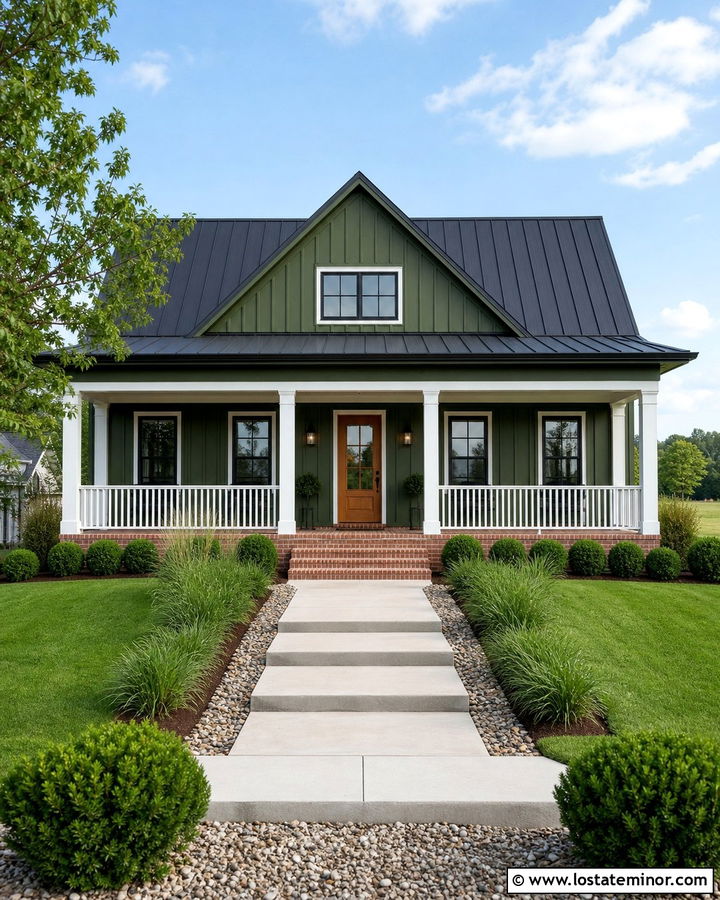
Crisp white beadboard can make a moss green modern farmhouse feel fresh without removing its rural character. Run the narrow boards across the porch ceiling to visually widen the covered entrance. Use the same white on the fascia, window trim, square columns, and porch railing for a connected exterior. A black metal roof and black-framed windows provide definition, while a natural wood front door prevents the scheme from feeling too cool. Warm brick porch flooring adds useful contrast beneath the bright ceiling. This complete look works particularly well on a symmetrical farmhouse with a broad front porch and simple gables. Finish the setting with boxwoods, ornamental grasses, and a straight gravel or stone walkway. Simple black pendants will stand out clearly against the clean white overhead surface.
3. Moss Green Bungalow With Natural Cedar Porch Ceiling
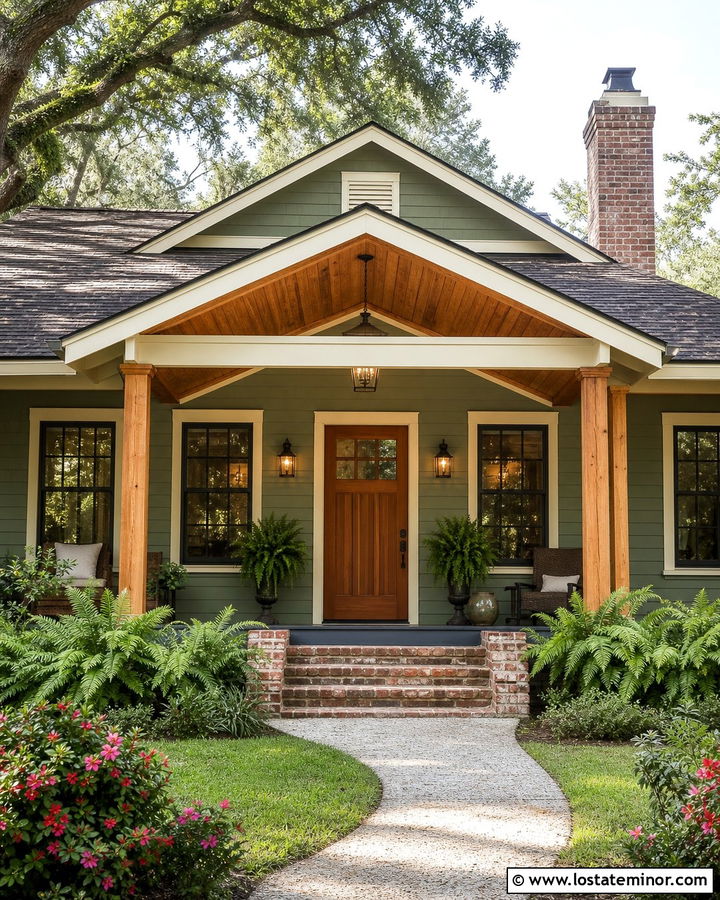
Natural cedar introduces warmth that makes a moss green bungalow feel relaxed and handcrafted. Use clear-sealed tongue-and-groove cedar overhead so the wood grain remains visible. The warm ceiling can coordinate with cedar porch posts, stair rails, window boxes, or a slatted front door. Soft cream trim is often more harmonious than bright white because it supports the wood’s golden undertones. Consider weathered brick steps, a dark brown shingle roof, and bronze porch lighting to complete the composition. Since cedar changes with exposure, select a protective exterior finish and maintain it as recommended for local conditions. A deep porch floor in charcoal or walnut stain will anchor the lighter ceiling. Layer the yard with ferns, flowering shrubs, and low ground cover for a cozy cottage atmosphere.
4. Moss Green Colonial With Pale Gray Porch Ceiling
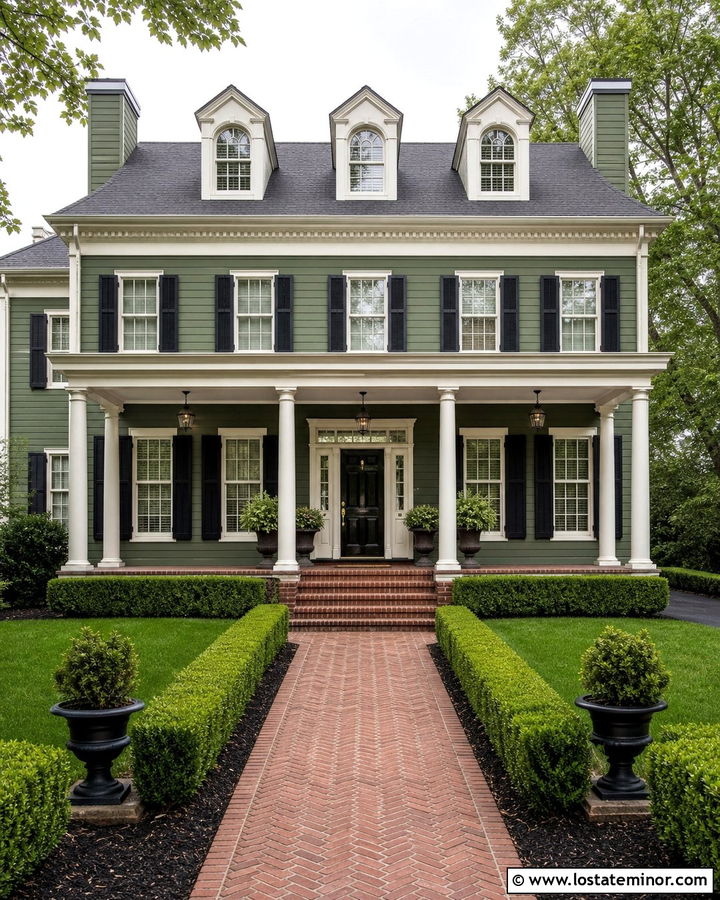
Does your Colonial exterior need subtle contrast rather than another strong color? A pale gray porch ceiling can bridge moss green siding, white trim, and a dark roof with quiet sophistication. Select a gray with gentle blue or green undertones to prevent it from appearing disconnected. Repeat that shade on a small section, such as the porch floor or secondary entry, while keeping the columns and dentil trim warm white. Black shutters and a glossy black door establish traditional symmetry. Red brick steps add warmth and reference classic Colonial materials. For a more tailored finish, use smooth ceiling panels or neatly installed beadboard with concealed fasteners. Balanced foundation shrubs, matching lanterns, and a straight brick walkway support the home’s formal architecture without competing with the restrained green-and-gray palette.
5. Moss Green Ranch With Warm Wood Porch Ceiling
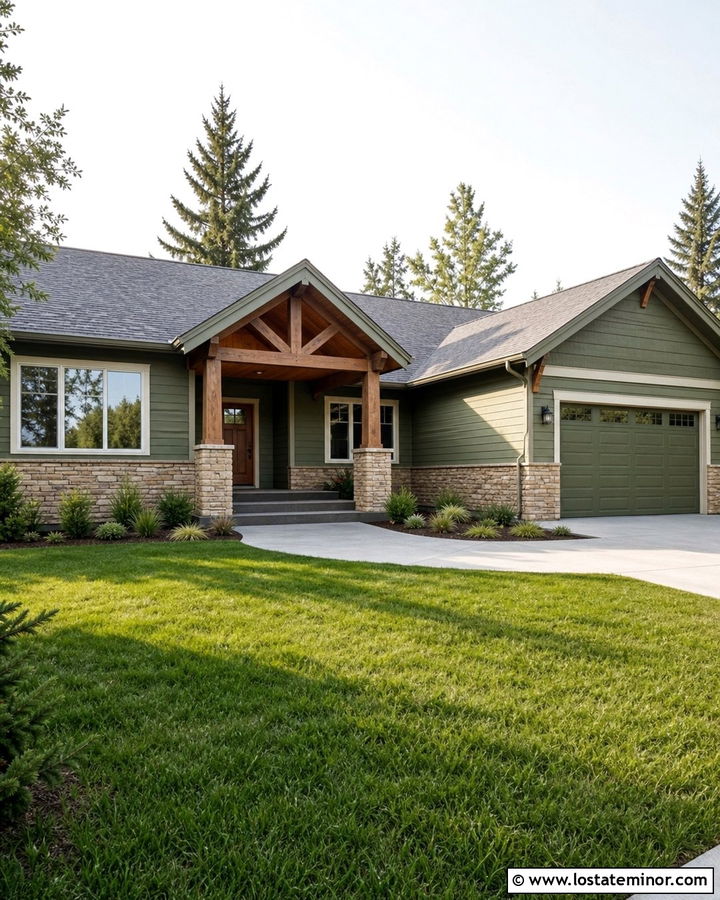
A low ranch house benefits from materials that create depth across its long horizontal facade. Pair moss green lap siding with a warm wood porch ceiling that extends above the entry and adjacent sitting area. Horizontal tongue-and-groove boards emphasize the ranch profile, while chunky stained beams introduce structure. Use creamy off-white trim around the windows and paint the garage door the same moss green as the siding. This reduces visual breaks and makes the house appear wider. A walnut-colored front door, tan stone wainscoting, and a medium-gray roof round out the earthy scheme. Recessed lights can keep the ceiling clean and uncluttered. Frame the exterior with a broad concrete walkway, low ornamental grasses, and layered evergreen shrubs that respect the home’s simple midcentury lines.
6. Moss Green Cape Cod With Soft Blue Beadboard Ceiling
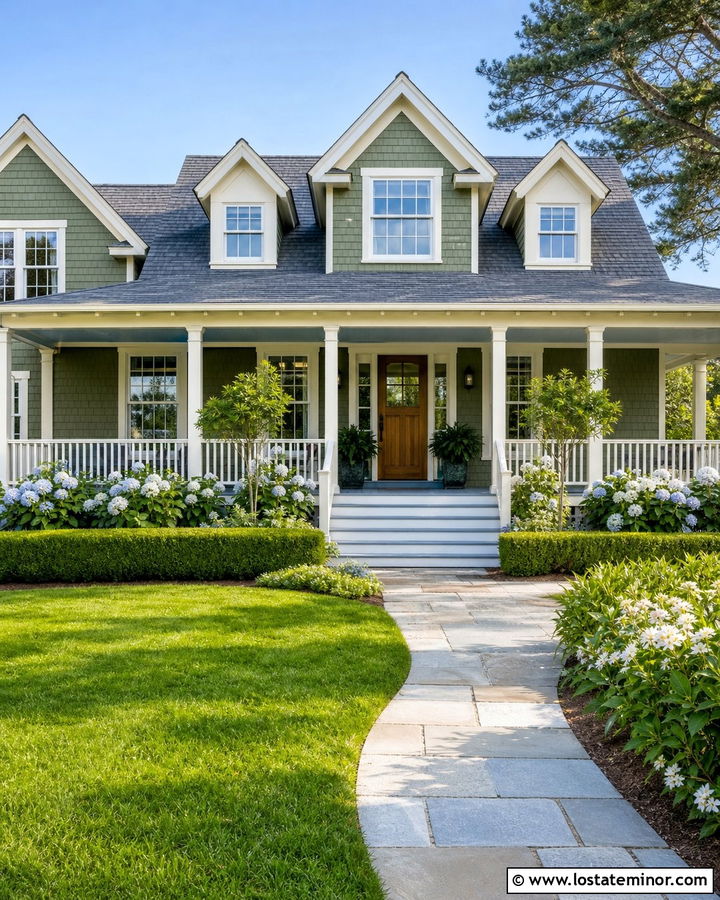
Soft blue beadboard brings coastal freshness to a moss green Cape Cod without making the home feel themed. Keep the blue misty and understated, then use creamy white on the dormers, corner boards, railings, and window trim. The moss siding provides an earthy base that looks comfortable near wooded, suburban, or coastal settings. A weathered cedar-shake roof or medium-gray shingles will soften the contrast between green and white. Add a natural teak door, traditional lanterns, and gray-blue porch flooring for a layered but controlled palette. Narrow beadboard suits the smaller scale of many Cape Cod porches and adds texture without overwhelming the facade. Hydrangeas, clipped hedges, and a curved stone path can complete the welcoming look while balancing the architecture’s compact proportions.
7. Moss Green Victorian With Cream Porch Ceiling
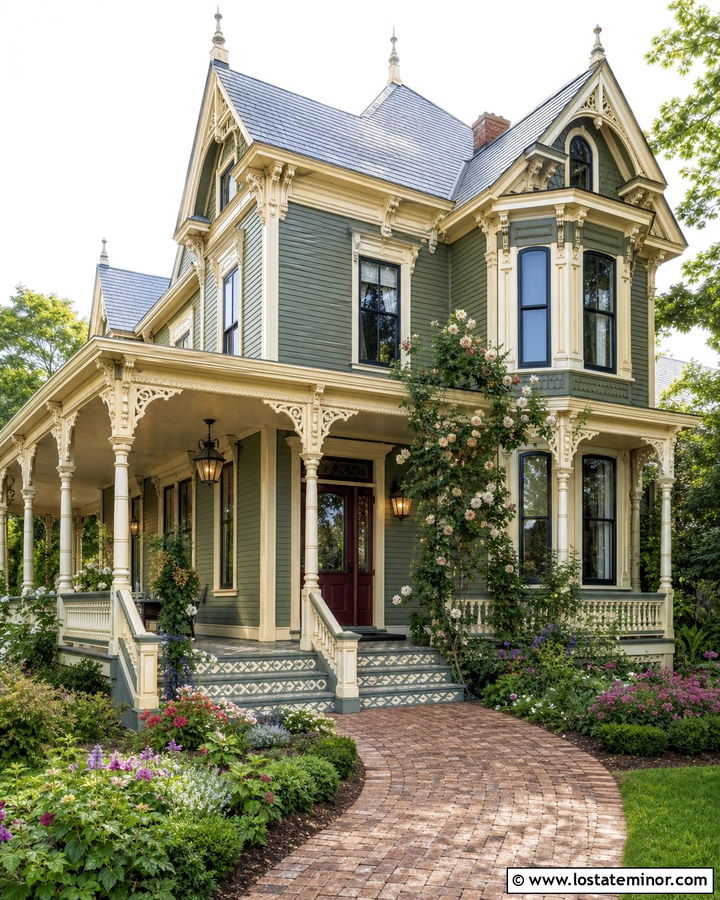
An ornate Victorian facade already contains plenty of visual detail, so a warm cream porch ceiling offers gentle relief. The cream shade can highlight carved brackets, turned posts, decorative railings, and scalloped trim while complementing moss green clapboard siding. Add deep burgundy or near-black accents in limited areas, such as the front door, window sash, and stair rail. This keeps the historic palette rich but manageable. A patterned porch floor in muted green, cream, and charcoal can add character beneath the simpler ceiling. Use traditional hanging lanterns or a compact pendant that does not hide the millwork. Antique brick edging, climbing roses, and layered cottage plantings support the house’s romantic architecture. The result feels detailed and period-inspired without allowing the porch to become visually crowded.
8. Moss Green Cottage With Whitewashed Wood Porch Ceiling
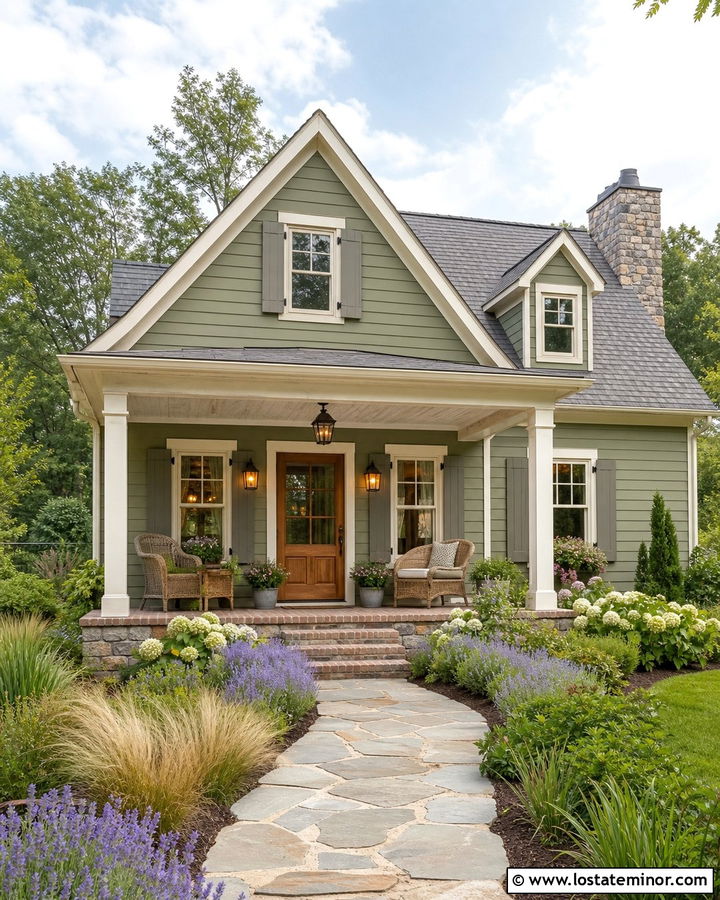
Whitewashed wood offers a softer alternative to solid white paint on a moss green cottage. The translucent finish reveals knots and grain, giving the porch ceiling an aged, casual quality. Pair it with warm white trim, sage-gray shutters, and a honey-toned wood door for a gentle garden palette. A light gray roof and irregular fieldstone foundation will prevent the facade from becoming overly green. Continue the relaxed character with brick porch flooring, a woven bench, and simple antique-bronze lights. Whitewashing also works well when homeowners want to brighten existing wood without completely covering its texture. Surround the cottage with lavender, ornamental grasses, hydrangeas, and an informal flagstone path. These natural elements connect the moss siding and weathered ceiling to the landscape as one complete exterior composition.
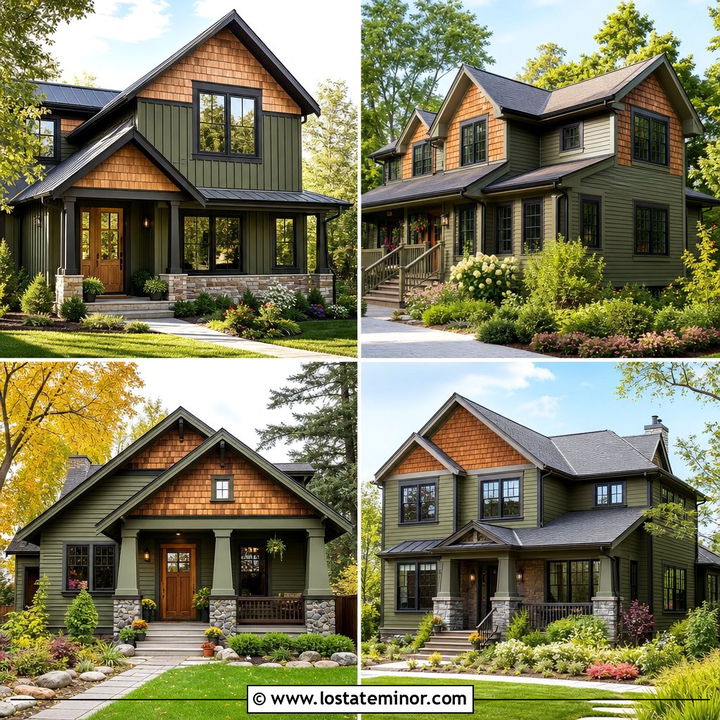
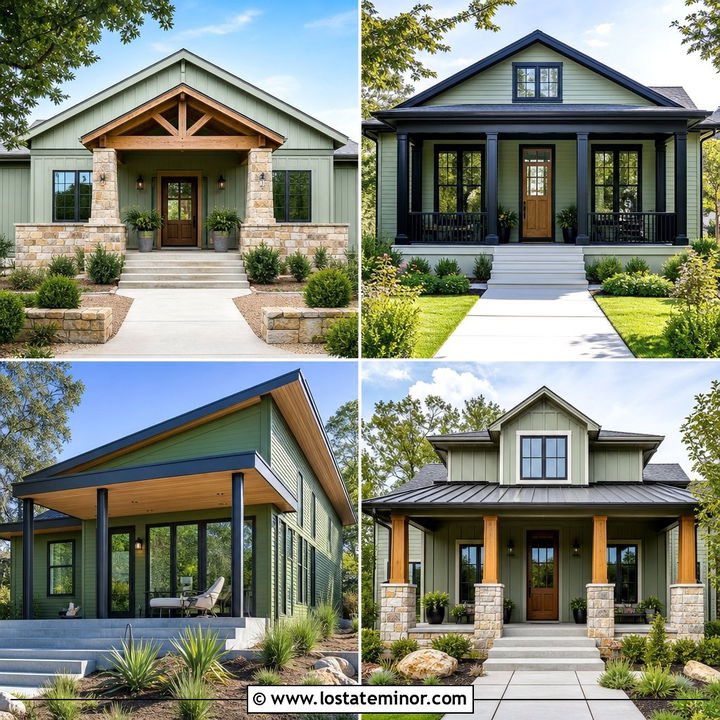
9. Moss Green Modern House With Black Porch Ceiling
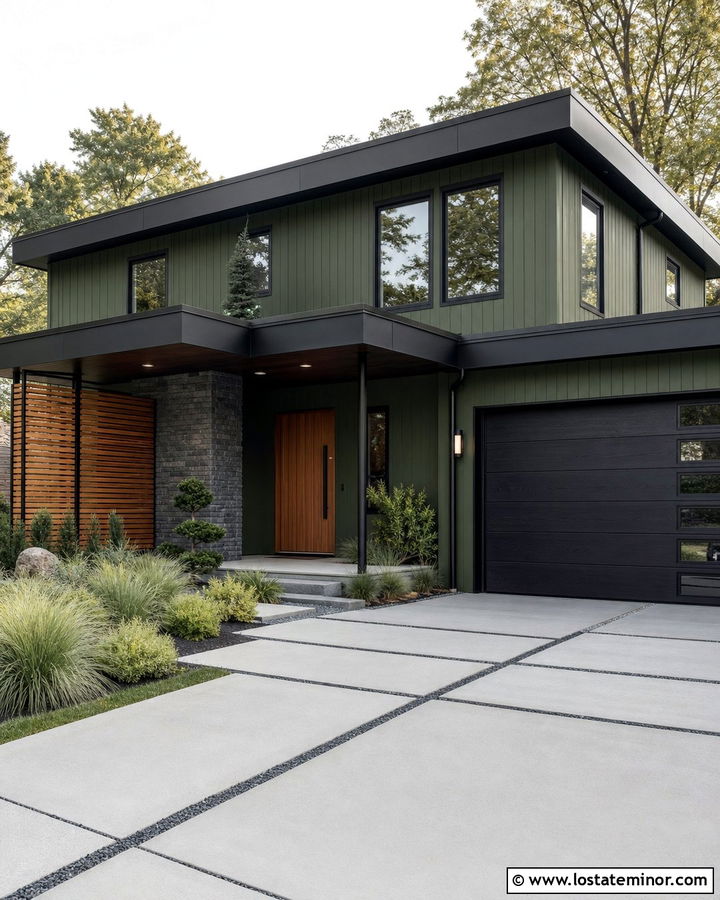
A black porch ceiling creates a strong architectural frame around a moss green modern exterior. Use the dark finish beneath a flat or low-sloped canopy, then repeat black on window frames, gutters, fascia, and a streamlined garage door. The moss green siding softens the black and helps the house sit naturally within its surroundings. Vertical panels or board-and-batten siding will enhance the contemporary lines. Introduce warmth with a wide walnut front door, cedar privacy screen, or light oak bench. Large-format concrete pavers and charcoal stone accents keep the materials crisp. Because black absorbs visual light, include recessed fixtures and avoid using it on an extremely low, enclosed ceiling. Minimal grasses, sculptural shrubs, and a clean concrete walkway will complete this bold but balanced curb-appeal scheme.
10. Moss Green Split-Level With Light Oak Porch Ceiling
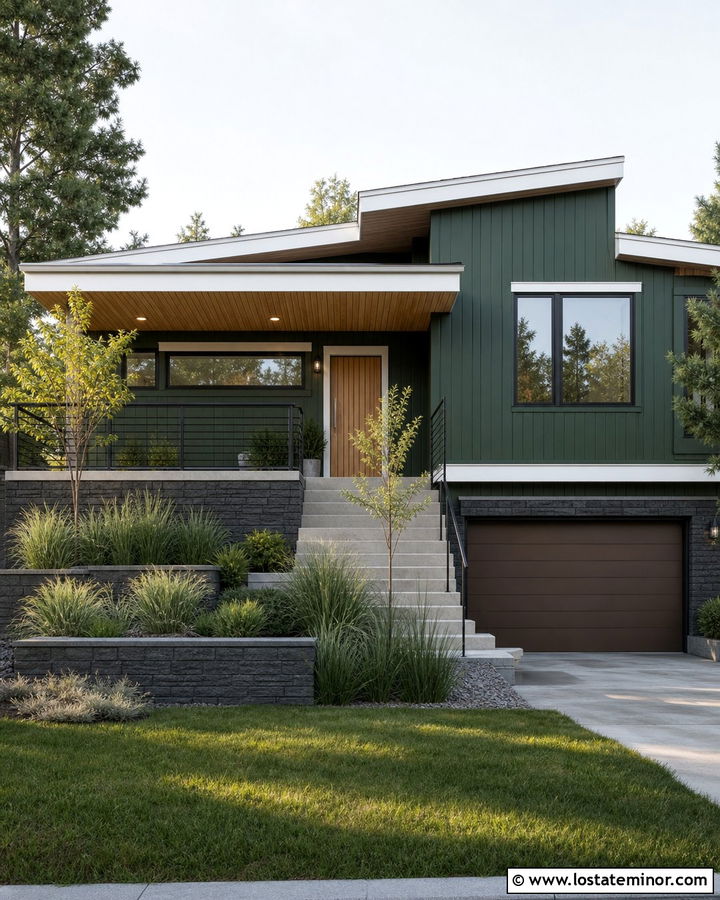
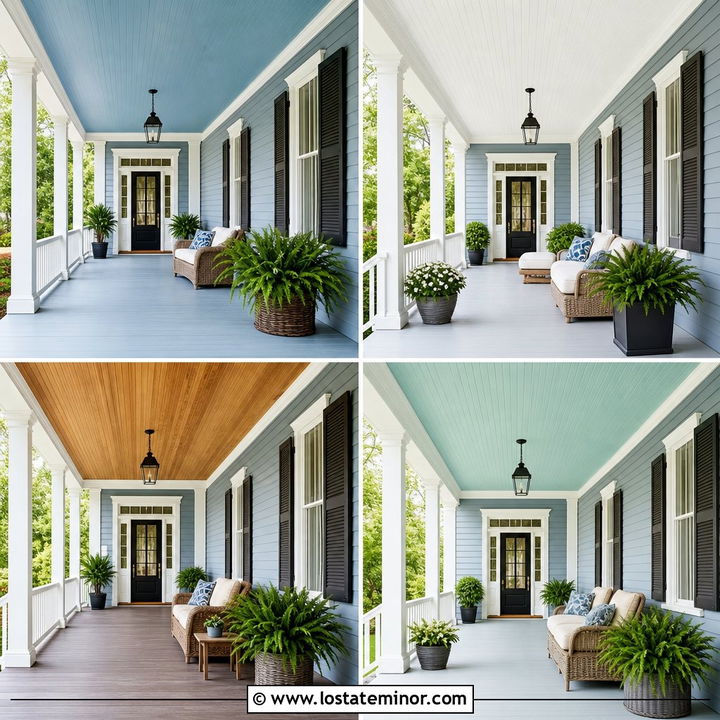
Light oak can make a renovated split-level entrance feel warmer and more intentional. Install narrow oak-look planks beneath an extended porch roof, using the ceiling to visually connect different levels of the facade. Moss green siding creates continuity across the main walls, while warm white trim keeps the windows clear and bright. Paint the garage door moss green or deep bronze so it does not dominate the lower level. A vertical oak front door can repeat the ceiling’s grain and draw attention toward the entrance. Add charcoal stone around the foundation or stair wall for grounding contrast. Simple black sconces and slim metal railings modernize the design. Layered grasses, small trees, and broad concrete steps can soften the angular architecture while maintaining an organized, contemporary appearance.
11. Moss Green Southern House With Haint Blue Ceiling
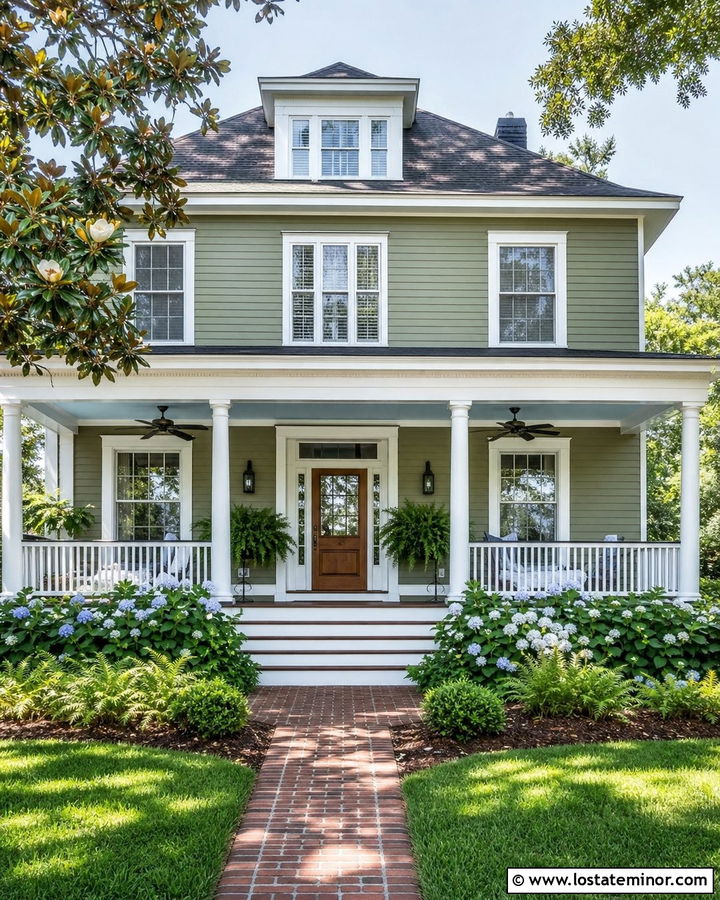
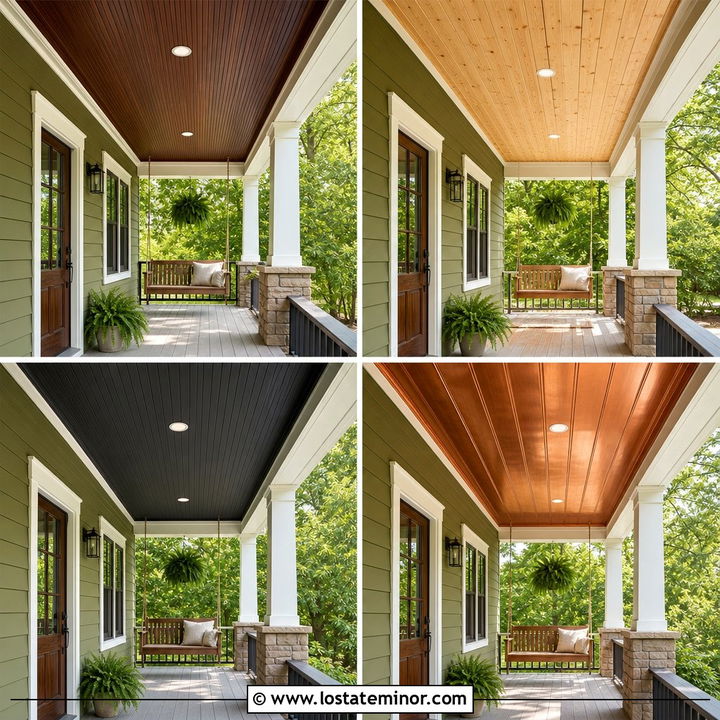
A broad Southern porch feels especially inviting when a cool haint blue ceiling floats above moss green siding. Choose a powdery blue with gray undertones to create a gentle transition from the garden-inspired exterior. White columns, railings, and window trim maintain a bright, traditional framework. Introduce natural warmth through stained porch flooring, a medium-brown front door, and woven outdoor furniture. A dark gray roof provides enough contrast without appearing severe. Ceiling fans in white or aged bronze can blend into the overhead design while improving comfort. For a polished full-house look, repeat the blue on a small rear porch or porch swing rather than across major exterior surfaces. Magnolias, ferns, hydrangeas, and brick pathways will reinforce the gracious, landscape-connected character of the facade.
12. Moss Green Cabin With Stained Pine Porch Ceiling
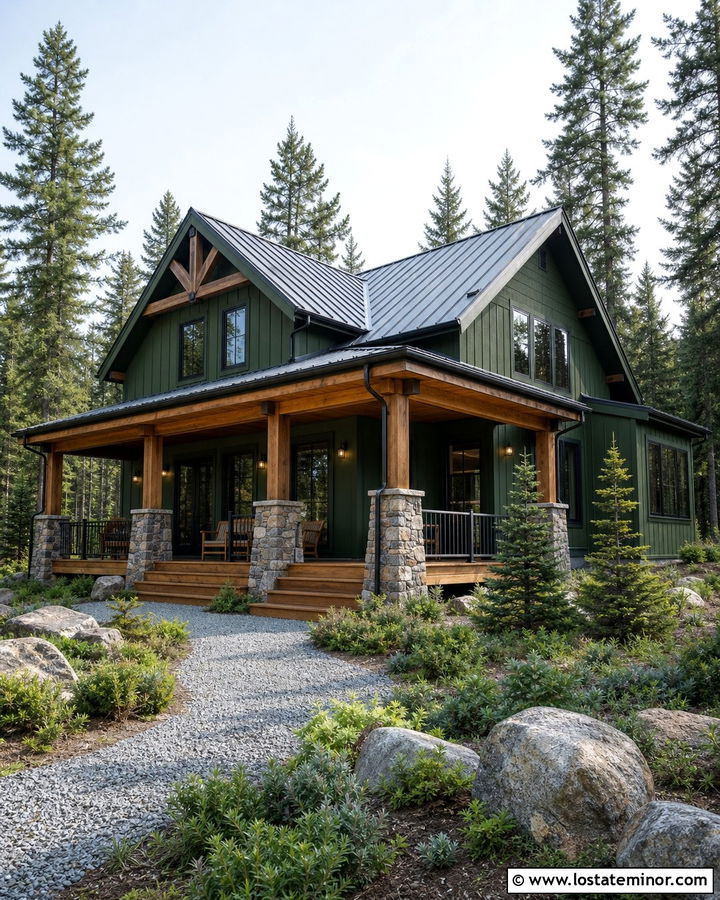
Picture a wooded cabin where moss green siding blends into tall trees and a stained pine porch ceiling glows above the entry. A medium honey or chestnut stain will reveal the pine grain while offering contrast against the green walls. Continue the stain on exposed beams, porch posts, and the front door for a cohesive rustic structure. Dark bronze windows, a charcoal standing-seam roof, and rugged stone piers can anchor the lighter wood. Avoid adding too many unrelated brown finishes; selecting one primary stain creates a more deliberate result. Wide-plank porch decking and understated black lighting support the cabin character. Complete the setting with gravel paths, native evergreens, boulders, and woodland ground cover. The finished house should feel integrated with nature rather than hidden beneath heavy colors.
13. Moss Green Tudor With Dark Wood Porch Ceiling
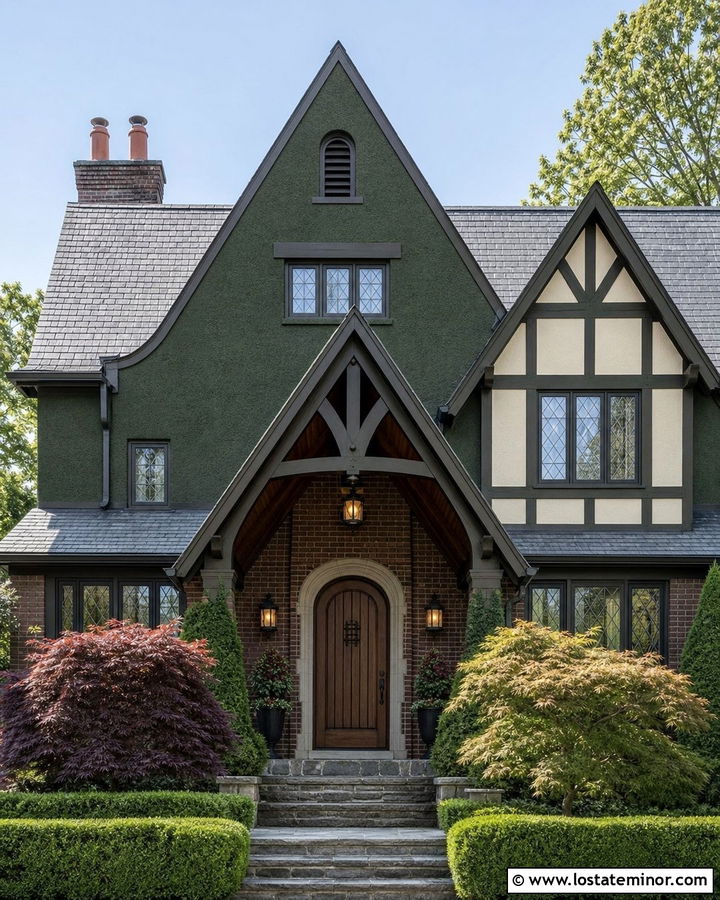
Dark wood overhead can reinforce the substantial character of a moss green Tudor exterior. Use espresso-stained tongue-and-groove boards beneath a steep entry gable, then repeat the finish on decorative beams and an arched front door. Cream stucco, moss green siding, and brown brick create a layered facade that respects the house’s traditional proportions. Leaded-look windows and aged bronze lanterns add detail without introducing unnecessary colors. Because the ceiling is dark, keep the porch opening generous and use warm recessed lights to maintain a welcoming entrance. Slate-gray roofing and stone steps will further ground the palette. Formal hedges, small ornamental trees, and a gently curved walkway balance the strong rooflines. This combination feels established and architectural while allowing moss green to remain the dominant exterior color.
14. Moss Green Craftsman With Coffered Porch Ceiling
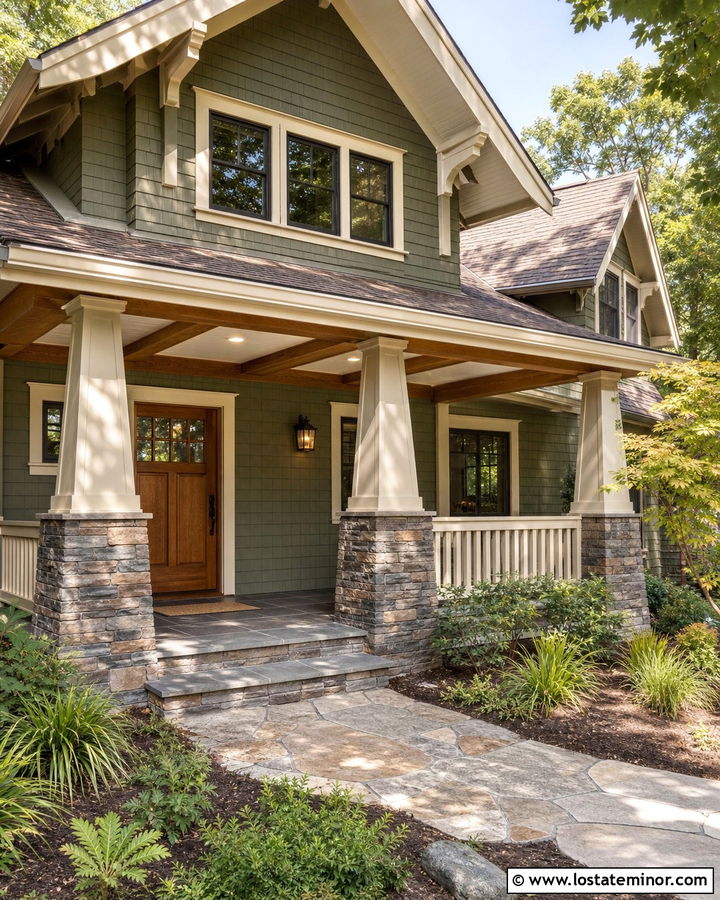
A coffered porch ceiling gives a moss green Craftsman more definition and a custom-built appearance. Paint the recessed panels warm white and stain the crossing beams medium oak to connect with the home’s handcrafted details. Moss green shingle or lap siding can cover the main facade, while cream trim outlines wide windows and tapered columns. Add stone column bases, a stained wood door, and dark bronze hardware to continue the natural material palette. Coffers work best on a porch with enough width and ceiling height to display the pattern clearly. Keep pendant lights centered within the panels for an orderly installation. A muted brown roof, slate porch floor, and layered native landscaping will complete the composition. The ceiling becomes noticeable, but it still supports the full exterior rather than overpowering it.
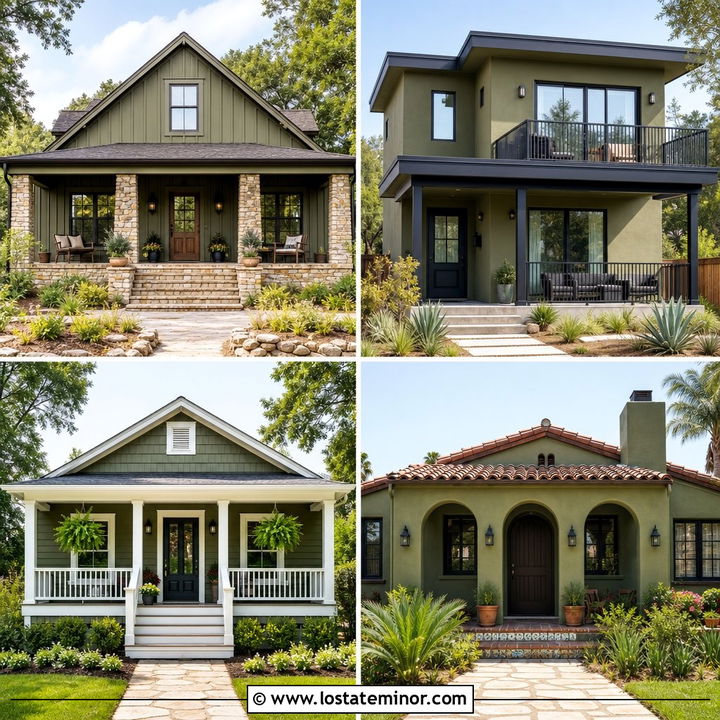
15. Moss Green Farmhouse With Exposed Beam Porch Ceiling
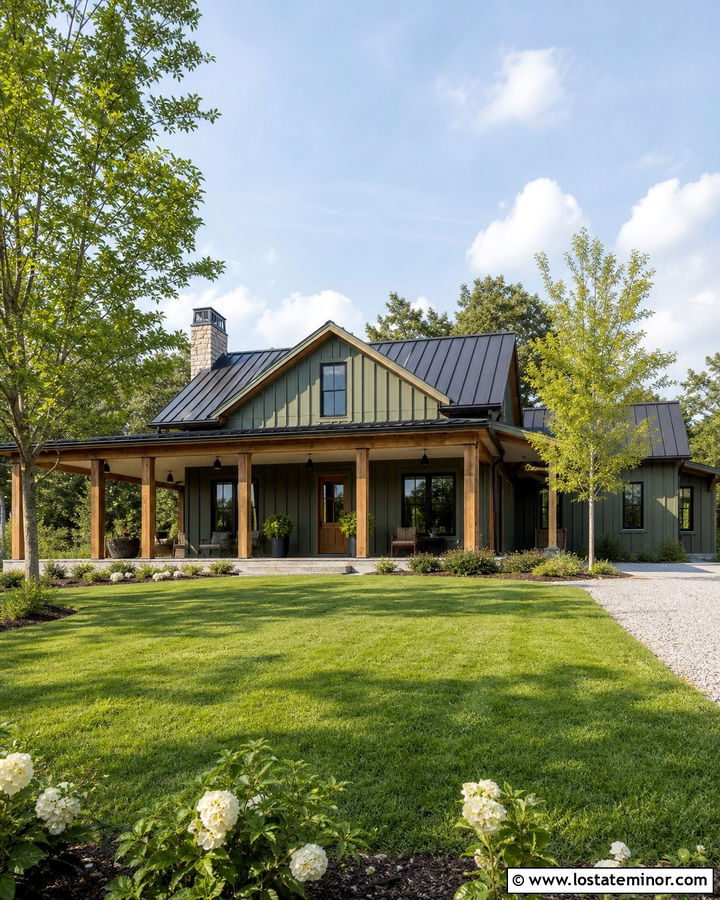
Exposed beams add structure and warmth to a moss green farmhouse porch. Paint the flat ceiling between the beams creamy white, then stain the beams and columns in a medium cedar tone. This contrast highlights the porch roof without making the facade feel heavy. Moss green board-and-batten siding creates a vertical rhythm that works naturally with the strong overhead framing. Add black windows, a dark metal roof, and a simple wood door for a clean rural palette. Stone porch flooring introduces texture and stands up visually to the substantial beams. Use uncomplicated black pendants or ceiling fans so the lighting complements the architecture. A gravel drive, broad lawn, flowering shrubs, and young shade trees can keep the setting relaxed. The finished scheme feels modern, functional, and rooted in familiar farmhouse materials.
16. Moss Green Prairie House With Cedar Slat Ceiling
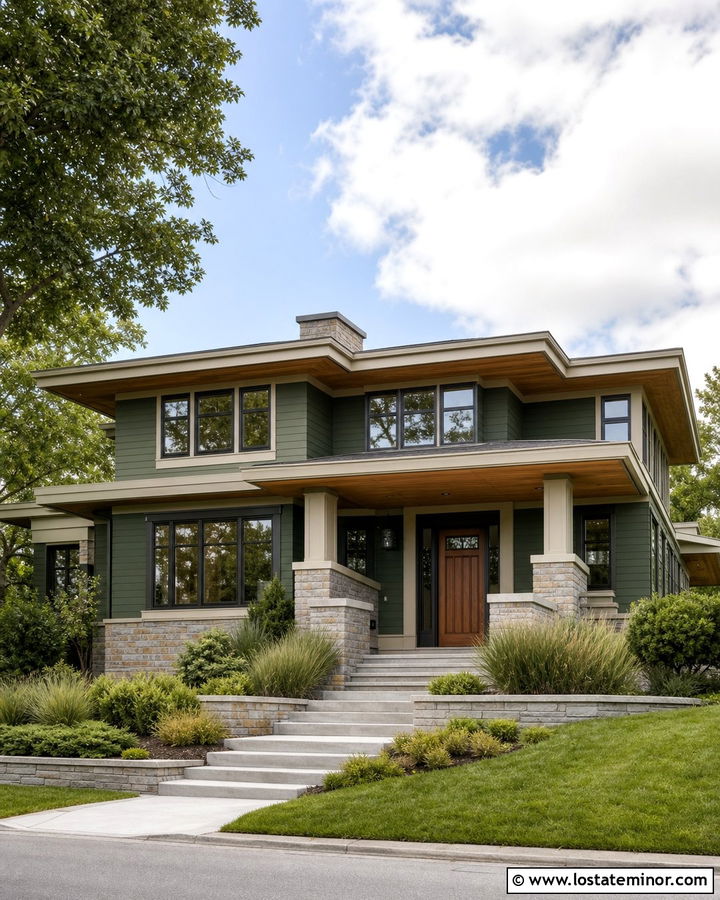
Horizontal cedar slats are a natural match for the long rooflines of a Prairie-style house. Install them beneath a deep porch canopy and surround them with moss green horizontal siding. Warm gray stone, dark bronze window frames, and broad wood fascia can emphasize the low, grounded architecture. Keep the front door simple and match its finish to the cedar ceiling for visual continuity. Rather than using bright white trim, choose a muted cream or taupe that maintains the house’s earthy character. Integrated linear lighting will preserve the clean ceiling plane better than decorative fixtures. Wide concrete steps, low retaining walls, ornamental grasses, and spreading shrubs should echo the building’s horizontal emphasis. This porch ceiling treatment adds texture and warmth while supporting the balanced geometry of the complete exterior.
17. Moss Green Coastal House With Gray-Blue Porch Ceiling
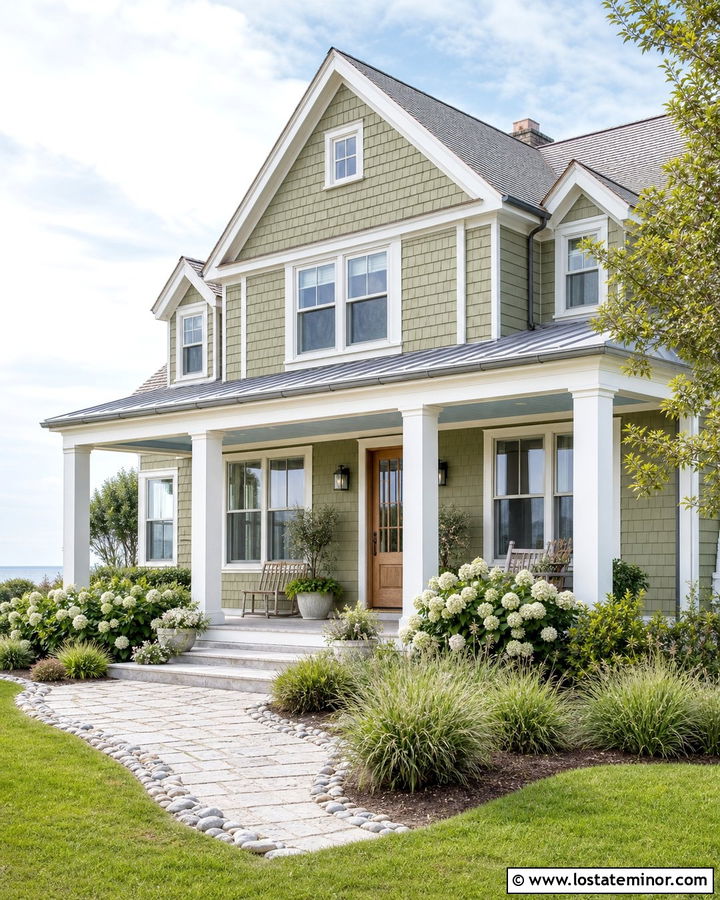
For a coastal home, a gray-blue porch ceiling provides color without competing with moss green siding. The slightly weathered blue can reference water and sky while remaining subtle enough for a natural exterior. Use soft white trim around windows, columns, railings, and roof edges. A light gray shingle roof, bleached wood door, and pale stone porch floor will keep the house feeling open and breezy. Consider shake siding in the upper gables to add texture without changing the color family. Brushed nickel or matte black fixtures can provide a modern finishing touch. Salt-tolerant grasses, hydrangeas, and a shell or gravel walkway suit the relaxed setting. The completed scheme works beyond the coastline, too, especially for homeowners who prefer fresh colors with understated contrast.
18. Moss Green Brick House With Cream Beadboard Ceiling
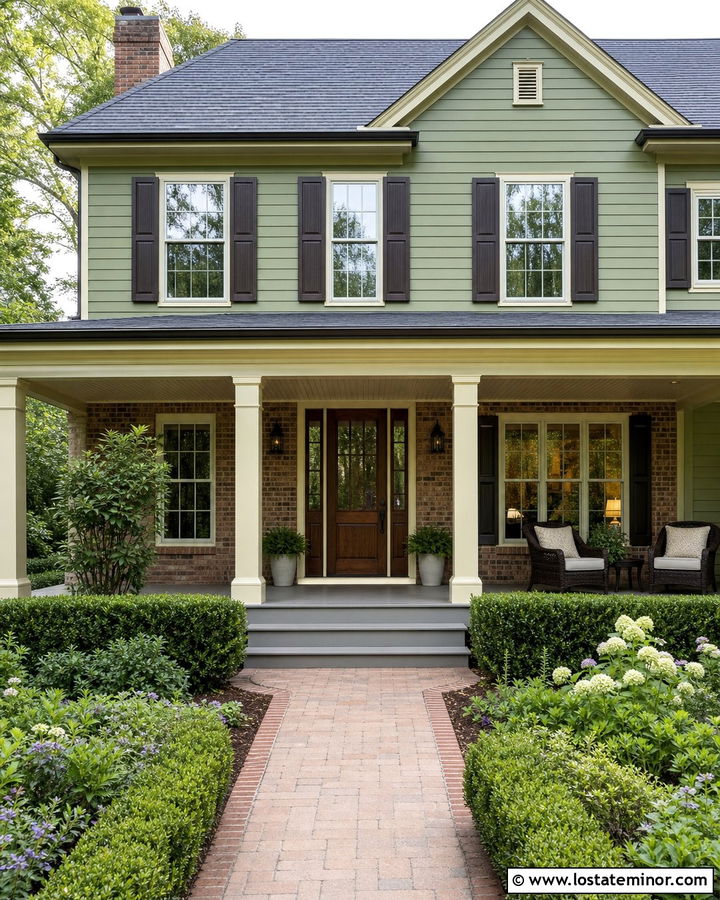
A partially brick house can wear moss green beautifully when the fixed masonry contains warm brown, tan, or muted red tones. Apply moss green to the siding and upper gables, then use cream beadboard across the porch ceiling. The softer cream will relate more naturally to aged brick than stark white. Repeat it on window trim, columns, and fascia for consistency. A walnut front door and dark bronze shutters can draw out the brick’s deeper tones. Keep the roof charcoal or weathered brown to anchor the mixed materials. For the porch floor, select brick, warm gray tile, or sealed concrete that does not clash with the existing masonry. Balanced hedges, flowering perennials, and a brick-edged walkway will unite the green siding, traditional ceiling, and masonry foundation.
19. Moss Green House With Reclaimed Wood Porch Ceiling
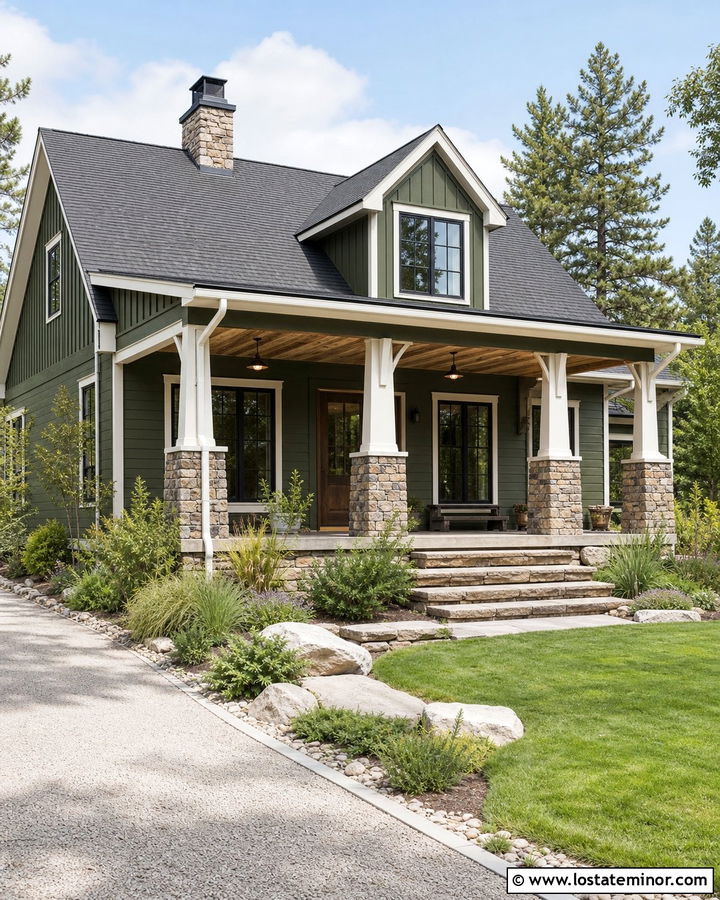
Reclaimed wood gives a moss green house a weathered, collected-over-time quality. Use boards with varied brown and gray tones, but avoid pieces that are badly warped or unsuitable for exterior exposure. The ceiling can become the textural highlight while moss green siding provides a calm background. Warm white trim, black windows, and a deep brown door will support the reclaimed material without copying every color within it. Add simple stone porch columns and a dark gray roof for a durable, grounded appearance. Minimal bronze pendants allow the irregular wood grain to remain visible. This treatment works well on cottages, farmhouses, cabins, and renovated ranch homes. Native plants, gravel borders, and natural stone steps can extend the relaxed material palette into the surrounding yard.
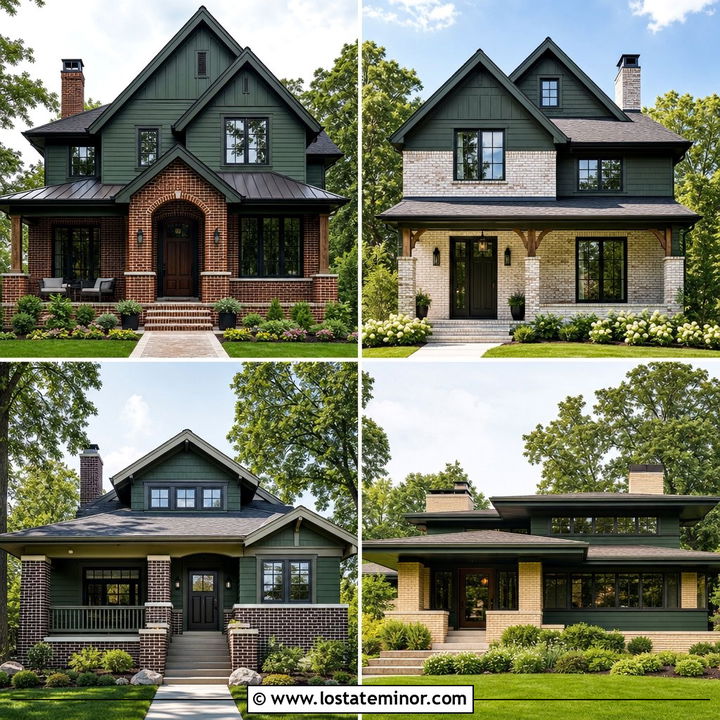
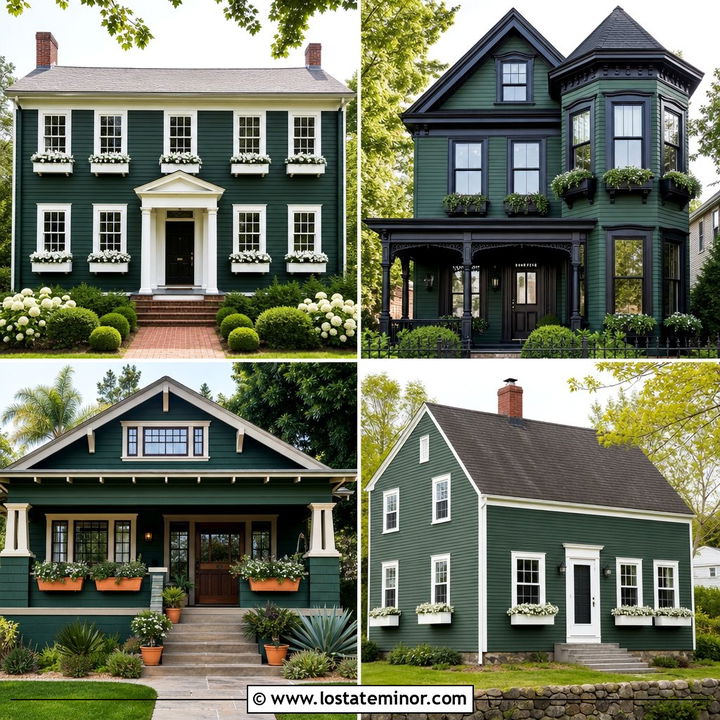
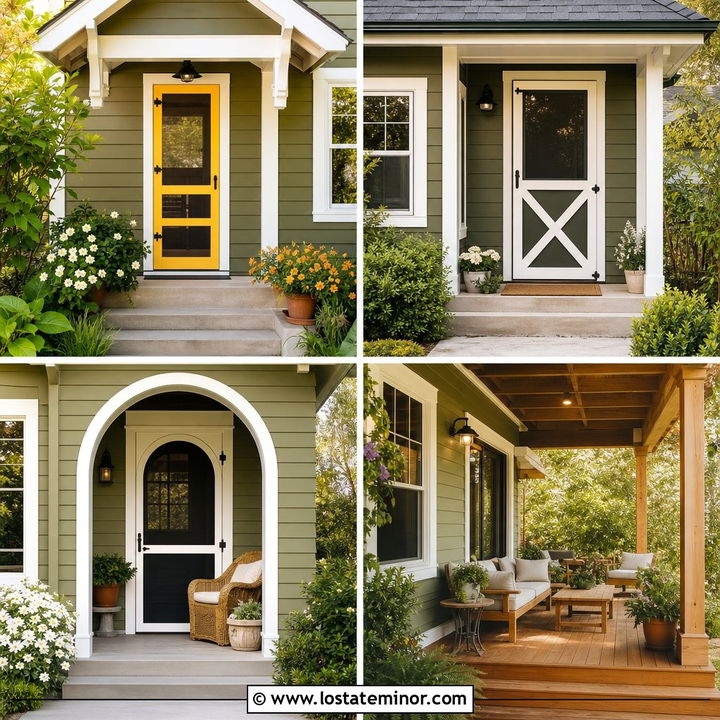
20. Moss Green Colonial Revival With Paneled Porch Ceiling
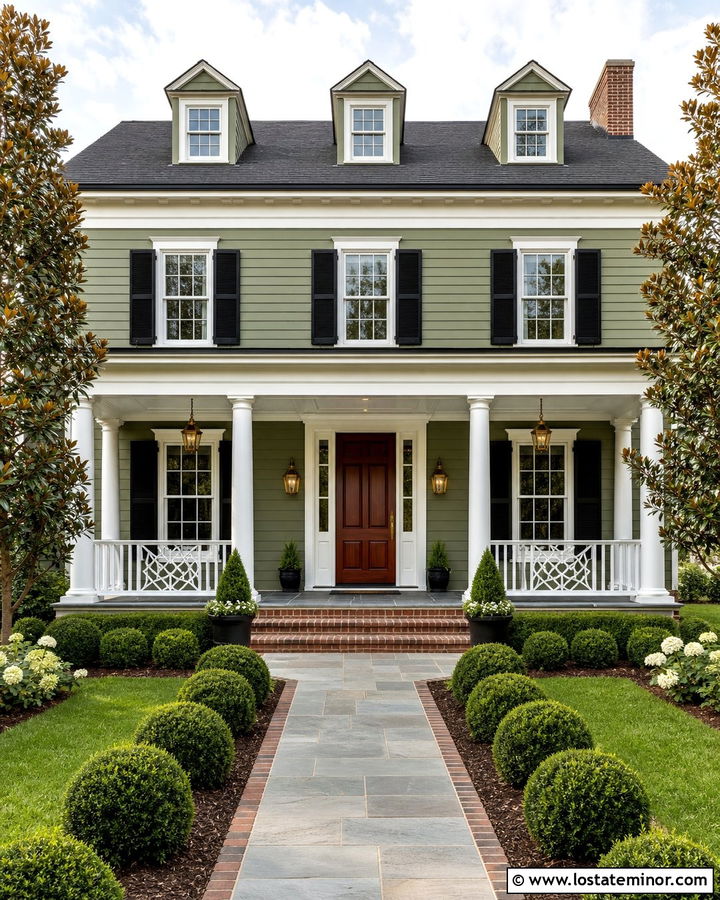
A paneled porch ceiling adds formal detail to a moss green Colonial Revival facade. Choose broad rectangular panels painted soft white, with slim molding that aligns neatly with the columns and front door. Moss green clapboard siding can cover the main house, while black shutters and a red-brown mahogany door establish classic contrast. White column capitals, railings, and window trim should remain consistent so the porch reads as one architectural unit. Traditional brass or black lanterns look appropriate when centered carefully within the ceiling layout. Brick steps and a dark slate porch floor will lend additional depth. Keep landscaping symmetrical with clipped boxwoods, paired planters, and evenly placed ornamental trees. The result feels polished and historically influenced while still using moss green as an approachable, nature-inspired body color.
21. Moss Green Midcentury House With Plywood Porch Ceiling
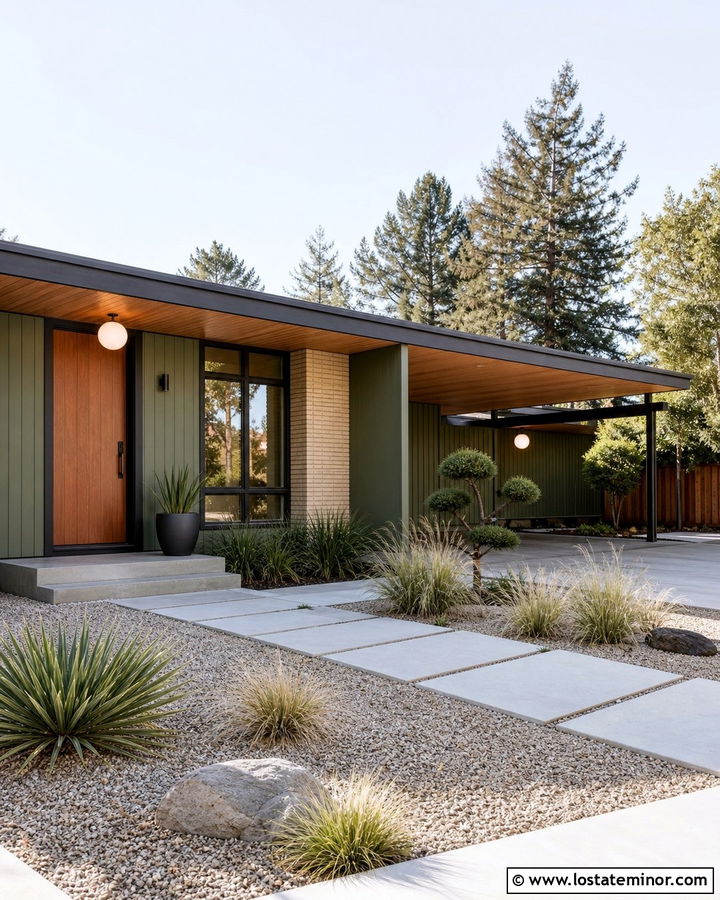
A clear-finished plywood ceiling can complement the straightforward geometry of a moss green midcentury house. Use high-quality exterior-rated panels with clean seams or narrow battens, creating a smooth overhead surface. Pair the ceiling with moss green vertical siding, charcoal trim, and a flat walnut entry door. Large windows, a low roofline, and a simple carport reinforce the period character. Add tan brick or light concrete block near the entrance to introduce a second natural texture. Compact globe lights or flush-mounted fixtures preserve the uncluttered ceiling plane. Extend the design into the yard with rectangular concrete pavers, gravel beds, sculptural evergreens, and ornamental grasses. The plywood brings warmth to the green facade while maintaining the practical, economical spirit associated with midcentury residential design.
22. Moss Green House With Charcoal Porch Ceiling
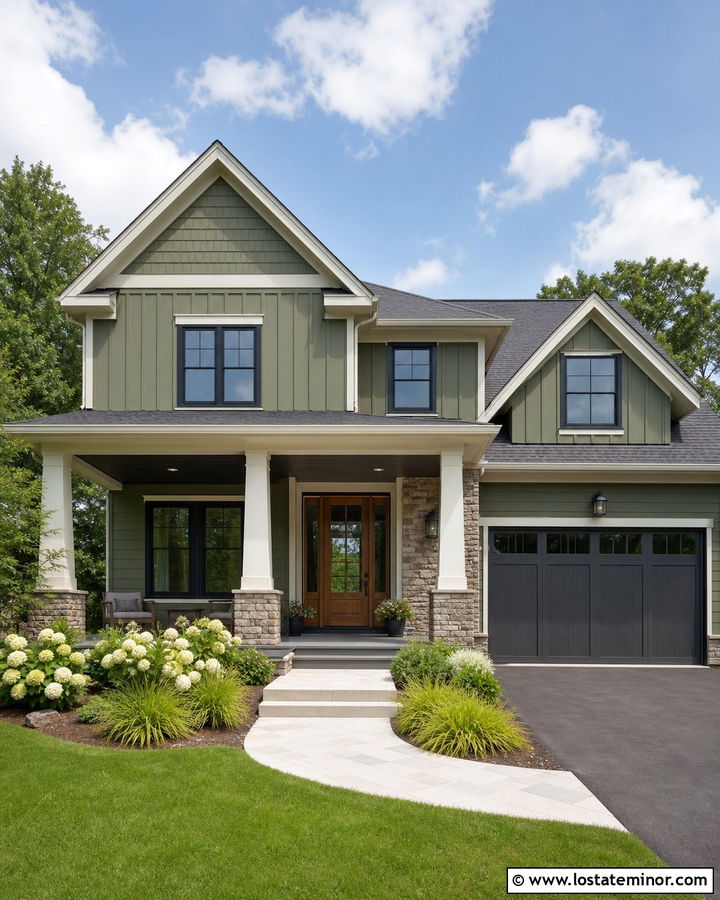
Charcoal offers a softer alternative to black for homeowners who want a dark porch ceiling. The deep gray shade adds definition above moss green siding but retains enough warmth to coordinate with stone, wood, and weathered roofing. Repeat charcoal on the window sash, garage door, and porch floor to distribute the color around the facade. Warm white fascia and column trim will prevent the exterior from becoming too dark. A medium oak front door creates a welcoming focal point and highlights the green siding’s earthy character. This scheme fits transitional homes, updated ranches, and simple two-story designs. Use recessed ceiling lights and reflective glass doors to brighten the shaded entrance. Foundation grasses, cream flowers, and a light concrete walkway can balance the deeper architectural colors.
23. Moss Green House With Copper Porch Ceiling
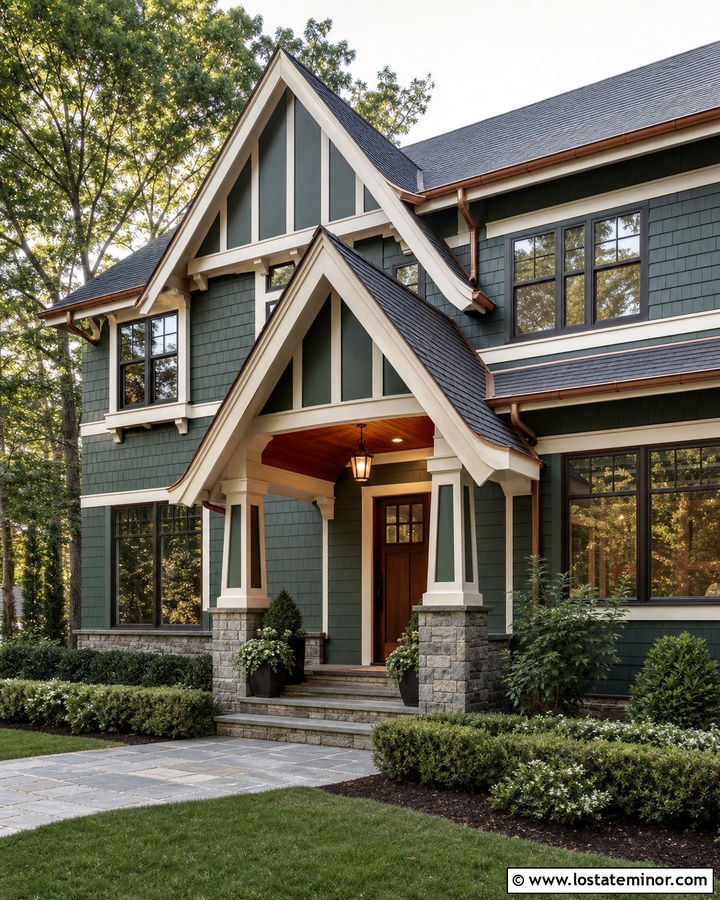
A copper porch ceiling creates a distinctive focal point on a moss green exterior. New copper begins with a warm metallic glow and may develop a changing surface over time, so the surrounding palette should remain restrained. Use moss green siding, creamy trim, and dark bronze window frames to frame the ceiling without competing with it. A walnut door and warm gray stone porch floor will support the copper’s rich color. This finish looks especially striking beneath a compact entry canopy on a Tudor, Craftsman, or traditional brick-and-siding house. Select simple lighting that does not hide the metal panels or decorative seams. Keep gutters and flashing visually coordinated, but avoid covering every accent in copper. Neat hedges and understated landscaping will let the architecture remain the main attraction.
24. Moss Green House With Bamboo Porch Ceiling
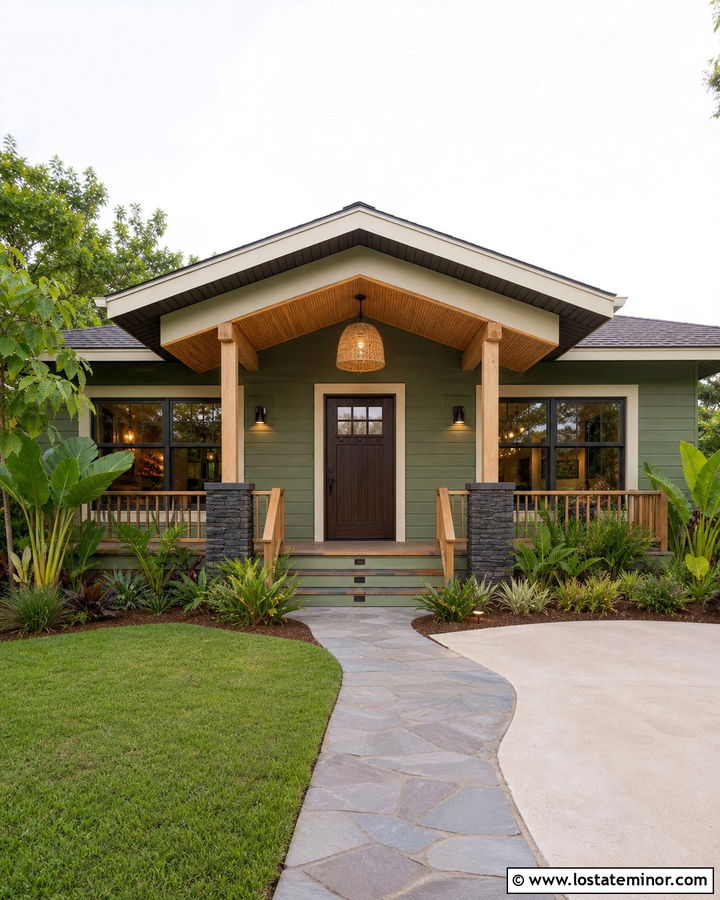
Bamboo can give a covered porch a warm, relaxed finish when the material is selected and installed for exterior conditions. Pair honey-toned bamboo panels with moss green siding, soft cream trim, and a dark brown front door. The natural ceiling works particularly well on a contemporary bungalow or tropical-influenced ranch with broad overhangs. Use charcoal stone, bronze window frames, and simple wood railings to keep the scheme grounded. A large woven pendant may add texture, but leave enough visible ceiling around it for the bamboo pattern to read clearly. Continue the natural mood with large-leaf plants, ornamental grasses, and a curved stone walkway. The finished facade should feel comfortable and modern, not themed. Limiting decorative accessories will help the green siding and bamboo remain balanced.
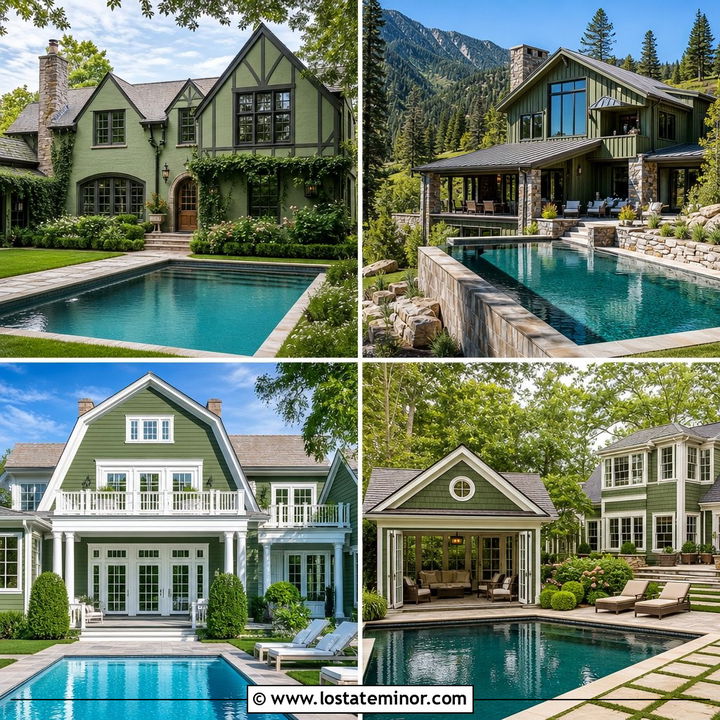
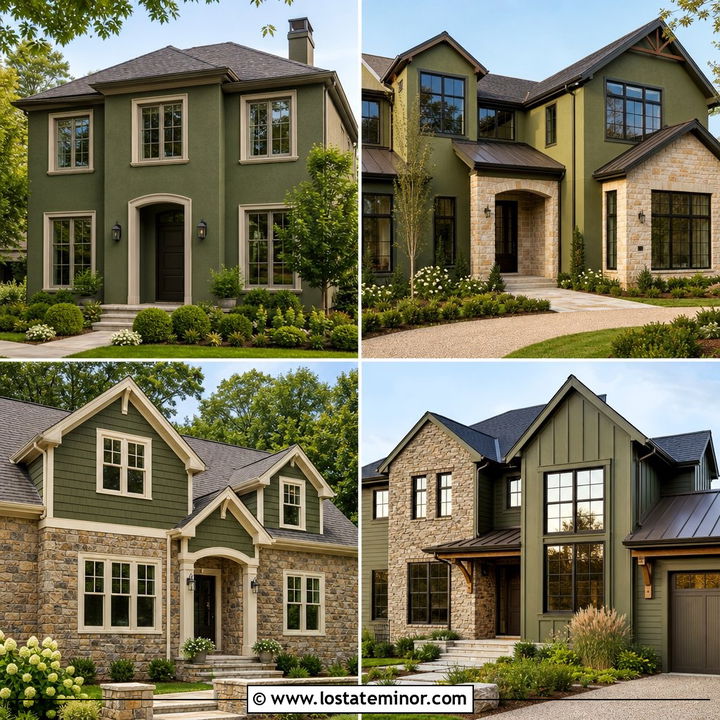
25. Moss Green House With Terracotta Porch Ceiling
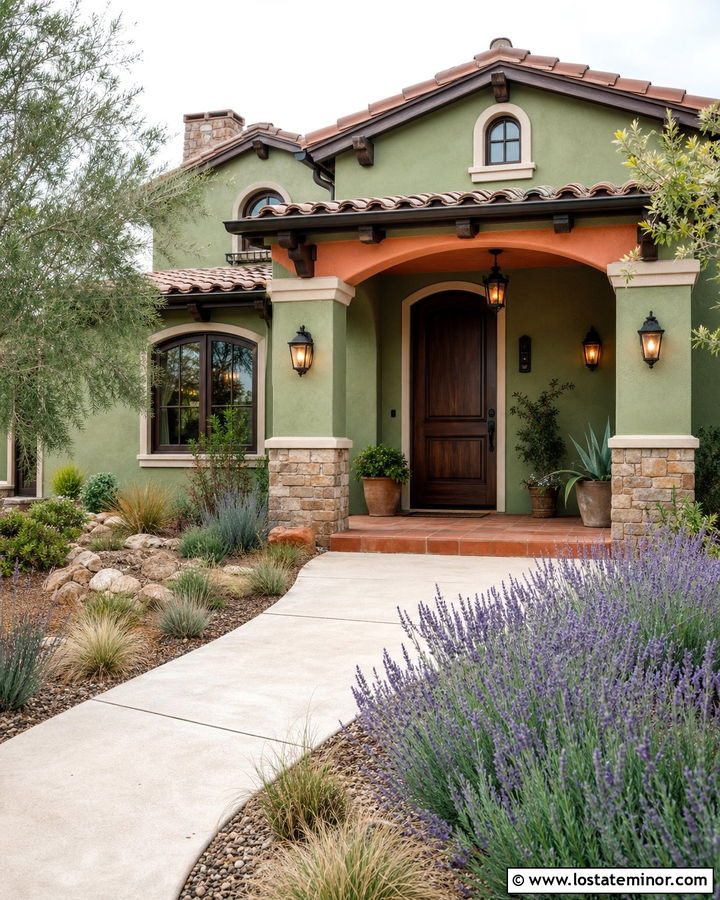
Terracotta overhead brings an unexpected warmth to moss green siding. Choose a muted clay color rather than vivid orange, allowing the ceiling to complement brick steps, terra-cotta planters, or a warm tile porch floor. Cream trim can outline the porch columns and windows, while a dark brown door anchors the entrance. This pairing works well on Spanish-influenced cottages, Southwestern homes, and eclectic bungalows with stucco or stone details. If the porch is small, keep the terracotta finish light enough that it does not visually lower the ceiling. Bronze sconces and wood beams can connect the clay tone to the rest of the facade. Drought-tolerant grasses, lavender, agave, and gravel beds will complete a landscape-conscious exterior that highlights the relationship between earthy red, green, and tan materials.
26. Moss Green House With Vaulted White Shiplap Ceiling
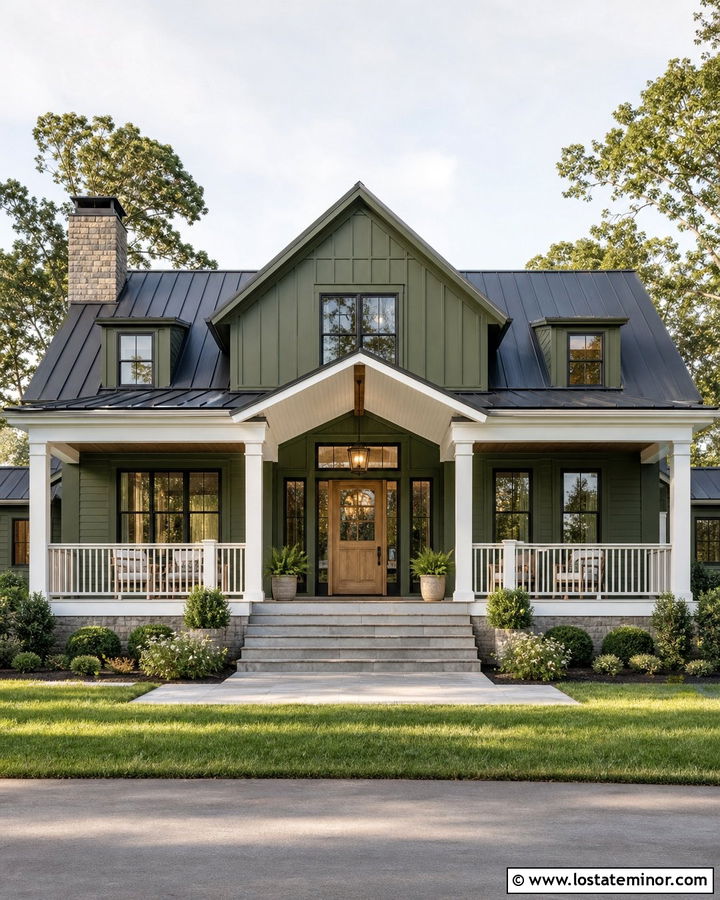
A vaulted white shiplap ceiling can make a covered porch feel taller and brighter. The strong roof shape becomes a clear architectural feature against moss green siding, especially on a farmhouse, lake house, or large Craftsman. Paint the rafters and planks the same warm white for a continuous overhead surface, or add one stained ridge beam for contrast. Repeat white on the columns, railings, and window trim. A natural oak door and gray stone porch floor will bring warmth beneath the bright ceiling. Center a substantial pendant or ceiling fan at the peak while keeping wiring and fixtures visually organized. Broad steps, layered shrubs, and symmetrical planters can emphasize the entrance. This complete scheme feels spacious, clean, and inviting without relying on an overly complicated exterior palette.
27. Moss Green House With Cypress Porch Ceiling
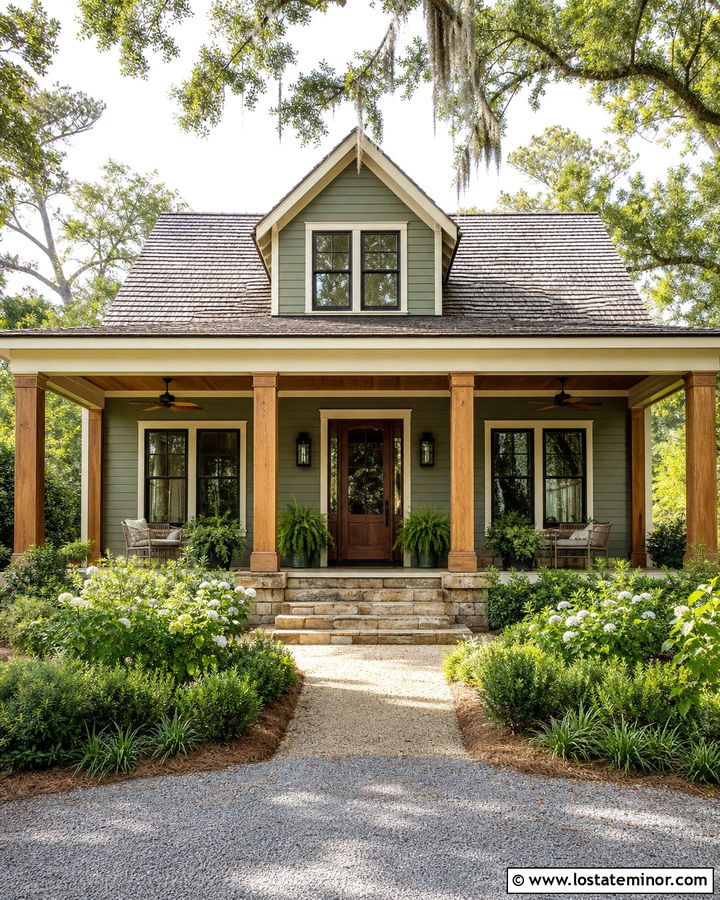
Cypress has a warm, organic appearance that fits naturally with moss green exterior paint. A clear or lightly stained cypress ceiling can reveal subtle grain without appearing as orange as some cedar finishes. Pair it with cream trim, bronze windows, and a rich brown front door for an understated woodland palette. Use cypress again on porch posts or a small section of railing to connect the overhead material to eye level. Fieldstone steps and a weathered charcoal roof will give the facade a grounded foundation. This combination suits Lowcountry cottages, Southern ranch homes, Craftsman houses, and cabins. Add fans with simple wood blades and warm metal hardware. Ferns, oakleaf hydrangeas, and native shrubs can surround the porch, reinforcing the home’s connection to its leafy setting.
28. Moss Green House With Two-Tone Porch Ceiling
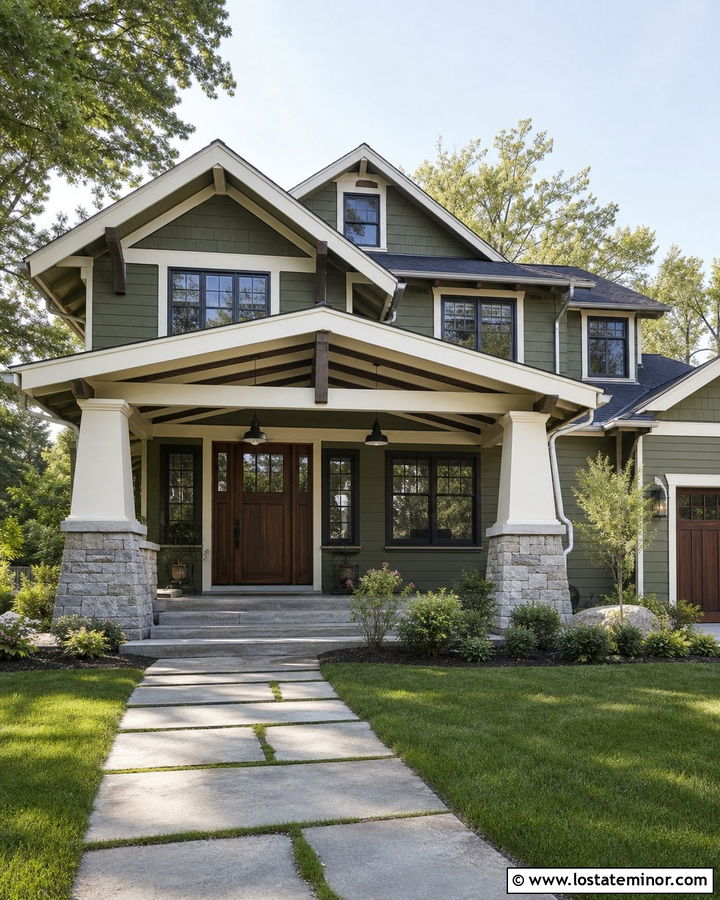
A two-tone ceiling can add architectural clarity when the porch includes beams, coffers, or a vaulted roof. Paint the main ceiling soft cream, then use natural wood or charcoal on the beams. Against moss green siding, this layered treatment feels detailed without introducing too many colors. Carry the cream onto columns and window trim, while repeating the darker beam color on the front door, porch floor, or window sash. This approach is useful for larger porches where one flat ceiling color might look unfinished. Keep fans and pendants simple so they do not compete with the pattern overhead. A gray roof, stone column bases, and restrained foundation planting will support the scheme. The repeated colors make the entire facade feel planned rather than assembled from separate exterior features.
29. Moss Green House With Skylight Porch Ceiling
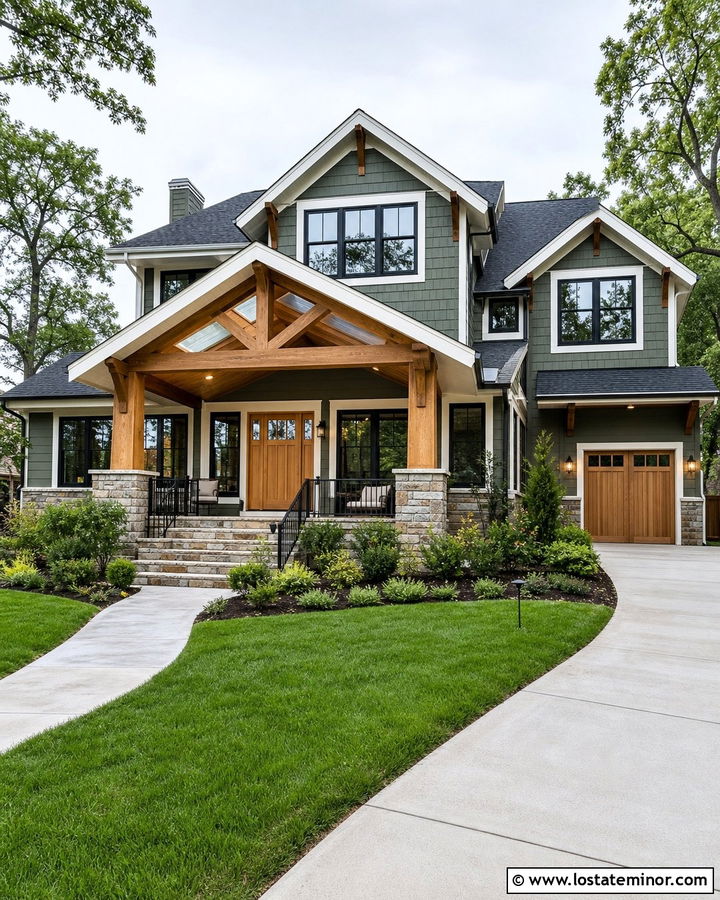
Skylights can solve one of the main challenges of a deep covered porch: limited daylight near the front windows and door. Frame the skylights within a warm white or light wood ceiling above a moss green house exterior. Keep their placement symmetrical and aligned with the porch bays for a clean architectural result. White trim, a natural wood door, and charcoal roofing provide an adaptable supporting palette. On a contemporary home, use smooth ceiling panels and slim black window frames. On a Craftsman, consider tongue-and-groove boards and stained beams. Recessed lights can fill in after sunset without cluttering the skylight arrangement. Finish the facade with stone steps, an open lawn, and layered shrubs. The brighter porch will make the moss green siding appear richer and more welcoming.
30. Moss Green House With Painted Pattern Porch Ceiling
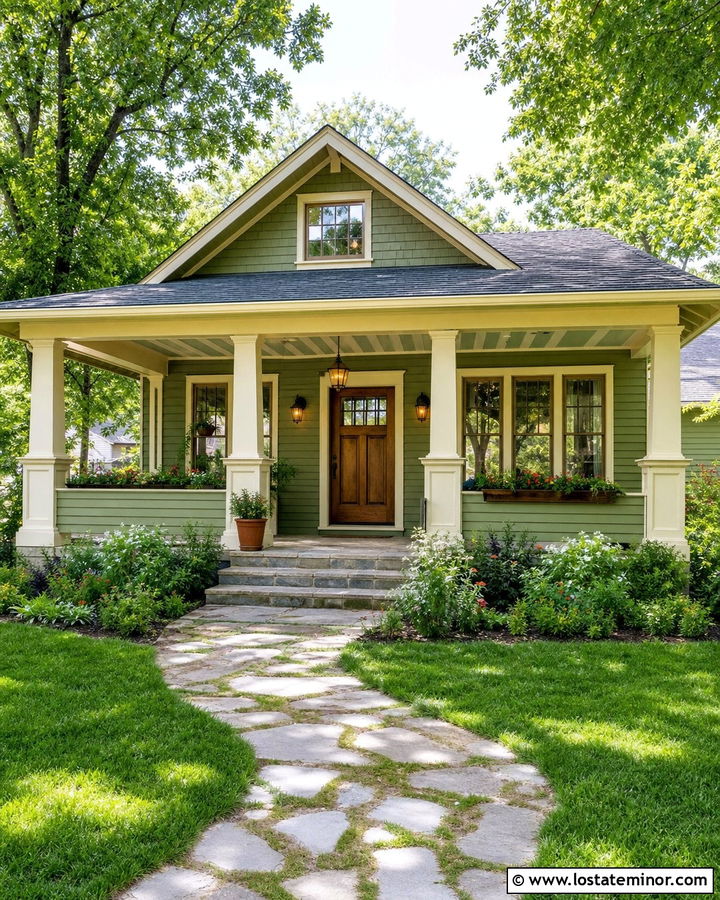
A painted pattern offers a playful finish for a moss green house when the rest of the facade remains controlled. Consider broad cream and pale sage stripes, a simple grid, or restrained geometric blocks across a flat porch ceiling. Keep the colors close in value so the pattern is visible without overwhelming the entrance. Moss green siding, cream trim, and a natural wood front door create a dependable background. Repeat one ceiling shade on porch furniture, the floor border, or window boxes to connect the design. This treatment suits eclectic cottages, folk Victorian houses, and cheerful bungalows. Simple white columns and bronze lighting will allow the overhead pattern to stand out. Informal flower beds and a winding stone path can complete the personalized but cohesive curb-appeal scheme.
Conclusion:
The most successful porch ceiling does more than decorate the space above the entrance. It connects the moss green siding with the home’s trim, door, roofing, masonry, flooring, and natural surroundings. Pale blue and white ceilings brighten traditional porches, while cedar, cypress, and stained pine create warmth. Charcoal, black, copper, and patterned finishes provide stronger architectural contrast. Before committing, view exterior samples beside every permanent material and study them in changing daylight. Also choose paints, stains, panels, fasteners, and lighting rated for the porch’s exposure. These 30 Moss Green House Design With Porch Ceiling Ideas offer flexible starting points for creating a distinctive home that feels balanced, welcoming, and thoughtfully connected to its landscape.

Related posts: