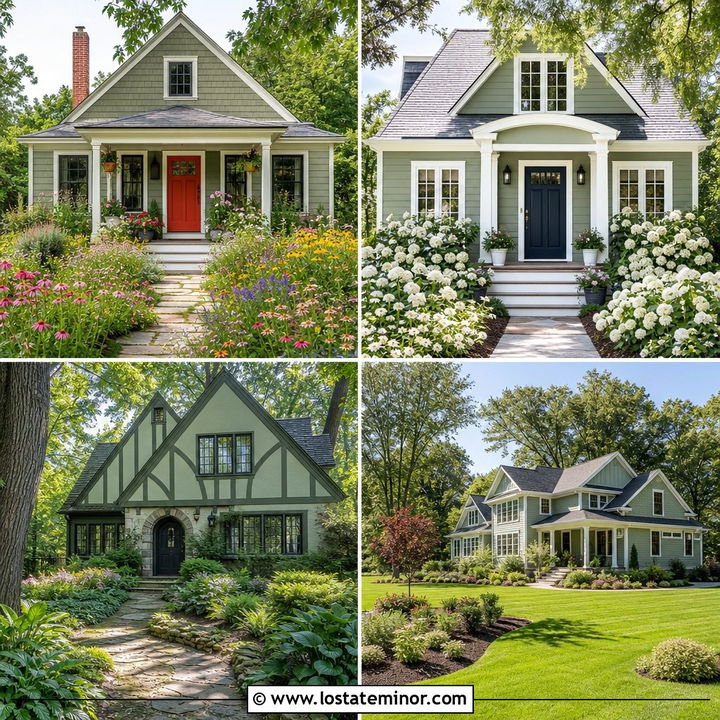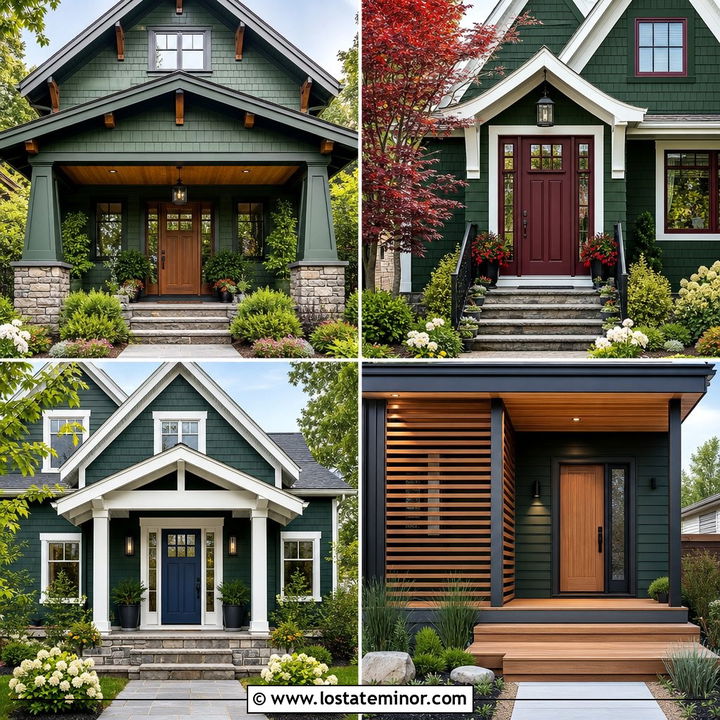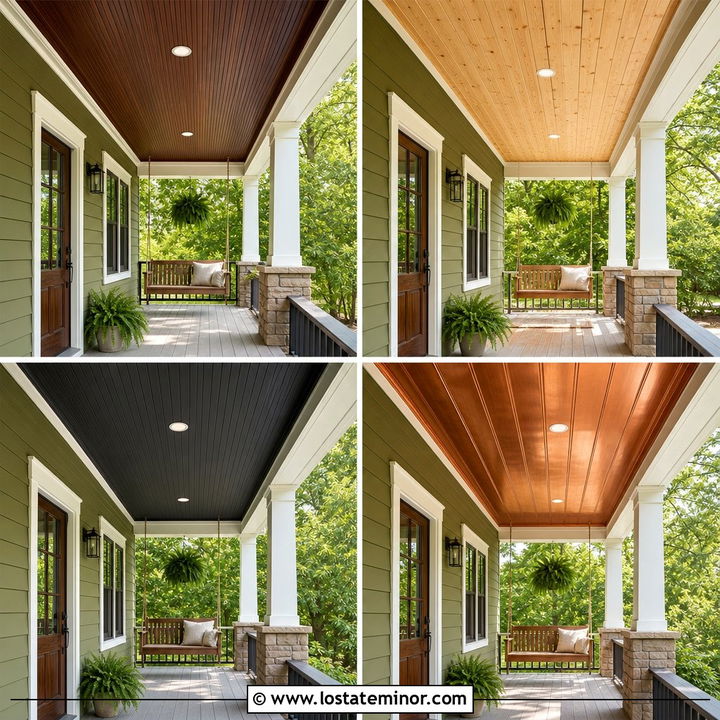
Sage green brings a calm, welcoming character to a home while giving the exterior enough color to stand apart from ordinary neutrals. These 30 Sage Green House Design With Front Porch Ideas explore complete color schemes rather than isolated paint choices. Each look coordinates the siding with porch columns, flooring, railings, trim, roofing, doors, masonry, and landscaping. You will find options for farmhouses, Craftsman homes, cottages, ranch houses, Colonials, and modern architecture. Some combinations feel crisp and traditional, while others use black metal, cedar, brick, or stone for stronger contrast. Consider your home’s fixed materials and natural light before choosing a shade. Use these complete 30 Sage Green House Design With Front Porch Ideas to find a balanced look for your property.
1. Sage Green Farmhouse With White Front Porch
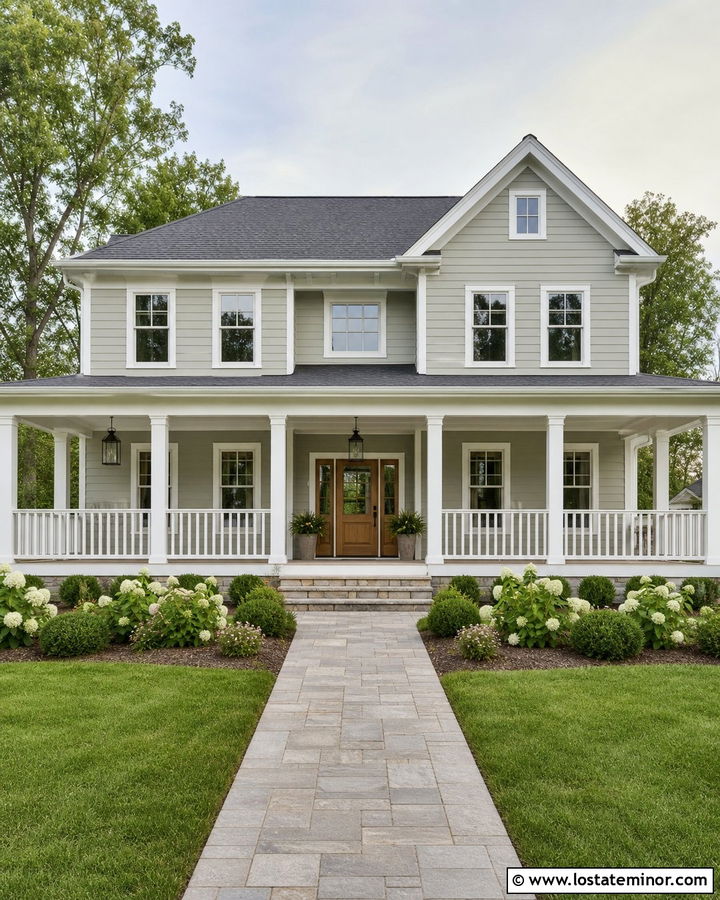
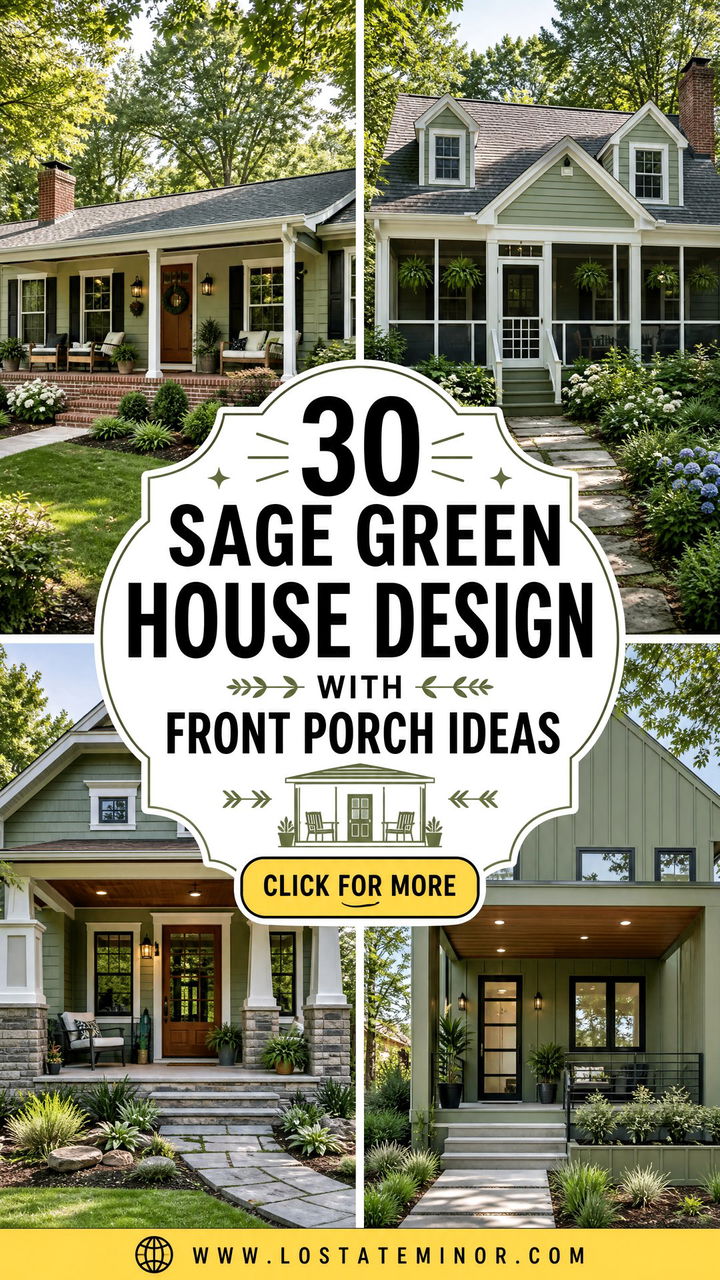
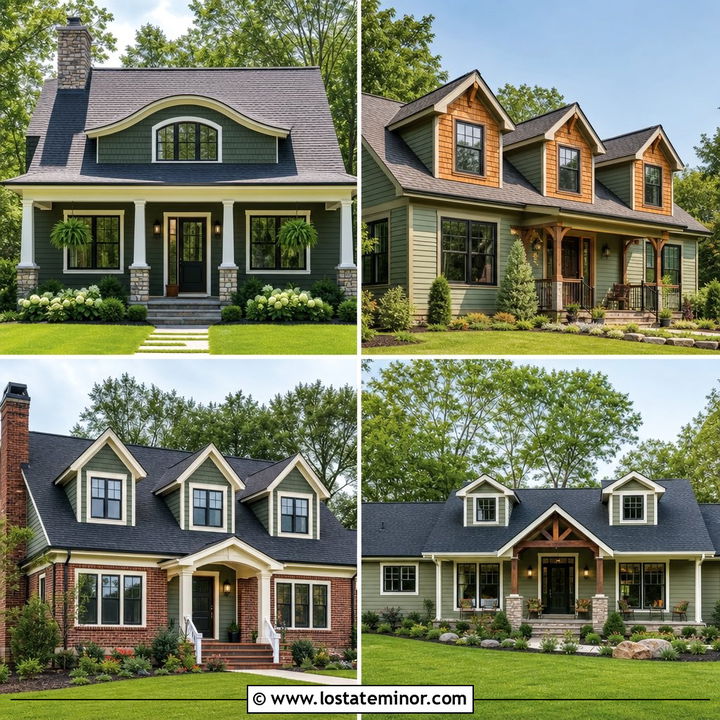
A long white porch gives sage green farmhouse siding a clean, familiar frame. Choose a soft gray-green for the horizontal siding, then repeat crisp white on the columns, railings, fascia, and window trim. A medium-brown wood door prevents the palette from feeling too cool. Natural porch boards or warm gray composite decking can add another practical layer of color. Complete the facade with a charcoal architectural-shingle roof and simple black lanterns. Keep the foundation neutral so it does not compete with the porch. Hydrangeas, boxwoods, and ornamental grasses soften the straight lines around the steps. This complete scheme works especially well on a symmetrical farmhouse because the white porch emphasizes its width while sage green keeps the large exterior relaxed.
2. Sage Green Craftsman With Cedar Porch Posts
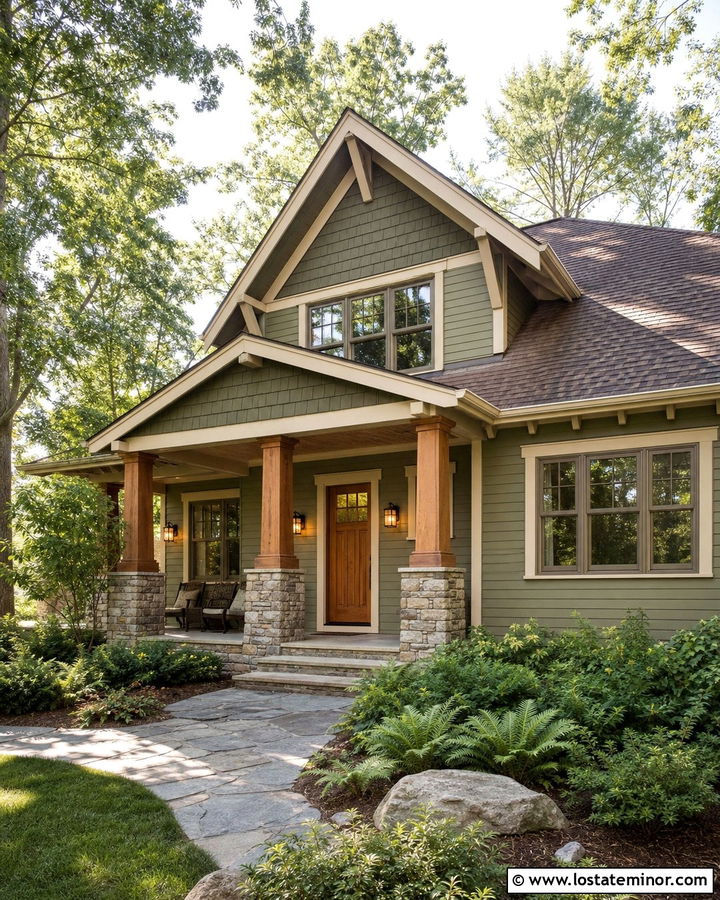
Warm cedar details bring out the earthy side of a sage green Craftsman exterior. Use muted sage lap siding across the main facade and slightly darker sage shingles beneath the front gables. Thick cedar porch posts can rest on square stone bases, creating a sturdy transition between the siding and landscape. Carry the wood tone onto the front door, porch ceiling, and stair handrails for continuity. Cream trim provides a softer contrast than bright white and suits the substantial Craftsman details. Finish the house with a weathered brown roof and bronze porch lights. A flagstone walkway, layered shrubs, and low native plants strengthen the natural palette. The result feels warm, established, and carefully coordinated without making the porch appear heavy.
3. Sage Green Modern Farmhouse With Black Front Porch
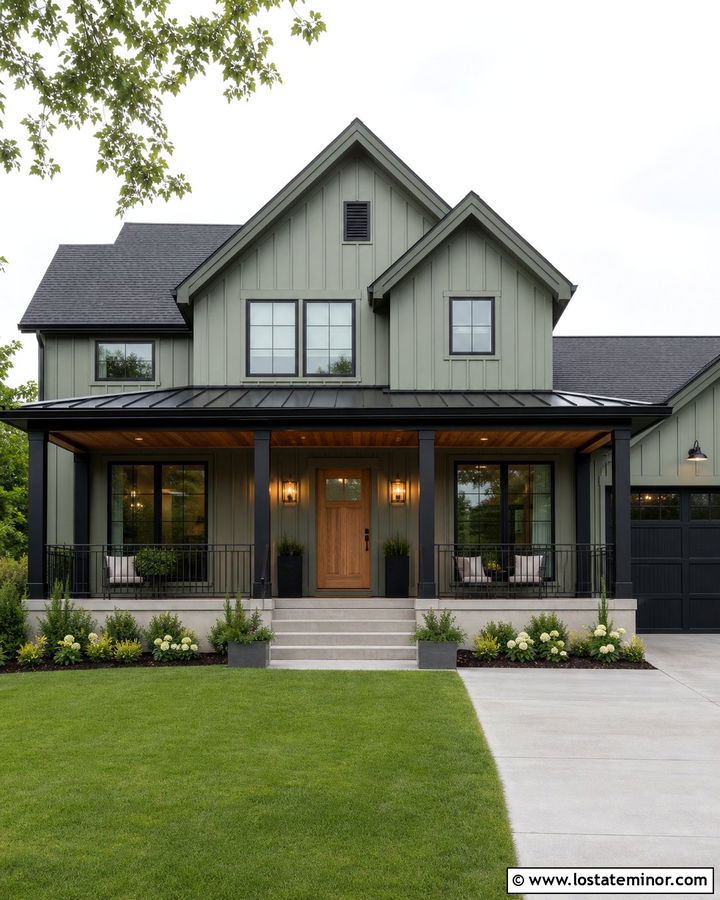
For sharper curb appeal, pair sage green board-and-batten siding with a black front porch framework. Matte black columns, window frames, railings, and lights create slim graphic lines against the quiet green body color. Keep the porch ceiling warm by covering it with natural cedar planks. A clear-finished oak front door adds softness between the dark accents and siding. Use a black standing-seam metal roof over the porch, even if the main roof has charcoal shingles. Wide concrete steps and simple rectangular planters support the modern farmhouse character. Avoid adding shutters because the vertical siding and black windows already provide definition. This scheme feels current and streamlined, yet the sage body color stops the high-contrast combination from looking cold or overly stark.
4. Sage Green Cottage With Cream Front Porch
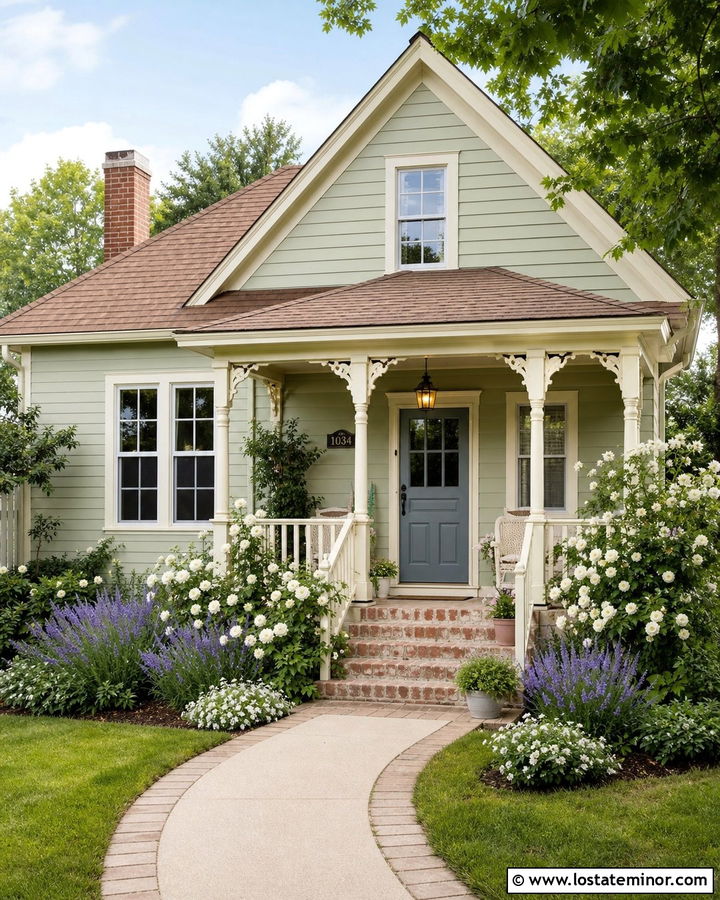
Imagine a small cottage surrounded by flowers, with creamy porch details gently outlining its sage green facade. A warm, slightly yellow sage works best with ivory trim, especially when the house has curved brackets, divided-light windows, or scalloped shingles. Paint the porch columns, railings, and fascia the same creamy white to create a continuous frame. Add a soft blue-gray door for a subtle accent that does not overpower the exterior. Weathered brick steps and a light brown roof contribute to the relaxed, collected appearance. Plant lavender, white roses, and leafy shrubs along a curved walkway. The softer contrast makes this combination forgiving on an older home, while the detailed porch gives the modest facade a welcoming focal point with genuine cottage character.
5. Sage Green Bungalow With Stone Porch Columns
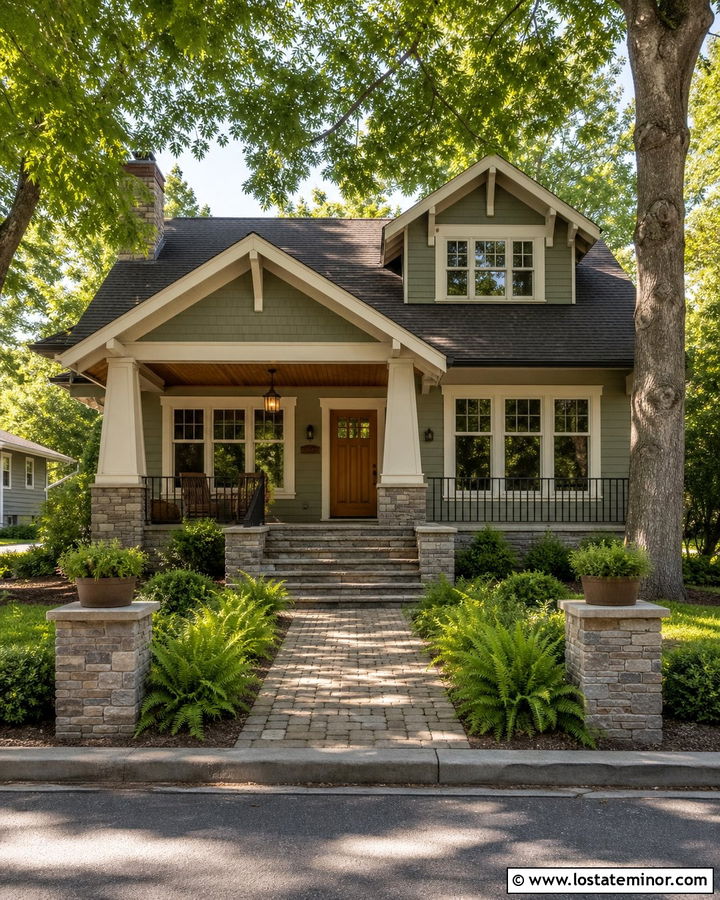
A deep front porch can make a sage green bungalow look grounded and substantial. Cover the house in midtone sage lap siding, then use warm white around the windows, roof edges, and porch beams. Tapered columns placed on mixed gray and tan stone bases add visual weight without hiding the siding. Choose a medium oak door and repeat that wood tone on the porch ceiling. Dark bronze railings, gutters, and lights provide quiet definition. A roof in charcoal brown connects the green siding to the varied stone colors. Finish the approach with wide stone steps and a straight paver path surrounded by ferns and compact shrubs. Every material supports the Craftsman-influenced bungalow shape, creating a front porch that feels like part of the original architecture.
6. Sage Green Ranch House With Brick Front Porch
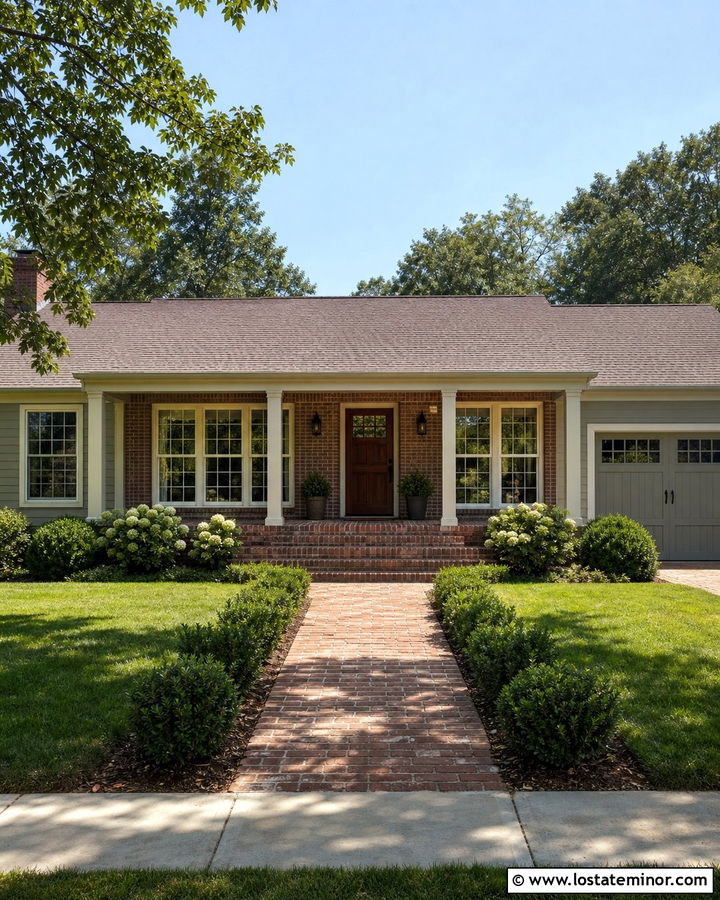
Existing red or brown brick can work beautifully with sage green when the undertones are carefully coordinated. On a ranch house, use a warm sage siding color that relates to the muted tan and brown notes in the brick. Keep the original brick on the porch floor, steps, and column bases rather than painting everything. Cream trim creates a comfortable bridge between the green body and warm masonry. A stained walnut door adds depth, while dark bronze fixtures echo the darkest tones in the brick. Paint the garage door sage so the wide ranch facade remains visually calm. Low foundation shrubs and a broad walkway reinforce the horizontal architecture. This approach updates the house while respecting durable brick features that already give the porch texture and character.
7. Sage Green Cape Cod With Screened Front Porch
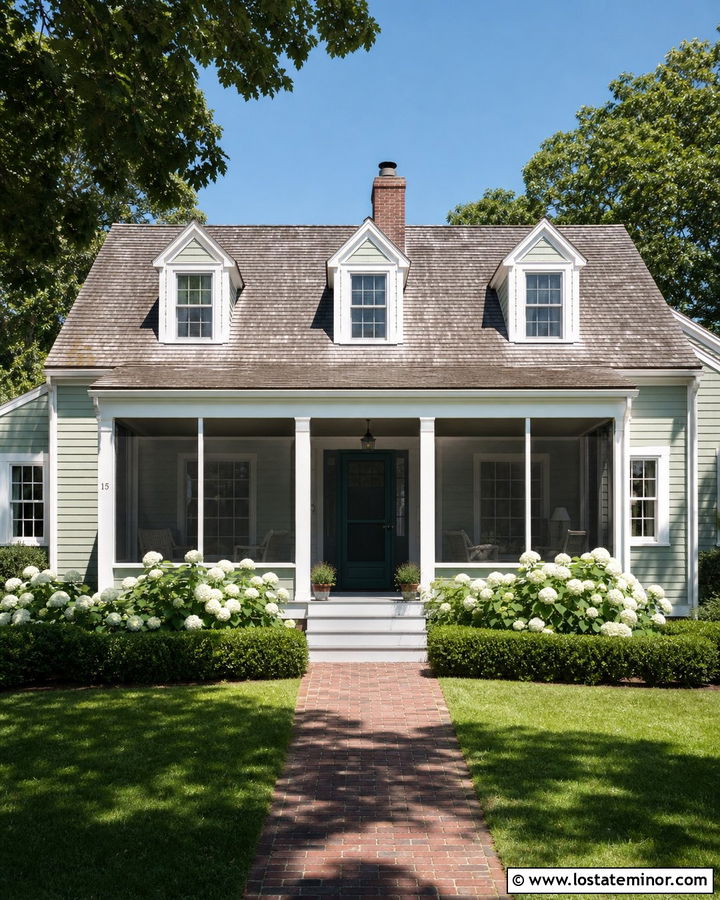
A screened porch can expand the visual width and everyday function of a sage green Cape Cod home. Select a pale sage for the clapboard siding and clean white for the porch structure, window trim, corner boards, and dormers. Dark bronze screening offers a softer appearance than solid black mesh from the curb. Paint the screen door a deeper green to add definition without introducing an unrelated accent color. Gray porch flooring and a weathered gray roof keep the palette coastal and restrained. Use simple square columns so the enclosure does not feel crowded. White hydrangeas and clipped hedges can frame a brick walkway leading to the entrance. The finished porch looks airy and connected to the house rather than like a dark addition attached later.
8. Sage Green Barndominium With Covered Front Porch
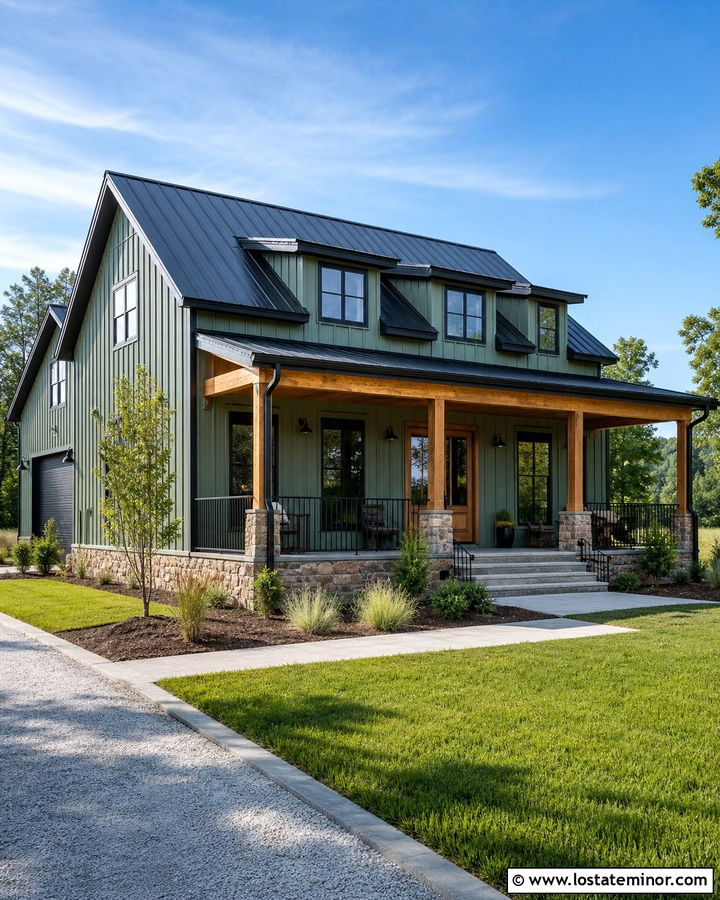
A broad covered porch helps soften the large scale of a sage green barndominium. Use medium sage vertical metal siding or board-and-batten across the main structure, paired with a matte charcoal roof. Natural timber posts and beams introduce warmth and break up the long facade. Repeat the timber color on double front doors and the porch ceiling. Black-framed windows and simple metal railings connect the siding to the roof without overwhelming the green. A stone skirt along the foundation can make the structure feel firmly settled into the property. Choose large concrete pavers for the porch and walkway. Native grasses, young shade trees, and broad planting beds create an appropriate setting. The complete design feels practical, modern, and welcoming from a distance.
9. Sage Green Colonial With Gray Front Porch
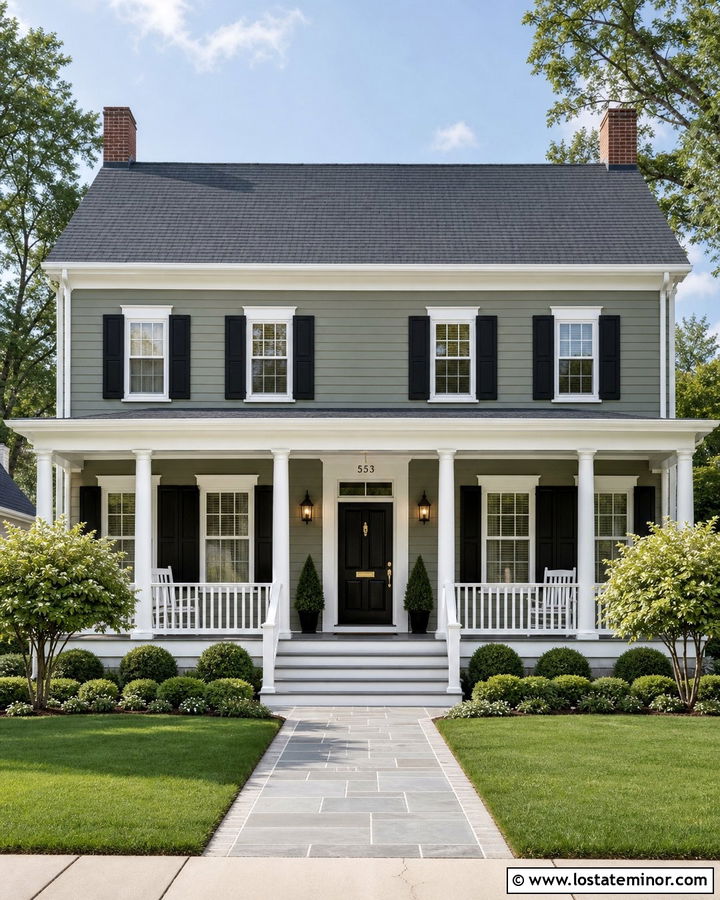
A symmetrical Colonial can handle a refined sage, gray, and white exterior scheme. Paint the clapboard body a balanced sage green, then highlight the windows, cornice, and porch columns with soft white. Use medium gray on the porch floor and steps to conceal everyday wear while connecting the entrance to a slate-colored roof. A polished black front door gives the centered facade a strong focal point. Add black shutters only when they are correctly sized for the windows. Traditional brass or aged bronze door hardware can warm the formal palette. Frame the front walk with matched shrubs and small ornamental trees to support the architecture’s symmetry. The restrained porch colors allow the sage siding to remain noticeable while preserving the orderly, traditional appearance associated with Colonial homes.
10. Sage Green Craftsman With Wood Porch Ceiling
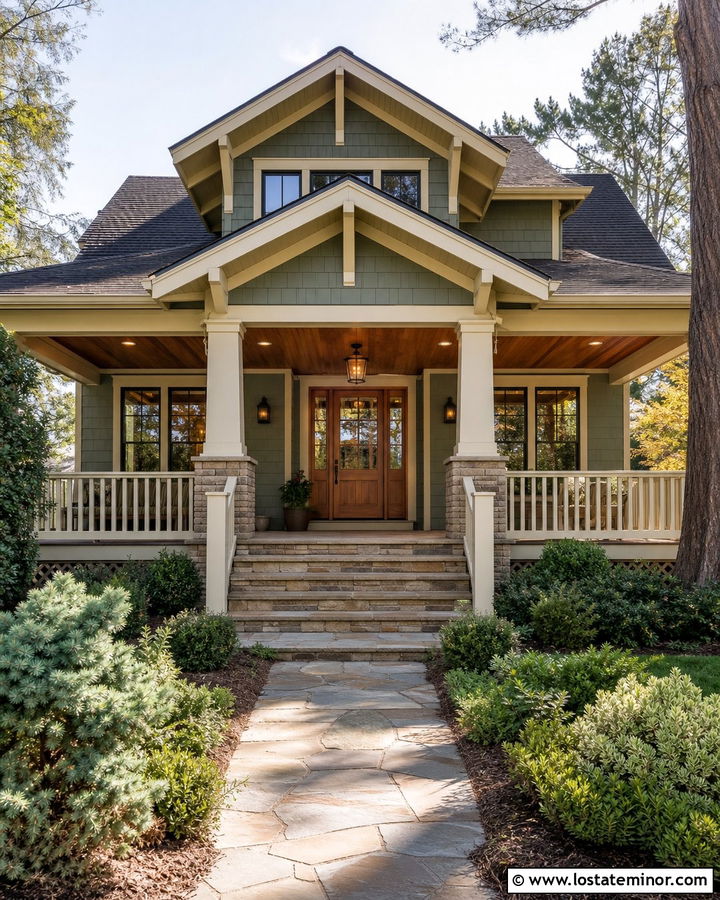
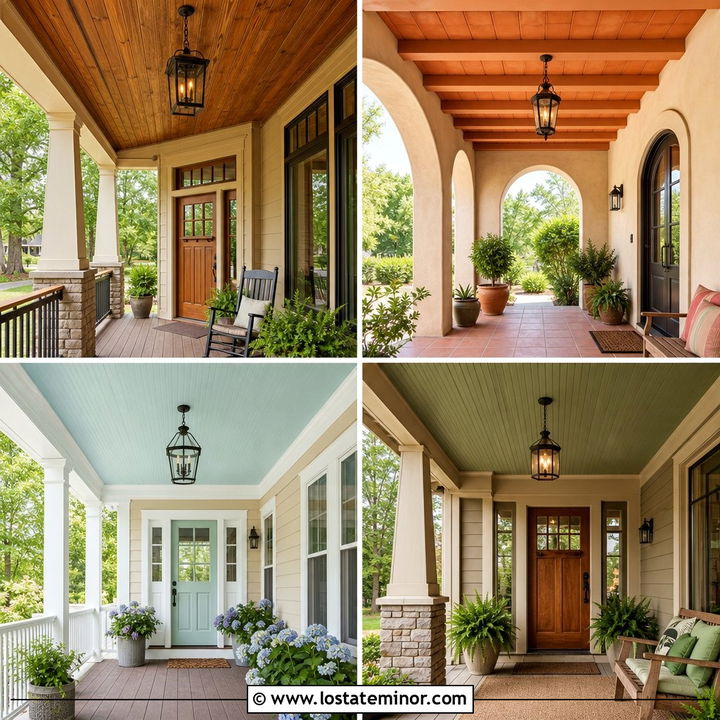
Looking upward from the front steps, a natural wood ceiling can make a sage green porch feel especially warm. Use a smoky sage body color with creamy trim and chunky square columns. Cover the porch ceiling in clear-finished cedar planks, aligning the boards neatly with the entrance. The wood reflects a warmer tone onto the doorway during daylight and gives the covered space more visual depth. Repeat cedar on the front door or a built-in porch bench, but keep the railings cream for a lighter boundary. Stone steps in mixed gray and taupe connect the green siding to the yard. Dark bronze lights and a brown-black roof finish the palette. This combination creates a sheltered, inviting Craftsman entrance without relying on decorative clutter.
11. Sage Green Southwest House With Terracotta Front Porch
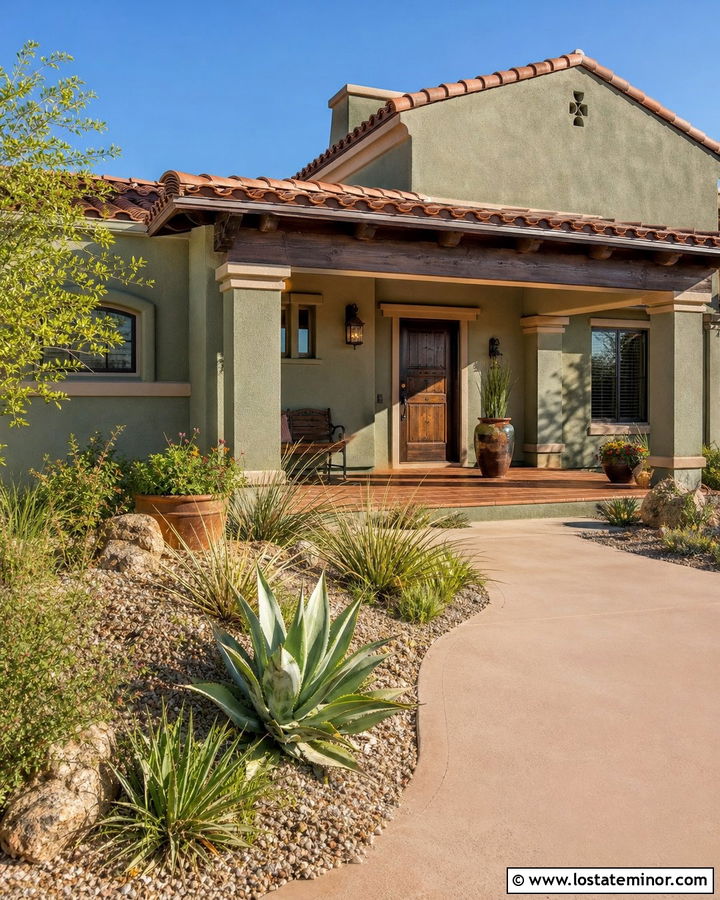
Sage green can complement a Southwest-inspired house when it is paired with sun-warmed earth tones. Use dusty sage stucco across the main walls and creamy sand on the trim, parapets, and porch beams. Terracotta porch tile introduces rich color beneath the covered entrance without requiring a bright body shade. Choose a dark stained wood door with simple iron hardware, then repeat blackened bronze on the lights. Exposed timber beams can add architectural rhythm above the porch. A clay tile roof or brown metal roof supports the warm palette. Surround the walkway with gravel, agave, ornamental grasses, and drought-tolerant shrubs. The green stucco brings a cooler natural note to the composition, while the terracotta floor and wood entrance keep the house connected to its regional character.
12. Sage Green Coastal House With Navy Front Porch Door
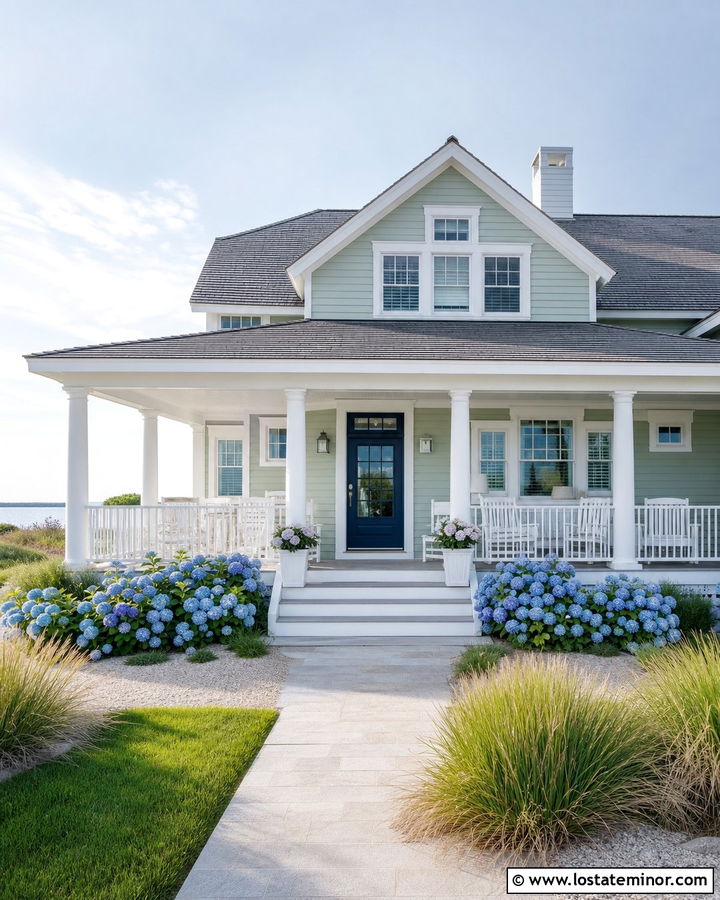
A navy front door gives pale sage siding enough contrast for a fresh coastal exterior. Cover the house in light sage shingles or clapboards, then use bright white on the porch columns, window casing, railings, and roof trim. Select a deep navy door as the focal point and repeat the color sparingly on porch planters or small shutters. Weathered gray decking and a medium gray roof create a relaxed base. Keep the porch furniture natural or white so the entrance does not become overly themed. Blue hydrangeas, dune grasses, and a crushed-shell-toned walkway can reinforce the breezy palette. The result feels crisp in bright daylight, but sage green is softer than a plain white exterior and gives the entire coastal facade greater depth.
13. Sage Green Victorian With Burgundy Front Porch
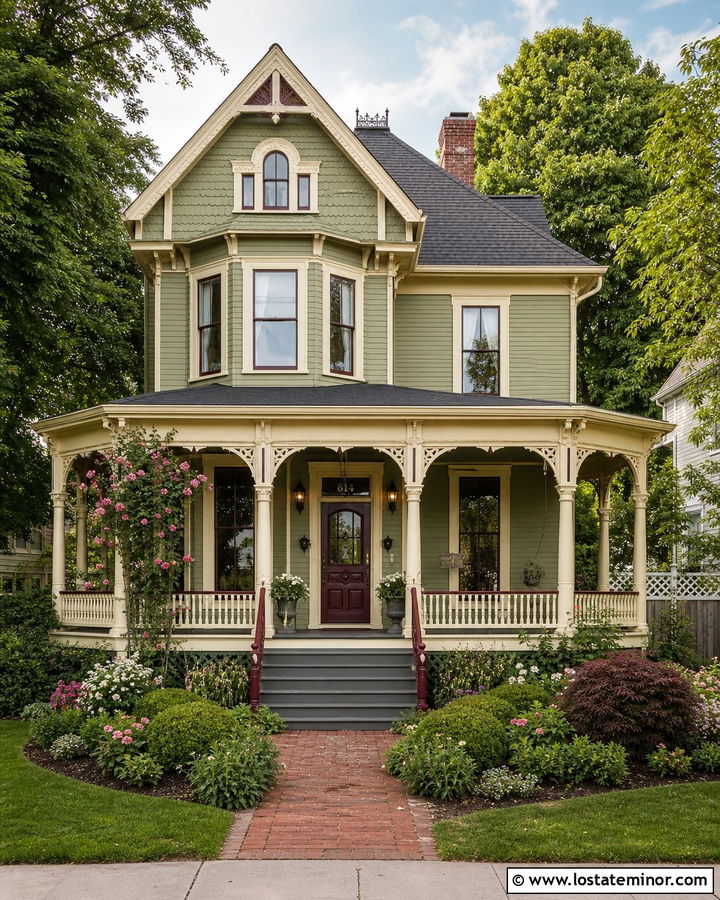
Decorative Victorian architecture offers many places to layer color, but the final scheme should remain controlled. Start with a muted sage green body and use cream on the window trim, brackets, porch columns, and ornamental molding. Add deep burgundy to the front door, small gable details, and selected porch rail accents. This limited placement gives the facade richness without turning every feature into a separate color statement. Paint the porch floor a dark warm gray that can handle foot traffic and balance the burgundy. A charcoal roof and antique bronze lights complete the traditional palette. Curved flower beds, climbing roses, and a brick walkway soften the detailed architecture. Sage acts as the unifying background, allowing the decorative front porch to look elegant rather than visually busy.
14. Sage Green Bungalow With Yellow Front Porch Door
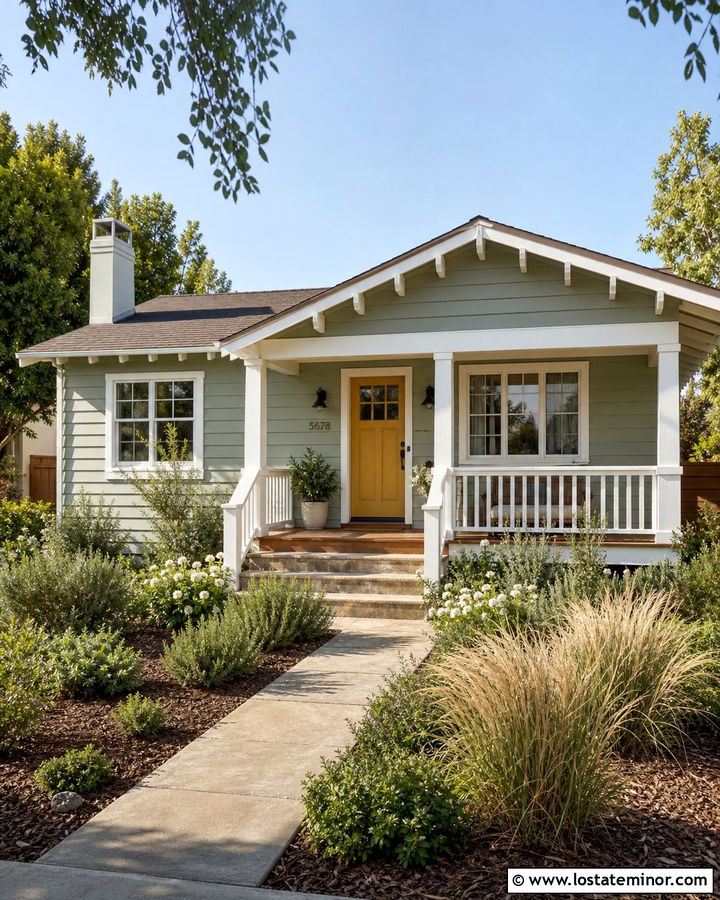
A muted yellow door can brighten a sage green bungalow without overwhelming its compact facade. Choose soft sage horizontal siding and warm white for the porch columns, railings, trim, and exposed rafter tails. The door should be a subdued ochre or golden yellow rather than a sharp lemon tone. Natural wood porch decking and tan stone steps keep the cheerful accent grounded. Use dark bronze lights and house numbers for definition. A medium brown shingle roof will relate comfortably to the door and wood floor. Plant white flowers, rosemary, and low ornamental grasses along a simple path. Because yellow sits in one concentrated area, it guides attention directly to the entrance while sage green keeps the rest of the exterior calm, cohesive, and easy on the eye.
15. Sage Green Contemporary House With Matching Front Porch
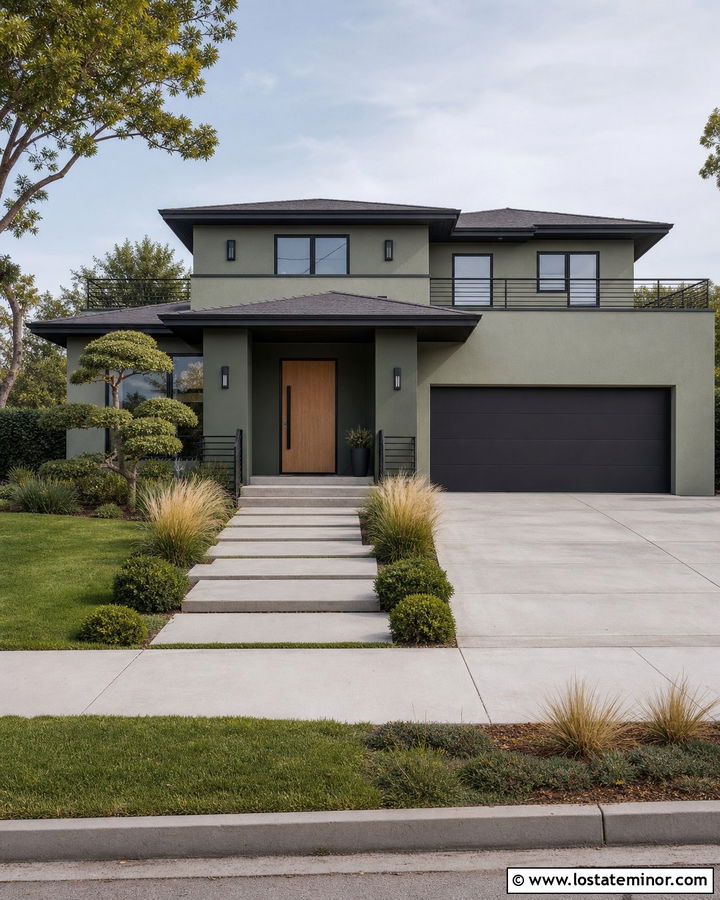
A monochromatic palette can make a contemporary sage green home feel larger and more composed. Use one medium sage on the primary stucco or vertical siding, then apply a deeper sage to the recessed front porch. The tonal shift defines the entrance without breaking up the simple architecture. Keep window frames, railings, and lights matte black for crisp contrast. A natural oak pivot door introduces warmth and becomes the porch focal point. Large-format concrete paving should flow from the driveway to the entrance with minimal joints. Flat or low-slope charcoal roofing supports the clean shape. Use structured landscaping with ornamental grasses, clipped shrubs, and one sculptural tree. The restrained combination lets color, shadow, and texture create interest rather than relying on decorative exterior elements.
16. Sage Green Tudor With Dark Green Front Porch Trim
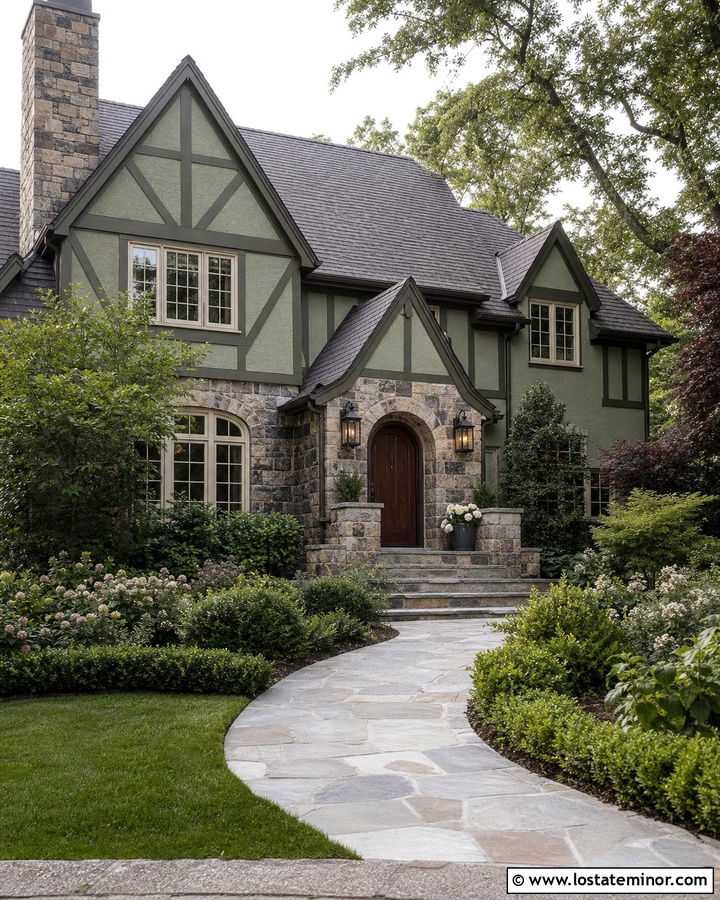
A Tudor exterior gains depth when sage siding is paired with dark green instead of predictable black trim. Use dusty sage stucco or shingle siding between the architectural beams, then apply a deep olive-green color to the porch structure, window frames, and selected half-timber details. Cream around the windows can prevent the facade from becoming too dark. An arched walnut door naturally suits the entrance and warms both greens. Add brown and gray stone around the porch base, steps, and lower walls. A steep charcoal roof completes the grounded palette. Keep the front landscaping loose and traditional with layered hedges, flowering shrubs, and a curved stone path. The two related greens emphasize the Tudor shape while creating a softer overall contrast than black and white.
17. Sage Green Mountain House With Stone Front Porch
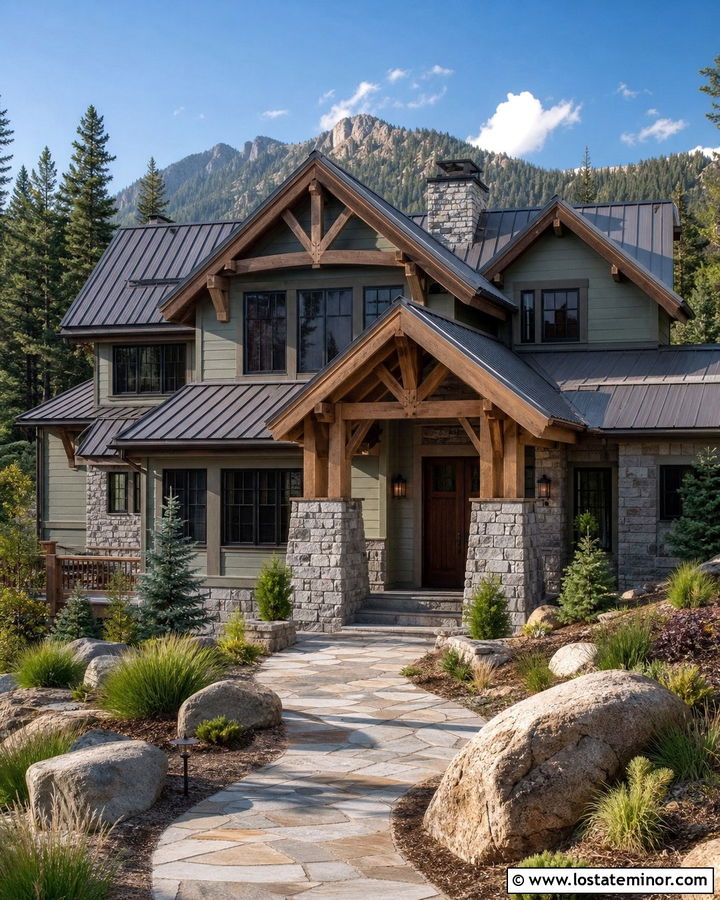
Cool gray stone can give a sage green mountain home a rugged but balanced foundation. Choose a slightly grayed sage for the siding so it relates to the masonry rather than fighting it. Use stacked stone on the porch columns, stair walls, chimney, and lower facade. Heavy natural timber beams add warmth above the stone and frame the entrance. A dark bronze metal roof works well with the shaded green body color, while black-framed windows provide clear definition. Keep the front door medium walnut so it remains visible beneath the deep porch roof. A flagstone walkway, boulders, evergreens, and native grasses integrate the home with its setting. The varied textures make the exterior interesting even though the color palette remains quiet, natural, and highly coordinated.
18. Sage Green Traditional House With Red Brick Porch
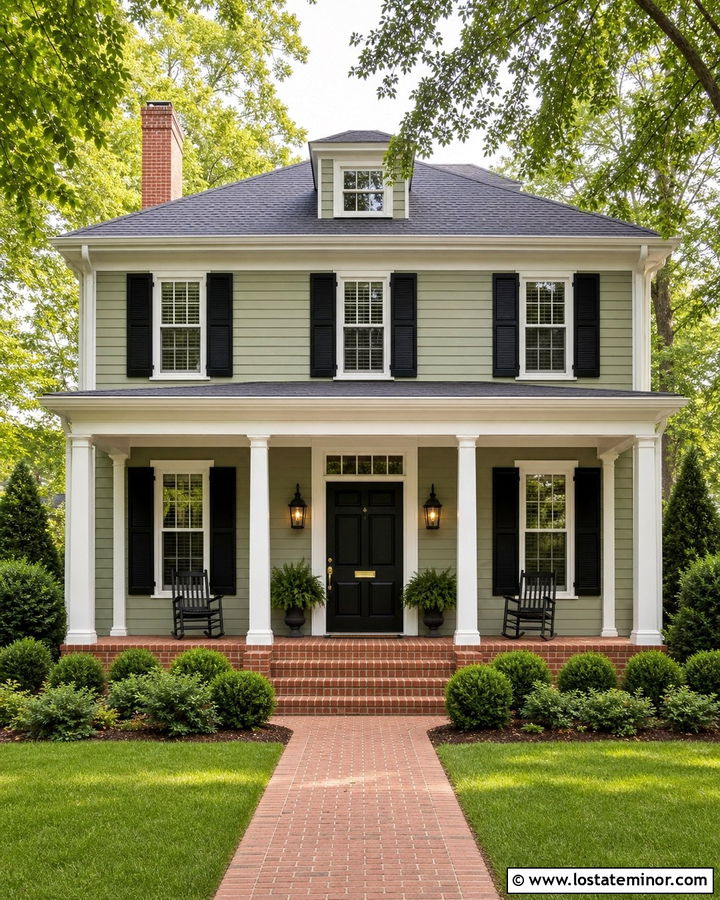
A traditional home with a red brick porch does not need an all-neutral body color. Muted sage siding can balance the warmth of aged brick while giving the facade a fresher identity. Look for a sage with warm gray undertones, then use creamy white around the windows, porch roof, columns, and eaves. Keep the brick visible on the steps, porch floor, and foundation. A black door and black shutters provide formal definition, but use them sparingly so the brick remains important. Dark bronze porch lights will blend more comfortably than shiny metal. Complete the setting with a straight brick walkway and layered green shrubs. This palette respects the existing masonry and lets the sage siding update the house without making the porch look disconnected.
19. Sage Green Transitional House With White Brick Porch
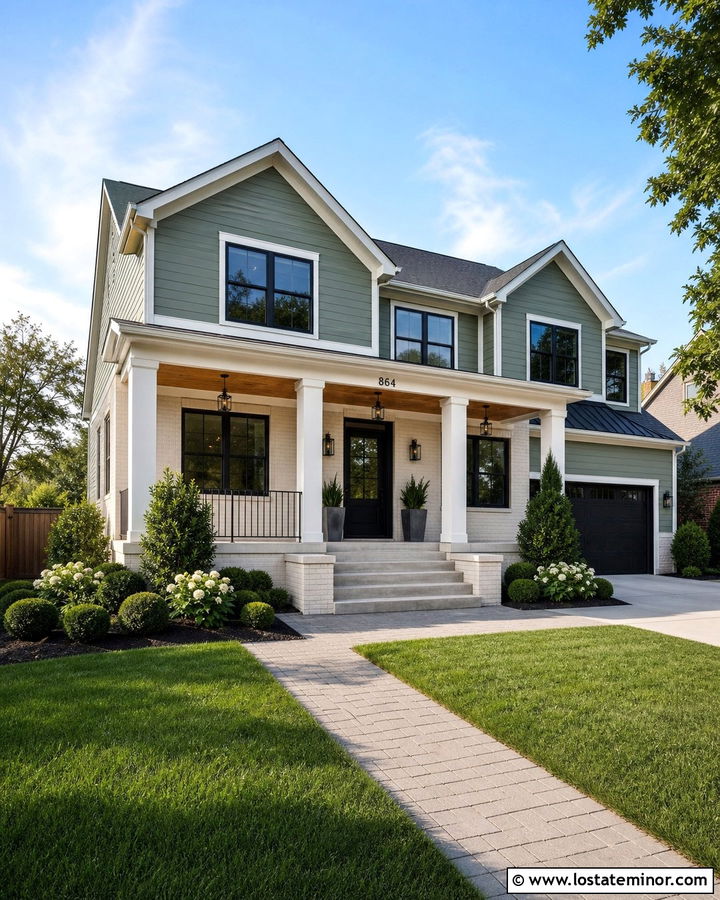
Whitewashed or warm white brick creates a light base for a sage green transitional exterior. Use medium sage lap siding on the upper walls and gables, then carry white brick across the porch foundation and selected first-floor sections. Match the brick with warm white trim, soffits, and square porch columns. Black-framed windows and a black front door provide a clean outline that suits the mixed traditional and modern details. Add a natural wood porch ceiling to prevent the black-and-white accents from feeling severe. Charcoal roofing, wide concrete steps, and simple metal lights complete the scheme. Neatly shaped shrubs and a broad paver path reinforce the polished curb appeal. The brick adds texture, while sage green gives the home more personality than a completely white exterior.
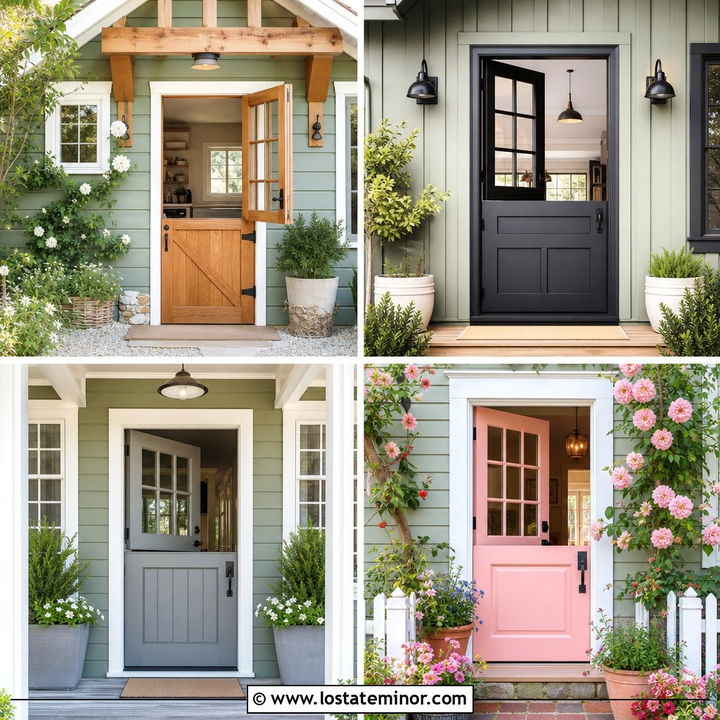
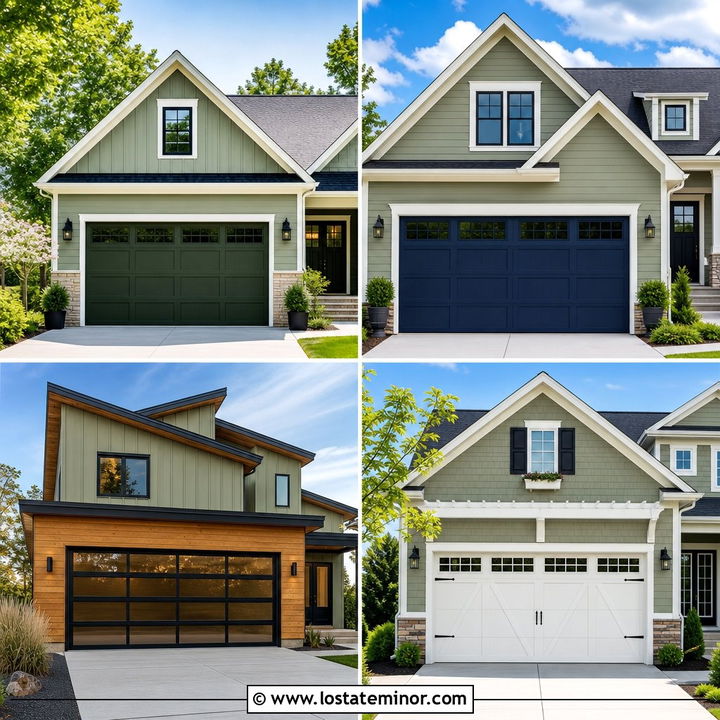
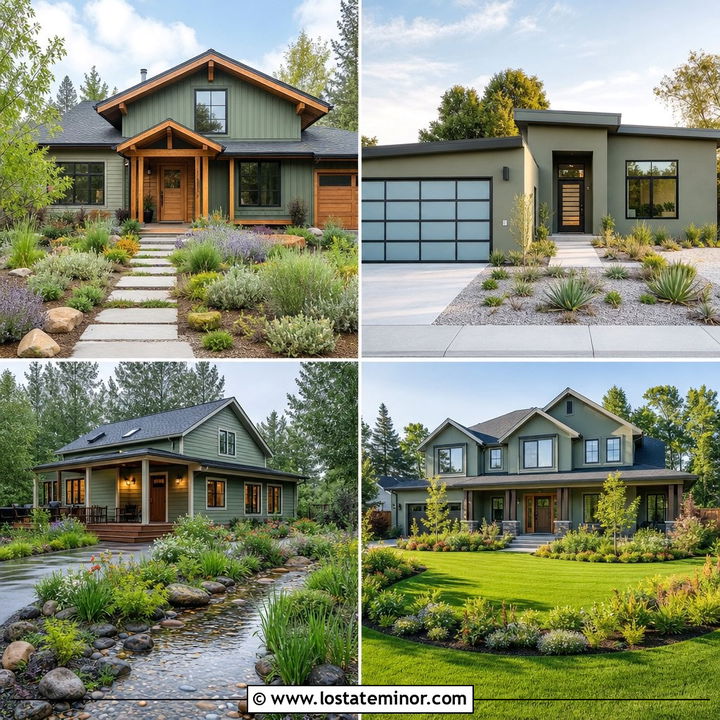
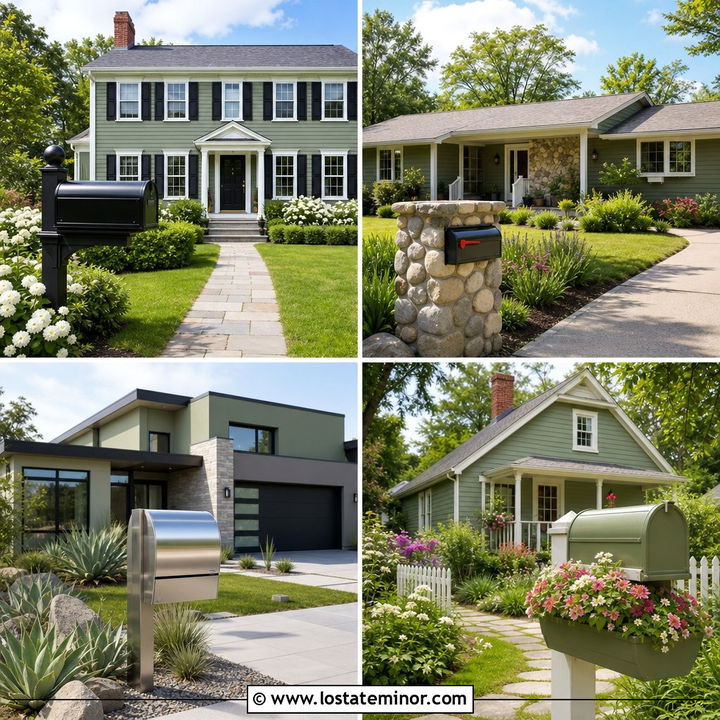
20. Sage Green Split-Level With Black Porch Railings
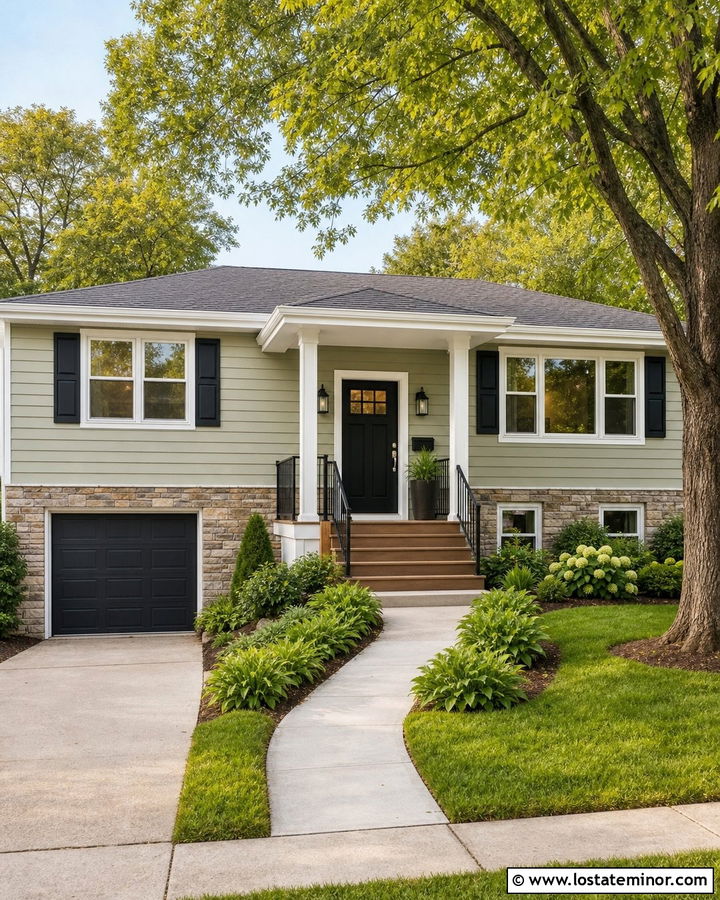
A compact front porch can help a split-level entrance feel more substantial and easier to see from the street. Paint the siding a light sage green, then use warm white on the trim, soffits, and porch posts. Slim black railings create definition without making the small landing look enclosed. Repeat black on the front door, lights, house numbers, and window frames. If the lower level has brick or stone, keep it in its original warm neutral color. Wide wood-look steps or gray concrete stairs can visually connect the raised porch to the walkway. Add layered plants of different heights around the foundation to soften the level changes. This simple scheme modernizes the facade while directing attention toward an entrance that might otherwise appear lost within the architecture.
21. Sage Green Modern House With Cable Railing Porch
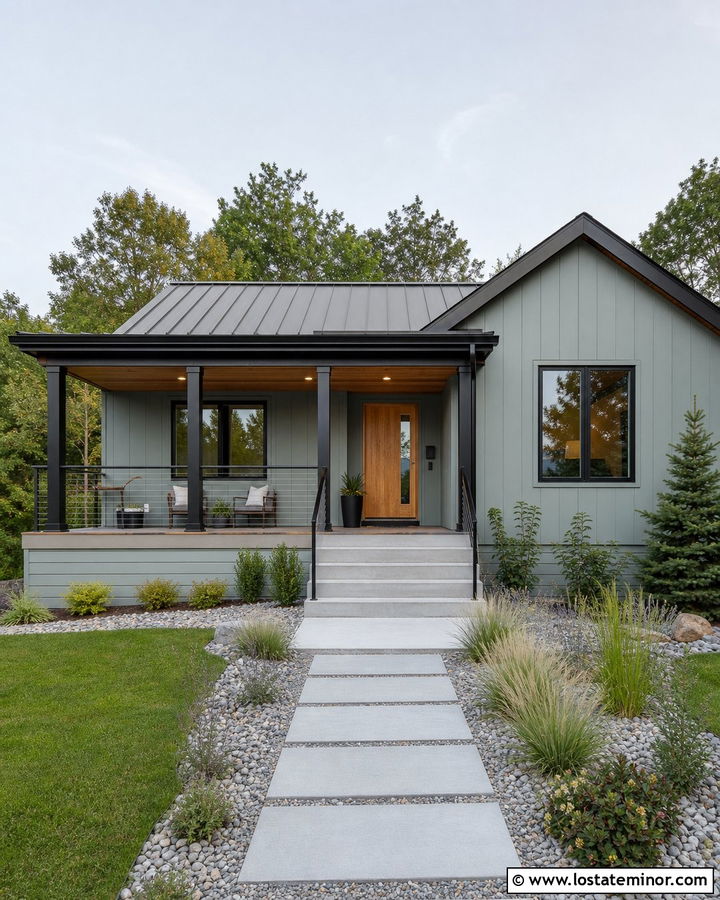
Cable railings give a sage green modern porch a lighter visual boundary than solid wood balusters. Use muted sage vertical siding across the facade and black metal posts with horizontal stainless-steel cables along the porch edge. A clear cedar ceiling and matching front door add warmth to the modern materials. Keep the window trim black and choose a charcoal standing-seam roof for a consistent architectural outline. Gray composite porch boards are practical and visually quiet beneath the stronger siding and wood tones. Large rectangular concrete steps can lead to a simple walkway framed by grasses, low shrubs, and gravel. The open railing preserves views of the entrance and allows the sage siding to remain visible. Every component contributes to a clean, natural, and uncluttered exterior composition.
22. Sage Green Southern House With Chippendale Porch Railings
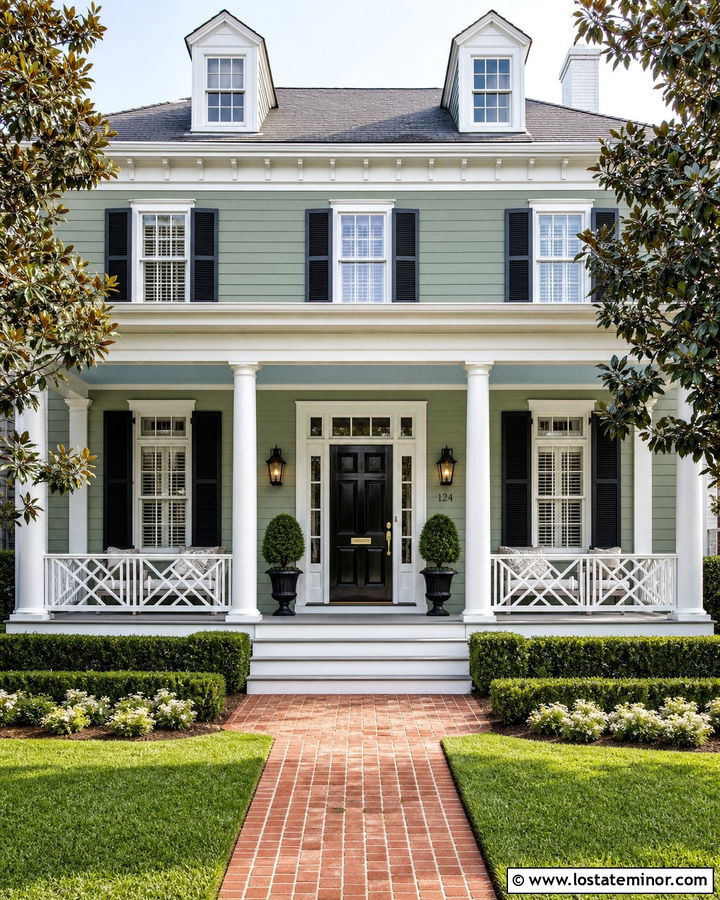
Detailed Chippendale railings can give a sage green Southern porch a distinctive traditional finish. Choose a soft midtone sage for the clapboard siding and bright white for the columns, railings, window trim, and porch ceiling beams. The geometric railing pattern will stand out clearly against the green body without needing another accent color. Paint the porch ceiling a pale blue and the floor a durable medium gray. A glossy black front door provides a formal center point, while brass hardware adds warmth. Symmetrical lanterns and planters reinforce the orderly appearance. Frame the porch with magnolias, clipped hedges, and a straight brick path. The sage background softens the extensive white detailing, helping the large porch feel welcoming instead of overly formal or stark.
23. Sage Green Cottage With Arched Front Porch
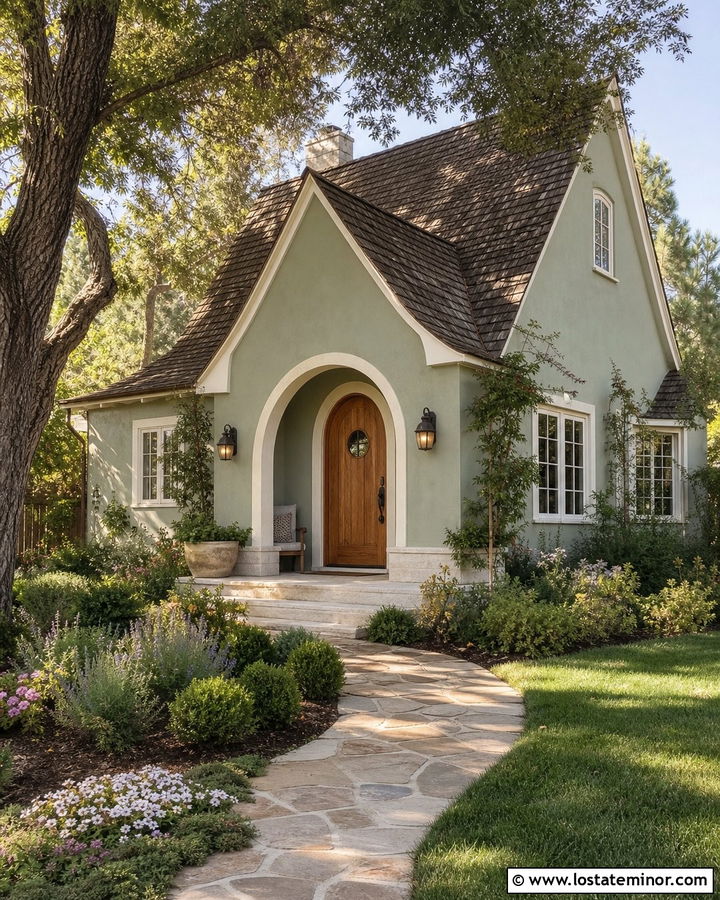
An arched porch opening can turn a simple sage green cottage into a memorable full-house composition. Apply warm sage stucco or lap siding across the body and use creamy white around the arch, windows, and roofline. A rounded natural oak door can echo the porch opening and create a warm focal point. Add light limestone or pale fieldstone around the porch base and steps for gentle texture. A weathered brown roof will keep the palette soft and established. Choose aged bronze sconces rather than high-contrast black fixtures. A curved flagstone walkway, flowering ground cover, and loosely shaped shrubs continue the cottage lines into the yard. The combination feels coordinated because the colors and materials support the porch’s rounded architectural feature instead of competing with it.
24. Sage Green Georgian House With Columned Portico
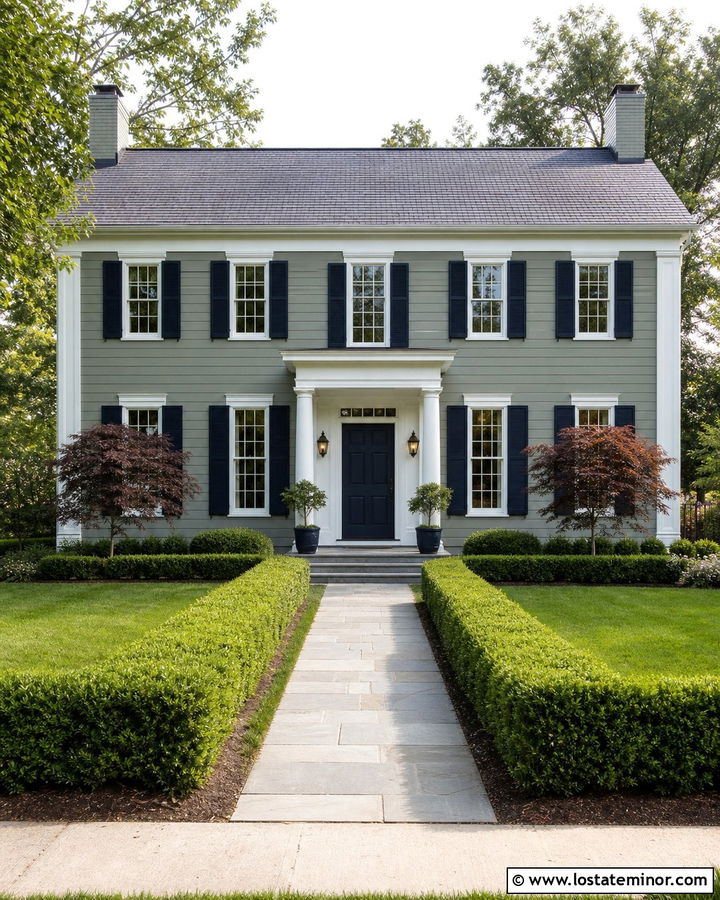
A centered portico brings order and depth to a sage green Georgian exterior. Use a dignified gray-sage body color with white trim, corner boards, window frames, and classical porch columns. A dark navy or black six-panel front door creates a clear focal point beneath the portico. Paint the porch floor a slate gray that relates to the roof and balances the white structure. If shutters are included, size them correctly and match them to the door. Traditional brass hardware and lanterns add measured warmth. Keep the walkway straight, with symmetrical hedges and paired planters reflecting the architecture. Sage green offers more character than beige or gray while remaining restrained enough for the formal facade. The finished entrance looks established, balanced, and intentionally connected to the full exterior.
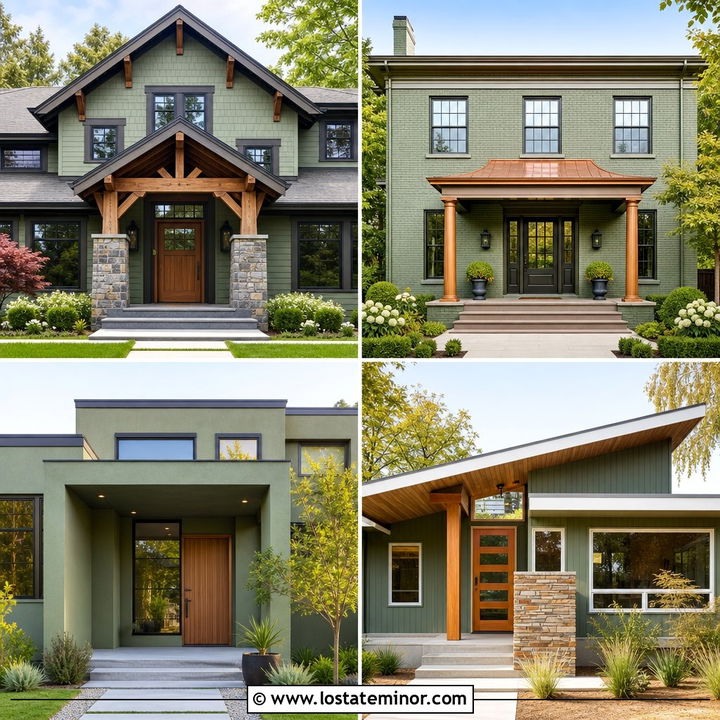
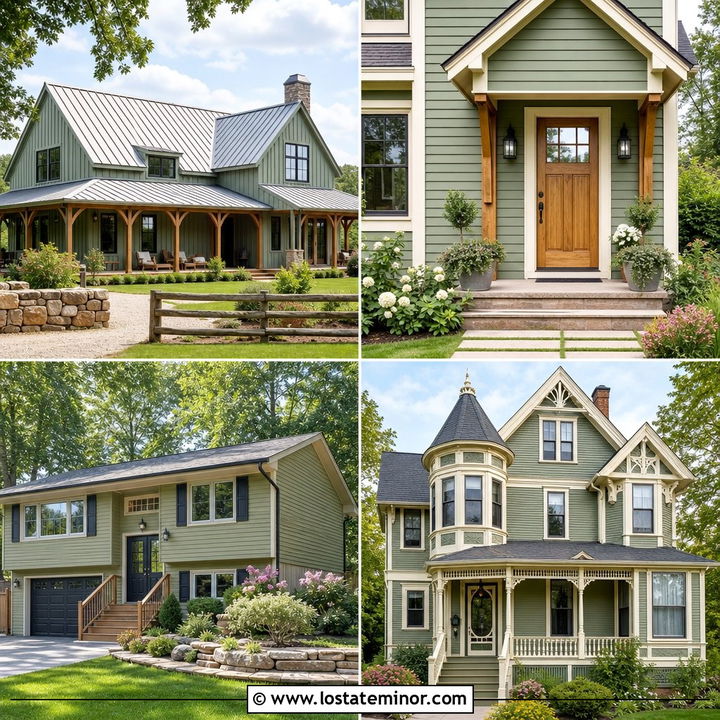
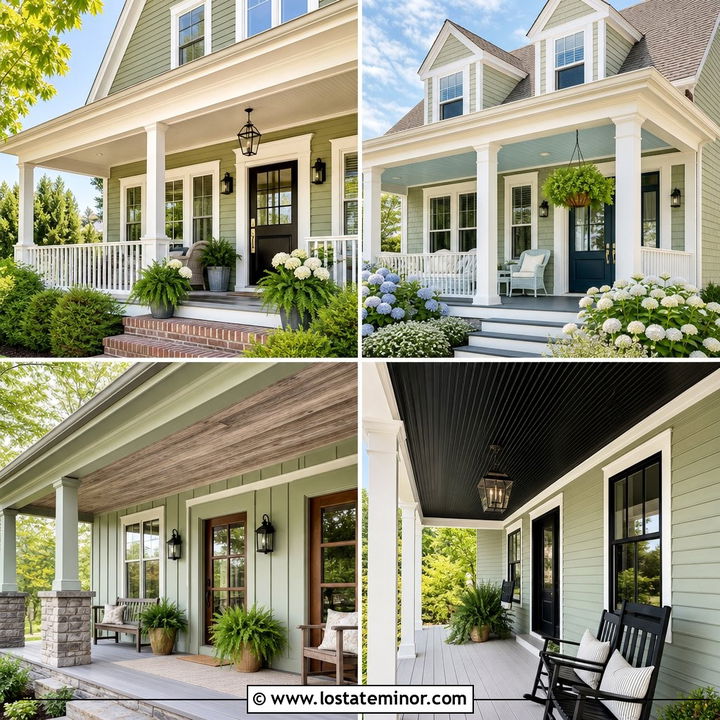
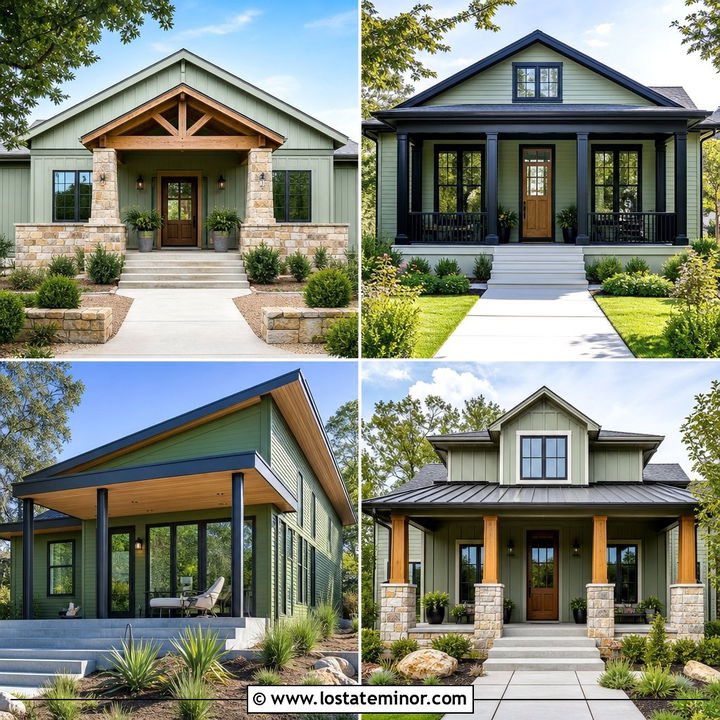
25. Sage Green Charleston House With Double Front Porch
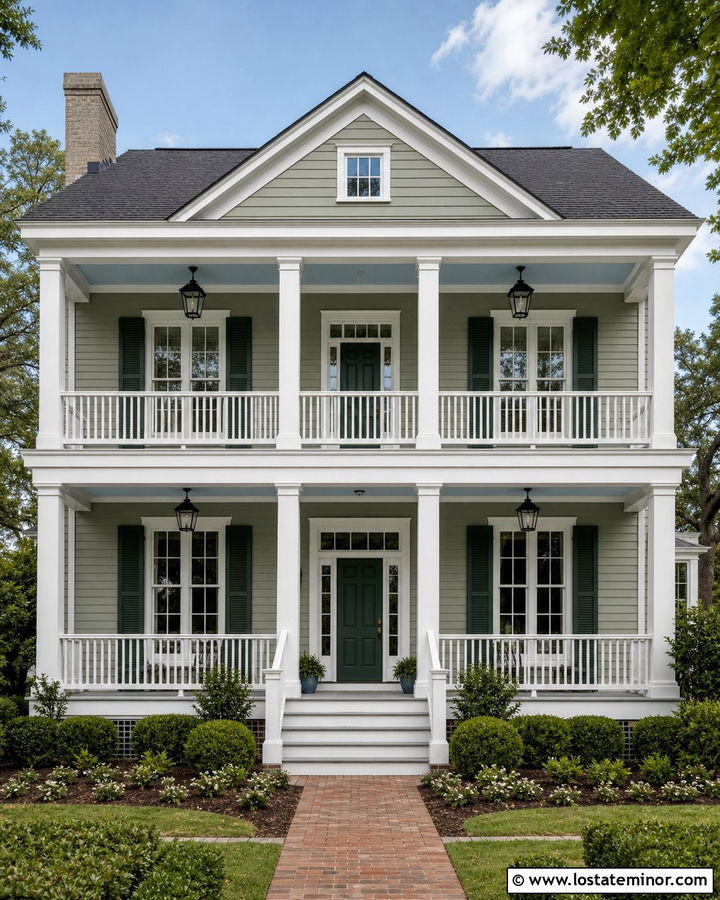
Two stacked porches require a carefully limited palette so the facade does not become crowded. Paint the main siding a clear but muted sage green, then use crisp white on both levels of columns, railings, door surrounds, and decorative cornices. Soft blue porch ceilings bring a subtle regional touch above each level. Choose dark green doors and shutters to create depth while keeping the colors related. Natural gray porch floors can ground the extensive white framework. Black lanterns and a charcoal roof add small points of contrast. Use narrow planting beds, clipped shrubs, and an orderly brick path so the landscape supports the tall architecture. Sage provides a calm background that lets the repeated porch details appear crisp, connected, and elegant across the complete facade.
26. Sage Green Midcentury House With Shed Roof Porch
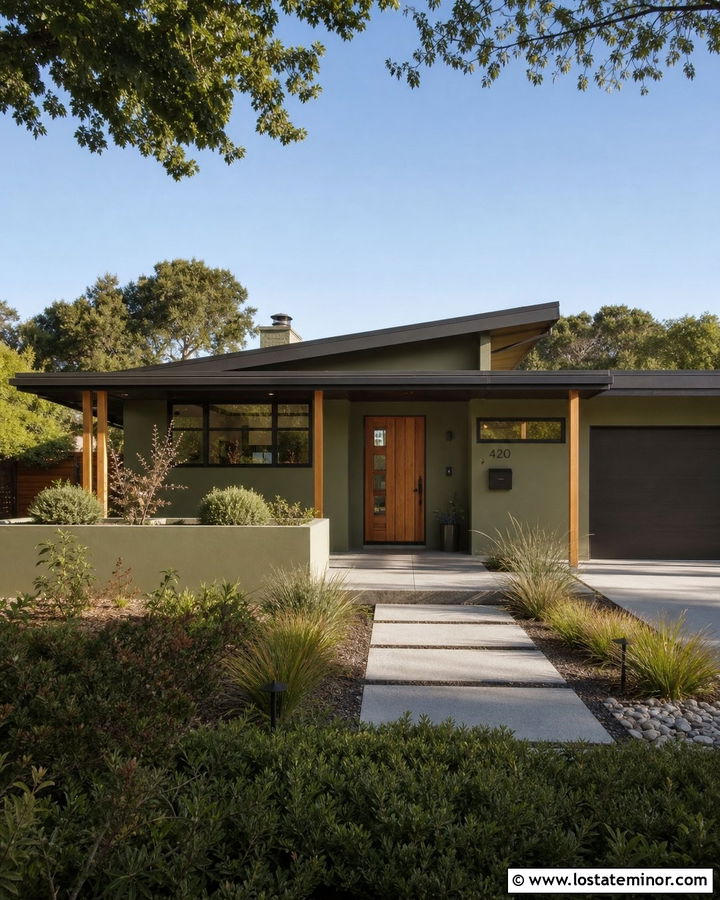
A low shed-roof porch fits the horizontal lines of a sage green midcentury home. Use a warm, subdued sage on broad lap siding or smooth panels, paired with dark bronze window frames and fascia. Support the porch with slim natural wood posts rather than bulky white columns. A walnut slab door can become the main focal point, especially when surrounded by narrow glass panels. Extend the charcoal porch roof in one clean plane and finish the floor with large concrete tiles. Avoid traditional shutters and decorative railings that would interrupt the streamlined shape. Instead, use a low planter wall to define the porch edge. Broad grasses, sculptural shrubs, and a simple stepping-stone path complete an exterior that feels updated while respecting the home’s original proportions.
27. Sage Green Ranch House With Pergola Front Porch
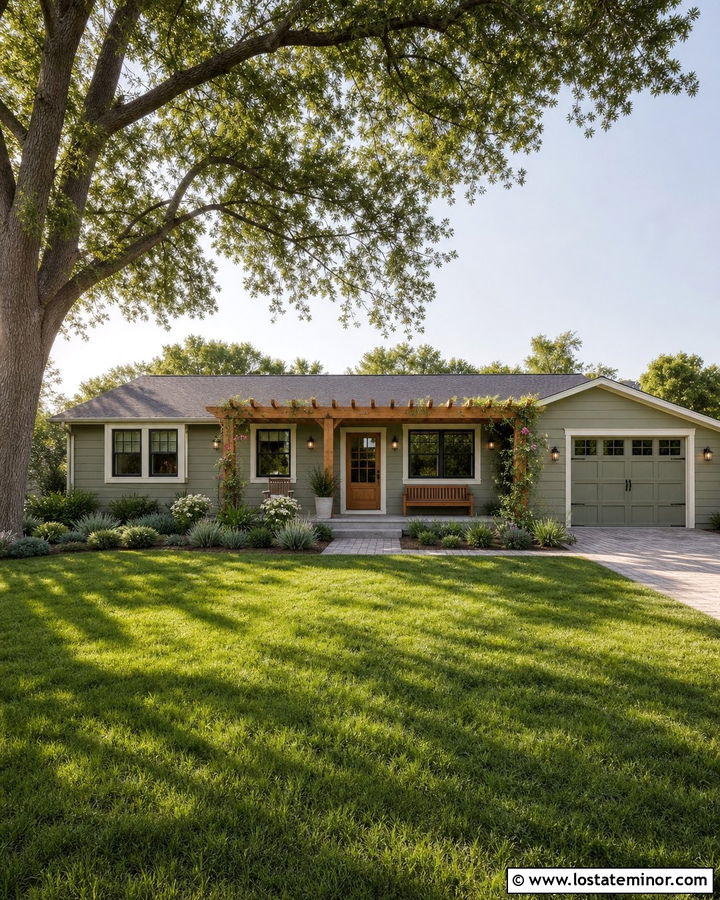
A shallow pergola can add dimension to a plain ranch facade without requiring a fully enclosed porch roof. Paint the horizontal siding a medium sage green and use warm white on the windows, fascia, and corner trim. Build the porch pergola from stained cedar, repeating the same finish on the front door and simple bench. Black steel brackets can connect the wood structure to dark exterior lights and house numbers. Use warm gray pavers for the porch floor and walkway. If the house has a wide garage door, paint it sage so it blends into the body. Flowering vines may eventually soften the pergola, but keep growth controlled around the entrance. The added wood framework creates shadows and depth while maintaining the ranch home’s long, uncomplicated lines.
28. Sage Green Small House With Simple Front Porch
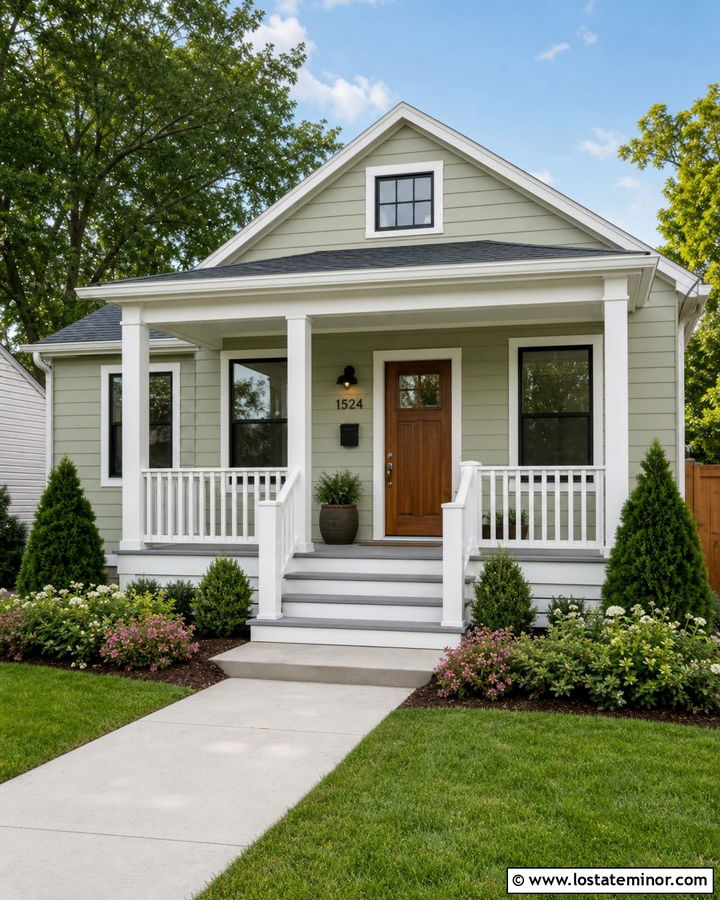
A modest budget can still produce a complete, polished sage green exterior. Start with soft sage siding and paint the existing trim, porch posts, and railing a warm white. Replace a worn front door with a simple black or stained wood design that becomes the entrance focal point. Gray porch floor paint can refresh old concrete or wood without the expense of rebuilding it. Add one well-scaled porch light, clear house numbers, and two matching planters. If the steps feel narrow, a slightly wider landing can make the entrance look more balanced. Keep landscaping manageable with mulch, evergreen shrubs, and seasonal flowers along a direct walkway. Consistent colors and carefully chosen updates matter more than decorative quantity, allowing a small home to feel welcoming and intentionally finished.
29. Sage Green Accessible House With Ramp Front Porch
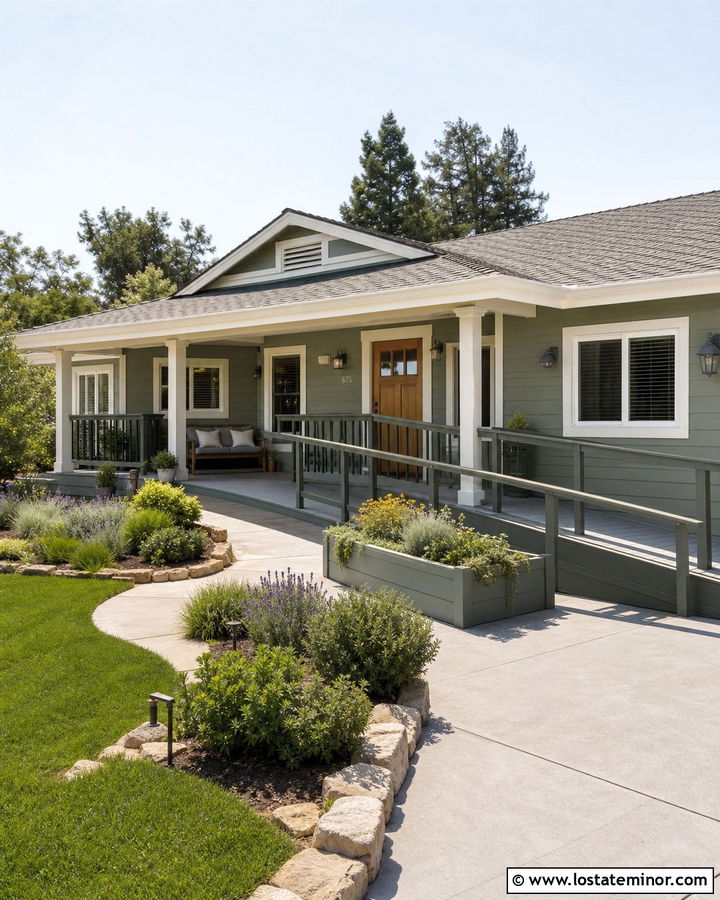
An accessible ramp can become an integrated part of a sage green front porch rather than a visually separate structure. Use light sage siding with creamy white porch columns and trim. Paint the ramp railings a deeper sage so they relate to the house while remaining clearly defined. A wide natural wood door and level gray composite decking create a warm, practical entrance. Extend the porch roof far enough to shelter the landing and doorway. Low stone edging can help the ramp connect naturally to the landscape without blocking its open sides. Use gently layered shrubs, raised planters, and a broad concrete path around the approach. This coordinated palette makes the accessibility features feel intentional, attractive, and consistent with the architecture of the complete home.
30. Sage Green Queen Anne House With Wraparound Porch
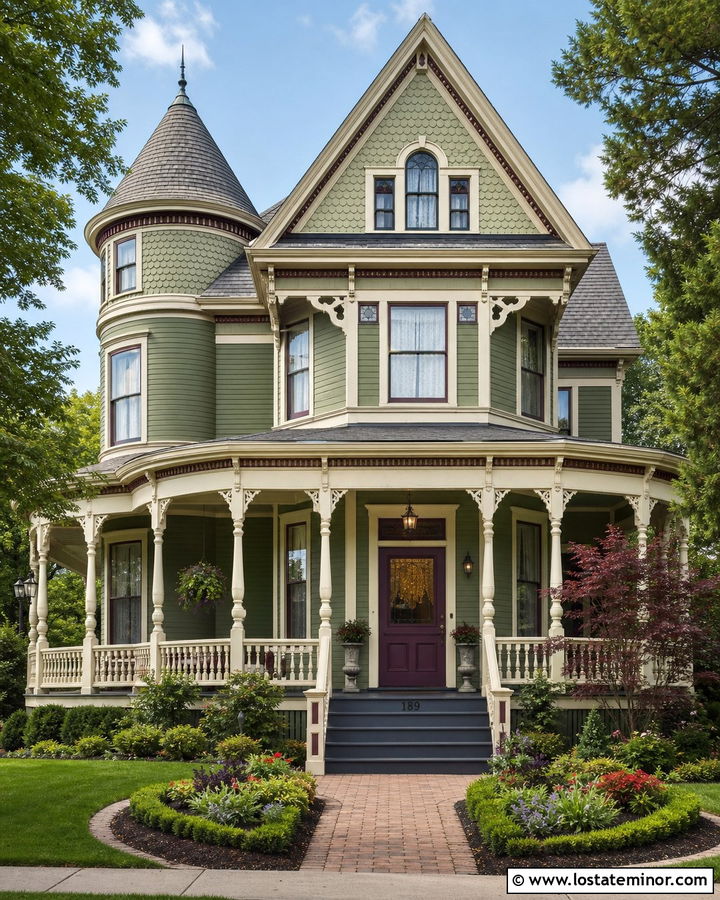
A wraparound porch gives a sage green Queen Anne home room for layered color and architectural detail. Use medium sage on the primary siding and a lighter sage on shingle-covered gables. Cream trim can highlight the turned columns, brackets, window surrounds, and porch railing without creating the sharpness of pure white. Add a deep plum front door as a controlled accent, then repeat it on only a few small decorative details. Paint the porch floor charcoal gray and choose an aged gray roof to steady the palette. Antique bronze lighting and natural wicker furniture suit the traditional exterior. Surround the house with curved flower beds and mature shrubs. The related greens unify the complex facade while the porch colors make its craftsmanship easy to appreciate.
Conclusion:
The best sage green exterior is more than a single appealing paint color. It is a complete scheme that connects the house body to its porch, trim, roof, entrance, masonry, and landscape. These 30 Sage Green House Design With Front Porch Ideas show how the color can shift from crisp and traditional to rustic, coastal, modern, or formal. White creates definition, cream adds warmth, black sharpens the architecture, and natural wood makes sage feel grounded. Stone and brick can also guide the undertone you select. Before painting, test large samples beside permanent materials and view them throughout the day. A coordinated plan will help your sage green home look balanced, welcoming, and thoughtfully finished.

Related posts: