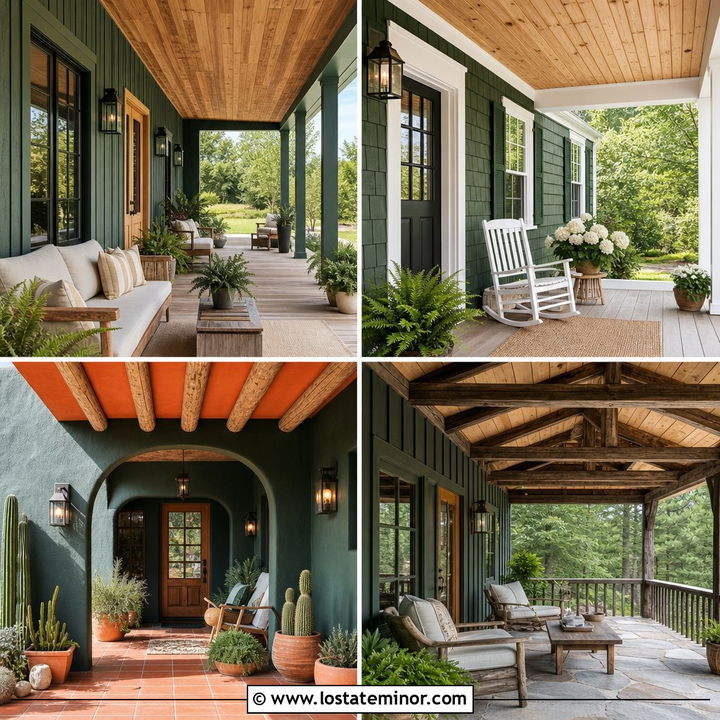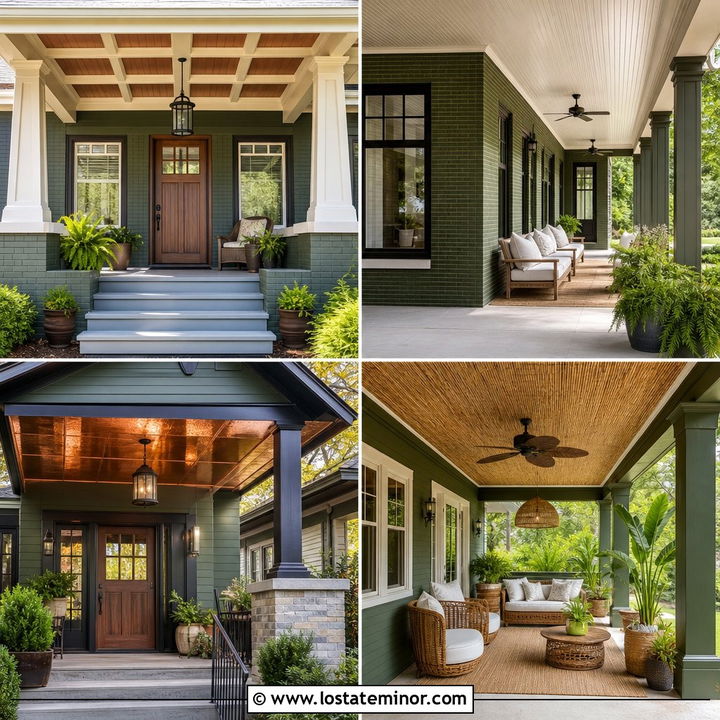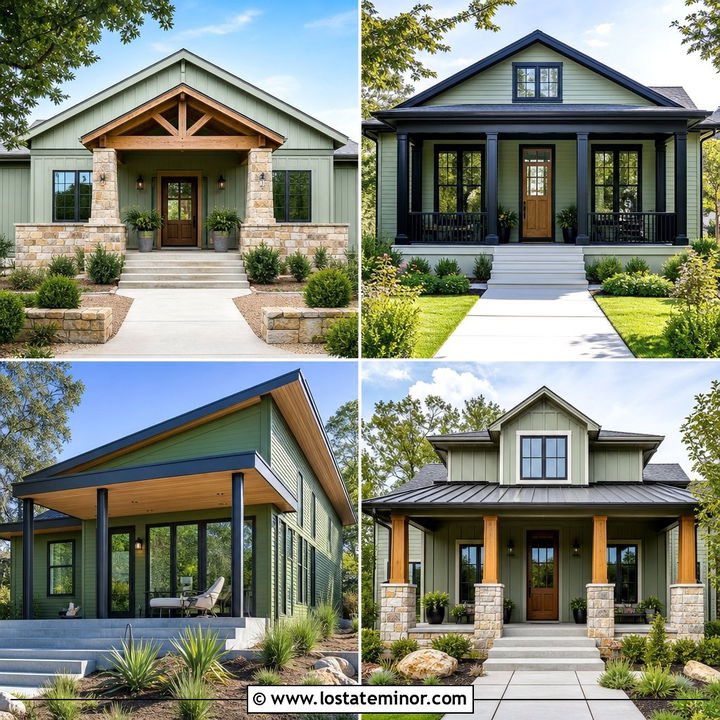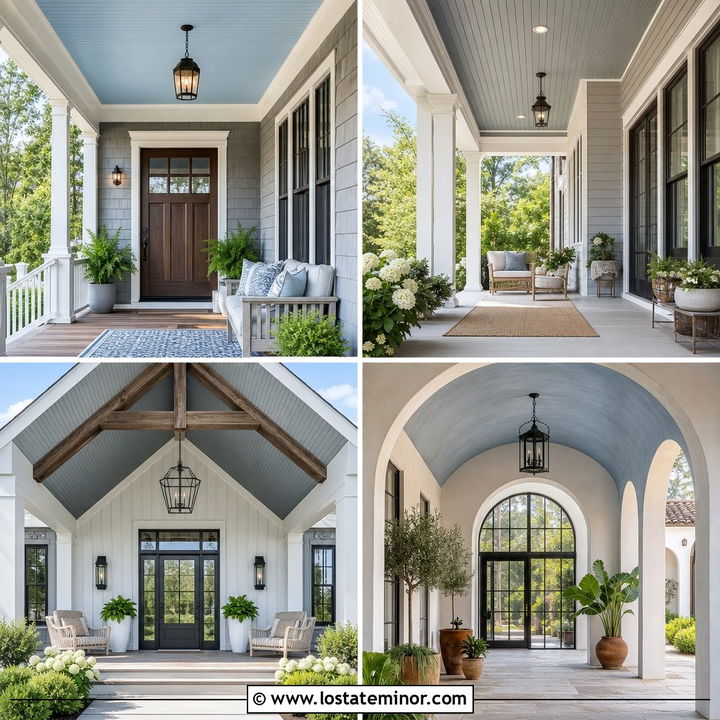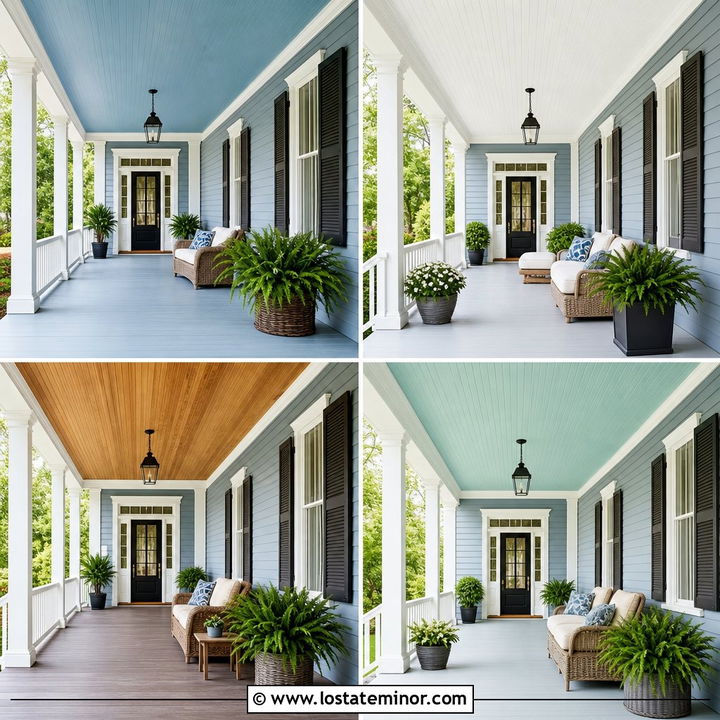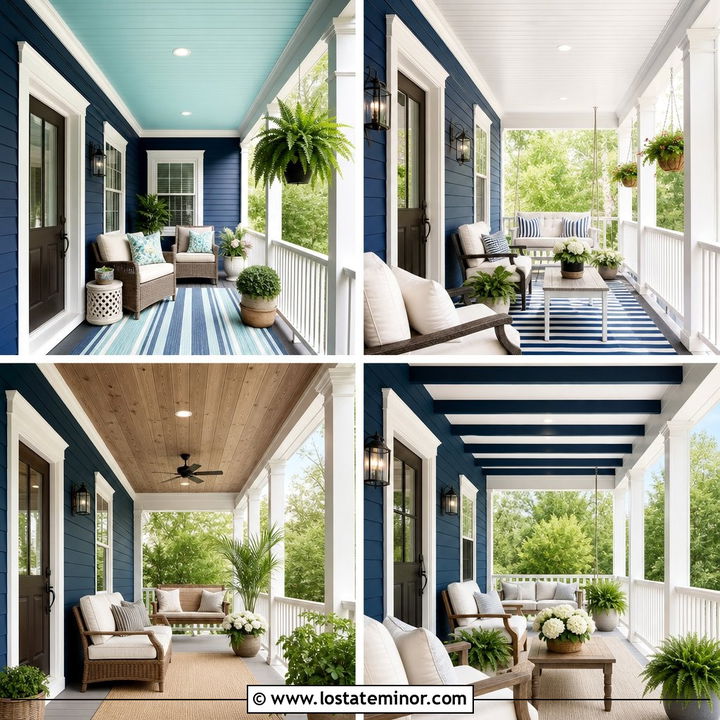
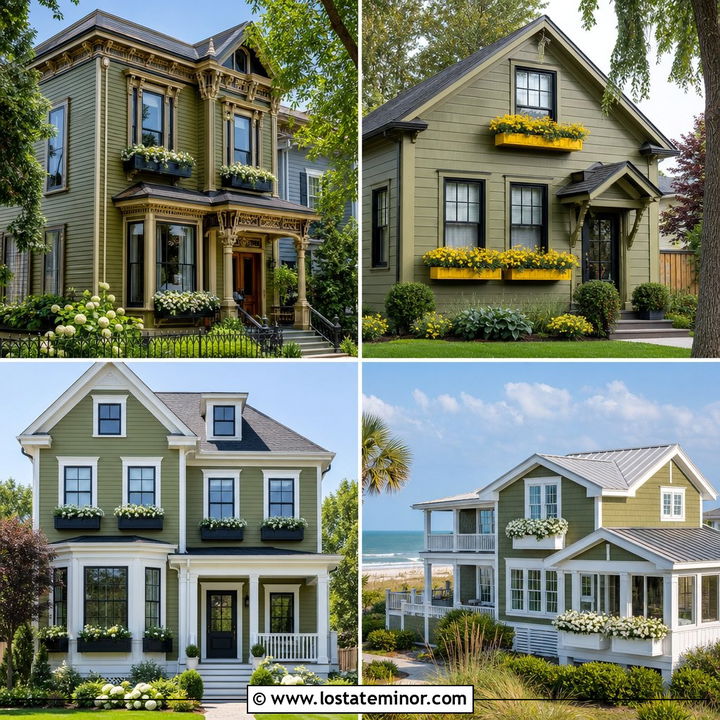
Sage green siding and a thoughtfully finished porch ceiling can make an exterior feel calm, welcoming, and connected to its surroundings. The strongest combinations treat the facade as one complete palette. Siding, trim, roofing, masonry, columns, flooring, and the front door should support one another rather than compete. A pale blue ceiling can brighten a traditional porch, while natural wood adds warmth to a rustic home. Cream, charcoal, blush, and deeper green ceilings offer even more ways to personalize the look. The house designs below cover farmhouses, ranch homes, cottages, Craftsman houses, and modern builds, with practical details for creating balanced curb appeal. Explore these complete exterior schemes in **30 Sage Green House Design With Porch Ceiling Ideas**.

1. Sage Green Farmhouse With Haint Blue Porch Ceiling
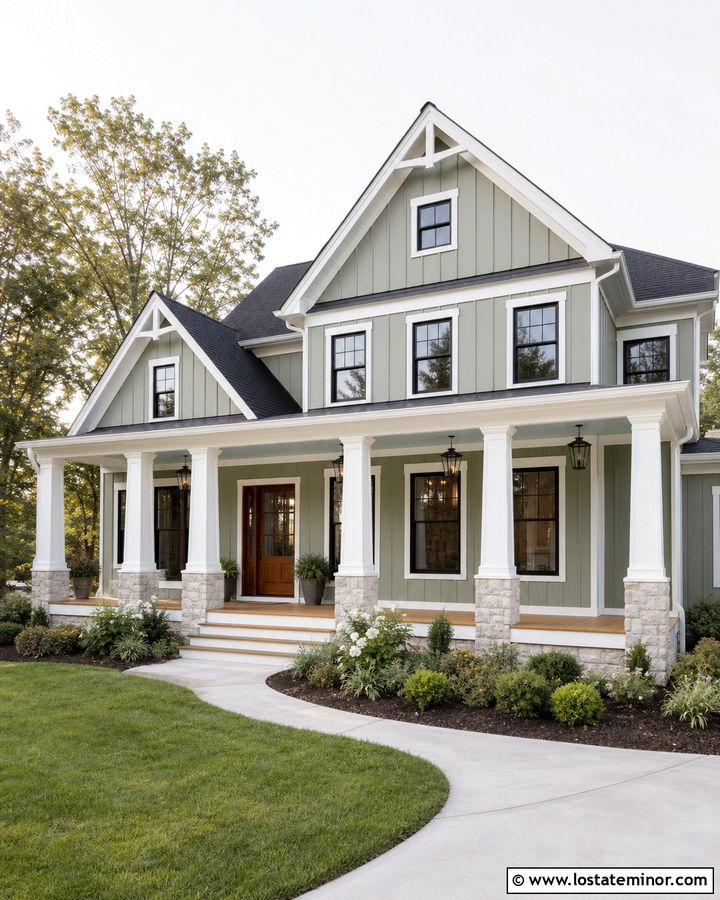
A soft haint blue porch ceiling gives a sage green farmhouse an airy, traditional character. Choose medium sage green lap siding, crisp white trim, and a pale blue ceiling that remains noticeable without overpowering the facade. White square columns and simple railings keep the porch bright, while natural oak flooring introduces warmth beneath the cooler colors. Complete the design with a stained wood front door, black lanterns, and a charcoal architectural-shingle roof. A light stone foundation can connect the house to the walkway and surrounding garden. This scheme works especially well on a wide farmhouse with symmetrical windows and a deep front porch. Keep the blue slightly muted so it blends naturally with the gray undertones found in sage green.
2. Sage Green Craftsman With Stained Wood Porch Ceiling
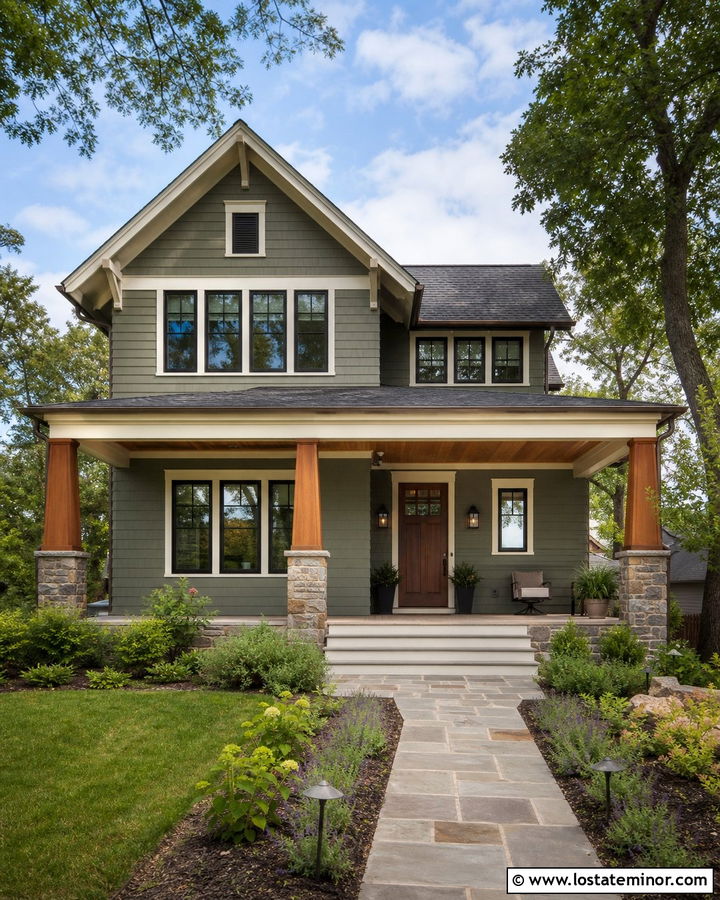
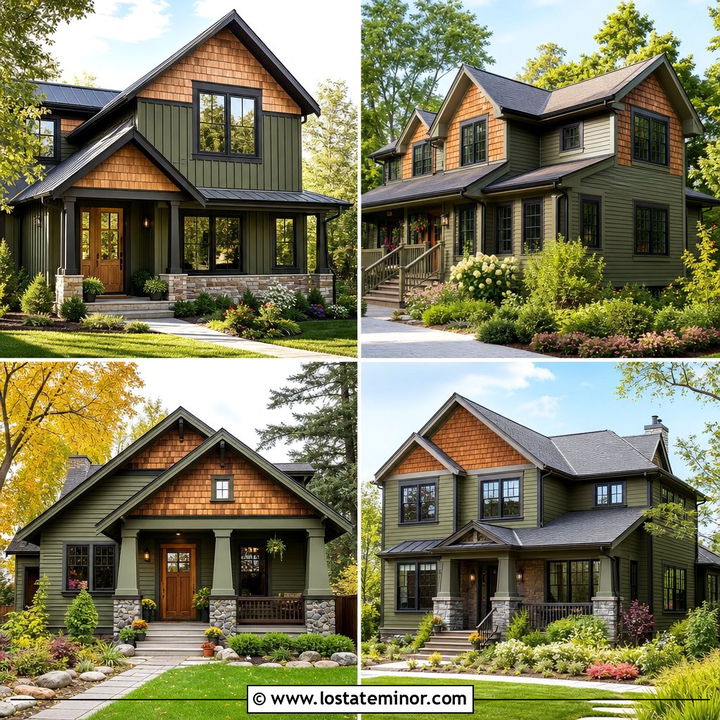
Rich wood overhead can give a sage green Craftsman house greater warmth and architectural depth. Use muted sage green shake and lap siding with creamy white trim around the windows and roofline. Cover the porch ceiling in tongue-and-groove cedar finished with a clear or honey-toned stain. Tapered columns set on natural stone bases will strengthen the Craftsman character, while a medium-brown front door ties into the ceiling. Add dark bronze lighting, warm gray porch flooring, and an earthy brown roof to create a grounded palette. This design looks best when the wood grain remains visible. Avoid an overly orange stain, which can clash with cooler sage siding. Layered shrubs and a curved stone path complete the relaxed, handcrafted exterior.
3. Sage Green Ranch With White Porch Ceiling
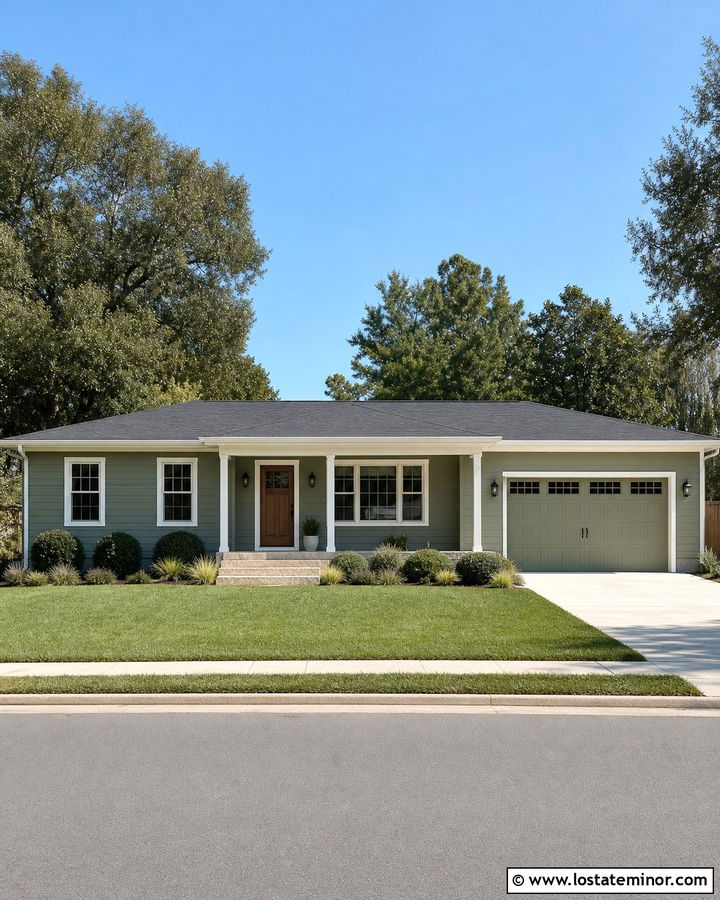
Does your low-profile ranch house need a brighter and more defined entrance? A clean white porch ceiling can visually lift the roof overhang and prevent the front elevation from feeling heavy. Pair light sage green horizontal siding with warm white fascia, window trim, and simple porch posts. Use a medium charcoal roof to add definition without creating a harsh contrast. A natural walnut front door, limestone steps, and matte black sconces introduce just enough depth. Extend the sage green across the garage door for a wider, more seamless appearance. Low ornamental grasses and rounded evergreen shrubs will suit the horizontal architecture. This uncomplicated palette gives a classic ranch house a fresher look while keeping every exterior finish practical, cohesive, and easy to coordinate.
4. Sage Green Cottage With Cream Porch Ceiling
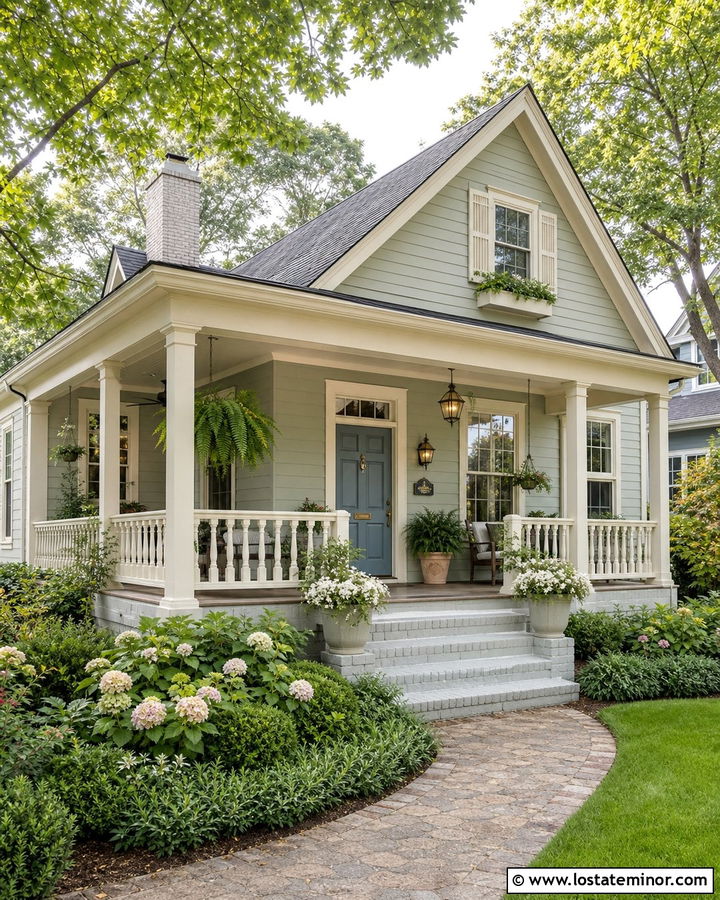
Cream creates a softer transition than bright white on a small sage green cottage. Select a gentle, slightly warm sage for the clapboard siding, then repeat buttery cream on the porch ceiling, window trim, railings, and decorative fascia. A warm gray roof will keep the house from appearing too yellow, while a dusty blue front door adds a quiet focal point. Painted brick steps, antique brass lighting, and cottage garden beds can bring subtle character without cluttering the facade. Consider beadboard for the ceiling to add texture and reinforce the home’s traditional proportions. The finished exterior should feel layered but light. Keeping the porch floor in natural wood or muted gray helps anchor the delicate palette and creates a welcoming transition from the garden to the entry.
5. Sage Green Colonial With Pale Gray Porch Ceiling
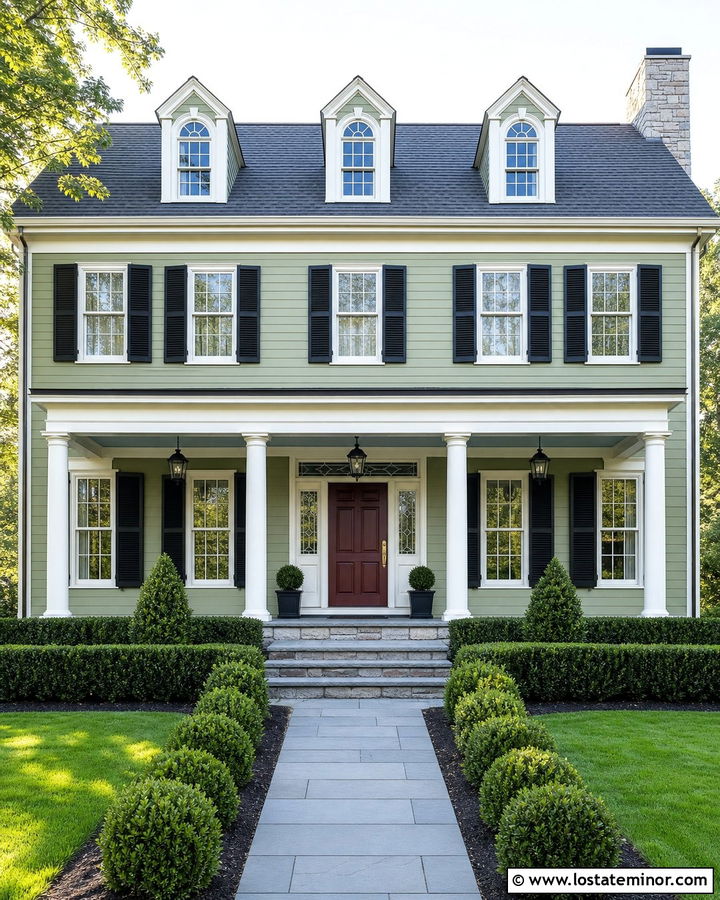
A pale gray ceiling adds understated polish to a symmetrical sage green Colonial. Start with refined sage green clapboard siding and soft white trim around evenly spaced windows. Paint the porch ceiling a light blue-gray that echoes the slate or charcoal roof without making the entry feel dark. White round columns maintain the formal architecture, while black shutters provide strong vertical accents. A deep burgundy front door can introduce classic color in a controlled way. Choose gray stone steps, black metal lanterns, and clipped foundation shrubs to support the orderly facade. Because Colonial homes depend on balance, repeat colors carefully across both sides of the house. The quiet ceiling color should complement the roof and siding while allowing the central doorway to remain the most prominent feature.
6. Sage Green Bungalow With Natural Cedar Porch Ceiling
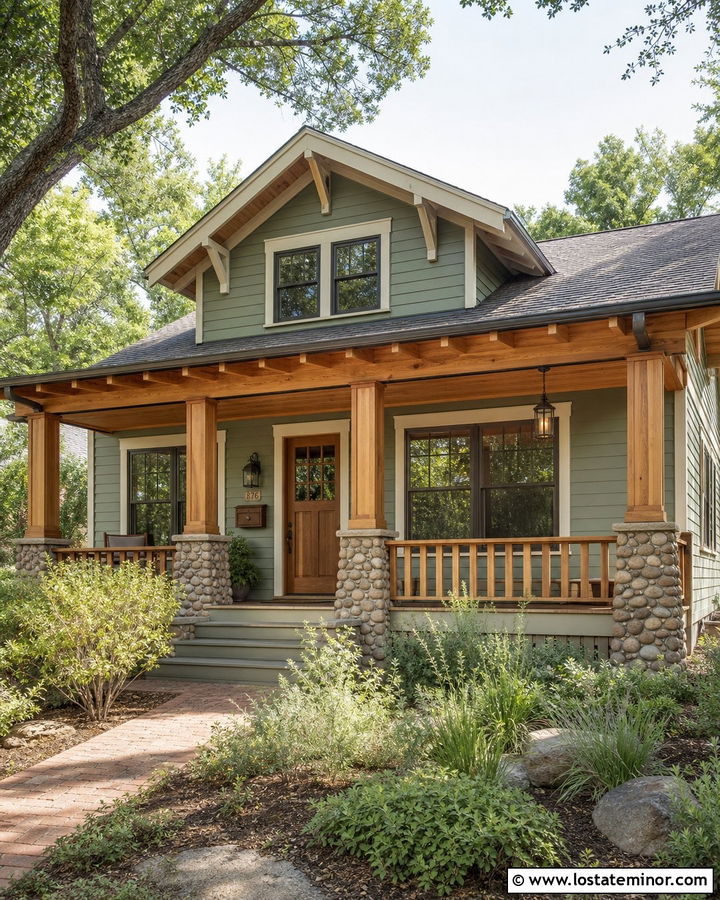
Imagine approaching a compact bungalow framed by sage green siding and warm cedar overhead. The pairing feels earthy, comfortable, and especially suitable for a porch with exposed rafters. Use dusty sage green siding with off-white window trim and a medium-gray roof. Install natural cedar planks on the porch ceiling, then repeat the same wood on substantial columns, railing caps, and the front door. River-rock column bases can add texture and connect the home to informal landscaping. Select aged bronze fixtures instead of stark black hardware for a softer finish. A brick or flagstone walkway will reinforce the bungalow’s handcrafted appearance. Keep the ceiling stain light enough to reveal the grain and reflect daylight, particularly when the porch is deep or surrounded by mature trees.
7. Sage Green Cape Cod With Sky Blue Porch Ceiling
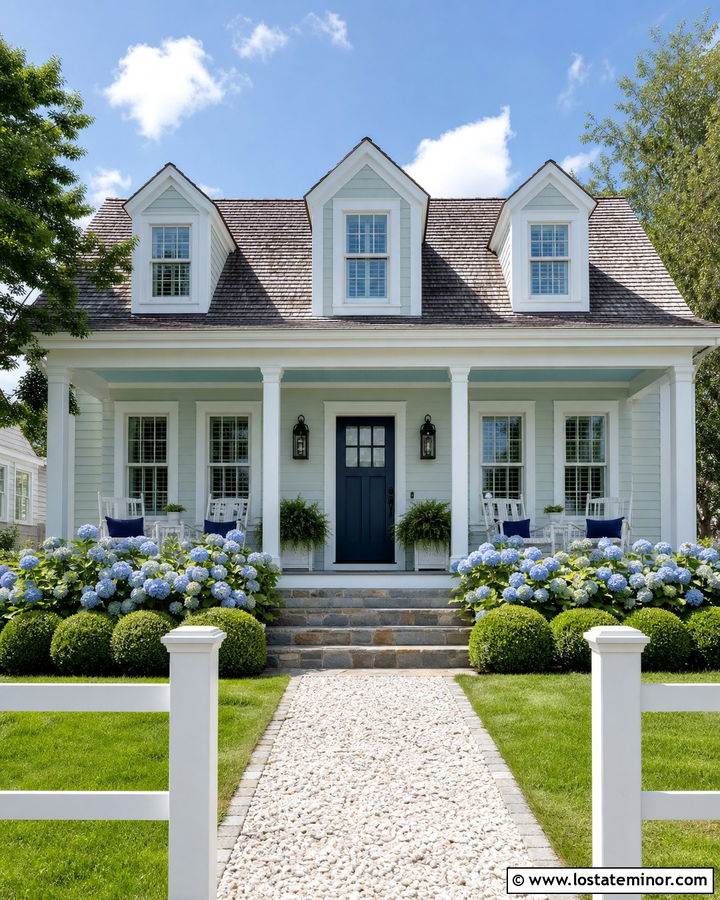
A sky blue ceiling can bring a coastal note to a sage green Cape Cod without turning the house into a themed design. Cover the facade in light sage green shingles or narrow clapboard, then use clean white on the dormers, trim, and porch columns. A muted sky blue ceiling will brighten the covered entry and relate naturally to the open surroundings. Finish the exterior with a weathered gray roof, navy front door, and natural bluestone steps. Simple black lanterns add contrast while preserving the classic character. Hydrangeas, boxwoods, and a shell or gravel path can frame the home gently. For a coordinated result, choose a ceiling blue with gray undertones. A highly saturated turquoise may look disconnected from the softened sage green siding.
8. Sage Green Victorian With Beadboard Porch Ceiling
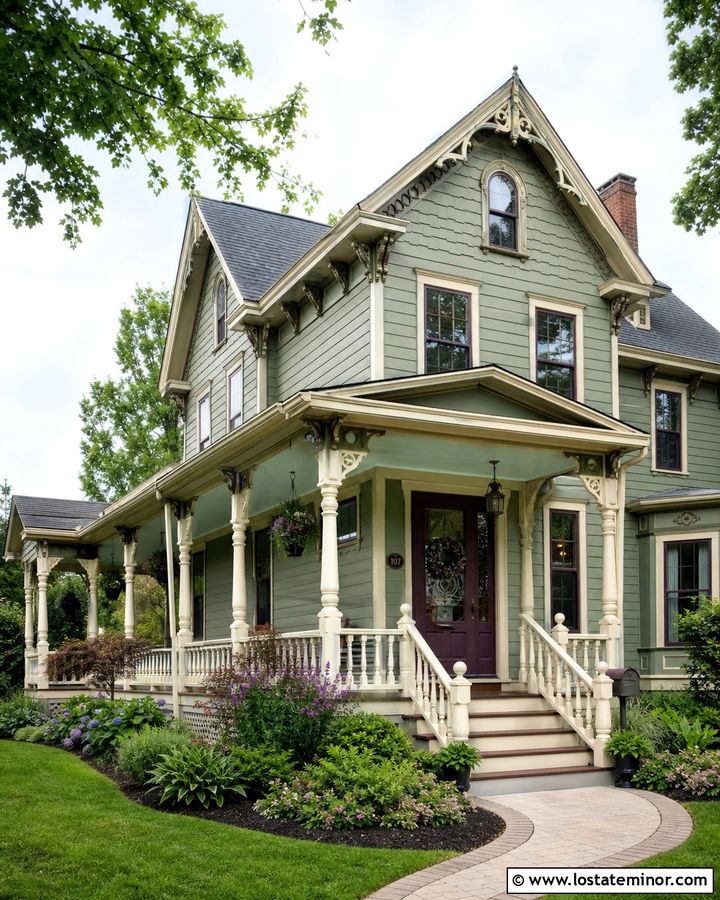
Decorative Victorian architecture gives you room to use several related colors across one sage green exterior. Choose a medium sage body color, creamy trim, and deeper olive accents on brackets or window details. A pale mint-green beadboard ceiling will create a subtle tone-on-tone effect beneath the porch roof. Paint turned columns and railings cream so their detailed shapes remain visible. A plum or muted aubergine front door can add richness without competing with the green palette. Complete the scheme with a dark gray roof, stained wood porch flooring, and vintage-inspired bronze fixtures. The goal is contrast with restraint. Limit the facade to three or four coordinated colors, and repeat each one intentionally so the gingerbread details enhance the house rather than making the exterior appear overly busy.
9. Sage Green Modern Farmhouse With Black Porch Ceiling
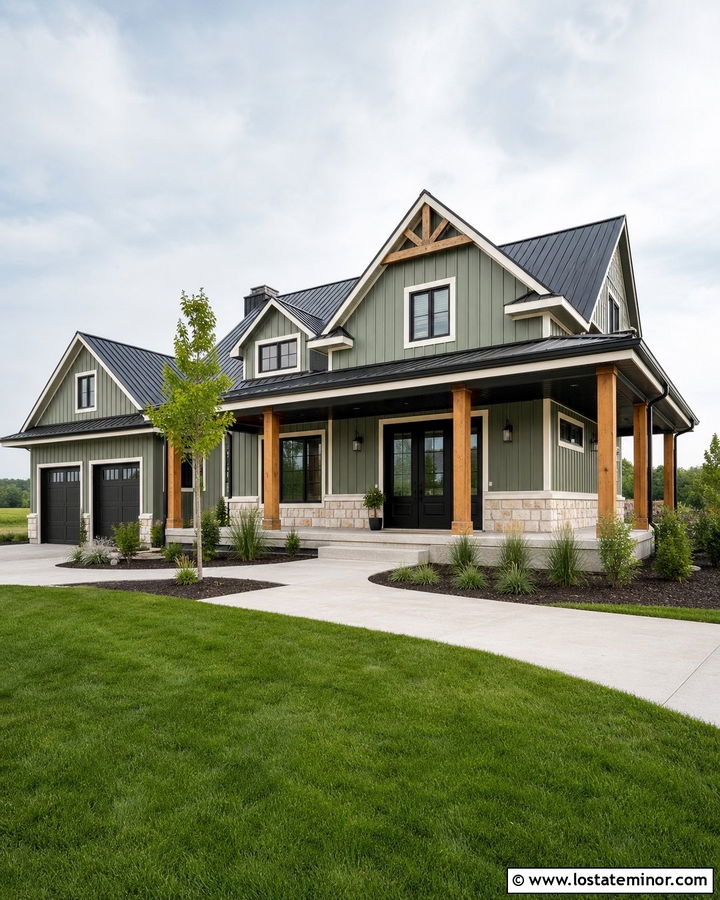
A black porch ceiling can sharpen a sage green modern farmhouse and create a strong frame around the entrance. Use desaturated sage green board-and-batten siding with warm white window trim and black metal roofing. Paint the porch ceiling matte black, then repeat that finish on the front door, gutters, sconces, and window frames. Natural cedar columns and pale stone skirting will soften the high contrast and prevent the exterior from feeling severe. Choose a light concrete porch floor to reflect daylight beneath the darker ceiling. This scheme works best on a house with a high porch roof and plenty of natural light. Keep landscaping simple with structured grasses, young trees, and broad planting beds. The result feels modern, grounded, and connected to the surrounding landscape.
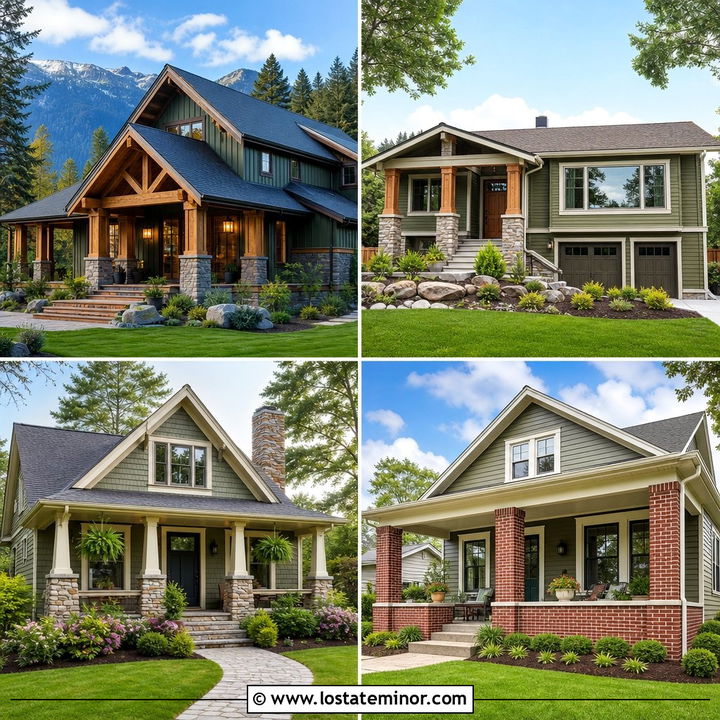
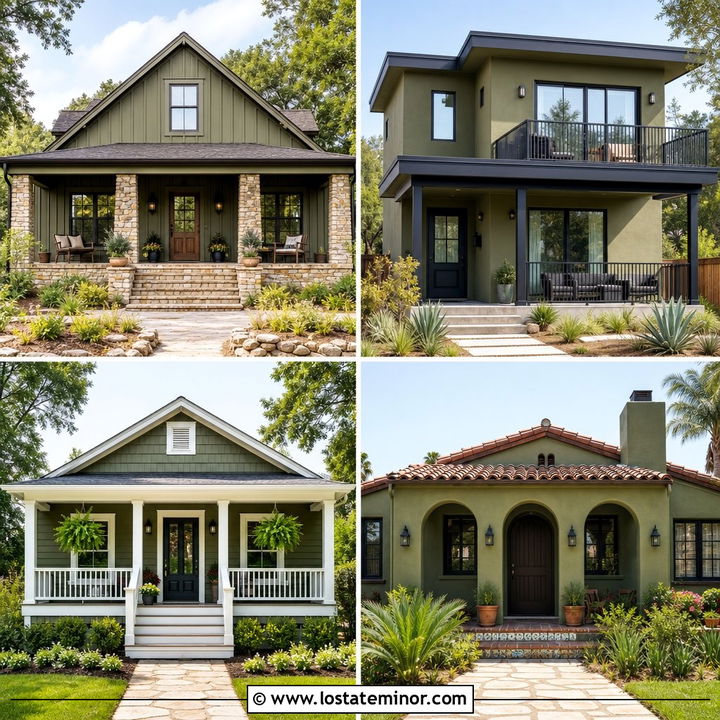
10. Sage Green House With Warm Beige Porch Ceiling
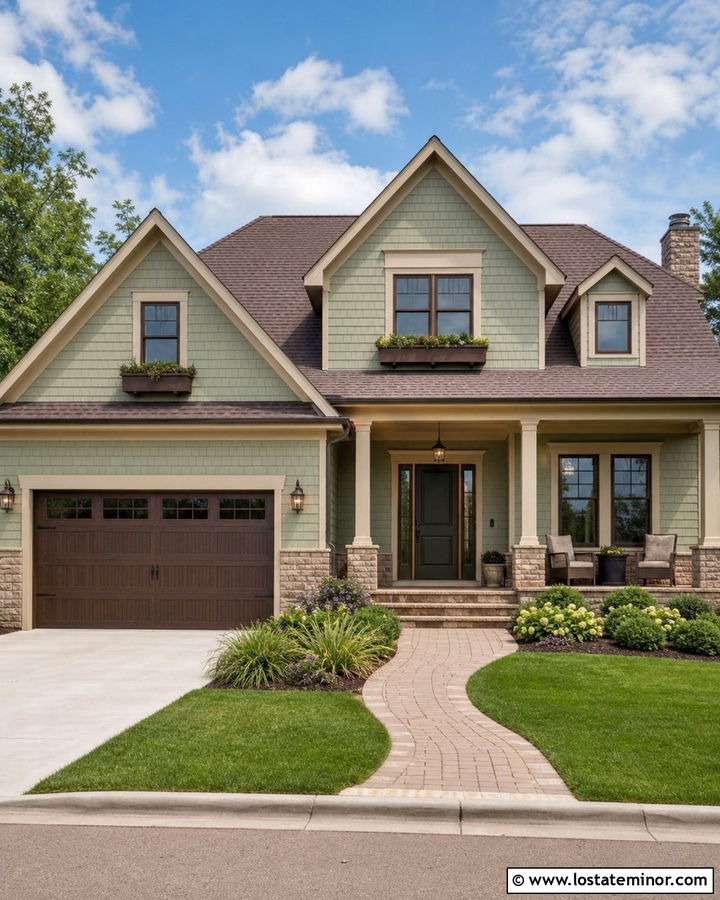
Warm beige is a practical porch ceiling color when white feels too crisp and wood introduces more texture than you want. Pair balanced sage green siding with creamy beige overhead, matching the ceiling to the window trim, porch columns, and garage surround. A medium-brown roof and tan stone wainscoting can reinforce the warmth. Use a dark olive front door for depth while keeping the palette closely related. Bronze hardware and brown-framed windows will look softer than solid black accents. This combination fits traditional suburban houses, especially those with existing beige masonry or warm concrete. Test the beige beside the sage before painting the entire porch. It should feel warm but not distinctly yellow. Neutral landscaping and a curved paver walkway will finish the coordinated, approachable exterior.
11. Sage Green House With Navy Porch Ceiling
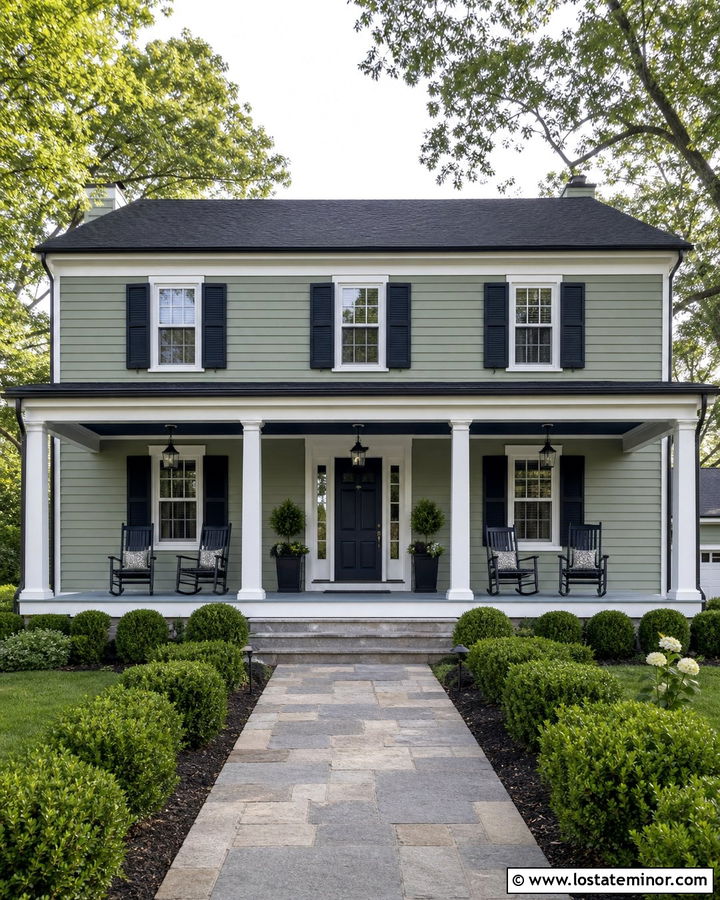
A navy ceiling creates an unexpected focal point on a sage green house while maintaining a mature, composed palette. Use medium-light sage green siding with bright white trim so the darker overhead color does not make the porch feel enclosed. Repeat navy on the front door or selected shutters to connect the ceiling to the rest of the facade. White columns, gray porch flooring, and a charcoal roof provide clean transitions between the green and blue. This combination suits a coastal Colonial, traditional two-story home, or updated cottage. Brushed nickel or black lighting can complete the porch without adding another warm metal tone. For the best balance, reserve navy for limited features. Let sage green remain dominant across the full exterior, with white providing breathing room between both colors.
12. Sage Green House With Matching Porch Ceiling
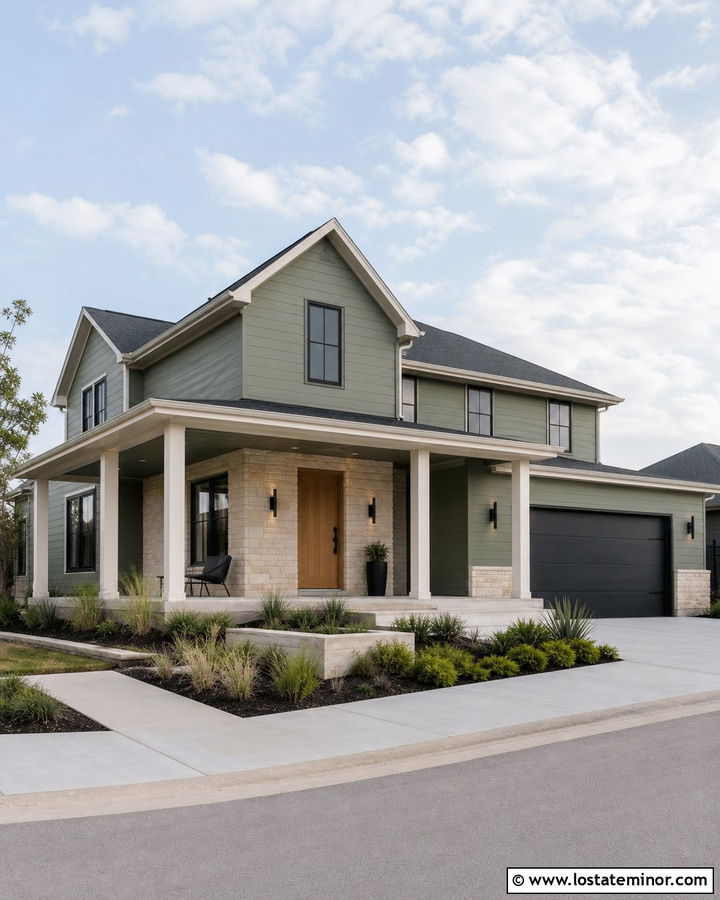
Painting the porch ceiling the same sage green as the siding creates a calm, enveloping entrance. This approach works particularly well on a contemporary house with clean rooflines and limited decorative trim. Use one consistent sage green across horizontal siding and the ceiling, then define the structure with warm white fascia, columns, and window frames. A light oak front door and pale limestone wall can break up the green without disrupting its quiet effect. Choose a charcoal roof and slender black fixtures for crisp finishing details. Because overhead surfaces often appear darker, the ceiling may read as a deeper version of the siding even when the paint matches. Bright porch flooring, wide openings, and uncluttered landscaping will help the covered area feel open rather than shadowed.
13. Sage Green House With Dark Green Porch Ceiling
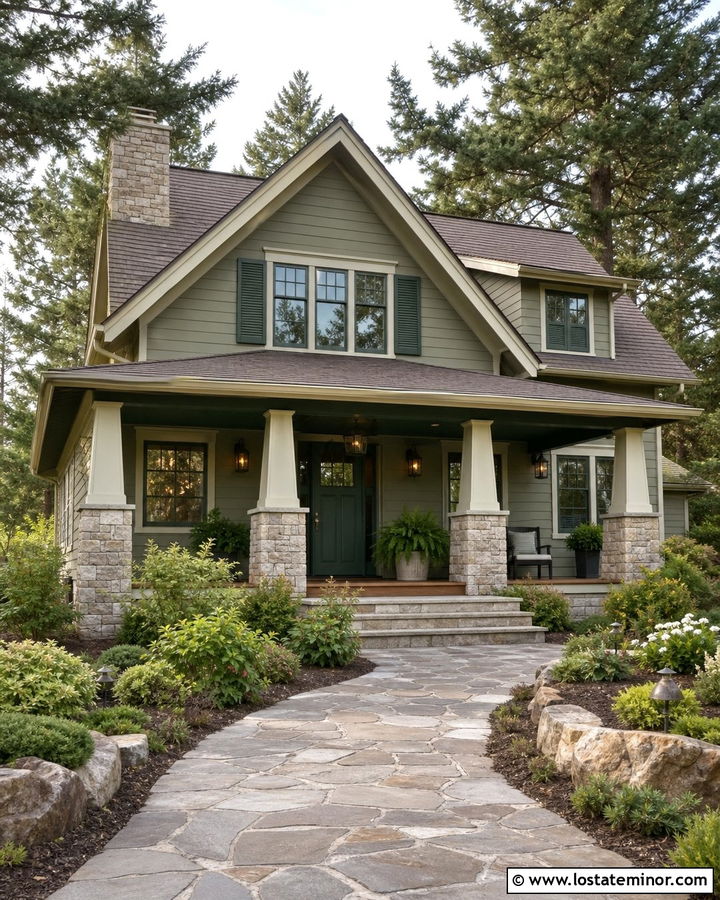
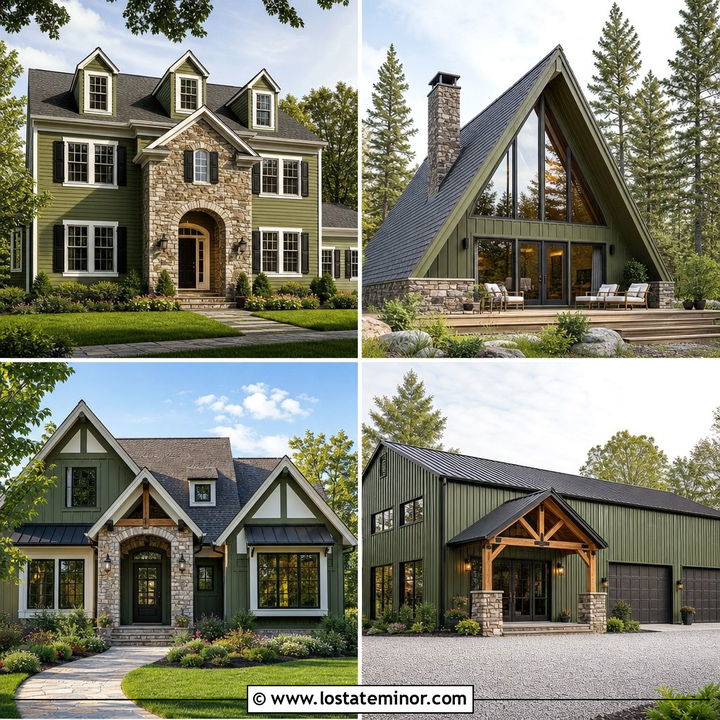
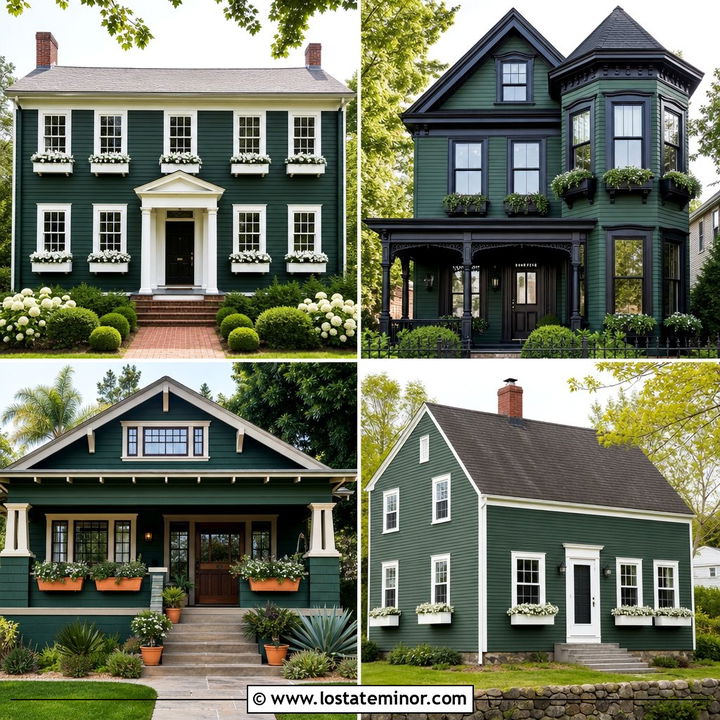
Layering a dark forest-green ceiling over sage green siding creates a sophisticated monochromatic exterior. Choose a light, gray-based sage for the main body and reserve the deeper green for the porch ceiling, front door, and selected shutters. Cream trim can soften the transitions, while natural stone columns and brown roofing add earthy texture. This palette suits a mountain cottage, wooded suburban house, or rustic Craftsman home. Install warm bronze lighting under the ceiling to complement the darker finish, but keep the bulbs clear and balanced rather than overly amber. A medium-tone wood porch floor will bridge the light siding and deep overhead color. Surround the home with ferns, native shrubs, and stone edging to strengthen the layered green appearance without hiding the architecture behind excessive planting.
14. Sage Green House With Blush Porch Ceiling
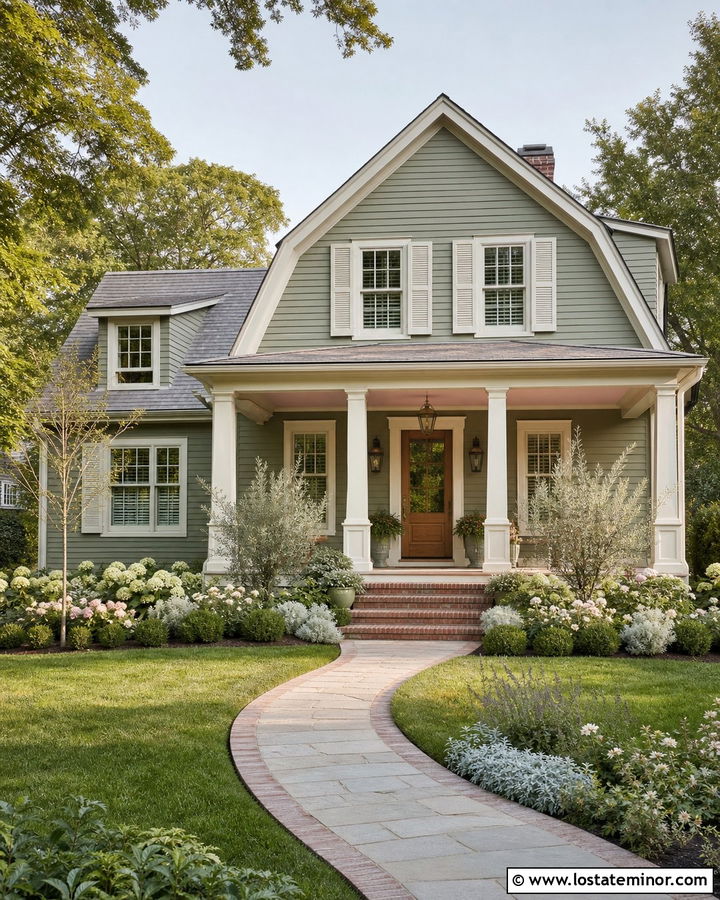
Soft blush provides a warm, distinctive contrast to sage green without feeling excessively bold. On a cottage-inspired exterior, use muted sage green lap siding, ivory trim, and a very pale dusty pink porch ceiling. Repeat the blush sparingly on a planter or small decorative feature rather than across large parts of the facade. A natural wood front door, gray roof, and aged brass lanterns will keep the scheme grounded. White or ivory columns provide a clean visual boundary between the green body and pink ceiling. This pairing looks especially appealing with brick steps in softened red and gardens containing pale flowers and silvery foliage. Select a blush with beige or gray undertones. Candy pink would appear too bright beside the quiet, earthy character of sage green siding.
15. Sage Green House With Charcoal Porch Ceiling
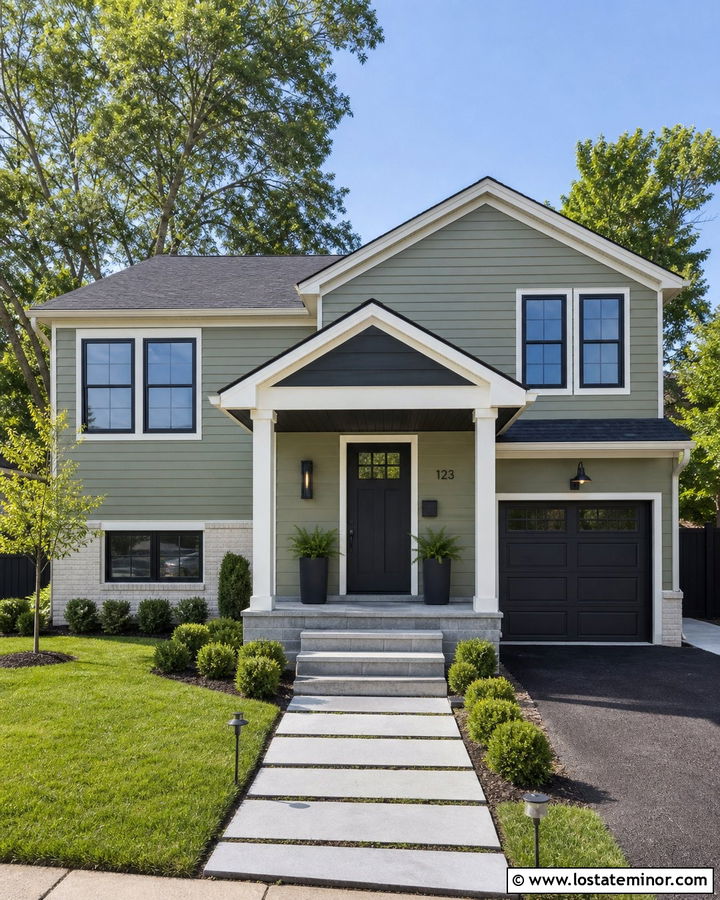
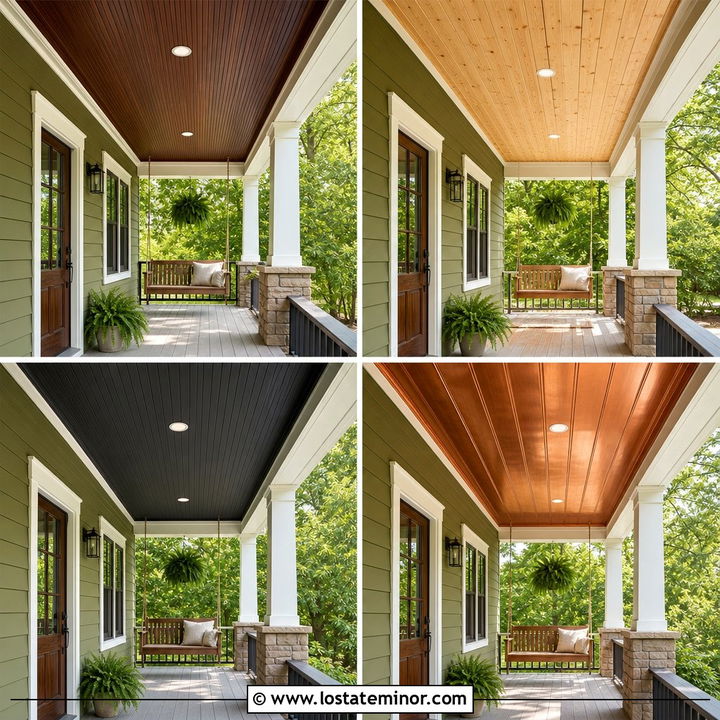
Charcoal overhead gives a sage green exterior clear definition while coordinating naturally with a dark roof. Apply medium sage green to the siding and warm white to the trim, columns, and garage framing. Use deep charcoal on the porch ceiling, front door, roof, and possibly the window sashes. Pale stone or limewashed brick around the foundation will lighten the lower facade and keep the scheme from becoming too dark. This combination works well on a split-level or updated suburban home where stronger contrast can clarify the entrance. Choose a pale gray porch floor and streamlined black lighting. If the porch is narrow or heavily shaded, use charcoal only on a shallow ceiling section. A taller, open porch can accommodate the dramatic finish more comfortably.
16. Sage Green House With Light Wood Porch Ceiling
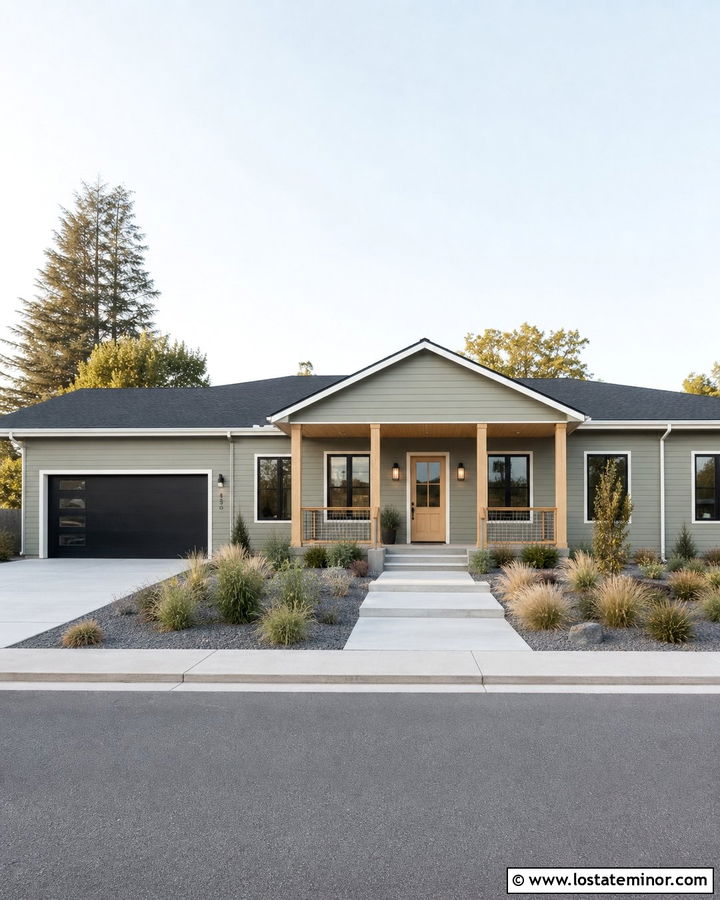
Pale wood creates a relaxed and contemporary partner for sage green siding. Choose a muted midtone sage for the house, warm white trim, and light oak or clear-finished fir boards for the porch ceiling. Repeat the wood on the front door and horizontal railing cap to make the material feel intentional. Black-framed windows, a graphite roof, and simple concrete steps can add a modern edge. The combination works particularly well on a one-story contemporary ranch with large windows and a broad roof overhang. Use vertical or linear ceiling boards to emphasize the architecture’s direction. A low-maintenance landscape of grasses, gravel, and compact shrubs will maintain the uncluttered look. Avoid strongly yellow wood finishes; a natural matte treatment is more balanced beside cool, gray-green siding.
17. Sage Green House With White Beadboard Porch Ceiling
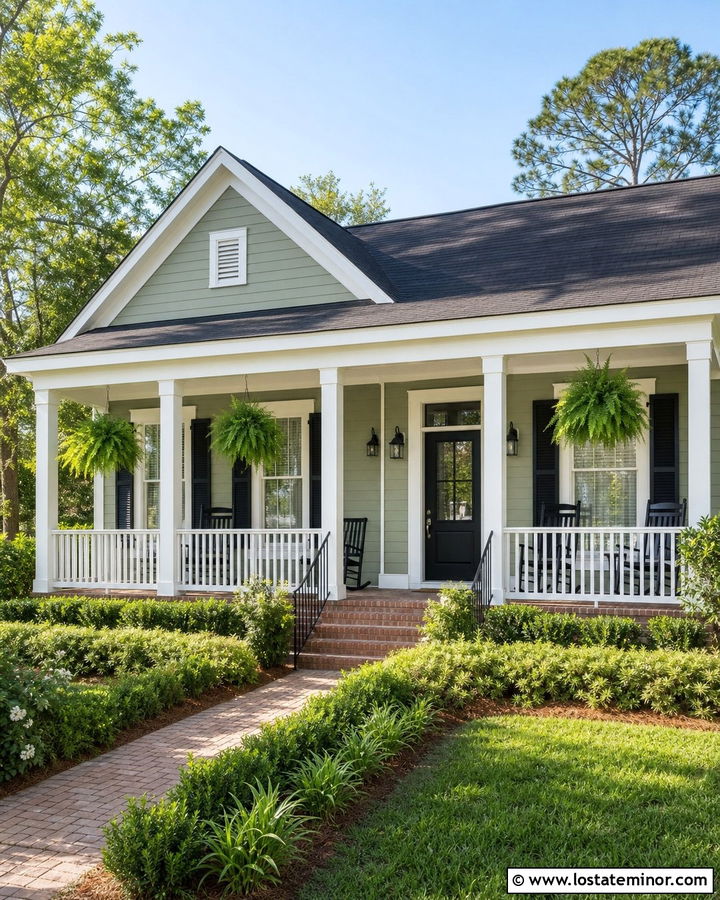
White beadboard can make a sage green porch feel finished without introducing another dominant color. Pair classic sage clapboard siding with bright but slightly softened white trim, ceiling panels, railings, and square columns. Add a black front door, charcoal roof, and brick porch floor for contrast and traditional texture. The narrow grooves in the beadboard will catch daylight and give the ceiling more depth than a flat painted surface. This combination is suitable for a Southern cottage, farmhouse, or traditional family home with a generous covered porch. Large ferns, simple rocking chairs, and layered foundation plants can support the welcoming setting without overwhelming it. Continue the white ceiling finish through connected porch areas so the front elevation appears consistent from one end to the other.
18. Sage Green House With Plywood Porch Ceiling
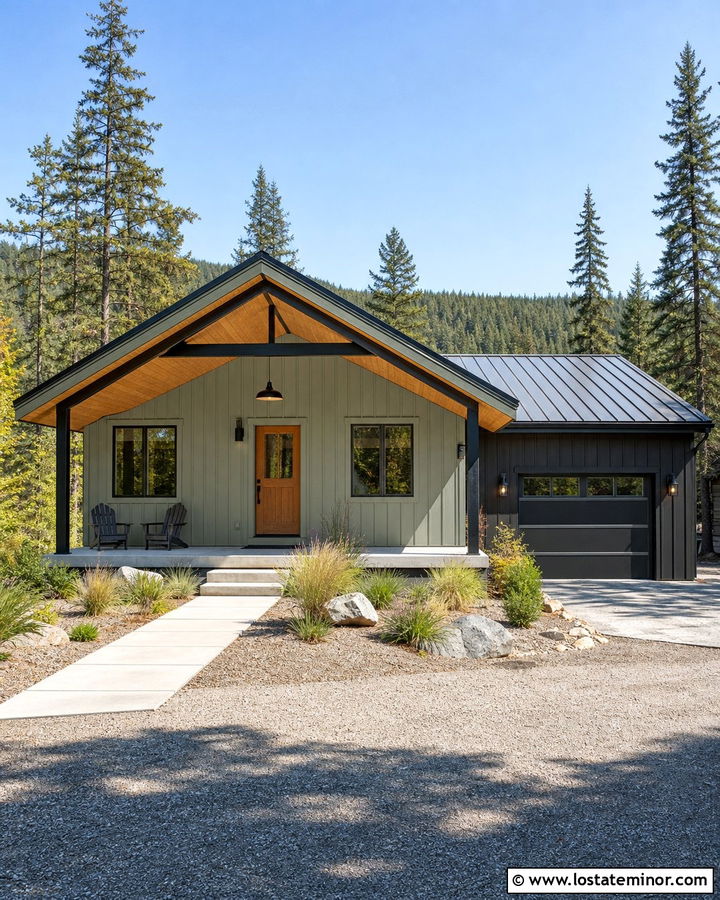
A finished plywood ceiling offers a clean, budget-conscious look for a casual sage green exterior. Use smooth, exterior-rated plywood panels with neat battens or narrow trim strips covering the seams. A clear matte finish can preserve the natural grain, or a light tan stain can coordinate with a wood front door. Pair the ceiling with muted sage green vertical siding, off-white window trim, and a charcoal metal roof. Black porch posts and simple concrete flooring will give the house a modern cabin character. This design is most successful when panel lines are carefully planned and centered across the porch. Repeat the warm plywood tone on soffits or a small privacy screen. Native grasses, gravel beds, and a straightforward walkway will complement the simple material palette.
19. Sage Green House With Exposed Porch Rafters
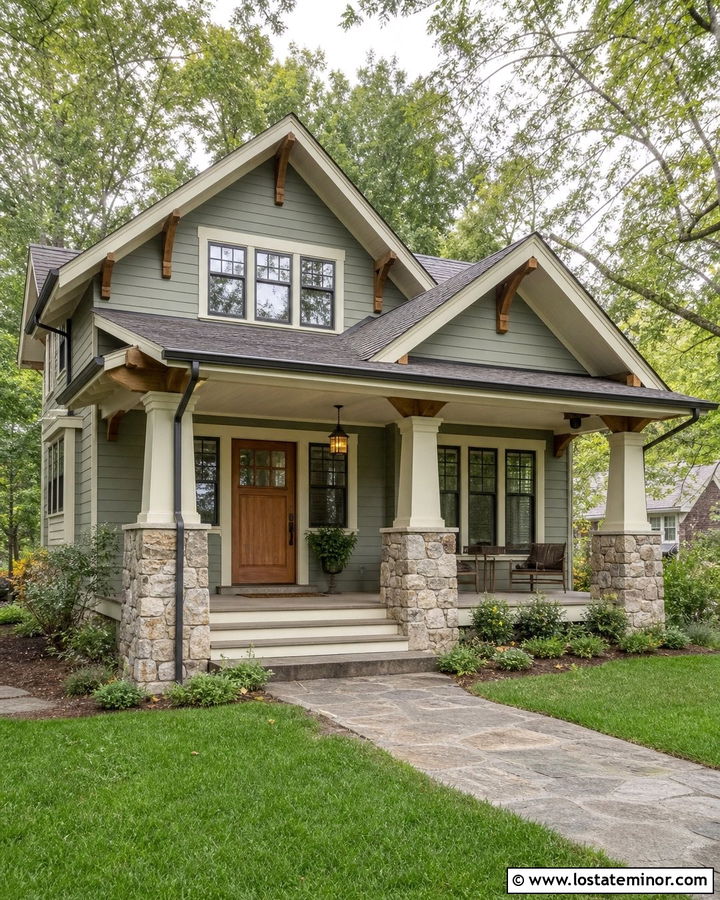
Exposed rafters introduce depth and rhythm to the porch of a sage green cottage or Craftsman house. Paint the ceiling boards warm white, then stain the structural rafters a medium cedar brown. Use dusty sage green siding with cream trim and a matching wood front door to connect the overhead framing to the facade. Stone column bases and a weathered gray roof can further strengthen the natural palette. Keep the porch flooring neutral so it does not compete with the ceiling structure. This design is ideal for a porch with a visible gable, where beams and rafters can emphasize the roofline. Add one simple pendant or understated ceiling fan between the framing members. Informal shrubs and a flagstone path will complete the handcrafted, garden-friendly exterior.
20. Sage Green House With Coffered Porch Ceiling
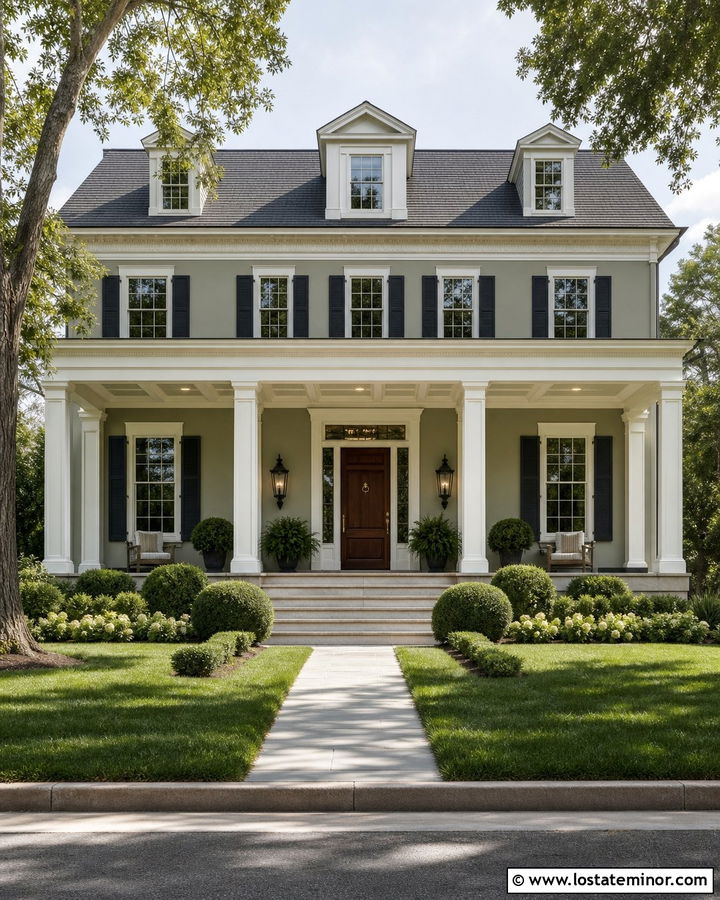
A coffered ceiling can give a formal sage green home an elegant, dimensional entrance. Use refined sage green siding with creamy white trim and paint the entire coffered structure in the same soft white. The recessed panels will create natural shadow lines without requiring a contrasting ceiling color. Pair the porch with substantial square columns, a dark mahogany front door, and symmetrical black lanterns. A slate-gray roof and pale limestone steps can reinforce the polished appearance. This treatment works best on a wide porch with sufficient ceiling height, such as the entrance of a large Colonial or Southern traditional home. Keep furnishings restrained and arrange landscaping symmetrically. The detailed ceiling should enhance the architecture while the gentle sage exterior prevents the formal composition from looking cold or overly imposing.
21. Sage Green House With Cedar Beam Porch Ceiling
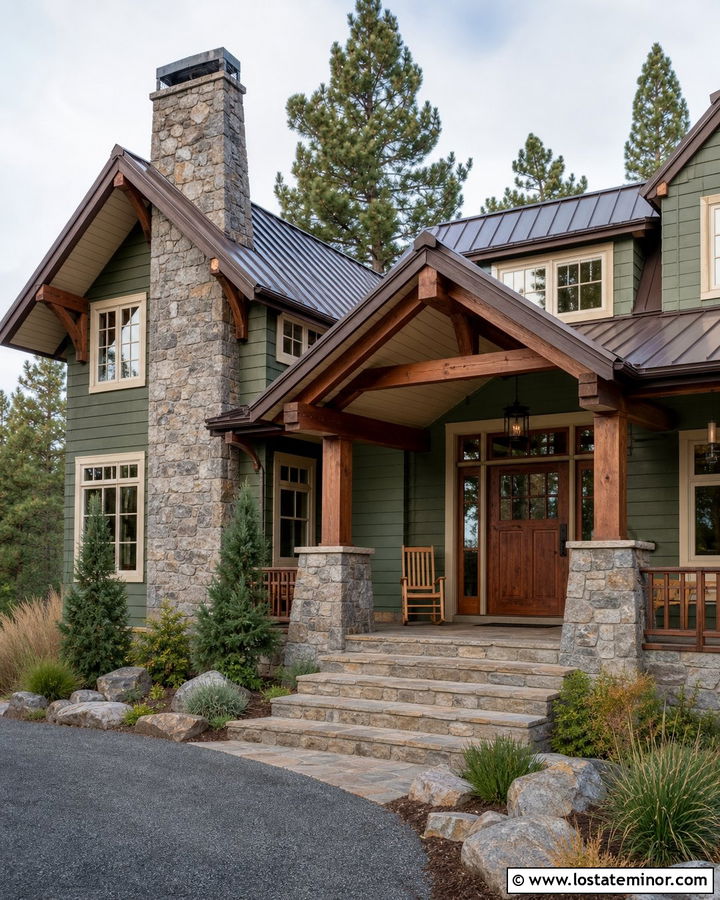
Substantial cedar beams make a sage green mountain house feel warm and structurally expressive. Select a deeper sage green for the lap siding and use soft cream around windows, doors, and roof edges. Install cedar beams beneath a cream or pale wood ceiling, then repeat the cedar on porch posts and the front door. A dark brown metal roof and rugged gray stone chimney will complete the rustic palette. Choose wide stone steps and a natural flagstone porch floor to give the house a solid visual base. The ceiling beams should follow the roof shape rather than appear decorative or randomly placed. Surround the home with native evergreens and low grasses, leaving enough open space for the sage green facade and timber details to remain clearly visible from the curb.
22. Sage Green House With Light Blue Porch Ceiling
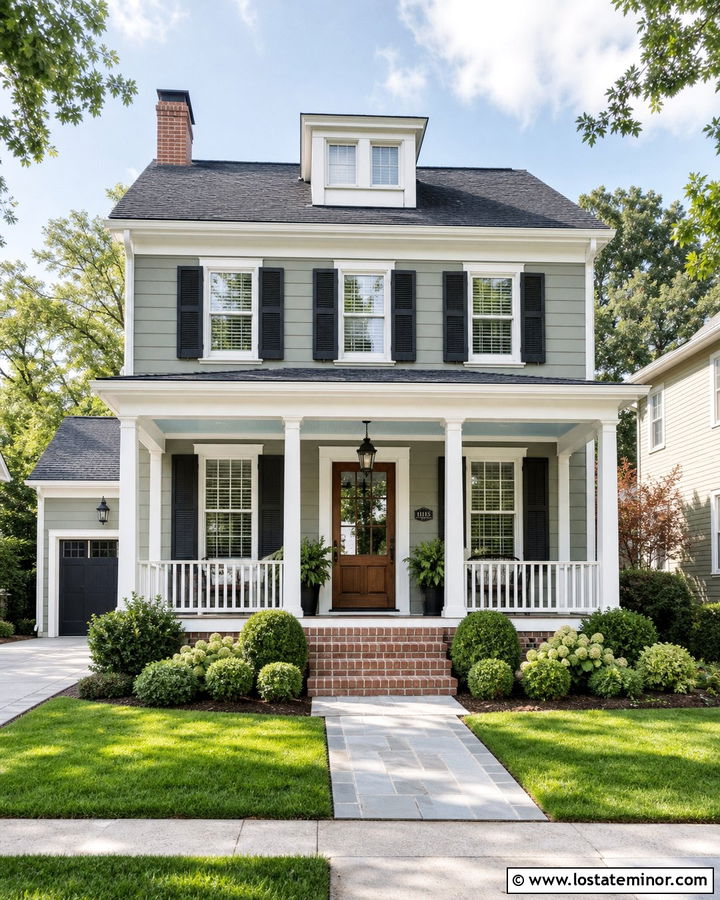
Light blue can refresh a sage green porch while preserving a peaceful, nature-inspired exterior. Use a balanced sage green on a traditional two-story house, then add soft white trim and a powdery blue ceiling beneath the front porch. A white door surround will frame a medium walnut door, while black shutters and a charcoal roof add definition. Brick steps in muted brown-red bring a warmer material into the composition. The ceiling blue should be light enough to reflect daylight into the entry and subdued enough to coordinate with the gray-green siding. This complete scheme works in leafy suburbs as well as open rural settings. Keep porch furniture neutral and use blue only once more, perhaps in small planters, so the ceiling remains a subtle architectural highlight.
23. Sage Green House With Gray-Stained Wood Porch Ceiling
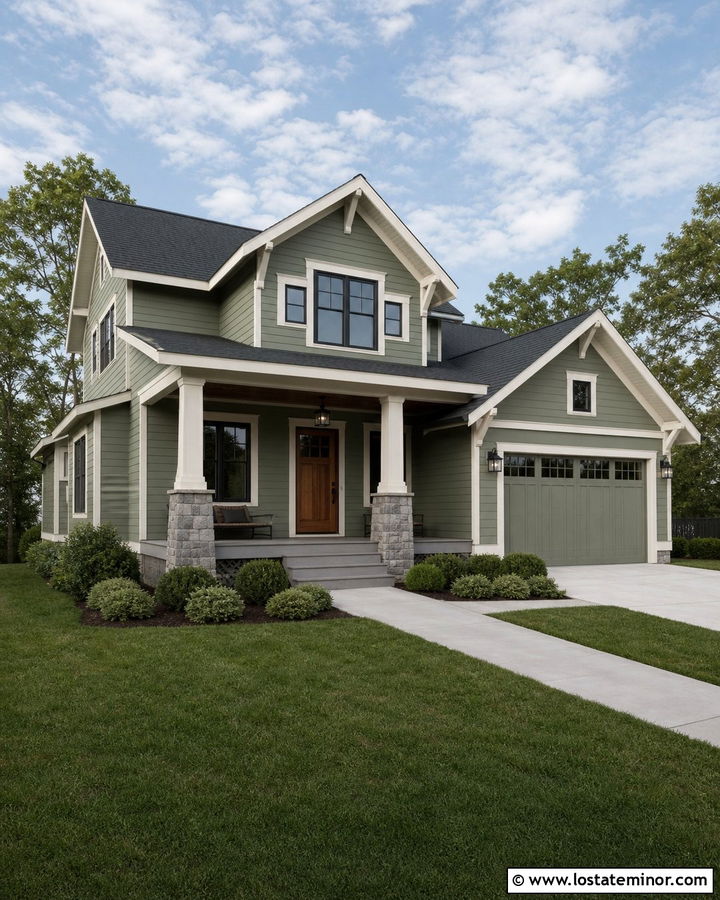
Gray-stained wood combines visible grain with a cooler finish that suits sage green siding. Cover a contemporary Craftsman house in medium sage green, then use a driftwood-gray stain on the tongue-and-groove porch ceiling. Repeat the gray on the porch floor or selected railing sections. Warm white trim prevents the green-and-gray palette from feeling flat, while a rich wood front door adds necessary warmth. Choose a dark graphite roof, gray stone column bases, and black window frames for a cohesive finish. This combination is useful when existing stone contains both green and cool gray tones. Select a translucent stain instead of opaque gray paint so the ceiling retains natural variation. Low shrubs and a broad concrete path will support the house’s clean, substantial curb appeal.
24. Sage Green House With Terracotta Porch Ceiling
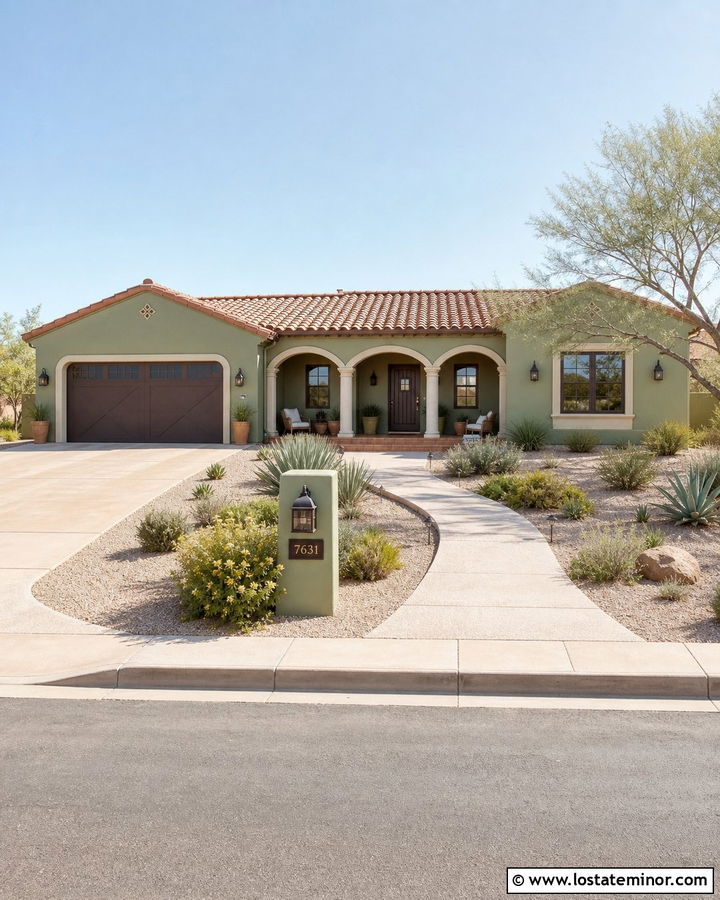
A muted terracotta ceiling can warm up sage green siding and relate beautifully to brick or clay roof details. Use a dusty sage body color with creamy trim and a softened clay tone overhead. Repeat terracotta in brick porch flooring or planters, but avoid placing it on every accent. A dark brown front door and bronze lighting will ground the palette. This scheme fits a Spanish-influenced bungalow, Southwestern ranch, or eclectic cottage with stucco and siding combined. If the house has a clay tile roof, keep the ceiling slightly lighter than the tiles to prevent the porch from feeling visually heavy. Drought-tolerant landscaping, pale gravel, and a curved stucco walkway can complete the setting. The result feels warm and distinctive while keeping sage green as the primary exterior color.
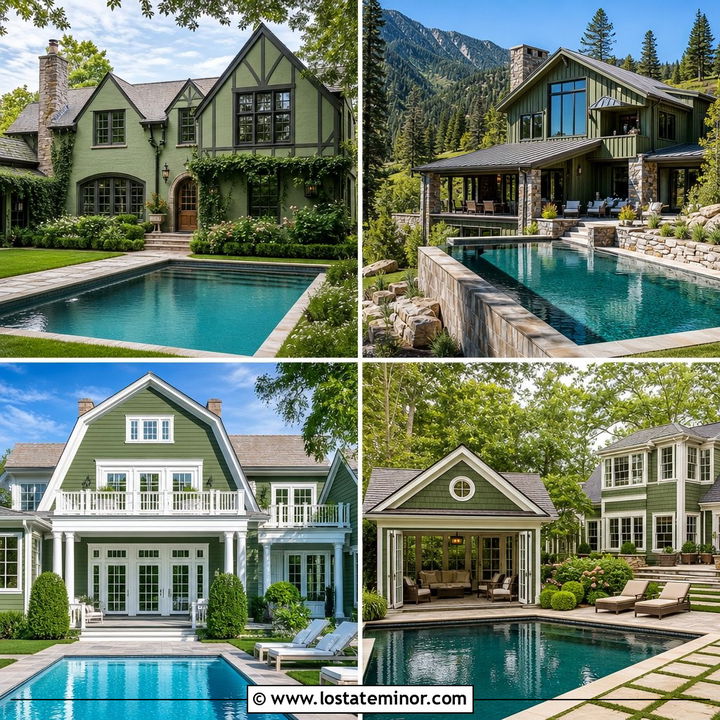
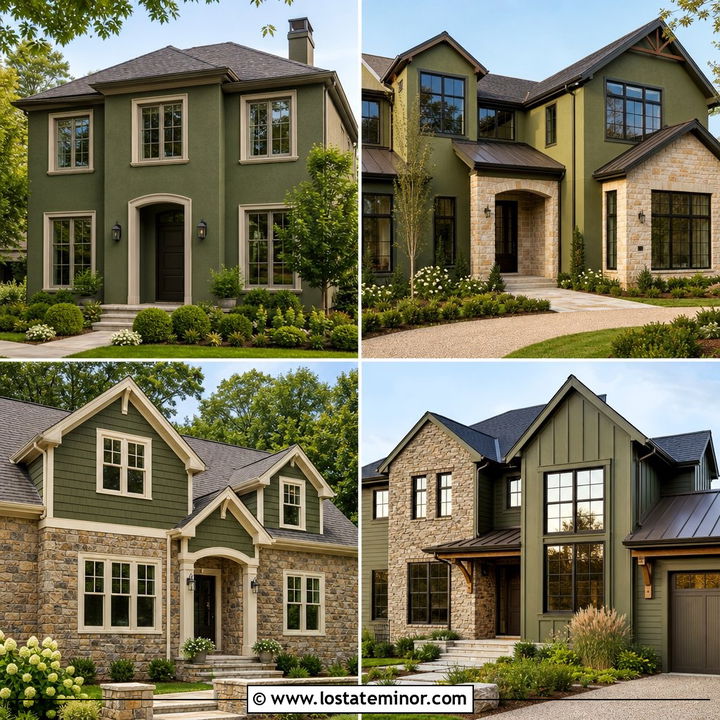
25. Sage Green House With Soft Yellow Porch Ceiling
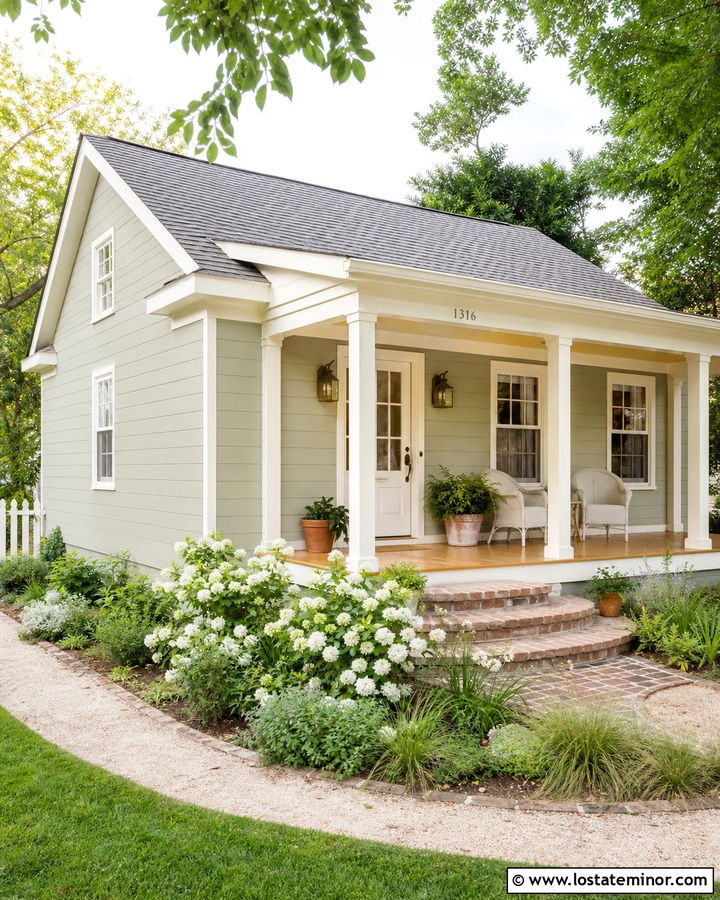
A pale yellow ceiling brings gentle warmth to a sage green cottage, especially when the porch receives limited direct sunlight. Choose light sage green siding, creamy white trim, and a soft butter-yellow overhead color with low saturation. A warm white front door, aged brass hardware, and a medium-gray roof will maintain a light, comfortable palette. Add natural brick steps or a honey-colored wood porch floor to repeat the ceiling’s warmth near ground level. This cheerful combination works best on modest cottages and bungalows with traditional windows and simple columns. Avoid bright lemon yellow, which can overpower the muted green facade. Cottage planting beds with white flowers, herbs, and soft grasses will make the house feel settled into the landscape while preserving an open view of the porch.
26. Sage Green House With Black Beadboard Porch Ceiling
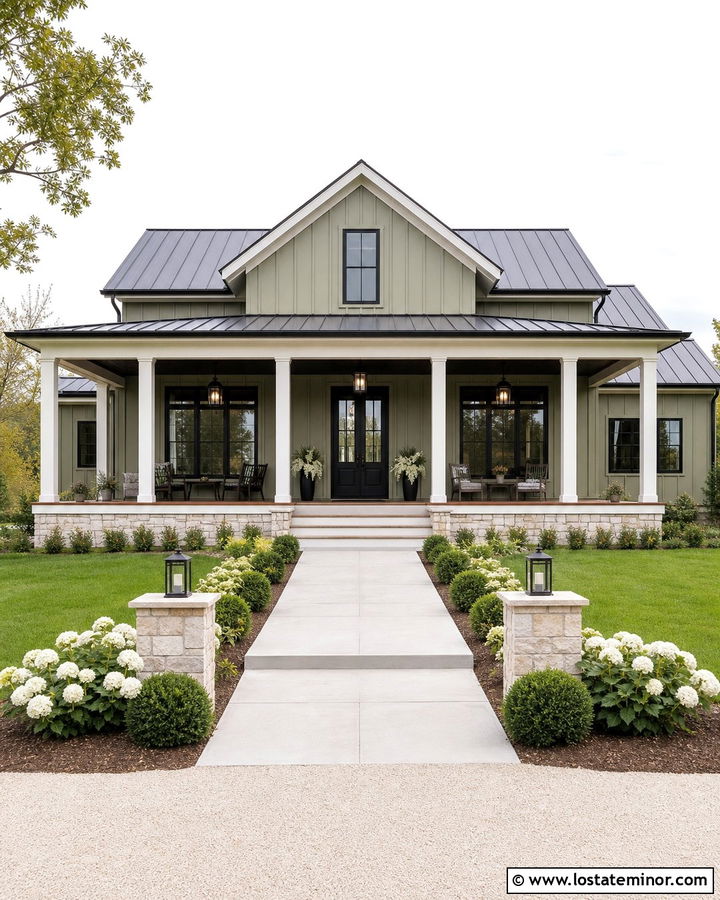
Black beadboard introduces both color contrast and fine texture to a sage green porch. Use light sage green board-and-batten siding so the dark ceiling feels intentional rather than heavy. Warm white columns and fascia will separate the black overhead surface from the green walls. Repeat black on the metal roof, front door, gutters, and modern lanterns. Natural cedar porch flooring and a pale stone foundation can soften the graphic palette. This complete exterior works well on a modern farmhouse with a tall gabled porch and abundant daylight. Align the beadboard with the longest dimension of the porch to create a clean visual flow. Keep the landscaping simple and bright, using clipped shrubs, white flowering plants, and an open lawn to balance the stronger architectural contrast.
27. Sage Green House With Vaulted Wood Porch Ceiling
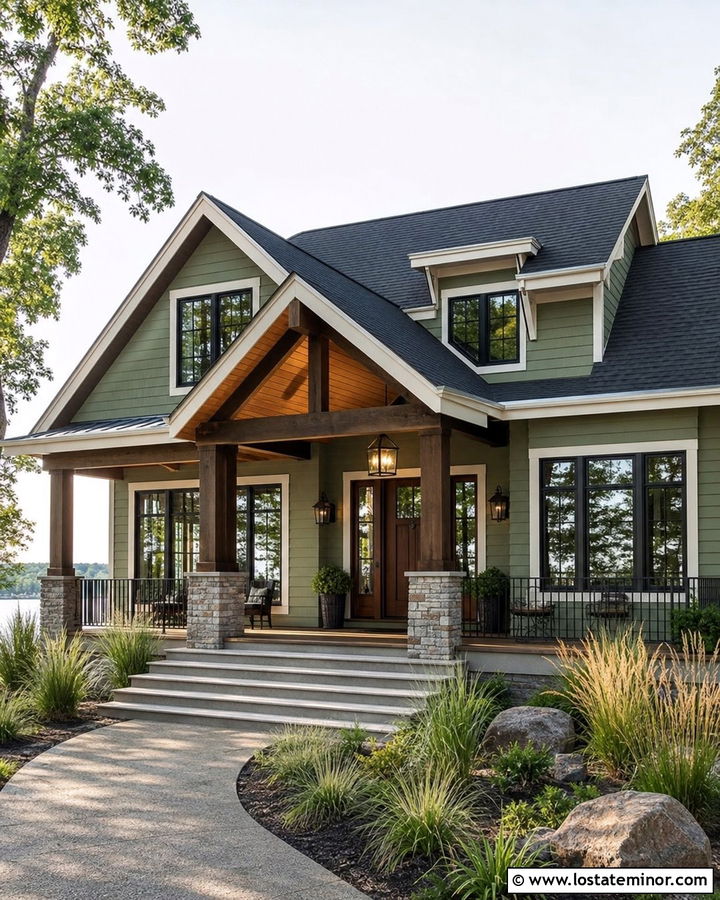
A vaulted porch ceiling can become the defining feature of a sage green lake house or contemporary Craftsman. Finish the exterior in subdued sage green siding with warm white trim and install clear-stained cedar planks along the full ceiling slope. Dark wood beams can outline the vault and connect with a deep brown front door. Use gray stone piers, black-framed windows, and a charcoal roof to keep the design grounded. A large pendant centered beneath the peak will emphasize the porch height without blocking the facade. Extend the wood tone to porch furniture or railing caps for continuity. Broad steps, native grasses, and mature trees can frame the elevation. The open ceiling and natural material give the quiet sage exterior a memorable architectural focal point.
28. Sage Green House With Painted Porch Ceiling Panels
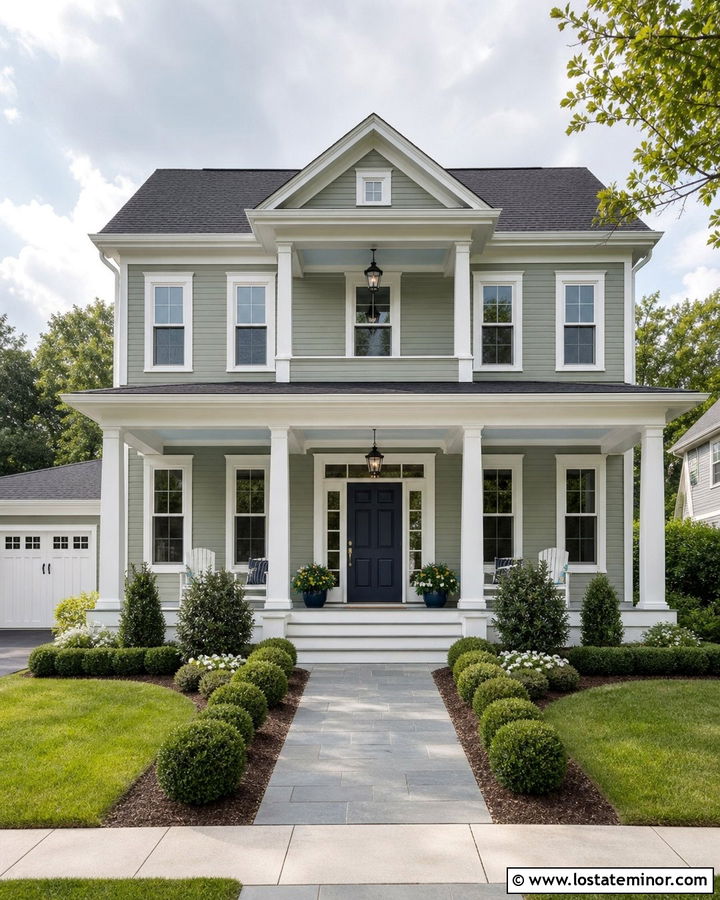
Painted ceiling panels can bring subtle dimension to a sage green house without the cost or weight of heavy wood beams. Use medium sage green siding and divide the porch ceiling into broad recessed sections painted pale blue-gray. Outline each panel with warm white trim that matches the columns, railings, and window surrounds. Add a navy front door, charcoal roof, and light gray porch floor to complete the cool, coordinated palette. This treatment fits a transitional house that combines traditional proportions with cleaner details. Keep panel sizes generous so the ceiling does not look busy from the curb. Simple hanging lights centered within selected panels can reinforce the pattern. Structured shrubs and a straight stone walkway will support the balanced, orderly appearance of the full facade.
29. Sage Green House With Screened Porch Ceiling
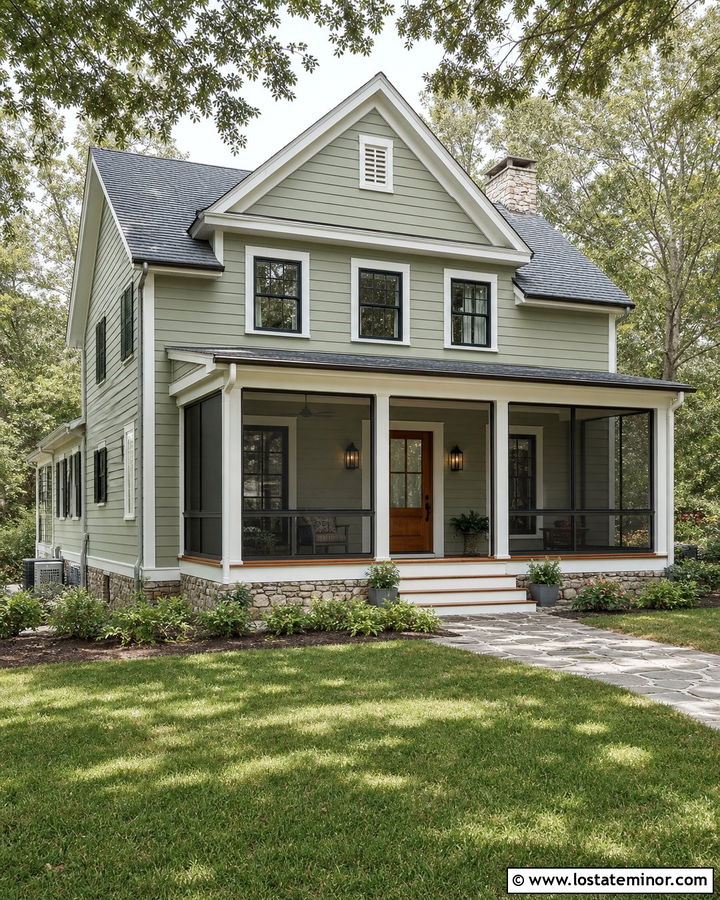
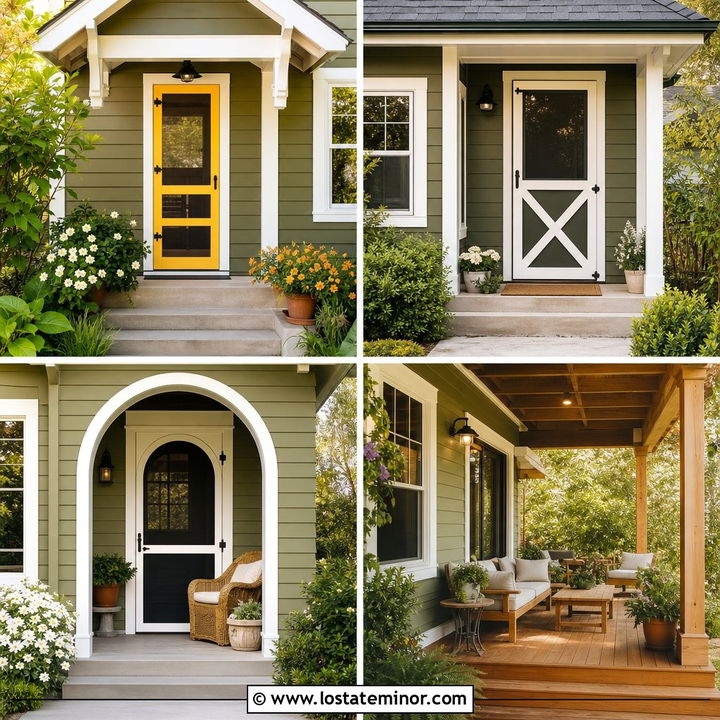
A screened porch requires a ceiling finish that remains visible behind framing and mesh. Pair sage green lap siding with a warm white beadboard ceiling, white structural trim, and dark bronze screen frames. The contrast will make the porch architecture readable while keeping the interior bright. Use natural cedar flooring and a matching wood door to add warmth beneath the white ceiling. A dark gray roof, stone foundation, and bronze sconces will complete the exterior. This design suits a farmhouse, lakeside cottage, or traditional ranch with a large side or front screened porch. Keep furniture colors neutral so the sage siding remains prominent through the screens. Surround the porch with low planting beds rather than tall shrubs that would block airflow and hide its architectural details.
30. Sage Green House With Wraparound Porch Ceiling
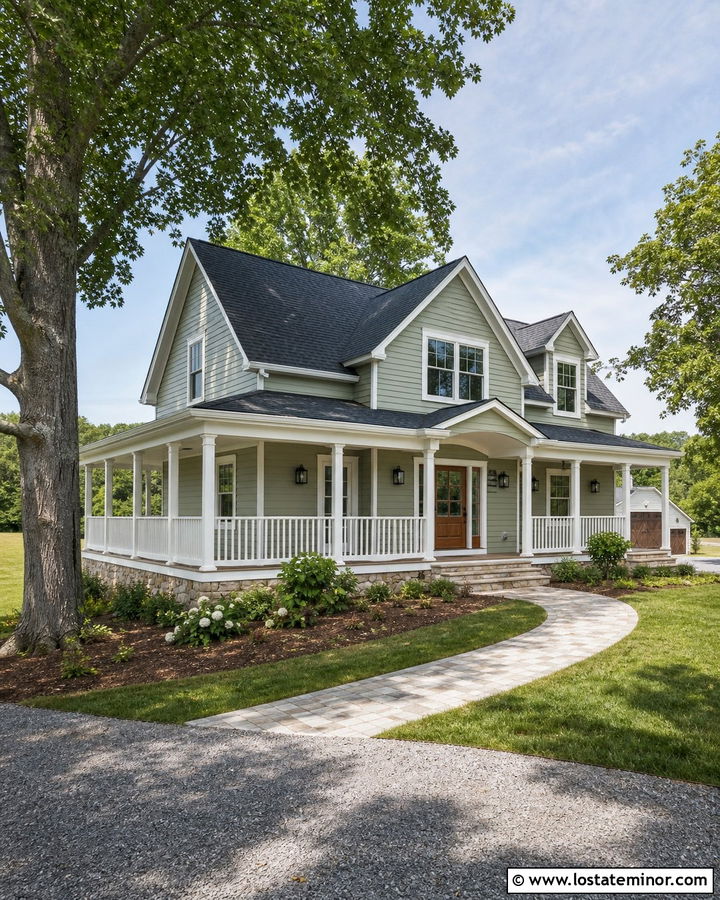
A continuous ceiling can unify every side of a wraparound porch and make the sage green exterior feel larger and more cohesive. Use muted sage green clapboard siding with warm white columns, railings, trim, and beadboard overhead. A soft blue ceiling is another option, but repeating white creates the cleanest connection across long porch sections. Add natural wood flooring, a stained oak front door, black lanterns, and a medium charcoal roof. Stone steps at the main entrance can mark the arrival point without disrupting the porch’s visual flow. This scheme is ideal for a farmhouse, Southern cottage, or renovated country home. Use consistent ceiling boards and lighting throughout the wraparound area. Simple landscaping should frame the porch while preserving clear views of its length and balanced proportions.
Conclusion:
The best sage green exterior brings siding, porch details, roofing, masonry, and landscaping into one thoughtful composition. Light blue and white ceilings make covered entries feel brighter, while cedar, oak, and stained plywood introduce natural warmth. Charcoal, navy, and forest green create stronger definition for modern or dramatic homes. Softer options such as cream, blush, beige, and pale yellow suit cottages and traditional facades. Before making a final choice, compare samples beside the roof, trim, stone, and front door in changing daylight. This helps every finish work together from the curb. Use these **30 Sage Green House Design With Porch Ceiling Ideas** to plan a welcoming exterior that feels balanced, personal, and complete.

Related posts: