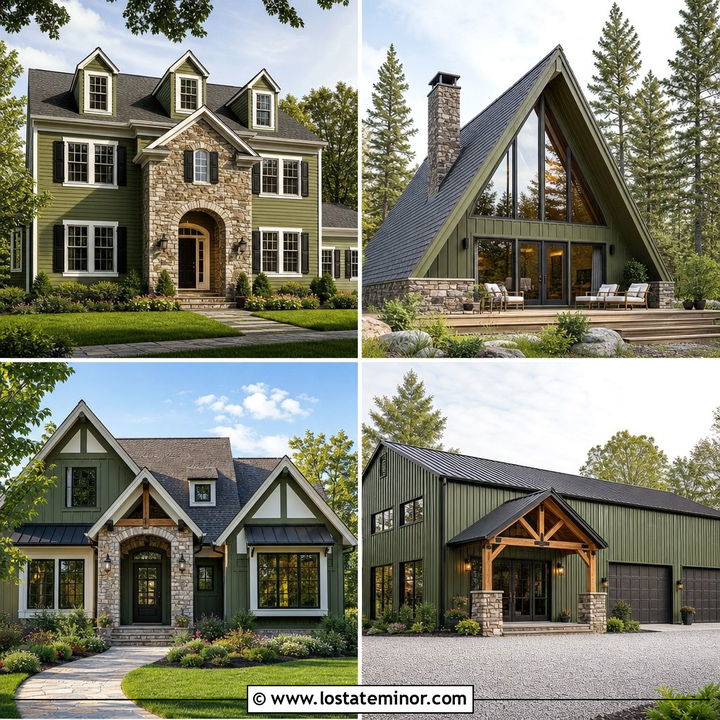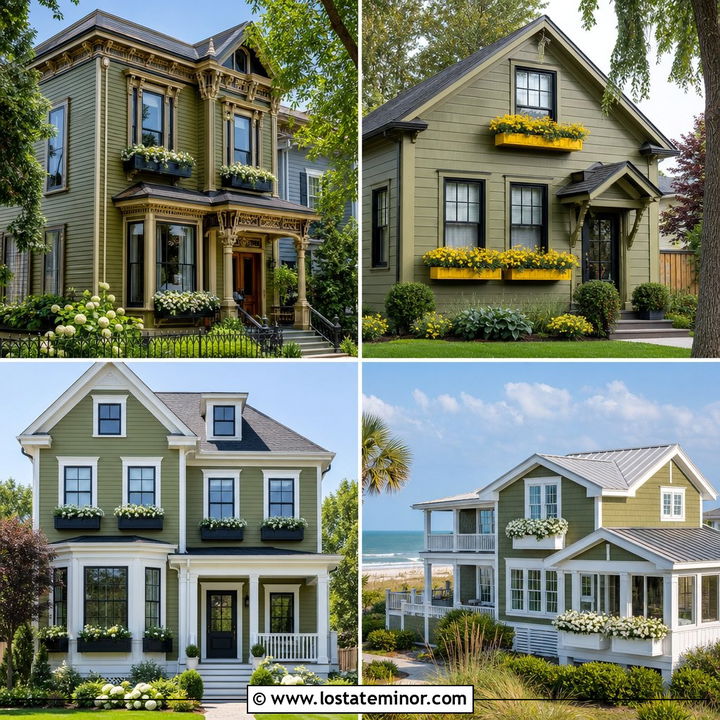
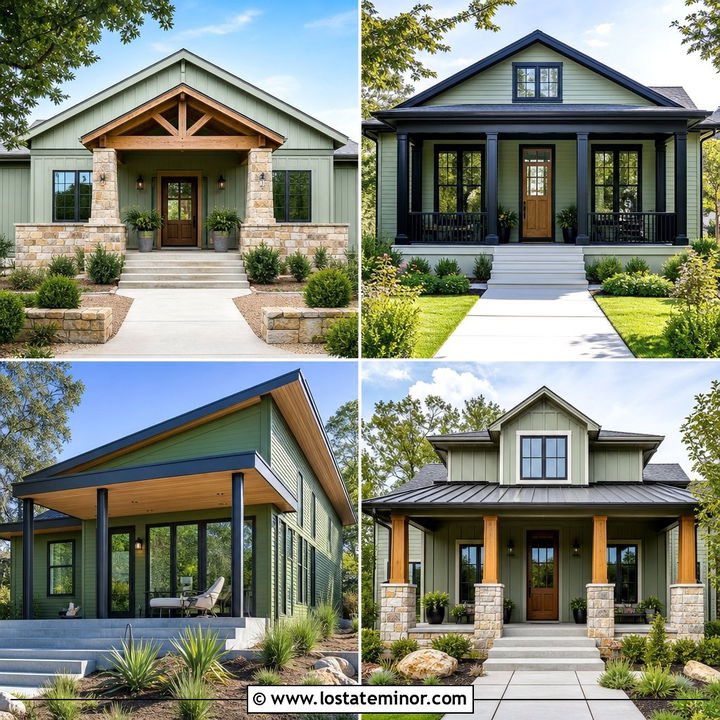
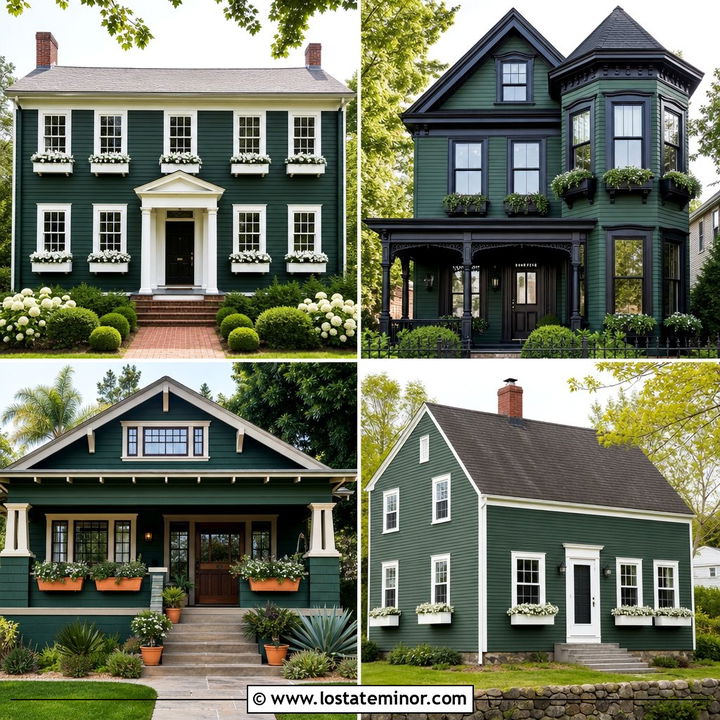
Olive green brings an earthy, grounded character to a home while giving the front porch a naturally welcoming presence. The best 30 Olive Green House Design With Front Porch Ideas treat the facade as one connected palette rather than a collection of separate features. Siding, trim, roofing, columns, doors, flooring, and landscaping should support one another. Crisp white can brighten olive siding, while cream, charcoal, brick, stone, and natural wood create softer transitions. Porch size also matters. A deep wraparound porch needs different visual balance than a compact covered entry. The following complete exterior schemes include traditional, modern, rustic, and budget-friendly options for many American home types. Explore these 30 Olive Green House Design With Front Porch Ideas.
1. Olive Green House With White Trim And Wood Porch
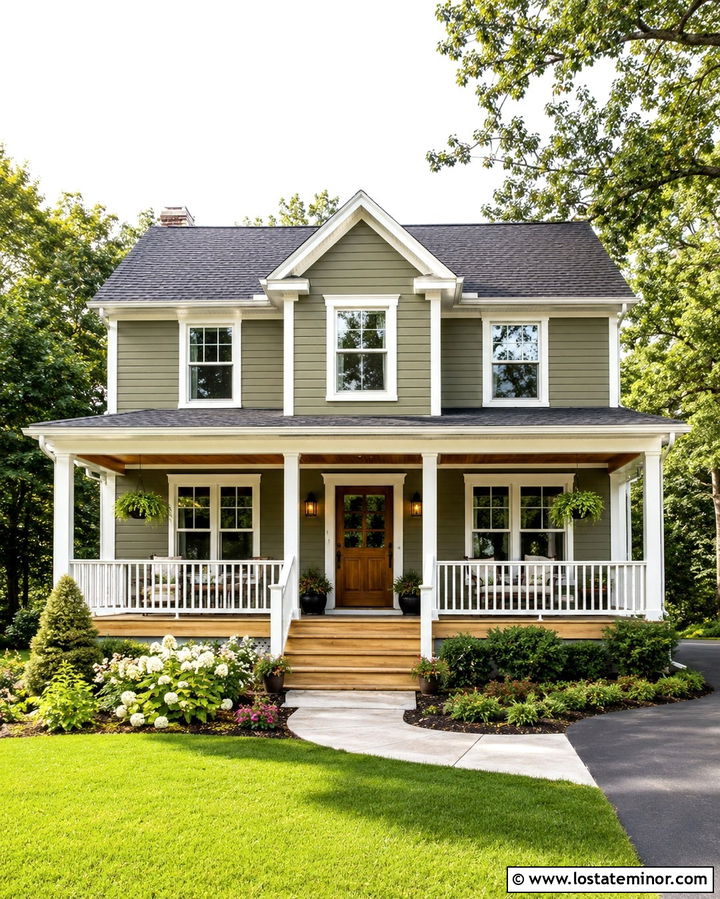
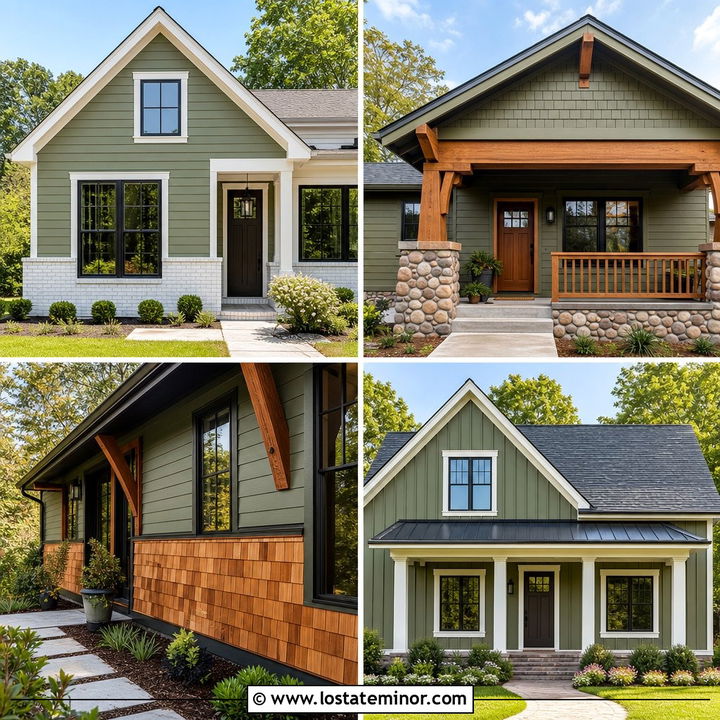
A warm olive green exterior becomes especially inviting when paired with clean white trim and a natural wood porch. Use white around the windows, roofline, porch columns, and railings to create clear definition without making the facade feel overly sharp. A medium cedar or oak stain adds warmth through the porch floor and front door. This complete scheme works beautifully on farmhouse, colonial, and cottage homes. Choose a medium-gray roof to keep the palette grounded. Simple black lanterns provide a small amount of contrast without distracting from the wood. Around the porch, layer cream flowers, ornamental grasses, and neatly clipped shrubs. The result feels bright and familiar while still giving the house a distinctive, nature-inspired color.
2. Olive Green House With Black Trim And Cedar Porch
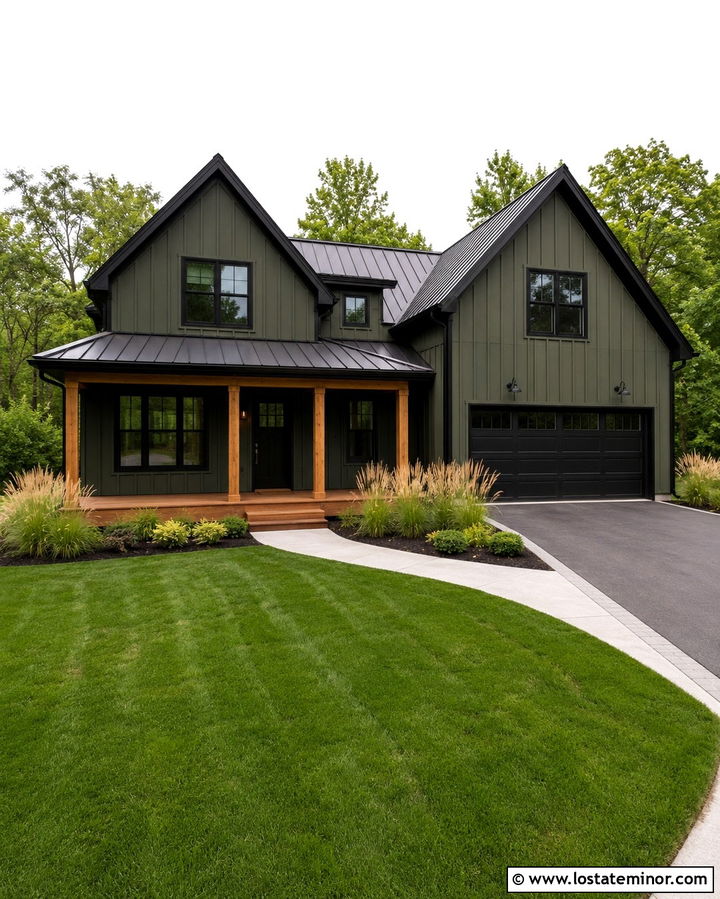
For a stronger, more contemporary look, combine olive green siding with black window frames, fascia, gutters, and porch railings. The dark accents sharpen the home’s architecture, while cedar posts and decking prevent the scheme from becoming cold. This pairing is especially effective on a modern farmhouse with vertical board-and-batten siding and a simple front-facing porch. Repeat the black finish on the front door, metal roof, and streamlined wall lights. Keep the cedar unstained or use a clear protective finish so its natural orange-brown tone remains visible. A pale concrete walkway and restrained landscaping can balance the deeper colors. The finished exterior feels bold and structured, yet the olive siding and warm porch wood help it blend naturally into a suburban setting.
3. Olive Green Craftsman House With Cream Porch Trim
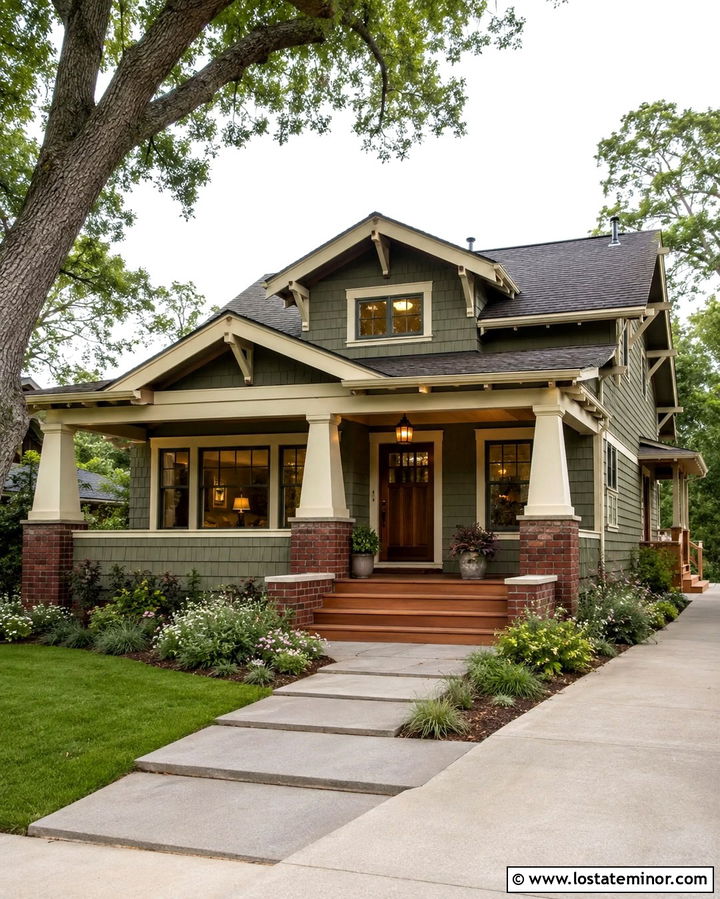
Soft cream trim gives an olive green Craftsman house a warmer appearance than bright white. Apply the cream to tapered porch columns, window casings, exposed rafter tails, railings, and the front gable. A stained walnut door and medium-brown porch floor can deepen the traditional character. For the porch foundation, use red-brown brick or warm fieldstone that repeats the undertones in the wood. An architectural shingle roof in weathered charcoal completes the palette without overwhelming it. Craftsman details look best when each material has a clear purpose, so limit the exterior to a few coordinated finishes. Wide porch steps, sturdy columns, and built-in planters create a substantial entrance. The completed home feels handcrafted, comfortable, and well connected to its surroundings.
4. Olive Green Ranch House With Stone Front Porch
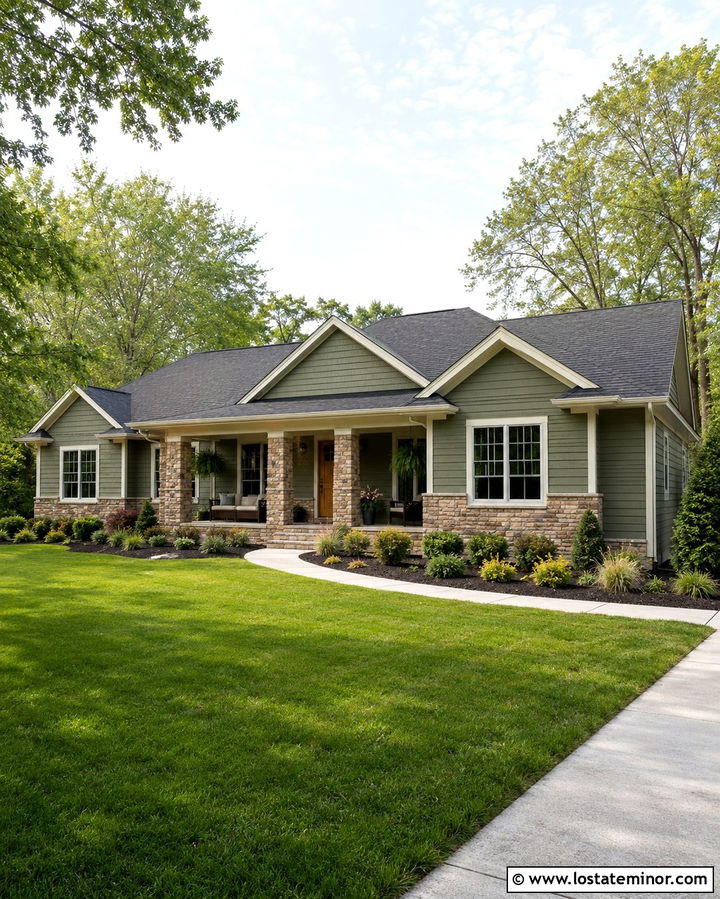
A low ranch home gains depth when olive green horizontal siding is paired with a broad porch supported by stone columns. Choose stone with beige, gray, and soft brown variation so it connects the green siding to the roof and landscape. Warm off-white trim can frame the windows while keeping the long facade from appearing too dark. Add a natural oak front door and simple bronze lighting for an understated finish. If the porch stretches across several rooms, use evenly spaced posts to create rhythm along the elevation. A charcoal roof provides a stable upper boundary, while a curved walkway softens the house’s horizontal lines. Low shrubs and grasses preserve open views from the porch and make this approachable design especially suitable for a spacious suburban lot.
5. Olive Green Stucco House With Terracotta Porch
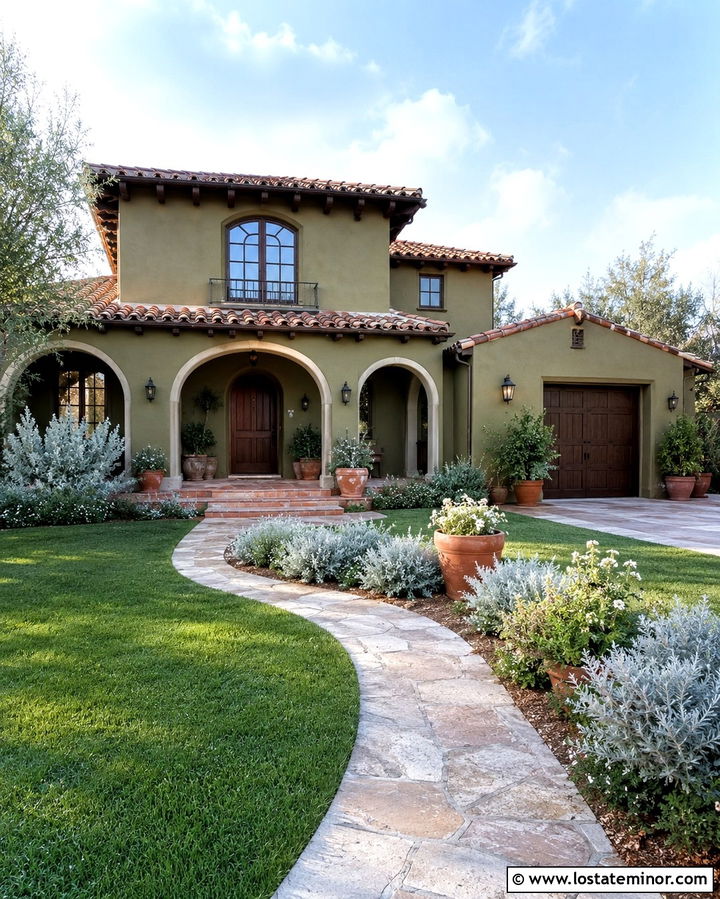
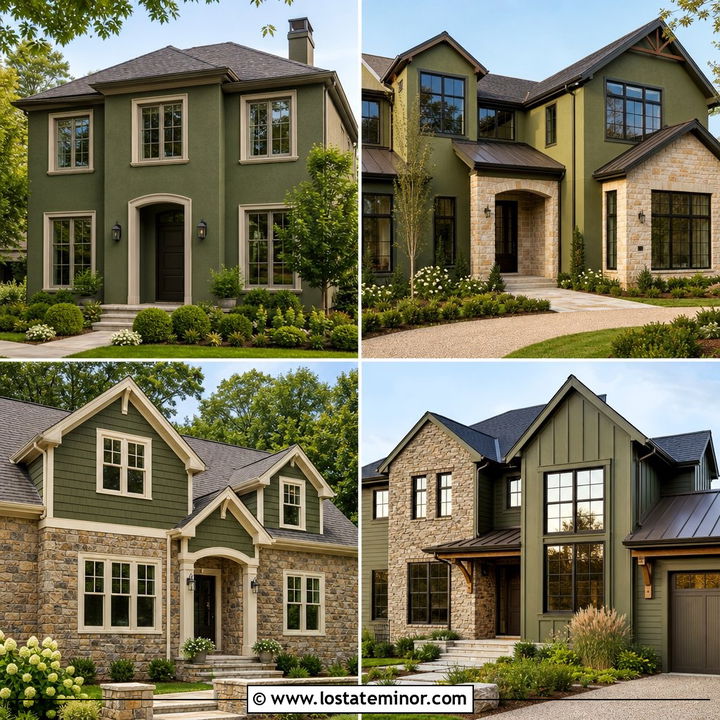
Olive green stucco and terracotta create a sun-warmed palette that suits Mediterranean and Spanish-inspired architecture. Cover the main walls in a muted olive tone, then introduce terracotta through the porch tile, front steps, roof, or painted door. Cream trim around arched openings prevents the earthy colors from blending together. A covered porch with chunky wood beams adds shade and gives the entrance architectural weight. Consider dark bronze window frames, gutters, and lanterns instead of pure black for a softer transition. Large clay planters filled with silvery foliage can connect the porch to the yard. The final exterior feels rich but not busy because every surface shares a warm undertone. It is an attractive alternative to the more common white stucco and red tile combination.
6. Olive Green Cottage House With Yellow Front Porch Door
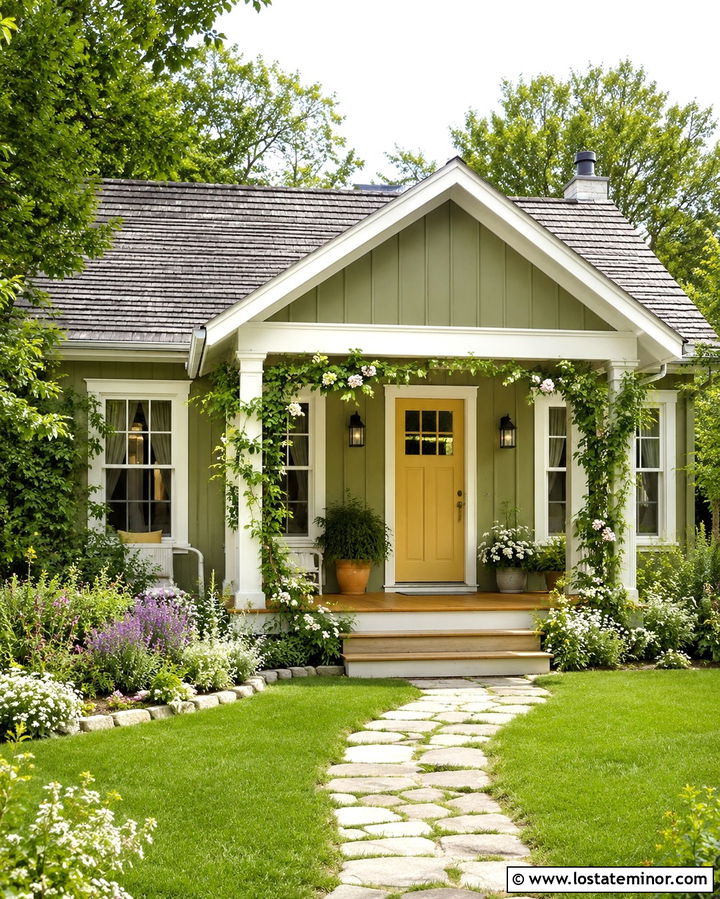
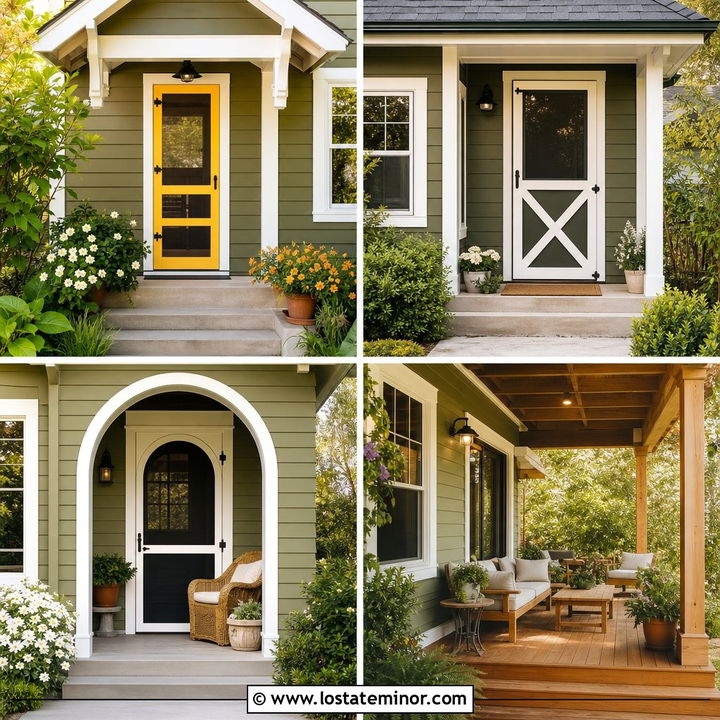
A cheerful yellow door can bring energy to an olive green cottage without overpowering its small facade. Select a muted mustard or ocher rather than a bright primary yellow. Surround it with creamy white trim, a light wood porch floor, and simple white columns. The olive siding remains the dominant color, while the door becomes a friendly focal point beneath the covered entry. A weathered gray roof and black porch lantern provide grounding contrast. Cottage landscaping can be relaxed, with flowering borders, climbing greenery, and a narrow stone path leading to the steps. Keep railings and decorative details simple so the palette remains easy to read. This complete look feels colorful and approachable, making it particularly useful when a modest home needs stronger curb appeal and personality.
7. Olive Green Colonial House With Red Porch Door
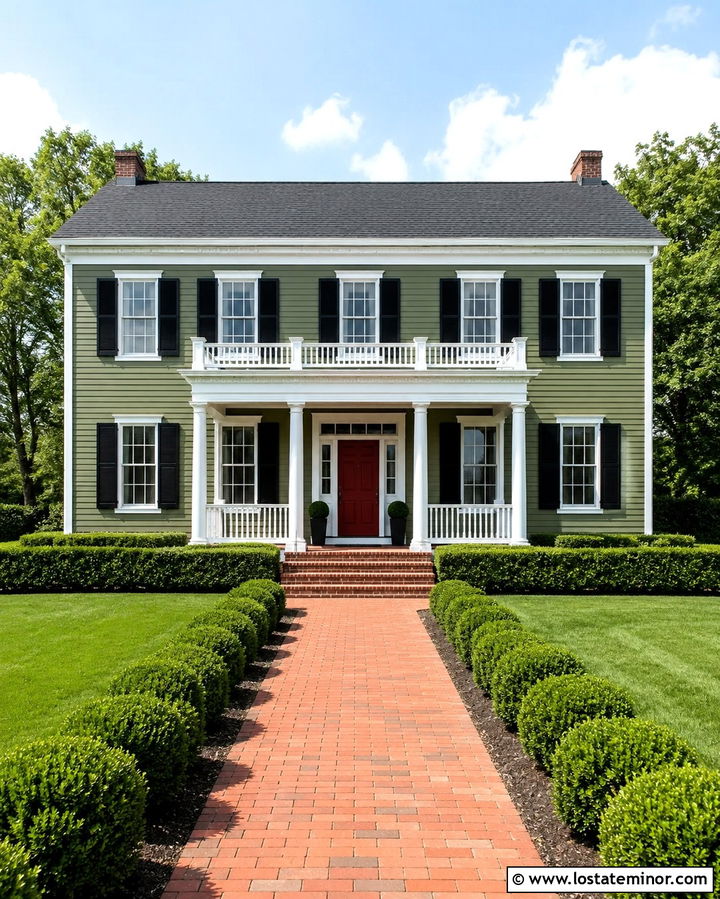
Deep brick red gives an olive green colonial exterior a traditional accent that feels more refined than a brighter red. Use symmetrical windows, white trim, and a centered porch to reinforce the home’s balanced architecture. Paint the front door a muted heritage red, then repeat that tone sparingly in planters or porch furniture. White columns and railings will brighten the entry, while a red-brown brick porch floor connects the door to the foundation. Choose a dark charcoal roof and black shutters to anchor the upper facade. Formal boxwood borders and a straight walkway complement the symmetry without creating visual clutter. Because olive and red are both substantial colors, warm white should separate them wherever possible. The completed house feels established, welcoming, and appropriate for a traditional neighborhood.
8. Olive Green Cape Cod House With Blue Gray Porch Door
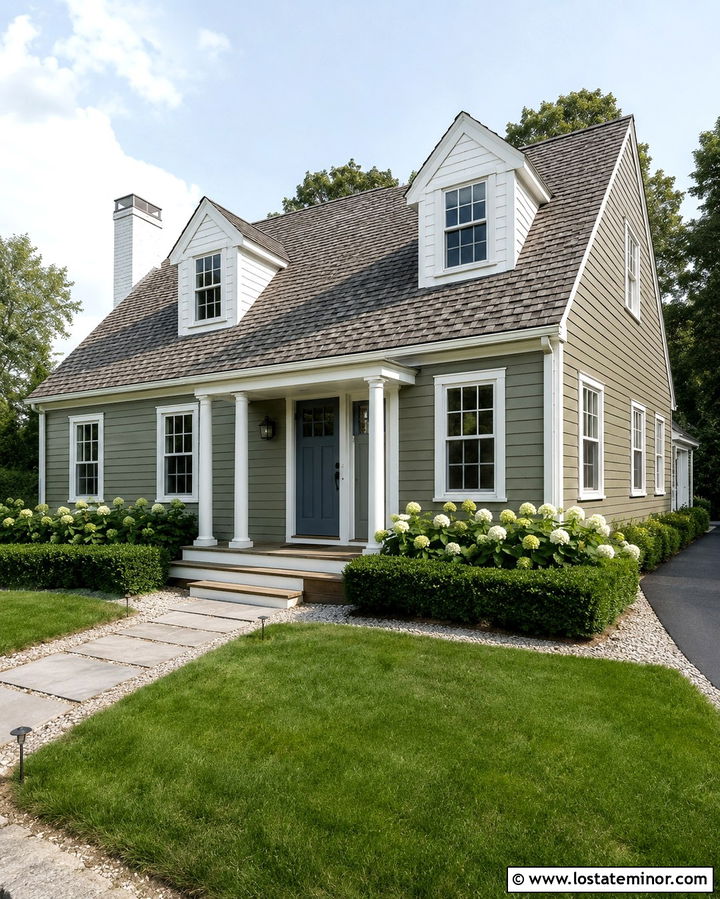
Blue-gray adds a quiet, unexpected accent to an olive green Cape Cod house. Keep the olive siding medium in depth, then use soft white on dormers, windows, corner boards, and porch columns. A dusty blue-gray front door introduces subtle contrast while maintaining the home’s calm character. The same blue-gray can appear on the porch ceiling or a simple bench, but it should remain secondary. Weathered wood decking and a medium-gray roof help bridge the cool and warm colors. Compact Cape Cod porches benefit from uncomplicated railings and a clearly defined path to the entry. Hydrangeas, low hedges, and pale gravel can complete the setting. This exterior scheme feels collected rather than heavily coordinated, giving a classic home a gentle update without hiding its recognizable architectural features.
9. Monochromatic Olive Green House With Modern Porch
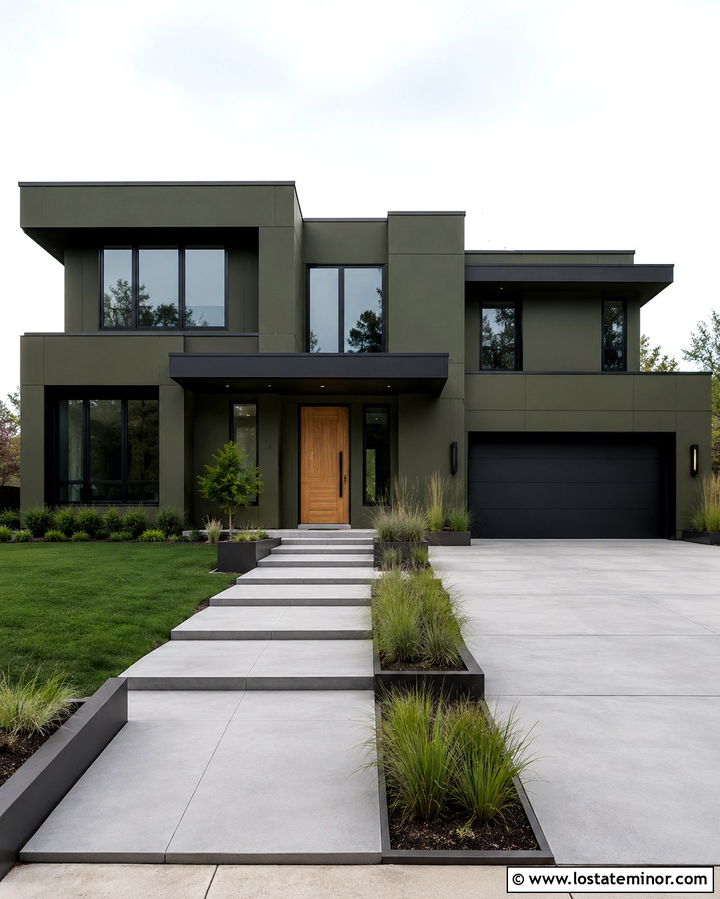
Could one color create enough dimension for an entire exterior? On a modern house, several depths of olive green can produce a sophisticated monochromatic scheme. Use a medium olive on the primary siding, a deeper olive on recessed porch walls, and a lighter gray-green on soffits or secondary panels. Keep window frames and the flat porch canopy black to outline the architecture. A natural wood pivot door adds warmth without disrupting the limited palette. Concrete steps, large-format pavers, and linear landscaping reinforce the clean composition. This approach works best when siding directions and wall projections create natural shadow lines. Avoid adding multiple bright accent colors. The combination of layered greens, dark metal, wood, and concrete gives the complete house clarity while preserving olive green as the unmistakable focus.
10. Olive Green Bungalow With Charcoal Porch Roof
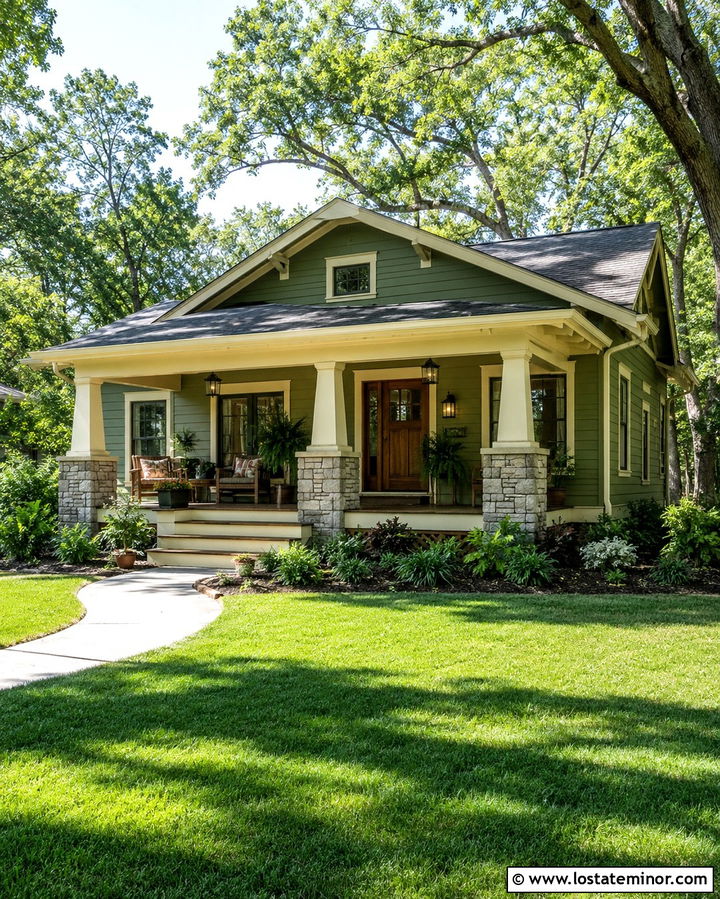
A charcoal porch roof adds definition to an olive green bungalow and visually caps its broad front elevation. Pair muted olive lap siding with ivory window trim, substantial porch posts, and a warm brown front door. Charcoal shingles can cover both the main roof and porch roof, creating one continuous outline. Use stone or brick around the column bases to give the low roofline more visual support. The porch floor can be stained a medium walnut that coordinates with the door. For a polished finish, select matte black house numbers and lanterns rather than adding another color. Deep garden beds and a gently curved walkway will frame the porch without concealing it. This complete scheme highlights the bungalow’s horizontal proportions and turns its sheltered front porch into a strong architectural feature.
11. Olive Green Cabin House With Metal Roof Porch
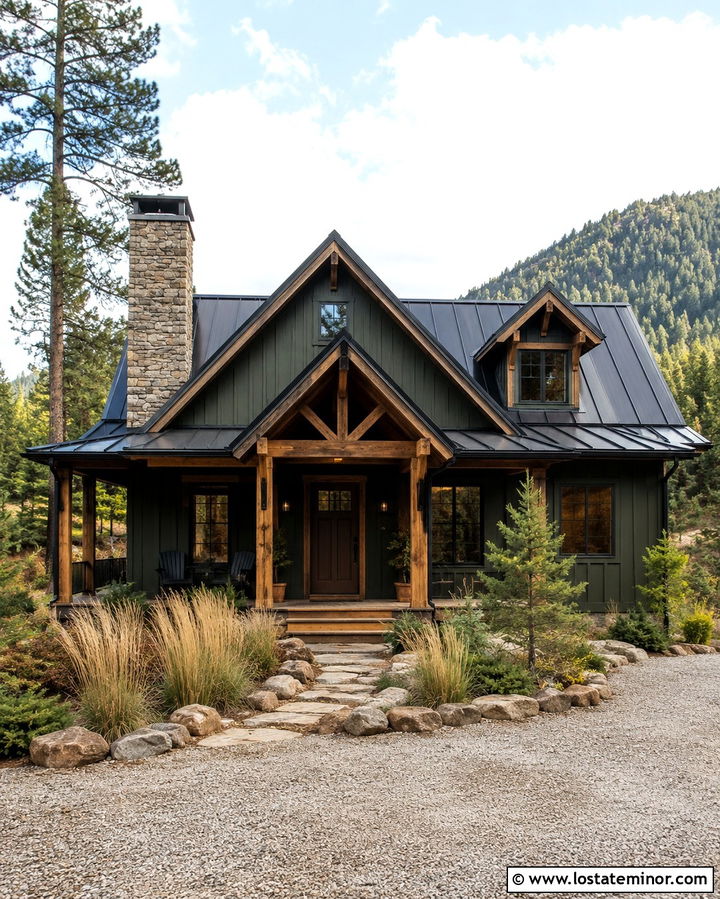
Olive green is a natural fit for a cabin exterior, especially when combined with a black metal roof and a timber porch. Use deep olive board-and-batten siding to emphasize height, then introduce rough-sawn cedar beams, posts, and porch decking. A dark bronze or black front door can blend into the shadow beneath the roof, allowing the wood structure to stand out. Add a stone chimney or porch foundation with mixed gray and brown tones to connect the building to the landscape. Wide roof overhangs and exposed rafters strengthen the rustic architecture. Keep the plantings informal with native grasses, low evergreens, and natural stone borders. The complete exterior feels rugged and comfortable, while the disciplined palette keeps the cabin from looking overly themed or visually heavy.
12. Olive Green Tudor House With Copper Porch Roof
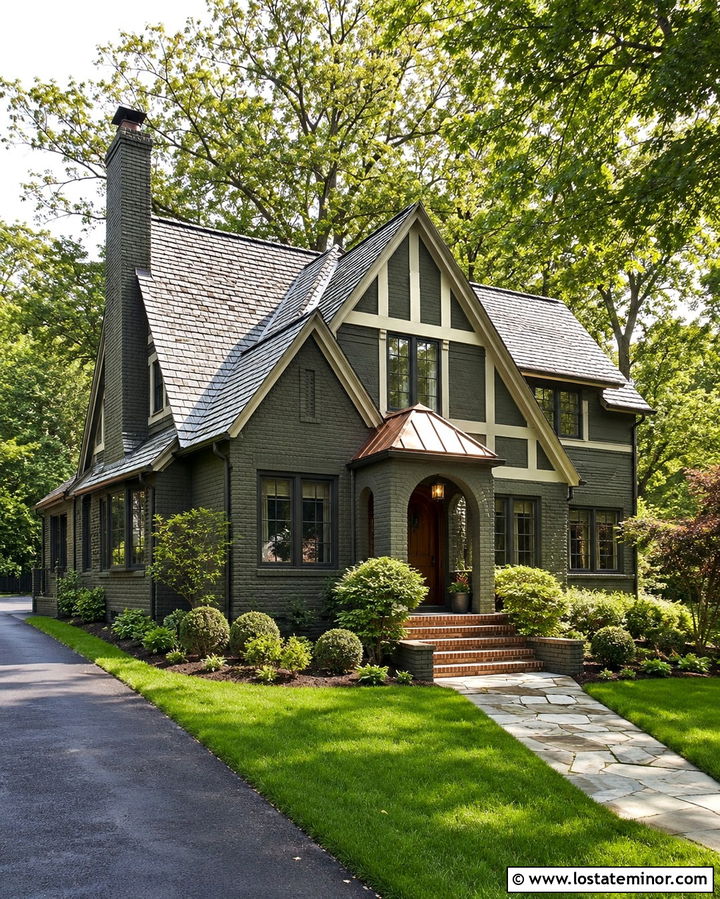
Copper provides a distinctive accent on an olive green Tudor house, particularly above a small projecting front porch. Choose a gray-toned olive for the stucco or siding, then use warm cream on decorative half-timbering and window trim. A copper porch roof will begin bright and gradually develop a softer patina, so coordinate it with a walnut door and warm brick foundation. Dark bronze windows and gutters create gentler contrast than solid black. An arched entry, steep roofline, and masonry chimney will reinforce the Tudor shape. Keep the porch compact but detailed, with brick steps and substantial side walls. Structured shrubs and a flagstone path can frame the entrance. Together, the olive, cream, brick, wood, and metal finishes create a layered exterior with historic character.
13. Olive Green Southern House With White Front Porch
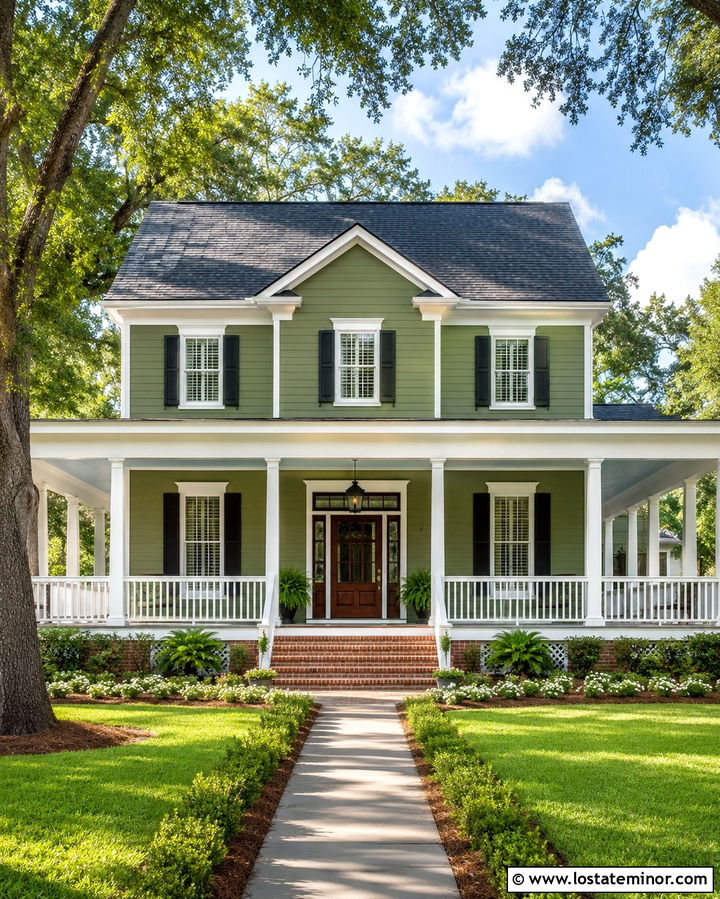
A long white porch gives an olive green Southern house a bright, gracious appearance. Cover the main facade in a medium olive tone, then use crisp white on tall columns, railings, window trim, and the porch ceiling molding. A stained mahogany door introduces warmth at the center of the elevation. To keep the white porch from feeling disconnected, repeat olive green on shutters or a porch swing. A pale blue-gray ceiling can add subtle color overhead without competing with the siding. Choose a dark gray roof and brick porch steps for visual balance. Broad lawns, mature shade trees, and symmetrical planting beds reinforce the welcoming layout. This scheme suits homes with generous frontage because the long porch creates a clear transition between the architecture and surrounding landscape.
14. Olive Green Contemporary House With Black Porch Railing
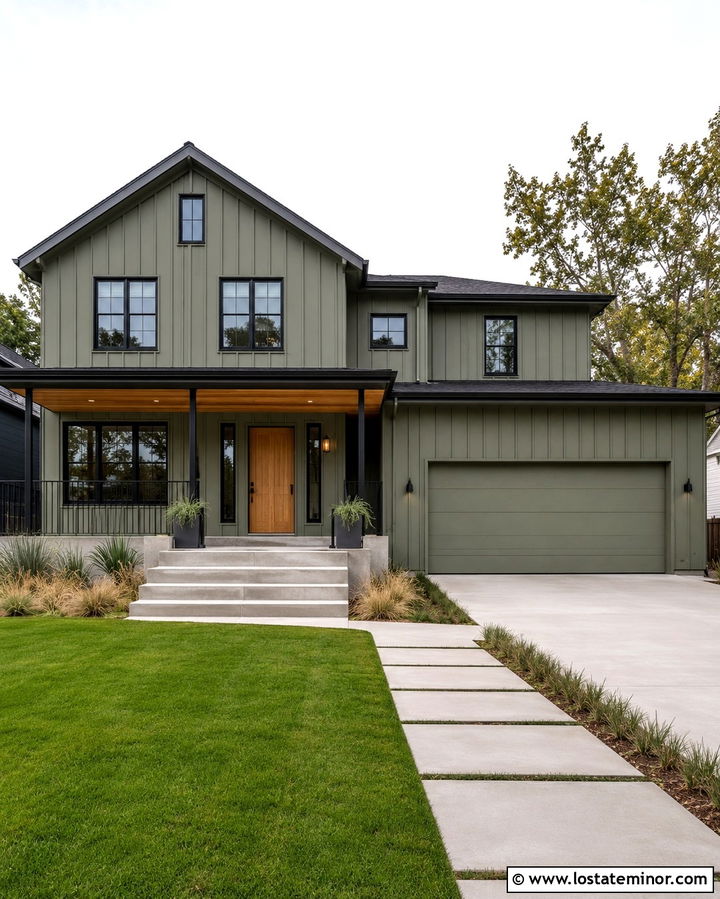
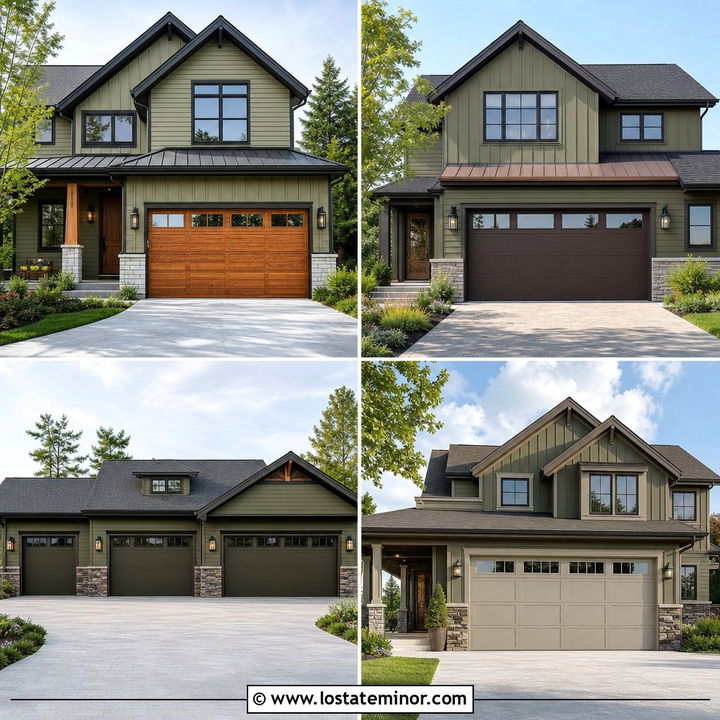
Slim black railings can update an olive green contemporary home while keeping the porch visually open. Use smooth olive siding or narrow vertical panels across the main facade, paired with black-framed windows and a simple black porch canopy. A warm cedar ceiling and matching front door will soften the dark metal elements. Continue the clean look with concrete porch flooring, broad floating steps, and rectangular planters. If the home includes a garage, paint its door olive green so it recedes instead of dominating the exterior. Limit trim to narrow black edges rather than wide contrasting bands. Layered ornamental grasses and low shrubs complement the architecture without blocking important lines. The finished scheme feels modern and intentional, with the wood porch accents adding enough warmth for comfortable everyday curb appeal.
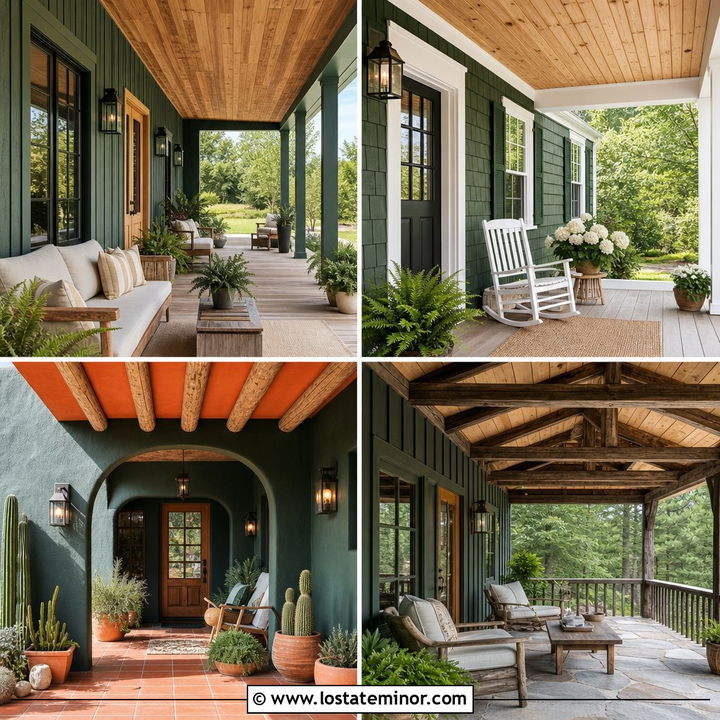
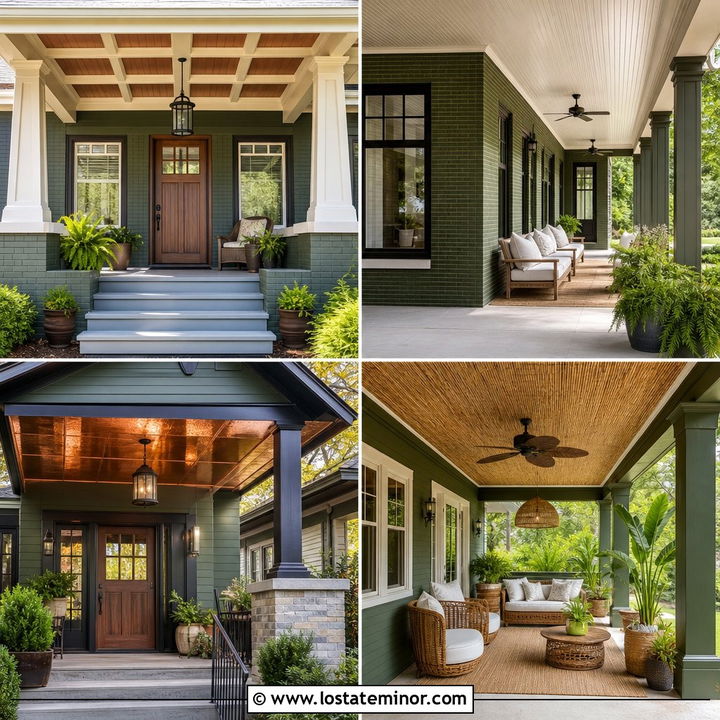
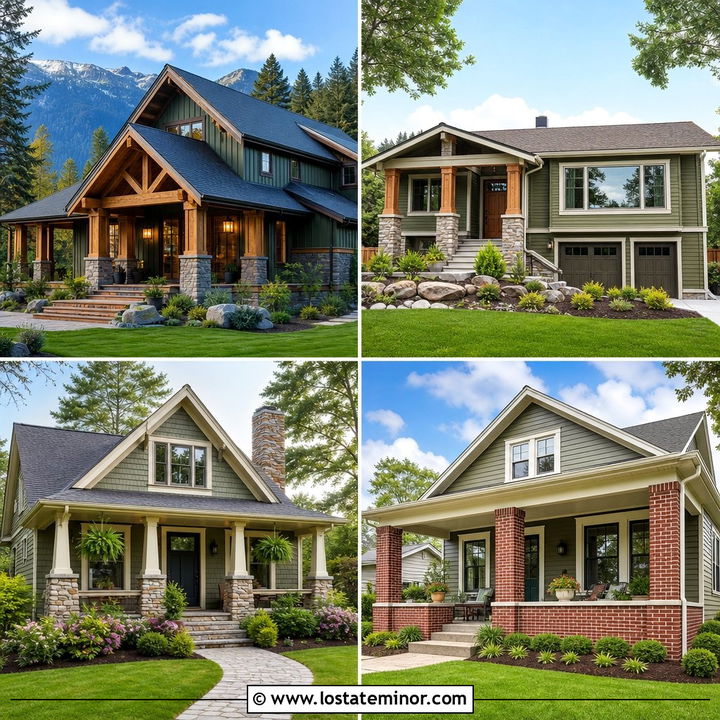
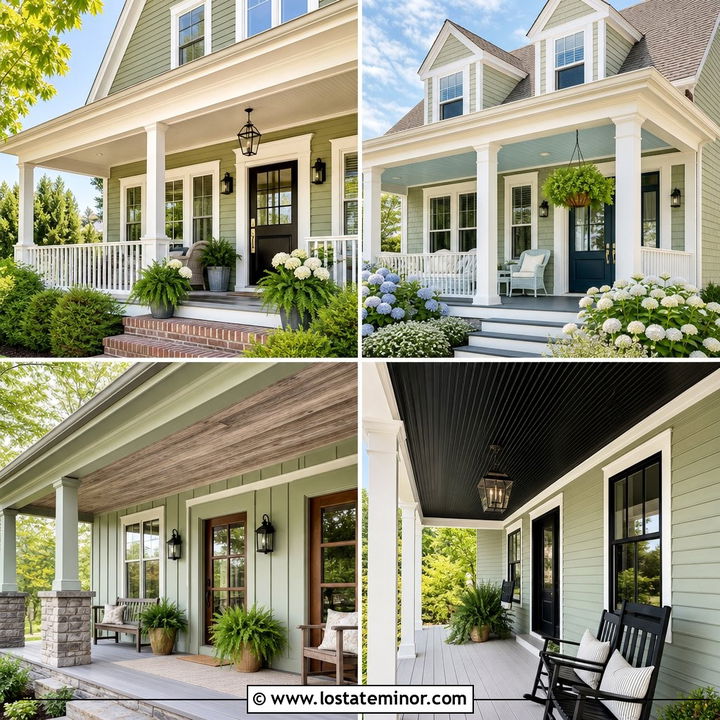
15. Olive Green Split Level House With Cedar Porch Columns
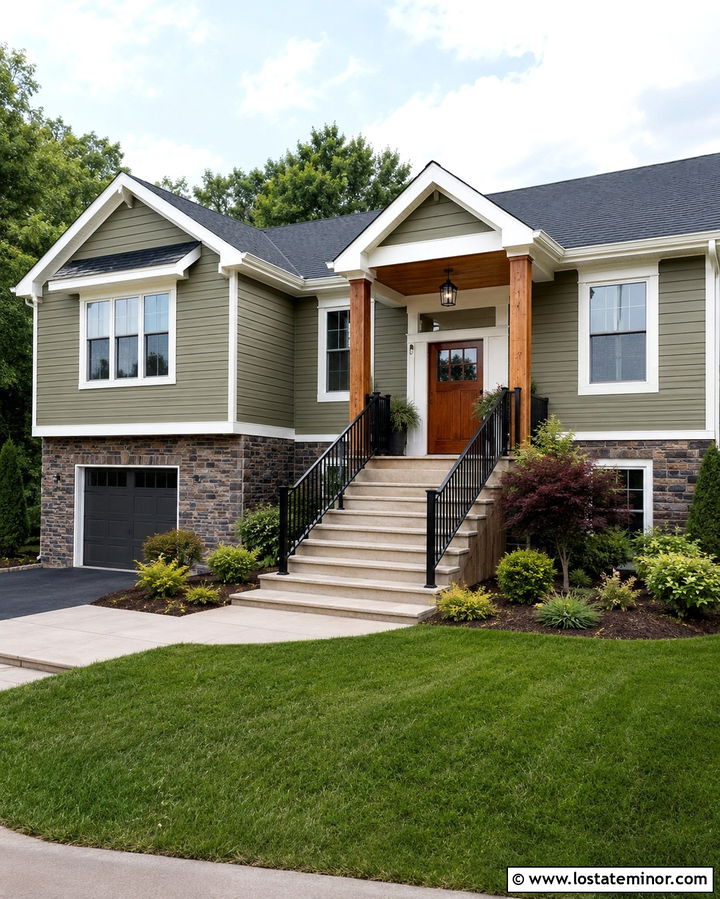
A split-level home often benefits from a porch that visually connects its different elevations. Olive green siding can unify the facade, while cedar columns and beams draw attention toward the main entrance. Use warm white trim around the windows and charcoal on the roof, gutters, and garage door. A porch with a simple gabled roof can give the entry more height and make it easier to recognize from the street. Repeat cedar on the front door or a small section of horizontal accent siding. Stone around the lower level will help ground the taller portion of the house. Finish the design with wide steps, black railings, and layered landscaping. This coordinated exterior turns an uneven facade into a balanced composition without requiring major structural changes across the entire home.
16. Olive Green Traditional House With Brick Porch Columns
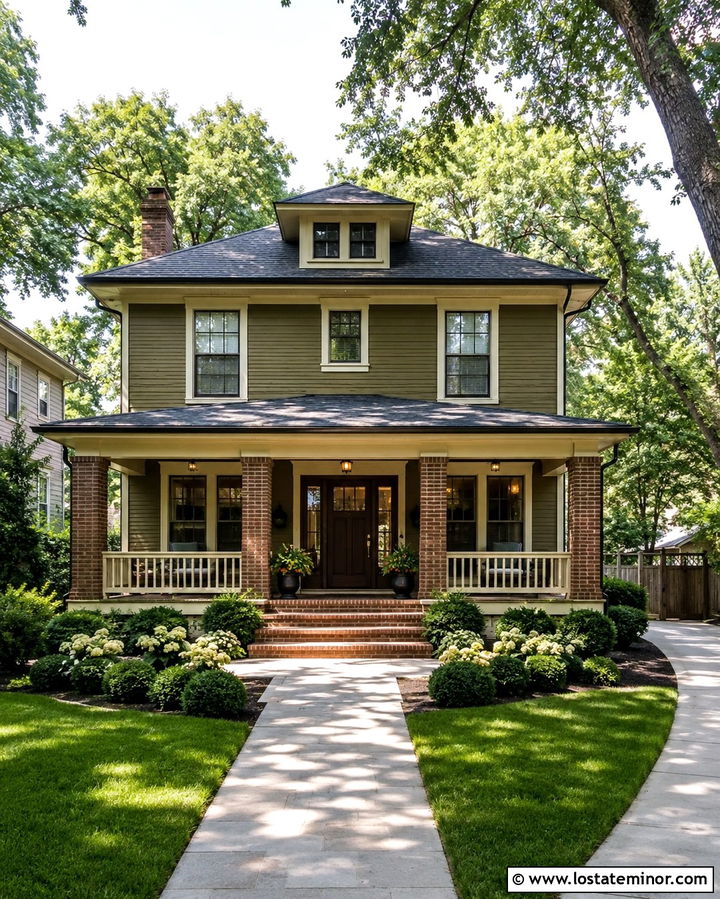
Red-brown brick columns bring warmth and permanence to a traditional olive green house. Choose siding with muted brown undertones so the body color works naturally with the masonry. Cream trim around the windows, roofline, and porch opening creates a soft border between olive and brick. A dark walnut front door can echo the deepest shades in the brick, while a charcoal roof prevents the palette from becoming overly warm. Extend the brick across the porch floor or front steps for continuity. White or cream railings will keep the entrance from appearing enclosed. When selecting landscaping, use deep green shrubs and a few light flowers to preserve the earthy character. The complete look feels substantial and familiar, making it suitable for established neighborhoods with mixed brick and siding exteriors.
17. Olive Green Craftsman House With Stone Porch Columns
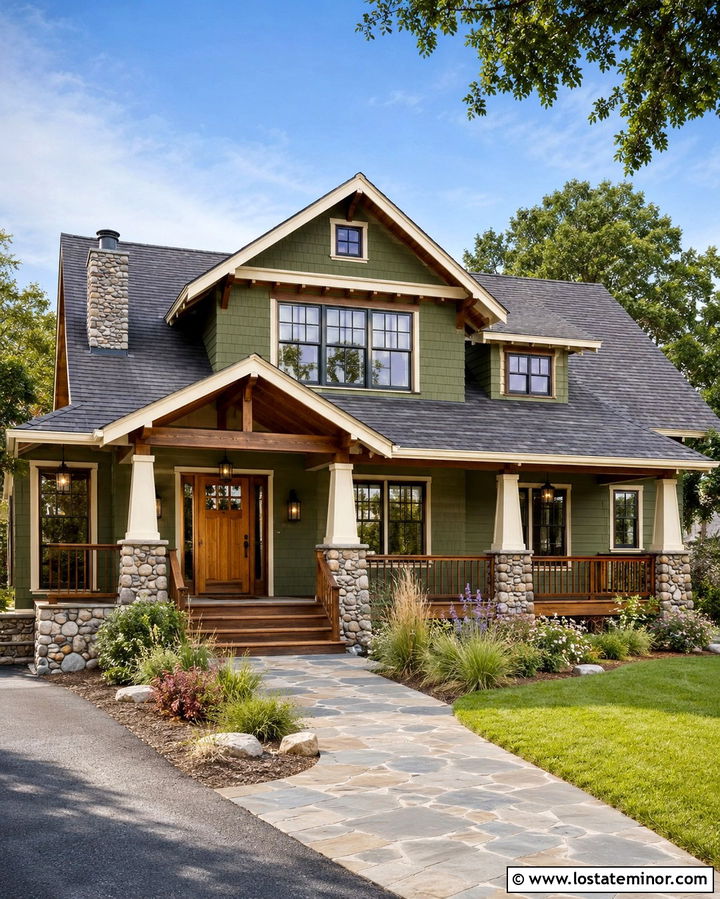
Stone-based columns can give an olive green Craftsman home a strong, handcrafted entrance. Apply medium olive siding above a foundation of irregular fieldstone containing gray, tan, and rust tones. Tapered cream columns should begin at the stone bases and continue to the porch roof. Use exposed cedar beams, a matching wood door, and a warm brown porch floor to emphasize natural texture. Black or dark bronze lights can provide contrast without becoming the main feature. A roof in weathered charcoal will connect with the gray pieces in the stone. Wide porch steps and low railings preserve the home’s open, welcoming proportions. Complete the setting with native grasses and broad planting beds. This layered combination looks detailed from the curb while remaining unified through repeated earthy colors.
18. Olive Green Lake House With Screened Front Porch
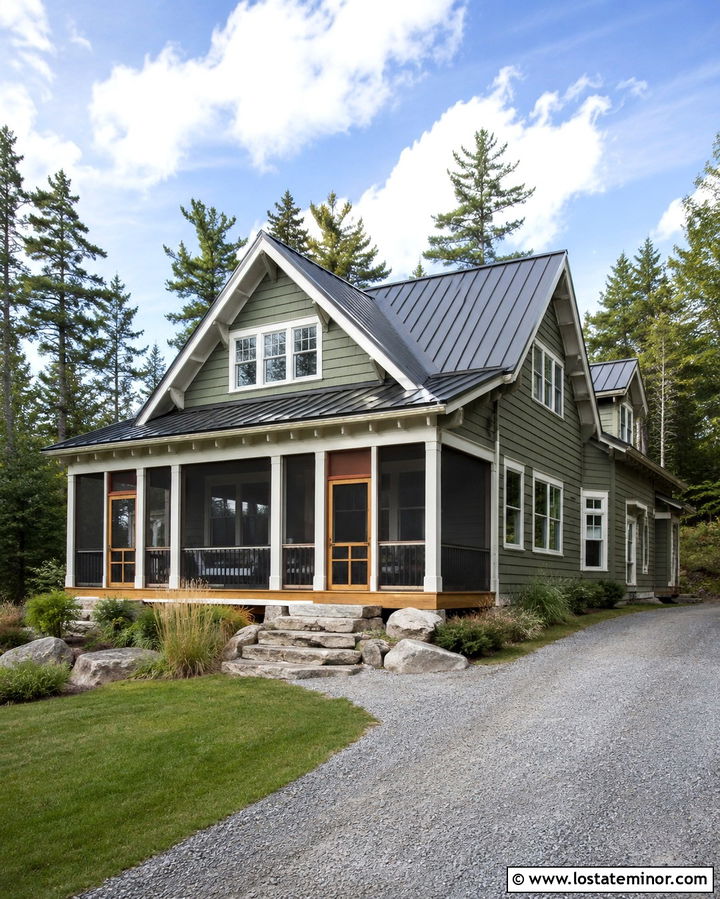
A screened front porch can feel like part of the architecture rather than an attached enclosure when its colors match the house. Use olive green lap siding on the main walls and screened porch base, then frame the screens with warm white trim. Natural cedar doors, decking, and exposed rafters add a relaxed lakeside quality. A dark green or charcoal metal roof can connect the structure to wooded surroundings while keeping the silhouette clean. Choose large screen panels so the porch remains bright and visually open. Stone steps and a gravel path create an informal approach that suits the setting. Minimal black hardware keeps the focus on the materials. The complete scheme feels calm and functional, giving the house an outdoor living area that still contributes to cohesive curb appeal.
19. Small Olive Green House With Covered Front Porch
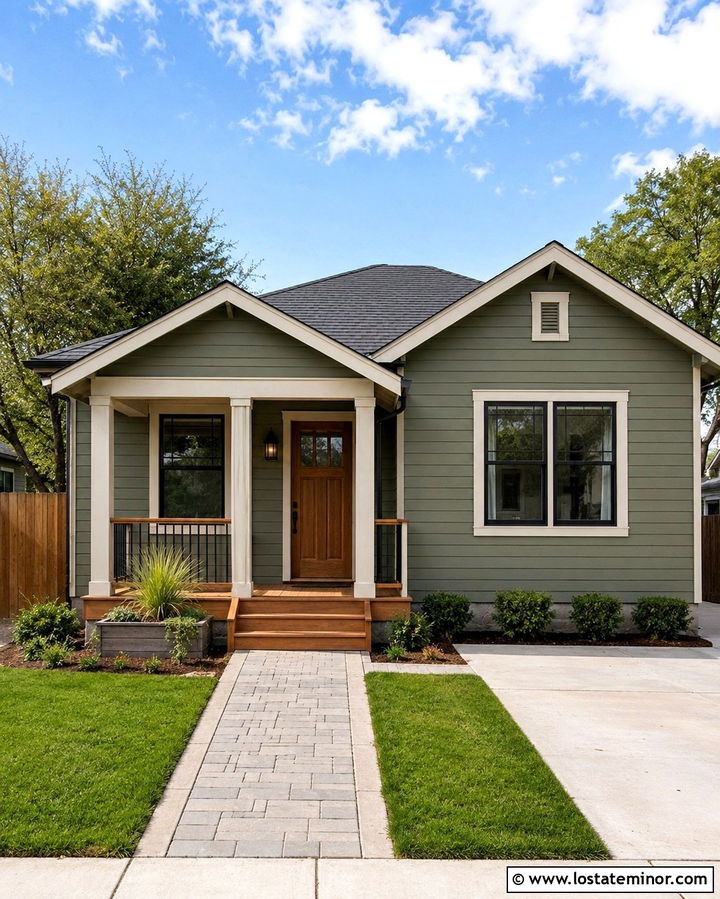
A compact house does not need an oversized porch to make a memorable entrance. Paint the siding a midtone olive green and frame a small covered porch with creamy white posts and trim. A natural wood door can become the focal point, especially when surrounded by simple black lighting and house numbers. Extend the porch roof just far enough to protect the steps and visually define the entry. Match the roofing to the home’s charcoal shingles so the addition looks original. Use one wide planter instead of several small accessories, and keep the railing design open. A straight paver walkway and low foundation shrubs will make the facade feel broader. This restrained exterior proves that thoughtful color placement can give a modest home presence without costly decorative additions.
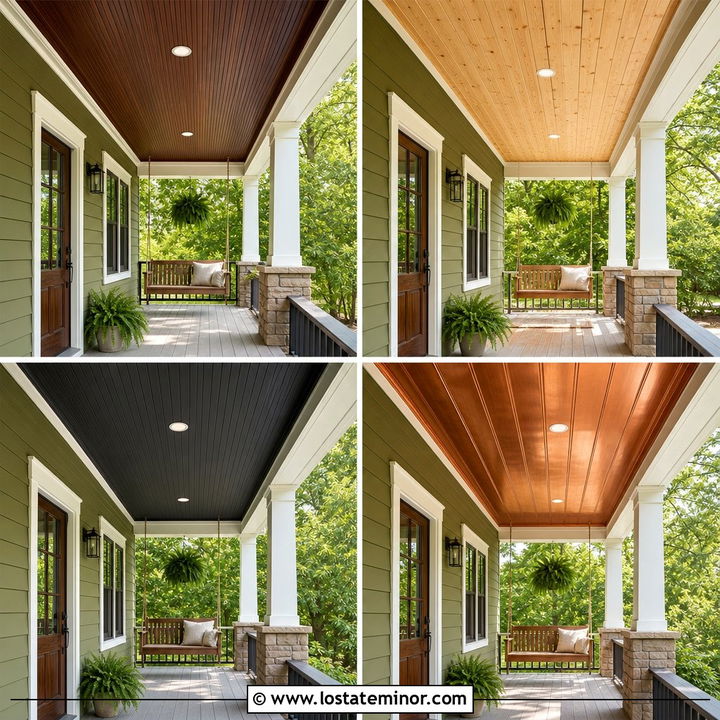
20. Olive Green Victorian House With Wraparound Porch
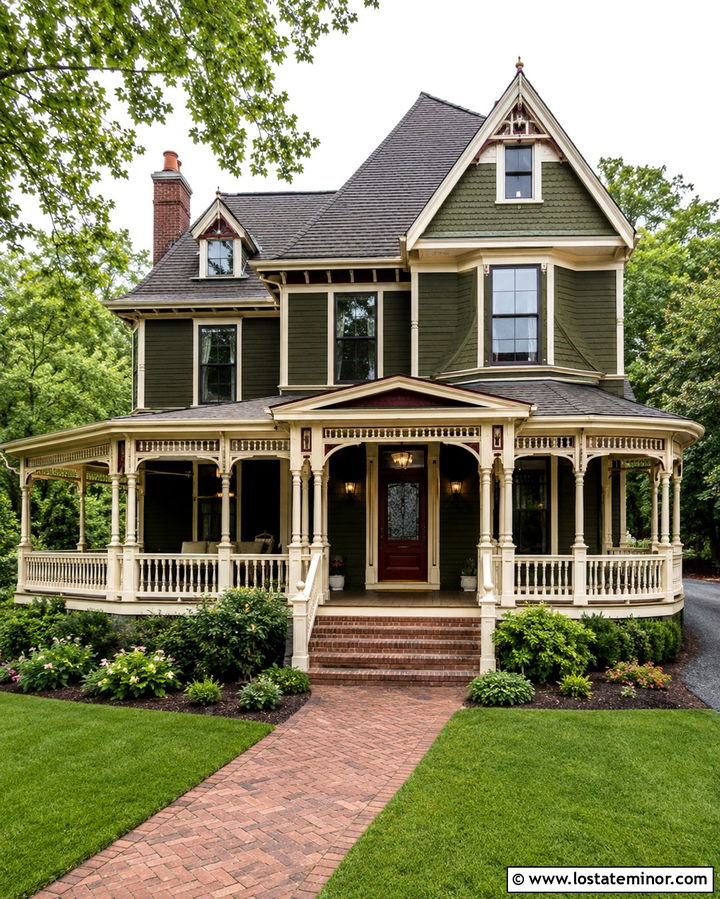
A Victorian home can carry more color and detail than many simpler house types, but the palette still needs clear organization. Use olive green on the primary clapboard siding, creamy ivory on the wraparound porch, and deep burgundy on selected brackets, window sashes, or the front door. Limit burgundy to small accents so it supports rather than competes with the green. A warm gray roof and natural wood porch floor can calm the decorative combination. Highlight turned columns, fretwork, and railings with ivory to make their shapes visible from the street. Brick steps and traditional lanterns complete the entrance. Thoughtful landscaping should frame the porch while leaving its details exposed. The resulting exterior feels historically inspired, colorful, and carefully balanced instead of excessively ornate.
21. Olive Green Midcentury House With Shed Roof Porch
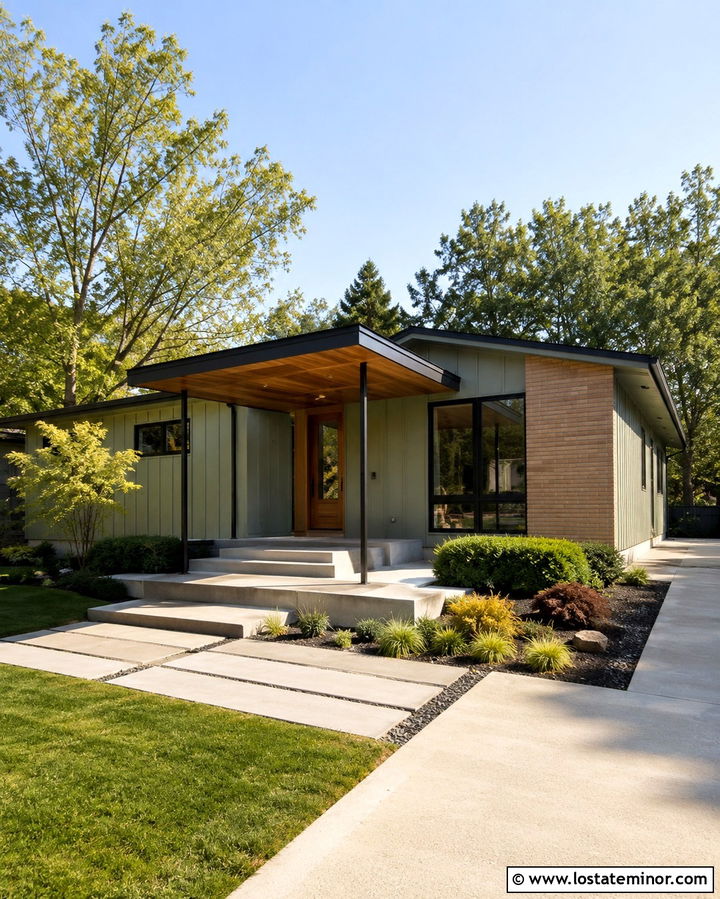
A low shed-roof porch complements the horizontal character of an olive green midcentury home. Use gray-olive siding across the facade, then introduce warm cedar beneath the porch ceiling and around the front door. Black-framed windows and a charcoal roof provide crisp lines without relying on wide trim. Support the porch canopy with slim dark metal posts to preserve an open view. A concrete floor and broad rectangular steps suit the home’s straightforward geometry. If the facade includes brick, retain its natural tan or red-brown color as a textured accent. Keep landscaping low and architectural with ornamental grasses, rounded shrubs, and large pavers. The completed scheme respects midcentury proportions while making the entrance feel warmer, more visible, and better connected to the yard.
22. Olive Green Cottage House With Gabled Front Porch
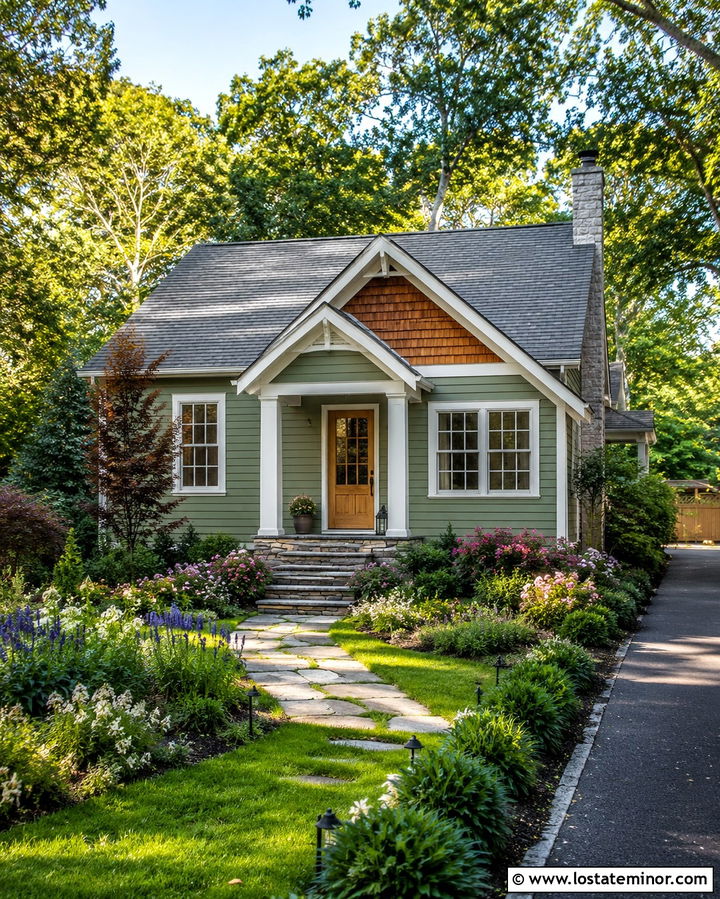
A small gabled porch can give an olive green cottage a charming, clearly defined entrance. Cover the home in soft olive clapboard, then paint the porch fascia, columns, and window trim a warm off-white. Use cedar shingles inside the porch gable to introduce texture and repeat that warmth on the front door. A medium-gray roof keeps the palette relaxed and prevents the gable from looking overly decorative. Stone porch steps can connect the house to an informal garden path. Select a simple pendant light and compact planters that fit comfortably beneath the roof. Flowering shrubs and layered perennials will soften the facade while leaving the entry visible. This complete look works especially well when the original house lacks depth and needs a modest architectural focal point.
23. Olive Green Spanish House With Arched Front Porch
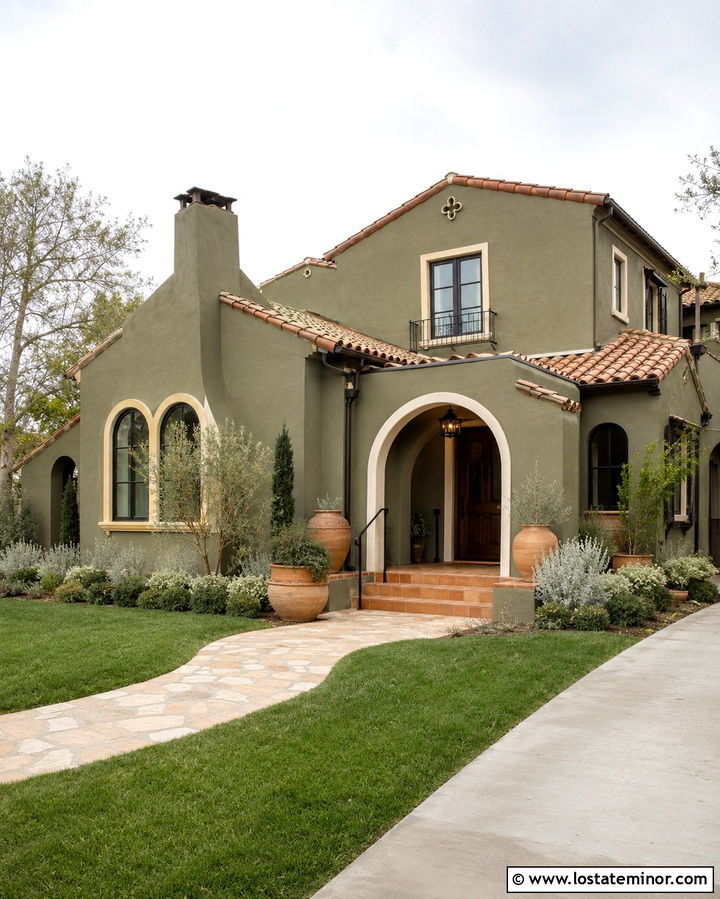
An arched porch brings graceful depth to an olive green Spanish-inspired house. Apply a dusty olive finish to the stucco walls, then use warm cream around the arches, windows, and roofline. Terracotta roof tiles and porch flooring introduce earthy red-orange notes that naturally complement the green. Choose a heavy wood front door with dark bronze hardware as the central accent. Black metal railings can add definition, but keep their design simple so the arches remain prominent. Large clay pots, silvery plants, and a curved stone walkway complete the setting. The porch should feel shaded and substantial, with thick walls rather than delicate posts. This coordinated palette emphasizes the architecture’s warmth while offering a colorful alternative to the usual white or beige stucco exterior.
24. Olive Green Charleston House With Double Porches
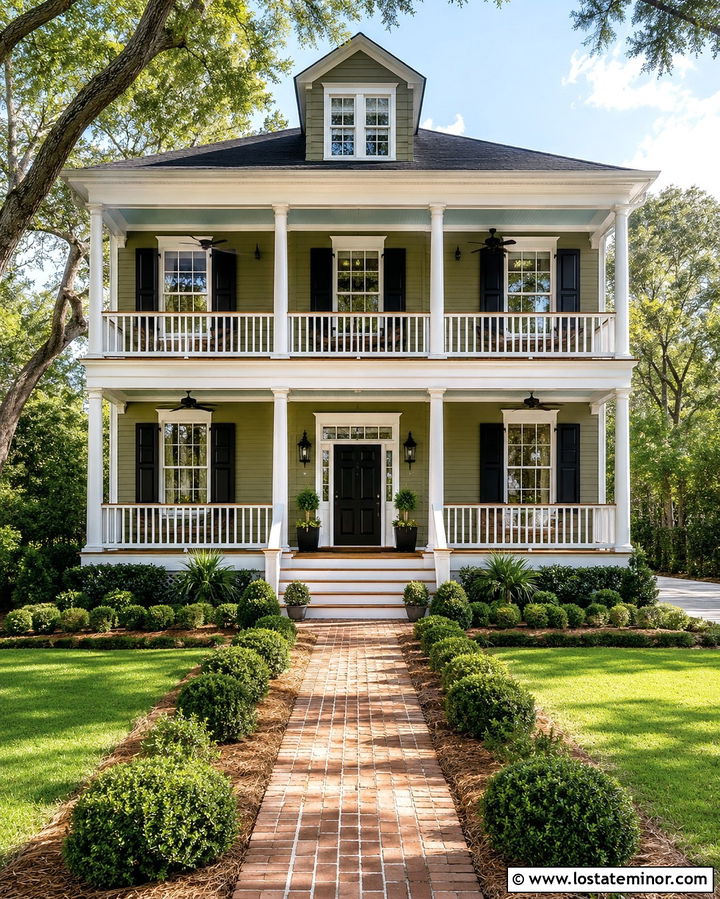
Double porches create strong horizontal layers, making consistent color placement essential. Use olive green on the siding of both levels and bright white on porch columns, railings, window trim, and fascia. A glossy black front door and black shutters can add crisp contrast without introducing another major color. Stain the porch floors a medium natural brown to bring warmth to the tall facade. A pale blue-gray porch ceiling can offer a subtle accent that remains visible from below. Keep the roof dark charcoal and repeat black in modest wall lanterns. Formal foundation plantings and a brick walkway will support the home’s symmetry. The finished exterior feels tall but balanced because the repeated olive, white, black, and wood elements connect the upper and lower porches into one composition.
25. Olive Green Modern House With Concrete Front Porch
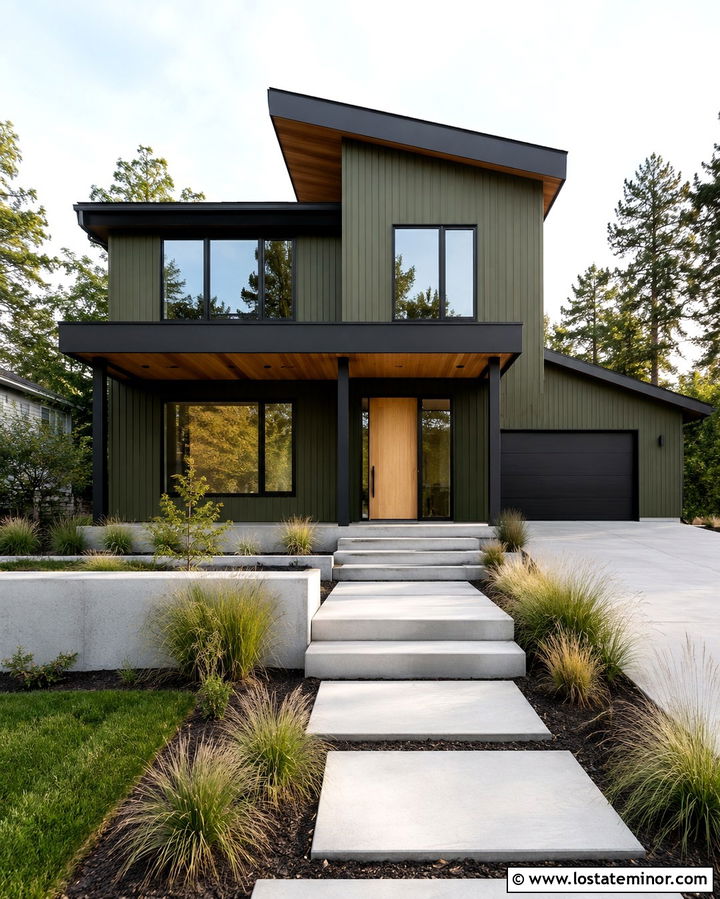
Concrete offers a clean, neutral foundation for a modern olive green house. Use deep olive vertical siding on the largest wall surfaces and combine it with smooth concrete porch flooring, steps, and low retaining walls. Black window frames and a flat black canopy can sharpen the facade. Introduce a light oak door and wood soffit to keep the entrance from feeling severe. If the house includes horizontal cladding, choose a slightly lighter olive rather than adding an unrelated color. Large stepping stones and restrained planting beds will continue the modern geometry into the yard. Avoid ornate railings or traditional shutters. This full exterior scheme relies on form, texture, and controlled contrast, creating strong curb appeal while allowing olive green to remain rich, sophisticated, and closely connected to the landscape.
26. Olive Green Georgian House With Brick Front Porch
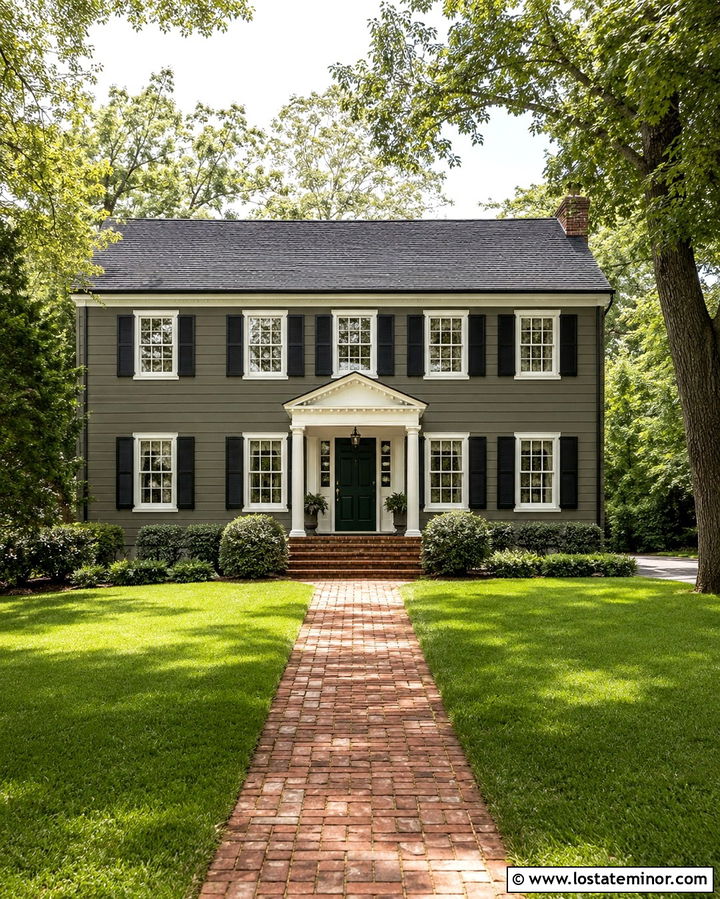
Symmetry makes an olive green Georgian home feel polished, and a brick porch strengthens its traditional presence. Paint the siding a reserved gray-olive and use creamy white on the window trim, cornice, columns, and pediment. A deep black or dark green front door can anchor the center of the facade. Choose red-brown brick for the porch floor and broad front steps, repeating any existing chimney or foundation masonry. Black shutters and lanterns will reinforce the orderly window arrangement. Keep the porch modest in depth so it complements the architecture rather than hiding it. A straight brick walkway, paired shrubs, and evenly spaced plantings complete the formal composition. The restrained palette highlights the house’s proportions while the olive body color adds warmth and individuality.
27. Olive Green Coastal House With Blue Gray Porch Floor
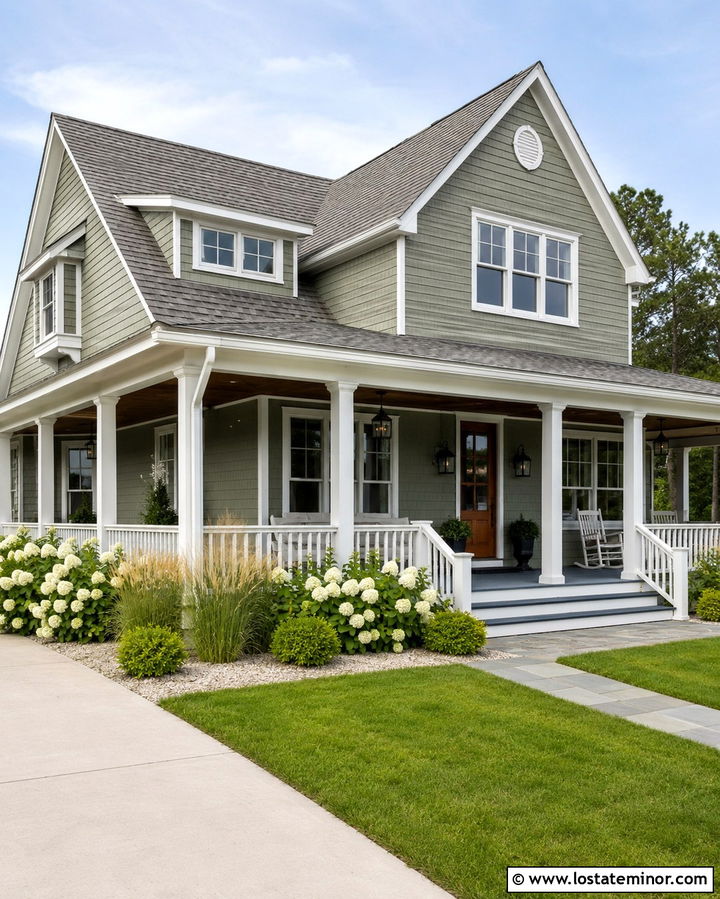
A blue-gray porch floor can give an olive green coastal house a breezy, relaxed finish without turning the exterior into a nautical theme. Select a light, weathered olive for the siding and use clean white on columns, railings, windows, and roof trim. Paint the porch floor a muted slate blue-gray that relates to a gray shingle roof. A natural teak or oak door adds needed warmth at the entrance. Keep lighting and hardware in a soft black or aged bronze finish. Wide porch openings and straightforward railings preserve an airy appearance. Surround the home with grasses, pale hydrangeas, and a light gravel path. The complete scheme feels fresh and casual, with enough earthy color to work in coastal settings as well as inland suburban neighborhoods.
28. Olive Green Farmhouse With Natural Wood Porch Floor
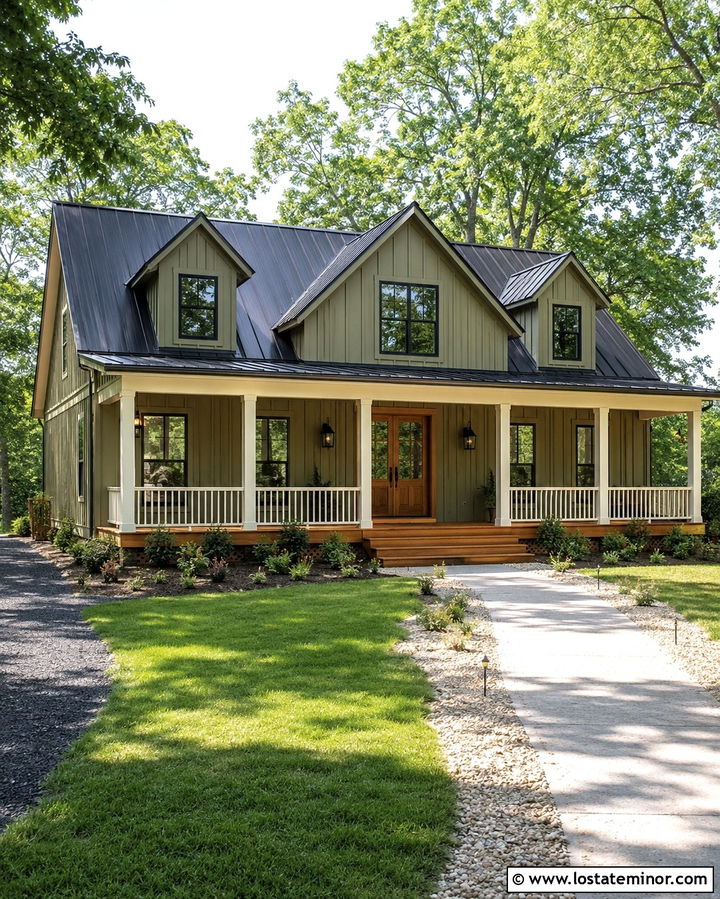
Natural wood flooring can soften the broad white architectural details of an olive green farmhouse. Apply a medium olive to horizontal or board-and-batten siding, then use warm white on the roofline, windows, columns, and railings. Stain the porch floor and steps a honey-toned cedar or oak, repeating the finish on the front door. A charcoal metal roof and black lanterns provide clean contrast. If the porch includes rocking chairs or a swing, keep their colors neutral so the facade remains the focus. Simple foundation shrubs and a gravel-edged walkway suit the practical character of the home. This complete palette feels welcoming without becoming overly rustic. It also gives each material a clear role: olive adds identity, white defines structure, and wood introduces warmth.
29. Olive Green House With Patterned Tile Porch
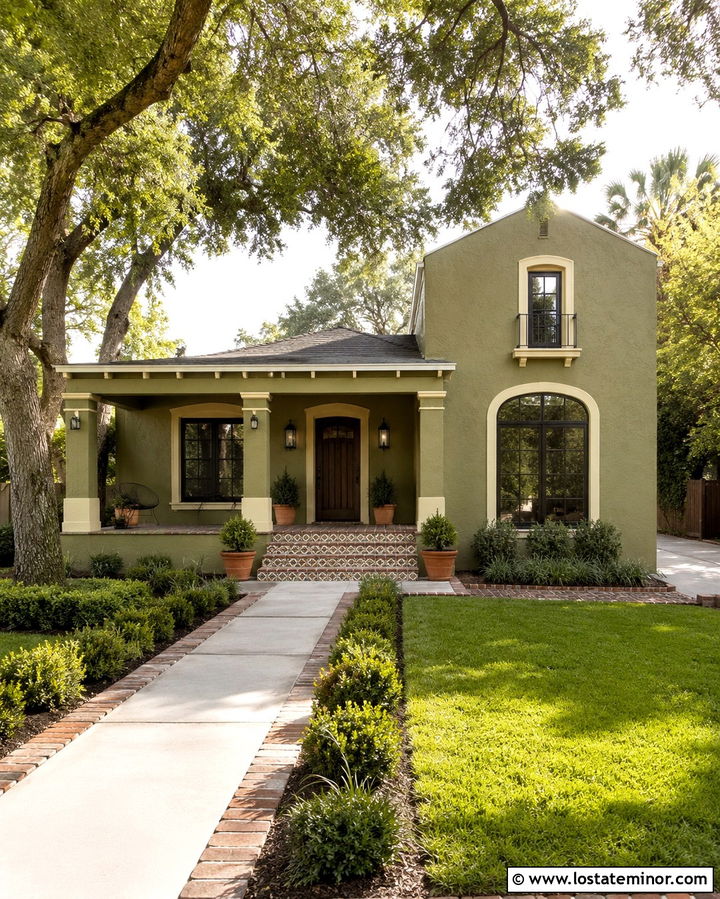
Patterned porch tile can add personality to an olive green house when the pattern uses colors already found on the facade. Choose muted cream, charcoal, and terracotta tile beneath a compact covered porch. Pair it with olive green stucco or siding, cream trim, a dark wood door, and black metal lighting. Keep the tile pattern medium in scale so it is visible from the curb without appearing overly busy. A simple porch roof and restrained columns will let the flooring become a controlled focal point. Repeat terracotta in planters or nearby brick edging, but avoid adding unrelated accent colors. Structured shrubs and a clean walkway provide visual rest. The overall exterior feels distinctive and layered while remaining cohesive enough for a typical American suburban home.
30. Budget Olive Green Ranch House Porch Update
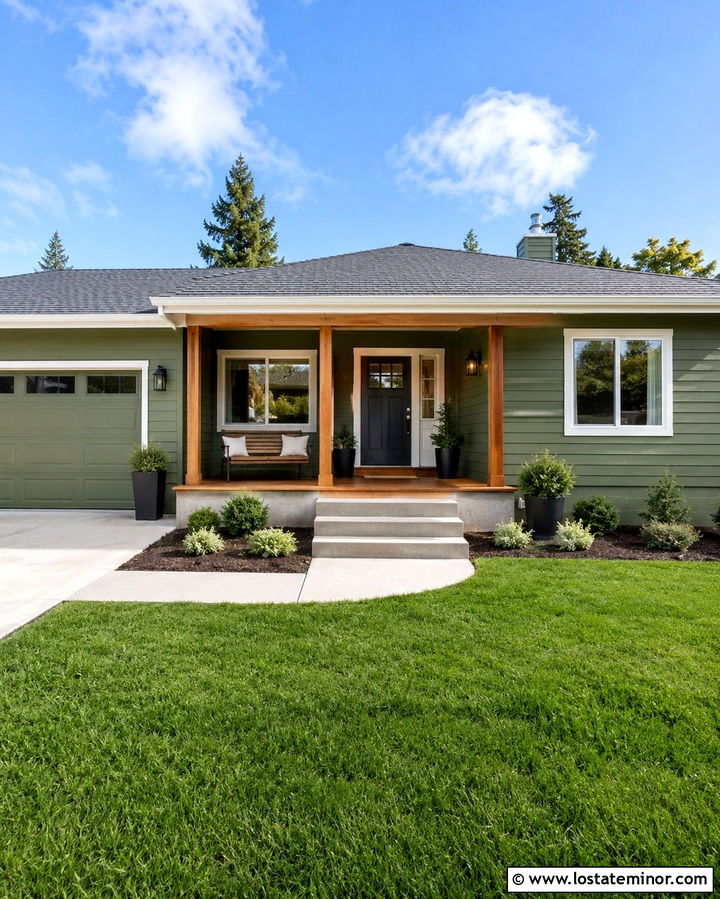
A practical porch refresh can transform an olive green ranch house without rebuilding the entire facade. Begin with a muted olive exterior and repaint existing trim a warm white for sharper definition. Stain sound porch decking and posts a medium cedar tone instead of replacing them. A charcoal front door, black lantern, modern house numbers, and matching planters can create a coordinated focal area with relatively few elements. Paint the garage door olive green so it blends into the long facade. If the concrete steps appear worn, use a compatible masonry coating in a warm gray. Finish with fresh mulch, low shrubs, and a clear walkway. By repeating only four colors—olive, white, charcoal, and wood—the updated exterior looks deliberate, balanced, and noticeably more welcoming.
Conclusion:
The most effective 30 Olive Green House Design With Front Porch Ideas combine color, architecture, and materials across the entire facade. Olive green can feel traditional with cream trim and brick, modern with black metal and concrete, or rustic with cedar and stone. The porch then becomes the connecting feature that gives each palette depth and purpose. Before making final choices, compare siding samples beside the roof, masonry, porch flooring, and front door under changing daylight. Keep fixed materials in mind and limit the scheme to a few repeated colors. Whether you are planning a full renovation or an affordable refresh, a coordinated olive exterior can create warm, distinctive, and enduring curb appeal.

Related posts: