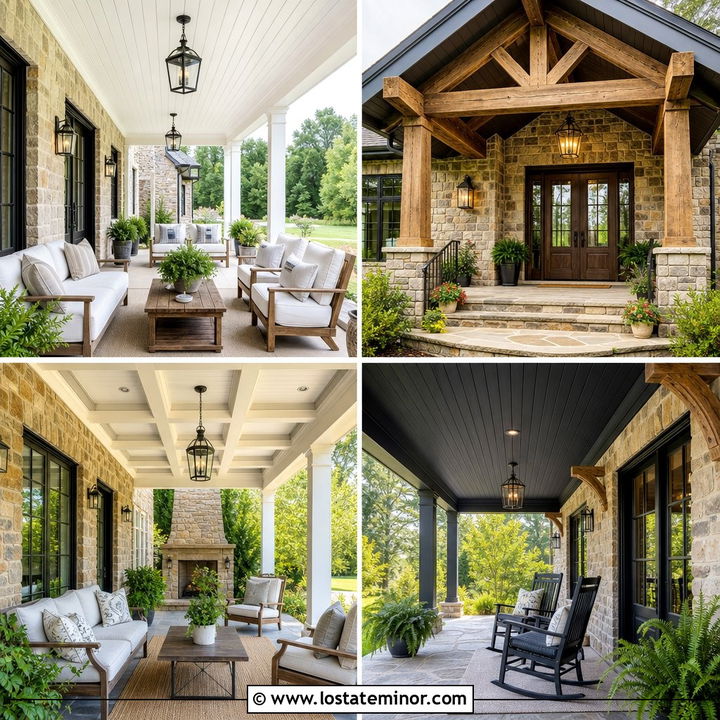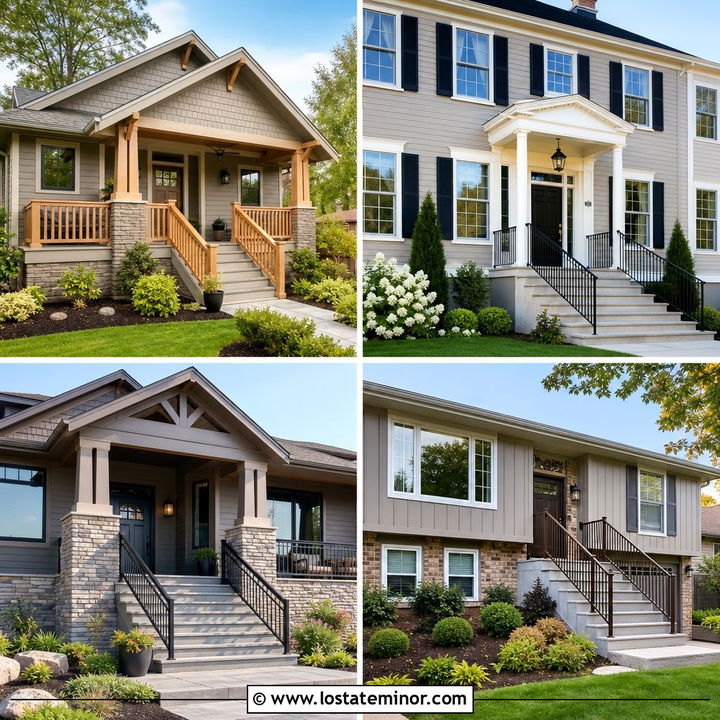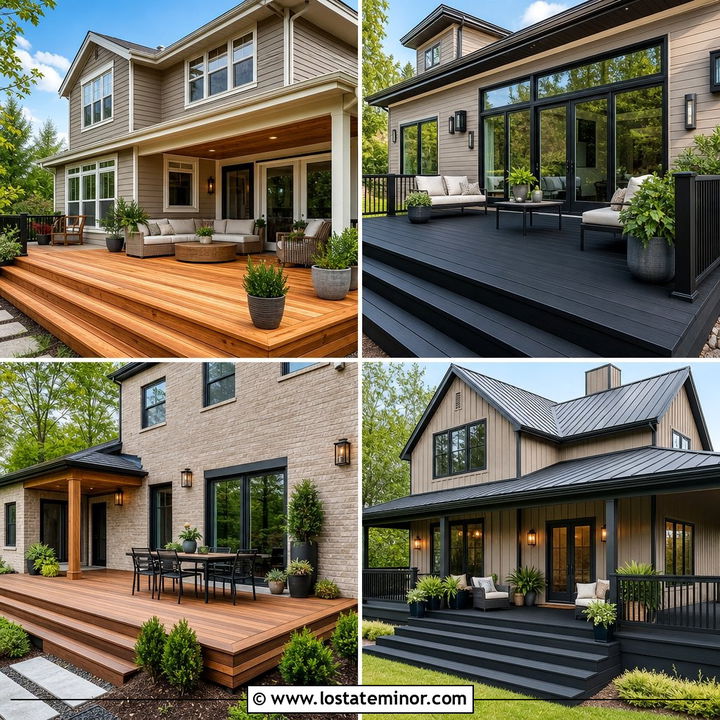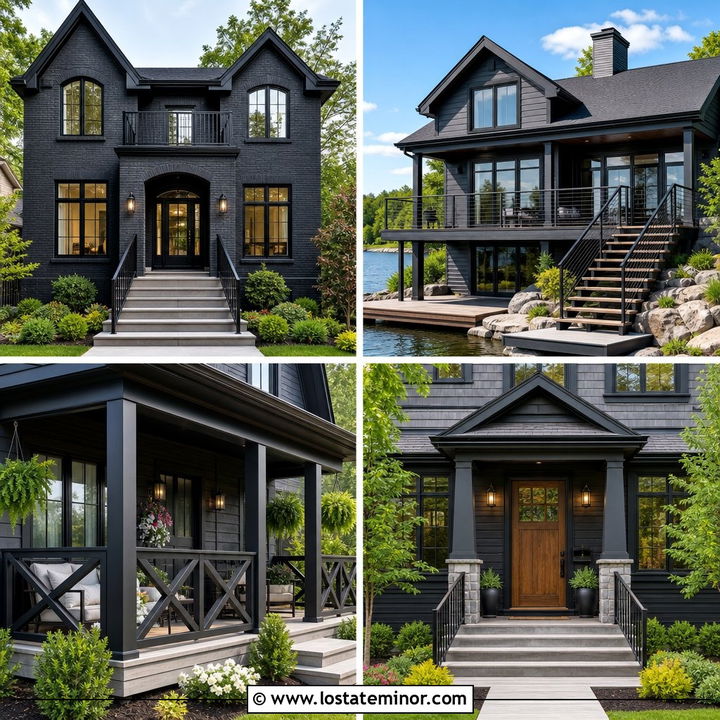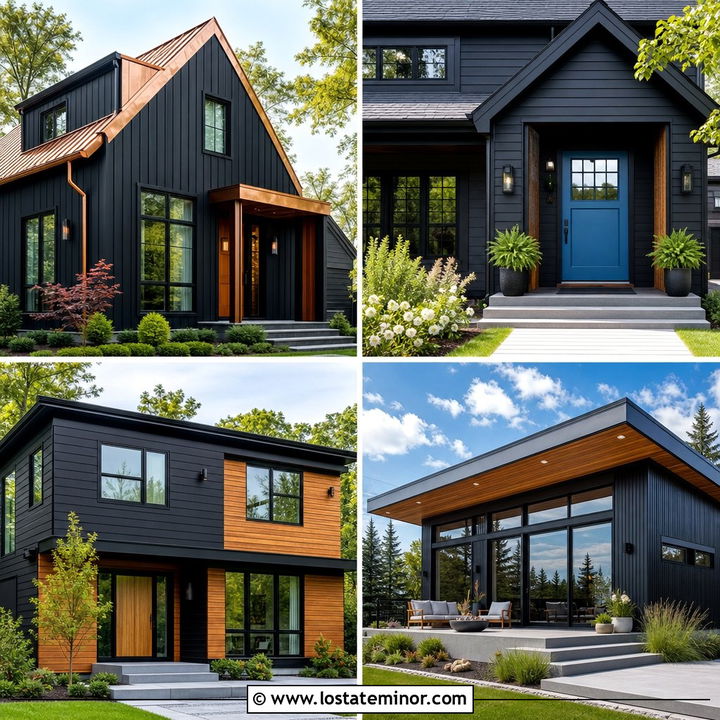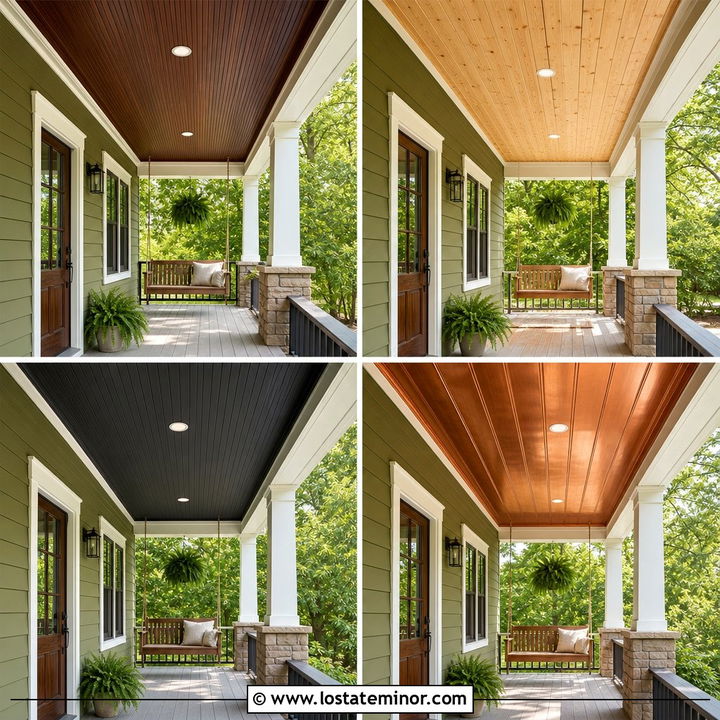
A thoughtful porch ceiling can turn a simple white exterior into a layered, welcoming home. These 30 White House Design With Porch Ceiling Ideas explore complete color schemes rather than treating the ceiling as an isolated feature. White and sky blue remain classic porch ceiling colors, while beadboard, stained wood, painted planks, and exposed beams offer additional ways to create character. () The right choice should connect with the siding, trim, front door, roof, flooring, and surrounding landscape. It should also suit the home’s architecture and the amount of natural light reaching the porch. From traditional Colonials to contemporary ranch homes, the combinations below provide practical inspiration for 30 White House Design With Porch Ceiling Ideas.

1. White House With Haint Blue Porch Ceiling
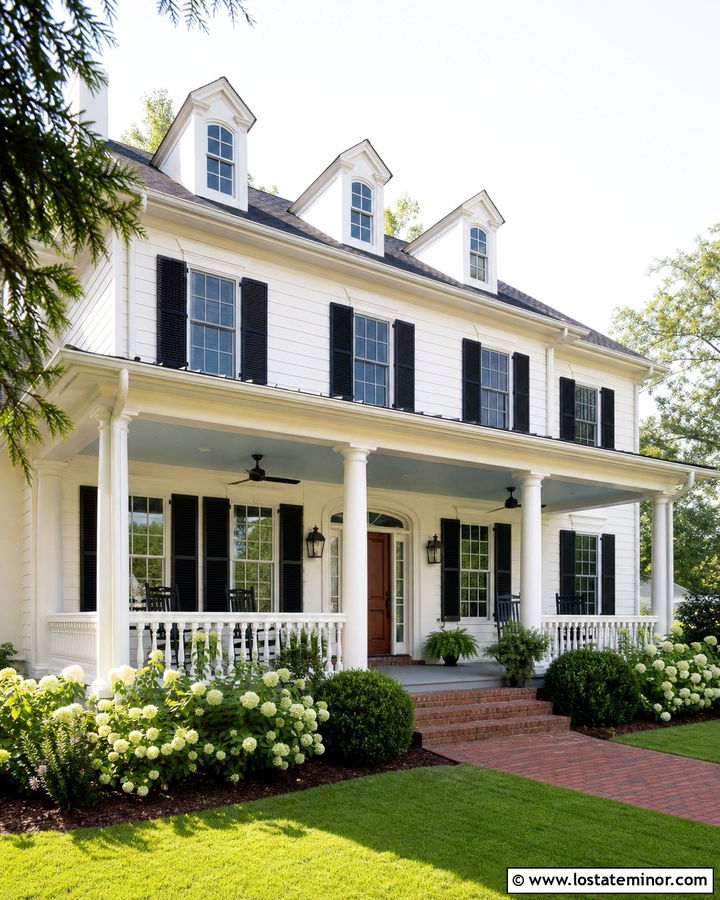
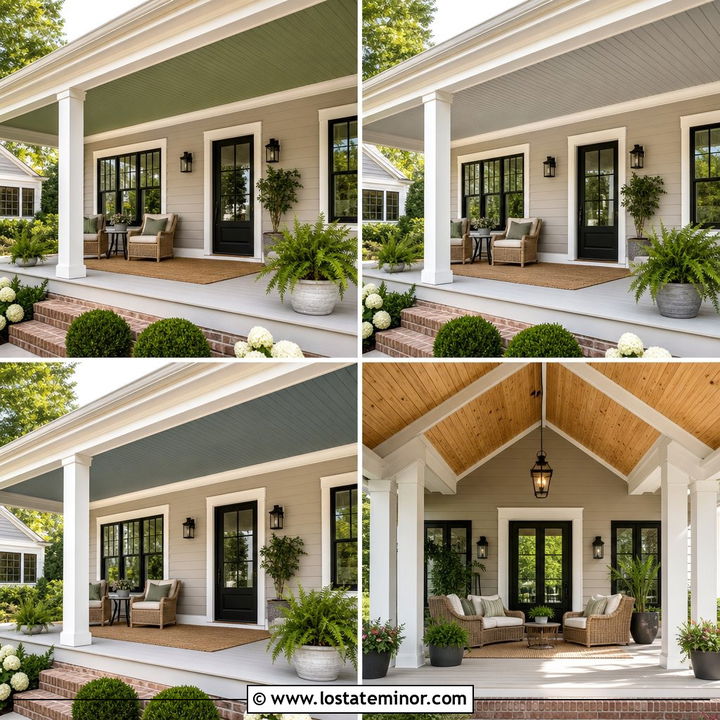
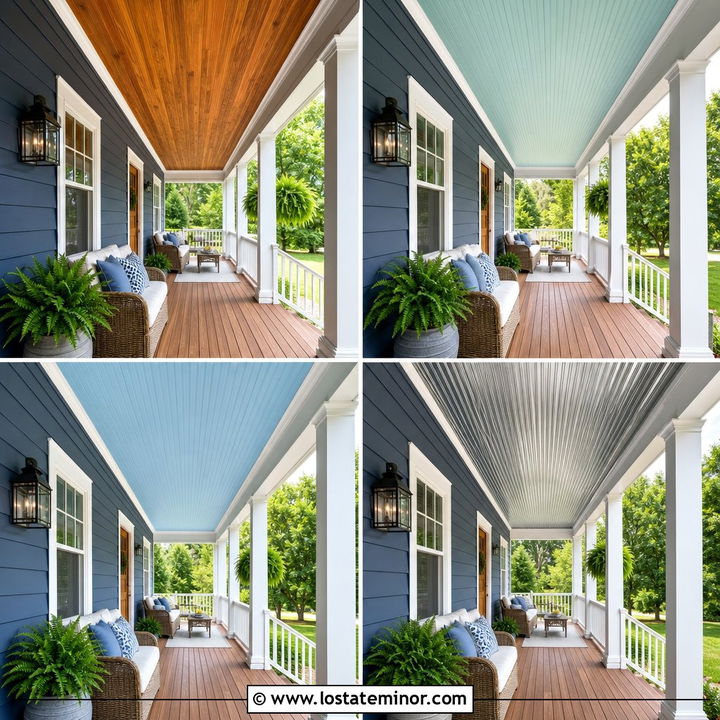
A pale haint blue ceiling brings a soft wash of color to a white Southern-style house. Use warm white clapboard siding with matching columns and window trim so the exterior feels bright but not harsh. Paint traditional beadboard overhead in a gentle blue-green shade that resembles a clear morning sky. A medium gray porch floor grounds the lighter colors, while a stained mahogany front door adds natural warmth. Complete the facade with black lanterns, simple rocking chairs, and a charcoal architectural-shingle roof. This scheme works especially well on a wide porch because the blue ceiling remains noticeable without overwhelming the architecture. Hydrangeas, boxwoods, and a curved brick walkway reinforce the relaxed, established look.
2. White House With Natural Cedar Porch Ceiling
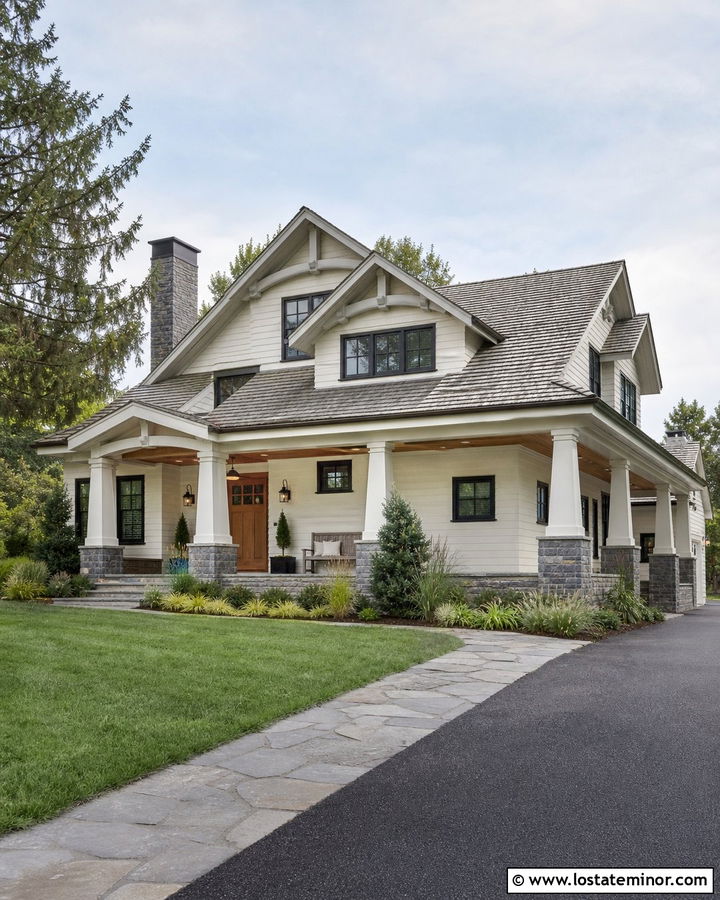
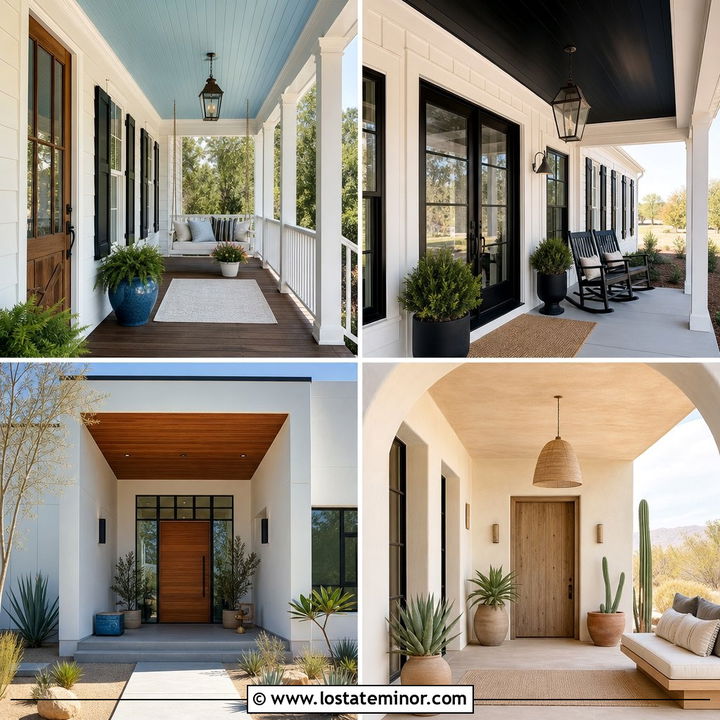
Natural cedar introduces warmth and texture to a crisp white Craftsman exterior. Choose a balanced white for horizontal siding, wide trim, porch columns, and tapered supports. Install clear-finished cedar planks across the ceiling, allowing the honey and amber grain to become the porch’s main decorative feature. Repeat the wood tone on the front door, porch swing, or exposed brackets to make the ceiling feel connected to the facade. Dark bronze lighting, black-framed windows, and a weathered gray roof create definition without distracting from the wood. A stone foundation in soft gray and tan shades completes the composition. This combination feels handcrafted, comfortable, and welcoming, particularly when surrounded by ornamental grasses and layered evergreen landscaping.
3. White Colonial House With White Beadboard Ceiling
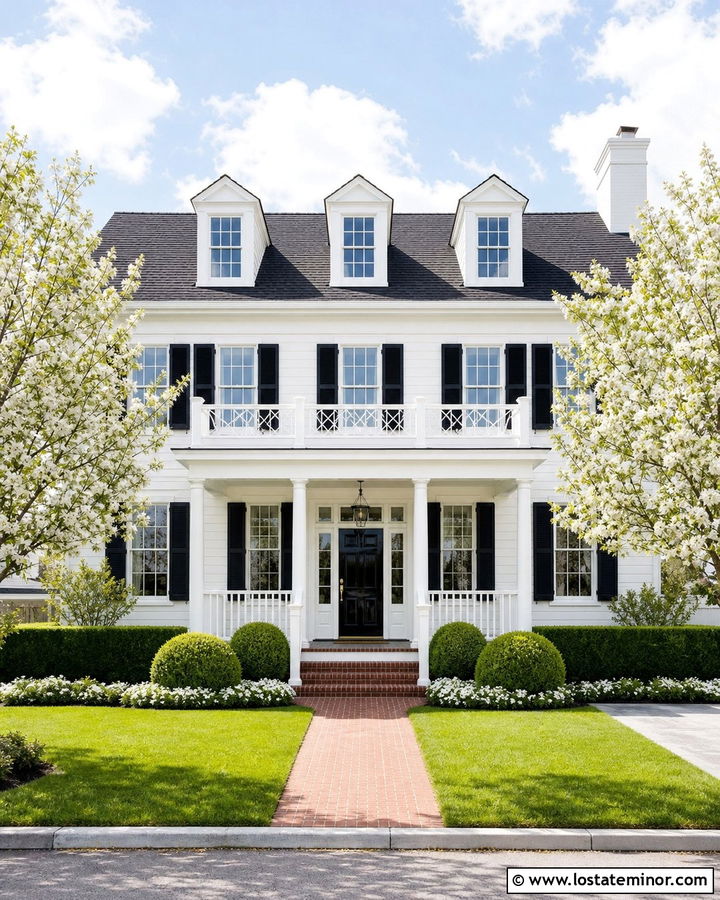
An all-white porch ceiling gives a Colonial home a clean, orderly appearance. Select a warm white for the clapboard siding, beadboard ceiling, square columns, railings, and window trim. Using one color across these surfaces keeps the formal architecture visually consistent, while subtle shadows reveal the ceiling’s grooved texture. Add contrast with black shutters, a glossy black front door, and traditional brass or black lanterns. A natural brick porch floor prevents the palette from feeling flat and introduces a classic material that ages gracefully. Finish the house with a dark charcoal roof and symmetrical foundation plantings. This restrained scheme is especially effective on homes with evenly spaced windows, a centered entrance, and a deep covered porch.
4. White Farmhouse With Black Porch Ceiling
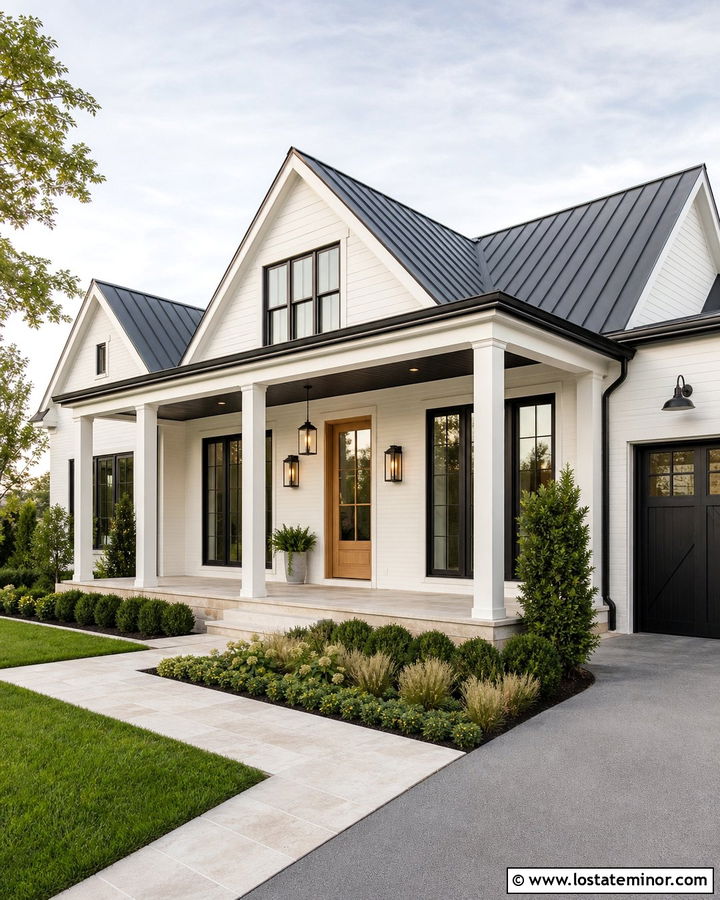
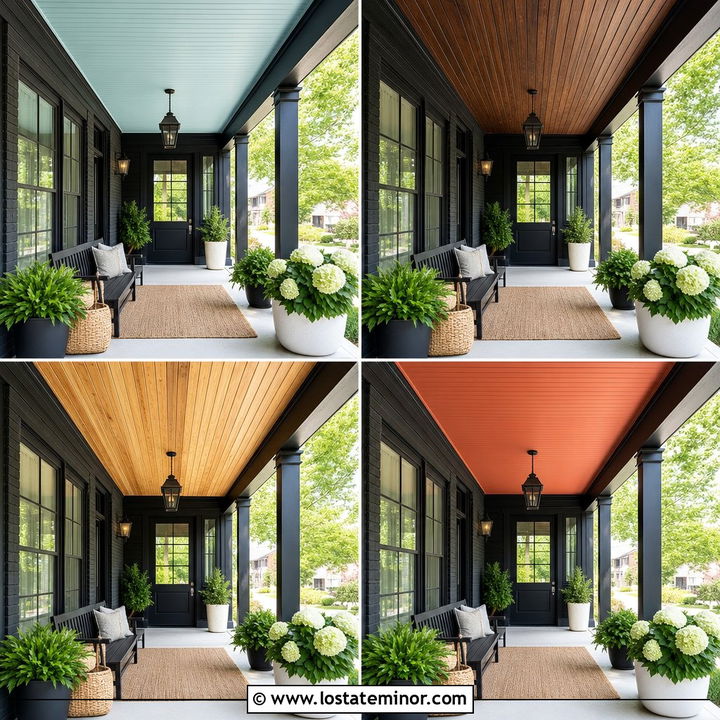
A black porch ceiling adds bold contrast to a modern white farmhouse. Cover the house in warm white board-and-batten siding, then repeat the white on fascia boards and substantial porch columns. Paint the flat-paneled ceiling a soft black or deep charcoal rather than a blue-toned jet black. This keeps the covered area dramatic without making it feel disconnected from the rest of the facade. Black window frames, gutters, metal roofing, and ceiling fans carry the dark color across the exterior. A natural oak front door and pale limestone porch floor soften the high-contrast palette. Keep furniture simple and light, using natural woven pieces and cream cushions. The finished house feels modern, balanced, and intentionally detailed.
5. White Bungalow With Sage Green Porch Ceiling
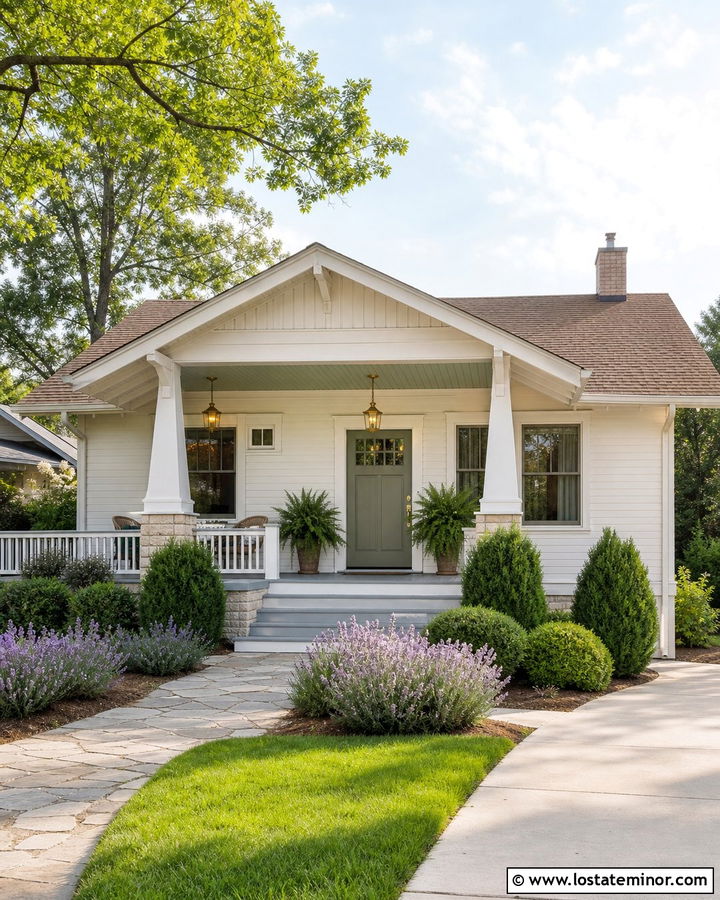
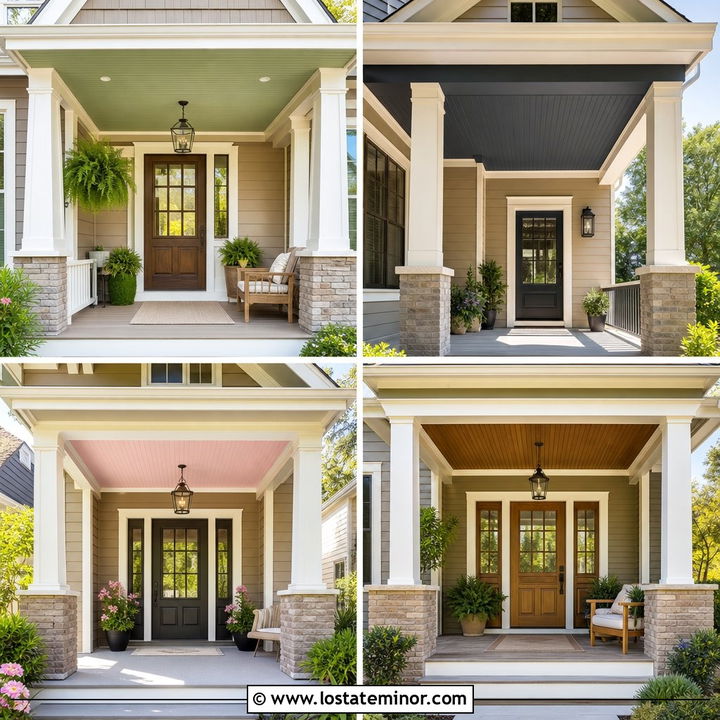
Soft sage green brings a garden-inspired touch to a white bungalow. Pair creamy white lap siding with sage-painted beadboard overhead, then use the same green on the front door or small window boxes. Keep the porch columns and trim white to frame the ceiling and preserve the home’s fresh appearance. A warm gray porch floor, aged brass lighting, and a medium-brown roof make the green feel grounded rather than overly pastel. Craftsman-style railings and natural stone steps can add useful texture to the compact facade. Surround the porch with ferns, lavender, ornamental grasses, and low shrubs. Because sage relates naturally to landscaping, the color creates a smooth visual transition between the white house and the front yard.
6. White Ranch House With Light Gray Porch Ceiling
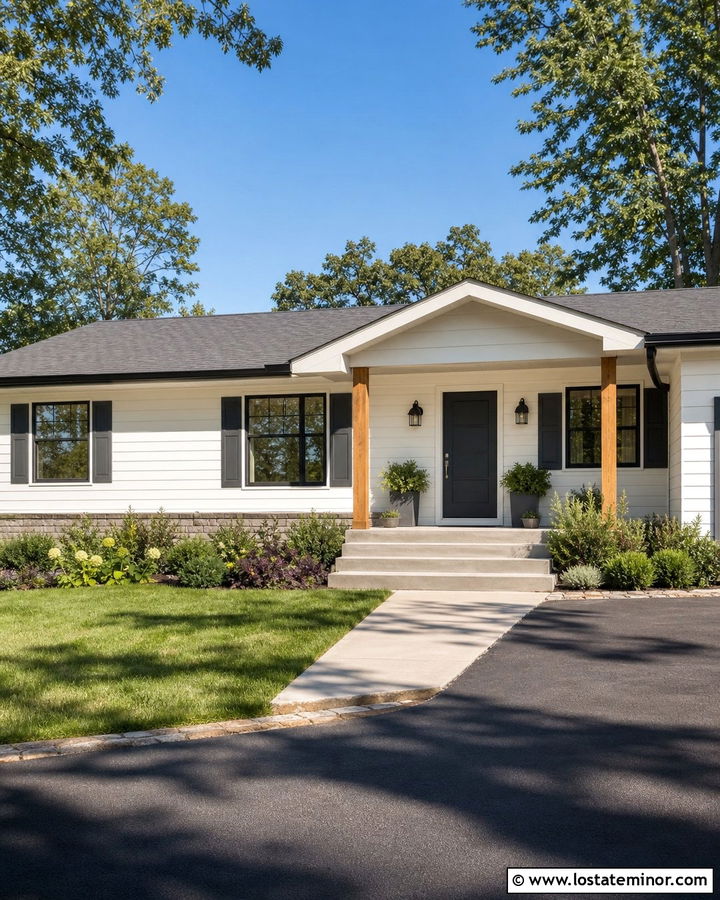
Light gray is a practical porch ceiling color for a white ranch house with a low, horizontal profile. Use soft white siding and trim, then choose a pale warm gray for the ceiling that echoes the driveway, walkway, or stone foundation. A charcoal front door and matching shutters provide stronger contrast across the long facade. Add warm cedar posts or a wood bench to prevent the white-and-gray combination from feeling too cool. The roof can be medium gray with subtle brown variation, helping it connect with both the ceiling and wood accents. Wide concrete steps, simple black sconces, and layered foundation planting keep the design approachable. This understated palette updates a ranch exterior without hiding its clean, straightforward architecture.
7. White Modern House With Wood Slat Porch Ceiling
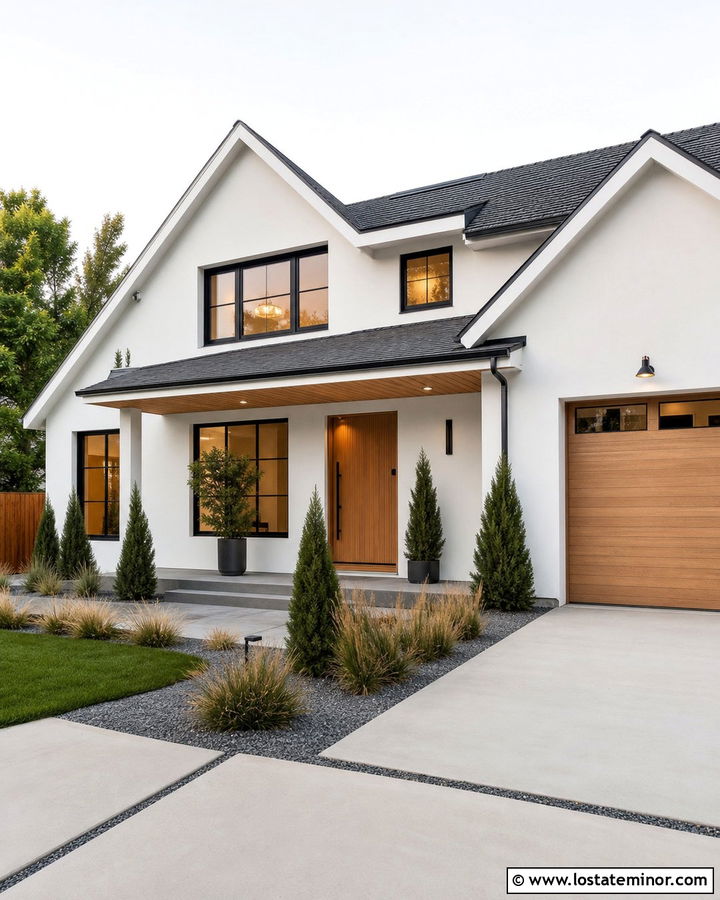
Clean wood slats can bring depth to a white modern house without adding unnecessary decoration. Choose a soft white stucco or smooth fiber-cement exterior with black-framed windows and streamlined roof edges. Install narrow oak or cedar slats across the porch ceiling, running them toward the entrance to visually guide attention to the front door. Repeat the same wood species on the door and a section of garage cladding. Matte black lighting and a charcoal concrete porch create crisp boundaries around the warm ceiling. Keep columns minimal or integrate them into the wall design. Structured grasses, sculpted evergreens, and large rectangular pavers complement the architecture. The entire scheme feels calm, natural, and carefully proportioned.
8. White Coastal Cottage With Aqua Porch Ceiling
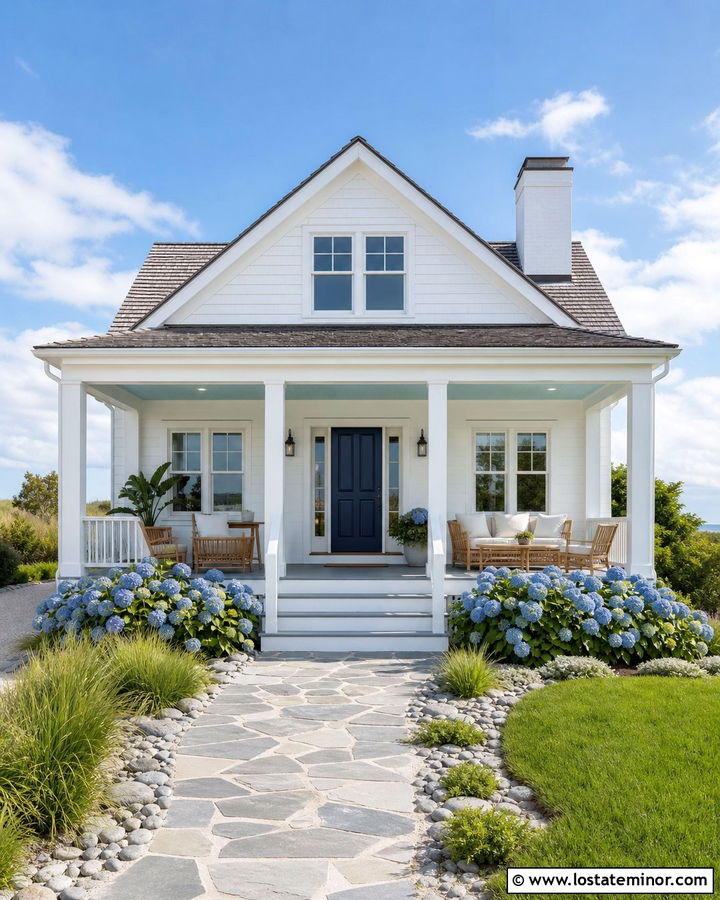
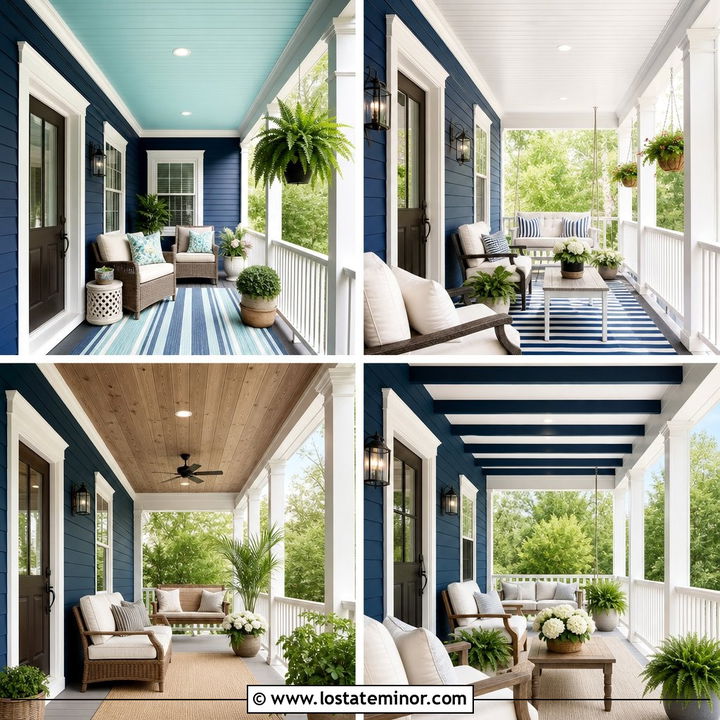
A light aqua ceiling makes a white coastal cottage feel breezy and cheerful. Use bright white shingles or lap siding with simple white trim, then paint the porch beadboard a clear aqua blue with a slight green undertone. A navy front door gives the pastel ceiling a stronger visual anchor, while natural teak furniture adds warmth. Choose a light gray roof and weathered stone walkway to maintain the relaxed coastal palette. White railings, compact lanterns, and pale gray porch decking keep the facade open and airy. Blue hydrangeas, beach grasses, and neatly clipped shrubs can repeat the colors around the house. The completed exterior feels colorful but controlled, with the aqua ceiling serving as a gentle overhead highlight.
9. White Cape Cod House With Navy Porch Ceiling
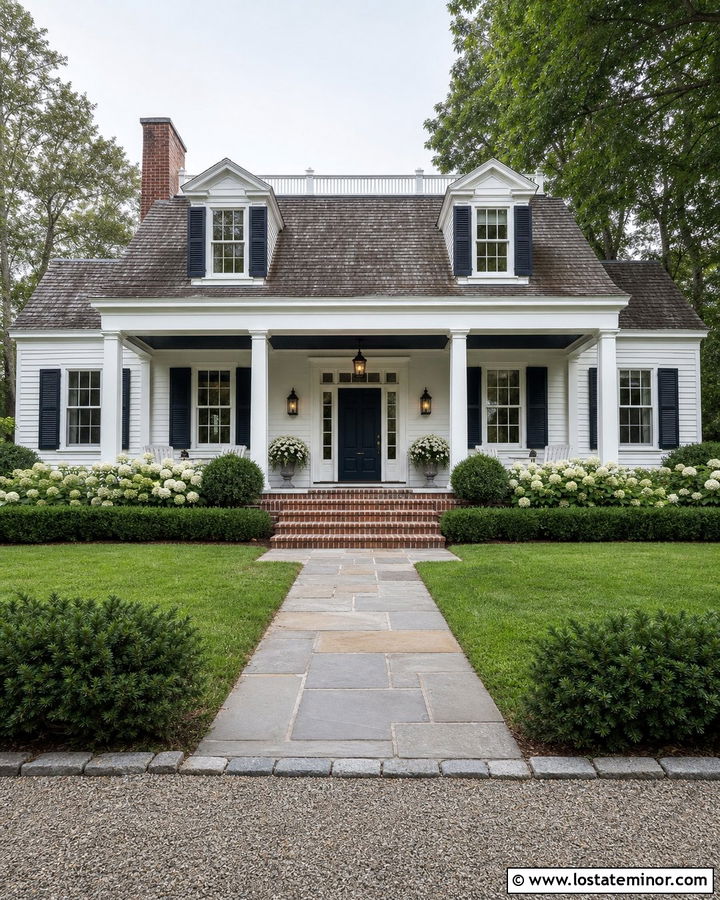
A navy porch ceiling gives a white Cape Cod house a deeper, more tailored appearance. Start with warm white shingle siding, white corner boards, and classic divided-light windows. Use a rich navy blue on the porch ceiling and repeat it on the shutters or front door for a cohesive scheme. Natural brick steps and an aged brass light add warmth against the cooler blue-and-white palette. A weathered gray shingle roof supports the home’s traditional character, while simple white columns keep the entrance clearly defined. Since navy absorbs more light, it works best on a shallow or generously open porch. Finish the curb appeal with hydrangeas, clipped hedges, and a straight stone walkway leading to the centered entrance.
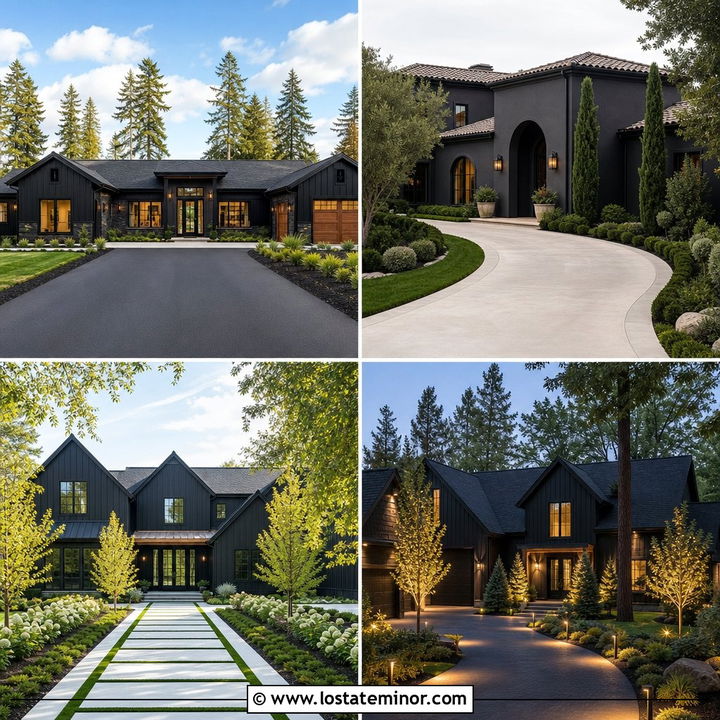
10. White Transitional House With Greige Porch Ceiling
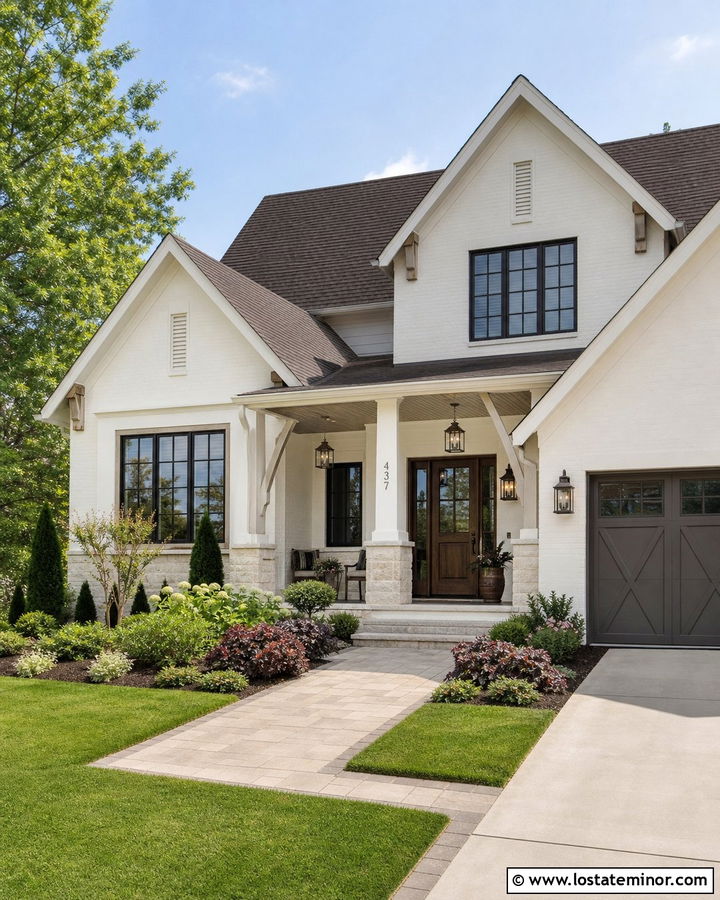
A warm greige porch ceiling can soften a large white transitional exterior. Select an off-white body color with a subtle beige undertone, then paint the ceiling a medium-light greige that relates to nearby stone, roof shingles, and paved surfaces. Use black windows and dark bronze fixtures to outline the architecture. A walnut-stained front door introduces a richer organic note and keeps the entrance from disappearing against the neutral palette. Limestone porch columns or a low stone base can repeat the ceiling’s warm undertones. This combination is particularly useful on homes with mixed materials because greige acts as a bridge between white siding, gray roofing, brown wood, and tan masonry. The overall facade feels balanced, polished, and comfortable.
11. White Lodge House With Vaulted Cedar Porch Ceiling
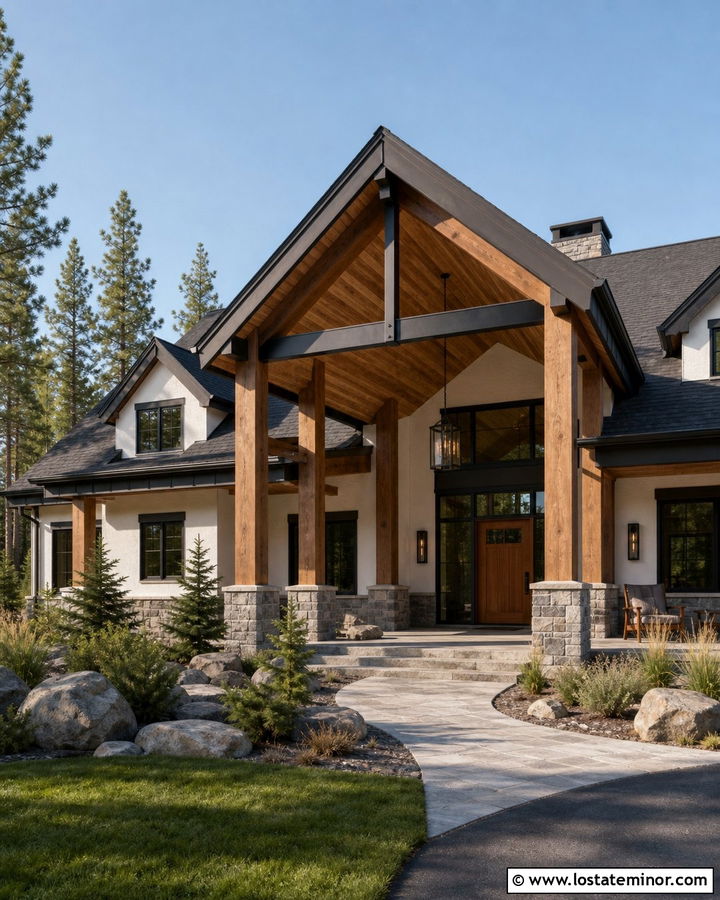
A vaulted cedar ceiling gives a white lodge-inspired house an impressive but inviting entrance. Use creamy white siding across the main exterior, then frame the porch with substantial timber posts and a high gabled roof. Clear-finished cedar planks should follow the ceiling slope, emphasizing its height and exposing the wood’s natural grain. Dark bronze beams, black-framed windows, and a charcoal roof add structure around the warm ceiling. Repeat the cedar on a wide front door or decorative gable brackets. A rugged stone base in gray, taupe, and muted brown helps anchor the house to its setting. Native grasses, boulders, and evergreen trees complete the landscape while allowing the wood ceiling to remain the porch’s focal feature.
12. White Georgian House With Coffered Porch Ceiling
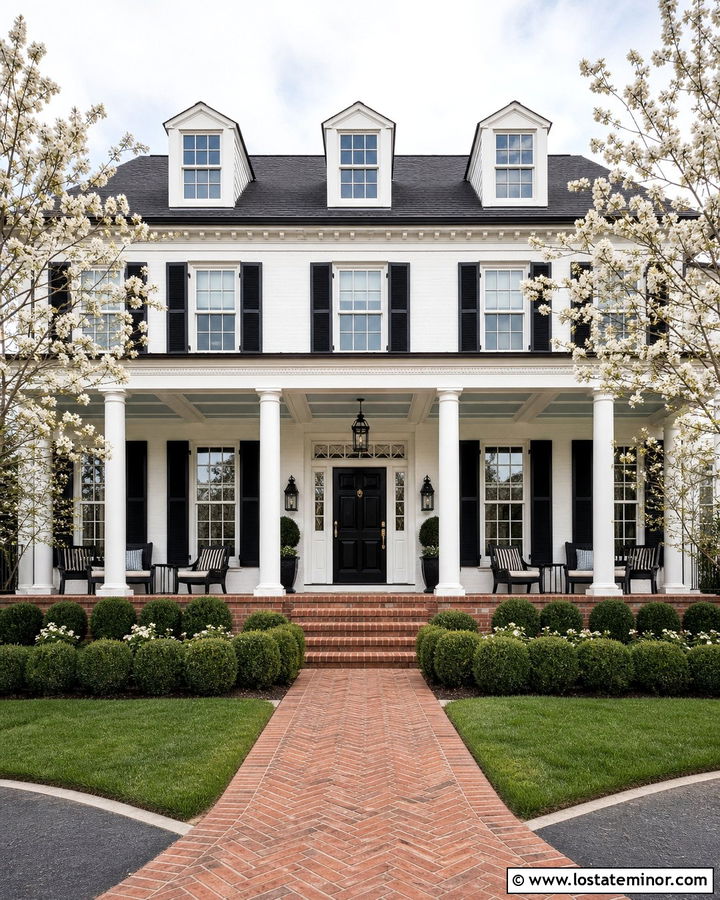
A coffered ceiling complements the symmetry and formality of a white Georgian house. Paint the brick or smooth siding a warm architectural white, then use the same color on the ceiling beams, columns, cornice, and railings. Recessed ceiling panels can be painted a pale blue-gray to reveal the coffered pattern without creating excessive contrast. Add a glossy black front door, black shutters, and traditional lanterns for a sharp, balanced facade. Red brick porch flooring brings warmth and connects the entrance with a formal walkway. Keep the roof dark gray and the landscaping symmetrical, using boxwoods, small flowering trees, and clipped hedges. The complete scheme feels dignified and detailed while remaining bright enough for everyday curb appeal.
13. White Farmhouse With Exposed Porch Rafters
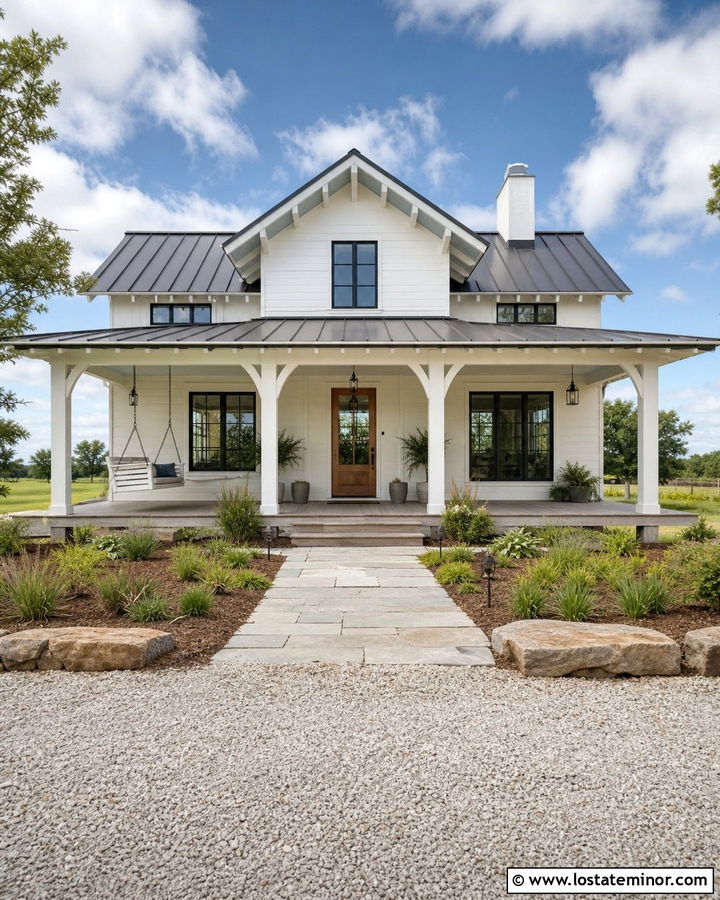
Exposed rafters give a white farmhouse porch an honest, handcrafted quality. Paint the siding a gentle warm white and continue that shade across the columns, fascia, and structural beams. The rafters can remain white for a seamless look, while the roof decking between them receives a pale gray-blue finish. This small contrast highlights the construction without making the ceiling too busy. Add black windows, a charcoal metal roof, and a medium-stained wood door for balance. Wide plank porch flooring in weathered gray supports the relaxed rural character. A simple porch swing, galvanized planters, and layered native landscaping complete the scene. The open ceiling structure adds depth and shadow while preserving the house’s clean, practical appearance.
14. White Tropical House With Bamboo Porch Ceiling
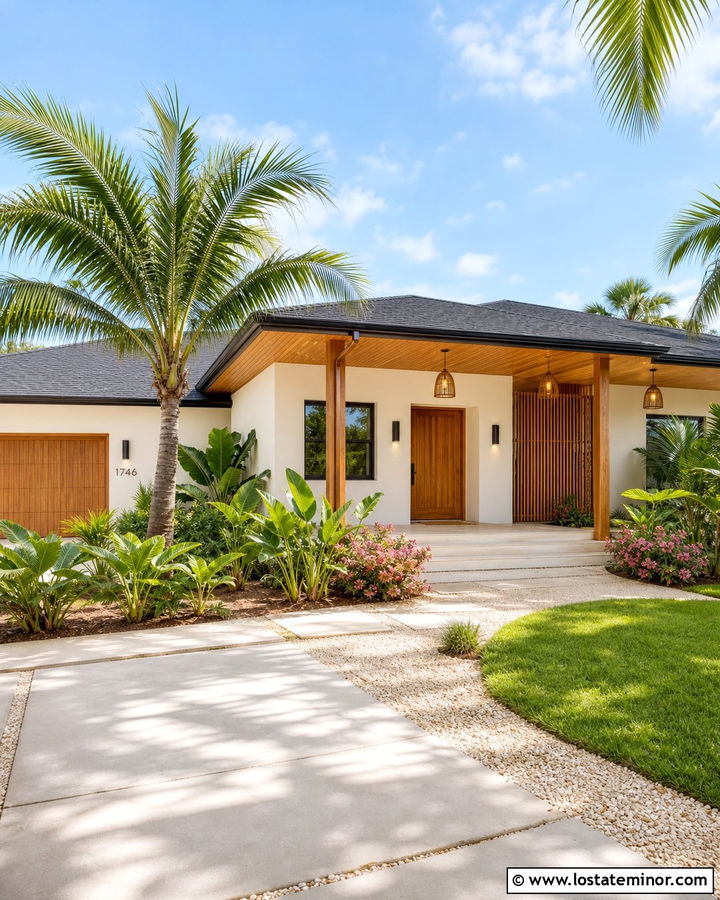
A bamboo-toned porch ceiling can warm up a white tropical exterior while maintaining a light, modern character. Choose smooth warm white stucco, clean rooflines, and broad overhangs. Install sealed bamboo panels or durable wood planks with a similar golden tone across the porch ceiling. Repeat that color on the front door or privacy screen so the material feels integrated. Bronze window frames, sandy stone flooring, and a low charcoal roof balance the pale facade. Keep the porch open with slender columns and a quiet ceiling fan. Palms, broad-leaf plants, flowering shrubs, and a pale gravel path create a lush setting. The white walls reflect daylight, while the bamboo ceiling gives the covered entrance a comfortable, shaded feeling.
15. White Contemporary House With Charcoal Porch Ceiling
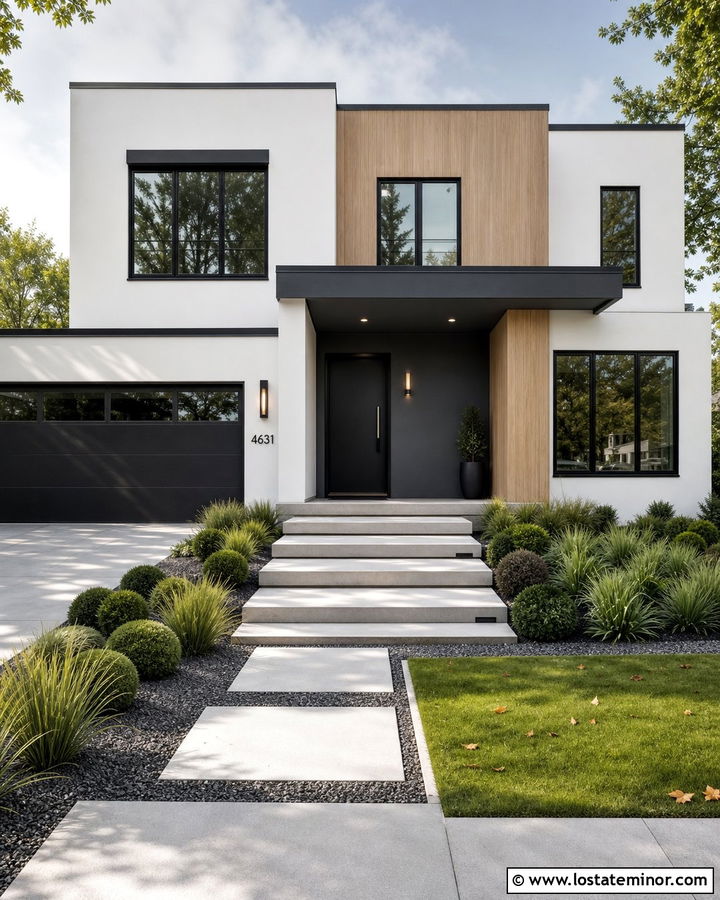
A charcoal ceiling creates a strong architectural frame around the entrance of a white contemporary house. Use a clean warm white on stucco or smooth panel siding, keeping trim minimal and rooflines crisp. Paint the porch ceiling deep charcoal gray and continue the color onto a recessed front door or narrow accent wall. Black-framed windows and modern sconces reinforce the darker elements, while pale concrete steps prevent the entry from becoming visually heavy. Add a section of light oak cladding beside the door for warmth. Large pavers, gravel beds, sculptural shrubs, and ornamental grasses suit the streamlined exterior. The ceiling’s dark finish makes the porch feel defined and sheltered while highlighting the brightness of the white facade.
16. White Southern Colonial With Sky Blue Shiplap Ceiling
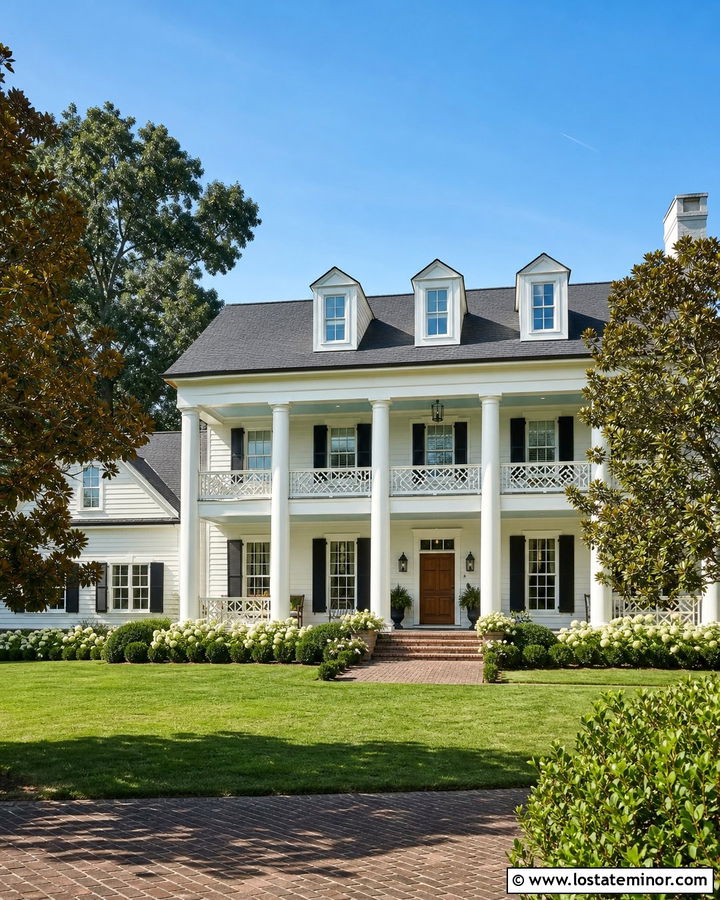
Sky blue shiplap brings graceful color to a white Southern Colonial home. Cover the exterior in warm white clapboard and emphasize the facade with tall white columns, balanced windows, and a broad porch. Paint the ceiling planks a clear, airy sky blue that remains visible from the sidewalk. A stained medium-brown front door and brick porch flooring keep the pastel accent grounded. Black shutters, dark lanterns, and a charcoal roof establish contrast across the larger facade. Arrange classic porch seating in white or natural wicker with blue-gray cushions. Magnolia trees, clipped boxwoods, and hydrangeas reinforce the established Southern landscape. The complete palette feels traditional and welcoming, with the blue ceiling providing color without competing with the formal architecture.
17. White Victorian House With Blush Porch Ceiling
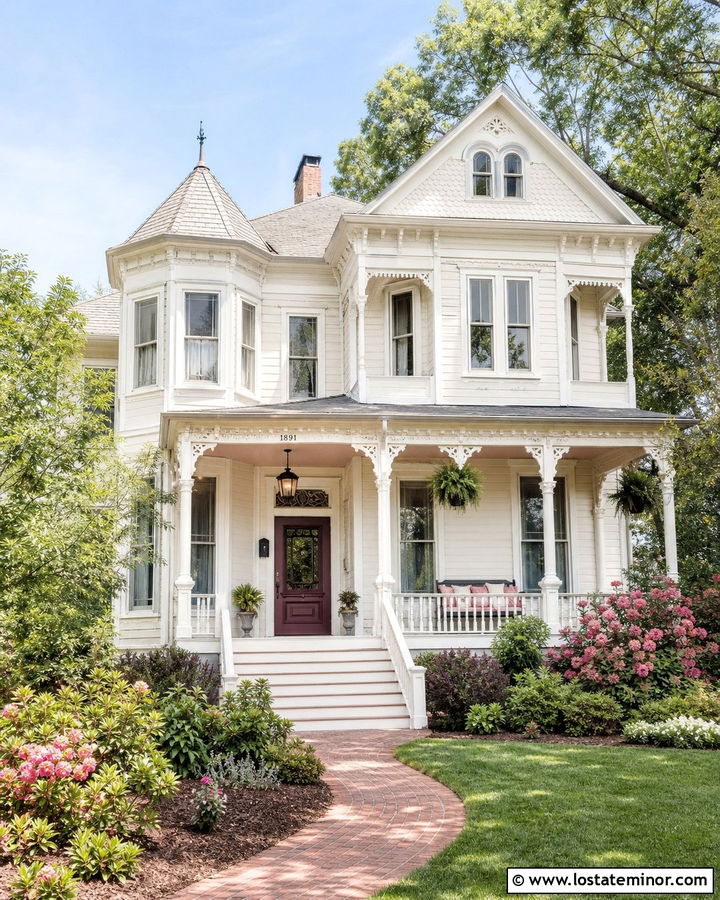
A muted blush ceiling can highlight the decorative charm of a white Victorian house. Choose a creamy white body color for the ornate siding, trim, brackets, and turned porch columns. Paint the beadboard ceiling a dusty pink with warm gray undertones rather than a bright or sugary shade. Repeat the blush sparingly on small gable details or planter boxes. A deep burgundy front door creates a richer focal point, while dark bronze fixtures and a weathered gray roof add visual weight. Natural wood porch flooring prevents the decorative palette from feeling overly formal. Finish the front yard with curved garden beds, flowering shrubs, and a brick walkway. The soft ceiling color adds personality while preserving the home’s historic silhouette.
18. White Cottage With Muted Teal Porch Ceiling
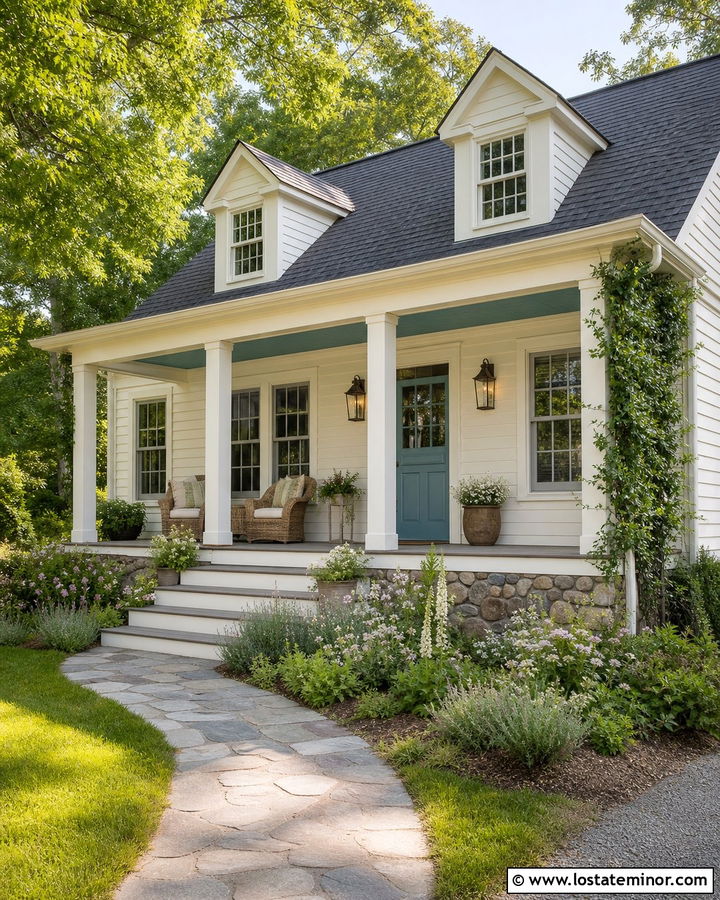
Muted teal gives a compact white cottage a distinctive porch without overpowering its small facade. Use soft white lap siding and matching trim, then apply a gray-green teal to the beadboard ceiling. Repeat the color on the front door for a clear connection between the overhead surface and the entrance. A warm gray porch floor, natural wicker furniture, and aged brass lighting soften the palette. Keep the roof medium charcoal and use a small section of fieldstone around the foundation for texture. Informal landscaping suits the cottage character, including flowering perennials, herbs, climbing greenery, and a gently curved path. The teal reads as colorful in bright daylight but remains subdued enough to work with the white siding year-round.
19. White Tudor House With Cream Porch Ceiling
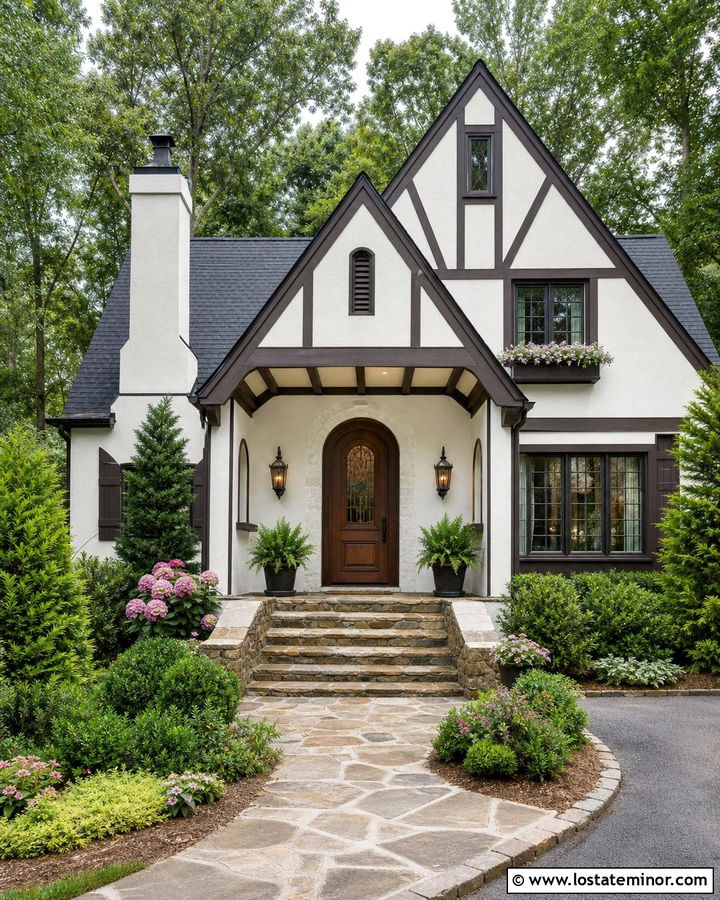
A cream porch ceiling warms the entrance of a white Tudor house and complements its traditional materials. Use an ivory-white finish on the stucco, paired with dark brown half-timbering and a steep charcoal roof. Paint the sheltered porch ceiling a slightly deeper cream so it remains inviting where natural light is limited. A dark-stained arched front door, bronze lanterns, and irregular stone steps reinforce the Old World influence. Exposed wood beams can divide the cream ceiling into simple panels, adding depth without appearing overly ornate. Repeat the stone around the foundation or chimney for continuity. Layered evergreens, flowering shrubs, and an informal flagstone walkway help the architecture settle naturally into the landscape while keeping the white facade prominent.
20. White House With Green Porch Ceiling And Door
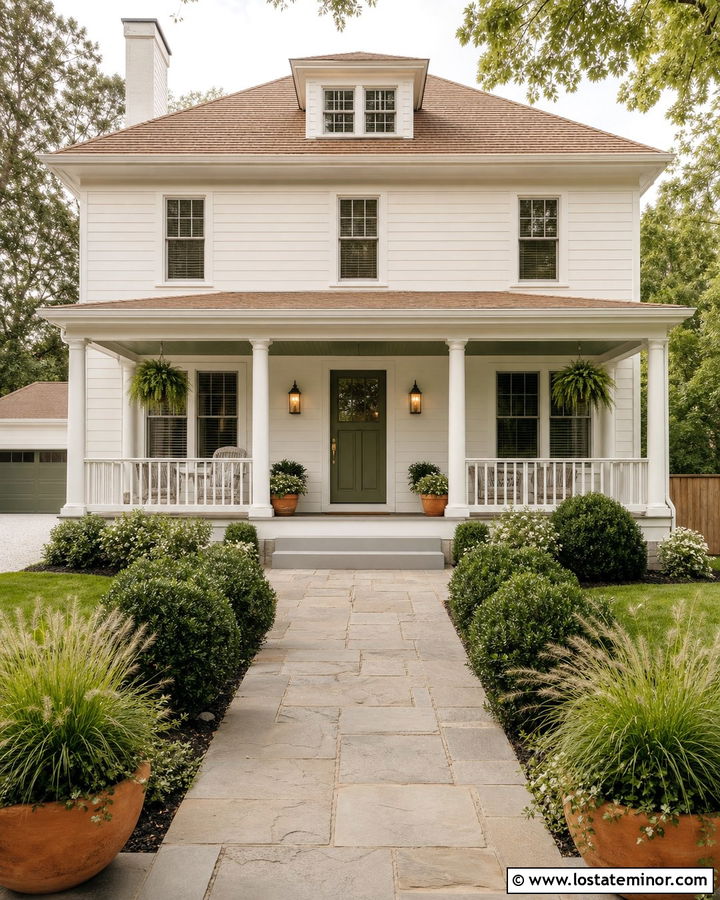
Matching the porch ceiling to the front door creates an easy, unified accent on a white house. Choose a warm white exterior and use a medium olive or moss green on both the beadboard ceiling and paneled door. Keep columns, railings, and window trim white to prevent the green from spreading too heavily across the facade. A light brown roof, warm gray porch floor, and antique brass fixtures complement the earthy accent color. Natural wood furniture and terracotta planters add another layer of warmth. This scheme works on cottages, traditional homes, and modest suburban houses because it creates a clear focal point without requiring major architectural changes. Plant boxwoods, ferns, and ornamental grasses nearby to connect the porch with the landscape.
21. White Brick House With Blue Gray Porch Ceiling
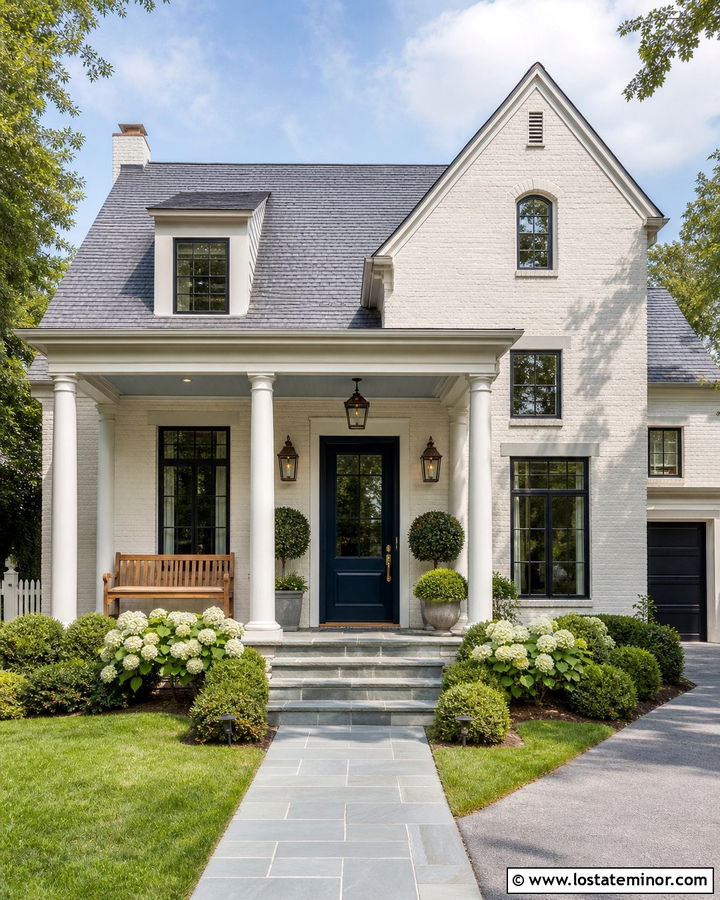
A blue-gray ceiling pairs beautifully with the texture of a painted white brick exterior. Use a soft, slightly warm white on the brick and trim, allowing the mortar lines to remain visible. Paint the porch beadboard a smoky blue-gray that coordinates with a slate-colored roof and bluestone steps. Add a black or dark navy front door for a stronger focal point. White columns keep the porch connected to the brick facade, while dark bronze lanterns bring definition around the entrance. Use natural oak seating or a wood bench to balance the cooler palette. Rounded shrubs, hydrangeas, and a straight stone path give the house a polished setting. The blue-gray ceiling adds depth while respecting the substantial character of brick.
22. White House With Walnut Porch Ceiling And Black Windows
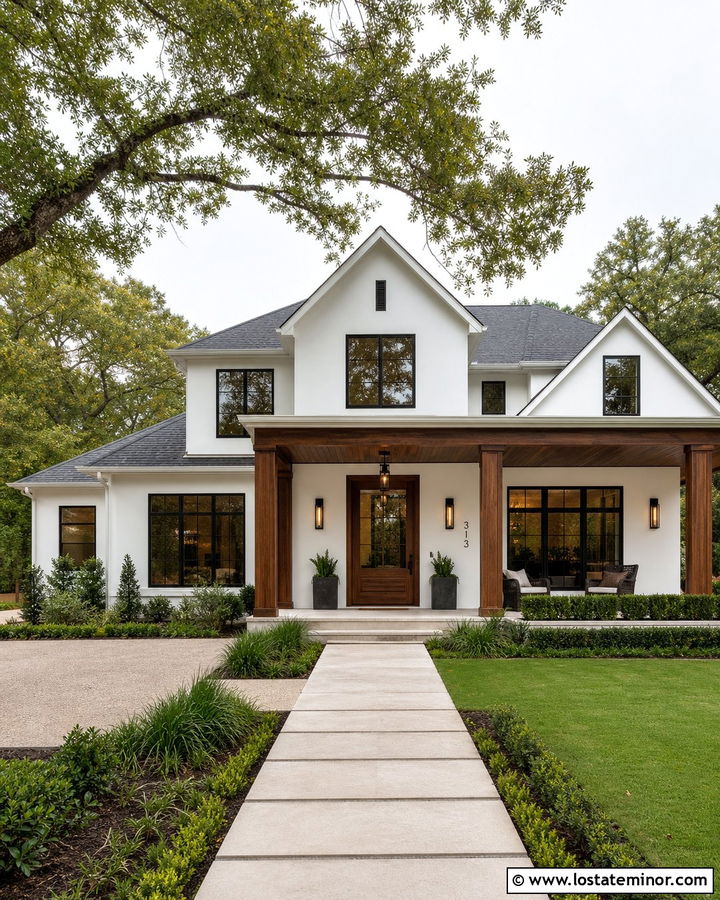
Walnut-toned wood creates a rich focal point on a white house with black windows. Use a clean, soft white across lap siding or stucco, then install dark walnut-stained tongue-and-groove boards on the porch ceiling. Repeat the finish on the front door, porch posts, or a narrow section of garage cladding. Black window frames, gutters, and sconces provide crisp definition, while a medium charcoal roof balances the darker ceiling. Choose pale limestone or warm concrete for the porch floor to keep the entrance from feeling too heavy. Low hedges, ornamental grasses, and a broad walkway support the modern organic palette. The wood grain adds depth and warmth, making the high-contrast white-and-black exterior feel more comfortable.
23. White Colonial House With White Ceiling And Red Door
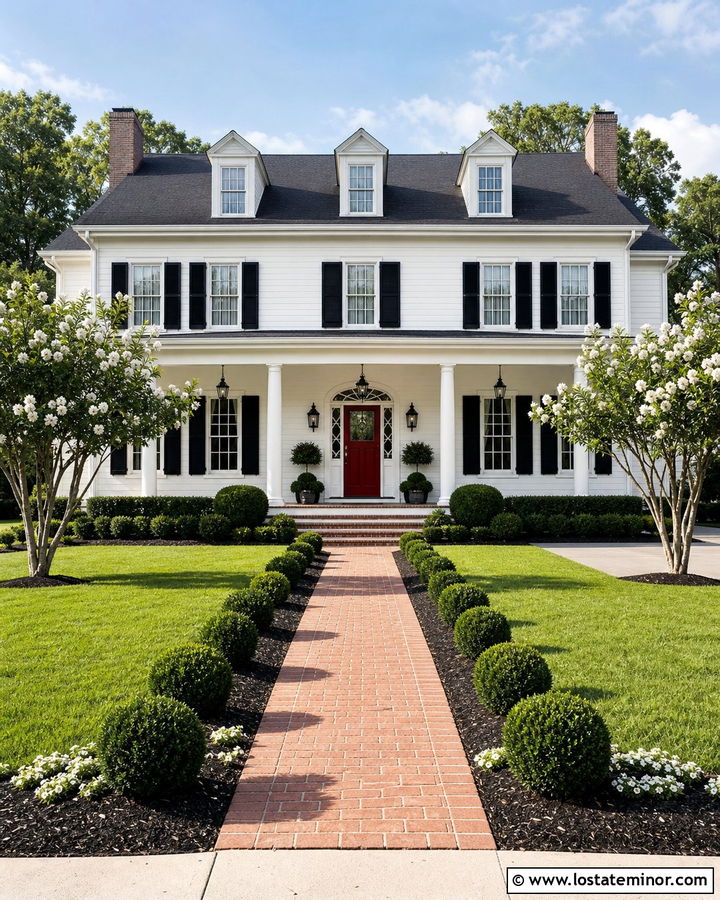
A red front door can energize a white Colonial house while a white porch ceiling keeps the architecture classic. Choose warm white clapboard siding, white beadboard overhead, and matching columns and railings. Paint the centered door a deep heritage red rather than a bright primary red. Add black shutters, black lanterns, and a charcoal roof to create a structured three-color palette. Traditional red brick steps connect naturally with the door and add texture at ground level. Because the ceiling stays white, the sheltered porch remains light and visually spacious. Symmetrical boxwoods, small flowering trees, and a straight brick walkway reinforce the home’s orderly facade. The completed scheme feels familiar, polished, and full of welcoming curb appeal.
24. White Screened Porch With Pale Blue Beadboard Ceiling
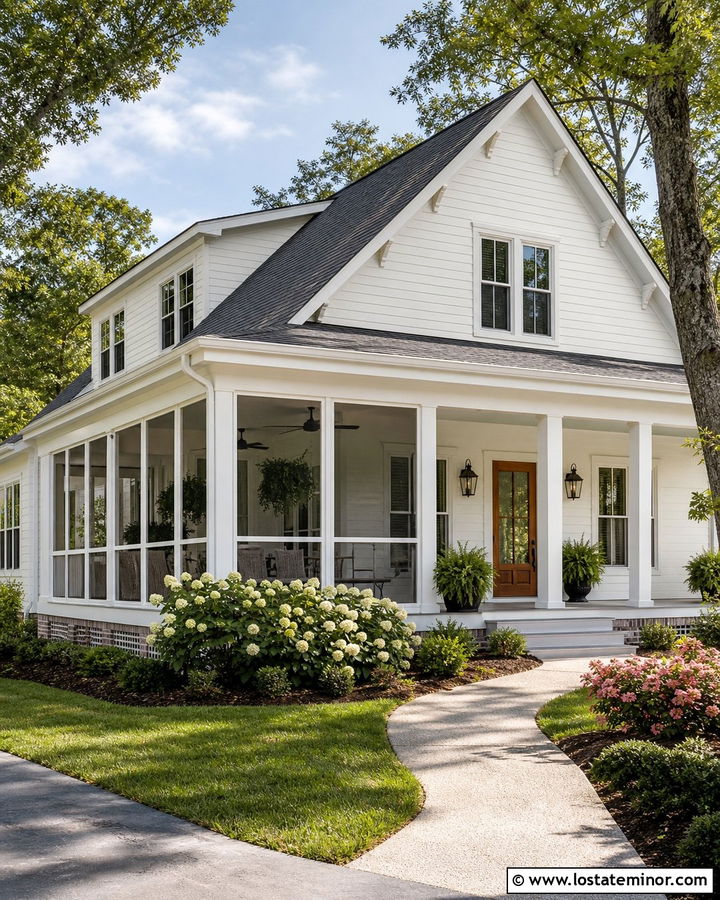
A pale blue beadboard ceiling can visually open a screened porch attached to a white house. Use creamy white siding, white screen frames, and substantial porch columns to keep the addition integrated with the main facade. Paint the ceiling a soft blue with a slight gray undertone so it remains calm behind the dark mesh screens. A natural wood door and medium-gray porch floor provide warmth and durability. Add a charcoal roof and black or bronze ceiling fans for contrast. From the curb, the blue should appear as a subtle layer beneath the white roofline. Surround the porch with ferns, hydrangeas, and low flowering shrubs. The result feels airy and comfortable while remaining part of a complete exterior design.
25. White Stucco House With Copper Tone Porch Ceiling
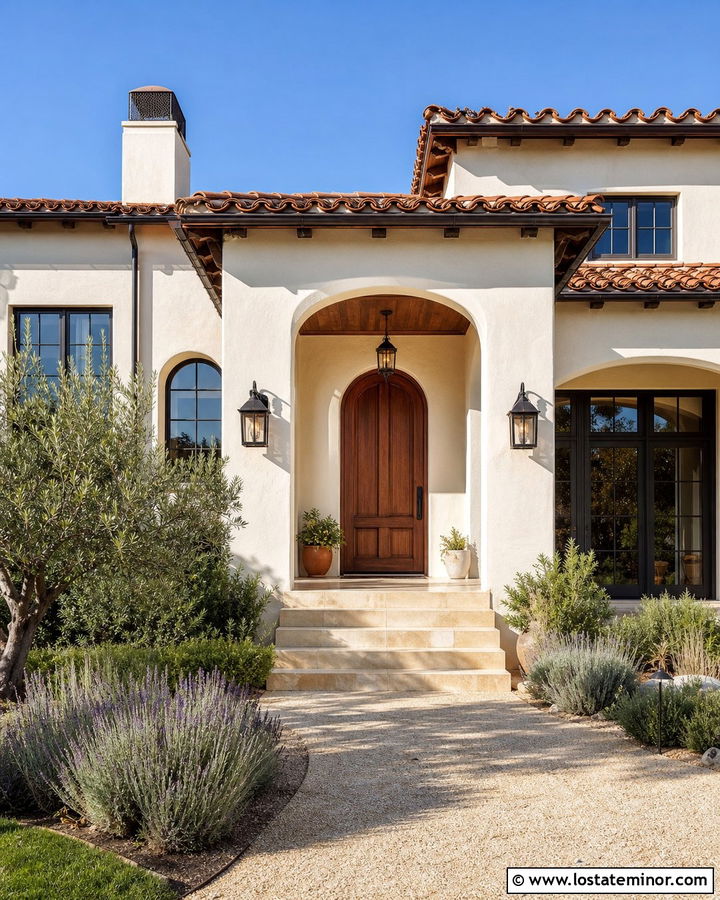
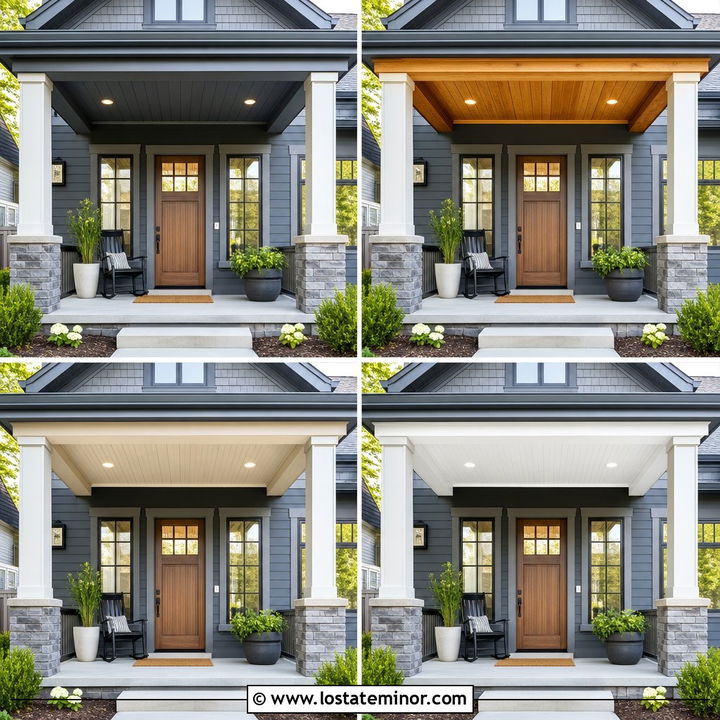
A copper-toned porch ceiling adds warmth to a white stucco house with Mediterranean influence. Use creamy white stucco walls, arched openings, and a low terracotta roof. Line the porch ceiling with sealed wood in a reddish copper-brown stain, or use matte metal-look panels where appropriate for the architecture. Repeat the warm tone on the arched front door and small decorative brackets. Dark bronze windows and lanterns tie the scheme together, while pale limestone steps brighten the entrance. Keep the landscaping drought-conscious with olive trees, rosemary, lavender, and ornamental grasses. The ceiling’s rich color complements the roof and door, creating a cohesive transition from the brilliant white facade to the shaded porch beneath it.
26. White Craftsman House With Pale Yellow Porch Ceiling
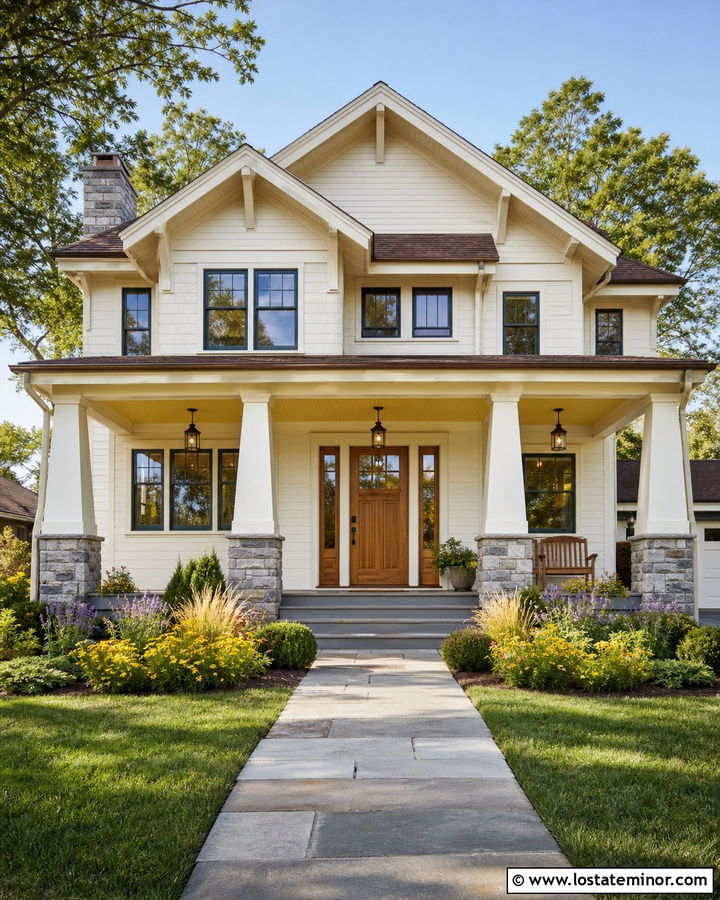
A pale yellow ceiling gives a white Craftsman house a warm and friendly entrance. Use creamy white horizontal siding, wide trim, and tapered columns resting on gray stone bases. Paint the beadboard ceiling a muted butter yellow that looks softly sunlit rather than bright. Repeat a slightly deeper yellow on the front door, or choose a natural oak door if you prefer a quieter palette. Bronze fixtures, a medium-brown roof, and warm gray porch flooring balance the cheerful ceiling. Exposed brackets and visible rafter tails emphasize the home’s craftsmanship. Complete the yard with native flowers, rounded shrubs, and a broad stone path. The yellow adds gentle personality while working naturally with white siding and earthy exterior materials.
27. White Victorian House With Lavender Porch Ceiling
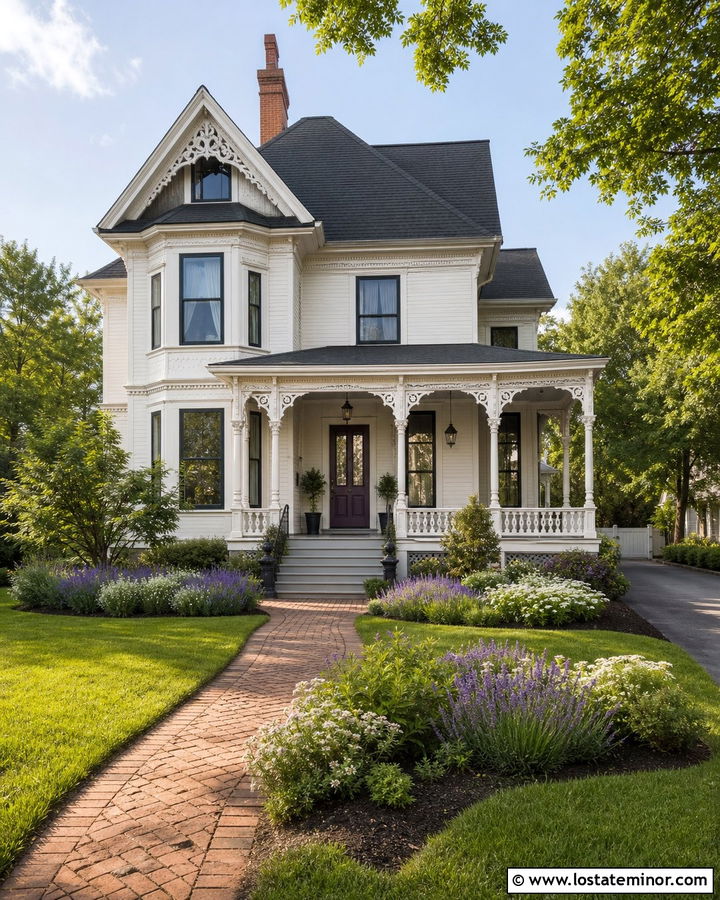
Soft lavender can add unexpected color to a white Victorian exterior while preserving its graceful character. Paint the siding and elaborate trim a warm white, then use a dusty gray-lavender on the porch ceiling. A deeper plum front door creates a related focal point, while charcoal roof shingles and black iron details prevent the palette from feeling too delicate. Natural wood porch flooring provides warmth beneath the cool ceiling. Keep decorative brackets, spindles, and columns white so their shapes remain clear against the lavender background. Curved flower beds filled with purple, white, and green plantings can extend the scheme into the yard. The finished exterior feels distinctive but balanced, with color placed where it enhances rather than hides the architecture.
28. White Split Level House With Gray Blue Porch Ceiling
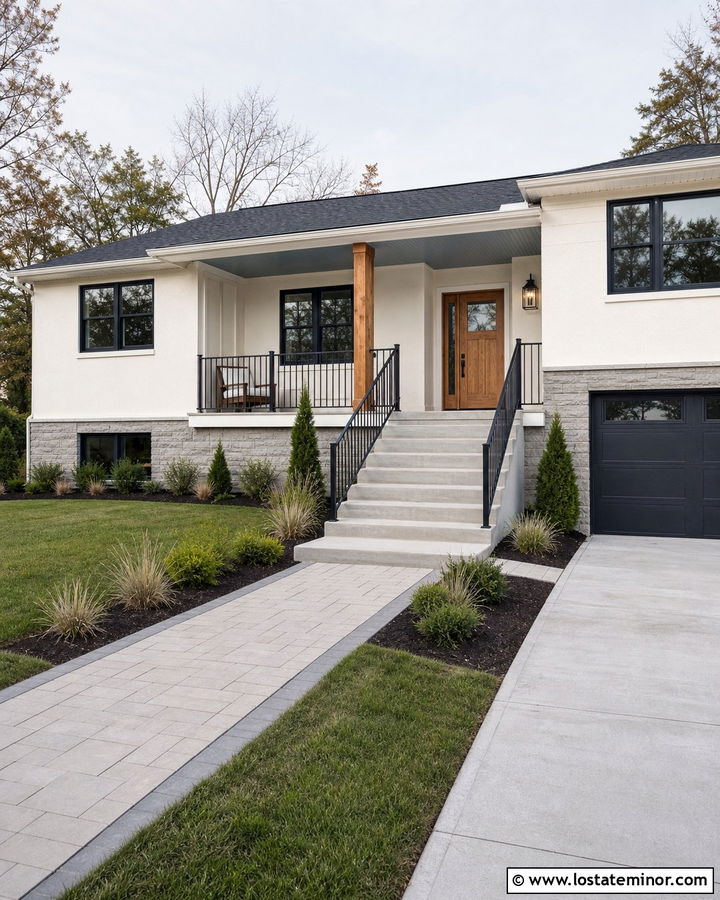
A gray-blue porch ceiling can give a white split-level house a more cohesive entrance. Cover the main facade in soft white siding and use pale gray stone on the lower level. Paint the recessed ceiling a medium-light gray-blue that connects visually with both the stone and a charcoal roof. A stained cedar front door introduces warmth, while black railings and window frames add clean outlines. Consider wrapping one porch post in cedar to repeat the door color and visually strengthen the entrance. Broad concrete steps and simple landscaping suit the practical architecture. Low evergreens, grasses, and a straight paver walkway keep the front yard organized. The completed palette updates the house while respecting its horizontal lines and varied levels.
29. White Scandinavian House With Natural Pine Porch Ceiling
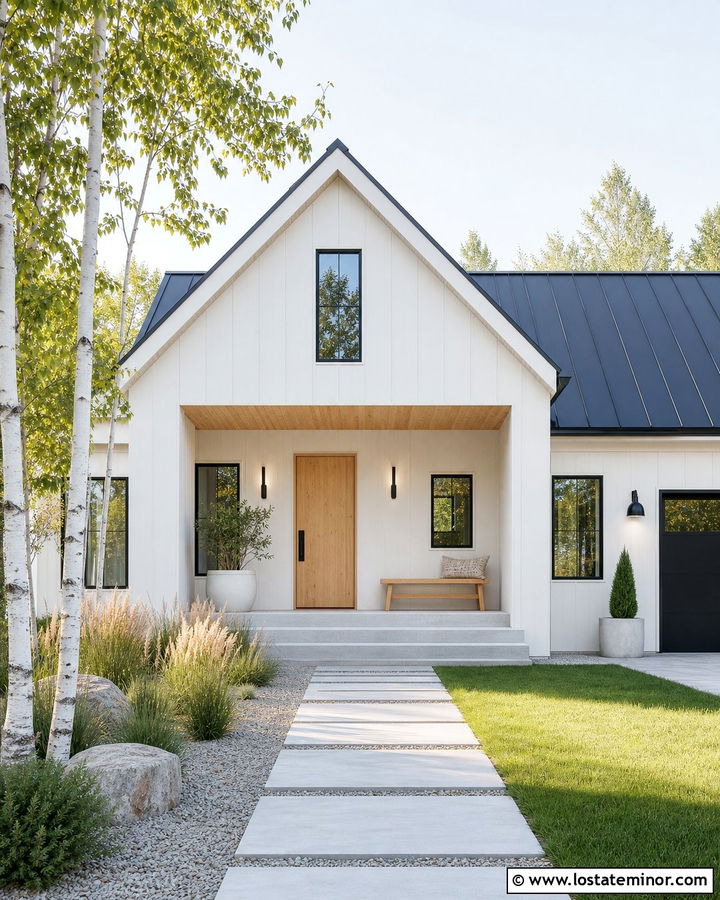
Natural pine adds warmth to the simple facade of a Scandinavian-inspired white house. Choose a soft chalky white for vertical siding, trim, and clean gable ends. Install clear-sealed pale pine boards across the porch ceiling and repeat the wood on the front door and narrow entry bench. Use black windows, slim gutters, and minimalist lighting for crisp contrast. A standing-seam charcoal roof strengthens the simple silhouette, while light gray concrete steps keep the base understated. Avoid ornate columns or railings, choosing straightforward structural forms instead. Birch trees, grasses, gravel, and rectangular stepping stones create an uncluttered landscape. The pale wood ceiling softens the white-and-black palette and makes the sheltered entrance feel naturally welcoming.
30. White New American House With Two Tone Porch Ceiling
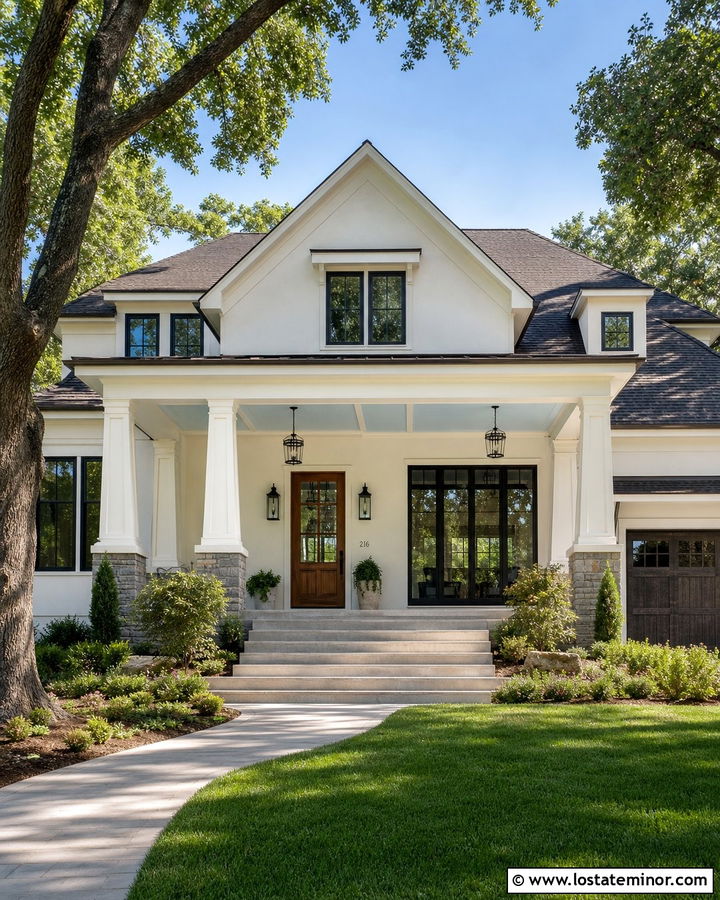
A two-tone porch ceiling adds detail to a large white New American house without relying on excessive decoration. Use warm white siding, broad trim, and substantial square columns. Paint the ceiling panels a pale sky blue while keeping the beams and perimeter molding white. This treatment highlights the porch structure and connects the ceiling to the bright facade. A medium-stained oak front door, black windows, and a dark gray roof create balanced contrast. Add gray stone around the foundation and porch columns to anchor the larger elevation. Wide steps, layered shrubs, and a gently curving walkway make the entrance feel approachable. The blue panels and white beams create depth overhead while supporting a coordinated whole-house exterior palette.
Conclusion:
The best porch ceiling should feel connected to every part of the home’s exterior. Blue beadboard can add traditional charm, while cedar, walnut, and pine introduce natural warmth. White ceilings preserve brightness, and deeper shades such as navy, charcoal, or teal create stronger definition. Before choosing a finish, compare it with the white siding undertone, front door, roof, porch floor, windows, and permanent masonry. Test painted samples overhead because covered surfaces receive less direct light than the main facade. Also select materials and exterior-grade finishes that suit local moisture and temperature conditions. Use these 30 White House Design With Porch Ceiling Ideas to build a complete, balanced, and welcoming curb-appeal scheme.

Related posts: