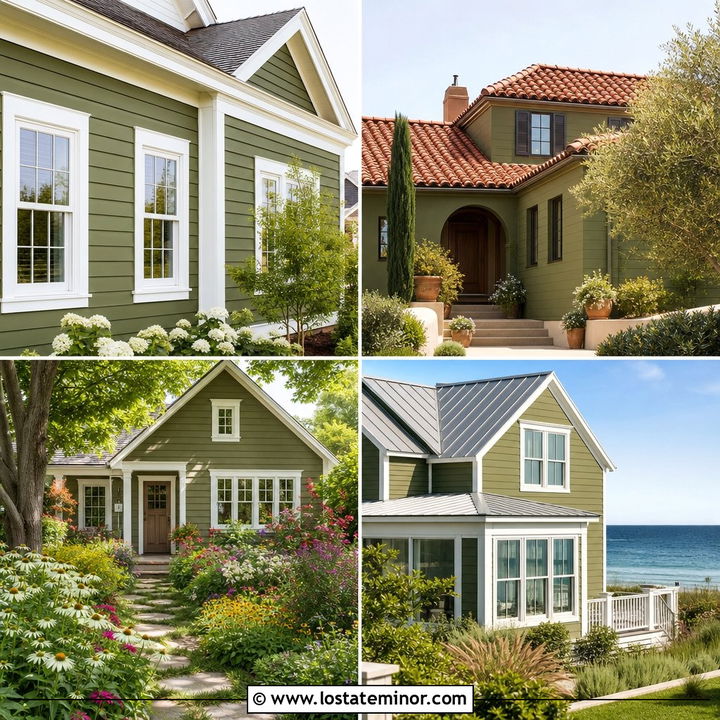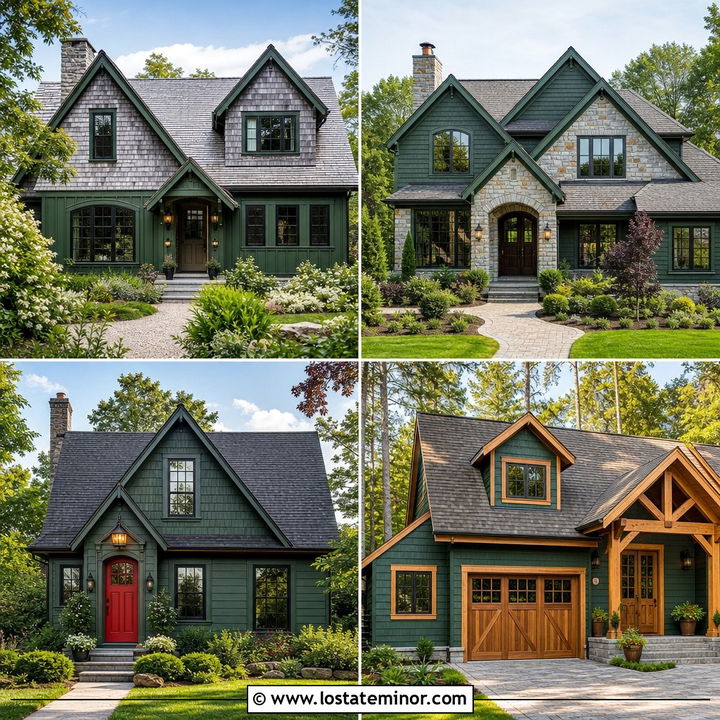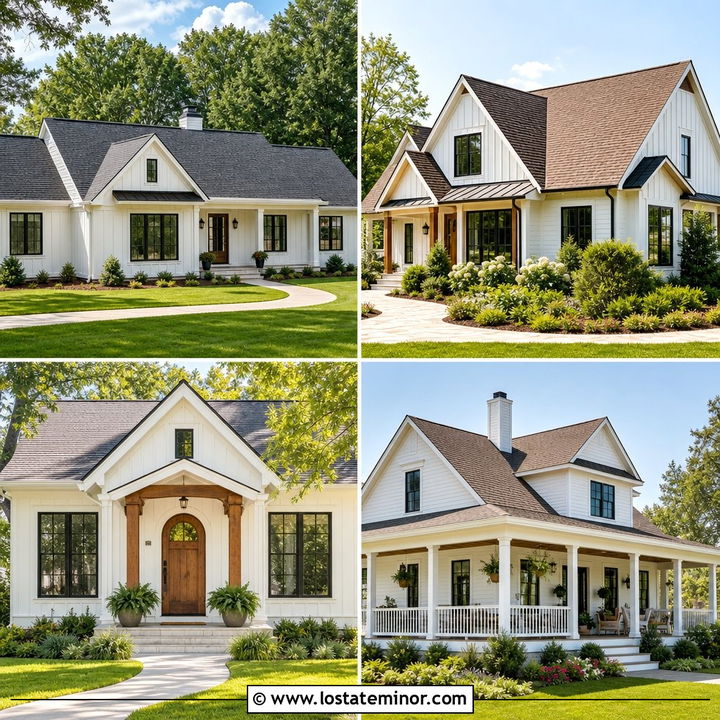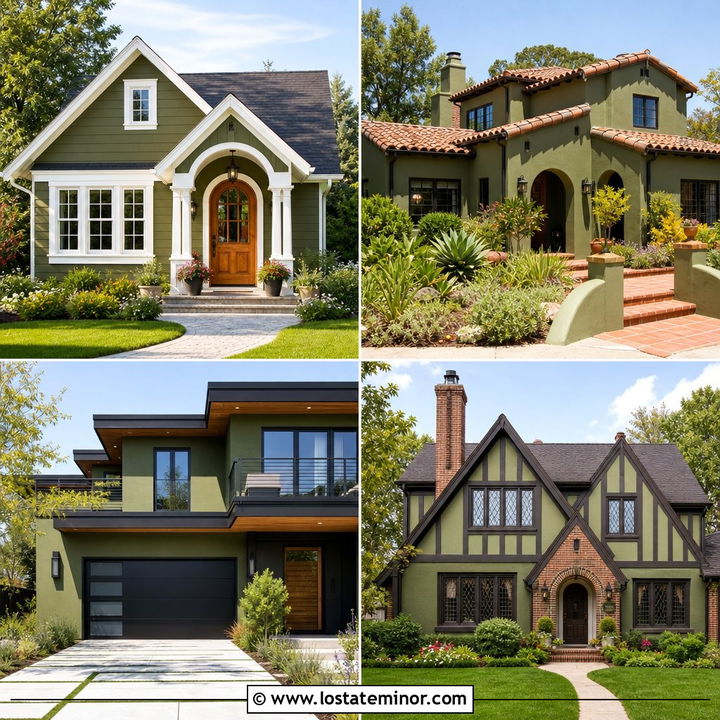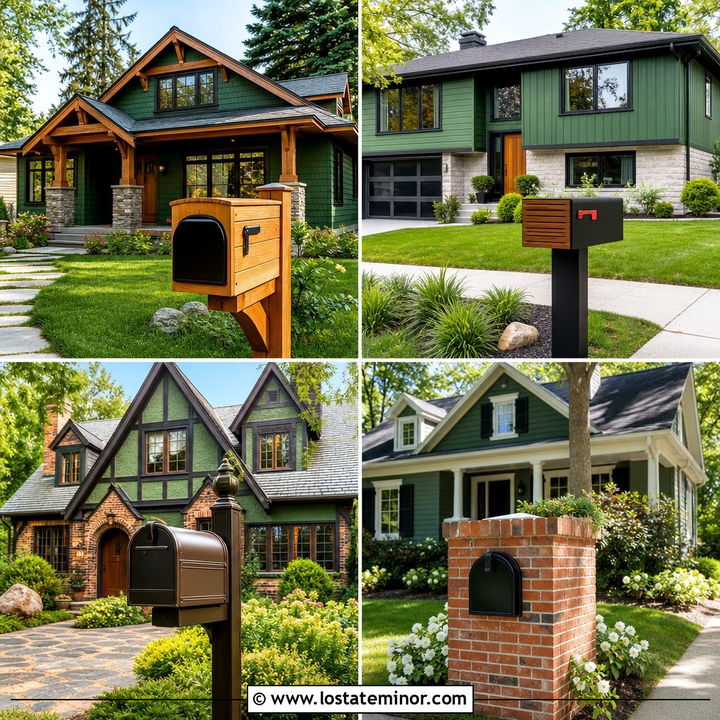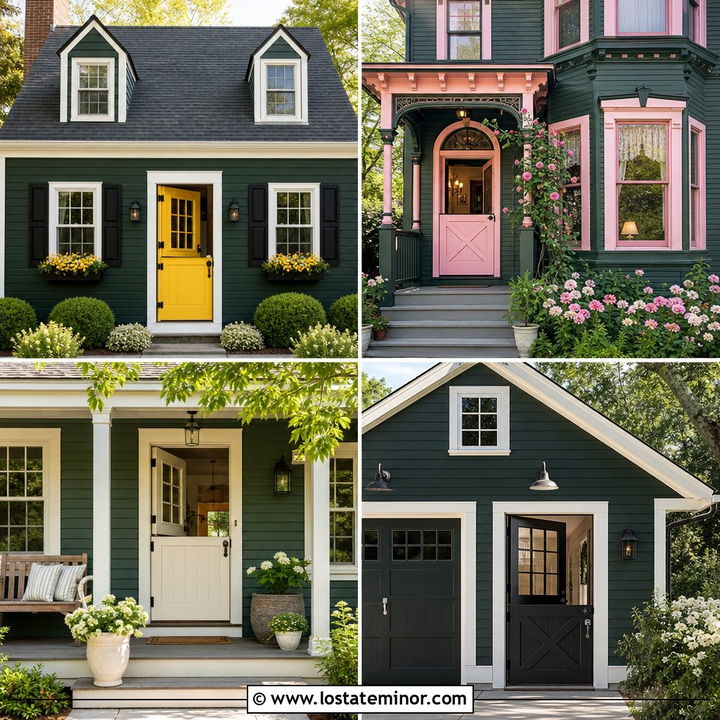
Olive green brings a grounded, welcoming character to a home, while shingles add texture, depth, and architectural interest. The best 30 Olive Green House Design With Shingles Ideas combine these features with coordinated trim, roofing, masonry, doors, and natural wood details. Because olive has warm yellow or brown undertones, it pairs especially well with weathered cedar, charcoal roofing, cream trim, and earthy stone. It can suit everything from a compact bungalow to a large Craftsman or modern farmhouse. The key is selecting an olive shade that works with the home’s sunlight, roof pitch, and existing materials. Use the complete exterior combinations below to explore balanced, practical, and attractive 30 Olive Green House Design With Shingles Ideas.
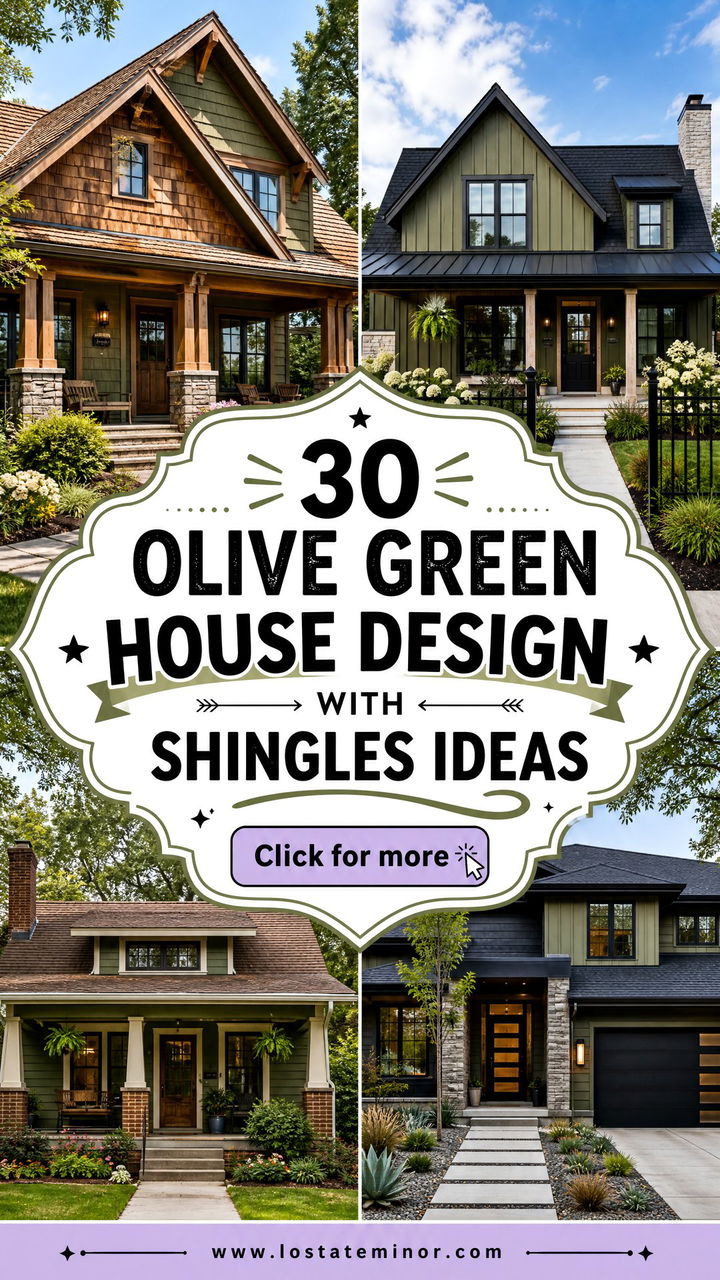
1. Olive Green House With Weathered Wood Shingles
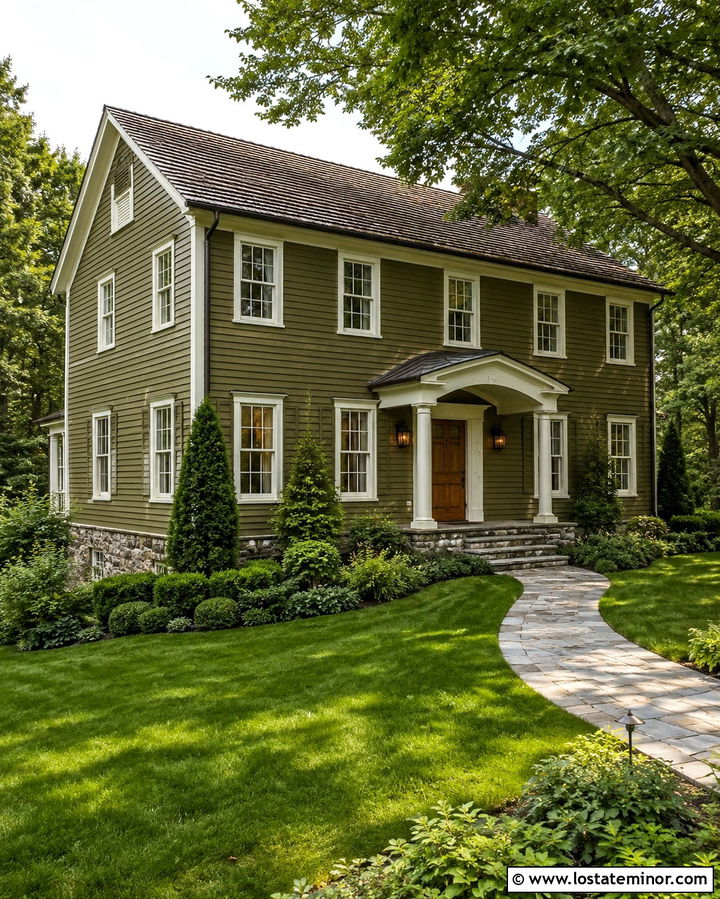
Weathered wood roof shingles give an olive green exterior a soft, established appearance. Choose medium olive clapboard siding and frame it with warm white trim rather than a stark, blue-toned white. The roof can include blended brown, taupe, and muted gray shingles, creating enough variation to connect with both colors. A medium-stained oak door strengthens the natural palette, while dark bronze lighting adds definition around the entry. Complete the exterior with a fieldstone foundation and simple evergreen landscaping. This combination is particularly effective on traditional two-story houses because the blended roof prevents the upper portion from looking overly heavy. Repeat one of the roof’s brown tones on porch flooring, steps, or window boxes for a more connected result.
2. Dark Olive Green House With Charcoal Shingles
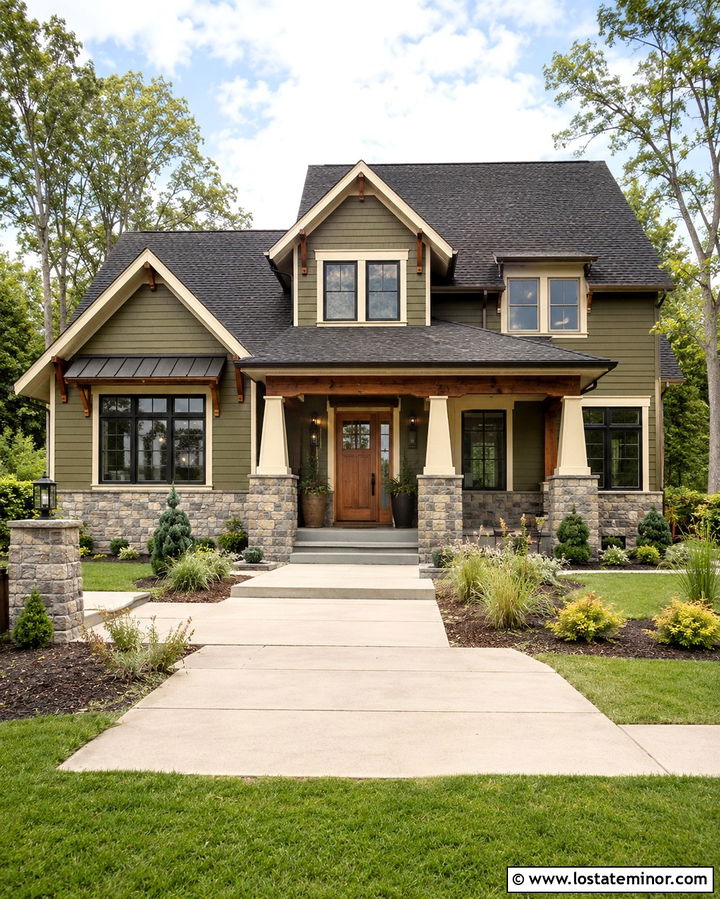
A dark olive green exterior becomes crisp and structured when paired with charcoal roof shingles. This high-contrast combination works beautifully on a Craftsman house with broad eaves, tapered porch columns, and visible roof brackets. Use soft cream on the fascia, window frames, and porch ceiling to brighten the facade without creating a severe contrast. A walnut front door and matching porch beams bring welcome warmth to the deeper colors. For the foundation, select gray stone containing small touches of brown or moss green. Charcoal shingles are visually strong, so keep shutters and gutters close to the roof color. Layered shrubs, ornamental grasses, and a straight stone walkway can soften the architecture and create a polished transition between the dark house and its surrounding yard.
3. Olive Green Craftsman With Cedar Shake Shingles
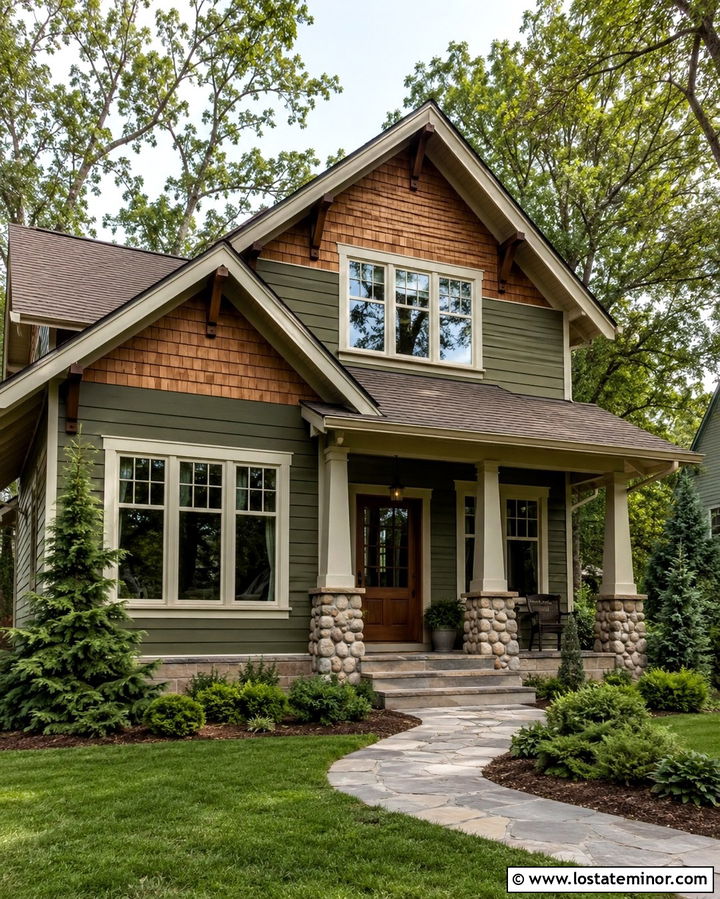
Could an olive green Craftsman feel any more connected to its landscape? Cedar shake shingles across the gables add warmth and emphasize the handcrafted character of this architectural style. Paint the main horizontal siding a muted olive green, then leave the cedar shakes in a medium natural stain. Cream trim around the windows and roofline keeps the exterior inviting, while dark brown brackets create subtle definition. Use river rock or irregular fieldstone on the porch base to support the organic palette. A Craftsman door with divided glass and stained wood panels completes the entry. As cedar naturally changes in appearance, choose a stain or protective finish that maintains a predictable tone. The finished house feels detailed and substantial without depending on bright colors or excessive decorative features.
4. Olive Green Farmhouse With Black Roof Shingles
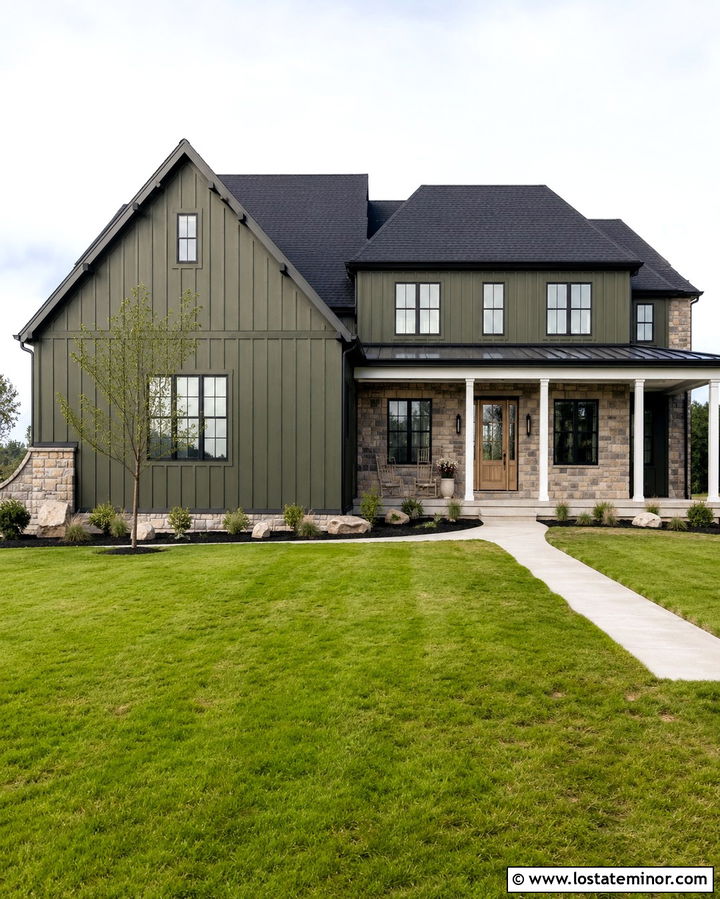
A modern farmhouse does not have to be white to feel clean and current. Olive green board-and-batten siding creates a more distinctive facade, especially beneath simple black architectural shingles. Carry black onto the gutters, window frames, and porch lighting for a coordinated outline. Warm white should appear sparingly on the fascia and porch columns, preventing the exterior from becoming too dark. Add a natural white oak front door as the primary warm accent. A stone skirt in mixed gray and tan can visually anchor the vertical siding. To preserve the farmhouse character, use a straightforward roofline, a wide front porch, and restrained landscaping. This complete scheme balances contemporary contrast with natural color, making it suitable for both rural properties and newer suburban neighborhoods.
5. Light Olive Green House With Gray Shingles
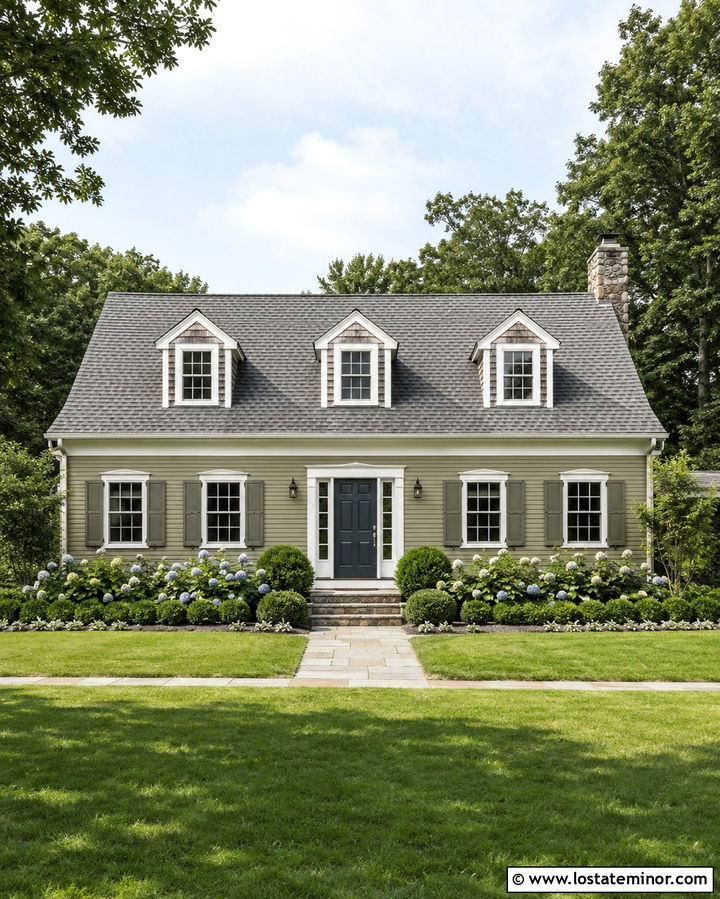
Light olive green siding creates a fresh, relaxed exterior without disappearing into the surrounding landscape. Pair it with medium gray roof shingles that have subtle warm undertones rather than noticeable blue tones. Soft white trim can define the roofline, windows, and porch railings, while a muted blue-gray front door adds a gentle secondary color. This combination works especially well on a Cape Cod house with symmetrical dormers and traditional lap siding. Consider adding gray cedar shingles to the dormer faces for another layer of texture. Foundation plantings should remain relatively simple, using clipped shrubs, hydrangeas, and low ground cover. The restrained palette lets the house look bright in direct sunlight while retaining enough warmth to remain comfortable and welcoming during cloudy or shaded conditions.
6. Olive Green Bungalow With Brown Roof Shingles
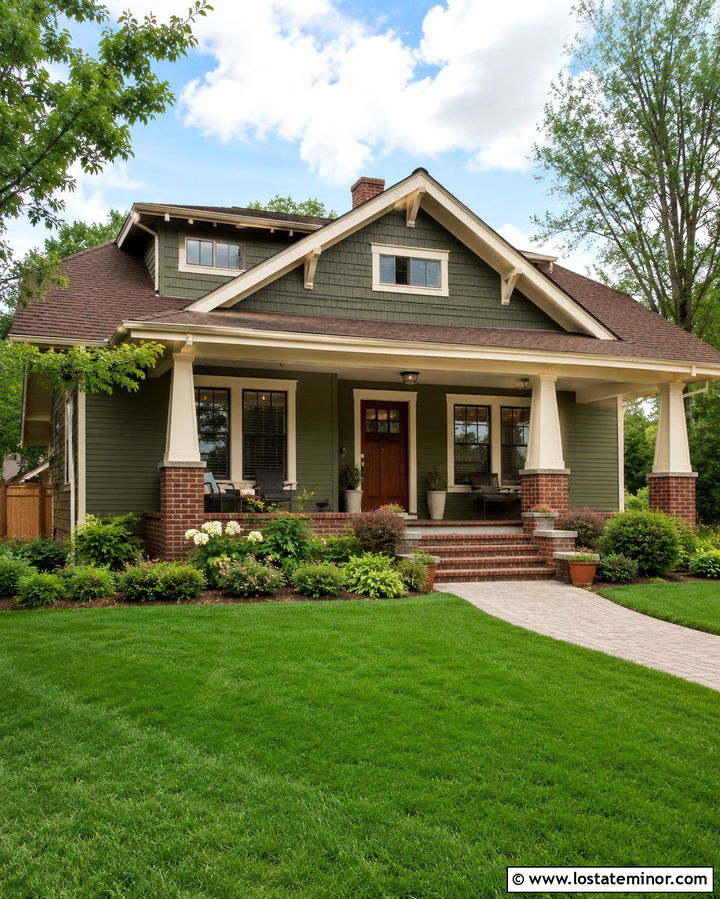
Warm brown roof shingles naturally complement the earthy undertones found in olive green paint. On a bungalow, use olive clapboard siding with deeper olive shingles in the front-facing gable. This tonal approach adds texture while keeping the compact facade visually organized. Cream trim around the windows, porch posts, and roof edges provides gentle contrast. Finish the entry with a rich mahogany door and aged bronze hardware. Brick porch piers in muted red-brown can connect the roof and wood accents without overpowering the green. Since bungalow roofs are often prominent, choose shingles with moderate color variation rather than an overly busy blend. A curved walkway, low flowering shrubs, and a small lawn will frame the broad porch and reinforce the approachable character of the home.
7. Olive Green Colonial With Slate Gray Shingles
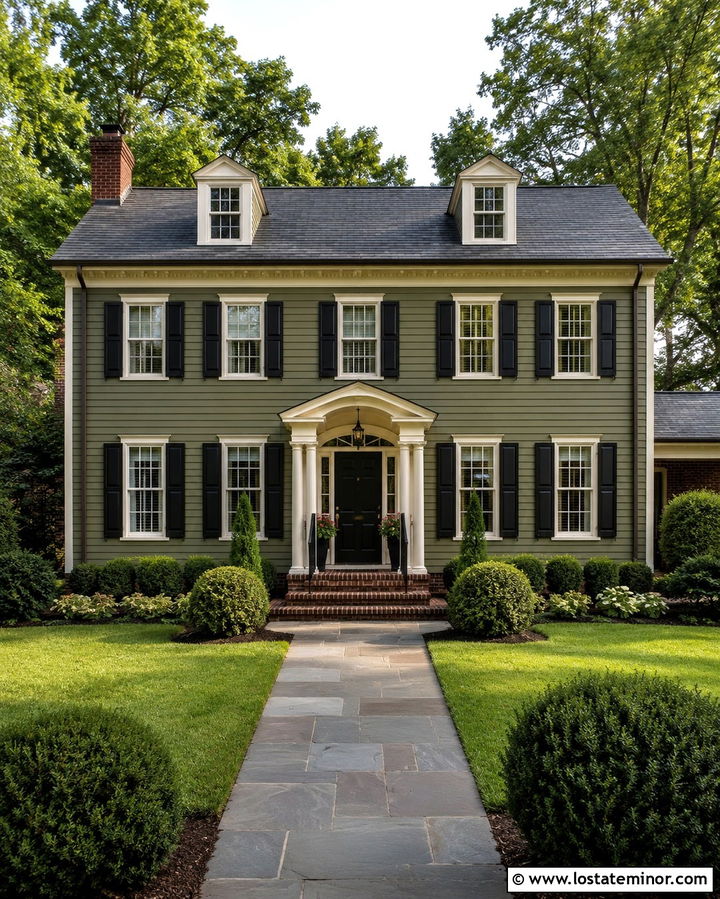
Symmetry makes an olive green Colonial exterior feel orderly and timeless. Select a balanced mid-tone olive for the clapboard siding, then pair it with slate gray architectural shingles. Crisp ivory trim around evenly spaced windows highlights the traditional proportions more softly than pure white. Black shutters, a black metal lantern, and a glossy black front door create formal accents that relate directly to the roof. If the facade includes brick, choose traditional red brick with brown mortar rather than orange-heavy masonry. A centered stone walkway and matched shrubs on both sides of the entrance reinforce the architecture. Keep the roof blend quiet and consistent, allowing the green body color to remain the most noticeable feature. The completed palette feels classic but less predictable than standard neutral Colonial schemes.
8. Olive Green Ranch House With Driftwood Shingles
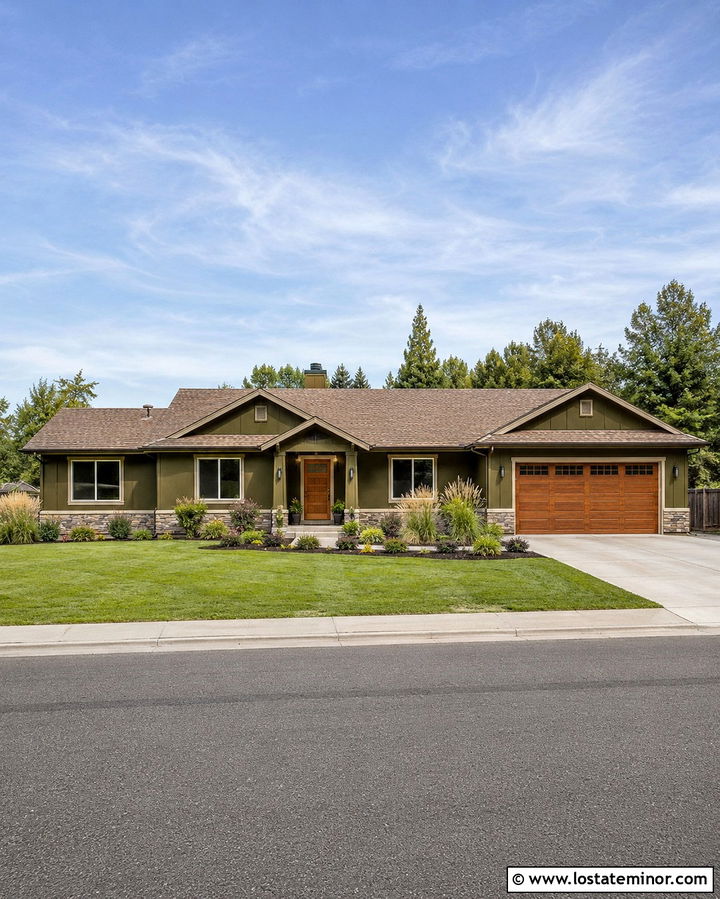
A long ranch facade benefits from a layered palette that breaks up its horizontal shape. Paint the main siding a medium olive green and use driftwood-colored roof shingles containing taupe, gray, and weathered brown. Cream window trim keeps the elevation bright, while dark bronze gutters provide a clean roofline. Add a cedar garage door or apply a cedar-toned finish to the existing door to create a strong focal point. A low stone wainscot can introduce texture without dividing the facade too aggressively. Consider wider porch steps and a modern wood front door to make the entrance easier to identify. Group ornamental grasses, rounded shrubs, and small trees in staggered beds, helping the landscaping balance the home’s width and connect its warm exterior materials.
9. Olive Green Cottage With Cedar Roof Shingles
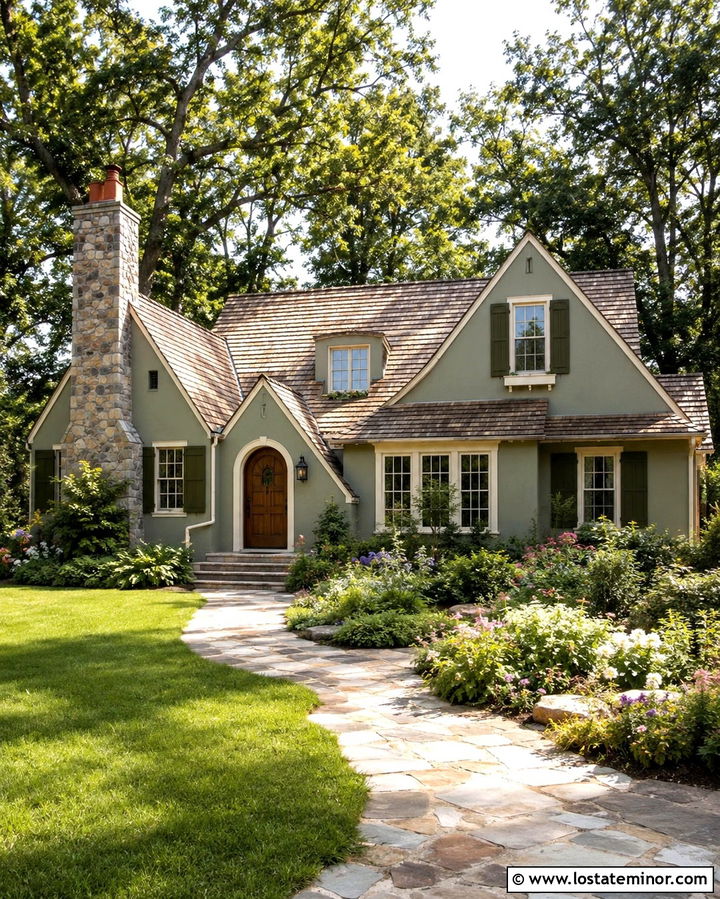
Few combinations feel as naturally charming as an olive green cottage topped with cedar roof shingles. Choose a soft olive body color with slightly muted undertones, then pair it with warm cream trim and a honey-stained arched front door. Cedar shingles can begin as golden brown and gradually develop a softer weathered character, so coordinate the exterior with both stages in mind. Add painted olive shutters one shade darker than the siding for quiet dimension. A stone chimney containing gray, tan, and warm brown will further unite the roof and walls. Cottage landscaping can be informal, with curved planting beds, flowering perennials, and a flagstone path. Keep decorative details simple so the rich roof texture and welcoming entrance remain the primary features of the complete exterior.
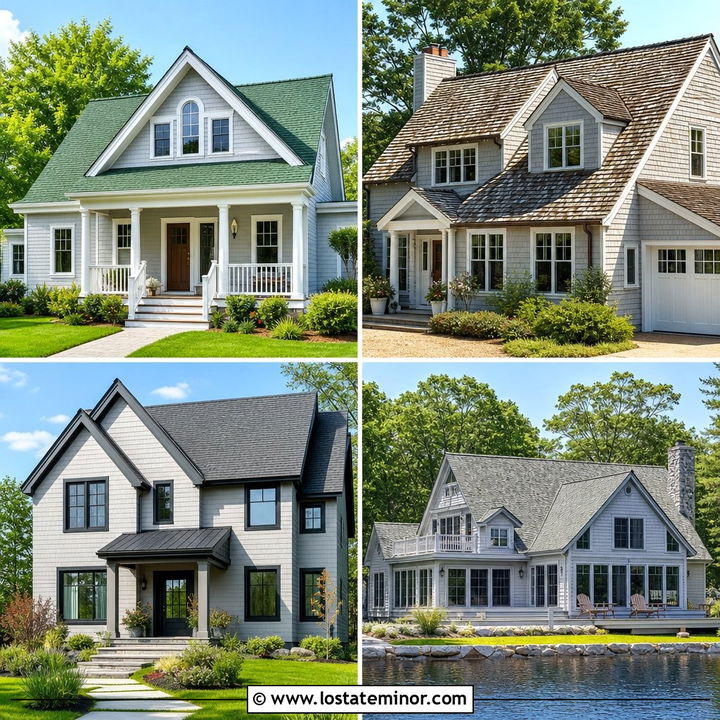
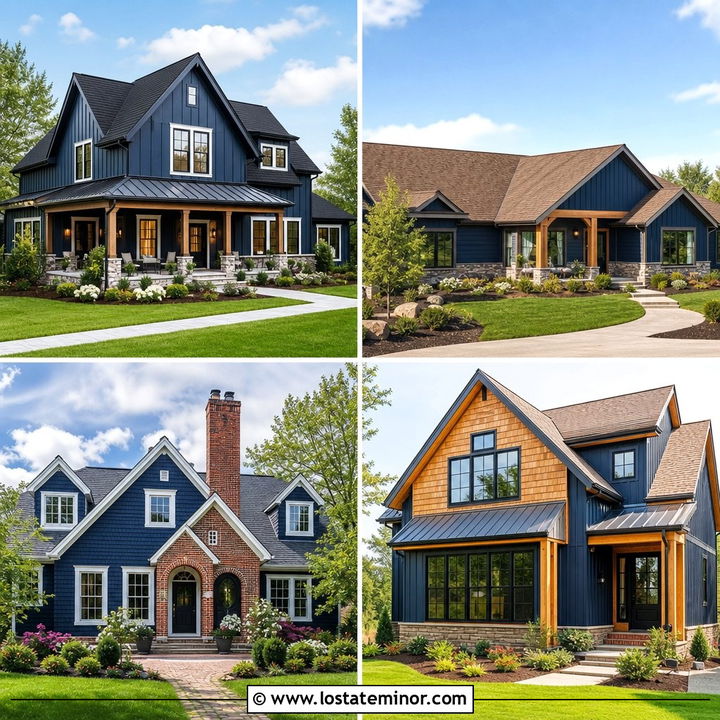
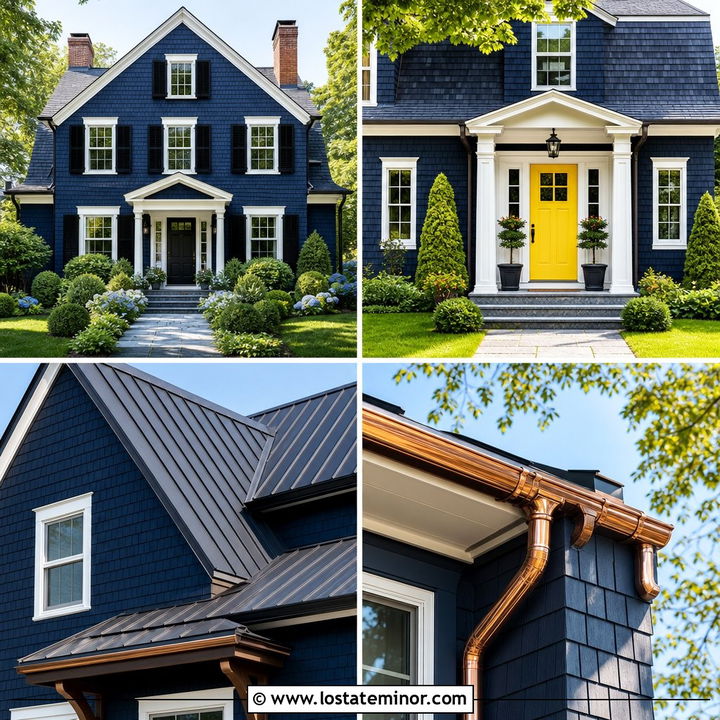
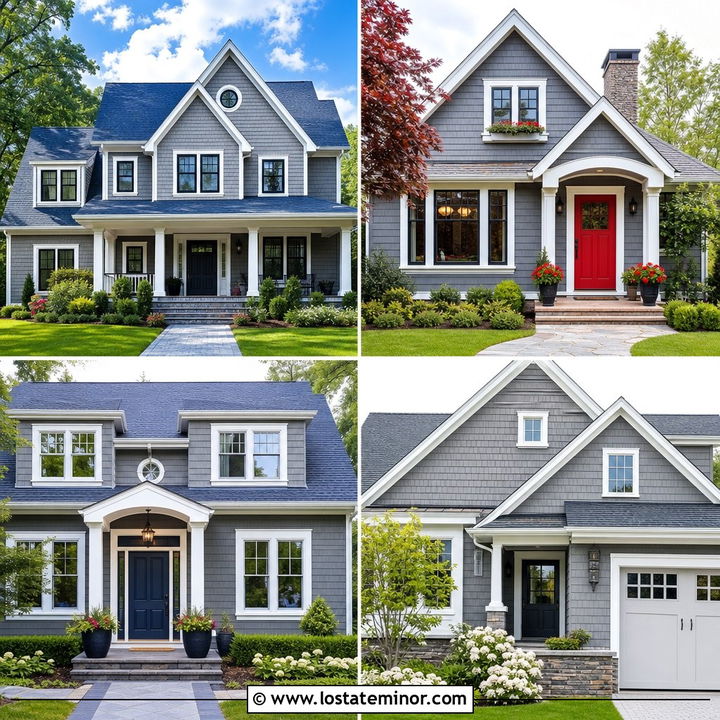
10. Olive Green Cape Cod With Black Shingles
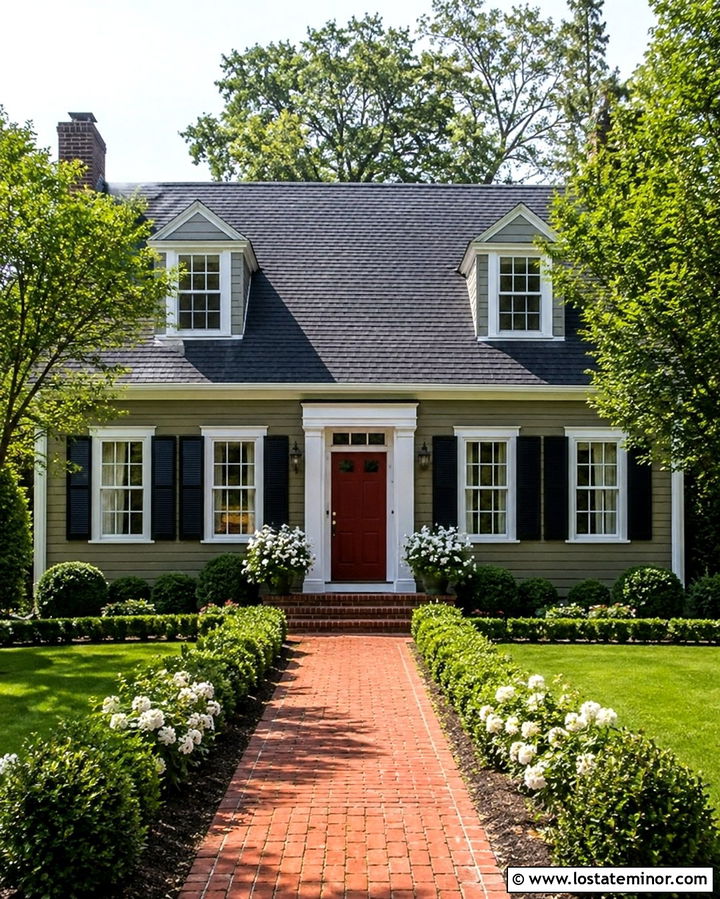
A compact Cape Cod exterior gains surprising depth from olive green clapboard siding and clean black roof shingles. Use bright but slightly warm white on dormers, corner boards, window casings, and the front entry surround. Traditional black shutters can echo the roof, while a cranberry red front door introduces a controlled accent that feels established rather than overly bright. If red is not preferred, stained wood offers a quieter alternative. Maintain a simple roof blend because the prominent dormers already provide visual movement. A red brick walkway can repeat the warmth of the door and contrast pleasantly with the green siding. Low boxwood borders, white flowering plants, and an open lawn help preserve the tidy, symmetrical curb appeal associated with this familiar American house shape.
11. Olive Green Shingle House With Cream Trim
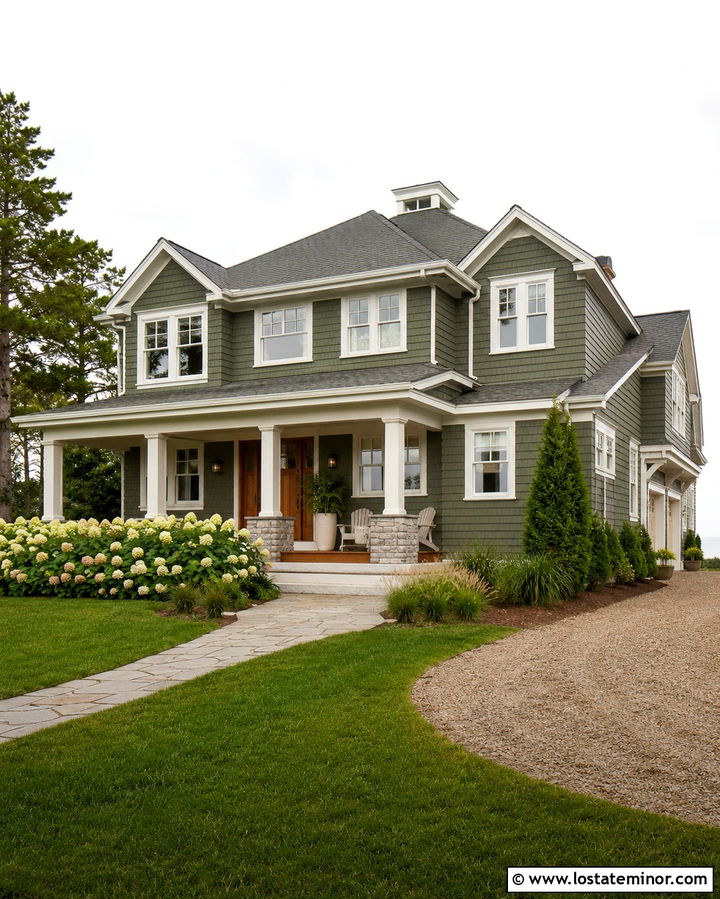
Covering the full facade with olive green shingle siding creates beautiful shadow lines and a strong sense of texture. This treatment is especially suited to a coastal cottage or shingle-style home with varied rooflines. Use creamy off-white trim on the windows, fascia, columns, and railings to soften the densely textured green surface. A medium gray roof provides a calm neutral cap without competing with the siding. Natural cedar porch flooring and a matching front door add warmth where visitors experience the house up close. If the building has several gables, vary the shingle exposure or pattern rather than adding another exterior color. Coastal grasses, hydrangeas, and a pale stone walkway complete the look. The result feels relaxed, detailed, and connected to its natural setting.
12. Olive Green House With Black Shutters And Shingles
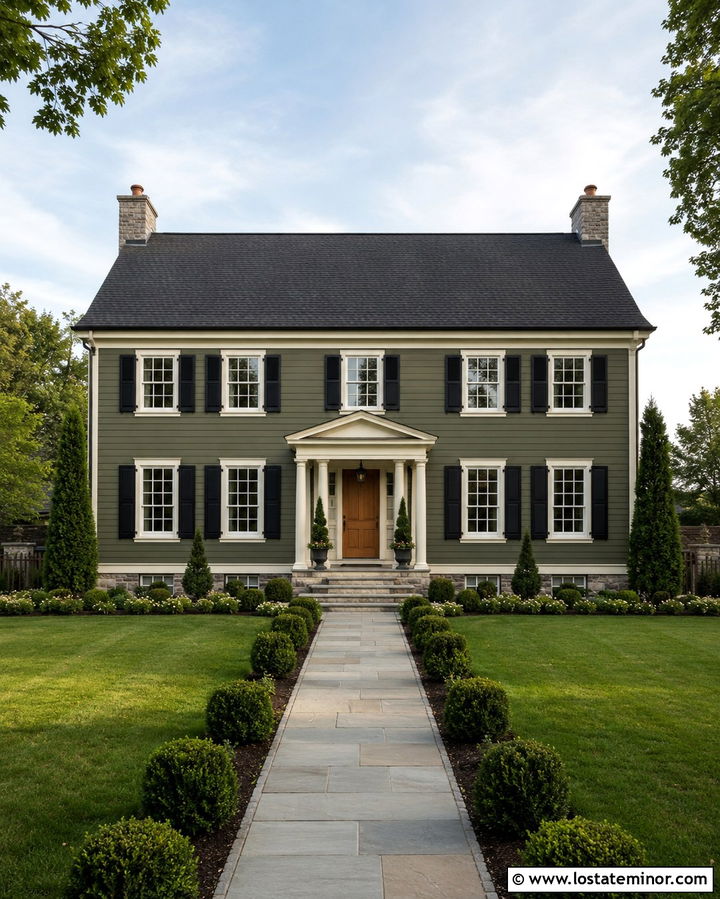
Black shutters can provide definition on an olive green house when they are tied directly to the roof. Begin with deep olive lap siding and matte black architectural shingles, then repeat black on traditional shutters, gutters, and metal porch lights. To prevent the palette from appearing severe, use warm ivory trim and a natural wood front door. Light-colored porch flooring can also brighten the entrance beneath a deep overhang. This exterior works well on Georgian, Colonial, and traditional suburban homes with evenly arranged windows. Make sure the shutters are sized to look functional and properly fit each opening. Incorporate medium-gray stone around the foundation, but avoid introducing too many additional colors. Neatly shaped evergreen shrubs will support the formal, high-contrast appearance without hiding the facade.
13. Olive Green House With White Trim And Gray Shingles
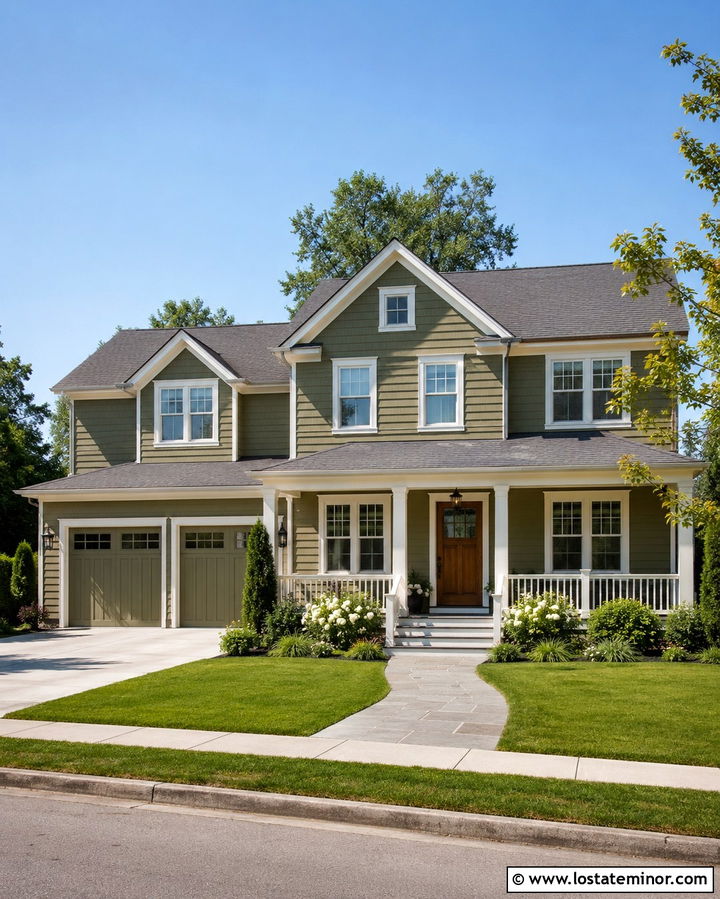
White trim gives olive green siding a lighter, more familiar appearance, while gray shingles keep the roof versatile. Choose a warm olive body color and a clean, soft white for windows, porch columns, fascia, and railings. A medium-gray roof with limited color variation will create a stable backdrop for both hues. On a two-story traditional house, add a medium-stained front door and matching porch ceiling to introduce natural warmth. Dark bronze hardware and lighting can provide smaller points of contrast without looking as sharp as black. If the property includes a garage, paint the door olive green to reduce its visual size, then outline it with white trim. Mixed green landscaping, white flowers, and a concrete or bluestone walkway finish this balanced, broadly appealing exterior scheme.
14. Olive Green House With Tan Roof Shingles
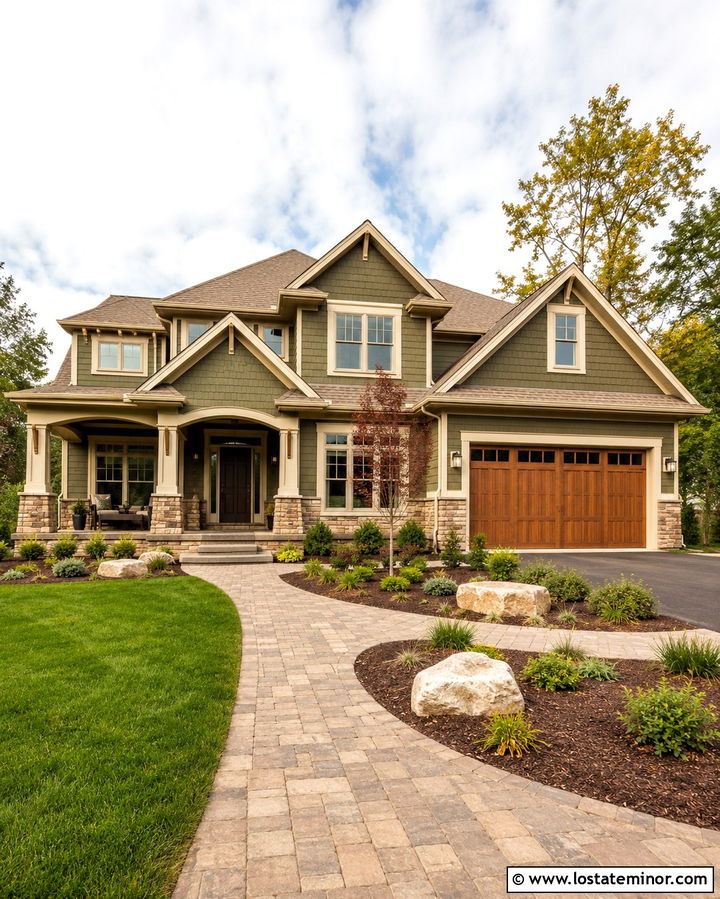
Tan roof shingles bring out the warmer side of olive green and can make a house feel especially welcoming. This pairing works well for a transitional home with multiple gables, stone details, and a covered front porch. Paint the main siding a medium olive, use creamy beige on the trim, and repeat the roof’s golden-brown notes on the garage door. A dark espresso front door offers enough contrast to clearly mark the entrance. Select stone veneer containing beige, charcoal, and muted green so it connects the entire palette. Avoid bright white accents, which may look disconnected beside a tan roof. Instead, keep every neutral warm and slightly softened. Layered foundation beds and a wide paver walkway will strengthen the substantial yet relaxed appearance of this complete exterior combination.
15. Olive Green House With Architectural Shingles
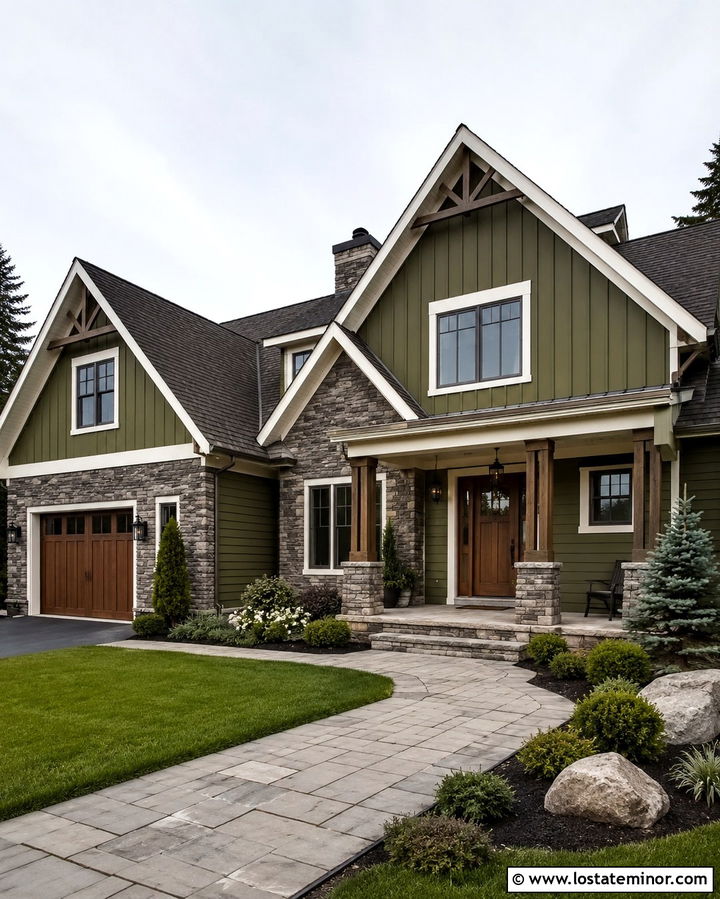
Architectural roof shingles add dimension through their layered construction and varied shadow lines. Pair charcoal-brown architectural shingles with olive green fiber cement siding for a durable-looking, visually substantial exterior. Use horizontal siding across the main walls and olive board-and-batten in the gables to create texture without changing the body color. Warm white trim keeps the combination clear, while a stained fir door provides a natural focal point. This treatment suits a new American traditional home with steep roof pitches and an attached garage. Carry the roof color onto the gutters and garage hardware for continuity. A foundation of rugged gray-brown stone can balance the strong roof. Keep the surrounding landscaping structured but not rigid, using small trees and layered evergreen plants to frame the facade.
16. Olive Green Split-Level With Gray Shingles
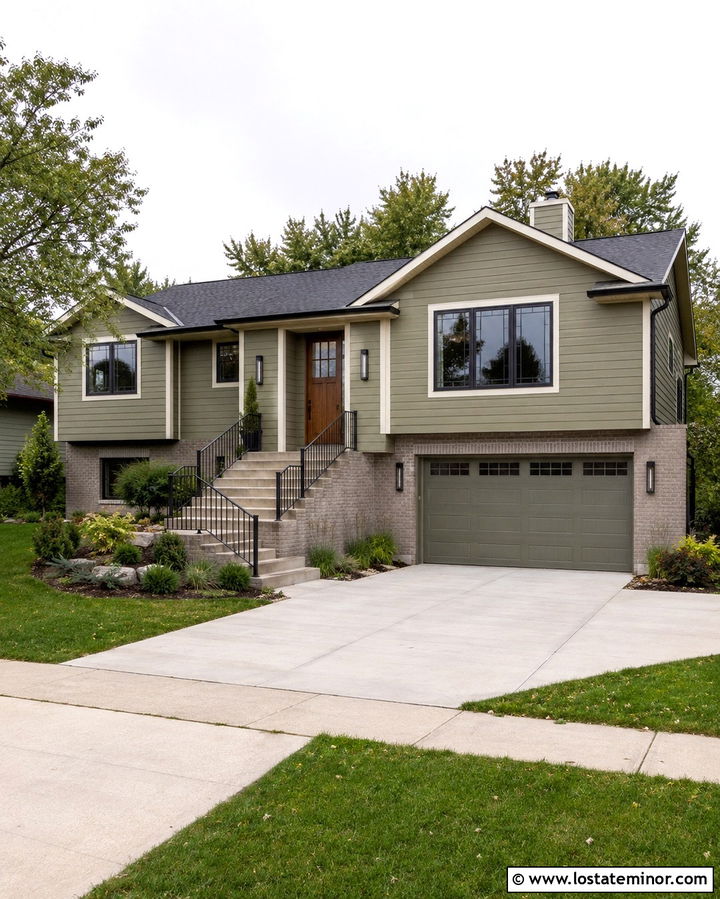
Split-level houses often contain several materials and wall planes, making a controlled color palette especially useful. Apply olive green to the upper siding and use warm gray brick or stone across the lower level. Medium charcoal-gray roof shingles will connect both surfaces without introducing an unrelated tone. Paint the trim a muted ivory and select a medium walnut front door that remains visible beneath the entry overhang. A matching olive garage door can help the garage recede rather than dominate the lower facade. Replace thin railings with simple dark bronze or wood designs to give the entrance more visual presence. Broad front steps, contemporary lighting, and layered shrubs can further clarify the entry. The result updates the split-level shape while respecting its strong horizontal architectural lines.
17. Olive Green Tudor With Brown Shingles
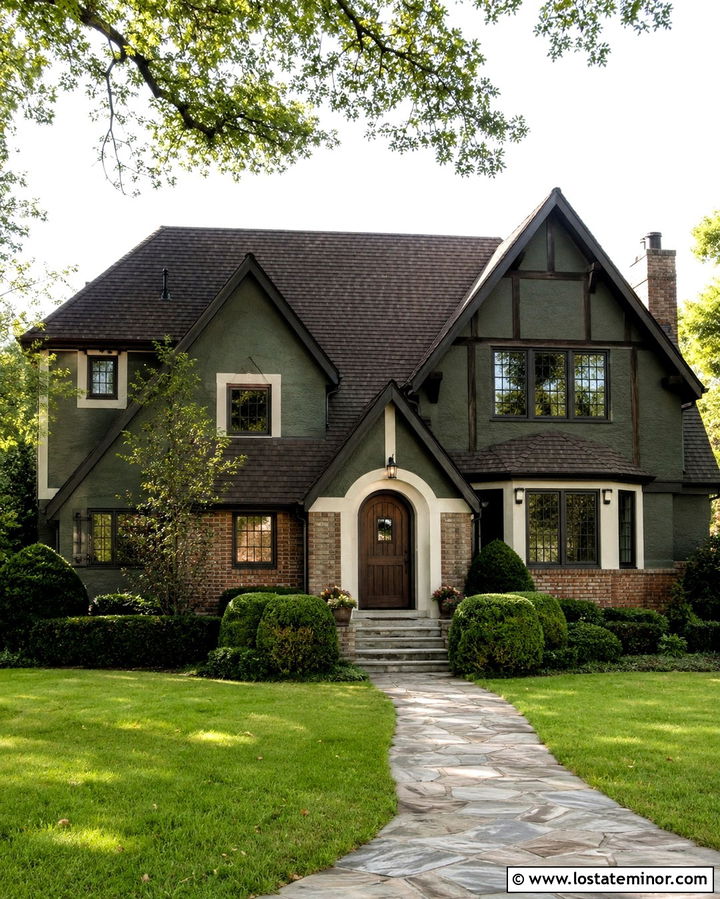
A Tudor house already has rich architectural detail, so olive green should support rather than compete with it. Use dark olive stucco or siding between warm cream trim boards, then top the house with deep brown dimensional shingles. Dark-stained timber accents can frame the gables and connect the siding to the roof. Choose a heavy arched wood door with black iron hardware for an entrance that suits the architecture. Brick around the chimney and foundation should contain muted red, brown, and charcoal shades. Keep gutters dark so they blend into the roofline. Instead of colorful landscaping, use clipped evergreen shrubs, ivy in controlled areas, and a simple stone path. This complete scheme highlights the steep roofs and decorative gables while giving the traditional Tudor palette a natural green foundation.
18. Olive Green Victorian With Scalloped Shingles
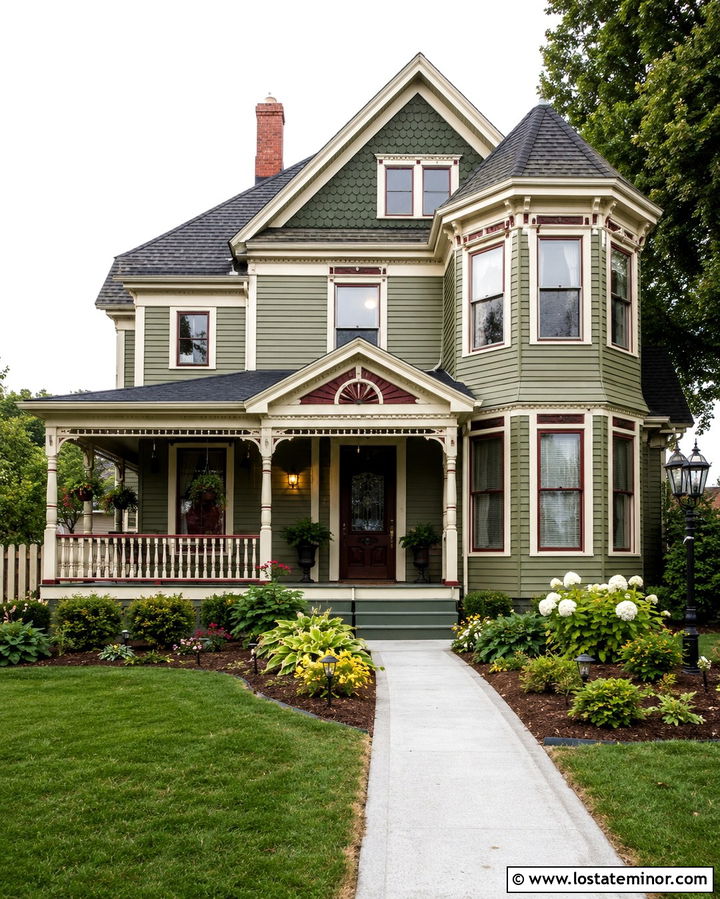
Scalloped shingle siding can highlight the decorative character of a Victorian home without requiring a complicated multicolor palette. Paint the main clapboard siding a medium olive green, then use a deeper olive on scalloped shingles within the upper gables. Warm cream trim should define the windows, porch spindles, fascia, and ornate brackets. Add muted burgundy accents on the front door and selected decorative details, but use them carefully. A charcoal shingle roof provides a neutral top that keeps the facade grounded. On a detailed Victorian, consistent color placement is essential because too many contrasting surfaces can make the architecture feel busy. Complete the look with a painted porch floor, period-inspired lighting, curved planting beds, and a walkway that offers a clear view of the full facade.
19. Olive Green Midcentury House With Low-Pitch Shingles
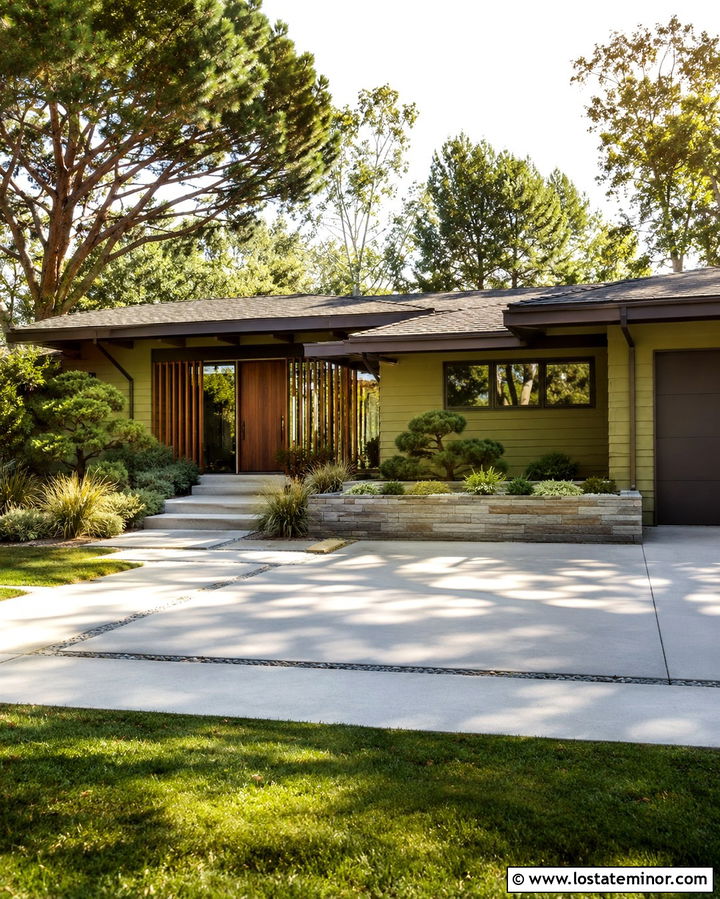
Olive green feels completely at home on a midcentury house surrounded by mature trees and simple landscaping. Use a warm, slightly yellow olive on broad siding panels, then add charcoal low-profile shingles to the shallow roof. Deep brown fascia can emphasize the horizontal roofline, while natural cedar screens or vertical slats introduce warmth near the entrance. Choose a flat-panel front door in burnt orange, walnut, or muted mustard for an era-appropriate accent. Large windows should have slim dark bronze frames rather than wide white casings. Extend the exterior palette into a stone planter or low masonry wall built from gray-brown materials. Drought-tolerant grasses, sculptural shrubs, and large concrete pavers will complement the architecture while keeping attention on the house’s clean geometry and inviting green facade.
20. Olive Green Modern House With Asphalt Shingles
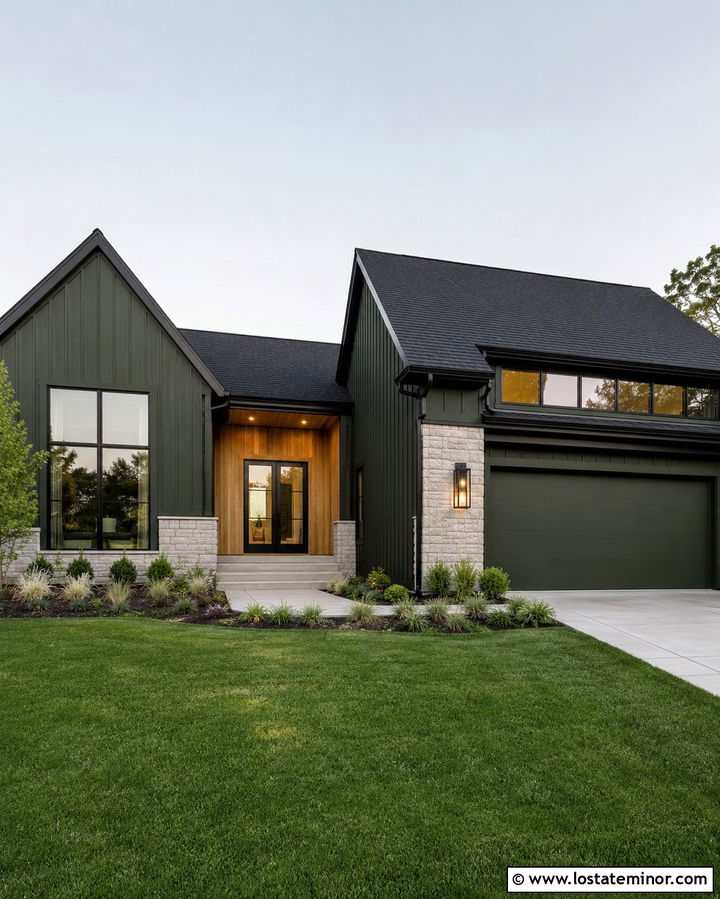
A modern house can use asphalt shingles successfully when the roofline and colors remain simple. Select a deep olive green for smooth lap siding or fiber cement panels, paired with nearly black asphalt shingles. Match the window frames, gutters, and garage door to the roof for a streamlined outline. Warm wood cladding around the recessed entry prevents the dark palette from feeling cold. Concrete steps and pale gray stone can provide lighter contrast near ground level. Avoid ornate shutters, busy roof blends, and multiple trim colors. Instead, let material changes create the visual interest. Use straight planting beds, low grasses, and a clean driveway to reinforce the architecture. The final exterior feels contemporary and practical, with olive green adding more warmth and personality than a standard gray or black facade.
21. Olive Green House With Gable Shingles
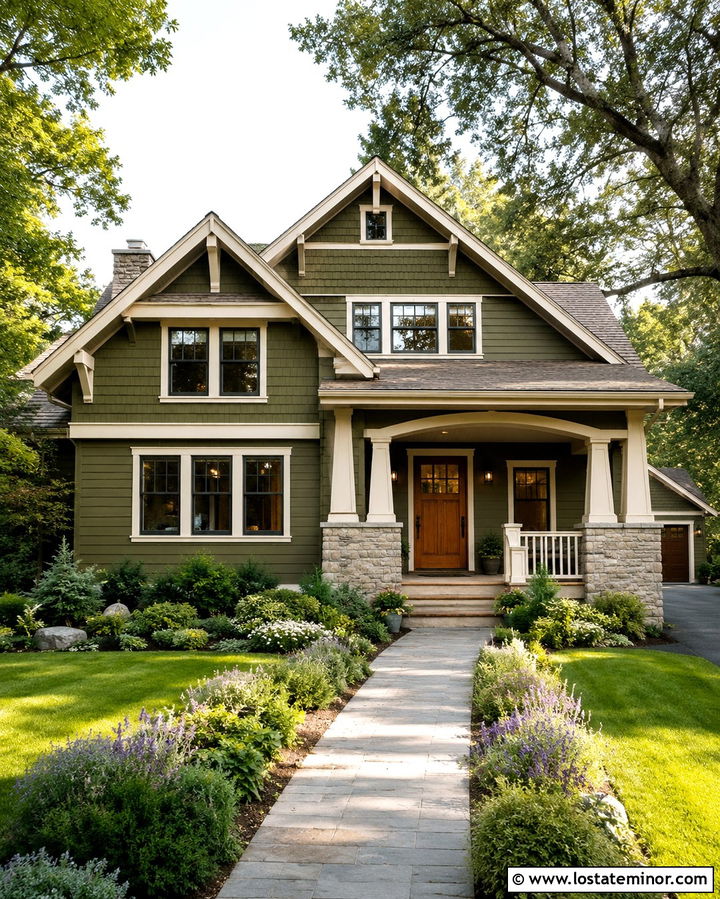
Front-facing gables provide the perfect place to feature shingle siding on an olive green house. Paint the main horizontal siding a medium olive, then cover the gables with cedar shingles finished in a slightly darker olive stain. This tonal variation makes the roof peaks more noticeable without breaking the exterior into unrelated colors. Use warm white trim along the fascia, windows, and porch columns. A weathered gray roof will balance the green, while a stained oak door introduces an inviting natural element at eye level. If the home has stone porch piers, choose a mix of gray, tan, and muted brown. Keep the landscaping lower beneath the gables so their texture remains visible. This strategy works especially well on Craftsman, cottage, and new traditional architecture.
22. Olive Green House With Cedar Shingle Accents
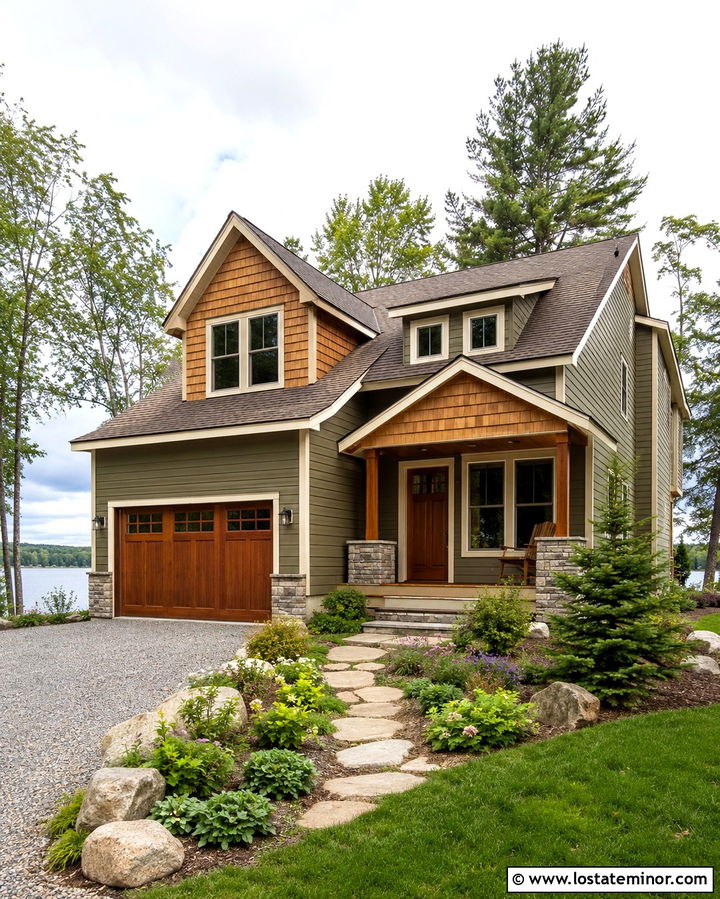
Cedar shingle accents are most effective when their placement follows the architecture. Apply olive green lap siding to the main walls, then add natural cedar shingles to a dormer, porch gable, or upper-story projection. Use cream trim to separate the two materials and prevent the transition from looking unfinished. A brown-gray roof will connect with the cedar as it gradually develops a weathered tone. Consider repeating cedar on the garage door, porch ceiling, or front door, but avoid covering every accent with wood. A light stone foundation can keep the lower facade from becoming too brown. This full-house approach creates warmth and texture while allowing olive green to remain dominant. It is a flexible combination for lake houses, mountain homes, cottages, and Craftsman-inspired suburban designs.
23. Olive Green House With Red Brown Shingles
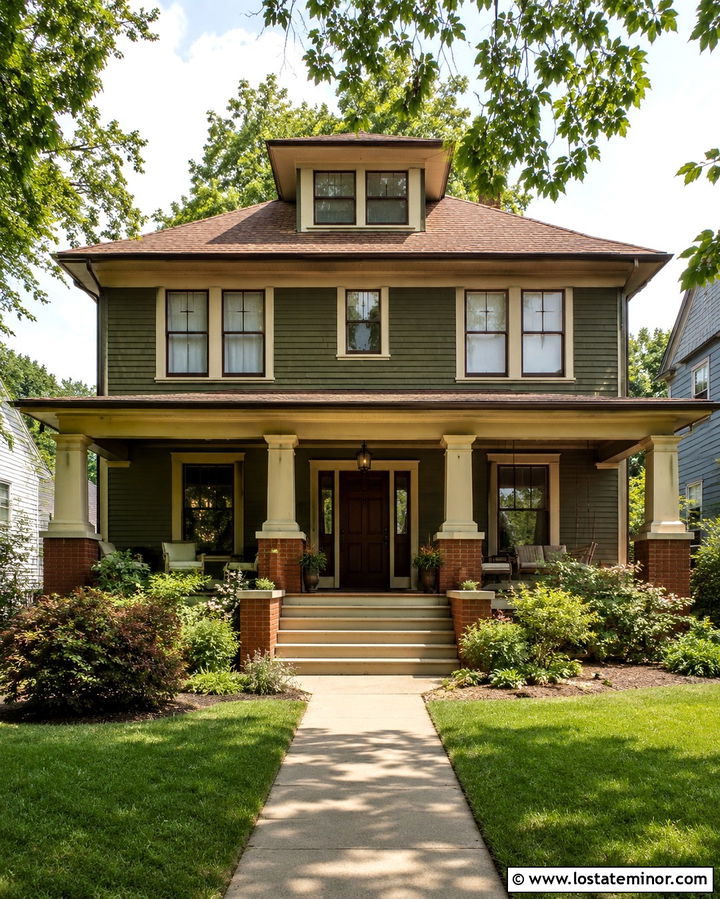
Red-brown roof shingles can create a rich, traditional exterior when paired with a muted olive rather than a bright green. Choose medium-dark olive siding with creamy beige trim, then introduce a dark mahogany front door that relates to the roof. This scheme works particularly well on an American Foursquare with a broad hipped roof and a deep front porch. Use brick porch piers in subdued red and brown tones to carry the roof color toward the ground. Dark bronze gutters and lighting will look softer than solid black. Because red-brown shingles already have a noticeable color, keep shutters simple or omit them entirely. Mature shade trees, symmetrical steps, and tidy mixed shrubs will reinforce the established character of the house without making the complete palette feel old-fashioned or overly formal.
24. Olive Green House With Pewter Gray Shingles
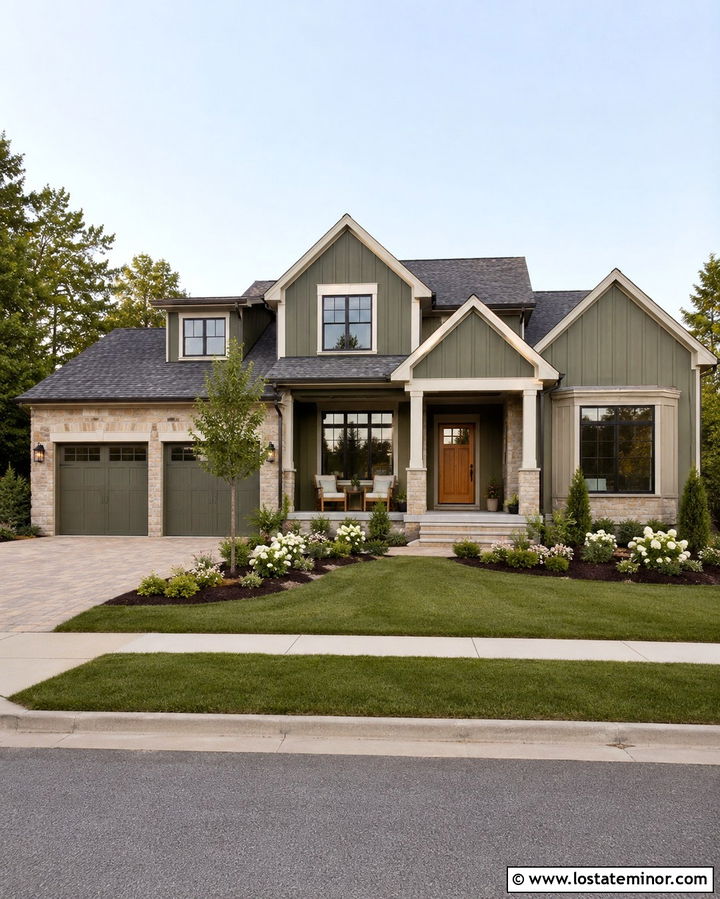
Pewter gray shingles create a refined transition between warm olive siding and cooler metal details. Use a subdued olive green on the main exterior, soft ivory around the windows, and dark pewter on gutters, flashing, and porch railings. A natural oak front door prevents the gray accents from cooling the palette too much. This combination suits a transitional two-story home with balanced gables and simple stonework. Select masonry with both gray and beige variation so it bridges the roof and siding. The garage door can be painted olive to blend with the walls or ivory if it sits deeply beneath an overhang. Finish the curb appeal with a pale paver driveway, layered evergreen beds, and a few white flowering plants that quietly repeat the trim color.
25. Olive Green Coastal House With Gray Shingles
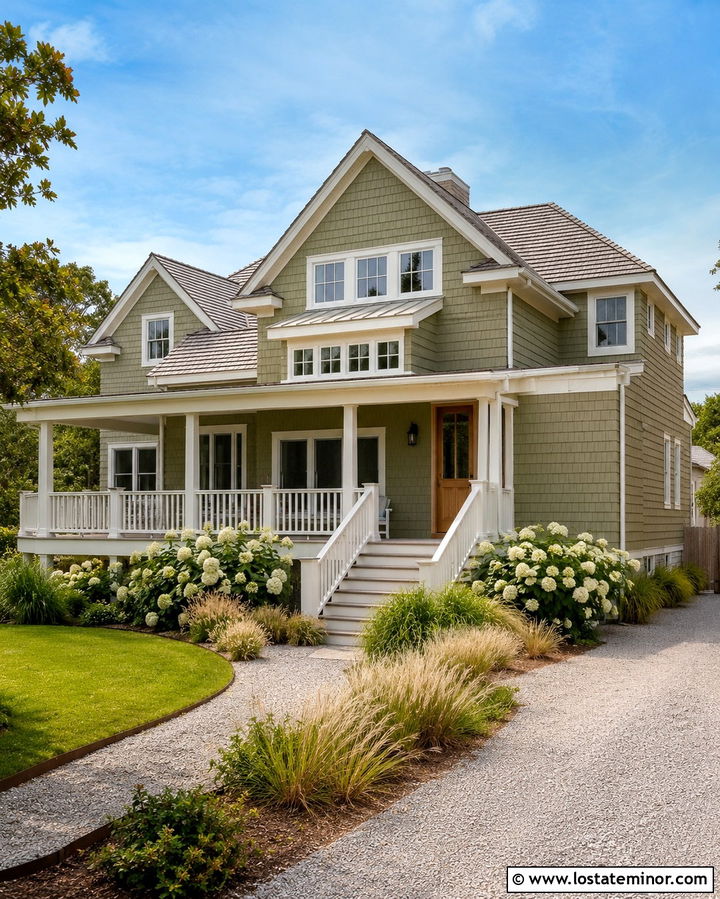
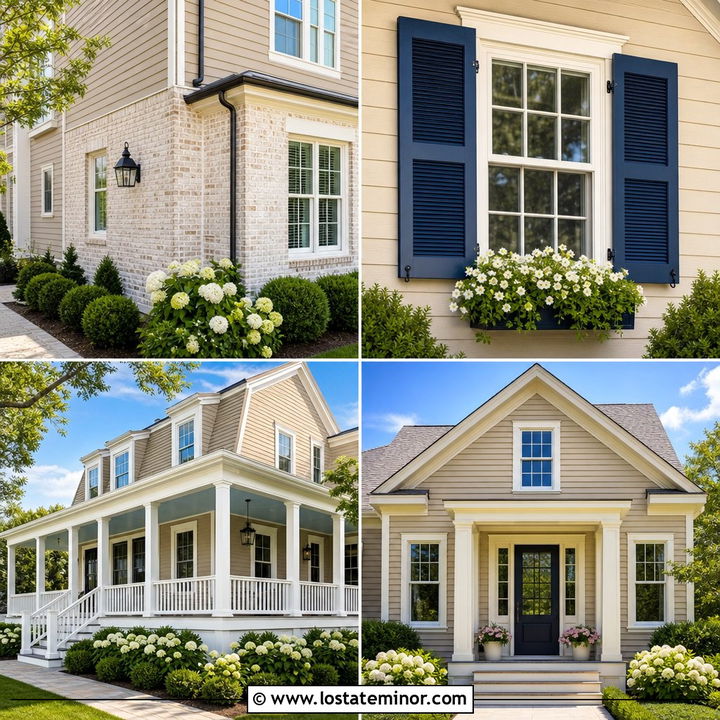
An olive green coastal house offers a warmer alternative to familiar blue and white seaside palettes. Select a soft, sun-washed olive for cedar shingle siding and pair it with light gray roof shingles. White trim on railings, windows, and roof edges will keep the facade open and bright. Use a natural teak or weathered wood door for warmth, then add galvanized or dark bronze lighting. A raised porch with simple square columns suits both beach cottages and larger coastal homes. Keep stone accents pale and limited so they do not compete with the shingle texture. Ornamental grasses, hydrangeas, and a sandy gravel path can frame the house naturally. The combination feels relaxed and location-appropriate while remaining grounded enough for inland neighborhoods with cottage-style architecture.
26. Olive Green Cabin With Rustic Shingles
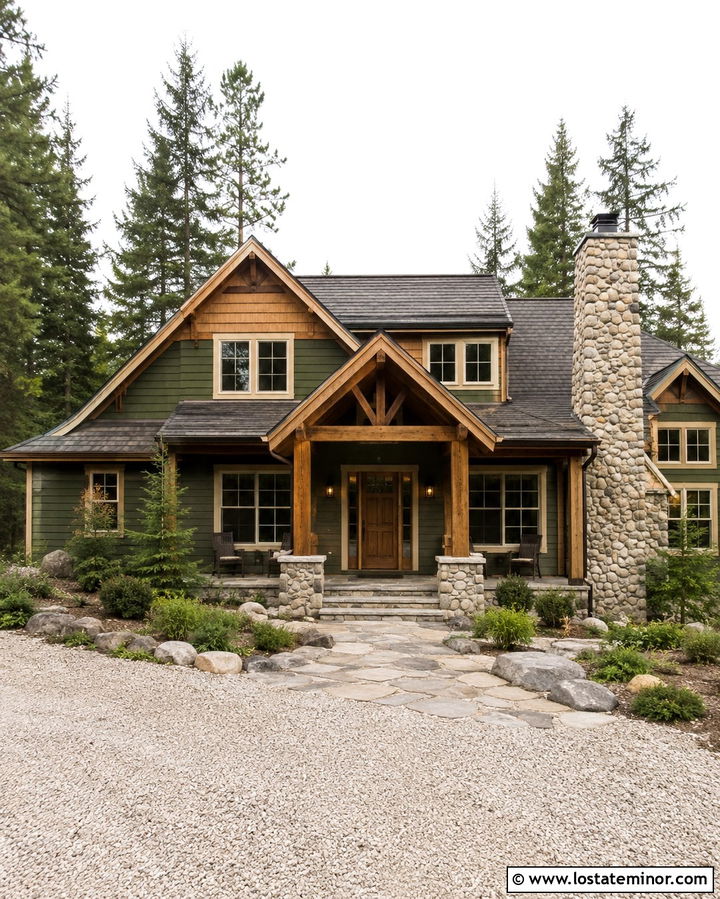
Deep olive green allows a cabin to blend comfortably into a wooded property while retaining a clear architectural presence. Use rough-sawn olive siding with brown-black roof shingles and natural cedar shakes in the gable ends. Thick timber porch posts, a stained plank door, and a fieldstone chimney will strengthen the rustic character. Choose a restrained cream for window trim so the openings remain visible beneath shaded trees. Avoid covering every surface in dark brown, since that can make the facade look heavy. Instead, repeat lighter stone around the foundation and steps. A gravel drive, native ground cover, and an informal flagstone walkway will suit the setting better than formal landscaping. This complete exterior feels sturdy and natural without relying on decorative mountain or woodland motifs.
27. Olive Green House With Stone And Shingles
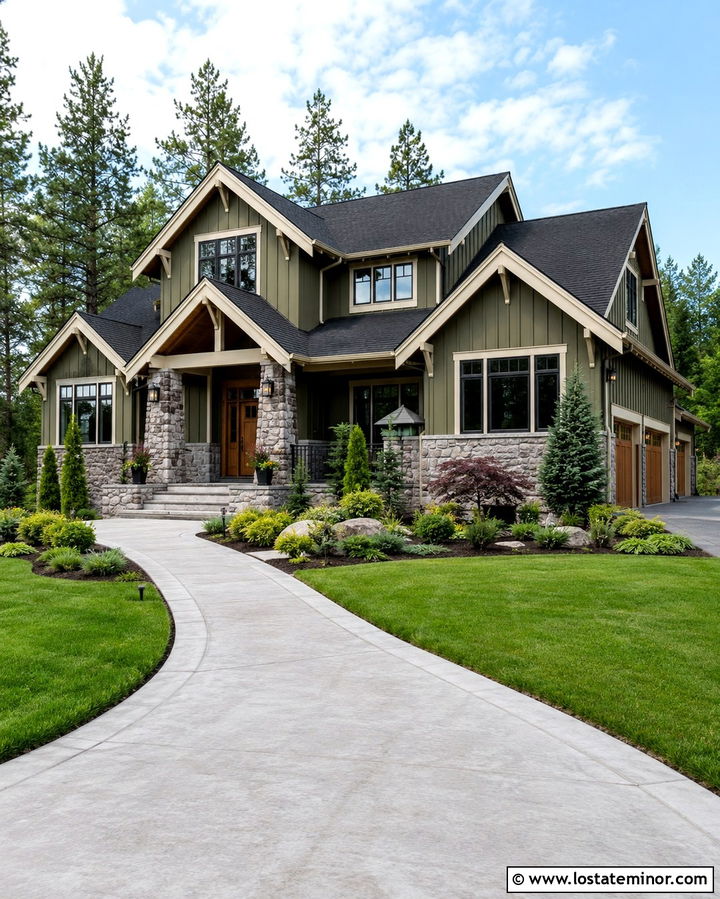
Stone can provide a strong visual base for olive green siding and a shingle roof. Begin with mid-tone olive board-and-batten across the upper walls and install irregular gray-brown stone around the foundation, garage, and porch columns. Use charcoal architectural shingles overhead and warm cream trim along the roofline. A medium-stained wood door will connect the organic surfaces while remaining distinct from the stone. For the best balance, limit the masonry to architectural areas that naturally need emphasis rather than scattering small patches across the facade. This combination suits a lodge-inspired transitional house or a large Craftsman with prominent gables. Repeat the stone’s softer gray tones in the walkway, then surround the facade with evergreen shrubs and small ornamental trees for a cohesive, layered curb appeal.
28. Olive Green House With Brick And Shingles
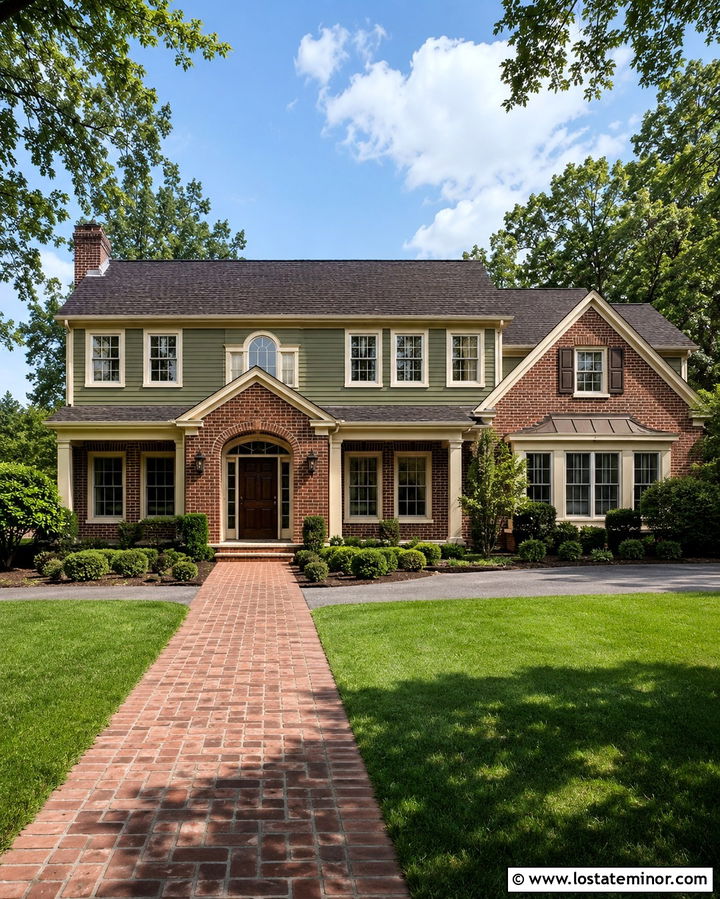
Existing brick can work beautifully with olive green when its undertones are carefully considered. Traditional red-brown brick pairs naturally with a warm, muted olive used on upper-story siding, gables, or an addition. Select roof shingles in deep brown or charcoal with limited red variation. Cream trim will soften the transition between the brick and green, while a dark wood front door supports the established palette. If the garage door sits within the brick portion, paint it a close match to the mortar or olive siding rather than bright white. Black or dark bronze lighting adds useful definition around the entrance. Keep foundation plantings below the window line so both materials remain visible. This coordinated approach updates brick without painting it and gives the entire exterior greater depth.
29. Olive Green House With Mixed Shingle Siding
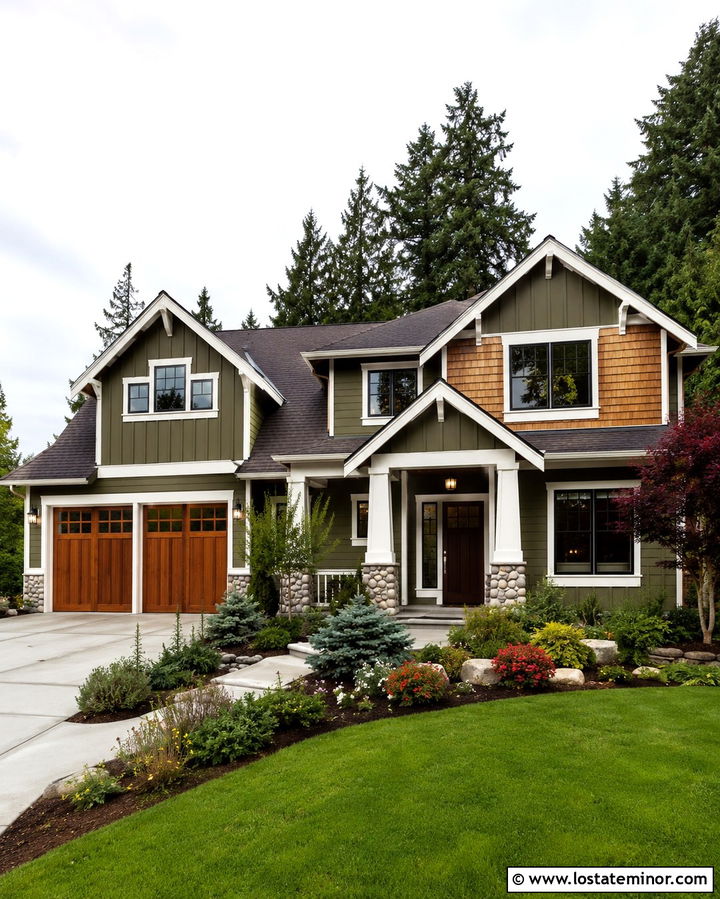
Mixed siding makes a large house more interesting, but the colors must remain controlled. Use olive green horizontal siding on the first floor, olive board-and-batten on the main gables, and cedar shingle siding on a selected upper projection. Keep all painted surfaces within one olive family, allowing texture rather than strong color changes to create variety. Warm white trim can outline each transition, while a charcoal-brown roof provides a stable top. Repeat natural cedar on the front door or garage door to make the single shingle section feel intentional. Gray-brown stone porch bases will add one more grounded material. This complete palette works well on a large Craftsman or new traditional house where multiple rooflines need visual organization rather than additional decorative colors.
30. Olive Green House With Green Shingles
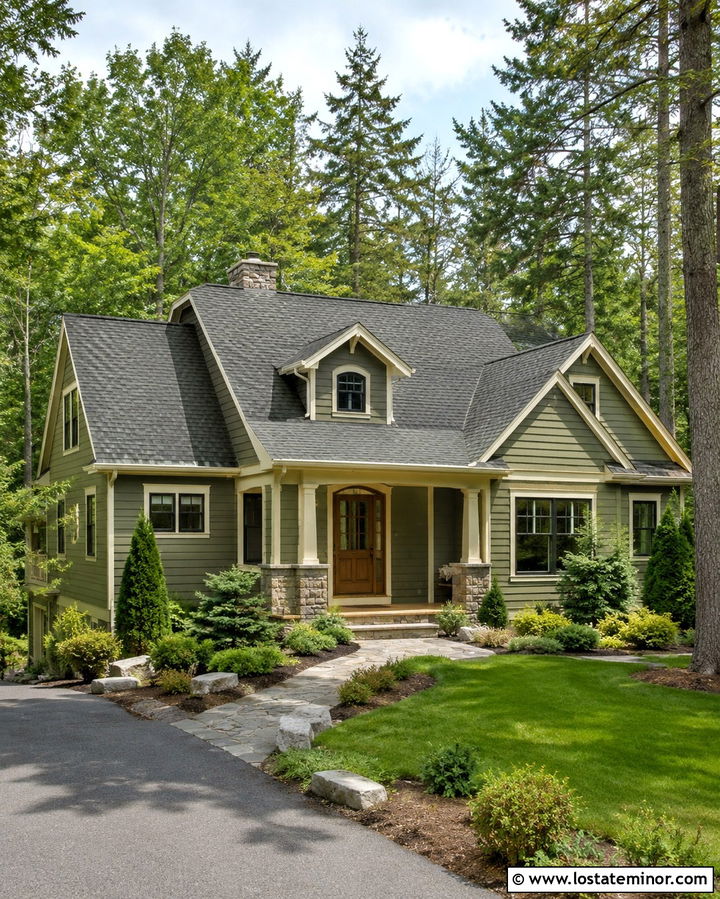
A tone-on-tone green exterior can look sophisticated when the siding and roof remain clearly different in value. Choose a medium olive body color and dark forest-olive roof shingles with subtle charcoal variation. Use warm cream on the fascia, porch columns, and window casings to create necessary separation. A medium oak door and gray-brown stone foundation will add earthy contrast without interrupting the green theme. This scheme suits a woodland cottage, ranch, or Craftsman house surrounded by established landscaping. Before committing, view physical siding and roofing samples together in direct sun and shade because green materials can shift considerably under different light. Complete the exterior with restrained plants in varied shapes and textures, ensuring the house remains distinct rather than disappearing into a wall of similar foliage.
Conclusion:
The most successful 30 Olive Green House Design With Shingles Ideas treat the siding, roof, trim, masonry, doors, and landscaping as one connected composition. Olive green can look light and cottage-inspired, deep and modern, or warm and traditional depending on its surrounding materials. Charcoal shingles create stronger contrast, while brown, cedar, and driftwood blends produce a softer natural effect. Cream trim is usually warmer and more comfortable than brilliant white, especially beside earthy roofs and stonework. Before choosing final materials, compare large samples outside at different times of day. A thoughtful testing process will help you create an olive green exterior that feels balanced, highlights the architecture, and retains its curb appeal over time.

Related posts: