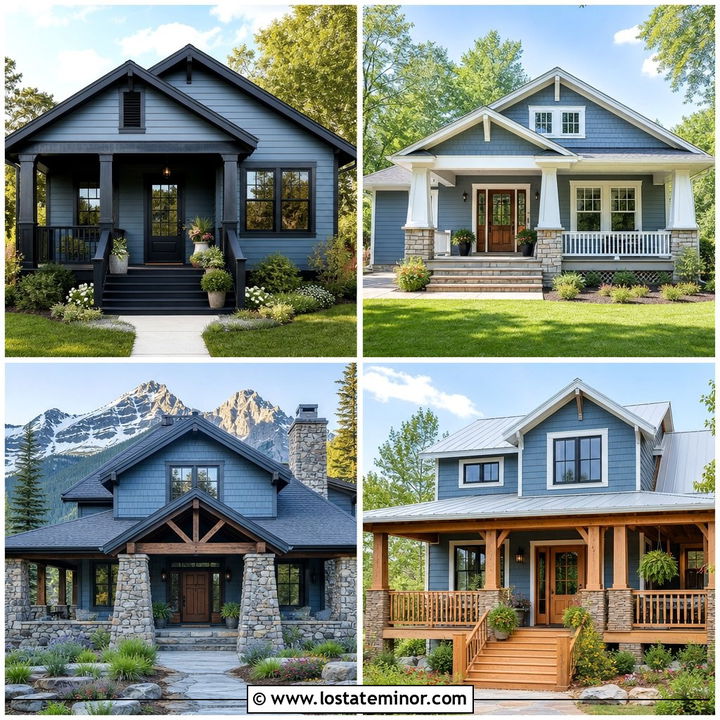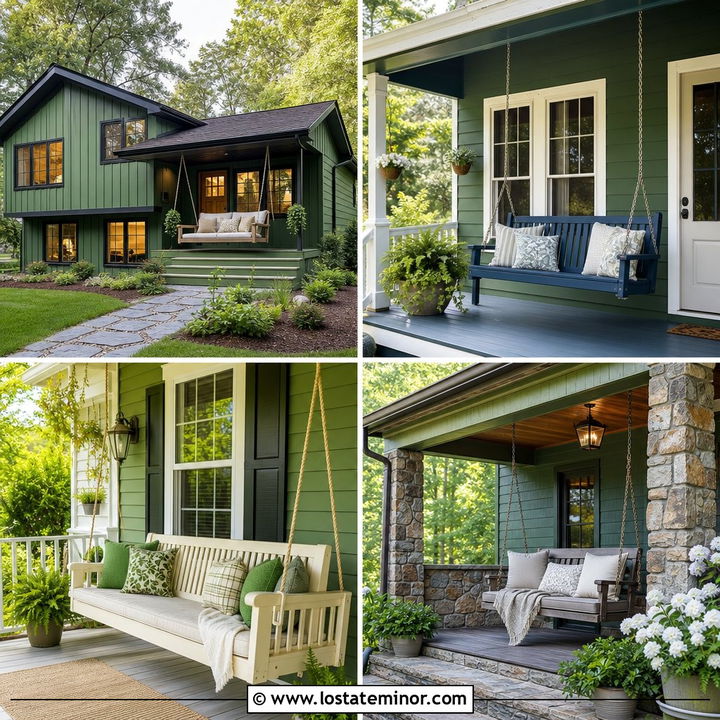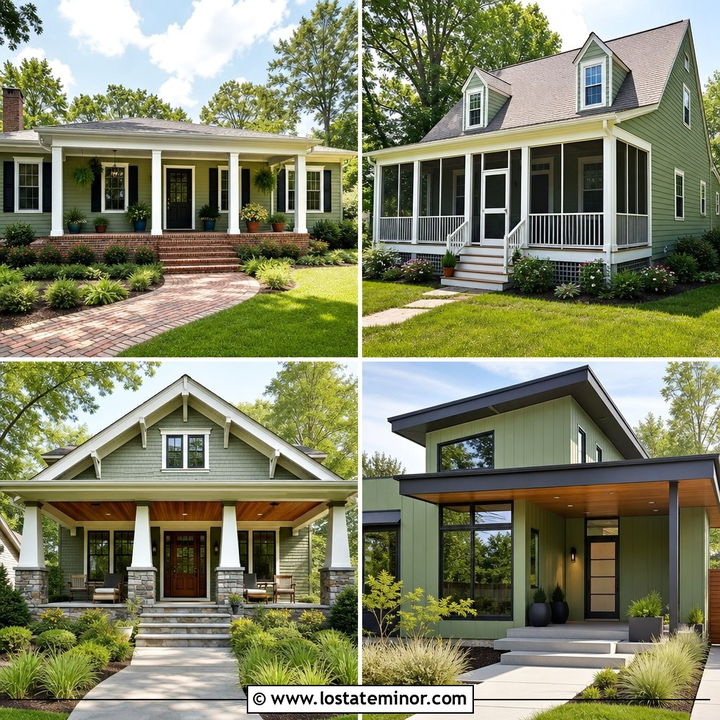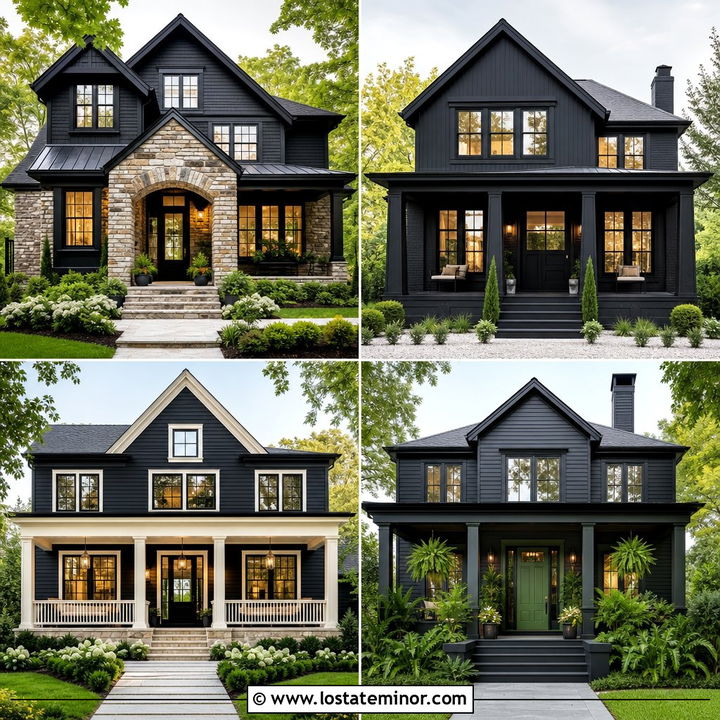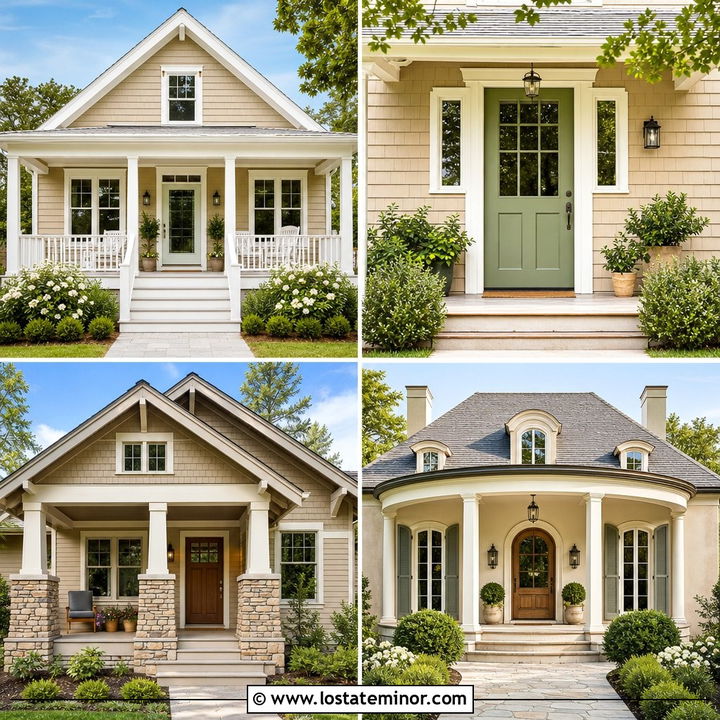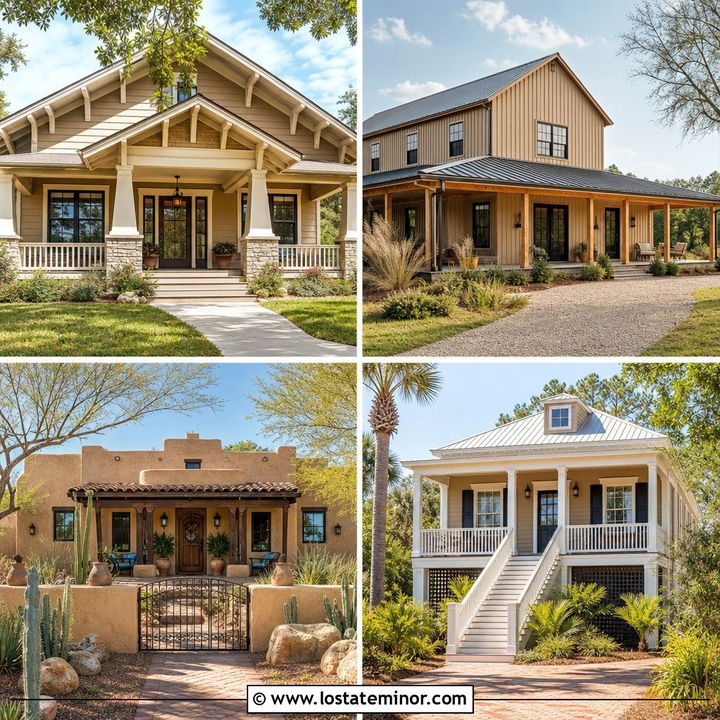
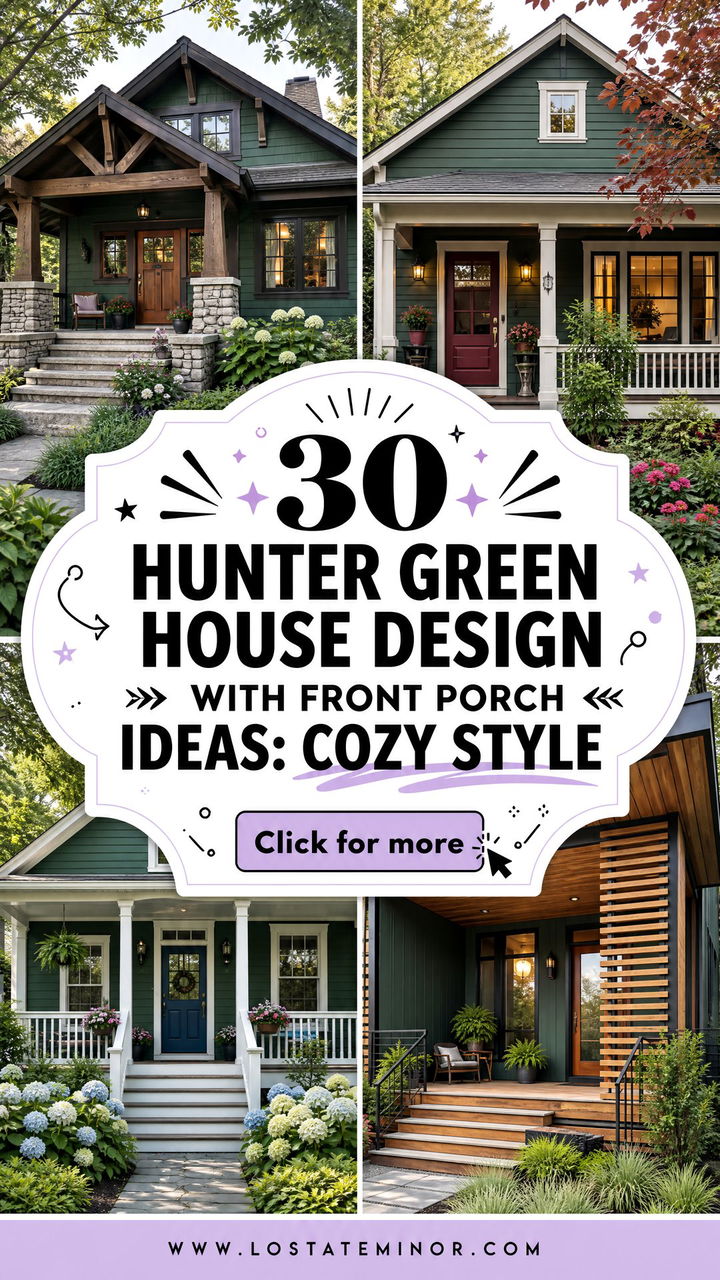
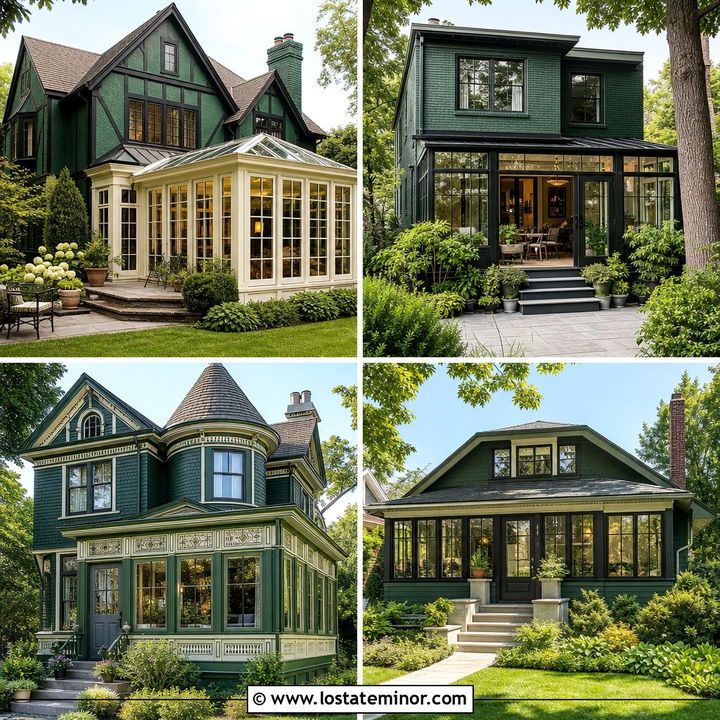
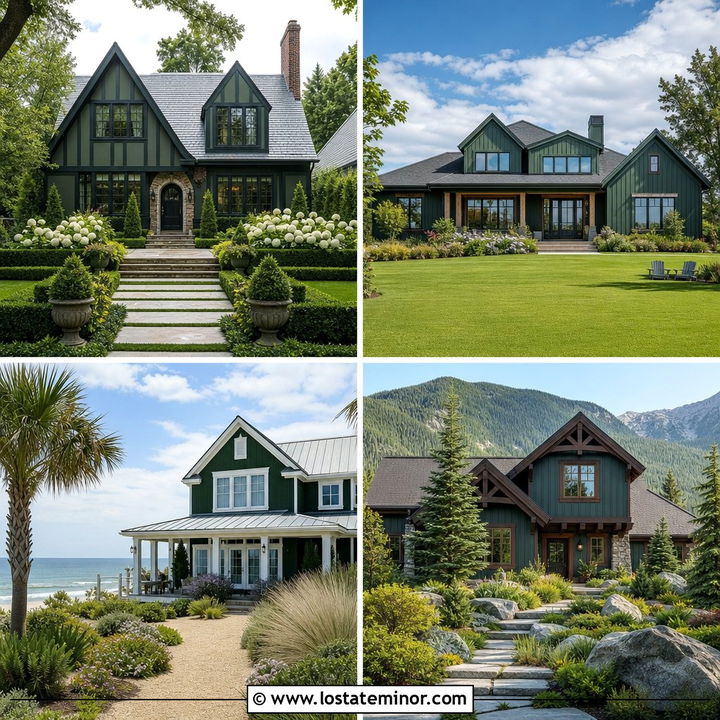
Hunter green brings depth, character, and a natural sense of calm to a home’s exterior. It can make a simple facade feel established while helping the house blend beautifully with trees and landscaping. The right porch design keeps this dark green from looking too heavy. Crisp white trim creates contrast, warm wood adds softness, and stone or brick gives the palette lasting texture. Roof color, porch flooring, railings, columns, and the front door should also work as one balanced scheme. Whether you are updating a ranch, farmhouse, bungalow, or traditional home, these 30 Hunter Green House Design With Front Porch Ideas offer complete exterior looks that make this rich color feel welcoming and practical.
1. Hunter Green House With White Front Porch
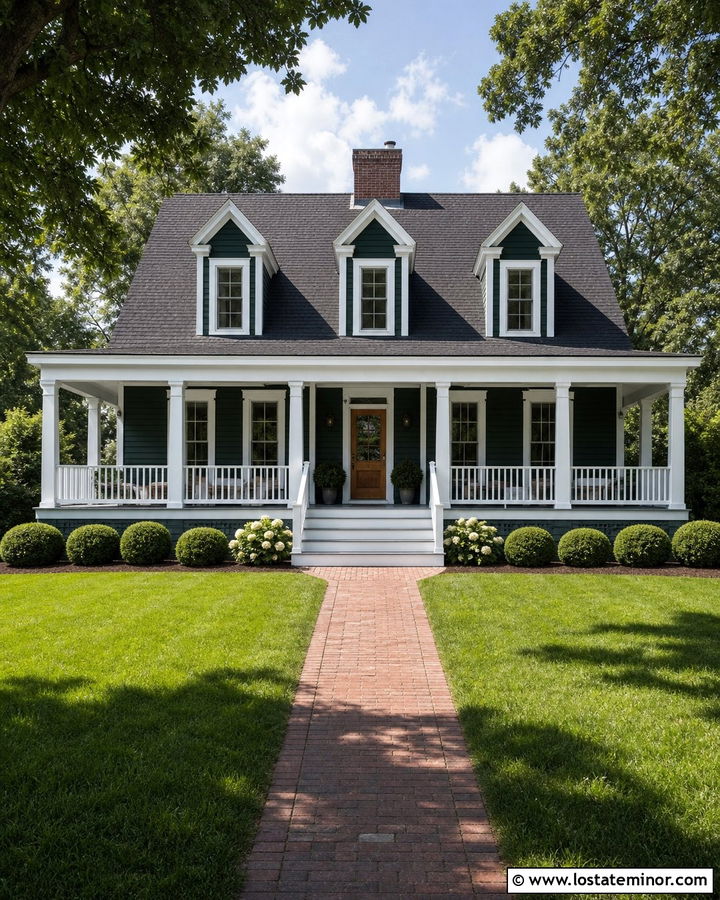
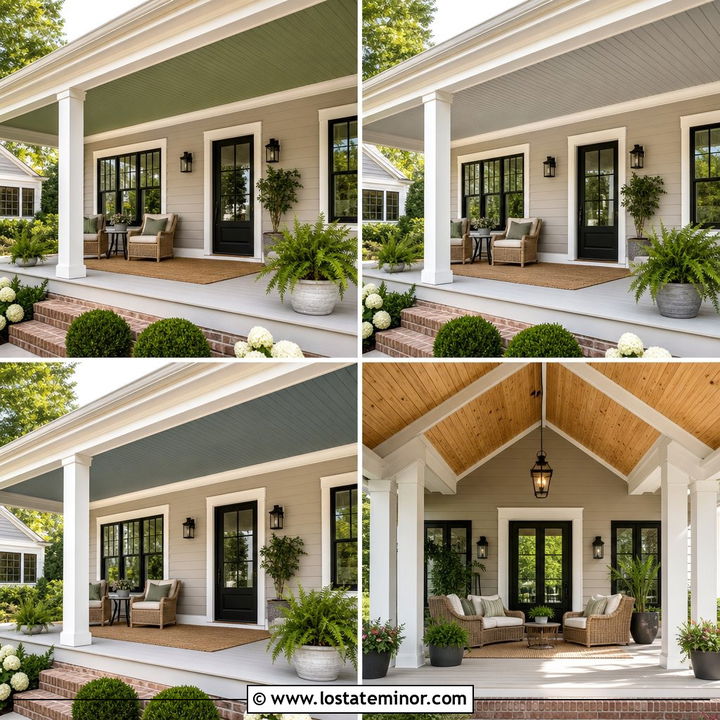
Crisp white trim gives hunter green siding the clean contrast it needs to feel fresh rather than overly dark. Use white on the porch columns, fascia, window frames, railings, and ceiling to create one connected frame around the facade. A medium-gray porch floor provides a practical transition between the deep green walls and surrounding landscape. Keep the front door hunter green for a seamless appearance, or introduce a stained oak door for extra warmth. Black lanterns and simple house numbers add definition without competing with the strong color pairing. This complete scheme works especially well on traditional homes, Cape Cod houses, and symmetrical cottages with a broad covered porch and balanced front windows.
2. Hunter Green Craftsman With Stone Porch
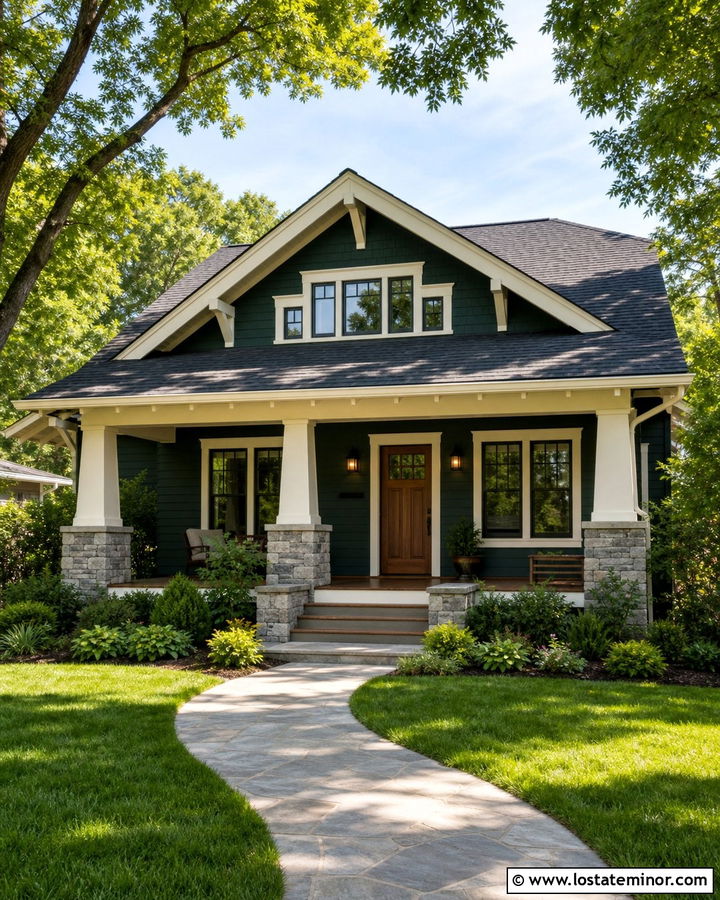
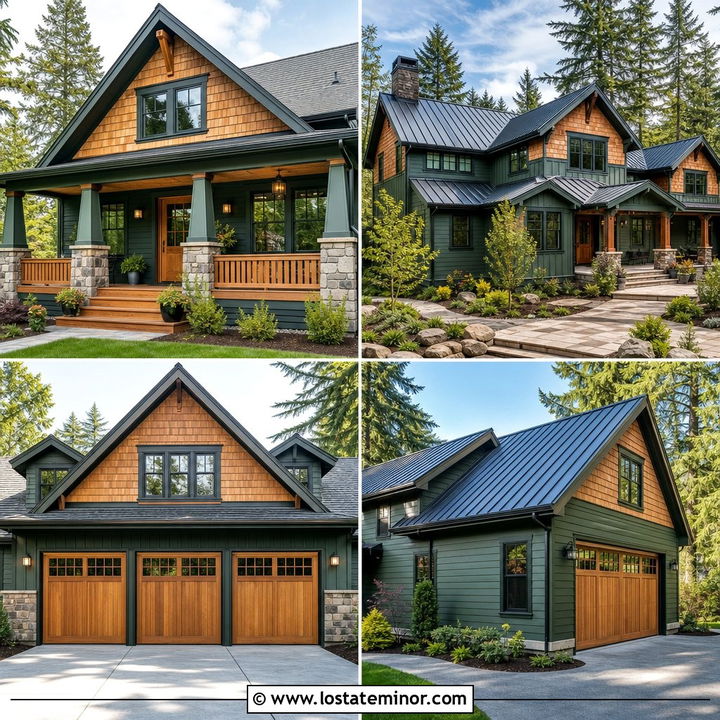
A Craftsman exterior naturally supports the weight and richness of hunter green. Cover the main facade with green lap siding, then use cream trim beneath the roofline and around divided-light windows. Thick porch columns set on gray fieldstone bases make the entrance feel grounded. Repeat that stone across the foundation or front steps so it does not look like an isolated accent. A medium-tone cedar front door brings out the warmer notes in the masonry. Dark bronze lanterns, exposed brackets, and simple wood porch furniture complete the substantial look. For the roof, choose weathered gray or muted brown shingles. These natural materials soften the dark siding while preserving the handcrafted character associated with a welcoming Craftsman home.
3. Hunter Green Farmhouse With Wraparound Porch
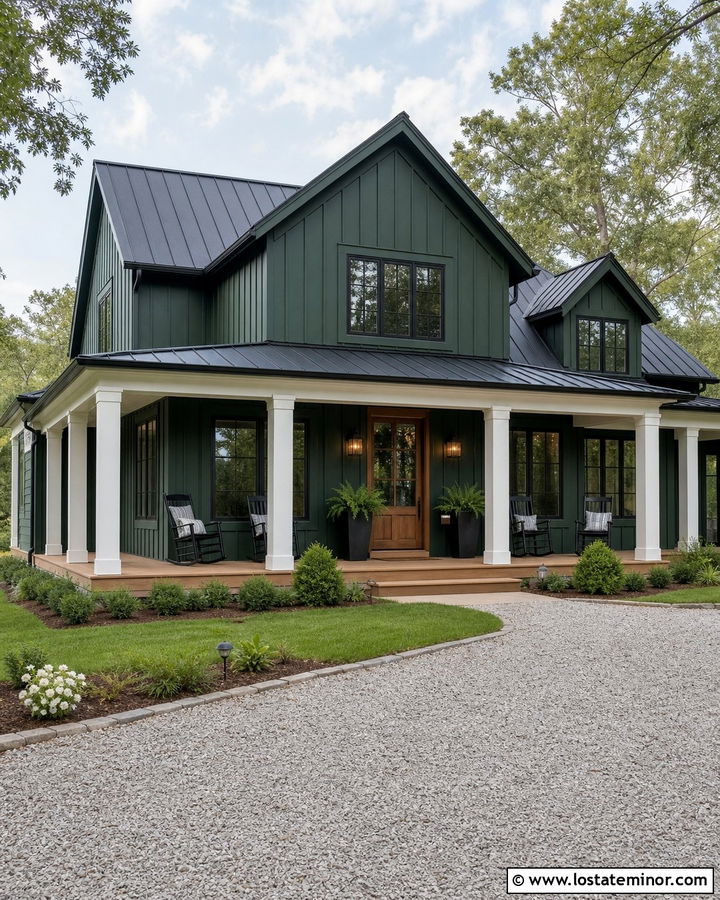
Picture a broad wraparound porch set against deep hunter green board-and-batten siding. Bright white columns and trim sharpen the roofline while keeping the long facade from feeling visually heavy. Natural oak porch flooring adds warmth underfoot and visually connects the house to the yard. Choose a warm white front door with divided glass if you want a classic farmhouse look, or use stained wood for a more rustic finish. A black standing-seam porch roof introduces a clean, modern line that matches black window frames and lanterns. Rocking chairs, large planters, and restrained landscaping help furnish the porch without creating clutter. The finished exterior feels spacious, relaxed, and carefully coordinated from every curbside angle.
4. Hunter Green Ranch With Cedar Front Porch
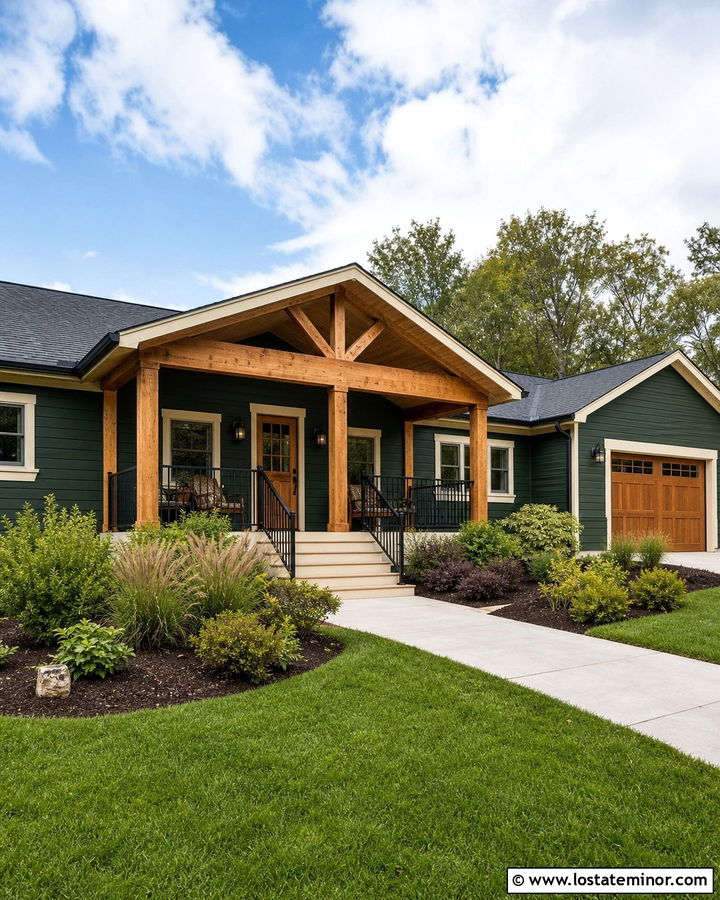
A one-story ranch can gain remarkable character from a cedar porch placed across the central entrance. Hunter green horizontal siding provides a strong background, while exposed cedar posts, beams, and ceiling boards bring natural warmth to the low profile. Continue the cedar on the front door or garage door to make the new porch feel integrated with the entire house. Cream trim is softer than stark white and pairs easily with brown or charcoal roof shingles. Use black metal railings if the porch is raised, keeping their lines slim and unobtrusive. A wide concrete walkway, layered shrubs, and ornamental grasses balance the long facade. This approach gives a basic ranch more depth without hiding its straightforward architecture.
5. Hunter Green Colonial With Brick Porch
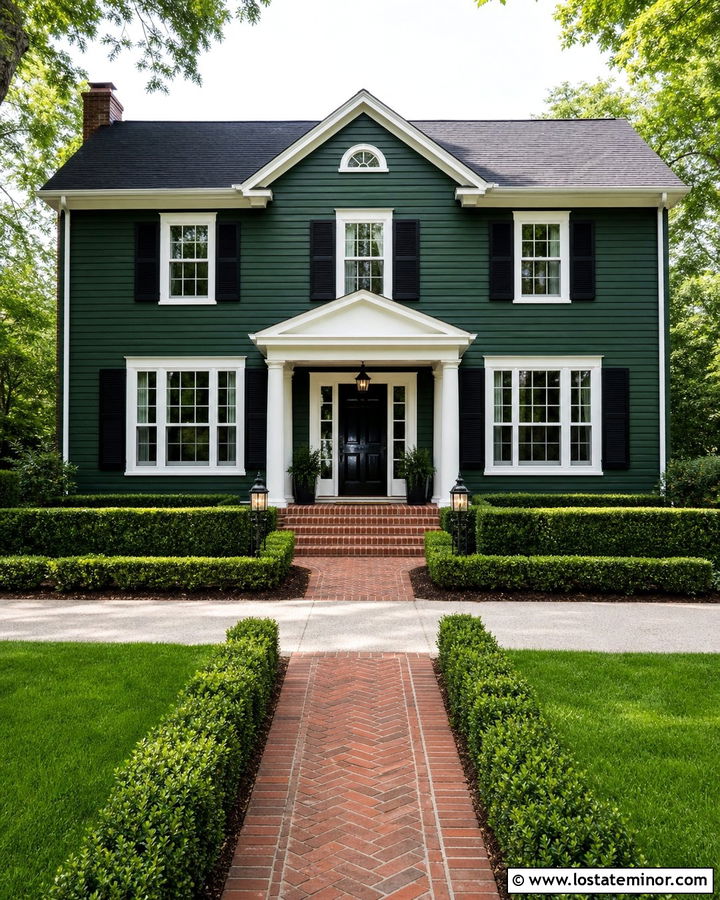
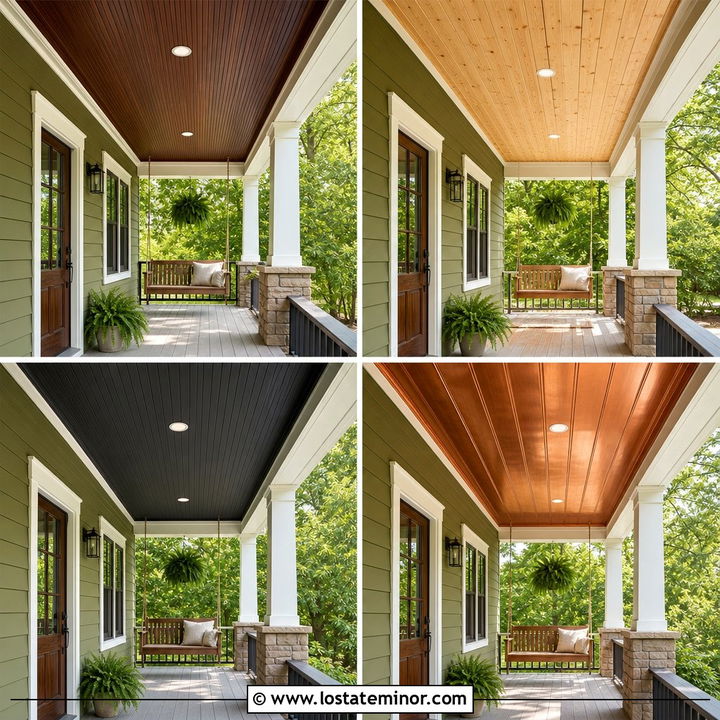
Symmetry makes a hunter green Colonial look polished and substantial. Paint the clapboard siding deep green, then outline the windows, cornice, and porch columns in warm white. A red brick porch floor and matching steps add familiar color without overpowering the facade. Carrying the brick around the foundation creates continuity and helps the house appear firmly rooted. Black shutters can frame the upper windows, while a glossy black door gives the center entrance a formal focal point. If the exterior needs warmth, choose a dark mahogany door instead. Traditional lanterns, clipped hedges, and a straight walkway reinforce the balanced arrangement. The result is a classic porch design with strong contrast, enduring materials, and welcoming curb appeal.
6. Hunter Green Bungalow With Tapered Porch Columns
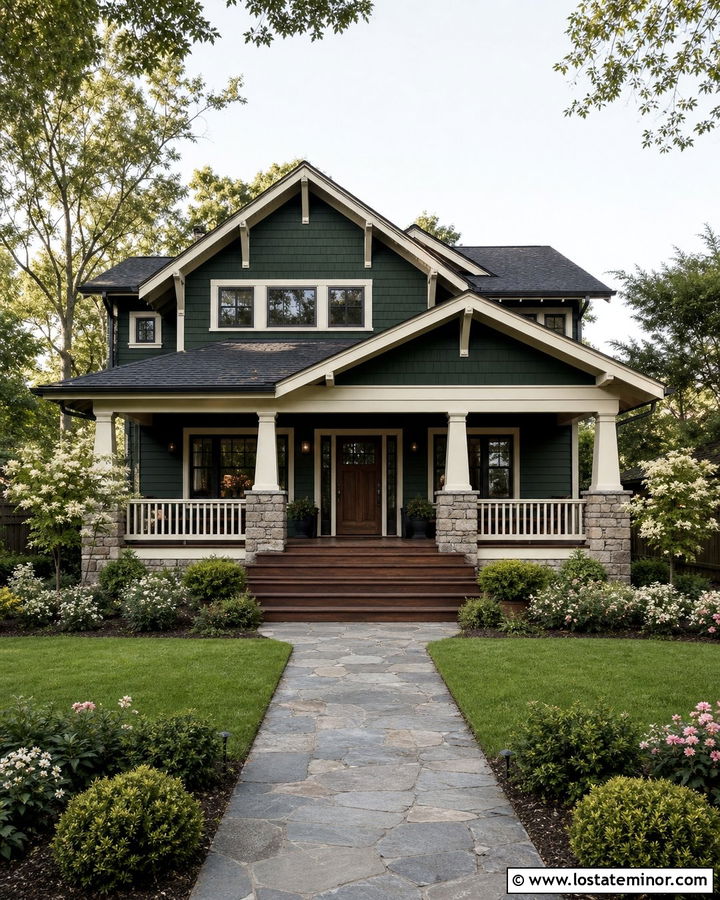
A deep front porch is often the defining feature of a bungalow, making it an ideal place to balance hunter green siding. Use tapered cream columns on chunky stone piers to create a lighter transition between the dark facade and porch steps. Warm gray stone works well with charcoal roofing and prevents the palette from becoming too brown. Stain the porch floor and front door in a medium walnut tone for a comfortable, handcrafted finish. Decorative brackets can remain cream so their shape is visible against the green gable. Add low railings, amber-free black lanterns, and simple planters near the stairs. The layered colors and materials make the bungalow feel cozy while retaining a clear, uncluttered street view.
7. Hunter Green Cottage With Cream Porch Trim
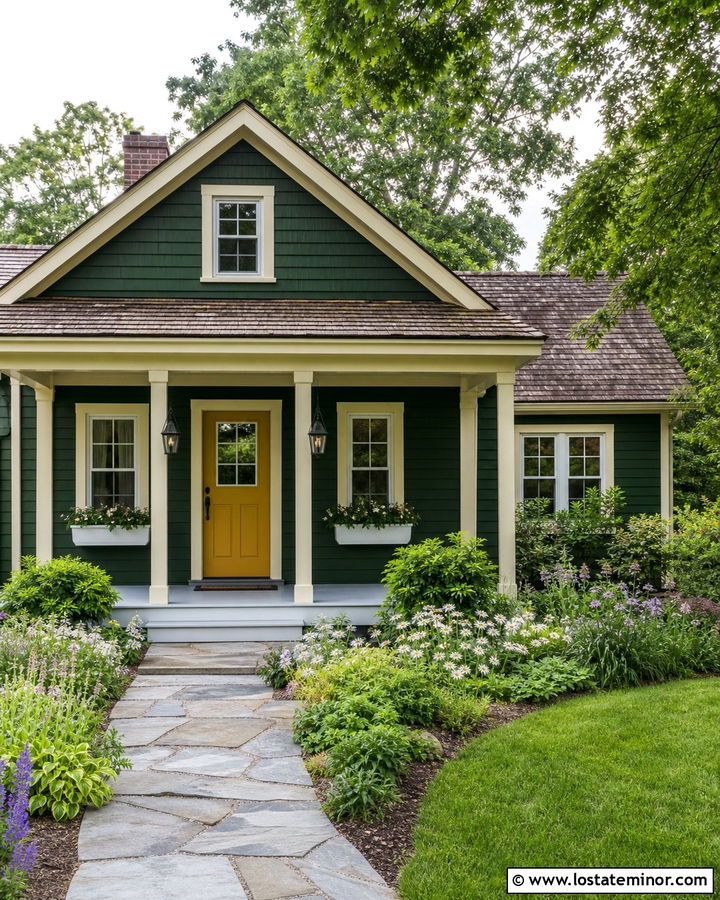
Cream trim gives hunter green a softer and more relaxed appearance than brilliant white. Apply it to the porch columns, window casings, fascia, and decorative gable details for a coordinated cottage exterior. A light natural-stone walkway and pale gray porch floor keep the entrance bright. Consider a muted golden-yellow front door as a cheerful focal point that still complements the earthy green siding. Small black lanterns, window boxes, and climbing plants can add charm, but leave enough open wall space for the main color to remain visible. A simple shingle roof in weathered brown completes the warm palette. This welcoming combination suits compact homes, garden cottages, and older facades surrounded by informal flowering landscapes.
8. Hunter Green Victorian With Detailed Front Porch
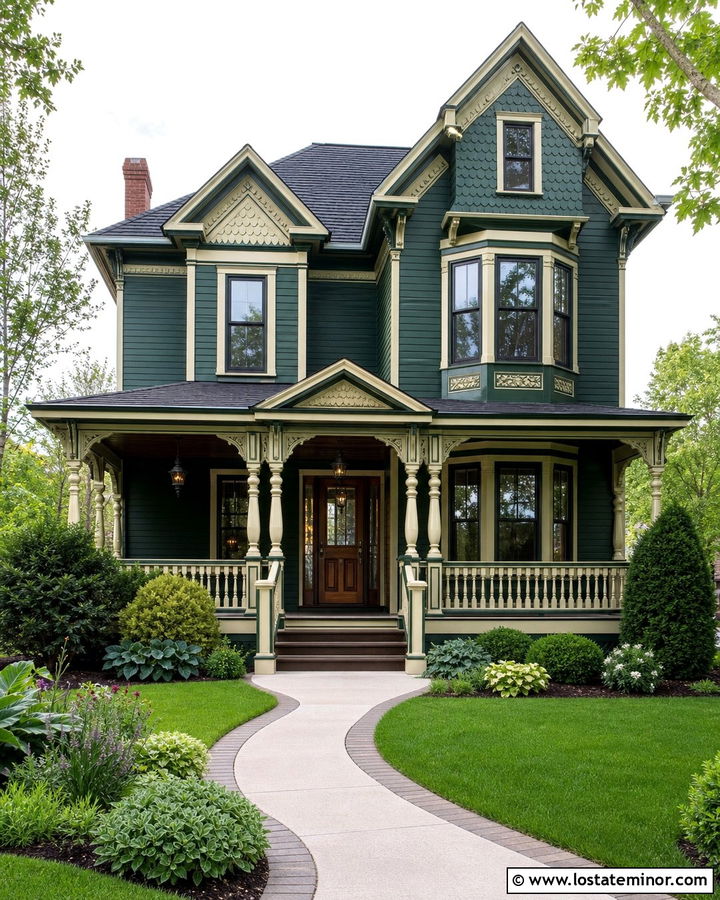
Ornate Victorian details become easier to appreciate when the color palette remains controlled. Use hunter green for the primary siding, soft ivory for porch posts and railings, and muted sage for selected brackets or decorative panels. This three-color arrangement highlights craftsmanship without making the facade feel busy. A stained mahogany front door and warm wood porch floor add depth near the entrance. Charcoal roofing and dark bronze hardware keep the upper and lower parts of the house connected. Instead of painting every spindle a different shade, repeat ivory consistently across the railing. The completed exterior feels historic yet restrained, allowing turned columns, patterned shingles, and detailed trim to stand out clearly against the rich green background.
9. Hunter Green House With Black Front Porch
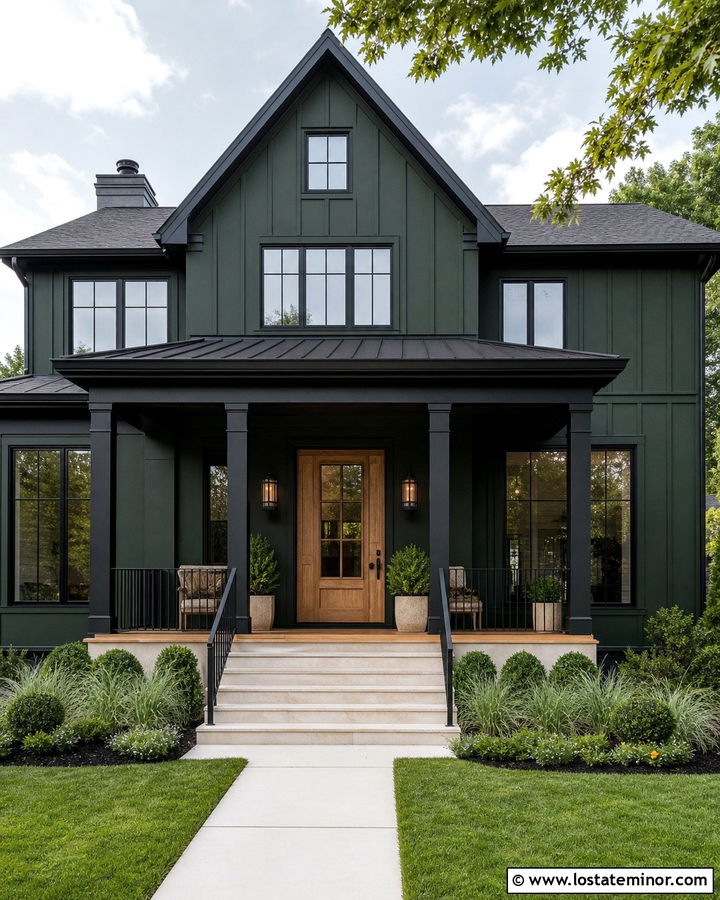
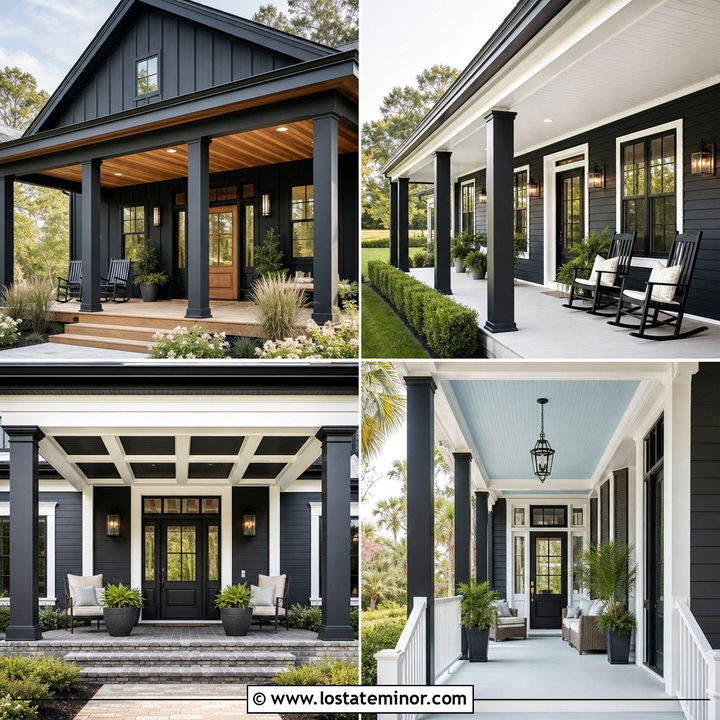
For a dramatic modern exterior, pair hunter green siding with a black porch roof, columns, window frames, and railings. The two dark colors work best when lighter materials are included near ground level. Pale limestone steps, a light concrete walkway, and warm wood porch flooring prevent the entrance from disappearing into shadow. Use a natural white oak door as the main focal point. It will break up the green-and-black palette and bring visual warmth to the center of the house. Keep landscaping structured with clipped shrubs and ornamental grasses rather than dense foundation planting. This complete look works well on contemporary homes, modern farmhouses, and updated split-level houses with simple rooflines and large windows.
10. Hunter Green House With Natural Wood Porch
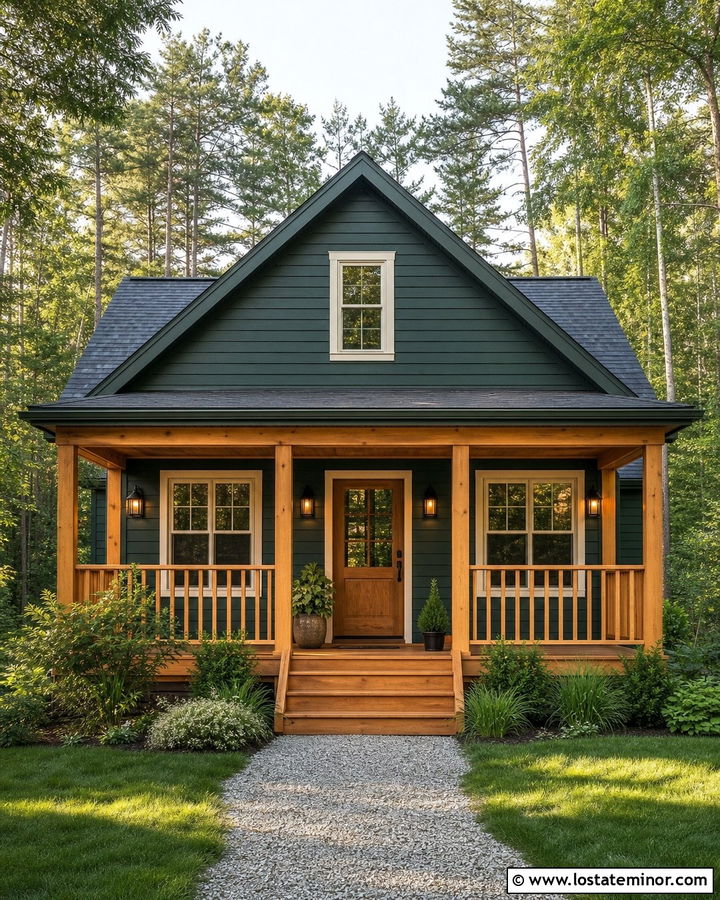
Natural wood is one of the easiest ways to make a dark green exterior feel approachable. Combine hunter green lap siding with honey-toned cedar columns, railings, porch flooring, and a matching front door. Keep the window trim creamy white so the facade still has enough contrast from a distance. A charcoal roof adds a neutral finishing layer and allows the wood grain to remain the main accent. Clear or lightly tinted exterior stain will preserve the cedar’s visible texture, although the final tone should be sampled beside the green siding. Add black lanterns and simple metal house numbers for a crisp edge. The scheme looks especially comfortable on cabins, ranch homes, cottages, and wooded suburban properties.
11. Hunter Green House With Red Brick Front Porch
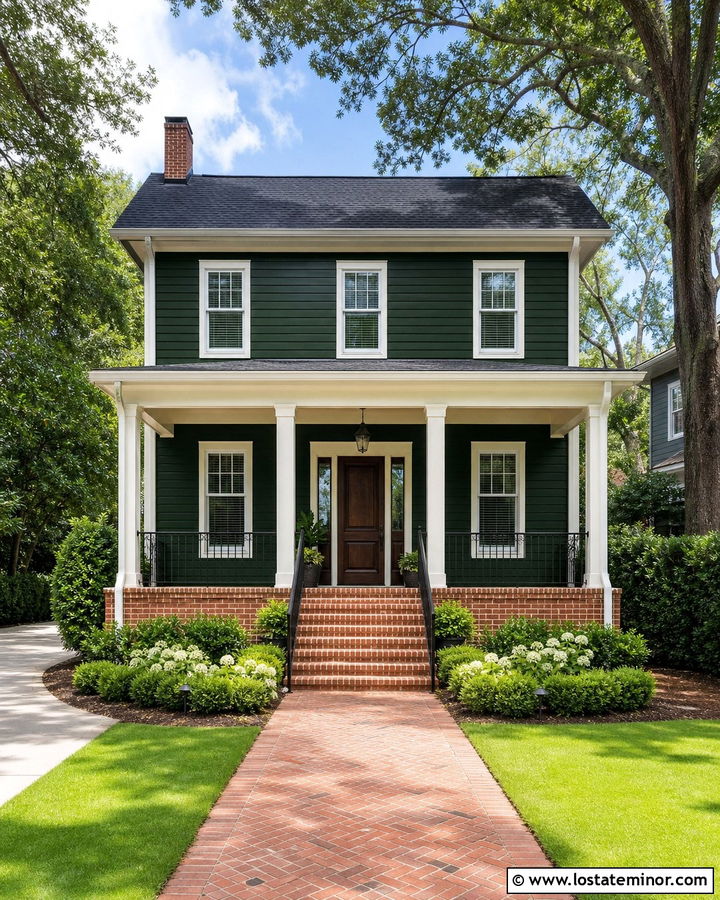
Existing red brick can look especially rich beside hunter green because both colors have deep, traditional character. Use the green across siding and gables while preserving brick porch steps, flooring, and foundation walls. Warm white trim offers a necessary visual break and helps windows remain prominent. Choose a dark walnut or black front door instead of another bright color, allowing the brick to provide the warm accent. Black metal railings can modernize the porch without covering too much masonry. If the brick contains tan mortar, repeat that tone through cream-colored columns or planters. This whole-house combination suits Colonial, Tudor-inspired, and traditional suburban homes, creating a layered facade that feels established without requiring the brick to be painted.
12. Hunter Green House With Gray Stone Porch
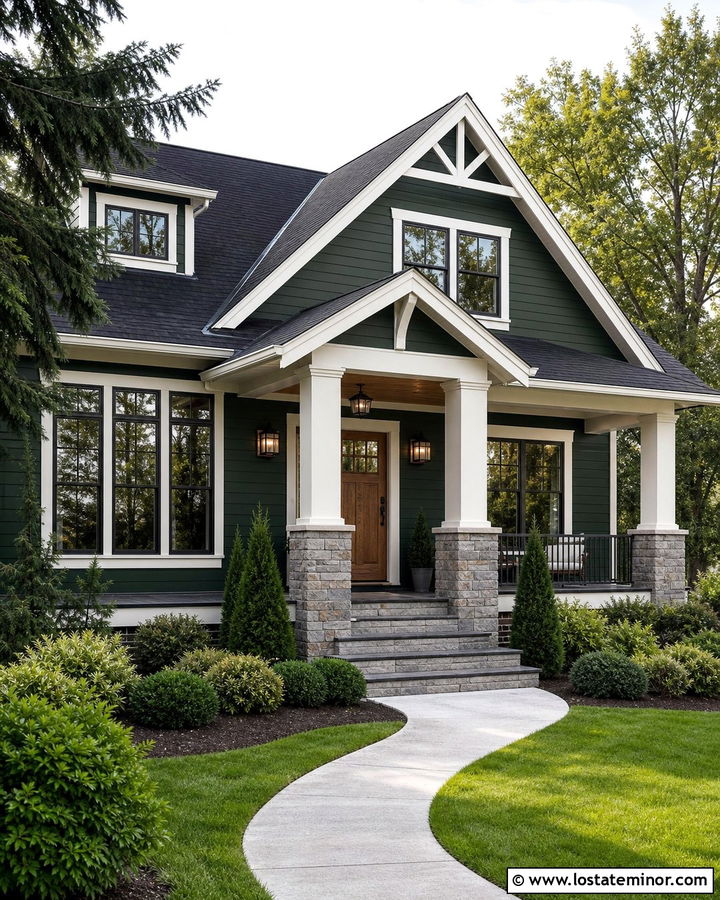
Cool gray stone creates an attractive contrast with the natural depth of hunter green. Place the stone on porch columns, stair risers, and the lower foundation so it supports the entire facade. Choose pieces containing subtle green or brown variation to make the transition between materials look natural. Soft white trim brightens windows and roof edges, while a charcoal porch floor connects the masonry to the roof. A medium-stained wood door keeps the scheme from appearing too cool. Use dark bronze or matte-black fixtures in a simple shape. This balanced look works across Craftsman, transitional, and mountain-inspired houses. It also provides enough texture to make a straightforward porch feel architectural rather than added as an afterthought.
13. Hunter Green House With Metal Porch Roof
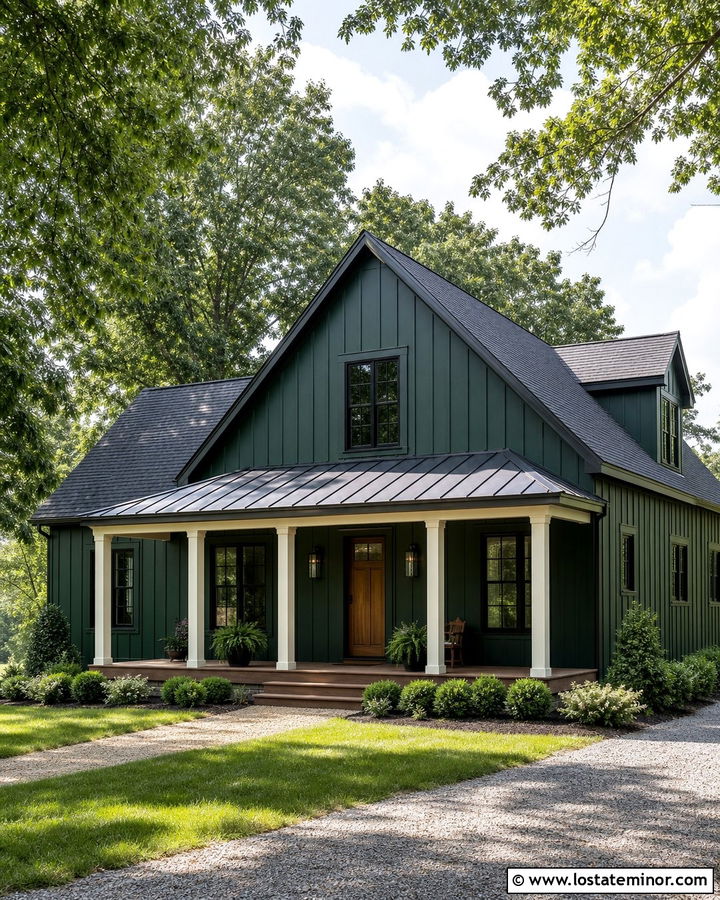
A standing-seam metal porch roof adds definition and a subtle contemporary edge to hunter green siding. Charcoal black is the easiest finish to coordinate because it can repeat the home’s window frames, gutters, and lanterns. Support the roof with warm white square columns to brighten the covered entrance. Natural wood decking and a matching front door introduce softness below the dark metal. If the main house roof uses shingles, select a charcoal blend that closely relates to the porch roof rather than trying to match it perfectly. Keep the porch structure simple so the clean metal seams remain visible. This scheme works particularly well on farmhouses, cabins, ranch homes, and straightforward cottages needing stronger curbside presence.
14. Hunter Green House With Screened Front Porch
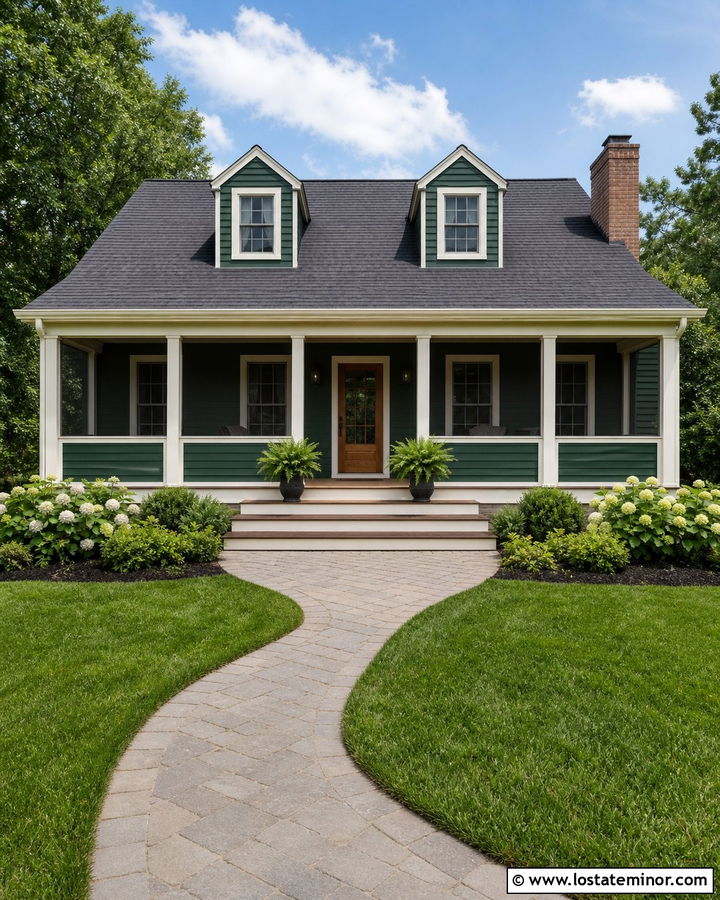
A screened porch can still feel open and inviting when its framing is carefully planned. Paint the house hunter green, then use warm white for the screen frames, columns, and roof trim. The light framework will remain visible against the dark siding and reduce the appearance of a heavy enclosure. Choose dark bronze screening because it tends to visually recede from a curbside view. A natural wood front door and medium-brown porch floor add comfortable warmth inside the structure. Repeat hunter green on the porch’s lower panels to connect them with the main exterior. Broad steps, symmetrical planters, and a clear walkway make the screened entrance easy to identify while preserving the home’s welcoming residential character.
15. Hunter Green House With Yellow Front Door
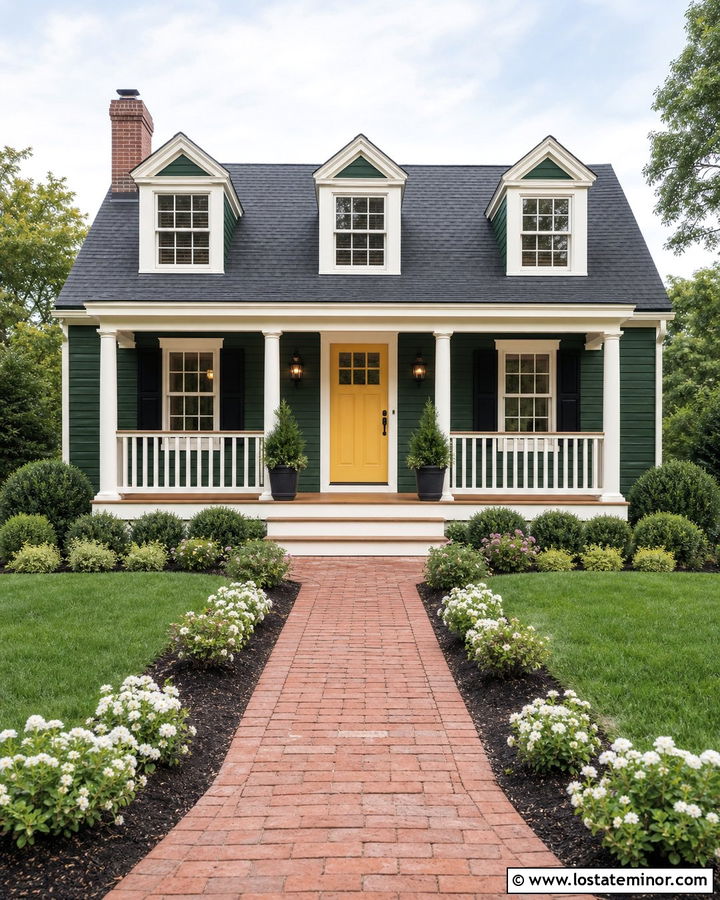
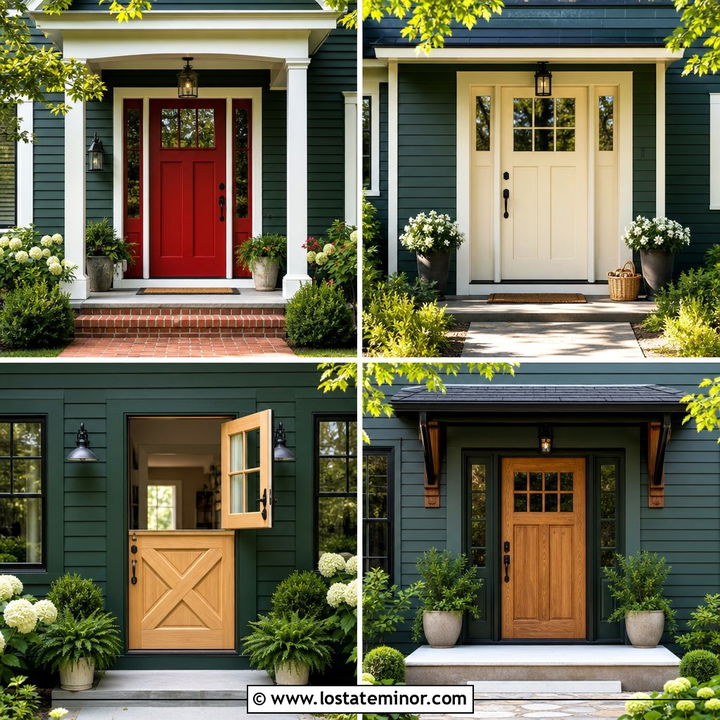
A yellow front door gives hunter green siding an energetic focal point without requiring a large amount of bright color. Choose a muted mustard or golden yellow rather than a sharp lemon tone. Surround the door with creamy white trim and repeat that white across the porch columns, railings, and windows. Natural oak porch flooring adds another warm layer and helps the yellow look intentional. Keep the roof charcoal gray and use simple black lanterns for contrast. The door should remain the only saturated accent, so select neutral porch furniture and restrained planters. This complete color scheme works particularly well on cottages, Cape Cod homes, and cheerful bungalows where a clearly defined entrance supports the compact architecture.
16. Hunter Green House With Burgundy Front Door
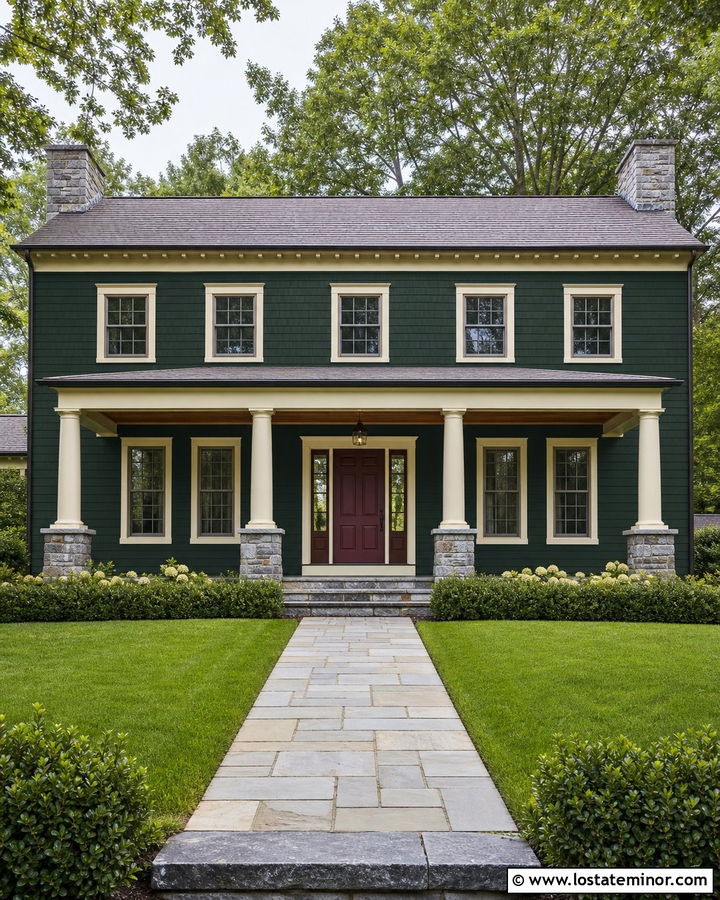
Burgundy creates a refined, traditional entrance when paired carefully with hunter green. Because both colors are deep, frame the burgundy door with wide cream trim and use the same light shade on porch columns and window casings. A gray stone porch base will cool the palette and prevent it from looking overly warm. Choose weathered gray roofing and dark bronze hardware rather than introducing another dominant color. The burgundy should lean toward muted wine-red with brown undertones, not a bright holiday red. Add a natural wood porch ceiling to soften the transition overhead. This dignified combination fits Colonial, Victorian, and Georgian-inspired homes, especially when the architecture includes symmetrical windows and a centered covered entrance.
17. Hunter Green House With Blue Front Door
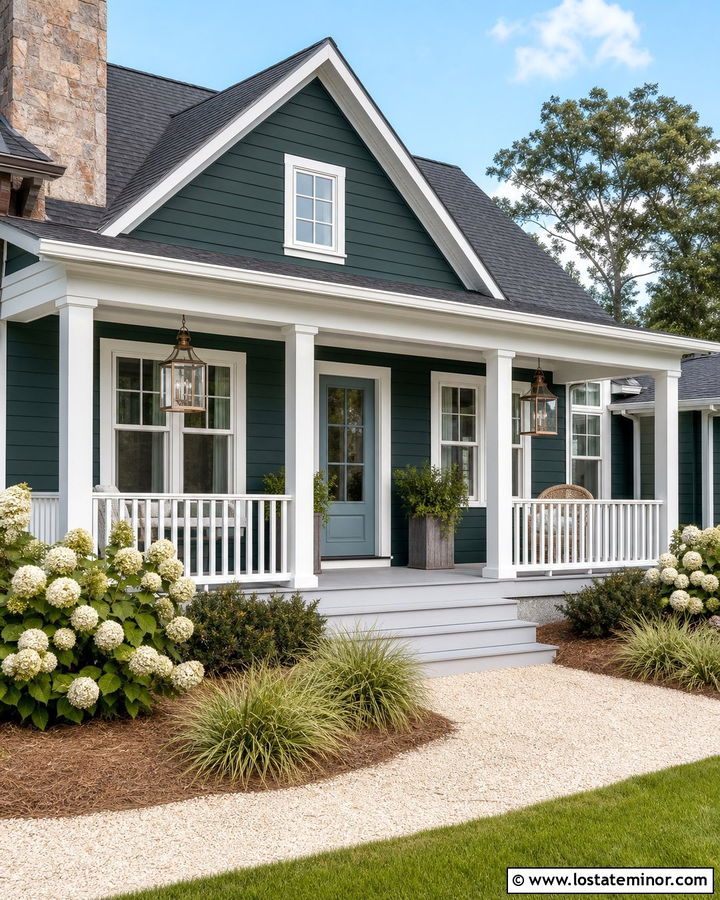
Could a blue door work with hunter green siding? It can when the blue is deep, slightly muted, and supported by neutral trim. A dusty navy or slate-blue door provides gentle color variation without fighting the green body. Use warm white porch columns, window frames, and railings to separate the two saturated shades. Light gray porch flooring and charcoal roofing establish a calm neutral foundation. Brushed nickel or dark bronze hardware can both work, but keep the exterior lighting simple. Add blue-green planters or subtle textiles to repeat the door color in small amounts. This distinctive scheme suits coastal cottages, traditional bungalows, and transitional homes where homeowners want color that feels interesting but still composed.
18. Hunter Green House With Copper Porch Accents
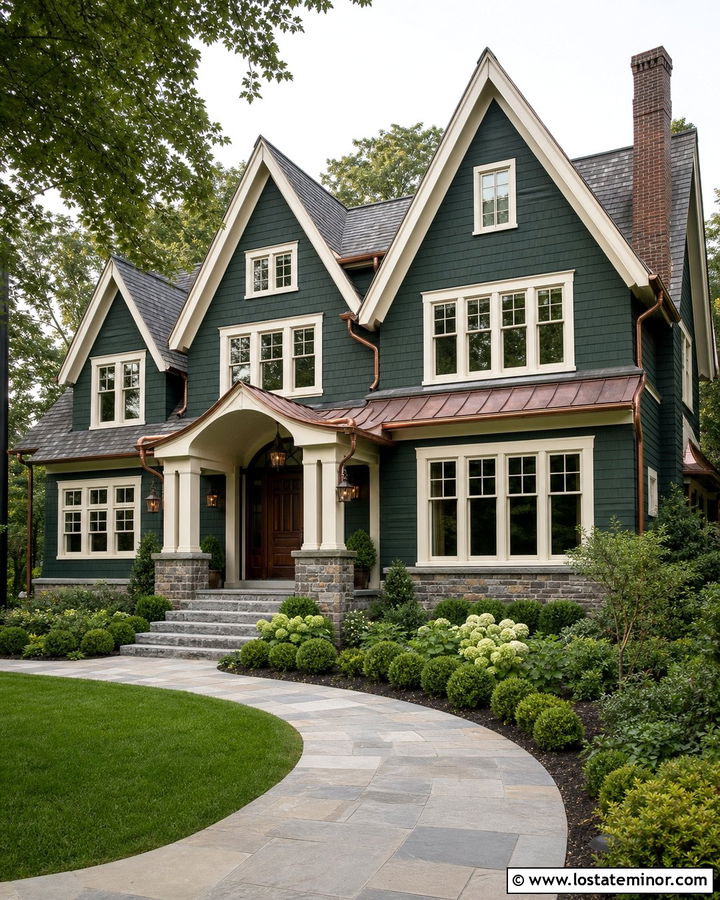
Copper accents introduce warmth and elegance without changing the main hunter green palette. Use copper on porch lanterns, gutters, downspouts, or a small standing-seam entry roof. The metal’s warm finish stands out beautifully against deep green siding and becomes more understated as it naturally develops character. Choose creamy white trim and columns to keep the facade bright. A rich walnut door and medium-gray stone steps complete the earthy combination. Copper should appear in several deliberate locations rather than one random fixture, but it does not need to cover large surfaces. This detailed exterior works well on Tudor-inspired homes, traditional cottages, and refined Craftsman houses with visible rooflines and substantial front entrances.
19. Hunter Green Cape Cod With Small Front Porch
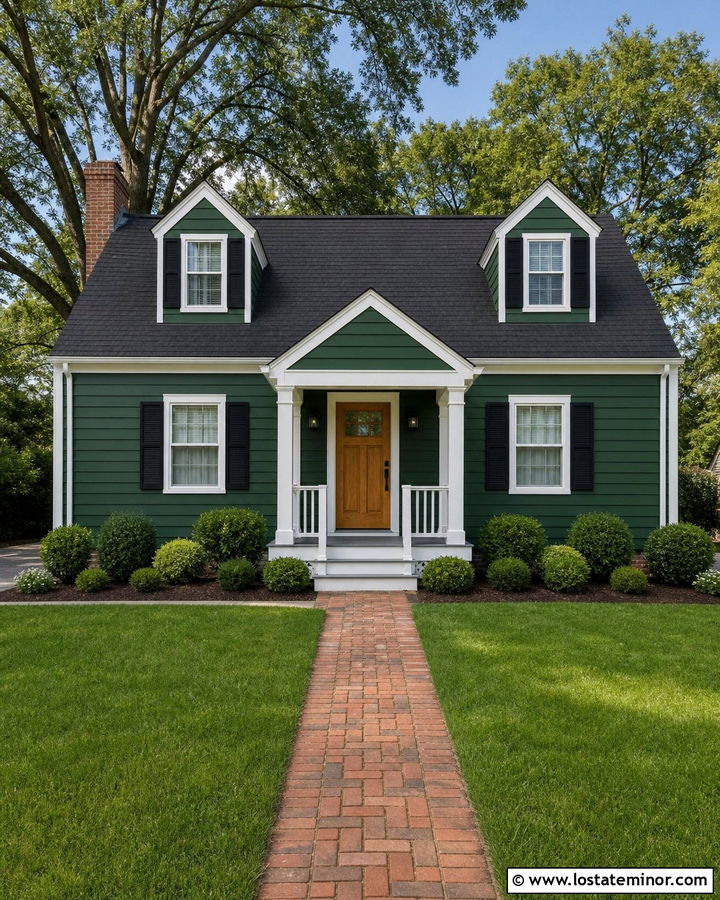
A compact Cape Cod porch should look connected to the home rather than oversized. Cover the facade in hunter green clapboard, then use crisp white on the simple columns, window trim, fascia, and railing. A small gabled porch roof can echo the pitch of the main roof and create a clear center point. Add a natural oak door for warmth and light gray decking for an easy transition to the walkway. Black shutters and charcoal shingles reinforce the home’s traditional symmetry. Keep porch furniture minimal, perhaps using one bench or a pair of small planters. The finished design preserves the Cape Cod’s straightforward character while giving the entrance enough depth and shelter to feel genuinely welcoming.
20. Hunter Green Split-Level With Modern Porch
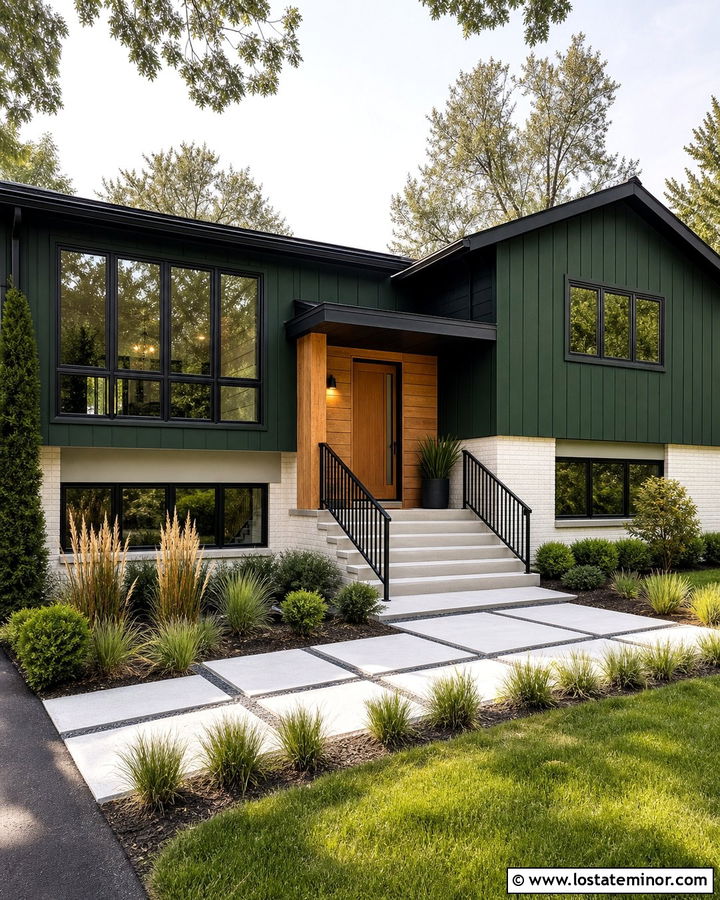
A streamlined porch can unify the uneven shapes of a split-level exterior. Paint the main siding hunter green and introduce black-framed windows, a flat or low-slope porch roof, and slim black railings. Warm cedar cladding around the entry provides an inviting focal point and can continue onto the front door or garage door. Use light concrete steps and a wide geometric walkway to brighten the lower facade. If brick is already present, painting it a soft warm white can simplify the palette, provided the masonry is suitable for paint. Horizontal porch lines help the house feel wider and more balanced. Minimal landscaping, large planters, and clean exterior lighting finish this practical midcentury-inspired update.
21. Hunter Green Tudor With Arched Front Porch
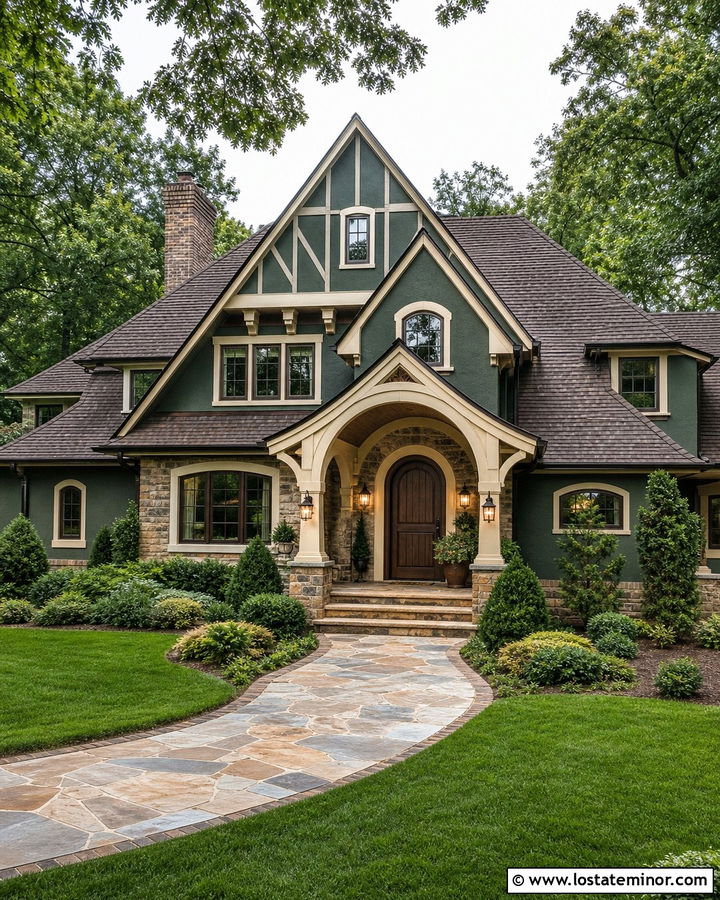
Hunter green emphasizes the storybook character of a Tudor exterior, especially when paired with warm masonry and an arched porch entrance. Use green on stucco-compatible siding areas or upper-level shingles, then retain brown brick or tan stone around the lower facade. Cream trim softens windows and highlights the arch without creating harsh contrast. A rounded dark walnut door fits naturally beneath the covered opening. Select bronze lanterns, brown-black roofing, and a flagstone porch floor to reinforce the traditional material palette. Decorative timber details can be stained dark brown rather than painted black. The combined scheme feels rich and layered, while the porch arch provides a strong architectural focal point visible from the street.
22. Hunter Green Cabin With Timber Front Porch
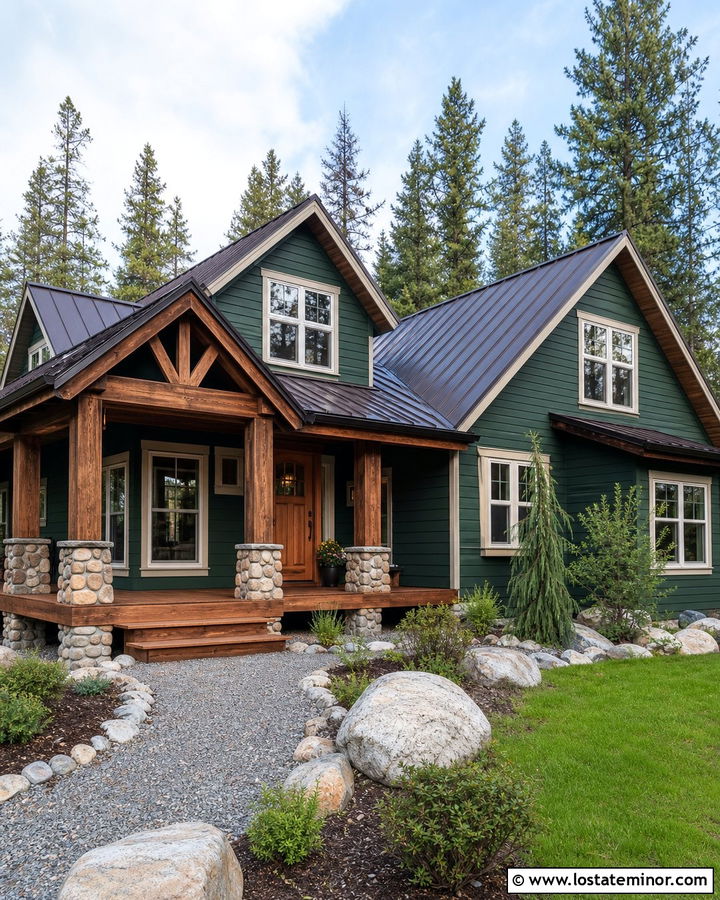
In a wooded setting, hunter green siding helps a cabin settle naturally into the landscape. Use thick timber columns, exposed beams, and a wide stained porch floor to add warmth and visible structure. Fieldstone bases and front steps anchor the timber elements while providing a durable transition to the yard. Choose a dark brown metal roof or charcoal shingles, depending on the cabin’s architecture. Window trim can be warm cream for contrast or stained wood for a more rustic result. A simple plank-style door keeps the entrance consistent with the porch construction. Native shrubs, gravel paths, and natural boulders complete the exterior without making it appear overly manicured. The overall impression is comfortable, sturdy, and connected to its surroundings.
23. Hunter Green House With White Brick Porch
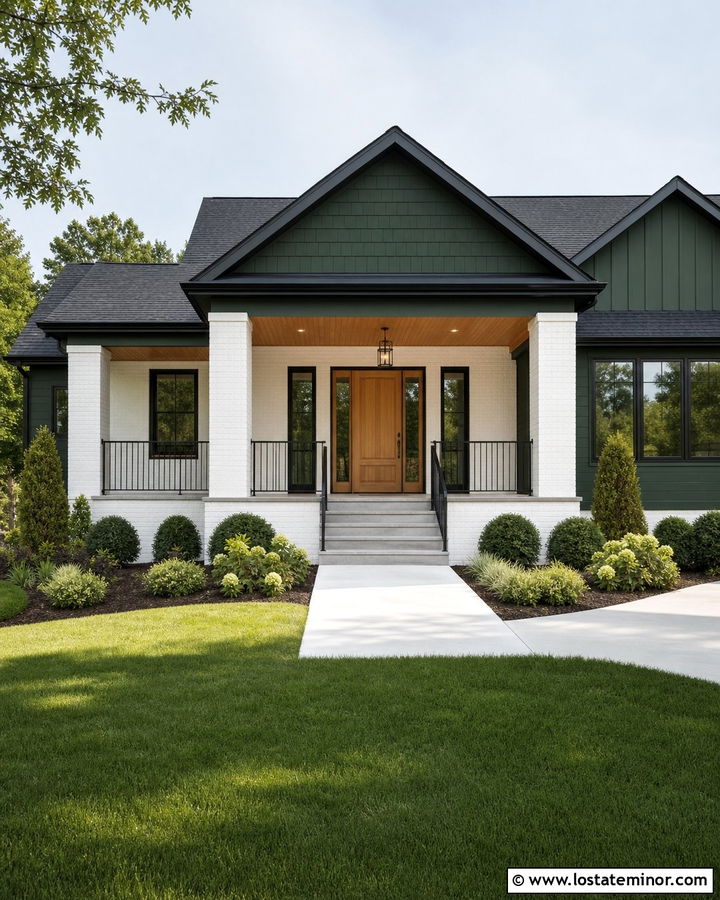
White brick creates a bright architectural base beneath hunter green siding. Apply it to porch columns, foundation walls, stair risers, or the entire lower level, then repeat warm white on the windows and fascia. The slight texture of painted brick keeps the scheme from feeling flat even though the accent colors are restrained. Use a natural wood front door and porch ceiling to warm the transition between white masonry and green walls. Black railings, lanterns, and gutters provide narrow lines of definition. A medium-gray porch floor handles everyday wear while coordinating with charcoal roofing. This clean exterior combination works particularly well on transitional ranches, modern farmhouses, and remodeled suburban homes with mixed siding materials.
24. Hunter Green House With Concrete Front Porch
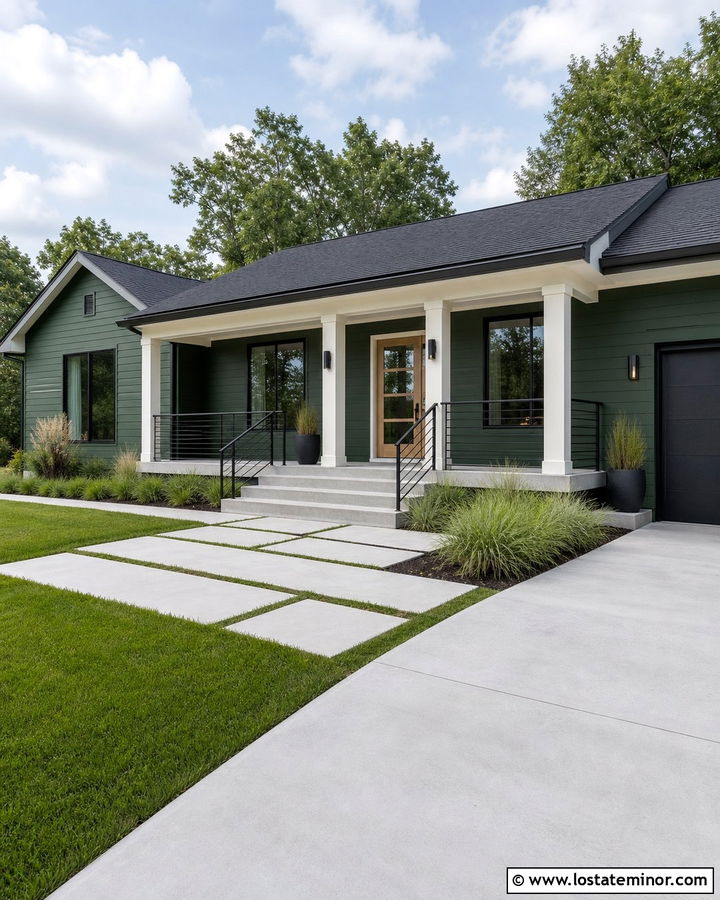
A simple concrete porch can look intentional beside hunter green siding when its proportions and supporting details are carefully chosen. Use broad light-gray steps with clean edges, then add warm white columns and black metal railings. The pale concrete brightens the entrance and provides a neutral base for the dark exterior. A white oak front door introduces warmth without requiring additional porch materials. If the foundation is visible, finish it in a gray that relates closely to the concrete. Black window frames and a charcoal roof complete the restrained palette. Large square planters and low ornamental grasses can soften the hard surfaces. This affordable, low-clutter approach fits modern ranches, split-levels, and straightforward contemporary homes.
25. Hunter Green House With Double Front Porch
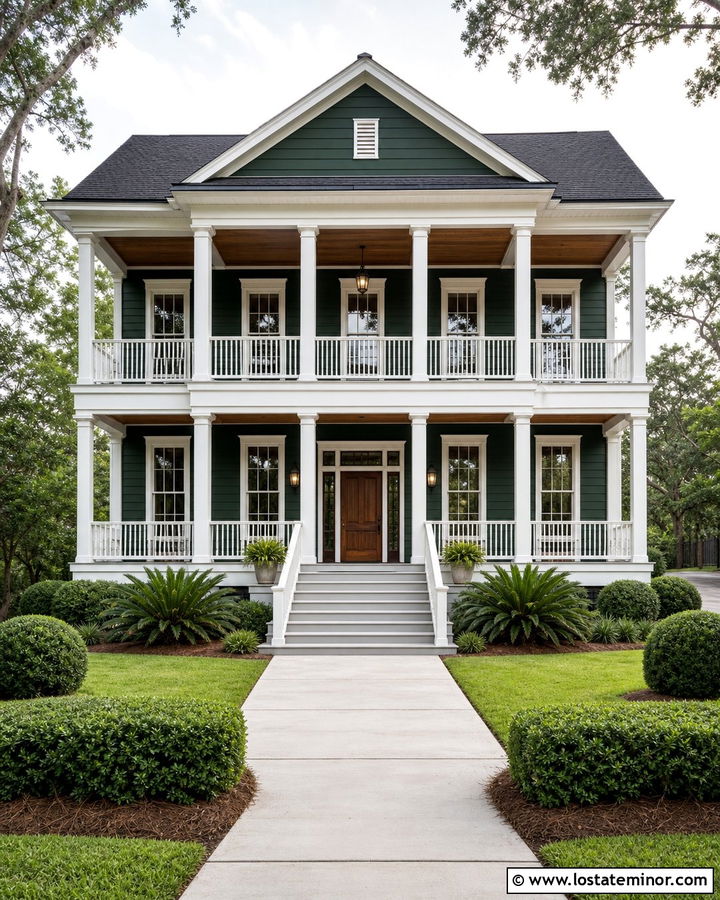
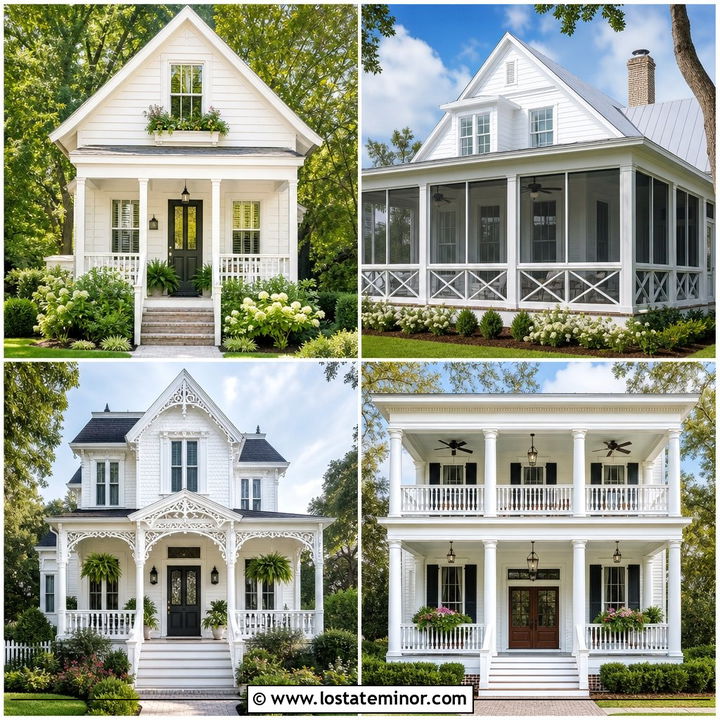
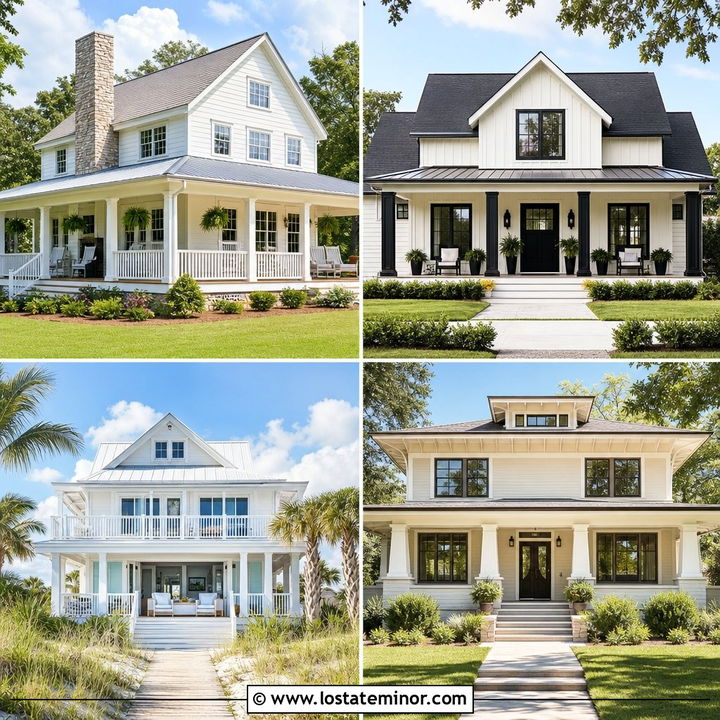
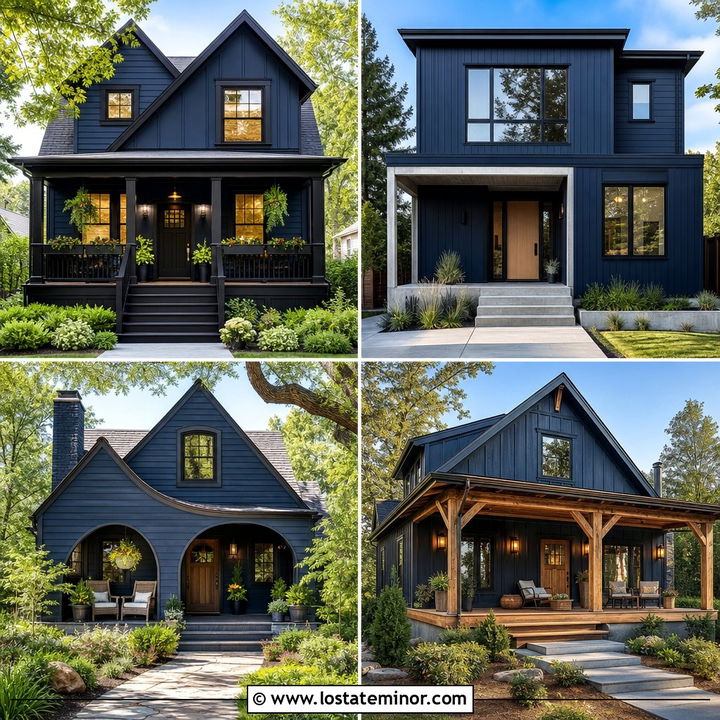
A two-story house with stacked porches needs a consistent color pattern to avoid visual confusion. Use hunter green siding on both levels and warm white for every column, railing, beam, and window frame. Repeating the same treatment vertically creates order across the tall facade. Stained wood porch ceilings add warmth above each level, while medium-gray floors provide a subtle neutral foundation. Center a rich walnut door below the upper balcony and frame it with simple sidelights. Black lanterns and a charcoal roof add definition without interrupting the symmetry. This complete scheme suits Southern homes, Charleston-inspired architecture, and tall traditional houses where the porches are the most visible part of the exterior.
26. Hunter Green House With Rustic Log Porch
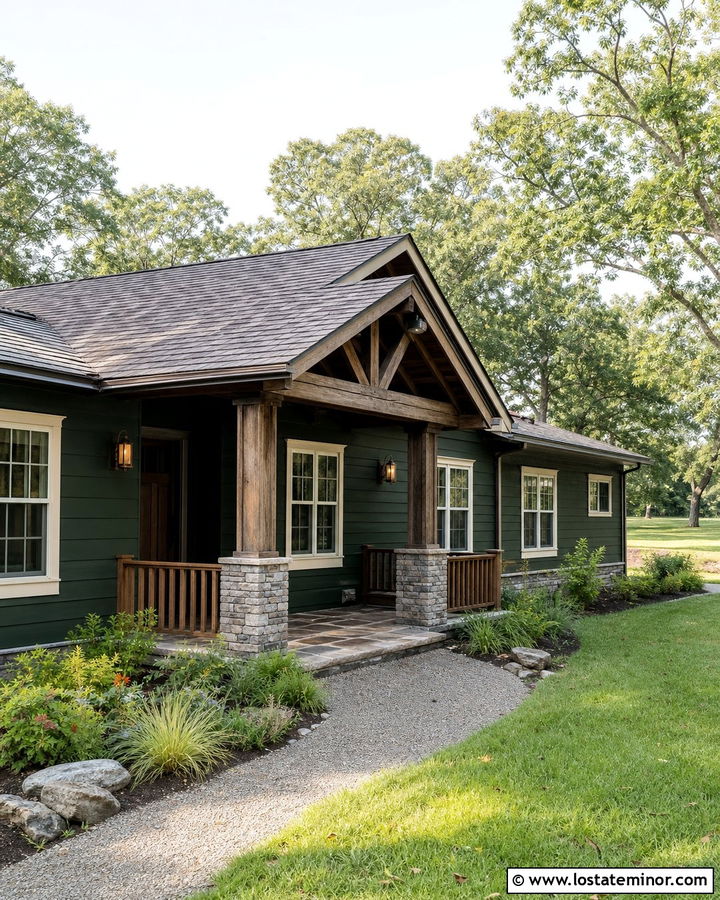
A rustic porch can complement hunter green without making the entire house resemble a cabin. Use substantial log or rough-sawn timber posts only around the covered entry, then keep the main facade in clean horizontal green siding. Warm cream window trim balances the rugged wood and makes the composition feel residential. Add a stone porch floor or stone column bases to connect the timber to the landscape. A dark brown front door, bronze fixtures, and weathered charcoal roof complete the earthy palette. Keep railings simple and relatively open so the porch does not become visually heavy. This combination works well for rural ranches, mountain homes, and suburban houses that need a controlled touch of rustic character.
27. Hunter Green House With Modern Wood Slat Porch
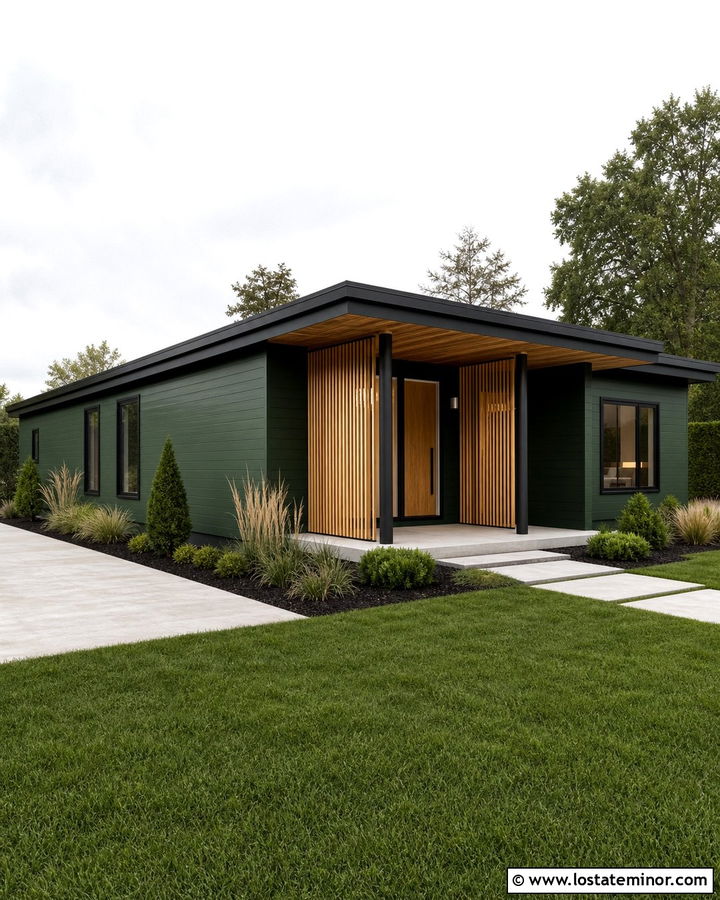
Vertical wood slats bring privacy and contemporary detail to a hunter green front porch. Install them on one side of the entrance or around a small seating area rather than enclosing the full facade. Light cedar looks especially clear against dark green smooth siding and can be repeated on the front door and porch ceiling. Use black columns, window frames, and a low-slope porch roof for sharp definition. Pale concrete flooring and steps prevent the overall exterior from becoming too dark. Keep plantings architectural, using ornamental grasses, compact evergreens, and one or two large planters. This balanced scheme suits modern houses, updated ranches, and minimalist split-level homes where texture is more effective than added decorative trim.
28. Hunter Green House With Farmhouse Porch Swing
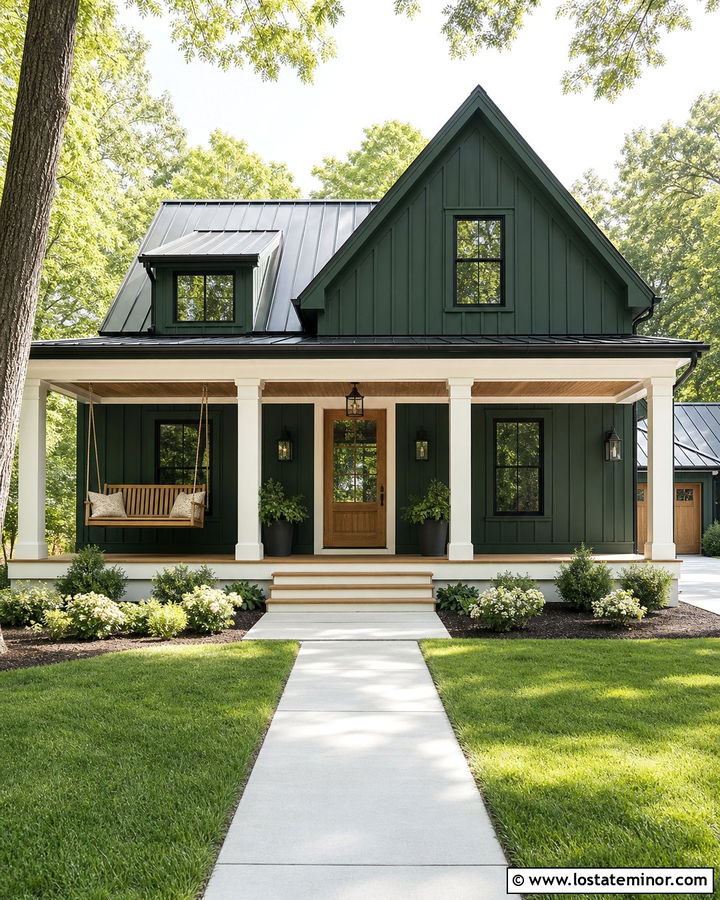
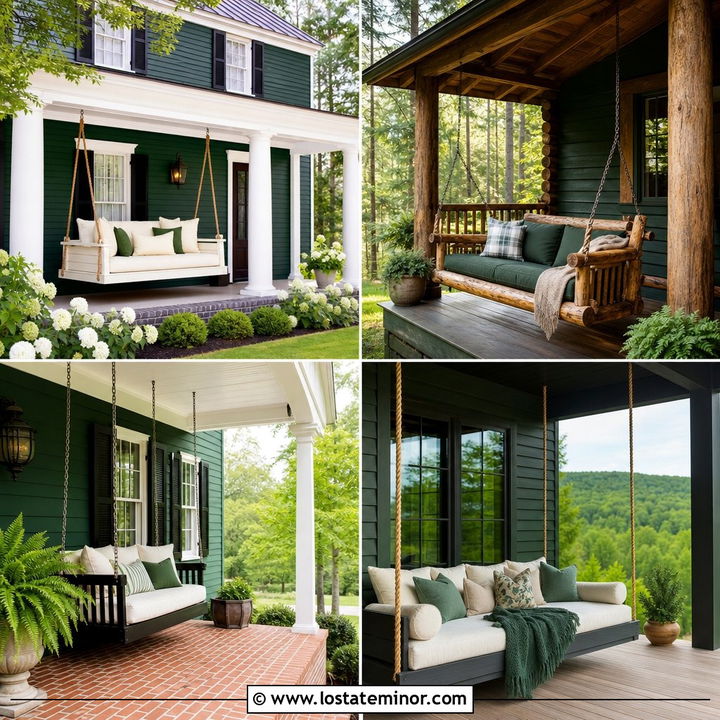
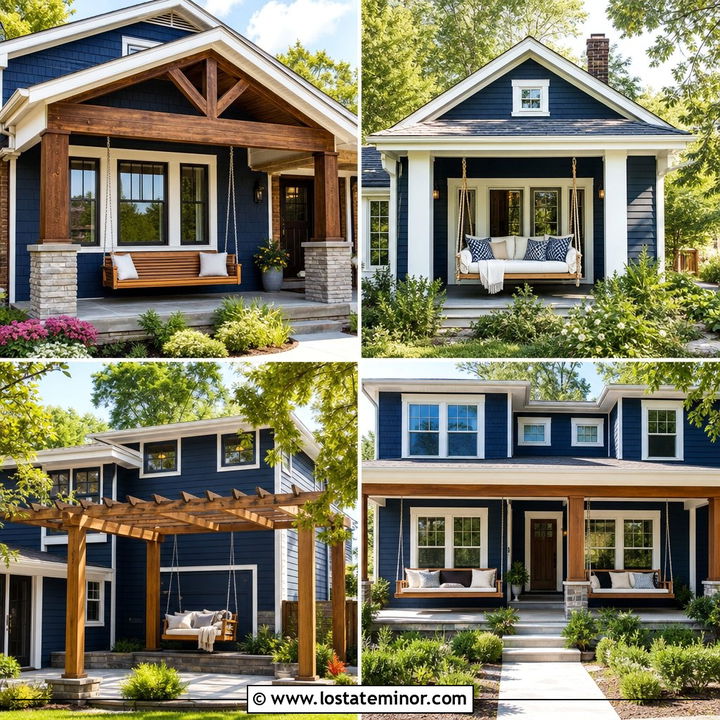
A porch swing can become part of a complete exterior scheme instead of looking like an afterthought. Start with hunter green board-and-batten siding, broad warm white columns, and a natural wood porch floor. Hang a white or light oak swing from a stained plank ceiling, leaving enough open space around it for a clean view. A matching oak front door and black lanterns balance farmhouse warmth with modern contrast. Use a black metal porch roof or charcoal shingles to define the roofline. Symmetrical planters and a straight walkway reinforce the orderly facade. This inviting arrangement works well on farmhouses and wide cottages with enough porch depth for comfortable seating and unobstructed circulation.
29. Hunter Green House With Coastal Front Porch
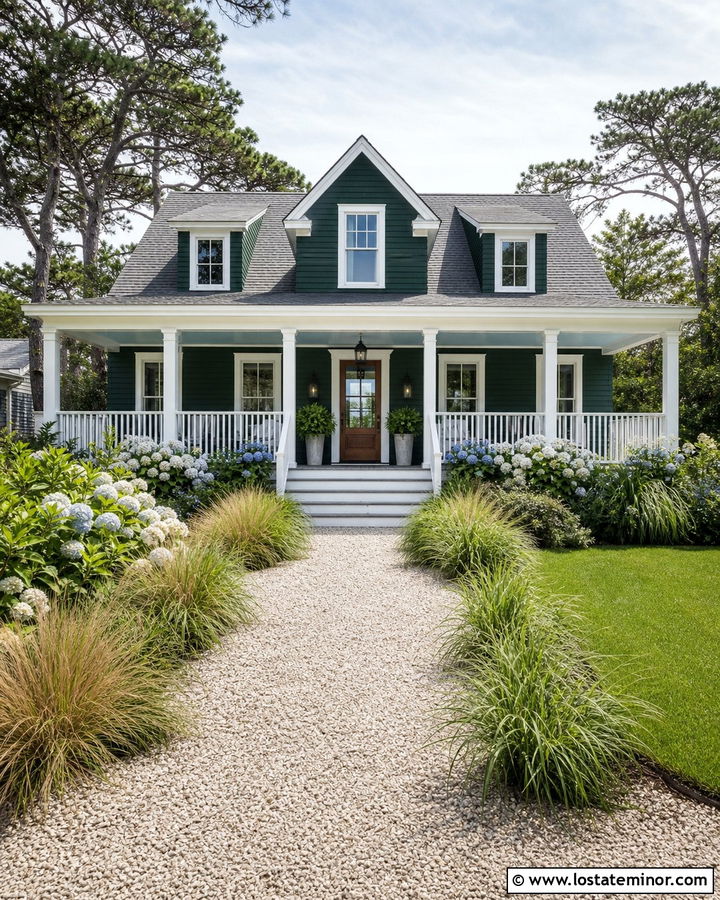
Hunter green can feel coastal when paired with lighter, cooler accents. Use bright white porch columns, railings, trim, and window frames to create a crisp outline around the deep green siding. Paint the porch ceiling a soft sky blue and choose pale weathered-gray decking for a breezy transition to the landscape. A natural teak door adds warmth without making the palette feel rustic. Select charcoal or soft gray roofing and simple black lanterns with clear glass. Hydrangeas, ornamental grasses, and a shell-toned gravel walkway support the relaxed setting. This full exterior look suits coastal cottages, raised beach homes, and Cape Cod houses where a darker body color needs plenty of bright architectural contrast.
30. Hunter Green House With Minimal Front Porch
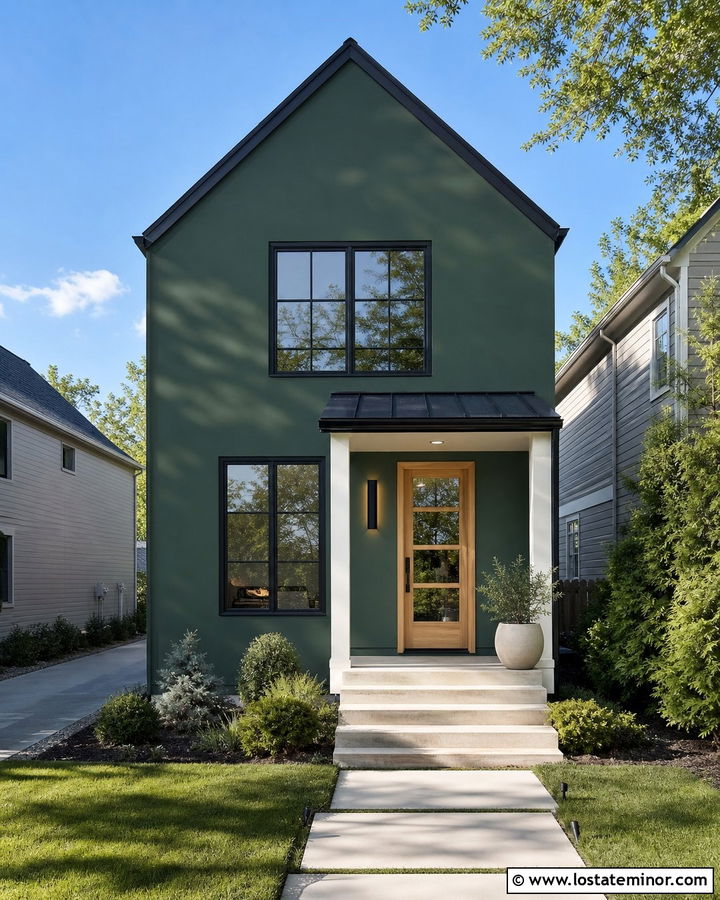
Not every home needs a large porch to create an appealing entrance. A shallow covered stoop can make hunter green siding feel polished when its materials match the rest of the facade. Use a slim black roof, warm white square columns, and light limestone or concrete steps. Add a white oak door with narrow glass panels as the primary focal point. Black window frames, understated house numbers, and simple cylinder lights reinforce the clean design. Keep the porch free from excessive furniture, using one large planter or a compact bench if space permits. This streamlined scheme works on contemporary homes, narrow urban houses, and small ranches where a clear walkway and balanced proportions matter more than decorative details.
Conclusion:
These 30 Hunter Green House Design With Front Porch Ideas show how versatile a deep green exterior can be. White trim creates crisp definition, while cream offers a softer traditional effect. Natural wood, brick, stone, copper, and concrete each give the color a different personality. The strongest design will repeat porch materials or accent colors elsewhere on the facade, helping every feature look connected. Before choosing paint, test a large sample on sunny and shaded walls because hunter green can change noticeably throughout the day. Coordinate the siding with the fixed roof, masonry, and landscaping first. Then choose porch columns, flooring, railings, and a front door that complete one balanced curb-appeal palette.

Related posts: