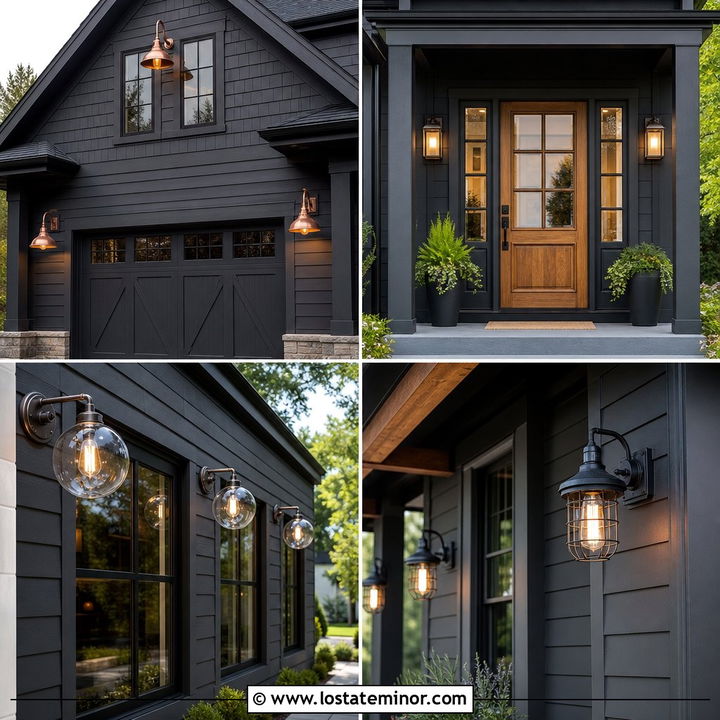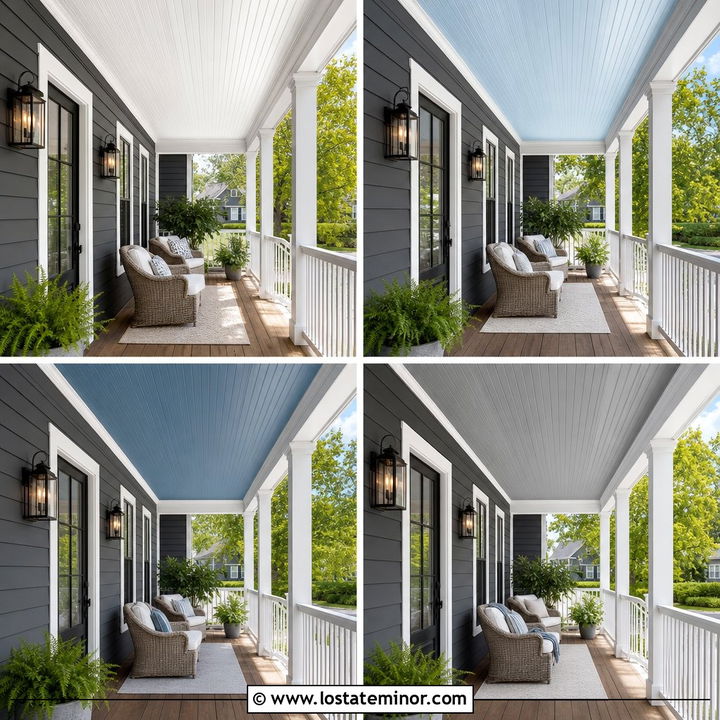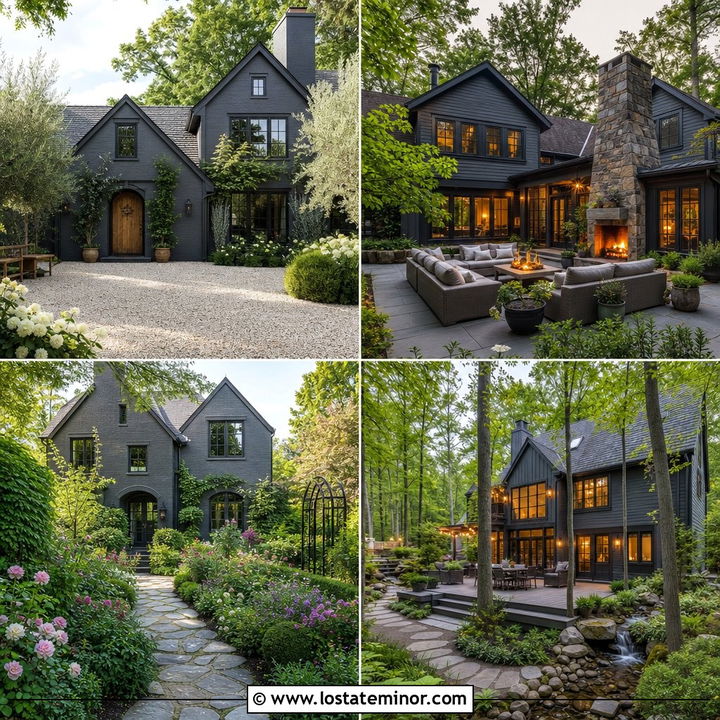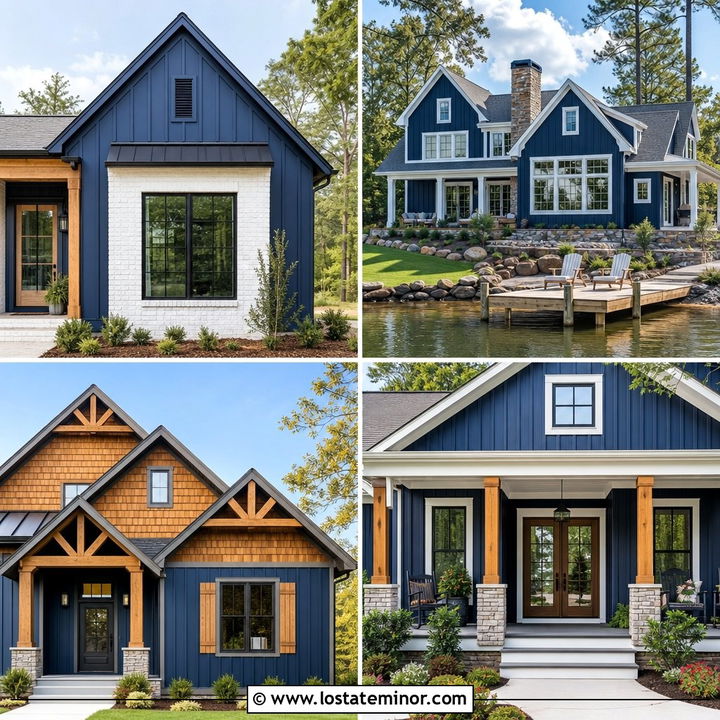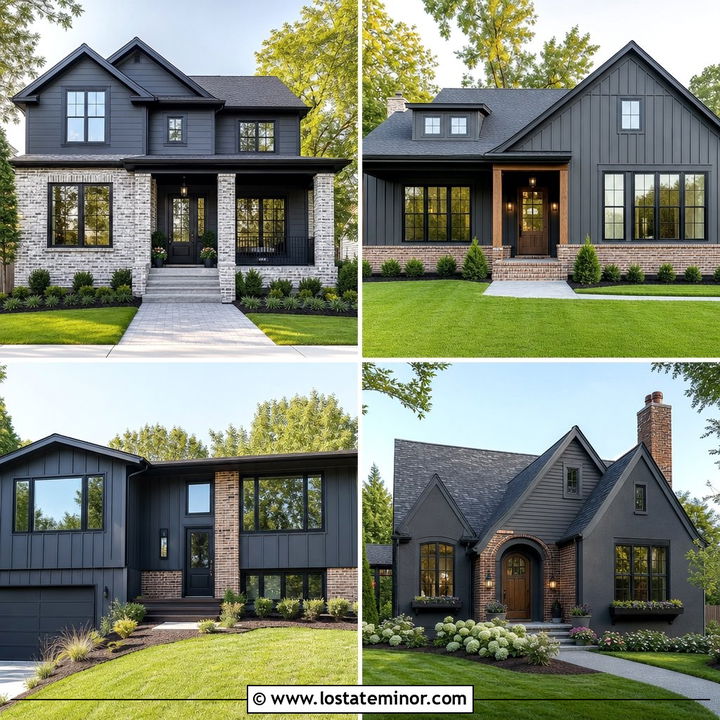
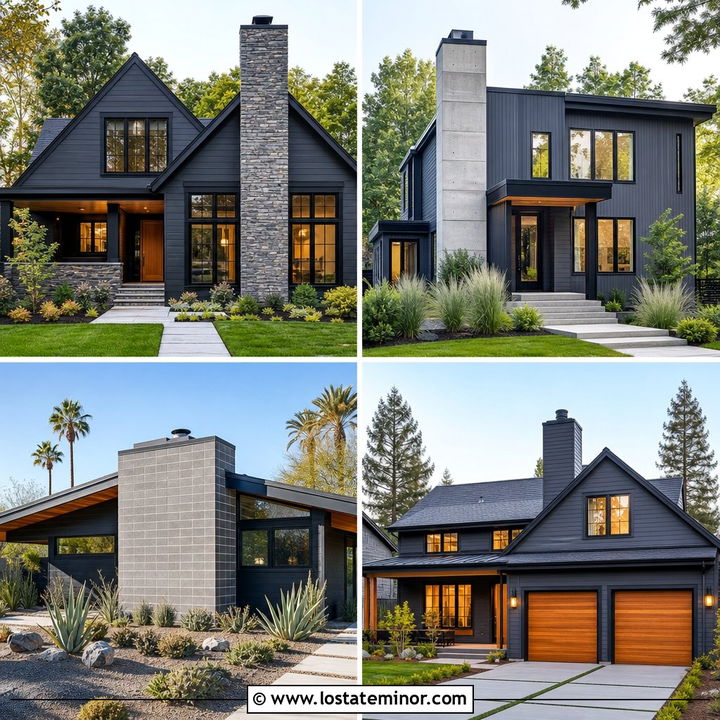
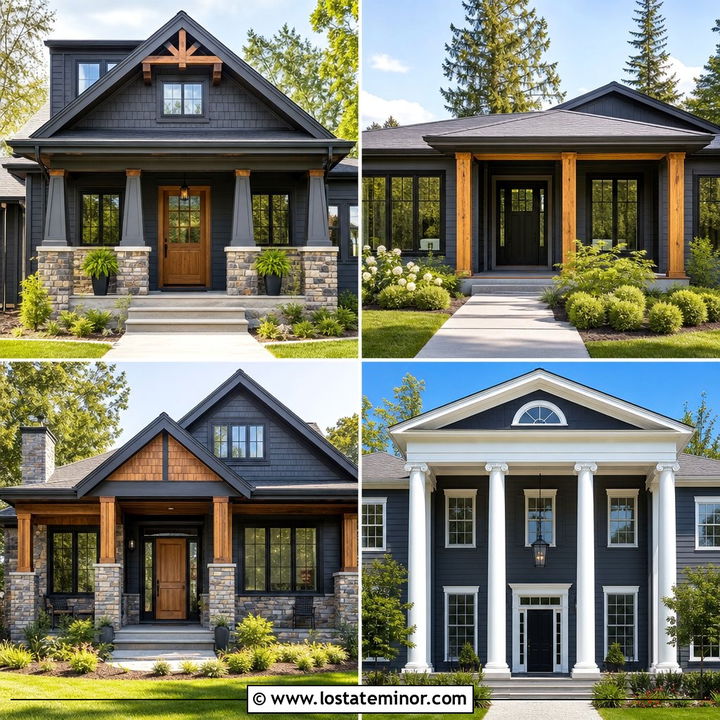
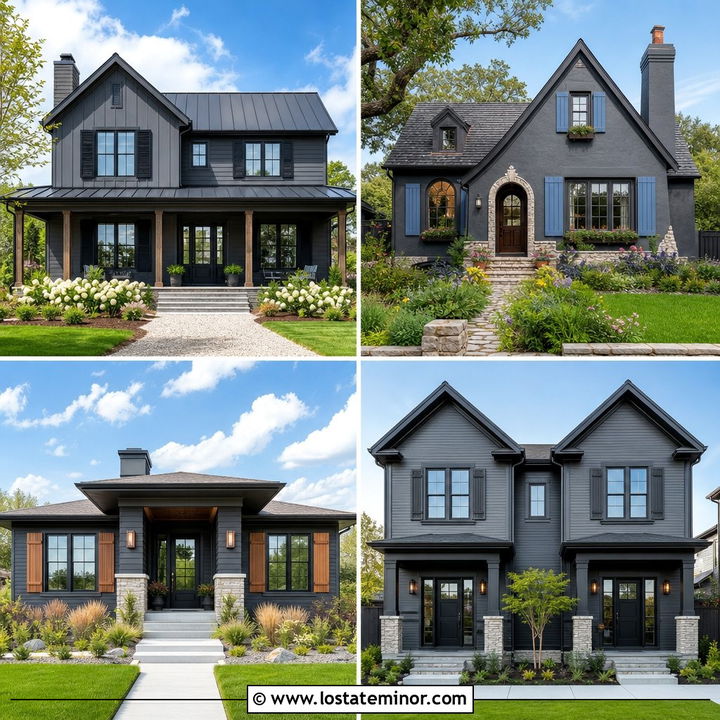
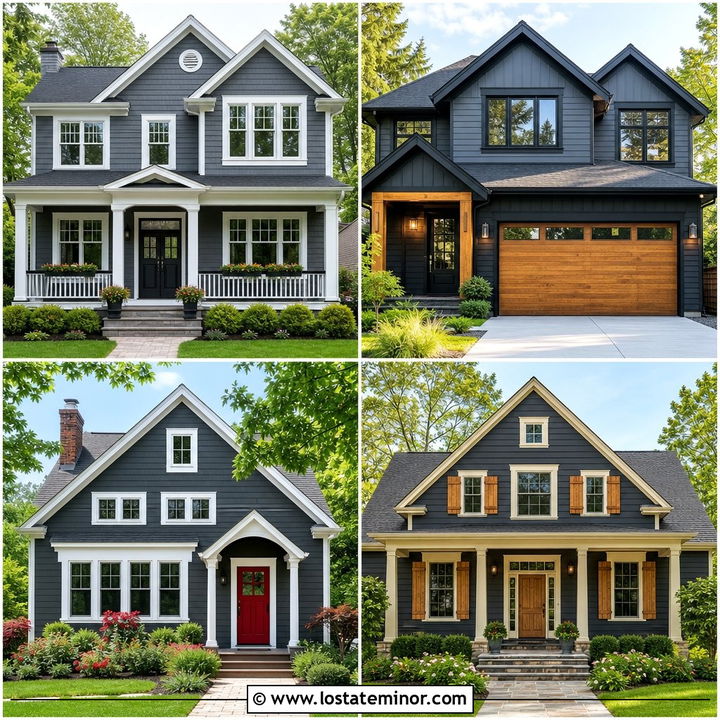
A dark exterior can feel bold, refined, and surprisingly welcoming when natural texture softens the palette. These 30 Charcoal Grey House Design With Stone Accents Ideas explore complete exterior schemes that balance deep gray siding with limestone, fieldstone, ledgestone, river rock, and other masonry finishes. You will find options for modern farmhouses, ranch homes, Craftsman houses, Colonials, cottages, and contemporary builds. Each look also considers trim, roofing, doors, windows, wood features, and landscaping, so the entire facade feels coordinated. Whether you prefer strong contrast or a quieter monochromatic effect, stone can help charcoal gray look grounded instead of flat. Explore the following 30 Charcoal Grey House Design With Stone Accents Ideas for practical curb-appeal inspiration.
1. Charcoal Grey House With White Stone
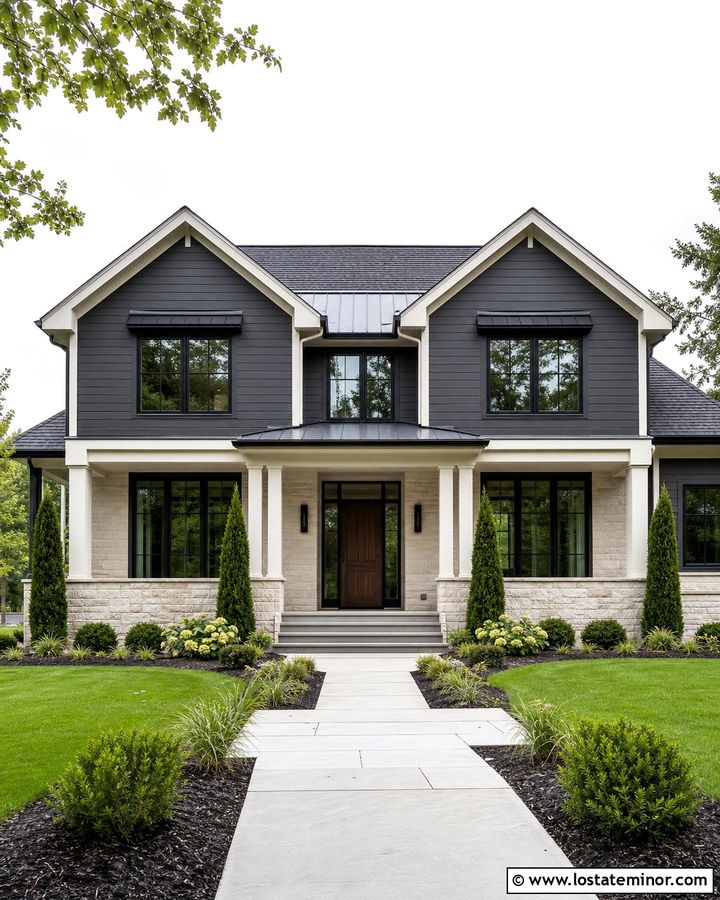
White stone creates a clean contrast against charcoal grey siding without making the exterior feel overly stark. Use the stone around the lower facade, porch columns, or garage to visually support the darker upper walls. Warm white limestone works especially well because its creamy undertones soften the charcoal and connect naturally with off-white trim. Add black-framed windows and a medium-toned wood front door for depth. A dark gray shingle roof keeps the palette cohesive while allowing the light masonry to stand out. This complete scheme suits a modern farmhouse or transitional home. Keep the landscaping simple with clipped evergreens, ornamental grasses, and a pale concrete walkway that repeats the lighter tones found in the stone.
2. Charcoal Grey House With Gray Ledgestone
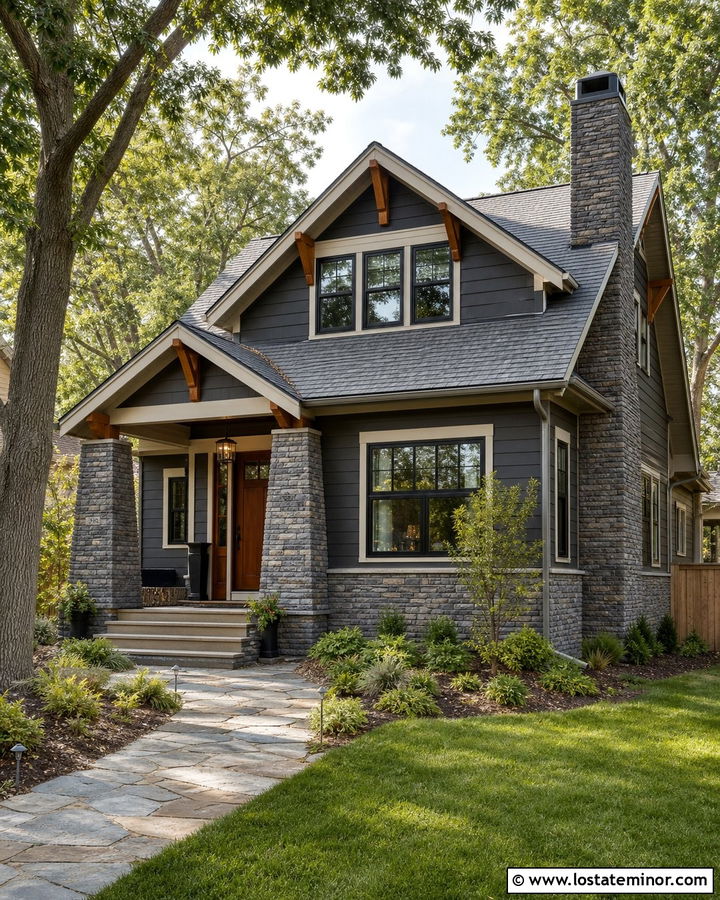
For a layered monochromatic exterior, combine charcoal grey siding with gray ledgestone containing several lighter and darker shades. The narrow, stacked shape of ledgestone adds movement and prevents the house from looking like one solid block of color. Place it across the foundation, around a prominent chimney, and on the porch columns to distribute texture evenly. Soft black trim and windows can continue the dramatic palette, while a cedar front door introduces warmth. This combination works beautifully on a Craftsman house with broad gables and exposed roof brackets. Select a medium gray roof rather than pure black, so individual rooflines remain visible. Low green shrubs and a natural flagstone path complete the grounded, mountain-inspired exterior.
3. Charcoal Grey House With Limestone Porch
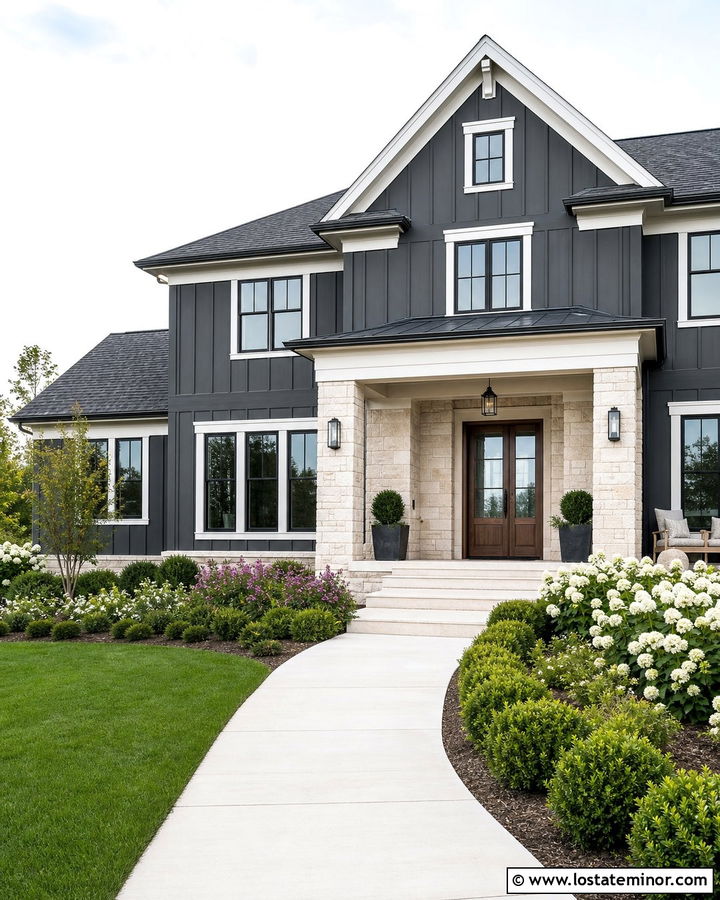
A limestone porch can make a charcoal grey exterior feel brighter and more inviting from the street. Choose lightly textured limestone in warm cream, beige, and soft gray tones. Carry the material across the porch base, steps, and substantial square columns to create one clear focal point. Charcoal horizontal siding can cover the main structure, while matching board-and-batten siding highlights the front gable. Use warm white trim, bronze exterior lights, and a walnut-stained door to connect the cool paint with the warmer masonry. This balanced palette is especially effective on a modern farmhouse. A black architectural shingle roof adds definition, while hydrangeas, boxwoods, and layered garden beds provide softness around the strong porch structure.
4. Charcoal Grey House With Fieldstone Chimney
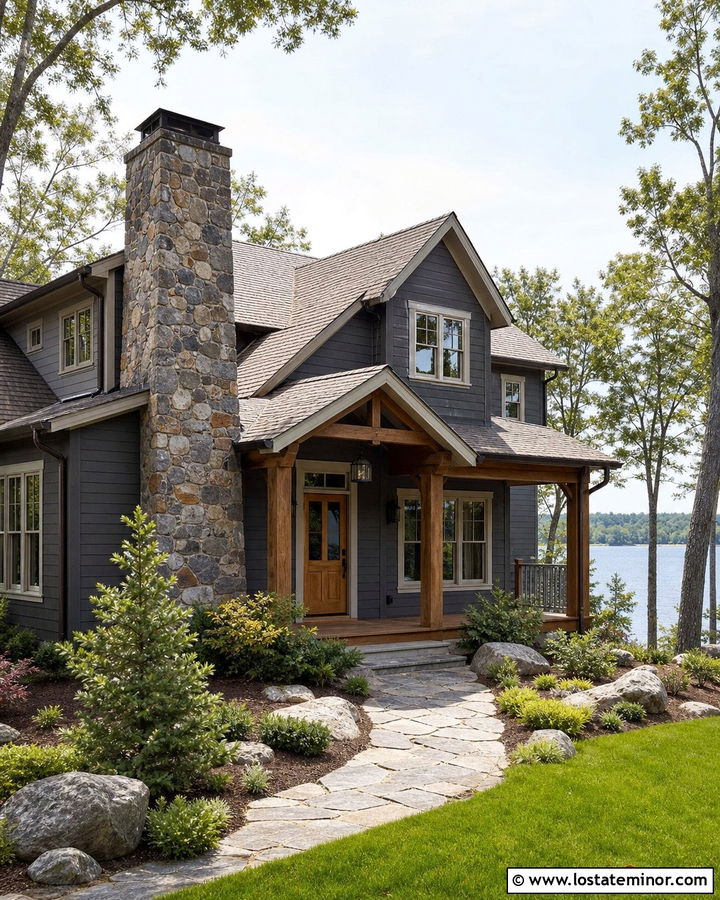
A tall fieldstone chimney gives a charcoal grey house a natural architectural anchor. Look for stone containing gray, taupe, brown, and muted rust tones, which can introduce warmth without fighting the dark siding. Extend the chimney from the foundation to the roofline so it looks structural rather than decorative. Cedar porch beams and a coordinating wood front door can repeat the warmer colors within the fieldstone. Keep the trim a subdued cream instead of brilliant white for a softer transition. This scheme feels particularly fitting on a rustic lake house or woodland retreat with steep gables. Finish the exterior with a weathered gray roof, dark bronze gutters, native shrubs, and an irregular stone walkway that echoes the chimney’s rugged texture.
5. Charcoal Grey House With Stone Garage
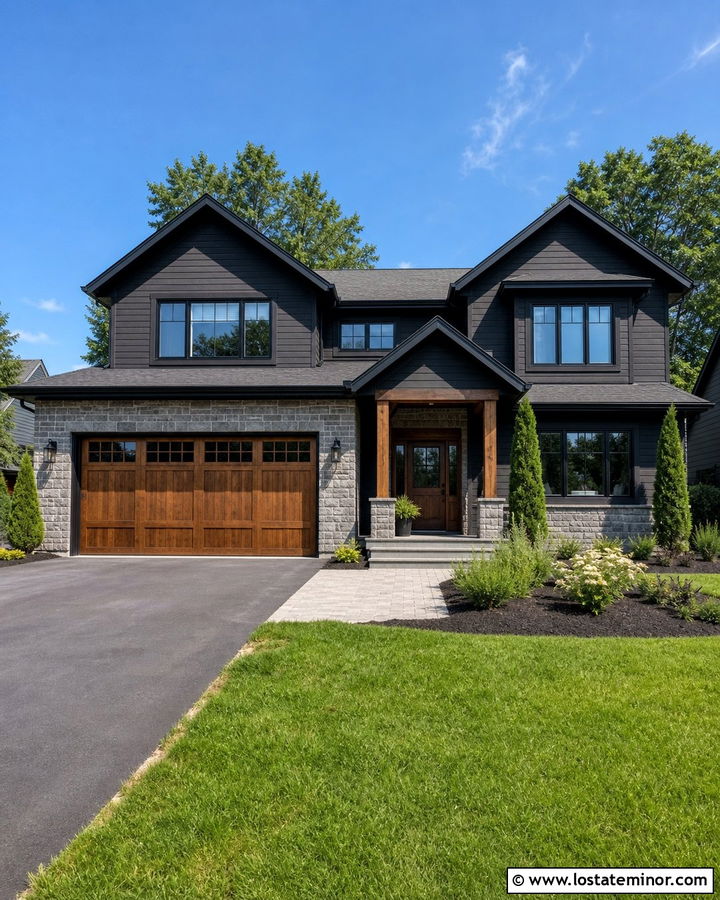
Stone surrounding the garage can break up a wide charcoal grey facade and make the doors feel intentionally integrated. Cover the lower garage walls and the space between the doors with cool gray stone veneer. Then choose garage doors in stained cedar or a muted charcoal shade that closely matches the siding. A simple black roof and black-framed windows maintain a modern appearance. Carry a smaller amount of the same stone to the front entrance, perhaps around one column or beneath a bay window, to create visual continuity. This approach works well on a suburban two-story home with a front-facing garage. Wide foundation beds, upright evergreens, and a clean concrete driveway help balance the visual weight of the masonry.
6. Charcoal Grey House With Stone Entry
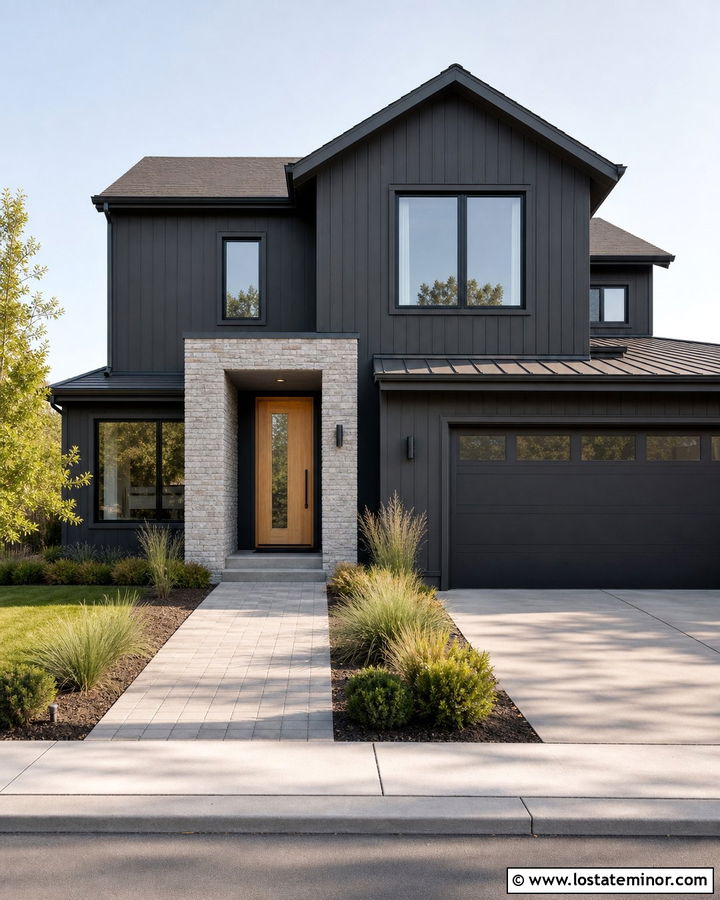
When the front door gets lost within a dark facade, a stone entry can provide clear definition. Frame the recessed entrance with pale gray stacked stone that rises to the porch ceiling or follows the shape of the entry gable. Charcoal grey siding around the remaining exterior will make this textured area appear brighter and more dimensional. Choose a natural oak door with vertical glass panels to add warmth and bring daylight inside. Slim black windows, understated trim, and a dark metal roof over the porch support a contemporary look. Repeat the stone on a low foundation section for balance, but avoid covering every wall. A straight paver walkway, structured grasses, and compact shrubs can guide attention toward the newly emphasized entrance.
7. Charcoal Grey House With Tan Stone
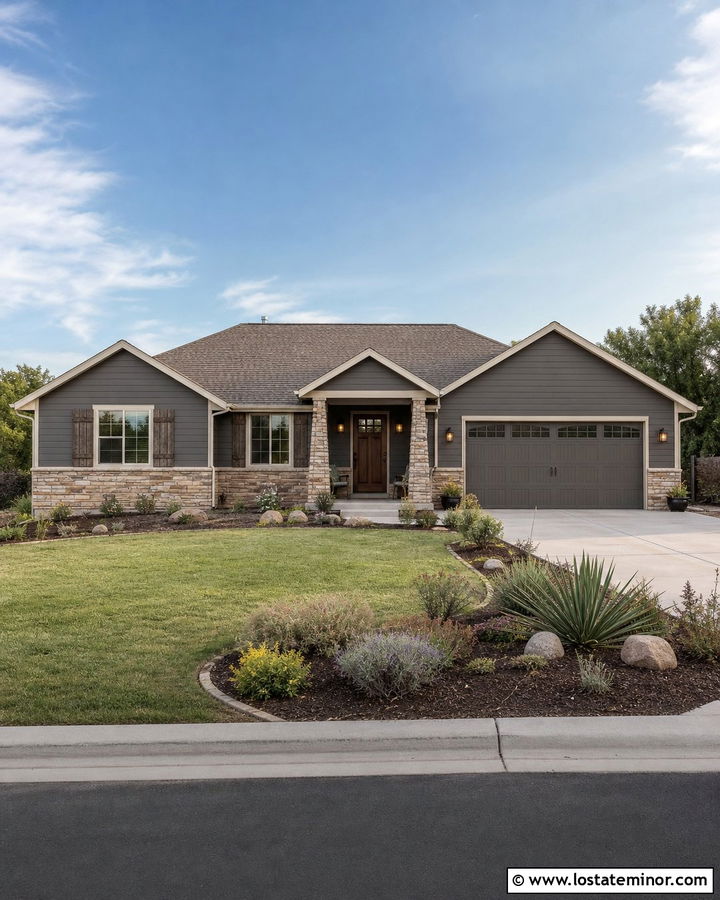
Tan stone is an effective way to warm up charcoal grey without changing its sophisticated character. Select masonry with sand, oatmeal, and light brown tones rather than orange or yellow undertones. Use it across the lower third of the house, porch columns, and chimney for a cohesive arrangement. Cream trim will bridge the gap between the dark siding and warm stone more gently than crisp white. A medium brown front door, bronze light fixtures, and weathered wood shutters can repeat the masonry’s earthy coloring. This palette suits a traditional ranch home with a long, low roofline. Finish the look with brown-gray shingles, curved planting beds, and drought-tolerant landscaping that complements the relaxed, natural colors of the complete exterior.
8. Charcoal Grey House With Black Stone
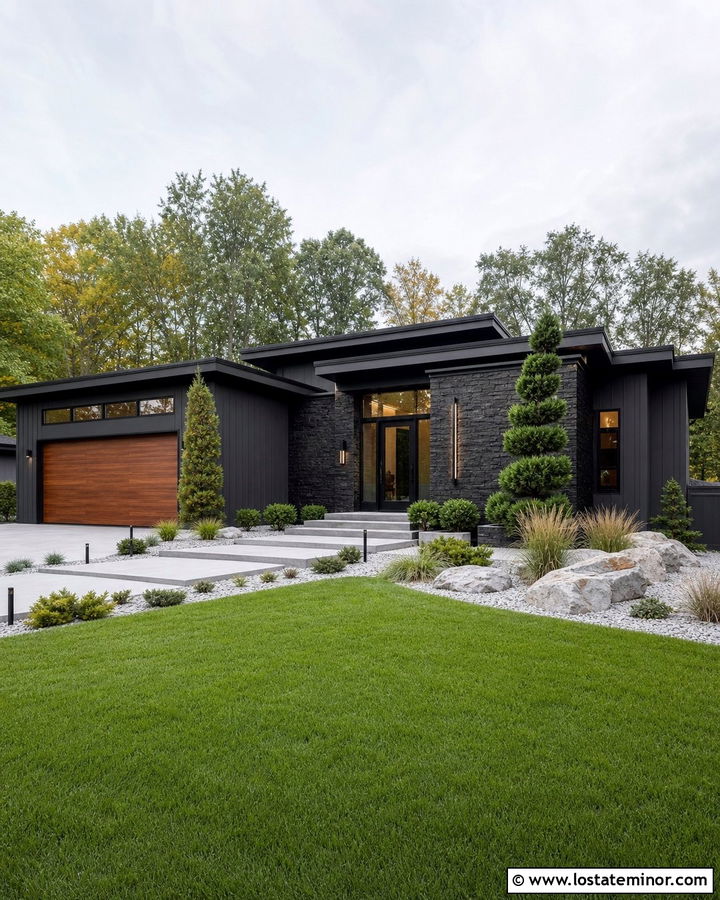
Black stone creates a dramatic exterior with subtle tonal variation rather than obvious contrast. Pair charcoal grey vertical siding with black or deep graphite stone that has visible texture and occasional gray highlights. The stone works best as a controlled accent around the entry, foundation, or one projecting wall. Matte black windows and gutters reinforce the modern palette, while a warm cedar garage door prevents the exterior from feeling cold. Consider light gray concrete steps and a pale gravel border to introduce a small amount of brightness near ground level. This scheme fits a contemporary home with flat or low-sloped rooflines. Architectural grasses, sculptural evergreens, and restrained landscape lighting can complete the strong, minimalist curb appeal.
9. Charcoal Grey House With River Rock
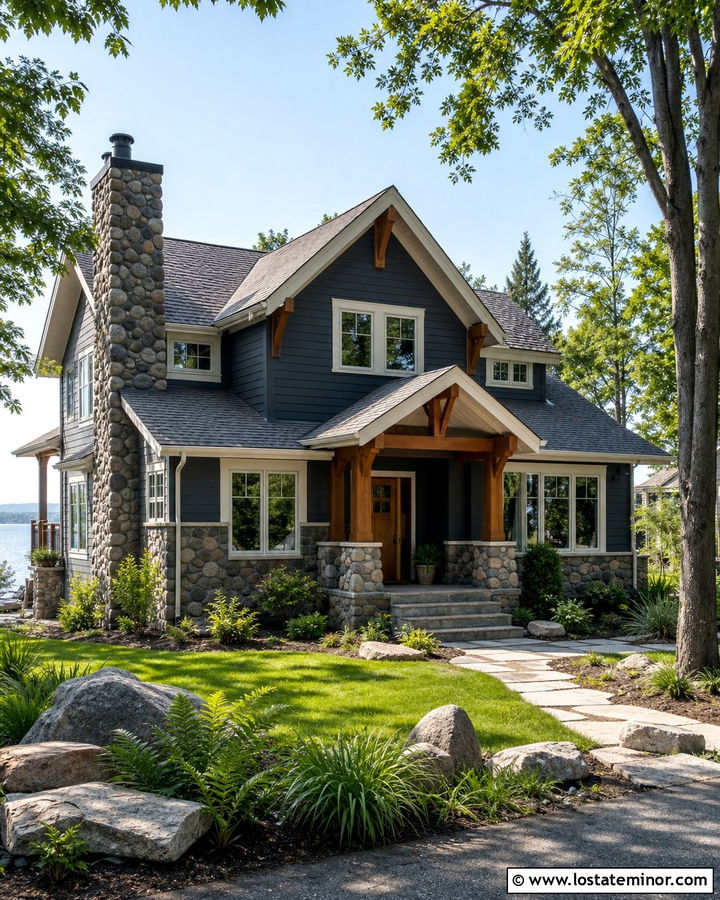
Rounded river rock can give charcoal grey siding a softer, more relaxed personality. Choose stone in a varied blend of slate gray, taupe, cream, and muted brown. Apply it to the foundation, fireplace chimney, and porch supports so the texture feels connected to the architecture. Horizontal lap siding in a warm charcoal grey keeps the exterior modern while balancing the rustic masonry. A fir front door and matching timber brackets can pull out the brown tones in the rock. Use soft ivory trim and a medium gray roof for gentle contrast. This complete design works well for a lakeside cottage, cabin-inspired home, or informal Craftsman. Naturalistic landscaping with ferns, boulders, and native grasses reinforces the comfortable outdoor setting.
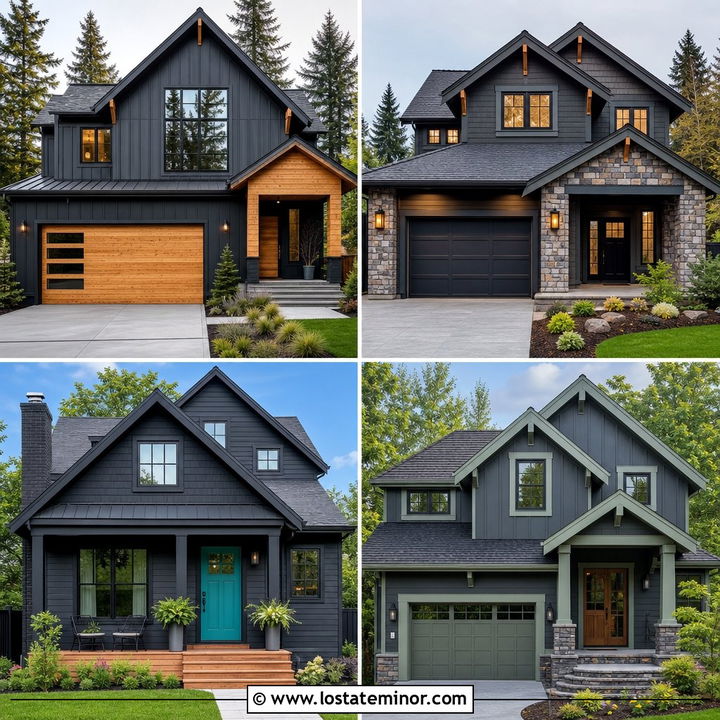
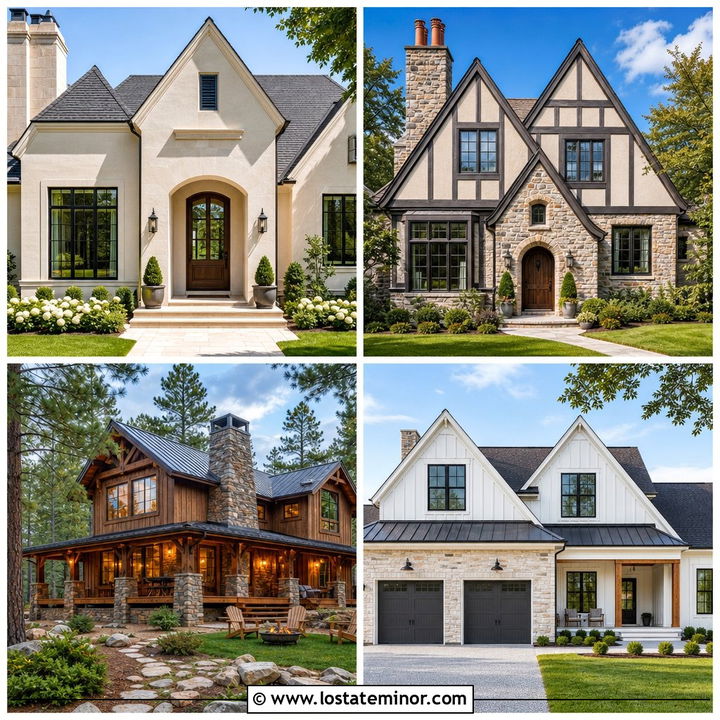
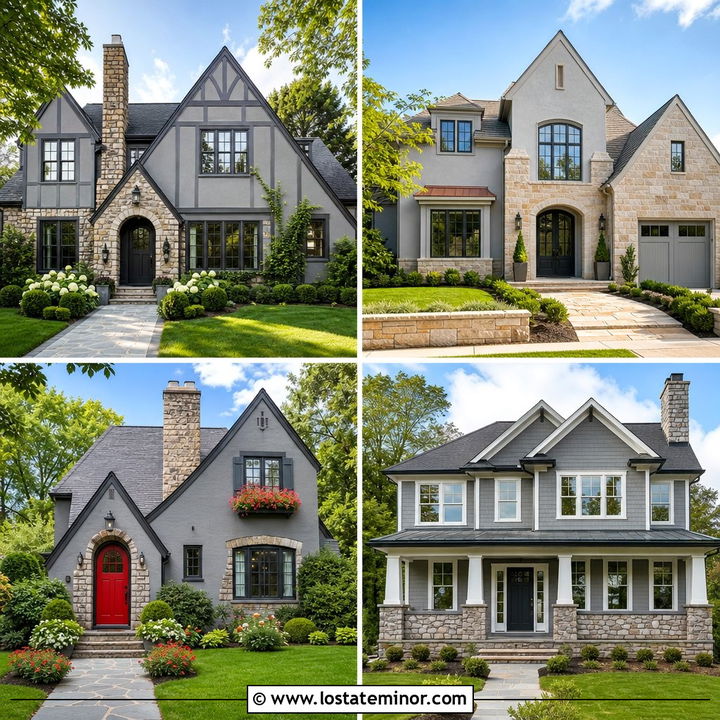
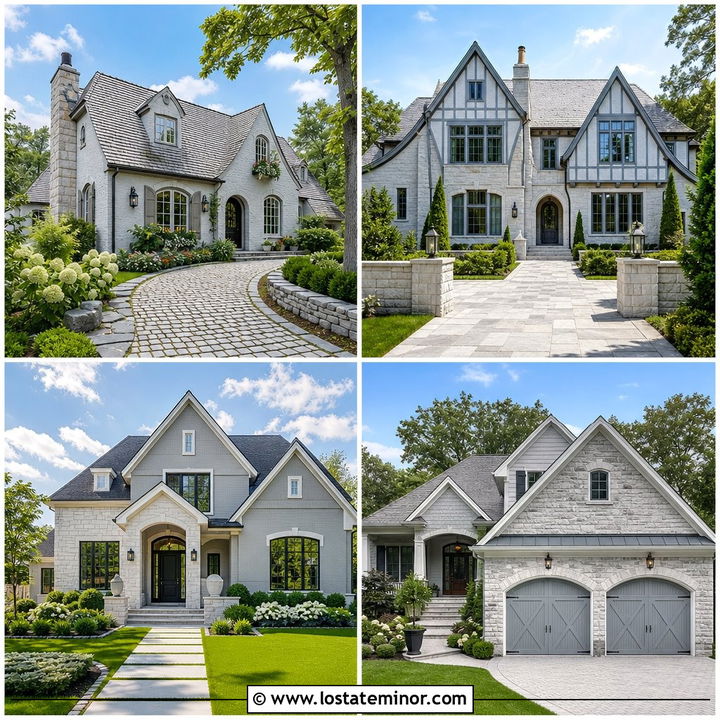
10. Charcoal Grey House With Stone Columns
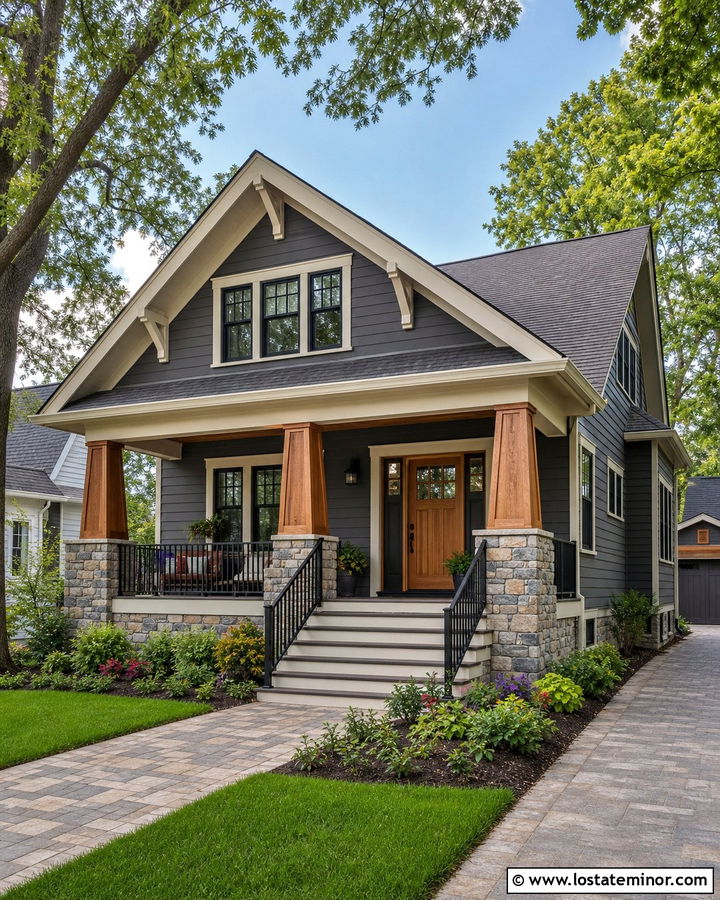
Stone columns can make a simple porch feel substantial and visually connected to the ground. Begin with square column bases clad in mixed gray and beige stone, then add tapered painted posts or cedar beams above them. Charcoal grey siding creates a strong background, while warm white soffits and window trim keep shaded porch areas from appearing too dark. A craftsman-style oak door with divided-light glass fits the layered material palette. Repeat the masonry along a low foundation band to avoid isolated stone patches. This complete scheme is ideal for a bungalow or Craftsman house with a deep front porch. Broad steps, black railings, porch seating, and colorful foundation plants create a welcoming transition from the yard to the entrance.
11. Charcoal Grey House With Stone Wainscoting
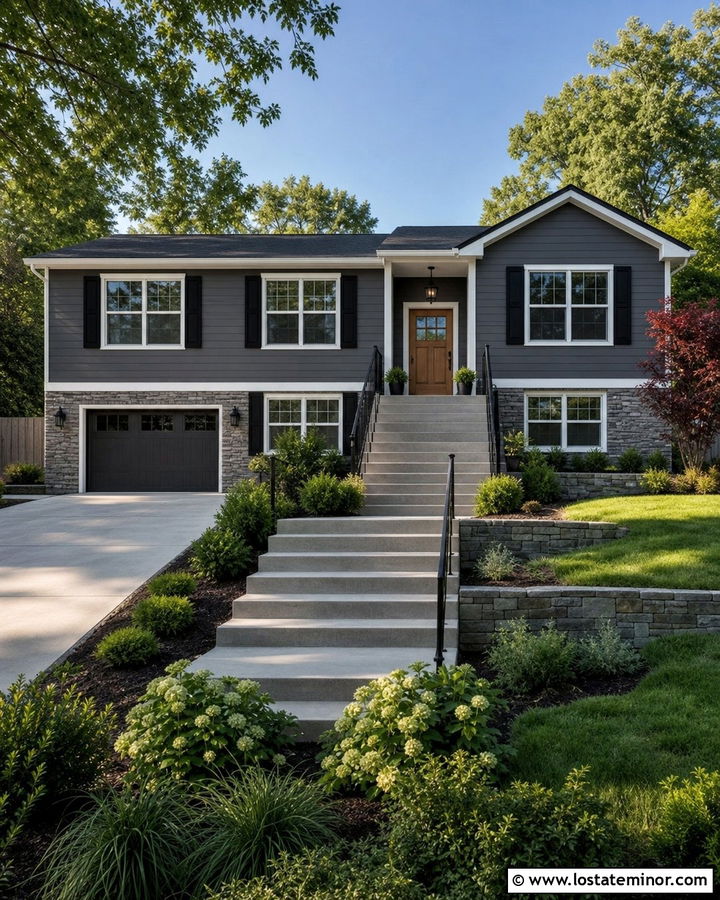
Stone wainscoting offers texture without overwhelming a charcoal grey exterior. Run the masonry continuously around the lower portion of the facade, keeping its height aligned with windowsills or porch floors. A cool gray stone blend creates a seamless transition, while lighter mortar makes each piece more visible. Above it, charcoal horizontal siding can give the walls a clean, unified appearance. Use off-white trim, black shutters, and a medium wood door to provide controlled contrast. This arrangement works especially well on a split-level house because the stone can visually connect different floor heights. A dark gray roof, simple metal railings, and tiered landscaping will help the uneven elevation feel intentional. Keep stone placement consistent around visible corners for a finished result.
12. Charcoal Grey House With Stone Gable
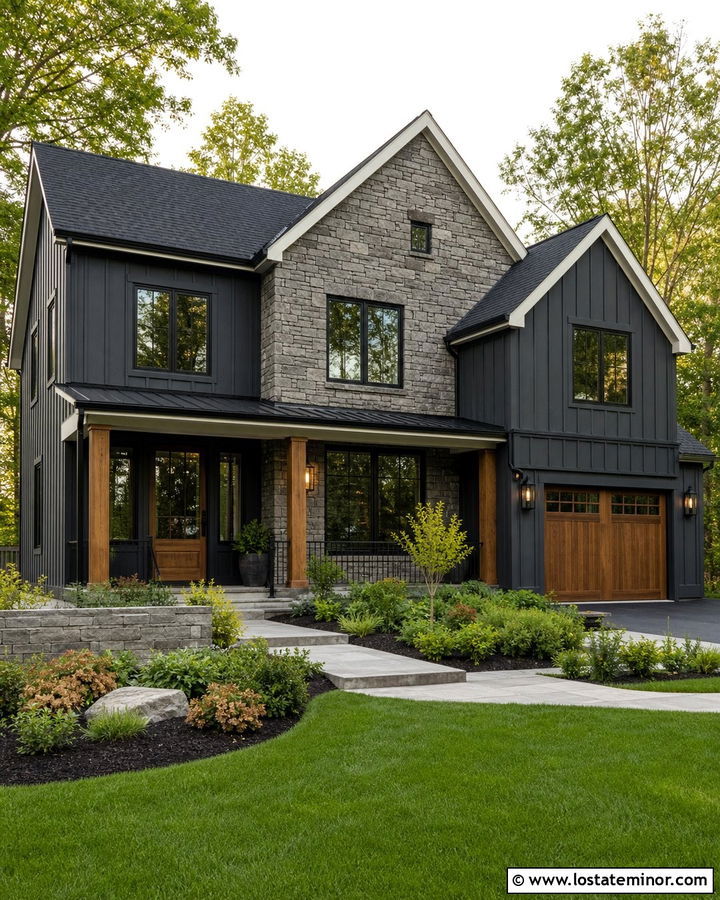
Covering one front-facing gable with stone can highlight the architecture of a charcoal grey home. Choose a light-to-medium gray ledgestone that contrasts enough to make the roof peak visible. Apply it to the entire gable wall rather than using a small floating patch. Charcoal board-and-batten siding on the surrounding sections will add a second texture while keeping the color consistent. Black windows and a stained wood garage door create contemporary depth, while warm white fascia outlines the roof. This approach works well on a new American suburban home with multiple gables. Repeat the stone near the entry or foundation to make the material feel purposeful. Layered shrubs and a broad walkway can balance the strong vertical emphasis above.
13. Charcoal Grey House With Bluestone Accents
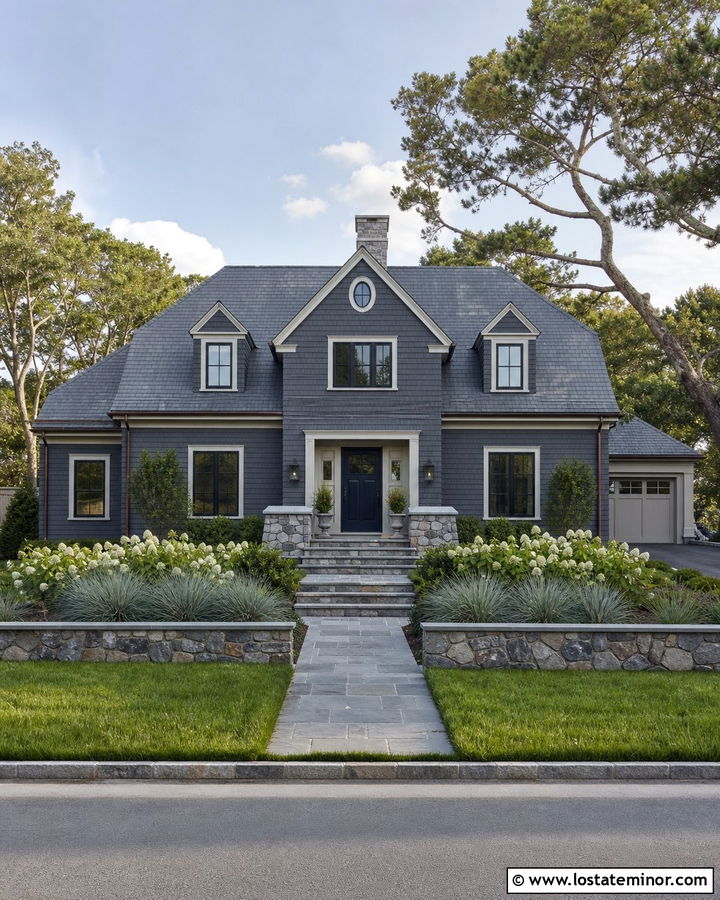
Bluestone brings cool blue-gray undertones that pair naturally with charcoal grey siding. Use it for porch walls, stair treads, low garden walls, and selected facade sections to create a coordinated exterior. A charcoal paint with a slight blue undertone will connect more smoothly than a warm brown-gray shade. Choose black window frames, pale gray trim, and a navy or natural wood front door to continue the cool palette. A slate-colored roof can complete the tonal effect without making every surface identical. This look is well suited to a Cape Cod house or coastal-inspired home that needs more visual weight. White flowering shrubs, blue-green grasses, and a bluestone walkway can repeat the cool colors throughout the surrounding landscape.
14. Charcoal Grey House With Warm Stacked Stone
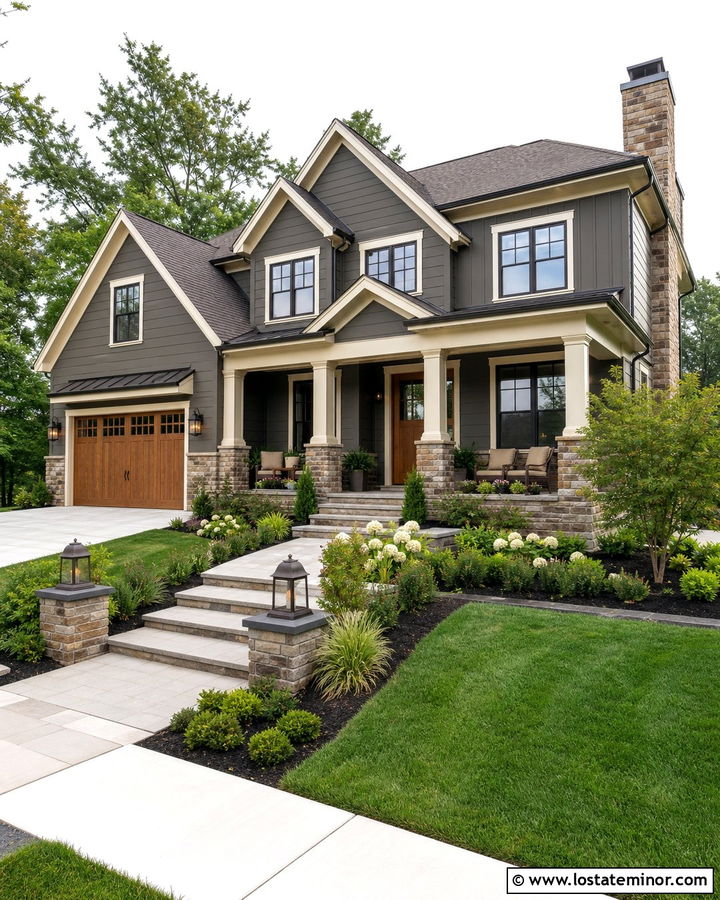
Warm stacked stone makes a dark charcoal exterior feel comfortable and approachable. Look for thin stone pieces containing beige, mushroom, soft brown, and weathered gray. Use the material around the porch, along the foundation, and on one prominent chimney. Charcoal lap siding keeps the upper walls visually quiet, allowing the detailed masonry to become the main feature. A caramel-toned wood door and matching garage doors can reinforce the warmth, while bronze windows and lights provide a softer alternative to black. This complete combination suits a transitional home with simple gables and balanced proportions. Finish with a brown-gray roof, creamy trim, and natural landscaping. Mulched beds, ornamental trees, and warm concrete pavers will make the palette feel connected to its setting.
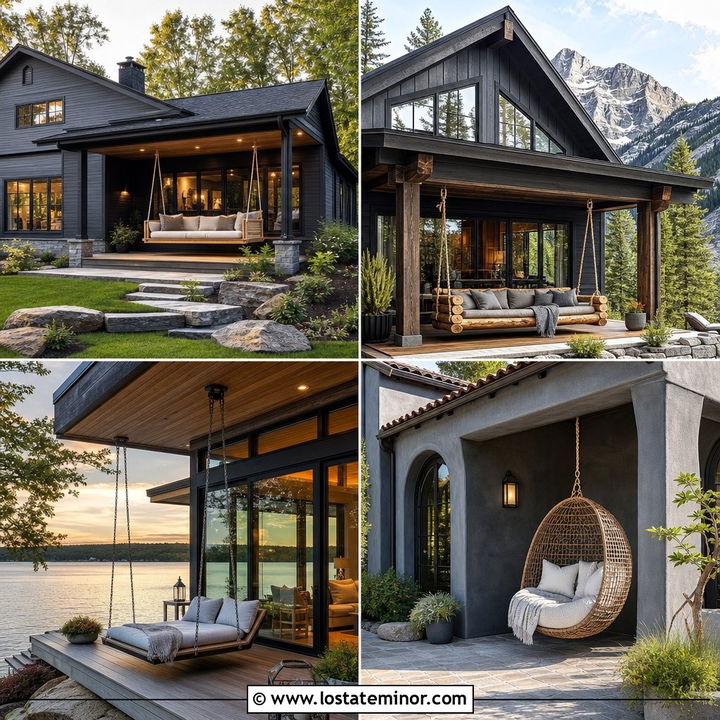
15. Charcoal Grey House With Rustic Stone
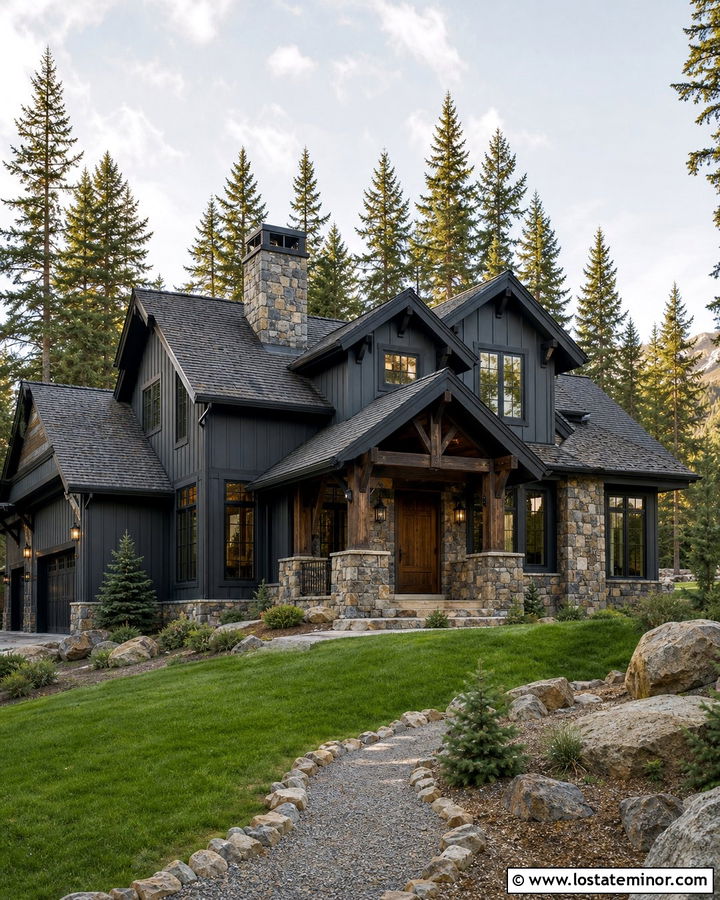
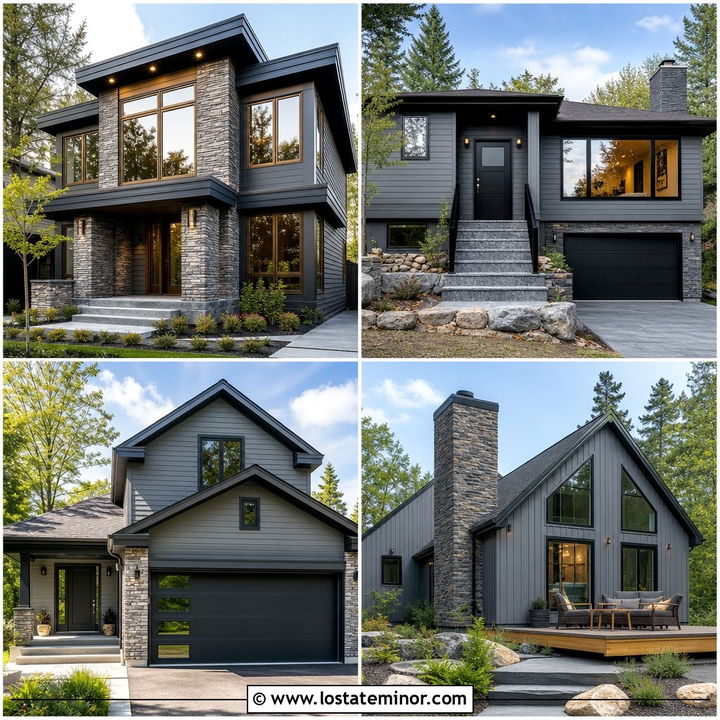
Rough-cut stone can add age and character to an otherwise clean charcoal grey facade. Choose irregular masonry with visible joints and a blend of gray, brown, and mossy beige tones. Place it on the chimney, porch foundation, and short wing walls rather than scattering small sections across the house. Use charcoal board-and-batten siding above the stone to create a strong vertical rhythm. Heavy timber posts, dark bronze fixtures, and a knotty alder door can support the rustic style. A weathered charcoal roof will keep the exterior grounded without introducing another dominant color. This scheme works particularly well on a mountain home or modern lodge. Native evergreens, large rocks, and a gravel-edged walkway can extend the natural character into the yard.
16. Charcoal Grey House With Modern Stone Panels
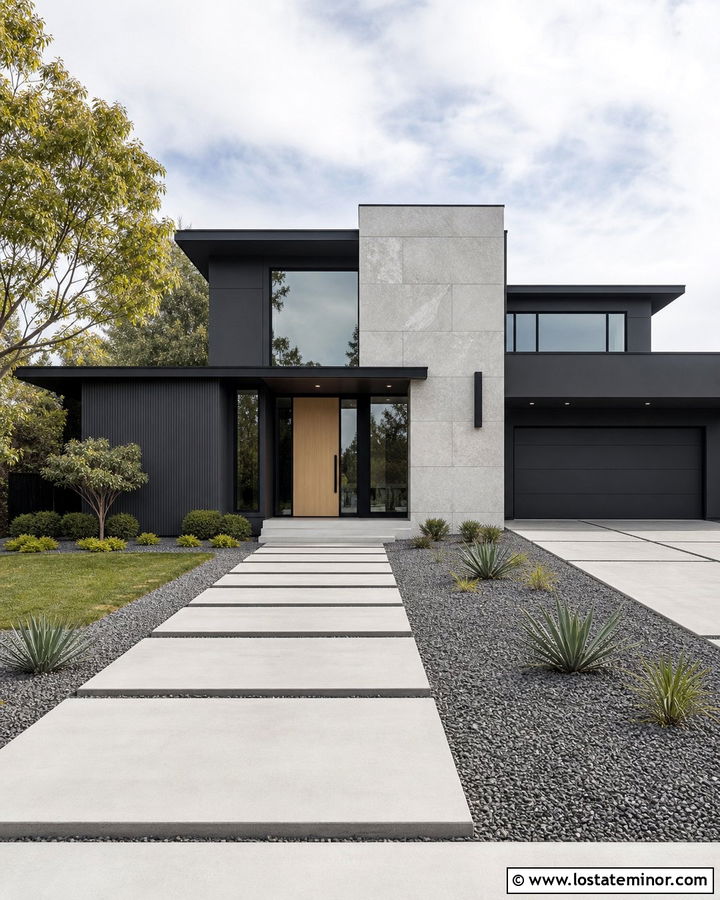
Large-format stone panels give a charcoal grey house a sleek, architectural appearance. Use smooth limestone or porcelain stone panels in pale gray around the entrance and on one projecting volume. Their clean joints provide a crisp contrast to charcoal vertical siding or dark stucco. Black-framed windows can blend into the walls, while a light oak pivot door adds a welcoming focal point. Keep the roof low and simple, using black metal fascia and concealed gutters where practical. This complete palette works best on a modern house with asymmetrical rooflines and expansive glass. Repeat the pale stone in the front walkway or retaining walls for continuity. Minimal plantings, gravel beds, and sculptural trees reinforce the clean geometry without making the curb appeal feel bare.
17. Charcoal Grey House With Cedar And Stone
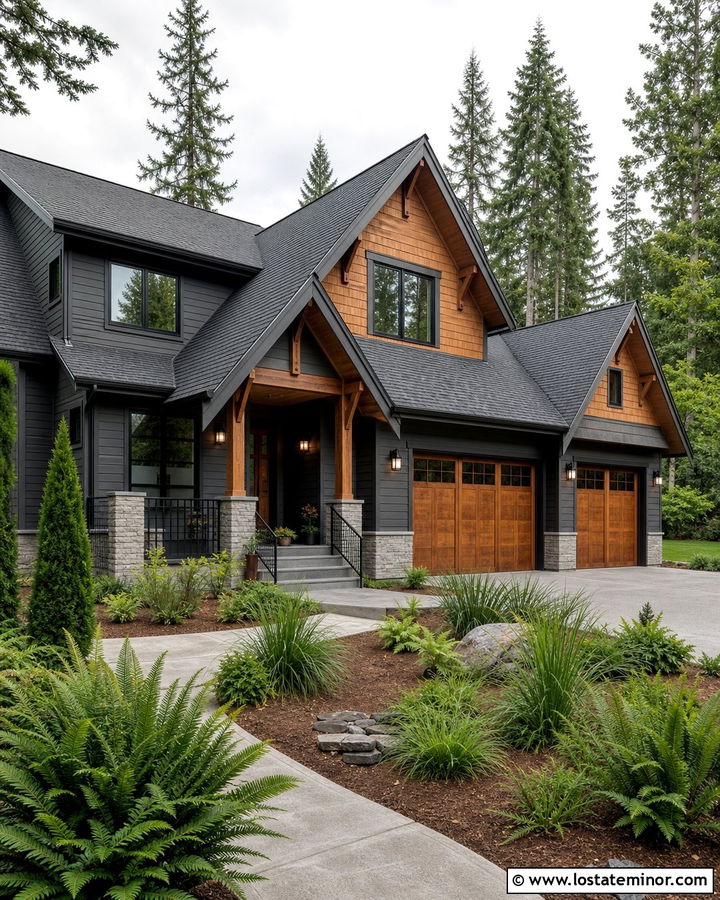
Cedar and stone bring necessary warmth to a charcoal grey exterior while preserving its modern character. Use charcoal siding across the main walls, natural cedar beneath the porch roof and on selected gables, and light gray stone around the foundation. The three materials should appear in clear sections rather than alternating randomly. A cedar front door and matching garage door can visually connect the wood accents. Matte black windows, gutters, and railings add definition without introducing another major color. This balanced scheme works beautifully on a Northwest contemporary home or updated split-level. Choose a simple charcoal roof and natural concrete walkway. Ferns, grasses, and layered evergreens will support the organic palette and help the darker house settle comfortably into a wooded landscape.
18. Charcoal Grey House With Stone And White Trim
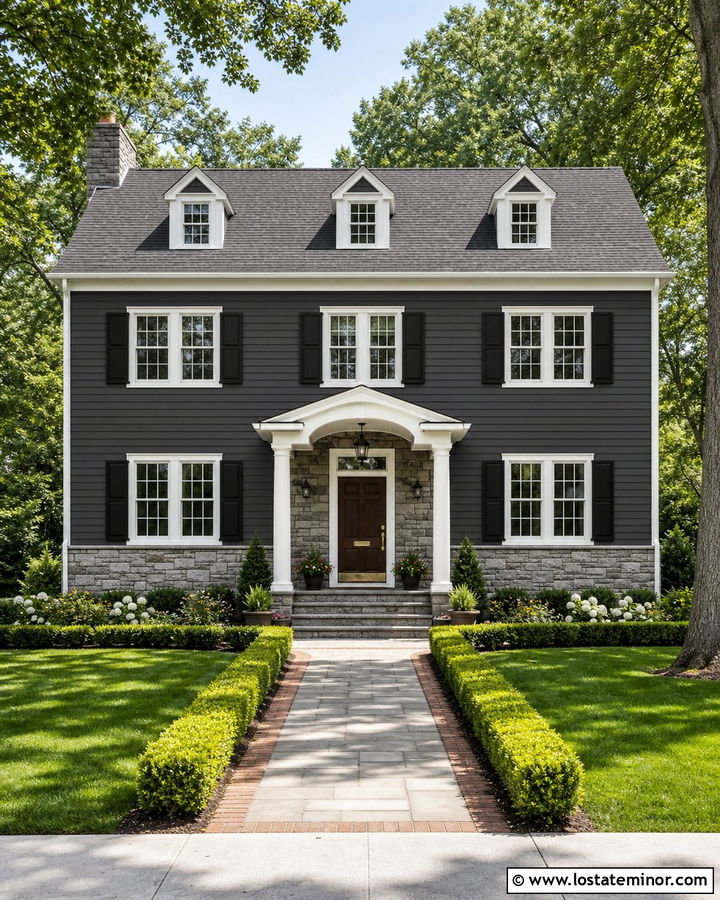
Bright white trim gives charcoal grey siding a classic outline, while stone adds enough texture to keep the high contrast from looking flat. Use white around windows, fascia, porch columns, and garage doors. Then introduce medium gray stone along the foundation and around the entry. The stone should include a few pale pieces that visually relate to the trim. A black front door offers a formal finish, although stained mahogany can create a warmer focal point. This complete palette is especially suitable for a Colonial or Georgian-inspired home with symmetrical windows. Keep shutters charcoal or black so the facade does not become overly busy. A dark shingle roof, brick-edged walkway, clipped hedges, and balanced foundation beds will reinforce the home’s traditional proportions.
19. Charcoal Grey House With Stone And Black Trim
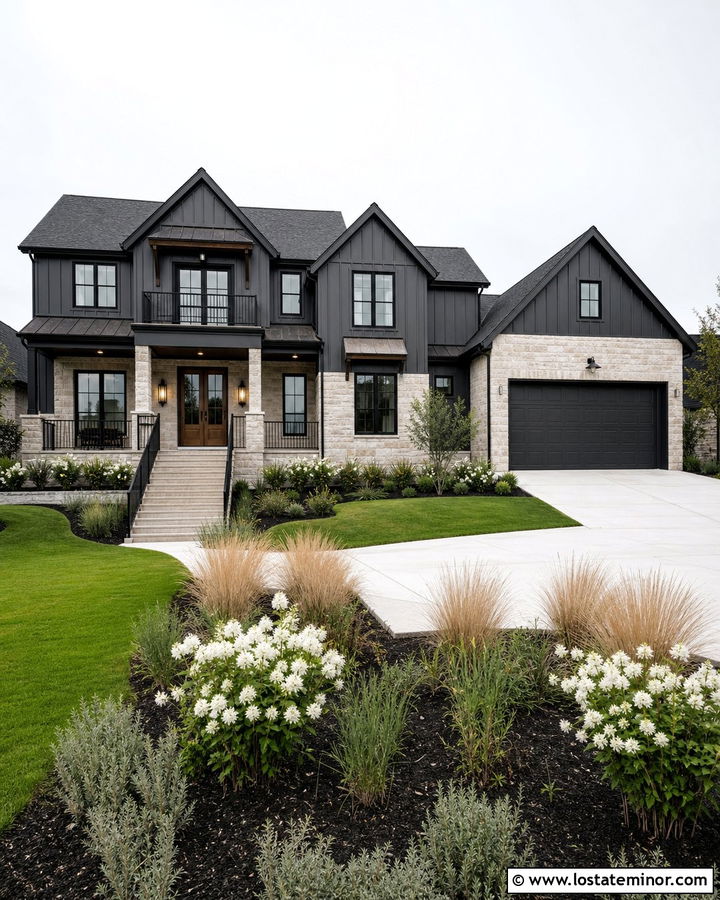
Black trim creates a low-contrast, contemporary frame around a charcoal grey house. To prevent the exterior from appearing too dark, introduce pale limestone or light gray ledgestone across the porch and lower walls. The masonry becomes the visual break between charcoal siding and black windows, fascia, gutters, and railings. A natural oak front door can serve as the single warm feature. Consider using charcoal garage doors that blend with the body rather than adding another large black surface. This complete combination works well on a modern farmhouse with simple rooflines and large windows. Use a medium charcoal roof to preserve subtle separation above. Light concrete paths, green lawn, airy ornamental grasses, and white flowers will brighten the surrounding curb-appeal view.
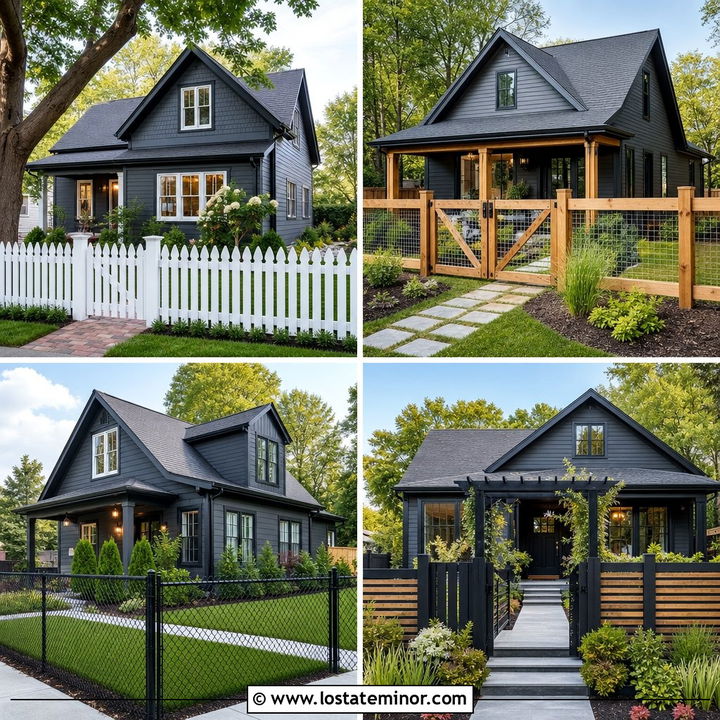
20. Charcoal Grey House With Stone And Wood Shutters
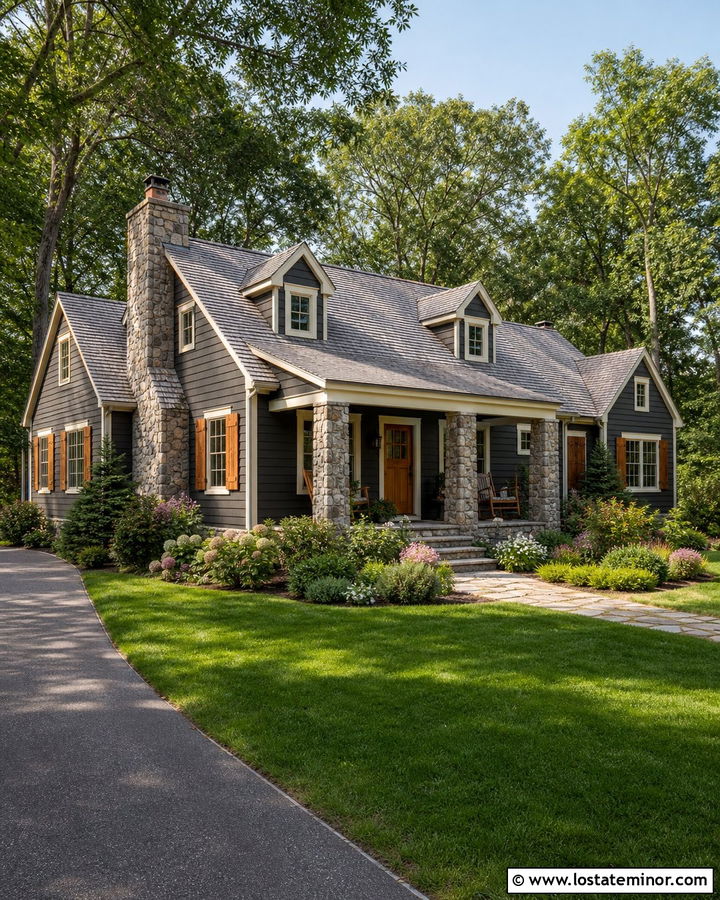
Wood shutters can make charcoal grey siding and cool stone feel more welcoming. Choose functional-looking shutters in cedar, cypress, or another medium brown stain. Their width should appear appropriate for the windows, even when they are decorative. Use mixed gray fieldstone on the foundation, chimney, or porch columns to anchor the scheme. Warm charcoal lap siding provides a calm background, while cream trim softens the transitions around windows and roof edges. Repeat the shutter stain on the front door or porch beams for consistency. This complete design fits a cottage, ranch, or casual country home. A weathered gray roof, stone walkway, flowering shrubs, and informal garden beds will strengthen the relaxed character without distracting from the coordinated exterior materials.
21. Charcoal Grey House With Stone And Red Door
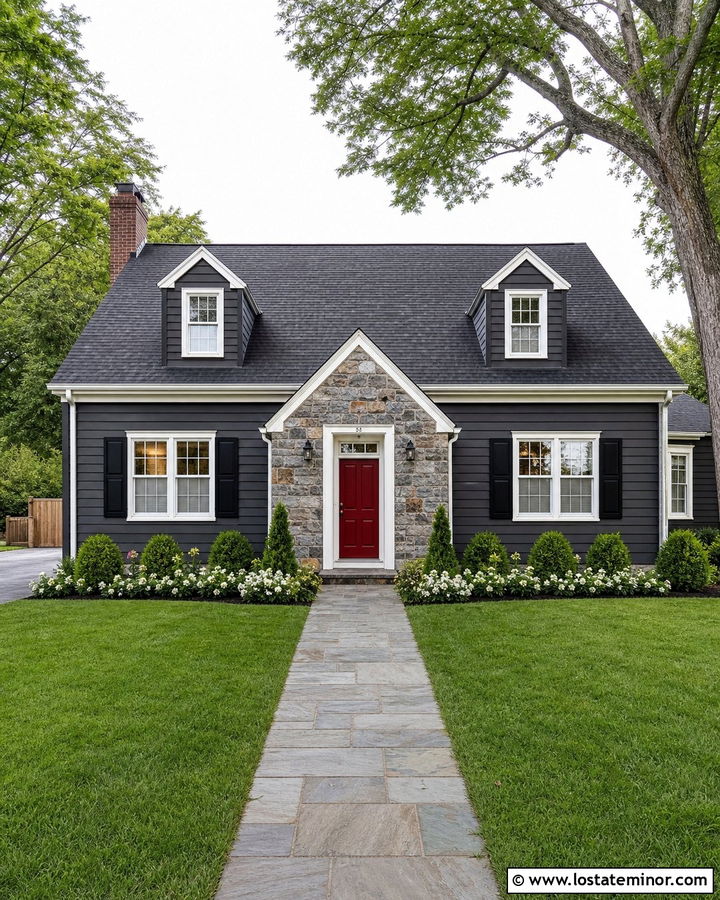
A muted red front door can energize a charcoal grey and stone exterior without looking overly bright. Choose a deep brick red, oxblood, or burgundy instead of a clear primary red. Surround the entry with gray stone containing subtle rust or brown flecks, which will help the door color feel connected to the masonry. Charcoal horizontal siding and warm white trim create a balanced backdrop. Black shutters and a dark gray roof provide traditional definition. This palette works especially well on a Cape Cod, Colonial, or cottage facade where the front entrance is centered and highly visible. Keep other accents restrained so the door remains the focal point. Boxwoods, white flowers, and a straight stone path can frame the entrance neatly.
22. Charcoal Grey House With Stone And Blue Door
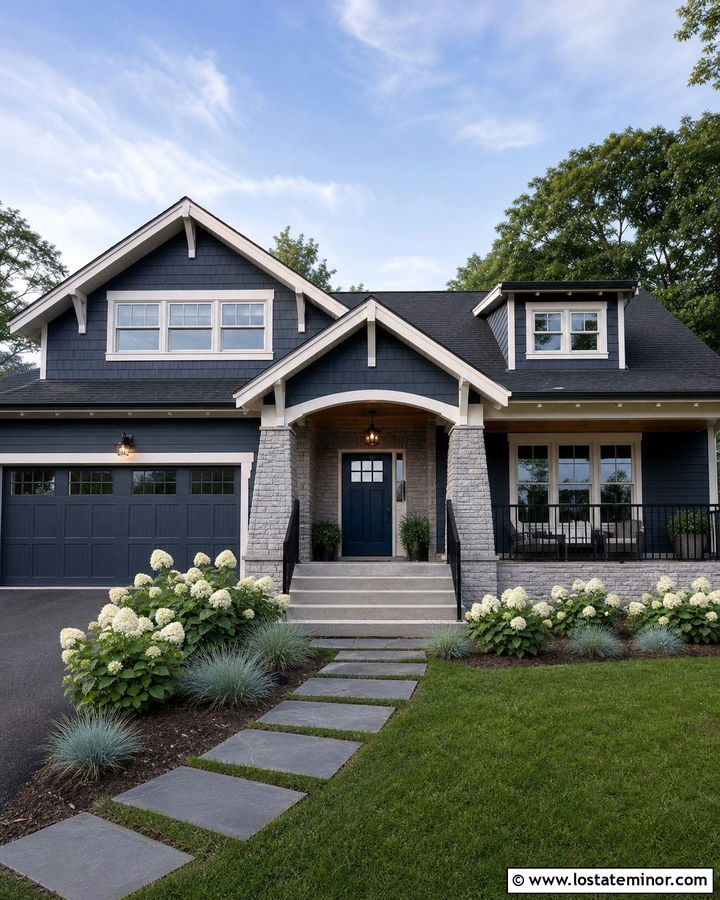
A blue door introduces color while maintaining the cool, sophisticated mood of charcoal grey siding. Consider muted navy, dusty blue, or deep blue-green rather than a highly saturated shade. Light gray stone around the entrance and foundation can connect the door to the body color. Use soft white trim to make the windows and porch details visible, especially on shaded elevations. Black roof shingles and metal railings add structure, while a natural wood porch ceiling contributes a small amount of warmth. This complete scheme suits a coastal Craftsman, bungalow, or compact suburban home. Blue-green ornamental grasses, white hydrangeas, and slate stepping stones can subtly repeat the accent colors. The result feels distinctive but remains versatile enough for long-term curb appeal.
23. Charcoal Grey House With Stone And Green Door
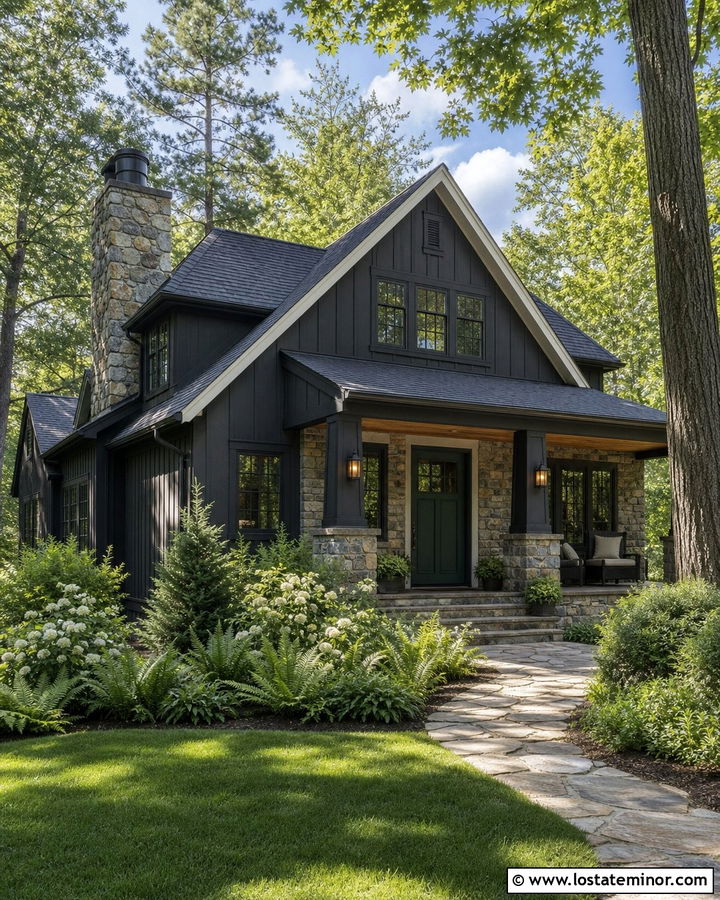
Deep green looks natural beside charcoal grey and stone because it reflects colors already present in many landscapes. Choose forest green, muted olive, or rich sage for the front door. Pair it with rugged gray fieldstone containing beige and mossy undertones. Charcoal siding should cover the main structure, while warm cream trim keeps the palette from becoming too cool. Dark bronze lights and gutters provide softer definition than pure black. A cedar porch ceiling or wood bench can add another organic layer. This complete look works well on a cottage, woodland ranch, or traditional Craftsman. Surround the facade with ferns, evergreen shrubs, and pale flowering plants. A curved flagstone path will strengthen the natural connection between the house, stonework, and garden.
24. Charcoal Grey House With Stone And Copper Details
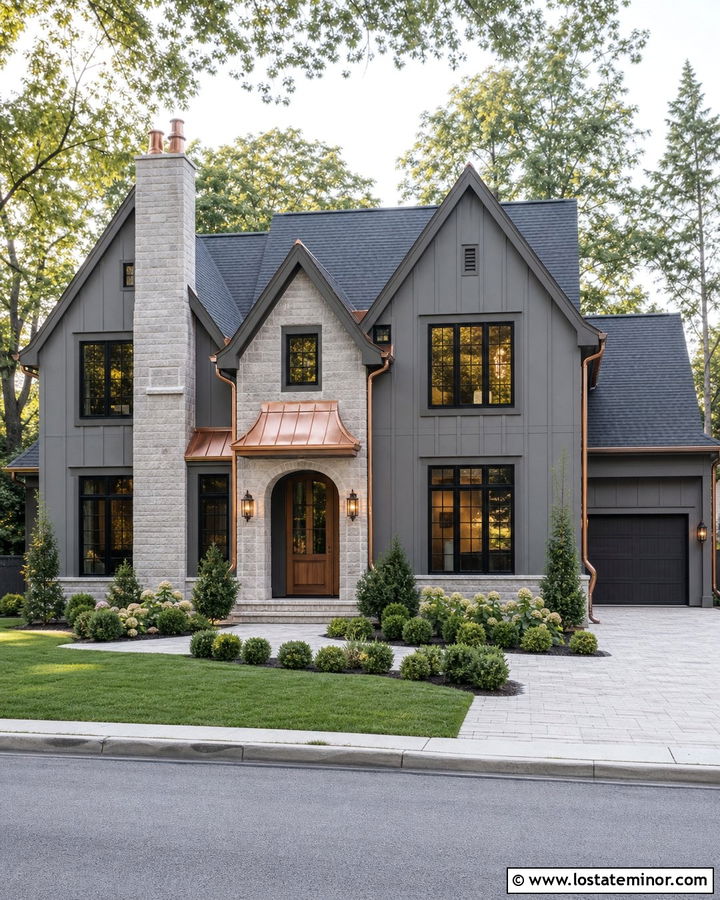
Copper details can bring warmth and quiet elegance to a charcoal grey house with stone accents. Introduce copper through porch roofing, gutters, downspouts, or exterior light fixtures rather than using it everywhere. New copper creates a vivid warm contrast, while aged copper develops a softer green-brown patina. Pair it with charcoal board-and-batten siding and warm gray limestone around the entrance and chimney. A rich walnut door can reinforce the warmer metal tones. Keep window frames black and main roof shingles dark gray for a disciplined background. This design suits a refined cottage, Tudor-inspired home, or upscale transitional exterior. Structured shrubs, pale stone paving, and neatly defined planting beds will complement the tailored materials without competing with the copper features.
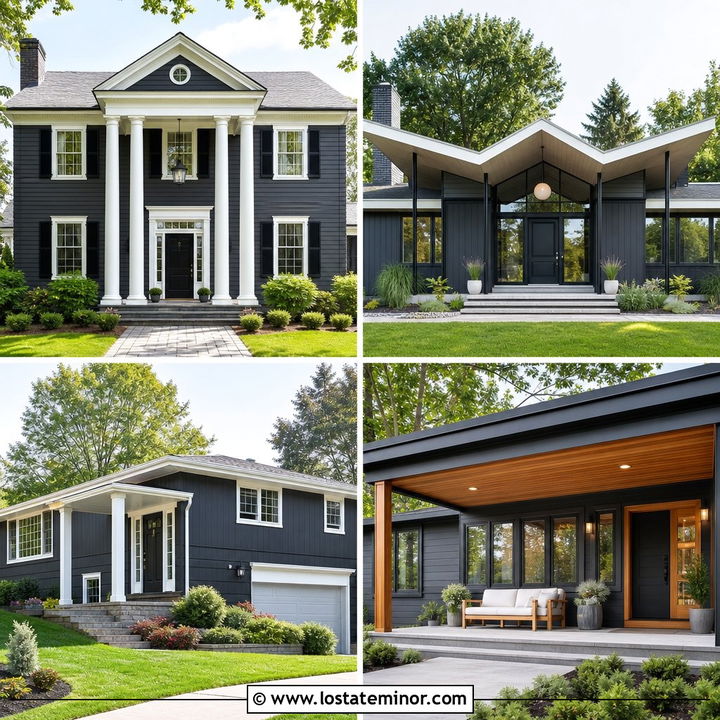
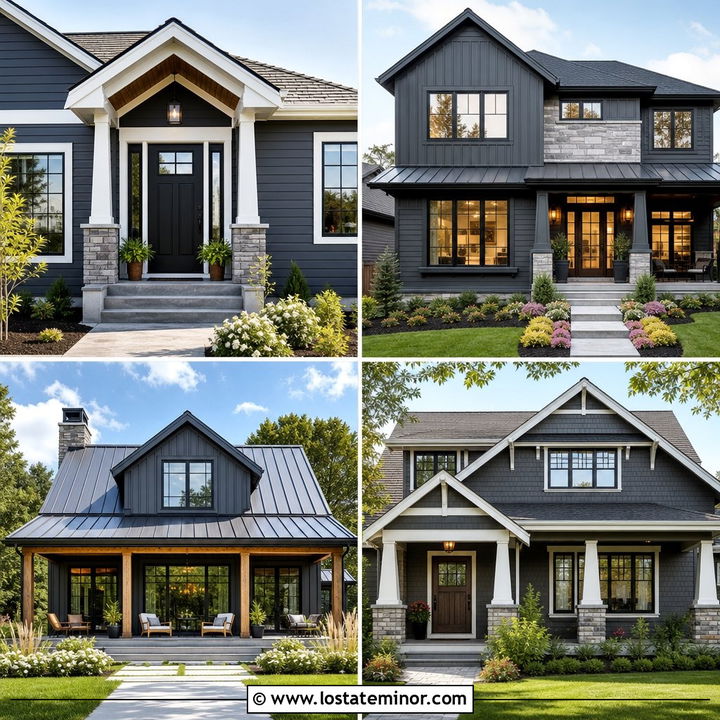
25. Charcoal Grey Ranch House With Stone
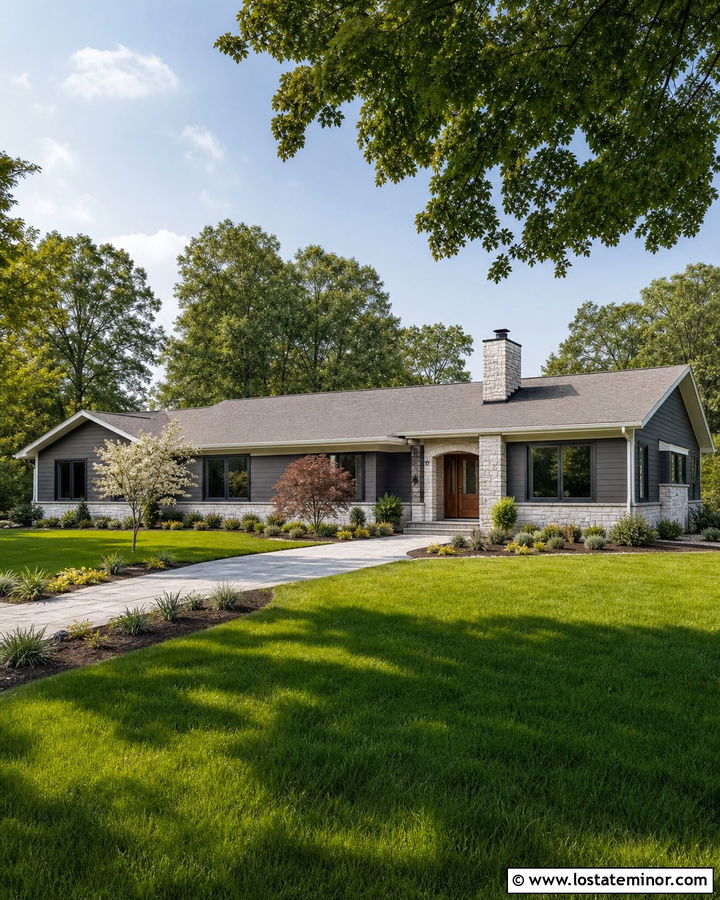
A long ranch house benefits from stone placement that breaks up its wide horizontal facade. Use charcoal grey lap siding across the main walls, then apply light gray stone around the entry and along selected foundation sections. Avoid running stone at the same height across the entire front if it makes the home appear lower. Instead, raise it around the porch or chimney to create vertical interest. Warm white trim, a cedar front door, and simple black windows form a balanced palette. A medium gray roof can help the low roofline remain distinct from the siding. Add a broad walkway, layered foundation beds, and one or two ornamental trees. These features will frame the house while preserving the ranch’s open, uncomplicated character.
26. Charcoal Grey Farmhouse With Stone
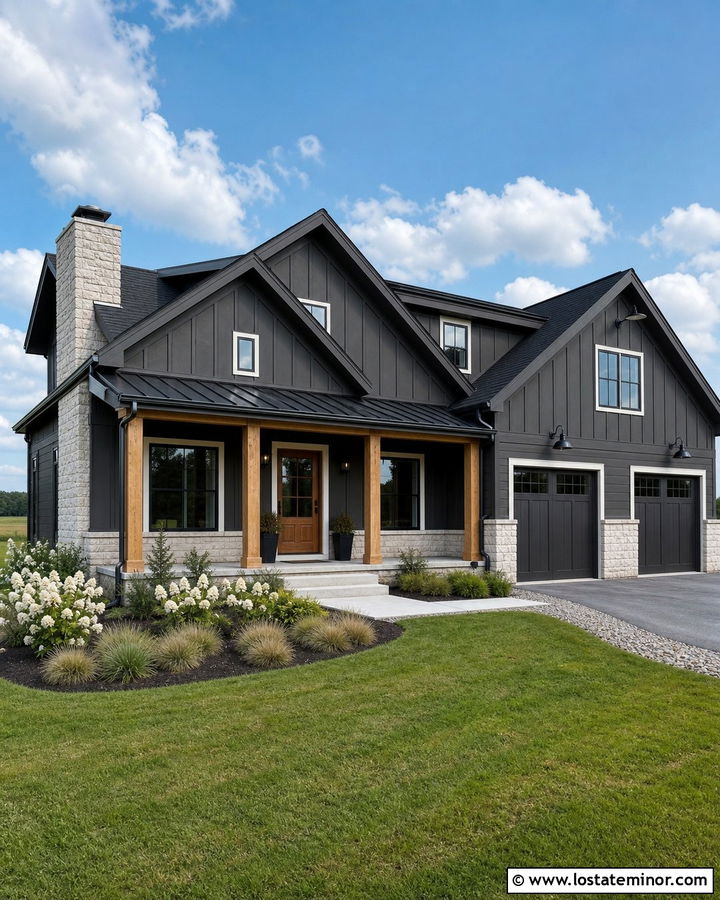
Charcoal grey gives a modern farmhouse a stronger, moodier alternative to the familiar white exterior. Use vertical board-and-batten siding across the main walls and pale limestone around the porch foundation, chimney, and lower garage walls. Warm white trim can outline the windows and broad roof edges without dominating the facade. Add natural timber porch posts, a medium oak door, and black metal lights for a balanced mix of contemporary and rustic elements. A charcoal standing-seam porch roof paired with dark architectural shingles creates subtle material variation overhead. Keep stone sections broad and purposeful rather than adding narrow decorative strips. A gravel-edged driveway, simple concrete walkway, white flowering shrubs, and tall grasses will complete the farmhouse setting with clean, approachable curb appeal.
27. Charcoal Grey Craftsman House With Stone
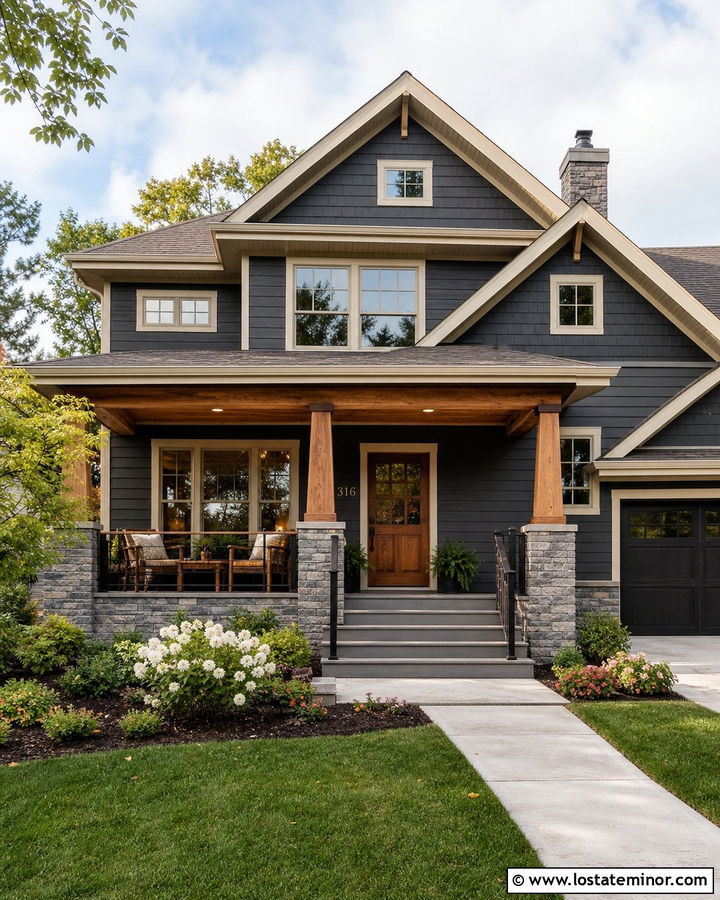
Craftsman architecture naturally supports a layered combination of charcoal grey siding and textured stone. Cover the lower walls and tapered porch column bases with mixed gray ledgestone. Use charcoal horizontal siding on the main level and matching shingle siding in the front gables for quiet texture. Cream trim will emphasize exposed rafters, brackets, and window groupings without creating a severe black-and-white contrast. Choose a stained oak door with divided-light glass and repeat the wood tone on porch beams. A brown-gray roof helps connect the warm trim and cool siding. Wide porch steps, black railings, and deep planting beds reinforce the home’s substantial character. The final exterior should feel detailed and handcrafted, yet controlled enough to avoid visual clutter.
28. Charcoal Grey Colonial House With Stone
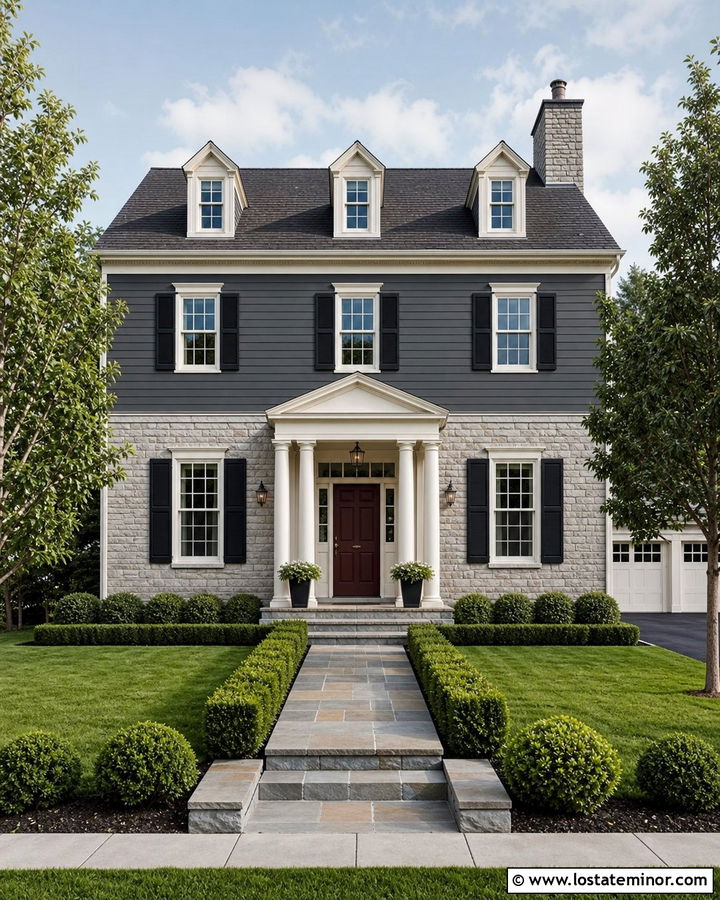
Stone can update a charcoal grey Colonial while respecting its formal symmetry. Use light gray rectangular-cut stone across the lower facade or around a centered entrance. Charcoal lap siding should cover the upper level, with warm white trim outlining evenly spaced windows, roof edges, and classical porch columns. Add black shutters sized to match the windows and a glossy black or deep burgundy front door. Keep the roof a traditional dark gray shingle so it supports the palette quietly. The garage door should match either the charcoal body or white trim, depending on its visibility. A straight stone walkway, clipped hedges, and balanced trees on both sides will preserve the orderly character while making the darker exterior feel established and welcoming.
29. Charcoal Grey Cottage With Stone
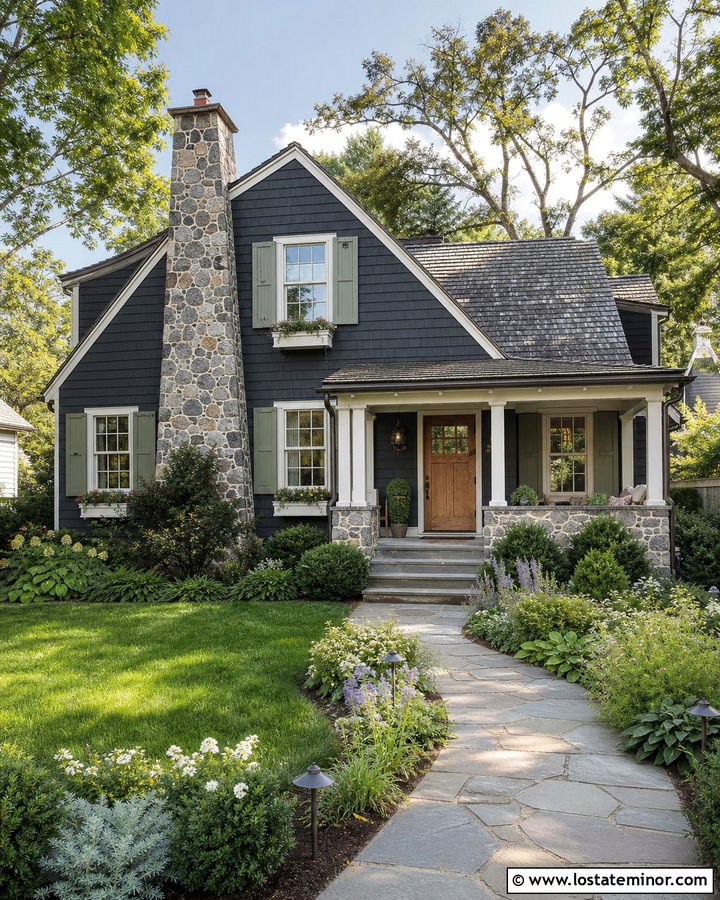
A charcoal grey cottage can feel cozy rather than heavy when stone and warm materials are used thoughtfully. Choose soft charcoal shingle siding, irregular cream-and-gray stone around the chimney, and a welcoming oak door beneath a small covered porch. Warm white trim can define windows and decorative roof details, while muted green shutters add a gentle natural accent. A weathered gray roof will suit the informal architecture better than a sharp black surface. Carry the chimney stone into a low garden wall or entry step to connect the home with its landscape. Curved pathways, flowering perennials, climbing greenery, and compact shrubs will soften the dark exterior. The finished design should feel intimate, textured, and comfortably settled into the surrounding garden.
30. Charcoal Grey Contemporary House With Stone
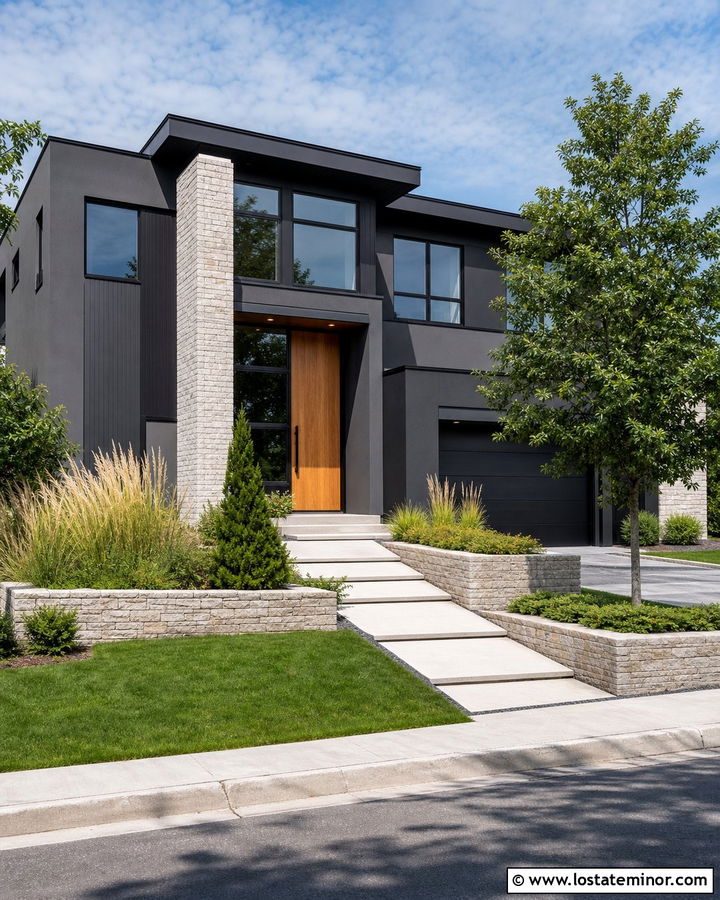
Strong geometry makes a charcoal grey contemporary house an ideal setting for carefully placed stone accents. Combine smooth charcoal stucco with vertical charcoal siding, then use pale gray limestone on one full-height entry wall. Large black-framed windows and a flat black roof edge support the modern structure. A wide natural wood door introduces warmth and prevents the palette from feeling commercial. Repeat the limestone in low retaining walls or oversized walkway slabs so the facade connects with the site. Keep landscaping minimal but not empty, using sculptural grasses, low evergreens, and one distinctive tree. A broad three-quarter view should reveal how every material wraps around the building. The result is dramatic, balanced, and visually clear from the curb.
Conclusion:
The best charcoal exterior schemes balance bold color with natural texture, carefully repeated accents, and clear material placement. Stone can brighten an entrance, anchor a porch, emphasize a chimney, or break up a wide facade. It also introduces subtle colors that can guide choices for trim, roofing, doors, shutters, and wood features. Before selecting materials, compare charcoal paint and stone samples outdoors during morning, midday, and afternoon light. Pay close attention to warm or cool undertones. Then repeat key colors across several architectural details for a connected appearance. These 30 Charcoal Grey House Design With Stone Accents Ideas offer adaptable inspiration for traditional, rustic, farmhouse, and modern homes.

Related posts: