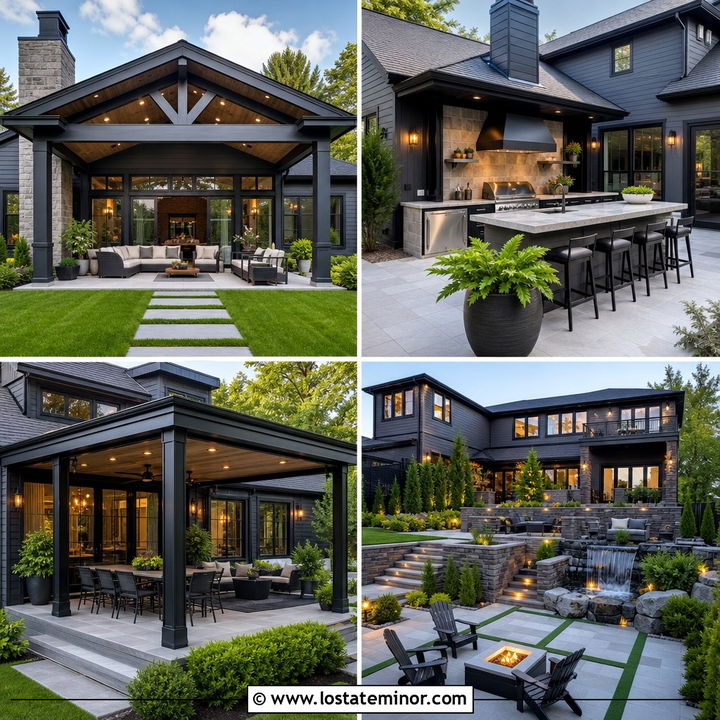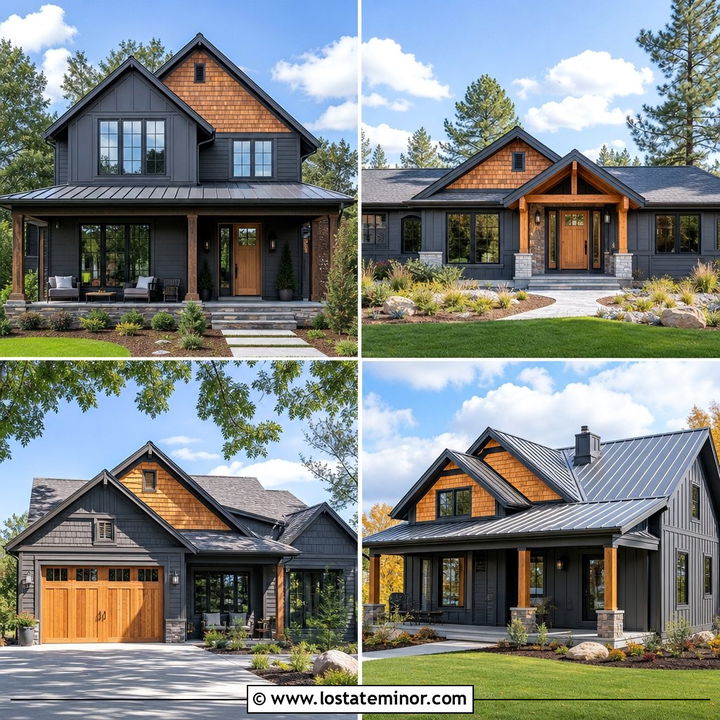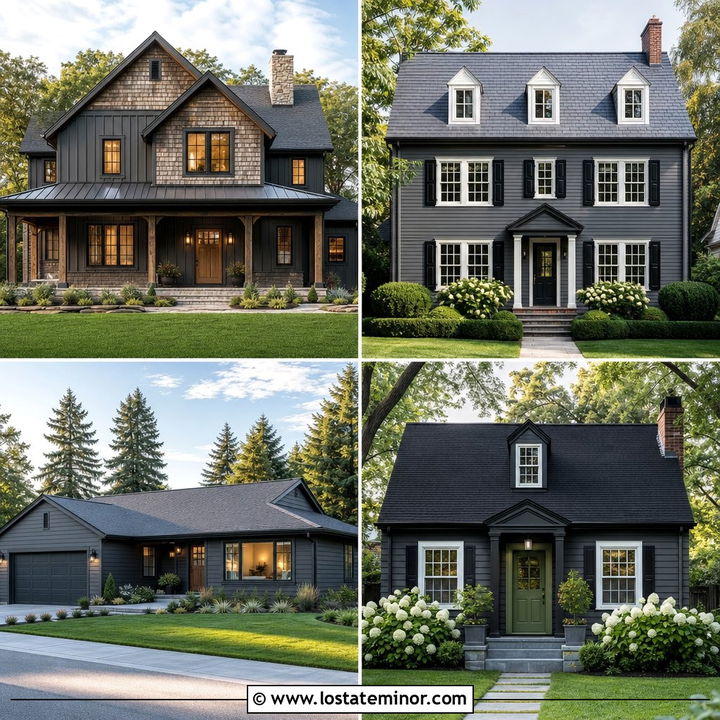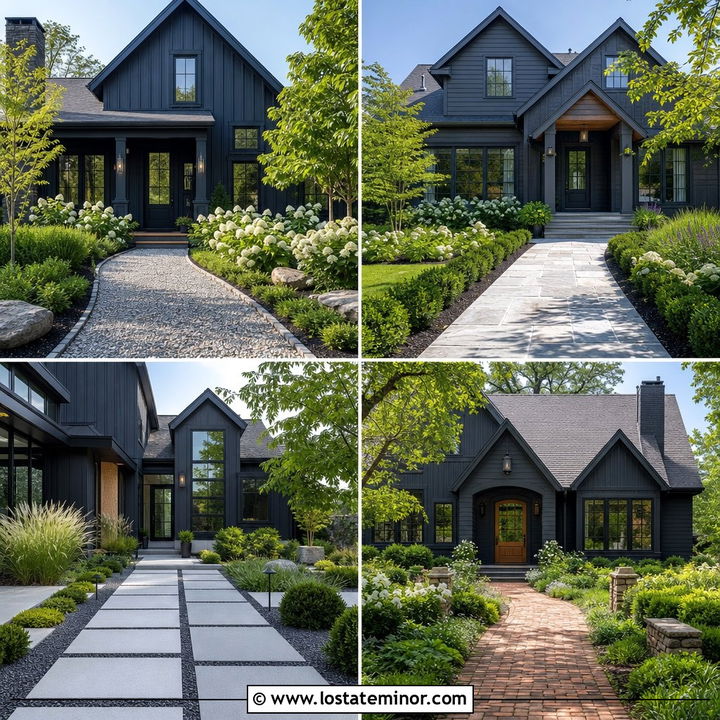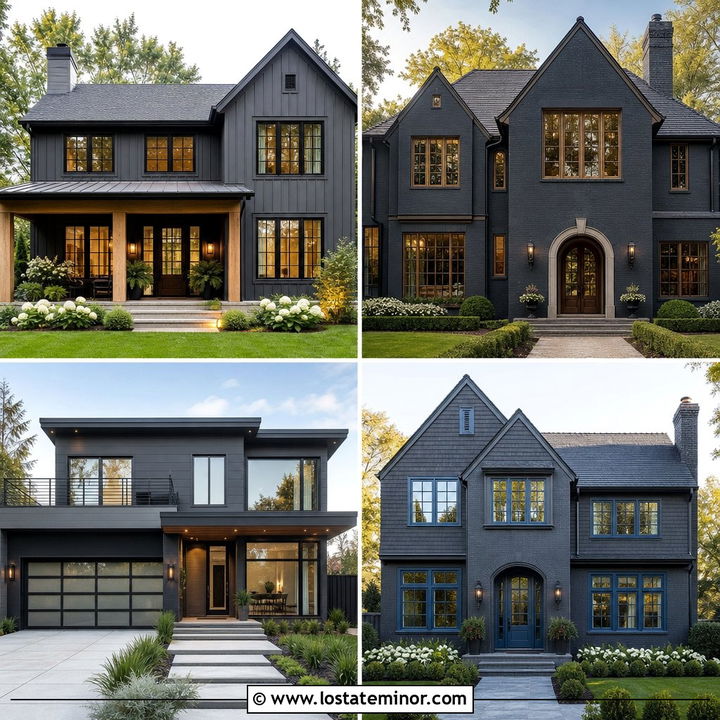
A charcoal grey exterior gives a home depth, definition, and a polished presence from the street. Adding a portico makes that dark palette feel more welcoming by framing the entrance and creating a clear architectural focal point. The strongest schemes coordinate the siding with columns, trim, roofing, doors, masonry, and landscaping rather than treating each feature separately. White details create crisp contrast, while stained wood, brick, and natural stone add warmth and texture. Black accents produce a modern effect, and colorful doors can bring personality to smaller facades. These combinations work across colonial, ranch, craftsman, farmhouse, cottage, and contemporary architecture. () Use these 30 Charcoal Grey House Design With Portico Ideas to plan a complete, balanced exterior.
1. Charcoal Grey Colonial House With White Portico
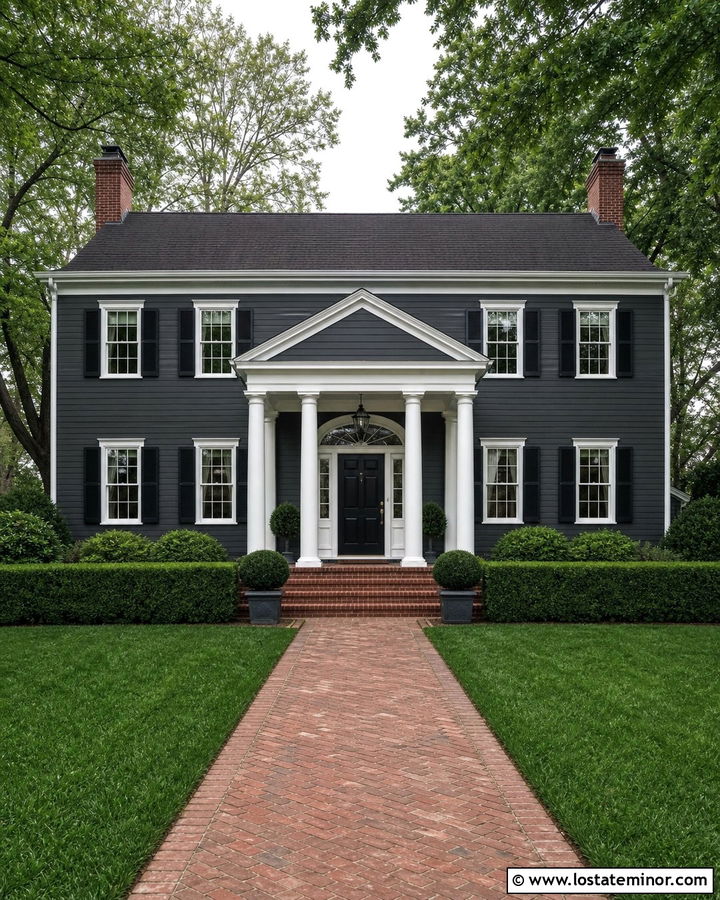
A symmetrical colonial facade looks stately in charcoal grey siding, especially when a bright white portico defines the center. Use four square or round columns beneath a simple triangular pediment to create traditional proportions. White window trim and a white cornice can connect the entrance to the rest of the elevation. A glossy black front door adds depth without introducing another competing color. Complete the scheme with black shutters, dark architectural shingles, and classic lantern sconces. Red brick steps and a matching walkway provide enough warmth to keep the dark body color from appearing severe. For landscaping, place clipped boxwoods on both sides of the portico and use a balanced planting arrangement that reflects the home’s formal architecture.
2. Charcoal Grey Farmhouse With Black Portico
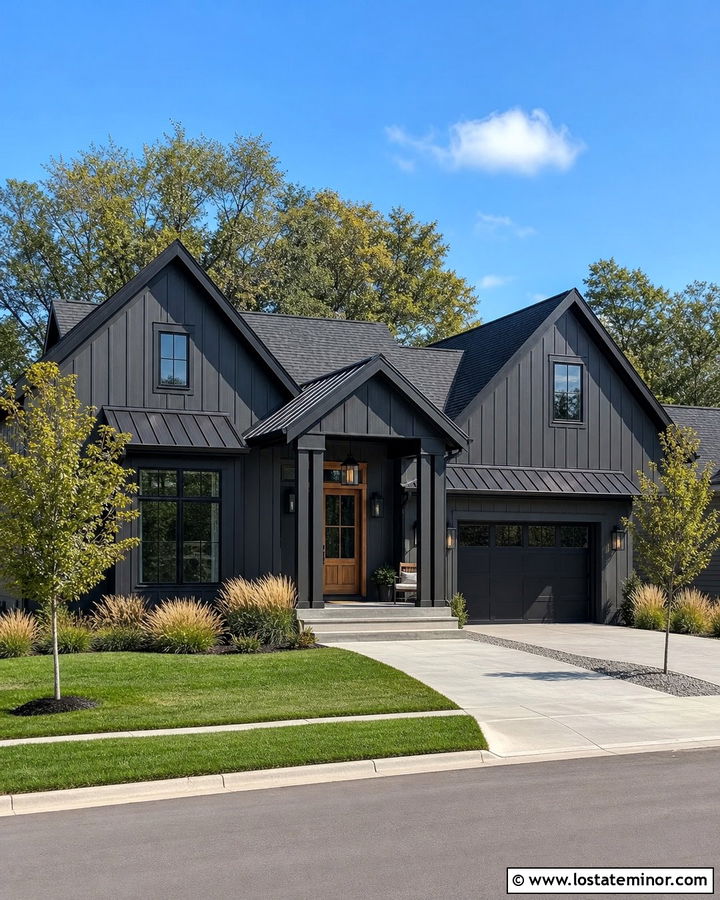
Black accents can make a charcoal grey modern farmhouse look clean and architectural without overwhelming its simple character. Cover the house in charcoal board-and-batten siding, then frame a compact gabled portico with matte black posts, fascia, and a standing-seam metal roof. The slight difference between the grey walls and black details creates subtle layering. Introduce a natural oak front door to warm the entrance and prevent the palette from feeling too industrial. Black-framed windows, charcoal shingles, and streamlined garage doors complete the modern scheme. A concrete porch floor and broad rectangular pavers keep the setting uncomplicated. Add ornamental grasses, young trees, and low evergreen shrubs to soften the sharp rooflines while preserving the farmhouse’s uncluttered curb appeal.
3. Charcoal Grey Craftsman House With Timber Portico
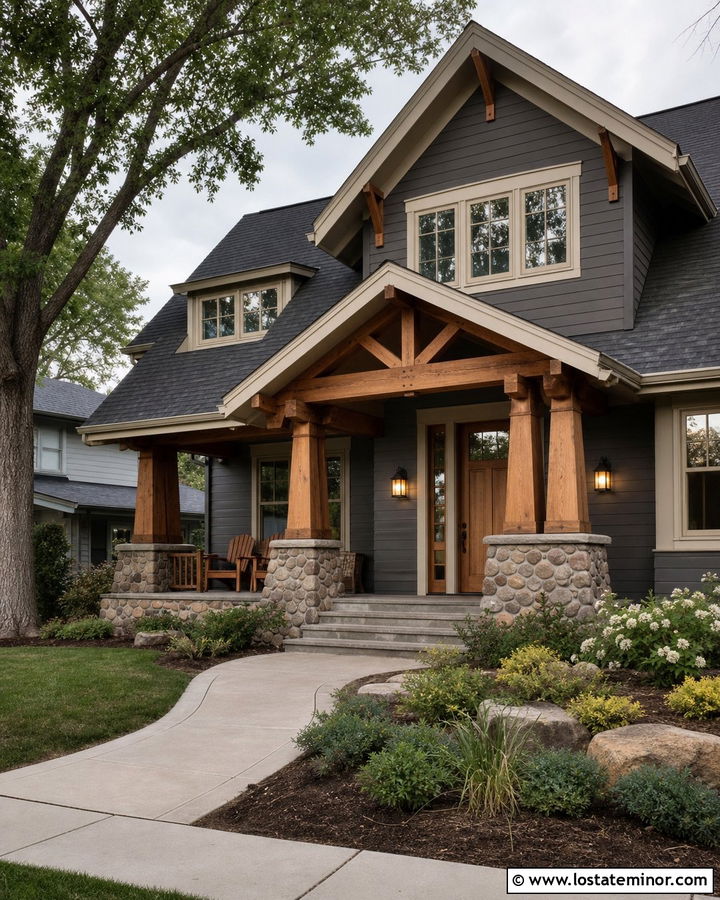
Imagine deep charcoal lap siding behind a portico built with thick cedar posts and exposed timber brackets. The warm wood immediately brings out the softer undertones in the grey, giving a craftsman home a grounded and welcoming appearance. Support the columns on tapered stone piers using fieldstone with grey, brown, and cream variations. A medium-stained wood door can coordinate with the beams while cream trim outlines the windows and roof edges. Choose a weathered charcoal roof rather than solid black so the exterior retains visible dimension. Copper or dark bronze lanterns work naturally with the timber. Finish the setting with wide stone steps, a curving walkway, native shrubs, and layered foundation planting that complements the craftsman architecture.
4. Charcoal Grey Ranch House With Stone Portico
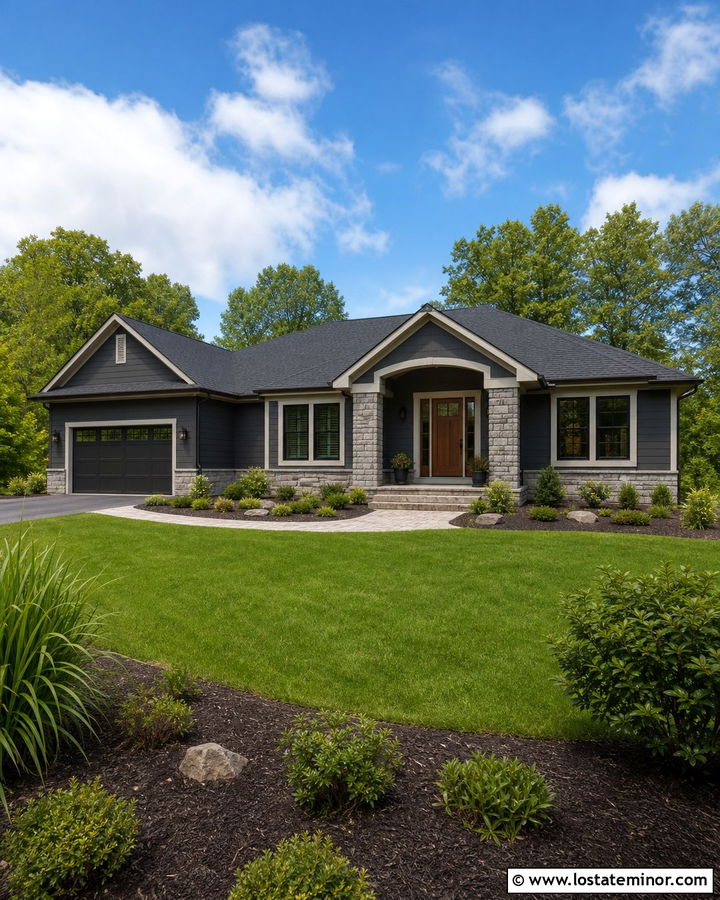
Does a one-story ranch facade feel too long or visually flat? A centered stone portico can establish a strong entrance while breaking up the horizontal roofline. Paint the siding a rich charcoal grey and use pale greige trim to soften the contrast around windows and eaves. Build the portico with substantial square columns wrapped in ledgestone, then repeat that stone along the foundation or chimney. A walnut-stained front door introduces an inviting natural tone. Keep the portico roof low and broad so it suits the ranch proportions rather than appearing overly formal. Dark bronze gutters, charcoal shingles, and simple black sconces complete the scheme. Broad planting beds and a straight paver walkway help guide attention toward the newly defined entrance.
5. Charcoal Grey Georgian House With Copper Portico Roof
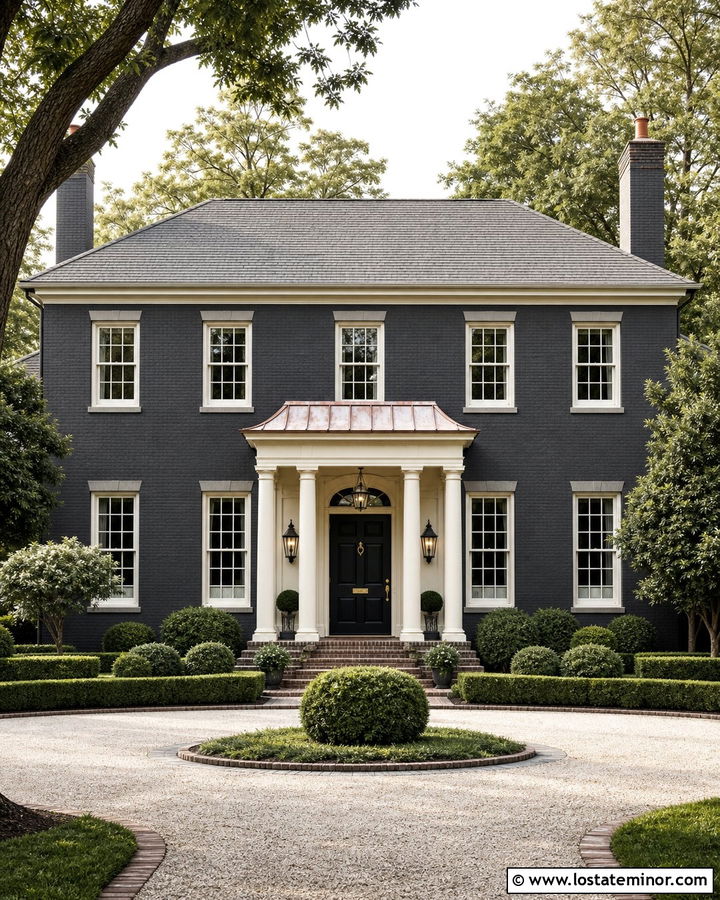
A copper-roofed portico introduces rich color and traditional refinement to a charcoal grey Georgian exterior. Begin with smooth charcoal-painted brick or dark grey clapboard, then add crisp ivory trim around the evenly spaced windows. A classical portico with slender round columns and a shallow pediment should remain appropriately scaled to the formal facade. Install a real or aged-copper roof over the entrance, allowing its warm metallic surface to stand apart from the main charcoal shingle roof. A black paneled door with brass hardware supports the historic character. Brick steps, symmetrical lanterns, and neatly clipped hedges reinforce the orderly design. As the copper develops a natural patina, it will give the otherwise controlled neutral palette more texture, age, and distinction.
6. Charcoal Grey Traditional House With Brick Portico
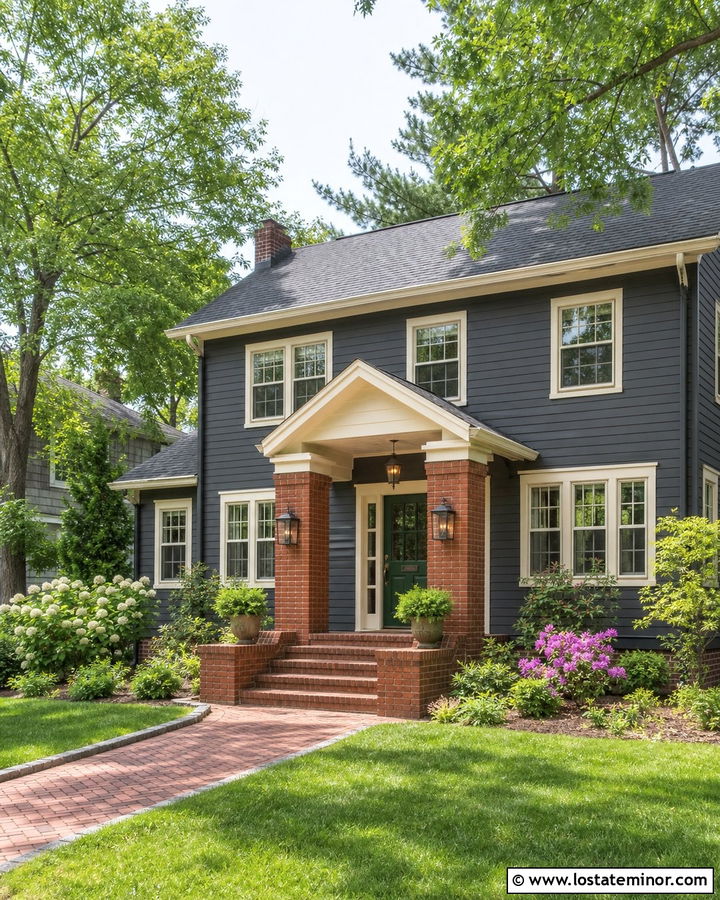
Warm brick can keep a charcoal grey traditional house from looking overly cool or monochromatic. Use charcoal horizontal siding across the main facade and construct the portico with red or brown brick columns supporting a white gabled roof. Repeating the masonry along the porch steps and foundation makes the entrance feel integrated rather than added later. Choose creamy white for the trim because it relates more comfortably to warm brick than a stark blue-white. A deep forest green or black front door provides classic contrast. Dark charcoal shingles visually connect the roof to the siding, while bronze lanterns complement the brick’s earthy tones. A brick-edged walkway, flowering shrubs, and mature shade trees complete a comfortable exterior that feels established and approachable.
7. Charcoal Grey Stucco House With Arched Portico
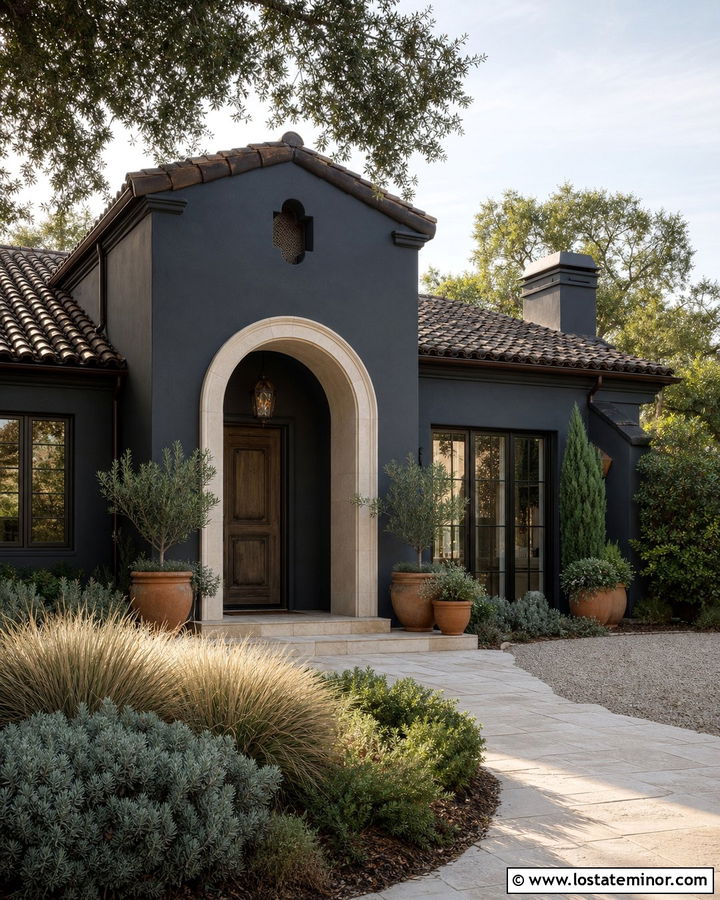
An arched portico can soften the strong visual weight of charcoal grey stucco. This combination works well on transitional, Spanish-influenced, and Mediterranean homes that need a defined entrance without bright white detailing. Form a deep rounded arch over the front door and finish its inner walls in warm limestone or light cream stucco. Use dark bronze windows and gutters to maintain a sophisticated, low-contrast palette. A rustic wood door with iron hardware introduces warmth and emphasizes the curve of the opening. Terracotta pots and subtle clay-colored paving can reference Mediterranean materials without dominating the design. Choose a brown-charcoal tile roof, then surround the facade with silvery shrubs, ornamental grasses, and drought-tolerant planting for a layered yet practical landscape.
8. Charcoal Grey Modern House With Flat Portico
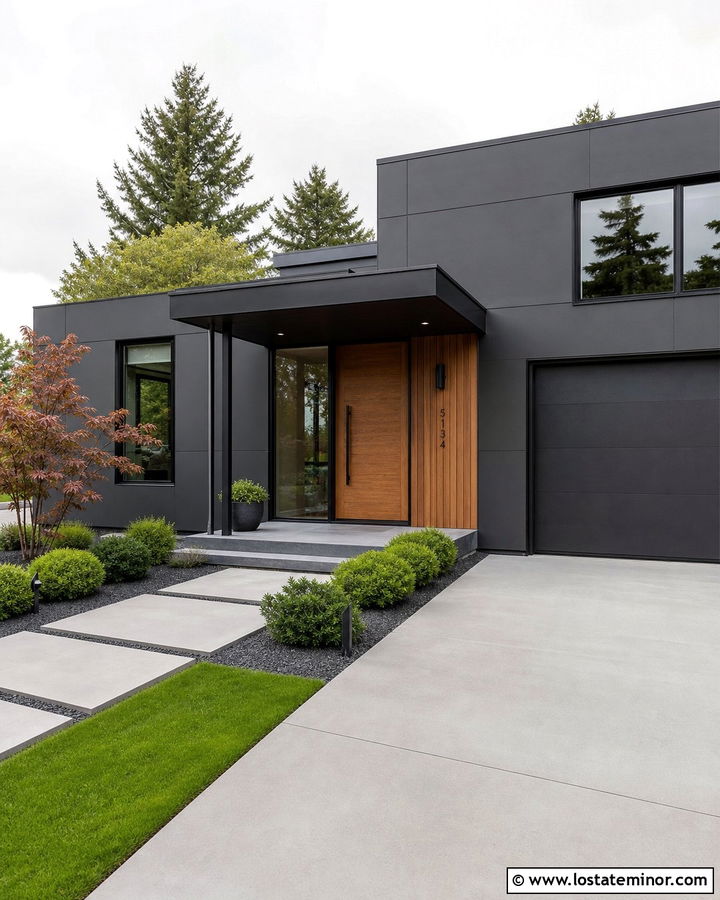
Clean lines make a flat-roof portico a natural fit for a charcoal grey modern house. Use smooth fiber-cement panels or fine-textured stucco for the exterior, with narrow black reveals creating a precise grid. Extend a flat black canopy over the entry and support one corner with a slim steel column. To keep the entrance from disappearing into the dark facade, clad the wall around the door in vertical cedar boards. A pivot-style wood door, large sidelight, and minimalist house numbers reinforce the contemporary look. Connect the portico to a wide concrete walkway using oversized rectangular slabs. Sparse grasses, sculptural shrubs, and a carefully placed ornamental tree add softness. This limited palette depends on texture and proportion rather than numerous contrasting colors.
9. Charcoal Grey Contemporary House With Shed Portico
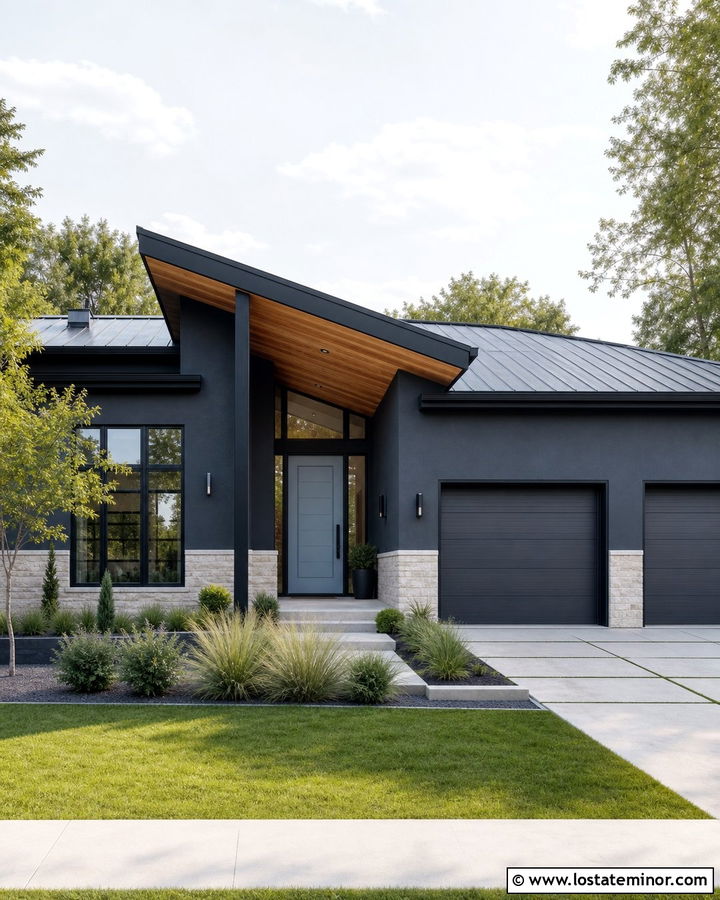
A sloping shed-roof portico gives a charcoal grey contemporary home movement and practical weather protection. Match the portico’s angle to an existing roofline so the addition feels intentional. Charcoal vertical siding can cover the main structure, while black fascia and window frames sharpen the edges. Place cedar boards beneath the portico ceiling to add warmth where visitors will notice it most. A muted blue-grey front door offers gentle contrast while staying within the cool palette. Consider pale limestone around the base of the entry to visually anchor the design. A black metal roof, linear wall lights, and horizontal garage doors complete the updated facade. Use asymmetrical planting beds and large concrete pavers to support the home’s modern geometry.
10. Charcoal Grey Cape Cod House With Gabled Portico
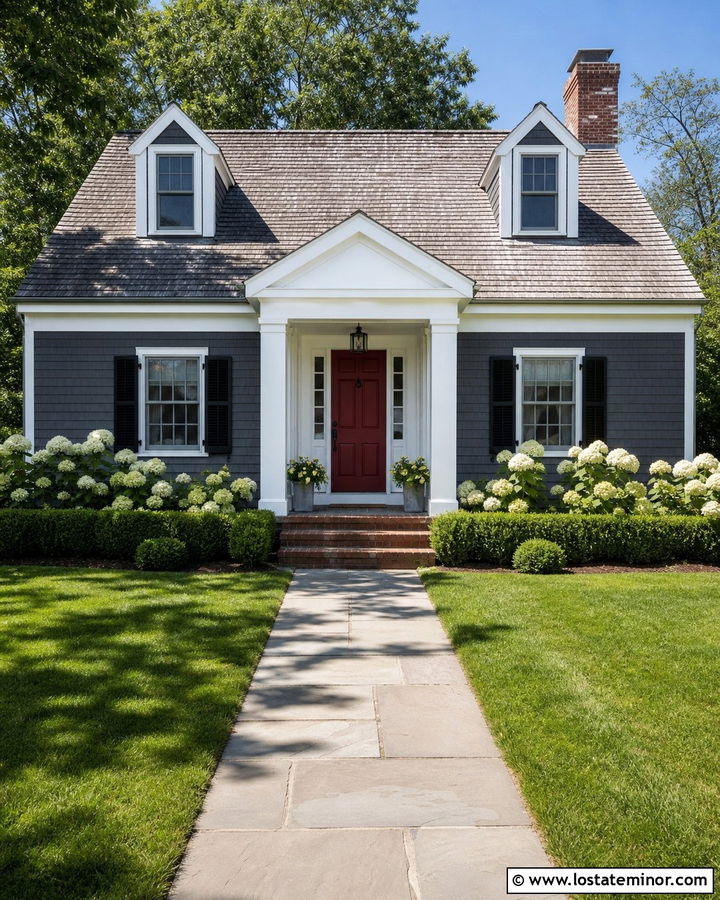
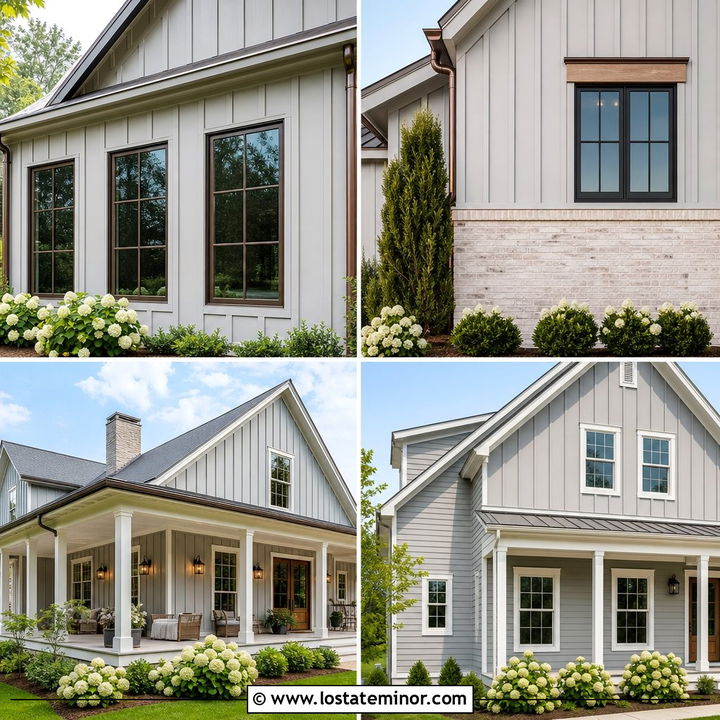
A small gabled portico can give a charcoal grey Cape Cod home the charm and definition its compact facade needs. Choose deep grey cedar shingles or shingle-style siding, then outline the windows, dormers, and roof edges with soft white trim. Position a simple triangular portico over the centered entrance and support it with two square white columns. A cranberry red or dark blue front door adds traditional New England color in a controlled amount. Weathered grey roof shingles help the upper surfaces transition naturally into the charcoal walls. Add brick porch steps and a straight flagstone path bordered by hydrangeas or low hedges. The finished exterior feels classic and recognizable while the darker body color gives the familiar Cape Cod architecture a stronger presence.
11. Charcoal Grey Bungalow With Metal Roof Portico
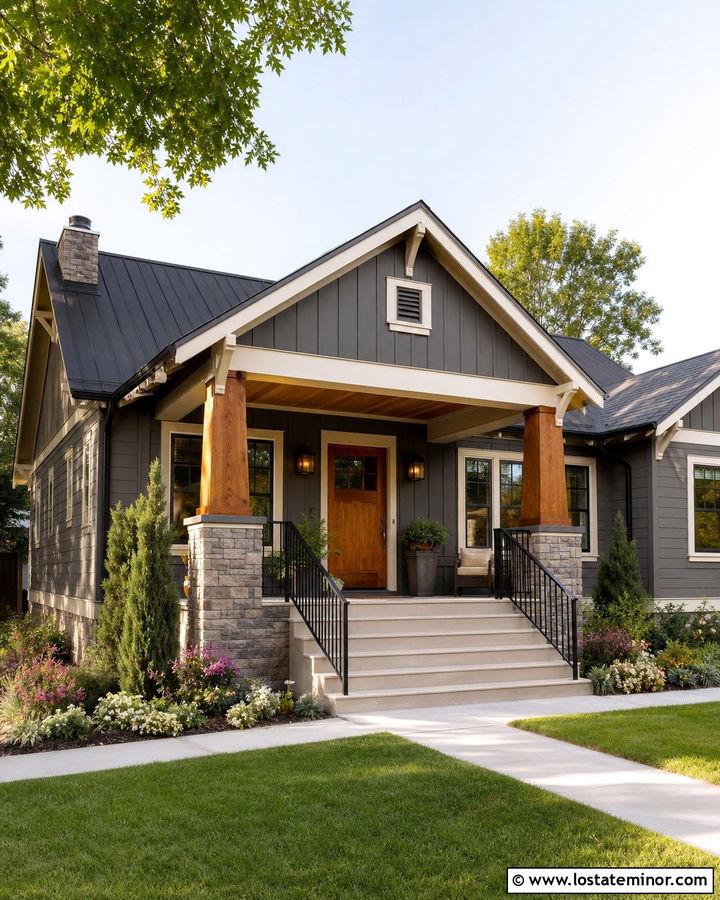
The broad roofline of a bungalow pairs beautifully with charcoal grey siding and a compact metal-roofed portico. Use horizontal lap siding on the main walls and charcoal board-and-batten within the front gable for subtle texture. Support the entrance roof with tapered wood posts resting on stone bases. A black standing-seam metal roof provides a crisp surface that sheds rain efficiently and emphasizes the portico shape. Choose a honey-toned wood door and matching porch ceiling to balance the dark exterior. Cream trim can outline the windows without producing harsh contrast. Wide steps, black railings, and layered cottage planting help the entrance feel generous. This complete scheme preserves the bungalow’s handcrafted warmth while giving its exterior a deeper, more updated color foundation.
12. Charcoal Grey Federal House With Columned Portico
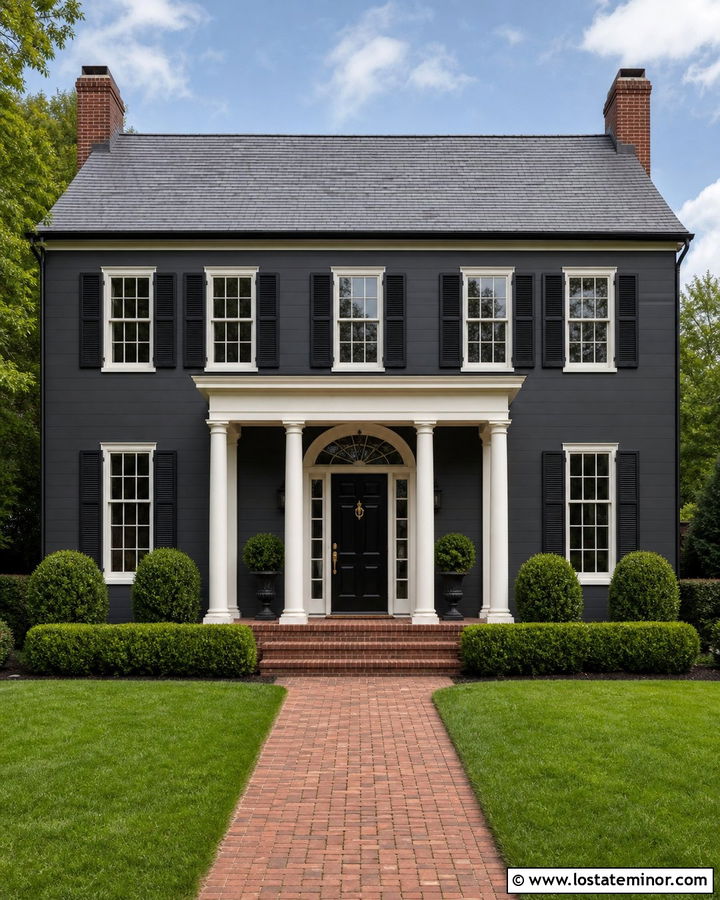
A Federal-style facade benefits from careful symmetry, restrained decoration, and a portico that emphasizes the central doorway. Paint smooth clapboard siding a traditional charcoal grey, then use warm white on the cornice, window casings, columns, and decorative fanlight trim. Four slender round columns can support a shallow portico roof without hiding the balanced front elevation. Select a glossy black door with polished brass hardware for a period-appropriate focal point. Dark shutters and a slate-grey roof maintain the formal palette. Use red brick for the stoop and walkway to introduce historic warmth beneath the cooler wall color. Matching lanterns, clipped hedges, and evenly spaced foundation shrubs strengthen the sense of order that makes this charcoal exterior feel refined rather than heavy.
13. Charcoal Grey Craftsman House With Stone Column Portico
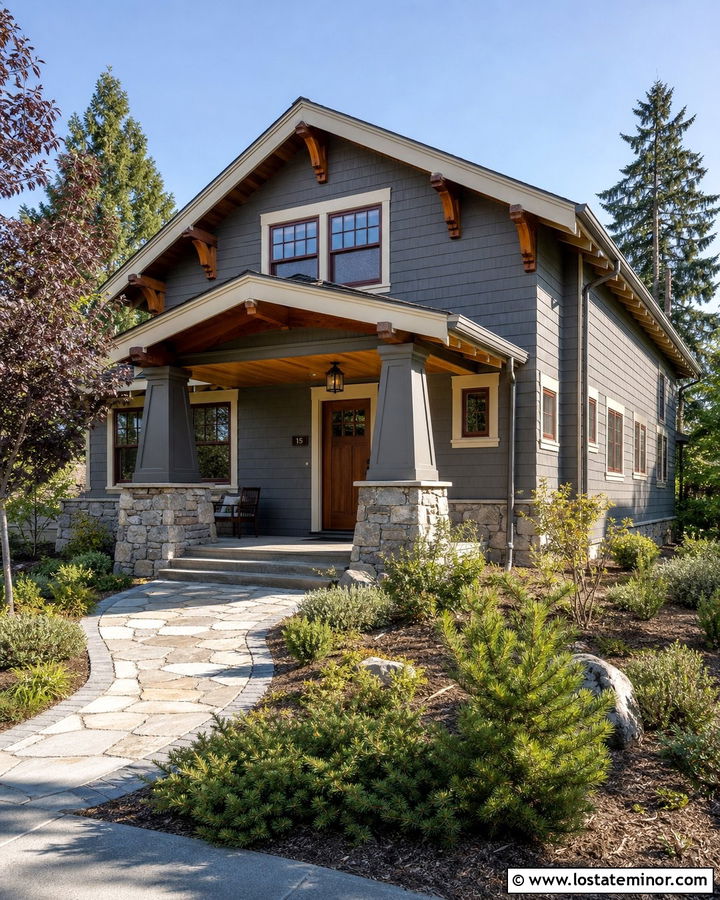
Stone column bases add visual weight to a charcoal grey craftsman house while connecting the portico to the landscape. Cover the facade in deep grey lap siding and use wide cream trim around grouped windows. Build a low gabled portico with tapered charcoal columns set on chunky fieldstone piers. Exposed rafters, cedar brackets, and a stained tongue-and-groove ceiling highlight the handcrafted architecture. A fir front door with divided-light glass brings a warm focal point to the shaded entry. Repeat the stone around the foundation and along a low garden wall so the materials feel balanced. A dark brown-grey roof, bronze fixtures, curved stone path, and informal native planting complete a craftsman exterior that appears substantial, comfortable, and naturally integrated.
14. Charcoal Grey Midcentury House With Butterfly Portico
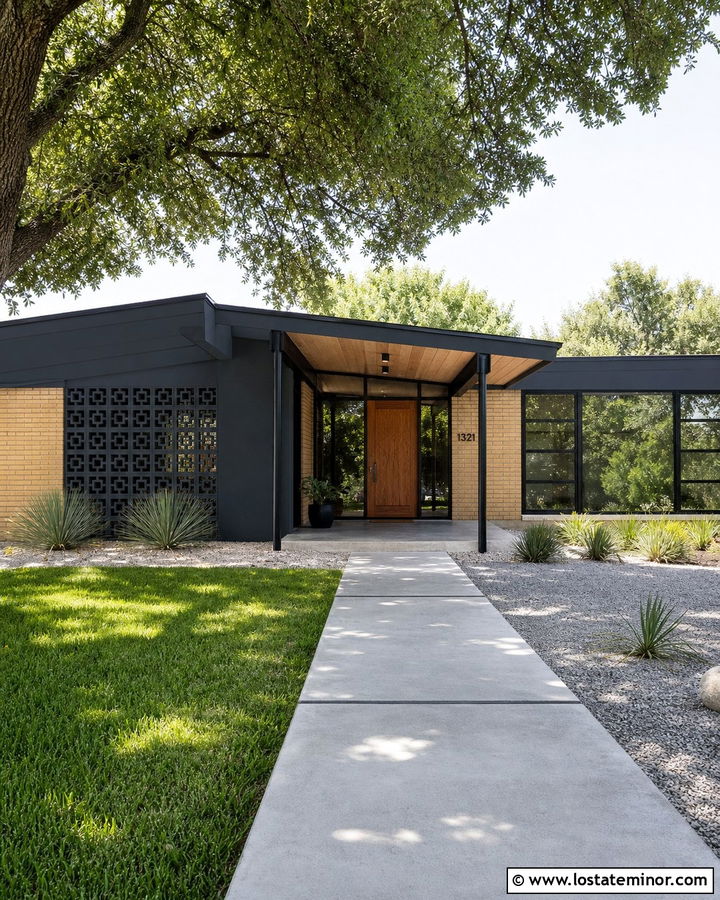
For a midcentury exterior, the portico can be light, angular, and visually separate from the main roof. Paint the horizontal siding a blue-based charcoal grey and preserve any original brick in a soft tan or warm grey finish. Create a shallow butterfly or inverted-gable portico supported by slender black steel posts. A mustard yellow, muted orange, or walnut front door provides a period-inspired accent against the dark walls. Keep the window trim charcoal or black to emphasize long horizontal glass openings. Concrete breeze blocks can screen one side of the entrance while adding geometric texture. Complete the curb appeal with a gravel bed, low sculptural plants, a straight concrete path, and a broad lawn that allows the low-slung architecture to remain visible.
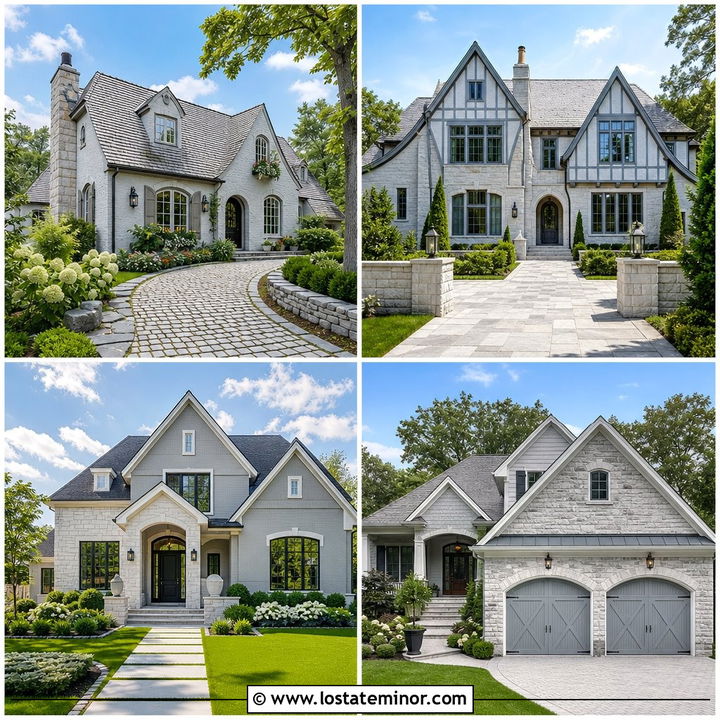
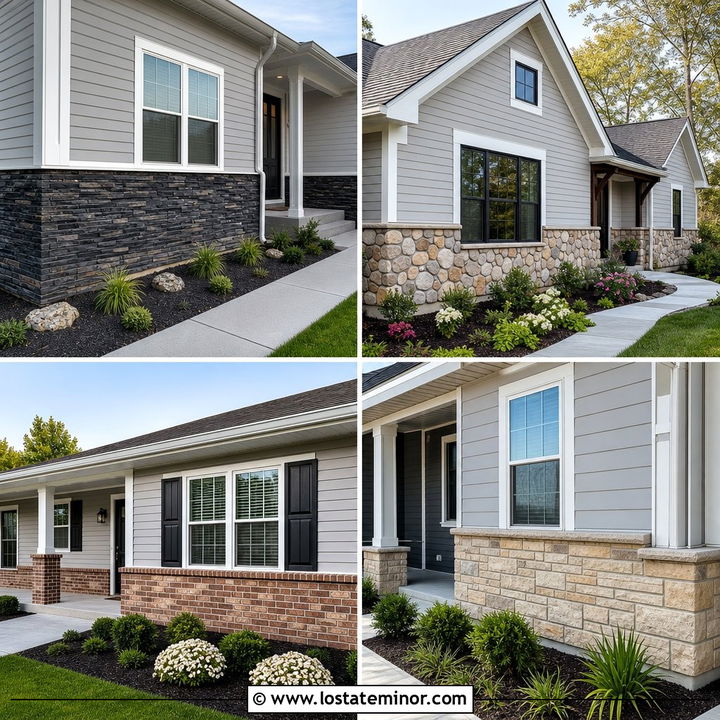
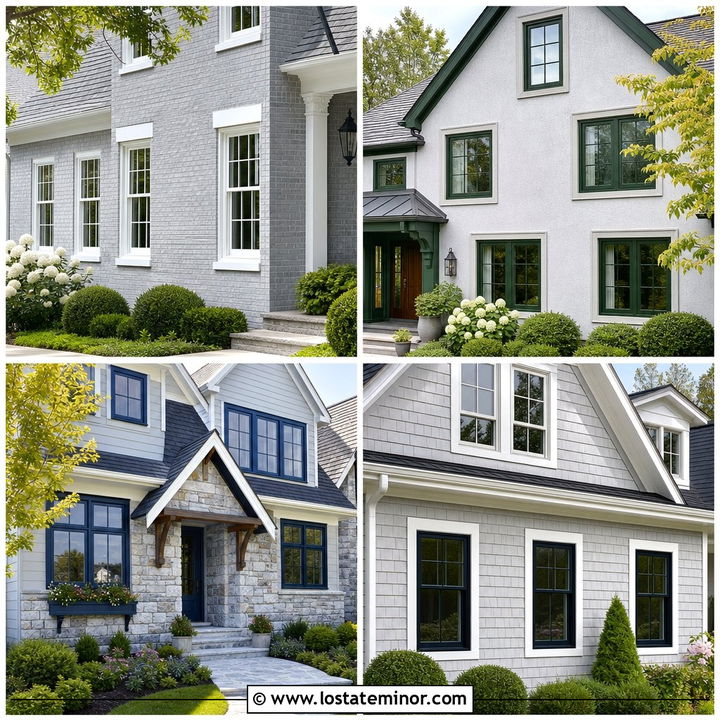
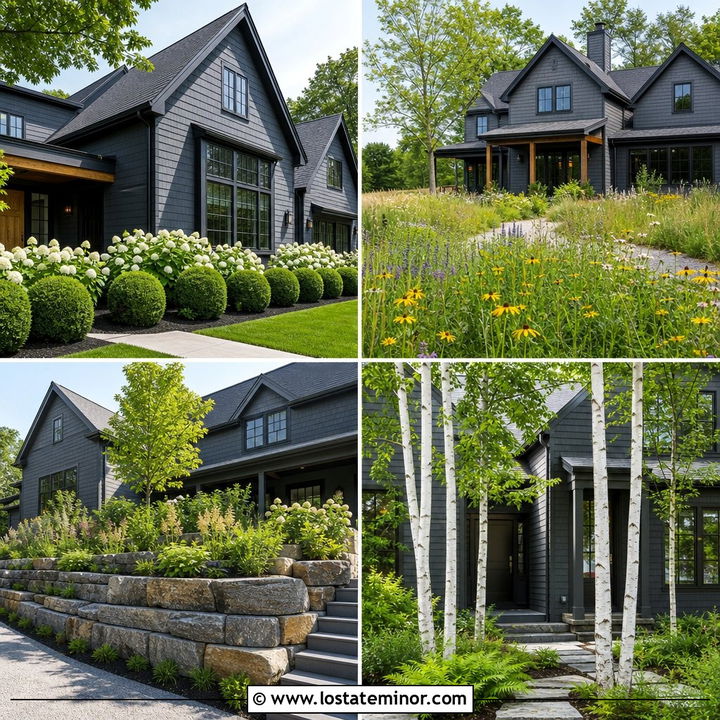
15. Charcoal Grey Split-Level House With Side Portico
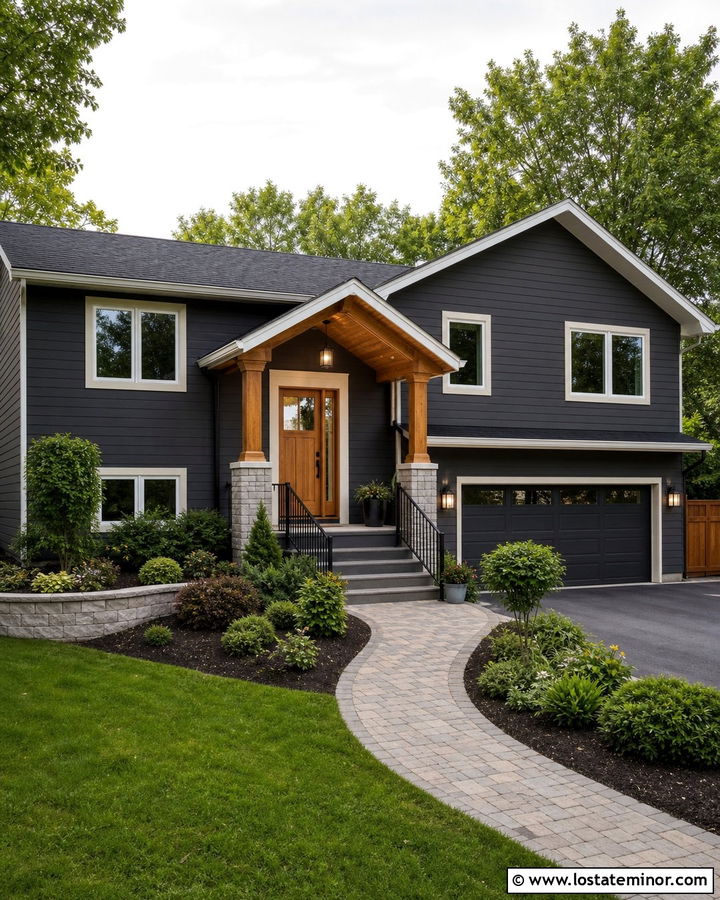
An offset portico can give a split-level home a clear focal point when the front door is positioned beside the garage or beneath an uneven roofline. Use charcoal grey siding on both levels to visually unite the structure. Define the entrance with a side-gabled portico supported by simple timber posts and pale stone bases. A natural wood door and cedar ceiling bring warmth to the shaded recess. Paint the garage door charcoal to reduce its prominence, then use off-white trim around windows for enough definition. Black railings and a charcoal roof maintain continuity. Rework the walkway so it curves directly toward the portico instead of the driveway. Tiered shrubs can follow the changing foundation height and make the split-level proportions appear more balanced.
16. Charcoal Grey Cottage With Blue Door Portico
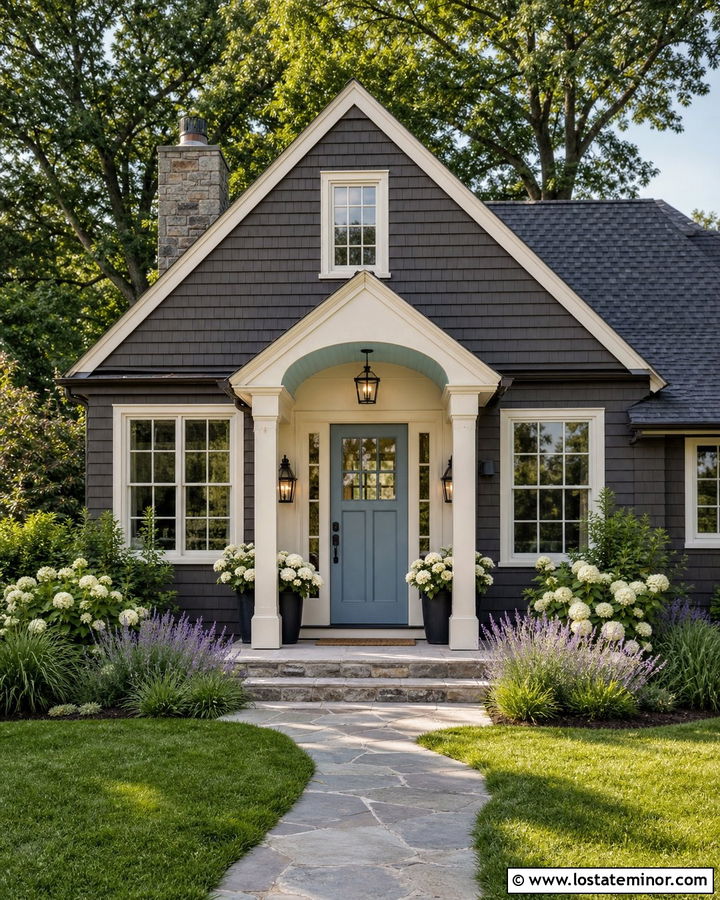
A dusty blue front door brings gentle color to a charcoal grey cottage without disrupting its relaxed character. Use deep grey shingle siding, creamy trim, and a small gabled portico supported by turned or simple square posts. Paint the door a medium blue with muted green undertones so it remains visible beneath the shaded roof. A pale blue porch ceiling can quietly repeat the accent overhead. Keep the main roof in weathered charcoal, then introduce natural stone on the steps and chimney. Small black lanterns add definition without appearing too formal. Surround the path with lavender-colored flowers, hydrangeas, soft grasses, and compact evergreen shrubs. The result feels colorful and welcoming while the charcoal exterior keeps the cottage grounded through every season.
17. Charcoal Grey Colonial House With Red Door Portico
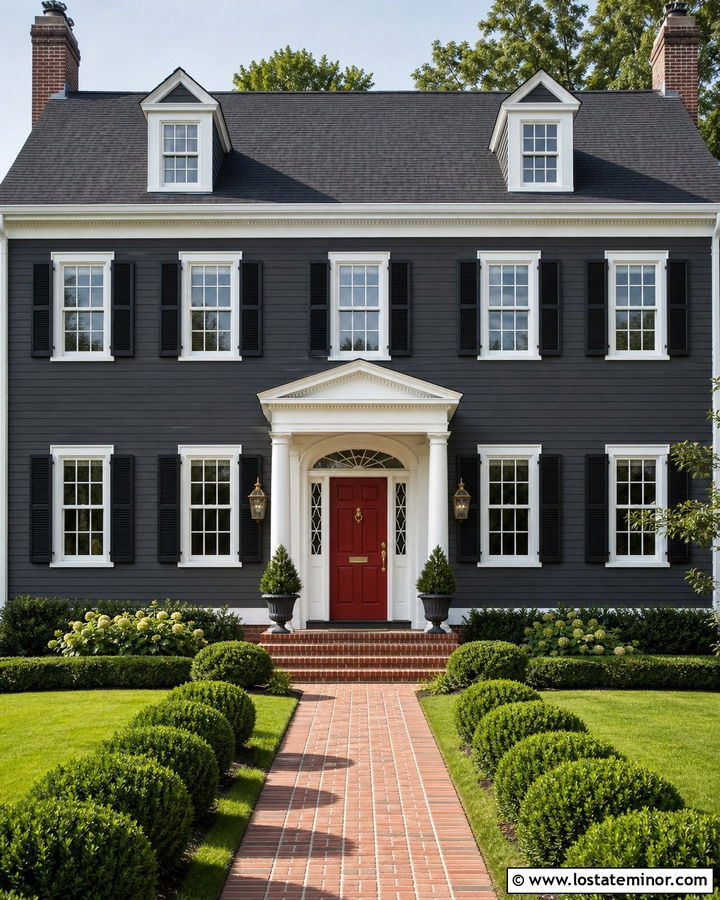
A red front door is especially effective when it is carefully contained within a white colonial portico. Choose charcoal grey clapboard for the house body and crisp white for the columns, pediment, window casings, and cornice. The red should be deep and slightly muted, such as brick red or heritage crimson, rather than extremely bright. Black shutters and charcoal shingles provide traditional structure around the stronger accent. Use a red brick stoop to repeat the door color at ground level and create a smooth visual transition. Symmetrical brass or black lanterns will frame the entry. Finish the yard with a straight walkway, paired planters, boxwood hedges, and balanced foundation shrubs. This scheme delivers recognizable colonial character with a confident, colorful center.
18. Charcoal Grey Craftsman House With Green Door Portico
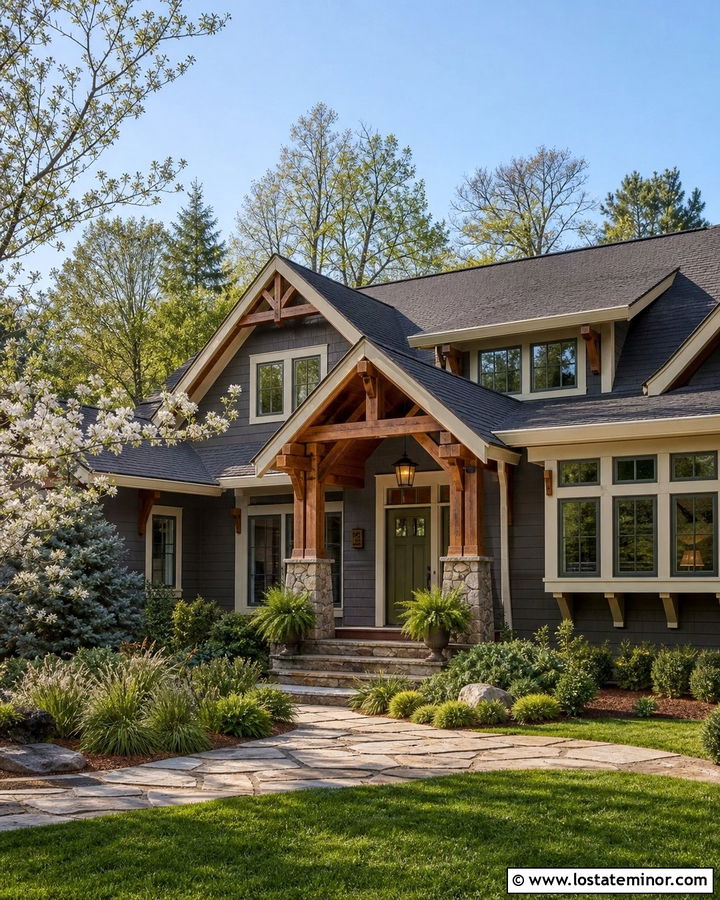
Earthy green can make a charcoal grey craftsman exterior feel closely connected to its landscape. Paint the lap siding dark charcoal and choose muted olive or forest green for the front door. A timber-framed portico with cedar posts, exposed brackets, and a stained wood ceiling introduces a second natural element. Use warm grey fieldstone for the column bases, steps, and lower foundation. Cream trim around the windows keeps the elevation readable while avoiding the sharpness of pure white. Dark bronze fixtures and a brown-black roof complete the subdued palette. Plant ferns, ornamental grasses, evergreen shrubs, and small flowering trees around a curved stone walkway. The complete design feels rich and layered, but every color remains grounded in natural materials and garden tones.
19. Charcoal Grey Transitional House With Black Door Portico
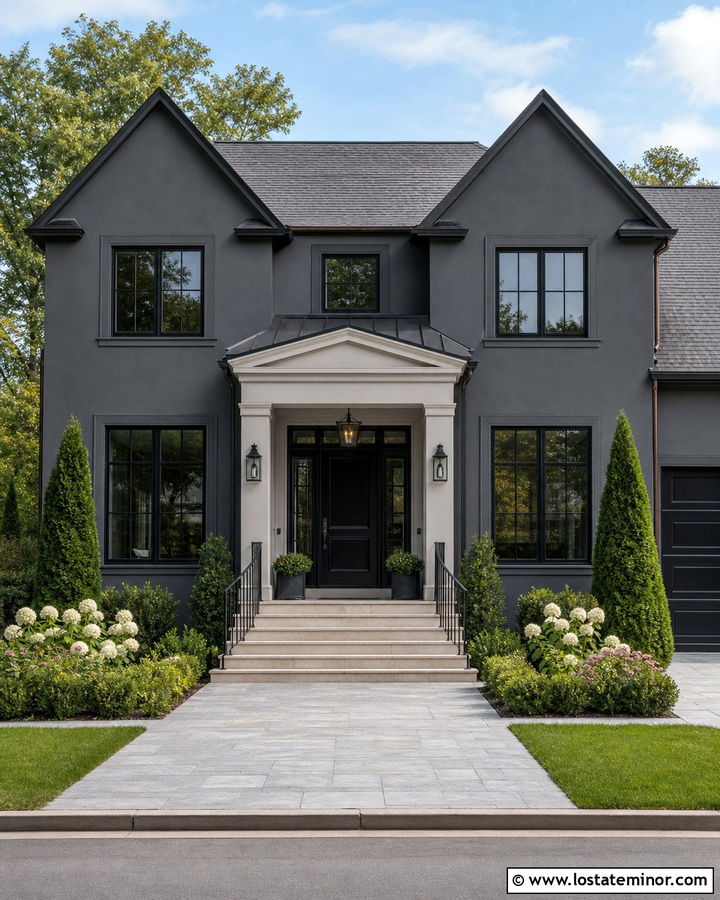
A black front door can look distinct against charcoal siding when the surrounding portico includes lighter architectural details. Cover the transitional house in charcoal grey lap siding, then use pale greige for wide window casings, portico columns, and roof trim. A glossy black paneled door creates a clear focal point through its sheen rather than a major color change. Add sidelights to brighten the entrance and increase its visual width. The portico can feature a shallow gable, square columns, and a black metal roof for a clean mix of traditional and modern elements. Use pale limestone steps and dark iron railings for balanced contrast. Structured evergreens, flowering shrubs, and a wide paver walk will make the formal entrance feel comfortable and accessible.
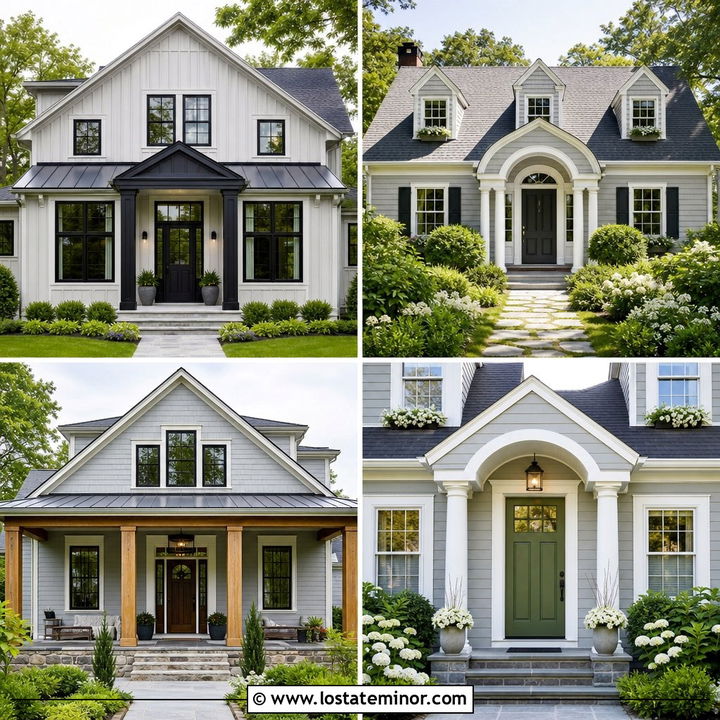

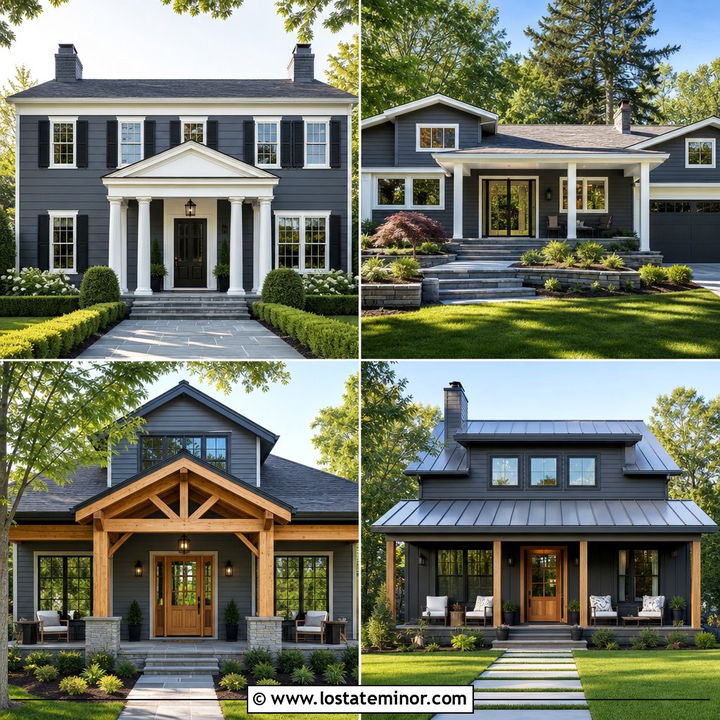
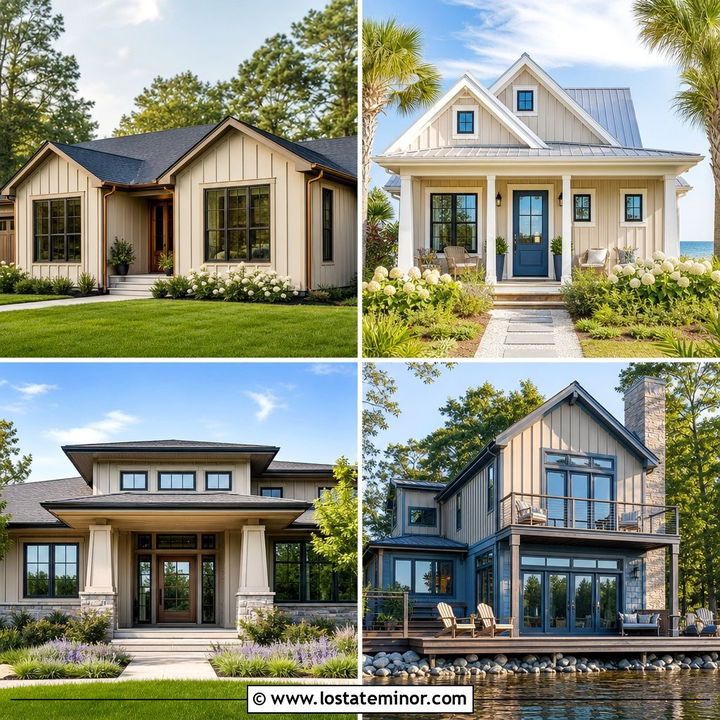
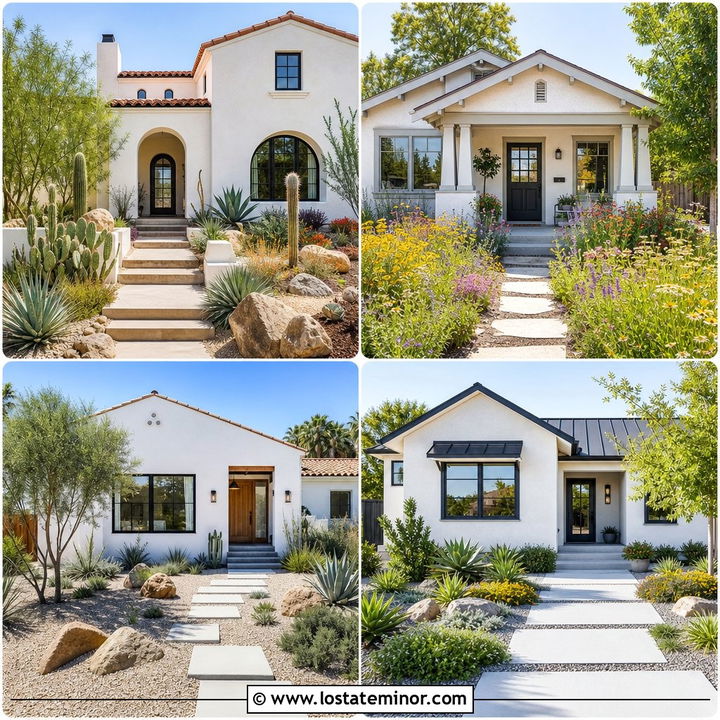
20. Charcoal Grey Tudor House With Oak Portico
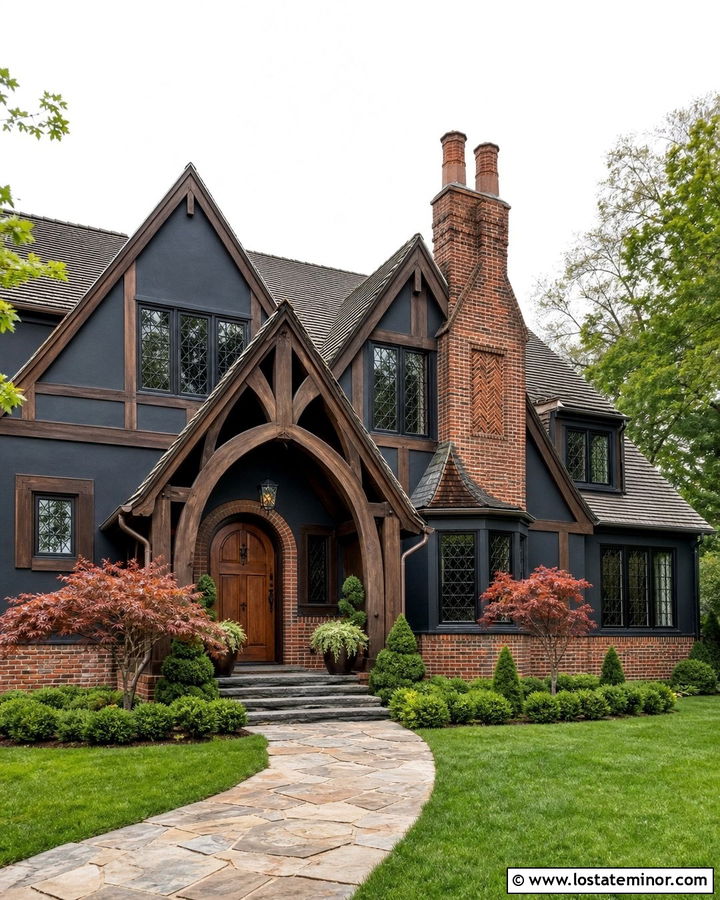
Charcoal grey can update a Tudor house while allowing its steep gables, masonry, and timber details to remain prominent. Use charcoal-painted stucco or siding between dark brown decorative beams. Build a compact portico with a steeply pitched roof that echoes the main gables, then frame it with heavy oak posts and curved braces. A solid oak arched door should serve as the warm center of the scheme. Preserve red or brown brick around the chimney, steps, and lower walls to maintain the home’s historic texture. Bronze gutters, leaded windows, and a brown-charcoal roof suit the old-world architecture. An irregular flagstone path, clipped shrubs, and small ornamental trees complete a distinctive facade that feels updated but not stripped of character.
21. Charcoal Grey House With White Brick Portico
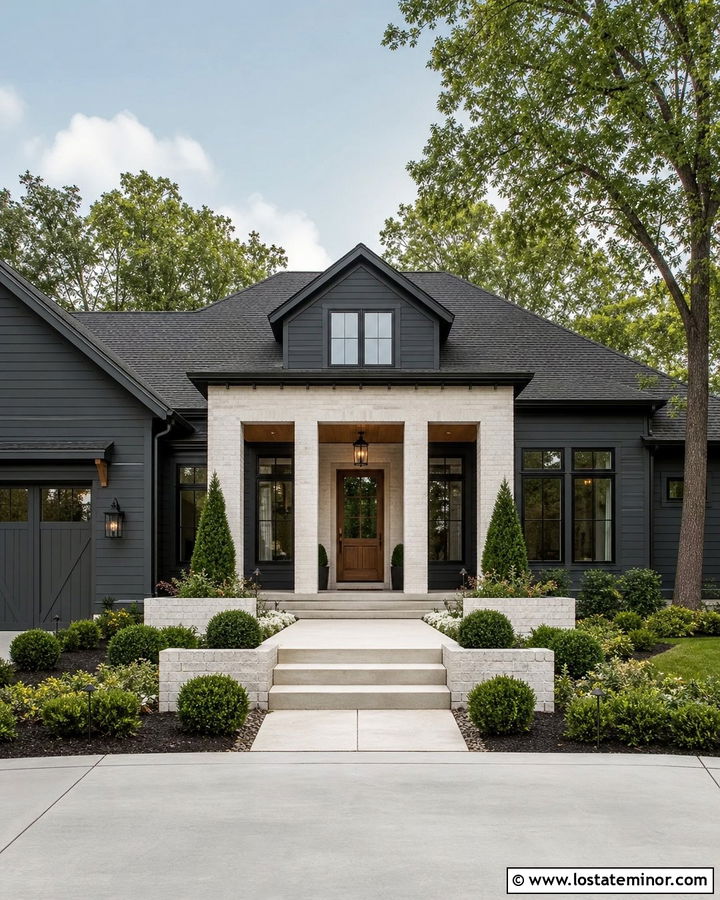
White brick around the portico creates a bright architectural frame without requiring white across the entire charcoal grey facade. Use dark horizontal siding on the main house and wrap the portico columns, side walls, and entry base in warm white brick. Select light mortar for a unified appearance, but avoid an overly cool white that may clash with natural materials. A medium-stained wood door can soften the high contrast between the brick and siding. Black window frames, charcoal shingles, and bronze or black lanterns keep the remaining details simple. Extend the white brick into low planters or a short garden wall to distribute the material across the elevation. Pale concrete steps and organized green planting will give the complete scheme a bright, tailored finish.
22. Charcoal Grey House With Limestone Portico
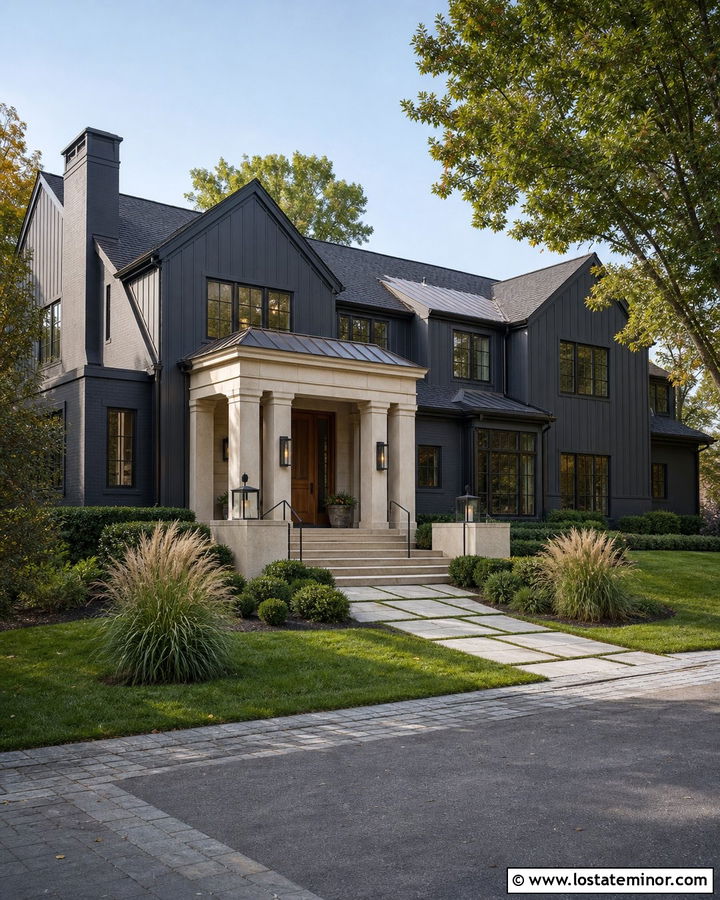
Pale limestone creates sophisticated contrast against charcoal grey while adding natural variation that flat paint cannot provide. Clad the main house in charcoal board-and-batten or painted brick, then construct the entrance portico with creamy limestone columns and a substantial stone surround. Choose a warm walnut door so the transition from dark siding to light masonry feels comfortable. A bronze standing-seam roof over the portico introduces a subtle metallic finish, while the main roof can remain dark charcoal. Use bronze window frames and gutters instead of black for a slightly softer effect. Limestone steps and large-format walkway pavers should repeat the entrance material. Restrained grasses, clipped shrubs, and a few mature trees will complement the clean, upscale palette without hiding the stonework.
23. Charcoal Grey House With Brick Walkway Portico
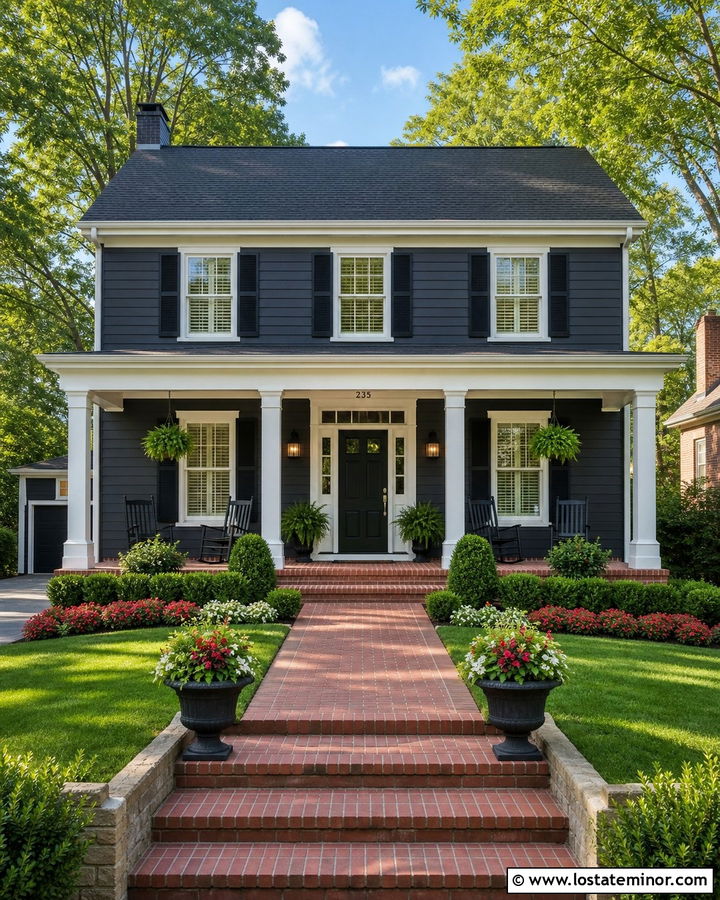
Sometimes the path leading to a portico contributes as much character as the entrance itself. Paint a traditional two-story house charcoal grey and add a white gabled portico with square columns. A warm red brick walkway can begin at the sidewalk, widen near the steps, and continue across the portico floor. Repeating brick on the risers creates a cohesive transition from yard to doorway. Choose a black or dark green door, white window trim, and black shutters for a familiar, balanced palette. Charcoal shingles keep the roof connected to the body color. Edge the walkway with low boxwoods, seasonal flowers, and simple ground cover. The brick’s warm surface prevents the dark grey and white combination from feeling too stark or newly constructed.
24. Charcoal Grey House With Bluestone Portico Steps
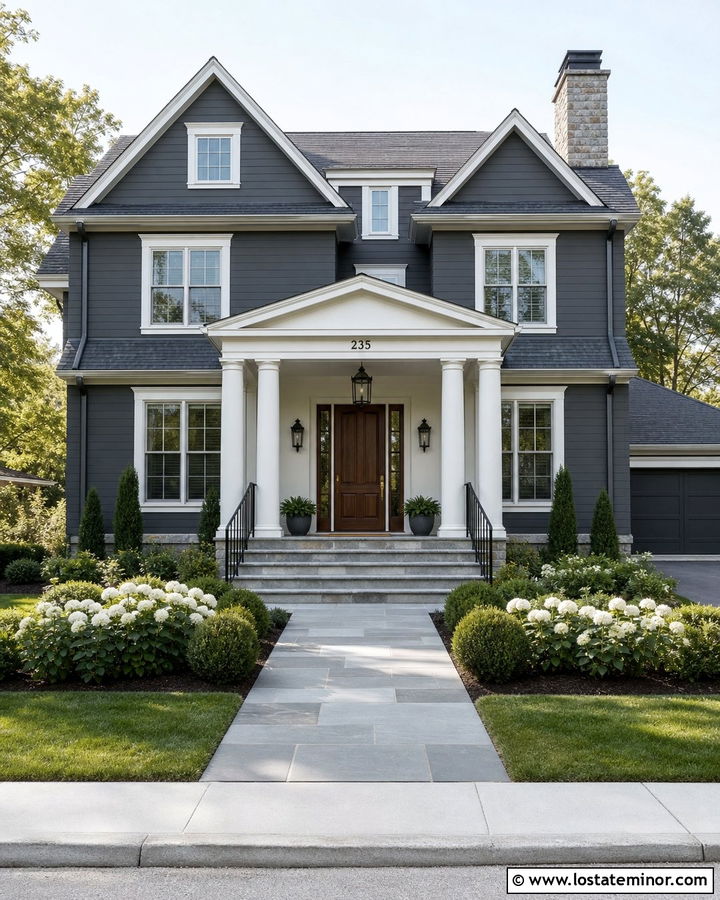
Bluestone steps complement charcoal grey siding through related cool tones, yet their natural texture keeps the exterior from becoming flat. Use a medium-dark charcoal body color with soft white trim and a compact columned portico. Wide bluestone treads can extend beyond the column bases, making a small entrance feel more generous. Select irregular bluestone or coordinating grey pavers for the walkway. A walnut door adds warmth at eye level, while black railings provide a thin, practical outline around the steps. Choose a charcoal roof with subtle tonal variation rather than a completely uniform surface. Low evergreen shrubs, white flowers, and ornamental grasses can frame the masonry without covering it. This scheme is restrained, durable-looking, and suitable for both traditional and transitional homes.
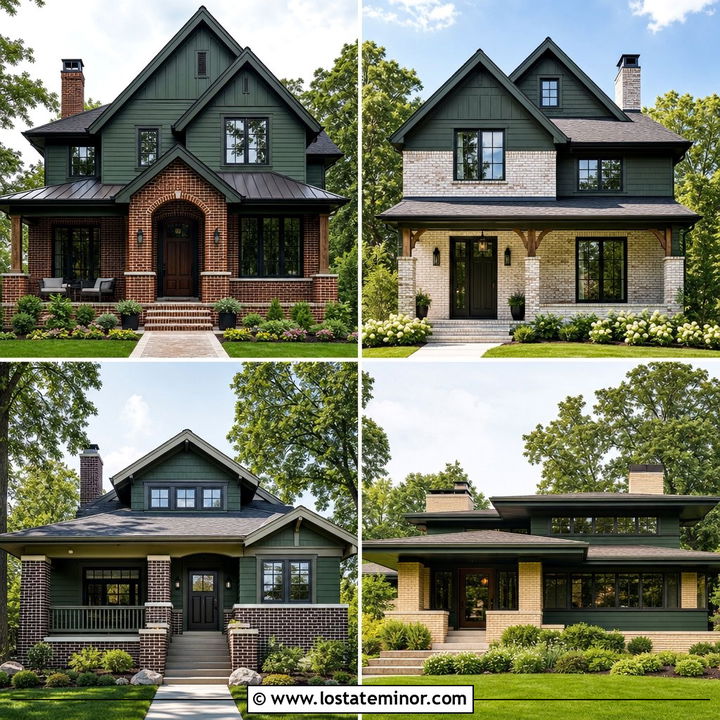
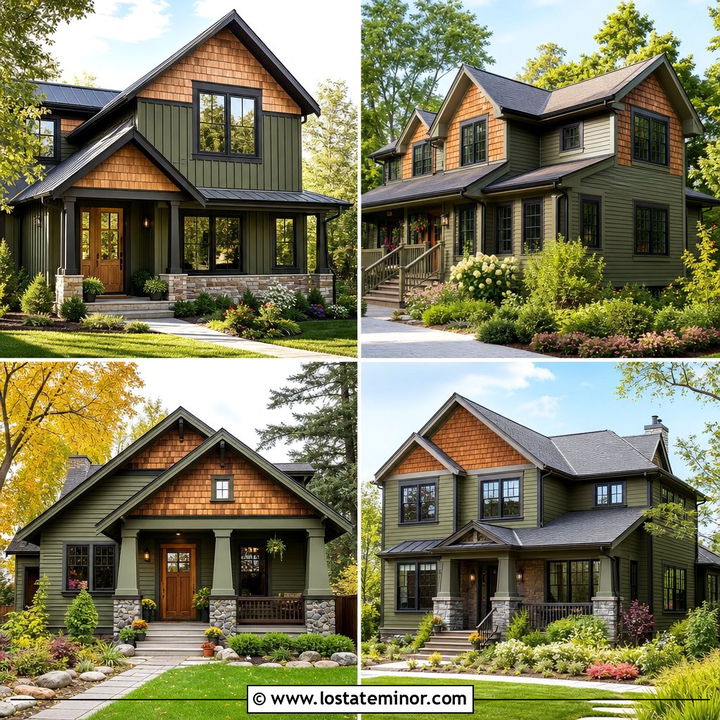
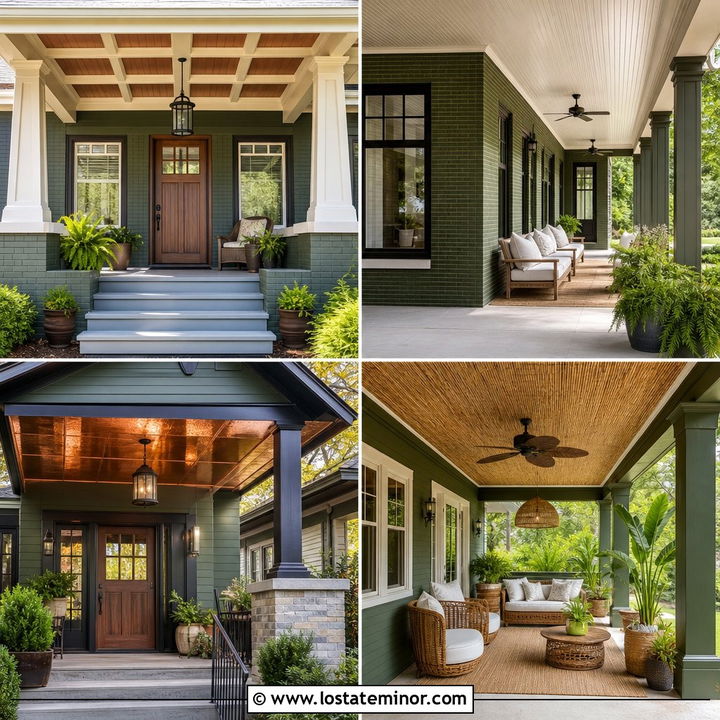
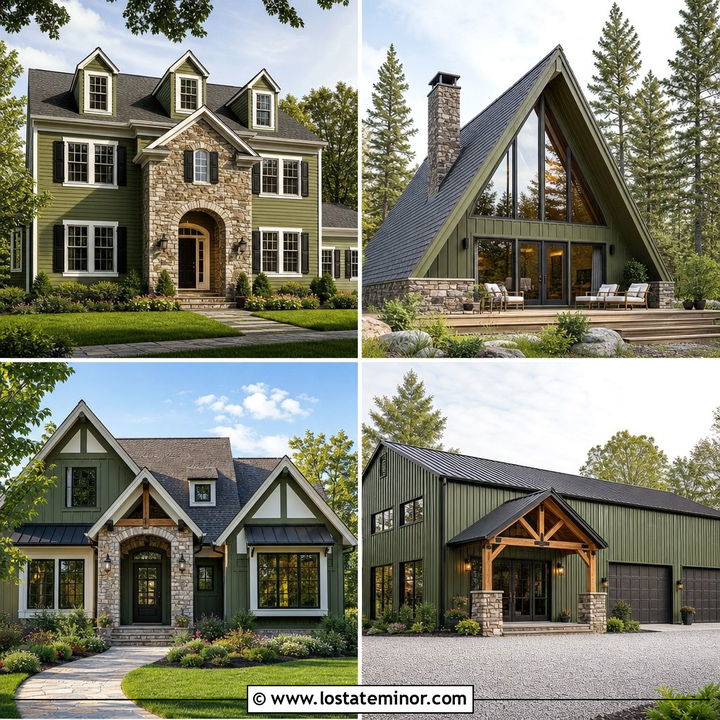
25. Charcoal Grey House With Cedar Ceiling Portico
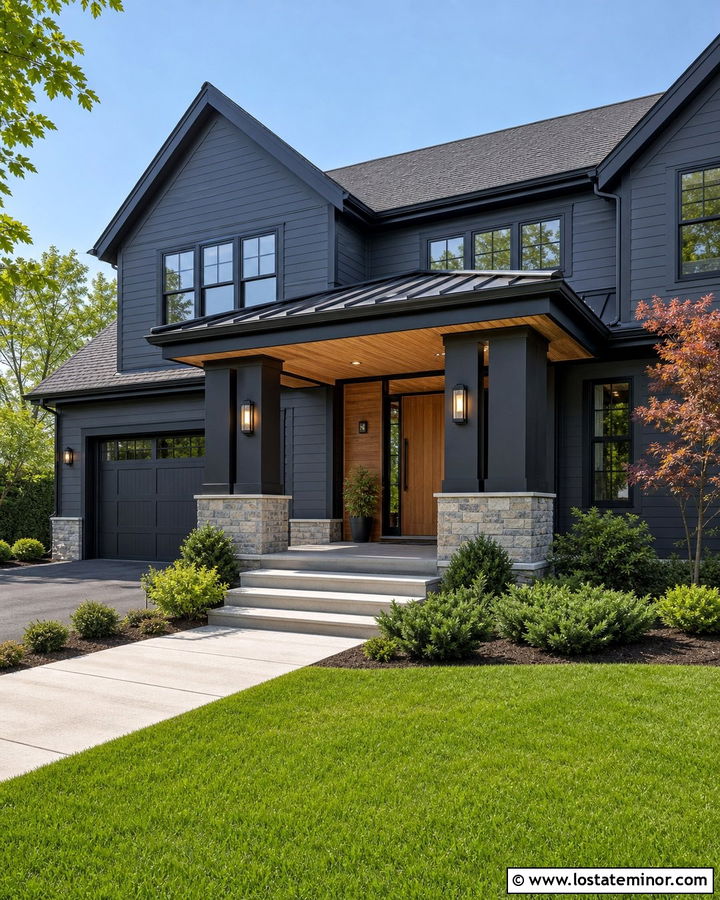
A cedar ceiling adds warmth exactly where charcoal grey exteriors need it most: beneath the shaded entrance roof. Paint the house body a deep neutral charcoal and use black for the window frames, gutters, and portico fascia. Install clear-finished cedar planks across the ceiling, running them toward the front door to visually draw visitors inward. Repeat the cedar on the door or a narrow siding panel beside it. Simple stone column bases can introduce another natural texture without making the palette busy. Choose a black metal portico roof and dark architectural shingles for consistency. Wide concrete steps, modern lanterns, and an orderly walkway complete the entrance. Green shrubs and small trees will stand out clearly against the dark walls and warm overhead wood.
26. Charcoal Grey Board And Batten House With Portico
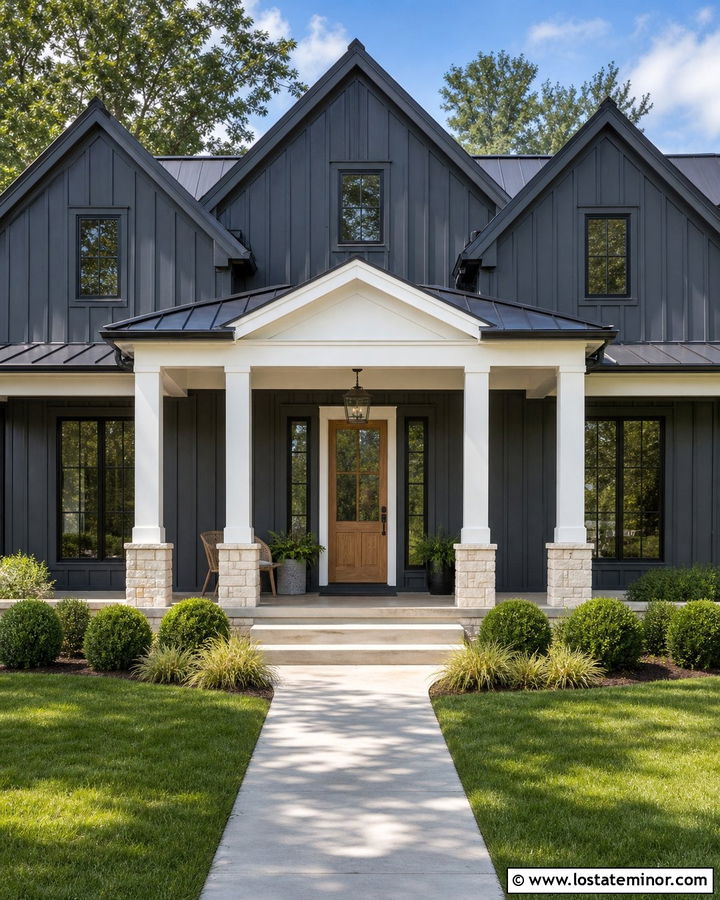
Vertical board-and-batten siding gives charcoal grey a crisp shadow pattern that changes naturally throughout the day. Use it across a modern farmhouse or transitional facade, then add a centered gabled portico with thick white columns. A black metal roof above the entrance creates a defined cap, while a medium oak door prevents the grey, white, and black palette from feeling predictable. Consider horizontal lap siding within the porch recess to create subtle material variation. Black-framed windows, matching gutters, and a charcoal shingle roof maintain clean visual lines. Use pale stone around the column bases and porch floor for a grounded finish. A straight concrete walkway, clipped shrubs, and soft ornamental grasses support the architecture without competing with the strong vertical siding.
27. Charcoal Grey Painted Brick House With Portico
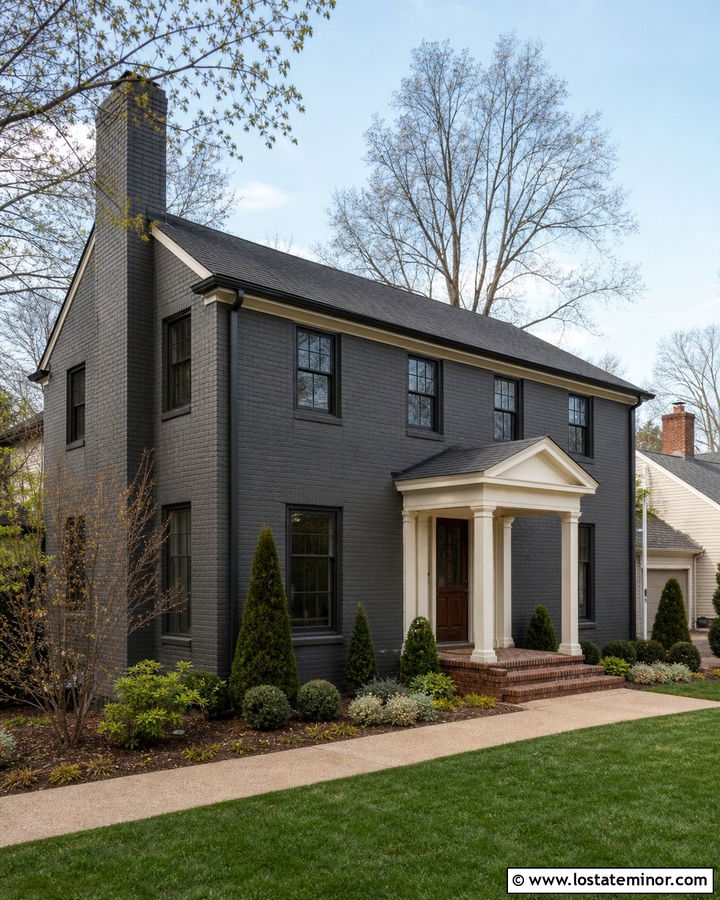
Painted brick gives a charcoal grey exterior rich texture because the mortar lines remain visible beneath the unified color. On a traditional or transitional home, pair the dark brick with a warm white portico featuring square columns and a shallow gable. Leave the porch floor in natural red brick or use light limestone to introduce contrast at ground level. A stained mahogany door adds depth and warmth inside the lighter entrance frame. Black windows and dark gutters can blend quietly into the painted masonry. Before selecting the final grey, test large samples across shaded and sunny walls because textured brick can alter how the color appears. Complete the facade with layered evergreen planting, simple lanterns, and a broad walkway that suits the substantial masonry exterior.
28. Charcoal Grey Shingle House With Portico
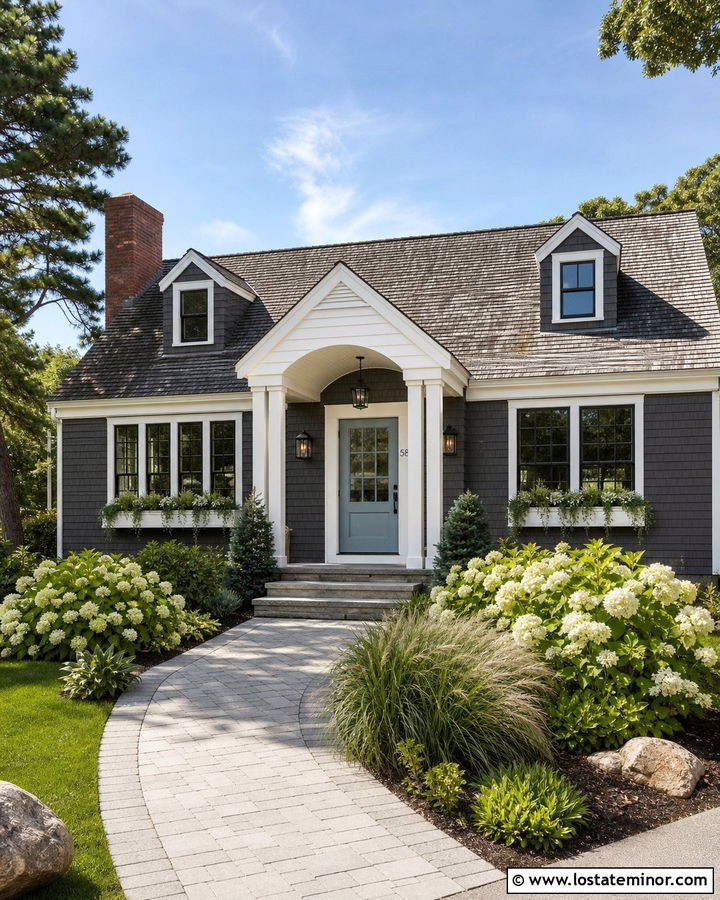
Charcoal grey shingle siding creates softer texture than smooth panels, making it a strong choice for coastal cottages, Cape Cod homes, and relaxed traditional architecture. Frame the entrance with a white portico that includes square columns, a simple gable, and an airy beadboard ceiling. A muted sea-blue front door can add subtle coastal color without turning the house into a themed design. Use weathered grey roofing, white window trim, and small black lanterns to keep the palette balanced. Natural stone steps and a crushed-stone or paver walkway enhance the informal character. Choose wind-tolerant grasses, hydrangeas, and compact evergreens for the landscaping. The shingle texture helps the charcoal body read as layered and natural, especially in bright daylight.
29. Charcoal Grey Narrow House With Small Portico
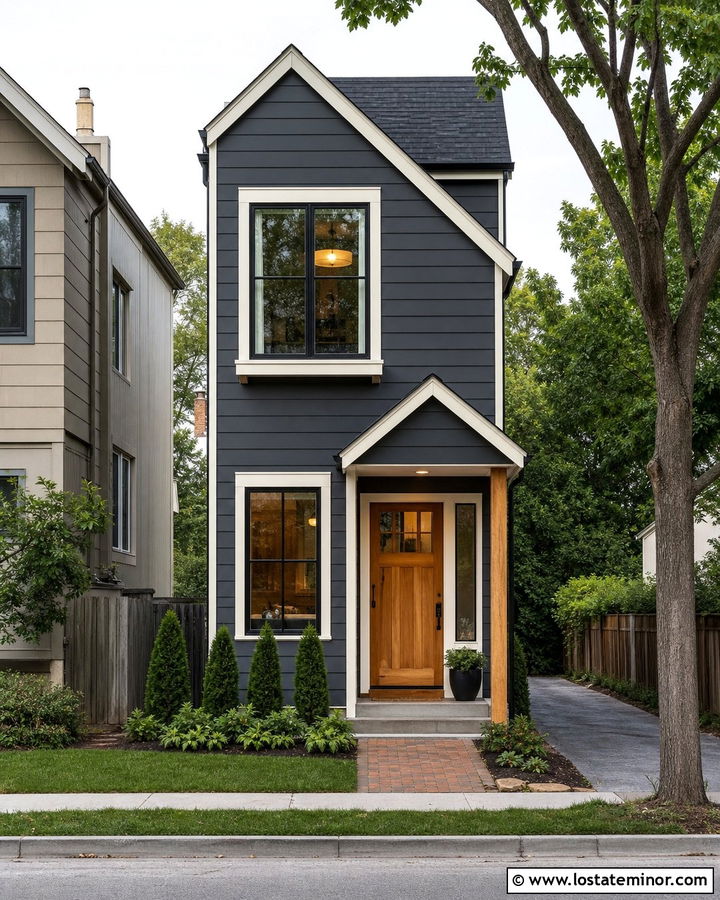
A narrow urban or suburban house needs a portico that creates presence without covering windows or crowding the facade. Use charcoal grey lap siding to visually unify the tall elevation, then install a slim shed or gabled portico above the front door. One side can attach to the house while a single black or wood post supports the outer corner. Paint the trim warm white to keep windows clear against the dark walls. A natural oak door and vertical sidelight make the entrance appear taller and brighter. Keep the portico roof black and coordinate it with simple window frames and gutters. A narrow brick walkway, upright shrubs, and compact planting beds can frame the complete exterior while preserving valuable driveway and yard space.
30. Charcoal Grey Farmhouse With Wide Portico
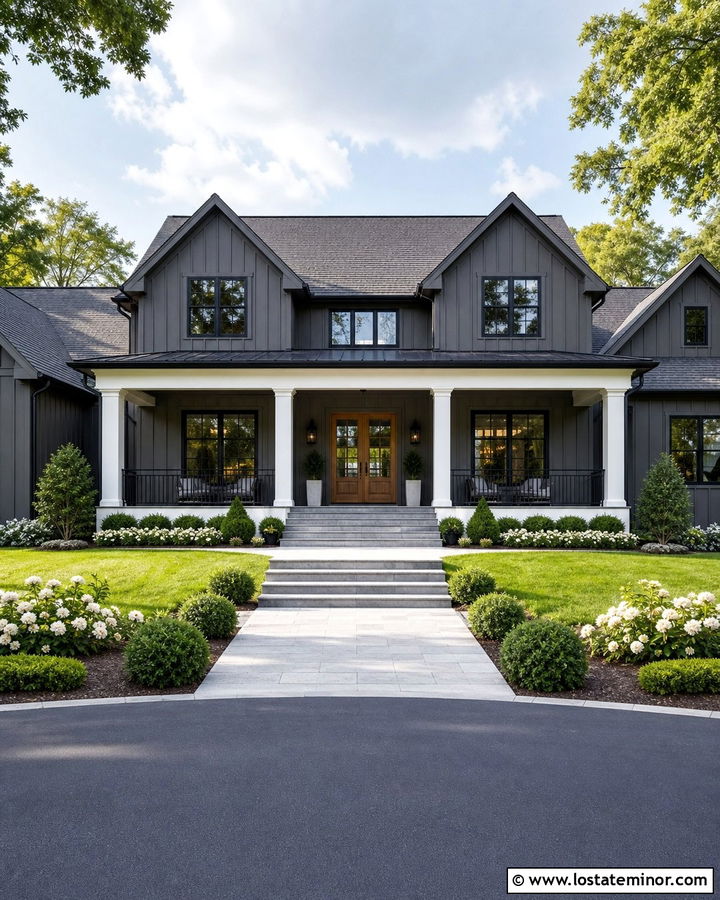
A wide farmhouse portico can make a dark charcoal grey house feel open, comfortable, and connected to the yard. Extend the gabled or shed roof across most of the front facade and support it with evenly spaced white or cedar columns. Charcoal board-and-batten siding provides a strong background, while a natural wood double door creates warmth at the center. Use a light grey stone porch floor to reflect daylight beneath the deep roof. Black-framed windows, black gutters, and a charcoal shingle roof keep the upper details consistent. Add simple wood or black metal railings only where required so the facade remains visually open. Broad steps, symmetrical planters, flowering shrubs, and a generous lawn complete the welcoming modern farmhouse composition.
Conclusion:
The best 30 Charcoal Grey House Design With Portico Ideas treat the entrance as part of one coordinated exterior rather than an isolated feature. Start with the home’s architecture, then choose a portico roof shape and column style that suit its proportions. White trim creates classic definition, black details support a modern look, and natural wood keeps dark siding welcoming. Brick, limestone, fieldstone, and bluestone can add lasting texture while connecting the facade to the walkway and landscape. Before committing, test the charcoal grey on several walls and view it in direct sun, shade, and changing weather. A thoughtful combination of color, materials, roofing, and planting will give the entire house stronger curb appeal.

Related posts: