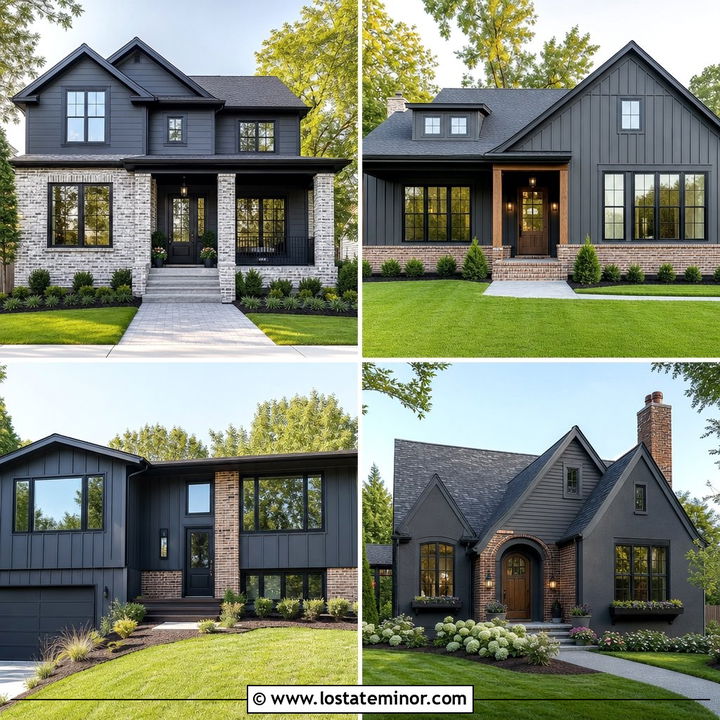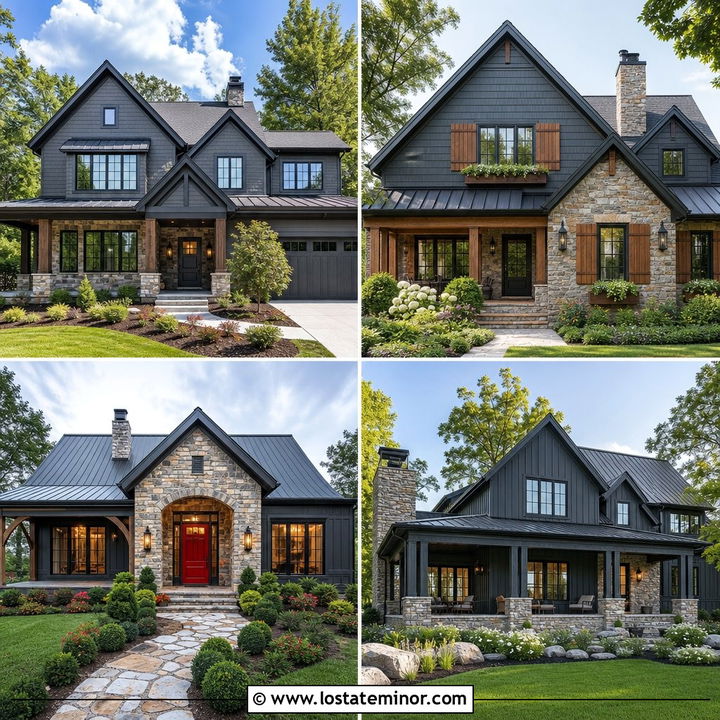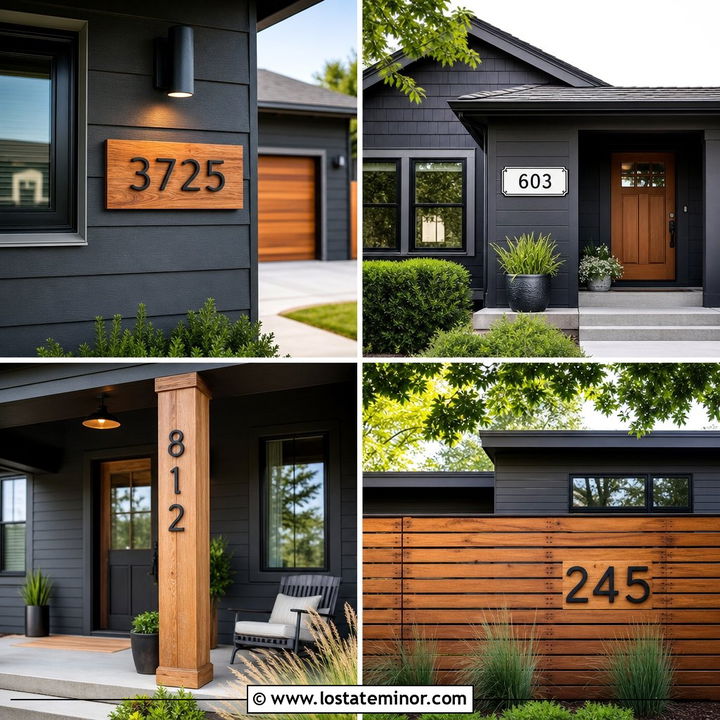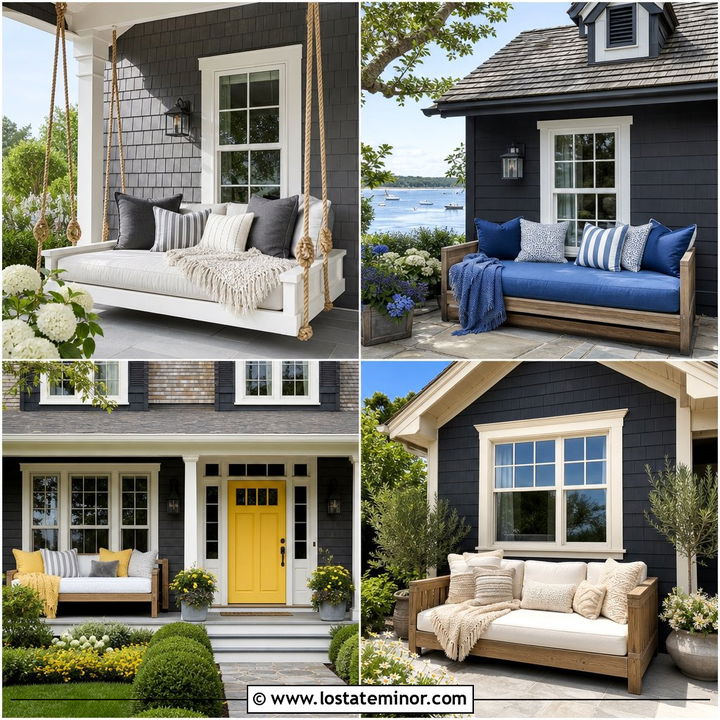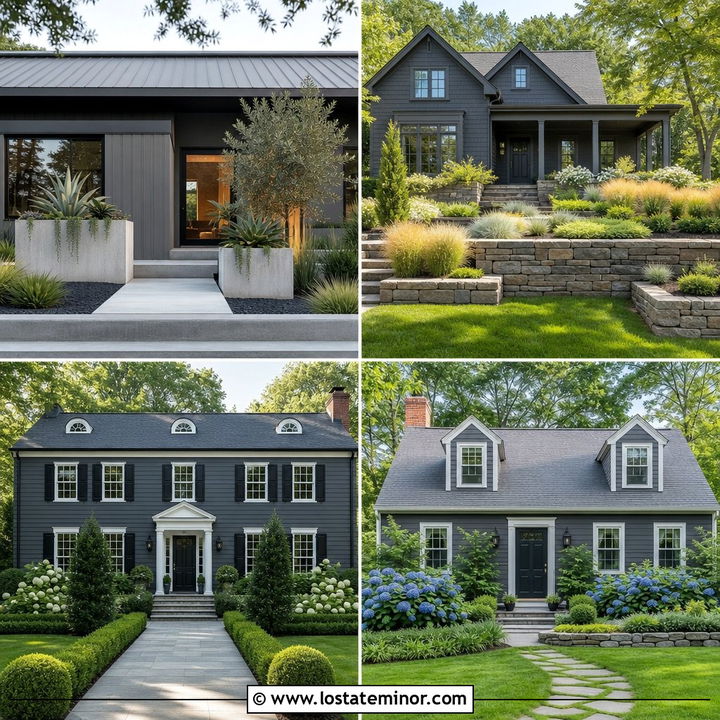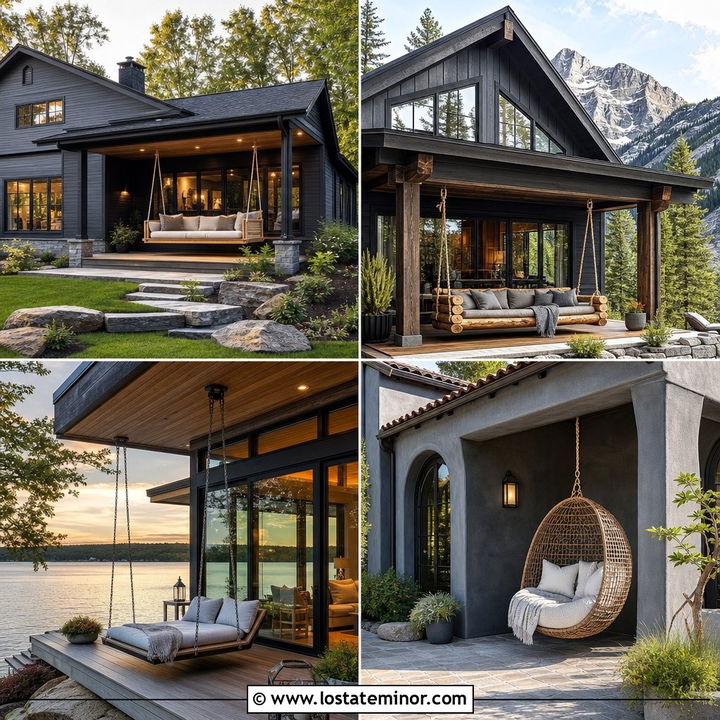
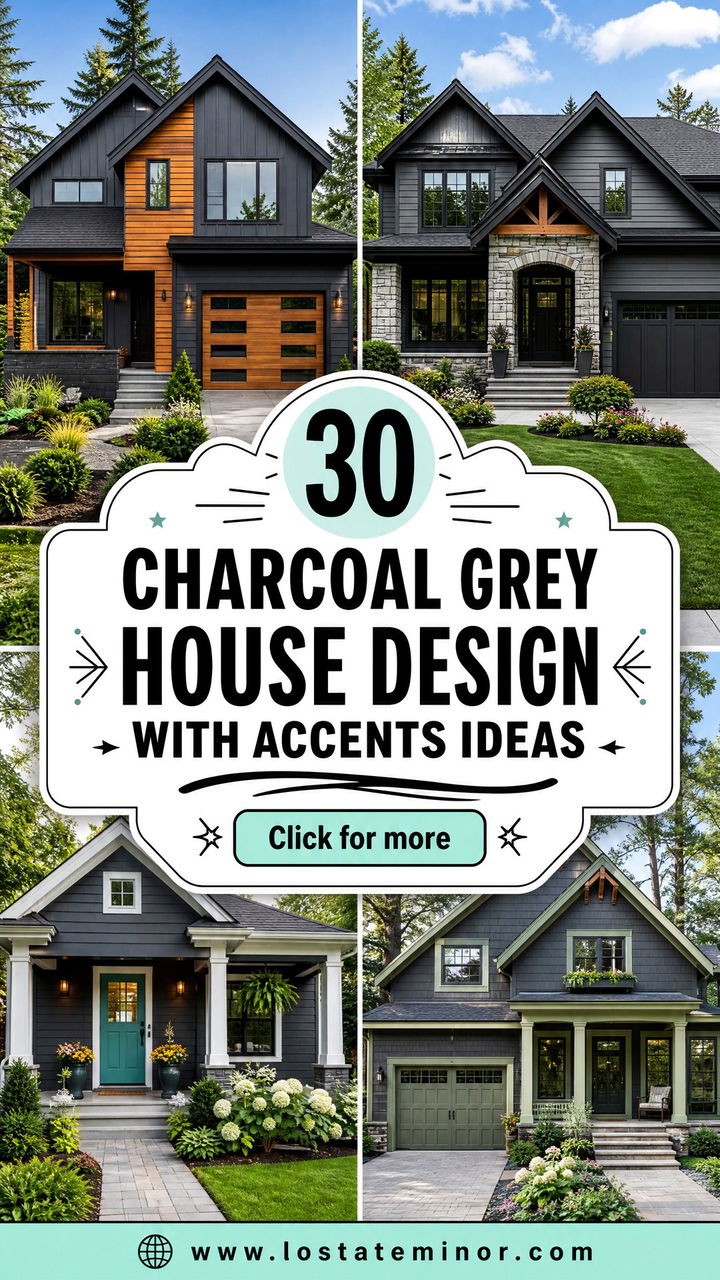
Charcoal gray gives a home depth, definition, and a polished look without feeling as severe as solid black. The best exterior schemes balance this strong body color with lighter trim, warm natural materials, textured masonry, or a carefully chosen front door. These 30 Charcoal Grey House Design With Accents Ideas cover classic and modern combinations for ranch homes, colonials, Craftsman houses, farmhouses, bungalows, and contemporary builds. Each look treats the facade as one connected palette, including siding, trim, roofing, doors, windows, porches, and landscaping. Consider your home’s fixed materials and natural light before choosing a final shade. The complete schemes below offer practical inspiration for creating your own 30 Charcoal Grey House Design With Accents Ideas.
1. Charcoal Grey House With White Trim
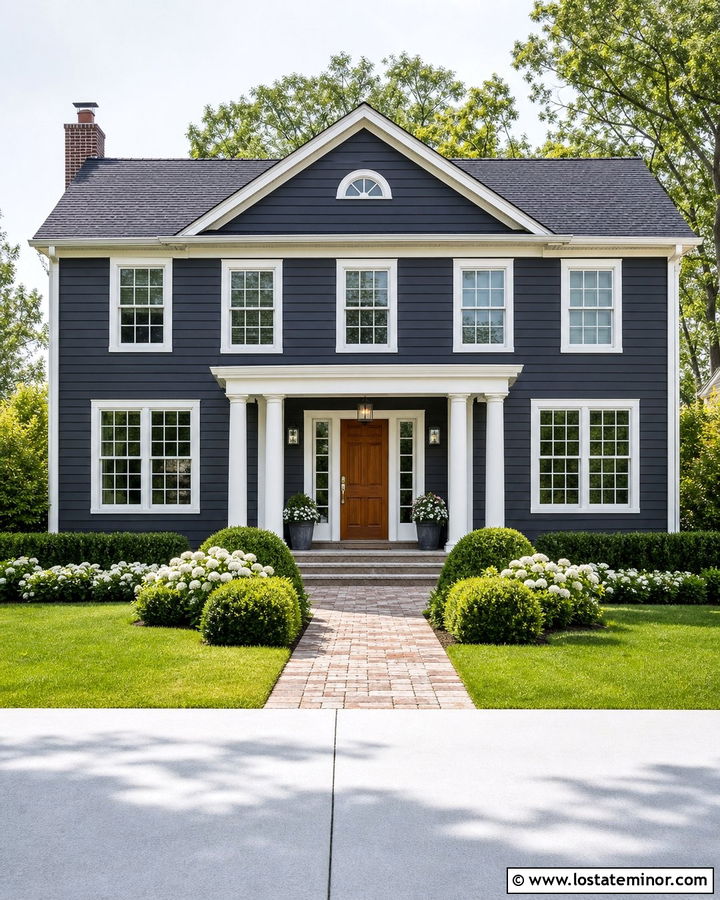
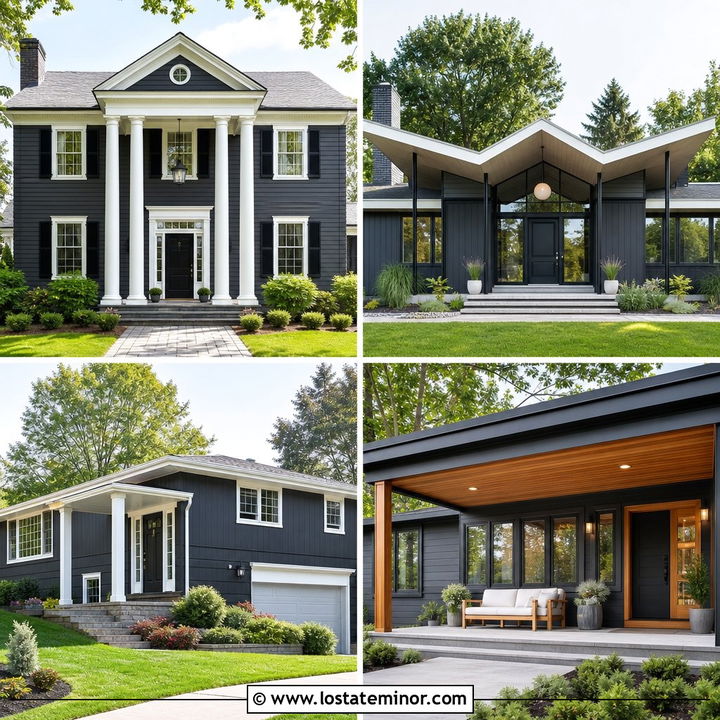
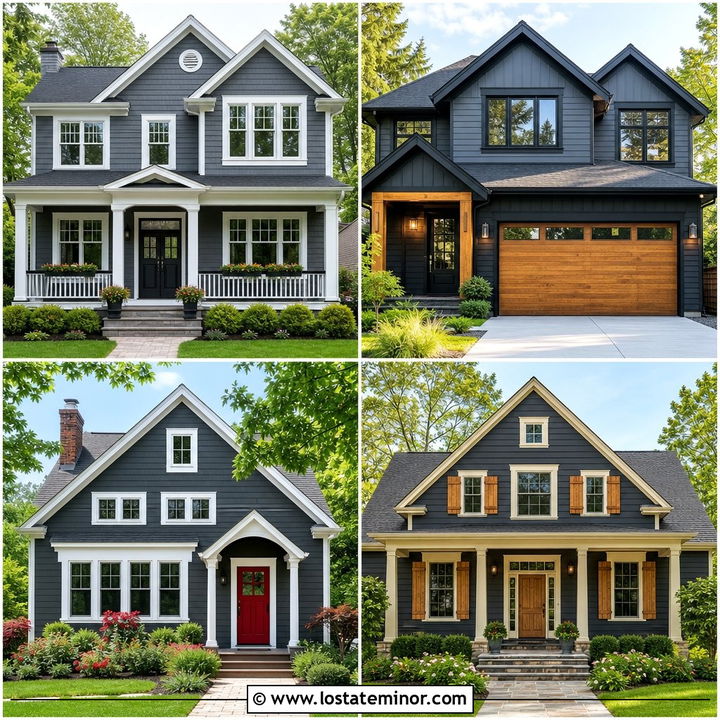
Crisp white trim creates one of the cleanest pairings for a charcoal gray exterior. Use charcoal horizontal siding across the main facade, then outline the windows, roofline, porch columns, and garage with a bright but slightly softened white. This contrast makes traditional architecture appear sharper without removing its welcoming character. A medium-brown wood front door prevents the palette from feeling too cool. Black lanterns and charcoal roof shingles can connect the darker surfaces, while pale concrete steps brighten the entrance. This scheme works especially well on a two-story colonial because the white details emphasize symmetry. Simple foundation shrubs, green lawn, and white flowering plants complete a balanced exterior that looks neat throughout every season.
2. Charcoal Grey House With Black Trim
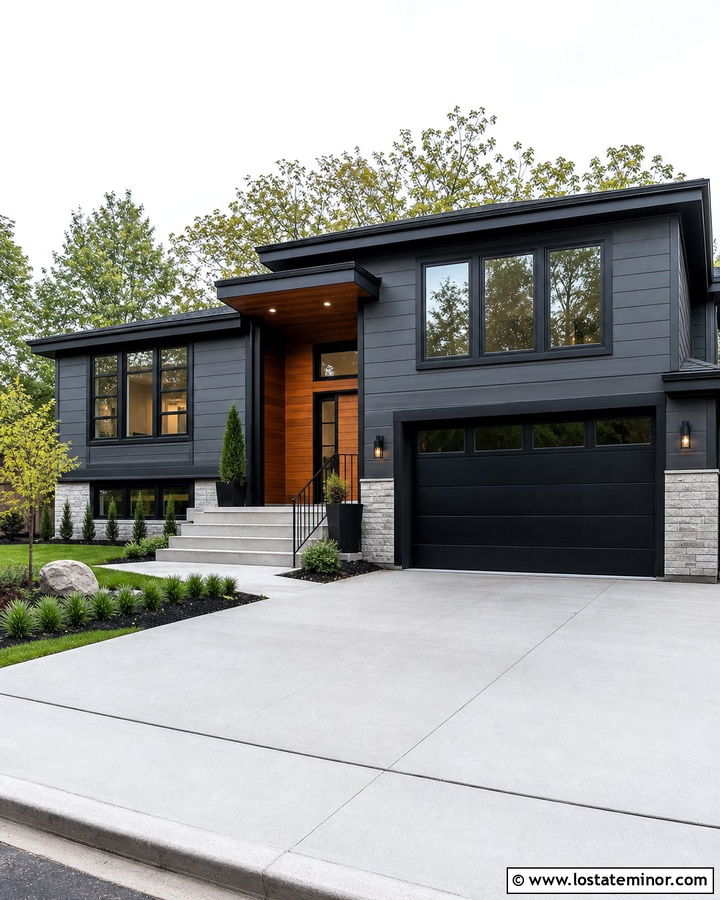
For a more dramatic facade, pair charcoal gray siding with matte black trim and window frames. The colors should be different enough to create visible layering, so choose a charcoal that is slightly lighter than the black accents. A contemporary split-level house can carry this low-contrast combination particularly well. Use black along the fascia, gutters, garage door, and porch railings to form a continuous architectural outline. Add a warm cedar front door and matching wood soffits to soften the dark surfaces. Light gray concrete, silver-toned stone, and restrained landscaping keep the property from appearing heavy. This complete scheme feels streamlined and intentional, while the natural wood introduces enough warmth to make the entrance comfortable and inviting.
3. Charcoal Grey House With Cedar Accents
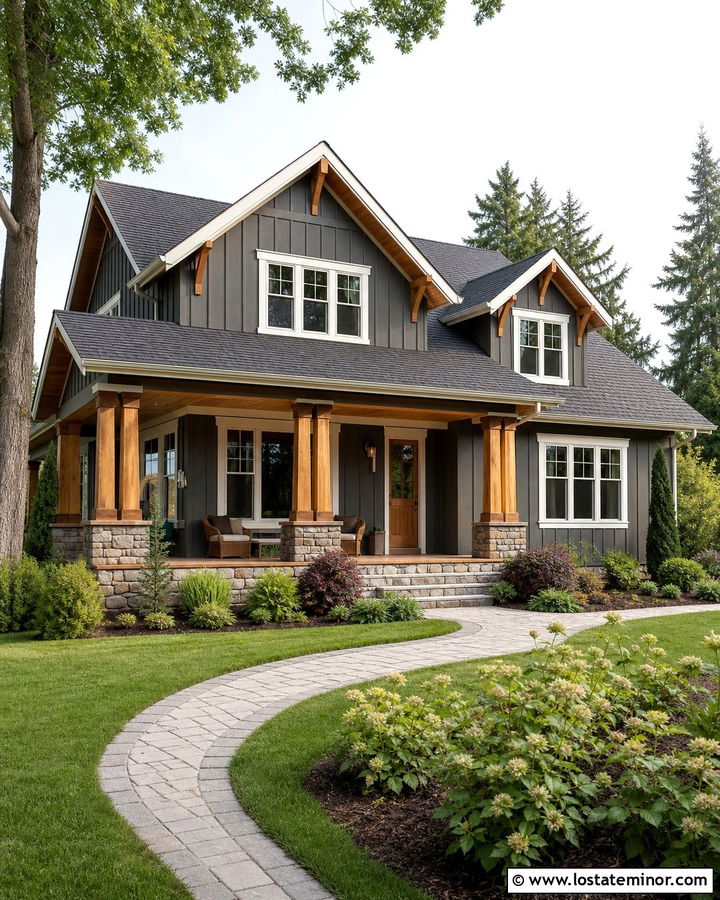
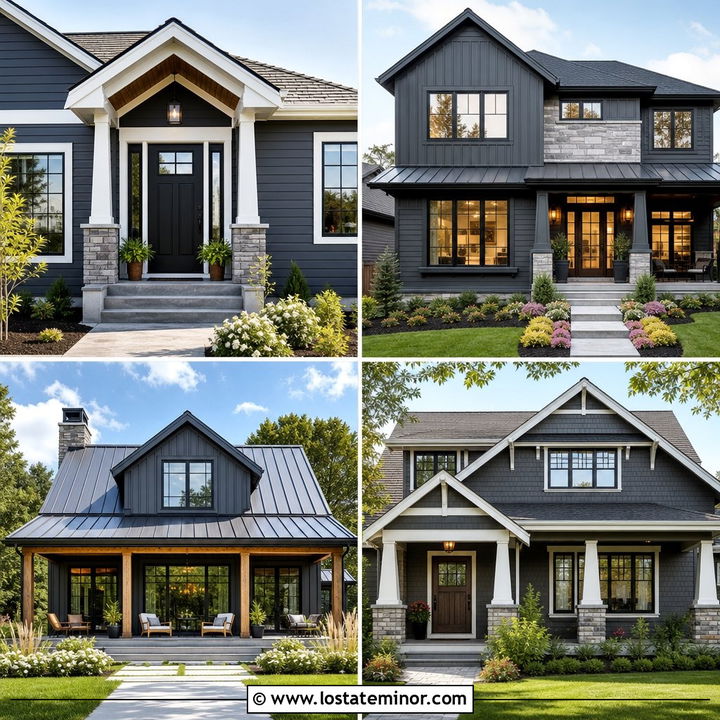
Sunlit cedar brings warmth and texture to a charcoal gray house. Cover the main exterior in deep charcoal board-and-batten siding, then use clear-sealed cedar around the entry, porch ceiling, garage gable, and decorative brackets. The golden wood stands out beautifully without requiring a bright painted accent color. Warm white window trim can provide gentle separation between the dark siding and glass. Choose a weathered charcoal roof, black metal lighting, and stone porch bases containing both gray and sandy brown tones. This combination is ideal for a Craftsman home with deep eaves and a covered front porch. Repeating cedar in several measured locations makes the scheme feel connected rather than allowing the front door to look like an isolated feature.
4. Charcoal Grey House With Natural Wood Door
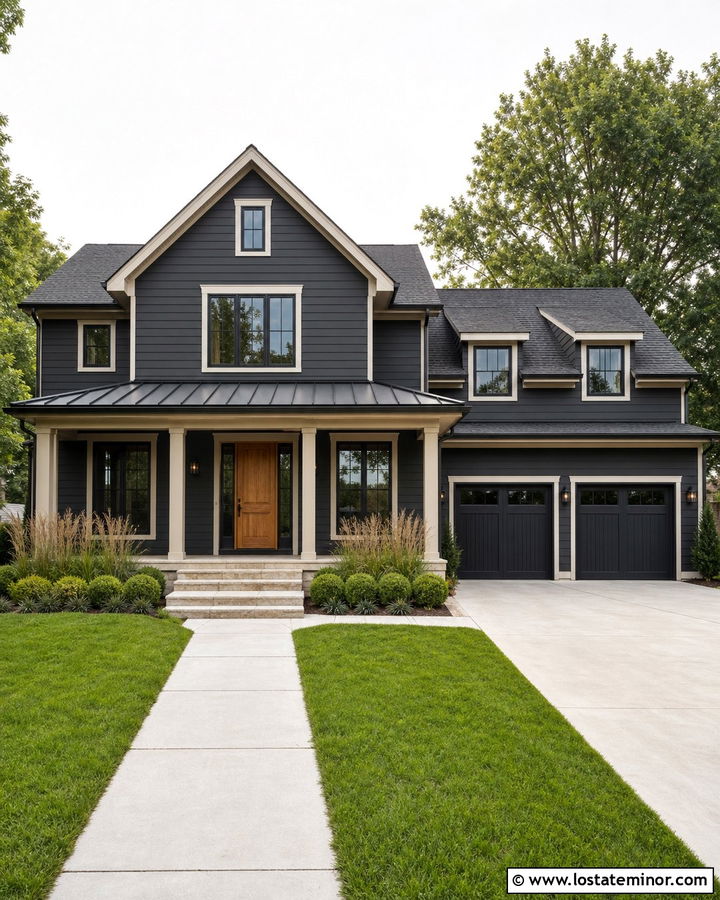
A natural wood front door can become the welcoming focal point of a dark charcoal exterior. On a modern farmhouse, combine charcoal lap siding with simple off-white trim, black windows, and a medium-oak door featuring narrow glass panels. The wood grain provides movement and warmth against the solid gray background. Keep the garage doors charcoal so they blend into the main facade rather than competing with the entrance. A black standing-seam porch roof adds crisp definition, while pale limestone steps reflect additional light around the doorway. Complete the setting with ornamental grasses, clipped shrubs, and a straight concrete walkway. The result feels modern and approachable because the door adds organic character without disrupting the home’s restrained exterior palette.
5. Charcoal Grey House With Stone Accents
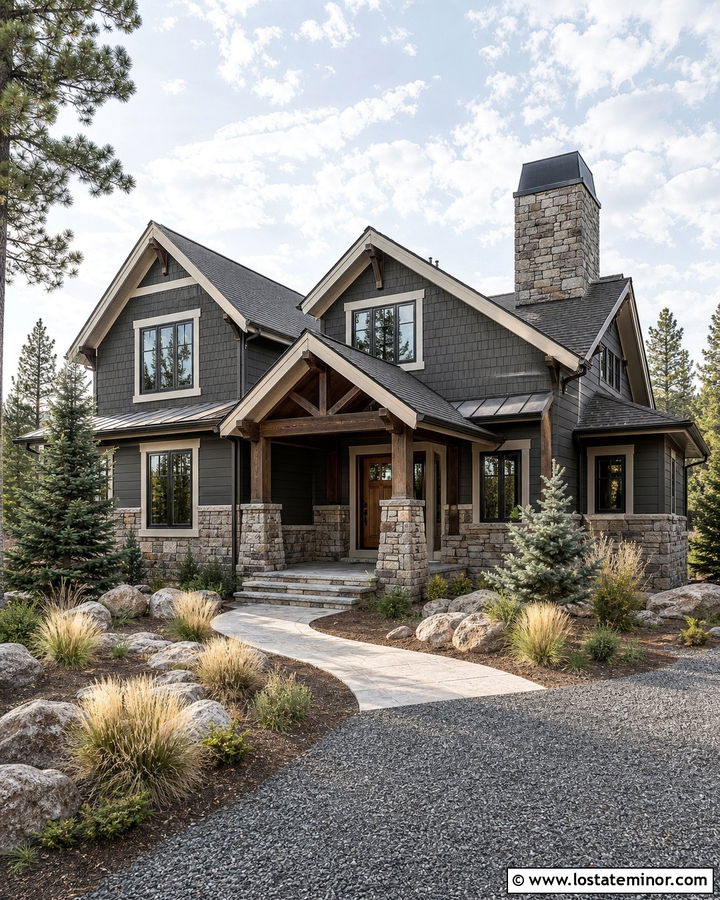
Stone can ground a charcoal gray exterior while adding natural variation. Choose a mountain-inspired house with charcoal shake siding above a base of ledgestone containing gray, taupe, and muted brown. Carry the stone around the porch columns and chimney so it feels structurally connected to the architecture. Cream trim offers a softer contrast than pure white, while a walnut front door draws out the warmer minerals in the masonry. A dark architectural-shingle roof creates a cohesive upper section. Avoid stone with strong orange undertones, which may fight with a cool charcoal body color. Native grasses, boulders, evergreen shrubs, and a curved walkway reinforce the rugged setting. Together, these materials create a rich exterior without relying on excessive decoration.
6. Charcoal Grey House With Red Brick Accents
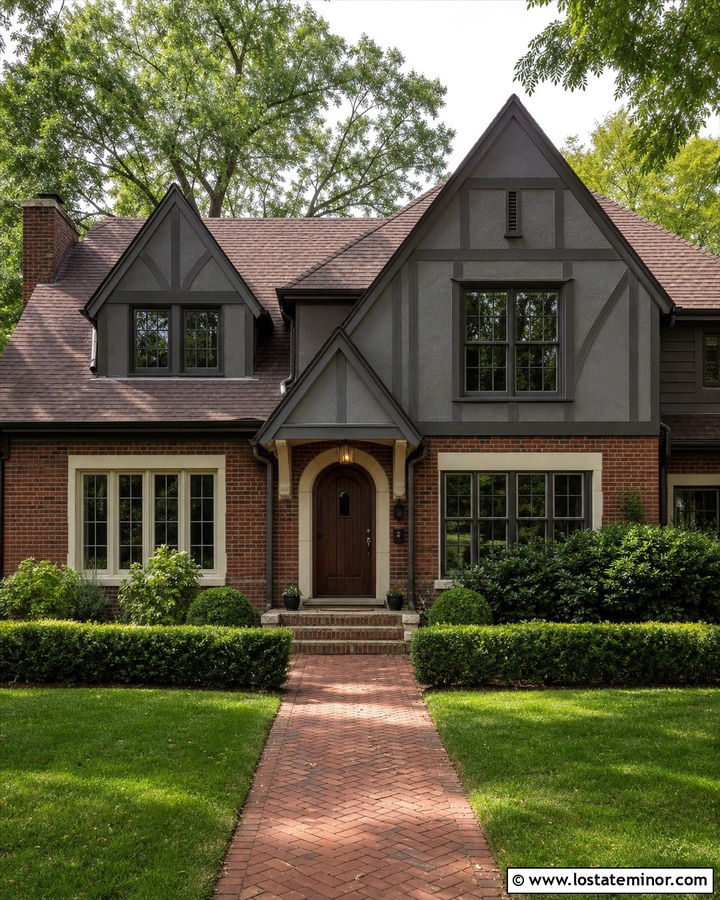
Existing red brick can look fresh beside carefully selected charcoal gray siding. Use the gray on the upper story or new gable sections while preserving brick across the lower facade and chimney. A warmer charcoal with subtle brown undertones will connect more naturally with traditional red masonry. Cream trim, dark bronze gutters, and a stained mahogany door continue the warm direction. On a Tudor-style home, charcoal-painted stucco or siding can also make the brick patterns and steep roofline appear more defined. Keep shutters minimal because the brick already provides plenty of texture. A weathered brown roof, brick walkway, and structured evergreen landscaping complete the palette. This approach updates an older exterior without hiding the craftsmanship and character of its original masonry.
7. Charcoal Grey House With Black Front Door
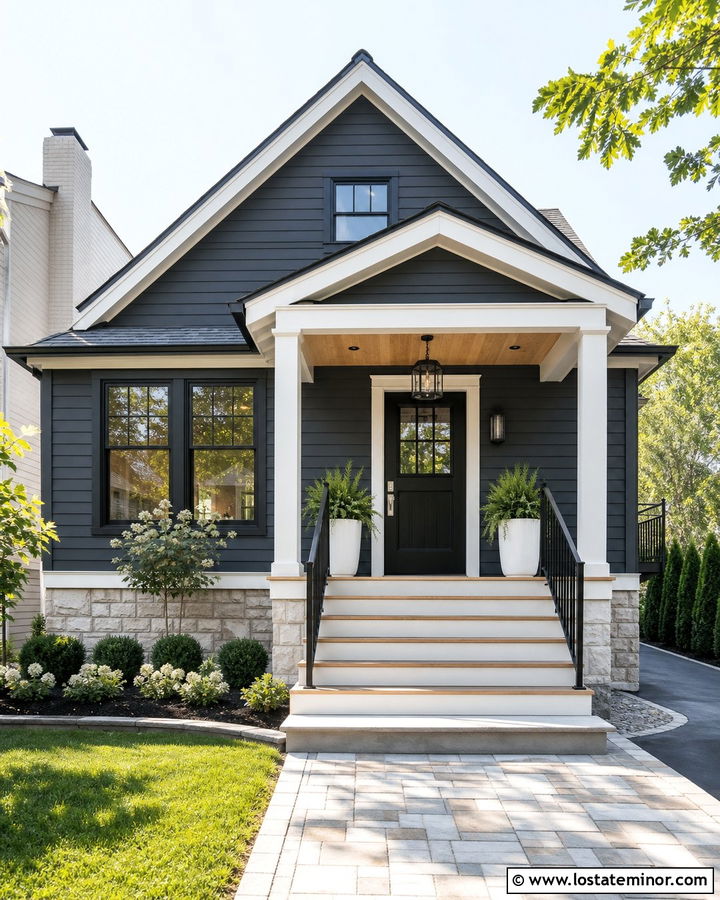
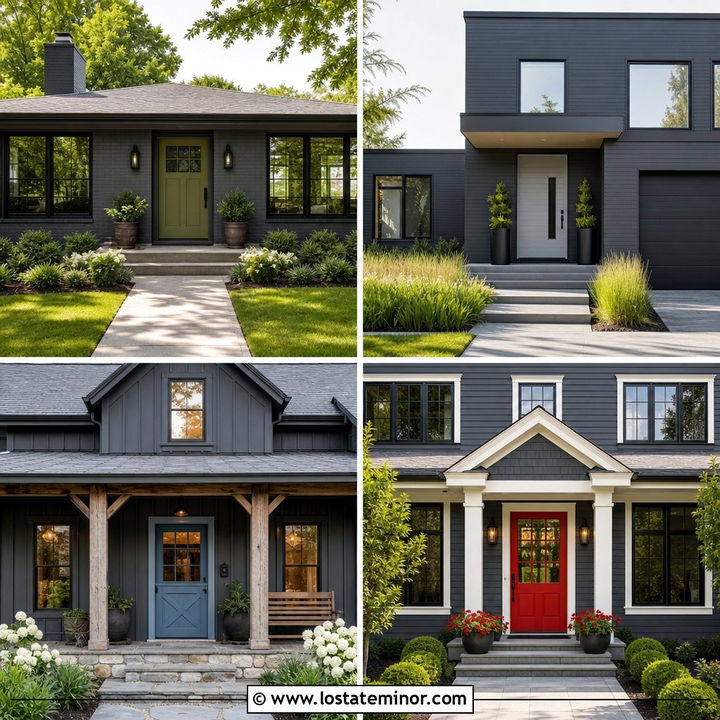
A black front door gives a charcoal gray house a tailored, understated entrance. The best result comes from creating contrast through finish and surrounding materials rather than color alone. Pair matte charcoal siding with a satin black door, black windows, and slender black porch railings. Frame the entry with bright white trim or pale gray stone so the doorway remains easy to identify. This palette suits a compact urban bungalow where too many exterior colors could make the facade feel busy. Add a light natural-wood porch ceiling to introduce subtle warmth overhead. White planters, layered green foliage, and a clean paver walkway brighten the foreground. The finished house feels sophisticated, cohesive, and noticeably more dimensional than an exterior painted in one uninterrupted dark tone.
8. Charcoal Grey House With Red Front Door
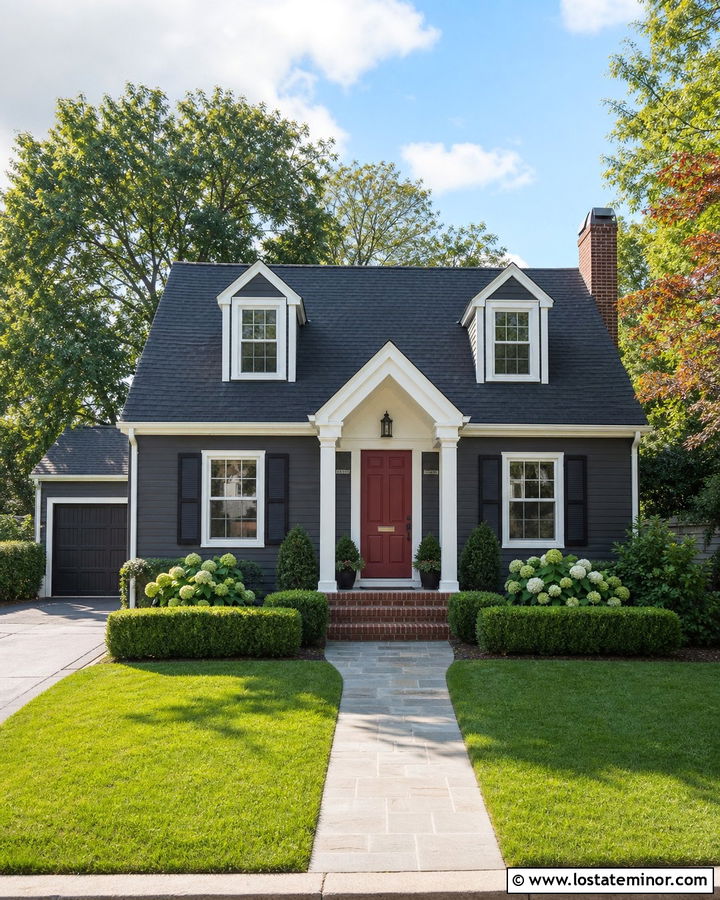
A red front door gives charcoal gray siding a confident traditional accent. Select a rich brick red or muted cranberry instead of a highly saturated primary red. This deeper tone feels more connected to charcoal and works beautifully on a Cape Cod house with white trim and symmetrical windows. Black shutters can provide another dark detail, while the red door remains the clear focal point. Use a charcoal shingle roof and white porch railing to maintain the classic structure. Red brick steps can subtly repeat the door color without creating an exact match. Boxwood borders, hydrangeas, and a simple stone path finish the welcoming setting. This complete palette offers noticeable personality while remaining controlled enough for a timeless suburban exterior.
9. Charcoal Grey House With Yellow Front Door
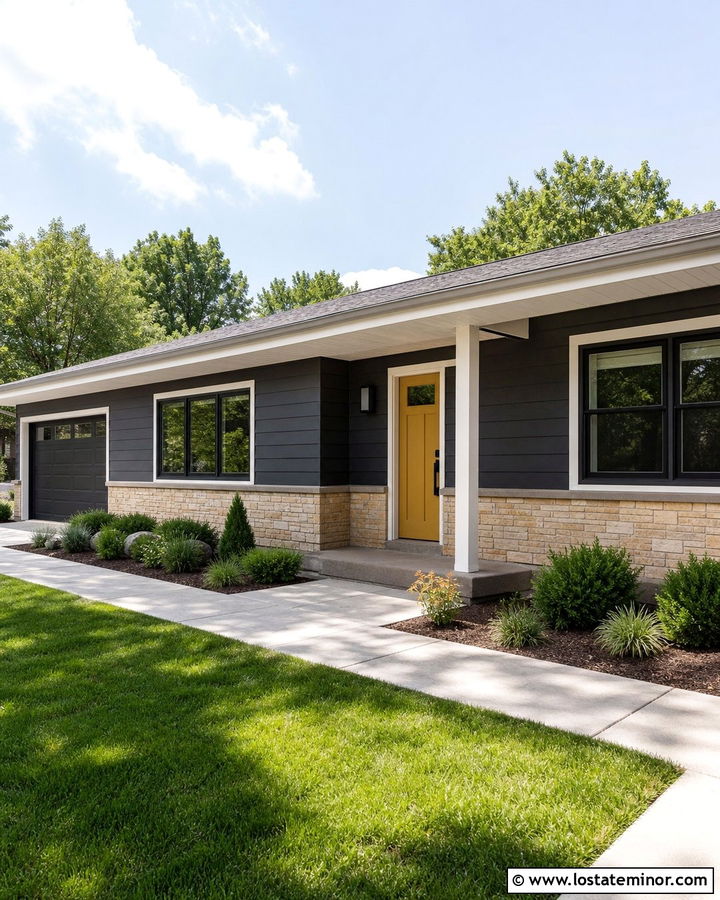
Could a dark exterior use one cheerful color? A mustard or golden-yellow front door introduces warmth without making a charcoal gray house look overly playful. Use the combination on a mid-century ranch with broad rooflines, large windows, and simple horizontal siding. Keep the trim warm white and paint the garage door charcoal to reduce visual clutter. Natural stone along the foundation can include small golden or beige flecks that connect with the door. Black house numbers, sconces, and window frames add crisp modern details. A pale concrete walkway and low, architectural landscaping preserve the home’s horizontal shape. Because yellow is visually powerful, limit it to the entrance and perhaps one small planter. The resulting facade feels optimistic, modern, and thoughtfully balanced.
10. Charcoal Grey House With Teal Front Door
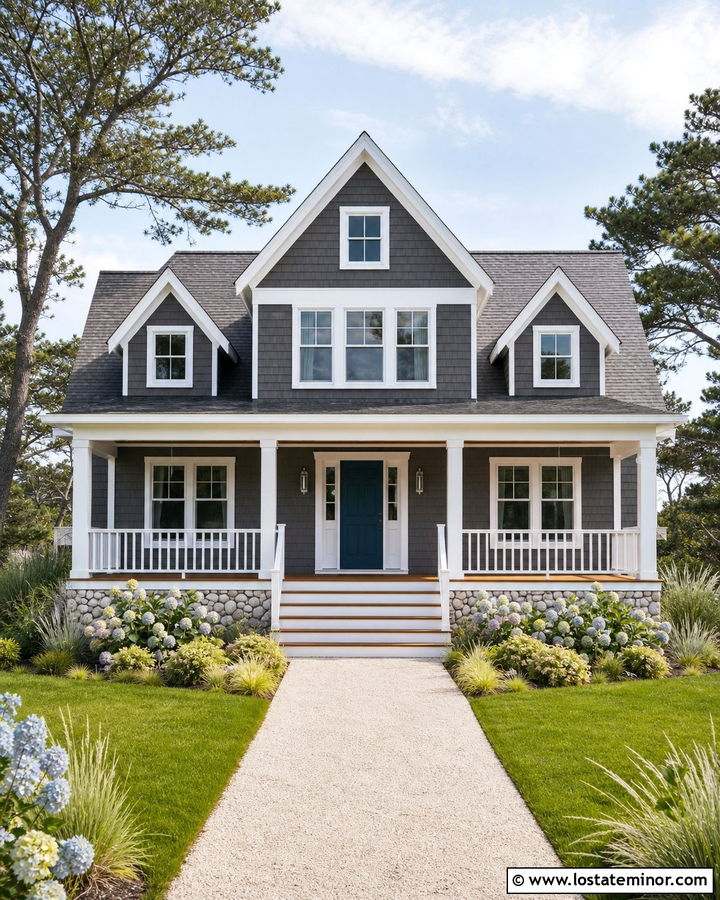
Deep teal creates a colorful entrance while maintaining the sophisticated mood of charcoal gray. On a coastal cottage, combine charcoal shake siding with soft white trim, a teal-blue front door, and a medium-gray roof. The blue-green door can echo nearby landscaping without pushing the house into a strongly nautical theme. Use natural cedar on the porch floor and white railings to make the entrance feel bright and relaxed. Black lanterns offer a small amount of contrast, while pale fieldstone around the foundation introduces texture. Hydrangeas, ornamental grasses, and a curving shell-colored path support the coastal character. Keeping teal limited to the front door allows it to stand out clearly while the siding, roofing, and trim remain calm and cohesive.
11. Charcoal Grey House With Navy Accents
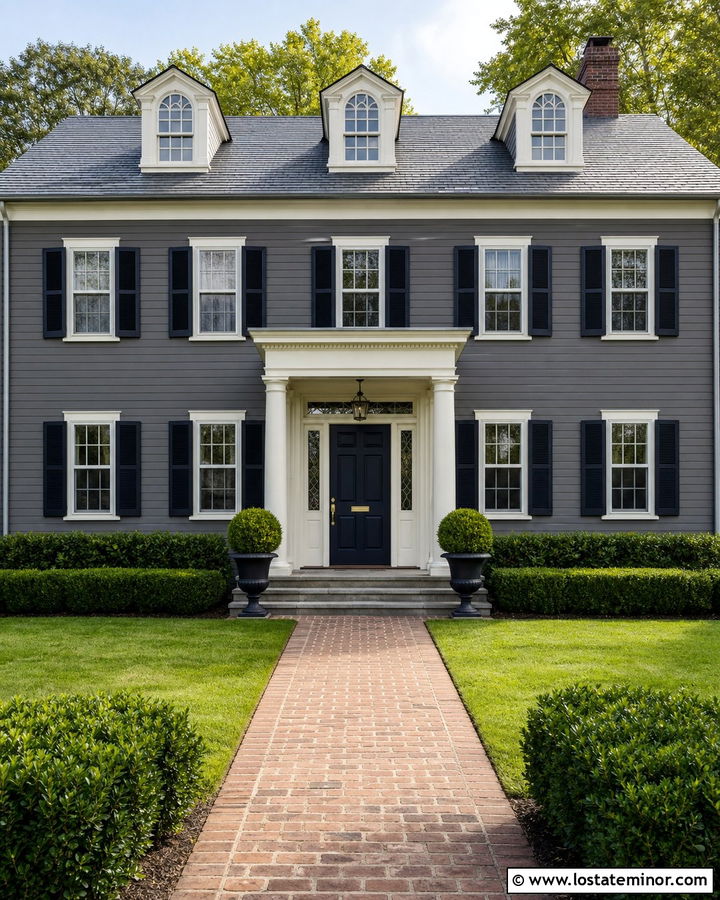
Navy accents offer subtle color on a charcoal gray exterior without producing strong contrast. Start with a lighter charcoal body color so the blue undertones in navy shutters and doors remain noticeable. A traditional Georgian house is an excellent setting for this refined palette. Use creamy white trim around the windows, cornice, and columned entrance, then paint the shutters and front door a deep navy blue. A slate-gray roof connects the cool colors overhead, while aged brass door hardware adds gentle warmth. Keep the garage detached or painted charcoal to protect the symmetry of the main facade. Formal hedges, a straight brick walkway, and evenly placed planters reinforce the orderly architecture. The complete scheme feels layered, dignified, and quietly colorful.
12. Charcoal Grey House With Sage Green Accents
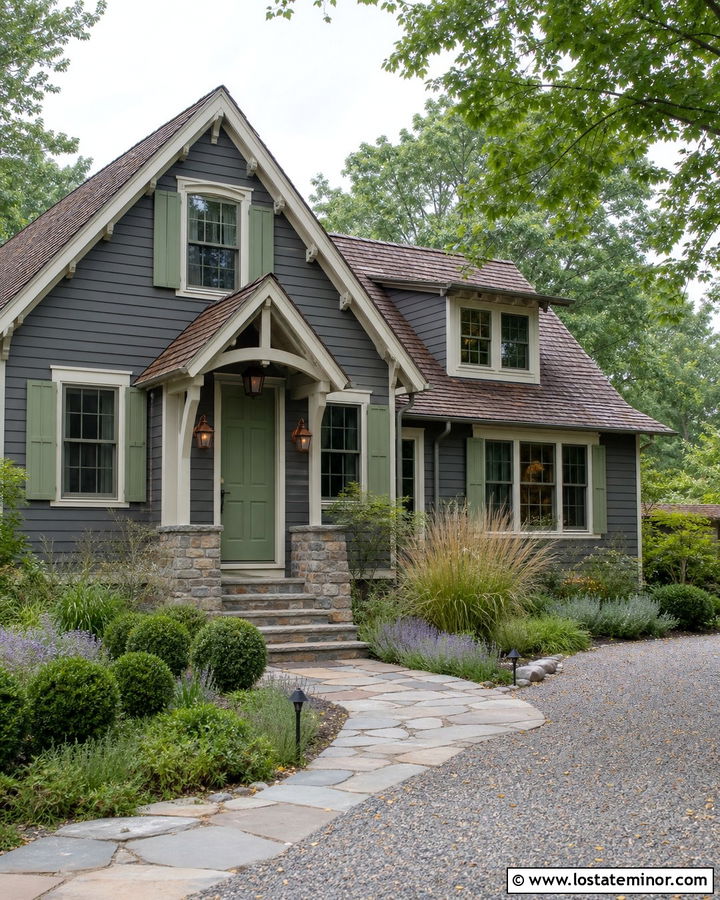
Muted sage green can soften charcoal siding and connect the house with a leafy landscape. Use sage on the front door, porch swing, or carefully selected shutters rather than spreading it across every detail. On a cottage-style exterior, pair charcoal lap siding with cream trim, a soft sage door, and natural fieldstone around the porch foundation. A weathered brown roof warms the upper portion of the house, while copper porch lights add another earthy note. Plant lavender, ornamental grasses, and rounded shrubs along a casual flagstone path. This combination works best when the green has gray undertones, allowing it to relate naturally to the charcoal body. The completed exterior feels calm and organic while still maintaining enough contrast to define windows, rooflines, and architectural edges.
13. Charcoal Grey House With Copper Accents
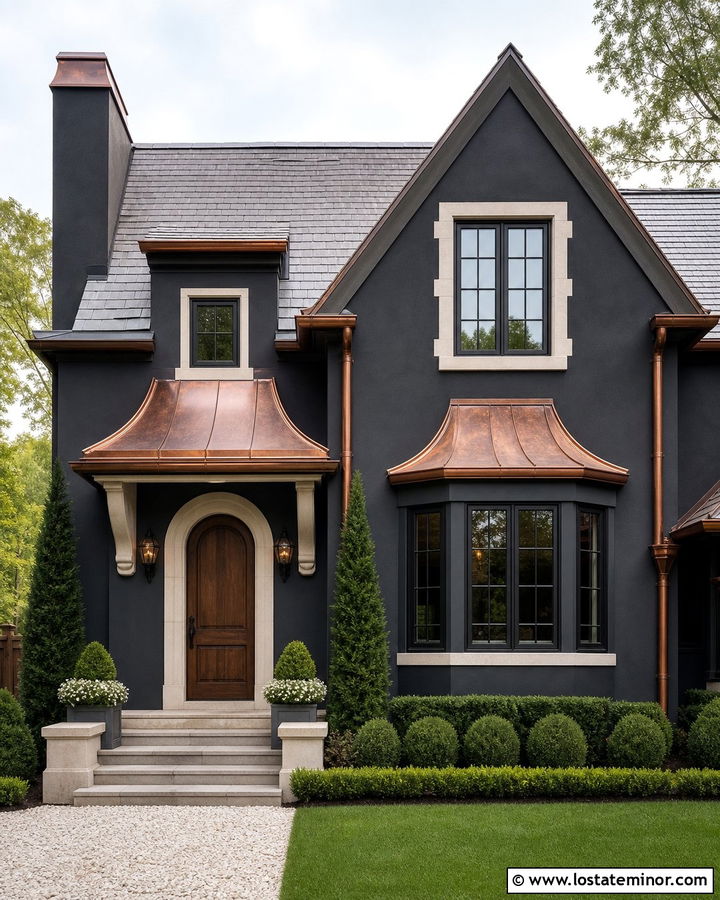
Copper adds warmth and a changing natural finish to a charcoal gray exterior. On a sophisticated European-inspired home, use deep charcoal stucco with limestone trim, then introduce copper through porch roofing, gutters, downspouts, and a small bay-window canopy. A stained walnut front door complements the metal’s warm tones. Dark bronze windows and a slate roof maintain the home’s refined character without introducing harsh black lines. Copper should be repeated in a few architecturally logical places rather than applied as random decoration. As the metal develops character, it gives the exterior even greater depth. Formal evergreens, pale gravel, stone steps, and restrained planting keep attention on the materials. The overall scheme looks substantial, detailed, and carefully planned from roof to foundation.
14. Charcoal Grey House With Bronze Accents
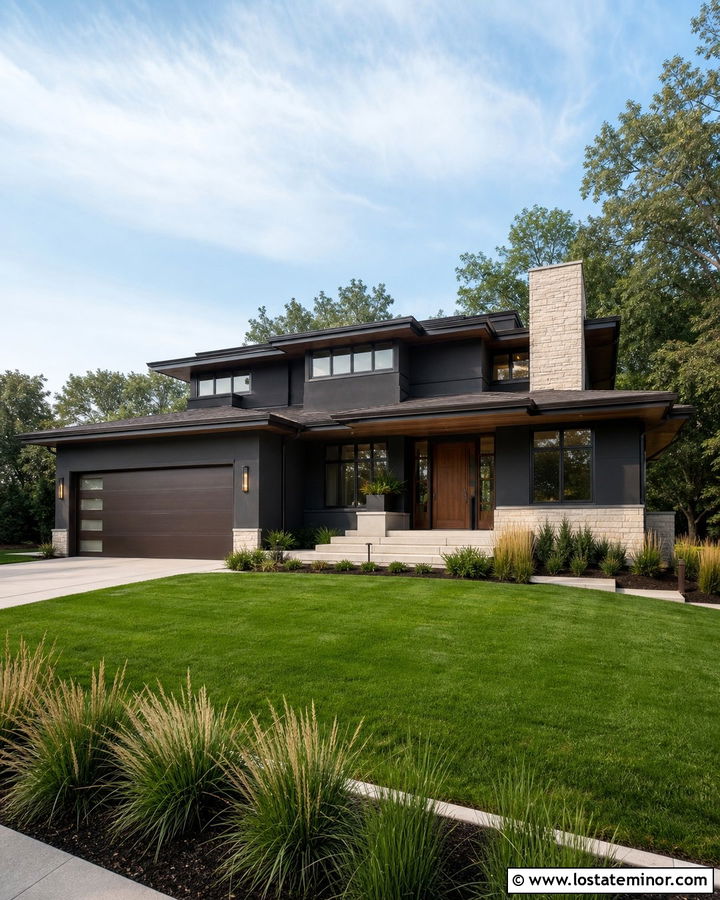
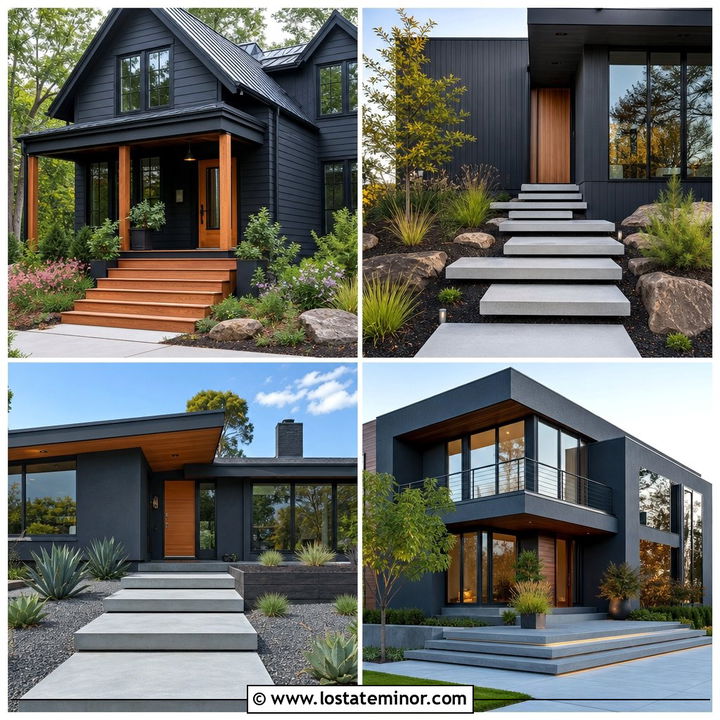
Dark bronze accents create a softer alternative to black on a charcoal gray house. Consider a Prairie-style home with charcoal stucco, wide roof overhangs, and bronze-framed windows that emphasize its horizontal architecture. Repeat bronze on the gutters, garage door, porch railing, and streamlined exterior lights. A warm oak front door prevents the facade from becoming too monochromatic. Cream limestone around the entrance and chimney adds brightness while coordinating with the wood. Choose a deep brown roof rather than a blue-black one to support the warm metal accents. Low ornamental grasses, broad concrete steps, and linear planting beds continue the home’s clean geometry. This full exterior palette feels modern and grounded, with enough tonal variation to reveal each architectural layer clearly.
15. Charcoal Grey House With White Brick
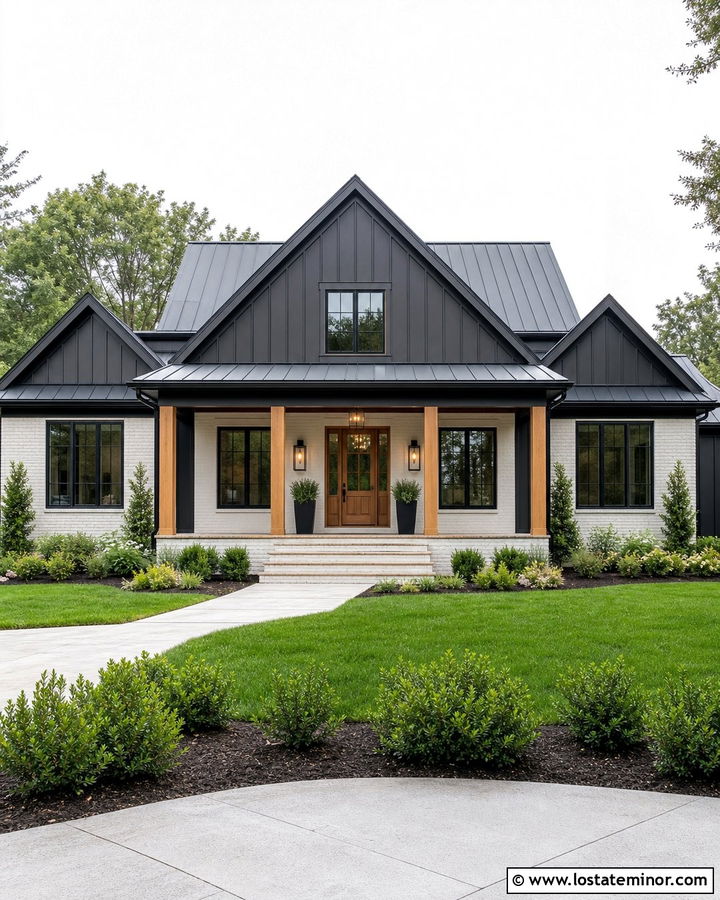
White-painted brick can brighten the lower half of a charcoal gray home and create a strong modern farmhouse contrast. Apply charcoal board-and-batten siding across the upper story and gables, then use warm white brick around the porch, chimney, and foundation. Black windows and a black metal roof connect the two sections with crisp lines. A natural cedar front door and matching porch posts add needed warmth between the dark siding and pale masonry. Choose a soft, creamy brick white rather than a cold blue-white to prevent the facade from feeling stark. Wide concrete steps, black planters, and layered green landscaping complete the composition. The combination looks especially balanced when the charcoal and brick occupy clearly defined architectural areas instead of being scattered in small patches.
16. Charcoal Grey House With Limewashed Brick
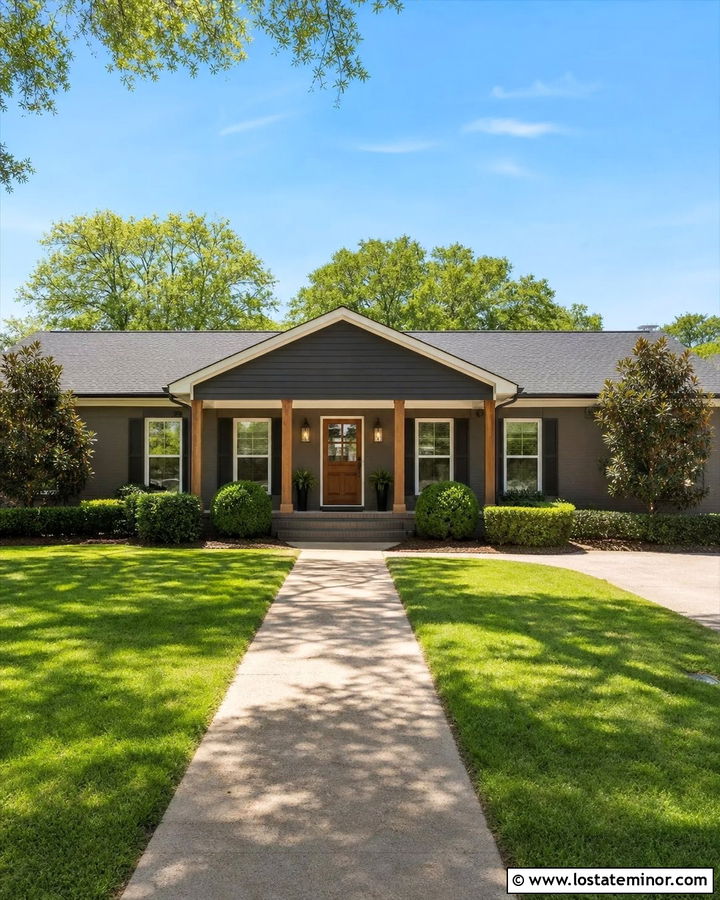
Limewashed brick introduces an aged, textured appearance that complements solid charcoal gray siding. This treatment works well on an updated Southern ranch with original brick across the main facade and charcoal siding on a new porch gable or upper addition. The limewash should allow hints of warm red and brown brick to remain visible beneath the cloudy white finish. Add a medium-brown wood door, dark bronze lights, and warm white trim to connect the old and new surfaces. A charcoal roof keeps the long ranch roofline looking unified. Simple wood porch columns can provide another natural element without overwhelming the masonry. Finish the property with magnolias, clipped shrubs, and a broad walkway for an exterior that feels collected, relaxed, and comfortably established.
17. Charcoal Grey Board And Batten With Wood Accents
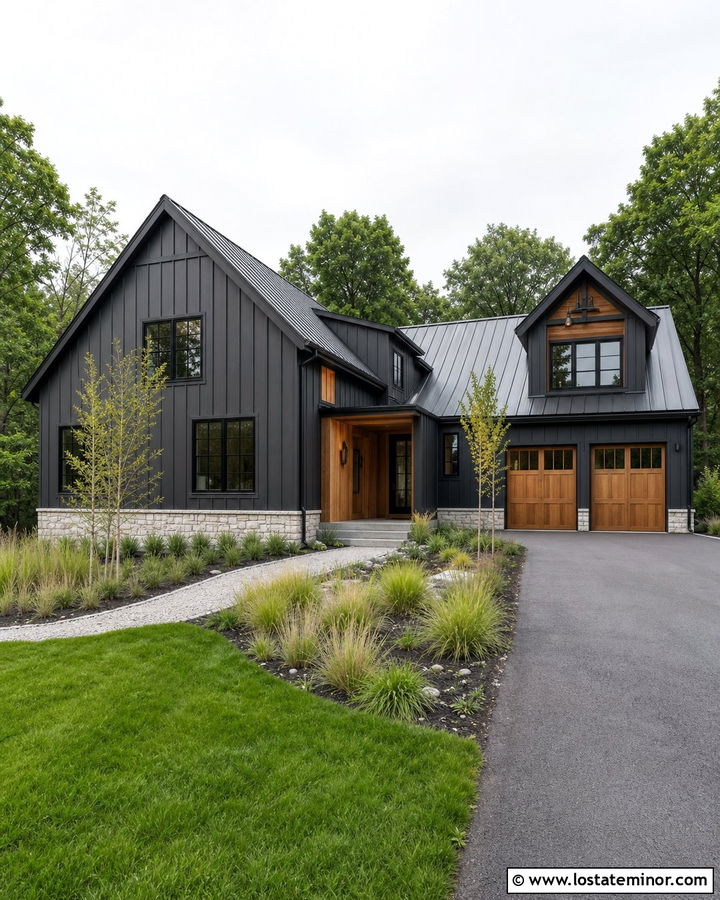
Vertical board-and-batten siding gives charcoal gray extra dimension because sunlight creates narrow highlights and shadows across the facade. Use it on a modern barn-style house with steep gables, black windows, and a standing-seam metal roof. Warm cedar can appear on the recessed entry, garage doors, porch ceiling, and a small section beneath the front gable. Keep the fascia charcoal for a continuous dark silhouette, but add pale stone around the foundation to visually anchor the home. The wood should share one consistent stain so every accent feels related. A gravel-edged concrete walkway, meadow grasses, and young ornamental trees support the simple architecture. This scheme combines strong geometry with organic materials, producing a dark exterior that still feels warm and approachable.
18. Charcoal Grey Siding With Black Windows
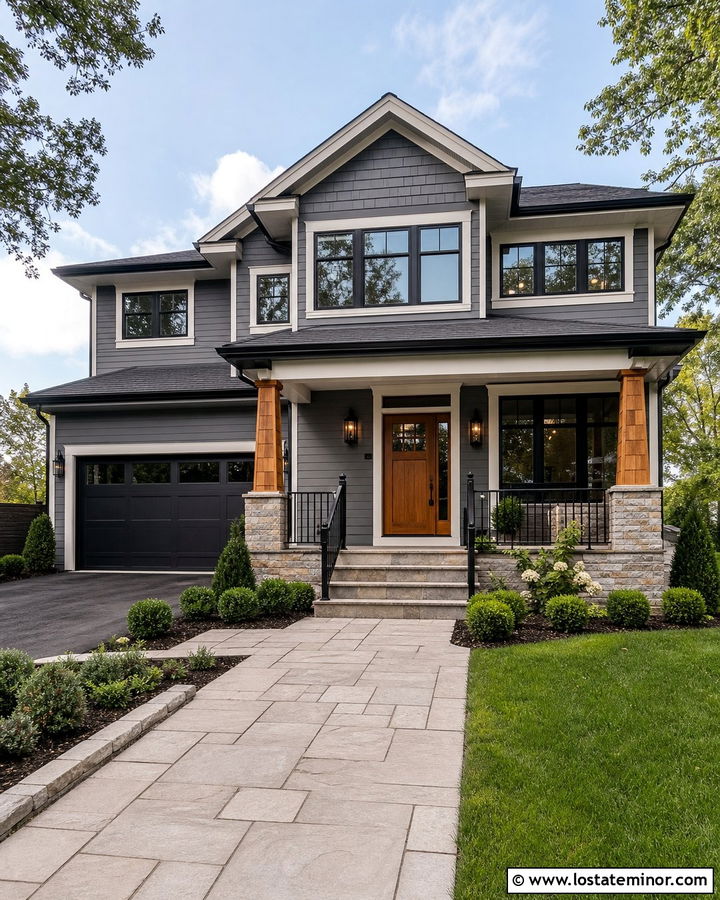
Black windows become striking graphic features against charcoal gray horizontal siding. To preserve their visibility, select a charcoal paint that is several shades lighter than the window frames. On a contemporary Craftsman, frame the recessed porch with warm white trim while leaving most exterior edges charcoal. Use black on the gutters, railings, and porch lights to repeat the windows. A cedar door and matching tapered columns introduce warmth, while gray-and-tan stone bases add texture at ground level. The garage door can match the siding so it does not dominate the facade. Keep window treatments light inside the house, allowing the black frames to remain visually clean. Structured shrubs and a broad paver walkway create a polished foreground for this layered, high-definition exterior.
19. Charcoal Grey House With Metal Roof
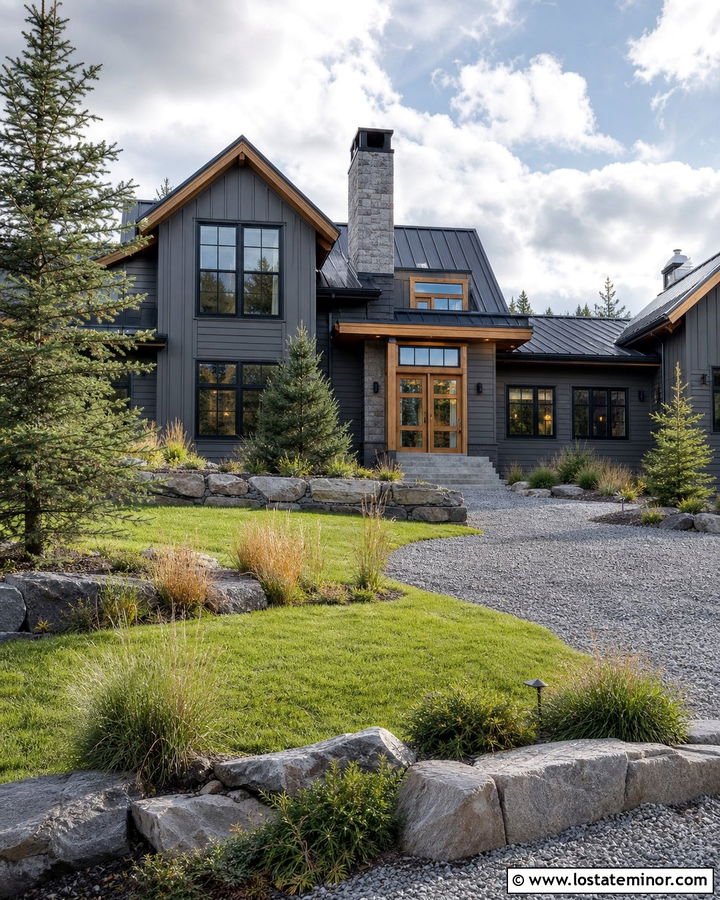
A standing-seam metal roof gives a charcoal gray exterior a sharp, durable-looking profile. Avoid matching the roof and walls too closely. Instead, pair medium charcoal siding with a near-black metal roof so the roofline remains defined. On a modern mountain home, combine this palette with cedar soffits, black-framed windows, and irregular gray stone around the chimney and lower walls. A wide wood-and-glass front door makes the entrance warmer and more visible. Keep trim minimal to suit the contemporary architecture. The slightly reflective roofing can provide subtle contrast against matte siding in bright daylight. Native grasses, evergreen trees, stone retaining walls, and a broad gravel drive complete a house that feels connected to its surroundings while maintaining a crisp and modern exterior structure.
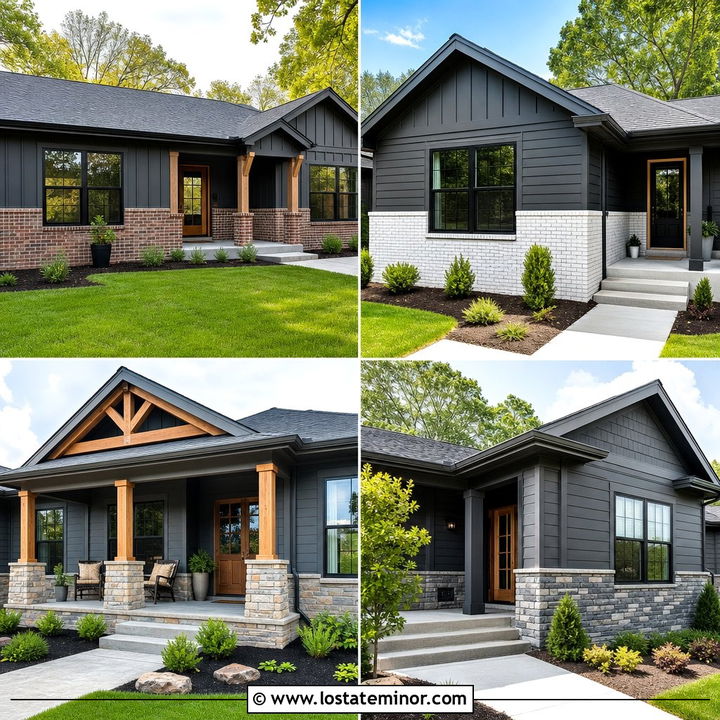
20. Charcoal Grey House With Weathered Wood Roof
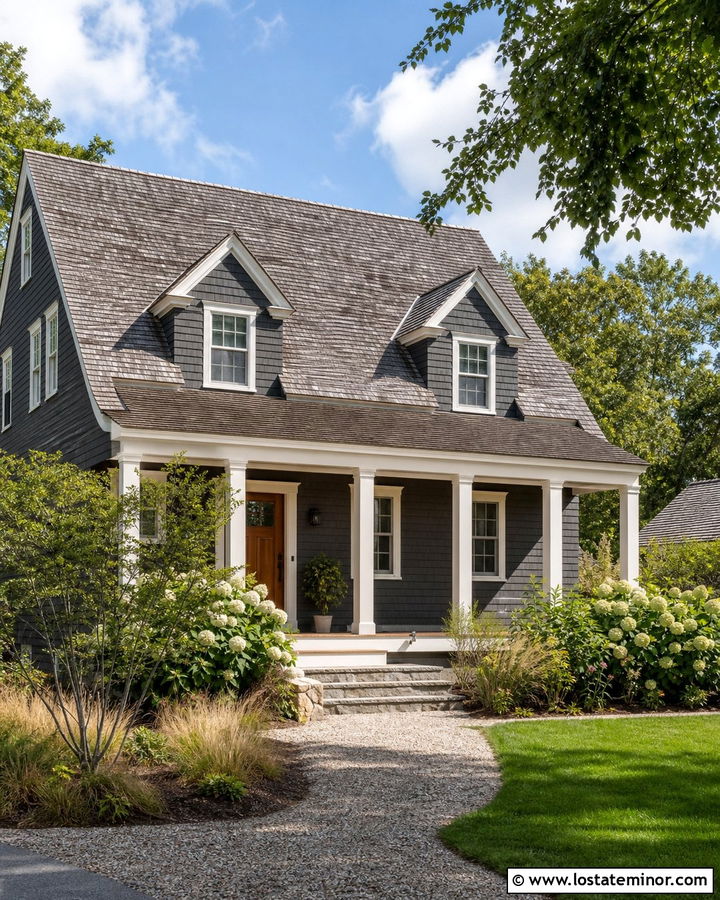
Weathered wood shingles bring a softer, more traditional appearance to charcoal gray siding. Their mix of brown, taupe, and faded gray can bridge cool siding with warm architectural accents. On a shingle-style coastal home, use charcoal gray shakes, creamy white trim, and a weathered cedar roof. Add a medium-toned wood front door and pale stone around the porch steps. White window frames and porch columns keep the facade from becoming overly dark, while dark bronze lights provide subtle definition. The roof should contain enough brown to distinguish it from the siding without looking orange. Natural grasses, hydrangeas, and an informal gravel path reinforce the relaxed setting. This layered palette feels established and graceful rather than stark, glossy, or overly contemporary.
21. Charcoal Grey House With Black Garage Doors
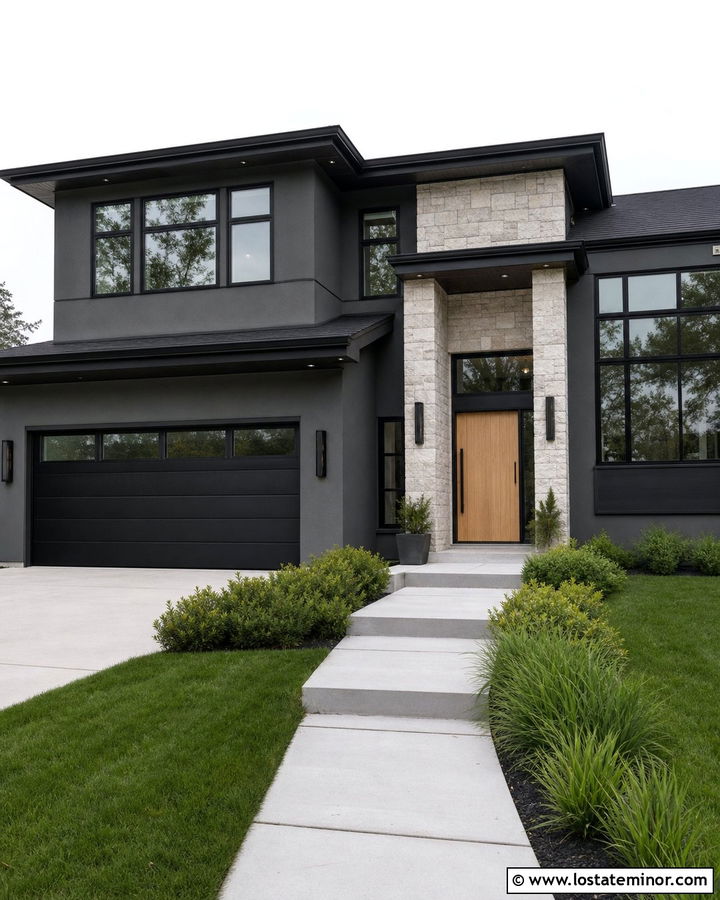
Black garage doors can look intentional on a charcoal gray house when the rest of the facade includes matching dark accents. Use this scheme on a modern suburban home with charcoal stucco, black-framed windows, and two flat-panel black garage doors. Add a light oak front door beneath a wood-lined entry to keep the residence welcoming. Pale gray stone around one architectural volume can separate the garage wing from the living areas. Black fascia and gutters connect the garage doors to the roofline, while a medium-charcoal roof prevents an abrupt color shift. Keep the driveway light and landscaping green to balance the broad dark surfaces. This coordinated treatment allows large garage doors to support the architecture instead of appearing like unrelated rectangles attached to the front facade.
22. Charcoal Grey House With Wood Garage Doors
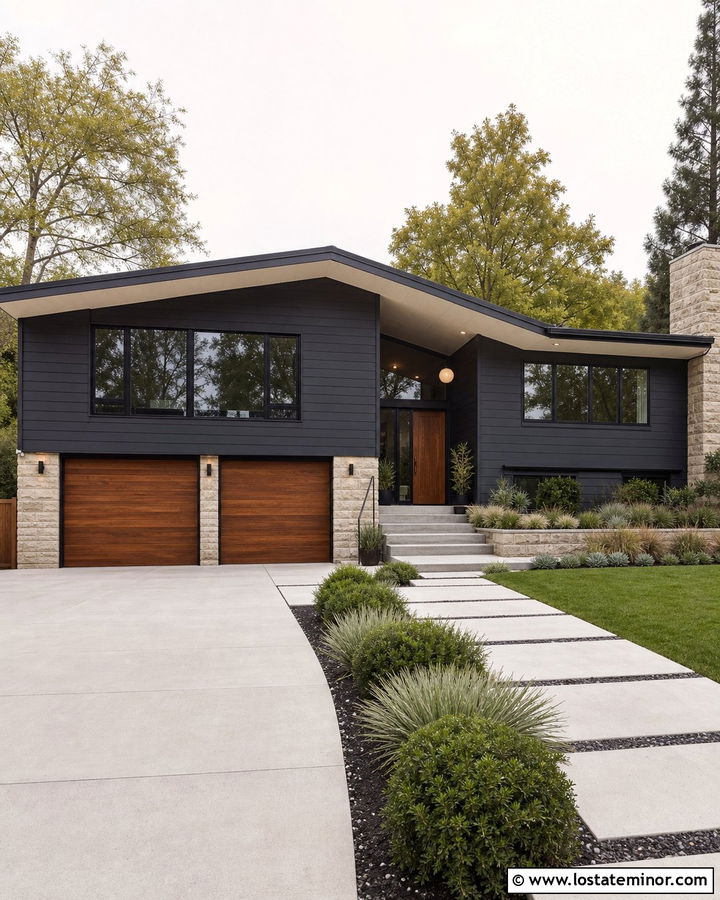
Wood garage doors can transform a charcoal gray facade by adding a wide band of natural warmth. On a mid-century split-level, use charcoal horizontal siding, black windows, and flat-panel walnut garage doors with clean vertical grain. Match the front door to the garage wood, but keep other accents minimal so the material remains special. Warm white soffits can reflect daylight beneath the deep roof overhangs. A low wall of buff-colored stone links the house to the golden-brown wood. Choose a dark gray roof and charcoal gutters for a quiet upper silhouette. Drought-tolerant grasses, sculptural shrubs, and large concrete pavers complete the modern setting. The repeated wood tones unify the entrance and garage while preventing the dark exterior from feeling cold or visually flat.
23. Charcoal Grey House With Wraparound Porch
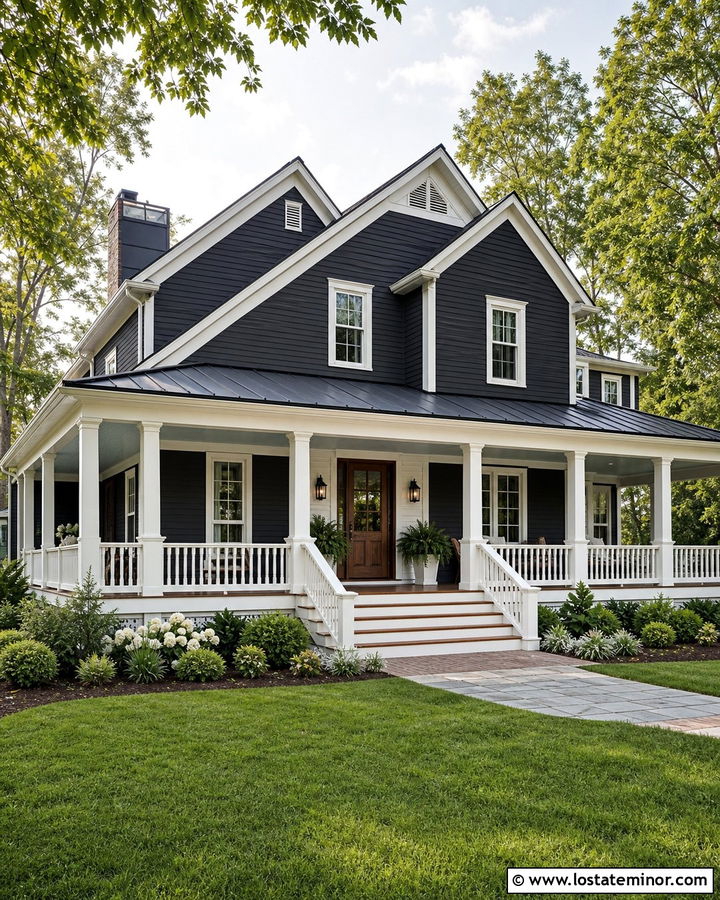
A wraparound porch adds broad areas of trim, flooring, and railing that can balance a charcoal gray exterior. On a traditional farmhouse, cover the main body in charcoal lap siding, then use warm white for the porch columns, railings, window trim, and fascia. Stain the porch floor and front door a medium cedar brown to ground the lighter structure. A dark metal roof over the porch adds definition without competing with the main charcoal-shingle roof. Keep the ceiling pale blue-gray for a subtle, airy detail. Wide steps, rocking chairs, simple planters, and soft cottage landscaping make the dark home feel approachable. Repeating white and wood around the full porch creates a continuous framework that visually lightens the entire facade.
24. Charcoal Grey House With Stone Porch Columns
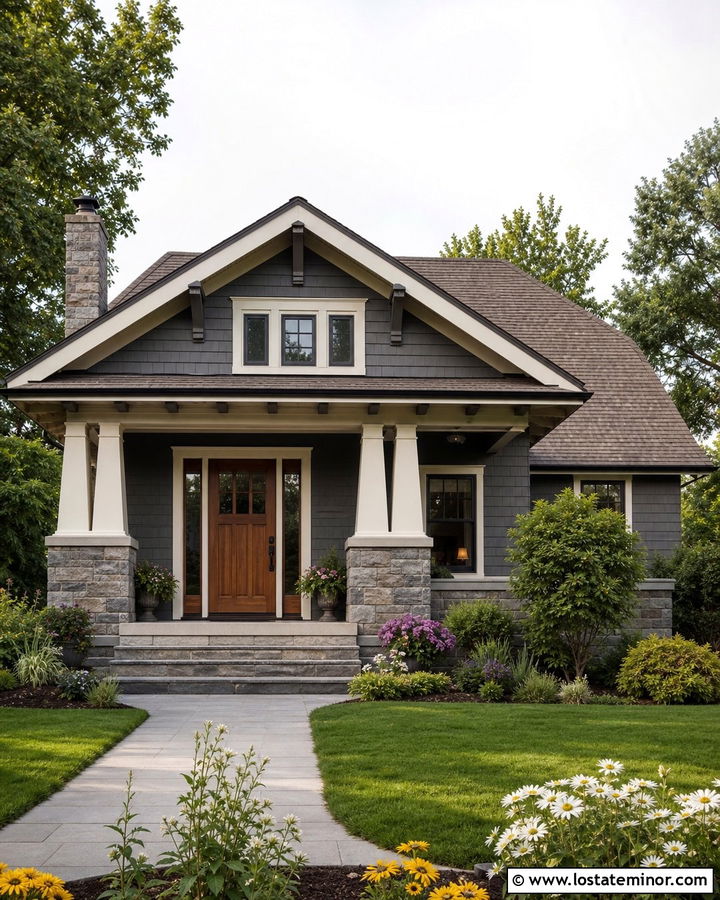
Stone porch columns can give a charcoal gray home a strong, grounded entrance. Choose a Craftsman bungalow with charcoal shake siding, cream trim, and tapered wood columns resting on substantial stone bases. The stone should combine cool gray with a small amount of warm taupe, allowing it to coordinate with both the siding and a stained oak front door. Repeat the masonry around the foundation or walkway edges so the columns do not appear isolated. A medium-brown roof and exposed wood brackets strengthen the Craftsman character. Black porch lights provide crisp finishing details. Layered shrubs, flowering perennials, and broad stone steps soften the heavier materials. This complete scheme highlights the porch while maintaining a balanced relationship between color, texture, and architectural weight.
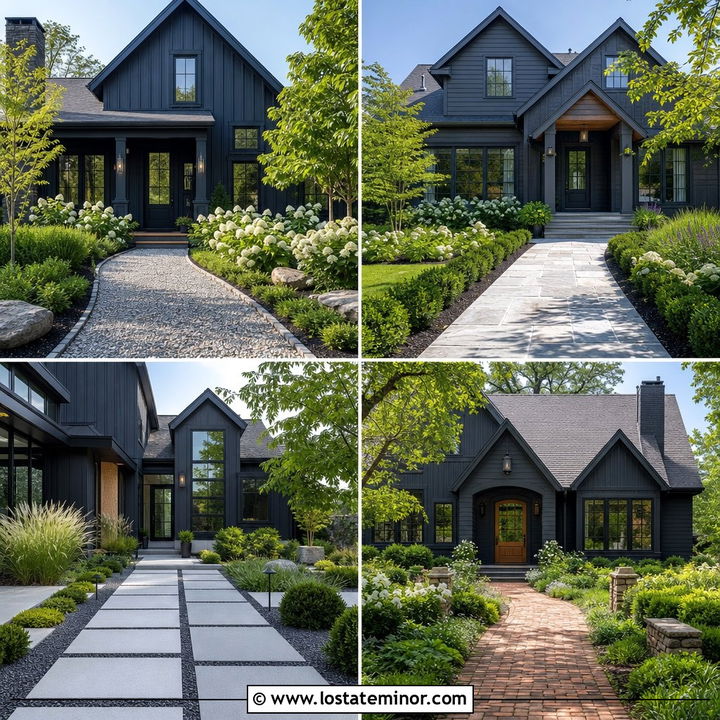
25. Charcoal Grey House With Black Shutters
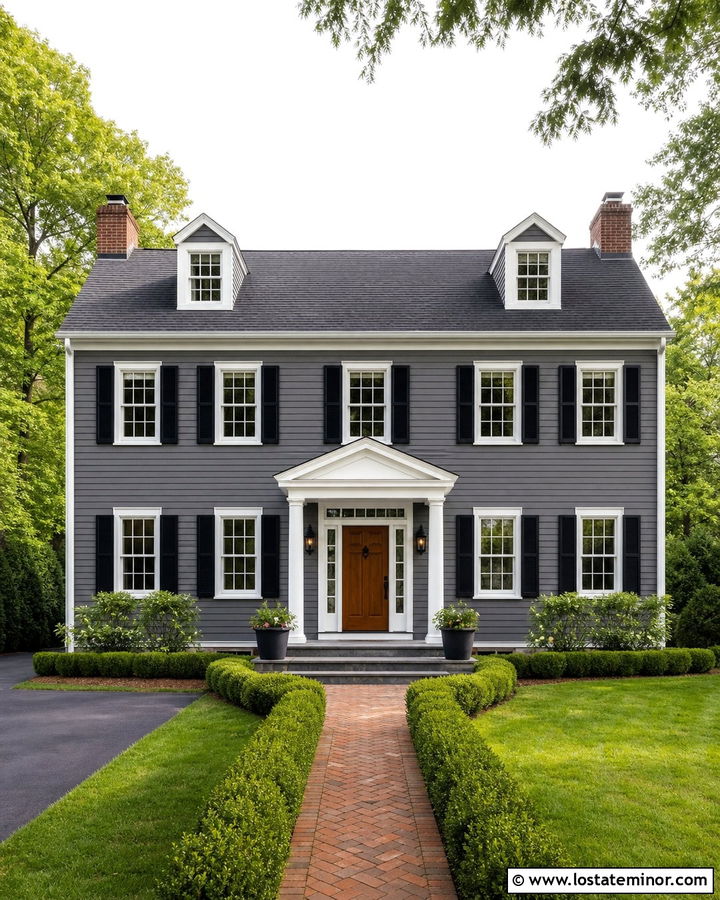
Black shutters provide subtle definition on a charcoal gray exterior, especially when the siding is light enough to preserve contrast. Use the pairing on a symmetrical colonial with medium-charcoal clapboard, deep black shutters, and creamy white window trim. Paint the front door a warm cognac brown to create a welcoming break from the neutral palette. A black roof and black lanterns reinforce the shutters without introducing another color. White columns around the entry add brightness to the center of the facade. Make sure the shutters are properly scaled to the windows so they feel architecturally believable. A brick walkway, clipped hedges, and matching planters support the formal arrangement. The result is classic and tailored, but darker and more contemporary than a conventional light-gray colonial exterior.
26. Charcoal Grey House With White Shutters
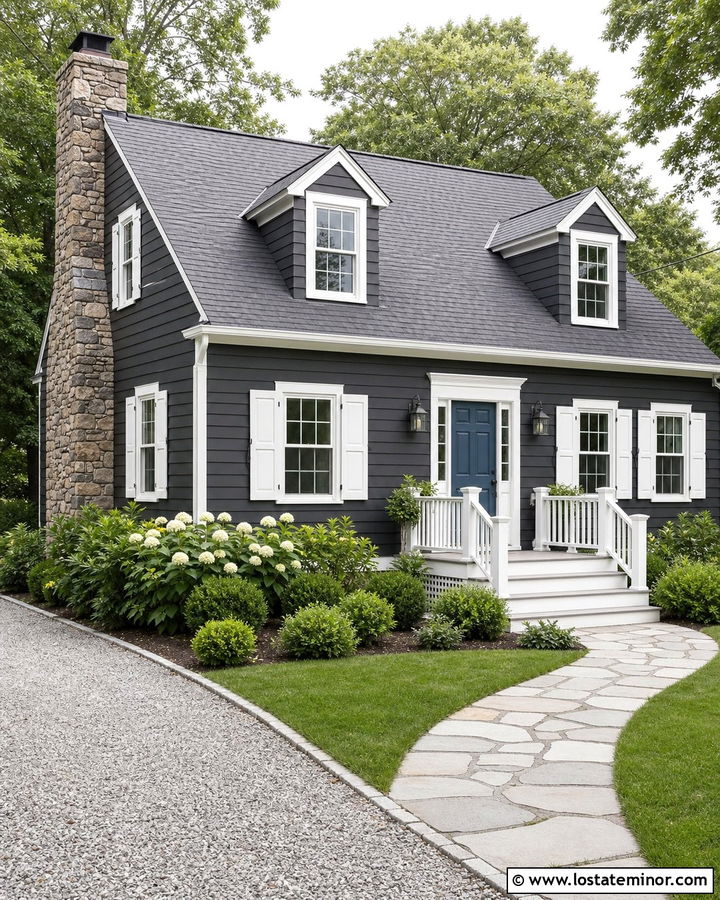
White shutters make individual windows stand out clearly against charcoal gray siding. This high-contrast combination suits a cottage or Cape Cod home with a simple roofline and evenly spaced windows. Choose warm white for the shutters, trim, porch railings, and corner boards so every pale element feels connected. A muted blue front door adds gentle color without competing with the strong contrast. Use a medium-gray shingle roof to soften the top of the home, and introduce natural stone along the steps or chimney. White hydrangeas, green foundation shrubs, and a curved flagstone path complete the charming exterior. Keeping the shutters and trim the same white prevents the facade from becoming fragmented, while the blue door gives the entrance an easy-to-find focal point.
27. Charcoal Grey House With Cedar Shutters
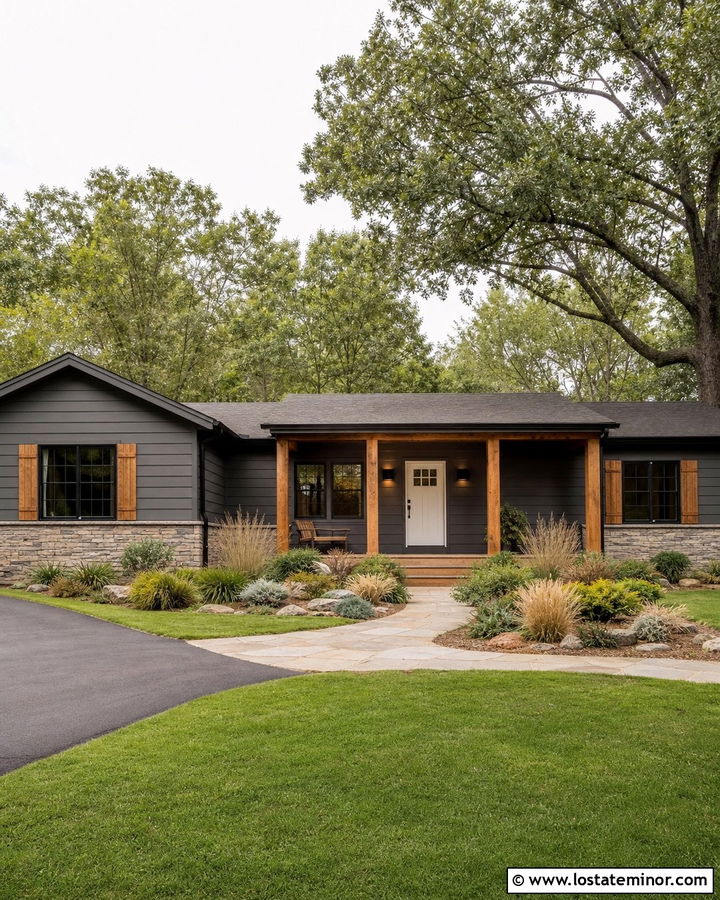
Cedar shutters bring handcrafted warmth to a charcoal gray exterior. They are especially effective on a rustic ranch or lake house with wide windows and a low roofline. Use medium charcoal lap siding, natural cedar shutters, and matching cedar porch posts. An off-white front door can brighten the covered entrance, while black hardware and dark bronze lights provide definition. Continue the warm wood tone on the porch ceiling or a small gable detail, but avoid covering too much of the facade. A stone foundation containing gray and beige ties the cool siding to the golden cedar. Native shrubs, ornamental grasses, and an irregular stone walkway complete the casual setting. The finished palette feels inviting and natural without sacrificing the modern strength of a charcoal exterior.
28. Charcoal Grey House With Cream Trim
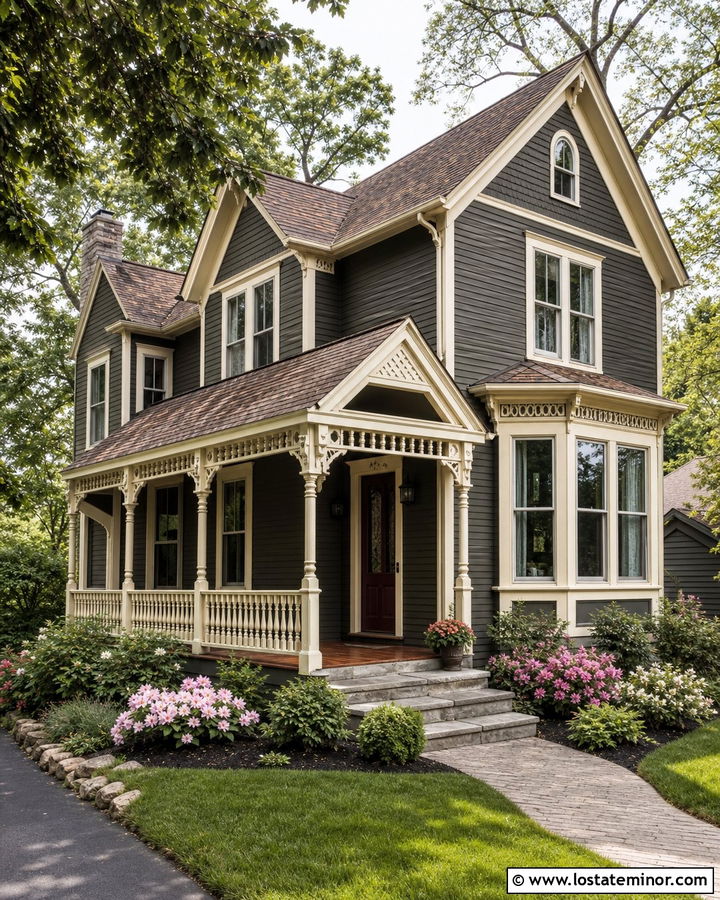
Cream trim provides gentler contrast than bright white, making it an excellent partner for a warm charcoal gray exterior. On a Victorian-inspired home, use cream around decorative brackets, porch spindles, bay windows, and the detailed roofline. Add a muted burgundy front door for depth, then repeat that color sparingly on a small gable accent. A weathered brown roof supports the warm palette, while charcoal gutters blend into the body. Keep the number of accent colors controlled because the architecture already contains abundant detail. Stone steps and a stained wood porch floor provide grounding neutral tones. Mature trees, flowering shrubs, and a curved walkway enhance the established character. This complete scheme celebrates ornamentation while remaining cohesive, balanced, and easier on the eye than stark black-and-white contrast.
29. Charcoal Grey House With Greige Accents
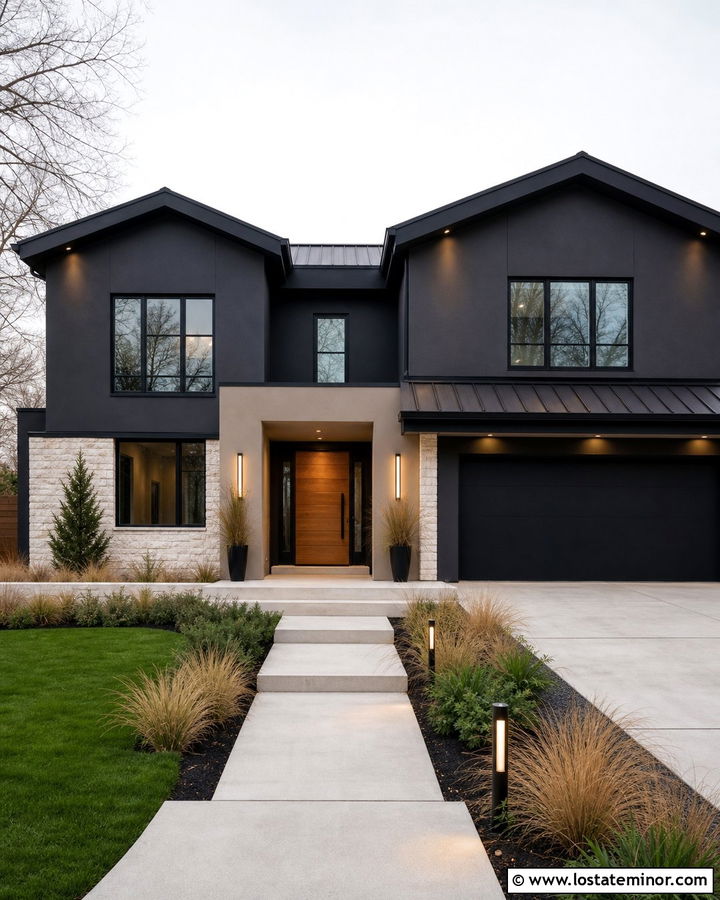
Greige accents can lighten a charcoal gray house while maintaining a subtle, neutral palette. Use charcoal on the main stucco or siding and apply warm greige to a projecting garage wing, entry surround, or upper architectural volume. On a contemporary two-story home, black windows and fascia can define the structure, while a natural oak door provides a modest warm focal point. Select pale limestone containing both gray and beige for the lower walls. This material helps connect the two painted colors. Avoid using several unrelated gray shades, which can make the facade appear unfinished. Clean concrete paths, layered ornamental grasses, and restrained evergreen planting support the calm scheme. The result feels sophisticated and dimensional, with enough tonal difference to show the home’s architectural form clearly.
30. Charcoal Grey House With Mixed Siding And Stone
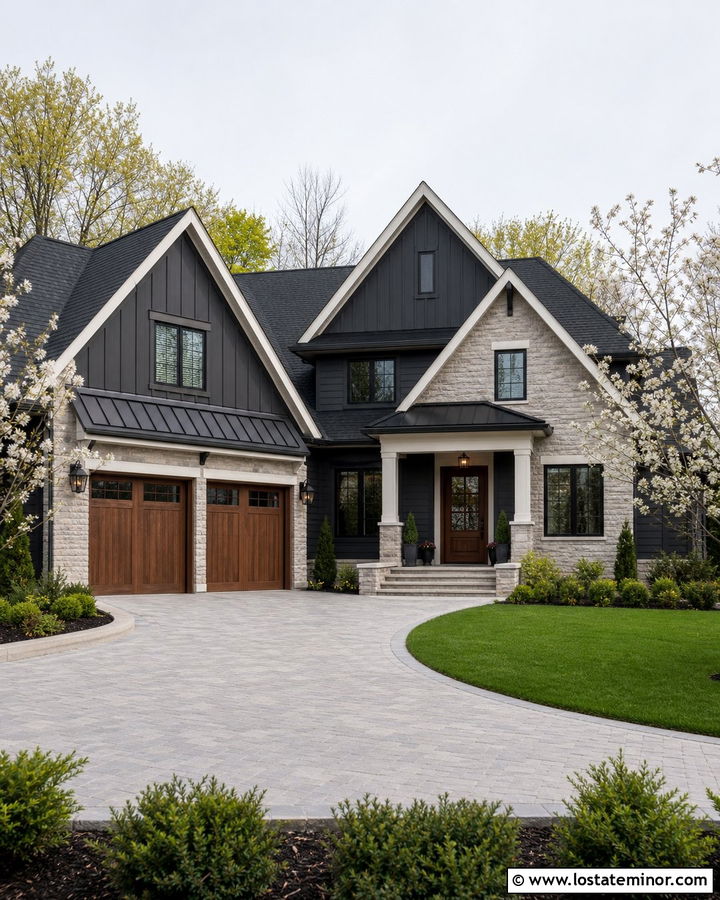
Mixing siding profiles and stone creates a richly layered charcoal gray exterior. On a large transitional home, use charcoal lap siding across the main walls and matching board-and-batten within the front gables. Add gray-beige stacked stone around the entrance, chimney, and lower garage walls. Warm white trim keeps windows and roof edges visible, while a walnut front door and wood garage doors introduce natural warmth. A black roof, gutters, and metal porch details create a consistent dark outline. Limit the palette to these connected materials so the facade does not become overly busy. Broad stone steps, a curved paver driveway, foundation evergreens, and flowering trees complete the curb view. Every surface serves a purpose, producing a detailed yet unified charcoal exterior.
Conclusion:
A successful charcoal exterior depends on more than selecting one dark paint color. Trim, masonry, roofing, doors, windows, and landscaping should work together as a complete curb-appeal plan. White and cream create contrast, while cedar, walnut, copper, and warm stone prevent charcoal siding from looking cold. Colorful doors can also add personality when they are repeated subtly elsewhere. Before committing, test exterior samples beside the roof and fixed masonry at several times of day. Whether your home is traditional, rustic, coastal, or modern, these 30 Charcoal Grey House Design With Accents Ideas provide flexible starting points for building a balanced palette that feels intentional, welcoming, and connected to the home’s architecture.

Related posts: