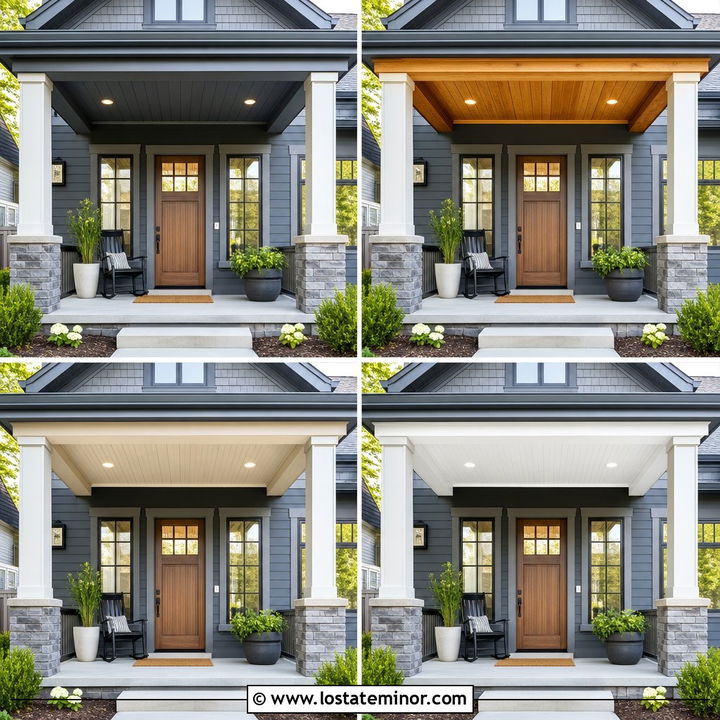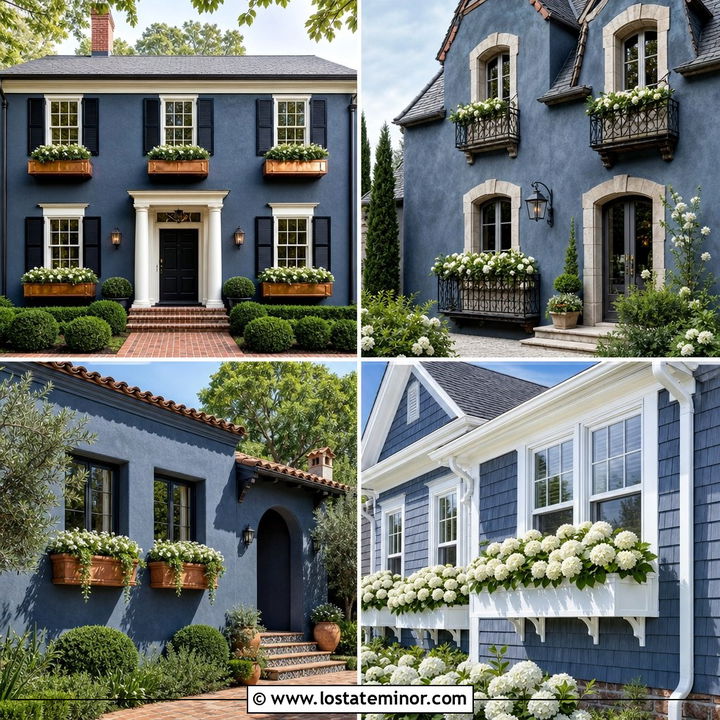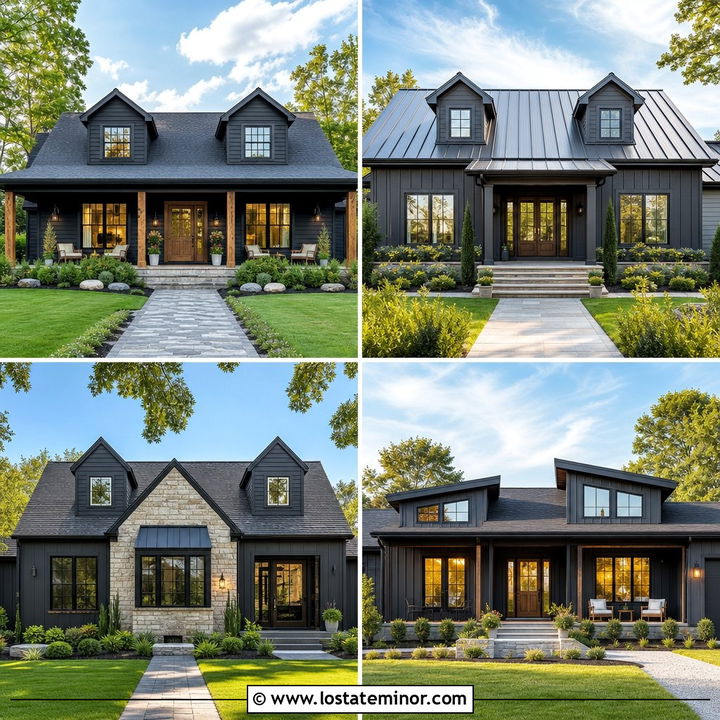
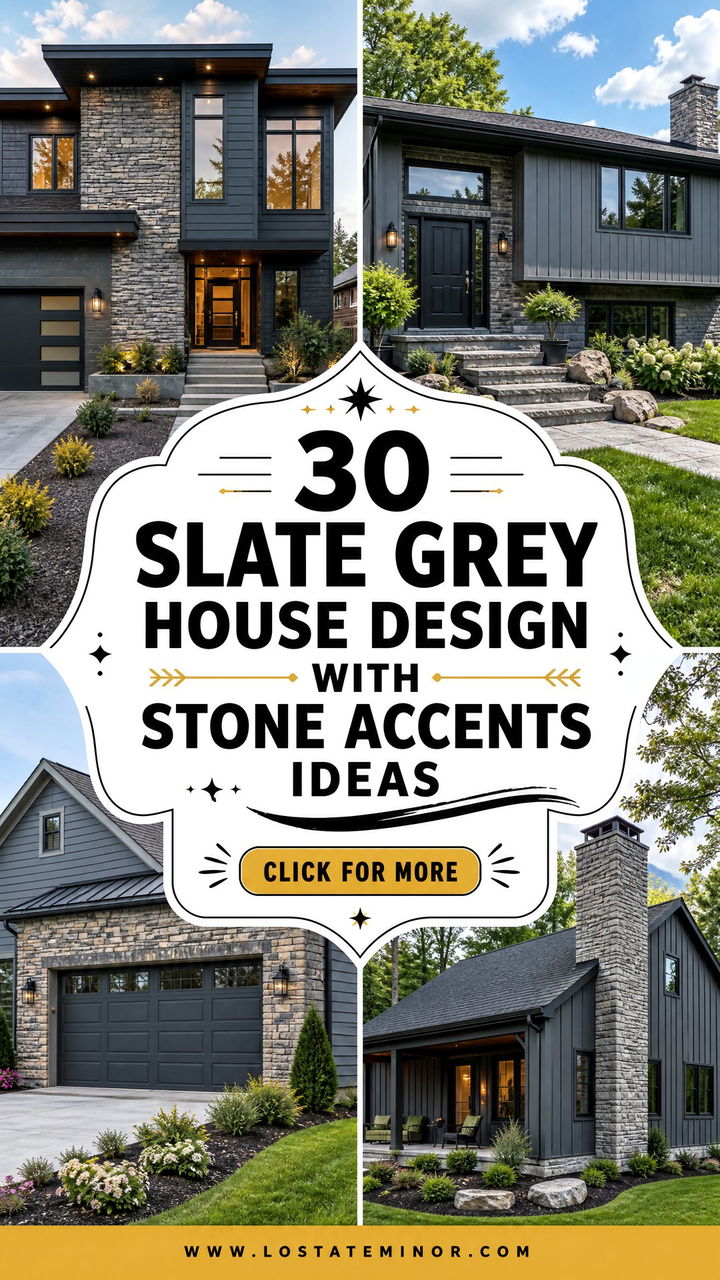
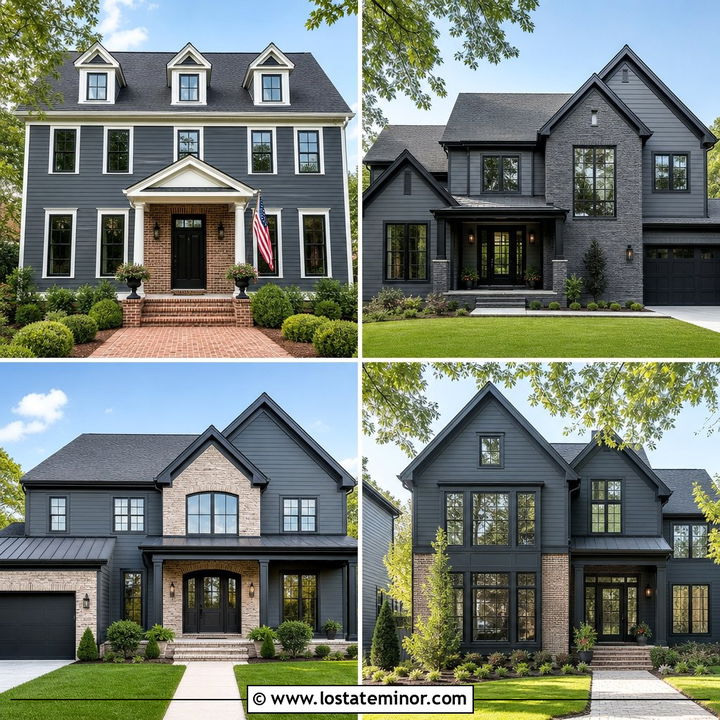
These 30 Slate Grey House Design With Stone Accents Ideas show how a cool, grounded siding color can work with many architectural styles. Slate gray creates a strong backdrop, while stone introduces natural texture, depth, and subtle color variation. The most successful schemes repeat undertones from the masonry across the trim, roof, doors, and metalwork. Current exterior inspiration commonly pairs slate gray siding with crisp or softly warmed trim, while designers often pull secondary accent colors directly from the stone. () From compact bungalows to modern farmhouses, the combination can feel traditional, contemporary, rustic, or refined. Use the following 30 Slate Grey House Design With Stone Accents Ideas to plan a complete, balanced exterior rather than choosing each finish separately.
1. Slate Gray Craftsman With White Trim And Fieldstone
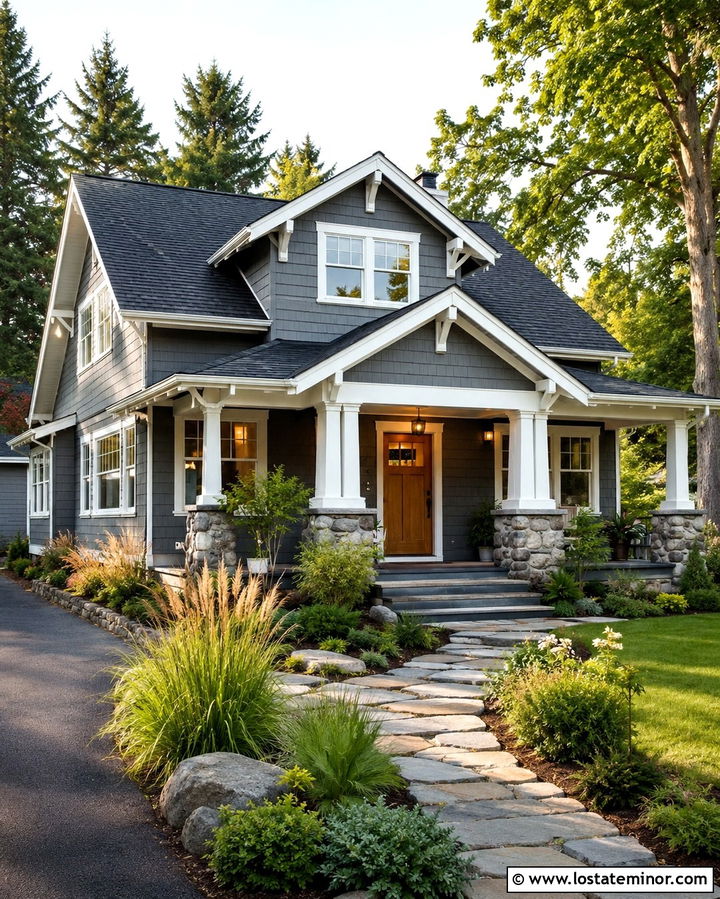
A slate gray Craftsman gains instant character when fieldstone wraps the porch foundation and tapered column bases. Choose stone containing medium gray, soft brown, and muted cream so the masonry does not look too cold against the siding. Bright white trim can outline the deep eaves, divided-light windows, and decorative gable details. For warmth, add a quarter-sawn oak front door and matching wood porch ceiling. An architectural shingle roof in charcoal keeps the upper portion grounded without competing with the fieldstone. Bronze lanterns and gutters provide a softer alternative to stark black metal. Complete the curb appeal with a flagstone walkway, layered evergreen shrubs, and ornamental grasses that echo the home’s comfortable, handcrafted appearance.
2. Slate Gray Modern Farmhouse With Black Trim And Ledgestone
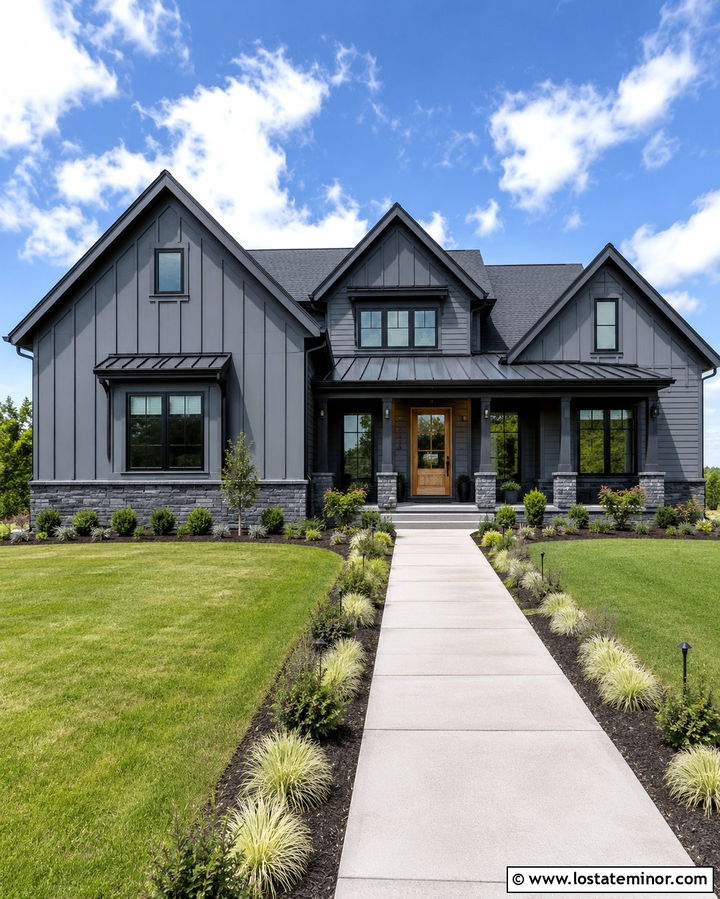
Clean lines make slate gray siding feel especially sharp on a modern farmhouse. Use horizontal lap siding across the main walls and vertical board-and-batten beneath the front gables. Thin charcoal ledgestone can cover the porch base, chimney, and lower garage wall, visually connecting those separate areas. Matte black windows, gutters, and porch lights reinforce the modern look. Keep the fascia and soffits slate gray instead of adding white, creating a streamlined exterior with fewer color breaks. A natural cedar front door prevents the dark palette from appearing severe. Finish the house with a black standing-seam porch roof, pale concrete steps, and structured landscaping. The combination feels current yet practical because texture, rather than excessive color, creates most of the contrast.
3. Slate Gray Ranch With Cedar Door And Limestone
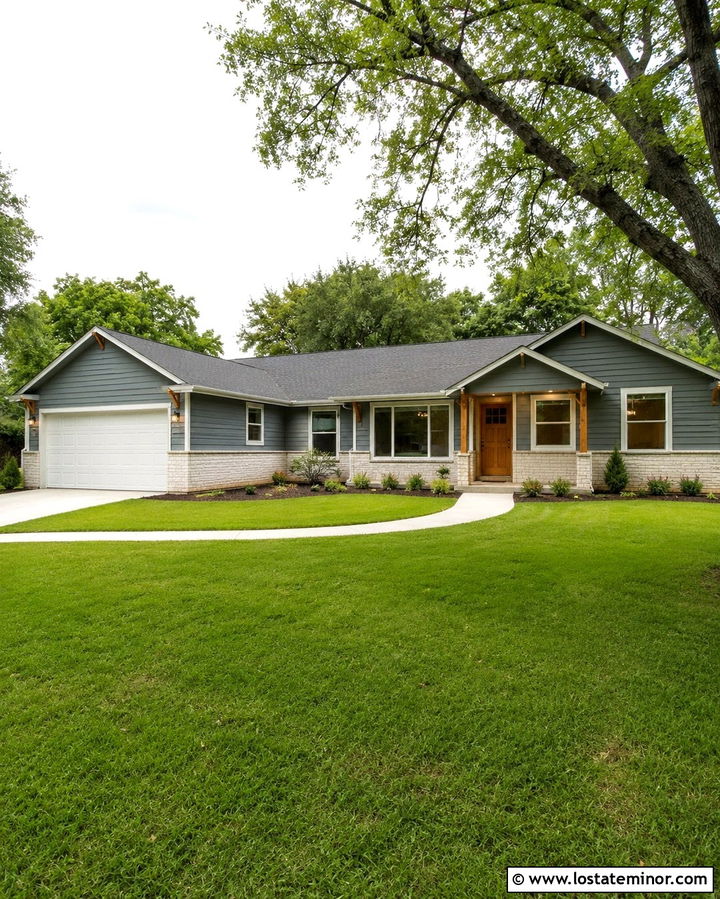
Picture a low, wide ranch surrounded by mature trees and an open green lawn. Slate gray lap siding gives the simple shape definition, while pale limestone brightens the foundation, entry wall, and attached garage. Select limestone with cool cream, gray, and faint beige markings to bridge the siding and natural wood accents. A clear-finished cedar front door becomes the warm focal point. Repeat that wood tone on porch posts or decorative brackets to make the entrance feel intentional. Soft white window trim keeps the long facade from looking heavy, and a weathered charcoal roof maintains subtle contrast. Add a curved walkway and low foundation plantings so the horizontal architecture remains visible. This scheme updates a ranch without hiding its relaxed proportions.
4. Slate Gray Colonial With Charcoal Roof And River Rock
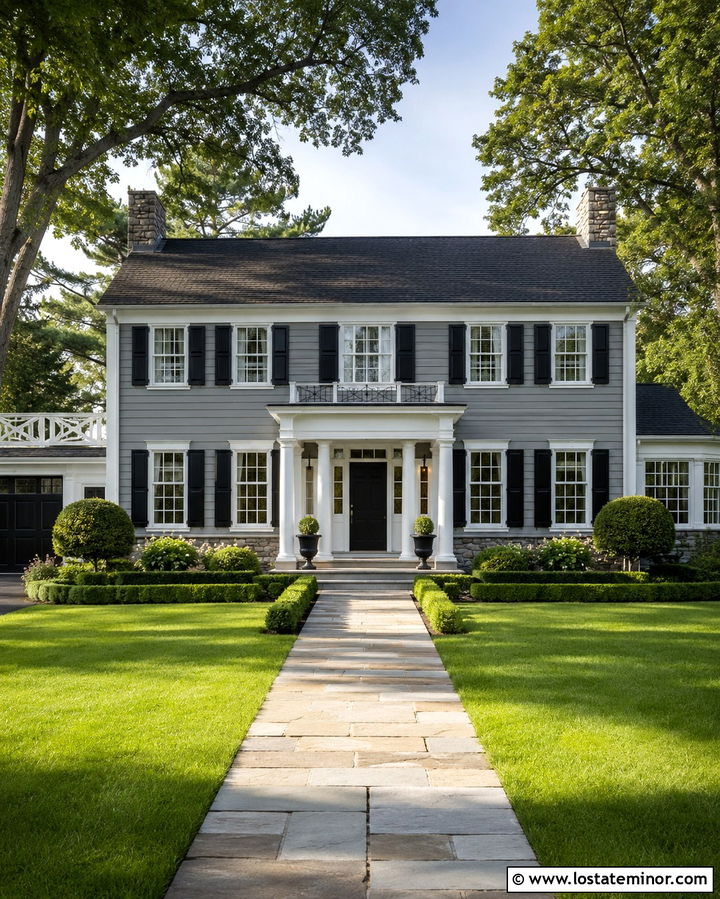
Symmetry gives a slate gray Colonial an elegant, orderly appearance. Use smooth lap siding across the two-story facade, then apply rounded river rock around the centered entry and along the foundation. A stone blend containing blue-gray, brown, and smoky beige introduces movement without disrupting the formal architecture. Crisp white trim should frame the windows, cornice, columns, and front pediment. Choose a charcoal architectural shingle roof that is darker than the siding but lighter than pure black. A glossy black front door and matching shutters create traditional contrast. Keep the landscaping equally balanced with paired boxwoods, matching planters, and a straight stone walkway. The natural river rock softens the strict symmetry, giving the completed exterior a more welcoming and established look.
5. Slate Gray Contemporary House With Bronze Windows And Stacked Stone
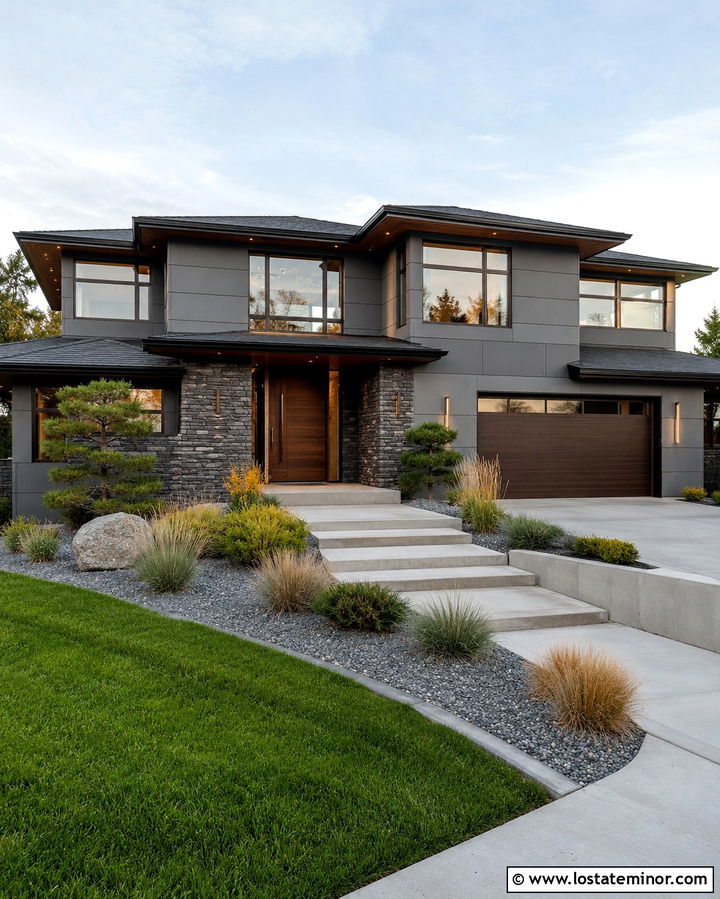
Large windows and strong geometric forms can make slate gray appear rich rather than ordinary. Cover the primary volumes in smooth slate gray fiber cement panels, then use dark stacked stone on a tall entry wall or chimney. Bronze-framed windows introduce gentle warmth and look less severe than black frames. Match the bronze finish on the garage door, gutters, and minimalist exterior sconces. A flat or low-pitched charcoal roof supports the modern profile, while a walnut pivot door adds a natural centerpiece. Limit the stone to strategically placed vertical surfaces so it emphasizes the architecture instead of overwhelming it. Broad concrete steps, gravel beds, sculptural grasses, and small evergreen trees complete this polished exterior while keeping the house connected to its surroundings.
6. Slate Gray Cottage With Cream Trim And Tan Stone
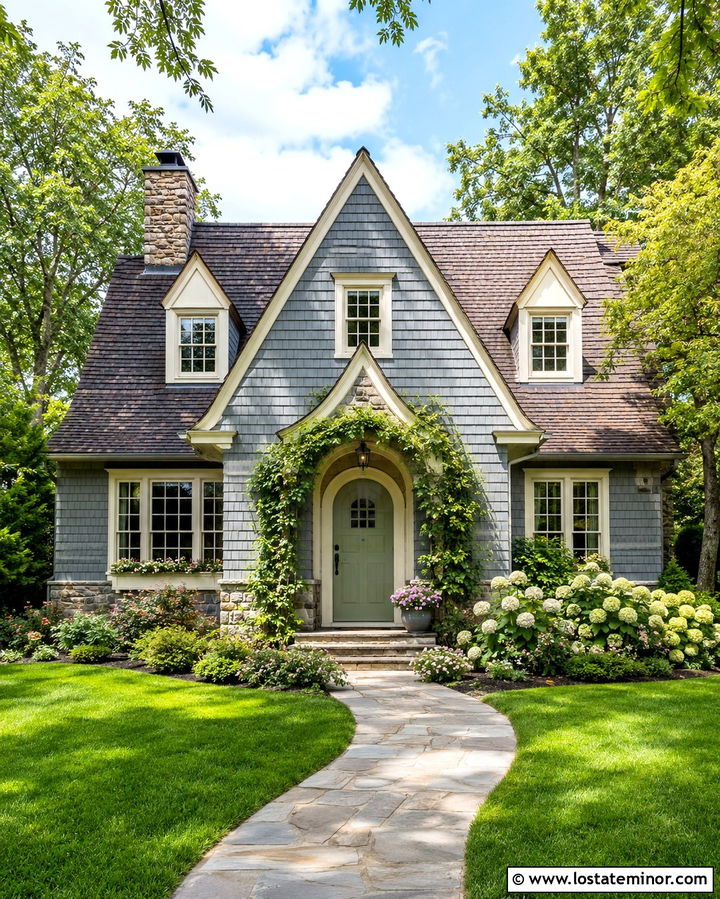
Slate gray can feel surprisingly soft when paired with warm cream trim and lightly weathered tan stone. This combination works beautifully on a cottage with steep gables, dormer windows, and a small covered entry. Place irregular stone around the foundation, chimney, and porch steps, choosing pieces with taupe, gray, and sandy undertones. Cream-painted window casings and fascia create a gentler transition than brilliant white. A muted sage front door introduces quiet color while complementing the garden. Use a weathered brown-gray roof to connect the cooler siding with the warmer masonry. Flowering shrubs, climbing greenery, and a curved flagstone path reinforce the storybook shape. The completed palette feels charming and natural without becoming overly rustic or visually busy.
7. Slate Gray Split-Level With Black Door And Granite
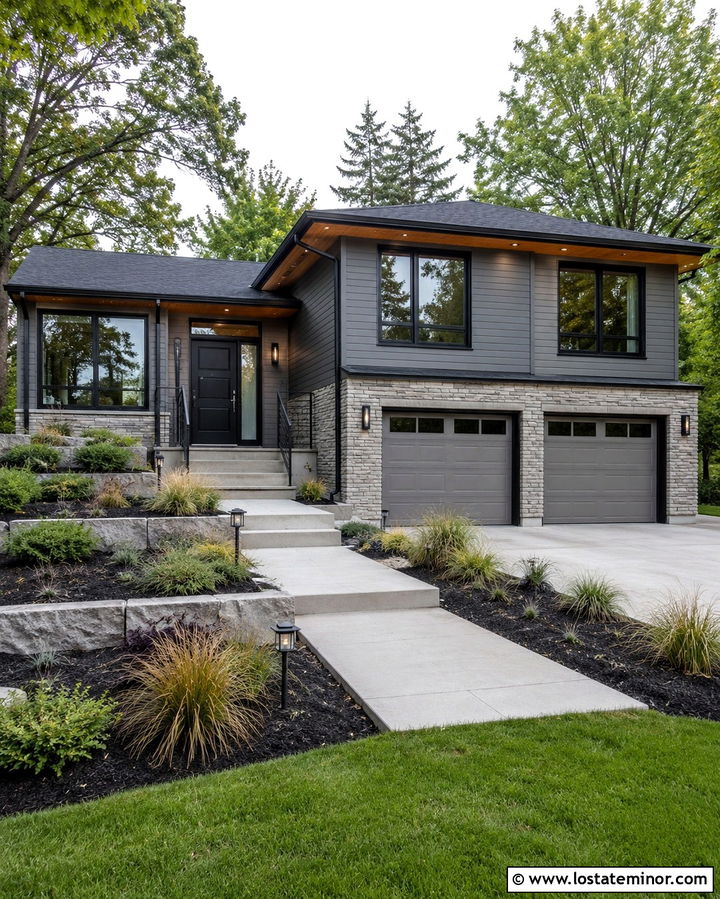
Could a dated split-level look clean and contemporary without a major addition? Slate gray siding and carefully positioned granite can accomplish much of the transformation. Use rectangular granite veneer around the recessed lower level, garage, and front steps. Paint the remaining siding one consistent slate gray to unify the upper and lower portions. A black front door, black window frames, and slim black railings create sharp focal points. Choose soft gray garage doors that blend into the stone instead of dominating the facade. A charcoal roof supports the darker details, while warm wood soffits add needed softness beneath the entry canopy. Finish with a broad concrete walkway, terraced planting beds, and low grasses that follow the home’s stepped architecture.
8. Slate Gray Transitional House With Walnut Garage Doors And Dry-Stack Stone
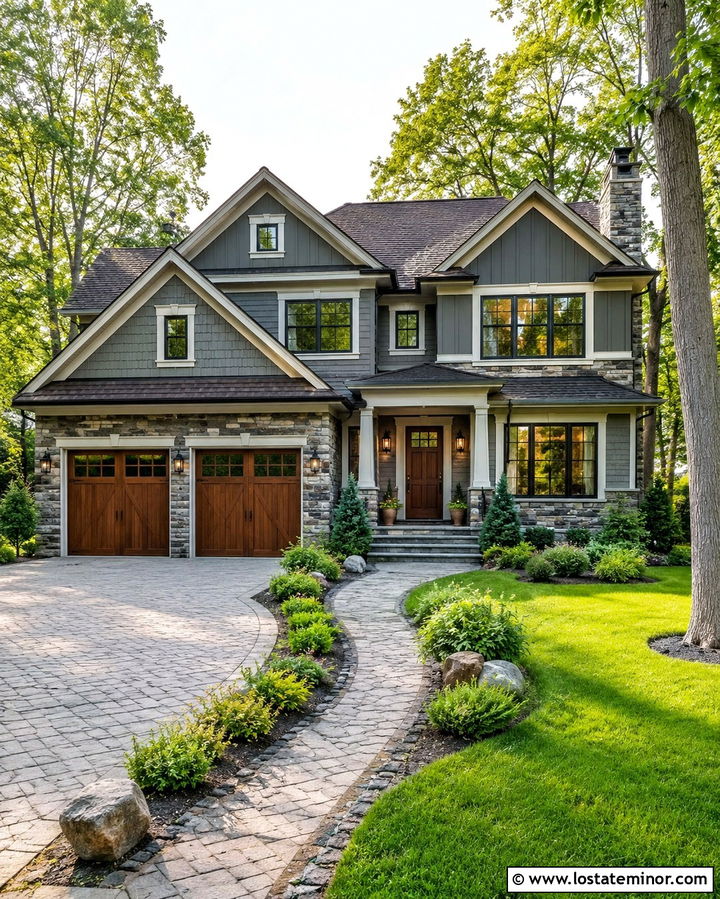
Warm walnut garage doors give a slate gray transitional exterior a welcoming focal point. Repeat the wood finish on the front door and small ceiling details so the garage does not appear disconnected. Use dry-stack stone with charcoal, taupe, and rusty brown pieces across the lower facade and porch columns. These varied tones create a natural bridge between the cool siding and rich wood. Off-white trim keeps the windows and roofline clear without producing excessive contrast. A dark brown-gray roof feels softer than solid black and complements the stone’s earthy markings. Bronze lighting and hardware complete the coordinated palette. To frame the house, add a wide paver driveway, layered shrubs, and a stone-edged walkway leading directly toward the warmly finished entrance.
9. Slate Gray Cape Cod With Blue Door And Bluestone
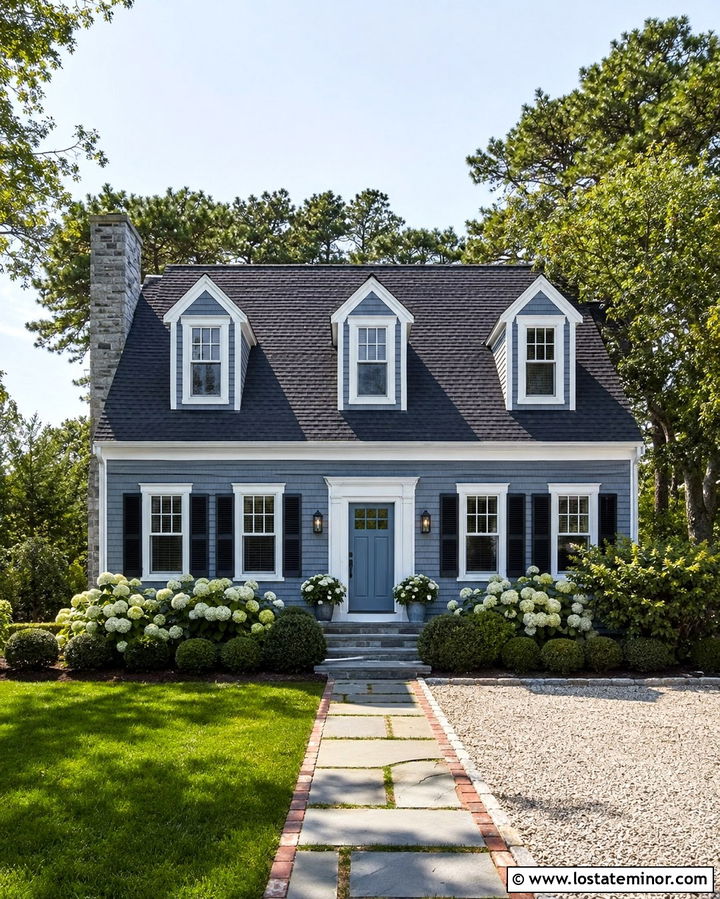
A compact Cape Cod looks fresh and coastal with slate gray siding, white trim, and a dusty blue front door. Use rectangular bluestone on the porch floor, steps, chimney, and short foundation walls. Because bluestone shares the siding’s cool undertone, the exterior feels coordinated without appearing monochromatic. Bright white window casings, corner boards, and dormers preserve the home’s classic definition. Add black shutters only where they match the window proportions, and keep the hardware simple. A medium charcoal roof provides enough contrast to separate the dormers from the main structure. Hydrangeas, low boxwoods, and a neat brick-edged path soften the symmetrical facade. The final look feels relaxed and familiar, with the blue door providing a subtle layer of personality.
10. Slate Gray Bungalow With Sage Door And Stone Porch
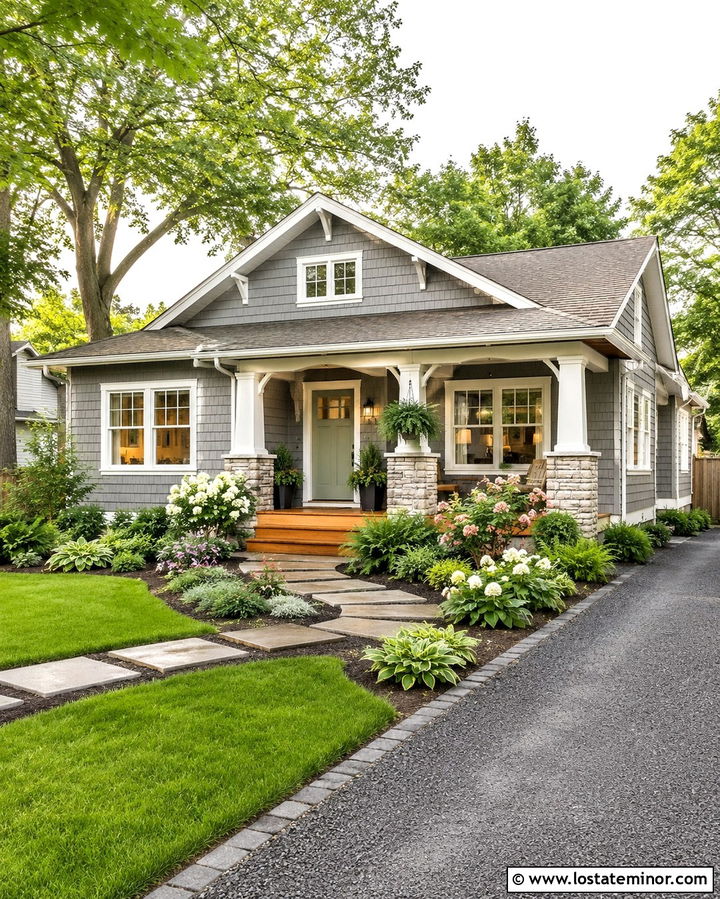
A sage green front door can bring a garden-inspired softness to a slate gray bungalow. Frame the entrance with chunky stone porch columns containing gray, mossy brown, and muted cream tones. Continue the stone across the foundation to visually support the broad porch roof. Warm white trim highlights exposed rafters, window casings, and simple Craftsman details. Natural wood porch decking adds another earthy layer without drawing attention away from the entrance. Select charcoal-brown shingles that coordinate with the deeper pieces in the masonry. Antique bronze lighting works particularly well with this comfortable palette. Ferns, hostas, flowering shrubs, and a stepping-stone walkway make the landscape feel connected to the sage door, creating a complete exterior that appears settled and inviting.
11. Slate Gray Traditional House With Red Door And Granite
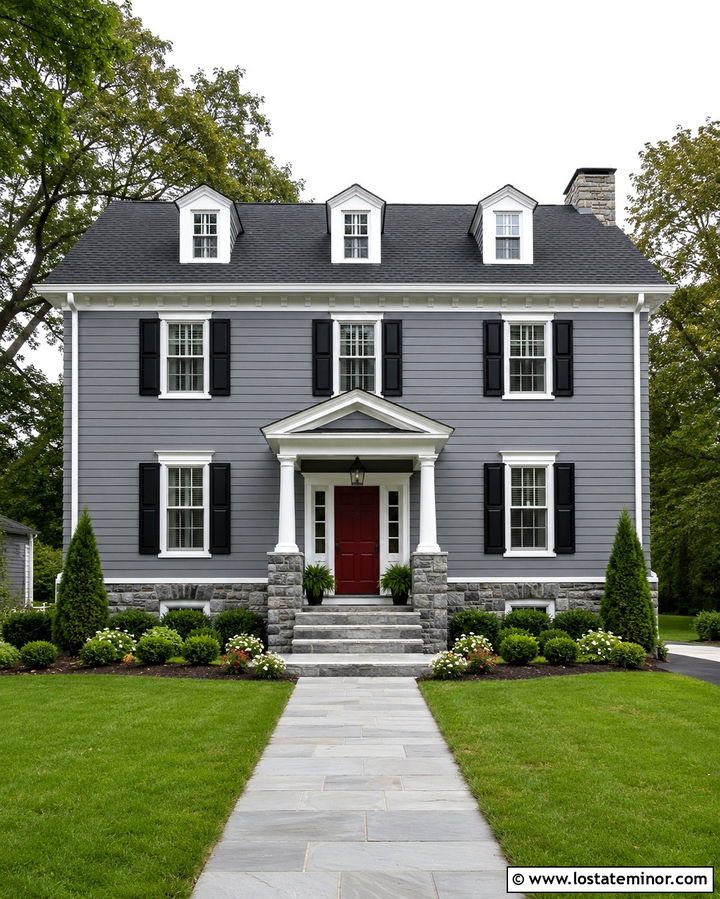
For homeowners who enjoy classic color, a deep brick-red door brings warmth to a slate gray traditional exterior. Gray granite on the foundation, porch walls, and entry steps keeps the palette grounded. Look for masonry containing small touches of burgundy or brown that quietly relate to the door. White trim can define the windows, columns, and layered roofline, while black shutters add familiar contrast. Use a charcoal roof with gentle tonal variation rather than a flat solid color. The garage doors should match the slate gray siding or soft white trim, allowing the red entry to remain the clear focal point. Balanced evergreen landscaping and a straight stone walkway reinforce the home’s formal shape while preventing the strong door color from feeling isolated.
12. Slate Gray Craftsman With Oak Porch And Stone Piers
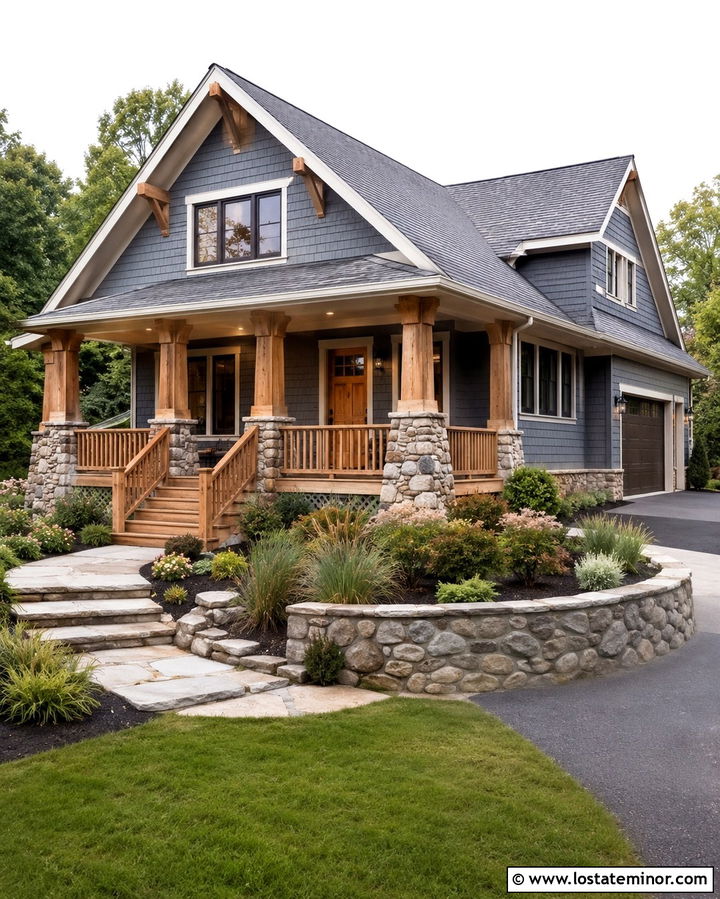
The broad porch is the heart of this slate gray Craftsman scheme. Use natural white oak for the square posts, railings, front door, and porch ceiling, then anchor those elements with substantial stone piers. A mixed fieldstone containing gray, tan, and muted gold will connect the cool siding to the honey-colored wood. Keep window trim a creamy off-white to soften the contrast. Dark bronze windows and lanterns add depth without competing with the craftsmanship. A weathered charcoal roof can finish the palette while maintaining an earthy mood. Wide porch steps, low stone retaining walls, and layered native plants help the house appear rooted in its site. This complete exterior celebrates texture while keeping the overall color plan controlled and easy to understand.
13. Slate Gray Farmhouse With Metal Roof And Limestone
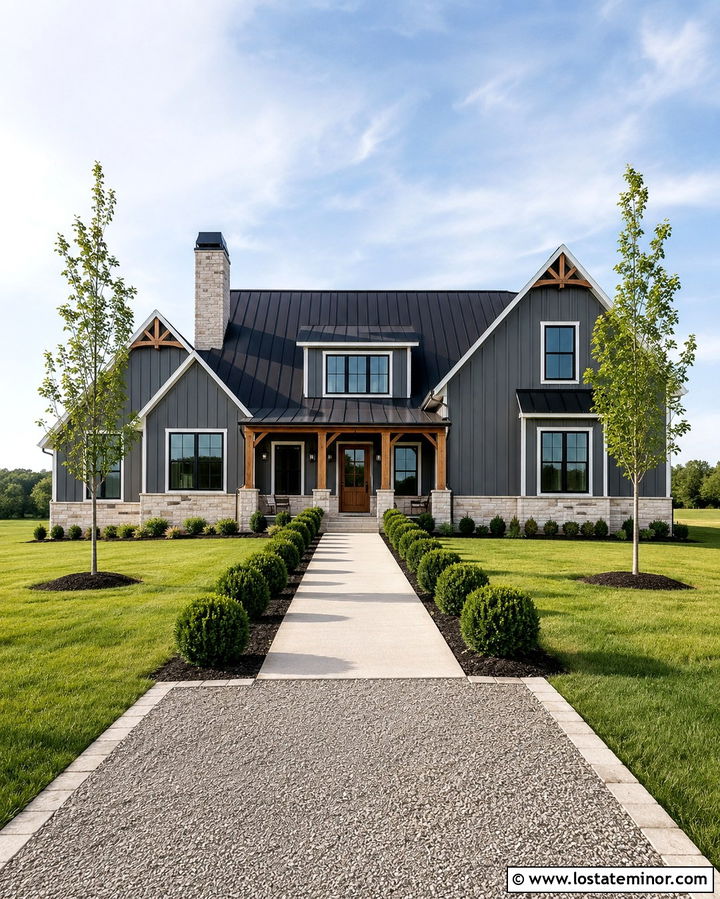
Rainy days and bright sunlight both flatter a slate gray farmhouse with a dark standing-seam metal roof. The roof creates a clean upper outline, while pale limestone around the porch, chimney, and foundation prevents the facade from becoming too dark. Use simple white trim on the windows, fascia, and porch columns for a recognizable farmhouse contrast. A medium-stained wood front door adds warmth at eye level. Consider matching wood brackets beneath the gables to spread that accent across the exterior. Black gutters and lights can visually connect to the roof. Keep the stone placement broad and uncomplicated, avoiding small scattered patches. A gravel-edged driveway, straight concrete walkway, clipped shrubs, and young shade trees give the home a tidy but approachable rural character.
14. Slate Gray Suburban House With White Garage And Stone Wainscot
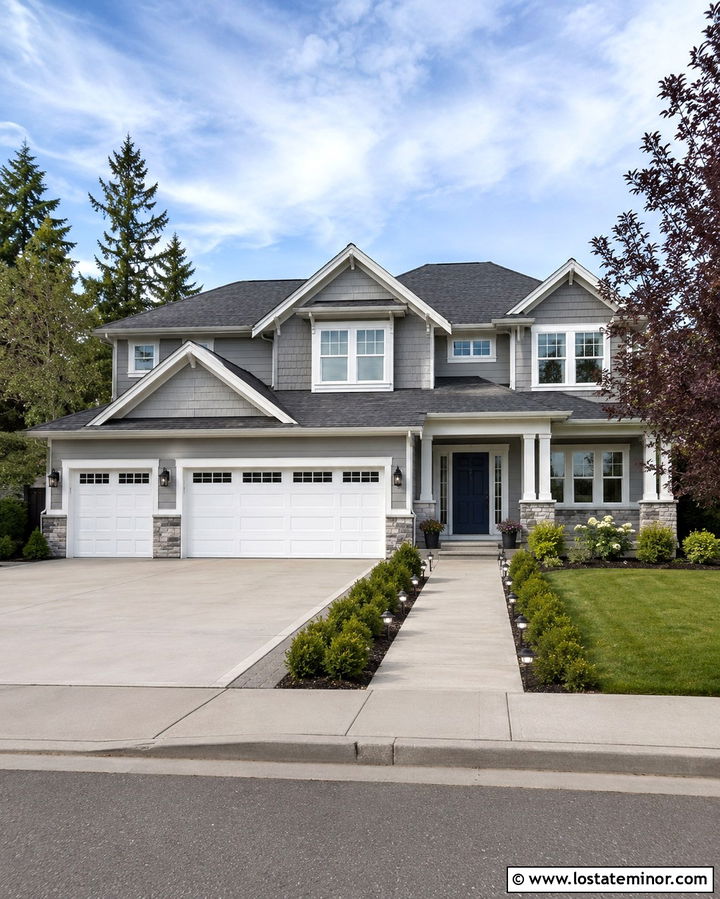
On a garage-forward suburban home, the color of the doors can change the balance of the entire facade. White garage doors paired with white window trim brighten slate gray siding and reduce the visual weight of a wide driveway. Add a consistent stone wainscot across the garage, entry, and front-facing walls rather than stopping the masonry in random places. Choose a cool gray and cream stone blend that connects both main colors. A navy or black front door creates a clear destination beyond the garage. Use charcoal roof shingles and simple black lighting for definition. Foundation shrubs should remain low enough to reveal the stonework. A widened walkway, large entry planter, and small ornamental tree help guide attention toward the front porch.
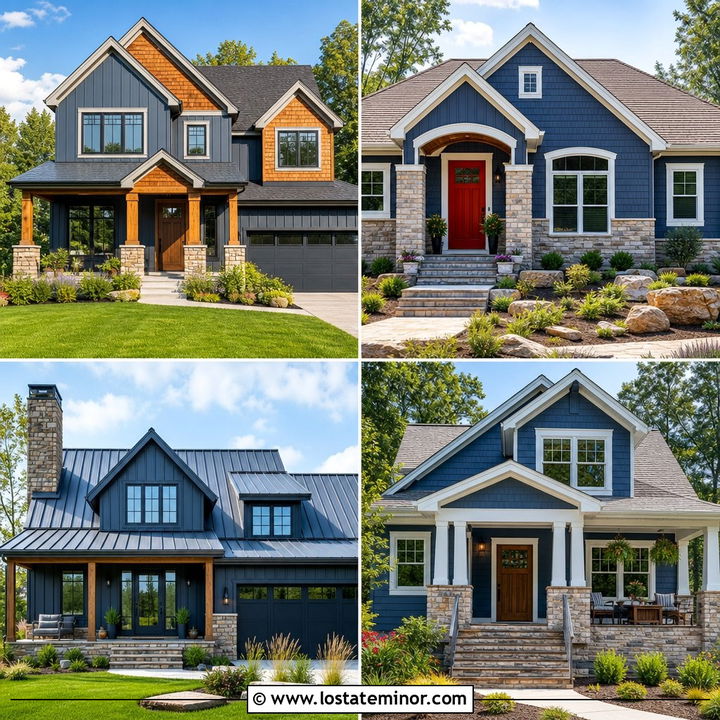
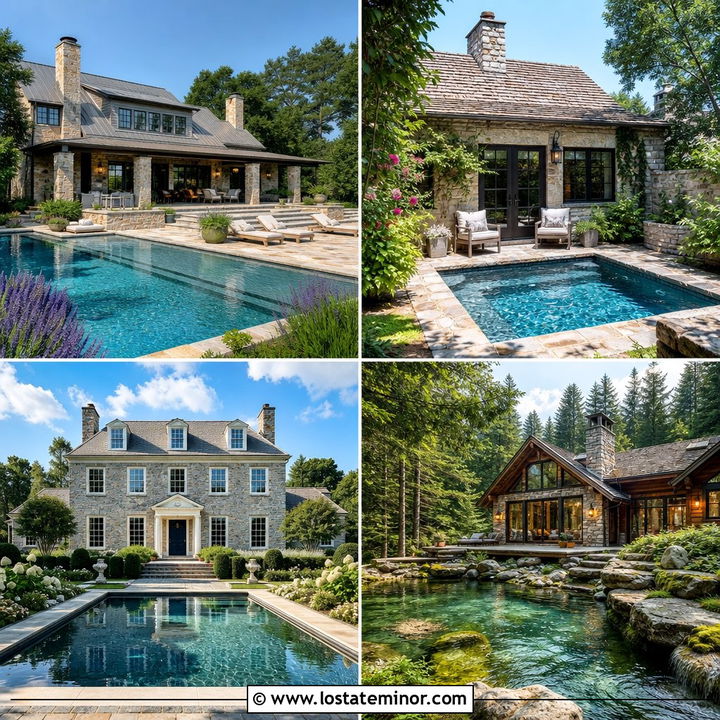
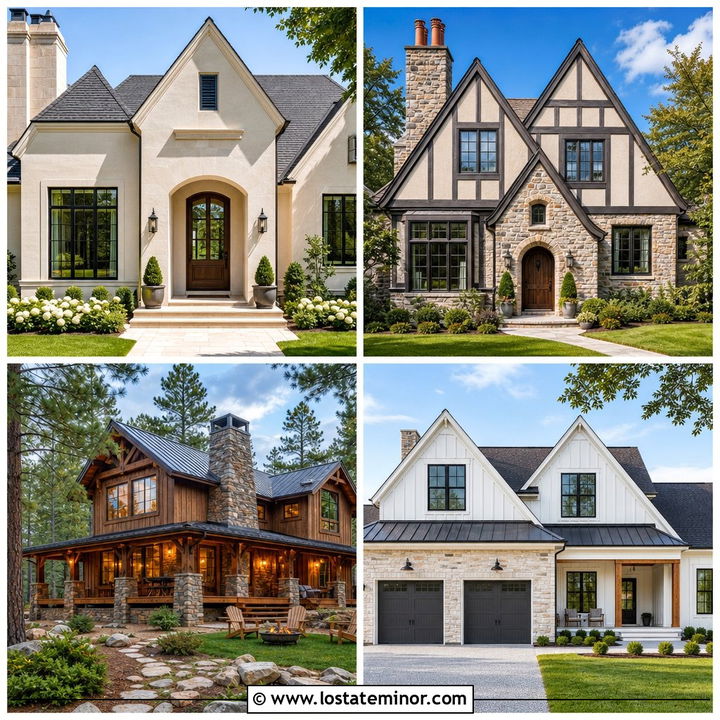
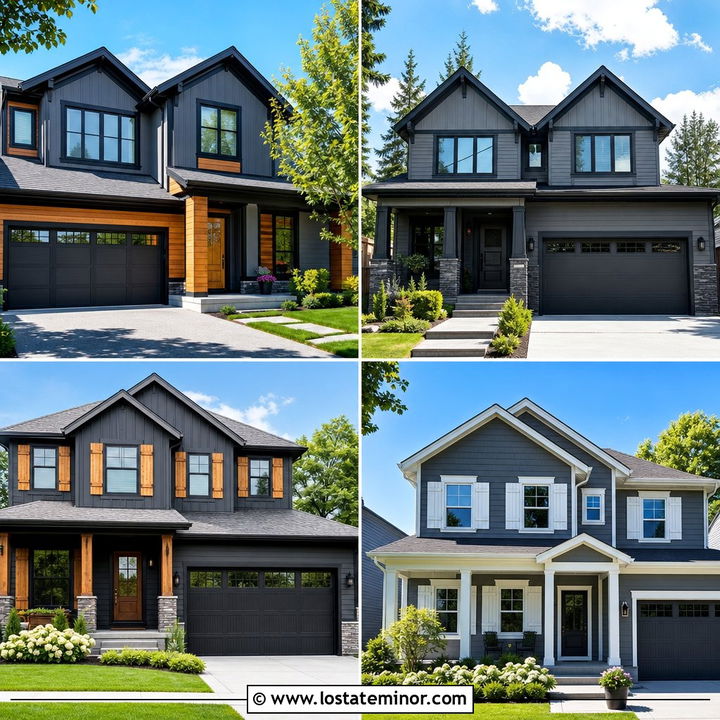
15. Dark Slate Gray Modern House With Charcoal Stone
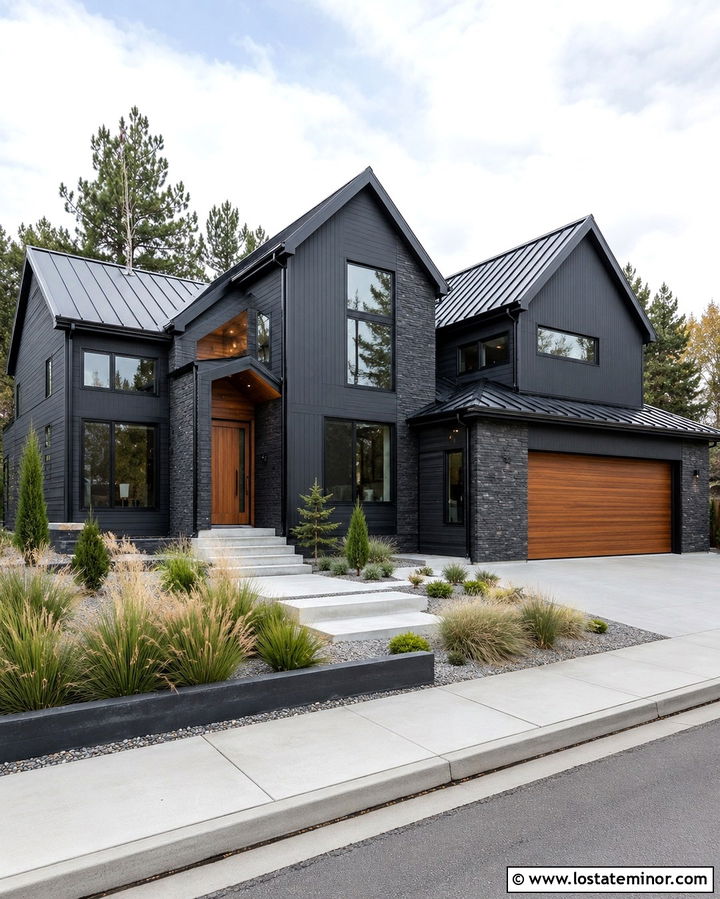
For a dramatic monochromatic exterior, combine dark slate gray siding with charcoal stacked stone. The key is varying texture and value so the facade does not flatten into one dark mass. Use smooth horizontal siding on the main volume, vertical panels on the entry, and rough stone across the chimney or lower level. Black window frames and a black metal roof can sharpen the geometry. Introduce a warm walnut front door and matching garage door to break up the cooler surfaces. Pale concrete steps and light gravel provide brightness near the ground. Keep landscaping architectural with ornamental grasses, compact evergreens, and a few sculptural trees. This controlled palette feels bold and modern, yet the natural stone and wood keep it from appearing cold or industrial.
16. Slate Gray Tudor With Light Stone Chimney
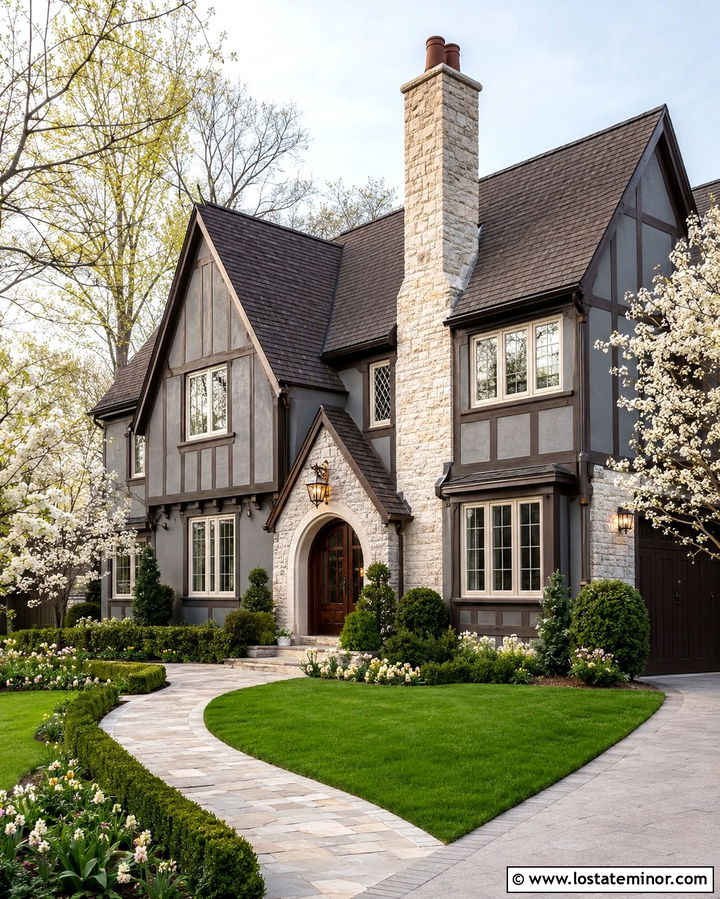
A prominent chimney can become the defining feature of a slate gray Tudor exterior. Cover it in light gray limestone or irregular-cut stone, then repeat the material around the arched entry and lower walls. Slate gray stucco or siding fills the larger surfaces without competing with the masonry. Use dark brown timber details in the gables to introduce a traditional Tudor layer. Cream window trim works better than bright white because it complements the warmer markings in the stone. An arched walnut front door and bronze lanterns strengthen the historic character. Choose a roof in deep brown-charcoal with subtle color variation. Curved stone paths, clipped hedges, and small flowering trees complete the romantic architecture while keeping the updated gray palette cohesive and refined.
17. Slate Gray Mediterranean House With Stone Arch
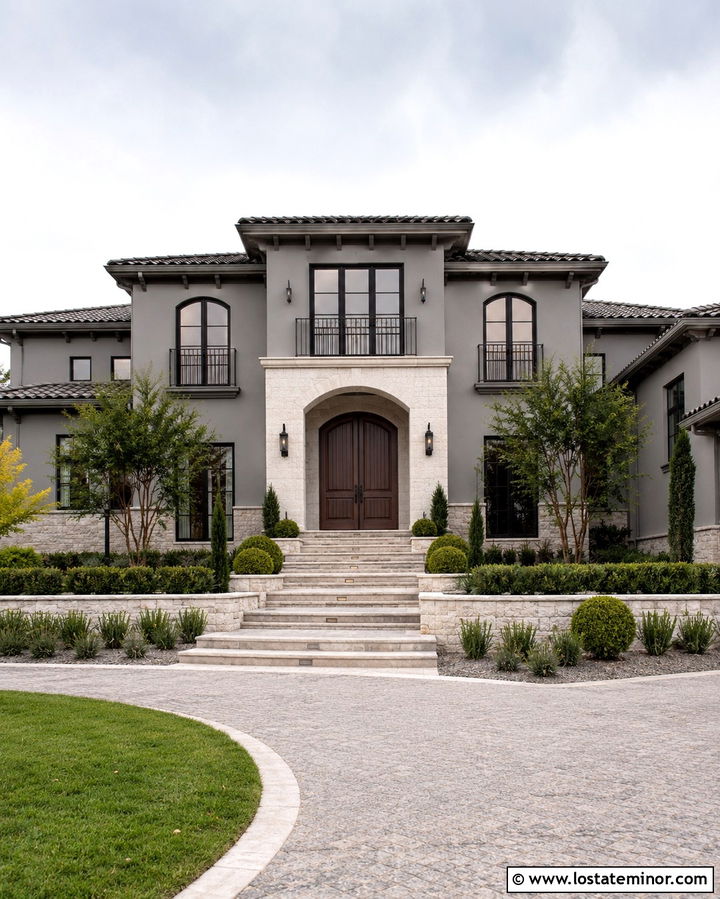
Slate gray offers an unexpected update for a Mediterranean-inspired house with arches and a low-pitched roof. Apply the color to smooth stucco walls, then frame the entry with warm limestone or pale travertine. A substantial stone arch creates a clear focal point and adds dimension to the otherwise quiet facade. Use dark bronze windows, railings, and lanterns instead of sharp black accents. A walnut double door works beautifully beneath the arch and repeats the masonry’s warmer undertones. Choose a muted charcoal tile roof that complements the slate gray walls. Gravel beds, olive-like ornamental trees, rosemary, and structured shrubs support the architecture without adding excessive color. The complete scheme feels contemporary while preserving the house’s curved forms and solid masonry character.
18. Slate Gray New England House With Stone Foundation
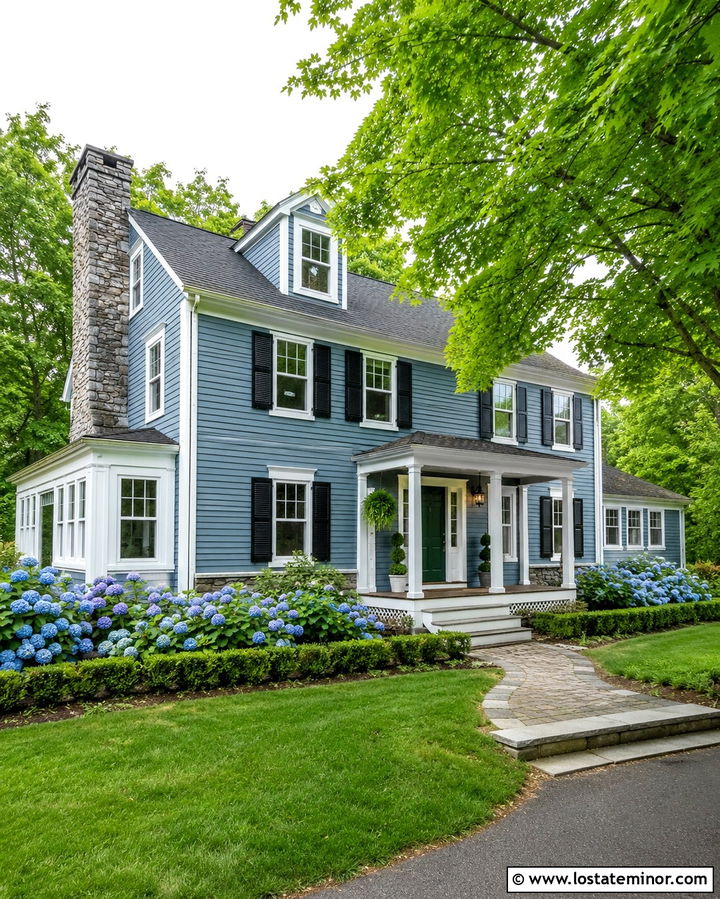
A visible stone foundation gives a slate gray New England house a sense of age and permanence. Use irregular granite or fieldstone around the lower walls, porch base, and chimney. Traditional slate gray clapboard siding can cover the upper levels, with bright white trim defining windows, corner boards, and roof edges. Black shutters and a deep green front door offer classic contrast without overwhelming the stone. Select a charcoal-gray shingle roof that resembles the color variation of natural slate. A simple wood porch floor stained medium brown brings warmth to the entrance. Complete the setting with a straight brick-and-stone path, hydrangeas, clipped hedges, and mature maples. The restrained materials create timeless curb appeal suited to both historic homes and newer construction.
19. Slate Gray Craftsman With Shingle Gables And Mixed Stone
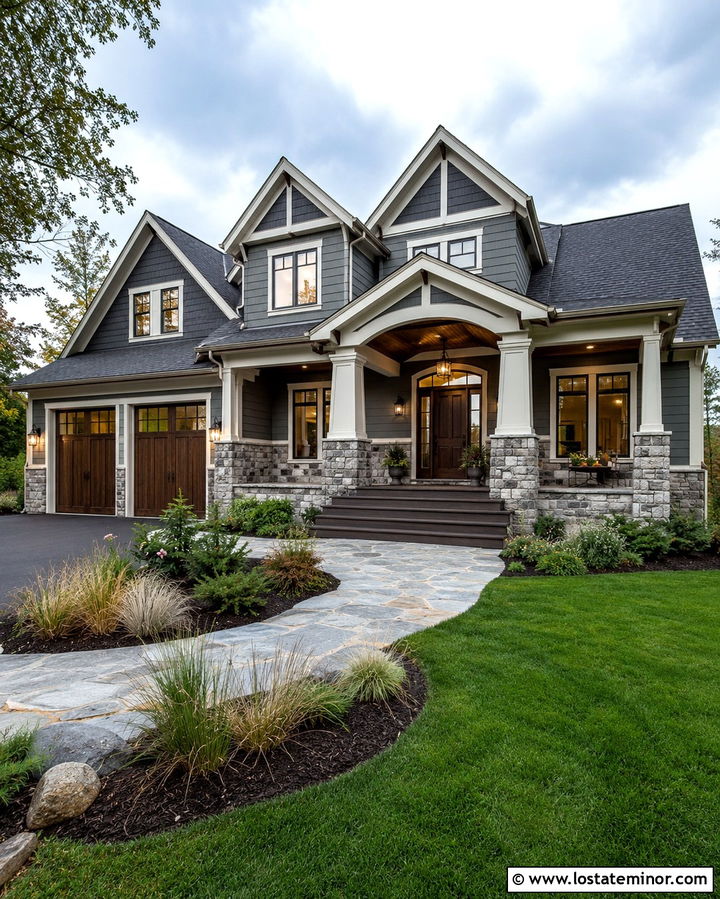
Layering materials can make a large Craftsman facade feel more approachable. Use slate gray lap siding on the main level and slightly darker slate-gray cedar-look shingles inside the gables. Mixed stone should cover the porch piers, chimney, and foundation, with gray, taupe, and muted brown pieces linking every surface. Cream trim can separate the siding patterns without introducing a harsh outline. Choose a rich wood front door and matching garage doors to distribute warmth evenly across the house. Bronze lighting and a charcoal-brown roof complete the palette. Avoid adding another strong accent color because the material changes already create visual interest. Deep porch steps, native grasses, evergreen shrubs, and a natural stone path strengthen the home’s handcrafted, landscape-friendly appearance.
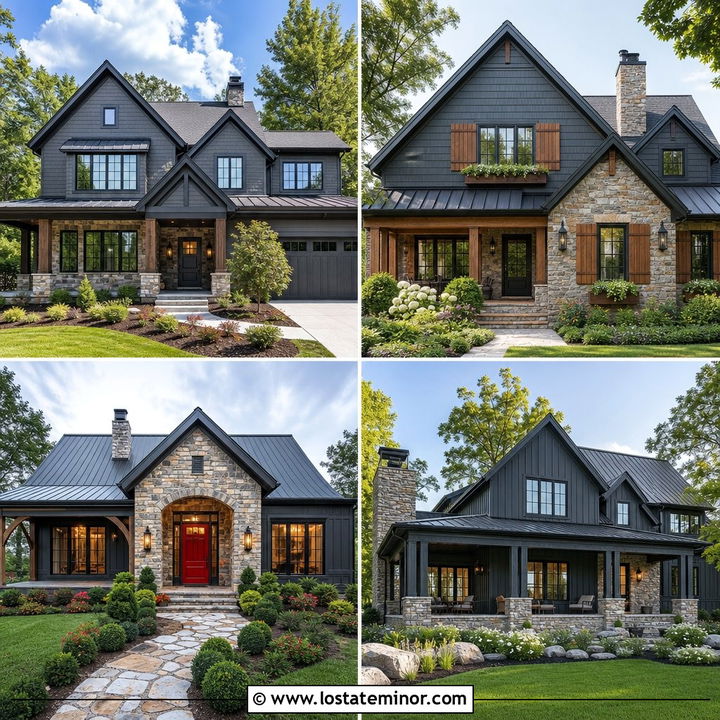
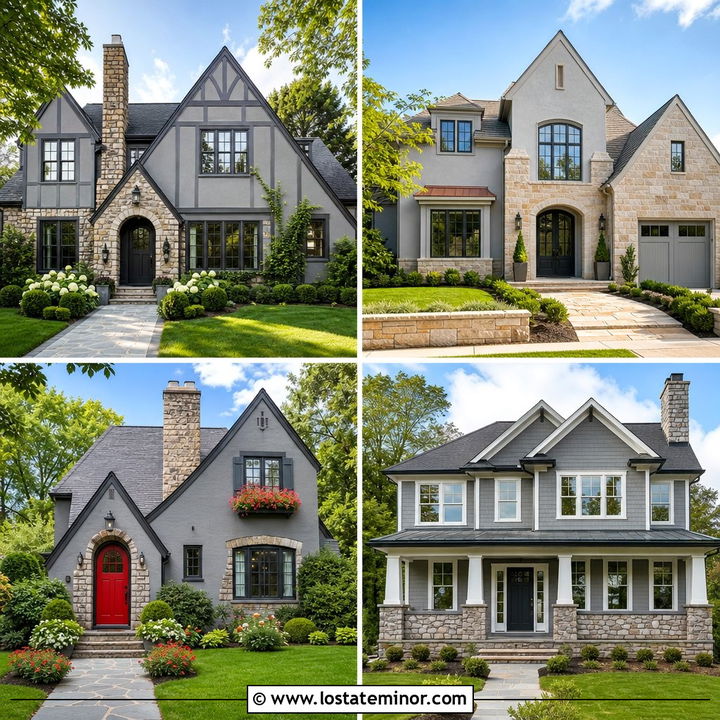
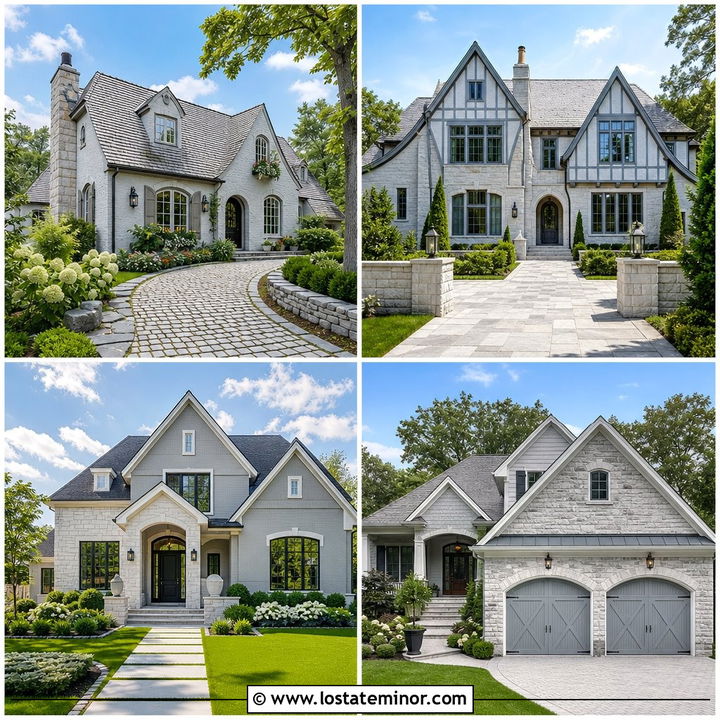
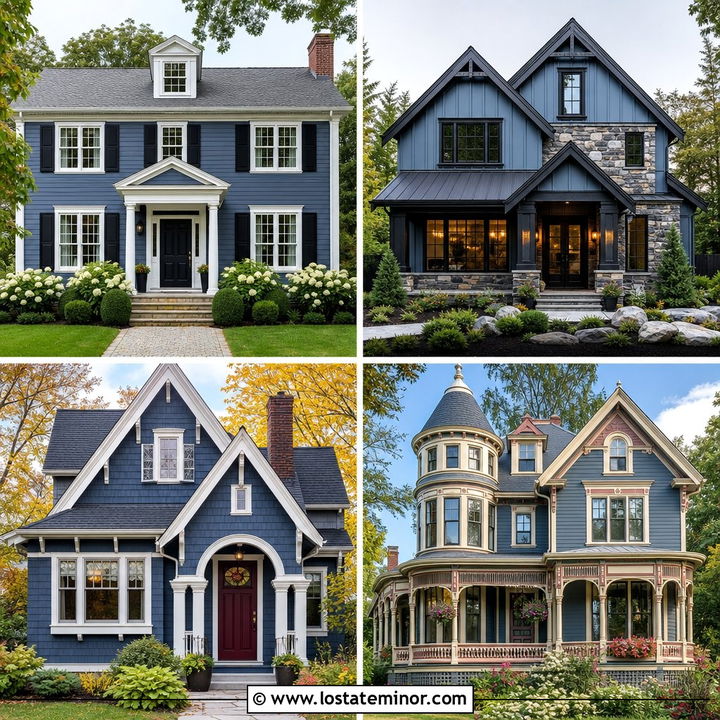
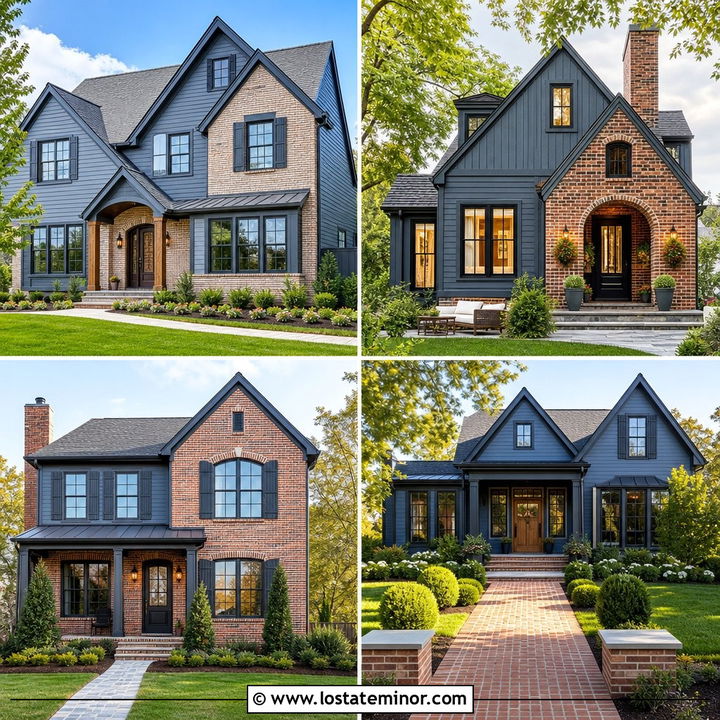
20. Slate Gray Board And Batten House With Stone Entry
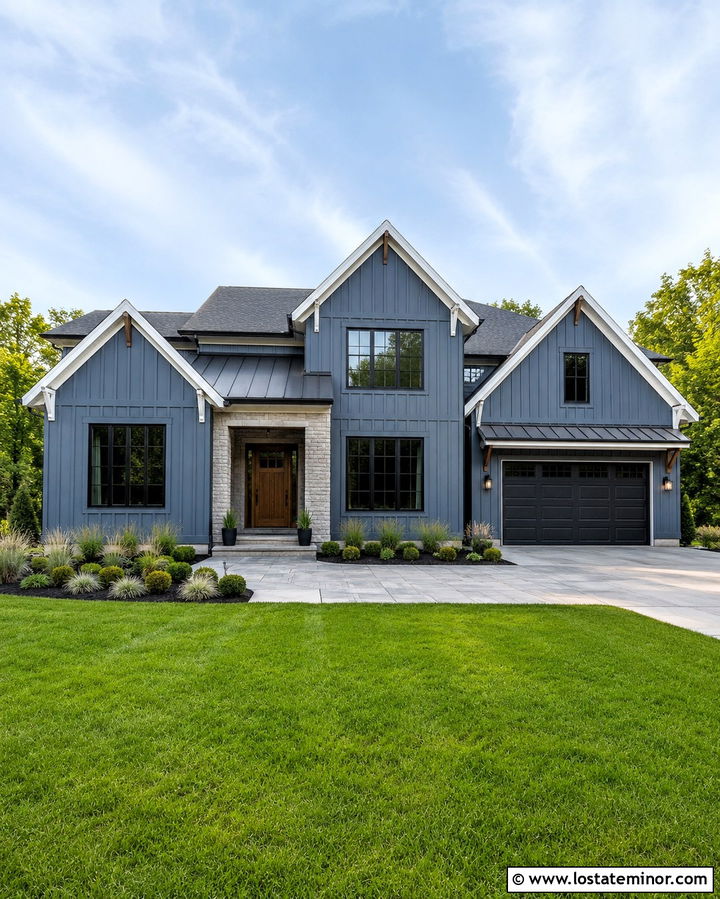
Vertical board-and-batten siding makes slate gray appear taller, cleaner, and more architectural. Concentrate pale gray ledgestone around the recessed entry, where its rough texture can contrast with the crisp siding lines. Extend the stone onto the porch floor or adjacent chimney so it feels structural rather than decorative. Black windows, gutters, and exterior lights create a modern outline. A cedar front door adds a warm focal point, while soft white soffits prevent the covered entrance from feeling shadowed. Choose a simple charcoal metal accent roof over the porch and matching shingles across the main roof. The landscaping should remain streamlined, using concrete pavers, ornamental grasses, rounded shrubs, and dark mulch. This scheme suits modern farmhouses, transitional homes, and updated suburban builds.
21. Slate Gray Lap Siding With Stone Garage
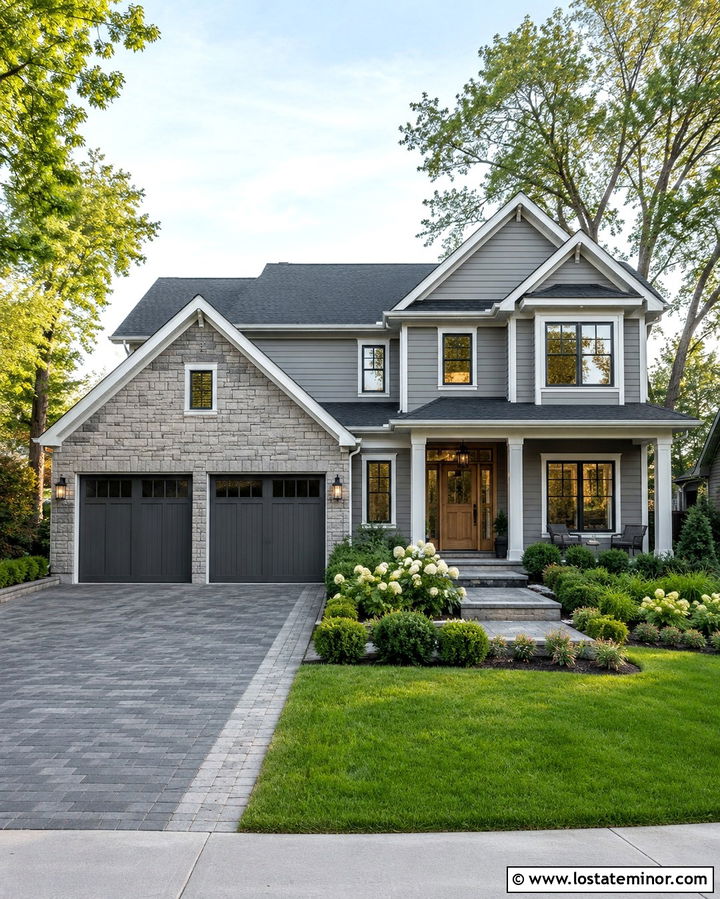
A stone-covered garage can balance a house when the garage occupies a large portion of the street-facing elevation. Use slate gray lap siding across the main residence, then apply cool gray ashlar stone around the garage bays and lower connecting walls. Paint the garage doors slate gray so they recede into the composition instead of becoming oversized white rectangles. Soft white trim around the windows and roofline keeps the house bright. A natural wood front door draws attention toward the pedestrian entrance. Choose black or bronze lighting based on the stone’s darkest undertone. A charcoal roof ties the separate volumes together. Add a paver driveway border, a broad walkway, and layered shrubs between the garage and porch to create a more welcoming visual transition.
22. Slate Gray Vertical Siding With Stone Chimney
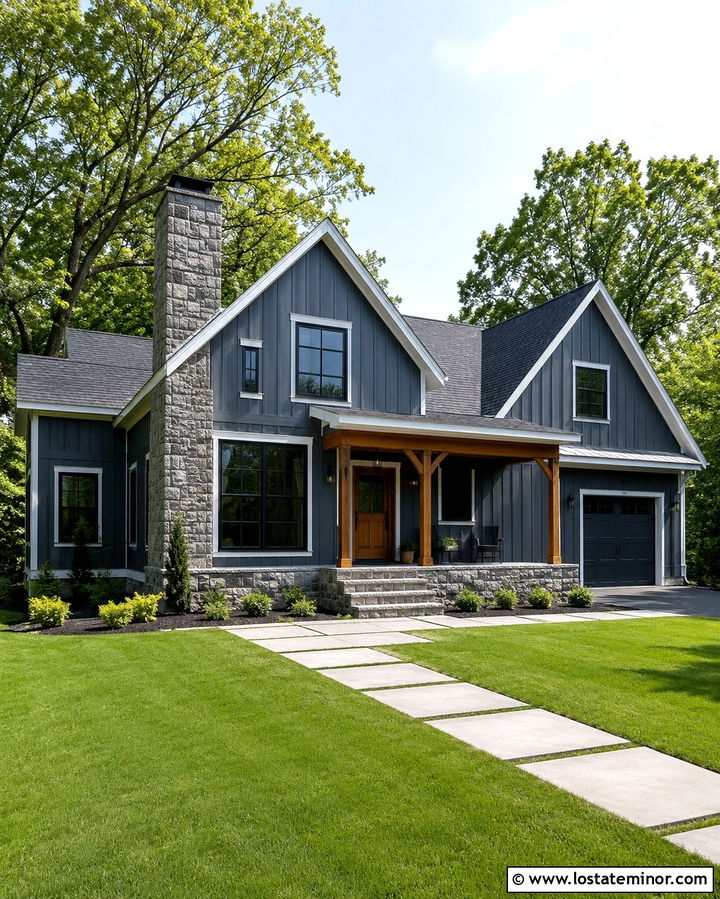
A tall stone chimney creates an effective anchor for a home finished in slate gray vertical siding. Select rugged fieldstone with light gray, charcoal, and restrained brown variation. The stone should extend from the ground to the roofline, emphasizing height and making the chimney look genuinely structural. Use warm white trim on the windows and fascia to balance the darker vertical surfaces. Black window frames can add definition inside those lighter casings. A stained oak front door and matching porch beams provide warmth without introducing a separate painted color. Continue the chimney stone onto the porch steps or a short foundation wall for continuity. Charcoal shingles, simple planting beds, and a straight slab walkway keep the finished exterior tailored, balanced, and easy to maintain.
23. Slate Gray Colonial With Black Shutters And Fieldstone
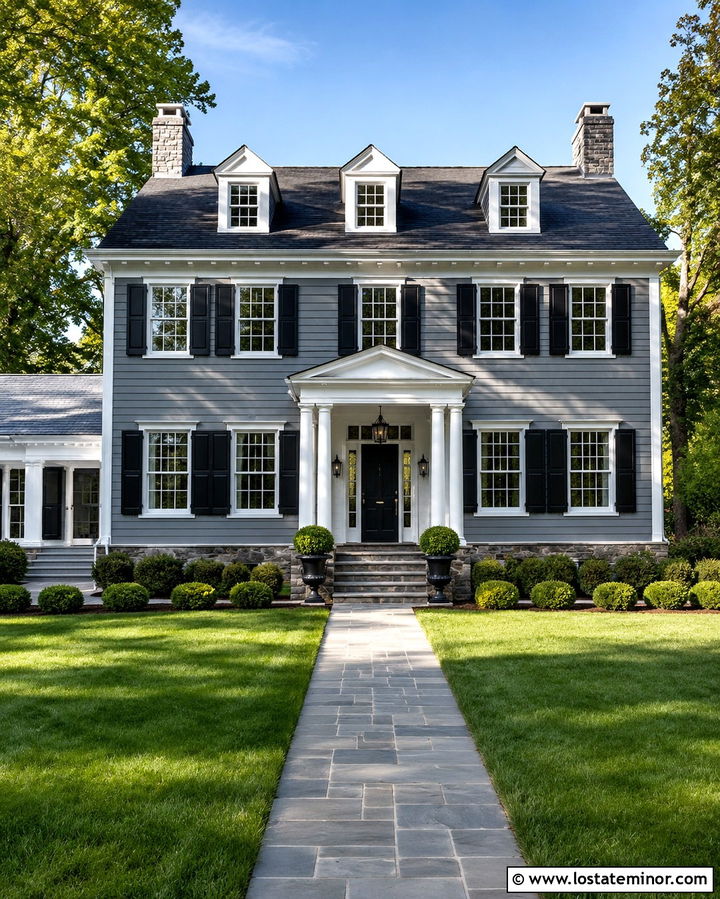
Few combinations look as established as slate gray siding, black shutters, white trim, and natural fieldstone. On a Colonial, keep the stone focused on the foundation, centered entry, and paired porch walls. Its irregular texture creates a pleasing contrast with the home’s orderly windows and symmetrical facade. Use shutters sized correctly for each window so they appear functional rather than decorative. A glossy black front door reinforces the formal palette, while brass or aged bronze hardware adds restrained warmth. The roof should be deep charcoal with subtle variation. White columns and window surrounds maintain the crisp architectural pattern. Finish the frontage with matching planters, boxwood hedges, and a straight bluestone walkway. Every element supports the Colonial structure without introducing unnecessary colors.
24. Slate Gray Prairie House With Bronze Accents And Stone Porch
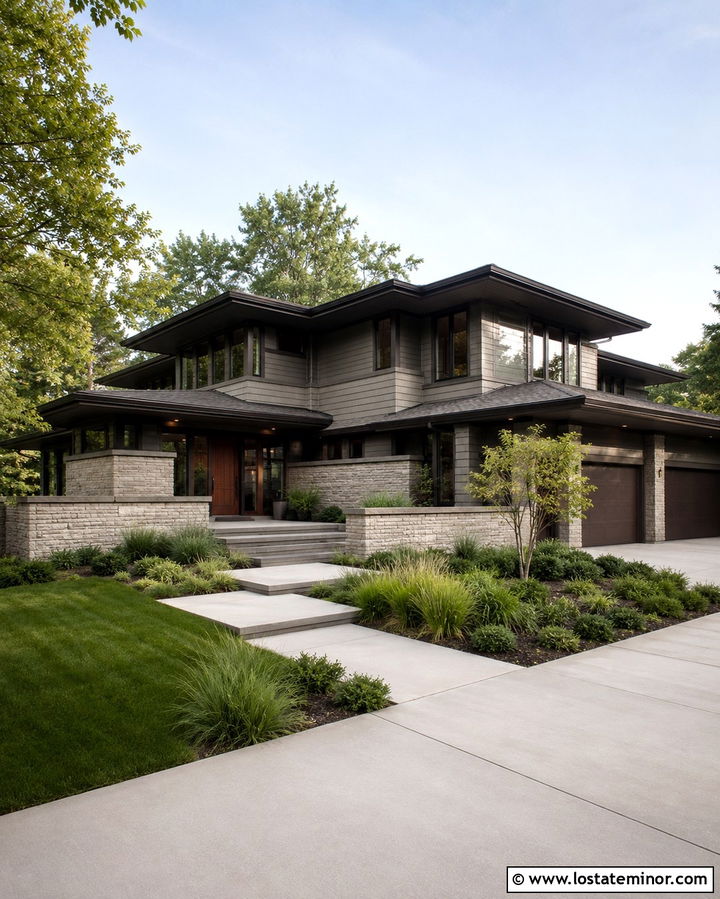
Long horizontal lines define a Prairie-inspired house, making slate gray an excellent unifying body color. Use low, broad bands of stone along the porch, foundation, and central chimney to emphasize the architecture’s connection to the ground. Select masonry with gray, taupe, and bronze-brown undertones. Bronze-framed windows, gutters, and wide garage doors echo those warmer stone colors. Deep roof overhangs in charcoal create shadow and strengthen the horizontal profile. A mahogany front door offers a rich but controlled focal point. Keep trim close to the slate gray body color instead of outlining every edge in white. Broad concrete pavers, low grasses, spreading shrubs, and small trees complete the composition while allowing the house’s wide roofline and substantial porch to remain clearly visible.
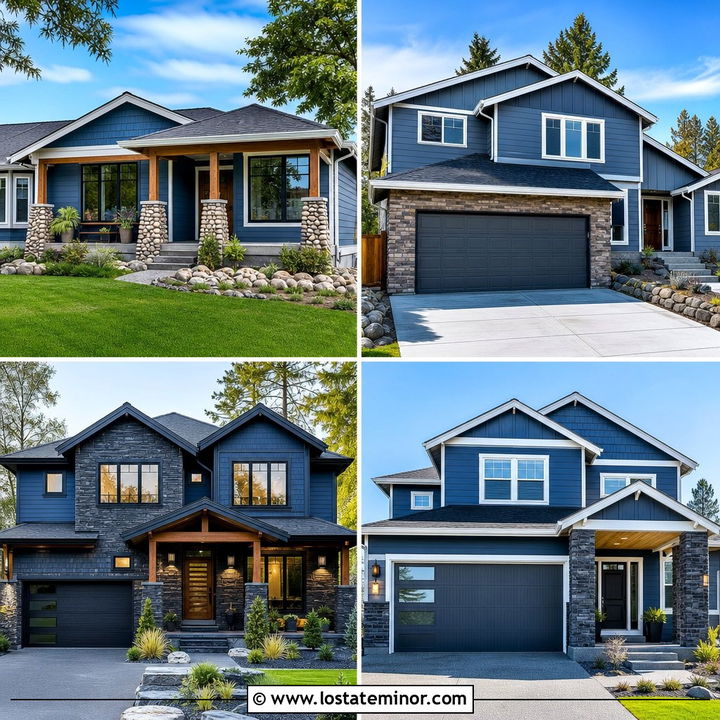
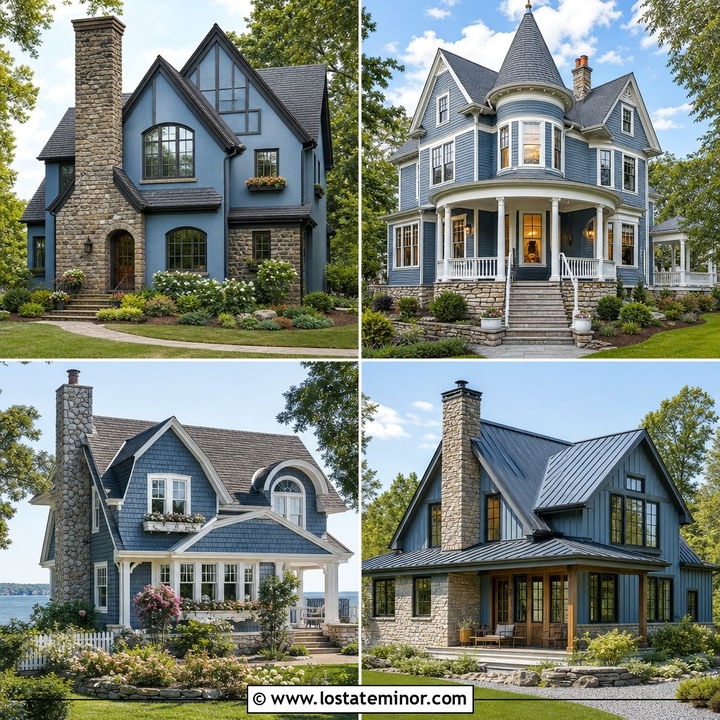
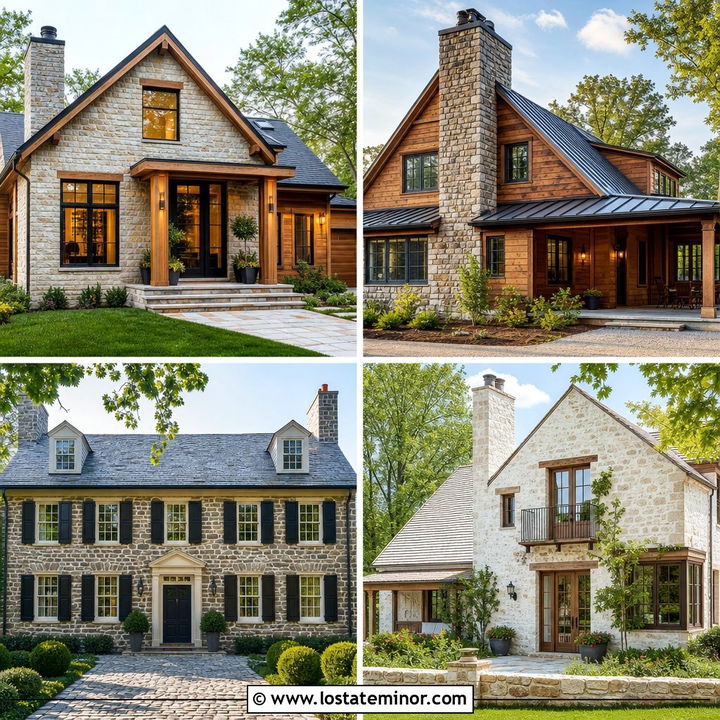
25. Slate Gray Cottage With Copper Accents And Stone
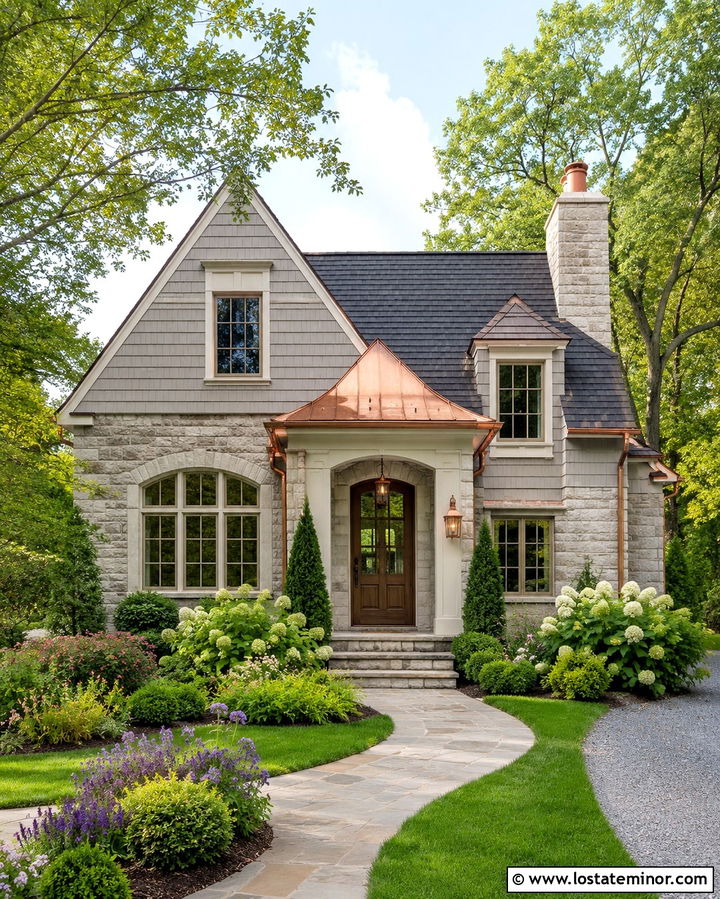
Small copper details can bring an elegant warmth to a slate gray stone cottage. Use the metal on porch roofing, gutters, downspouts, and lanterns, allowing its natural reddish-brown tone to contrast with the cool siding. Pale gray limestone around the chimney, foundation, and arched entrance keeps the facade light. Cream trim softens the window outlines and relates to the stone’s lighter pieces. Choose a medium walnut door with traditional glass panels for additional warmth. A dark charcoal roof should remain visually quiet so the copper and masonry receive attention. Curving garden beds, flowering perennials, clipped shrubs, and an irregular flagstone path strengthen the cottage atmosphere. The finished scheme feels detailed and distinctive without relying on a bright painted accent color.
26. Slate Gray House With Navy Accents And Stone Gables
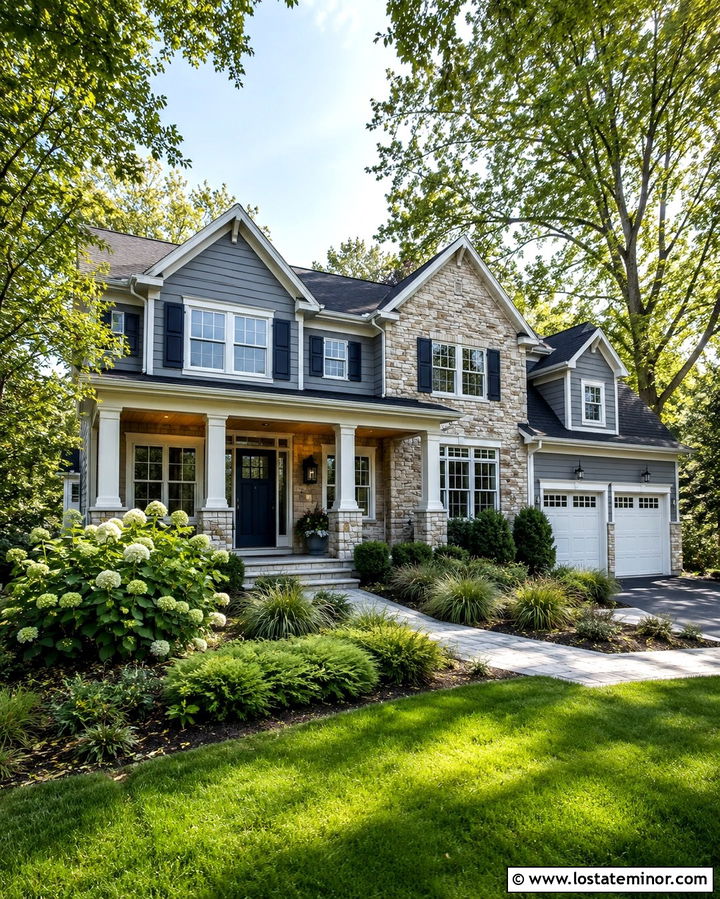
Navy accents can deepen a slate gray exterior without creating the sharpness of solid black. Use navy on the front door, shutters, and selected gable details while keeping the main siding a clear medium slate gray. Pale stacked stone beneath the gables and around the porch columns adds dimension and prevents the cool palette from appearing flat. White trim should outline the windows and roofline, giving each blue-gray shade enough separation. A charcoal roof connects naturally with both colors. Consider light wood porch furniture or a cedar ceiling to introduce warmth near the entrance. Simple hydrangeas, ornamental grasses, and evergreen shrubs complement the cool scheme. The result is polished and versatile, with enough contrast to remain attractive from the street.
27. Slate Gray French Country House With Taupe Trim And Warm Stone
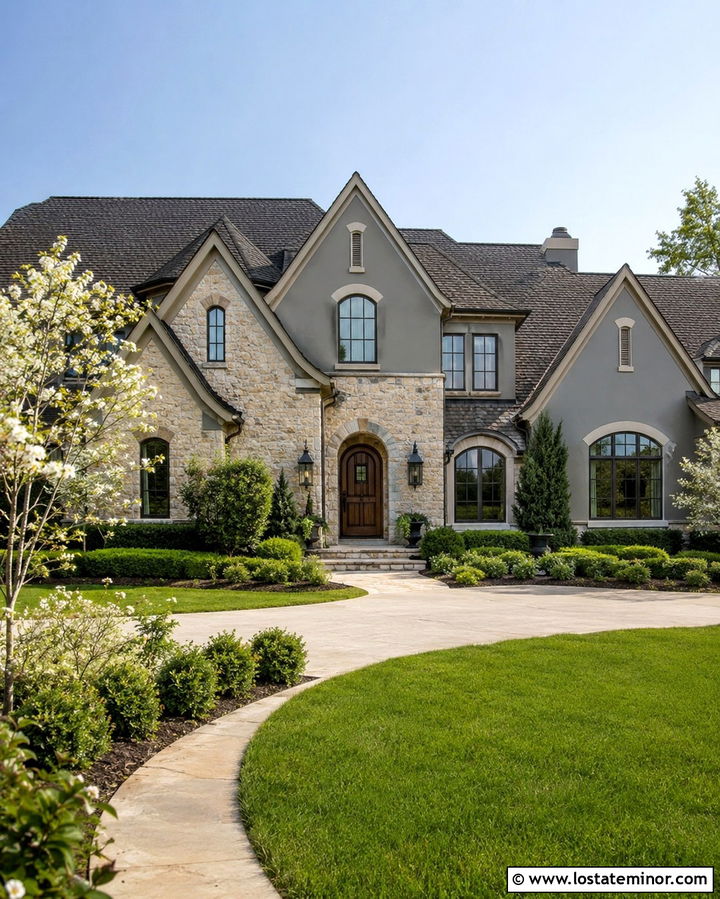
Slate gray takes on a warmer personality when paired with taupe trim and cream-brown stone. This palette is especially effective on a French Country home with steep rooflines, arched windows, and multiple front-facing gables. Use irregular limestone across the lower walls, chimney, and entrance tower. Taupe trim creates a smooth transition between the cool siding and warm masonry. A stained wood door with arched glass reinforces the architecture, while dark bronze lanterns add an aged finish. Choose a roof blending charcoal and weathered brown rather than a flat black. Keep the garage doors close to the taupe trim color for a quiet appearance. Curved pathways, layered hedges, and small flowering trees complete the graceful, established look.
28. Slate Gray Georgian House With Greige Trim And Ashlar Stone
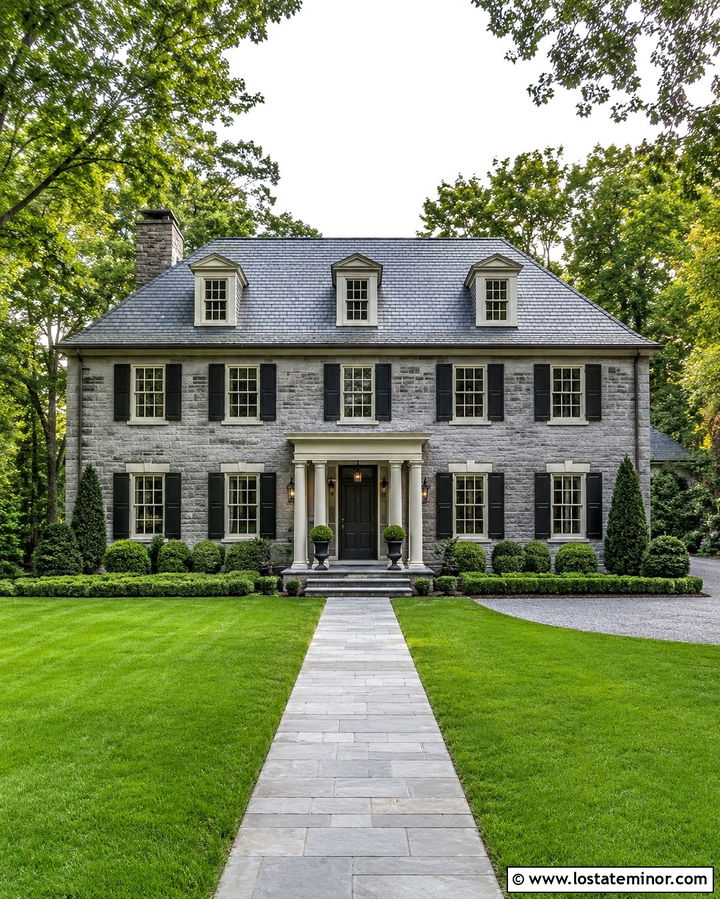
Orderly ashlar stone complements the symmetry of a slate gray Georgian exterior. Use neatly cut rectangular blocks around the foundation, centered entrance, and lower wings. A light greige trim color can outline the windows, cornice, and columns while repeating the stone’s warmer undertones. Paint the shutters and front door a deep charcoal or black-green for formal contrast. A dark slate-colored roof supports the historic influence and keeps attention on the balanced facade. Matching brass lanterns add a subtle traditional detail near the entrance. Avoid using too many types of stone or siding, since Georgian architecture benefits from repetition and restraint. Symmetrical hedges, paired planters, and a straight walkway reinforce the organized design while softening the strong rectangular forms.
29. Slate Gray Modern Ranch With Cedar Pergola And Stone Courtyard
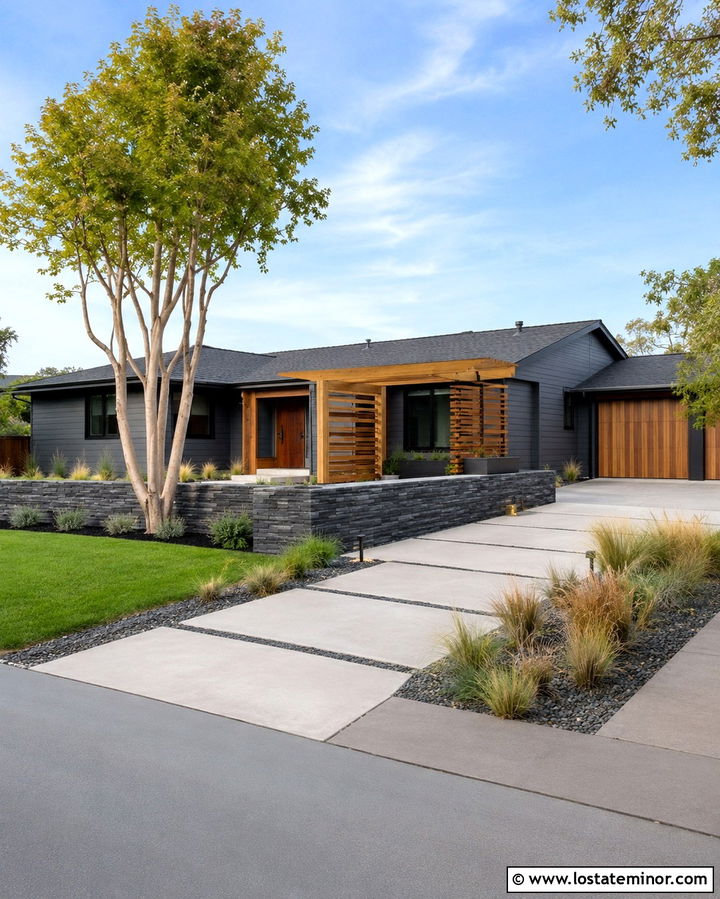
A cedar pergola can transform the entrance of a simple slate gray modern ranch. Extend the warm wood across the porch ceiling, front door, and selected privacy screens for a unified accent. Use low charcoal-gray stone walls around the entry courtyard and along the foundation to emphasize the home’s horizontal shape. Black-framed windows and a low charcoal roof sharpen the clean lines. Keep the fascia slate gray to avoid creating unnecessary stripes around the building. Large concrete pavers, gravel joints, ornamental grasses, and small multi-trunk trees suit the modern landscape. The stone courtyard adds usable outdoor space while giving the flat facade more depth. Together, the gray, stone, cedar, and black details create an inviting but uncluttered exterior.
30. Slate Gray Coastal House With White Trim And Pale Stone
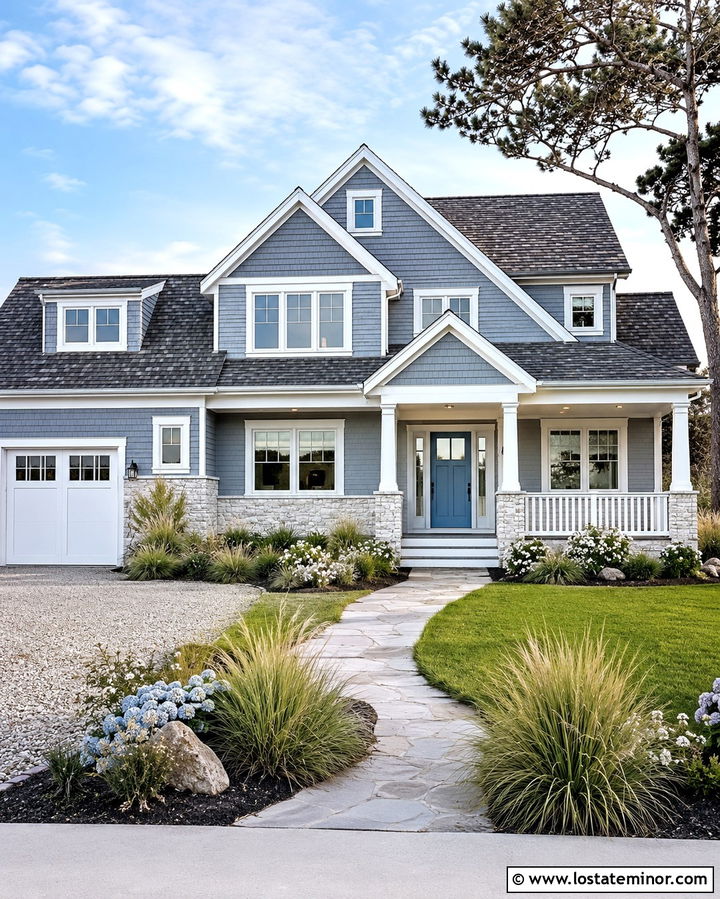
Fresh white trim and pale stone can make slate gray siding feel bright enough for a coastal setting. Use shingle-style siding on upper walls and horizontal lap siding below to create gentle texture. Light limestone or white-gray ledgestone works well around the porch, foundation, and outdoor steps. A soft blue front door supports the breezy palette without competing with the body color. Choose a weathered charcoal roof, white porch railings, and simple brushed-nickel or black fixtures. Avoid overly yellow stone, which may look disconnected from the cool exterior. Beach grasses, hydrangeas, light gravel, and a wide natural-stone walkway complete the relaxed landscaping. The final house feels crisp, casual, and airy while retaining the depth and durability associated with slate gray.
Conclusion:
The best 30 Slate Grey House Design With Stone Accents Ideas treat siding, masonry, trim, roofing, doors, and landscaping as one connected composition. Begin by studying the fixed surfaces, especially the roof and existing stone. Pull accent colors from those materials rather than introducing unrelated shades. White and cream create brightness, while black, charcoal, and bronze add definition. Natural wood offers warmth when the palette feels too cool. Stone placement matters just as much as color, so use it to support the foundation, emphasize an entrance, or anchor a chimney. Before making a final choice, view siding and trim samples beside the actual stone throughout the day. This simple step helps every exterior finish look intentional.

Related posts: