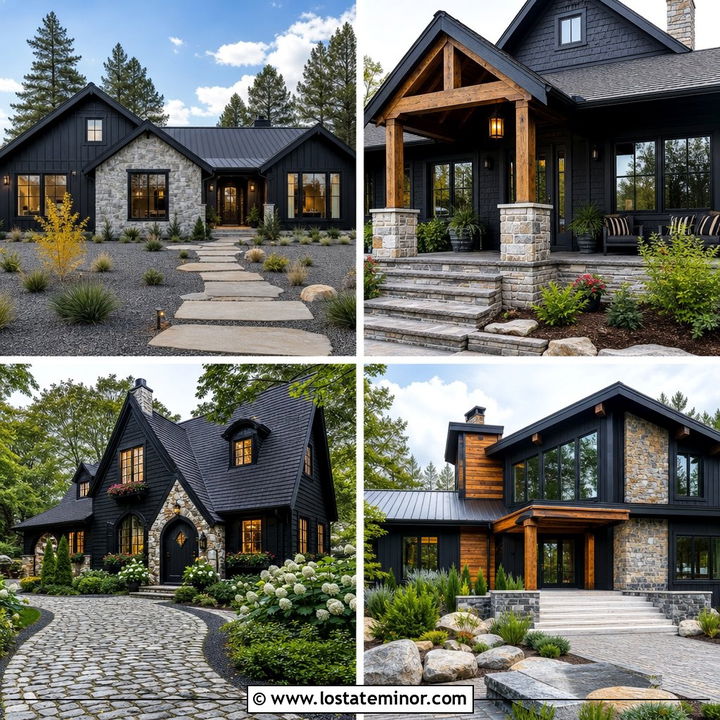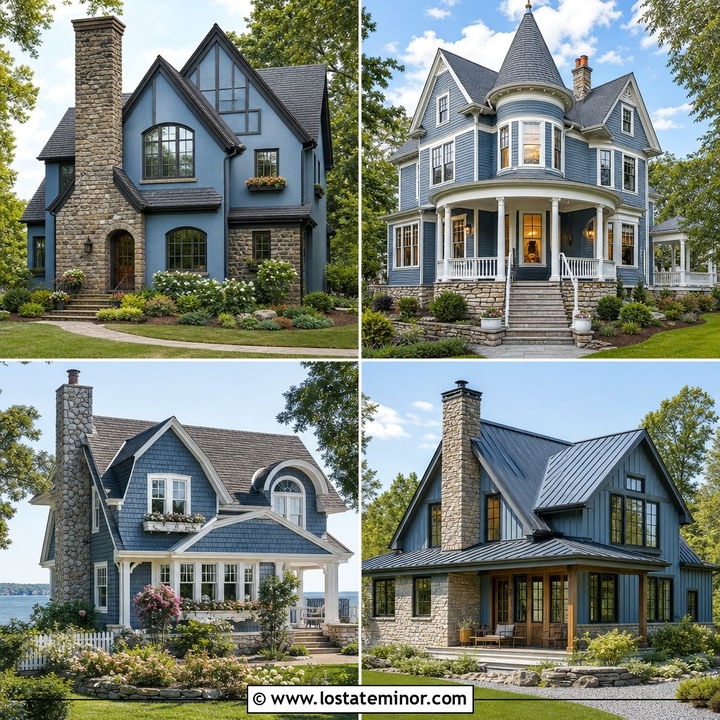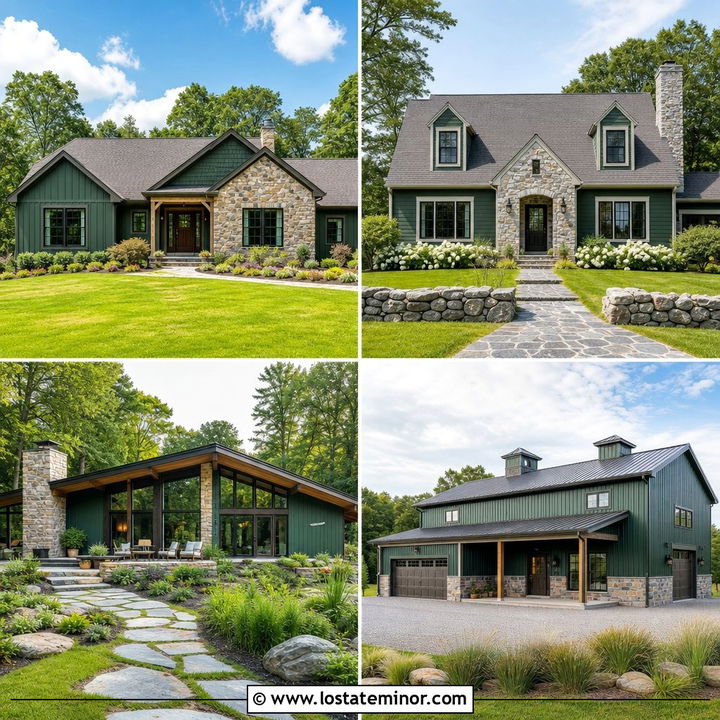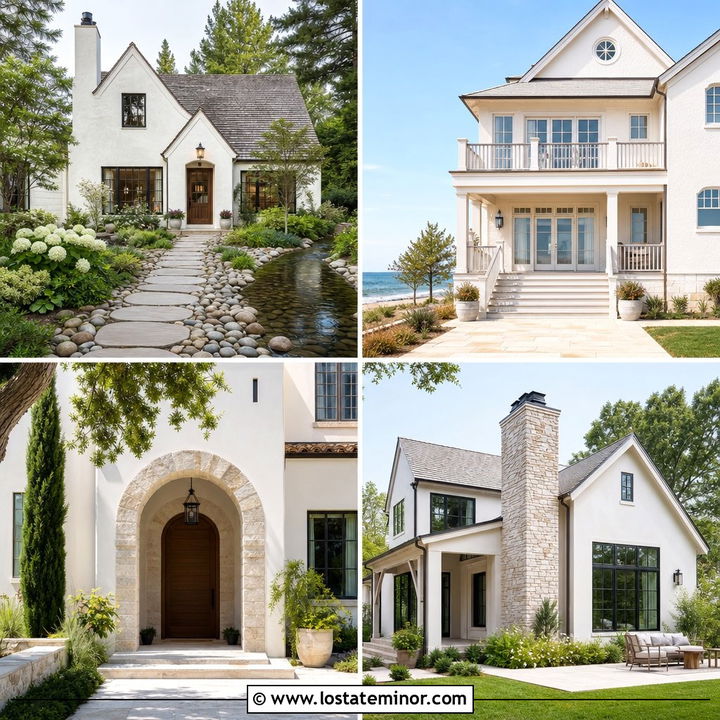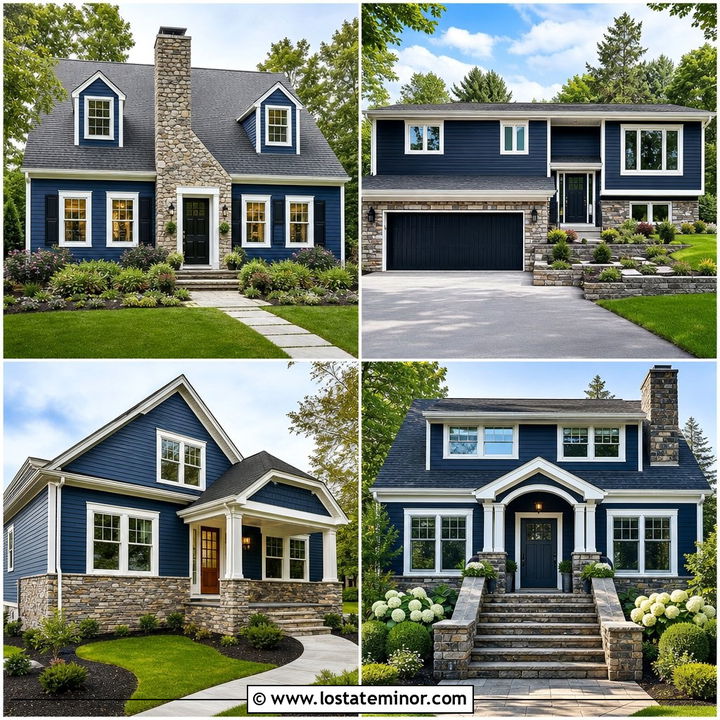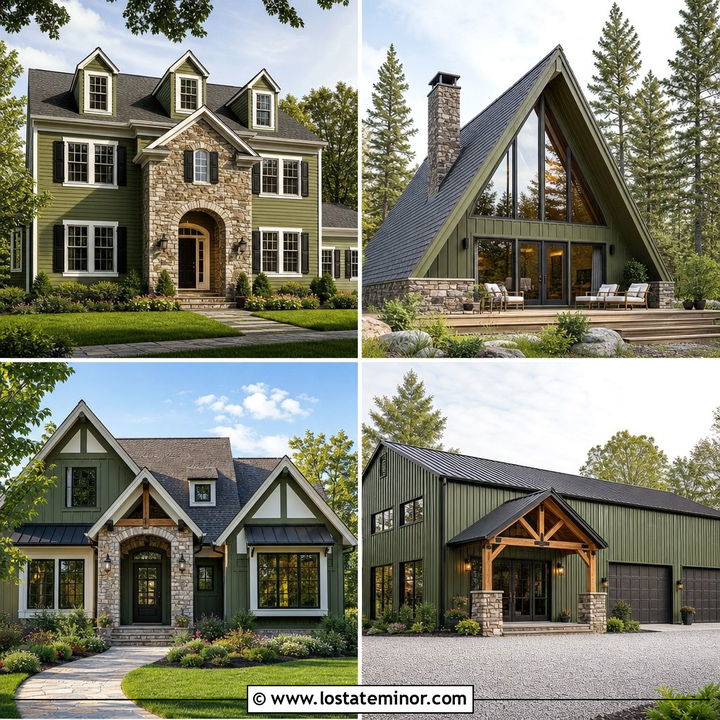
Light Grey House Design With Stone Accents Ideas can make a home feel brighter, more dimensional, and closely connected to its surroundings. The key is treating siding, masonry, trim, roofing, doors, and landscaping as one coordinated exterior. Current inspiration favors natural materials, layered neutral colors, and stone selected as the foundation for the broader palette. () Cool gray siding looks crisp beside blue-gray ledgestone, while warmer gray paint works naturally with limestone, sandstone, and mixed fieldstone. White trim creates freshness. Black details add definition. Wood brings needed warmth. The following complete exterior schemes cover ranch homes, Craftsman houses, farmhouses, cottages, and contemporary builds, giving you practical ways to explore Light Grey House Design With Stone Accents Ideas.
1. Light Grey Craftsman House With Fieldstone Porch
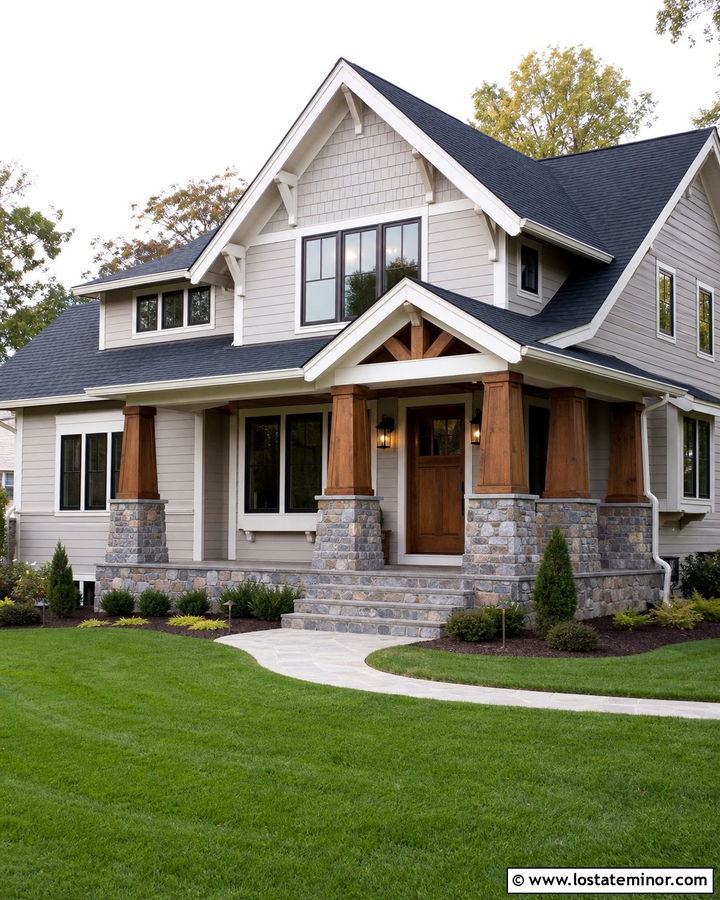
A Craftsman exterior feels especially welcoming when light gray siding meets rugged fieldstone. Use a soft neutral gray across the lap siding, then carry mixed gray and tan fieldstone over the porch column bases and lower facade. Creamy white trim softens the transitions and complements the warmer pieces in the masonry. A stained oak front door, exposed rafters, and matching porch beams prevent the gray palette from feeling cold. Finish the house with a charcoal architectural-shingle roof and dark bronze lighting. Wide front steps made from natural stone can visually connect the porch to the walkway. This balanced scheme gives every material a purpose while preserving the handcrafted character that makes Craftsman architecture so appealing.
2. Light Grey Modern Farmhouse With Limestone
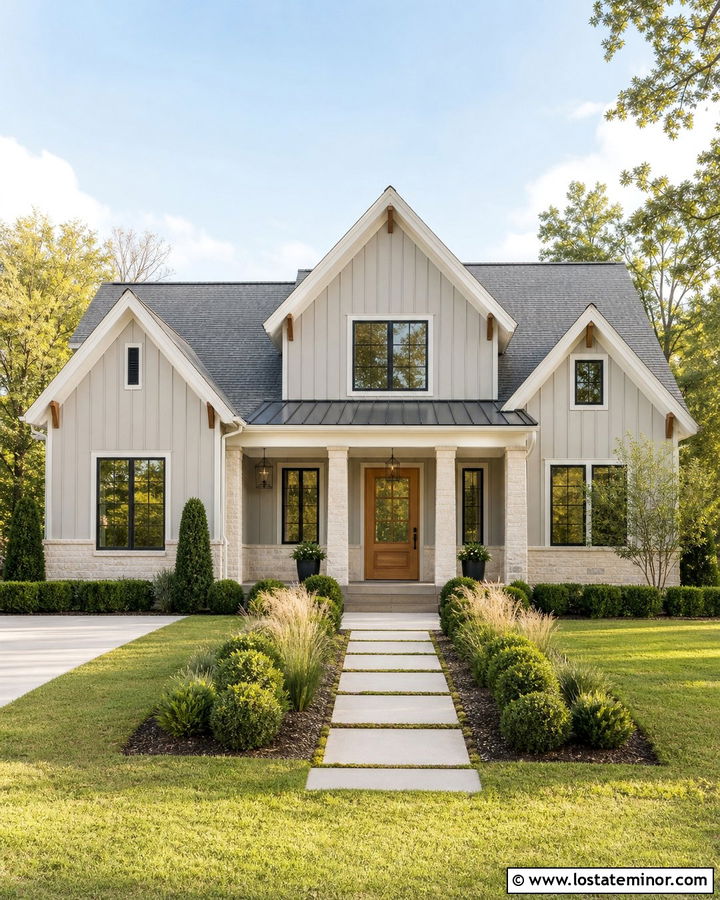
Picture a modern farmhouse with pale gray board-and-batten siding, steep gables, and a broad front porch. Cream limestone applied to the foundation, chimney, and porch columns introduces soft texture without making the exterior busy. Choose warm white for the fascia, soffits, and window trim so the siding maintains gentle contrast. Matte black windows, gutters, and simple lanterns provide clean definition. A natural white oak door adds a warmer focal point near the center of the facade. Use medium-gray roofing rather than solid black to keep the overall appearance light and relaxed. Low boxwoods, ornamental grasses, and a straight stone walkway complete this polished farmhouse scheme and echo the limestone’s organic colors.
3. Light Grey Ranch House With Stone Wainscoting
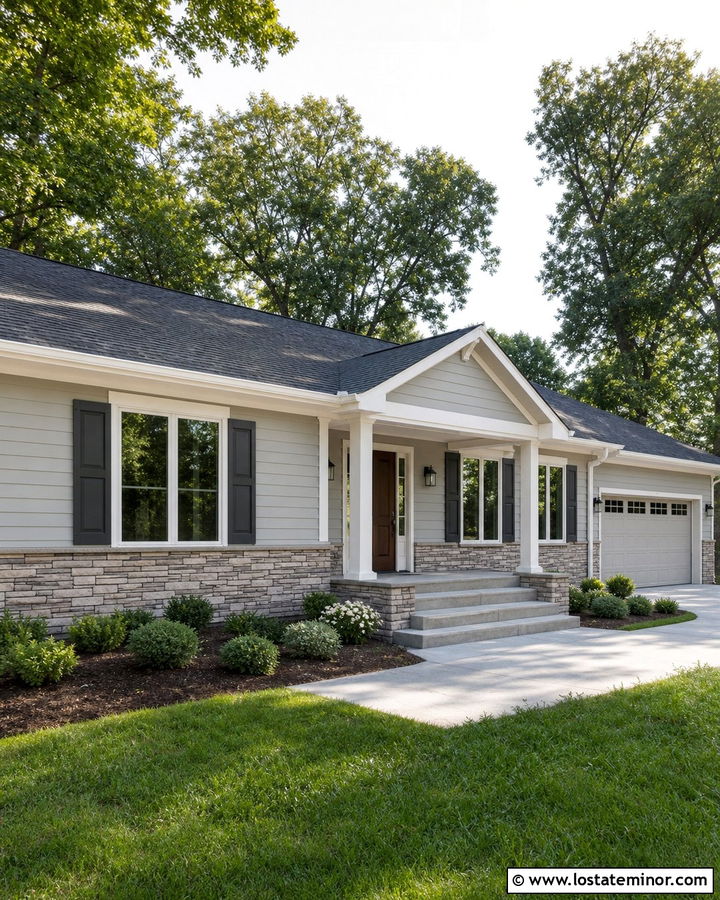
Does a long ranch facade seem too flat? A continuous band of stone wainscoting can add depth while emphasizing its horizontal shape. Paint the lap siding a light warm gray and select low-contrast ledgestone containing cream, taupe, and charcoal pieces. Extend the masonry beneath the windows and around the attached garage for a unified appearance. Crisp off-white trim keeps the roofline neat, while charcoal shutters add rhythm across wide exterior walls. A medium walnut front door creates a warm destination without competing with the stone. Complete the design with a dark gray roof, broad concrete steps, and layered foundation planting. The result feels updated and substantial without hiding the home’s approachable ranch character.
4. Light Grey Colonial House With Stone Entry
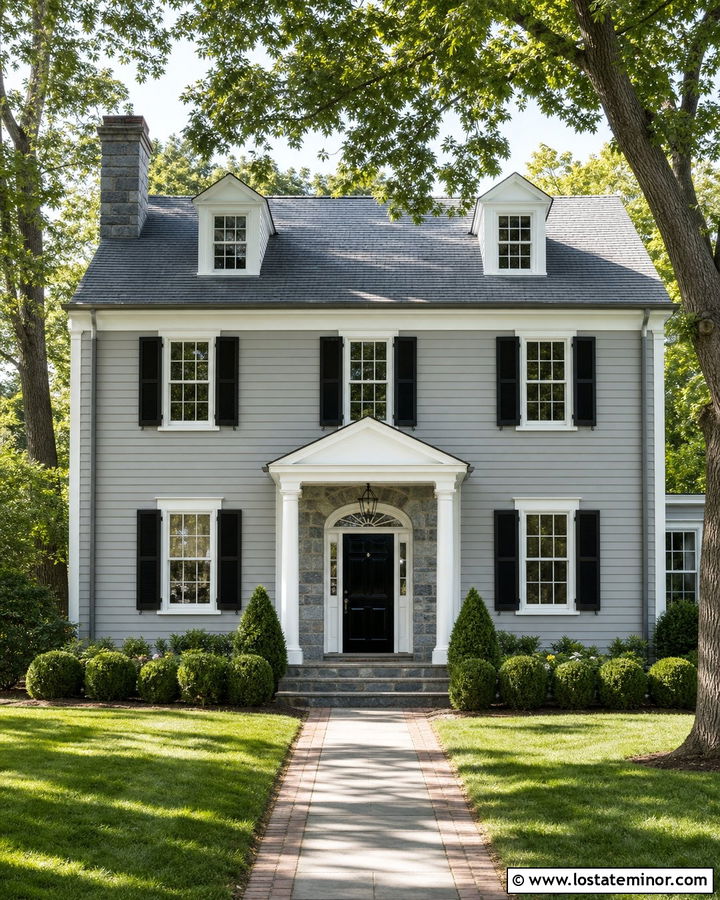
Traditional symmetry gives a light gray Colonial home a calm, orderly appearance. Use cool light gray clapboard across both stories, then frame the central doorway with tailored blue-gray stone. Keeping the stone limited to the entrance makes it a strong architectural focal point rather than a competing surface. Bright white trim, classical porch columns, and white window surrounds preserve the home’s crisp formality. Add black shutters, black lanterns, and a glossy black front door for clear contrast. A slate-gray roof naturally connects the darker features to the masonry. Finish with a straight brick-edged walkway and evenly placed evergreen shrubs. This scheme respects Colonial proportions while giving the facade more texture, weight, and modern curb appeal.
5. Light Grey Cottage House With Cobblestone
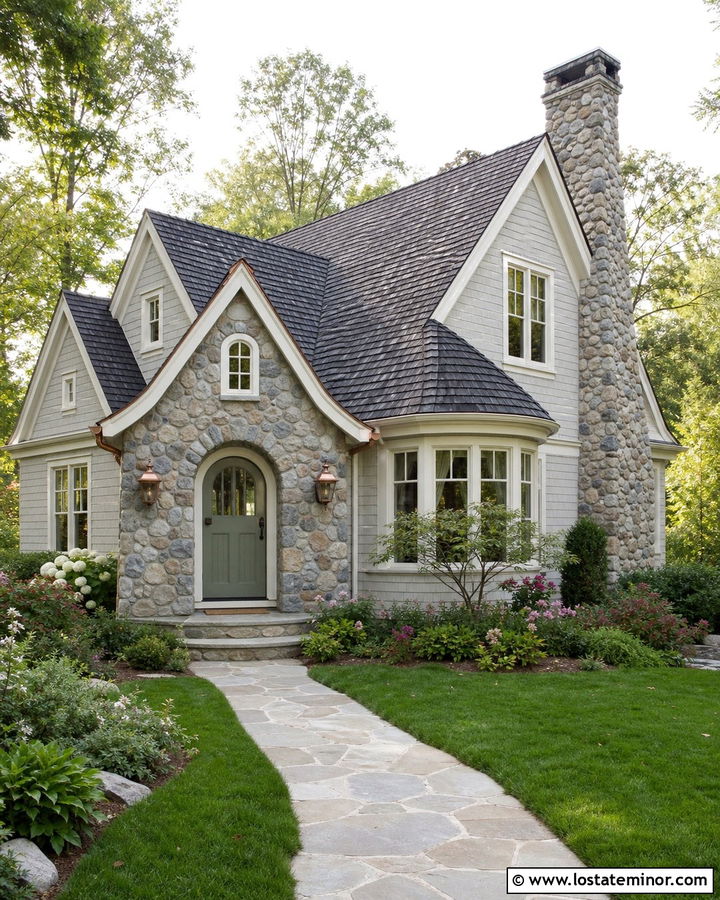
Soft colors and rounded stone textures can make a cottage look settled into the landscape. Choose a misty light gray for shingle or lap siding and pair it with rounded cobblestone around the foundation, chimney, and arched entrance. Look for stone containing gray, mushroom, and faded brown tones. These colors work beautifully with ivory trim and a muted sage front door. A weathered charcoal roof gives the house a gently aged character, while copper lanterns add subtle warmth. Avoid overly sharp black accents, which may feel harsh against this relaxed palette. Curved flagstone paths, flowering shrubs, and informal garden beds reinforce the cottage setting. Together, the materials create a charming facade that feels layered but never overdecorated.
6. Light Grey Contemporary House With Charcoal Stone
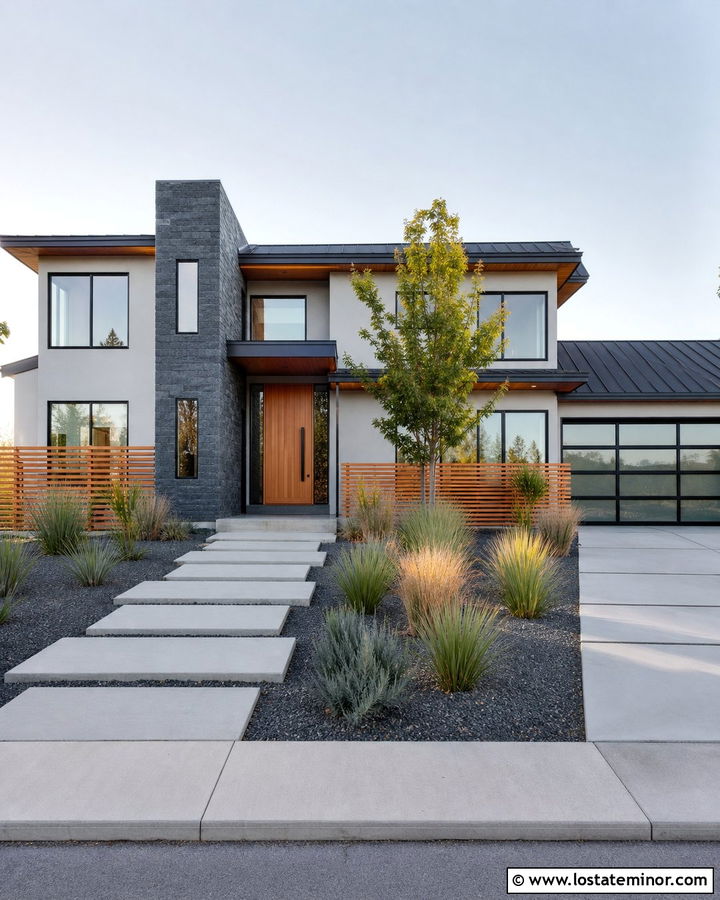
Clean contemporary architecture needs contrast to keep light gray from appearing washed out. Cover the main rectangular volumes in smooth light gray stucco, then clad one projecting section or tall chimney in charcoal stacked stone. Black-framed windows and a black metal roof strengthen the geometry without introducing another competing color. Warm cedar soffits, horizontal screens, and an oversized wood front door soften the cool palette. Keep the garage door close to the main gray body color so it blends into the elevation. Large concrete pavers, architectural grasses, and dark gravel suit the streamlined facade. The concentrated charcoal stone creates a grounded focal point, while the pale walls keep the complete exterior bright, spacious, and distinctly modern.
7. Light Grey Cape Cod House With Granite
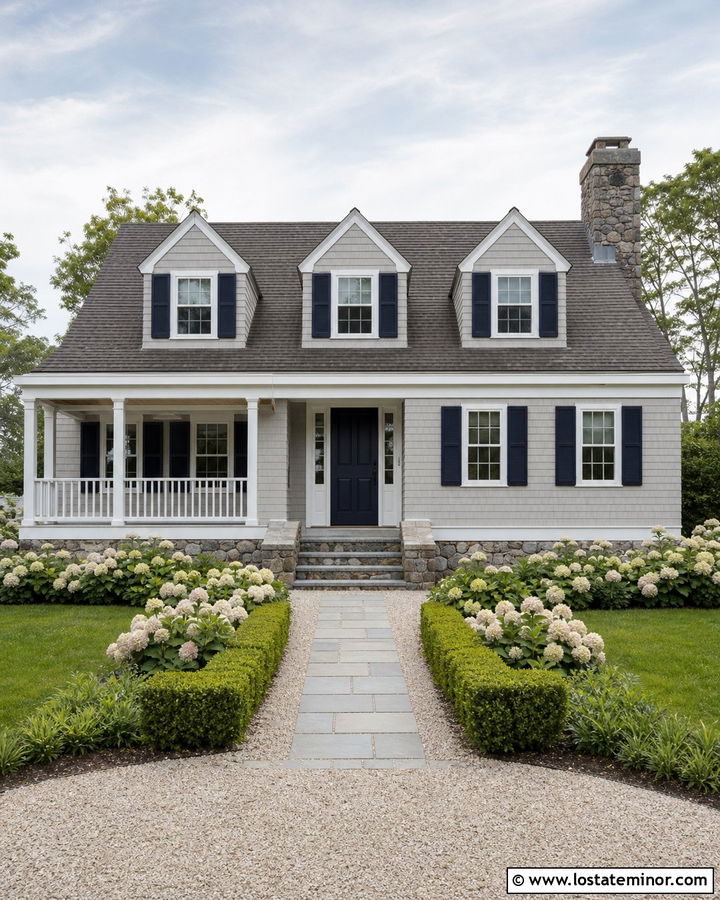
A Cape Cod home looks timeless with weathered gray siding and authentic-looking granite accents. Paint the shingles or clapboards a pale coastal gray, then use irregular gray granite along the foundation and around a compact front stoop. White trim should outline the dormers, windows, porch railing, and roof edges for a fresh seaside contrast. Deep navy shutters and a matching front door introduce classic color while remaining compatible with the cool stone. Choose a medium charcoal roof that resembles aged coastal shingles. Hydrangeas, clipped hedges, and a shell-toned gravel path can soften the structured facade. This complete scheme feels traditional and welcoming, with enough tonal variation to stop the light gray exterior from looking plain or overly uniform.
8. Light Grey Bungalow With River Rock Columns
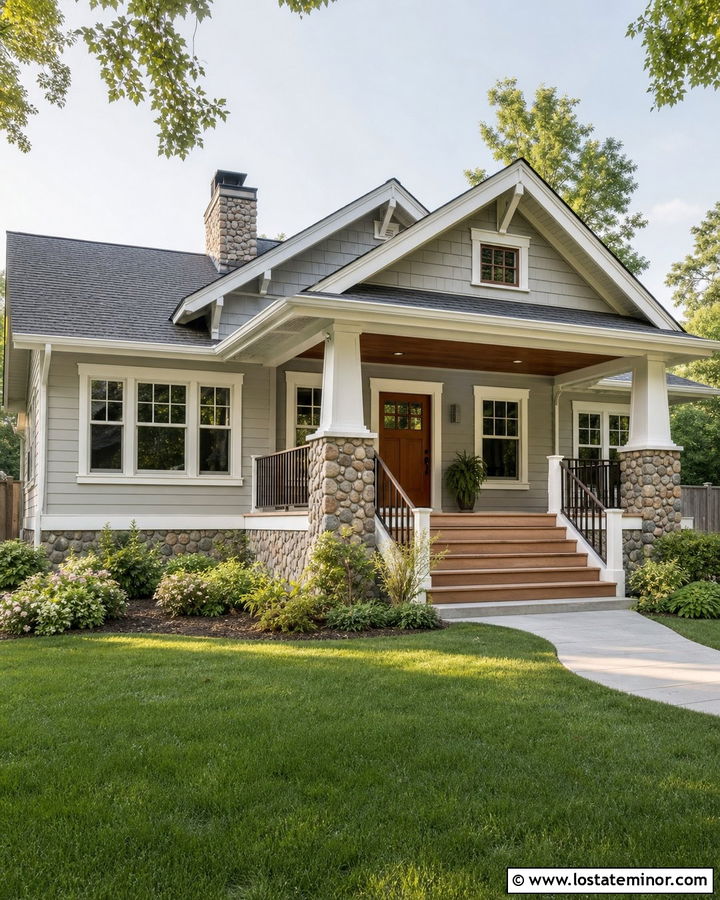
River rock gives a small bungalow substantial character without requiring masonry across the entire house. Apply smooth light gray lap siding to the facade and use multicolored river rock on tapered porch-column bases and the exposed foundation. Select stones containing soft gray, brown, cream, and muted blue to support a flexible exterior palette. Warm white trim highlights deep eaves and divided-light windows. A reddish cedar door and matching porch ceiling provide rich natural warmth. Dark bronze gutters, railings, and porch lights feel softer than pure black. Finish the design with a charcoal roof, wide wood steps, and a gently curved walkway. The textured columns visually anchor the porch while preserving the bungalow’s cozy proportions and handcrafted appeal.
9. Light Grey Split-Level House With Stacked Stone
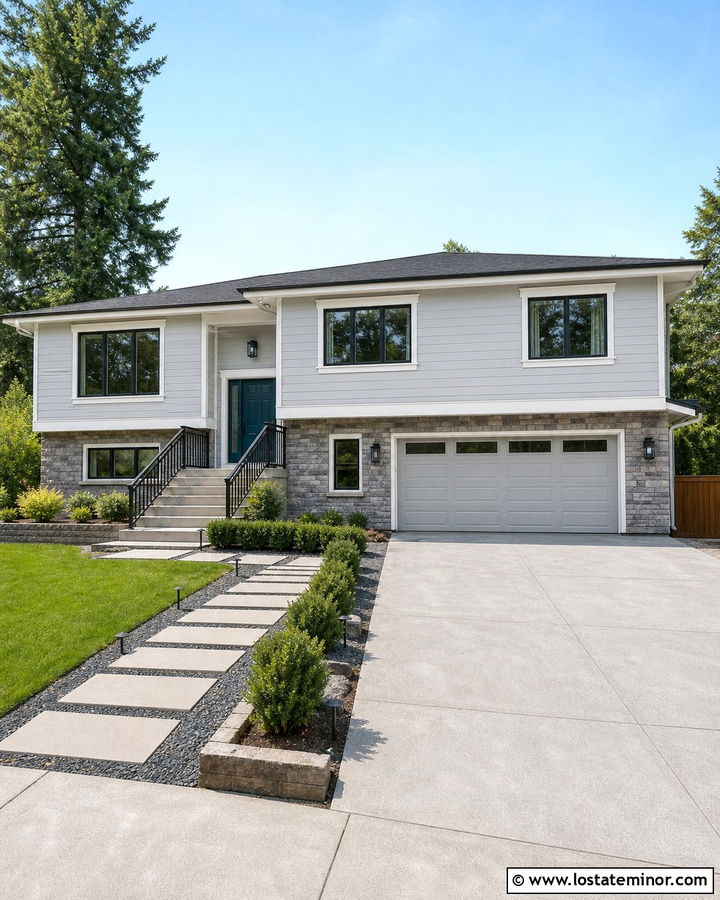
A split-level exterior often includes several competing wall sections, so the stone placement should create order. Paint the upper-level siding a clean light gray and cover the lower garage level with medium-gray stacked stone. This two-part treatment visually grounds the house and makes the uneven floors appear intentional. Use white trim around windows and roof edges to brighten the facade. A dark teal front door introduces restrained color near the recessed entry, while black railings and lights sharpen the updated design. Keep the garage door light gray so it does not dominate the stone wall. Broad planting beds, horizontal shrubs, and rectangular concrete pavers reinforce the home’s lines and give the remodeled exterior a cohesive, modern appearance.
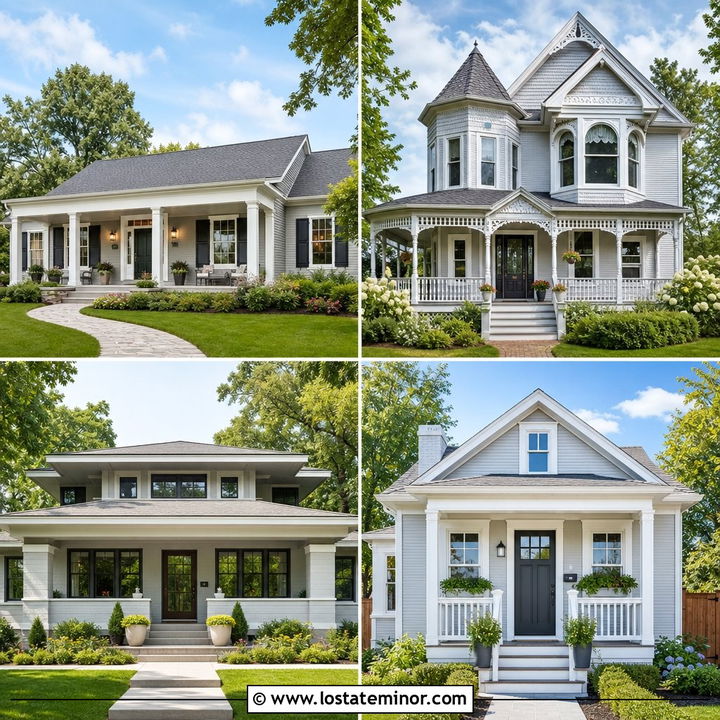
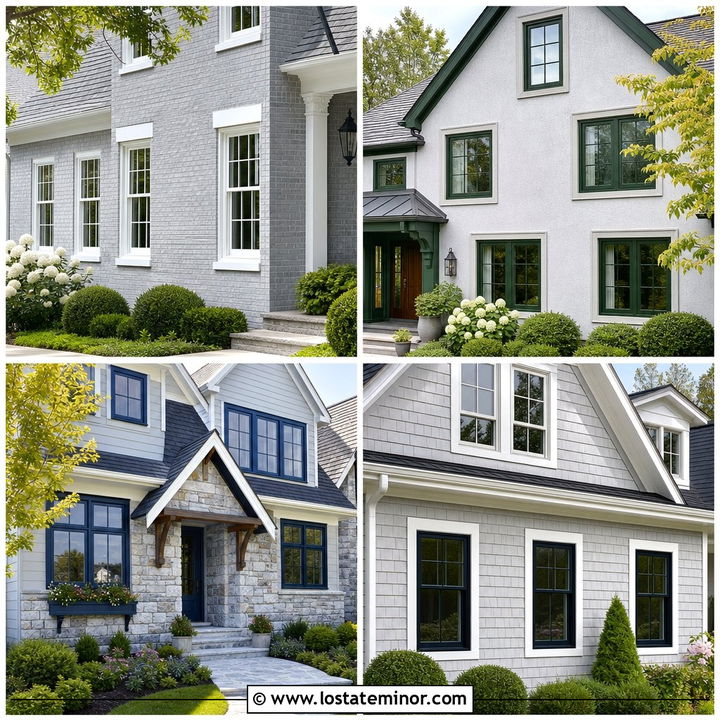
10. Light Grey Tudor House With Limestone
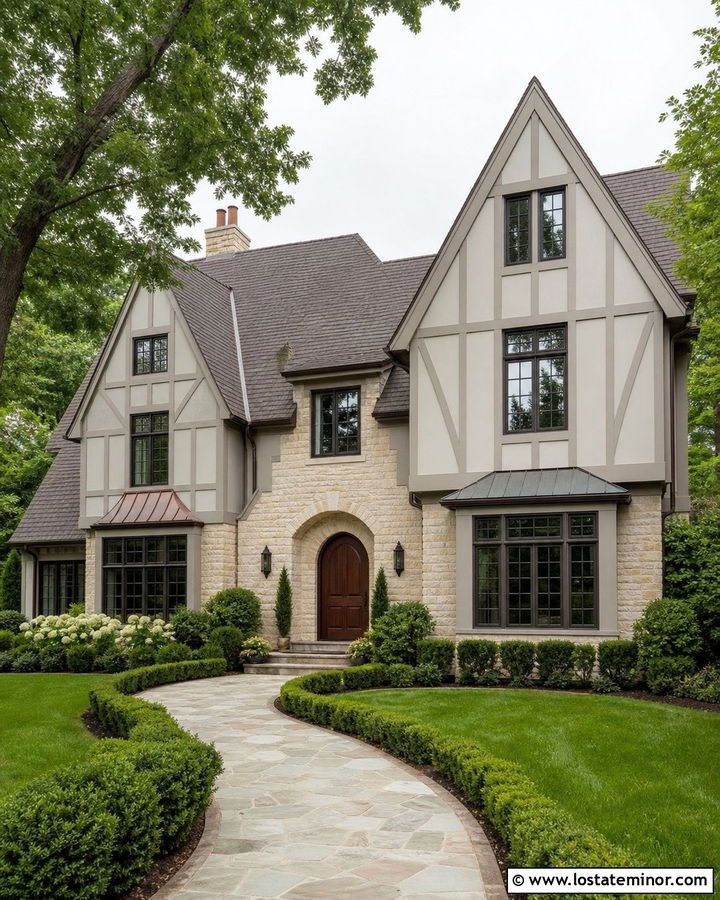
How can a Tudor exterior feel lighter without losing its historic personality? Replace heavy brown color combinations with pale warm gray stucco, soft taupe half-timbering, and buff limestone around the lower walls and arched entry. The limestone should include subtle gray veining that connects it to the body color. Deep bronze windows and gutters provide definition while feeling more understated than black. Choose a stained mahogany door with a rounded top to preserve the home’s traditional character. A charcoal-brown roof bridges the warm and cool tones across the facade. Simple hedges and a curved stone walkway keep the landscaping formal but inviting. This restrained palette updates the Tudor while allowing its rooflines and masonry craftsmanship to remain prominent.
11. Light Grey Prairie House With Horizontal Stone
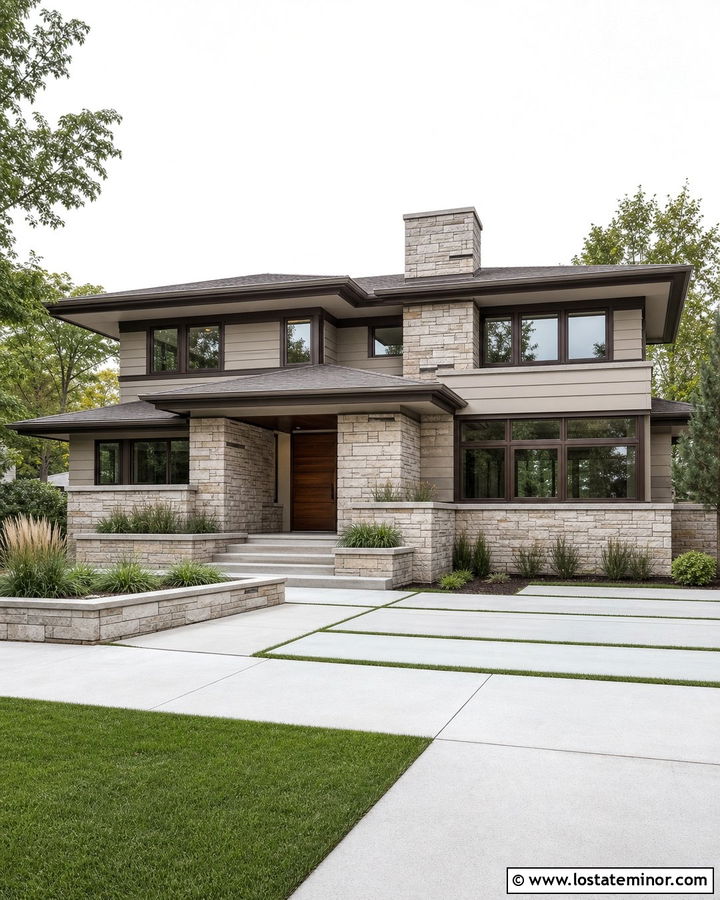
Prairie architecture is defined by long lines, so every exterior material should reinforce that direction. Use pale gray horizontal siding beneath wide roof overhangs and add thin-cut limestone across the foundation, porch walls, and central chimney. Select stone with long, linear shapes in gray, beige, and soft cream. Dark bronze window frames and fascia add contrast without interrupting the earthy mood. A flat-panel walnut front door creates a natural focal point and repeats the warmer tones found in the masonry. Keep the low-pitched roof a deep gray-brown rather than stark black. Horizontal planters, ornamental grasses, and broad concrete slabs extend the visual lines into the yard, producing a complete exterior that feels balanced, grounded, and architecturally consistent.
12. Light Grey Mediterranean House With Travertine
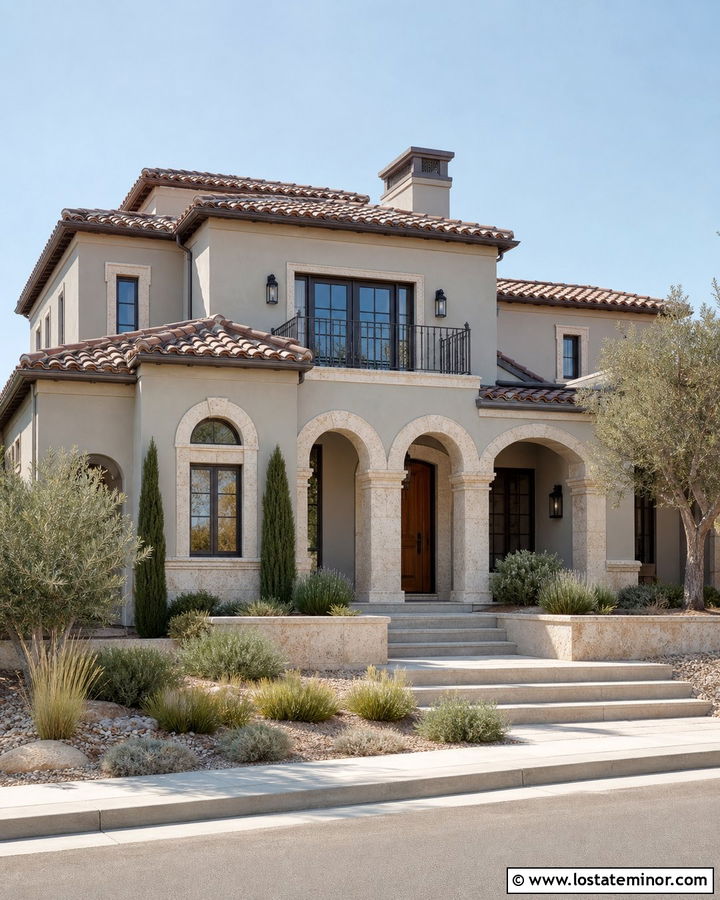
Light gray can update Mediterranean architecture when it retains enough warmth. Choose a sun-washed gray stucco with subtle beige undertones and pair it with creamy travertine around arched openings, porch columns, and the lower facade. A weathered terracotta roof adds rich color and keeps the exterior connected to its traditional roots. Use dark bronze window frames, railings, and lanterns rather than bright white or solid black details. A medium-toned wood front door works naturally with both the warm roof and pale stone. Gravel beds, olive-toned shrubs, and drought-tolerant grasses provide a suitable landscape frame. This scheme gives the home a fresher appearance while preserving the texture, warmth, and graceful arches associated with Mediterranean design.
13. Light Grey House With White Stone Accents
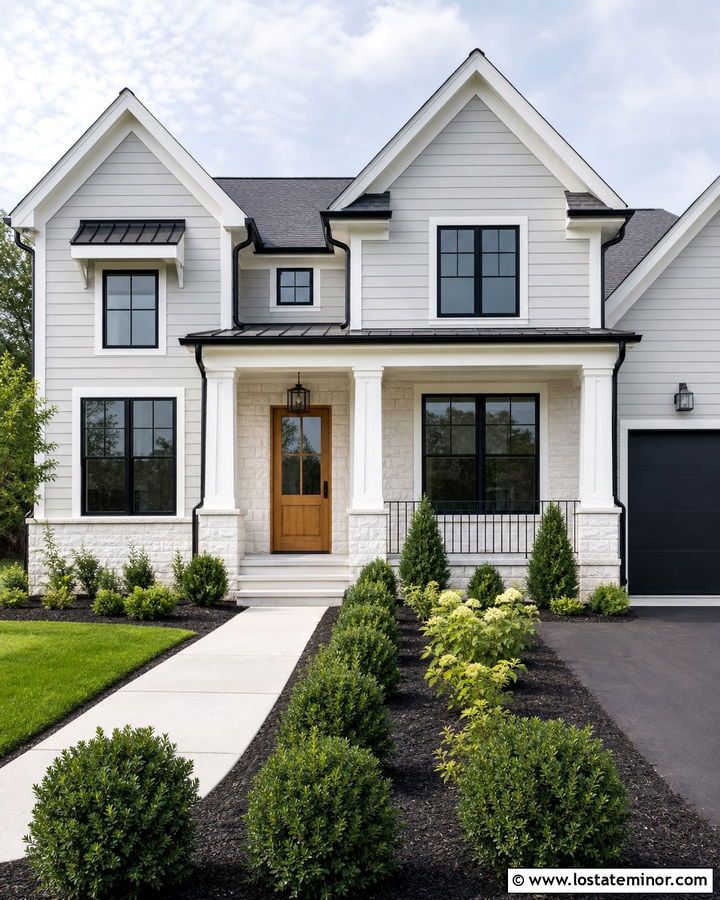
A nearly monochromatic facade can still feel dimensional when its surfaces have noticeably different textures. Cover the main house in soft light gray siding and apply white limestone to the entry wall, porch columns, and foundation. The stone’s irregular edges will stand out even though the colors remain closely related. Use clean white trim around the windows, but choose black frames and gutters to define the architecture. A natural oak front door prevents the exterior from becoming too cool or clinical. Medium-gray roofing creates a gentle transition above the pale facade. Add dark mulch, evergreen shrubs, and a light concrete walkway for landscape contrast. This bright scheme works especially well on homes with shaded lots or compact front elevations.
14. Light Grey House With Blue Grey Stone
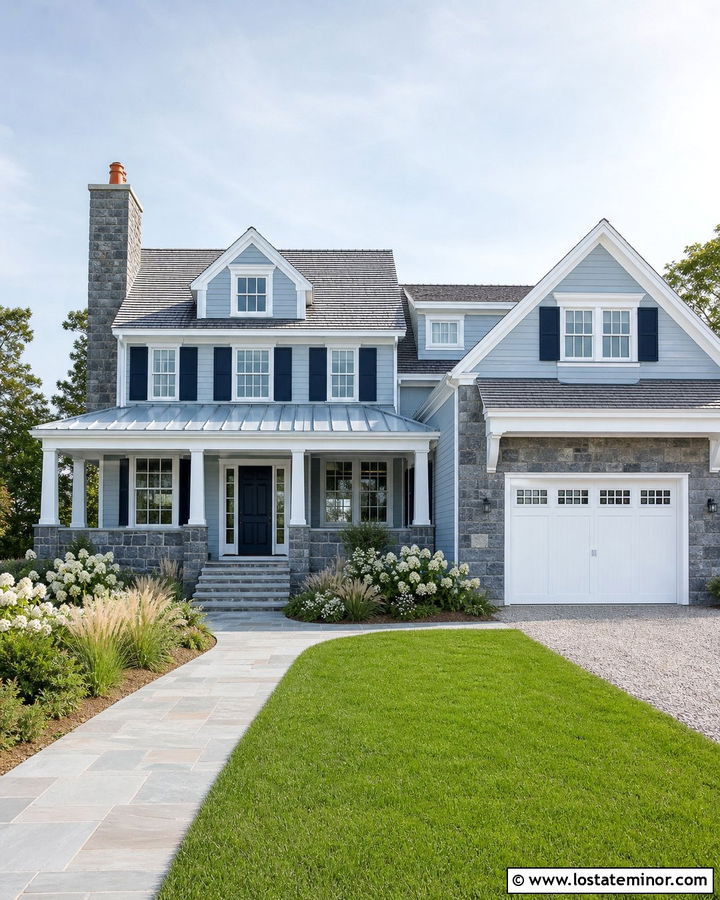
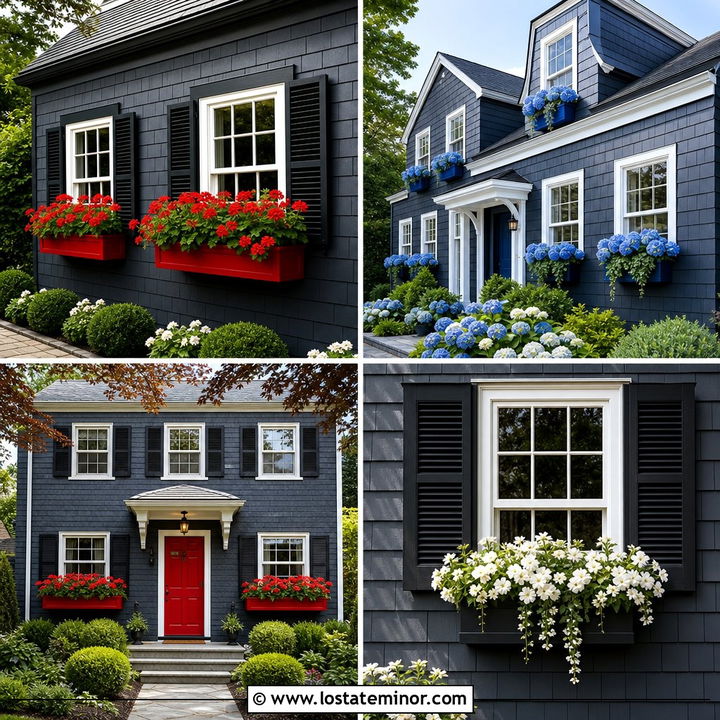
Cool blue-gray stone gives a light gray home a refined coastal quality without relying on obvious nautical decorations. Select pale gray siding with a faint blue undertone, then add blue-gray ledgestone to the chimney, porch base, and garage wing. White trim brightens the composition, while navy shutters and a navy front door deepen the cool color story. Use a weathered gray roof instead of black so the exterior remains soft. Silver-toned metal roofing over the porch can provide a subtle modern touch. Finish with bluestone steps, ornamental grasses, and white flowering plants. Repeating related gray-blue shades across different materials creates a layered facade, allowing the natural stone texture to provide interest instead of introducing too many unrelated accent colors.
15. Light Grey House With Warm Sandstone
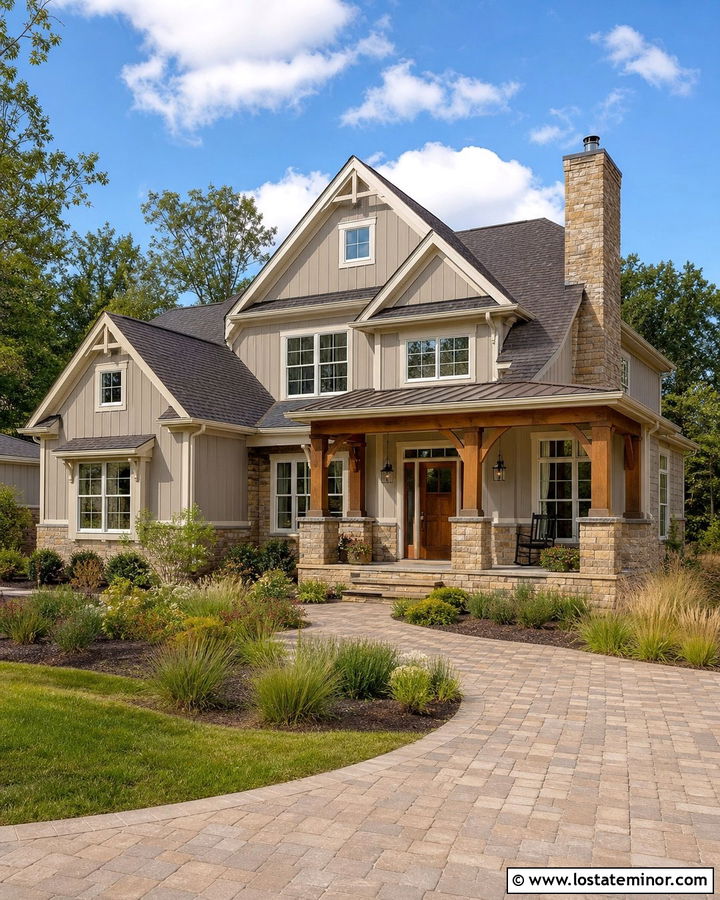
Warm sandstone is an effective partner for gray siding that otherwise feels too cool. Choose a light greige-gray body color and use golden-beige sandstone across the foundation, porch piers, and a prominent chimney. Cream trim creates a smoother bridge between the siding and masonry than brilliant white. Repeat the stone’s warm notes through a honey-stained wood front door, garage door details, and porch beams. A dark brown-gray roof adds definition while supporting the earthy palette. Bronze lanterns and gutters offer a softer alternative to black. Surround the house with warm-toned pavers, native grasses, and layered green shrubs. The finished exterior combines gray’s quiet versatility with sandstone’s welcoming color, producing curb appeal that feels comfortable in every season.
16. Light Grey House With Black Stone Accents
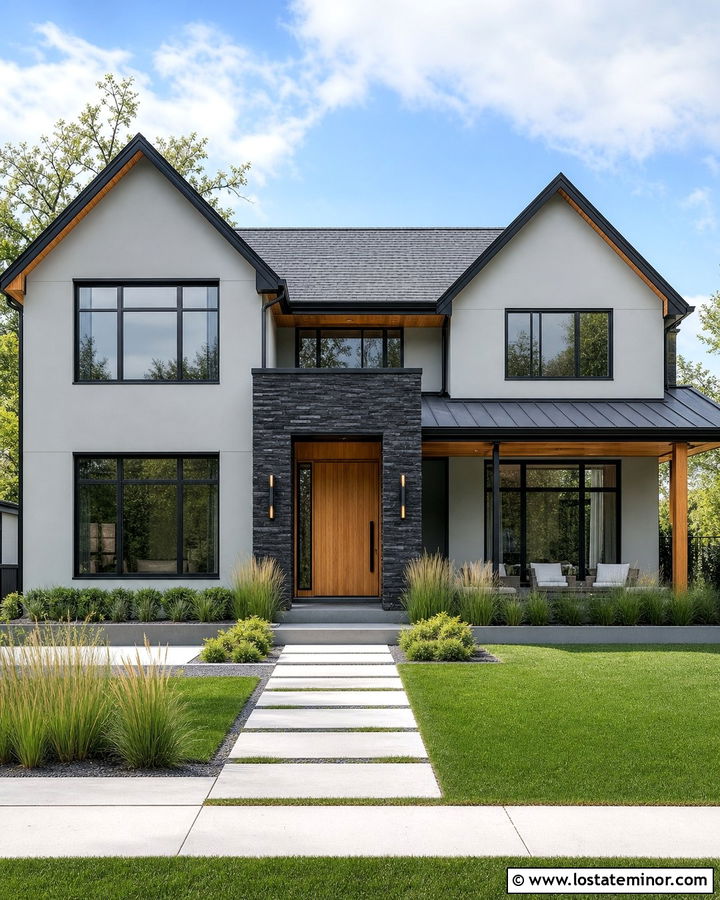
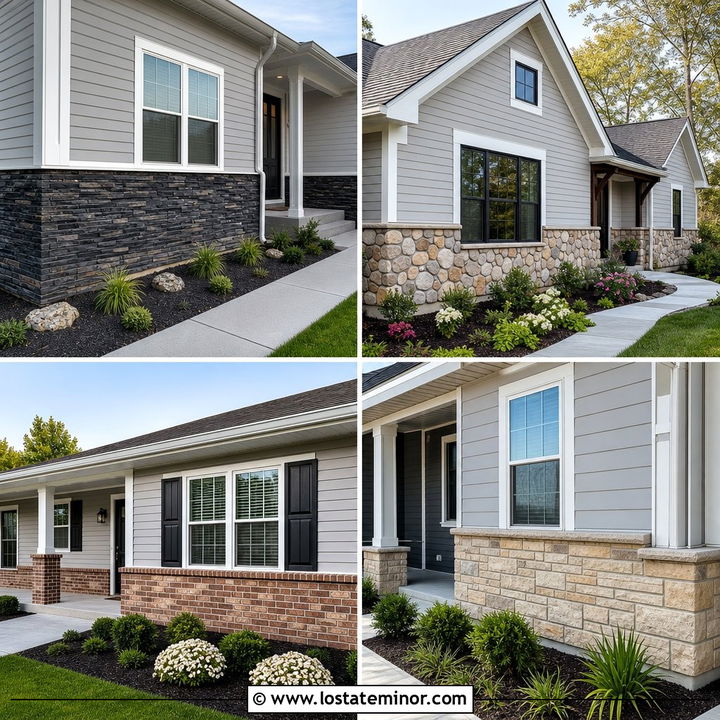
Strong black stone can transform a simple light gray facade into a bold modern composition. Keep the siding pale and neutral, then apply black or near-black stacked stone to one carefully selected feature, such as the entry tower or garage wall. Limiting the masonry prevents it from overpowering the house. Use black-framed windows, gutters, and a standing-seam porch roof to repeat the deep accent in smaller doses. A warm cedar front door and matching soffits add balance between the cool extremes. Select medium-gray roofing so the upper portion does not become too heavy. Minimal foundation planting, pale concrete pavers, and structured ornamental grasses complete the exterior. This high-contrast scheme is clean, dramatic, and easy to read from the street.
17. Light Grey House With Mixed Fieldstone
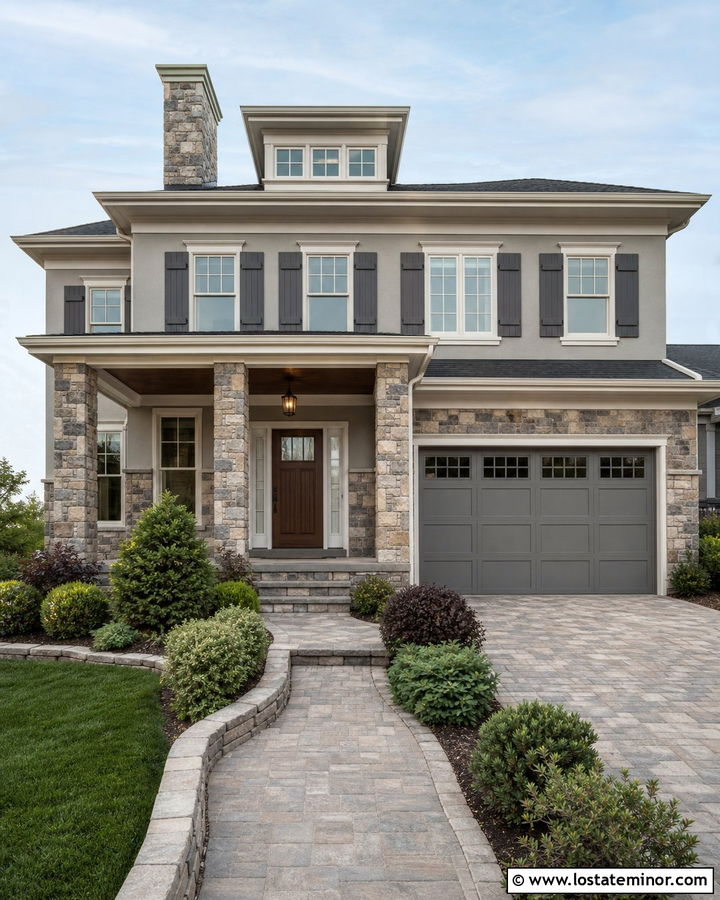
Mixed fieldstone offers enough natural color variation to make a neutral home feel welcoming and established. Paint the siding a light warm gray, then use fieldstone containing gray, tan, cream, and muted brown across the chimney, lower facade, and porch columns. Pull the trim color from the lightest stone rather than automatically choosing stark white. A walnut front door can repeat the deeper brown pieces, while charcoal shutters connect to the darkest rocks. Keep the garage door close to the siding color to avoid adding visual clutter. A dark gray roof completes the balanced palette. Curved stone edging, leafy shrubs, and a walkway with warm gray pavers help the masonry blend naturally into the yard instead of appearing like an isolated decorative layer.
18. Light Grey House With Stone Garage
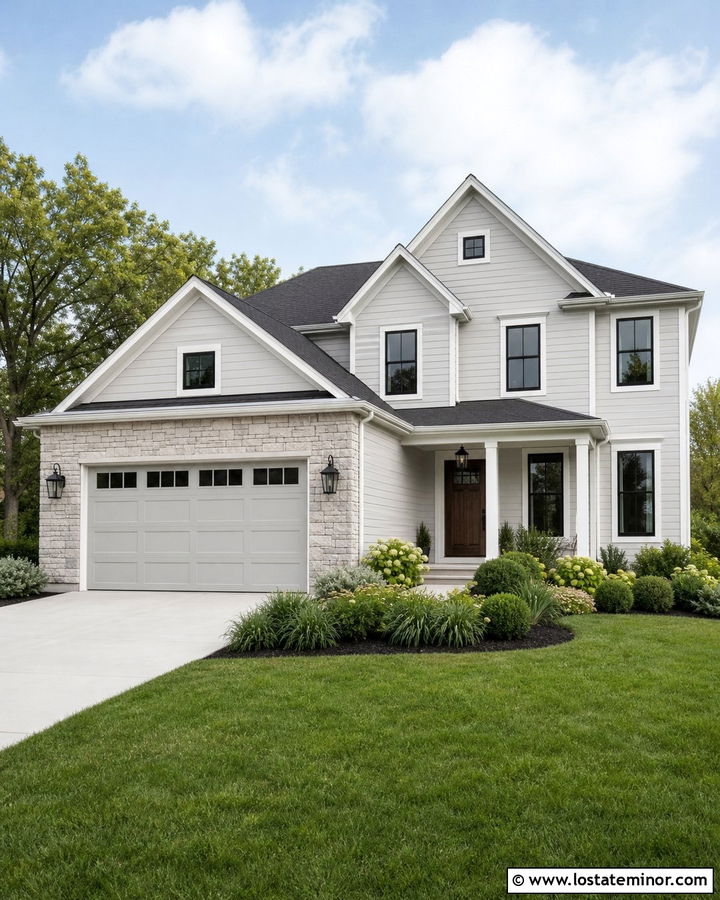
An attached garage can become an attractive part of the facade when it is integrated through material and color. Use light gray siding on the primary house and wrap the garage projection in pale gray-beige stone. Choose a garage door in the same light gray as the siding or a slightly warmer taupe pulled from the masonry. This keeps the wide door visually quiet. White trim outlines the roof and windows, while black lights and window frames create crisp definition. Add a wood front door and small matching wood details to shift attention back toward the entrance. A charcoal roof, clean driveway borders, and layered planting beds complete the scheme. The garage gains texture without becoming the home’s dominant feature.
19. Light Grey House With Stone Chimney
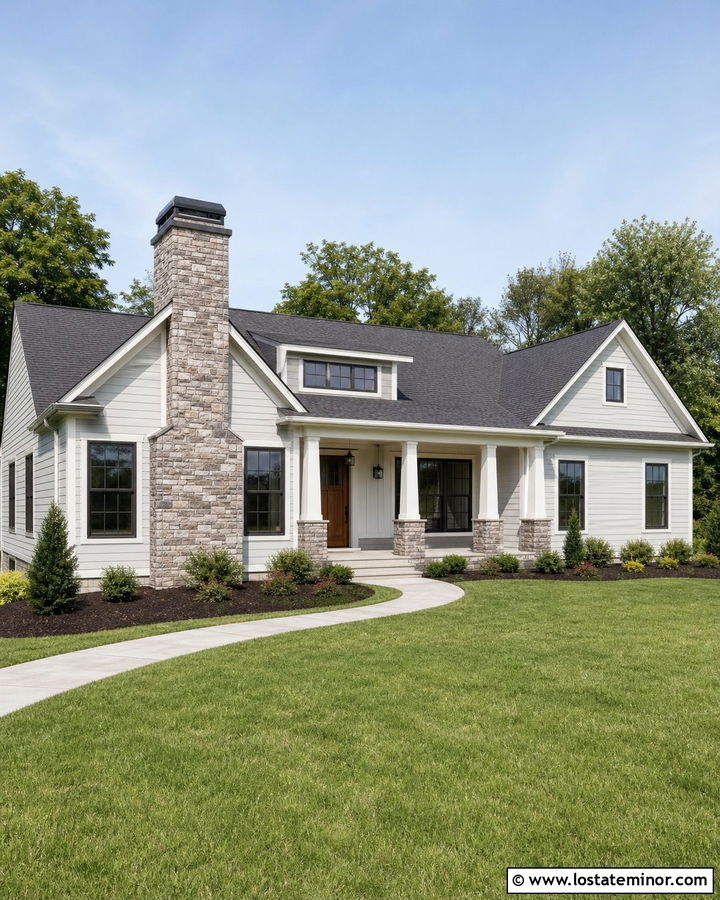
A full-height stone chimney creates an instant vertical focal point on a broad light gray house. Cover the facade in pale gray clapboard and select medium-toned ledgestone with gray, taupe, and cream variation for the chimney. Continue a smaller amount of the same stone onto the porch bases or foundation so the tall masonry feature does not feel disconnected. Use creamy white trim, charcoal window sashes, and a medium walnut front door. A dark gray roof helps the chimney transition naturally into the upper facade. Keep nearby landscaping low enough to leave the stone visible. A gently curved walkway can guide attention toward the entry while balancing the chimney’s height. This arrangement adds architectural presence without relying on excessive decorative features.
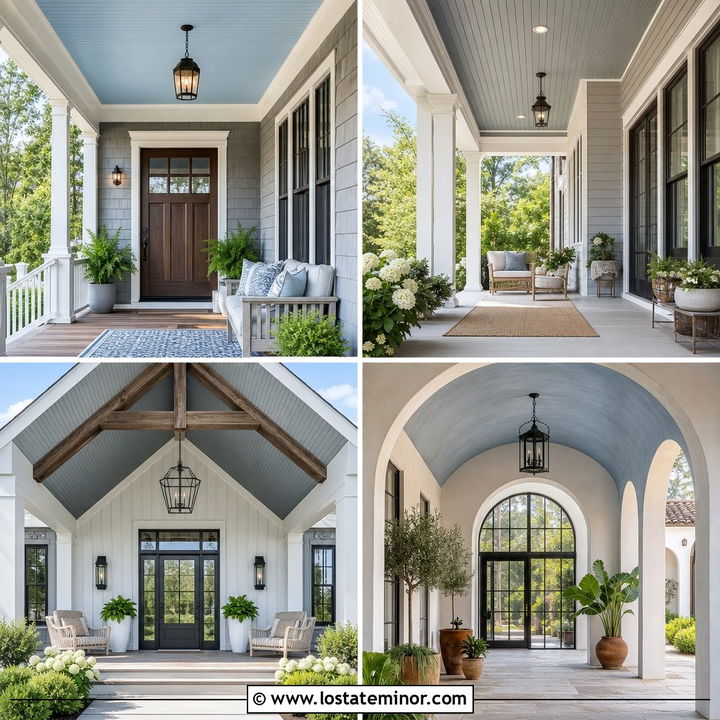
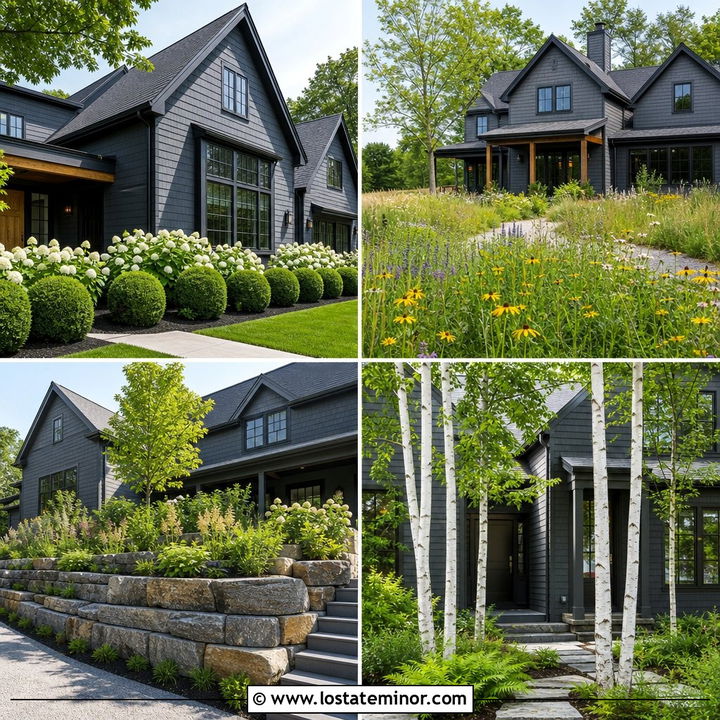
20. Light Grey House With Stone Porch Columns
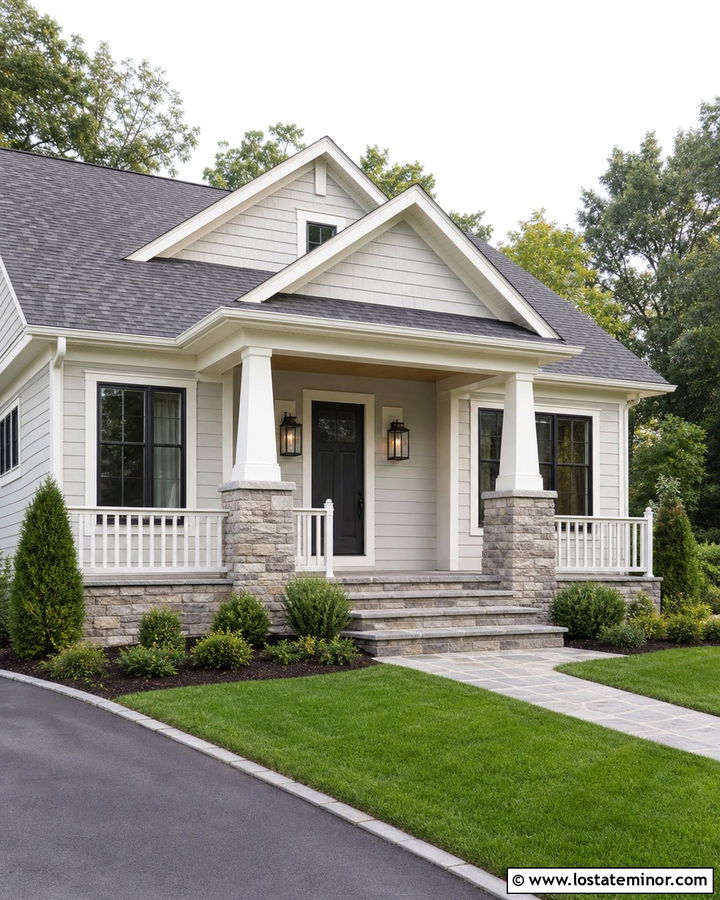
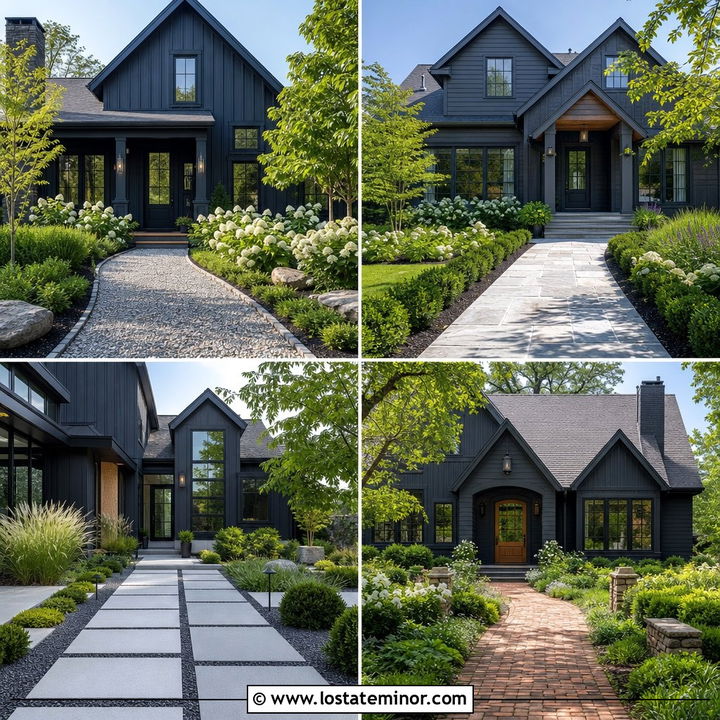
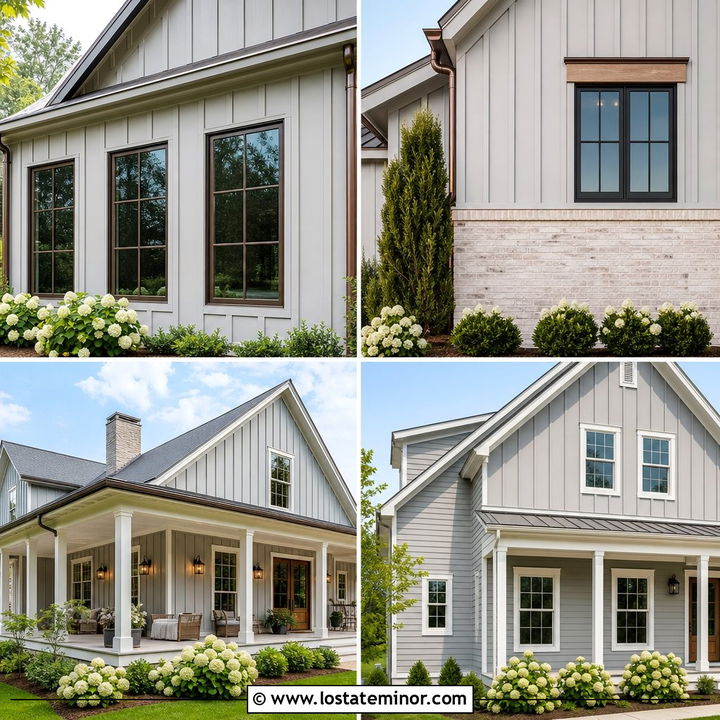
Stone porch columns can give a modest home a stronger and more welcoming entrance. Paint the complete exterior a soft dove gray, then cover square column bases with gray-tan ledgestone. Top them with tapered white posts or warm cedar columns, depending on the home’s architectural character. The porch ceiling can repeat the wood tone or introduce a muted pale blue for a subtle traditional touch. Use an off-white garage door and trim so the exterior remains bright. A charcoal front door adds contrast without competing with the masonry. Wide stone steps and a matching walkway visually extend the porch into the landscape. Balanced lanterns, foundation shrubs, and simple railings finish this complete scheme with practical, approachable curb appeal.
21. Light Grey House With Stone Entry Arch
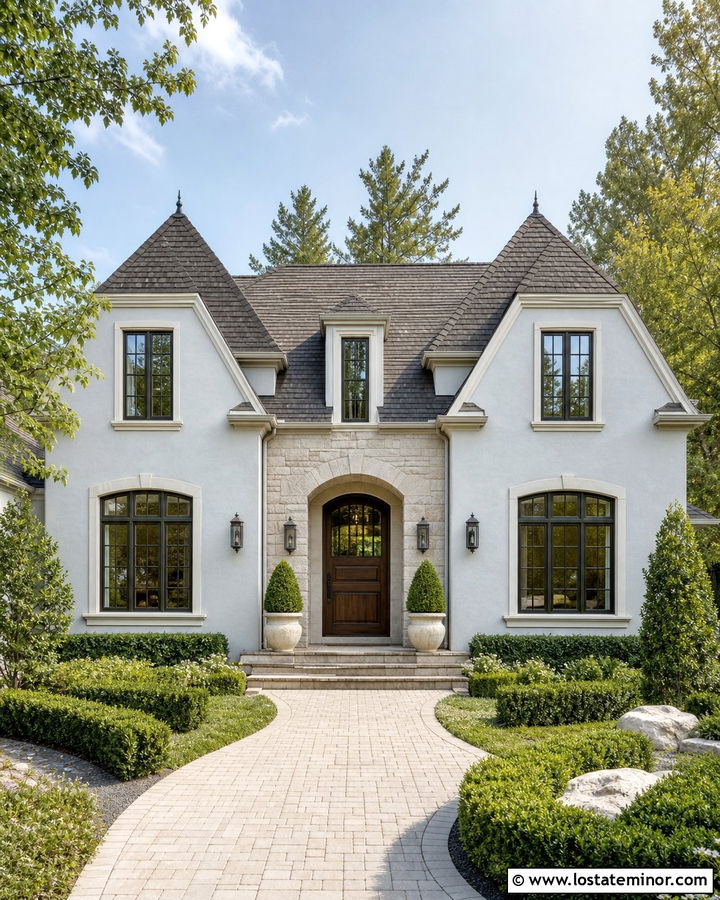
An arched entrance becomes more distinctive when stone emphasizes its shape. Use light gray stucco or siding over the main walls and wrap the recessed entry arch in warm gray limestone. Continue the stone down the surrounding wall and onto the front steps for a substantial, built-in appearance. Cream trim complements the masonry, while dark bronze windows and lighting create refined contrast. A rich chestnut door placed inside the arch becomes a warm focal point protected by the paler materials. Choose a charcoal-brown roof that supports both the gray paint and earth-toned stone. Symmetrical planters and a gently curving paver path frame the entrance. The complete design feels elegant without depending on ornate trim or unnecessary color changes.
22. Light Grey House With Stone Foundation
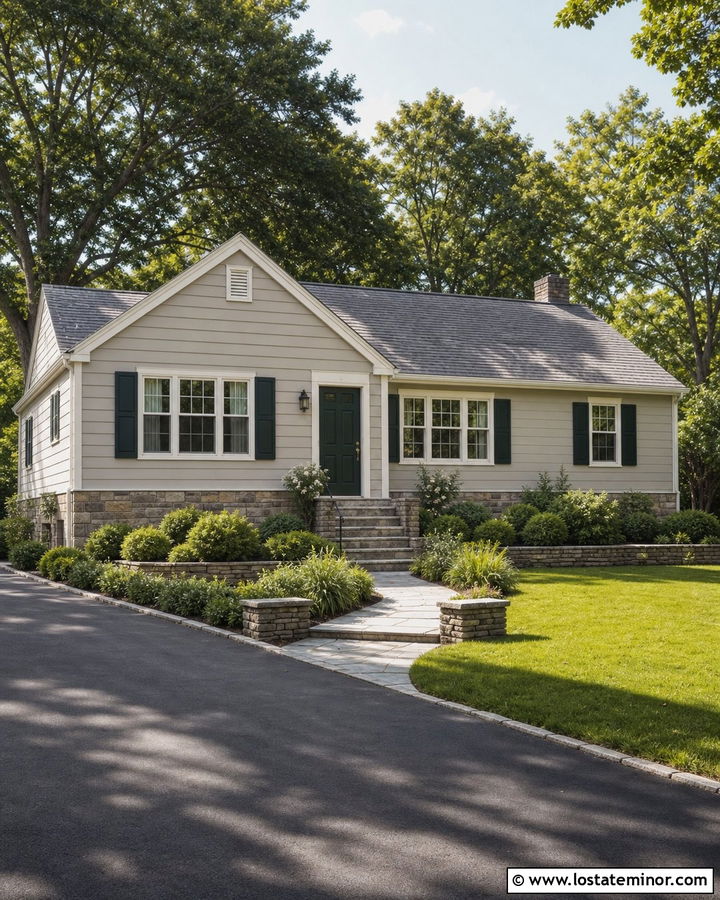
Stone applied only to the foundation can deliver texture at a manageable scale. Paint the upper walls a warm light gray and use thin-cut fieldstone along the visible foundation line. Choose masonry containing gray and beige so it connects the siding to the soil and surrounding landscape. Off-white trim keeps the windows and roofline clear, while dark green shutters and a matching front door introduce an earthy accent. A medium-gray shingle roof prevents the upper facade from feeling too dark. Extend the stone around front steps or a small retaining wall to make the limited application feel intentional. Layered shrubs should remain below the siding line. This practical scheme suits small homes, ranch houses, and budget-conscious exterior updates particularly well.
23. Light Grey House With Stone and Cedar
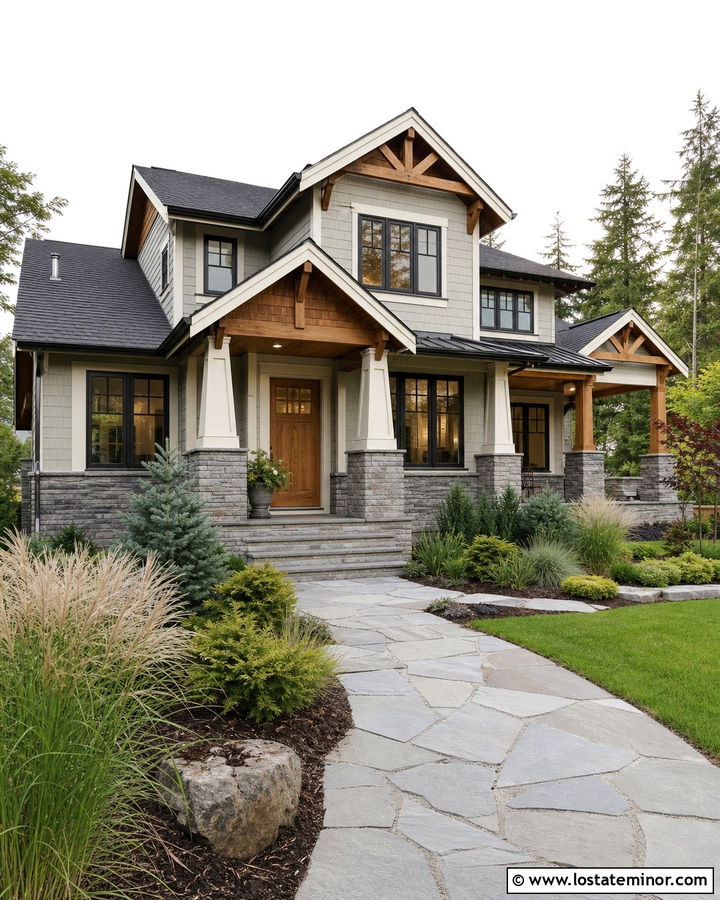
Few combinations warm up pale gray as naturally as textured stone and cedar. Use soft light gray siding across the principal facade, mixed gray ledgestone on the foundation and porch columns, and clear-stained cedar on gable peaks, brackets, and the front door. The three materials should remain balanced rather than covering equal amounts of wall space. Choose creamy white trim to soften transitions and dark bronze windows for contrast. A charcoal roof provides a neutral cap that does not compete with the cedar. Repeat the warm wood selectively on a garage pergola or porch ceiling. Simple evergreens, ornamental grasses, and a natural stone path complete the look. This layered exterior feels contemporary, welcoming, and closely connected to the landscape.
24. Light Grey House With Stone and Black Trim
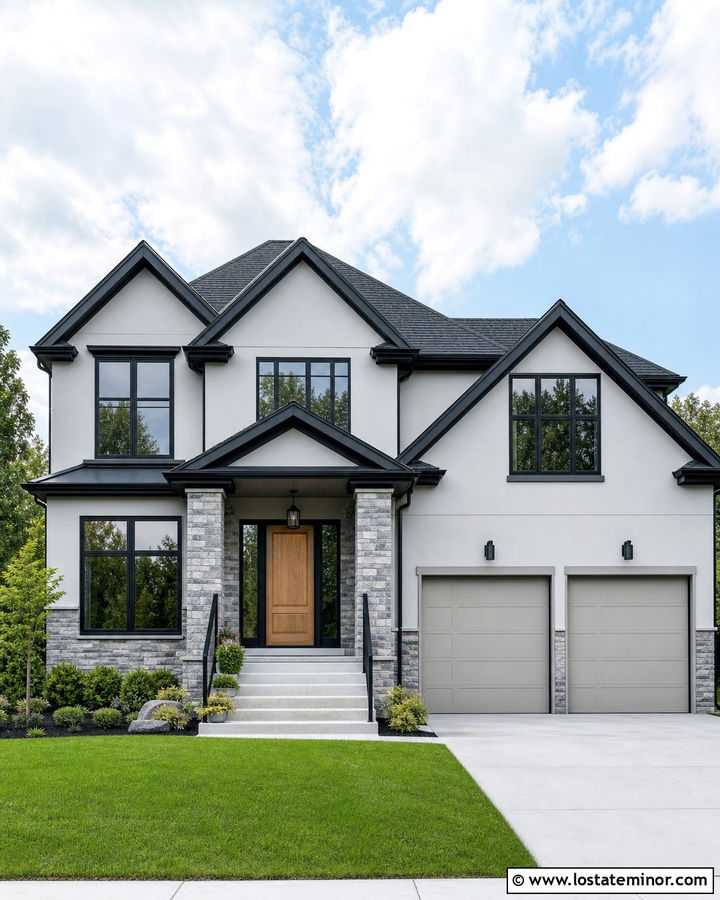
Black trim gives a light gray and stone exterior a sharper architectural outline. Apply pale gray siding across the main walls and use cool gray stacked stone along the foundation, porch, or projecting entry. Black window frames, fascia, gutters, and porch railings can then trace the home’s strongest lines. Keep the garage door light gray so the dark accents do not become overwhelming. A medium wood front door adds a necessary warm break within the high-contrast palette. Choose charcoal roofing with visible tonal variation instead of a flat black surface. Light concrete steps and restrained green landscaping keep the foreground bright. The finished house looks crisp and modern, yet the natural masonry prevents the black-and-gray combination from feeling overly severe.
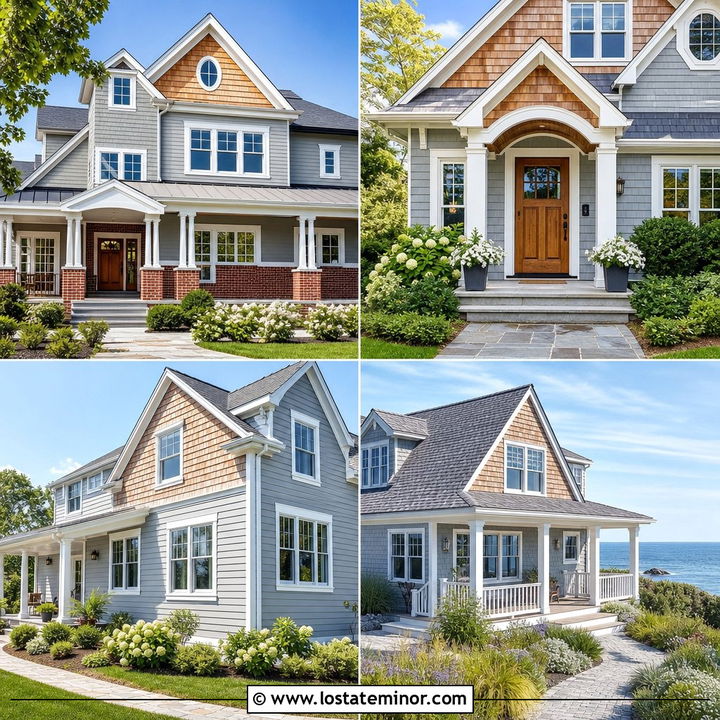
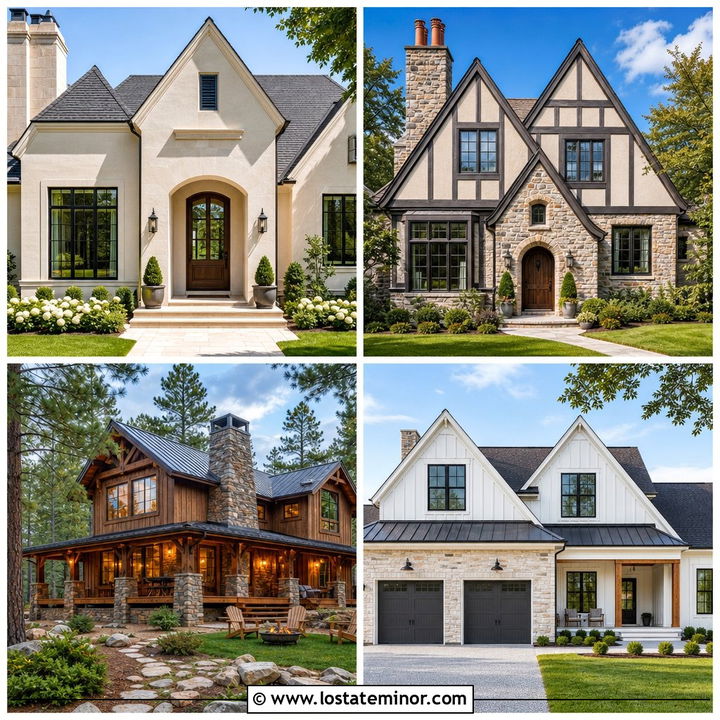
25. Light Grey House With Stone and White Trim
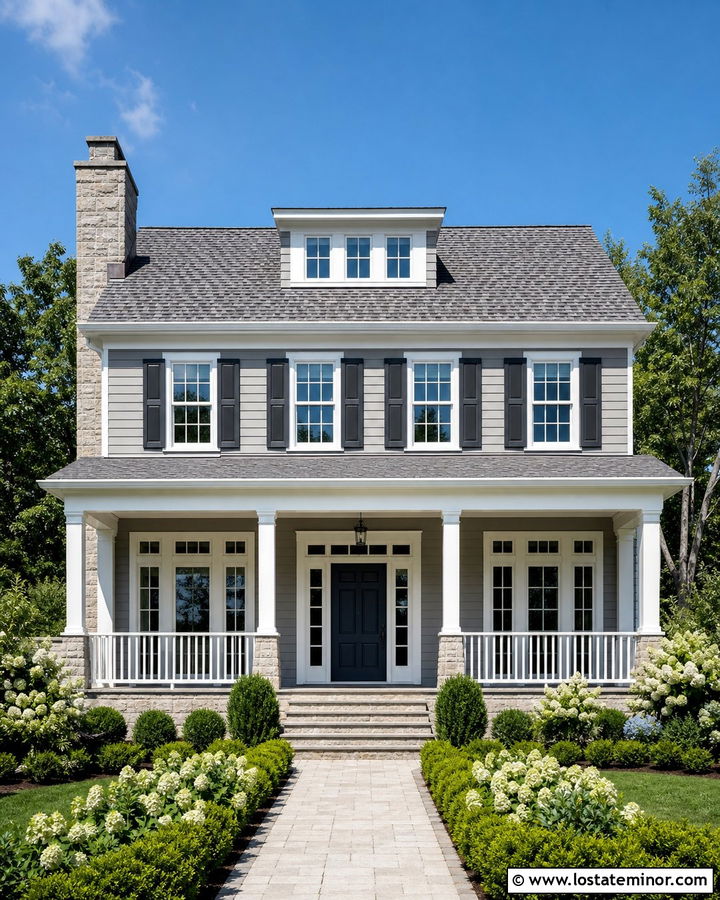
White trim remains one of the easiest ways to give a light gray stone-accented home a clean, classic finish. Choose a medium-light neutral gray for the siding so the white windows, porch posts, fascia, and corner boards remain visible. Add gray-beige limestone around the porch foundation and chimney to introduce movement and natural texture. A dark navy front door provides a quiet focal point, while charcoal shutters distribute that depth across the facade. Use a variegated gray roof to connect the light and dark shades. Keep porch furniture and railings white for consistency. Hydrangeas, boxwoods, and a pale paver walkway reinforce the neat appearance. This flexible exterior scheme works across Colonial, Cape Cod, ranch, and traditional two-story homes.
26. Light Grey House With Stone and Wood Garage Doors
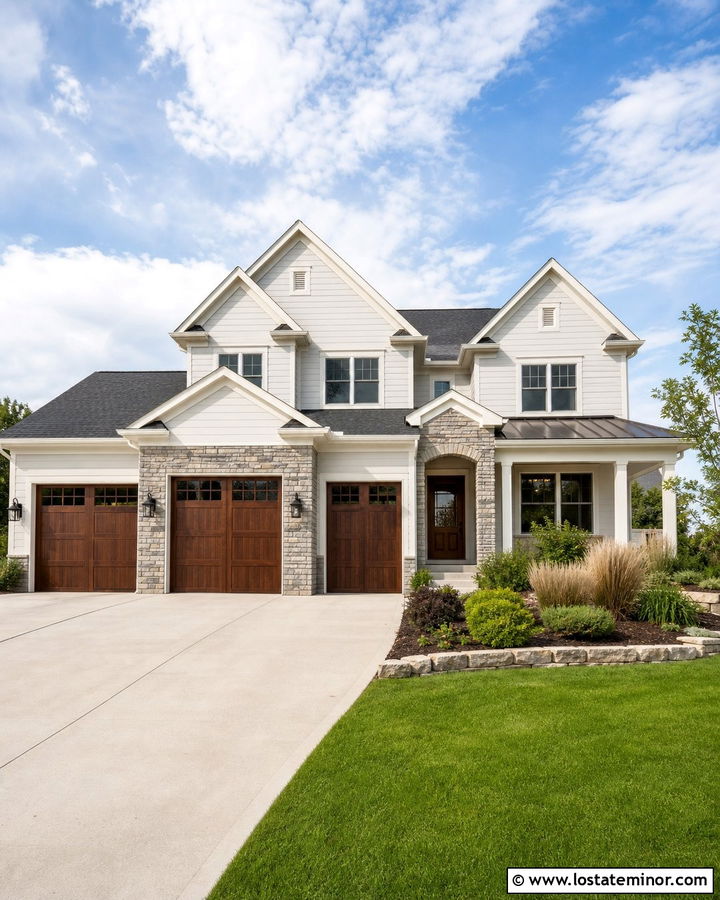
Wood garage doors can balance a cool gray facade, especially when the garage occupies a large portion of the front elevation. Paint the house a pale neutral gray and use mixed ledgestone on the lower walls and between garage bays. Choose cedar or walnut-toned garage doors that repeat the warmer shades within the stone. The front door should match or closely coordinate with that wood finish. Use warm white trim, dark bronze lights, and a charcoal-gray roof to complete the palette. Avoid adding brightly colored shutters, which could make the material-rich facade feel crowded. A clean concrete driveway, stone-edged planting beds, and low ornamental grasses create a polished foreground. The result feels upscale, balanced, and naturally inviting.
27. Light Grey House With Stone and Metal Roof
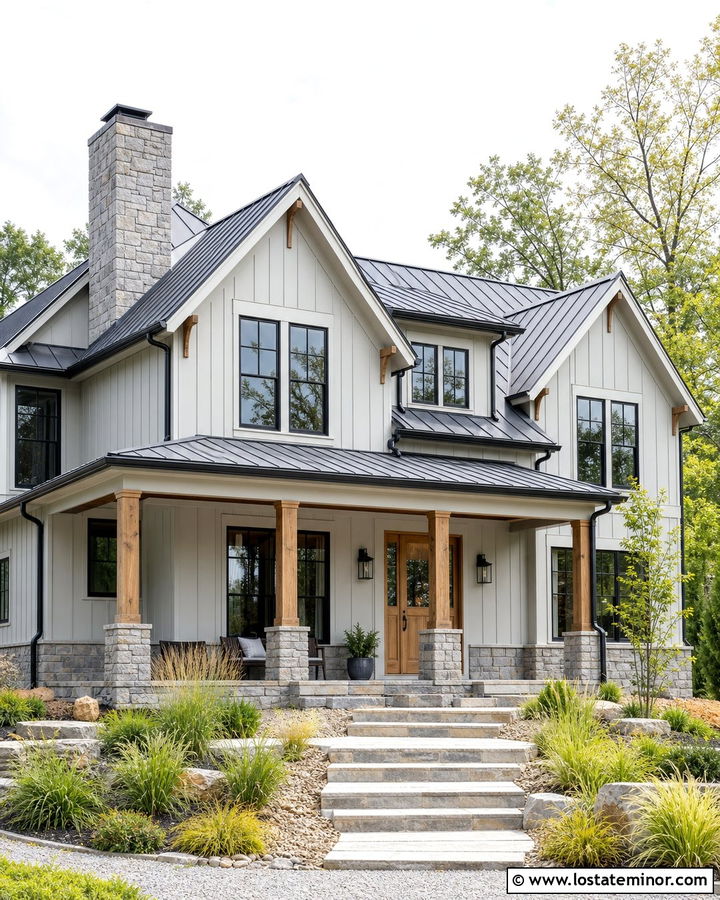
A standing-seam metal roof brings crisp definition to the soft texture of gray siding and natural stone. Use pale gray board-and-batten on a farmhouse, cottage, or mountain-inspired home. Apply cool gray fieldstone to the foundation, chimney, and porch column bases. A charcoal metal roof gives the exterior a strong outline and visually connects with black-framed windows and dark gutters. Warm wood porch posts and a natural oak door keep the scheme from becoming too industrial. Choose off-white trim for a gentle transition between the gray surfaces. Gravel borders, native grasses, and large stone steps support the practical material palette. This complete exterior feels clean and durable while maintaining the warmth expected from a welcoming residential facade.
28. Light Grey House With Stone Retaining Wall
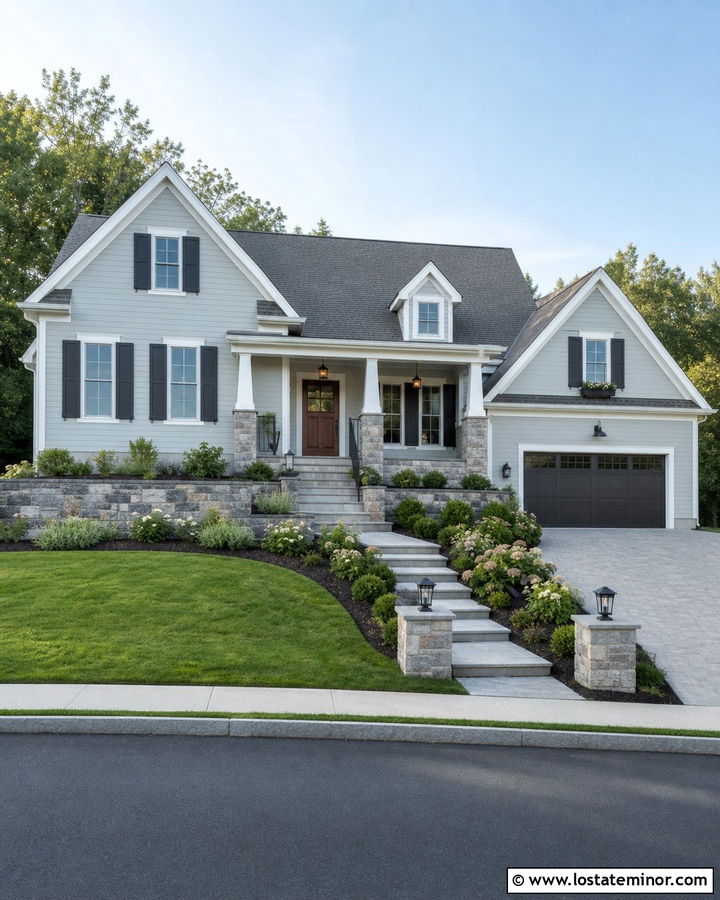
Sometimes the most effective stone accent sits in front of the house rather than directly on it. Paint the home light gray with white trim, charcoal shutters, and a stained wood front door. Then build a low retaining wall from mixed gray stone that reflects the roof and siding colors. Add a smaller amount of matching masonry to the porch steps or column bases so the wall remains connected to the architecture. Layered planting beds behind the stone can soften a sloped yard and frame the facade from the street. Use broad gray pavers for the walkway and simple black lighting for contrast. The completed landscape and exterior read as one design, giving the property greater depth and a stronger sense of arrival.
29. Light Grey Mountain House With Stone Accents
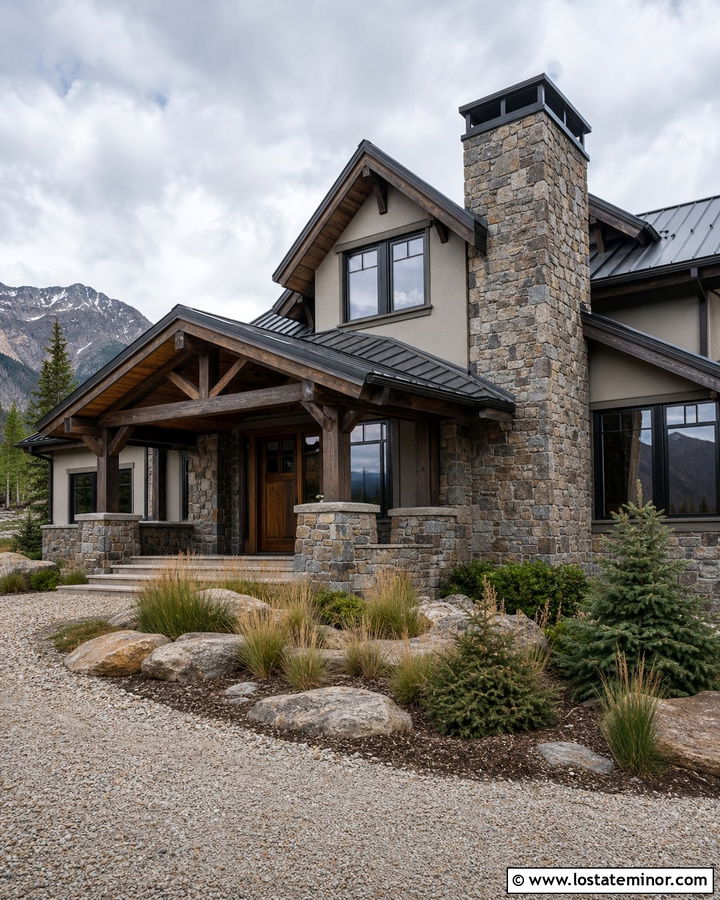
A mountain home can feel bright without losing the rugged materials that suit its setting. Choose a warm light gray for broad lap siding or vertical panels, then use substantial gray-brown fieldstone on the foundation, chimney, and lower porch walls. Deep charcoal trim and a dark metal roof provide strong contrast against wooded surroundings. Add heavy timber beams, cedar soffits, and an oversized wood front door to bring warmth to the cool facade. Large windows can have black or bronze frames that connect them to the roof. Native grasses, evergreen shrubs, boulders, and a natural gravel drive complete the landscape. This full exterior scheme feels grounded and durable, yet lighter and more approachable than a traditional dark mountain palette.
30. Light Grey Lake House With Stone Accents
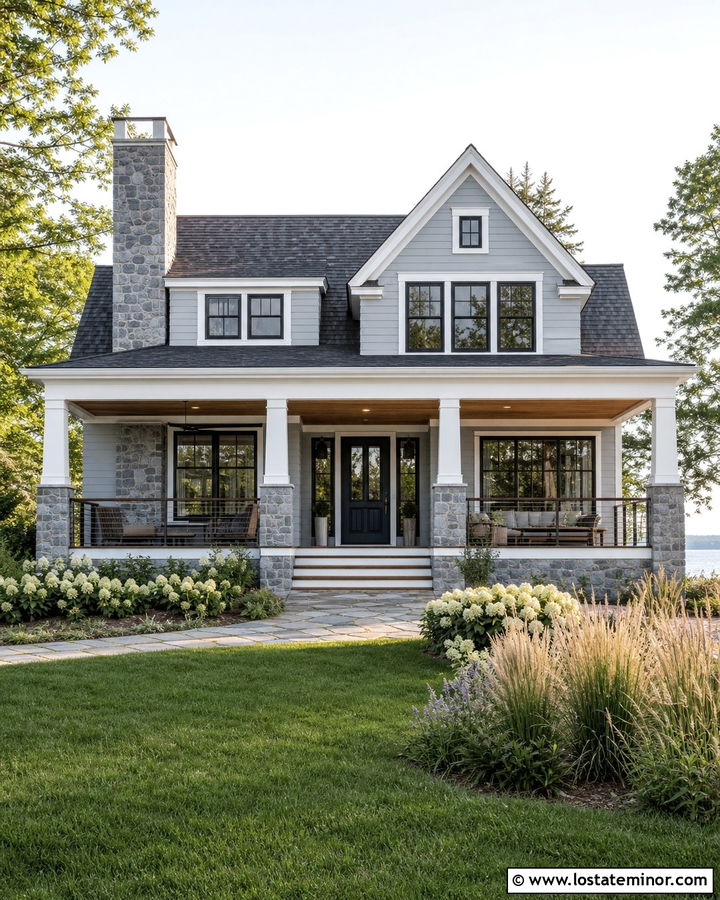
A relaxed lake house exterior benefits from cool, natural colors that reflect water, sky, and shoreline stone. Use light blue-gray siding across the facade and add irregular blue-gray stone to the chimney, terrace walls, and broad porch columns. Crisp white trim keeps the home bright, while a deep navy door creates a clear but understated entrance. Choose a weathered charcoal roof and matte black windows for gentle contrast. Natural cedar decking and porch ceilings supply warmth without disrupting the coastal palette. Finish with native grasses, hydrangeas, and a flagstone path leading through an open lawn. The combination feels calm from a distance, while layered masonry, wood, and siding provide enough texture to make the complete house visually memorable.
Conclusion:
The strongest Light Grey House Design With Stone Accents Ideas begin with coordination, not decoration. Let the stone’s undertones guide the siding, trim, roof, and door colors. Cool masonry works naturally with blue-gray paint, white trim, and charcoal details. Warmer fieldstone and sandstone feel more balanced beside greige siding, cream trim, and stained wood. Stone placement matters too. Use it to anchor foundations, define entrances, strengthen porch columns, or highlight meaningful architectural features. Before making a final choice, view large samples beside the actual masonry in direct sun and shade. With thoughtful color repetition and controlled contrast, a light gray exterior can feel bright, dimensional, welcoming, and connected to its setting.

Related posts: