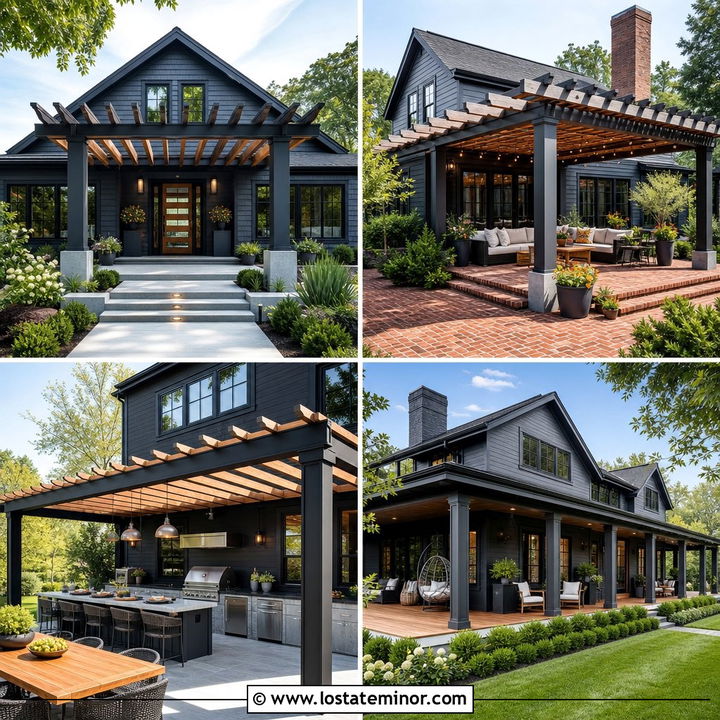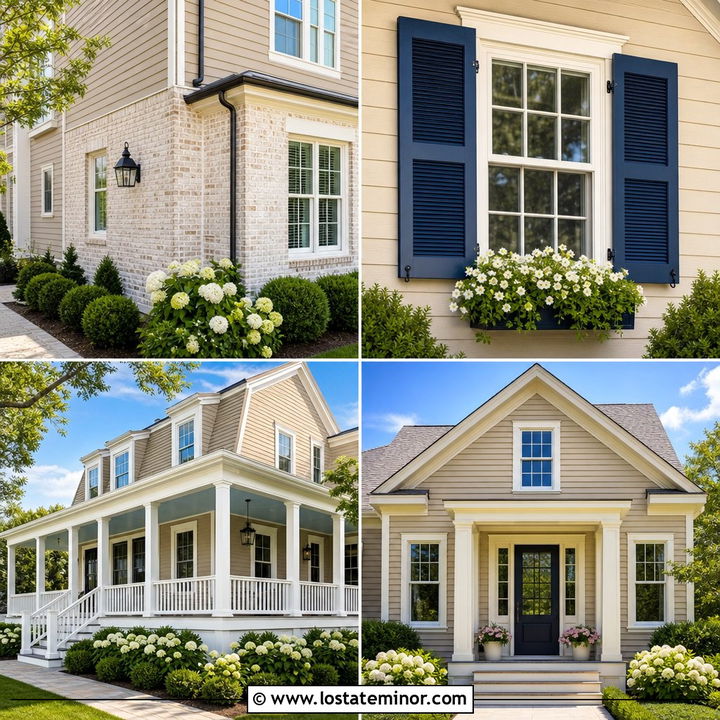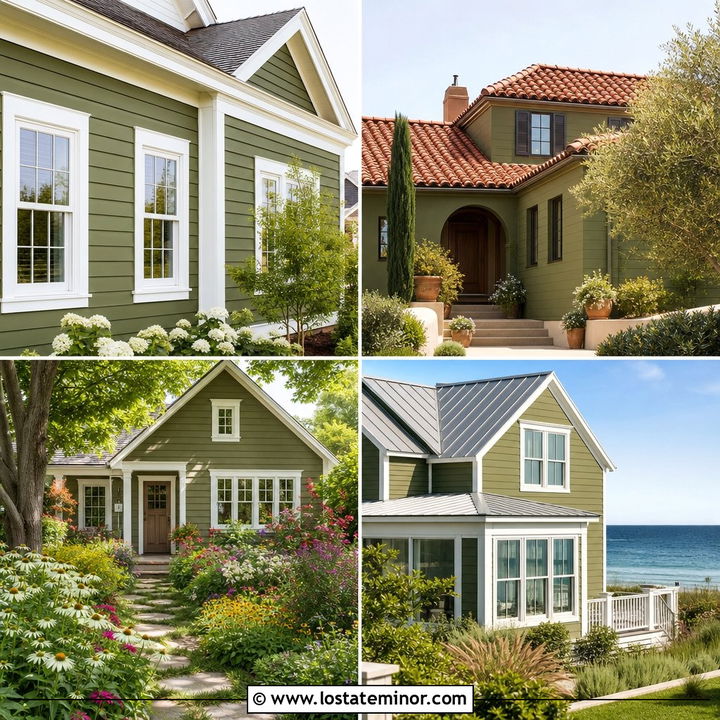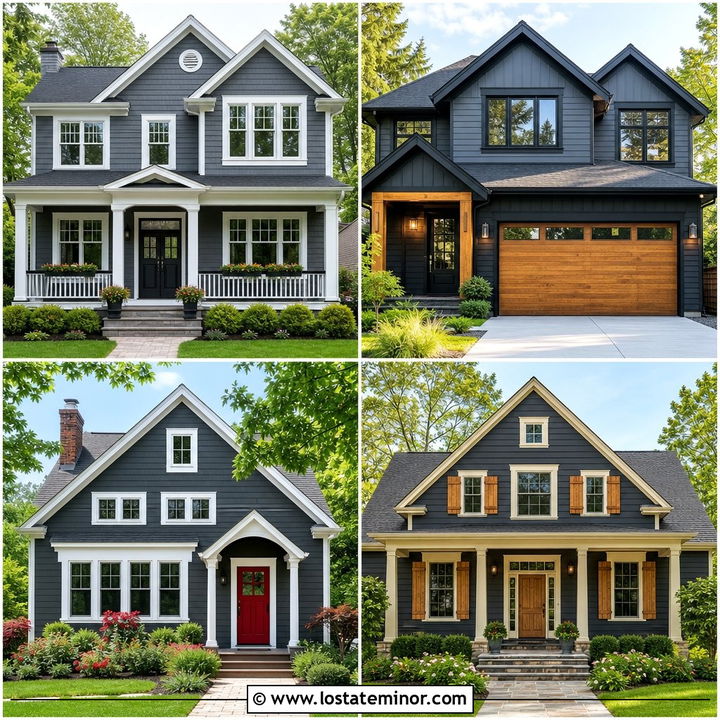
Charcoal grey siding gives a home a strong, polished look while remaining flexible enough for traditional, rustic, and modern architecture. The key is creating balance across the entire facade. Crisp white trim can sharpen the roofline, natural wood can soften the dark siding, and stone or brick can add texture at ground level. Roof color, window frames, garage doors, and landscaping also affect whether charcoal grey feels welcoming or overly heavy. Before choosing materials, view siding samples outside at different times of day and compare them with permanent features such as masonry and roofing. The complete schemes below explore practical ways to coordinate every visible detail. Use these 30 Charcoal Grey House Design With Siding Ideas to plan a cohesive exterior with lasting curb appeal.
1. Charcoal Grey Siding With White Trim
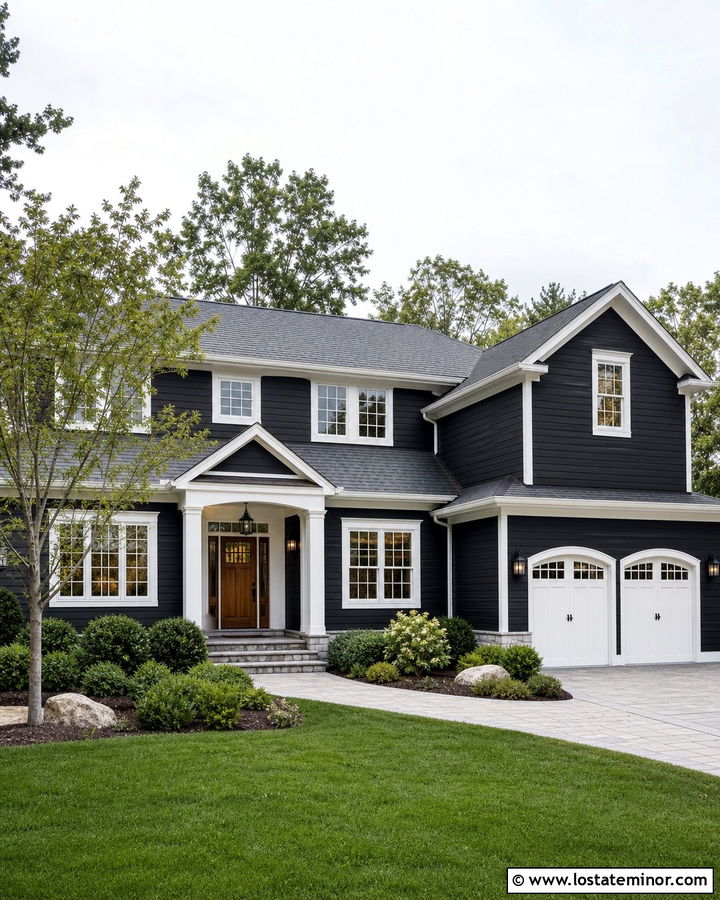
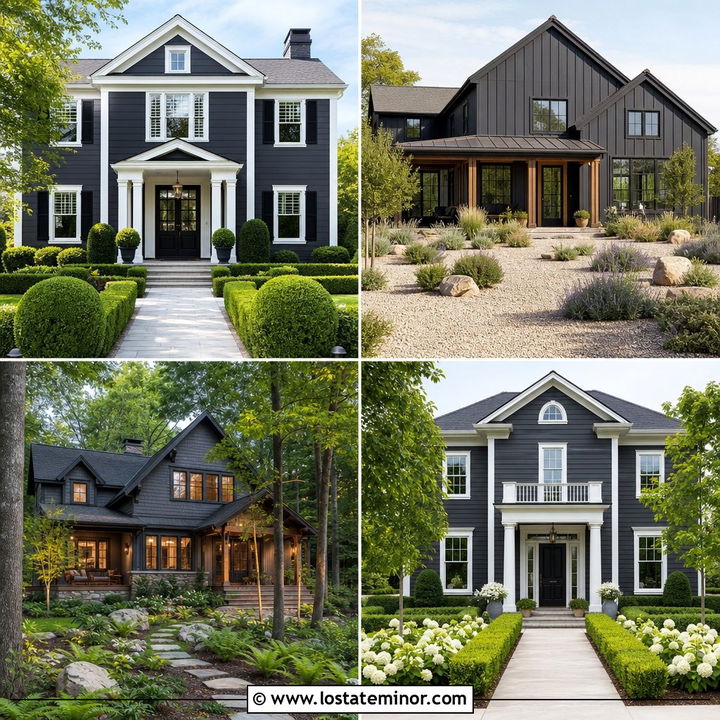
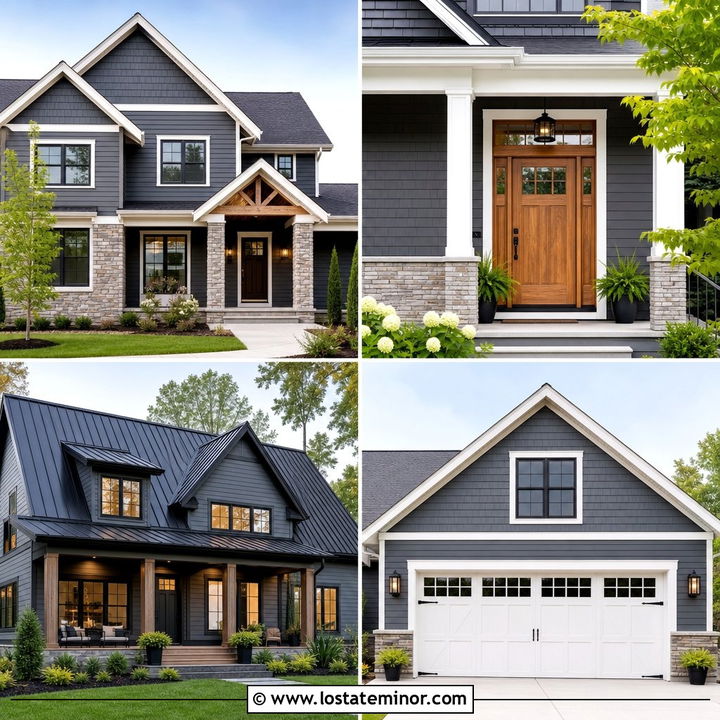
Crisp white trim creates one of the clearest and most dependable pairings for charcoal grey siding. The bright contrast outlines windows, corners, fascia boards, and porch columns, making the architecture easier to read from the street. This scheme works especially well on a two-story suburban home with horizontal lap siding and a medium-grey shingle roof. Add a warm stained-wood front door so the exterior does not feel too cool or formal. Black lanterns and simple metal railings can provide smaller dark accents without competing with the siding. Keep the garage doors white if you want them to blend with the trim. Green foundation shrubs and pale stone walkways will further lighten the complete charcoal grey exterior.
2. Charcoal Grey Siding With Black Trim
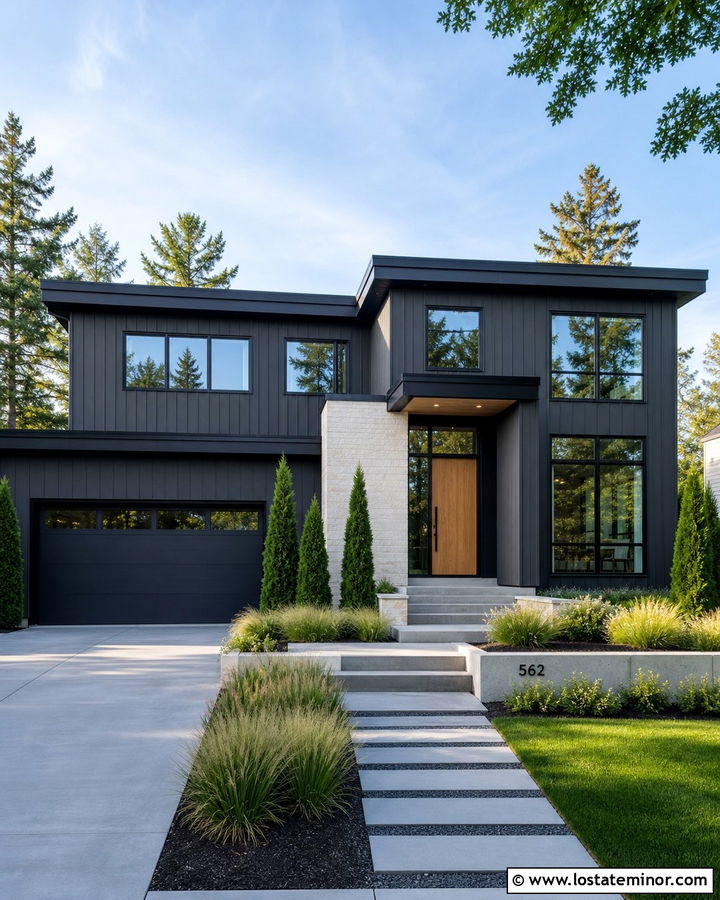
For a dramatic, streamlined facade, pair charcoal grey siding with black trim and window frames. The low-contrast combination creates a unified appearance because the trim quietly defines the structure instead of outlining every detail. It is particularly effective on a modern home with simple rooflines, large windows, and vertical siding. A light natural-oak front door introduces warmth and becomes a clear focal point against the dark background. Consider using medium-grey concrete, pale gravel, or light limestone around the entrance to prevent the lower facade from looking visually heavy. Black gutters, downspouts, and exterior lights should match the trim. Sparse ornamental grasses and structured evergreen plants complete this clean charcoal grey house design without adding distracting colors.
3. Charcoal Grey Siding With Natural Wood Accents
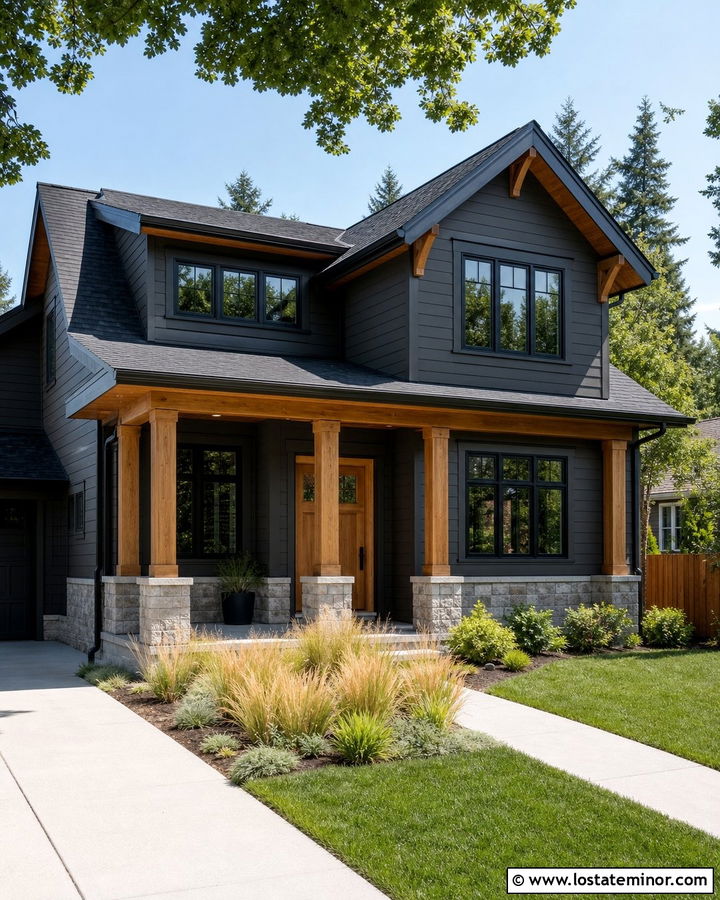
Natural wood can instantly make charcoal grey siding feel warmer and more welcoming. Use cedar or white oak on the front door, porch ceiling, entry columns, and a small section of accent siding. The wood does not need to cover a large area to influence the entire exterior. On a contemporary craftsman house, horizontal charcoal siding can form the main background while wood details emphasize the recessed entrance and wide porch. Choose warm grey stone for the foundation to connect the cool siding with the brown wood tones. Black-framed windows and a charcoal shingle roof will keep the palette grounded. Finish the setting with layered shrubs, native grasses, and a simple concrete walkway for comfortable, natural curb appeal.
4. Charcoal Grey Siding With Stone Accents
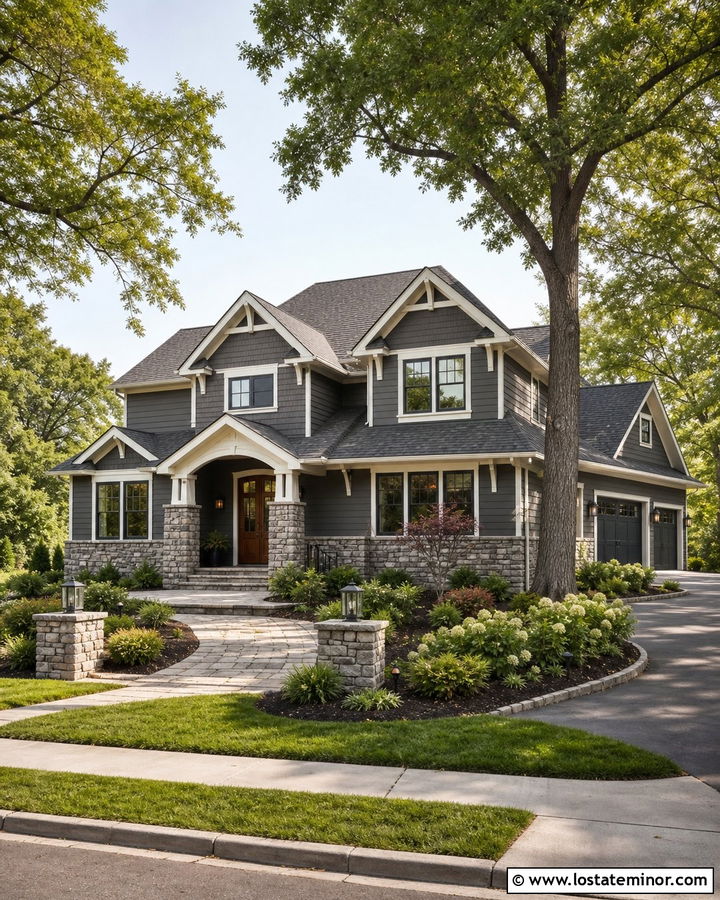
Stone gives a charcoal grey house depth, permanence, and a strong connection to the surrounding landscape. Select stone containing a mix of warm grey, cream, and soft brown rather than a flat blue-grey material. These varied tones will prevent the siding and masonry from appearing too closely matched. Use stone around the porch base, foundation, chimney, or garage wing, leaving charcoal lap siding as the dominant finish. Creamy white trim can brighten the windows and roofline, while a medium-stained wood door adds a comfortable transition between materials. A dark architectural shingle roof will anchor the house without drawing attention away from the stone. Curved planting beds and warm walkway pavers can soften the substantial exterior and make the entrance feel approachable.
5. Charcoal Grey Siding With Red Brick
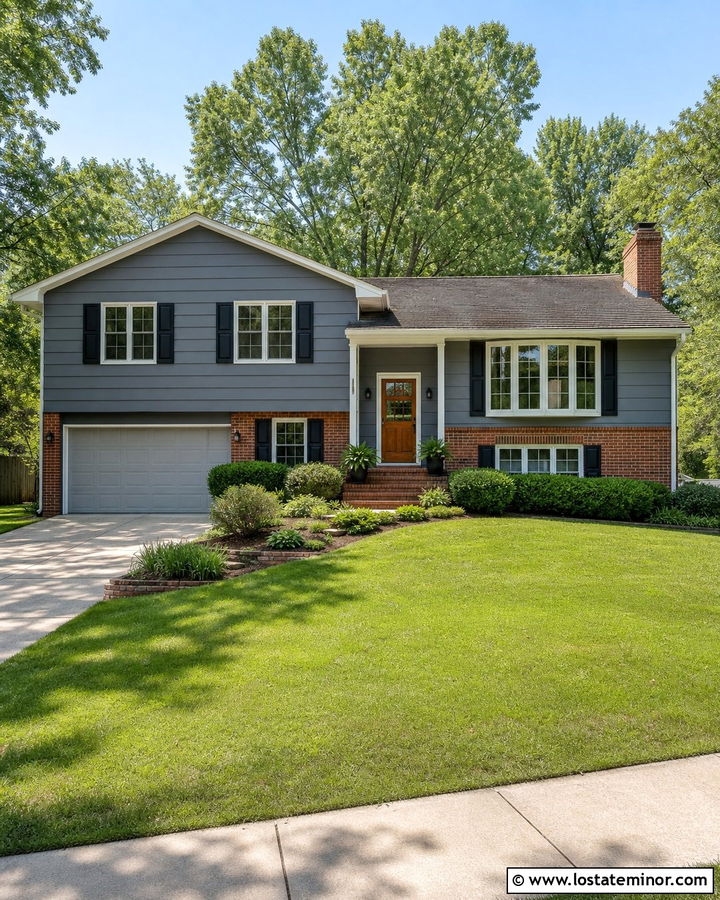
Existing red brick can work beautifully with charcoal grey siding when its warm undertones are repeated elsewhere. On a split-level or traditional suburban home, use charcoal siding on the upper story while keeping red brick across the lower facade. A warm white trim color will separate the materials and keep the combination from looking harsh. Choose a wood front door with reddish-brown undertones to connect with the brick. Black shutters, gutters, and light fixtures can echo the deeper shadows found in both finishes. A roof in weathered charcoal or dark brown will usually feel more integrated than a noticeably blue-grey roof. Complete the look with green shrubs, brick-edged beds, and a neutral concrete driveway that does not compete with the facade.
6. Charcoal Grey Siding With White Brick
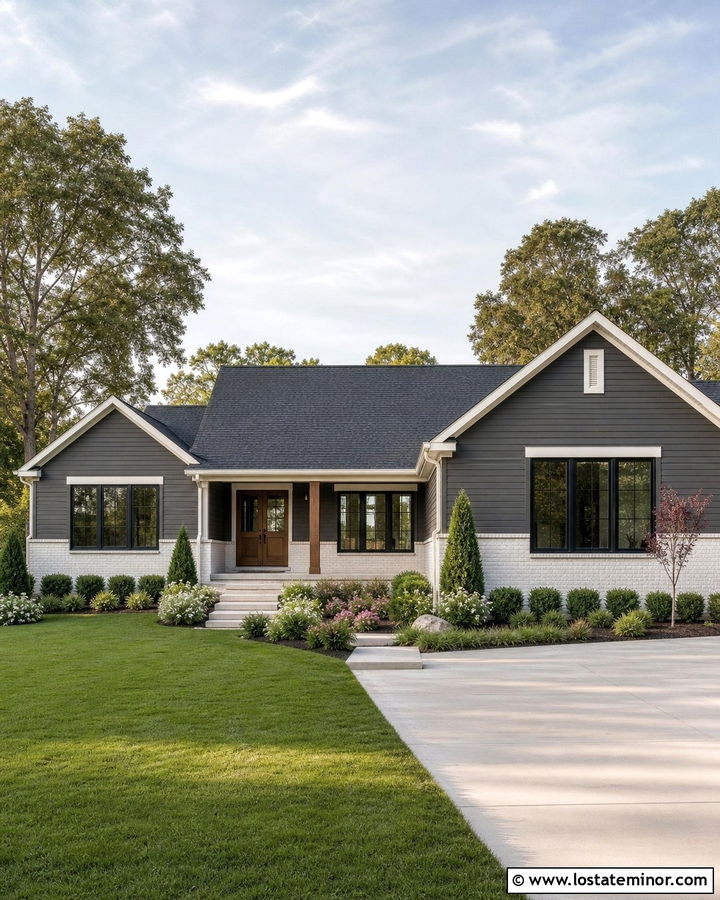
White brick gives a dark charcoal exterior a brighter base and adds subtle texture without introducing another strong color. This pairing suits a modern farmhouse, transitional home, or updated ranch. Apply charcoal grey siding to the upper walls and gables, then use warm white brick around the foundation, garage, or main entry. Match the window trim to the brick for a balanced connection between the two materials. Black window frames and gutters add definition, while a stained-wood front door keeps the palette from feeling strictly monochromatic. Avoid an icy white brick finish, which may make warm charcoal undertones look muddy. Soft landscaping, pale concrete steps, and medium-toned roof shingles help the complete exterior feel fresh, grounded, and carefully coordinated.
7. Charcoal Grey Siding With A Black Front Door
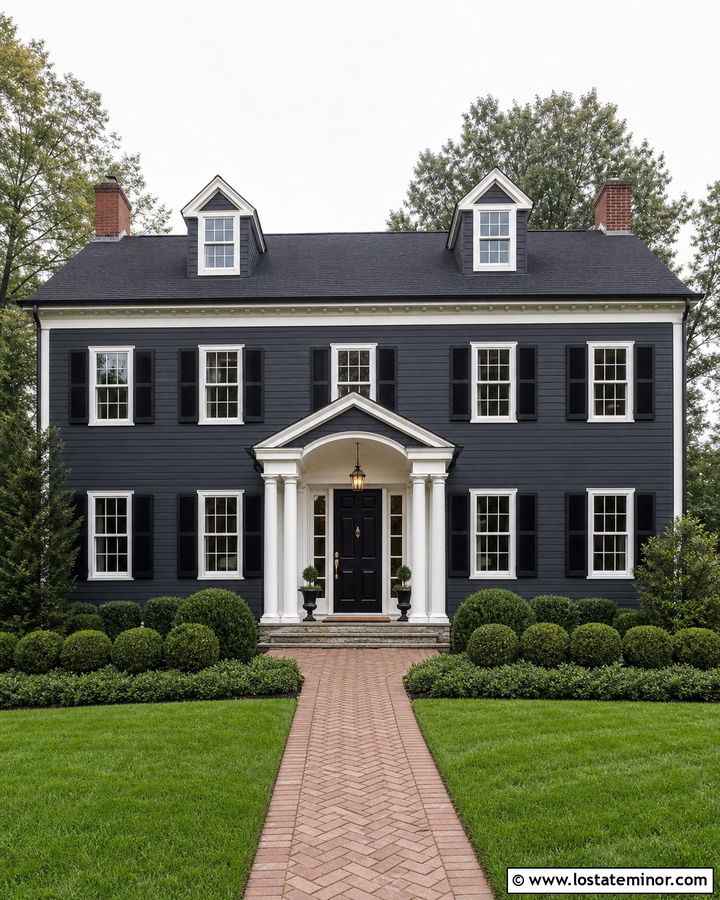
A black front door creates a sleek focal point without interrupting the depth of charcoal grey siding. Because the colors are close, shape and finish become important. Choose a satin or semi-gloss black door so it reflects more light than the siding and remains visible from the curb. White or soft greige trim can frame the entrance and provide needed separation. This combination works particularly well on a colonial or symmetrical two-story home with black shutters and evenly spaced windows. Add brushed brass or warm bronze door hardware to bring subtle warmth into the palette. A light stone porch floor and white columns will keep the entry bright. Maintain balance by repeating black on the roof, lights, and railings.
8. Charcoal Grey Siding With A Wood Front Door
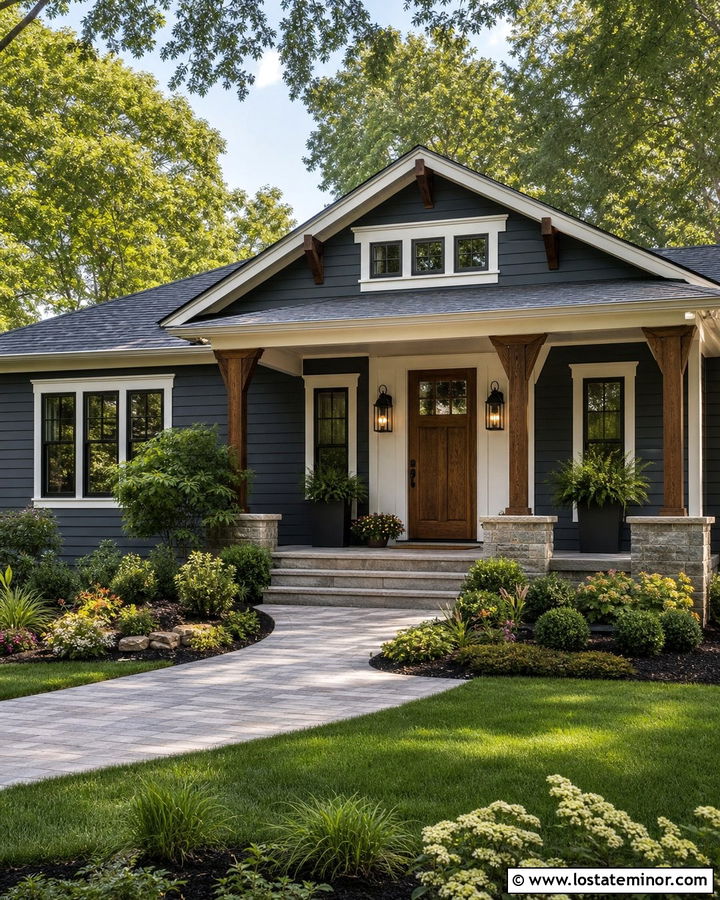
A wood front door is an easy way to soften a charcoal grey facade while creating a naturally inviting entrance. Medium cedar, walnut, and warm oak finishes all stand out clearly against dark siding. The grain should remain visible so the door adds genuine texture rather than appearing like another flat color. On a charcoal grey bungalow, repeat the door stain on porch posts, brackets, or a small gable detail. Use creamy white trim around windows to brighten the compact structure. A dark grey roof will provide continuity, while stone porch steps can connect the cool and warm materials. Keep the remaining accents simple. Matte black lights, house numbers, and railings will frame the wood without competing with its warmth.
9. Charcoal Grey Siding With A Navy Front Door
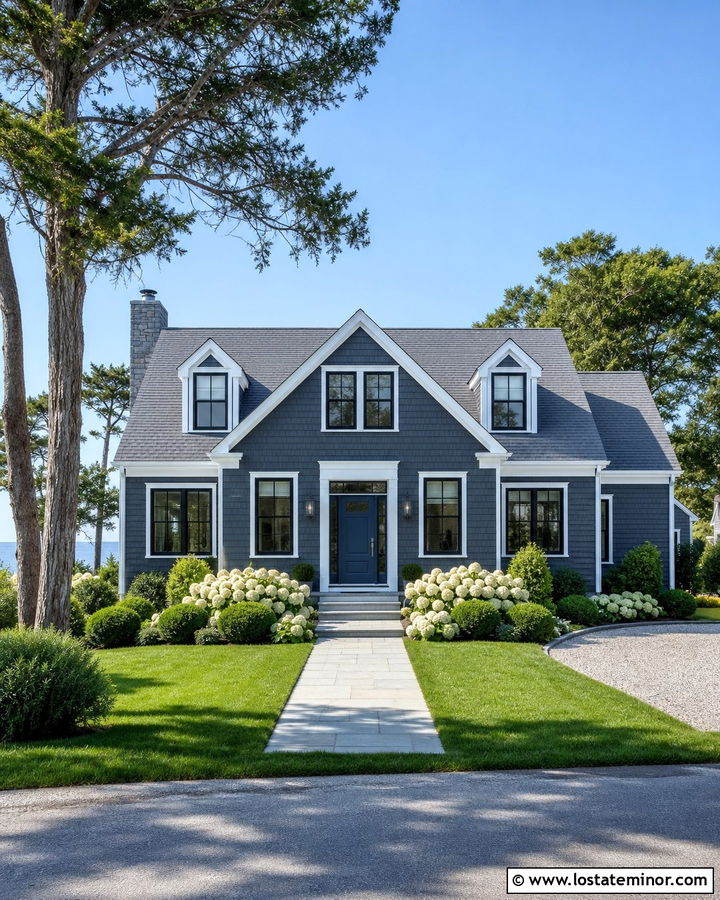
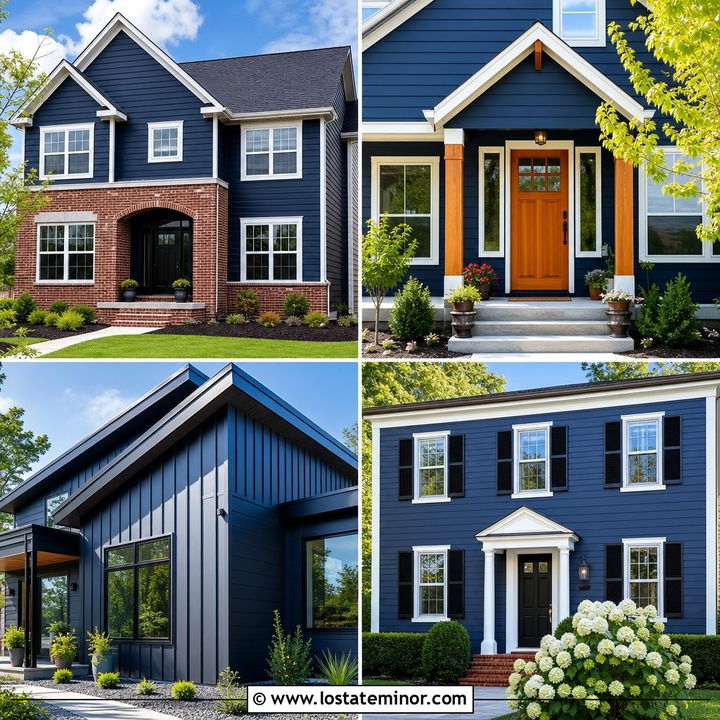
Navy blue adds quiet color to charcoal grey siding while preserving a sophisticated, coordinated exterior. The difference between the two shades may be subtle, so choose a navy that is noticeably blue in daylight. A gloss or semi-gloss finish will further separate the door from the matte siding. Pair the scheme with white trim, black-framed windows, and a medium-grey roof for a crisp coastal or Cape Cod appearance. Silver-toned door hardware can support the cooler palette, although aged brass provides an appealing touch of warmth. Consider repeating navy on small shutters or porch furniture rather than across large surfaces. White hydrangeas, clipped green shrubs, and a pale stone walkway will brighten the setting and help the dark colors feel fresh.
10. Charcoal Grey Siding With A Green Front Door
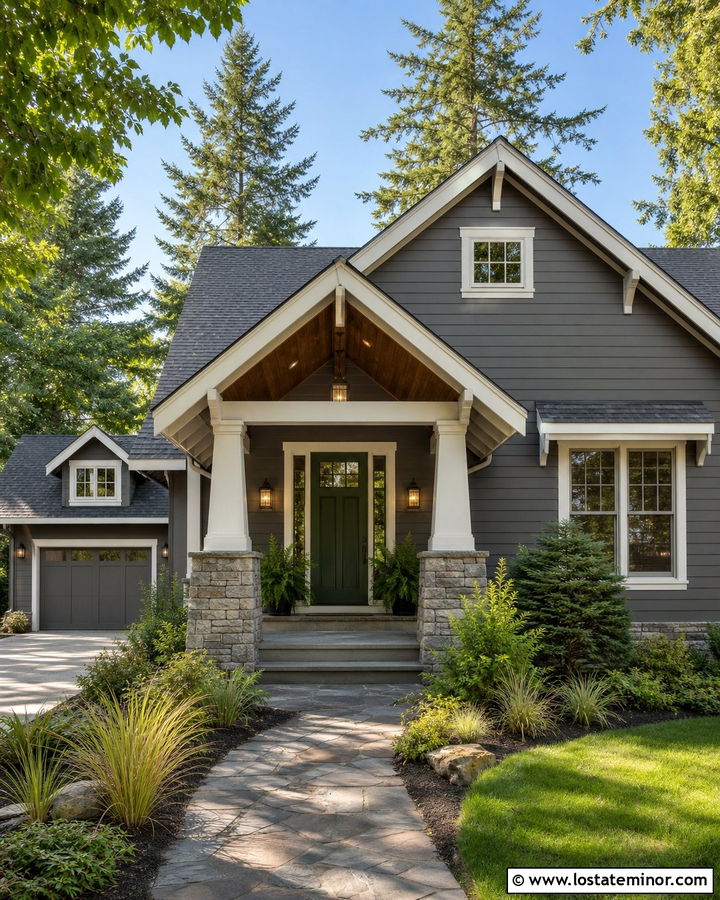
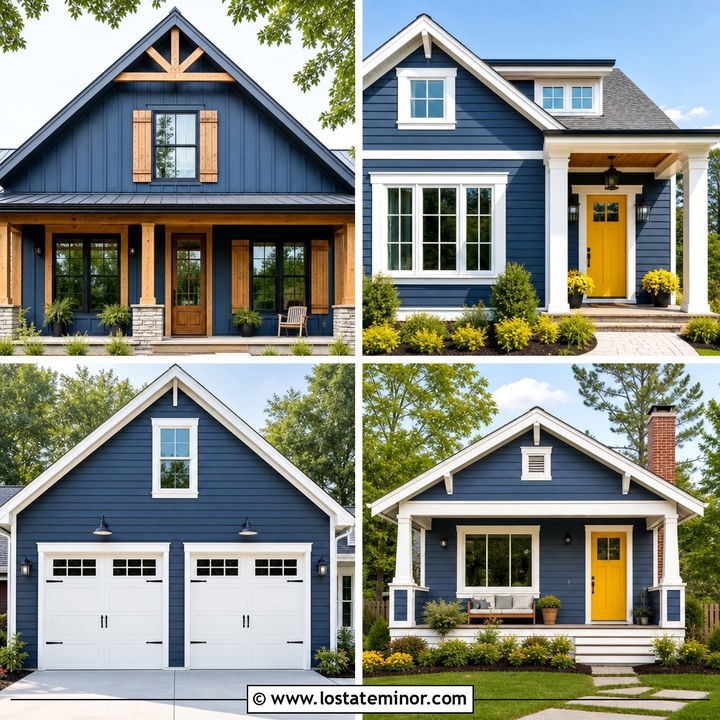
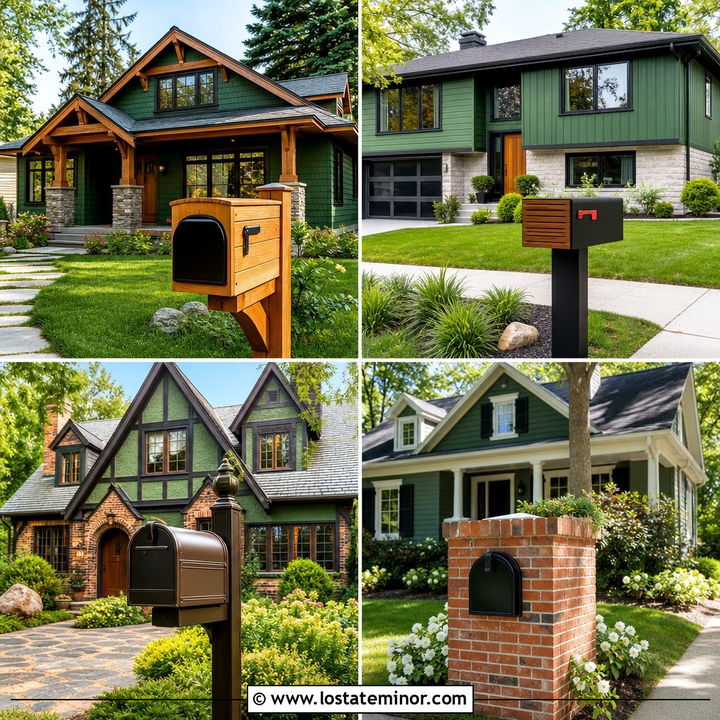
A deep green front door brings an organic note to charcoal grey siding and blends naturally with established landscaping. Forest green, muted olive, and dark sage can all work, but the best option depends on the siding undertone. A warmer charcoal usually pairs well with olive, while a cooler charcoal suits blue-based forest green. Use soft white trim to define the door and windows, then add natural stone around the porch for texture. This complete palette feels especially appropriate on a craftsman or cottage with a broad front porch. Bronze lights and a stained-wood porch ceiling can reinforce the earthy character. Layer ferns, evergreen shrubs, and ornamental grasses near the entry so the green door looks intentional within the full curb-appeal design.
11. Charcoal Grey Siding With A Red Front Door
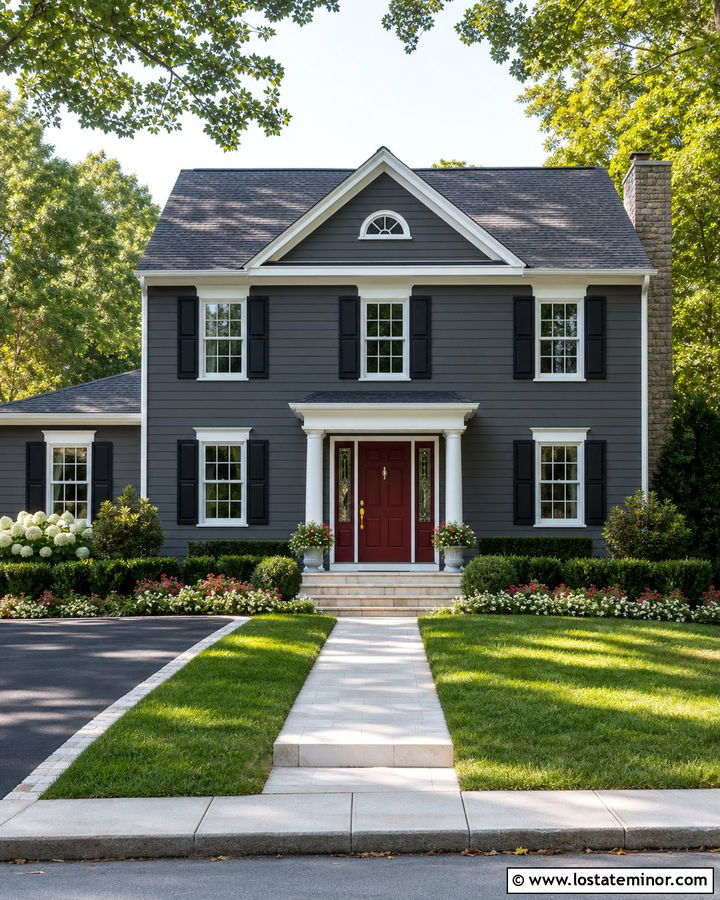
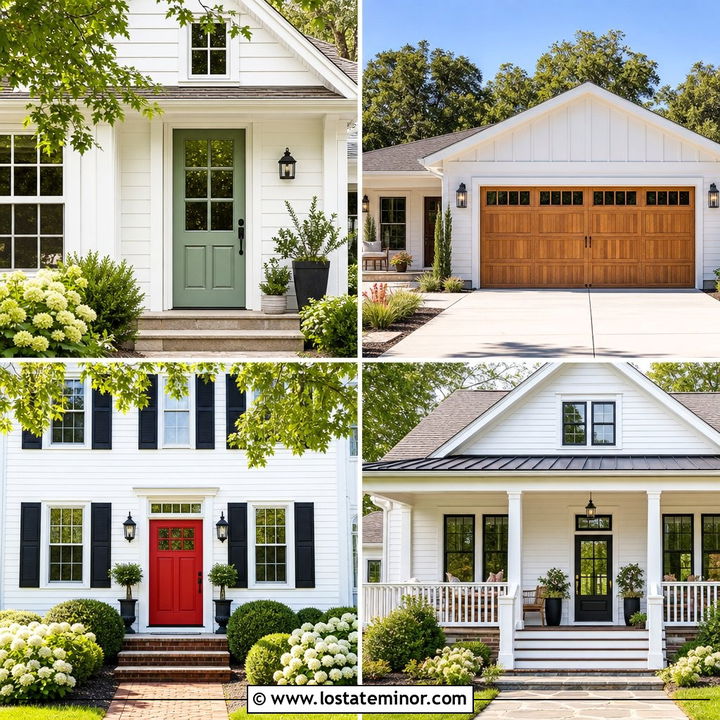
A red front door can energize charcoal grey siding without overwhelming the house when the shade is carefully selected. Choose brick red, oxblood, or muted cranberry instead of a very bright primary red. These deeper colors feel more connected to the weight of the siding. On a traditional home, combine the door with crisp white trim, black shutters, and a dark grey roof. Use red only once as the main accent so the entrance remains distinctive. Warm brass hardware and classic black lanterns can make the color feel established rather than playful. Pale stone steps and green foundation plants provide a calm setting around the doorway. The finished exterior feels confident, balanced, and welcoming from both the street and front walkway.
12. Charcoal Grey Siding With A Yellow Front Door
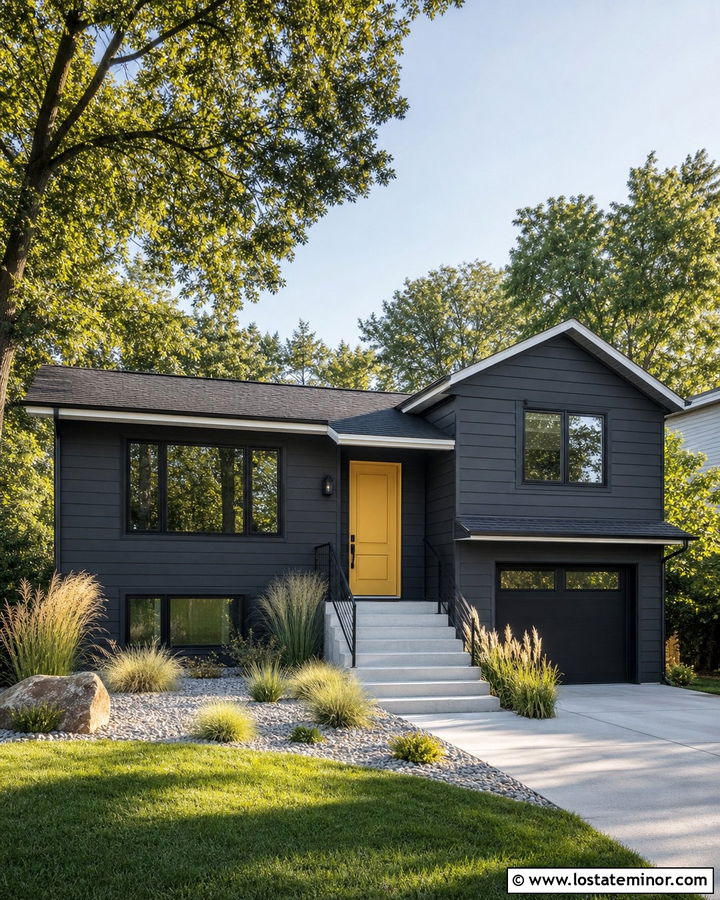
What if a dark house needs one cheerful, highly visible detail? A golden yellow or muted mustard front door can brighten charcoal grey siding while creating a memorable focal point. This combination works best when the rest of the exterior remains restrained. Use white trim, black window frames, and a charcoal roof, allowing the yellow entrance to carry the color. On a modern split-level or compact ranch, a simple flat-panel door will keep the bright shade looking clean. Repeat a small amount of yellow through seasonal flowers rather than permanent architectural features. Light concrete steps, pale gravel, and airy ornamental grasses can further lift the facade. Avoid overly green or neon yellows, which may feel disconnected from the siding’s sophisticated character.
13. Charcoal Grey Siding With Black Shutters
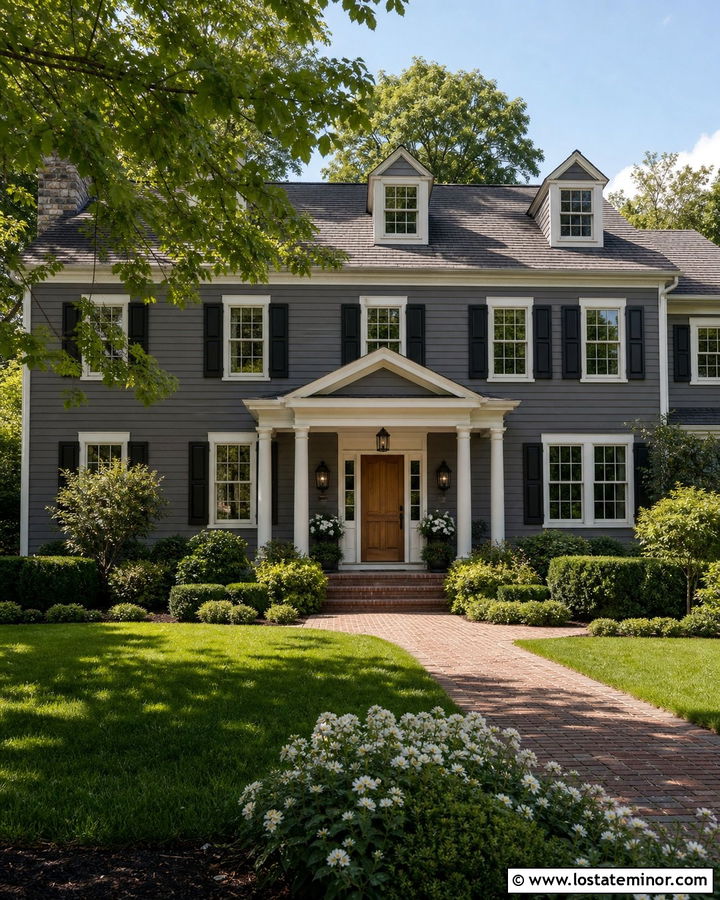
Black shutters add structure to charcoal grey siding without creating the sharp contrast produced by white shutters. This close-toned palette is ideal for a traditional house that needs definition but not visual clutter. Select shutters with a true black finish so they remain distinct from the charcoal body color in bright daylight. Soft white window trim can sit between the two dark shades, clearly outlining each window. Add a natural-wood front door and matching porch ceiling to warm the facade. A dark shingle roof, white columns, and simple black lanterns will complete the balanced scheme. Make sure the shutters are correctly sized for the windows. Proper proportions give the exterior an authentic, finished appearance and help the dark details feel architectural rather than decorative.
14. Charcoal Grey Siding With White Shutters
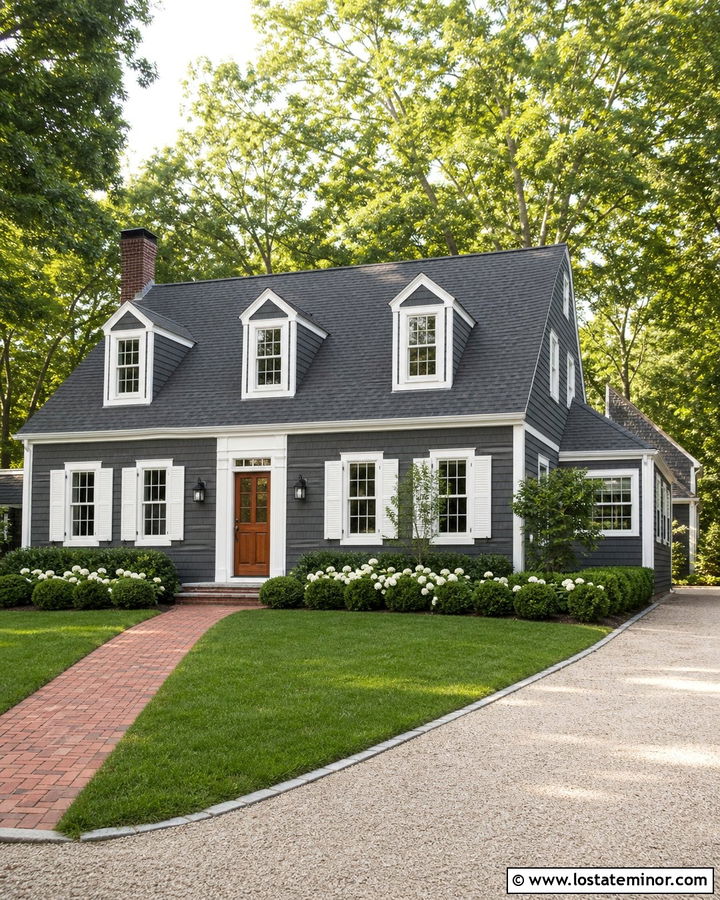
White shutters bring a classic, high-contrast character to charcoal grey siding. They are especially effective on colonial, Cape Cod, and cottage exteriors with balanced window placement. Match the shutters to the window trim and porch columns so the white accents form a consistent framework across the facade. A medium-brown wood door can keep the palette from feeling too stark, while black hardware and lights introduce a third neutral shade. Use a roof with a blend of charcoal and warm grey rather than solid black if the house is small. This reduces the amount of visual weight near the top. Boxwood hedges, white flowers, and a brick walkway can reinforce the traditional design while adding softness around the strong siding-and-shutter contrast.
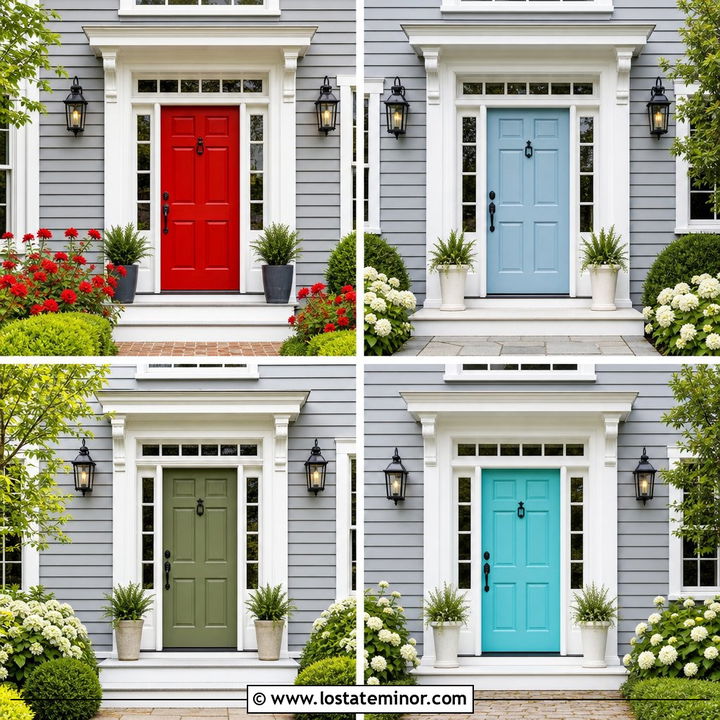
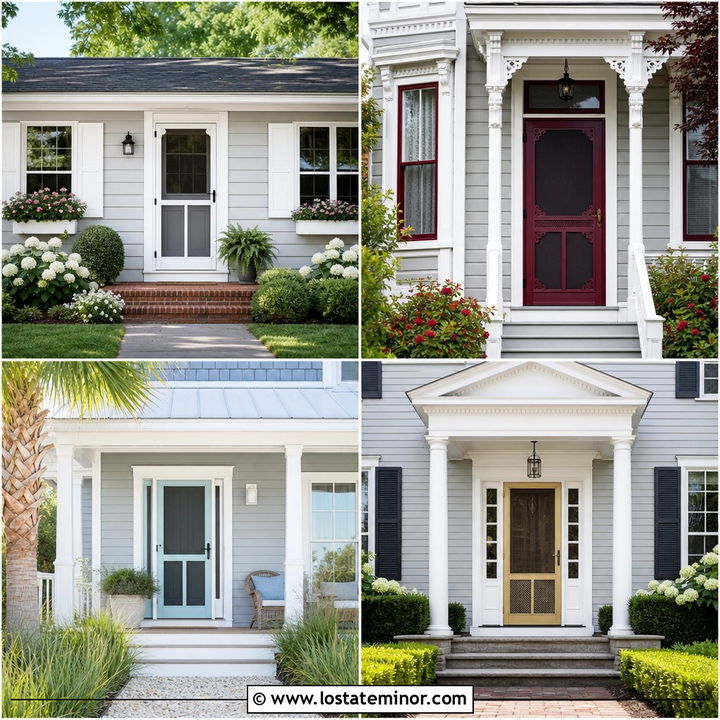
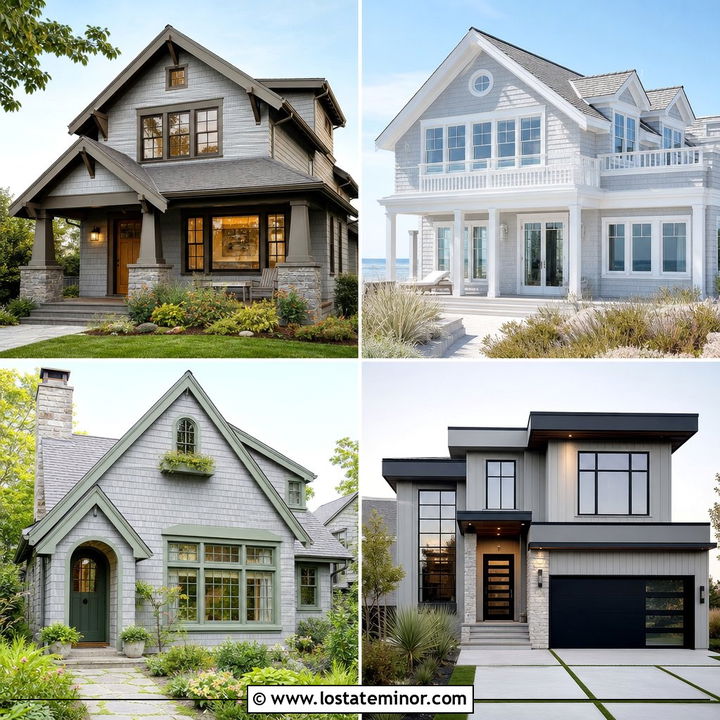
15. Charcoal Grey Siding With Cedar Shutters
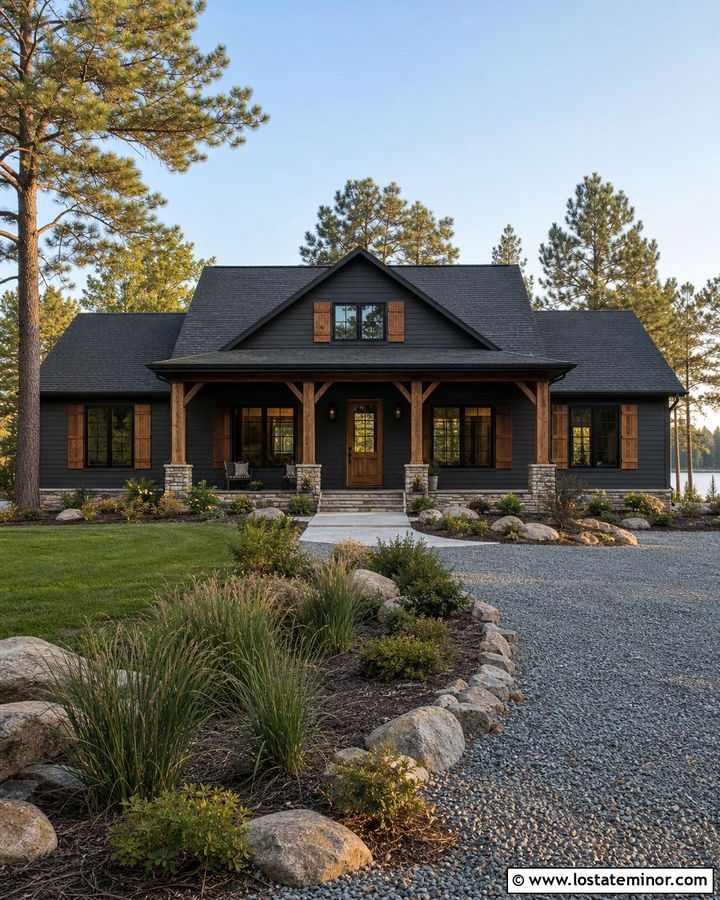
Cedar shutters add warmth, visible grain, and handcrafted character to a charcoal grey exterior. They look particularly natural on a ranch, lakeside cottage, mountain home, or modern craftsman. Choose a medium stain that provides contrast without turning orange. Repeat the same finish on the front door, porch columns, and gable brackets so the shutters feel connected to the complete house. Charcoal lap siding can remain dominant, while a low stone foundation introduces another earthy texture. Black window frames and a dark roof will recede behind the warmer wood elements. Use simple shutter construction rather than ornate detailing, especially on contemporary architecture. Native shrubs, boulders, and a gravel-edged walkway can complete the relaxed exterior and connect the materials to the landscape.
16. Charcoal Grey Board And Batten Siding
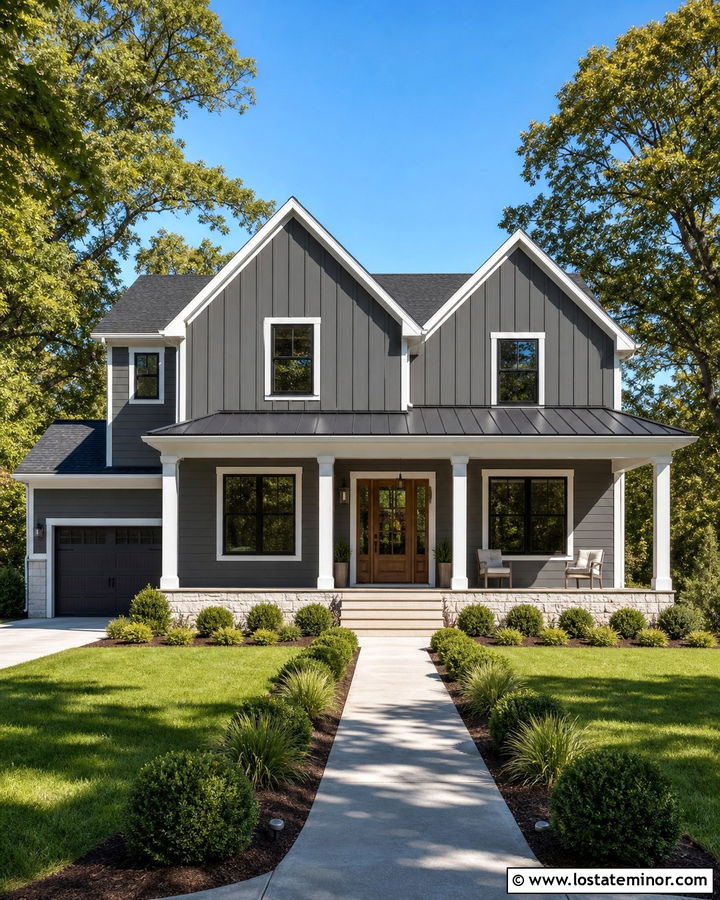
Vertical board and batten siding gives charcoal grey a tall, clean appearance that emphasizes roof peaks and modern farmhouse lines. Covering every surface with the same vertical pattern can feel repetitive, so consider using board and batten on the front gables while installing horizontal lap siding on the main walls. Keep both materials in the same charcoal grey color for a layered but cohesive result. White fascia, porch columns, and window trim will sharpen the structure. Add a natural-wood door and black metal roof accents to provide warmth and definition. Stone around the porch foundation can ground the vertical lines. A straight concrete walkway, symmetrical plantings, and an open lawn will reinforce the tidy architectural rhythm without making the house look overly formal.
17. Charcoal Grey Horizontal Lap Siding
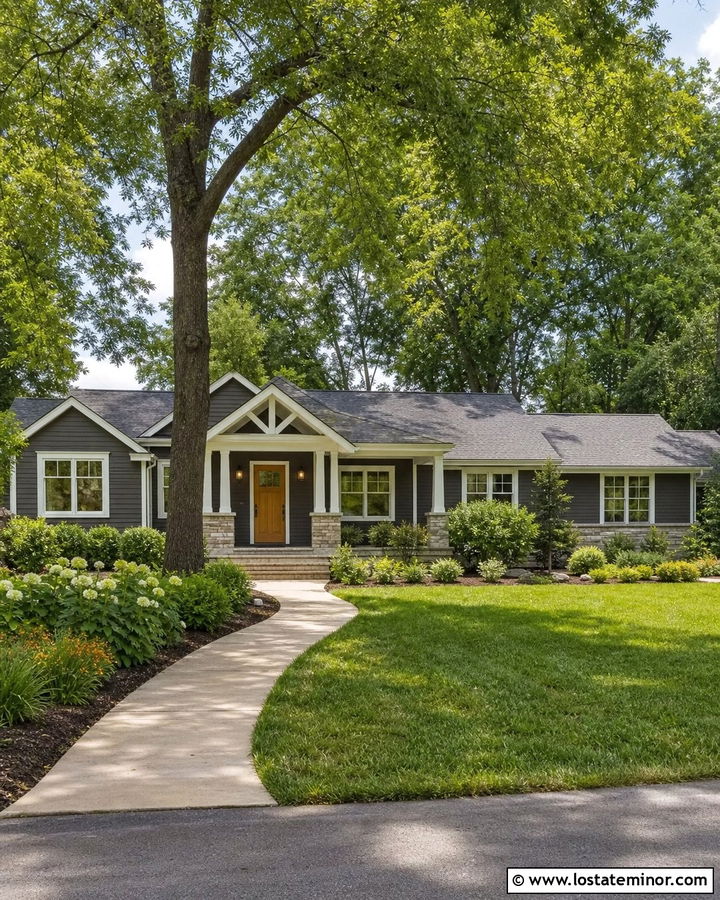
Horizontal lap siding offers a familiar, versatile foundation for charcoal grey exterior schemes. Its long lines can make a narrow home appear wider and bring a relaxed character to ranch, colonial, and craftsman architecture. Use a moderately wide exposure so the dark color does not create too many busy shadow lines. Bright white corner boards, window trim, and fascia can clearly define the structure. A warm wood door and stone porch base will add depth to the simple siding pattern. Choose a roof slightly darker than the siding or one containing mixed grey tones, which prevents the upper portion from blending into a single mass. Layered green landscaping and a warm concrete or paver walkway will make the strong charcoal facade feel comfortable and lived-in.
18. Charcoal Grey Shake Siding
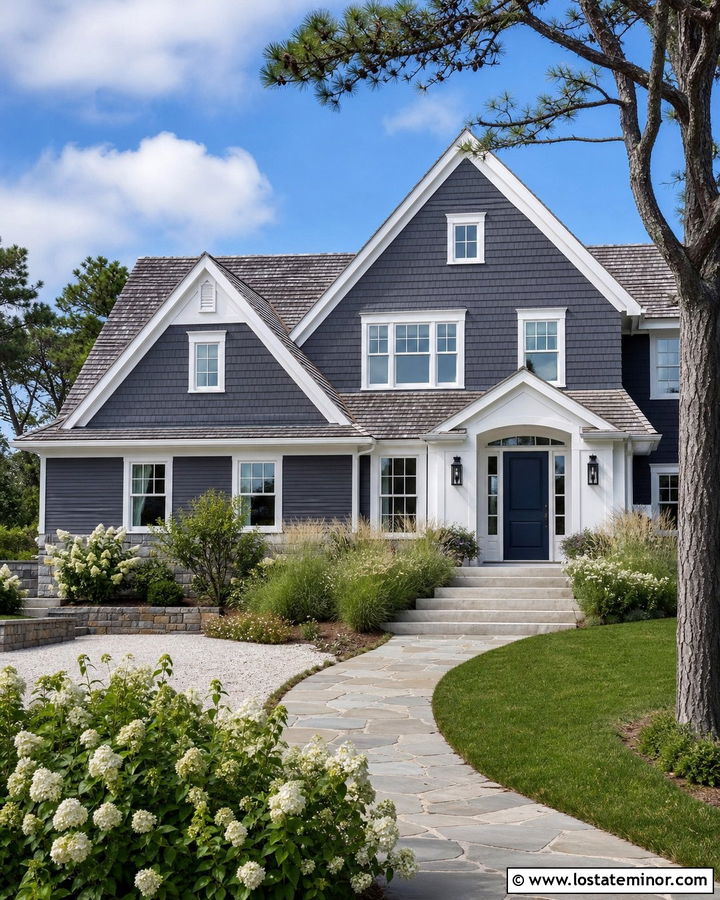
Shake siding introduces shadow, texture, and traditional character to a charcoal grey house. It is most effective when used selectively on upper gables, dormers, or a projecting bay rather than across every wall. Pair charcoal shakes with matching horizontal lap siding below to create variation without changing the body color. White trim can separate the siding patterns and highlight roof details. For a coastal or shingle-style home, add a navy front door, pale stone steps, and black lanterns. A weathered grey roof will maintain the layered tonal palette while allowing the siding texture to remain visible. Keep shrubs below the window sills so they do not hide the detailed facade. The result feels substantial, refined, and visually interesting from the curb.
19. Charcoal Grey Mixed Siding Exterior
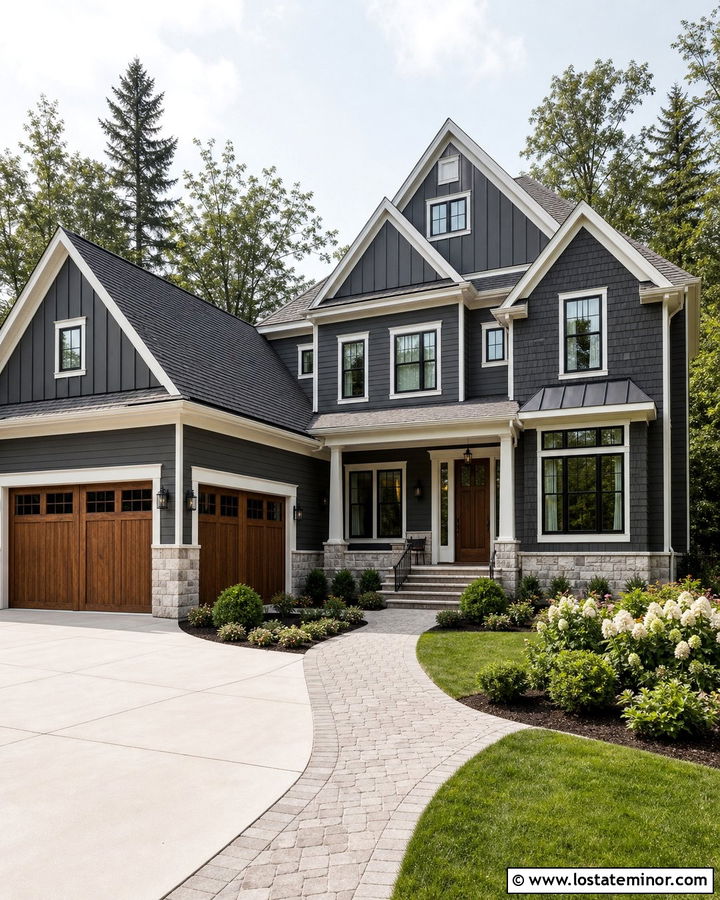
Combining siding profiles can give a charcoal grey exterior dimension without requiring several competing colors. Use horizontal lap siding across the main walls, vertical board and batten on taller gables, and shake siding on one smaller architectural feature. Applying the same charcoal grey finish to all three materials keeps the design unified. Creamy white trim should mark the transitions and prevent the textures from visually running together. A stained-wood garage door and matching entry door can warm the large dark surfaces. Add light stone around the foundation to create weight at ground level. This approach works best on larger transitional homes with several rooflines. Limit accent materials to purposeful areas so the facade appears layered and intentional rather than crowded with unrelated finishes.
20. Charcoal Grey Vertical And Horizontal Siding
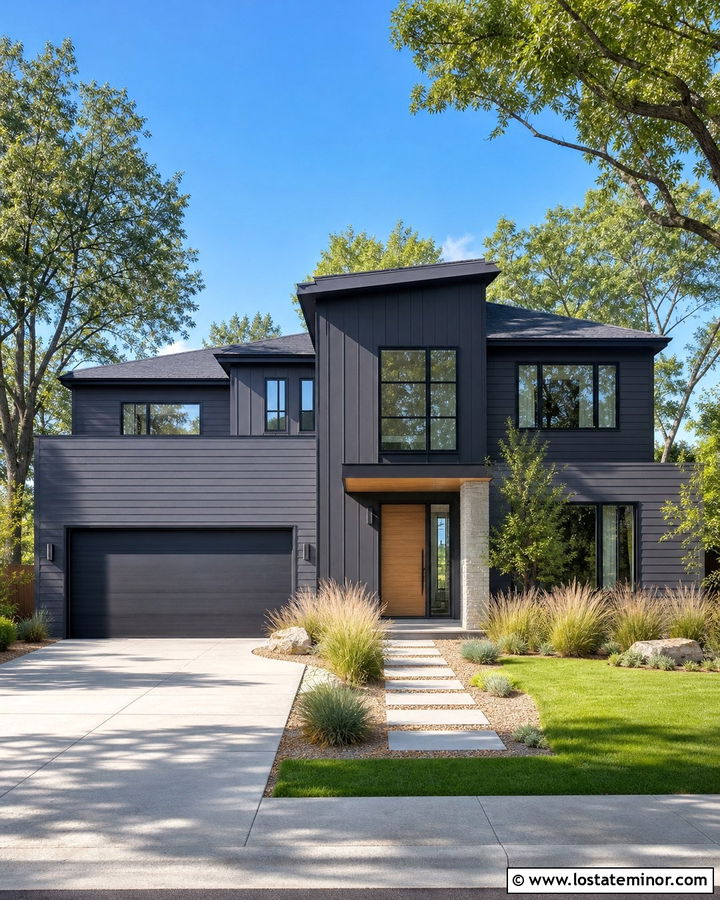
A mix of vertical and horizontal charcoal grey siding can visually organize a modern exterior. Horizontal lap siding makes the main level feel broad and grounded, while vertical panels draw attention to a two-story entry, garage gable, or upper addition. Keep the color consistent across both orientations so the change in direction provides enough contrast by itself. Black trim and windows will support a contemporary look, while a cedar front door and porch canopy prevent the facade from feeling cold. Light concrete, pale stone, and warm gravel can brighten the area around the entrance. Use clean transitions between siding directions rather than adding decorative bands everywhere. Thoughtful placement will emphasize the house’s best proportions and make the charcoal grey cladding feel architectural.
21. Charcoal Grey Siding With A Metal Roof
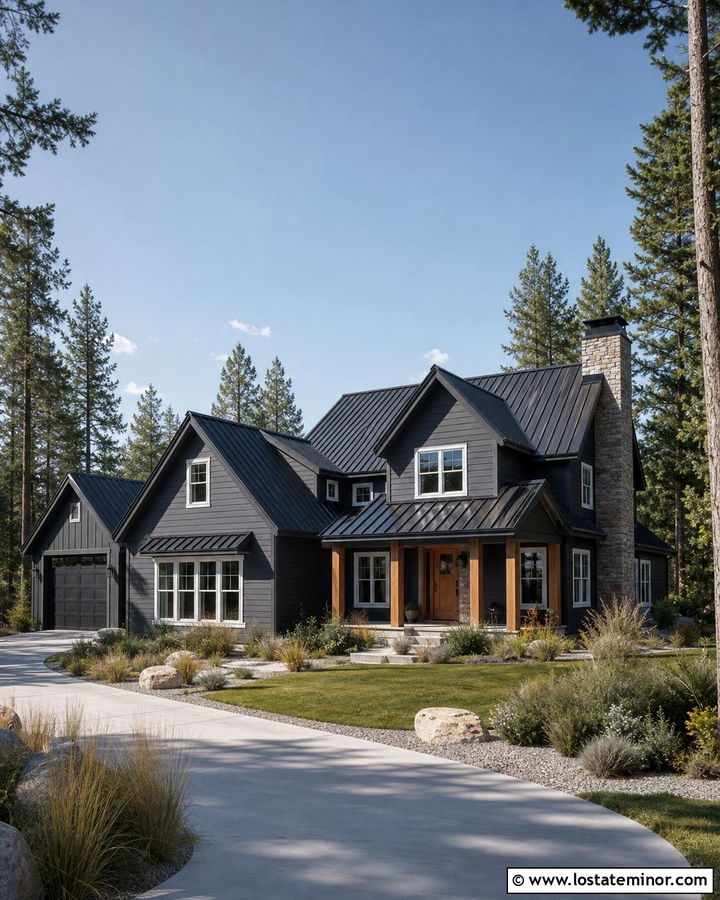
A standing-seam metal roof gives charcoal grey siding a crisp, durable-looking finish that suits farmhouse, mountain, and contemporary homes. To keep the roof visible, choose black or a slightly darker charcoal than the siding. The subtle shift in value creates depth while maintaining a streamlined palette. White trim can highlight the roof edges and windows, while cedar porch posts and a wood front door introduce needed warmth. Consider using stone on the chimney or porch base to balance the smooth metal and siding surfaces. Wide roof overhangs create attractive shadow lines across the dark exterior. Surround the house with native grasses, low shrubs, and a simple gravel or concrete path. The complete combination feels modern, practical, and naturally connected to its setting.
22. Charcoal Grey Siding With Black Roof Shingles
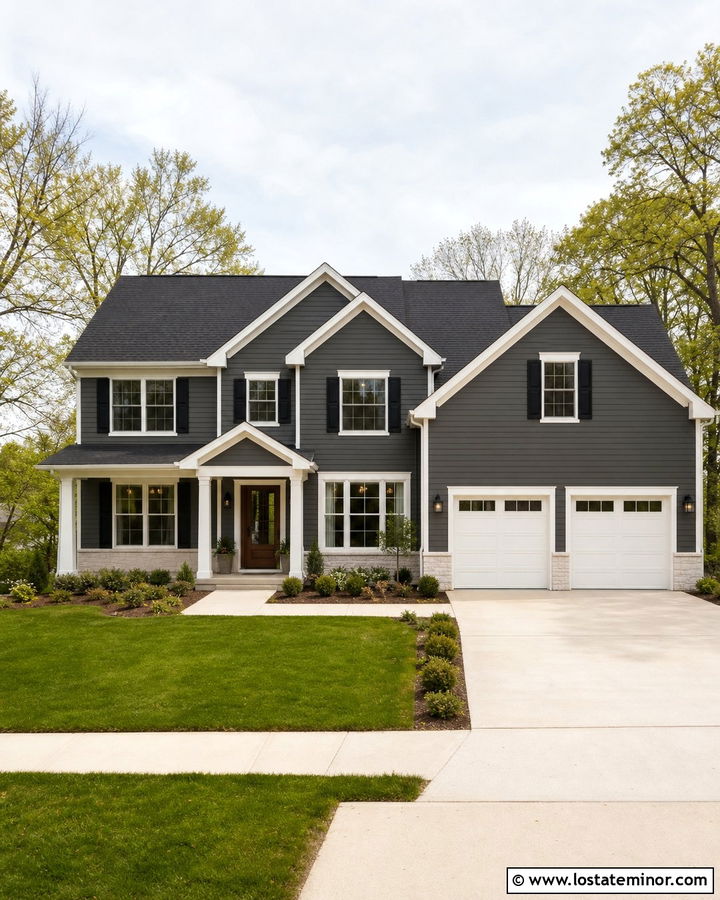
Black roof shingles create a strong cap over charcoal grey siding and give the full exterior a polished, grounded appearance. This pairing works best when brighter details break up the two dark surfaces. Use warm white fascia, window trim, porch columns, and garage doors to form clear boundaries around the facade. A walnut-stained front door can add warmth at eye level, while light stone around the foundation prevents the base from disappearing into shadow. On a large two-story house, black shutters can connect the roof to the lower elevations. If the home receives limited sunlight, consider a softer charcoal-black roof blend instead of the darkest available option. Green landscaping and pale walkways will further balance the dramatic roof-and-siding combination.
23. Charcoal Grey Siding With Weathered Grey Roof
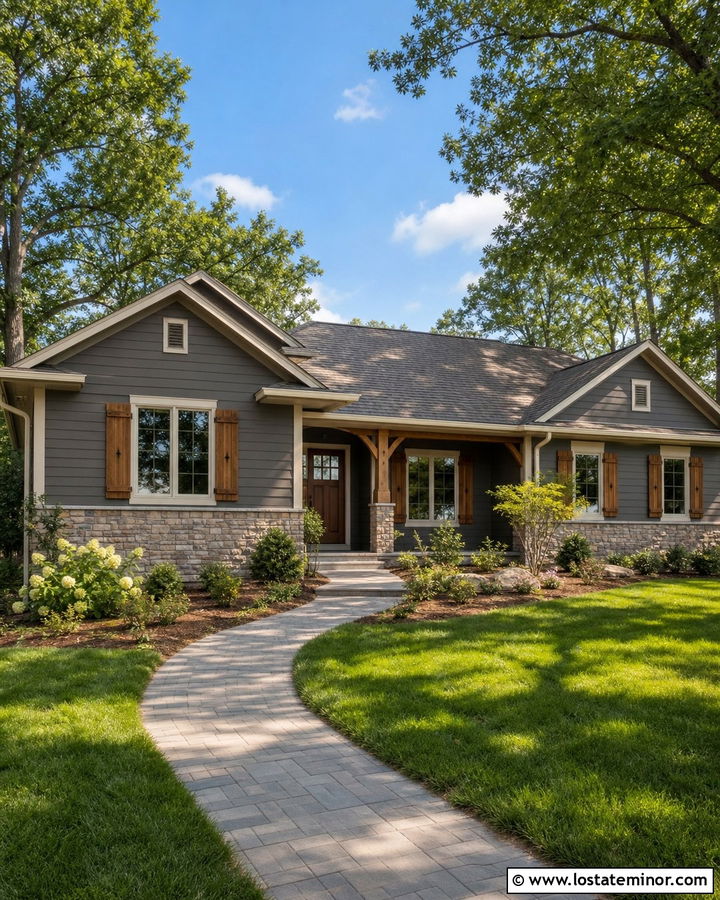
A weathered grey roof creates a softer transition above charcoal grey siding than solid black roofing. Shingles containing medium grey, taupe, and muted brown can also connect the facade with stone, brick, and natural-wood details. This combination is well suited to a broad ranch or craftsman home where the roof occupies a large part of the street view. Use creamy white trim to separate the siding from the roof and brighten the horizontal roofline. Cedar shutters and a matching front door will pick up the warmer tones in the shingles. Add stone in a blend of grey and beige around the porch base. Informal landscaping, curved beds, and a paver path can complete the relaxed palette while keeping the charcoal siding visually dominant.
24. Charcoal Grey Siding With A Front Porch
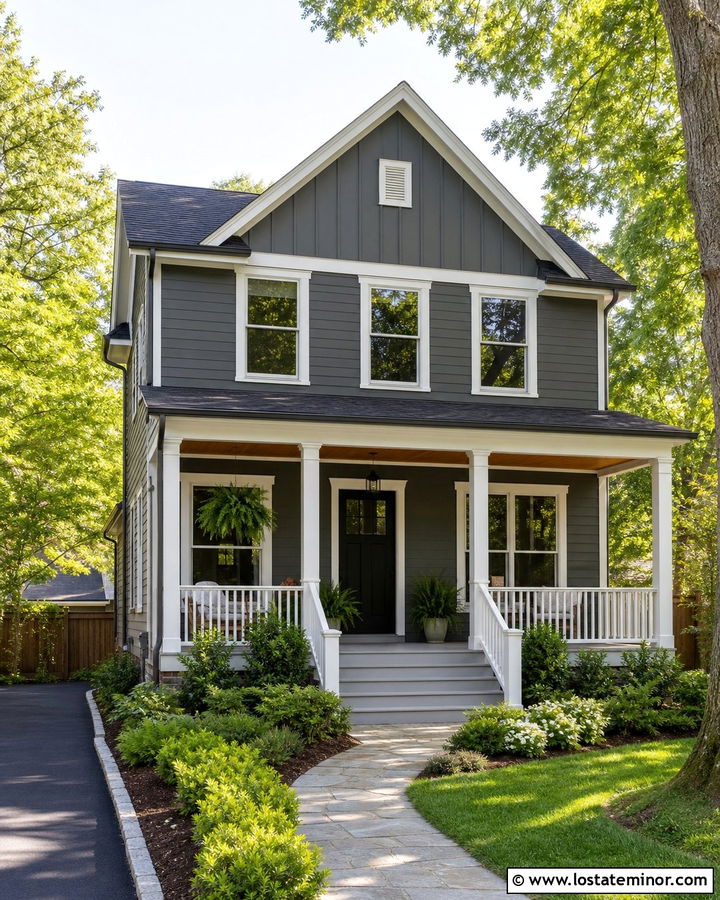
A generous front porch can make dark charcoal grey siding feel comfortable and welcoming. White columns and railings provide a bright framework, while a natural-wood porch ceiling adds warmth above the entrance. Continue charcoal horizontal siding across the main facade, then use matching board and batten in the porch gable for gentle texture. A black front door will blend with the siding, allowing wood furniture and greenery to add softer color. Choose light grey or warm concrete for the porch floor so the covered area does not appear too dark. Black lanterns, a charcoal roof, and white window trim will tie the scheme together. Layered shrubs and a clear walkway should guide attention toward the porch and emphasize its inviting proportions.
25. Charcoal Grey Siding With A Wood Deck
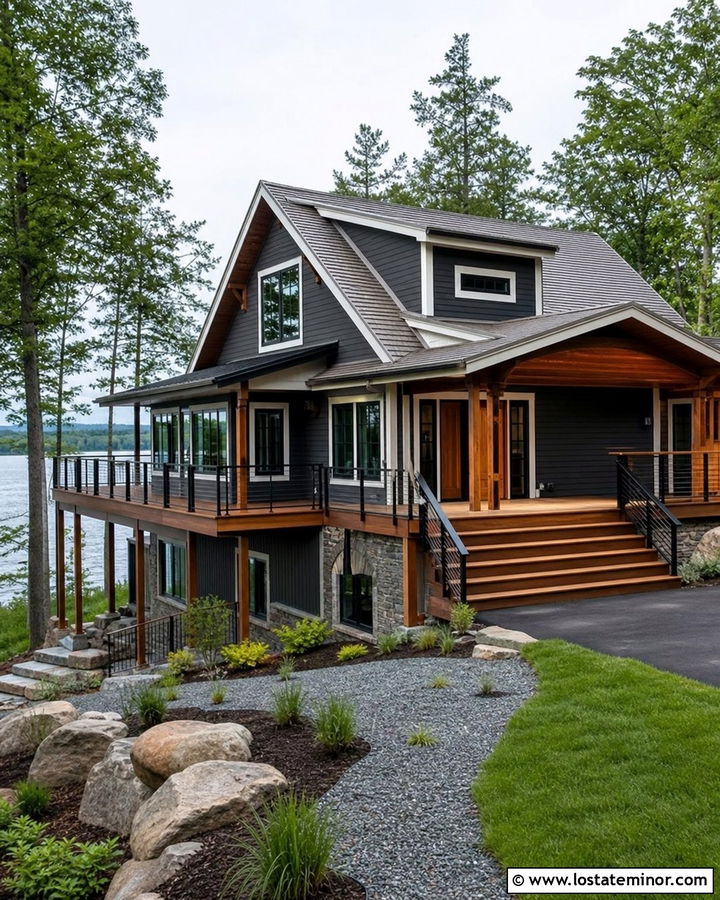
A warm wood deck offers a natural counterbalance to charcoal grey siding, especially on a lakeside, wooded, or sloped property. Select cedar, redwood, or a medium-brown composite finish that remains clearly visible against the dark walls. Repeat the deck color on the front door, soffits, or porch posts for a connected exterior. Black railings can visually recede and preserve open views, while warm white trim keeps windows from disappearing into the siding. Stone around the lower level can help the deck and house meet the landscape naturally. Use a charcoal or weathered grey roof to maintain continuity above. Native plants, broad steps, and simple pathway lighting will complete the full design without distracting from the strong relationship between siding and wood.
26. Charcoal Grey Siding With A Wood Garage Door
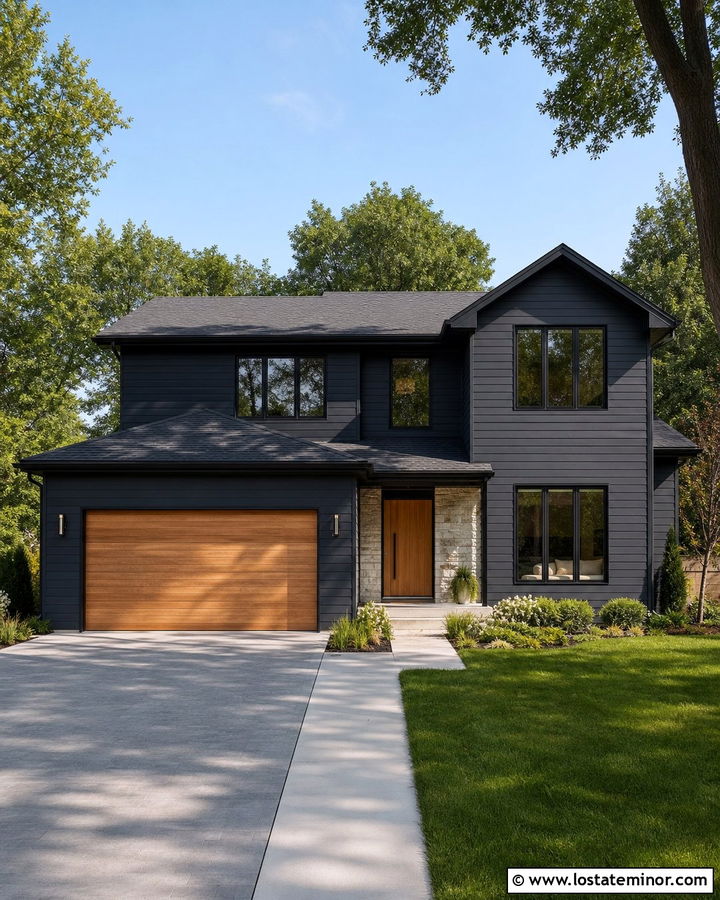
Because a garage door occupies so much of the front elevation, a wood finish can dramatically warm charcoal grey siding. Choose a medium oak, cedar, or walnut tone with visible grain, and coordinate it with the main entry door. On a modern home, a simple flush-panel garage door will feel cleaner than ornate carriage details. Black-framed windows, black gutters, and charcoal roof shingles can form a quiet background around the warmer focal point. Add light stone beside the garage or around the entry to distribute texture across the facade. Soft white trim can outline the roof and windows without competing with the wood. Keep the driveway a neutral grey and use structured planting beds to make the garage feel integrated with the entire house.
27. Charcoal Grey Modern Farmhouse Siding
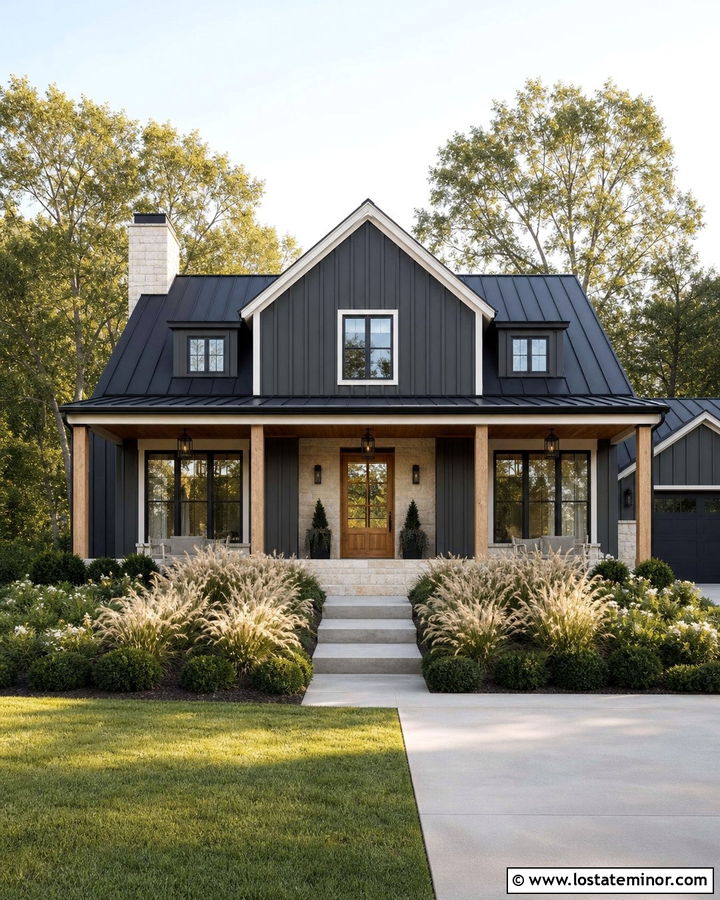
Charcoal grey gives modern farmhouse architecture a richer alternative to the familiar all-white exterior. Use vertical board and batten siding on the main facade, paired with a black standing-seam roof and simple black-framed windows. White trim can be limited to window surrounds and porch columns, creating contrast without dominating the darker scheme. A natural-oak front door and matching porch ceiling will add warmth beneath the broad entry roof. Consider light limestone or pale brick around the foundation to keep the base visually open. Black barn-style lights should be simple and appropriately scaled. A straight walkway, symmetrical grasses, and low evergreen shrubs will support the clean farmhouse lines while making the complete charcoal grey exterior feel approachable rather than severe.
28. Charcoal Grey Ranch House Siding
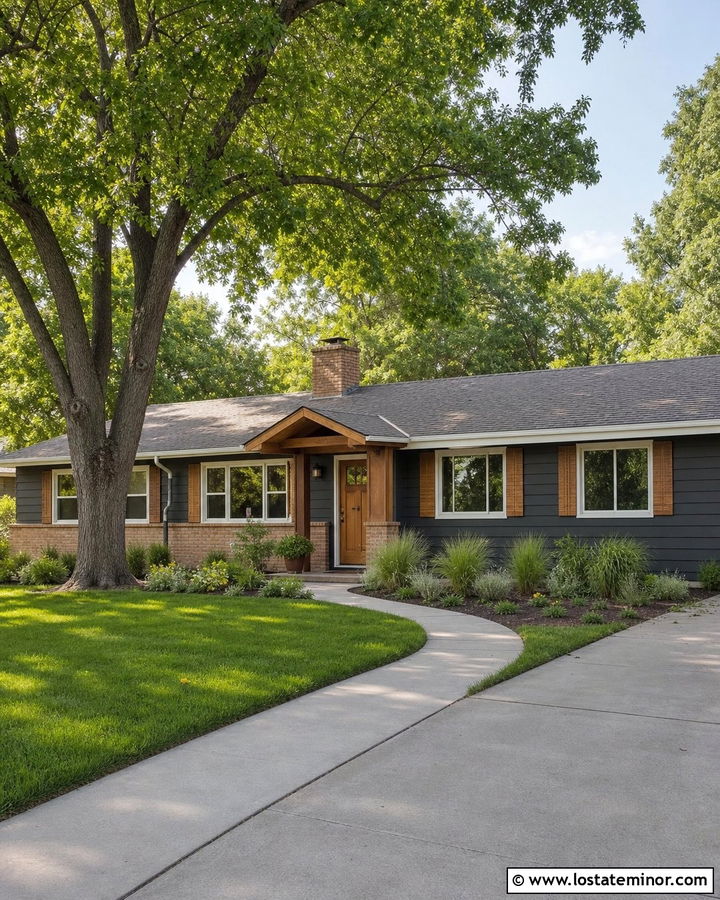
A charcoal grey ranch house can feel updated and visually wider when horizontal lap siding follows its long, low profile. Use warm white trim around the windows and roofline to prevent the facade from becoming one dark band. A cedar front door, matching shutters, and a small wood porch canopy can create a strong center of attention. If the house includes brick, retain warm red or tan masonry at the lower level and select a charcoal with compatible warm undertones. A weathered grey roof will keep the low roof plane from appearing too heavy. Broad planting beds, ornamental grasses, and a curved walkway can soften the straight architecture. The result respects the ranch form while giving it cleaner, more contemporary curb appeal.
29. Charcoal Grey Craftsman Siding
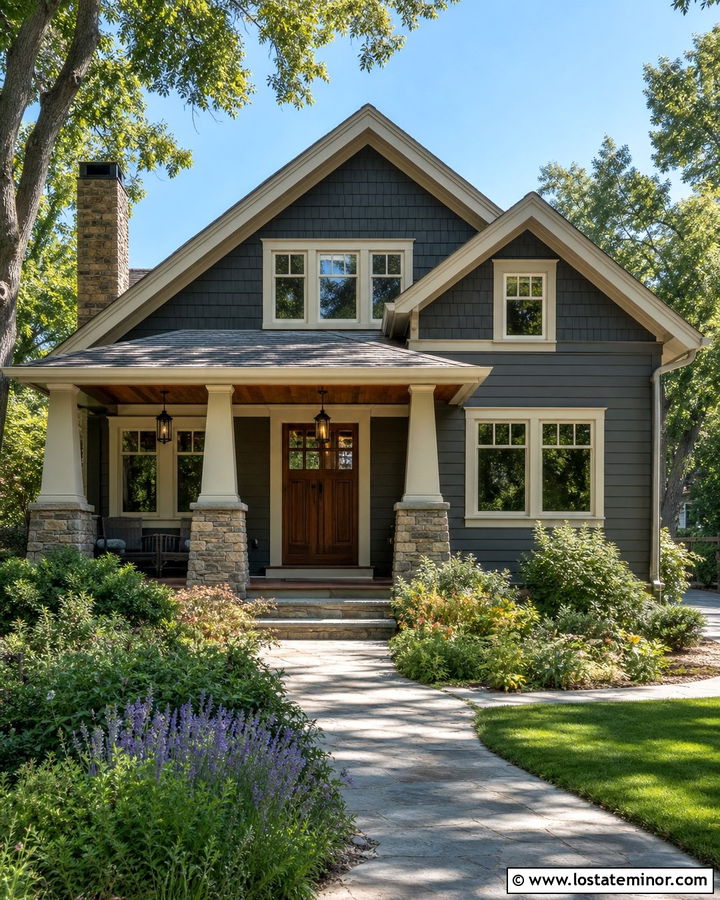
Craftsman architecture benefits from the depth of charcoal grey siding because the dark background emphasizes its layered rooflines, tapered columns, and handcrafted details. Use horizontal lap siding on the main walls and charcoal shakes inside the front gable. Cream trim can highlight brackets, window frames, and exposed rafter tails without creating an overly sharp contrast. Wrap the porch column bases in warm fieldstone, then repeat those brown and grey tones on the walkway. A rich wood front door and cedar porch ceiling will reinforce the traditional craftsmanship. Choose dark bronze lights and gutters instead of cool silver finishes. Dense shrubs, native flowers, and a broad front path will frame the house and make the substantial charcoal palette feel warm and established.
30. Charcoal Grey Colonial House Siding
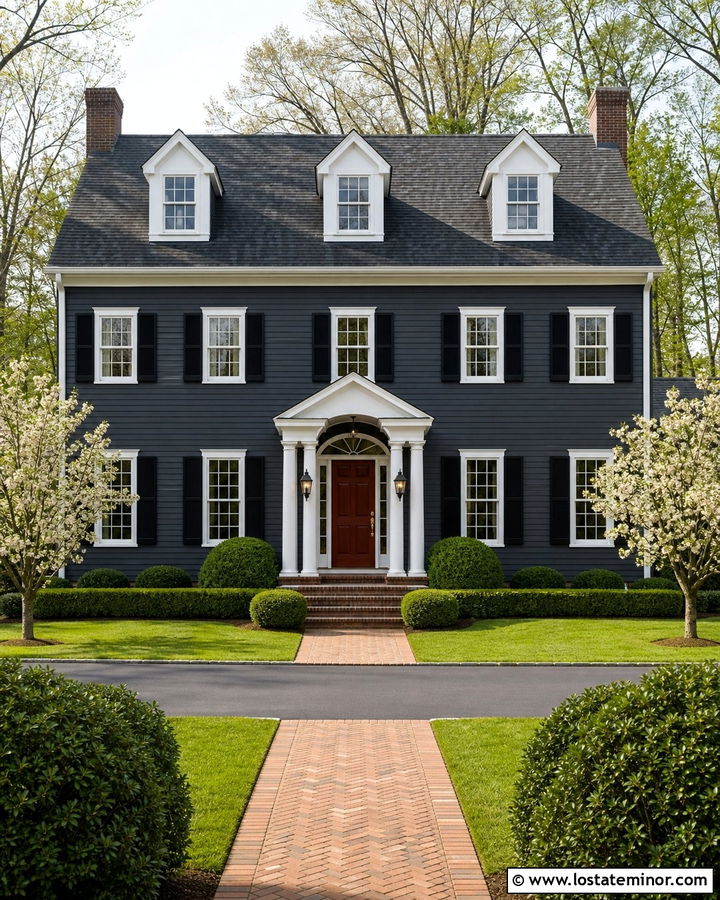
Charcoal grey siding can give a colonial home renewed presence while preserving its formal symmetry. Cover the facade with evenly spaced horizontal lap siding, then use crisp white trim around windows, corners, and the central doorway. Black shutters will add traditional structure without introducing another strong color. For a warmer focal point, select a mahogany or walnut front door with classic brass hardware. A black or mixed-charcoal roof will reinforce the balanced composition, while white gutters can blend into the fascia. Red brick steps and a straight brick walkway offer a subtle historical reference and prevent the grey palette from feeling too modern. Symmetrical boxwoods, small flowering trees, and matching lanterns will complete the orderly, welcoming exterior.
Conclusion:
Charcoal grey siding can suit nearly any house when the surrounding colors, textures, and architectural details are planned as one complete exterior. White trim creates clarity, black accents add sophistication, and natural wood brings essential warmth. Stone, brick, varied siding profiles, and thoughtful roofing choices can provide dimension without making the facade look busy. Always compare full-size samples beside the actual roof, masonry, windows, and landscaping before making a final decision. Viewing them in sun and shade will reveal undertones that small indoor samples may hide. Whether you prefer farmhouse simplicity, craftsman warmth, or modern contrast, these 30 Charcoal Grey House Design With Siding Ideas offer practical starting points for balanced curb appeal.

Related posts: