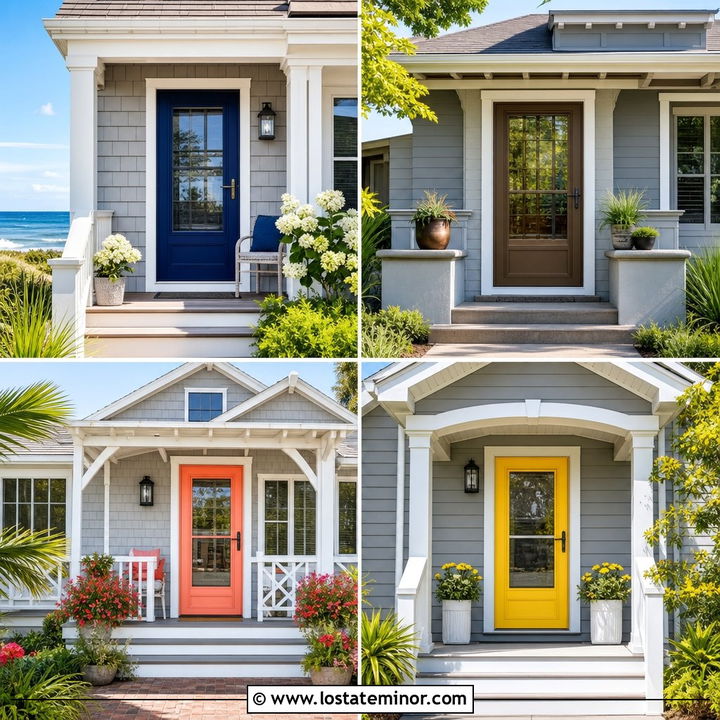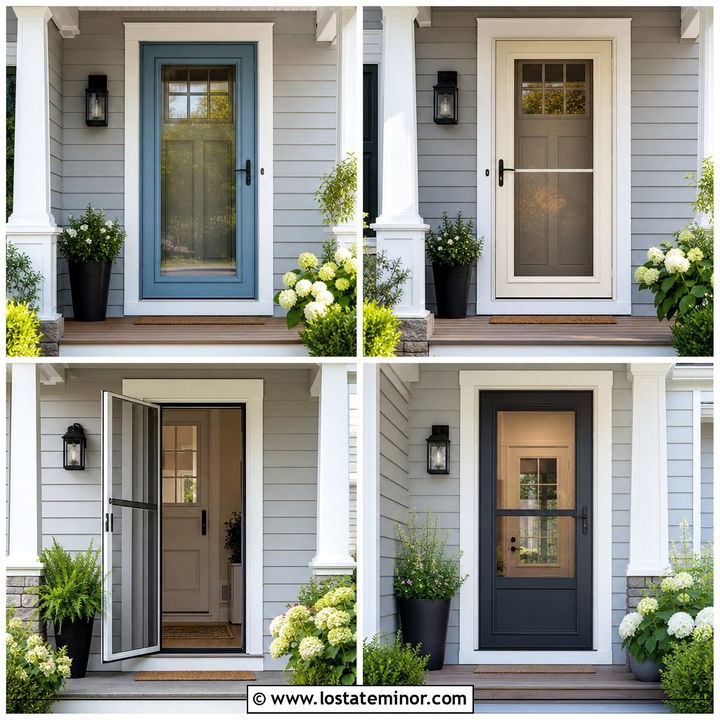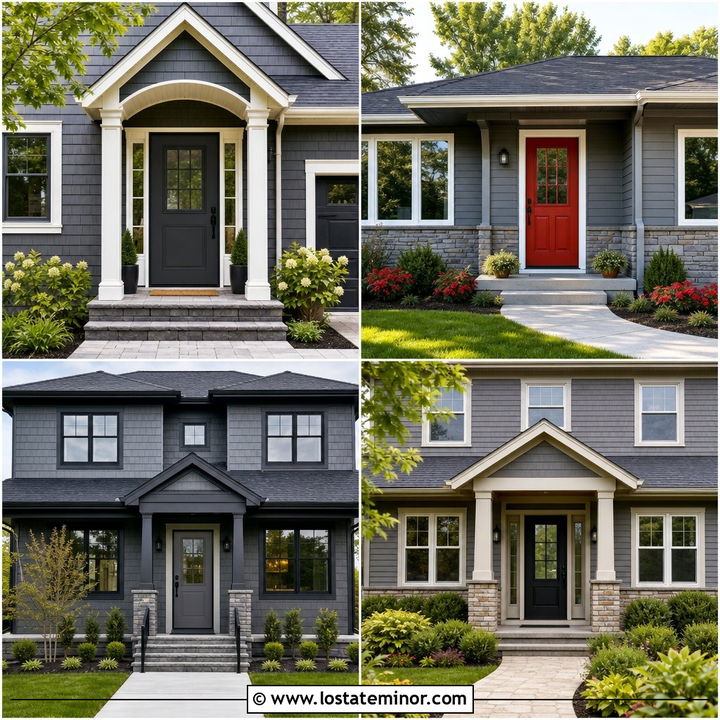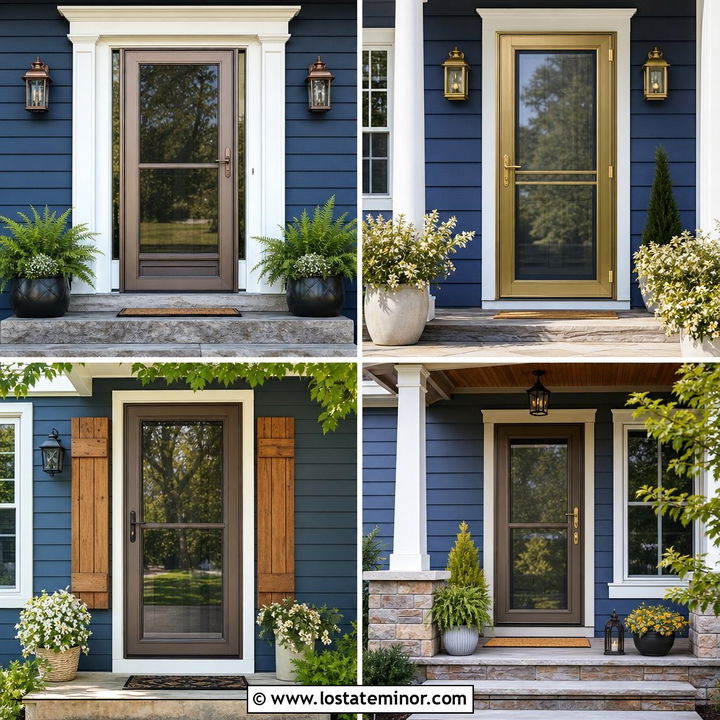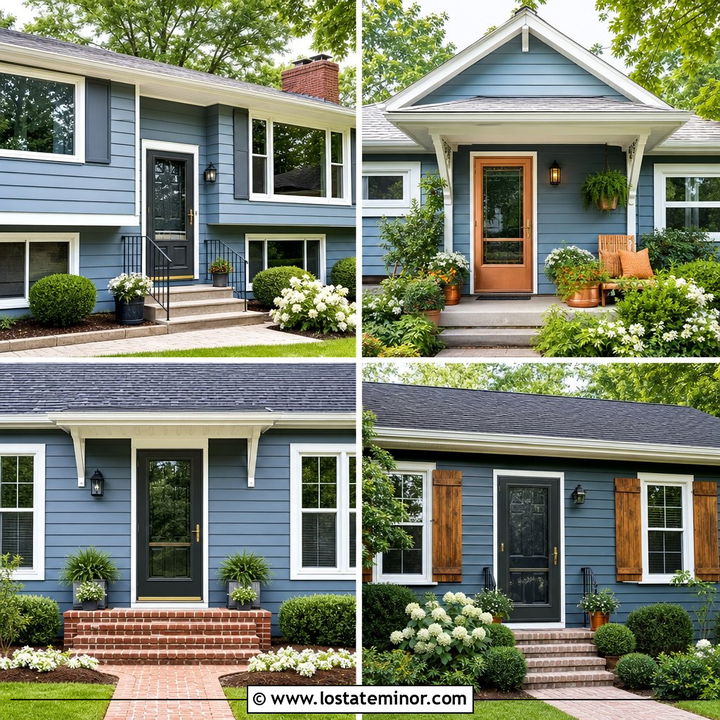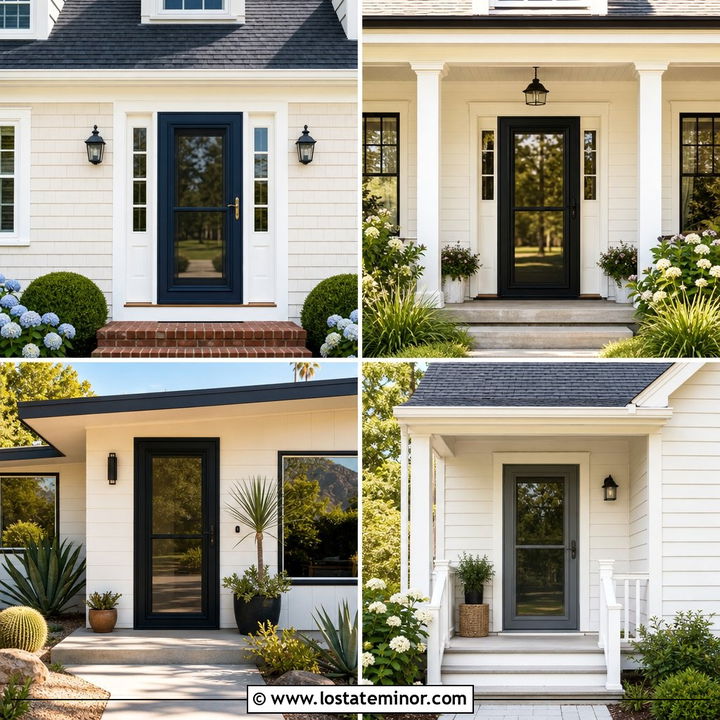
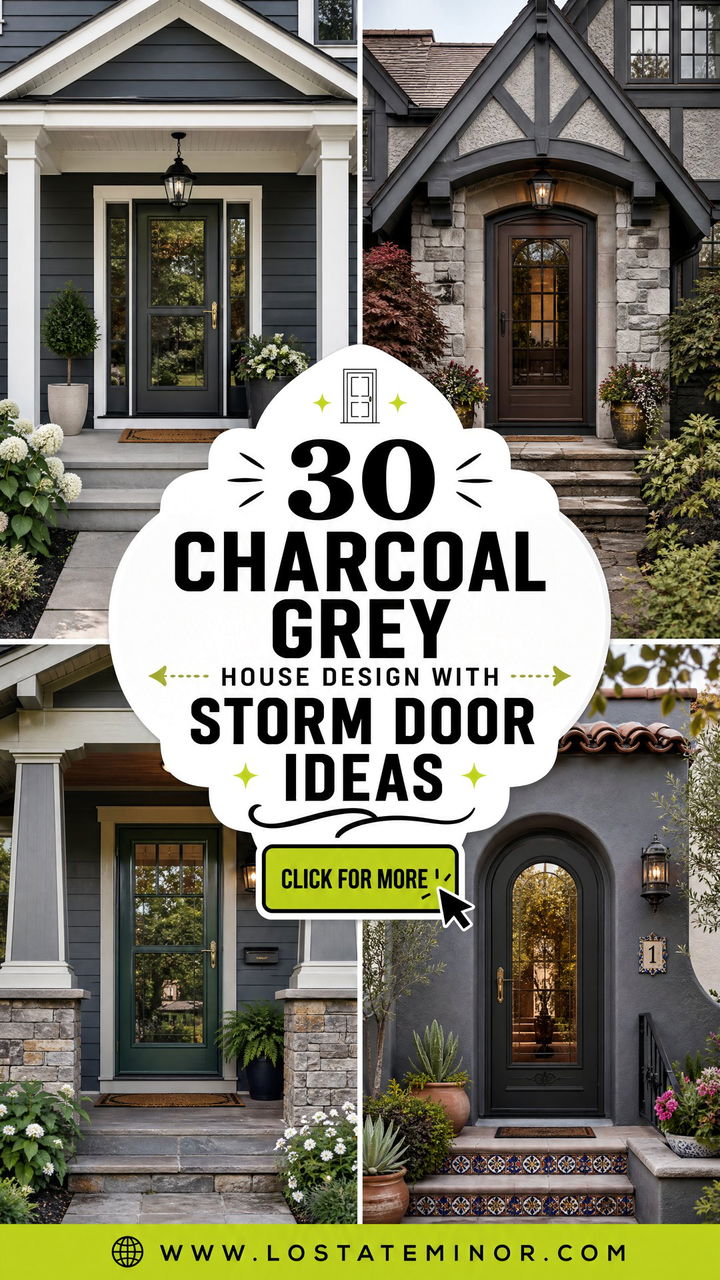
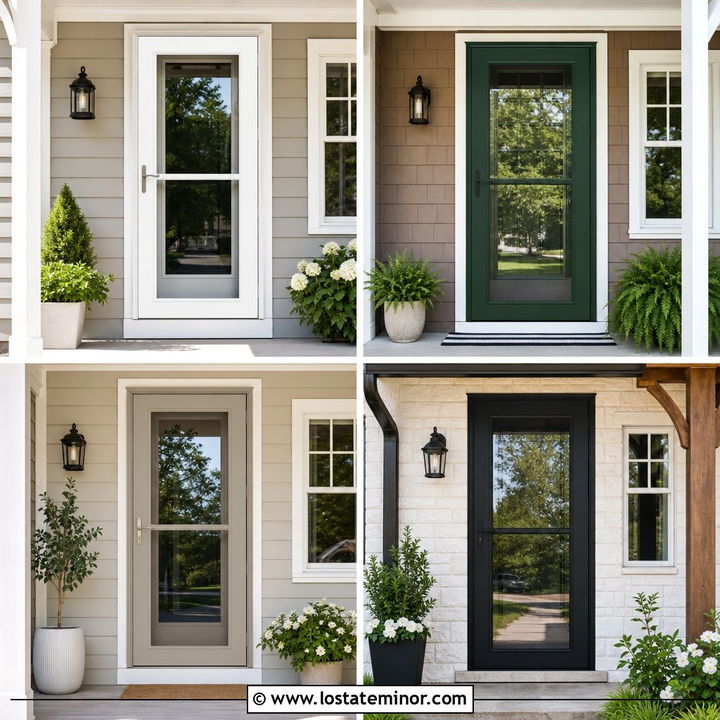
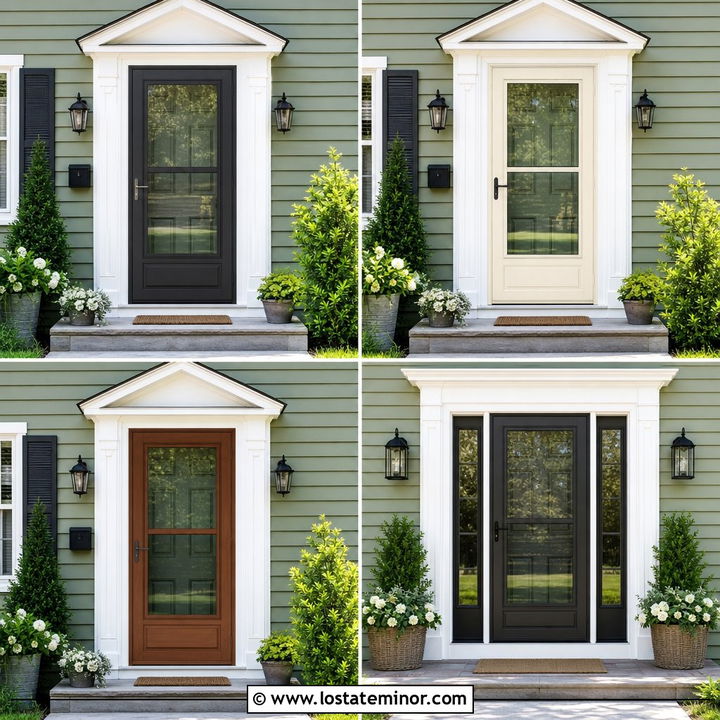
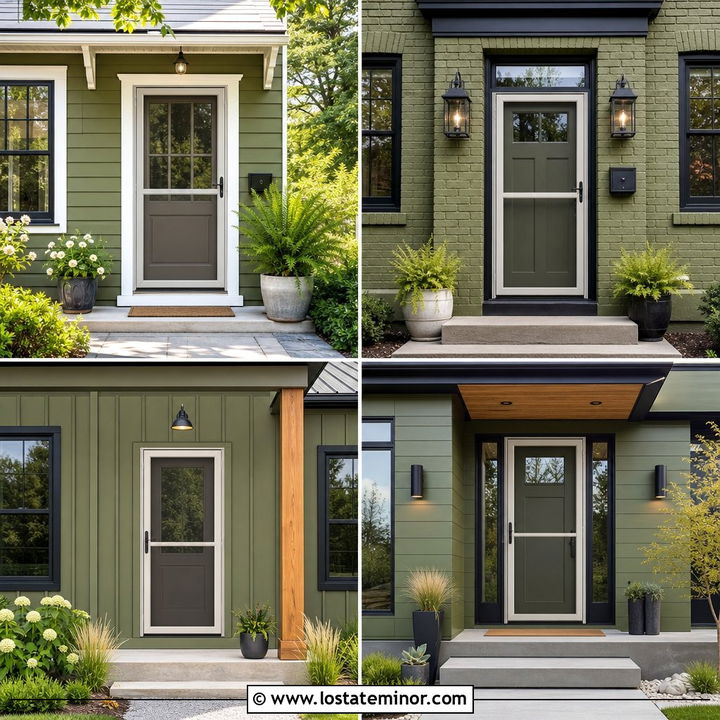
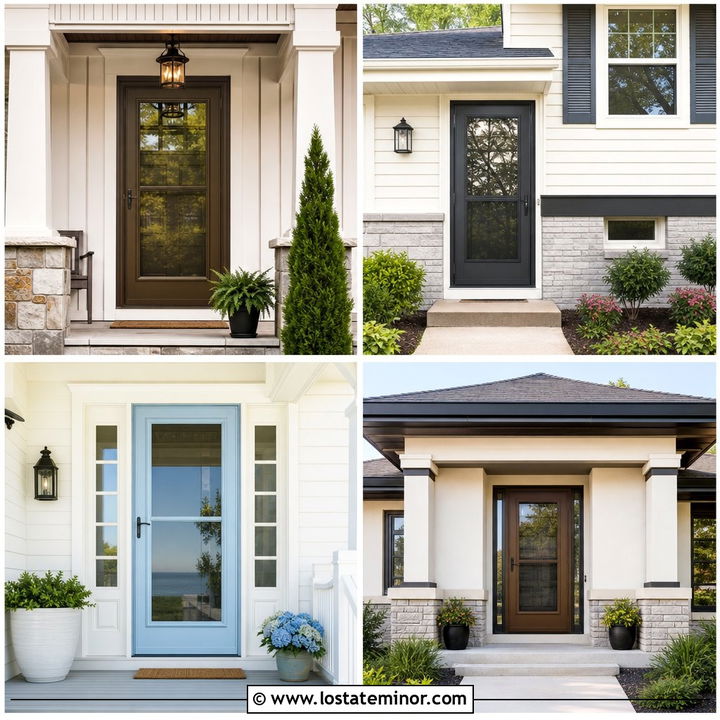
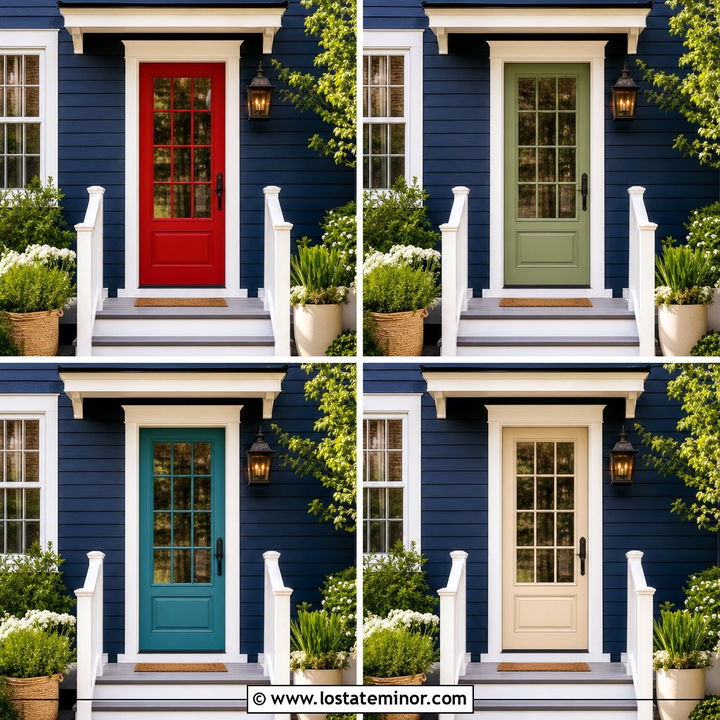
A charcoal gray exterior creates a strong backdrop for crisp trim, warm wood, natural stone, and colorful entry details. The storm door matters because it sits directly over the front door and can either strengthen the exterior palette or interrupt it. A well-coordinated storm door should complement the siding, trim, entry door, and architectural character for a unified appearance. () Full-view glass models keep a beautiful front door visible, while divided-light and retractable-screen options add practical character. From modern black frames to classic white, bronze, green, and red finishes, these 30 Charcoal Grey House Design With Storm Door Ideas cover complete exterior combinations for many American home types. Explore the sections below to find the right 30 Charcoal Grey House Design With Storm Door Ideas.
1. Charcoal Grey Farmhouse With White Storm Door
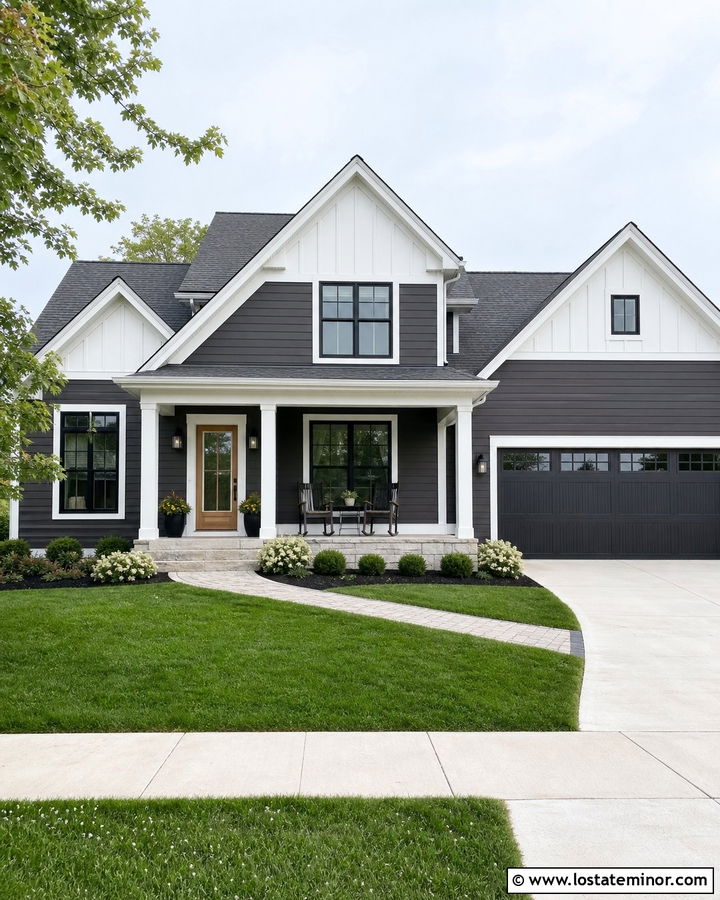
Crisp white gives a charcoal gray modern farmhouse the clean contrast this popular exterior needs. Use charcoal horizontal lap siding across the main facade, then add white board-and-batten siding beneath the front porch. A white full-view storm door should match the window trim, porch columns, fascia, and garage door. Behind it, install a medium-stained oak entry door to bring warmth into the neutral palette. Black window frames and simple black porch lights add another layer without making the house feel overly dark. Complete the exterior with a weathered gray shingle roof, pale stone porch foundation, and wide concrete walkway. This combination works especially well when the front yard has soft green shrubs, ornamental grasses, and tidy foundation beds.
2. Charcoal Grey Modern House With Black Storm Door
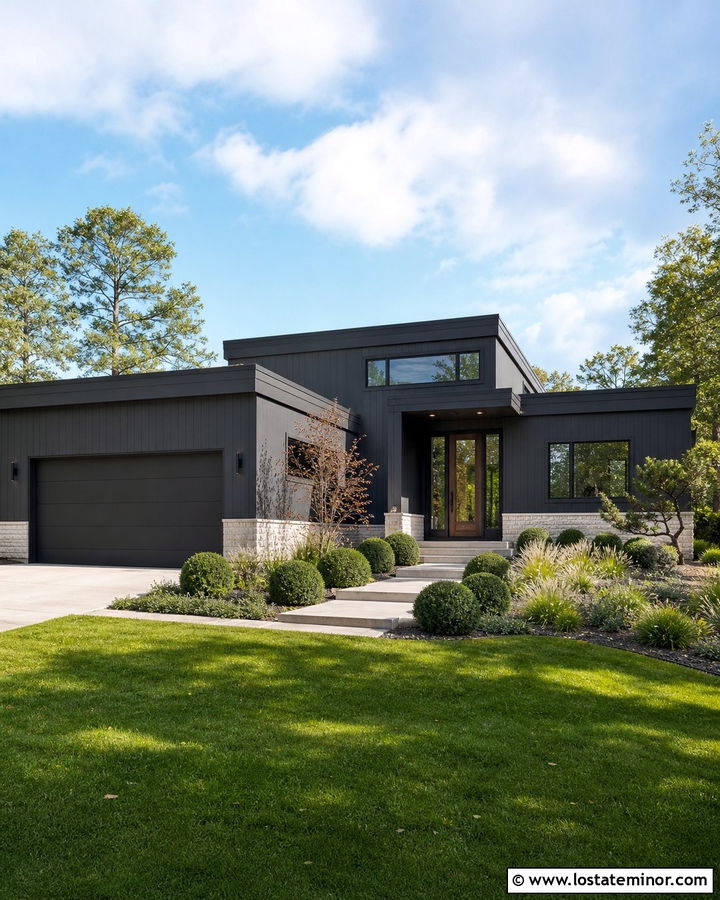
A streamlined black storm door makes a charcoal gray modern house look sharp and intentional. Choose a narrow aluminum frame with one large glass panel so the primary entry door remains visible. A flat-panel front door in natural walnut adds warmth against the dark siding. Continue black across the window frames, roof edging, address numbers, and contemporary wall lights. Charcoal vertical siding can cover the main volumes, while light gray concrete or limestone softens the foundation. Avoid adding too many decorative colors. Instead, rely on different textures to create depth. A pale concrete walkway, black planters, low ornamental grasses, and sculpted evergreen shrubs provide a simple landscape. The finished exterior feels bold, balanced, and welcoming rather than heavy or flat.
3. Charcoal Grey Craftsman With Wood Storm Door
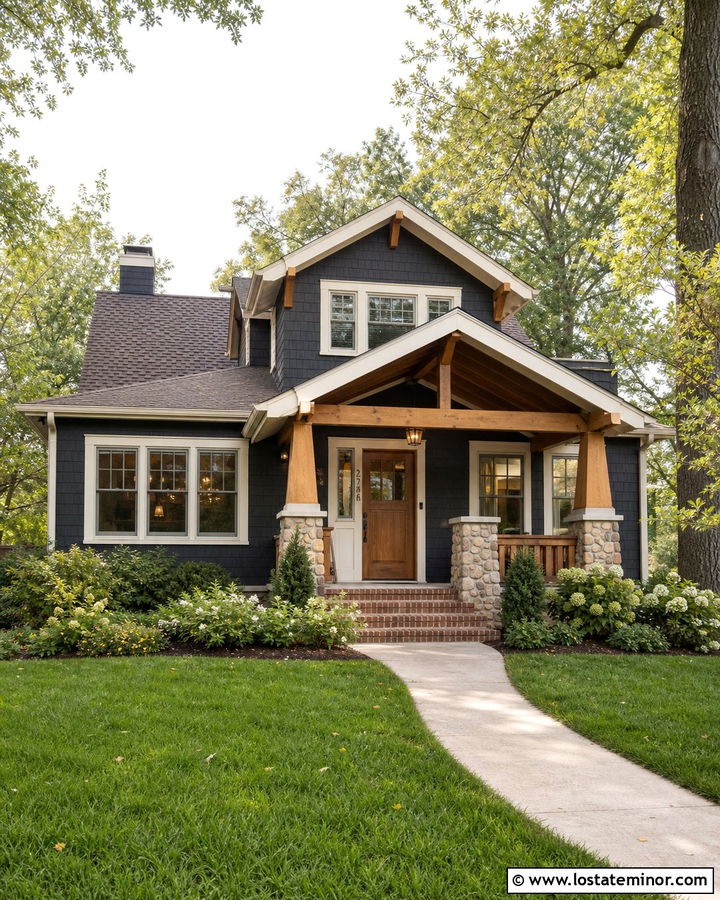
Warm wood instantly softens the deep tone of a charcoal gray Craftsman exterior. Select a custom wood storm door with a large glass upper panel and a solid lower rail. Stain it medium cedar or honey oak to coordinate with porch beams, tapered columns, and the main front door. Cream trim around the windows and roofline creates gentler contrast than pure white. Add a stone porch base containing warm gray, tan, and brown tones to connect the siding with the wood. A dark brown architectural shingle roof completes the palette without introducing a harsh black surface. Craftsman lanterns in aged bronze can repeat the storm door hardware. Finish with brick steps, layered shrubs, and a curved walkway for a comfortable, established curb-appeal look.
4. Charcoal Grey House With Bronze Storm Door
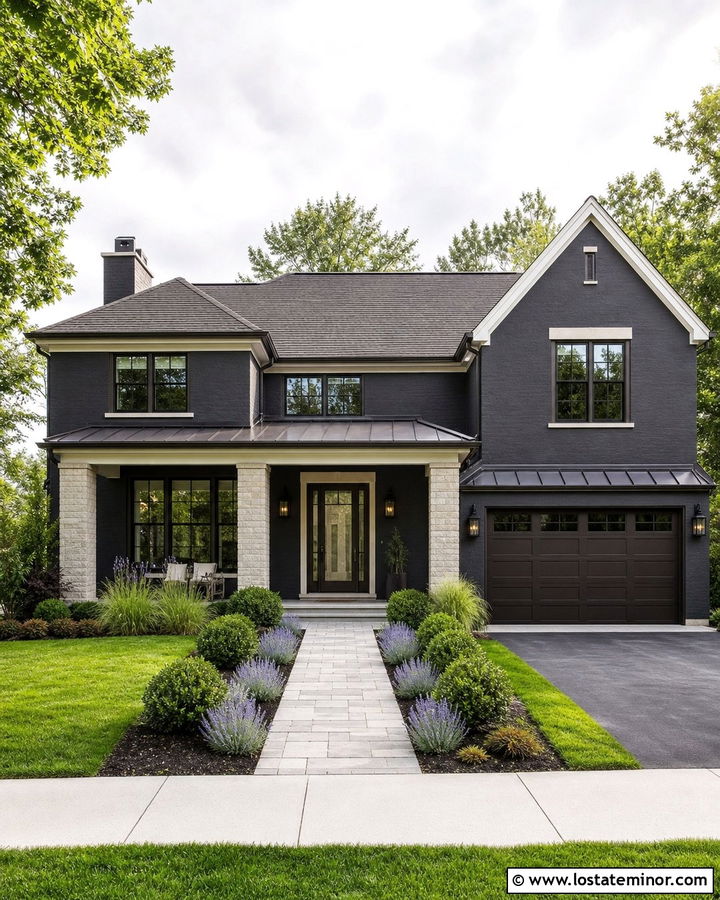
Bronze provides subtle warmth without taking attention away from a charcoal gray facade. It is an excellent finish for a transitional home with simple architecture and mixed natural materials. Use a dark bronze full-glass storm door over a warm ivory front door. Repeat the bronze on porch lights, gutters, door hardware, and window frames. Soft white trim keeps the roofline and windows easy to see against the dark siding. Introduce buff limestone around the porch columns or lower foundation for a lighter visual break. A medium brown roof brings the warm and cool shades together. Keep the landscaping relaxed with boxwood, lavender, ornamental grasses, and a straight stone walkway. The result feels coordinated, understated, and suitable for both newer and older homes.
5. Charcoal Grey Colonial With Red Storm Door
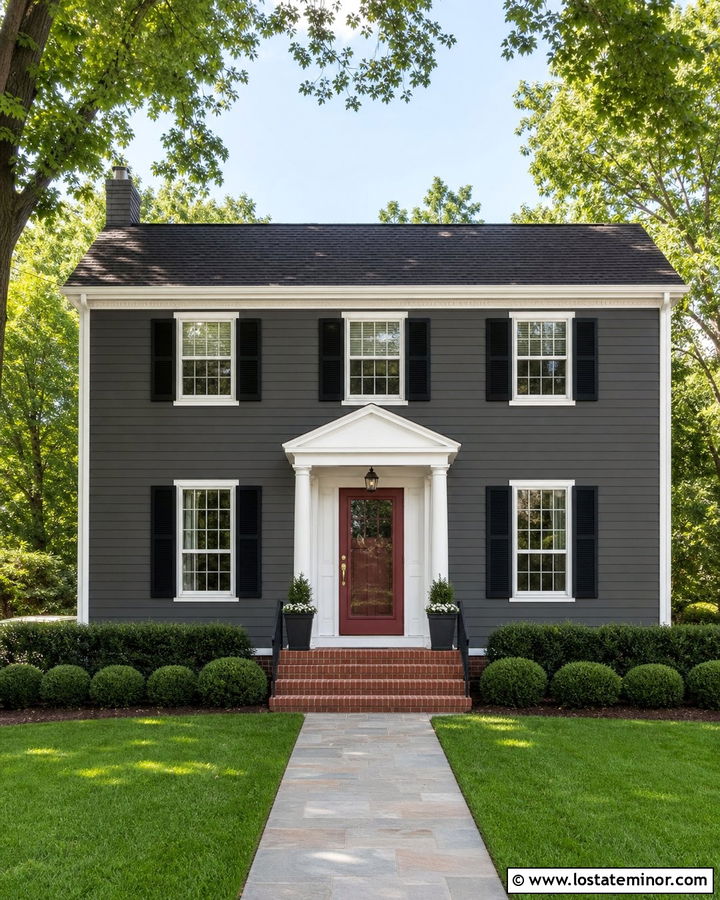
Could a red storm door work with charcoal gray siding? On a symmetrical Colonial facade, it can create an attractive and traditional focal point. Choose a muted brick red or deep cranberry rather than a bright primary red. Match the storm door frame to the red front door behind it so the entrance reads as one layered feature. Use classic white trim on the windows, corner boards, columns, and decorative entry surround. Black shutters and a black shingle roof reinforce the home’s formal structure. Brass door hardware and lantern-style lights add a warm finishing detail. Red brick steps can repeat the entry color naturally. Keep the front landscaping balanced with clipped hedges, matching planters, and a centered walkway leading directly toward the storm door.
6. Charcoal Grey Cape Cod With Navy Storm Door
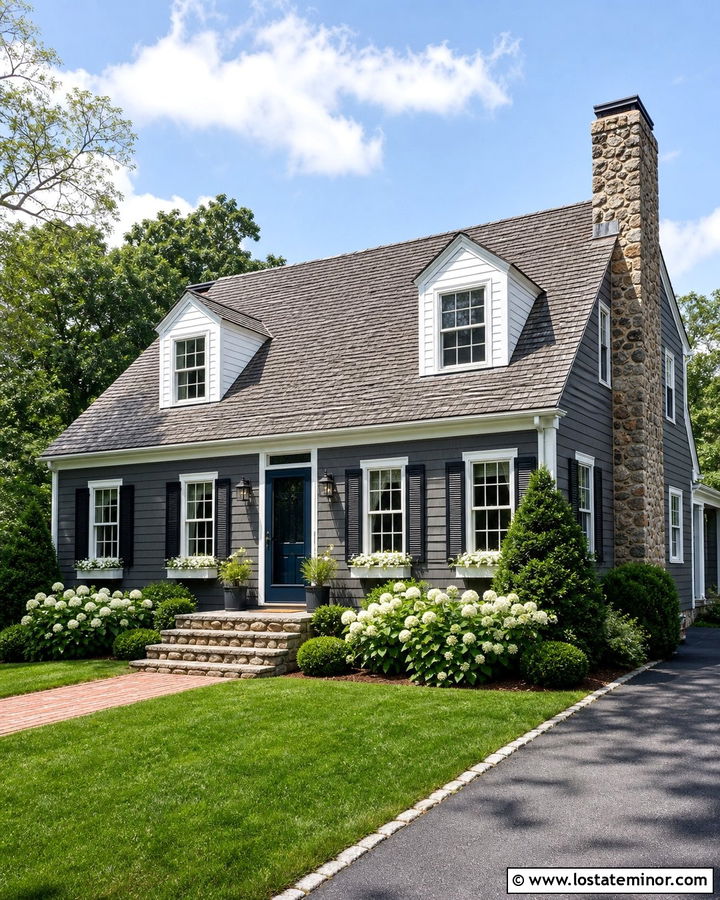
A navy storm door adds noticeable color while maintaining the composed character of a charcoal gray Cape Cod. Select a full-view model in deep navy blue and place it over a matching six-panel entry door. The two blue surfaces will appear unified even when the glass catches reflections. Use bright white trim around the dormers, windows, eaves, and door casing. White window boxes can lighten the facade and provide space for seasonal greenery. A gray cedar-look roof supports the coastal influence without making the color palette too literal. Natural fieldstone around the steps or chimney introduces texture and age. Finish the exterior with a brick walkway, low hydrangeas, and simple foundation shrubs. This complete scheme feels colorful, traditional, and easy to maintain visually.
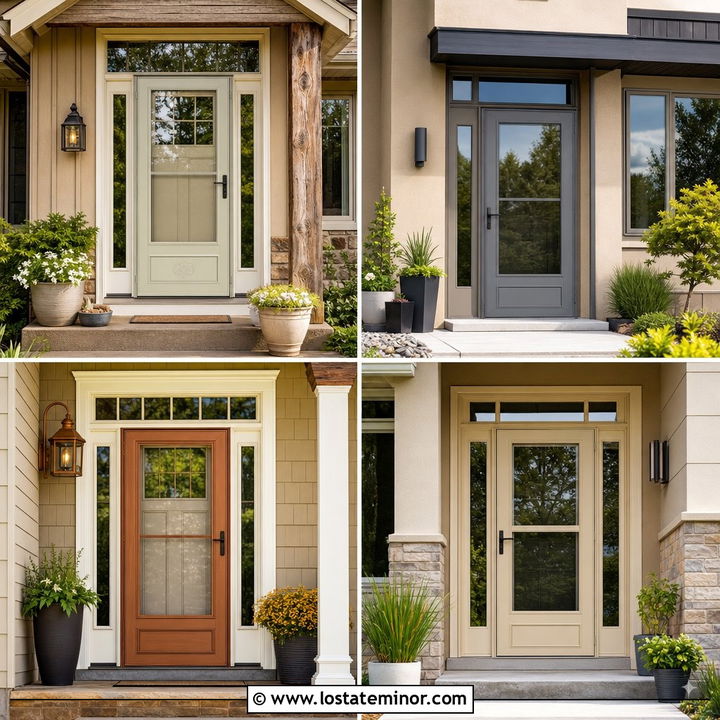
7. Charcoal Grey Bungalow With Sage Green Storm Door
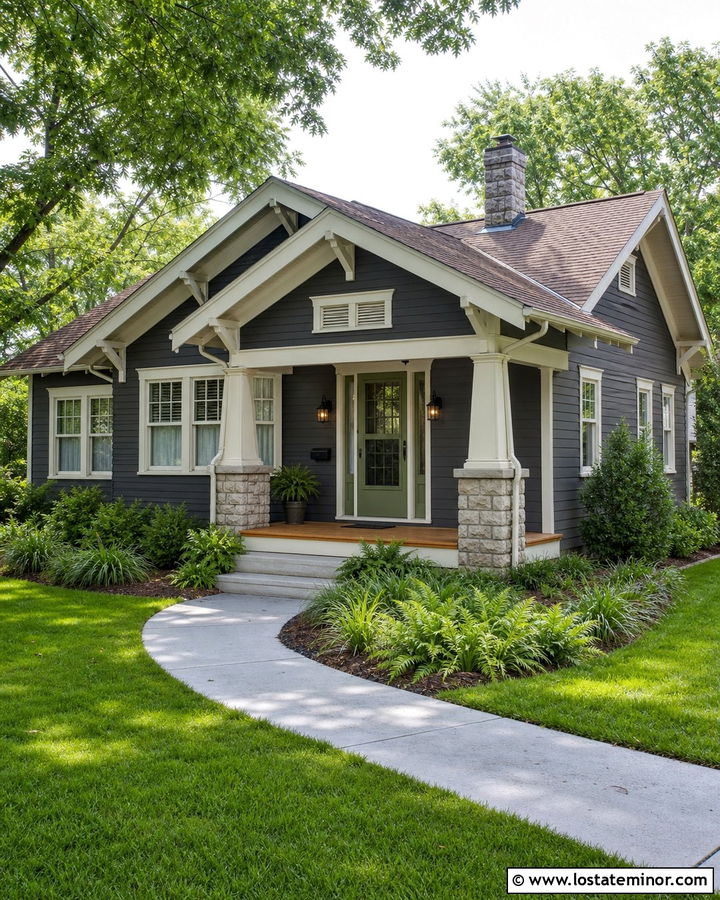
Soft sage green offers an earthy contrast to charcoal gray bungalow siding. It works best when the yard contains established trees, layered plants, or natural stone. Paint the full-view storm door and the main entry door the same muted sage shade for a calm, connected entrance. Use warm off-white on the porch columns, window trim, exposed rafters, and fascia. Cedar porch flooring and stained wood steps prevent the exterior from feeling too cool. Add river-rock or fieldstone column bases containing gray and warm beige tones. A dark brown roof will support the natural palette more softly than solid black. Bronze lights, clay planters, ferns, and curved planting beds complete this welcoming bungalow exterior while keeping the storm door clearly visible from the street.
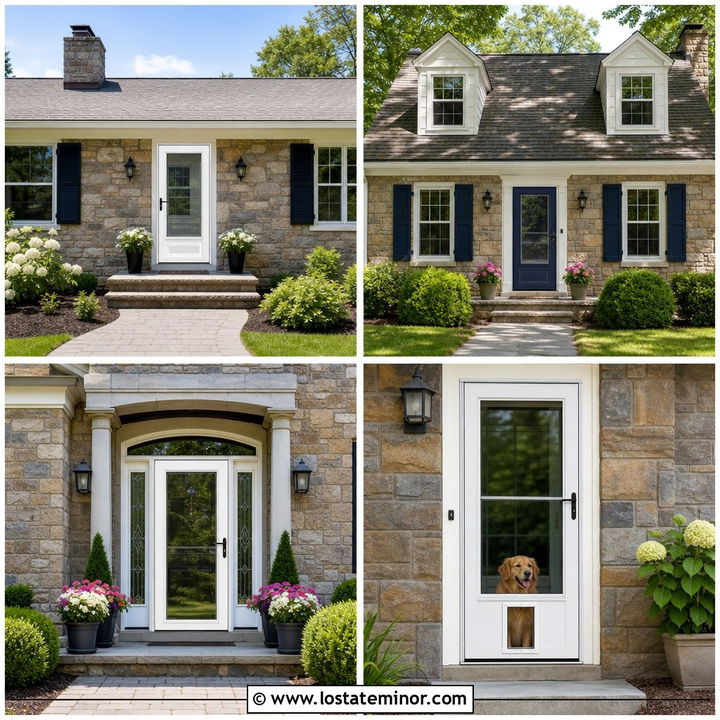
8. Charcoal Grey House With White Storm Door And Black Shutters
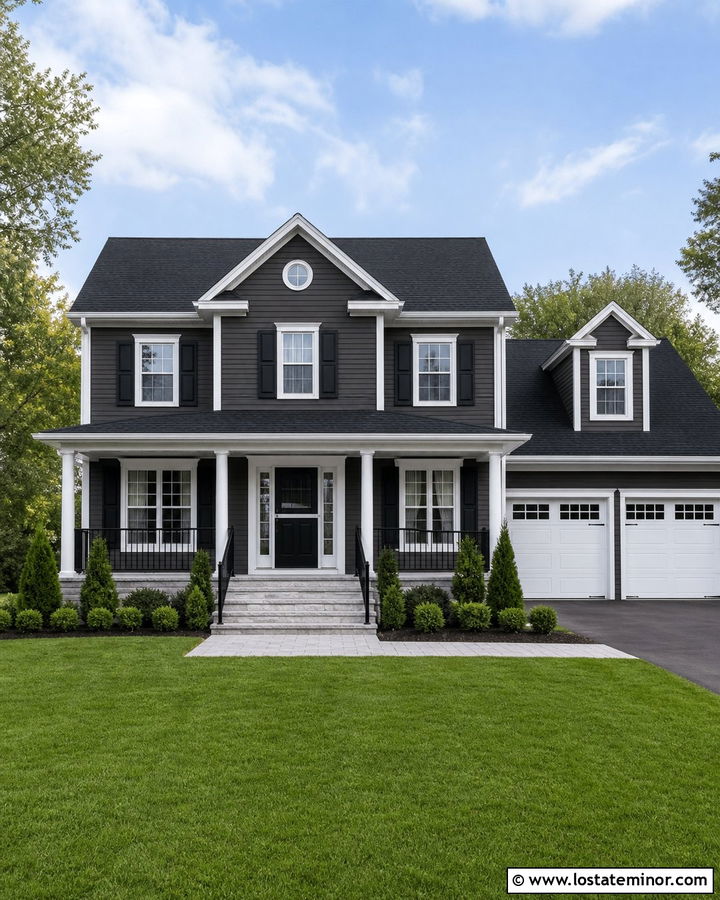
Three neutral colors can create plenty of depth when they are assigned carefully. Cover the main house in charcoal gray siding, use bright white for the storm door and architectural trim, and reserve black for the shutters, roof, and smaller accents. Behind the storm door, a black front door makes the entry feel connected to the shutters. The white frame clearly outlines the glass and prevents the dark door from disappearing into the facade. This scheme is especially effective on traditional two-story homes with evenly spaced windows. Add pale gray porch stone, black metal railings, and white garage doors. Green foundation shrubs and a broad lawn soften the high contrast. The completed house looks crisp, orderly, and attractive throughout every season.
9. Charcoal Grey House With Matching Storm Door
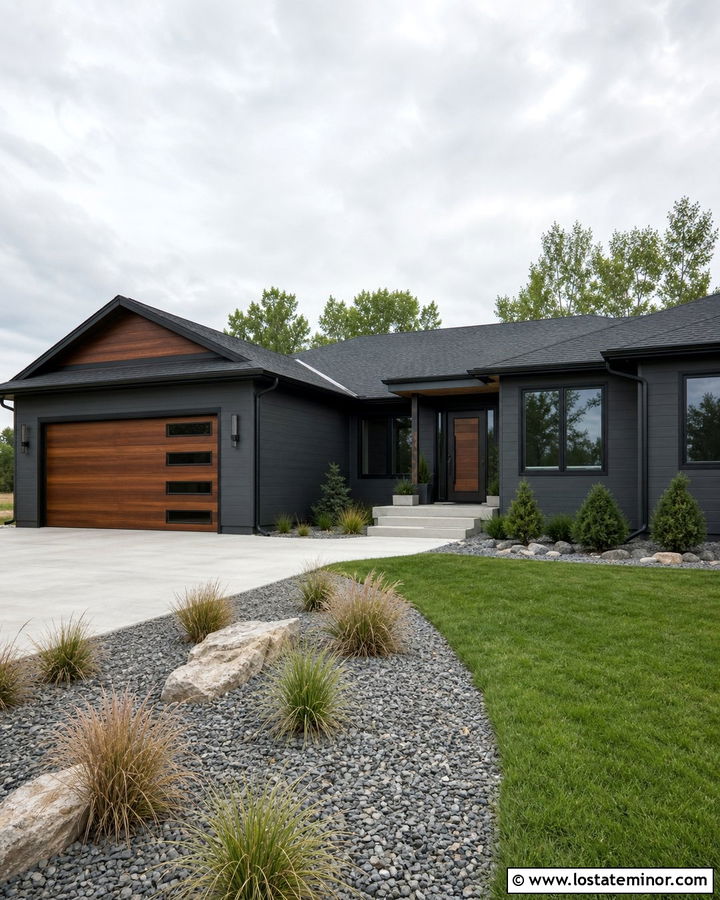
A monochromatic entrance can make a compact exterior appear cleaner and less visually cluttered. Match the storm door frame closely to the charcoal gray siding, then place a warm wood front door behind the glass. The matching frame blends into the facade, allowing the wood grain to become the natural focal point. Use medium charcoal trim around the windows, with black reserved for the roof, gutters, and light fixtures. This approach works particularly well on contemporary ranch homes and narrow urban houses. Add horizontal cedar panels near the porch or garage to repeat the front door’s warmth. Pale concrete steps and a light gravel bed balance the darker surfaces. Minimal plantings with grasses and compact evergreens maintain the exterior’s streamlined, cohesive character.
10. Charcoal Grey Rustic House With Copper Storm Door
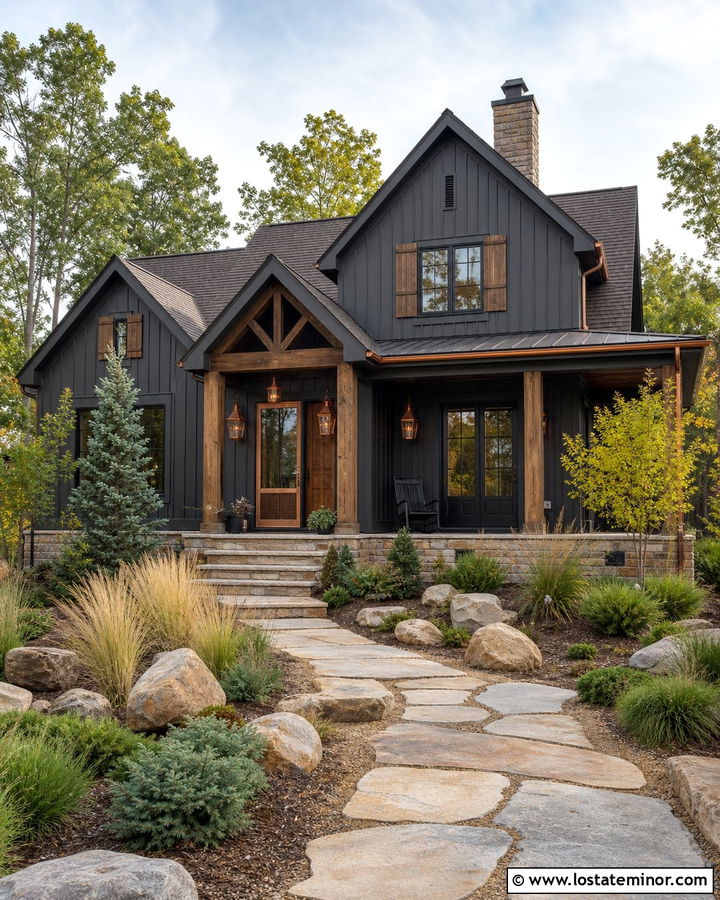
A copper-colored storm door can bring distinctive warmth to a charcoal gray rustic exterior. Choose a powder-coated frame in an aged copper or reddish bronze finish rather than a highly polished metallic surface. Pair it with a dark-stained wood front door and repeat the warm metal on the porch lanterns, gutters, and downspouts. Charcoal board-and-batten siding provides a sturdy background, while rough-cut stone around the foundation gives the facade natural variation. Timber porch posts and exposed brackets reinforce the rustic character. Use a brown-black roof that connects with both the siding and wood. Flagstone steps, native grasses, and evergreen shrubs complete the setting. The copper accents should appear selectively, creating warmth without turning the exterior into an overly themed design.
11. Charcoal Grey Traditional House With Cream Storm Door
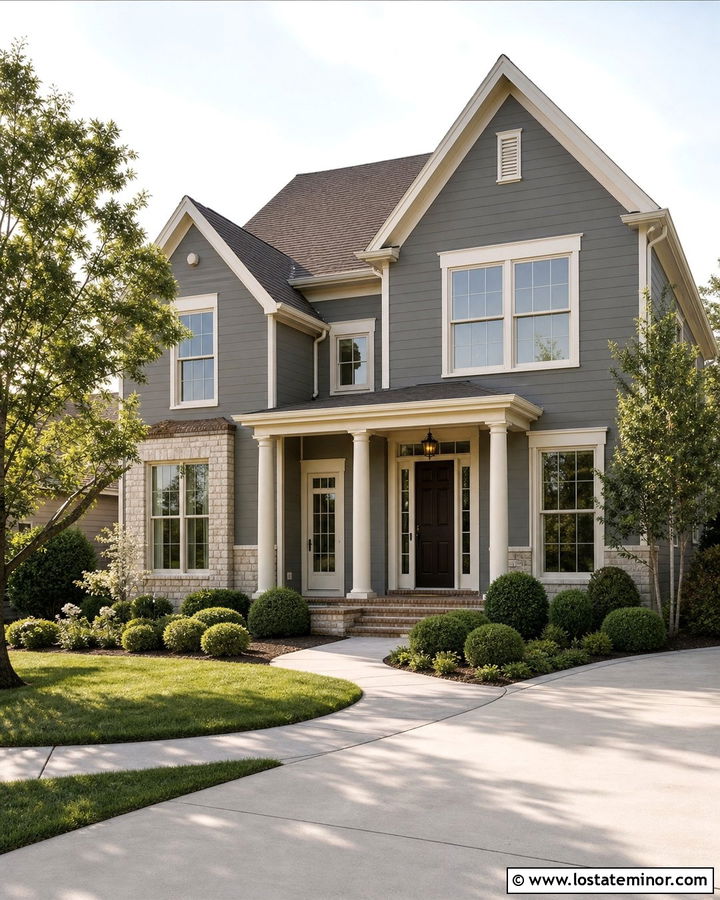
Cream is a softer alternative to bright white and can make charcoal gray siding feel warmer. Paint the storm door, window trim, porch columns, fascia, and garage door the same creamy off-white. Place a dark chocolate brown entry door behind the glass to add depth without introducing a completely separate color. This palette works beautifully on a traditional home with detailed moldings and a welcoming covered porch. Choose a warm gray-brown roof rather than a blue-gray one. Tan brick steps or limestone accents can connect the cream details to the darker body color. Antique brass hardware and warm bronze lighting provide subtle decoration. Finish with rounded shrubs and a gently curved walkway for a refined exterior that remains comfortable and approachable.
12. Charcoal Grey Ranch With Teal Storm Door
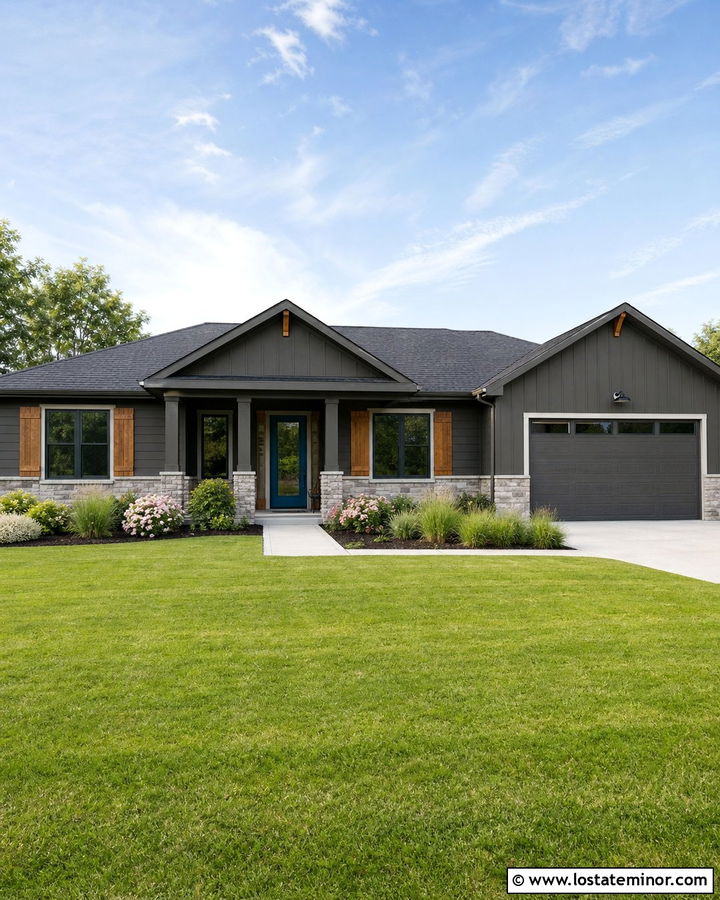
A teal storm door can give a simple charcoal gray ranch house an energetic focal point. Choose a deep, slightly muted teal that remains rich in strong daylight. Paint the main front door the same color so the two layers look planned rather than mismatched. Use warm white trim on the windows, roofline, and door casing. Natural cedar shutters or a cedar garage door can balance the cool teal and gray surfaces. Add light gray stone across the lower portion of the facade to create texture and make the long ranch elevation feel more varied. A charcoal roof, black lights, and modern house numbers keep the remaining details quiet. Low grasses, flowering shrubs, and a wide concrete path help the colorful entrance feel integrated into the whole property.
13. Charcoal Grey Cottage With Yellow Storm Door
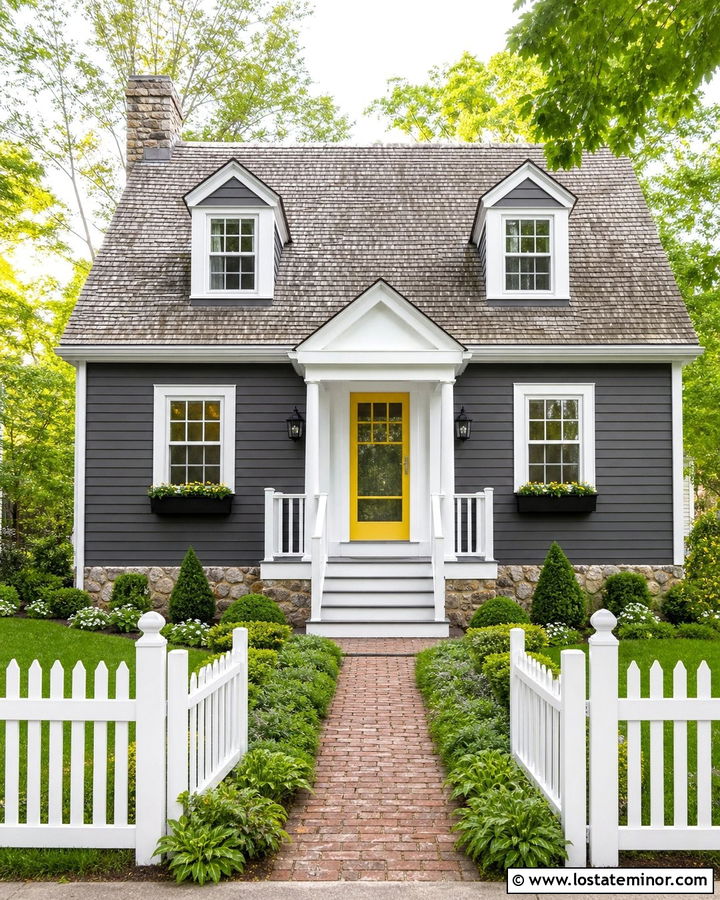
Sunflower yellow produces cheerful contrast against a charcoal gray cottage without requiring a large amount of color. Use it on a full-view storm door and matching front door, then keep the surrounding casing crisp white. White trim can continue across the windows, eaves, porch railing, and small gable details. A weathered gray roof keeps the upper portion calm, while a natural stone foundation introduces soft beige and gray variation. Consider black window boxes and porch lights for definition. Yellow flowers are not required; green foliage and white blooms may create a more balanced garden. A short brick path, picket-style gate, and layered cottage planting complete the exterior. The result feels friendly and memorable while allowing the charcoal siding to remain the dominant architectural color.
14. Charcoal Grey Split-Level With Blue Grey Storm Door
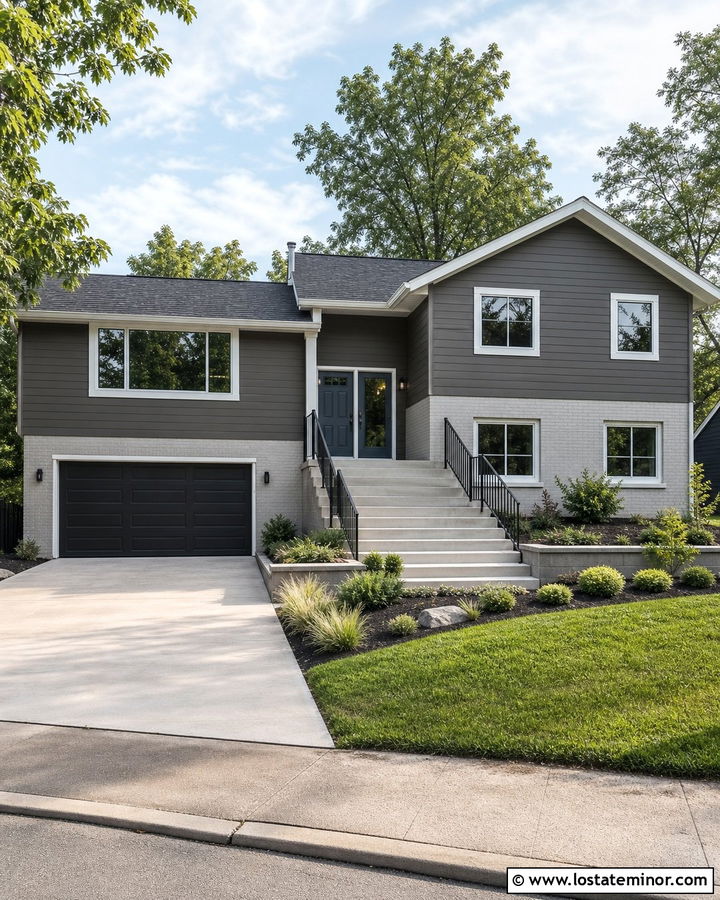
Blue-gray creates a low-contrast entrance that suits the long horizontal lines of a split-level home. Choose a smoky blue-gray storm door with a full glass panel and pair it with a slightly deeper blue front door. Paint the upper siding charcoal gray while using pale gray brick or stone on the lower level. White trim around the windows keeps both sections connected. Black railings, gutters, and exterior lights provide narrow points of contrast. If the garage occupies much of the facade, paint it charcoal to reduce its visual weight. A straight concrete walkway, broad steps, and simple rectangular planting beds reinforce the architecture. This thoughtful color distribution updates the house while respecting its original shape and familiar suburban character.
15. Charcoal Grey Midcentury House With Silver Storm Door
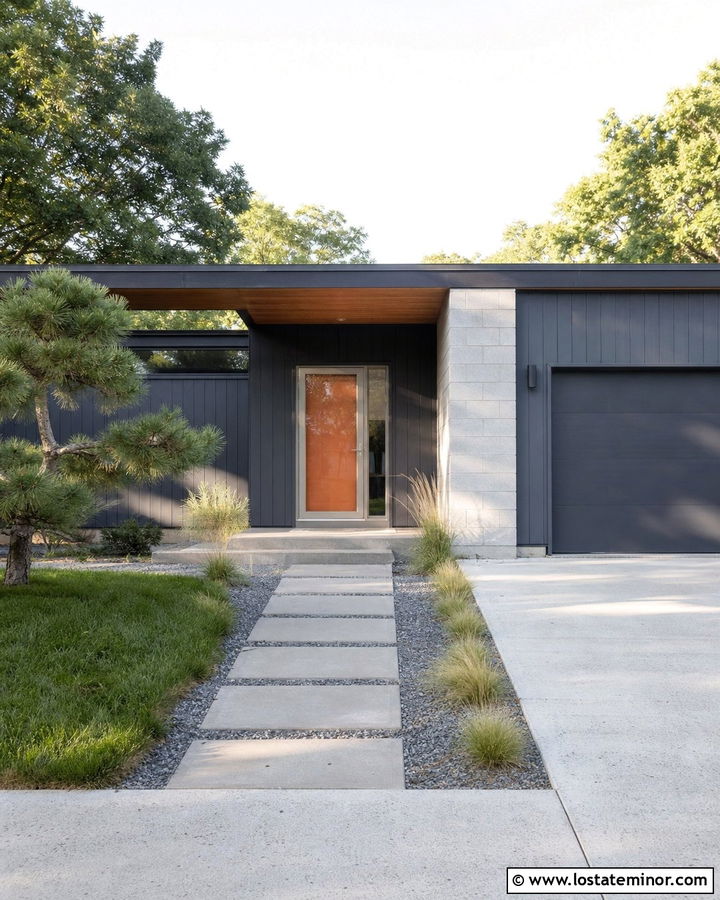
A brushed silver storm door can complement the clean materials often found on a midcentury home. Select a slim aluminum frame with uninterrupted glass and minimal decorative detailing. Place it over a warm orange-brown wood front door to create a strong but era-appropriate focal point. Use charcoal gray vertical siding on the main facade, then add light gray concrete block or pale stone near the entry. Black window frames create definition, while natural wood soffits bring warmth beneath the low roofline. Keep the roof dark and simple. Large concrete pavers, ornamental grasses, gravel beds, and a sculptural small tree can complete the landscape. The silver frame should connect quietly with metal address numbers and understated exterior lighting rather than becoming the only reflective element.
16. Charcoal Grey Tudor With Dark Brown Storm Door
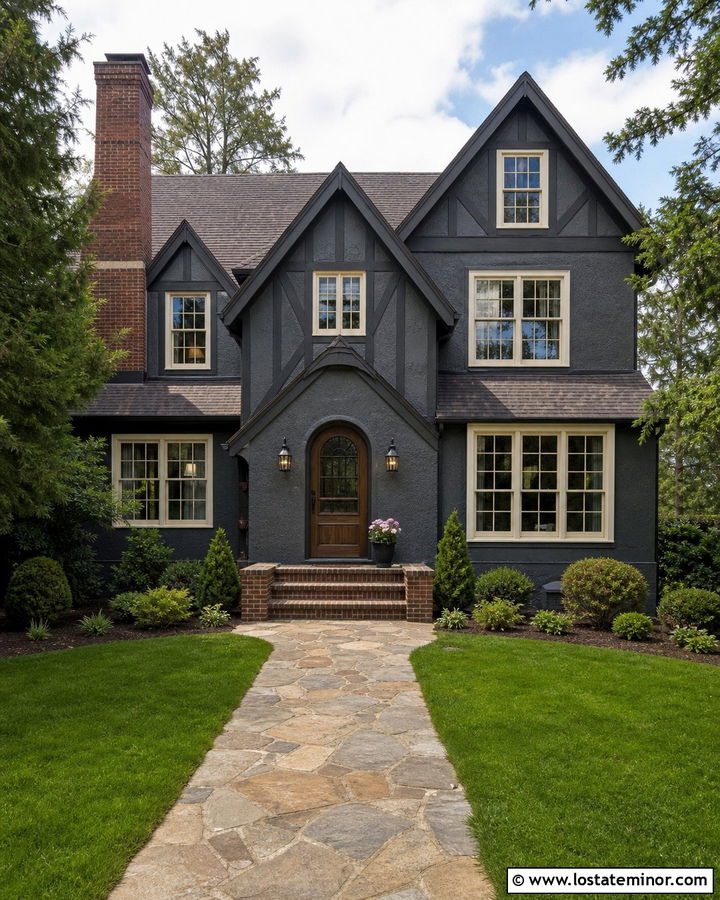
The strong lines of a Tudor exterior pair naturally with a deep brown storm door. Use charcoal gray stucco or siding between dark brown decorative timbers, then repeat the timber color on the storm door frame and arched entry door. A full-view glass panel prevents the layered doorway from appearing too heavy. Warm cream trim around selected windows adds enough light to define the facade. Choose a dimensional roof containing charcoal, brown, and muted gray tones. Aged brick around the chimney, steps, or lower walls supports the traditional architecture. Copper or bronze lanterns are preferable to bright silver hardware here. Finish the property with an irregular stone path, mature evergreens, and restrained foundation planting for a stately exterior with believable historic character.
17. Charcoal Grey House With Burgundy Storm Door

Burgundy brings deep color to charcoal gray siding while remaining more restrained than a bright red. Match a burgundy full-view storm door with a burgundy paneled entry door to give the front porch one clear focal point. Use soft white trim across the windows, columns, roofline, and garage. Black shutters and a charcoal roof maintain the darker foundation of the palette. Red-brown brick steps can bridge the burgundy entrance and neutral siding. This color combination fits Georgian, Colonial, and traditional suburban houses particularly well. Add brass hardware, black lanterns, and large symmetrical planters beside the doorway. Balanced hedges and a straight paver path strengthen the formal composition, ensuring the storm door looks integrated rather than like an unrelated colorful addition.
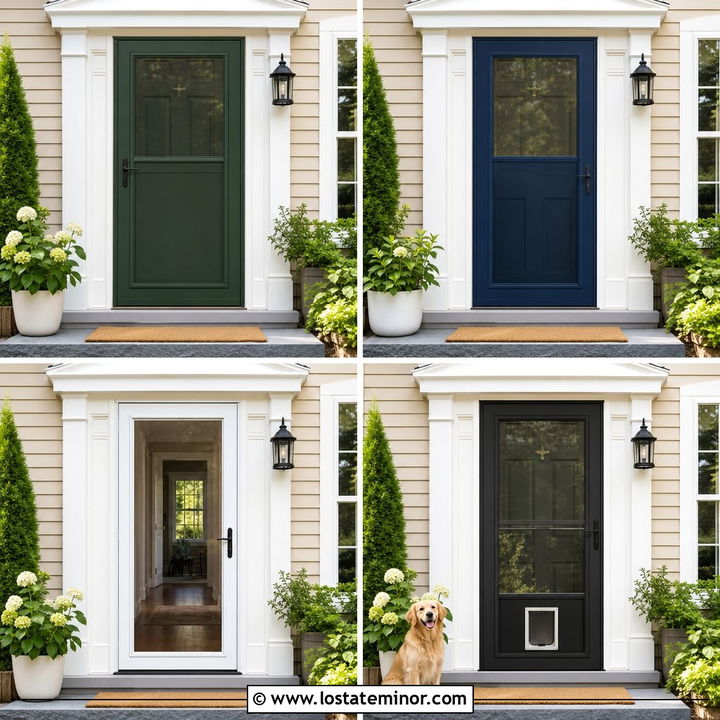
18. Charcoal Grey Craftsman With Forest Green Storm Door
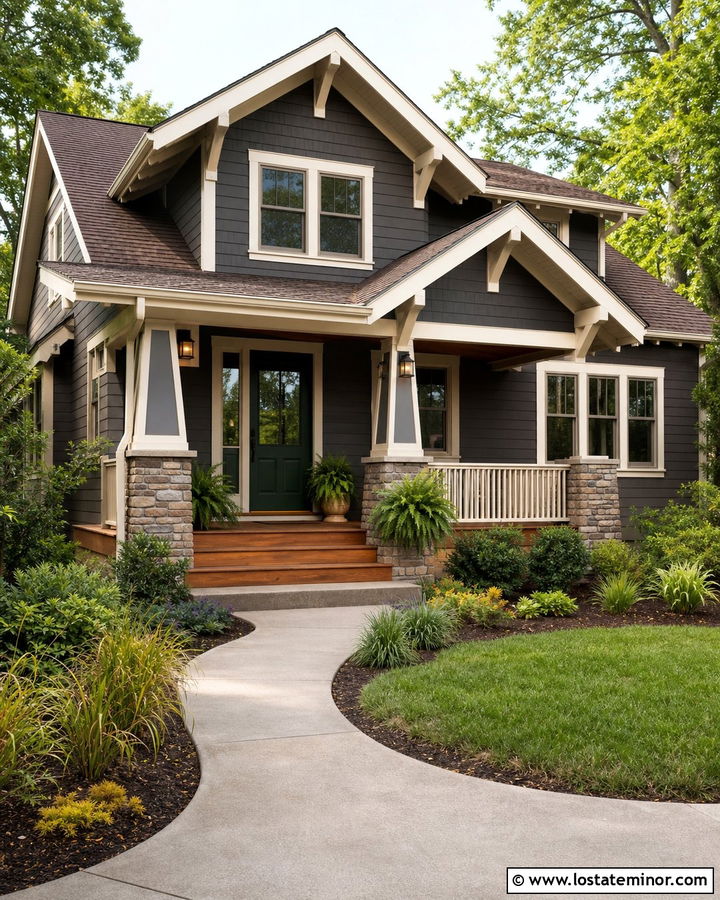
Forest green creates a grounded entry that works naturally with charcoal gray Craftsman siding. Select a deep green storm door with a broad lower rail and clear upper glass. Paint the main entry door the same green or choose dark-stained oak if more warmth is desired. Cream window trim, exposed rafters, and porch columns give the facade softer contrast. Use stacked stone around the column bases in gray, brown, and mossy beige tones. Cedar porch decking and a medium brown shingle roof complete the earthy palette. Bronze hardware and Craftsman lanterns will connect the green, gray, and wood finishes. Surround the porch with ferns, evergreen shrubs, and ornamental grasses so the storm door color feels tied to the landscape and the home’s architecture.
19. Charcoal Grey Farmhouse With Glass Storm Door
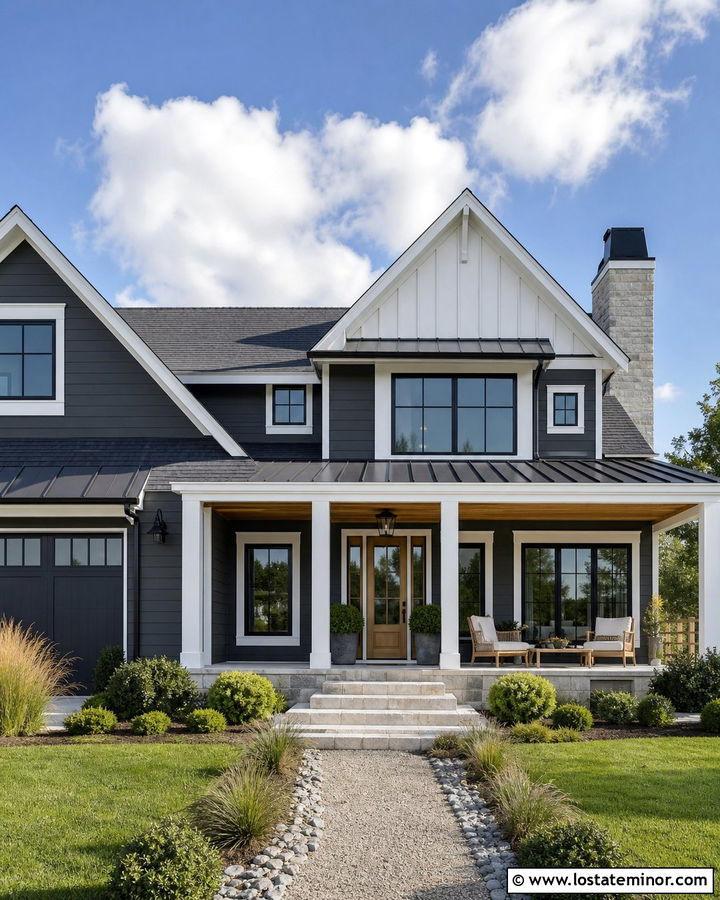
A nearly frameless glass storm door keeps the focus on a beautiful front door while providing a polished outer layer. On a charcoal gray farmhouse, choose a slim black or charcoal frame that visually disappears against the siding. Install a natural white oak entry door behind it, preferably with simple vertical planks or square glass panels. Use white trim on the porch columns, windows, fascia, and board-and-batten gables. A black metal porch roof can coordinate with the storm door frame and exterior lighting. Pale limestone steps add brightness near the entrance, while a cedar porch ceiling repeats the door’s warmth. Complete the setting with a gravel-edged walkway, clipped shrubs, and simple planters for a modern farmhouse exterior that feels detailed but not overdecorated.
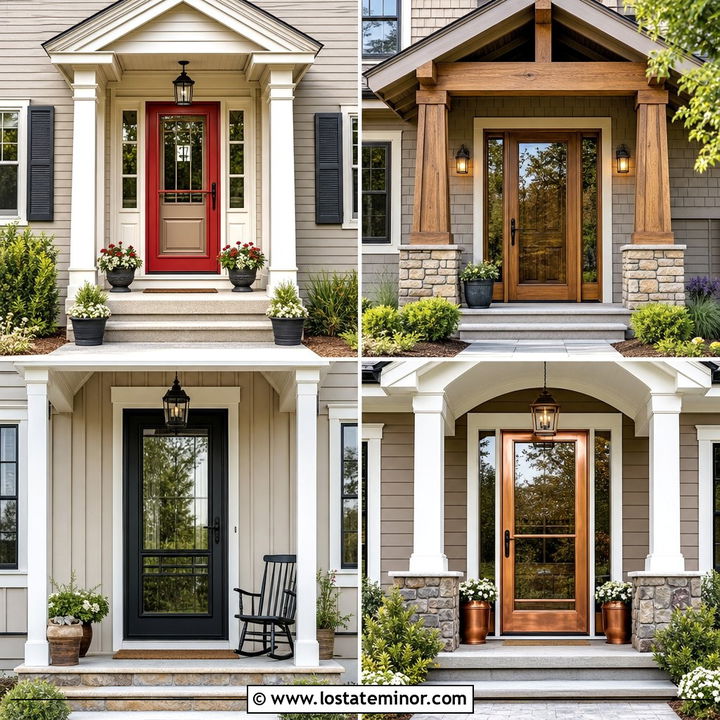
20. Charcoal Grey Coastal House With Retractable Screen Door
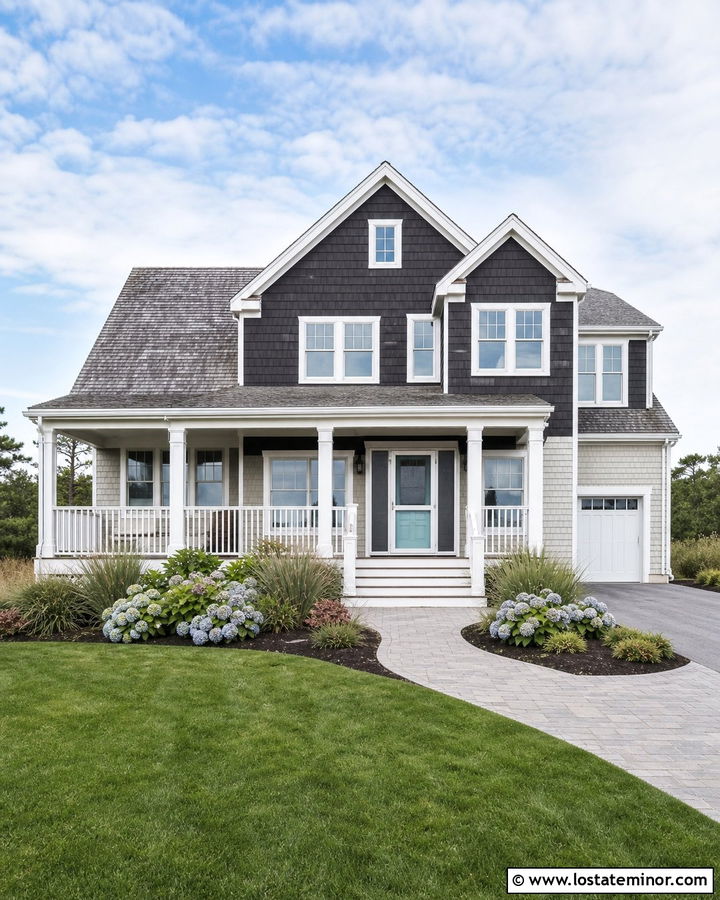
A retractable-screen storm door gives a charcoal gray coastal home a light and practical entry appearance. Select a white frame that matches the porch railing, window trim, columns, and roofline. Behind it, use a dusty aqua front door to introduce a gentle coastal color. Charcoal shingle-style siding can cover the upper floor, while lighter gray lap siding or pale stone grounds the lower level. Choose a weathered gray roof and brushed nickel door hardware for a clean finish. Avoid excessive nautical decoration. Instead, create the coastal mood through hydrangeas, beach grasses, natural wood porch furniture, and a light paver walkway. The completed palette remains sophisticated, and the screen mechanism stays visually connected to the white architectural details around the entry.
21. Charcoal Grey Colonial With Divided Light Storm Door
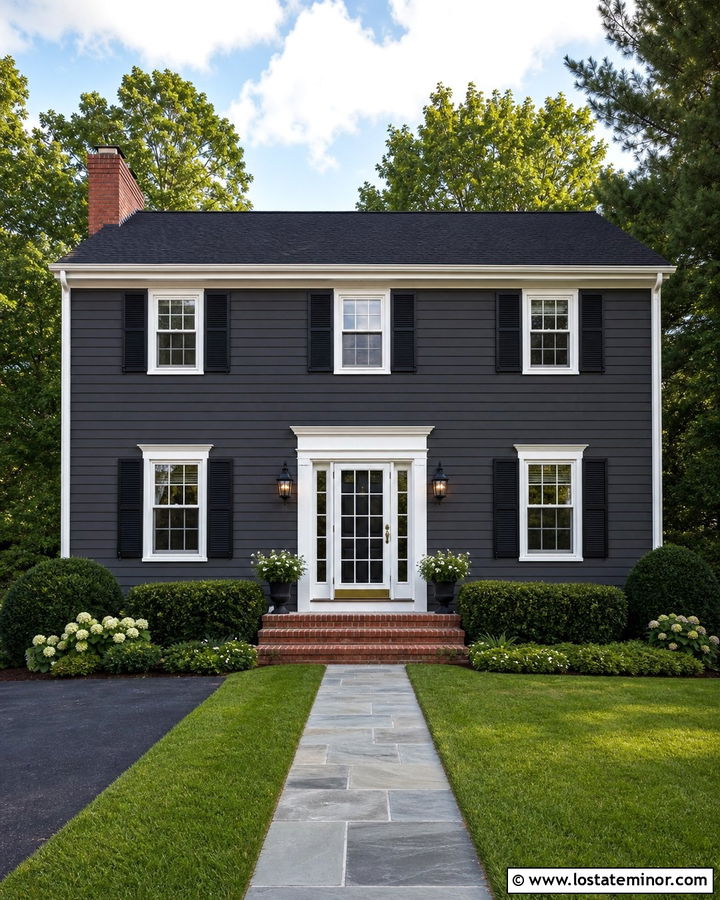
A divided-light storm door adds traditional structure to a charcoal gray Colonial facade. Choose a white door with evenly proportioned glass panes that align with the home’s multi-pane windows. A glossy black entry door behind it creates depth and ties into black shutters and a black shingle roof. Continue white across the window trim, columns, cornice, and decorative entry surround. Red brick steps and a brick chimney add warmth without competing with the grayscale palette. Use polished brass or aged brass hardware for a classic finishing touch. Because Colonial architecture values balance, place matching lights and planters on both sides of the doorway. Symmetrical hedges and a centered walkway complete the organized curb appeal while making the storm door feel architecturally appropriate.
22. Charcoal Grey Spanish House With Arched Storm Door
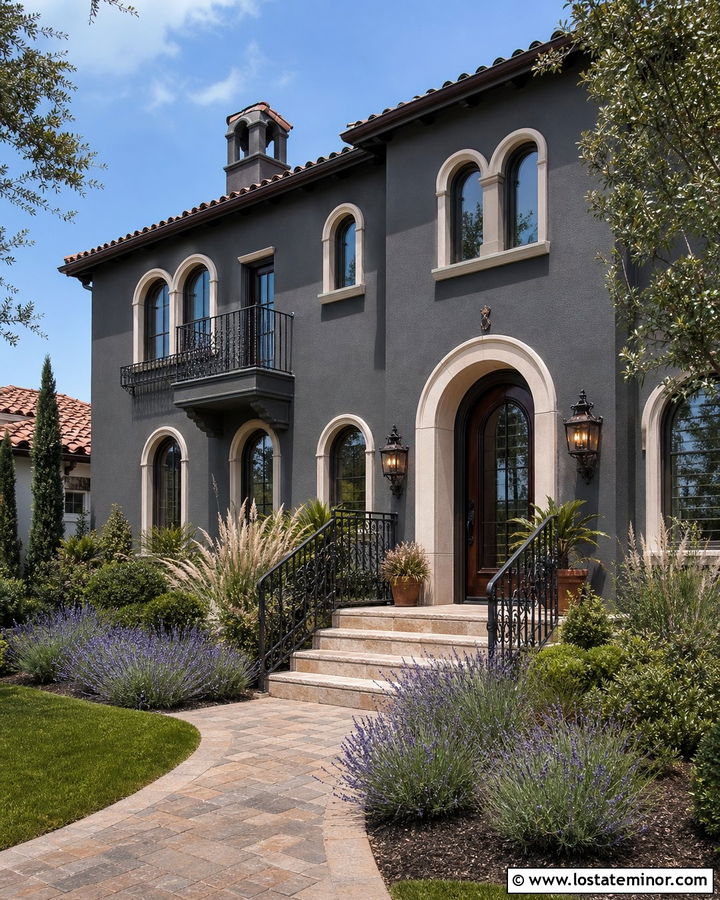
An arched storm door can protect the entry without hiding the defining shape of a Spanish-inspired home. Use a custom dark bronze frame with clear glass and place it over a warm wood arched front door. Charcoal gray stucco gives the house an unconventional but sophisticated body color. Cream trim around the arched windows and doors softens the contrast. Add a clay-toned or dark terracotta tile roof to introduce warmth above the gray walls. Wrought-iron railings, bronze lanterns, and natural stone steps support the architecture without overwhelming it. Keep landscaping suited to the design with lavender, low grasses, sculpted shrubs, and a textured paver walkway. Every element should emphasize the curved entrance and connect the storm door to the broader exterior palette.
23. Charcoal Grey Contemporary House With Black Storm Door
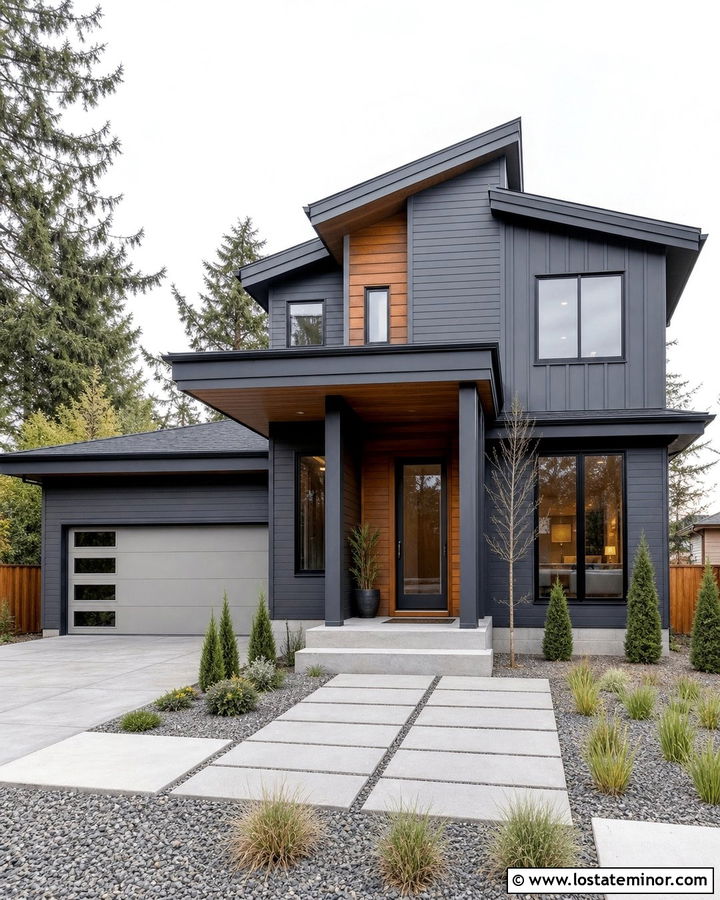
Black and charcoal can work together when warm materials interrupt the dark surfaces. Cover a contemporary two-story house in charcoal gray horizontal and vertical siding, then use a black full-view storm door over a cedar entry door. Repeat cedar on a recessed porch ceiling, privacy screen, or upper-level accent panel. Black window frames, gutters, and roof edges create a consistent outline. Light gray concrete around the garage and foundation prevents the overall exterior from feeling too dense. Choose a pale wood or medium gray garage door if it occupies a large portion of the facade. Finish with oversized concrete pavers, gravel, grasses, and carefully spaced evergreens. The storm door becomes part of a complete modern composition rather than a separate black rectangle.
24. Charcoal Grey House With Bronze Storm Door And Red Brick
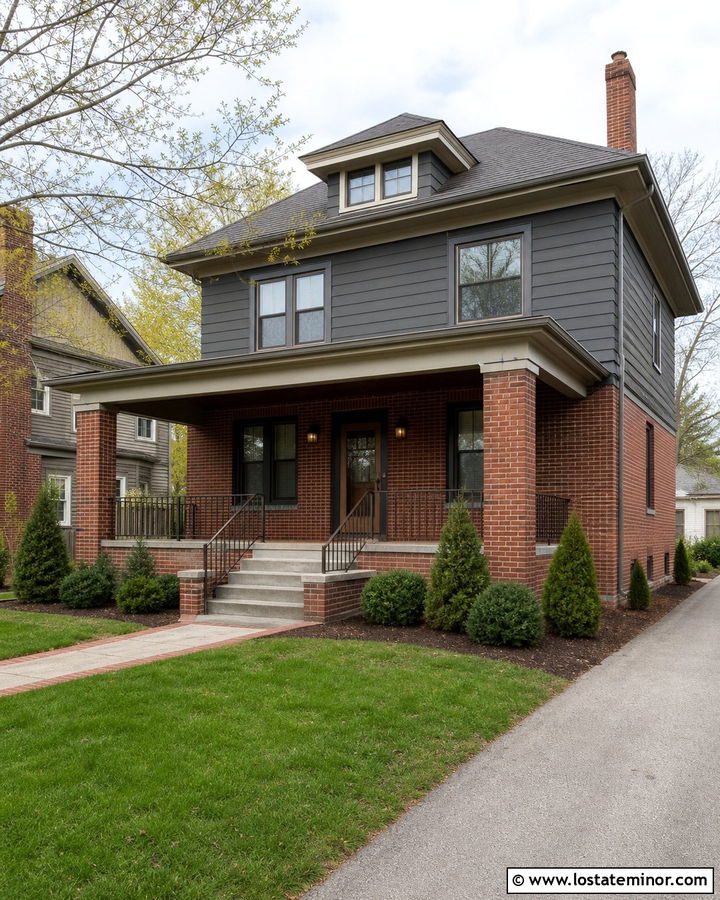
Original red brick can look richer when paired with charcoal gray siding and a bronze storm door. Keep the brick on the lower level, chimney, or porch columns, then apply charcoal gray to the upper siding. A dark bronze full-view storm door connects to the warm undertones of the masonry. Place a stained mahogany entry door behind it and repeat the bronze finish on lights, railings, and gutters. Cream trim is often more harmonious with traditional red brick than stark white. Use a roof containing brown and charcoal granules to unite all three major materials. A brick-edged walkway, green lawn, and simple evergreen foundation plants complete the scheme. This approach updates the house while allowing valuable existing masonry to remain visible.
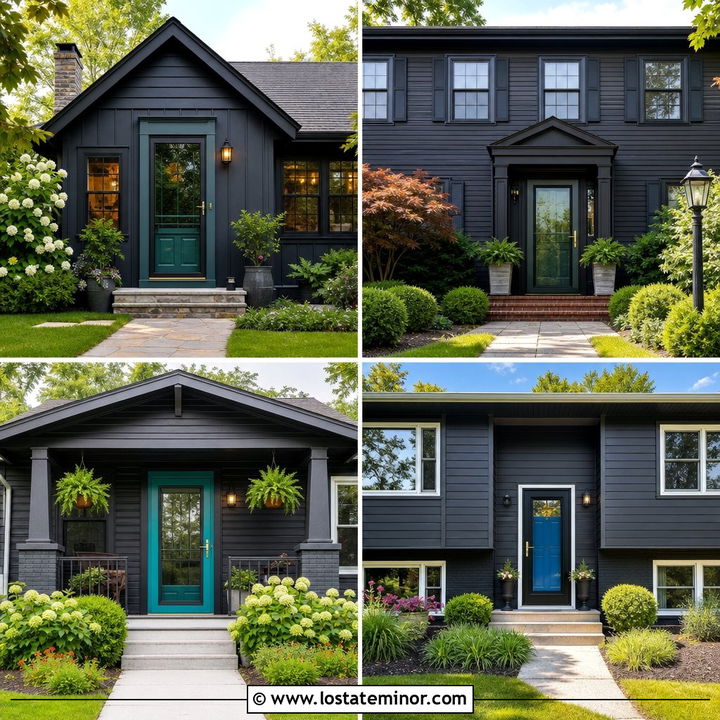
25. Charcoal Grey Stone Ranch With White Storm Door
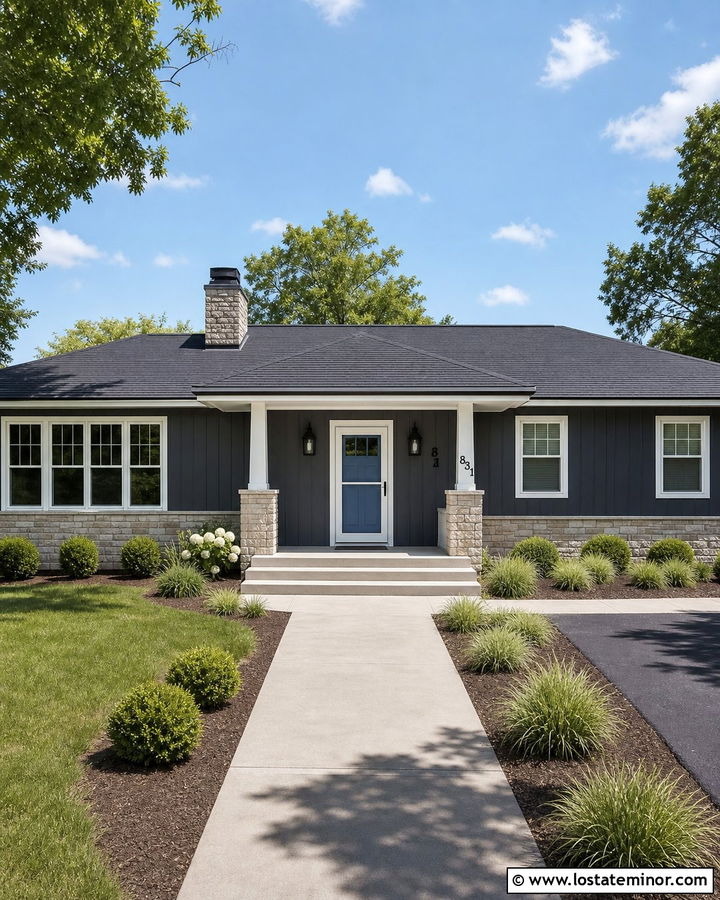
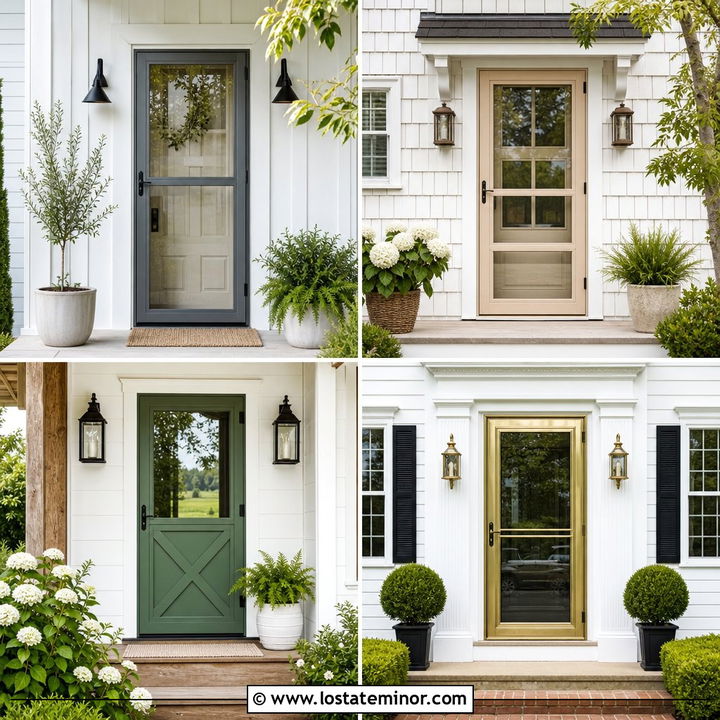
Imagine a low ranch facade where charcoal gray siding meets pale, rugged stone. A white storm door adds a clear, welcoming marker at the center of the composition. Match it with white window trim, fascia, and a simple garage door. Behind the glass, use a medium blue or natural wood front door for controlled color and warmth. Extend light limestone or gray fieldstone across the lower facade and around the porch supports. A medium charcoal roof connects with the siding, while black lights and house numbers provide clean definition. Because ranch houses often have wide front elevations, use repeating shrubs and ornamental grasses to break up the horizontal line. Broad concrete steps and a generous walkway make the storm-door entrance feel accessible and intentionally designed.
26. Charcoal Grey House With Storm Door And Matching Garage
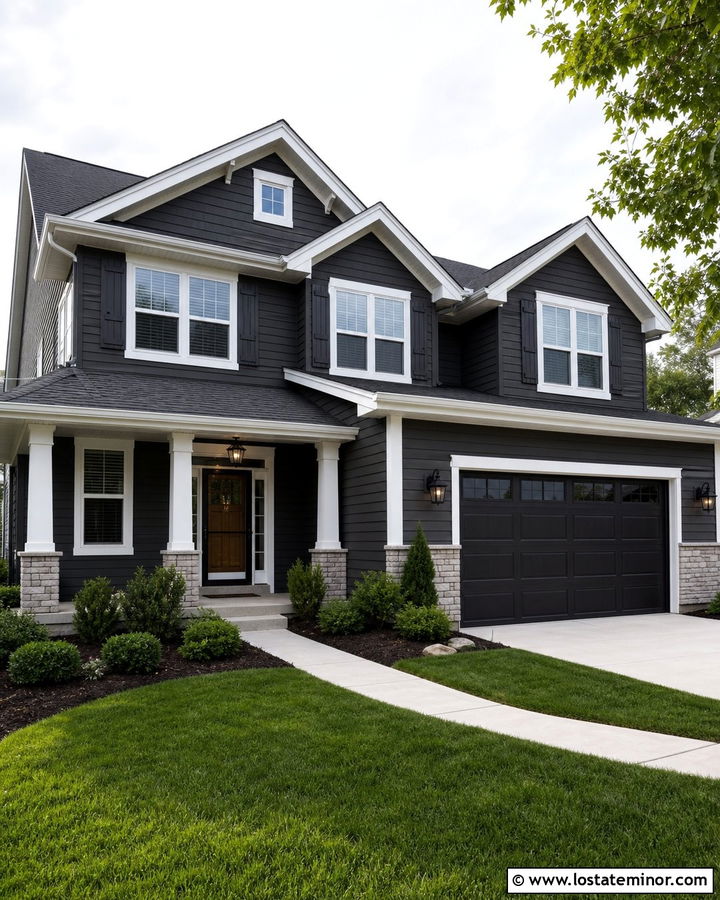
Matching the storm door to the garage can create rhythm across a wide suburban facade. Use charcoal gray siding, then select black for both the full-view storm door frame and paneled garage door. Keep the main front door warm by choosing walnut, cedar, or medium oak behind the glass. White trim around the windows, porch, and roofline prevents the black and charcoal surfaces from blending into one featureless mass. Add pale gray stone around the garage base and porch columns for texture. Black exterior lights and gutters reinforce the matching elements. A light concrete driveway, green lawn, and layered shrubs supply brightness at ground level. This scheme gives the large garage a deliberate role without allowing it to overpower the more inviting wood entrance.
27. Charcoal Grey House With Sandstone Storm Door
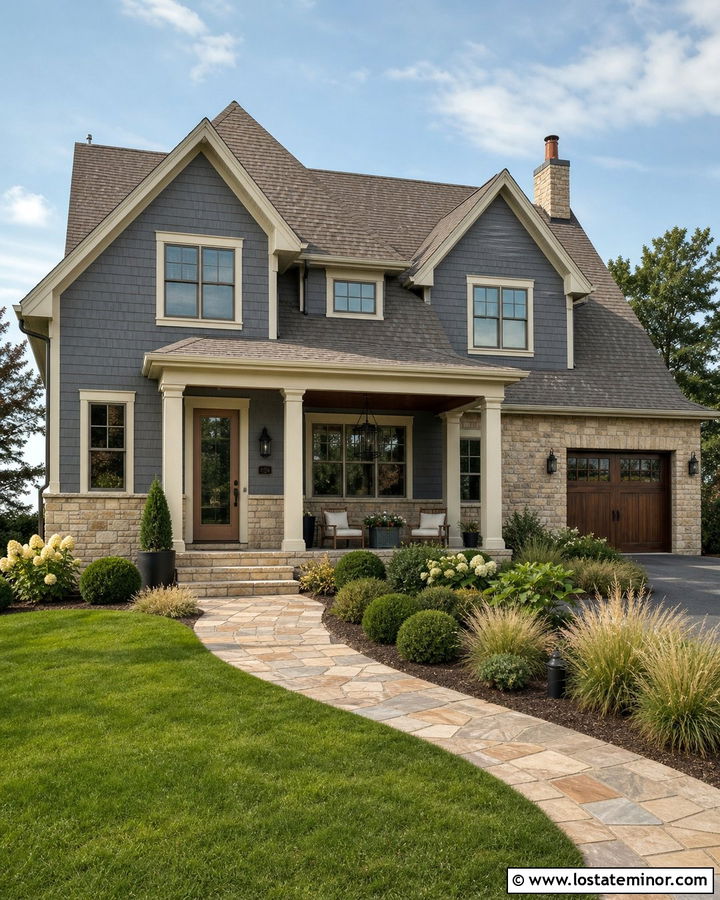
A sandstone-colored storm door creates warm, gentle contrast on a charcoal gray exterior. Its muted beige tone works especially well with tan stone, cream trim, and a brown-gray roof. Use the same sandstone finish on the main entry door or select a medium walnut door behind the clear glass. Paint the window casing, porch columns, fascia, and garage door warm cream. Add irregular limestone or ledgestone around the lower walls to connect the storm door color with the architecture. Bronze hardware and warm black lights can provide definition without introducing a cool metallic finish. Finish the yard with natural stone edging, rounded evergreens, ornamental grasses, and a curved walkway. The completed exterior feels softer than a strict black, white, and charcoal palette.
28. Charcoal Grey Porch With Blue Storm Door
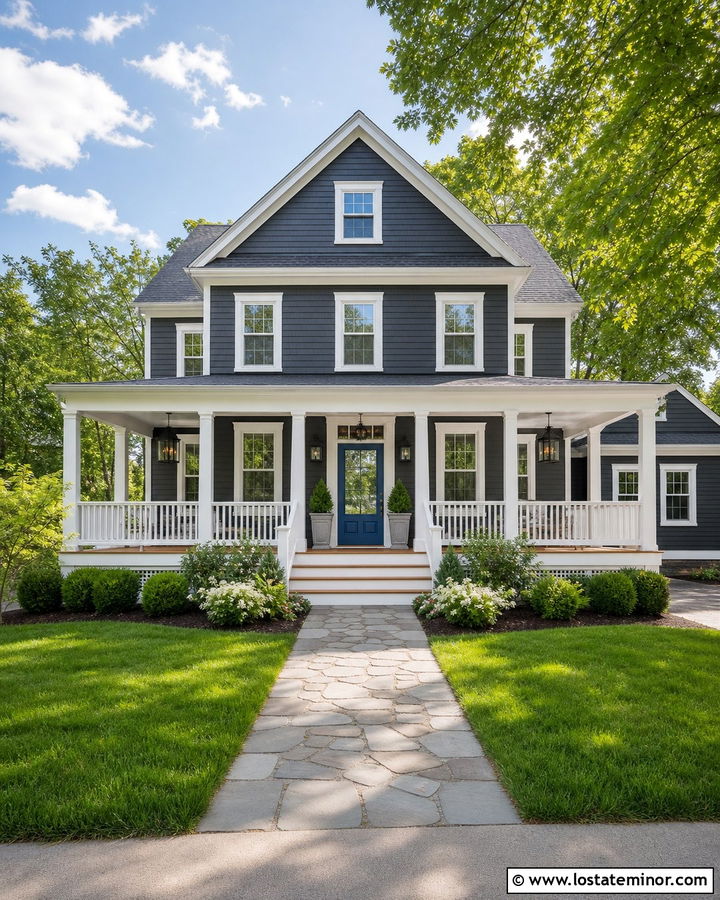
A rich blue storm door can give a deep charcoal gray porch an inviting focal point. Choose a saturated cobalt or classic medium blue rather than a gray-blue that may disappear against the siding. Paint the front door behind it the same shade for consistent color through the glass. Use bright white on the porch columns, railings, window trim, and ceiling to frame the darker surfaces. Natural wood porch flooring introduces warmth underfoot, while a black roof and black lights keep the upper details simple. White or light gray planters filled with green foliage can repeat the trim. A straight stone path, neat lawn, and flowering foundation shrubs complete a cheerful exterior in which the blue entrance feels connected to the entire porch composition.
29. Charcoal Grey House With Green Storm Door And Copper Lights
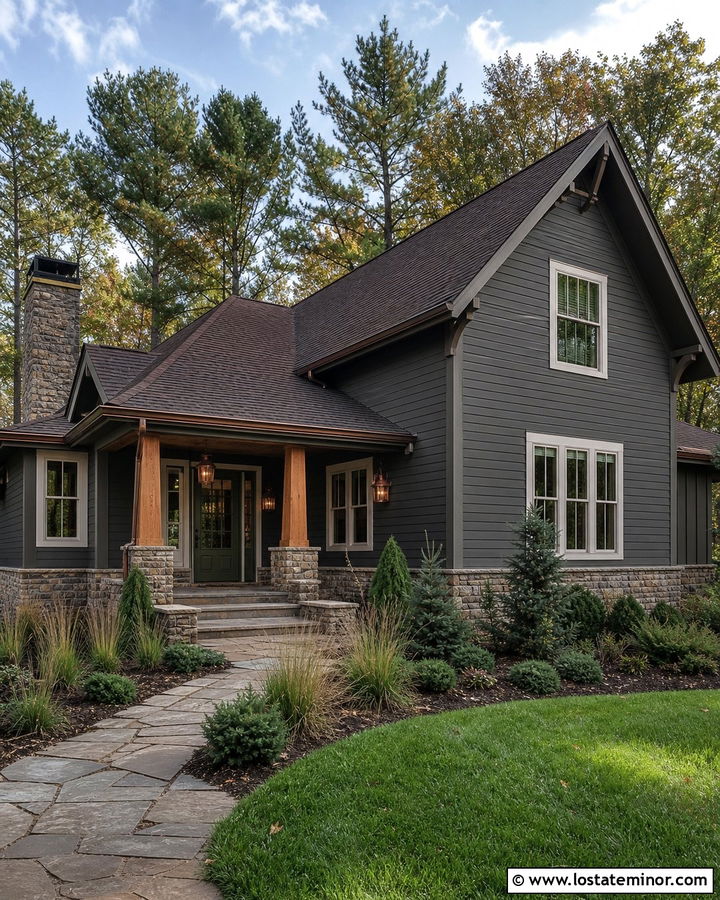
Deep olive green and aged copper create a warm, nature-inspired entrance against charcoal gray siding. Use olive on the full-view storm door and matching front door. Repeat the green sparingly on shutters or porch planters rather than across every detail. Warm white trim around the windows, columns, and eaves provides necessary contrast. Install aged copper lanterns beside the entrance and consider matching copper gutters if the architecture supports them. Cedar porch posts and gray-brown stone around the foundation help connect the organic colors. A dark brown roof completes the upper portion without introducing a stark black plane. Layered evergreens, native grasses, and a flagstone walkway make the palette feel grounded, cohesive, and well suited to a wooded suburban property.
30. Charcoal Grey Modern Ranch With Orange Storm Door
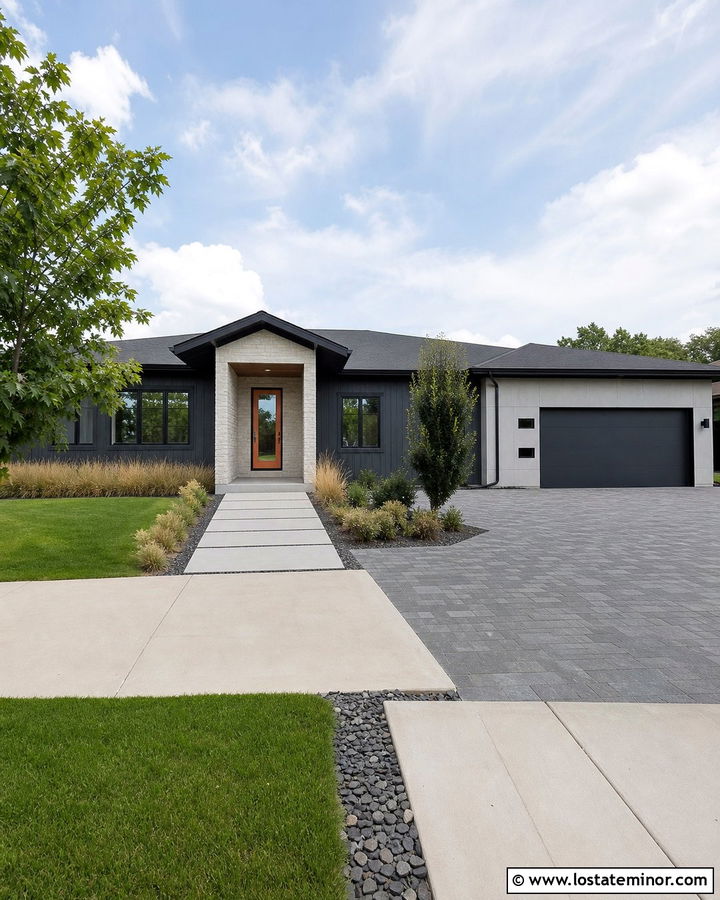
For a confident modern exterior, pair charcoal gray siding with a burnt orange storm door. The orange should have earthy brown undertones so it complements wood, stone, and landscaping. Match the main entry door to the storm door or use natural cedar behind the full-view glass. Keep window frames, gutters, and roof edges black. Pale gray concrete panels or light stone can brighten the lower facade and define the recessed entry. A flat or low-sloped charcoal roof supports the ranch architecture. Repeat the orange only in small details, such as one planter or address plaque, to avoid making the palette feel busy. Wide concrete pavers, ornamental grasses, and compact trees complete this distinctive but balanced full-house color scheme.
Conclusion:
The best storm door should feel like a natural part of the complete exterior rather than an accessory added at the end. Charcoal gray siding provides enough depth to support white, black, bronze, wood, blue, green, red, and other carefully selected finishes. Always compare the storm door with the visible front door, trim, roof, masonry, porch, and garage before choosing a color. Test exterior samples in morning and afternoon light, since deep gray can change noticeably as conditions shift. Also consider the frame width, glass configuration, hardware, and surrounding landscaping. These 30 Charcoal Grey House Design With Storm Door Ideas offer adaptable combinations for traditional, rustic, coastal, Craftsman, farmhouse, ranch, and modern homes.

Related posts: