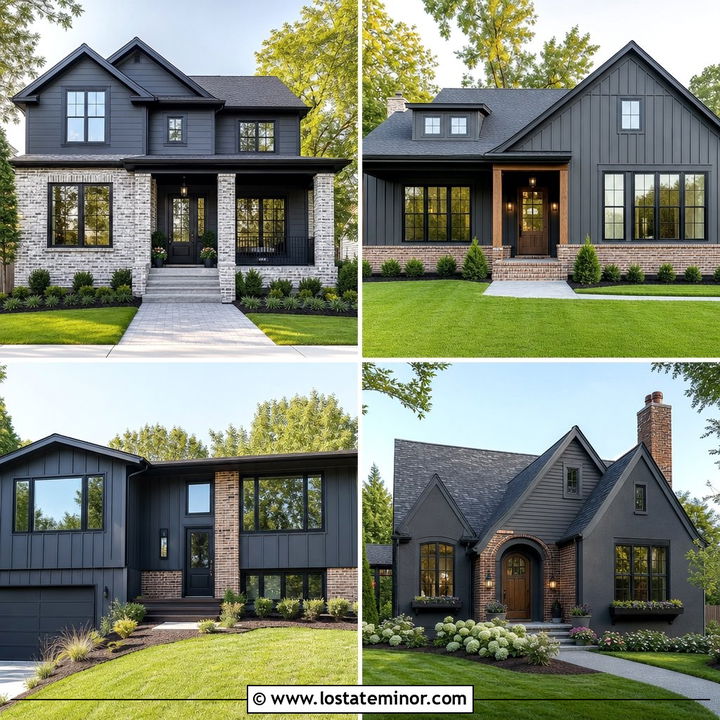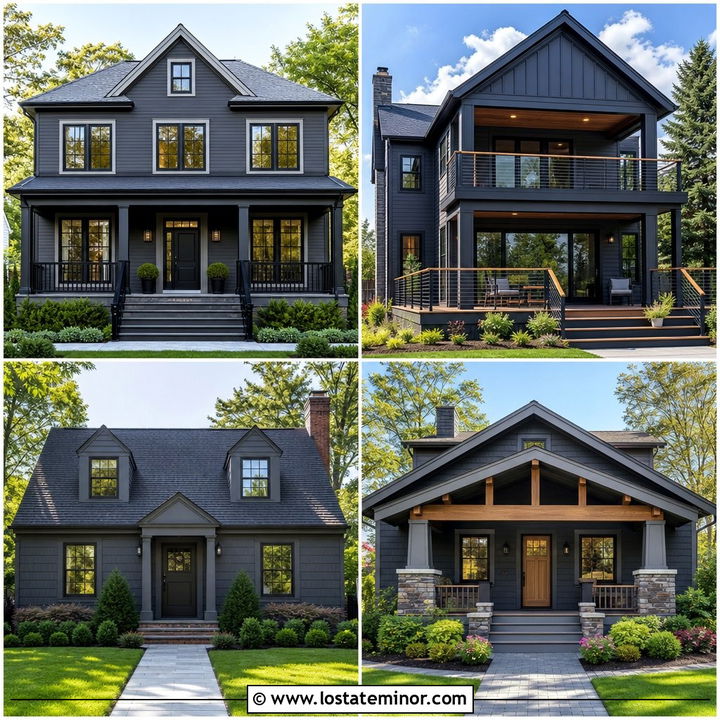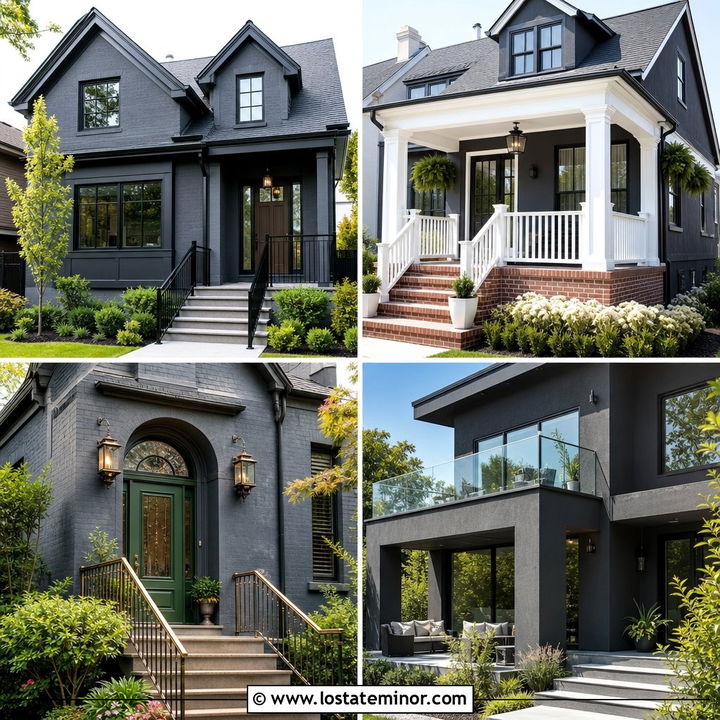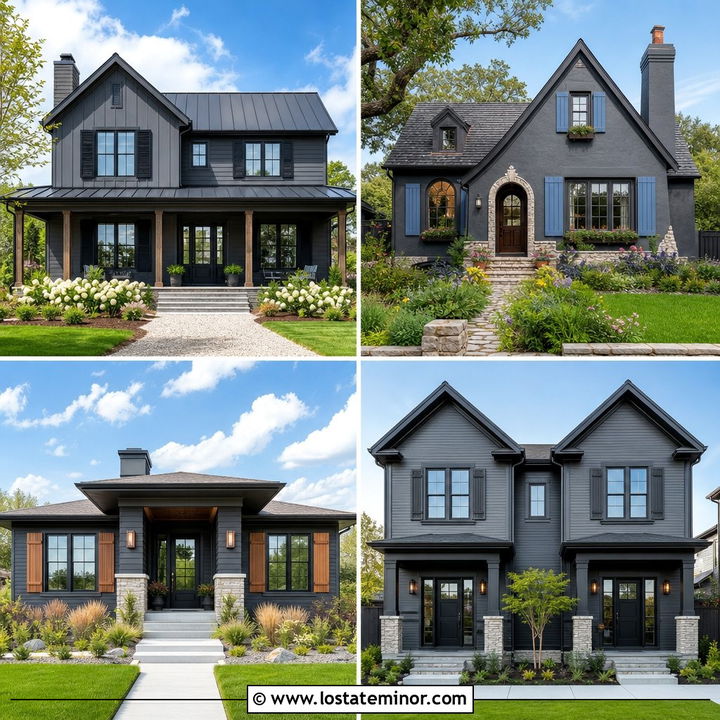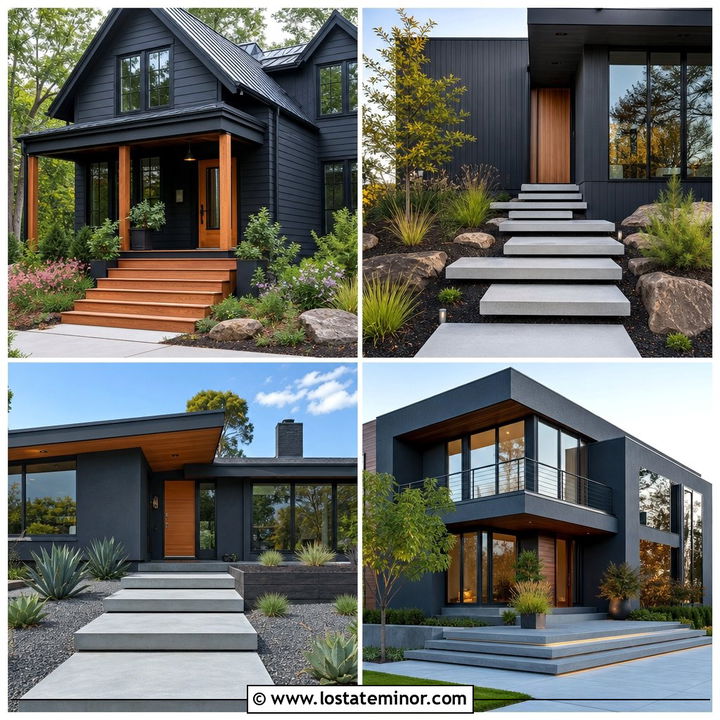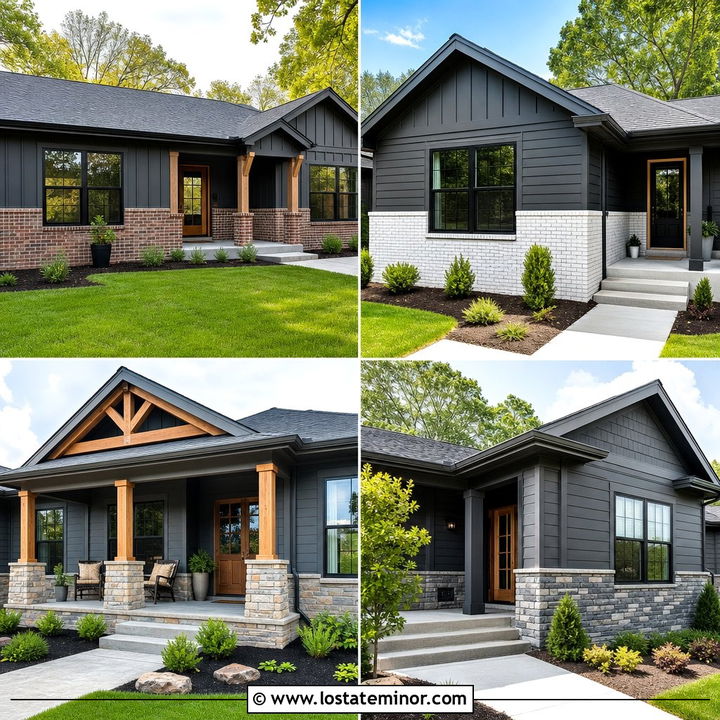

1. Charcoal Grey Farmhouse With White Porch Swing
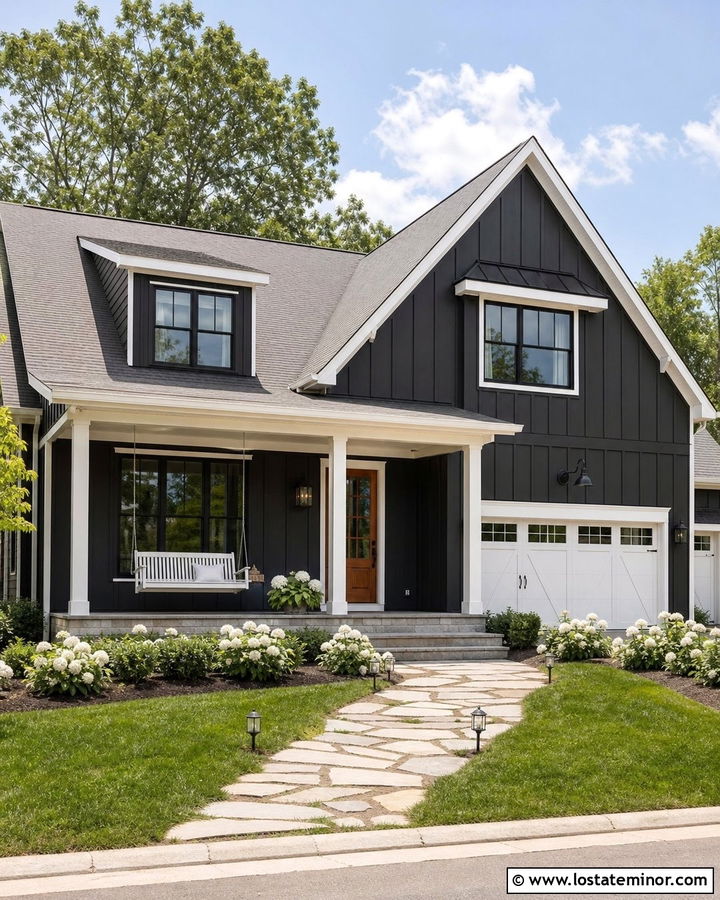
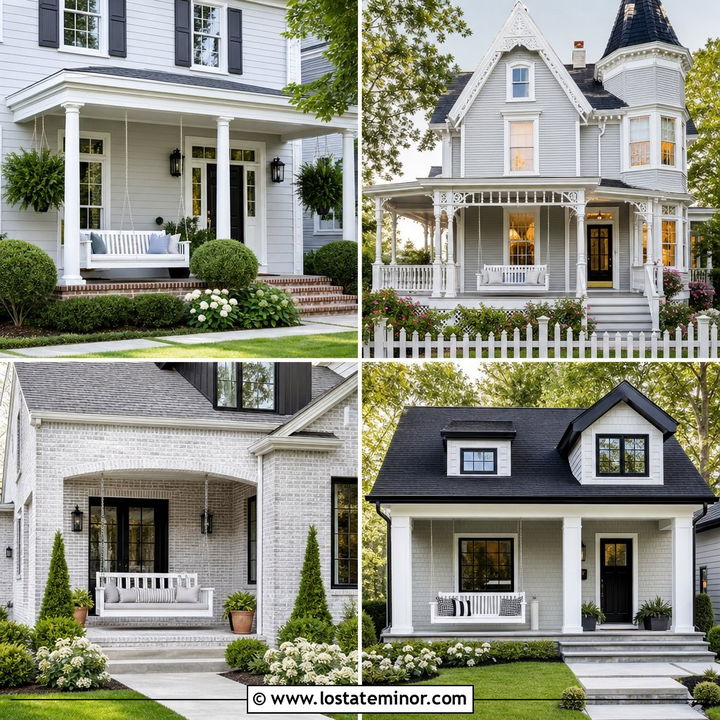
A white porch swing brings instant contrast to a charcoal grey modern farmhouse. Use vertical board-and-batten siding to emphasize the height of the front gables, then repeat crisp white on the window trim, porch columns, and fascia. A medium-tone stained wood front door keeps the black-and-white palette from feeling too cold. Hang the swing from thick natural rope at one end of a deep covered porch, leaving the entrance open and easy to see. Soft oatmeal cushions, black lanterns, and galvanized planters complete the relaxed scheme. A weathered gray shingle roof provides a gentler transition than solid black. Finish the yard with hydrangeas, ornamental grasses, and a straight stone walkway for clean, balanced curb appeal.
2. Charcoal Grey Craftsman With Cedar Porch Swing
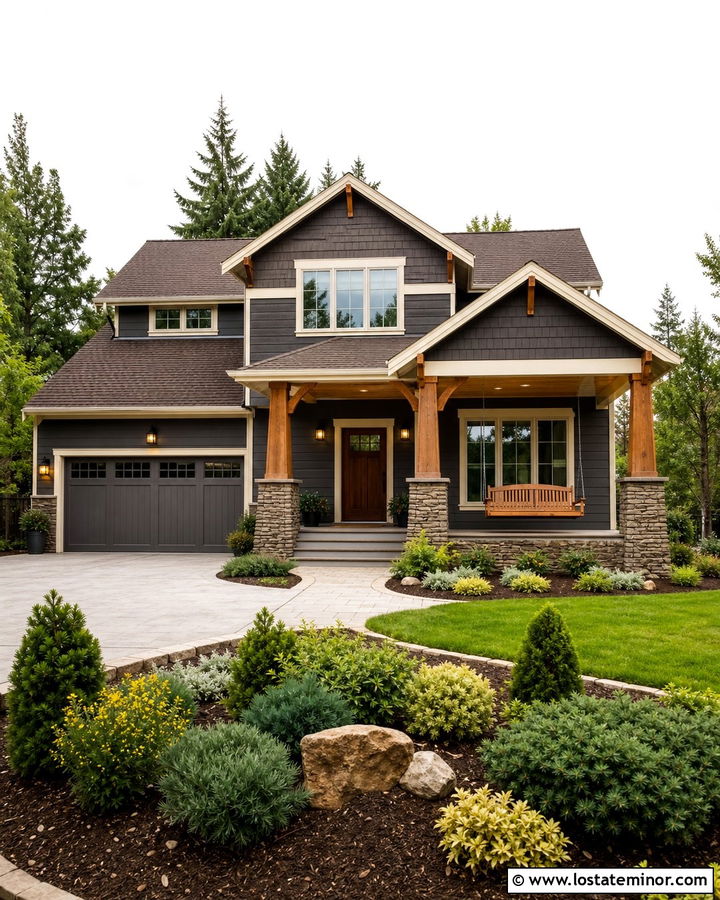
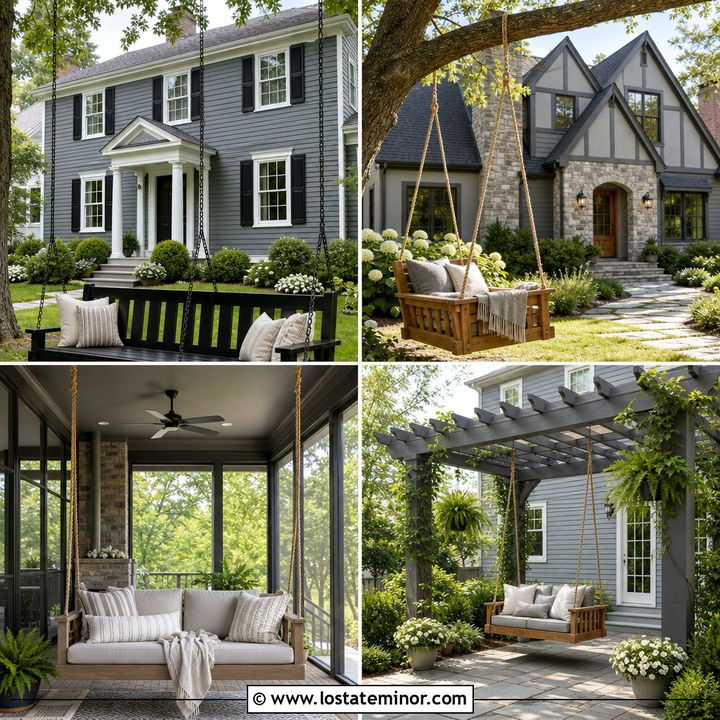
Warm cedar is an excellent counterpoint to the cool depth of a charcoal grey Craftsman house. Choose horizontal lap siding for the main walls and cedar shingles beneath the gables to create visible texture. Sturdy tapered porch columns can combine natural cedar posts with stacked stone bases. A cedar bench swing should repeat the tones of the front door, porch ceiling, and decorative brackets, making every wood detail feel intentional. Cream trim offers softer contrast than bright white and works well with the stone foundation. Add bronze lighting, divided-light windows, and a dark brown architectural roof. The swing can carry olive and tan cushions for subtle color. Layered evergreen shrubs and curved garden beds will help the strong exterior blend naturally into its setting.
3. Charcoal Grey Colonial With Black Swing
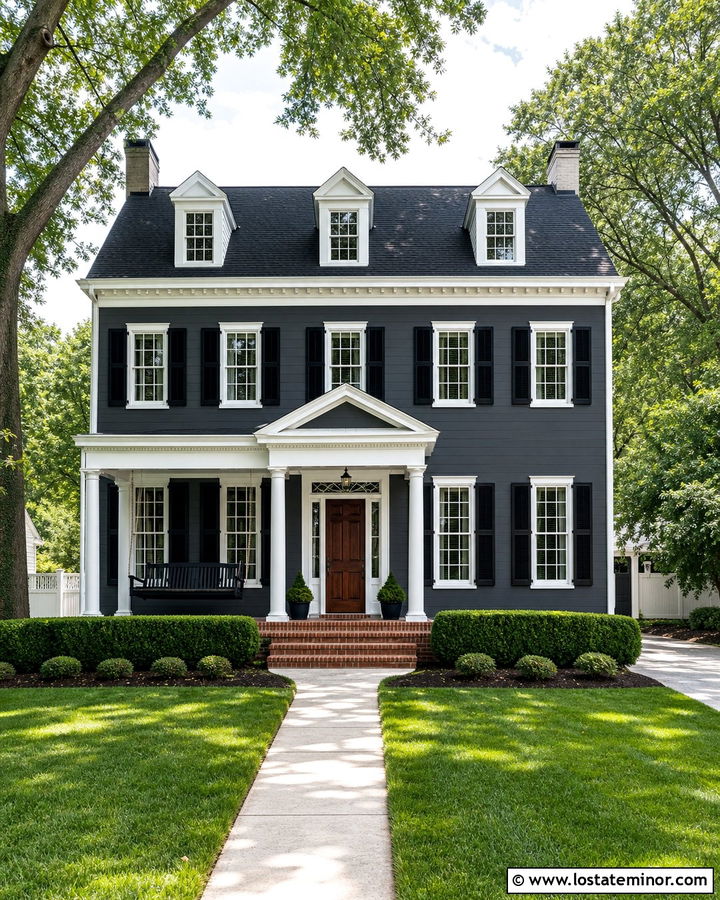
Could an almost monochromatic exterior still feel inviting? On a symmetrical colonial, charcoal grey clapboard siding and a simple black porch swing create a polished answer. Keep the window trim, corner boards, columns, and classical front surround warm white so the architectural lines remain visible. Black shutters, a black shingle roof, and the swing establish a repeated dark accent without overwhelming the facade. Center a deep red or polished mahogany door between matching lanterns to introduce warmth. The swing works best along one side of a full-width porch, balanced by two planters on the opposite side. Tailored boxwoods, brick steps, and a straight walkway reinforce the formal character while neutral cushions make the seating area practical and comfortable.
4. Charcoal Grey Ranch With Freestanding Swing
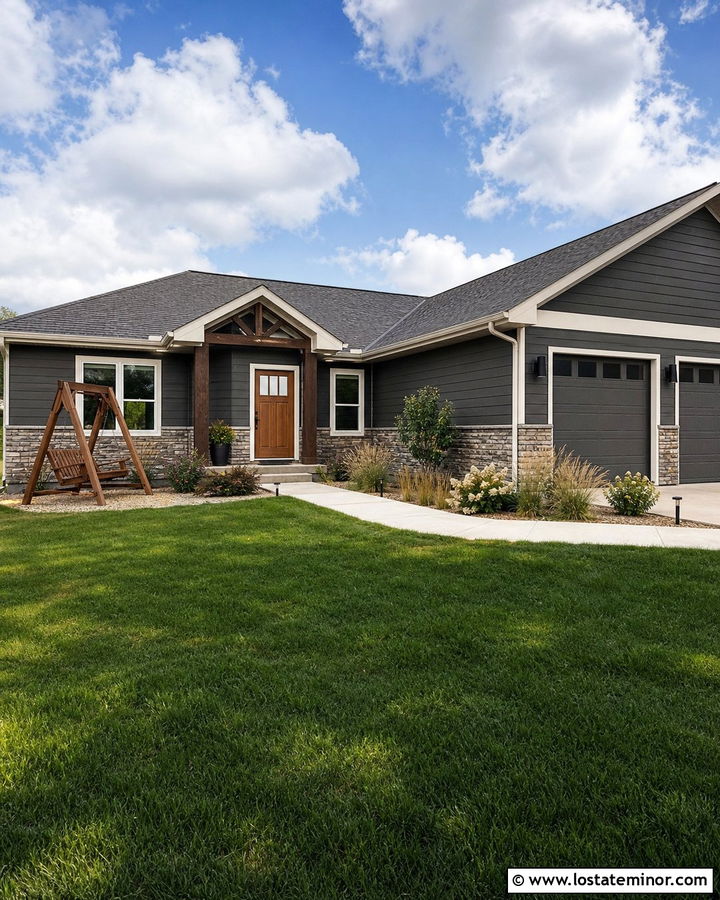
A freestanding swing solves the problem of adding comfortable seating when a ranch house lacks a deep covered porch. Paint the horizontal siding charcoal grey and use creamy white trim around the broad windows, soffits, and garage door. Place a cedar A-frame swing beside the front walkway, where it feels connected to the entrance without competing with the low roofline. Matching cedar can appear on the front door, mailbox, and planter boxes for a coordinated exterior. A mixed stone wainscot adds texture along the lower facade and prevents the dark siding from looking flat. Choose tan swing cushions and matte black hardware. Low ornamental grasses, flowering shrubs, and a wide concrete path maintain an open view across the entire single-story house.
5. Charcoal Grey Bungalow With Rope Swing
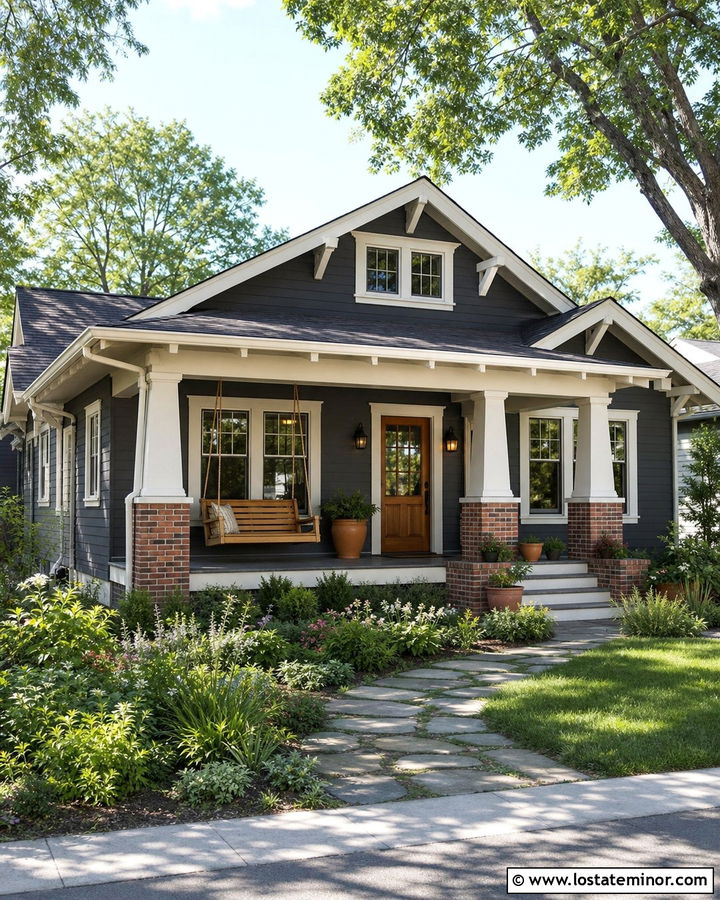
A cozy bungalow porch feels naturally suited to a rope-hung wooden swing. Cover the house in charcoal grey lap siding, then introduce warm white trim on the tapered columns, exposed rafters, window frames, and porch railing. A honey-stained oak swing adds warmth beneath the low front gable and can coordinate with a matching Craftsman door. Suspend it with thick cream rope for a softer appearance than metal chains. Brick porch piers and terracotta planters bring earthy red undertones into the palette. Use a charcoal architectural roof so the compact facade looks cohesive rather than divided. Moss green and cream cushions connect the swing to leafy landscaping. A short flagstone path and informal cottage garden complete the approachable, lived-in exterior.
6. Charcoal Grey Cape Cod With Blue Swing
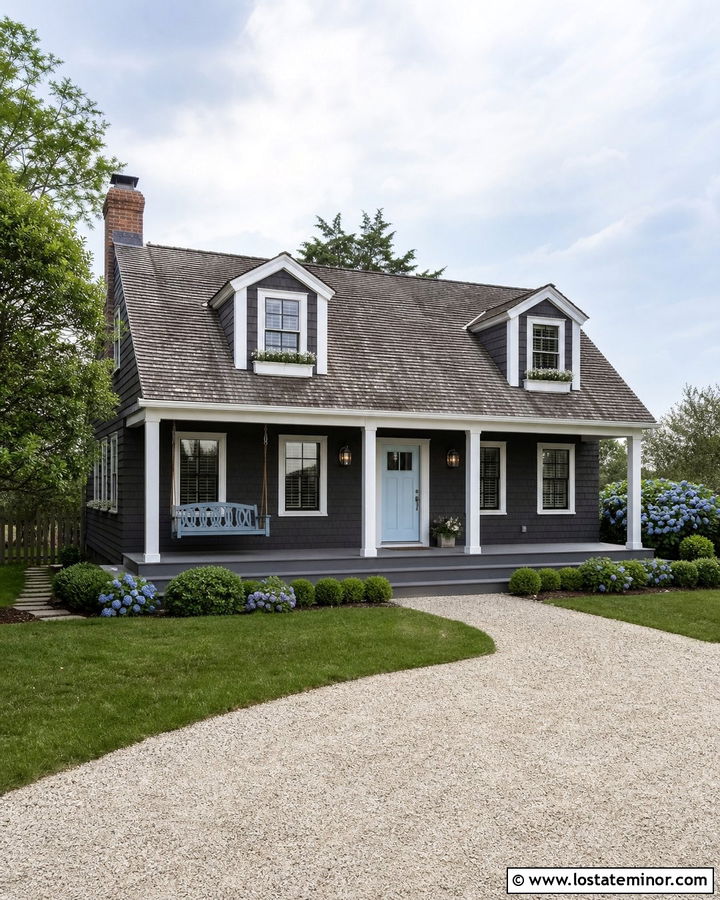
A dusty blue swing gives a charcoal grey Cape Cod a quiet coastal touch without making the exterior overly themed. Use charcoal cedar shingles or shingle-look siding across the facade, paired with clean white corner boards, dormer trim, and porch posts. Paint the traditional bench swing muted blue and position it beneath a small covered side porch. Repeat that blue on the front door for a clear connection across the facade. White window boxes, pale gray porch decking, and weathered brass lanterns add lighter details. Keep the roof medium gray rather than black to preserve the cottage character. Blue hydrangeas, clipped shrubs, and a shell-colored gravel walkway reinforce the cool palette while allowing the charcoal body color to remain the dominant feature.
7. Charcoal Grey Modern House With Platform Swing
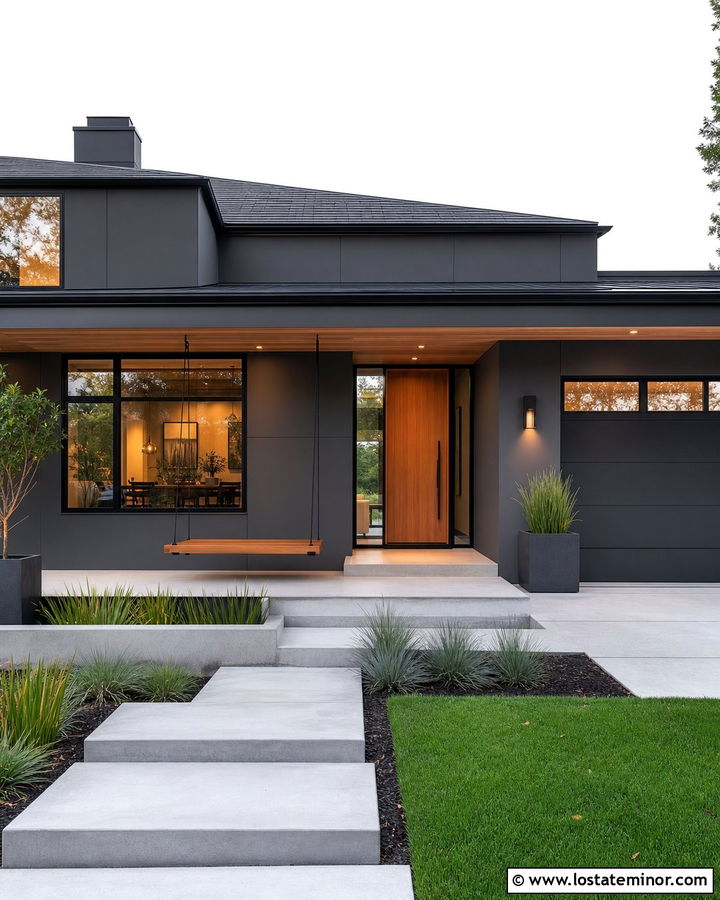
Clean lines call for a swing with an equally simple shape. A charcoal grey modern house can combine smooth fiber-cement panels, narrow vertical siding, and black-framed windows for strong geometric definition. Place a wide teak platform swing beneath a flat porch roof, using slim black suspension cables that nearly disappear against the siding. The teak can repeat on the pivot front door and soffit, bringing natural warmth to an otherwise cool facade. Choose pale concrete for the porch, steps, and driveway to brighten the composition. A low black standing-seam roof maintains the minimal palette. Keep the swing cushions off-white or light taupe. Structured grasses, rectangular planters, and a linear walkway reinforce the architecture while preserving an uncluttered full-house view.
8. Charcoal Grey Cottage With Wicker Swing
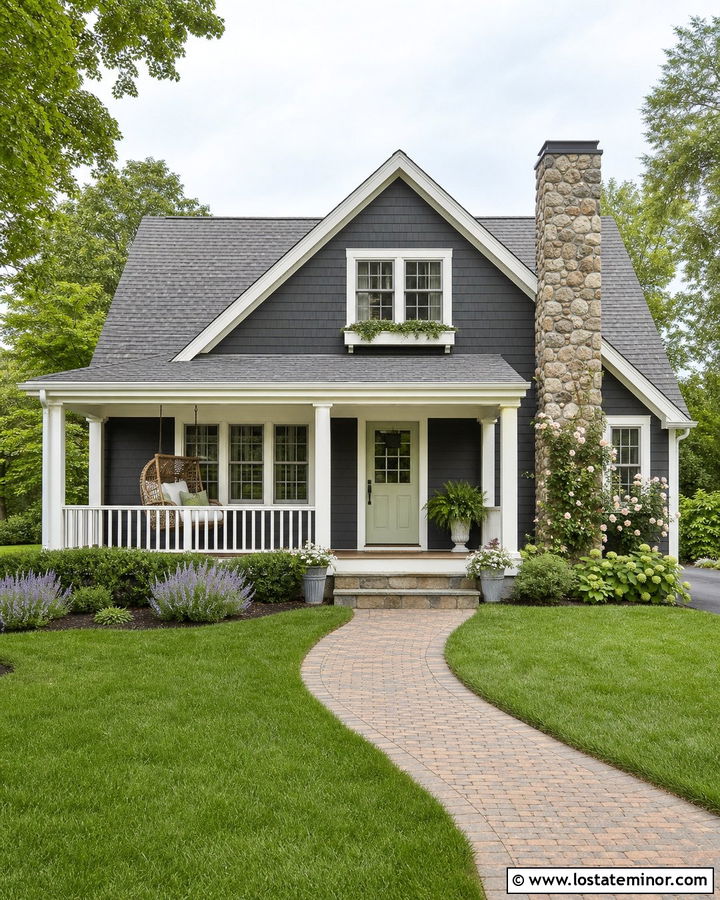
Texture makes a small charcoal grey cottage feel layered rather than heavy. Pair deep gray horizontal siding with ivory trim, a pale sage front door, and a natural wicker porch swing. The woven swing introduces a light, handcrafted texture beneath the covered entry and looks especially comfortable with cream and green cushions. Use white porch railings and slender square columns to frame the dark facade. A warm gray roof, fieldstone chimney, and flagstone steps help connect the charcoal walls to the surrounding garden. Add climbing roses carefully along a side trellis without hiding the siding. Curved planting beds, lavender, ferns, and a narrow brick walkway will soften the compact architecture. The result feels colorful and welcoming while keeping charcoal grey clearly in control.
9. Charcoal Grey Split-Level With Canopy Swing
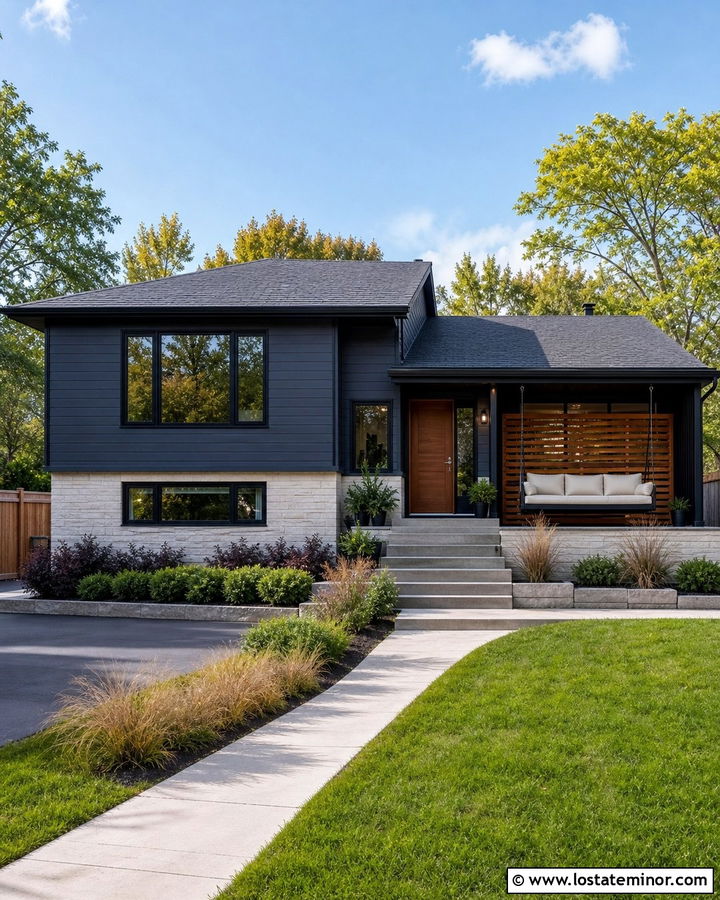
A canopy swing can add character to a split-level house that has little usable porch space. Update the upper siding with charcoal grey paint while retaining pale limestone or cream brick across the lower level. Position a slim black-framed swing with a light canvas canopy near the front landing or in a landscaped side courtyard visible from the street. Warm wood on the front door and horizontal privacy screen prevents the modernized exterior from feeling stark. Use black window frames and a medium charcoal roof to connect the upper and lower sections visually. Sand-colored cushions coordinate with the masonry. Broad concrete steps, layered shrubs, and a gently angled walkway can make the entrance easier to identify while balancing the house’s asymmetrical shape.
10. Charcoal Grey Victorian With Ornate Swing
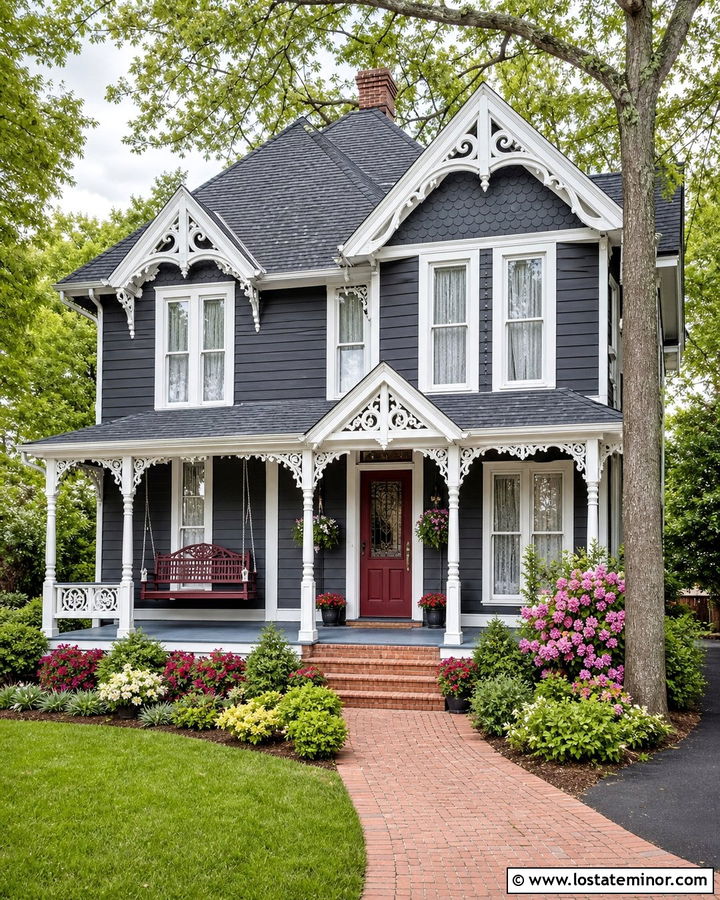
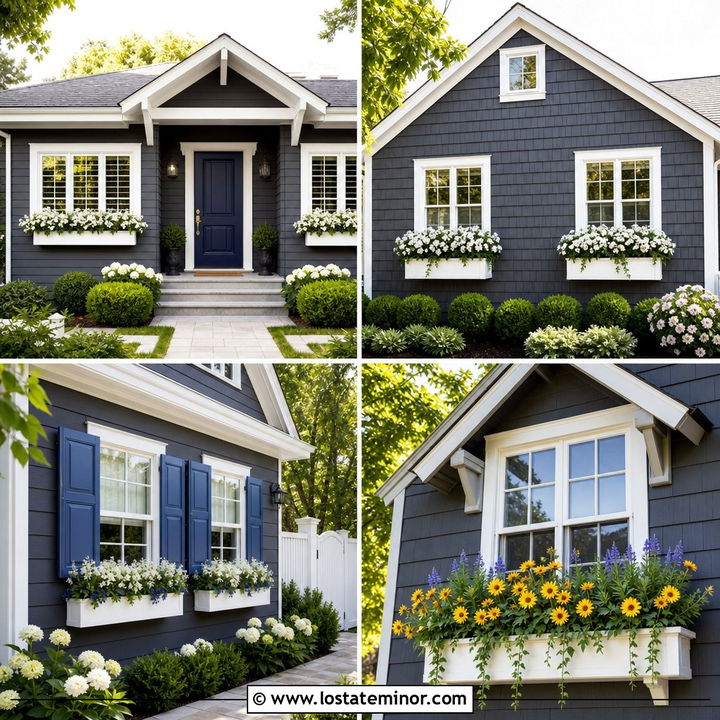
Rich architectural details stand out beautifully against a charcoal grey Victorian exterior. Use the dark gray on the main clapboard siding, then pick out window trim, porch spindles, brackets, and decorative gable work in soft white. A traditional wooden swing with a curved back and carved arms complements the period character better than a sharply modern design. Paint it burgundy to coordinate with the front door and small gable accents. Keep the porch floor muted blue-gray, creating a subtle transition between the house and garden. A dark slate-colored roof suits the layered roofline, while aged brass fixtures provide warmth. Frame the home with flowering shrubs and a curved brick path, making sure the landscaping does not conceal the ornate porch or swing.
11. Charcoal Grey Tudor With Oak Swing
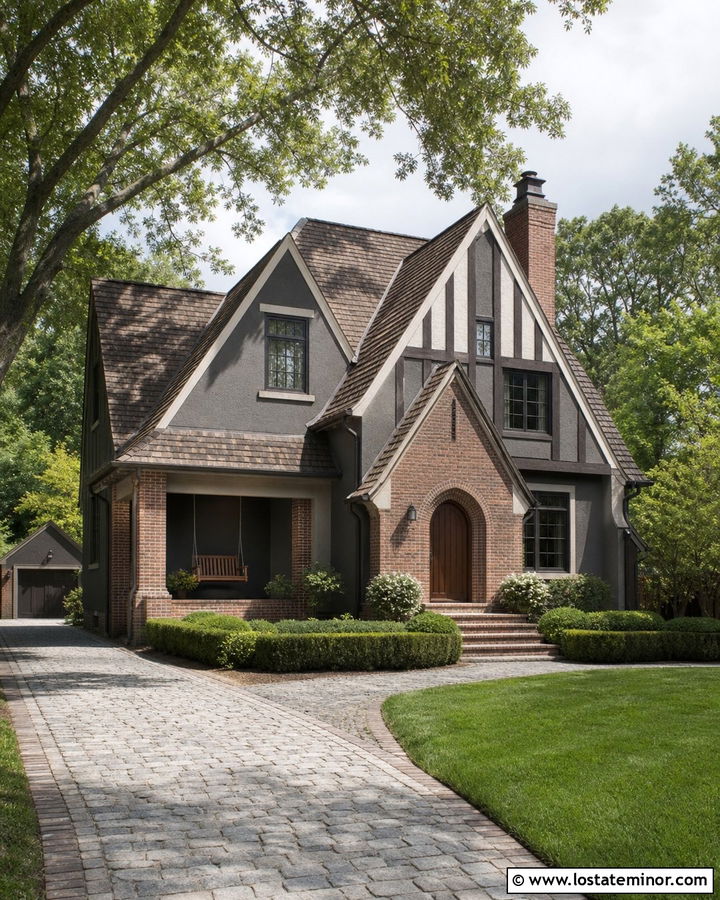
A charcoal grey Tudor gains warmth from substantial oak details. Apply the gray to stucco panels or siding while using deep brown half-timbering to preserve the recognizable facade. An oak swing with a slatted back can hang from dark bronze chains beneath a small porch extension beside the arched entrance. Repeat the oak finish on the front door and garage doors, creating a consistent material story. Cream window trim provides controlled contrast, while red-brown brick around the foundation and chimney adds heritage character. Choose a weathered brown roof rather than a cool black one. Rust, tan, and forest green swing cushions work naturally with the exterior. A cobblestone walkway, clipped hedges, and mature shade trees complete the established, traditional setting.
12. Charcoal Grey Southern House With Swing Bed
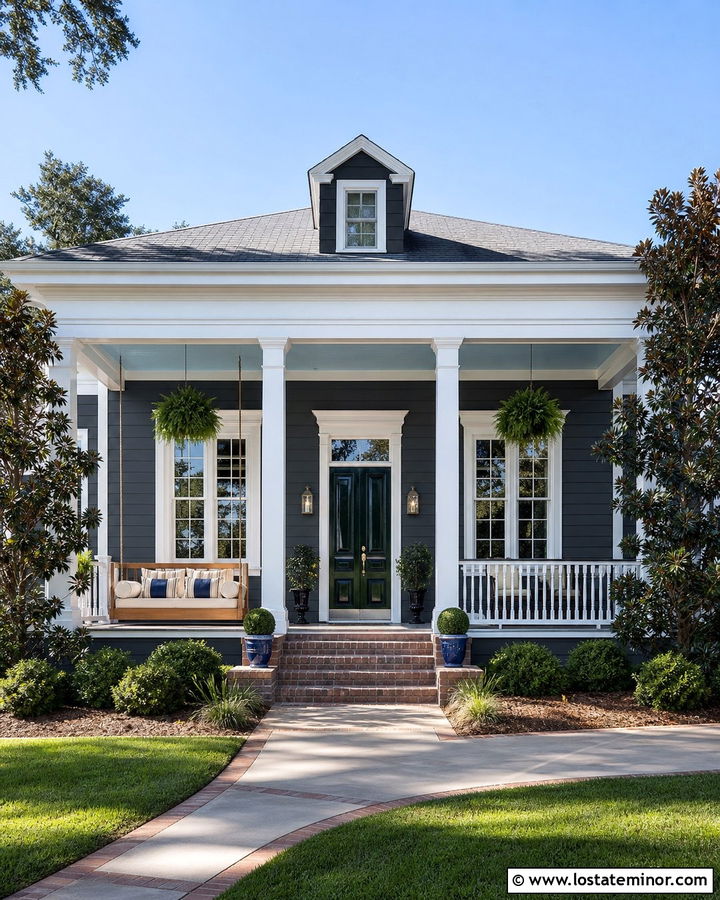
Few features make a broad Southern porch feel as restful as a generously cushioned swing bed. Paint the home’s lap siding charcoal grey and contrast it with tall white columns, white railings, and a soft blue porch ceiling. A natural teak swing bed can occupy one end of the veranda, leaving plenty of room around the centered front door. Use ivory cushions with narrow navy stripes for a crisp but comfortable finish. A glossy dark green door adds restrained color and works well with brass hardware. Select a medium gray roof to prevent the upper portion of the house from appearing too dark. Brick steps, symmetrical magnolias, hanging ferns, and a wide walkway reinforce the graceful architecture while keeping the swing visible from the curb.
13. Charcoal Grey Mountain House With Log Swing
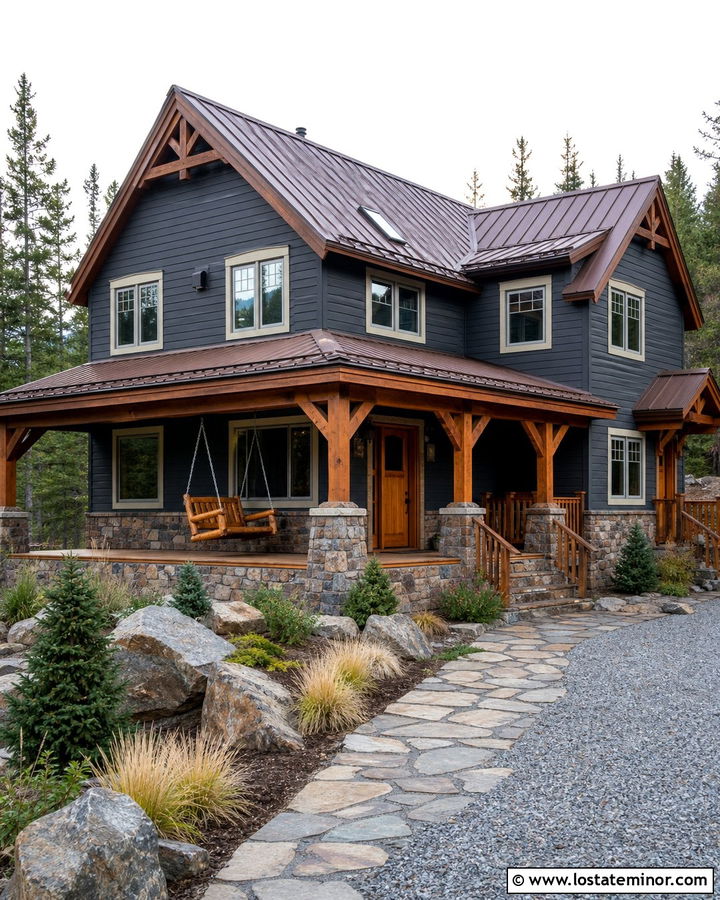
In a wooded setting, charcoal grey siding can echo stone, bark, and shaded mountain views. Combine dark board-and-batten walls with a rugged stone foundation, exposed timber beams, and a brown metal roof. A log swing suspended beneath the front porch roof becomes a natural extension of those structural materials. Choose a medium cedar stain so the swing, porch posts, brackets, and front door share the same warm undertone. Cream window trim can provide just enough definition without looking overly bright. Use deep green and tan cushions to connect the seating with its surroundings. A gravel driveway, irregular stone path, native grasses, and evergreen plantings preserve the rustic character. The completed exterior should feel sturdy, welcoming, and closely connected to the landscape.
14. Charcoal Grey Lake House With Hanging Daybed
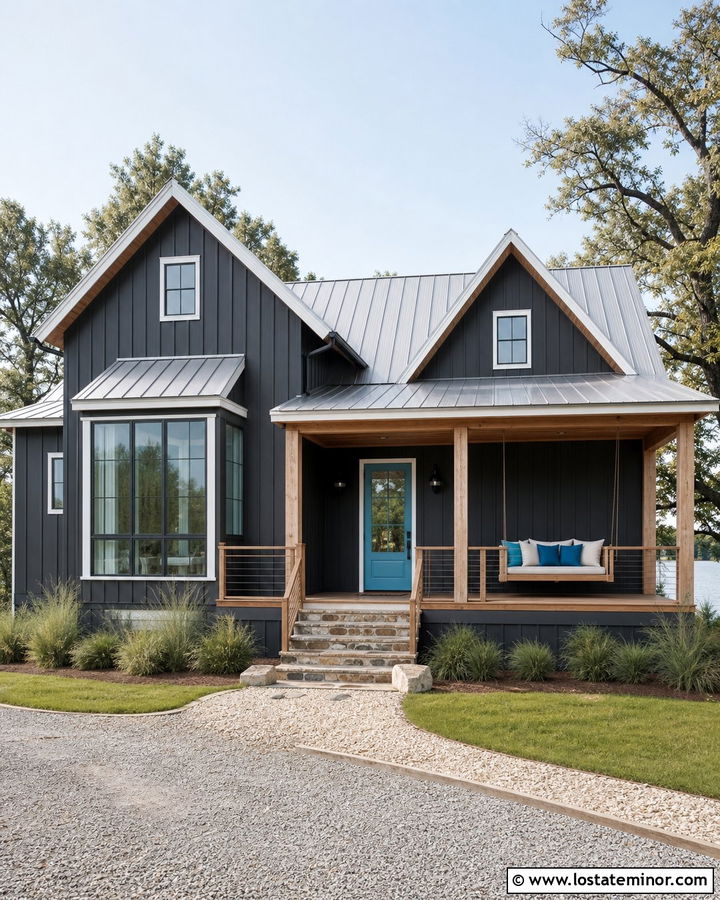
A charcoal grey lake house looks fresh when paired with pale wood and watery blue accents. Use vertical siding across the main facade, bright white trim around large windows, and a light gray metal roof that reflects more daylight. Install a white oak hanging daybed beneath a wide covered porch, finishing it with soft blue and cream outdoor cushions. A turquoise-blue front door can repeat the water-inspired color without taking attention away from the architecture. Stainless or brushed nickel hardware keeps the scheme light and casual. Use matching oak on the porch ceiling and stair rails. Natural stone steps, wispy grasses, and a broad gravel path complete the relaxed setting. The swing should remain clearly visible as part of the home’s full curb-facing design.
15. Charcoal Grey Brick House With White Swing
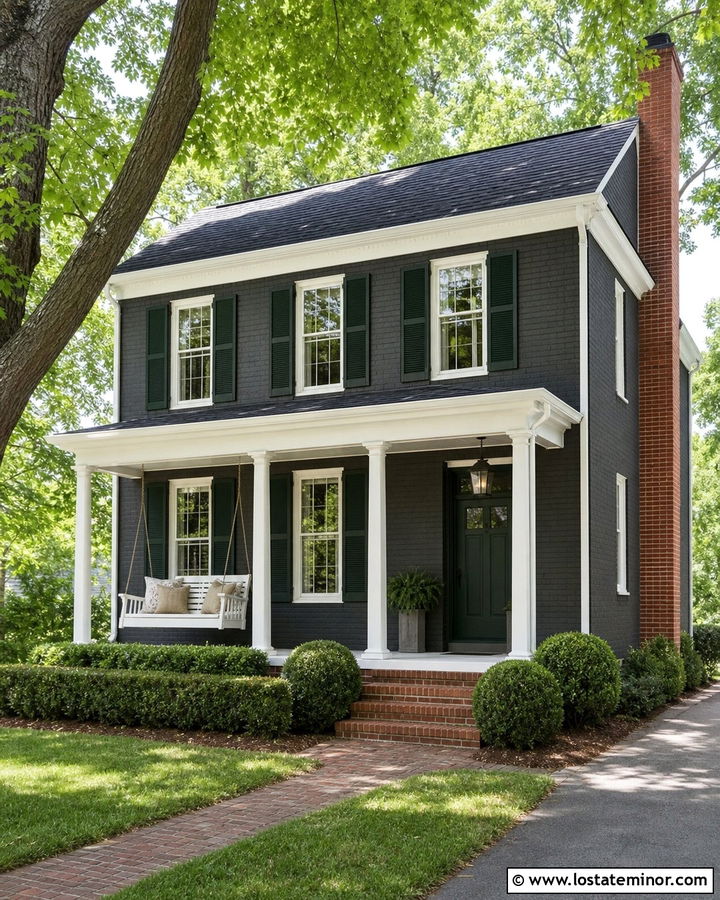
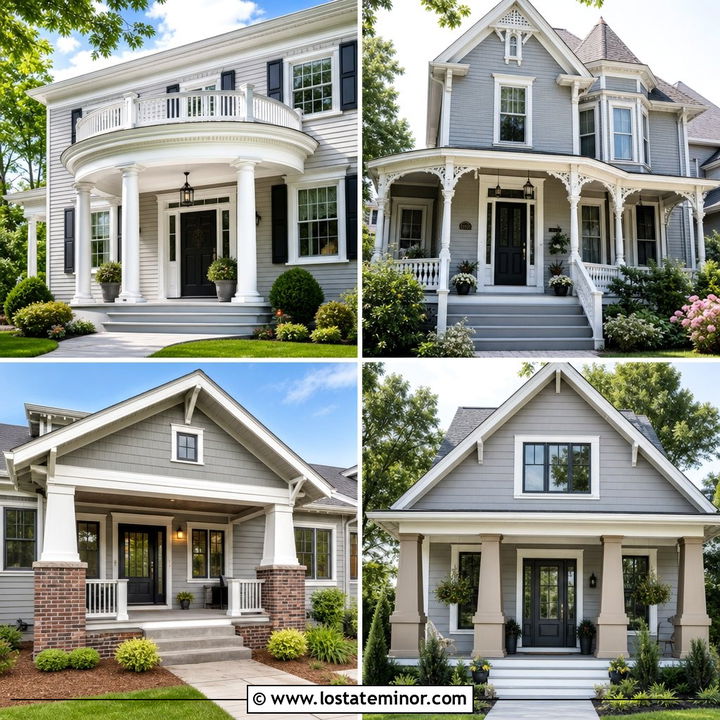
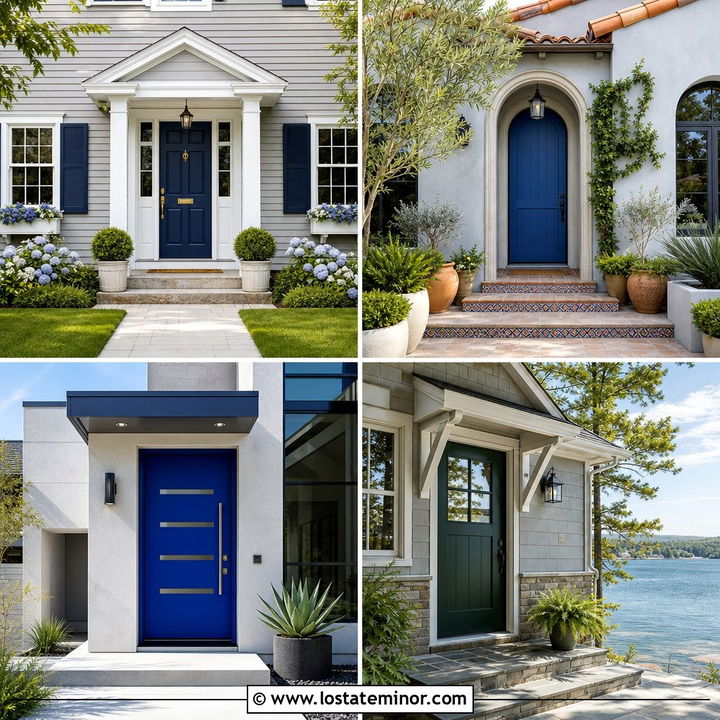
Painting an older brick house charcoal grey can create a unified backdrop for a bright, traditional porch. Keep some natural red brick visible on the steps, chimney, or foundation so the transformation retains warmth and history. Use white on the window trim, columns, cornice, and classic slatted swing. Deep green shutters and a matching front door introduce color that feels established rather than trendy. Hang the white swing on black chains to connect it to the roof and lanterns. Add simple tan cushions that will not compete with the brick texture. A black architectural roof provides a neat upper edge. Boxwoods, mature trees, and a red-brick walkway repeat the retained masonry, giving the finished house a balanced and intentionally renovated appearance.
16. Charcoal Grey Stucco House With Rattan Swing
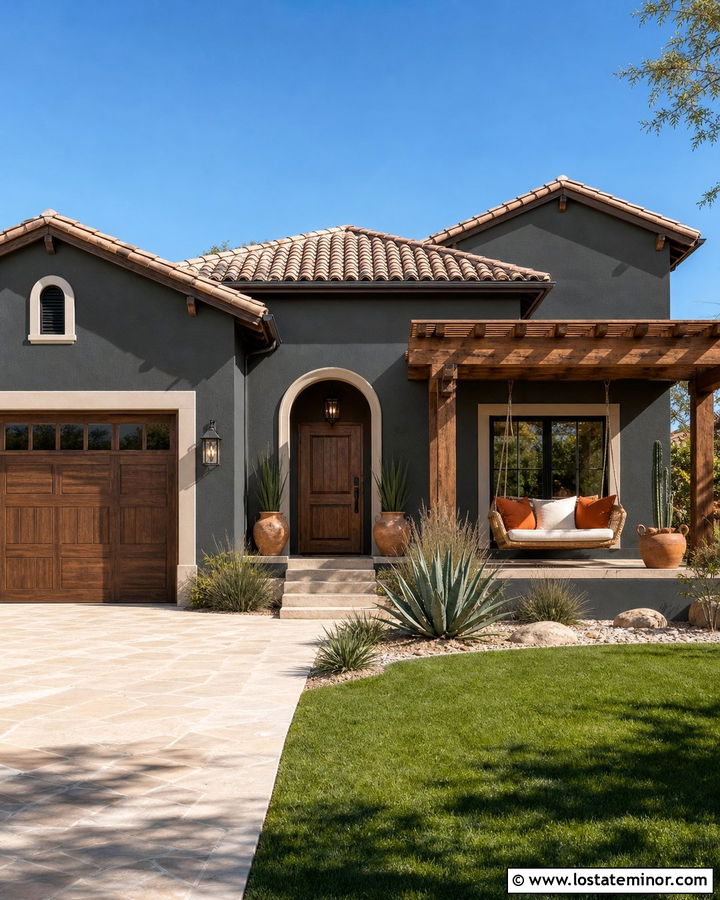
Charcoal grey stucco provides a smooth, dramatic background for the lighter texture of a natural rattan swing. This combination suits a transitional or Southwestern-inspired house with simple rooflines, deep window openings, and a sheltered front courtyard. Paint the trim warm cream and use a medium walnut stain on the front door, beams, and gate. Place the rattan swing beneath a timber pergola or covered entry, then add sand, rust, and ivory cushions. A light clay tile roof can introduce warmth while preventing the facade from becoming too dark. Choose pale limestone pavers for the walkway and porch. Drought-tolerant grasses, agave, and terracotta planters frame the exterior, making the strong gray color feel grounded in a sunny, natural setting.
17. Charcoal Grey A-Frame With Hammock Swing
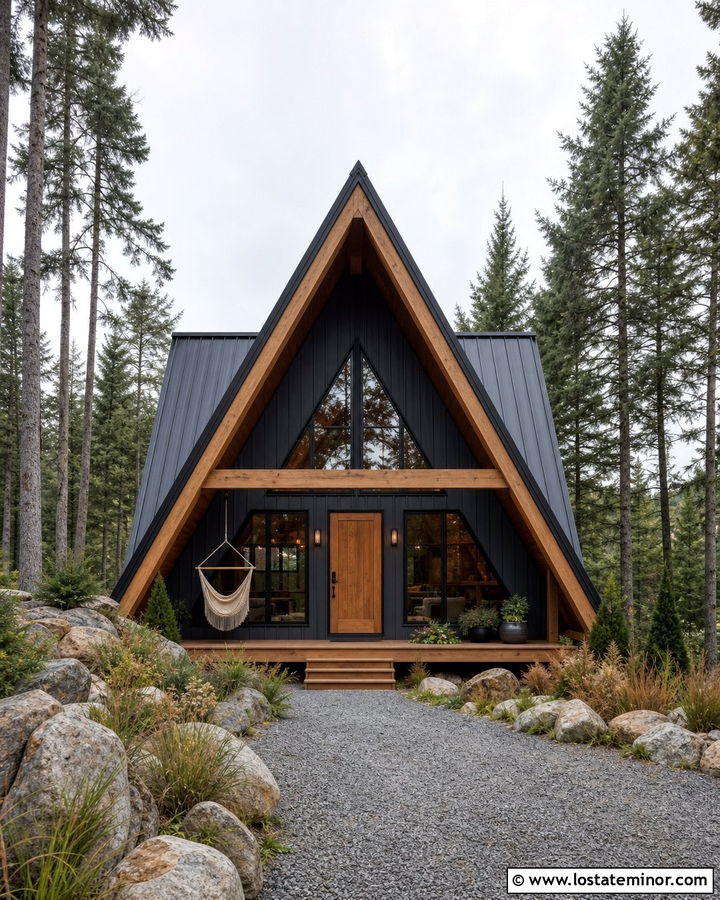
The tall silhouette of an A-frame house offers an ideal setting for a suspended hammock swing. Cover the lower walls and side elevations in charcoal grey vertical siding, then use expansive black-framed glass within the front gable. A cream woven hammock chair can hang from a sheltered side of the entry deck, creating a softer focal point against the angular architecture. Repeat warm cedar on the deck boards, front door, soffit, and gable beams. The metal roof should remain black or very dark gray for a seamless peak. Add oatmeal textiles rather than bright colors so the view and materials stay central. Natural boulders, native grasses, gravel paths, and tall evergreens will frame the complete facade without making the modern cabin feel overly landscaped.
18. Charcoal Grey Beach House With Rope Swing
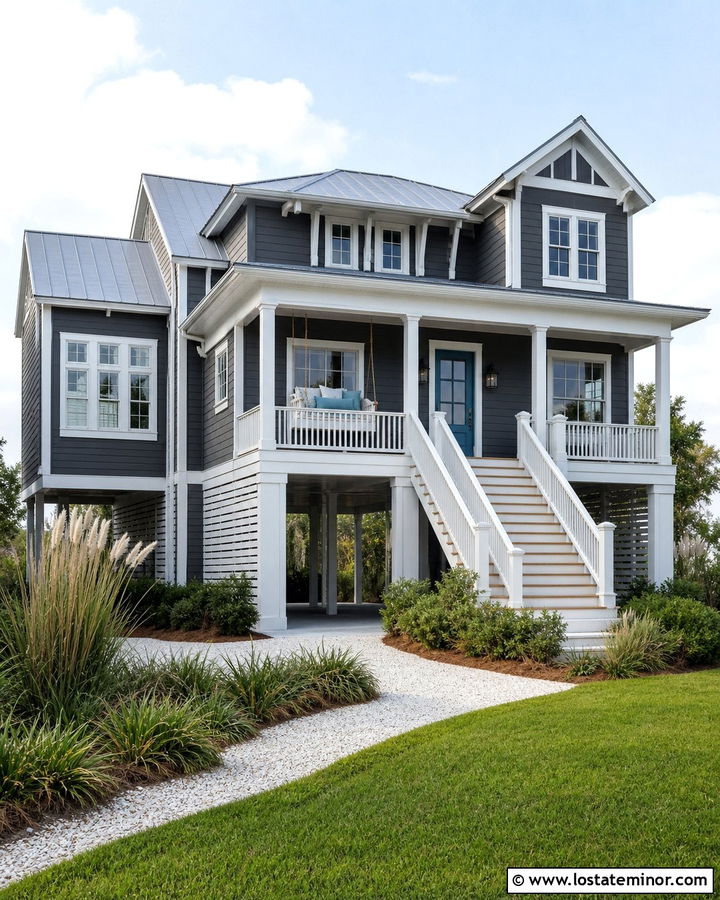
A rope swing adds a playful coastal note to a charcoal grey beach house while keeping the overall palette refined. Use weather-resistant shingle siding or fiber-cement boards in deep charcoal, paired with bright white trim and railings. Hang a white wooden swing from thick nautical rope beneath the elevated front porch. Pale blue cushions, a matching blue door, and brushed metal fixtures lighten the dark exterior. Natural wood stair treads can add another warm layer without requiring extensive timber cladding. Select a light silver-gray metal roof to suit the coastal setting and reflect sunlight. Sea grasses, crushed-shell paths, and low evergreen shrubs create an airy frame around the home. Keep the driveway open so the elevated architecture and swing remain fully visible.
19. Charcoal Grey Prairie House With Bench Swing
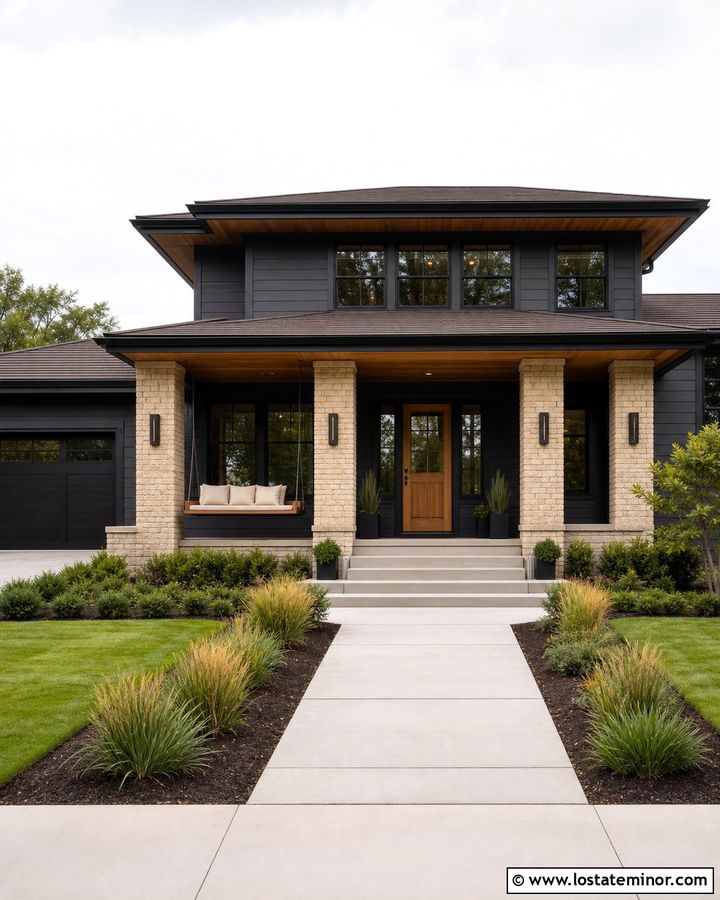
Strong horizontal lines make a charcoal grey prairie house feel grounded and substantial. Use smooth lap siding or long fiber-cement panels beneath broad roof overhangs, then introduce tan stone across the foundation and porch columns. A low-profile teak bench swing should echo the horizontal architecture through wide slats and a clean rectangular shape. Suspend it with dark metal rods beneath a sheltered side porch. Repeat teak on the front door, garage panels, and soffit for visual balance. Black window frames and a dark bronze roof maintain the streamlined appearance. Select cream cushions to prevent the swing from disappearing against the siding. Linear grasses, low hedges, rectangular planting beds, and a wide concrete walkway support the home’s geometry and preserve its open, uncluttered curb appeal.
20. Charcoal Grey Midcentury House With Egg Swing
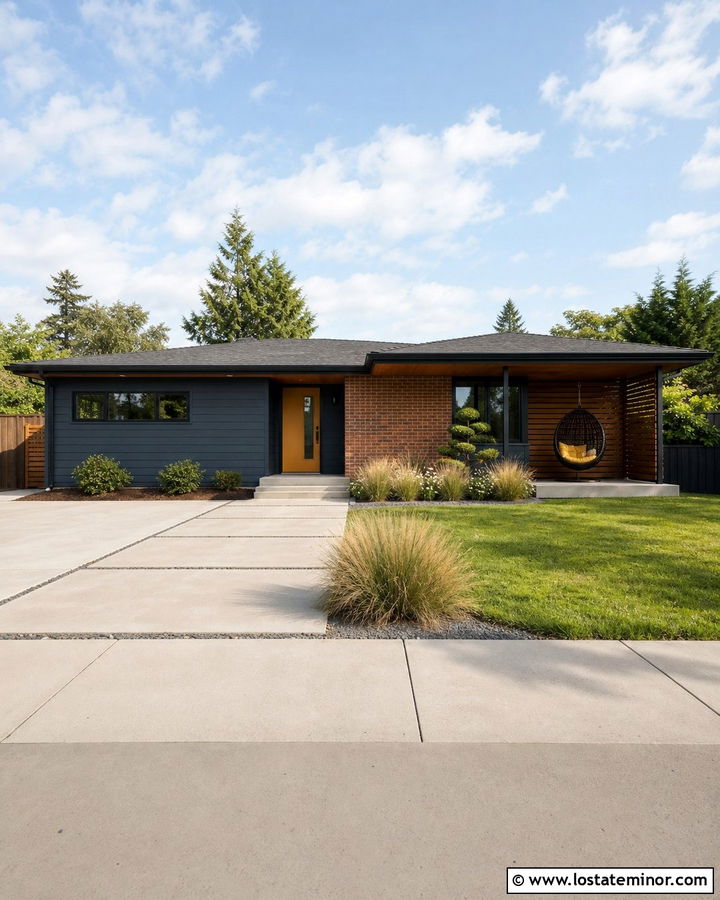
A hanging egg swing introduces gentle curves to the long, angular form of a midcentury house. Paint the main siding charcoal grey and preserve warm orange-brown brick around the entry, chimney, or lower walls. Place a black woven egg swing beneath the extended roofline, where it reads as functional porch seating instead of loose yard furniture. A mustard cushion can repeat the color of a bold front door and brighten the deep exterior. Use natural cedar for the soffit and privacy screen, then finish windows and fascia in matte black. A low dark roof maintains the original profile. Large concrete pavers, sculptural shrubs, ornamental grasses, and one carefully positioned small tree complete the retro-inspired scheme without covering the distinctive facade.
21. Charcoal Grey Barndominium With Metal Swing
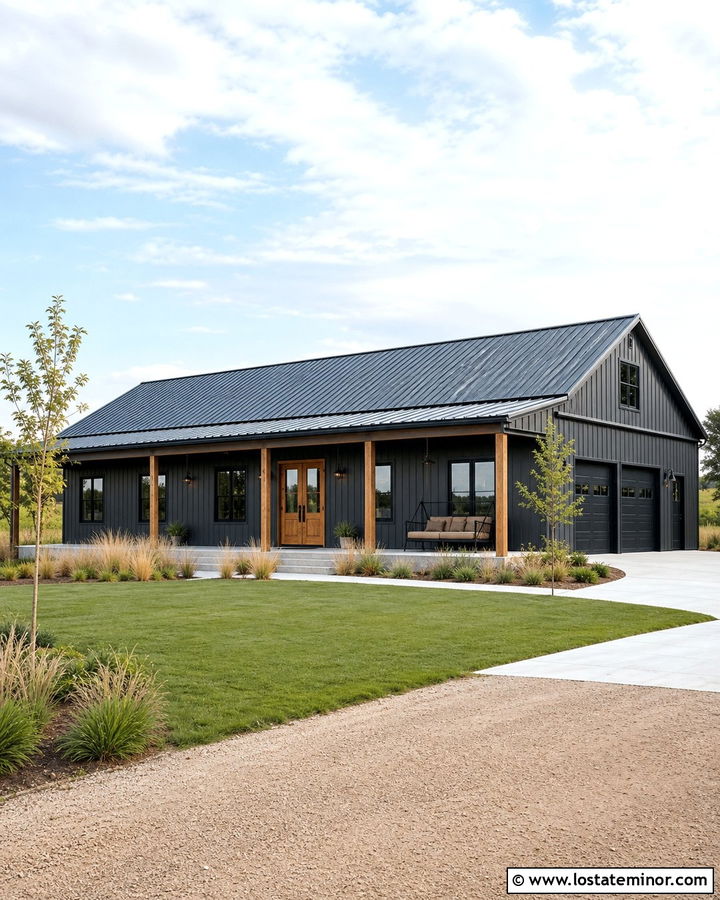
The wide porch of a barndominium can support a substantial swing that matches the building’s scale. Cover the exterior in charcoal grey corrugated metal or vertical board-and-batten siding, then use black trim around the oversized windows, roof, and garage doors. A powder-coated black metal swing creates an industrial connection, while warm tan cushions make the seating more inviting. Introduce natural cedar on the porch posts, double front doors, and ceiling to keep the dark exterior from feeling severe. A pale concrete porch and driveway provide needed brightness near ground level. Use simple black sconces and galvanized planters as supporting details. Native grasses, young shade trees, and broad lawn areas frame the long facade while preserving the clean rural character.
22. Charcoal Grey Saltbox With Red Swing
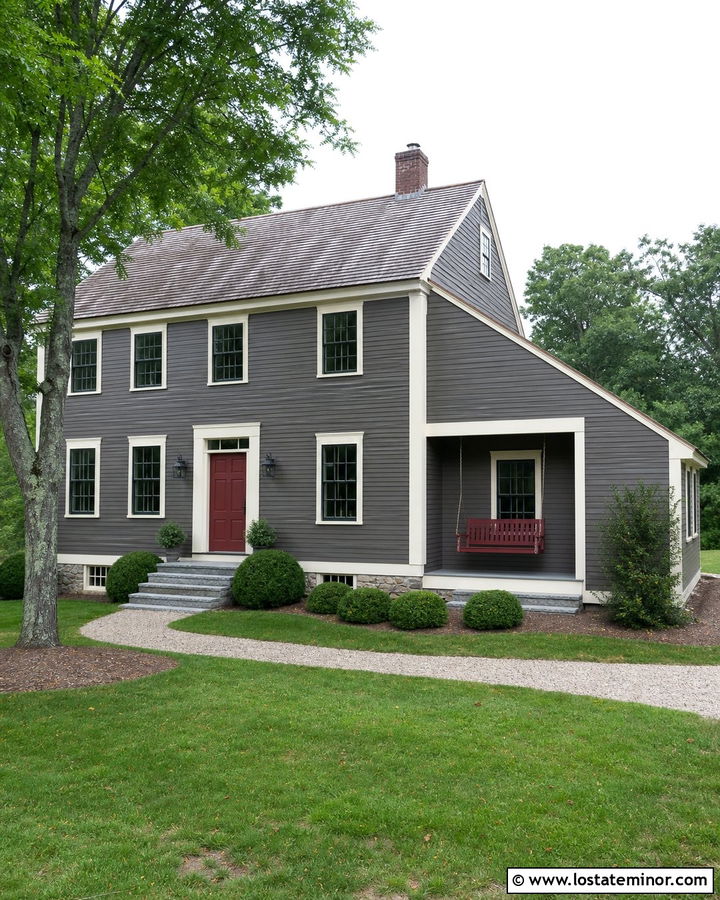
A deep red swing can give a charcoal grey saltbox exterior a distinctive New England character. Use charcoal clapboard siding across the steep, asymmetrical house and define the windows, corners, and eaves with creamy white trim. Paint a simple wooden porch swing barn red and repeat that tone on the centered front door or small side door. Dark bronze chains keep the swing looking traditional. Add a fieldstone foundation and granite steps to ground the narrow facade. A weathered gray shingle roof works more naturally than stark black on this historic form. Keep the swing cushions neutral cream so the painted frame remains visible. Clipped shrubs, maple trees, and a gently curved gravel walkway complete the straightforward, regionally appropriate exterior.
23. Charcoal Grey Four-Square With Green Swing
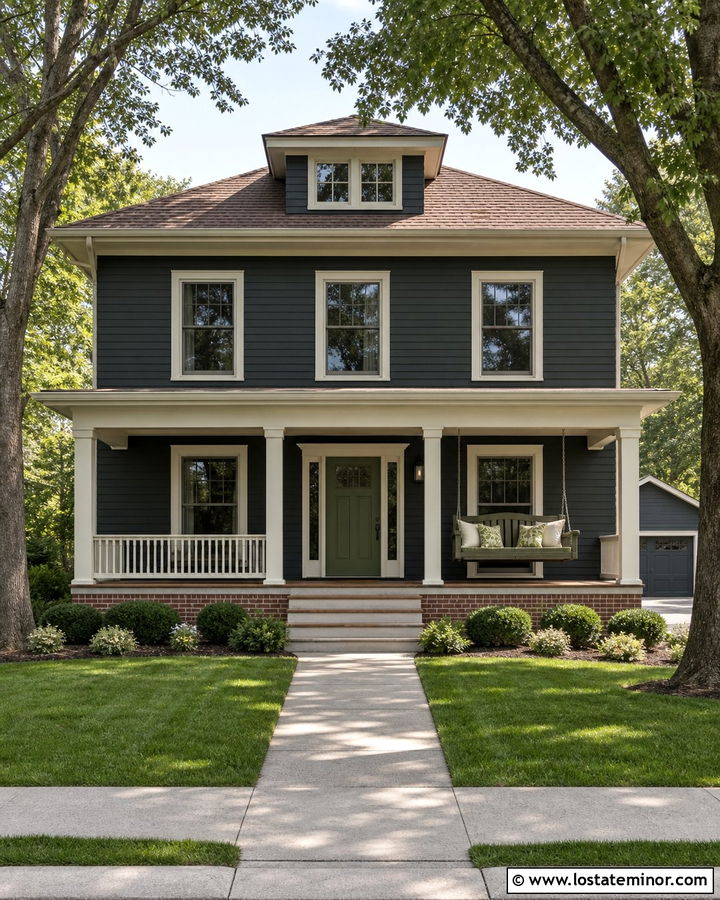
The balanced shape of an American four-square house allows a colorful swing to become part of the porch symmetry. Paint the main lap siding charcoal grey, then use warm white on the broad columns, window trim, porch rails, and deep eaves. A muted olive green swing can sit on one side of the entrance, balanced by a matching seating group or tall planter on the other. Repeat olive on the front door for a connected palette. A medium brown roof and natural brick foundation bring warmth to the large, boxy facade. Cream and small-patterned green cushions add softness without creating clutter. A straight concrete path, symmetrical shrubs, and two shade trees reinforce the home’s orderly architecture while maintaining a welcoming residential character.
24. Charcoal Grey Duplex With Matching Swings
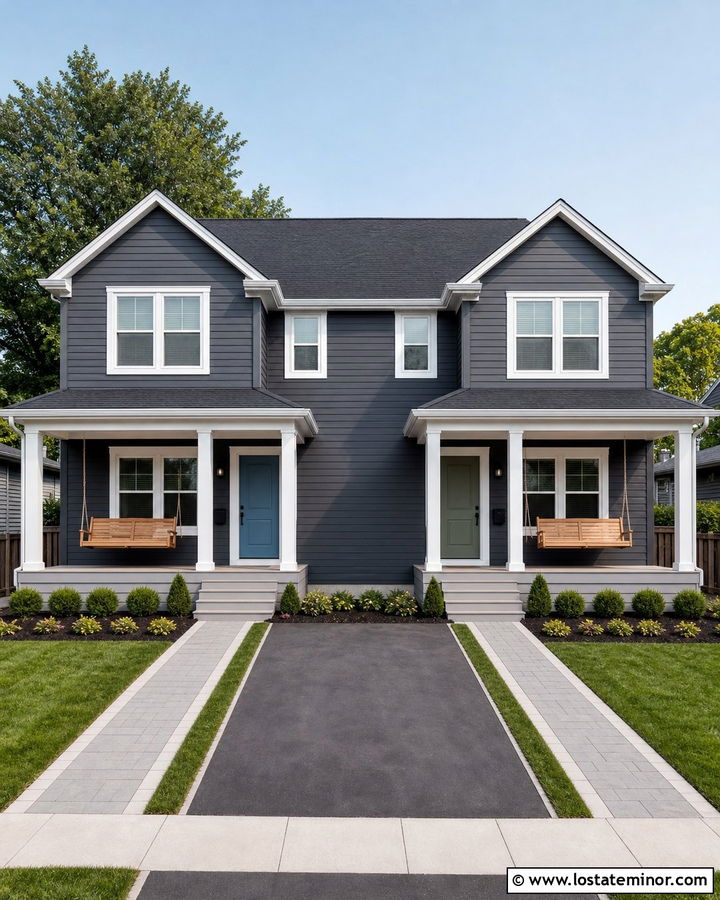
Matching porch swings can bring unity to a charcoal grey duplex without erasing the identity of each entrance. Use the same deep gray siding, white trim, and black roof across the full building. Place one natural wood swing beside each front door, aligning both swings at the same height and distance from the porch columns. The doors can vary slightly, with one muted blue and the other sage green, while sharing identical black hardware and lighting. Repeat the swing’s wood tone on porch ceilings or small privacy screens. Light gray decking prevents the covered porch from feeling too dark. Mirrored garden beds, low hedges, and separate stone walkways maintain balance, helping the entire property look planned, cohesive, and attractive from the street.
25. Charcoal Grey Townhouse With Compact Swing
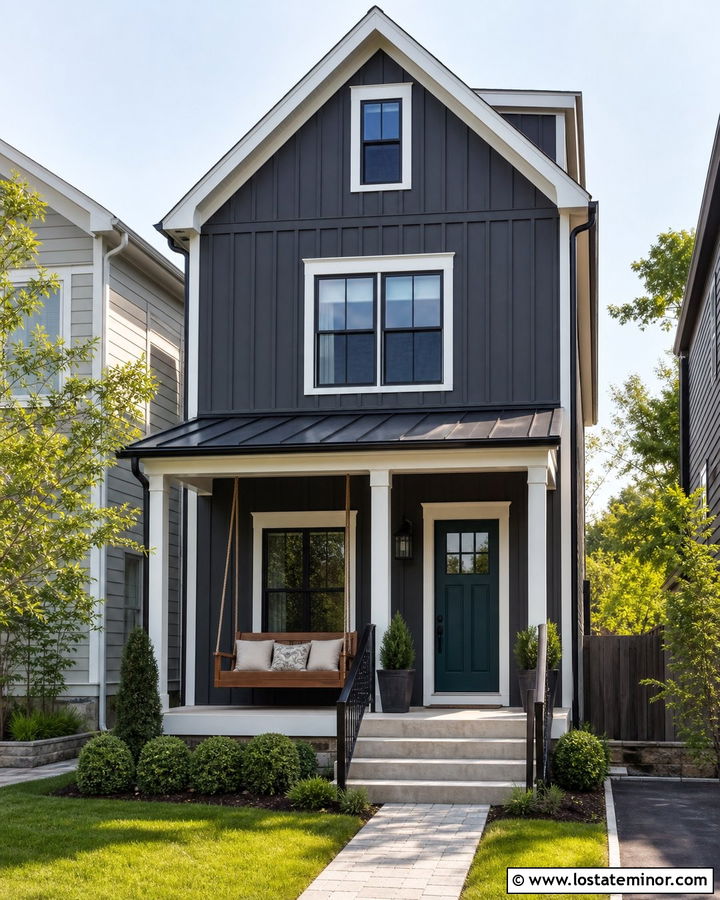
A compact swing can fit a charcoal grey townhouse when every porch inch is carefully planned. Use narrow vertical siding to give the facade greater height, then frame black windows and the entry with warm white trim. Choose a slim two-seat swing in natural acacia wood and suspend it against the porch’s side wall, keeping the main path to the door clear. A deep teal front door provides a controlled color accent and looks rich beside charcoal. Repeat matte black on the railings, lantern, and standing-seam porch roof. Light concrete steps and pale decking brighten the small space. Upright planters, clipped shrubs, and a narrow paver walkway add greenery without crowding the facade or hiding the swing.
26. Charcoal Grey Cabin With Porch Swing Bed
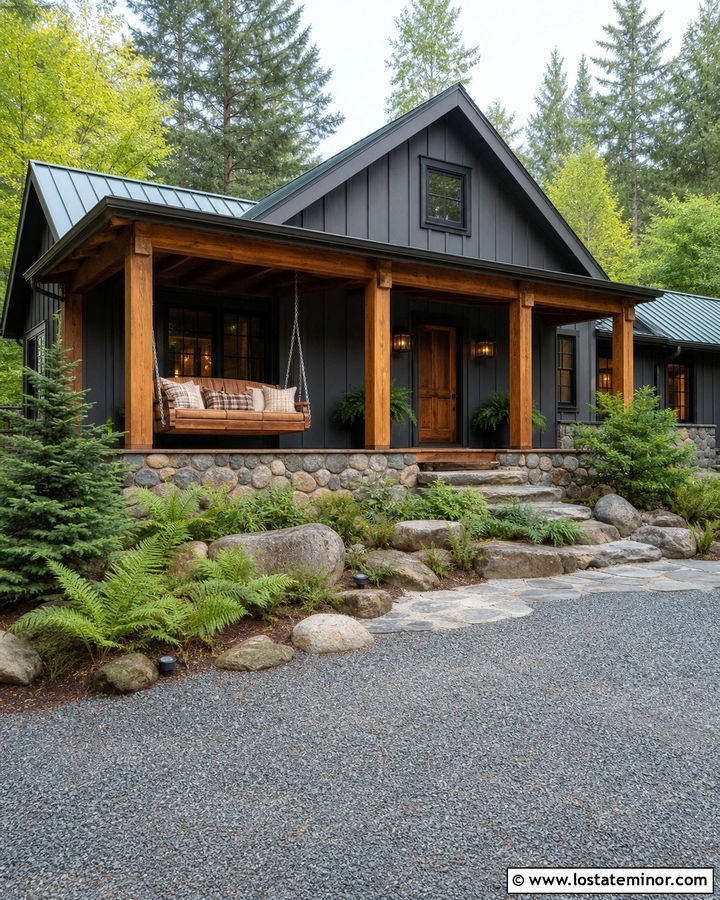
A deep porch swing bed can make a charcoal grey cabin feel comfortable without losing its rugged simplicity. Use dark gray board-and-batten siding with a lower base of irregular fieldstone. Heavy cedar posts, exposed beams, and a matching front door bring warmth to the shadowed porch. Suspend a wide cedar swing bed from black chains and layer it with tan, cream, and muted plaid cushions. A dark green metal roof introduces subtle color while complementing the surrounding evergreens. Keep window trim soft black for a low-contrast, cohesive finish. Stone steps, a gravel drive, native ferns, and natural boulders should frame the house loosely. This material-focused palette makes the cabin feel settled into the landscape rather than placed on top of it.
27. Charcoal Grey Coastal Colonial With Navy Swing
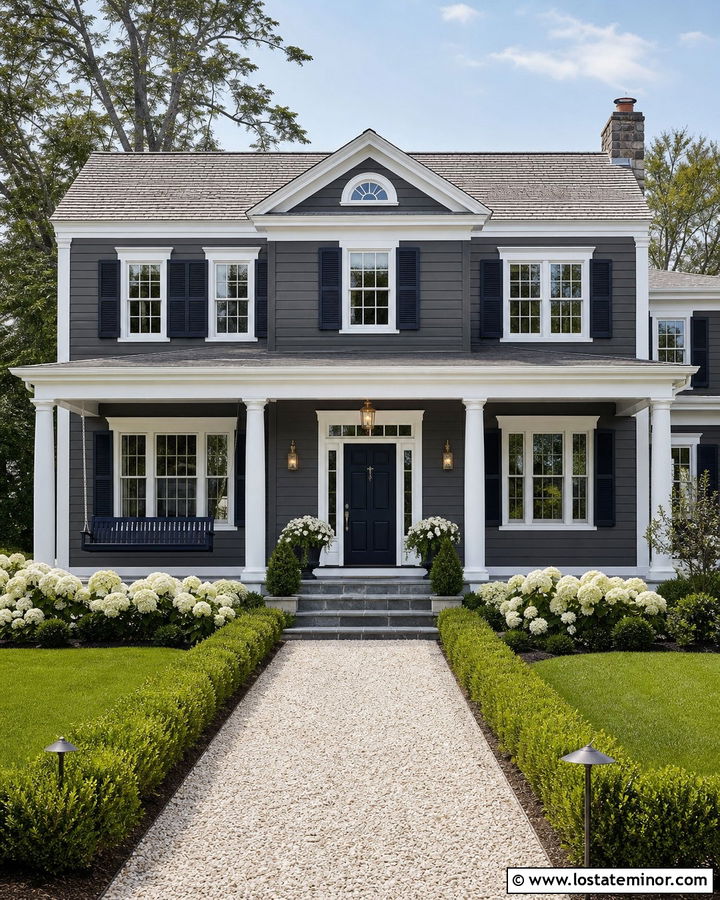
Navy brings subtle color to a charcoal grey coastal colonial while preserving its traditional appearance. Choose charcoal clapboard siding, bright white corner boards, white porch columns, and crisp window trim. A navy wooden swing placed beneath the veranda can coordinate with the front door and narrow stripe cushions. Use polished nickel or weathered brass hardware for a lighter alternative to black metal. A pale gray shingle roof keeps the upper facade airy, while natural bluestone steps connect the cool exterior colors. White hydrangeas, evergreen hedges, and a straight shell or gravel walkway create a neat coastal setting. By repeating navy only on the swing, door, and small accessories, the scheme remains controlled and allows the charcoal exterior to provide the primary visual depth.
28. Charcoal Grey Rustic Modern House With Leather Swing
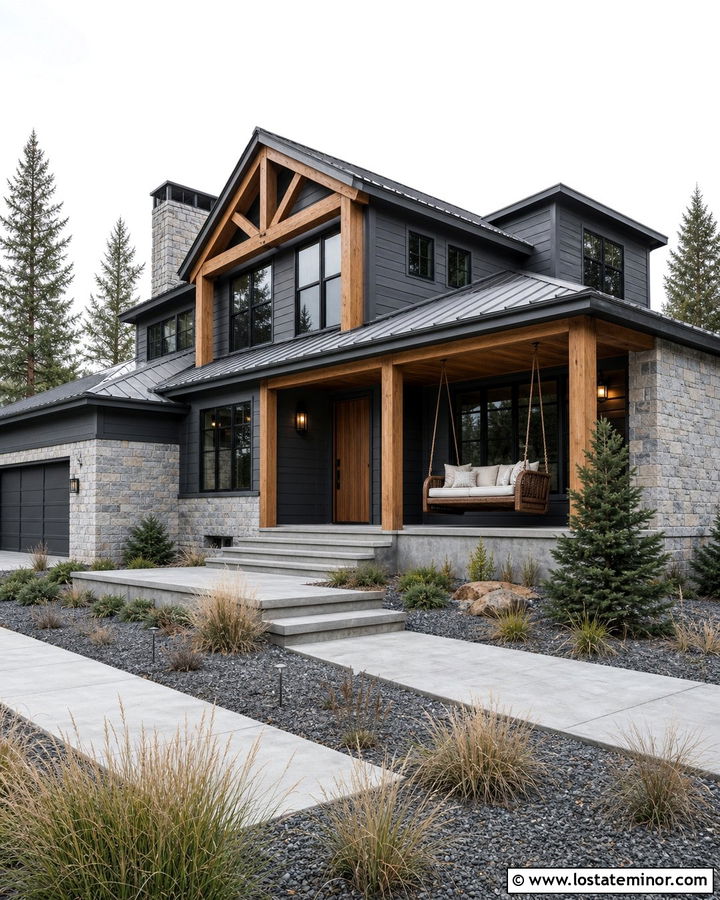
For a sheltered porch, a saddle-brown woven swing can introduce the rich appearance of leather without using a vulnerable indoor material. Choose exterior-rated straps or synthetic leather over a sturdy teak frame. Set the swing against charcoal grey vertical siding on a rustic modern house with black windows, a low metal roof, and exposed timber beams. Repeat saddle brown on the pivot door and porch ceiling to distribute the warmth across the facade. Large gray stone sections can anchor the base and chimney. Keep cushions cream and weather resistant. Broad concrete steps, gravel planting beds, ornamental grasses, and a few evergreens complete the restrained landscape. The finished scheme feels modern, tactile, and welcoming rather than cold or overly industrial.
29. Charcoal Grey Scandinavian House With Light Wood Swing
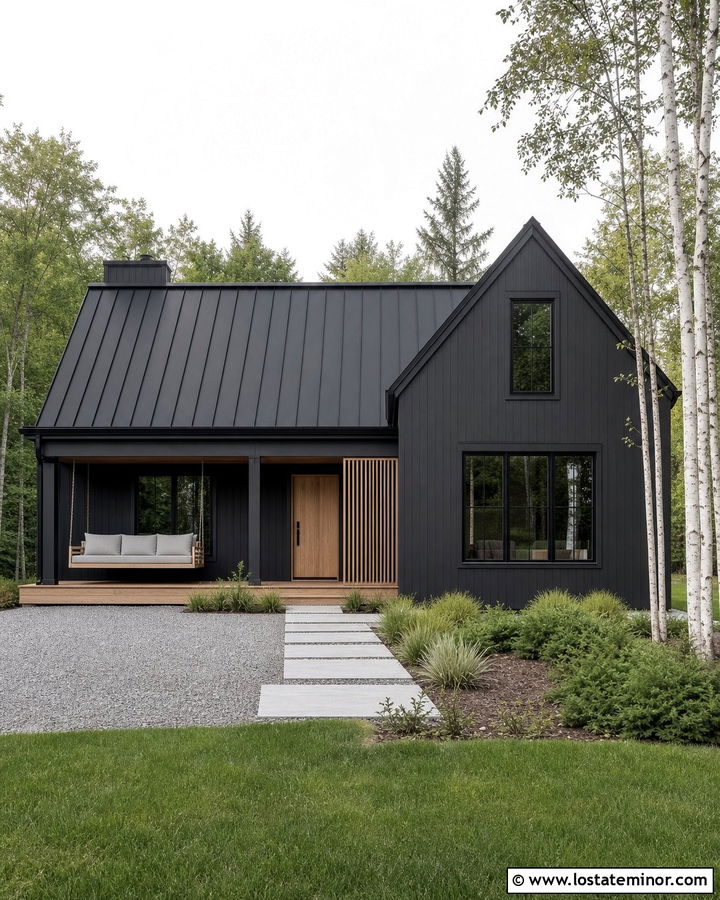
Pale wood details brighten a charcoal grey Scandinavian-inspired house without relying on sharp white contrast. Use simple vertical siding in deep charcoal, minimal black window frames, and a steep matte black roof. Hang a light ash or white oak swing beneath a recessed porch, keeping its shape clean and unadorned. Repeat the wood finish on the front door, porch ceiling, and slatted privacy panel. Soft off-white trim can appear sparingly around the entry rather than every window. Choose light gray cushions and one muted rust pillow for warmth. A gravel driveway, concrete paver path, low grasses, birch trees, and evergreen ground cover support the natural palette. Keep every feature practical and uncluttered so the materials and full house silhouette remain the focus.
30. Charcoal Grey Transitional House With Curved Swing
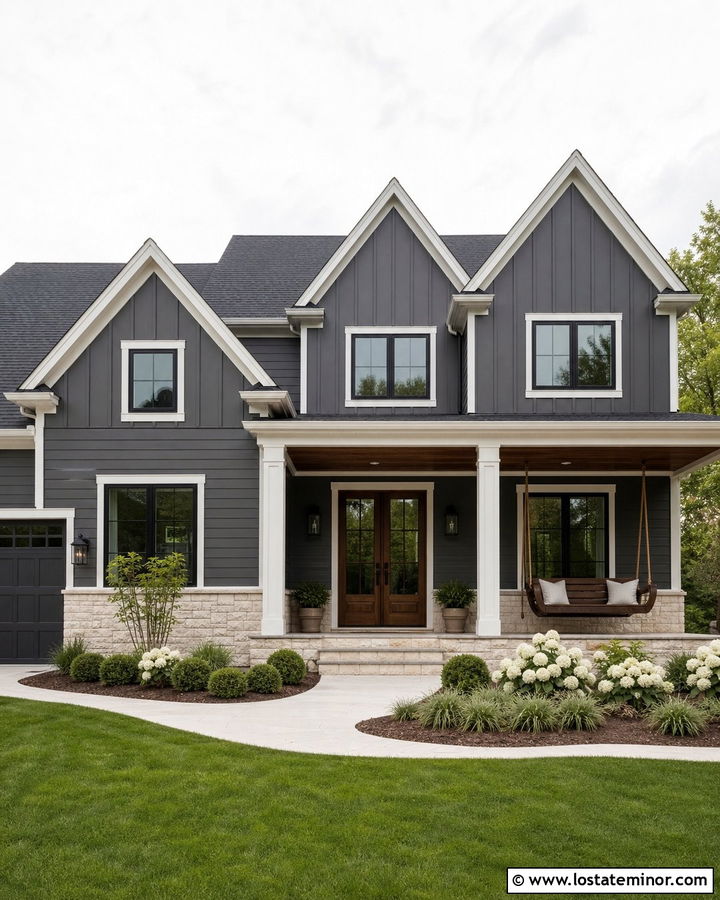
A curved-back swing offers a graceful focal point for a charcoal grey transitional house that combines traditional symmetry with simplified details. Use horizontal siding on the main walls and narrow board-and-batten panels beneath the front gables. Paint the trim soft white, then introduce stained walnut on the swing, double front doors, and porch ceiling. The repeated wood finish warms the dark facade and connects the seating to the architecture. Black windows, lanterns, and a medium-dark roof sharpen the overall scheme. Add pale limestone around the porch foundation and entry steps to provide lighter texture near the ground. Tailored shrubs, white flowering plants, and a gently curved walkway complete the curb appeal. Neutral cushions let the swing’s elegant silhouette stay visible from the street.
Conclusion:
The strongest 30 Charcoal Grey House Design With Swing Ideas treat the swing as part of a complete exterior rather than a separate decoration. Start with the architecture, natural light, roof, and permanent masonry. Then select trim, wood tones, doors, and swing materials that balance the dark siding. White creates crisp contrast, while cedar, oak, brick, and stone add warmth. Blue, green, red, and mustard accents can bring personality when repeated carefully. Always test charcoal paint outdoors because its undertones and depth can change throughout the day. Finally, confirm that porch framing can safely support a suspended swing. With coordinated materials and thoughtful placement, charcoal grey becomes welcoming, dimensional, and highly versatile.

Related posts: