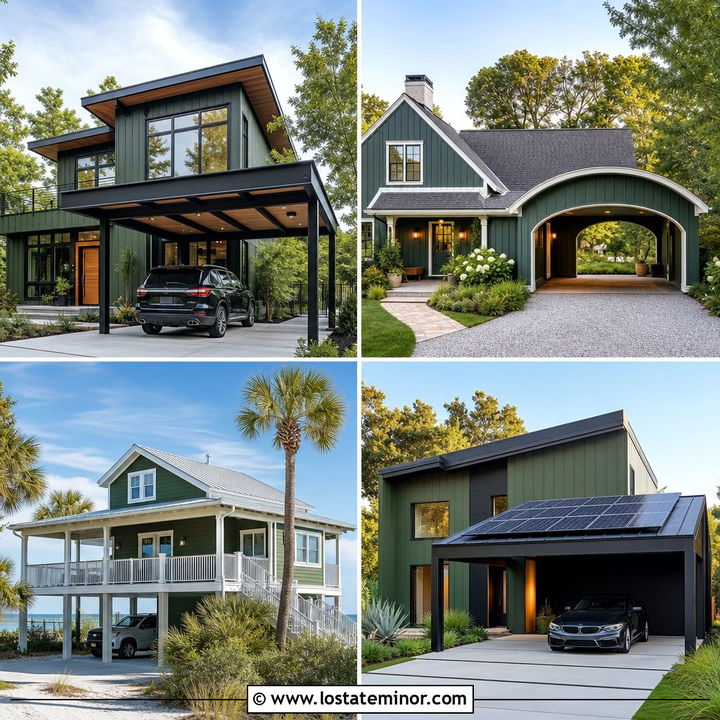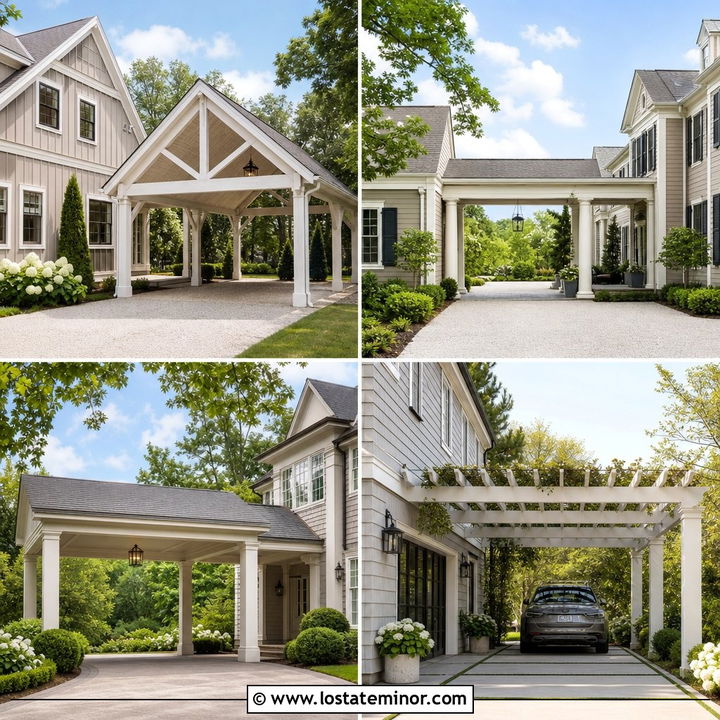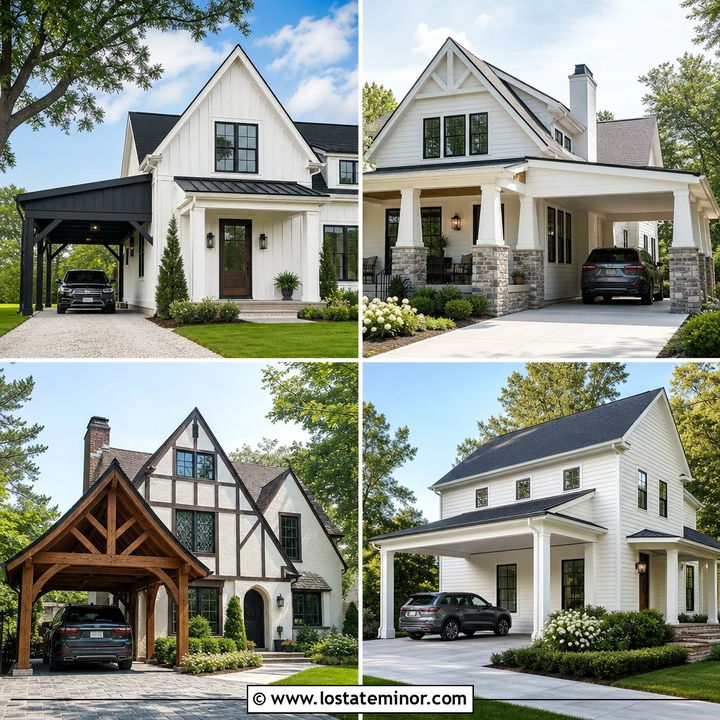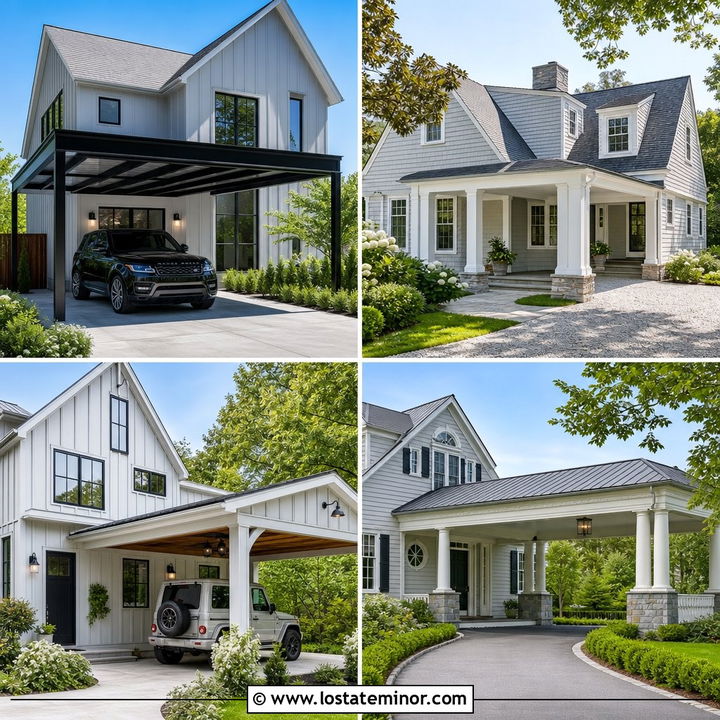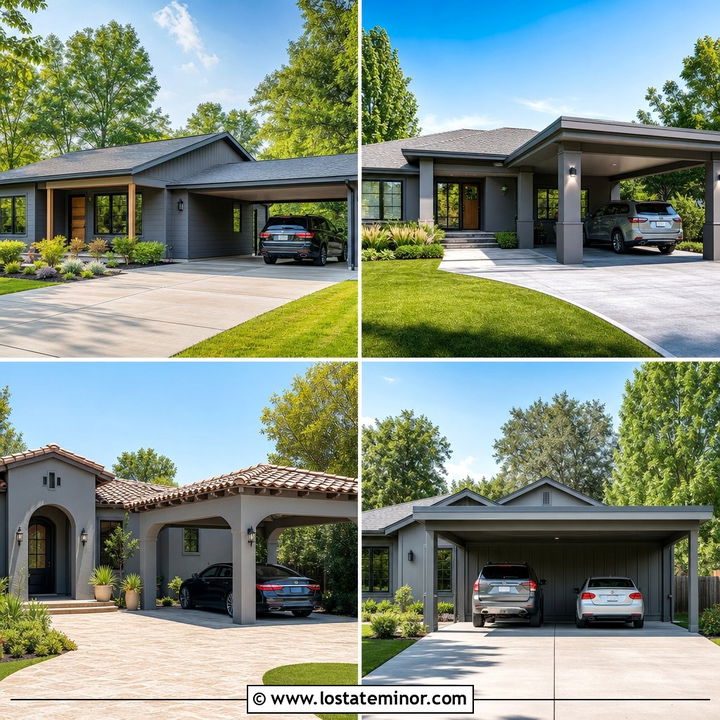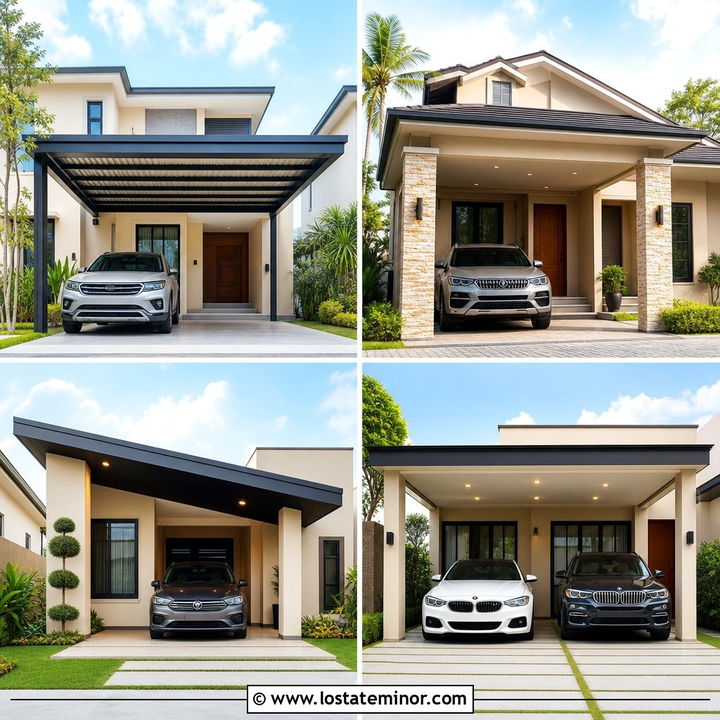
A charcoal gray exterior gives a home depth, definition, and a strong architectural presence. Add a well-designed carport, and the result can feel practical without sacrificing curb appeal. The key is treating the carport as part of the original facade. Its roofline, posts, ceiling, and privacy panels should connect visually with the house. Natural wood can soften dark siding, while white trim creates crisp contrast. Brick, stone, and metal introduce texture that keeps charcoal from looking flat. Matching materials and repeated horizontal or vertical lines also help the carport feel integrated rather than added later. () The complete exterior looks below offer distinctive inspiration for **30 Charcoal Grey House Design With Carport Ideas**.
1. Charcoal Gray Modern House With Wood Carport
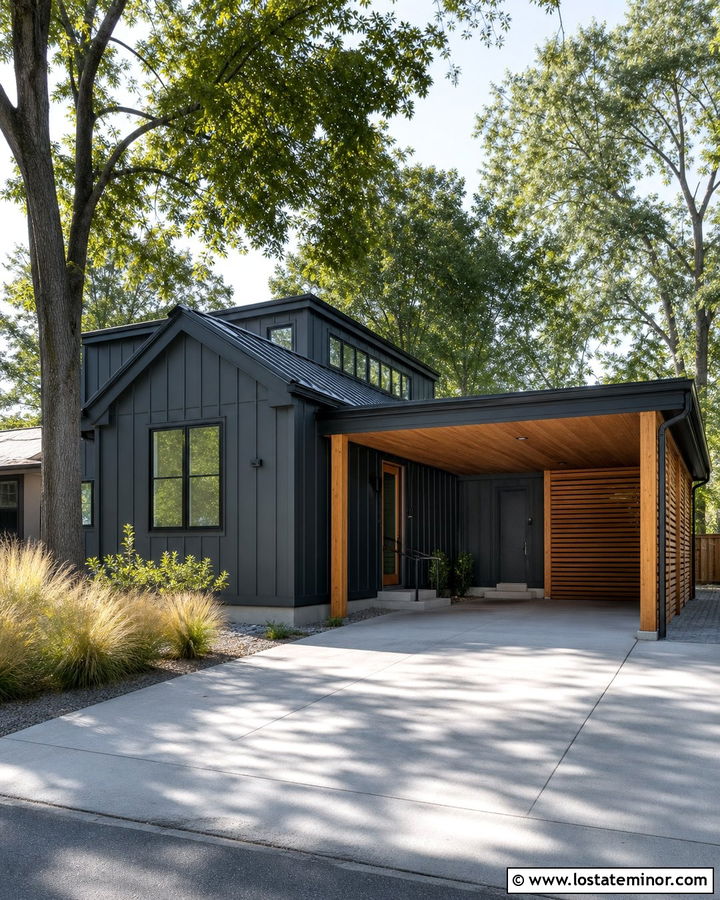
Warm cedar brings instant balance to the dramatic charcoal gray siding on a modern home. Use vertical charcoal board-and-batten across the facade, then build the attached carport with substantial cedar posts and a matching slatted privacy wall. A natural wood ceiling helps the covered parking area feel brighter and more inviting. Matte black window frames, gutters, and exterior lights maintain the clean contemporary palette. Choose a low-slope metal roof that continues smoothly over both the house and carport. A natural cedar front door strengthens the connection between the two structures. Finish the property with pale concrete, ornamental grasses, and simple rectangular planting beds. The warmth of the wood prevents the dark exterior from appearing cold or overly industrial.
2. Charcoal Gray Ranch House With Attached Carport
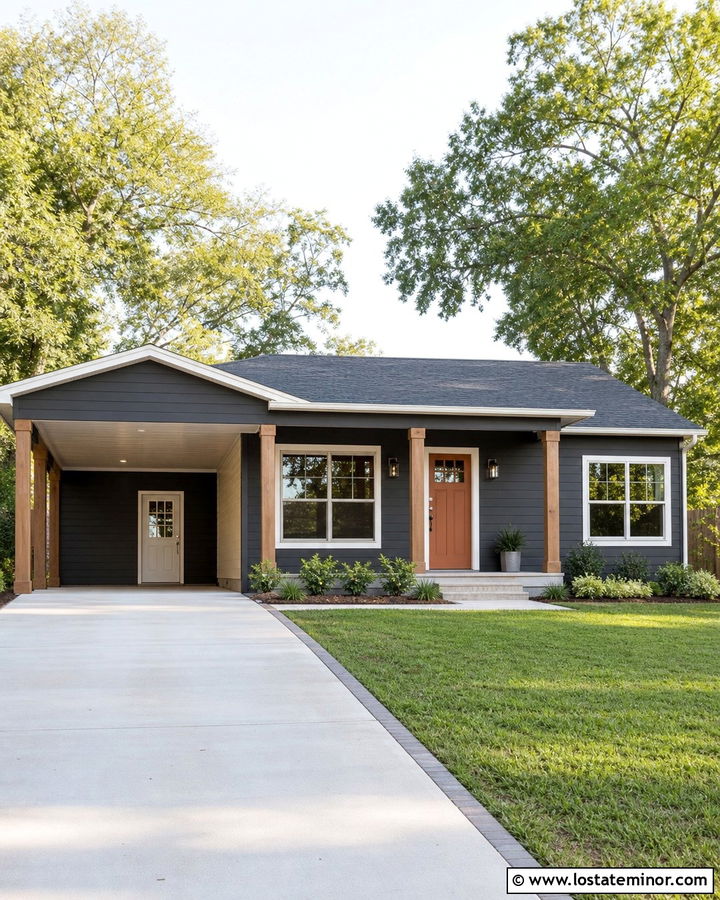
A long, low ranch house is an ideal setting for an attached carport because both structures can share one continuous roofline. Cover the exterior with charcoal gray horizontal siding and use warm white around the windows, fascia, and front entry. Square wood carport posts add an organic accent without changing the home’s simple character. Paint the carport beams charcoal so they blend into the main facade, but leave the ceiling a light natural wood tone. A muted terracotta front door can provide one controlled splash of color. Wide concrete pavers and low foundation plants emphasize the horizontal architecture. This scheme refreshes an older ranch while keeping the exterior practical, approachable, and visually connected from one end to the other.
3. Charcoal Gray House With Black Metal Carport
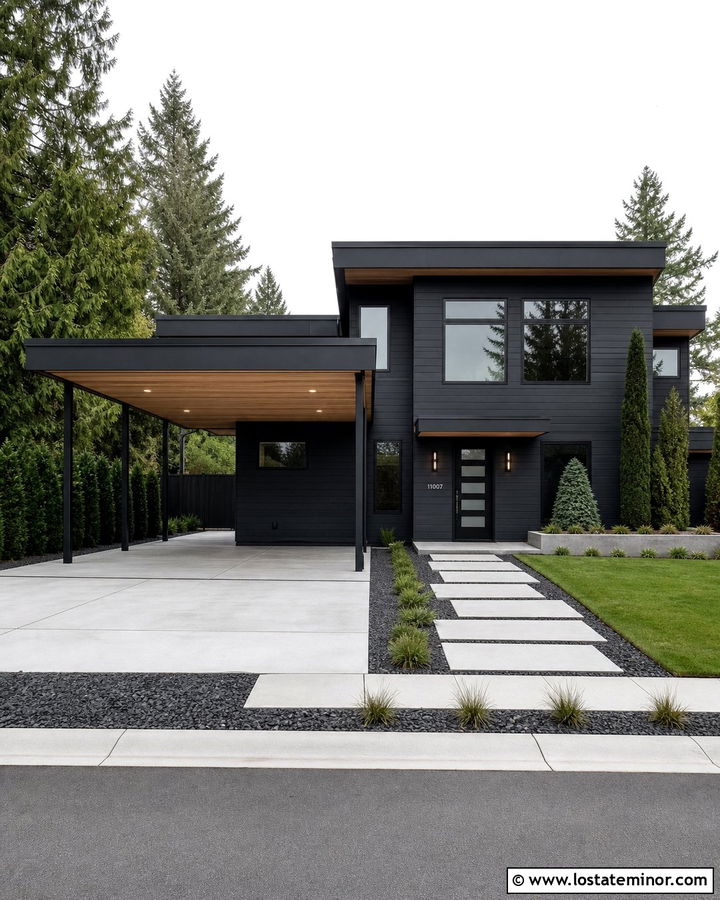
Could a streamlined metal structure make a charcoal house look even sharper? On a contemporary exterior, the answer is yes. Pair deep charcoal gray fiber cement siding with a black powder-coated steel carport featuring narrow posts and a flat roof. The slim framework keeps the parking area open and prevents it from overpowering the facade. Repeat matte black on the windows, gutters, front door, and modern wall lights. A pale wood soffit under the carport provides subtle warmth overhead. Use light gray concrete for the driveway and walkway to brighten the ground plane. Sparse landscaping, sculptural evergreens, and dark gravel complete the design. This restrained material palette creates a polished house exterior with strong lines and minimal visual clutter.
4. Charcoal Gray Craftsman House With Carport
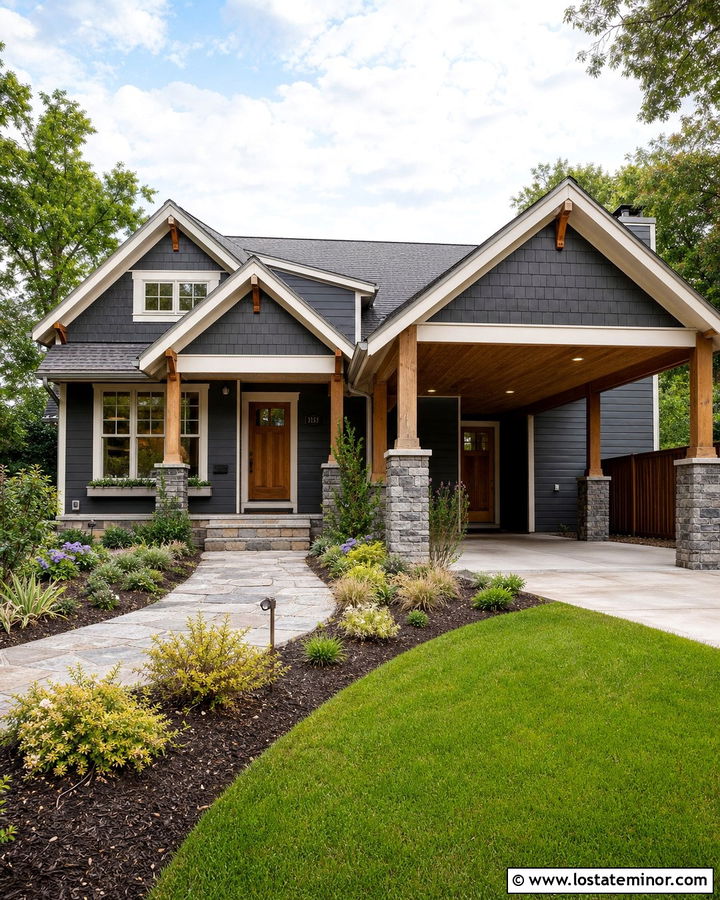
Craftsman architecture gives a charcoal gray exterior plenty of opportunities for layered materials. Use dark charcoal lap siding on the main walls, creamy white trim around the windows, and tapered stone bases beneath the carport columns. The carport roof should repeat the home’s front-facing gables, including exposed rafter tails and wide fascia boards. Stained cedar posts and decorative brackets add warmth that suits the handmade Craftsman character. Continue the same wood stain onto the front door and porch ceiling. A medium-gray architectural shingle roof creates gentle separation from the siding. Complete the curb appeal with curved planting beds, compact shrubs, and a flagstone walkway. Every detail helps the carport look like a natural extension of the original house.
5. Charcoal Gray Farmhouse With Side Carport
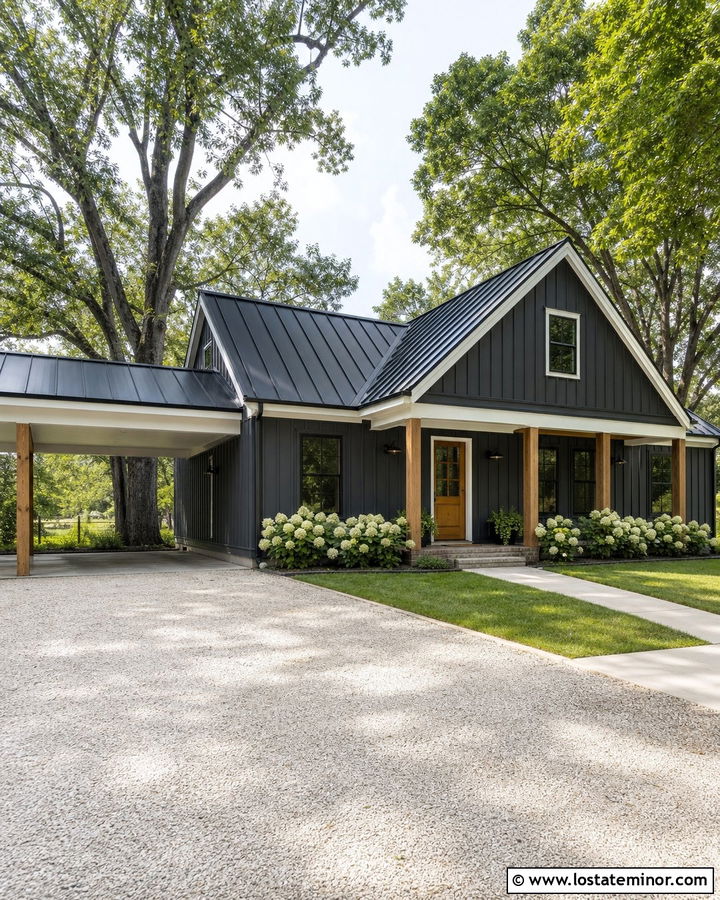
A side carport keeps the front elevation of a modern farmhouse clean while still providing convenient covered parking. Choose charcoal gray vertical board-and-batten siding for the house, then use crisp white on the trim, porch columns, and window surrounds. A black standing-seam roof can extend over the carport with a simple side-facing gable. Natural cedar posts and a matching front door warm the high-contrast palette. Add a white carport ceiling to reflect light and make the covered space feel less enclosed. Black barn-style exterior lights reinforce the farmhouse details without becoming decorative clutter. A pale gravel driveway, straight concrete walkway, and informal hydrangea beds soften the darker materials. The finished home feels modern, practical, and welcoming from the street.
6. Charcoal Gray Midcentury House With Flat Carport
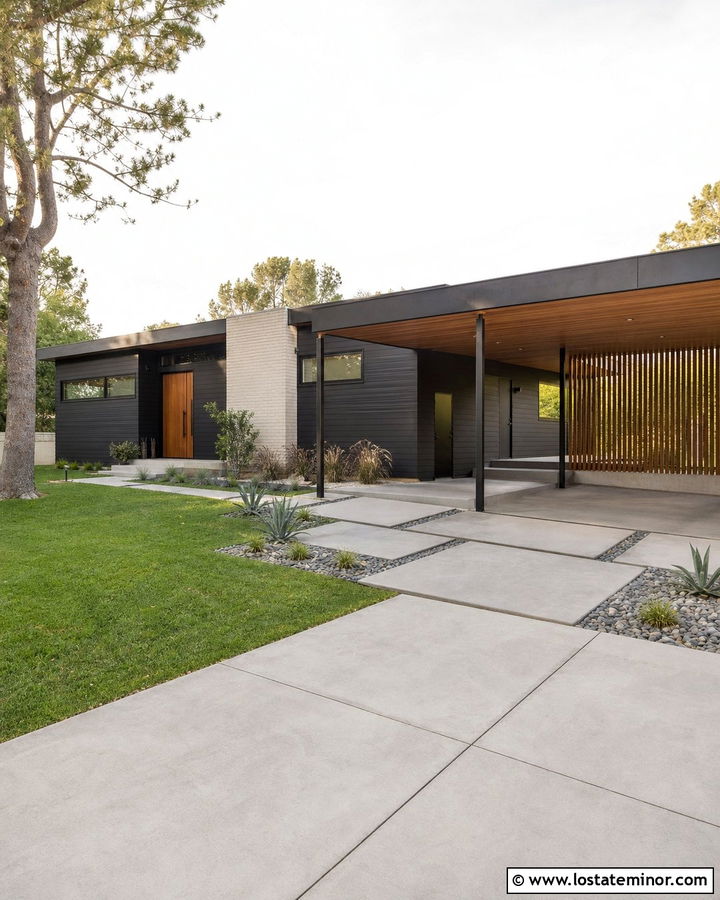
Picture a low roof floating above an open parking area beside a charcoal gray midcentury home. Keep the exterior horizontal by using dark gray lap siding, broad roof overhangs, and long bands of black-framed windows. Support the flat carport roof with slender black steel columns rather than bulky posts. A tongue-and-groove cedar ceiling introduces the warm wood tones commonly associated with midcentury design. Repeat cedar on the front door and one vertical privacy screen between the carport and entry courtyard. Light concrete blocks or cream-colored brick can brighten a small portion of the facade. Finish with geometric pavers, river rock, agave, and ornamental grasses. The combination celebrates the home’s original proportions while giving the carport a purposeful architectural role.
7. Charcoal Gray Bungalow With Gabled Carport
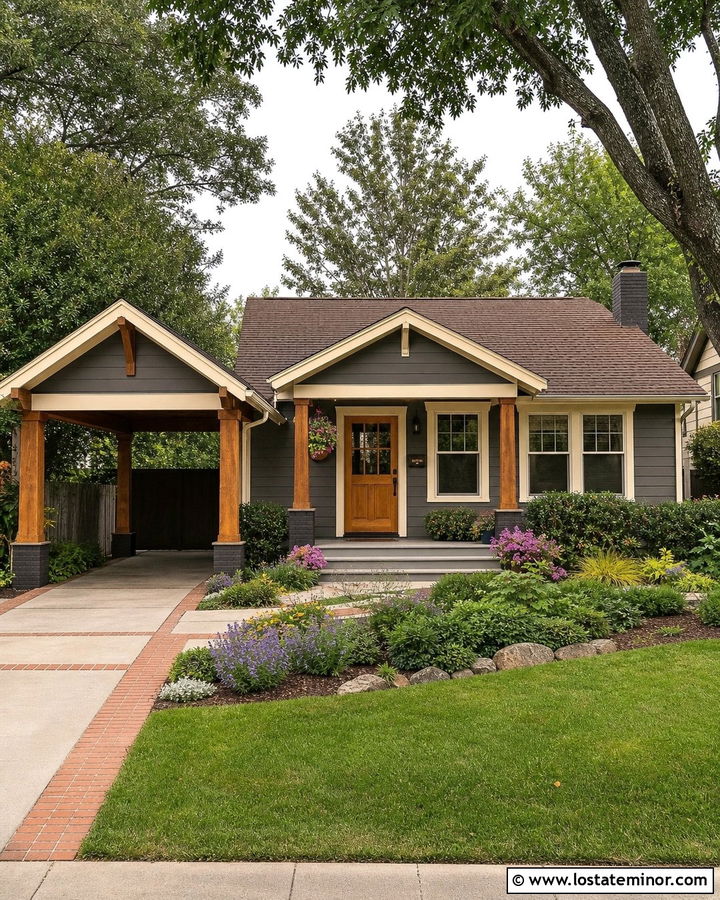
A compact bungalow can support a carport without losing its friendly, cottage-like scale. Paint the siding charcoal gray and highlight the windows, eaves, and porch railings with soft ivory rather than stark white. Position a single-car carport along one side and give it a modest gable that matches the pitch of the main roof. Chunky stained wood posts add warmth, while charcoal beams connect the structure to the house color. Use dark brown shingles and a honey-toned wood front door for a comfortable, grounded palette. A brick-edged driveway can lead naturally into the covered space. Layered shrubs, flowering perennials, and a small front lawn soften the dark facade, helping the complete exterior remain charming instead of heavy.
8. Charcoal Gray Split-Level House With Carport
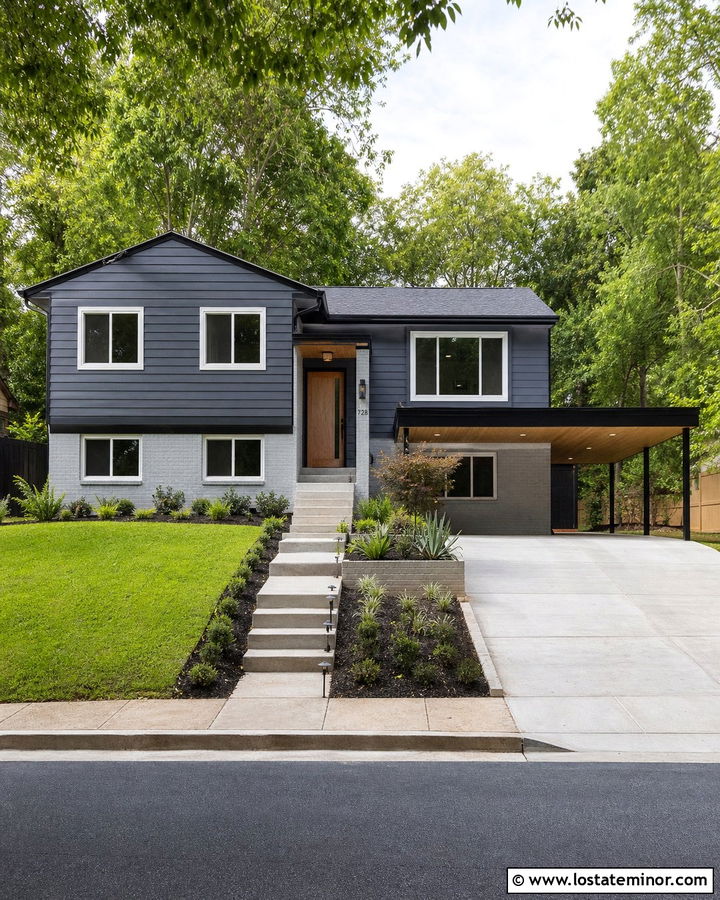
Split-level homes often have asymmetrical facades, so a carefully positioned carport can improve their visual balance. Cover the upper story with charcoal gray horizontal siding and use light gray painted brick on the lower level. Add a flat-roof carport beside the shorter wing, aligning its fascia with an existing horizontal line on the house. Black steel posts create a clean transition, while a cedar ceiling adds warmth beneath the roof. Carry the cedar tone to the recessed front door for continuity. Off-white window trim keeps the facade from becoming too dark. Broad concrete steps, a sloped lawn, and tiered planting beds can work with the changing elevation. The refreshed exterior feels coordinated, intentional, and better proportioned from the curb.
9. Charcoal Gray House With White Carport Trim
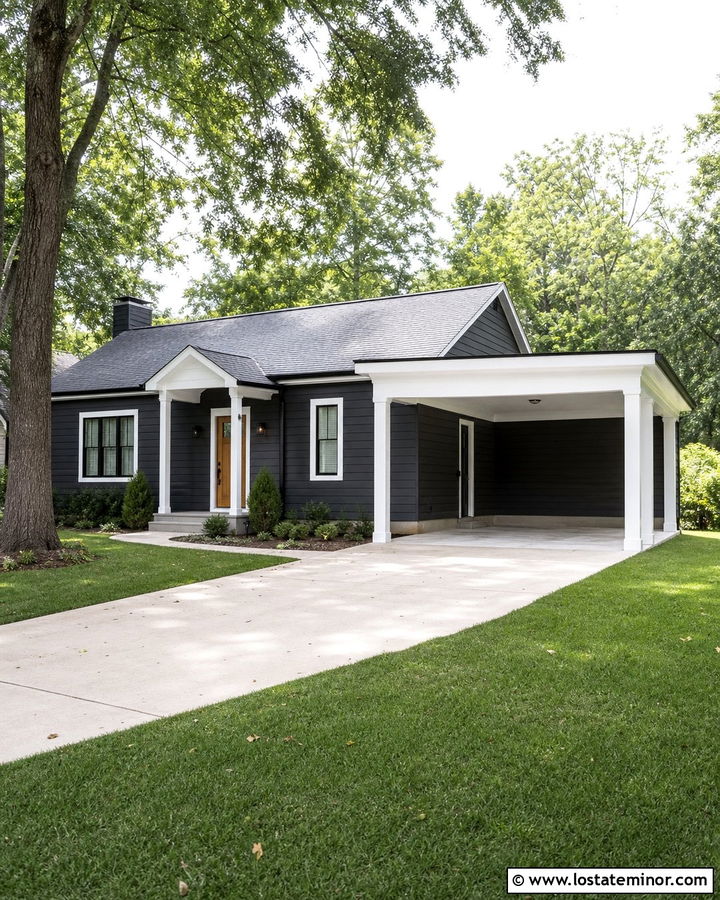
Bright white trim creates the clearest contrast against a charcoal gray house, making it particularly useful on smaller or shaded properties. Use charcoal lap siding across the facade, then paint the carport posts, beams, fascia, and ceiling a clean white. The carport becomes a crisp architectural frame instead of disappearing into the dark body color. Keep the roof medium gray to bridge the two tones without adding another strong accent. A natural oak front door and matching bench can soften the contrast. Choose black window frames for definition, but use white window surrounds to maintain brightness. Pale concrete paving and green foundation plants further lighten the exterior. The resulting scheme is bold and graphic, yet still welcoming enough for a traditional suburban setting.
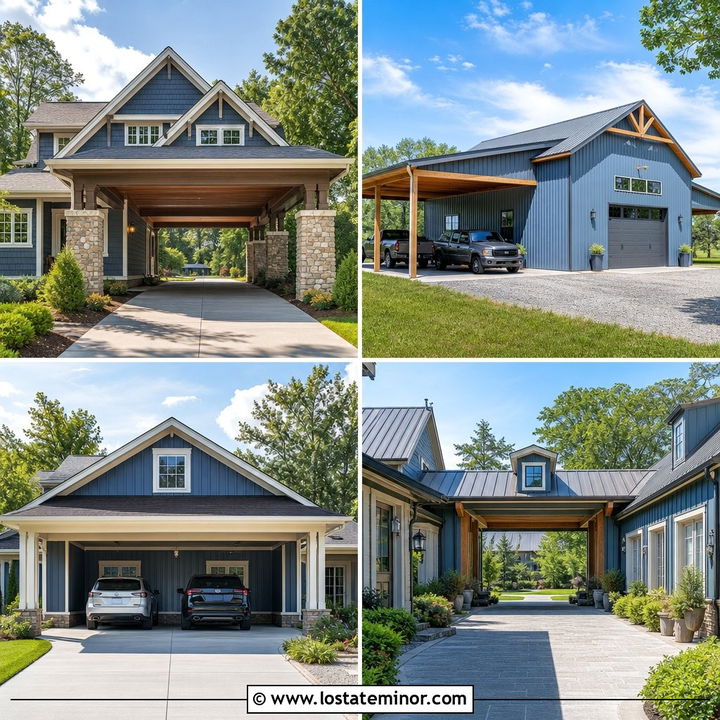
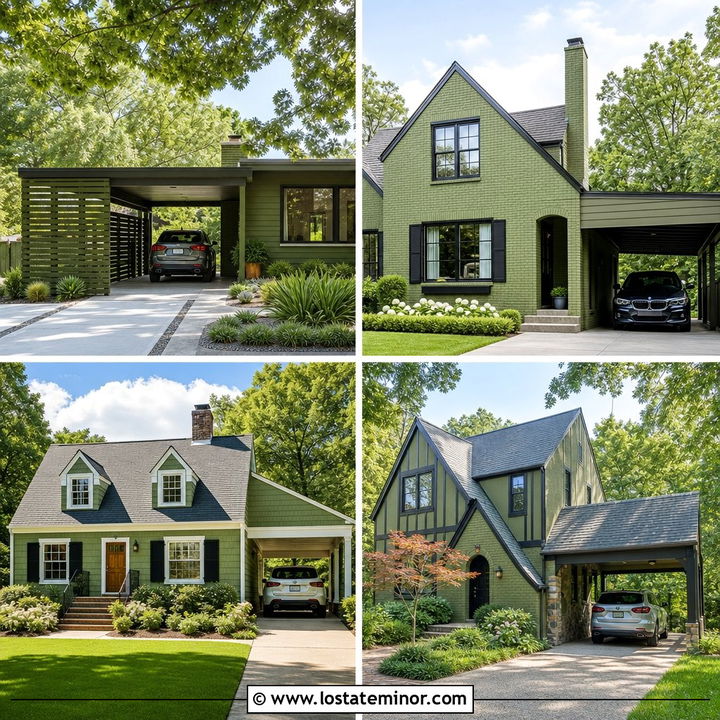
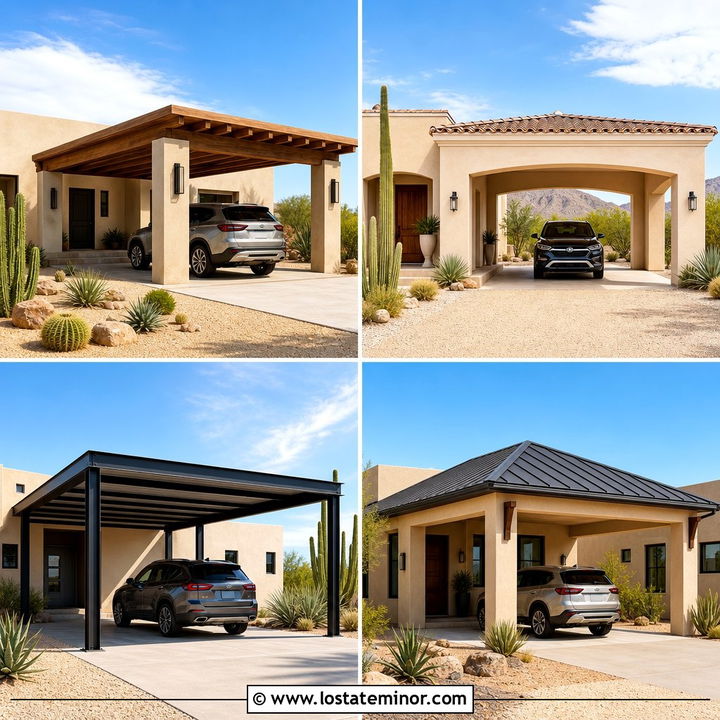
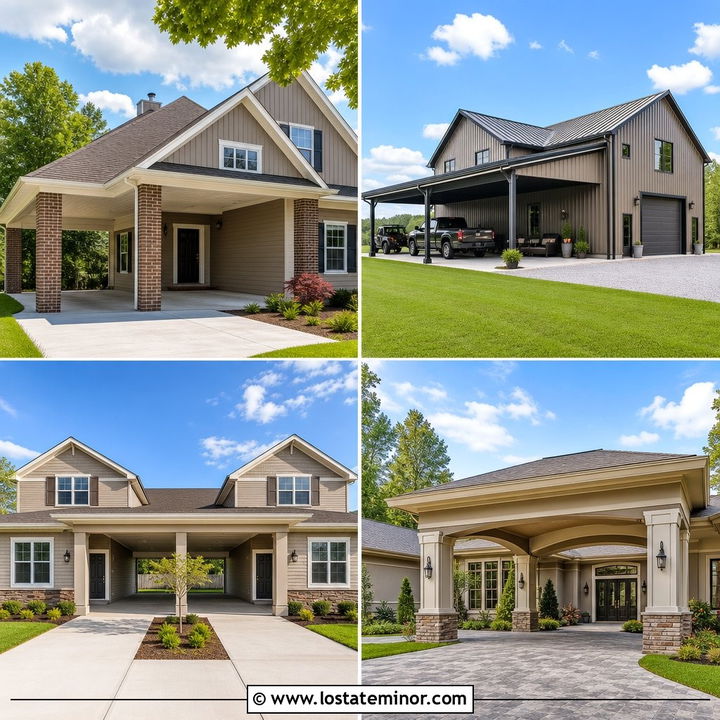
10. Charcoal Gray House With Cedar Slat Carport
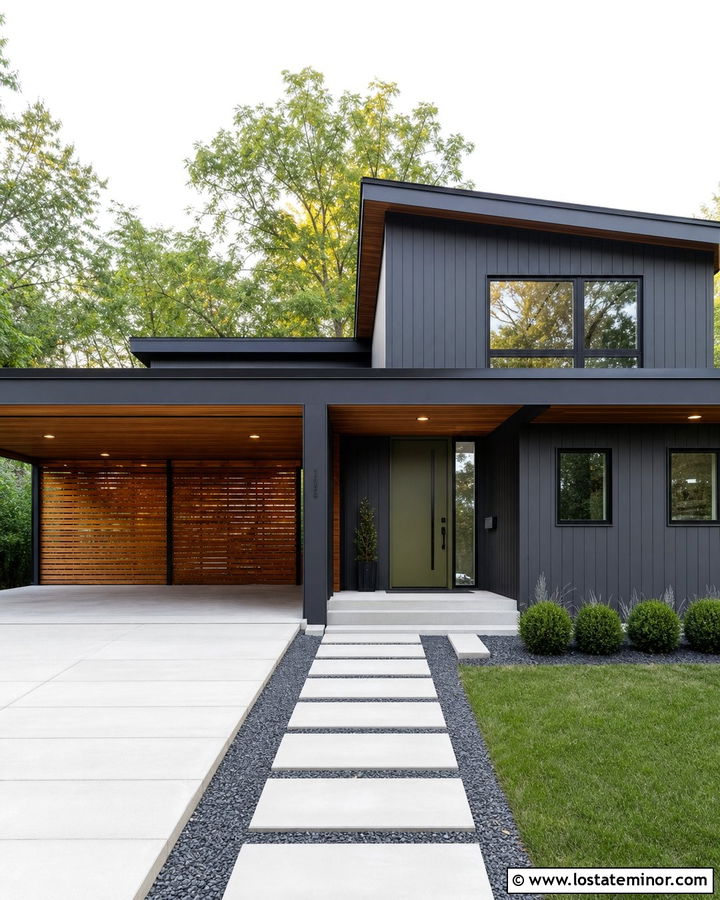
Cedar slats can transform an open carport into an attractive design feature while providing partial screening. Start with a charcoal gray contemporary house featuring simple vertical siding and black-framed windows. Install a warm cedar screen along the street-facing side of the attached carport, leaving consistent gaps so natural light can filter through. Repeat the wood on the carport ceiling and front entry alcove. Charcoal steel beams and a flat dark roof keep the structure visually tied to the house. A muted olive front door introduces a subtle natural color without competing with the cedar. Use linear concrete pavers, dark gravel, and neatly clipped shrubs around the driveway. This material combination feels private and refined without making the carport appear enclosed.
11. Charcoal Gray House With Stone Carport Columns
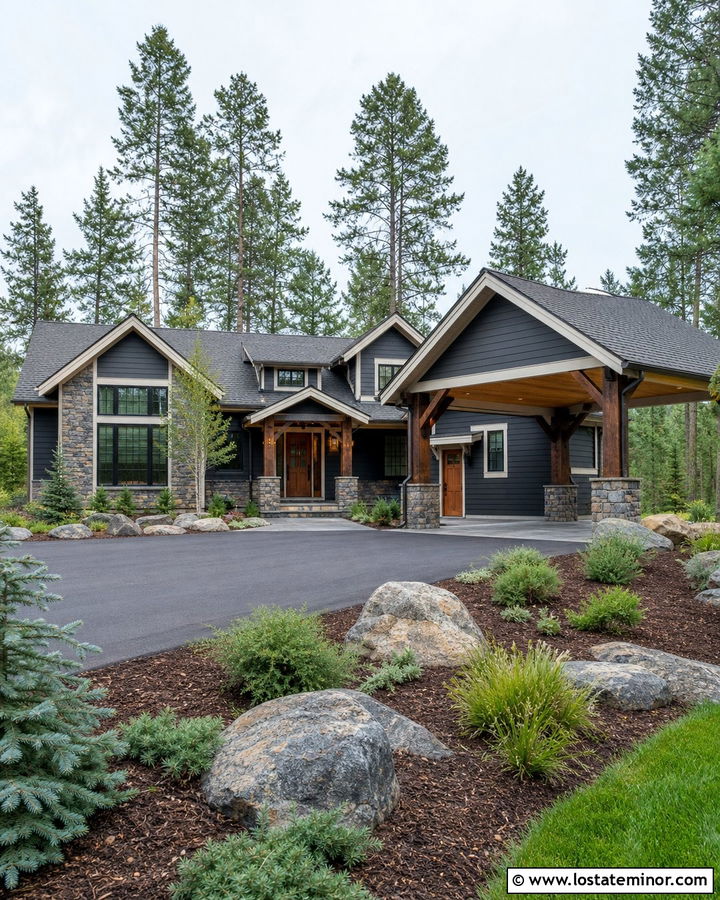
Stone columns give a charcoal gray exterior a sturdy, grounded appearance. This treatment works especially well on a transitional or mountain-influenced home with a moderately pitched roof. Apply charcoal gray siding to the main walls and use warm off-white around the windows and roof edges. Build the carport columns with gray and tan ledgestone bases, then continue them upward with stained timber posts. The stone should also appear near the front entry or along the foundation so it does not feel isolated. A cedar carport ceiling and wood front door add warmth above eye level. Select dark bronze lights and gutters instead of pure black. Broad driveway borders, evergreen shrubs, and boulders complete a layered exterior that feels durable, cohesive, and connected to the landscape.
12. Charcoal Gray House With Brick Carport Wall
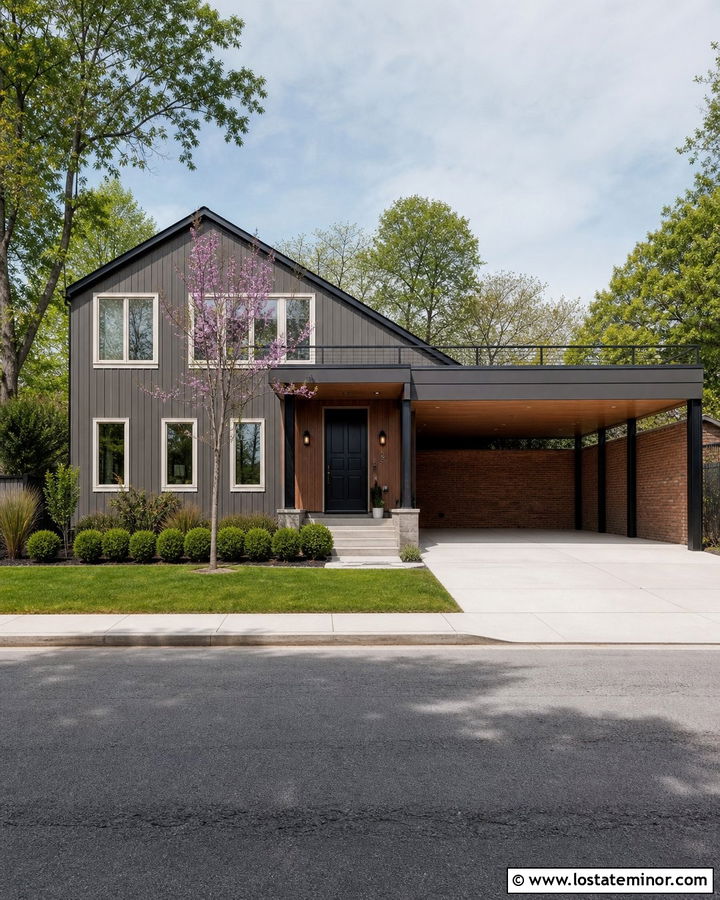
The texture of brick can keep a dark monochromatic exterior from feeling one-dimensional. Choose a charcoal gray house with vertical siding and add a warm red-brown brick wall along one side of the carport. Use the same brick around the entry steps or chimney to distribute the material across the facade. Black steel posts can support the remaining open corners, allowing the masonry wall to become the visual anchor. Paint the carport fascia charcoal and line the ceiling with medium-tone wood. A muted black front door and cream window trim create understated contrast. Keep the driveway light gray so the parking area remains bright. Boxwood, native grasses, and a redbud tree can soften the brick while complementing its warm, earthy undertones.
13. Charcoal Gray House With Cantilevered Carport
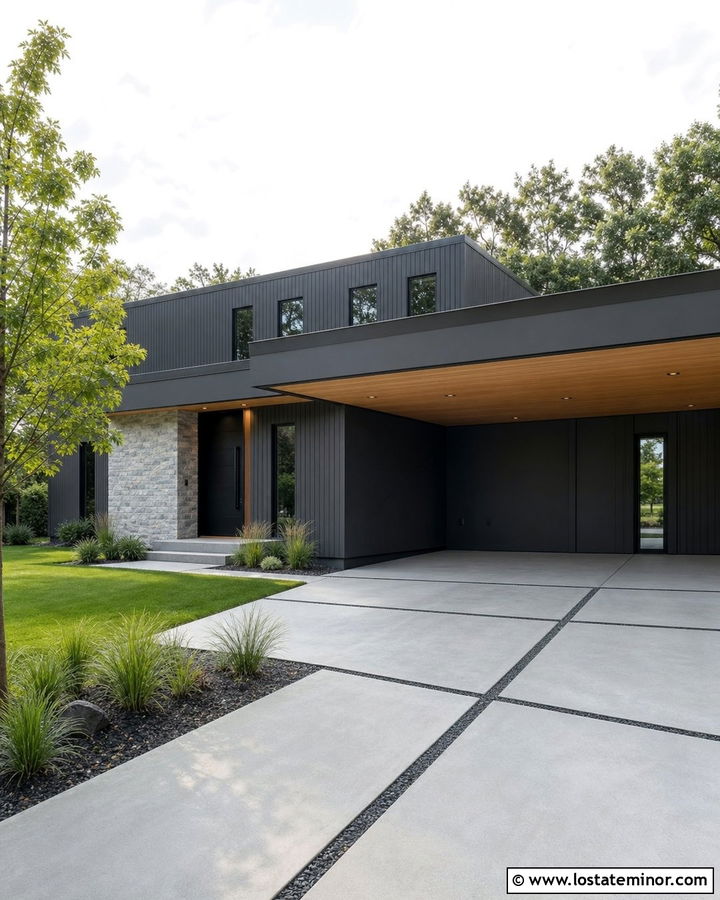
A cantilevered carport creates a remarkably clean look because the roof appears to extend outward with minimal visible support. Use this approach on a boxy modern house finished in charcoal gray panels and narrow vertical siding. Continue a flat black roof over the parking bay, using an engineered structure that keeps the front edge open. Line the underside with pale cedar to make the floating roof easier to notice. Black window frames and a black pivot door maintain the contemporary mood, while a strip of light gray stone near the entry adds depth. Large concrete driveway slabs, dark joints, and restrained landscaping support the geometry. The final exterior looks spacious and uncluttered, with the carport integrated directly into the home’s architectural form rather than attached as a separate shelter.
14. Charcoal Gray Two-Story House With Carport
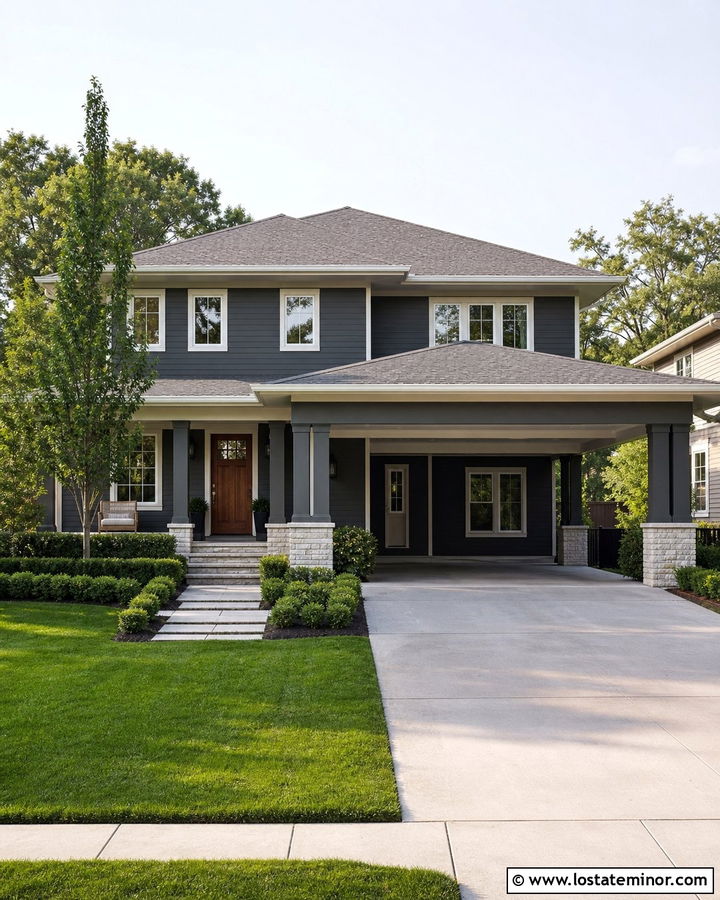
A two-story home needs a carport with enough visual weight to relate to the taller facade. Use charcoal gray siding on both levels, but introduce lighter stone across the lower entry section. An attached double carport with a broad hip roof can create a strong horizontal base beneath the vertical house. Support it with square charcoal posts on low stone plinths. Paint the soffit warm white to brighten the covered area and coordinate with the window trim. A walnut-colored front door adds warmth near the center of the facade. Medium-gray roof shingles create separation between the roof and dark walls. Frame the driveway with small trees and structured hedges. This balanced composition prevents the upper story from appearing top-heavy while giving the parking structure a permanent, substantial presence.
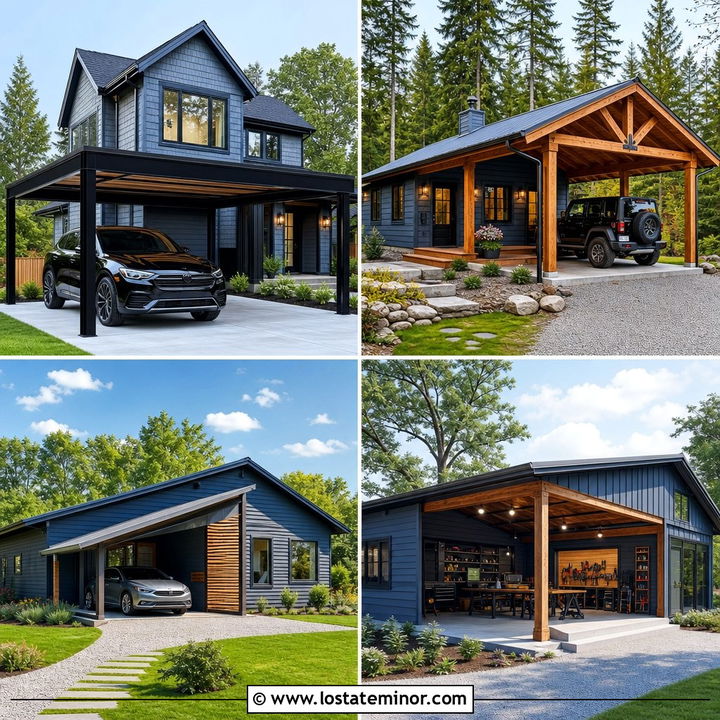
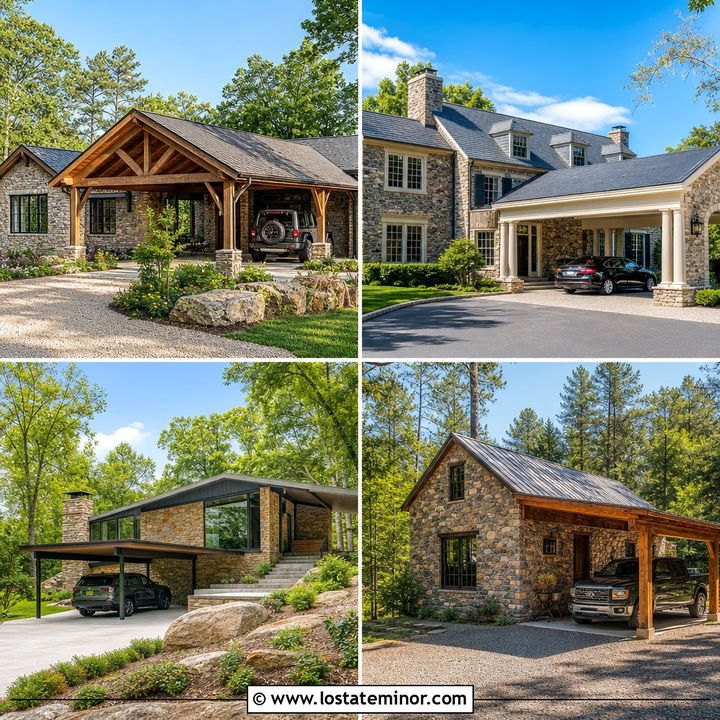
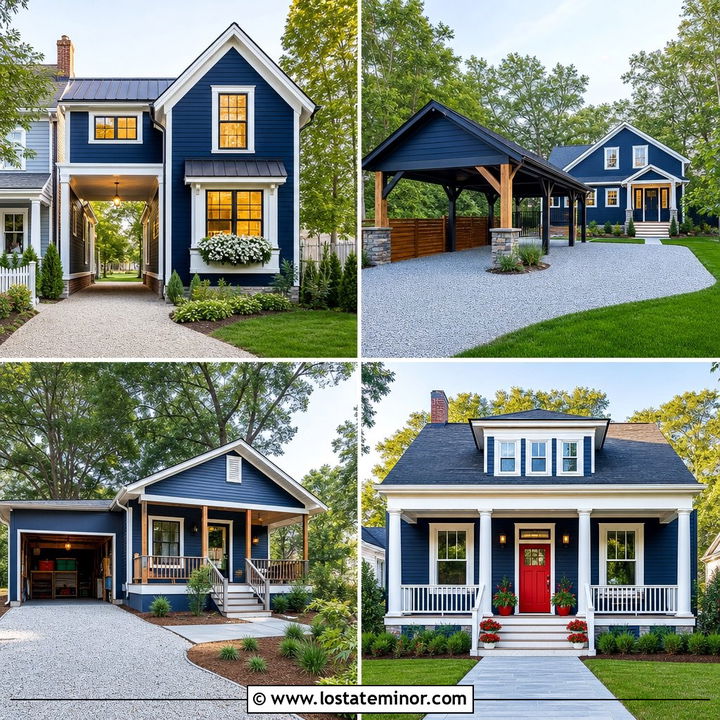
15. Charcoal Gray Cottage With Small Carport
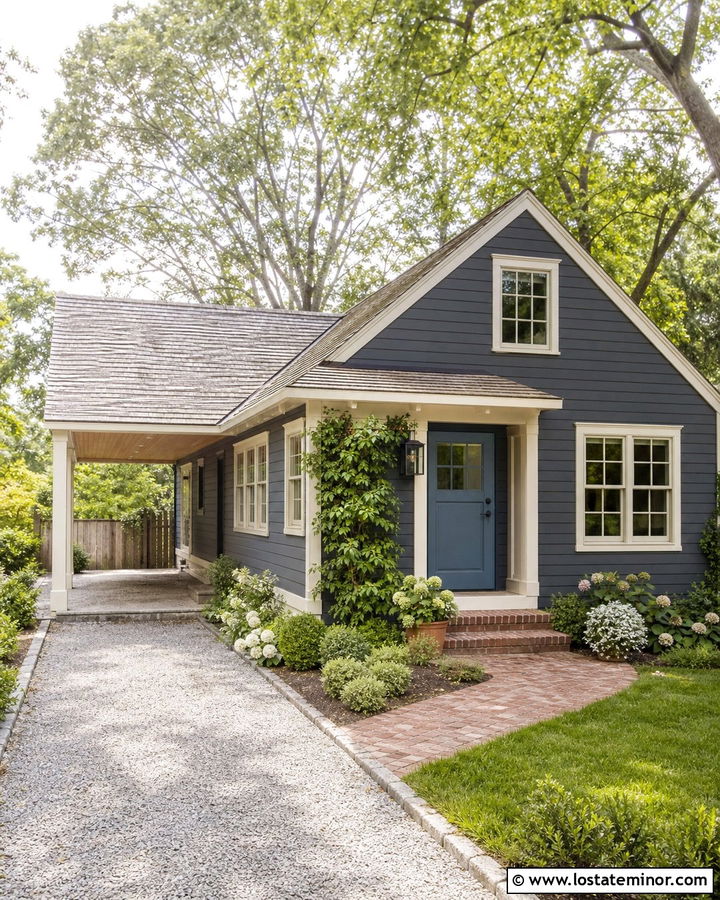
A small cottage calls for a carport that feels light, simple, and proportional to the house. Paint the exterior a softened charcoal gray with subtle blue undertones, then add cream trim around divided-light windows and along the eaves. A narrow single-car carport can sit beside the house under a gently pitched roof. Use slim wood posts painted cream and a natural beadboard ceiling to keep the structure bright. Weathered gray shingles will soften the transition between the dark siding and pale trim. Choose a dusty blue front door for a quiet color accent. A crushed-stone driveway, brick walkway, cottage garden, and climbing greenery make the property feel established. The complete look is cozy and detailed without allowing the carport to dominate the compact facade.
16. Charcoal Gray Coastal House With Carport
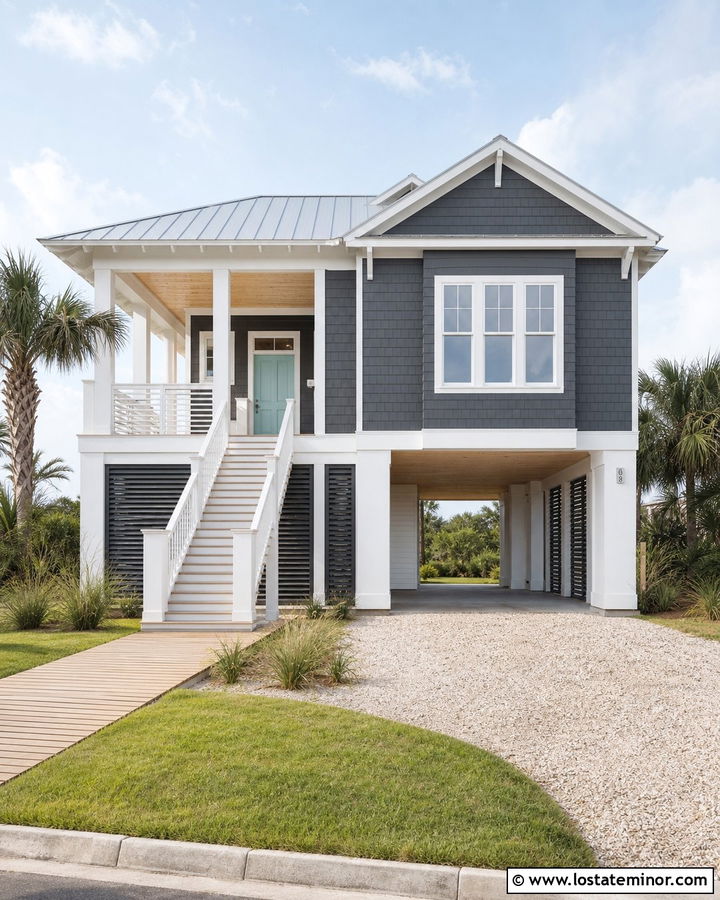
Charcoal gray can work beautifully in a coastal setting when it is balanced with fresh white and weathered wood. Use gray shake siding on an elevated beach-style home, along with broad white trim, railings, and square columns. Tuck the carport beneath the upper living level so the home’s footprint naturally provides covered parking. White structural supports make the lower area feel open and airy. Add a pale wood ceiling and horizontal slat panels around the storage zone for warmth and partial concealment. A soft aqua front door gives the entrance a subtle coastal accent. Choose a light gray metal roof to reflect the brighter setting. Sandy gravel, sea grasses, palms, and an open boardwalk-style path complete a relaxed exterior that still looks polished and coordinated.
17. Charcoal Gray Desert House With Carport
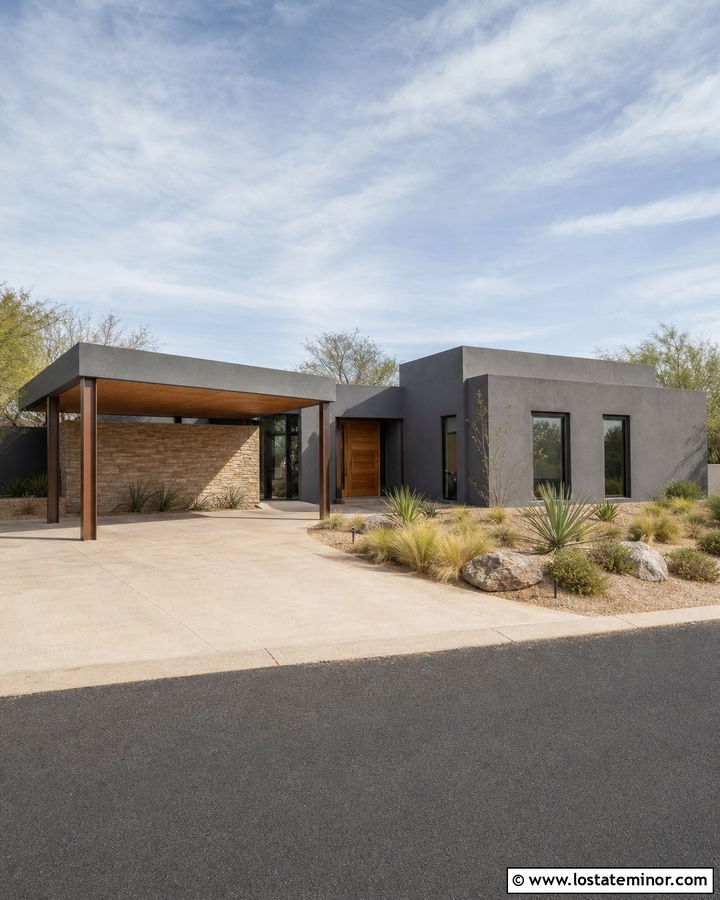
In a desert landscape, a charcoal exterior becomes more comfortable visually when paired with sandy masonry and warm wood. Finish a low-profile stucco house in a medium charcoal gray rather than a near-black shade. Extend a flat carport roof from the main structure and support it with rust-colored steel or stained timber posts. Add a tan stacked-stone wall beside the parking area to connect the home to the surrounding earth tones. A cedar ceiling under the carport and a matching front door provide natural warmth. Keep window frames black and paving light beige for clean contrast. Drought-tolerant landscaping with agave, yucca, decorative rock, and desert grasses finishes the property. The restrained palette looks modern while still responding to the bright, dry environment around the home.
18. Charcoal Gray House With Double Carport
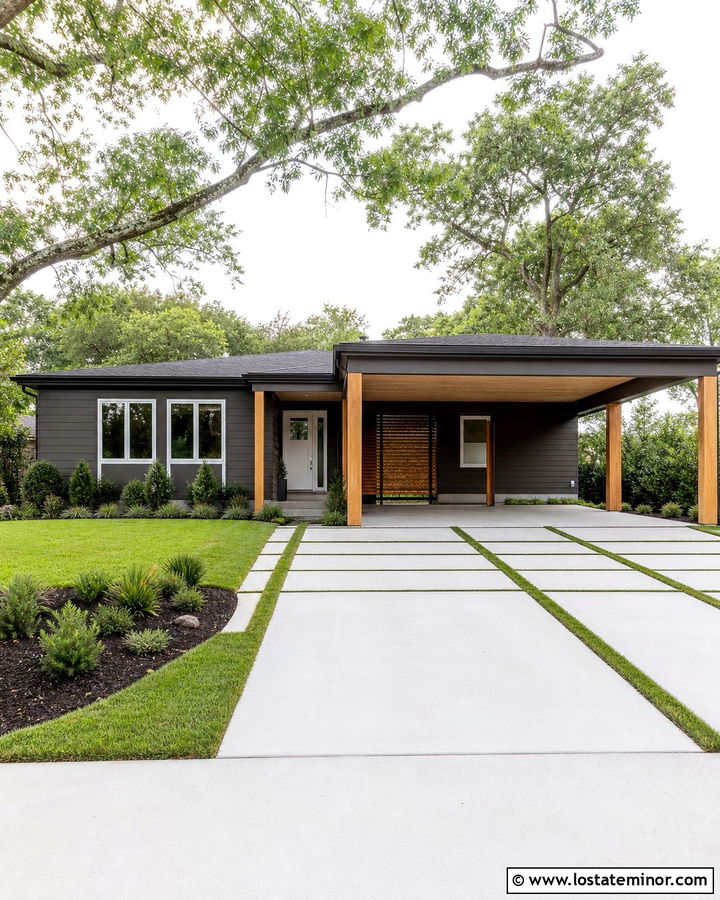
A double carport occupies a large portion of the front elevation, so its color and proportions need careful attention. Cover the house with charcoal gray horizontal siding and repeat that color on the carport fascia and main beams. Use warm wood posts to break up the wide opening and add a slatted cedar panel near the entry side. A light wood ceiling will reflect daylight and keep the broad covered area from resembling a dark tunnel. Choose a simple low-pitch roof that follows the home’s existing lines. White window trim and a white front door introduce brightness in smaller amounts. Divide the concrete driveway with narrow grass strips or permeable joints. Balanced landscaping on both sides helps the wide carport sit naturally within the complete facade.
19. Charcoal Gray House With Detached Carport
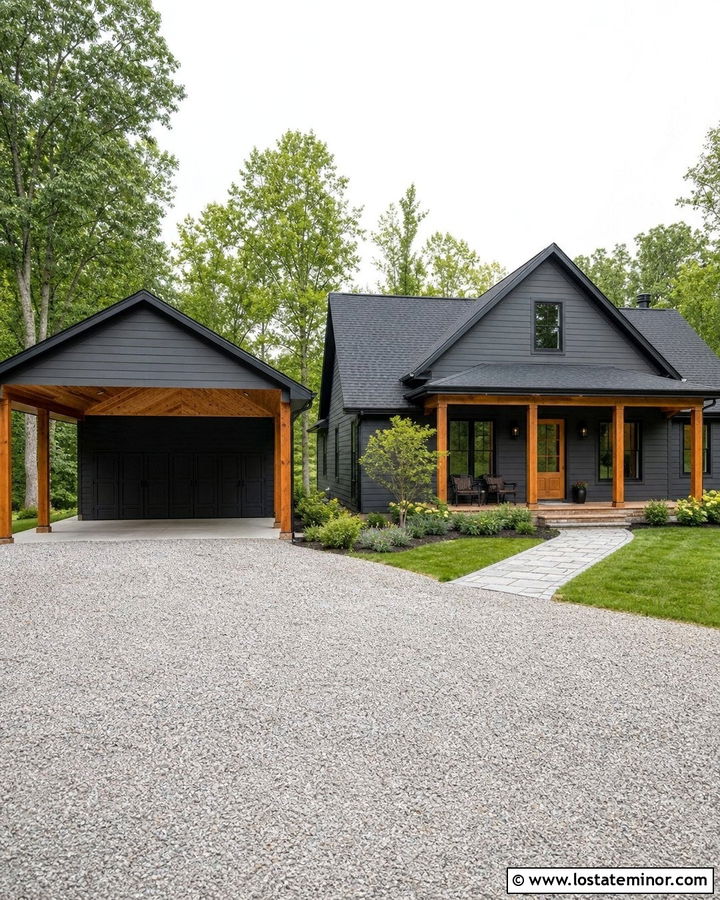
A detached carport should repeat enough details from the house to look related, even when the two structures do not touch. Paint the home charcoal gray with black trim, then use the same charcoal siding on a storage wall at the back of the carport. Match the carport’s roof pitch and dark shingles to the main roof. Natural timber posts and a cedar ceiling bring warmth to both structures. Repeat that wood tone on the front door, porch columns, or window boxes. Connect the carport to the entry with a covered or open paver walkway. A gravel driveway can soften the space between the buildings and reduce the amount of solid pavement. Consistent materials make the separate shelter feel like part of a carefully planned property rather than an unrelated outbuilding.
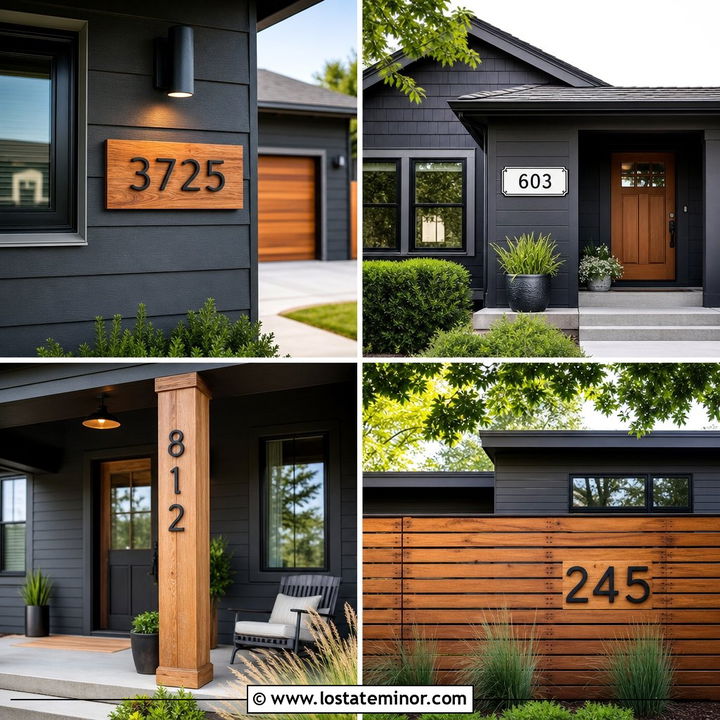
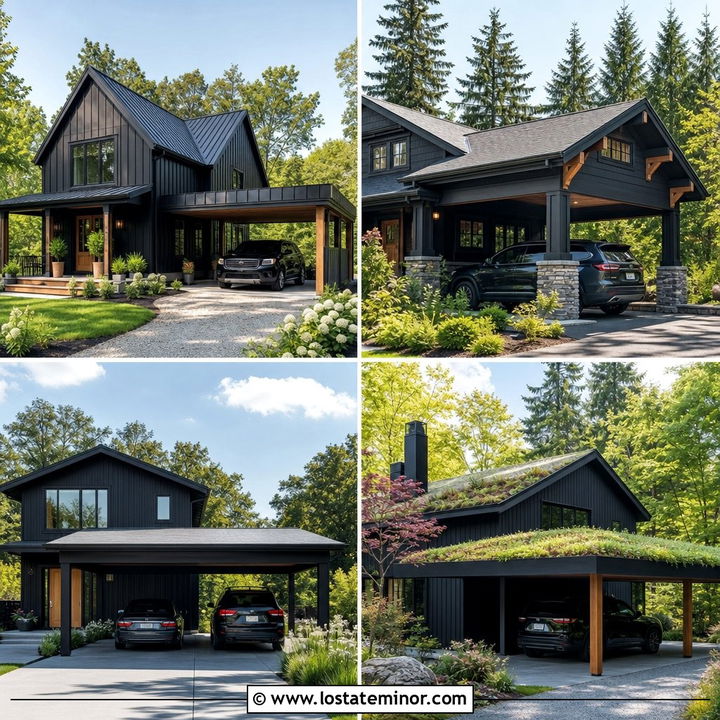
20. Charcoal Gray House With Carport Storage
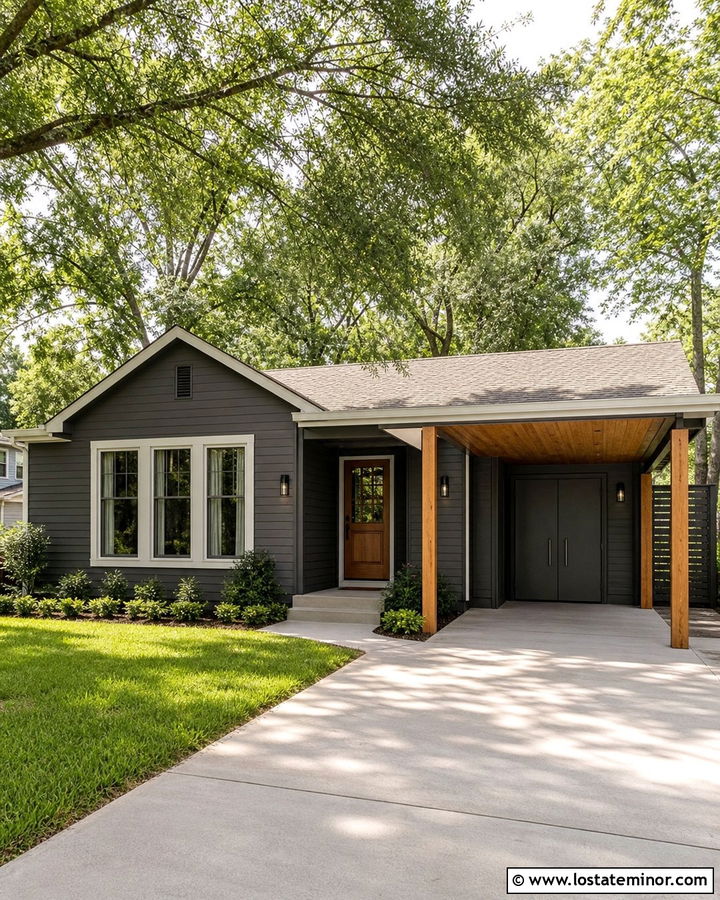
Built-in storage makes a carport more useful, but the doors and walls should remain visually quiet. On a charcoal gray transitional house, create a small enclosed storage room at the back of the attached carport. Cover it with the same siding used on the main facade so it blends into the architecture. Choose flush charcoal doors with minimal black hardware instead of contrasting utility doors. Warm cedar posts and a tongue-and-groove ceiling prevent the parking zone from feeling too dark. Use creamy white window trim and a medium-brown front door to soften the exterior. Add simple wall-mounted lights for clear visibility. A tidy concrete driveway, foundation shrubs, and a narrow walkway maintain an organized curb view while the integrated room hides tools, bicycles, and seasonal equipment.
21. Charcoal Gray House With Solar Carport
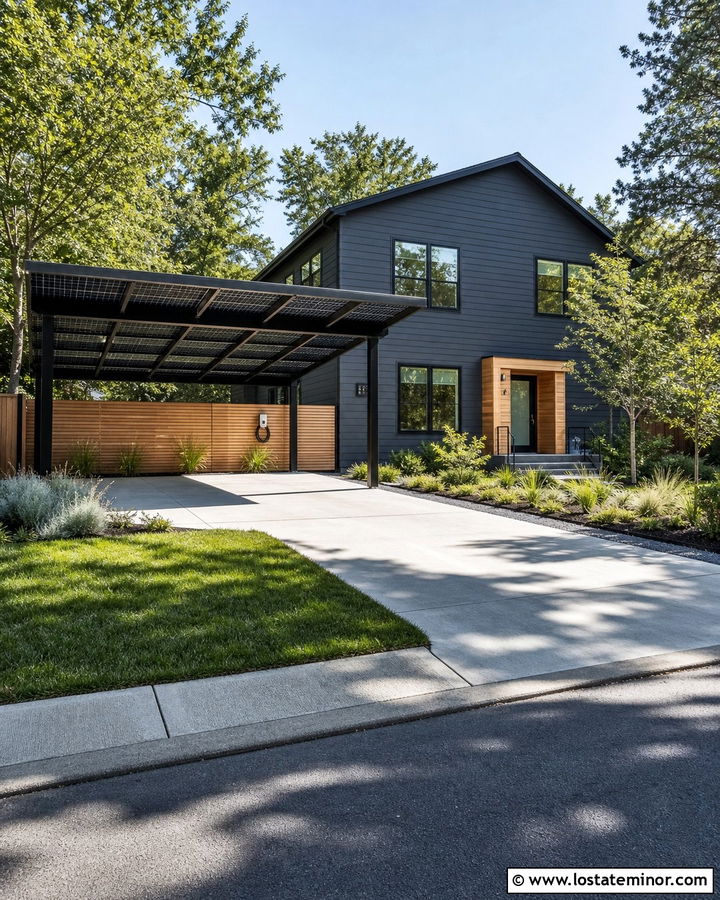
A solar carport can look intentional when its structure follows the clean lines and colors of the home. Pair a charcoal gray modern house with a black steel carport designed to support a rectangular solar panel canopy. Keep the roof pitch low and align its edges with existing windows or fascia lines. The dark panels will blend naturally with black framing and charcoal siding. Add a light cedar screen at the back of the carport to soften the technical materials and partially conceal charging equipment. Repeat cedar around the front door or entry ceiling. Use pale concrete paving and silver-green landscaping to brighten the setting. The exterior remains streamlined and residential, while the solar canopy functions as both a practical parking cover and a coordinated architectural feature.
22. Charcoal Gray House With Breezeway Carport
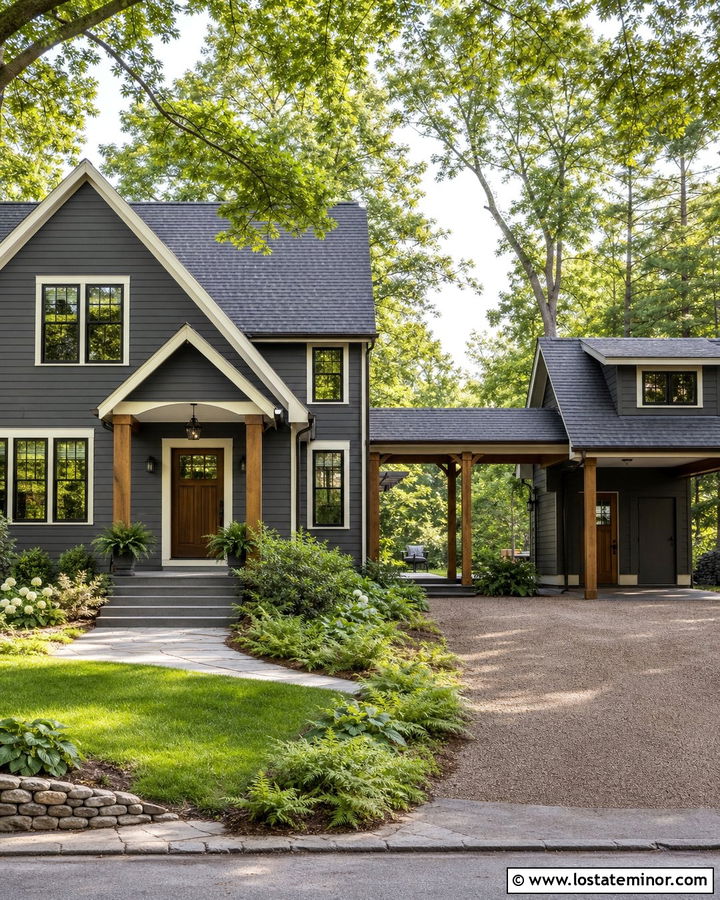
A breezeway can create a comfortable transition between the front door and a detached or offset carport. Use charcoal gray lap siding on the house and continue the same siding onto a small storage structure beside the parking bay. Connect the two with a covered walkway supported by stained wood posts. Matching dark gray roofs will make the separate forms appear unified. Paint the breezeway ceiling soft white to reflect light near the entrance. A natural wood front door, bronze lights, and cream window trim add warmth without weakening the charcoal palette. Use large pavers beneath the covered path and driveway, then surround them with ferns and shade-friendly shrubs. The resulting exterior provides weather protection while creating an inviting, clearly defined route from parking to the house.
23. Charcoal Gray House With Carport Pergola
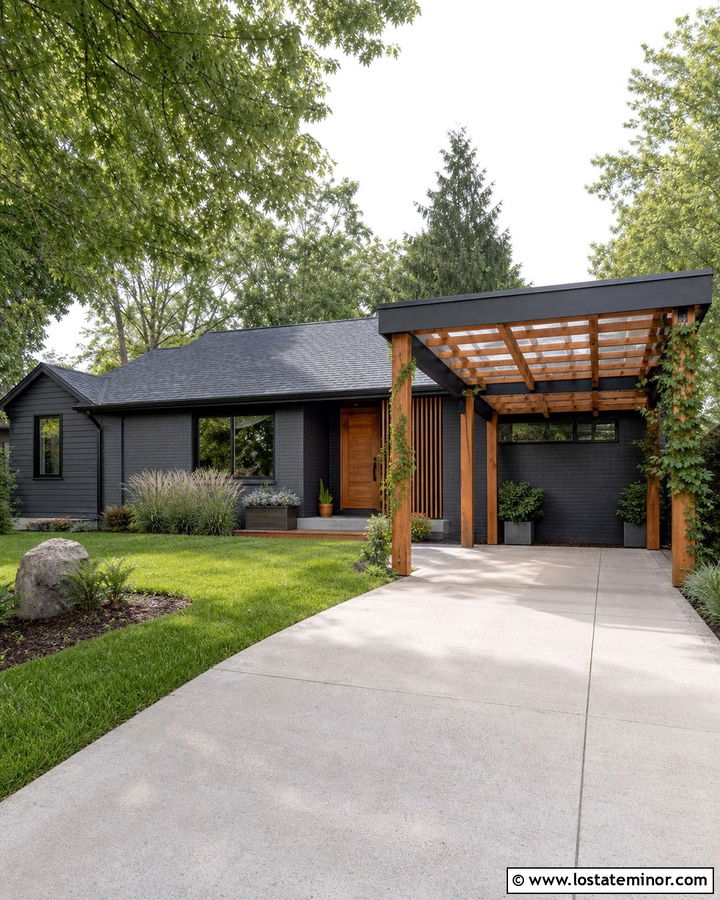
A pergola-style carport offers a lighter architectural appearance than a fully solid shelter. It works best where partial shade is suitable or where a clear roofing system can be installed above the rafters. Pair a charcoal gray contemporary bungalow with thick cedar posts and evenly spaced overhead beams. Paint the perimeter frame charcoal to connect it to the house, but leave the central rafters natural for warmth. Repeat the cedar on a slatted entry screen and modern front door. Black-framed windows and a dark roof maintain crisp definition. Use a pale driveway beneath the structure so the open shadows do not make the area feel gloomy. Climbing greenery, ornamental grasses, and simple planters can soften the strong pattern created by the overhead beams.
24. Charcoal Gray House With Curved Roof Carport
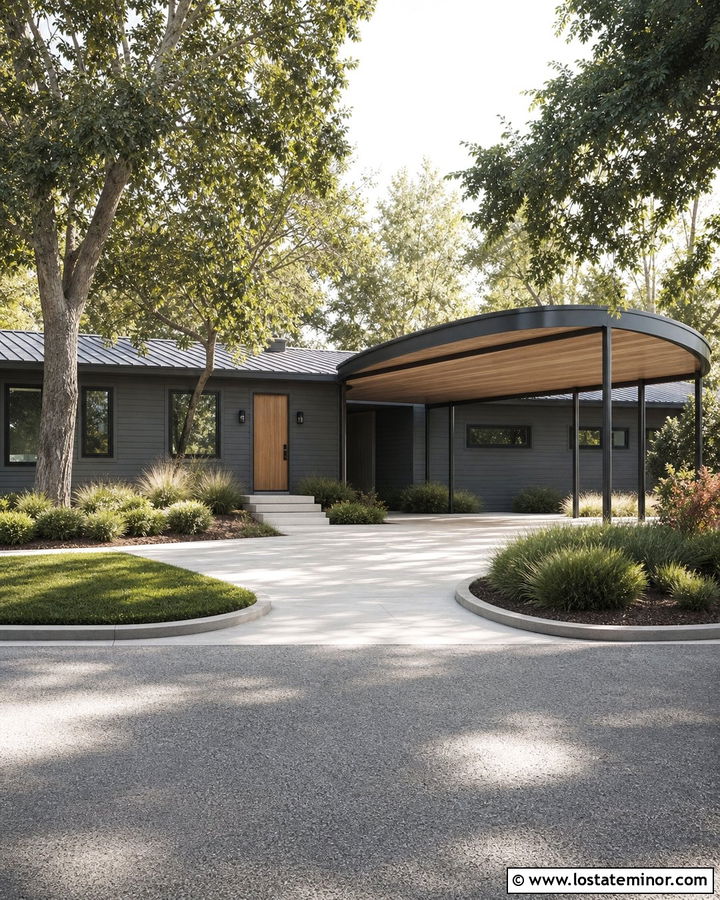
A gently curved carport roof can bring movement to a house dominated by straight lines. Use this feature beside a charcoal gray contemporary ranch with simple horizontal siding and wide black-framed windows. Choose a dark metal canopy with a shallow arch, supported by slender charcoal steel posts. Line the underside with light-toned wood strips to emphasize the curve and add warmth. A matching wood front door helps the carport relate to the entry. Keep the remaining trim soft gray rather than bright white for a smooth, understated palette. Pale concrete paving, rounded planting beds, and softly mounded grasses can echo the roof shape. This complete scheme feels modern and distinctive, but the restrained colors prevent the unusual carport profile from becoming visually overwhelming.
25. Charcoal Gray House With Carport Privacy Screen
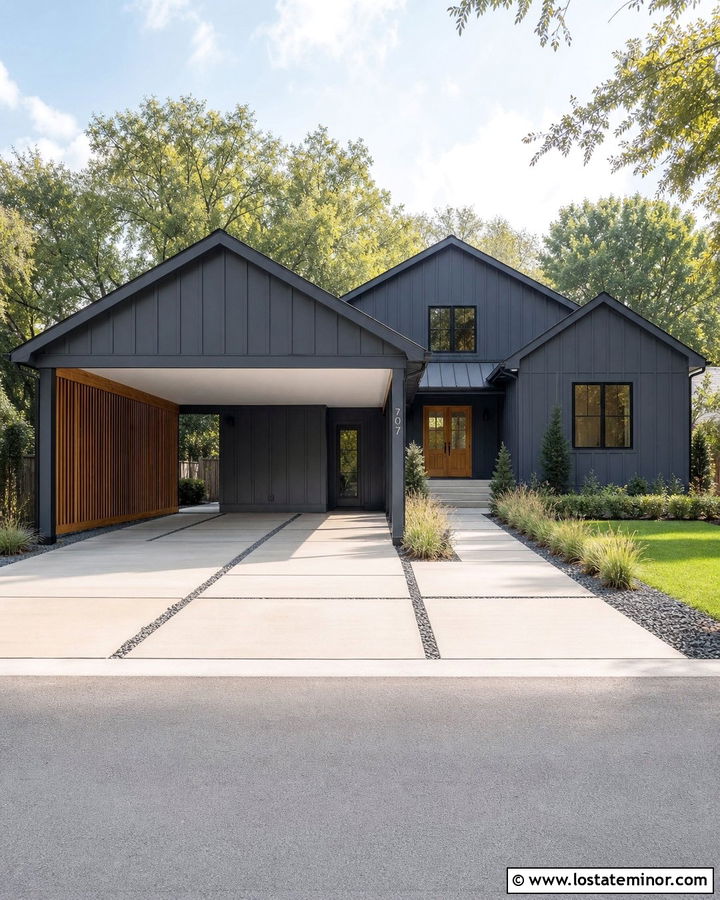
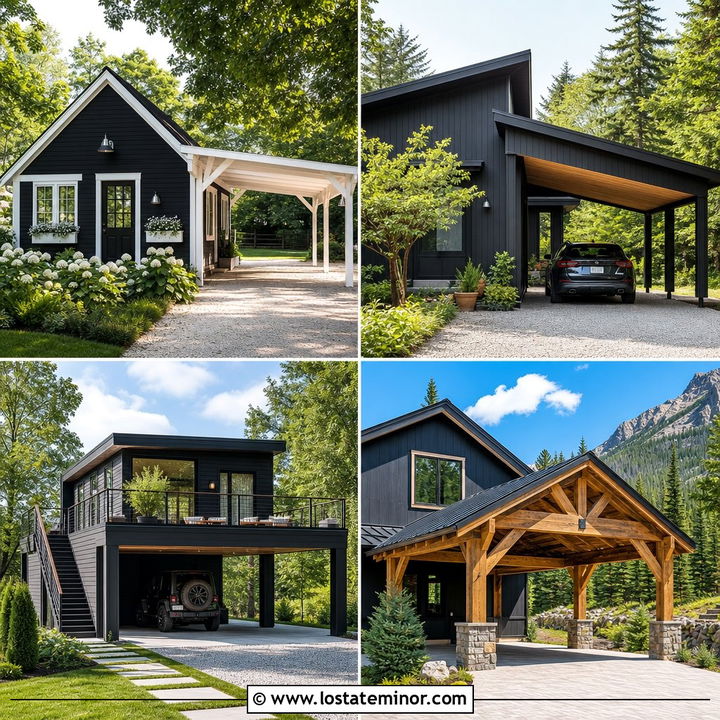
An open carport facing the street or a neighboring property may benefit from a carefully designed privacy screen. On a charcoal gray modern farmhouse, install a vertical cedar screen along one side of the parking area. Keep the slats evenly spaced so the enclosure still feels airy. Support the gabled carport roof with charcoal-painted posts, and use a warm white ceiling to brighten the sheltered space. Repeat cedar on the front door and a small porch bench. Black window frames, gutters, and exterior lights provide crisp outlines against the vertical gray siding. Continue the driveway with large light concrete slabs bordered by dark gravel. Tall grasses and narrow evergreen shrubs can reinforce the privacy layer, creating a practical carport that contributes texture and warmth to the full exterior.
26. Charcoal Gray House With White Brick Carport
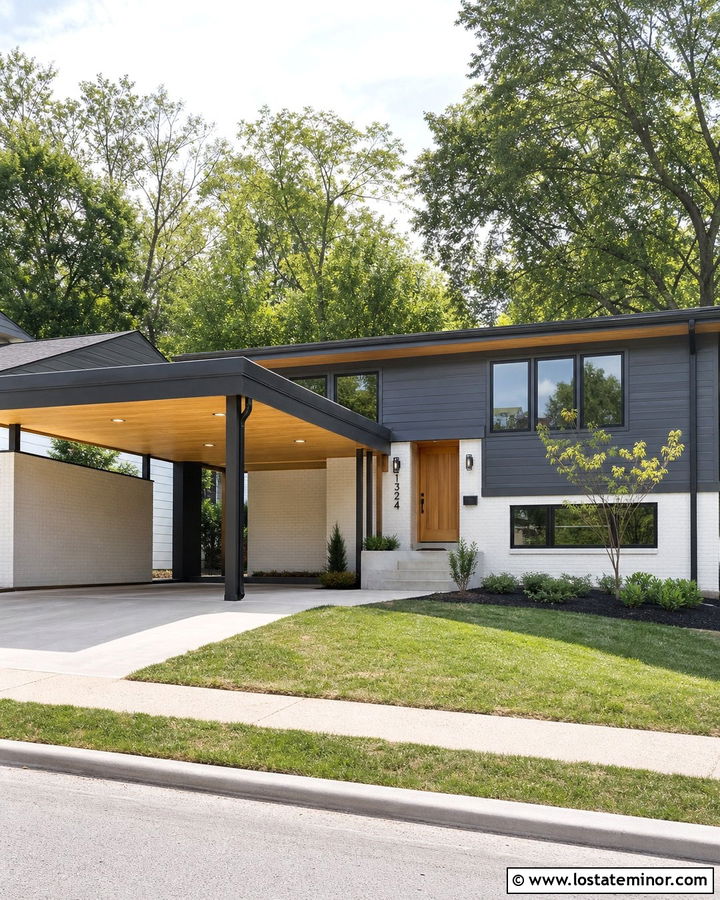
White brick introduces texture and brightness without relying on plain painted trim. Cover the upper portion of a contemporary split-level home with charcoal gray siding, then use whitewashed brick across the lower facade and carport wall. The contrast clearly defines the different volumes while keeping the palette neutral. Add black steel carport posts and a flat charcoal fascia for sharp modern lines. A natural oak ceiling and matching front door prevent the scheme from feeling stark. Carry the white brick around the entry or foundation so the carport wall remains connected to the house. Light concrete steps and a wide driveway suit the clean finish. Low green shrubs, small ornamental trees, and dark mulch provide enough color to make the black, white, and charcoal materials stand out.
27. Charcoal Gray House With Copper Carport Roof
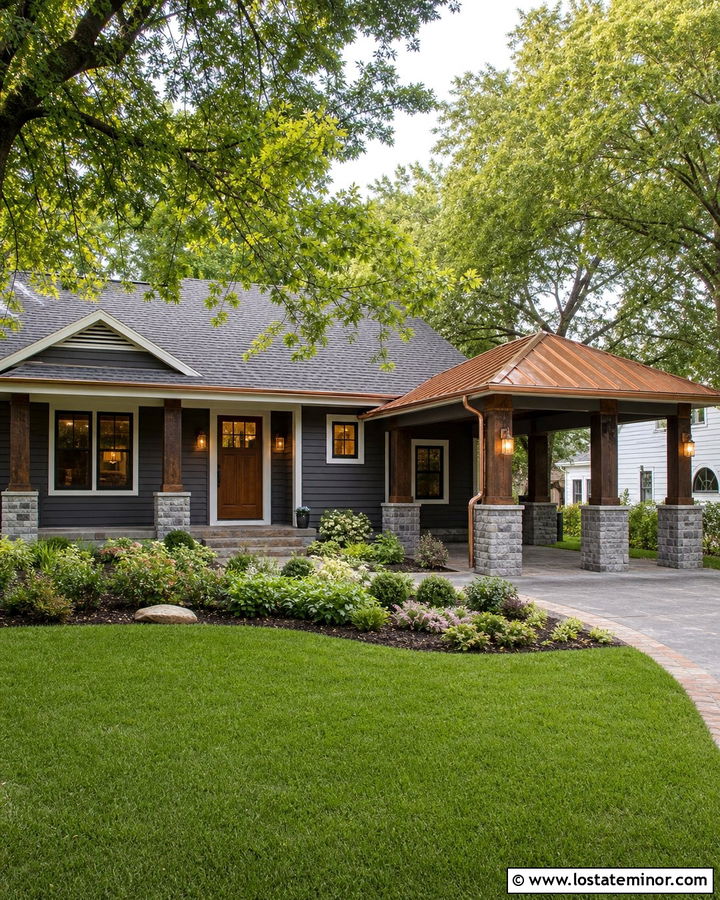
Copper adds a warm metallic accent that changes gracefully against a charcoal gray background. Use a modest copper roof over the carport of a traditional cottage or updated bungalow, keeping the shape simple so the material remains tasteful. Charcoal gray siding and creamy white trim create a rich neutral base. Support the carport with stained wood posts set on low gray stone piers. Repeat copper on small porch details, gutters, or exterior lights rather than introducing it only once. A walnut front door and warm gray shingles help bridge the cool body color and warm metal. Finish with a brick driveway border and layered garden beds. The completed exterior feels distinctive and upscale, but its familiar materials preserve the home’s approachable residential character.
28. Charcoal Gray House With Timber Frame Carport
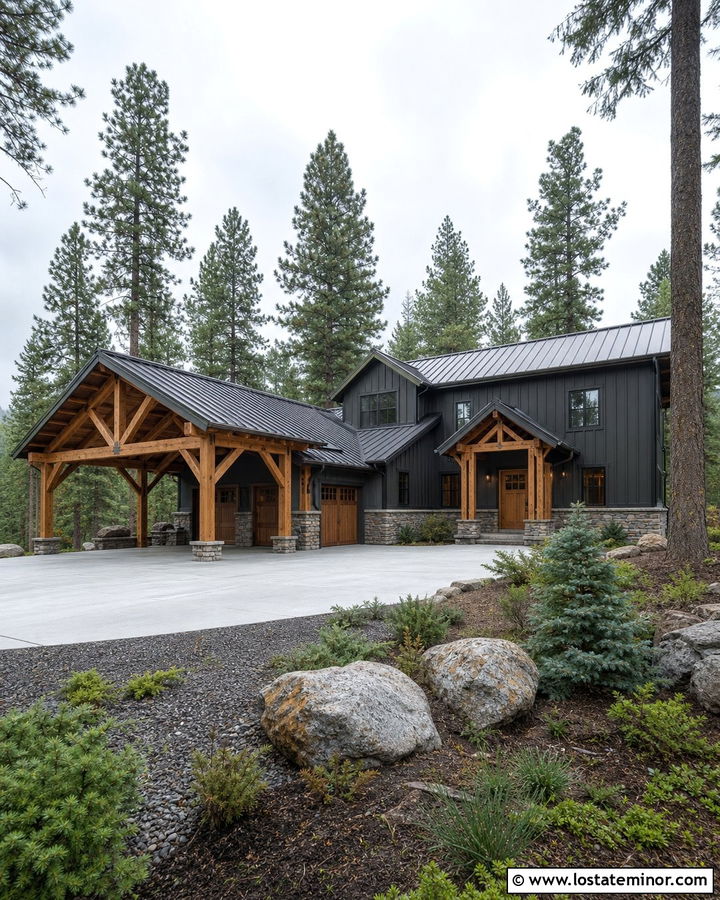
Heavy timber framing gives a charcoal gray home a warm, substantial character. This combination suits a mountain house, rustic ranch, or lodge-inspired suburban property. Cover the main exterior with deep charcoal board-and-batten siding and use medium-gray stone across the foundation. Build the attached carport with thick stained Douglas fir posts, beams, braces, and exposed rafters. Continue the timber treatment around the front porch so the carport does not appear visually separate. A dark bronze metal roof adds durability and complements the earthy palette. Keep window trim charcoal for a seamless look, but choose a lighter wood front door. Native evergreens, boulders, gravel, and a broad concrete driveway complete the setting. The natural framing brings welcome warmth and craftsmanship to the dark facade.
29. Charcoal Gray House With Minimalist Carport
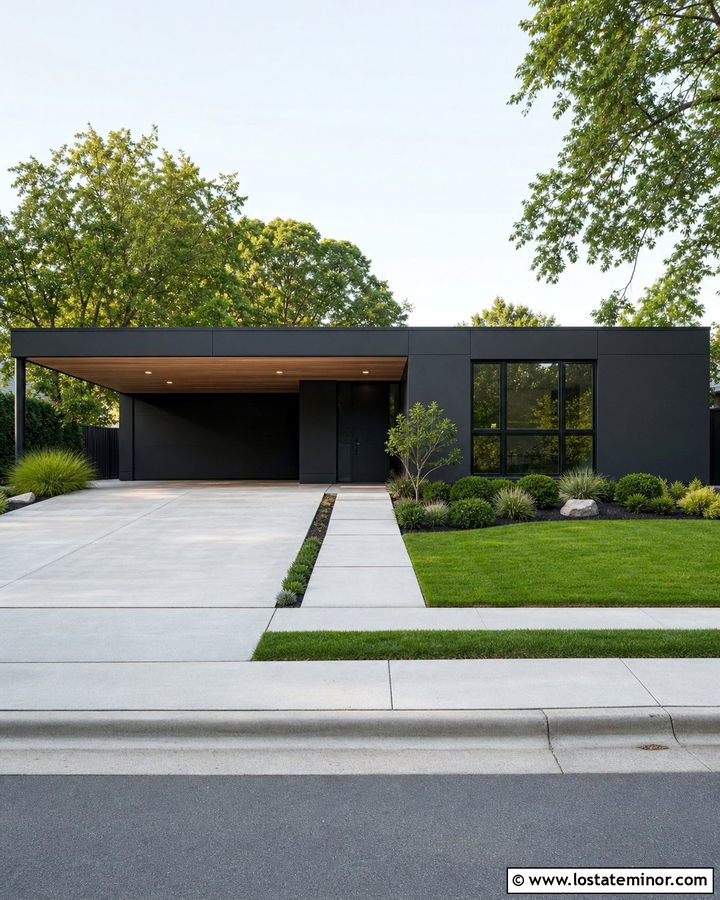
Clean surfaces and precise alignment define a minimalist charcoal house with a carport. Use smooth charcoal gray fiber cement panels across a simple rectangular facade, limiting visible trim wherever practical. Extend one flat roof plane over a single-car parking bay and support the outer corner with a narrow black steel column. A pale oak soffit beneath the carport adds warmth without interrupting the streamlined composition. Choose a flush black front door and large black-framed windows for a restrained monochromatic finish. Light gray concrete should continue from the driveway to the entry walk with few material changes. Add only a small number of sculptural shrubs and ornamental grasses. The carefully edited palette makes the carport feel like an intentional void within the architecture rather than a separate accessory.
30. Charcoal Gray Colonial House With Side Carport
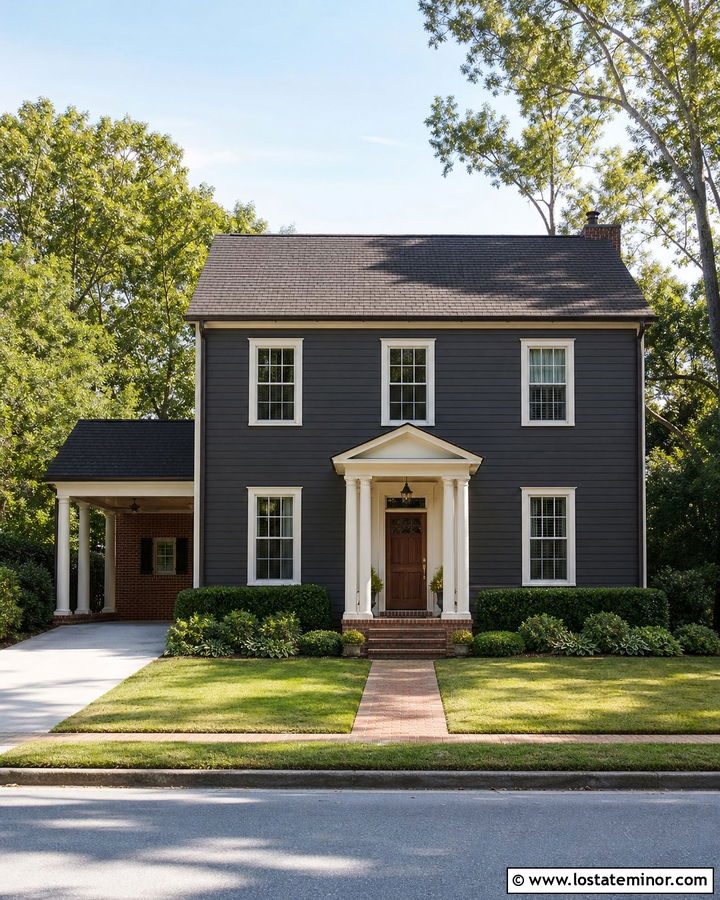
A side carport can update a Colonial home while protecting its symmetrical front facade. Paint the main clapboard siding charcoal gray and use creamy white on the corner boards, window trim, cornice, and front portico. Position the carport beyond one side wall, setting it slightly back from the primary elevation. Give it a pitched roof with shingles matching the main house and use simple white square columns. A white ceiling keeps the covered space bright, while a red-brown brick wall at the rear adds traditional texture. Choose a rich mahogany front door with polished brass or dark bronze hardware. A straight brick walkway, clipped hedges, and balanced foundation plantings maintain the formal character. The carport gains useful presence without disturbing the recognizable Colonial proportions.
Conclusion:
The strongest **30 Charcoal Grey House Design With Carport Ideas** treat covered parking as an important part of the complete exterior. Coordinated rooflines, repeated siding, and matching trim can help even a simple carport look planned from the beginning. Charcoal gray provides a versatile backdrop for cedar, stone, brick, white paint, black metal, and warmer front doors. Before choosing a scheme, consider the home’s architecture, natural light, roof color, driveway, and surrounding landscape. Test exterior colors on large sections because charcoal can shift under sun and shade. With thoughtful proportions and a limited material palette, a charcoal home and carport can deliver practical protection, architectural balance, and memorable curb appeal.

Related posts: