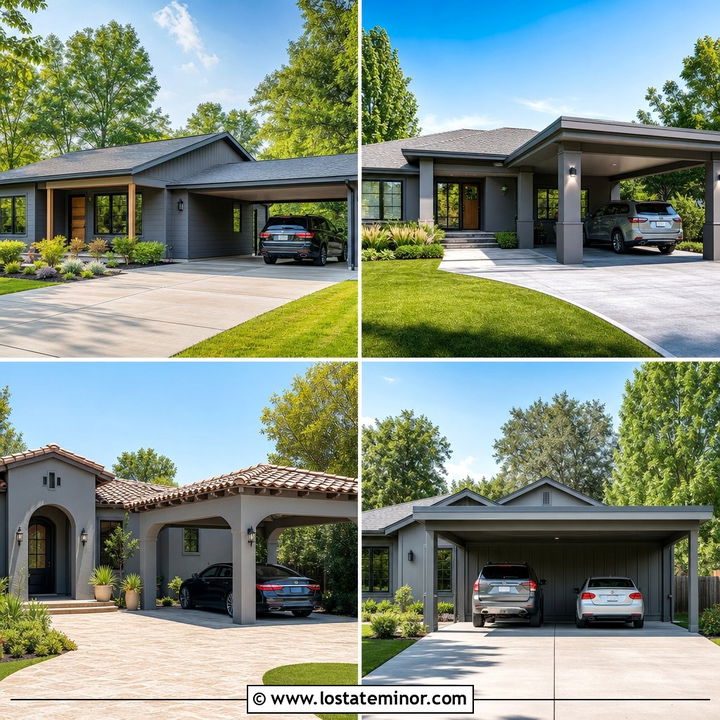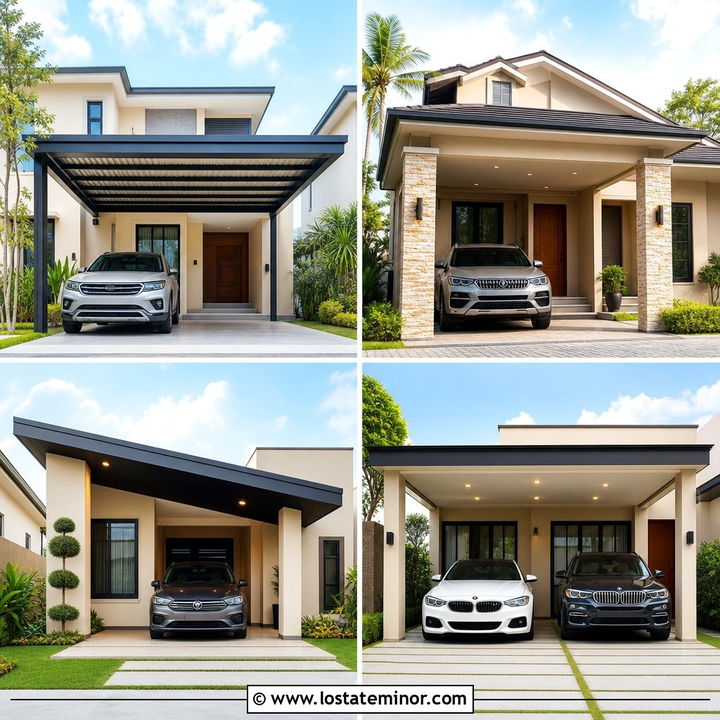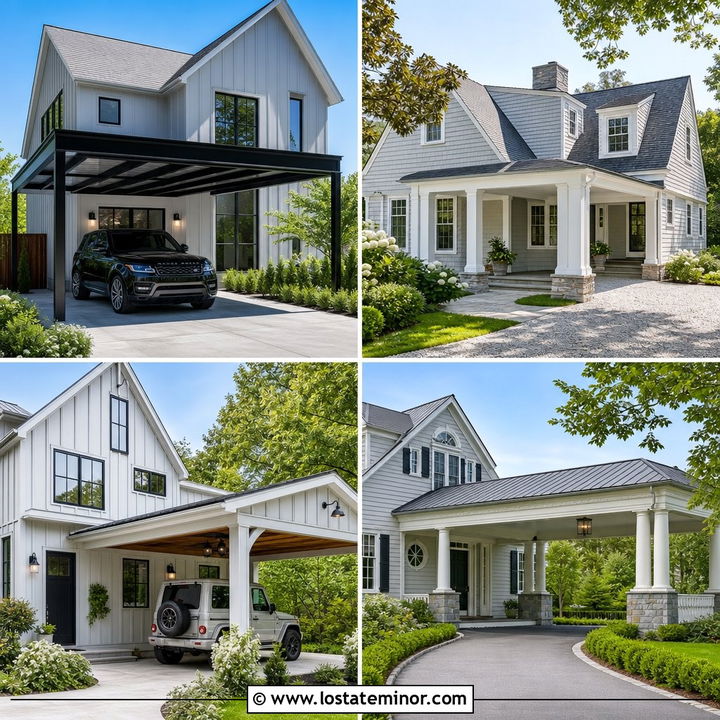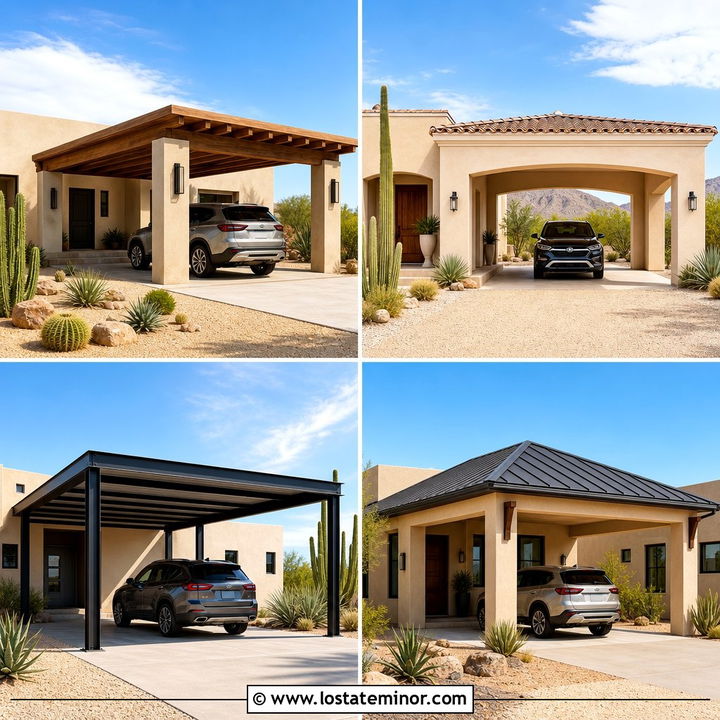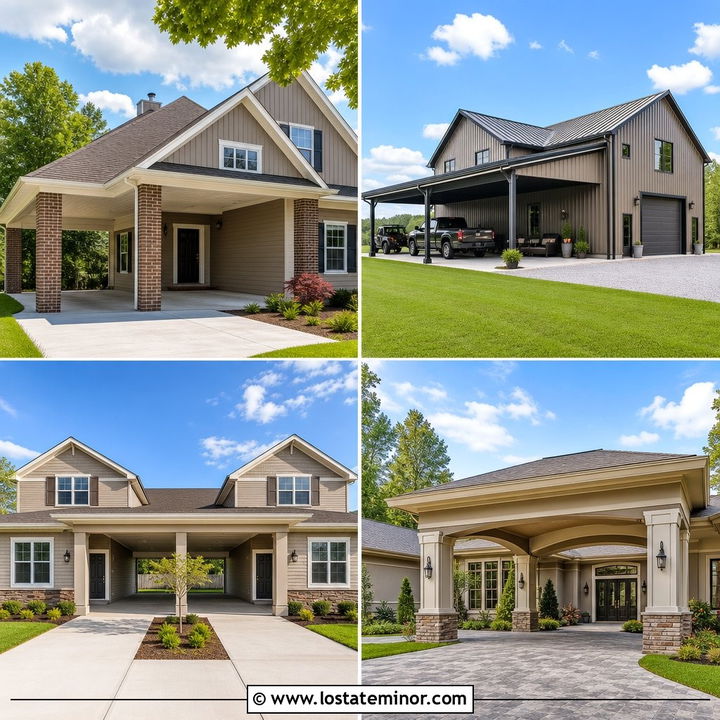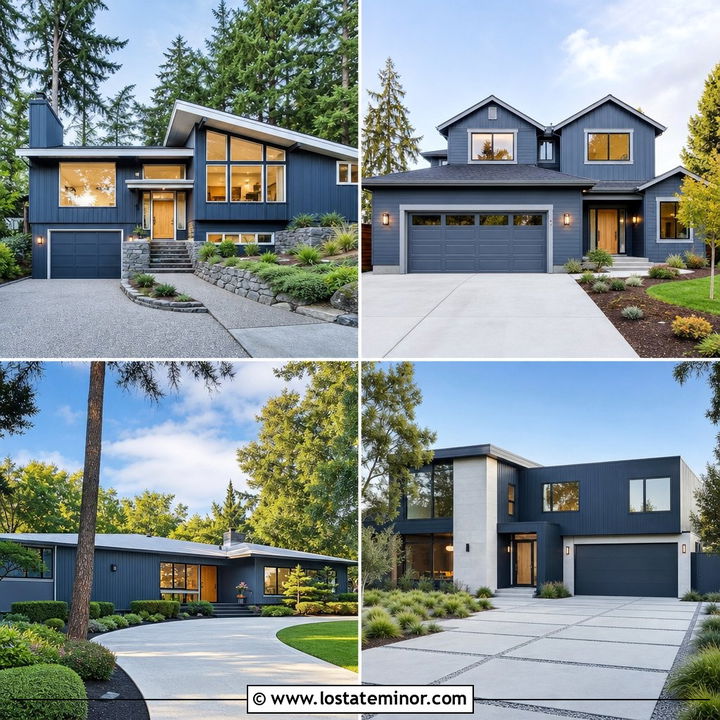
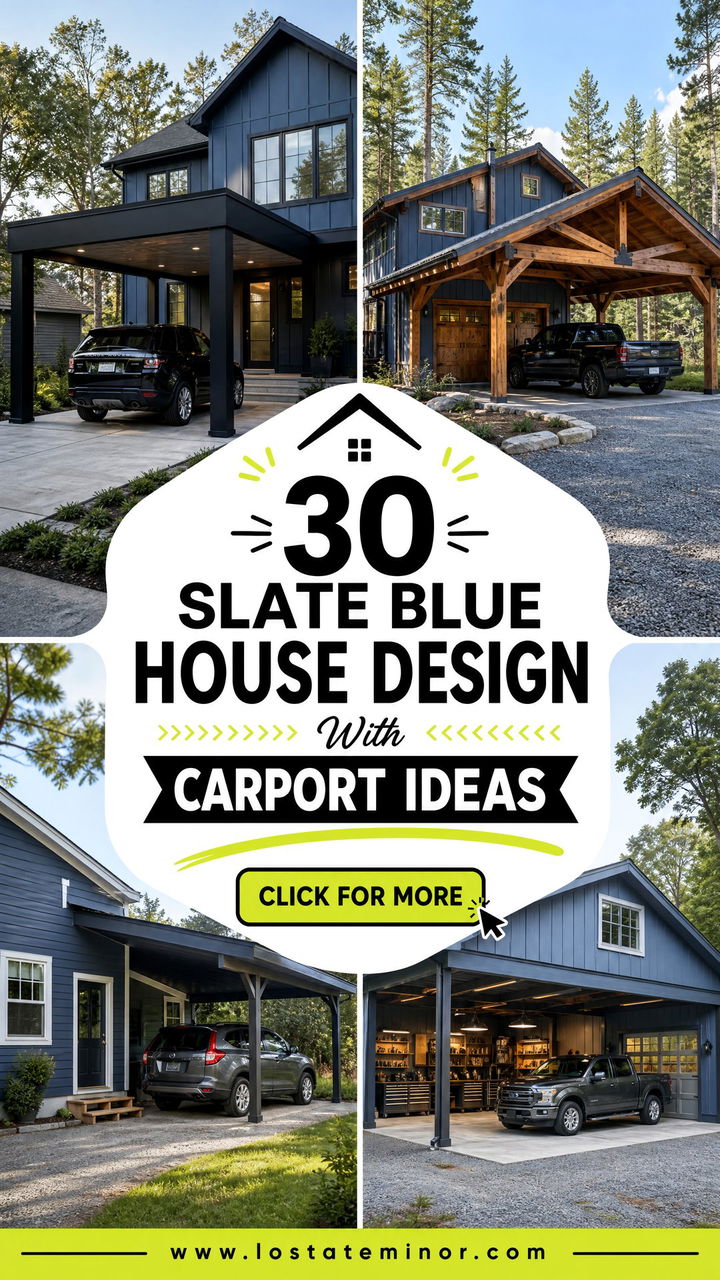
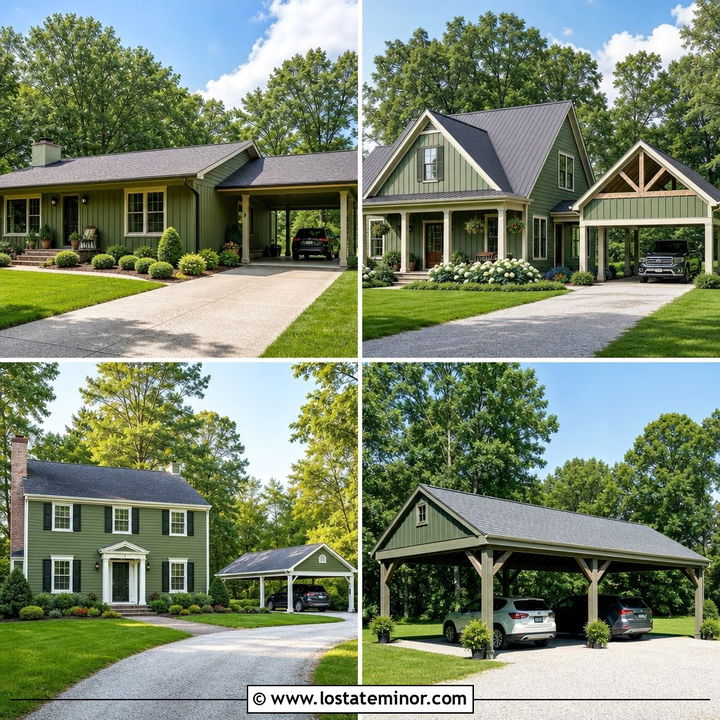
Slate blue brings a calm, polished character to a home while giving a practical carport a more intentional place in the facade. Its muted blue-gray appearance works naturally with white trim, warm wood, dark metal, brick, stone, and many common roofing colors. The key is treating the carport as part of the architecture rather than a separate shelter. Repeating the home’s siding, posts, roof pitch, or accent materials can create a unified curb-appeal design. () Whether you are updating a compact ranch or planning a modern build, these complete exterior schemes offer options for different regions, budgets, and property sizes. Explore these **30 Slate Blue House Design With Carport Ideas** to find a combination that fits your home.
1. Slate Blue Ranch With White Carport
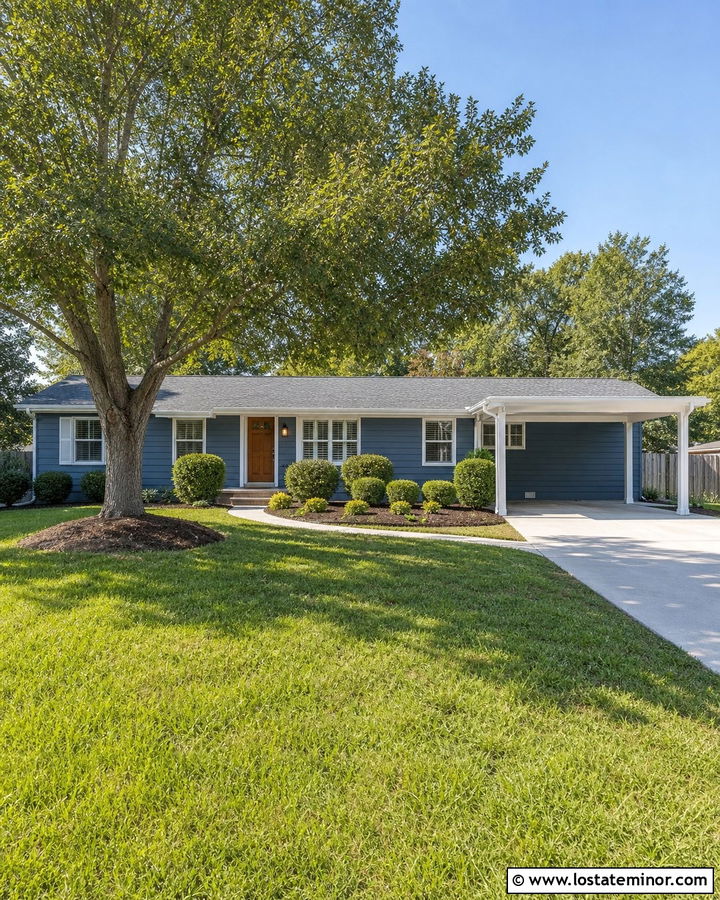
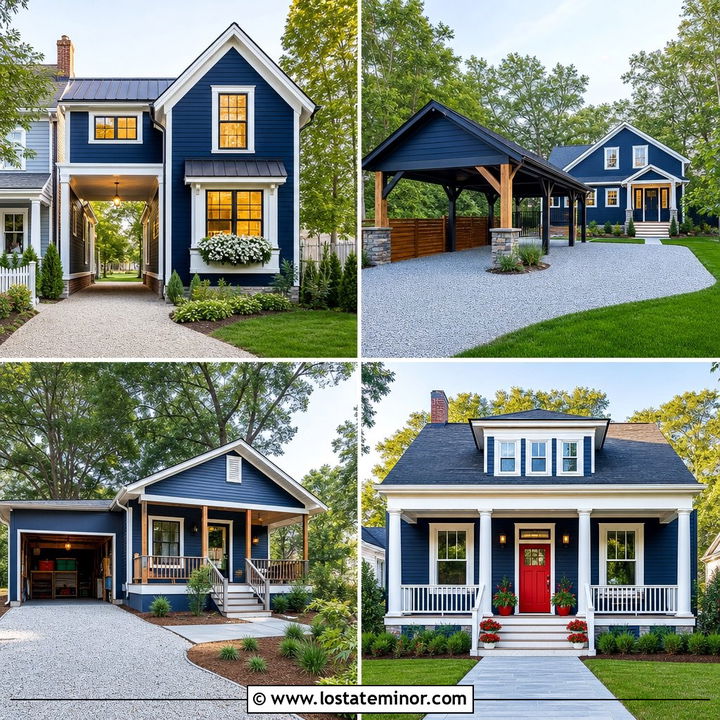
A single-story ranch can look brighter and more balanced when slate blue horizontal siding meets a clean white carport. Carry the white from the carport posts onto the window trim, fascia, and front porch ceiling. This repetition connects the open structure to the main house. A medium-gray shingle roof keeps the palette relaxed, while a natural oak front door introduces warmth. Use simple square posts rather than decorative columns to preserve the ranch’s low, straightforward architecture. Pale concrete across the driveway and walkway prevents the exterior from feeling heavy. Finish the yard with rounded evergreen shrubs, ornamental grasses, and a small shade tree. The result is an approachable exterior that feels updated without losing its familiar suburban character.
2. Slate Blue Craftsman With Cedar Carport
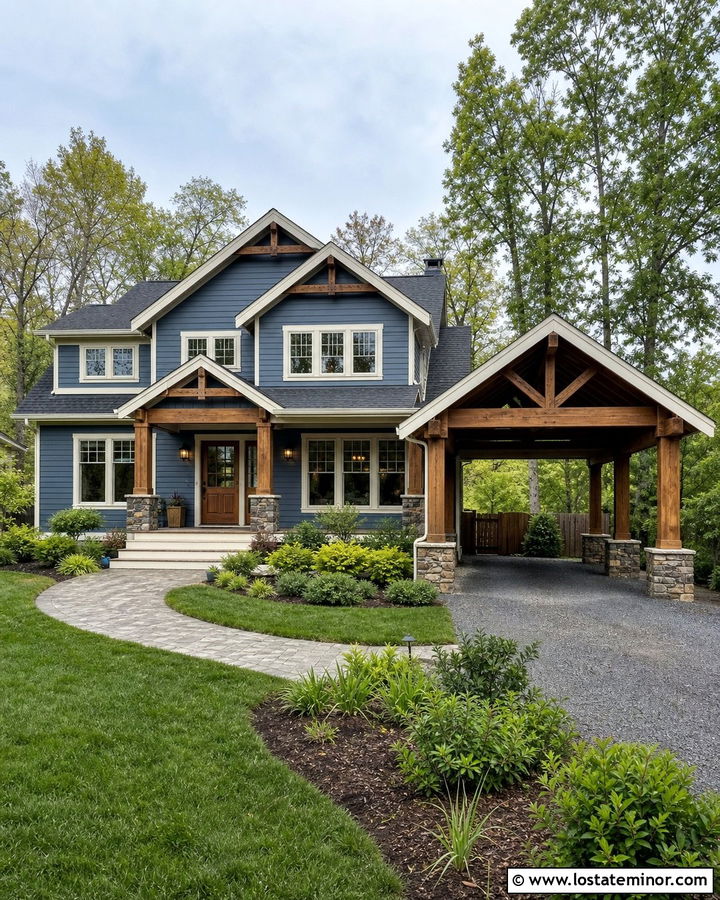
Warm cedar brings out the softer side of slate blue on a craftsman exterior. Use blue-gray lap siding across the main walls, then support the attached carport with substantial cedar posts set on tapered stone bases. Exposed cedar rafters can connect visually with matching brackets beneath the roof gables. Creamy white trim offers a gentler contrast than stark white and suits the handcrafted character of the house. Complete the facade with a dark charcoal roof, a stained wood front door, and fieldstone around the foundation. The carport should repeat the home’s main roof pitch so it appears original. Layered foundation plants, broad porch steps, and a curved paver walkway will add the depth and detail expected from a welcoming craftsman property.
3. Slate Blue Modern House With Black Carport
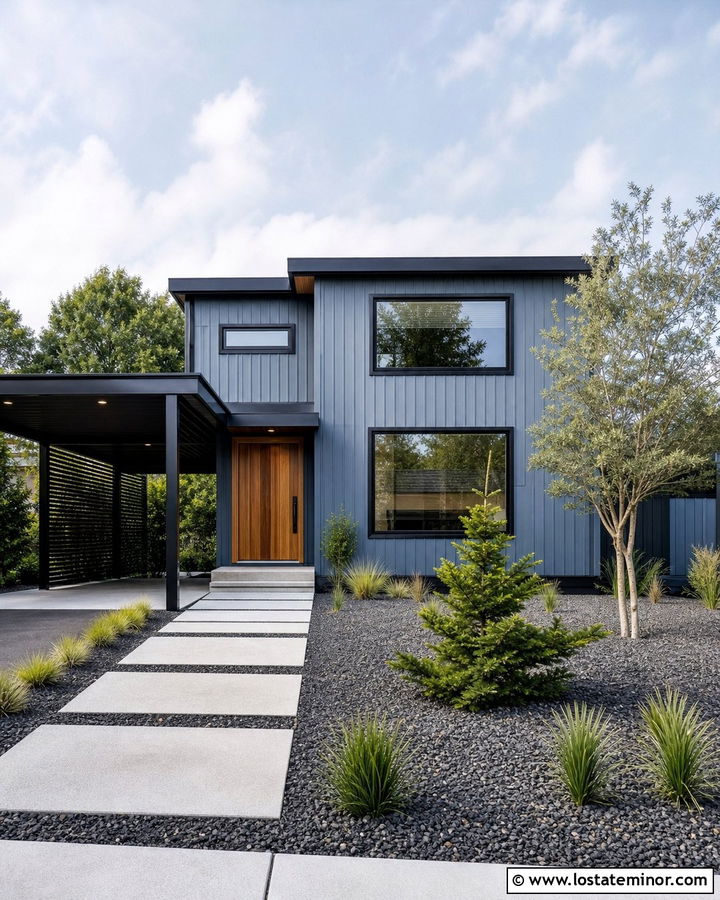
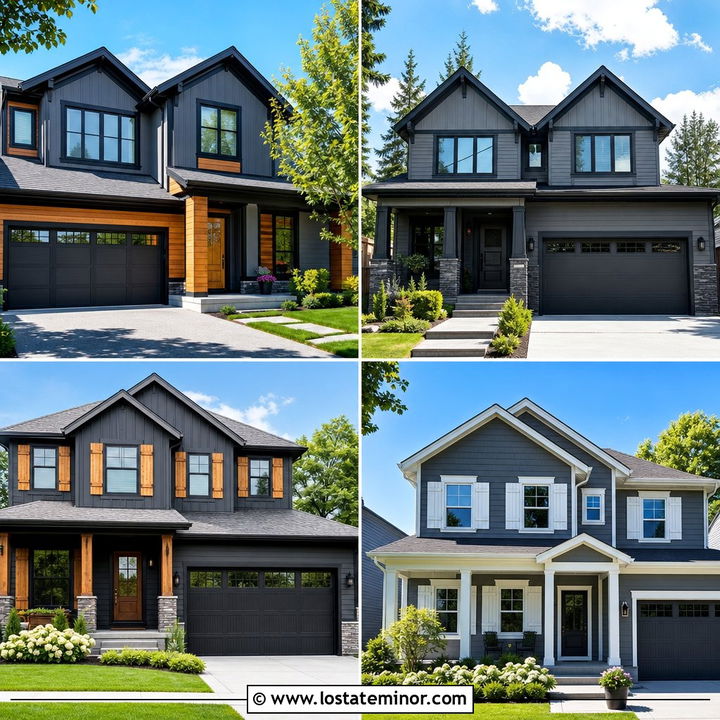
Sharp black lines give a slate blue modern house a bold architectural frame. Choose smooth vertical siding in a cool blue-gray finish and pair it with black-framed windows, narrow fascia, and a flat-roofed steel carport. A slim black privacy screen along one side of the carport can conceal storage without closing off the structure. Keep the front door warm and simple, using clear-sealed walnut or another medium-toned wood. Large rectangular concrete pavers and dark gravel reinforce the clean geometry. Rather than filling the yard with many plant varieties, use grouped ornamental grasses, compact evergreens, and one sculptural tree. This controlled material palette allows the slate blue walls to remain visible while the black carport provides strong definition across the full exterior.
4. Slate Blue Farmhouse With Metal Carport
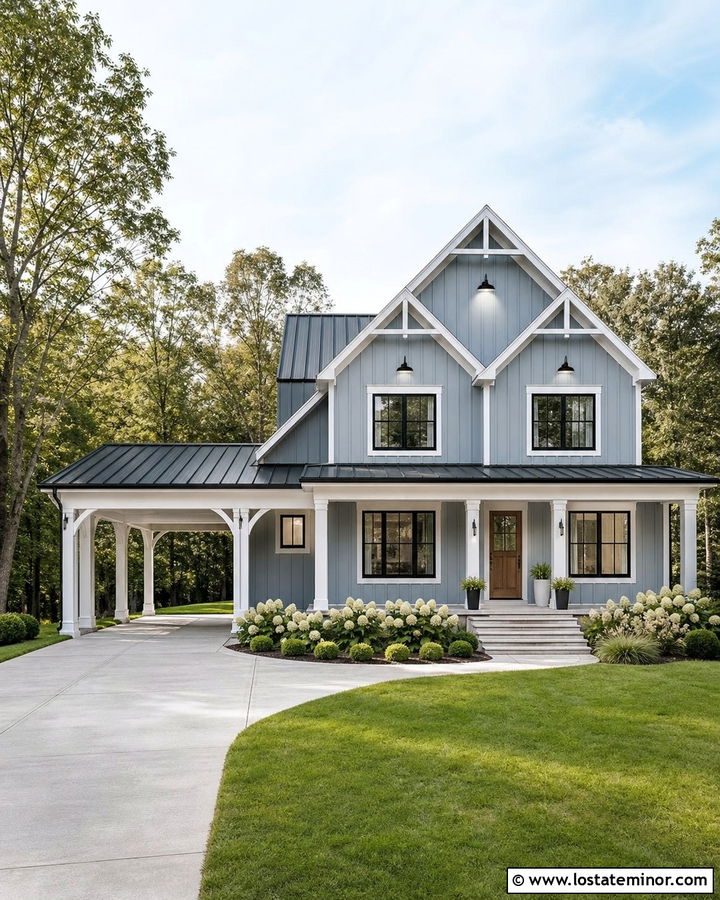
Picture a slate blue farmhouse with tall gables, white board-and-batten trim, and a practical metal-roof carport tucked against one side. Matching the carport roof to the home’s charcoal standing-seam roof creates an immediate visual connection. Use white square posts and a white beam beneath the carport so the structure relates to the window surrounds and corner boards. A stained wood front door prevents the blue, white, and gray palette from becoming too cool. Add a simple concrete driveway, black barn-style lighting, and broad porch steps for an uncluttered finish. Hydrangeas, low boxwoods, and soft grasses can frame the facade without hiding the siding. This scheme feels fresh and rural but remains polished enough for a modern suburban neighborhood.
5. Slate Blue Cottage With Pitched Carport
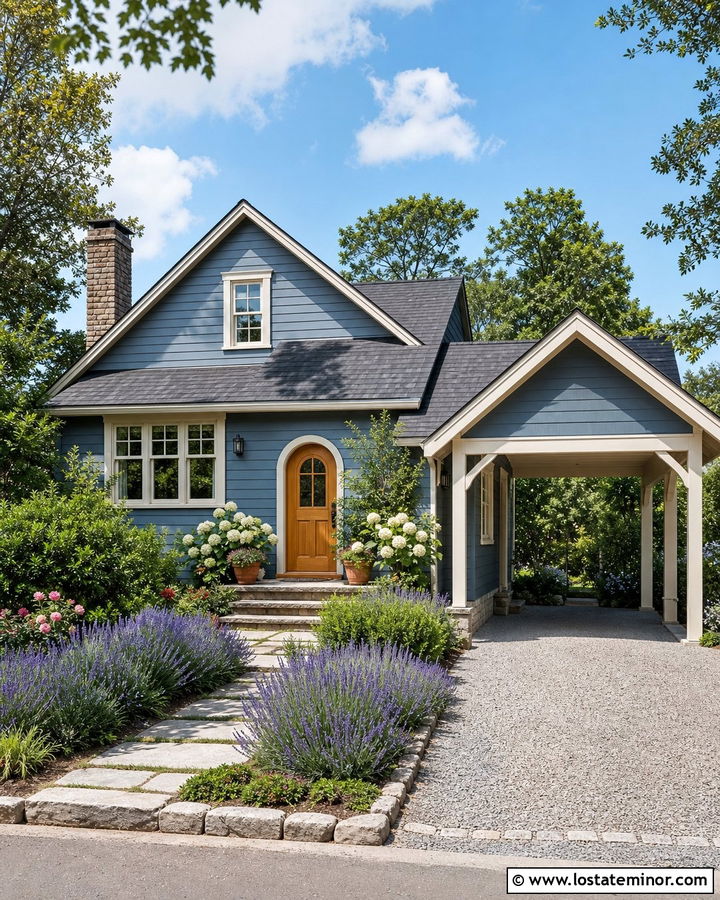
A compact cottage benefits from a carport roof that reflects the shape of its main gable. Paint the cottage slate blue and outline the windows, eaves, and small front porch in soft ivory. The carport can use ivory posts with a steep charcoal shingle roof, making it feel like a natural extension rather than an oversized addition. Add an arched wood front door or a simple plank-style door in honey cedar for storybook warmth without becoming overly decorative. Stone edging along the driveway helps soften the transition from paving to garden beds. Flowering shrubs, lavender, and a narrow stepping-stone path can complete the scene. Keeping the carport open and airy will preserve the cottage’s charm while providing useful covered parking.
6. Slate Blue Split-Level With Side Carport
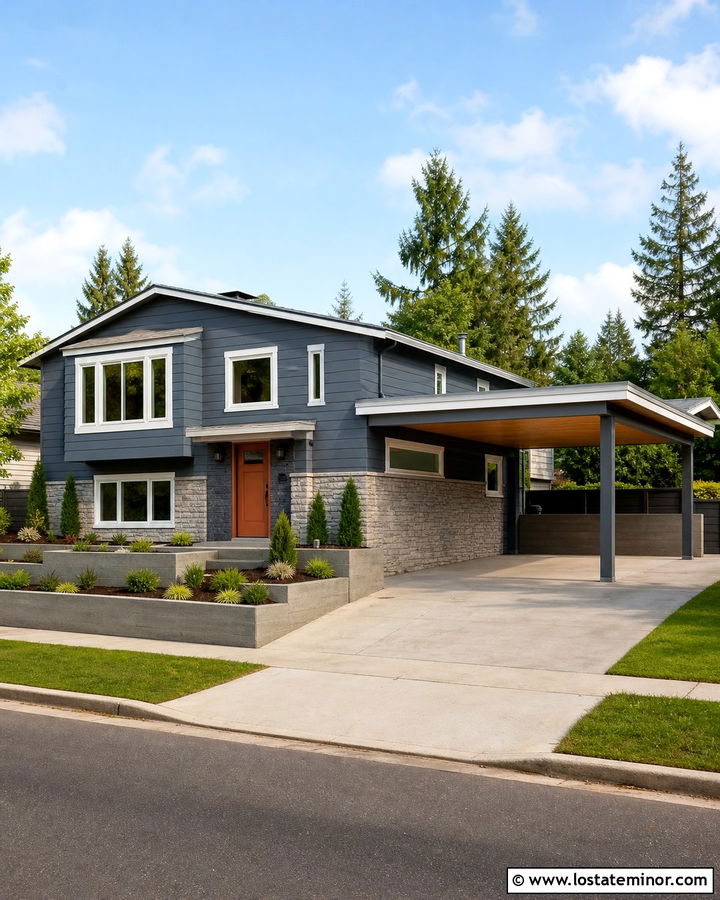
Does your split-level exterior feel visually disconnected? Slate blue siding can unify its staggered floors, especially when the carport roof aligns with one of the home’s existing horizontal lines. Use a side-entry carport with slim charcoal posts and a low-slope roof for a cleaner profile. Bright white window trim provides definition, while warm gray stone around the lower level grounds the taller facade. Paint the front door a deep rust or muted terracotta to add a controlled burst of warmth. A wide concrete driveway should flow naturally beneath the carport without dominating the front yard. Use terraced planting beds, low retaining walls, and upright evergreens to emphasize the home’s different levels. Together, these details turn an awkward elevation into a coordinated exterior.
7. Slate Blue Bungalow With Gabled Carport
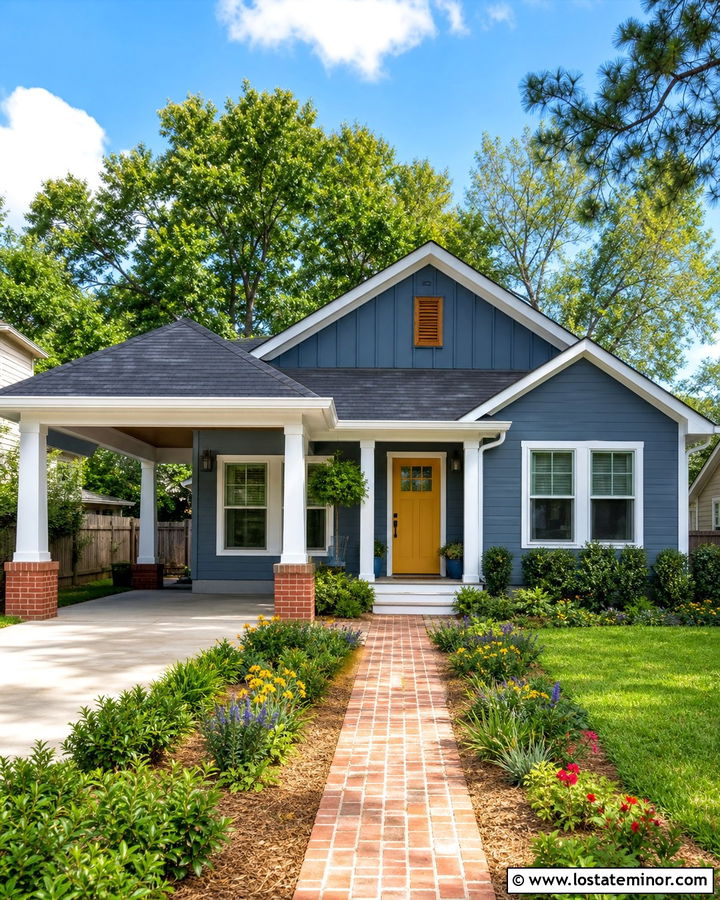
A gabled carport can give a small bungalow more presence when its proportions match the home. Cover the bungalow in slate blue lap siding and use crisp white trim around the porch, windows, and roof edges. The carport gable can feature blue board-and-batten siding with a small cedar vent as a warm accent. Support it with white posts placed on low red-brick bases that repeat the bungalow’s steps or foundation. A dark gray roof keeps the complete design grounded. Choose a cheerful mustard-yellow front door if you want a stronger focal point, or use stained wood for a quieter look. A short brick walkway, clipped shrubs, and colorful perennial beds will make this compact exterior feel layered, finished, and welcoming.
8. Slate Blue Colonial With Brick Carport
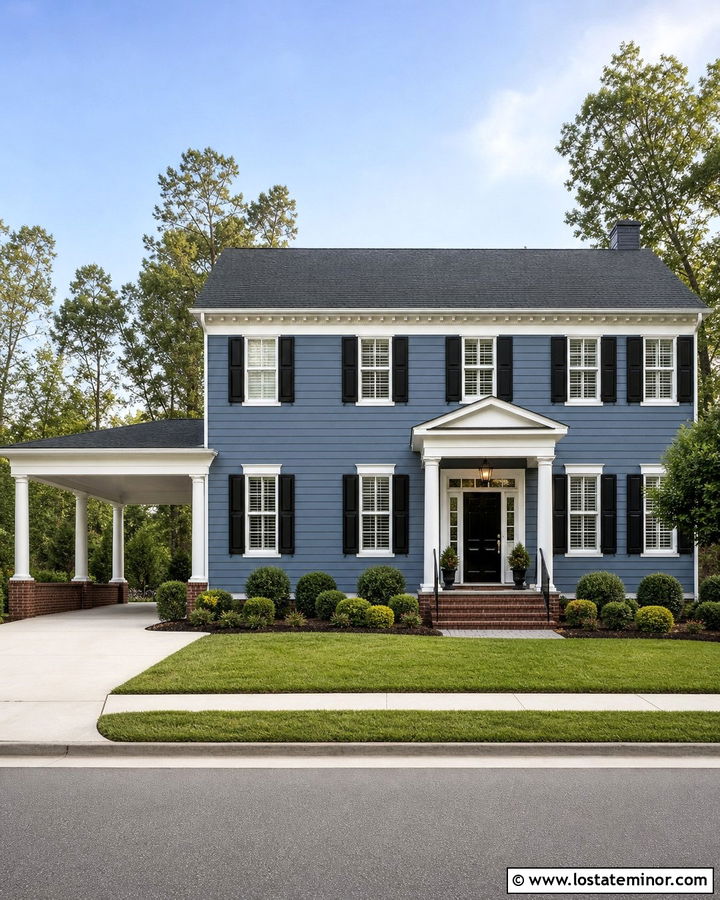
Traditional symmetry can still work with a carport when the materials are carefully repeated. Paint a two-story colonial slate blue, add creamy white trim, and use a side carport supported by classic square columns on red-brick bases. A brick wall or half wall at the rear of the carport can visually connect it to matching brick steps and a chimney. Choose an architectural shingle roof in charcoal or weathered gray for both structures. Black shutters, brass-toned lighting, and a glossy black front door reinforce the home’s formal character. Keep landscaping balanced with matching shrubs on either side of the entry. Although the carport sits to one side, repeating brick, roofing, and trim colors makes the entire exterior appear composed rather than uneven.
9. Slate Blue Cape Cod With Compact Carport
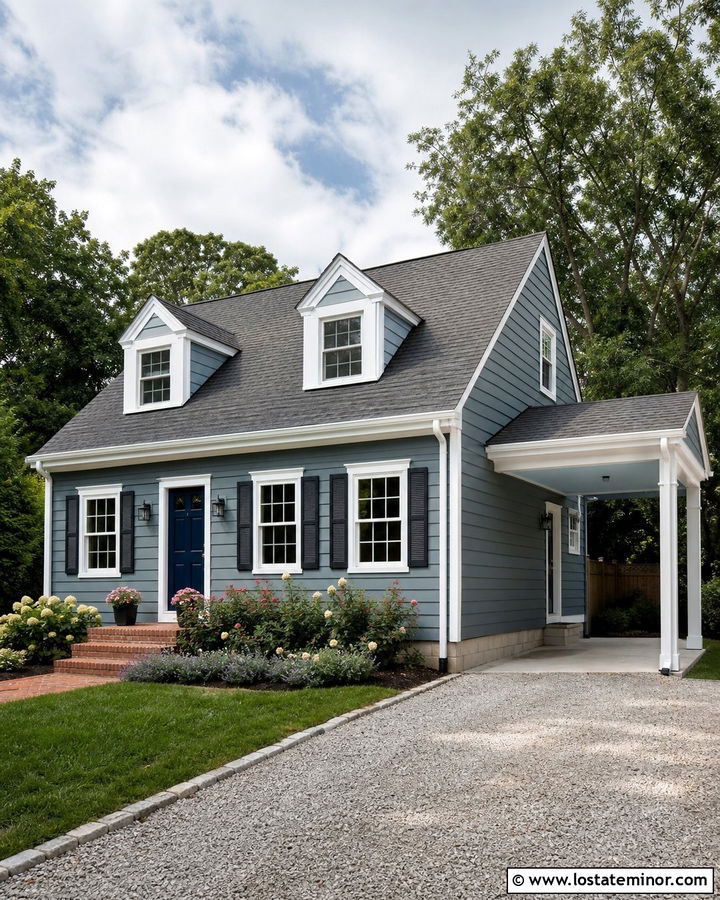
Small Cape Cod houses require a carport that does not overpower their steep rooflines and dormers. A narrow attached structure with white posts and a simple shingle roof offers coverage while preserving the recognizable facade. Use slate blue clapboard siding, bright white trim, and a deep blue front door for a layered but restrained palette. Gray cedar-style shingles on the roof bring a weathered coastal quality without forcing a beach theme. The carport ceiling can be painted pale blue or white to reflect light into the parking area. Add a gravel-edged driveway, brick entry path, and low flowering shrubs beneath the windows. Keeping all details compact and well scaled allows the slate blue Cape Cod exterior to remain the main attraction.
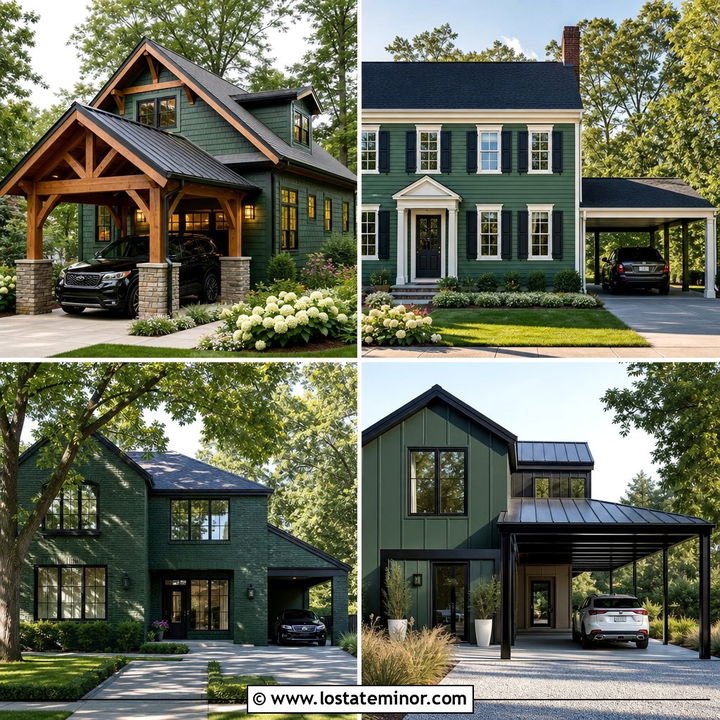
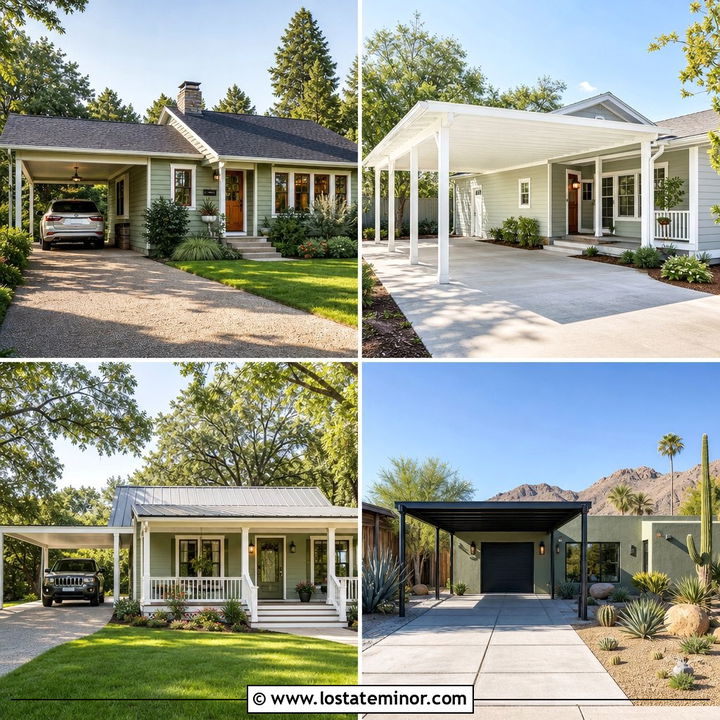
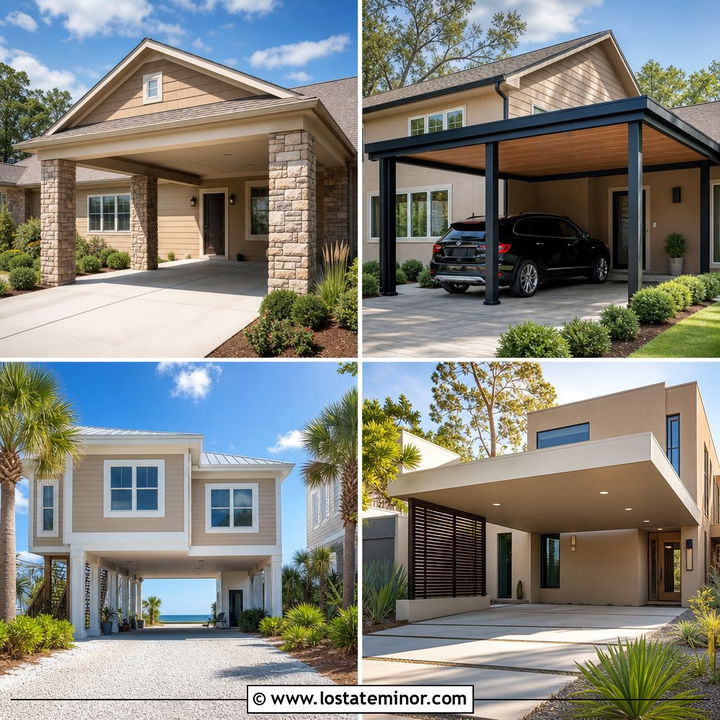
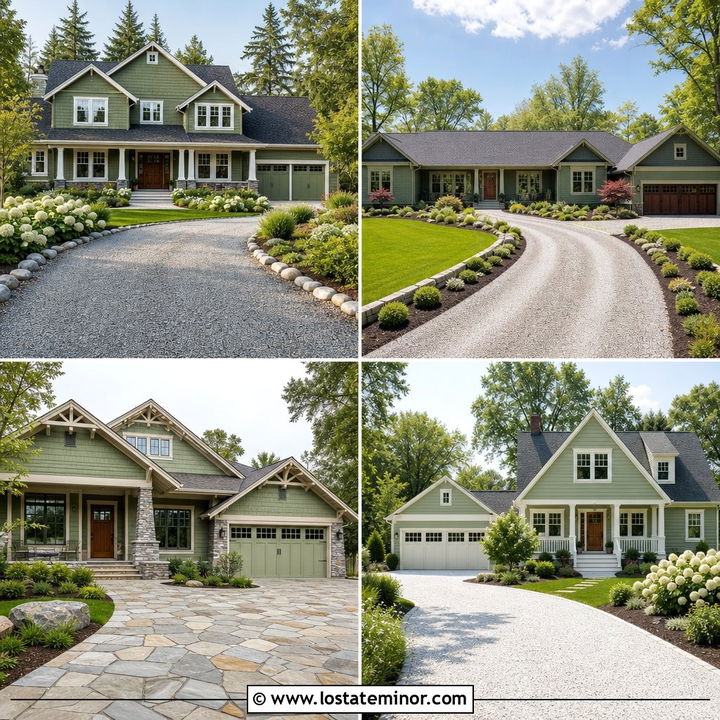
10. Slate Blue Mid-Century House With Flat Carport
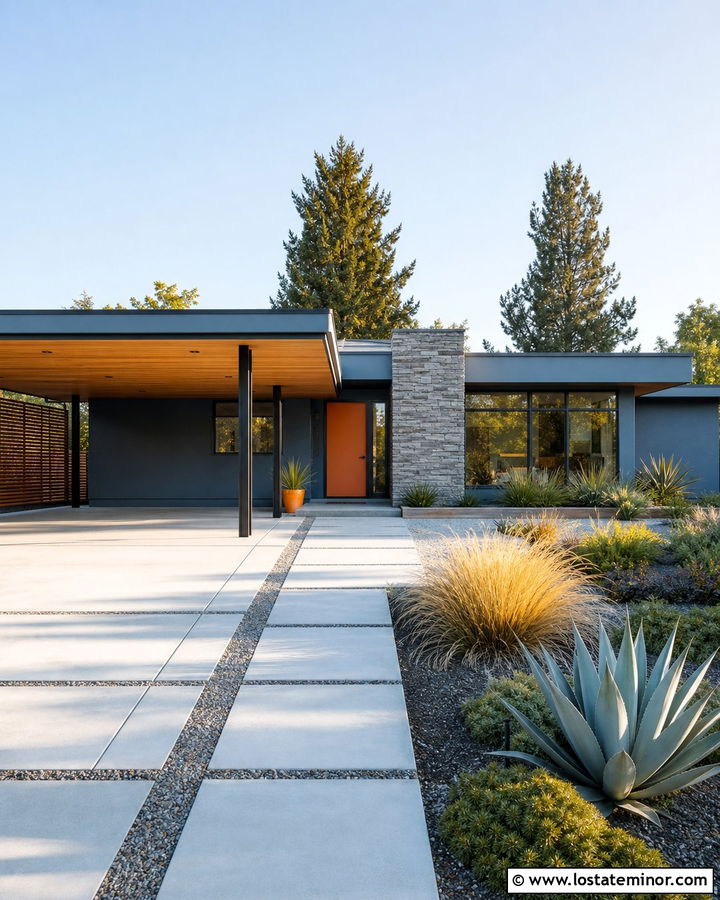
Low rooflines and broad windows make a mid-century house an ideal match for a streamlined carport. Paint the main exterior slate blue, then introduce natural wood beneath the eaves and around the recessed entry. A flat carport roof supported by slender black steel posts preserves the home’s strong horizontal shape. Use warm gray stone on one facade section to add texture without interrupting the clean composition. The front door can be burnt orange, olive green, or walnut, depending on how much contrast you prefer. Replace formal foundation shrubs with structured grasses, agaves in warmer regions, or low evergreen masses in cooler climates. Large concrete slabs and gravel joints will connect the driveway, entry, and carport into one cohesive mid-century landscape.
11. Slate Blue Coastal House With White Carport
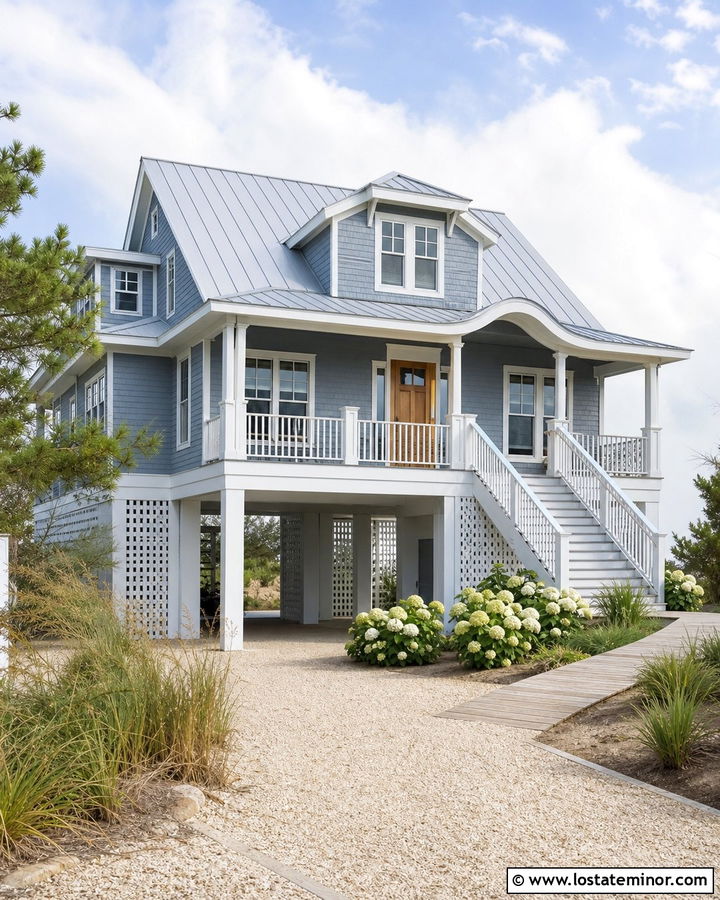
Salt-air character is easy to suggest with slate blue shingles, white trim, and an open carport that feels light rather than enclosed. Use broad white posts, exposed white rafters, and a pale gray metal roof to create a crisp coastal scheme. A natural teak or weathered wood front door adds warmth and looks comfortable beside the blue-gray exterior. If the house is raised, continue white lattice or horizontal slats beneath the structure to conceal storage. Shell-colored gravel, dune grasses, hydrangeas, and a boardwalk-inspired path can soften the driveway. Avoid adding too many nautical decorations. The siding, airy carport, and restrained materials already establish the mood. The finished house feels relaxed, bright, and appropriate for coastal or inland neighborhoods alike.
12. Slate Blue Cabin With Timber Carport
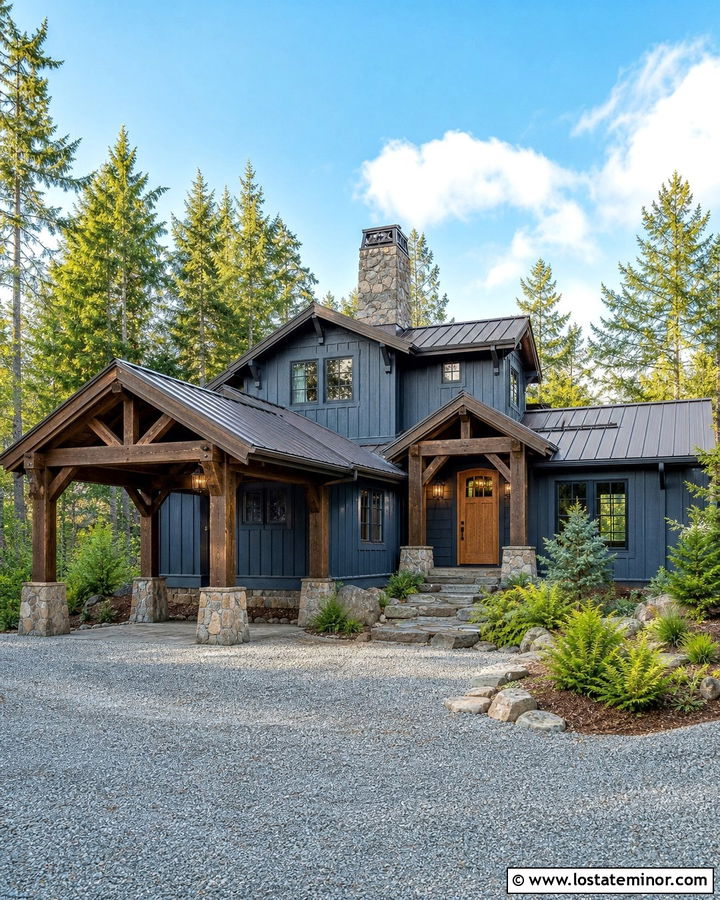
Slate blue can make a rustic cabin feel refreshed while still respecting its wooded surroundings. Use the color on rough-sawn siding or simple lap boards, then build the carport with chunky stained timber posts and exposed beams. A dark brown metal roof works across both the cabin and shelter, giving the structures a shared silhouette. Add a stone chimney, stone post bases, and a warm wood front door to ground the cool blue exterior. The driveway can be compacted gravel rather than polished concrete, which supports the cabin’s natural character. Native ferns, evergreen shrubs, and irregular stone steps will blend the home into the landscape. This complete scheme balances rugged textures with a controlled color palette that looks intentional rather than overly rustic.
13. Slate Blue House With Pergola Carport
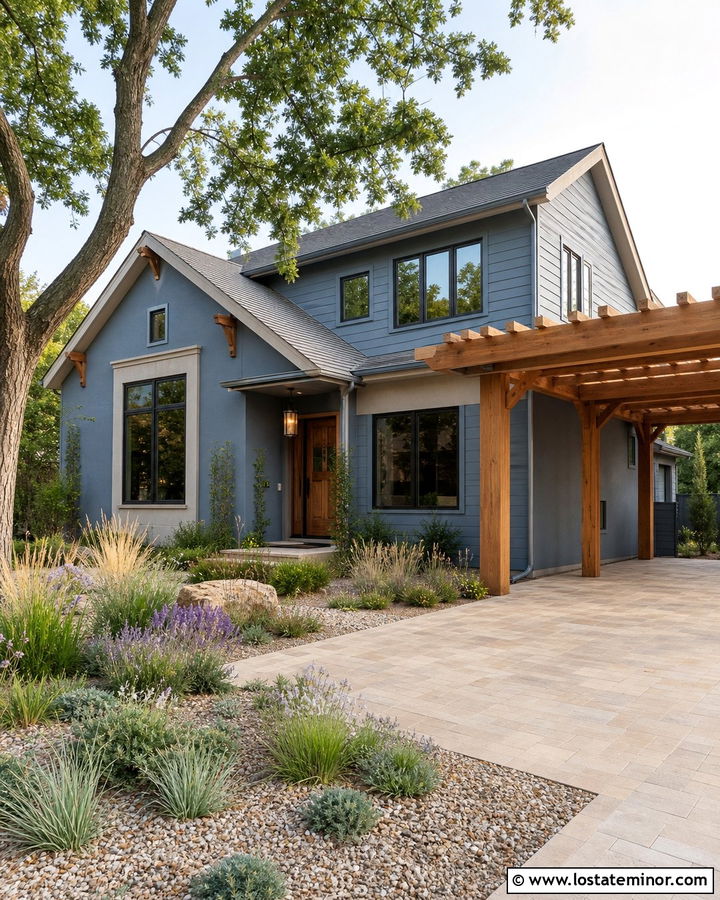
For homeowners who want filtered light, a pergola-style carport offers a softer alternative to a solid roof. Pair a slate blue stucco or siding exterior with a cedar pergola supported by substantial wood posts. The open slats introduce warm texture and cast attractive linear shadows across the driveway. Repeat the cedar on the front door, porch ceiling, or a small privacy screen to make the carport feel connected to the house. Cream trim and bronze-framed windows create a subtle transition between the cool walls and warm wood. Use tan pavers under the carport and continue them to the entry. Drought-tolerant grasses, low flowering plants, and smooth stone mulch will produce a relaxed exterior that feels open, practical, and thoughtfully coordinated.
14. Slate Blue House With Stone Carport Columns
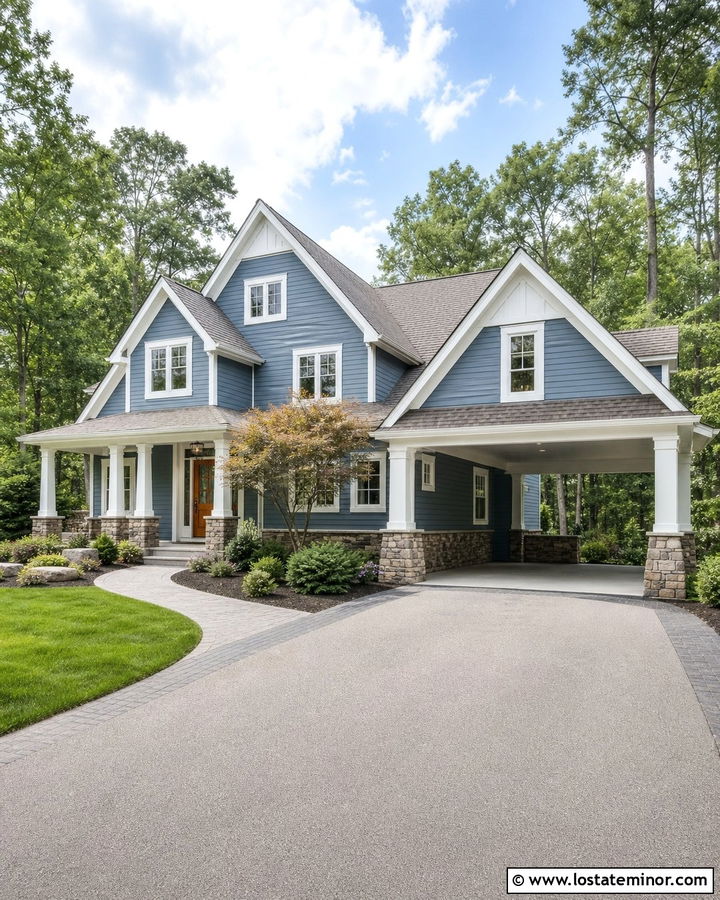
Stone columns can give an ordinary attached carport enough visual weight to balance a larger house. Select slate blue horizontal siding with warm white trim, then anchor the carport’s square posts on stacked fieldstone bases. Repeat that stone along the porch foundation or around a prominent chimney so it does not appear isolated. A weathered-gray roof works well with the blue-gray body, while a medium-stained oak door adds warmth. Keep the upper portions of the columns white or cedar, depending on the home’s architectural style. A curved walkway and layered evergreen beds can soften the strong masonry. By distributing stone across the complete facade, the exterior gains texture and depth without making the open parking area look heavy or detached.
15. Slate Blue House With Cedar Privacy Carport
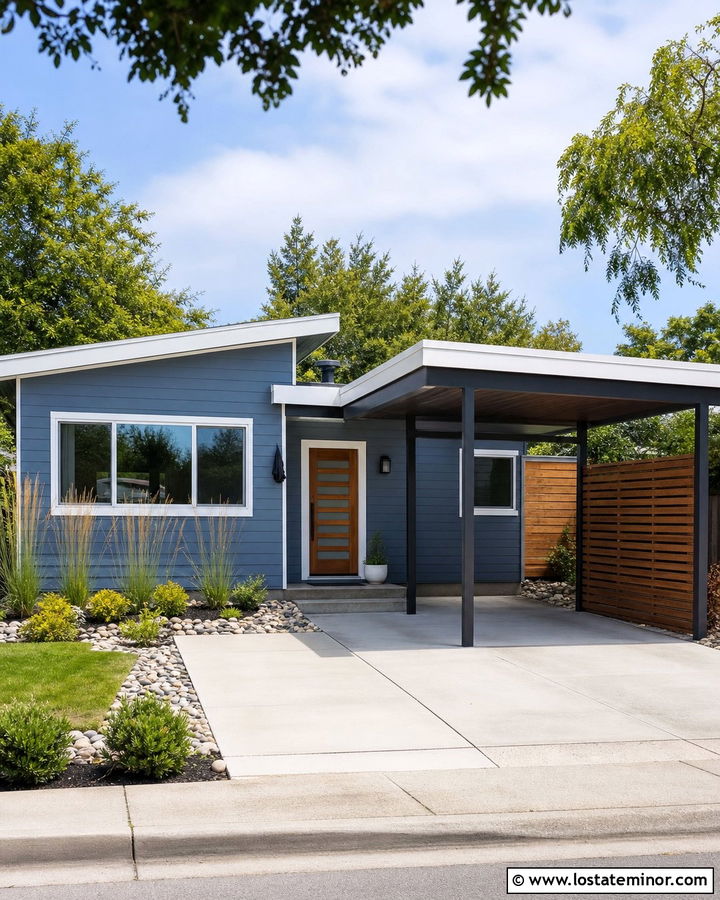
An open carport can provide more screening without becoming a closed garage. Add a horizontal cedar slat wall along the side facing neighboring properties, trash bins, or a busy street. Against slate blue siding, the golden wood creates a warm and natural focal point. Use charcoal metal posts and a matching low-slope roof to give the structure a tidy frame. Repeat cedar at the front door and beneath one small gable for consistency. Soft white trim around the windows keeps the facade approachable. Position the slats with even spacing so daylight still reaches the parking area. Finish the exterior with a concrete driveway, river-rock borders, upright grasses, and low shrubs. This look combines privacy, ventilation, and polished curb appeal in one scheme.
16. Slate Blue House With Black Metal Carport
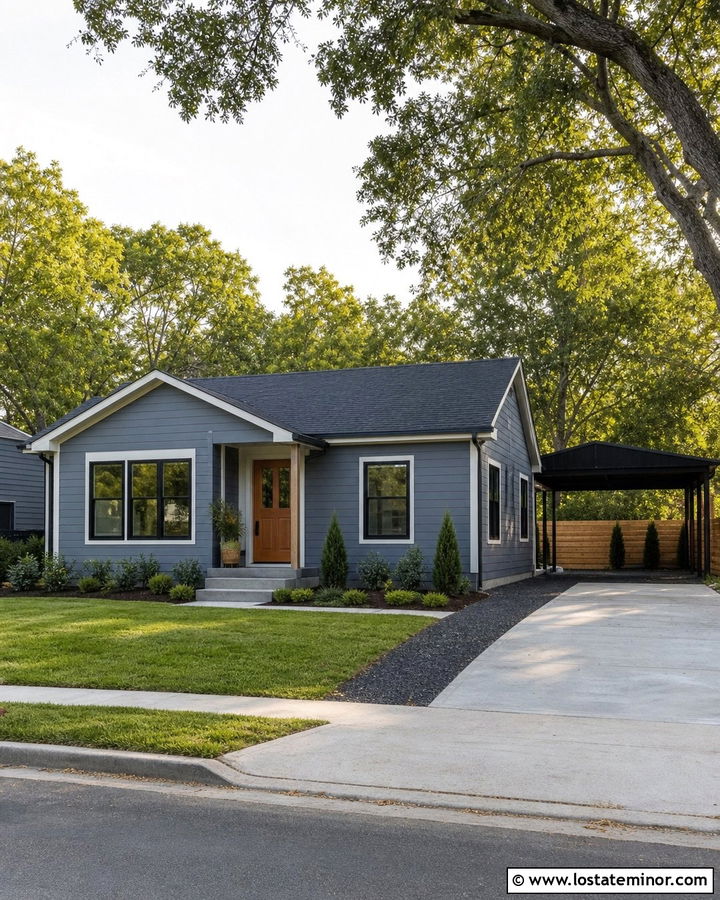
A freestanding black metal carport can complement a slate blue home when its size, placement, and finish relate to the facade. Choose a structure with a simple charcoal roof, black posts, and clean boxed edges rather than an overly industrial frame. Repeat black on the window frames, exterior lights, gutters, and house numbers. Warm white trim can soften the contrast, while a natural wood door makes the entry more inviting. Place the carport slightly behind the front wall of the house so the main architecture remains prominent. A dark gravel strip between the house and driveway helps connect the two areas visually. Add tidy evergreen plantings and one shade tree to create a finished exterior that feels deliberate and budget-conscious.
17. Slate Blue House With Matching Blue Carport
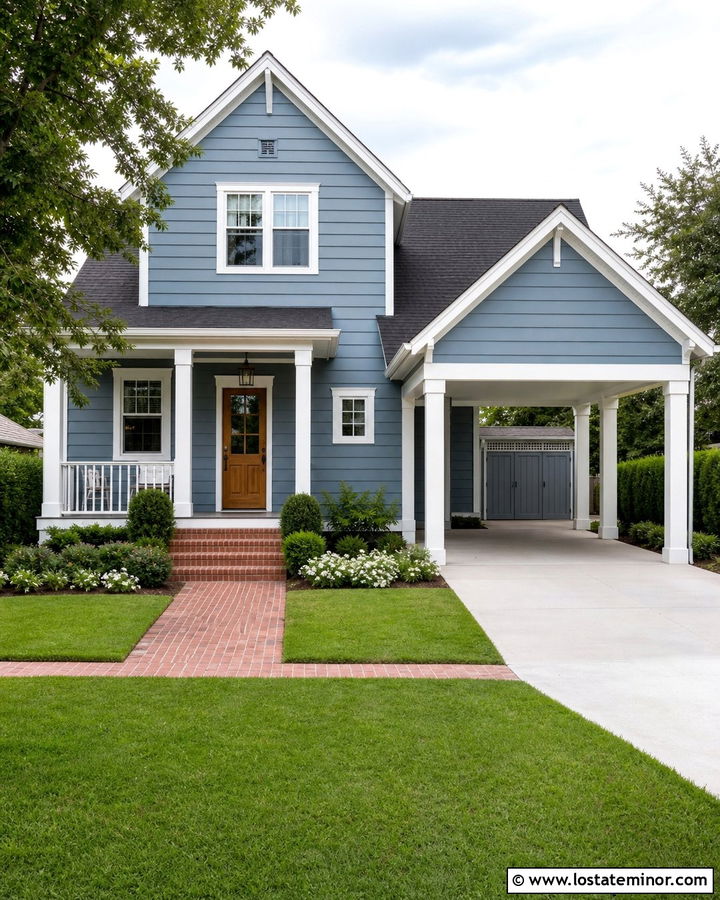
Using slate blue on both the house and carport creates a seamless effect, particularly on a modest one-story property. Apply the color to the home’s lap siding and to the carport’s gable or side panels, but keep the structural posts bright white for definition. Match the roofing across both areas in medium charcoal. A red-brick walkway and warm wood front door can prevent the coordinated blue scheme from feeling flat. If the carport includes a storage room, paint its door slate blue so it blends into the background. Use white fascia to trace the roofline and visually link every section. Simple lawn, low hedges, and flowering foundation plants provide enough softness without competing with the carefully matched architecture.
18. Slate Blue House With Lean-To Carport
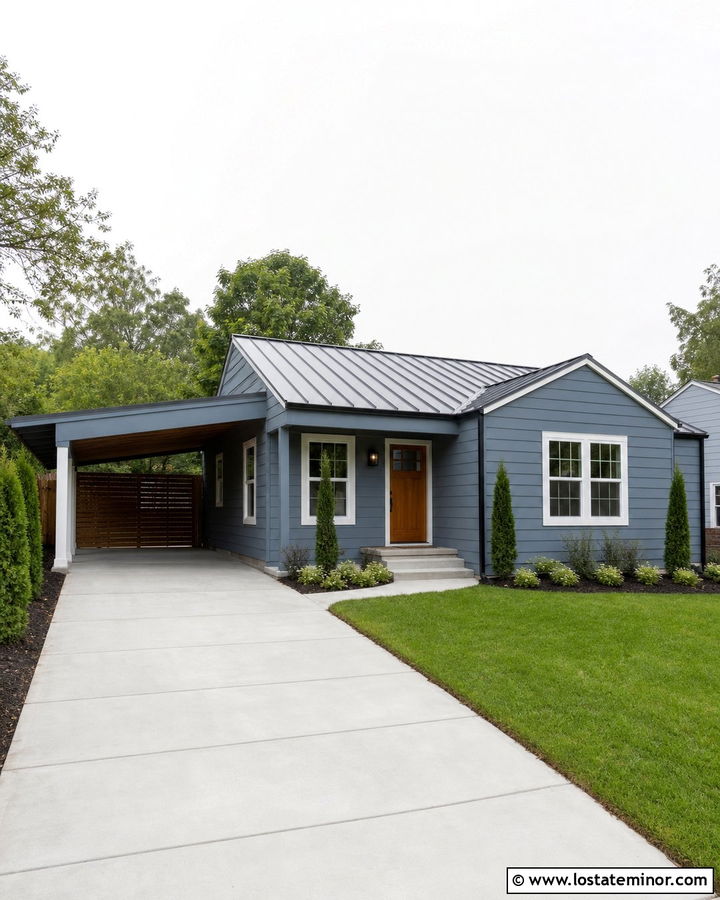
A lean-to carport is practical for a narrow lot because it can follow the side wall without adding a complicated roof shape. Paint the house slate blue and continue the same color onto the carport’s support beam. Use white posts and a charcoal metal roof to establish contrast while maintaining a clean appearance. The carport roof should sit below the main eaves, allowing the original roofline to remain clearly visible. Add a narrow cedar screen near the rear for concealed storage and repeat that wood on the entry door. A straight concrete driveway, slim planting strip, and columnar shrubs make efficient use of limited space. This straightforward scheme works especially well for ranches, cottages, and other compact homes with simple exterior elevations.
19. Slate Blue House With Detached Carport
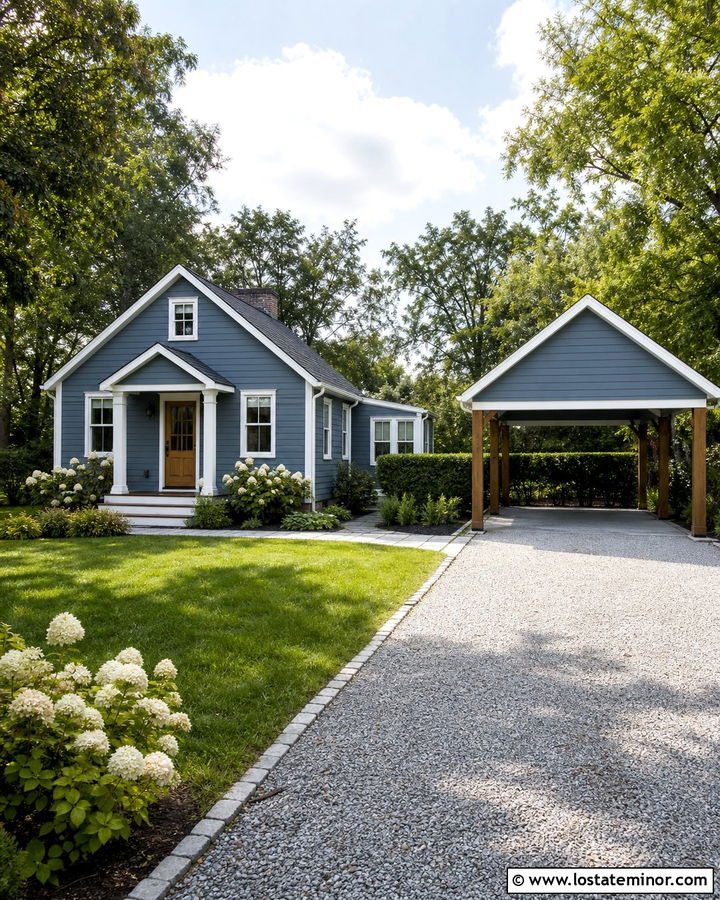
When a carport cannot attach neatly to the house, coordinated colors can make a detached structure feel like part of the property. Cover its gable ends in the same slate blue siding used on the home. Match the white trim, charcoal roofing, and exterior light fixtures as closely as possible. Cedar posts can add warmth, particularly when the front door and porch details use the same stain. Position the carport far enough back to preserve a clear view of the facade, then connect it with a paved or gravel walkway. Planting a low hedge between the structures creates a gentle visual bridge. The final exterior feels planned as one composition, even though the house and covered parking remain physically separate.
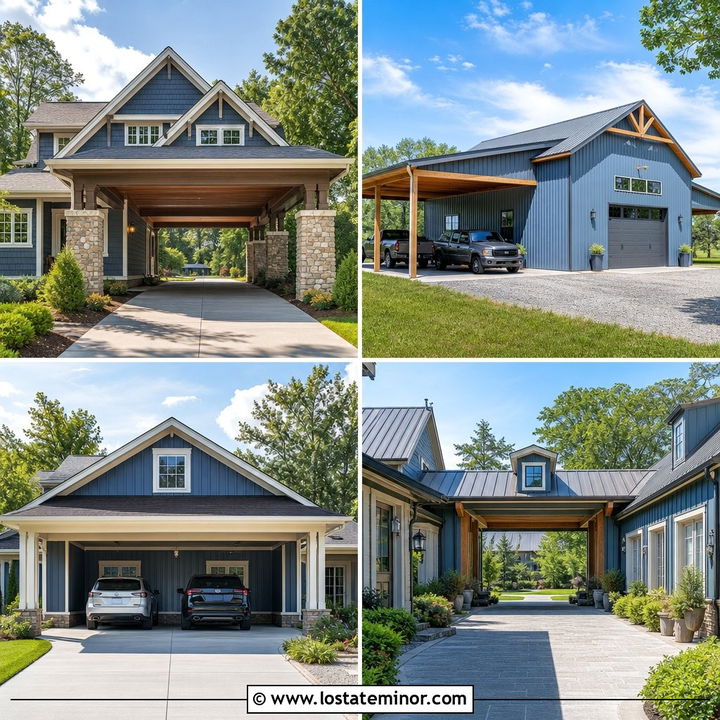
20. Slate Blue House With Double Carport
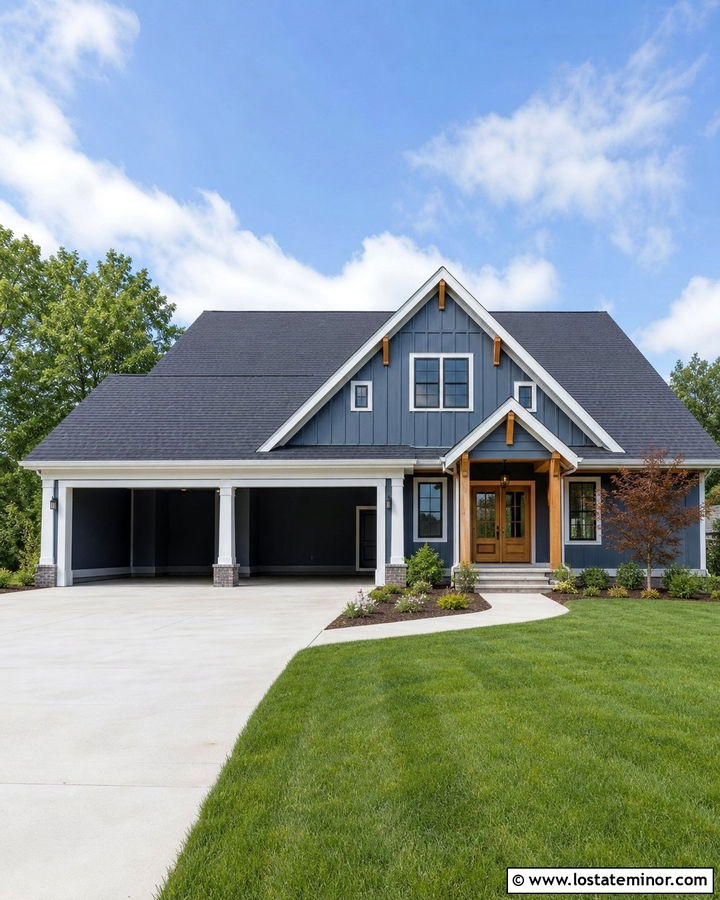
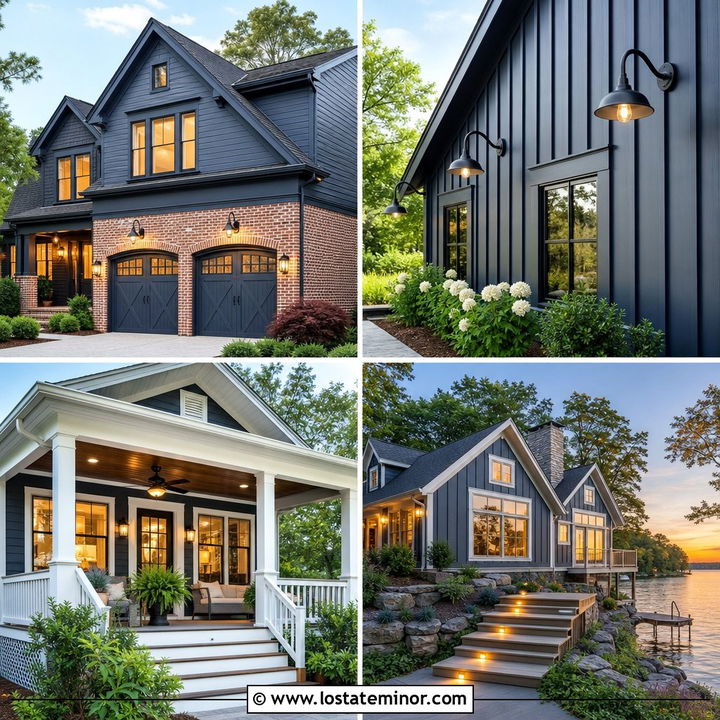
A wide double carport needs enough detail to avoid looking like a plain roof on posts. Begin with slate blue board-and-batten siding and a broad charcoal roof that follows the pitch of the home. Use three substantial white columns to divide the opening into balanced bays. A slate blue gable above the center can bring the house color forward, while natural wood brackets add warmth and craftsmanship. Repeat those brackets on the porch or beneath the main gables. Choose a wide driveway in light concrete to keep the large parking zone from appearing too dark. Foundation shrubs, a defined walkway, and a small ornamental tree can redirect attention toward the entry. The entire facade will feel balanced, useful, and architecturally complete.
21. Slate Blue House With Brick Carport Wall
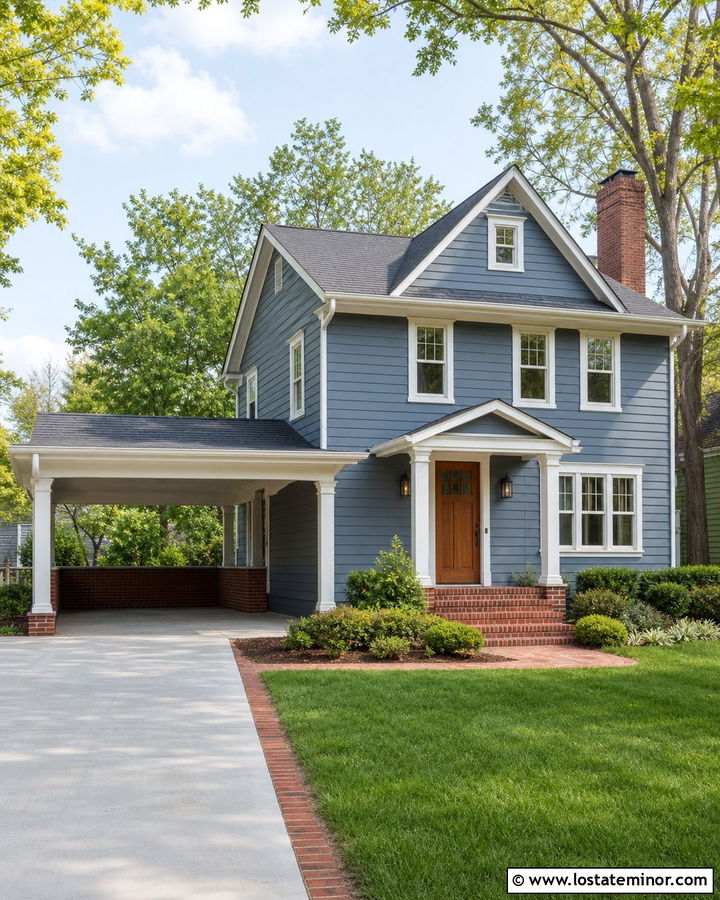
Brick can turn a basic carport side wall into an attractive part of the exterior. Pair slate blue siding with warm red or muted brown brick, selecting a blend that already appears on the chimney, foundation, or front steps. Build a half-height brick wall along the carport’s exposed side and top it with a simple painted or stone cap. White columns above the wall keep the structure from feeling closed in. Use a charcoal roof and creamy trim to bridge the cool siding and warm masonry. A wood front door with black hardware completes the palette. Carry brick into the walkway border or mailbox base for repetition. This design provides screening and durability while giving the complete home a more established, substantial appearance.
22. Slate Blue House With Carport Storage Room
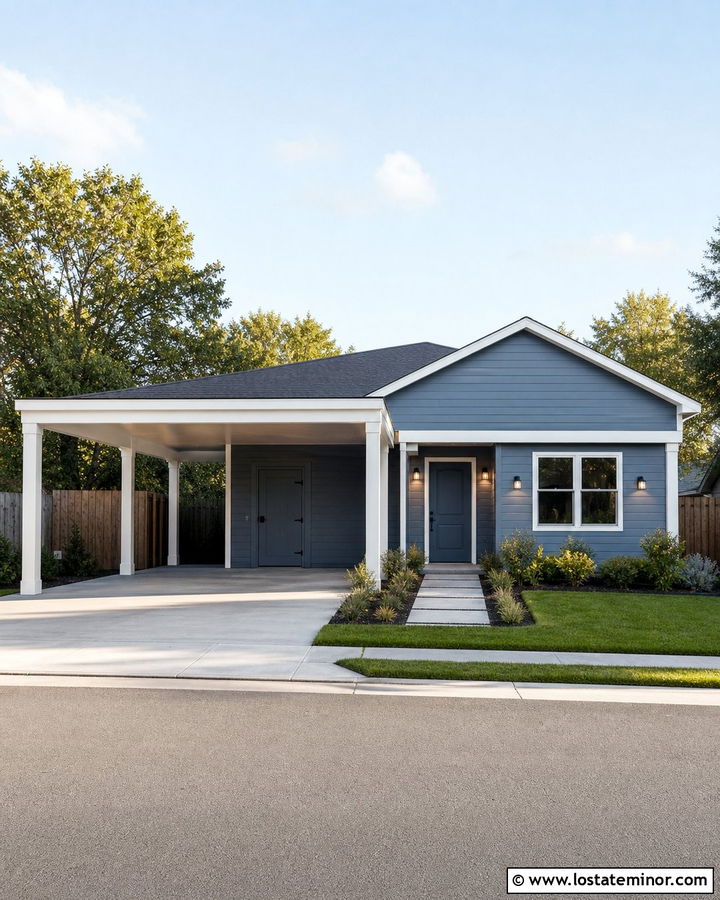
Covered parking becomes more useful when a small storage room is incorporated into the rear of the carport. To keep it visually quiet, cover the storage walls in the same slate blue siding as the house. Use a flush blue door with simple black hardware rather than a contrasting utility door. White posts, white fascia, and a charcoal shingle roof will tie the addition into a traditional or transitional exterior. Repeat the home’s siding direction and corner trim on the storage enclosure. Add a motion-friendly wall light that matches the fixture beside the front entry. A narrow planting bed can soften the enclosure when viewed from the street. The result provides practical space for tools and outdoor equipment without making the carport look cluttered or improvised.
23. Slate Blue House With Carport Breezeway
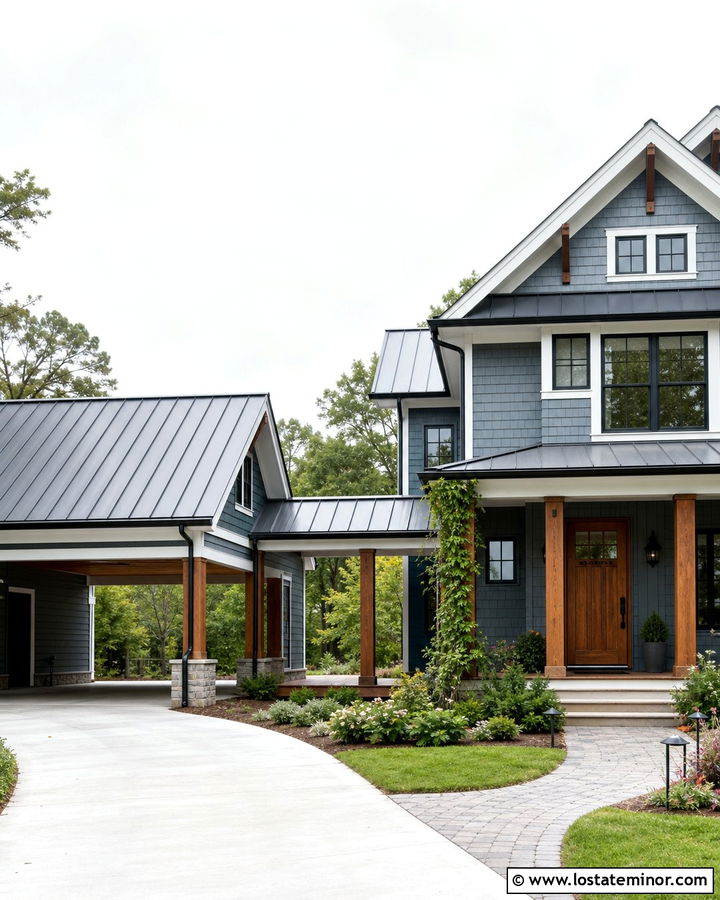
A covered breezeway creates a comfortable transition between the house and a detached or offset carport. Paint the main siding slate blue and use white trim to outline both structures. The breezeway roof should repeat the carport’s charcoal metal or shingle finish, forming one continuous visual path. Cedar posts and a matching wood entry door can warm the connection. Consider a blue-gray beadboard ceiling so the passage feels finished from below. A paved walkway beneath the roof should lead clearly toward the main door rather than ending at a side utility entrance. Low planting beds, climbing greenery on a nearby trellis, and simple black lighting will make the connecting space feel like an intentional architectural feature instead of an empty gap.
24. Slate Blue House With Solar Carport
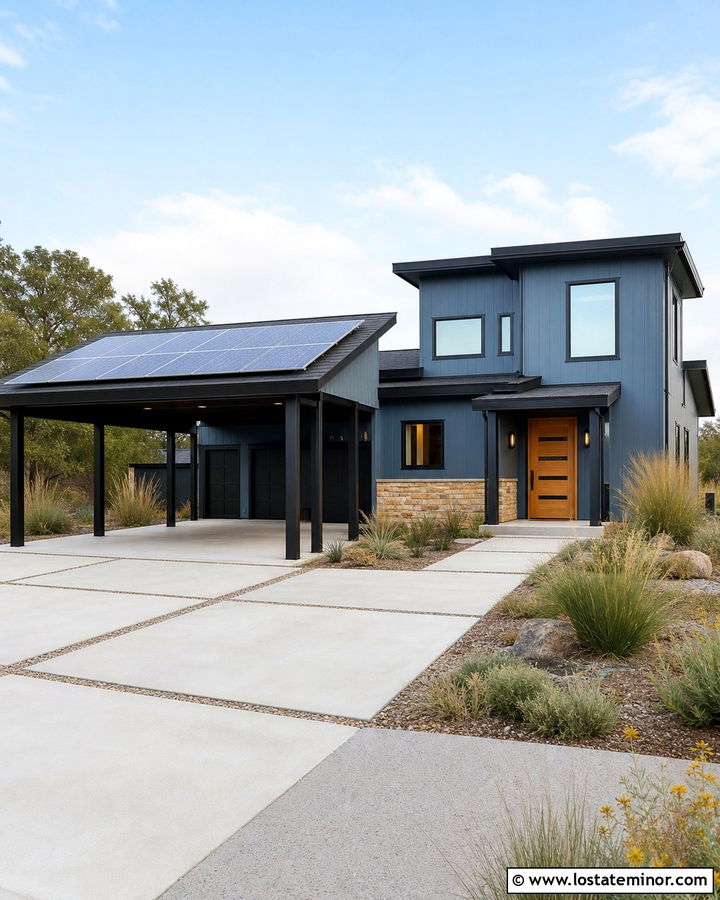
A solar carport works best visually when the technology is incorporated into a restrained modern exterior. Use slate blue vertical siding, black windows, and dark fascia so the panel-covered roof feels connected to the home. Slim black steel supports can create a clean structure without competing with the main facade. Add a natural wood front door and a small section of warm stone to balance the cool, dark materials. Keep visible wiring and service equipment organized along the least prominent side. Large concrete driveway slabs, gravel joints, and low native plantings support the contemporary look. The complete scheme feels purposeful because the carport’s dark rectangular roof repeats the home’s window frames, roof edges, and other architectural lines rather than appearing purely functional.
25. Slate Blue House With RV Carport
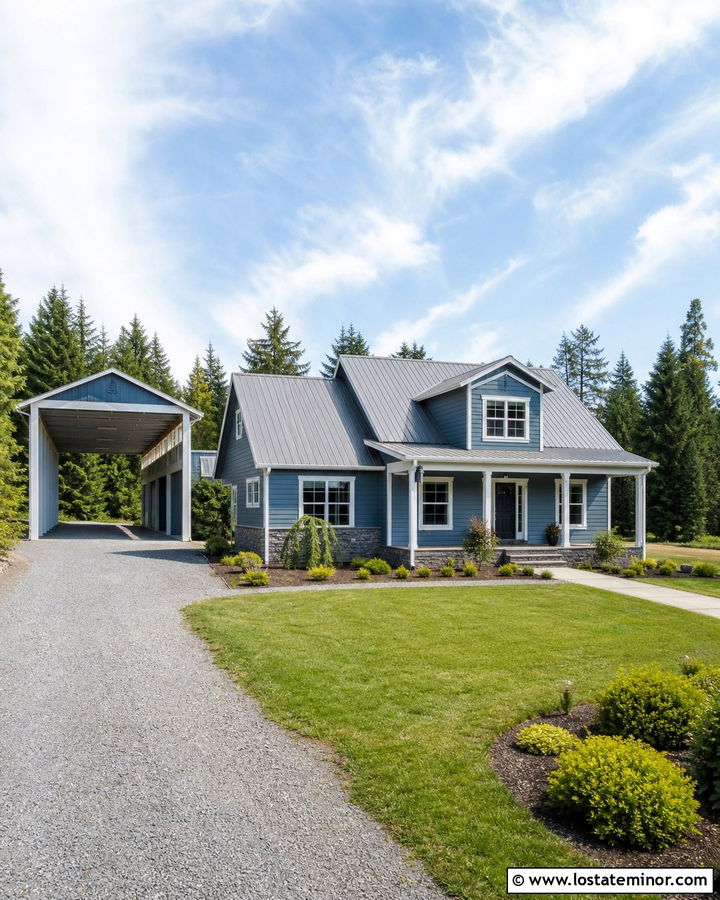
An RV carport has considerable height, so careful placement is essential to protecting the home’s curb appeal. Set the structure beside or behind the main facade whenever the lot allows. Use slate blue gable panels that match the house, along with white or charcoal framing and a coordinating metal roof. Enclosing the upper portion of the sides can reduce the structure’s visual scale while leaving the lower area open. Repeat the blue on a nearby storage building or side door for continuity. Tall evergreen plantings can partially screen the carport without restricting access. Choose a gravel or concrete drive that follows a clear, direct route. A matching color scheme helps the oversized shelter belong to the property rather than dominate the slate blue house.
26. Slate Blue House With Carport Roof Deck
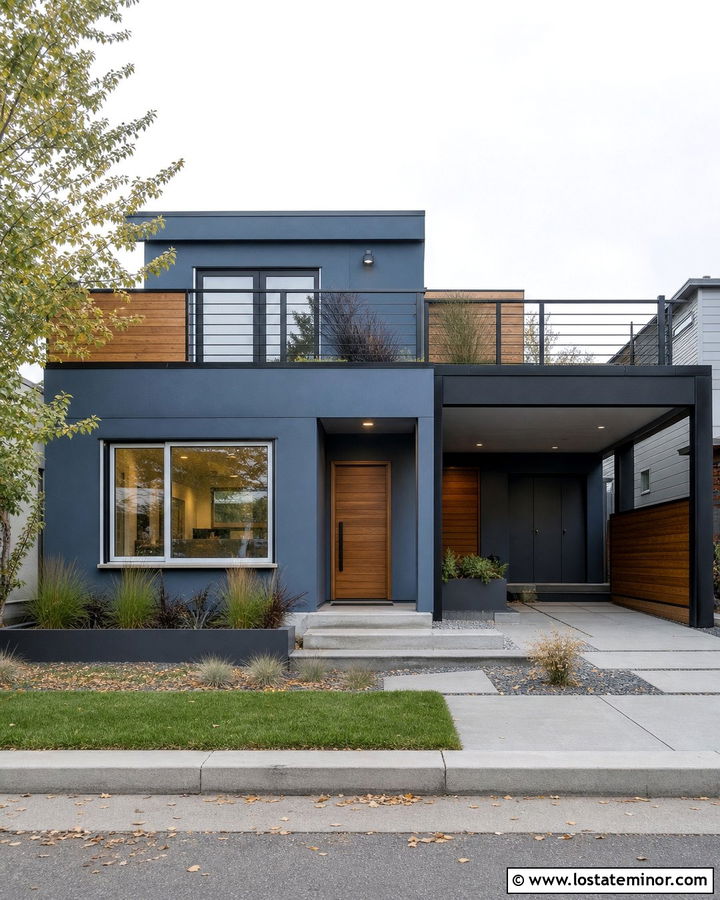
On a compact urban property, the flat roof of a carport can support the look of an upper outdoor space when designed as part of the architecture. Use slate blue stucco or fiber-cement panels across the house, then frame the carport with charcoal steel. A simple black railing above the roof keeps the lines clean. Warm wood privacy panels can screen the deck and repeat the home’s front door finish. Use white trim sparingly around the windows to brighten the facade without weakening its modern character. Below, install large concrete pavers and integrated storage along one wall. Planters with ornamental grasses can soften the railing. This layered exterior makes the carport feel useful, polished, and connected to the home from ground level to roofline.
27. Slate Blue House With Arched Carport
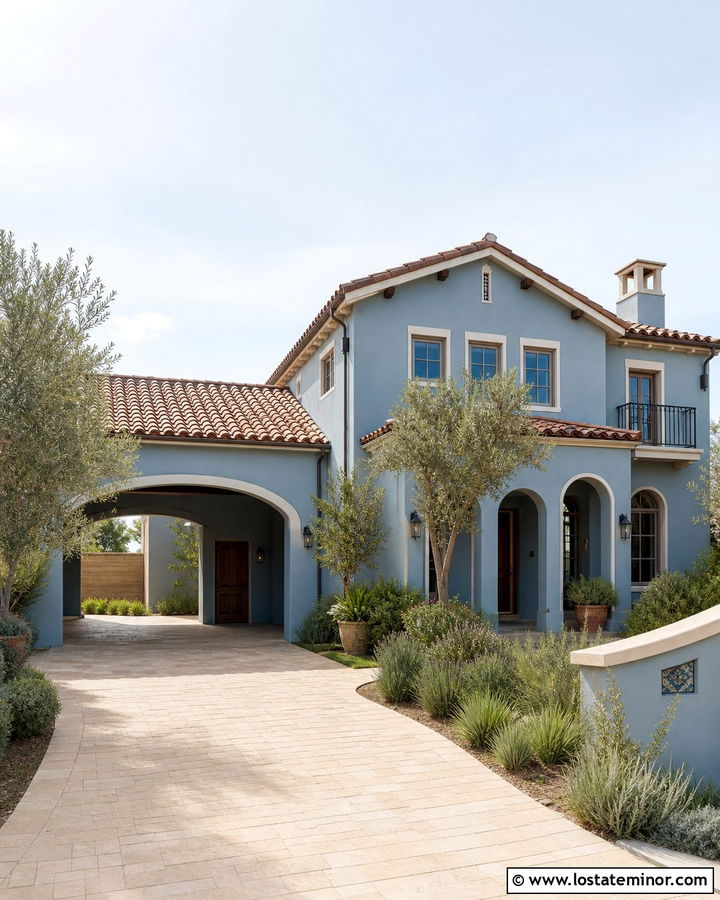
Curved openings can bring softness to a slate blue house with Spanish, Mediterranean, or eclectic influences. Use smooth blue-gray stucco on the main walls and form one broad arch across the front of the attached carport. Warm white trim around the arch and windows keeps the exterior light. Select a muted terracotta roof or weathered brown tile to introduce an earthy contrast. A dark wood front door and matching garage-style storage door can add depth. Repeat the arch shape at the porch or entry so the carport does not become an isolated feature. Sand-colored pavers, olive trees, rosemary, and drought-tolerant grasses complete the palette. The finished exterior combines cool wall color with warm regional materials in a balanced, inviting way.
28. Slate Blue House With Carport Trellis
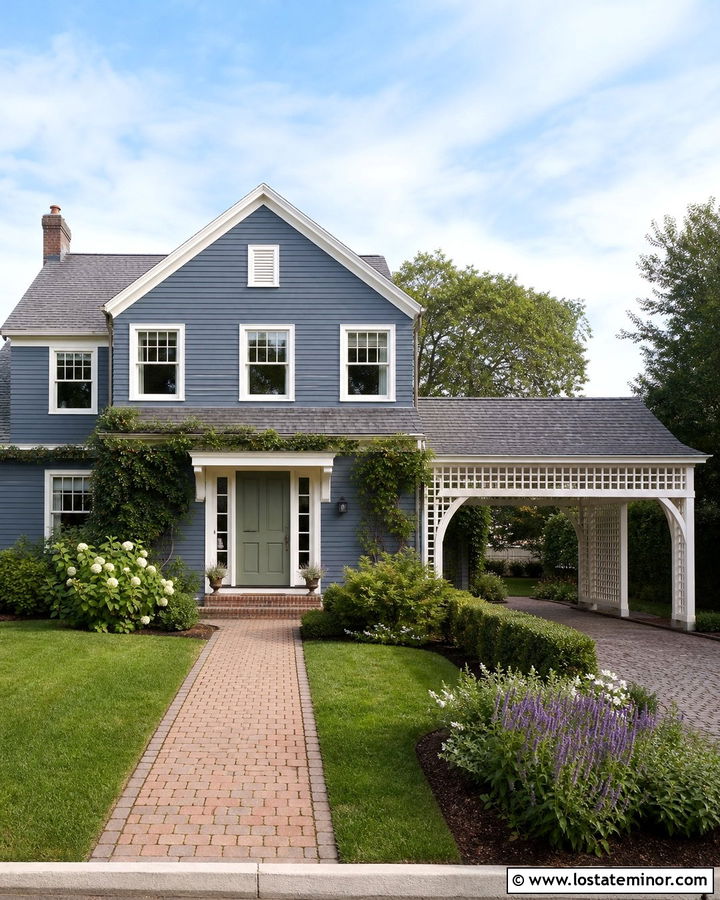
A decorative trellis can soften the front or side edge of a carport while supporting a more garden-focused exterior. Paint the house slate blue and use creamy white posts, beams, and trellis panels for a bright traditional contrast. A gray shingle roof over the parking area keeps the structure practical, while the trellis extends beyond it as a lighter architectural feature. Train restrained climbing greenery along one section instead of covering the entire frame. A sage green or natural wood front door complements the garden palette. Use brick pavers for the walkway and repeat them as driveway edging. Flowering shrubs, low hedges, and perennial borders can frame the house while keeping windows and siding visible. The overall look feels established and welcoming.
29. Slate Blue House With Carport Workshop
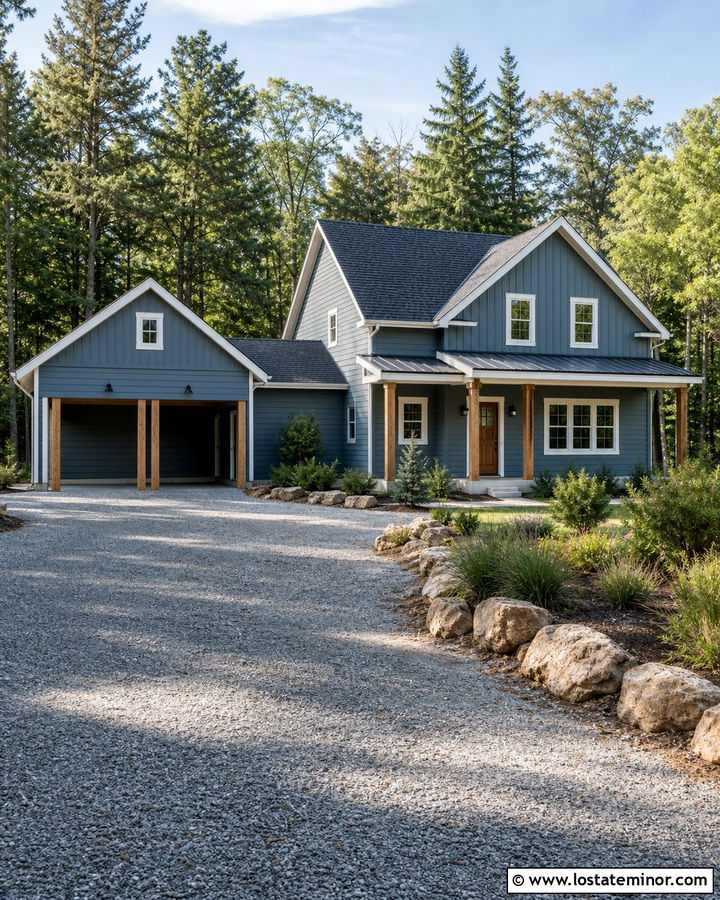
A carport paired with a small workshop can remain attractive when both spaces share the home’s exterior details. Cover the workshop in slate blue siding and finish its windows, corners, and door trim in white. Use a charcoal roof over the complete structure, with stained wood posts defining the open parking bay. A matching wood front door on the house creates a strong visual link. Add black gooseneck lights above the workshop entrance and repeat similar black fixtures near the porch. Keep work surfaces, tools, and storage concealed from the street with solid rear walls or a cedar screen. A broad gravel driveway and informal native landscaping suit the practical character. Everything reads as one coordinated property rather than separate utility structures.
30. Slate Blue House With Enclosed Carport Panels
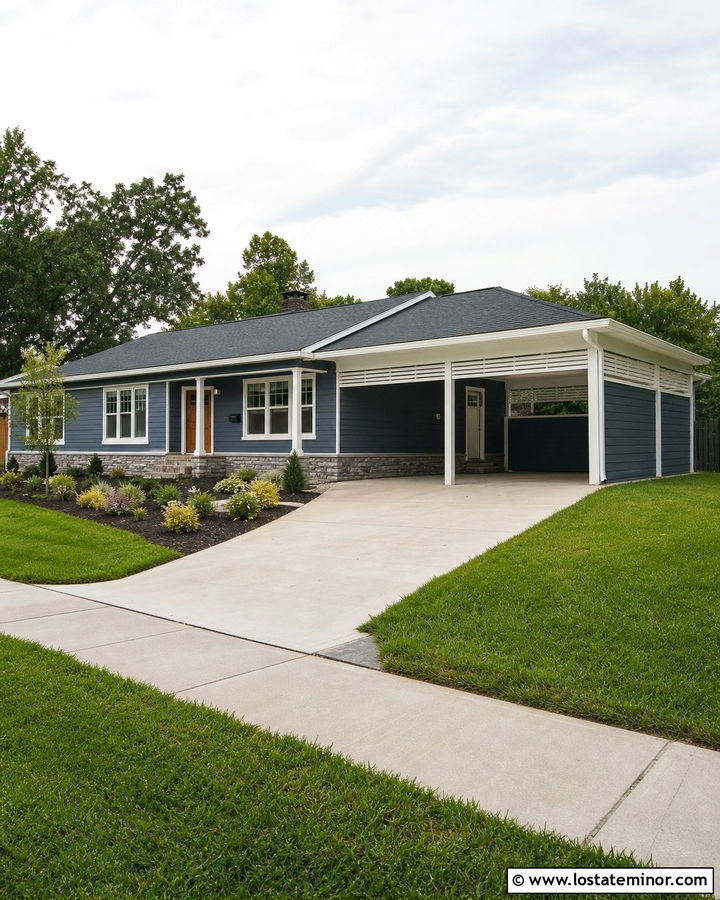
Partial carport panels can provide additional privacy and weather protection without fully converting the space into a garage. Use slate blue horizontal panels along the lower half of one or two sides, matching the home’s siding exactly. White posts and upper framing keep the sheltered area open and bright. A charcoal roof, warm wood entry door, and gray stone foundation complete the exterior palette. Position panel openings to preserve useful sightlines toward the driveway and front yard. If more airflow is desired, combine solid lower sections with evenly spaced wood or metal slats above. Continue a neat planting bed along the outside wall to soften its length. This tailored treatment makes an ordinary carport look integrated, finished, and appropriate for the complete house.
Conclusion:
The strongest **30 Slate Blue House Design With Carport Ideas** treat covered parking as a meaningful part of the home rather than a separate utility feature. Match rooflines, repeat siding colors, and carry trim or accent materials from the main facade onto the carport. White posts create a fresh traditional look, while black steel supports feel modern. Cedar, brick, and stone add warmth and texture to the cool blue-gray exterior. Consider the size of the house, driveway placement, roof shape, and neighborhood setting before choosing a design. With coordinated details and simple landscaping, a slate blue house and carport can form one practical, attractive, and polished curb-appeal scheme.

Related posts: