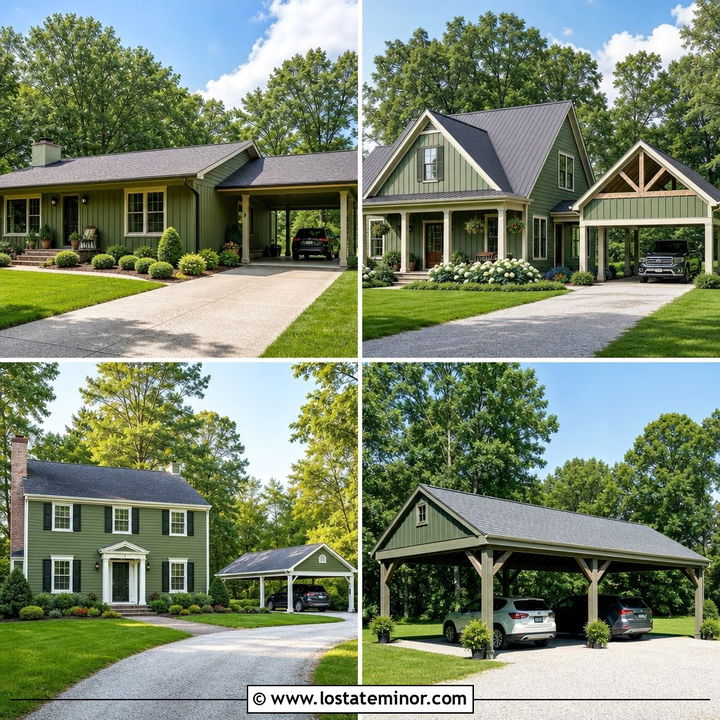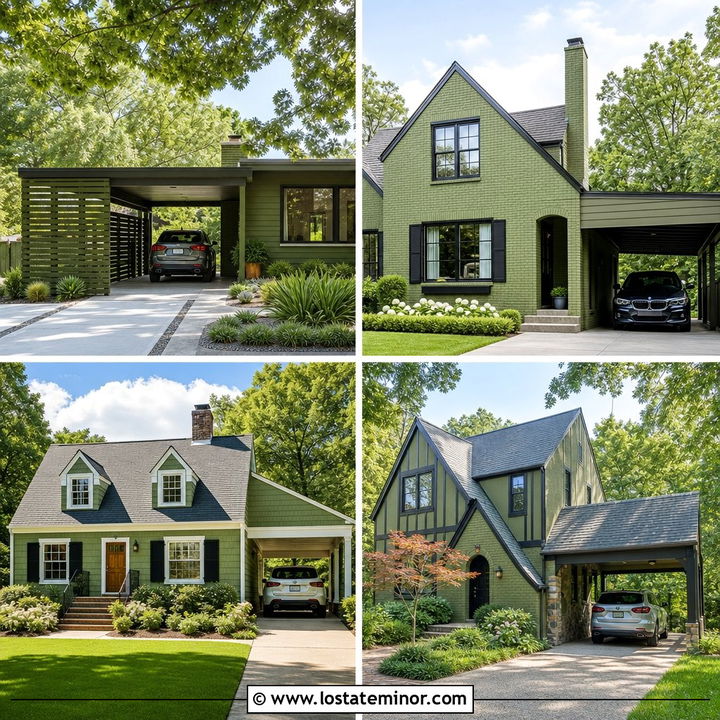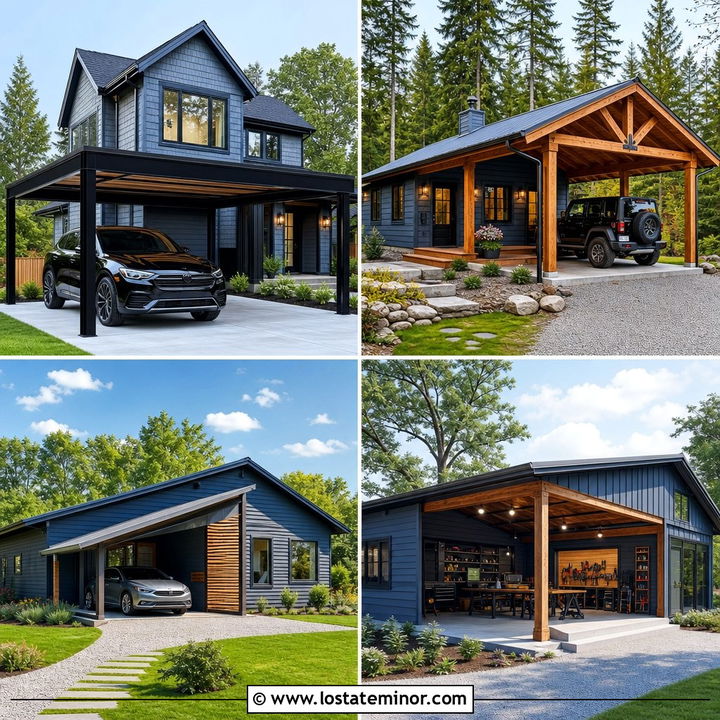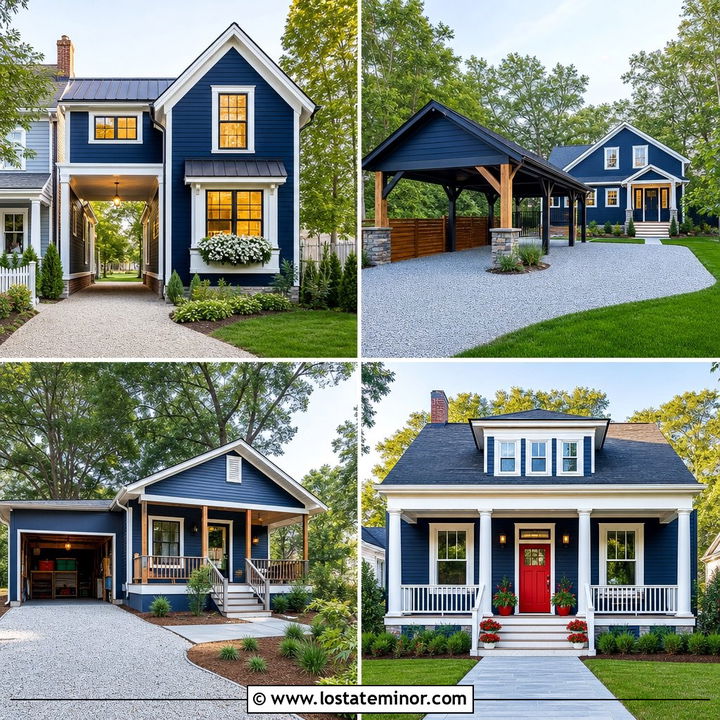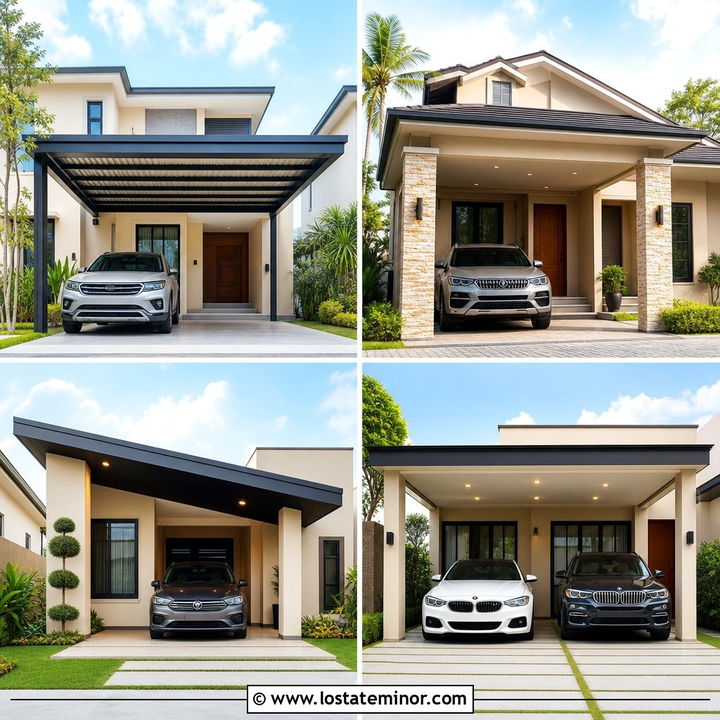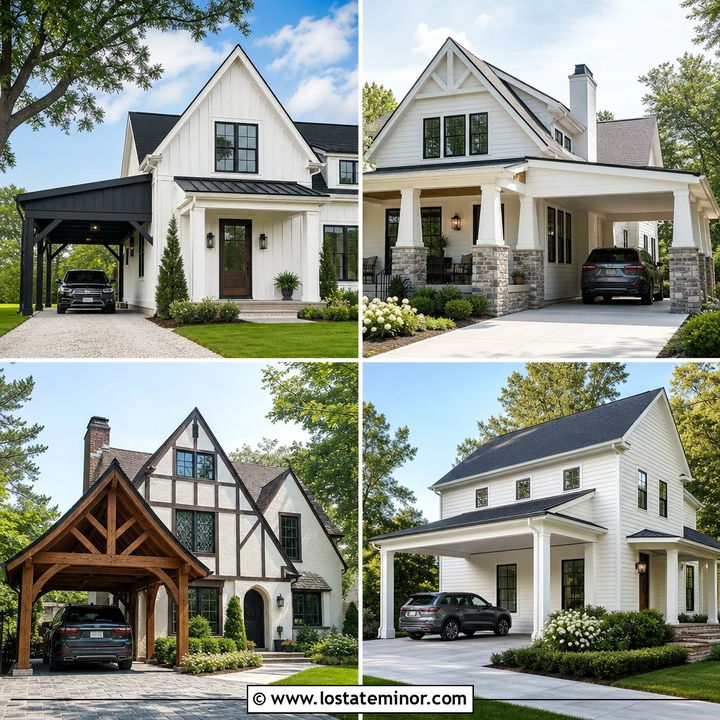
The best **30 Dusty Blue House Design With Carport Ideas** combine a soft, welcoming exterior color with practical covered parking that looks original to the home. Dusty blue works beautifully with crisp white, charcoal, warm wood, muted stone, and aged brick. The key is repeating those materials across the facade and carport so the structure does not feel like an afterthought. Roof pitch, post thickness, lighting, drainage, and driveway placement also shape the finished curb appeal. A well-planned carport can protect vehicles while complementing the home’s architecture and everyday function. () Whether you prefer a simple ranch or a modern farmhouse, use these 30 Dusty Blue House Design With Carport Ideas to create a complete and coordinated exterior.
1. Dusty Blue Ranch House With White Gable Carport
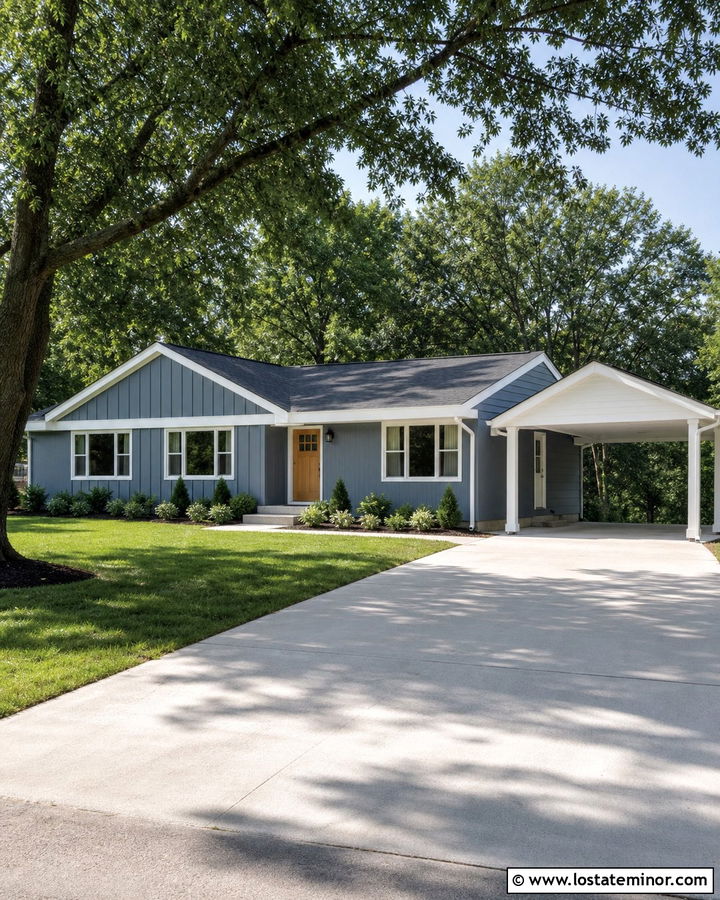
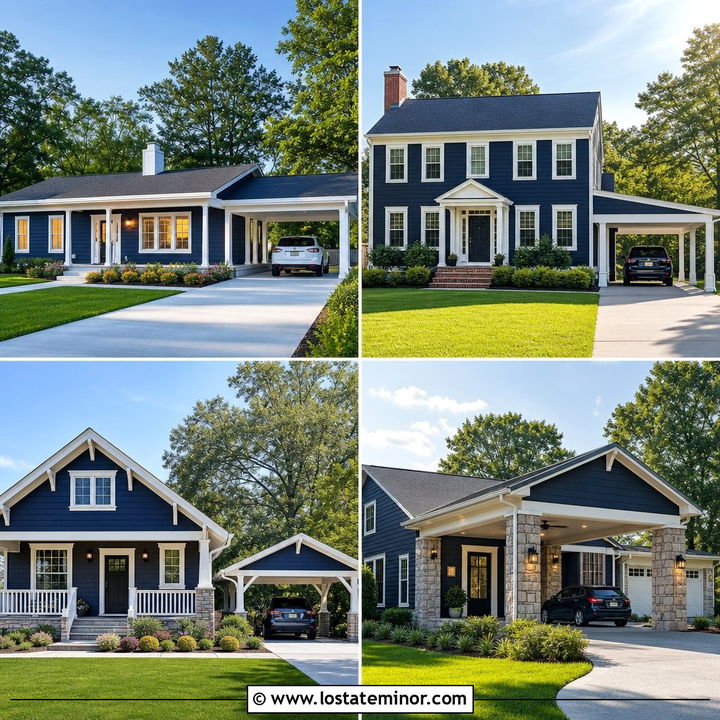
A low, welcoming ranch looks especially balanced when its carport repeats the home’s main roof shape. Cover the facade in dusty blue horizontal siding and use clean white for the fascia, window trim, gutters, and carport posts. A front-facing gable over the parking area adds height without overpowering the long roofline. Finish the gable with dusty blue board-and-batten siding so it feels connected to the house. Charcoal roof shingles provide gentle contrast, while a natural oak front door warms the cool palette. Simple foundation shrubs and a straight concrete driveway keep the property neat. This complete scheme suits older ranch homes that need more definition, covered parking, and brighter curb appeal without extensive structural changes.
2. Dusty Blue Mid-Century House With Flat Roof Carport
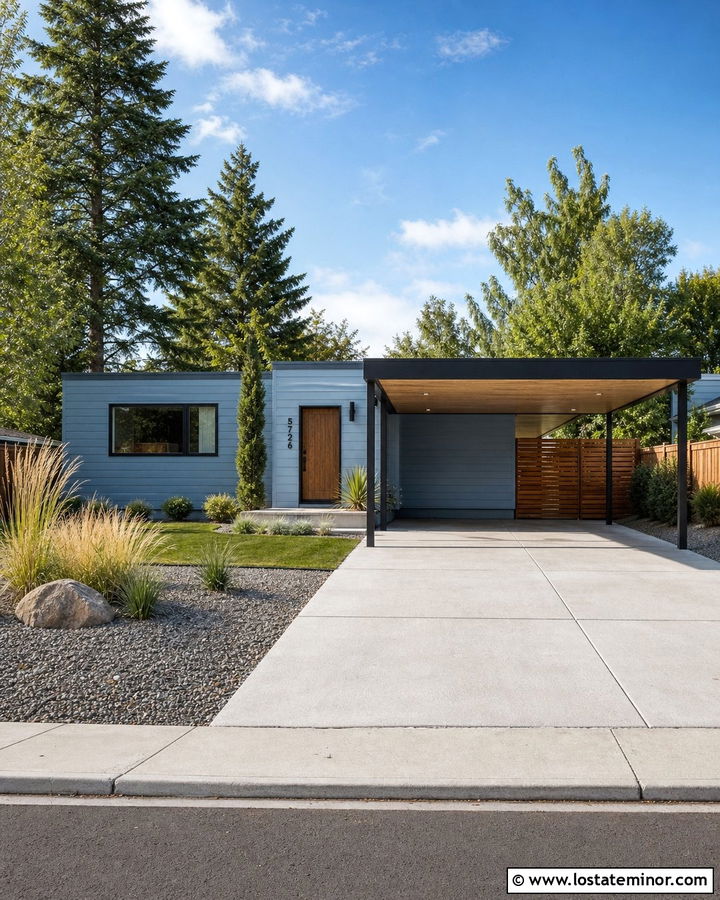
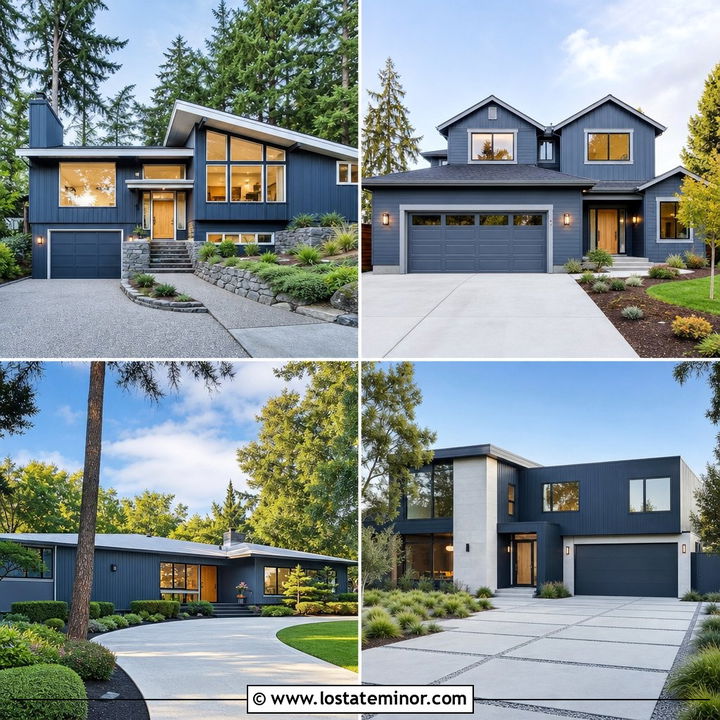
Picture a streamlined mid-century home with dusty blue siding, broad windows, and a slim carport extending from one side. A flat or very low-slope carport roof preserves the clean horizontal character of the architecture. Choose charcoal steel posts and matching dark fascia to create crisp contrast against the muted blue walls. A walnut-toned front door and vertical cedar screen introduce warmth while providing privacy between the parking bay and entrance. Keep the concrete driveway simple and use gravel beds, ornamental grasses, and sculptural evergreen plants instead of formal foundation landscaping. Repeating charcoal around the windows connects the carport frame to the facade. The result feels period-conscious but updated, practical, and polished rather than like a generic metal shelter was added later.
3. Dusty Blue Farmhouse With Timber Frame Carport
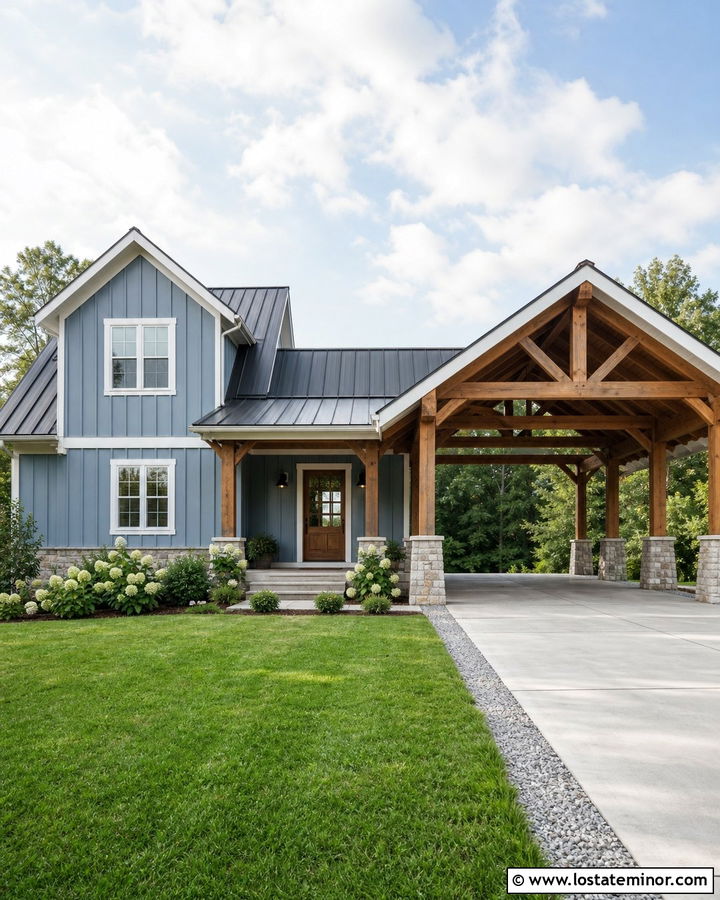
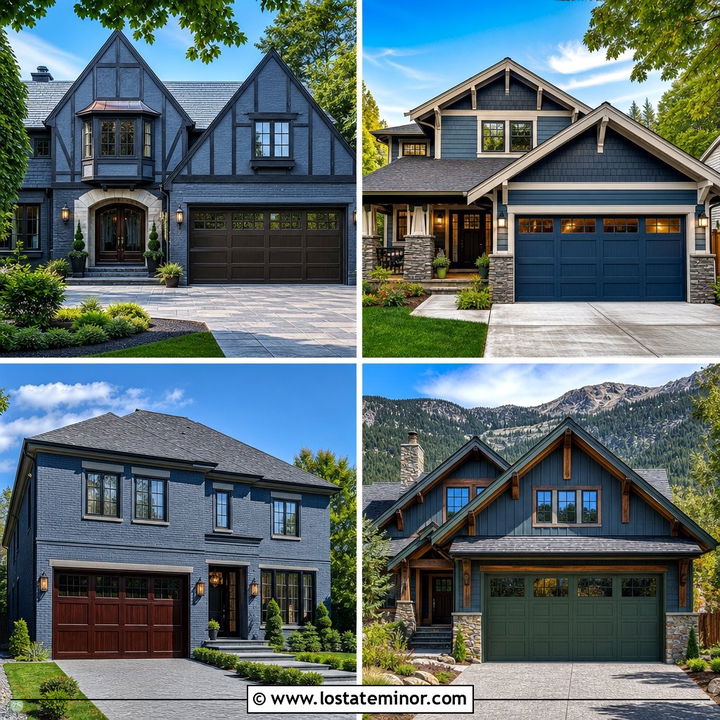
Warm timber brings out the relaxed, slightly weathered quality of a dusty blue modern farmhouse. Use vertical board-and-batten siding across the main facade, creamy white trim around the windows, and substantial cedar posts beneath the attached carport. A dark standing-seam metal roof can cover both the house and parking area, giving the entire structure one continuous architectural rhythm. Add stone bases beneath the timber posts to protect them visually from the driveway and give the carport more weight. A stained wood front door repeats the beams, while black sconces add a restrained modern touch. Wide planting beds, hydrangeas, and a gravel-edged concrete drive soften the straight lines. This design works best when the timber appears elsewhere, such as porch brackets or gable accents.
4. Dusty Blue Craftsman House With Stone Carport Columns
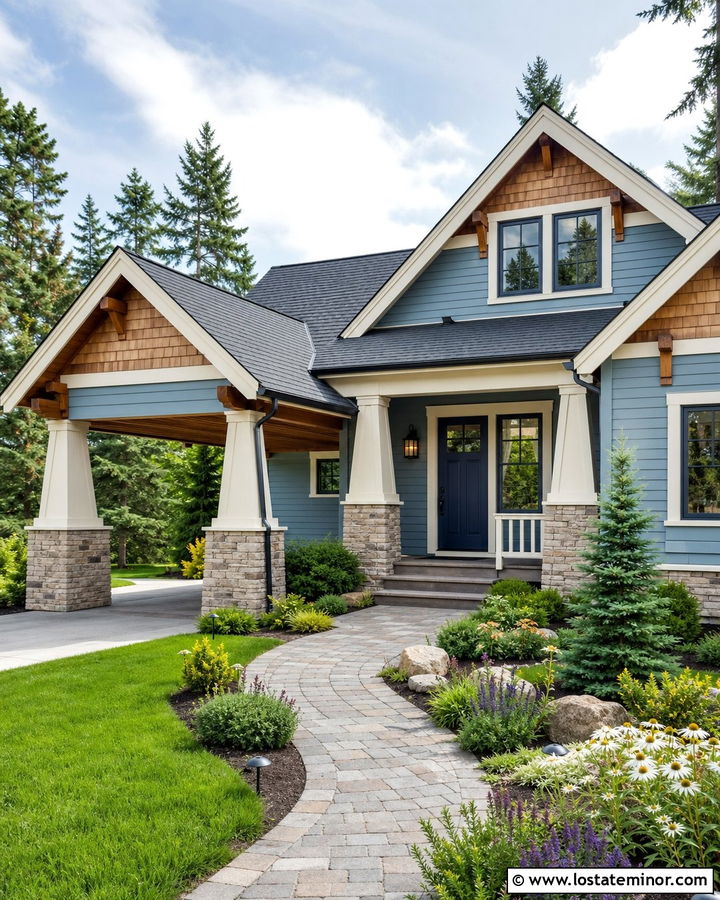
A Craftsman exterior benefits from layers of natural texture, and dusty blue provides a calm background for them. Select blue lap siding for the lower walls and cedar shingles inside the front gables. Support the carport with tapered columns resting on rugged gray-beige stone piers. The stone should also appear along the foundation or porch steps so the parking structure feels integrated. Cream trim creates a softer transition than brilliant white, while a deep navy front door adds subtle depth. Use architectural roof shingles in a medium charcoal blend and expose a few stained wood brackets beneath the eaves. A curved paver walkway, low evergreens, and native flowering plants complete the setting. The finished house feels handcrafted, substantial, and welcoming from the street.
5. Dusty Blue Coastal House With White Carport
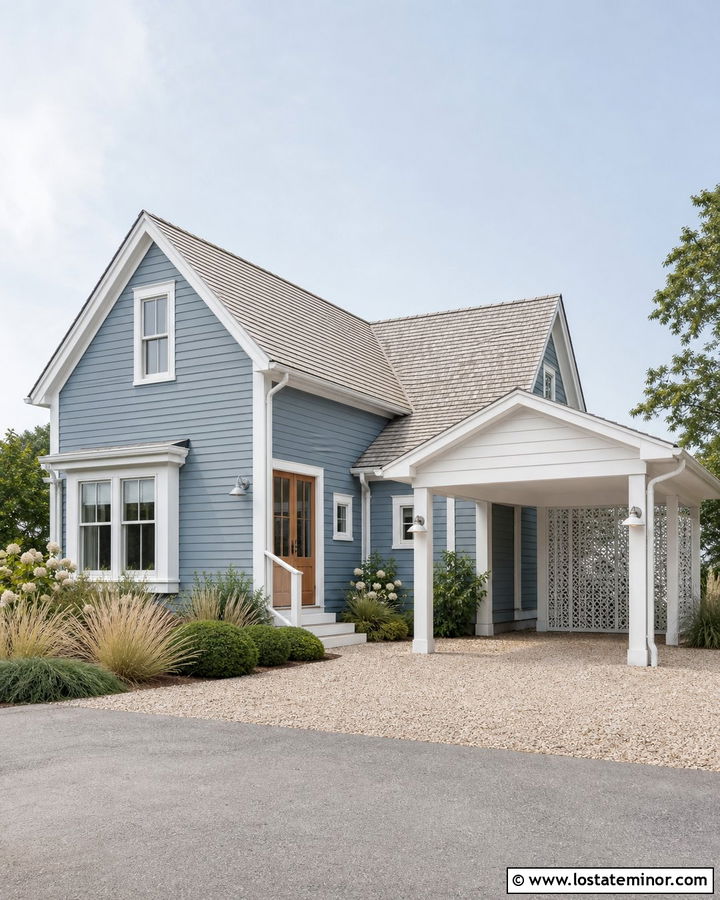
Can a carport feel light and coastal without looking fragile? Start with dusty blue clapboard siding, wide white trim, and an airy white-painted structure with evenly spaced square posts. A simple gable roof offers better visual connection to a Cape Cod or coastal cottage than an unrelated flat canopy. Add white lattice panels along the rear wall for partial screening while keeping the sides open. A pale gray shingle roof, light oak front door, and brushed nickel fixtures reinforce the breezy palette. Use crushed shell-colored gravel beside the driveway, blue-green grasses, and rounded shrubs to frame the facade. The carport should remain clean and uncluttered. Repeating the same white posts on a small entrance porch creates a complete exterior that looks intentionally planned.
6. Dusty Blue Colonial House With Side Carport
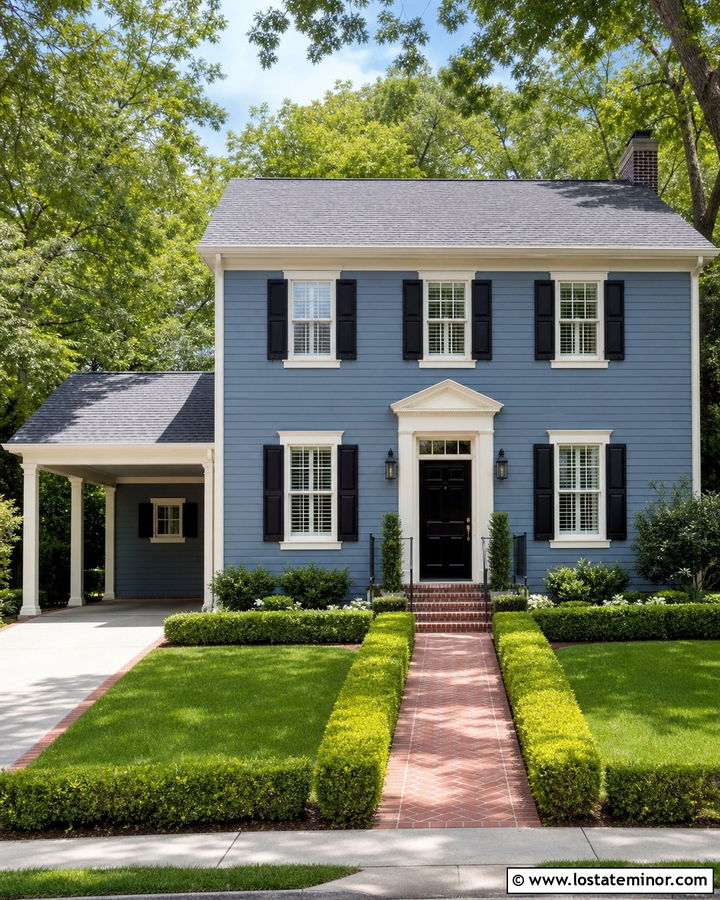
Traditional Colonial homes require careful symmetry, so place the carport along a side elevation rather than across the main facade. Paint the house dusty blue and highlight the centered doorway, evenly spaced windows, corner boards, and cornice with warm white. The side carport should have a pitched roof with shingles matching the main house. Use square white columns and a partial rear wall finished in the same blue siding. Black shutters, a glossy black door, and classic lantern sconces give the palette stronger definition. A brick-edged driveway can connect the parking bay with the home’s red brick steps. Formal hedges and a straight walkway maintain the orderly character. This solution provides practical shelter while preserving the balanced appearance that makes Colonial architecture distinctive.
7. Dusty Blue Bungalow With Cedar Carport
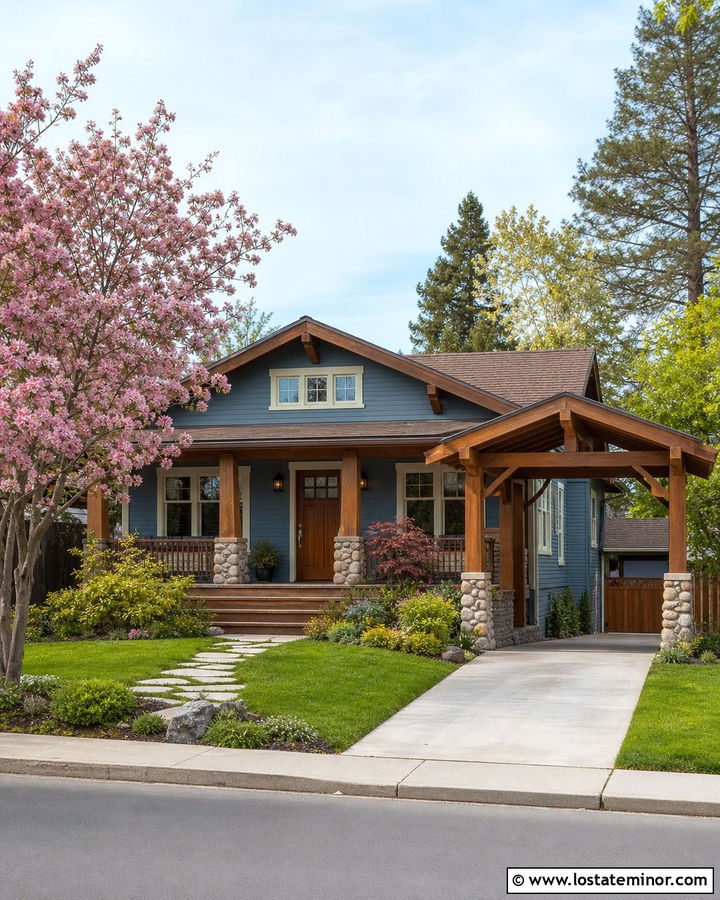
A compact bungalow becomes more inviting when its carport shares details with the front porch. Dusty blue lap siding can cover the facade, while exposed cedar rafters, brackets, and posts create a warm handcrafted contrast. Extend the porch roof to form a single-car carport, but keep the entry clearly defined with wider steps and a centered wood door. Cream trim around grouped windows feels softer and more authentic than stark white. Choose a medium brown roof that relates to the cedar without matching it exactly. River-rock column bases and a low stone foundation add another natural texture. Complete the curb appeal with a narrow concrete driveway, a stepping-stone path, layered shrubs, and a small flowering tree that does not hide the porch or carport.
8. Dusty Blue Split-Level House With Lean-To Carport
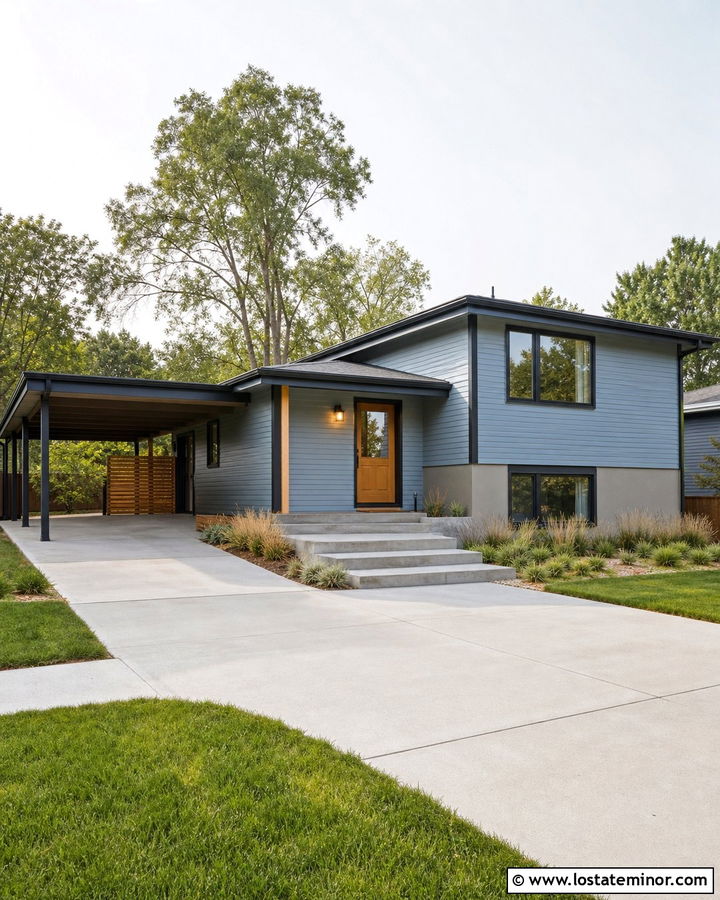
Split-level homes often have uneven rooflines, making a simple lean-to carport a practical visual solution. Place the structure beside the lower portion of the house and align its fascia with an existing horizontal line. Dusty blue siding can unify the upper and lower levels, while charcoal trim helps the windows, roof edge, and carport frame appear more intentional. Use slender steel posts to avoid adding too much visual weight. A warm wood front door and matching horizontal privacy screen prevent the scheme from feeling cold. If the foundation is exposed, paint it a medium greige or cover a small section with neutral stone. Broad concrete steps, low grasses, and a widened driveway finish the exterior. The overall look feels cleaner without disguising the home’s original architecture.
9. Dusty Blue Cottage With Arched Carport Openings
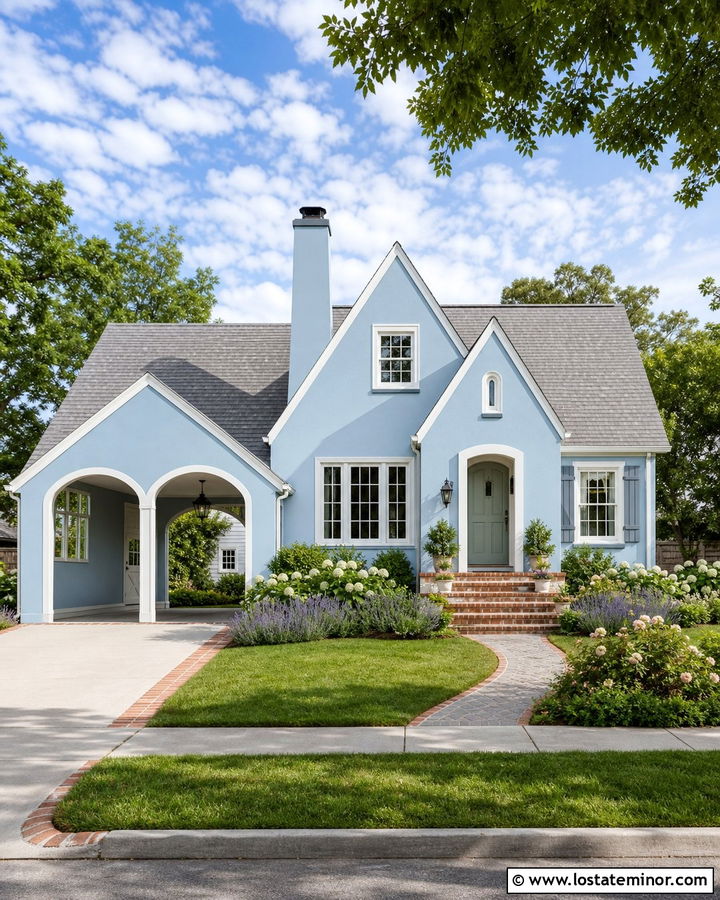
Soft curves can turn a basic covered parking area into a charming extension of a cottage. Use dusty blue siding across the house and frame the carport with broad white openings that have gentle arches rather than square corners. A steep shingled roof and small front gable help the structure match a storybook-inspired cottage facade. Paint the front door muted sage green for a quiet garden palette, then repeat that color in planters or a small gate. Aged brick on the driveway border and front steps adds warmth beneath the cooler blue walls. Keep the landscaping informal with lavender, flowering shrubs, and a curving walkway. The arch should remain wide enough for comfortable vehicle access while visually echoing curved windows, a rounded doorway, or other details on the house.
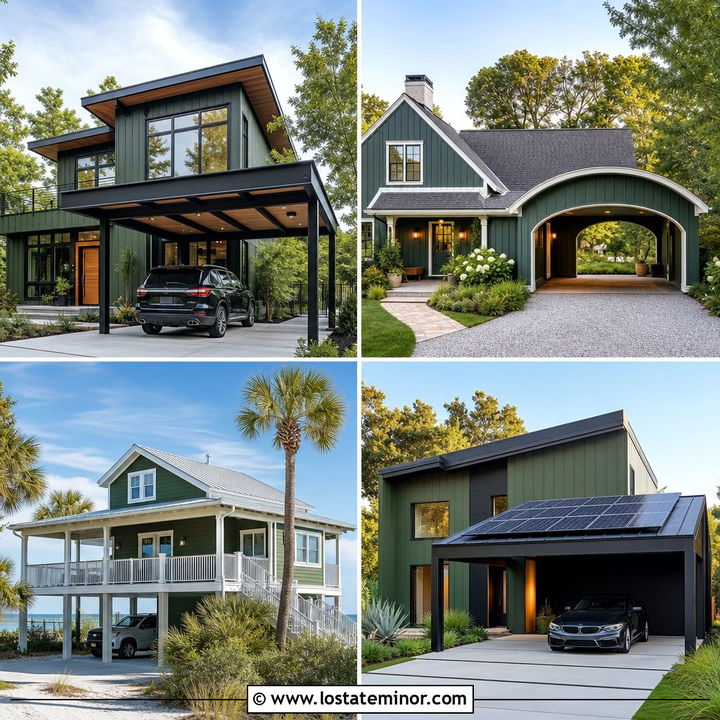
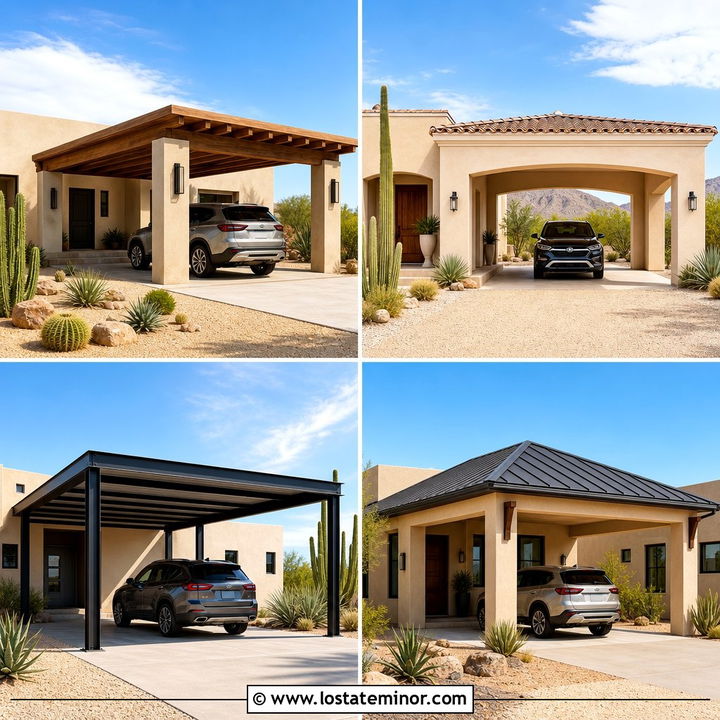
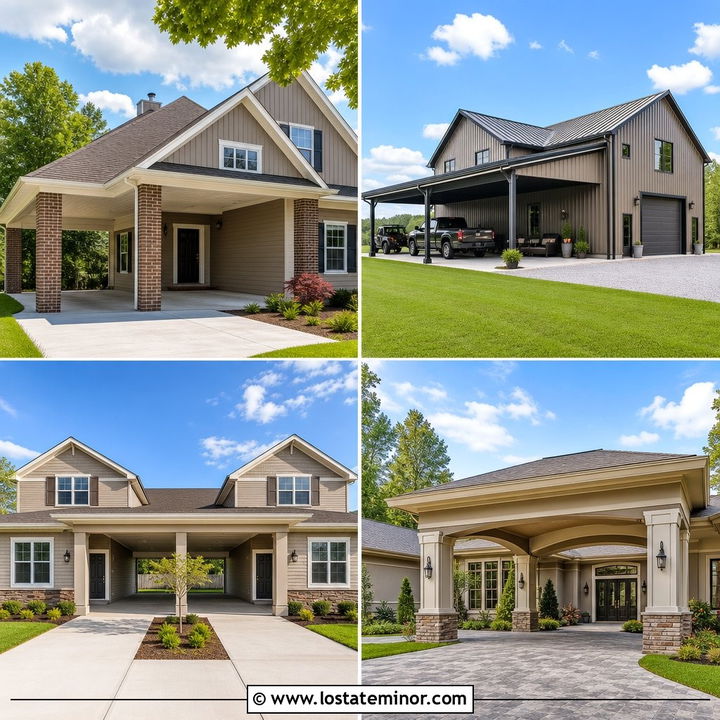
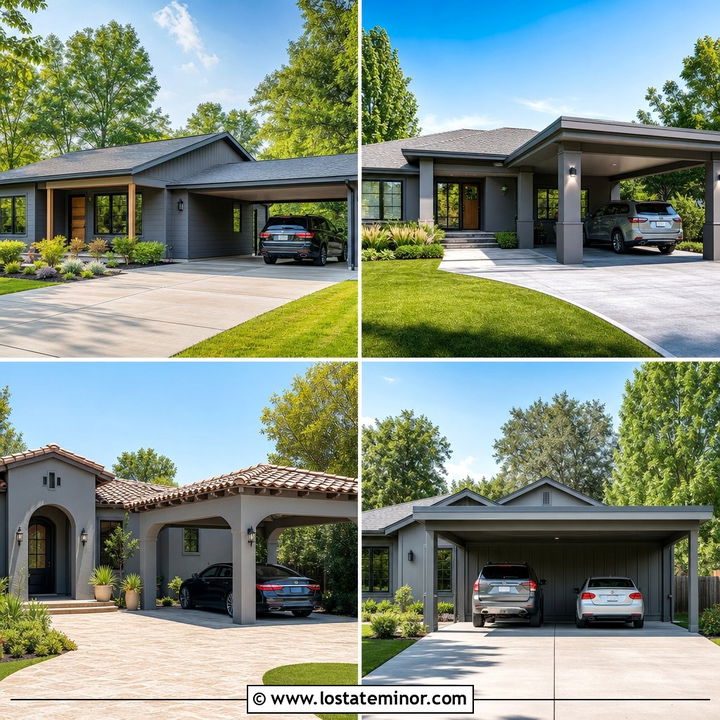
10. Dusty Blue Modern House With Black Steel Carport
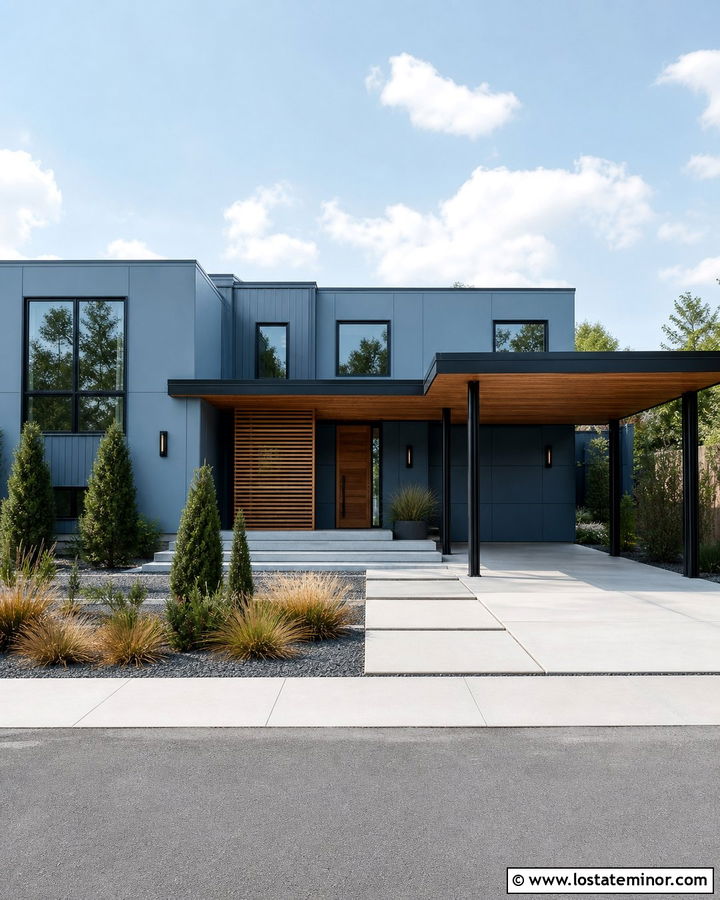
For a sharper contemporary look, pair dusty blue panels with a precise black steel carport. The house can combine smooth fiber-cement siding, vertical accent panels, and large black-framed windows. A thin flat roof supported by narrow steel columns keeps the parking area visually open. Bring natural wood into the entrance through a slatted screen or oversized pivot-style door, which softens the blue-and-black contrast. The carport ceiling can also feature cedar boards for a warmer view from the driveway. Use oversized concrete pavers separated by gravel rather than one uninterrupted slab. Structured grasses and compact evergreens reinforce the streamlined design. This complete exterior works because every dark element is repeated, from the window frames and roof edge to the carport structure and minimalist wall lights.
11. Dusty Blue House With Red Brick Carport Piers
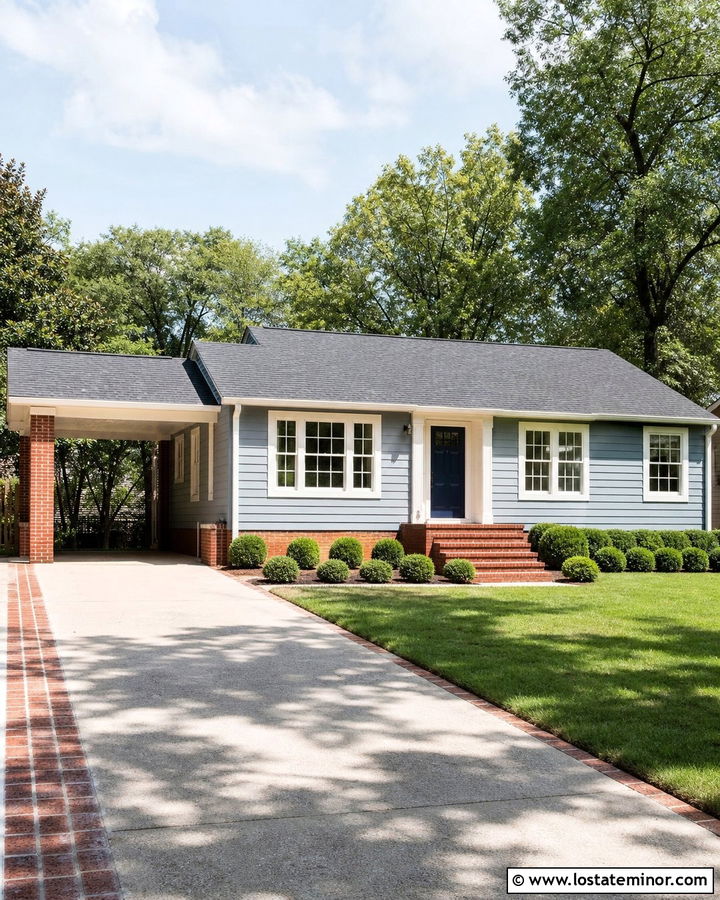
Existing red brick does not need to be painted to work with dusty blue siding. Its earthy warmth can make the muted exterior color appear richer and more welcoming. Retain brick along the lower facade, steps, and chimney, then use matching brick piers beneath the carport posts. White trim keeps the blue and red tones from competing, while a deep navy front door offers a subtle bridge between old and new materials. Cover the carport with shingles matching the main medium-gray roof. Avoid introducing extra masonry colors that could make the exterior feel busy. A concrete driveway with brick edging, trimmed boxwoods, and a green lawn creates a familiar suburban setting. This scheme is particularly useful when updating a brick-and-siding home without covering its original character.
12. Dusty Blue Stucco House With Wood Slat Carport
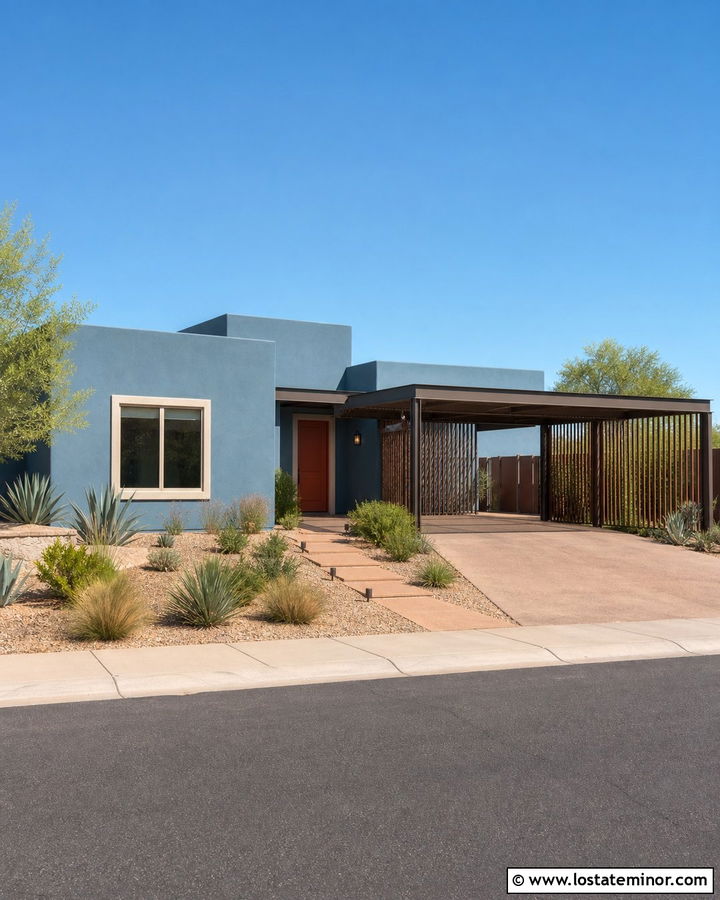
Dusty blue stucco gives a Southwestern or contemporary home a smooth, understated finish. Pair it with a flat-roof carport framed in dark bronze and lined with vertical cedar slats along one side. The screen can hide bins, equipment, or neighboring views while allowing light and airflow through the parking bay. Use creamy off-white around recessed windows and beneath deep roof overhangs. A terracotta-toned front door or clay-colored walkway introduces controlled warmth without turning the palette overly rustic. Choose gravel landscaping, agave, ornamental grasses, and drought-tolerant shrubs to complement the clean stucco walls. Repeating cedar beside the entrance helps connect the carport to the house. The finished design feels warm, modern, and appropriate for a dry-climate neighborhood while maintaining a calm dusty blue identity.
13. Dusty Blue Board And Batten House With Gable Carport
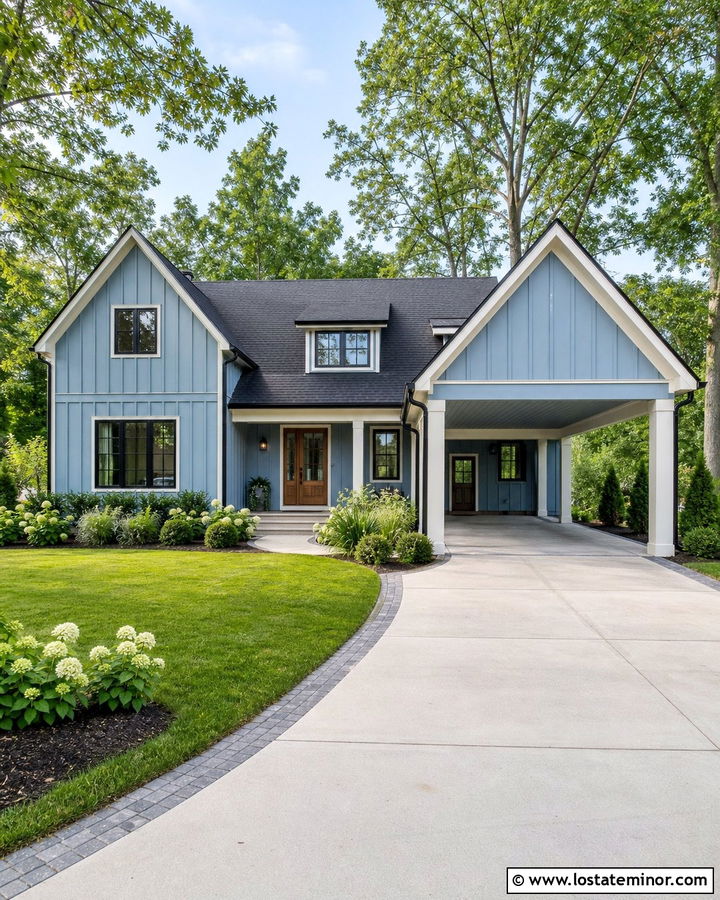
Vertical board-and-batten siding makes a dusty blue exterior appear taller and more structured. Continue those vertical lines inside the front-facing carport gable, then support the roof with simple white or stained wood posts. A matching gable above the entry gives the facade balance, especially when the carport occupies one side of a modest home. Use charcoal shingles, black gutters, and black-framed windows for definition. A medium-tone oak door prevents the scheme from becoming too cool. The driveway can combine smooth concrete with a narrow border of dark pavers that relates to the roof and window frames. Keep the landscaping low near the carport entrance. Hydrangeas, ornamental grasses, and a small lawn provide softness while allowing the complete blue exterior and roof structure to remain visible.
14. Dusty Blue Lap Siding House With White Brick Carport
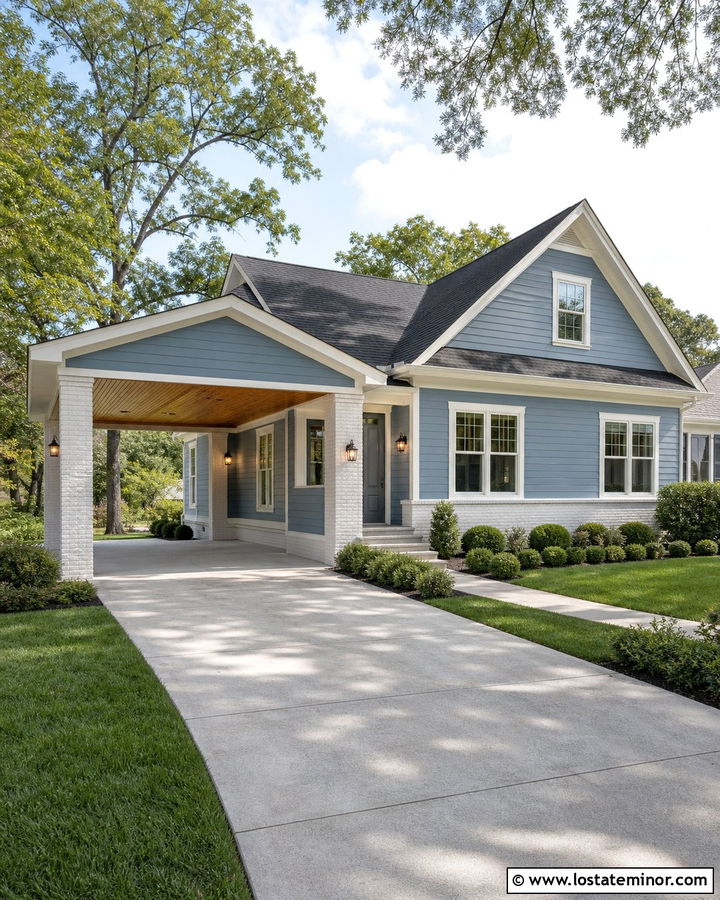
White brick creates a substantial base for a carport without making the parking structure look heavy. Cover the home in dusty blue lap siding and use lightly textured white brick on the foundation, porch steps, and carport columns. Continue warm white on the window trim and fascia for a coordinated transition between materials. A charcoal roof and muted blue-gray front door produce a layered but restrained palette. Consider a tongue-and-groove wood carport ceiling to bring warmth overhead where it remains protected from direct weather. Repeating that wood on porch seating or the entry door ties the two areas together. A broad driveway, neat lawn, and rounded foundation shrubs complete the approachable suburban appearance. The look is clean enough for newer homes but not excessively stark or trendy.
15. Dusty Blue Shingle House With Detached Carport
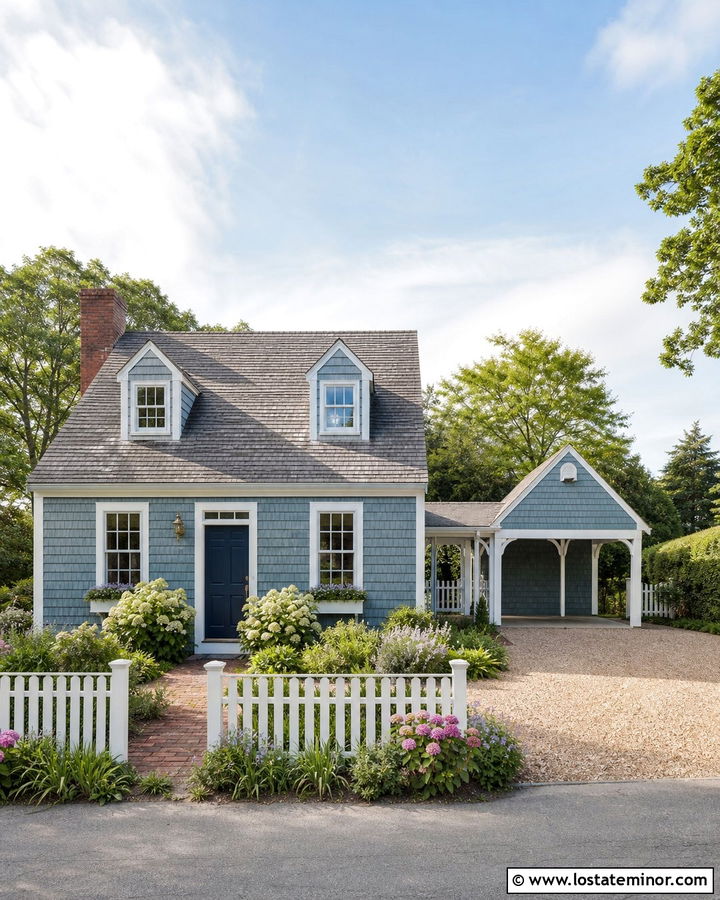
A detached carport can preserve the architecture of a small home while providing flexible parking. Place it slightly behind the front wall of a dusty blue shingle-sided cottage or Cape Cod. Match the carport’s roof pitch, gray shingles, white trim, and blue gable siding to the main house. A short covered walkway can connect the structures without creating one oversized roof mass. Use white square posts and simple open rail panels that echo the porch. The entrance can feature a navy door, brass hardware, and a traditional lantern for quiet contrast. Pea gravel beneath the carport gives the area a softer cottage character, although a stable paved track may be added for tires. Flowering borders and a picket fence help the separate structures read as one property.
16. Dusty Blue Barndominium With Lean-To Carport
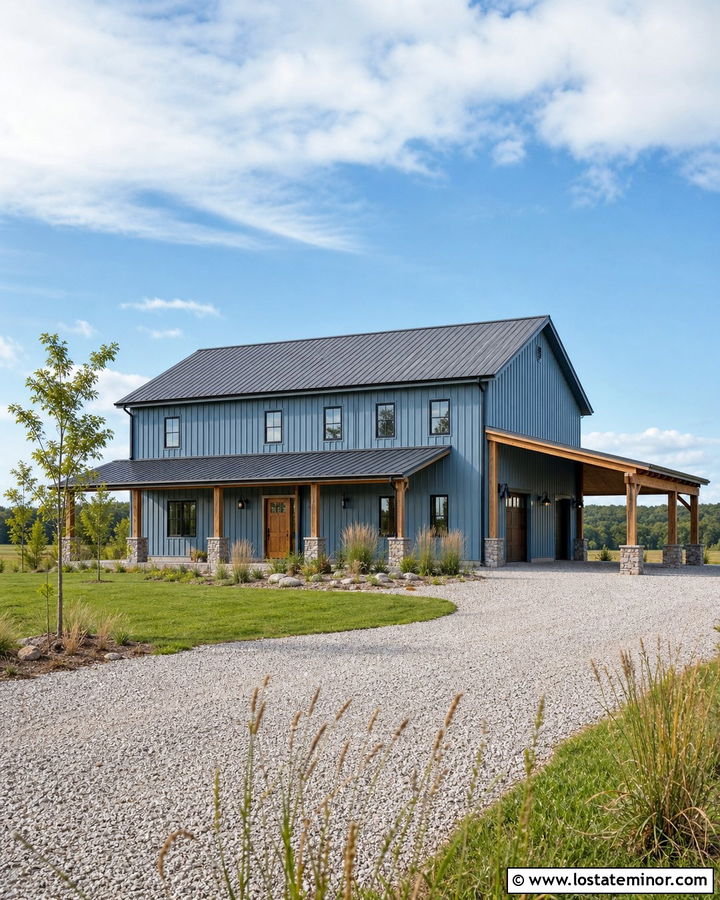
A dusty blue barndominium naturally suits a long lean-to carport because both structures can share simple metal construction. Choose muted blue vertical metal siding, a charcoal standing-seam roof, and black-framed doors and windows. Extend one roof plane over the parking area and support it with substantial stained timber posts. The wood adds warmth and gives the large metal facade a more residential scale. Use stone around the front entrance or lower column bases to ground the building. A covered porch can run along the opposite side for visual balance. Wide gravel or concrete parking, simple native grasses, and young shade trees fit the rural setting. Keeping the roof, gutters, and trim consistent prevents the carport from resembling a separate agricultural shelter attached without planning.
17. Dusty Blue House With Double Carport
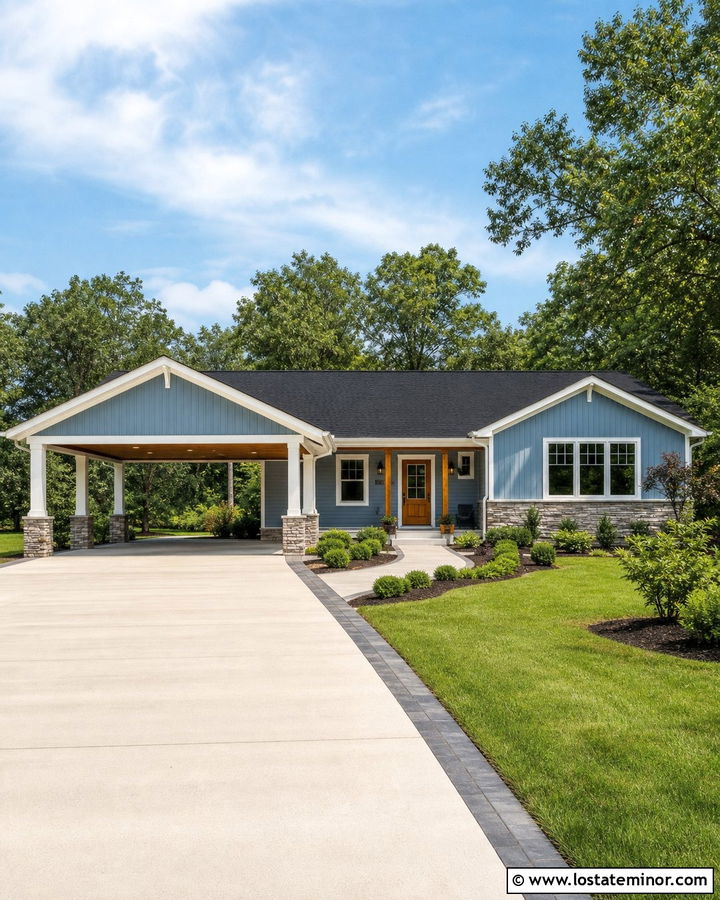
A two-car carport needs enough visual structure to look proportional beside the house. Use dusty blue siding across a wide ranch or transitional facade and repeat the main roof’s broad gable above the double parking bay. Three substantial posts create two clearly defined openings without making access feel cramped. Paint the posts and fascia creamy white, then add stone bases that coordinate with the foundation and front steps. A charcoal architectural-shingle roof helps the larger structure recede. Warm wood can appear on the front door and carport ceiling for a more welcoming finish. Break up the wide driveway with paver borders or a planted strip near the walkway. Balanced shrubs on both sides of the house keep the carport from visually pulling the entire exterior toward one end.
18. Dusty Blue House With Detached Carport And Breezeway
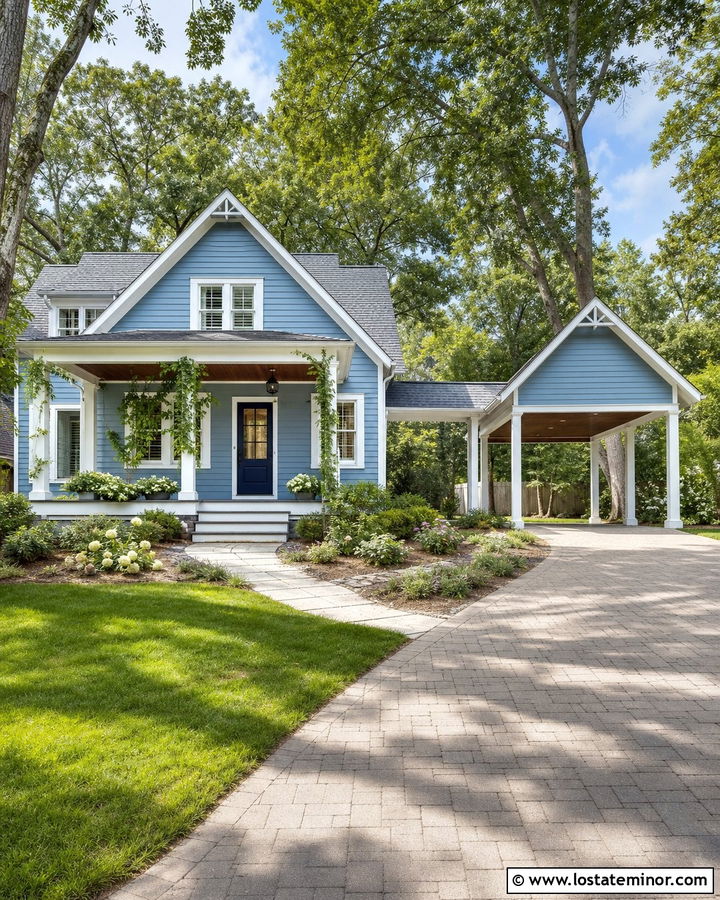
A covered breezeway makes the trip between a detached carport and the house more comfortable during rain or strong sun. Finish both buildings in identical dusty blue siding, white trim, and medium-gray roofing. The connecting walkway should remain narrower and lower than the primary roofs so each form stays easy to understand. Use a stained wood ceiling along the breezeway and carport to create warmth and guide attention toward the entry. White posts maintain a bright, classic appearance, while a dark blue door adds depth. Position the carport slightly behind the house to protect curb appeal. A paved path, climbing plants, and low garden beds can soften the connecting structure. This layout provides separation for noise and storage while still feeling convenient and architecturally complete.
19. Dusty Blue House With Porte Cochere
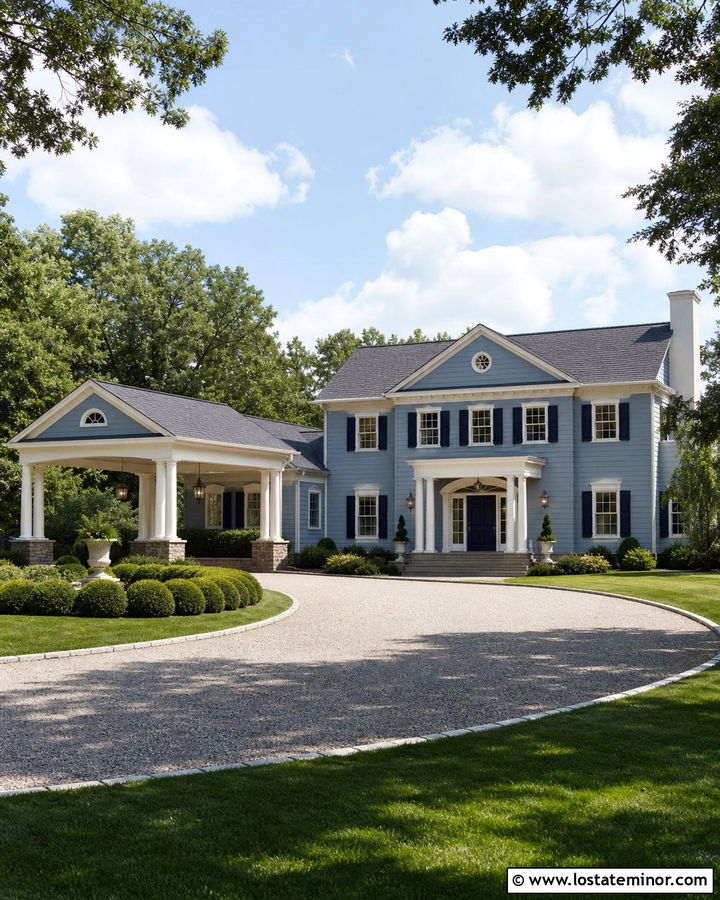
A porte cochere can give a dusty blue home a graceful covered drop-off without enclosing the driveway. Extend a roof from the side or front entry and support it with columns that repeat those used on the main porch. Dusty blue siding, warm white trim, and gray roof shingles create a soft traditional base. Stone or brick column foundations add durability and help the tall supports feel anchored. Use an arched or gently gabled roofline when the house has Colonial Revival, French country, or traditional features. A dark navy door and aged brass lanterns provide polished accents. Continue the circular or side driveway beneath the structure, leaving clear views of the entrance. Formal shrubs and symmetrical planters reinforce the sense of arrival without making the property look overly grand.
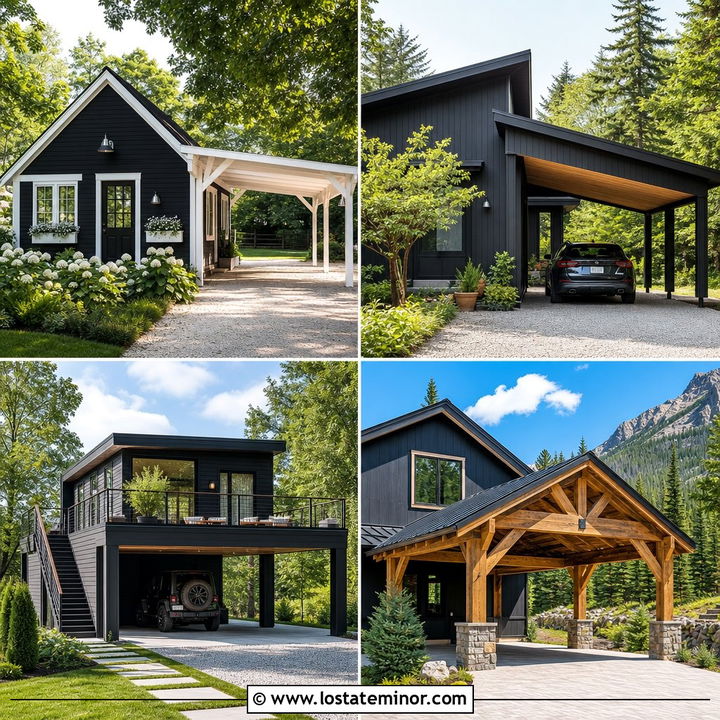
20. Dusty Blue House With Solar Carport
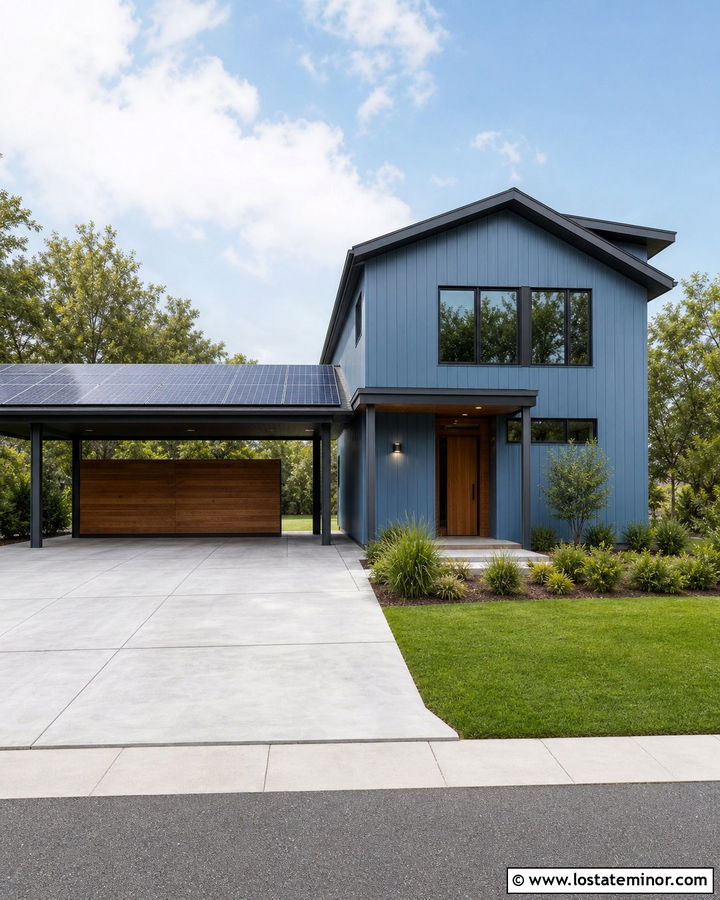
A solar carport can look intentional when its clean lines coordinate with a contemporary dusty blue home. Choose vertical blue siding, charcoal window frames, and a simple low-slope roof. Position dark solar panels across the carport canopy within a slim black or dark bronze frame. Matching the frame to the windows, gutters, and exterior lighting helps the technology become part of the design. Add a cedar privacy wall at the rear of the parking bay and repeat that wood around the entrance. A light concrete driveway reflects brightness beneath the darker canopy. Use modern grasses, compact shrubs, and a paved walkway to frame the facade. Before building, evaluate roof orientation, structural loads, drainage, electrical access, and local requirements so the finished system functions as well as it looks.
21. Dusty Blue House With Lattice Carport Screen
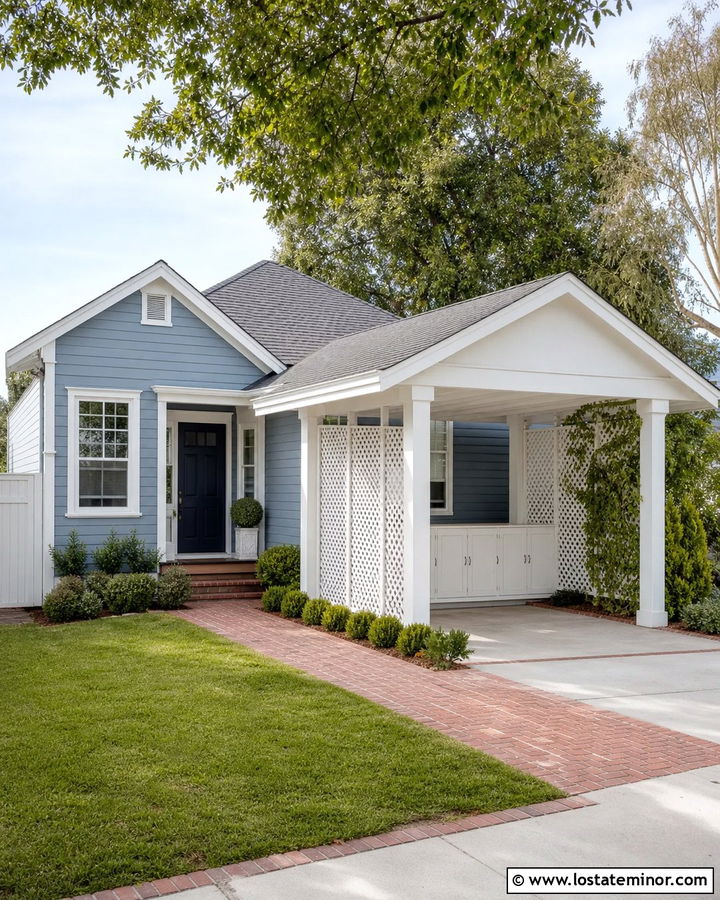
An open carport may need screening when it faces a neighboring property or exposes storage from the street. Cover the house in dusty blue lap siding, then add white lattice or widely spaced wood panels between selected carport posts. Keep the driveway side fully open for visibility and easy parking. A matching white fascia and a shingled gable roof connect the structure to a cottage, ranch, or traditional bungalow. Train noninvasive climbing plants along one outer panel, but prevent heavy growth from reaching the roof or gutters. A cheerful navy or muted yellow front door can provide a small accent without overwhelming the blue facade. Low shrubs, a brick walkway, and neat storage cabinets beneath the carport complete a practical exterior that feels airy rather than boxed in.
22. Dusty Blue House With Metal Kit Carport
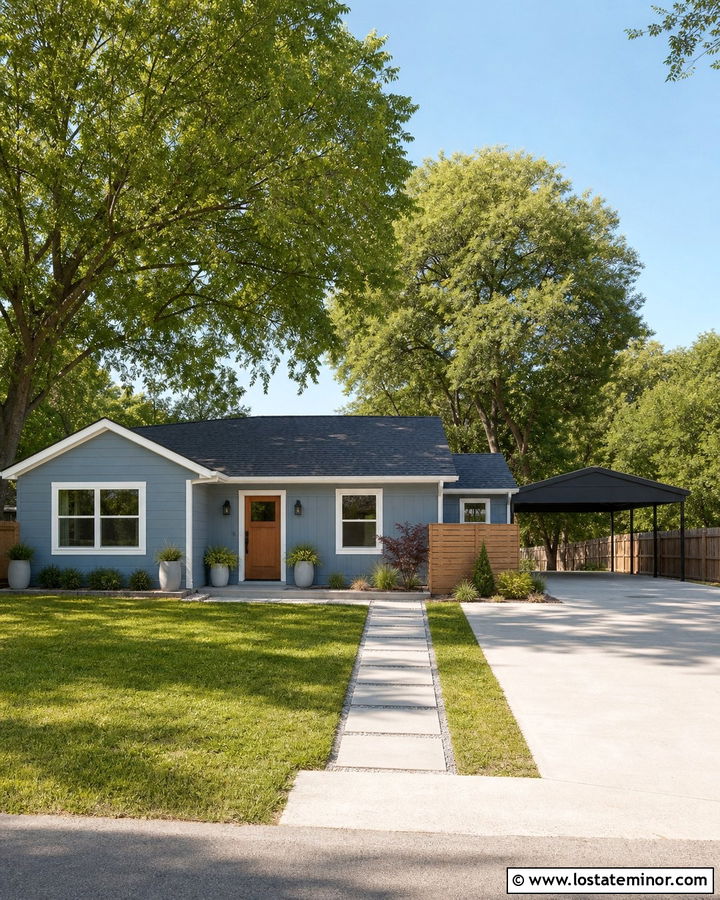
A budget-friendly metal kit can complement a dusty blue home when its color and proportions are carefully selected. Choose a charcoal or white powder-coated frame instead of unfinished bright metal. Position it beside the house, align its roof edge with an existing eave where possible, and keep it slightly behind the main facade. Dusty blue siding, white trim, and charcoal shingles give the home a clear palette for the kit to follow. Add a short matching privacy screen, planters, or a paved walkway to visually connect the parking structure with the entrance. Avoid ornate braces that conflict with a simple ranch or cottage. Correct anchoring, drainage, vehicle clearance, wind requirements, and local setbacks matter as much as appearance, so confirm the project requirements before ordering a prefabricated structure.
23. Dusty Blue House With Carport Storage Wall
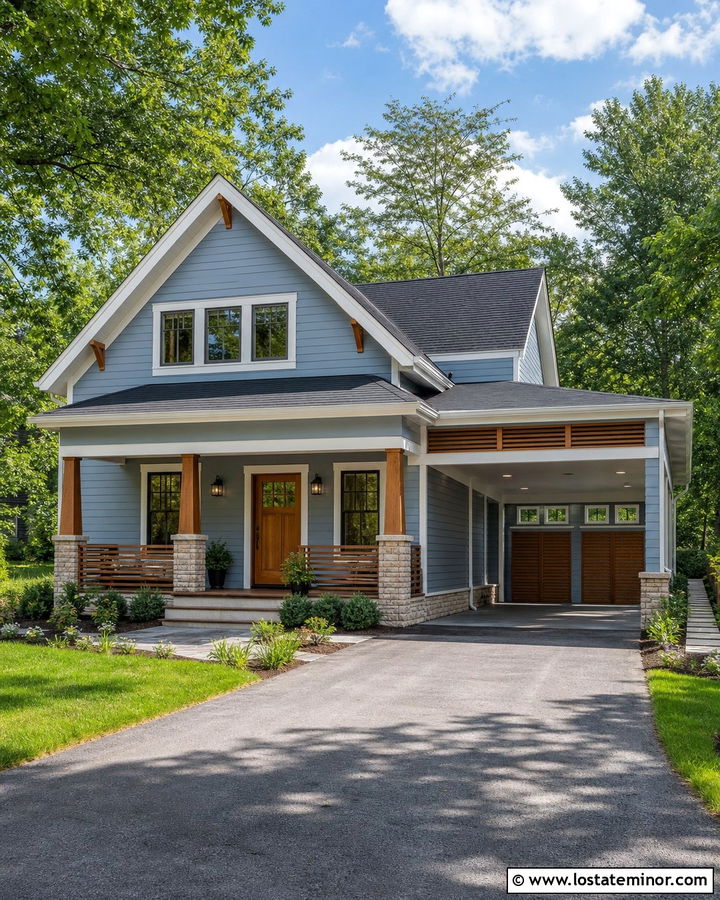
Covered parking becomes more useful when a concealed storage wall is included at the back of the carport. Finish the house and storage enclosure in matching dusty blue siding so they read as one continuous structure. Use warm white trim, a charcoal roof, and stained wood doors or horizontal slats to identify the storage area without making it dominant. Built-in cabinets can hold garden supplies, tools, or outdoor equipment while keeping the open bay uncluttered. Add narrow upper windows if daylight is needed inside the enclosure. A paved path should connect the storage doors to the yard without crossing the vehicle area. Repeat the stained wood on the home’s front door or porch ceiling. This coordinated approach adds function while preserving a neat and attractive street-facing exterior.
24. Dusty Blue House With Connected Porch And Carport
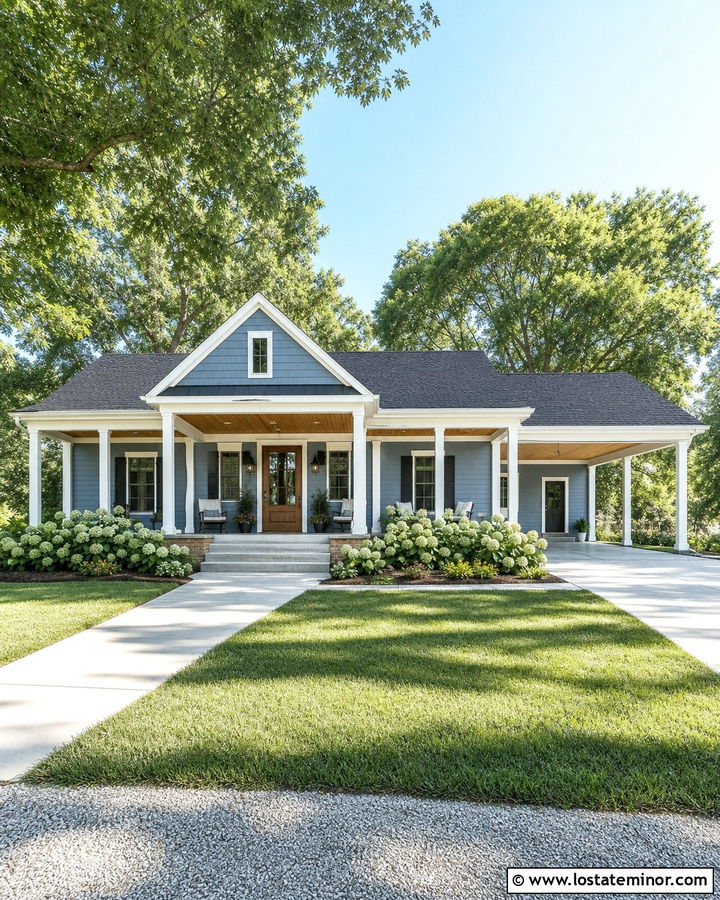
A shared roof can unite a front porch and carport across a modest one-story facade. Dusty blue horizontal siding gives the long exterior a relaxed base, while evenly spaced white columns establish a consistent rhythm. Use a taller gable over the entrance to separate the front door from the parking area and make it easier for visitors to find. Charcoal shingles, white fascia, and a honey-toned wood door complete the balanced palette. A stained tongue-and-groove ceiling can run above both spaces for continuity. Keep porch furniture near the entry rather than letting it spread into the vehicle zone. Wide steps, simple railings, hydrangeas, and a walkway leading directly from the sidewalk help the porch remain welcoming even when a vehicle is parked beneath the connected roof.
25. Dusty Blue House With Rooftop Deck Carport
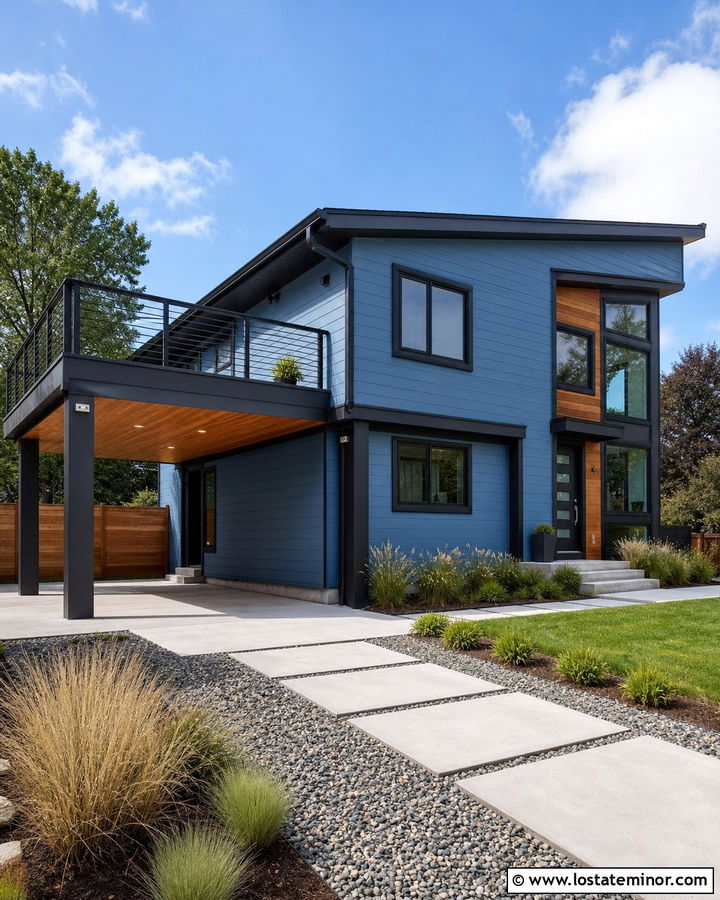
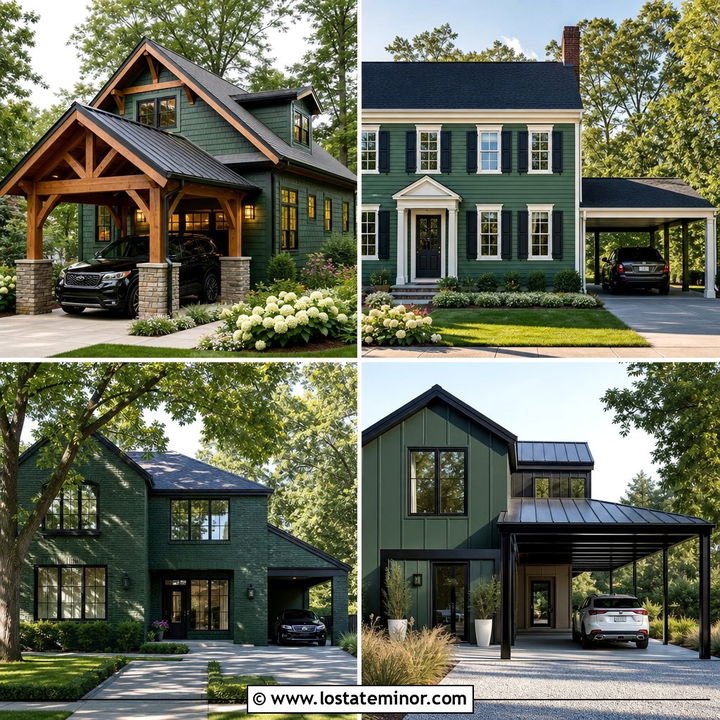
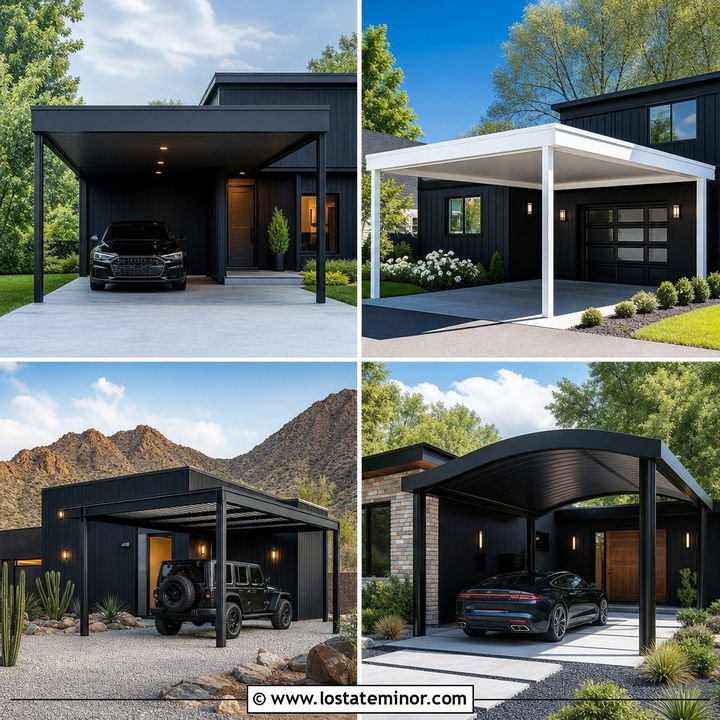
Where space is limited, a structurally engineered carport may support an upper deck or terrace. This works especially well with a boxy modern or split-level dusty blue house. Use a strong charcoal frame beneath the deck and simple black railings above it. Horizontal blue siding, large dark-framed windows, and warm cedar accents keep the facade contemporary but approachable. Position the deck access from an upper interior room rather than relying on an exposed front staircase. Add a finished wood-look ceiling beneath the platform so the carport remains attractive from ground level. Large concrete pavers and restrained landscaping suit the clean architecture. Because this design carries people, furniture, water, and snow loads, professional structural planning, waterproofing, drainage, guardrails, and compliant foundations are essential parts of the complete exterior.
26. Dusty Blue Narrow House With Tandem Carport
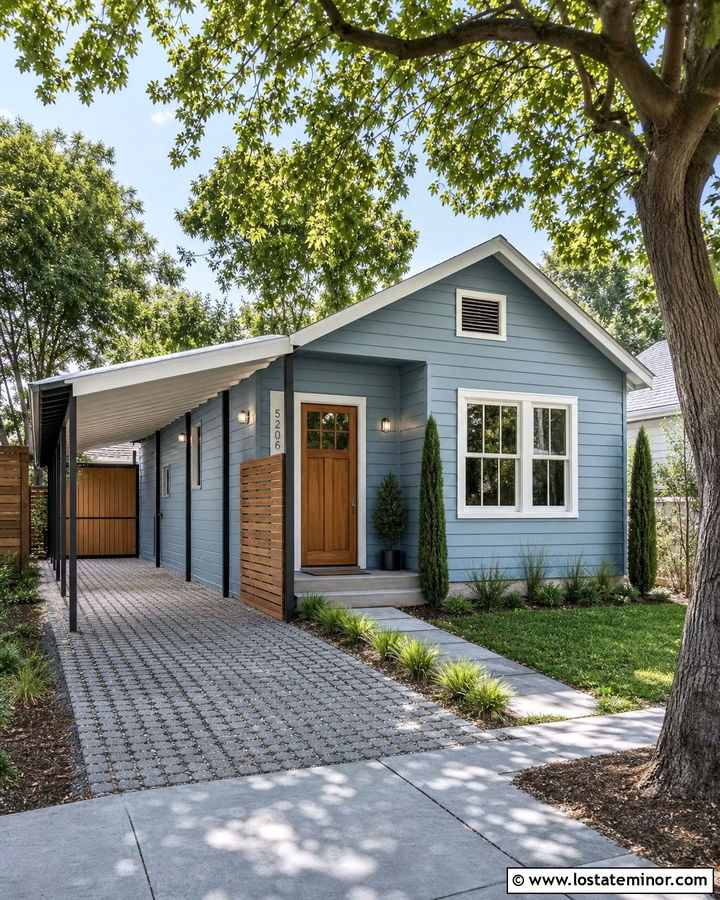
A tandem carport protects two vehicles without consuming the full width of a narrow lot. Run the long structure along one side of a dusty blue cottage, bungalow, or urban infill home. A slim lean-to roof can attach below the main eave, supported by simple white or charcoal posts. Keep the first bay open near the street and place a storage enclosure or garden gate at the rear. White trim brightens the blue facade, while a stained wood door and matching side screen introduce warmth. Use a concrete strip driveway with a permeable center or paver surface to reduce the appearance of one long slab. Vertical plants, narrow shrubs, and wall-mounted lighting make the side passage feel finished while maintaining comfortable clearance for doors and pedestrian movement.
27. Dusty Blue House With Side Entry Carport
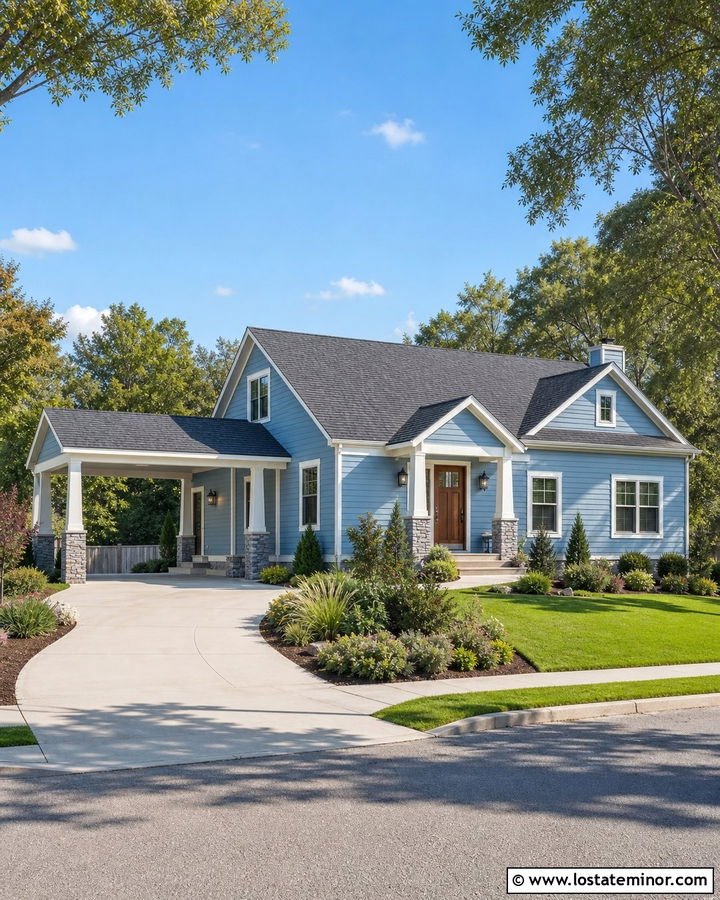
A side-entry carport keeps parked vehicles from dominating the main view of the home. This arrangement works well on corner lots or properties with enough driveway space for a comfortable turn. Paint the facade dusty blue and use warm white trim, dark gray shingles, and a natural wood front door. The carport roof should repeat a nearby gable or hip shape, while stone posts connect it to the porch foundation. From the street, the eye stays focused on windows, landscaping, and the entrance rather than the parking bay. A curved driveway can lead toward the side opening and include a small planted island for softness. Install coordinated sconces and finished ceiling materials inside the carport because the structure may still be visible from several angles around the property.
28. Dusty Blue House With Enclosure-Ready Carport
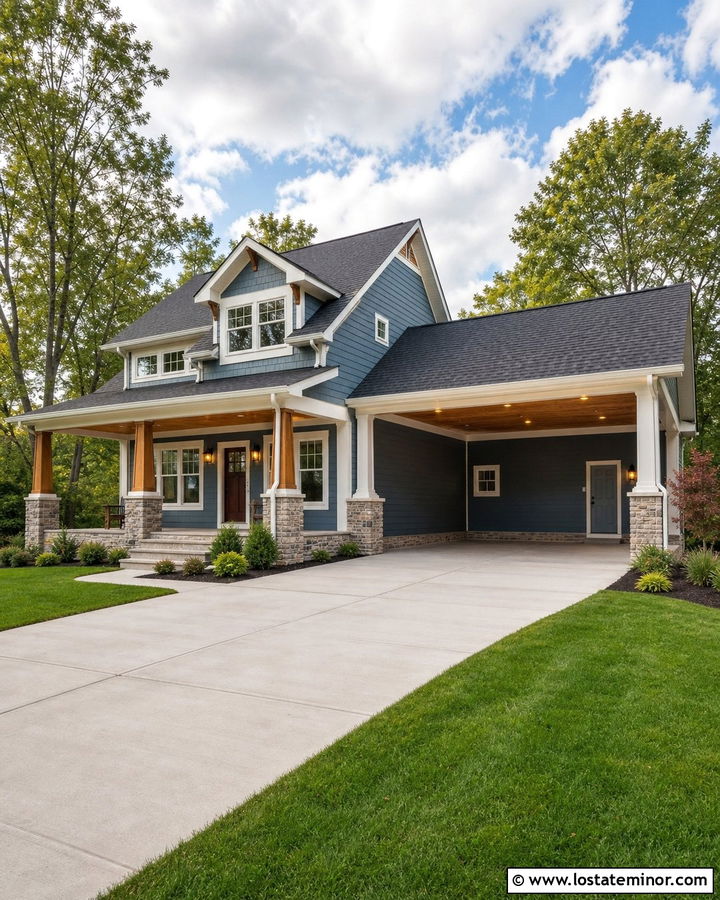
Homeowners who may need a garage later can design a carport with future enclosure in mind. Begin with a substantial foundation, correctly spaced structural posts, a full roof, and a rear wall that matches the dusty blue house siding. Warm white trim and a charcoal roof keep the structure connected to the facade. Place storage, electrical service, drainage, and lighting where they can support either an open bay or a future enclosed space. A side door and small window may make the eventual conversion more practical. For current curb appeal, include stained wood ceiling boards and stone column bases. The carport should still appear complete in its open form rather than unfinished. Any future wall, door, or living-space conversion will require professional planning and approval under applicable local rules.
29. Dusty Blue Courtyard House With Carport
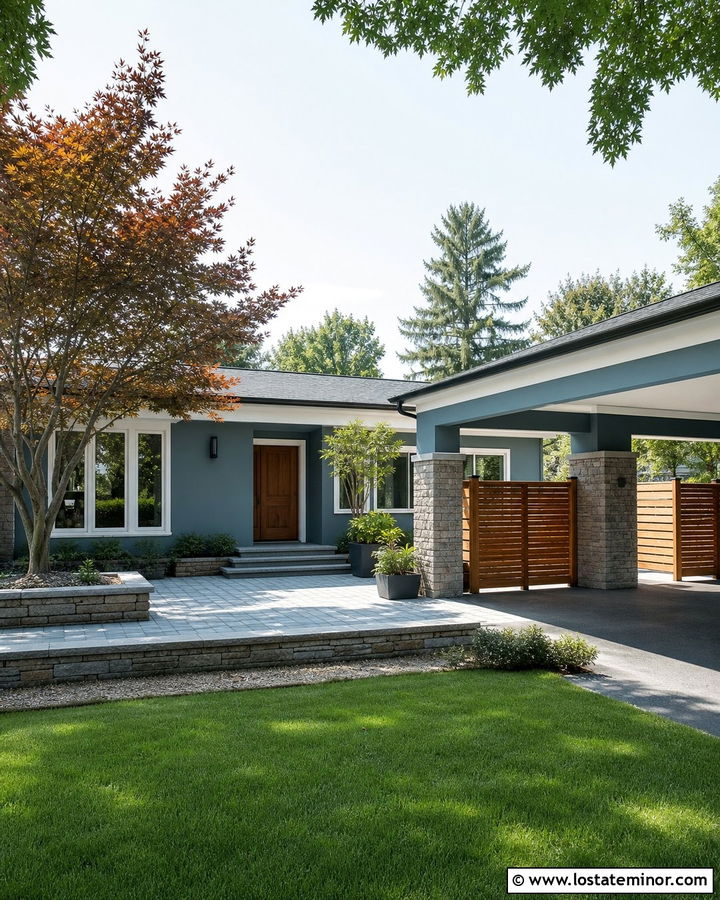
A courtyard layout can place the carport at a right angle to the main house, creating a protected outdoor arrival space between them. Use dusty blue stucco or siding on both structures and repeat warm white trim around openings. A dark low-slope roof keeps the composition clean, while cedar gates and screens add privacy and natural color. The front door should remain visible from the driveway, perhaps through a paved courtyard lined with low planters. Use the same stone on the carport columns, entry wall, and landscape edging for continuity. A small ornamental tree can soften the open center without obstructing vehicle movement. This arrangement feels private and sheltered while allowing the carport to help define the property’s architecture instead of sitting alone at the edge of the driveway.
30. Dusty Blue Hillside House With Elevated Carport
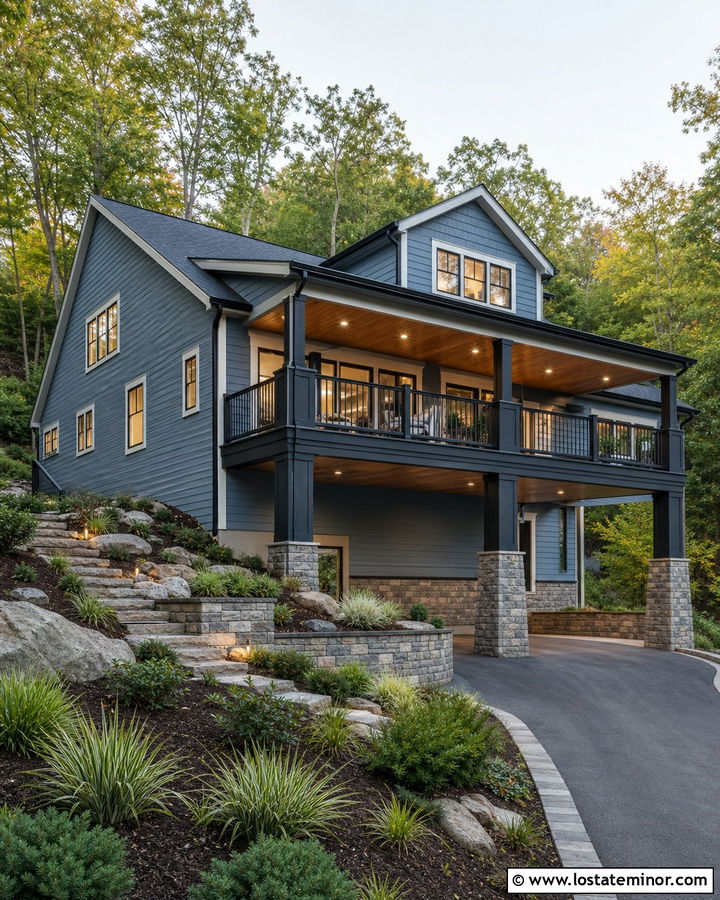
A sloped property may require an elevated or carefully stepped carport that meets the house near an upper entry. Dusty blue siding helps the structure blend into wooded or mountainous surroundings, while charcoal posts and railings provide strong visual definition. Use stone around the supporting walls or column bases to connect the elevated platform with the terrain. A matching dark roof protects vehicles without competing with the scenery. Warm cedar beneath the canopy prevents the underside from looking unfinished. Stone steps, native shrubs, and erosion-conscious planting can link the driveway to the entrance. Engineering, retaining walls, drainage, guardrails, foundations, and vehicle turning space require early attention on this type of site. Local building codes, setbacks, and association restrictions should always be checked before finalizing a carport plan. ()
Conclusion:
These **30 Dusty Blue House Design With Carport Ideas** show how covered parking can strengthen curb appeal instead of distracting from it. Dusty blue is flexible enough for ranch, Craftsman, coastal, farmhouse, mid-century, and contemporary homes. It also pairs naturally with white trim, charcoal roofing, warm cedar, aged brick, and neutral stone. For the most convincing result, repeat the house’s roof pitch, siding, columns, and accent materials across the carport. Consider driveway access, drainage, lighting, storage, and future needs before choosing a layout. Finally, test the blue paint on several exterior walls and view it throughout the day. Thoughtful planning will create a carport that feels useful, balanced, and original to the home.

Related posts: