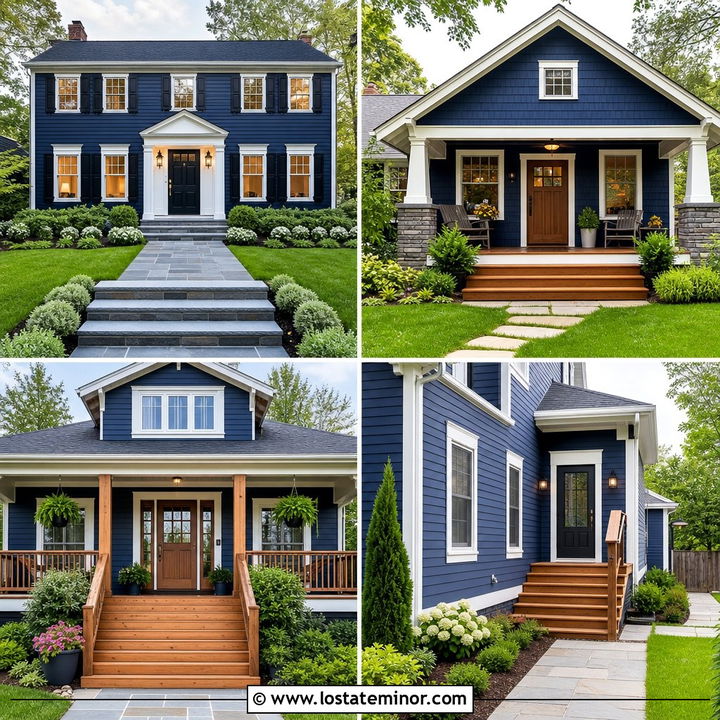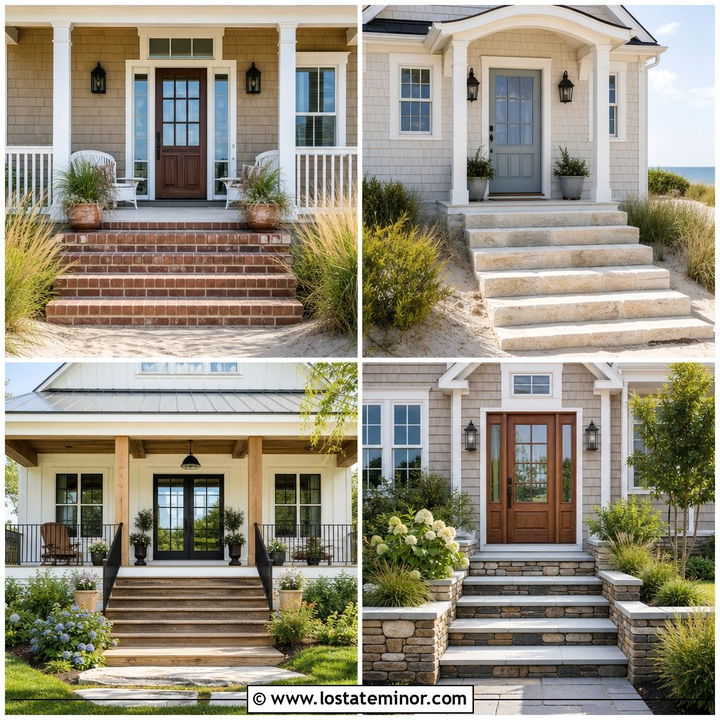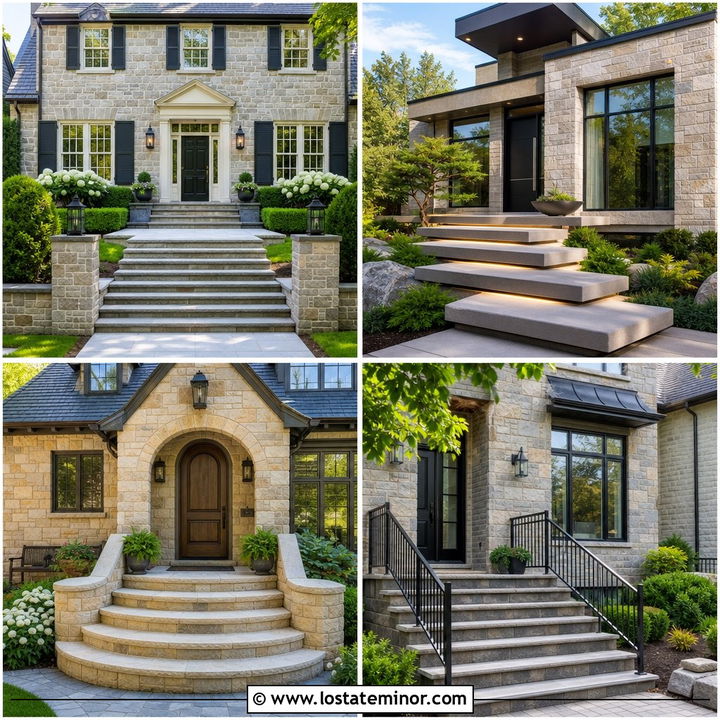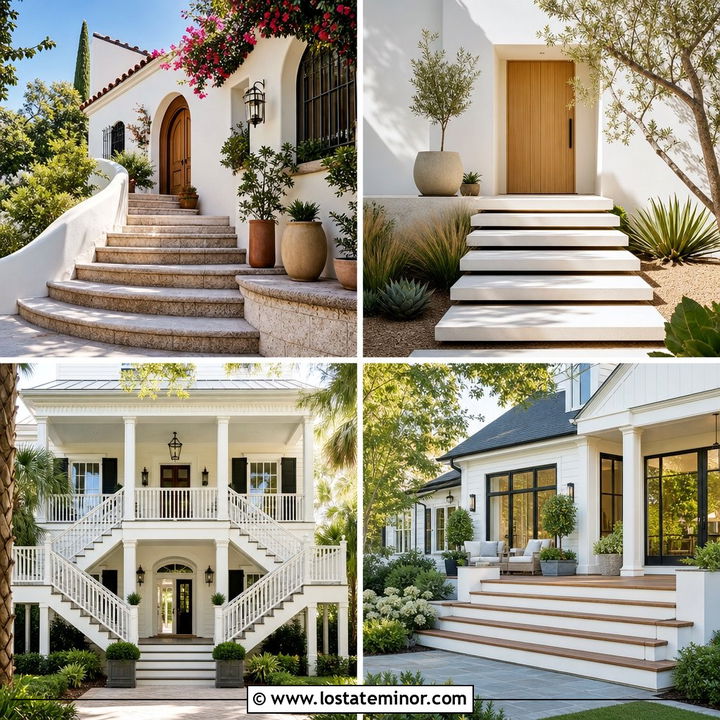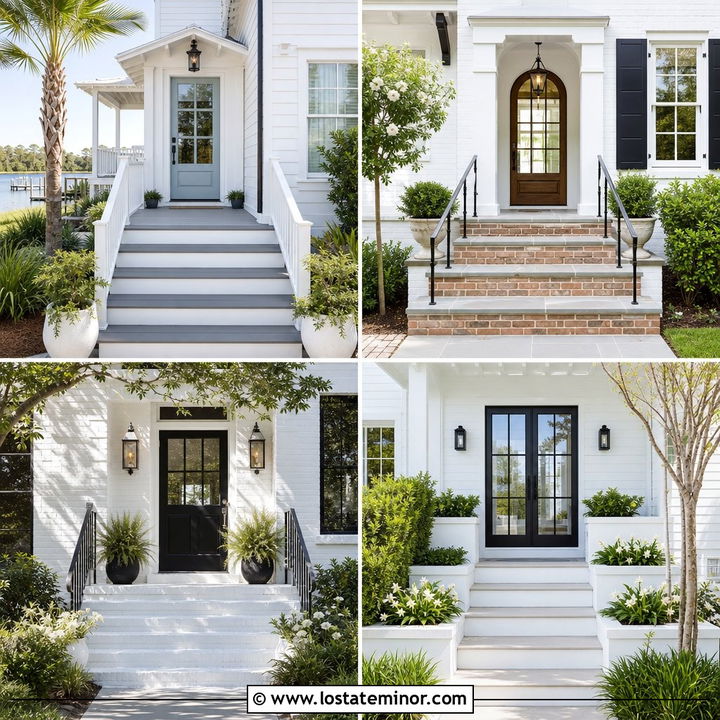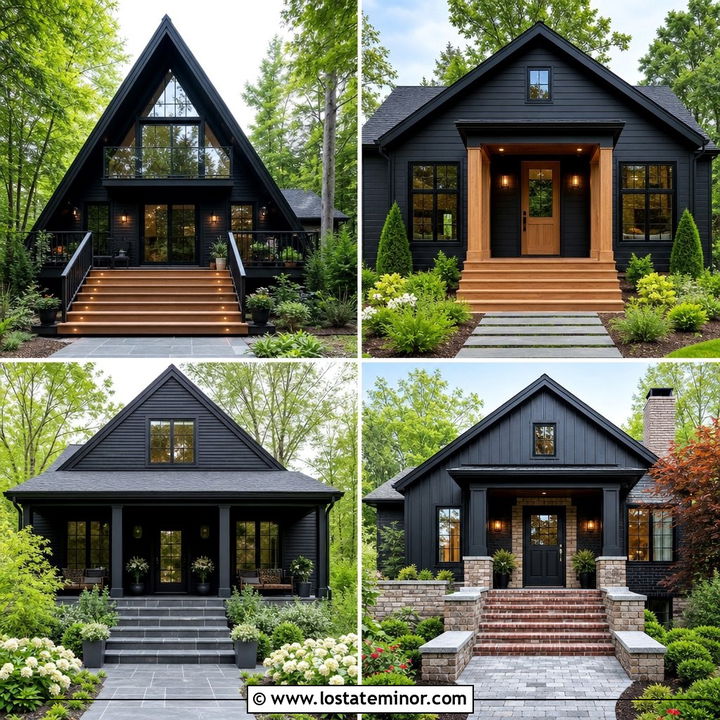
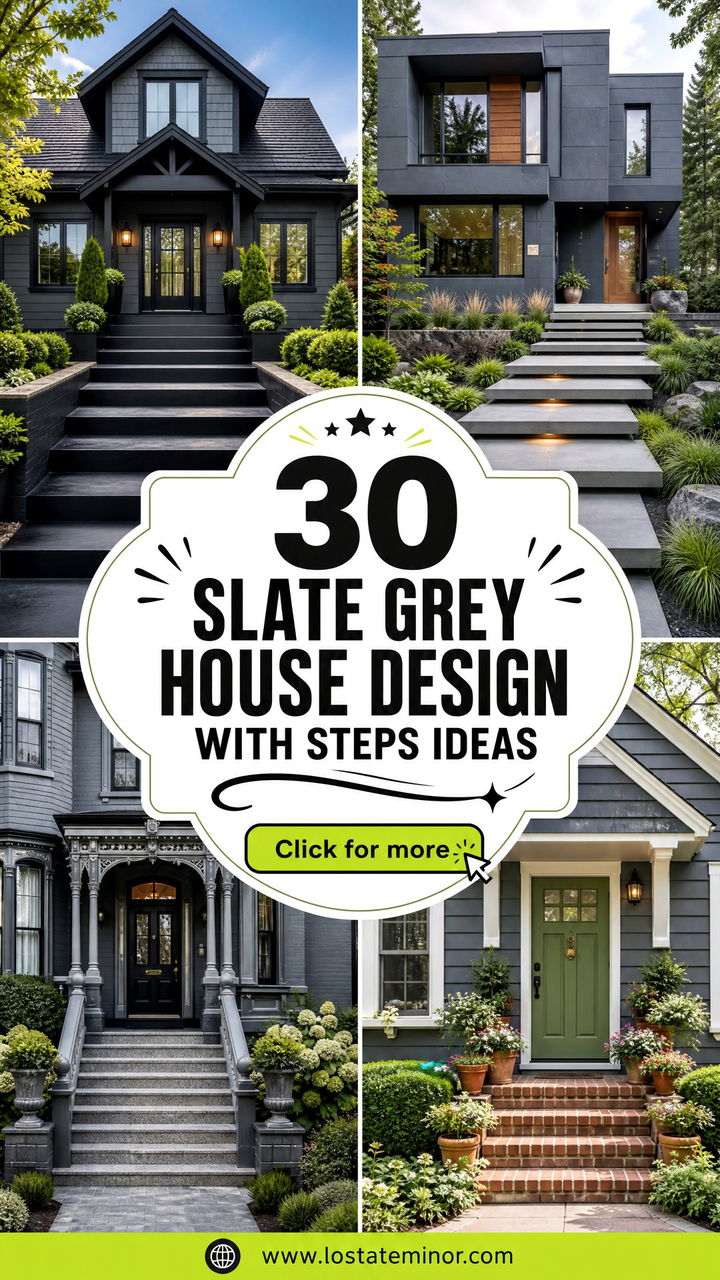
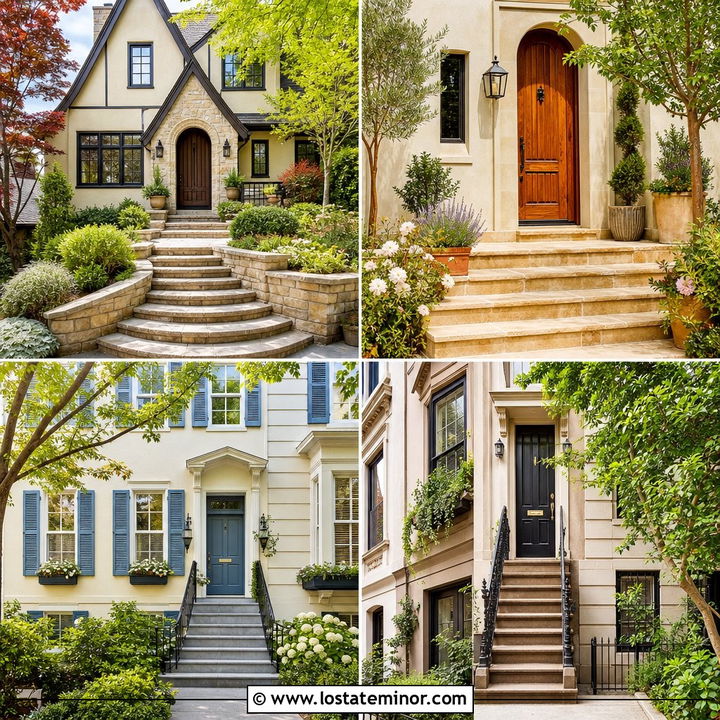
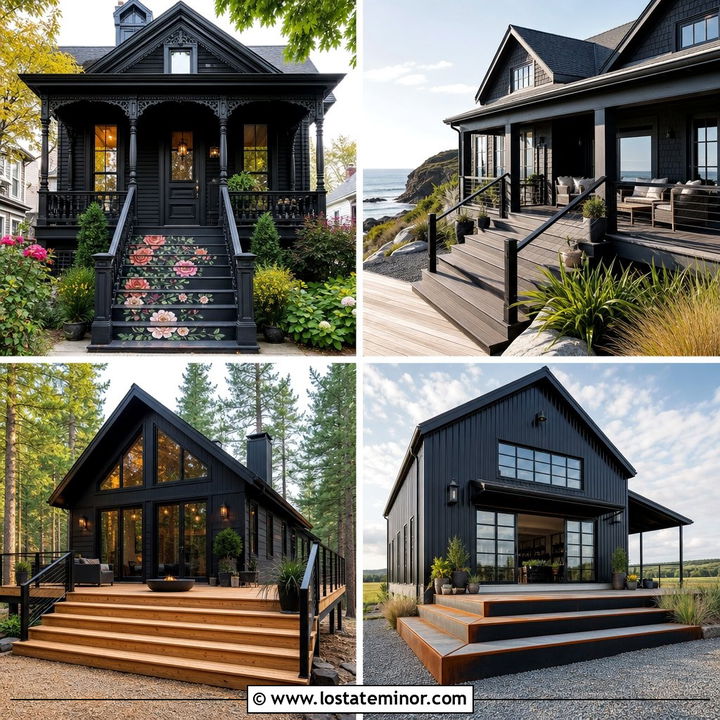
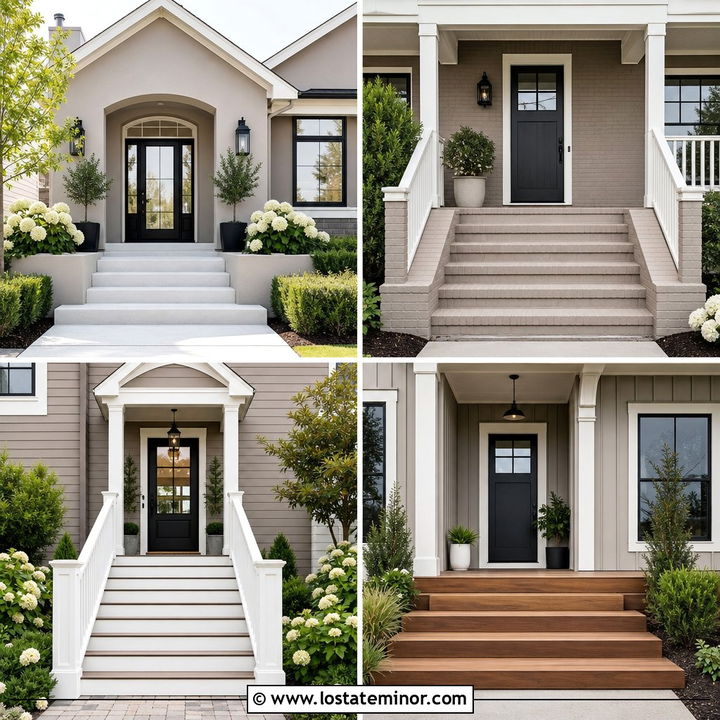
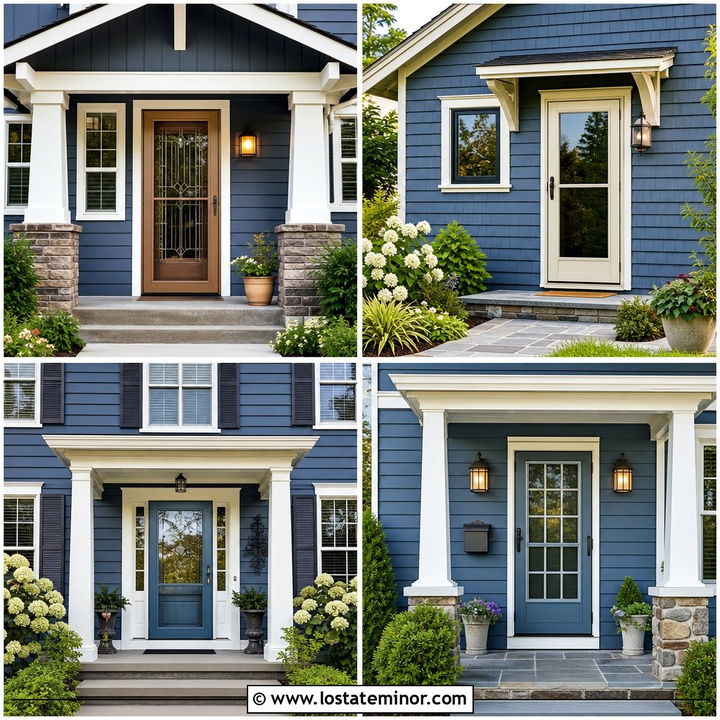
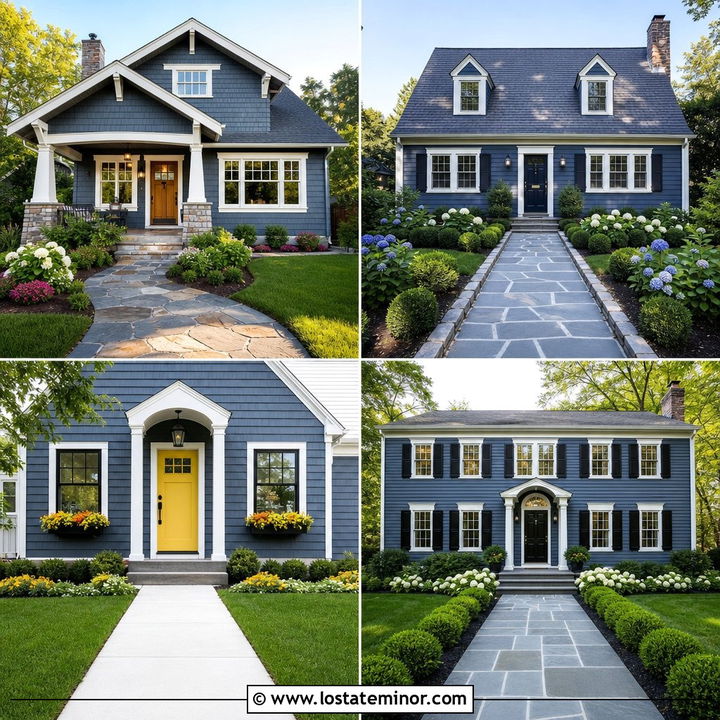
Slate grey is one of the most flexible exterior colors because it can look classic, modern, rustic, or coastal depending on the materials around it. The right front steps make this balanced gray feel even more intentional. Natural stone brings organic texture, warm wood softens the cool undertone, and crisp concrete creates a cleaner contemporary finish. Slate-toned steps themselves can also provide subtle movement and useful surface texture at an entrance. () Before choosing a combination, consider your home’s architecture, roof color, walkway, landscaping, and natural light. The following **30 Slate Grey House Design With Steps Ideas** explore complete exterior looks that connect the siding, trim, entrance, railings, and surrounding yard.
1. Slate Grey Farmhouse With Brick Steps
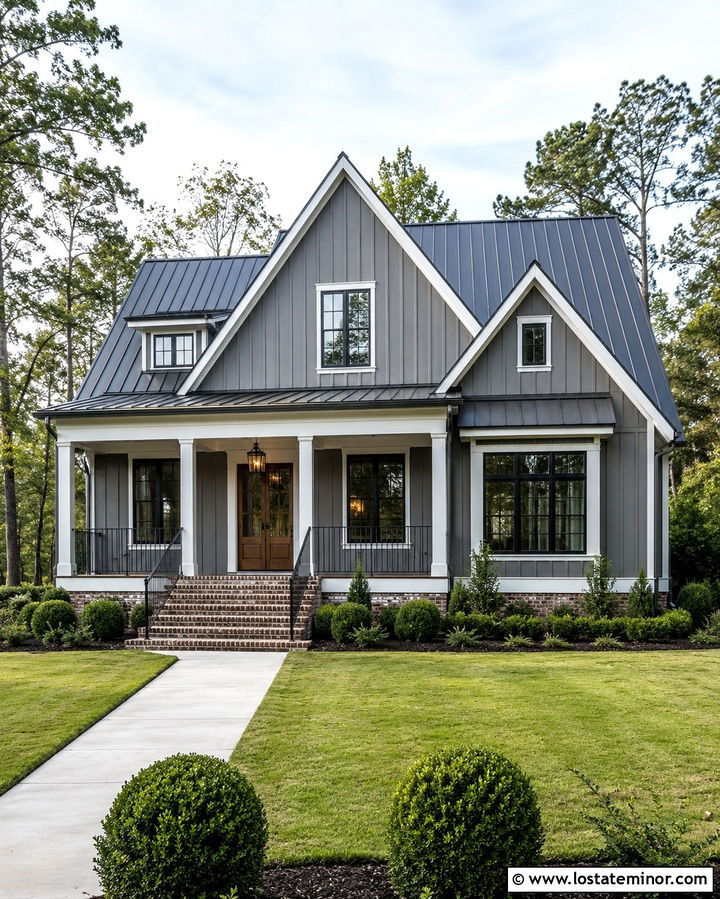
A slate grey modern farmhouse gains instant warmth when it is paired with traditional red brick steps. Choose medium slate grey board-and-batten siding, clean white trim, and a matte black metal roof for strong contrast. The brick should have slightly weathered red, brown, and charcoal variations rather than a bright orange finish. These mixed tones help the steps connect naturally with the grey facade. Add a stained oak front door and matching porch ceiling to soften the palette further. Black lantern sconces, simple metal railings, and rectangular foundation plantings complete the entrance. Extend the brick into a narrow walkway border so the steps do not look isolated from the rest of the front yard.
2. Slate Grey Colonial With Bluestone Steps
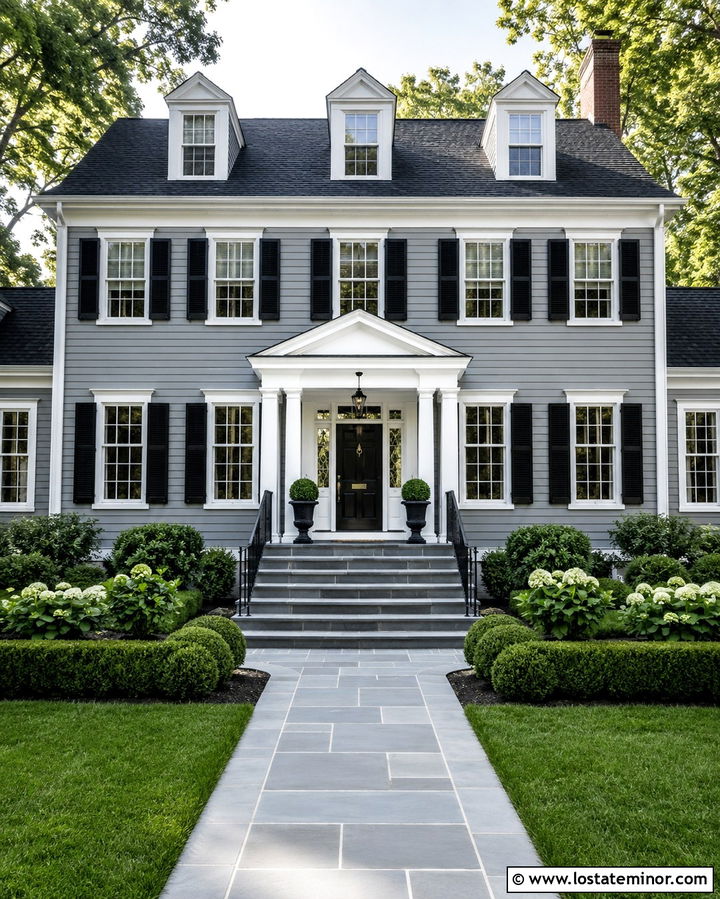
Would you like the entrance to feel formal without appearing overly ornate? A symmetrical Colonial painted in slate grey works beautifully with wide bluestone steps. Use cool medium-grey clapboard siding, bright white window trim, white columns, and a glossy black front door. Large bluestone treads with thin mortar joints reinforce the orderly architecture while adding natural color variation. A light-grey stone riser can keep the staircase from looking too dark. Place classic black iron railings on both sides and repeat their finish through lanterns and house numbers. A straight walkway, clipped boxwoods, and matching planters strengthen the symmetry. Finish the house with a charcoal architectural-shingle roof that visually anchors the grey and white exterior scheme.
3. Slate Grey Ranch With Wide Concrete Steps
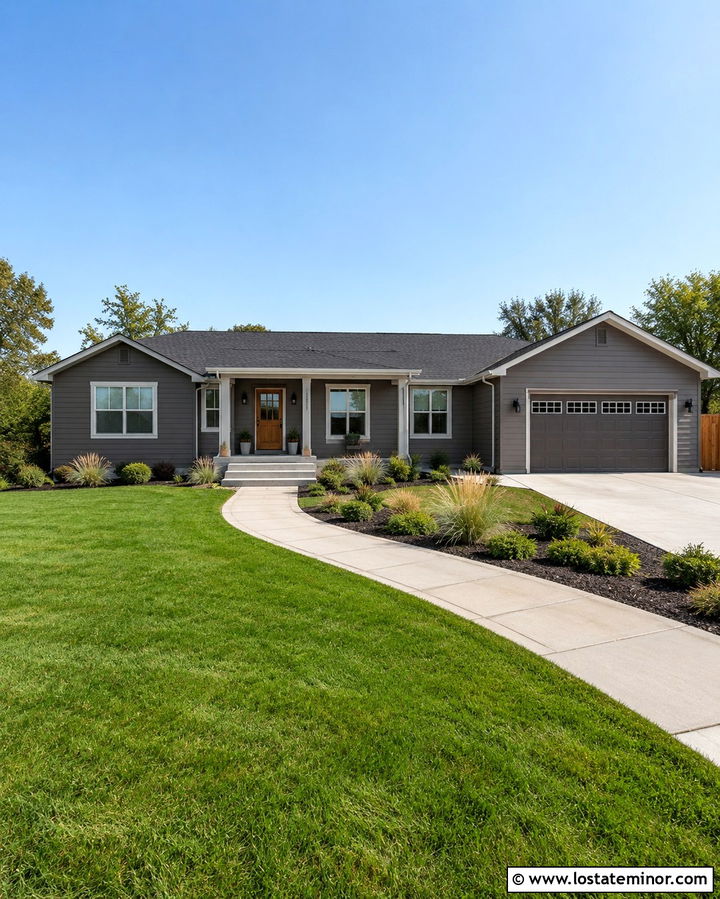
Low, broad steps complement the horizontal lines of a slate grey ranch house. Paint the siding a slightly warm slate grey and use soft white around the windows, fascia, and garage door. Instead of a narrow staircase, create three wide poured-concrete steps extending across most of the entrance. A smooth light-grey finish keeps the approach simple, while exposed aggregate strips near each edge can add subtle texture. Bring warmth to the facade with a natural cedar door and cedar soffits. Dark bronze lighting and house numbers feel softer than solid black against this palette. Complete the yard with a curved walkway, low ornamental grasses, and spreading shrubs that preserve open views across the ranch-style elevation.
4. Slate Grey Craftsman With Stone Steps
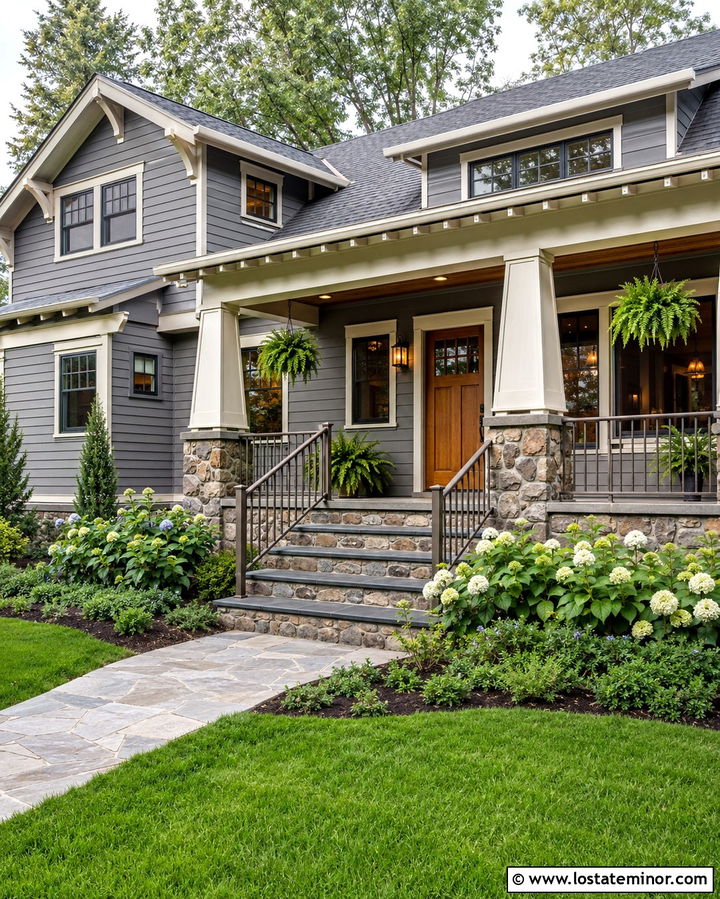
Rich materials give a slate grey Craftsman the layered character this house style needs. Cover the main walls in slate grey lap siding, then use a deeper charcoal shade on the gables. Cream trim feels warmer than pure white and pairs naturally with tapered porch columns set on fieldstone bases. Continue the same fieldstone across the step risers, using large charcoal-grey slabs for the treads. A medium-stained fir door introduces a welcoming focal point without competing with the masonry. Choose bronze railings, amber-free clear-glass sconces, and simple wooden porch furniture. Ferns, hydrangeas, and ground cover planted beside the staircase help the substantial stonework settle comfortably into the landscape.
5. Slate Grey Bungalow With Wood Steps
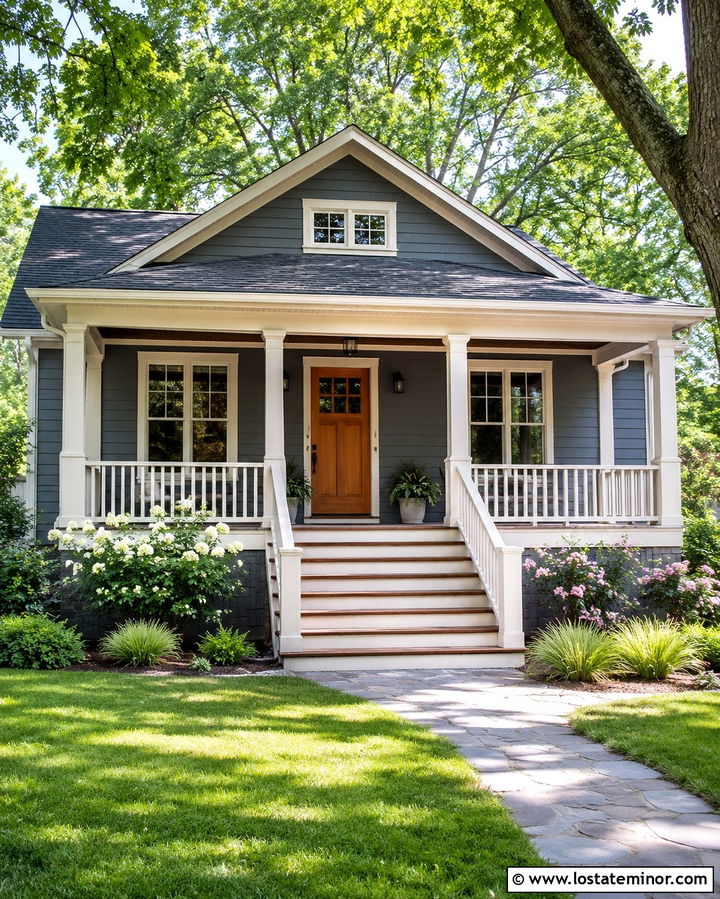
A small bungalow can carry slate grey without feeling heavy when warm wood breaks up the facade. Use medium slate grey horizontal siding with creamy white trim around the windows, porch posts, and roofline. Build broad cedar steps leading to a covered porch, allowing the wood grain to remain visible beneath a medium honey-brown stain. Match the front door to the steps for a cohesive entrance. White stair risers and simple square railings can brighten the lower part of the house, while a dark charcoal roof adds definition above. Surround the walkway with informal flowering shrubs and soft grasses. This relaxed material combination makes the compact exterior appear thoughtfully detailed, approachable, and connected to its yard.
6. Slate Grey House With Black Concrete Steps
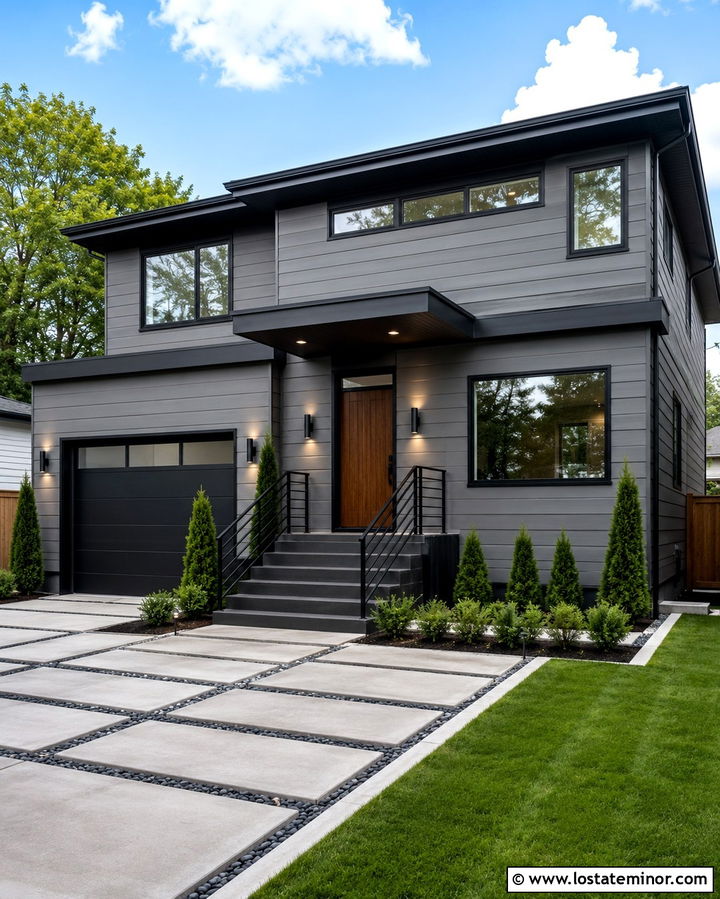
For a sharper modern palette, combine slate grey siding with charcoal-black concrete steps. The exterior can feature horizontal fiber-cement panels in a true medium slate grey, black-framed windows, and minimal black fascia. Use broad concrete treads with crisp edges and a dark charcoal finish rather than absolute black, which may show dust more easily. A warm walnut front door prevents the scheme from becoming too cold. Install slender black handrails and simple cylindrical wall lights to continue the streamlined look. Large rectangular pavers can connect the steps to the driveway, with gravel joints adding texture. Structured evergreen shrubs and a carefully edged lawn balance the strong geometry without distracting from the entrance.
7. Slate Grey Cape Cod With White Steps
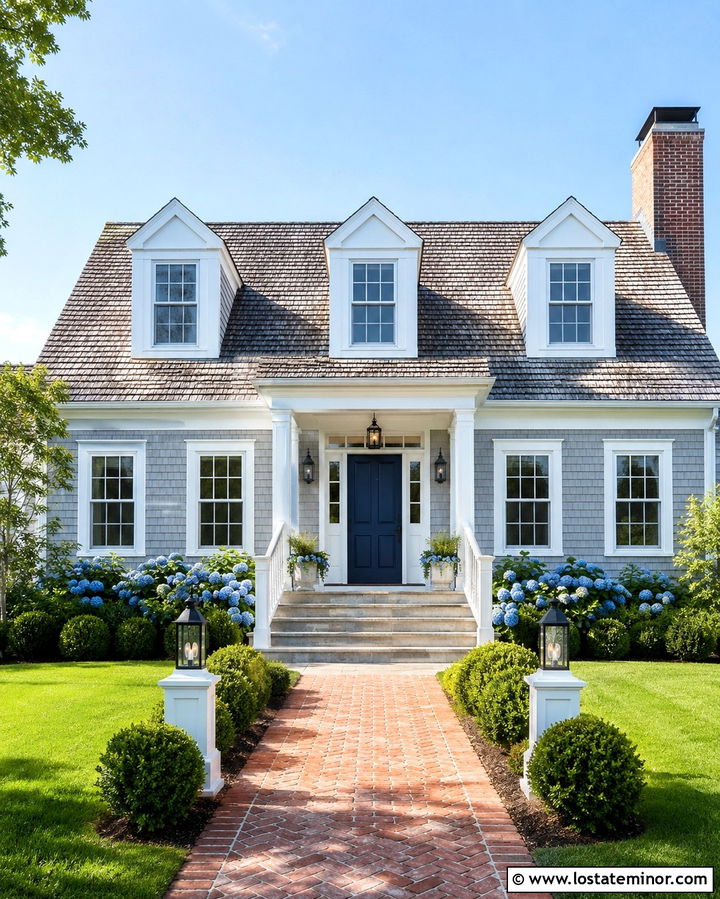
Crisp white steps give a slate grey Cape Cod exterior a bright, traditional appearance. Select slate grey shingle siding with cool blue undertones, white dormers, white corner boards, and a weathered-grey roof. The front staircase can use masonry steps clad in white or pale limestone, creating a clean transition from the garden to the entry. Add white railings with simple square balusters and a navy front door for gentle coastal color. Because white surfaces attract attention, keep the step proportions balanced and the detailing uncomplicated. A brick walkway, compact boxwoods, and blue hydrangeas add familiar Cape Cod character. Black lanterns provide small points of contrast while allowing the lighter architectural details to remain dominant.
8. Slate Grey House With Cedar Porch Steps
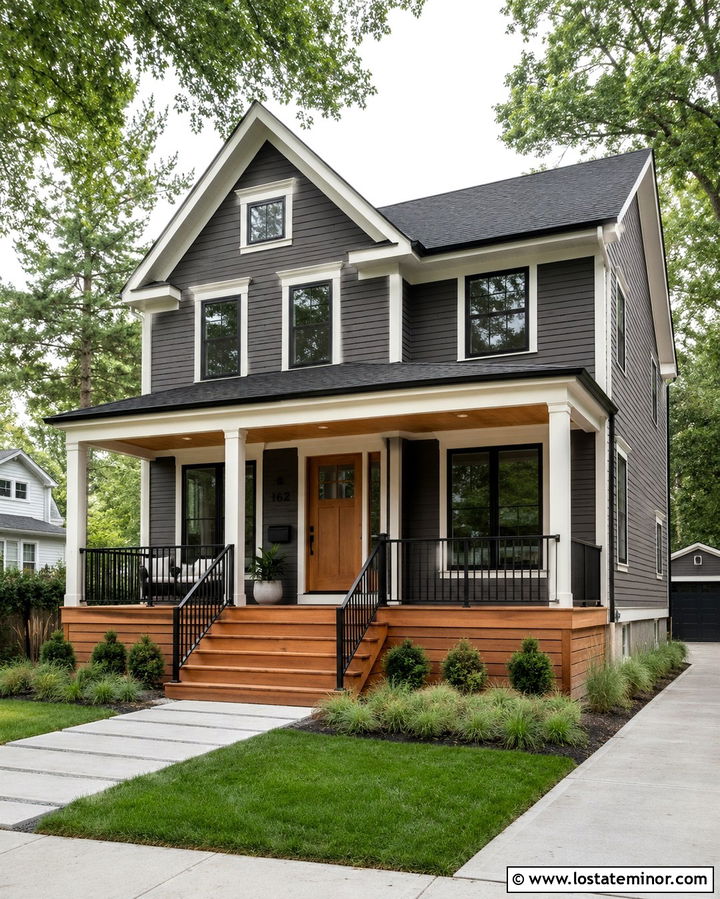
The natural warmth of cedar can transform a cool slate grey exterior into a more inviting composition. Use dark slate grey lap siding, black window frames, and restrained off-white trim. Construct the porch floor and wide front steps from cedar, finished with a clear or lightly tinted protective stain. Carry the same wood onto the front door or porch ceiling to distribute the color across the facade. Black metal railings keep the entrance contemporary and prevent the woodwork from looking too rustic. A charcoal roof ties the dark upper and lower accents together. Add large concrete walkway slabs, ornamental grasses, and evergreen foundation plants for a clean landscape that lets the grey siding and cedar staircase command attention.
9. Slate Grey Split-Level With Tiered Steps
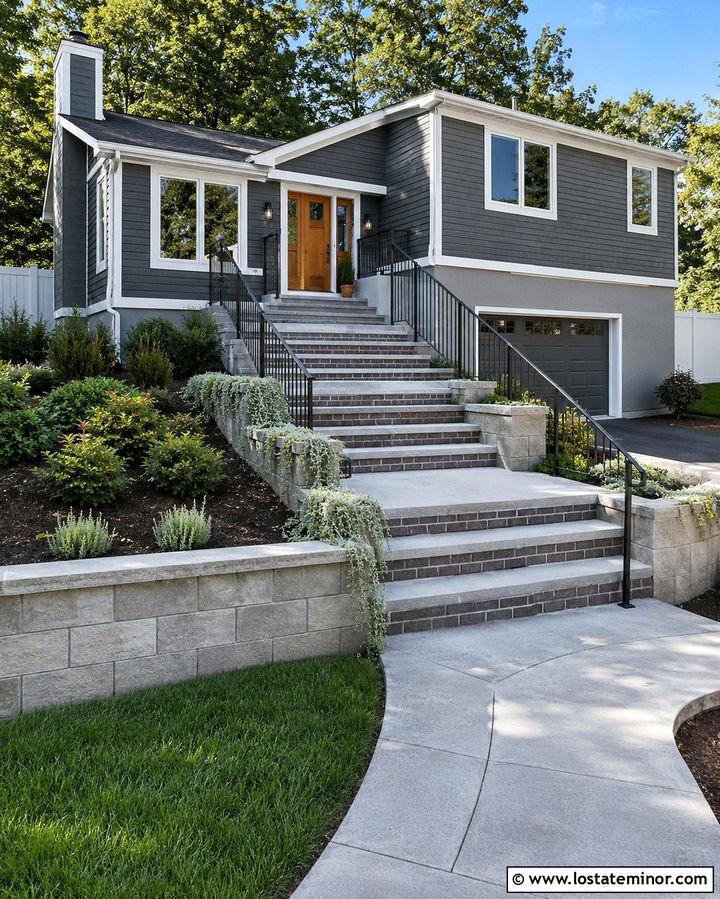
A split-level home often benefits from an entrance that visually explains the change in elevation. Paint the upper siding slate grey, use lighter grey on the lower foundation, and add crisp white around the windows. Create tiered steps with one or two generous landings rather than a single steep-looking run. Grey concrete or stone treads can coordinate with the body color, while reddish-brown brick risers introduce depth. Use a natural wood door as the focal point and black metal railings for definition. Low retaining walls beside the landings can double as planting beds. Fill them with evergreen shrubs and cascading ground cover so the steps feel integrated with the slope instead of attached as an afterthought.
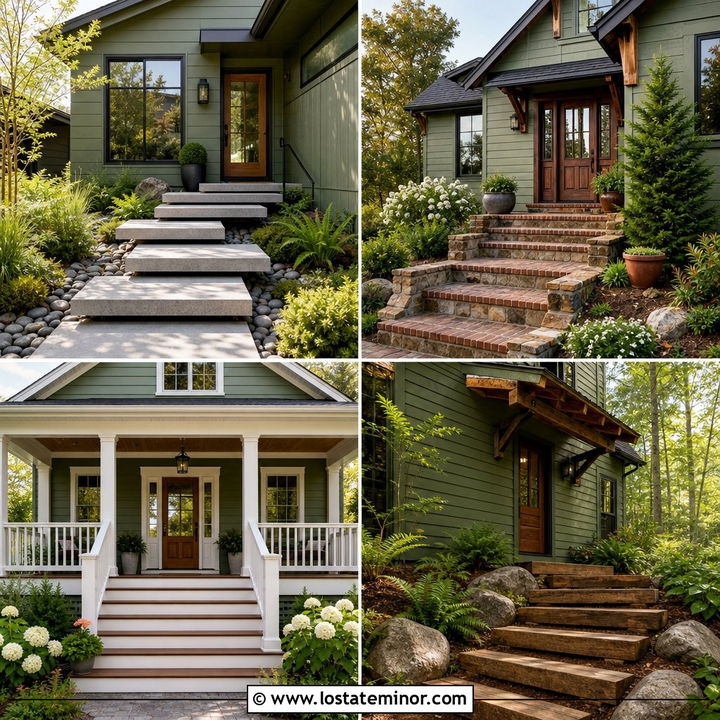
10. Slate Grey Modern House With Floating Steps
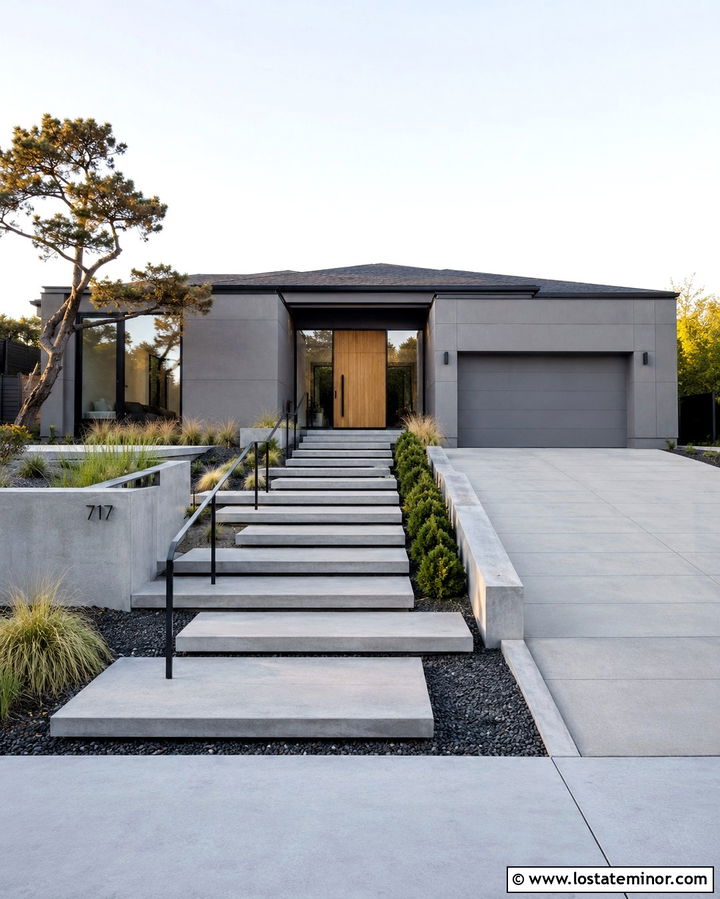
Floating concrete steps bring sculptural simplicity to a slate grey modern house. Use smooth slate grey fiber-cement panels or stucco, black-framed floor-to-ceiling windows, and a flat or low-slope charcoal roof. Place thick, pale-grey concrete slabs over a recessed gravel base to create the floating effect. Keep each tread deep and visually aligned with the front door. A vertical-grain oak door adds warmth, while a slim black handrail provides necessary definition without interrupting the architecture. Repeat the concrete in the driveway or retaining walls for a coordinated site plan. Sparse plantings of grasses, compact evergreens, and one architectural tree complete the exterior while preserving clear sightlines across the steps and facade.
11. Slate Grey Cottage With Curved Brick Steps
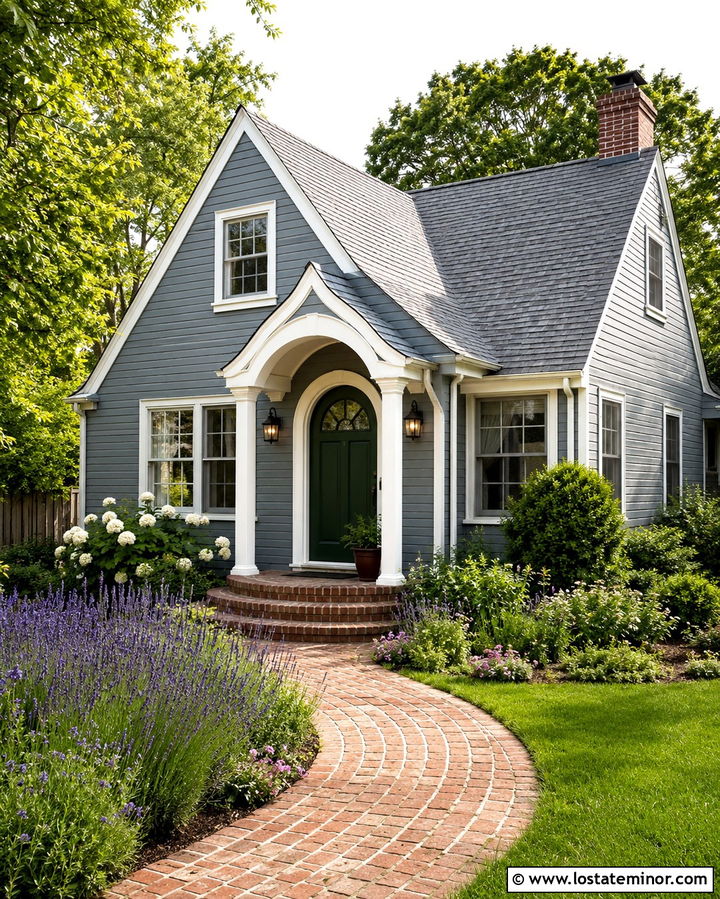
Curved steps can soften the straight lines of a slate grey cottage and make a small entrance feel more generous. Choose muted slate grey lap siding, warm white trim, and a dark green front door. Build three shallow semicircular steps from aged red brick with brown and charcoal undertones. The rounded shape should follow the width of the doorway or small covered stoop rather than extending too far across the facade. Black or dark bronze lanterns reinforce the traditional character. A gently curving brick walkway can echo the staircase and guide visitors through informal garden beds. Layer lavender, flowering shrubs, and low ground cover nearby to create an entrance that feels established, balanced, and naturally connected to the landscape.
12. Slate Grey Victorian With Granite Steps
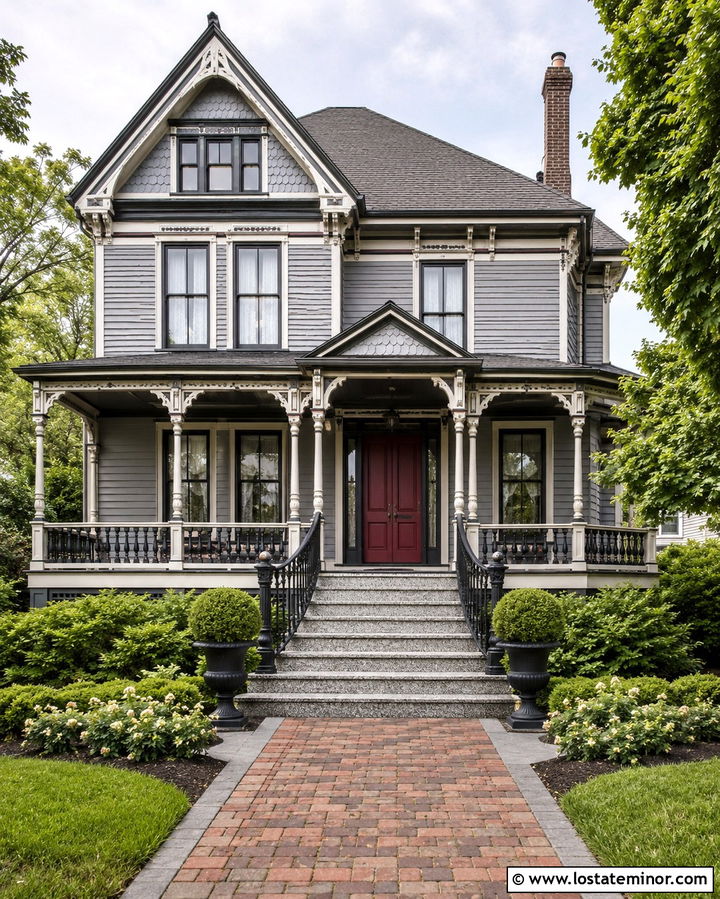
Granite steps provide the substantial base needed for a detailed slate grey Victorian exterior. Paint the main clapboards slate grey, then highlight decorative trim with soft white and deep charcoal. A muted burgundy front door can introduce period-friendly color without overpowering the palette. Select solid granite treads in a medium speckled grey, paired with stone or painted masonry risers. Ornamental black iron railings complement brackets, turned porch posts, and decorative gable trim. Keep the number of accent colors limited so the exterior remains polished rather than busy. A patterned brick walkway and symmetrical planters can frame the entrance. The durable-looking granite visually grounds the elaborate upper facade and gives the staircase a permanent, architectural presence.
13. Slate Grey Tudor With Limestone Steps
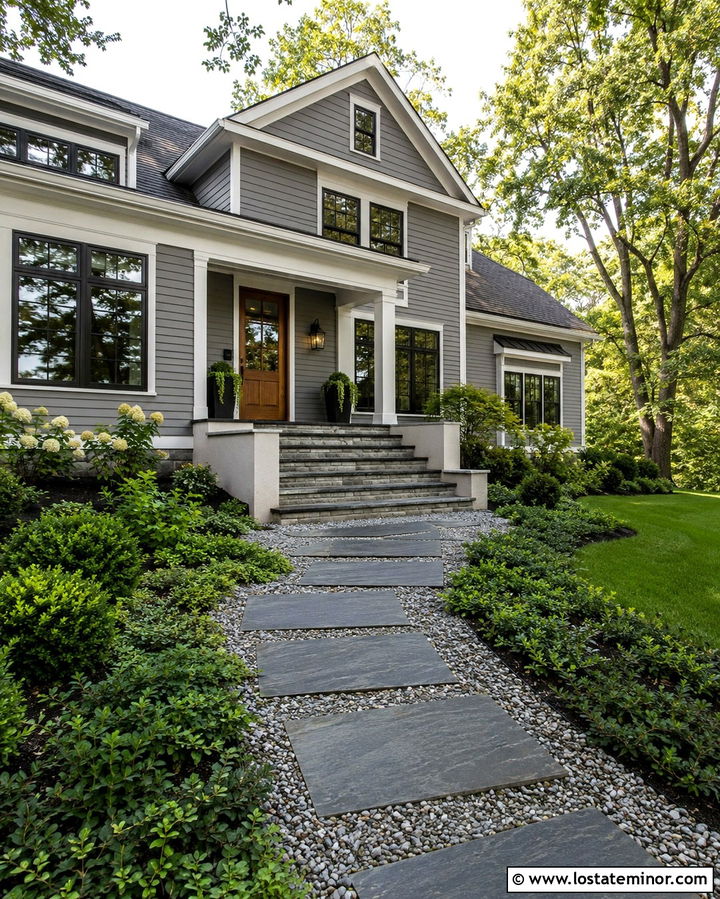
A slate grey Tudor becomes warmer and more dimensional when pale limestone is added around the entrance. Apply slate grey stucco between charcoal decorative timbers, using creamy white on selected window surrounds. Build broad limestone steps beneath an arched wooden front door, and repeat the stone around the foundation or entry columns. The limestone’s warm beige undertone creates a softer transition than bright white masonry would. Choose an aged bronze handrail and lanterns to complement the medium-brown door. A steep charcoal roof maintains the Tudor silhouette and balances the lighter staircase. Curved planting beds filled with clipped evergreens, small flowering trees, and ground cover complete a refined exterior that respects the home’s traditional architecture.
14. Slate Grey Coastal House With Composite Steps
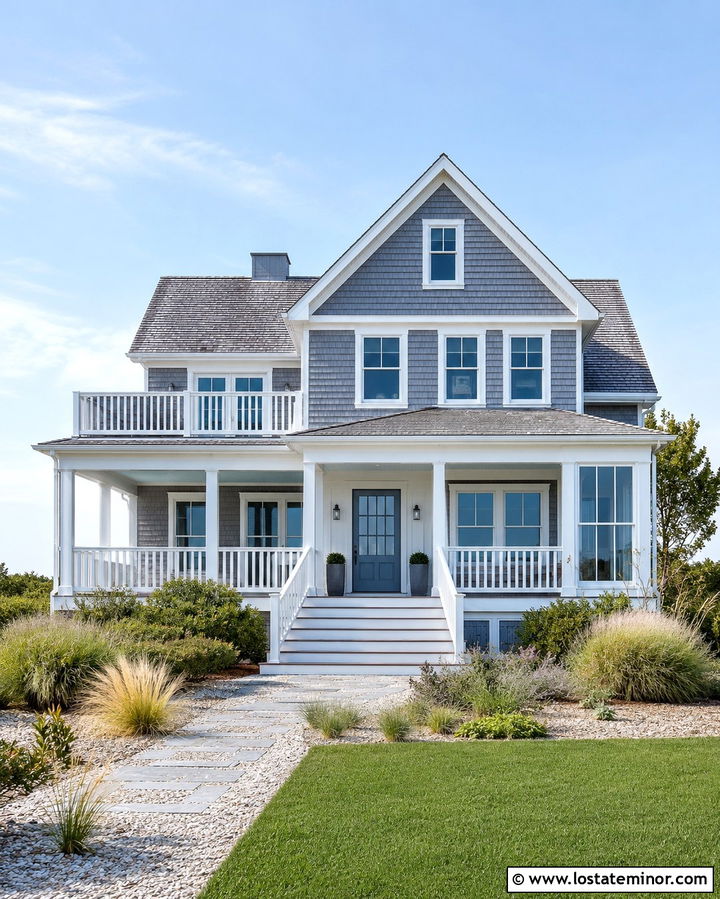
A coastal exterior needs materials that look light, clean, and relaxed. Pair slate grey shingle siding with white trim, white porch columns, and a muted blue front door. Use pale driftwood-grey composite decking for the porch and front steps, then finish the staircase with crisp white risers and railings. The subtle difference between the slate siding and lighter grey decking creates depth without disrupting the calm palette. A weathered-grey roof and brushed nickel door hardware support the coastal character. Frame the entrance with sandy gravel, ornamental grasses, and salt-tolerant shrubs where appropriate. Keep decorations minimal so the textures of the shingles, decking, and landscaping establish the complete seaside-inspired look.
15. Slate Grey House With Black Iron Railings
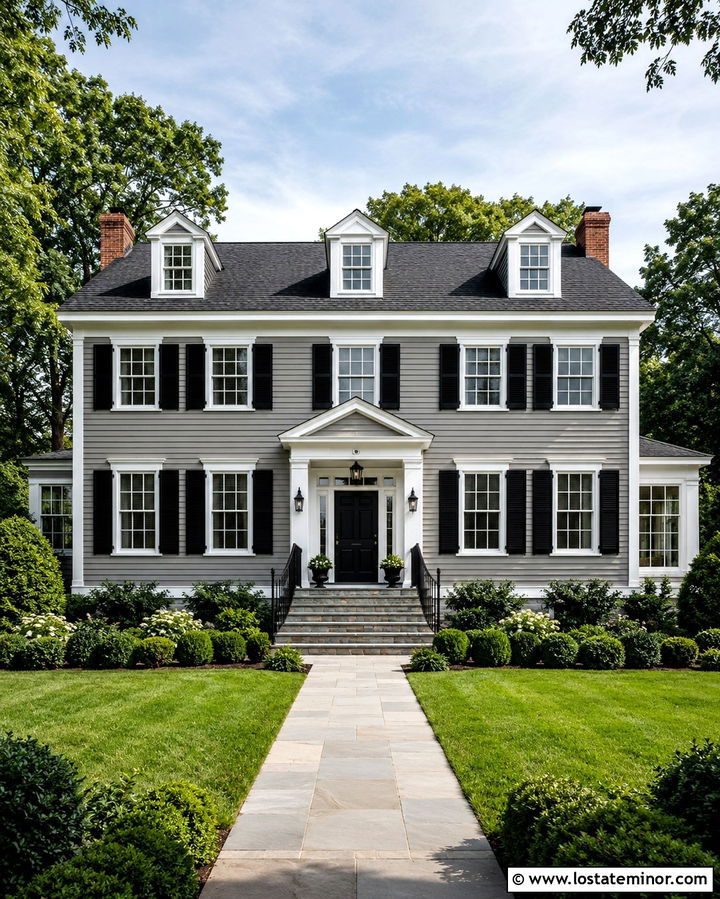
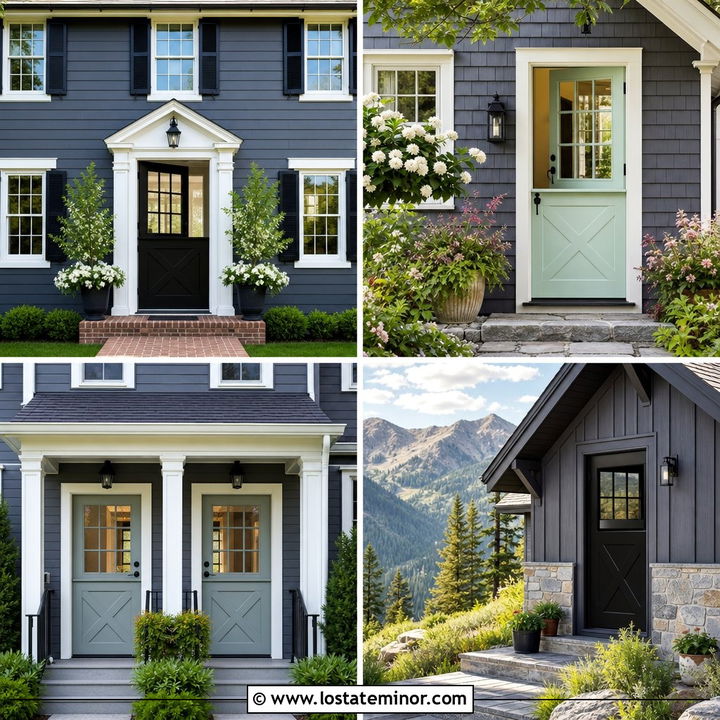
Black iron railings can give a slate grey house a more defined and finished entrance. Use medium slate grey siding, bright white trim, and a solid black front door to establish a simple three-color palette. Choose light-grey concrete steps or natural bluestone treads so the black railings remain easy to see. Straight rails with narrow vertical pickets work well on Colonial, transitional, and suburban homes. Repeat the black finish on the window shutters, sconces, and mailbox for consistency. A charcoal roof completes the upper facade without adding another competing color. Keep shrubs trimmed below railing height and use pale walkway pavers to preserve a clear, welcoming route from the sidewalk to the staircase.
16. Slate Grey House With White Porch Railings
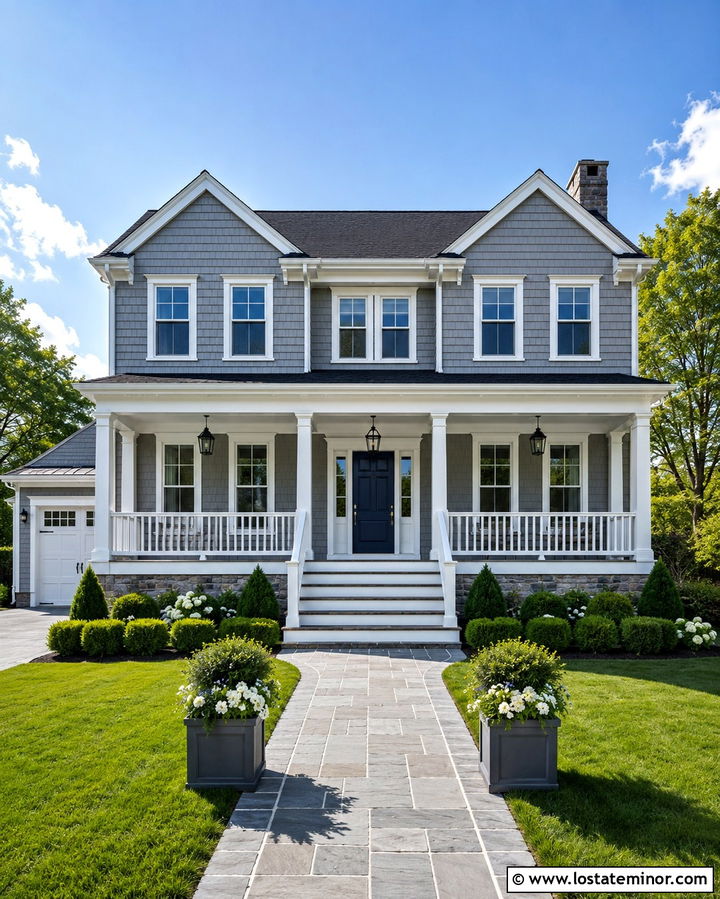
White porch railings create a fresh contrast against slate grey siding and can help a shaded entrance appear brighter. This scheme works especially well on a two-story traditional home with horizontal siding, evenly spaced windows, and a deep covered porch. Use slate grey for the house body, pure white for the posts and railings, and navy blue for the front door. Construct the steps with medium-grey stone treads and white risers to connect the porch details with the ground. A charcoal roof and black lanterns add controlled darker accents. Repeat the staircase’s symmetry with matching planters and neatly shaped shrubs. The result feels crisp and familiar without relying on excessive decorative trim.
17. Slate Grey House With Sandstone Steps
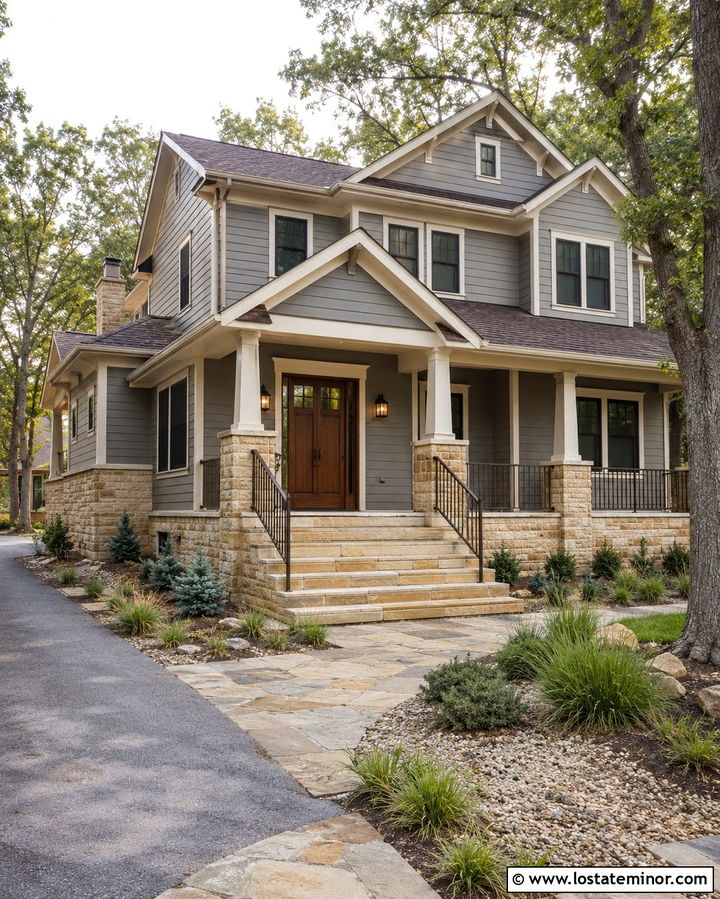
Warm sandstone creates a pleasant contrast with the cool character of slate grey. Paint the exterior a medium slate grey and use soft cream instead of stark white for the trim. Build wide sandstone steps in a muted tan-beige color with natural tonal movement. A walnut-stained front door and bronze light fixtures strengthen the warm side of the palette. If the house includes a porch, use sandstone around the column bases or foundation so the staircase connects with the facade. A brown-charcoal roof can bridge the grey siding and beige masonry. Complete the entrance with a flagstone walkway, drought-tolerant grasses, and low evergreen plants that frame the steps without hiding the stone texture.
18. Slate Grey House With Dark Brick Steps
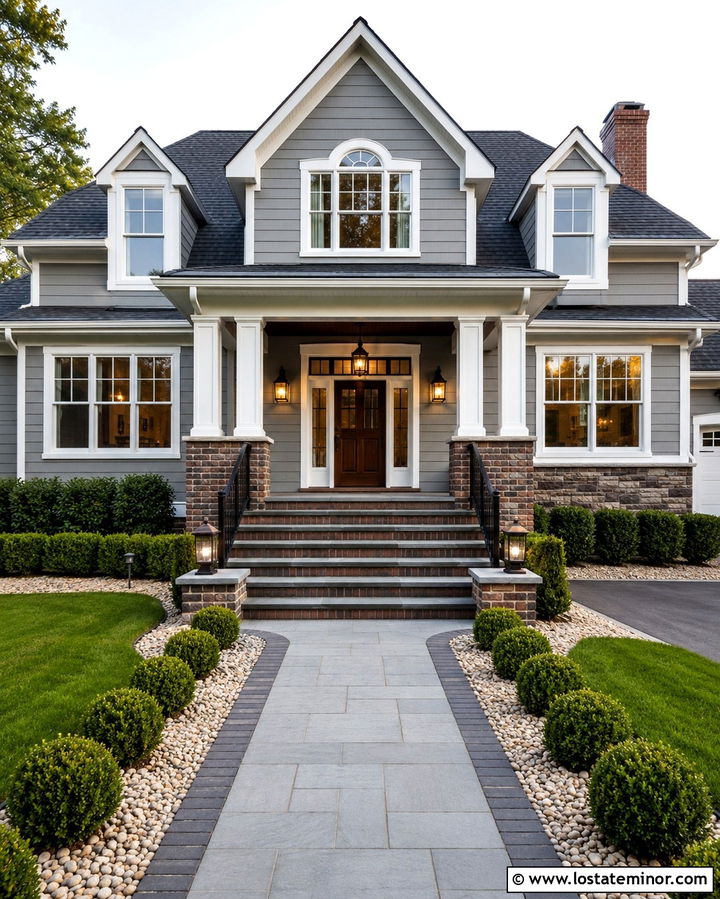
Dark brick steps create a grounded, tailored entrance on a slate grey home. Choose brick in charcoal, brown, and muted burgundy tones instead of standard bright red. The siding can be a lighter slate grey, allowing the masonry to provide visual weight at the base. Add warm white trim and a stained mahogany front door for a balanced mix of cool and warm colors. Black railings and traditional lanterns connect with the darkest shades in the brick. Use the same masonry for porch piers or a narrow walkway border to make the material feel intentional. Simple boxwood hedges and light gravel beds help the dark staircase stand out while keeping the complete exterior orderly and welcoming.
19. Slate Grey House With Natural Slate Steps
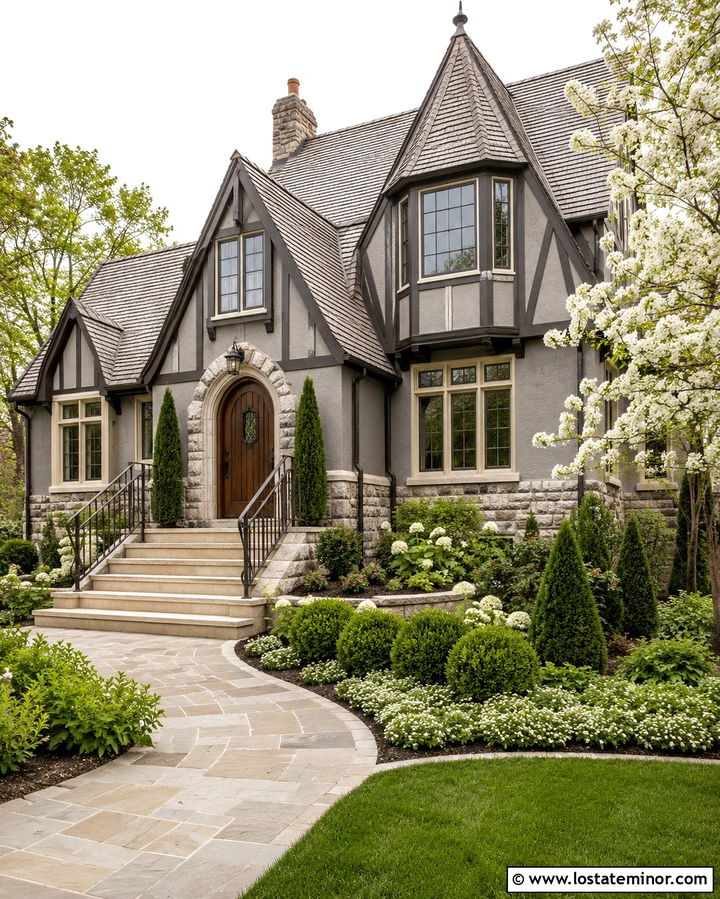
Using natural slate steps with slate grey siding creates a sophisticated tone-on-tone entrance. The key is varying the values so the two surfaces remain distinct. Select medium slate grey siding with a smooth, consistent finish, then choose darker natural slate treads containing subtle blue, green, and charcoal variation. Light-grey stone risers can separate each tread and improve visual definition. Finish the house with white trim, black-framed windows, and a medium-brown wooden door. Continue slate into the walkway as spaced rectangular pavers surrounded by gravel or low ground cover. Since natural slate has visible texture and movement, keep the railings and porch details simple. This lets the staircase become the exterior’s primary material feature. ()
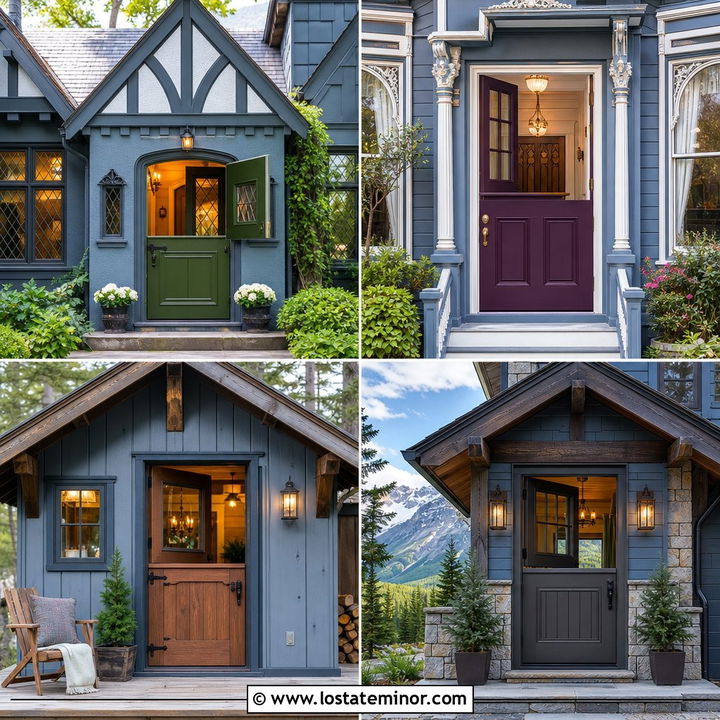
20. Slate Grey House With Red Front Door And Stone Steps
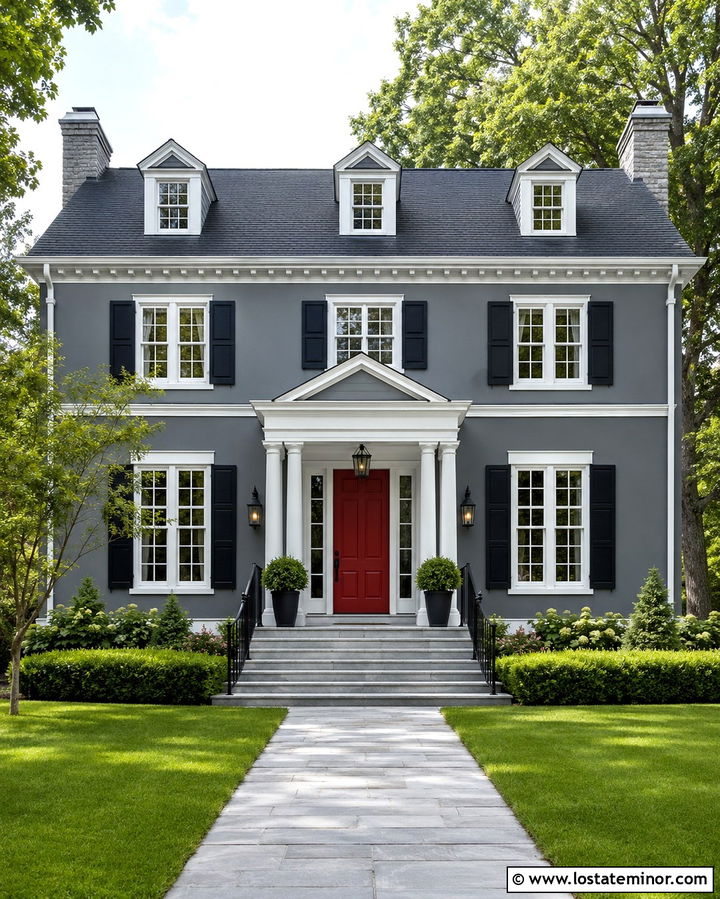
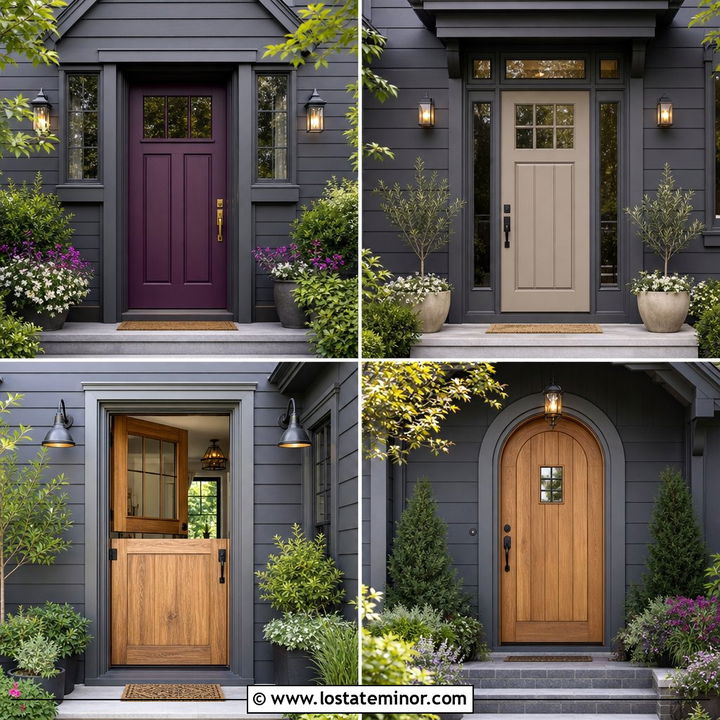
A red front door brings controlled energy to an otherwise neutral slate grey exterior. Use medium-dark slate grey siding, crisp white trim, and a charcoal roof as the quiet background. Choose a deep heritage red rather than a bright primary shade, then surround the door with clear sidelights. Broad light-grey stone steps prevent the entrance from feeling overly dark and give the red a clean platform. Black railings, lanterns, and house numbers provide small graphic accents. Repeat the step material in a straight walkway leading through the lawn. Low green hedges and symmetrical planters reinforce the doorway as the focal point, creating a classic complete scheme that feels colorful without becoming difficult to coordinate.
21. Slate Grey House With Yellow Door And Concrete Steps
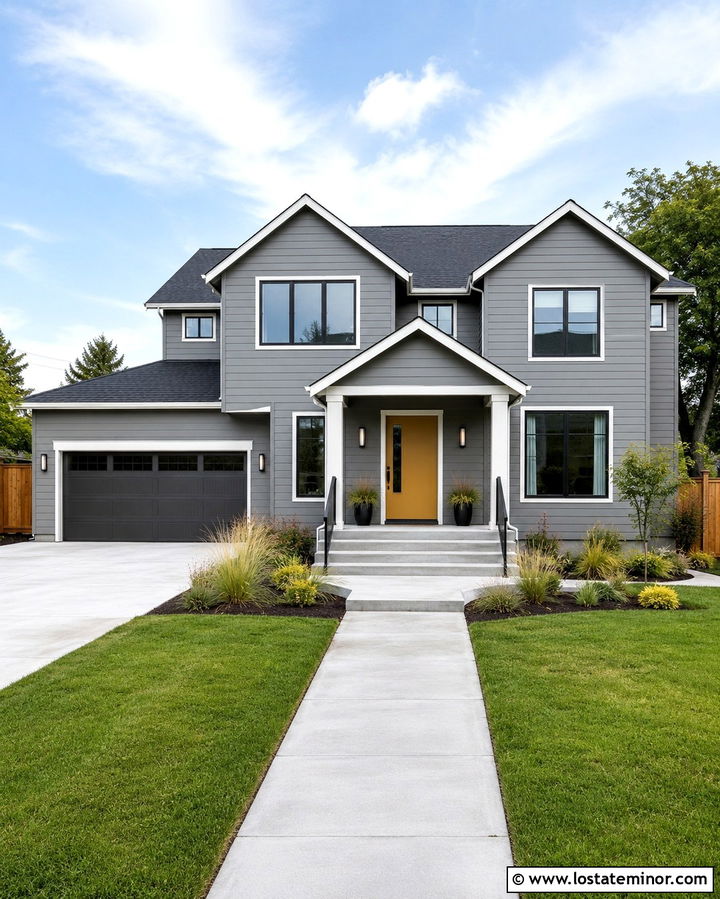
A muted yellow front door can brighten a slate grey house while preserving a polished appearance. Choose a warm mustard or ochre yellow, which feels more grounded than a vivid lemon tone. Surround it with white trim and pair it with slate grey lap siding, black windows, and a charcoal roof. Light-grey concrete steps keep the lower facade simple and allow the door to remain the main accent. Add black metal railings and modern rectangular sconces to sharpen the combination. Repeat the yellow sparingly in seasonal planters rather than across permanent architectural features. A straight concrete walkway, fresh lawn, and restrained ornamental grasses complete this cheerful exterior without making the palette look overly playful.
22. Slate Grey House With Green Door And Brick Steps
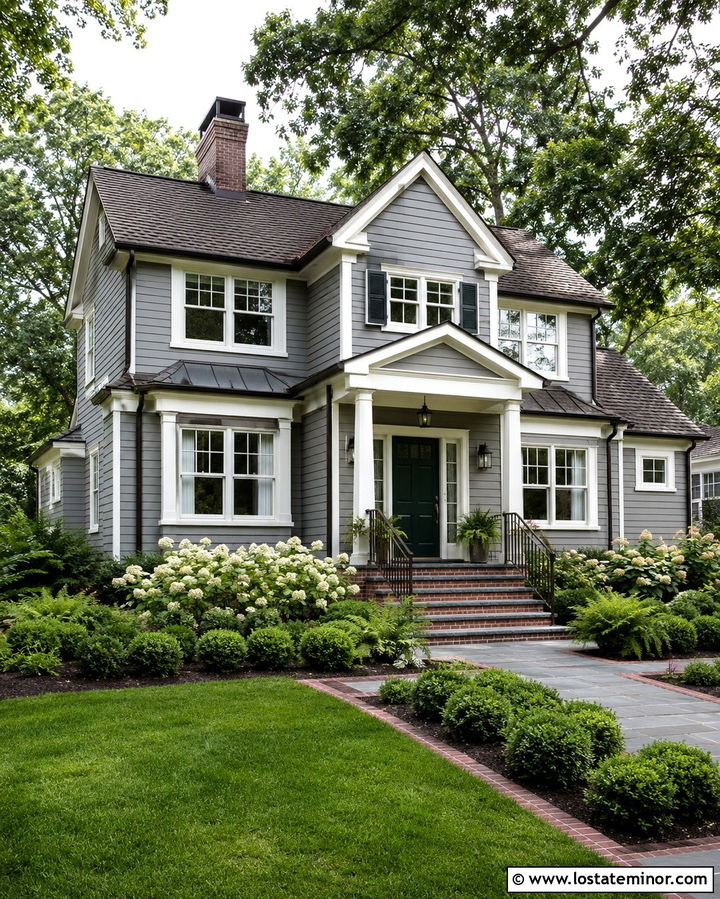
Green works naturally with slate grey because both colors connect easily to outdoor surroundings. Paint the house body a balanced medium slate grey, then choose a deep forest green front door with a subtle blue undertone. Warm white trim helps separate the two darker shades. Build the front steps from weathered red-brown brick and add bluestone caps for a tailored finish. Oil-rubbed bronze railings and lanterns support the traditional palette without introducing harsh contrast. Use a charcoal-brown roof to connect the brick and siding. Layer the landscaping with ferns, boxwoods, and pale flowering shrubs, leaving enough open space around the staircase for the masonry and green entrance to remain clearly visible.
23. Slate Grey House With Wood Door And Granite Steps
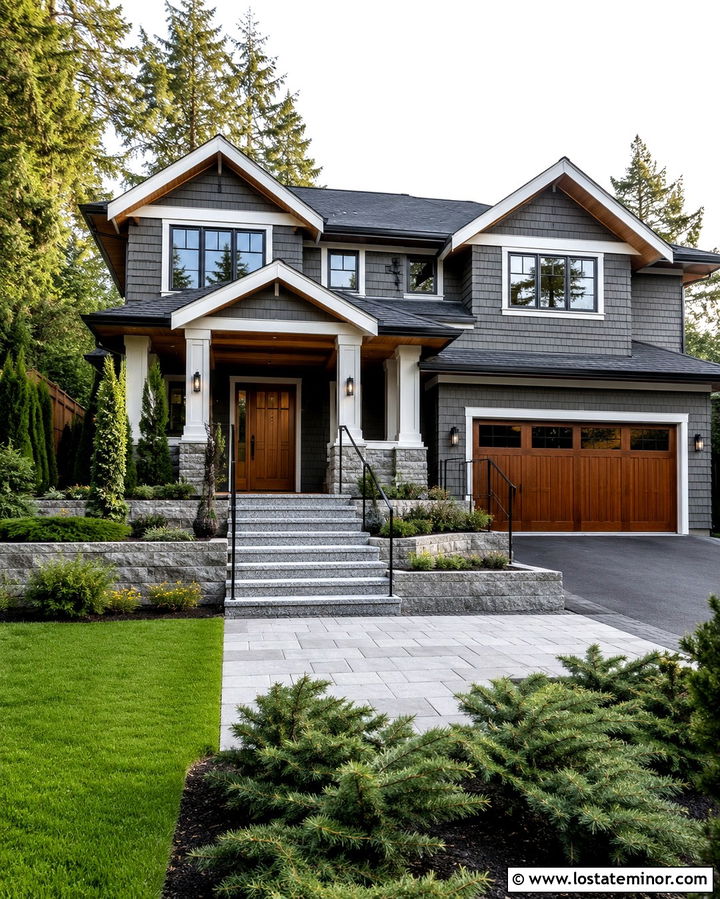
Cool granite and warm wood form a balanced entrance against slate grey siding. Choose a medium-dark grey exterior with narrow white trim and black-framed windows. Install a solid oak or walnut front door with visible vertical grain and simple black hardware. Wide granite steps in a lighter speckled grey provide a durable-looking transition from the walkway to the doorway. Black steel railings keep the details clean and connect with the window frames. Consider repeating the wood on garage doors, porch beams, or soffits so the front door does not appear isolated. Add a charcoal roof, large walkway pavers, and layered evergreen planting for a complete exterior that feels modern yet comfortably welcoming.
24. Slate Grey House With Stone Porch Columns
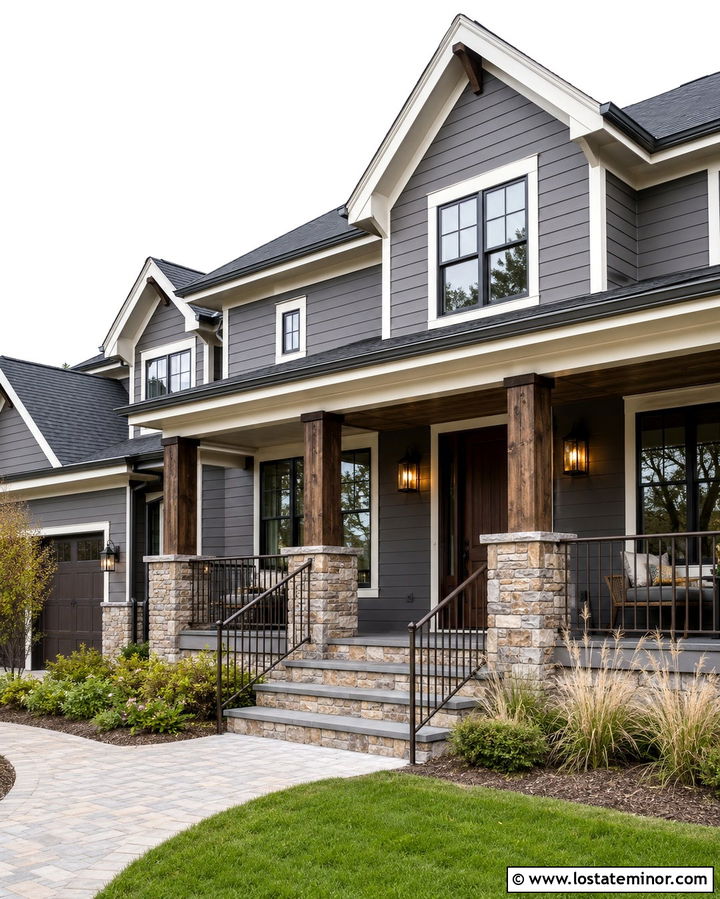
Stone porch columns can add needed depth to a broad slate grey facade. Use slate grey siding across the main house, creamy white trim around the roofline, and stained timber posts resting on substantial stone bases. Select fieldstone containing grey, taupe, and muted brown so it coordinates with both the siding and wood. Carry the same stone onto the step risers, then cap them with large grey treads. A dark brown front door, bronze lanterns, and simple metal railings complete the warm neutral scheme. Extend the masonry along a low foundation section for visual continuity. Informal shrubs and ornamental grasses should frame the columns without covering their texture or making the porch feel crowded.
25. Slate Grey Prairie House With Low Steps
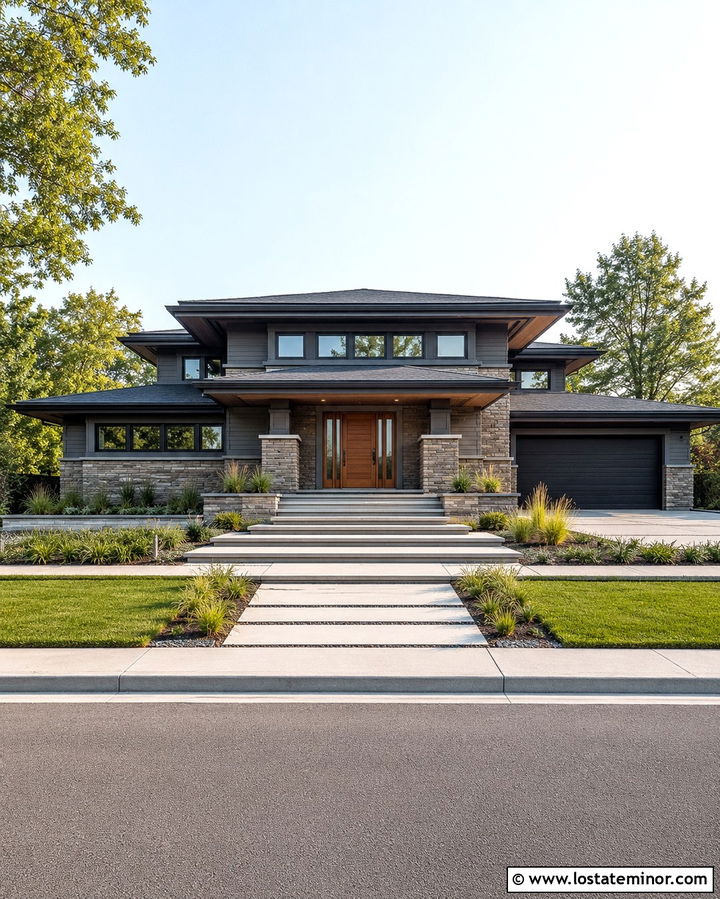
Long, low steps suit the horizontal architecture of a Prairie-style home. Paint the stucco or lap siding slate grey and use deep charcoal on the broad fascia, window frames, and low-pitched roof. Create two or three extra-wide concrete steps that stretch beyond the front door, emphasizing the home’s horizontal proportions. Warm beige stone can cover the risers or nearby planter walls, introducing a natural counterpoint to the grey. Select a medium-brown wooden door with narrow glass panels for a streamlined focal point. Integrated planters, low grasses, and flat walkway pavers strengthen the connection to the landscape. Avoid narrow railings or decorative details that would interrupt the exterior’s calm, extended lines.
26. Slate Grey Mountain House With Boulder Steps
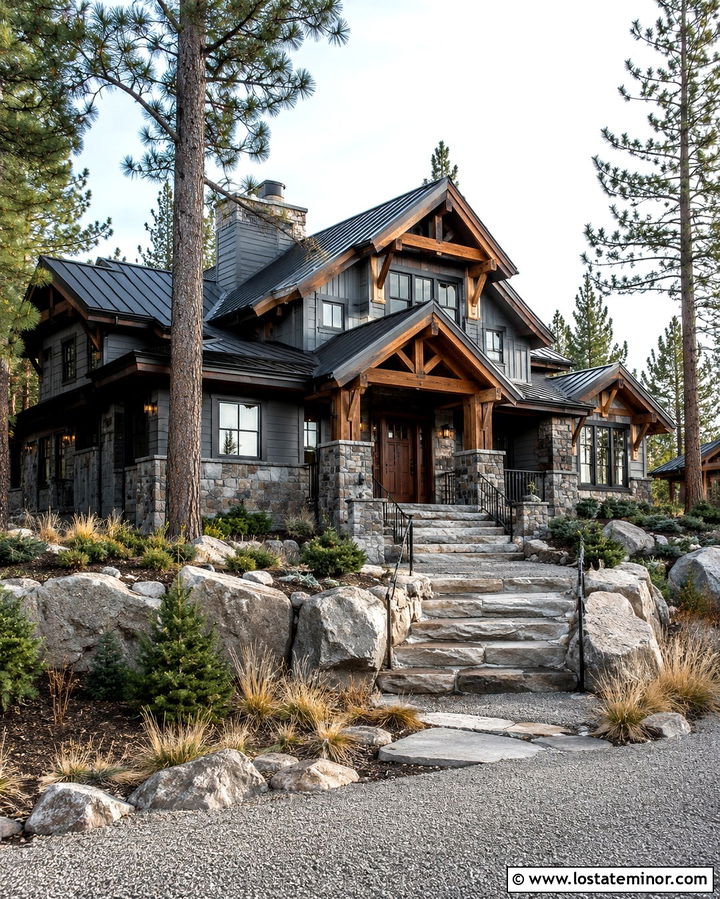
A mountain house can handle a darker slate grey exterior when it is balanced with rugged stone and warm timber. Use deep slate grey siding, a black metal roof, and exposed cedar beams around the porch. Form the entrance from broad cut-stone steps with natural edges, arranging them between low boulder retaining walls. The stone should contain grey and brown tones that bridge the siding and timber. A heavy cedar front door and matching rail caps reinforce the rustic warmth. Add simple black railings where needed without making them visually dominant. Native grasses, evergreen shrubs, gravel, and mature trees complete the setting, allowing the substantial staircase to look naturally embedded in the surrounding terrain.
27. Slate Grey Contemporary House With Steel Steps
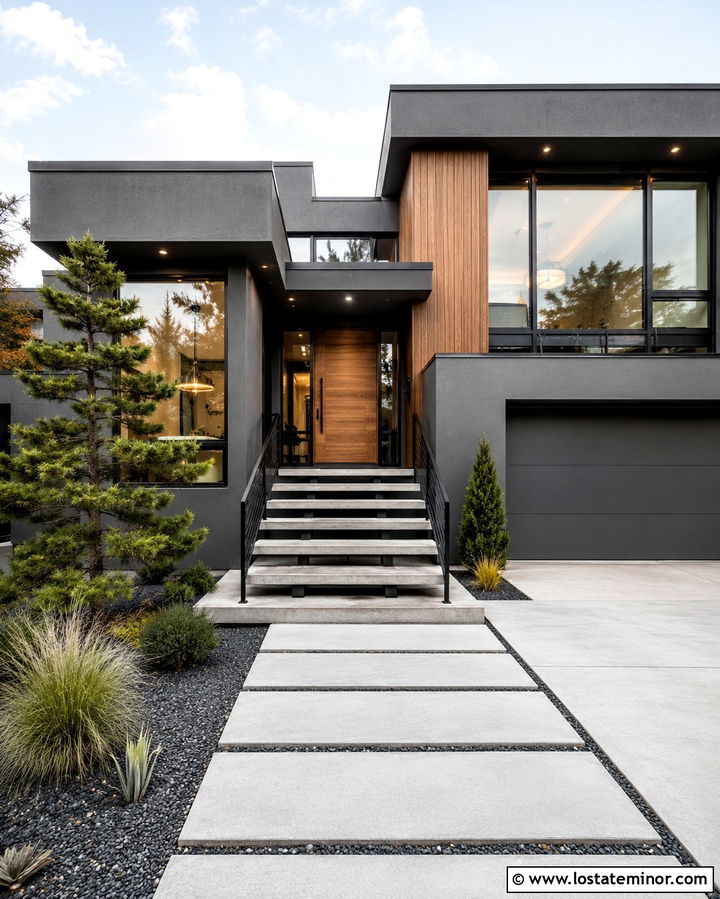
Steel details can create a distinctive entrance for a slate grey contemporary home. Cover the facade with smooth slate grey panels, vertical wood siding, and black-framed glass. Use concrete steps supported by slim black steel stringers, giving the staircase a light, architectural appearance. Deep treads and a generous landing keep the design visually calm. Coordinate the steel with a minimal handrail, window frames, and exterior lighting. A warm teak or oak door prevents the grey and black palette from looking industrial. Surround the entry with large-format concrete pavers, dark gravel, and sculptural evergreen plants. Keep the driveway and planting lines simple so the staircase remains an intentional part of the full composition.
28. Slate Grey Duplex With Matching Steps
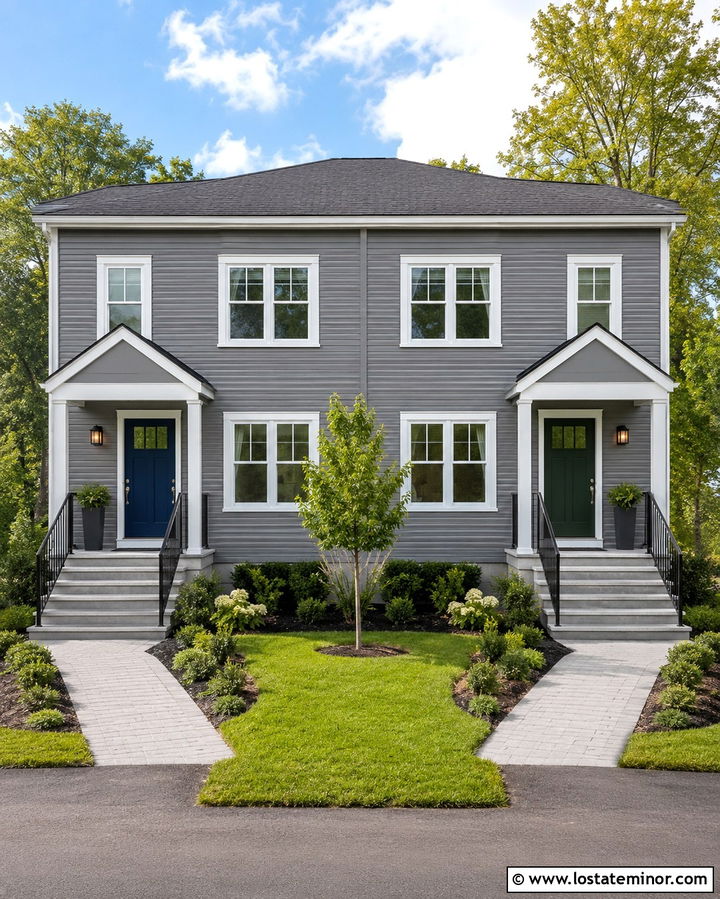
A duplex exterior looks more unified when both entrances share materials while retaining small individual differences. Paint the entire building slate grey with white trim and a charcoal roof. Create matching sets of light-grey masonry steps, each with simple black railings and a compact covered landing. Use related front door colors, such as deep navy on one side and forest green on the other. This creates distinction without dividing the facade into unrelated halves. Repeat identical sconces, planters, and house-number placement at both entrances. A shared straight walkway can branch symmetrically toward each staircase. Low shrubs and a central ornamental tree complete the exterior while maintaining visibility, balance, and a clear approach to both doors.
29. Slate Grey Small House With Simple Steps
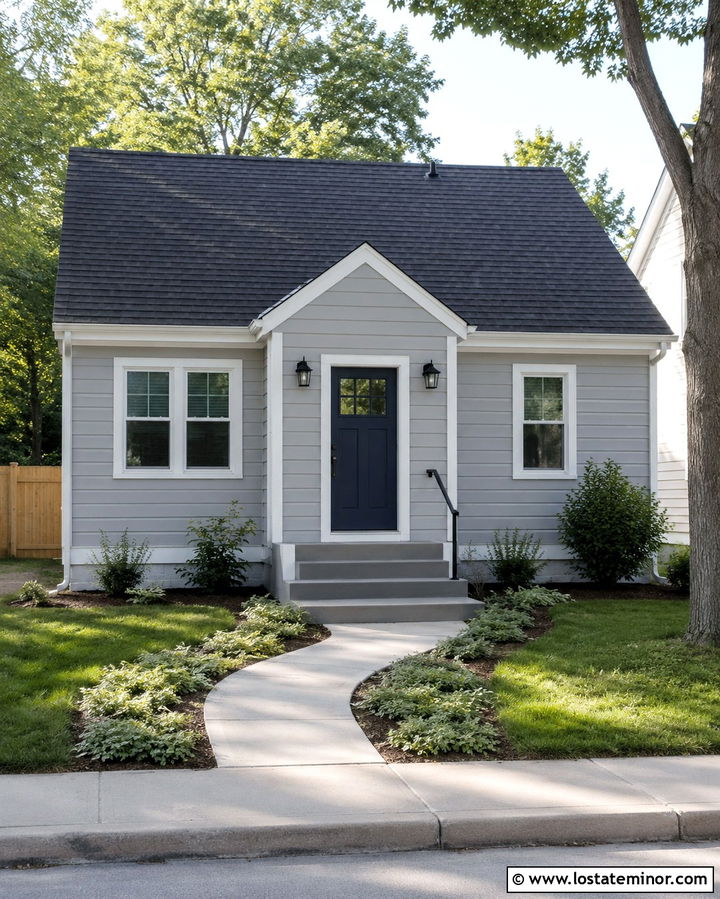
A small slate grey house benefits from an entrance that is straightforward but properly scaled. Choose a lighter slate grey for the siding, clean white trim, and a dark blue front door. Install two or three broad concrete steps rather than narrow builder-grade treads. The added width makes the entrance appear more generous without requiring an elaborate porch. Paint the risers a slightly deeper grey or clad them in thin stone for gentle contrast. A single black handrail, compact wall lantern, and clear house numbers provide useful detail. Connect the steps to a slightly curved walkway surrounded by low ground cover. Keep foundation shrubs below the windows so the compact facade remains open, bright, and visually organized.
30. Slate Grey House With Accessible Low-Rise Steps
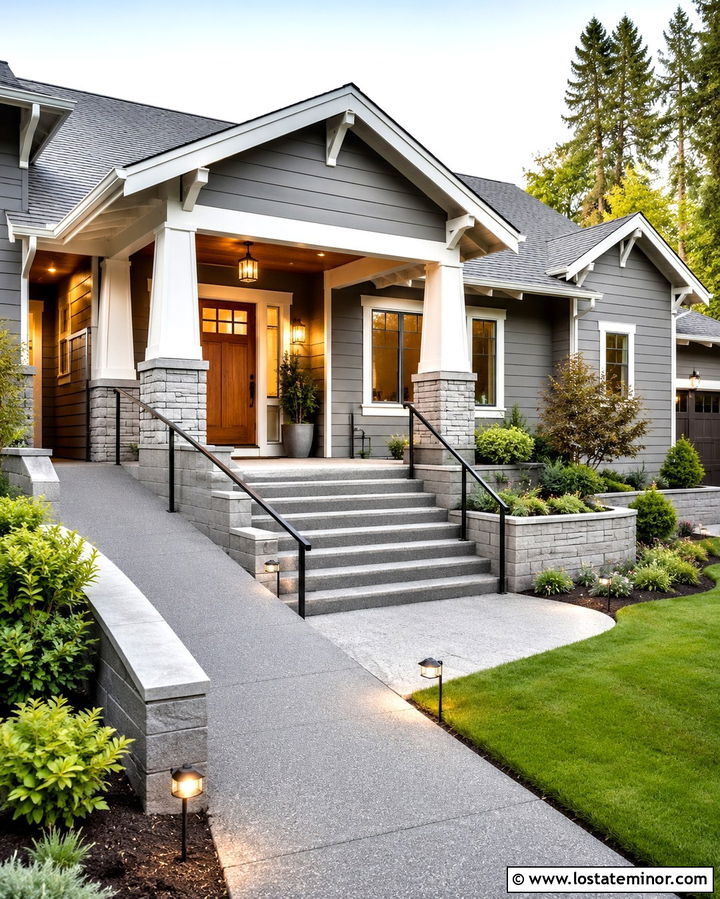
An accessible entrance can become a seamless part of a slate grey exterior rather than a separate-looking addition. Use a wide approach with shallow steps and an adjacent gently sloped walkway leading to the same covered landing. Paint the house slate grey with warm white trim and install a natural wood front door. Select textured medium-grey stone or concrete for both routes so they read as one coordinated design. Simple black rails can follow the steps and sloped path, while low masonry walls define planting beds. Add clear lighting along the route and preserve comfortable open landings near the doorway. Layered shrubs and ground cover can soften the hardscape without narrowing the approach or concealing changes in elevation. ()
Conclusion:
The best slate grey exterior combines color, architecture, and hardscaping as one complete composition. Brick steps add traditional warmth, concrete supports modern simplicity, wood creates softness, and natural stone introduces lasting texture. Trim, doors, railings, roofing, and landscaping should repeat or bridge these colors so the staircase never appears disconnected from the facade. Before finalizing a design, compare material samples beside the siding in direct sun, shade, and cloudy light. Also consider the scale and visibility of every tread. Whether your home is a farmhouse, ranch, cottage, or contemporary build, these **30 Slate Grey House Design With Steps Ideas** offer practical ways to create a coordinated and welcoming entrance.

Related posts: