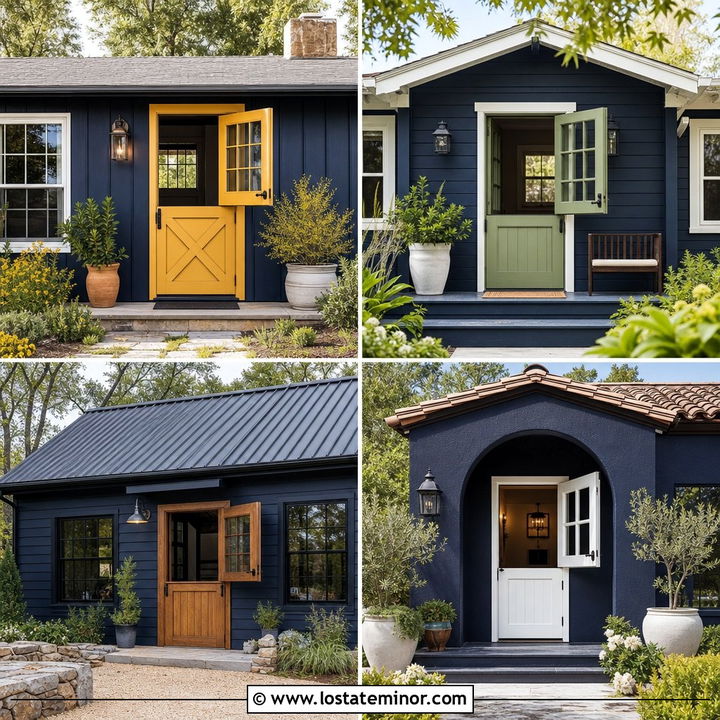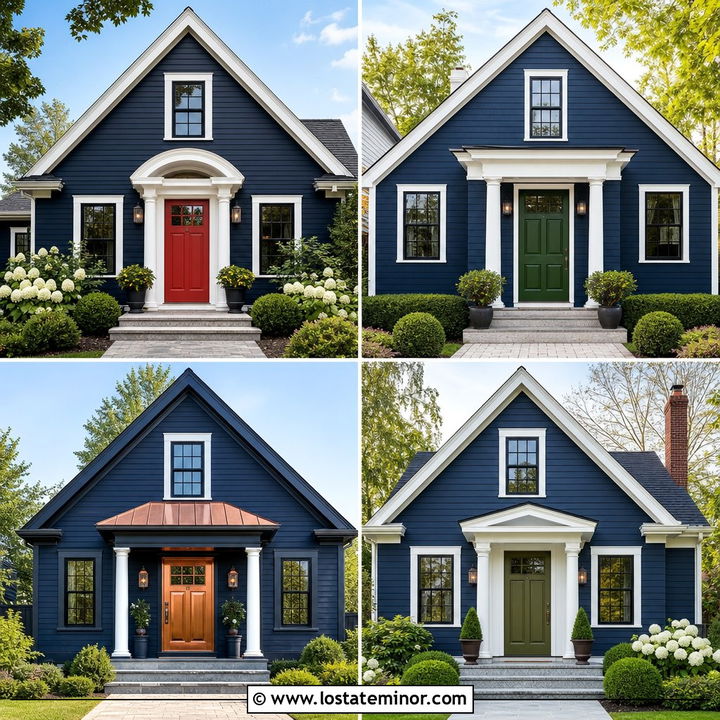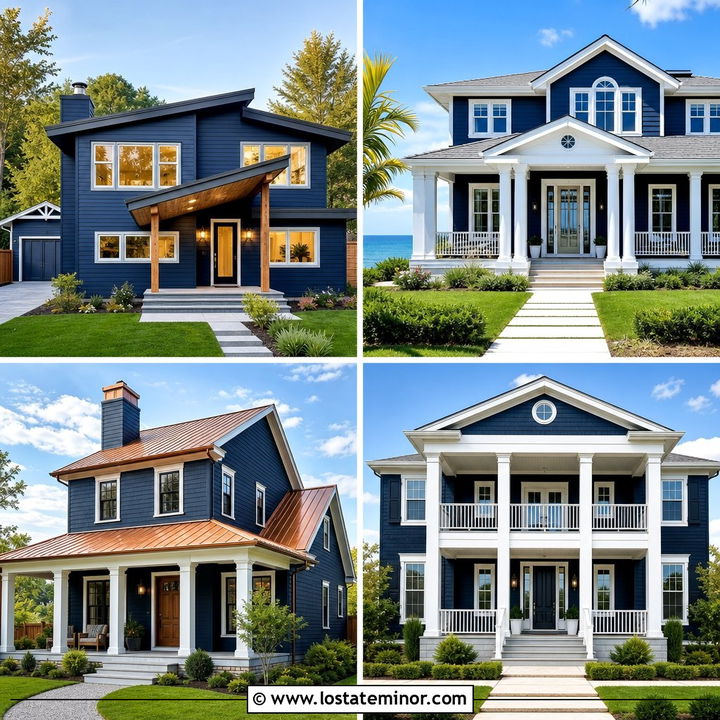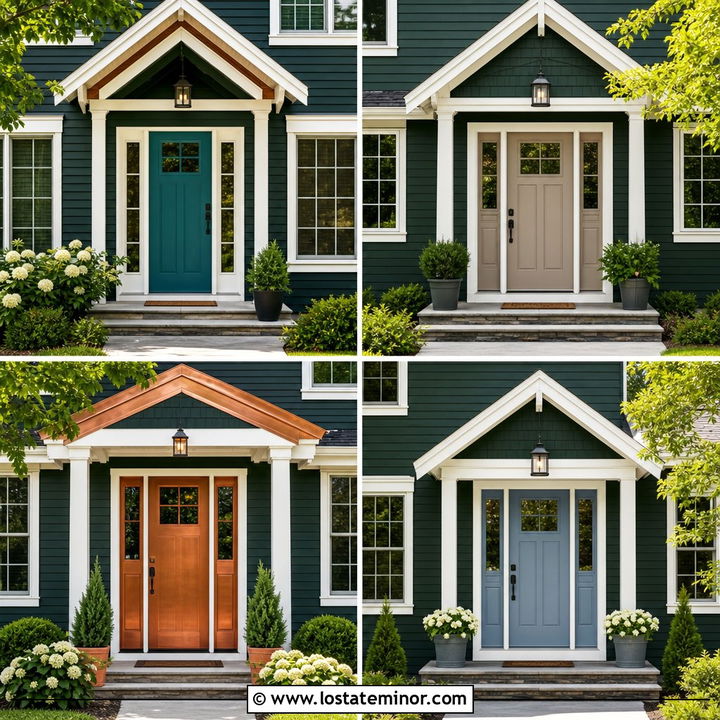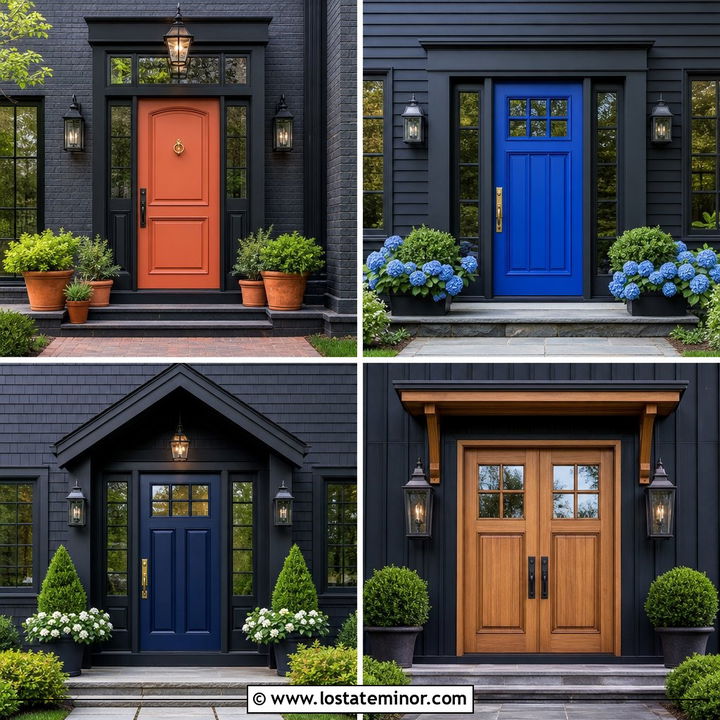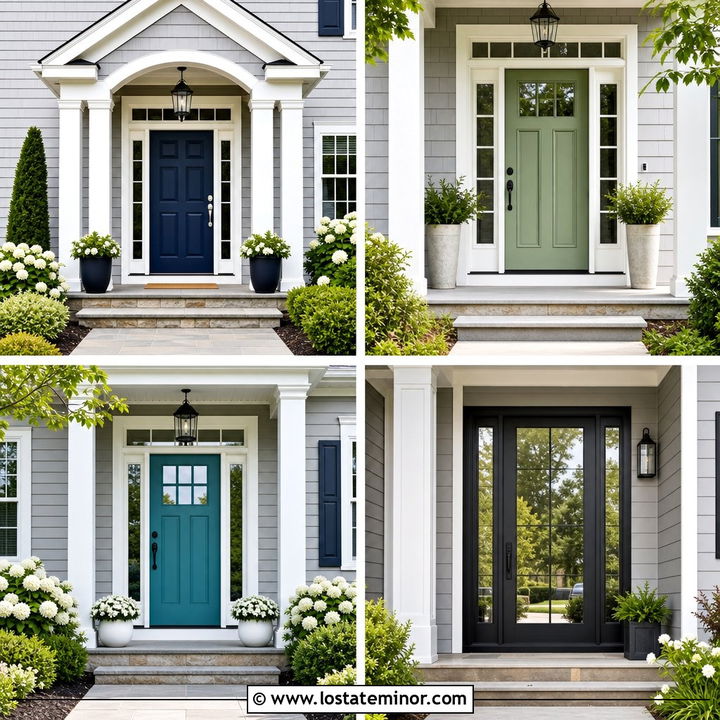
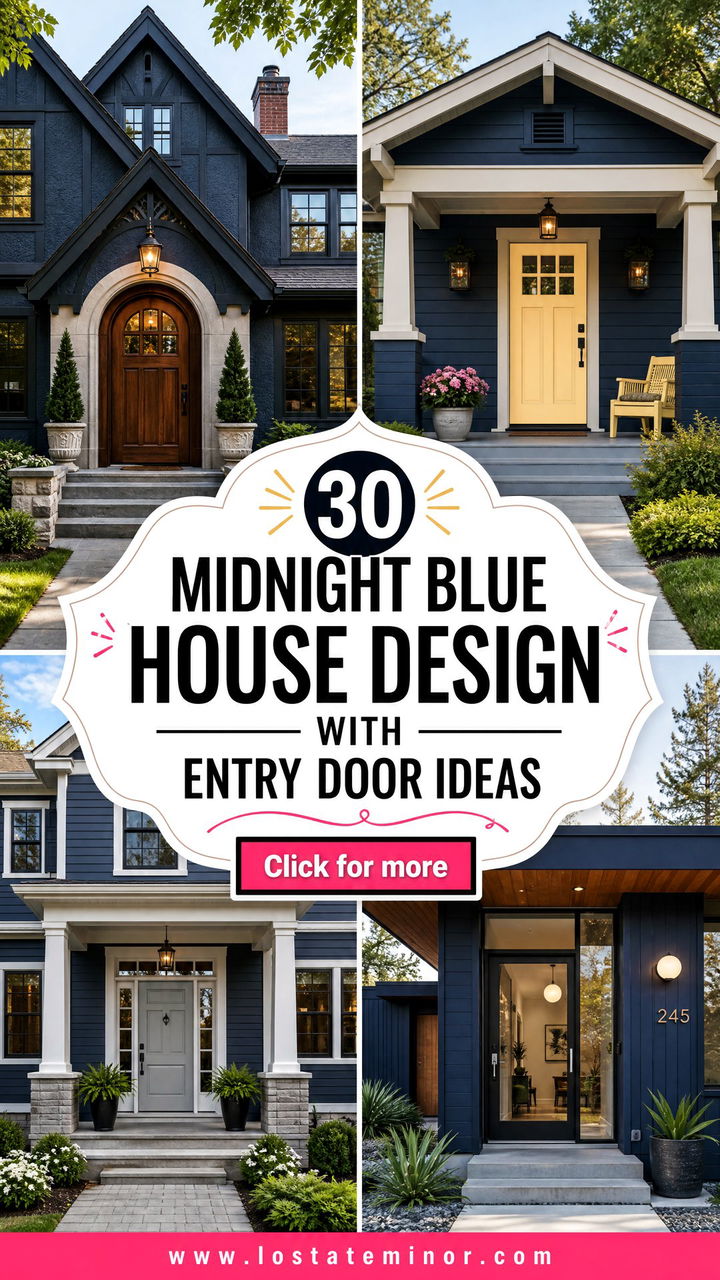
Midnight blue creates a polished exterior that feels classic, dramatic, and surprisingly versatile. Its deep navy tone can suit everything from a traditional Colonial to a streamlined modern home. The entry door determines whether the finished palette looks crisp, warm, colorful, rustic, or quietly monochromatic. White and red doors deliver familiar contrast, while stained wood, sage green, coral, and muted yellow add personality. Paint manufacturers also recommend coordinating doors with siding, trim, masonry, and natural wood rather than choosing each color separately. () The complete facade matters, including the roof, windows, porch, garage, and landscaping. Explore these 30 Midnight Blue House Design With Entry Door Ideas to find a balanced combination for your home.
1. Midnight Blue Colonial With White Entry Door
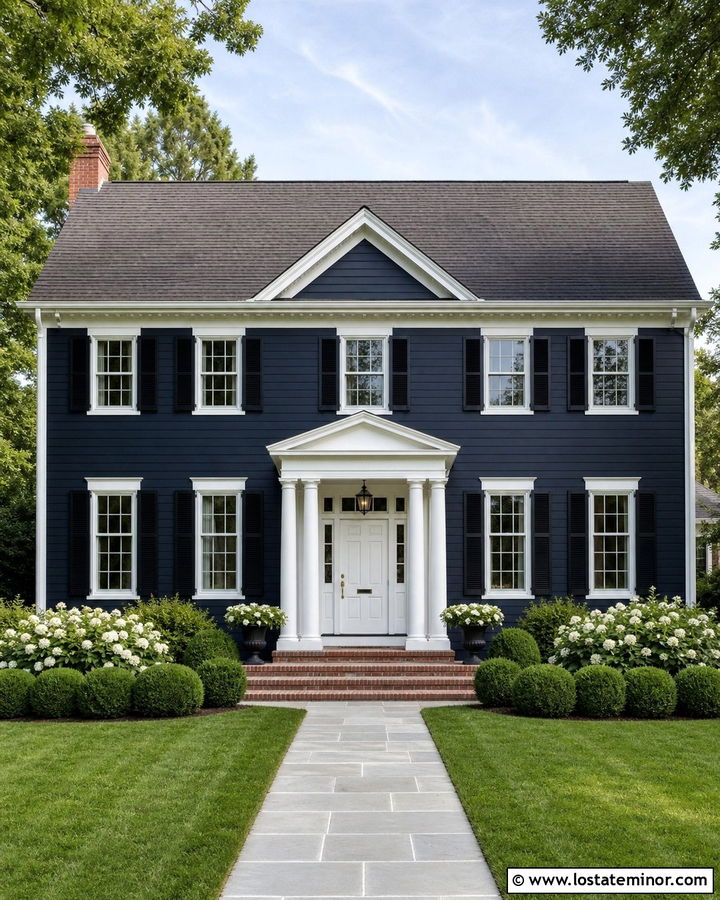
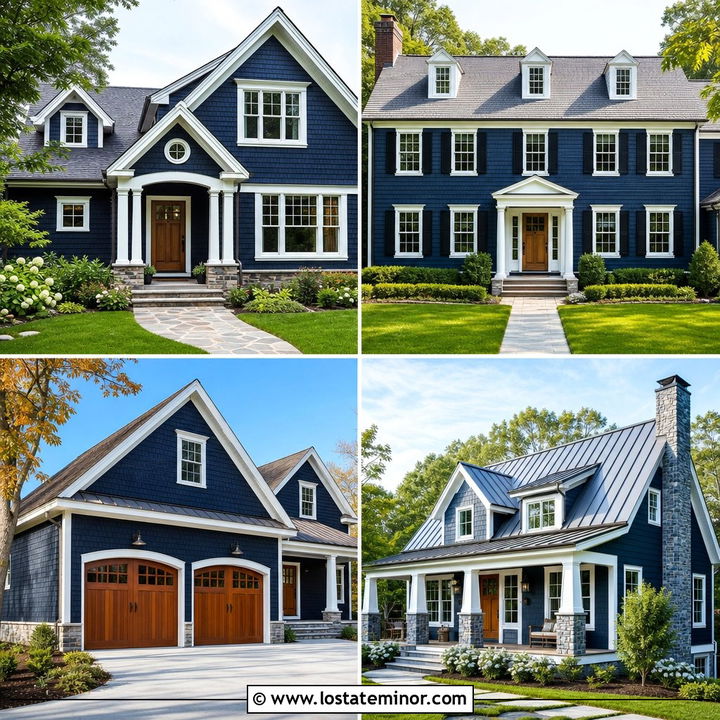
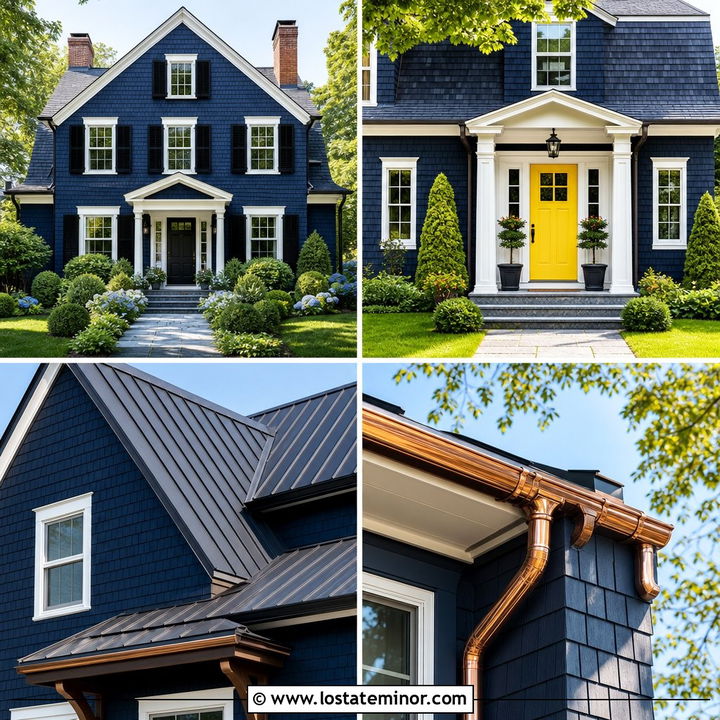
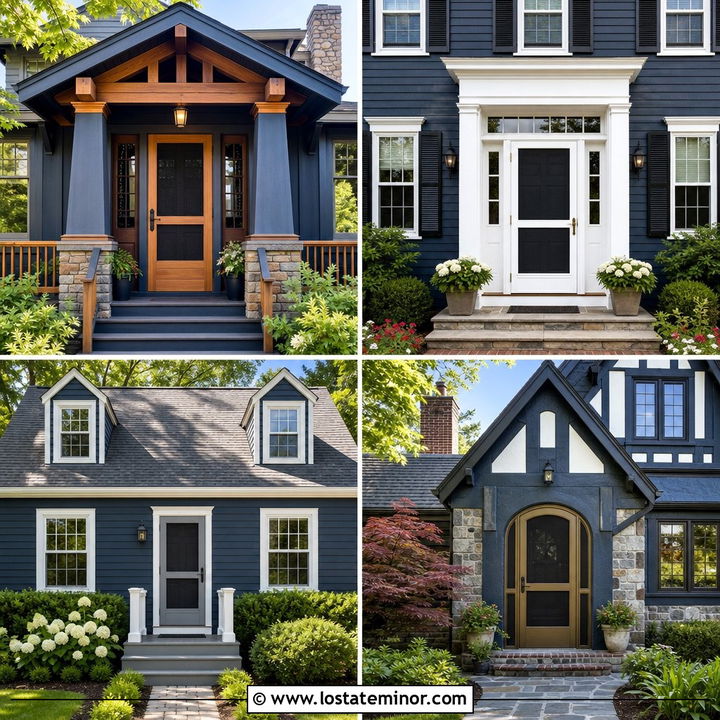
A white entry door gives a midnight blue Colonial a clean, traditional focal point. Use warm white rather than a stark blue-white if the home has red brick steps or an aged brick chimney. Repeat the door color on window trim, columns, cornices, and porch railings to organize the symmetrical facade. Black shutters and a charcoal shingle roof add definition without competing with the door. Polished brass hardware brings warmth to the cool siding, especially when paired with traditional lanterns. Keep foundation plantings neat and structured with boxwoods, hydrangeas, or low evergreen hedges. The finished exterior feels established and formal, yet the dark blue siding gives the familiar Colonial palette more depth than a standard white or gray scheme.
2. Midnight Blue Cape Cod With Cream Entry Door
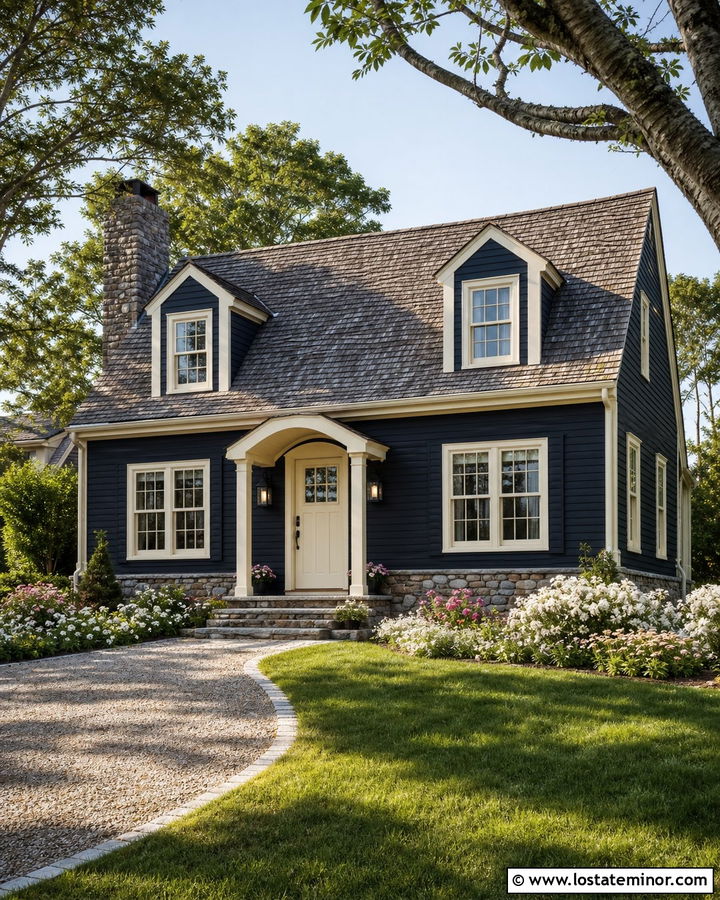
Soft cream makes midnight blue siding feel warmer and more relaxed than bright white. This pairing works especially well on a Cape Cod house with cedar roof shingles, dormer windows, and a compact covered entry. Paint the door, window casings, fascia, and corner boards in the same creamy off-white for a connected appearance. Add antique brass hardware and warm lantern sconces to reinforce the inviting undertone. Natural fieldstone along the foundation can bridge the contrast between the deep blue body and pale trim. Avoid introducing several competing whites because mismatched undertones may make the facade look pieced together. A shell or pea-gravel walkway, clipped shrubs, and simple flowering borders complete a comfortable coastal-inspired exterior without making the design feel overly themed.
3. Midnight Blue Craftsman With Natural Oak Entry Door
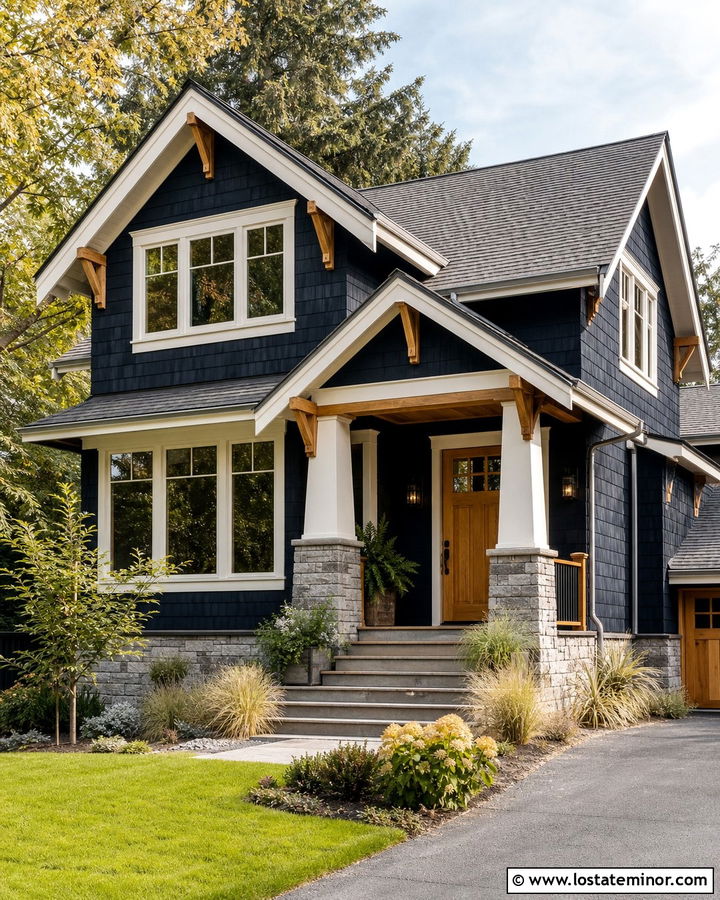
Natural oak introduces warmth and visible grain to a midnight blue Craftsman exterior. Choose a medium honey or clear oak stain that stands apart from the dark siding without turning orange. Frame the door with warm white trim and repeat the wood tone on porch brackets, tapered columns, or the ceiling above the entry. A stone porch base containing gray, tan, and blue undertones can connect every material naturally. Matte black lights and house numbers provide a sharper modern detail, while a weathered gray roof keeps the palette grounded. This complete scheme highlights Craftsman craftsmanship instead of relying on extra paint colors. Broad steps, native grasses, and layered shrubs create an easy transition from the yard to the richly detailed front porch.
4. Midnight Blue Farmhouse With Cedar Entry Door
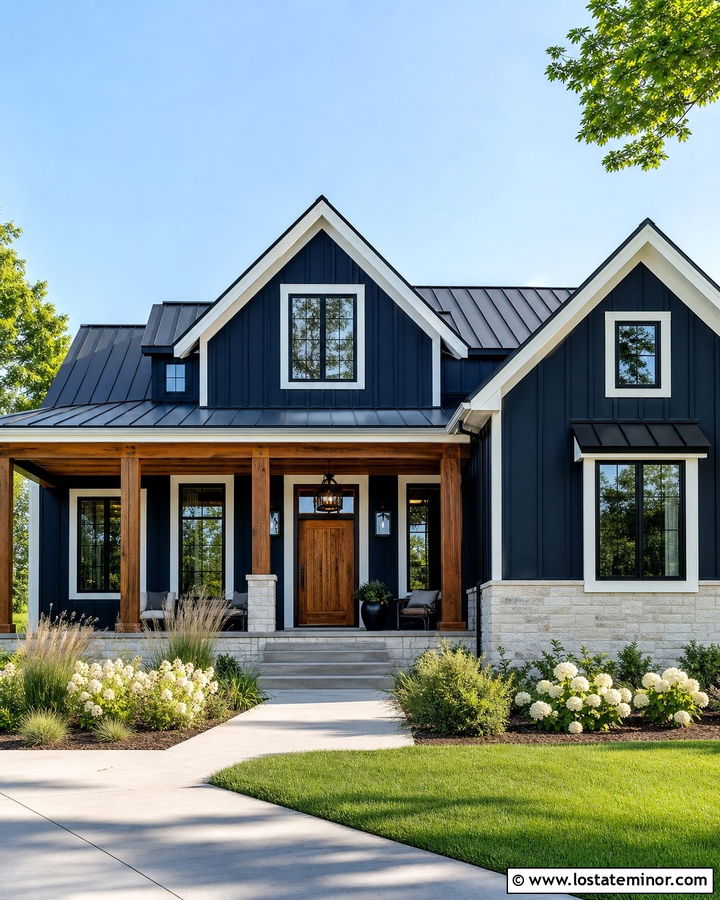
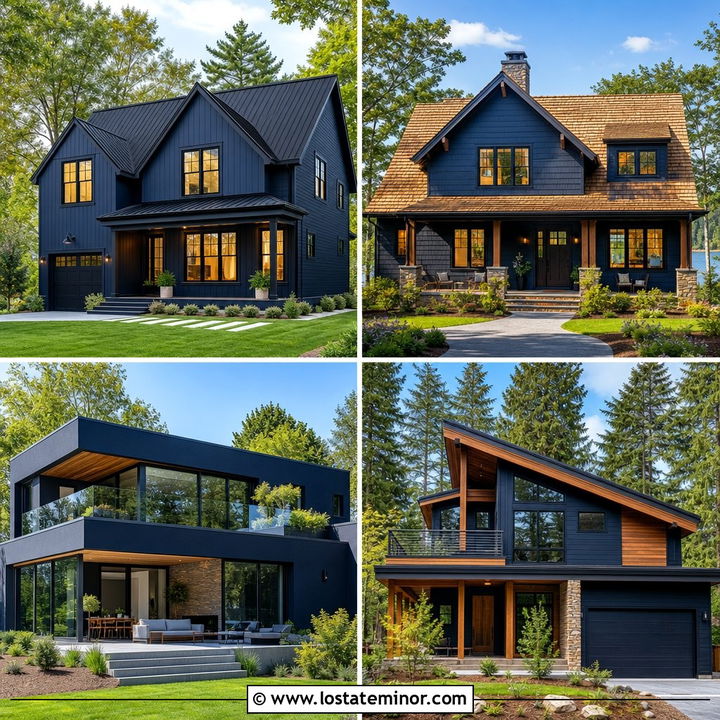
Picture a dark midnight blue farmhouse softened by a richly textured cedar front door. The reddish-brown wood prevents the broad facade from feeling cold and works beautifully beside white board-and-batten trim. Carry cedar onto the porch ceiling, column wraps, or small gable brackets, but keep the garage doors midnight blue so they blend into the siding. A black standing-seam roof and black-framed windows introduce the crisp lines associated with modern farmhouse design. Use pale limestone or light gray concrete at the foundation to prevent the palette from becoming too heavy. Informal grasses, white flowering shrubs, and a straight walkway reinforce the uncluttered setting. The result feels current and welcoming while allowing the authentic wood entry to remain the main attraction.
5. Midnight Blue Tudor With Walnut Entry Door
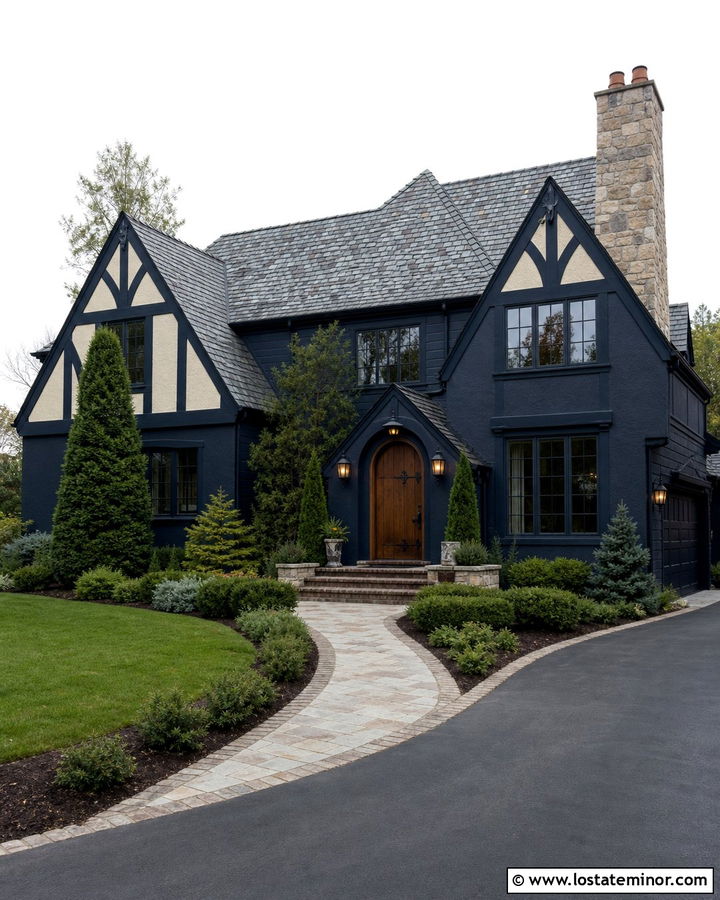
A walnut entry door complements the substantial character of a midnight blue Tudor home. Select a deep brown stain with visible grain, raised panels, and traditional iron hardware. Cream stucco in the upper gables keeps the facade from appearing too dark, while midnight blue timber details connect those areas to the main siding. A variegated slate roof and warm stone chimney add the natural color variation this architectural style needs. Consider an arched door or slightly rounded opening to emphasize the storybook proportions without making the house look decorative. Bronze lanterns, brick steps, and layered evergreen landscaping further soften the navy body. Together, the sophisticated blue, creamy plaster, dark walnut, and masonry create an exterior that looks collected rather than newly color-matched.
6. Midnight Blue Ranch With Black Entry Door
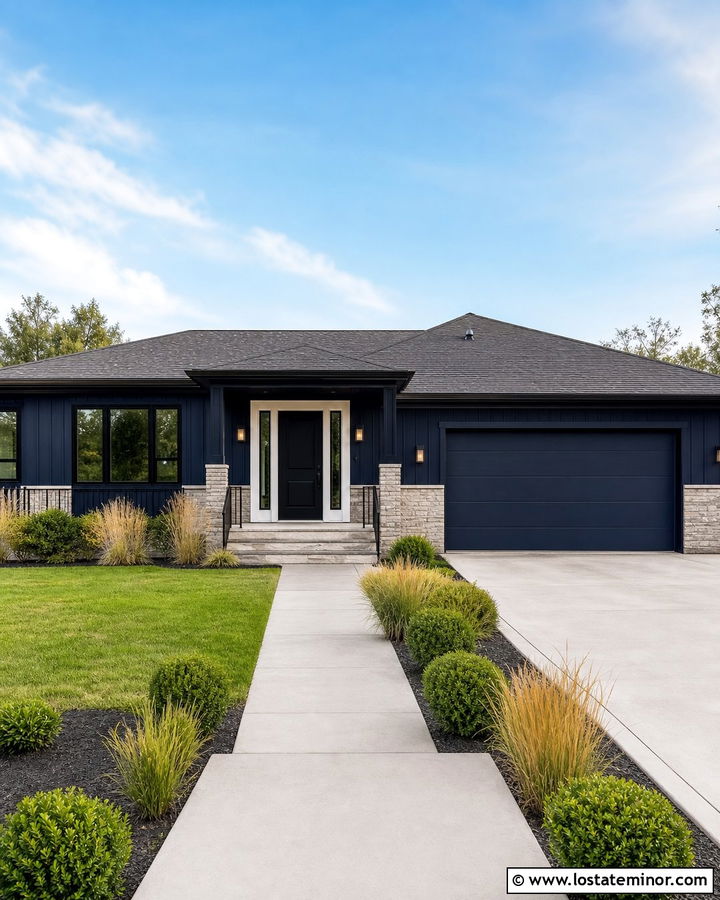
Can a black front door work against midnight blue siding without disappearing? Yes, when texture, trim, and sheen establish separation. Use a satin or semigloss black on the door, then frame it with warm white casing or narrow natural wood trim. On a low-profile ranch house, black-framed windows and a charcoal roof extend the horizontal lines while keeping the palette cohesive. Paint the garage door midnight blue instead of black so the entrance remains easier to identify. Light gray stone across the lower facade adds enough brightness to balance both dark colors. A wide concrete walkway, ornamental grasses, and simple globe shrubs support the clean architecture. This scheme offers subtle contrast and works particularly well for homeowners who prefer a restrained, modern exterior.
7. Midnight Blue Brick House With Red Entry Door
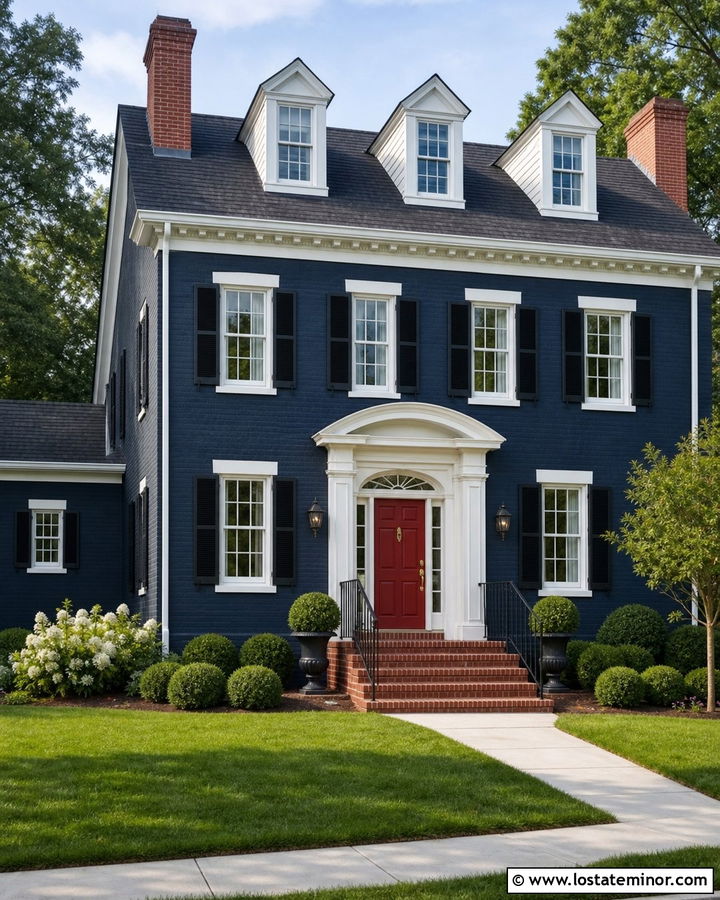
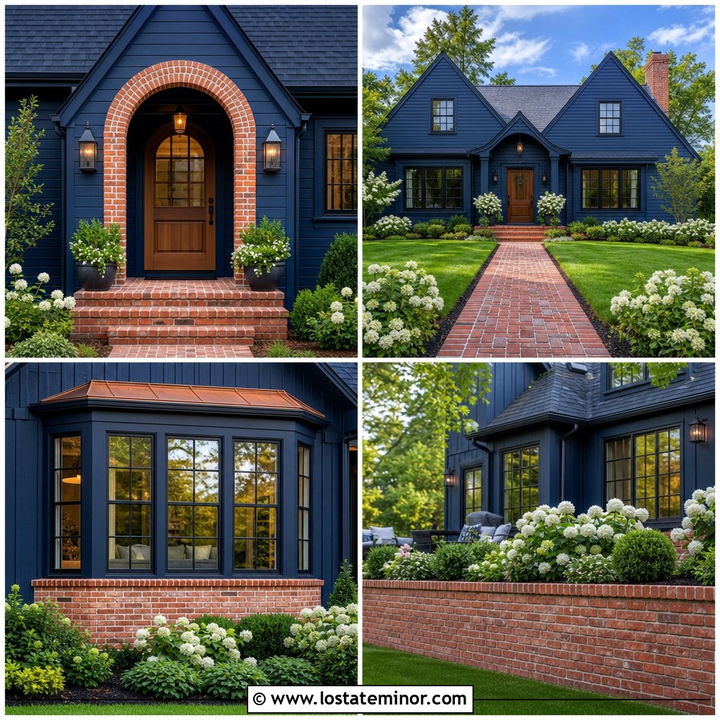
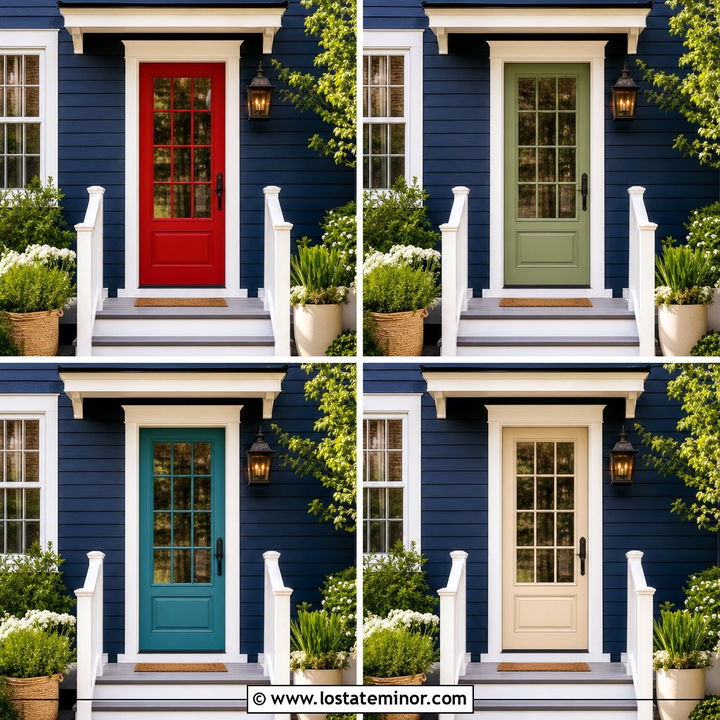
A classic red entry door can bring instant energy to midnight blue siding and red brick accents. Choose a deep heritage red rather than a bright primary shade. The muted color will relate more naturally to brick steps, chimneys, or foundation masonry. Use creamy white around windows and rooflines to separate the two rich colors and prevent the exterior from feeling overly dark. Black shutters, iron railings, and traditional lanterns strengthen the tailored appearance. When the brick has strong orange undertones, look for a red door with subtle brown warmth. Cooler burgundy-red works better beside darker, blue-red masonry. Finish the entrance with symmetrical planters and a clear walkway. This balanced palette feels confident, recognizable, and suitable for traditional American architecture.
8. Midnight Blue Georgian With Burgundy Entry Door
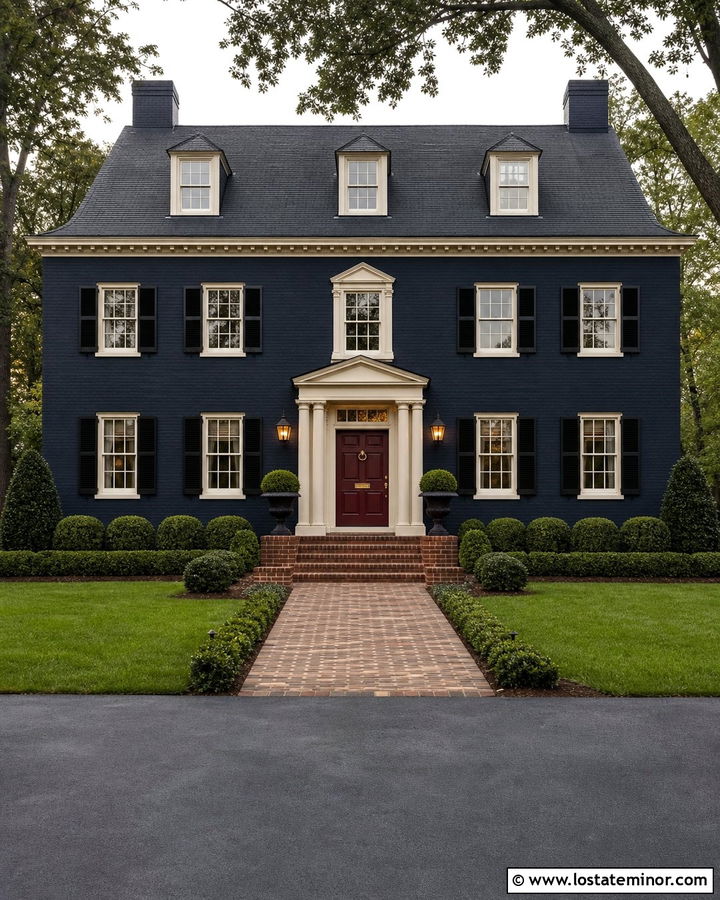
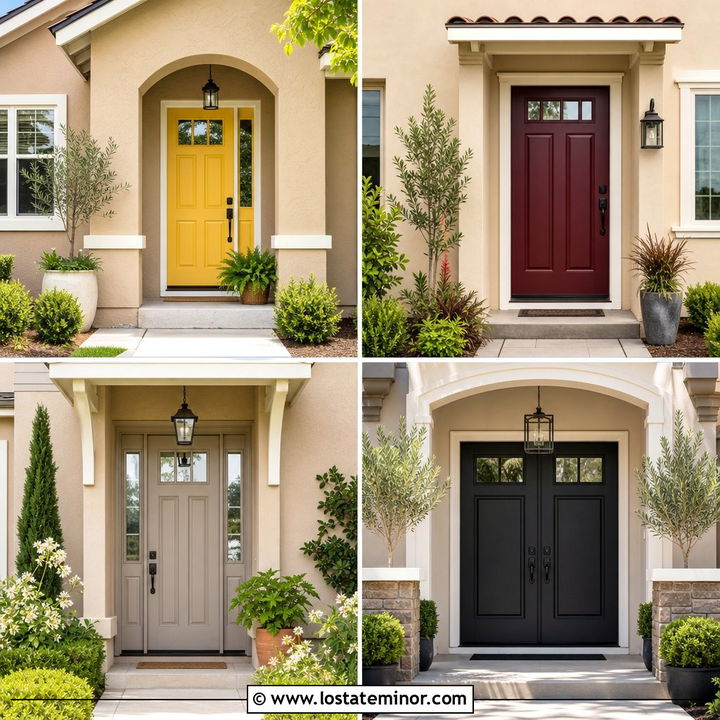
Burgundy creates a refined, lower-contrast alternative to a bright red door. On a midnight blue Georgian exterior, its wine-red depth works best when surrounded by wide cream trim and balanced by orderly window placement. Repeat burgundy sparingly, perhaps in small planters or seasonal foliage, rather than using it on shutters. Black shutters and a dark slate roof should remain secondary framing elements. Brass door hardware and warm metal lanterns help the entry stand forward from the two dark painted surfaces. If the facade includes brick, choose masonry with muted red and brown tones instead of vivid orange. Formal hedges, a straight path, and matching urns suit the symmetry. The complete house feels stately, layered, and colorful without sacrificing its traditional restraint.
9. Midnight Blue Cottage With Mustard Yellow Entry Door
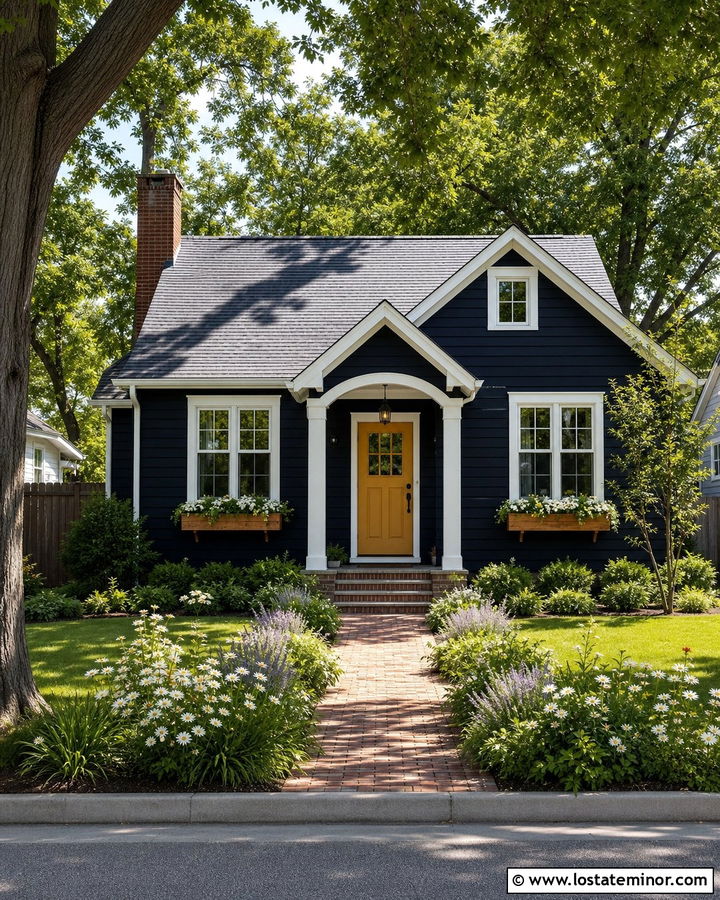
Mustard yellow adds a cheerful focal point without producing the sharp intensity of lemon yellow. It looks especially appealing on a small midnight blue cottage where the door occupies a visible part of the facade. Keep window trim and eaves soft white, then introduce natural cedar flower boxes or porch posts for added warmth. A medium gray roof quiets the stronger color contrast. The yellow should have earthy ochre undertones so it relates to brick paths, dried grasses, and warm landscaping. Limit the accent color to the door rather than repeating it on shutters or garage doors. White daisies, lavender, and loose cottage borders can frame the entrance naturally. This scheme feels friendly and individual while preserving the depth and sophistication of the midnight blue exterior.
10. Midnight Blue Bungalow With Pale Yellow Entry Door
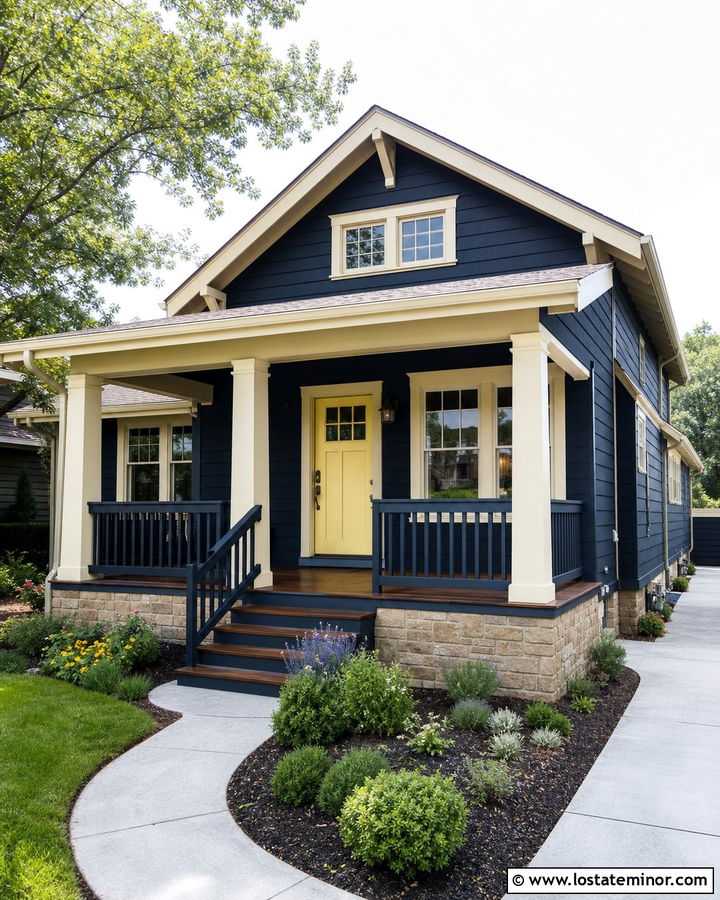
Pale yellow gives a midnight blue bungalow a sunny but gentle welcome. Look for a buttery shade with enough pigment to remain visible in bright daylight. Cream trim around windows, porch columns, and roof edges creates a softer transition than pure white. A natural wood porch floor and tan stone foundation add another layer of warmth, helping the yellow door feel integrated rather than added as an afterthought. Choose aged brass or matte black hardware depending on whether you want a vintage or updated finish. Deep blue porch railings can blend with the body while cream balusters maintain definition. Complete the curb appeal with curved planting beds, compact shrubs, and colorful perennials. The overall exterior feels bright, approachable, and well suited to bungalow proportions.
11. Midnight Blue Split-Level With Coral Entry Door
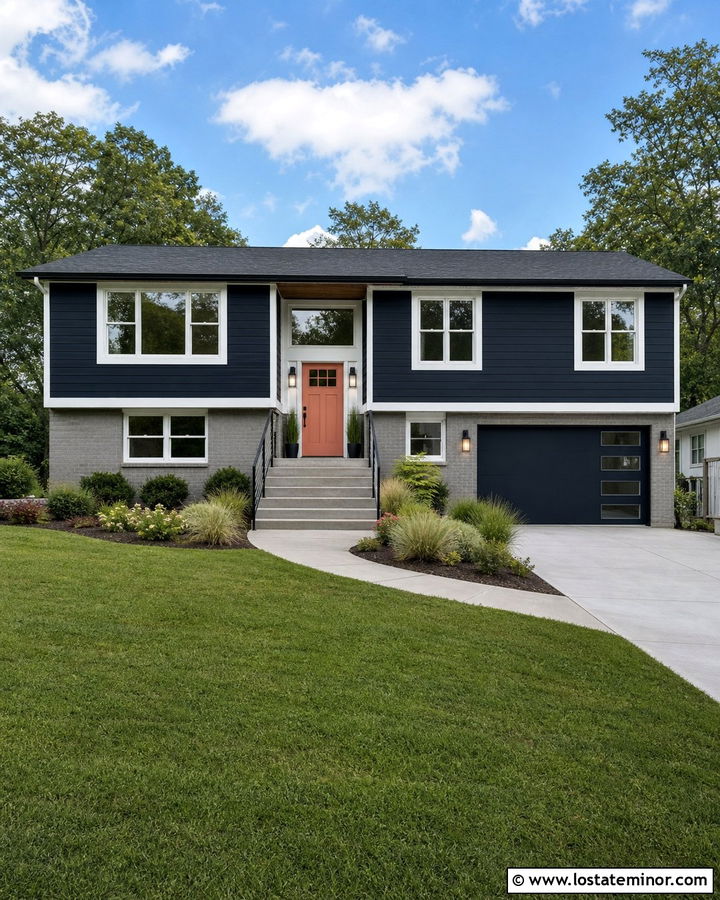
Coral can transform a straightforward midnight blue split-level into a more memorable home. Choose a softened coral with pink and orange undertones rather than a neon version. Crisp white trim helps both colors read clearly, while a charcoal roof and dark garage door keep the larger surfaces quiet. If the lower level includes light gray brick or stone, the masonry will provide a neutral break between the navy siding and bright entrance. Repeat coral only through small flowerpots or restrained landscaping. Updating the light fixtures, house numbers, and railing in matte black will sharpen the older architecture without requiring structural changes. A broad walkway leading directly to the door reinforces the new focal point. The finished scheme feels energetic, balanced, and intentionally modernized.
12. Midnight Blue Coastal House With Burnt Orange Entry Door
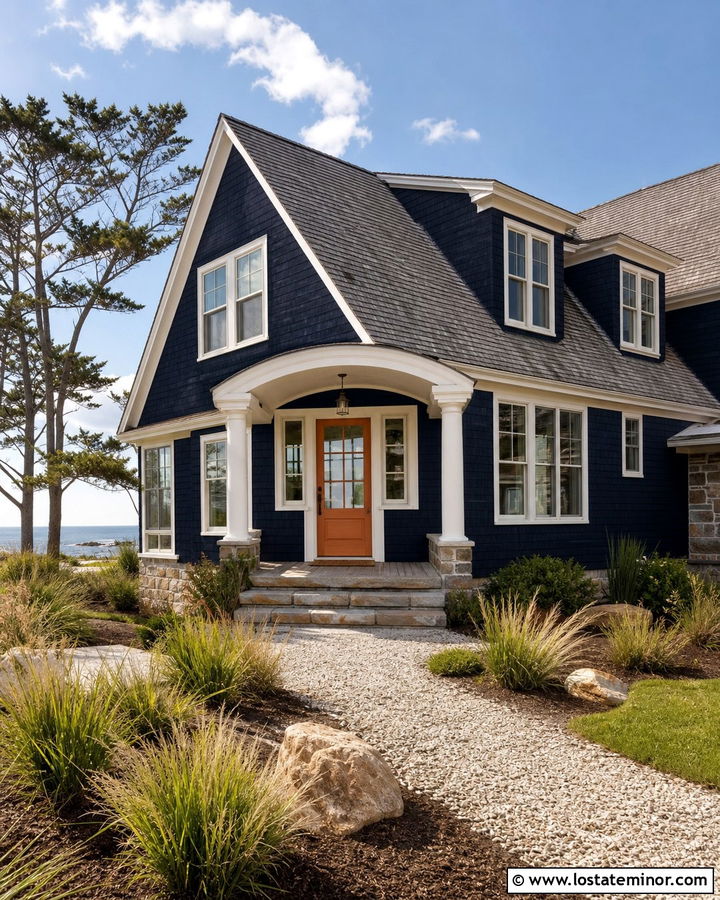
Burnt orange brings sunset warmth to a midnight blue coastal exterior without relying on predictable nautical accents. Choose an earthy orange with brown or clay undertones. Pair it with sandy off-white trim, weathered gray roof shingles, and light natural stone around the porch. The door color will stand out clearly while still feeling grounded beside these muted materials. Use simple glass panels to bring daylight inside and brushed brass hardware for a subtle warm finish. Natural rope textures, oversized coastal symbols, and excessive blue-and-white decoration are unnecessary. Instead, create the setting with beach grasses, pale gravel, weather-resistant wood, and an open walkway. The complete exterior feels relaxed and location-appropriate, while the burnt orange entry gives the deep blue siding an unexpected but sophisticated point of contrast.
13. Midnight Blue Southwestern House With Terracotta Entry Door
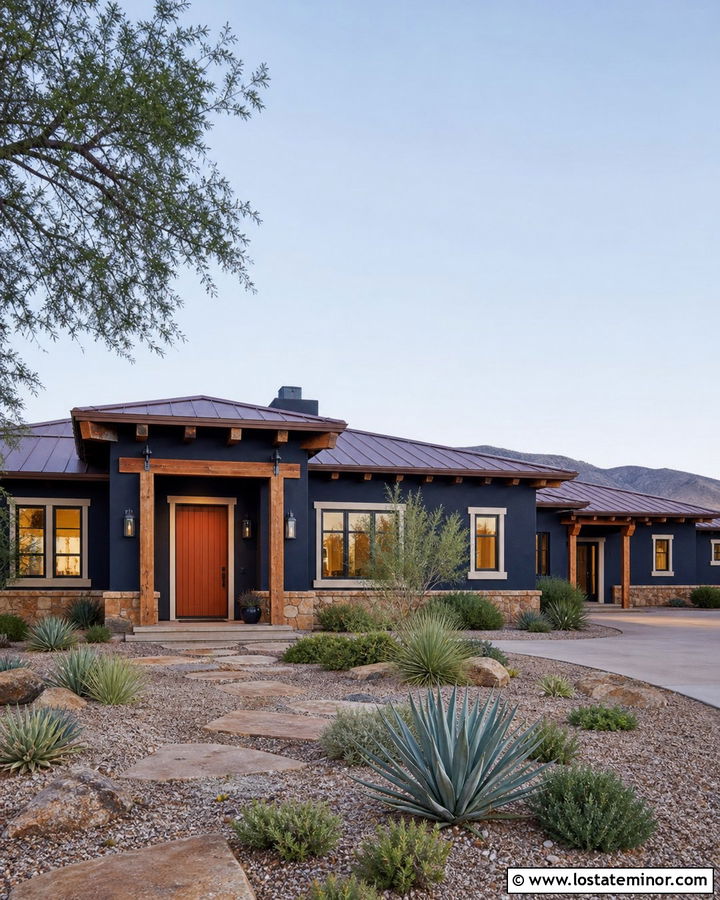
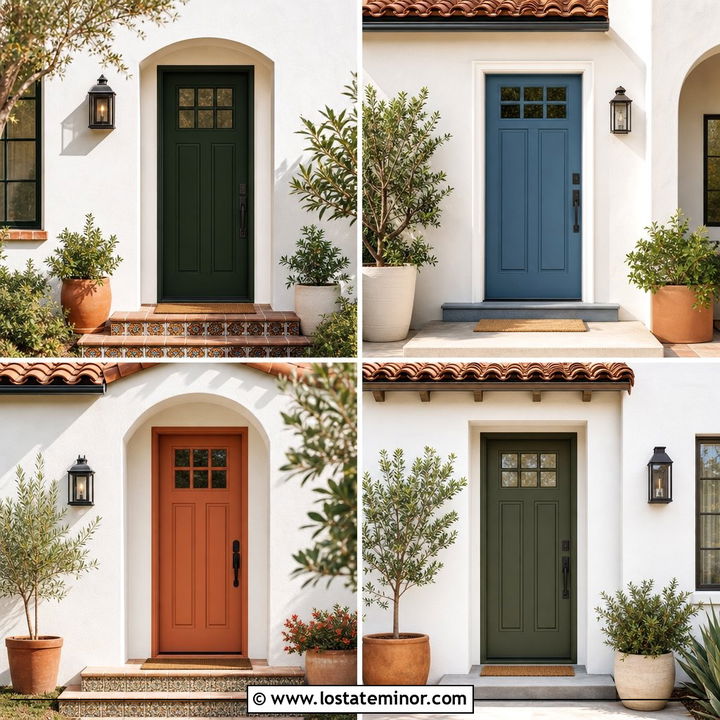
Terracotta creates a natural bridge between midnight blue paint and the earthy materials found on Southwestern homes. Use the deep blue on smooth stucco or simplified siding, then choose a clay-colored entry door with a matte finish. Warm ivory trim around the door and windows keeps the scheme bright. A low brown metal roof, exposed wood beams, and a stone or adobe-colored base introduce regional texture without overwhelming the facade. The door can feature vertical planks or shallow panels to emphasize its handcrafted appearance. Frame the house with gravel, sculptural plants, low grasses, and a wide concrete or flagstone path. Because midnight blue is much cooler than the surrounding landscape, the terracotta entrance becomes an important visual connector that makes the entire exterior feel balanced.
14. Midnight Blue Cottage With Sage Green Entry Door
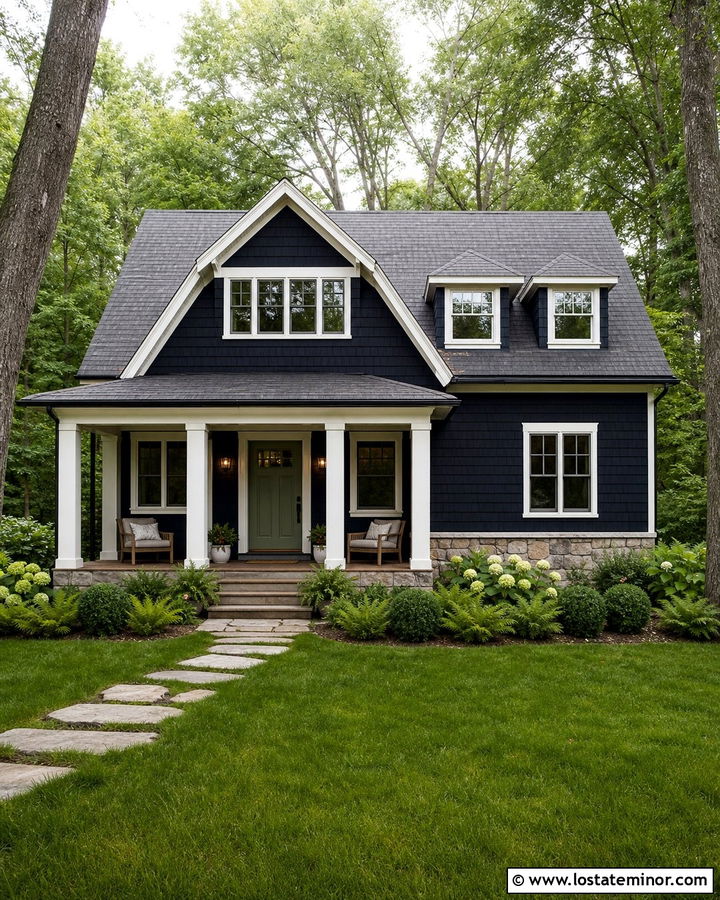
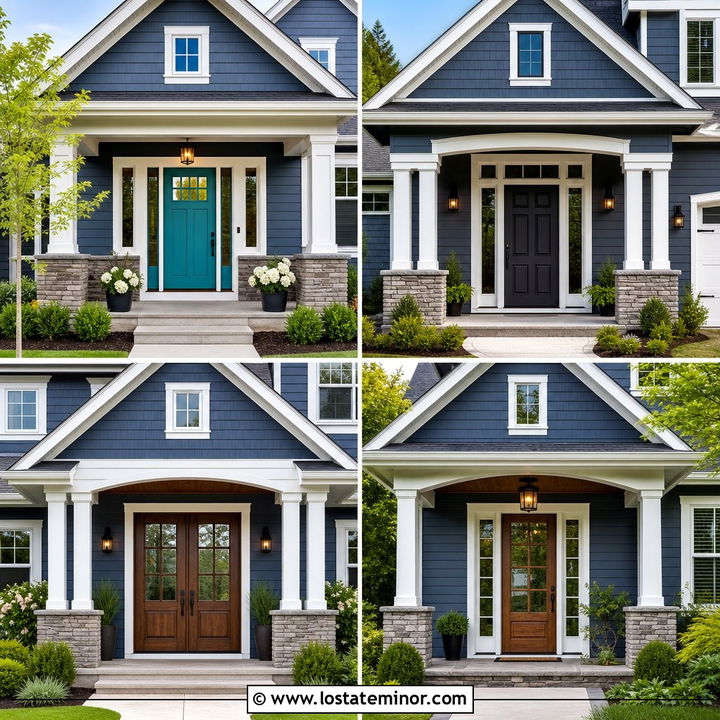
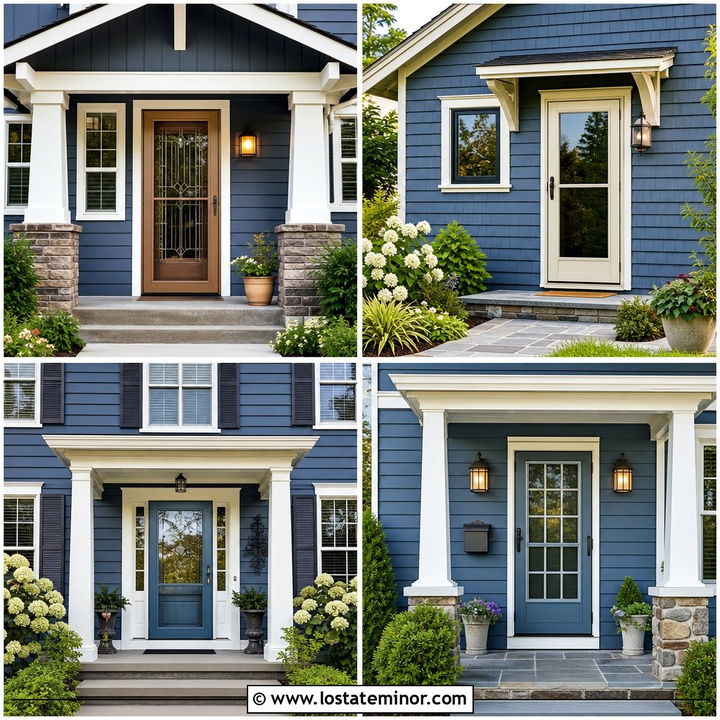
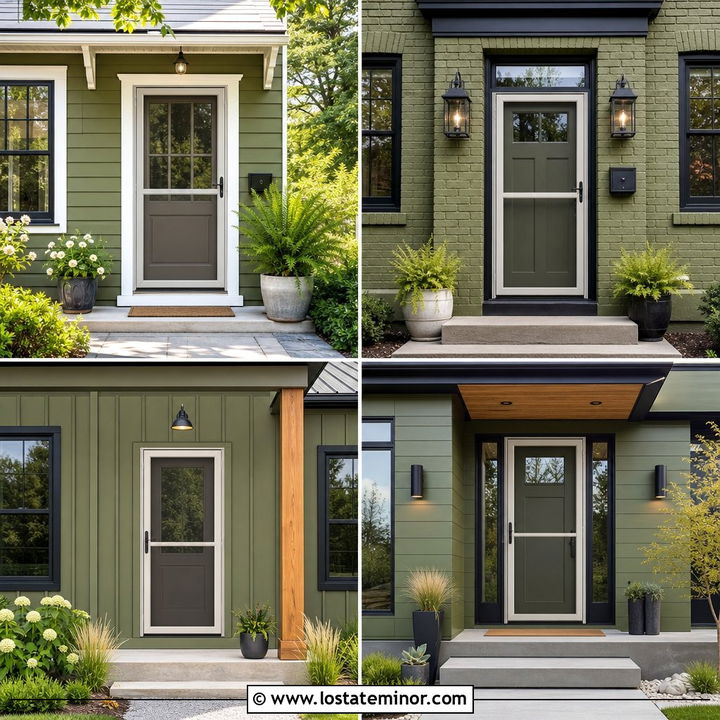
Sage green offers subtle color contrast for homeowners who want something calmer than yellow or red. Against midnight blue siding, a gray-green entry door feels natural, especially when the house is surrounded by mature trees. Use warm white trim to outline windows, corners, and porch details. Add a weathered wood porch floor, soft gray roof, and natural stone foundation containing mossy or taupe notes. The sage should be light enough to remain distinct from the dark house body. Black hardware gives the gentle color more structure, while aged brass creates a softer cottage effect. Layer ferns, hydrangeas, and rounded shrubs near the entry, leaving enough open space around the door. This full exterior palette feels peaceful, organic, and comfortably connected to its landscape.
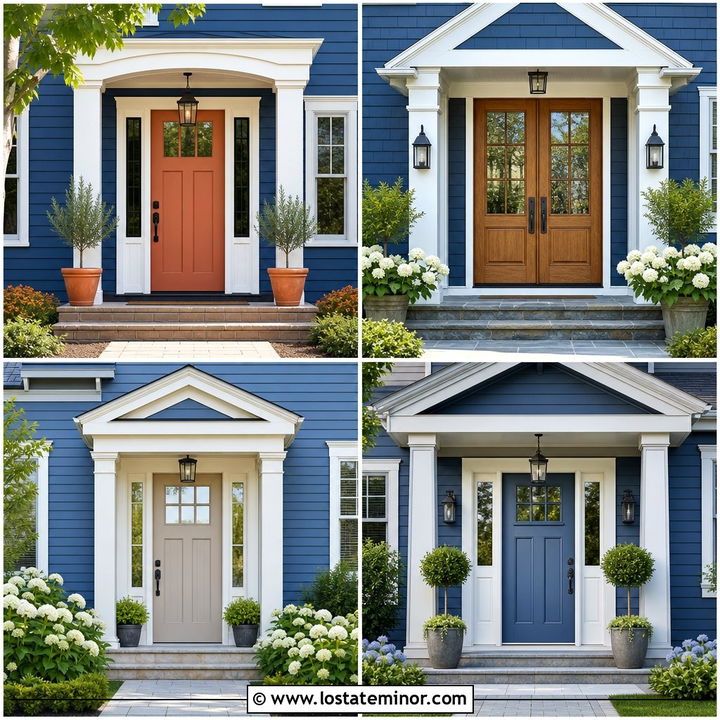
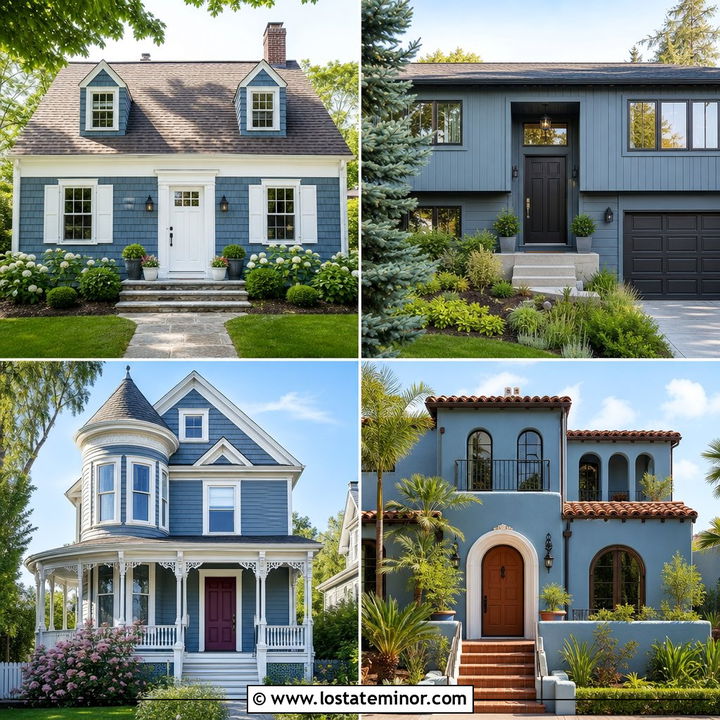
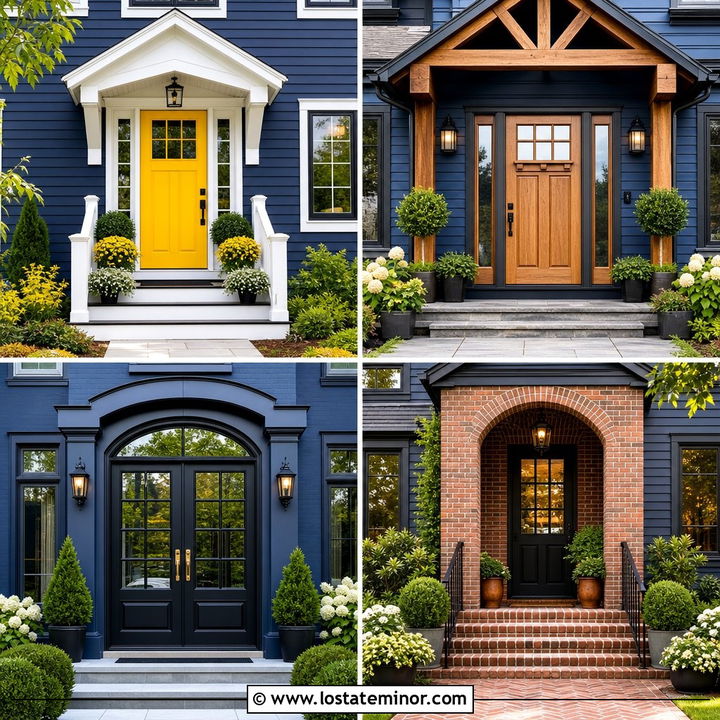
15. Midnight Blue Craftsman With Olive Green Entry Door
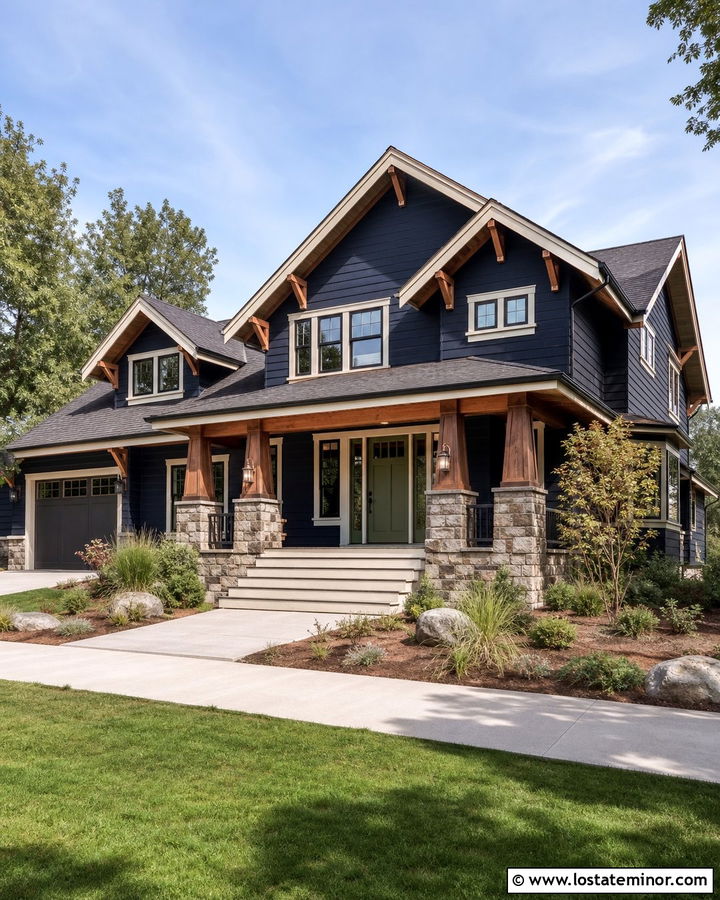
Olive green gives a midnight blue Craftsman house an earthy, heritage-inspired entrance. Select a medium olive with muted golden undertones so the door remains visible beside the dark navy siding. Cream trim, exposed cedar rafters, and a warm fieldstone porch base connect the blue and green naturally. Use dark bronze lighting and hardware rather than bright chrome, which may look disconnected from the organic palette. The olive color can also appear subtly in glazed planters or foliage, but avoid matching every accent. A charcoal-brown roof provides a strong cap without introducing another noticeable hue. Wide porch steps and layered native landscaping complete the substantial Craftsman facade. The final combination feels rich and grounded, with enough contrast to make the entry easy to recognize.
16. Midnight Blue Colonial With Forest Green Entry Door
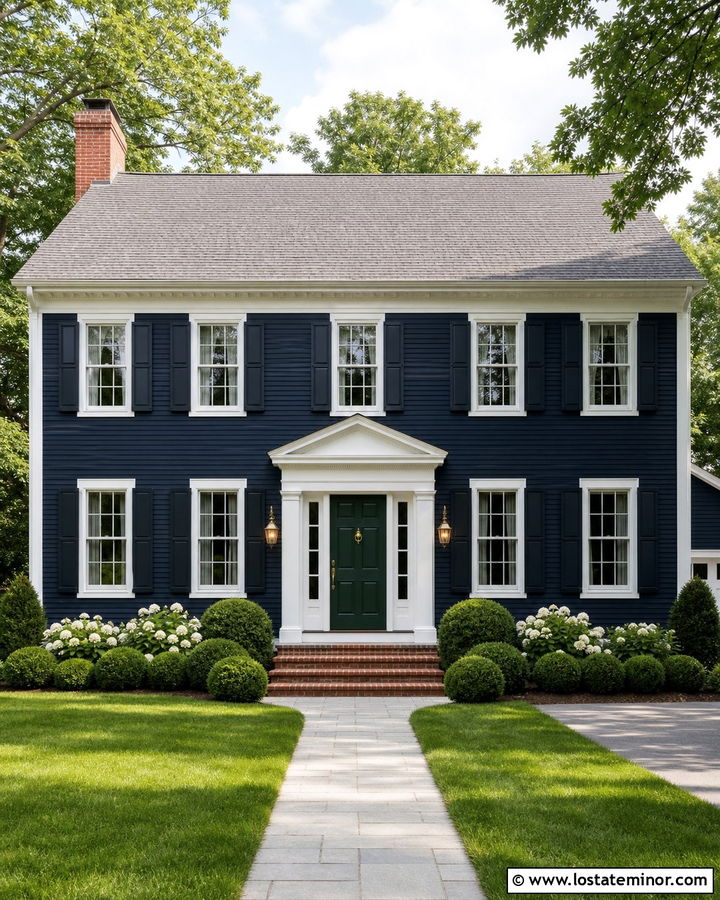
Forest green and midnight blue create a deep, traditional palette that needs careful separation. On a Colonial home, surround the green door with broad white casing and a decorative pediment. This bright border prevents the two dark colors from merging. Keep shutters black or midnight blue, and use brass hardware to add a visible point of warmth. A medium gray roof works better than an extremely dark roof when the facade already contains two saturated colors. Red brick steps can introduce another historic material, provided the brick is muted and not overly orange. Symmetrical boxwoods, white flowering plants, and twin lanterns reinforce the orderly architecture. The exterior feels formal and distinctive, while the green entry adds understated personality instead of loud contrast.
17. Midnight Blue Modern Farmhouse With Teal Entry Door
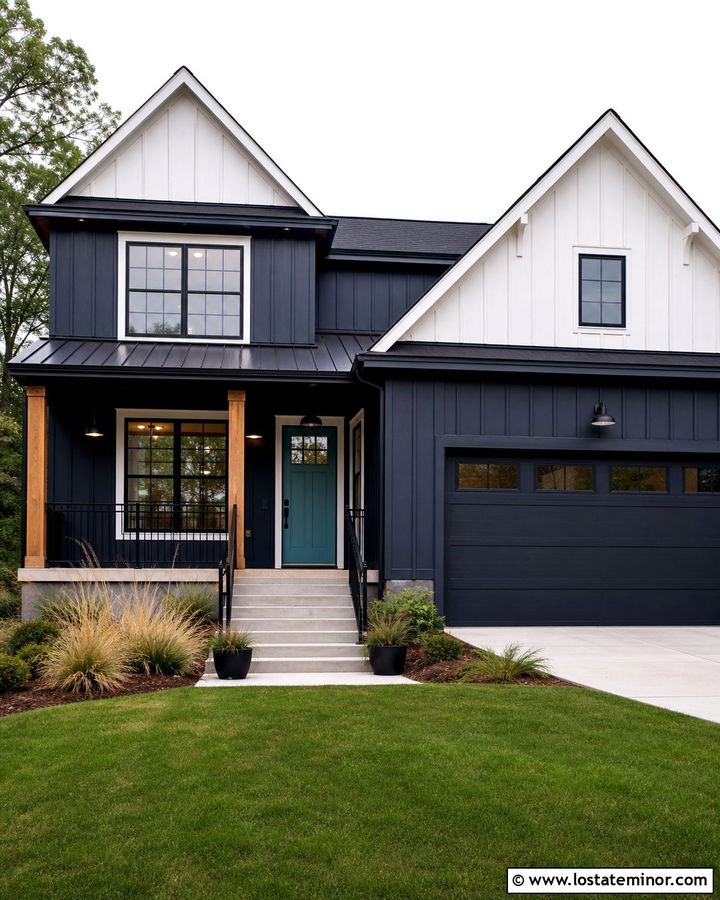
A teal entry door can enliven midnight blue siding while preserving a cool, coordinated color story. Choose a medium blue-green that is noticeably lighter than the body color. On a modern farmhouse, combine it with white board-and-batten siding details, black-framed windows, and a black metal porch roof. Natural wood columns or a cedar bench add warmth and prevent the blue-green palette from feeling overly cool. Keep the garage door midnight blue or white so it does not compete with the teal entrance. Clean concrete steps, simple black railings, and restrained ornamental grasses support the updated architecture. The result has more character than a standard navy-and-white farmhouse, yet the similar undertones allow the teal door and midnight blue body to work together without looking disconnected.
18. Midnight Blue Beach House With Aqua Entry Door
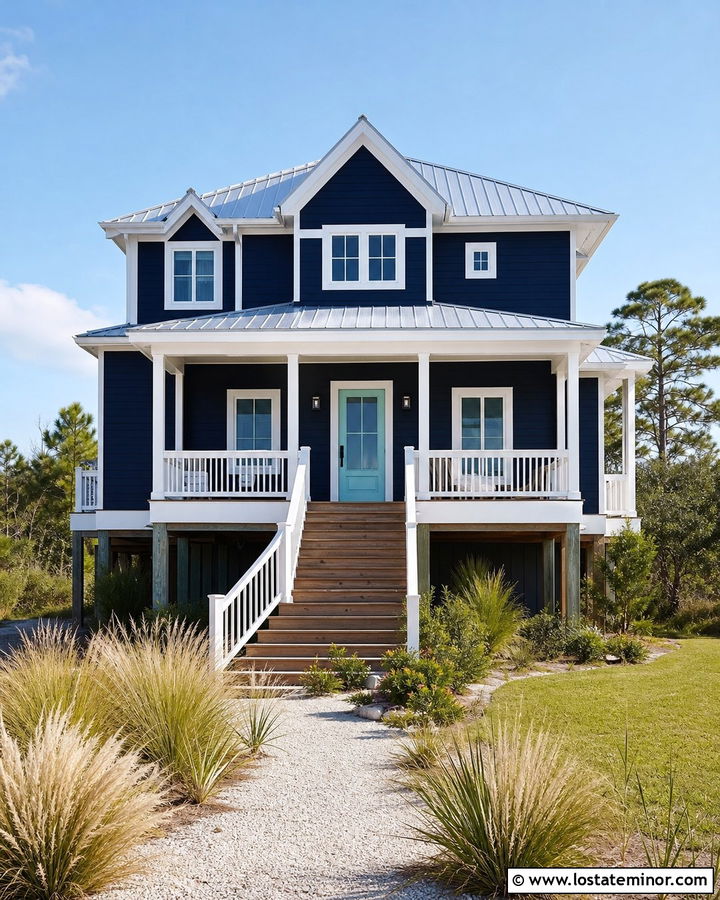
Light aqua brings an airy accent to a midnight blue beach house. The contrast resembles bright coastal water against a deep horizon, but the facade can remain sophisticated when decorative themes are kept minimal. Use crisp white trim, white porch railings, and a pale gray metal roof to brighten the dark siding. The aqua door may include divided glass panels that make the entrance feel open and casual. Choose brushed nickel or matte black hardware for a clean finish. Weathered wood decking and dune-style grasses add texture without creating a busy palette. If the house has shutters, keep them midnight blue or white rather than adding more aqua. A sandy gravel path and uncluttered planting design complete this light, welcoming coastal exterior.
19. Midnight Blue Cape Cod With Light Blue Entry Door
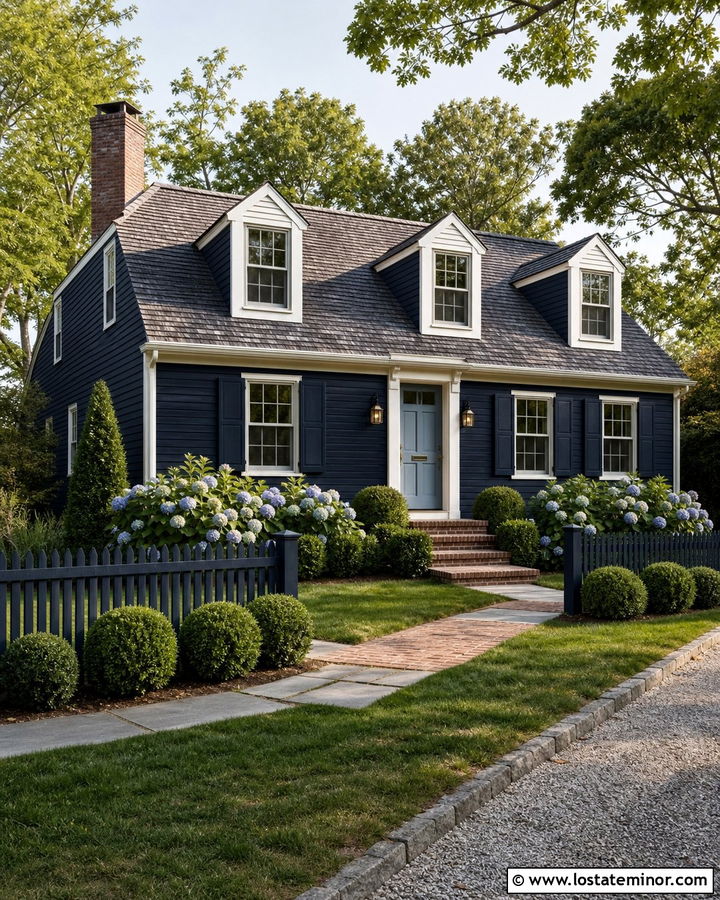
A light blue door creates a gentle tone-on-tone scheme for a midnight blue Cape Cod. Select a dusty sky blue rather than a bright pastel, allowing the entry to feel related to the siding while remaining easy to see. Creamy white window trim, dormers, and porch columns provide essential brightness. Cedar shingles on the roof or side gables add warm natural variation, and antique brass door hardware creates a polished finishing detail. Keep shutters midnight blue to avoid dividing the facade into too many blue shades. A brick or bluestone walkway works well with the traditional architecture. Finish the yard with hydrangeas, clipped evergreens, and an understated picket fence. The complete look feels coordinated, coastal, and softer than a high-contrast door palette.
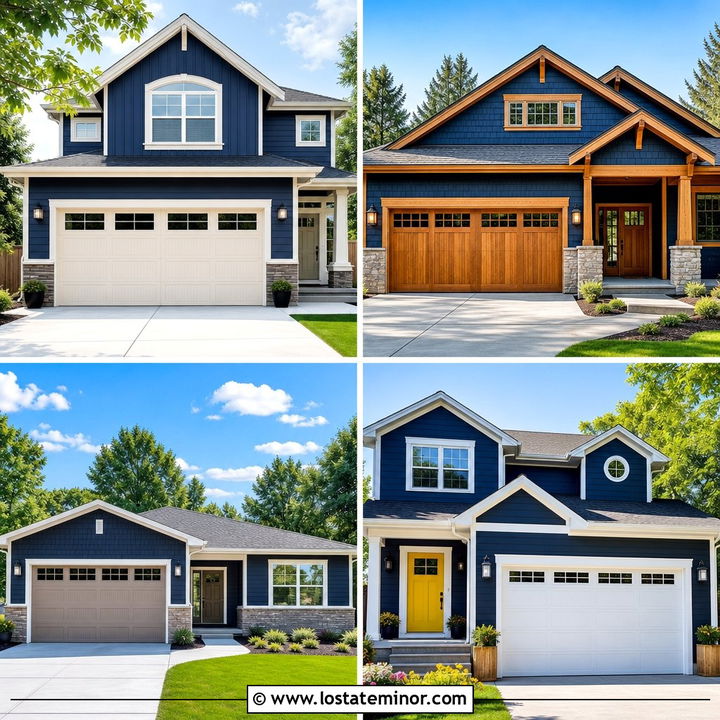
20. Midnight Blue Contemporary House With Cobalt Entry Door
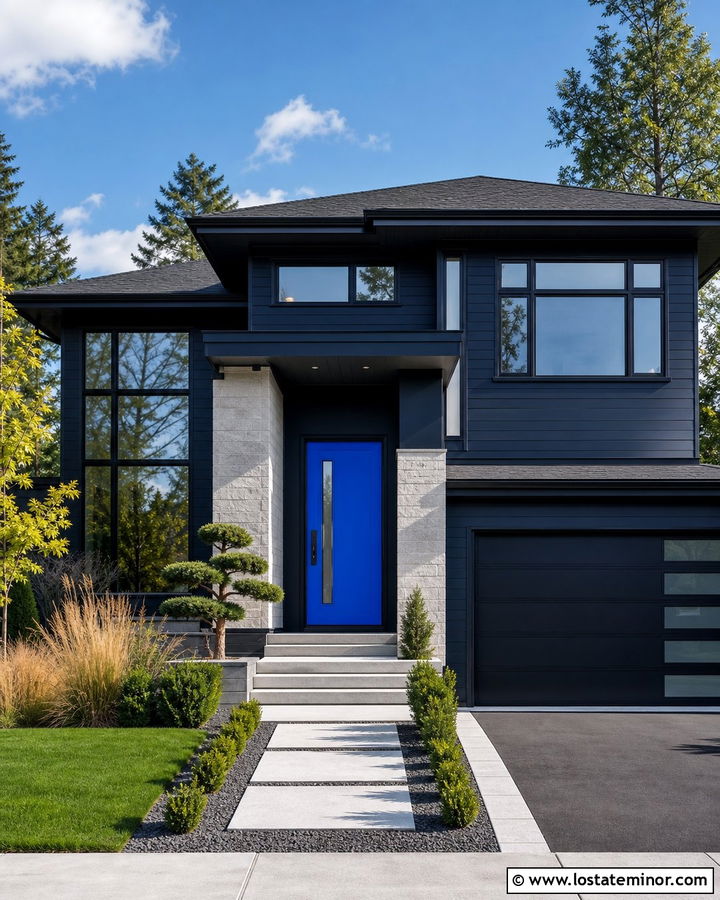
Cobalt blue creates a vivid tonal accent on a midnight blue contemporary exterior. Since both shades belong to the same color family, the brighter door can stand out without disrupting the streamlined architecture. Use narrow black trim, large black-framed windows, and a charcoal flat or low-slope roof to maintain sharp lines. Pale concrete steps and light stone panels will keep the dark facade from looking flat. A smooth door with minimal hardware suits the modern composition better than ornate raised panels. Consider a long vertical glass insert to increase light and emphasize height. Sparse ornamental grasses, sculptural shrubs, and a geometric walkway complete the setting. This scheme feels bold and architectural, with the cobalt door functioning like a deliberate block of saturated color.
21. Midnight Blue Victorian With Plum Entry Door
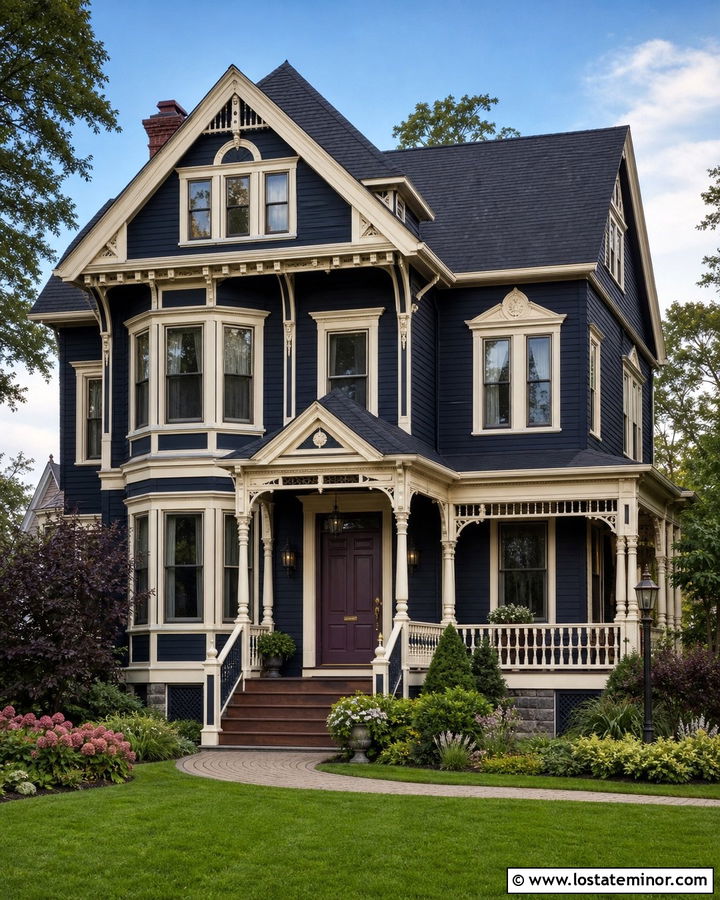
Plum adds jewel-toned richness to a midnight blue Victorian without creating an overly bright facade. Choose a red-violet shade that is lighter than the siding, then surround it with cream trim so the entry remains distinct. Repeat cream on brackets, window casings, spindles, and ornamental gable details. Use plum only on the front door and perhaps one narrow decorative band. Too much can compete with the architecture. A dark gray roof and touches of natural wood help ground the color scheme. Antique brass hardware and traditional lanterns support the historic character. Layered shrubs, a curved path, and a restrained flower garden soften the ornate facade. The combination feels expressive and period-friendly while allowing midnight blue to remain the dominant exterior color.
22. Midnight Blue Cottage With Blush Pink Entry Door
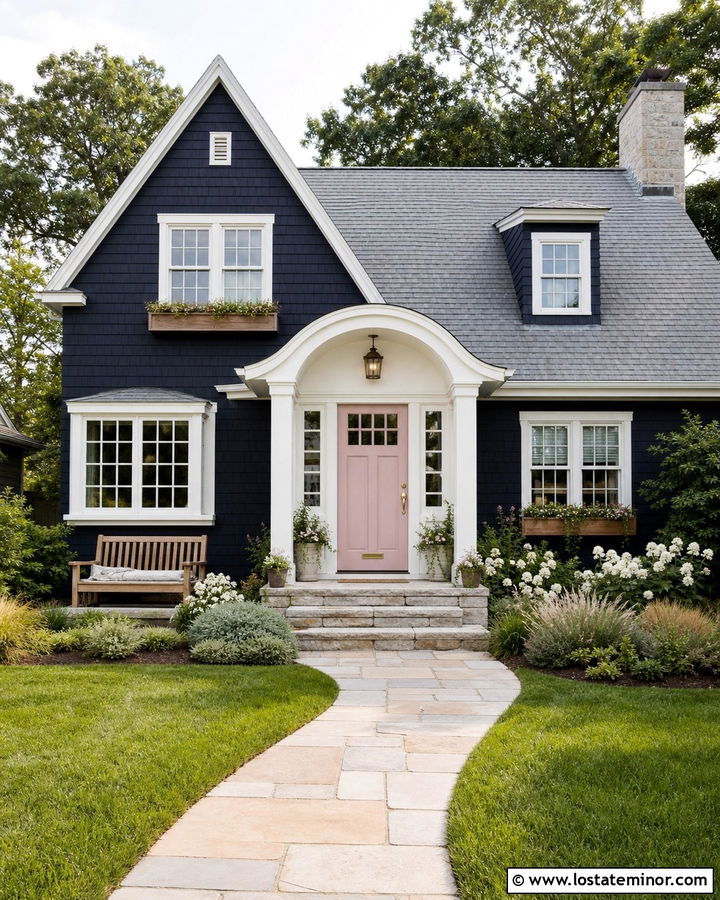
Blush pink brings an unexpected softness to a midnight blue cottage. The best shade is dusty and slightly warm rather than sugary or intensely saturated. Pair it with creamy white trim, a weathered gray roof, and pale natural stone around the steps. Brass hardware gives the pink door a tailored finish, while simple paneling keeps the entrance from feeling overly decorative. Add cedar window boxes or a natural wood porch bench to connect the warm door with the broader exterior. White roses, ornamental grasses, and muted green shrubs can echo the romantic palette without turning the yard into a theme. Against the strong midnight blue body, the blush entry feels welcoming and distinct. The complete look is charming, balanced, and appropriate for a small-scale facade.
23. Midnight Blue Ranch With Greige Entry Door
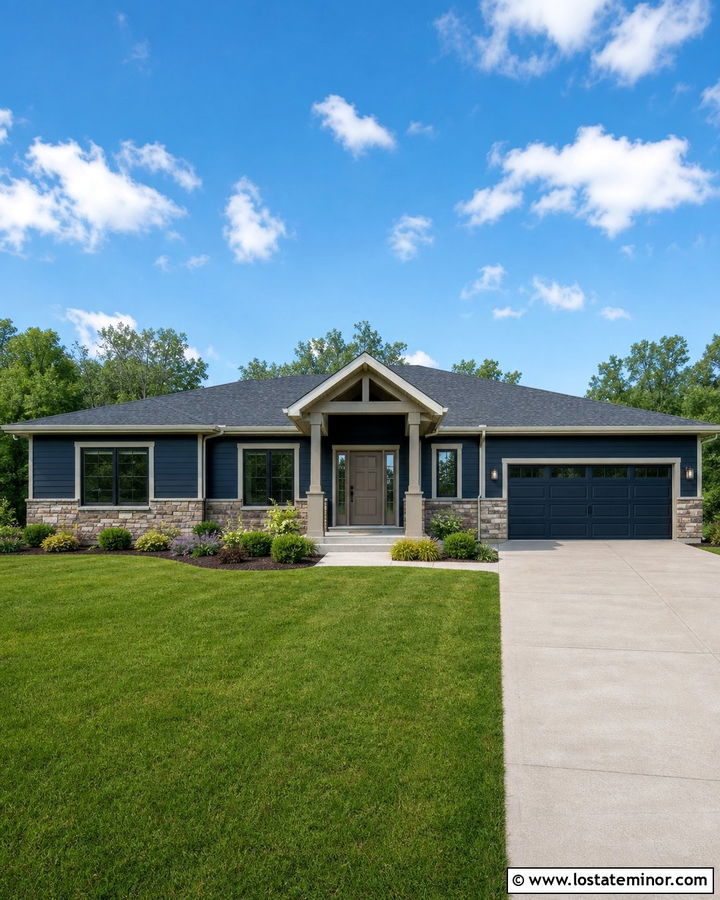
Greige is a practical door color for a midnight blue ranch with warm stone or mixed masonry. Choose a medium greige that contains enough brown to relate to the stone and enough gray to coordinate with the roof. Use the same shade sparingly on window trim or porch posts, while keeping fascia and soffits warm white. A charcoal shingle roof and midnight blue garage door preserve a quiet horizontal composition. Black hardware will sharpen the neutral entrance and help it stand apart from nearby stone. Because greige creates modest contrast, improve visibility with sidelights, a lighter porch ceiling, and a direct walkway. Low shrubs and broad planting beds suit the long ranch facade. This understated scheme feels cohesive, comfortable, and less predictable than a standard white door.
24. Midnight Blue Prairie House With Warm Beige Entry Door
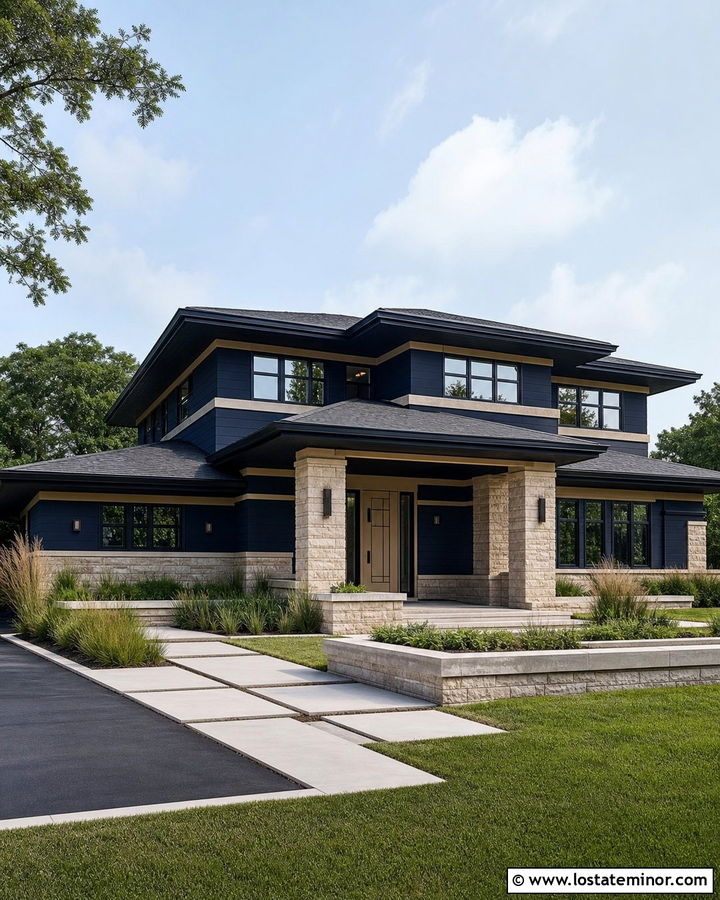
Warm beige softens the bold character of a midnight blue Prairie-style house. The combination works best when beige appears elsewhere in natural stone bands, broad porch columns, or horizontal trim. Choose a door with simple rectangular panels that echo the strong geometry of the architecture. Bronze hardware, low-profile sconces, and a deep overhang reinforce the grounded design. Keep window frames dark brown or black, and use a medium charcoal roof that does not overwhelm the low roofline. The midnight blue siding supplies depth, while beige materials bring the structure visually closer to the landscape. Wide concrete pavers, native grasses, and layered horizontal planting beds complete the composition. The result feels calm and architectural, with the entrance integrated into the entire facade rather than treated separately.
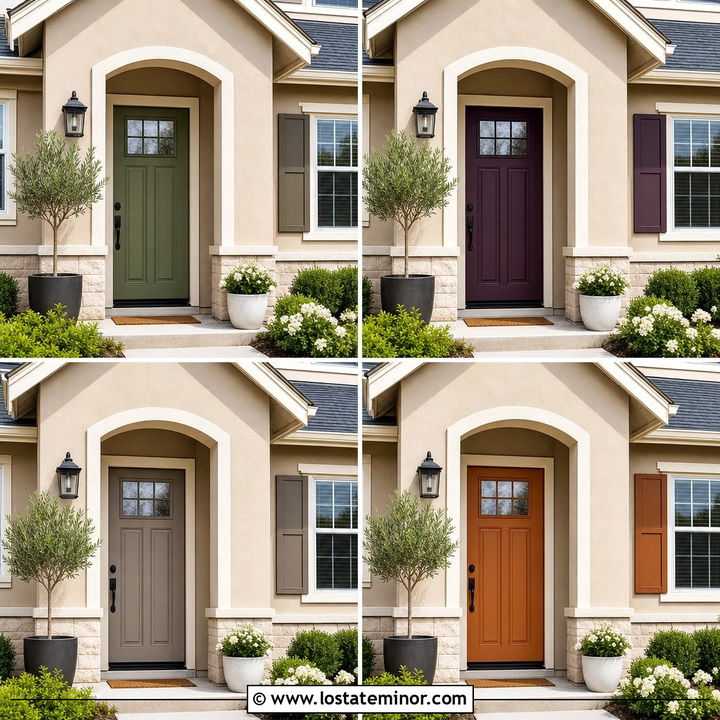
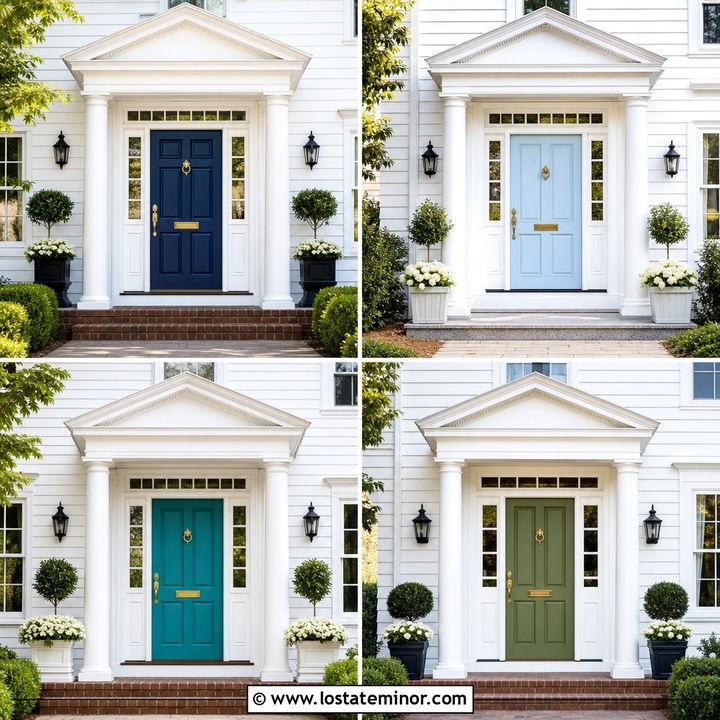
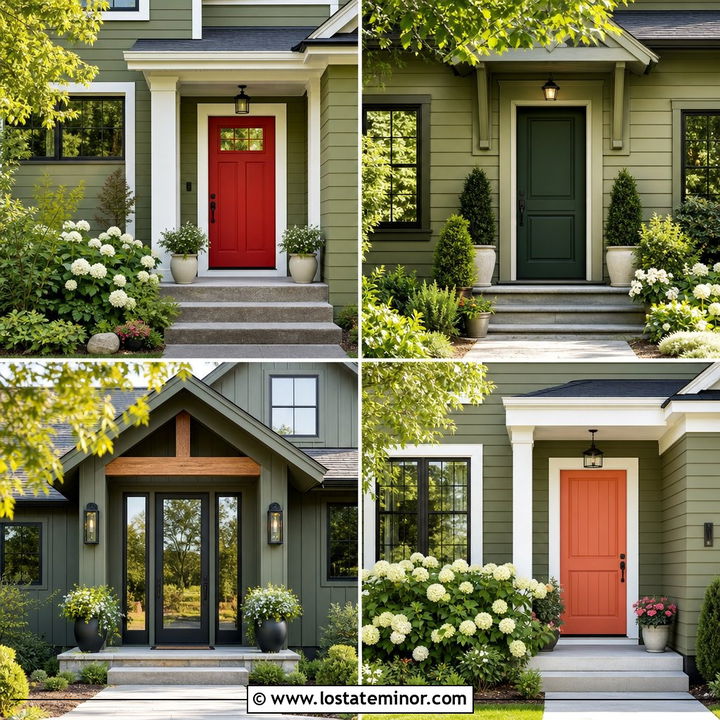
25. Midnight Blue Two-Story House With Soft Gray Entry Door
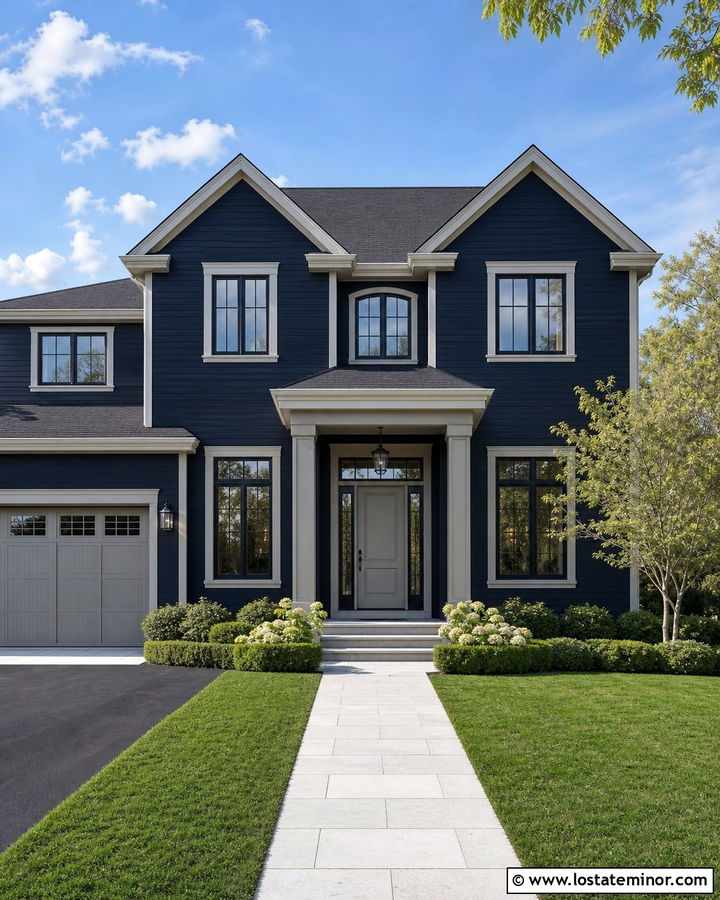
Soft gray provides a quiet, polished entrance for a large midnight blue two-story house. Select a light warm gray so the door does not look icy beside the navy body. Repeat it on window trim, porch columns, or the garage door to distribute the lighter tone across the tall facade. A dark charcoal roof anchors the structure, while white soffits reflect light beneath deep eaves. Black hardware and lanterns supply crisp definition around the gray door. If the entrance sits in shadow, sidelights and a pale porch ceiling will make it more visible. Use a broad walkway, balanced foundation shrubs, and one or two small ornamental trees to frame the vertical architecture. This restrained palette feels clean, spacious, and easy to maintain visually.
26. Midnight Blue Modern House With Charcoal Entry Door
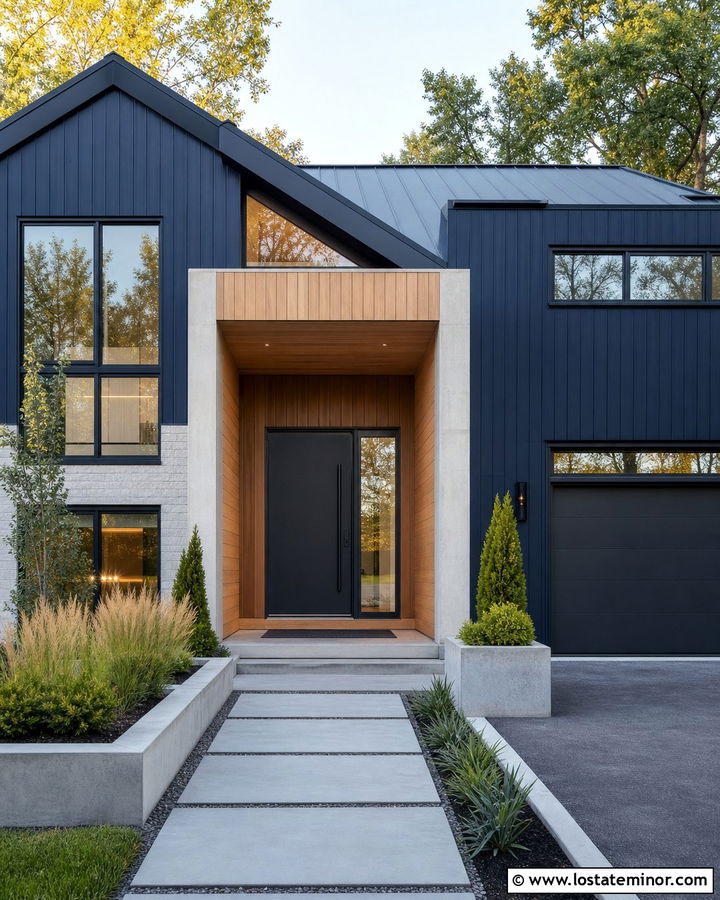
Charcoal creates a nearly monochromatic entrance that suits a modern midnight blue house. To keep the door from vanishing, choose a different finish or material texture. A smooth charcoal door can sit within a natural wood or pale concrete surround, producing a clear architectural frame. Black window systems, a dark metal roof, and midnight blue vertical siding continue the streamlined palette. Add light gray stone panels or concrete planters to break up the dark surfaces. Minimal hardware and a tall glass sidelight maintain the clean design. Landscaping should be structured but not bare, with ornamental grasses, clipped evergreens, and a straight paver path. The completed exterior feels sophisticated and cohesive, while the change from blue to charcoal remains subtle enough for a restrained modern home.
27. Midnight Blue Mid-Century House With Glass Entry Door
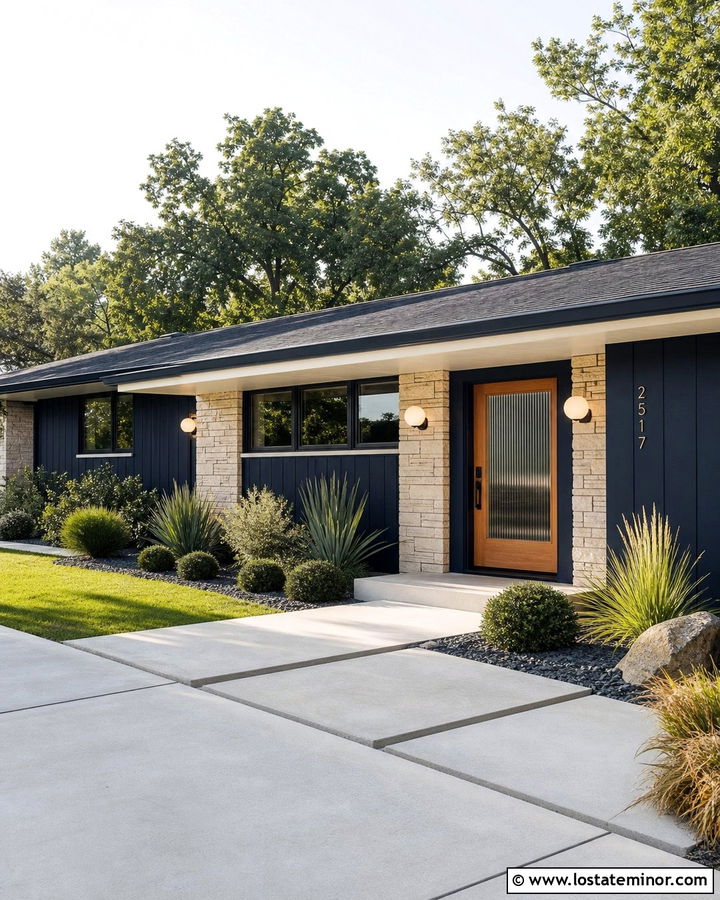
A glass entry door gives a midnight blue mid-century home a lighter, more open focal point. Choose a warm wood door with one large glass panel or a series of narrow vertical panes. The wood frame provides contrast, while the glazing breaks up the visual weight of the dark siding. Pair the entrance with cream soffits, natural stone walls, and black-framed horizontal windows. A low charcoal roof supports the house’s long lines. Frosted or reeded glass can provide privacy without losing the bright effect. Use simple globe lighting, streamlined house numbers, and a broad concrete walkway. Drought-tolerant grasses and sculptural shrubs complement the architecture. Together, glass, wood, stone, and midnight blue create a balanced exterior with authentic mid-century warmth.
28. Midnight Blue Traditional House With Stained Double Door
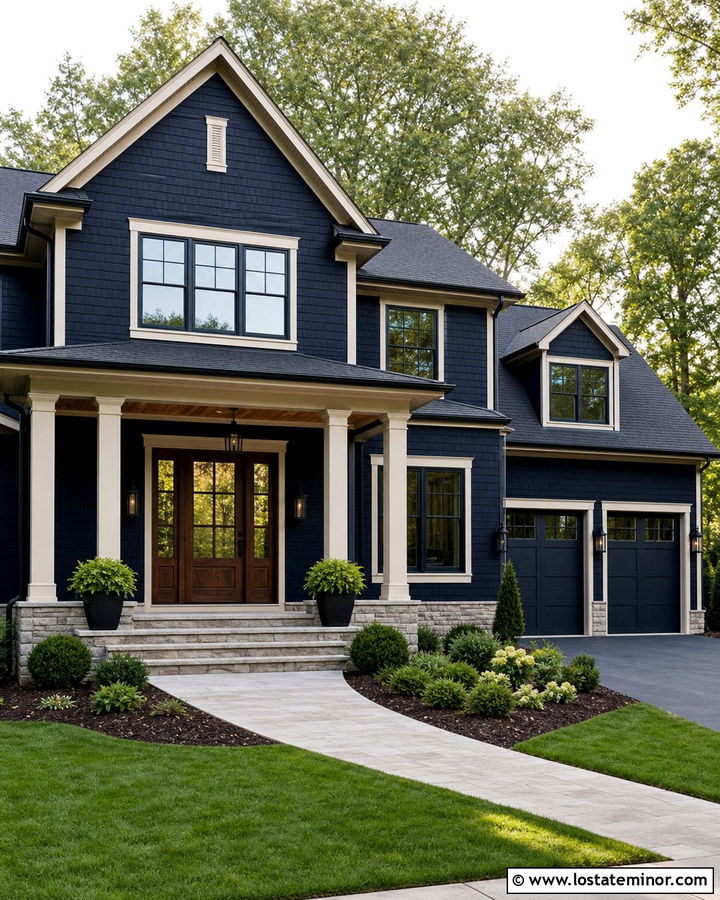
A stained double entry door adds presence to a wide midnight blue traditional home. Choose medium walnut or mahogany stain so the doors remain distinct without becoming visually heavy. Cream trim around the opening can emphasize its scale, while divided sidelights introduce brightness. Repeat the wood tone on porch ceiling boards or small gable details, not on every accent. Midnight blue garage doors will recede into the main body and allow the paired entry doors to remain central. Use a gray roof, light stone foundation, and dark bronze fixtures to connect the cool paint with the warm wood. Broad steps, symmetrical planters, and a gently curved walkway create an appropriately substantial approach. The full scheme feels welcoming, balanced, and suited to a larger facade.
29. Midnight Blue English Cottage With Arched Mahogany Door
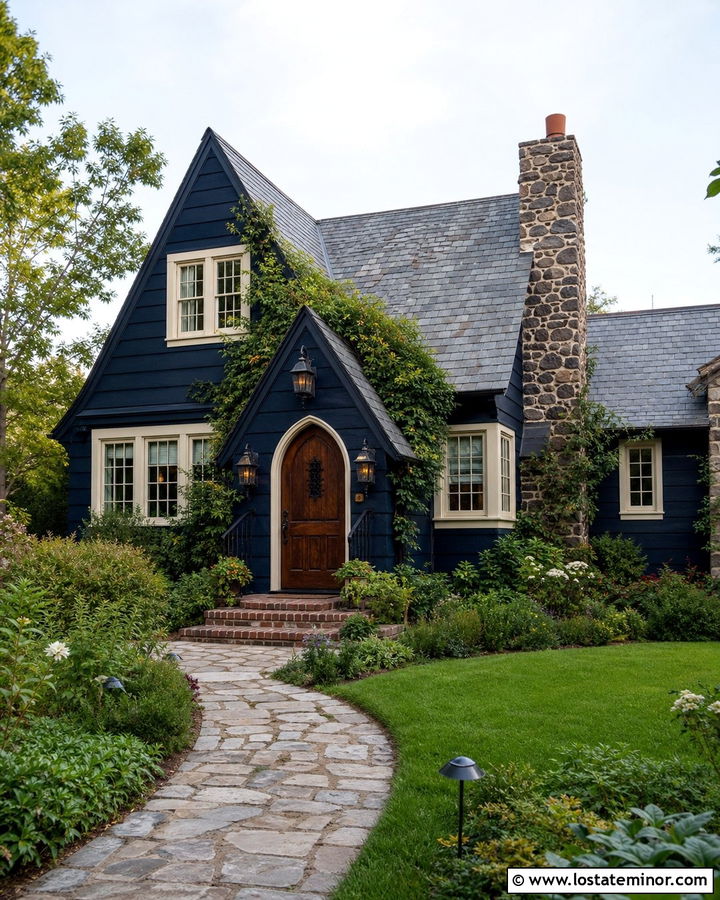
An arched mahogany door makes a midnight blue English cottage feel warm and established. Select a rich reddish-brown stain that highlights the grain and complements brick steps or a textured stone chimney. Cream window trim and gable details provide brightness around the deep blue siding. A steep charcoal or weathered slate roof strengthens the cottage silhouette, while bronze lanterns and iron door hardware support its handcrafted character. Keep decorative details restrained so the curve of the entrance remains the focal point. Climbing greenery can frame nearby stonework, but it should not cover the siding or door. A winding flagstone path, informal shrubs, and layered perennial borders complete the setting. This combination feels romantic and distinctive without depending on excessive ornament or novelty colors.
30. Midnight Blue House With Matching Entry Door
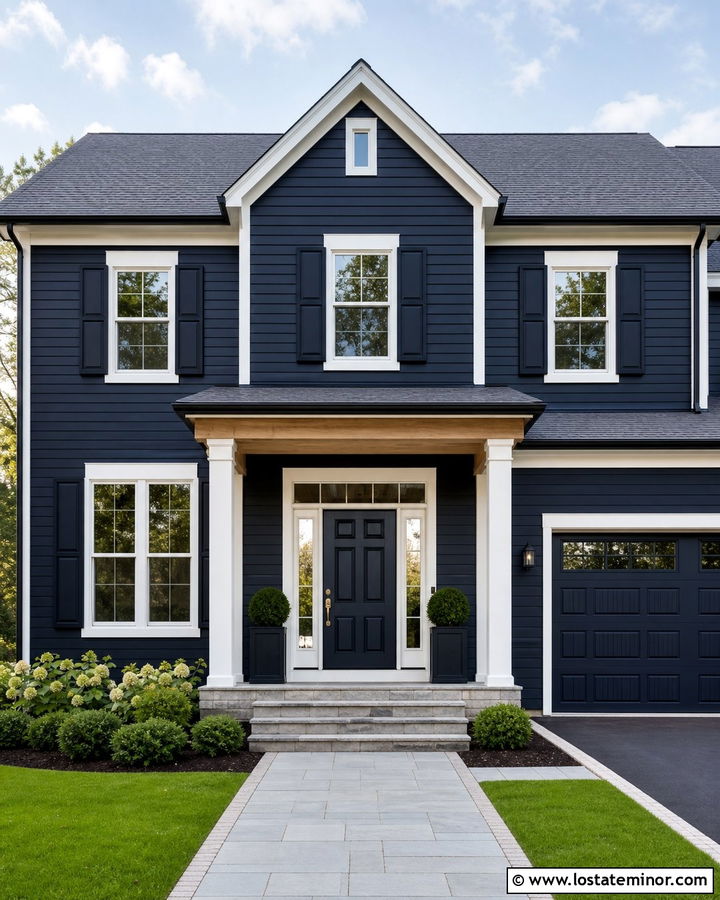
A matching midnight blue entry door creates a seamless exterior when architectural details provide enough definition. Use the same deep near-black navy on the siding and door, but select a satin or semigloss door finish to reflect more light. Wide warm white casing, glass sidelights, and brass hardware will prevent the entrance from disappearing. This monochromatic treatment works on many house types, from townhomes to modern Colonials. Keep shutters midnight blue, then introduce contrast through cream trim, light stone steps, and natural wood porch details. A medium gray roof is often easier to balance than solid black. Symmetrical planters and a well-lit walkway make the entry clear from the street. The completed house feels unified, elegant, and intentionally color-drenched.
Conclusion:
The most successful midnight blue exterior is built as a complete palette rather than a body color with a randomly selected door. Crisp white, cream, and gray doors create controlled contrast. Wood stains and earthy greens add warmth, while red, yellow, coral, and teal introduce stronger personality. Roof color, trim undertones, masonry, hardware, and landscaping should support the same visual direction. Before committing, test large painted samples beside the actual door and view them in morning sun, afternoon light, and shade. Also check any neighborhood or homeowners association requirements. Use these 30 Midnight Blue House Design With Entry Door Ideas as a practical starting point, then adjust the details to suit your architecture and surroundings.

Related posts: