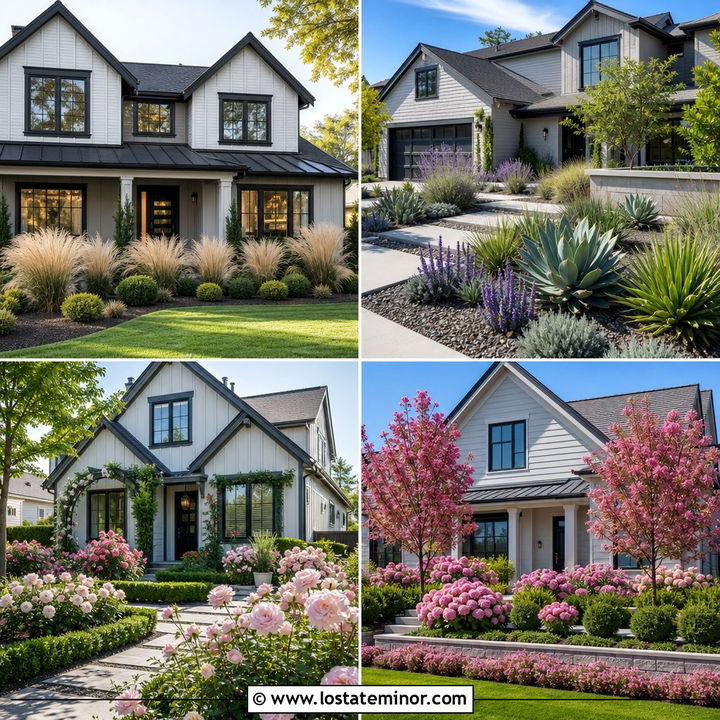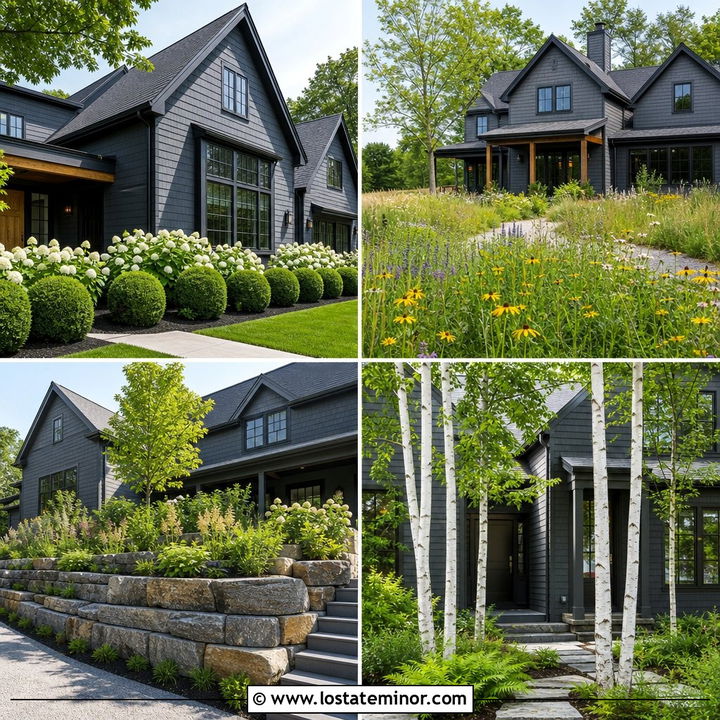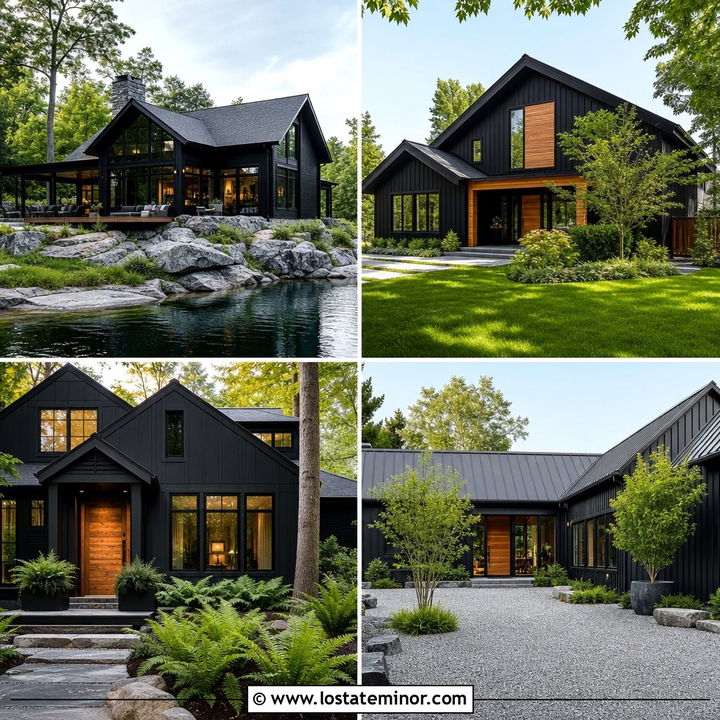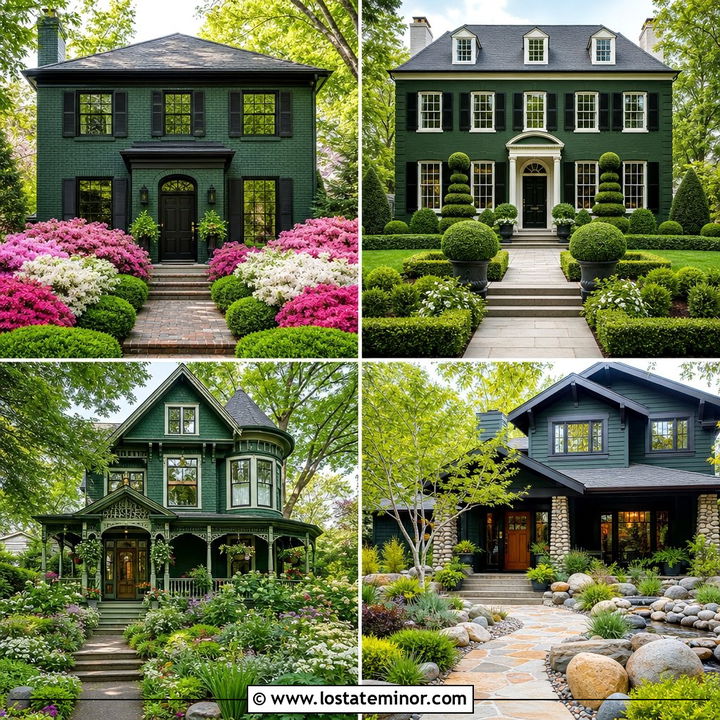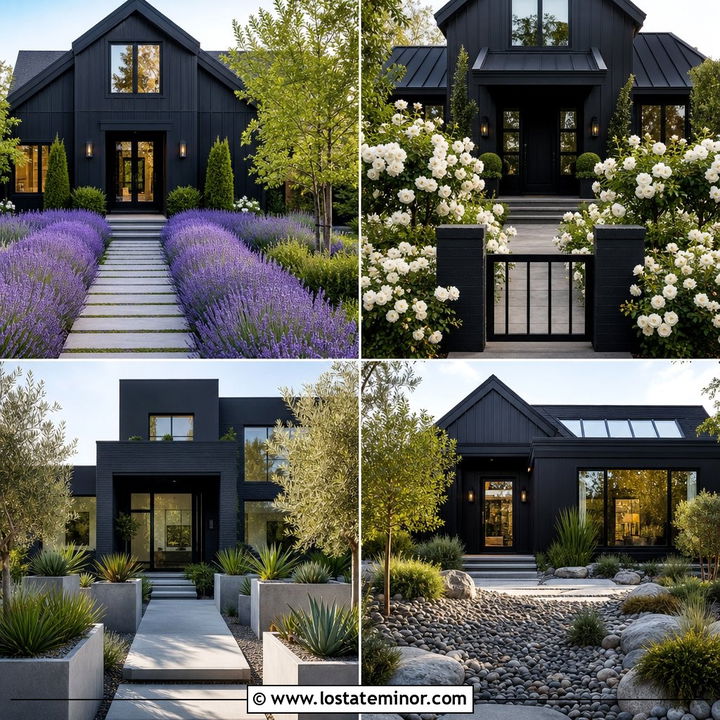
A charcoal gray exterior creates a strong backdrop for plants, stone, wood, and seasonal color. The key is designing the facade and front yard as one connected composition. Crisp white trim can brighten the architecture, while cedar, brick, or limestone adds warmth. Landscaping should also balance the depth of charcoal siding. Pale flowers stand out clearly, layered evergreens provide structure, and ornamental grasses soften sharp rooflines. Whether you have a compact bungalow, sprawling ranch, or modern two-story home, the right planting plan can make dark siding feel welcoming rather than heavy. The following **30 Charcoal Grey House Design With Landscaping Ideas** explore complete exterior schemes with practical combinations for different home styles, climates, lot sizes, and maintenance levels.

1. Charcoal Gray House With White Hydrangeas
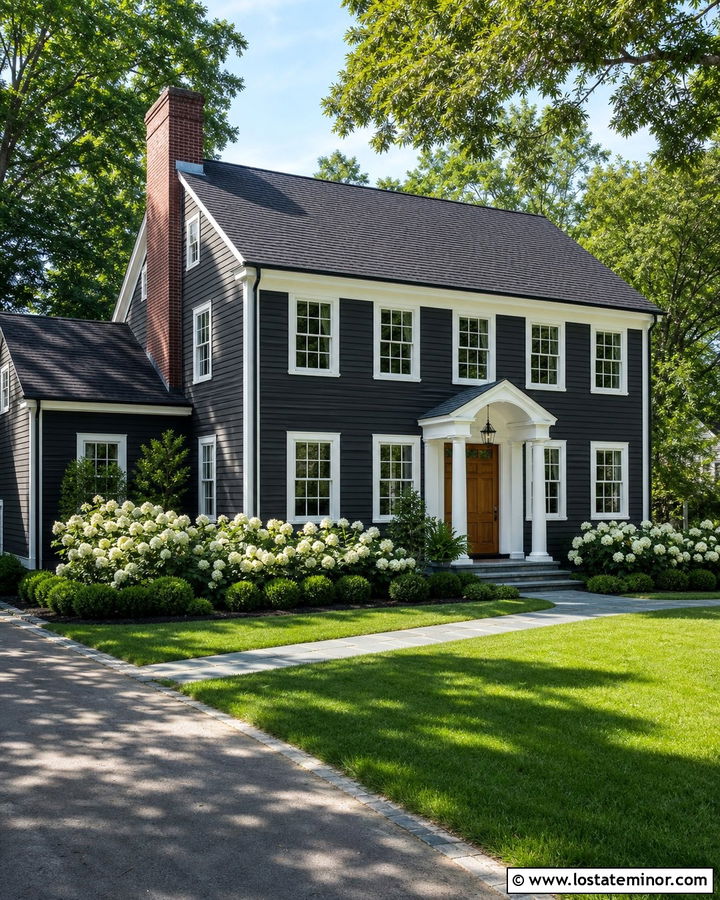
White hydrangeas create a bright, elegant foreground against deep charcoal gray siding. Use crisp white trim around the windows and roofline to repeat the flower color across the facade. A natural oak front door and warm brass lighting prevent the palette from feeling too cool. Plant hydrangeas in generous groups along the foundation rather than scattering individual shrubs. Low boxwoods can provide year-round structure beneath the blooms, while a curved bluestone walkway introduces a softer approach to the entrance. This complete scheme works especially well on traditional two-story homes and modern farmhouses. Leave enough space between mature shrubs and the siding for airflow, and select a hydrangea variety suited to your local sunlight and winter conditions.
2. Charcoal Gray House With Ornamental Grasses
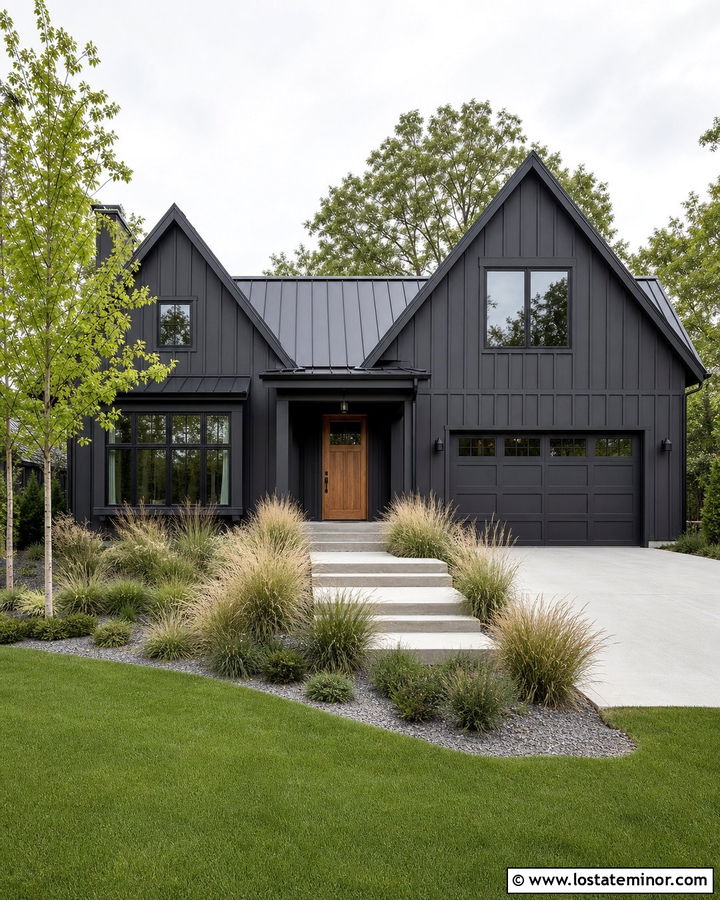
The airy movement of ornamental grasses can soften a charcoal gray house with strong, modern lines. Pair vertical charcoal board-and-batten siding with black windows, light concrete steps, and a warm cedar front door. Arrange feather reed grass or another upright variety in repeated groups beside the walkway. Lower mounding grasses can fill the edges without hiding the facade. Their pale green and golden tones provide natural contrast throughout several seasons. Add a few dark metal planters near the entrance to connect the garden with the window frames. This landscape is particularly effective for a modern farmhouse or minimalist suburban home. Keep the plant palette limited, use clean bed lines, and apply gravel mulch for a polished, low-clutter appearance.
3. Charcoal Gray House With Japanese Maple Landscaping
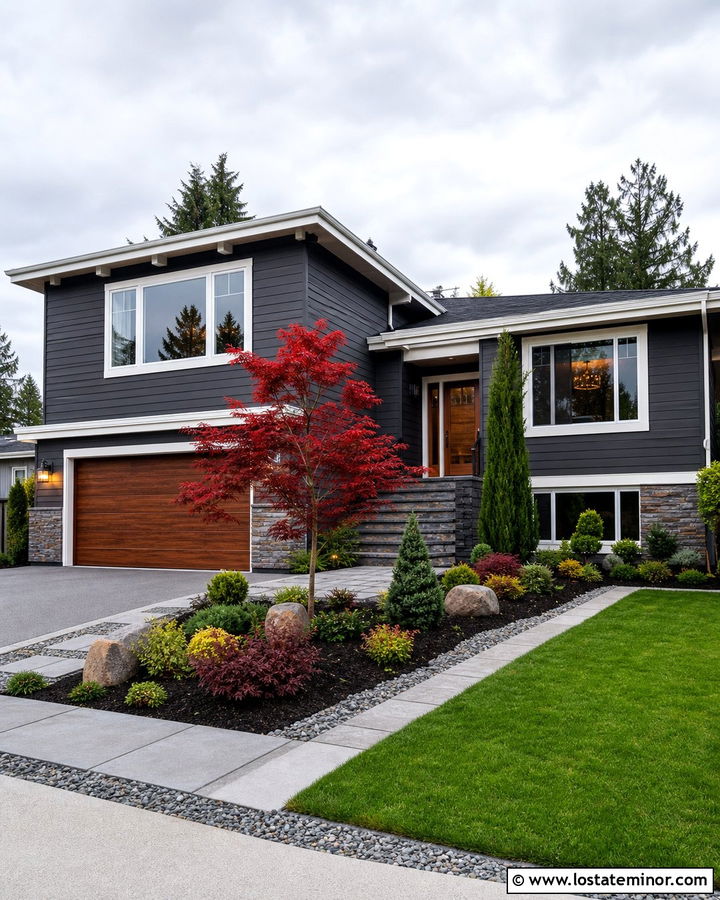
A Japanese maple can become a dramatic living focal point beside a charcoal gray exterior. Choose a small ornamental variety and position it where its branching shape can be seen without covering important windows. Deep red foliage looks especially rich with charcoal lap siding, creamy white trim, and a stained wood garage door. Create a broad planting bed beneath the tree using shade-tolerant ground cover, compact evergreens, and smooth landscape stones. A simple concrete or rectangular paver walkway keeps the composition organized. This combination complements split-level, contemporary, and midcentury homes. Before planting, consider the tree’s mature width and exposure to harsh afternoon sun. Giving it adequate space will create a more graceful, intentional landscape as the tree develops.
4. Charcoal Gray House With Boxwood Landscaping
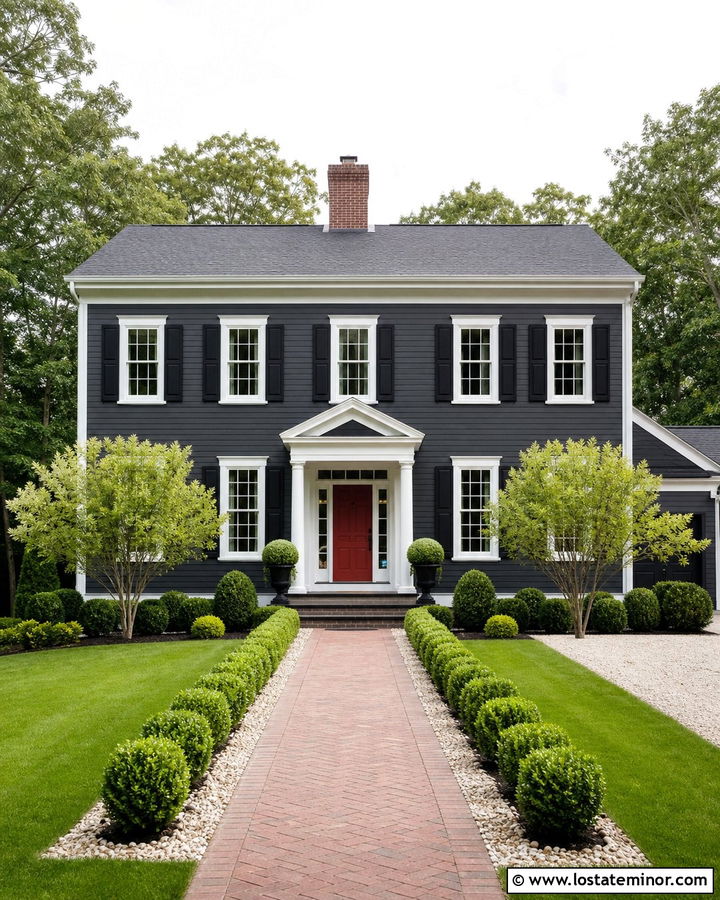
Neatly clipped boxwoods give a charcoal gray house a timeless and orderly appearance. On a colonial facade, use symmetrical rows of shrubs to frame the walkway and emphasize the centered front door. Bright white trim, black shutters, and a muted red door create a classic color scheme without competing with the landscape. Add two matching ornamental trees near the outer corners to provide height and balance. Pale gravel or natural mulch can keep the planting beds visually clean. For a less formal result, mix rounded boxwoods with looser flowering perennials. Regular spacing matters, but avoid planting them so closely that they merge into an oversized hedge. The finished exterior should feel structured, welcoming, and proportional to the home’s architecture.
5. Charcoal Gray House With Desert Landscaping
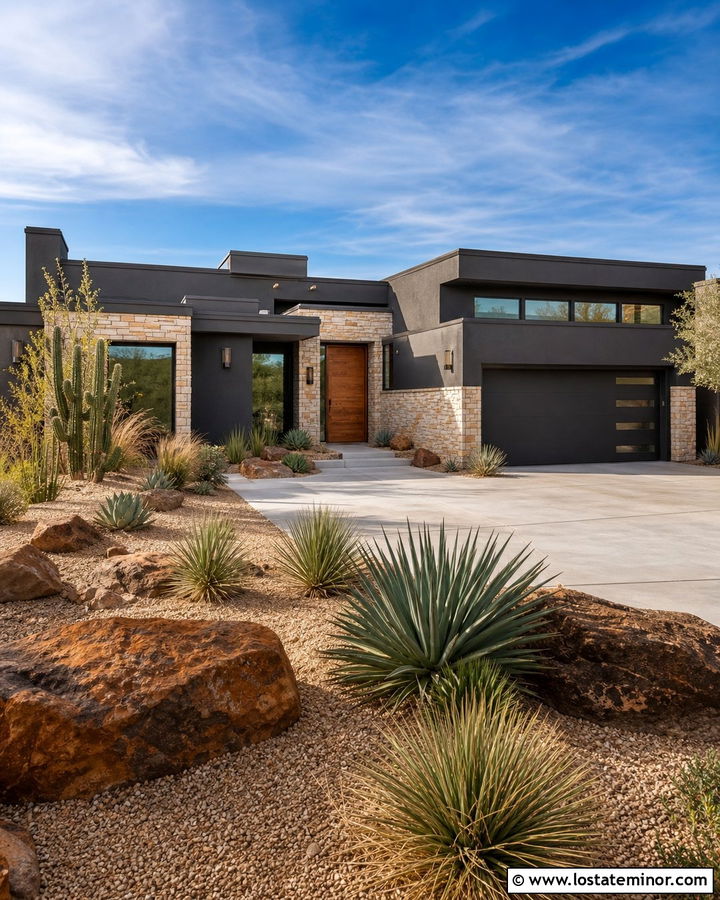
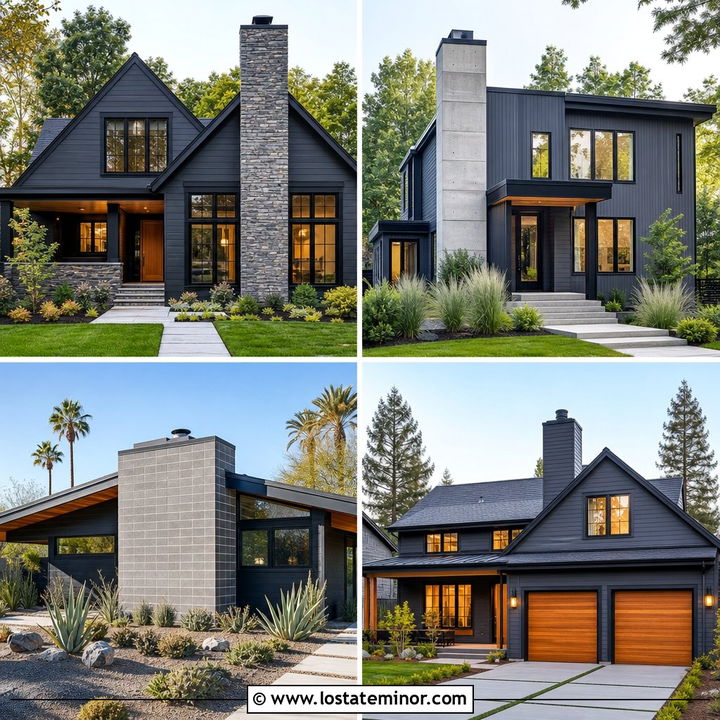
Charcoal gray stucco creates a striking foundation for warm, water-conscious desert landscaping. Combine the dark body color with sandy limestone, bronze window frames, and a natural wood pivot door. Instead of a large lawn, arrange agaves, yuccas, desert grasses, and sculptural cacti in spacious beds of tan gravel. Rust-colored boulders can connect the house to the surrounding earth tones. Use plants in uneven groups so the yard looks natural while still feeling planned. A wide concrete path with gravel joints reinforces the clean architecture of a modern desert home. Choose noninvasive plants that suit local conditions, and keep sharp specimens away from narrow walkways. Subtle landscape lighting can highlight the plants and entrance without overcrowding the streamlined facade.
6. Charcoal Gray House With Cottage Garden Landscaping
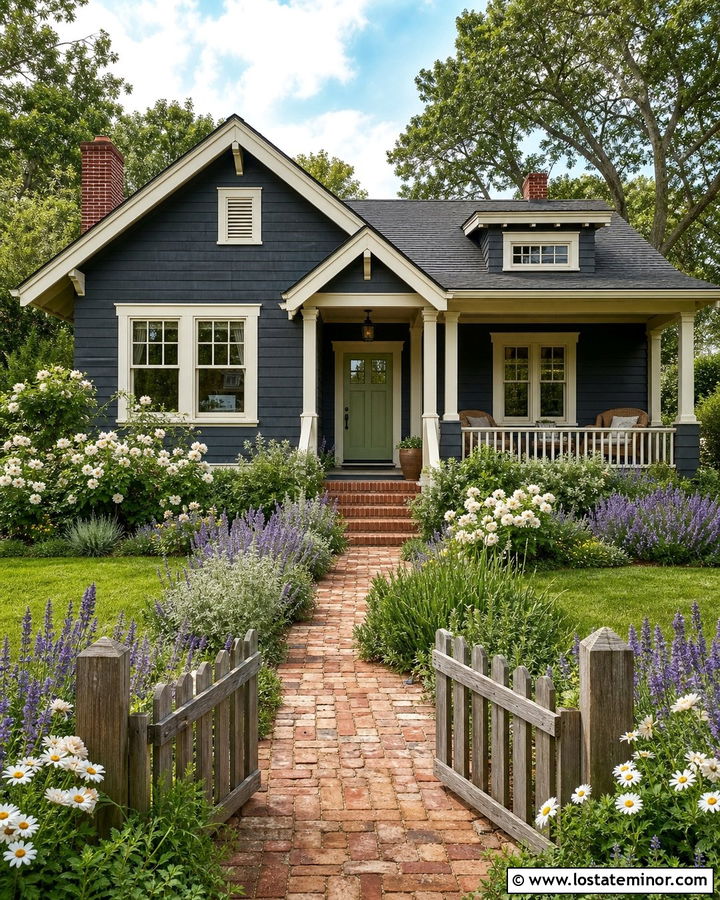
Can a dark exterior feel soft and romantic? A cottage garden makes the contrast work beautifully. Cover a bungalow or cottage in charcoal gray shingles, then add creamy trim, a sage green front door, and a weathered brick walkway. Layer the garden with roses, salvia, catmint, daisies, and flowering herbs in relaxed groups. Allow plants to overlap slightly along the path while keeping steps and doorways clear. White and lavender flowers brighten the dark siding, while soft pink provides gentle warmth. A low wooden gate or simple picket fence can strengthen the cottage character. Repeat a few plants throughout the beds to prevent the garden from looking random. The result feels established and colorful without hiding the home’s architectural details.
7. Charcoal Gray House With Native Prairie Landscaping
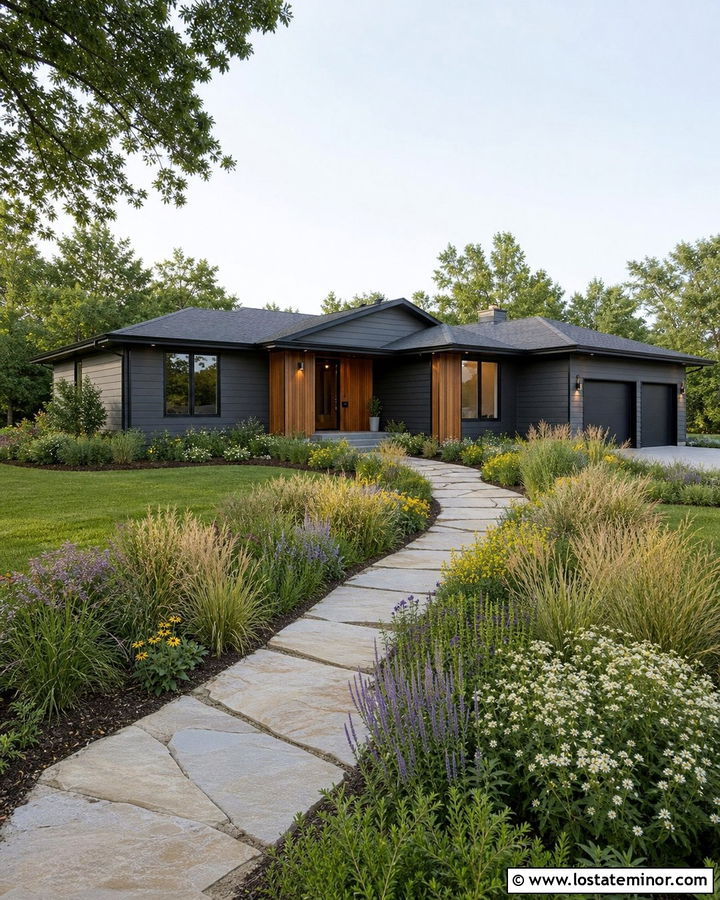
Native prairie planting brings movement, texture, and seasonal change to a charcoal gray exterior. It works particularly well around a contemporary ranch with horizontal siding, black-framed windows, and a warm wood front door. Build the landscape with repeated drifts of native grasses and flowering perennials rather than isolated plants. Pale seed heads and yellow, white, or purple flowers remain highly visible against the dark facade. A mown lawn edge or metal border will make the naturalistic beds look intentional. Include a direct stone walkway and a small gravel area near the porch for contrast. Select species that match the site’s soil, rainfall, and sunlight. Once established, the landscape can feel relaxed and regionally appropriate while providing an attractive transition between the home and yard.
8. Charcoal Gray House With Evergreen Foundation Plants
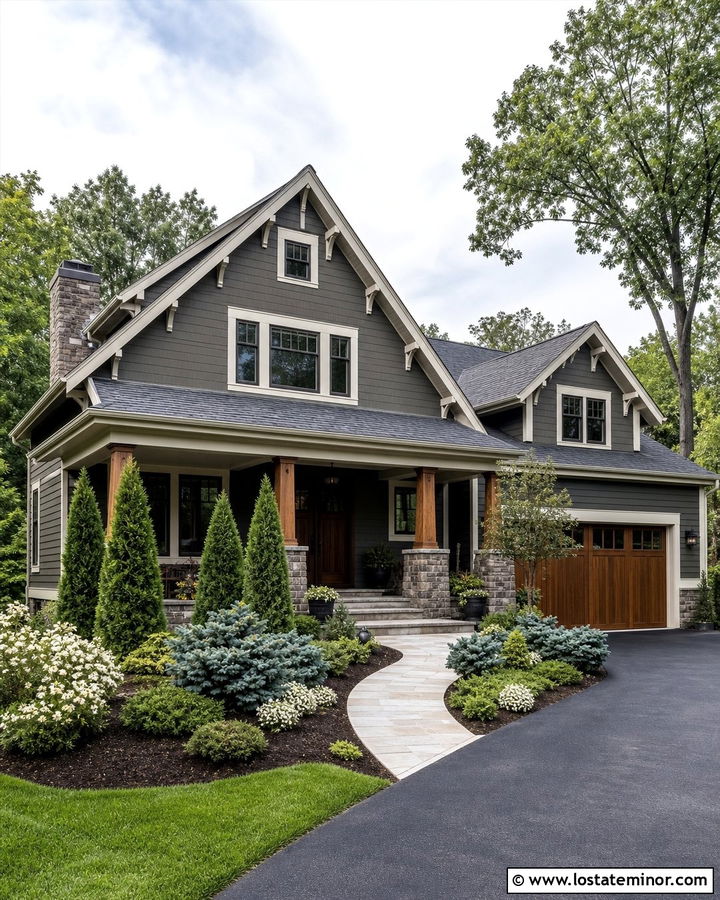
Evergreen foundation plants give a charcoal gray home dependable structure in every season. Mix several forms instead of using one continuous row of identical shrubs. Upright evergreens can anchor the corners, rounded varieties can frame the porch, and low spreading plants can fill the front edge. Pair the landscape with charcoal horizontal siding, warm white trim, a cedar garage door, and a stone foundation. Lime green or blue-green foliage prevents the planting beds from disappearing against the dark walls. Add a small number of white-flowering perennials for summer brightness. Keep taller plants away from windows and allow room for mature growth. This balanced approach suits craftsman, transitional, and mountain-inspired homes, especially where the landscape needs to remain attractive through a long winter.
9. Charcoal Gray House With Tropical Landscaping
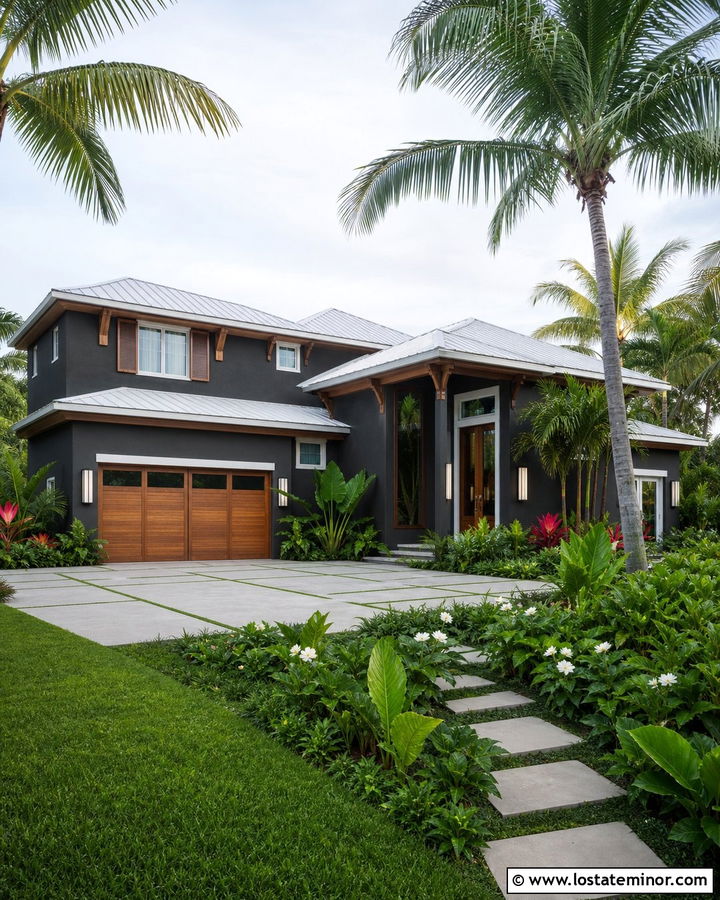
Bold tropical foliage can make a charcoal gray house feel lush, fresh, and resort-inspired. Use charcoal stucco or fiber-cement siding with clean white trim, teak accents, and a light gray metal roof. Large-leaf plants should frame the facade rather than cover it. Arrange palms, elephant ears, ginger, and dense green ground cover in layered beds, placing the tallest plants near blank walls or outer corners. Introduce a few white flowers to echo the trim and brighten shaded areas. Large concrete stepping stones can lead through the greenery to a covered porch. This look is best suited to warm climates or seasonal container displays. Where winters are cold, use hardy foliage plants and movable pots to capture the same effect without relying on tender permanent plantings.

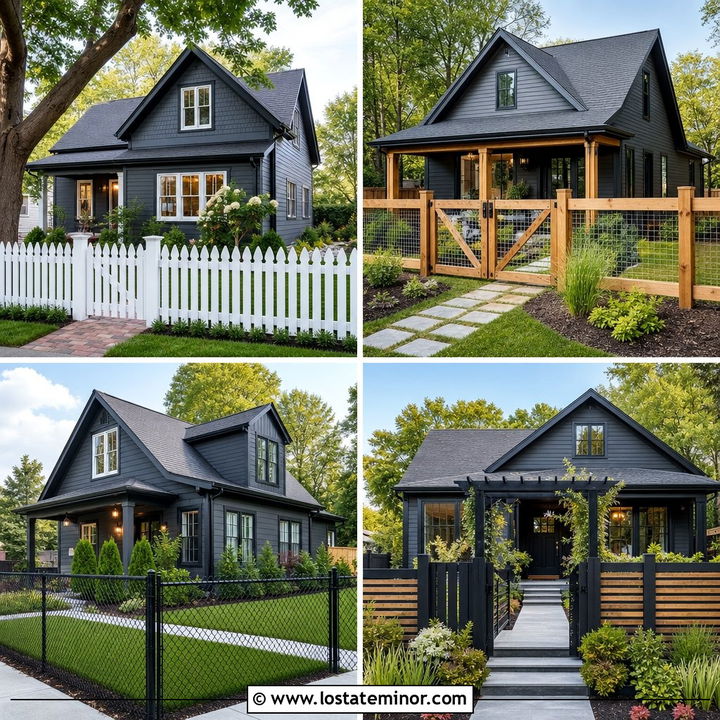
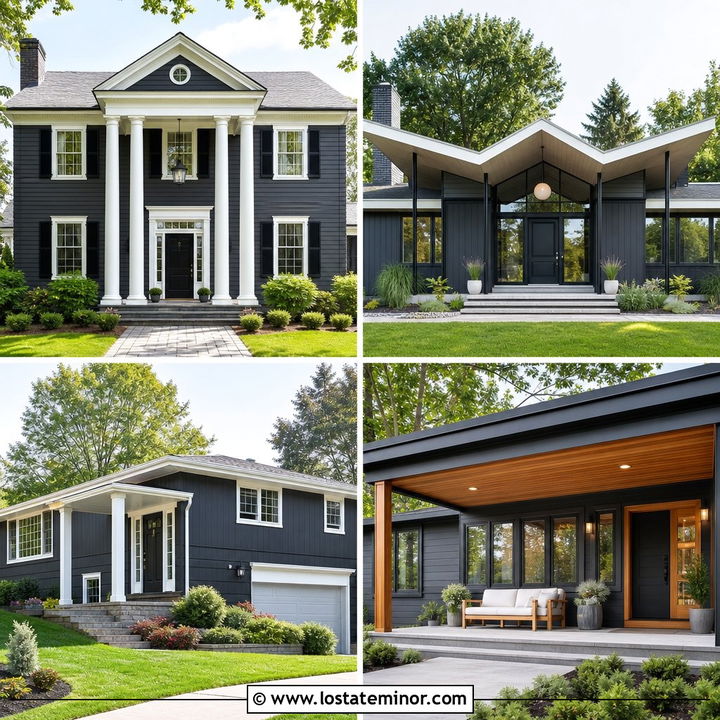
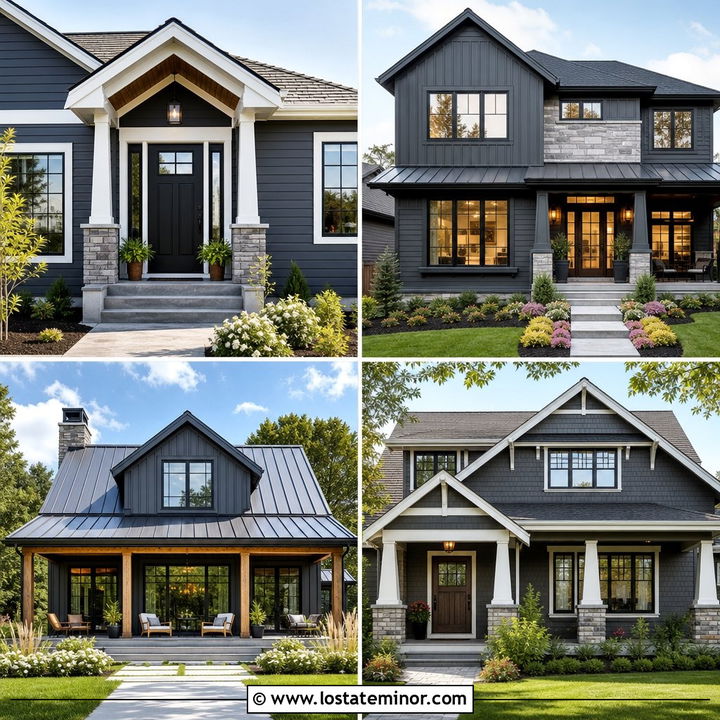
10. Charcoal Gray House With Woodland Landscaping
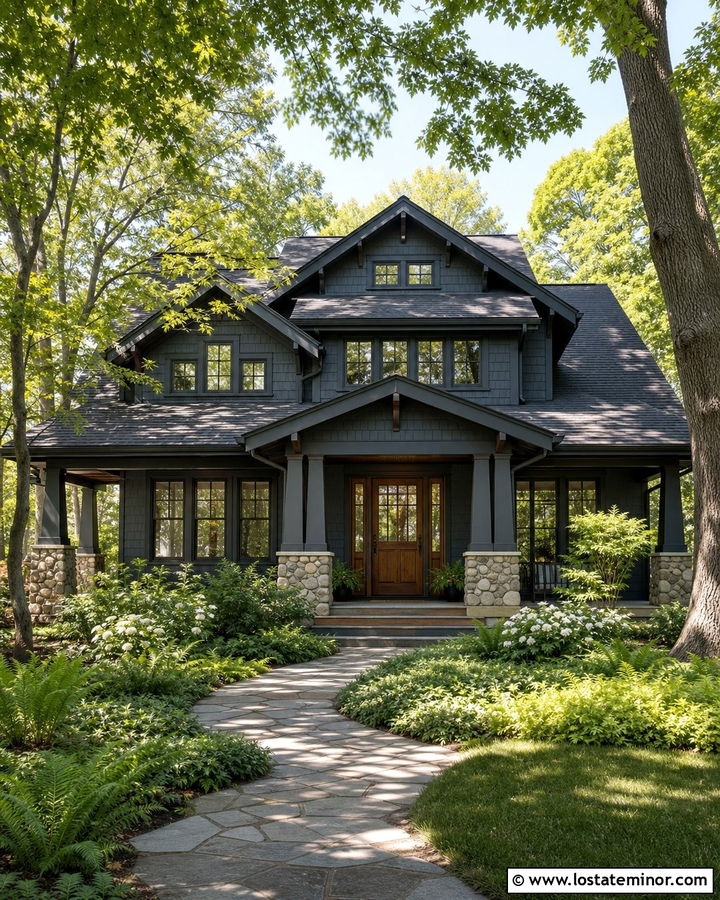
A wooded lot provides a natural setting for a charcoal gray home. Instead of forcing a bright suburban lawn beneath mature trees, create layered beds with ferns, woodland ground covers, native shrubs, and shade-tolerant flowering plants. Charcoal siding allows the structure to settle quietly into the tree canopy, while light stone columns and a honey-toned wood door keep the entrance visible. Use a gently curving flagstone path to complement the informal surroundings. Preserve open space around the foundation so the house does not feel swallowed by vegetation. Repeating pale foliage or white flowers near the porch can guide attention toward the door. This landscape fits craftsman, cabin, and contemporary homes that benefit from a peaceful connection to their forested surroundings.
11. Charcoal Gray House With Gravel Landscaping
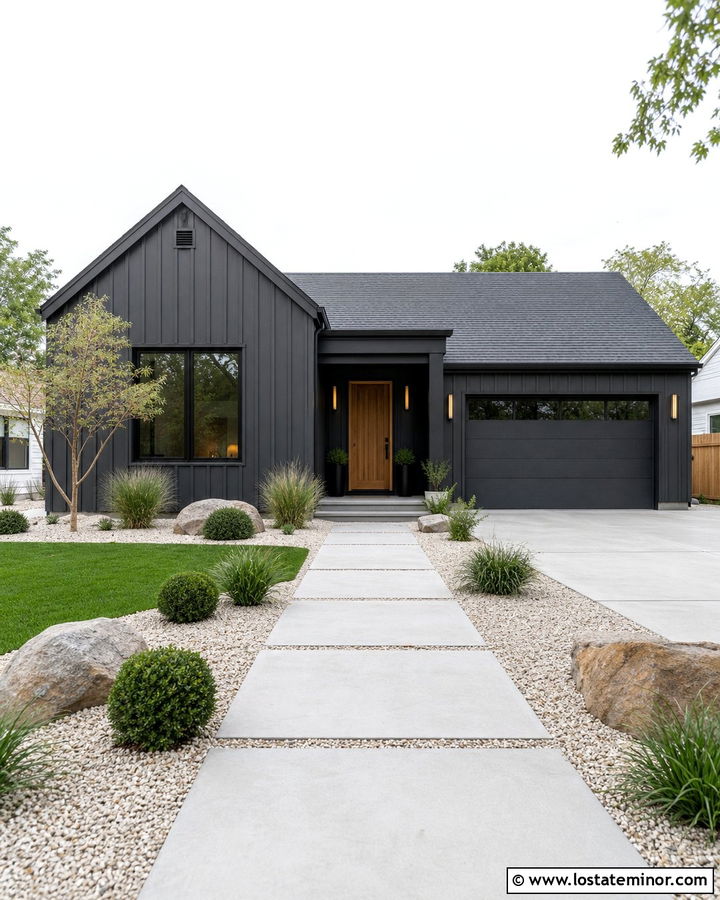
Gravel landscaping gives a charcoal gray exterior a clean, low-maintenance appearance. Select a pale gray, cream, or warm tan gravel that contrasts with the siding rather than matching it exactly. On a small modern house, combine charcoal vertical panels with black windows, a natural wood door, and simple concrete porch slabs. Create defined gravel beds containing compact shrubs, upright grasses, and one sculptural ornamental tree. Larger stones can be placed sparingly to add weight without making the yard feel crowded. Install proper edging to keep gravel away from the lawn and walkway. Landscape fabric or an appropriate base may help manage weeds, although ongoing maintenance is still necessary. This complete scheme works best when the planting shapes are simple and the materials are repeated consistently.
12. Charcoal Gray House With Concrete Planters
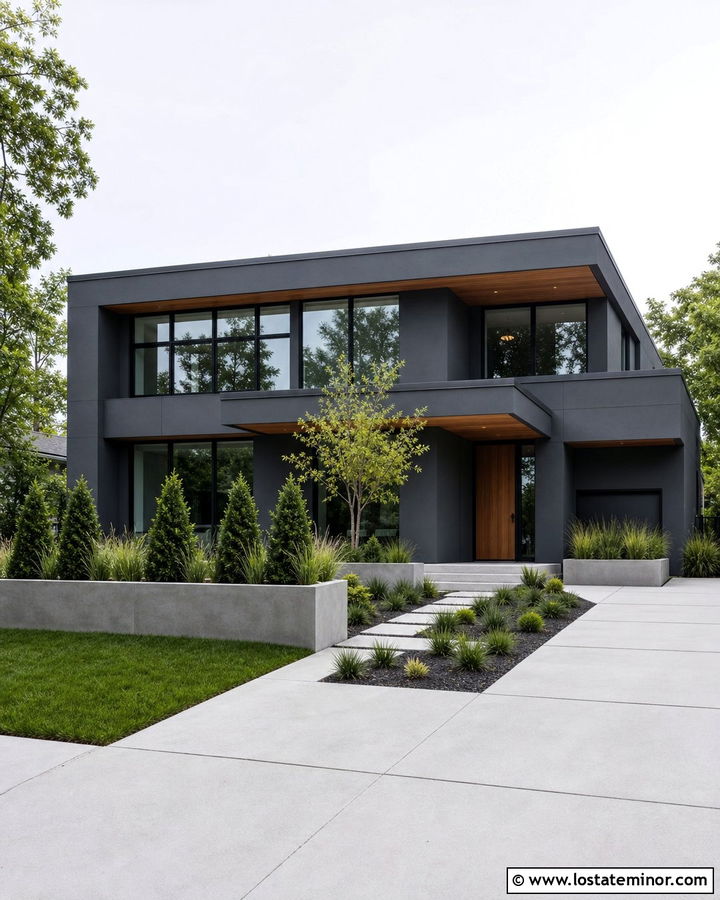
Oversized concrete planters complement the substantial color of a charcoal gray modern home. Position matching rectangular containers beside the entrance, garage, or front steps to reinforce the architectural lines. Fill them with compact evergreens, ornamental grasses, or simple seasonal combinations rather than an excessive mix of flowers. Pair charcoal stucco with black window frames, warm wood soffits, and pale concrete paving for a controlled neutral palette. Extend the landscaping into low geometric beds containing ground cover and one or two small trees. The concrete should be light enough to stand apart from the dark walls. Keep planters proportional to the facade and ensure they do not narrow the walkway. This arrangement creates an organized transition from the driveway to the front door.
13. Charcoal Gray House With Stone Retaining Walls
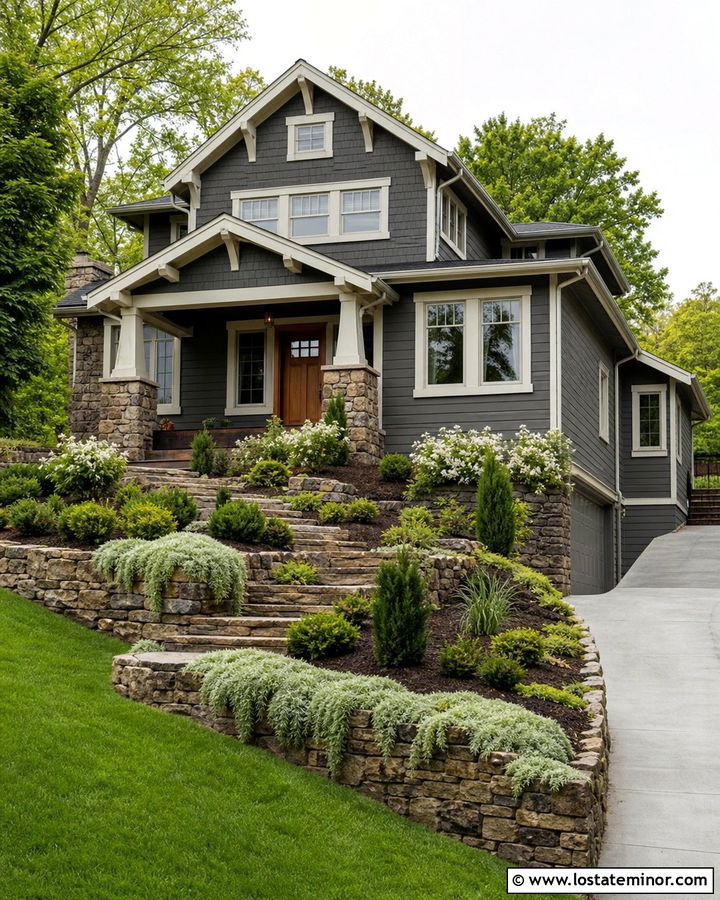
On a sloped property, a stone retaining wall can connect charcoal gray siding with the surrounding terrain. Choose stone containing warm gray, taupe, or cream tones, then repeat those colors on porch columns or the foundation. Terraced planting beds can hold low evergreens, cascading ground cover, and flowering shrubs without blocking the house. Broad stone steps should follow the grade and lead clearly toward the entrance. A stained wood front door adds warmth, while off-white trim outlines the windows. Avoid covering every terrace with dense plants. Open areas of mulch or stone help the design breathe. This complete scheme is especially appropriate for hillside craftsman, mountain, and walkout homes where the landscape must solve drainage and elevation challenges while strengthening curb appeal.
14. Charcoal Gray House With Rose Garden Landscaping
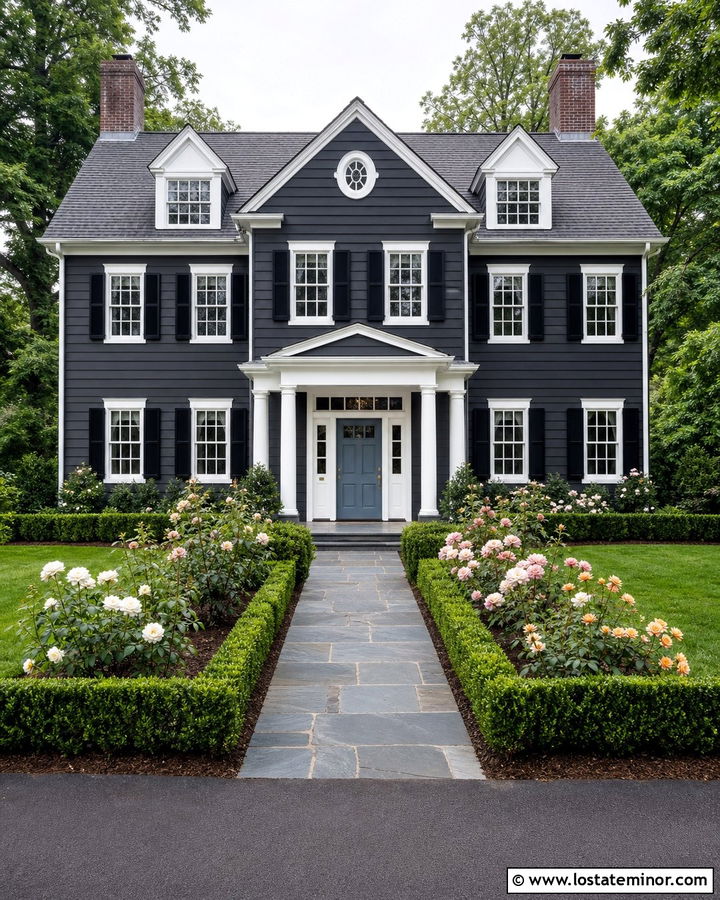
Roses introduce color and traditional character to a charcoal gray house. For a balanced facade, combine dark gray lap siding with warm white trim, black shutters, and a soft blue front door. Plant roses in broad beds near the porch, choosing colors that remain visible against the siding, such as white, blush, apricot, or clear pink. Low boxwoods can define the front edge and provide structure after the flowering season ends. Add companion plants with softer foliage to cover bare stems and extend seasonal interest. A brick or bluestone walkway suits the classic arrangement. Give the roses suitable airflow and sunlight rather than pressing them directly against the wall. Repeating one or two varieties will produce a more cohesive display than using many unrelated colors.
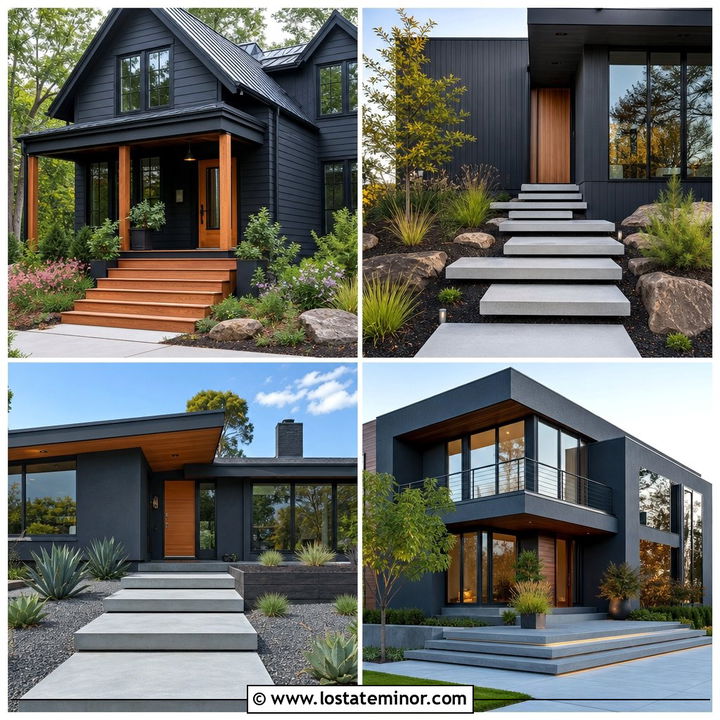

15. Charcoal Gray House With Lavender Landscaping
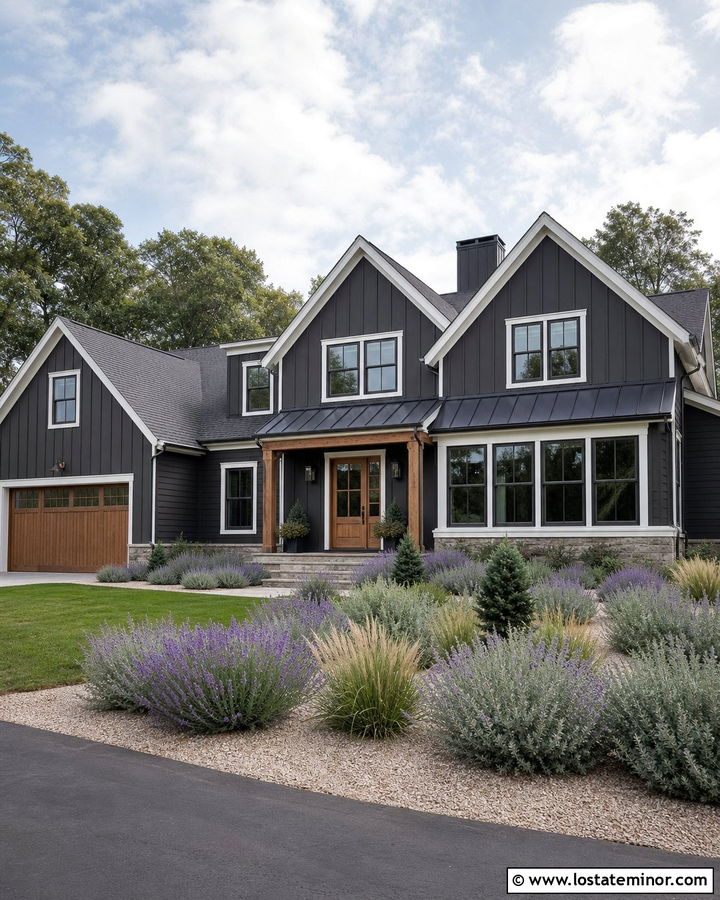
Lavender creates a fragrant, low-growing border that looks crisp against a charcoal gray exterior. Its silver-green foliage lightens the base of the house, while purple flowers add controlled color. Pair the planting with charcoal board-and-batten siding, creamy trim, a medium oak door, and a warm gray stone walkway. Plant lavender in repeated groups along sunny paths or in a wide bed near the porch. Combine it with ornamental grasses and a few compact evergreens to maintain structure beyond the flowering season. Good drainage is important, so raised beds or gravel mulch may be useful on heavy soil. This complete look suits farmhouse, Mediterranean-influenced, and modern cottage exteriors. Keep the palette simple to preserve the calm relationship between the architecture and landscape.
16. Charcoal Gray House With Flowering Dogwood Trees
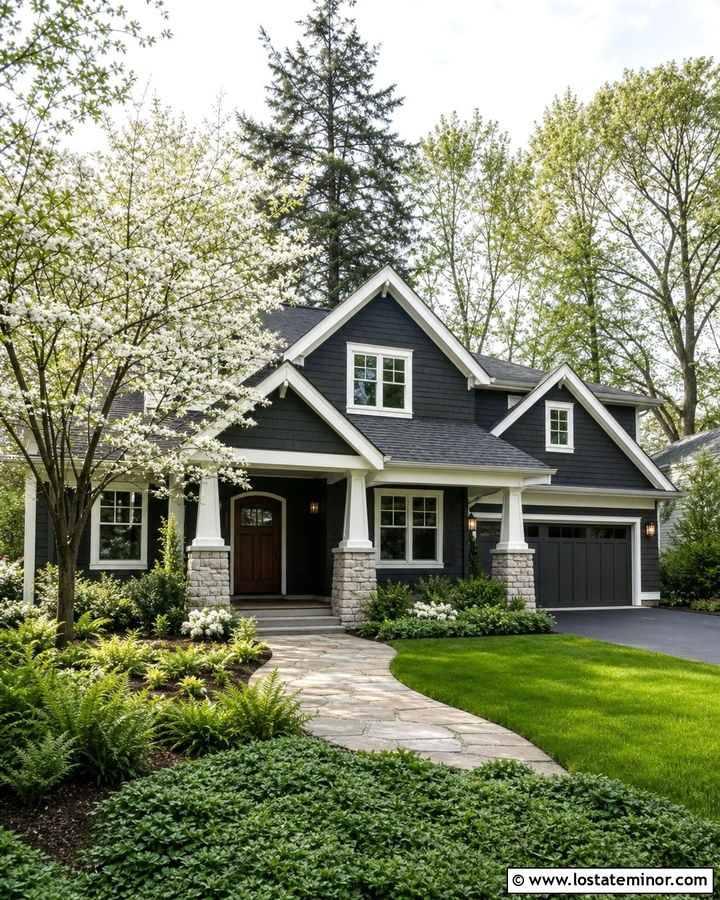
Flowering dogwoods can bring graceful branching, spring color, and attractive scale to a charcoal gray home. Place one tree to the side of the facade rather than directly in front of the entrance. Its white or pale pink flowers will stand out against dark siding without requiring a crowded garden. Complete the exterior with ivory trim, a walnut front door, and light stone porch columns. Beneath the tree, use broad sweeps of ground cover, ferns, and compact flowering shrubs. A curved walkway can move gently around the planting bed and create a layered curb view. Check the tree’s mature height, soil preferences, and climate suitability before planting. This landscape combination works beautifully with craftsman, cape cod, and traditional suburban architecture.
17. Charcoal Gray House With White Birch Trees
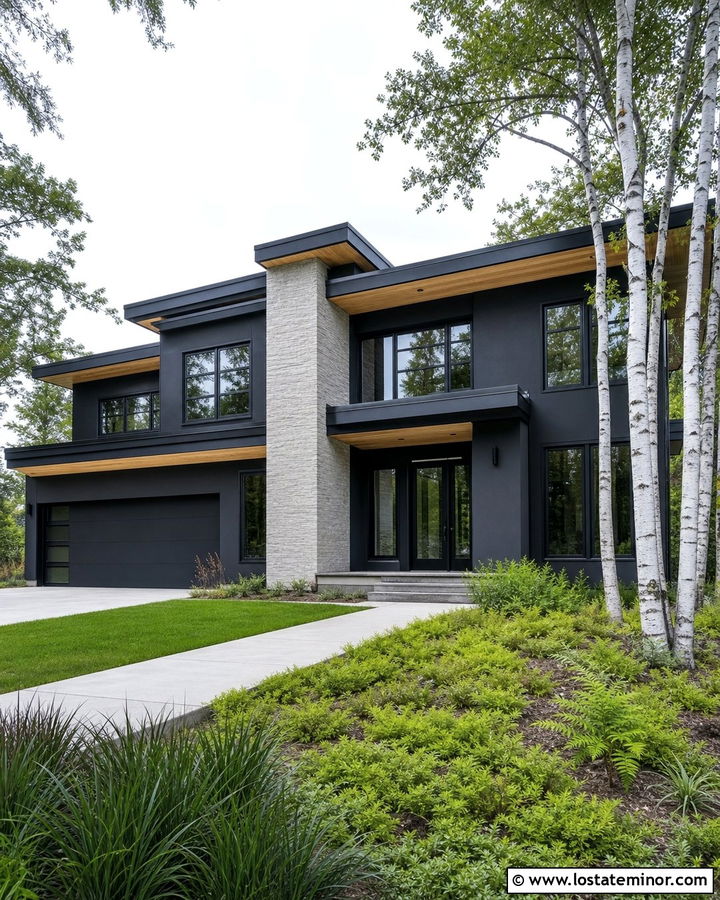
The pale bark of white birch trees creates a crisp natural accent beside charcoal gray siding. Use a small cluster where space allows, positioning it away from foundations, utilities, and rooflines. A contemporary two-story house can combine charcoal panels, black windows, light wood soffits, and pale gray stone for a sophisticated woodland palette. Underplant the birches with low grasses, ferns, or ground cover that will not compete with the trunks. A straight concrete walkway and simple lawn provide visual breathing room. The vertical white bark echoes light trim while breaking up the dark mass of the facade. Because birch varieties have different climate and moisture needs, select trees suited to the site rather than choosing solely for appearance.
18. Charcoal Gray House With Coastal Grass Landscaping
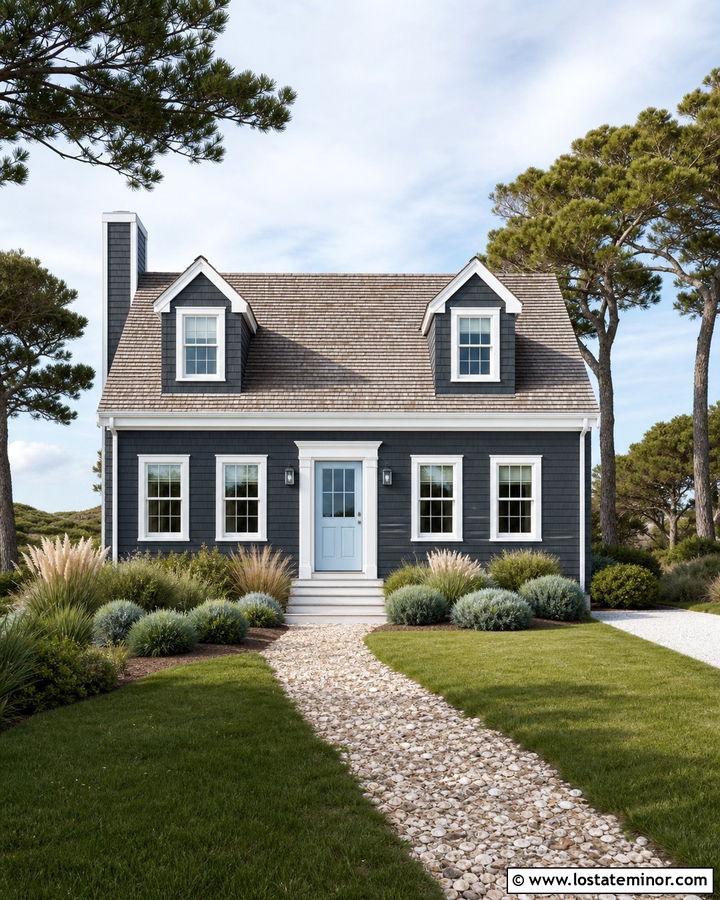
Coastal grasses can give a charcoal gray home an easy, wind-swept character. Cover a cape cod or shingle-style house in deep charcoal gray, then introduce white trim, a pale blue front door, and natural cedar details. Plant salt-tolerant grasses in broad drifts beside a shell, gravel, or light stone walkway. Low shrubs with blue-green foliage can add structure without interrupting views from the porch. Keep the beds informal but use a clear edge so they do not appear neglected. The pale grass blades and seed heads soften the dark facade and reflect the lighter tones of sand and sky. Choose plants suited to local wind, soil, and salt exposure. The final exterior should feel relaxed, bright, and connected to its setting.
19. Charcoal Gray House With Courtyard Landscaping
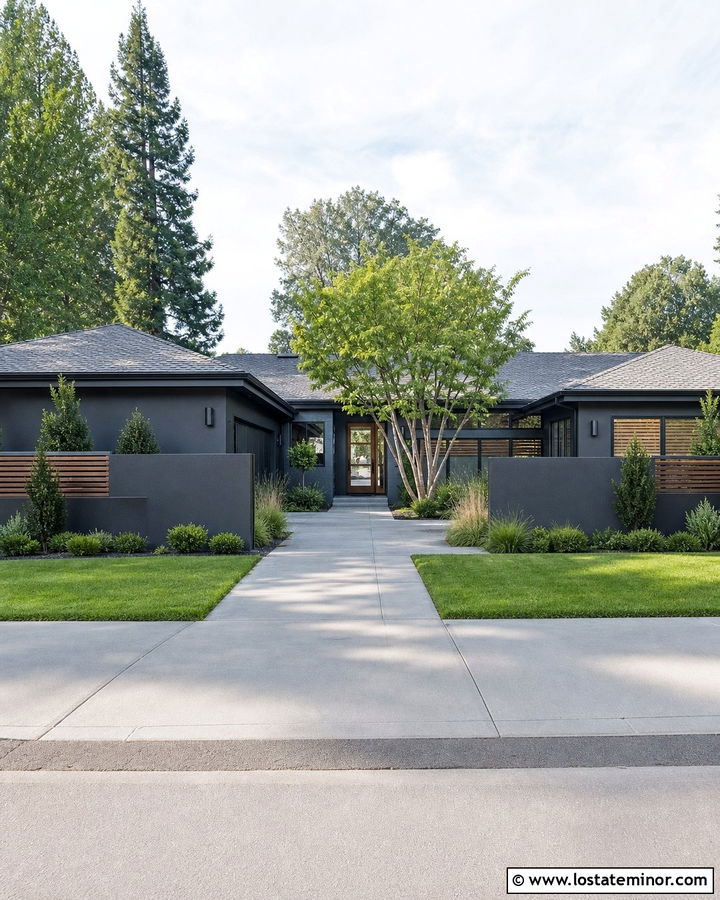
A front courtyard can turn the entrance of a charcoal gray house into a sheltered outdoor destination. Define the space with low charcoal walls, pale concrete paving, and warm cedar screens. Use a small multi-stem tree as the central feature, then surround it with restrained layers of ground cover, grasses, and evergreen shrubs. A modern glass-paneled front door can serve as the visual endpoint from the gate. Keep the planting below the windows so the courtyard remains open and secure. Repeating the same plants in several locations creates rhythm without clutter. This scheme is well suited to modern, Southwestern, and U-shaped homes. The hardscape and facade should share related colors, while foliage and wood provide the warmth needed to make the dark exterior inviting.
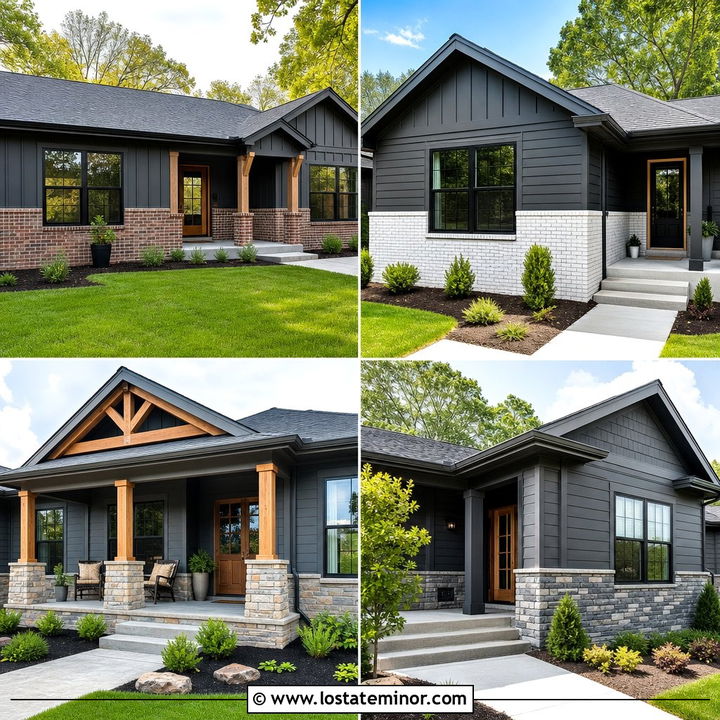
20. Charcoal Gray House With Sloped Front Yard Landscaping
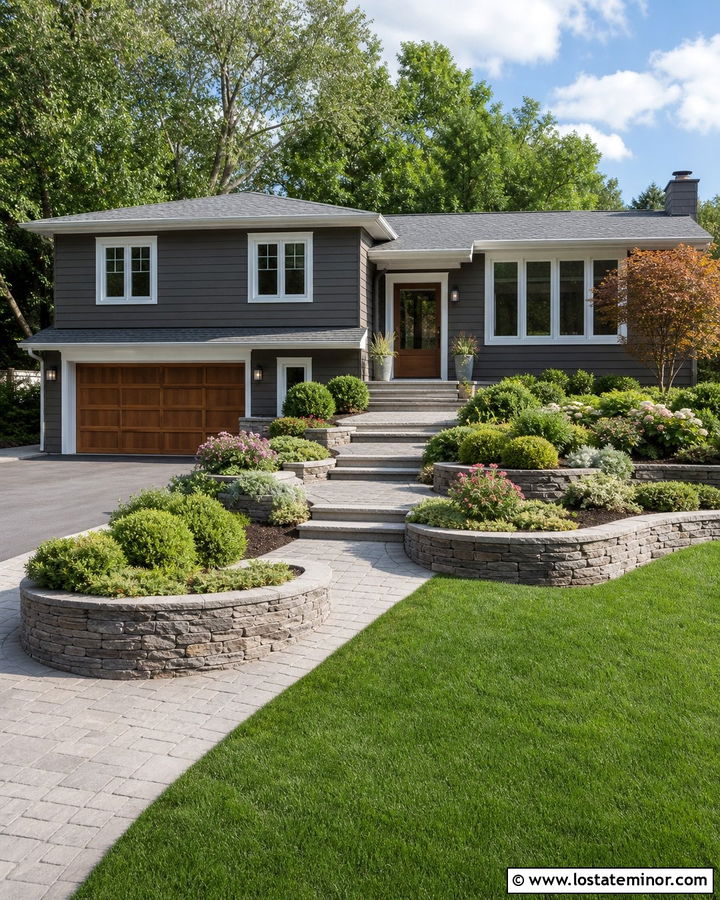
A sloped front yard needs clear circulation and carefully layered planting. Pair a charcoal gray split-level house with white window trim, a natural wood garage door, and broad stone steps. Use low retaining walls to create manageable terraces instead of covering the entire slope with lawn. Place spreading ground cover on steep areas, rounded shrubs on middle levels, and one ornamental tree near the lower corner. This arrangement keeps the house visible while reducing the visual height of the grade. Repeat stone from the walls around the porch or foundation to unify the exterior. Handrails, lighting, and stable step dimensions should be considered from the beginning. The completed landscape will guide visitors naturally upward and make the elevation feel intentional rather than difficult.
21. Charcoal Gray Ranch House With Low-Water Landscaping
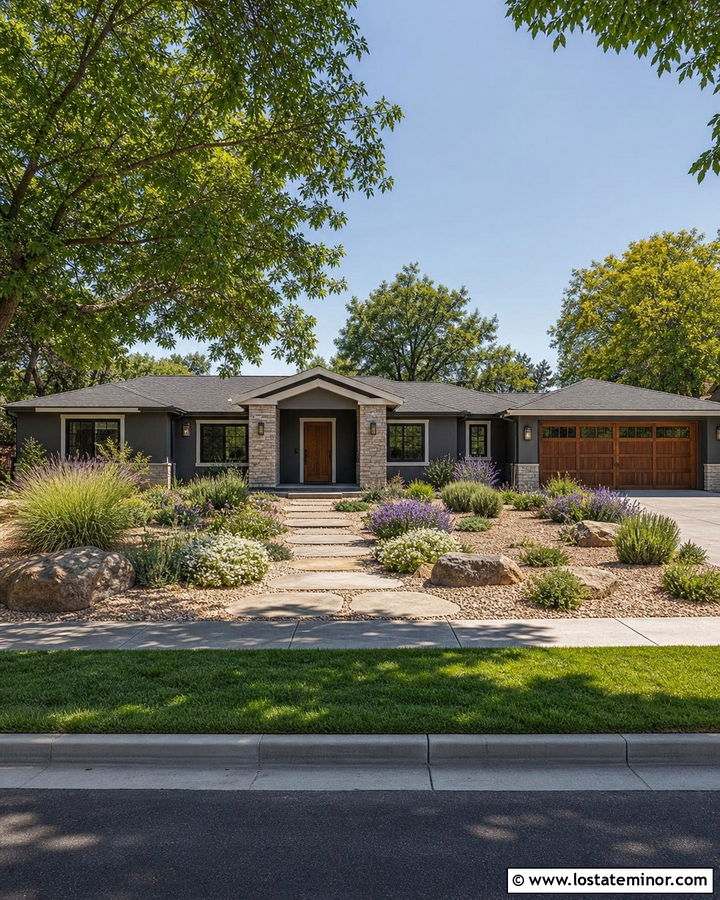
A long ranch facade benefits from landscaping that breaks up its horizontal shape. Charcoal gray siding, warm white trim, and a cedar garage door provide a simple foundation for low-water planting. Create several wide beds containing drought-tolerant shrubs, grasses, flowering perennials, and well-spaced accent plants. Use taller specimens near blank wall sections and keep lower plants beneath windows. Tan gravel and large stepping stones introduce warmth, while a few boulders help anchor the broad yard. Avoid lining the foundation with one narrow row of shrubs, which can emphasize the home’s length. Instead, vary bed depth and connect separate planting groups with repeating colors and textures. Choose plants appropriate for local rainfall and temperature so the landscape remains practical as well as attractive.
22. Charcoal Gray Farmhouse With Meadow Landscaping
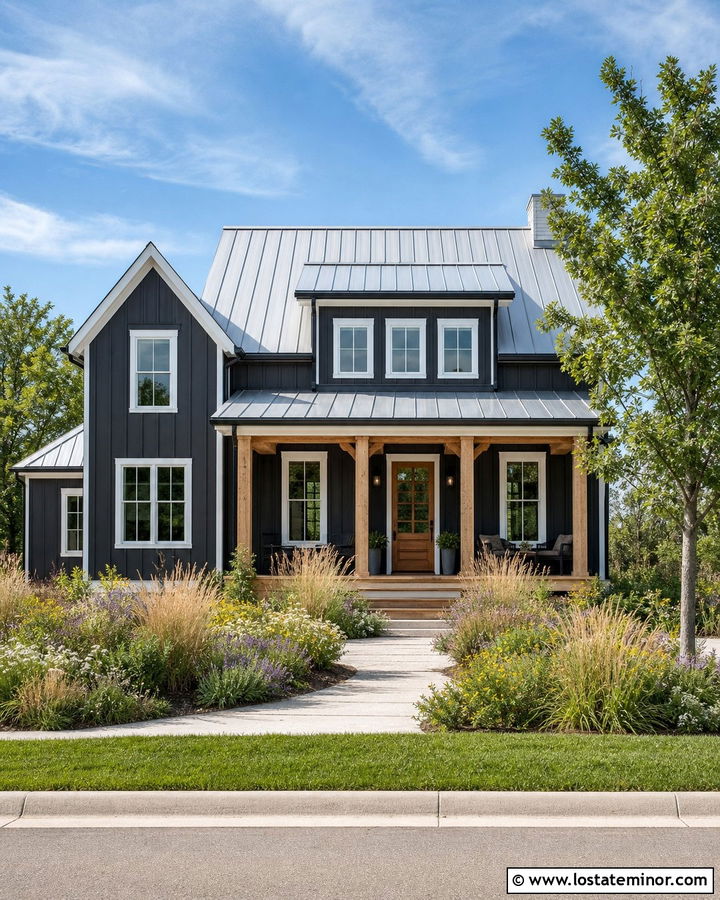
A meadow-inspired front yard softens the bold lines of a charcoal gray modern farmhouse. Combine charcoal board-and-batten siding with white trim, a galvanized metal roof, and a natural oak porch. Plant flowing groups of grasses and regionally suitable flowering perennials along the driveway and front walkway. Keep a defined lawn strip or mown edge near the house so the landscape reads as deliberate. White flowers can echo the trim, while muted yellow and soft purple bring subtle seasonal color. Add one shade tree at a comfortable distance from the porch to balance the tall gables. This approach works best when plant choices are repeated across broad areas. The complete exterior feels relaxed and rural without sacrificing the clean structure associated with modern farmhouse design.
23. Charcoal Gray Craftsman With Fern Landscaping
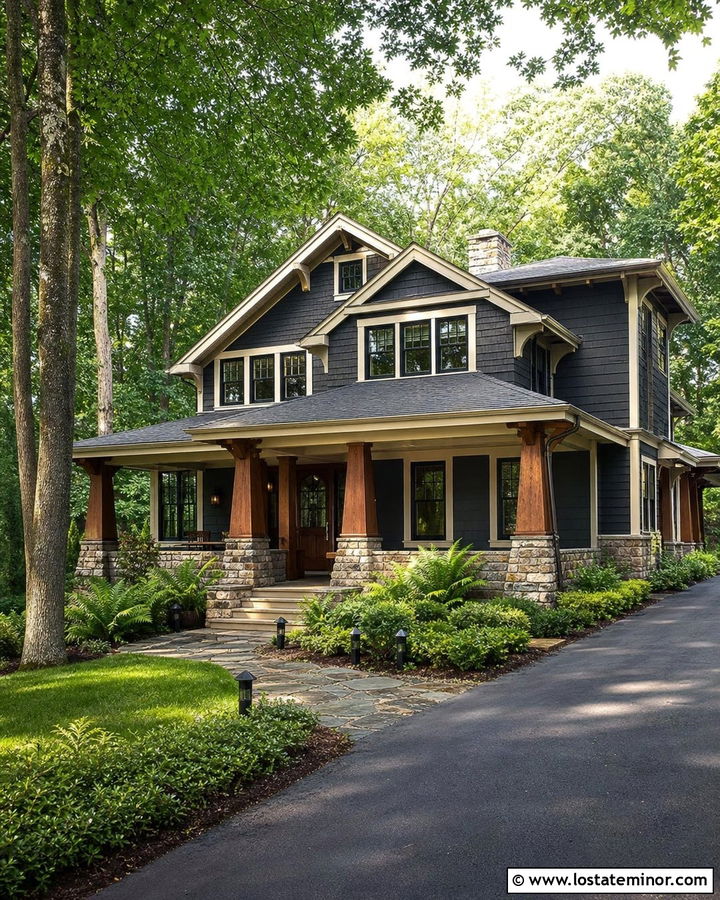
Ferns provide soft texture around the substantial materials of a charcoal gray craftsman home. Use dark gray shingle siding with creamy trim, stained timber columns, and a mixed-stone porch foundation. In shaded beds, layer ferns with low evergreen ground cover and compact shrubs that tolerate similar conditions. Place lighter green foliage near the steps to brighten the entrance. A flagstone path with mossy joints can strengthen the natural character, while simple black lighting adds definition. Avoid tall, dense planting directly in front of the porch because craftsman details deserve to remain visible. If the yard receives mixed sunlight, transition to flowering perennials at the outer edge. The combination feels established, comfortable, and well connected to a wooded or tree-lined neighborhood.
24. Charcoal Gray Colonial With Symmetrical Landscaping
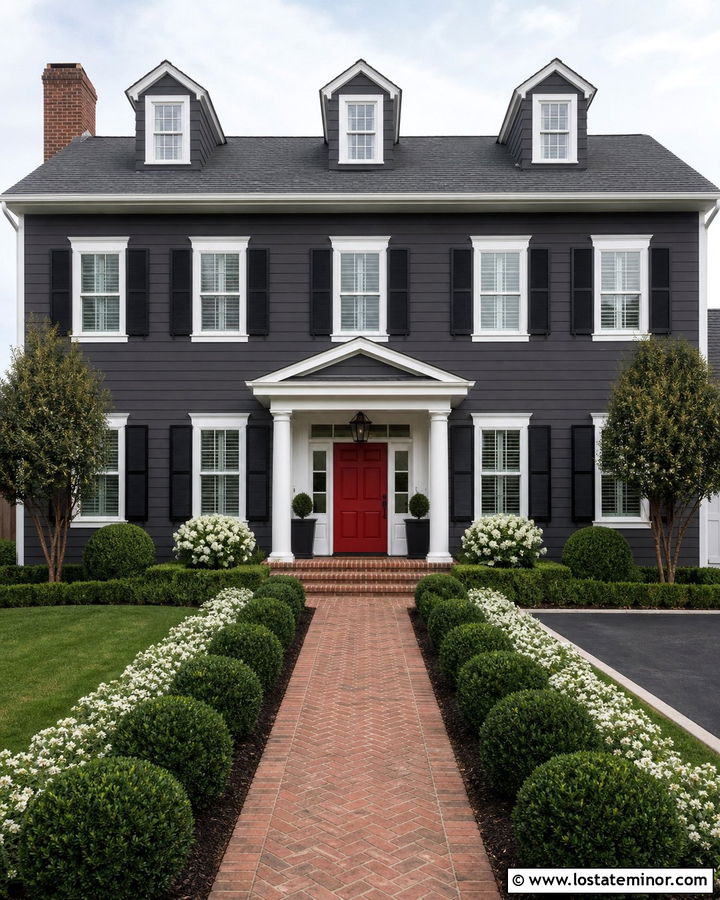
Symmetry reinforces the formal architecture of a charcoal gray colonial house. Begin with charcoal lap siding, crisp white trim, black shutters, and a polished red or deep blue front door. Center a straight brick walkway on the entrance and place matching shrubs on each side. Two small ornamental trees can anchor the outer corners, while rounded evergreens and white-flowering plants create balanced foundation beds. Repeating forms is more important than filling every available space. Leave clear gaps around basement windows, steps, and architectural details. Matching planters at the door can provide seasonal color without disrupting the structure. This complete exterior scheme feels orderly and traditional, yet the charcoal body color adds stronger contrast and a more updated presence from the street.
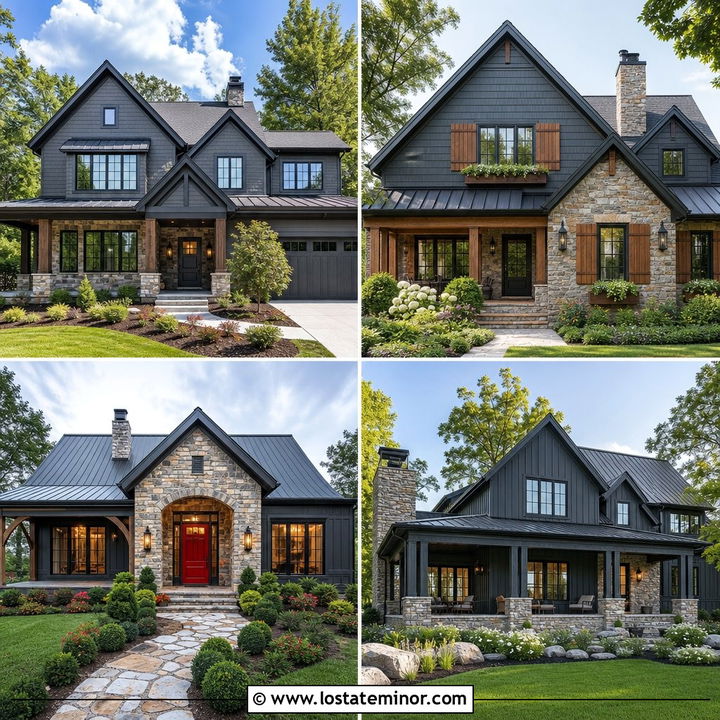
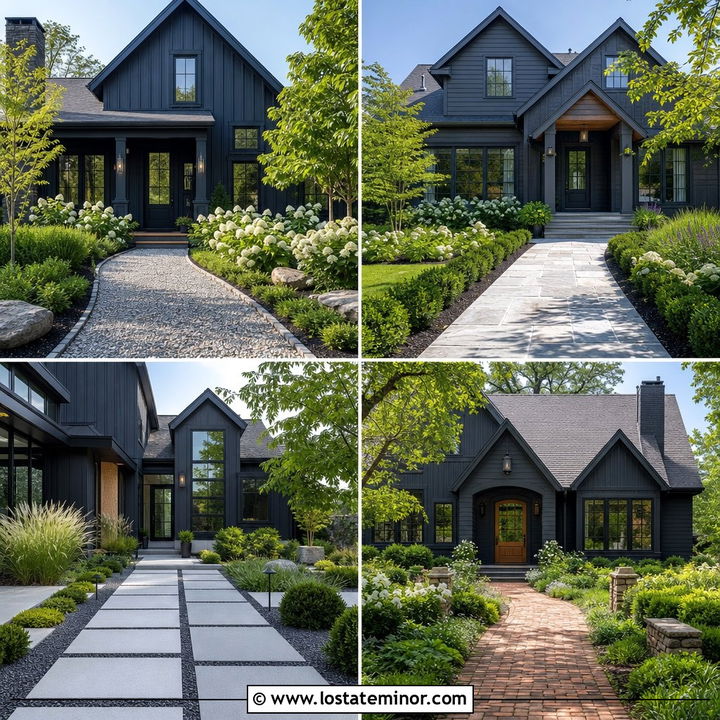
25. Charcoal Gray Bungalow With Pollinator Landscaping
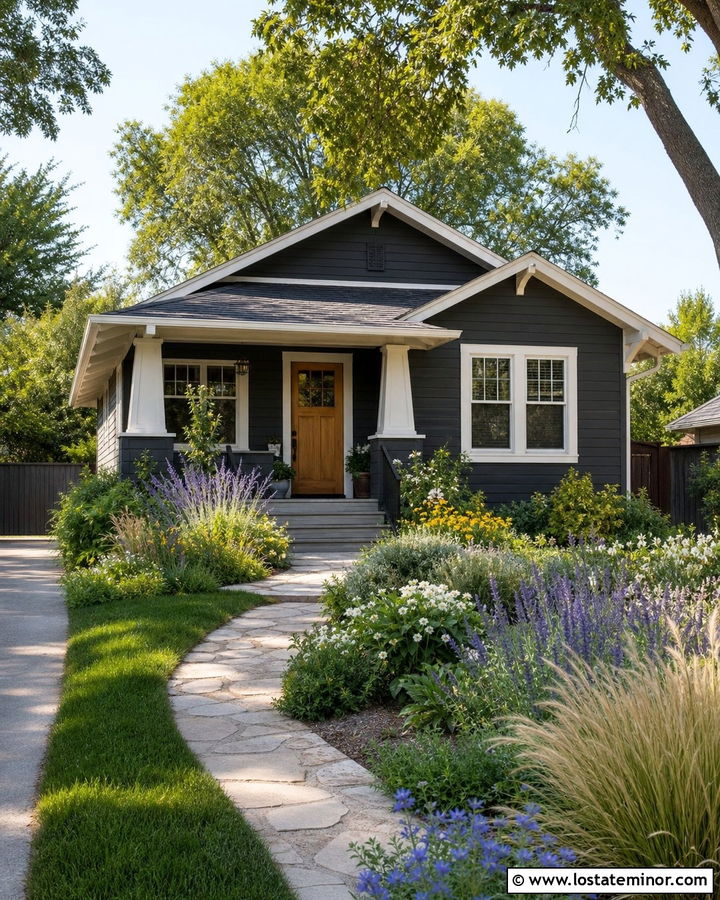
A compact bungalow can support a colorful pollinator garden without losing its architectural charm. Paint the siding charcoal gray, outline the porch in warm white, and add a honey-toned wood door. Create curved beds filled with regionally appropriate flowering plants in white, yellow, blue, and purple. Repeat each plant in groups so the small yard stays visually organized. Low flowers should border the walkway, with taller perennials placed near the porch corners or fence. Include grasses and seed-producing plants for texture beyond peak bloom. A simple stone path and a narrow strip of lawn will keep the design approachable. Avoid pesticide-heavy maintenance where possible, and choose plants that suit the available sunlight. The finished landscape feels cheerful against the deep, neutral facade.
26. Charcoal Gray Modern House With Succulents
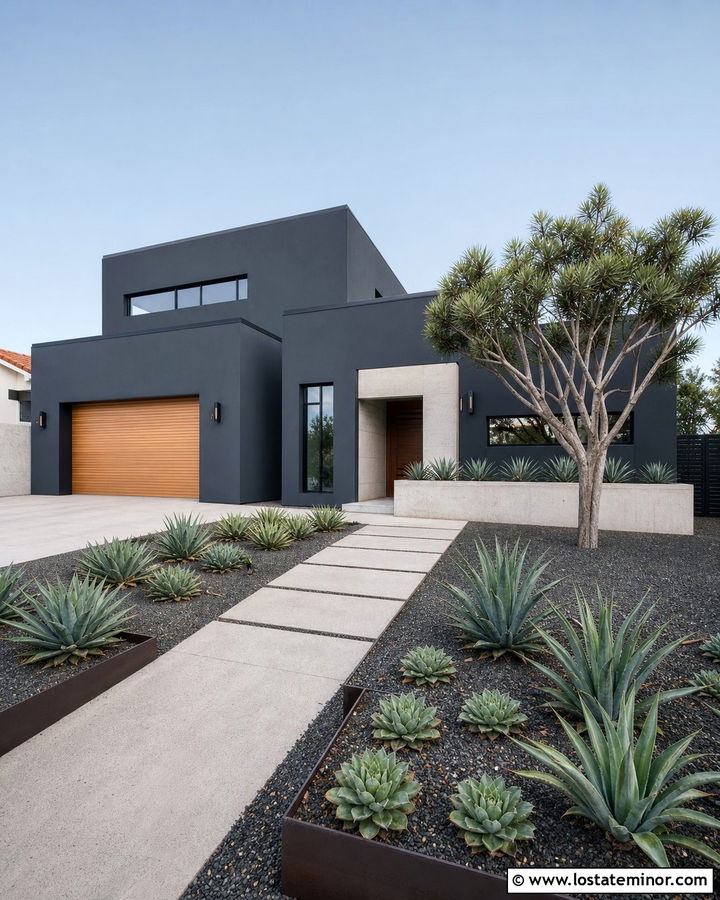
Architectural succulents echo the crisp geometry of a charcoal gray modern house. Combine deep charcoal stucco with black-framed windows, a warm cedar garage door, and pale concrete walls. Arrange agaves, aloes, and low-growing succulents in broad gravel beds with generous open space between major plants. Use contrasting gravel colors or steel edging to define separate zones without creating visual clutter. A sculptural tree can soften the roofline, while a straight concrete path reinforces the entrance axis. Position sharp plants away from doors, sidewalks, and play areas. In colder regions, achieve a similar look with hardy rosette-forming plants or large seasonal containers. This complete scheme works because the strong foliage shapes balance the dark facade while wood and stone prevent the composition from feeling severe.
27. Charcoal Gray Split-Level With Layered Landscaping
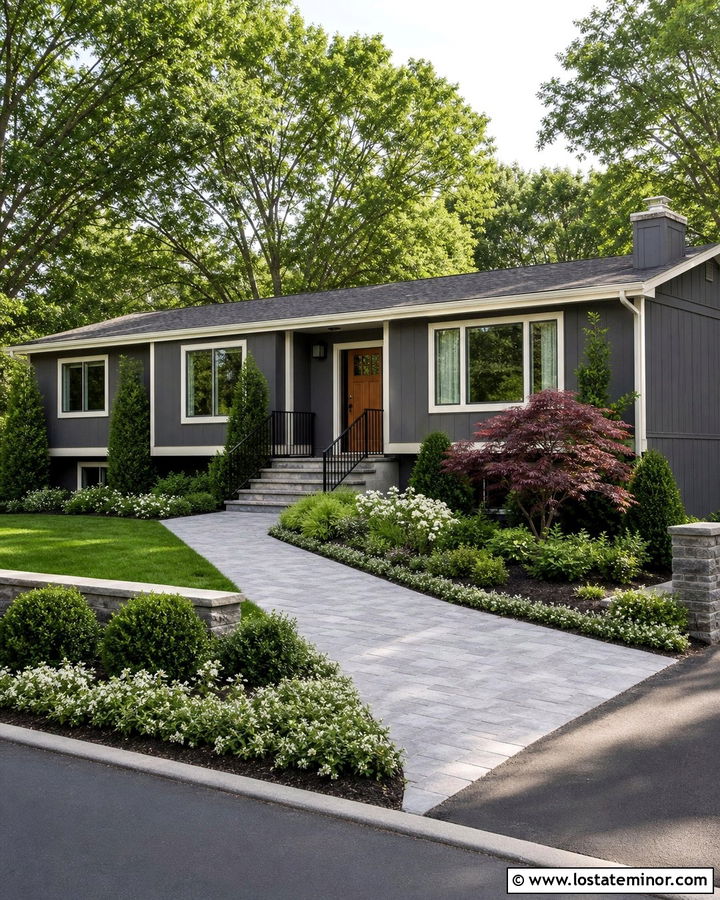
Layered landscaping helps organize the uneven windows and entrances common to split-level homes. Use charcoal gray horizontal siding with off-white trim, black railings, and a cedar front door. Place taller shrubs near blank wall sections, medium plants below raised windows, and low ground cover along the walkway. A small ornamental tree can balance the garage without hiding the upper level. Widen the front steps and connect them to a clear paver path so the main entrance is easy to identify. Repeating two or three plant varieties across the beds will tie the different elevations together. If the property slopes, low stone walls can create additional structure. The completed design makes the facade feel balanced, cohesive, and intentionally connected to the yard.
28. Charcoal Gray Cabin With Boulder Landscaping
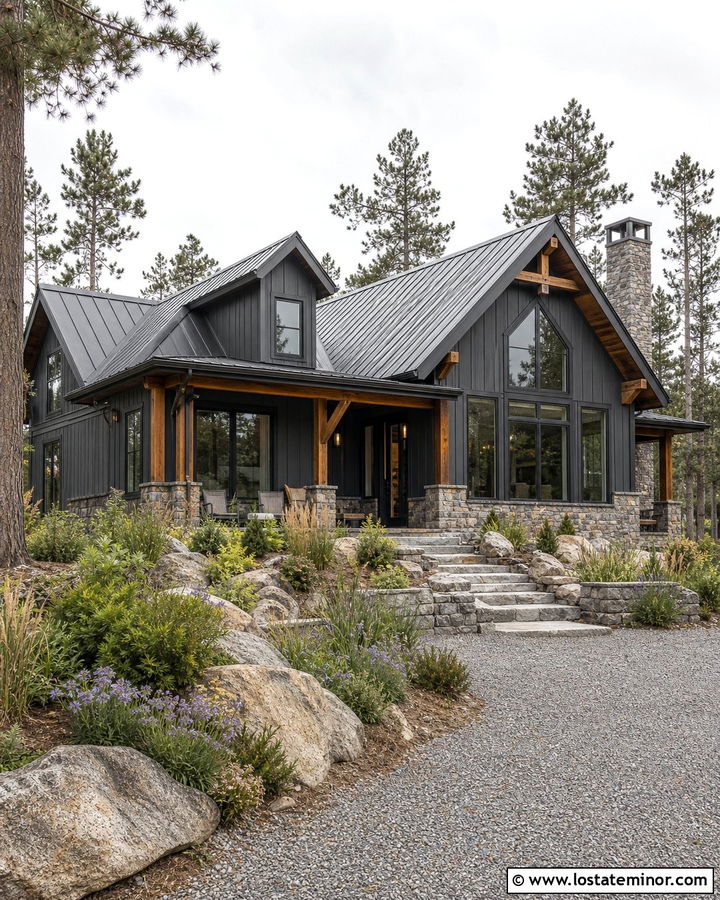
Large natural boulders can ground a charcoal gray cabin in a mountain or wooded setting. Pair charcoal siding with a dark metal roof, rough stone foundation, and warm timber beams. Place boulders in irregular groups that appear connected to the terrain rather than evenly spaced around the yard. Fill the surrounding beds with native grasses, low evergreen shrubs, and tough flowering plants suited to the local climate. A gravel driveway and broad stone steps maintain the rustic material palette. Keep vegetation away from wood siding and create appropriate defensible space where wildfire planning is required. The gray stone and charcoal exterior should share related undertones, while natural wood adds warmth. This complete landscape looks rugged and established without becoming messy or overdesigned.
29. Charcoal Gray Cape Cod With Blue-Green Landscaping
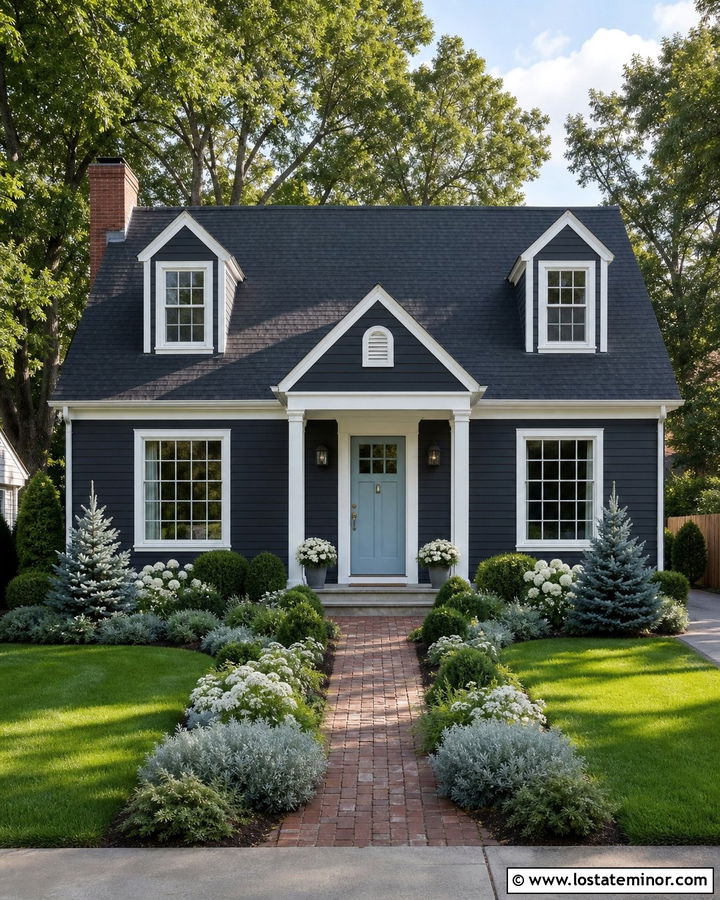
Blue-green foliage adds subtle color to a charcoal gray cape cod exterior. Combine deep gray shingles with bright white trim, dormer windows, and a soft blue front door. Plant compact blue spruce, silvery ground cover, and rounded evergreen shrubs in layered foundation beds. Add white flowers to brighten the entrance and repeat the window trim color. A brick walkway introduces warmth and suits the traditional architecture, while a simple lawn prevents the compact facade from feeling crowded. Keep shrubs below the lower window sills and allow open space around the steps. The blue-green foliage creates a gentle transition between the charcoal walls and surrounding greenery. This coordinated palette feels coastal and classic without depending on decorative nautical features.
30. Charcoal Gray House With Small Front Yard Landscaping
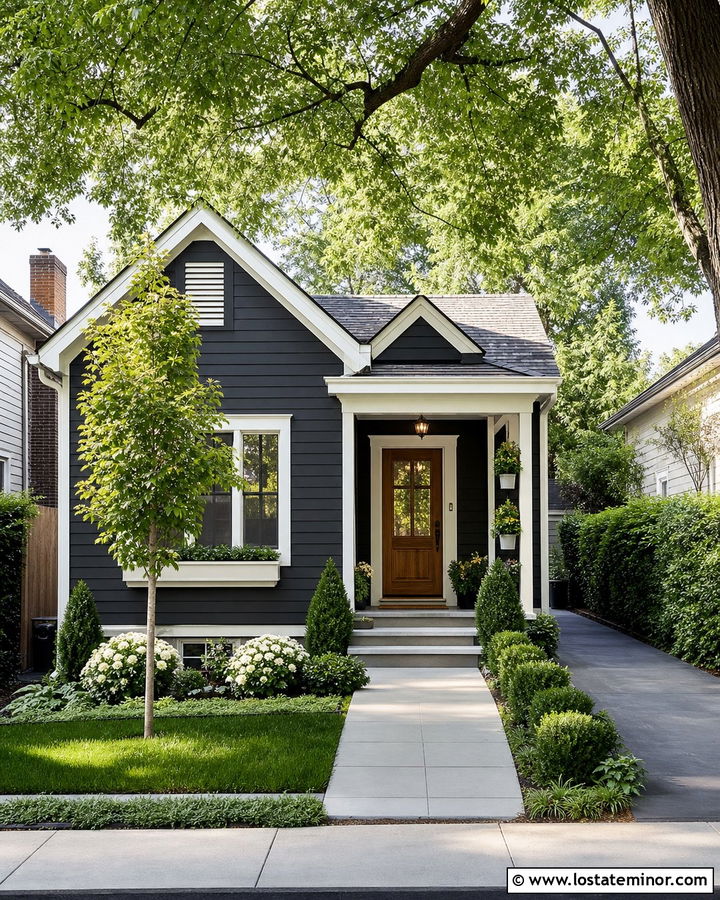
Even a narrow front yard can support a complete landscape around a charcoal gray house. Start with a restrained exterior palette of charcoal siding, warm white trim, and a natural wood door. Use one small ornamental tree as the main feature, placing it where it will not block the facade. Create deep planting beds along one side of the walkway and keep the opposite side simpler for visual balance. Compact evergreens, white-flowering shrubs, and low ground cover provide layers without overwhelming the space. A wide path made from light concrete or pale pavers will brighten the approach. Vertical planters or a slim trellis can add greenery where ground space is limited. Every element should have a clear purpose, comfortable spacing, and an appropriate mature size.
Conclusion:
The strongest charcoal exterior does more than create dramatic contrast. It gives plants, stonework, walkways, wood accents, and seasonal flowers a rich background. Before choosing a layout, study the home’s architecture, sunlight, soil, mature plant sizes, and local climate. Then repeat a limited selection of materials and plants across the facade for a connected result. White flowers can brighten dark siding, evergreens can provide dependable structure, and warm wood can soften cool gray undertones. Whether you prefer a formal garden, native meadow, woodland setting, or low-water yard, these **30 Charcoal Grey House Design With Landscaping Ideas** can help you build a balanced and welcoming curb-appeal plan.

Related posts: