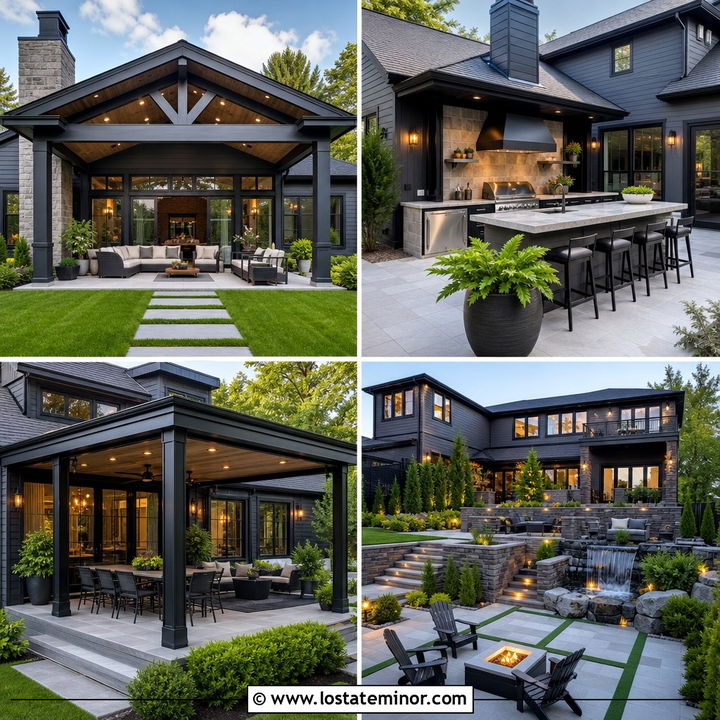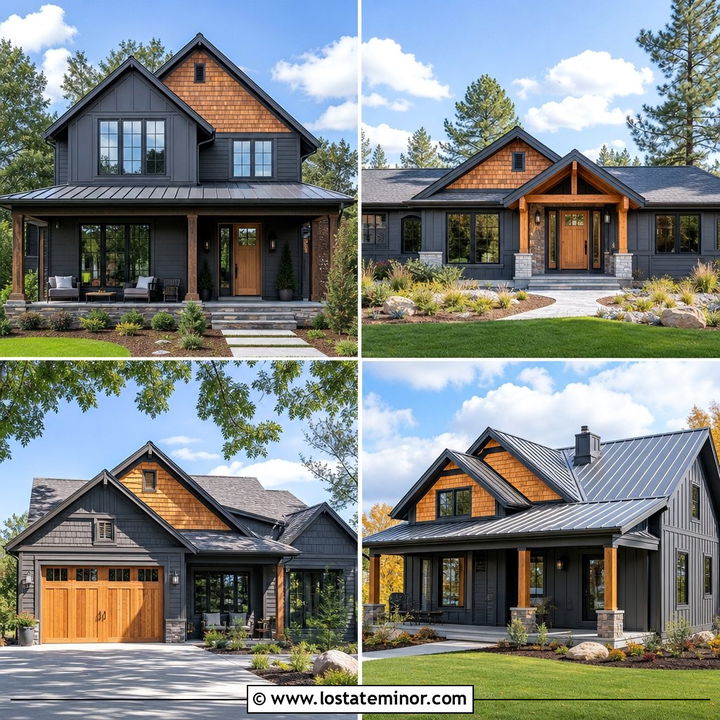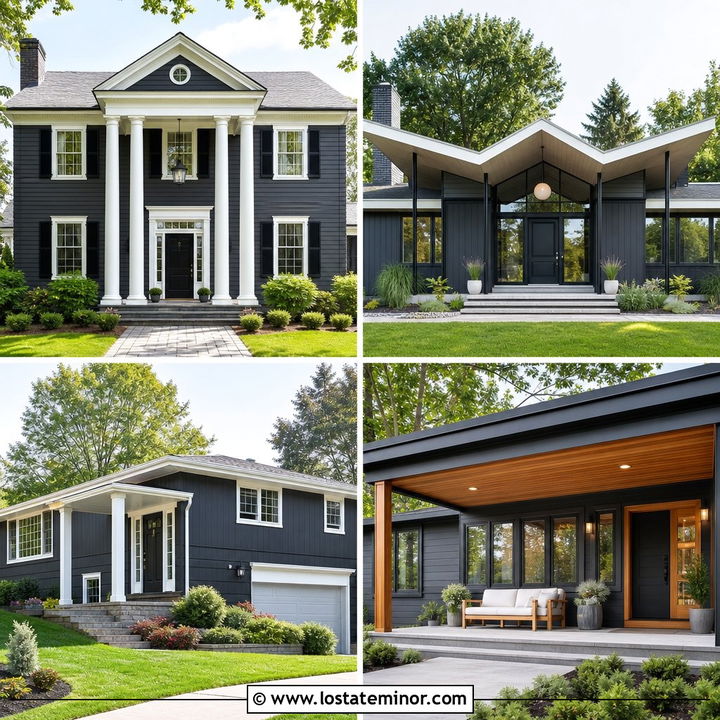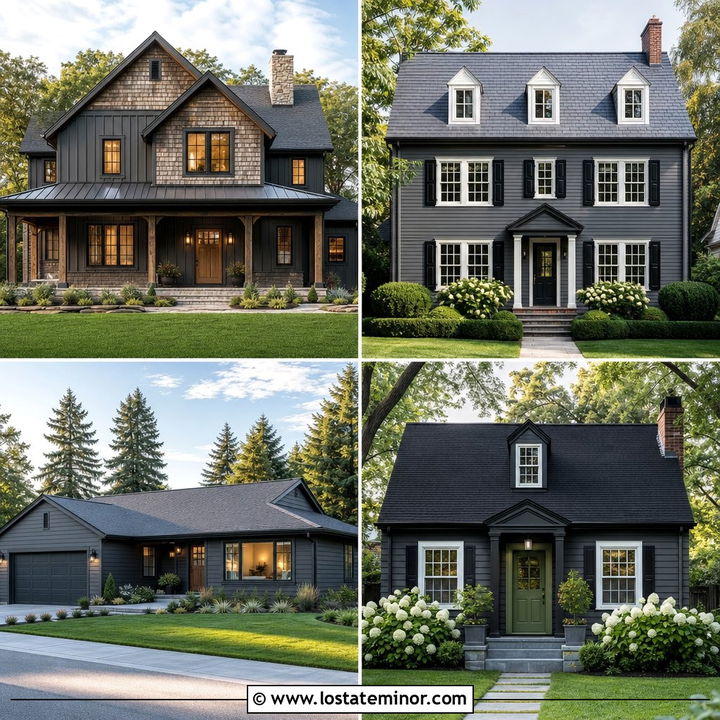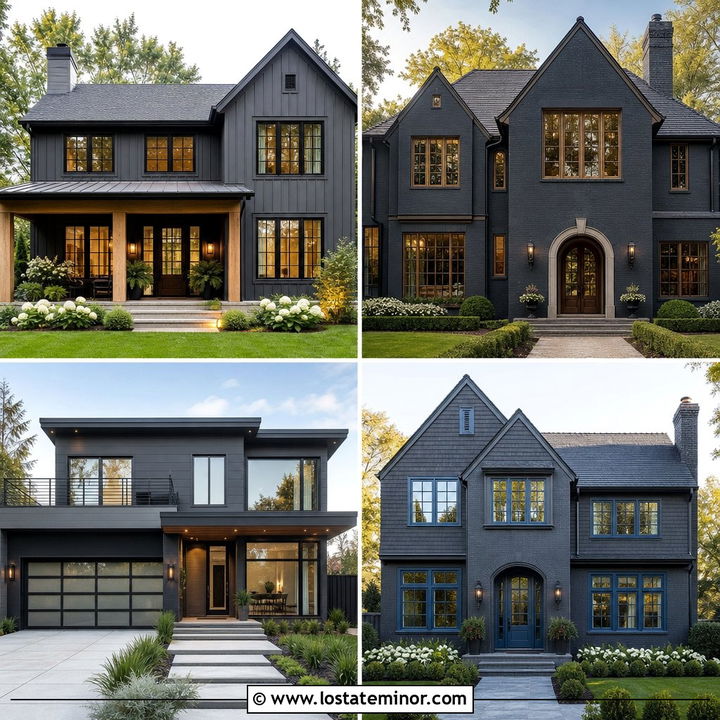
A dark exterior can feel dramatic, refined, and surprisingly welcoming when the path to the entrance adds the right contrast. These 30 Charcoal Grey House Design With Walkway Ideas explore complete curb-appeal schemes rather than treating the walkway as an isolated feature. You will find charcoal gray siding paired with warm brick, pale concrete, natural stone, gravel, wood, and modern pavers. Each look also considers trim, roofing, doors, porch details, and landscaping. Lighter walkway materials can make a deep gray facade feel brighter, while warm earth tones soften its cool appearance. () Whether you are planning a major renovation or a simple front-yard update, use these 30 Charcoal Grey House Design With Walkway Ideas to create a clear, attractive route home.

1. Charcoal Grey House With White Concrete Walkway
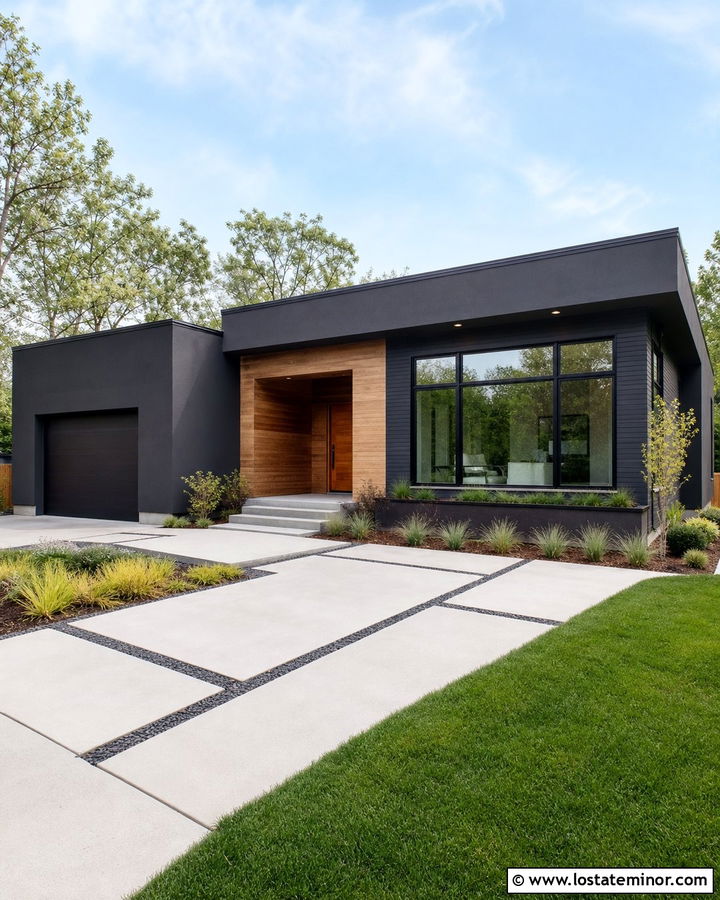
Large white concrete slabs bring crisp contrast to a charcoal gray modern house. Keep the exterior simple with smooth charcoal siding, black window frames, and warm cedar around the entry. A straight walkway made from oversized rectangular slabs emphasizes the home’s clean lines. Narrow strips of dark gravel between the slabs prevent the path from looking like one solid surface. Continue the pale concrete onto the porch for a smooth visual connection. Ornamental grasses, clipped shrubs, and low ground cover soften the geometric layout without hiding it. A natural wood front door supplies warmth, while a matte black roof completes the contemporary palette. This design works especially well when the front yard is shallow and needs a strong sense of direction.
2. Charcoal Grey House With Red Brick Walkway
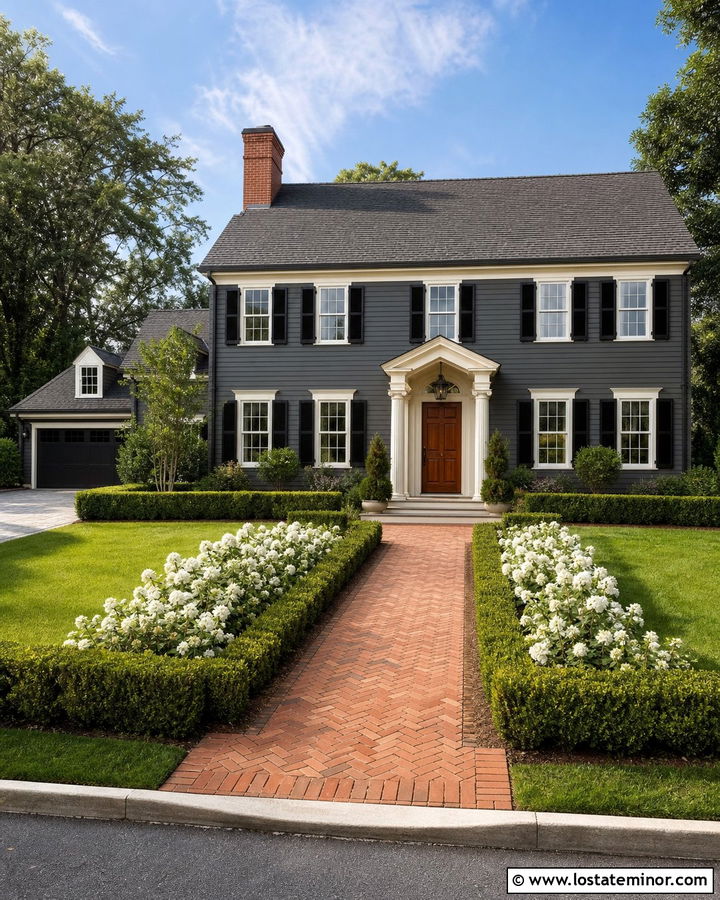
Warm red brick creates a welcoming transition between a cool charcoal gray exterior and a green front yard. Use a herringbone pattern to give the walkway traditional character, then frame it with a simple soldier-course border. Creamy white trim around the windows keeps the dark siding from feeling heavy. Add a stained mahogany front door and aged bronze lighting to repeat the brick’s warm undertones. This complete scheme suits a Colonial, Georgian, or traditional two-story home with symmetrical windows and a centered entrance. Low boxwood hedges can define the path, while white flowering shrubs brighten the foundation. If the exterior includes a brick chimney, match the walkway to its general color family rather than forcing an exact match.
3. Charcoal Grey House With Bluestone Walkway
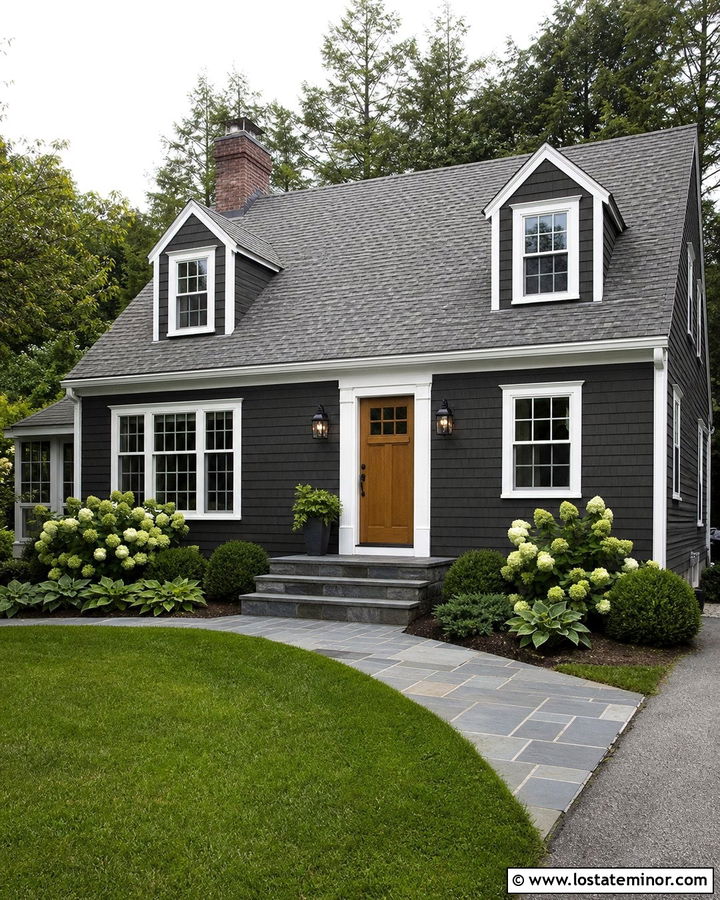
Bluestone gives a charcoal gray house a layered, tone-on-tone appearance without making the facade look flat. Its natural blue and gray variation introduces movement while remaining calm and sophisticated. Choose large rectangular stones in a running-bond layout for a tailored entrance. A warm white border or pale gravel joint can separate the dark path from the dark siding. Complete the exterior with white trim, a medium brown oak door, and a gray architectural-shingle roof. Hydrangeas, hostas, and evergreen shrubs complement the cool palette around a Cape Cod or shingle-style house. Bluestone also works beautifully across porch steps, creating a continuous route from the lawn to the door. Slight color variation makes the walkway feel natural rather than overly matched.
4. Charcoal Grey House With Pea Gravel Walkway
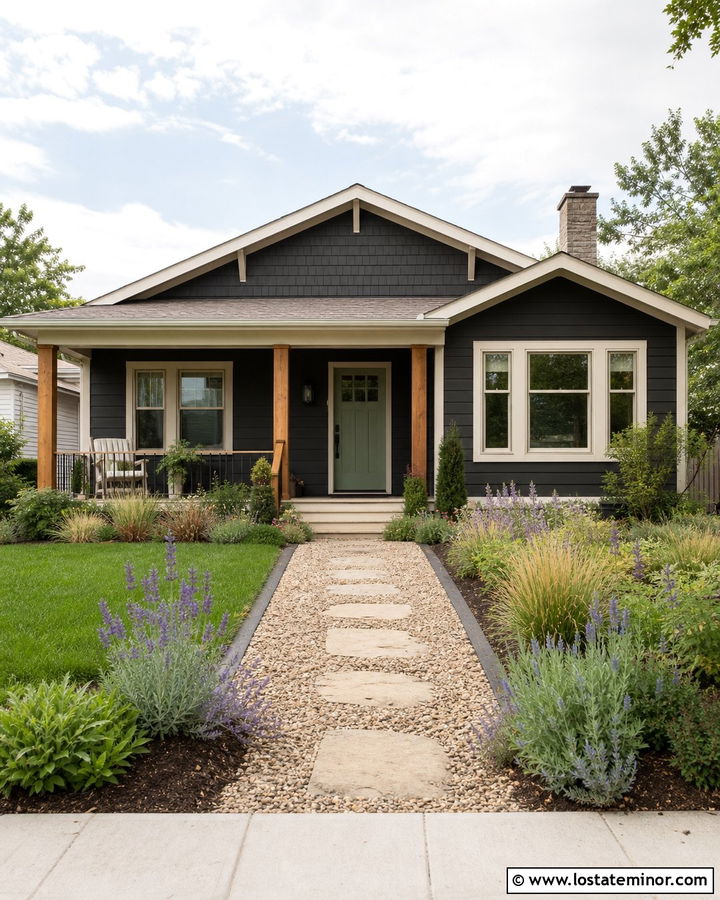
The gentle texture of pea gravel can soften a bold charcoal gray cottage or bungalow. Select warm beige gravel rather than cool gray stone so the path creates visible contrast with the exterior. Steel or dark brick edging will hold the material in place and give the walkway a defined shape. Add evenly spaced natural stone steppers where a firmer walking surface is helpful. Cream trim, a muted sage front door, and cedar porch posts make the overall palette relaxed and approachable. Surround the walkway with lavender, catmint, ornamental grasses, and compact shrubs for layered cottage character. A slight curve feels more natural than a rigid line in this setting. The result is informal, affordable, and especially suitable for a broad garden-focused front yard.
5. Charcoal Grey House With Limestone Walkway
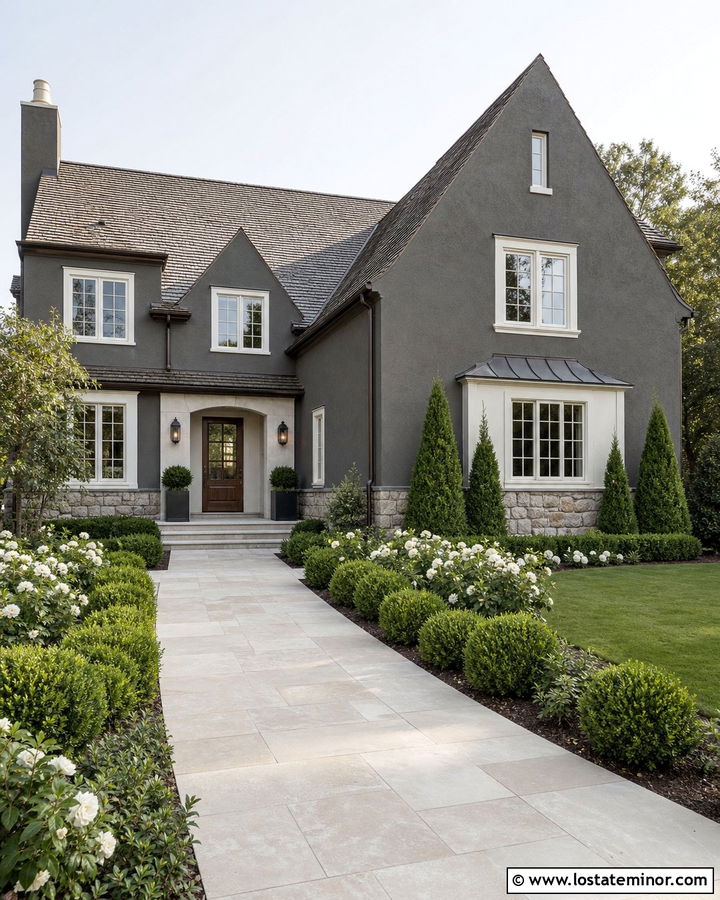
Pale limestone can visually lift a dark charcoal gray exterior while creating an elegant entrance. Its creamy beige undertones look especially attractive beside natural wood, warm white trim, and weathered bronze hardware. Use wide limestone pieces with narrow joints to give a traditional Craftsman or European-inspired house a substantial front path. Repeat the stone on porch columns or the foundation, but limit it to selected areas so the facade stays balanced. A walnut front door and medium bronze roof prevent the exterior from becoming too cool. Along the walkway, use clipped evergreens, white roses, and soft green ground cover. Limestone appears brightest in open sunlight, making it a useful choice for a heavily shaded or visually imposing charcoal house.
6. Charcoal Grey House With Tan Paver Walkway
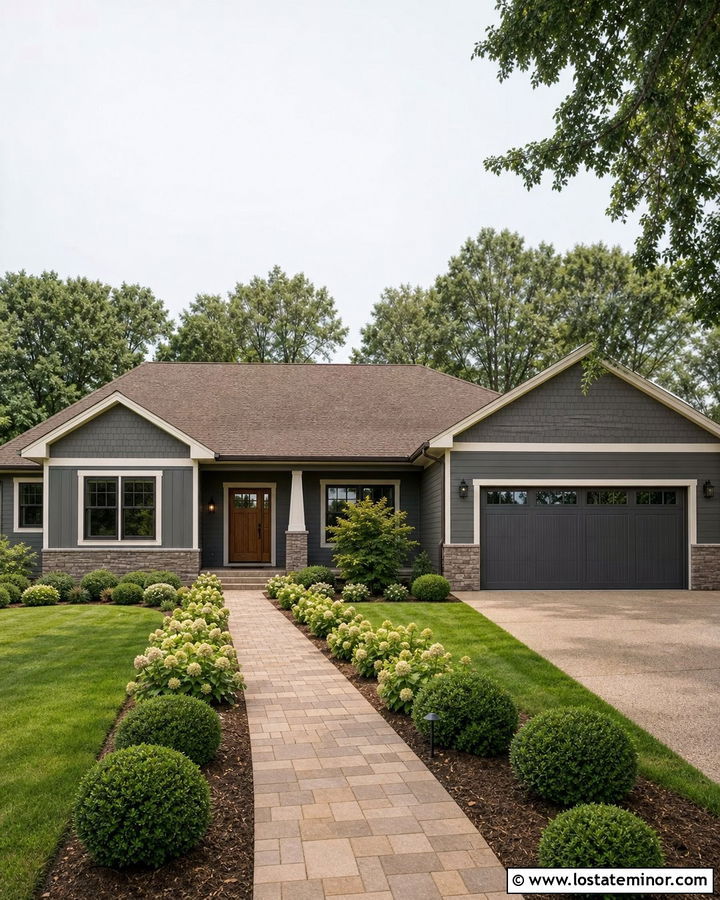
Tan pavers introduce warmth and make a charcoal gray suburban exterior feel more inviting. Select a blend containing sand, taupe, and muted brown rather than bright orange tones. These colors bridge the gap between dark siding, a brown roof, and a stained wood front door. A basket-weave or running-bond pattern suits a traditional ranch house, while a simple border keeps the walkway neat. Carry the same pavers across the porch landing for a finished appearance. Use cream window trim and dark bronze gutters to maintain gentle contrast. Foundation beds filled with green shrubs, pale flowers, and natural mulch reinforce the warm palette. Beige and brown paving can effectively balance a cool gray facade and connect it with the surrounding landscape. ()
7. Charcoal Grey House With Black Paver Walkway
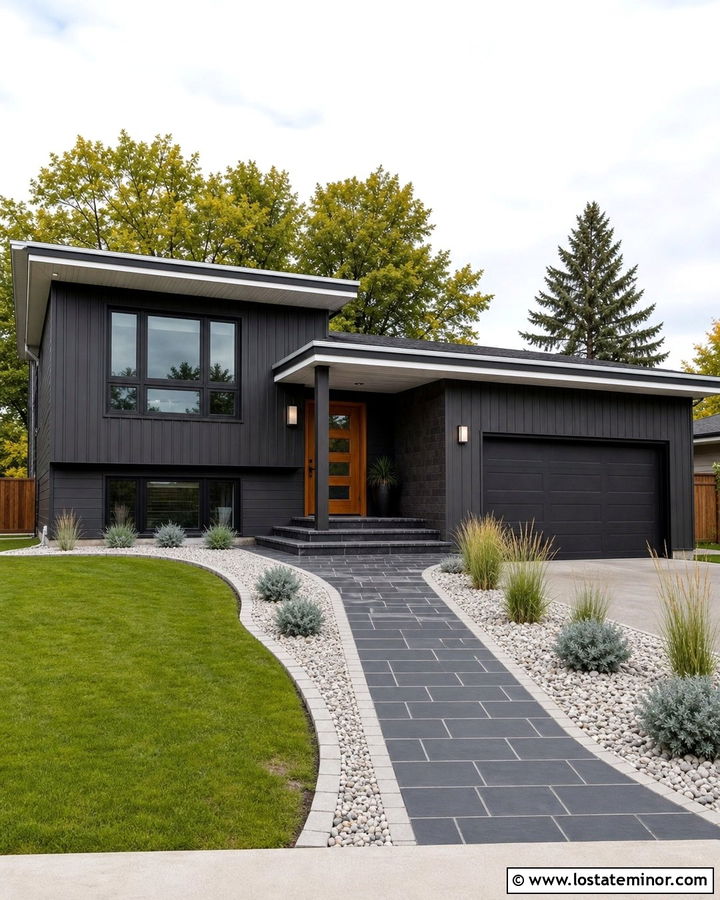
A black paver walkway gives a charcoal gray house a bold, nearly monochromatic look. The key is introducing enough variation elsewhere to keep the design readable. Use charcoal siding with a slightly lighter undertone, crisp white soffits, and a rich natural wood door. Choose black pavers with a textured or lightly mottled surface instead of a perfectly uniform finish. Light gray joints can outline the pattern and improve definition. This scheme works well on a modern split-level with flat porch roofs, large windows, and minimal ornament. Add pale gravel beds, silver-green plants, and sculptural grasses beside the path. Warm landscape lighting and wood accents soften the dark materials. The finished exterior feels sleek and deliberate rather than stark or unfinished.
8. Charcoal Grey House With Exposed Aggregate Walkway
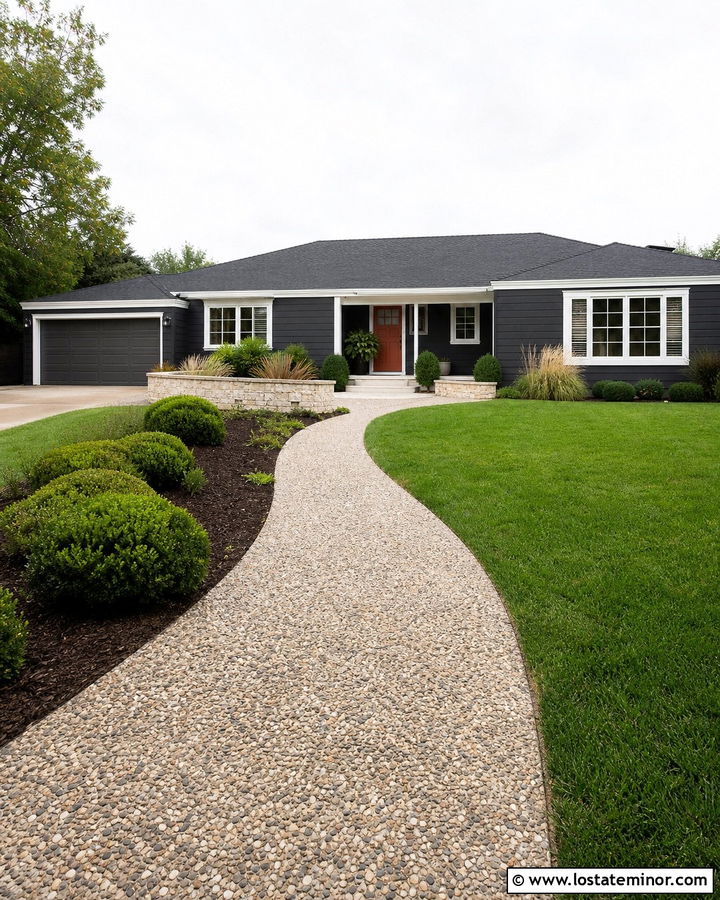
Exposed aggregate concrete adds subtle texture to a straightforward charcoal gray ranch. Look for a mix containing cream, tan, gray, and small brown stones. The varied surface connects dark siding with warm landscaping while disguising everyday dust better than a perfectly smooth path. Use a broad walkway with a gentle curve from the driveway to the porch. White trim and a muted terracotta front door give the facade clear focal points. A low stone planter can repeat colors found in the aggregate without competing with the house. Complete the yard with rounded shrubs, ornamental grasses, and a neatly edged lawn. This practical scheme feels updated but not overly modern, making it useful for improving an older one-story home while respecting its original proportions.
9. Charcoal Grey House With Natural Flagstone Walkway
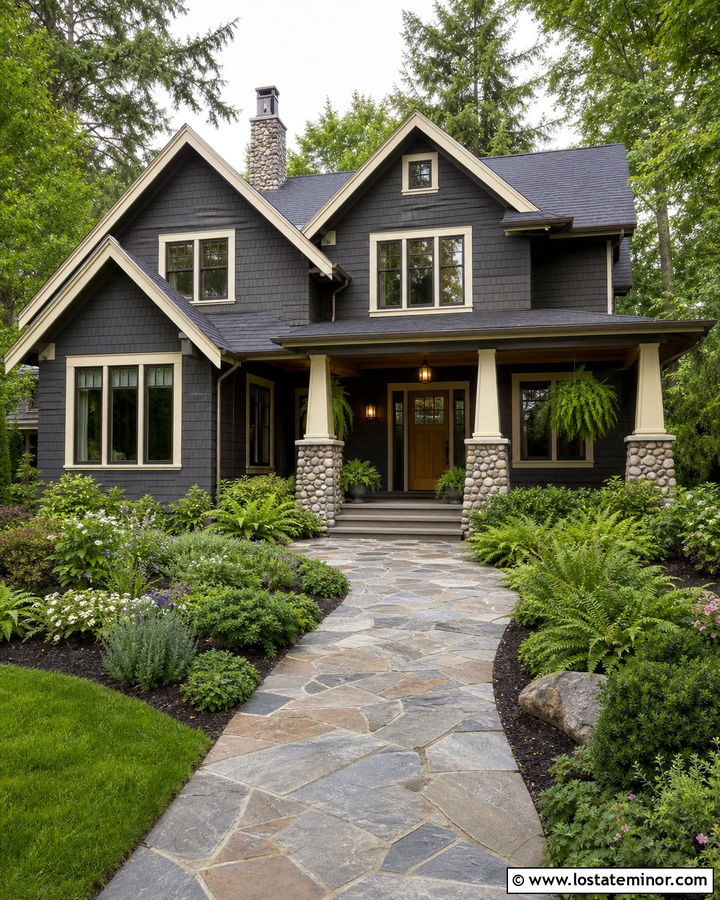
Irregular flagstone creates a relaxed, organic entrance to a charcoal gray Craftsman house. Choose stones containing soft gray, taupe, and warm brown so the path relates to both the siding and wood accents. Generous joints filled with low ground cover can make the walkway feel established within the landscape. Pair the facade with cream trim, tapered stone porch columns, and a medium oak front door. A charcoal roof keeps the upper portion cohesive, while copper-toned lights add warmth near the entrance. The walkway should be wide enough for comfortable use even though its edges are irregular. Ferns, flowering perennials, and layered evergreen shrubs can frame the stones. This complete look feels natural, sturdy, and appropriate for a wooded suburban property.

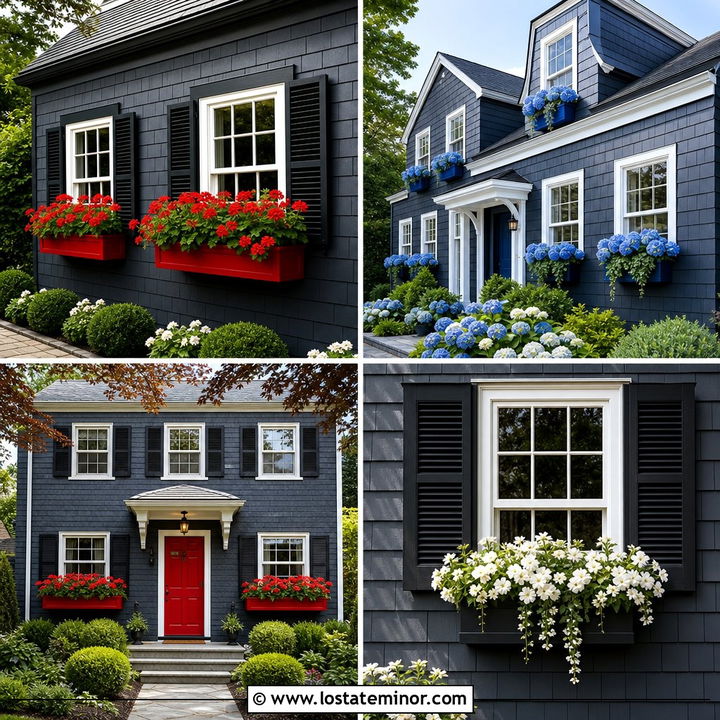
10. Charcoal Grey House With Wood Walkway
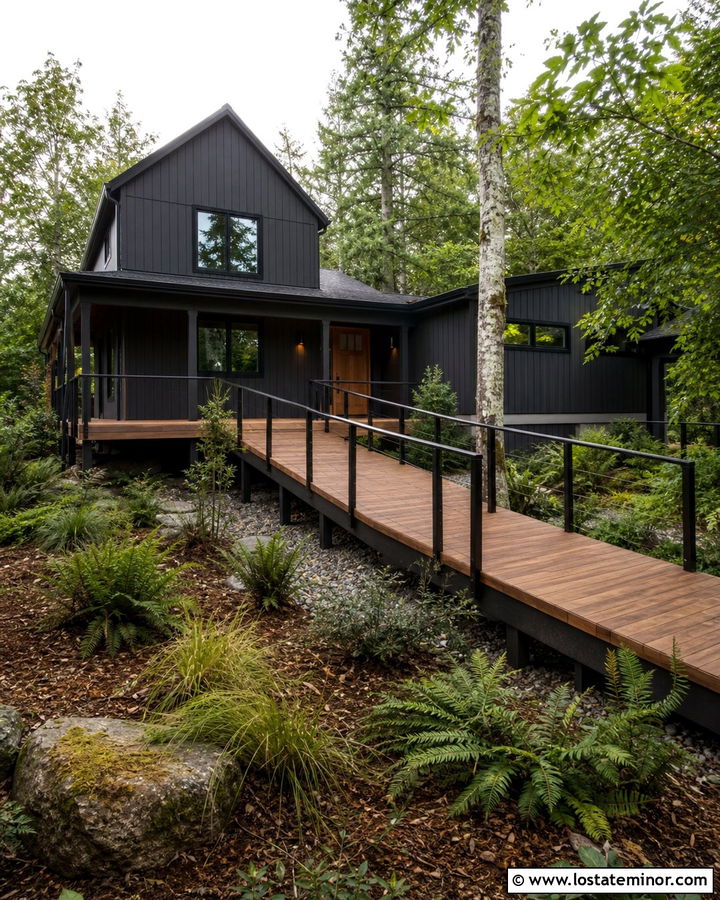
A raised wood walkway can bring warmth and architectural interest to a charcoal gray coastal or wooded home. Use cedar, ipe, or a realistic wood-look composite in a medium brown finish. Run the boards perpendicular to the walking direction for visible rhythm, then connect the path to a matching porch or deck. Black railings and window frames provide definition without distracting from the wood. Keep the front door in the same general stain family for continuity. Gravel beneath the walkway helps the structure look intentional and can support drainage where conditions allow. Surround it with ferns, grasses, and native shrubs rather than formal hedges. This design is particularly useful for uneven, damp, or sloped yards where a conventional ground-level path may feel disconnected.
11. Charcoal Grey House With Cobblestone Walkway
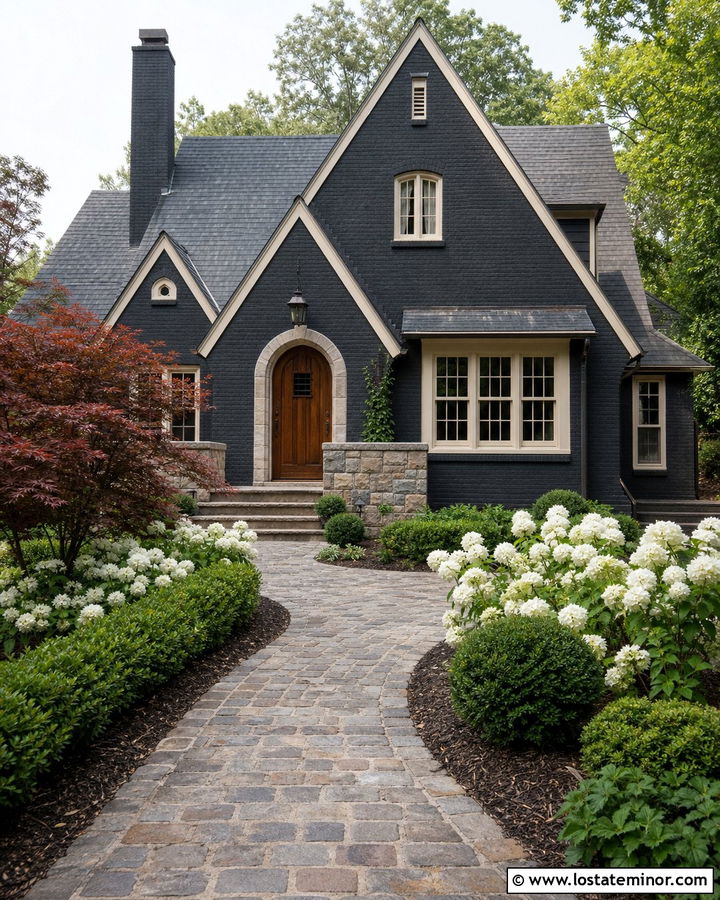
Cobblestone adds age, texture, and substantial character to a charcoal gray Tudor or traditional cottage. Choose weathered gray stones with soft brown and tan variation. A gently curved path will reinforce the old-world feeling and prevent the dark exterior from appearing too formal. Cream trim, a rounded wood door, and dark bronze gutters complete the architectural palette. Use cobblestone on the porch edge or front step to connect the path with the house. Avoid introducing too many additional masonry colors; one coordinated stone family is usually enough. Informal hedges, white flowering plants, and a small ornamental tree can frame the approach. The uneven visual texture contrasts with smooth painted siding and gives the entire exterior a permanent, carefully crafted appearance.
12. Charcoal Grey House With Stamped Concrete Walkway
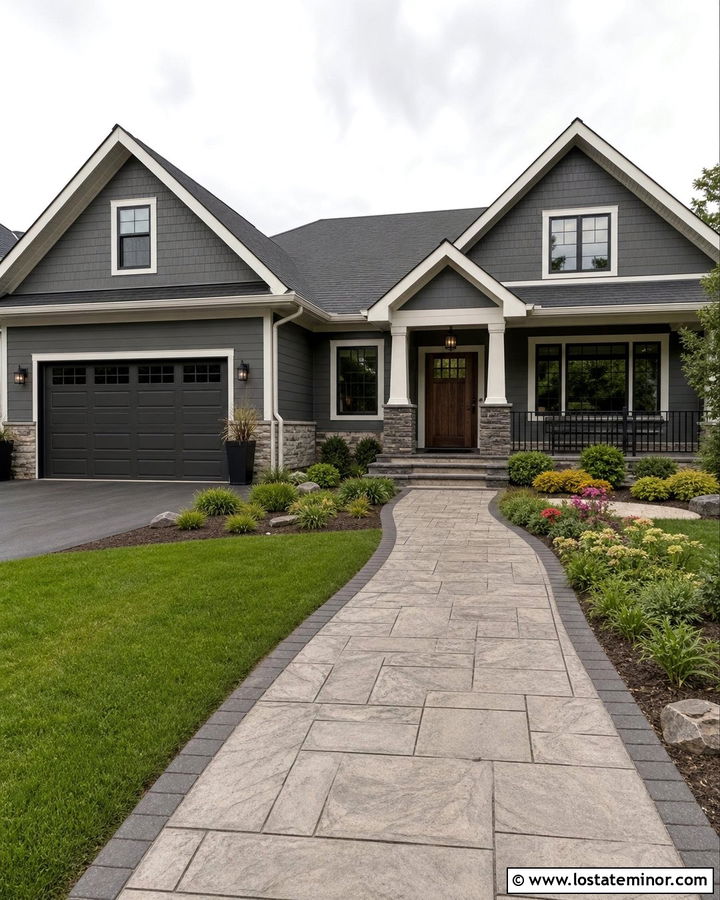
Stamped concrete can reproduce the look of stone while maintaining a continuous, easy-to-follow surface. For a charcoal gray house, select a warm slate pattern in light taupe, greige, or weathered beige. A darker border will define the walkway without making the entire path compete with the siding. This scheme fits a large suburban home with mixed siding, a covered porch, and an attached garage. Use soft white trim, a walnut door, and charcoal garage doors for a coordinated facade. Repeat the walkway color in small stone accents around the porch base. Layer foundation shrubs behind low flowers so the landscaping looks full but does not narrow the route. Controlled color variation is important because an overly busy stamped finish can overwhelm a simple exterior.
13. Charcoal Grey House With Geometric Paver Walkway
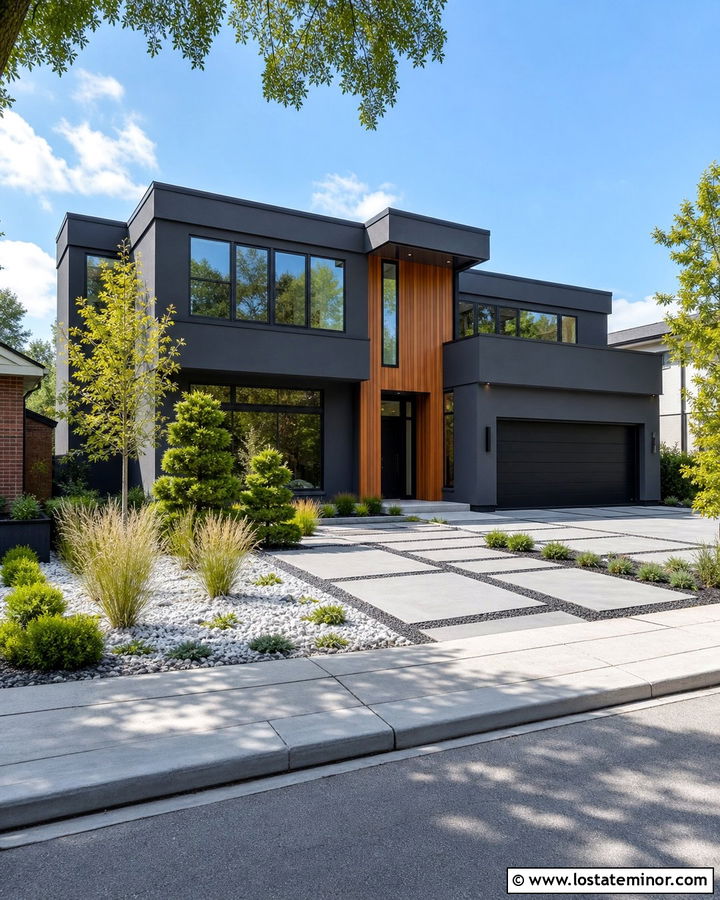
Geometric pavers reinforce the crisp architecture of a charcoal gray contemporary house. Use pale gray rectangular slabs arranged in an offset pattern, with dark gravel filling the wider joints. The walkway can begin at the sidewalk as a broad platform before narrowing near the porch. Pair the deep exterior with black-framed windows, a flat black roof, and vertical cedar siding around the entrance. The wood keeps the cool combination from feeling severe. Linear planting beds filled with ornamental grasses, compact evergreens, and white flowering ground cover should follow the walkway’s shape. Avoid curved edging because it can weaken the clean composition. Distinctly lighter paving helps the path remain visible against deep gray walls while preserving the sophisticated, limited color scheme. ()
14. Charcoal Grey House With Curved Stone Walkway
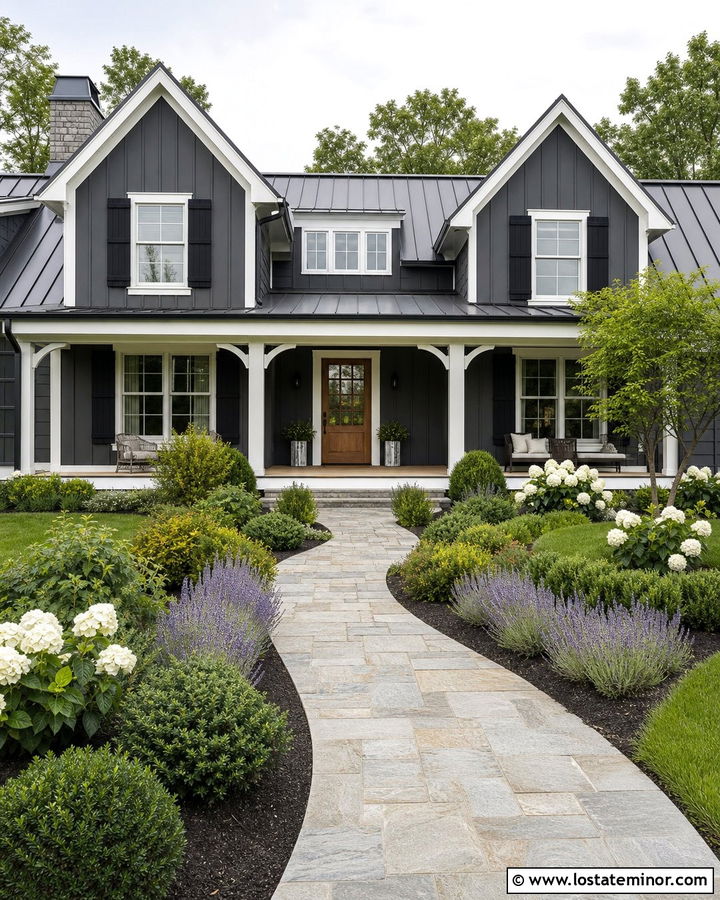
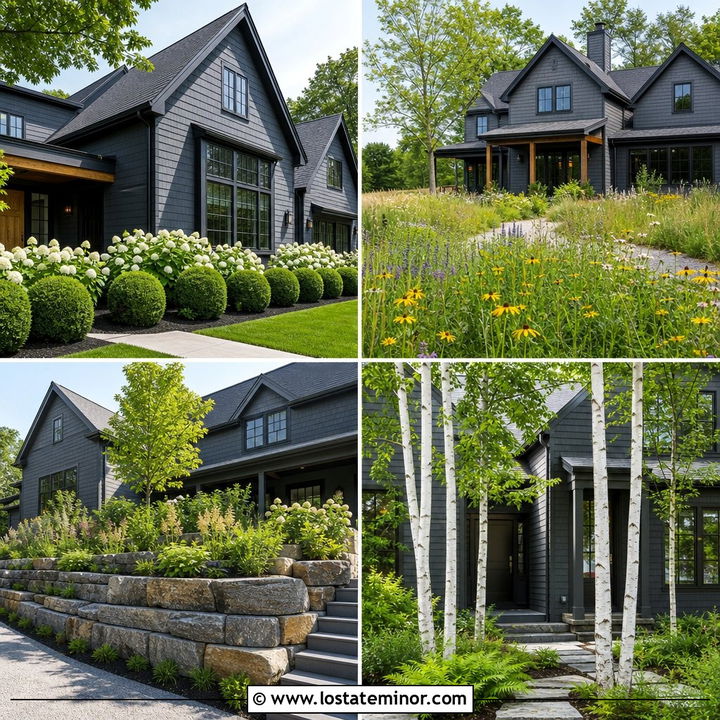
A curved stone walkway can soften a wide charcoal gray farmhouse and guide attention toward an entrance that sits away from the center. Use light gray stone with subtle tan undertones for balanced contrast. The curve should feel purposeful, bending around a planting bed or small ornamental tree rather than wandering randomly. Complete the exterior with white board-and-batten trim, a natural oak door, black shutters, and a charcoal metal roof. Low lavender, white hydrangeas, and evergreen mounds can follow the path without spilling onto it. Widen the walkway slightly near the porch to create a comfortable arrival area. This layout makes a broad lawn feel more layered and welcoming while offsetting the strong horizontal and vertical lines found on a modern farmhouse exterior.

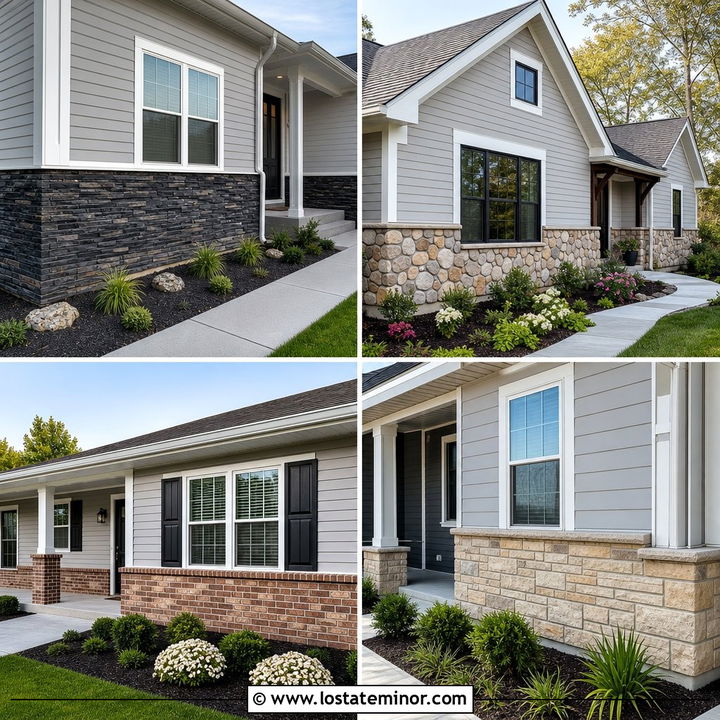
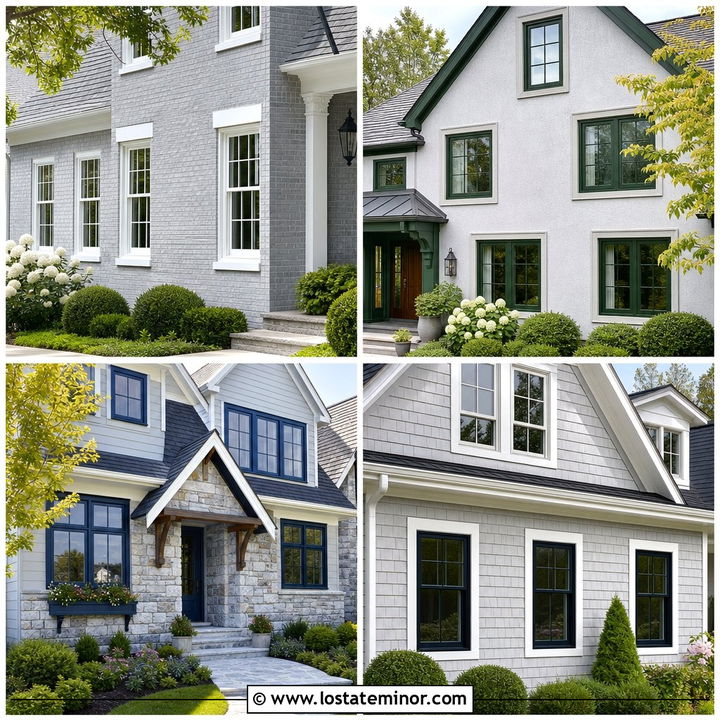
15. Charcoal Grey House With Straight Front Walkway
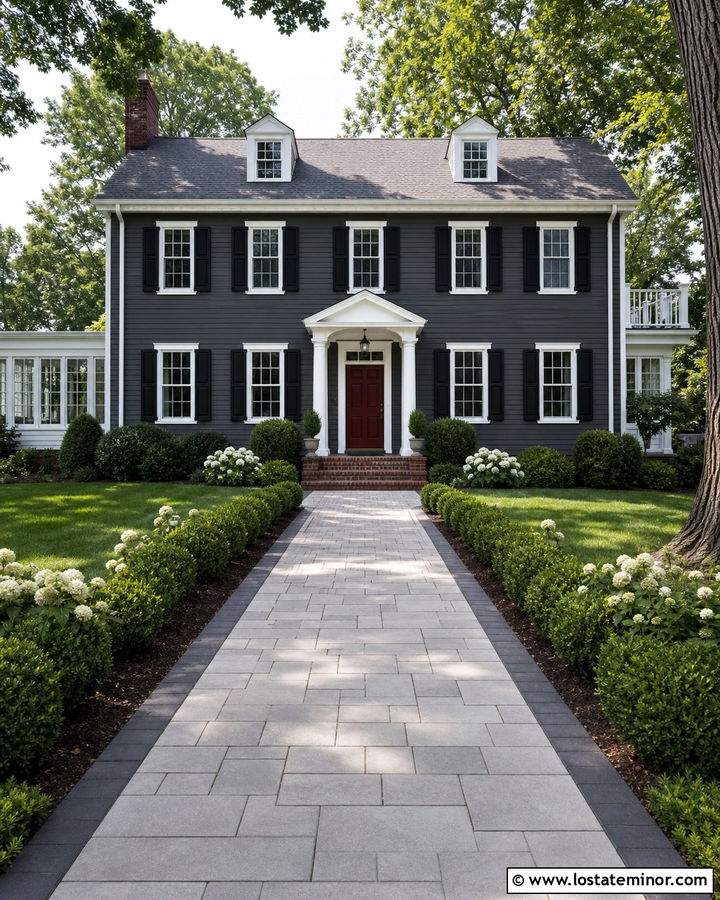
A straight walkway creates a formal, confident approach to a symmetrical charcoal gray Colonial. Use large light gray pavers in a simple running-bond layout from the sidewalk to the centered front door. A narrow charcoal border can relate the path to the house while preserving enough contrast for clear visibility. Bright white trim, black shutters, and a glossy deep red door give the facade classic definition. Position matching boxwood hedges along both sides of the walkway, but leave enough open width for comfortable movement. Brick porch steps can add warmth and connect the design to a chimney or foundation. Keep decorative elements balanced on either side of the entrance. This organized exterior works best when the home’s windows and roofline already have strong symmetry.
16. Charcoal Grey House With Wide Paver Walkway
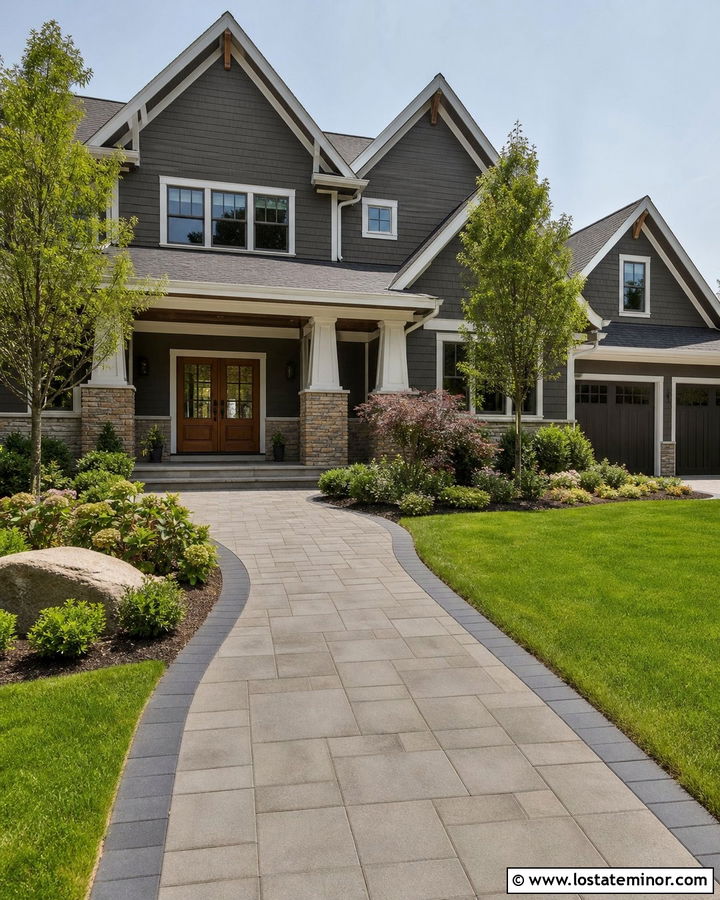
A wide front walkway helps a large charcoal gray house feel proportionate and accessible. Standard narrow paths can appear undersized beside broad garages, tall gables, and deep porches. Use oversized greige pavers with a charcoal edge, creating enough room for two people to walk side by side. Carry the paving into a generous porch landing where planters can sit without blocking the entrance. Warm white trim, a double natural wood door, and mixed stone porch columns balance the dark siding. Select restrained landscaping with layered shrubs, ornamental trees, and low flowers along the outer edges. The path should remain visually open. This complete scheme is effective for a large Craftsman or transitional home that needs a clearer, more welcoming connection to the street.
17. Charcoal Grey House With Garden Walkway
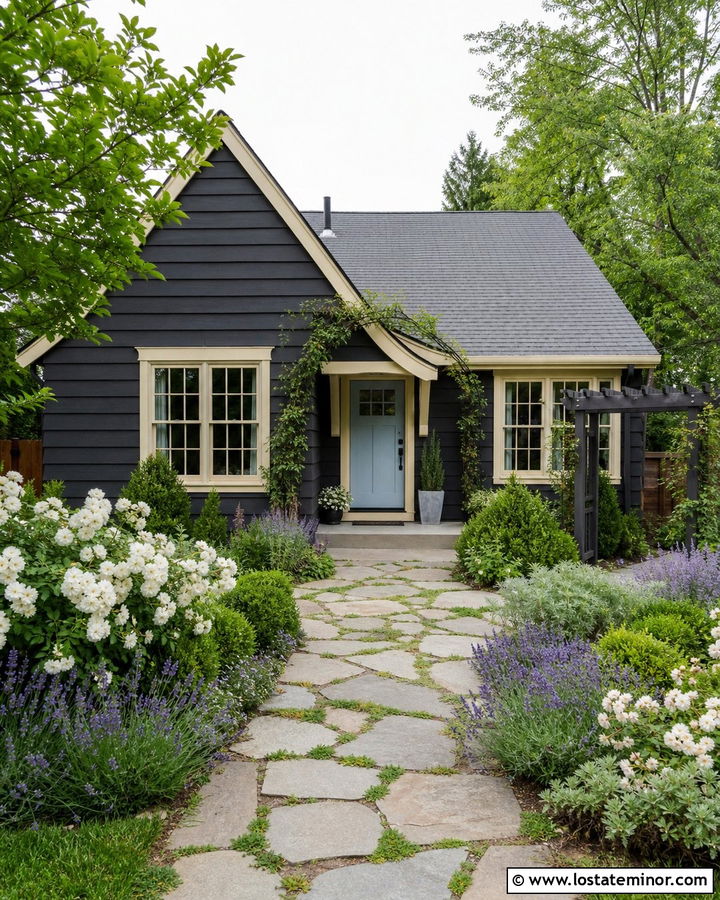
Imagine walking through layered flowers before reaching a charcoal gray cottage. A garden walkway makes that experience possible while softening the exterior’s bold color. Use irregular pale stone or aged brick with gently planted joints. Pair the house with cream trim, a dusty blue front door, and a medium gray roof. Climbing greenery can accent the porch, but it should not cover important siding or window details. Plant lavender, salvia, white roses, and compact evergreens in repeating groups along the path. Repetition keeps the garden organized even when the planting looks informal. A small gate or arbor can mark the walkway entrance if space allows. This design turns the front route into a landscape feature while maintaining a clear destination at the door.
18. Charcoal Grey House With Permeable Paver Walkway
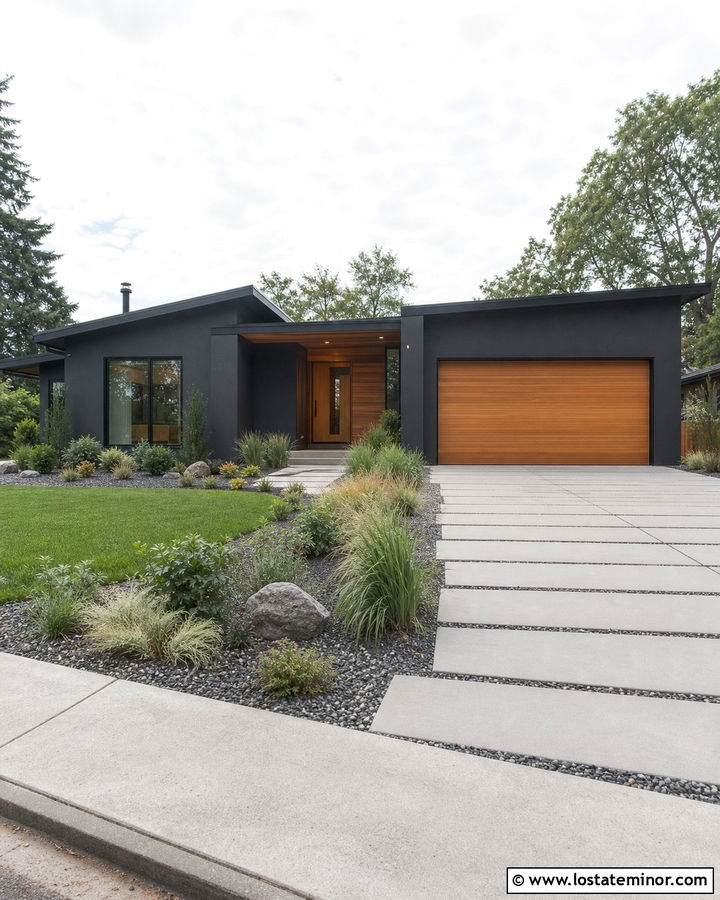
Permeable pavers offer a clean appearance while allowing water to move through open joints into the prepared base below. Use light gray or warm pewter pavers so the walkway stands apart from charcoal siding. Small gravel-filled joints create texture without interrupting the route. Complete the modern exterior with black trim, a cedar garage door, and a recessed wood entrance. Repeat cedar in a privacy screen or porch ceiling to unify the house. Rain-tolerant grasses and native plants can line the path, especially near a shallow drainage garden. Permeable paving may help manage runoff when it is installed with the correct base and site preparation. () The resulting design feels contemporary, practical, and connected to its landscape rather than dominated by solid hardscaping.
19. Charcoal Grey House With Brick Border Walkway
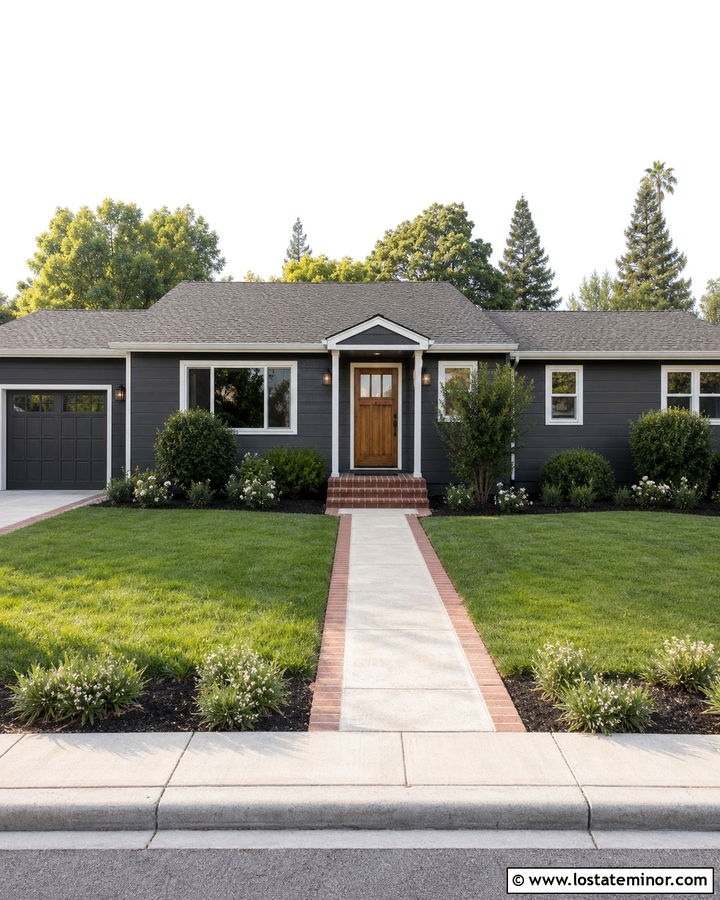
A brick border can transform a basic concrete walkway into a more finished feature. Begin with a light warm-gray concrete center, then frame it with muted red or brown brick. The warm edge creates a visual link to a wood front door, brick steps, or an existing chimney. Use charcoal gray lap siding with creamy white trim and dark bronze fixtures for a balanced traditional palette. This approach works well on a budget-conscious ranch or two-story suburban home because the central path remains simple. Shape the walkway with one gentle bend, and repeat the border around a small porch landing. Neatly clipped shrubs, dark mulch, and pale flowering plants provide definition. The combination feels coordinated without requiring the entire walkway to be rebuilt in brick.


20. Charcoal Grey House With Slate Step Walkway
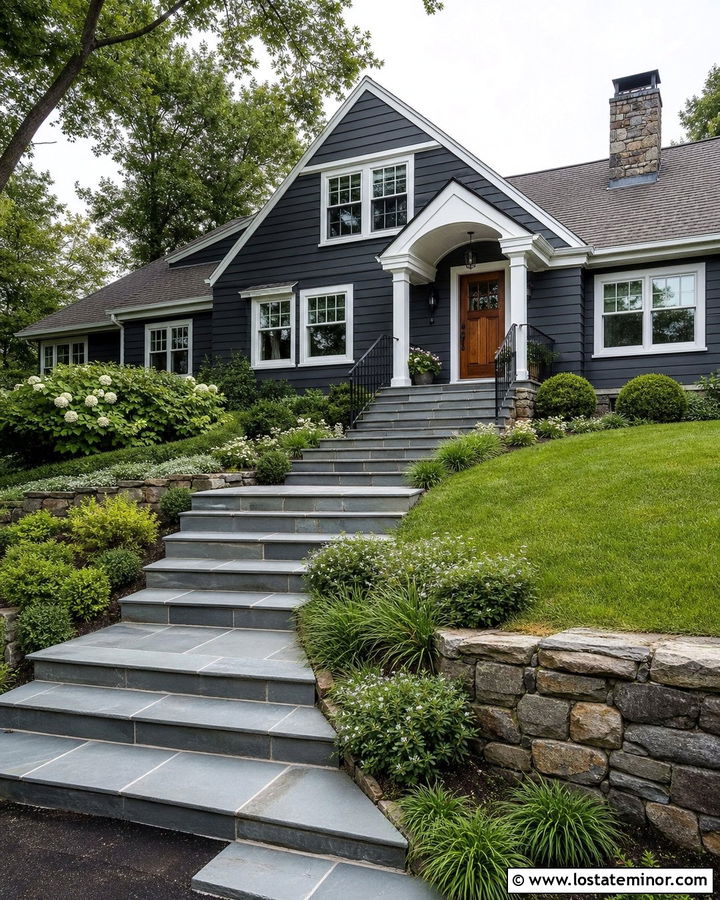
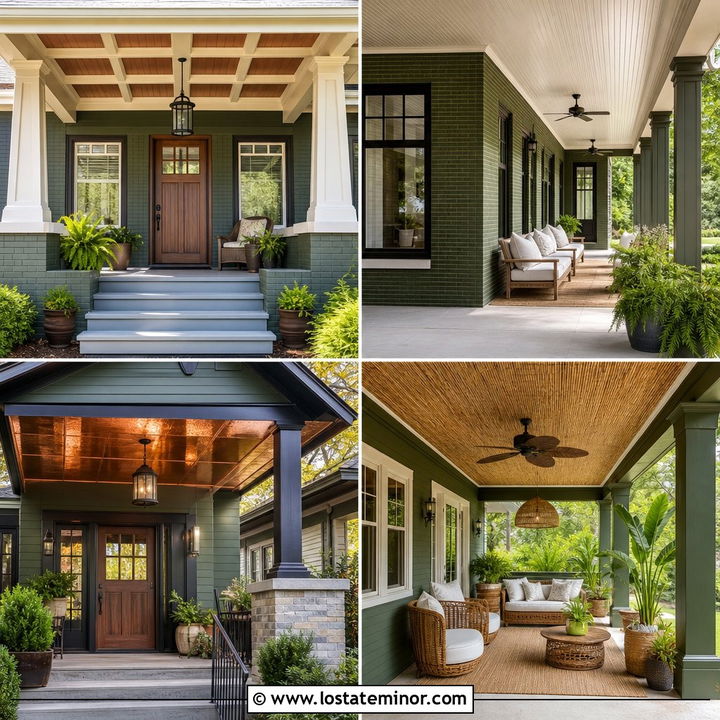
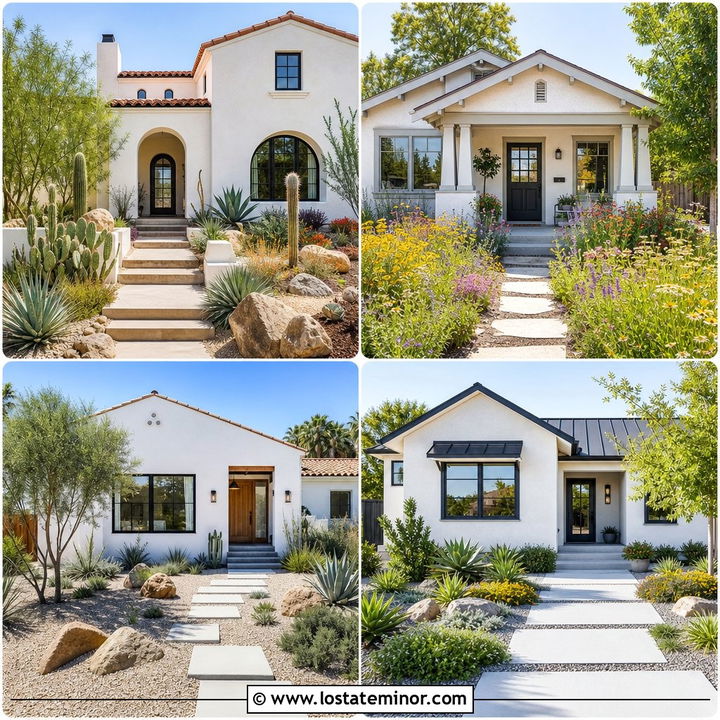
A sloped front yard needs a walkway that feels secure and visually connected to the house. Broad slate steps can create a graceful ascent toward a charcoal gray hillside home. Choose blue-gray slate with varied natural edges, then add generous landings between short groups of steps. White trim and a warm chestnut door help distinguish the entrance from the dark facade. Low stone retaining walls can repeat the slate or use a coordinating gray-brown fieldstone. Plant creeping ground cover, compact grasses, and flowering shrubs on the stepped beds. Simple black handrails may be added where needed without distracting from the stone. Keeping each section of the path wide and clearly defined makes the overall climb feel more comfortable and integrated with the property.
21. Charcoal Grey House With Retaining Wall Walkway
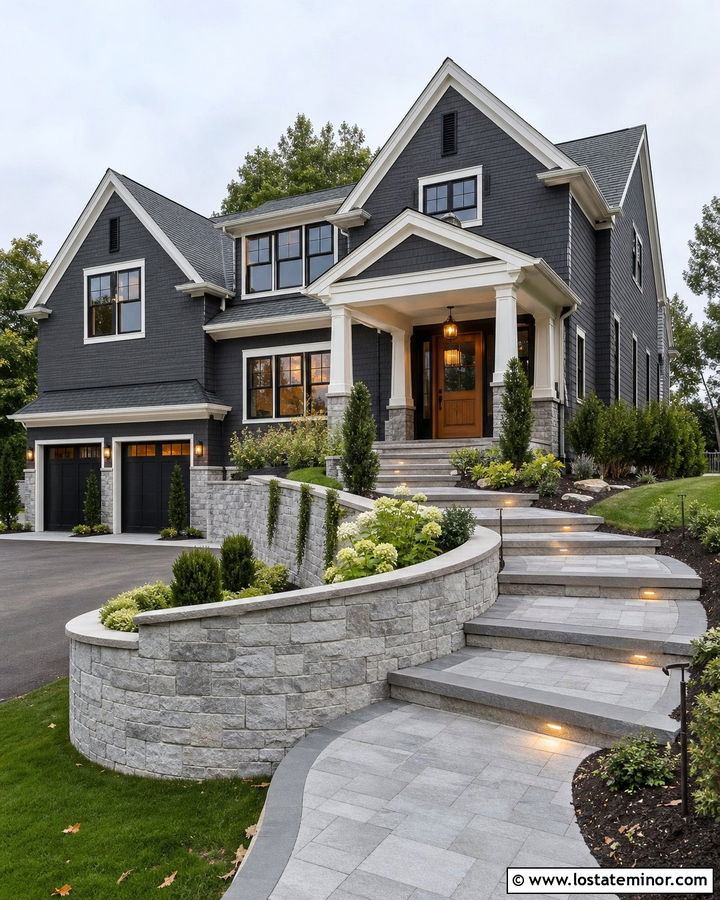
A retaining wall can frame the front walkway and give a sloping charcoal gray property a more organized appearance. Use light gray block or natural stone with warm beige variation so the wall remains distinct from the siding. A matching paver path can travel beside the wall before opening into a wider landing at the porch. Complete the facade with warm white trim, black windows, and a cedar front door. Cascading plants soften the top of the wall, while compact evergreens provide year-round structure. Integrated step lights can improve visibility without adding bulky fixtures. Keep the wall height proportionate and avoid hiding lower windows. This design turns necessary grade management into a strong curb-appeal feature that anchors the house within the landscape.
22. Charcoal Grey House With Matching Porch Walkway
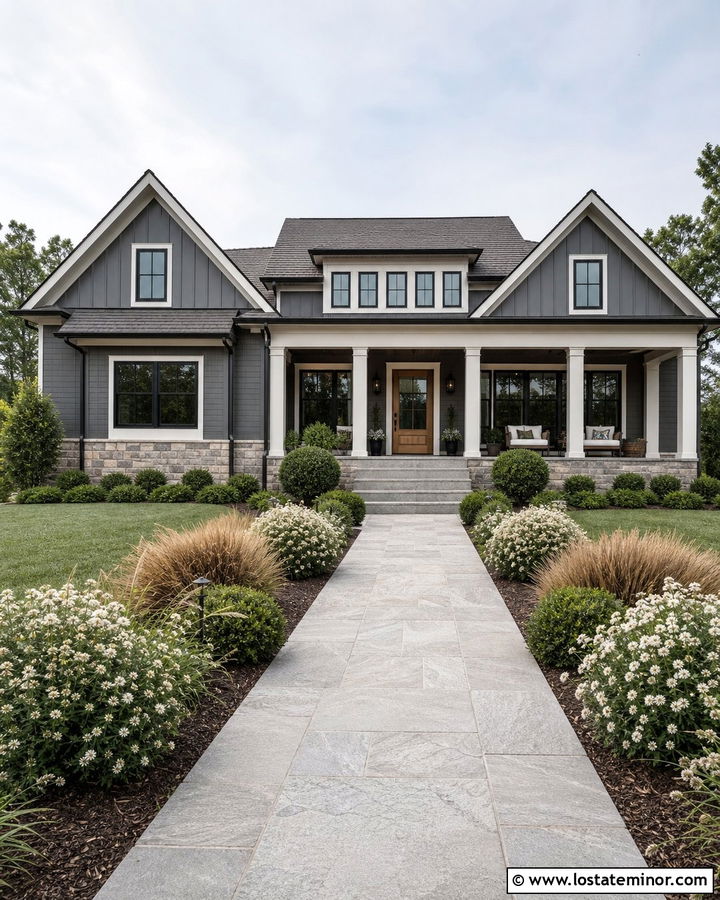
Using the same material on the walkway and porch creates a smooth, deliberate arrival. Choose pale gray limestone or concrete pavers to contrast with charcoal gray board-and-batten siding. Run the material from the sidewalk across the front path, steps, and porch floor. Subtle changes in laying pattern can mark each zone without introducing another color. Add white trim, black-framed windows, and a warm oak door for a clean transitional farmhouse palette. Natural stone around the porch foundation can include both gray and beige tones. Keep the landscaping simple with rounded shrubs, white flowers, and soft ornamental grasses. When the porch and walkway visually connect, the entrance appears larger and easier to locate. This is particularly useful when the front door sits beneath a deep covered porch.
23. Charcoal Grey House With Circular Walkway Landing
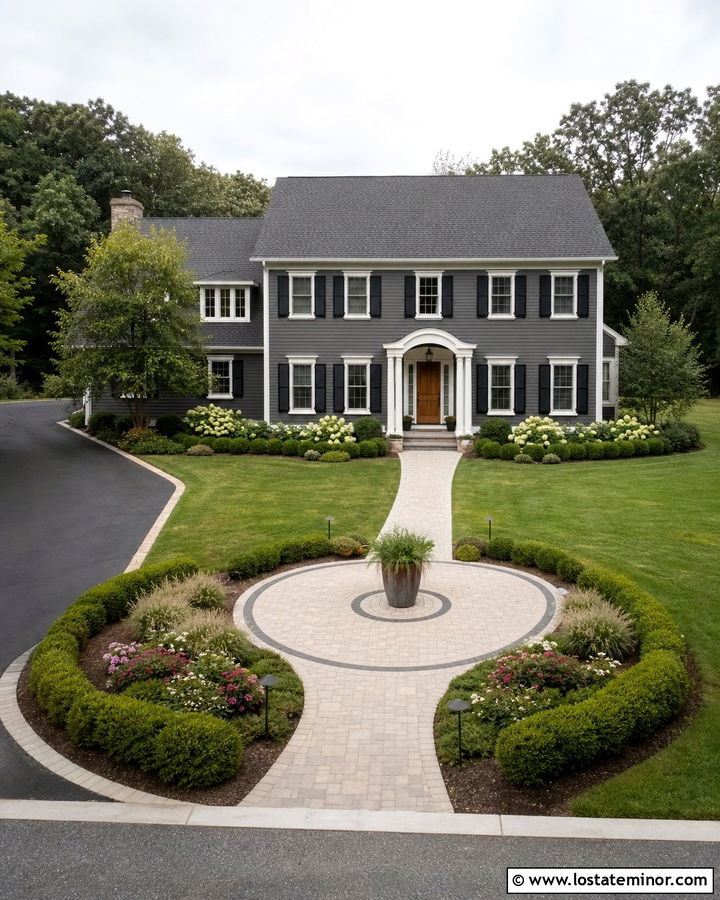
A circular landing can create a graceful pause before the entrance to a charcoal gray traditional home. Build the main walkway from light greige pavers, then introduce a circular pattern where paths from the driveway and sidewalk meet. A darker paver ring will emphasize the shape without overpowering the facade. Use white trim, dark shutters, and a stained walnut door to complete the exterior. A centered planter, small tree, or low fountain could become a focal point if the landing is large enough, but it should never block movement. Curved planting beds can echo the circle with boxwood, hydrangeas, and seasonal flowers. This layout is ideal for a broad front yard where a plain straight path might feel empty or disconnected from the landscape.
24. Charcoal Grey House With Driveway Connected Walkway
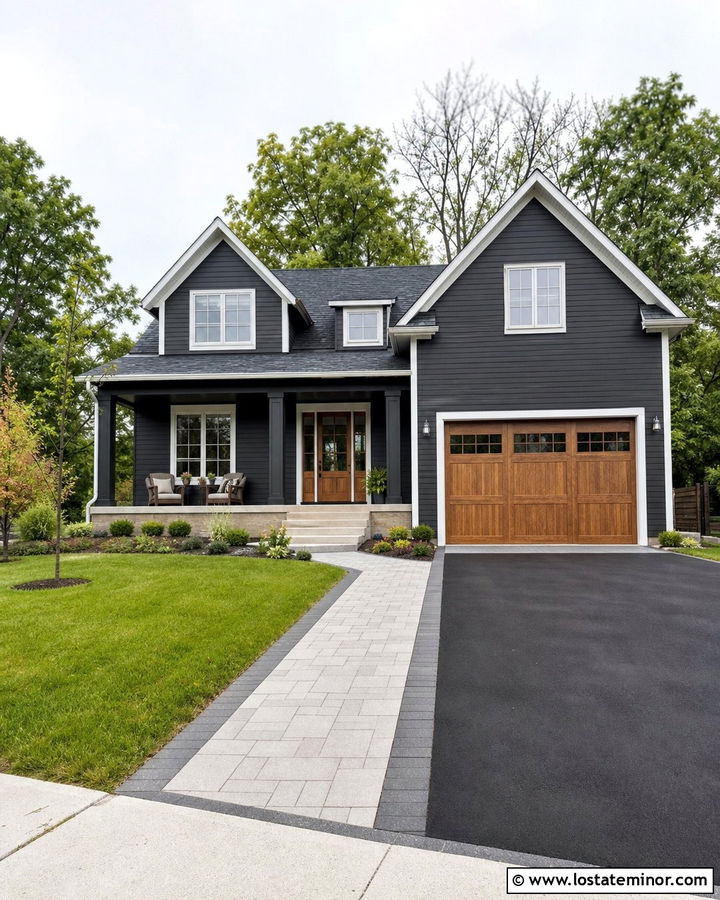
A walkway connected directly to the driveway makes the entrance easier to reach, especially when most guests arrive by car. Use light gray pavers for the path and repeat them as a border around a darker asphalt or charcoal paver driveway. This creates coordination without turning the entire foreground into one uninterrupted dark surface. Pair charcoal gray siding with bright white trim, a cedar garage door, and a matching cedar front door. A covered porch can feature simple black columns and pale concrete steps. Place low shrubs between the walkway and facade, keeping taller plants away from the route. The connection should begin near the natural parking area and lead clearly to the door. A slight flare at both ends creates a comfortable transition.

25. Charcoal Grey House With Walkway Lighting
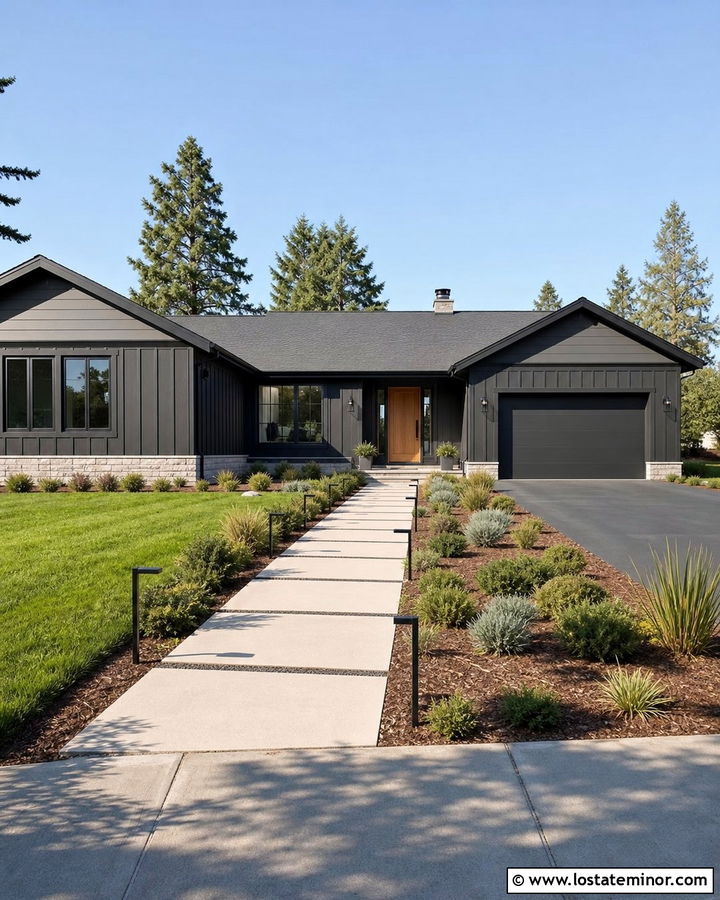
Thoughtful lighting can define a front path while preserving the drama of a charcoal gray exterior. Use pale concrete pavers so the route remains visible during the day, then install low black path lights at generous intervals. Avoid lining both sides too closely, which can create a runway effect. Warm white exterior fixtures near the porch add a welcoming glow without changing the daytime color palette. Complete the house with black trim, a natural wood door, and light stone around the foundation. Layer evergreen shrubs behind low ground cover so fixtures remain visible. Recessed step lights are useful where the walkway changes elevation. The lighting should support the complete design rather than dominate it, keeping attention on the architecture, entrance, and carefully shaped front yard.
26. Charcoal Grey House With Drought Tolerant Walkway
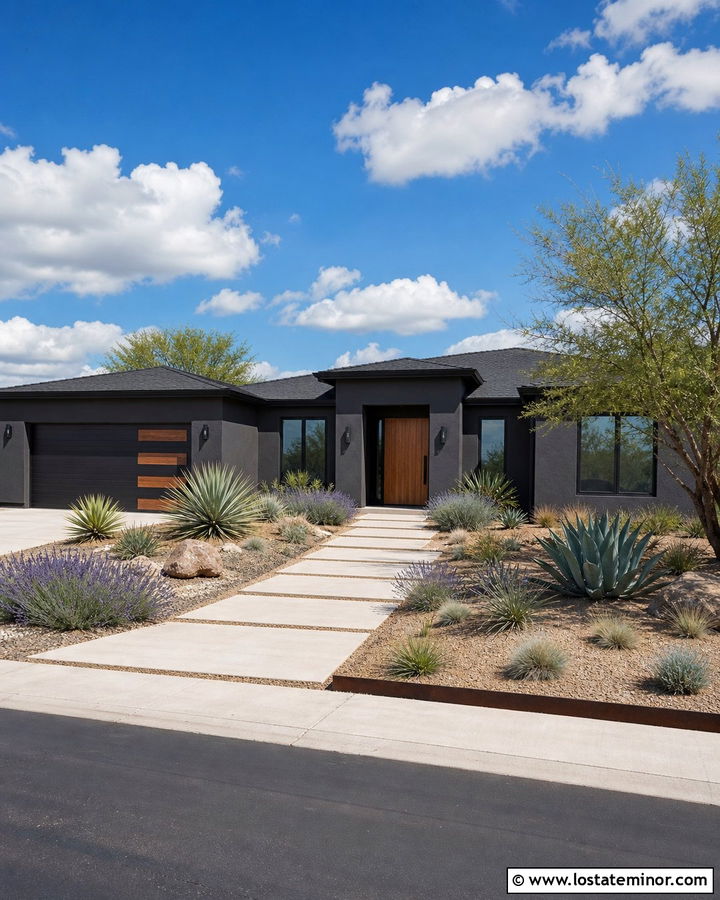
A drought-tolerant front yard can make charcoal gray siding look especially rich against pale gravel and silver-green planting. Use large cream concrete stepping slabs within a field of tan decomposed granite. Keep the gaps narrow enough to form an obvious, comfortable route. Pair the facade with black trim, a cedar pivot door, and a low-slope charcoal roof. Agave, yucca, lavender, blue fescue, and compact ornamental grasses can frame the path without requiring a lawn. Rust-colored steel edging introduces warmth and keeps gravel out of planting beds. This complete scheme fits a modern Southwestern or California-inspired house. Select plants suited to the local climate rather than copying a generic desert palette. The contrasting materials keep the dark exterior bold while making the overall yard feel bright.
27. Charcoal Grey House With Cottage Brick Walkway
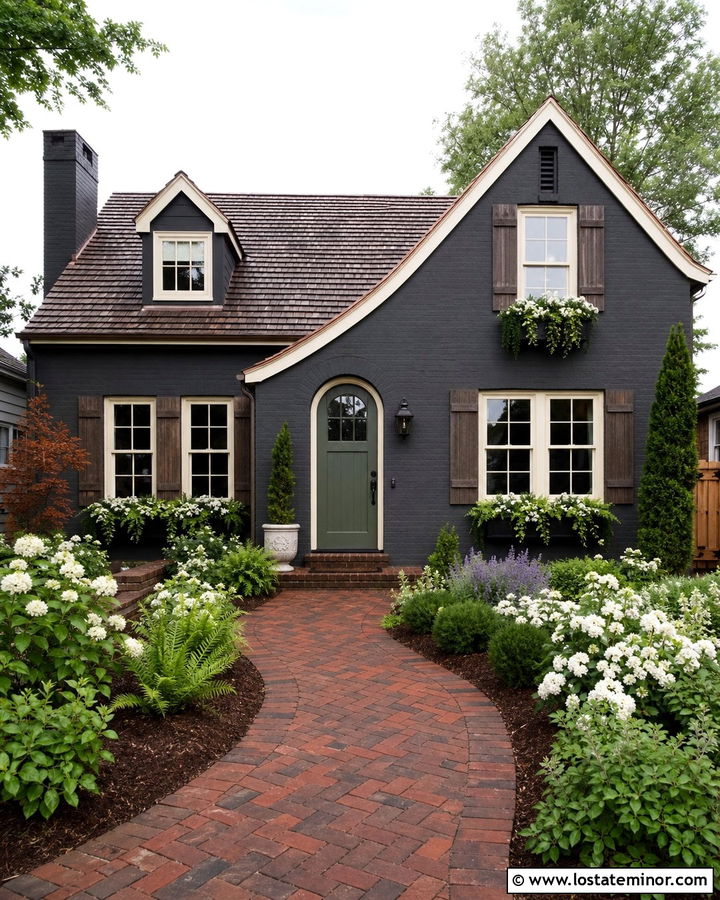
An aged brick walkway gives a charcoal gray cottage a cozy, established appearance. Select softly weathered brick in muted red, brown, and charcoal tones. Lay it in a basket-weave pattern and allow the path to curve gently through dense planting. Cream window trim, a warm green front door, and a brown-gray shingle roof reinforce the cottage character. Add simple wood shutters or window boxes without overcrowding the small facade. White flowering shrubs, lavender, ferns, and low evergreen plants can spill toward the walkway while leaving the walking surface clear. A small brick porch landing will connect the path to the door. The mix of warm masonry, dark siding, and abundant greenery creates an inviting exterior that feels collected rather than newly assembled.
28. Charcoal Grey House With Snow Friendly Walkway
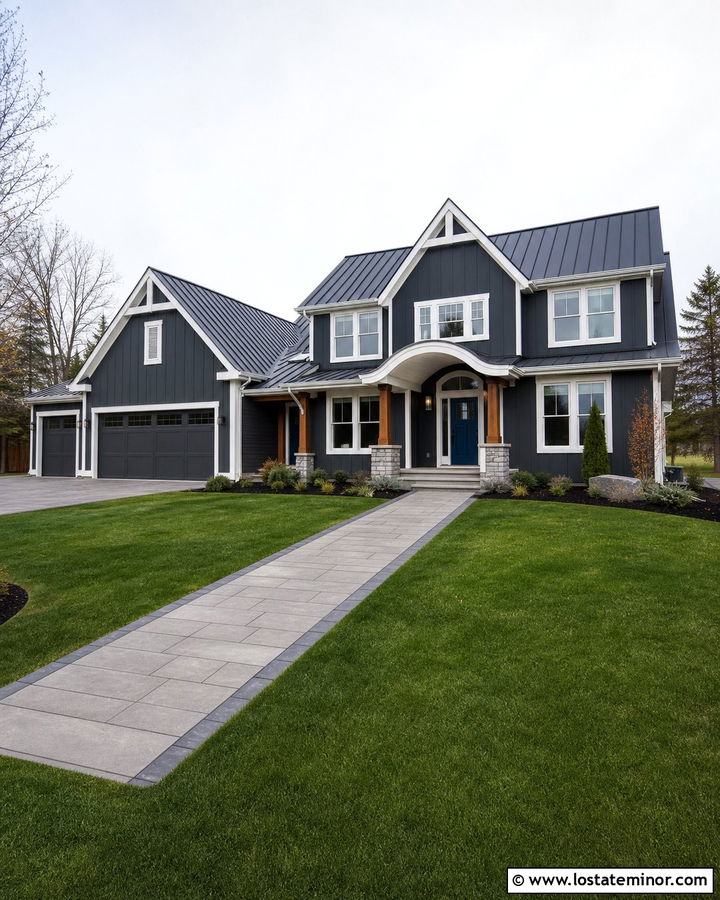
In a snowy climate, a simple walkway layout can support easier maintenance while complementing a charcoal gray home. Choose light to medium gray concrete pavers with a relatively smooth, slip-conscious finish and minimal decorative joints. A straight or gently curved route is easier to follow than a complicated pattern. Pair charcoal siding with white trim, a deep blue door, and a dark metal or architectural-shingle roof. Keep shrubs set back from the walkway so snow storage does not crush the planting. Low evergreen beds and a clearly defined paver border maintain winter structure. If a heated walkway is being considered, plan it with qualified local professionals. The complete exterior should remain attractive throughout the year, even when flowers and lawn color disappear.
29. Charcoal Grey House With Coastal Gravel Walkway
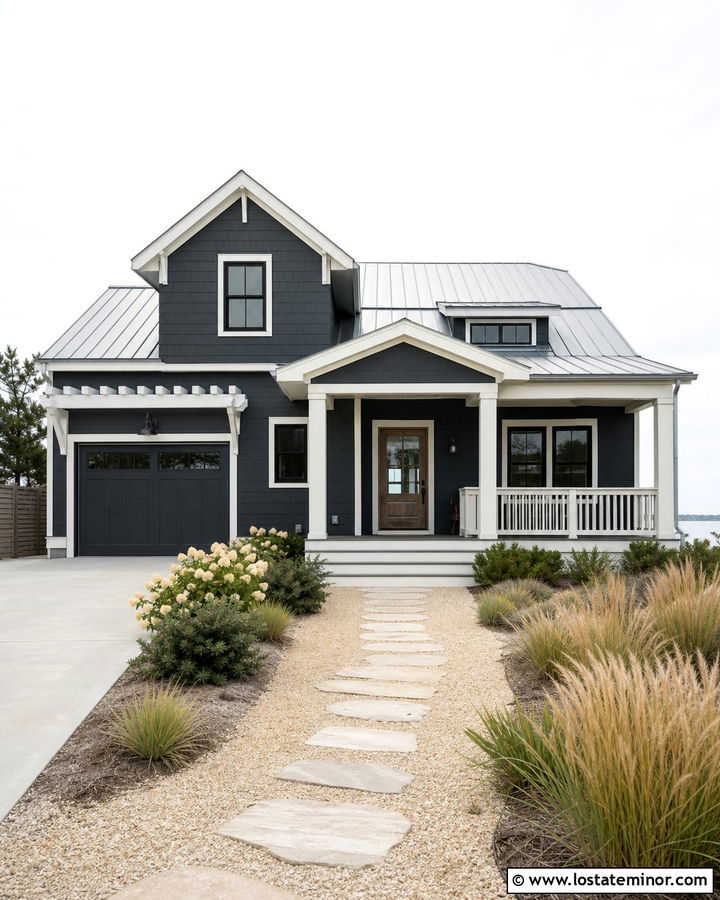
Pale shell-colored gravel can brighten a charcoal gray coastal house and create a relaxed route through a sandy landscape. Use compacted cream gravel with large light concrete or limestone steppers for a stable walking surface. White trim, a weathered oak door, and a silver-gray metal roof keep the facade crisp and regionally appropriate. Add simple porch railings and restrained natural wood details rather than heavy decorative features. Beach grasses, low evergreen shrubs, hydrangeas, and salt-tolerant plants can frame the path where local conditions permit. Dark metal edging will contain the gravel and relate to black window frames. The pale walkway reflects light toward the facade, while the charcoal exterior gives the otherwise airy scheme enough depth and architectural presence.
30. Charcoal Grey House With Budget Concrete Walkway
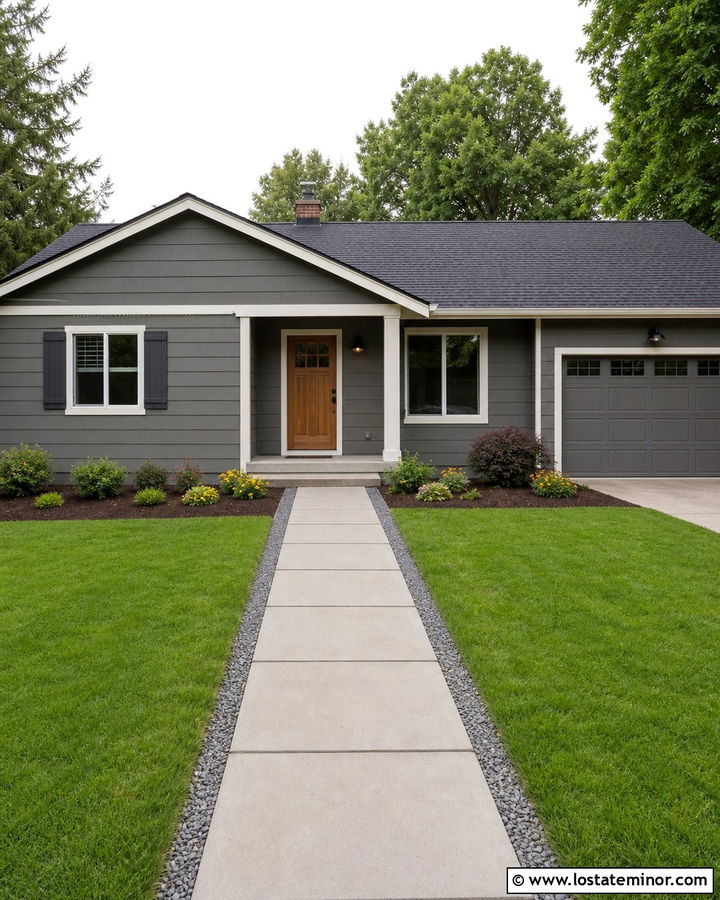
A standard poured-concrete walkway can still look intentional beside a charcoal gray house. Keep the route wide enough for comfortable use and divide the surface into large, evenly spaced rectangles. A soft warm-gray tint will feel more coordinated than extremely bright concrete. Add a narrow gravel strip or simple brick edge for extra definition without greatly increasing material complexity. Complete the exterior with white trim, a stained wood door, and black porch lights. Fresh mulch, compact shrubs, and repeating groups of low flowers can make the simple path feel polished. If the existing concrete is structurally sound, cleaning, repairing, or resurfacing it may be more practical than replacement. Strong proportions and neat landscaping matter more than an elaborate walkway pattern in this approachable design.
Conclusion:
The best walkway does more than connect the sidewalk or driveway to the front door. It also balances the depth of charcoal gray siding and brings the entire property together. Pale concrete creates modern contrast, while brick, tan pavers, limestone, and wood add welcome warmth. Natural stone suits traditional landscapes, and geometric slabs complement contemporary architecture. Always consider the facade, trim, roof, porch, entry door, and planting as one coordinated composition. Walkway width, slope, drainage, climate, and everyday maintenance should also guide material choices. With thoughtful contrast and a clearly defined route, these 30 Charcoal Grey House Design With Walkway Ideas can help create a dark exterior that feels polished, approachable, and complete.

Related posts: