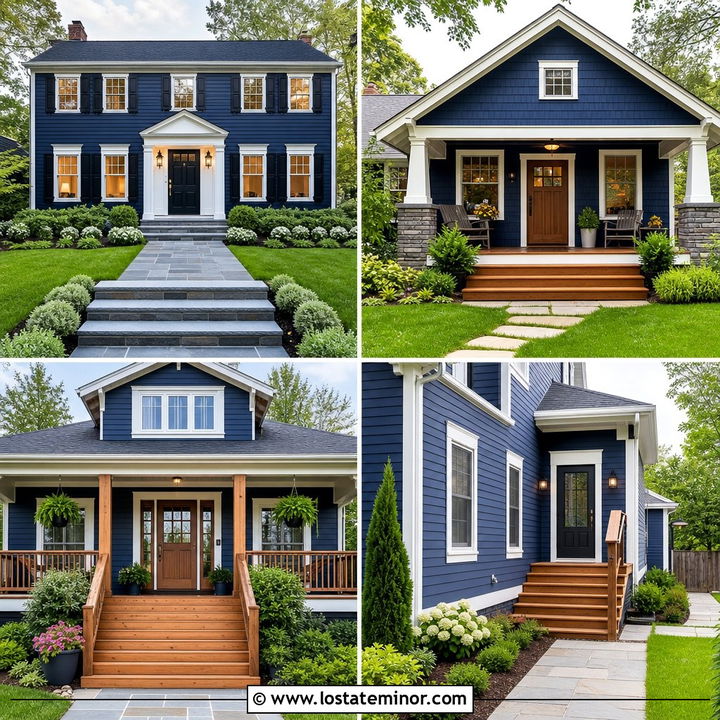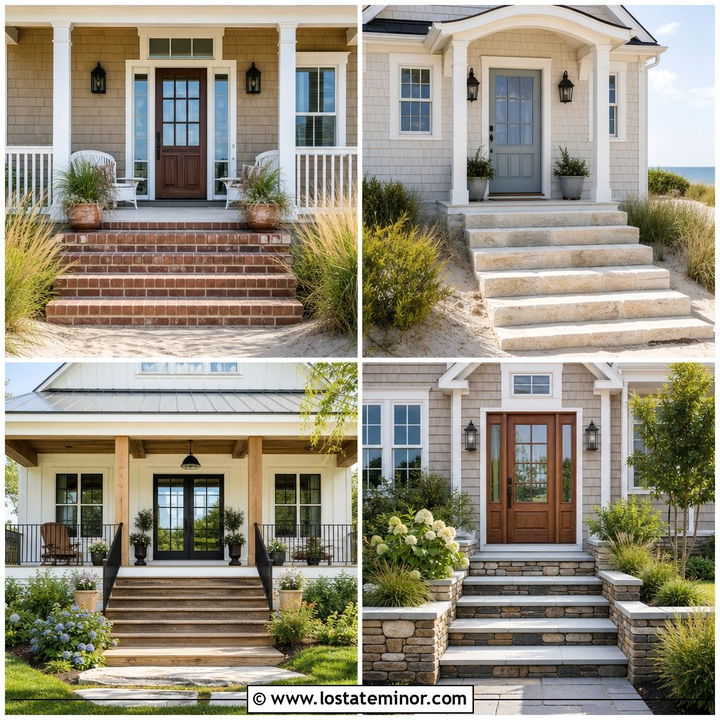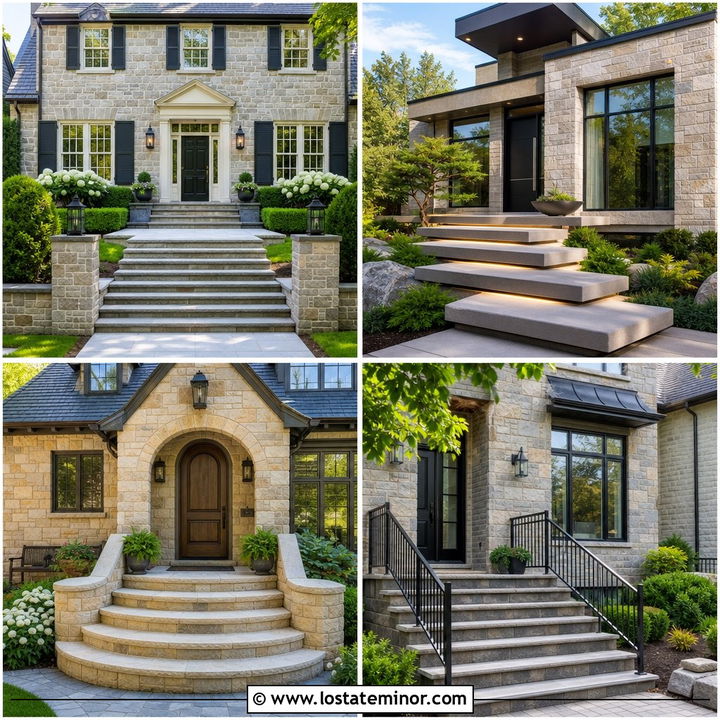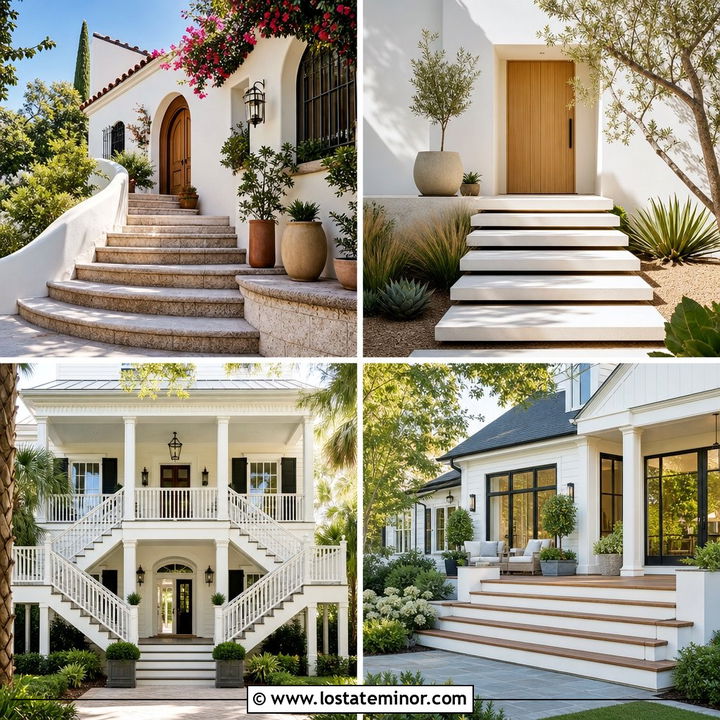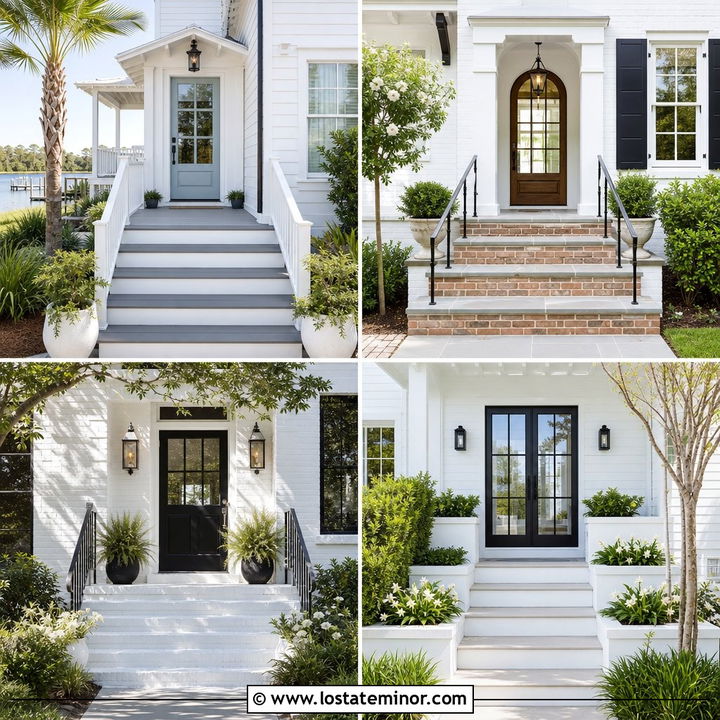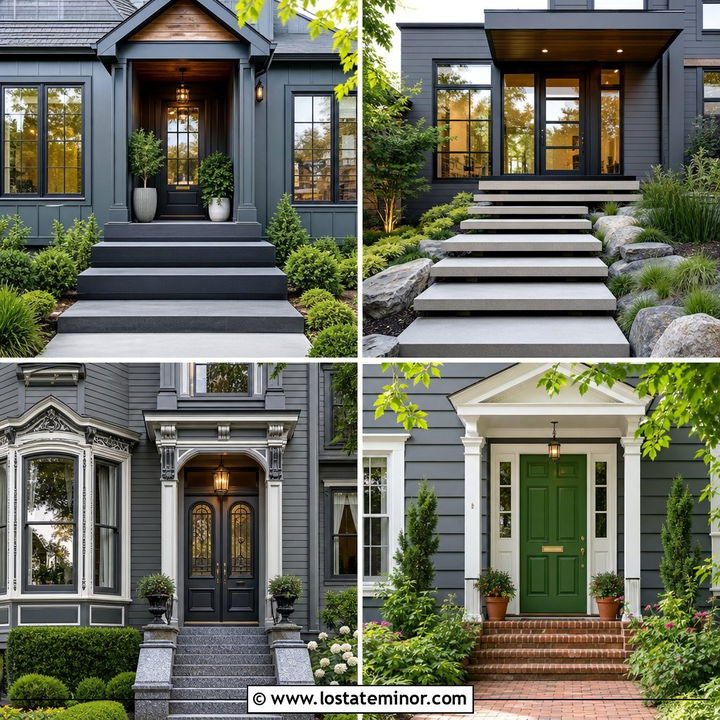
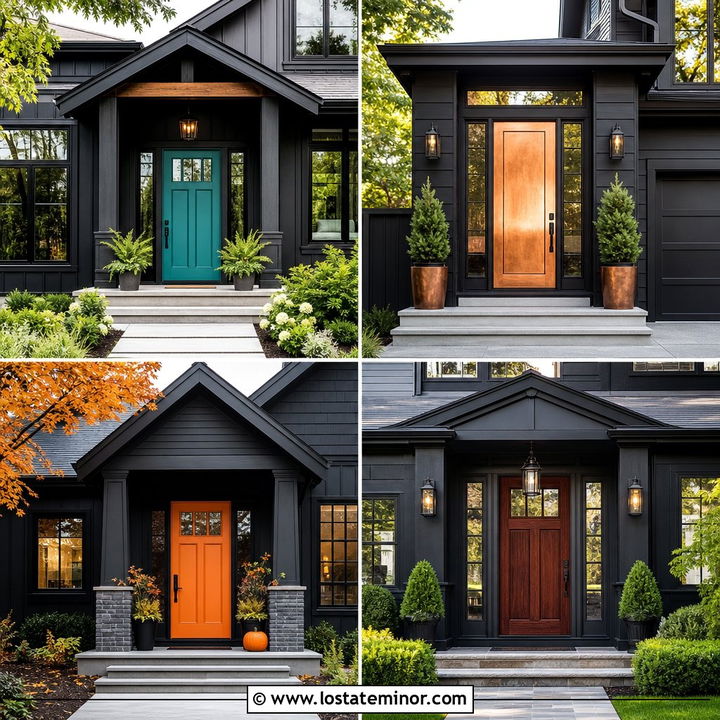
A soft black exterior brings depth and character to a home without the severe look of a true jet black finish. The right steps make that darker facade feel welcoming, grounded, and connected to the landscape. These 30 Soft Black House Design With Steps Ideas explore complete exterior looks with concrete, brick, wood, slate, limestone, and other practical materials. You will also find coordinating trim, doors, railings, roofing, lighting, and landscaping for many popular house types. Each design balances the strong body color with warmer textures or lighter details, helping the entrance remain easy to see. Whether you are planning a major remodel or a simple curb appeal update, use these 30 Soft Black House Design With Steps Ideas to shape a polished exterior.
1. Soft Black House With Wide Concrete Steps
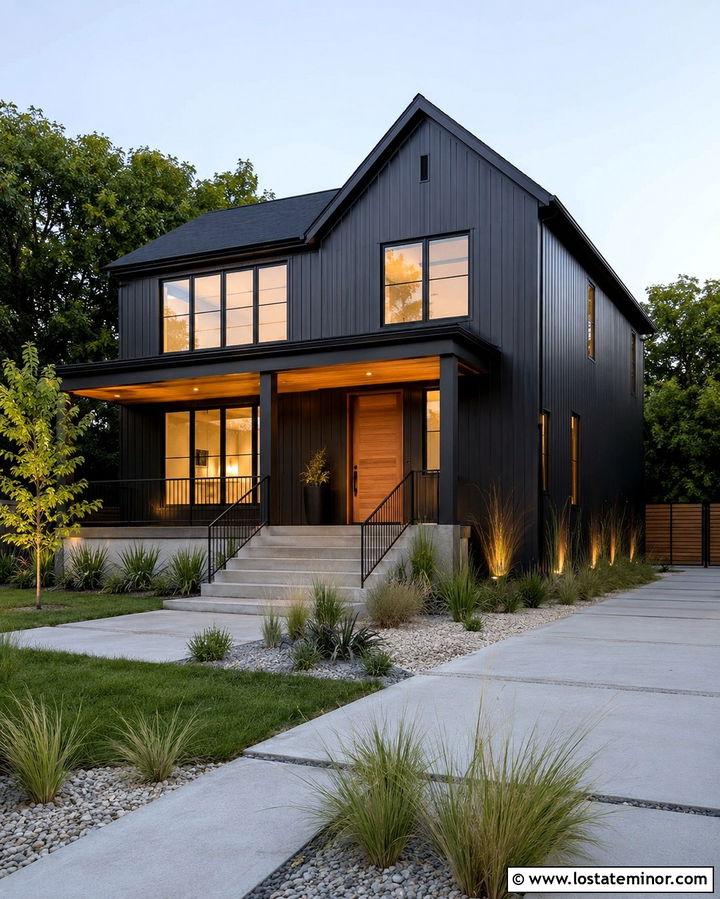
Wide concrete steps give a soft black house a clean, grounded entrance without competing with the dramatic siding. Use warm gray concrete rather than a cold blue-gray mix to complement a black paint with brown or charcoal undertones. Extend the lowest tread beyond the upper steps to create a generous base for planters. A natural oak front door, matching porch ceiling, and slim black railings add warmth while maintaining modern lines. Keep the window trim soft black for a seamless facade, then introduce light limestone gravel along the walkway. Low ornamental grasses and rounded shrubs will soften the sharp architecture. This scheme works especially well on a modern two-story home with vertical siding, large windows, and a simple gabled roof.
2. Soft Black Farmhouse With Natural Stone Steps
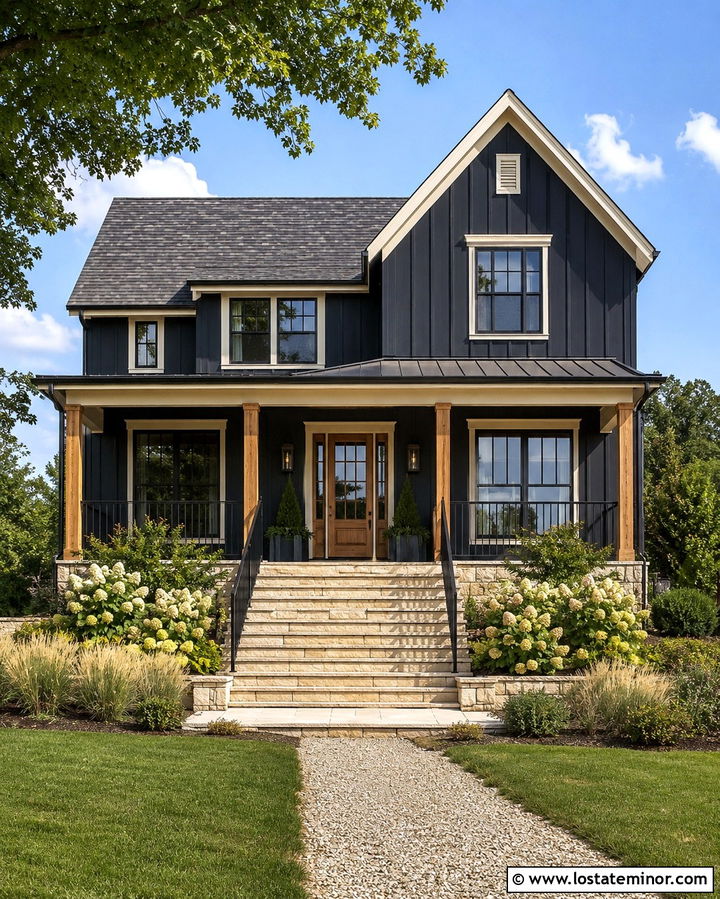
Natural stone steps prevent a soft black farmhouse from feeling too sleek or one-dimensional. Choose irregular limestone in a warm beige-gray tone, and continue the same material around the porch foundation. Soft black board-and-batten siding can be paired with cream window trim, natural cedar columns, and a medium-brown front door. A weathered charcoal roof keeps the exterior cohesive without making the upper half look excessively dark. Make the entrance feel broader by using shallow steps with a landing large enough for two substantial planters. Black metal handrails provide subtle definition against the lighter stone. Complete the property with a curved gravel path, flowering shrubs, and relaxed meadow-style landscaping that suits the farmhouse architecture and balances the dark exterior color.
3. Soft Black Craftsman With Wood Porch Steps
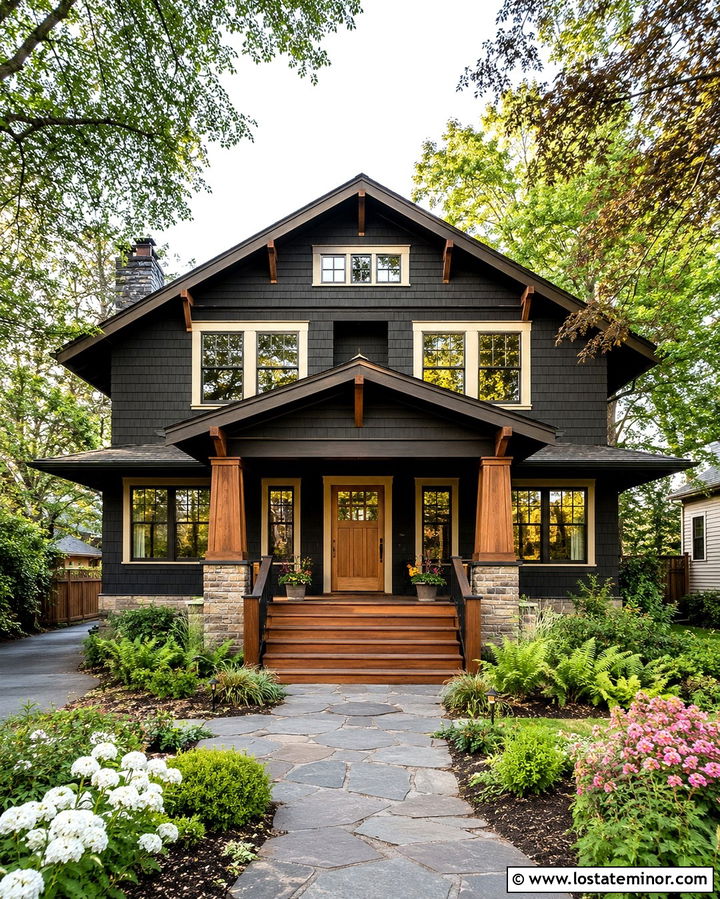
Rich wood steps bring immediate warmth to a soft black Craftsman exterior. Select a medium walnut or cedar stain that shows the natural grain while standing apart from the dark siding. Deep stair treads and sturdy square railings suit the substantial proportions of Craftsman architecture. Repeat the wood on tapered porch columns, the front door, and small brackets beneath the roof. Cream trim around the windows can brighten the facade while a stone porch base adds another earthy texture. For a connected look, use soft black siding on the house and matching risers beneath the wood treads. Add globe-shaped porch lights, broad planting beds, and a straight flagstone walkway. The result feels handcrafted, comfortable, and appropriately detailed rather than overly contemporary.
4. Soft Black Colonial With Brick Front Steps
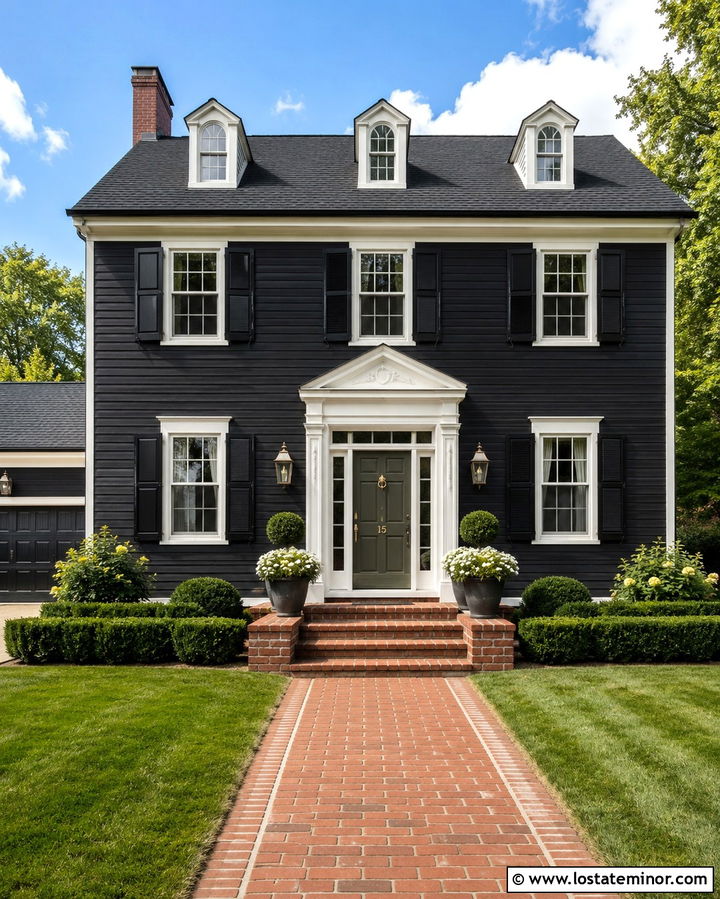
Traditional red brick steps give a soft black Colonial home warmth and a sense of history. Choose an aged red or muted brown brick instead of a bright orange variety. Soft black lap siding, creamy white trim, and evenly spaced windows maintain the home’s formal symmetry. Paint the paneled front door a restrained burgundy or deep olive green for subtle color. Black shutters, brass door hardware, and classic lantern sconces reinforce the traditional appearance. Use brick for both the stair treads and walkway border so the entrance looks intentionally connected to the yard. Neatly clipped boxwoods and matching planters can frame the steps without hiding them. This balanced palette allows the black exterior to feel established and elegant while the brick introduces familiar, approachable character.
5. Soft Black Ranch House With Floating Steps
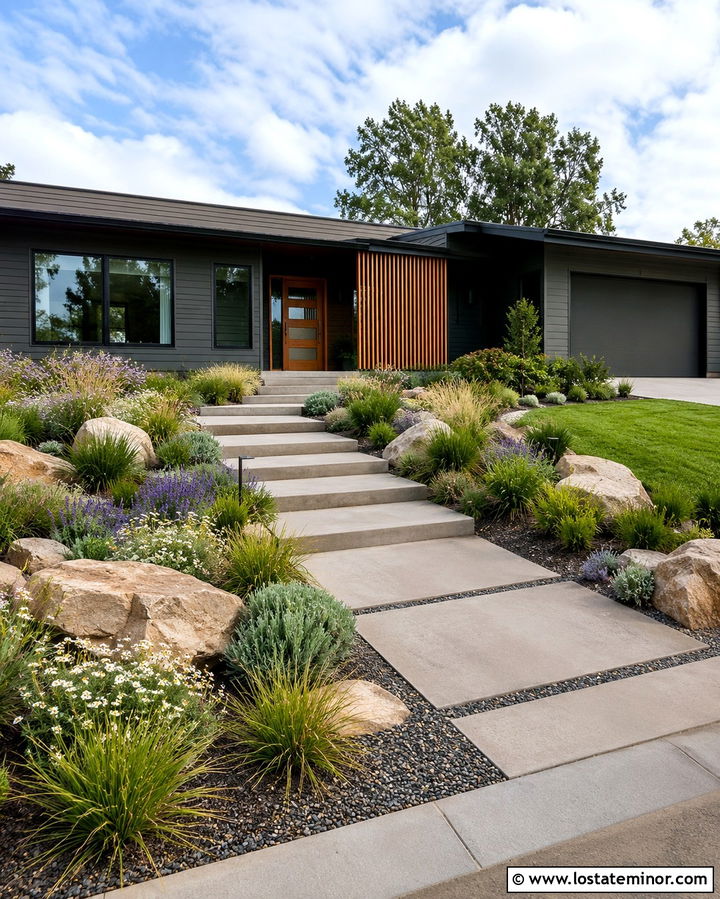
Floating concrete steps can turn a simple soft black ranch into a striking modern exterior. Space large rectangular slabs slightly apart and surround them with dark gravel or low ground cover. The horizontal shape of the steps reflects the long roofline of the house, creating a calm and unified design. Pair soft black horizontal siding with black window frames, a warm cedar front door, and a matching slatted privacy screen near the entry. A light gray concrete porch prevents the entrance from disappearing into the facade. Use minimal steel railings only where needed to preserve the open appearance. Drought-tolerant grasses, sculptural shrubs, and large natural boulders complete the landscaping. This design gives an older one-story home a fresh identity without requiring complicated architectural additions.
6. Soft Black Bungalow With Painted Wood Steps
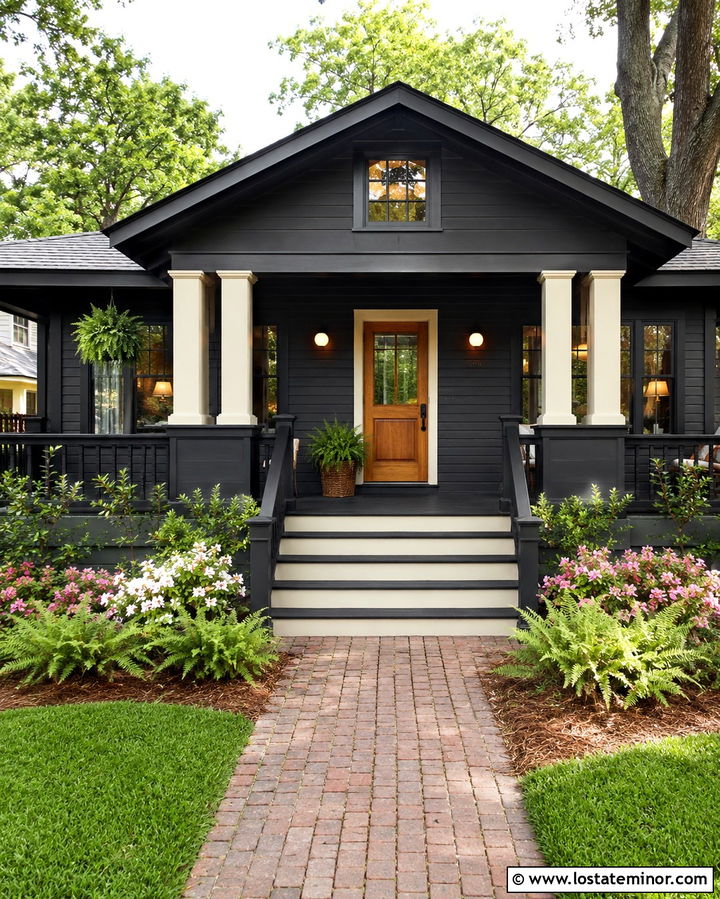
Painted wood steps can give a soft black bungalow a cohesive yet inviting entrance. Use a warm charcoal paint on the stair treads and soft cream on the risers, creating gentle contrast without introducing a disconnected color. Match the cream risers with the window trim, porch columns, and fascia. A honey-toned wood door adds a natural focal point beneath the deep front porch. Keep the railings soft black so they blend into the siding and allow the lighter architectural details to stand out. Small globe lights and vintage-inspired house numbers complement the bungalow’s character. Finish the entrance with a brick walkway, compact flowering shrubs, and ferns around the porch. The layered palette feels charming and practical while preserving the strength of the dark exterior.
7. Soft Black Cape Cod With Granite Steps
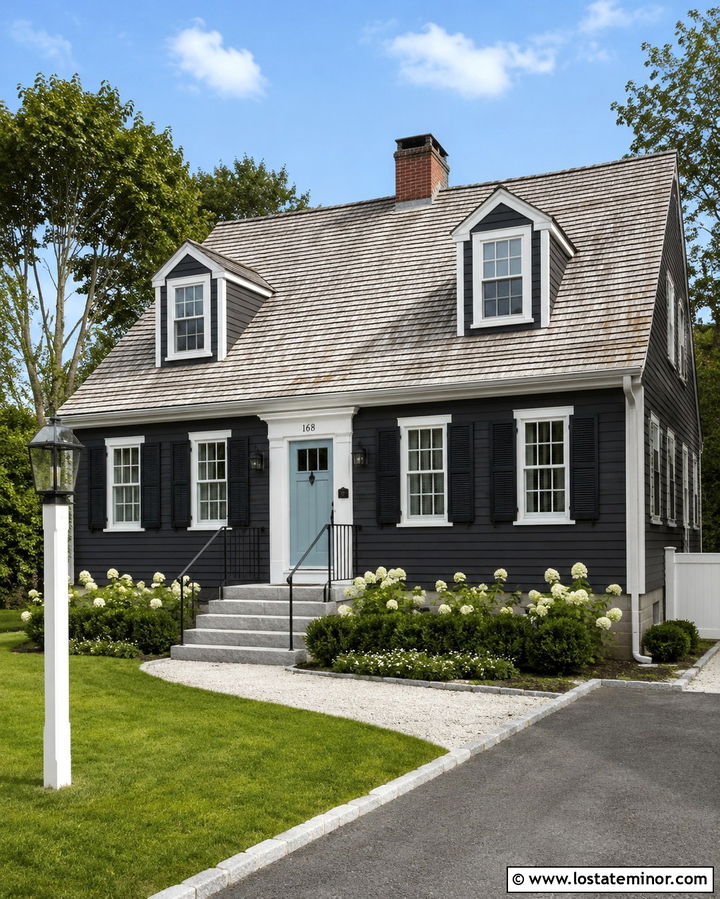
Granite steps are a natural fit for a soft black Cape Cod because they feel durable, understated, and rooted in traditional coastal architecture. Choose medium-gray granite with subtle warm speckling to keep the entrance from appearing icy. Soft black clapboard siding can be balanced with warm white trim, simple shutters, and a weathered cedar roof. Paint the front door muted coastal blue for a restrained touch of color. A compact landing and gently flared steps will make the small entry look more substantial. Add white handrails or slim black metal rails depending on the desired level of contrast. Hydrangeas, low hedges, and a crushed-shell-style walkway reinforce the relaxed setting. The finished exterior feels classic but noticeably more distinctive than a typical light-colored Cape Cod.
8. Soft Black Split-Level With Tiered Concrete Steps
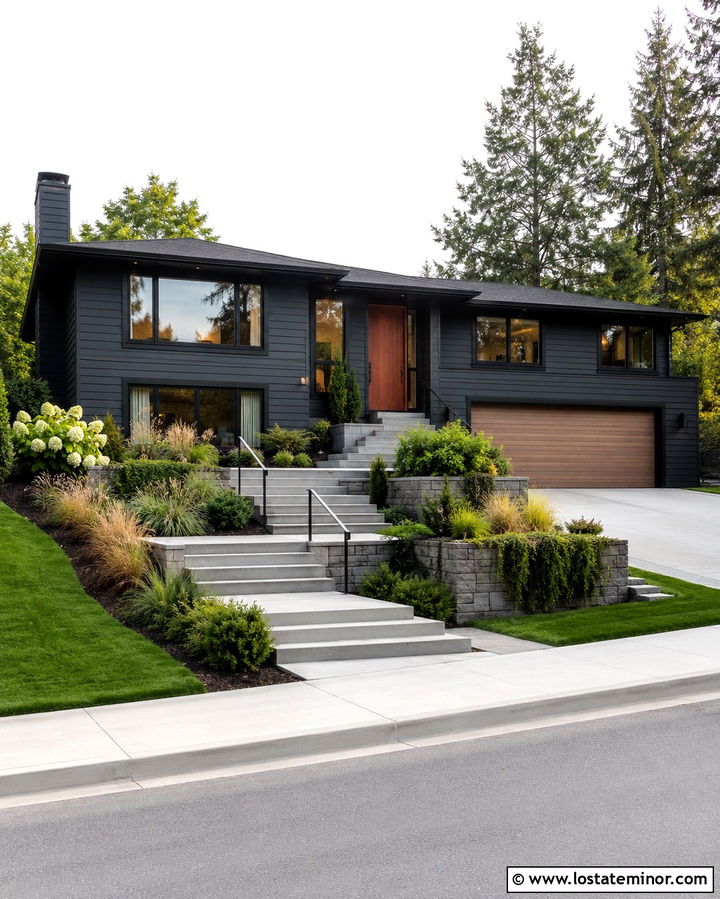
Tiered concrete steps can visually organize the uneven entrance of a soft black split-level house. Use broad landings between short groups of steps rather than one steep, uninterrupted staircase. Light warm-gray concrete contrasts clearly with the dark siding and helps the entry remain prominent. Pair soft black horizontal siding with a pale wood garage door, black-framed windows, and a rust-colored front door. A low stone retaining wall can follow the steps and manage the change in elevation while adding texture. Install simple black handrails that mirror the window frames. Layer ornamental grasses, evergreen shrubs, and cascading plants around each landing. This approach turns a challenging sloped yard into an architectural feature and gives the entire split-level facade a more deliberate, contemporary appearance.
9. Soft Black Cottage With Curved Brick Steps
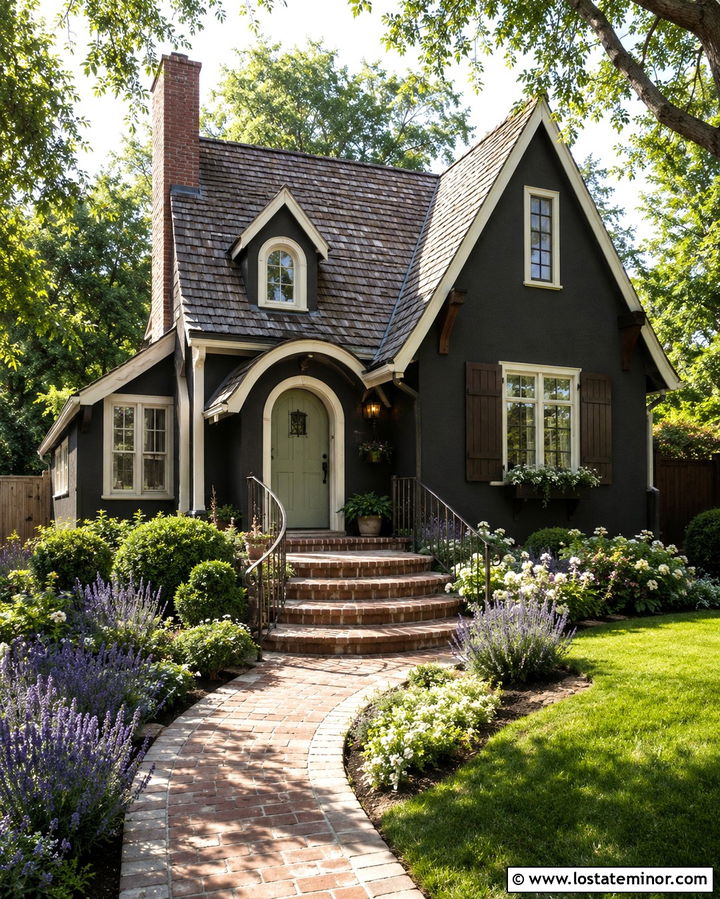
Curved brick steps soften the visual weight of a dark cottage and create a welcoming approach. Select weathered brown-red brick with pale mortar so the entrance has texture without looking overly bright. Soft black siding works beautifully with cream trim, a sage green door, and a cedar shake roof. Allow the bottom step to widen into the garden path, creating a graceful transition between the house and landscape. A small covered porch with simple wood brackets adds depth around the doorway. Black iron railings can follow the curve without overwhelming the compact facade. Surround the steps with lavender, rounded shrubs, and informal flowering plants. The combination of dark walls, curved masonry, and abundant greenery makes the cottage feel cozy, established, and full of personality.
10. Soft Black Modern House With Limestone Steps
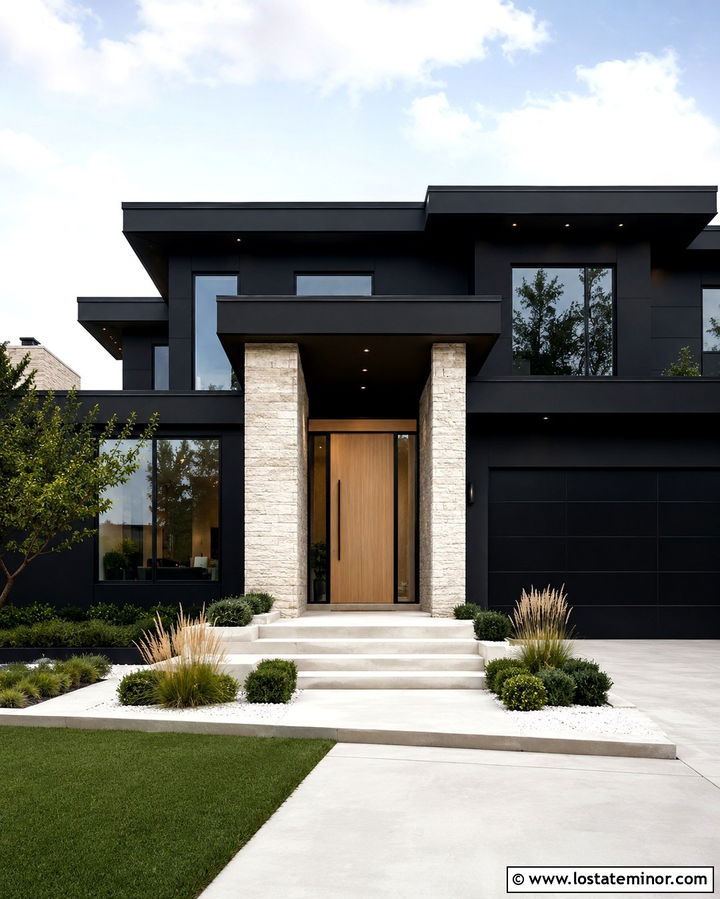
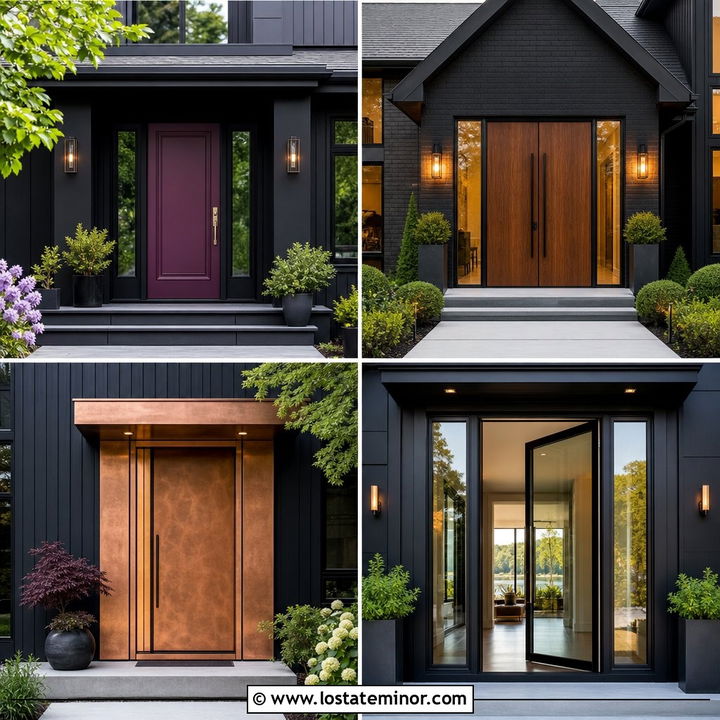
Pale limestone steps create a crisp focal point against a soft black modern house. Use large-format slabs with minimal joints for a streamlined appearance, but select a lightly textured finish for a more natural look. Continue the limestone onto the porch landing and one section of the facade to connect the steps with the architecture. Soft black smooth-panel siding, dark bronze windows, and a wide pivot door in white oak complete the palette. Flat rooflines and deep overhangs give the entrance clean definition. Concealed lighting beneath the stair edges can improve visibility while preserving the minimalist design. Frame the walkway with clipped grasses, low evergreens, and white gravel. This restrained material mix feels sophisticated, warm, and carefully integrated rather than stark or industrial.
11. Soft Black Victorian House With Tiled Steps
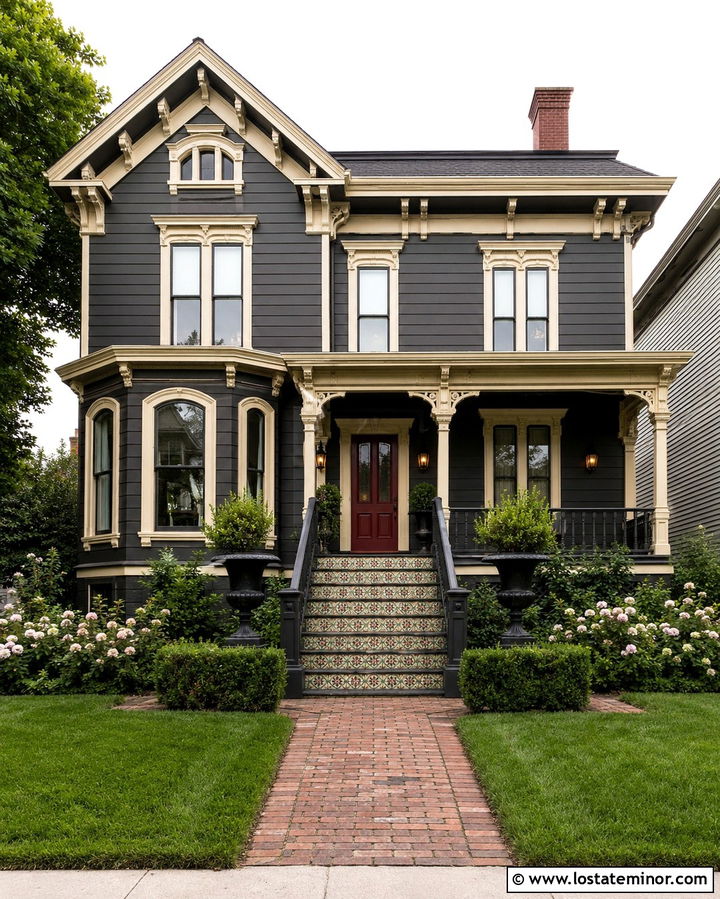
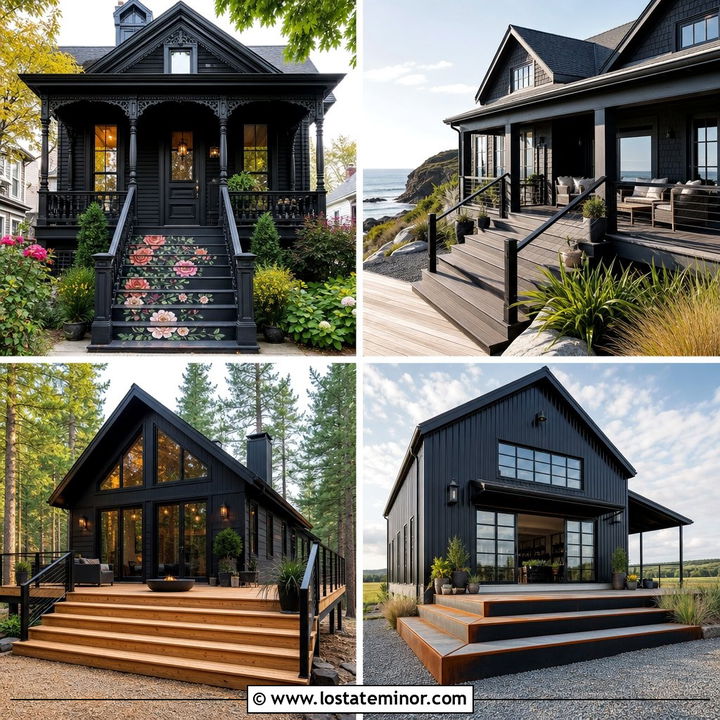
Patterned tile steps can add color and historic character to a soft black Victorian exterior. Keep the treads solid charcoal or natural stone, then apply muted cream, rust, and sage patterns to the risers. Soft black siding allows ornate trim, brackets, and porch details to remain visible without requiring multiple bright body colors. Use warm ivory for the decorative trim and deep burgundy on the front door. A black iron railing with simple curves supports the period look while maintaining a unified palette. Choose one tile pattern and repeat it consistently to avoid making the entrance feel busy. Add symmetrical planters, traditional porch lights, and a narrow brick walkway. This full-house scheme celebrates Victorian detail while giving the architecture a darker, more updated foundation.
12. Soft Black Tudor House With Sandstone Steps
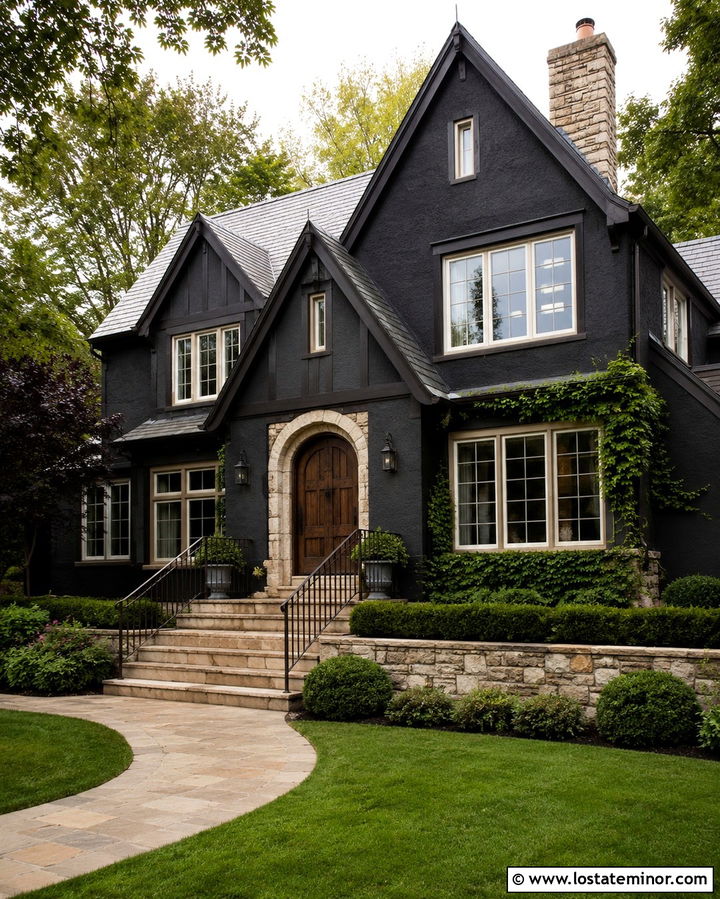
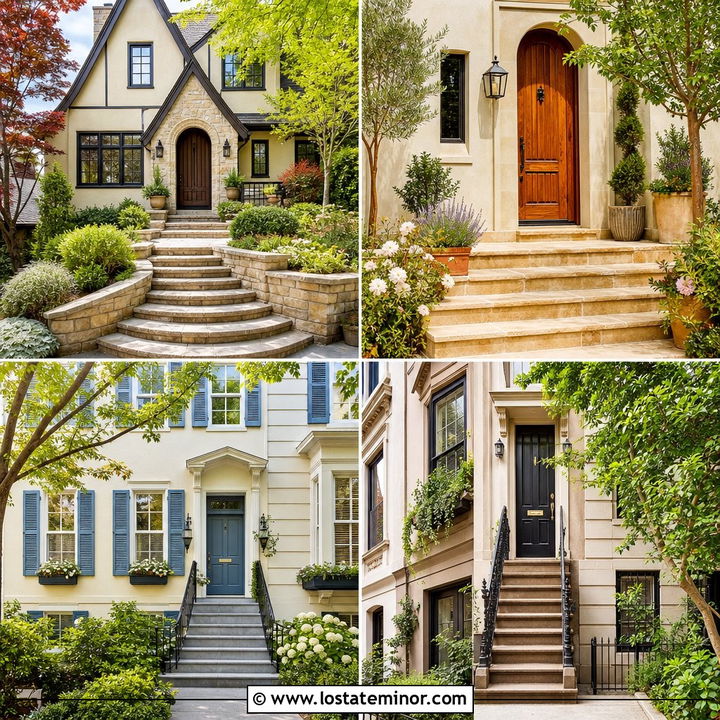
Warm sandstone steps complement the earthy materials and distinctive shapes of a soft black Tudor house. Use buff, taupe, or lightly rust-colored stone that relates to the chimney and lower facade. Soft black stucco or painted masonry can be combined with dark brown timber details and cream window trim. A heavy arched wood door reinforces the traditional entrance and brings necessary warmth to the palette. Create slightly irregular stair edges to suit the home’s handcrafted appearance, then add dark bronze railings with restrained decorative details. Repeat the sandstone in a low garden wall or walkway border. Deep green shrubs, climbing vines, and a mature shade tree help settle the house into its surroundings. The final look feels dramatic but still connected to classic Tudor architecture.
13. Soft Black Mid-Century House With Terrazzo Steps
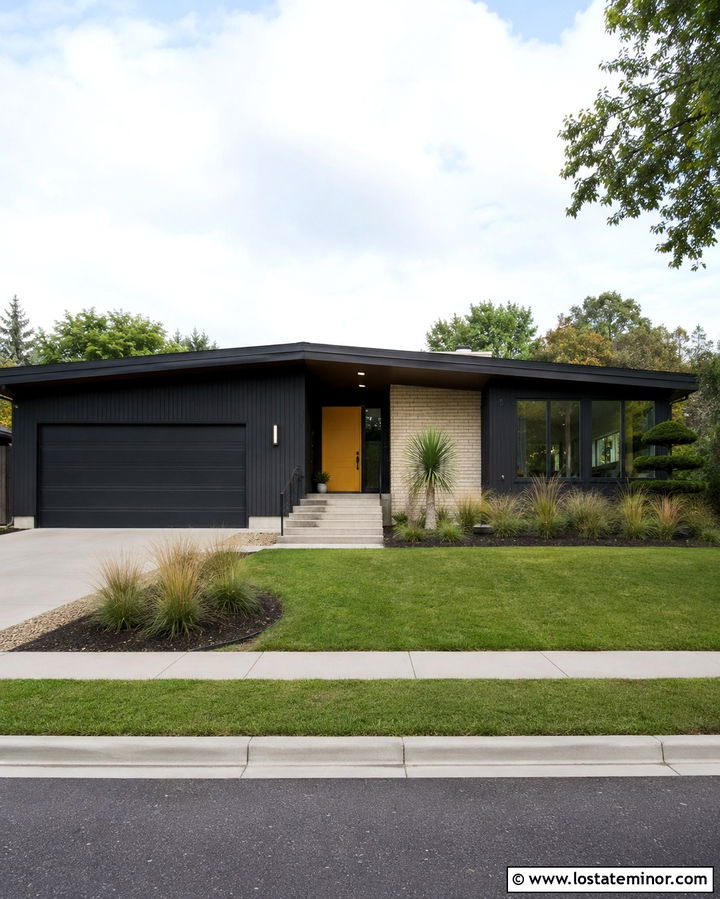
Terrazzo steps bring subtle pattern to a soft black mid-century house without disrupting its clean geometry. Choose a warm gray base with small cream, tan, and charcoal chips. Broad rectangular treads can run parallel to the home’s low roofline, emphasizing its horizontal proportions. Pair soft black vertical siding with a mustard, muted orange, or natural mahogany front door. A cream brick accent wall near the entrance will brighten the composition and reflect the lighter pieces in the terrazzo. Keep the railing low and simple, using black powder-coated metal. Minimal plantings such as ornamental grasses, yucca, and neatly shaped evergreen shrubs complete the period-inspired setting. This scheme preserves the home’s recognizable architecture while making the entry feel polished, functional, and visually connected.
14. Soft Black A-Frame House With Wood Steps
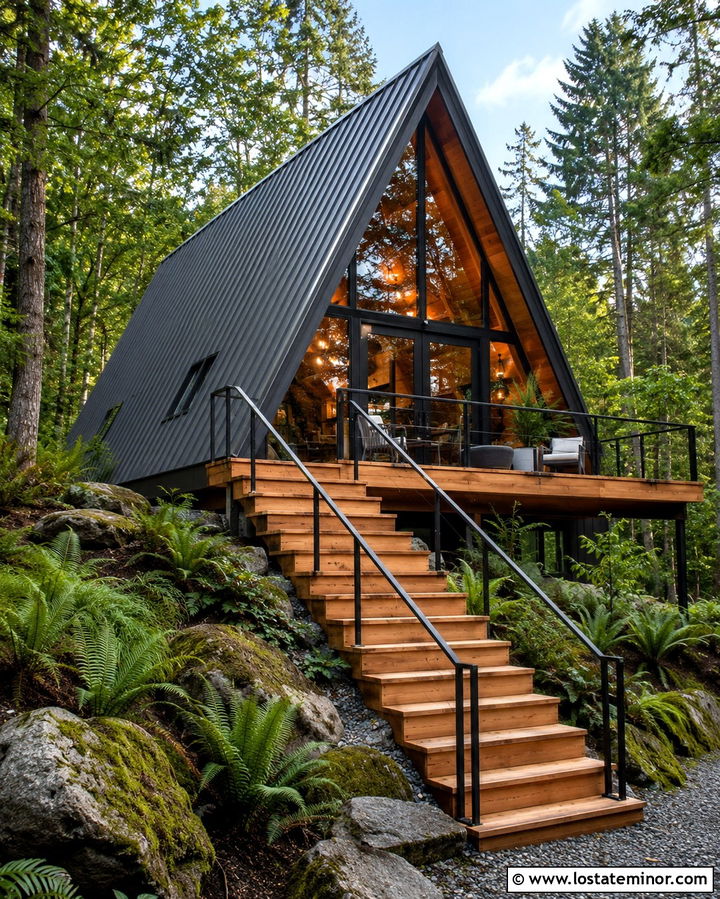
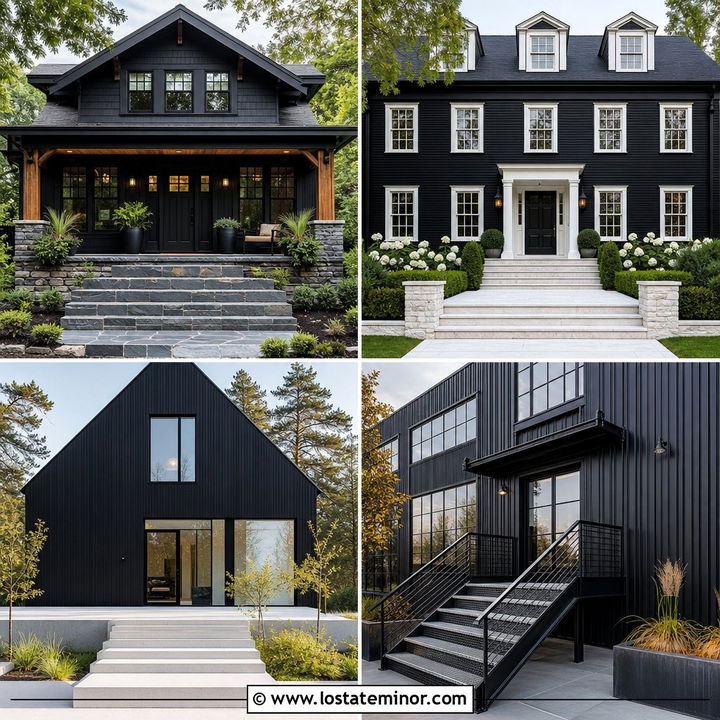
A long run of natural wood steps suits a soft black A-frame house set within a wooded landscape. Use wide cedar or redwood treads with simple black railings that echo the steep roof and dark siding. A clear or medium-brown stain will preserve warmth while allowing the grain to remain visible. Continue the same wood across the front deck and around the glass entry door. Soft black siding frames the large windows and helps the structure blend with mature trees. A charcoal metal roof completes the low-maintenance, cabin-inspired palette. Place gravel beneath the stairs and use native ferns, mossy stones, and shade-tolerant shrubs around the approach. The result feels contemporary yet natural, with the steps acting as a graceful connection between the sloped site and house.
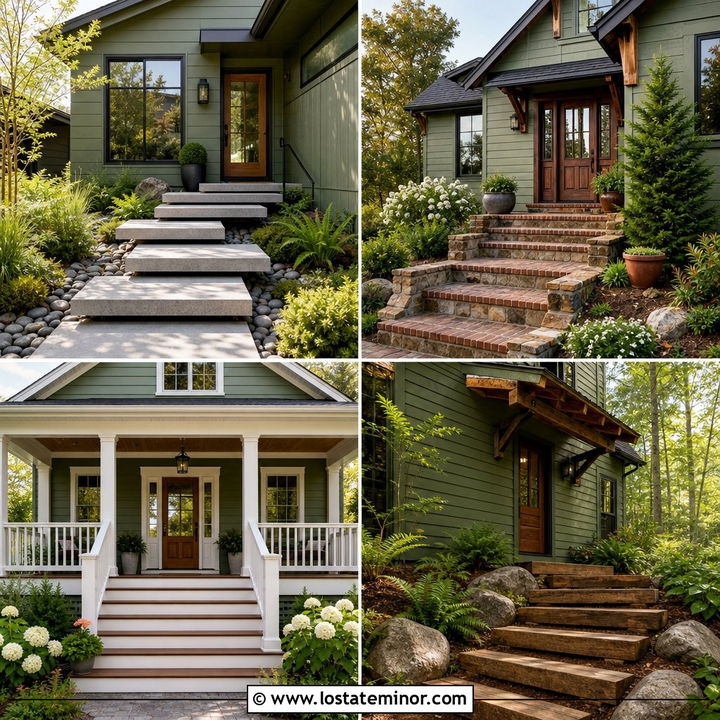
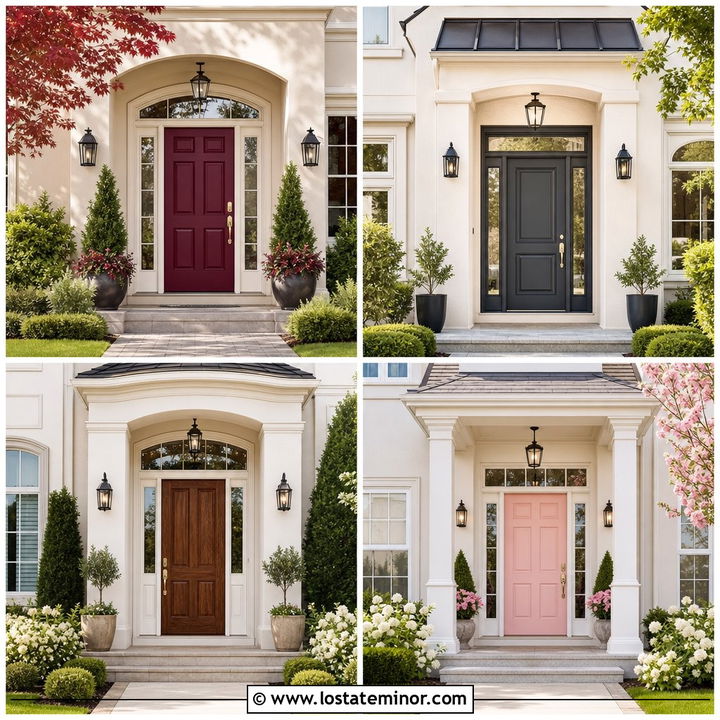
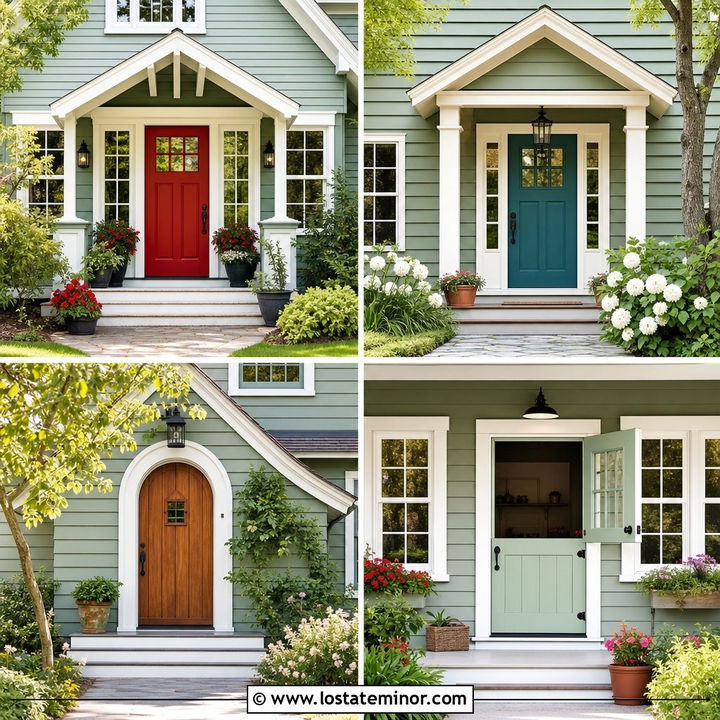
15. Soft Black Farmhouse With Wraparound Porch Steps
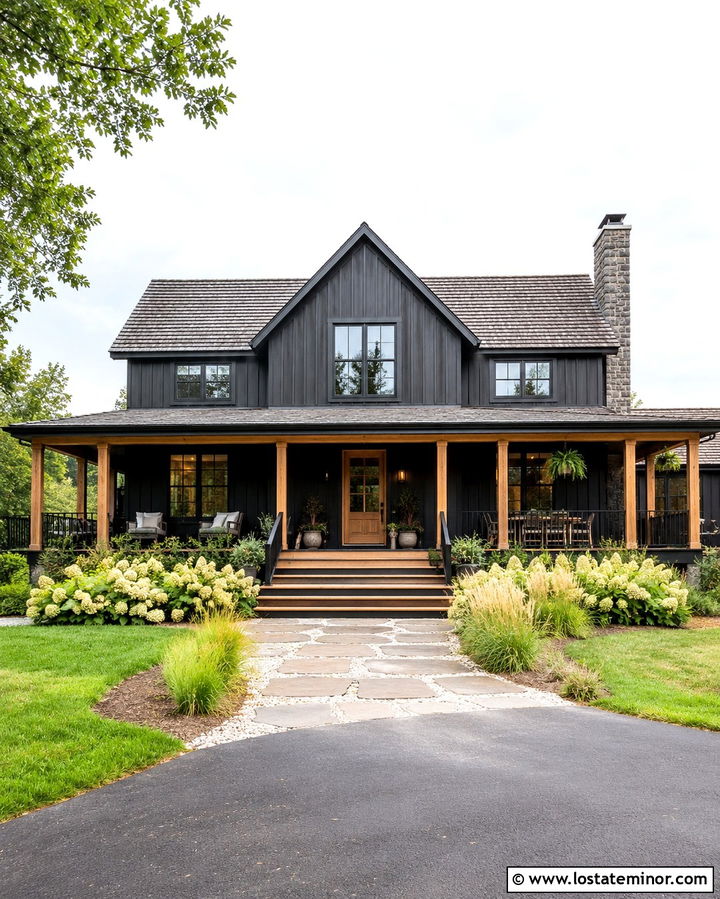
Full-width porch steps make a soft black farmhouse feel open and approachable. Build three or four broad wood steps across the main entrance area rather than limiting access to a narrow central staircase. Stain the treads a warm oak tone and paint the risers soft black to tie them back to the board-and-batten siding. Natural wood porch columns, a matching front door, and cream window trim soften the dark facade. Add simple black railings only at the outer edges so the porch remains visually accessible. A weathered gray roof keeps the color scheme relaxed. Use hydrangeas, ornamental grasses, and a straight stone walkway to frame the entrance. This complete look balances bold modern farmhouse color with the familiar comfort of a generous country porch.
16. Soft Black House With White Concrete Steps
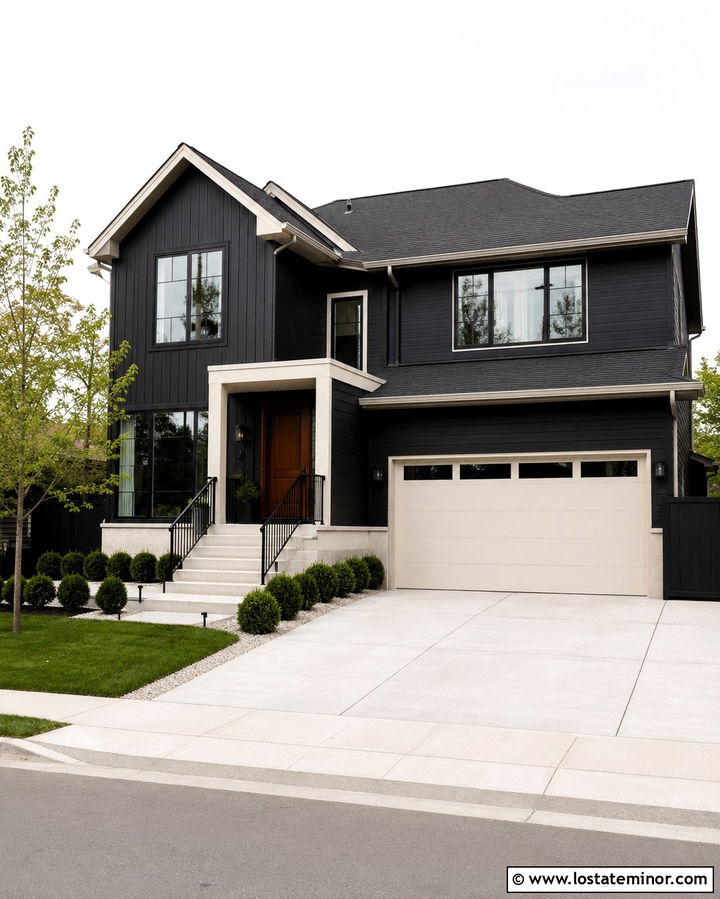
Bright off-white concrete steps produce clear definition against a soft black exterior. Avoid a brilliant blue-white finish; a creamy mineral tone will look softer beside charcoal-black siding. Repeat that warm white on the window trim, porch ceiling, and garage door for a balanced three-color scheme. A medium walnut front door keeps the entrance from becoming too high contrast. Choose thick concrete treads and a broad upper landing to match the visual weight of a contemporary house. Slim black railings can disappear against the body color while still outlining the steps. Add pale gravel, structured evergreen shrubs, and a light concrete driveway. The overall exterior feels clean and graphic, yet the wood and landscaping prevent the black-and-white combination from appearing cold or unfinished.
17. Soft Black House With Bluestone Steps
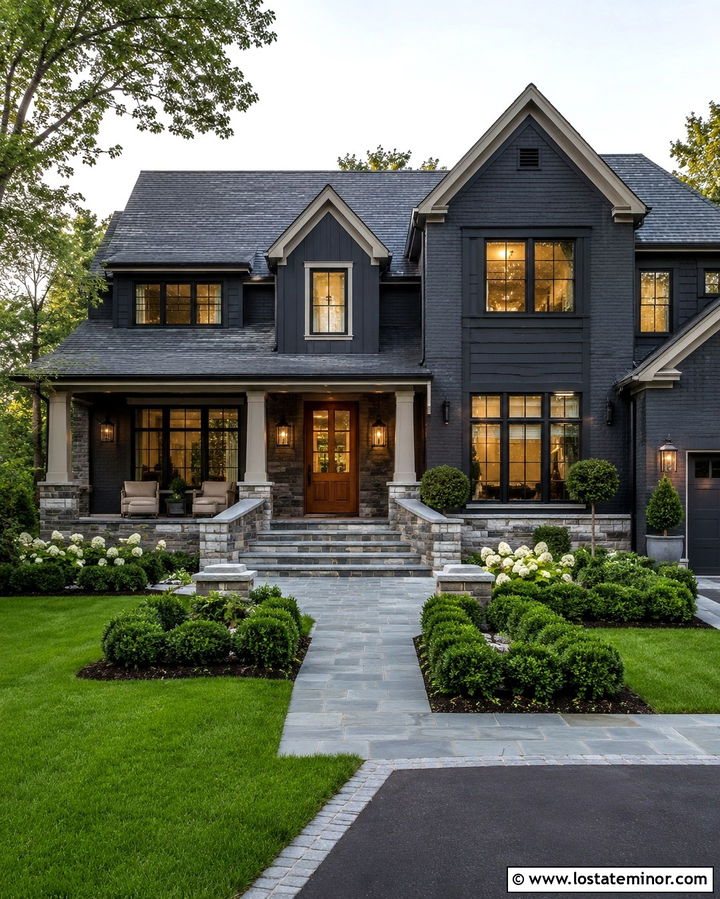
Bluestone steps add quiet color and refined texture to a soft black home. Their blue-gray surface works especially well with a black paint that carries cool charcoal undertones. Use large rectangular stone treads with matching caps on low porch walls. Pair the siding with dark window frames, pale gray trim, and a warm wood door to balance the cooler materials. A slate-gray roof will connect visually with the steps and keep the palette consistent from top to bottom. Black lanterns and simple metal handrails add definition without creating another strong color. Surround the walkway with clipped boxwoods, white flowering shrubs, and ground cover. This combination fits traditional and transitional homes, delivering a composed exterior that looks detailed without relying on excessive decoration.
18. Soft Black House With Cedar Steps
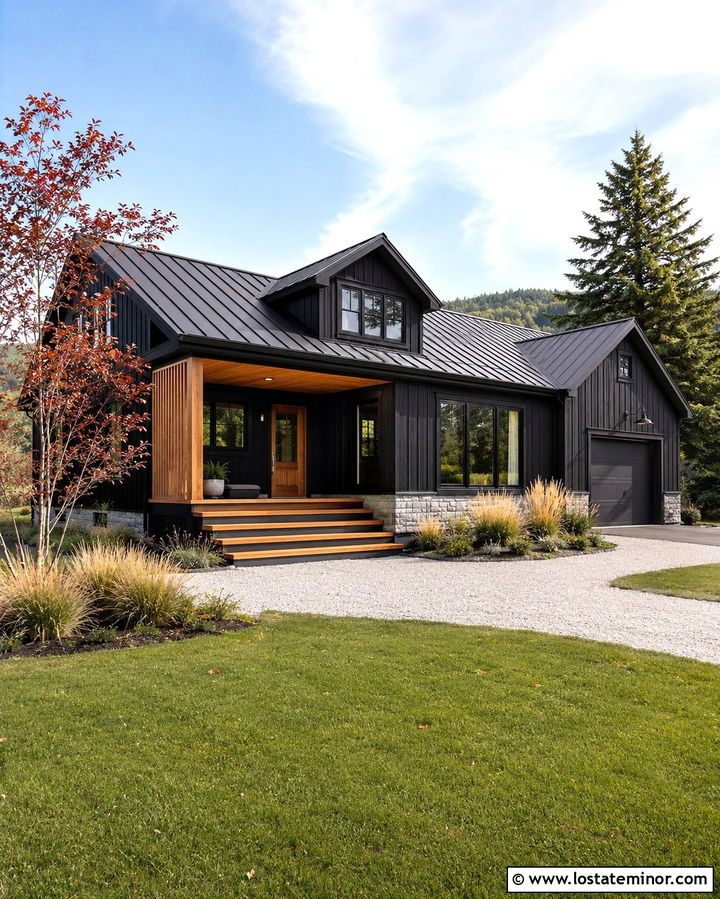
Fresh cedar steps offer a strong natural contrast against soft black siding. Keep the design simple, using thick treads, open or dark-painted risers, and a generous landing. Repeat cedar on the porch ceiling, front door, and vertical privacy screen so the wood feels like part of the whole exterior rather than a single accent. Black window trim and a charcoal metal roof create a continuous dark backdrop. For a softer transition, use a light stone foundation and pale gravel walkway. Plant feathery grasses, compact evergreens, and one small ornamental tree near the entry. Over time, the cedar can be maintained with a warm stain or allowed to develop a softer weathered appearance. Either treatment makes the soft black facade feel warmer and more connected to nature.
19. Soft Black House With Slate Steps
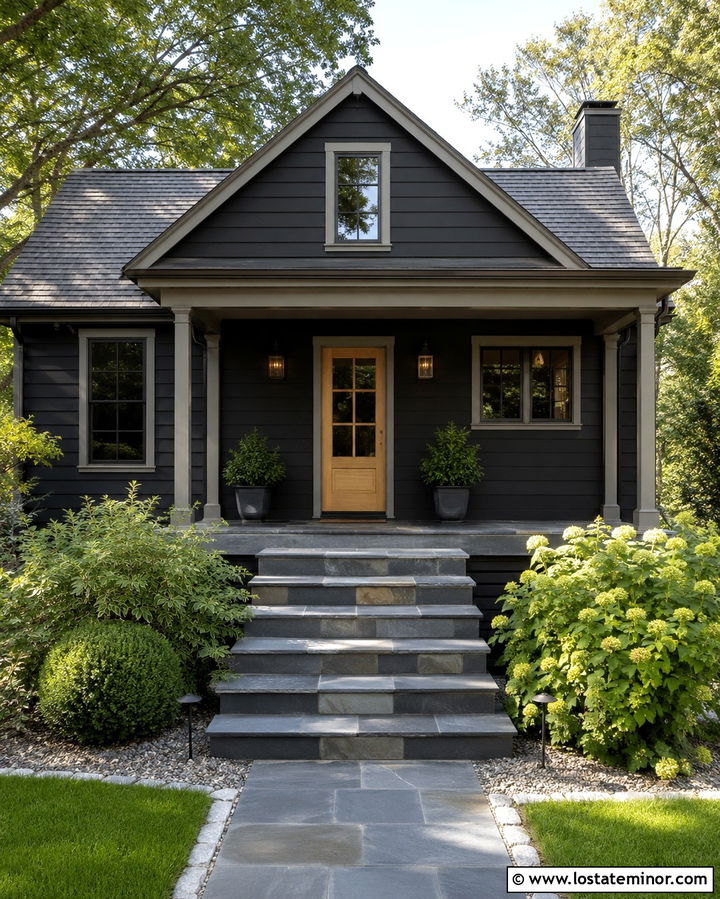
Dark slate steps create a layered, monochromatic entrance on a soft black house. To keep the stairs visible, choose slate with natural variation in charcoal, blue-gray, and muted green. Use lighter mortar joints or slightly projecting tread edges to define each level. Soft black lap siding can be paired with warm gray trim, a light oak front door, and bronze exterior lights. Continue the slate onto the porch floor or a low foundation wall for a substantial, unified appearance. A medium-gray roof provides a gentle break from the darkest colors. Surround the entrance with pale gravel and green foliage so the architecture does not feel too heavy. This scheme works well on a compact contemporary cottage or a traditional house receiving a restrained modern update.
20. Soft Black House With Brick And Stone Steps
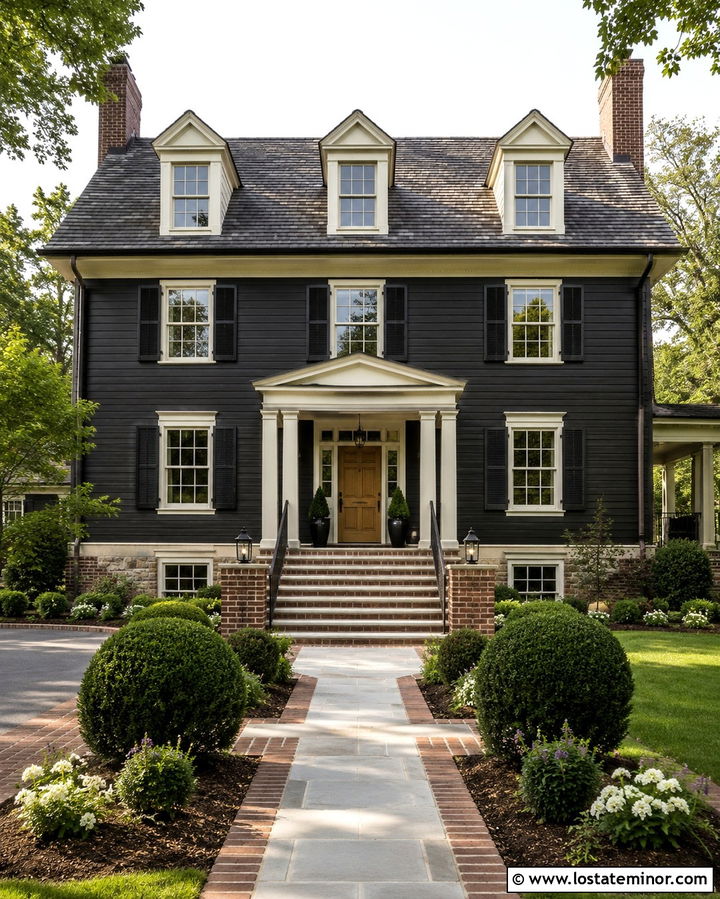
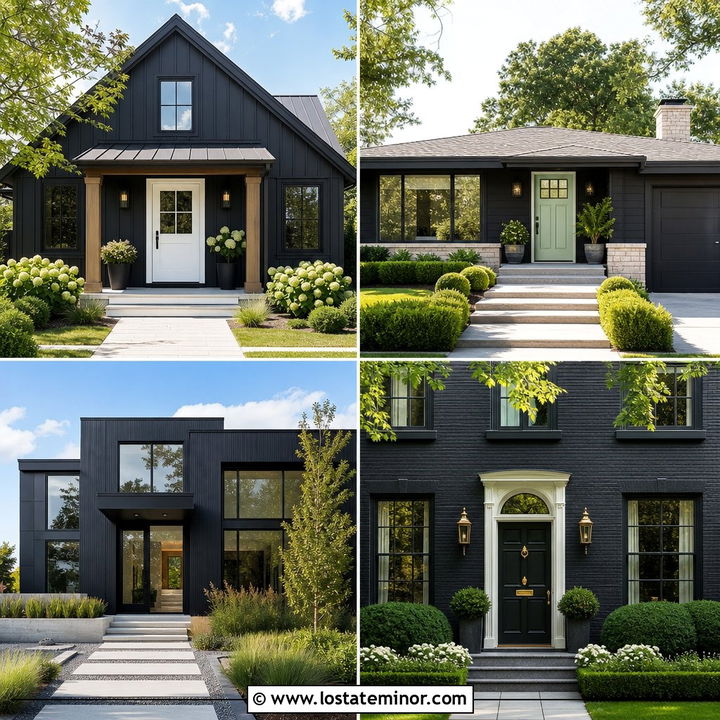
Combining brick and stone gives the steps of a soft black house depth and traditional character. Use muted red-brown brick for the risers and light limestone for the treads and landing. The contrasting materials clearly outline each step while tying together warm and cool colors. Pair soft black siding with cream trim, a stained wood door, and simple black shutters. Repeat the limestone around the foundation and use matching brick along the walkway edge. Traditional lanterns and substantial square porch columns keep the entrance in proportion with the mixed masonry. Finish the design with rounded shrubs, seasonal flowers, and a neatly defined lawn. The complete exterior feels collected and permanent, making this combination especially effective for Colonial, Georgian, and traditional suburban homes.
21. Soft Black House With Metal Stair Railings
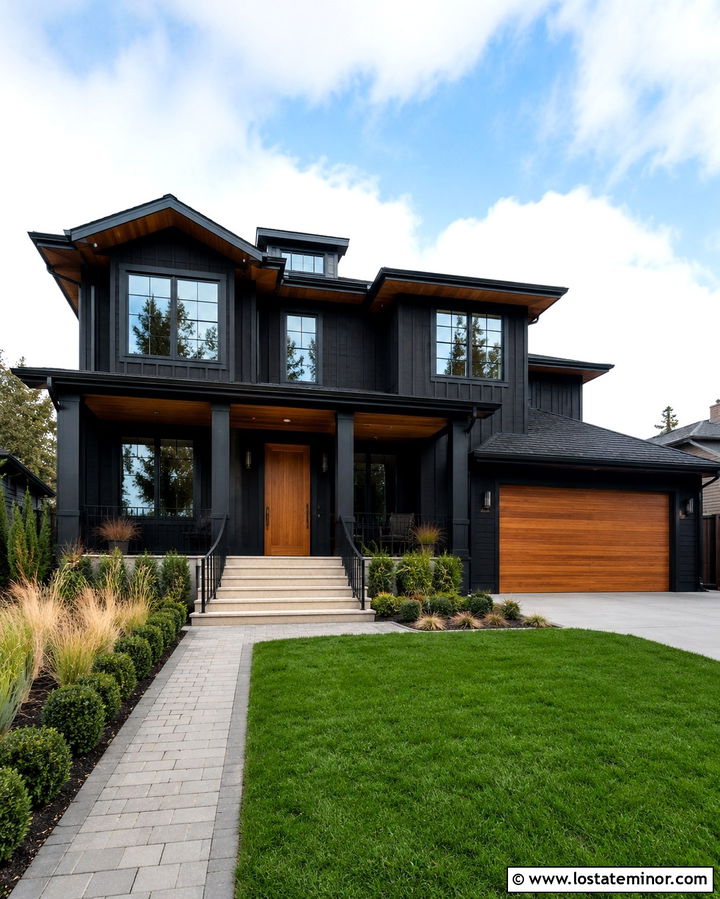
Slim metal railings can sharpen the appearance of steps without overwhelming a soft black exterior. Choose a matte black powder-coated finish that blends with the siding and window frames. Set the railings beside pale concrete or warm limestone steps so their simple outline remains visible. A natural wood front door, matching soffits, and a cedar garage door will bring warmth to the darker palette. On a transitional two-story home, use horizontal siding below and vertical panels around the entrance for subtle architectural variation. Keep the railing pattern straightforward with narrow vertical pickets or a plain top rail. Low hedges, ornamental grasses, and a wide paver walkway complete the look. This approach makes the entrance feel secure, open, and visually uncluttered.
22. Soft Black House With Double Entry Steps
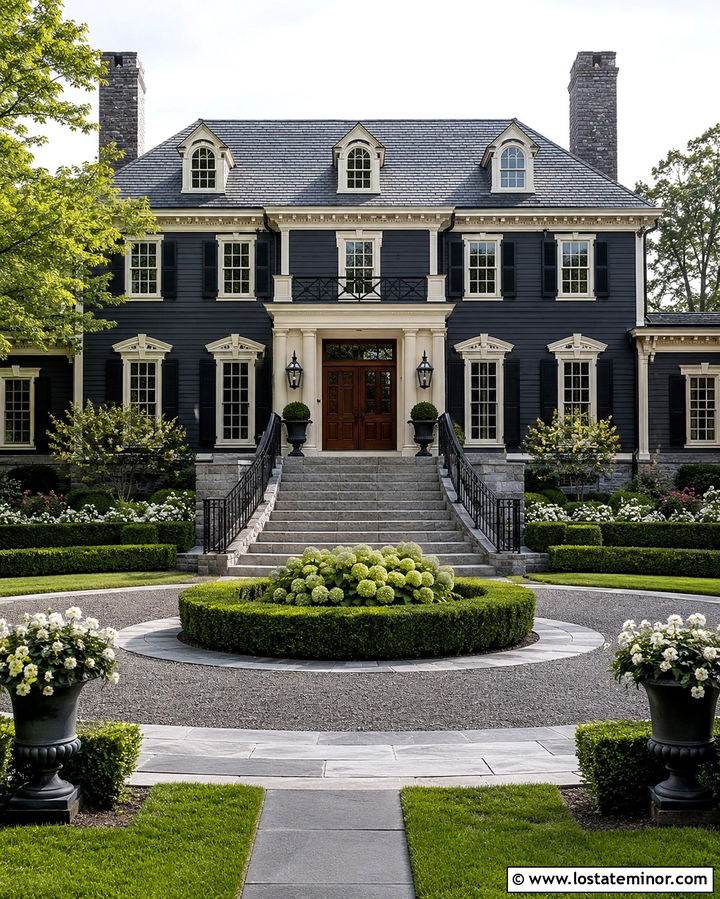
Double entry steps create an impressive, symmetrical approach to a large soft black house. Two short staircases can rise from opposite sides and meet at a central porch landing. Use warm gray stone for the treads, soft black metal railings, and substantial stone-clad porch walls. The facade can combine soft black siding with creamy trim, tall windows, and a rich mahogany double door. Matching lanterns and planters reinforce the symmetry. Keep the steps wide enough to suit the scale of the house, but avoid overly elaborate balusters that could distract from the dark exterior. A circular walkway, clipped hedges, and balanced planting beds will strengthen the formal composition. This layout works particularly well for Colonial Revival, Georgian, and grand transitional homes with elevated entrances.
23. Soft Black House With Side Entry Steps
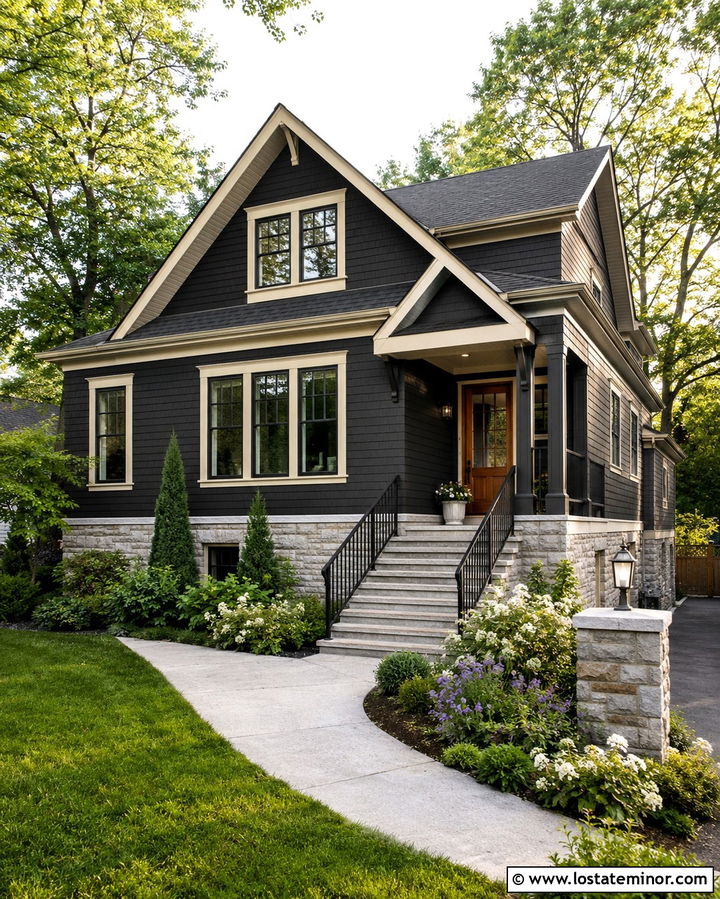
Side-facing entry steps can make a small porch feel larger and keep the front elevation clean. On a soft black house, use pale stone or concrete stairs that rise along the facade before reaching the front landing. A low black railing will blend with the siding while visually guiding guests toward the door. Pair soft black horizontal siding with cream window trim, a warm oak door, and a light gray porch floor. Add a stone foundation beneath the landing to make the raised entry look substantial. The front garden can then extend closer to the house without being divided by a central staircase. Use layered evergreens, flowering perennials, and a gently curved walkway. This arrangement is especially helpful for compact lots, raised cottages, and homes with limited front-yard depth.
24. Soft Black House With Corner Porch Steps
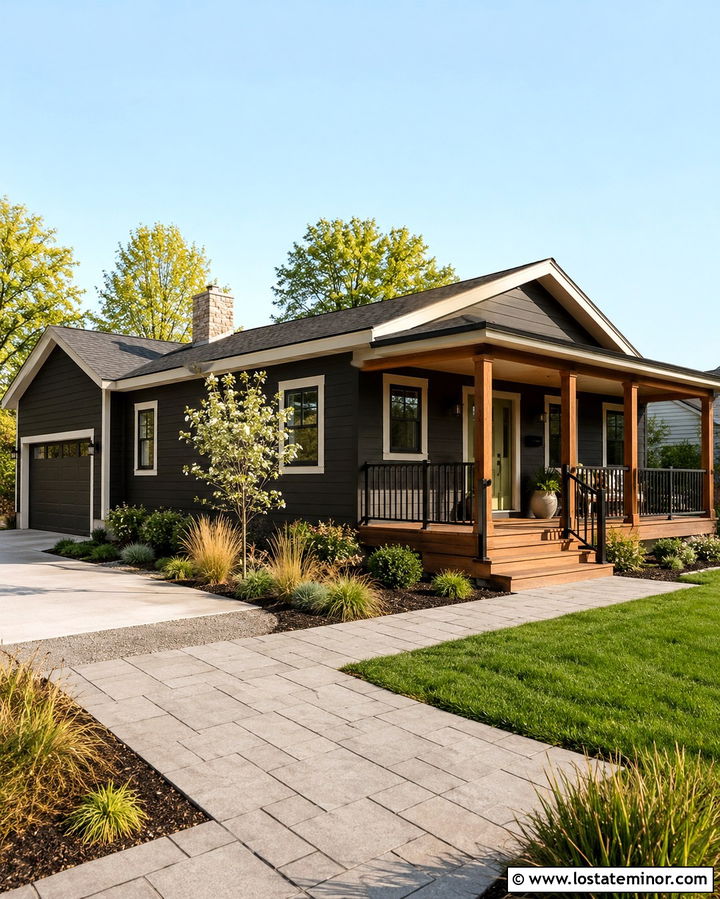
Corner porch steps provide a relaxed entrance and can improve the flow between a porch, driveway, and front yard. Use broad wood or composite treads that wrap around one corner instead of projecting directly from the doorway. Against soft black siding, a medium cedar-brown finish adds warmth and helps the steps remain easy to distinguish. Match the porch floor and columns to the stair color, then use cream trim around the windows and door. A muted olive front door introduces natural color without fighting the facade. Black cable or vertical metal railings maintain an open view. Add a diagonal paver path, low ornamental grasses, and a small tree near the corner. This complete arrangement feels casual and works beautifully on ranch, farmhouse, and cottage architecture.
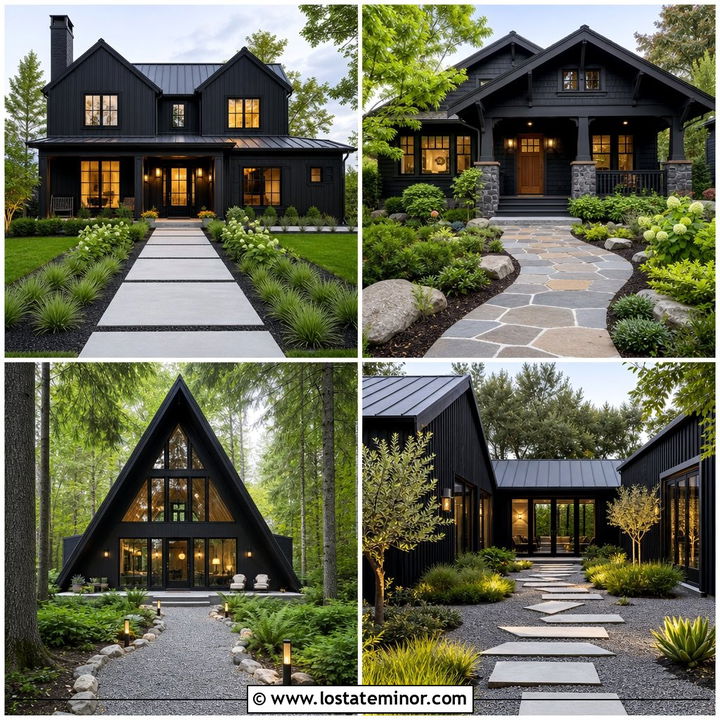
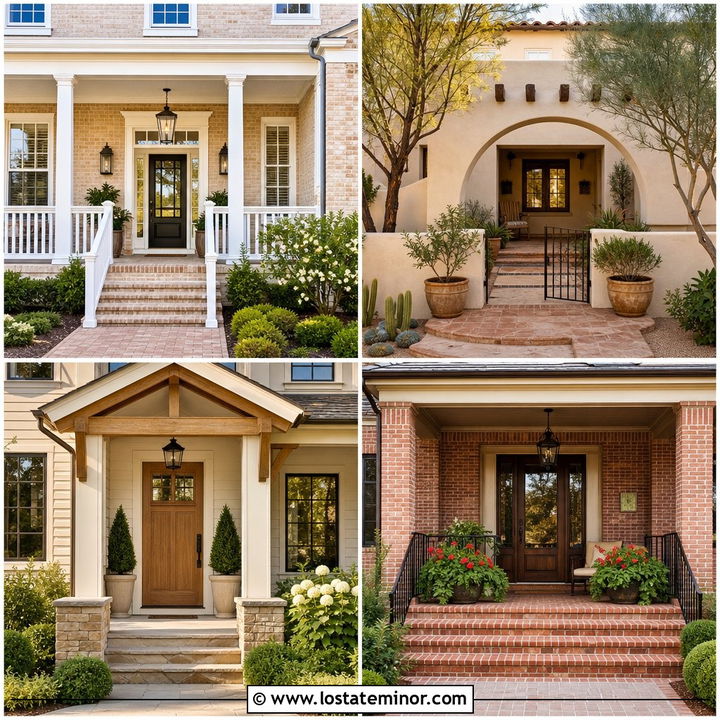
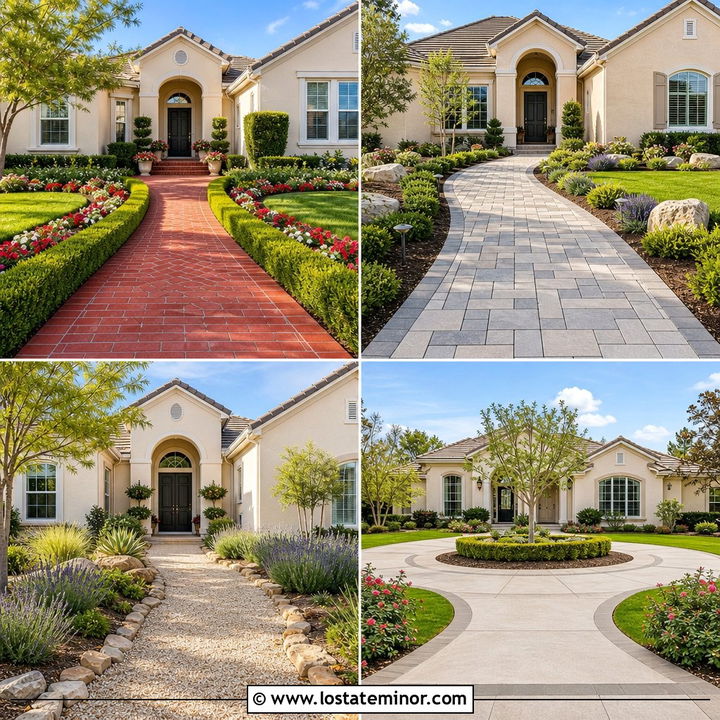
25. Soft Black House With Enclosed Porch Steps
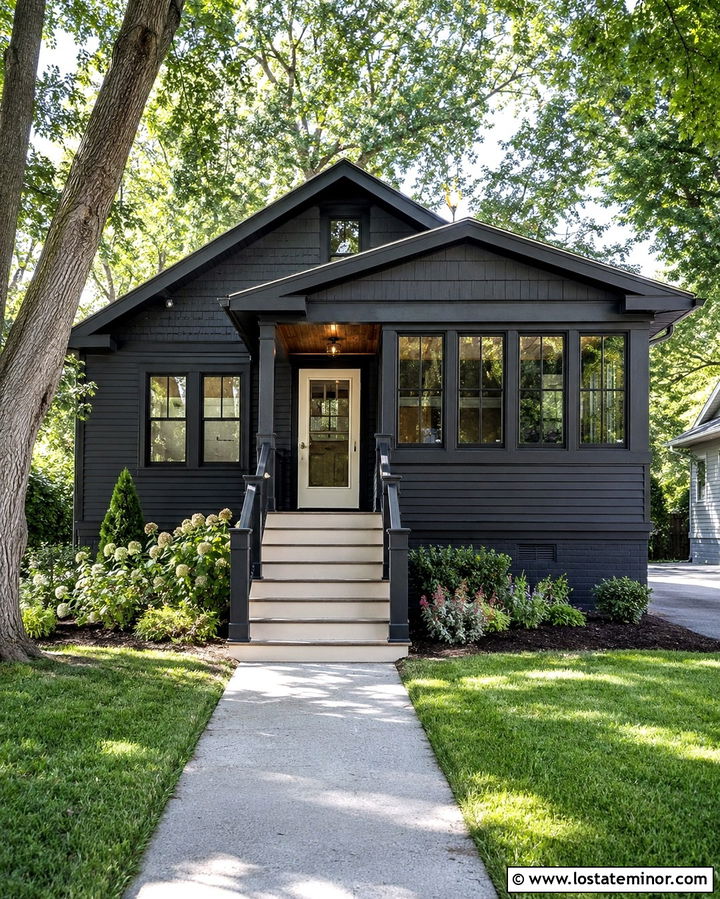
An enclosed porch can give the steps of a soft black house a more finished, weather-protected setting. Frame the porch with black-trimmed windows and use soft black siding around the lower wall to connect it to the main facade. Warm gray concrete steps, cream risers, and a matching cream storm door will keep the entrance visible. Introduce cedar beneath the porch roof or around the doorway for warmth. A compact black railing should follow the steps without blocking views through the porch windows. Continue the concrete into a straight walkway bordered by low shrubs and seasonal plants. This practical design suits cottages, bungalows, and older suburban homes. The consistent color palette makes the enclosed addition look original to the house rather than attached as an afterthought.
26. Soft Black House With Stepped Garden Entry
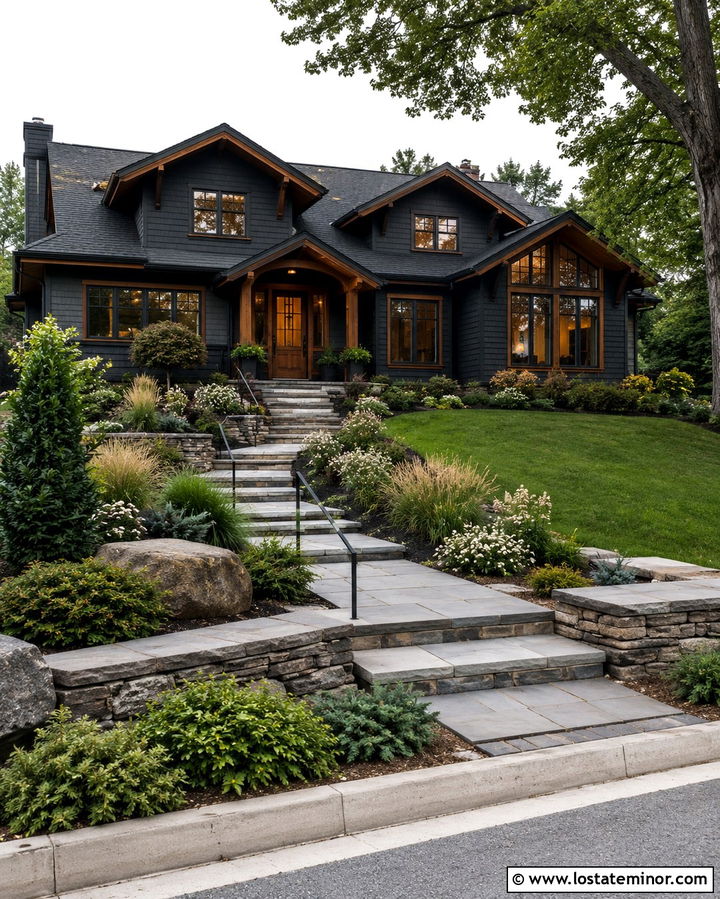
A stepped garden entry creates a gradual, scenic approach to a soft black house on a sloped property. Use a sequence of large stone landings separated by one or two shallow steps. Warm gray flagstone will stand out gently against the dark siding while blending into the landscape. Pair the soft black facade with natural wood trim, a glass-paneled oak door, and a charcoal roof. Low stone retaining walls can border the path and double as planting areas. Fill them with evergreen ground cover, ornamental grasses, white flowers, and compact shrubs. Minimal black handrails should appear only along the steeper sections. This design makes the journey toward the entrance part of the curb appeal, creating a layered exterior that feels integrated with its site.
27. Soft Black House With Covered Portico Steps
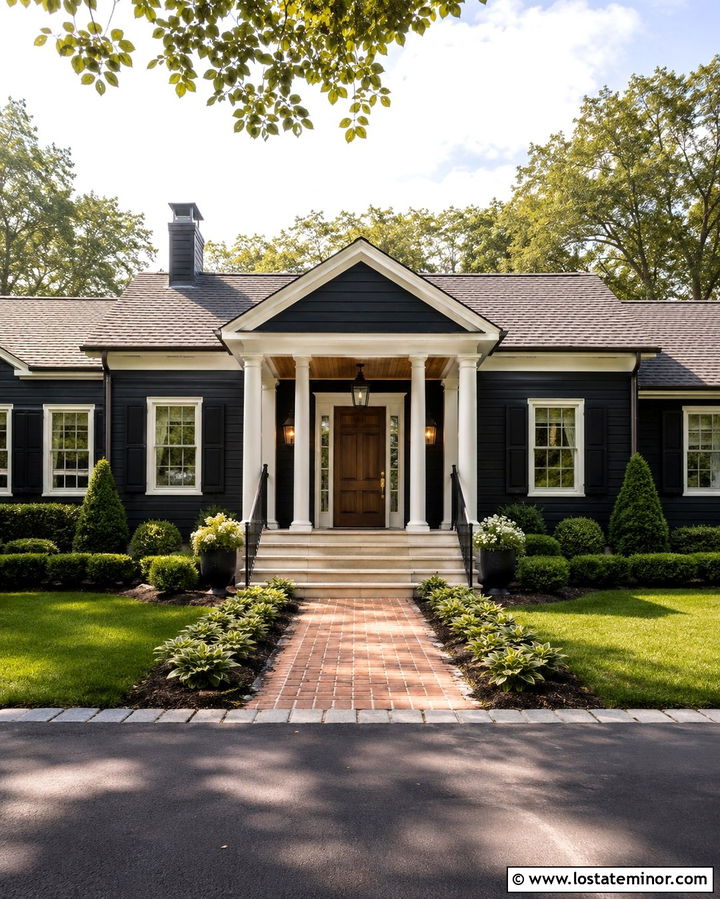
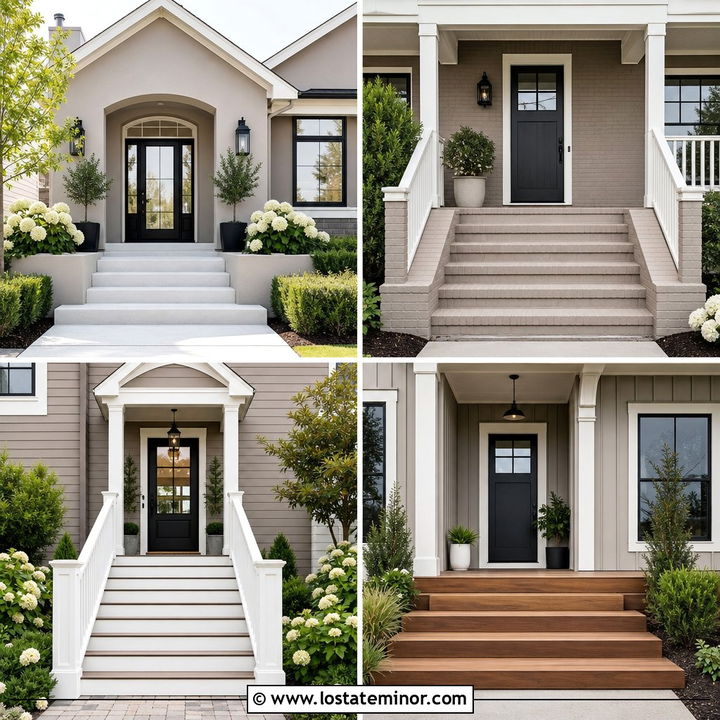
A covered portico gives simple front steps a clear architectural destination. Against a soft black exterior, use cream-painted columns, a natural wood ceiling, and light limestone steps. The bright portico frame will make the entry easy to recognize while emphasizing the depth of the dark facade. A warm walnut front door and aged brass hardware introduce a classic focal point. Keep the roof small but substantial enough to match the width of the staircase and landing. Soft black railings can connect the steps to the siding without interrupting the lighter stone. Add matching planters at the base, a straight brick-edged walkway, and symmetrical evergreen shrubs. This complete look can bring dimension and balance to Colonial, ranch, and plain two-story suburban homes.
28. Soft Black House With Red Brick Steps
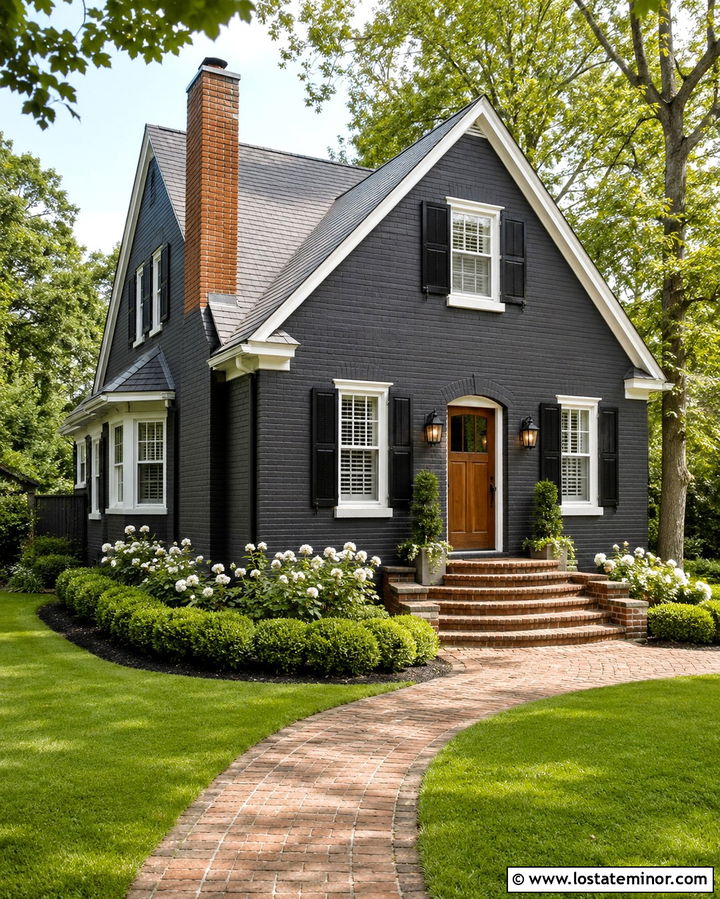
Red brick steps can make a soft black house feel warmer and more familiar. Choose dark, weathered brick containing brown and charcoal variation rather than a vivid new red. Use the same brick around the foundation or chimney so the entrance relates to the larger facade. Soft black siding, warm white trim, and a natural oak door create a balanced color scheme with both light and organic accents. Black shutters and traditional lanterns maintain continuity with the body color. A gently flared staircase will make the entry look broader, while pale mortar clearly defines each tread and riser. Complete the yard with boxwood borders, white flowering plants, and a brick walkway. This pairing is particularly effective for traditional cottages and updated Colonial homes.
29. Soft Black House With Illuminated Steps
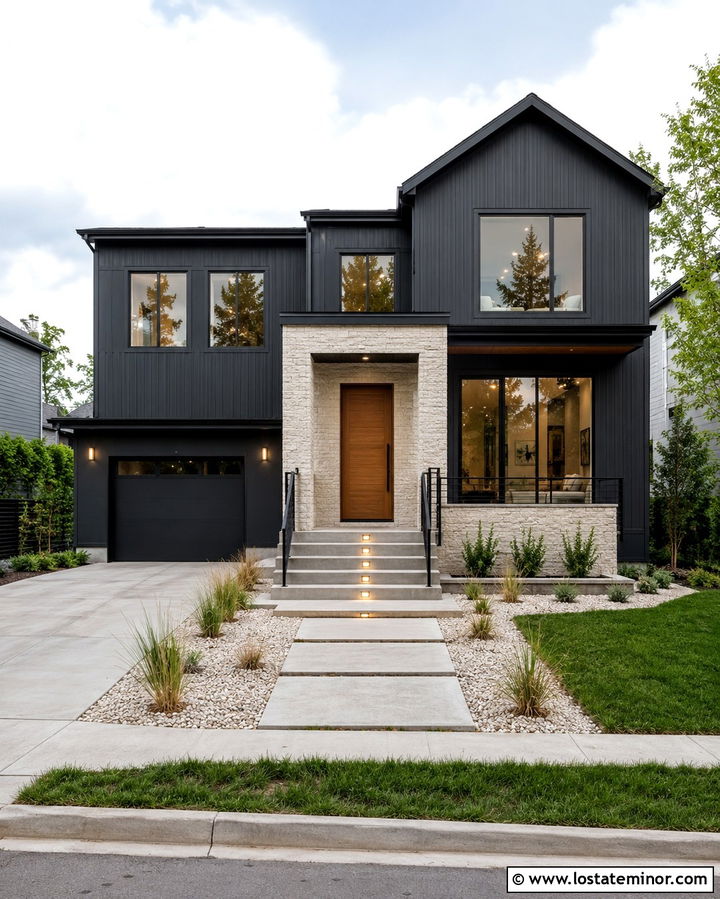
Integrated step lighting makes a soft black exterior feel polished while defining the route to the front door. Install small, evenly spaced lights within warm gray concrete risers or along low sidewalls. During the day, the stairs should still contribute to the color scheme through their material and shape. Pair soft black vertical siding with dark bronze windows, a cedar door, and a light stone porch wall. Use simple black railings and large rectangular treads for a modern appearance. Keep the fixtures compact so they do not create visual clutter across the staircase. Pale gravel beds, sculptural grasses, and a straight concrete walkway reinforce the clean architecture. The entrance will feel deliberate and easy to navigate without sacrificing the dramatic quality of the dark facade.
30. Soft Black House With Wraparound Stone Steps
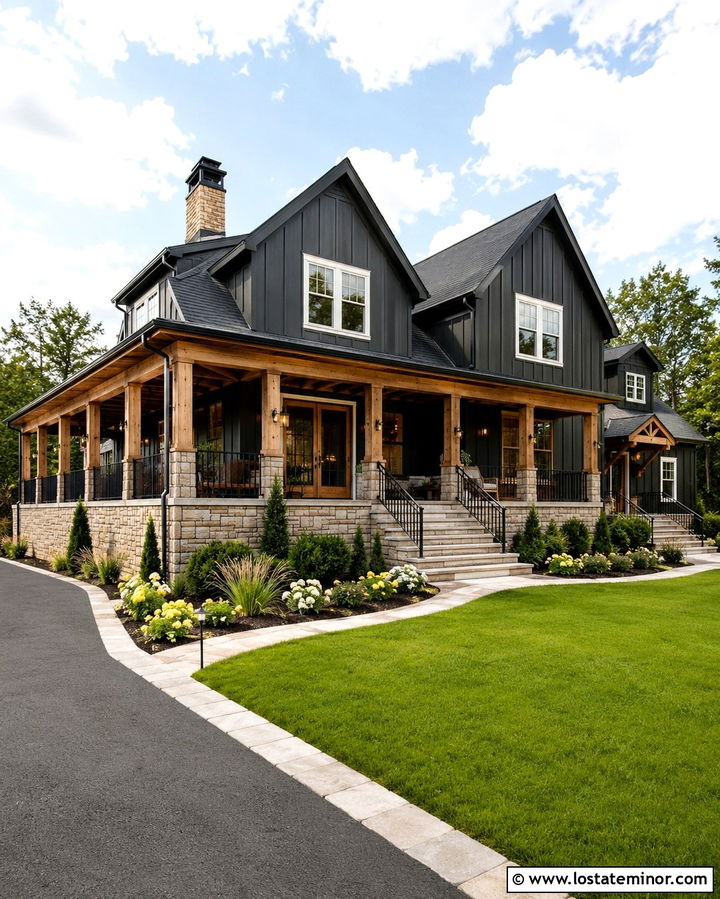
Wraparound stone steps can unify a large porch and give a soft black house an especially generous entrance. Extend wide limestone or sandstone treads across the front and around one side of the porch. This creates several natural access points while reducing the visual height of an elevated foundation. Pair soft black board-and-batten siding with cream window trim, cedar porch columns, and a matching wood front door. Use black railings only where the porch is highest, leaving lower areas open and inviting. Repeat the stone on the foundation and walkway borders for continuity. Layer hydrangeas, evergreen shrubs, and ornamental grasses beyond the steps. The final scheme feels substantial and welcoming, with the pale masonry balancing the depth of the soft black exterior.
Conclusion:
The most successful 30 Soft Black House Design With Steps Ideas treat the stairs as part of the complete exterior rather than a separate feature. Warm wood can soften dark siding, while limestone and pale concrete create clear contrast. Brick, slate, and granite bring texture that helps a nearly black facade feel established and welcoming. Before selecting a design, consider your home’s architecture, porch height, existing roof, and surrounding landscape. Repeat step materials elsewhere, such as on the foundation, walkway, or columns, to create visual continuity. With thoughtful proportions, safe railings, practical surfaces, and balanced accent colors, soft black siding and beautiful front steps can work together to deliver distinctive, long-lasting curb appeal.

Related posts: