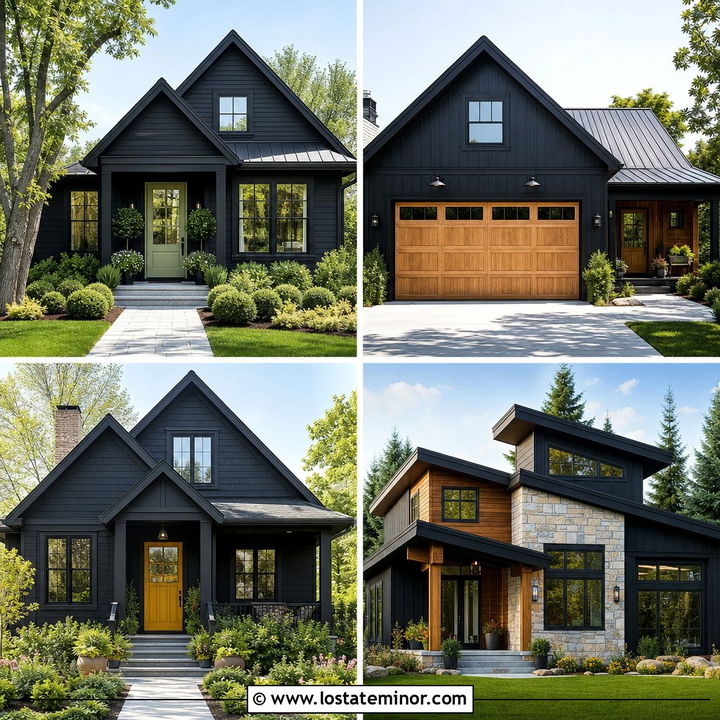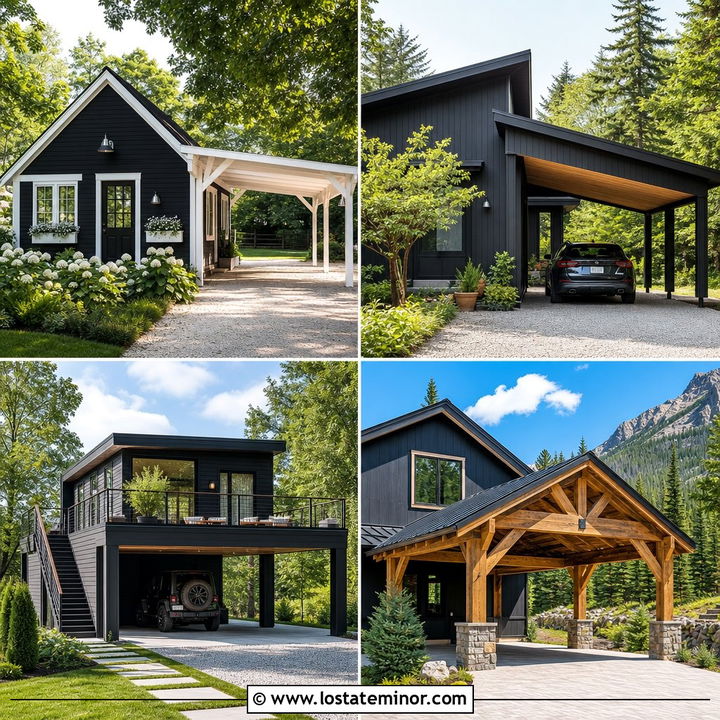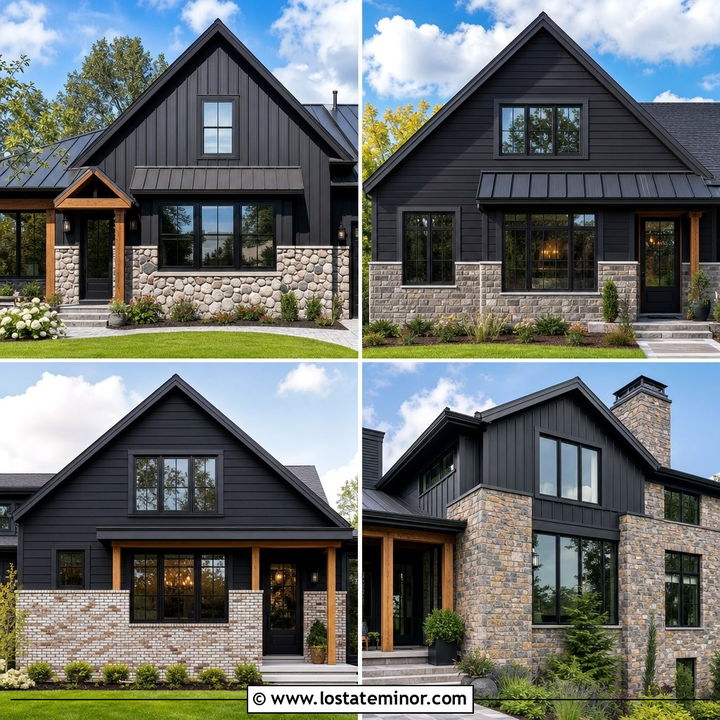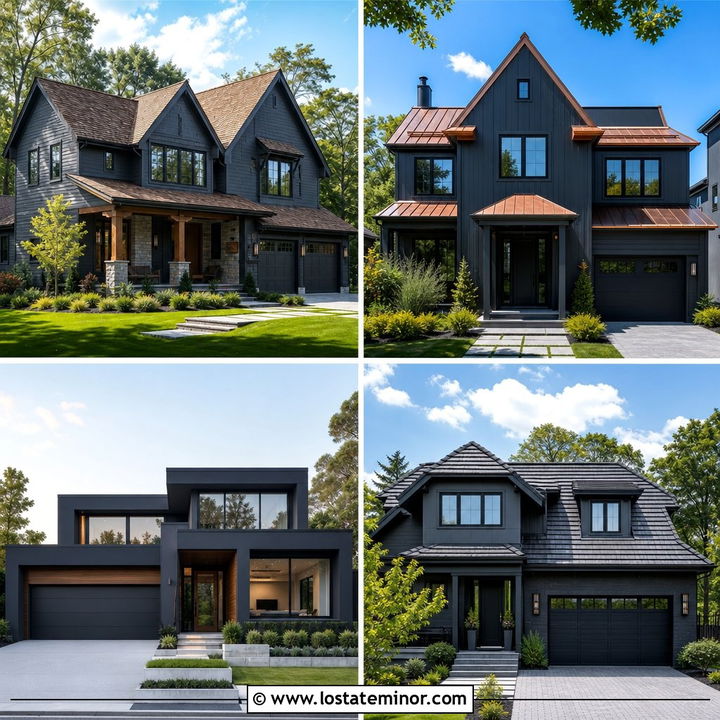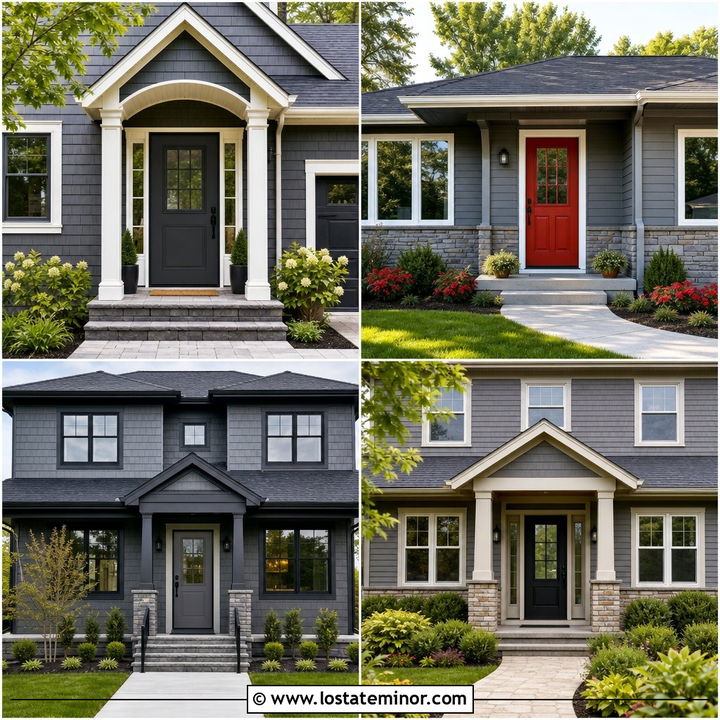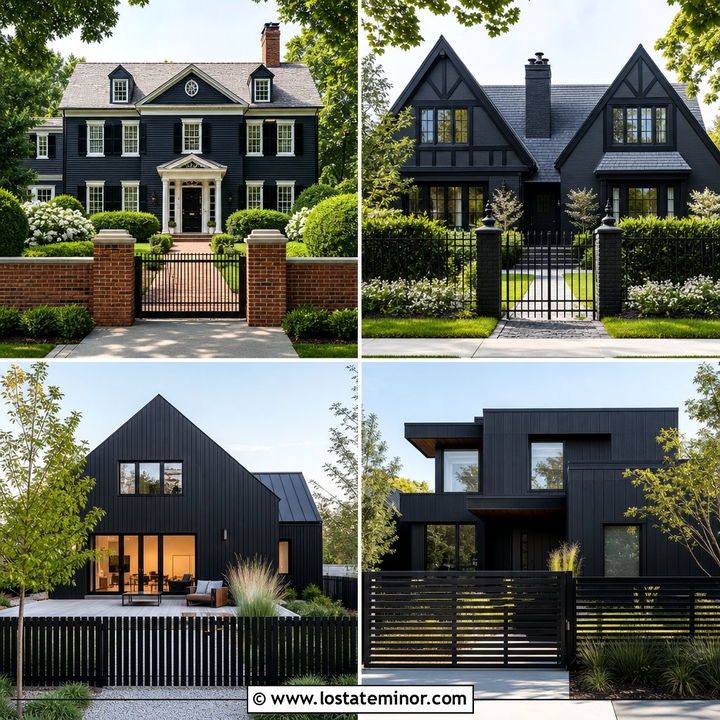
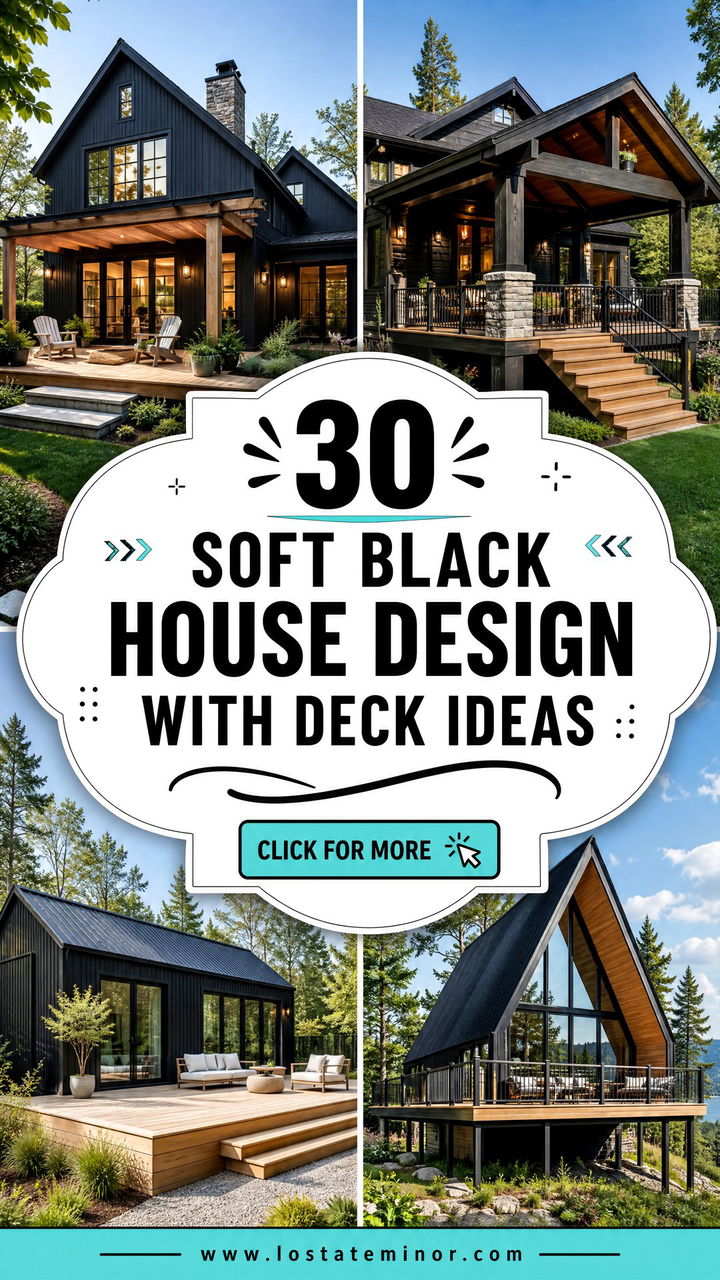
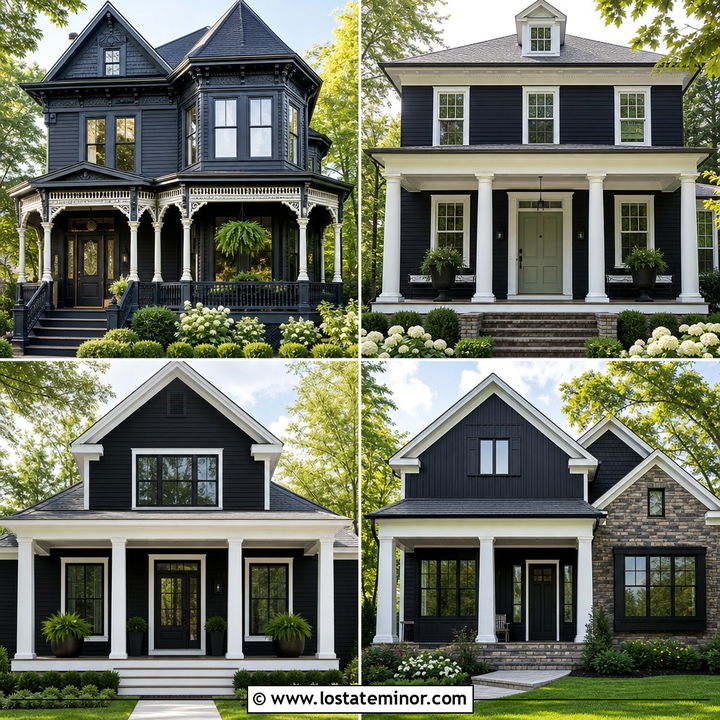
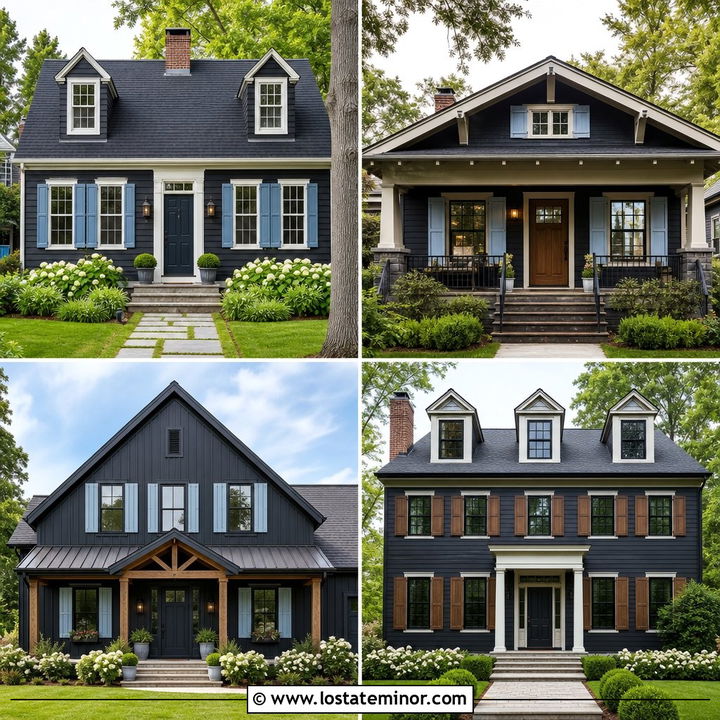
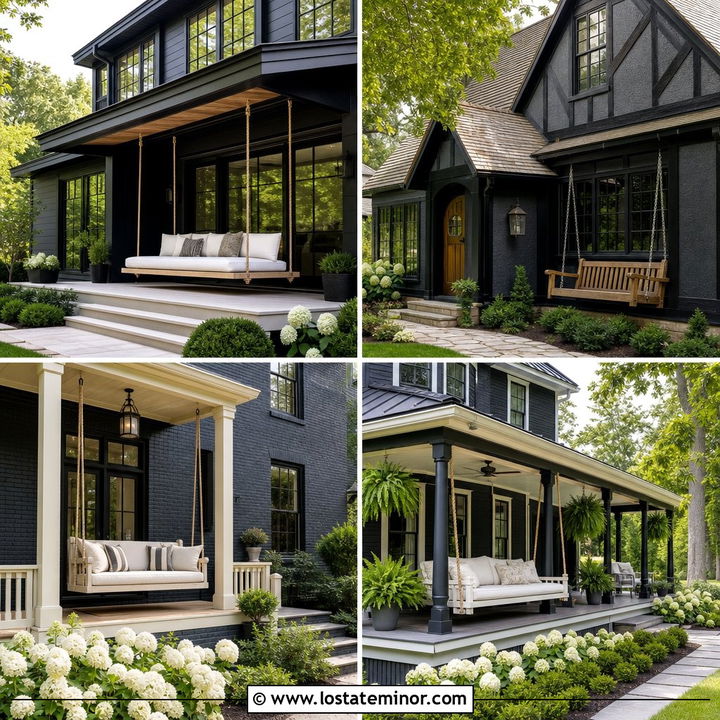
A soft black exterior gives a home depth and definition without the harshness of a true jet-black finish. When paired with a well-designed deck, this adaptable color can feel modern, rustic, coastal, traditional, or comfortably understated. The key is treating the facade and outdoor living area as one complete composition. Deck boards, railings, doors, roofing, masonry, and landscaping should share a clear color story. Warm cedar can soften dark siding, while gray composite decking creates a quieter monochromatic effect. White trim adds crisp contrast, and glass railings preserve an open view. The following **30 Soft Black House Design With Deck Ideas** explore practical combinations for different architectural styles, property sizes, climates, and budgets. Use these complete looks to shape your own 30 Soft Black House Design With Deck Ideas plan.
1. Soft Black Modern Farmhouse With Cedar Deck
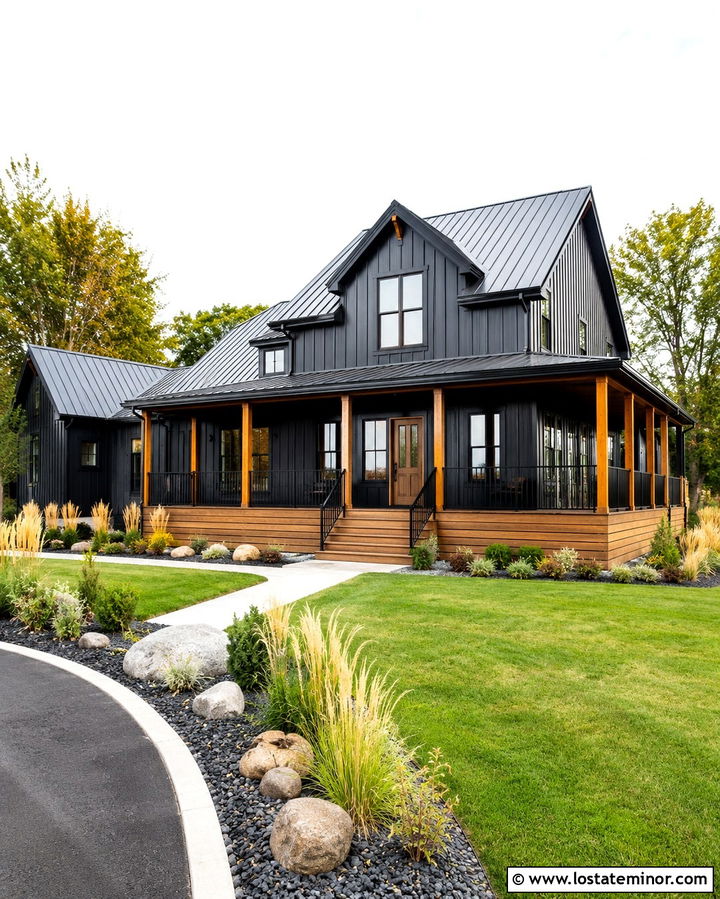
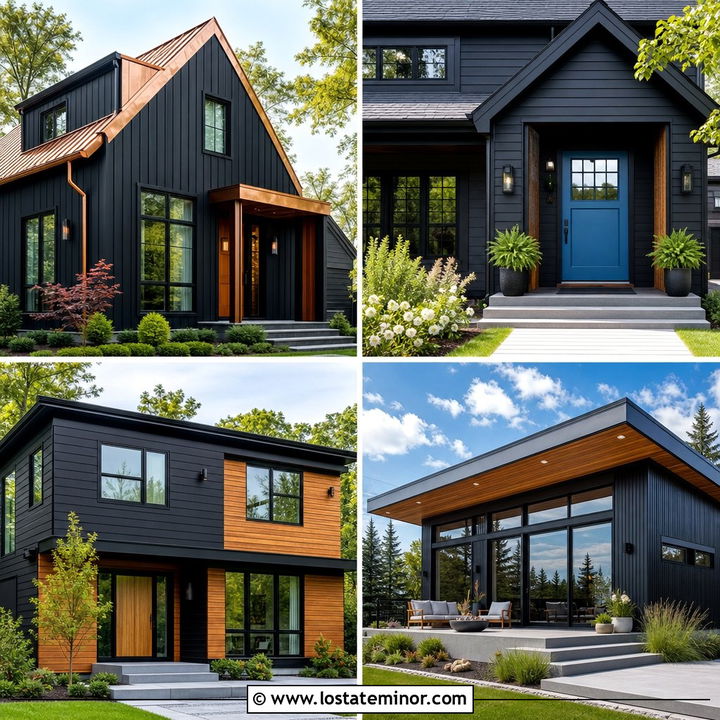
Warm cedar brings an inviting glow to a soft black modern farmhouse. Choose vertical board-and-batten siding for the main facade, then repeat the siding color on the fascia and garage door. A natural cedar deck can run across the rear or wrap around one side, visually softening the home’s bold gables. Use simple black metal railings so the wood grain remains the primary accent. A medium-gray standing-seam roof creates separation without disrupting the dark palette. Black-framed windows, cedar porch posts, and a wood front door complete the coordinated look. For landscaping, combine ornamental grasses, pale gravel, and compact evergreen shrubs. The result feels contemporary and welcoming rather than overly stark, with the deck functioning as a warm bridge between the architecture and yard.
2. Soft Black Ranch House With Wraparound Deck
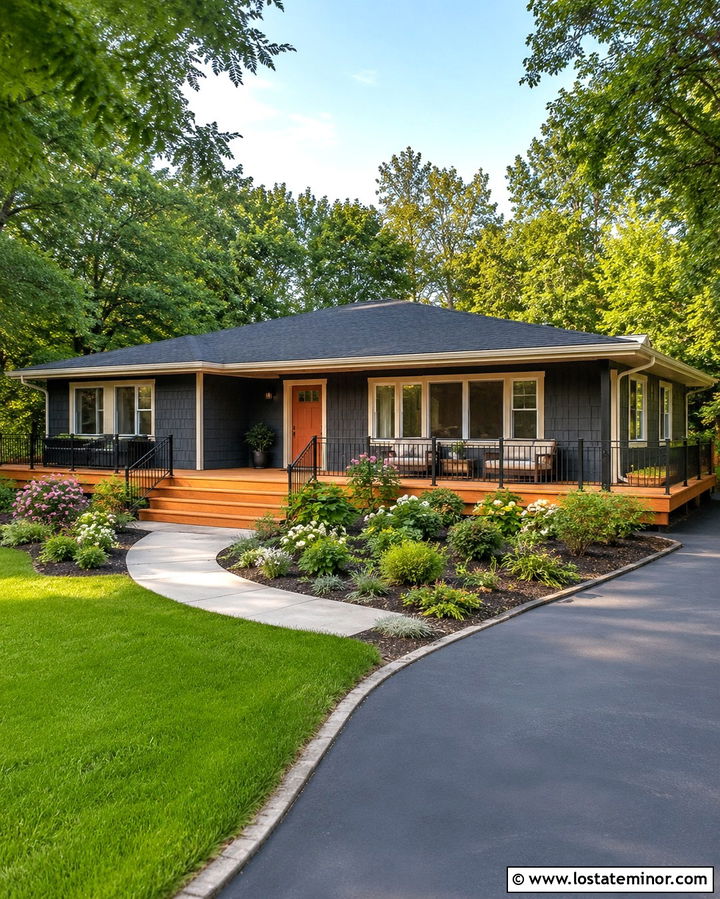
A low ranch house gains stronger architectural presence when soft black siding is paired with a broad wraparound deck. Horizontal lap siding emphasizes the home’s length, while honey-toned deck boards introduce enough warmth to break up the dark exterior. Keep the deck close to ground level where possible, using wide steps instead of a heavy railing along the front. Slim black railings can protect higher side sections without interrupting the horizontal lines. Cream trim around the windows adds gentle contrast, and a muted clay-colored front door gives the entrance personality. Consider a charcoal shingle roof that is slightly lighter than the siding. Layered foundation plants, flowering shrubs, and a curved walkway prevent the long facade from looking rigid while connecting the deck naturally to the surrounding lawn.
3. Soft Black Craftsman House With Covered Deck
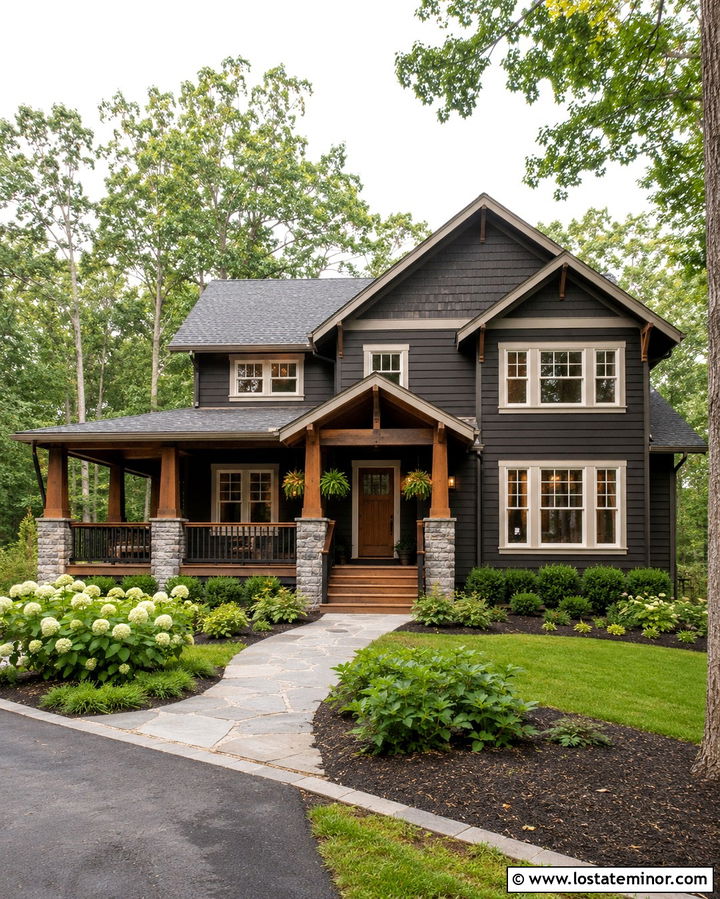
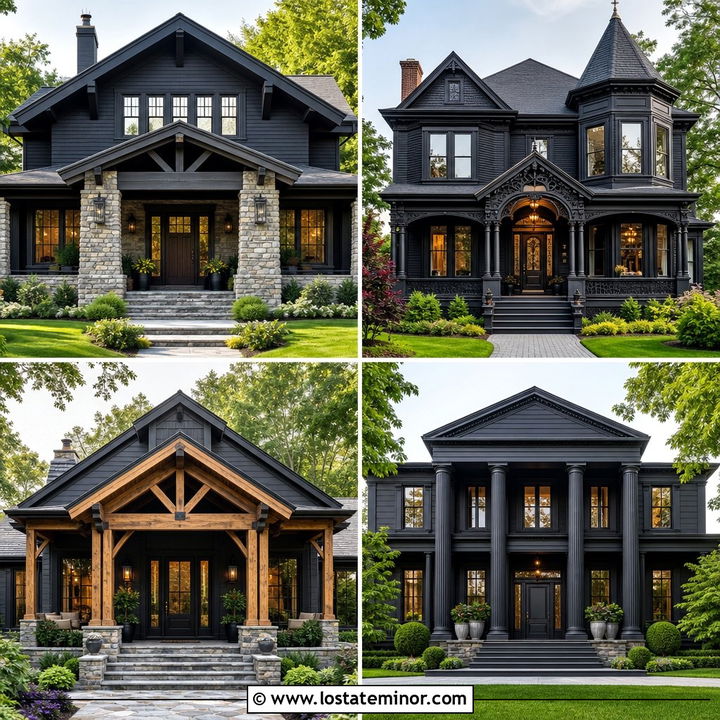
Picture a soft black Craftsman exterior framed by substantial timber posts and a comfortably covered deck. Wide lap siding suits the lower walls, while black cedar shingles can add texture beneath the gables. Build the deck with warm brown boards and broad steps that align with the front entrance. Tapered stone column bases provide visual weight and help the outdoor space feel original to the house. A stained fir front door, cream window trim, and dark bronze lighting reinforce the Craftsman character. For the railing, combine square wood posts with slender black balusters. The roof should remain a deep weathered gray rather than matching the siding exactly. Ferns, hydrangeas, and low evergreens soften the foundation, giving the complete exterior a shaded, established feeling that works especially well on wooded suburban properties.
4. Soft Black Colonial House With White Deck
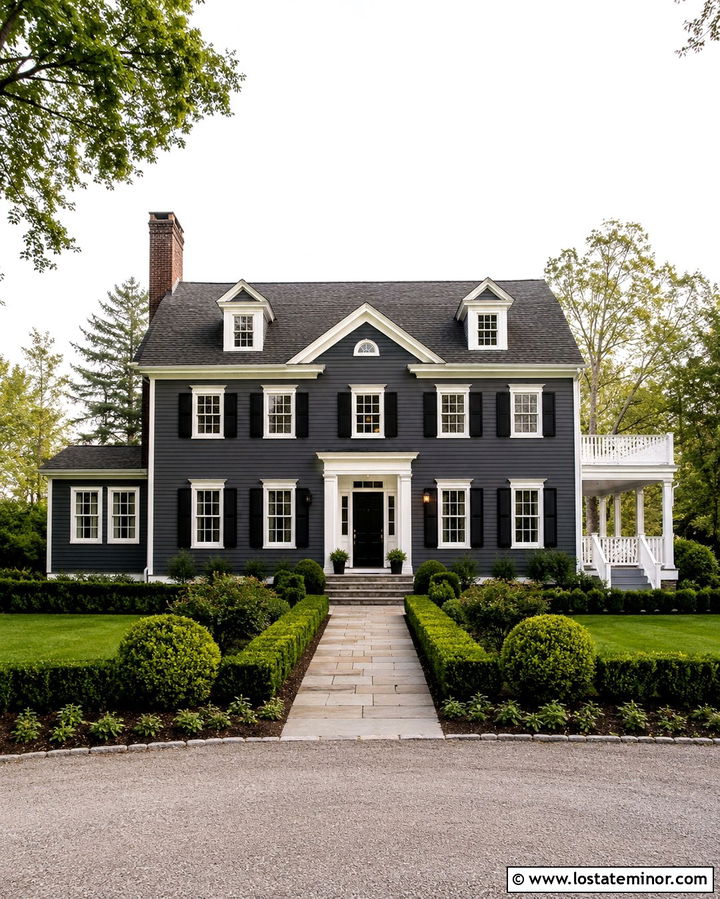
Can a dark Colonial exterior still look light and traditional? A white deck supplies the contrast needed to preserve the home’s orderly character. Cover the symmetrical facade in soft black clapboard siding, then highlight the cornice, window casing, and classical front door surround with warm white. A white-painted deck across the back can feature square posts, simple railings, and a centered staircase leading to the lawn. Use medium-gray deck boards if an entirely white surface feels difficult to maintain. Black shutters keep the upper facade cohesive, while a red-brown brick chimney adds familiar warmth. Formal boxwoods, clipped hedges, and straight stone paths support the balanced architecture. This scheme updates a recognizable American house shape without stripping away its historic influence, making the deck feel intentional rather than like a later addition.
5. Soft Black Cape Cod House With Small Cedar Deck
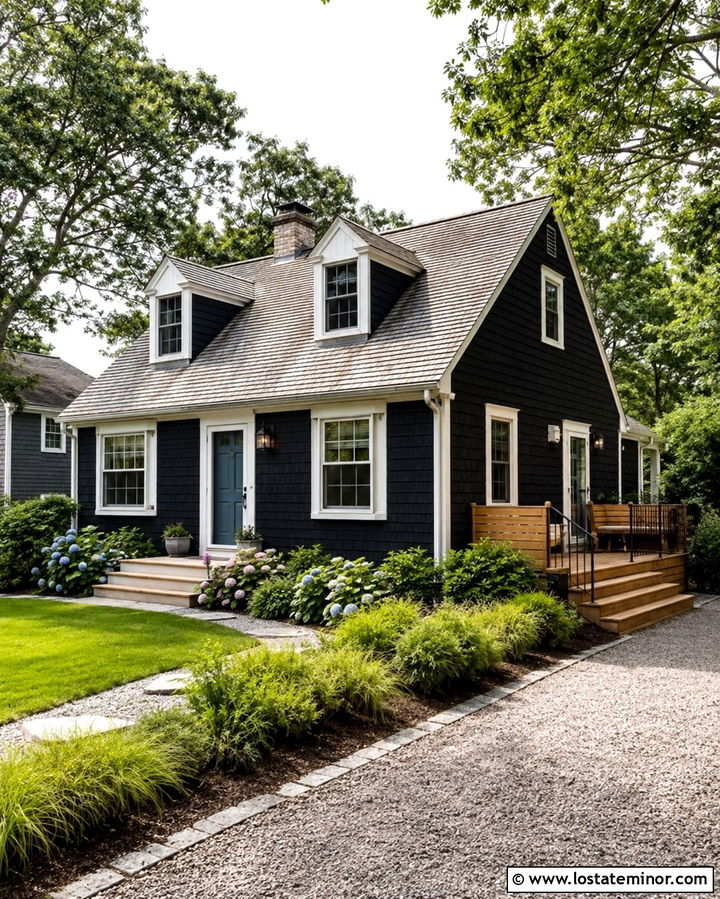
A compact Cape Cod does not need a large deck to make a strong impression. Soft black shingles can cover the facade and dormers, creating subtle texture that changes with the daylight. Add a small natural cedar deck beside the rear kitchen or along one gable end. Built-in benches make the limited footprint more useful without crowding it with furniture. Warm white trim around divided-light windows keeps the house recognizable as a Cape, while a muted blue front door introduces a coastal note. Choose a weathered-gray roof and simple black deck railings for a clean transition between old and new elements. Hydrangeas, beach grass, and a crushed-stone path complete the relaxed setting. The combination feels appropriate for both coastal properties and small suburban lots where usable outdoor space must be carefully planned.
6. Soft Black Bungalow With Front Deck
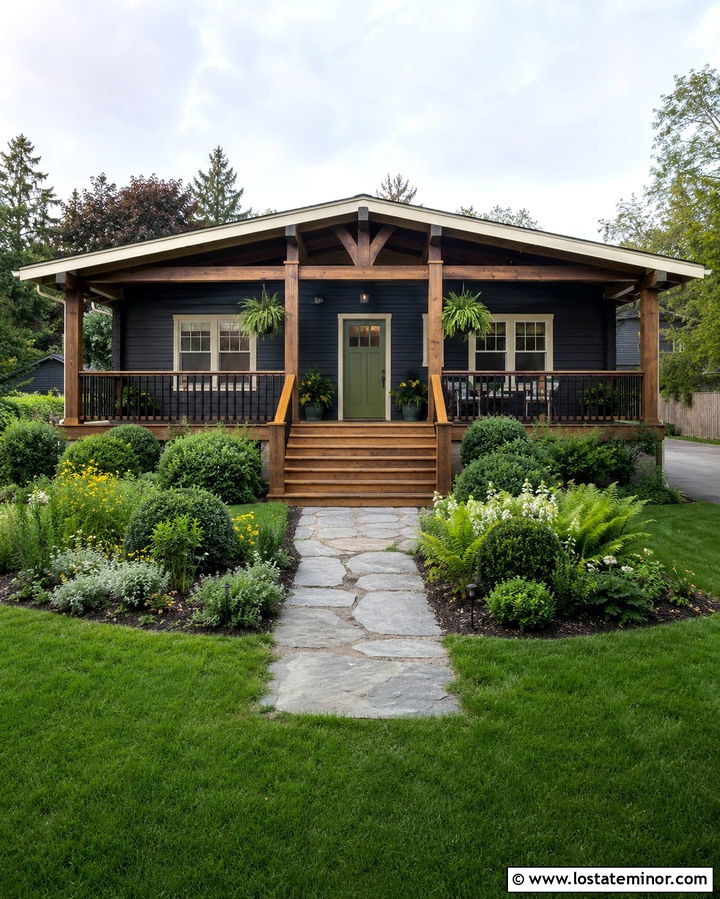
A front deck can transform a modest bungalow into a more welcoming and functional home. Paint the horizontal siding a softened charcoal black, then use warm oak-toned decking across the full width of the facade. Keep the structure low and connect it to the yard with broad centered steps. Cream trim around the windows, roofline, and front door prevents the compact elevation from appearing too dark. Exposed wood rafters and stained porch beams add traditional bungalow texture. Black metal balusters provide safety without hiding those handcrafted details. A moss-green door works particularly well with the warm wood and surrounding plants. Complete the design with layered ferns, rounded shrubs, and native flowers. Because every material relates to the home’s scale, the deck feels like a natural extension rather than an oversized platform attached to the front.
7. Soft Black Split-Level House With Two-Level Deck
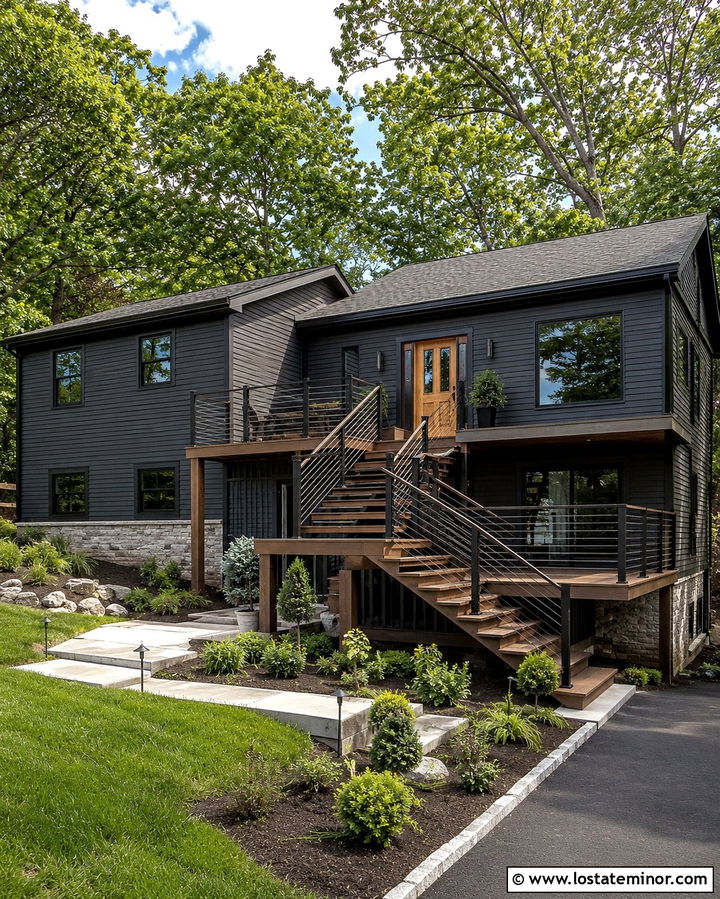
Split-level homes are well suited to decks that follow changes in the interior floor height. Use soft black horizontal siding to unify the staggered exterior, then build a two-level deck in medium brown composite boards. The upper platform can connect to the dining room, while a wider lower level creates space for outdoor seating near the yard. Black cable railings maintain open sightlines and echo the dark siding. Add a staircase with a landing so the transition between levels feels gradual and safe. Light gray stone around the lower foundation balances the facade and prevents the house from looking top-heavy. A natural wood front door can repeat the deck’s warmer color. Geometric planting beds and a clean concrete walkway finish this practical update, giving a dated split-level a more deliberate contemporary identity.
8. Soft Black Lake House With Glass Deck Railing
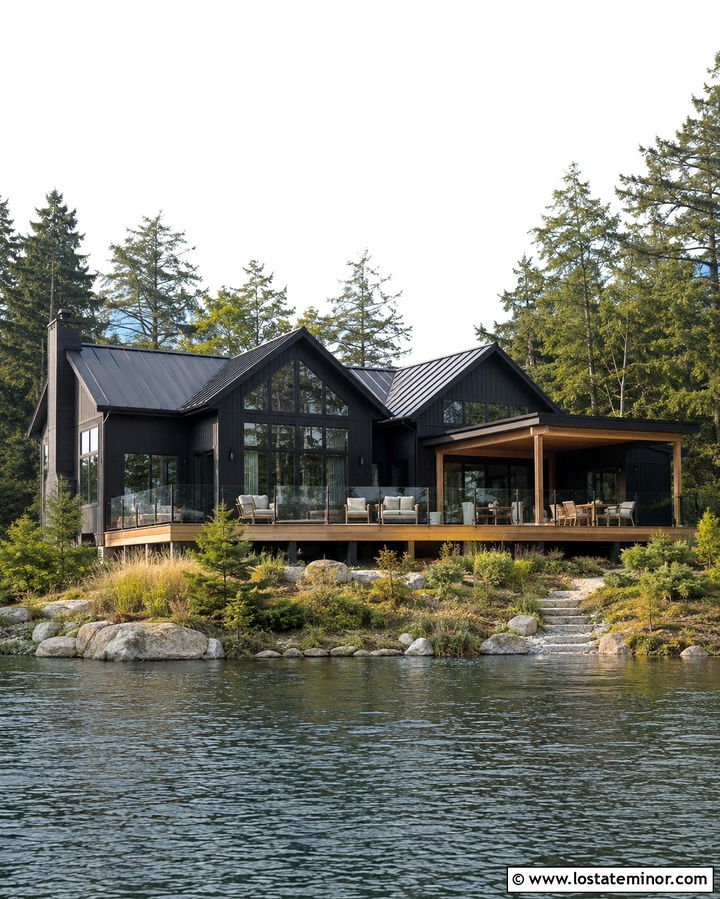
Nothing should compete with a beautiful water view, including the deck railing. A soft black lake house with broad windows creates a dark architectural frame around the landscape. Pair vertical wood siding with a light cedar or ash-toned deck that stretches across the water-facing elevation. Clear glass panels protect the perimeter while keeping the horizon visible from inside and outside. Thin black posts, black window frames, and a charcoal metal roof connect the railing to the house. Consider a partially covered section near the main doors and an uncovered platform for enjoying open sunlight. Native grasses, smooth stones, and low shrubs allow the property to blend into the shoreline. This complete scheme feels refined but not formal, using the soft black facade to emphasize the natural surroundings instead of overpowering them.
9. Soft Black Cabin With Rustic Wood Deck
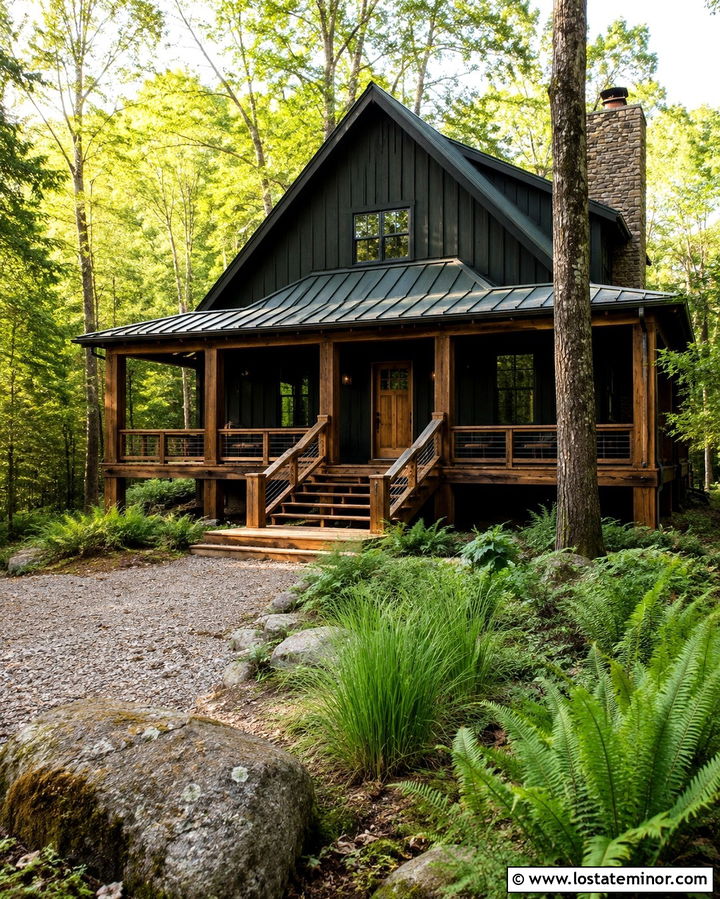
In a wooded setting, a soft black cabin can recede naturally among the tree trunks and deep shadows. Choose rough-sawn vertical siding or black-stained cedar to preserve visible wood texture. A rustic deck built from warm brown timber creates an earthy contrast and supplies a comfortable transition to the forest floor. Use heavy square posts, uncomplicated horizontal railings, and broad stairs that follow the terrain. A dark green or charcoal metal roof complements the landscape while shedding leaves and debris visually. Add a natural fir door and a stone chimney to break up the dark walls. The landscaping should remain informal, with native ferns, woodland grasses, gravel paths, and existing mature trees. This approach gives the cabin a grounded appearance while ensuring that the deck remains warm, durable-looking, and connected to its surroundings.
10. Soft Black Scandinavian House With Light Wood Deck
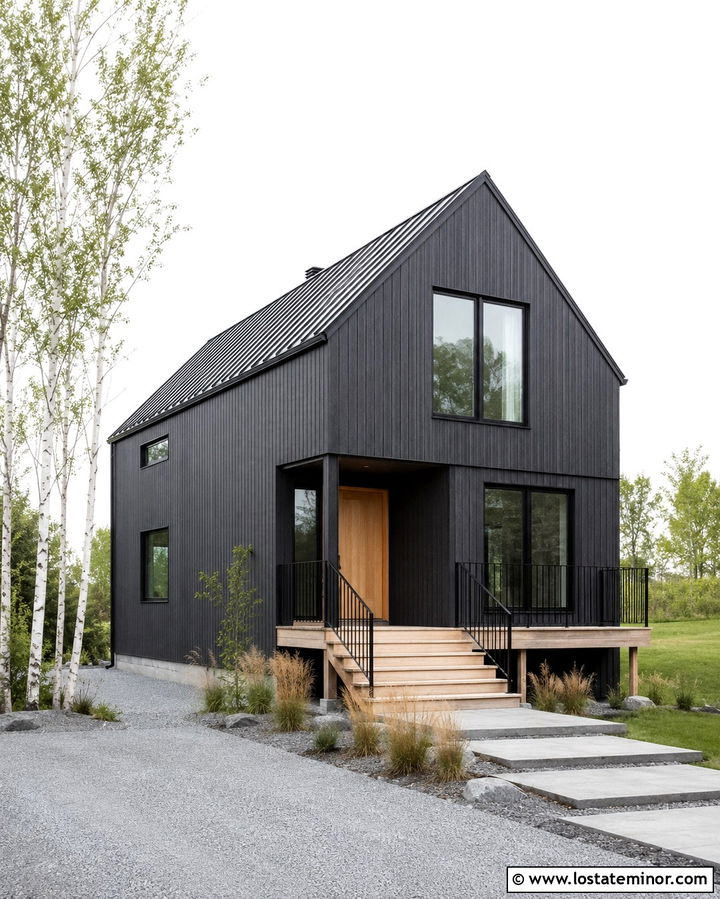
Clean lines and restrained materials make soft black an excellent choice for a Scandinavian-inspired exterior. Cover the simple gabled house in narrow vertical siding, then pair it with a pale thermally modified wood deck. The light boards create a fresh contrast without feeling as sharp as bright white. Skip bulky railings on ground-level areas and use thin black vertical balusters where protection is necessary. Large black-framed windows should face the deck, strengthening the visual connection between indoor and outdoor rooms. A matching black metal roof keeps the silhouette simple, while a pale oak door marks the entrance. Use concrete stepping stones, gravel beds, ornamental grasses, and small birch trees around the facade. The finished look is quiet and balanced, with the deck providing warmth and texture while respecting the home’s minimal architectural form.
11. Soft Black Midcentury House With Floating Deck
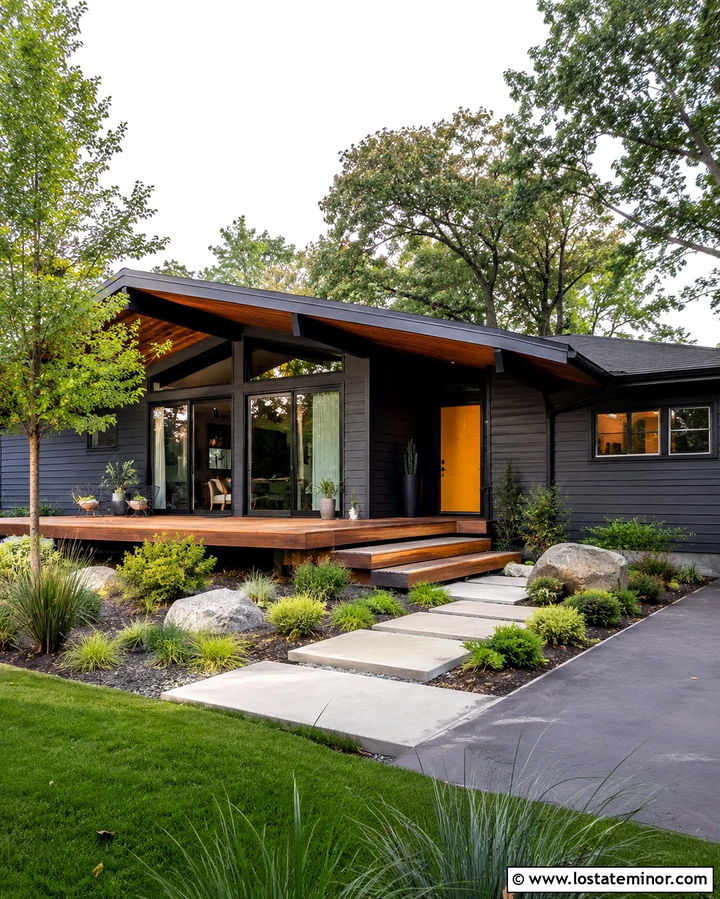
A floating deck complements the long rooflines and open glass walls of a midcentury home. Apply soft black paint to the original horizontal siding, but retain warm wood beneath the soffits to preserve architectural depth. Build a low platform deck in walnut-toned boards, positioning it beside large patio doors rather than covering the entire elevation. Wide steps and hidden supports can make the structure appear to hover just above the landscape. Use no railing where local conditions permit, allowing the straight deck edge to mirror the house. A mustard or muted orange front door introduces a period-appropriate accent. Complete the property with concrete pavers, sculptural shrubs, ornamental grasses, and a few natural boulders. The black exterior creates a modern backdrop, while the wood deck keeps the design authentic, relaxed, and comfortable.
12. Soft Black Contemporary House With Composite Deck
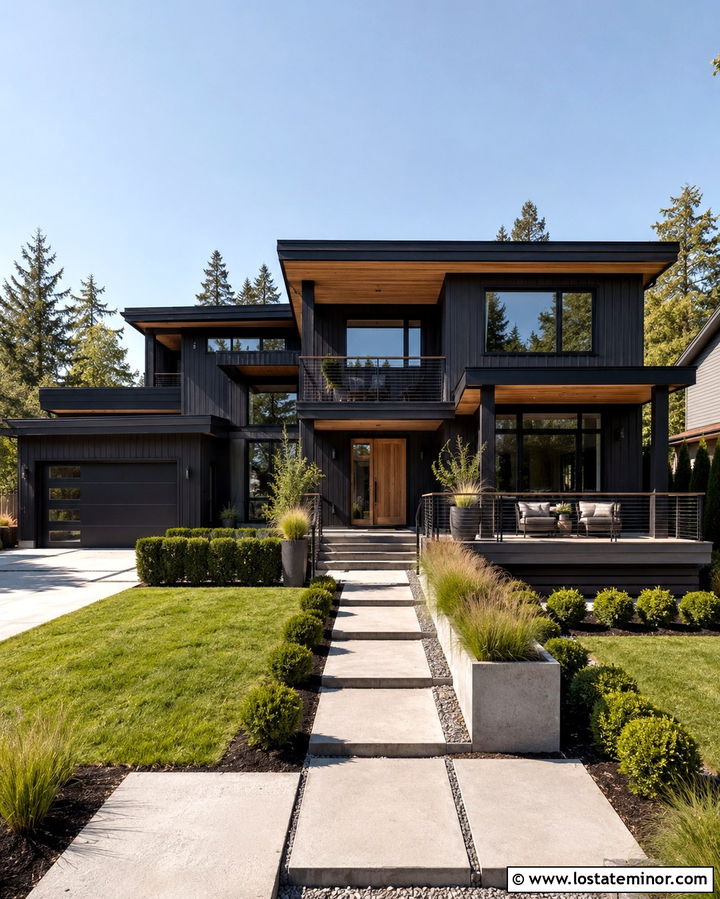
For a streamlined contemporary exterior, coordinate soft black siding with a low-maintenance composite deck in a warm gray-brown finish. Combine smooth fiber-cement panels and vertical siding to create controlled variation across the facade. The deck should follow the home’s clean geometry, with broad rectangular zones for dining and seating. Black cable railings or frameless glass panels maintain a visually light perimeter. Extend the siding color onto the deck fascia so the underlying framing becomes less noticeable. A natural wood front door and matching soffit panels add targeted warmth. Large windows, a flat or shallow roofline, and restrained concrete planters reinforce the modern character. Use structured landscaping with grasses, clipped shrubs, and linear stepping stones. This coordinated palette looks polished while remaining practical for homeowners who want less staining and seasonal deck maintenance.
13. Soft Black A-Frame House With Elevated Deck
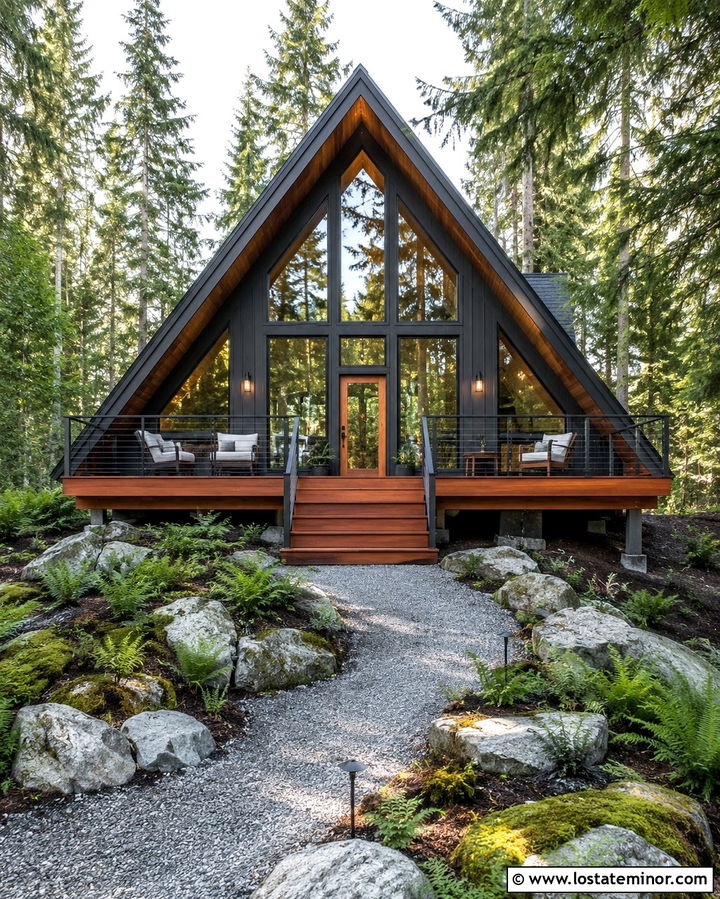
An elevated deck gives an A-frame house a usable outdoor area while emphasizing its dramatic triangular facade. Finish the exterior in a soft charcoal black that allows the roofline and windows to remain clearly defined. Build the raised deck from reddish cedar, extending it beneath the large front glazing. Slender black cable rails protect the edge without concealing the architectural shape. An open staircase can descend toward a gravel gathering area or sloped yard. Repeat the cedar on the entrance door and selected soffit sections to distribute the warm color evenly. A black metal roof keeps the steep silhouette unified. Around the house, use native evergreens, ferns, natural stone, and low ground cover. The result is an expressive yet balanced retreat where the deck appears integrated with the A-frame instead of simply fastened to it.
14. Soft Black Mountain House With Stone Deck Base
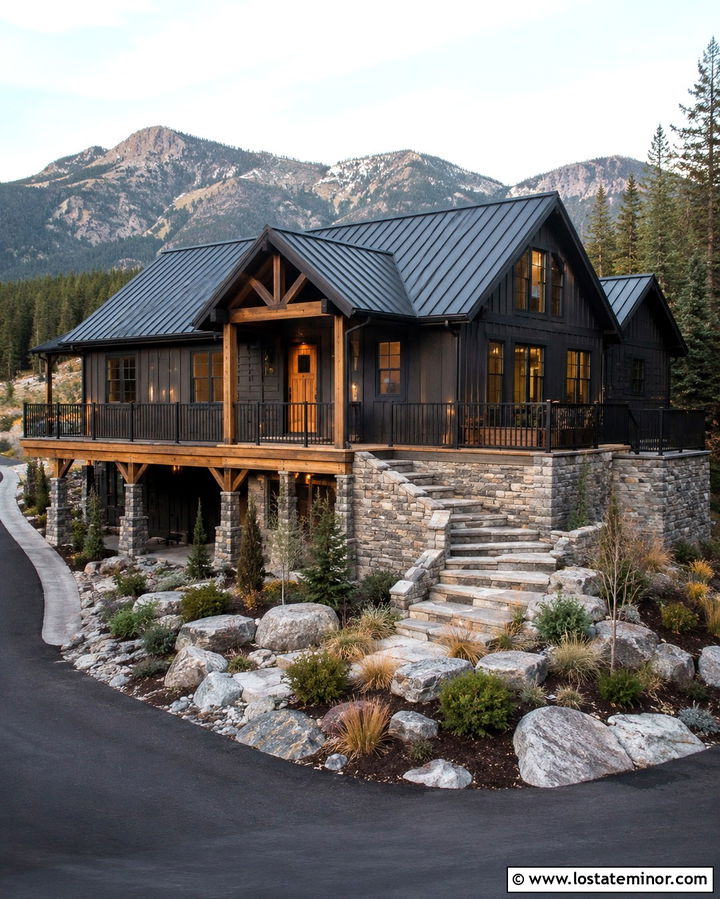
Stone can help a tall mountain house feel anchored to uneven ground. Use soft black vertical siding across the upper levels, then support the deck with a substantial base of gray and brown ledgestone. Warm cedar deck boards and timber beams prevent the facade from becoming too cool. Black metal railings add a cleaner edge while allowing the stone and surrounding views to remain visible. Extend the stone onto the lower foundation and outdoor fireplace so every level shares the same material story. A bronze-brown metal roof and natural wood entry door suit the rugged palette. Choose steps that follow the slope rather than fighting it. Evergreen shrubs, boulders, and native grasses complete the setting. This scheme balances modern dark siding with familiar mountain materials, giving the large deck a permanent, structurally convincing appearance.
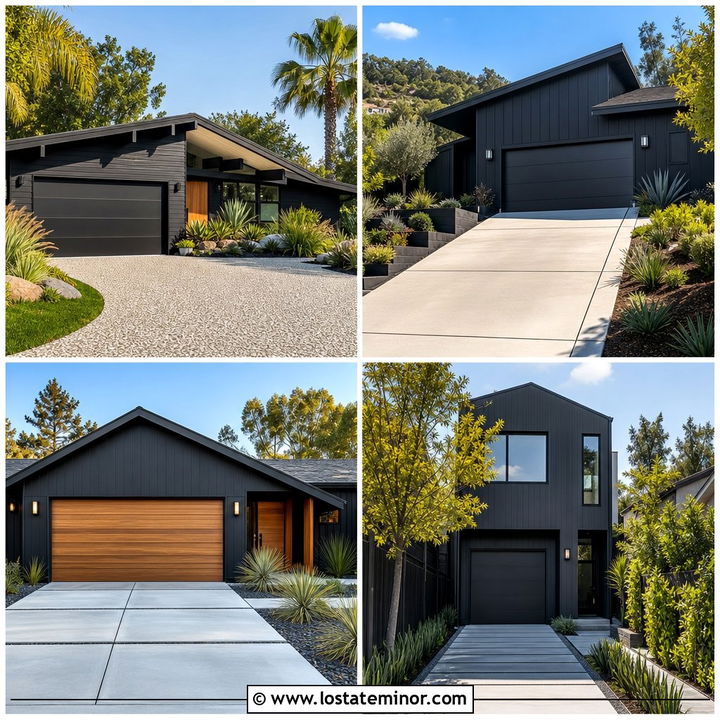
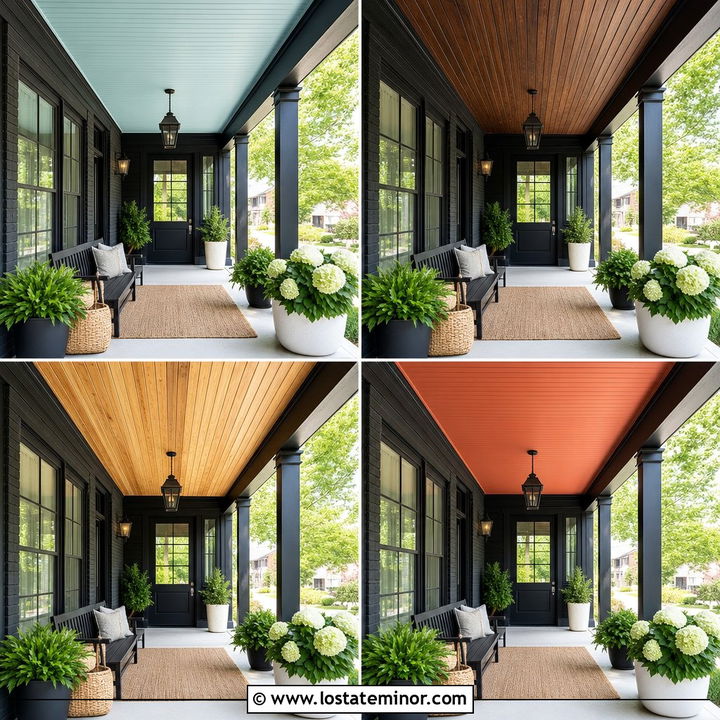
15. Soft Black Coastal House With Weathered Gray Deck
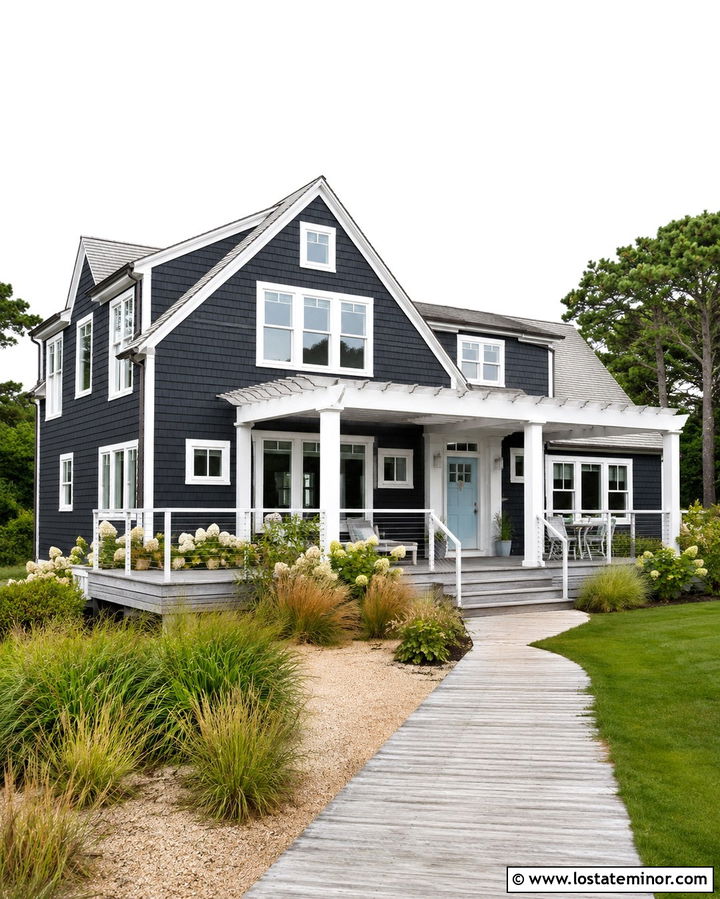
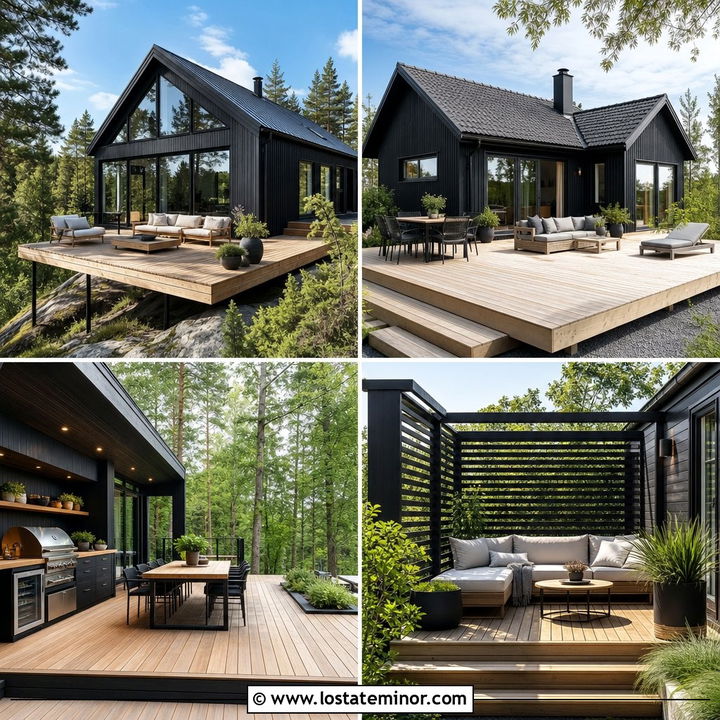
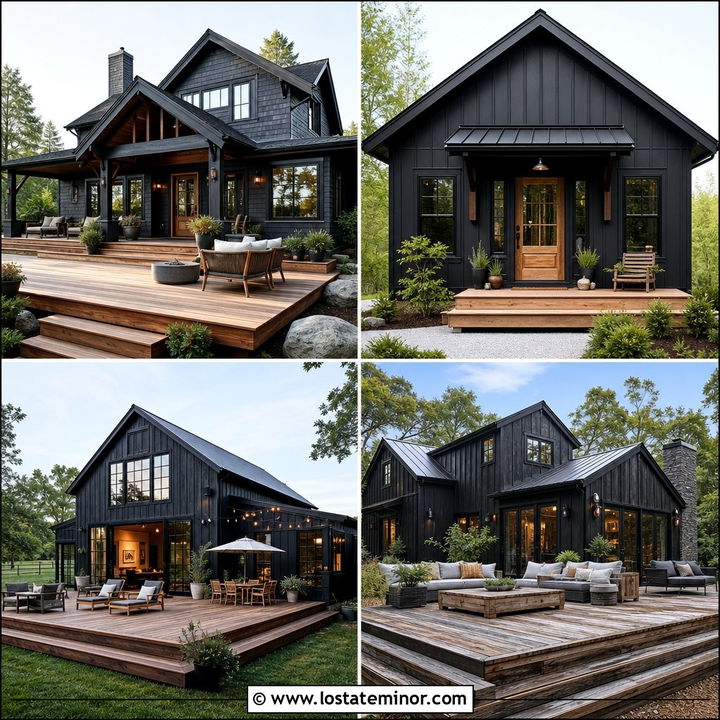
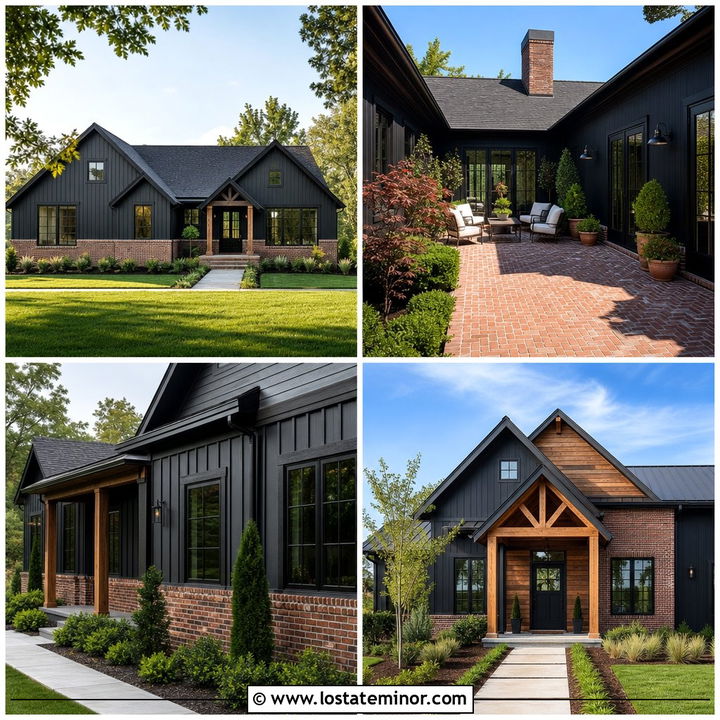
Soft black can work near the coast when it is balanced by faded, sun-washed materials. Cover the house in charcoal-black cedar shingles or fiber-cement shingles, then add a weathered-gray deck that resembles naturally aged wood. White trim around the windows and roofline sharpens the facade, while a pale blue front door introduces a subtle connection to the water. Choose stainless cable railings or slim white rails, depending on whether the home leans modern or traditional. A light gray roof keeps the upper portion from absorbing too much visual weight. The deck can include a pergola with white framing and gray slats for partial shade. Surround the house with beach grass, hydrangeas, sand-colored gravel, and a simple boardwalk-style path. Together, these elements create a relaxed coastal exterior with enough contrast to feel crisp.
16. Soft Black Cottage With Garden Deck
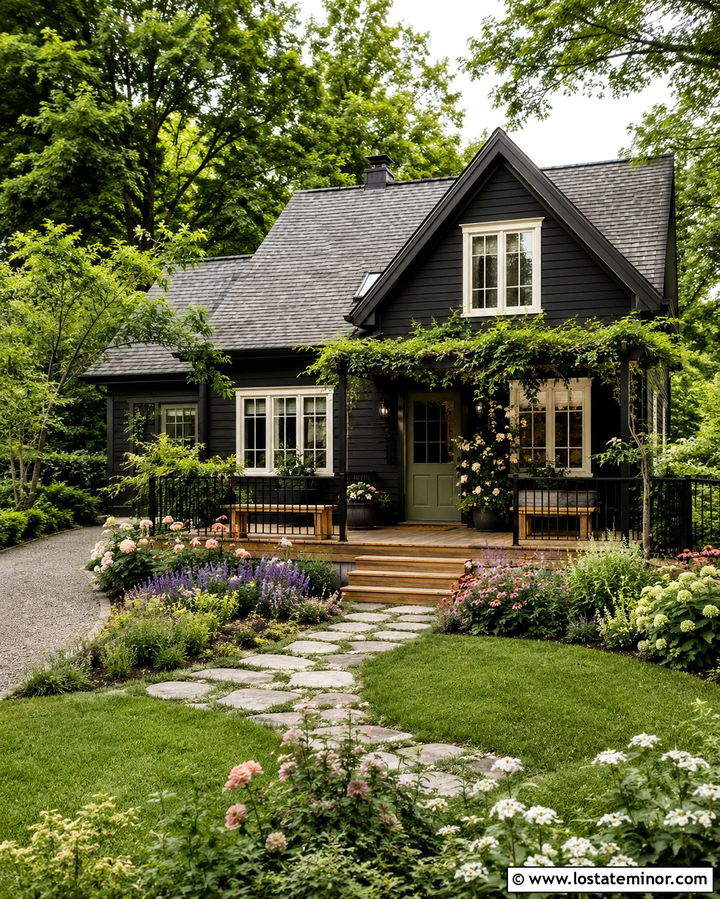
A garden deck can make a soft black cottage feel intimate rather than imposing. Use textured lap siding or painted shingles on the small facade, offset by creamy white window trim and a muted green door. Build the deck from medium-toned cedar and allow it to project into the garden with an irregular or gently stepped edge. A short painted-black railing can frame one side, while built-in wood benches define another. Add a simple pergola with climbing vines to soften the dark wall and provide seasonal shade. The roof should be weathered gray or brown-black, depending on the surrounding landscape. Layer roses, lavender, ornamental grasses, and flowering perennials around the deck. This combination turns the outdoor area into part of the garden, ensuring the soft black house feels cozy, colorful, and closely connected to nature.
17. Soft Black Tudor House With Dark Wood Deck
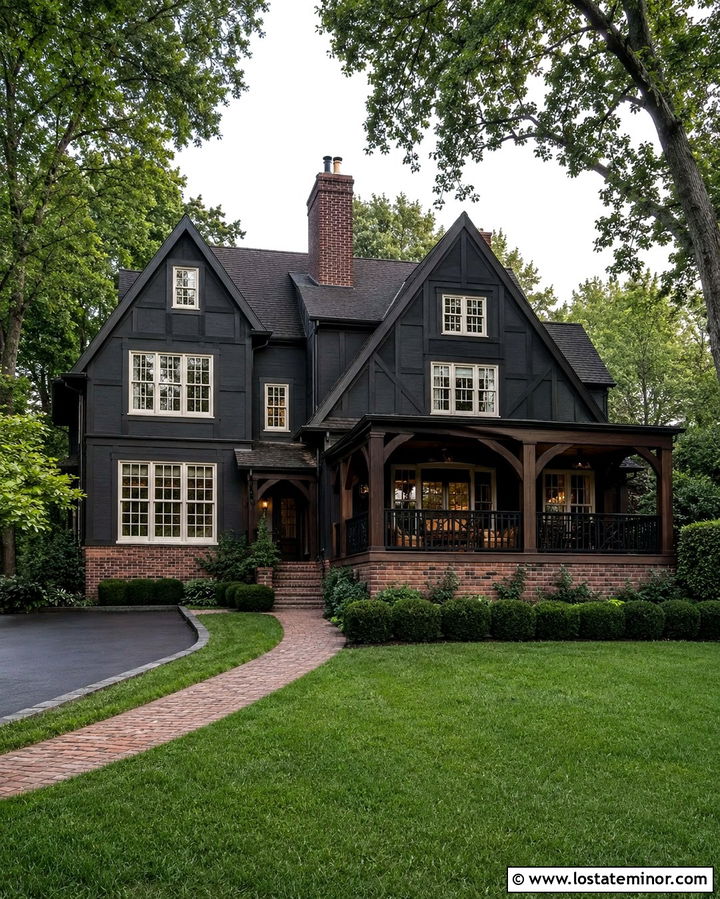
A Tudor exterior already contains strong lines and rich materials, making soft black a natural update. Use the dark color on stucco areas and upper-level timber details, but retain warm red-brown brick around the lower facade and chimney. A dark walnut deck can extend from the rear, echoing the traditional wood tones without creating excessive contrast. Choose squared black railings with restrained geometric details rather than highly ornate spindles. A covered section with heavy timber posts will make the deck feel architecturally connected to the steep gables. Add cream window trim sparingly to maintain definition around smaller openings. Deep green landscaping, curved brick paths, and structured hedges complement the established character. The finished exterior feels historic and dramatic, while the practical deck introduces comfortable outdoor living without appearing disconnected from the Tudor architecture.
18. Soft Black Prairie House With Horizontal Deck
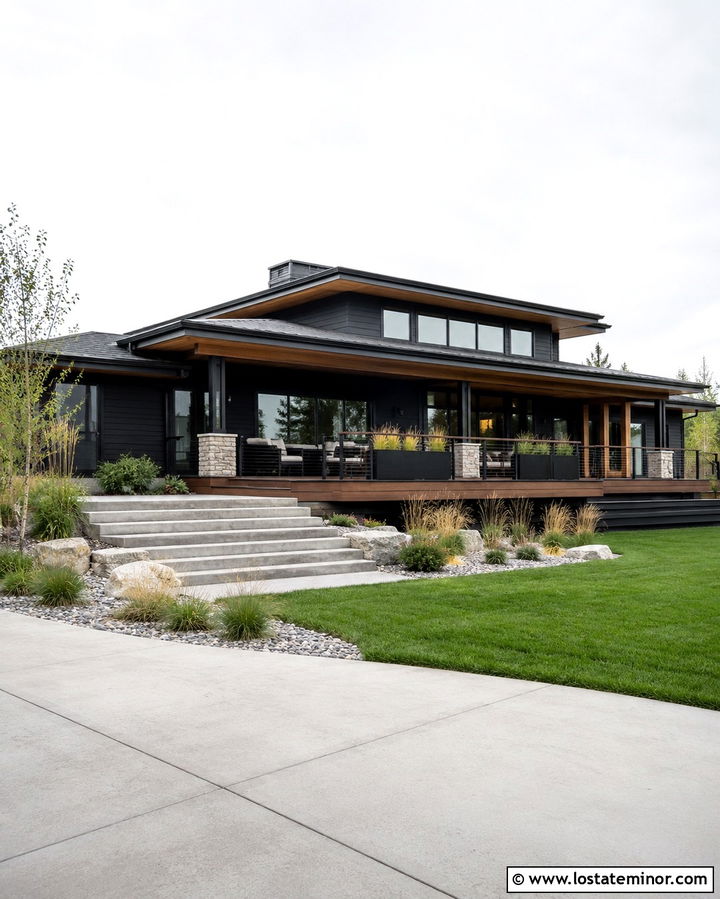
Strong horizontal lines are central to a Prairie-style home, so the deck should reinforce that direction. Paint the low-profile exterior a warm soft black and use wide horizontal siding beneath extended roof overhangs. Build a long deck with medium cedar boards laid parallel to the facade. Horizontal black railings can continue the visual rhythm, although slim cable rails offer a more open alternative. Highlight the soffits, entry door, and selected structural beams with natural wood. A low-pitched bronze or charcoal roof keeps the palette grounded. Integrate broad planters into the deck edge for grasses and trailing plants, helping the structure merge with the landscape. Rectangular concrete steps, native prairie plants, and layered stone beds complete the composition. Every feature pulls the eye outward, making the house and deck appear wider and more connected to the site.
19. Soft Black Victorian House With Painted Deck
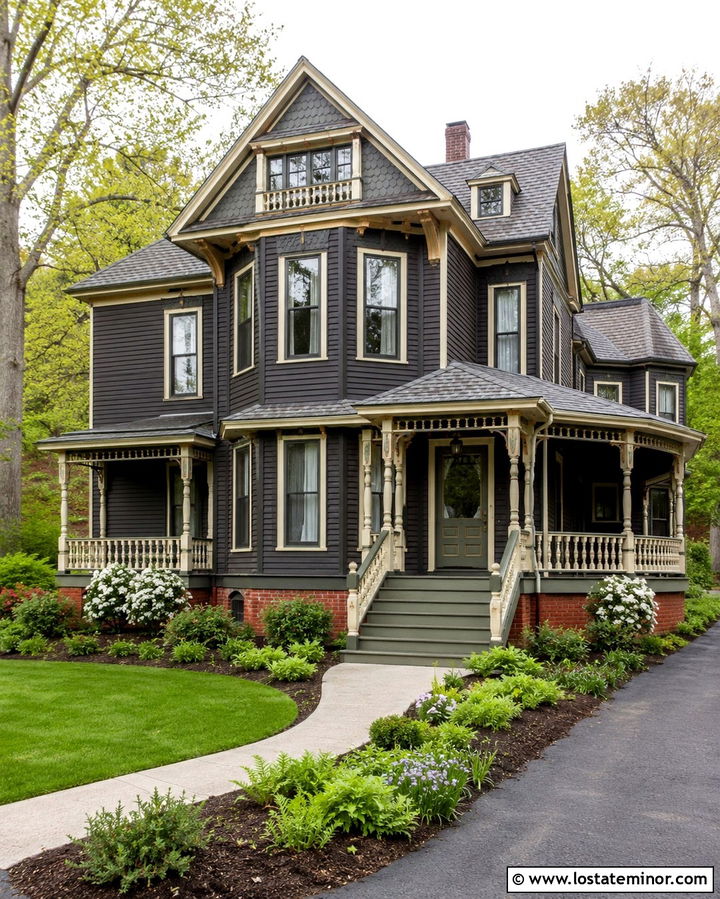
A soft black Victorian can look sophisticated when its decorative details are edited rather than eliminated. Use charcoal-black siding as the main color, then highlight window trim, brackets, and porch posts in warm ivory. A painted deck in muted sage green introduces historically inspired color without overwhelming the facade. Continue the sage on the front door or selected railing panels to create repetition. The deck should follow the porch’s original footprint, with turned posts and simple decorative balusters that suit the home’s age. A patterned gray roof and brick-red foundation add another layer of traditional color. Surround the steps with flowering shrubs, ferns, and an informal cottage garden. This complete design respects the home’s craftsmanship while giving it a deeper, more current palette, and the colorful deck prevents the dark exterior from feeling too serious.
20. Soft Black Brick House With Wood Deck
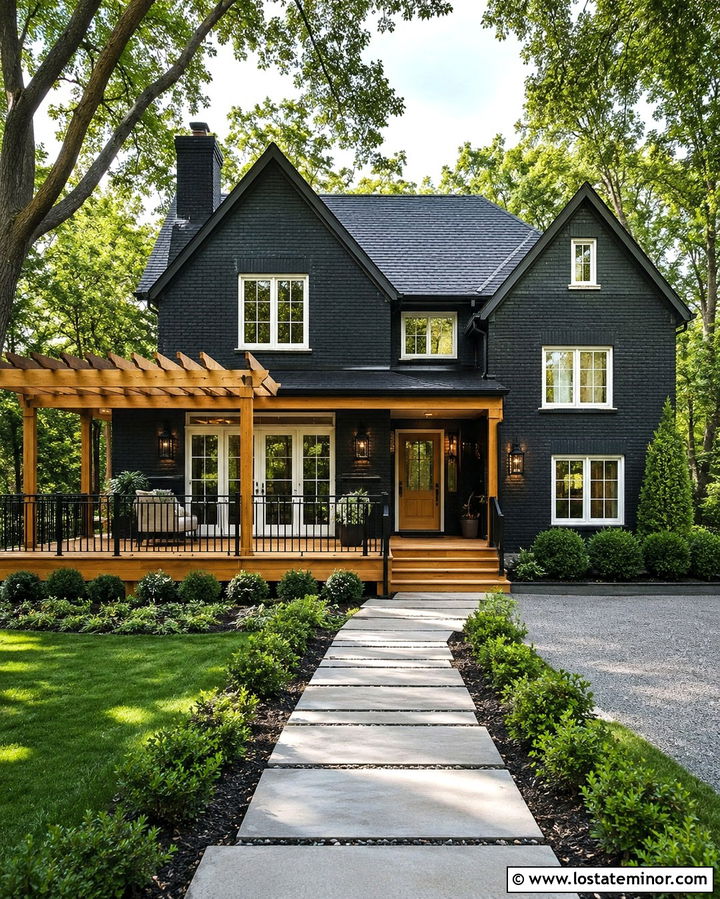
Painting an older brick exterior soft black can unify uneven masonry and create a strong background for natural wood. Keep the brick texture visible, using a low-sheen finish that does not make the surface appear plastic. Attach a golden cedar deck to the rear or side, repeating the wood on the door and overhead pergola. Black railings keep the transition between brick and decking simple. If some brick remains unpainted, limit it to a chimney or foundation section so the contrast looks intentional. Warm white window trim can brighten a traditional house, while matching black trim suits a more modern renovation. Use a charcoal roof and understated bronze lighting. Green shrubs, light stone paths, and a neatly edged lawn balance the dark walls, resulting in a complete exterior that feels warmer and more dimensional than an all-black scheme.
21. Soft Black Stucco House With Concrete And Wood Deck
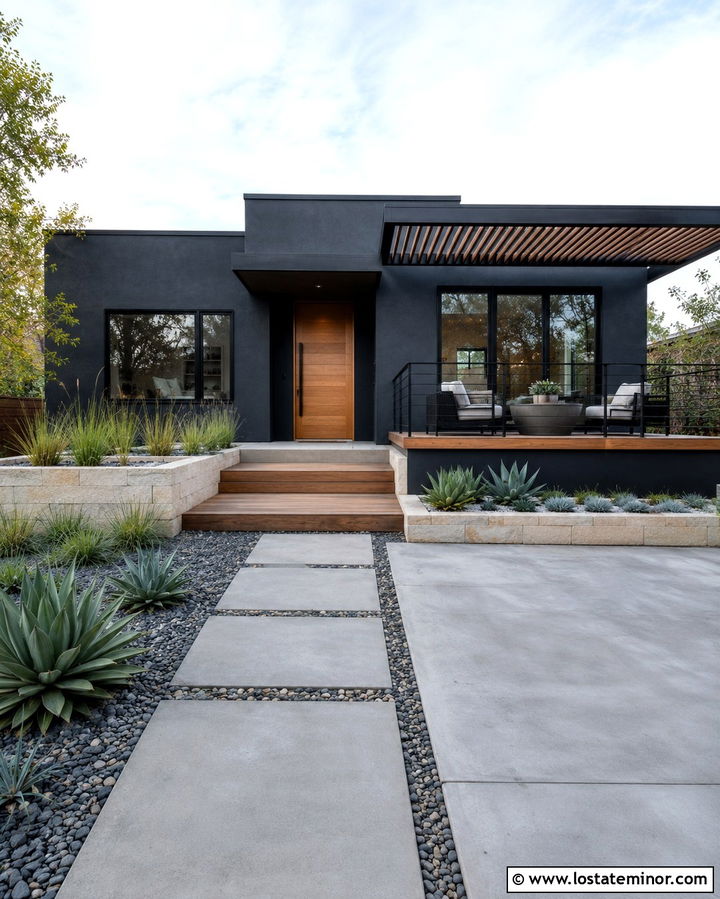
A mixed-material deck suits the smooth surfaces of a soft black stucco home. Begin with a broad concrete terrace near the house, then connect it to a raised wood platform for seating or outdoor dining. The shift in material defines separate functions while preventing the deck from looking too large. Choose warm teak-colored boards and repeat that tone on the entry door or overhead slatted shade structure. Black-framed windows and doors can blend into the stucco, keeping the facade visually clean. Add pale limestone planters or retaining walls for contrast. A flat roof, deep overhangs, and simple black metal railings support the contemporary appearance. Drought-tolerant grasses, succulents, gravel beds, and a straight concrete walkway complete the setting. The warm wood and pale hardscaping soften the dark stucco while maintaining a refined, modern composition.
22. Soft Black Barn House With Oversized Deck
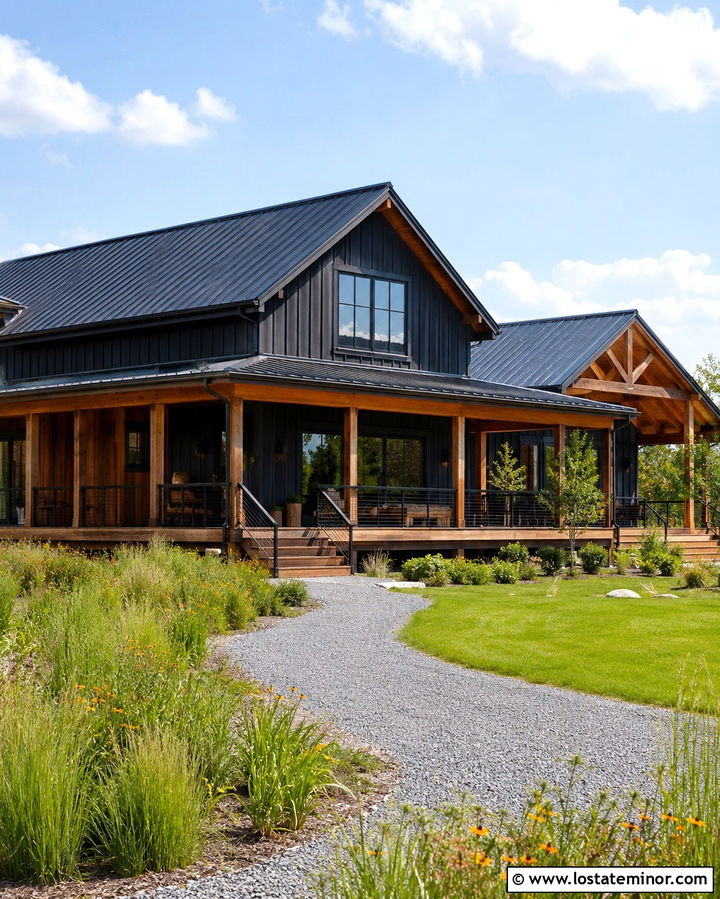
An oversized deck feels appropriate on a barn-inspired house when its proportions follow the building’s broad gables. Use soft black board-and-batten siding from foundation to roofline, then add a wide natural cedar deck along the main living side. Oversized timber posts can support a partially covered section, while an open area provides space for dining and gathering. Keep the railing simple with black metal panels or thin vertical balusters. Large sliding glass doors help the deck feel connected to the interior and break up the dark facade. A matte black metal roof creates a unified barn silhouette, while cedar soffits and a matching front door supply warmth. Frame the property with meadow grasses, young trees, gravel paths, and uncomplicated planting beds. The finished home feels rural and generous without becoming visually heavy or overly decorative.
23. Soft Black Duplex With Divided Deck
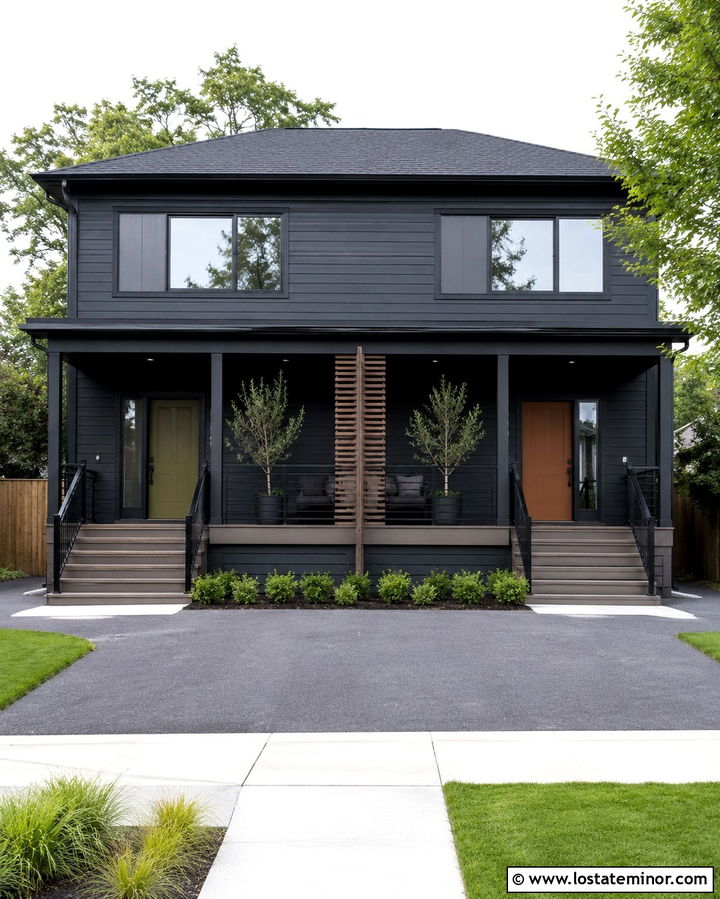
A shared building needs outdoor spaces that feel private while still supporting a cohesive exterior. Finish both sides of the duplex in the same soft black horizontal siding, using matching windows, fascia, and charcoal roofing. Build one continuous warm-gray composite deck, then divide it with a cedar privacy screen placed along the centerline. The screen adds warmth and clearly separates each household without making the facade look mismatched. Use identical black railings and stairs on both sides to maintain symmetry. Individual front or patio doors can feature slightly different muted colors, such as olive and clay, for subtle identification. Rectangular planters and small trees provide additional screening. With consistent materials and balanced proportions, the complete design gives each residence a functional outdoor area while preserving the polished appearance of one carefully planned building.
24. Soft Black Townhouse With Rooftop Deck
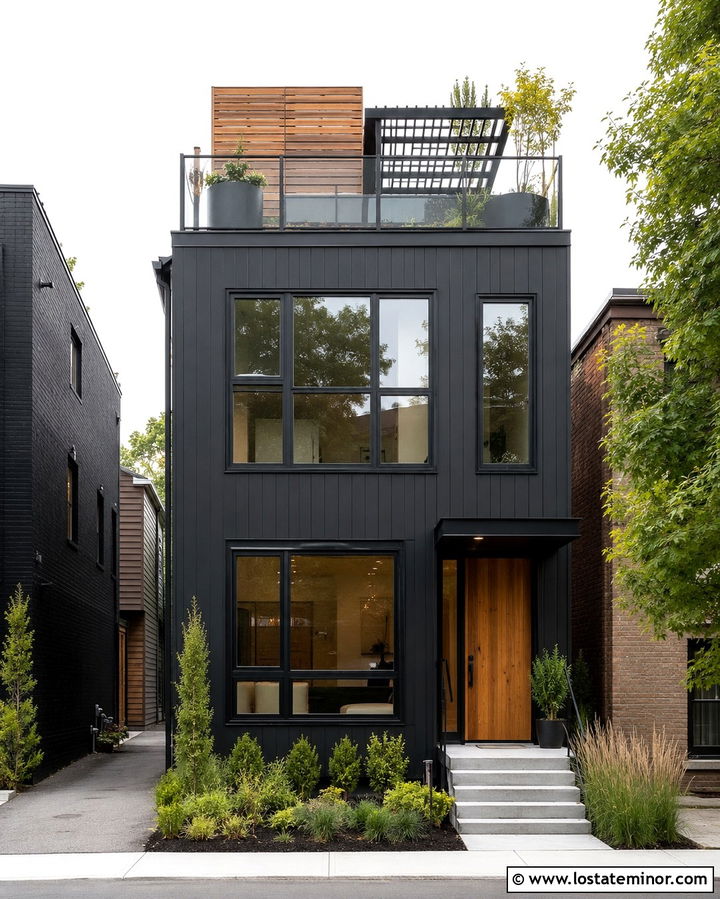
When yard space is limited, a rooftop deck can become the main outdoor room. A soft black townhouse with clean vertical siding creates a strong base for this elevated feature. Use light gray composite decking to keep the roof area visually and physically lighter than very dark boards. Black metal and clear glass railings preserve city views while blending into the exterior. Add a cedar slatted screen around one side for privacy, repeating the wood around the ground-level entry. A simple pergola with black framing can define a shaded seating zone without crowding the roofline. Large planters filled with grasses and compact shrubs introduce greenery above the street. At ground level, a narrow walkway, tidy foundation planting, and a natural wood door complete the design. The rooftop deck feels integrated because its colors repeat throughout the entire facade.
25. Soft Black Suburban House With Gray Deck
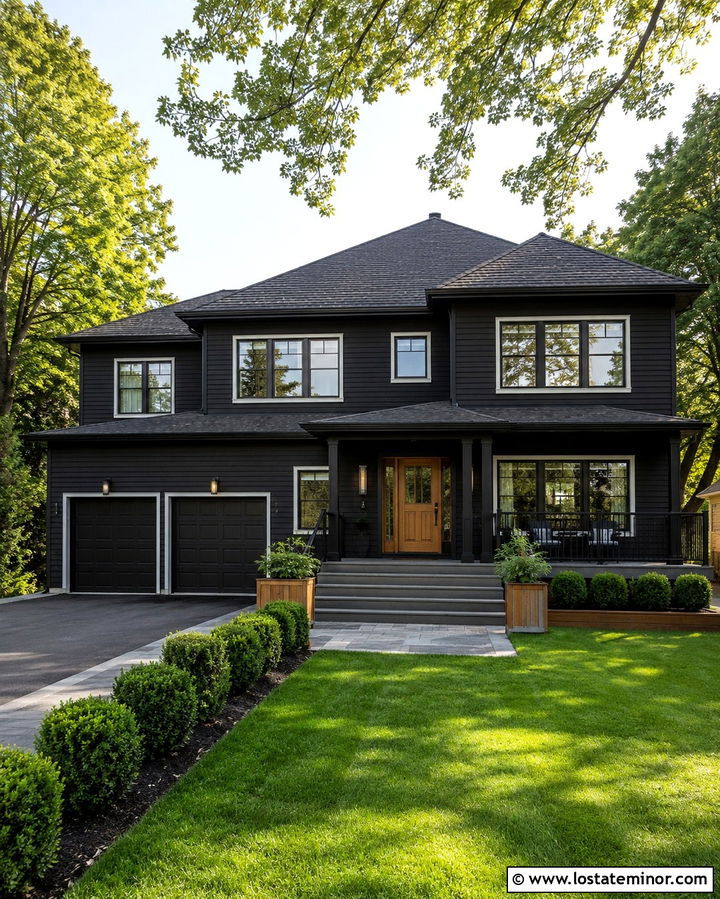
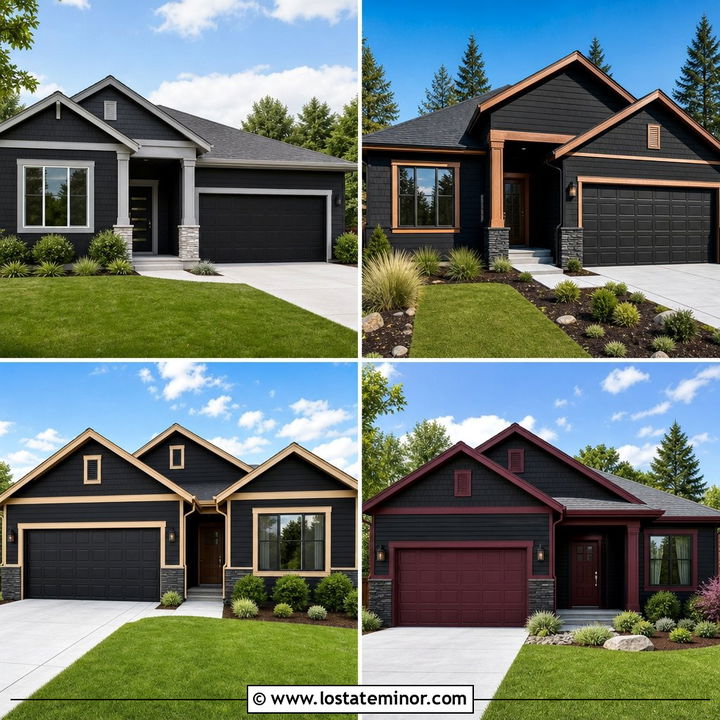
A medium-gray deck offers a practical, understated pairing for a soft black suburban exterior. Apply the dark color to horizontal siding, garage doors, and selected trim so the facade appears cohesive. Use slightly lighter charcoal shingles on the roof to create depth. The deck can be built with gray composite boards and framed by black aluminum railings, providing a low-contrast look that does not compete with the backyard. Warm the scheme with a natural oak front door, cedar planters, or wood soffits. If the house includes white-framed windows, repeat white only in small areas instead of adding it to every surface. Broad steps, a paved landing, clipped shrubs, and a healthy lawn keep the overall appearance familiar and approachable. This balanced design works especially well when homeowners want a modern update without drastically changing the house’s original shape.
26. Soft Black Narrow House With Side Deck
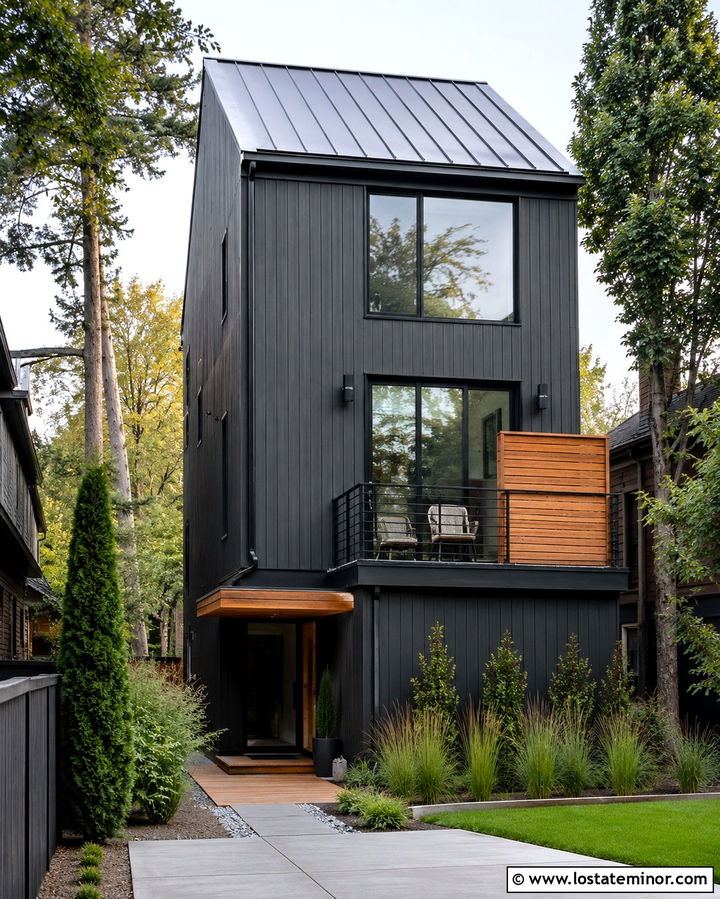
A side deck can make better use of a narrow lot while keeping the front elevation clean. Cover the tall, compact house in soft black vertical siding to reinforce its height, then position a slim cedar deck along the sunnier side. Use a horizontal wood privacy screen near the neighboring property and open black railings near the yard. Sliding glass doors allow the interior living space to expand directly onto the deck. Repeat the cedar on the entrance canopy or door so the side structure relates to the front facade. A dark gray metal roof and black-framed windows preserve the streamlined palette. Narrow planting beds, upright ornamental grasses, columnar trees, and rectangular pavers fit the limited space. The result is a functional outdoor room that feels private and spacious without requiring a wide backyard or disrupting the home’s proportions.
27. Soft Black Hillside House With Tiered Deck
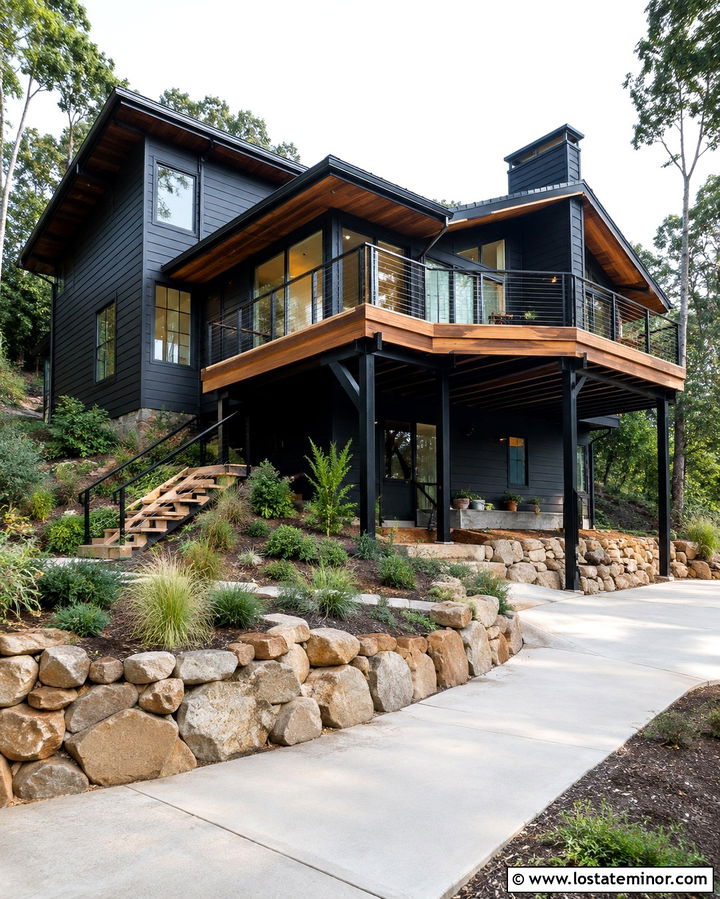
A tiered deck can follow a hillside more gracefully than one tall platform. Finish the house in soft black lap siding and use warm brown boards across two or three connected deck levels. The upper level can serve as a dining area near the kitchen, while the lower platform creates a quieter lounge close to the landscape. Open stairs and landings should follow the natural slope. Use black cable railings to reduce visual obstruction and paint the exposed support structure soft black so it blends with the facade. Stone retaining walls can stabilize planting areas and add weight beneath the house. Repeat natural wood on the soffits and main door. Native ground cover, ornamental grasses, and strategically placed trees help each deck level settle into the hillside, creating a complete exterior that looks carefully adapted to its site.
28. Soft Black Desert House With Shaded Deck
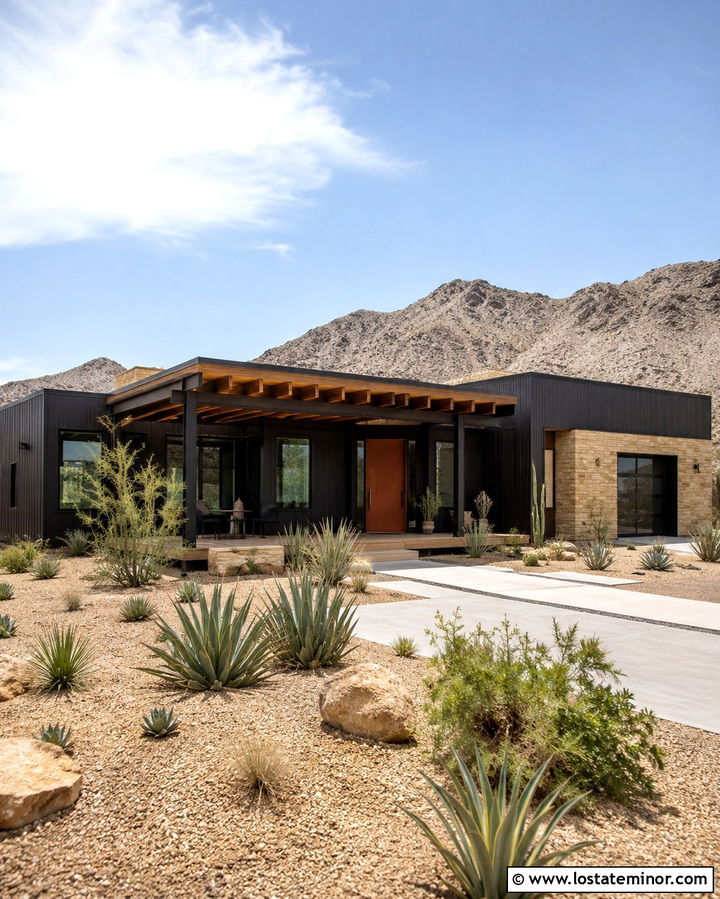
Intense sun calls for a deck with reliable shade and a palette that balances dark walls with lighter materials. Use soft black stucco or vertical siding on the main house, then build a pale wood-look composite deck beneath an extended roof or slatted pergola. Warm cedar beams can define the shade structure, while black posts and window frames connect it to the facade. Choose sand-colored stone for low walls, steps, and planters to keep the outdoor area bright. A rust-toned front door adds a controlled desert accent. The deck should include open edges or slim black railings so air can move through the space. Surround it with gravel, agave, desert grasses, boulders, and drought-tolerant shrubs. Together, the pale deck, natural wood, and sandy masonry keep the soft black exterior from dominating the sunlit landscape.
29. Soft Black Forest House With Screened Deck
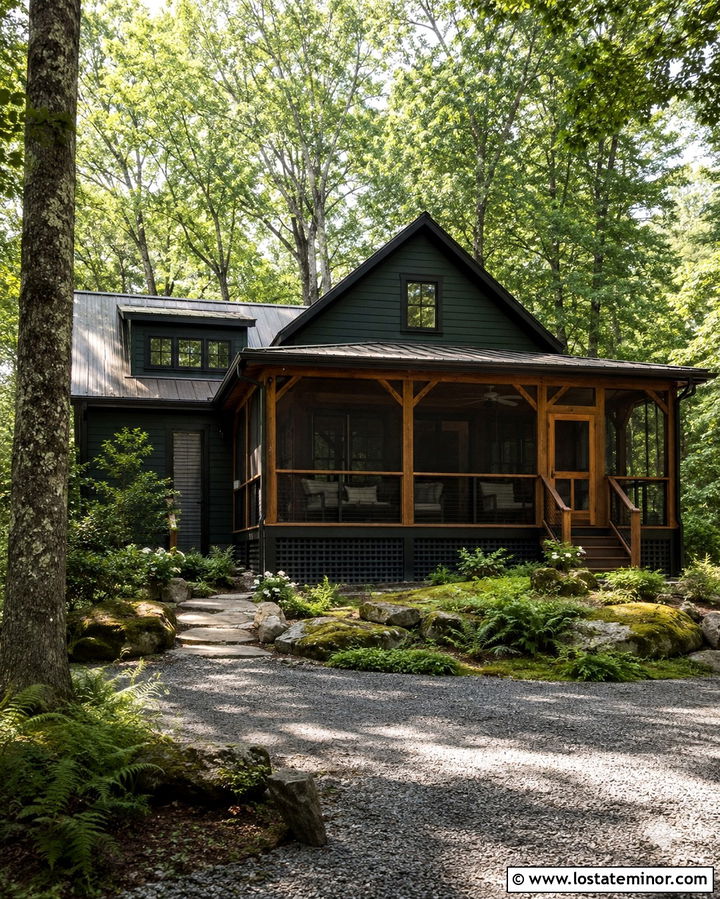
A screened deck provides outdoor comfort while fitting naturally into a wooded setting. Stain the house a soft black that allows the grain of cedar siding to remain visible. Attach a screened deck with matching dark framing, warm wood floorboards, and large panels of nearly invisible black mesh. A cedar door and exposed roof beams can brighten the enclosure from the outside. Use a simple charcoal metal roof that continues the main home’s pitch, making the addition appear original. Below the deck, cover exposed supports with dark lattice or vertical wood slats. A stone path, ferns, mossy rocks, and shade-loving shrubs help the structure blend into the forest floor. This coordinated approach maintains an open visual connection to the trees while giving the household a protected outdoor living space that complements the soft black architecture.
30. Soft Black Luxury House With Pool Deck
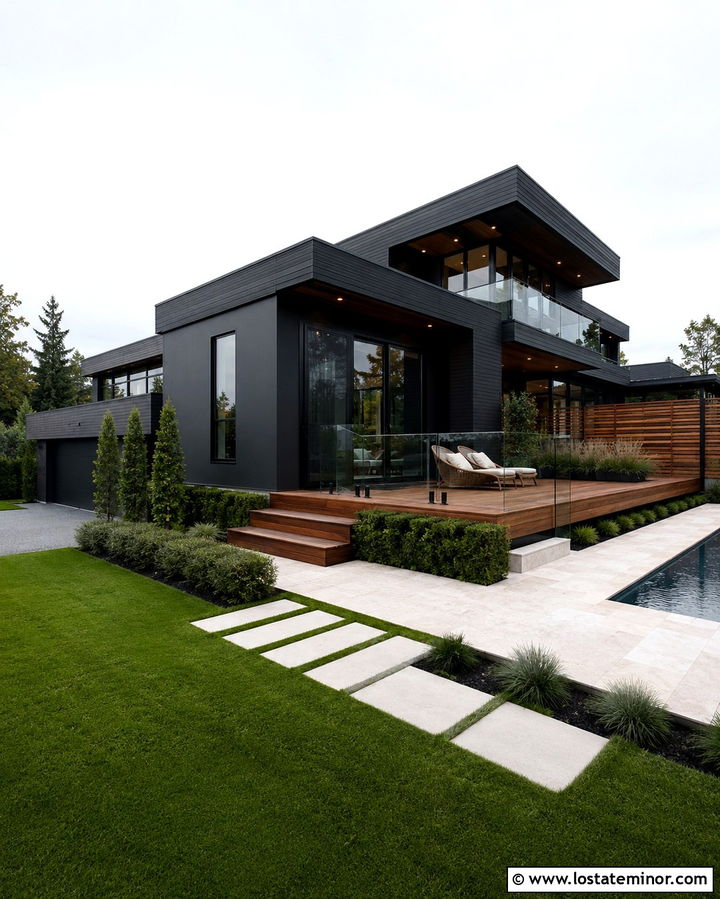
A luxury exterior feels more cohesive when the house, deck, and pool are designed with a controlled material palette. Cover the facade in soft black wood siding and smooth charcoal panels, using large black-framed windows to reflect the landscape. Surround the pool with pale limestone, then add a raised teak-toned deck beside the main living area. The contrast between dark walls, warm wood, and light stone creates clear layers without relying on excessive decoration. Frameless glass railings can protect elevated sections while preserving views across the water. Repeat the decking material on soffits, privacy screens, or an outdoor pavilion. Structured hedges, ornamental grasses, and broad stepping stones maintain the clean composition. With each finish used more than once, the complete property feels intentional, comfortable, and visually connected from the street to the backyard.
Conclusion:
The most successful **30 Soft Black House Design With Deck Ideas** balance the depth of a dark facade with materials that add warmth, texture, and definition. Cedar and other natural woods produce strong contrast, while gray composite boards create a quieter modern palette. White trim can brighten traditional architecture, and black railings help decks connect visually to the siding. House style, deck height, climate, maintenance, and surrounding landscape should all influence the final combination. Before selecting finishes, compare samples outdoors in direct sun and shade. Also consider how the deck will look from inside the home. A coordinated plan will make both the architecture and outdoor living space feel more attractive, useful, and complete.

Related posts: