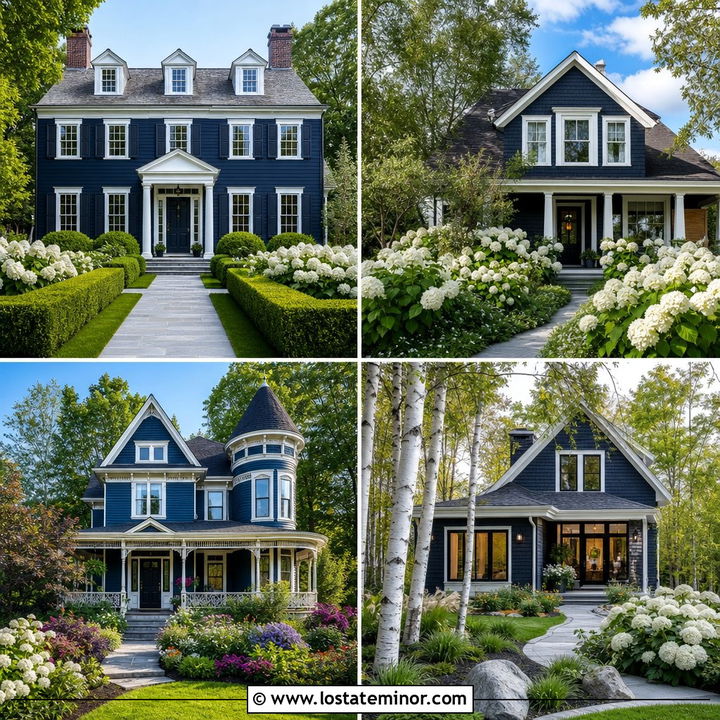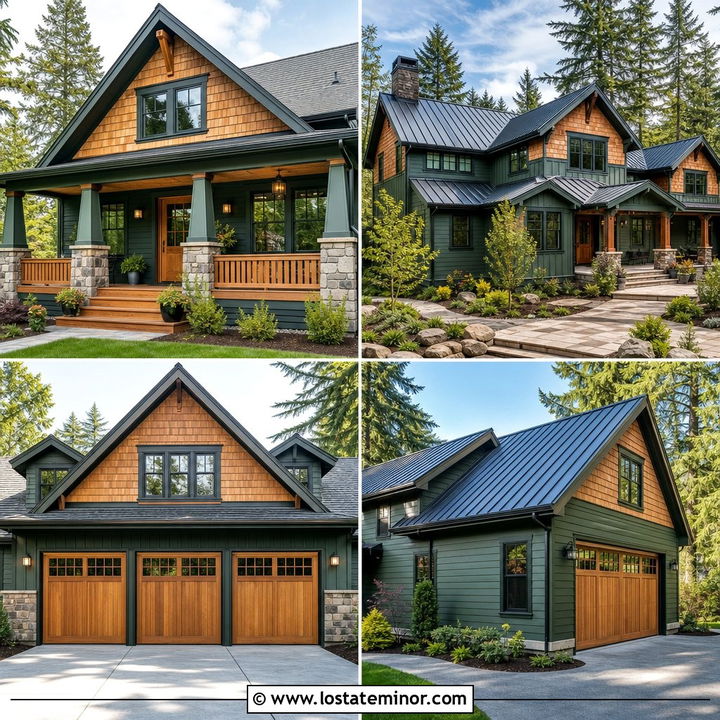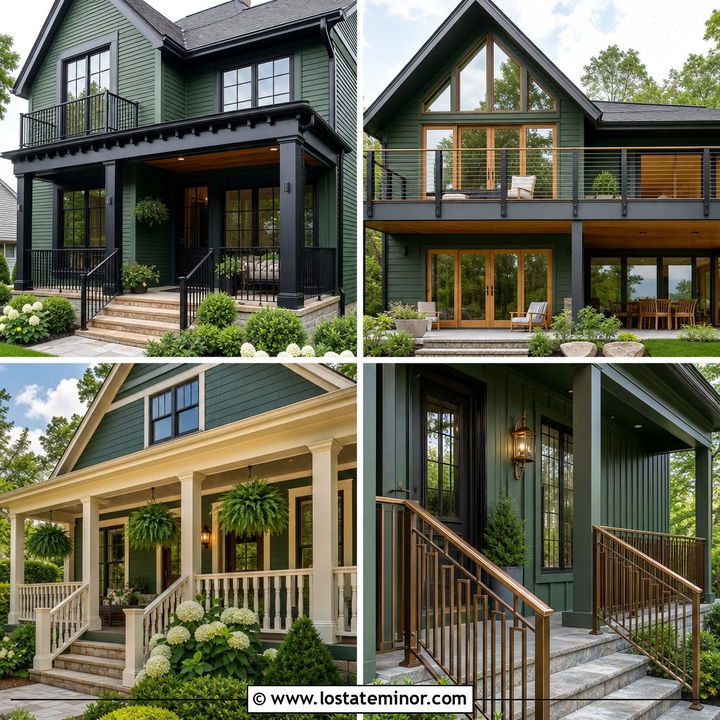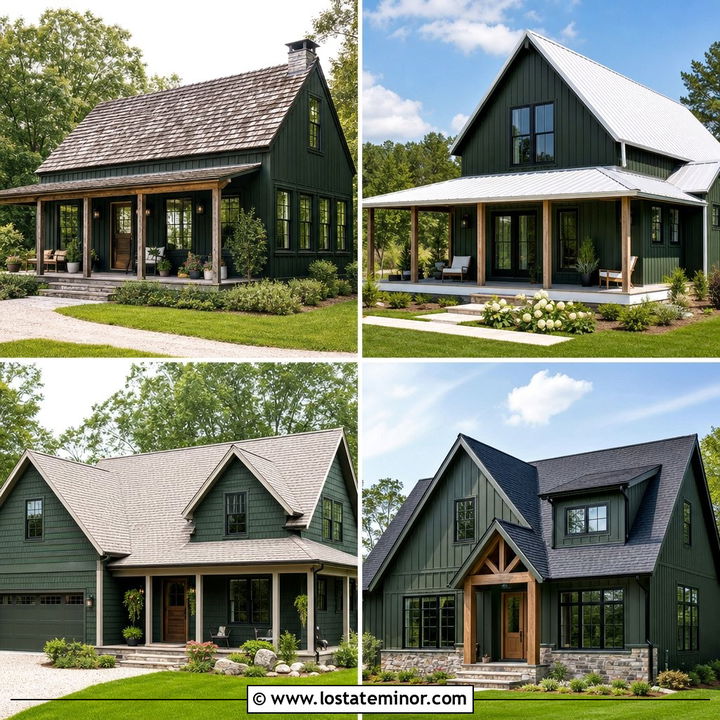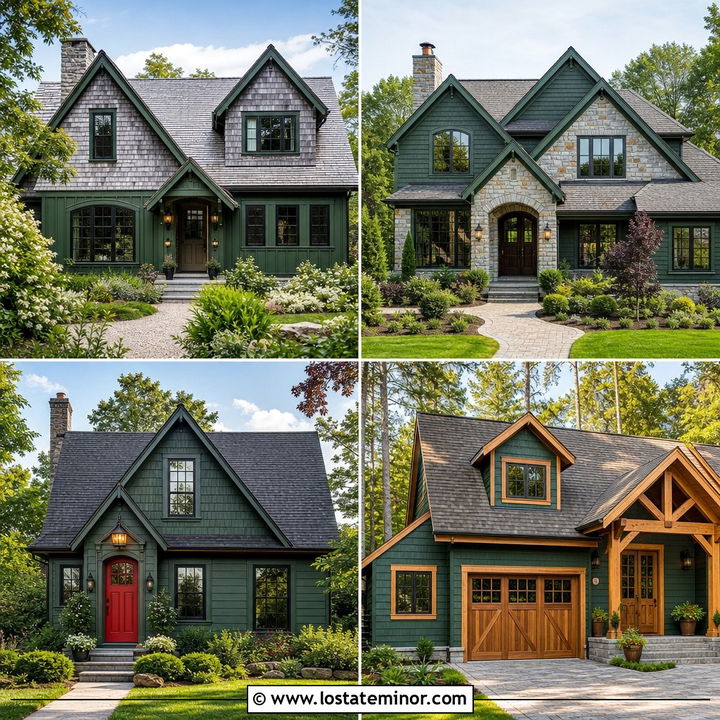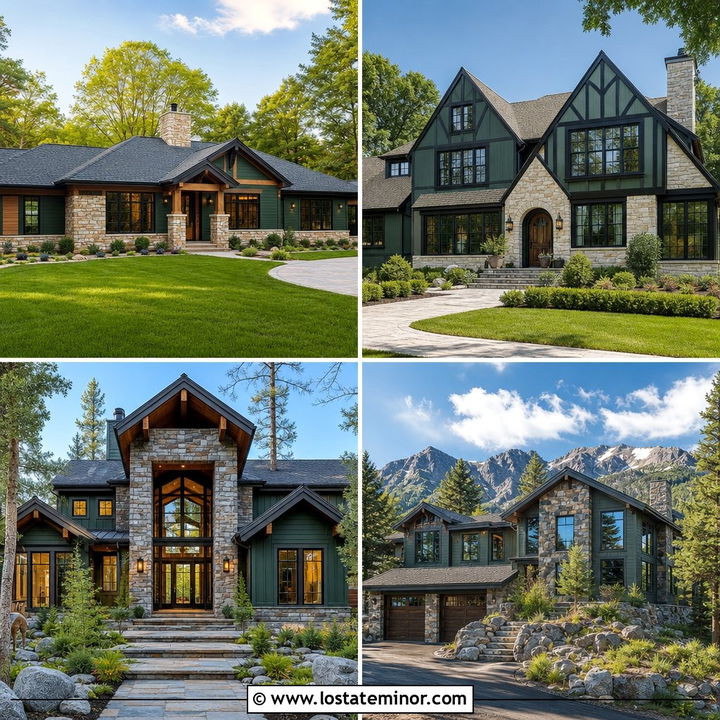
Hunter green gives a home a rich, grounded presence while creating a natural bridge between architecture and the surrounding yard. This collection of **30 Hunter Green House Design With Landscaping Ideas** explores complete exterior looks rather than isolated paint choices. You will see hunter green siding paired with practical trim colors, welcoming doors, suitable roofing, stonework, porches, and layered plantings. Current exterior design inspiration also shows growing interest in deep, nature-connected colors and landscaping that helps darker facades settle comfortably into their surroundings. () Whether you own a colonial, ranch, cottage, farmhouse, or modern home, these combinations offer clear ways to improve balance and curb appeal. Use the following **30 Hunter Green House Design With Landscaping Ideas** to plan a cohesive exterior from the roofline to the sidewalk.
1. Hunter Green Colonial With Boxwood Landscaping
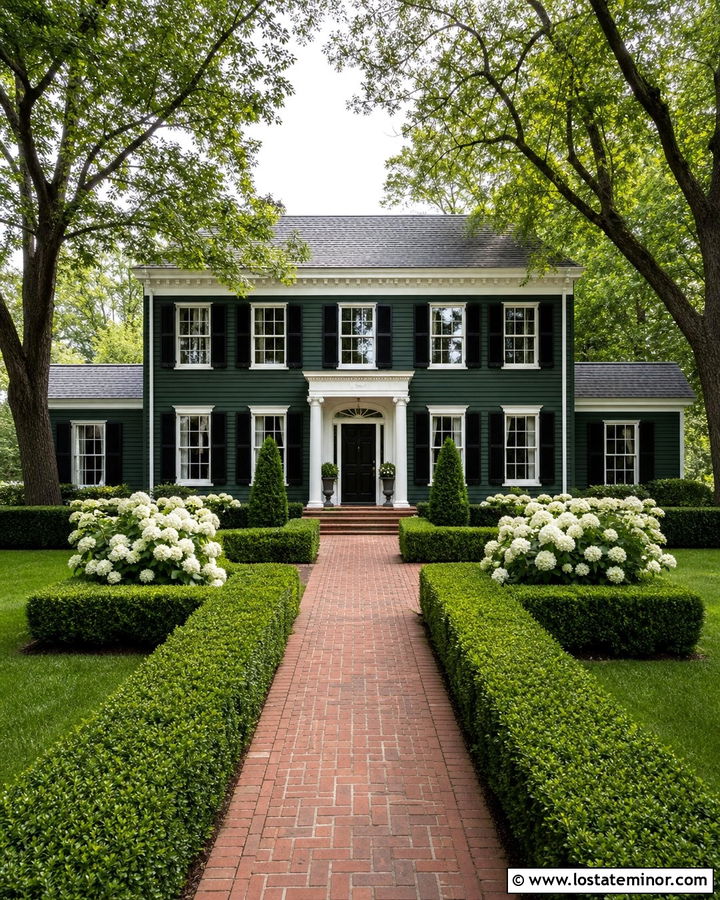
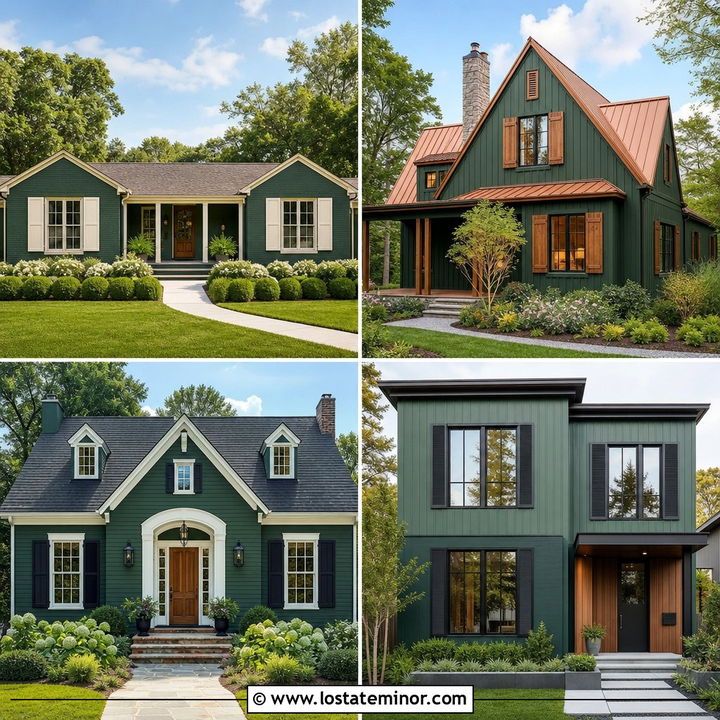
A symmetrical colonial looks especially polished when hunter green clapboard siding is framed with crisp white trim. Keep the shutters black and choose a glossy black front door for a formal three-color palette. A medium-gray architectural shingle roof prevents the upper half from feeling too heavy. Below, clipped boxwood hedges can mirror the home’s balanced window placement. Plant matching upright evergreens near the entry, then soften the straight lines with white hydrangeas or seasonal flowers. A red brick walkway introduces warmth without competing with the dark facade. Finish the design with traditional lanterns, white window boxes, and a simple brass door knocker. This landscaping plan makes the deep green exterior feel stately, organized, and welcoming throughout the year.
2. Hunter Green Craftsman With Hydrangea Landscaping
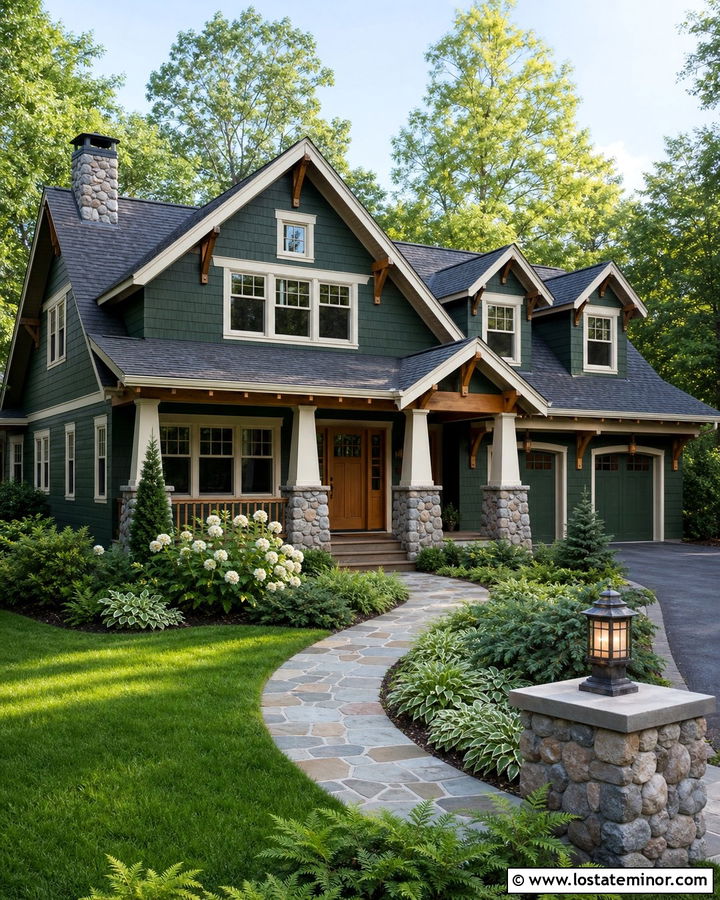
Picture a broad craftsman porch surrounded by clouds of pale blue and white hydrangeas. Hunter green lap siding provides a dramatic background, while creamy white trim outlines the tapered columns, windows, and roofline. Use natural cedar for the front door, porch ceiling, and decorative brackets to bring needed warmth into the palette. A charcoal roof and stone column bases add visual weight. Hydrangeas can form the main foundation planting, supported by hostas, ferns, and low evergreen shrubs in shaded locations. Curved garden beds make the sturdy architecture feel more relaxed. A flagstone path and oversized porch planters complete the approach. Repeating cedar tones in mulch, furniture, or window boxes helps the house and garden read as one thoughtful craftsman exterior.
3. Hunter Green Modern House With Ornamental Grasses
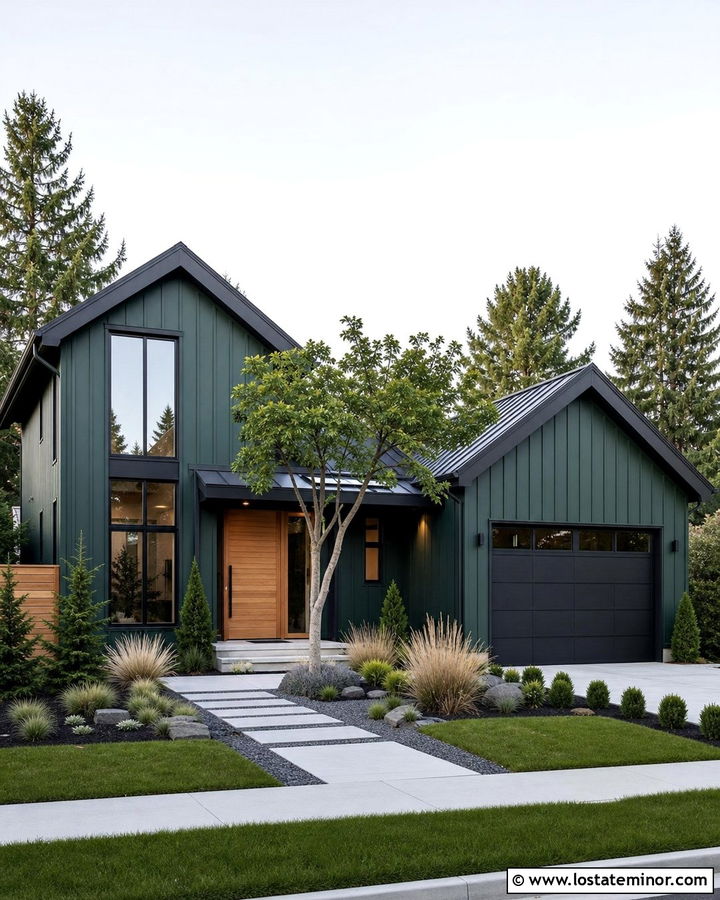
Can a dark green exterior look clean and contemporary? Hunter green vertical siding paired with slim black window frames creates a strong modern foundation. Keep the fascia, garage door, and gutters in matching black for a streamlined finish. A warm wood pivot door prevents the facade from appearing cold. In the yard, use broad sweeps of ornamental grasses, compact evergreens, and low ground covers instead of busy flower beds. Their movement softens the home’s straight rooflines without hiding its architecture. Large concrete pavers separated by gravel can lead toward the entrance. Add one sculptural tree where it will not block the windows. With restrained planting and repeated materials, the landscaping highlights the hunter green facade while preserving a simple, architectural curb-appeal look.
4. Hunter Green Cottage With Fern Landscaping
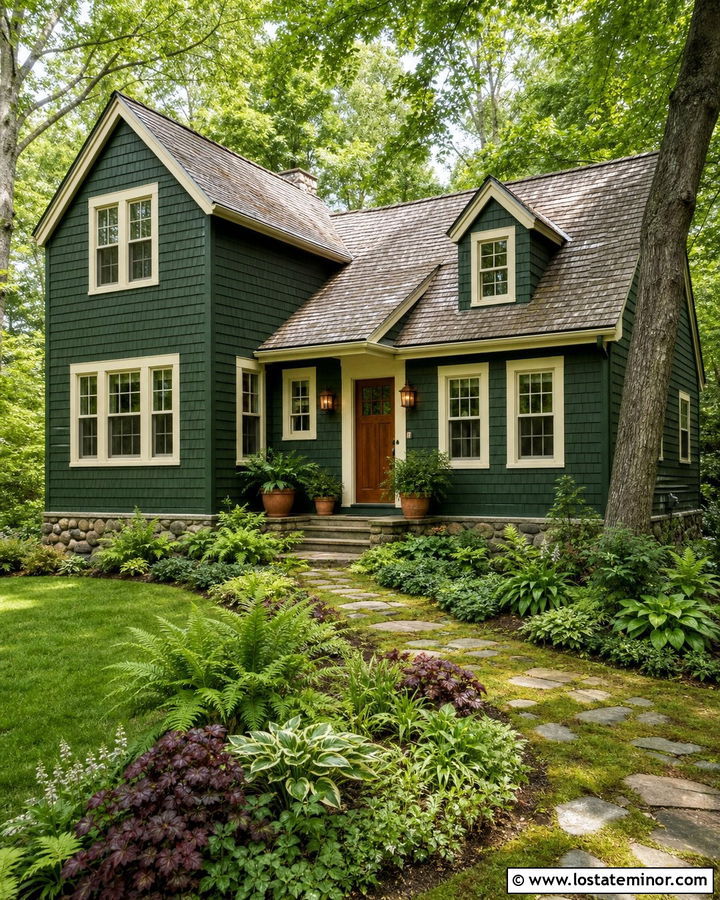
A hunter green cottage can feel as though it has always belonged beneath mature shade trees. Pair deep green shingle siding with soft cream trim and a medium-brown wood door. A weathered gray roof keeps the palette quiet, while a fieldstone foundation adds age and texture. Create generous beds filled with ferns, hostas, coral bells, and other plants suited to the property’s light conditions. Mossy stepping stones and a gently curving path reinforce the woodland atmosphere. Keep shrubs below the windows so the small facade remains visible from the street. A climbing vine can frame the porch, but it should be supported on a separate trellis. Copper lanterns and terracotta pots introduce subtle warmth, giving this cottage exterior a comfortable, garden-set character.
5. Hunter Green Brick House With Azalea Landscaping
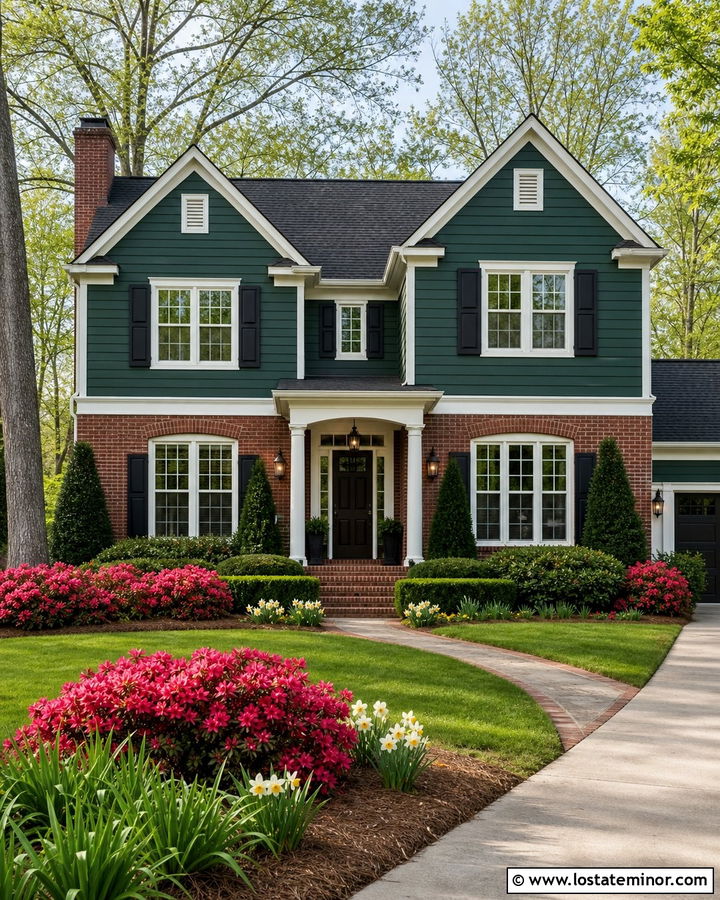
Painting upper siding hunter green is an effective way to refresh a house with an existing red brick lower level. The green and brick both carry earthy depth, while warm white trim provides a clean transition between materials. Use a dark bronze front door, bronze lights, and a brown-black roof to tie the complete palette together. For landscaping, group azaleas in broad beds where site conditions support them, rather than planting single shrubs at regular intervals. Add evergreen foundation plants for structure and spring bulbs for early color. A brick-edged walkway can repeat the masonry found on the house. Keep flowers mainly white, blush, or soft lavender so the garden does not overwhelm the brick. The finished exterior feels established, colorful, and carefully coordinated.
6. Hunter Green English Cottage With Lavender Landscaping
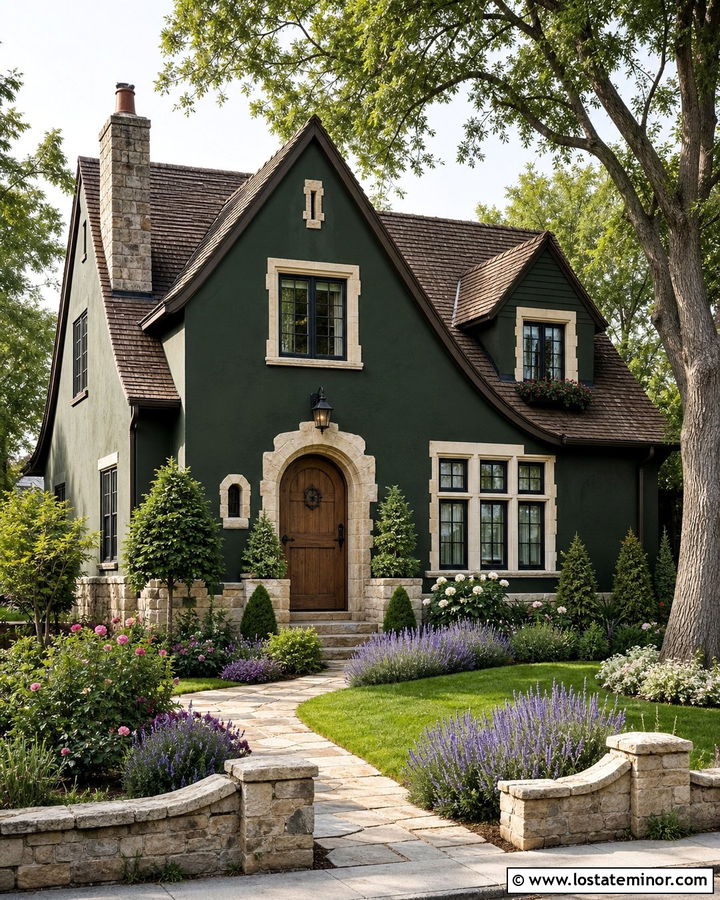
Hunter green stucco or siding gives an English-inspired cottage a deep, romantic base without requiring elaborate architecture. Outline the windows and arched doorway in warm limestone or creamy beige rather than bright white. A medium-brown shingle roof and oak front door add softness above and below the green walls. Along the front walk, plant lavender where the climate and drainage are suitable, then mix it with compact roses, catmint, and clipped evergreen forms. A low stone wall can define the garden without blocking the facade. Use an irregular flagstone path to make the approach feel relaxed and established. Black iron hardware adds a restrained finishing touch. This combination balances formal cottage details with loose, fragrant-looking planting for welcoming, storybook curb appeal.
7. Hunter Green Farmhouse With White Flower Beds
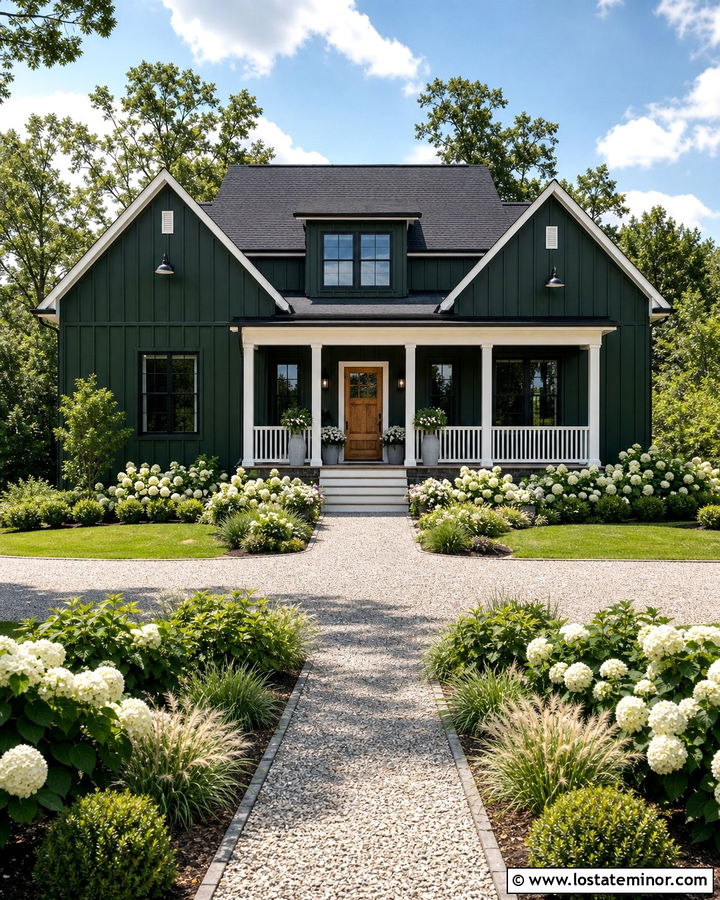
For a farmhouse exterior that feels classic but not predictable, cover the main facade in hunter green board-and-batten siding. Use warm white on the porch columns, window trim, soffits, and railings. A charcoal shingle roof grounds the contrast, while a natural wood front door adds warmth at eye level. Build wide foundation beds filled mostly with white-blooming plants and green foliage. Panicle hydrangeas, compact flowering shrubs, and ornamental grasses can create layers without introducing too many colors. A straight gravel or brick walkway suits the farmhouse structure. Black gooseneck lights and simple galvanized planters add practical accents. Leave enough breathing room between mature plants and the siding. The restrained white-and-green garden makes the dark house look brighter while preserving its rural character.
8. Hunter Green House With Copper Gutters And Evergreens
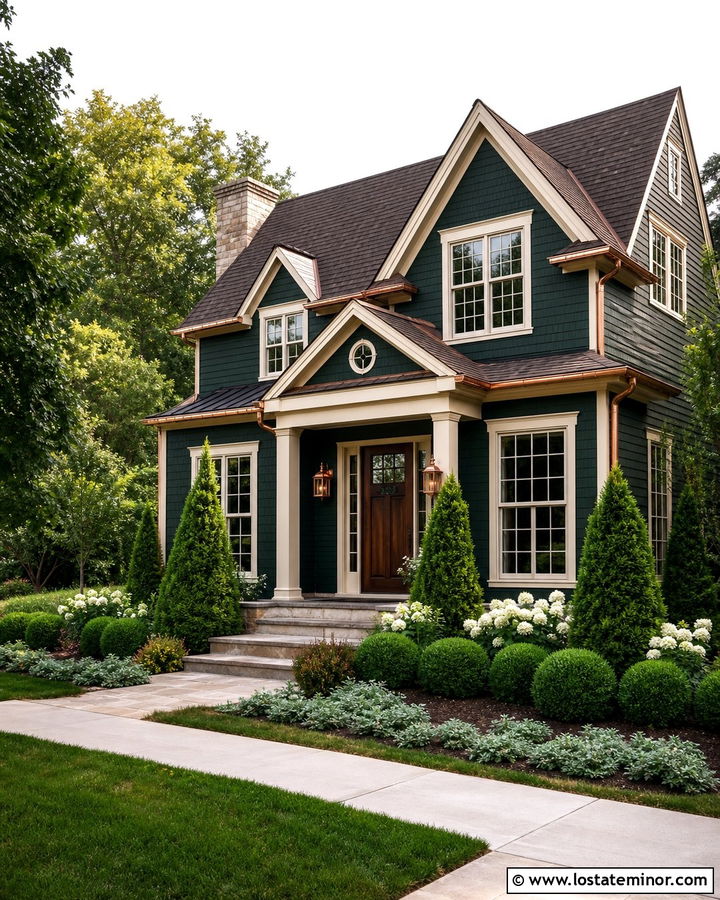
Fresh copper is especially striking against hunter green siding, and its warm finish becomes more subdued as it naturally ages. Use creamy trim rather than stark white to support the metal’s earthy color. A walnut-stained front door, brown roof, and stone steps can continue the warm palette across the facade. In the landscape, place varied evergreens around the house without creating a solid wall of identical shrubs. Combine conical forms, rounded boxwoods, and low spreading plants to produce depth. Add pale gravel or natural stone edging so the green foliage remains visually separate from the dark siding. White flowering perennials can brighten selected areas near the entrance. Copper gutters, downspouts, and porch lights become distinctive accents that connect the architecture with the layered evergreen garden.
9. Hunter Green House With Native Meadow Landscaping
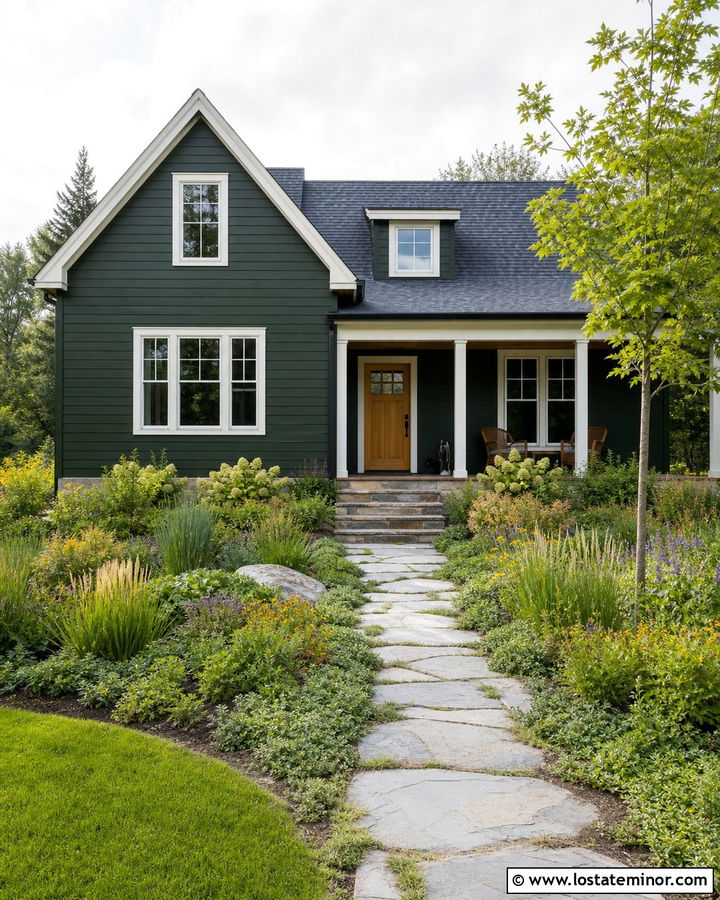
A loose, naturalistic front yard provides an appealing contrast to a structured hunter green exterior. Choose simple lap siding, off-white window trim, and a natural oak door for a balanced architectural palette. A muted charcoal roof allows the planting to supply most of the movement and seasonal color. Replace narrow foundation rows with deeper beds of regionally appropriate grasses, flowering perennials, and compact shrubs. Repeat plant varieties in small groups so the yard looks intentional rather than overgrown. A mown edge or stone border will give the meadow planting a defined boundary. Keep taller plants away from front windows and house numbers. With thoughtful spacing, the native-inspired landscape can support a relaxed atmosphere while allowing the deep green siding and warm wood entrance to remain clearly visible.
10. Hunter Green Mediterranean House With Terracotta Landscaping
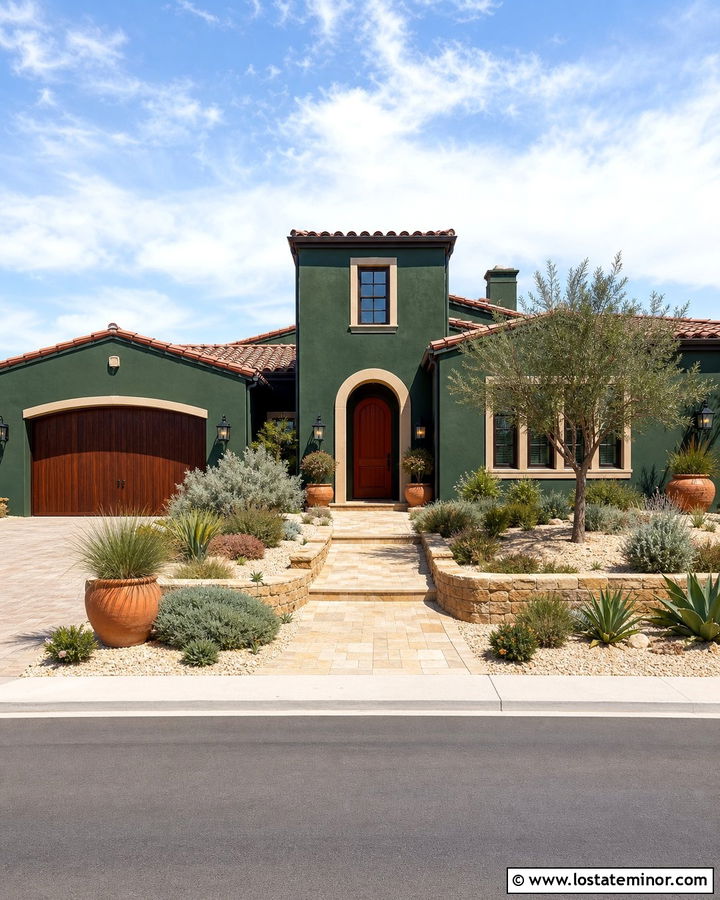
Deep hunter green can bring unexpected richness to a Mediterranean-influenced home when used on smooth stucco. Pair it with sandy beige trim, a terracotta tile roof, and a rust-colored front door. Arched openings and dark bronze window frames will strengthen the warm, old-world palette. Continue those colors through the landscape with terracotta planters, gravel mulch, and warm stone edging. Use silvery foliage, rosemary-like forms, ornamental grasses, and drought-aware plants suited to the local climate. A small olive-shaped ornamental tree can become a focal point where growing conditions allow. Avoid surrounding the entire house with dense green shrubs, which could cause the facade to disappear. The terracotta surfaces and pale gravel provide enough contrast to make hunter green feel distinctive, sunny, and sophisticated.
11. Hunter Green Cottage With Yellow Door Landscaping
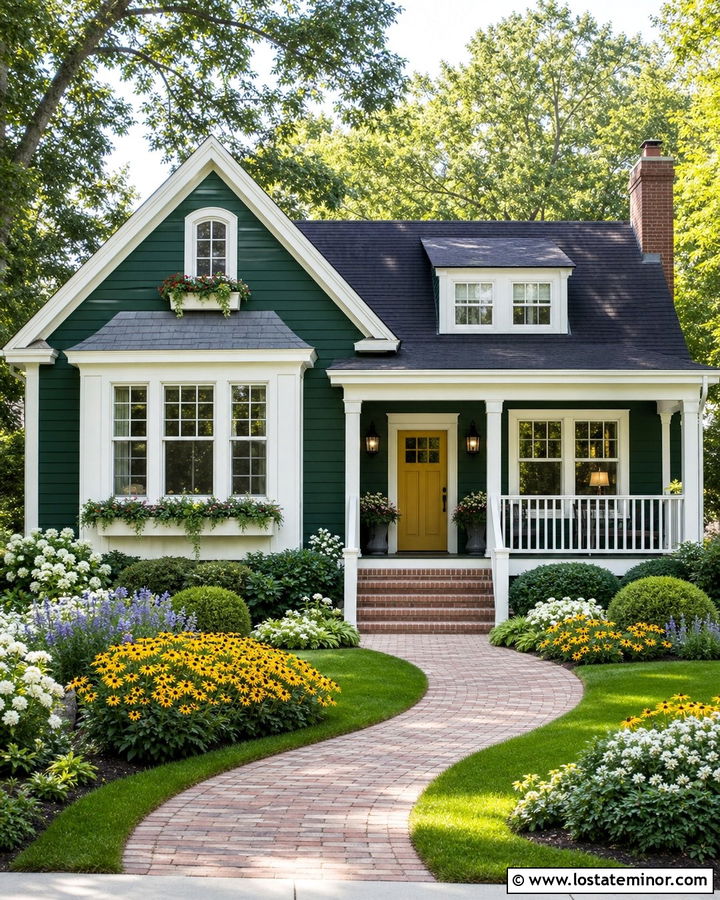
A muted yellow front door can brighten a hunter green cottage without making the exterior feel overly colorful. Keep the trim soft white and select a charcoal roof to provide a neutral frame. White porch railings and simple black lanterns help control the cheerful door color. In the garden, repeat small touches of yellow through black-eyed Susans, coreopsis, or locally suitable alternatives. Balance those blooms with white flowers, green shrubs, and lavender-blue accents. A curved brick path will add warmth and guide attention toward the entry. Window boxes can repeat the same limited flower palette for a connected look. Because the door already creates a strong focal point, keep outdoor furniture and decorative accessories simple. The completed cottage appears friendly, colorful, and composed rather than busy.
12. Hunter Green House With Burgundy Door And Formal Hedges
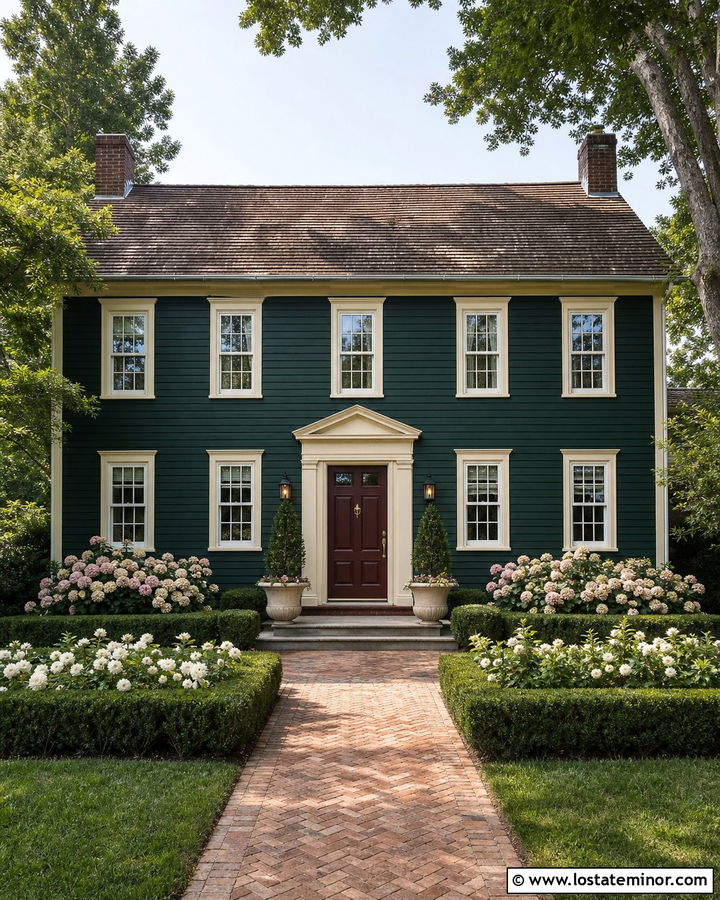
Hunter green siding and a burgundy front door create a deep, traditional combination that works best with lighter supporting details. Use cream trim around the windows and porch so the two dark colors remain visually separate. A weathered brown roof and antique brass hardware can soften the contrast further. For the landscaping, establish low clipped hedges along the walkway or foundation. Keep their mature height below the windows and interrupt the greenery with pale flowers. White roses, light pink hydrangeas, or creamy seasonal planters prevent the yard from becoming a single dark mass. A symmetrical path made from brick or rectangular pavers reinforces the formal character. This exterior scheme feels rich and historic, but the bright trim and controlled planting ensure that the entrance remains clear, balanced, and inviting.
13. Hunter Green Georgian House With Topiary Landscaping
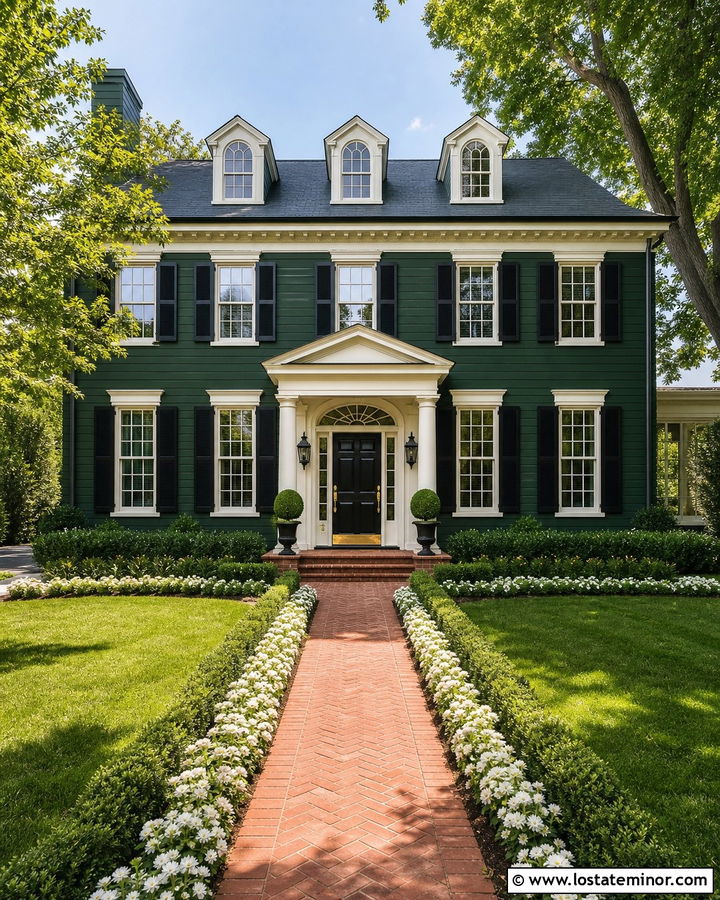
The strong proportions of a Georgian-inspired facade call for landscaping with equal structure. Coat the brick or siding in hunter green, then use creamy white trim to emphasize cornices, windows, and columns. A polished black door and matching shutters provide crisp definition. Place paired topiary forms in substantial stone planters beside the entrance, making sure they fit the doorway’s scale. Low boxwood borders can outline symmetrical beds filled with white flowering plants. Use a straight brick walk aligned with the front door to strengthen the central axis. Mature shade trees should frame the house from the sides instead of covering its main elevation. Traditional brass hardware and black lanterns complete the look. The repeated symmetry allows the dramatic green color to appear elegant, deliberate, and architecturally appropriate.
14. Hunter Green Cape Cod With Blue Door Landscaping
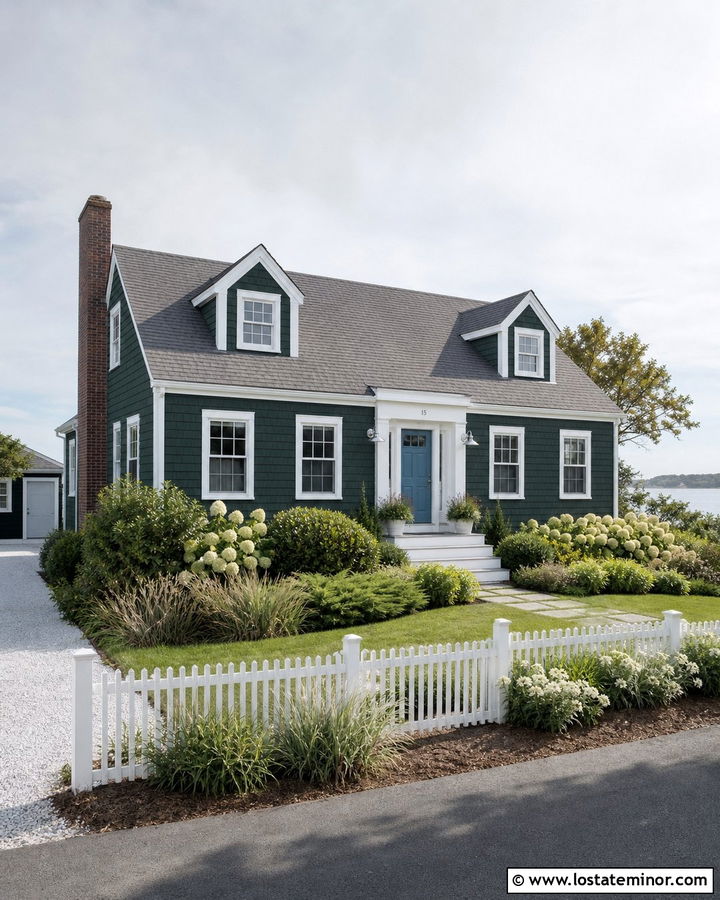
A dusty blue door brings a gentle coastal note to a compact hunter green Cape Cod. Keep the window trim, corner boards, and dormers bright white to sharpen the home’s familiar silhouette. A medium-gray roof complements both the blue and green without adding another competing undertone. Around the facade, use rounded hydrangeas, low junipers, beach grasses, and white annuals where they suit local conditions. A crushed-shell-colored gravel path or pale stone walkway can lighten the foreground. Add a simple white picket fence if the lot needs definition, leaving the gate aligned with the entry. Silver metal lights and understated porch accessories continue the cool palette. The finished home feels fresh and coastal, yet the hunter green siding gives it more depth than a typical pale seaside exterior.
15. Monochromatic Hunter Green House With Layered Green Landscaping
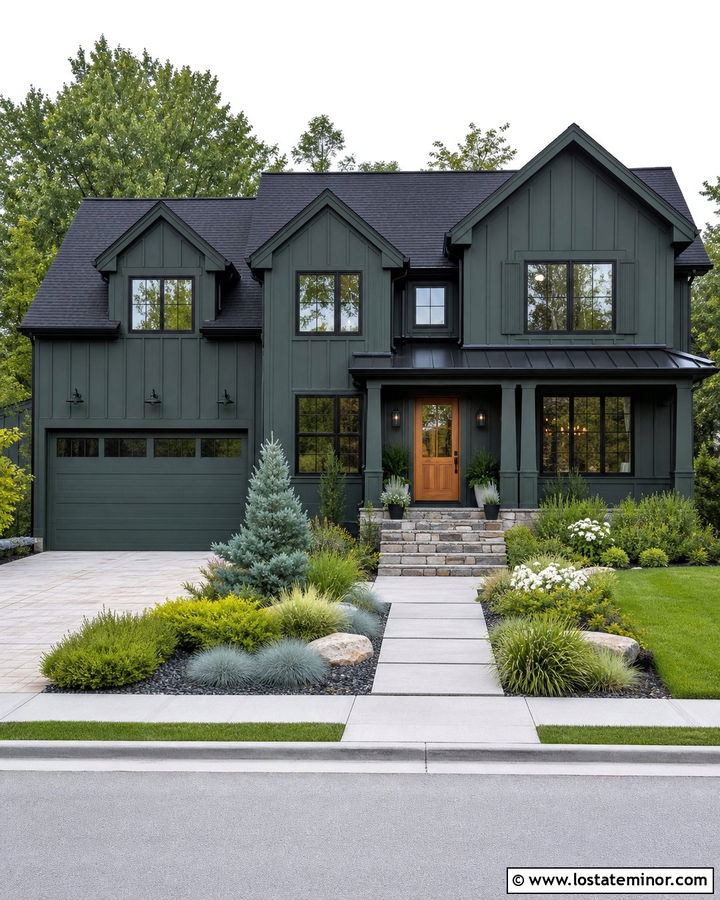
Instead of outlining every feature in white, consider a tonal hunter green exterior. Paint the siding a classic hunter green, then use a slightly darker forest green on the trim, garage, and shutters. A black roof and black-framed windows will make the subtle color shifts easier to read. Introduce warmth through a clear-stained wood door and natural stone steps. Landscaping should feature several foliage colors, including blue-green, yellow-green, and silvery green, rather than one matching shade. Layer plants by mature height so each tone remains visible. Pale ornamental grasses and white flowers can provide controlled brightness. This nature-connected approach feels modern and enveloping. It works particularly well when strong architectural lines and warm materials prevent the house from blending completely into the surrounding yard.
16. Hunter Green House With Stone Chimney And Woodland Landscaping
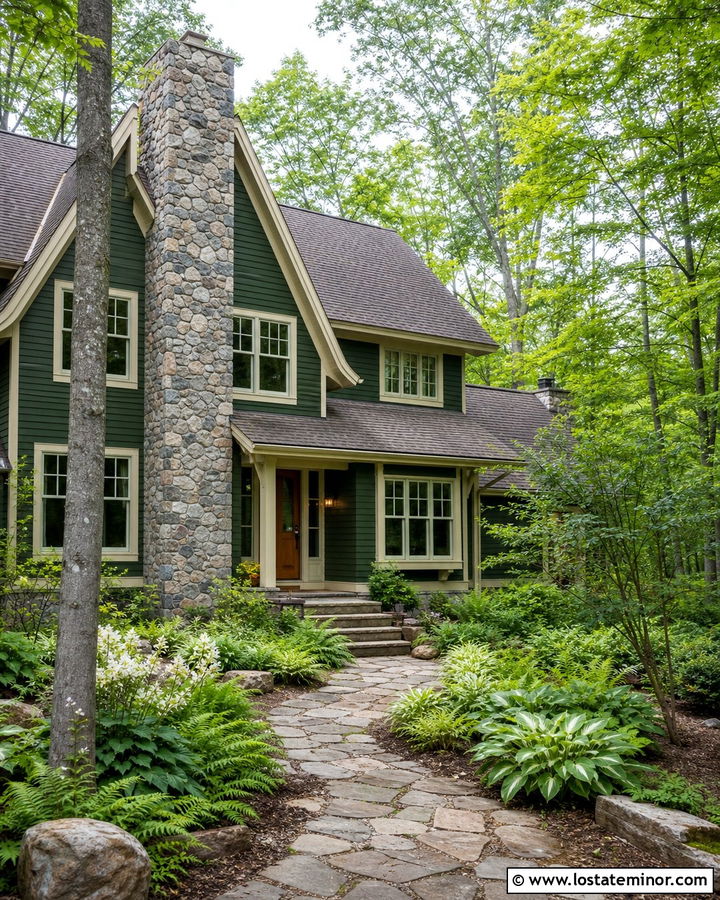
A full-height stone chimney creates a convincing anchor for a hunter green home surrounded by trees. Choose irregular fieldstone containing gray, brown, and tan tones, then repeat those colors in the roof, walkway, and front steps. Warm cream trim keeps the siding from appearing too severe. A medium-toned wood door can connect visually with nearby tree trunks and woodland mulch. Plant ferns, hostas, native sedges, and loose groups of flowering shade plants around the chimney base. Avoid large shrubs that hide the stonework or trap the entrance behind foliage. A winding flagstone path will feel more natural than a rigid concrete walk in this setting. The complete exterior looks settled into the landscape, with stone providing texture and hunter green helping the architecture relate to the wooded surroundings.
17. Hunter Green House With Red Brick Walkway Landscaping
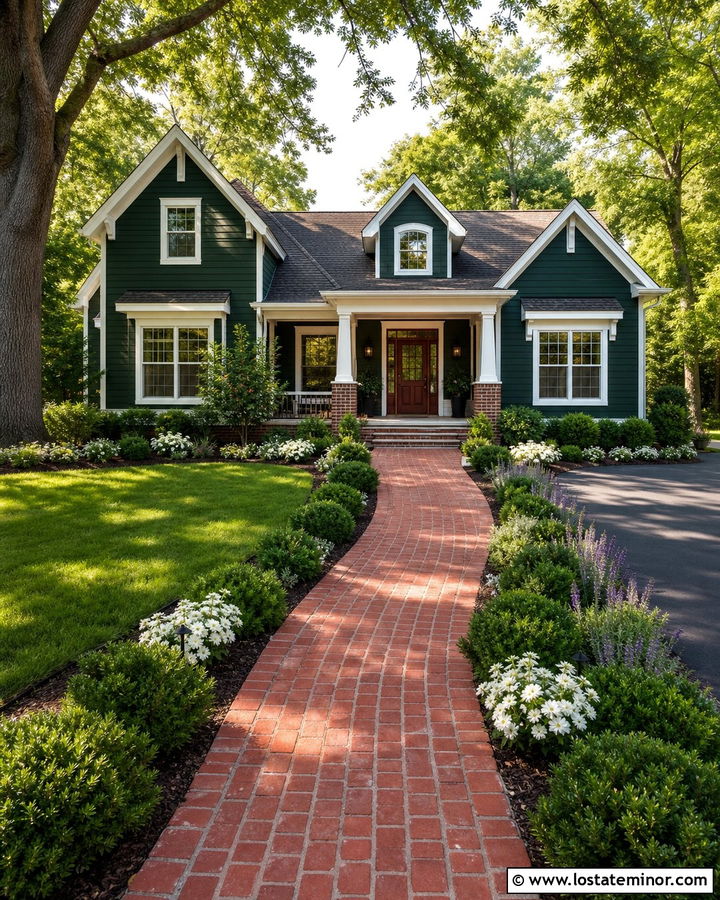
Warm red brick can enliven a hunter green exterior while creating a clear route through the front yard. Use the brick for a gently curved walkway, low steps, or restrained garden edging. Keep the house trim creamy white and choose a stained wood door that bridges the red and green tones. A roof blending charcoal and brown will support the traditional palette. Along the path, combine evergreen mounds with white flowers and small areas of soft blue or lavender. Leave enough space beside the walk for mature plant growth and comfortable movement. Repeating brick in porch column bases or the chimney creates a more unified facade. The brick should look like an intentional part of the architecture rather than an unrelated landscape feature, giving the hunter green home warmth and lasting curb appeal.
18. Hunter Green Ranch With Gravel Garden Landscaping
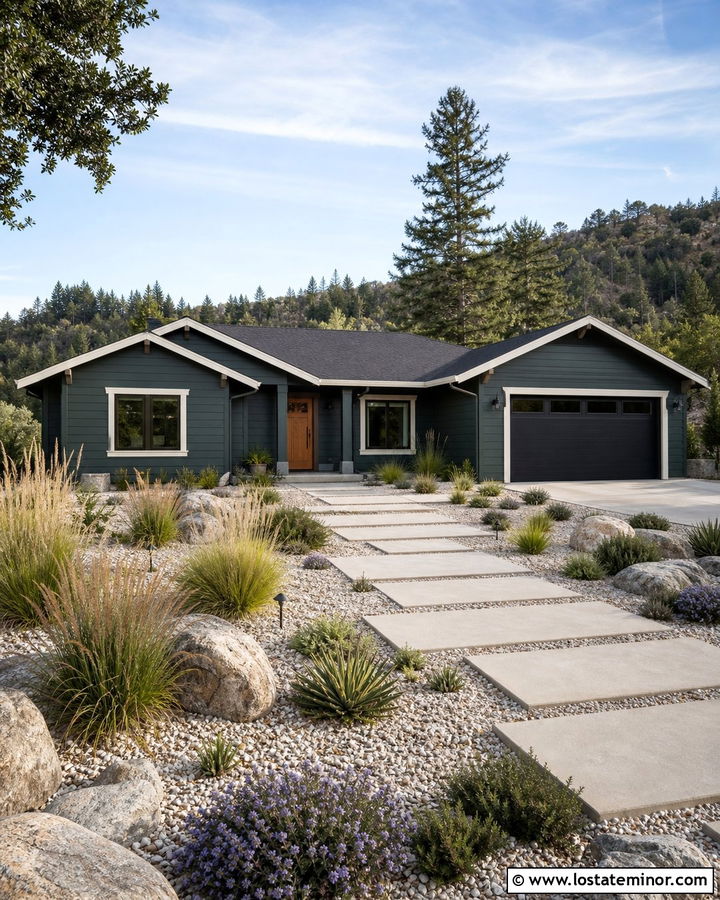
A low ranch house gains visual strength from hunter green horizontal siding and a simple drought-aware landscape. Paint the trim warm white, use black on the windows and garage door, and add a cedar front door as the main warm accent. Create broad gravel beds that follow the home’s horizontal shape. Arrange sculptural grasses, compact flowering shrubs, yucca-like plants, or other climate-appropriate selections in repeated clusters. Large boulders can add dimension, but they should not crowd the foundation or block windows. A concrete walkway with generous rectangular slabs suits the ranch architecture better than an ornate path. Keep the planting lower near the entrance and taller toward the outer corners. The combination reduces visual clutter and lets the hunter green facade look longer, cleaner, and more contemporary.
19. Hunter Green House With Wraparound Porch Landscaping
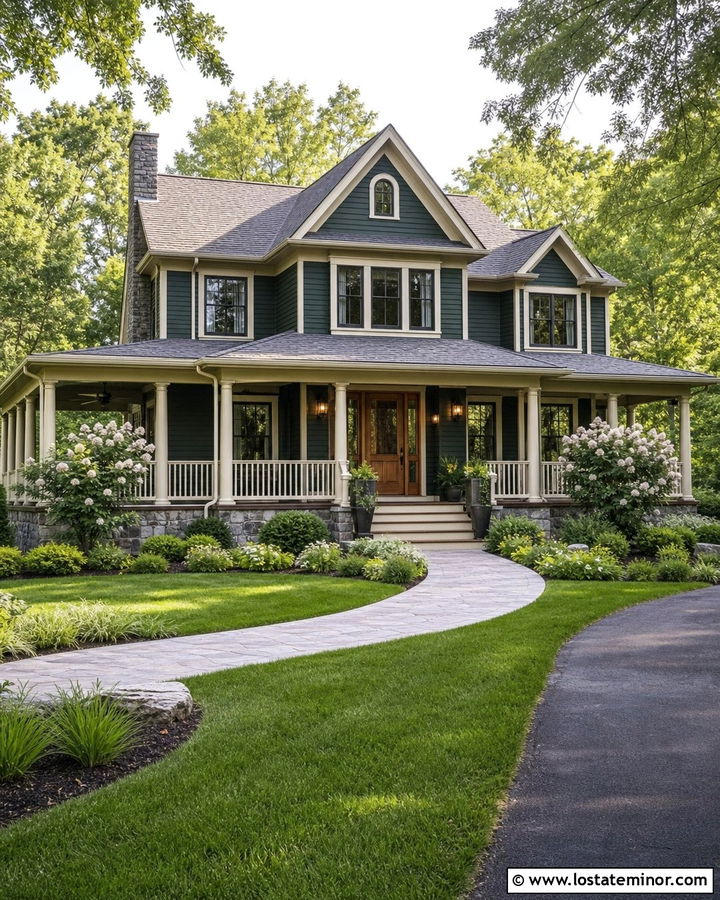
A wraparound porch gives hunter green siding plenty of room to make an impression. Use cream on the columns, railings, and window trim to brighten the shaded areas beneath the porch roof. A natural wood front door and medium-brown porch floor introduce warmth where visitors see it most closely. Place flowering shrubs near the outer porch corners instead of creating a continuous hedge across the front. Lower perennials and ornamental grasses can fill the spaces between. Add large planters beside the steps, using foliage and flowers that repeat colors from the beds. A curved stone walkway makes the porch feel approachable from the street. With open views between plants, the architecture remains visible, and the layered garden gives the long green facade a softer, more welcoming edge.
20. Hunter Green Ranch With Curved Foundation Landscaping
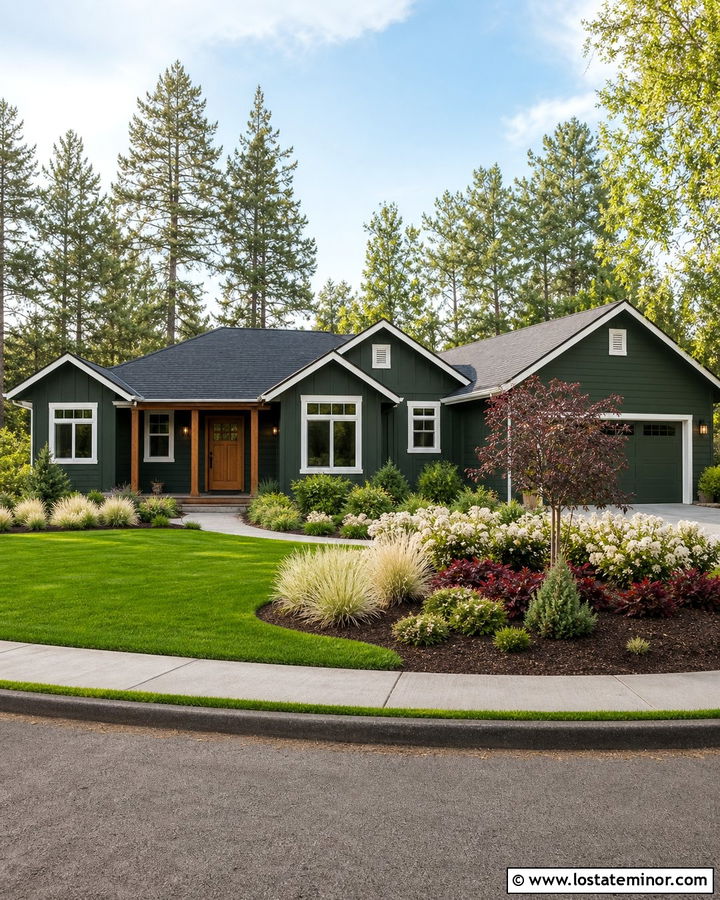
Long, narrow planting strips can make a ranch home appear even flatter. A better approach is to create deep, curved beds that move outward at key points. Hunter green siding forms a rich backdrop for pale ornamental grasses, white flowering shrubs, and burgundy foliage accents. Use warm white trim, a medium wood door, and a charcoal roof to complete the house palette. Place taller shrubs near blank walls or outer corners, not beneath low windows. A small ornamental tree can balance a wide garage when positioned with enough room to mature. Define the bed with a clean edge and natural mulch. The flowing landscape lines contrast with the horizontal architecture, giving the facade greater depth while keeping the complete hunter green exterior neat, practical, and easy to understand.
21. Hunter Green Split-Level With Retaining Wall Landscaping
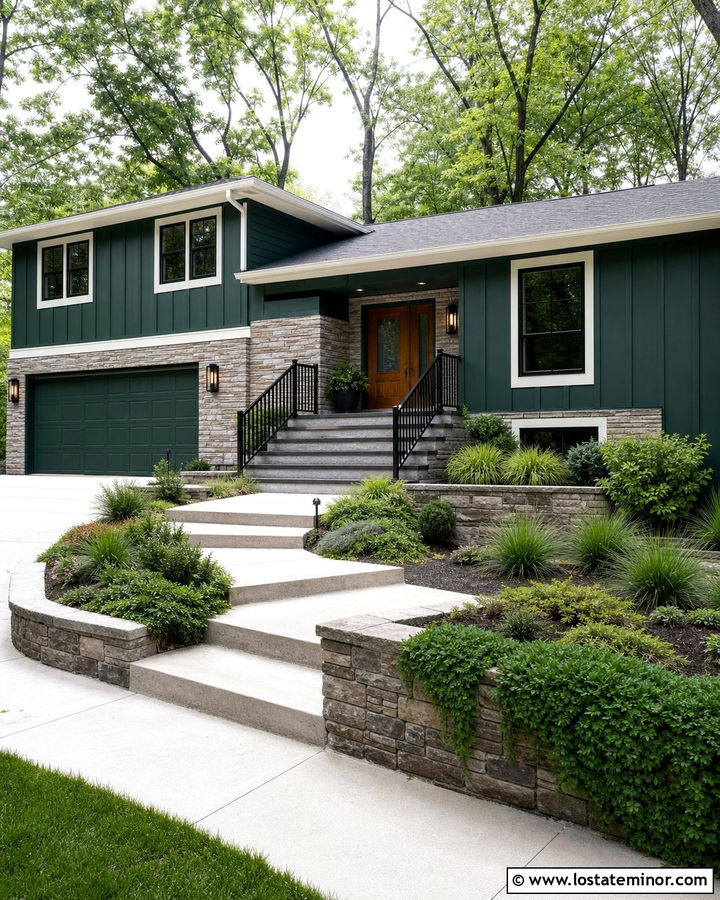
A split-level home often needs landscaping that connects its changing ground elevations. Hunter green siding can unify the upper and lower sections, especially when paired with warm white trim and a matching green garage door. Add a cedar entry door and tan-gray stone veneer around the lower level. Build a low retaining wall from stone that repeats the foundation colors. Terraced beds can hold compact shrubs, ornamental grasses, and cascading ground covers without hiding the windows. Wide steps and a clearly marked path should lead visitors toward the main entrance, which can otherwise feel difficult to locate on this house type. Use black railings and modern lights for definition. The combined color and landscape plan makes the split-level facade look more intentional, connected, and visually balanced.
22. Hunter Green Bungalow With Cottage Garden Landscaping
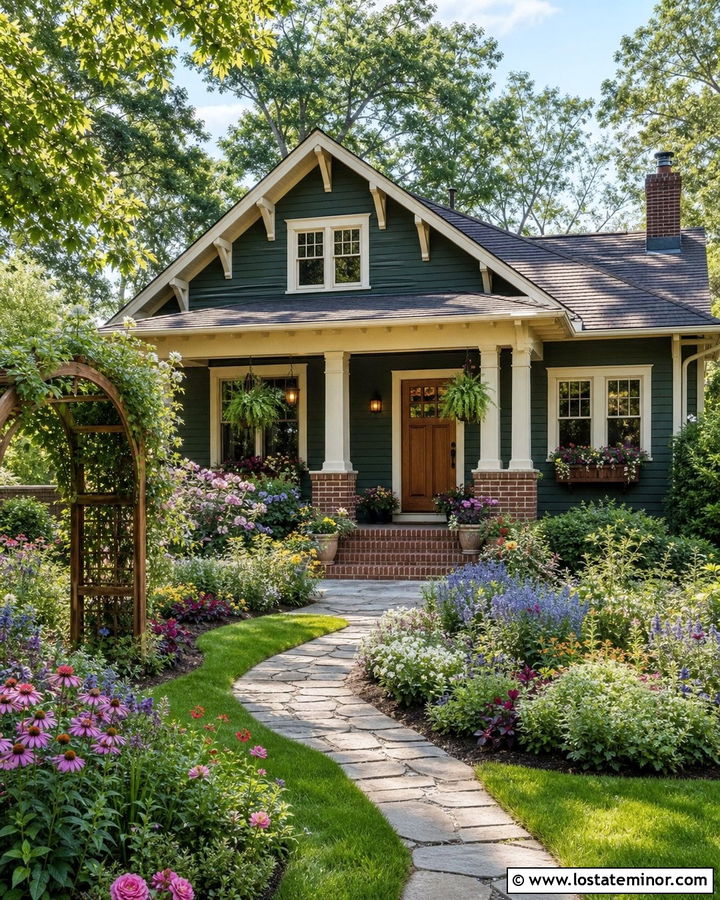
A compact bungalow becomes especially charming when its hunter green exterior is surrounded by an informal cottage garden. Use cream trim on the windows, exposed rafters, and porch columns. Add a honey-toned wood door and warm brick steps for a friendly entrance. Fill curved beds with a layered mix of roses, salvia, coneflowers, catmint, and locally appropriate flowering plants. Repeat several varieties across the yard to keep the abundance cohesive. Taller plants should sit away from the porch openings, with lower flowers along the path. A simple wooden arbor can mark the front gate without overwhelming the house. Window boxes and hanging ferns add color at porch level. This complete look celebrates the bungalow’s modest scale while giving the dark green siding a bright, lively garden setting.
23. Hunter Green Victorian With Layered Garden Landscaping
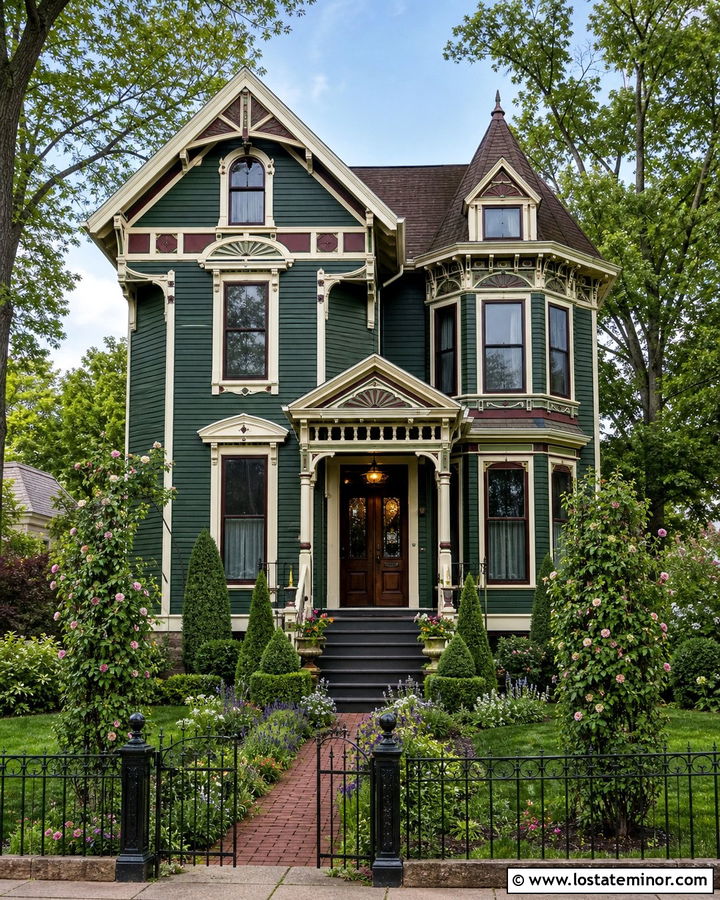
Decorative Victorian details can handle a richer exterior palette than many simpler homes. Use hunter green on the main siding, cream on broad trim areas, and muted olive or burgundy on selected brackets and gable details. Avoid assigning a different color to every ornament, which can make the facade difficult to read. A dark brown roof and walnut door will keep the overall scheme grounded. Build layered garden beds with clipped evergreen structure behind loose flowering perennials. Upright shrubs can frame the porch, while climbing roses or flowering vines grow on separate supports. A brick walkway and black iron fence reinforce the traditional character. By coordinating the landscape’s layers with the architecture’s detail, the hunter green Victorian feels expressive and colorful without becoming visually chaotic.
24. Hunter Green Cape Cod With White Fence Landscaping
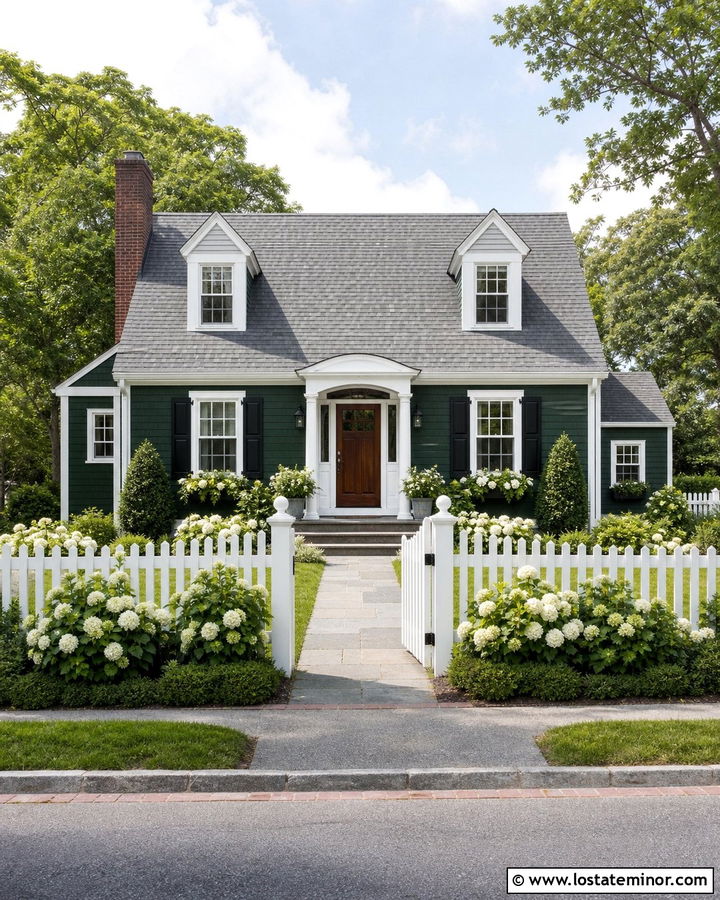
A low white fence creates a crisp foreground for hunter green Cape Cod siding. Continue the white on the corner boards, dormer trim, window frames, and simple entry surround. Choose black shutters, a red-brown wood door, and a medium-gray roof for a familiar but substantial palette. Between the fence and house, plant rounded hydrangeas, compact evergreens, and groups of white perennials. A straight brick or bluestone path can run from the gate to the front door. Keep the fence low enough to preserve an open view of the home. Matching planters on the steps will strengthen the symmetry without taking up much yard space. The white boundary makes the deep green facade stand out, while the soft planting stops the high-contrast exterior from feeling too sharp.
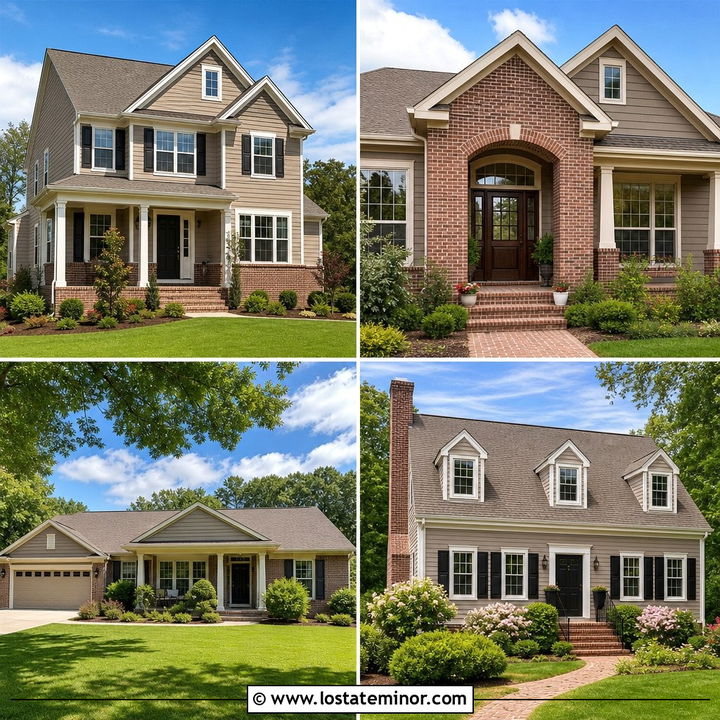
25. Hunter Green Midcentury House With Geometric Landscaping
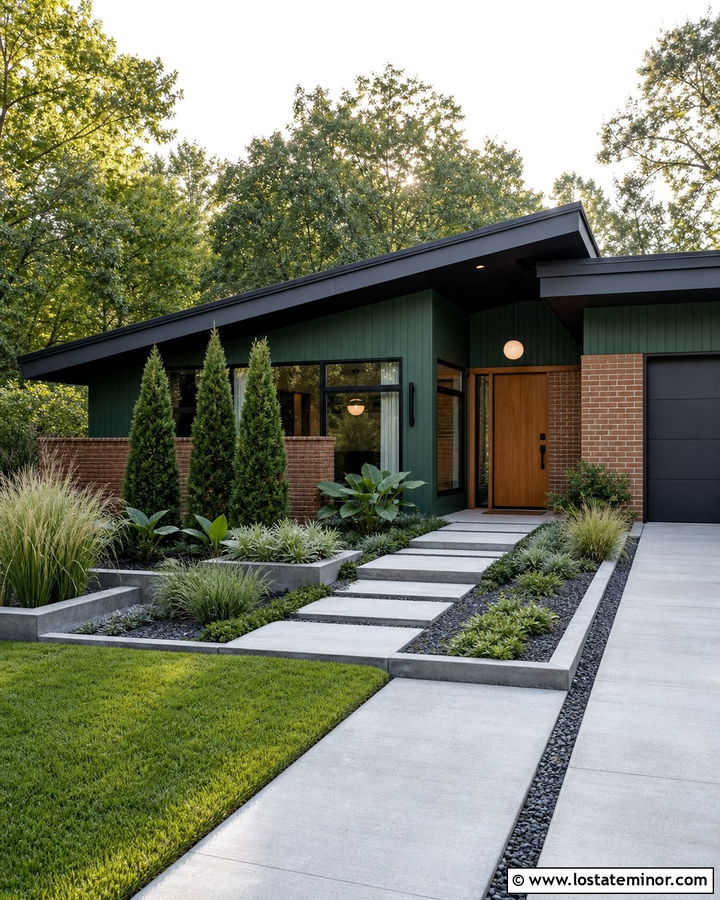
Hunter green can update a midcentury home while respecting its low roofline and strong geometry. Use the color on vertical wood siding, then add black-framed windows, a charcoal roof, and a flat-panel walnut door. If the home includes brick, leave warm orange or brown masonry unpainted for contrast. Create angular planting beds edged with concrete or dark steel. Arrange ornamental grasses, sculptural evergreens, and broad-leaf plants in asymmetrical groups that echo the architecture. A row of large rectangular pavers can lead to the entrance through gravel or low ground cover. Keep plants away from signature windows and roof supports. This streamlined landscaping gives the dark green exterior an organized setting, while wood, brick, and foliage prevent the overall design from feeling overly hard or monochromatic.
26. Hunter Green Craftsman With River Rock Landscaping
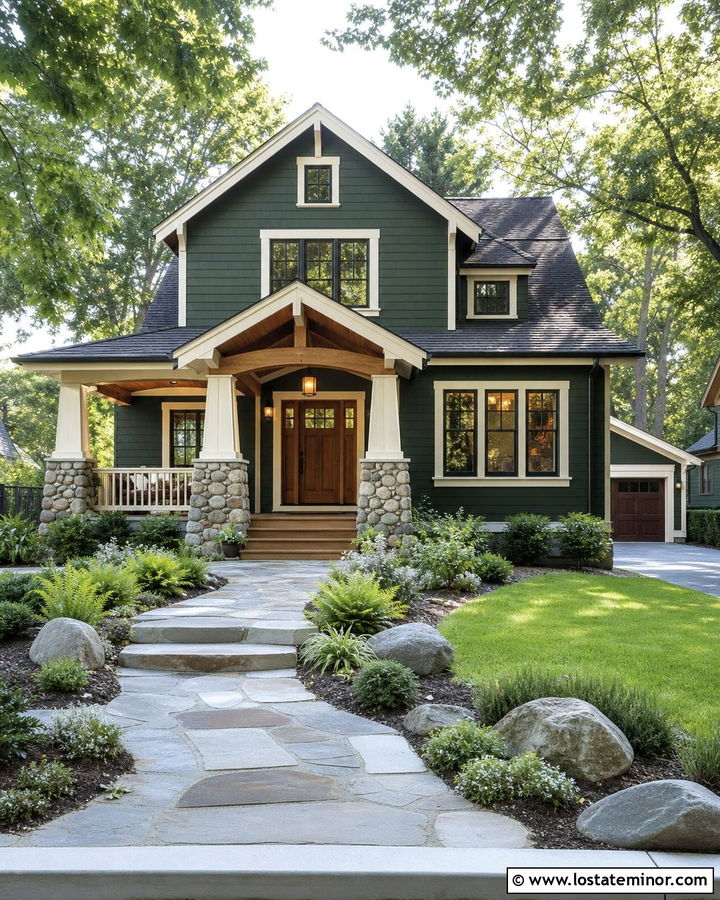
River rock adds texture and regional character to a hunter green craftsman exterior. Use it on porch piers, foundation sections, or a low garden wall rather than scattering unrelated stone across the yard. Warm cream trim can outline the roof brackets and window frames, while stained cedar highlights the door, porch ceiling, and railings. Choose a deep brown or charcoal roof that relates to the darker stones. Around the porch, plant layered ferns, ornamental grasses, compact shrubs, and white flowering perennials. A broad natural-stone path will complement the rockwork better than plain concrete. Keep foundation plants low enough to reveal the porch bases. The mixture of green siding, warm wood, and rounded stone gives the entire craftsman facade a grounded, substantial appearance.
27. Hunter Green Tudor With Cream Stucco Landscaping
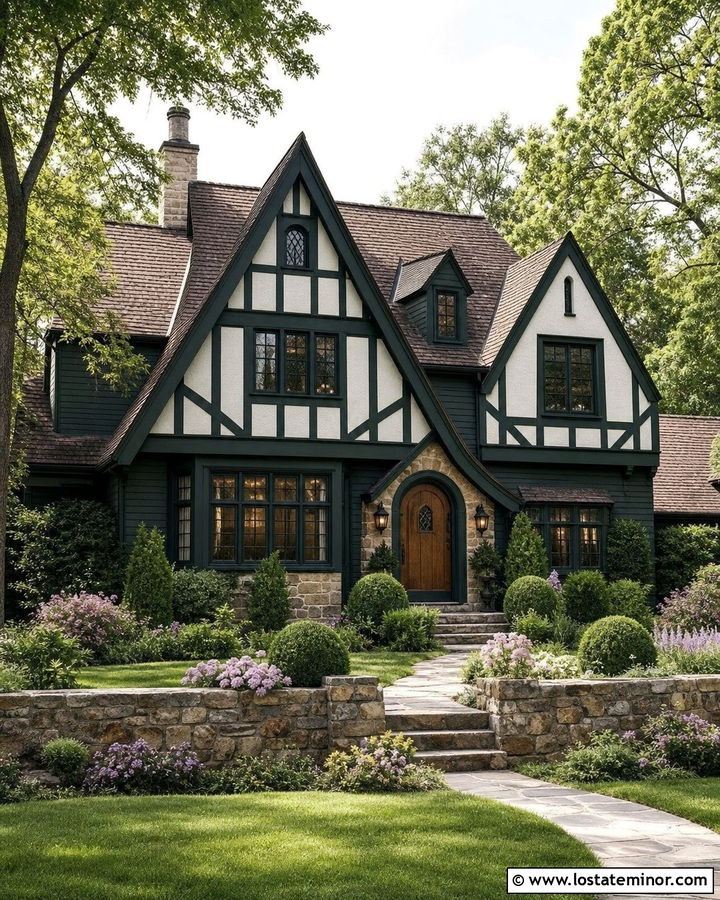
A Tudor exterior can use hunter green without losing its familiar contrast. Apply the green to the half-timber details, trim, and selected siding areas, while keeping the main stucco a warm cream. Alternatively, use hunter green siding below cream gables for a darker interpretation. A steep brown roof, arched oak door, and antique bronze lights complete the architectural palette. Frame the entrance with rounded evergreens and loose flowering shrubs rather than severe foundation rows. A curved stone walk and low garden wall can reinforce the old-world character. Add white, pale pink, and lavender flowers for brightness against the dark timber color. The cream stucco provides essential breathing room, allowing hunter green to emphasize the Tudor structure while the layered landscaping softens its strong roofline.
28. Hunter Green Farmhouse With Black Roof And Orchard Landscaping
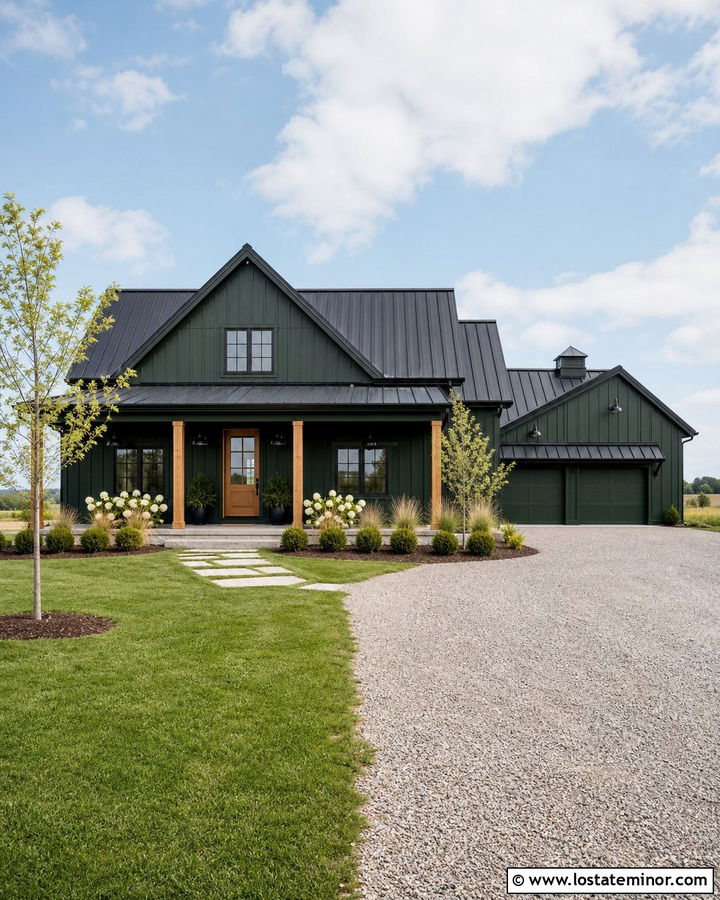
A black metal roof gives a hunter green farmhouse a crisp silhouette and practical rural character. Use creamy white trim on the windows and porch, then introduce natural oak through the front door, posts, and porch furniture. Paint the garage or outbuildings hunter green as well so the property feels connected. In the yard, place small flowering or fruiting trees in an orderly arrangement with enough space for their mature size. Closer to the house, use white hydrangeas, ornamental grasses, and low evergreen shrubs. A gravel driveway and simple stone path fit the informal setting. Black barn lights can repeat the roof finish. The orchard-like planting adds seasonal interest without competing with the architecture, while the warm wood and white trim keep the deep green facade approachable.
29. Hunter Green Cabin With Cedar Deck Landscaping
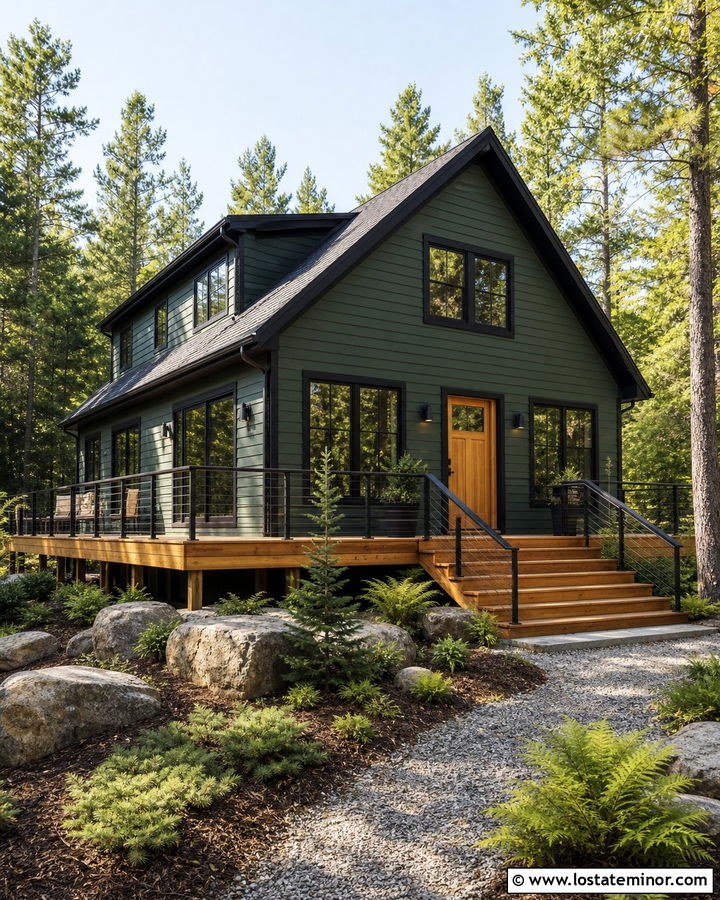
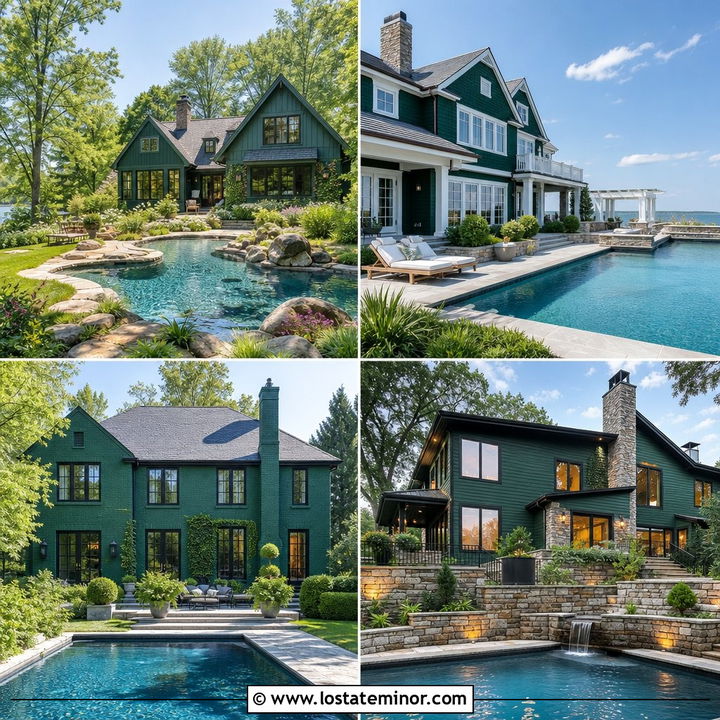
Hunter green is a natural choice for a cabin because it settles easily among conifers and wooded surroundings. Use deep green lap siding with black trim and a charcoal roof for a quiet, low-contrast envelope. A wide cedar deck, matching stairs, and a clear-stained wood door provide warmth and prevent the house from disappearing into the trees. Landscape with native-looking ferns, grasses, evergreen ground covers, and carefully positioned boulders. Keep combustible materials, planting distances, and local fire-safety requirements in mind when planning a wooded property. A gravel path can connect the driveway and deck without appearing overly formal. Subtle path lighting and black metal railings finish the design. The complete scheme feels rugged and comfortable, with cedar acting as the visual bridge between forest and facade.
30. Hunter Green Urban House With Vertical Landscaping
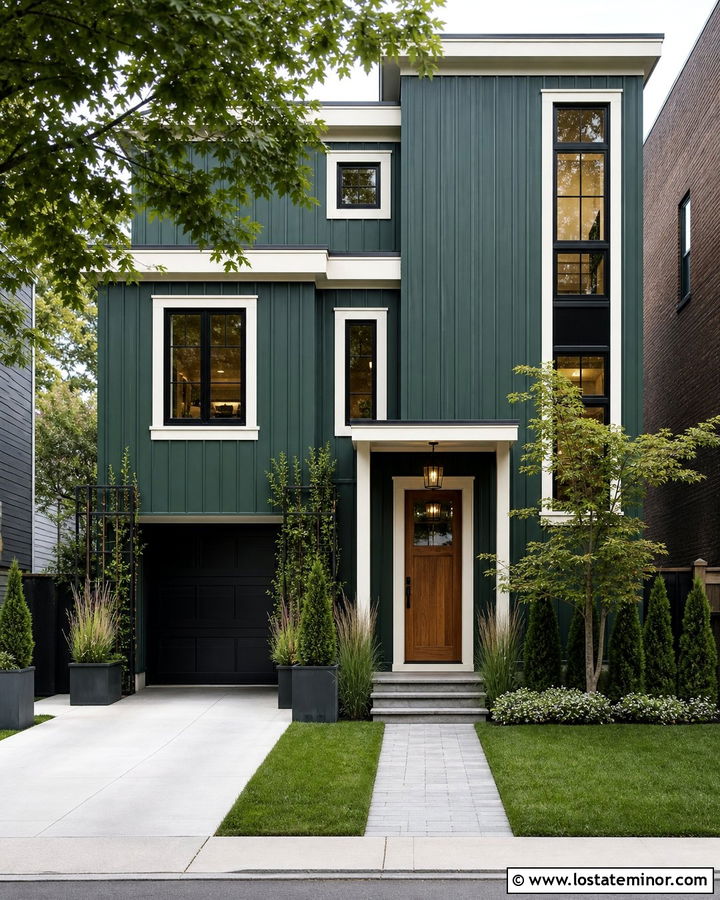
A narrow urban home can still support abundant landscaping without hiding its hunter green exterior. Use vertical siding to emphasize height, then add warm white trim, black windows, and a medium wood door. A dark garage door can visually recede beneath the main facade. Create slender planting beds with upright evergreens, columnar shrubs, ornamental grasses, and climbing plants supported on freestanding trellises. Large rectangular planters can define the entry when ground space is limited. Choose a straight walkway and restrained paver pattern to keep the small frontage orderly. A compact ornamental tree placed to one side can provide shade without blocking the door. Repeating vertical forms in the architecture and landscaping makes the property feel taller, greener, and carefully designed rather than cramped.
Conclusion:
These **30 Hunter Green House Design With Landscaping Ideas** show how one deep exterior color can support many architectural personalities. Hunter green may look traditional beside brick and boxwood, rustic with cedar and fieldstone, or contemporary with black windows and ornamental grasses. The strongest designs repeat a limited set of colors and materials across the house, walkway, and garden. They also leave windows, doors, and important architectural details visible. Before choosing plants, consider mature size, sunlight, drainage, climate, and ongoing maintenance. Test exterior colors on several sides of the house as well. With thoughtful trim, warm accents, and well-scaled landscaping, a hunter green home can feel distinctive, balanced, and naturally connected to its setting.

Related posts: