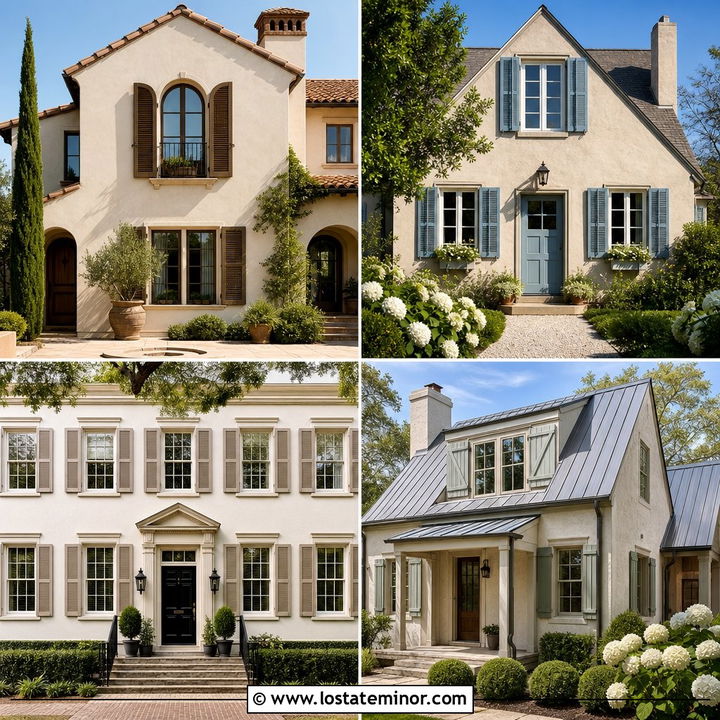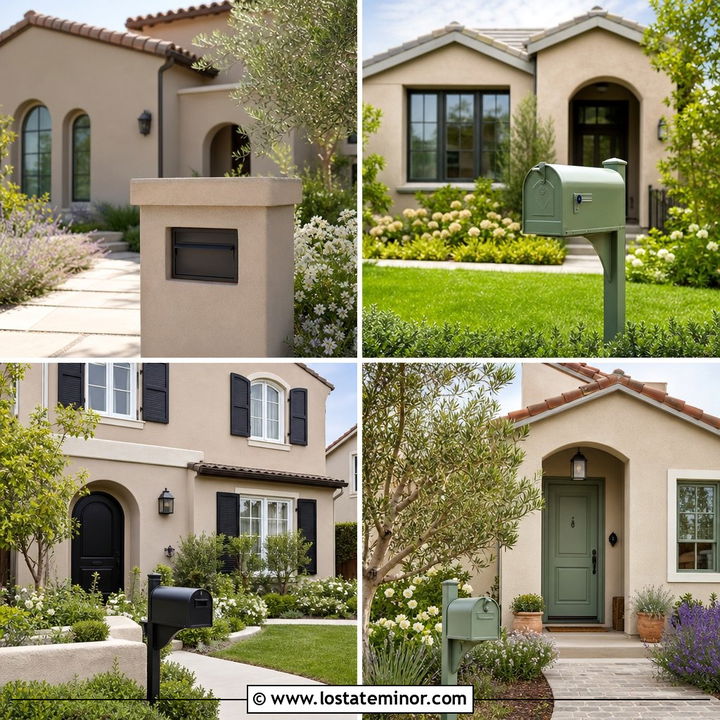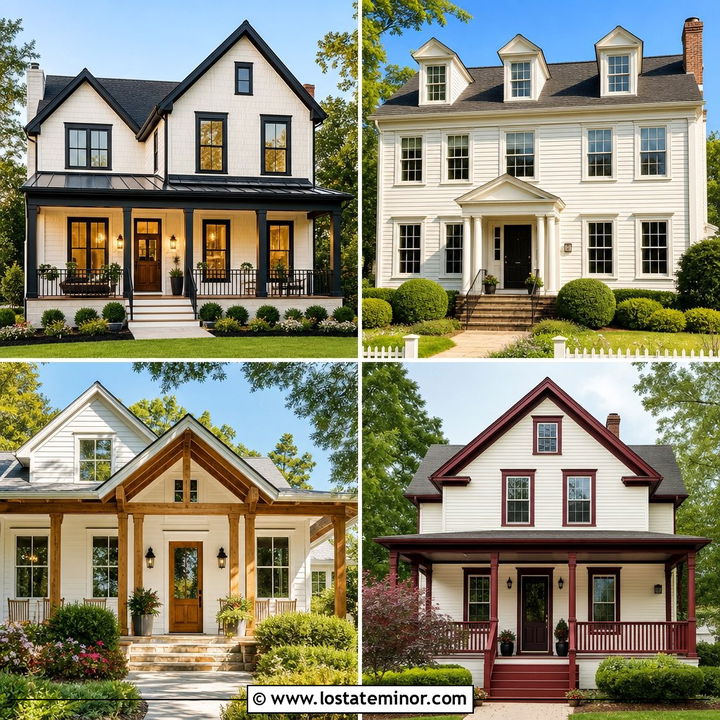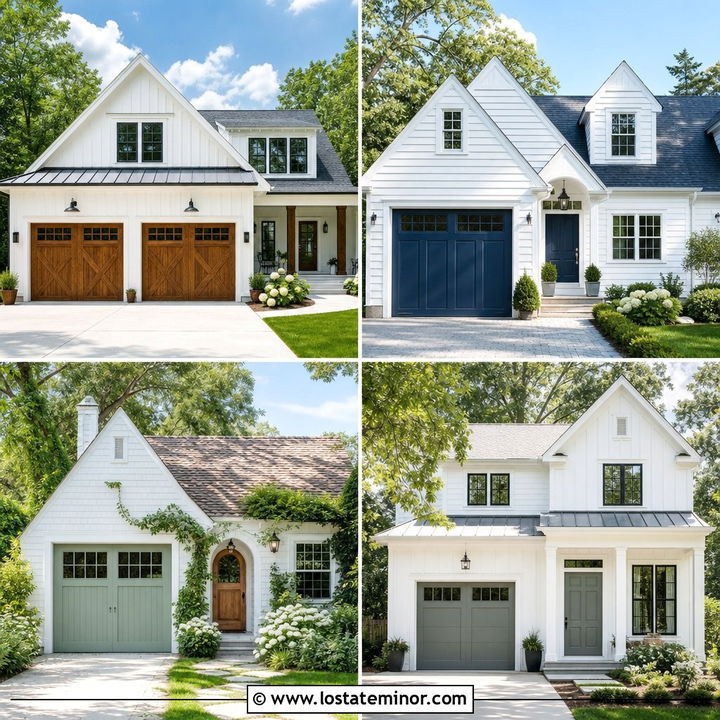
A white exterior creates a clean backdrop that makes greenery, flowers, walkways, and architectural details stand out. The most successful landscaping does more than fill empty beds. It connects the yard to the home’s style, balances the facade, and guides attention toward the entrance. Warm whites pair beautifully with relaxed cottage gardens and natural stone, while crisp whites support structured hedges, dark accents, and modern hardscaping. Plant height, climate, sunlight, maintenance, and mature growth should also shape the plan. Whether you have a compact bungalow, sprawling ranch, coastal cottage, or traditional Colonial, these complete exterior looks offer practical inspiration. Explore these 30 White House Design With Landscaping Ideas to create a polished and welcoming property.

1. White House With Boxwood Landscaping
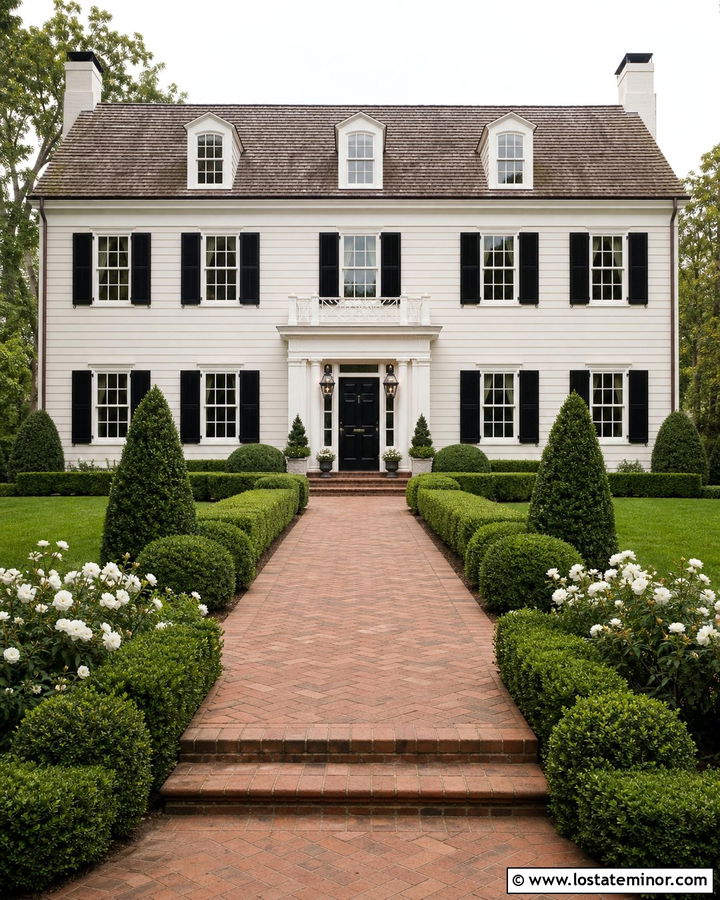
A symmetrical row of boxwoods gives a white Colonial exterior an orderly, timeless appearance. Choose a warm white such as Benjamin Moore White Dove for the siding, then add black shutters, a black front door, and traditional lanterns. Low boxwoods can outline the foundation without covering the lower windows or architectural trim. Place taller evergreen cones near the entrance to emphasize the centered doorway. A straight red brick walkway reinforces the formal layout, while pale pink roses soften the clipped greenery. Leave enough space between shrubs and the house for airflow and future growth. This complete scheme works especially well when the lawn edges are crisp and the planting beds follow the balanced lines of the facade.
2. White Farmhouse With Hydrangea Landscaping
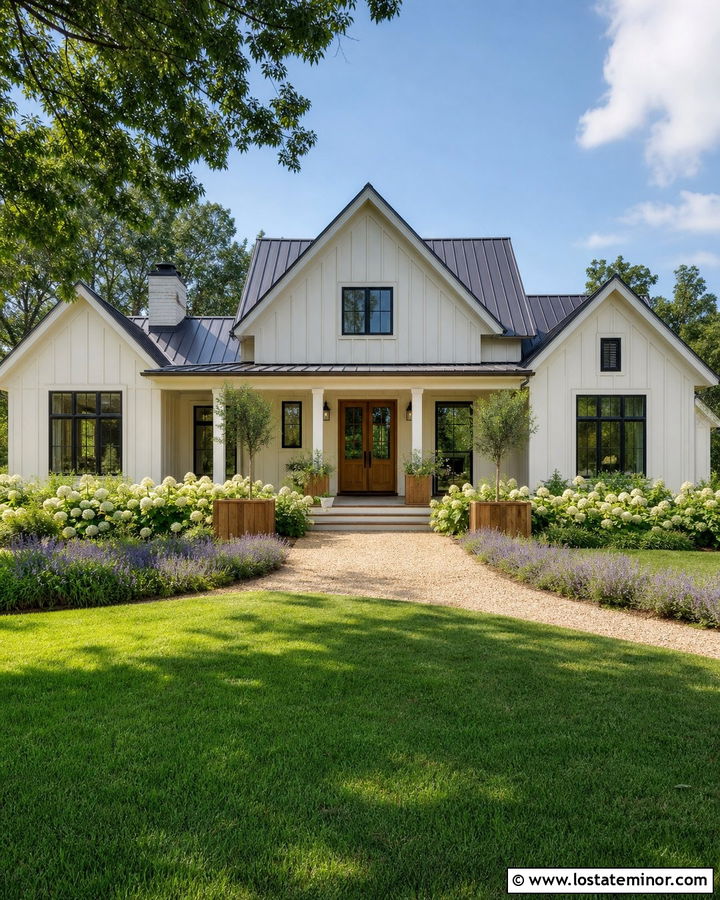
Large hydrangeas bring softness and seasonal color to a white modern farmhouse. Sherwin-Williams Alabaster siding creates a warm background, while black-framed windows, a charcoal metal roof, and a natural oak door add strong contrast. Arrange hydrangeas in generous groups along the porch rather than scattering individual plants across the yard. Low catmint or salvia can fill the front edge of the beds and prevent the shrubs from appearing top-heavy. A wide gravel walkway and simple wood planters keep the overall exterior relaxed. Use varieties suited to your climate, sunlight, and available space. The rounded flowers, upright porch columns, and clean board-and-batten siding work together to produce comfortable farmhouse curb appeal without making the landscaping feel overly formal.
3. White Cottage With Colorful Flower Beds

Imagine a small white cottage surrounded by layers of lavender, pink roses, blue salvia, and cheerful daisies. Benjamin Moore Simply White siding keeps the facade fresh, while a muted blue front door and weathered cedar window boxes add cottage character. Instead of planting one narrow foundation row, create curved beds that extend into the front yard. Position taller shrubs and flowering roses near the house, medium perennials in the center, and low ground cover along the edges. A winding flagstone path makes the entrance feel discovered rather than rigidly directed. Repeating several plant colors throughout the landscape prevents the garden from looking random. This layered exterior scheme is ideal for homeowners who enjoy an abundant, informal yard with changing color from spring through fall.
4. White Ranch House With Low-Maintenance Landscaping
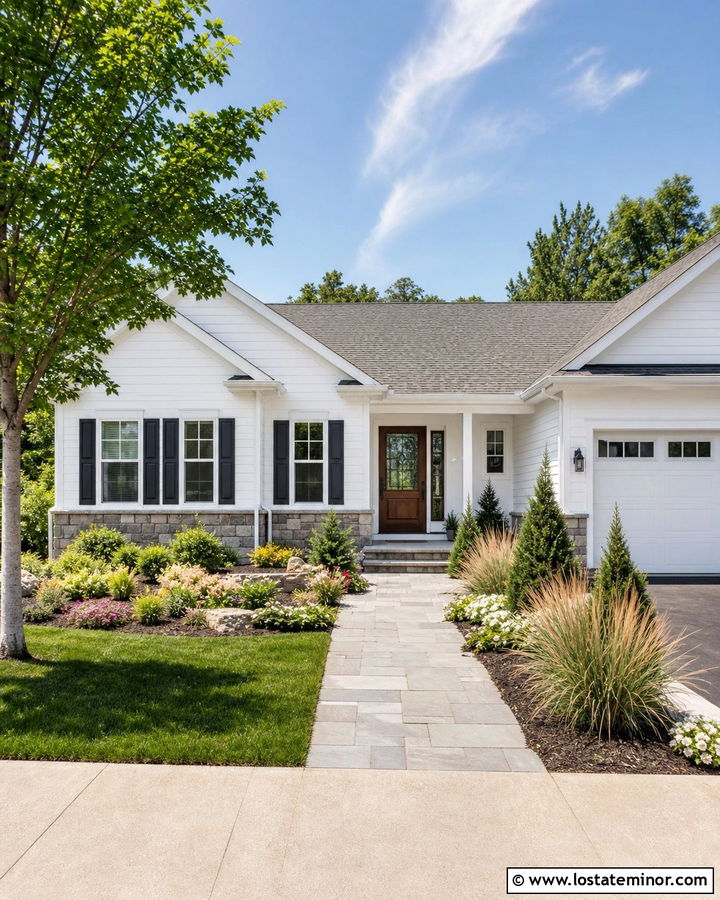
A long ranch facade benefits from broad planting groups that break up its horizontal shape. Paint the siding Sherwin-Williams Pure White, then introduce charcoal shutters, a stained walnut door, and warm gray stone around the entrance. Use compact evergreens, ornamental grasses, and durable flowering perennials in repeating clusters across the foundation. A small ornamental tree near one corner can visually balance the attached garage without hiding the house. Replace a narrow concrete walk with large rectangular pavers bordered by gravel or low ground cover. Keep taller shrubs away from wide picture windows so interior views remain open. This straightforward landscaping plan creates texture throughout the year while reducing the constant pruning and seasonal replanting often required by more elaborate front gardens.
5. White Brick House With Green Foundation Planting
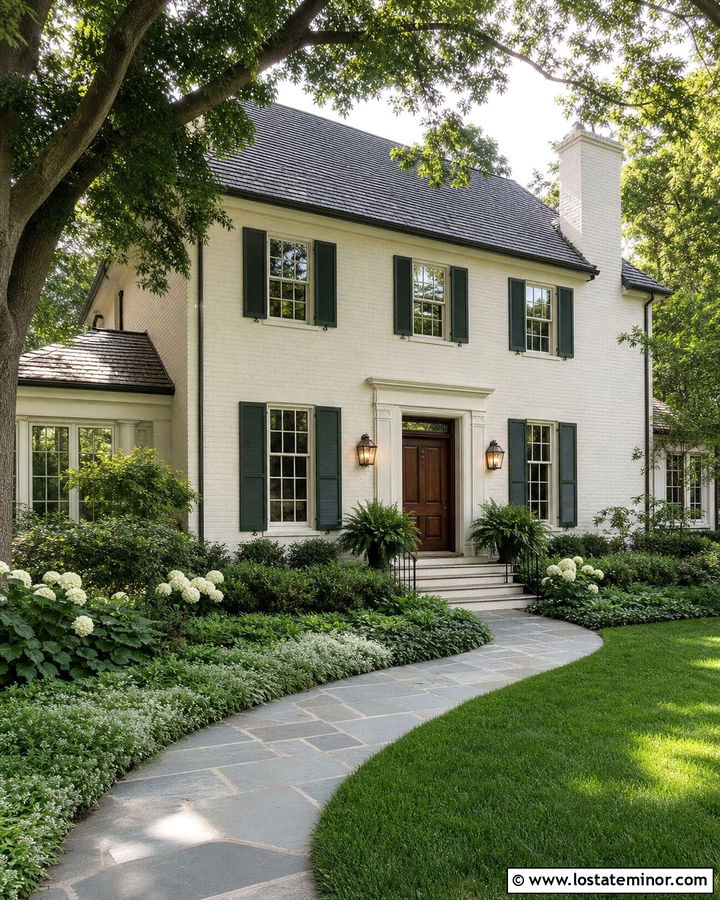
Painted white brick looks especially polished when surrounded by multiple shades of green. Benjamin Moore Swiss Coffee provides a creamy white finish that complements traditional brick texture, bronze lanterns, dark green shutters, and a medium-stained wood door. Build the landscape with glossy evergreens, soft ferns, spreading ground cover, and a few upright shrubs. The variation in leaf shape prevents an all-green garden from becoming flat. A curved bluestone path can provide a cool contrast to the warm exterior. Add restrained white flowers to brighten shaded areas without competing with the architecture. This design works beautifully beneath mature trees, where a lawn may struggle but shade-tolerant foliage can create a full, established setting around the home.
6. Modern White House With Ornamental Grasses
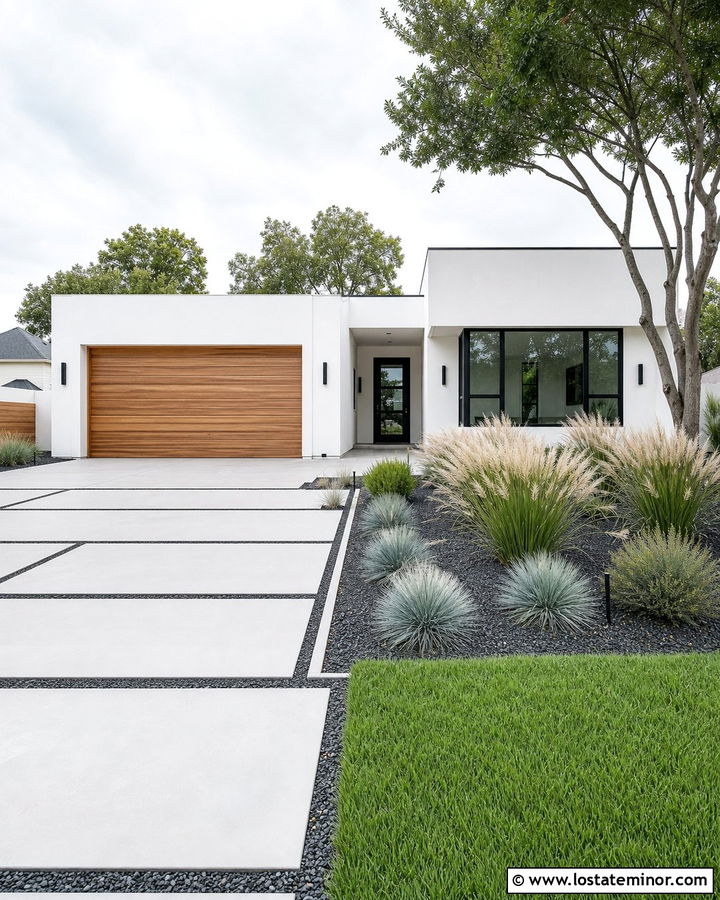
Crisp white stucco and flowing ornamental grasses create a clean modern exterior that still feels welcoming. Use Benjamin Moore Chantilly Lace on the house, paired with black window frames, a natural cedar garage door, and pale concrete hardscaping. Plant broad sweeps of feather reed grass, blue fescue, and low evergreen ground cover instead of many unrelated varieties. Their movement softens the straight rooflines and large windows. Oversized concrete pavers can lead across dark gravel to a simple wood front door. Keep the beds geometric, but avoid placing every plant in perfectly rigid rows. A sculptural multi-stem tree provides height without overwhelming the facade. The limited materials and controlled planting palette make this landscaping easier to understand visually and support the home’s contemporary architecture.
7. White Colonial House With Formal Landscaping
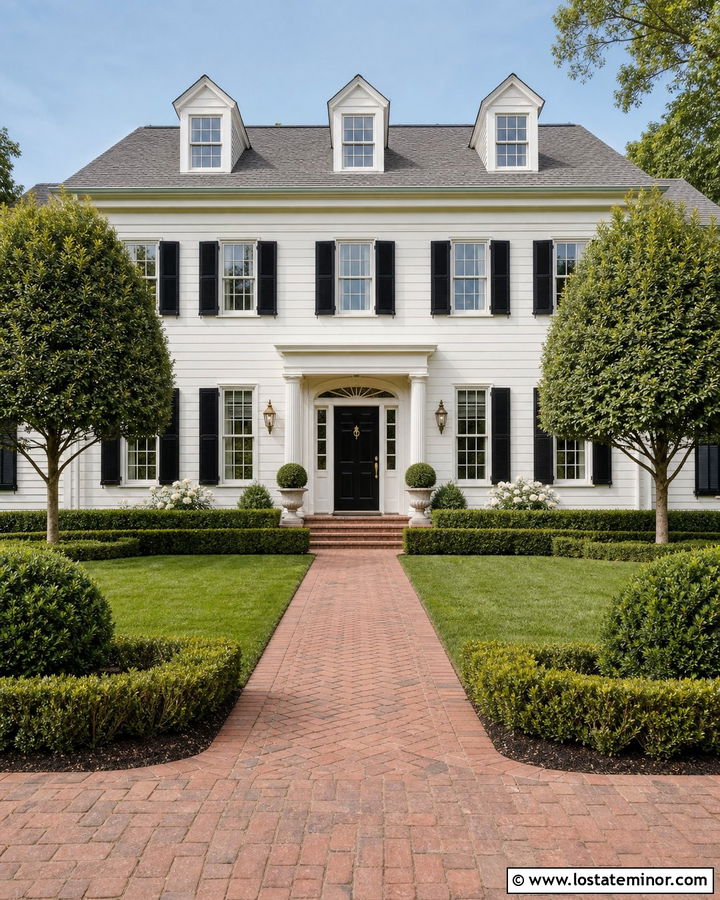
Would a structured landscape improve a tall, symmetrical home? A white Colonial painted Sherwin-Williams Greek Villa looks refined with black shutters, a glossy black door, and a brick chimney. Match that balanced architecture with paired ornamental trees, neatly clipped hedges, and identical planters beside the entrance. A straight brick walkway should align with the doorway and divide the lawn evenly. Inside the foundation beds, use repeating groups of boxwood, white roses, and evergreen ground cover. Avoid shrubs that grow high enough to hide the first-floor windows. Small changes in plant texture will keep the formal plan from feeling severe. This traditional exterior arrangement highlights the home’s proportions and establishes a clear, gracious approach from the sidewalk to the front steps.
8. White Craftsman House With Native Landscaping
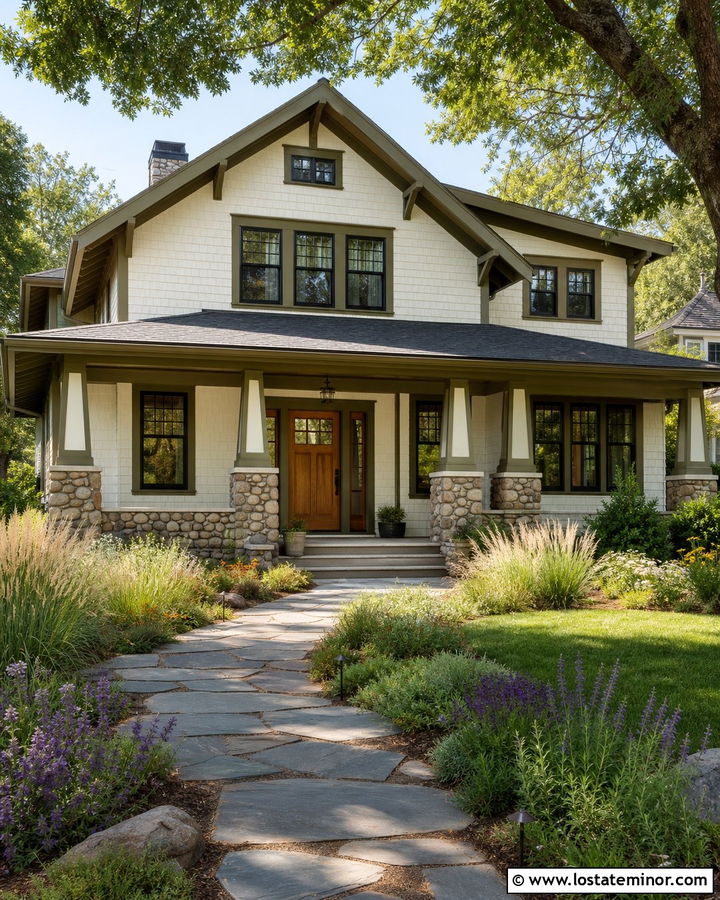
A white Craftsman home feels grounded when the landscaping reflects its natural materials. Sherwin-Williams Shoji White siding pairs well with olive green trim, a stained fir door, tapered porch columns, and a river-rock foundation. Surround the porch with regionally appropriate native grasses, flowering perennials, and compact shrubs. Plants with different bloom periods can provide changing color without requiring a completely new display each season. A wide flagstone walkway reinforces the handmade character of the house, especially when creeping ground cover softens its edges. Keep the plants slightly informal but repeat key varieties for visual order. The combination of warm white paint, visible wood grain, rounded stone, and naturalistic planting creates a cohesive Craftsman landscape rather than treating the house and garden as separate projects.
9. White Cape Cod House With Rose Landscaping
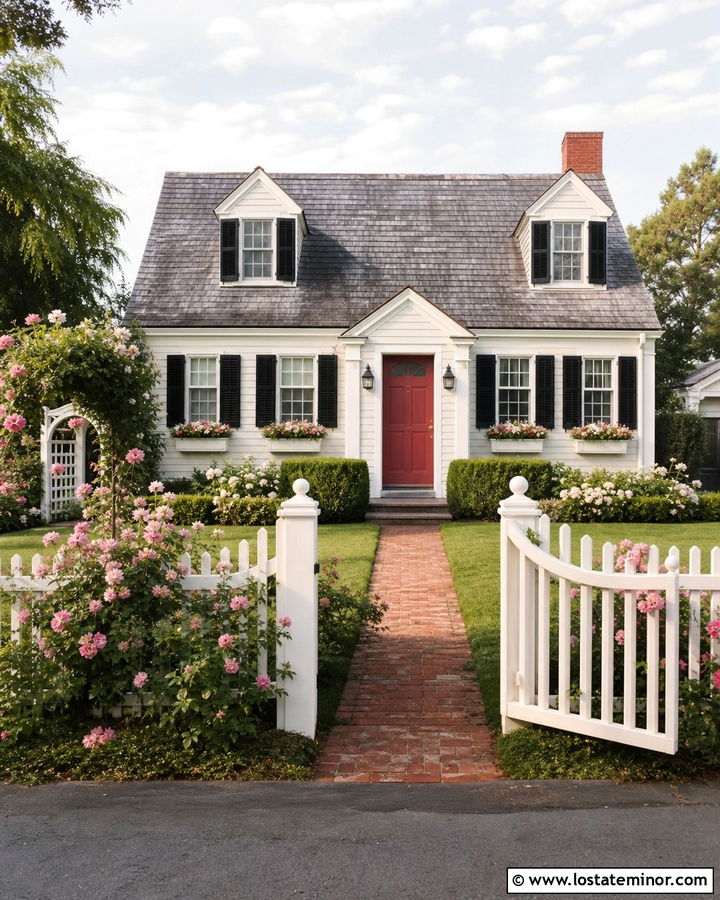
Classic roses can turn a compact white Cape Cod into a storybook focal point. Benjamin Moore White Dove siding, black shutters, a soft red front door, and a weathered gray roof create a familiar New England palette. Plant low rose bushes beneath the front windows, allowing enough room for their mature spread and routine maintenance. Add boxwood edging to provide winter structure when the roses are not flowering. A short brick path, white window boxes, and a simple picket gate strengthen the traditional look. Keep the center of the yard relatively open so the home does not disappear behind the garden. Repeating pink and white blooms near the walkway helps connect the planting beds and creates a warm, clearly defined route to the entrance.
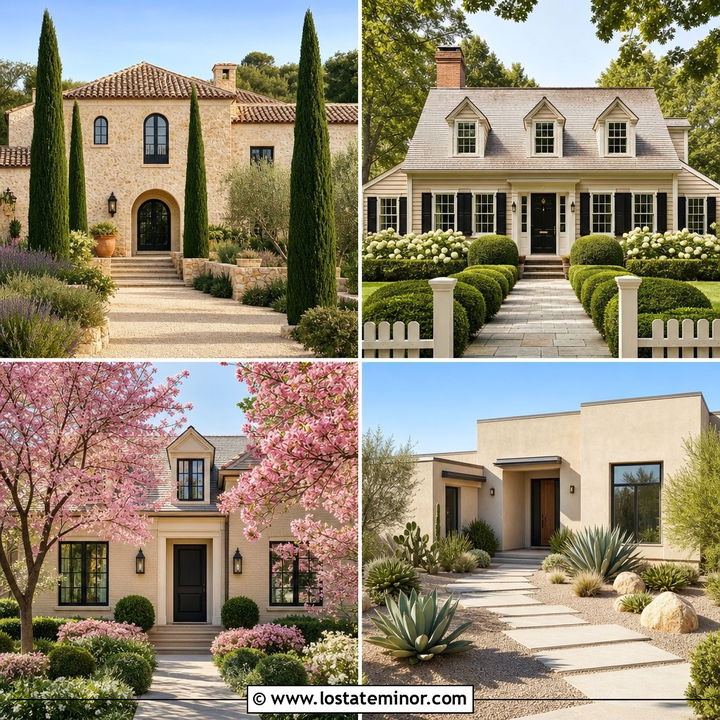
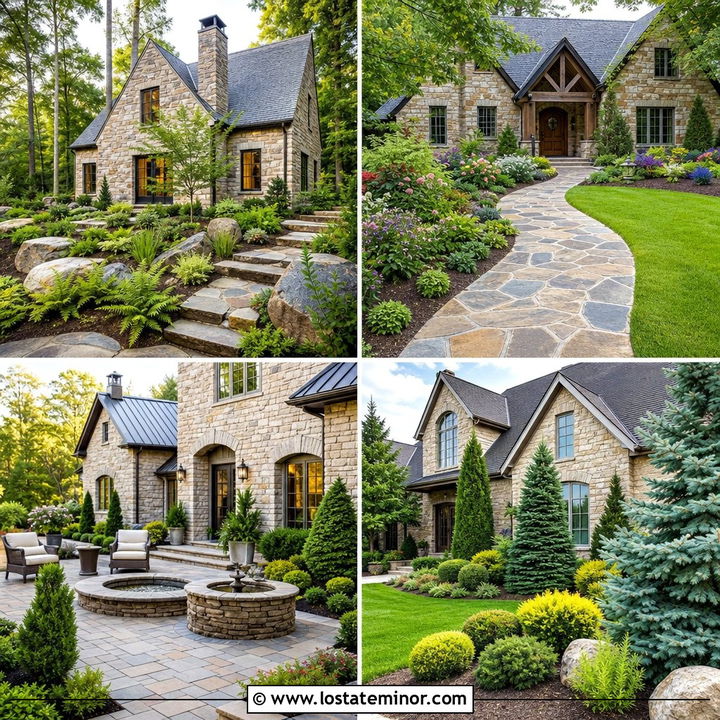
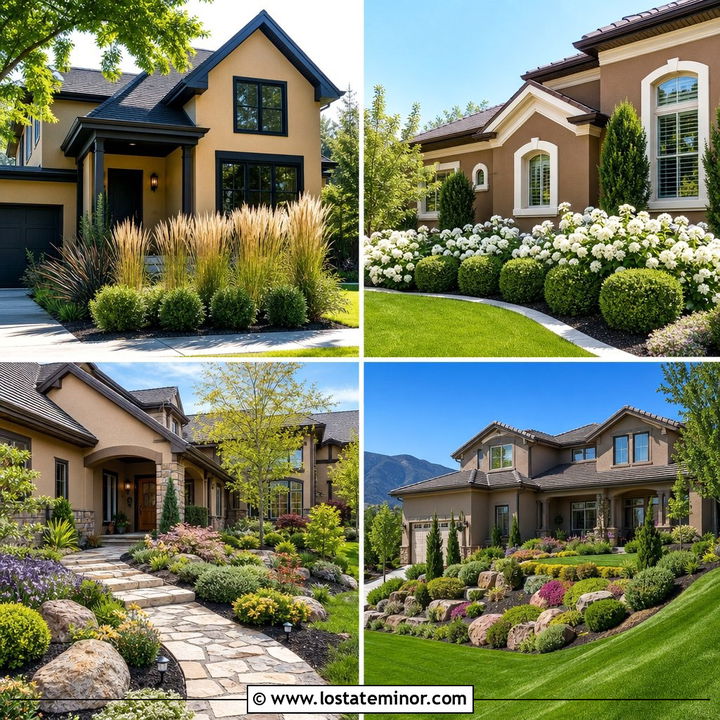
10. White Bungalow With Pollinator Landscaping
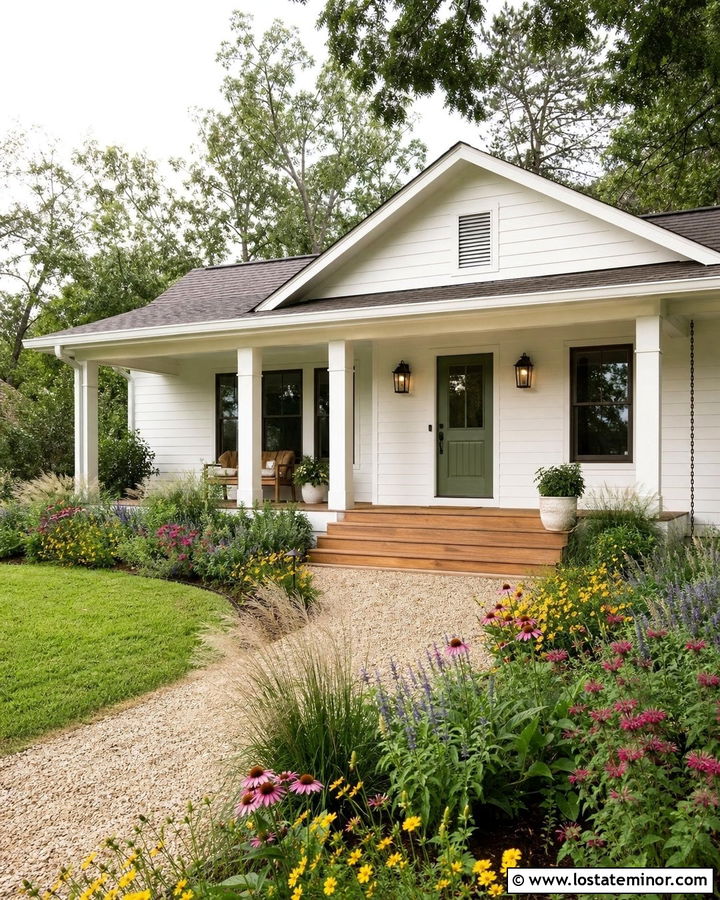
A white bungalow offers the perfect scale for a lively pollinator garden. Paint the lap siding Benjamin Moore Simply White and pair it with a sage green door, dark bronze lighting, and warm cedar porch steps. Replace part of the front lawn with broad drifts of coneflower, bee balm, coreopsis, salvia, and ornamental grasses selected for local growing conditions. Keep the tallest plants behind shorter border flowers so the porch remains visible. A narrow gravel or stepping-stone path can weave gently through the garden without creating excessive hardscape. Repeating the same plants in several areas gives the landscape a deliberate rhythm. This complete exterior feels colorful and relaxed, yet the restrained siding and trim prevent the abundant planting from visually overwhelming the small house.
11. White Mediterranean House With Drought-Tolerant Landscaping
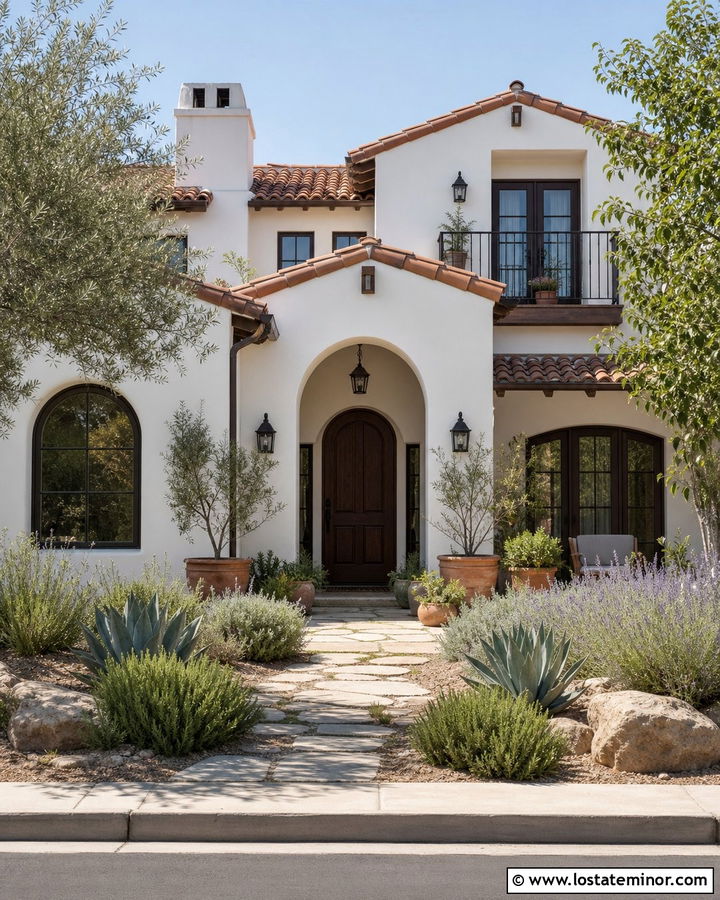
Bright white stucco, terracotta roofing, and water-conscious plants form a natural Mediterranean-inspired exterior. Use Sherwin-Williams Snowbound for a softly shaded white, then add dark wood doors, black iron details, and clay planters. Frame the facade with olive trees, lavender, rosemary, agave, and low mounds of drought-tolerant ground cover where the climate allows. Warm gravel can replace thirsty lawn sections and unify the planting beds. A pale stone walkway should curve gently toward an arched entrance or covered courtyard. Limit the plant palette and repeat each variety in visible groups. The silver-green foliage stands out against the white walls, while terracotta and wood prevent the exterior from appearing cold. The finished landscape feels established, sunny, and connected to the architecture.
12. White House With Black Trim And Evergreen Landscaping
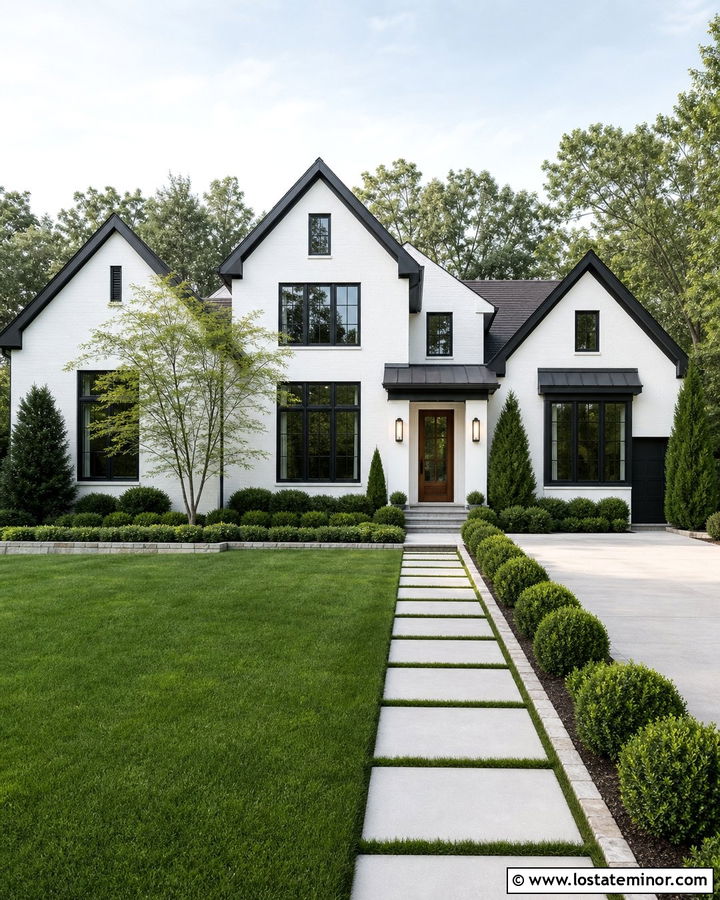
Sharp black trim makes a white exterior more graphic, so the landscaping should provide depth without adding visual clutter. Benjamin Moore Chantilly Lace siding works with black windows, black gutters, and a natural walnut front door. Create broad foundation beds filled with dark green yew, compact holly, low juniper, and rounded boxwood. Their year-round color anchors the high-contrast facade in every season. White gravel or pale stone edging can echo the siding, while large concrete pavers continue the modern lines. Include one airy ornamental tree to soften the roofline and frame the entrance. Avoid placing identical shrubs in a narrow, unbroken row. Layered heights and varied evergreen textures will make this black-and-white exterior feel dimensional, balanced, and carefully designed.
13. White House With Blue Door And Coastal Landscaping
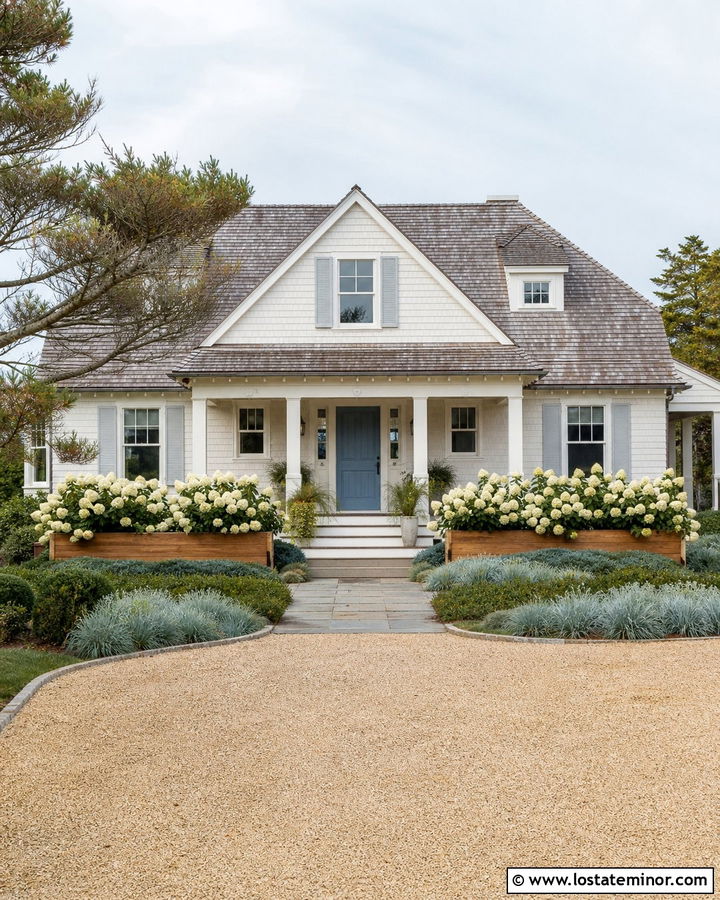
A fresh blue door becomes more convincing when the surrounding landscape supports a coastal palette. Paint a shingle-style home Benjamin Moore Cloud White, then add a dusty blue front door, pale gray shutters, and a weathered cedar roof. Use blue-green grasses, white hydrangeas, low juniper, and salt-tolerant shrubs suited to the property’s region. A shell-colored gravel drive and irregular flagstone walkway can reinforce the relaxed seaside character. Keep foundation plants low enough to reveal the shingle texture and wide porch. Natural wood planters add warmth and prevent the pale scheme from feeling washed out. Even away from the coast, this complete exterior can work when the plant selection suits local conditions and the blue, gray, green, and white tones are repeated consistently.
14. White House With Red Door And Cottage Landscaping
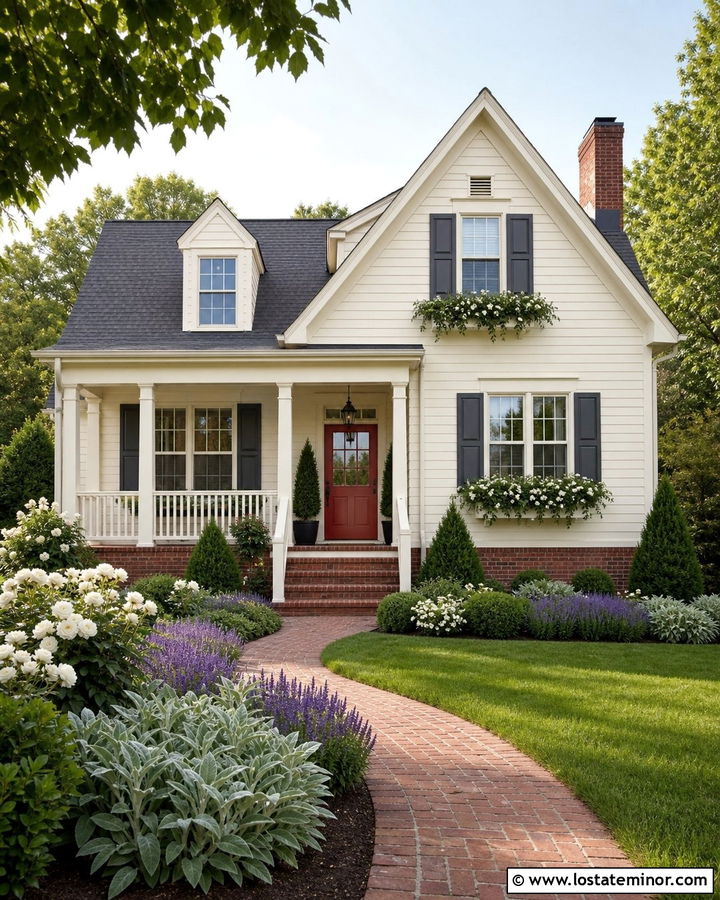
A red front door creates a lively focal point against a warm white exterior. Sherwin-Williams Creamy siding, charcoal shutters, and a brick foundation give the color enough visual support. Surround the entrance with white roses, purple salvia, soft green lamb’s ear, and compact evergreen shrubs. Use red flowers sparingly so the door remains the main accent rather than becoming lost in a matching garden. A gently curved brick walkway can connect the steps to the sidewalk and repeat the masonry at the foundation. Window boxes filled with green foliage and white blooms complete the cottage appearance. This landscaping approach works because every element has a role: the red door draws attention, the path guides visitors, and the layered plants soften the home’s straight edges.
15. White House With Natural Wood Accents And Prairie Landscaping
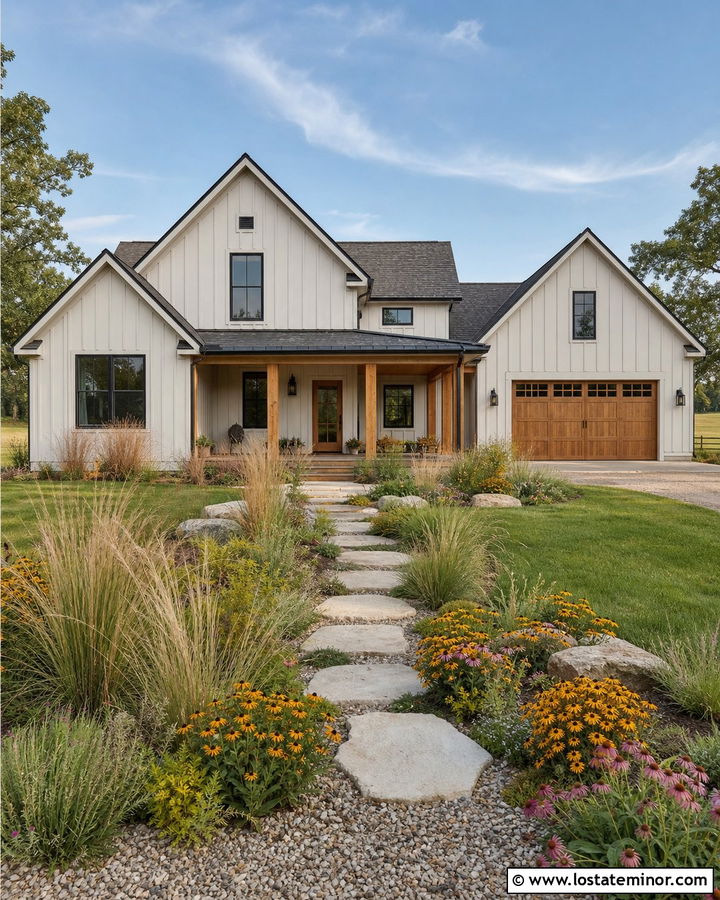
Warm wood details and loose prairie planting can make a white contemporary farmhouse feel connected to its setting. Use Sherwin-Williams Oyster White siding with cedar porch columns, a matching garage door, and dark bronze windows. Plant sweeping groups of switchgrass, little bluestem, black-eyed Susans, and coneflowers where these choices suit the local climate. Their upright forms balance the strong roofline and create movement around the facade. A wide path of limestone slabs provides a clean route through the naturalistic beds. Keep plants farther from the siding and use gravel near the foundation for a tidy transition. The combination of soft white, honey-toned wood, golden grasses, and seasonal flowers offers a relaxed landscape while maintaining a clearly organized, modern exterior.
16. White House With Lavender Border Landscaping
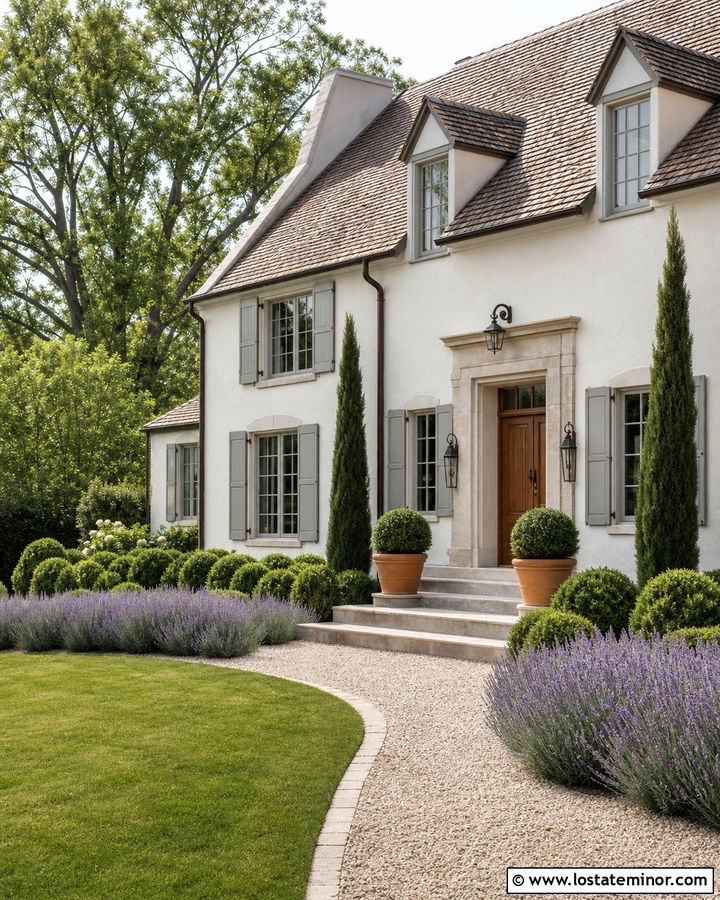
Soft purple flowers bring graceful contrast to a warm white home without overpowering it. Benjamin Moore Swiss Coffee siding, muted gray shutters, and a medium oak front door form a calm foundation for lavender-colored planting. Line a sunny walkway with lavender where growing conditions are suitable, or choose a locally appropriate plant with a similar shape and color. Add clipped evergreen shrubs near the house to provide structure after flowering ends. Pale pea gravel, limestone steps, and terracotta pots reinforce the warm palette. The planting border should be wide enough for mature growth without spilling heavily over the path. This exterior works particularly well on French country, cottage, and transitional homes because the repeated purple blooms visually connect the yard, entrance, and creamy facade.
17. White House With Japanese-Inspired Landscaping
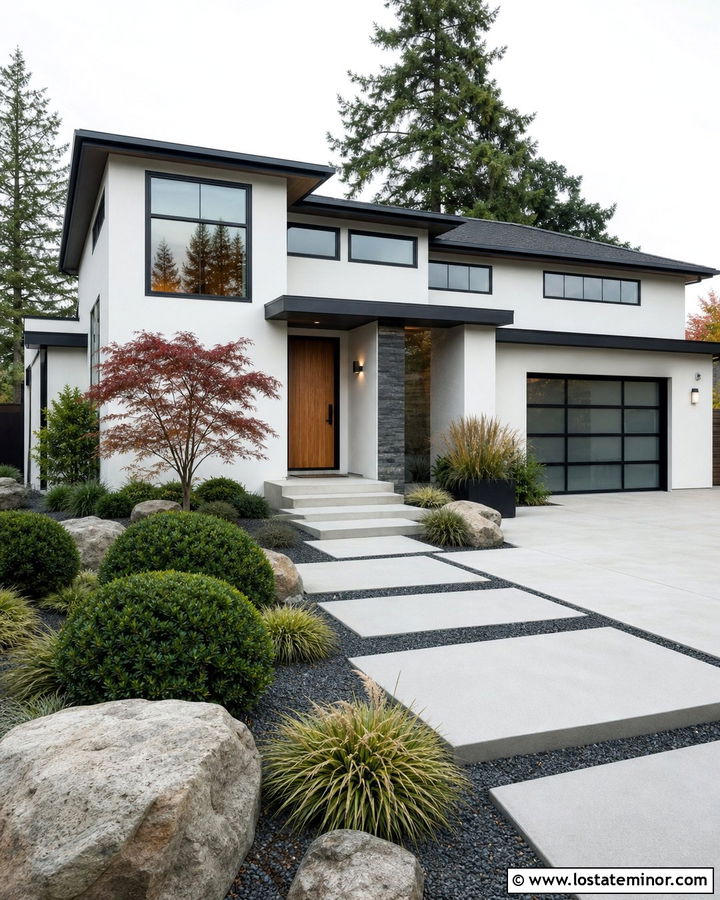
A quiet landscape can give a simple white exterior remarkable depth. Paint a contemporary home Sherwin-Williams Pure White, then pair it with charcoal window frames, a cedar front door, and dark gray stone. Use a carefully positioned Japanese maple, rounded evergreen shrubs, ornamental grasses, moss-like ground cover, and natural boulders. The composition should leave open space between plants so each form remains visible. Large stepping stones can cross a bed of fine gravel toward the entrance. Avoid using too many decorative objects or flower colors. The restrained red, green, gray, wood, and white palette creates the visual interest. This design is inspired by balance and simplicity rather than copying a garden without considering the home’s architecture, climate, and maintenance requirements.
18. White Split-Level House With Tiered Landscaping
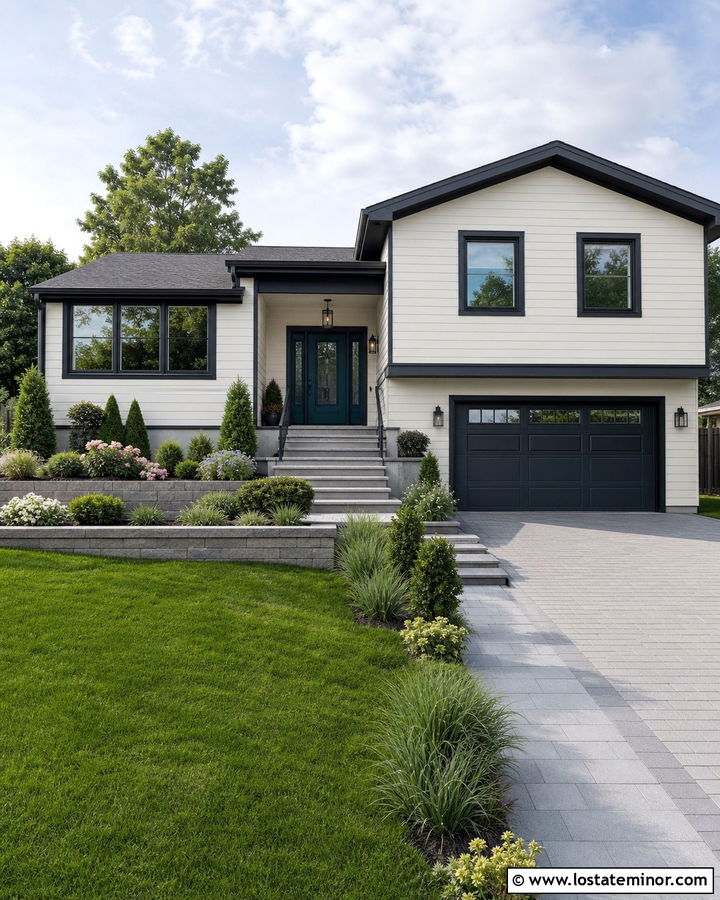
Tiered beds can improve a split-level facade by connecting different elevations across the property. Use Benjamin Moore Seapearl, a soft off-white, with charcoal trim, a dark teal front door, and warm gray retaining walls. Build low terraces that follow the slope rather than forcing one flat planting bed against the house. Fill them with compact evergreens, flowering shrubs, low grasses, and spreading ground cover. Broad steps and a clearly visible walkway should lead directly to the entrance. Place taller plants near blank wall sections, but preserve views from lower-level windows. Repeating the same stone in the retaining walls, steps, and foundation helps unify the exterior. The finished landscape turns an awkward grade change into a structured feature while making the home appear wider and more balanced.
19. White House With Desert Landscaping
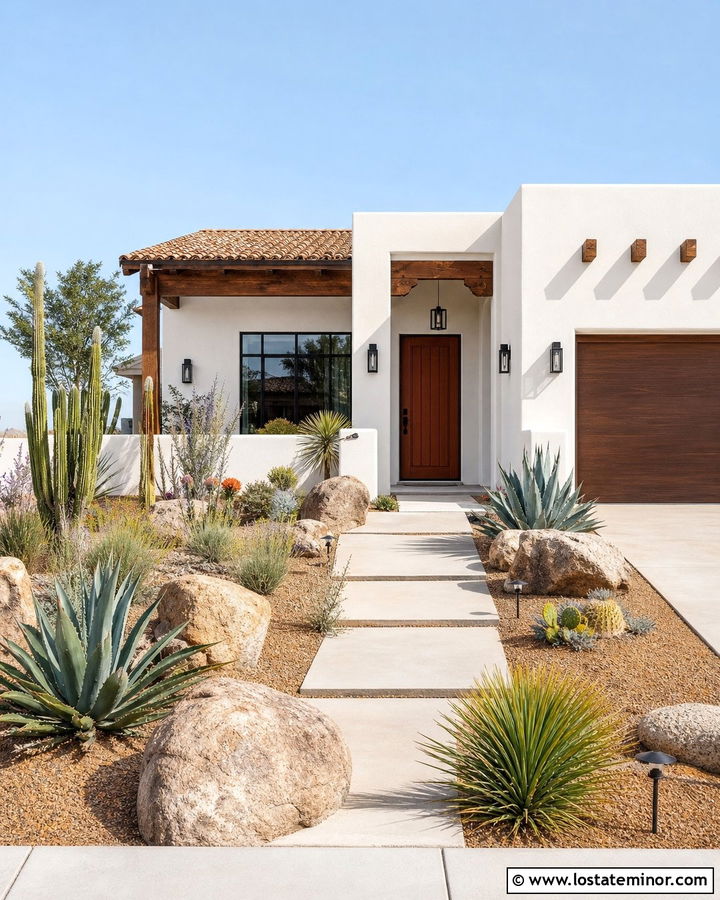
A white stucco home can look striking against warm gravel, sculptural plants, and desert stone. Benjamin Moore Simply White creates a clean facade, while a rust-colored front door, black-framed windows, and natural wood beams introduce warmth. Arrange agave, yucca, desert spoon, low flowering plants, and upright cacti only where climate and safety considerations make them suitable. Leave generous gravel spaces around the major plants so their silhouettes remain clear. A straight walkway of large concrete slabs provides a practical route through the landscape. Group boulders in natural-looking clusters instead of spreading single rocks evenly across the yard. The strong white, green, rust, and sand-colored palette supports modern Southwestern architecture and offers curb appeal without depending on a traditional lawn.
20. White House With Tropical Landscaping
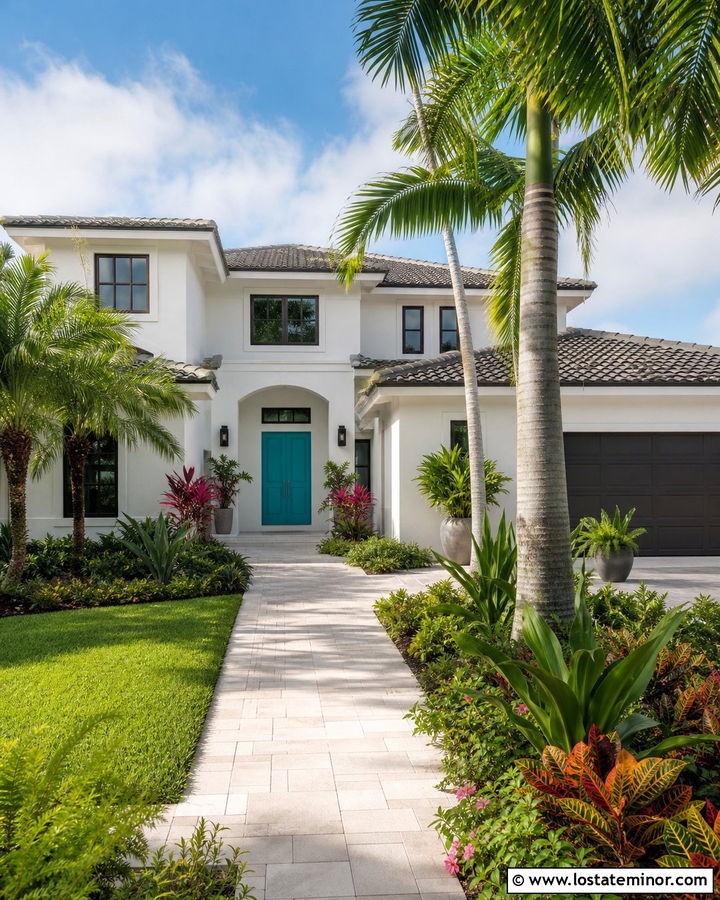
Lush tropical foliage gives a white house bold color even when flowers are limited. Paint the stucco Benjamin Moore White Heron, then add a turquoise door, dark bronze windows, and a light gray tile roof. Layer palms, broad-leaf plants, ferns, colorful crotons, and flowering shrubs suited to a warm local climate. Keep larger palms away from the foundation and roof so they have room to mature safely. A pale paver walkway and neatly edged lawn will provide calm areas beside the dense planting. Use matching planters near the entrance to repeat the strongest leaf colors. Against the simple white facade, every green tone becomes more visible. The completed exterior feels vibrant and resort-like while maintaining an organized walkway, clear entrance, and readable architectural shape.
21. White Victorian House With Layered Garden Landscaping
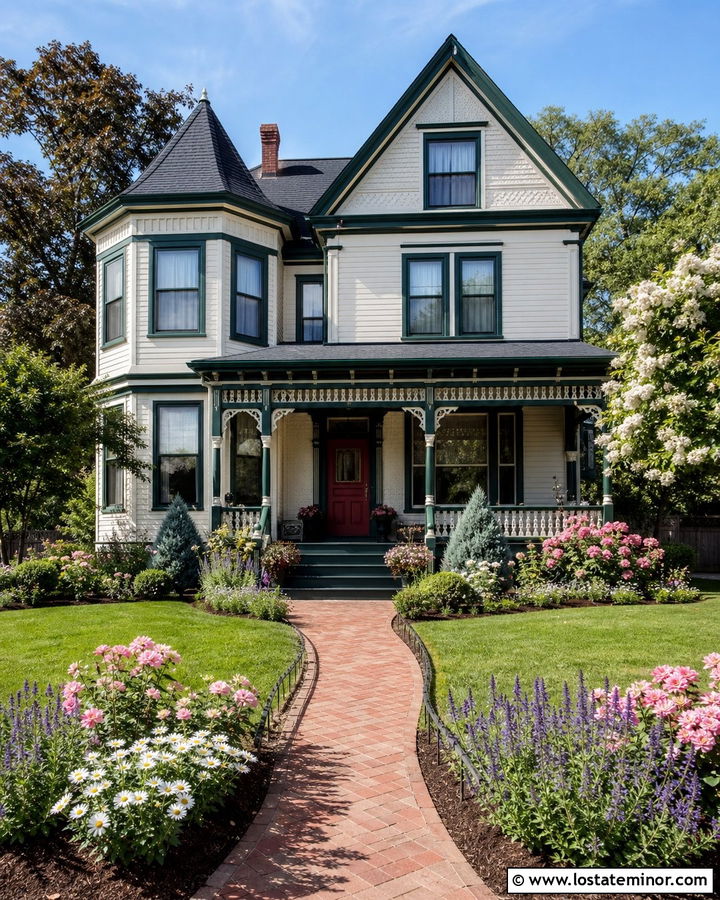
Detailed Victorian architecture pairs naturally with layered planting, but the garden should not hide the decorative facade. Benjamin Moore White Dove siding, deep green trim, a burgundy front door, and a charcoal roof create a historically inspired palette. Plant compact evergreens nearest the foundation, flowering shrubs in the middle, and lower perennials along a curved iron-edged border. Roses, foxglove-like flowers, salvia, and daisies can establish an informal cottage effect when chosen for local conditions. Repeat burgundy foliage in small amounts to connect the garden with the front door. A brick walkway and decorative gate strengthen the traditional setting. Careful plant spacing is essential, since an overgrown garden can obscure porch railings, windows, and the intricate woodwork that gives the house its identity.
22. White House With Circular Driveway Landscaping
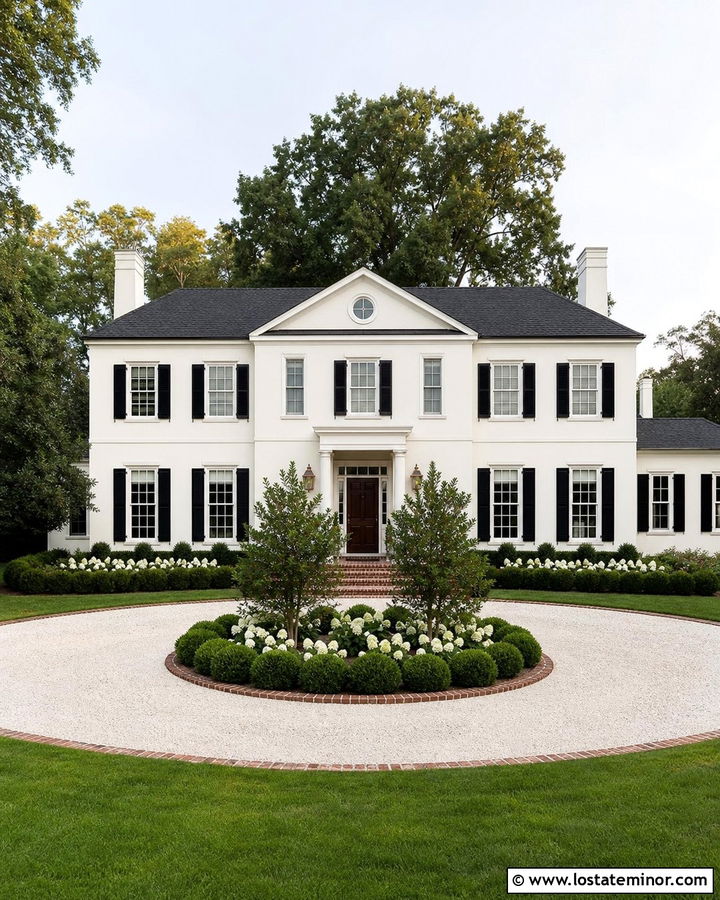
A circular driveway creates a prominent central planting area that should enhance rather than block the home. Paint a stately white Georgian exterior Sherwin-Williams Greek Villa, then use black shutters, a dark wood door, and aged brass lanterns. In the driveway island, place one well-scaled ornamental tree surrounded by low boxwoods, white flowering shrubs, and tidy ground cover. Keep the planting low near vehicle sightlines and driveway entrances. Matching foundation beds can repeat the same shrubs on both sides of the house. Brick edging ties the island to the front steps and chimney. This restrained landscape preserves a clear view of the facade while making the large paved area feel intentional. Balanced proportions are more important here than filling every available space with plants.
23. White House With Stone Walkway Landscaping
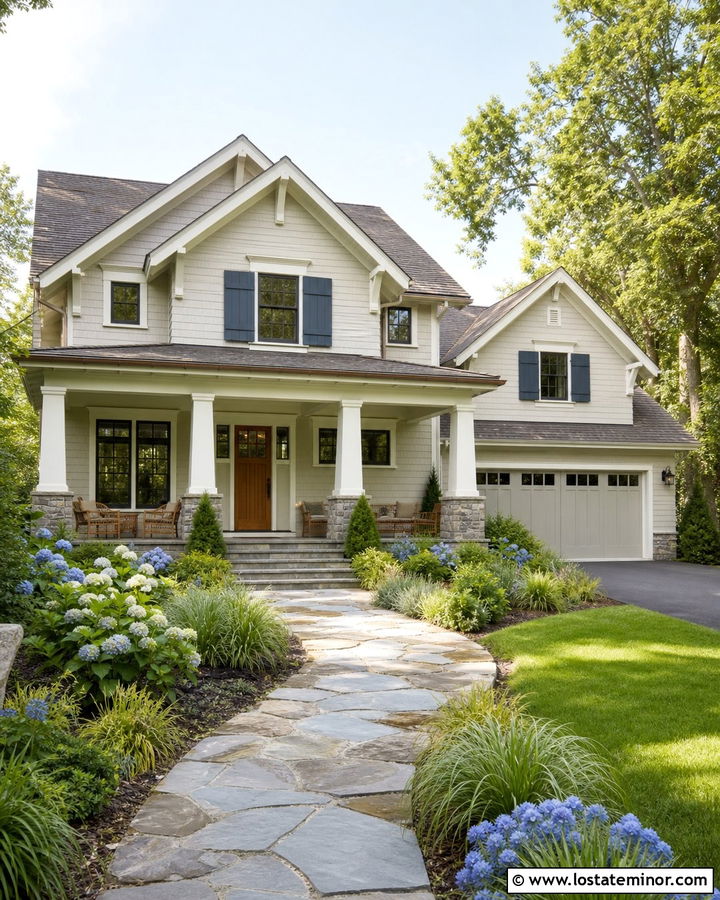
A substantial stone walkway can establish the character of an entire white house exterior. Benjamin Moore Pale Oak, a light warm greige-white, works beautifully with gray-blue shutters, a stained oak door, and a fieldstone foundation. Use irregular flagstone for a relaxed Craftsman or cottage home, then soften the joints with low, durable ground cover where appropriate. Border the path with hydrangeas, compact grasses, evergreen shrubs, and repeating blue flowers. The walkway should be wide enough for comfortable use and should lead clearly to the main entrance. Carry the same stone into porch columns or low garden walls to connect the landscape with the building. This repeated material gives the property a settled appearance and prevents the path from looking like a separate, added feature.
24. White House With Minimal Front Yard Landscaping
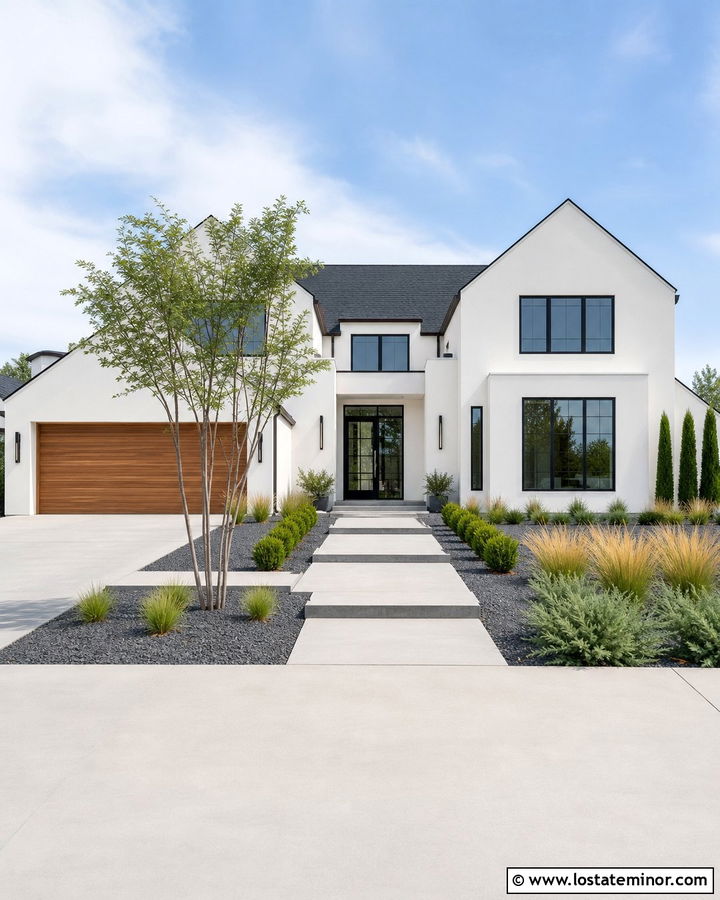
Minimal landscaping does not have to mean a bare lawn and a few undersized shrubs. Start with a modern white house in Sherwin-Williams Snowbound, paired with black windows, a cedar garage door, and pale concrete. Choose one multi-stem tree, two or three evergreen plant varieties, and a single ornamental grass repeated in broad groups. Use rectangular beds that echo the facade, with dark mulch or gravel providing clear contrast. Oversized pavers should form a direct walkway to the entrance. Leave intentional open areas around each planting mass so the design feels calm rather than unfinished. Careful placement, consistent edging, and strong proportions matter more than plant quantity. This controlled exterior is especially effective on compact urban lots where visual simplicity can make the property appear wider.
25. White House With Raised Garden Bed Landscaping
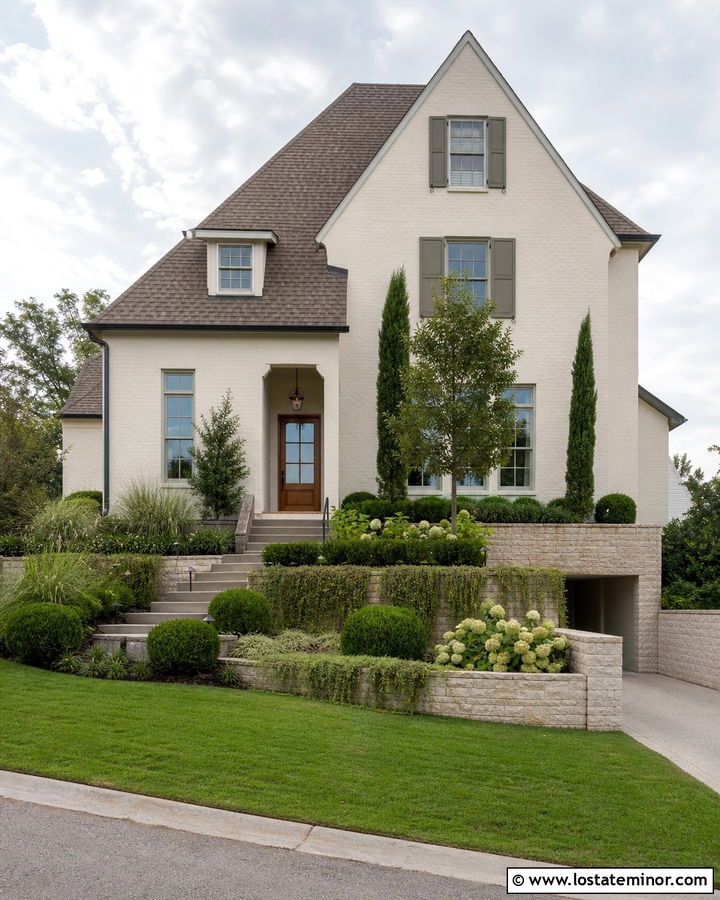
Raised beds can add structure to a white exterior while solving minor grade or drainage challenges. Use Sherwin-Williams Alabaster siding with olive green shutters, a natural wood door, and warm limestone retaining walls. Build broad, low planters rather than tall boxes that compete with windows and porch railings. Fill them with rounded evergreens, hydrangeas, ornamental grasses, and cascading ground cover. Repeat the wall material along the steps or walkway for a unified design. If the beds sit near the driveway, keep corner plants low enough to preserve clear views. Raised landscaping looks most convincing when it follows the home’s architecture and slope. The finished facade gains depth, defined planting zones, and a more substantial transition between the lawn, walkway, and front foundation.
26. White House With Magnolia Tree Landscaping
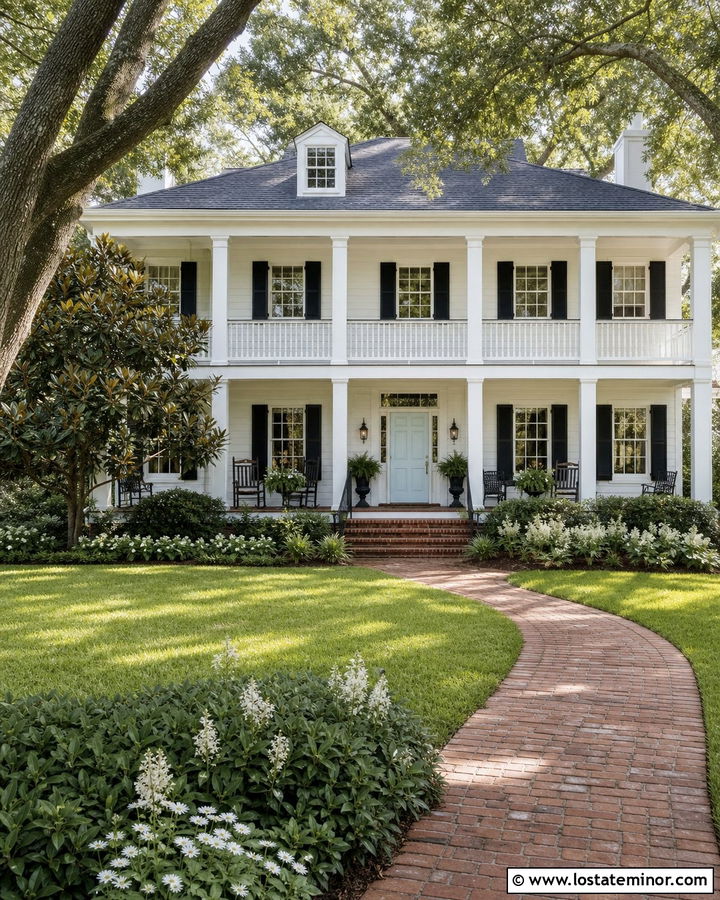
A magnolia can become a memorable focal point when its mature size matches the property. Paint a Southern Colonial exterior Benjamin Moore Cloud White, then add black shutters, a pale blue door, and a deep front porch with brick steps. Position the tree where it can frame the house without blocking the entrance or growing too close to the foundation. Beneath it, create a wide bed of shade-tolerant ground cover, ferns, and low evergreen shrubs. White flowering plants can repeat the magnolia blooms while keeping the overall palette restrained. A curved brick walkway guides visitors through the layered landscape. This exterior feels established and gracious because the large tree, broad porch, balanced beds, and open lawn are treated as parts of one composition.
27. White House With Privacy Landscaping
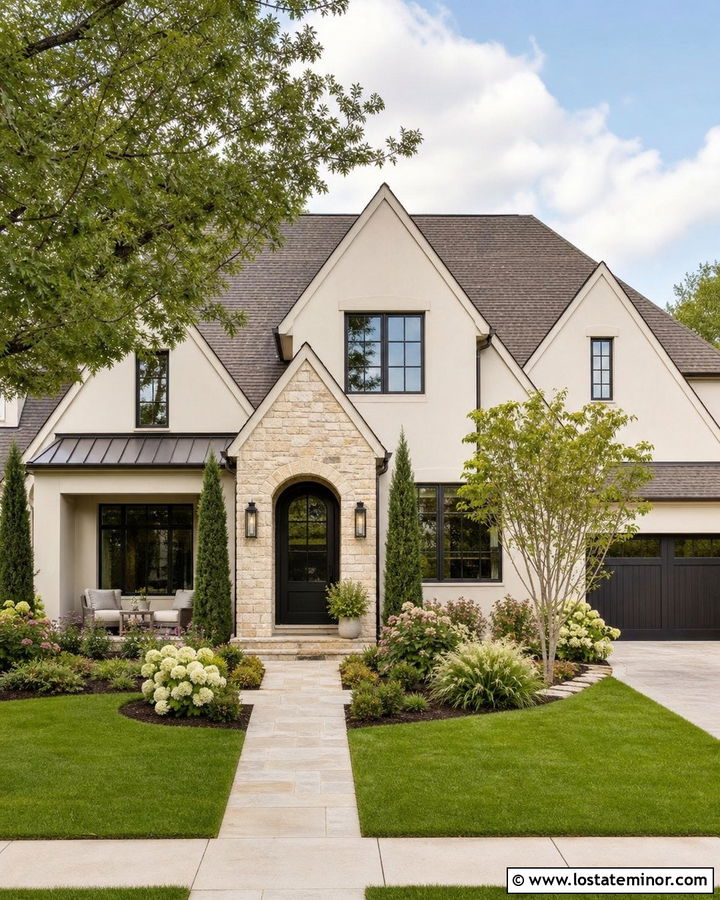
Privacy planting can screen windows and outdoor areas without creating a solid wall around the facade. Use Benjamin Moore Ballet White on a transitional home with dark bronze windows, a black front door, and warm stone accents. Place narrow upright evergreens near side boundaries, then transition to lower flowering shrubs and ornamental grasses closer to the entrance. Stagger the plants instead of lining them up at identical intervals. This creates depth and reduces the hedge-like appearance. A small ornamental tree can partially screen a front sitting area while preserving light and visibility. Keep the central walkway open and the house number easy to see. The best privacy landscape protects key spaces while maintaining a welcoming entrance and an attractive view from the street.
28. White House With Small Front Yard Landscaping
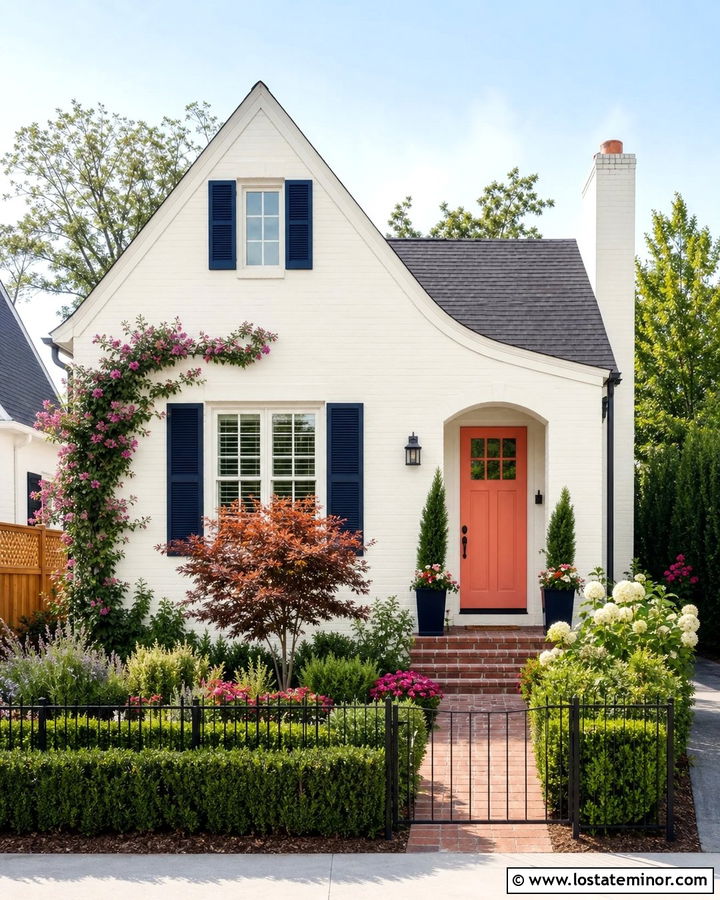
In a compact front yard, every plant and hardscape feature needs a clear purpose. Paint a white urban cottage Sherwin-Williams Creamy and pair it with navy shutters, a coral front door, and a narrow brick walkway. Use one small ornamental tree, low evergreen foundation shrubs, and a limited mix of long-blooming perennials. Vertical elements such as slim porch planters or a flowering vine can add greenery without consuming much ground space. Widen the planting bed near the house rather than creating several tiny beds across the lawn. A simple low fence may define the property while keeping the facade visible. Repeating two or three flower colors makes the garden appear organized and helps the small exterior feel full, welcoming, and carefully planned rather than crowded.
29. White House With Woodland Landscaping
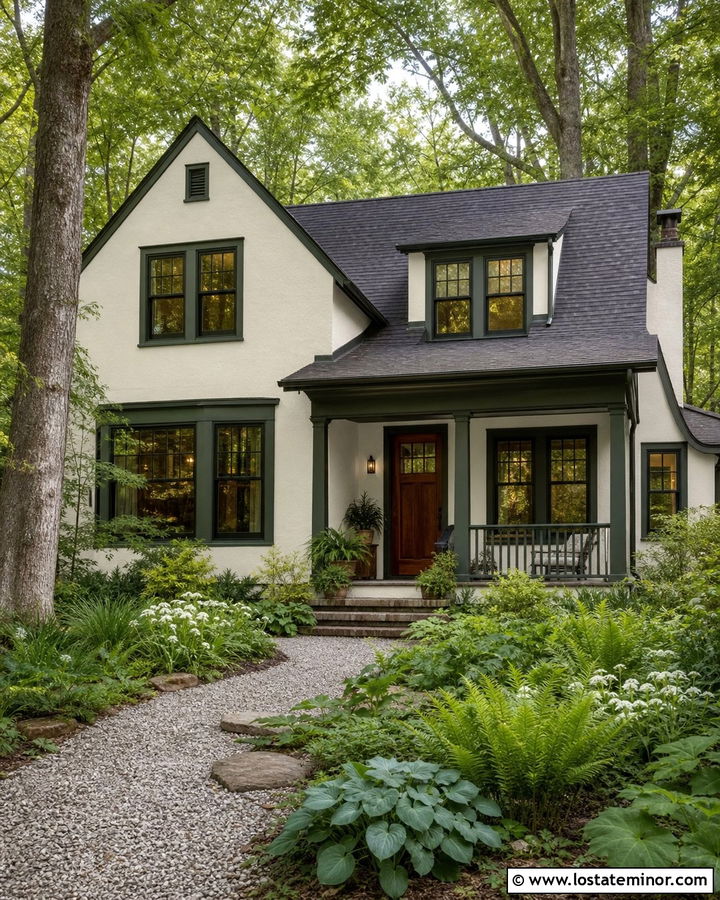
Mature trees and filtered light can create a peaceful setting for a warm white home. Benjamin Moore Swiss Coffee siding, forest green trim, a cedar door, and a dark shingle roof blend naturally with woodland surroundings. Replace struggling grass beneath the tree canopy with broad beds of ferns, woodland sedges, native ground cover, and shade-tolerant flowering plants selected for the region. Use stepping stones or a gently curving gravel path to protect planting areas and direct visitors toward the porch. Fallen leaves can inspire a muted palette of brown, green, cream, and soft gold. Keep shrubs away from tree trunks and avoid burying exposed root flares. This complete landscape celebrates the existing shade rather than trying to impose a bright, lawn-centered suburban design.
30. White House With Four-Season Landscaping
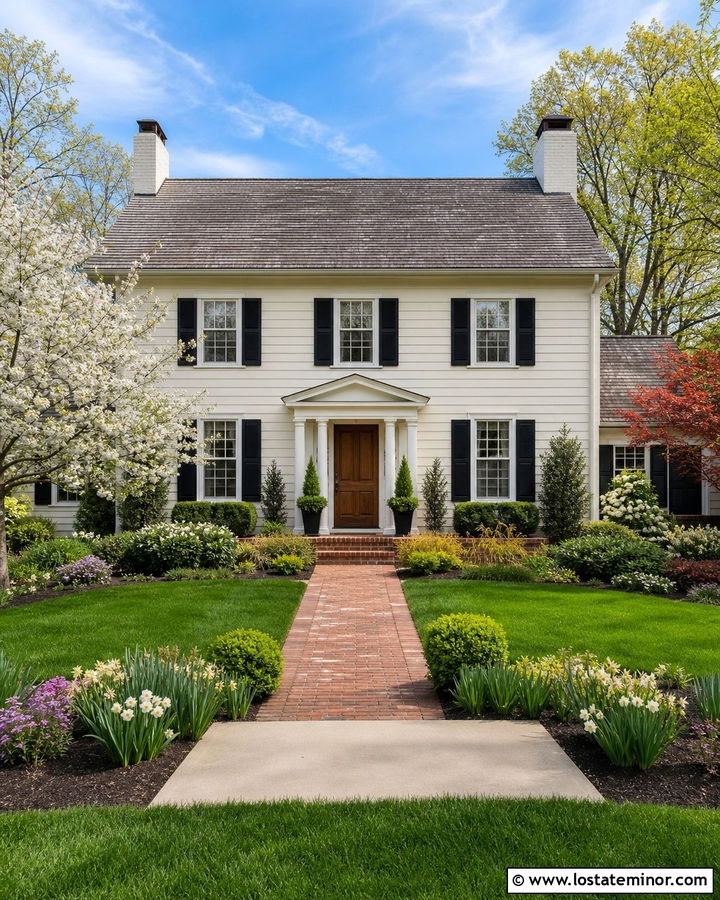
A four-season landscape keeps a white exterior attractive long after summer flowers fade. Use Benjamin Moore White Dove siding with black shutters, a medium wood door, and a weathered gray roof. Begin with evergreen shrubs for winter structure, then add a spring-flowering ornamental tree, summer perennials, ornamental grasses, and shrubs with colorful fall foliage or berries. Repeat these plants across the foundation so seasonal interest is distributed rather than limited to one corner. A brick walkway and evergreen entrance planters maintain visual order throughout the year. Leave selected seed heads and grass plumes standing when suitable to add cold-weather texture. This layered approach creates a changing landscape while preserving consistent shapes, colors, and sightlines around the home in every season.
Conclusion:
The best landscaping for a white house responds to the building’s architecture, local growing conditions, and the amount of maintenance the homeowner can realistically manage. Formal hedges support traditional homes, while grasses, gravel, and sculptural trees complement modern facades. Cottage flowers add color and softness, and evergreen layers provide dependable year-round structure. Before planting, consider mature size, sunlight, drainage, walkway access, window height, and spacing from the foundation. Repeating a limited selection of plants and materials will usually create a stronger result than filling the yard with unrelated features. Use these 30 White House Design With Landscaping Ideas to build a complete exterior that feels balanced, welcoming, and connected to its surroundings.

Related posts: