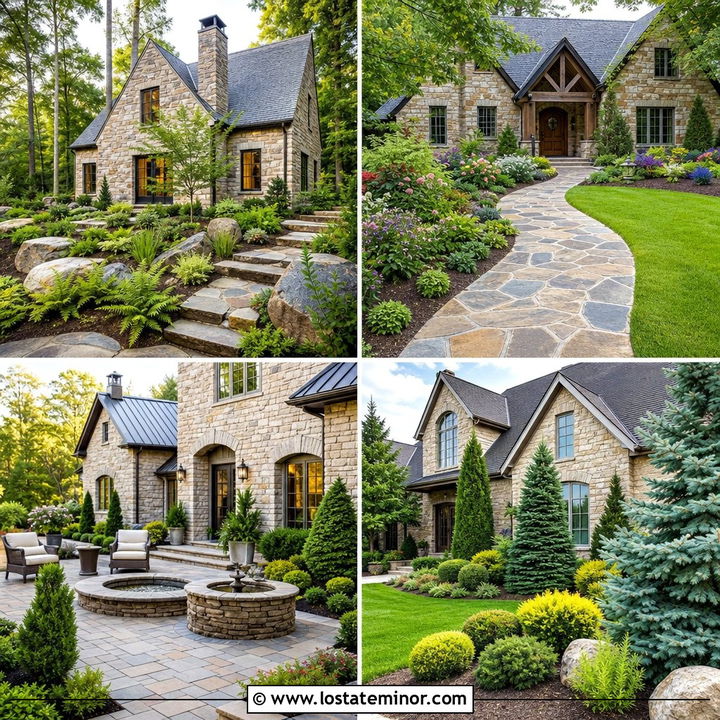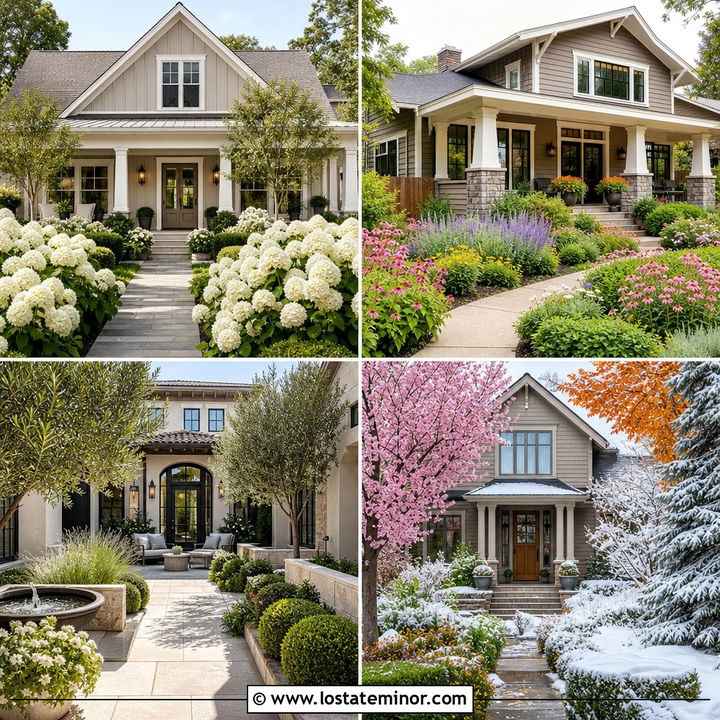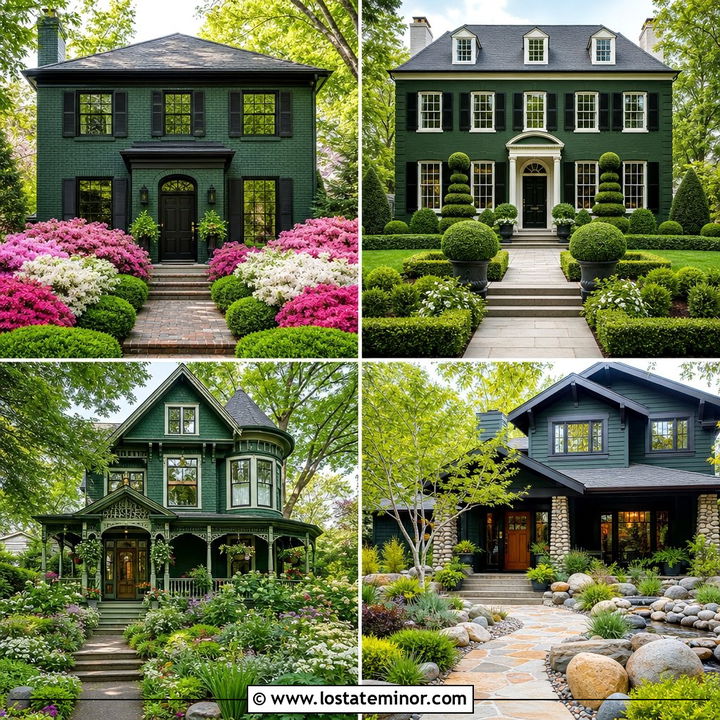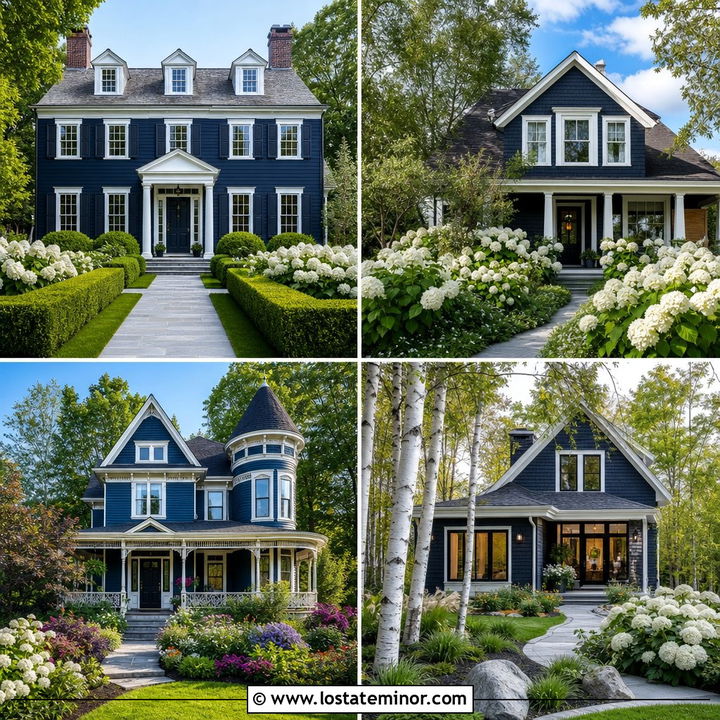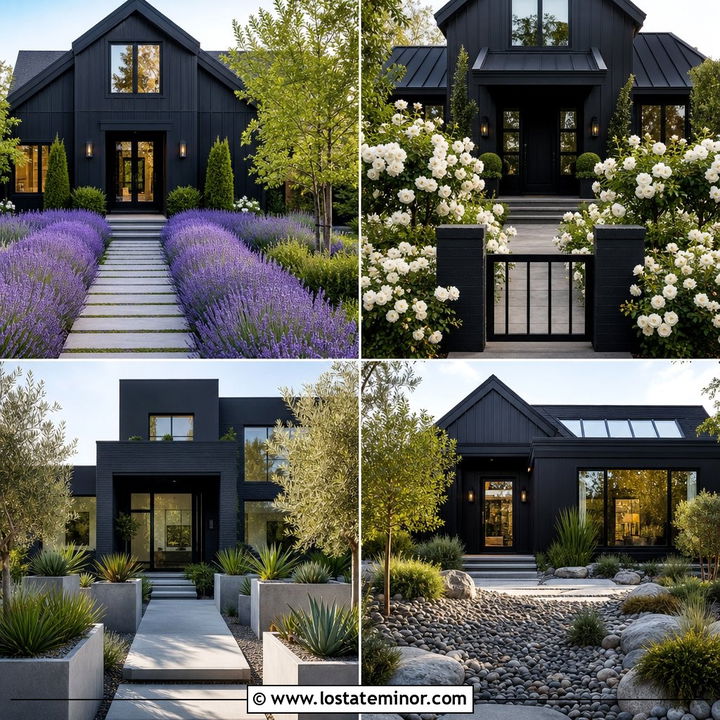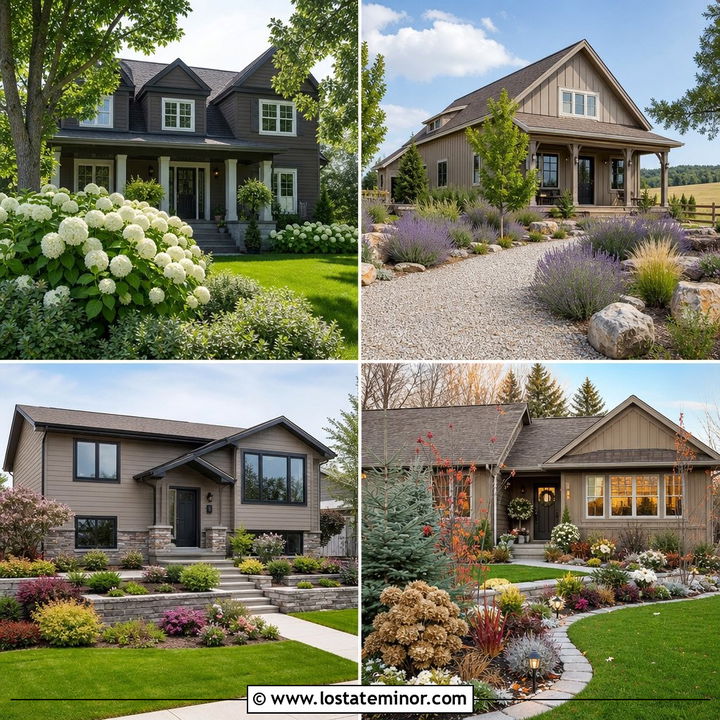
A black exterior creates a bold backdrop that can make greenery, flowers, wood, stone, and architectural details look exceptionally vivid. The strongest **30 Black House Design With Landscaping Ideas** treat the building and yard as one connected composition. Rather than relying on black paint alone, each look balances the dark facade with layered plants, welcoming walkways, warm materials, and clear focal points. Black also works across many architectural styles, from traditional Colonials and cottages to contemporary homes and rustic cabins. The key is choosing landscape shapes, colors, and textures that complement the architecture without hiding it. Whether you prefer formal hedges, prairie grasses, woodland planting, or a low-maintenance gravel garden, the complete exterior schemes below offer practical inspiration. Explore these **30 Black House Design With Landscaping Ideas** to create striking, balanced curb appeal.

1. Black Modern Farmhouse With White Hydrangeas
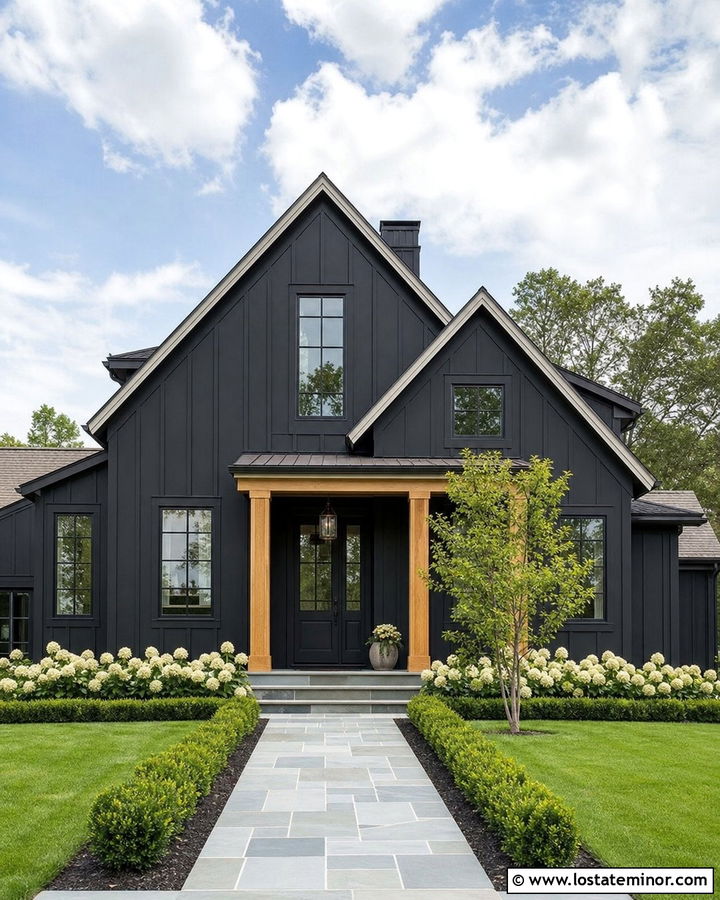
A black modern farmhouse becomes softer and more inviting when surrounded by large white hydrangeas. Use deep black board-and-batten siding with warm white window trim to define the tall gables. Natural cedar columns and a matching front door keep the high-contrast palette from feeling cold. Along the porch, plant hydrangeas in broad, curved beds so their pale flowers stand out against the dark facade. Add compact boxwoods at the corners for dependable structure. A straight bluestone walkway reinforces the farmhouse’s simple lines, while fine gravel between the stones creates a relaxed finish. Complete the yard with a neatly edged lawn and one small ornamental tree. Keep taller plants away from the windows so the architecture remains visible from the street.
2. Black Ranch House With Ornamental Grasses
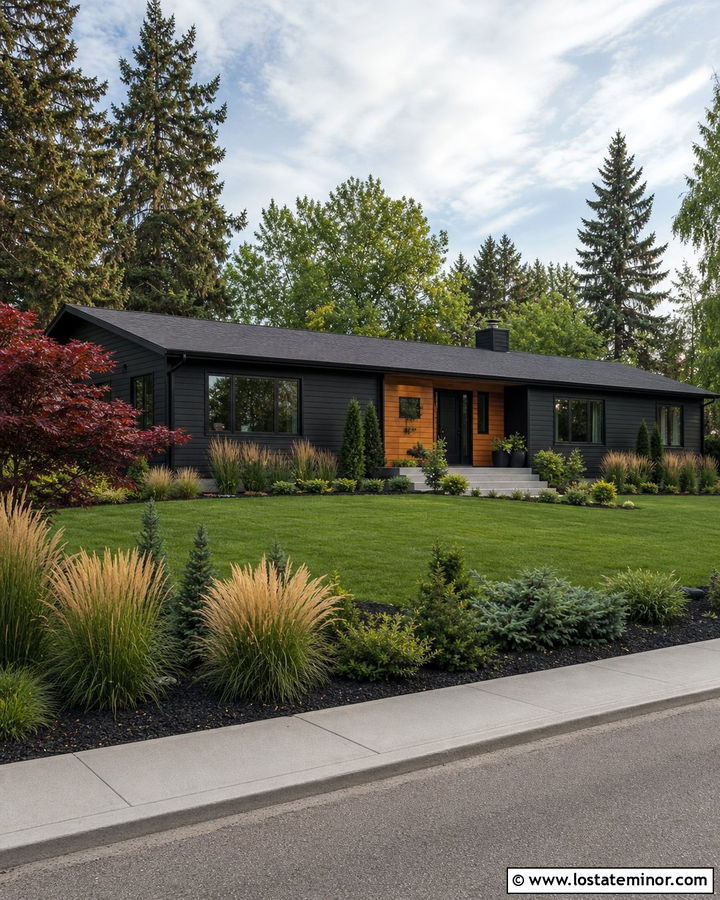
Long horizontal planting beds complement the low roofline of a black ranch house. Paint the siding a soft charcoal black and carry that color onto the garage door for a seamless appearance. Warm wood around the entrance creates a clear focal point, while pale concrete steps brighten the approach. Use drifts of feather reed grass, fountain grass, and compact evergreen shrubs instead of placing single plants at regular intervals. Their flowing forms add movement without making the facade look busy. A multi-stem Japanese maple near one corner can balance the length of the house. Finish the design with dark mulch, a wide concrete walkway, and low ground cover near the foundation. This restrained combination gives a familiar ranch exterior a cleaner, more contemporary presence.
3. Black Craftsman House With Evergreen Landscaping
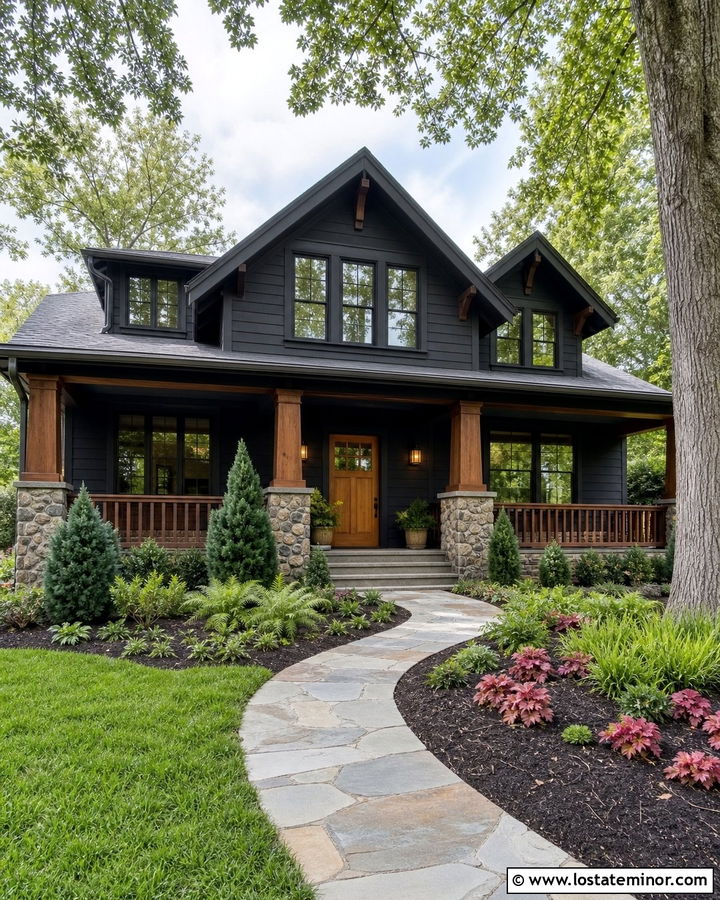
Rich greenery supports the sturdy character of a black Craftsman house throughout the year. Choose a warm black exterior with matching window frames, then introduce stained oak porch columns, brackets, and a wood front door. A stone foundation in mixed gray and brown tones connects the dark siding to the landscape. Frame the porch with rounded inkberry holly, dwarf conifers, and low spreading juniper. These plants provide structure without covering the tapered columns or lower windows. Add ferns and coral bells closer to the walkway for softer texture and seasonal color. A gently curving flagstone path makes the entrance feel approachable. Repeating the porch stone along the bed edges helps the house, hardscape, and garden read as one carefully planned exterior.
4. Black Colonial House With Boxwood Hedges
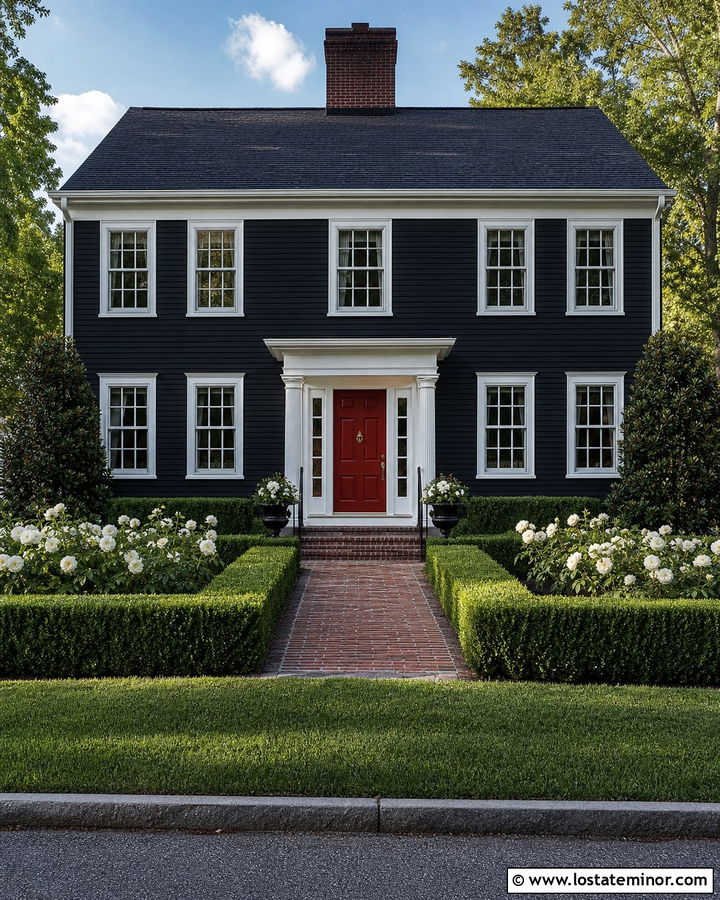
Symmetry is the simplest way to make a black Colonial house and its landscaping feel unified. Cover the facade in classic black clapboard siding, but retain crisp white trim around the evenly spaced windows. A glossy red or polished natural wood front door can become the central accent. Place matching boxwood hedges on both sides of a straight brick walkway to strengthen the balanced architecture. Behind them, add white roses, panicle hydrangeas, or upright hollies for height and contrast. Two matching planters beside the entrance can repeat the same white and green palette. Keep the lawn open and neatly edged so the formal arrangement remains easy to read. This structured landscape softens the black exterior while preserving the traditional order expected from Colonial architecture.
5. Black Cottage House With White Flower Garden
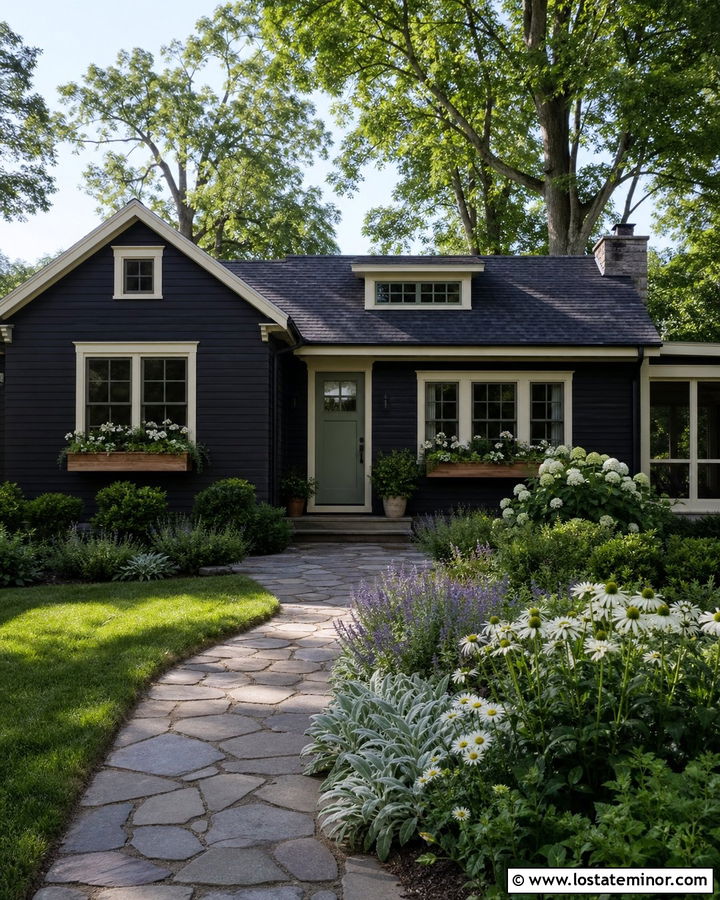
Imagine a small black cottage rising behind a loose garden filled with white flowers and silvery foliage. Deep black lap siding gives the simple house definition, while cream trim and a muted sage front door introduce gentle contrast. Plant white coneflowers, daisies, catmint, lamb’s ear, and compact hydrangeas in informal groups around the facade. Use plants of different heights, but keep the lowest varieties beside the walkway and windows. A narrow path made from irregular flagstones can curve through the garden toward a small covered porch. Weathered wood window boxes provide another place for pale flowers and trailing greenery. The limited color palette keeps the lush planting from becoming chaotic. It also makes this dark cottage feel bright, welcoming, and naturally connected to its surroundings.
6. Black Midcentury House With Japanese Maple
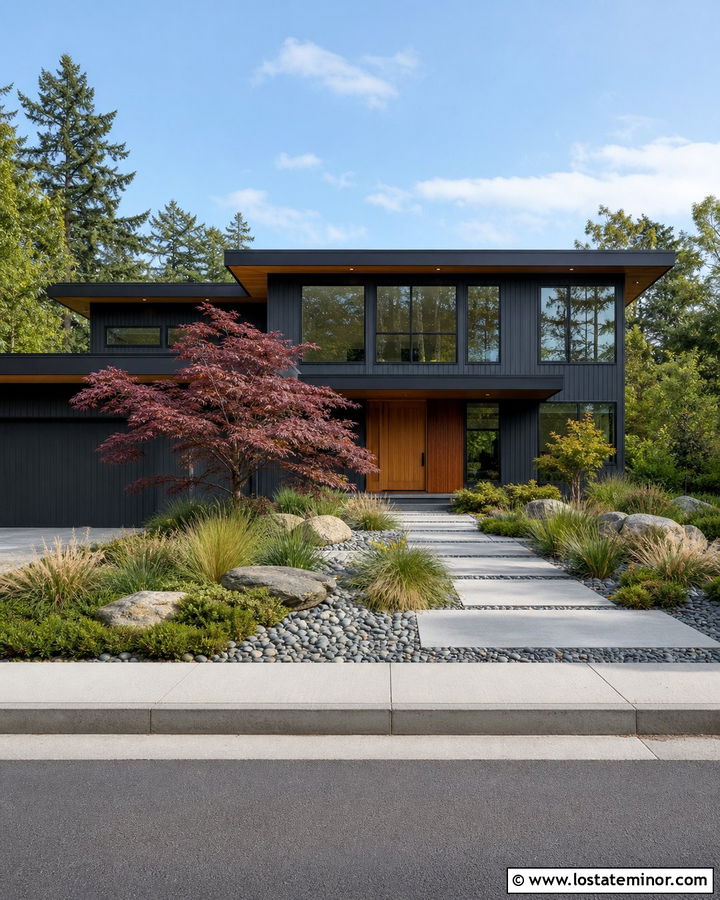
A sculptural Japanese maple can bring warmth and scale to a black midcentury house. Use charcoal vertical siding, broad windows with black frames, and a honey-toned wood front door. The wood accent should appear again under an overhang or beside the garage to establish continuity. Position the maple where its branching form can be seen against an uncluttered section of dark wall. Surround it with low mounds of ornamental grass, evergreen ground cover, and smooth river stones. Large rectangular concrete pavers suit the home’s strong geometry and create a direct path to the entrance. Avoid symmetrical foundation shrubs, which can make this architecture feel too traditional. Instead, use a few carefully placed plant masses to produce a calm, asymmetrical landscape with clear lines.
7. Black Contemporary House With Xeriscaping
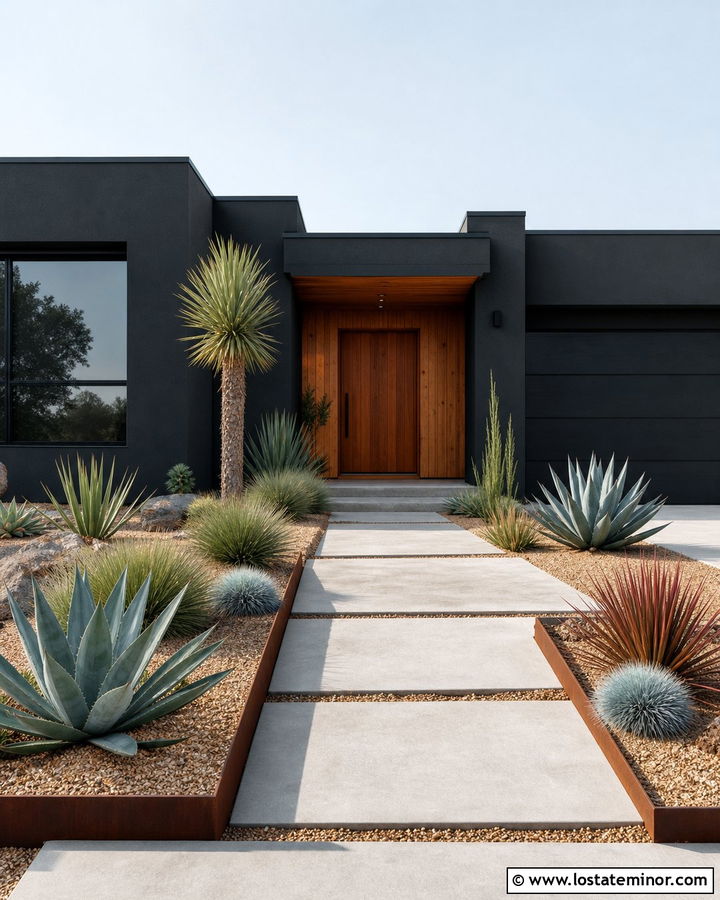
Water-conscious landscaping can look especially sharp beside a geometric black contemporary house. Pair matte black stucco and metal panels with warm cedar cladding around the recessed entry. Build the front yard from pale gravel, large concrete stepping pads, and widely spaced architectural plants. Agave, yucca, red yucca, blue fescue, and low-growing sedum provide distinct shapes and contrasting colors. Arrange them in controlled clusters rather than scattering them across the yard. Rust-colored steel edging can introduce a warm tone that relates to the cedar. If more privacy is needed, use one row of upright evergreen shrubs without blocking the windows. This design replaces a conventional lawn with bold texture, yet the limited plant palette keeps the complete exterior clean and visually organized.
8. Black Cabin House With Native Woodland Plants
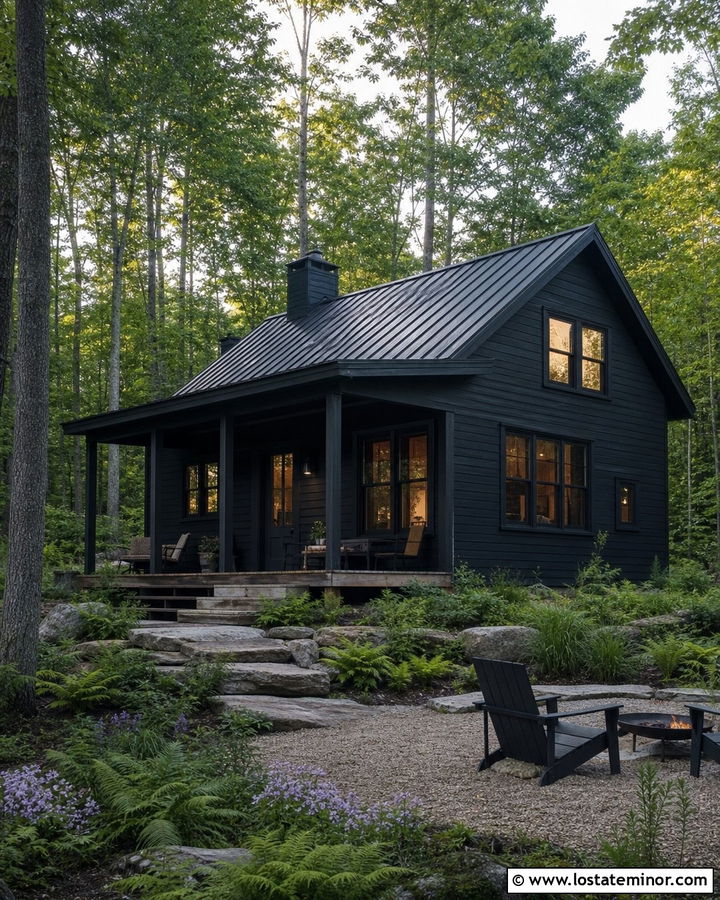
A black cabin feels settled into its site when the landscaping follows the surrounding woodland. Choose near-black stained wood siding rather than a glossy finish, then add a weathered cedar porch and a dark metal roof. Preserve mature trees whenever practical and build planting beds around their natural spacing. Ferns, native sedges, woodland phlox, foamflower, and low evergreen shrubs can create a layered forest floor. Use irregular local stone for the entrance steps and pathway so the hardscape does not appear overly formal. A small gravel sitting area beside the porch adds function without requiring a large paved surface. Keep the planting nearest the house controlled and well edged. This prevents the landscape from appearing overgrown while maintaining the peaceful, nature-connected character that suits a dark cabin.
9. Black Cape Cod House With Coastal Grasses
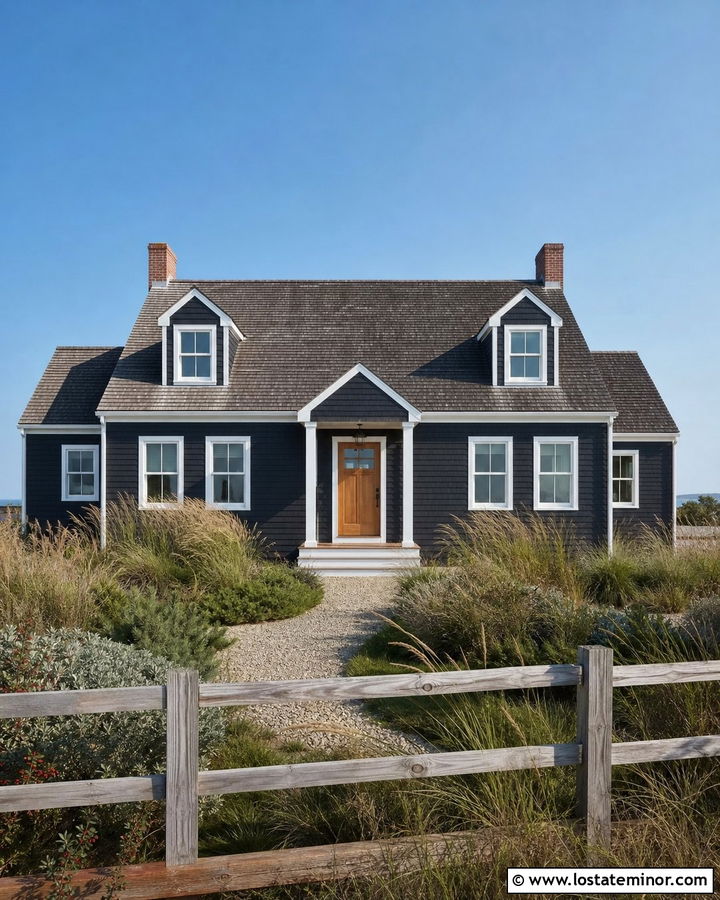
Wind-tolerant grasses and pale stone give a black Cape Cod house an easy coastal character. Paint the cedar shingles or clapboard siding a weathered black, then outline the windows and dormers with soft white trim. A natural teak front door and simple porch bench add warmth without competing with the architecture. Plant beach grass, switchgrass, bayberry, and low juniper in broad groups around the foundation. Their muted green and blue tones complement the exterior better than an overly colorful garden. Create the walkway with light gray gravel or irregular coastal stone and allow selected ground covers to soften its edges. A low split-rail or cedar fence can frame the yard. The result feels relaxed and windswept while keeping the complete facade visible and pleasantly balanced.
10. Black Split-Level House With Layered Shrubs
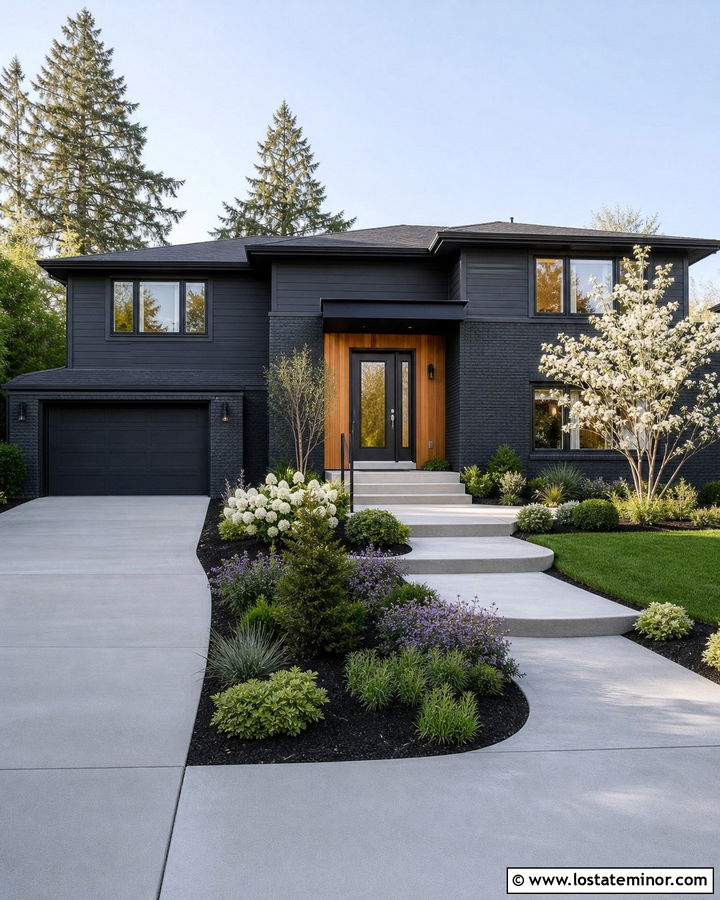
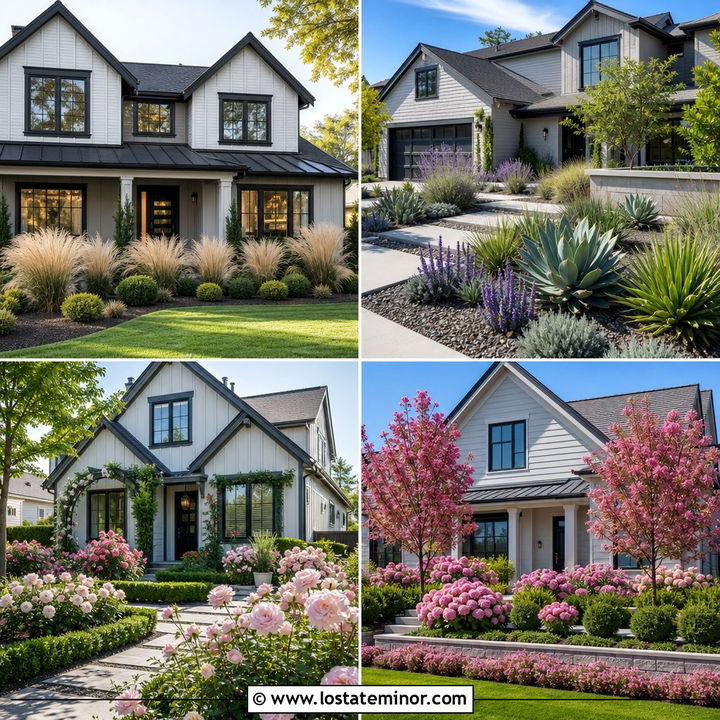
Layered planting can correct the uneven visual weight of a black split-level house. Use soft black siding on the upper level and matching painted brick below to unify the divided facade. Highlight the entrance with cedar panels, a warm wood door, and a shallow black metal canopy. In the garden, place taller evergreen shrubs near blank walls and lower flowering plants beneath windows. Curved beds can soften the home’s boxy outline, but their shapes should remain broad and simple. Add a small flowering tree near the shorter side of the house to create balance. A widened walkway with integrated steps makes the entrance easier to see from the driveway. Repeating two or three plants across the beds will create cohesion and prevent the multi-level exterior from appearing visually fragmented.
11. Black Brick House With Clipped Hedges
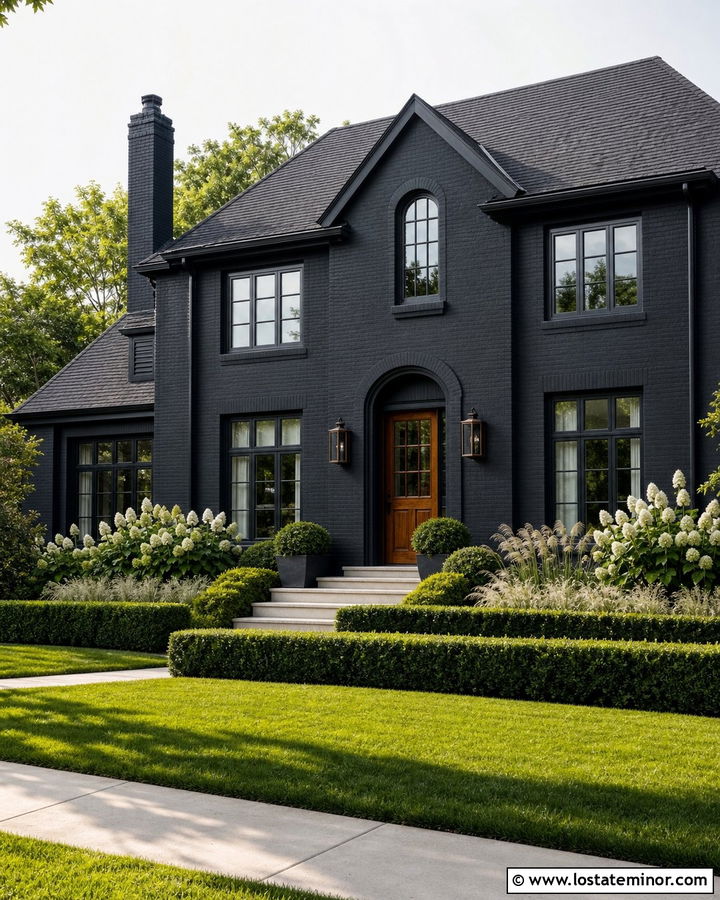
Painted black brick gains depth when paired with clean hedges and restrained planting. Preserve the brick texture by choosing a low-sheen masonry finish, then use black trim and bronze exterior lighting for a sophisticated monochromatic scheme. A medium-toned wood door prevents the entrance from disappearing into the facade. Install clipped boxwood or yew hedges along the front, keeping them below the window sills. Behind the hedges, use upright hydrangeas or white flowering shrubs for seasonal brightness. A pale limestone path and matching porch steps create strong contrast with the black masonry. For added softness, plant a small group of ornamental grasses near the driveway. The combination of precise hedges, textured brick, and warm wood gives the house a polished look without requiring a complicated or overly colorful garden.
12. Black Board And Batten House With Lavender
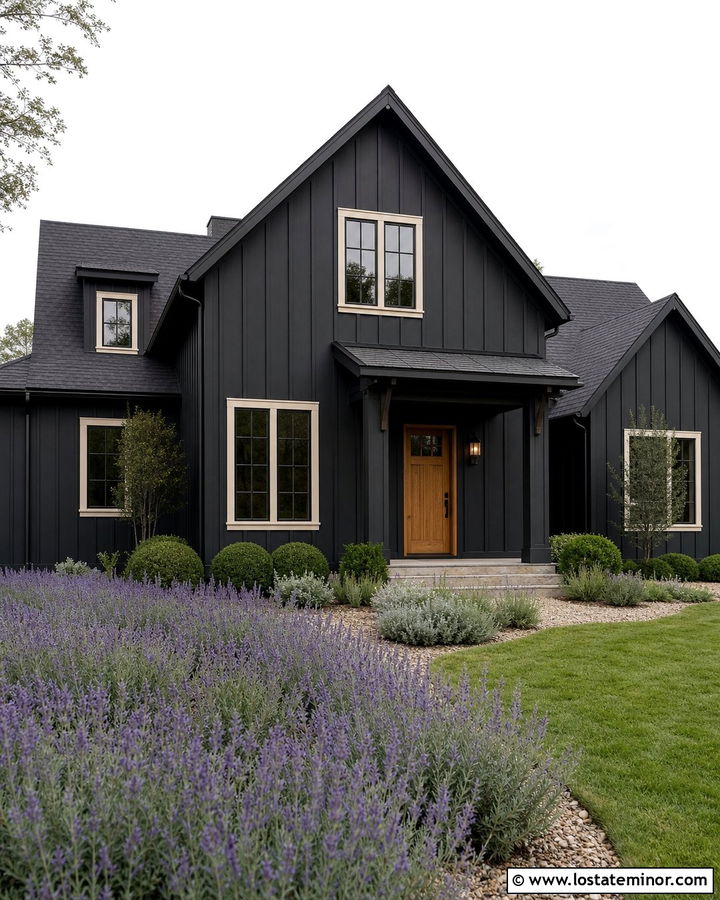
Lavender introduces gentle color and movement beside a bold black board-and-batten exterior. Choose a neutral black finish for the siding and roof, then add cream window trim and a natural oak front door. Long rows of lavender can follow the walkway or edge a sunny front porch, creating a soft transition between the lawn and the vertical siding. Mix in compact rosemary, catmint, and silver-leaved plants to maintain a coordinated purple, green, and gray palette. Pale pea gravel works well around these plants and visually lightens the base of the house. Use a few round evergreen shrubs near the porch steps for year-round structure. This complete scheme combines crisp farmhouse lines with relaxed planting, making the dark facade feel warmer and more approachable from the curb.
13. Black Stucco House With Desert Landscaping
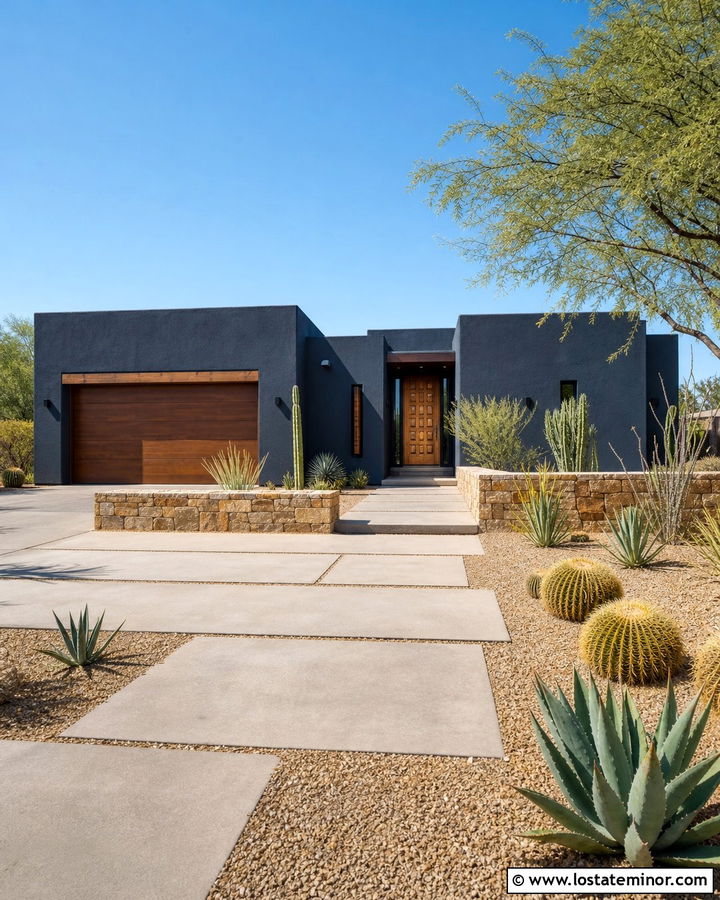
Smooth black stucco creates a dramatic background for desert plants and warm stone. Use an earthy near-black exterior rather than a cool blue-black, then add rust-toned wood at the front door and garage. A flat or low-pitched roof, deep overhangs, and simple black-framed windows support the streamlined look. In the yard, combine golden gravel with agave, desert spoon, aloe, barrel cactus, and sculptural yucca. Give each plant enough open space for its form to remain visible. A low wall made from tan or cream stone can define the entry courtyard and break up the dark facade. Large poured-concrete pads create a practical walkway through the gravel. This limited combination of black, warm brown, pale stone, and blue-green plants feels cohesive without looking stark.
14. Black Bungalow House With Cottage Landscaping
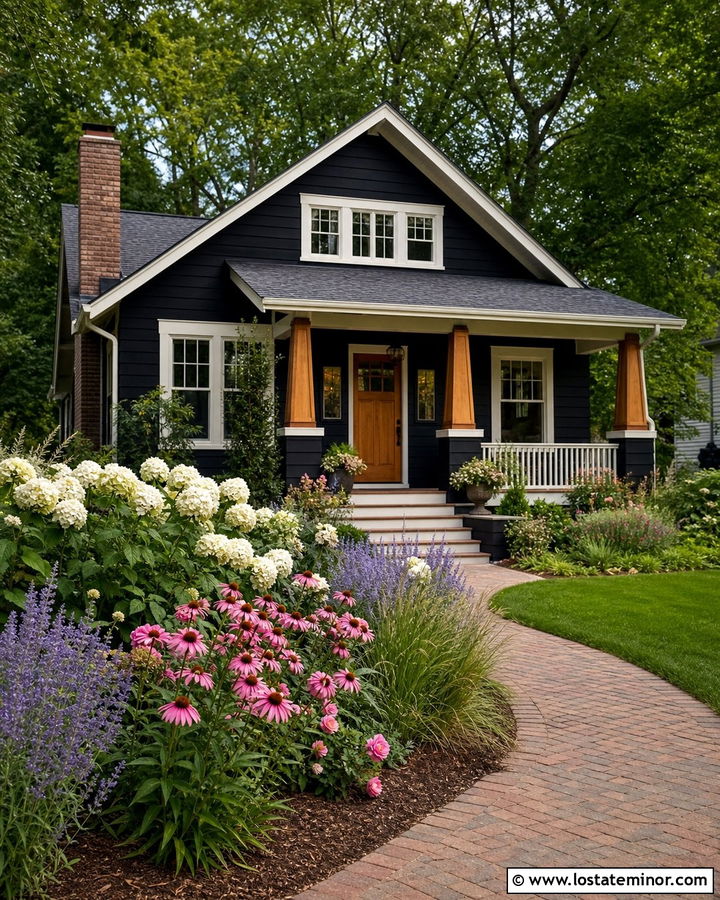
A generous cottage garden can make a compact black bungalow feel cheerful and welcoming. Paint the siding deep black while keeping the porch ceiling, fascia, and window trim warm white. Add tapered wood columns and a honey-stained front door to emphasize the sheltered entrance. Build layered beds with white roses, pink coneflowers, salvia, compact hydrangeas, and airy ornamental grasses. Place taller plants near the porch corners and shorter flowers beside the walkway. A curved brick path can echo the home’s traditional character and slow the approach to the door. Include one small bench or pair of porch chairs in natural wood. By repeating flower colors and leaving open space around the steps, the landscape stays abundant without hiding the bungalow’s best architectural details.
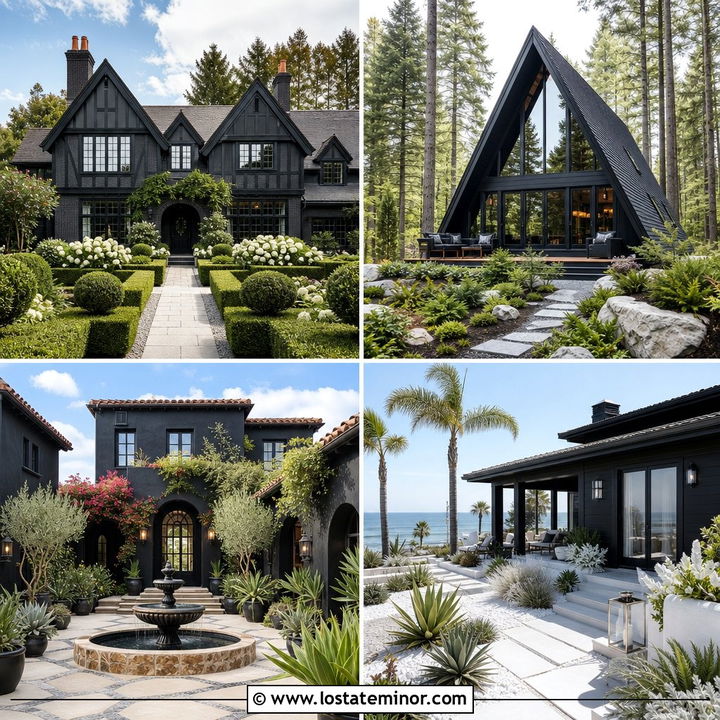
15. Black Tudor House With Formal Landscaping
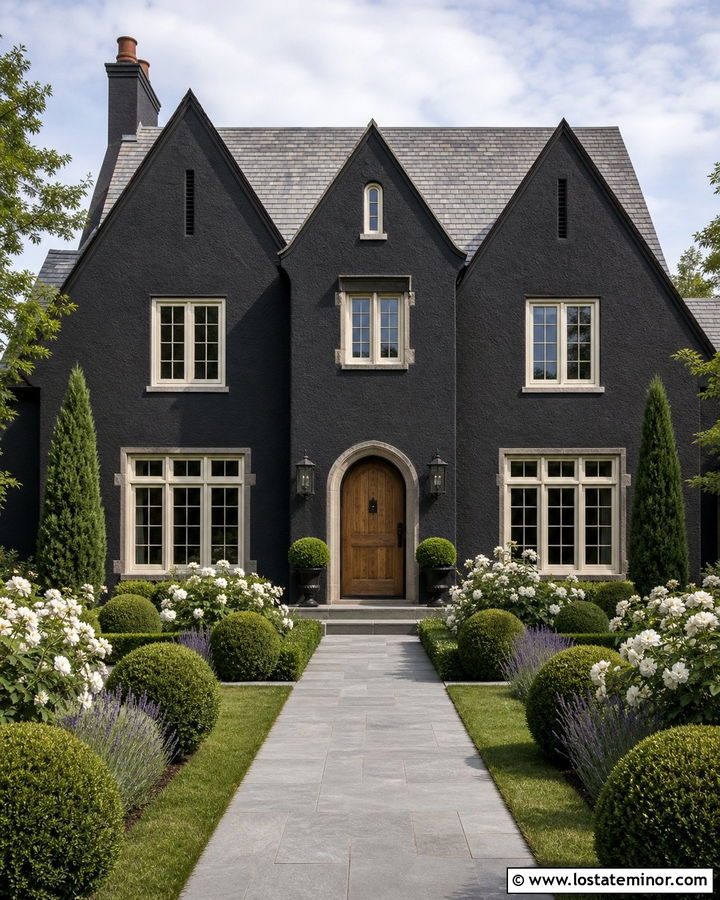
The steep gables of a black Tudor house pair naturally with structured, old-world landscaping. Use black-painted stucco or dark masonry between the facade’s timber details, then add warm cream around selected windows for definition. A heavy arched wood door and gray slate roof reinforce the traditional character. Frame the entrance with clipped yew, boxwood spheres, and two upright evergreens. Straight stone paths and low hedges can divide the garden into simple, symmetrical sections. Within those borders, plant white roses, lavender, and deep green ground cover to soften the formality. Avoid using too many flower colors because the architecture already provides strong visual detail. A single ornamental tree placed away from the central axis adds height while allowing the doorway and distinctive roofline to remain the main focus.
16. Black Barndominium With Prairie Grasses
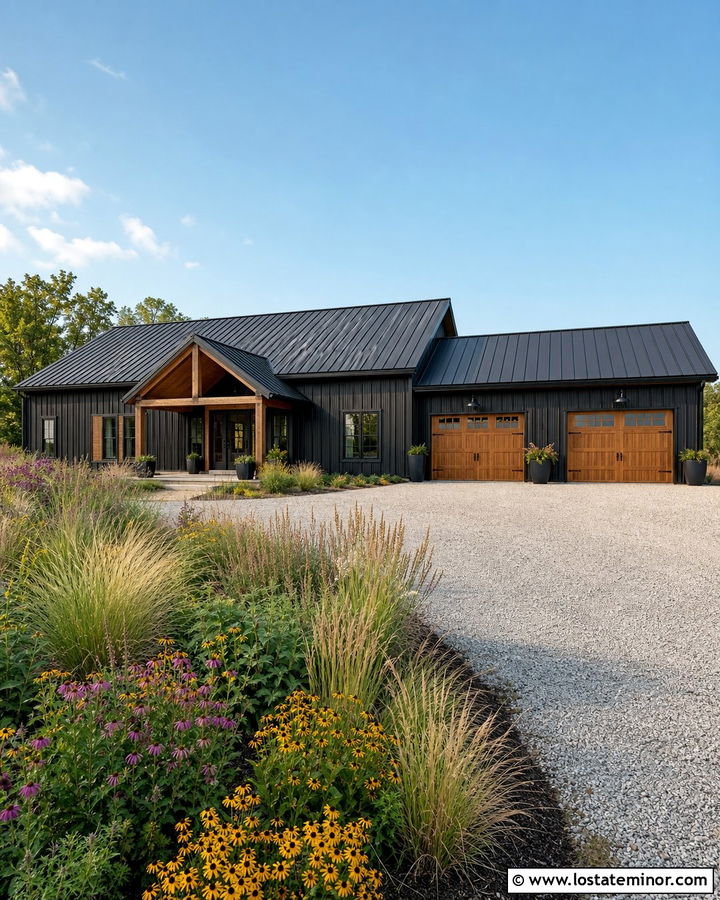
Broad sweeps of prairie grass help a large black barndominium feel connected to an open landscape. Cover the exterior in black metal siding and introduce cedar around the entrance, porch ceiling, and oversized garage doors. A galvanized or matte black roof keeps the agricultural form simple. Replace narrow foundation beds with deep planting zones filled with switchgrass, little bluestem, coneflowers, black-eyed Susans, and low native shrubs. Repeat the plants in large groups that suit the scale of the building. A wide gravel drive and concrete walkway provide practical access without adding unnecessary decoration. Near the porch, use large black planters filled with grasses and trailing greenery. The warm wood, meadow planting, and dark metal create a complete exterior that feels modern but appropriate for a rural setting.
17. Black Scandinavian House With Birch Trees
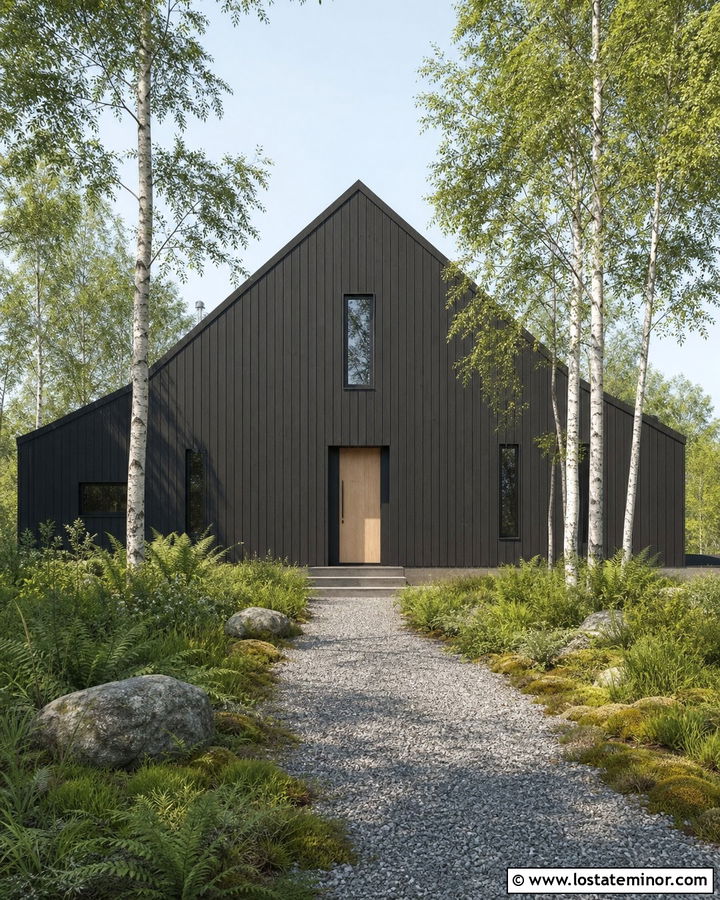
White-barked birch trees create an elegant contrast against a simple black Scandinavian house. Use matte black vertical wood siding, narrow black window frames, and a pale oak front door. Keep the roofline clean and avoid excessive trim so the material changes remain easy to see. Plant a small grove of birches to one side rather than evenly spacing trees across the facade. Beneath them, use ferns, moss-like ground cover, sedges, and scattered natural stones. A straight gravel path with broad concrete steps supports the minimal architecture. Add one low evergreen hedge near the entrance for winter structure, but leave portions of the dark wall exposed. This restrained planting plan emphasizes texture, filtered light, and natural forms while preserving the quiet simplicity associated with the overall exterior.
18. Black Victorian House With Colorful Perennials
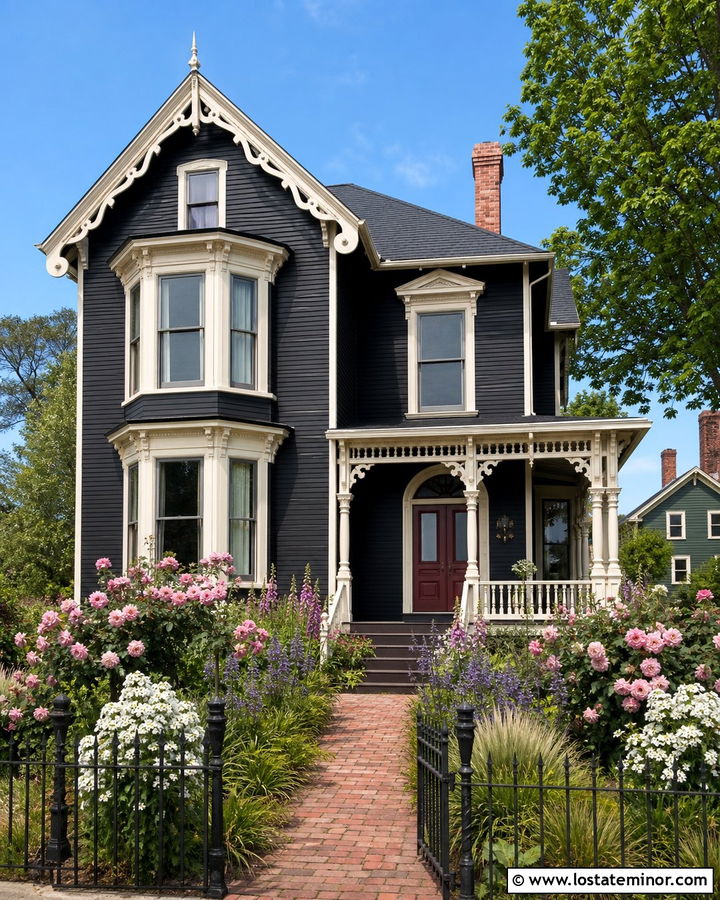
Colorful perennials can keep an ornate black Victorian exterior from feeling overly serious. Paint the main siding soft black, then use cream trim to outline the brackets, porch rails, bay windows, and decorative gables. A burgundy front door adds another historically appropriate layer without creating excessive contrast. Fill curved beds with pink roses, purple salvia, white phlox, foxgloves, and airy grasses. Repeating these colors around the porch creates unity even when many plant types are included. A brick walkway and low iron fence support the traditional architecture. Keep shrubs pruned below detailed woodwork and windows so the craftsmanship remains visible. The combination of dark siding, pale ornament, and generous flowers creates a rich exterior composition that feels lively, graceful, and welcoming rather than dark or imposing.
19. Black Lake House With Rock Landscaping
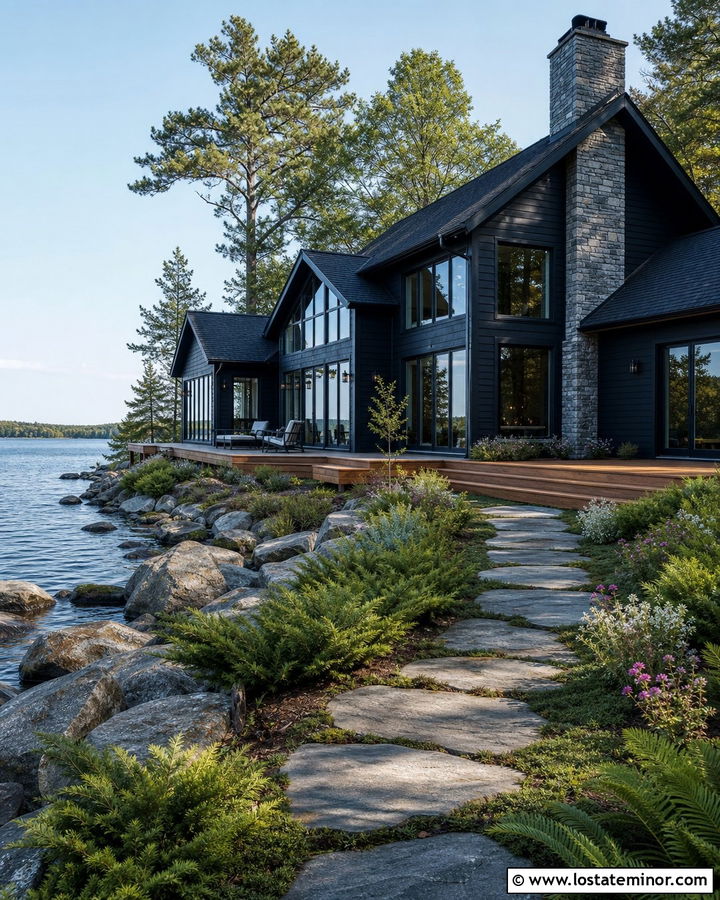
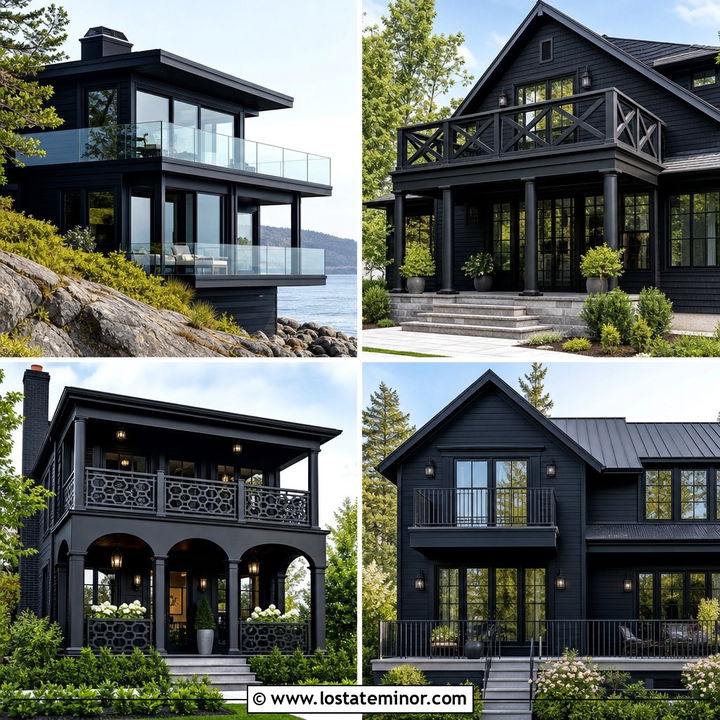
Rock landscaping can anchor a black lake house while preserving an open view toward the water. Choose charcoal-black lap siding, large windows, and a warm cedar deck that wraps part of the facade. Use regional stone around the lower walls or chimney to connect the building with the shoreline. In the front landscape, arrange boulders among low juniper, sedges, ferns, and native flowering plants. Avoid tall hedges that would block views or make the house feel separated from its setting. A broad path made from flat stone slabs can lead naturally from the driveway to the deck. Add a small gravel area with Adirondack-style seating away from the primary facade. This layered mix of black siding, wood, stone, and informal greenery produces relaxed curb appeal suited to a waterfront property.
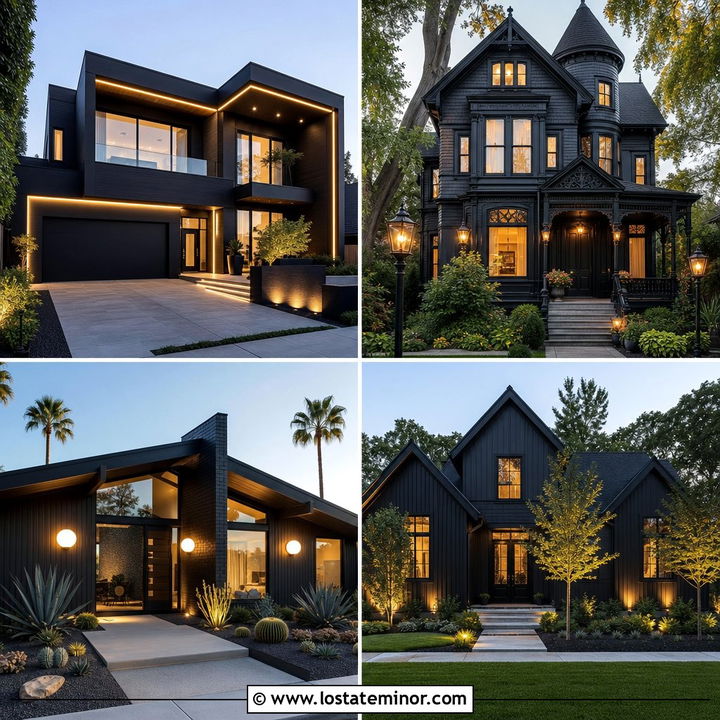
20. Black Mountain House With Conifer Landscaping
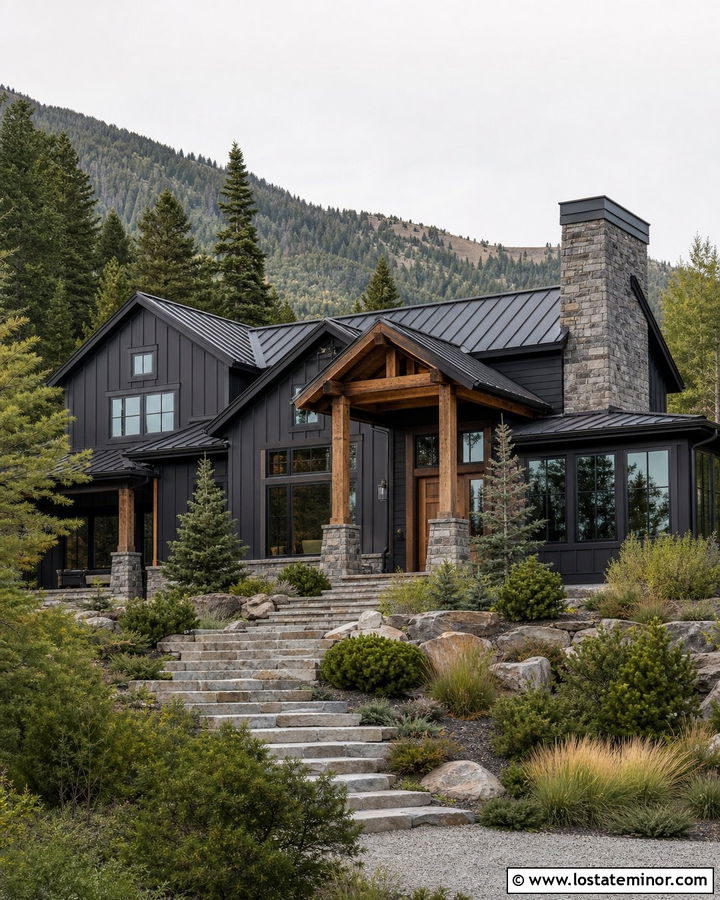
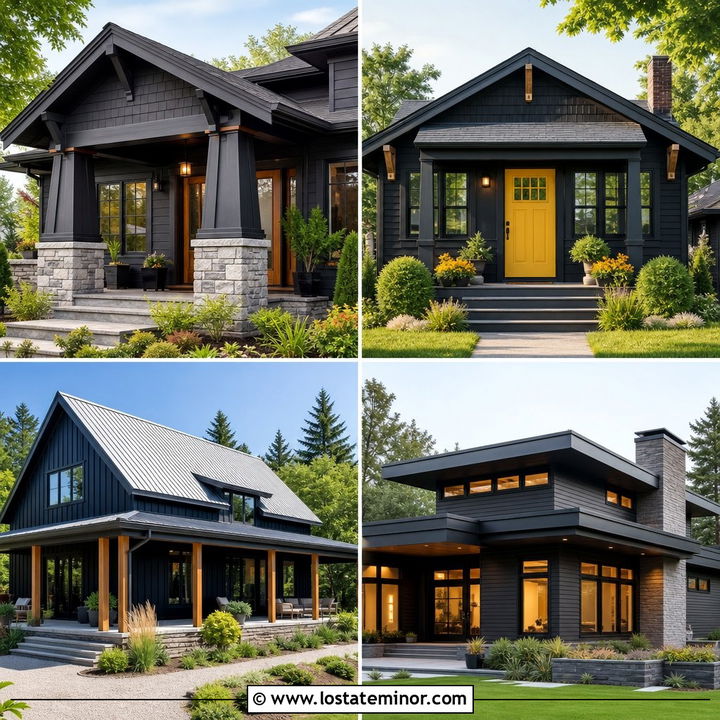
A black mountain house looks grounded when surrounded by conifers and rugged stone. Use dark charcoal siding with a black standing-seam roof, then warm the exterior with cedar beams and a substantial wood front door. Cover the porch base and chimney in irregular gray stone that echoes the surrounding terrain. Landscape with dwarf spruce, mugo pine, juniper, native grasses, and low flowering ground covers. Vary their heights to create depth while keeping important windows and roof details clear. A wide stone stairway can handle the sloped approach and establish a strong entrance. Use gravel or bark mulch between plants for a natural, low-key finish. The dark facade should sit behind the greenery rather than dominate it, creating a house that feels comfortably integrated into the mountain landscape.
21. Black House With Cedar Accents And Green Lawn
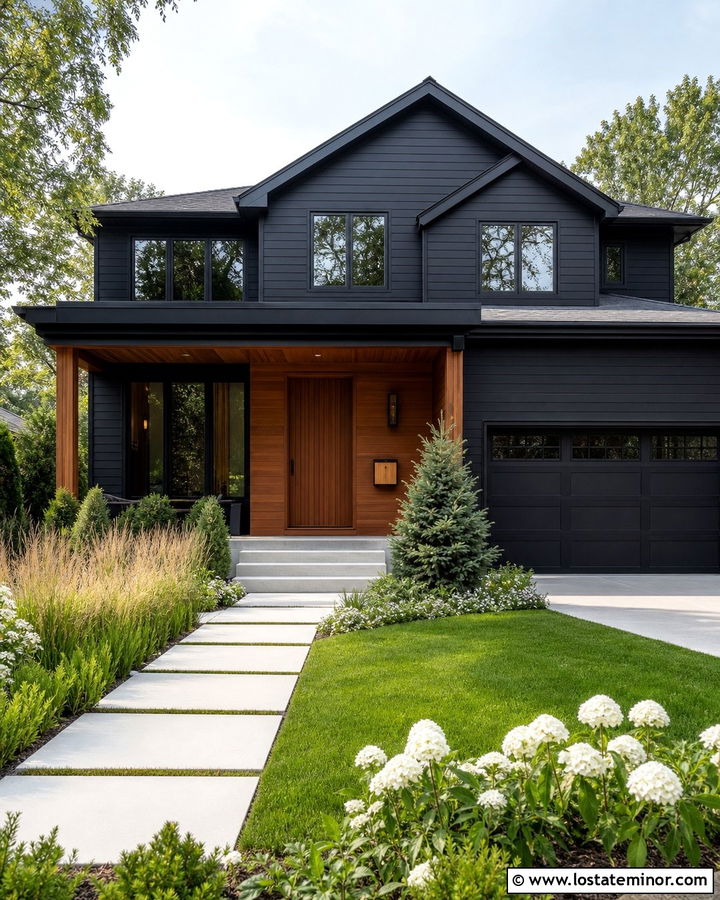
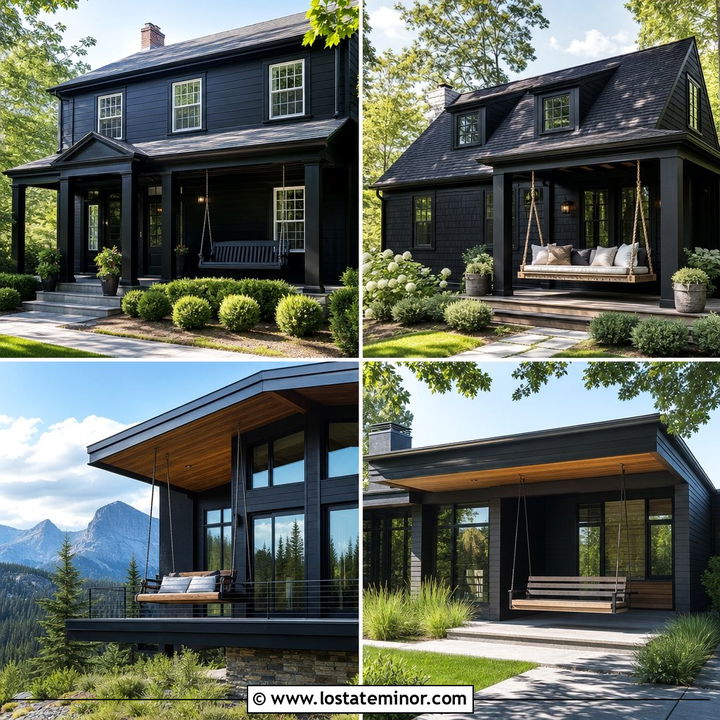
Few combinations feel as balanced as black siding, natural cedar, and a healthy green lawn. Apply deep neutral black to the main exterior and garage, then use cedar around the front door, porch ceiling, and selected wall panels. Keep the window frames black for a streamlined appearance. In front, maintain a broad area of open lawn and frame it with simple beds of evergreen shrubs, ornamental grasses, and white flowering perennials. The open grass prevents the dark facade from looking crowded, while the planted edges provide depth. A light concrete walkway can lead directly to the cedar entrance. Repeat the wood tone in a mailbox, bench, or low privacy screen. Limiting the exterior to black, green, wood, and small amounts of white creates strong curb appeal without unnecessary visual clutter.
22. Black House With Stone Porch And Flowering Trees
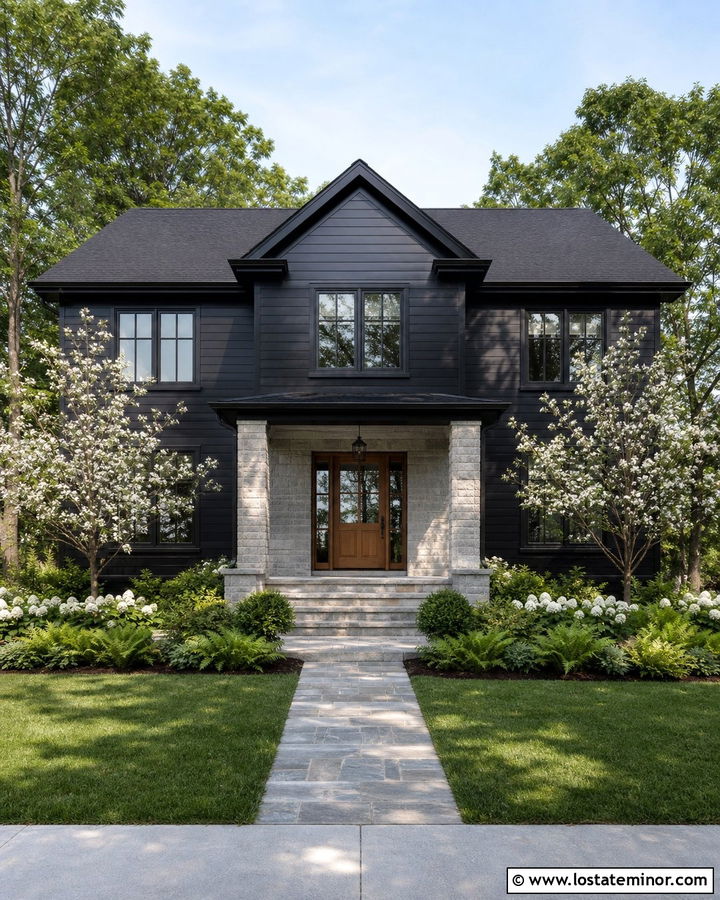
A textured stone porch gives a black house visual weight at ground level, while flowering trees add height and softness. Choose black horizontal siding with matching trim and a gray architectural-shingle roof. Cover the porch foundation and columns in warm gray stone, then install a medium oak front door. Place two small flowering trees, such as serviceberry or dogwood, where they can frame the facade without blocking it. Underplant them with compact shrubs, ferns, and pale flowers. A walkway using the same stone as the porch will connect the landscape to the architecture. Keep the central lawn open so the trees have room to stand out. In spring, their blossoms brighten the black backdrop; during other seasons, their branching forms continue to add attractive structure.
23. Black House With Red Door And Structured Beds
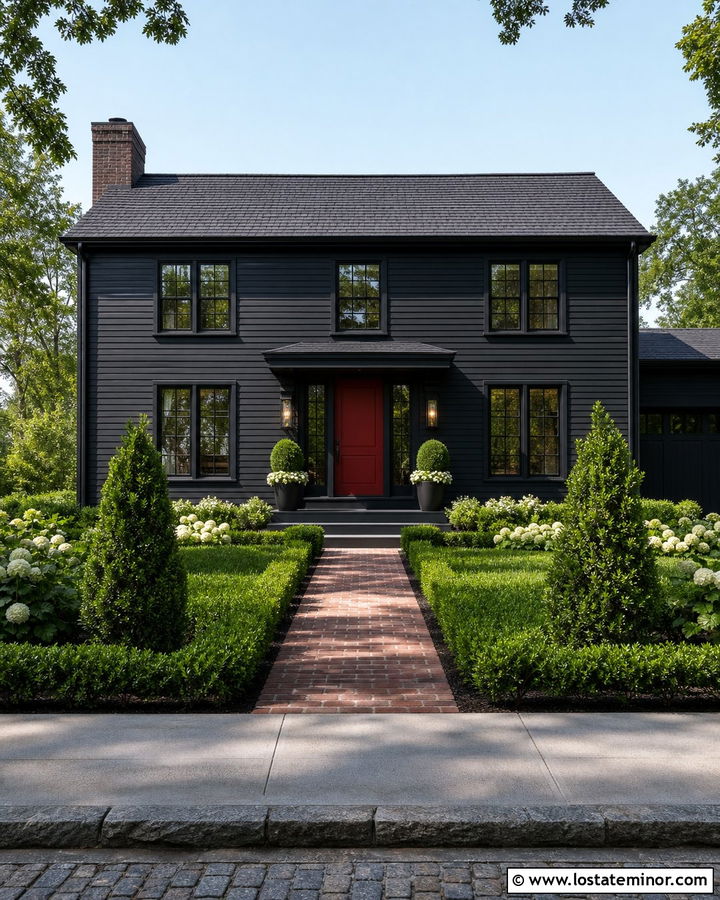
A red front door creates an effective focal point when the rest of a black house remains controlled. Use soft black siding, black window frames, and a dark gray roof, then choose a deep barn-red door rather than an extremely bright shade. Build structured foundation beds using low boxwoods, upright hollies, and repeated clumps of white flowers. Their simple forms support the strong door color without competing with it. A straight concrete or brick path should point clearly toward the entrance. Add matching black planters on the porch, filling them with green foliage and small touches of red. Keep other accessories neutral and limit additional flower colors. The final scheme feels confident and welcoming because the landscaping guides attention to the door while softening the dark walls.
24. Black House With Wood Door And Fern Landscaping
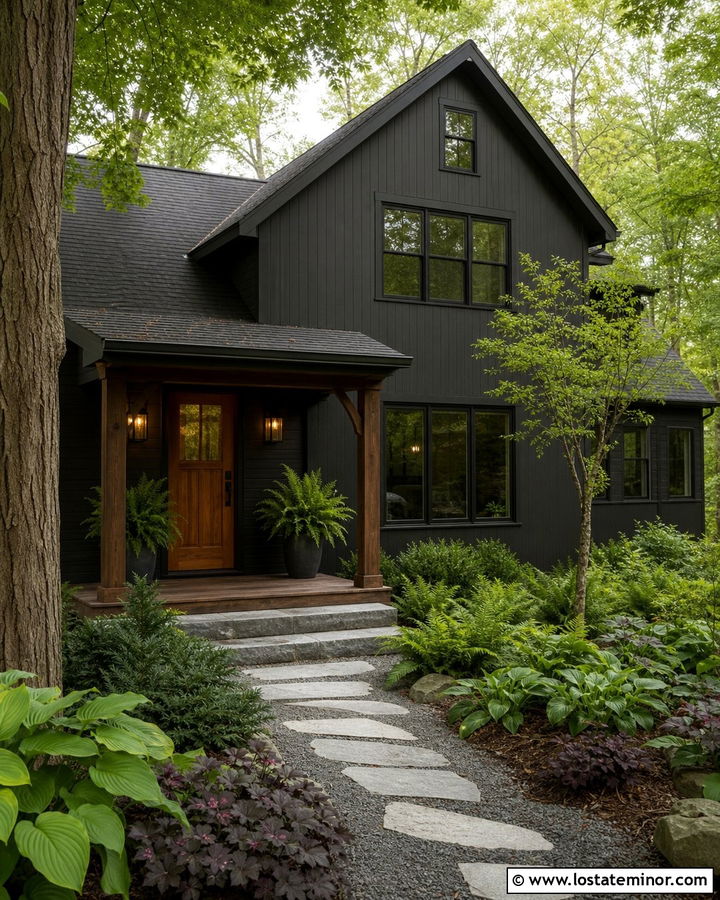
Fern landscaping gives a black house a lush appearance, especially on a shaded or tree-covered lot. Paint the exterior a warm near-black and use matching trim so the rich wood front door becomes the natural focal point. Add stone steps and a small cedar porch for additional texture. Plant broad groups of ferns beneath the windows, mixing varieties with different heights and frond shapes. Include hostas, heuchera, woodland sedges, and low evergreen shrubs to extend the planting season. A stepping-stone path set in fine gravel or ground cover supports the relaxed woodland mood. Keep the bed edges gently curved but clearly maintained. The contrast between dark siding, fresh green leaves, gray stone, and warm wood creates a calm exterior that looks layered without requiring colorful flowers.
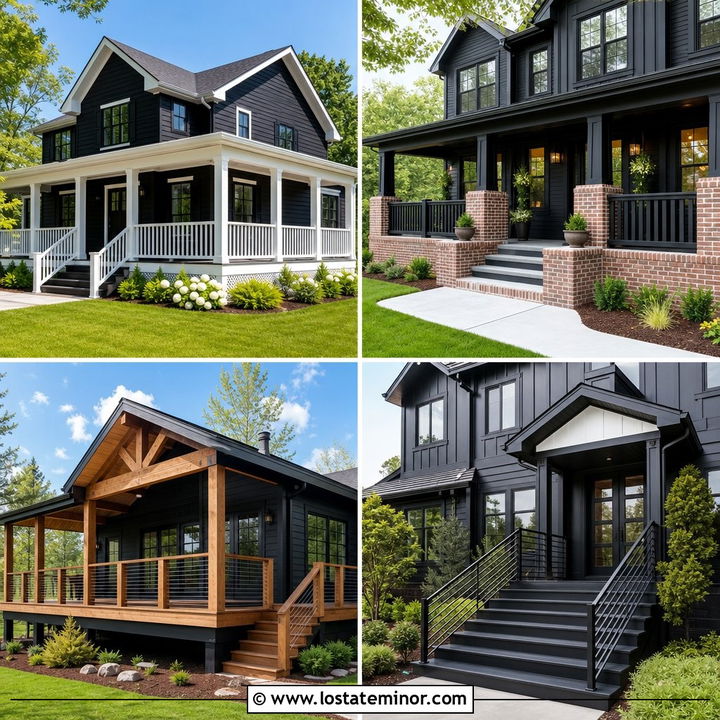
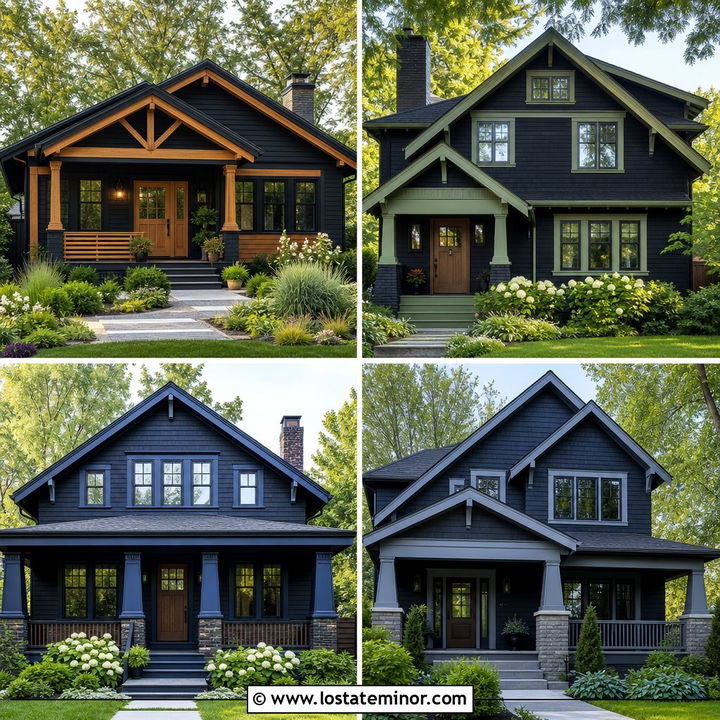
25. Black House With White Trim And Rose Garden
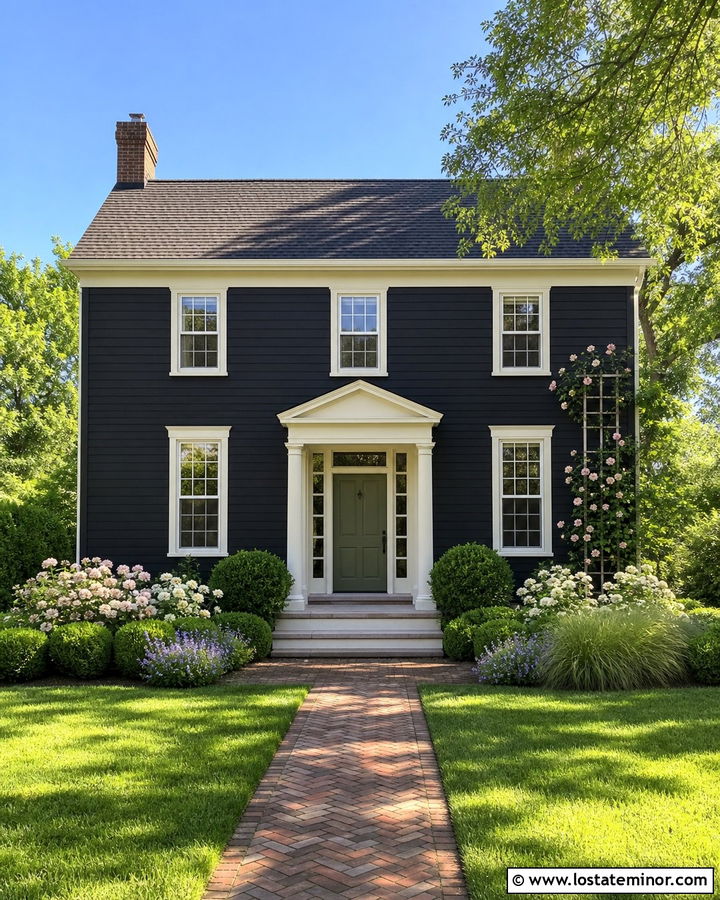
White trim gives a traditional black house a crisp outline, while roses introduce softness and color. Use black clapboard siding with warm white fascia, porch columns, window casings, and railings. A polished wood or muted green door keeps the palette from becoming too severe. Plant white and blush shrub roses in generous groups rather than lining up isolated bushes. Add boxwood, catmint, and low ornamental grasses to create structure around the roses. A brick walkway and clipped lawn edge will reinforce the home’s classic character. Train one climbing rose on a simple trellis beside the porch, leaving enough open wall for the black siding to remain visible. This exterior works because the landscaping repeats the trim color and uses restrained pink accents rather than introducing many unrelated shades.
26. Black House With Gravel Courtyard
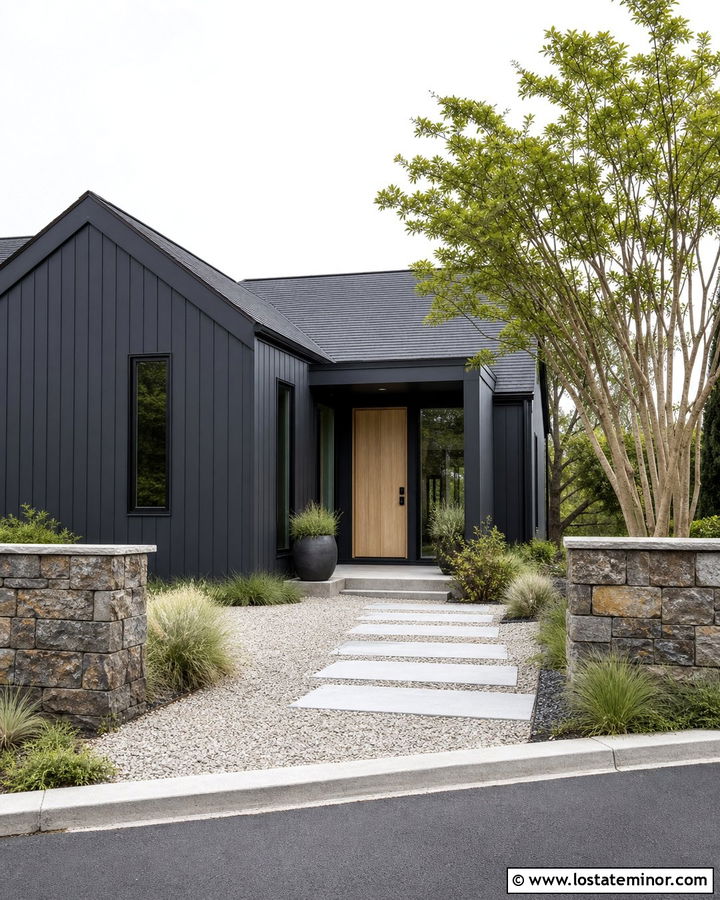
A gravel courtyard creates an inviting transition between a black house and the front yard. Use matte black stucco or vertical siding with a light wood entry door and narrow black-framed windows. Define the courtyard using low stone walls, steel edging, or simple timber borders. Fill the surface with pale gray gravel so the space feels bright against the dark facade. Add a multi-stem tree, several large planters, and groups of ornamental grass for movement and shade. A few rectangular pavers can establish a comfortable route from the driveway to the entrance. Keep furniture minimal and select natural wood or muted metal finishes. This design gives the front yard a useful destination while maintaining an uncluttered appearance and strong connection between the architecture, hardscape, and planting.
27. Black House With Modern Concrete Walkway
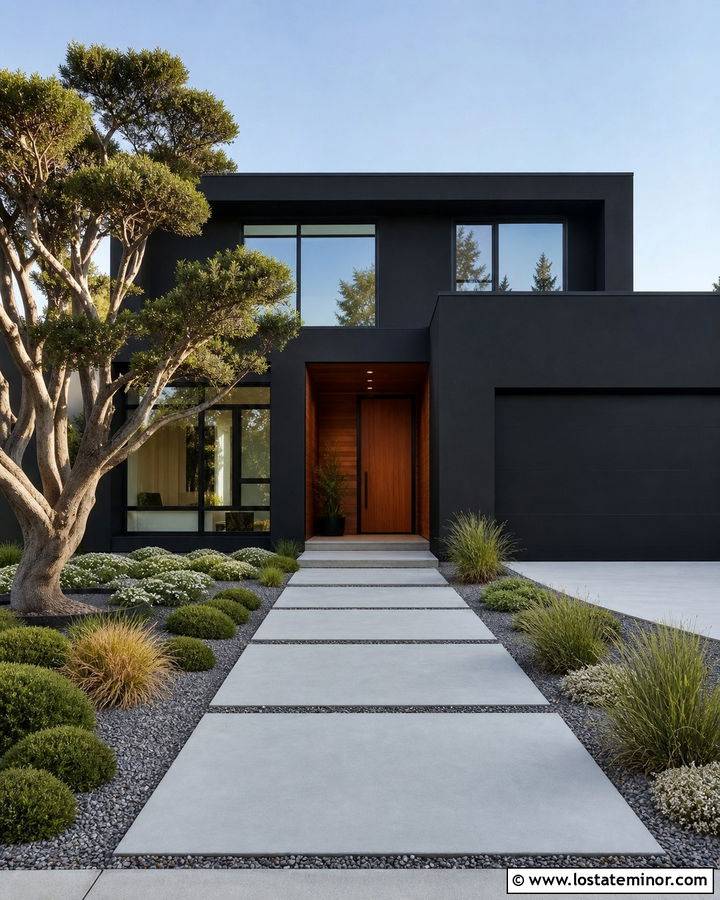
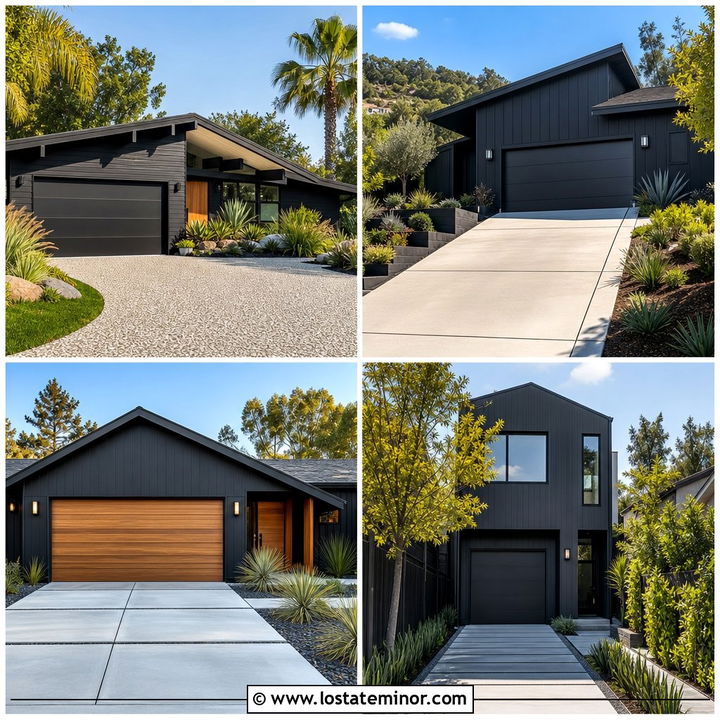
A strong walkway can organize the entire front yard of a modern black house. Paint the facade deep black and carry the same tone across the window frames, fascia, and garage door. Introduce warmth through a recessed cedar entrance or slatted wood screen. Install oversized rectangular concrete pads in a straight or gently offset arrangement, leaving narrow gravel joints between them. Along the path, use compact grasses, low evergreen mounds, and carefully spaced flowering plants. Keep the plant heights low near the walkway so the entrance remains clearly visible. A single sculptural tree can mark a change in direction or balance an asymmetrical roofline. The concrete’s light gray color lifts the scheme, while its geometric shape repeats the clean lines of the architecture and creates an unmistakable route to the door.
28. Black House With Circular Driveway Landscaping
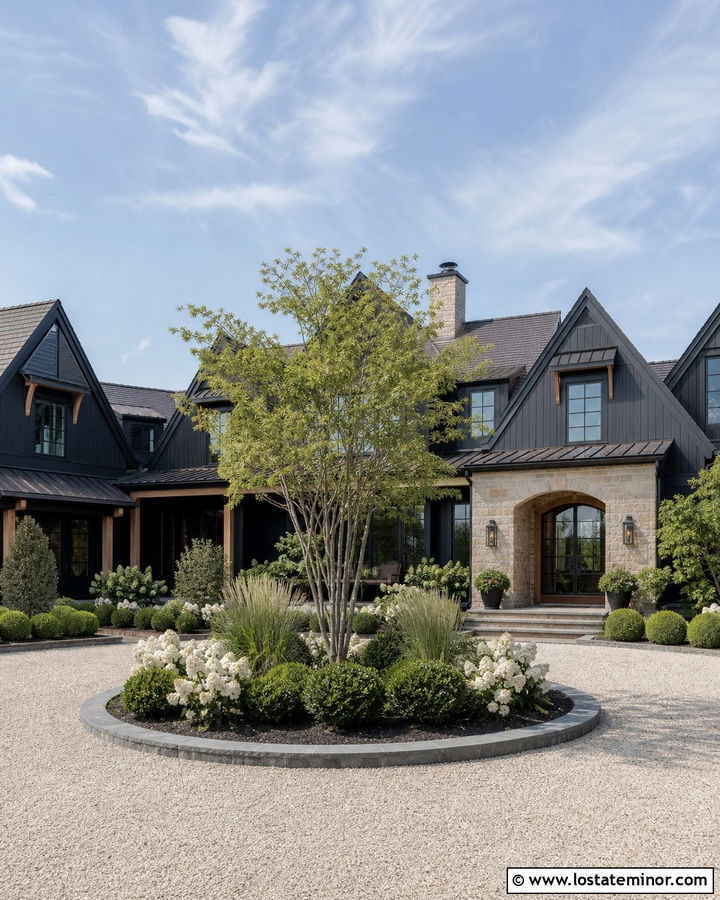
A circular driveway requires bold landscaping that can hold its own against a large black house. Cover the facade in charcoal-black siding or painted brick, then add warm stone and cedar at the entrance. In the driveway’s center, create one generous planting island rather than several small beds. Anchor it with a multi-stem tree, then layer clipped evergreens, ornamental grasses, and white flowering shrubs below. Keep plants low near driveway entrances to preserve clear views. A pale gravel or light concrete drive provides helpful contrast with the house. Repeat plants from the central island beside the porch so the two areas feel connected. The landscape should frame the home’s width and guide visitors toward the entrance without hiding important architectural features or making vehicle access feel cramped.
29. Small Black House With Low-Maintenance Landscaping
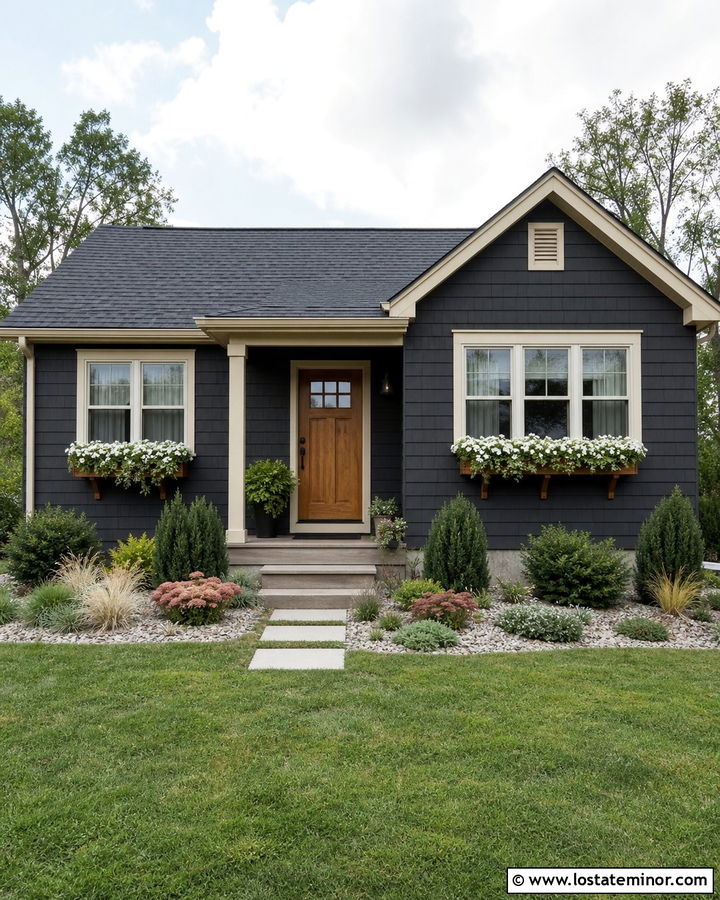
A small black house needs simple landscaping that adds character without overwhelming the facade. Use soft black siding, cream trim, and a natural wood front door to make the compact exterior feel defined and welcoming. Choose a few dependable plant types, such as dwarf evergreen shrubs, ornamental grasses, sedum, and spreading ground cover. Arrange them in broad groups instead of adding many single specimens. A narrow gravel bed can reduce lawn maintenance while brightening the base of the house. Install a clear stepping-stone or concrete path from the sidewalk to the entrance. One small ornamental tree placed near a corner adds height without covering the roofline. Window boxes filled with white flowers can provide seasonal color while keeping the ground-level planting restrained, affordable, and easy to manage.
30. Luxury Black House With Tiered Landscaping
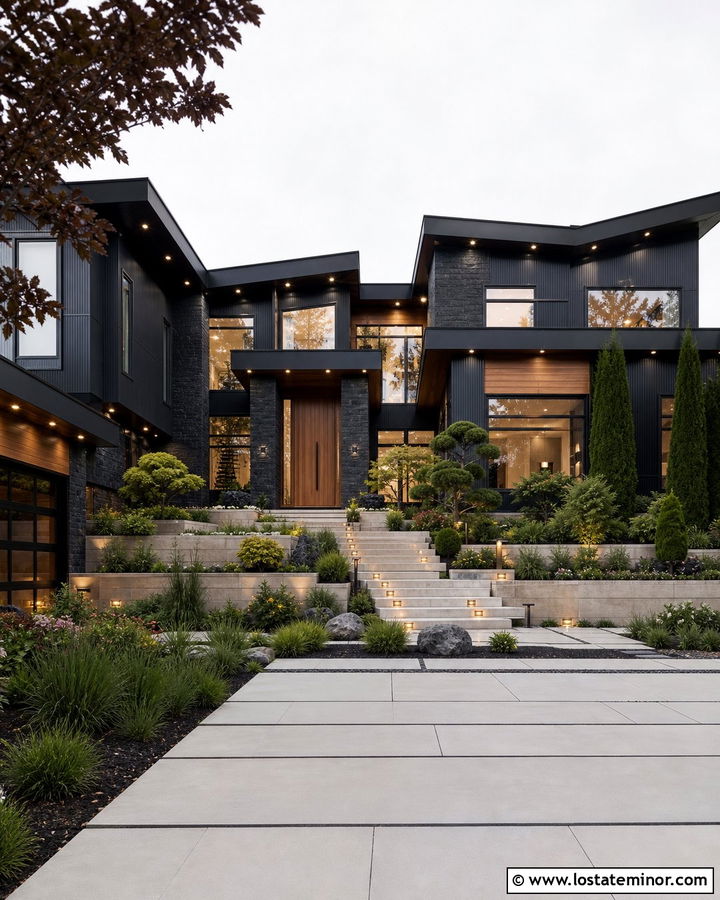
Tiered landscaping gives a large luxury black house the scale and depth it needs. Use a sophisticated mix of black stone, vertical siding, warm wood panels, and expansive black-framed windows. Build wide terraces with retaining walls in pale limestone or textured gray masonry. Each level can support a different planting layer, beginning with low ground cover near the walkway and rising to ornamental grasses, flowering shrubs, and sculptural trees. Broad steps should connect the driveway, lawn, and main entrance without creating an overly complicated route. Add carefully placed evergreen hedges for privacy while preserving important sightlines. Repeating stone from the house within the landscape walls creates continuity. The finished exterior feels substantial yet balanced because the greenery and light masonry prevent the large black facade from appearing visually heavy.
Conclusion:
The most effective **30 Black House Design With Landscaping Ideas** balance a dramatic facade with plants, hardscaping, and natural materials that make the home feel inviting. White flowers create crisp contrast, while grasses and ferns add movement against dark walls. Cedar, oak, brick, and stone bring warmth and connect the building to its setting. Formal houses often benefit from symmetry and clipped greenery, while contemporary homes look stronger with simple plant masses and geometric walkways. Before making changes, consider the house’s scale, sunlight, regional climate, and existing architecture. Select a limited palette and repeat key materials throughout the exterior. With thoughtful layering and a clearly defined entrance, black can become a versatile foundation for memorable curb appeal.

Related posts: