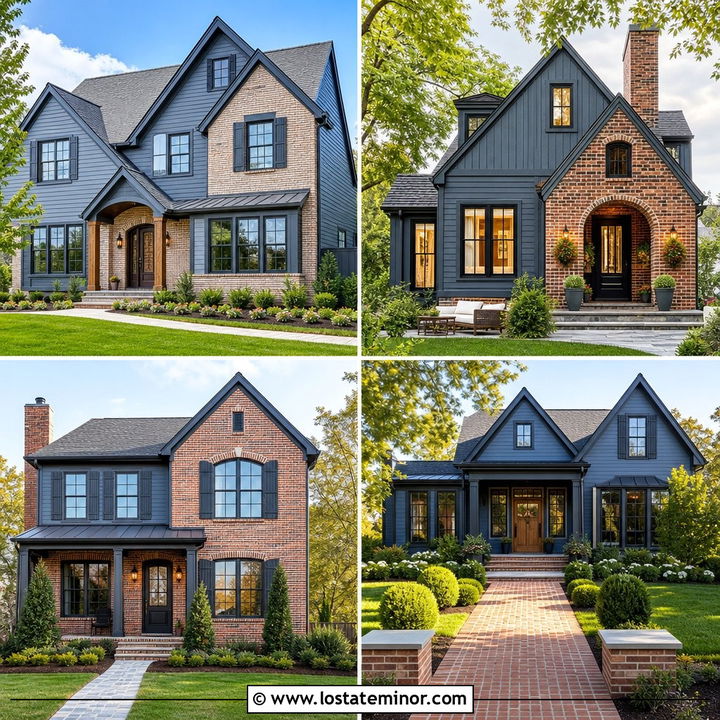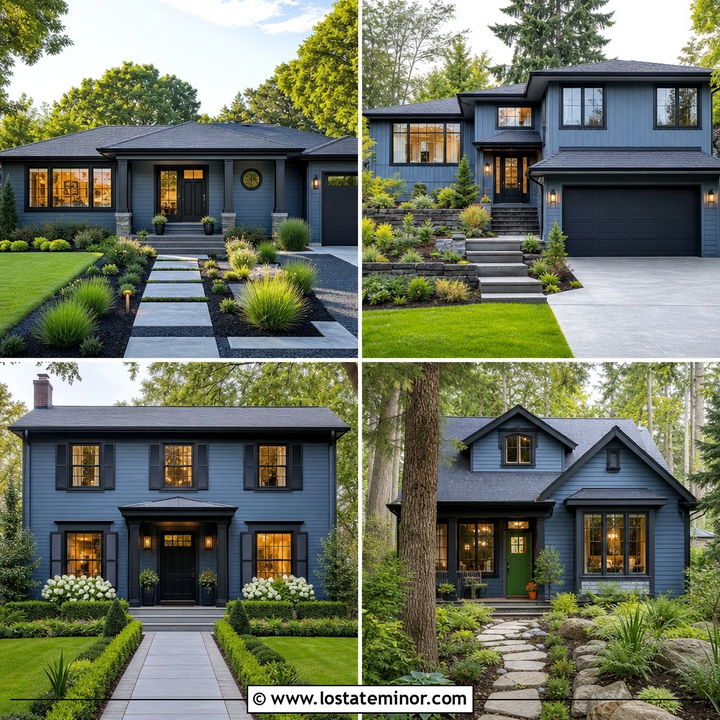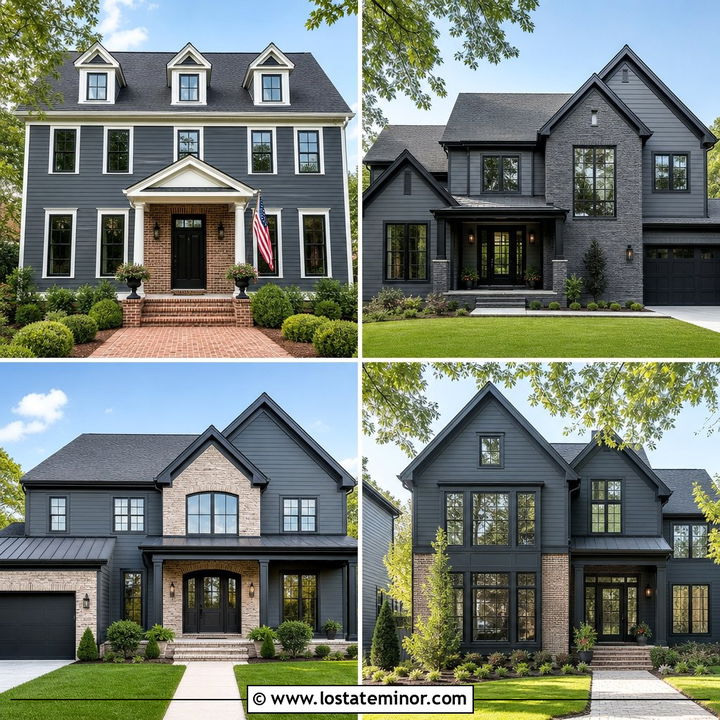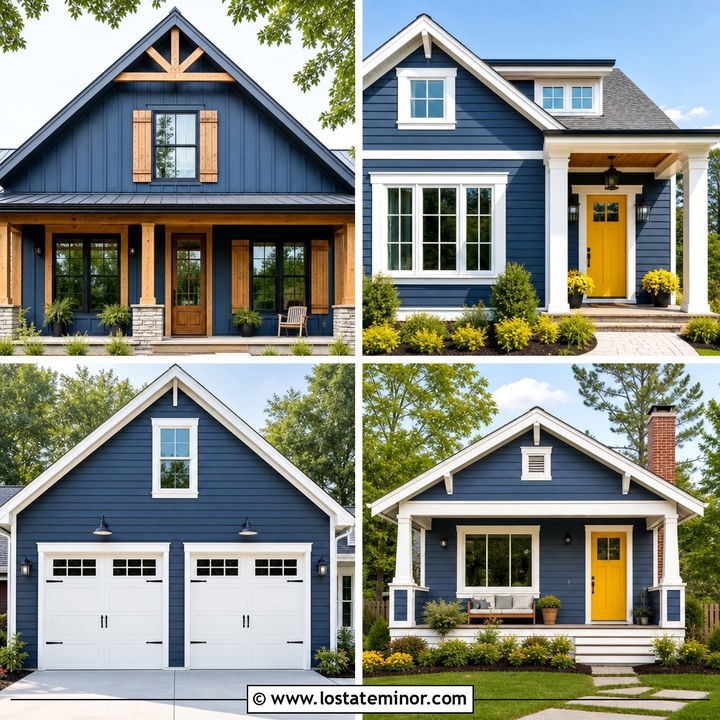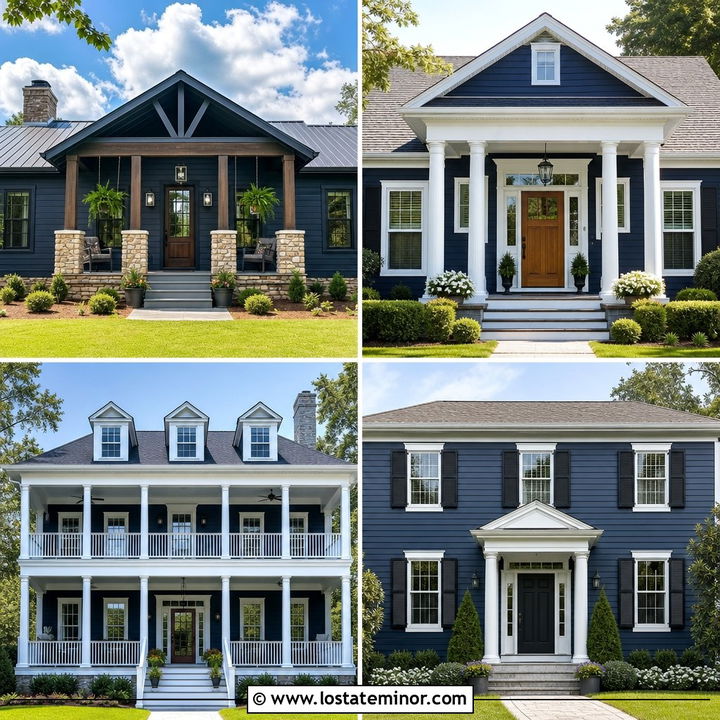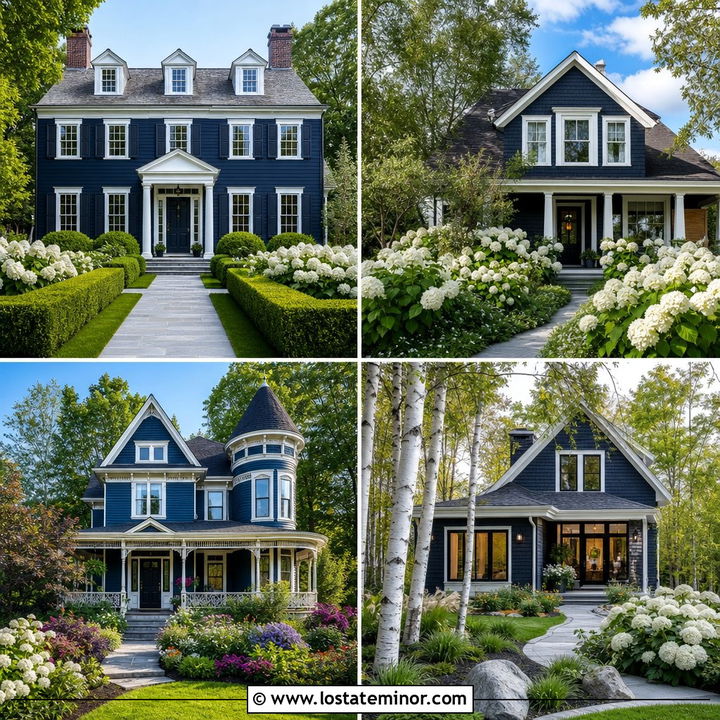
Slate blue sits between classic blue and soft gray, giving a home a calm exterior that still feels distinctive. **30 Slate Blue House Design With Landscaping Ideas** explores complete curb-appeal schemes rather than treating siding, trim, and planting as separate choices. This muted blue-gray works especially well with white, cream, charcoal, natural wood, brick, and stone. It also connects easily with green foliage and structured garden beds, reflecting the growing preference for exterior colors that blend naturally with their surroundings. () The strongest designs coordinate the architecture, hardscaping, roof, entry, and plants so the facade feels balanced from the street. Use these complete exterior looks to find the right combination for your climate, house style, maintenance needs, and budget in **30 Slate Blue House Design With Landscaping Ideas**.

1. Slate Blue House With White Trim And Hydrangeas
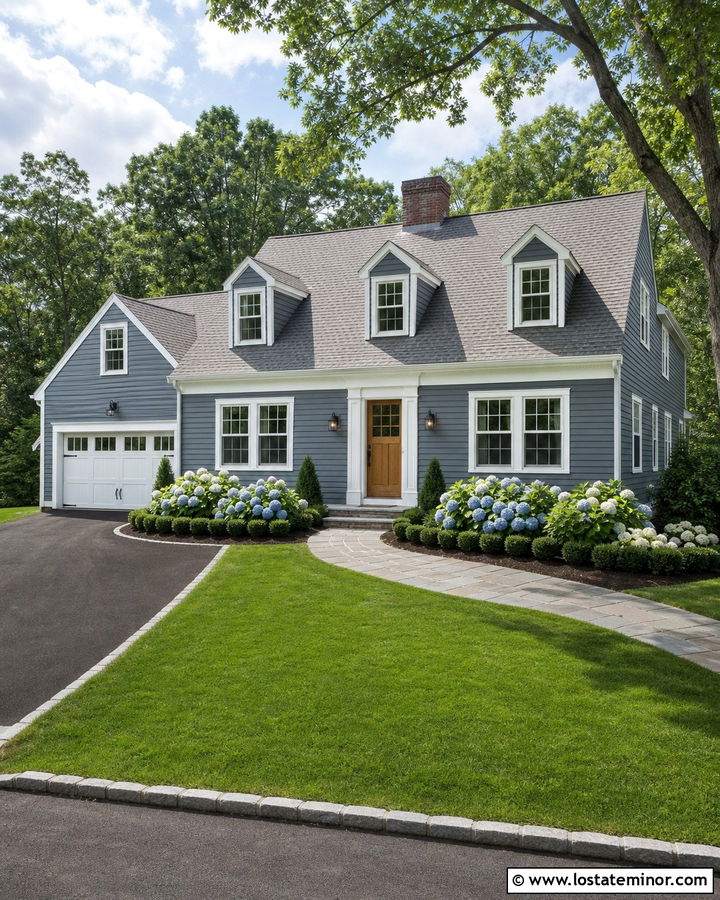
A slate blue house with crisp white trim creates a clean backdrop for full, flowering hydrangeas. This combination looks especially natural on a Cape Cod or cottage with horizontal siding, divided-light windows, and a simple gabled roof. Plant white, pale pink, or blue hydrangeas in deep beds beneath the front windows. Add low boxwood edging to give the loose flowers a more organized shape. A curved bluestone path can connect the sidewalk to a white portico, while dark mulch makes the greenery appear richer. Complete the exterior with a medium-gray roof and a natural wood door. The warm wood prevents the blue-and-white palette from looking too cool or predictable.
2. Slate Blue Craftsman With Native Landscaping
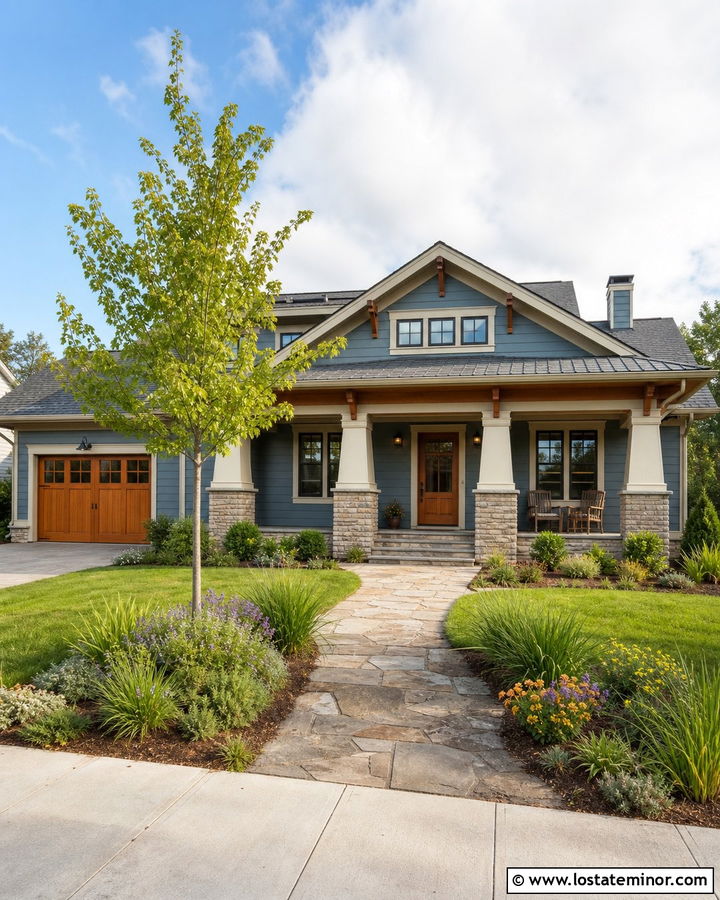
Wide rooflines and exposed wood details make a Craftsman home an excellent match for slate blue siding. Use warm cream on the tapered porch columns, window trim, and fascia. Then repeat stained cedar on the front door, porch ceiling, and decorative brackets. A layered native landscape keeps the exterior relaxed and easy to maintain once established. Combine regionally appropriate ornamental grasses, flowering perennials, evergreen shrubs, and one small native tree near the front corner. Leave enough open space so mature plants do not hide the porch. A broad flagstone walkway complements the home’s handcrafted character. Finish the scheme with river rock around downspouts and dark bronze lighting that relates to the natural wood.
3. Slate Blue Ranch With Ornamental Grasses
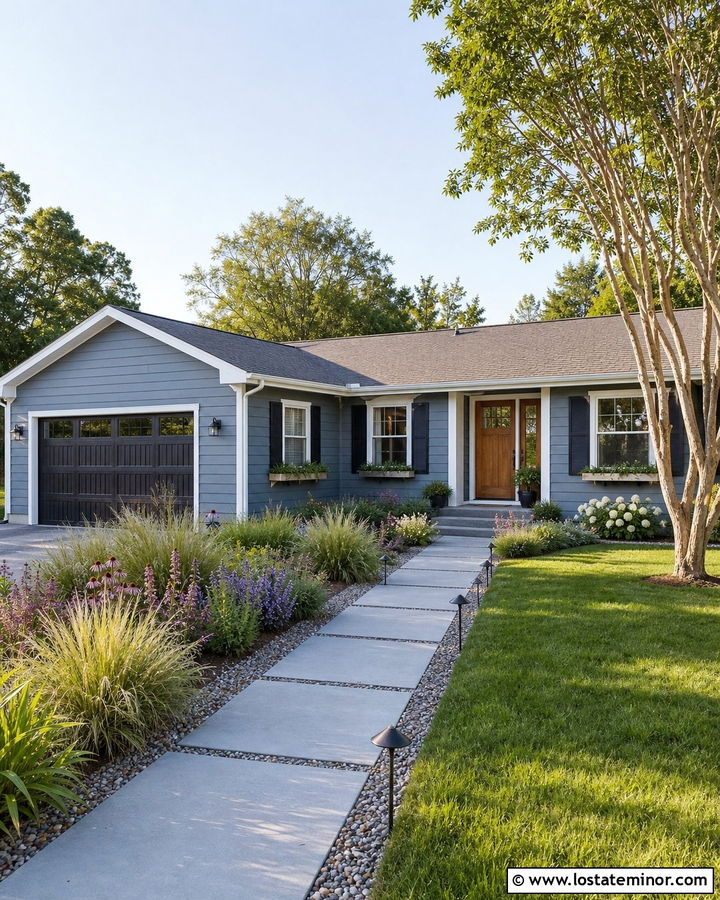
Does a long ranch facade feel too flat from the street? Slate blue siding can visually unify its wide footprint, while ornamental grasses introduce height and movement. Paint the trim soft white and use charcoal on the shutters, gutters, and garage door hardware. Position taller grasses near blank walls, then step down to compact grasses and low flowering plants along the walkway. Repeating the same plants in broad groups looks cleaner than scattering many unrelated varieties. A straight concrete path with gravel borders reinforces the ranch’s horizontal lines. Include one multistem tree near an outer corner to balance the roofline without covering the windows. A warm oak front door provides a welcoming focal point in the center.
4. Slate Blue Colonial With Boxwood Hedges
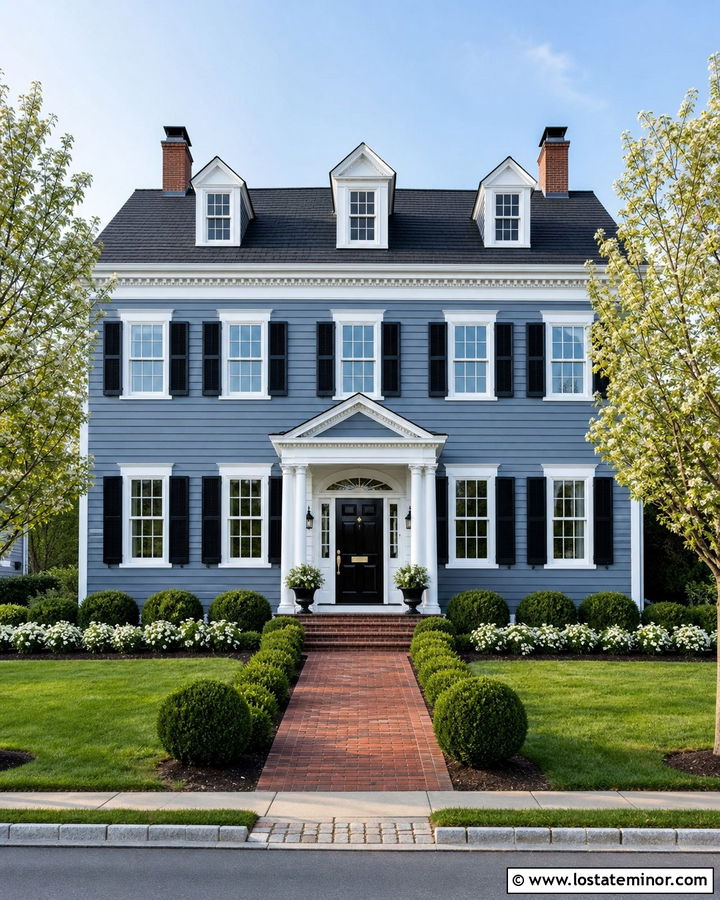
Symmetry gives a slate blue Colonial an orderly, polished appearance before the first shrub is planted. Strengthen that structure with matched boxwood hedges, paired planters, and evenly spaced foundation beds. Bright white trim highlights the windows, cornice, columns, and central entrance. Black shutters, lanterns, and a glossy black front door add traditional contrast without competing with the blue-gray siding. Keep the landscaping restrained by using clipped evergreen forms near the house and looser seasonal flowers along the front edge. A straight brick walkway should align with the door and divide the lawn into balanced sections. If space allows, place matching small trees at each front corner to frame the facade rather than block it.
5. Slate Blue Farmhouse With White Roses
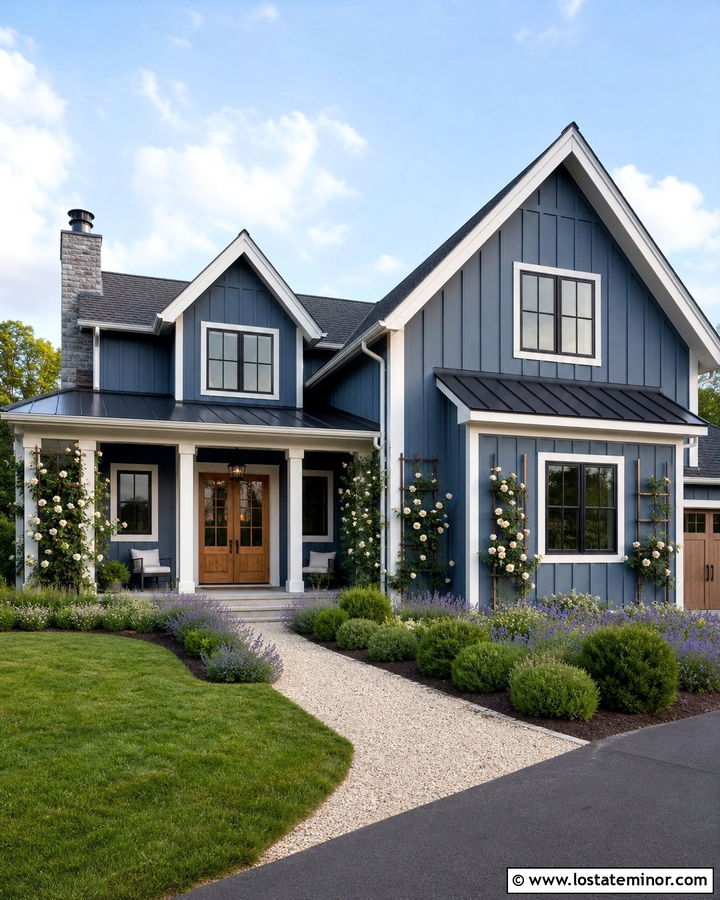
Soft white roses bring a romantic garden quality to a slate blue modern farmhouse without making the exterior feel overly decorative. Cover the main body in slate blue board-and-batten siding, then use warm white on the porch columns, window trim, and garage doors. A black metal roof over the porch introduces crisp definition. Train climbing roses on simple trellises between selected windows, leaving space around the siding for airflow and maintenance. Continue the planting with lavender, catmint, and low evergreen mounds beside a pale gravel path. Natural oak double doors warm the cool palette. Black sconces, gutters, and window frames connect the roof to the lower facade and give the complete house a clean modern outline.
6. Slate Blue Cottage With Lavender Garden
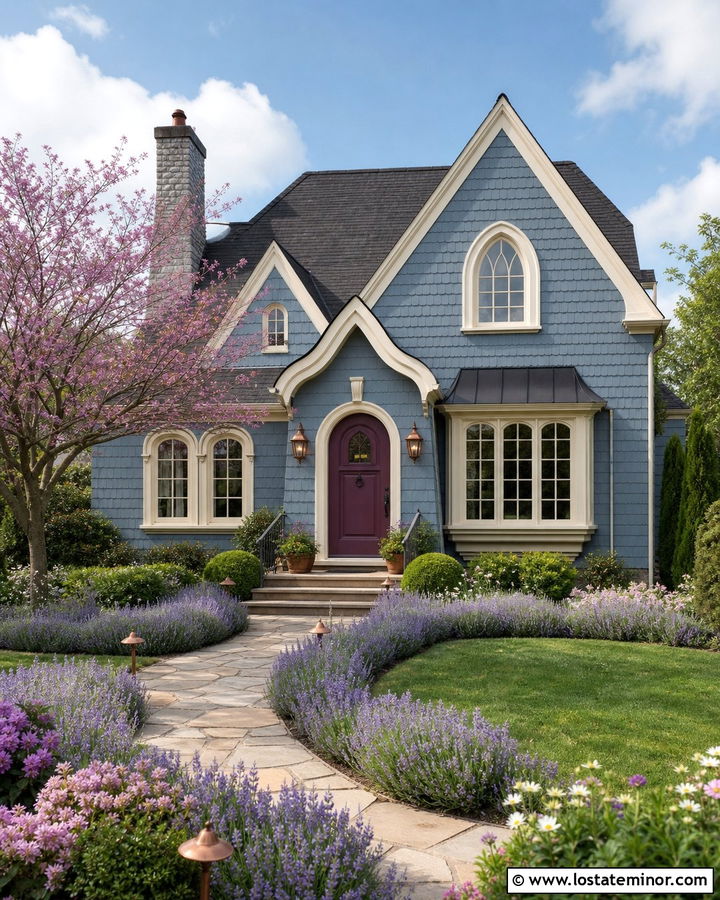
Imagine approaching a small slate blue cottage through a fragrant path bordered by lavender and soft green foliage. Cream trim feels gentler than pure white and suits arched windows, scalloped shingles, and an older cottage roofline. Paint the front door muted plum or dusty burgundy to echo the flower color without becoming too bright. Use a narrow stone walkway with thyme or another suitable low ground cover planted around the edges. Rounded shrubs near the foundation should remain below the windows, while one flowering tree can provide filtered shade nearby. Finish the roof in weathered charcoal and add copper-toned lanterns. The combination feels collected and welcoming, with every garden color supporting the subdued blue exterior.
7. Slate Blue Bungalow With Fern Landscaping
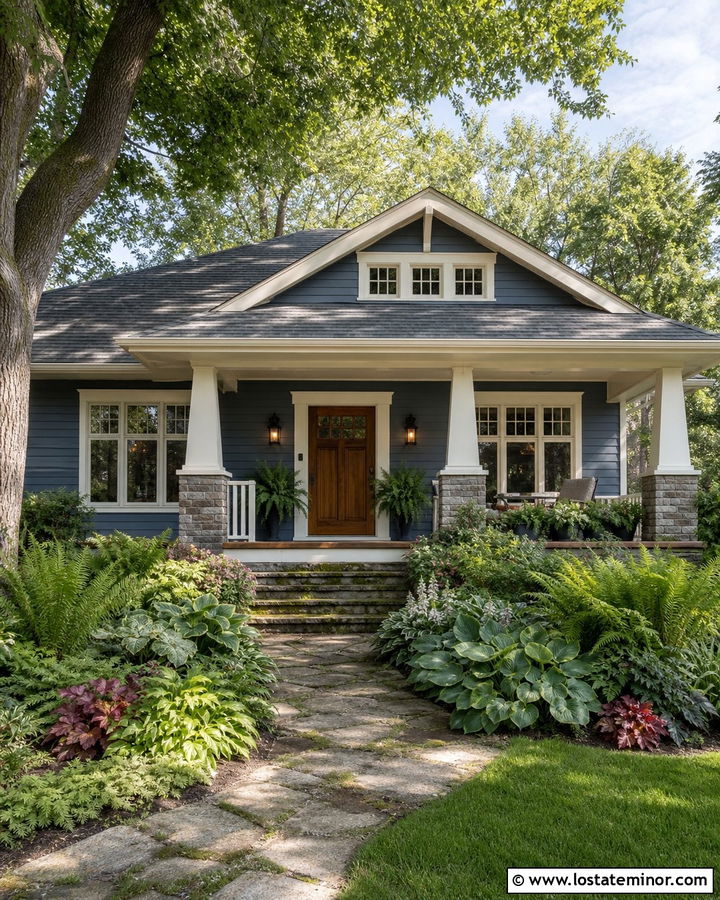
A shaded bungalow can look rich and inviting when slate blue siding is surrounded by layered green foliage. Use creamy white trim on the porch railing, tapered columns, and window frames. Add a medium-stained wood door and matching porch furniture to bring warmth beneath the deep roof overhang. In the garden, combine ferns, hostas, heuchera, and shade-tolerant evergreen shrubs suited to local conditions. Their varied leaf shapes create interest even when few plants are blooming. Mossy stone steps and a gently curving path reinforce the relaxed setting. Keep shrubs low near the porch so the architectural details remain visible. Dark bronze gutters and lanterns provide a softer finish than stark black against the muted slate blue.
8. Slate Blue House With Red Brick Walkway
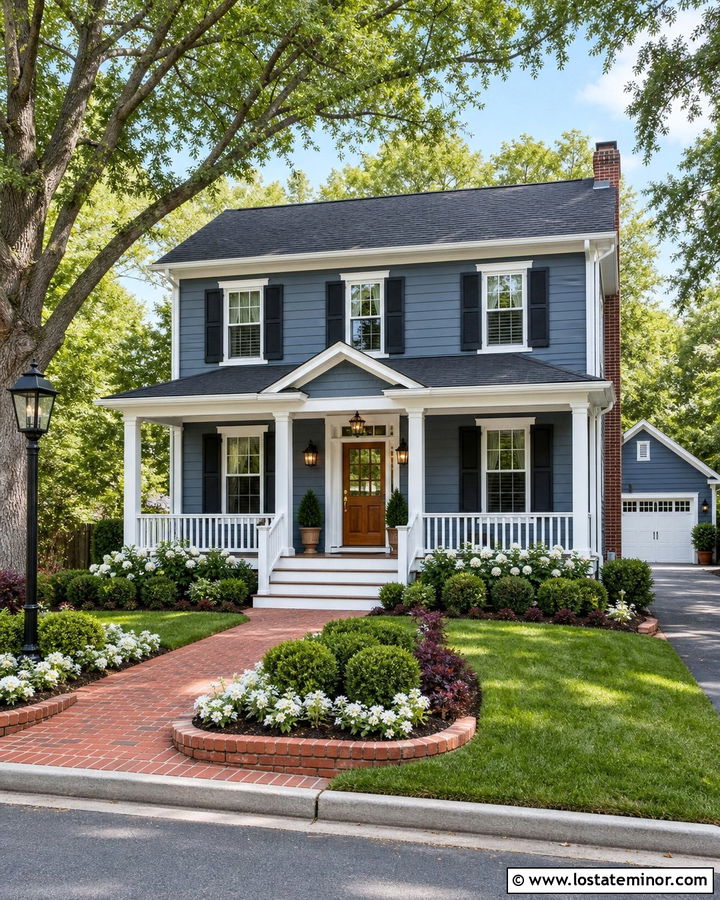
Red brick introduces an earthy counterpoint to cool slate blue siding. This pairing works beautifully on a traditional two-story house with white trim, black shutters, and a centered wood front door. Build a gently curved brick walkway from the sidewalk or driveway, using the same brick for porch steps or garden edging. Surround it with compact evergreens, white flowering shrubs, and small pockets of red or burgundy foliage. These repeated warm tones help the walkway feel connected to the facade. Choose a charcoal roof rather than brown shingles to maintain a balanced color temperature. Brass door hardware and traditional black lanterns complete the entry. Keep the lawn edges crisp so the rich brick pattern remains clearly defined.
9. Slate Blue House With Natural Stone Landscaping
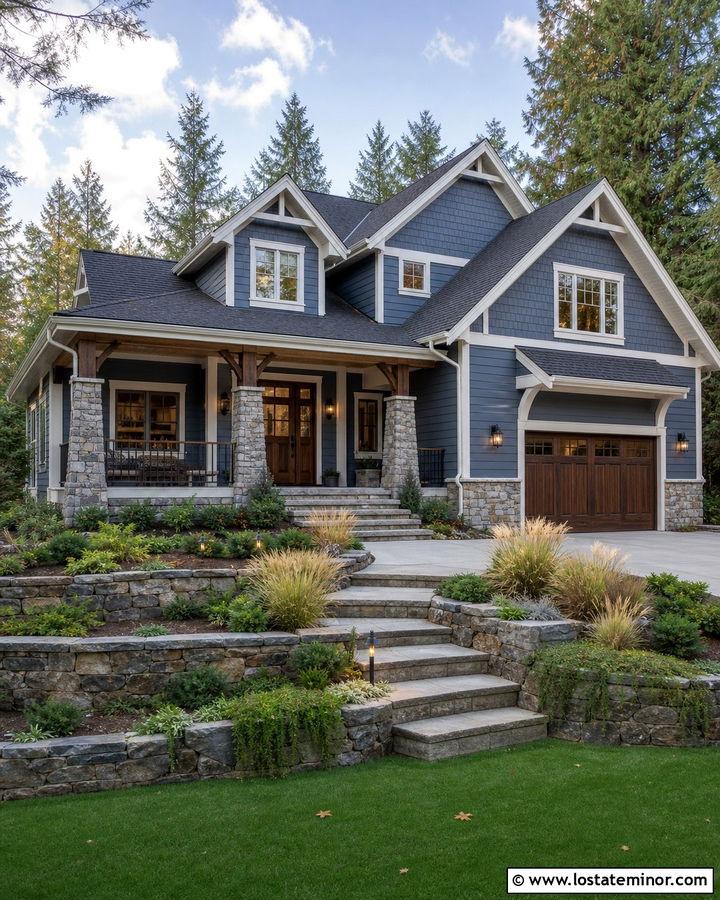
Natural stone can make a slate blue exterior feel grounded, especially when the house sits on a sloped or wooded property. Select stone containing gray, taupe, and muted brown tones, then use it on the foundation, porch columns, and low retaining walls. Warm white trim brightens the siding, while a walnut-colored door echoes the stone’s earthier shades. Build planting beds in tiers with evergreen shrubs, ornamental grasses, and trailing ground covers that soften the wall edges. Large stone steps can create a strong approach without looking overly formal. Repeat the same stone around a mailbox or front garden border. A dark gray roof ties the blue siding and masonry together while allowing the landscaping textures to remain prominent.
10. Slate Blue Modern House With Gravel Garden
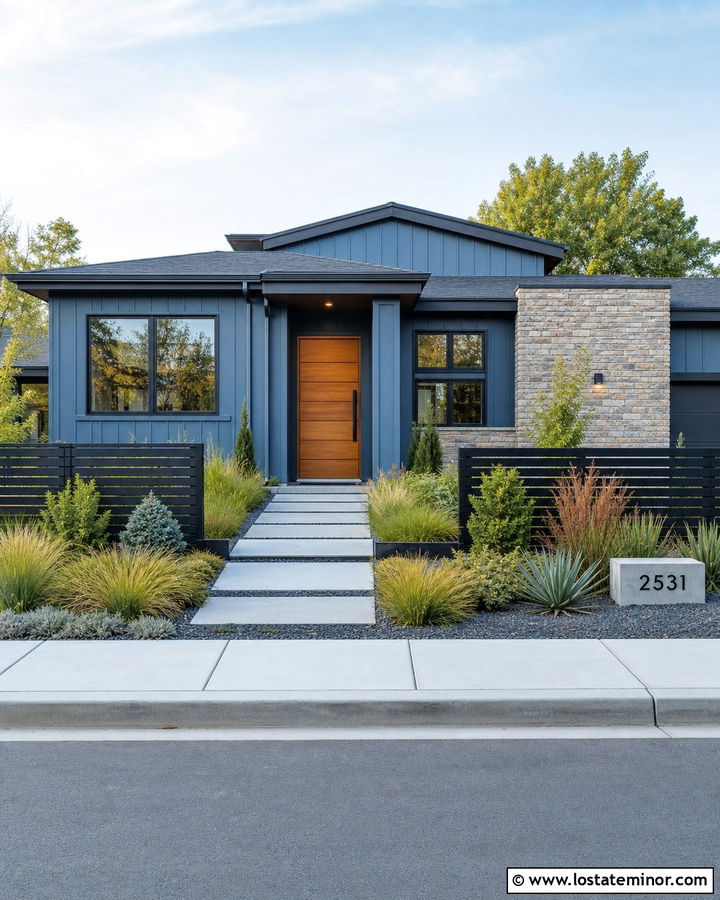
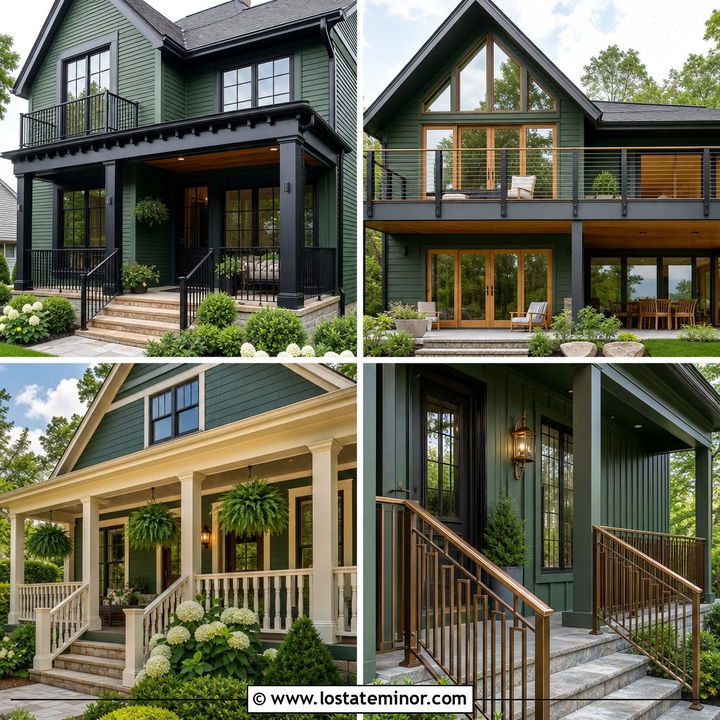
Slate blue stucco or vertical siding gives a modern house color without interrupting its clean geometry. Pair it with charcoal window frames, a flat-panel cedar door, and sections of warm gray stone. In the front yard, use large concrete pavers separated by gravel rather than a traditional curved walkway. Plant sculptural grasses, compact evergreens, and drought-tolerant perennials in controlled clusters. The garden should include open negative space so the architecture does not feel crowded. Black steel edging keeps the gravel and planting zones sharply defined. A low horizontal fence can provide privacy without hiding the facade. Choose simple wall lights and concealed drainage details to preserve the streamlined appearance of the complete slate blue exterior.
11. Slate Blue Split-Level With Layered Shrubs
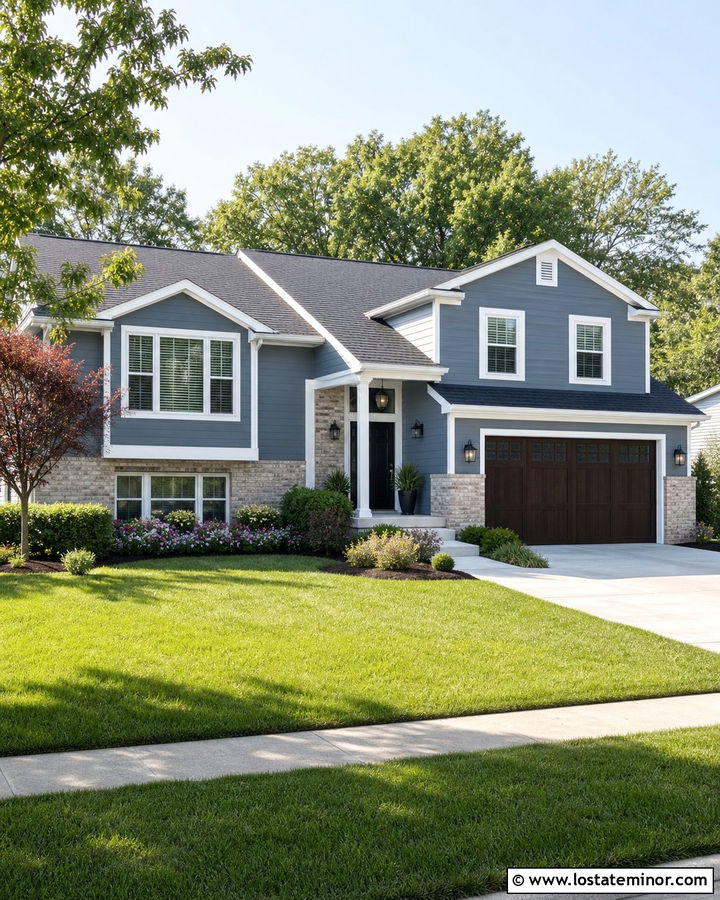
A split-level home often has windows and doors positioned at several heights, so layered landscaping can create much-needed visual balance. Paint the upper siding slate blue and keep the lower brick or stone in a natural warm gray. Use white trim for clarity, then add a black or dark wood garage door. Place taller upright shrubs beside blank wall sections and lower rounded plants beneath windows. A small ornamental tree near the taller side can help connect the uneven rooflines. Widen the front walkway where possible and define it with matching plant groups on both sides. Seasonal flowers should appear in a few repeated colors rather than a busy mix. The result feels organized while respecting the home’s original architecture.
12. Slate Blue Cape Cod With Picket Fence
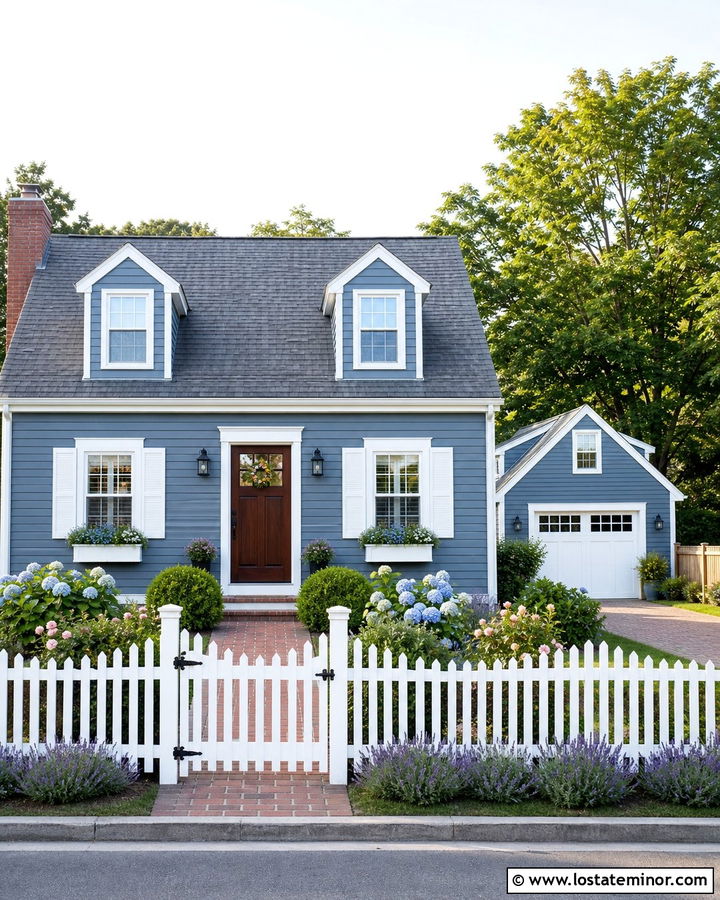
A white picket fence gives a slate blue Cape Cod a familiar, welcoming frame. Keep the fence low enough to preserve a full view of the symmetrical facade, dormer windows, and central entrance. Use clean white on the trim, shutters, porch railing, and window boxes. A deep red or natural mahogany door creates a warm focal point. Inside the fence, plant hydrangeas, compact roses, catmint, and clipped evergreen balls in layered cottage beds. A narrow brick or bluestone path can lead through a simple gate to the entry. Repeat slate blue on a detached garage or garden shed for continuity. Gray roof shingles complete the traditional palette without adding another competing color to the composition.
13. Slate Blue Tudor With Woodland Landscaping
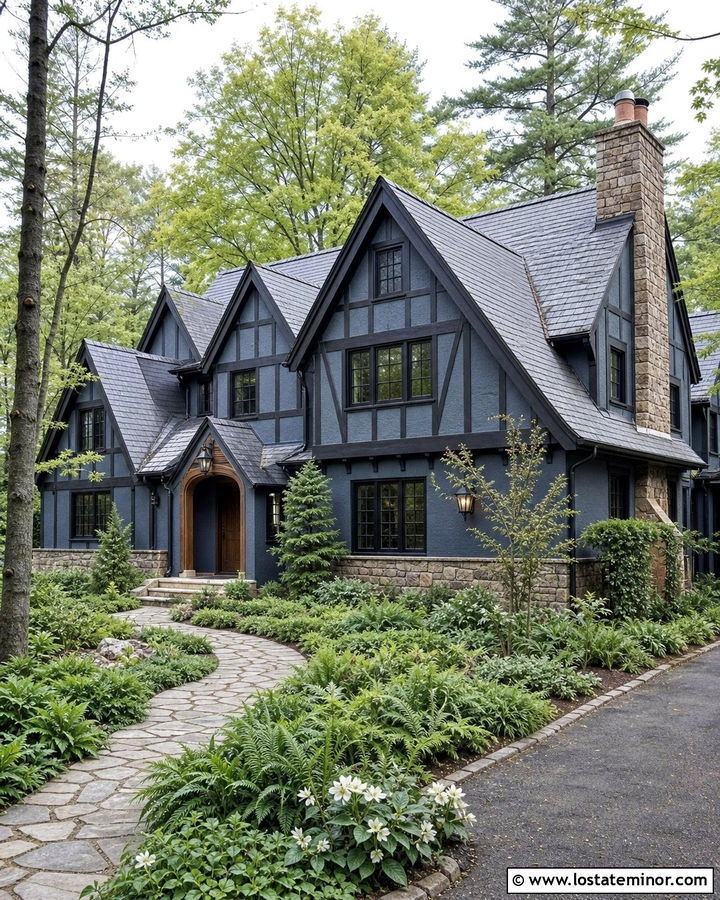
Slate blue can refresh a Tudor home while preserving its substantial, historic character. Apply the color to stucco or siding sections and use deep charcoal on the half-timbering, windows, and gutters. Keep the stone or brick foundation unpainted so its natural variation remains visible. Woodland-inspired landscaping suits the steep rooflines and shaded entry. Layer ferns, hellebores, evergreen shrubs, and small understory trees along a curving stone path. Avoid placing tall plants directly against decorative timber details. A heavy arched door in dark oak should remain the main focal point. Add subtle copper or aged bronze lighting for warmth. The finished exterior feels established and atmospheric, yet the slate blue prevents the facade from becoming visually heavy.
14. Slate Blue House With Yellow Flowers
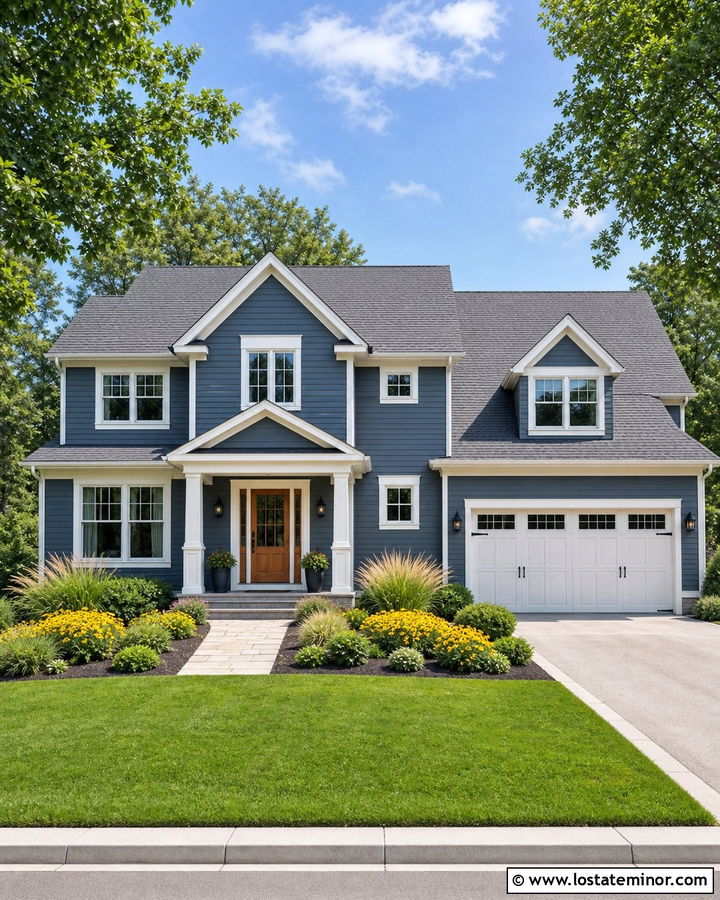
Yellow flowers create lively contrast against a slate blue facade, but the strongest scheme uses them with restraint. Choose creamy white trim, a medium-gray roof, and a warm wood door to support the main color pairing. Group yellow coneflowers, coreopsis, daylilies, or other locally suitable blooms in broad drifts instead of scattering individual plants. Add green shrubs and ornamental grasses between the flowers to give the eye places to rest. A light stone walkway keeps the front yard bright, while dark mulch provides clean definition around each bed. Repeat a small amount of yellow in porch planters or window boxes. This complete landscape feels cheerful from the street without turning the house into a collection of competing colors.
15. Slate Blue House With White Flower Beds
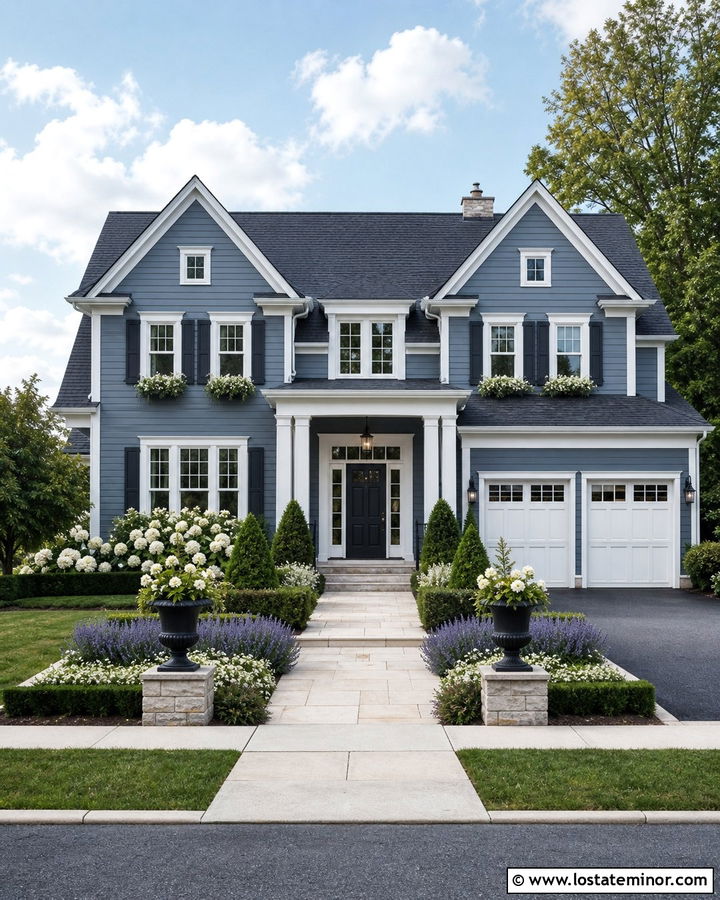
For a calm and polished front yard, surround slate blue siding with an all-white flowering palette. White roses, hydrangeas, salvia, petunias, and flowering ground covers can be combined according to local light and climate conditions. Use deep green evergreen shrubs as a year-round framework, then place white flowers in repeated groups along the front edge. Crisp white trim strengthens the connection between the facade and garden. Add a charcoal door and roof for depth, or select a stained wood door if the scheme needs warmth. Pale limestone pavers make the walkway feel open and elegant. At night, simple path lighting can reveal the planting structure, while the restrained palette keeps attention on the house’s architectural lines.
16. Slate Blue House With Pink Hydrangeas
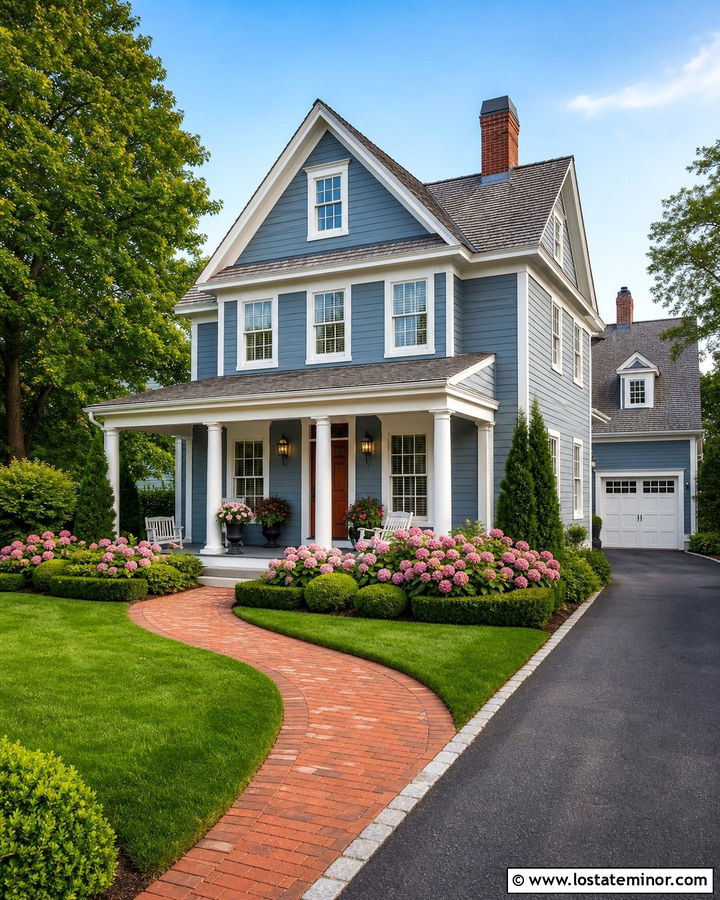
Pink hydrangeas soften slate blue siding and give a traditional home a more personalized garden palette. Choose a dusty or muted pink rather than relying on several bright flower colors. Warm white trim and a medium-brown wood door bridge the cool blue facade and rosy blooms. Position hydrangeas in generous beds beneath windows, leaving enough room for their mature size. Add compact boxwoods or yews behind them to maintain structure outside the flowering season. A curved brick path introduces another warm tone, while a weathered gray roof keeps the upper facade quiet. Matching porch planters can carry the pink flowers closer to the entry. The overall effect is colorful, balanced, and easy to understand from the curb.
17. Slate Blue House With Evergreen Landscaping
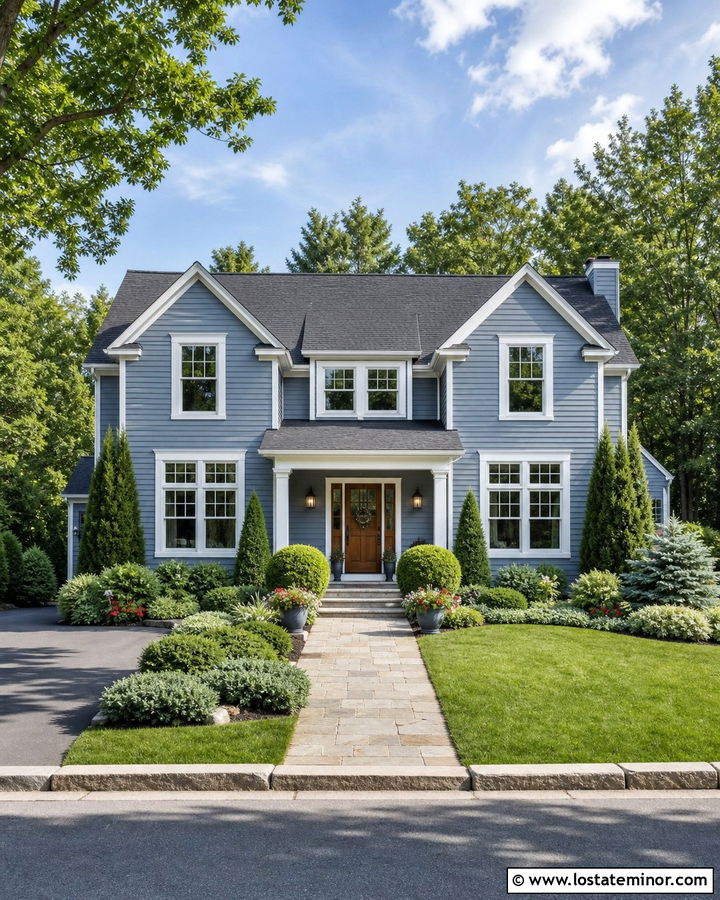
Evergreen landscaping offers a dependable framework around a slate blue home throughout the year. Combine upright forms at the corners, rounded shrubs near the entry, and low spreading varieties along the front edge. Varying the shapes prevents the green foundation planting from looking like one continuous hedge. Use soft white trim and a stained cedar door to lighten and warm the composition. Dark gray roof shingles and bronze lighting complement the blue-gray siding without creating harsh contrast. Add a wide stone walkway and one or two large containers for seasonal color. Keep each evergreen’s mature height in mind, especially beneath windows and near utilities. A restrained planting plan lets the slate blue facade remain visible while still appearing settled into the landscape.
18. Slate Blue House With Desert Landscaping
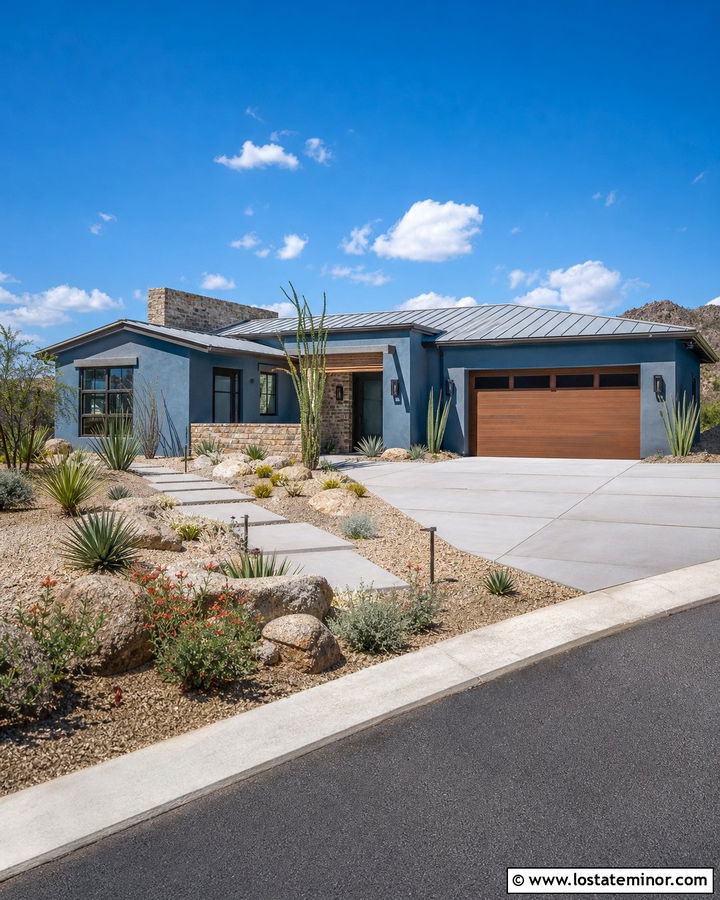
Slate blue stucco provides a cool visual anchor in a warm, dry landscape. Pair it with sand-colored stone, dark bronze windows, and a natural wood garage door. Replace a large water-intensive lawn with decomposed granite, gravel, boulders, and widely spaced drought-adapted plants suited to the region. Agave, yucca, desert spoon, ornamental grasses, and flowering perennials can create distinct forms without crowding the facade. Use a broad concrete path to guide visitors through the gravel garden. Repeating the same rock tones in the porch columns and landscape beds creates continuity. A light gray or weathered metal roof reflects the modern desert character. The finished scheme feels colorful and comfortable without forcing a lush garden into an unsuitable setting.
19. Slate Blue House With Coastal Landscaping
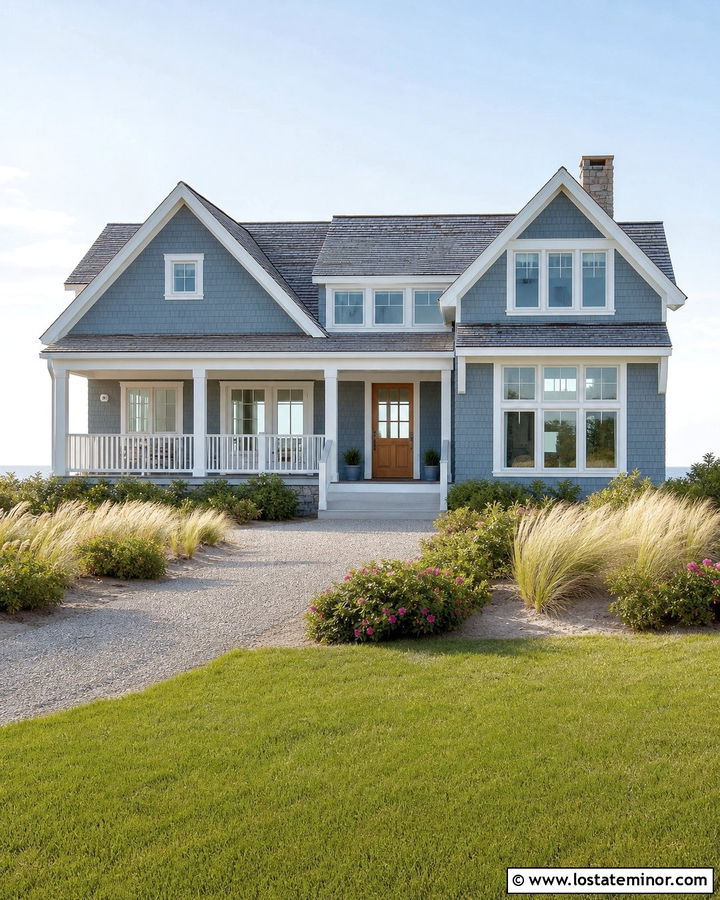
A slate blue coastal home feels natural when the landscaping reflects wind, salt, sand, and open space. Use bright white trim around shingle siding, porch railings, and large windows. A weathered teak or light oak door introduces warmth without making the palette feel heavy. Surround the house with ornamental grasses, low evergreen shrubs, beach roses, and other plants appropriate for local coastal conditions. A crushed-shell or pale gravel path can reinforce the relaxed setting, while a simple boardwalk suits a sandy site. Choose a weathered gray roof and corrosion-resistant metal fixtures. Avoid overly formal hedges or crowded foundation beds. The complete exterior should feel airy, with the muted blue-gray siding connecting the architecture to the distant water and sky.
20. Slate Blue House With Japanese Maple
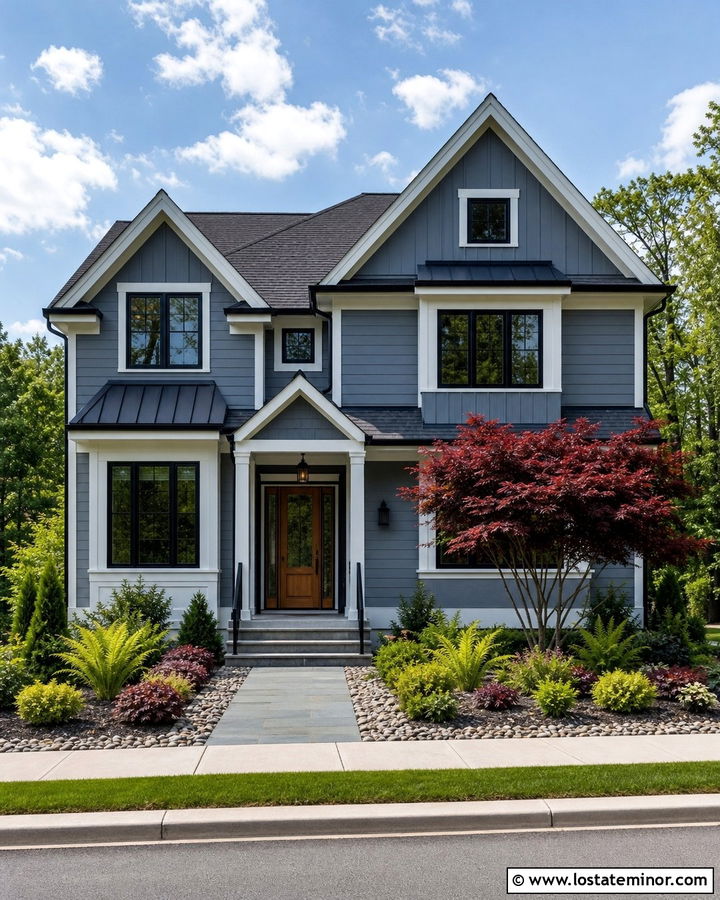
One carefully placed Japanese maple can bring graceful shape and burgundy color to a slate blue facade. This combination works well on a transitional home with white trim, black windows, and a simple cedar front door. Position the tree where it frames the entry or softens a blank corner without covering important windows as it matures. Beneath it, create a quiet bed of ferns, heuchera, low evergreens, and smooth stone mulch. A straight bluestone walkway keeps the landscaping visually controlled. Repeat a small amount of burgundy foliage near the opposite side of the house to balance the tree. Charcoal roof shingles and matte black lighting finish the scheme, allowing the maple to remain the landscape’s strongest accent.
21. Slate Blue House With Cottage Garden
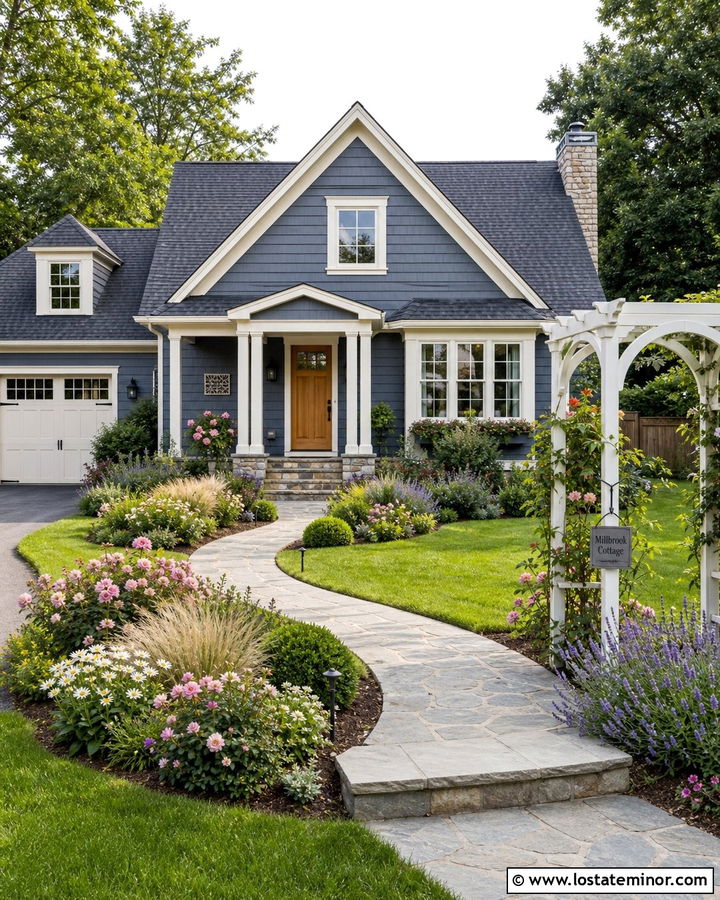
A loose cottage garden can turn a simple slate blue house into a welcoming, layered retreat. Start with cream trim, white porch columns, and a honey-toned wood door. Then fill deep beds with a repeating mix of roses, salvia, daisies, catmint, ornamental grasses, and evergreen mounds suited to the site. Let plants overlap slightly, but maintain a visible edge beside the lawn and path. An informal flagstone walkway should curve gently toward the porch, creating changing views of the facade. Add a small arbor or low fence only if it does not conceal the house. The muted siding provides a steady background for varied flower colors, while repeated foliage shapes keep the abundant garden from appearing accidental or unmaintained.
22. Slate Blue House With Modern Landscaping
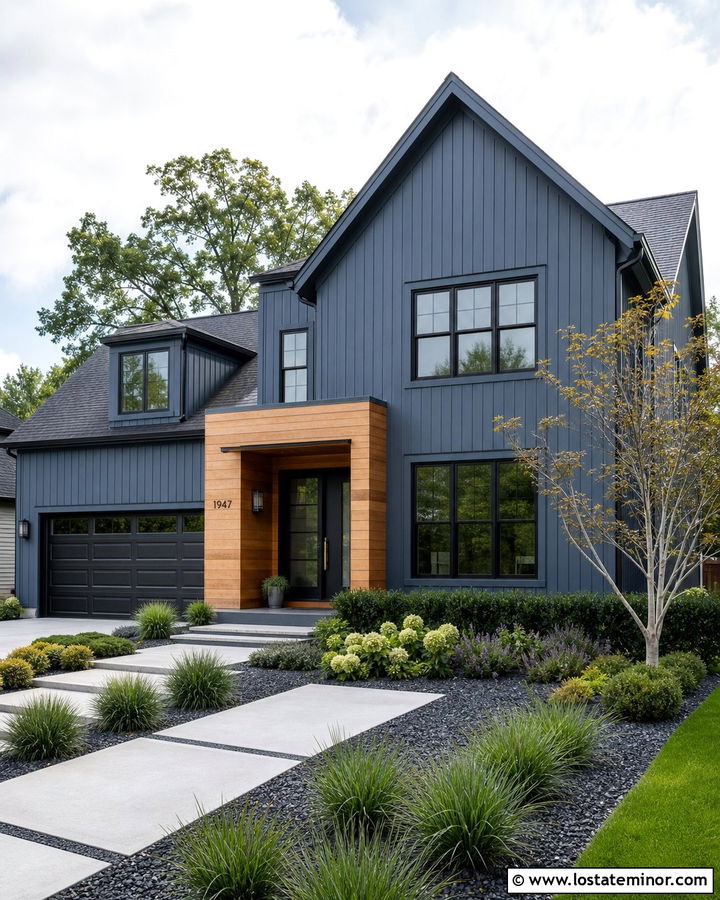
Clean lines make slate blue look especially sharp on a modern or newly updated suburban home. Use vertical siding, black-framed windows, and a warm cedar entry volume to create clear blocks of color. In the yard, repeat rectangular forms with large concrete pavers, low clipped hedges, and straight bands of ornamental grass. Choose a limited planting palette and install each variety in a substantial group. Dark gravel can border the walkway and connect visually to a charcoal roof or black garage door. One sculptural tree provides height without cluttering the facade. Keep utility boxes screened by simple evergreen forms. The resulting design feels intentional because the landscaping follows the same geometry as the house instead of introducing unrelated curves and decorative details.
23. Slate Blue House With Rustic Landscaping
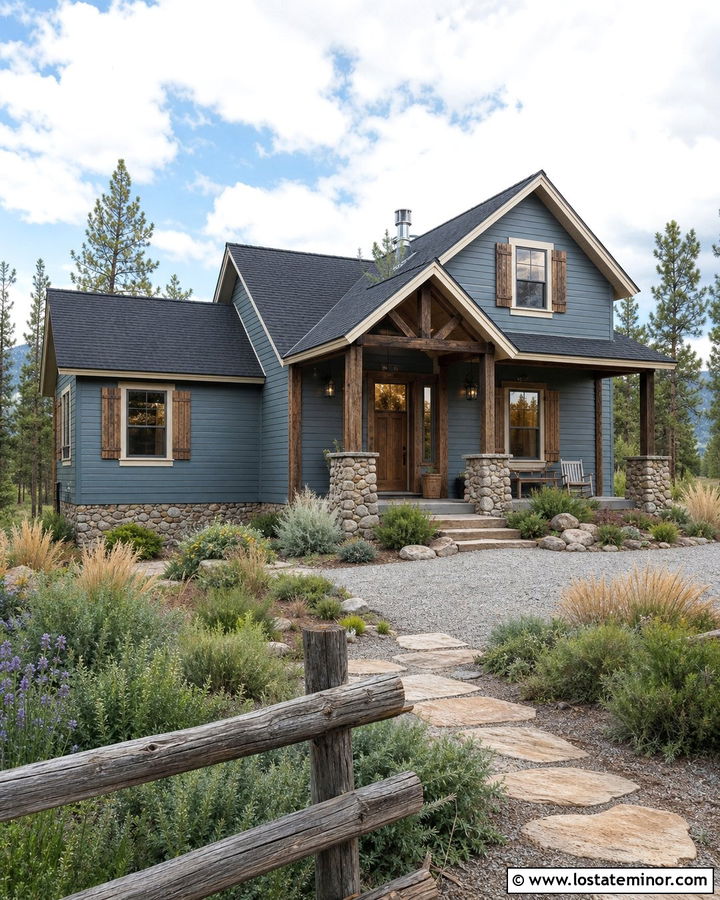
Weathered materials and informal plants give a slate blue exterior a comfortable rustic character. Select cream trim, reclaimed-looking wood shutters, and a medium-stained plank door. Use fieldstone on the foundation, porch piers, or low garden walls to anchor the house. The landscaping can include native grasses, flowering perennials, juniper, and loose evergreen shrubs arranged in broad natural groups. A gravel driveway and irregular flagstone path reinforce the relaxed setting. Add one split-rail fence section or a simple timber garden edge rather than enclosing the entire property. Keep the roof dark gray so it does not compete with the varied materials below. This scheme works best when the stone, wood, siding, and plants share similarly muted, weathered undertones.
24. Slate Blue House With Tropical Landscaping
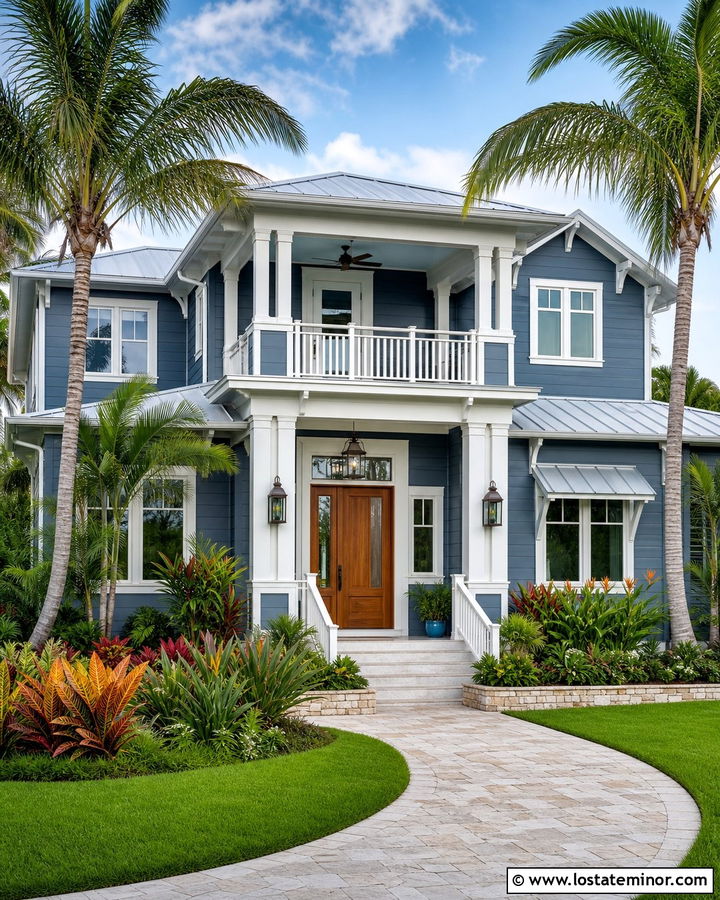
In a warm climate, slate blue can provide a refreshing background for bold tropical foliage. Use bright white trim and columns to keep the exterior light, then introduce a natural teak door and pale stone walkway. Layer palms, bird-of-paradise, crotons, ferns, and broad-leaved shrubs according to local growing conditions. Limit the brightest foliage to a few focal areas near the porch and driveway. Large green leaves already create strong visual interest, so complicated flower combinations are unnecessary. A light gray metal roof suits the breezy palette and helps define the roofline. Use dark bronze fixtures rather than heavy black accents. The finished exterior feels lush and colorful while the cool siding keeps the overall curb appeal composed.
25. Slate Blue House With Low-Maintenance Landscaping
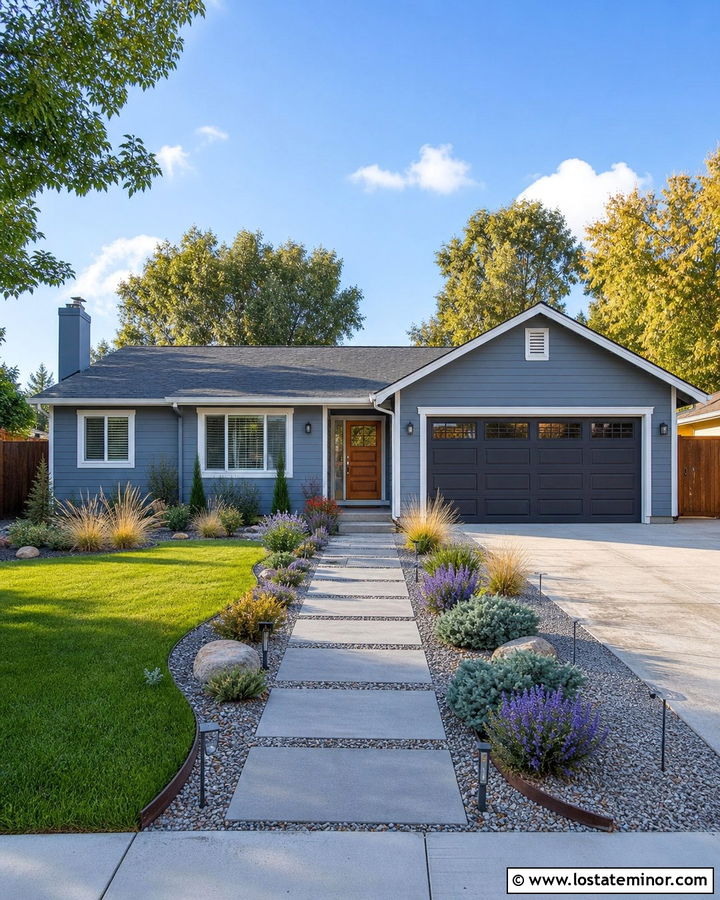
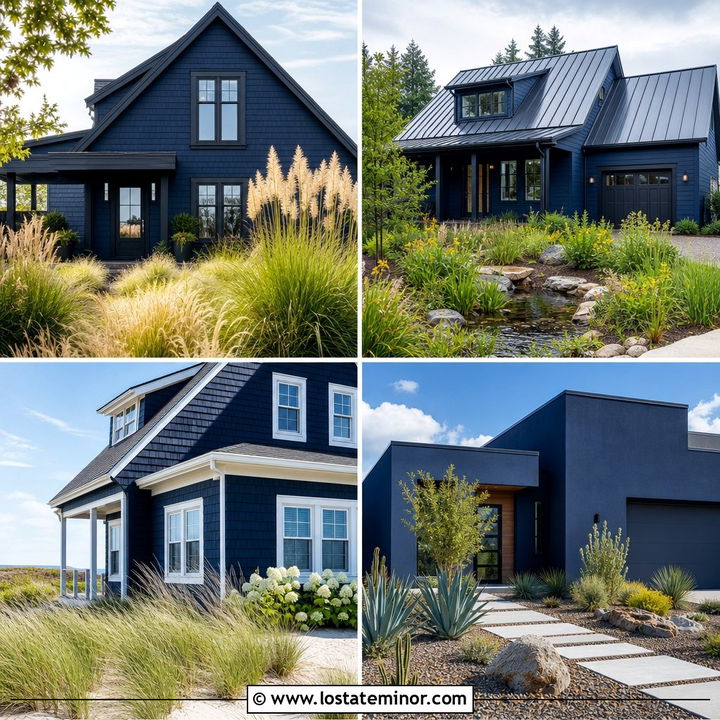
Low-maintenance curb appeal begins with a simple plant palette and generous spacing. Pair slate blue lap siding with white trim, a charcoal garage door, and a cedar front door. Build foundation beds using compact evergreen shrubs, durable ornamental grasses, and long-blooming perennials chosen for the property’s sun, soil, and climate. Apply a clean mulch layer or decorative gravel and define the edges with steel, stone, or concrete. A broad paver walkway reduces narrow lawn strips that are awkward to mow. Use drip irrigation where appropriate and avoid planting shrubs that will require constant trimming beneath windows. This complete scheme looks polished because every material has a clear role, not because the yard contains a large number of high-maintenance plants.
26. Slate Blue House With Small Front Yard
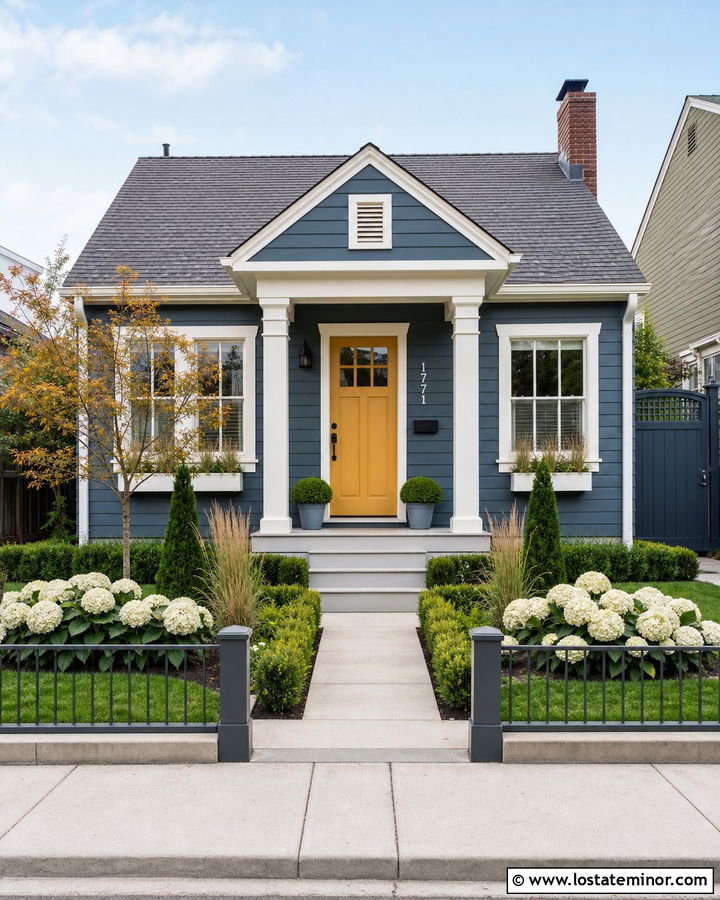
A small front yard needs strong organization rather than miniature versions of every landscaping feature. Cover a compact cottage or urban bungalow in slate blue siding with warm white trim and a cheerful mustard-yellow door. Use one direct walkway, one small ornamental tree, and two or three repeated plant varieties. Narrow foundation beds can hold upright grasses, compact hydrangeas, or clipped evergreens without overwhelming the lawn. Consider a low fence or hedge along the sidewalk to create depth, but preserve clear views of the entrance. Window boxes provide color without consuming ground space. A matching slate blue gate or garage helps the property feel cohesive. Simple repetition makes the entire frontage appear wider, calmer, and more thoughtfully maintained.
27. Slate Blue House With Sloped Front Yard
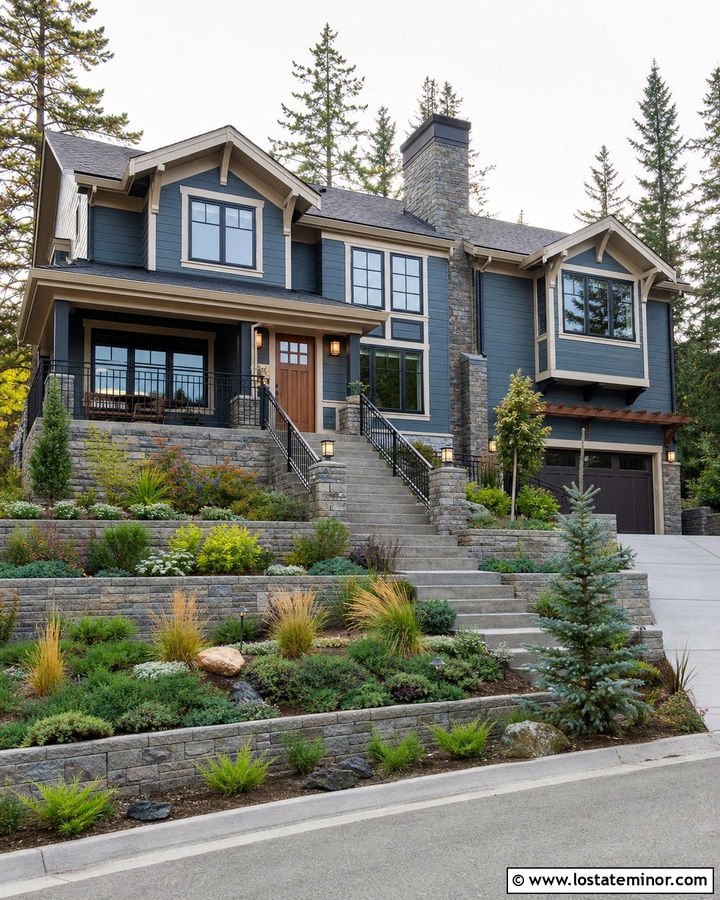
A sloped yard becomes easier to navigate when its landscaping is divided into broad, stable terraces. Pair slate blue siding with cream trim, charcoal windows, and natural stone across the exposed foundation. Use the same stone for low retaining walls and wide entry steps, creating a visual connection between the house and grade changes. Fill each terrace with spreading evergreen shrubs, ornamental grasses, and erosion-conscious ground covers appropriate for the site. Keep taller plants on outer edges where they will not hide windows. A handrail in dark bronze or black can relate to the roof and lighting. Instead of forcing a steep lawn, use layered planting beds that follow the land. The result feels integrated rather than engineered as an afterthought.
28. Slate Blue House With Black Trim And Green Landscaping
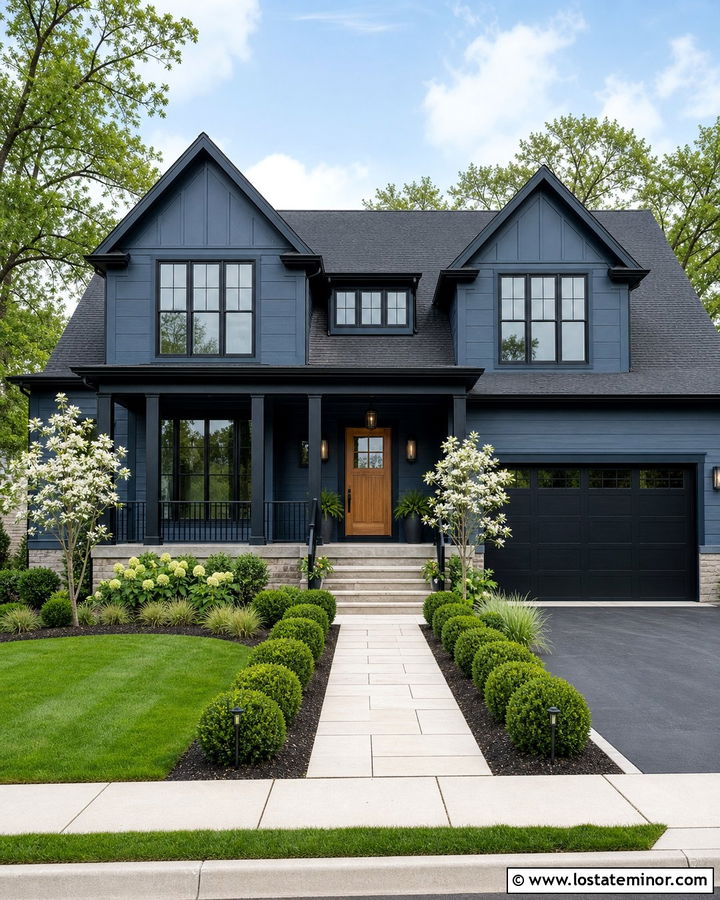
Black trim gives slate blue siding a crisp, contemporary edge, especially on a house with simple windows and a defined roofline. Carry black onto the gutters, garage door, porch railing, and modern wall lights. Balance those dark elements with a warm wood front door and abundant green landscaping. Use boxwoods, ferns, grasses, and small flowering trees to create several foliage textures without introducing many competing bloom colors. A pale concrete or limestone walkway prevents the front yard from becoming too dark. Leave breathing room between the plant beds and facade so the black outlines remain visible. This exterior works particularly well when the roof is charcoal and the driveway is framed by low greenery rather than tall shrubs or bulky masonry.
29. Slate Blue House With Cream Trim And Warm Landscaping
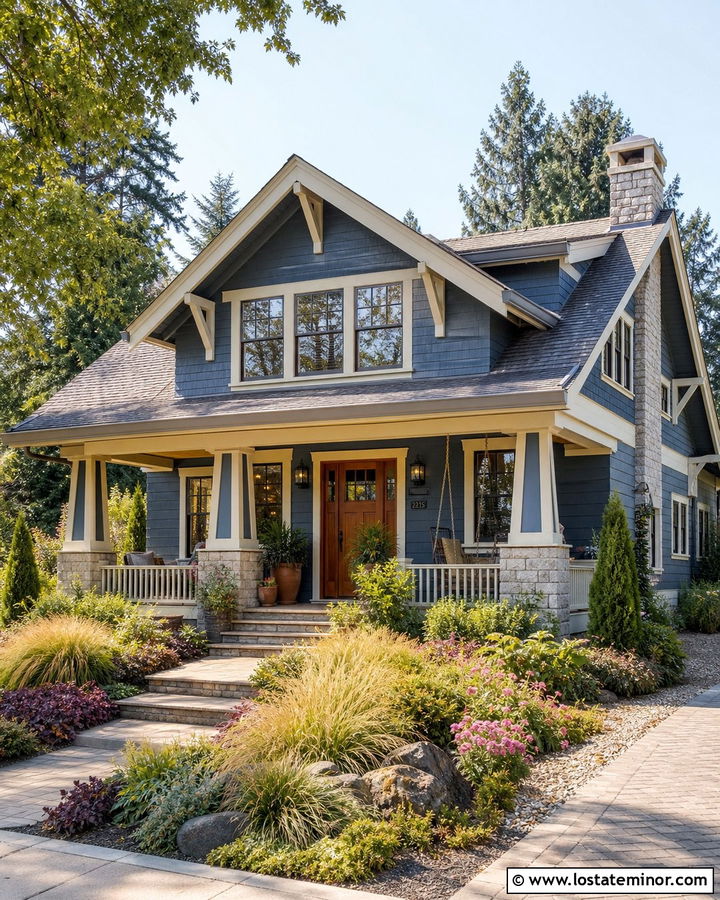
Cream trim softens slate blue and works beautifully with landscaping that contains golden, bronze, and burgundy tones. Choose a Craftsman, cottage, or traditional facade with cream window frames, porch columns, and fascia. Add a walnut front door and aged bronze fixtures for an inviting entrance. In the garden, combine golden ornamental grasses, burgundy heuchera, warm pink flowers, and dark green evergreens. Use tan gravel or buff-colored stone along the walkway to reinforce the warmer undertones. Avoid brilliant white accessories, which may make the cream appear dingy by comparison. A weathered brown-gray roof completes the palette. From the curb, the cool siding and warm landscape balance one another, creating a home that feels comfortable in every season.
30. Slate Blue House With Four-Season Landscaping
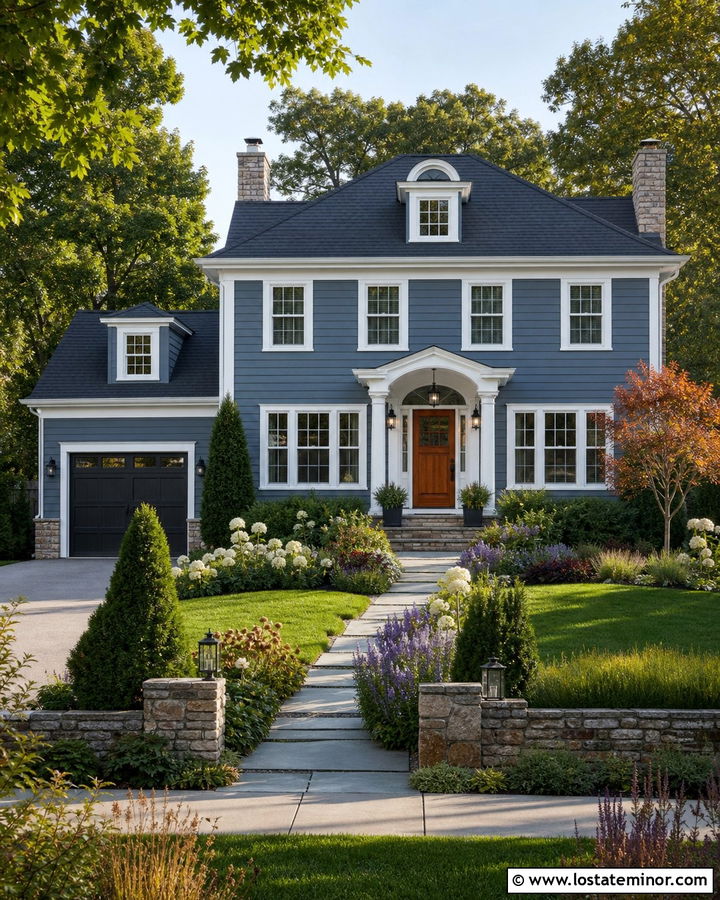
Four-season landscaping keeps a slate blue exterior visually anchored even when flowers are absent. Start with evergreen shrubs and one well-shaped tree to provide permanent structure. Add spring bulbs, summer perennials, ornamental grasses for fall, and plants with attractive winter bark or seed heads. Use white trim, a rich wood door, and charcoal roofing so the architecture remains consistent as garden colors change. Repeat key plants across the front instead of assigning a different combination to every bed. A stone walkway and clearly defined borders maintain order during dormant months. Containers near the entry can provide flexible seasonal accents. This approach creates year-round curb appeal while allowing the slate blue house to remain the steady centerpiece of the entire property.
Conclusion:
These **30 Slate Blue House Design With Landscaping Ideas** show how one adaptable exterior color can support traditional, modern, coastal, rustic, and low-maintenance properties. The key is to coordinate the siding with the roof, trim, front door, masonry, walkway, and planting palette. White creates crisp contrast, cream adds softness, black sharpens the architecture, and natural wood brings warmth. Landscaping should frame the facade rather than cover it, with plant sizes chosen for their mature growth and local conditions. Before committing, test the slate blue color on several exterior walls and view it throughout the day. Then build the landscape around the home’s architecture, climate, sunlight, and maintenance requirements for a balanced result.

Related posts: