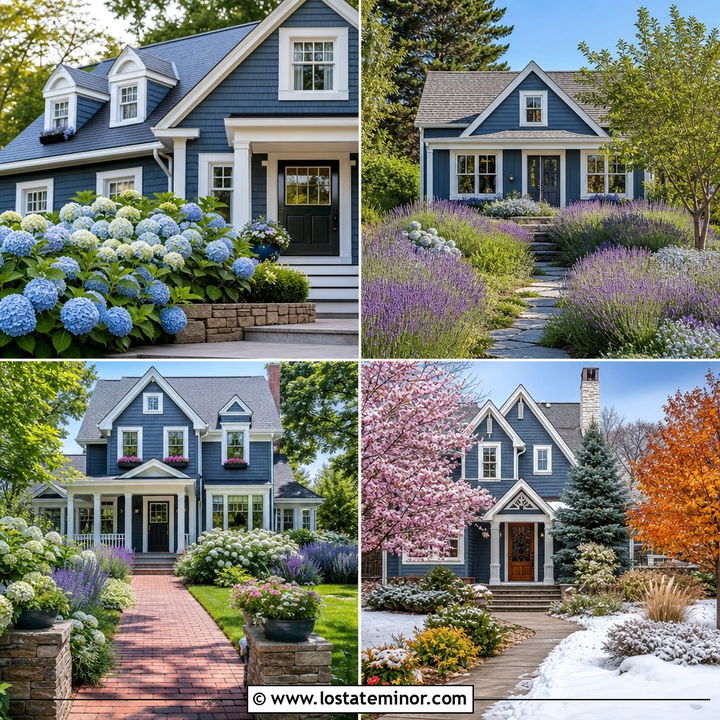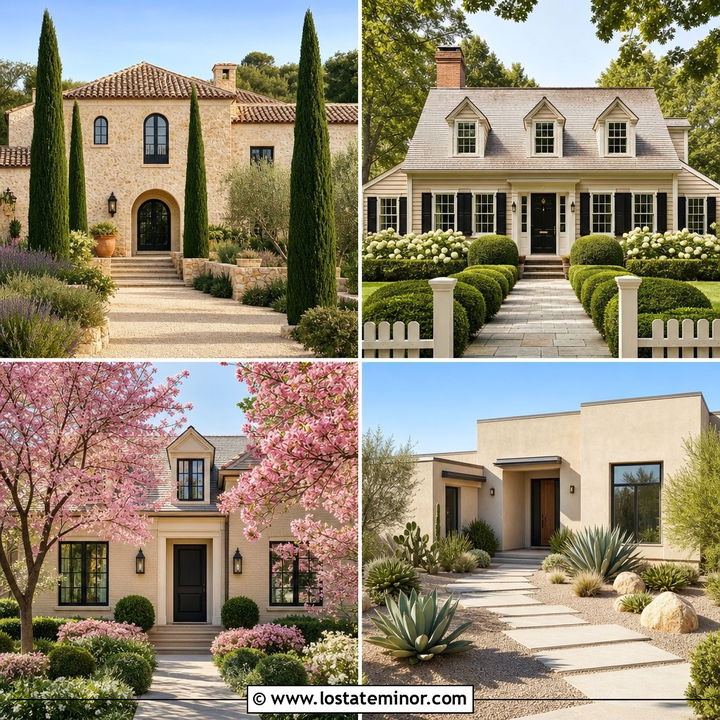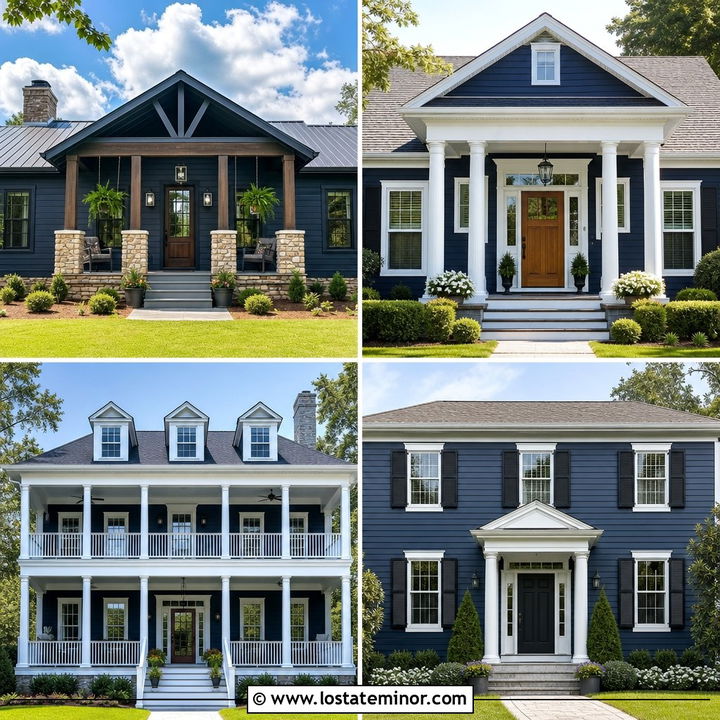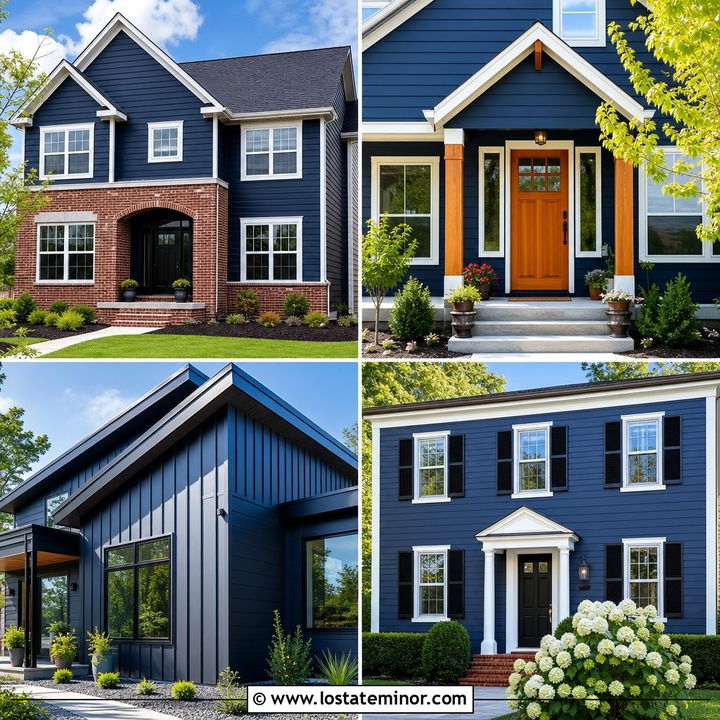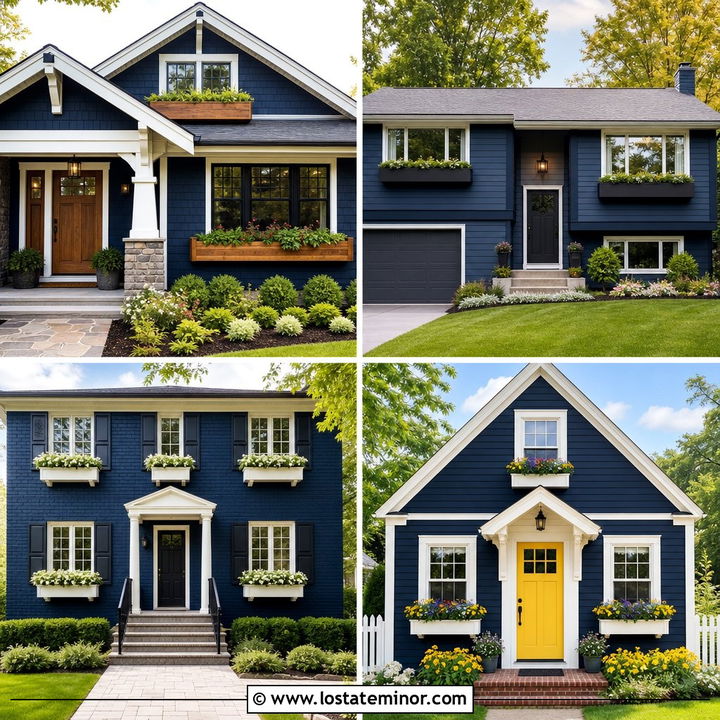
A navy exterior can feel classic, coastal, modern, or rustic depending on the materials and plants placed around it. The best 30 Navy Blue House Design With Landscaping Ideas treat the facade and front yard as one coordinated composition. Crisp trim sharpens dark siding, while wood, brick, stone, and metal accents add warmth and texture. Landscaping then softens the contrast through layered shrubs, flowering borders, ornamental trees, and welcoming walkways. Current exterior trends increasingly favor palettes that connect homes with their natural surroundings, making thoughtful planting especially important beside a strong color like navy. () Whether you have a compact ranch or a tall colonial, the complete schemes below offer practical inspiration. Explore these 30 Navy Blue House Design With Landscaping Ideas for a balanced, memorable exterior.
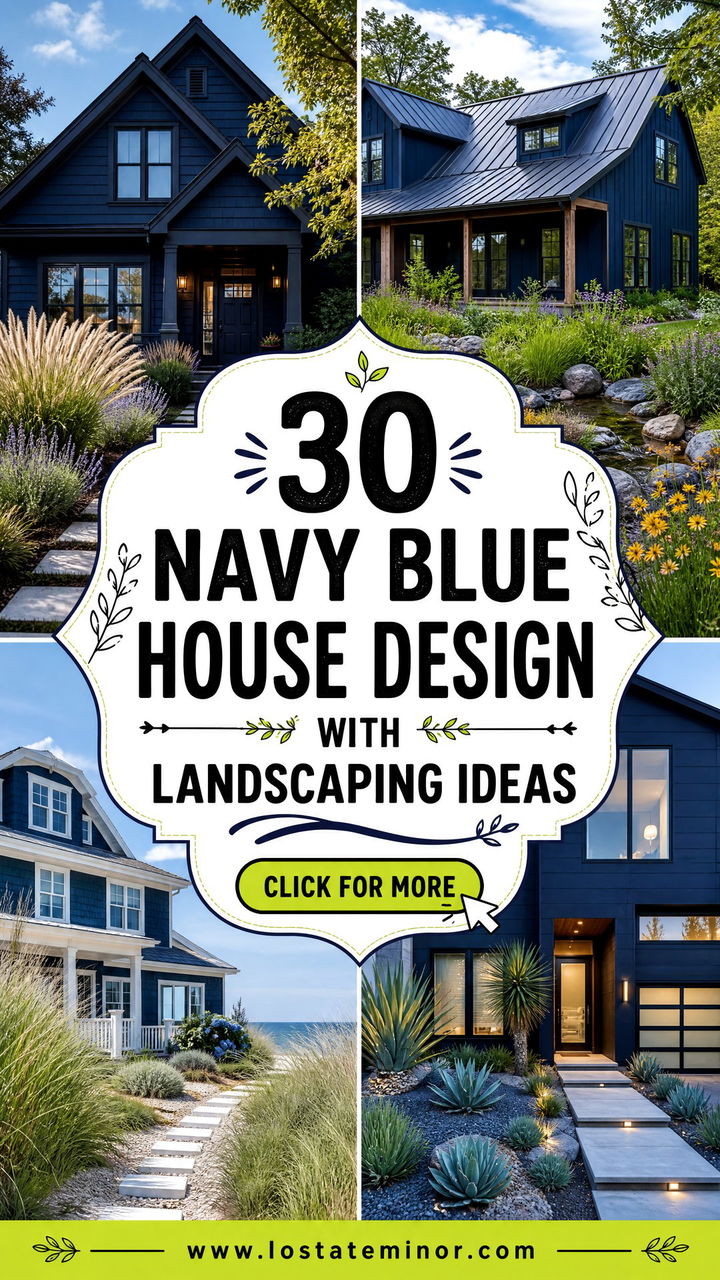
1. Navy Blue House With White Trim And Boxwood Hedges
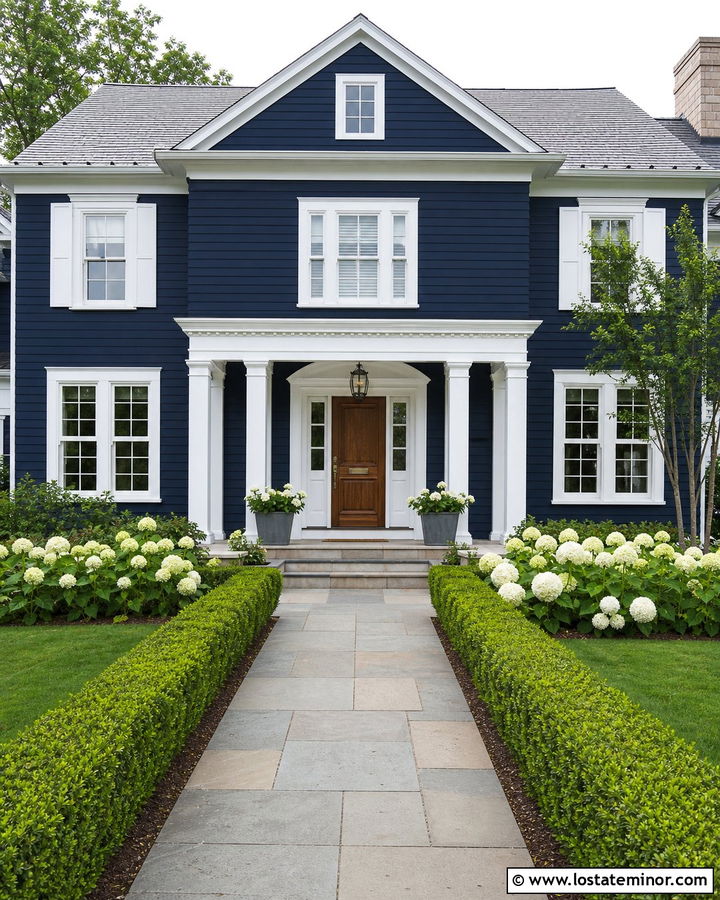
Crisp white trim gives a navy blue house a clean outline that can be seen clearly from the street. Use white around the windows, eaves, porch columns, and front door casing. A medium-gray roof keeps the contrast from becoming too sharp, while a natural wood door introduces warmth. For the landscaping, plant a continuous row of clipped boxwoods beneath the main windows. Their structured shape complements traditional architecture without competing with the siding. Add white hydrangeas behind the hedge for height and seasonal flowers. A straight bluestone walkway reinforces the polished appearance. Finish the yard with an evenly maintained lawn and two matching planters near the steps. This complete scheme works especially well on colonial and Georgian-style homes.
2. Navy Blue House With Wood Door And Hydrangeas
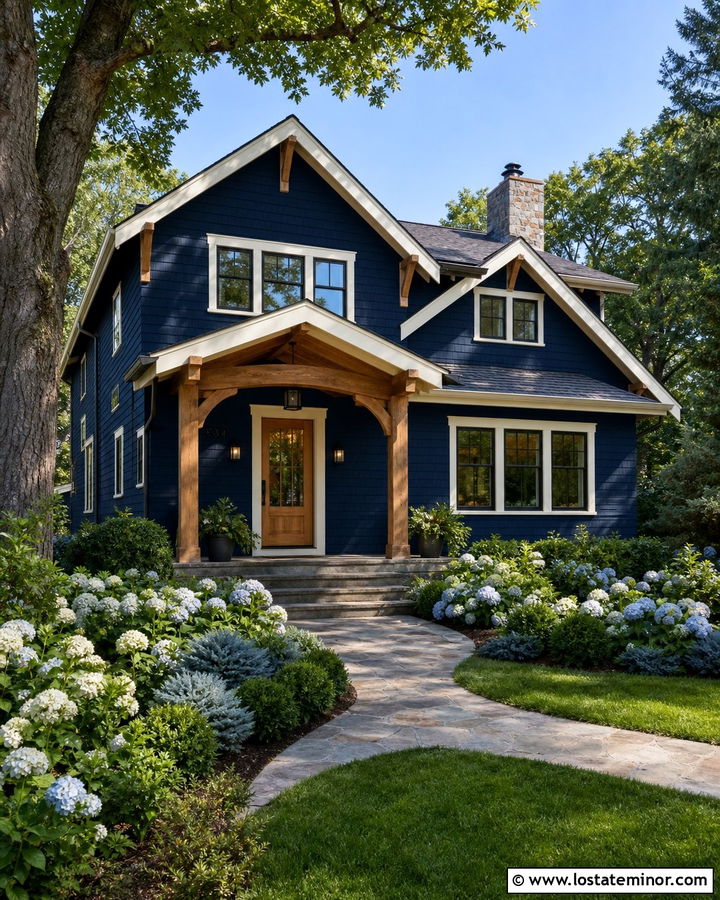
A rich wood front door can make deep navy siding feel warmer and more welcoming. Choose a medium cedar, walnut, or mahogany stain that allows the natural grain to remain visible. Repeat the wood tone on porch beams or simple garage door details so the entrance does not look isolated. Soft cream trim offers a gentler transition than bright white. Around the facade, plant large groups of white and pale blue hydrangeas. Their rounded blooms lighten the base of the dark house and create a lush summer display. Evergreen shrubs can maintain structure after the flowers fade. Connect the driveway to the porch with a gently curved stone path. Brass lights and simple terracotta planters complete this comfortable, approachable exterior.
3. Navy Blue House With Black Trim And Ornamental Grasses
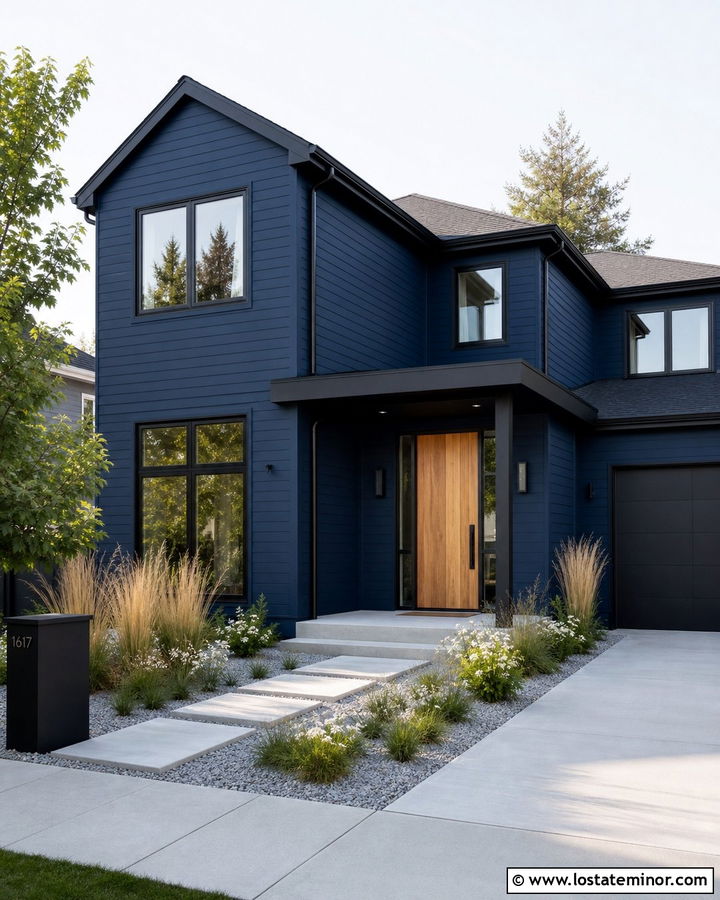
Black trim creates a dramatic, streamlined frame around a navy blue exterior. The combination works best when the navy remains visibly blue in direct daylight instead of appearing almost black. Use matte black on window frames, gutters, railings, and the garage door. A pale concrete porch and warm oak front door prevent the palette from becoming too heavy. In the yard, plant ornamental grasses with airy seed heads and arching green foliage. Arrange them in broad groups rather than narrow rows for a more natural effect. Low-growing juniper, sedge, and white flowering perennials can fill spaces between the grasses. A gravel walkway with large concrete stepping pads suits the modern palette. Keep foundation planting low enough to preserve the strong architectural lines.
4. Navy Blue House With Cream Trim And Cottage Garden
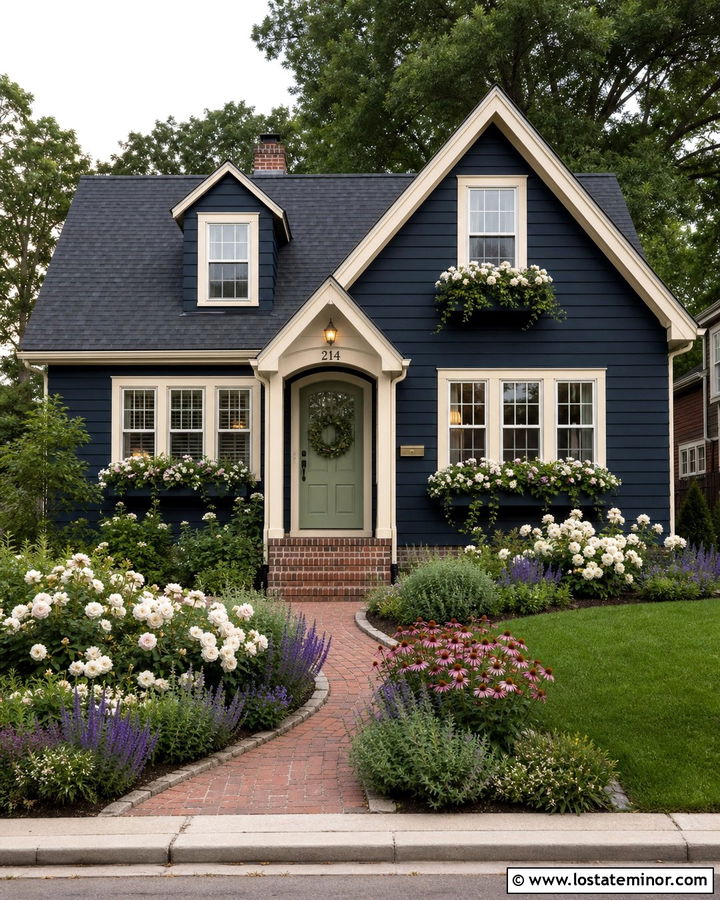
Cream trim softens navy blue siding and creates a relaxed alternative to a sharp blue-and-white palette. This pairing looks particularly inviting on a cottage with divided-light windows, dormers, and a small covered porch. Paint the front door muted sage green to connect the architecture with the garden. Fill curved planting beds with white roses, catmint, salvia, coneflowers, and compact flowering shrubs. Allow a few plants to lean gently toward the walkway while keeping enough clearance for easy passage. A weathered brick path enhances the informal character and introduces warm red-brown tones. Use cream window boxes filled with trailing greenery to connect the upper facade to the landscape. The result feels colorful and established without distracting from the navy exterior.
5. Navy Blue House With Stone Accents And Evergreens
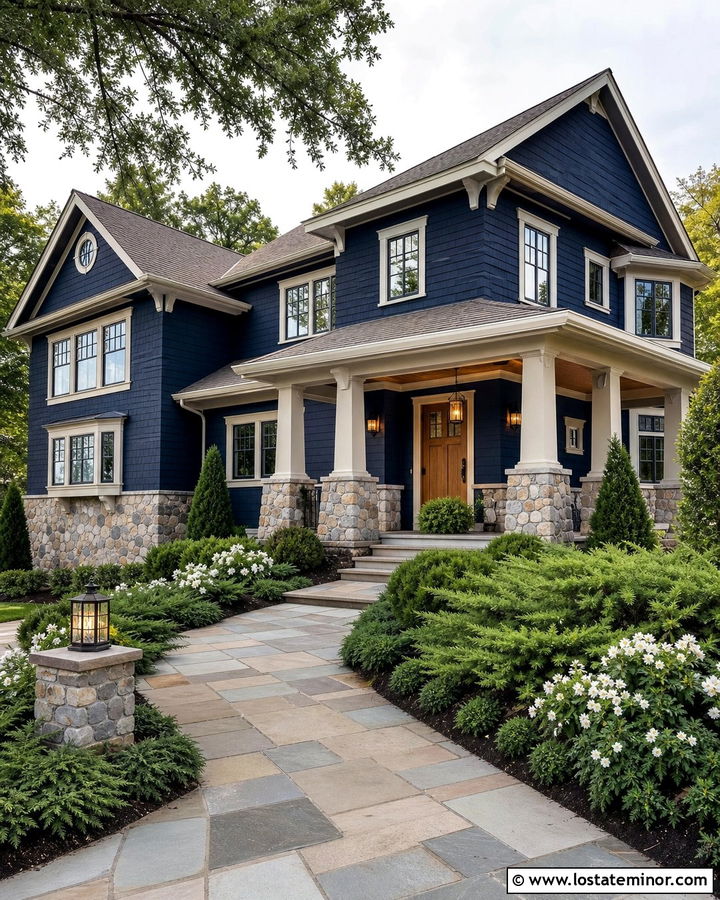
Natural stone gives a navy blue house visual weight and helps anchor the dark siding to the landscape. Use stone around the foundation, porch columns, or lower garage walls instead of covering every exterior surface. A mix of warm gray, taupe, and muted brown stone works well with cream trim and a stained oak door. Build the landscaping around layered evergreen forms. Upright arborvitae can frame the outer corners, while rounded inkberry holly and spreading juniper fill the lower beds. Add white flowering perennials in front for seasonal brightness. A wide flagstone walkway can repeat the colors found in the masonry. Keep the planting arrangement asymmetrical but balanced, allowing the different heights and textures to soften the transition between stone, siding, and lawn.
6. Navy Blue House With Brick Foundation And White Flowers
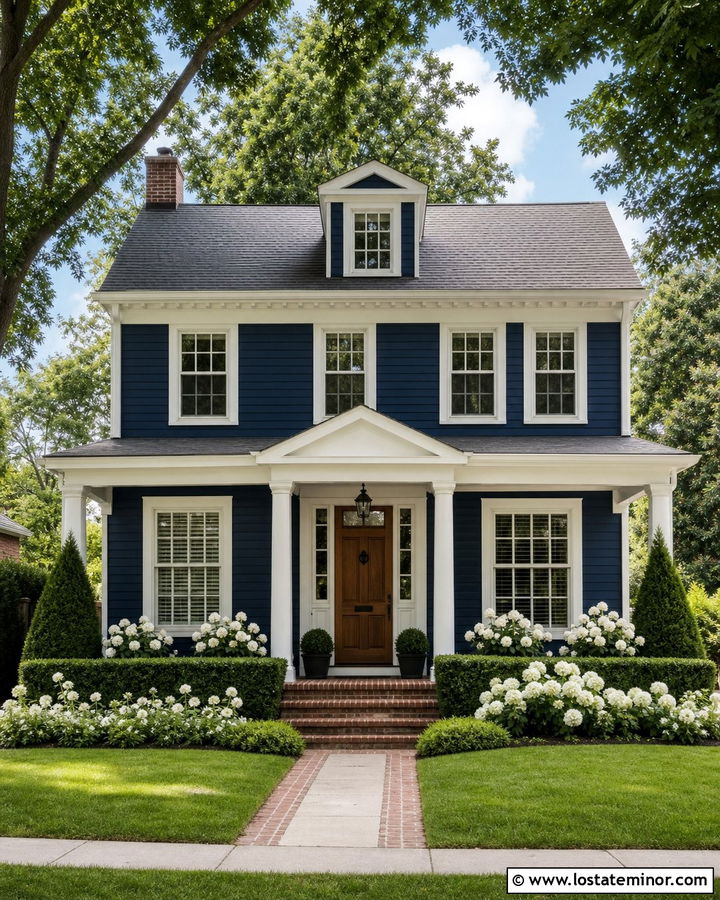
Existing red brick can look surprisingly fresh beneath navy blue siding. The blue cools the warmth of the masonry, while the brick prevents the exterior from feeling overly formal. Tie the two materials together with warm white trim and a medium-brown front door. If the brick has strong orange tones, select a slightly softened navy rather than an extremely bright blue. Plant white flowers along the foundation to create a visual break between the dark siding and red masonry. White roses, panicle hydrangeas, daisies, and sweet alyssum offer different heights and textures. Deep green boxwoods can provide year-round structure behind the flowers. A brick-edged walkway repeats the foundation material, making the house and landscape feel intentionally connected instead of separately updated.
7. Navy Blue House With Cedar Shutters And Native Grasses
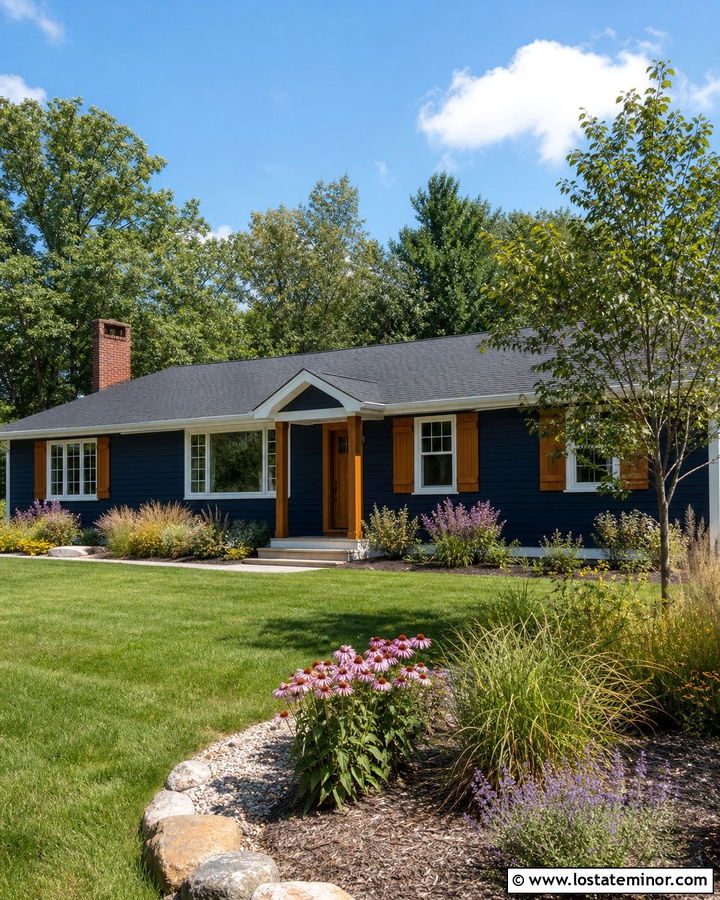
Warm cedar shutters stand out beautifully against saturated navy siding. Choose shutters that fit the windows correctly and use the same stain on the porch posts, mailbox, or front door. Soft white trim keeps the overall scheme bright, while a charcoal roof adds a practical neutral layer. Native grasses and flowering perennials suit this natural material palette. Select plants appropriate for the property’s sunlight, soil, moisture, and growing region. Arrange grasses in repeated groups, then weave in long-blooming flowers for controlled color. A young serviceberry or redbud can add height without hiding the house. Use locally sourced gravel or fieldstone around the walkway to reinforce the organic appearance. This exterior feels relaxed yet cohesive because the wood and planting share similar earthy tones.
8. Navy Blue House With Yellow Door And Pollinator Garden
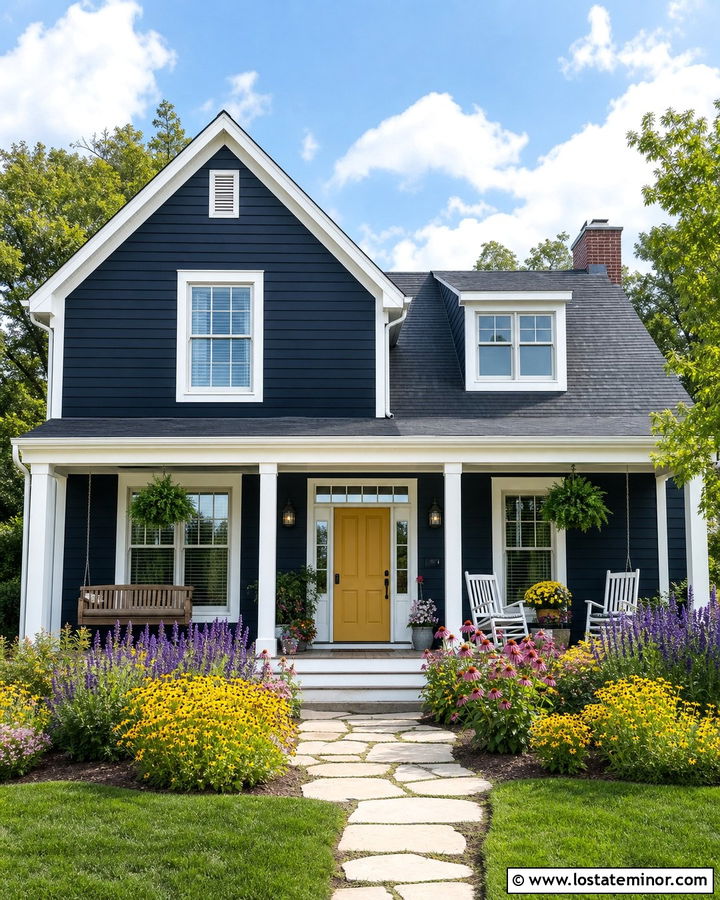
A yellow front door gives a navy blue house a cheerful focal point without requiring color across the entire facade. Choose a muted mustard or warm golden yellow rather than a neon shade. Crisp white trim and a medium-gray roof provide neutral support, while black lanterns add definition around the entrance. Echo the door color with restrained groups of yellow flowers in the landscape. Coreopsis, black-eyed Susans, yarrow, and goldenrod can be mixed with purple salvia and white coneflowers for a varied pollinator border. Keep taller plants away from the walkway and windows. A simple path made from pale concrete or natural stone allows the planting to remain the main landscape feature. The finished exterior feels colorful, friendly, and well coordinated from the curb.
9. Navy Blue House With Red Door And Clipped Hedges
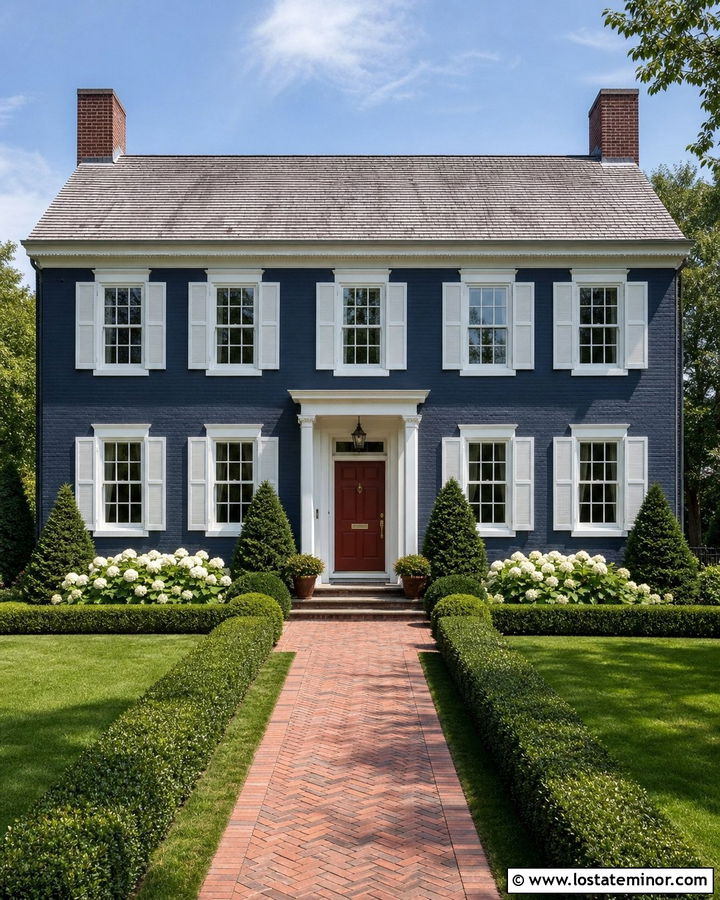
A restrained red front door brings traditional character to a navy blue colonial. Look for brick red, oxblood, or muted cranberry rather than a bright primary red. White window trim and shutters create a classic framework, while polished brass hardware gives the entry a warmer finish. Keep the landscaping symmetrical to reinforce the architecture. Place matching conical evergreens on both sides of the porch and run low boxwood hedges along the foundation. Behind the hedges, use white hydrangeas or compact roses for seasonal contrast. A straight brick path should align with the front door and connect cleanly to the sidewalk. Balanced lawn panels on either side complete the formal approach. This scheme appears established and elegant without depending on complicated planting or excessive ornament.

10. Navy Blue House With Green Door And Layered Shrubs
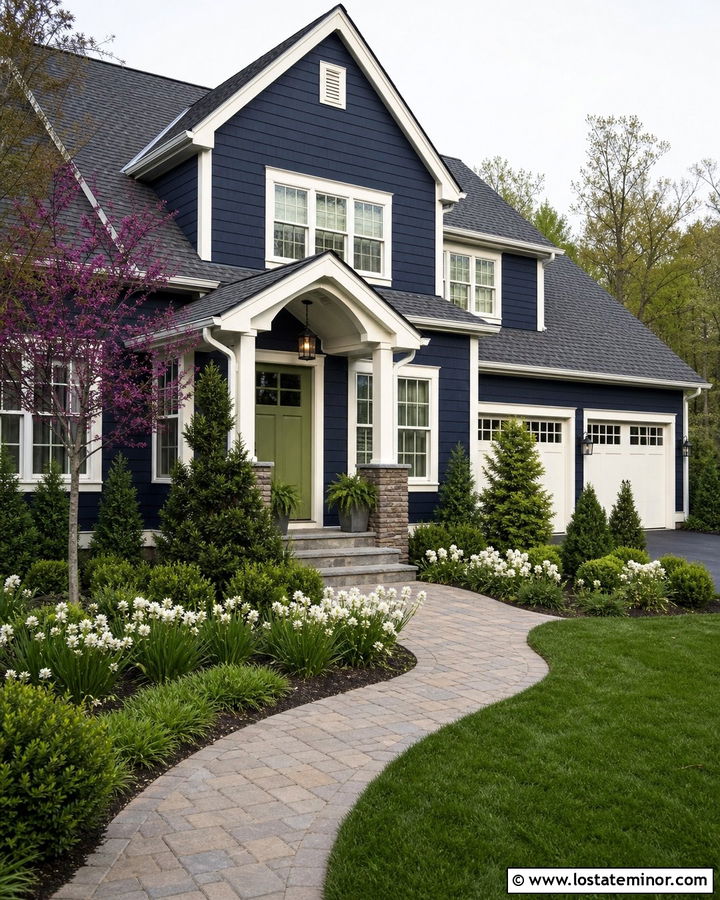
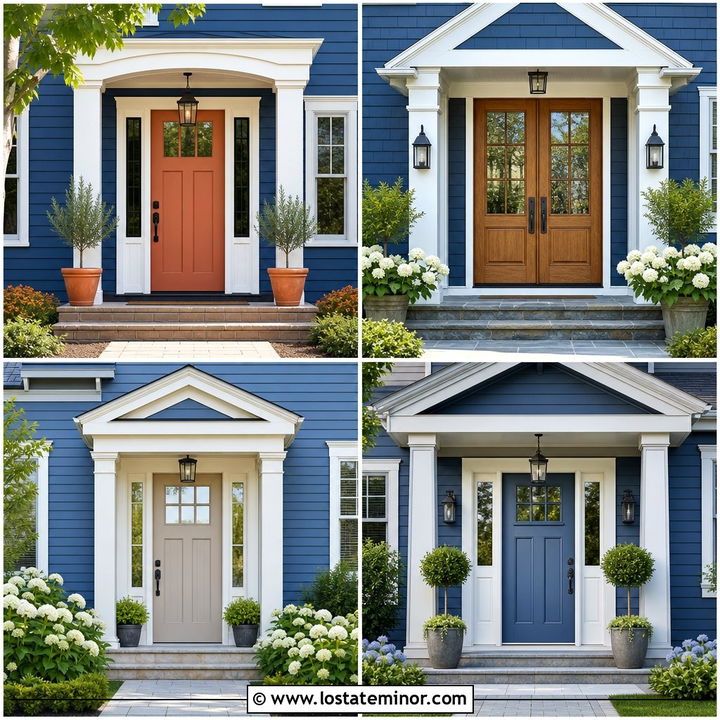
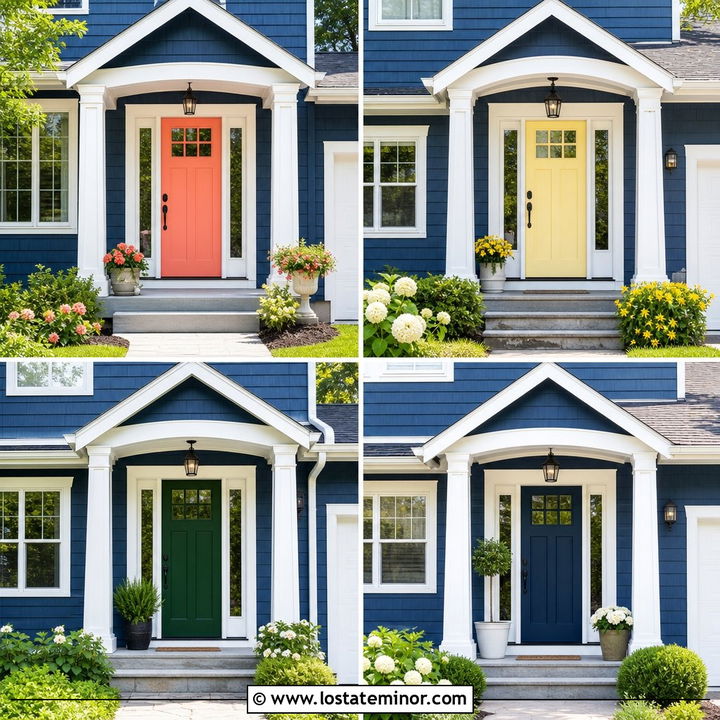
Could navy and green work together on one exterior? They can when the green is muted and repeated through thoughtful landscaping. Pair deep navy clapboard siding with a sage, olive, or eucalyptus-green front door. Warm white trim provides separation between the two colors, while a weathered gray roof keeps the palette natural. Build layered foundation beds using tall evergreen shrubs at the back, rounded deciduous shrubs in the middle, and spreading ground covers along the front. White flowers can brighten the composition without introducing another strong color. A small ornamental tree near one corner balances the roofline and adds filtered shade. Use natural stone edging and a gently curved walkway to maintain the organic mood. The full exterior feels calm, connected, and comfortably colorful.
11. Navy Blue House With Gray Roof And Lavender Border
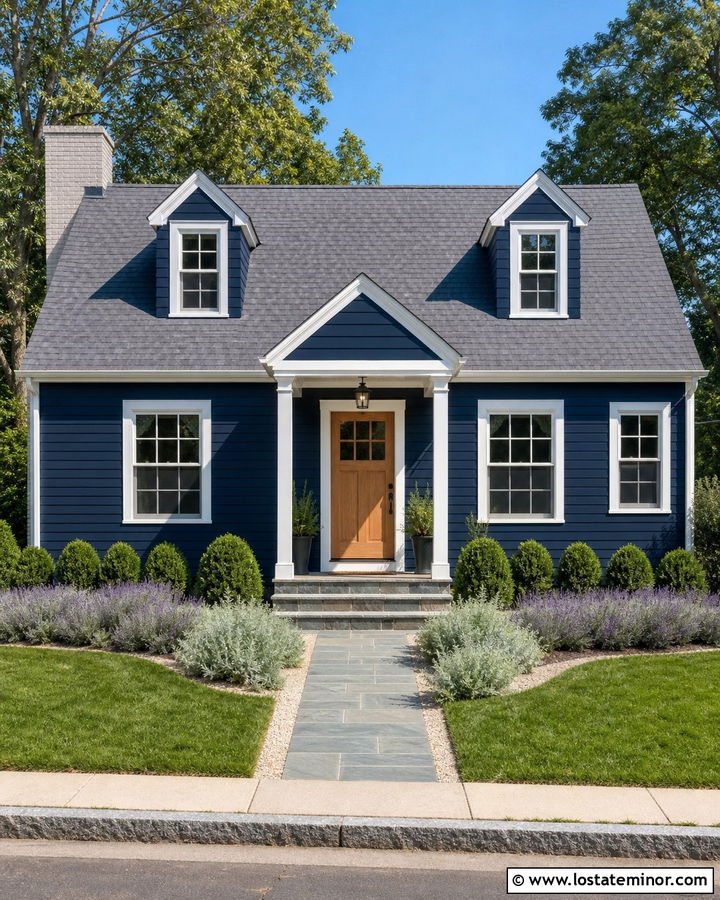
A cool gray roof is an easy partner for navy blue siding because it provides contrast without interrupting the calm palette. Use soft white trim to define the windows and roofline, then add a light oak door for warmth. Along the front walk, create a lavender border that introduces silvery foliage and purple flowers. Where lavender does not suit the local climate or soil, use catmint or another regionally appropriate plant with a similar color and form. Behind the border, plant rounded evergreen shrubs to maintain winter structure. Pale gravel mulch can brighten the beds while supporting the cool color story. A simple concrete or bluestone path keeps the entrance practical. This combination works especially well on ranch, Cape Cod, and cottage-style homes with sunny front yards.
12. Navy Blue House With Black Roof And White Hydrangeas
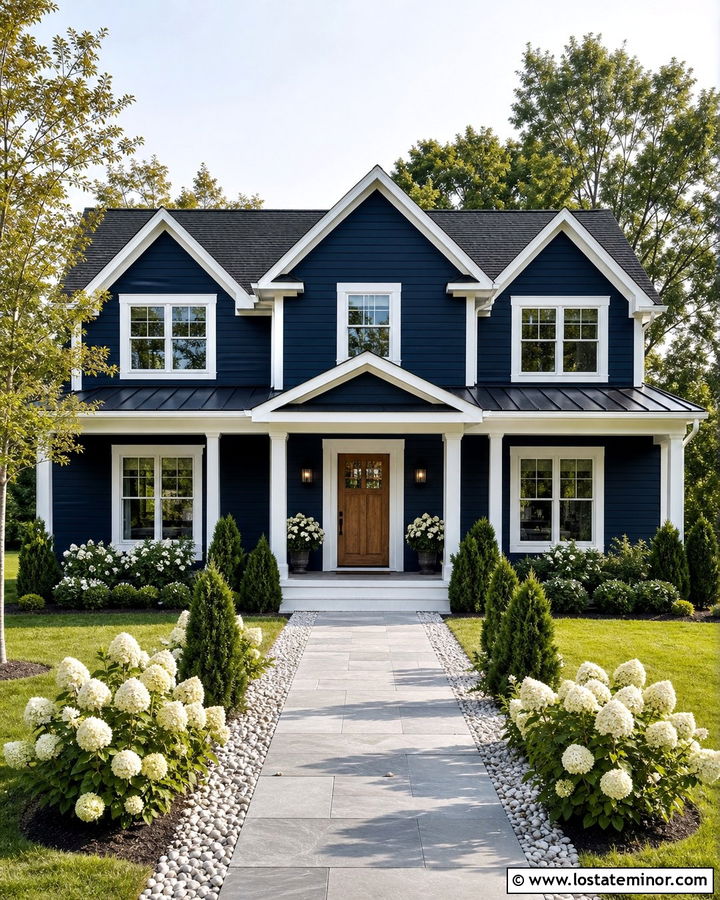
A black roof can make a navy exterior feel polished, but lighter elements are needed to prevent the facade from appearing too dark. Add bright white trim around every window, fascia board, porch column, and garage opening. A medium-toned wood door supplies natural contrast, while black lights connect the entrance to the roof. Plant broad sweeps of white panicle hydrangeas around the foundation. Their light flowers stand out against the siding and remain visible from the curb. Mix in compact evergreen shrubs so the beds still feel complete outside the flowering season. A pale stone walkway and light gravel borders can further lift the composition. Keep large trees away from the front elevation so daylight reaches the navy siding and preserves its true blue appearance.
13. Navy Blue House With Metal Roof And Rain Garden
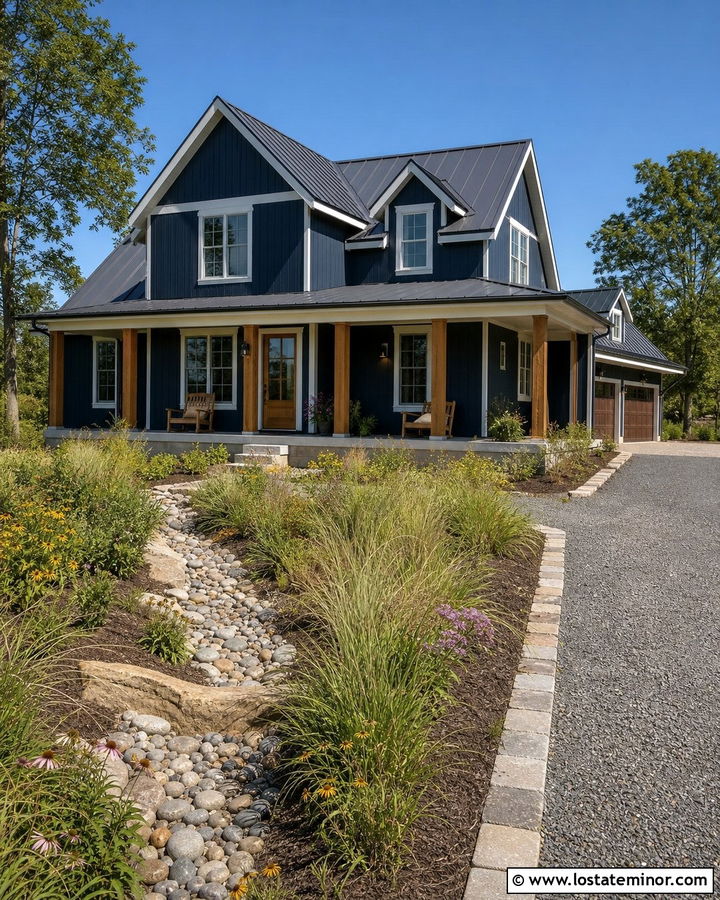
A silver or charcoal standing-seam roof gives navy blue siding a practical modern-farmhouse character. Repeat the metal finish on porch awnings or gutters, then introduce cedar posts and a natural wood door to balance the cooler materials. Design the surrounding yard to manage water attractively by placing a shallow rain garden in a suitable low area. Use moisture-tolerant native grasses, flowering perennials, and compact shrubs selected for local conditions. Decorative stones can define the basin and slow runoff while adding texture. Keep the planting below the windows and maintain a clear route from the driveway to the porch. A permeable gravel path complements the roof and reduces the amount of solid paving. The complete exterior feels purposeful, attractive, and closely connected to its site.
14. Navy Blue House With Copper Accents And Japanese Maple
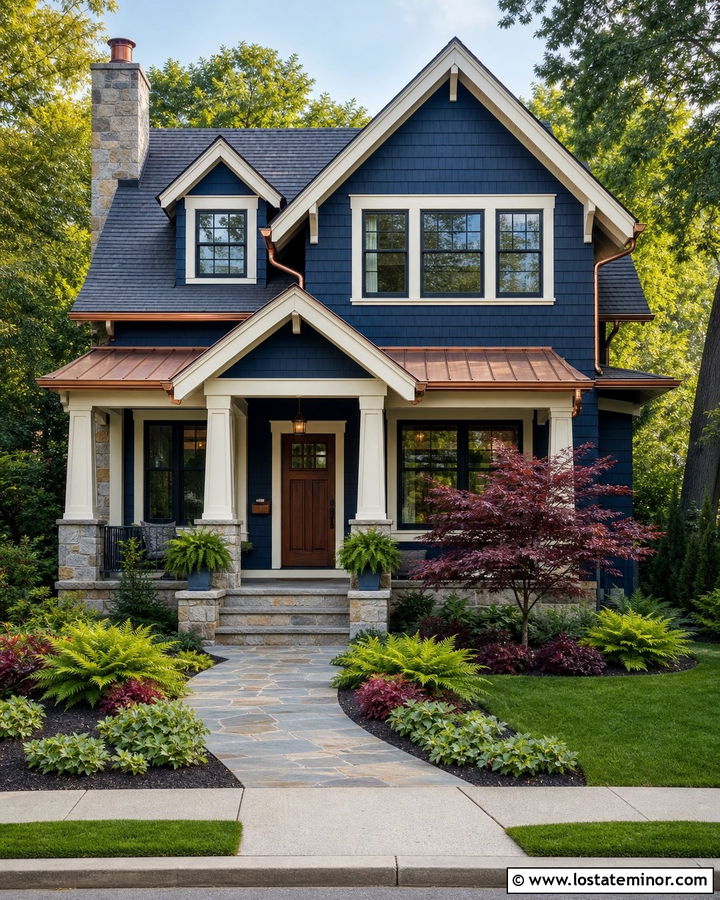
Copper gutters, downspouts, and porch awnings bring a refined warmth to deep navy siding. New copper appears bright, but it gradually develops a softer surface character, so surrounding colors should work with both stages. Use creamy off-white trim and a dark walnut door to support the rich material palette. Place a Japanese maple in a visible front-yard bed where its mature size will not block windows or crowd the foundation. Burgundy or red foliage echoes the warmth of the copper and creates a graceful contrast with navy. Underplant the tree with low ferns, heuchera, and spreading ground covers. Natural stone edging and a curved flagstone walk complete the layered scene. This exterior works particularly well on craftsman and contemporary homes with strong rooflines.

15. Navy Blue Board And Batten House With Prairie Plants
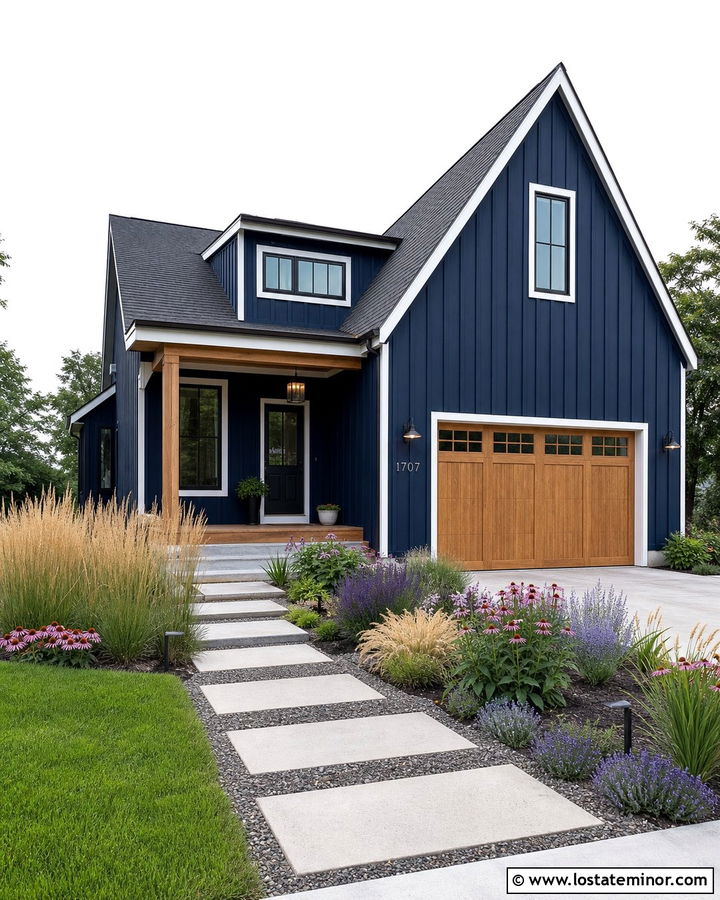
Vertical board-and-batten siding makes a navy blue house look taller and gives the facade clean architectural rhythm. Pair the siding with white trim, a charcoal roof, and a cedar garage door. Use prairie-inspired planting to soften the strong vertical lines. Repeated groups of switchgrass, little bluestem, coneflowers, asters, and coreopsis can provide movement and seasonal color. Keep the arrangement intentional by using broad drifts rather than scattering single plants throughout the bed. A mowed lawn edge or narrow steel border creates a neat boundary. Large concrete stepping stones can lead toward a simple covered entry, while gravel fills the spaces between them. The combination of vertical siding, warm wood, and airy vegetation gives the entire property a modern yet natural curb-appeal identity.
16. Navy Blue Shake Siding With Coastal Grasses
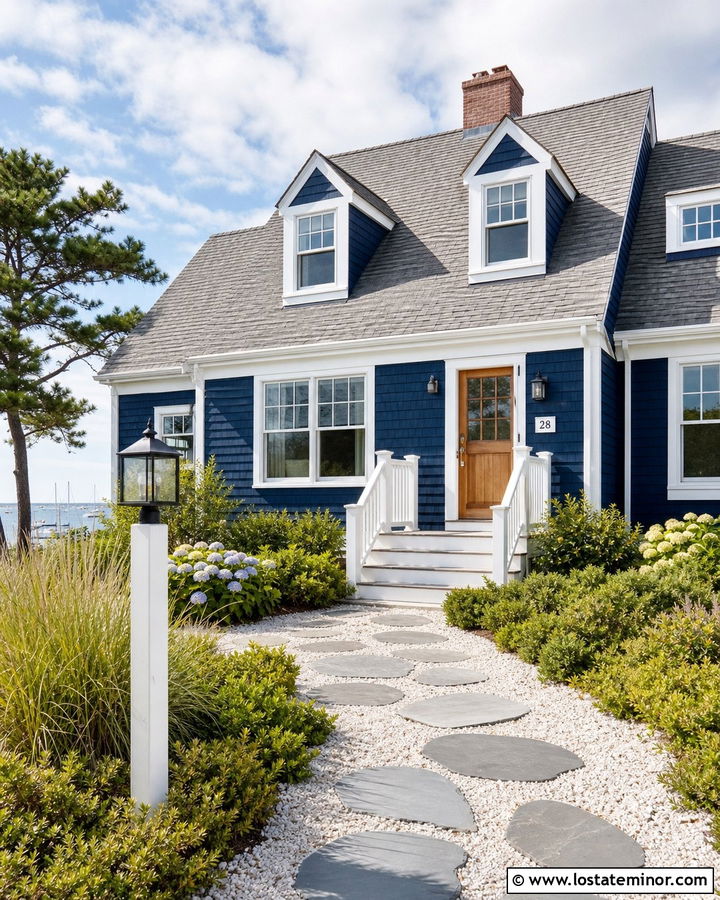
Navy blue shake siding naturally suits Cape Cod and coastal-inspired homes, especially when paired with broad white trim and a weathered gray roof. Keep the front door light blue, natural wood, or crisp white so the entry remains visible. For landscaping, use salt-tolerant or wind-tolerant plants where coastal conditions require them. Beach grass, compact juniper, bayberry, and low hydrangeas can create a relaxed, textured foreground. Pale crushed stone works well in place of extensive lawn and visually connects the yard to sandy coastal surroundings. Add a simple shell or light gravel walkway with flat stone steps for stability. White porch railings and understated black lanterns complete the facade. The finished exterior should feel breezy and uncluttered rather than overloaded with nautical decorations.
17. Navy Blue Modern Farmhouse With Gravel Beds
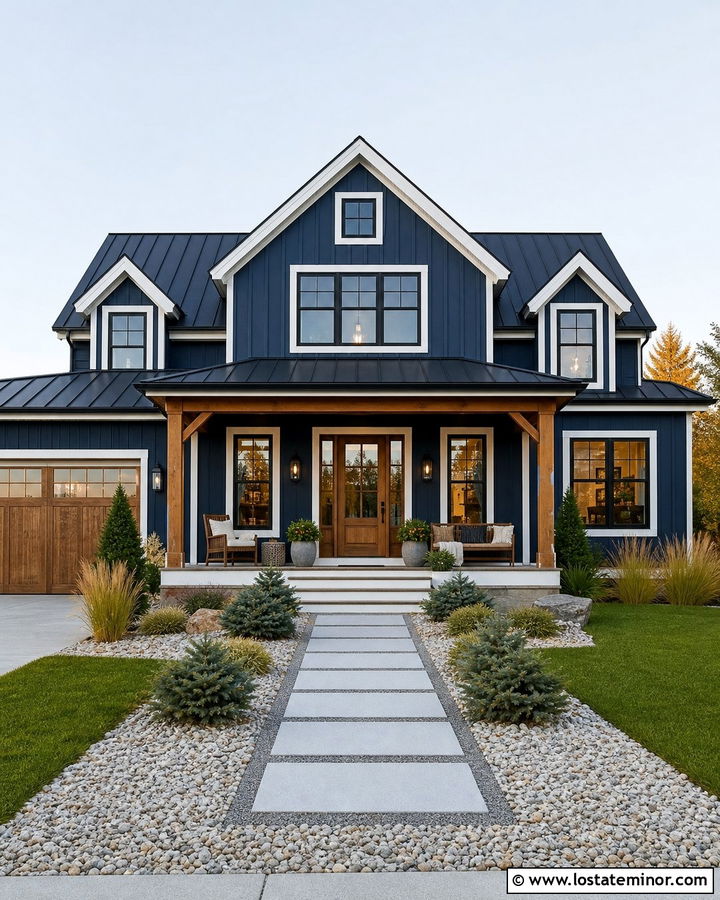
A navy blue modern farmhouse offers a richer alternative to the familiar all-white exterior. Apply navy to vertical siding, then use warm white on the trim, porch ceiling, and window casings. A black metal roof and black-framed windows sharpen the architecture, while timber columns and a wood front door add warmth. Surround the house with broad gravel beds planted with evenly spaced ornamental grasses, dwarf evergreens, and flowering perennials. The gravel should contrast with the siding but still coordinate with the driveway and foundation. Use large rectangular pavers for a straightforward path to the porch. Avoid tiny decorative objects that can make the clean facade look busy. A few substantial planters and simple landscape lighting are enough to complete this modern, practical curb-appeal scheme.
18. Navy Blue Colonial With Symmetrical Boxwoods
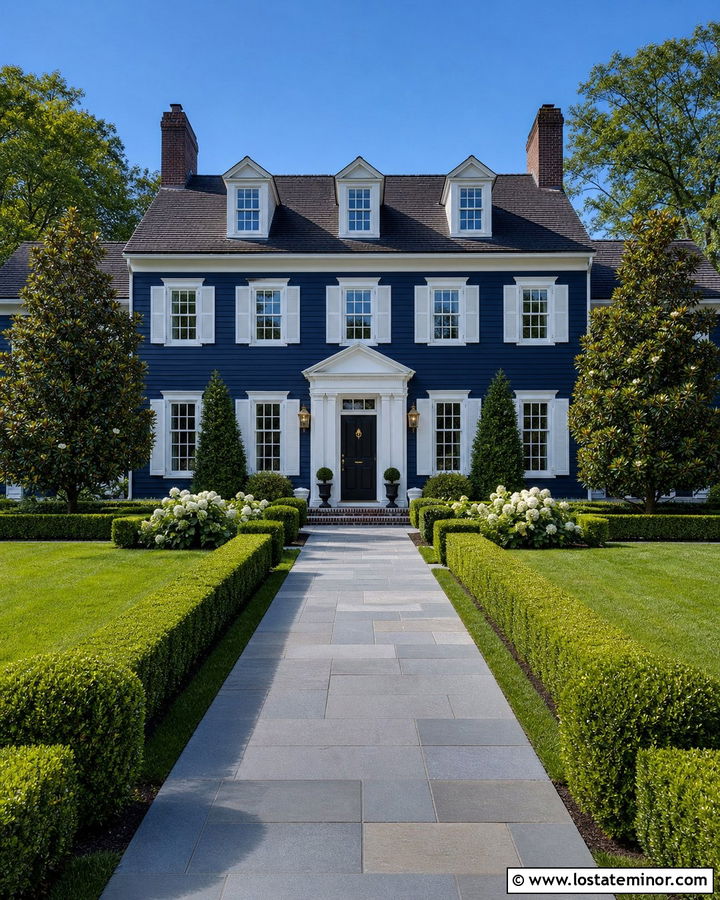
Symmetry is the key to making a navy blue colonial look composed from every angle. Use deep navy clapboard siding, white trim, white shutters, and a centered red-brown or black front door. Match the landscaping to the architecture by repeating the same shrubs on each side of the entrance. Boxwoods can form low foundation hedges, while upright hollies or compact evergreens frame the outer corners. Add identical white flowering shrubs behind the hedges for seasonal height. A straight brick or bluestone walkway should line up precisely with the door. If the yard is wide, place matching ornamental trees in the lawn to extend the balanced design. Brass entry lights and traditional planters provide finishing details without weakening the orderly relationship between the house and landscape.
19. Navy Blue Craftsman With Woodland Landscaping
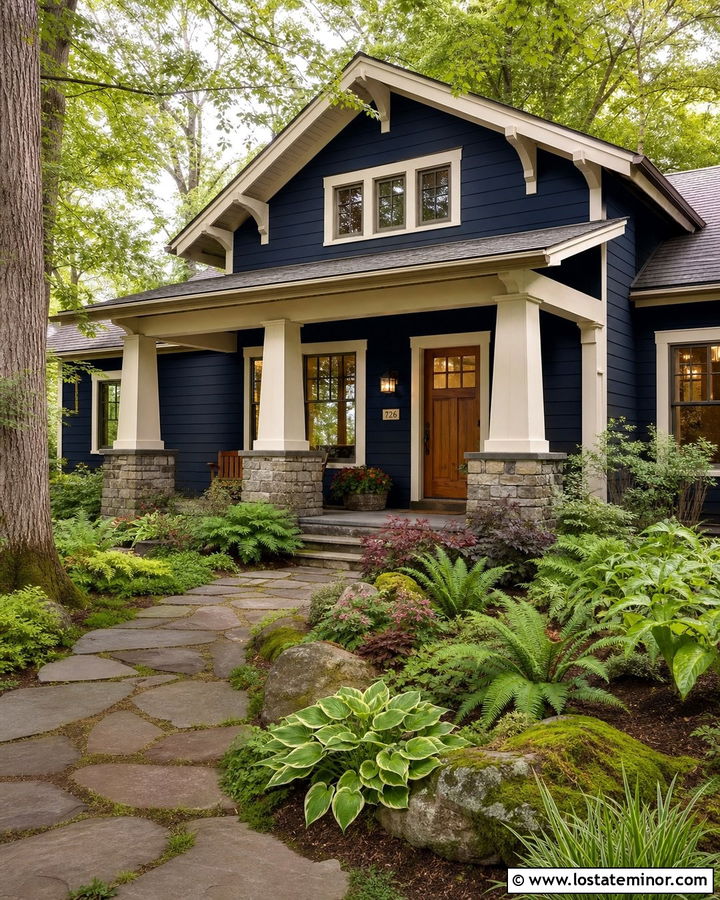
A craftsman house gains depth when navy blue siding is mixed with stone piers, tapered columns, exposed wood details, and a low roofline. Choose warm cream trim instead of stark white to support the earthy materials. A stained oak door and matching porch ceiling make the entrance feel inviting. Woodland landscaping can then connect the home to a shaded or tree-filled lot. Use ferns, coral bells, hostas, sedges, and shade-tolerant flowering shrubs beneath existing trees. Layer plants by height, keeping the lowest varieties near the walkway and taller shrubs closer to blank wall areas. Irregular flagstone paths and mossy stone edging complement the craftsman character. The planting should look natural but maintained, with clear bed boundaries and enough open space to appreciate individual textures.
20. Navy Blue Ranch House With Curved Garden Beds
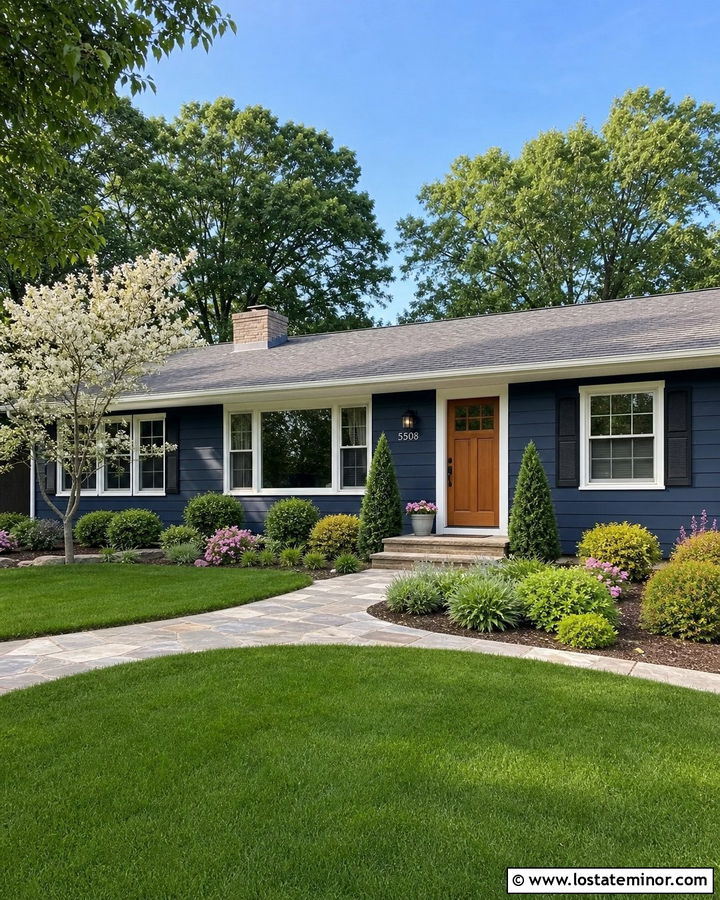
Long, low ranch homes benefit from curved landscaping that breaks up the horizontal facade. Paint the siding a clear navy blue, use warm white trim, and install a medium-stained wood door as the primary focal point. Charcoal shutters can add definition without creating excessive contrast. Shape a broad curved bed across part of the front lawn, allowing it to sweep toward the entrance. Place a small ornamental tree near one end, then layer dwarf evergreens, flowering shrubs, perennials, and ground covers beneath it. Repeat a few plant varieties across the bed to create unity. A curved concrete or flagstone walkway can follow the same geometry. This complete treatment gives a simple ranch more depth, movement, and visual balance without requiring major architectural changes.
21. Navy Blue Cape Cod With Picket Fence Garden
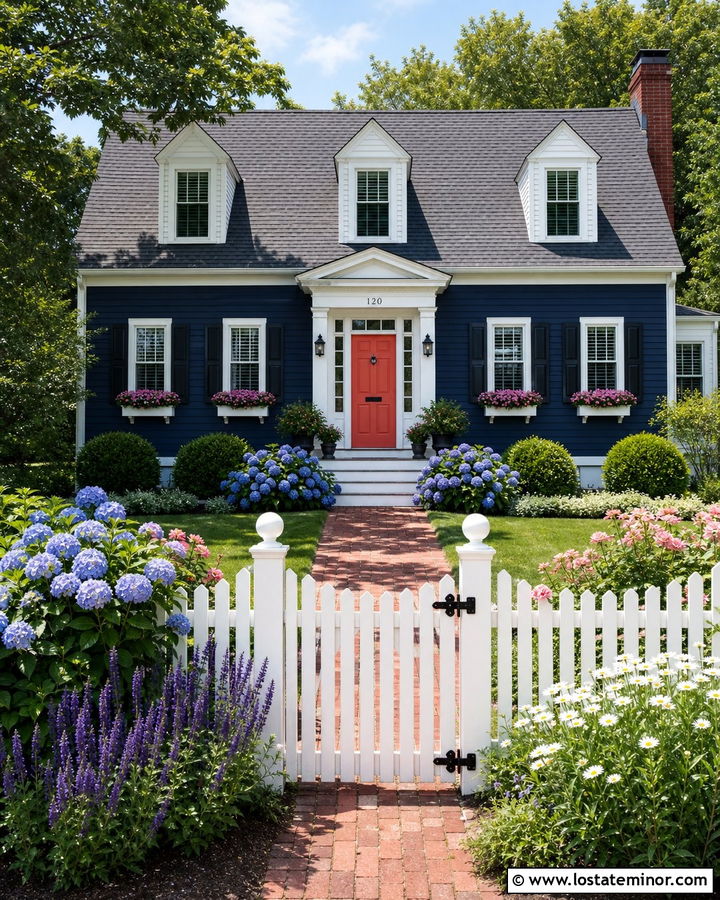
A navy blue Cape Cod feels bright and familiar when paired with white trim, white dormers, and a modest picket fence. Use a coral, muted red, or natural wood door to create a welcoming center. Plant a mixed garden inside the fence with compact hydrangeas, roses, salvia, daisies, and evergreen shrubs. Keep mature plant heights in proportion to the small-scale architecture so dormers and lower windows remain visible. A narrow brick path can pass through a simple gate and lead directly to the front steps. Add window boxes with white flowers and trailing green foliage to connect the garden to the facade. The fence, flowers, and walkway should frame the home rather than conceal it. This approach creates classic curb appeal in a relatively compact front yard.
22. Navy Blue Split-Level With Terraced Landscaping
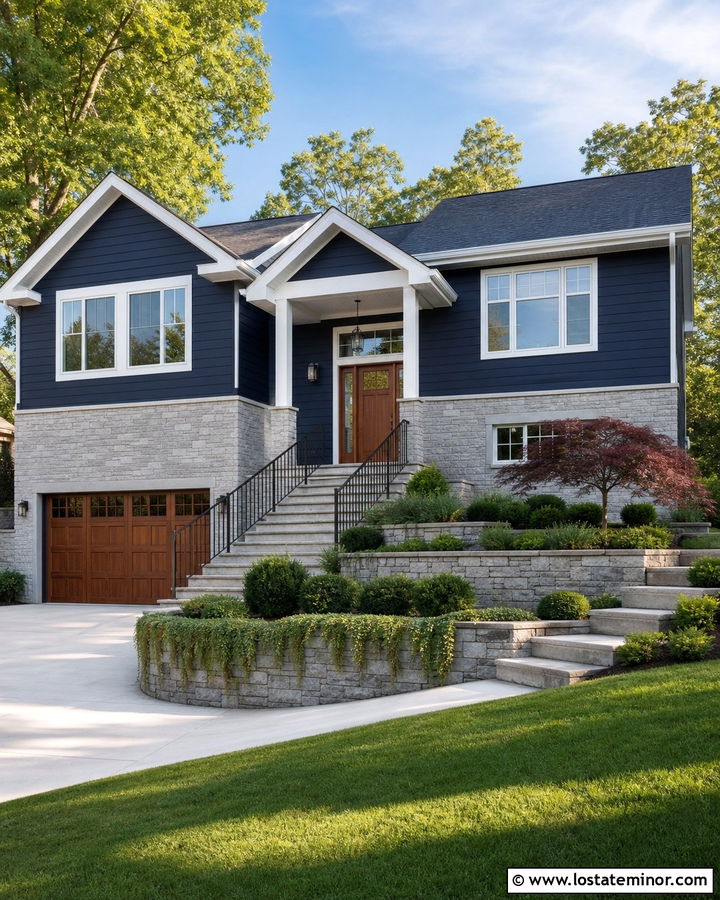
A split-level home often sits above or below parts of the yard, making terraced planting a useful way to organize the grade. Paint the upper siding navy blue and use light gray stone or brick on the lower level. White trim keeps the mixed materials connected, while a warm wood garage door and entry door soften the facade. Build low retaining walls that follow the slope without creating one oversized barrier. Plant trailing ground covers near wall edges, compact shrubs in the middle terraces, and a small ornamental tree on the widest level. Wide steps and sturdy railings should make the entrance easy to locate. Repeating the same stone in the walls, foundation, and walkway gives the entire sloped property a unified, carefully planned appearance.
23. Navy Blue Tudor House With Formal Garden
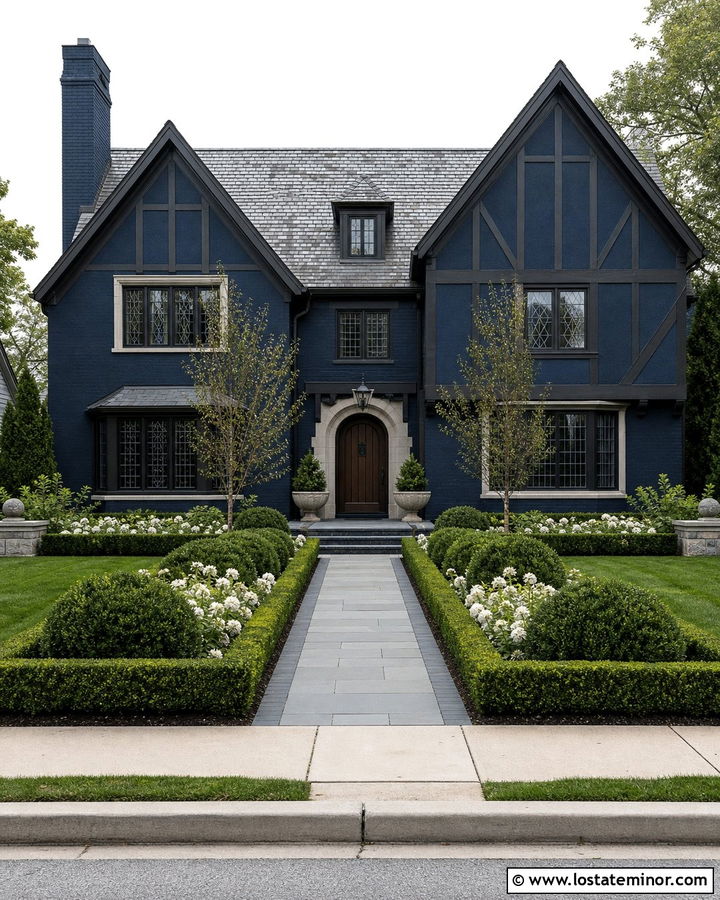
Navy blue can update a Tudor-style house while preserving its strong historic character. Use the color on stucco panels or siding, then retain dark timber details for recognizable contrast. Cream trim, leaded windows, a slate-gray roof, and an arched wood door complete the facade. In front, create a formal garden with clipped boxwood borders, rounded evergreen shrubs, and repeated white flowers. A straight stone path can lead toward the entrance, while small symmetrical beds emphasize the doorway. If space allows, add a pair of narrow ornamental trees without blocking decorative gables. Dark metal lanterns and simple stone planters support the architecture. The landscape should be structured rather than crowded, allowing the roofline, timbering, and deep navy surfaces to remain the dominant visual features.
24. Navy Blue Bungalow With Porch Flower Border
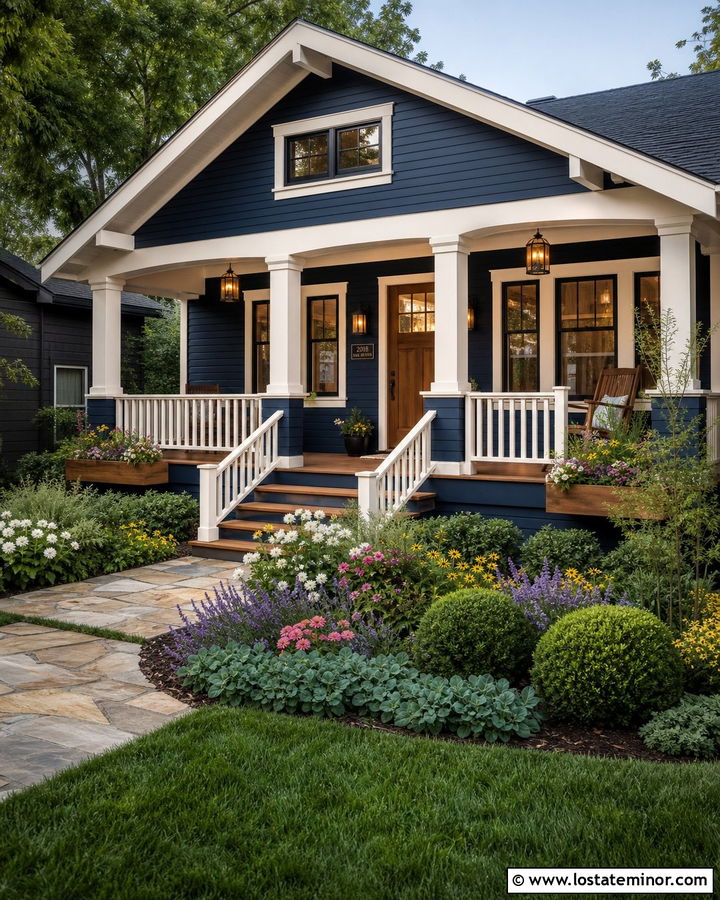
A deep navy bungalow becomes especially welcoming when its full-width porch is treated as part of the landscape. Use creamy white trim on the railings, columns, and window casings. Stain the porch floor and front door in a warm cedar tone, then add dark bronze lighting for subtle contrast. Create a flower border that follows the porch foundation and bends toward the front steps. Place compact shrubs at the back, medium-height perennials in the center, and low flowers or ground covers along the edge. Repeat porch colors through wood planters and cream ceramic pots. A short flagstone path can connect the steps to the sidewalk. Keep the planting below the porch rail so the bungalow retains its friendly, open relationship with the street.
25. Navy Blue Contemporary House With Xeriscaping
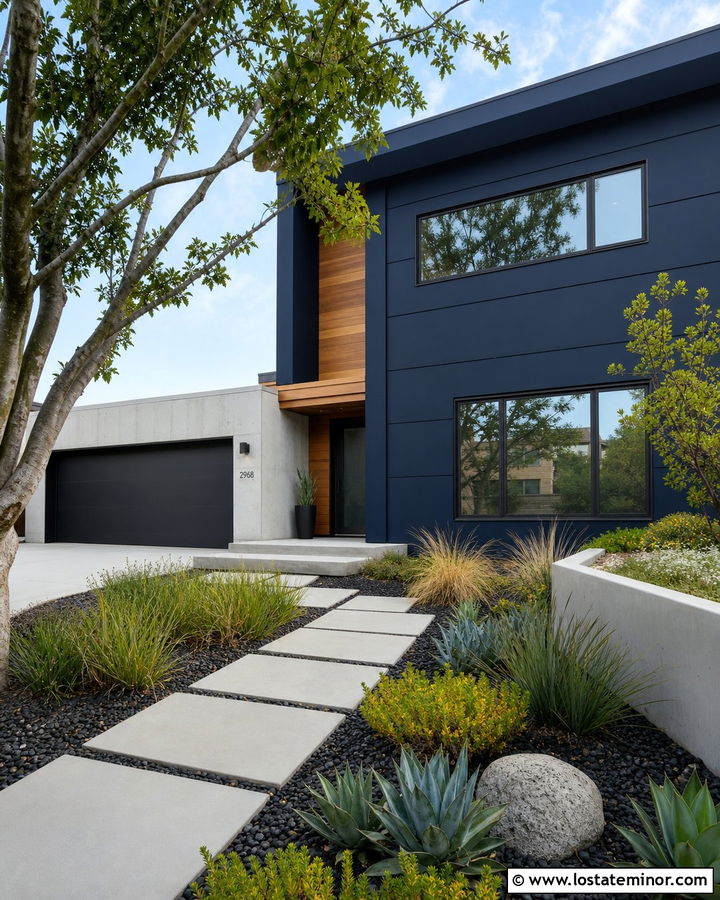
Clean navy blue panels can make a contemporary house stand out without relying on an all-black exterior. Combine navy stucco or fiber-cement siding with charcoal window frames, warm wood cladding, and pale concrete walls. The landscape should repeat the facade’s simple shapes. Build broad gravel beds containing sculptural grasses, drought-tolerant shrubs, succulents, and regionally appropriate native plants. Arrange them in distinct groups with visible breathing room rather than filling every inch of soil. Large concrete slabs can form the walkway, while dark gravel defines the joints. A single multi-trunk tree adds height and a natural focal point. This scheme is most successful when the navy, wood, concrete, and planting appear in balanced amounts, giving the property a modern but comfortable presence.
26. Navy Blue Lakeside House With Birch And Ferns
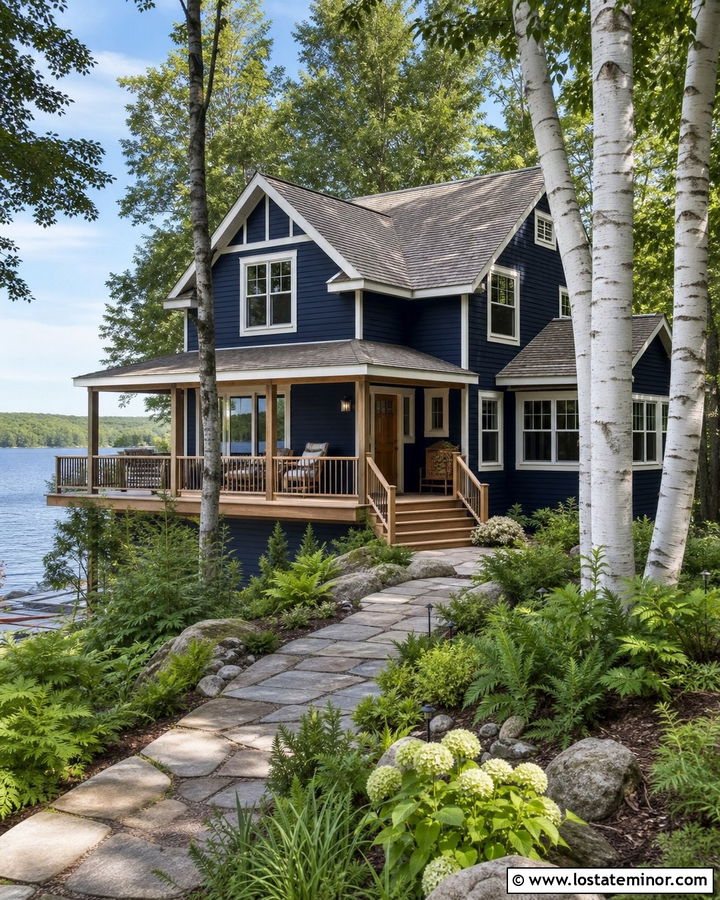
Navy blue siding fits naturally into a wooded lakeside environment when it is balanced with light wood and fresh green planting. Use warm white trim, a weathered gray roof, and a natural cedar porch or deck. Keep railings simple so views through the property remain open. Plant birch trees where their pale trunks can stand against the dark facade without crowding the foundation. Below them, use ferns, woodland grasses, low hydrangeas, and native ground covers suited to the site’s moisture and sunlight. A winding stone or compacted-gravel path creates an informal approach. Preserve existing mature trees when they are healthy and properly positioned. The finished landscape should feel integrated with the surrounding woodland, allowing the navy house to appear grounded rather than overly prominent.
27. Navy Blue Coastal House With Dune Landscaping
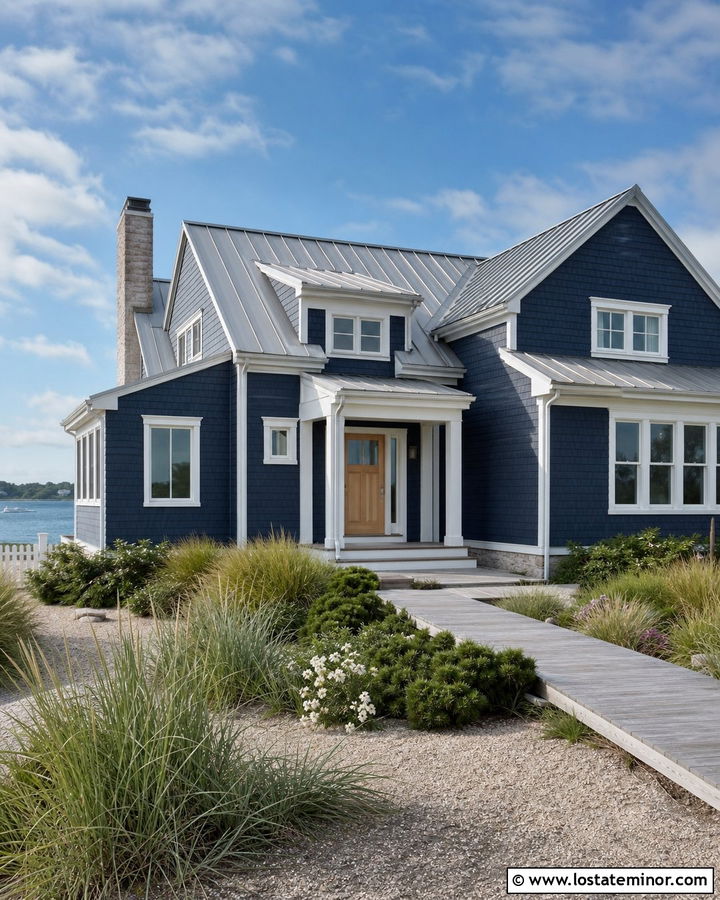
A navy blue coastal house can look polished without depending on obvious seaside decorations. Pair shake or lap siding with bright white trim, a silver-gray metal roof, and a pale natural wood door. Build the front landscape around wind-shaped grasses, low evergreen shrubs, beach-friendly ground covers, and hardy white flowers. Use sandy gravel or crushed shell where appropriate, but include a stable paved route to the entrance. A raised boardwalk-style path can suit properties where loose soil or drainage is a concern. Keep shrubs low so they do not block ocean breezes or cover the facade. The combination of navy, white, weathered wood, and moving grasses creates a strong coastal identity through materials and planting rather than signs, anchors, or themed accessories.
28. Navy Blue Small House With Vertical Landscaping
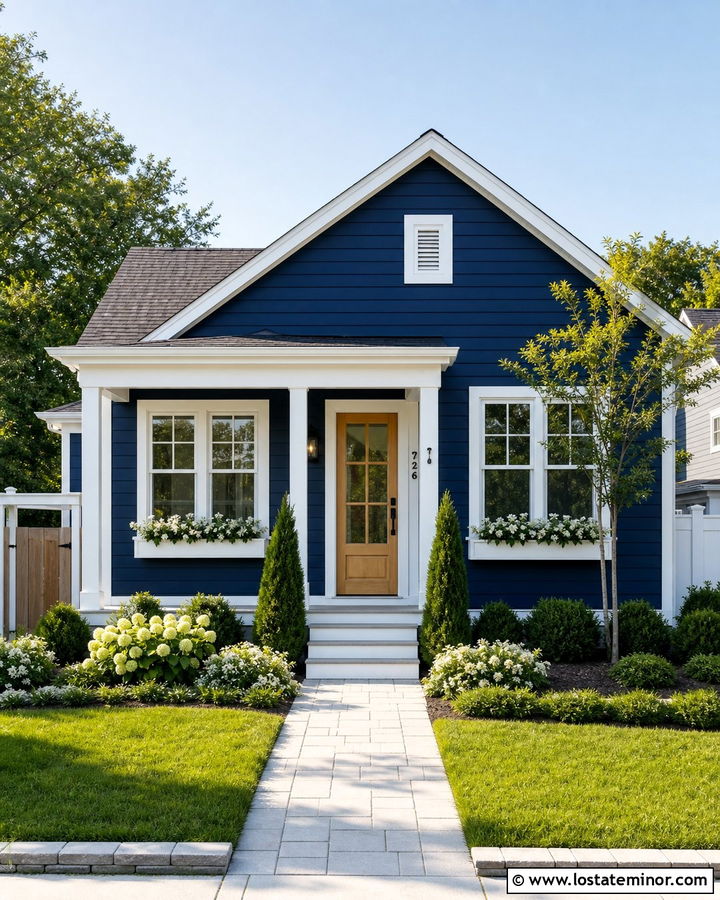
A small navy blue house needs landscaping that adds interest without making the front yard feel crowded. Use white trim and a light wood door to brighten the compact facade. Choose narrow upright shrubs near blank corners instead of wide plants that cover windows. Add a slim ornamental tree with an open canopy to create height while preserving visibility. Window boxes filled with white flowers and trailing greenery draw attention upward, making the exterior feel taller. Along the foundation, use a restrained mix of dwarf evergreens, compact hydrangeas, and low ground covers. A straight walkway made from light pavers keeps the route simple and visually open. Limit the palette to a few repeated plants and materials so the complete property appears larger, calmer, and more organized.
29. Navy Blue House With Low-Maintenance Evergreen Landscaping
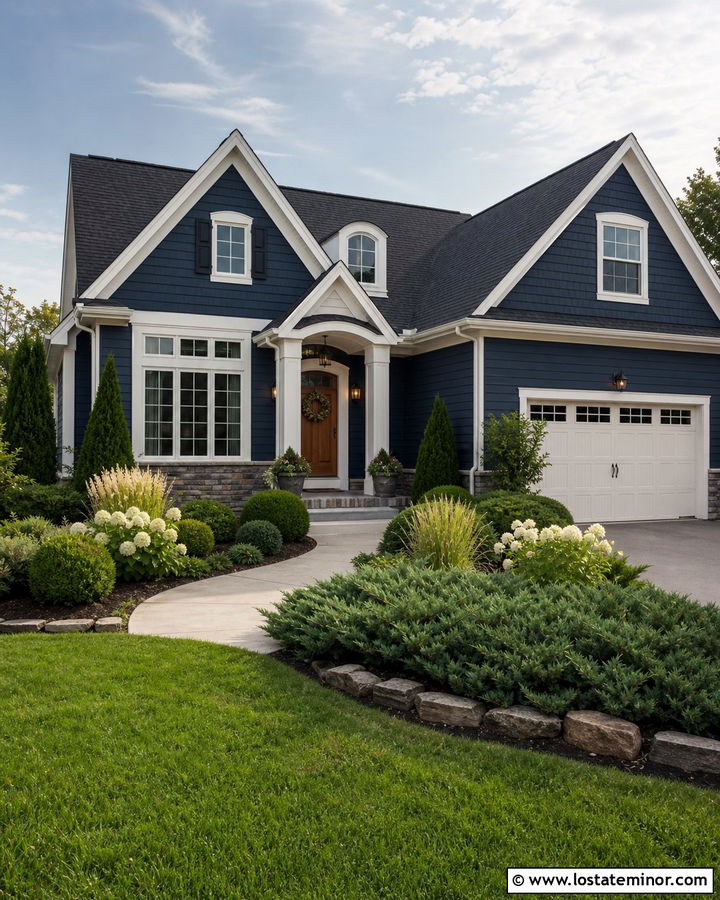
Low-maintenance landscaping can still provide a navy blue house with strong year-round curb appeal. Start with creamy white trim, a charcoal roof, and a warm wood front door. Build foundation beds from dependable evergreen forms, including rounded shrubs, spreading ground covers, and a few upright accents. Choose varieties that fit the mature space so frequent pruning is unnecessary. Add ornamental grasses and a limited number of long-blooming perennials for movement and seasonal color. A defined stone edge prevents lawn from entering the beds, while organic mulch creates a clean background. Use a broad, gently curved walkway that is easy to maintain and clear. Repeating only four or five plant varieties across the facade produces a cohesive exterior without demanding a complicated gardening routine.
30. Navy Blue House With Budget-Friendly Landscaping
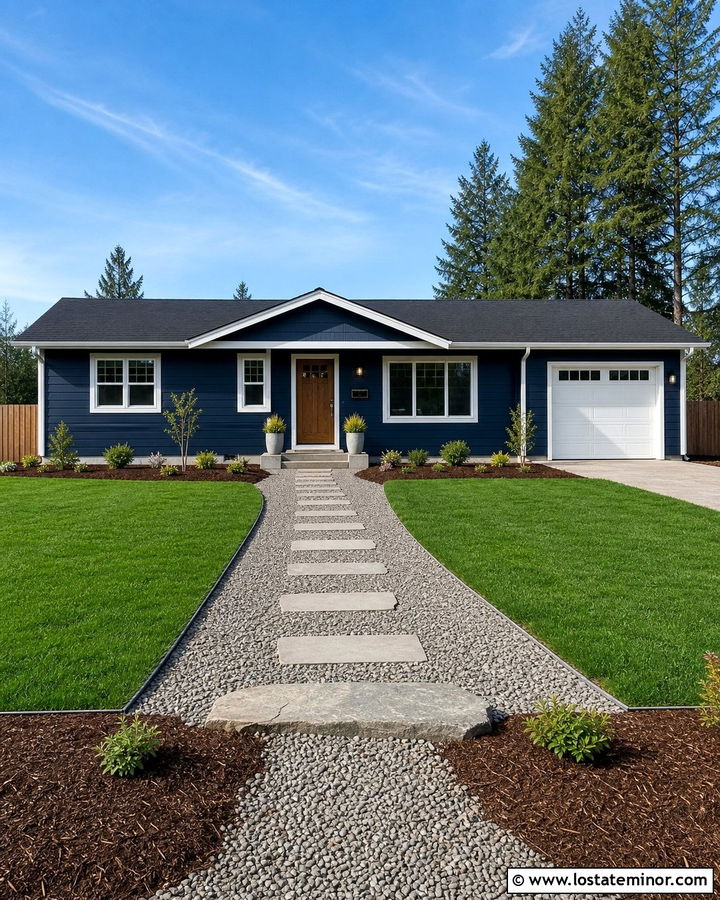
A limited budget does not have to produce an unfinished-looking navy blue exterior. Keep the house palette simple with navy siding, white trim, a black roof, and a stained front door. Refresh existing beds by removing weeds, creating clear edges, and applying a consistent layer of mulch. Divide healthy perennials already growing on the property and repeat them across the front facade. Purchase smaller shrubs that can mature into the space rather than paying for oversized plants. Add two large matching containers beside the entry for immediate color and symmetry. A basic gravel path with flat stepping stones can replace expensive masonry. Focus spending near the front door and walkway, where improvements are most visible. This phased approach creates a coordinated foundation for future upgrades.
Conclusion:
These 30 Navy Blue House Design With Landscaping Ideas show how much the surrounding yard influences a dark exterior. White, cream, wood, brick, stone, black metal, and copper can each shift navy toward a different architectural mood. Planting brings the scheme together by adding softness, seasonal color, natural texture, and a welcoming route to the door. Before choosing a design, study your home’s roof, existing masonry, sunlight, soil, and mature plant sizes. Test exterior paint outdoors because navy can appear much darker in shade. Then build the landscape in clear layers, repeating a limited selection of plants and materials. A coordinated plan will make your navy blue home feel intentional, balanced, and memorable.

Related posts: