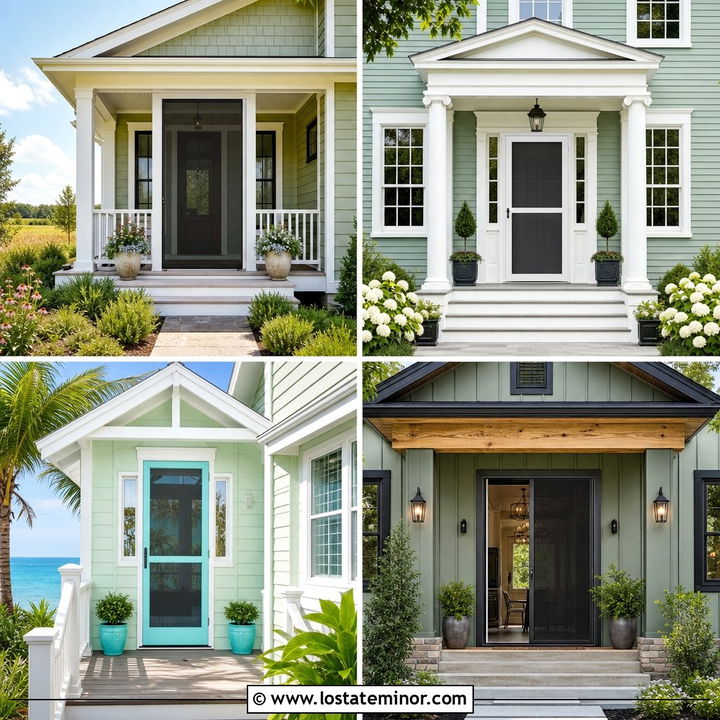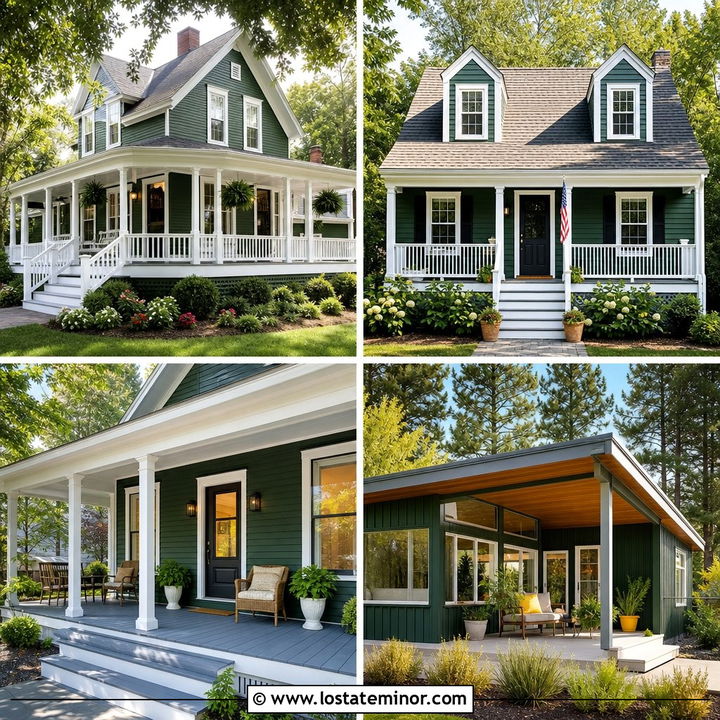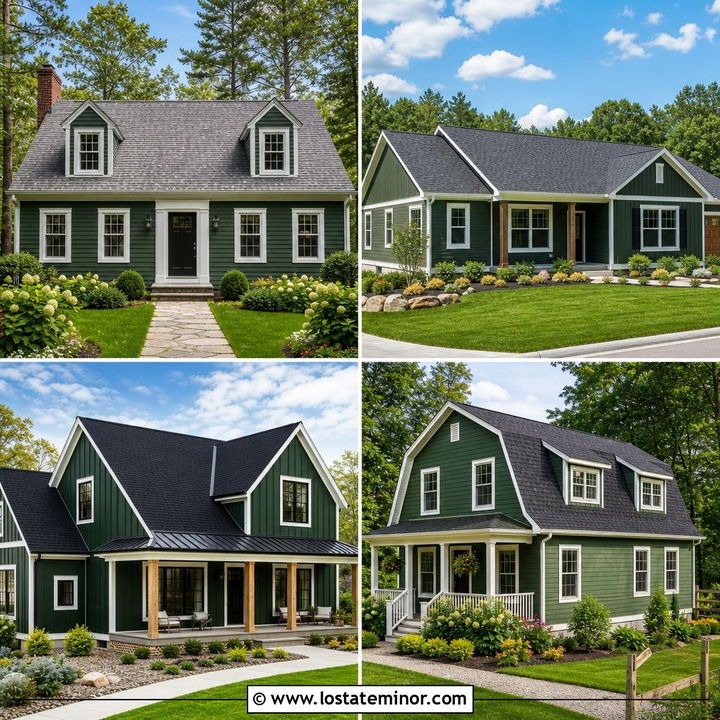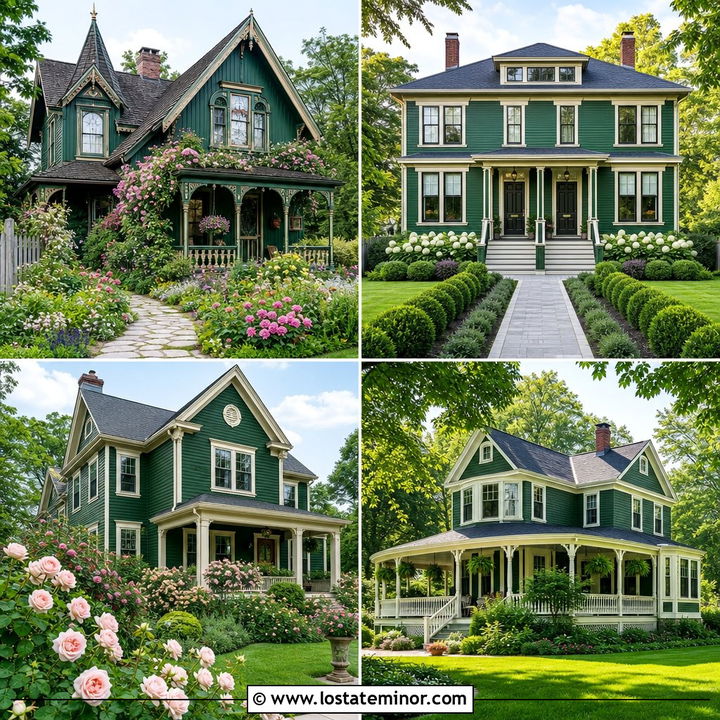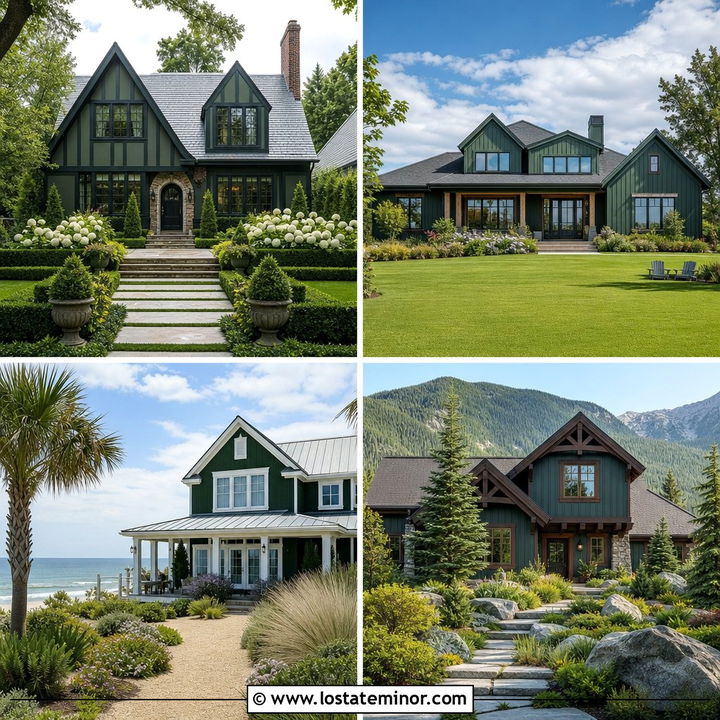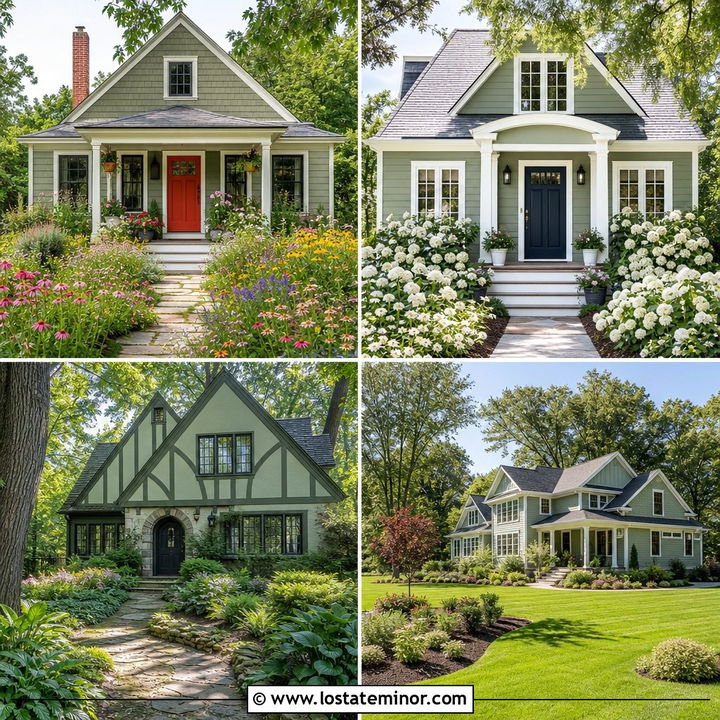
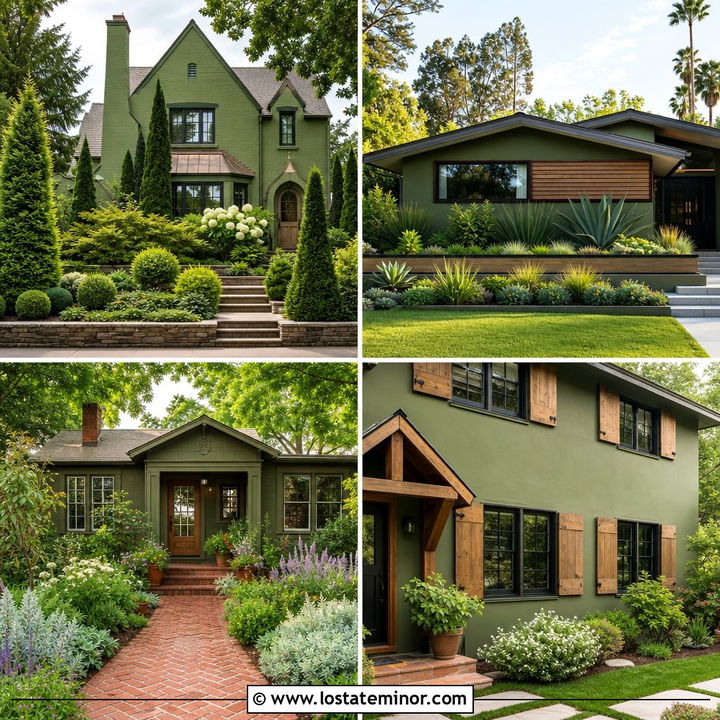
Olive green creates a grounded, welcoming exterior that connects naturally with lawns, trees, stone, and warm wood. It also fits the growing preference for earth-inspired house colors that feel softer than black, white, or cool gray. () The key is designing the entire property as one coordinated scene. Trim, roofing, doors, hardscaping, and plants should support the siding rather than compete with it. Dark olive can make a large facade feel refined, while lighter olive works beautifully on cottages and smaller homes. Thoughtful front-yard landscaping then strengthens the color scheme and guides attention toward the entrance. The complete looks below offer practical inspiration through **30 Olive Green House Design With Front Yard Ideas**.
1. Olive Green House With White Trim
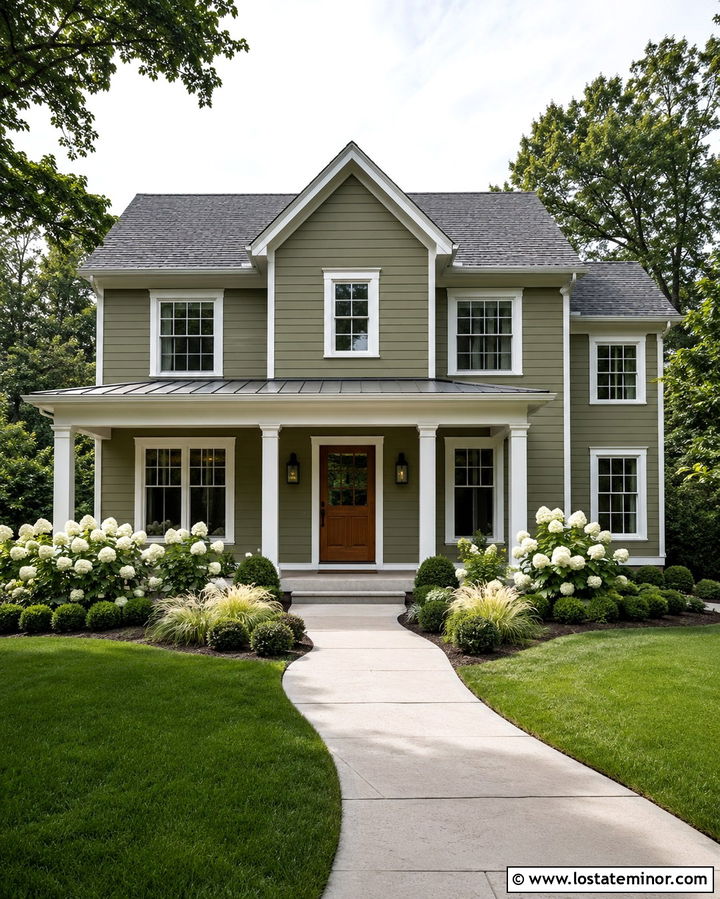
Crisp white trim gives olive green siding a clean, familiar finish without removing its natural warmth. This pairing works especially well on a traditional two-story home with lap siding, divided-light windows, and a medium-gray roof. Carry white across the fascia, porch columns, and window frames to create visual consistency. A medium-stained wood door prevents the palette from looking too sharp. In the front yard, use curved beds filled with boxwood, white hydrangeas, and ornamental grasses. Their soft shapes balance the straight architectural lines. A light concrete walkway keeps the entry bright, while dark mulch echoes the roof. Leave open lawn between the sidewalk and foundation beds so the rich olive facade remains the clear focal point.
2. Dark Olive Green House With Black Trim
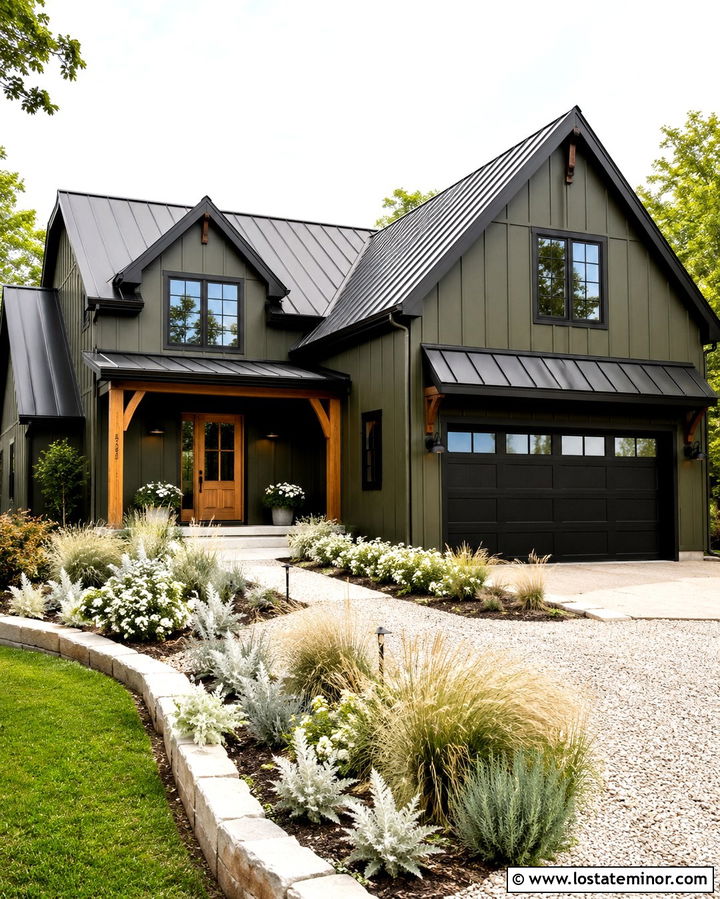
For a dramatic exterior, combine dark olive green siding with matte black trim, gutters, and window frames. The two deep colors create a sophisticated look, particularly on a modern farmhouse or contemporary home with simple rooflines. Keep the garage door olive green so it blends into the facade rather than dominating it. A warm cedar front door introduces needed contrast and connects the house to the landscape. In the yard, pale limestone edging and a light gravel path can prevent the scheme from feeling heavy. Choose plants with varied foliage, such as blue-green juniper, silvery lamb’s ear, and upright grasses. A few white flowering shrubs will brighten the foundation while preserving the restrained, nature-focused color palette.
3. Olive Green House With Natural Wood Accents
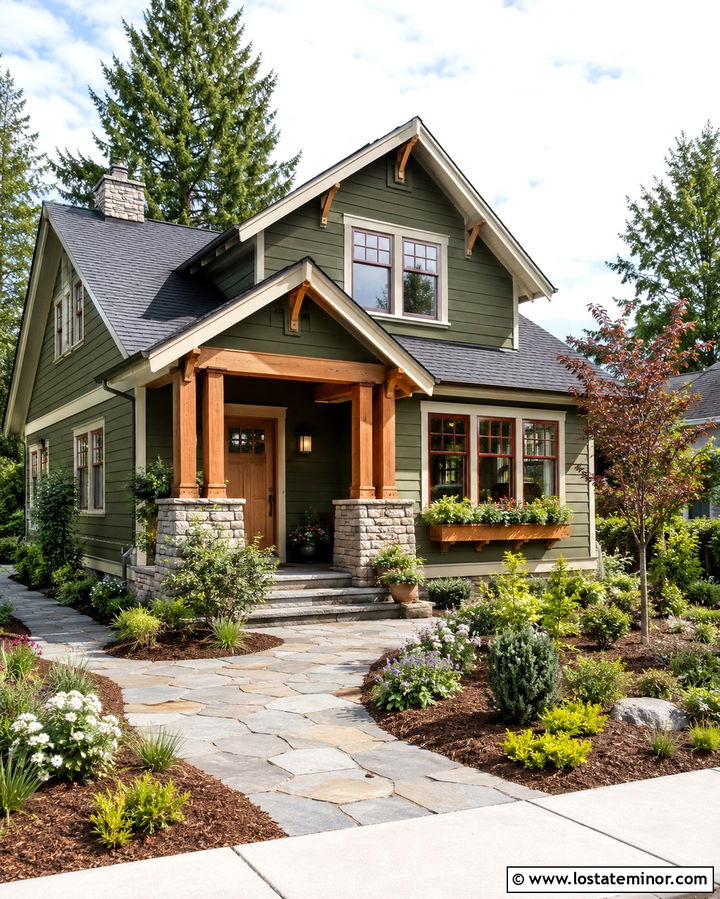
Natural wood brings out the brown and golden undertones commonly found in olive green. Use olive lap siding with cedar porch posts, exposed beams, window boxes, and a matching front door for a warm craftsman-inspired exterior. Cream trim will soften the transitions between green siding and wood details. A charcoal architectural-shingle roof provides enough contrast without introducing another strong color. Extend the organic palette into the front yard with a flagstone walkway, bark mulch, evergreen shrubs, and informal clusters of native flowers. A small ornamental tree can frame one side of the house while leaving the entrance visible. Repeating cedar in a mailbox post or low garden fence helps the architecture and landscaping feel intentionally connected from the curb.
4. Olive Green House With Stone Porch
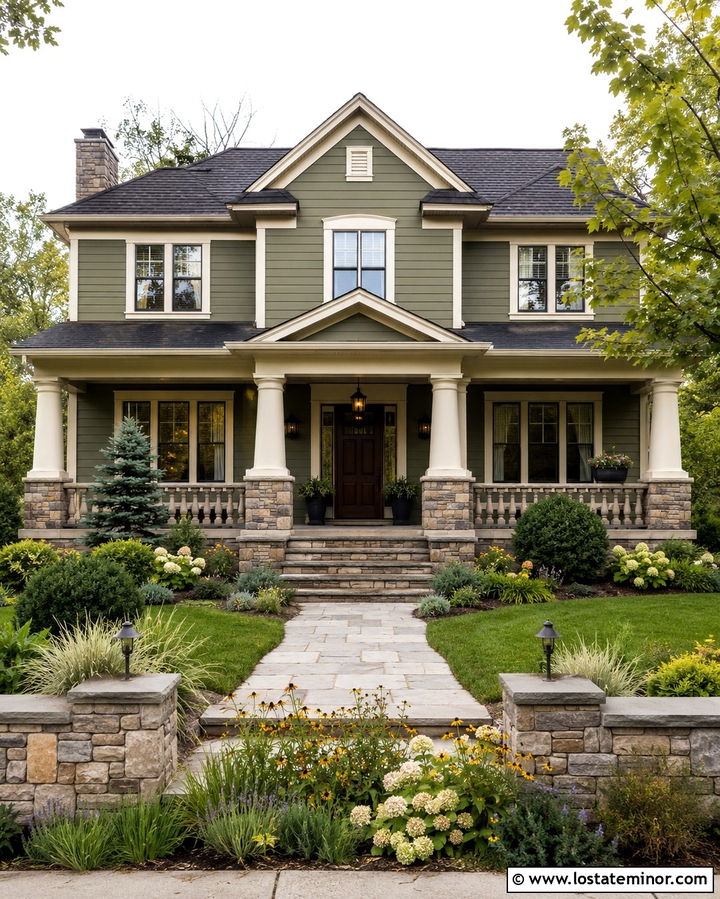
A stone porch gives an olive green house depth, texture, and a strong connection to its setting. Select stone that contains warm gray, beige, or subtle brown tones rather than cool blue-gray masonry. Those earthy colors will complement olive siding more naturally. Use creamy off-white trim around windows and porch columns, then add a dark walnut door for a polished entrance. The stone can continue into wide porch steps and low retaining walls. In the front yard, repeat similar material along the walkway or garden borders, but avoid covering every surface. Layer dwarf evergreens, low grasses, and flowering perennials around the masonry. This creates a gradual transition from the lawn to the porch and makes the house appear settled into the landscape.
5. Olive Green Craftsman House With Native Plants
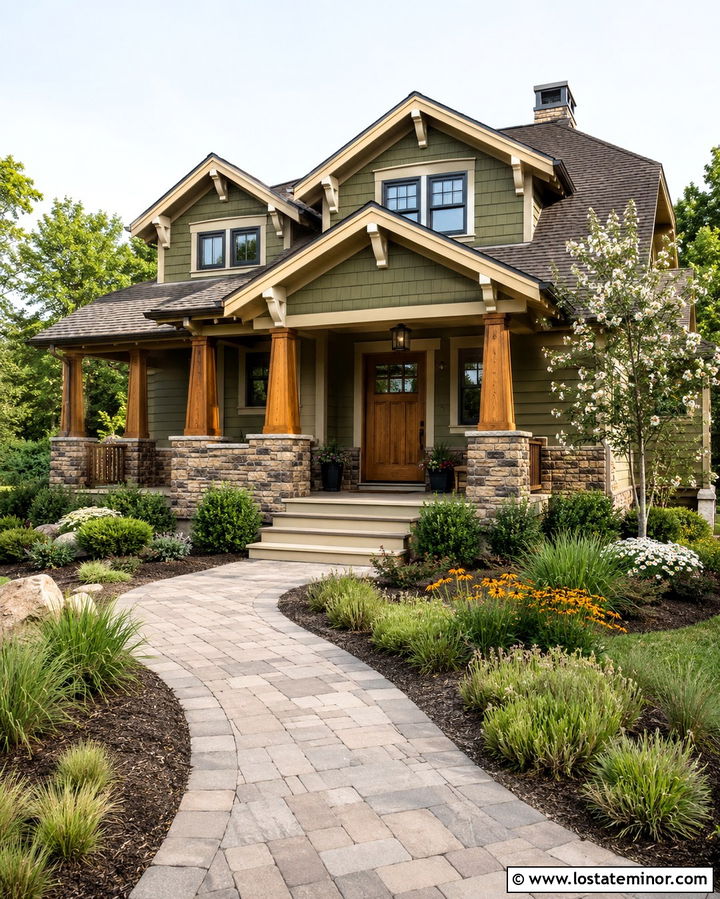
A craftsman home is a natural match for olive green because its deep eaves, tapered columns, and mixed materials already emphasize an organic appearance. Paint the main siding a medium olive, use warm cream on the trim, and finish the porch beams and door in rich cedar. A stone foundation in tan and charcoal tones adds visual weight. For the front yard, choose region-appropriate native plants arranged in broad, informal groups. Flowering perennials can add seasonal color, while evergreen shrubs maintain structure in winter. Replace a perfectly straight walkway with a gently curved path made from concrete pavers or natural stone. Keep taller plants away from porch steps and windows so the home remains visible, welcoming, and easy to approach.
6. Olive Green Farmhouse With Gravel Front Yard
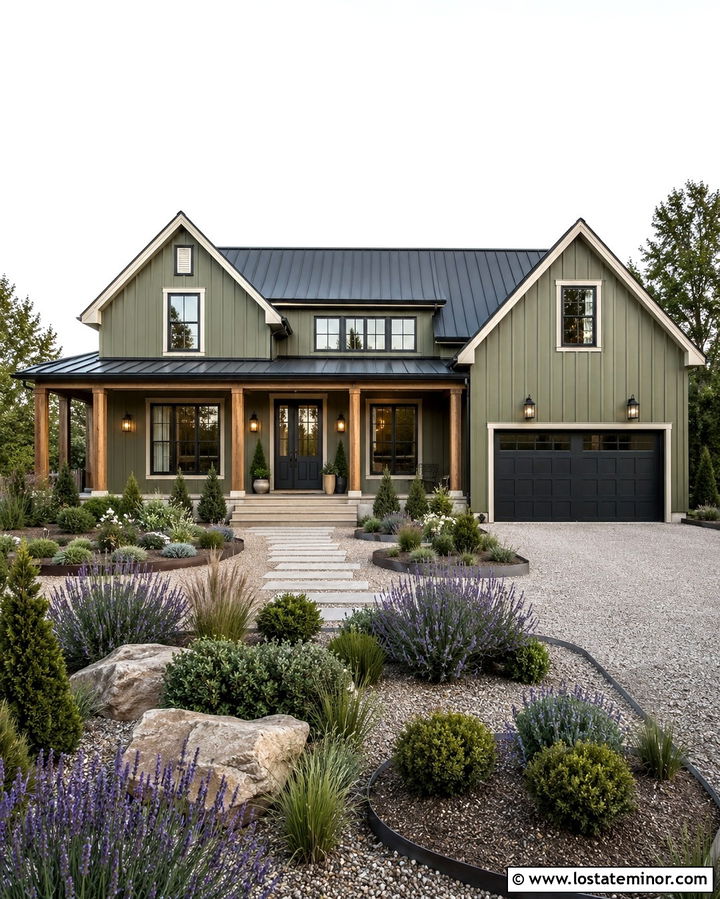
Olive green offers a softer alternative to the familiar white modern farmhouse exterior. Use vertical board-and-batten siding in a muted olive tone, paired with off-white trim and a black metal roof. Black lanterns and window frames add definition, while natural wood porch columns keep the combination warm. A gravel front yard suits this look when it is organized into clear planting zones rather than left as one open surface. Create islands containing lavender, ornamental grasses, compact evergreens, and drought-tolerant flowering plants. Large stepping stones can lead from the driveway to the porch. Use steel or stone edging to control the gravel and define each bed. The result feels relaxed and rural while remaining tidy enough for a suburban neighborhood.
7. Olive Green Ranch House With Curved Walkway
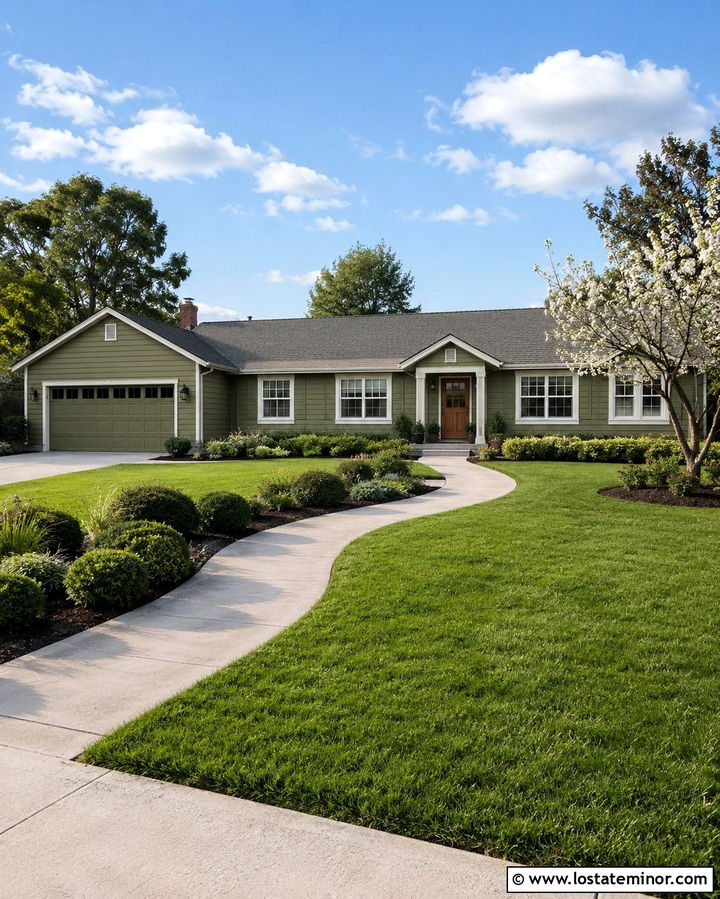
A long ranch facade can look flat, but olive green siding and a curved front walkway introduce movement. Paint the body a mid-tone olive and use warm white around the windows, fascia, and garage. A rust-colored or stained wood front door creates a visible destination along the horizontal elevation. Start the walkway near the driveway and curve it through the lawn toward the entrance. Wide foundation beds can follow the same shape, helping soften the home’s long lines. Use rounded shrubs, low ornamental grasses, and one small flowering tree near an outside corner. Keep plants beneath windows at a manageable height. Dark bronze lights and house numbers complete the look without creating the harsh contrast that bright black accents sometimes produce.
8. Olive Green Colonial House With Boxwood Garden
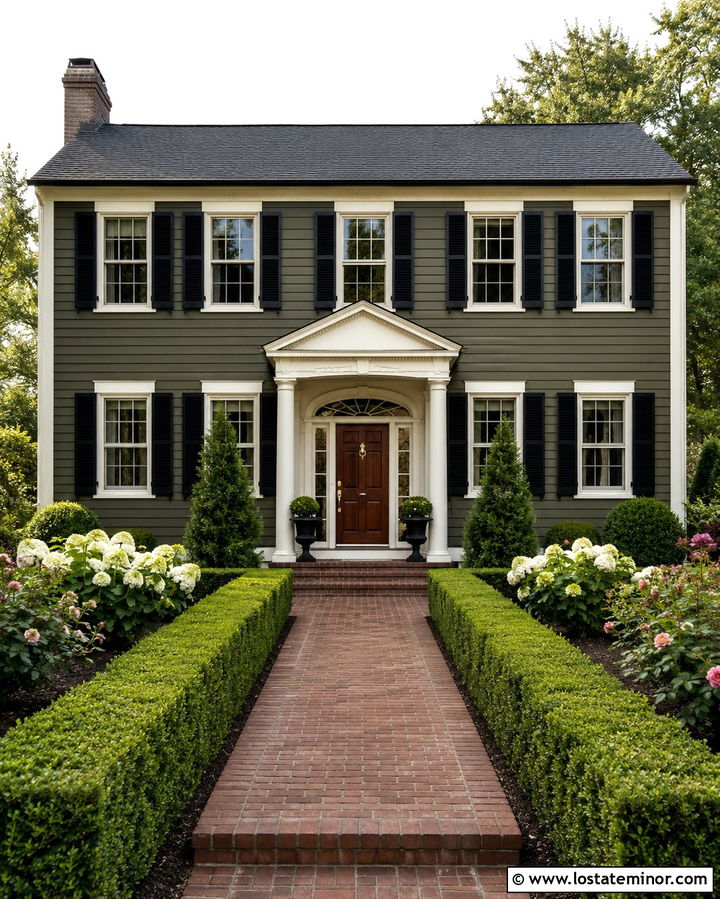
A symmetrical colonial exterior looks polished in deep olive green with ivory trim and black shutters. The traditional color placement highlights balanced windows, a centered entrance, and a prominent cornice. Choose a glossy black or warm mahogany front door, then add aged brass hardware for a classic finishing touch. In the front yard, low boxwood hedges can outline the walkway and reinforce the architecture’s symmetry. Place matching planters or upright shrubs on both sides of the steps. White flowering plants, such as hydrangeas or roses suited to the local climate, will stand out against the dark siding. Use brick or rectangular stone pavers for a direct walkway. The structured landscape should frame the house without hiding its carefully balanced facade.
9. Olive Green Bungalow With Cottage Garden
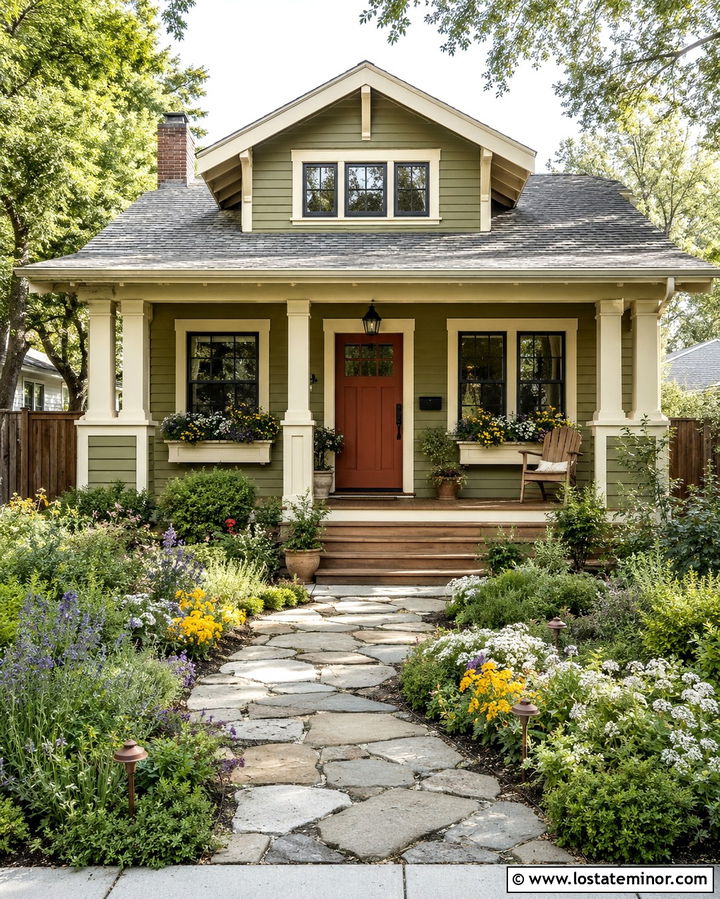
Soft olive green makes a small bungalow feel charming and closely connected to its garden. Pair horizontal siding with creamy trim, a clay-red front door, and stained wood porch flooring. Keep the roof medium brown or weathered gray so the compact facade does not become visually top-heavy. A cottage-style front yard can include curved beds, layered perennials, flowering shrubs, and herbs near the walkway. Limit the flower colors to two or three families, such as white, pale yellow, and muted purple, to avoid a chaotic appearance. A narrow path of irregular flagstone adds character while leading clearly to the porch. Window boxes and porch pots can repeat the garden colors, creating one complete composition from the curb to the front door.
10. Olive Green House With Red Brick Accents
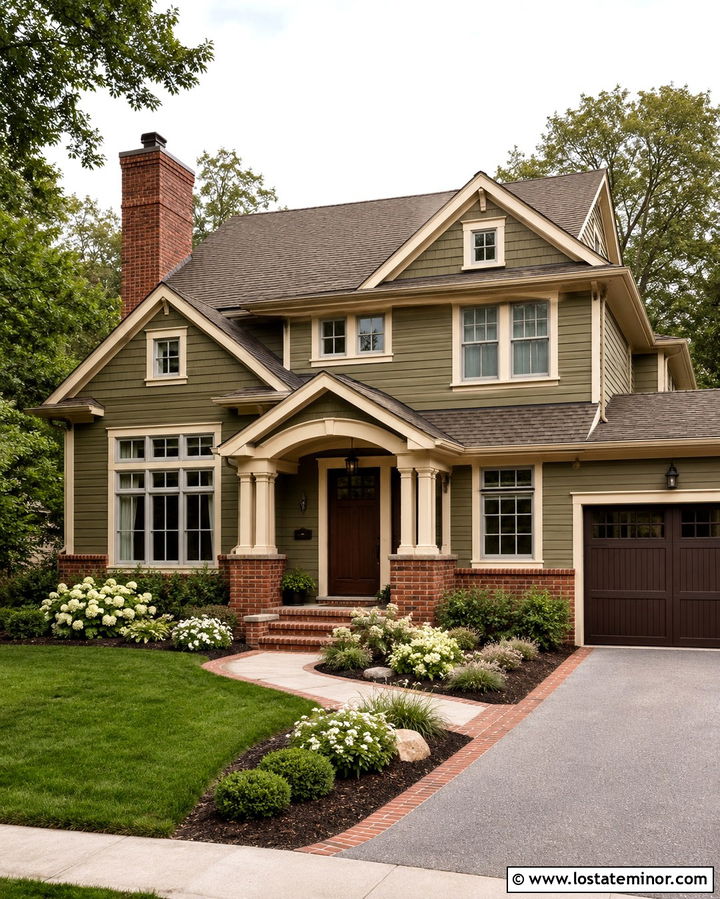
Existing red brick can look surprisingly rich beside olive green because both colors have warm, earthy qualities. Use olive siding above a brick foundation or around a brick chimney, then add soft cream trim to lighten the combination. A dark brown front door and bronze fixtures will blend more smoothly than stark black accents. Before selecting the olive shade, compare it directly with the brick to ensure their undertones feel compatible. In the front yard, repeat the brick through walkway edging or a small landing rather than installing an entirely brick-covered path. Green shrubs, pale grasses, and white flowers provide visual relief from the warm materials. Keep mulch dark brown to connect the plant beds with the door and roofing.
11. Olive Green Cape Cod With White Hydrangeas
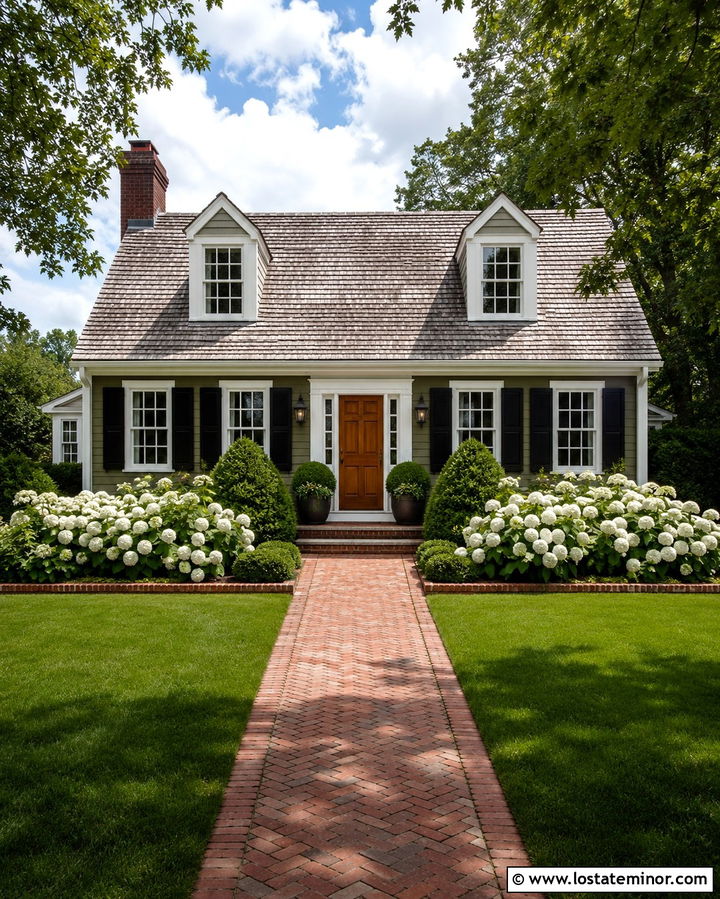
An olive green Cape Cod feels classic when paired with bright white trim, dormer windows, and simple black shutters. The compact architecture benefits from a medium olive rather than an extremely dark shade, which could make the roof appear oversized. Paint the front door deep navy or natural wood for a subtle focal point. White hydrangeas make an excellent visual companion because their large blooms brighten the green facade without adding a competing color. Arrange them in generous groups beneath windows, leaving enough space for mature growth. A straight brick walkway reinforces the home’s traditional character, while clipped evergreens provide winter structure. Keep the central lawn open and symmetrical so the dormers, doorway, and balanced planting beds remain easy to appreciate.
12. Olive Green Cottage With Picket Fence
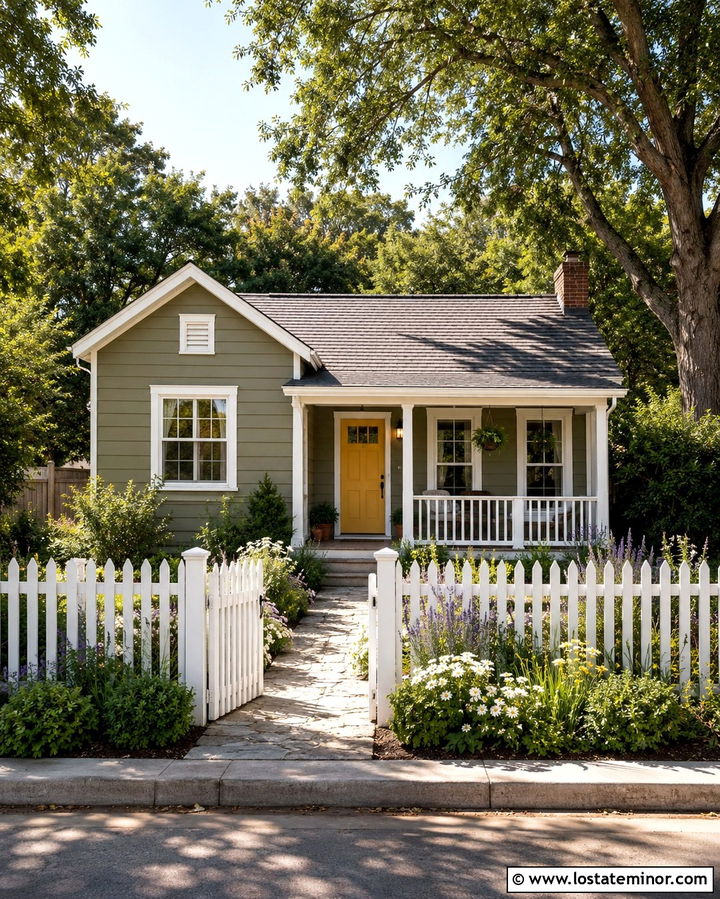
A low white picket fence creates a cheerful boundary around an olive green cottage while repeating the home’s trim color. Choose a soft, slightly gray olive for the siding, warm white for the windows and eaves, and muted yellow for the front door. This palette feels welcoming without becoming overly sweet. Behind the fence, plant loose rows of daisies, salvia, compact roses, and evergreen herbs. A simple gate should align with a narrow stone or brick walkway leading to the porch. Avoid planting tall shrubs across the entire facade, since a small cottage can easily disappear behind overgrown greenery. Instead, use taller flowers near the corners and lower plants beside the path. The layered yard will enhance the storybook character while preserving a practical entrance.
13. Olive Green Modern House With Concrete Landscaping
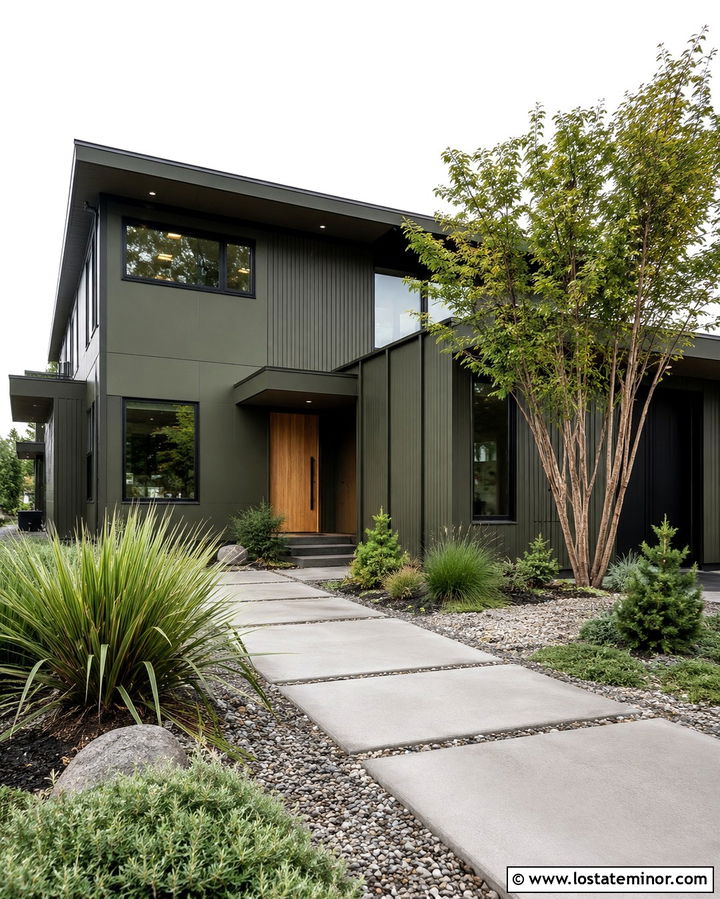
Olive green can look distinctly modern when applied to smooth panels or narrow vertical siding. Pair it with charcoal window frames, a flat or low-slope roof, and a natural oak pivot door. Large concrete pavers bring structure to the front yard and provide a crisp contrast with the earthy facade. Space the pavers slightly apart and fill the joints with gravel or low ground cover. Use a limited planting palette containing sculptural grasses, compact evergreens, and one multi-stem tree. Avoid lining every wall with identical shrubs. Instead, create asymmetrical planting zones that mirror the home’s geometric shapes. Warm exterior lighting, minimal black hardware, and a matching olive garage door will preserve the streamlined appearance while allowing the front entrance to command attention.
14. Olive Green Split-Level With Tiered Planting Beds
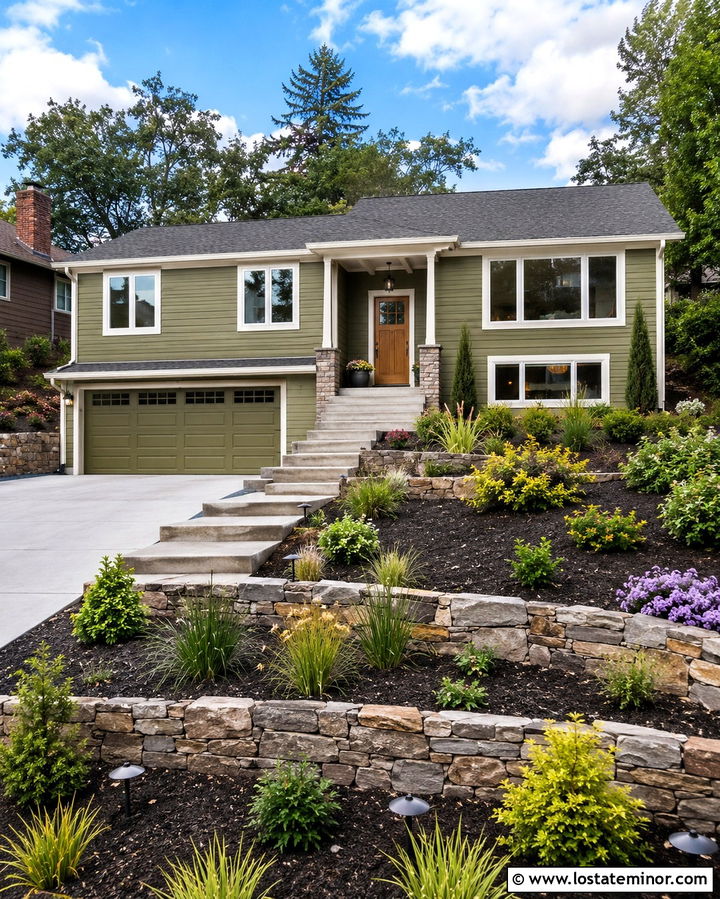
A split-level home often has several competing rooflines and windows, so a unified olive green exterior can make the architecture feel calmer. Paint the siding one consistent olive shade, then use warm white trim and charcoal accents to outline important features. Match the garage door to the siding so it recedes. A cedar front door will help the entrance stand out. In a sloped front yard, build tiered planting beds with stone retaining walls that complement the home’s foundation. Arrange low ground cover at the front, flowering shrubs in the middle, and taller evergreens near blank wall sections. Broad steps integrated into the tiers can create a clear route to the door. The layered landscape turns an awkward grade into a purposeful design feature.
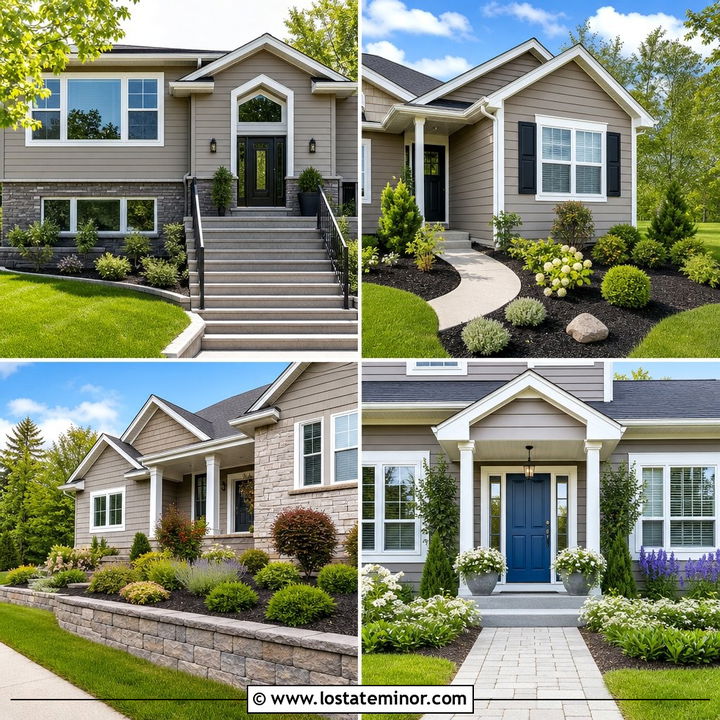
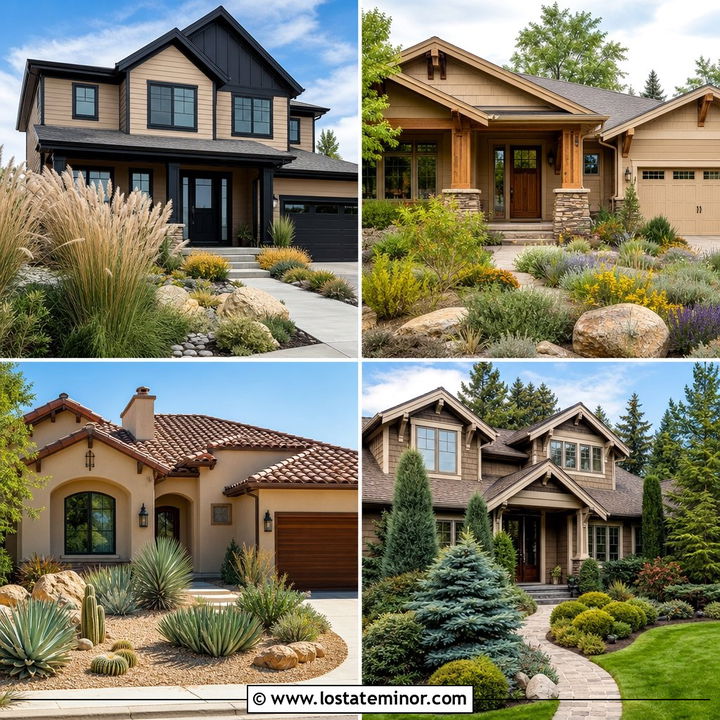
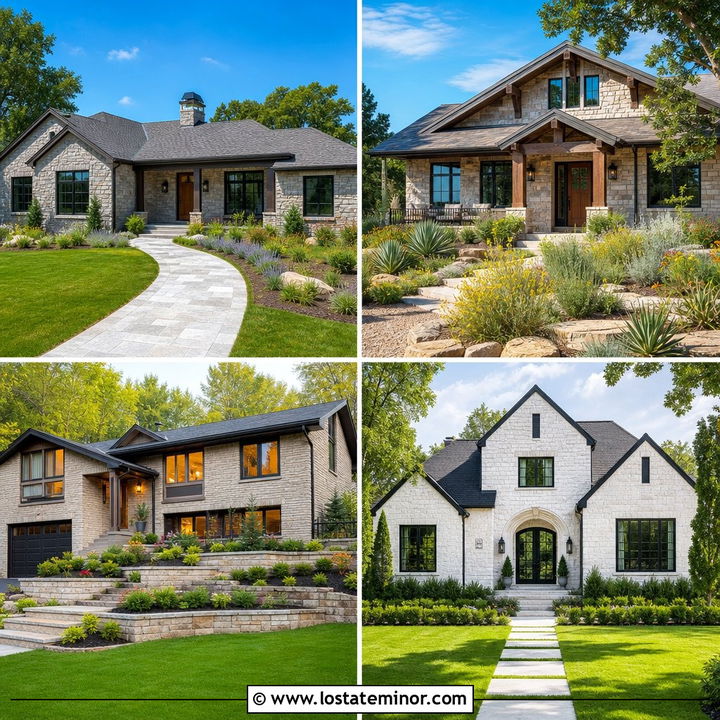
15. Olive Green House With Yellow Front Door
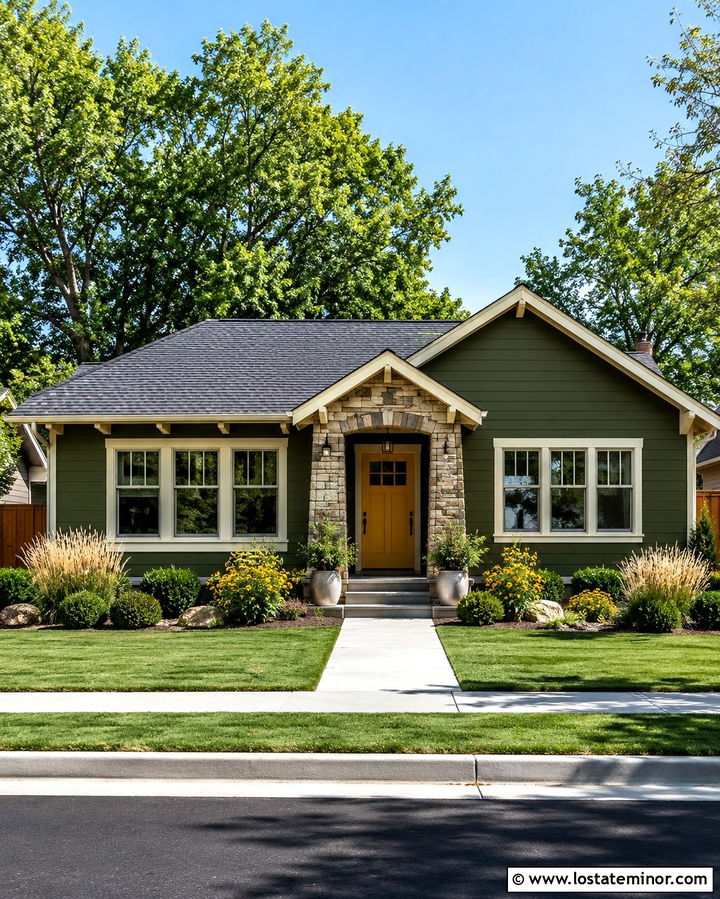
A yellow door can brighten an olive green exterior, but the shade should feel warm and slightly muted rather than neon. Mustard, ochre, and golden yellow work especially well with medium or dark olive siding. Use cream trim and a charcoal roof to keep the colorful entrance grounded. Repeat yellow sparingly in the front yard through seasonal flowers or decorative planters near the steps. Most of the landscape should remain green and neutral, using ornamental grasses, boxwood, and natural stone. A simple concrete walkway allows the door to remain the main accent. This scheme is particularly effective on a bungalow, small ranch, or midcentury home where the entrance needs more definition. Matte black hardware can add a clean final contrast.
16. Olive Green House With Terracotta Front Yard
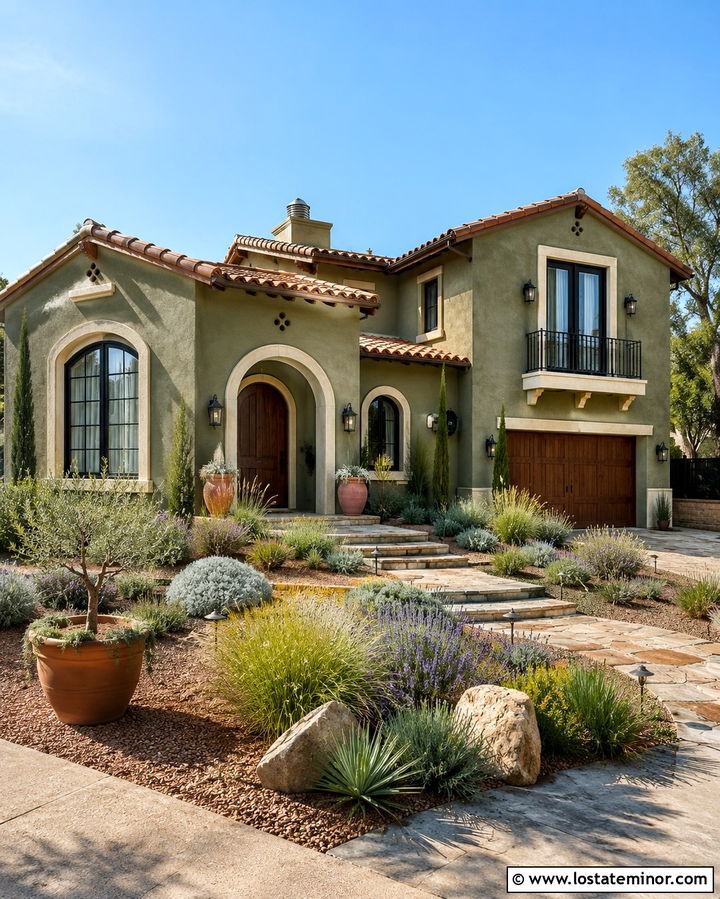
Terracotta brings sun-warmed color to an olive green facade and works especially well on Spanish-influenced, Mediterranean, and Southwestern homes. Use muted olive stucco with creamy trim, a clay tile roof, and a dark wood door. Terracotta pots can frame the entrance and hold sculptural plants suited to the regional climate. Continue the palette with decomposed granite, warm stone pavers, and rust-colored gravel in the front yard. Choose drought-tolerant plants with silver, blue-green, and deep green foliage for contrast. Agave, lavender, rosemary, and ornamental grasses can create strong shapes without excessive maintenance where conditions allow. Keep the planting layout spacious so the stucco walls and roof remain visible. The warm ground materials will keep the olive exterior from appearing too cool or shaded.
17. Olive Green House With Cedar Pergola
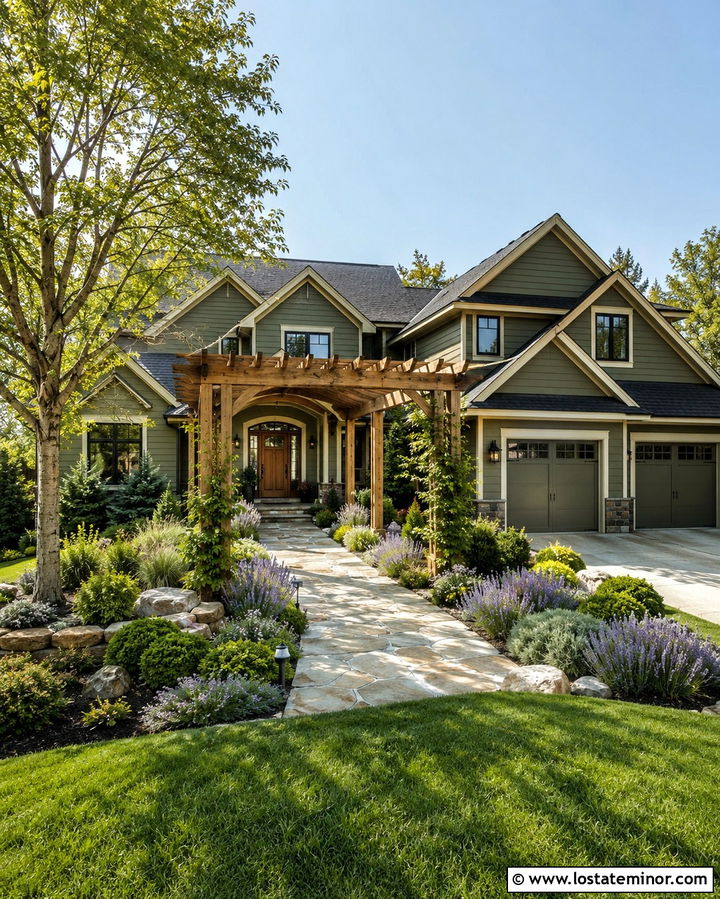
A cedar pergola can transform a plain olive green entrance into a substantial architectural feature. Use it above a front porch, walkway, or attached garage bay, depending on the home’s layout. Medium olive siding, cream trim, and fresh cedar create a balanced three-color scheme. Keep the roof charcoal and repeat the cedar on the front door or porch ceiling. Beneath the pergola, install a wide stone path bordered by lavender, catmint, or low ornamental grasses. Climbing plants may be trained over the structure, but select varieties that will not overwhelm gutters or siding. In the wider yard, use simple evergreen foundation plantings and one shade tree. This allows the warm wood structure to remain the focal point while connecting naturally with the garden.
18. Olive Green Tudor House With Brick Walkway
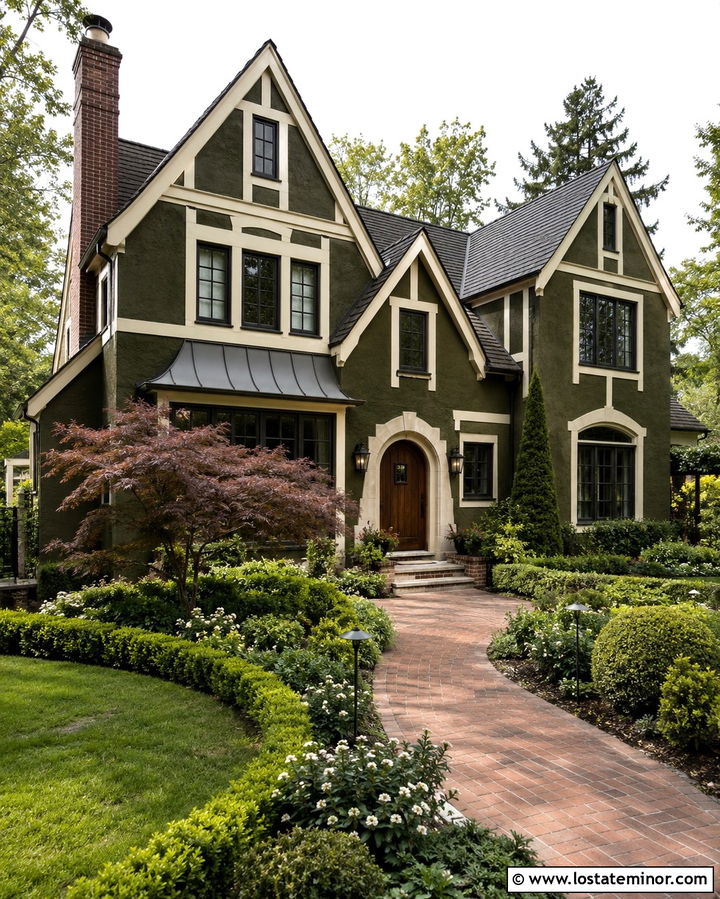
Olive green suits Tudor architecture when used carefully around brick, stucco, and decorative timbering. Apply deep olive to wood siding or stucco sections, keep the trim a warm cream, and finish exposed beams in dark brown. A rounded wood door with bronze hardware supports the historic character. Lead visitors toward it with a gently curved brick walkway that repeats the tones of the chimney or foundation. Plant clipped yew, boxwood, and low flowering perennials along the path, but allow some asymmetry to soften the formal architecture. A small ornamental tree can frame one side of the steep roofline. Avoid bright white accents, which may feel disconnected from the aged materials. Warm neutrals will make the complete exterior appear more established and cohesive.
19. Olive Green House With Black Shutters
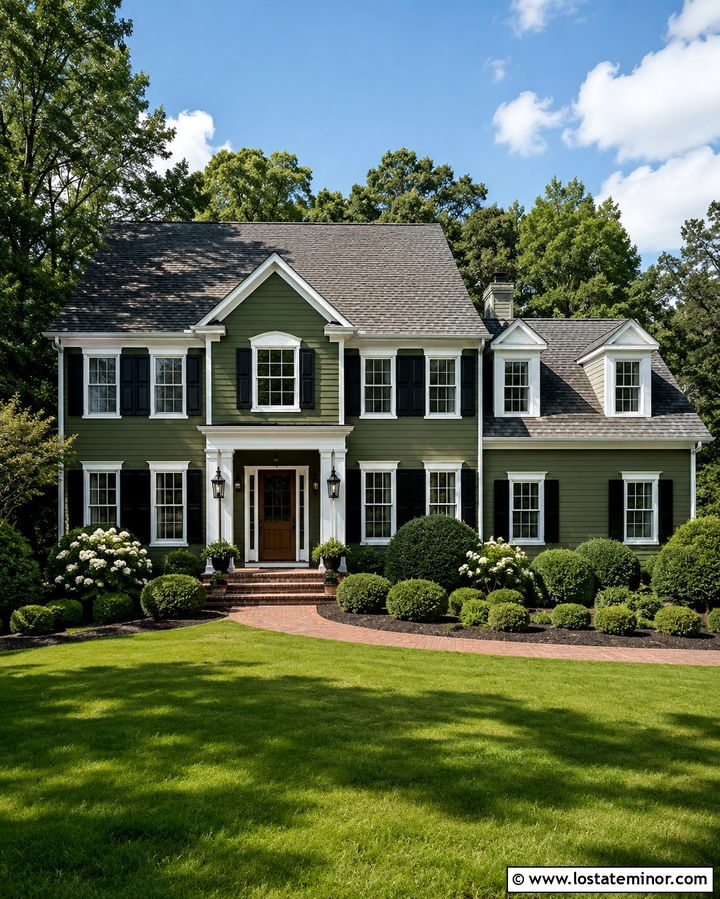
Black shutters can sharpen an olive green house, especially when the window openings need stronger definition. Use a medium olive body color, warm white trim, and satin black shutters sized to match the windows correctly. A natural wood or deep burgundy door will add warmth and prevent the facade from becoming a simple green-and-black block. Choose a gray roof with a warm undertone to bridge the light and dark finishes. In front, plant rounded evergreens beneath the windows and add white flowering shrubs near the entrance. A brick-edged walkway can introduce another warm material. Use black only in repeated small details, such as lanterns, railings, and house numbers. This controlled repetition makes the shutters look intentional and keeps the overall exterior balanced.
20. Olive Green House With Cream Trim
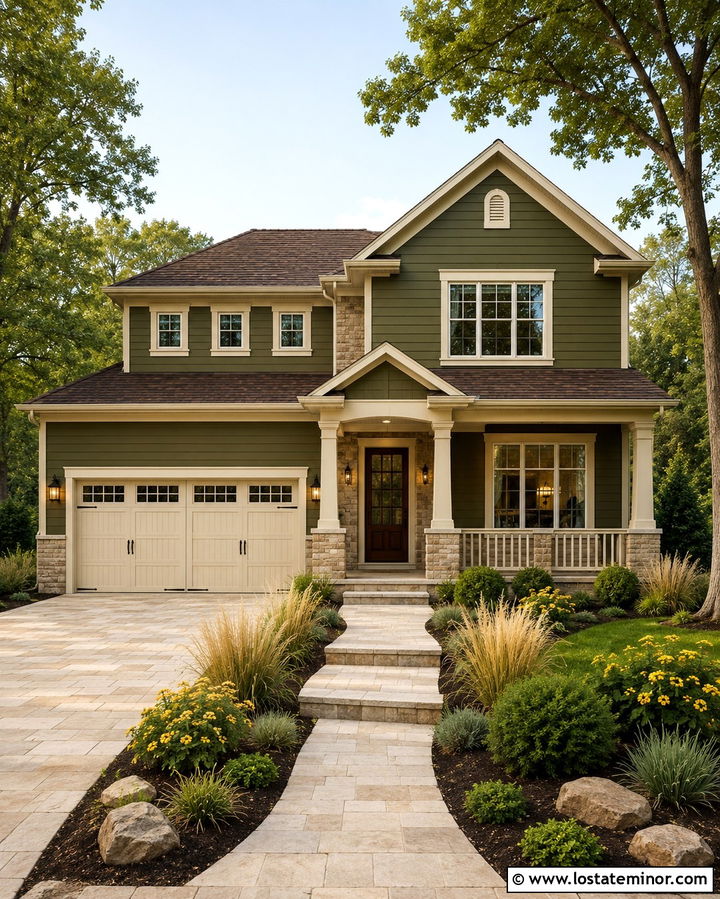
Cream trim creates a gentler contrast than pure white and is particularly flattering beside earthy olive siding. This combination suits homes with warm stone, brown roofing, or beige brick that might clash with a cool white. Use a dark olive body color, buttery cream around the windows and fascia, and a medium walnut door. Carry cream onto porch columns and garage trim for continuity. In the front yard, choose pale limestone pavers, golden ornamental grasses, and shrubs with medium-green leaves. Soft yellow and white flowers can repeat the trim without introducing a strong new color. Deep brown mulch will anchor the lighter plantings. The finished scheme feels relaxed and layered, making it a practical choice for traditional suburban homes surrounded by mature trees.
21. Olive Green House With Low-Maintenance Front Yard
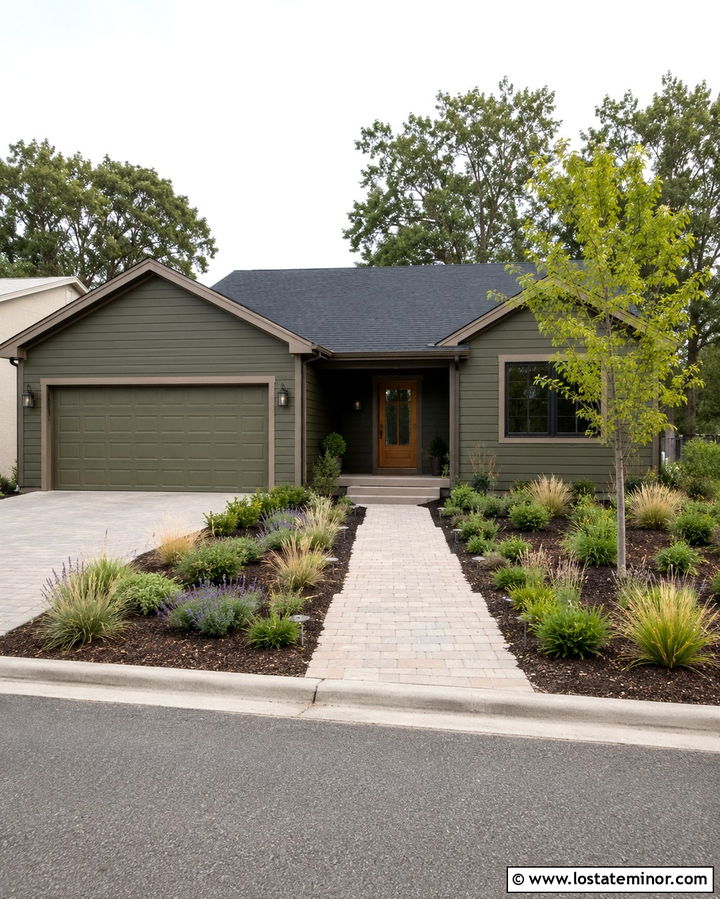
A low-maintenance yard can still give an olive green home depth and seasonal interest. Start with dark olive siding, taupe trim, a black roof, and a stained wood door. Create broad planting beds rather than narrow strips along the foundation. Fill them with durable shrubs, ornamental grasses, ground covers, and locally appropriate perennials. Use landscape fabric cautiously and rely on dense plant spacing or mulch to reduce exposed soil. A wide paver walkway makes the entrance easy to find and requires less upkeep than small, shifting stones. Add one compact ornamental tree where it will not block windows or utilities. Repetition is helpful: three groups of the same grass or shrub often look more organized than many unrelated plants, while still complementing the natural facade.
22. Olive Green House With Drought-Tolerant Landscaping
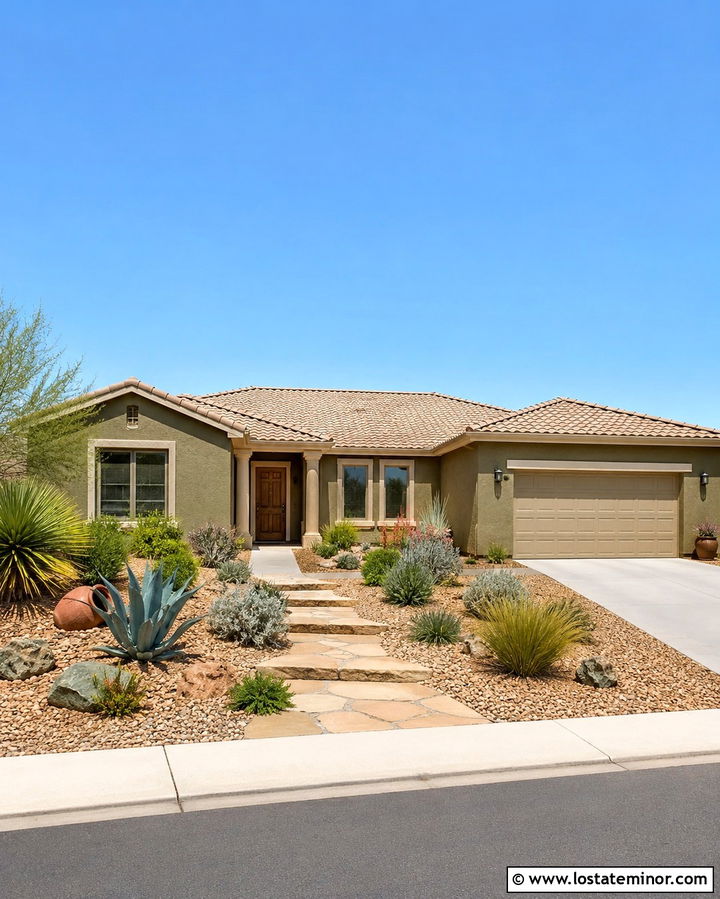
In a dry climate, an olive green house can look at home among gravel, stone, and water-wise planting. Use a dusty olive exterior with warm beige trim and a medium-brown door. A light tan roof or clay-toned tile will reflect heat visually and support the earthy palette. Replace thirsty lawn areas with decomposed granite, broad stone paths, and defined planting islands. Select drought-tolerant species appropriate for the location, combining upright plants with rounded shrubs and airy grasses. Silver foliage creates attractive contrast against olive walls. Keep thorny or sharply pointed plants away from the walkway and entry steps. Terracotta or weathered steel accents can introduce warmth. The finished yard should feel intentionally spacious rather than empty, with every plant contributing a clear form or texture.
23. Olive Green House With Wraparound Porch
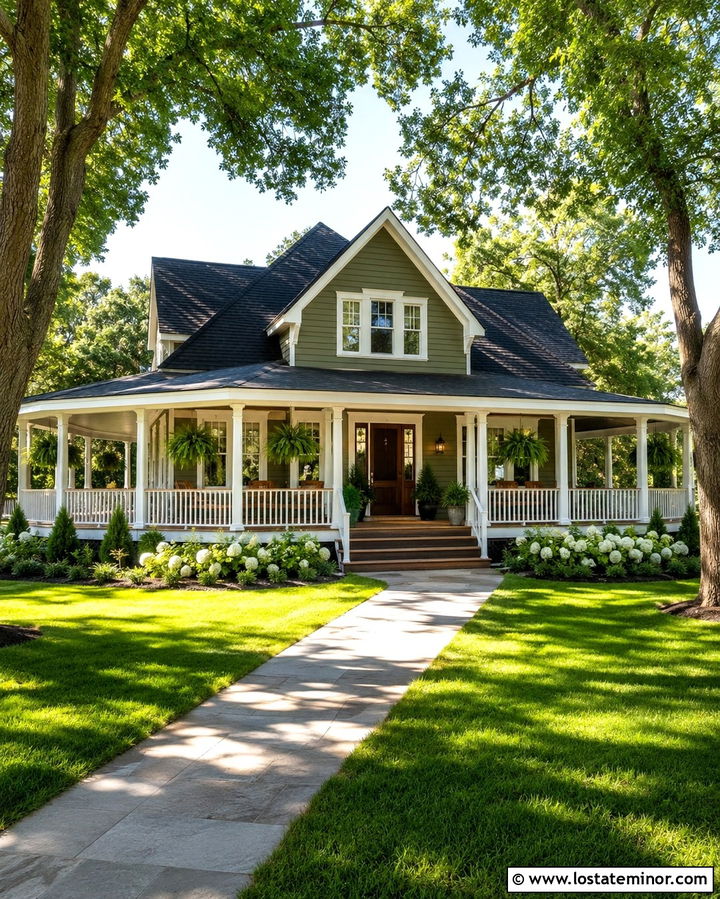
A wraparound porch gives an olive green farmhouse or Victorian-inspired home a welcoming, settled presence. Paint the siding medium olive and use warm white on the railings, columns, and decorative trim. Natural wood porch flooring adds warmth underfoot, while a deep brown or black roof anchors the broad structure. Place matching planters beside the entrance and repeat olive, white, and wood tones in the outdoor furniture. In the yard, a wide front lawn can be framed by sweeping foundation beds containing hydrangeas, ferns, and compact evergreens. A straight walkway creates a clear line through the layered porch architecture. Keep shrubs low near railings to preserve visibility from the porch. One or two mature shade trees can complete the relaxed, traditional setting.
24. Olive Green Midcentury House With Ornamental Grasses
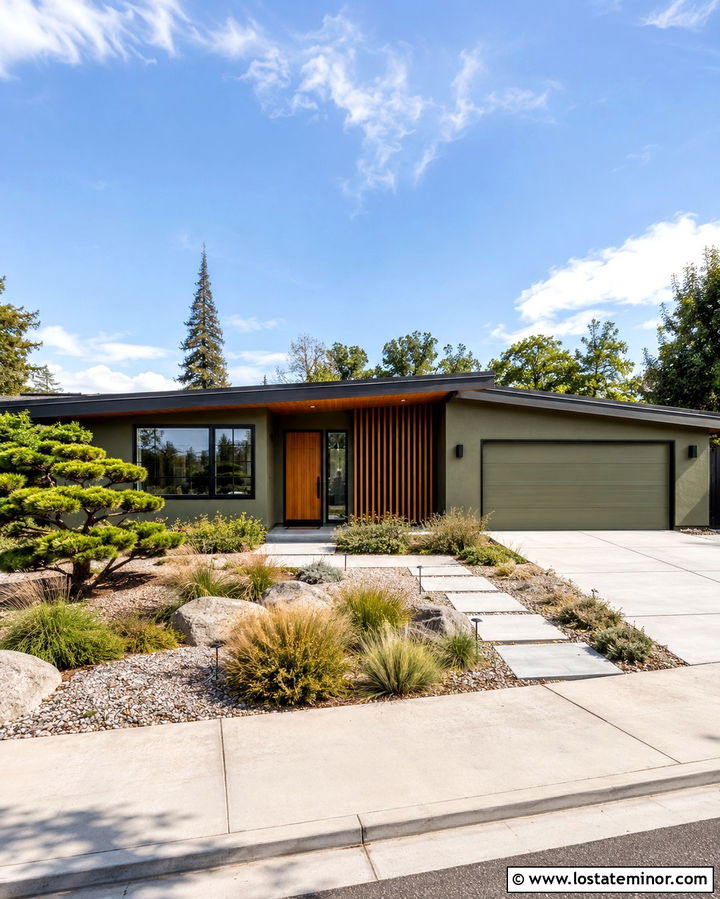
A midcentury home gains fresh curb appeal from olive green siding, broad windows, and warm wood details. Use a muted dark olive on the main facade, charcoal on the window frames, and cedar on the door, soffits, or vertical privacy screen. Match the garage door to the siding to emphasize the home’s low horizontal shape. In the front yard, group ornamental grasses with rounded boulders, gravel, and large rectangular pavers. Keep planting beds asymmetrical and leave open areas around distinctive architectural features. A small sculptural tree near a blank wall can add height without blocking the windows. Avoid overly formal hedges, which may conflict with the home’s relaxed geometry. The combination should feel simple, textural, and closely linked to the surrounding landscape.
25. Olive Green House With White Flower Garden
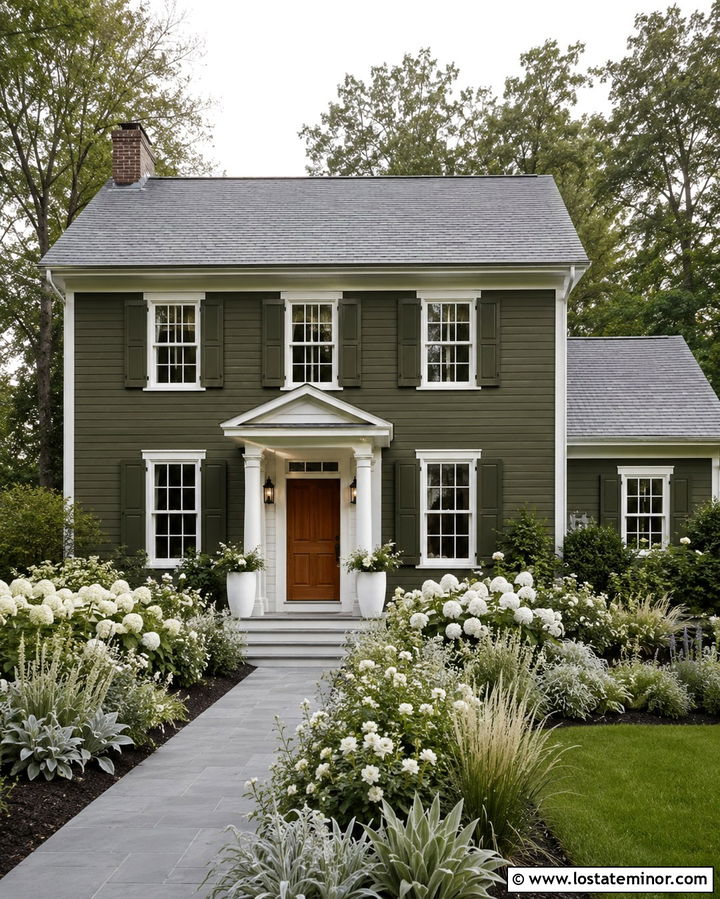
A mostly white flower garden creates brightness and elegance in front of olive green siding. Begin with a deep olive exterior, soft white trim, and a black or natural wood front door. Then layer white-blooming plants with different heights and flowering periods, selecting varieties that suit the local sun, soil, and climate. Evergreen shrubs will keep the beds structured when flowers are not in season. Silver foliage and pale ornamental grasses can add contrast without disrupting the restrained palette. Use dark mulch to make white blooms more visible and define the planting edges clearly. A light gray walkway and white porch planters repeat the garden colors. This approach works across cottage, colonial, and farmhouse architecture because it highlights the facade while keeping the front yard calm.
26. Olive Green House With Copper Accents
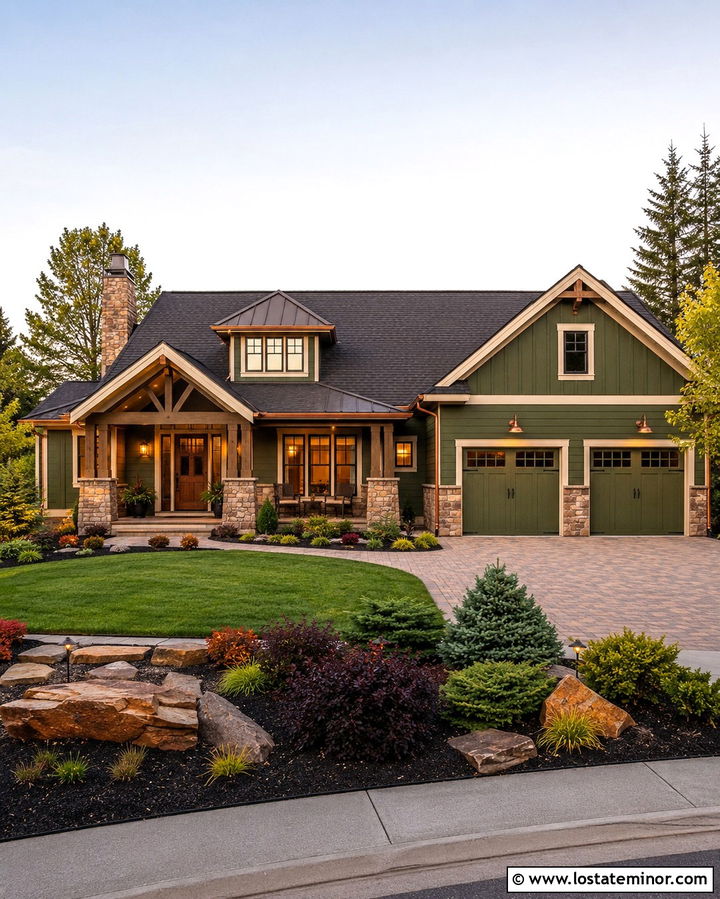
Copper gutters, flashing, lights, or porch details introduce warmth and character to a dark olive green house. New copper creates a bright reddish glow, while naturally aged copper develops a softer patina that blends into the green palette. Pair these metals with cream trim, a dark bronze roof, and a walnut front door. Limit copper to a few visible areas so it reads as a refined accent rather than decoration. In the yard, use rust-colored stone, dark mulch, and plants with burgundy or bronze foliage to repeat its warmth. Evergreen shrubs will connect those accents back to the olive facade. A walkway made from warm gray pavers can unify the materials. This complete look is especially effective on craftsman, Tudor, and traditional homes.
27. Olive Green House With Raised Front Garden Beds
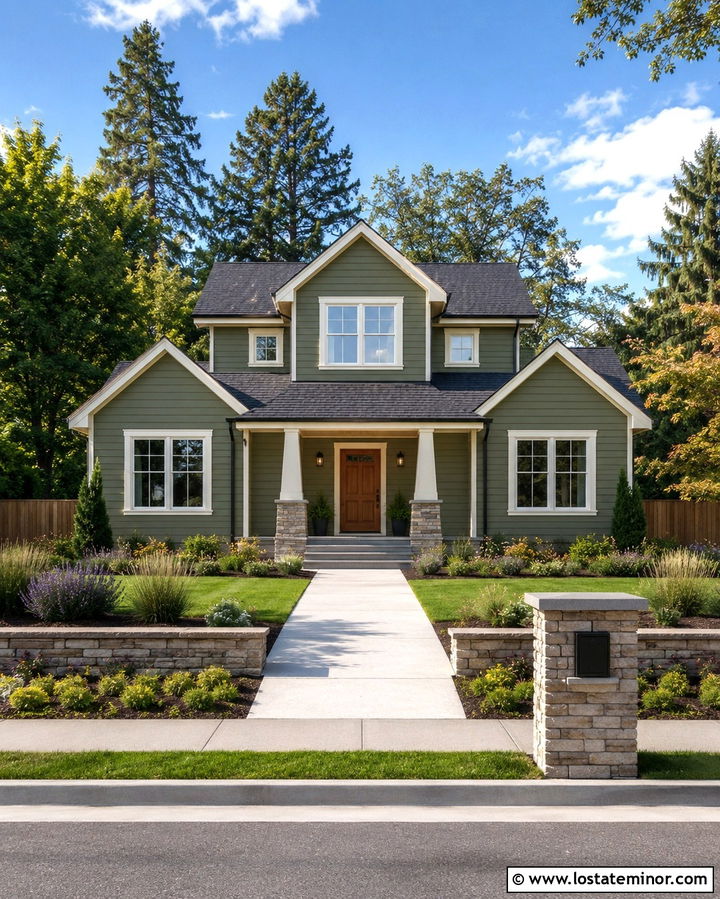
Raised garden beds can add structure to a flat front yard while complementing the natural character of olive green siding. Choose a medium olive exterior with off-white trim, charcoal roofing, and a cedar door. Build low beds from stone, brick, or stained timber that coordinates with the home’s existing materials. Keep the beds below window level and avoid placing moisture-holding soil directly against the siding. Fill them with layered evergreen shrubs, grasses, and long-blooming perennials. A central walkway should remain broad enough for comfortable access, with the raised beds framing it on one or both sides. Repeat the bed material around porch steps or a mailbox base. The resulting landscape feels organized and dimensional without hiding the architecture behind excessive planting.
28. Olive Green House With Wide Front Steps
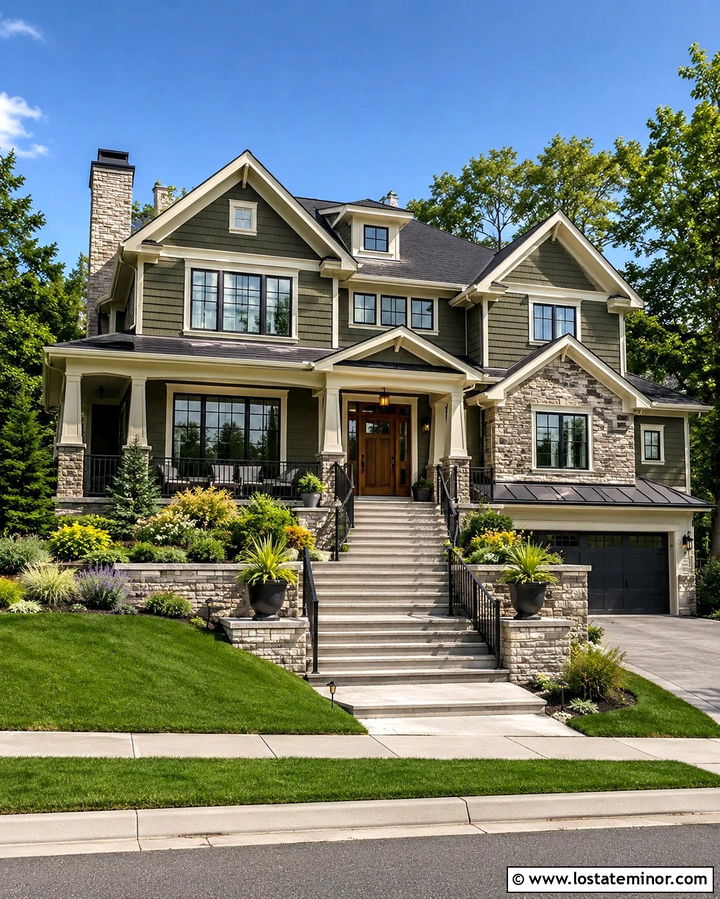
Wide front steps can make an olive green home feel more generous and welcoming, particularly when the original entrance appears narrow. Use dark olive siding, creamy trim, and a stained oak door positioned at the center of the composition. Construct broad steps from warm gray stone or concrete, then add simple black railings for definition. Low retaining walls or matching planters can extend from each side of the landing. In the yard, arrange low shrubs and grasses in layers that rise gradually toward the house. Keep the immediate approach open so visitors can see the full width of the steps. Path lighting placed along the edges will improve visibility without cluttering the entrance. The expanded approach creates a strong connection between the facade and front landscape.
29. Olive Green House With Meadow Front Yard
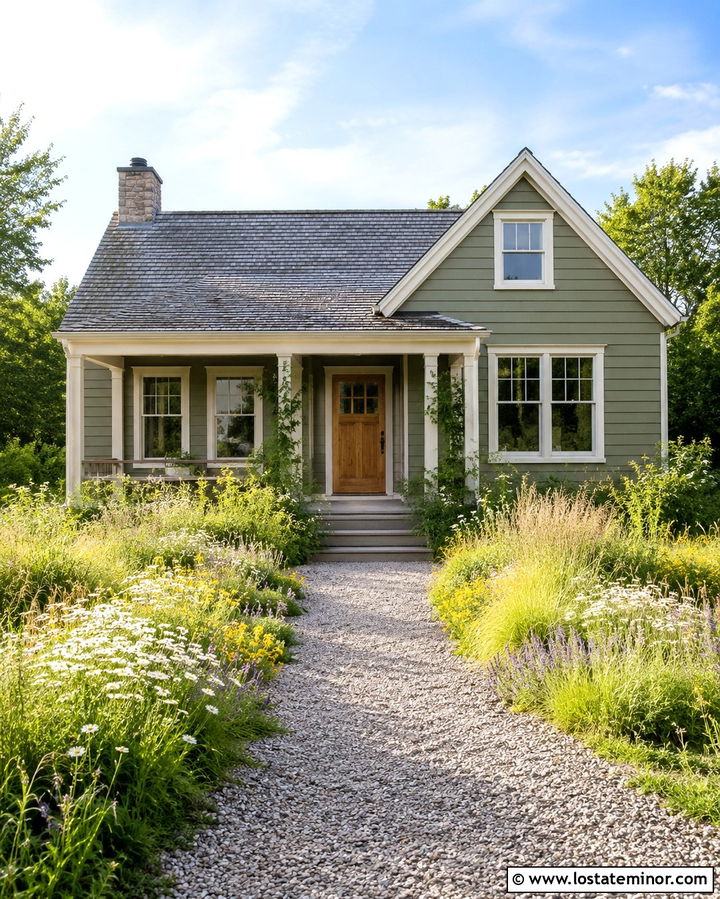
A small meadow-style front yard gives an olive green house a relaxed, natural setting. This look works particularly well on cottages, cabins, modern farmhouses, and homes near wooded areas. Use muted olive siding, warm cream trim, a cedar door, and a weathered gray roof. Replace part of the conventional lawn with broad drifts of native grasses and flowering plants selected for the local climate. Maintain a clearly cut border around the meadow so it appears intentional. A mowed or gravel path can lead directly to the front porch. Keep taller plants away from street corners, driveways, and ground-floor windows where visibility matters. Repeating a few species in large groups creates better visual order than scattering many individual varieties across the yard.
30. Olive Green House With Layered Evergreen Landscaping
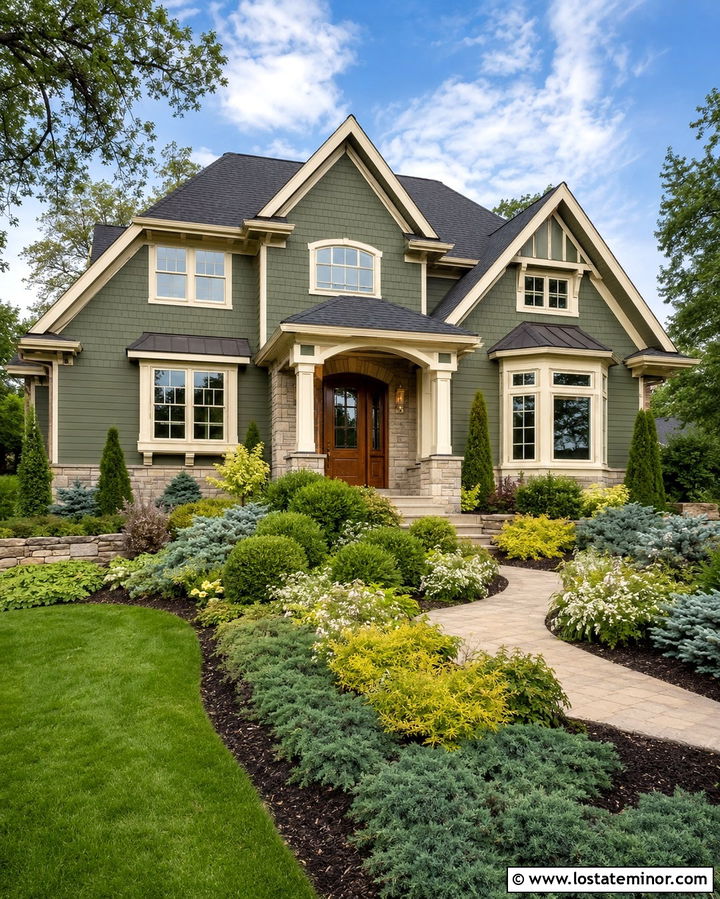
Layered evergreens allow an olive green house to blend with its surroundings while maintaining strong curb appeal throughout the year. Choose a medium-dark olive body color, warm ivory trim, a dark gray roof, and a richly stained front door. Build the front planting scheme in levels, placing low ground covers near the walkway, rounded shrubs beneath windows, and narrow upright evergreens near corners. Mix foliage tones so the landscape does not become one flat field of green. Blue-green, yellow-green, and deep forest foliage can all complement olive siding when repeated thoughtfully. Add a few white flowering perennials for seasonal brightness. A light stone walkway and neat bed edges will separate the green layers, ensuring the home remains visible rather than disappearing into the planting.
Conclusion:
The best olive green exterior is more than a beautiful siding color. It is a complete composition built around trim, roofing, doors, natural materials, walkways, and well-planned landscaping. White and cream create classic contrast, while black, cedar, stone, brick, and copper can produce stronger architectural character. Front yards should repeat these colors and textures without hiding the facade. Before painting, test large samples beside permanent materials and observe them throughout the day. Then select plants that suit the property’s climate, sunlight, and available maintenance time. These **30 Olive Green House Design With Front Yard Ideas** show how coordinated details can turn an ordinary exterior into a warm and memorable home.

Related posts: