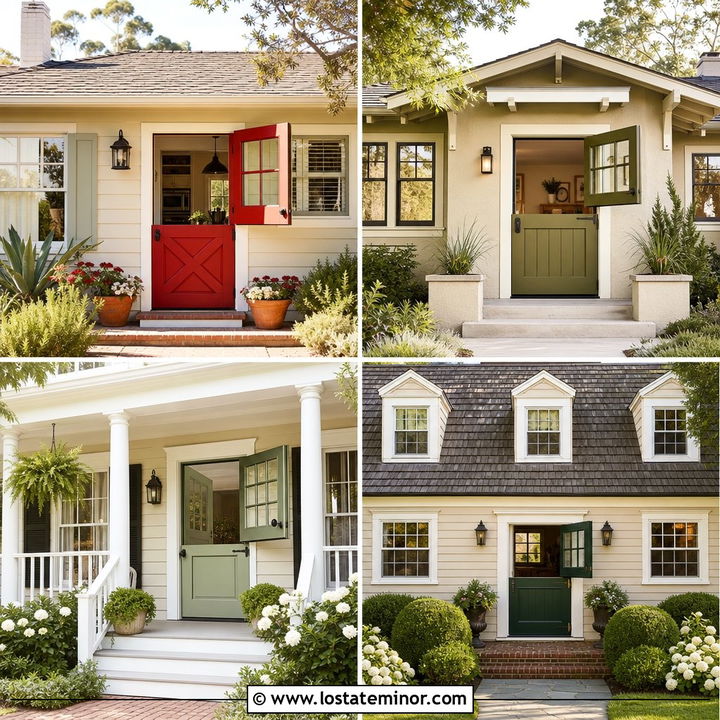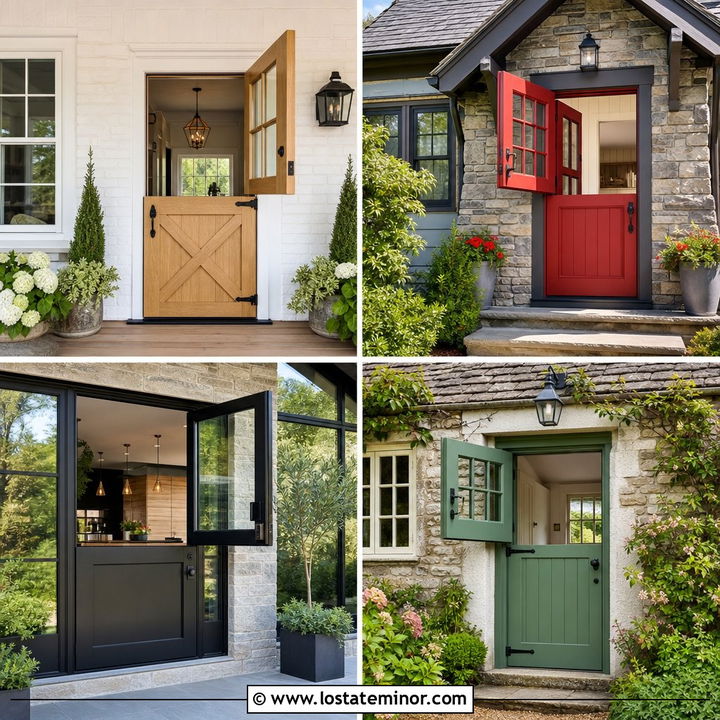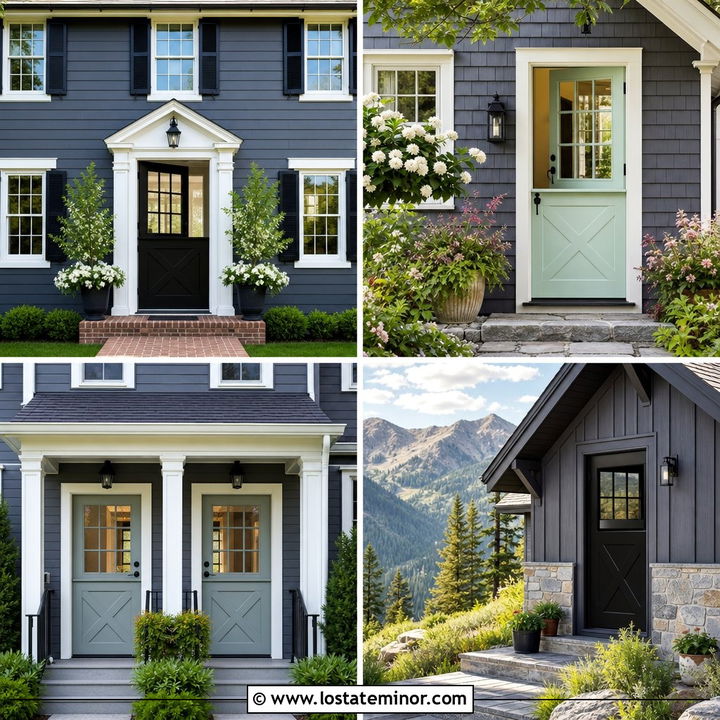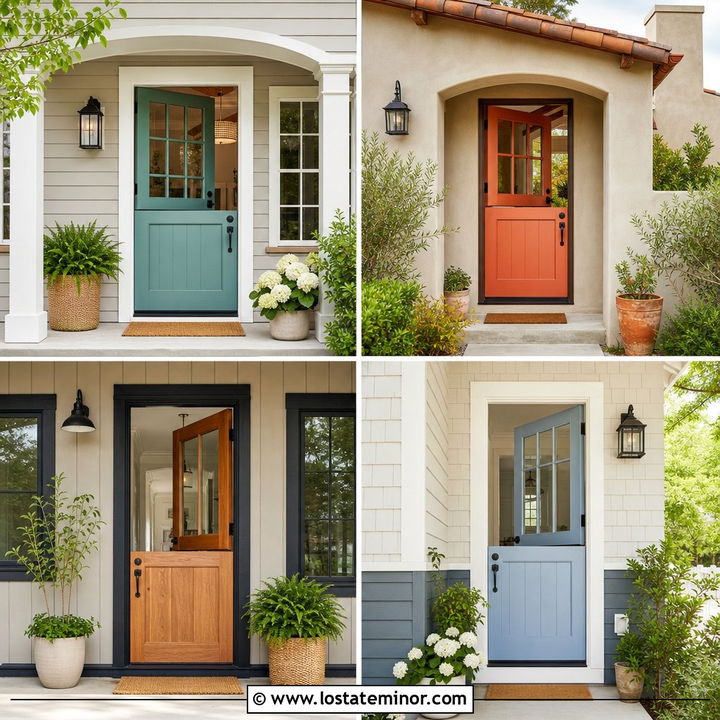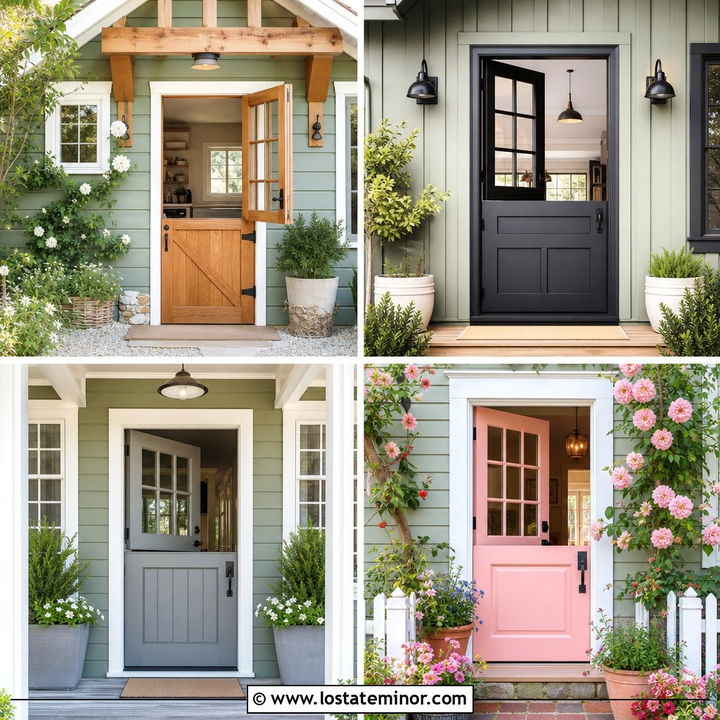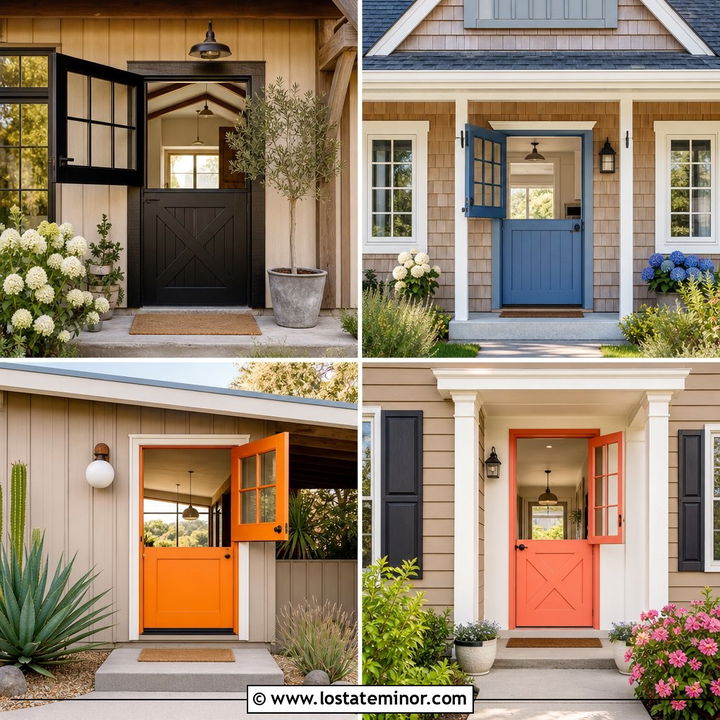
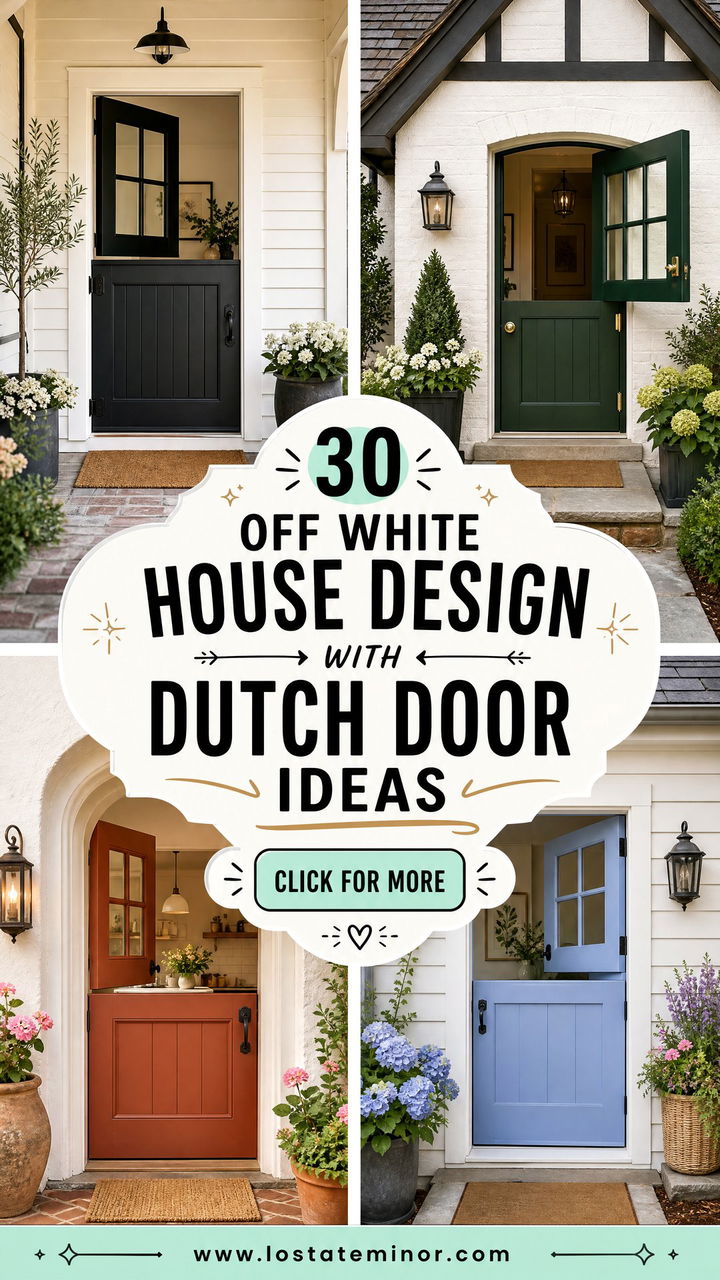
An off-white exterior creates a softer, more welcoming look than stark white while still making a home feel fresh and bright. Add a Dutch door, and the facade gains character, ventilation, natural light, and a memorable focal point. The most successful **30 Off White House Design With Dutch Door Ideas** coordinate the siding, door, trim, roof, masonry, hardware, and landscaping as one complete scheme. Warm cream works beautifully with wood and earthy colors, while neutral off-white supports black, navy, green, and gray accents. Architectural style matters too. A rustic farmhouse needs a different combination than a coastal cottage or traditional colonial. The complete exterior looks below offer practical inspiration for exploring **30 Off White House Design With Dutch Door Ideas**.
1. Off White Farmhouse With Black Dutch Door
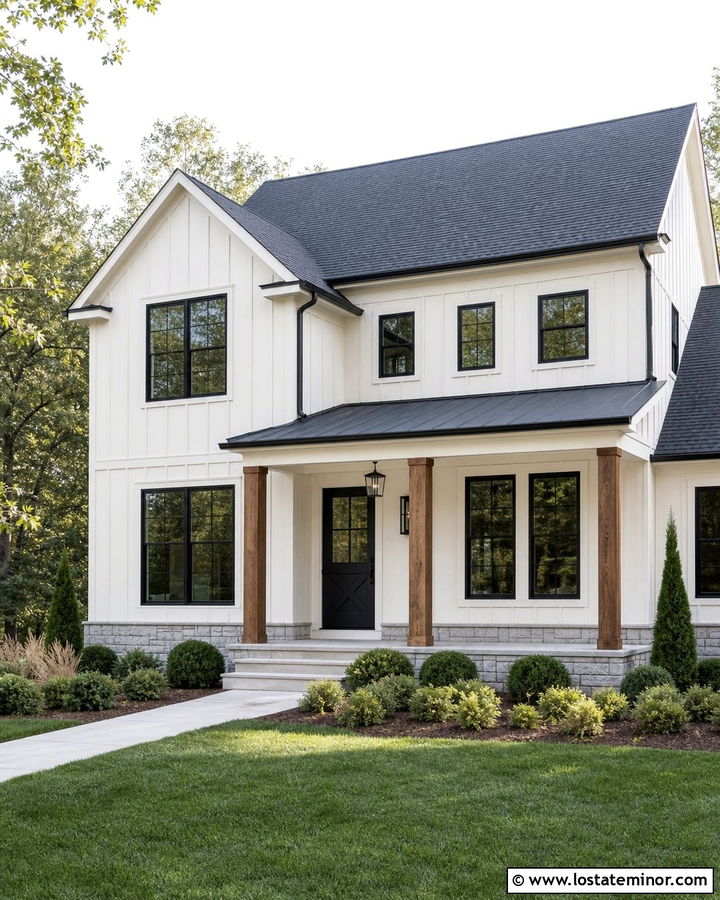
A black Dutch door gives an off-white farmhouse a strong focal point without overwhelming its relaxed character. Choose warm off-white board-and-batten siding rather than a sharp blue-white. Crisp cream trim can outline the windows while maintaining a gentle transition between surfaces. A matte black door looks especially cohesive when repeated on the window frames, barn lights, and simple porch railing. Complete the scheme with a charcoal architectural-shingle roof and pale gray stone around the foundation. Natural cedar porch columns keep the black-and-white palette from appearing too severe. A straight concrete walkway, clipped shrubs, and loose ornamental grasses provide clean curb appeal. Use satin or semigloss door paint so fingerprints and weather marks are easier to clean.
2. Off White Cottage With Sage Green Dutch Door
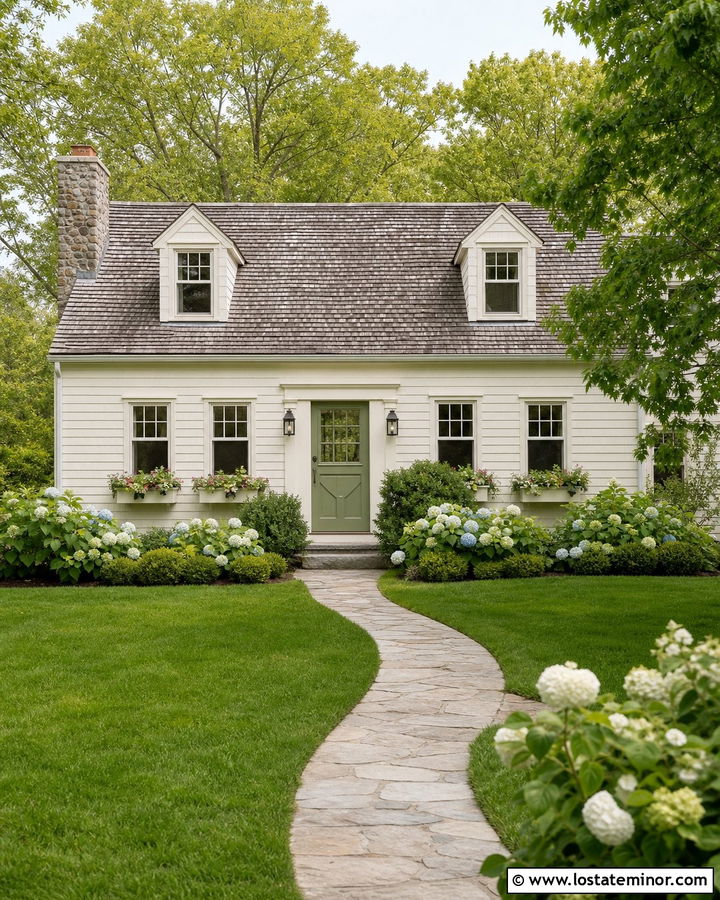
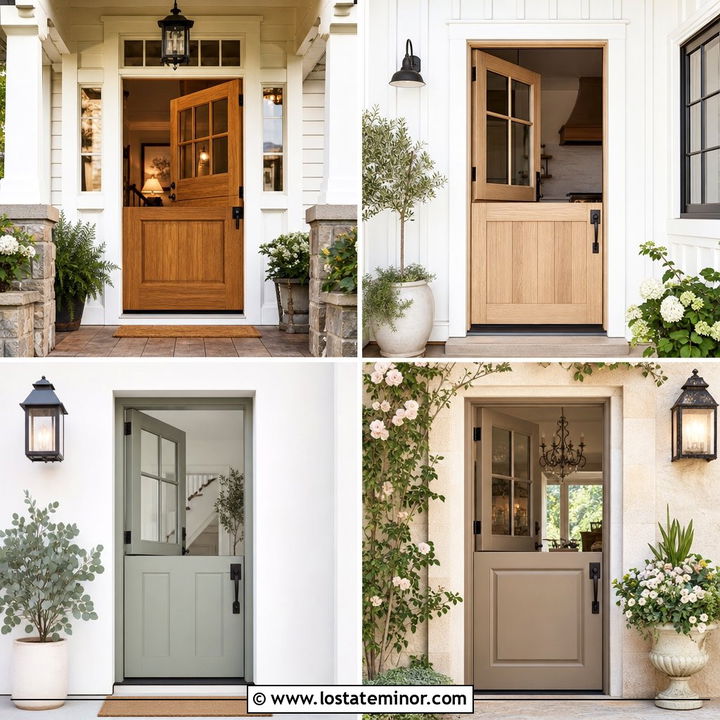
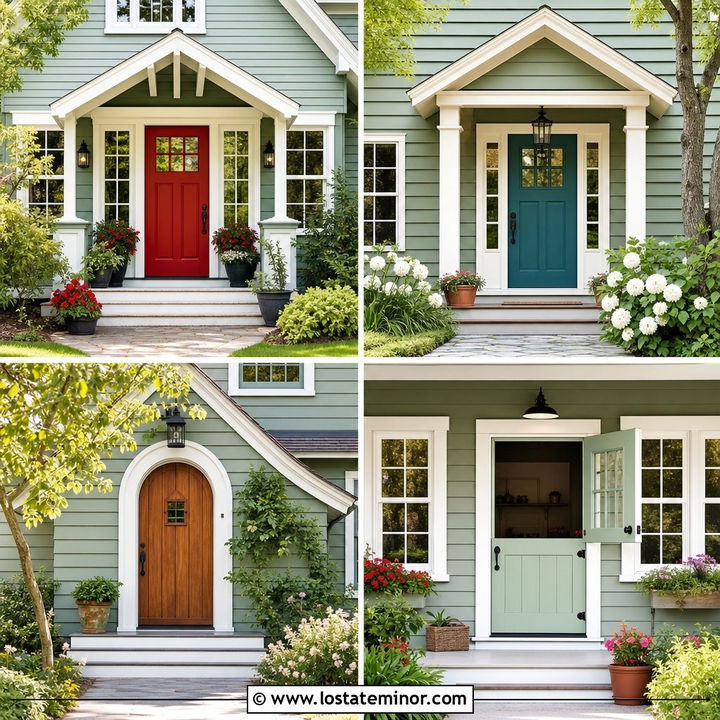
Soft sage green brings a garden-inspired quality to an off-white cottage exterior. The combination feels natural beside flowering plants, mature trees, and an informal front walkway. Use creamy off-white lap siding with matching window trim to keep the small facade open and uncluttered. A muted sage Dutch door can feature divided glass on top and recessed panels below. Antique brass hardware adds warmth without looking overly formal. Consider a weathered gray roof, fieldstone foundation, and pale wood porch ceiling to support the gentle palette. Window boxes filled with white flowers and trailing greenery can repeat the door color through foliage. This complete scheme works particularly well on Cape Cod cottages, compact bungalows, and homes surrounded by established landscaping.
3. Off White Craftsman With Natural Wood Dutch Door
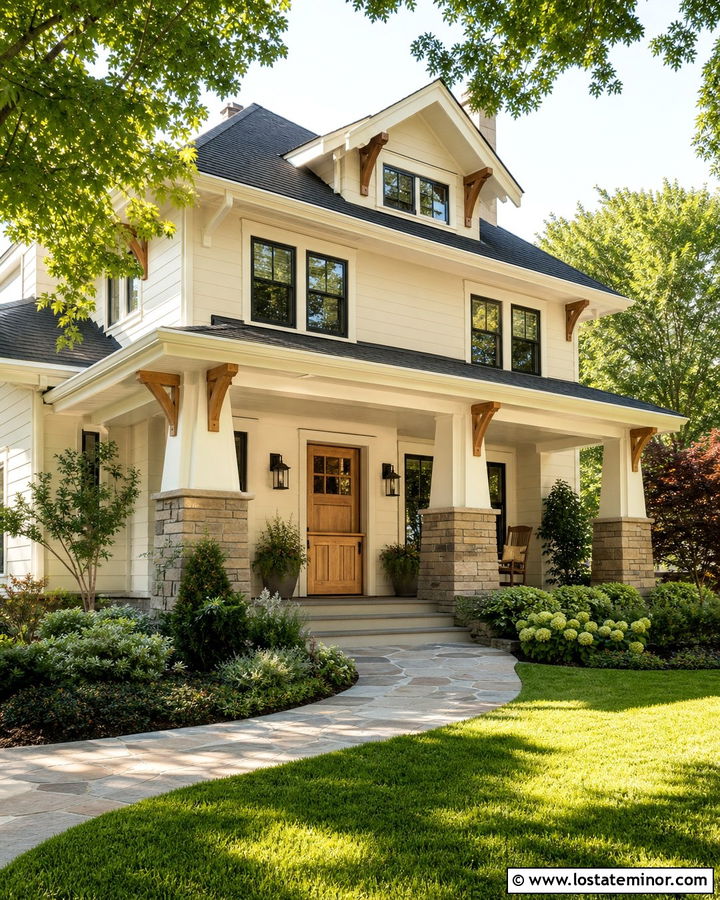
Natural wood makes a Dutch door feel like an architectural feature rather than a decorative afterthought. On an off-white Craftsman house, a medium-toned white oak or cedar door introduces warmth and emphasizes traditional craftsmanship. Pair it with creamy horizontal siding, substantial off-white trim, and tapered porch columns resting on stone bases. Dark bronze hardware, window frames, and exterior lights create definition while complementing the wood grain. A warm charcoal roof grounds the light exterior without creating an extreme contrast. Carry the door material onto porch beams, brackets, or a small bench for visual continuity. Layered shrubs and a curved stone walkway soften the structured facade. Apply a UV-resistant exterior finish to preserve the door’s natural appearance through changing seasons.
4. Off White Colonial With Navy Blue Dutch Door
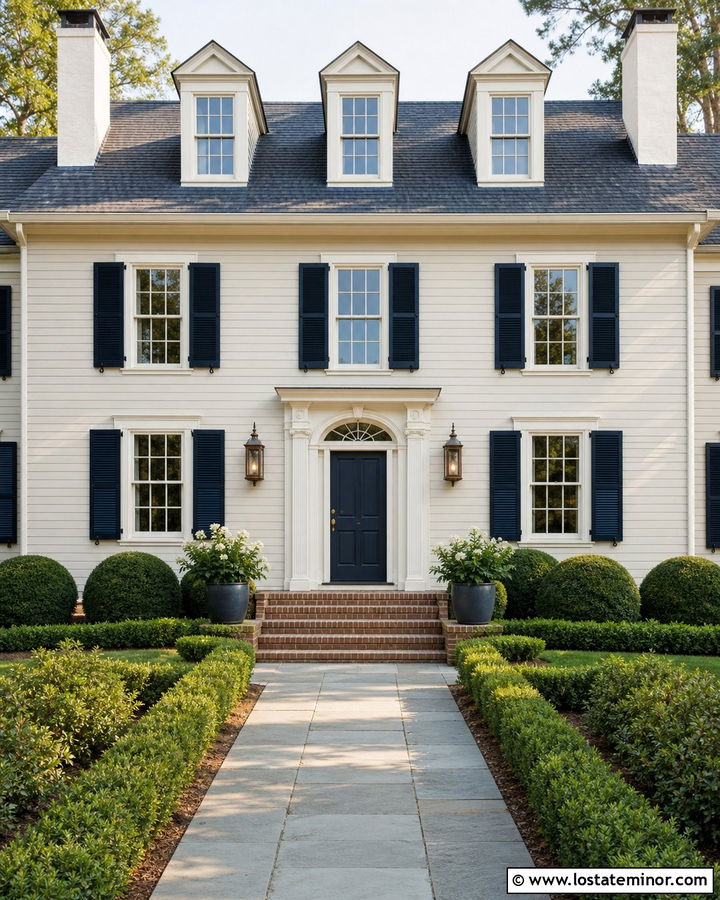
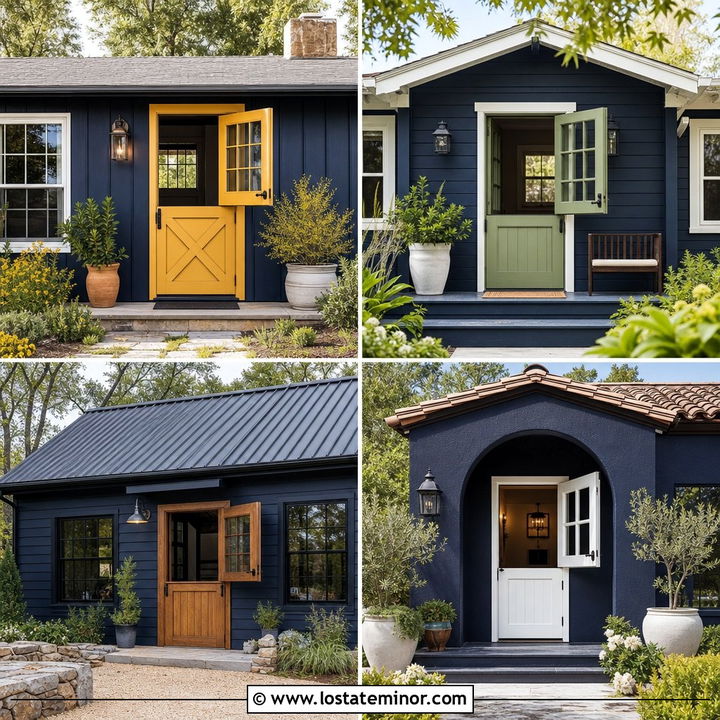
A navy Dutch door adds dignified color to a traditional off-white colonial. Its deep blue tone feels more inviting than black while still supporting the home’s balanced architecture. Use warm ivory clapboard siding, substantial cream trim, and navy shutters arranged consistently across the facade. The door can include six divided glass panes in the upper half and raised panels below. Polished brass hardware gives the entry a classic finish, especially when coordinated with traditional lantern sconces. Choose a dark charcoal roof and red-brown brick steps to introduce familiar colonial materials. Symmetrical boxwoods, a centered walkway, and matching planters reinforce the orderly design. This palette delivers noticeable contrast while preserving the quiet, timeless character expected from a colonial exterior.
5. Off White Ranch House With Blue Dutch Door
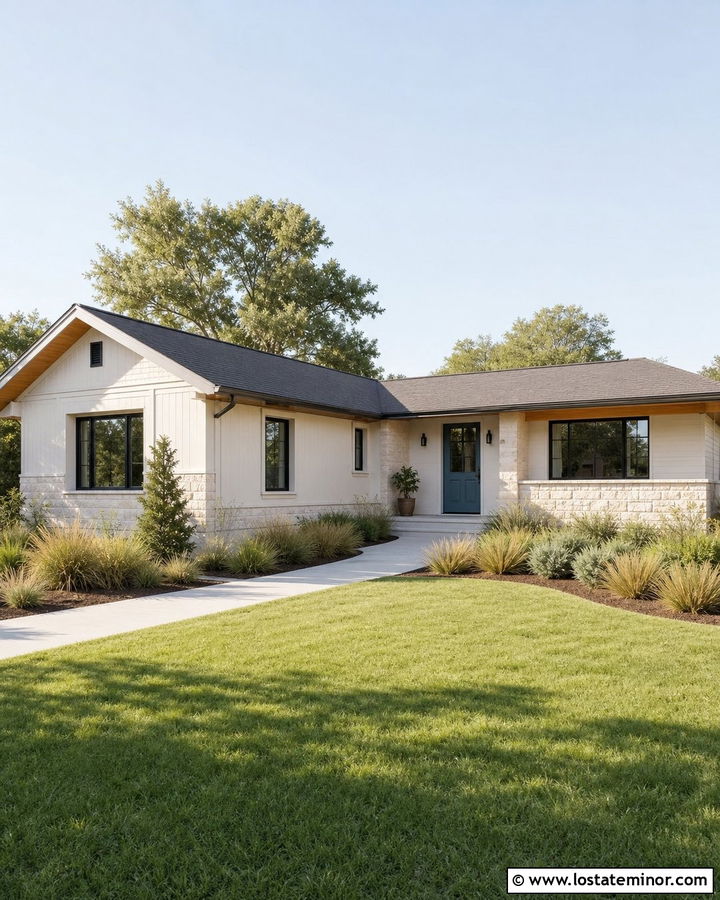
Does a low ranch exterior need more personality? A dusty blue Dutch door can create a clear entry point without making the house look busy. Cover the facade in warm off-white lap siding and use slightly brighter cream around the windows, eaves, and garage. The blue door should be medium in value so it remains visible beneath a deep porch overhang. Repeat its cool undertone through blue-gray planters or subtle porch textiles. A medium gray roof, light limestone accents, and natural wood soffits balance the color combination. Keep the landscaping low and horizontal with spreading shrubs and ornamental grasses. A widened walkway leading directly to the door can further improve the entry’s importance across the long, single-story facade.
6. Off White Bungalow With Yellow Dutch Door
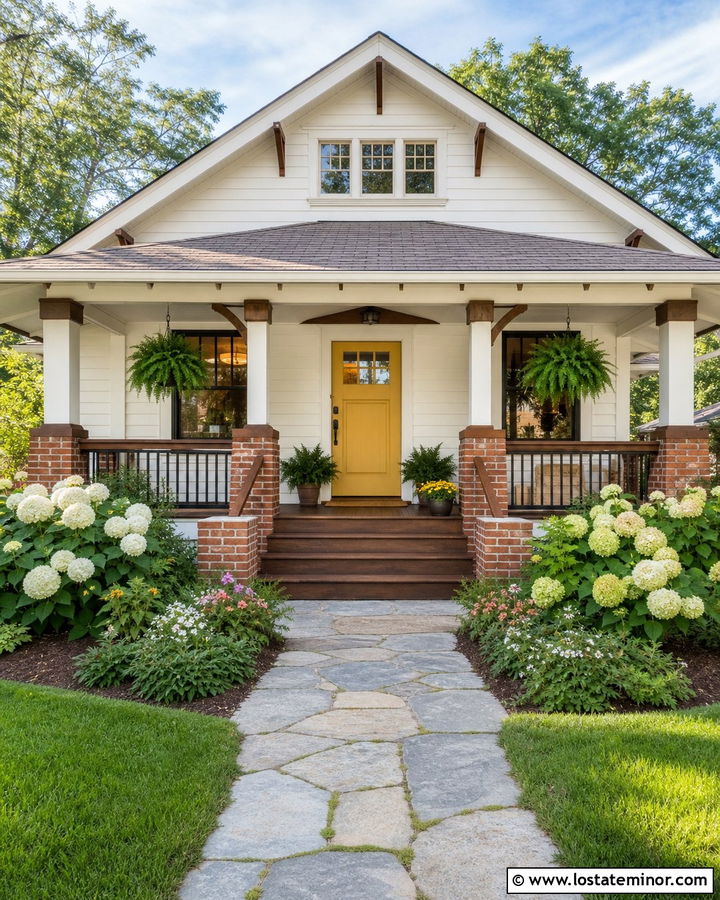
A cheerful yellow Dutch door can brighten an off-white bungalow while respecting its cozy proportions. Select a muted golden yellow rather than a fluorescent shade. The warmth will sit comfortably beside creamy siding, substantial window casings, and exposed wood porch details. Dark bronze hardware and bungalow-style lanterns add contrast without competing with the colorful entrance. Consider a brown-gray roof, brick porch piers, and stained oak steps to reinforce the historic character. The door’s upper half may contain clear divided glass, allowing daylight inside while the lower half stays closed. Ferns, hydrangeas, and informal flower beds create a fitting garden frame. This complete look feels upbeat and welcoming, yet the restrained supporting colors prevent the exterior from becoming overly playful.
7. Off White Modern Farmhouse With Gray Dutch Door
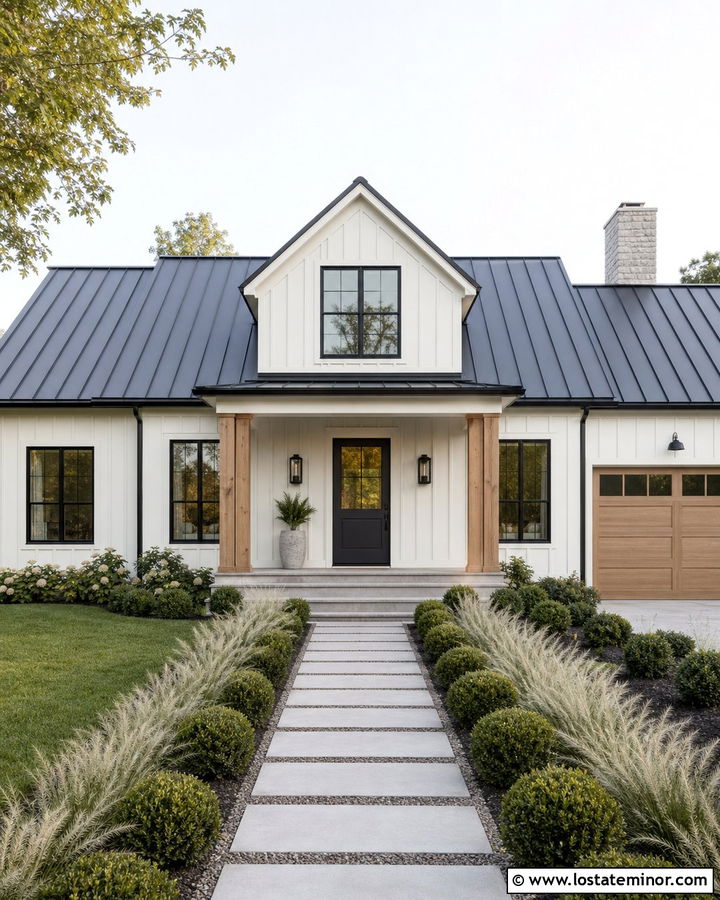
For a quieter modern farmhouse exterior, pair warm off-white board-and-batten siding with a medium charcoal-gray Dutch door. Gray delivers noticeable definition but looks softer than solid black. Use the same charcoal tone on narrow window frames, gutters, and simple metal porch lights. Natural cedar columns and a light oak garage door can warm the otherwise neutral palette. A dark gray standing-seam roof strengthens the clean roofline and complements the door. Keep decorative details minimal so the split-door construction remains easy to see. Large concrete pavers, rounded boxwoods, and feathery grasses create an orderly but comfortable approach. This scheme works best when the off-white paint has a subtle beige undertone that prevents the gray and wood elements from feeling disconnected.
8. Off White Coastal House With Aqua Dutch Door
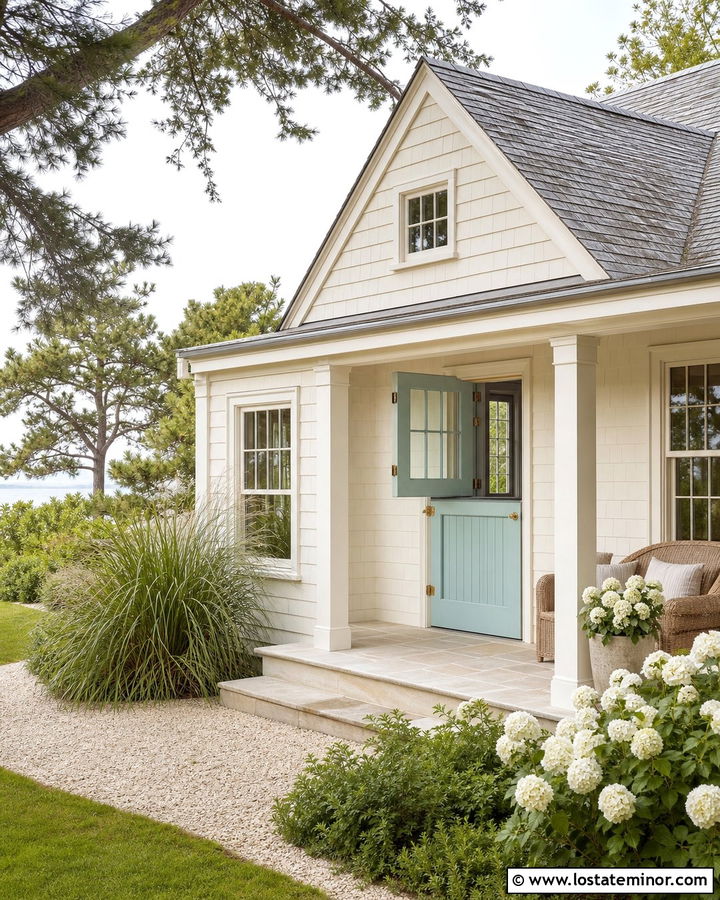
An aqua Dutch door introduces coastal color without requiring blue siding across the entire house. Start with a sandy off-white exterior that feels warm in bright sunlight. Pair it with clean cream trim, a soft blue-green door, and brushed nickel or aged brass hardware. Pale gray roof shingles and light stone porch flooring reinforce the breezy palette. If the house has shutters, keep them off-white or choose a faded gray-blue that sits quietly behind the brighter entrance. Natural wicker seating and weathered teak details can add texture around the porch. Complete the curb appeal with dune grasses, white hydrangeas, and a shell-toned gravel path. The result feels coastal and relaxed without relying on obvious nautical decorations or overly saturated turquoise.
9. Off White Cape Cod With Red Dutch Door
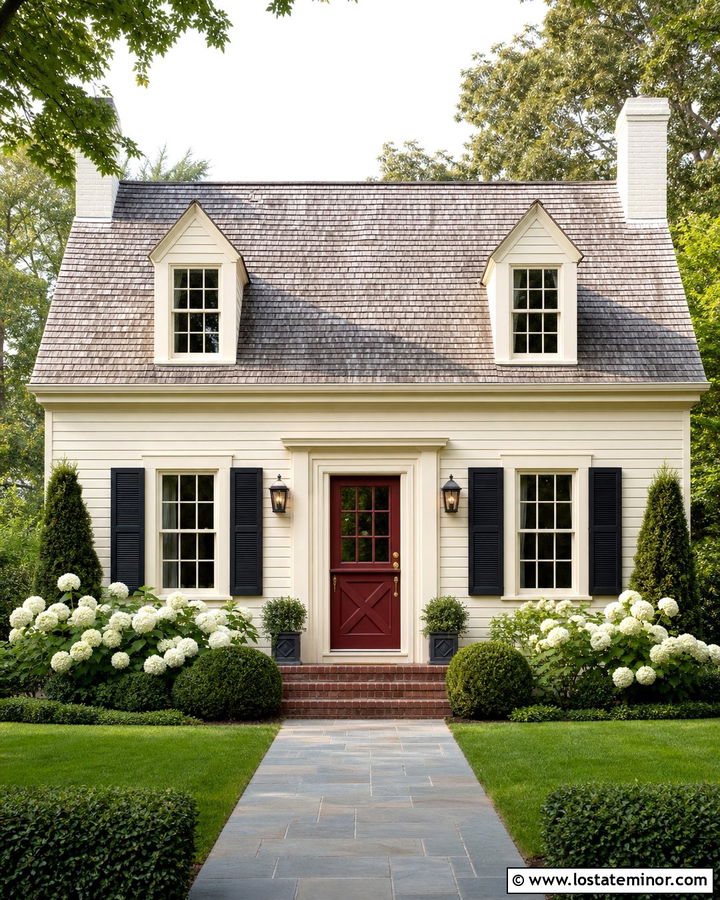
A deep red Dutch door gives an off-white Cape Cod exterior traditional New England character. Choose a subdued barn red or cranberry shade that looks rich rather than overly bright. Creamy clapboard siding and matching trim provide a warm background, while black shutters help frame the windows. A weathered gray shingle roof keeps the palette grounded and suits the compact roofline. Add aged brass door hardware, black lantern sconces, and red brick steps to connect the entrance with familiar regional materials. White hydrangeas and clipped evergreen shrubs can soften the contrast along the foundation. Because red attracts attention quickly, avoid repeating it on too many features. Let the Dutch door serve as the single colorful centerpiece of the complete facade.
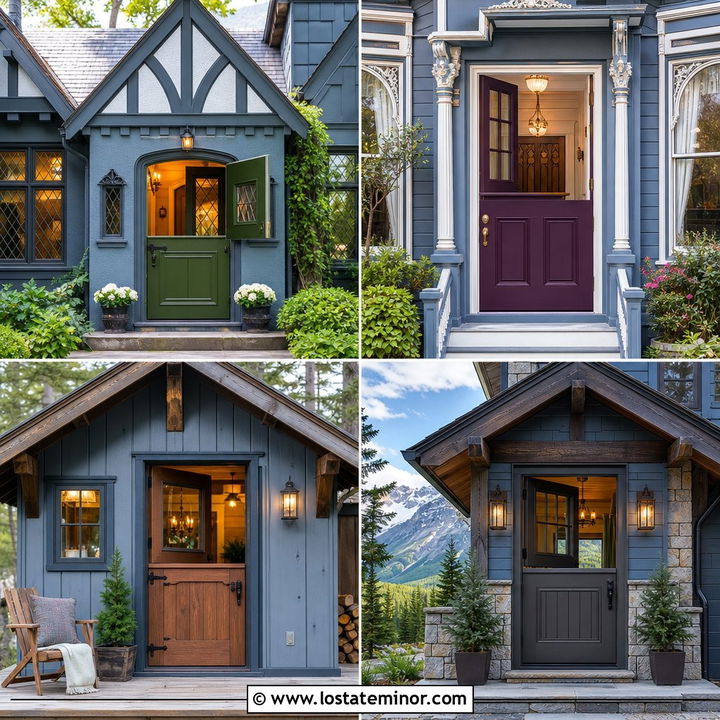
10. Off White Tudor With Dark Green Dutch Door
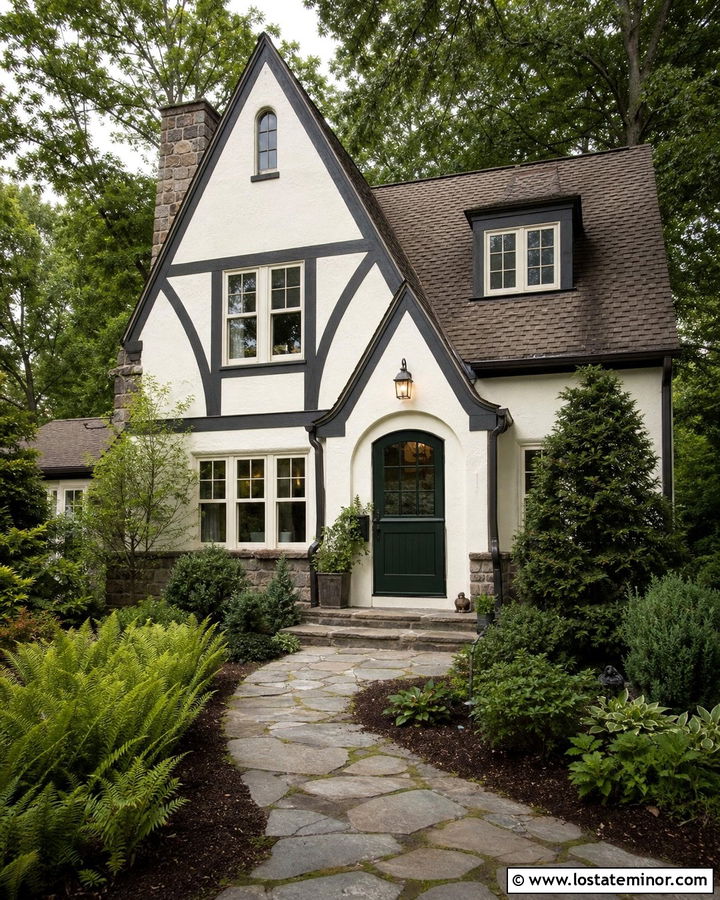
Dark green can modernize an off-white Tudor while preserving its storybook appeal. Apply warm ivory paint to the stucco and use deep brown or charcoal on the decorative half-timbering. A forest green Dutch door adds another nature-based tone that works beautifully with stone, brick, and mature landscaping. Choose blackened bronze hinges and a traditional thumb latch to emphasize the door’s craftsmanship. A steep brown-gray roof and irregular stone entry path strengthen the home’s established character. Keep the window trim off-white so the facade does not become too dark. Layer ferns, evergreen shrubs, and shade-tolerant groundcover around the walkway. This earthy scheme looks especially convincing when every finish has a slightly muted quality rather than a clean, high-contrast appearance.
11. Off White Mediterranean House With Wood Dutch Door
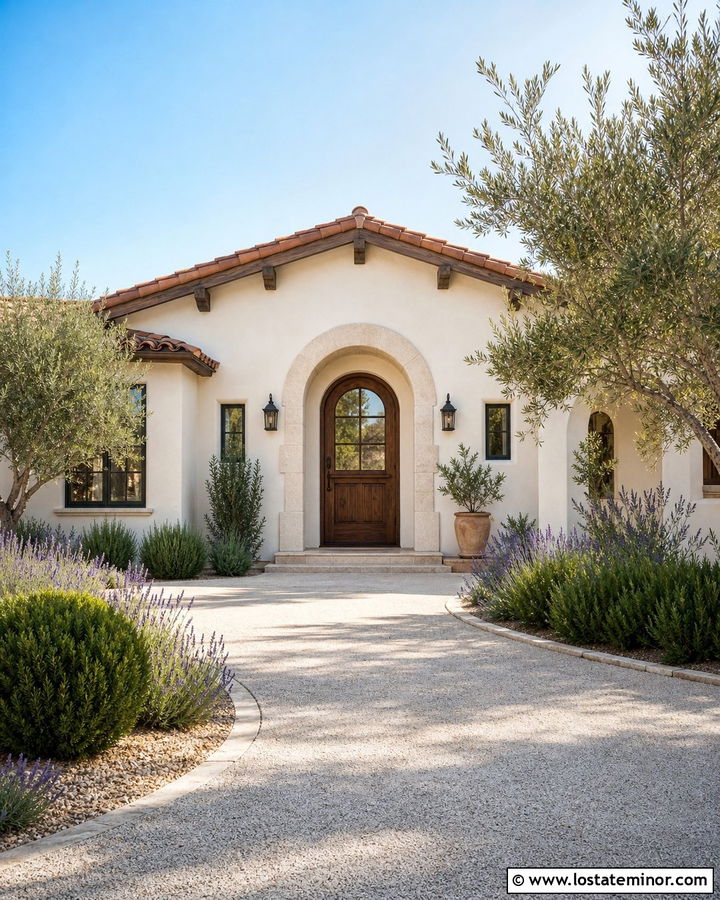
A paneled wood Dutch door adds warmth and function to an off-white Mediterranean exterior. Use creamy stucco with subtle texture, then frame the entry with warm limestone or pale tan masonry. A walnut-stained door with a small arched window can complement the home’s curves while keeping the split construction practical. Choose oil-rubbed bronze hardware, dark metal lanterns, and a terracotta tile roof for a cohesive material palette. Wood garage doors or exposed rafters can repeat the entrance color elsewhere on the facade. Surround the house with lavender, olive trees, clipped rosemary, and light gravel beds. The warm off-white walls reflect sunlight beautifully, while the natural door prevents the expansive stucco surfaces from looking flat or unfinished.
12. Off White Brick House With Black Dutch Door
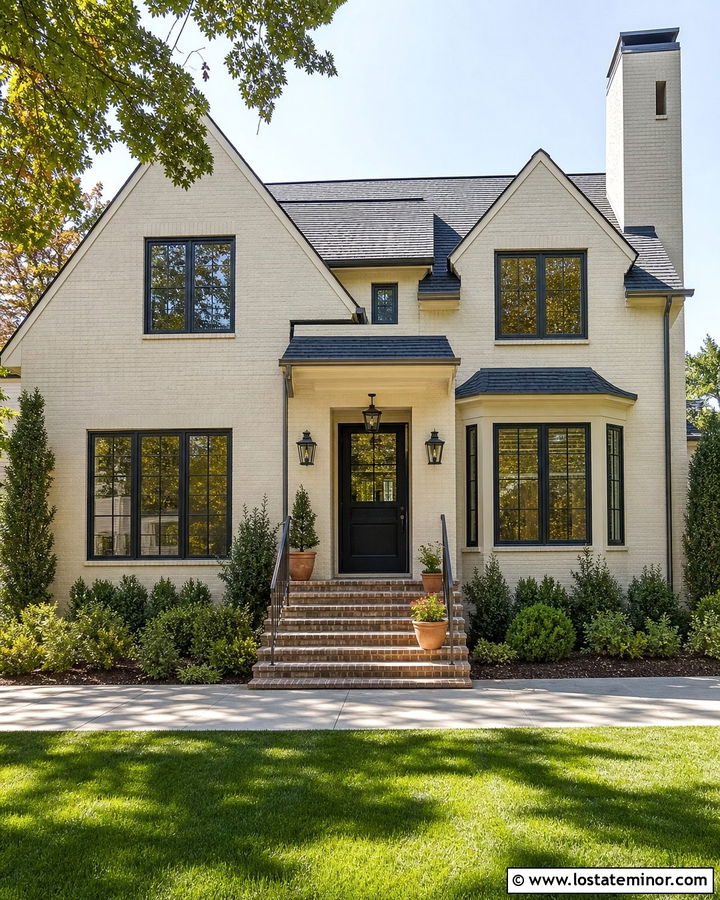
Painting dated brick a warm off-white can unify the facade while allowing its masonry texture to remain visible. A black Dutch door then provides the crisp contrast needed to define the entrance. Repeat black on the window frames, porch lights, and thin metal railing, but keep the soffits and fascia off-white for balance. Red or brown brick steps may remain unpainted to introduce warmth and connect the updated exterior to its original materials. A charcoal roof and dark gutters make the color scheme feel deliberate. Add large terracotta planters and layered green shrubs around the entry. Before painting brick, confirm that the chosen coating and wall condition support proper moisture movement. The finished look should appear refreshed without hiding the home’s architectural history.
13. Off White House With Light Blue Dutch Door
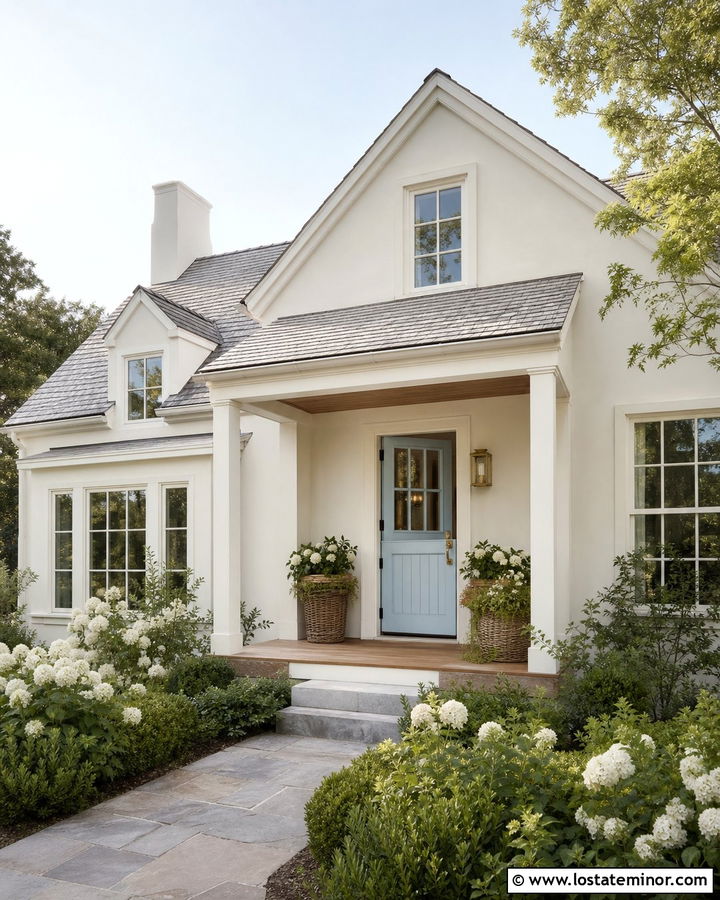
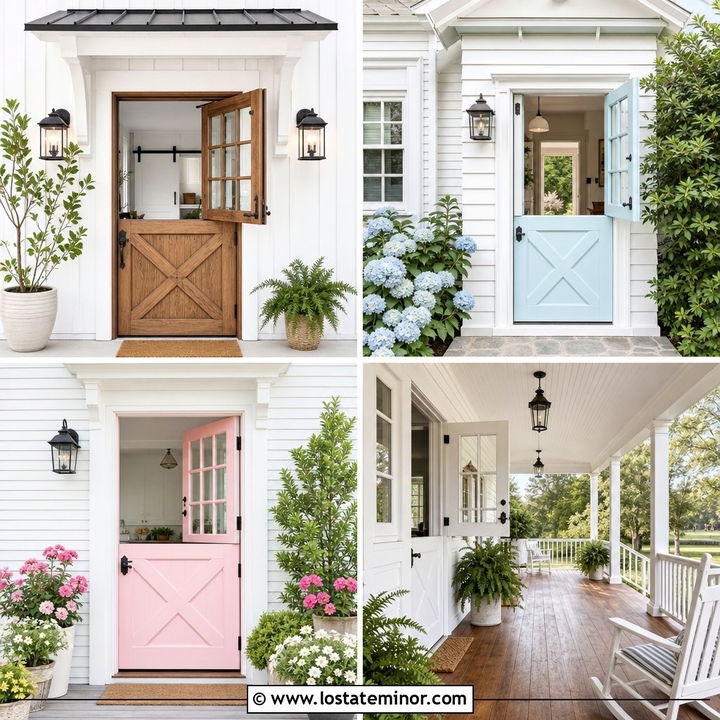
Light blue creates a gentle focal point on an off-white house, particularly when the facade receives strong natural sunlight. Choose a slightly grayed powder blue so the door does not appear juvenile or overly sweet. Warm off-white siding, clean cream trim, and pale gray roof shingles create a calm background. Brushed brass hardware provides a small amount of warmth and helps the entrance feel polished. Add natural cedar porch flooring or woven planters to prevent the pastel palette from looking washed out. White flowering shrubs and soft green foliage can frame the walkway without adding competing colors. This complete scheme suits cottages, transitional homes, and small suburban houses where a dark door might look too heavy against the modest facade.
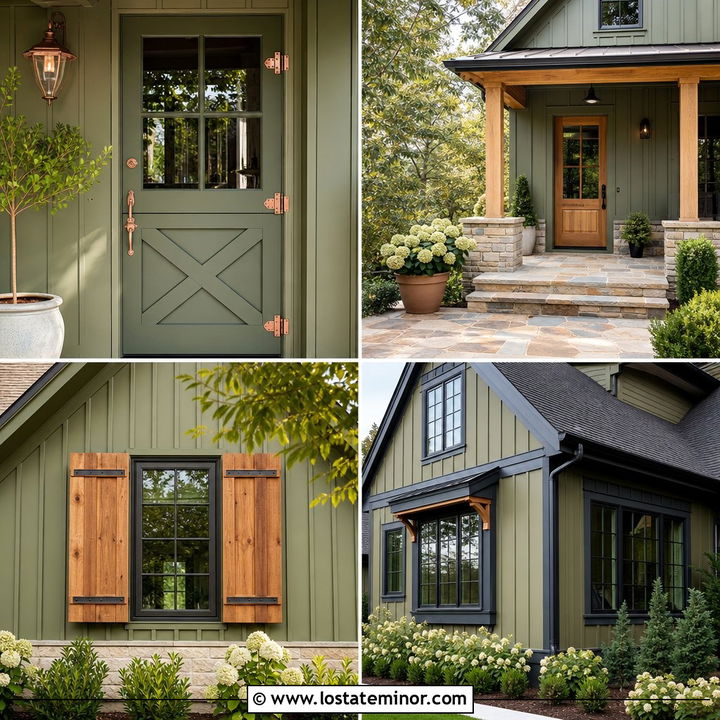
14. Off White House With Olive Green Dutch Door
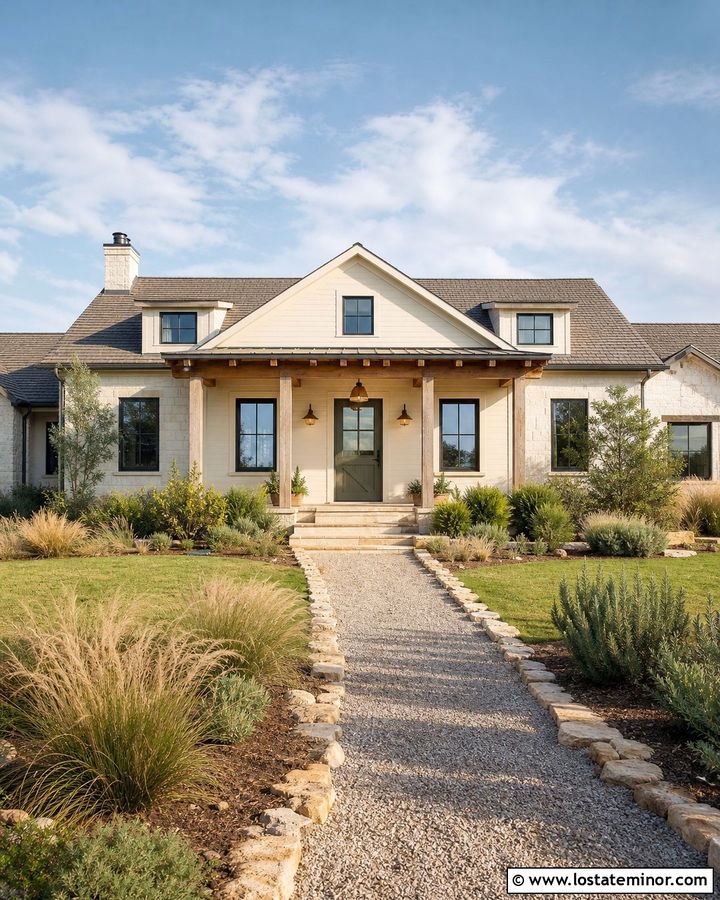
Olive green has enough depth to stand out against off-white siding while remaining connected to the surrounding landscape. Use a warm, creamy body color with beige undertones, then paint the Dutch door a muted olive that feels earthy rather than military. Bronze hardware, copper porch lights, and a natural cedar ceiling reinforce the warmth of the palette. A taupe-gray roof and irregular limestone foundation can complete the grounded appearance. Repeat the door color subtly through planters or porch furniture instead of painting every accent olive. Layer ornamental grasses, rosemary, and evergreen shrubs along a gravel-edged walkway. This combination performs especially well on rustic ranch houses, contemporary cottages, and transitional homes with simple architecture and abundant natural materials.
15. Off White House With Charcoal Dutch Door
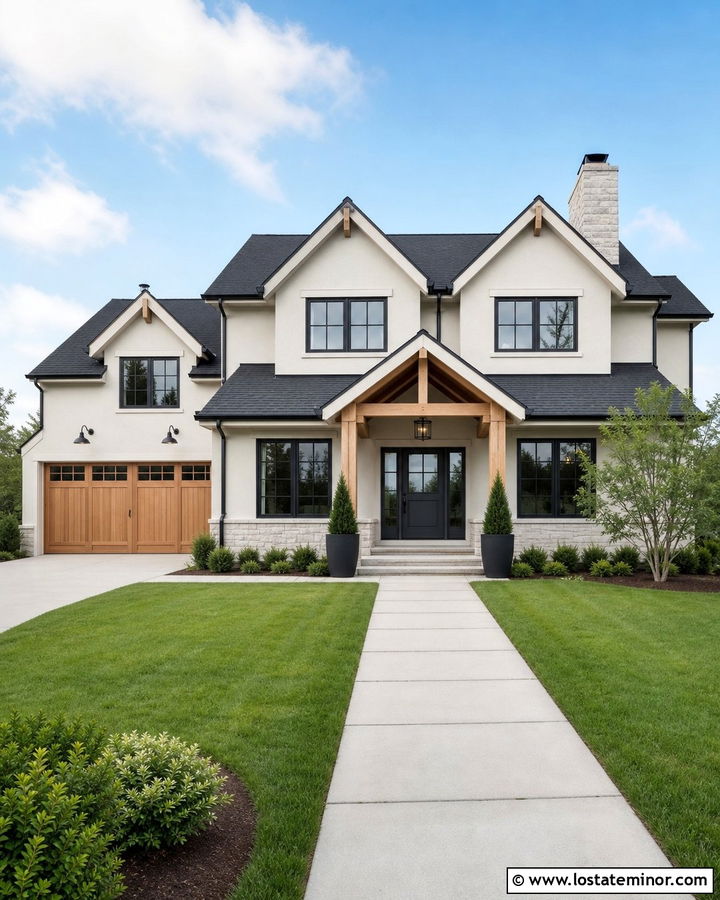
A charcoal Dutch door is an adaptable choice for homeowners who want contrast without the intensity of true black. Pair it with neutral off-white siding that avoids strong yellow undertones. The result should feel clean but not cold. Use charcoal again on the roof, window frames, and metal porch railing to spread the dark color evenly across the exterior. Light oak beams or a cedar garage door can add warmth and prevent the grayscale scheme from feeling flat. Pale limestone around the foundation introduces texture while maintaining the neutral direction. Finish the entrance with oversized black planters, simple evergreens, and a wide concrete path. The scheme works across modern, transitional, and farmhouse architecture because every element remains understated and easy to coordinate.
16. Off White House With Terracotta Dutch Door
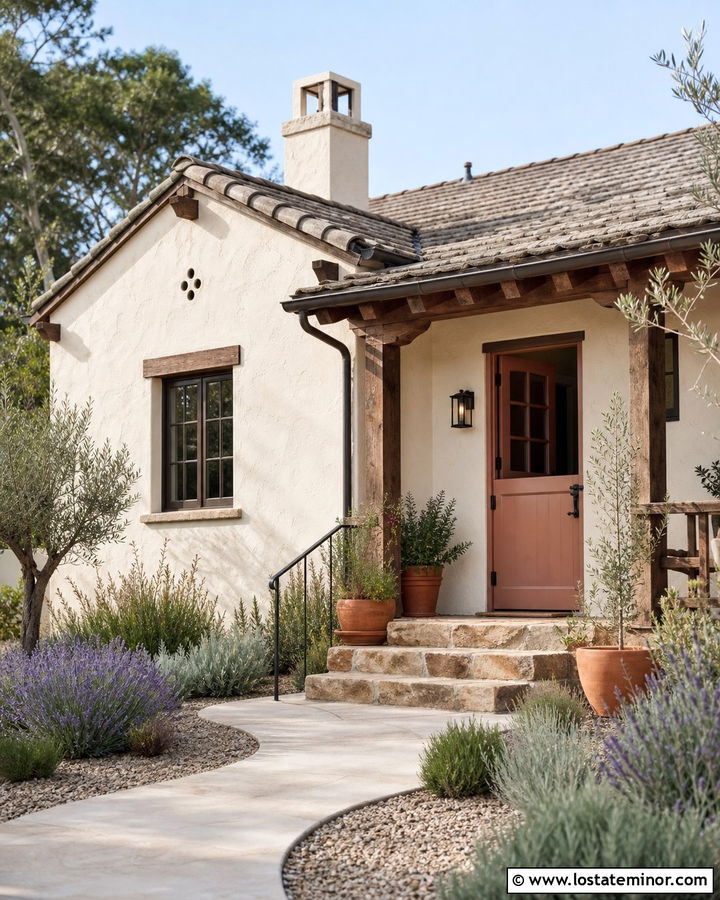
Terracotta brings sun-warmed color to an off-white exterior and looks especially attractive beside natural masonry. Select a muted clay shade with brown undertones instead of a vivid orange. Creamy stucco or lap siding provides a soft background, while dark bronze hardware gives the Dutch door a finished appearance. Add a warm gray roof, light sandstone steps, and stained wood porch beams to support the earthy entrance. Terracotta planters can repeat the color in smaller doses without making the scheme look overly matched. Olive trees, lavender, and silvery foliage complete the landscape palette. This welcoming combination fits Spanish cottages, Southwestern ranch houses, and relaxed California homes. It can also warm a plain suburban facade that lacks strong architectural detail.
17. Off White House With Double Dutch Doors
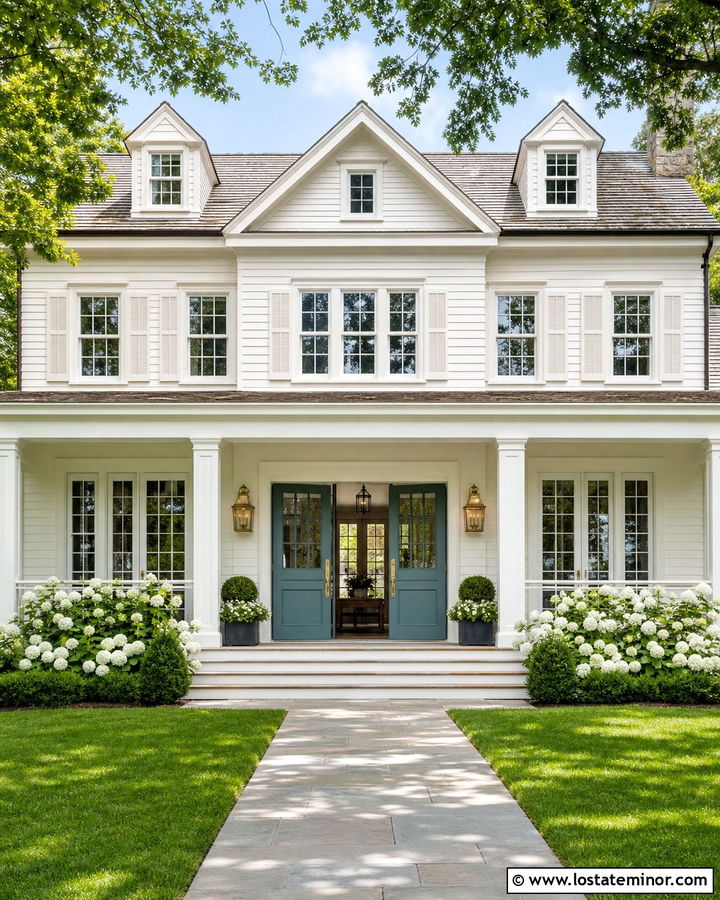
Double Dutch doors create a generous entrance and make an off-white home feel distinctive from the street. Paint both doors deep blue-green for balanced color across the wider opening. Warm off-white siding and substantial cream casing keep the entrance bright, while aged brass hardware adds a refined traditional touch. Consider divided glass in each upper half to bring daylight into the foyer. A covered porch with natural wood decking provides enough visual weight beneath the broad doorway. Repeat the door color on small shutters or a porch bench, but avoid using it across every feature. Symmetrical planters, matching lanterns, and a centered stone walkway reinforce the formal arrangement. This treatment works particularly well on coastal, colonial, and spacious farmhouse facades.
18. Off White House With Arched Dutch Door
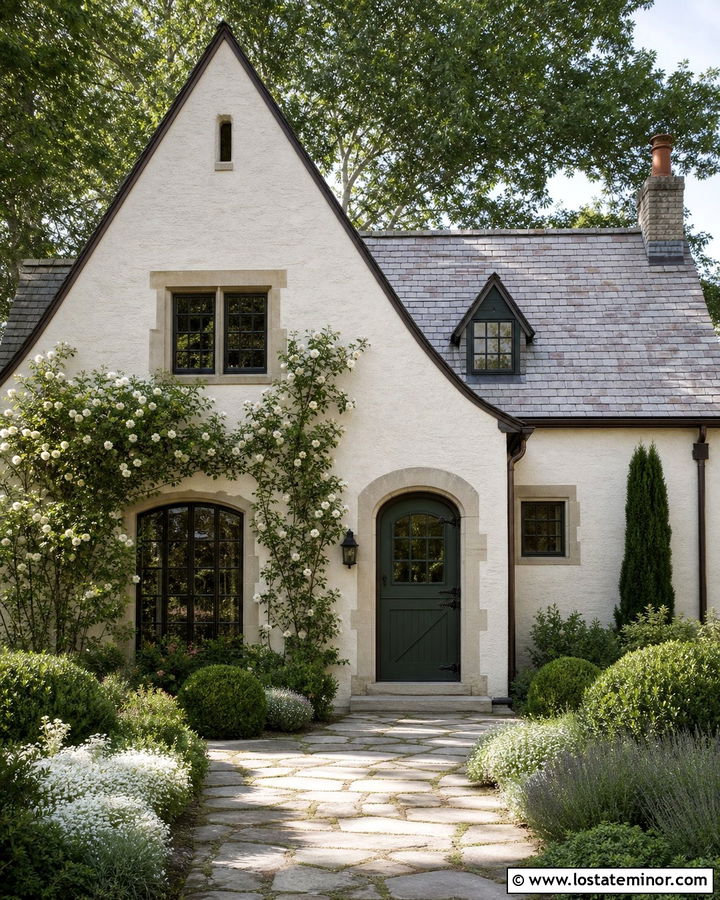
An arched Dutch door turns the entrance into a graceful architectural focal point. The surrounding off-white facade should remain simple so the curved shape stays visually prominent. Paint the door a deep moss green and frame it with creamy trim or pale limestone. Blackened bronze strap hinges can emphasize the handcrafted form, while a small divided window in the upper half allows light through the entry. A slate roof and irregular stone walkway support the old-world character without making the home appear themed. Plant climbing roses or structured evergreens near the doorway, leaving enough open space to display the arch. This complete scheme complements English cottages, Tudor-inspired homes, and storybook bungalows with curved rooflines or masonry details.
19. Off White House With Glass Dutch Door
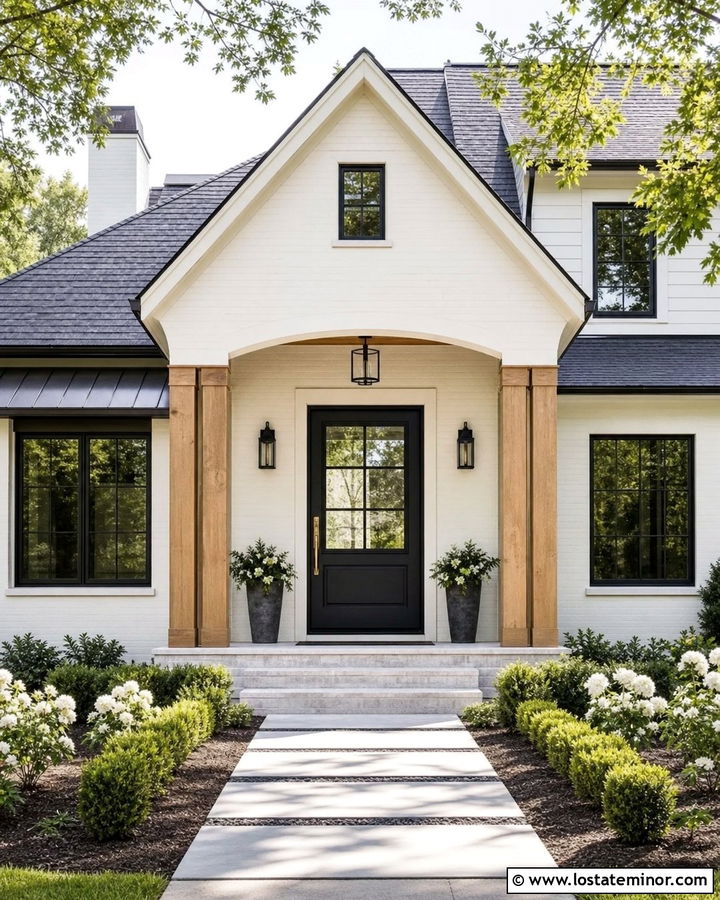
A glass-paneled Dutch door is a smart choice when the entrance needs more natural light. On an off-white transitional house, paint the door soft black and use clear divided glass across most of the upper half. Warm off-white lap siding softens the dark entrance, while matching cream trim keeps the facade consistent. Black window frames, simple sconces, and a charcoal roof repeat the door color at different heights. Add pale stone steps and natural oak porch details for warmth. Privacy can be improved with textured glass or a simple interior shade without changing the exterior appearance. Low boxwoods, white flowers, and a straight paver walkway complete the tailored curb appeal while keeping the transparent upper door visible from the street.
20. Off White House With Pink Dutch Door
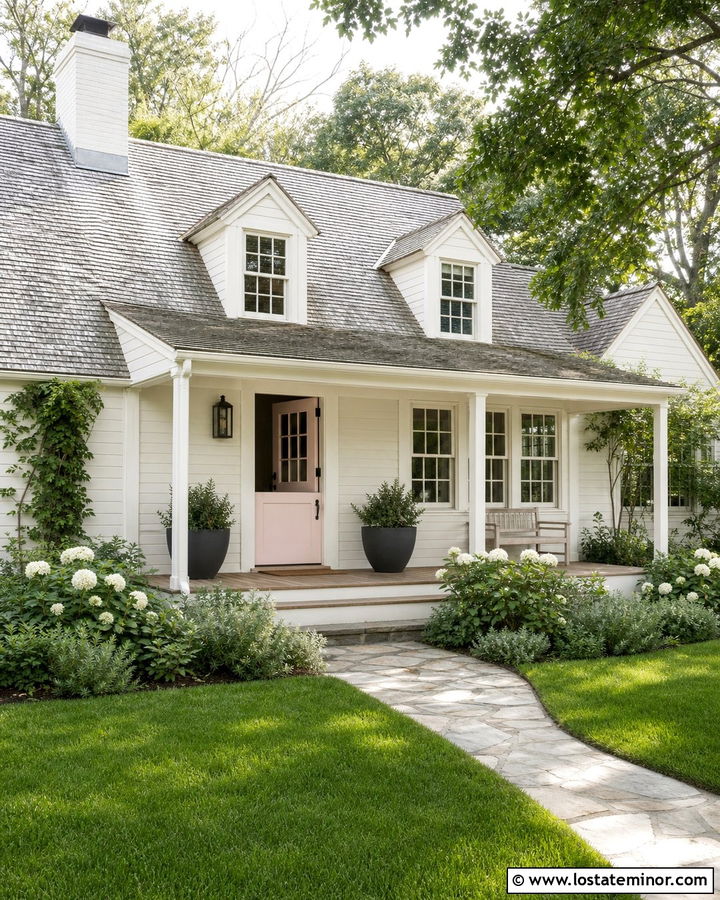
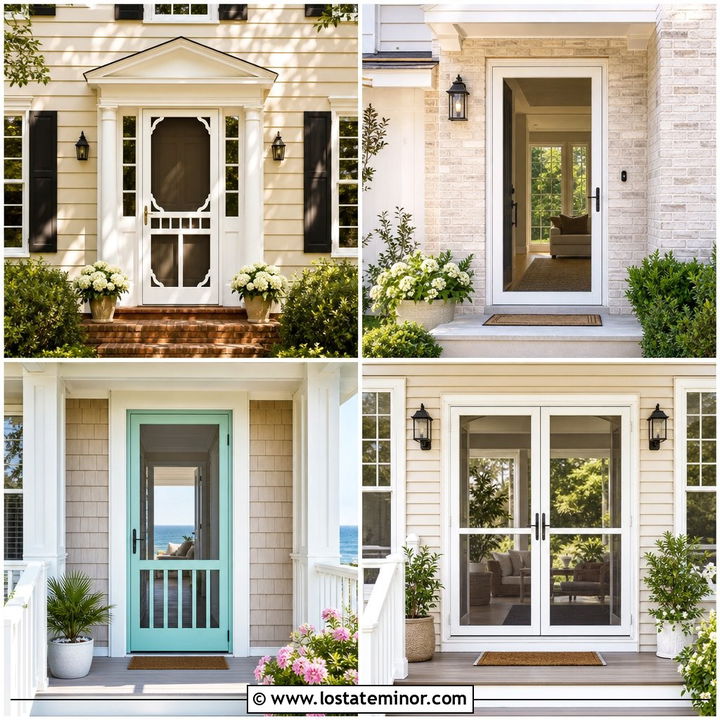
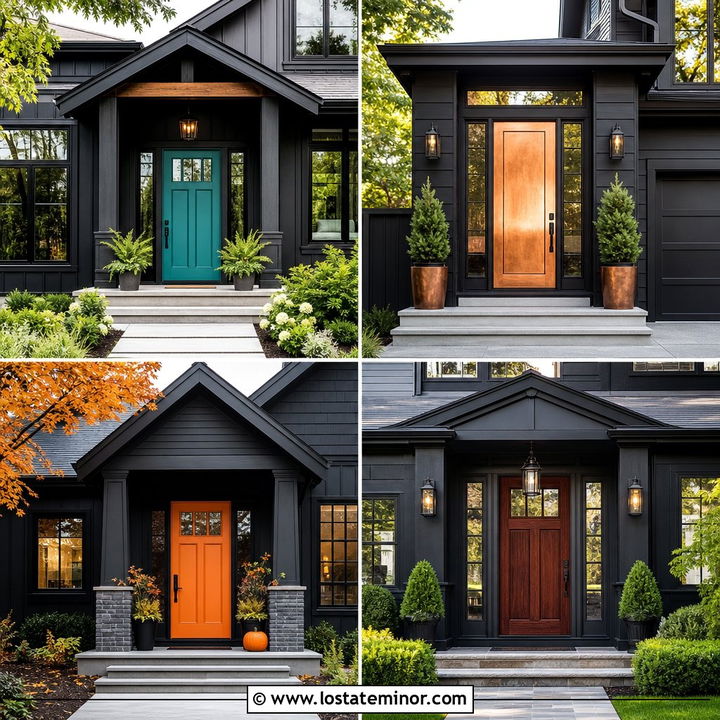
A muted pink Dutch door can feel sophisticated when it is paired with the right off-white and supporting materials. Look for a dusty blush with beige or brown undertones rather than a bright candy pink. Warm ivory siding, cream trim, and a weathered gray roof create a soft foundation for the color. Antique brass hardware and cedar porch flooring add warmth while preventing the entry from feeling overly delicate. Use charcoal planters or dark window frames to introduce a small amount of grounding contrast. White roses, sage foliage, and a curved stone walkway complete the inviting exterior. This scheme suits romantic cottages, compact Cape Cod homes, and updated bungalows where a distinctive entrance can transform an otherwise simple street-facing facade.
21. Off White House With Brown Dutch Door
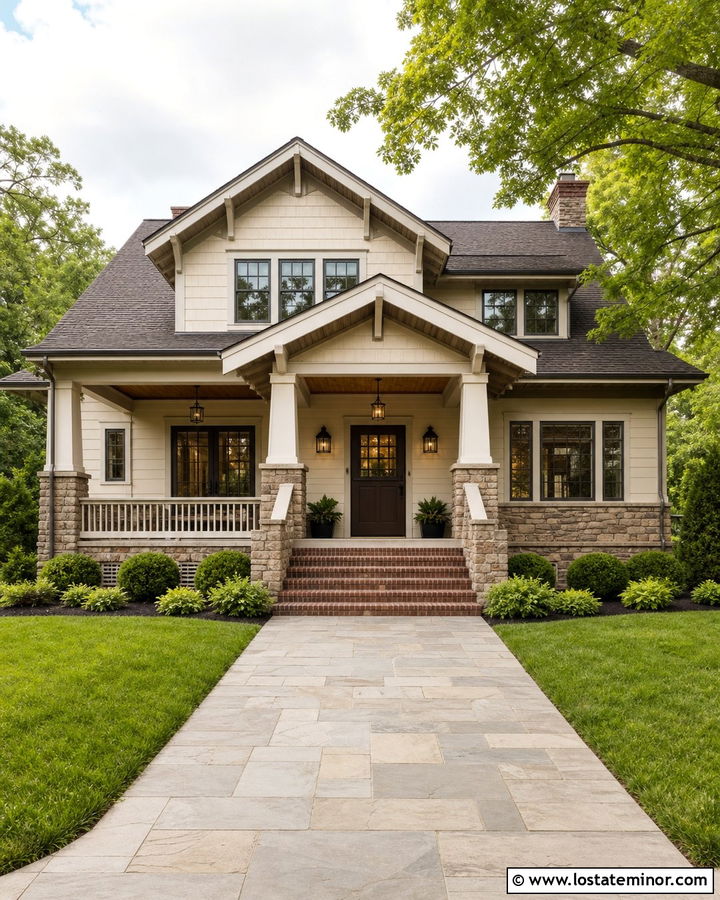
A rich brown Dutch door gives an off-white exterior a grounded, traditional appearance. Choose a dark chocolate paint color when natural wood is impractical or requires too much maintenance. Creamy lap siding, warm white trim, and brown-black window frames will create subtle layers rather than harsh contrast. Coordinate the entrance with bronze hardware, a walnut-toned porch ceiling, and a roof that blends charcoal with brown. Red-brown brick steps or a fieldstone foundation can further connect the door to the house. Keep the landscaping full and green, using rounded shrubs to soften the dark entry. This complete palette works well on ranch houses, Craftsman homes, and traditional suburban exteriors that already include warm roofing or masonry materials.
22. Off White House With Teal Dutch Door
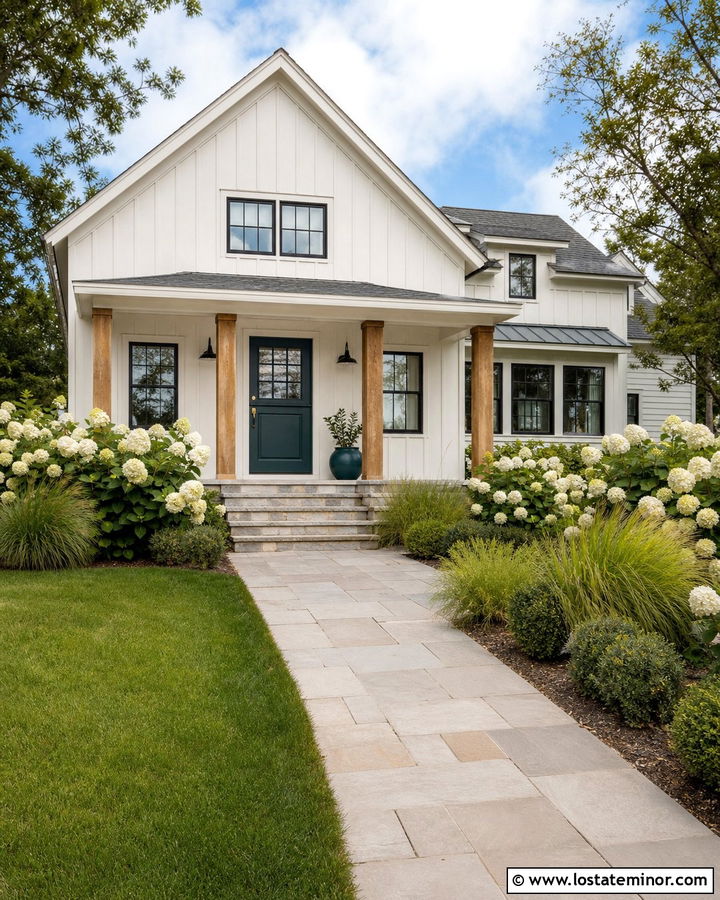
A deep teal Dutch door brings noticeable color to an off-white house while remaining more restrained than bright turquoise. Select a blue-green shade with a muted gray undertone. Pair it with warm off-white siding, creamy trim, and a medium charcoal roof for a balanced foundation. Satin brass hardware can highlight the door’s richness, while simple black sconces prevent the entrance from appearing overly decorative. Natural cedar porch posts and light stone steps introduce organic texture. Repeat teal only once through a planter or small bench so the door remains special. Loose grasses, white hydrangeas, and a broad paver walkway complete the approachable setting. This combination fits coastal farmhouses, transitional cottages, and renovated split-level houses needing a clearer front entrance.
23. Off White House With Cedar Dutch Door
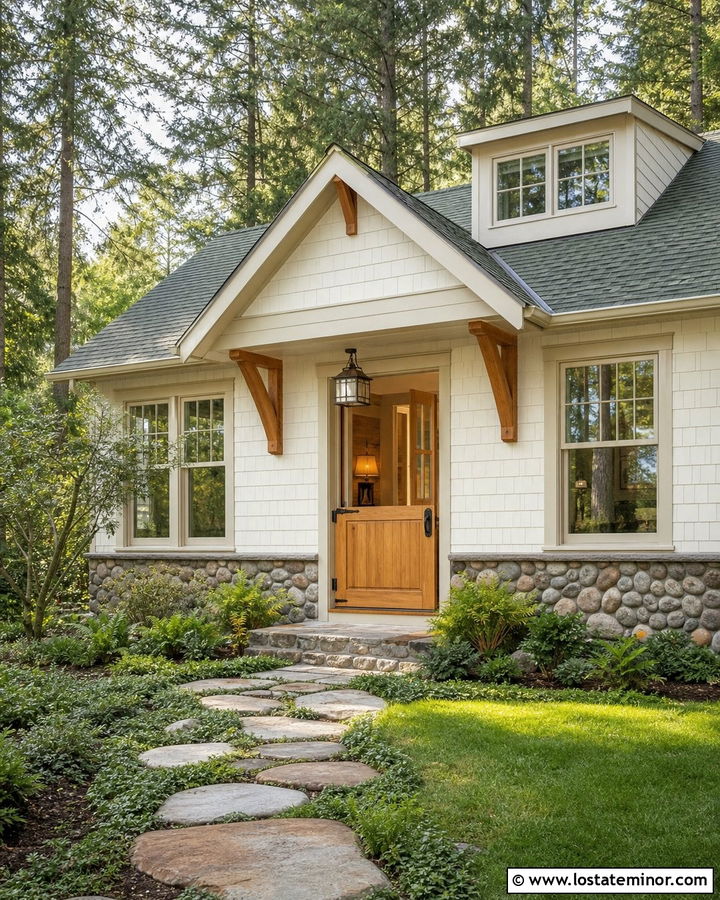
Fresh cedar creates an inviting contrast against an off-white exterior and develops additional character as it weathers. Use a clear protective finish if you want to preserve its honey color, or allow it to soften naturally toward silvery brown. Pair the cedar Dutch door with warm off-white shingles, cream trim, and dark bronze windows. Carry cedar onto porch brackets, garage details, or a horizontal privacy screen to make the material feel intentional. A gray-green roof and river-rock foundation complement the natural palette. Keep the walkway informal with large stepping stones surrounded by low groundcover. This complete exterior works well on woodland cottages, mountain homes, and contemporary bungalows, where natural texture can connect the architecture to trees and rugged surroundings.
24. Off White House With Burgundy Dutch Door
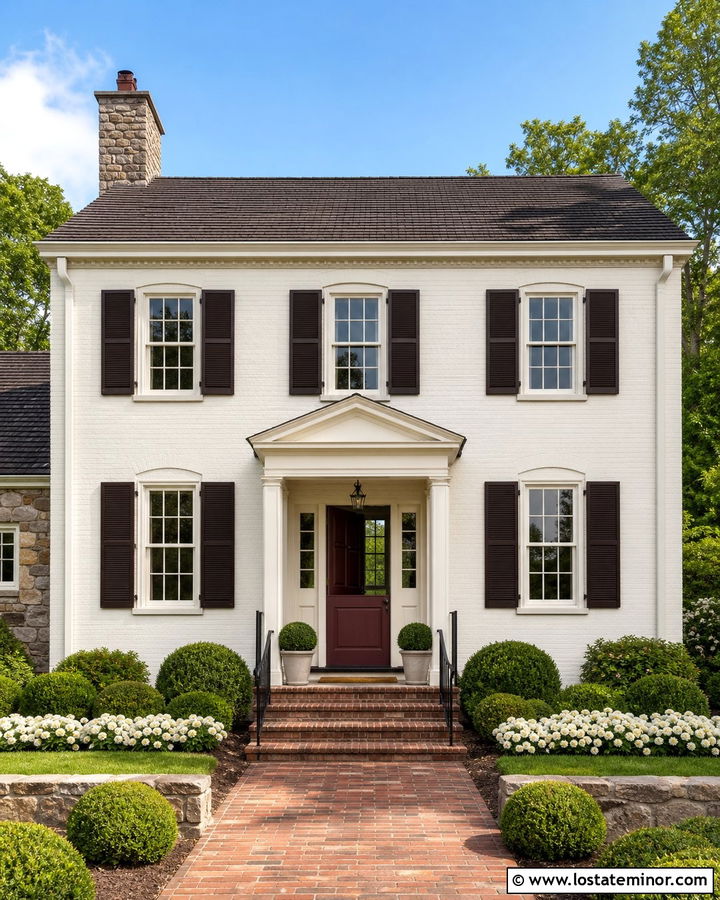
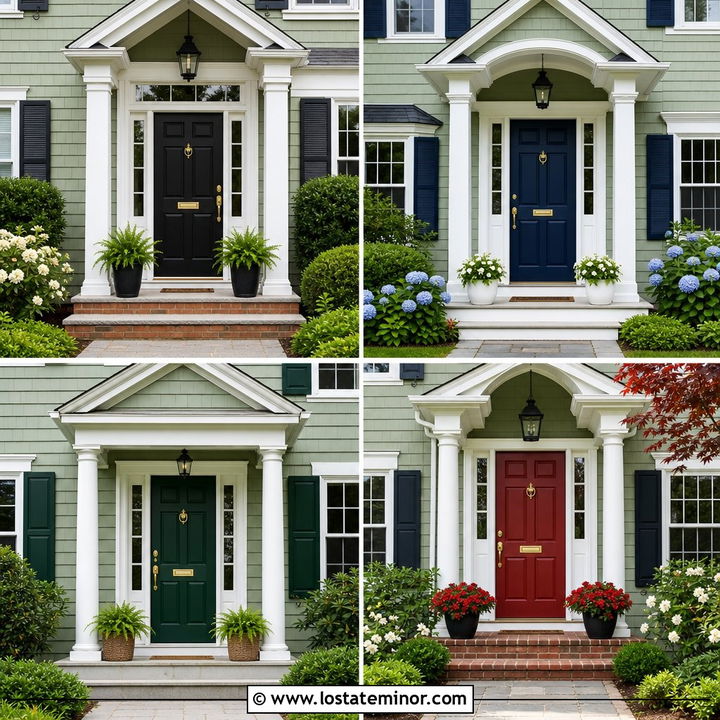
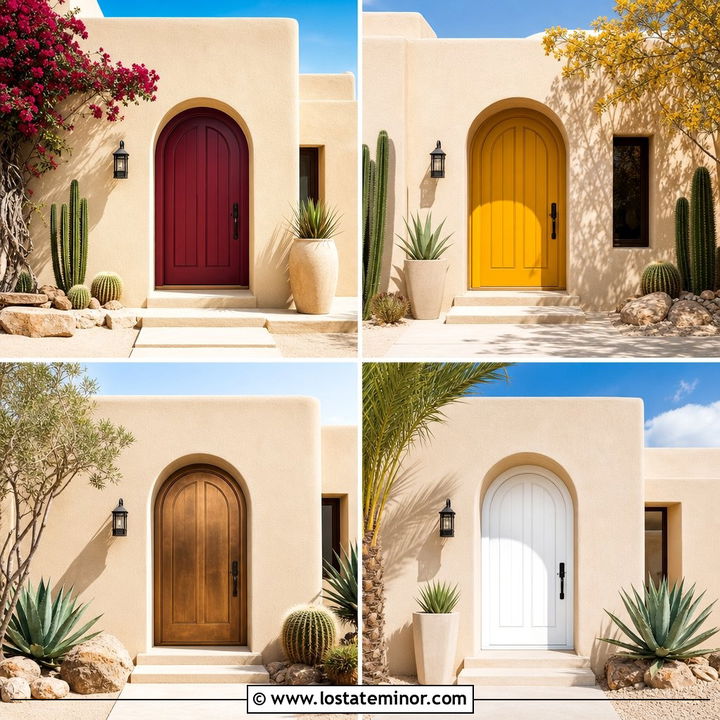
Burgundy provides mature, traditional color without the brightness of classic red. Against a warm off-white exterior, the Dutch door becomes rich and noticeable while still looking established. Use cream trim, dark brown shutters, and a charcoal-brown roof to support the deep red undertones. Antique brass hardware and warm brick steps create an especially cohesive entry. If the house includes stone, choose a blend containing taupe, brown, and muted rust rather than cool blue-gray masonry. Structured boxwoods, seasonal white flowers, and a brick walkway can reinforce the traditional mood. This scheme suits colonial, Georgian, and Cape Cod houses. Keeping the burgundy limited to the door allows it to remain an elegant focal point rather than dominating the entire exterior.
25. Off White House With Greige Dutch Door
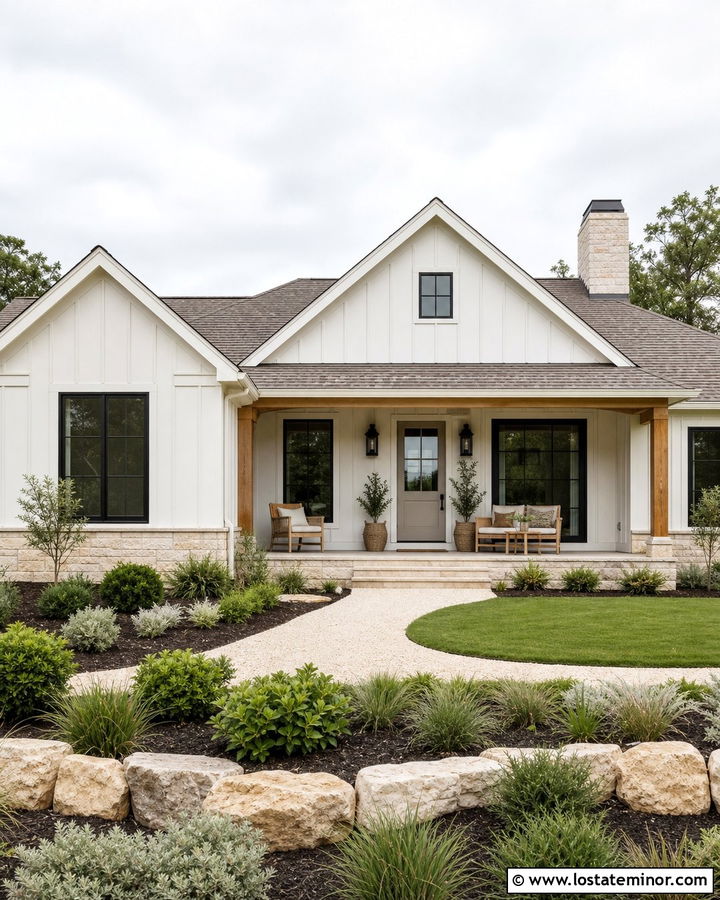
A greige Dutch door offers quiet definition for an off-white house when bold color is not the goal. Choose a medium warm gray-beige that is clearly darker than the siding. Pair it with creamy trim, taupe roof shingles, and pale limestone for a layered neutral exterior. Black hardware and lanterns provide crisp detail, while natural oak porch furniture introduces another warm tone. Because the palette is subtle, texture becomes especially important. Consider off-white board-and-batten siding, a smooth painted door, rough-cut stone, and woven planters. Deep green shrubs and a dark mulch border can also improve contrast around the foundation. This understated combination works beautifully on transitional homes, modern ranch houses, and calm contemporary cottages with simple architectural lines.
26. Off White House With Periwinkle Dutch Door
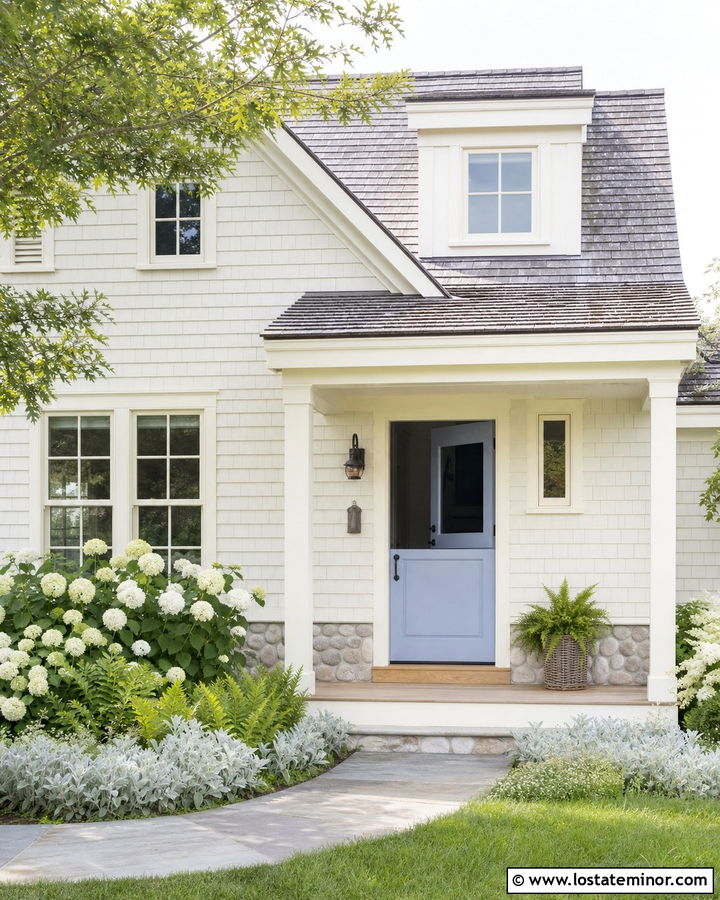
Periwinkle creates a charming entrance when its blue and violet undertones are softened with gray. Use it on a Dutch door surrounded by creamy off-white shingles or clapboard siding. Brighter cream trim can outline the doorway, while dark bronze hardware supplies enough contrast to keep the pastel color grounded. A weathered gray roof, natural wood porch floor, and pale fieldstone foundation complete the gentle palette. Avoid pairing the door with bright purple flowers, which may make the scheme feel overly coordinated. Instead, choose white hydrangeas, green ferns, and silvery foliage. This look is particularly fitting for shingle cottages, small coastal houses, and vintage bungalows. It adds personality while preserving the quiet, approachable appearance of the overall facade.
27. Off White House With White Dutch Door
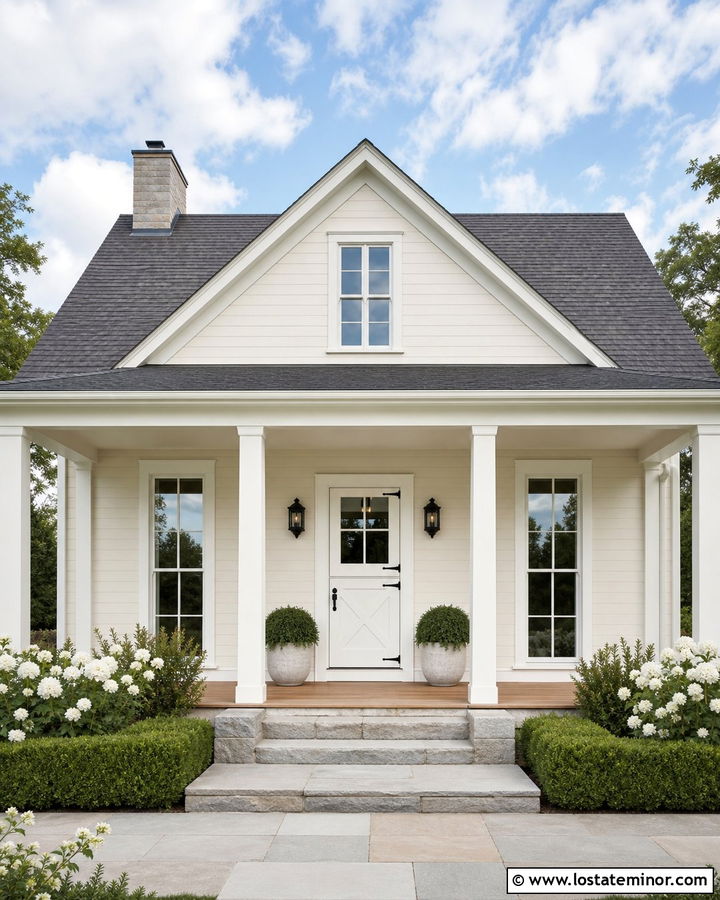
A white Dutch door can still stand out on an off-white house when the scheme relies on subtle contrast and layered texture. Paint the siding a warm cream, then use a cleaner soft white on the door, window trim, porch columns, and fascia. Black hinges, a dark latch, and divided glass clearly define the door’s split construction. Add a charcoal roof, pale gray stone steps, and natural wood porch flooring to prevent the exterior from becoming one flat color. Black lanterns and slim window frames can distribute contrast around the facade. Finish with clipped green shrubs and white flowering plants. This restrained approach works on classic farmhouses, coastal cottages, and homes where neighborhood guidelines limit bold exterior colors.
28. Off White House With Orange Dutch Door
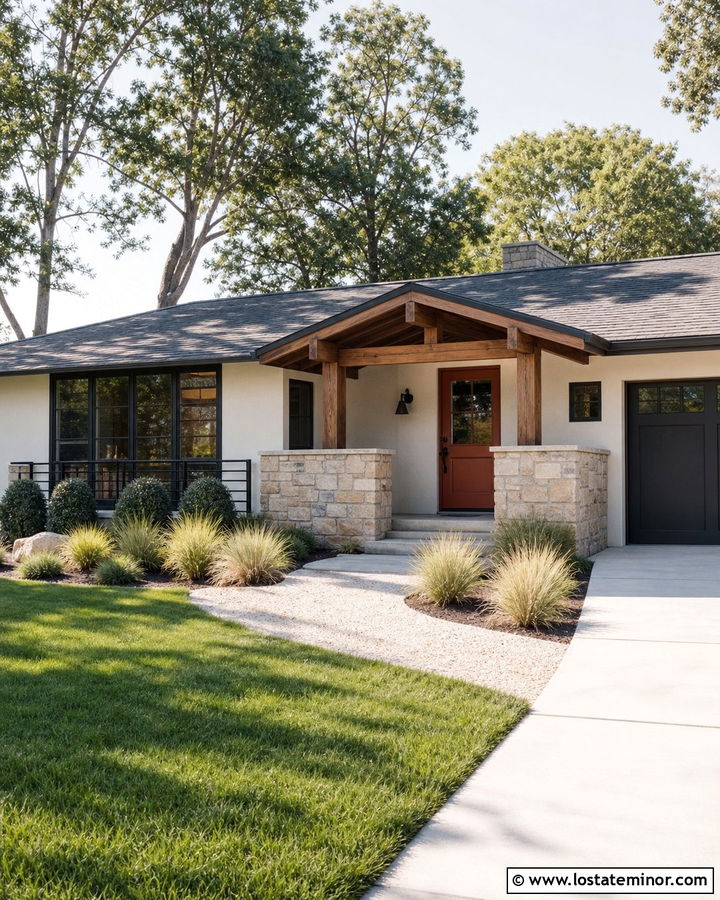
A burnt orange Dutch door can energize an off-white exterior while remaining grounded and architectural. The key is choosing a warm, earthy shade inspired by autumn leaves or fired clay instead of a bright citrus color. Pair it with creamy siding, dark bronze trim accents, and a charcoal-gray roof. Cedar beams and tan stone around the porch can connect the orange entrance to other warm materials. Matte black hardware provides clean contrast and keeps the scheme contemporary. Use simple landscaping with ornamental grasses, rounded evergreens, and a light gravel path. This combination works particularly well on midcentury ranch houses and modern cottages. The colorful Dutch door gives the facade a recognizable centerpiece without requiring major structural changes.
29. Off White House With Black Shutters And Dutch Door
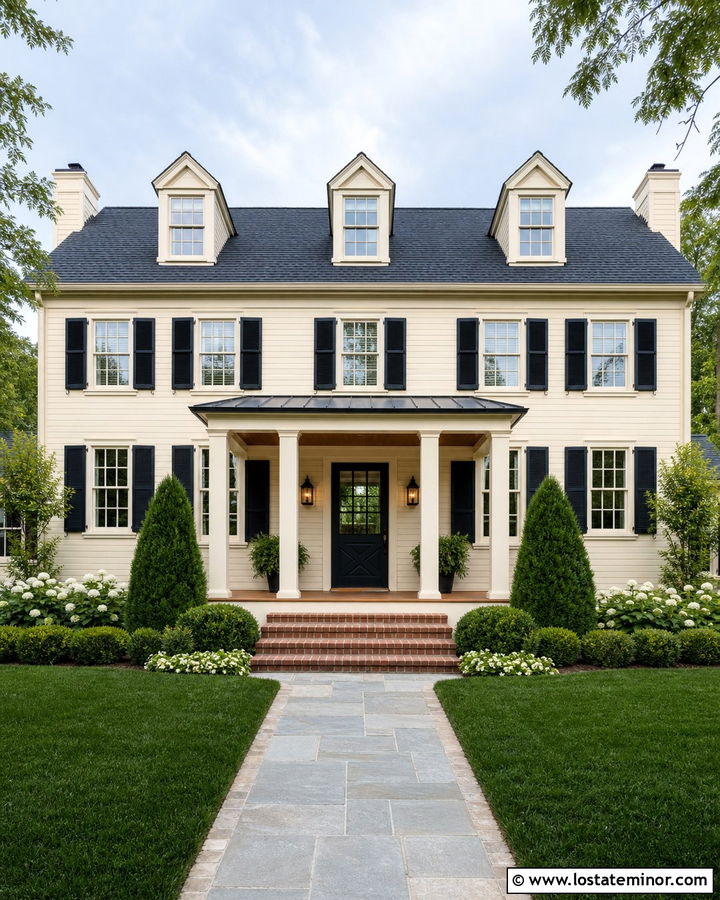
Matching black shutters and a black Dutch door creates a classic framework around an off-white facade. The approach is most effective when the black accents are distributed evenly rather than concentrated around one area. Use warm ivory clapboard siding, creamy window casings, and properly sized shutters that visually fit each window. A black divided-light Dutch door can anchor the center or side entry. Coordinate it with traditional lanterns, simple hardware, and a charcoal roof. Red brick steps or a natural wood porch floor will keep the palette from feeling too stark. Add symmetrical evergreens and white flowers for structured curb appeal. This complete scheme suits colonial, Cape Cod, and traditional farmhouse architecture without relying on short-lived decorative trends.
30. Off White House With Dutch Door And Stone Porch
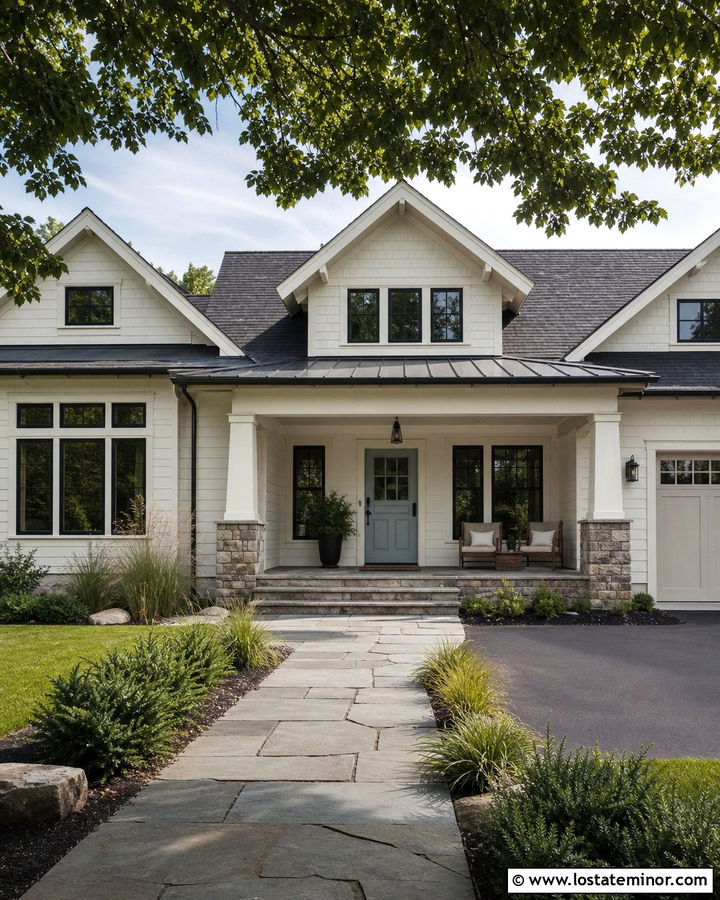
Stone can give an off-white house and Dutch door combination more depth, permanence, and natural color. Use warm off-white siding above a foundation or porch faced in mixed beige and gray stone. Paint the Dutch door a subdued blue-gray that relates to the cooler pieces within the masonry. Cream trim, charcoal roof shingles, and blackened bronze hardware complete the balanced palette. Substantial porch columns can sit on stone bases, creating a strong transition between the lightweight siding and rugged foundation. Choose large-format stone pavers for the walkway, then soften their edges with grasses and low evergreen shrubs. This complete look works especially well on Craftsman, mountain, and transitional houses where tactile materials are central to the architecture.
Conclusion:
The best **30 Off White House Design With Dutch Door Ideas** treat the entrance as part of a complete exterior palette. Off-white siding provides a warm, adaptable background, while the Dutch door introduces color, texture, light, and recognizable character. Black, navy, green, and gray create timeless contrast. Natural wood, yellow, teal, terracotta, and dusty pink offer a more personal look. Always compare exterior samples beside the existing roof, stone, brick, and landscaping before making a final decision. Observe them during different times of day because sunlight can reveal unexpected undertones. With coordinated trim, hardware, masonry, and plantings, an off-white house and Dutch door can deliver welcoming curb appeal across nearly any architectural style.

Related posts: