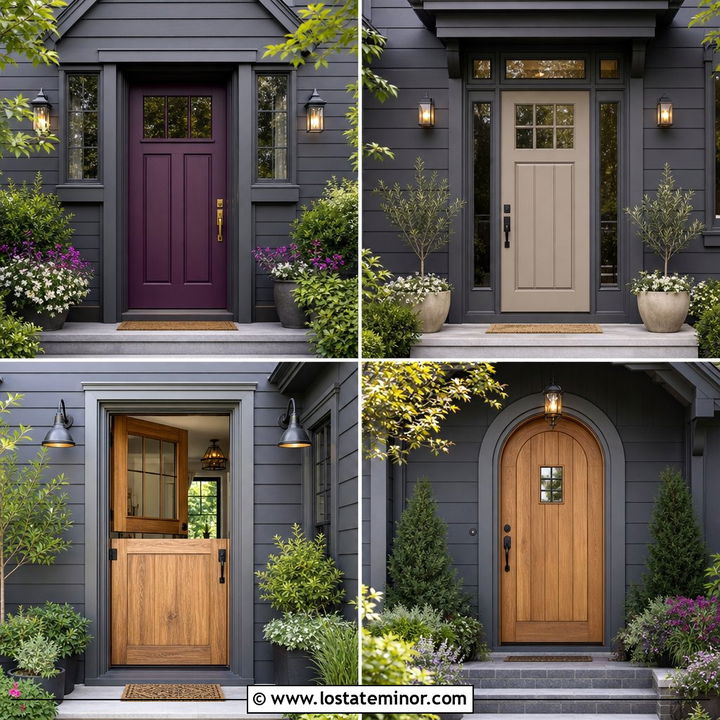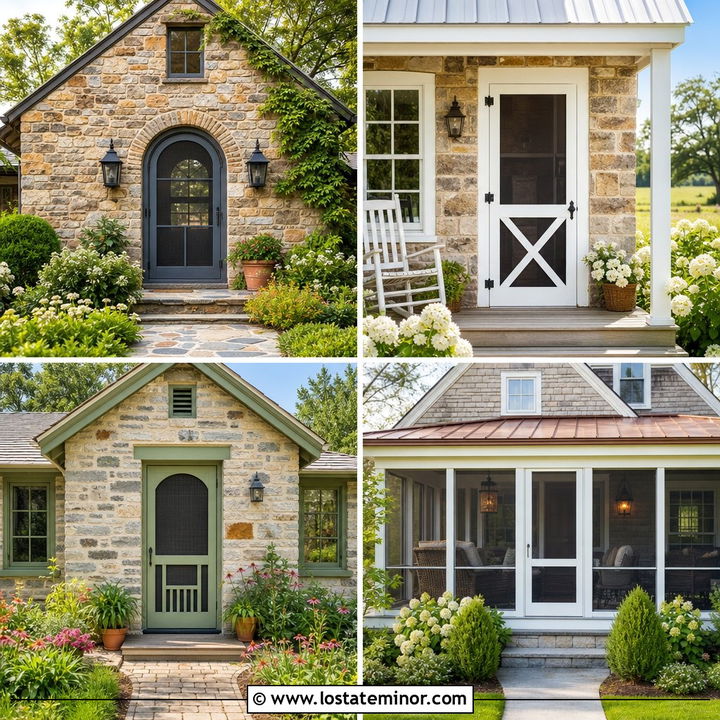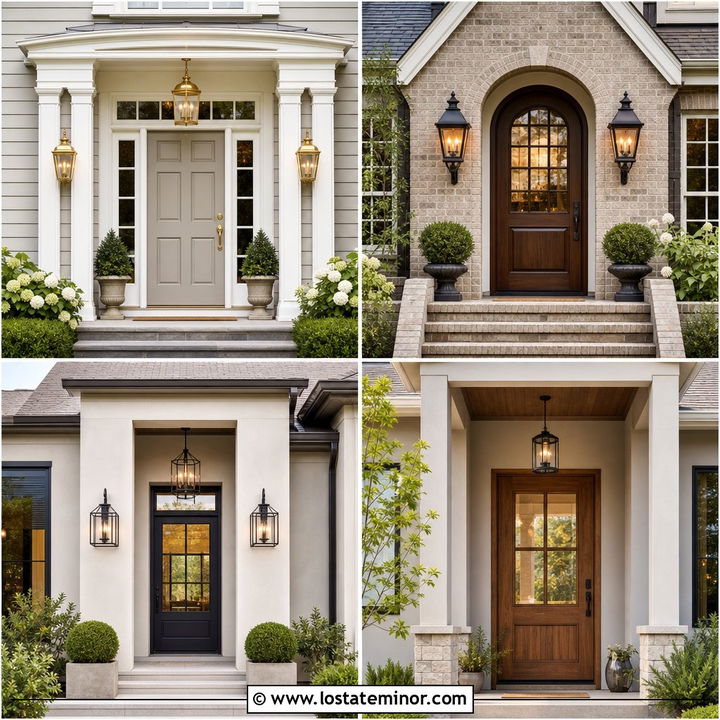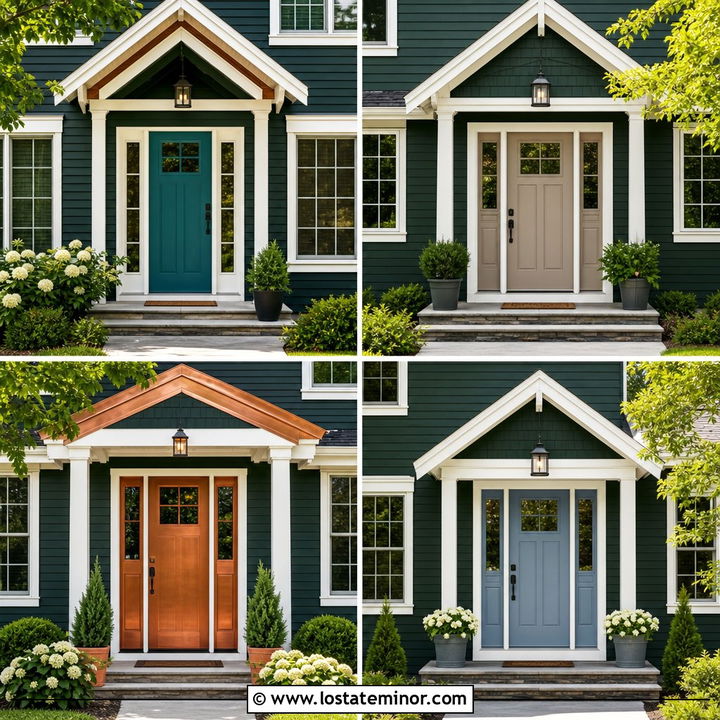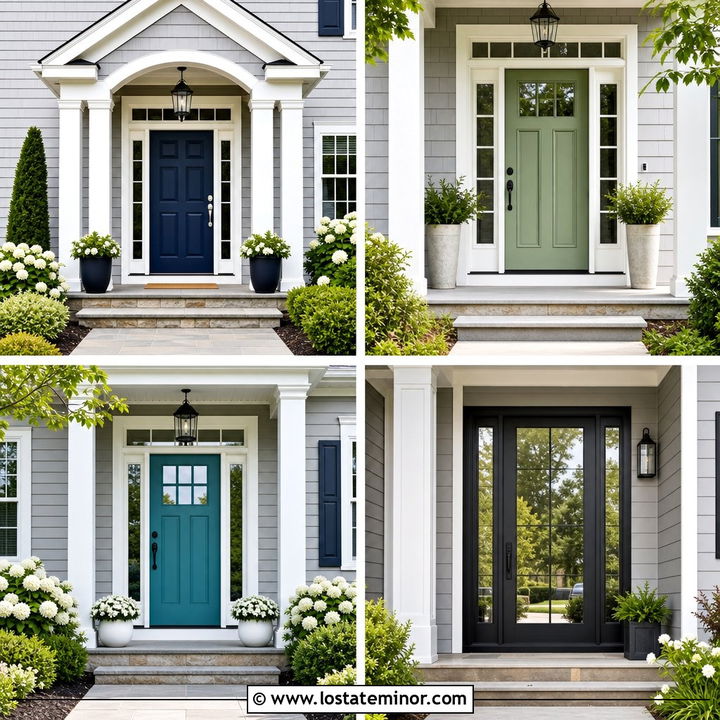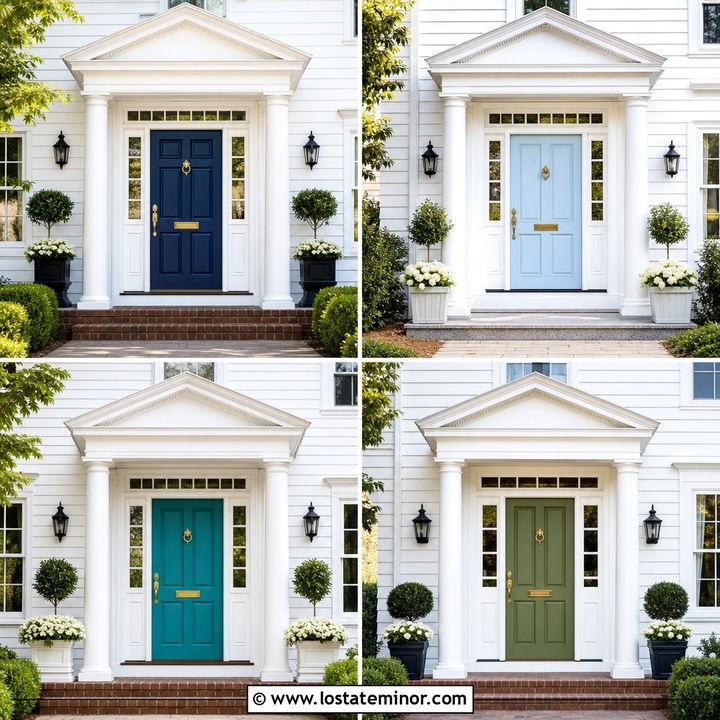
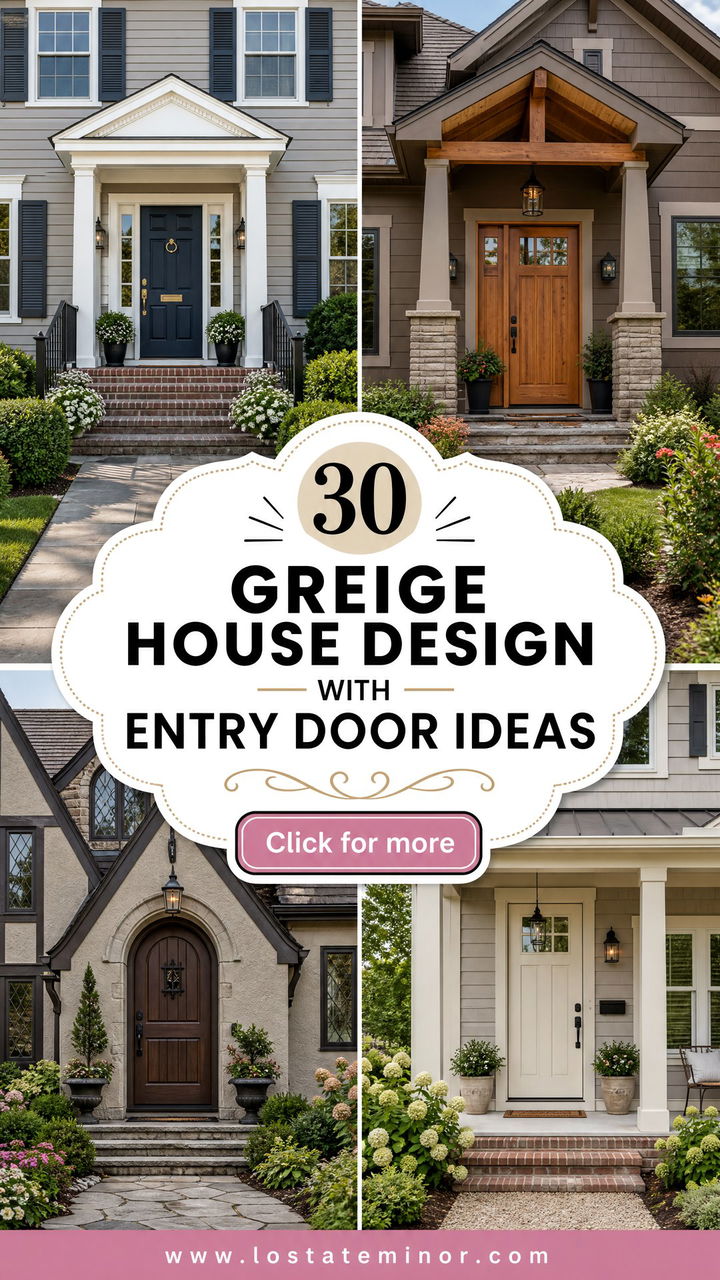
A greige exterior creates a warm, flexible backdrop that works with classic architecture, modern materials, and colorful entry doors. The best 30 Greige House Design With Entry Door Ideas go beyond choosing one paint shade. They coordinate the siding, door, trim, roof, masonry, garage, and landscaping as one complete curb-appeal plan. Light greige can feel fresh beside black or navy, while deeper greige looks inviting with cedar, cream, olive, or muted red. The home’s natural light and permanent materials should guide every choice. Always compare large paint samples beside the roof and stone before committing. The complete exterior combinations below offer practical inspiration for ranch homes, colonials, cottages, farmhouses, and contemporary builds through these 30 Greige House Design With Entry Door Ideas.
1. Light Greige House With Black Front Door
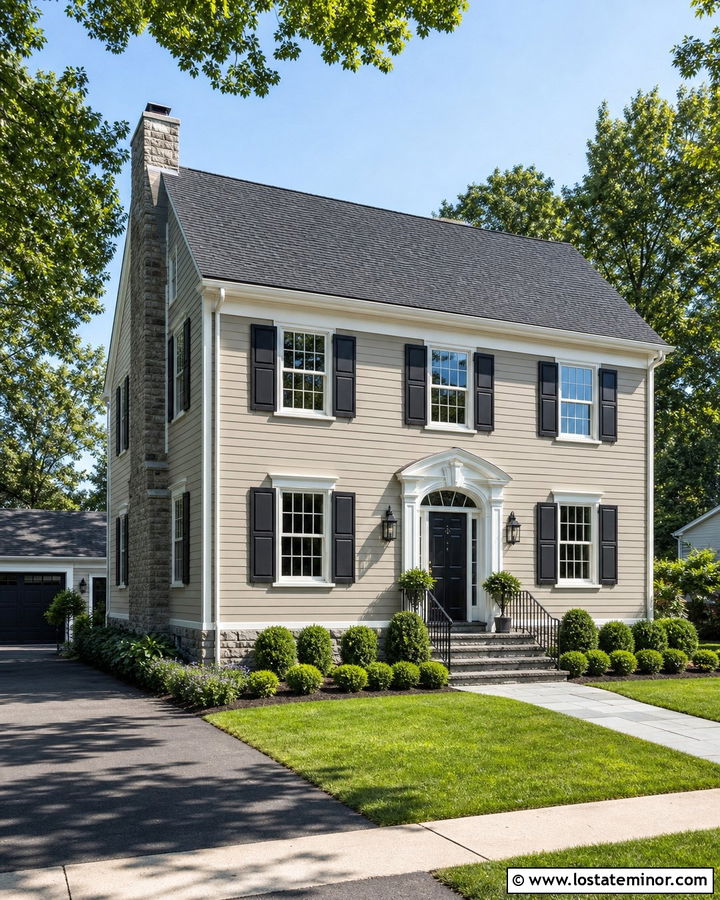
A black front door gives a light greige house a strong focal point without making the exterior feel too dark. Use soft greige lap siding with warm white trim around the windows, fascia, and porch columns. Matte black lighting, house numbers, and simple railings can repeat the door color in smaller amounts. A medium charcoal roof grounds the pale palette, while light gray stone along the foundation adds texture. This combination works especially well on a traditional two-story home or updated suburban colonial. Keep the garage door close to the siding color so it does not compete with the entrance. Rounded shrubs, ornamental grasses, and a straight stone walkway complete the polished, balanced curb appeal.
2. Greige Farmhouse With Natural Wood Door
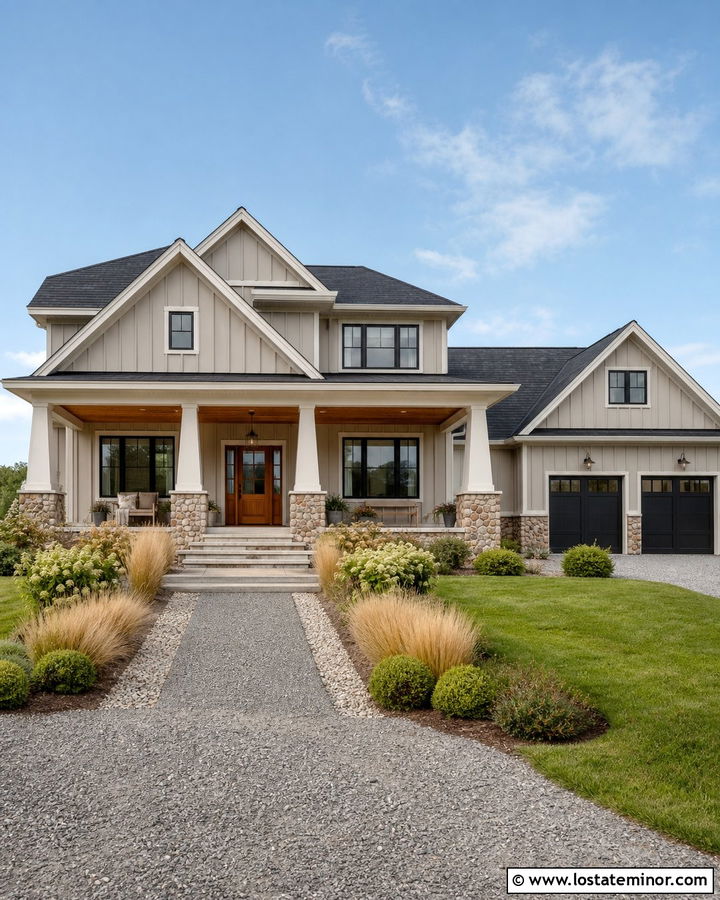
Natural wood brings welcome warmth to a greige modern farmhouse, especially when the main siding leans slightly cool. Choose vertical board-and-batten in a medium-light greige and use creamy white on the trim, porch posts, and garage doors. A stained white oak or cedar entry door becomes the visual centerpiece beneath a deep covered porch. Black-framed windows and a standing-seam metal porch roof add definition without overwhelming the neutral scheme. Carry the wood tone onto porch ceiling boards or a pair of structural brackets for continuity. A dark architectural-shingle roof provides contrast above. Finish the setting with a gravel-edged walkway, clipped evergreens, and loose native grasses that soften the farmhouse lines while maintaining an uncluttered appearance.
3. Greige Colonial With Navy Front Door
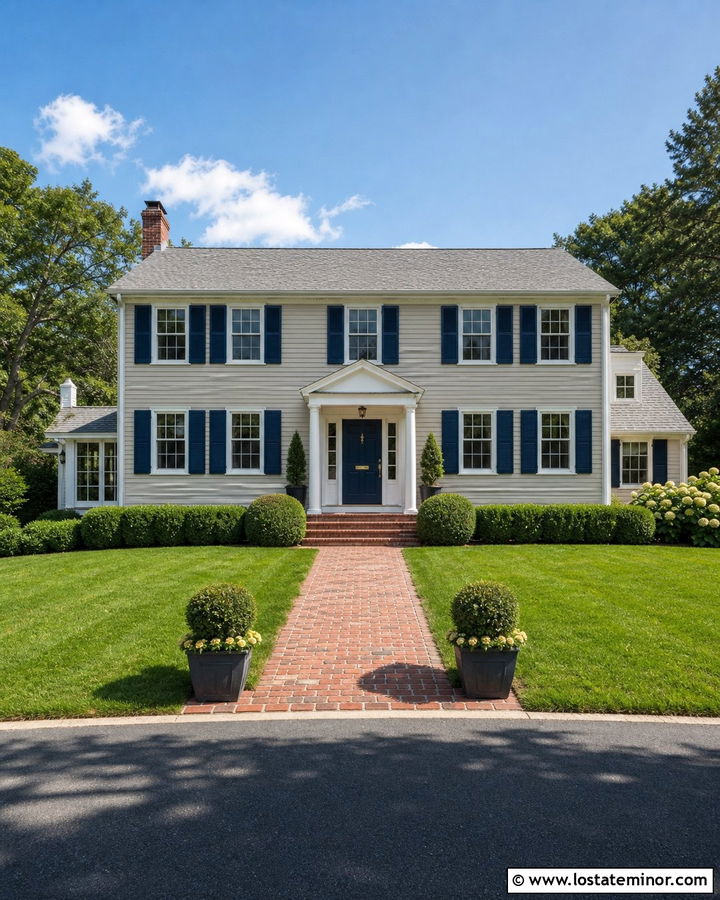
Could a navy door feel as timeless as black? On a greige colonial, it certainly can. Select balanced greige clapboard siding, crisp off-white trim, and deep navy for the paneled entry door and matching shutters. The blue introduces noticeable color while preserving the home’s traditional character. A white pediment, symmetrical columns, and polished nickel door hardware keep the entrance bright. Gray roof shingles connect naturally with the greige body, while red or brown brick steps add subtle warmth. Avoid painting the garage doors navy because the broad areas may dominate the facade. Instead, match them to the siding or trim. Boxwood hedges, paired planters, and a centered walkway strengthen the pleasing symmetry of this complete exterior.
4. Dark Greige House With Cedar Entry Door
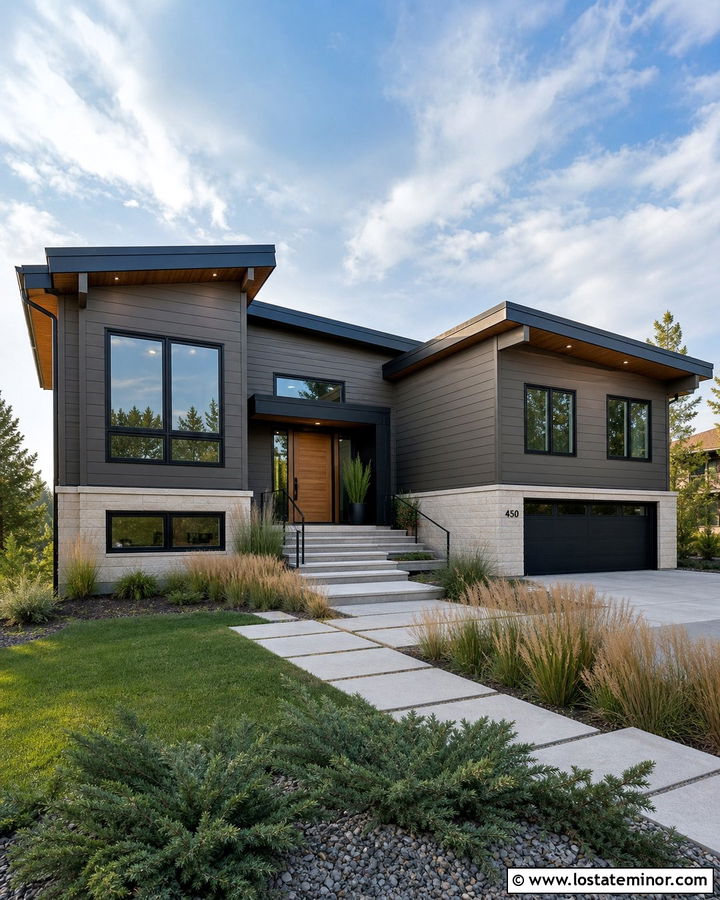
Deep greige siding can make a contemporary home feel grounded, but it needs warmth and visual separation. A clear-finished cedar entry door supplies both. Apply dark greige to horizontal siding, then use charcoal trim and black window frames for a streamlined, low-contrast facade. Cedar soffits, garage-door panels, or slatted screens can echo the entrance without covering too much of the house in wood. Pale limestone around the lower level creates a lighter base and prevents the exterior from looking heavy. This scheme suits a modern split-level or angular two-story design with broad windows. Use restrained landscaping, including sculptural grasses, low junipers, and concrete pavers. Bright daylight will reveal the greige undertones and natural variation within the cedar.
5. Greige Craftsman With Forest Green Door
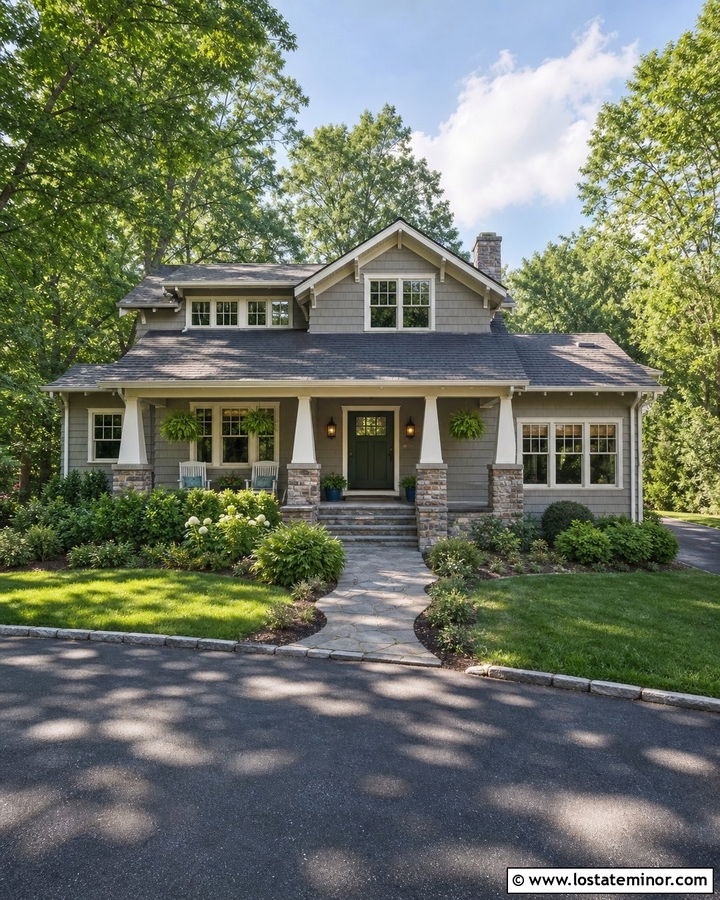
Forest green feels naturally connected to the earthy character of a greige Craftsman. Start with warm greige shingle or lap siding, then add creamy trim around the tapered columns, roof brackets, and divided-light windows. Paint the substantial wood entry door a deep forest green for rich color that remains understated. A stone porch base containing beige, gray, and brown tones helps unite the palette. Choose a weathered charcoal roof rather than stark black to maintain the softer Craftsman mood. Bronze porch lights, door hardware, and gutters provide a quiet metallic accent. Layer the yard with ferns, hydrangeas, dwarf evergreens, and a gently curved flagstone path. The completed exterior feels established, welcoming, and suited to a leafy neighborhood.
6. Greige Ranch House With Red Front Door
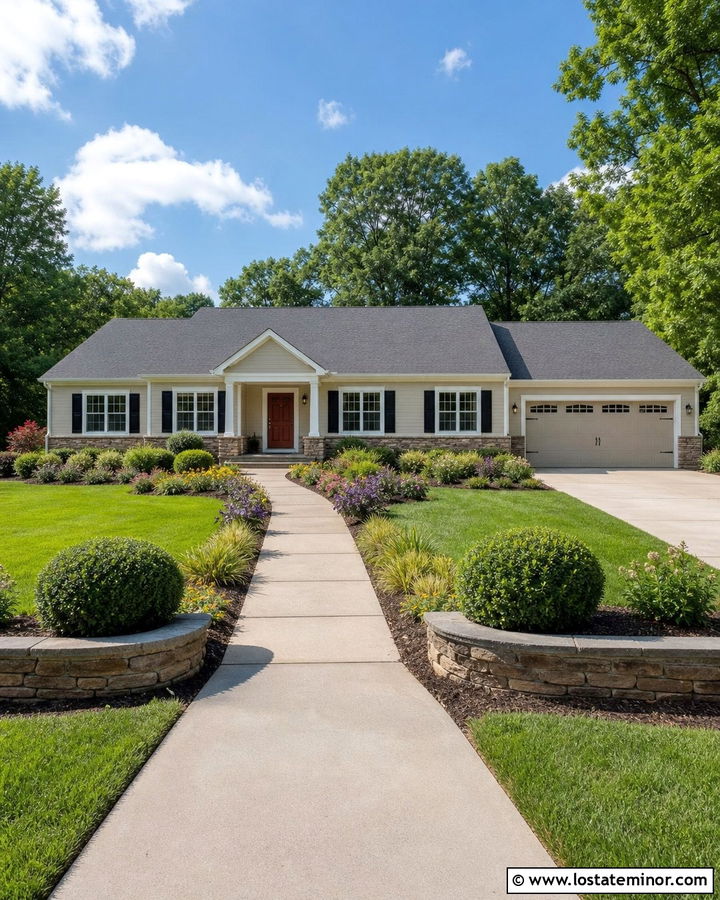
A muted red door can give a simple greige ranch house the character it needs. Choose a soft, midtone greige for the horizontal siding and a warm white for the fascia, window trim, and carport posts. Instead of a bright primary red, use a brick red or subdued cranberry that relates to warm masonry and natural soil tones. Paint the garage door greige so the colorful entrance remains the main attraction. Black shutters can frame the windows, but keep their design simple and properly sized. A dark gray roof and low stone foundation create a stable base. Wide planting beds filled with rounded shrubs and flowering perennials will complement the ranch’s horizontal shape. A broad walkway makes the red entry feel accessible and intentional.
7. Greige Cottage With Sage Green Door
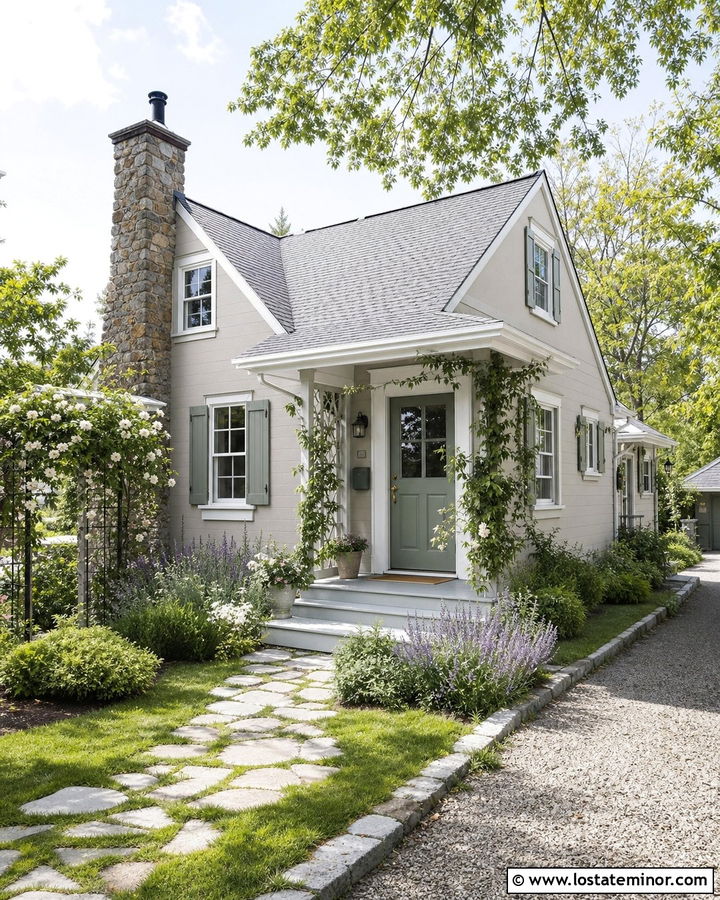
Soft color works beautifully on a small cottage where every exterior feature remains visible from the curb. Pair pale greige siding with a dusty sage entry door, creamy white trim, and a medium gray roof. The green should be muted enough to behave like a natural neutral while still separating the entrance from the siding. Use the same sage on compact shutters or a garden gate only when the facade needs additional color. A fieldstone chimney, painted porch floor, and aged brass hardware add texture and charm. Keep decorative details controlled so the cottage does not appear busy. Lavender, white flowers, climbing greenery, and an informal stepping-stone path can frame the house. Together, the greige and sage create a gentle, garden-oriented exterior.
8. Greige Brick House With Black Glass Door
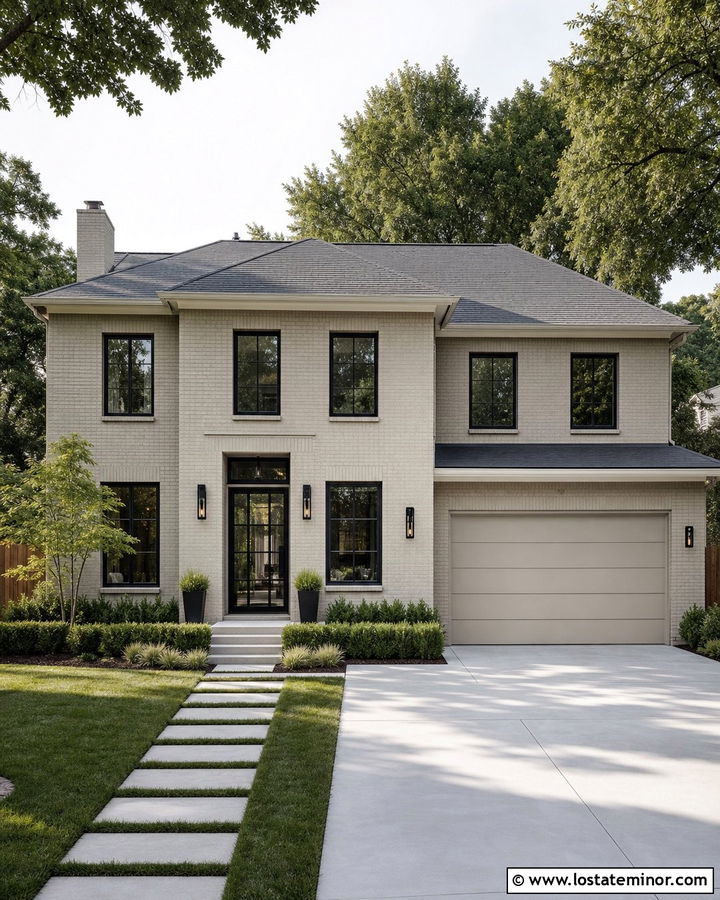
Updating a brick house with greige paint can produce a cleaner appearance while preserving the masonry texture. Cover the brick in a medium warm greige, then choose a black entry door with large glass panels to modernize the facade. Black window frames, gutters, and slim porch lights reinforce the crisp entrance. Use soft white on the soffits and limited trim to prevent the black accents from becoming too dominant. A charcoal roof completes the controlled neutral palette. If the home includes an attached garage, paint its door greige rather than black so it visually recedes. Large concrete pavers, clipped hedges, and structured ornamental grasses support the contemporary look. The glass entry also reduces the visual weight of the bold black door.
9. Greige Cape Cod With Blue Front Door
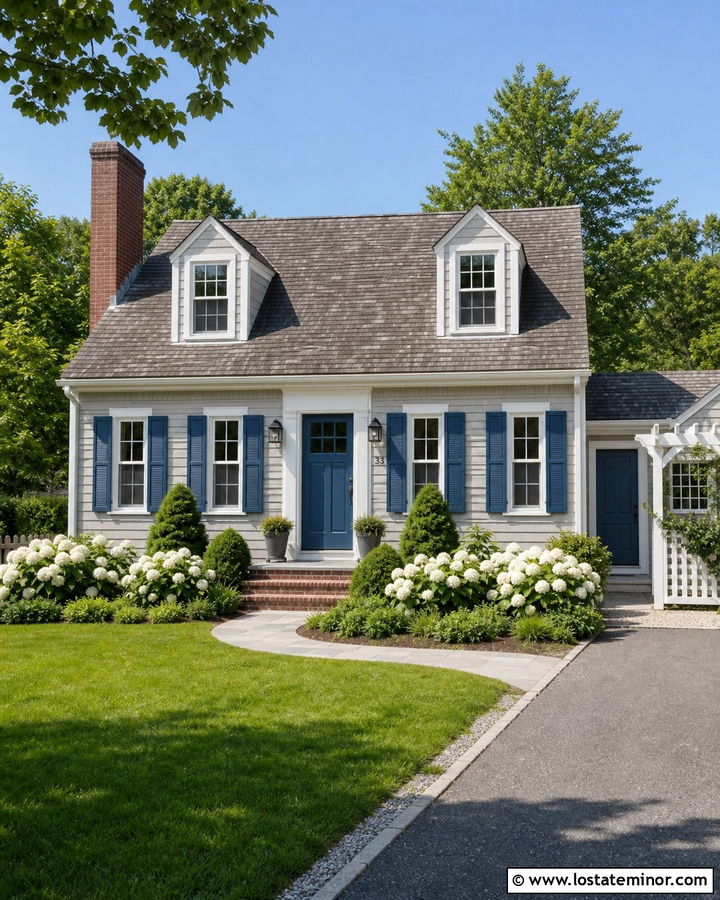
A dusty blue entry door adds relaxed color to a greige Cape Cod without moving too far from its classic roots. Cover the main facade in light greige shingles or narrow clapboards, then highlight the dormers, corner boards, and window casings with warm white. Use a medium slate blue on the front door and traditional shutters. This blue-gray direction connects smoothly with a weathered charcoal roof and any nearby coastal landscaping. Natural brick steps or a bluestone stoop provide an attractive transition from the yard to the entrance. Maintain the home’s compact proportions by avoiding oversized fixtures or excessively dark garage doors. White hydrangeas, small evergreens, and a curved walkway finish the scene with an informal but carefully coordinated Cape Cod character.
10. Greige Bungalow With Teal Entry Door
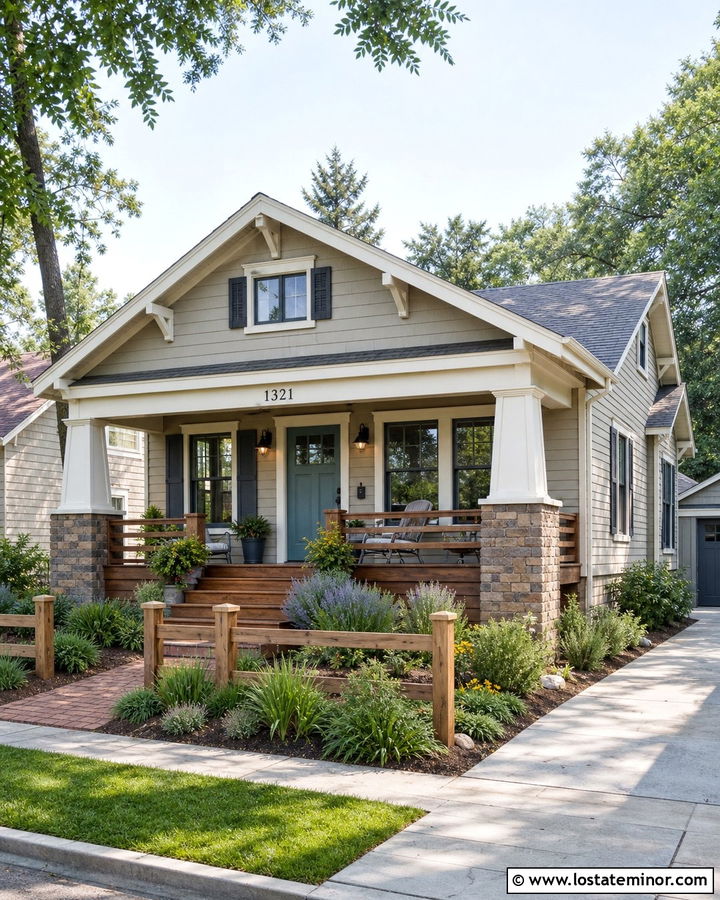
Teal offers a lively alternative when a greige bungalow needs personality. Select a muted, blue-leaning teal rather than a highly saturated tropical shade. It will look more comfortable beside warm greige lap siding, cream window trim, and a deep brown or charcoal roof. The broad bungalow porch can carry stained wood decking, tapered columns, and stone piers that repeat the exterior’s earthy colors. Use dark bronze lights and hardware to support the warm materials. If shutters are present, paint them charcoal instead of teal to keep the door special. A low wood fence, native planting beds, and a short brick walkway suit the home’s approachable scale. This complete scheme feels colorful and individual while remaining balanced enough for an established neighborhood.
11. Greige House With Burgundy Front Door
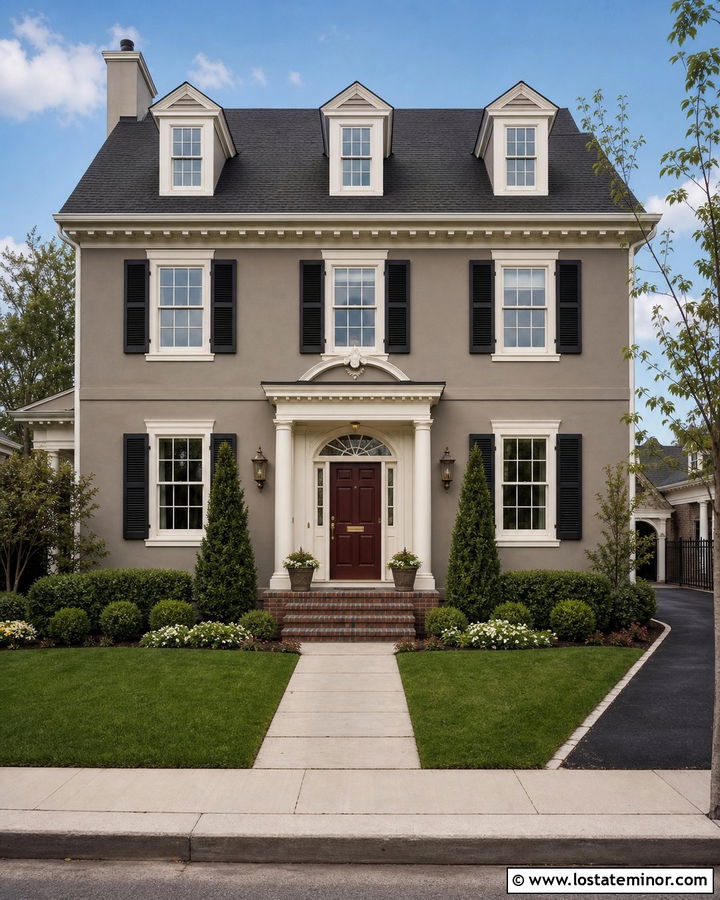
Burgundy gives a greige exterior richness without the intensity of a brighter red. This pairing is particularly effective on a Georgian-inspired or traditional two-story house. Use a refined medium greige on the body, creamy white on the window casings and cornice, and deep burgundy on the paneled entry door. Black shutters and a dark gray roof can frame the scheme, while aged brass hardware adds warmth at the entrance. If the house includes red brick steps, choose a burgundy with brown undertones so the surfaces coordinate. Keep porch furnishings and planters neutral to avoid creating too many competing accents. Symmetrical evergreens, a straight walkway, and restrained seasonal flowers will reinforce the home’s orderly architecture and give the colorful door appropriate prominence.
12. Greige Stucco House With Olive Door
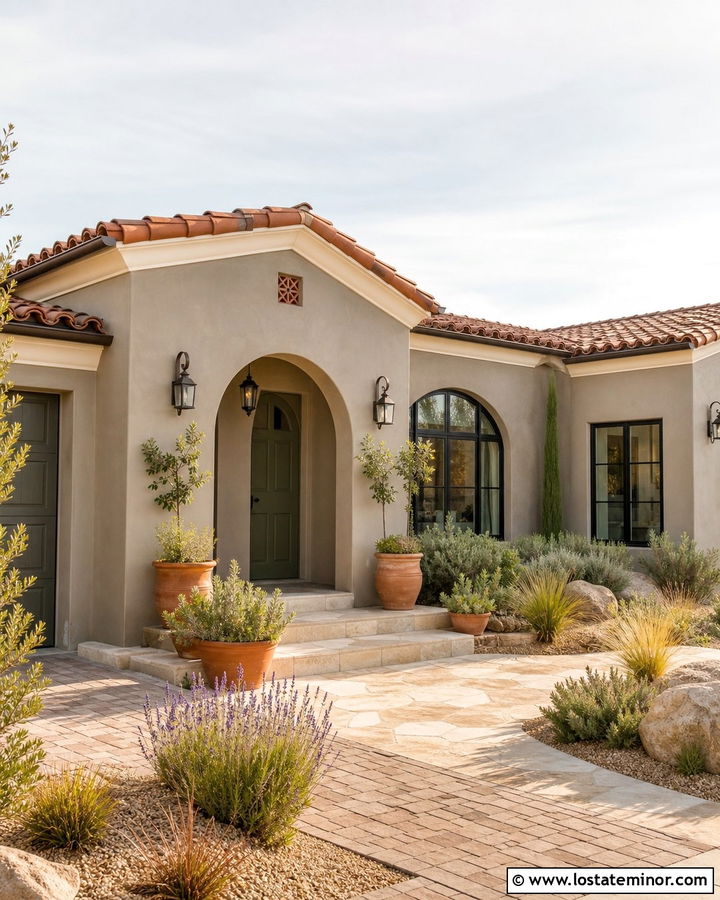
Warm sunlight can make greige stucco appear especially inviting when it is paired with an olive entry door. Choose a sandy greige body color that relates to the beige notes in nearby stone, roof tile, or desert landscaping. Apply creamy off-white to the fascia and deep window recesses, then use muted olive on a substantial wood door. Dark bronze window frames and exterior lighting create definition without the sharpness of black. This palette fits Spanish-influenced, Southwestern, and Mediterranean homes with arched openings or low rooflines. Terracotta pots, limestone pavers, and drought-tolerant plants reinforce the organic colors. Keep the garage door close to the stucco shade. The result is a cohesive exterior in which the green entrance feels connected to the surrounding landscape.
13. Greige House With White Front Door
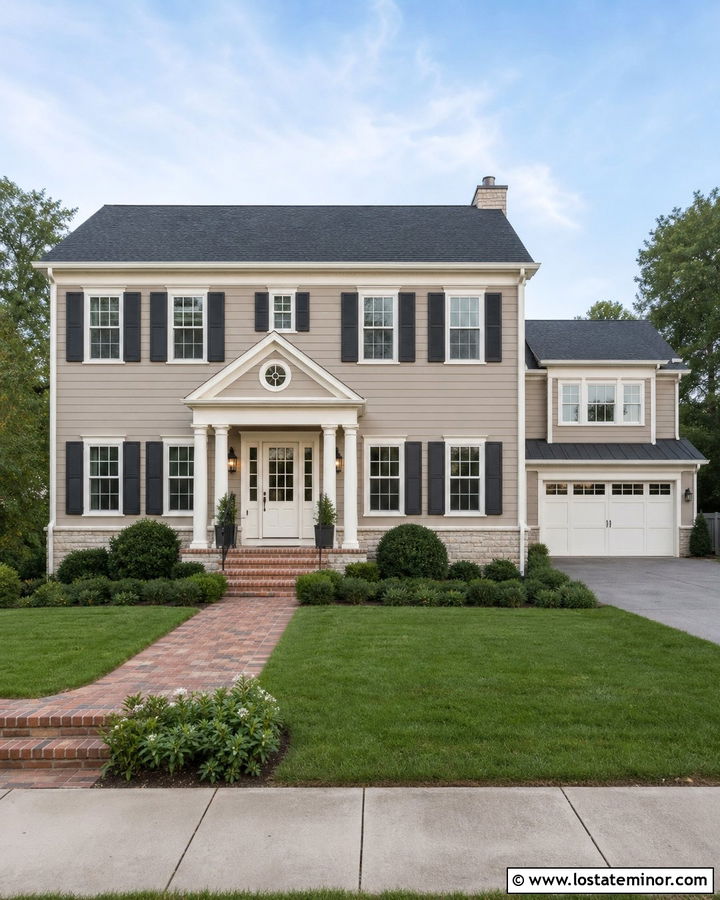
A white entry door can look distinctive on a greige home when its surrounding architecture receives enough definition. Use medium greige siding so the warm white door, trim, porch columns, and window frames remain clearly visible. Add charcoal shutters and a medium-dark roof to establish contrast around the lighter elements. This combination works well on a classic suburban home where a clean, bright entrance is more desirable than a colorful one. Consider a door with divided glass panels, sidelights, or a transom to make the white entry feel layered rather than plain. Natural stone along the foundation introduces subtle texture. Black lanterns and house numbers provide small, practical accents. Deep green shrubs and a brick walkway keep the understated neutral palette from feeling washed out.
14. Greige Midcentury House With Mustard Door
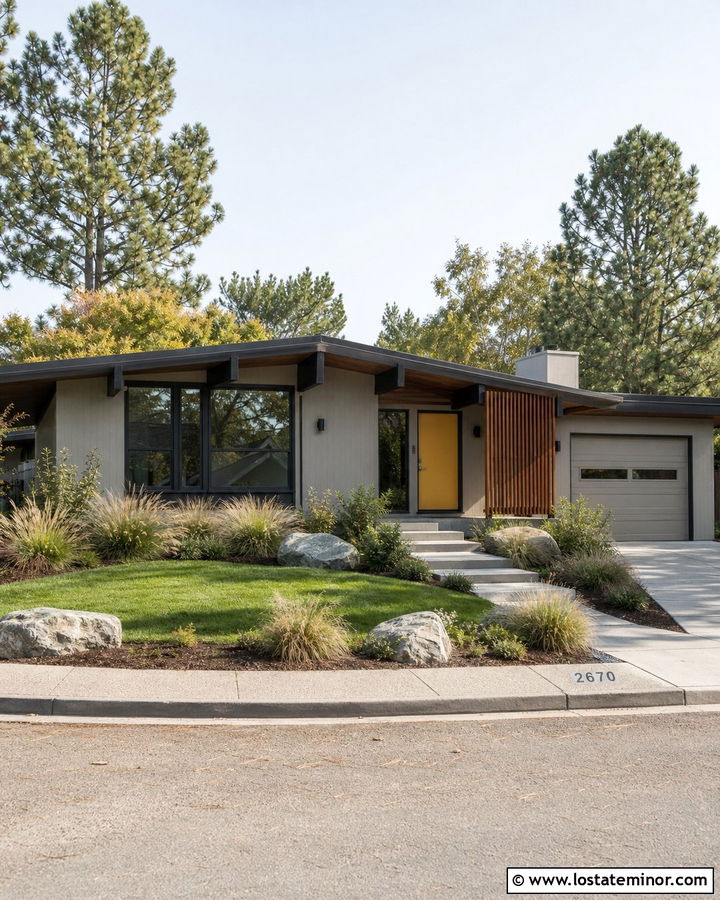
A muted mustard entry door can revive a greige midcentury house while respecting its original architecture. Paint the horizontal siding a warm, slightly deeper greige and use charcoal on the fascia, beams, and narrow window frames. The golden mustard door should sit beneath a sheltered entry, where it creates a concentrated burst of color. Repeat its warmth through cedar soffits or a slatted privacy screen rather than adding more yellow paint. A low dark roof, broad windows, and simple concrete steps maintain the home’s strong horizontal profile. Choose minimal landscaping with ornamental grasses, sculptural shrubs, and a few architectural boulders. This palette combines a reserved neutral body with one period-friendly accent, giving the home energy without turning the facade into a collection of competing retro colors.
15. Greige House With Walnut Entry Door
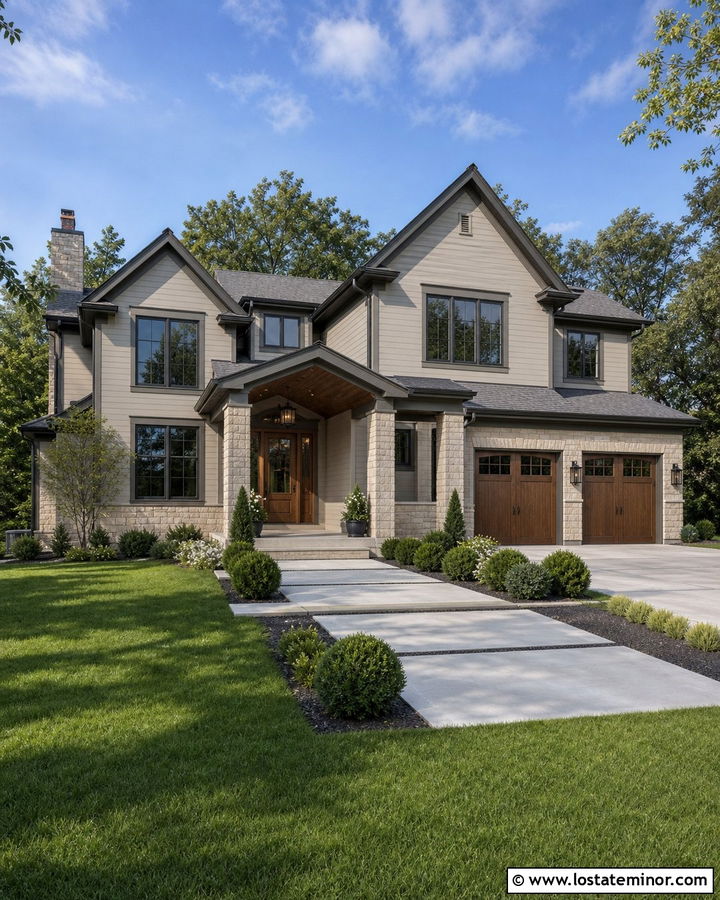
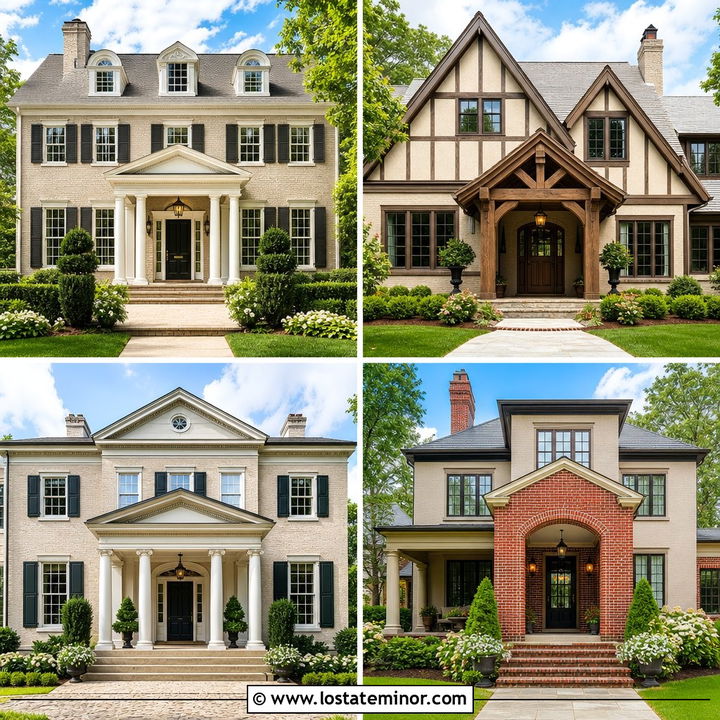
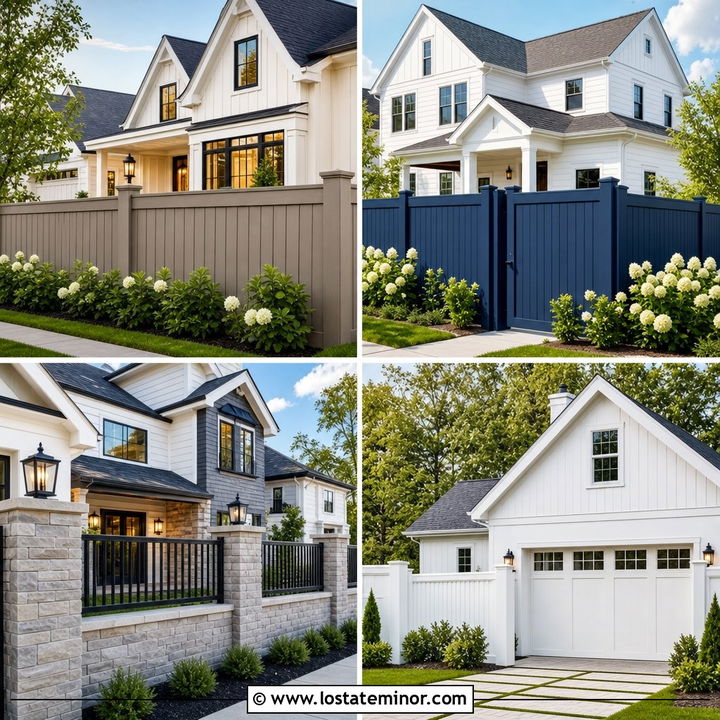
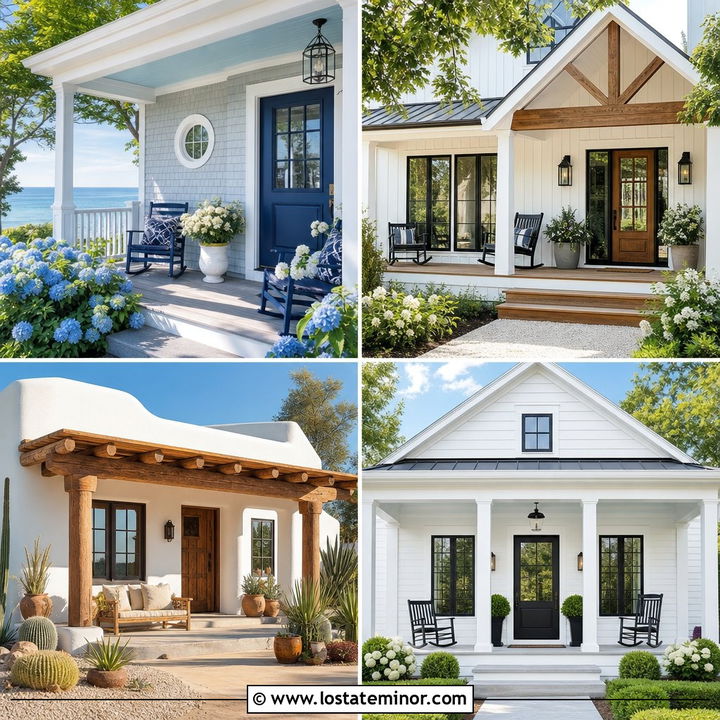
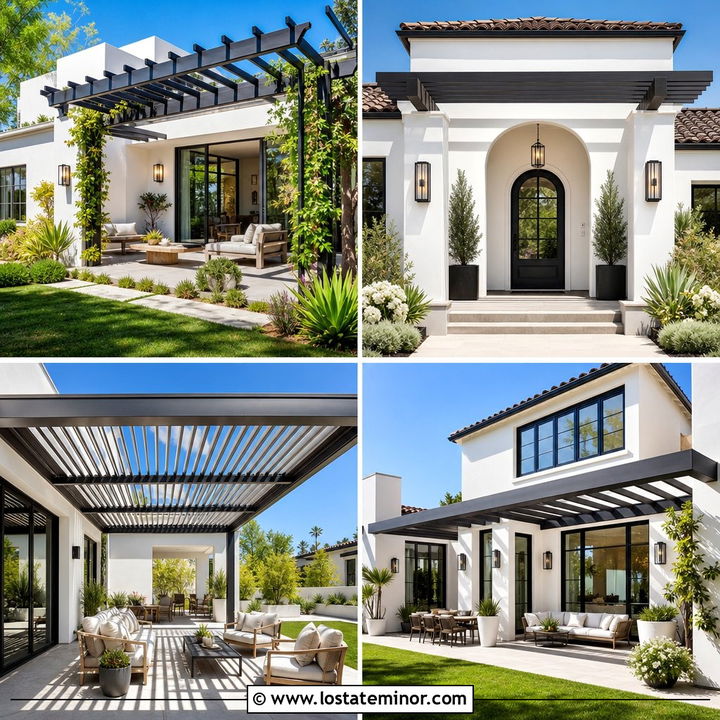
Walnut is an elegant choice when a greige house needs a deeper, more polished wood accent. Use a balanced light greige across the stucco or smooth lap siding, then surround a rich walnut door with warm white trim. Dark bronze windows, gutters, and porch lights connect naturally with the brown grain. If the home has stone, select a blend containing taupe, charcoal, and cream rather than strongly orange masonry. A charcoal roof keeps the upper portion of the facade crisp. Repeat walnut selectively on the garage doors or porch ceiling, but avoid adding several unrelated wood stains. Structured foundation planting and large-format concrete pavers complement the tailored palette. This exterior works particularly well on transitional homes combining traditional proportions with cleaner contemporary details.
16. Greige House With Charcoal Front Door
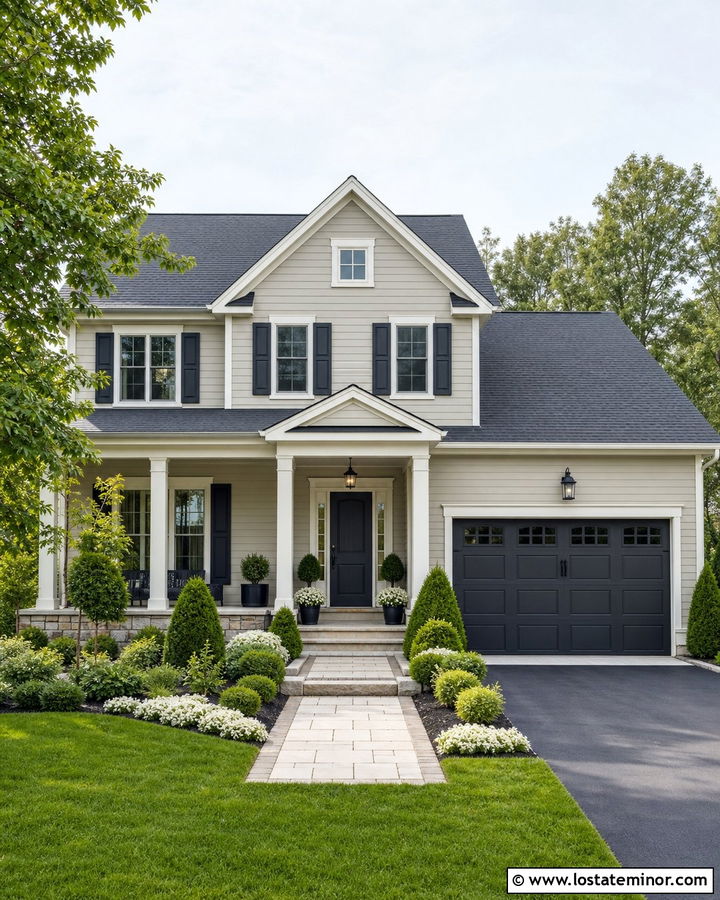
Charcoal creates a softer transition than pure black while still defining the entrance of a greige house. Pair pale warm greige siding with a deep charcoal door, charcoal shutters, and a roof in a similar value. Use ivory trim rather than brilliant white to preserve the comfortable warmth of the scheme. On a two-story traditional house, this controlled contrast highlights the architecture without cutting the facade into harsh sections. Add light limestone to the porch or foundation to bring texture near the ground. Brushed nickel or black door hardware will both work, depending on the window finish. Paint the garage door greige and keep the gutters close to the trim color. Layered evergreen landscaping then supplies the natural color needed to enliven the restrained neutral exterior.
17. Greige Farmhouse With Rust Front Door
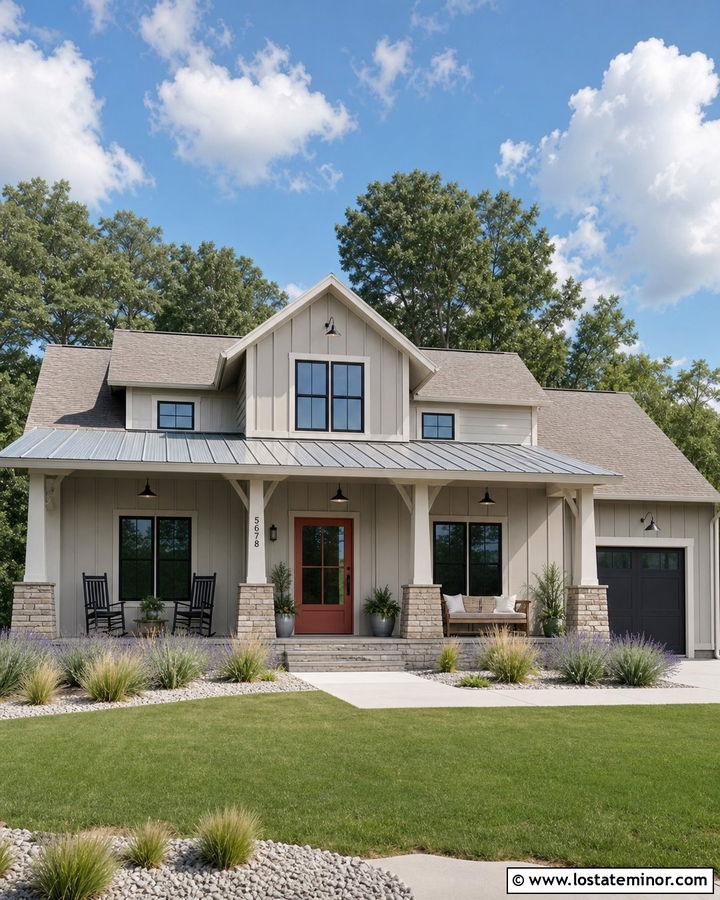
Rust is an earthy entry-door color that sits comfortably beside greige siding, stone, and wood. On a farmhouse exterior, use a warm light greige for the board-and-batten body and a soft cream for the trim. Paint the door a muted rust or clay shade with enough brown to avoid looking overly orange. A galvanized metal porch roof and weathered gray shingles balance the warmer colors. Natural stone porch piers can include touches of tan and iron gray that connect every part of the palette. Repeat the rust tone only in small planters or landscaping accents. Black-framed windows and simple gooseneck lights add clean contrast. An open lawn, gravel borders, and native grasses give the completed farmhouse exterior an informal, grounded setting.
18. Greige Coastal House With Aqua Door
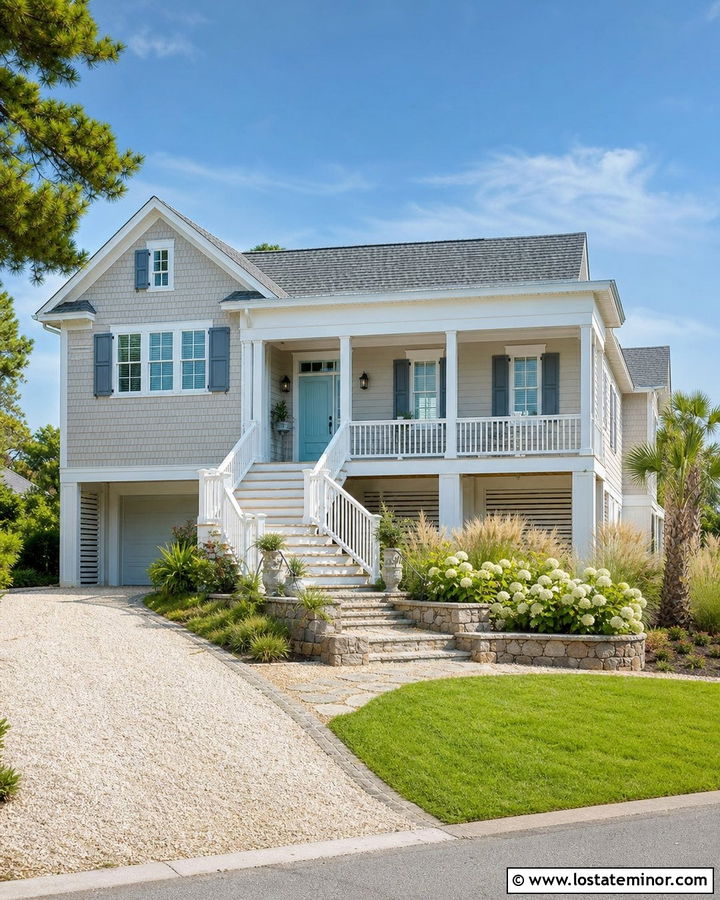
An aqua entry door can brighten a greige coastal home while the neutral siding prevents the palette from becoming overly themed. Choose a pale, airy greige for shake siding, bright warm white for the railings and trim, and a softened aqua blue for the door. A weathered gray roof and natural stone steps support the breezy colors. Keep shutters in a deeper blue-gray so the entrance has dimension instead of appearing isolated. Stainless or brushed nickel hardware works well with the cooler accents. This combination suits a raised coastal cottage, beach-inspired suburban home, or compact Cape Cod. Sea grasses, hydrangeas, pale gravel, and a shell-toned walkway reinforce the relaxed atmosphere. Bright daylight makes the aqua door sparkle against the quiet greige facade.
19. Greige Tudor House With Dark Brown Door
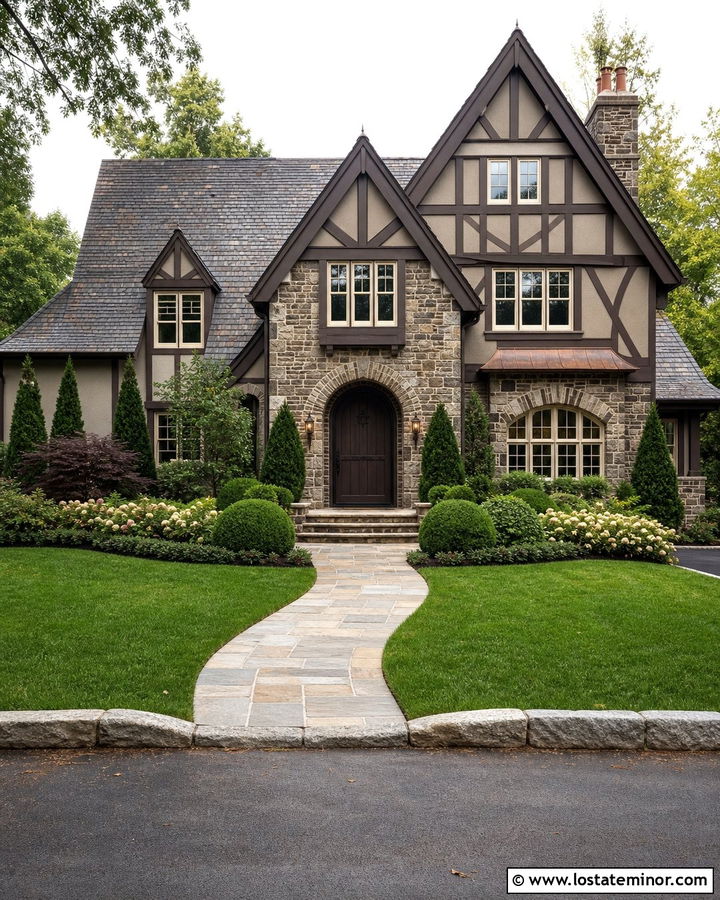
A Tudor exterior already contains strong materials, so the entry door should support rather than compete with them. Use medium greige stucco between dark brown timber details, then stain or paint the arched front door a rich chocolate brown. Cream trim around selected windows can lift the palette, while mixed stone containing taupe, gray, and brown ties the lower facade together. Choose a charcoal-brown roof that complements the timbering without reading as solid black. Copper lanterns and gutters will develop warmth and character over time. Keep the garage door greige or brown depending on its position and size. Layer the landscape with clipped evergreens, flowering shrubs, and a curved stone path. The overall look feels historic, substantial, and carefully unified.
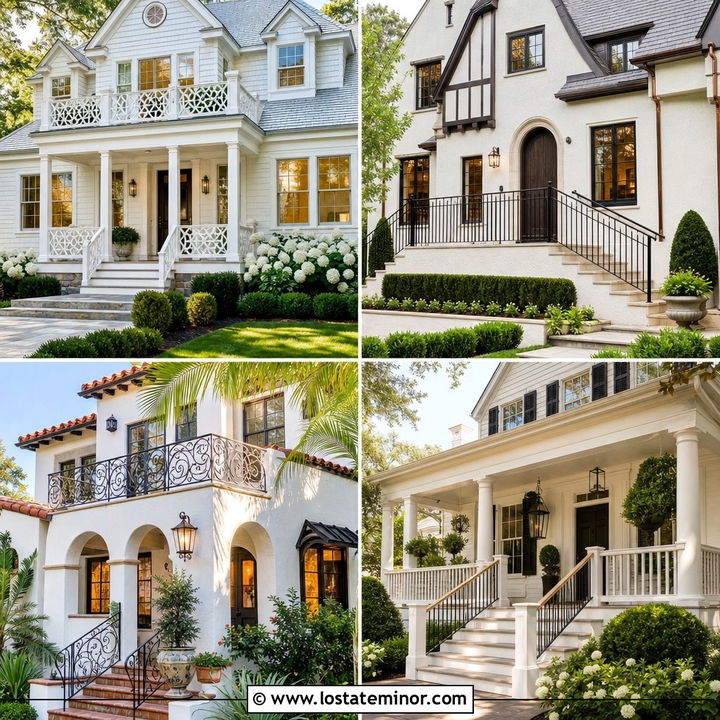
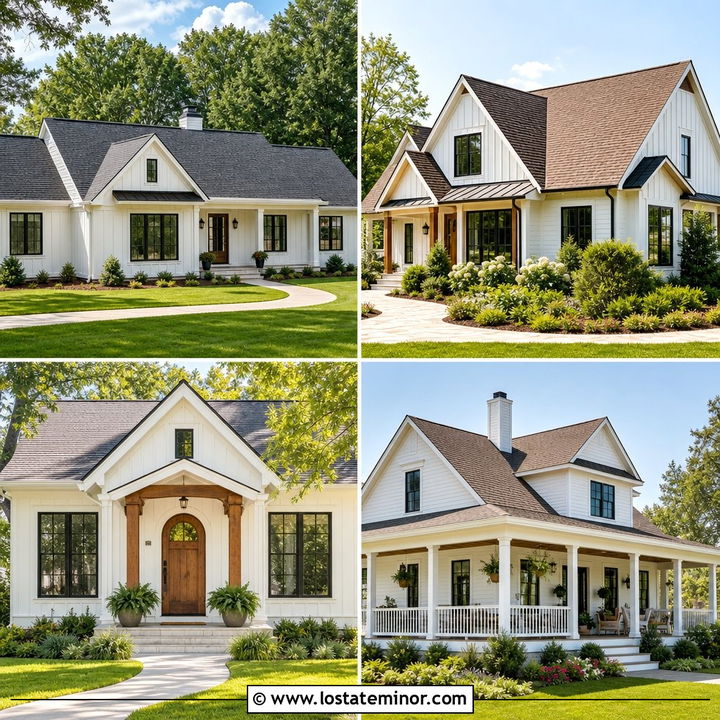
20. Greige Split-Level With Blue-Gray Door
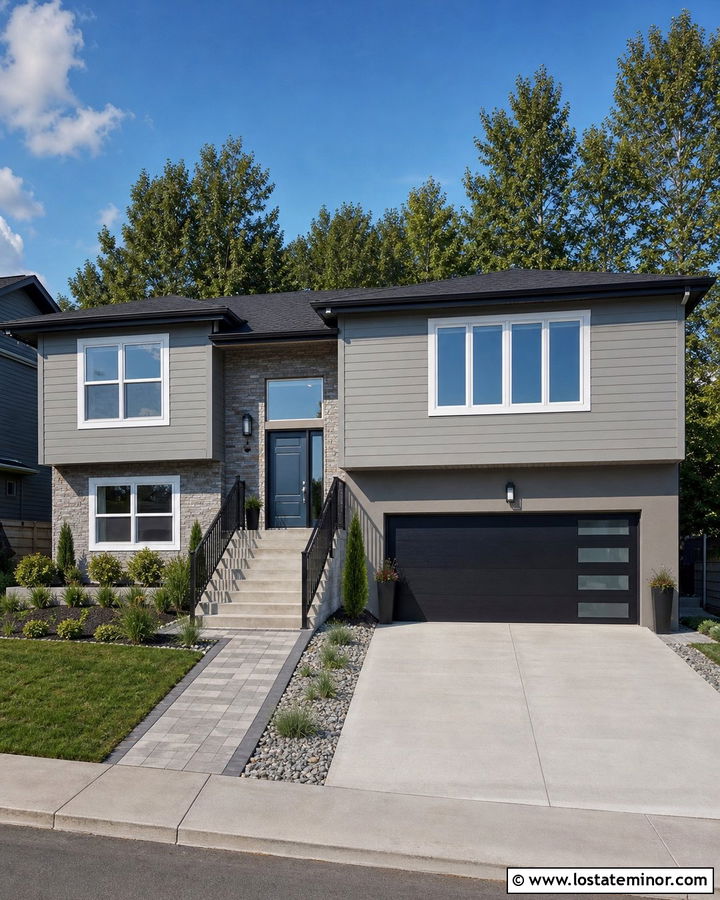
A blue-gray entry door is an easy way to modernize a split-level without introducing a dramatic color break. Paint the upper siding a light greige and use slightly deeper greige on the garage level to clarify the architecture. A muted steel blue-gray door can then connect with a charcoal roof and cool-toned stone veneer. Use warm white around the windows and soffits to keep the facade bright. Black railings, slim lights, and updated house numbers add a clean finishing layer. Paint the garage door the same deeper greige as the lower level so it blends into the composition. Broad concrete steps, horizontal planting beds, and a straight paver walkway can visually organize the uneven levels. The finished exterior appears intentional rather than divided.
21. Greige House With Copper Entry Door
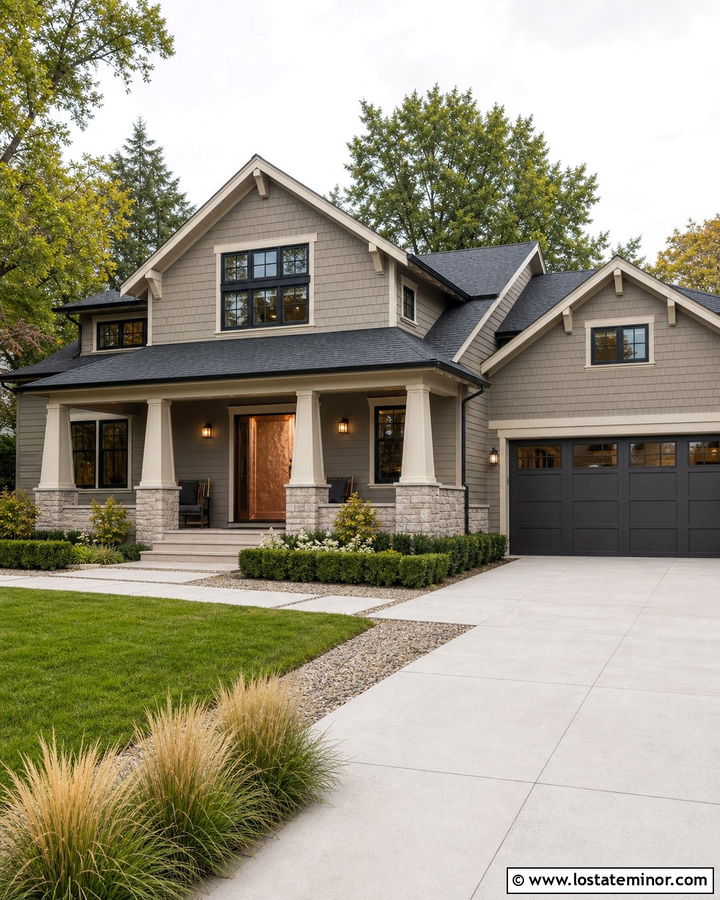
A copper-colored entry door brings glowing warmth to a greige facade, especially when the house includes stone or dark metal details. Choose a medium cool greige for the siding so the reddish-brown copper tone has noticeable contrast. Cream trim softens the transition, while charcoal windows and roofing give the exterior a structured outline. The door can be real copper, copper-clad, or painted in a muted metallic-inspired shade. Repeat the color carefully through porch lights, gutters, or small roof accents rather than covering large surfaces. This scheme works on contemporary Craftsman and transitional homes with prominent entrances. Pale stone steps, low hedges, and ornamental grasses frame the door without hiding it. The finished palette feels warm, distinctive, and more nuanced than basic black.
22. Greige Modern House With Black Pivot Door
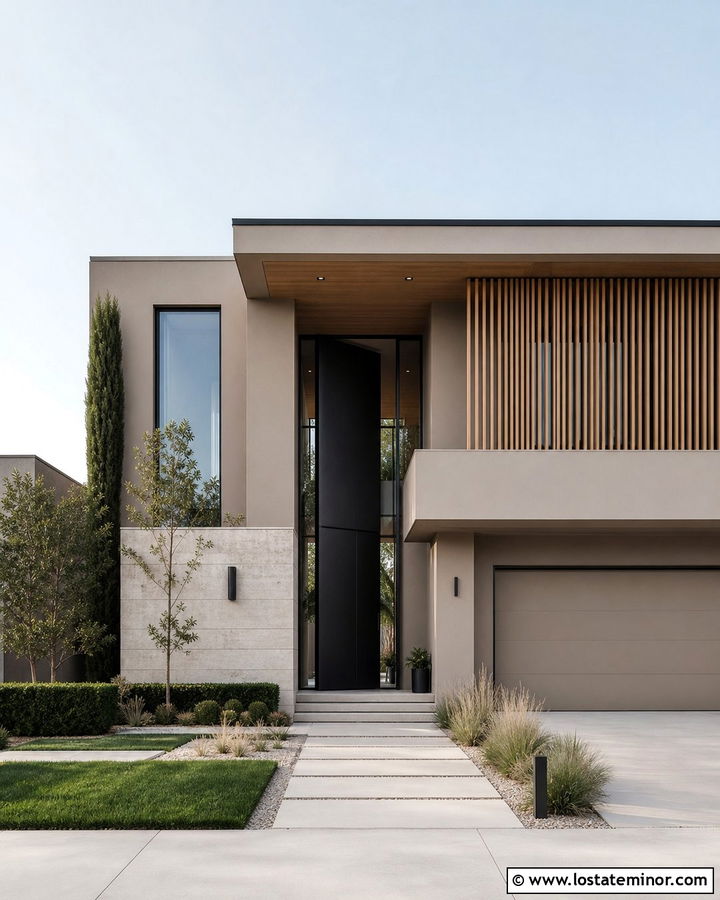
Strong geometric architecture calls for an equally clear entrance. Cover a modern house in smooth medium greige stucco or fiber-cement panels, then install an oversized black pivot door as the focal point. Black window frames, roof edging, and narrow metal reveals can repeat the door color throughout the facade. Add natural oak soffits or vertical wood screening near the entrance to prevent the neutral composition from feeling cold. Light concrete walls and pale gravel create a clean ground plane. If a garage faces the street, match its door to the greige body or use flush wood panels that relate to the soffit. Minimal grasses, clipped shrubs, and broad pavers reinforce the architecture. The complete design feels bold but remains approachable because greige softens the extensive black detailing.
23. Greige Victorian House With Plum Door
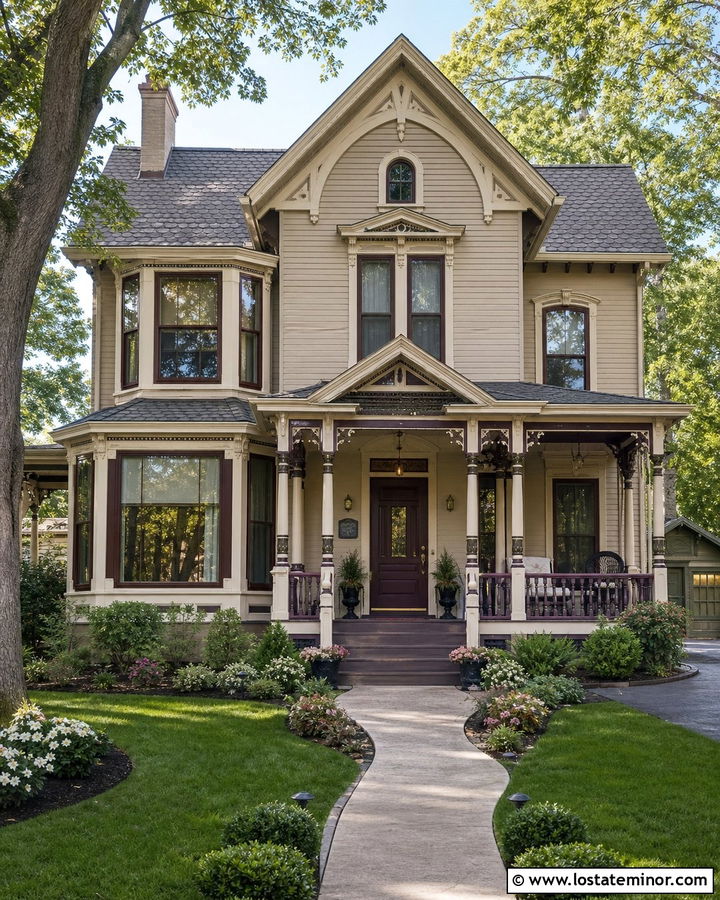
Plum adds historic richness to a greige Victorian without relying on predictable red or green. Select a light warm greige for the main siding, creamy ivory for the decorative trim, and a deep muted plum for the entry door. Use charcoal or dark aubergine sparingly on brackets, window sashes, or porch details to create depth. A variegated gray roof will support the layered colors without introducing another strong hue. Because Victorian architecture already includes visual complexity, limit the palette to three principal paint colors. Traditional brass hardware and a stained porch floor provide additional warmth. Frame the entrance with symmetrical planters and flowering shrubs in restrained colors. This arrangement celebrates the ornate architecture while keeping the overall facade composed, readable, and welcoming from the street.
24. Greige House With Cream Entry Door
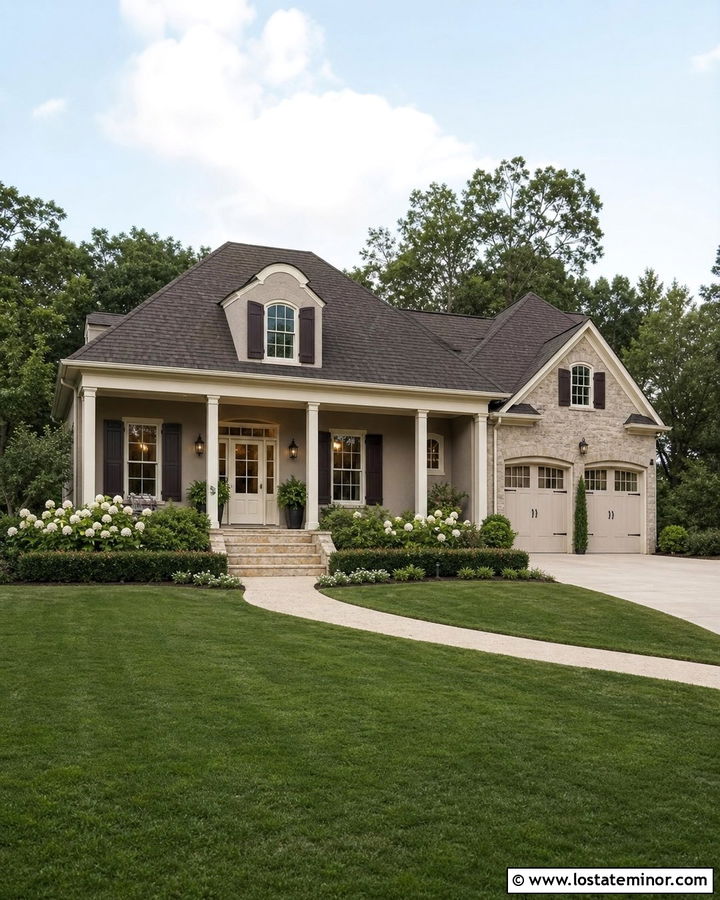
Cream offers a gentle alternative to bright white on a greige exterior. It is particularly useful when the roof, stone, or brick contains warm beige undertones. Choose a medium mushroom greige for the main siding, then paint the entry door, porch columns, window trim, and fascia a soft cream. Add espresso shutters and a deep brown-gray roof to create enough contrast. A door with glass panels and dark bronze hardware will keep the pale entrance from disappearing into the surrounding trim. Use natural limestone or warm brick on the steps to support the color temperature. This palette works on traditional ranch, cottage, and Southern-inspired homes. Full green shrubs, white flowers, and a gently curved walkway complete the calm, welcoming exterior without requiring a bold accent color.
25. Greige House With Mahogany Front Door
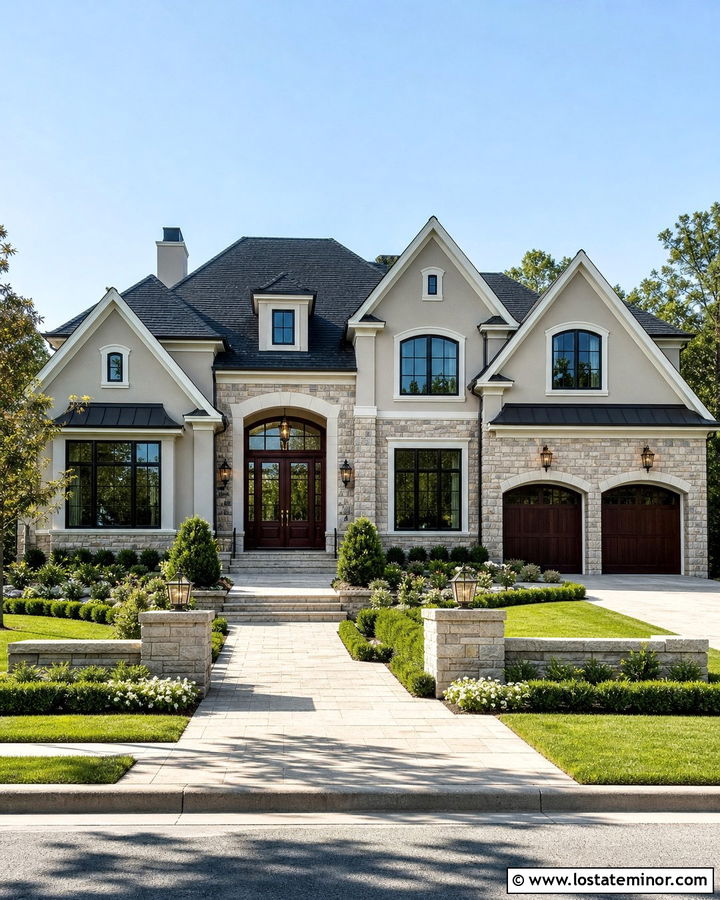
Mahogany adds formal warmth to a large greige house and pairs especially well with substantial brick or stone details. Apply a light neutral greige to the siding, then choose a deep reddish-brown mahogany door with sidelights and a transom. Warm white trim keeps the entry architecture visible, while black windows and a charcoal roof add crisp structure. Select stone containing gray, cream, and limited brown so it complements the door without making the exterior overly warm. Mahogany garage doors can work on a broad facade, but the stain should match the entry precisely. Classic lanterns, dark metal railings, and balanced foundation planting reinforce the upscale appearance. A wide stone walkway leads attention toward the entrance and helps the full palette feel intentionally organized.
26. Greige House With Turquoise Front Door
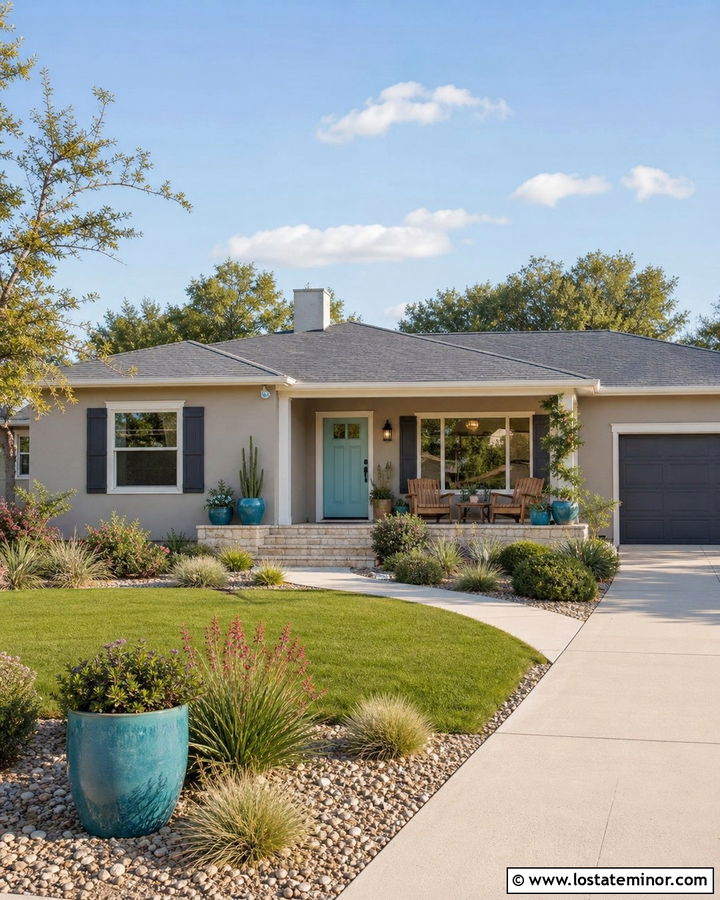
Turquoise can look sophisticated against greige when the color is slightly muted and used in one deliberate location. Start with warm greige siding, ivory trim, charcoal shutters, and a medium gray roof. Paint the entry door a softened turquoise with gray undertones, allowing it to provide energy without overwhelming the neutral facade. This approach works particularly well on a low ranch, casual cottage, or updated Southwestern home. Repeat the door color in one or two small glazed planters, but avoid matching the shutters or garage. Natural wood porch furniture and light stone steps bring the lively accent back to earth. Drought-tolerant grasses, rounded shrubs, and a clean concrete walkway complete a cheerful curb-appeal scheme that still feels balanced and practical.
27. Greige House With Gray-Green Door
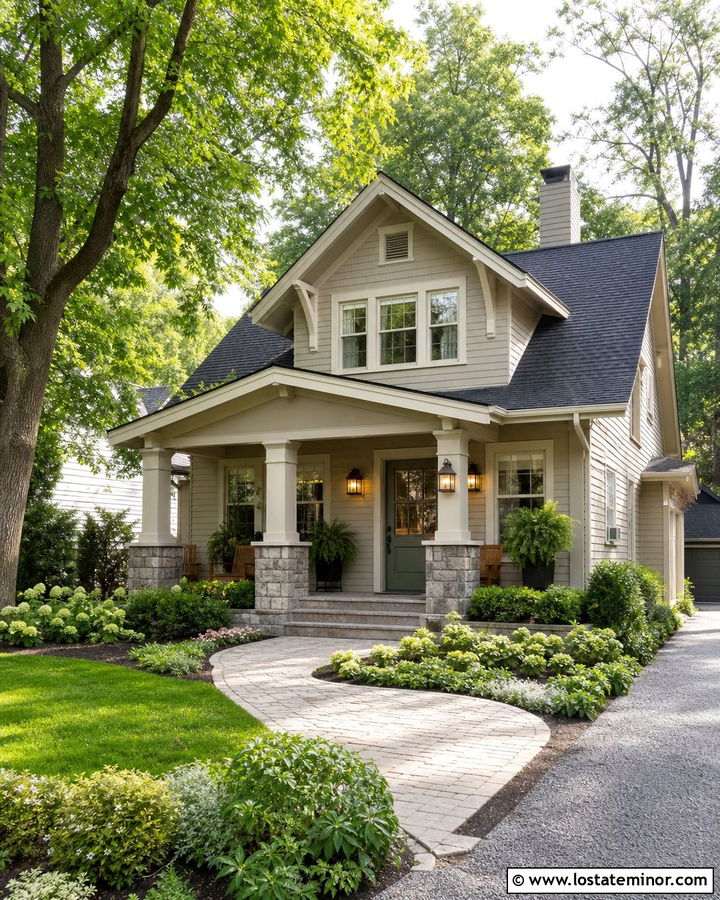
A gray-green front door provides subtle separation for homeowners who prefer quiet exterior color. Pair it with a light mushroom greige body, creamy trim, and a charcoal-gray roof. The green should be deeper than the siding yet desaturated enough to coordinate with mature landscaping. Use the same gray-green on shutters only if the windows need extra visual weight. Otherwise, reserve it for the entrance and repeat it through foliage. A stone porch with gray, taupe, and beige variation connects the natural palette. Bronze lights and warm wood seating keep the scheme from leaning too cool. This combination suits cottages, Craftsman homes, and traditional suburban facades. It creates a welcoming entry while maintaining the restrained appearance that makes a greige house so adaptable.
28. Greige Prairie House With Espresso Door
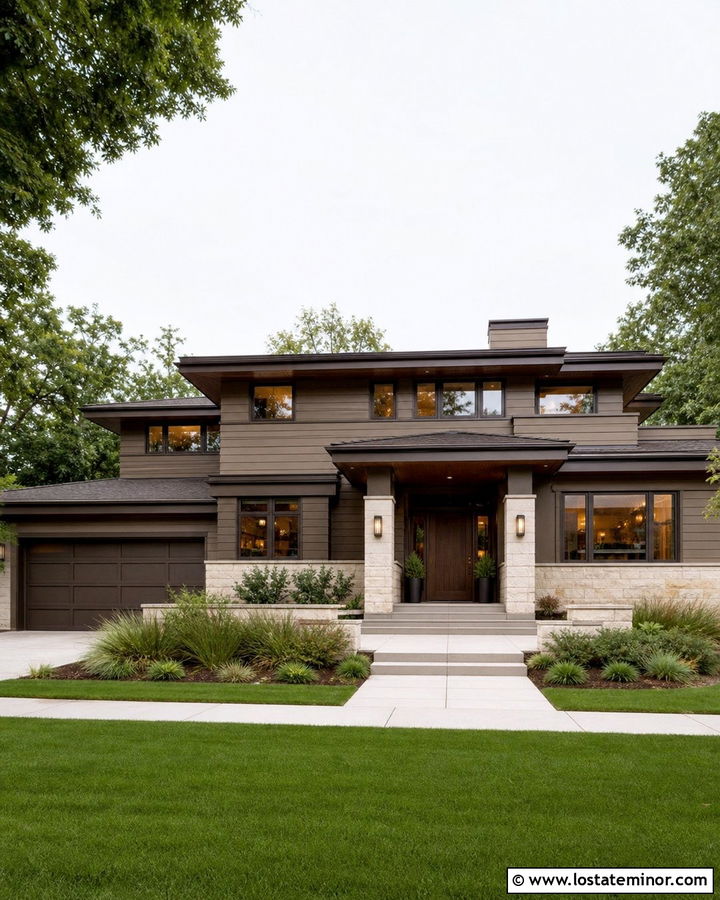
Prairie-style architecture benefits from a low-contrast palette that emphasizes horizontal lines and natural materials. Apply a deep taupe-greige to the stucco or broad siding, then use an espresso entry door beneath the extended roof. Dark brown window frames and fascia can continue the visual line across the facade. Add warm limestone, brick, or stacked stone along the base to lighten the deeper colors. Cedar soffits introduce another organic layer without disrupting the restrained scheme. Keep the garage door close to the body color unless it features matching wood panels. Low ornamental grasses, spreading shrubs, and wide concrete pavers reinforce the horizontal design. The espresso door feels substantial and integrated, giving the entrance presence without relying on sharp black or a highly saturated accent.
29. Greige House With Greige Front Door
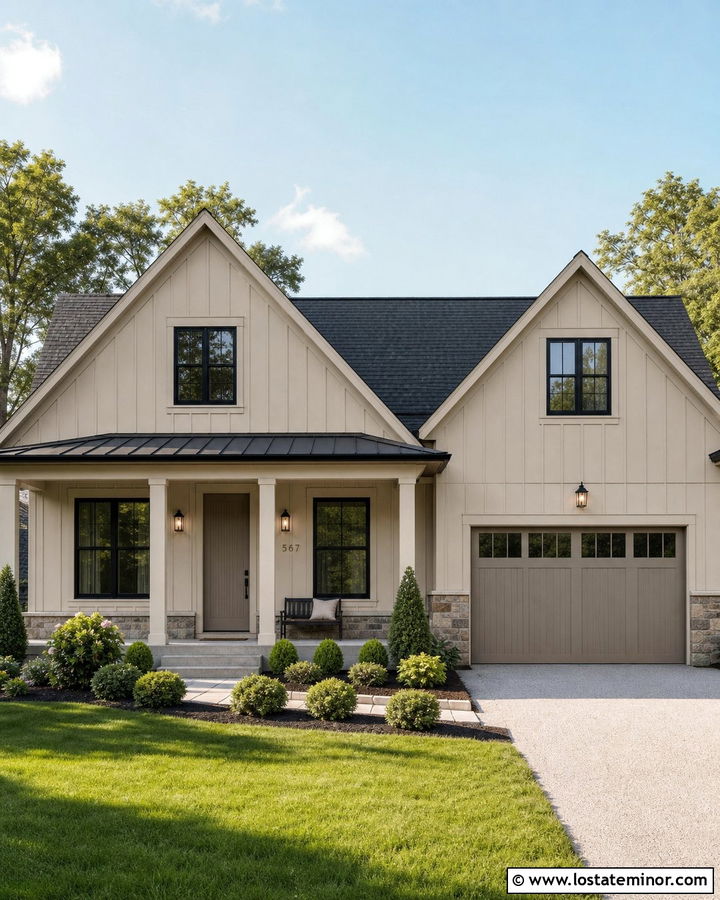
A monochromatic greige entrance can feel modern and sophisticated when variations in value and texture keep the facade from looking flat. Use a light greige on the main siding and a door that is two or three shades deeper. Paint the trim a soft off-white, then add charcoal window frames, roofing, and porch lights for definition. A vertical-groove door or raised-panel design will create visible shadow even though the color remains neutral. Natural stone at the foundation can combine both greige values and visually bridge them. This strategy suits minimalist homes, townhouses, and compact contemporary cottages where a bright door might feel distracting. Neatly layered shrubs, pale pavers, and a simple porch bench complete the controlled palette while preserving a warm, residential character.
30. Greige House With Double Wood Entry Doors
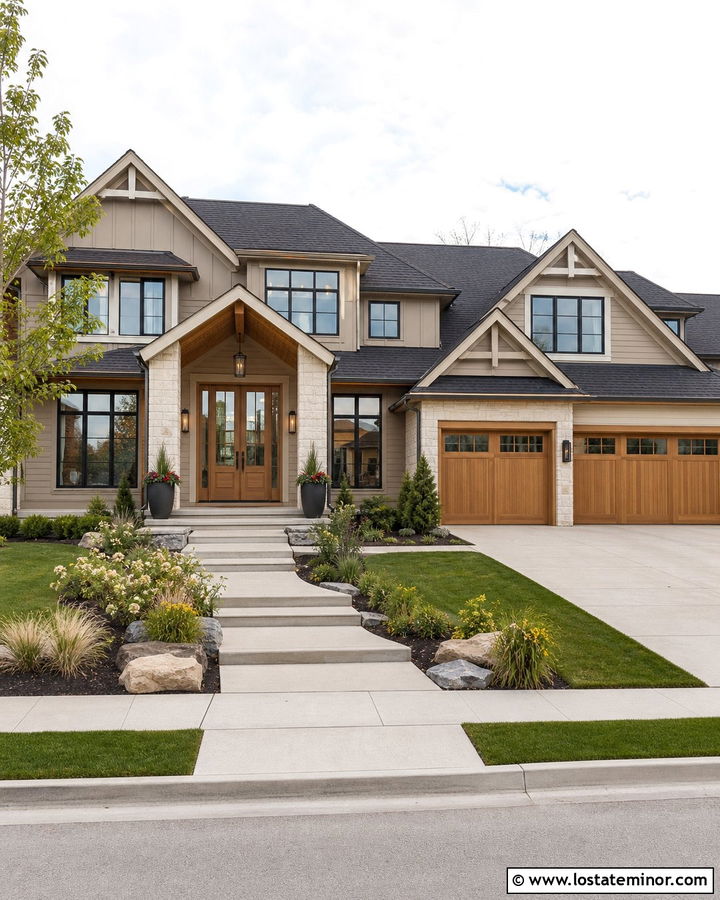
Double wood doors can provide the scale needed for a wide greige facade. Choose medium-light greige stucco or lap siding, creamy white trim, and substantial white oak doors with clear glass panels. Repeat the oak on the porch ceiling or garage doors so the large entrance feels connected to the complete design. Black window frames, lanterns, and a charcoal roof supply a crisp outline around the warm neutral materials. Use pale limestone columns or foundation cladding to add depth without competing with the wood grain. This combination is especially effective on transitional, Mediterranean, and modern Craftsman homes with a centered entry. Broad steps, oversized planters, and a generous walkway emphasize the welcoming proportions while balanced landscaping keeps the grand entrance approachable.
Conclusion:
The most successful 30 Greige House Design With Entry Door Ideas treat the front entrance as part of a coordinated exterior rather than an isolated color choice. Greige siding can support bold black, navy, teal, burgundy, and turquoise doors, but it also works beautifully with quieter cream, olive, charcoal, and gray-green. Natural cedar, walnut, mahogany, and white oak add warmth and texture without depending on bright paint. Before selecting a scheme, compare the proposed colors with the existing roof, masonry, windows, and surrounding landscape. Test large samples on different sides of the home and view them throughout the day. Thoughtful repetition of each door color through small accents will create balanced, lasting curb appeal.

Related posts: