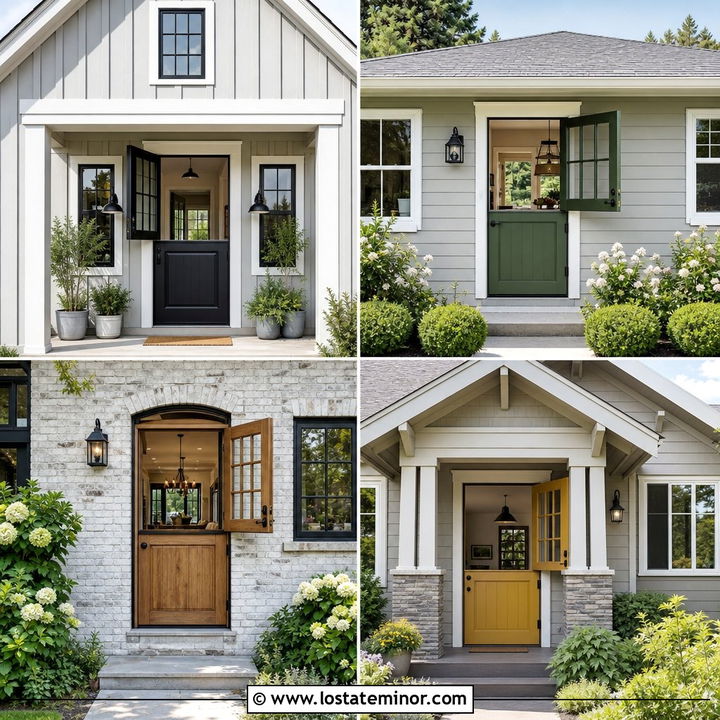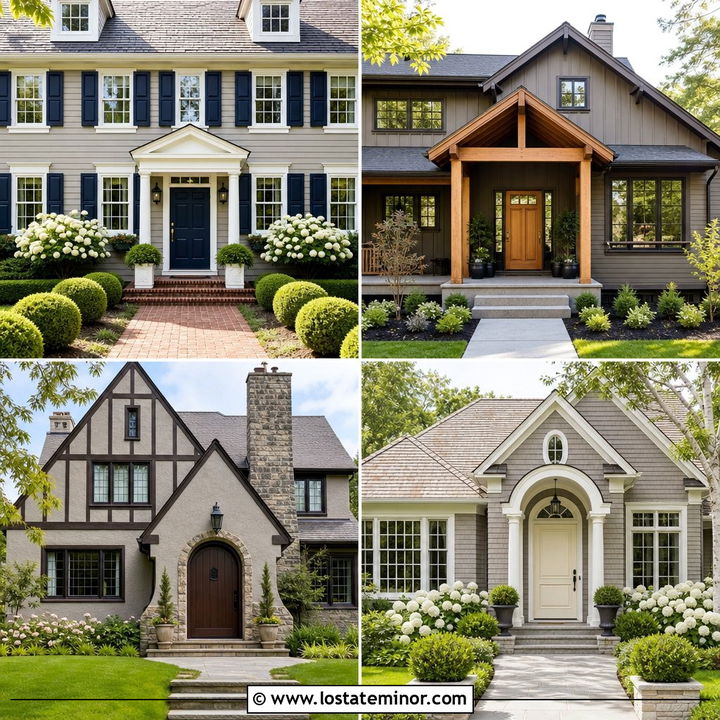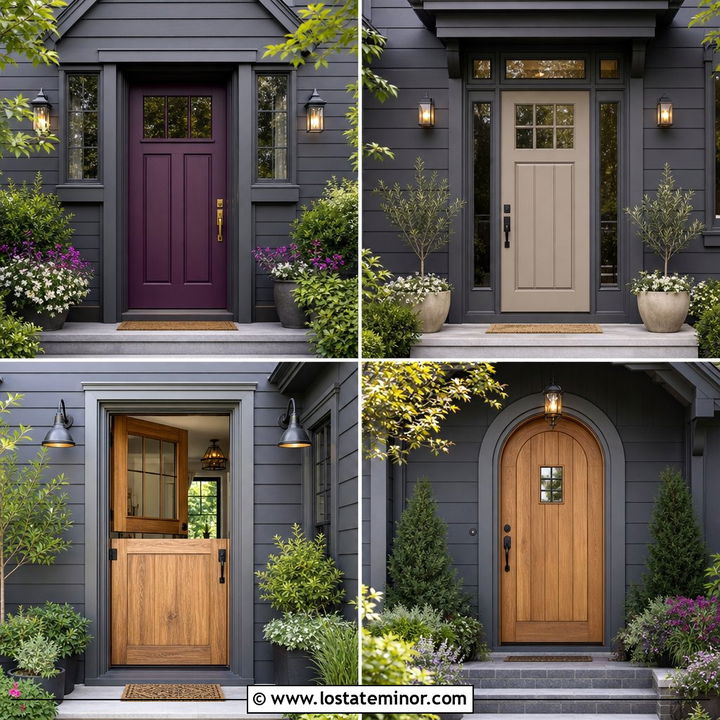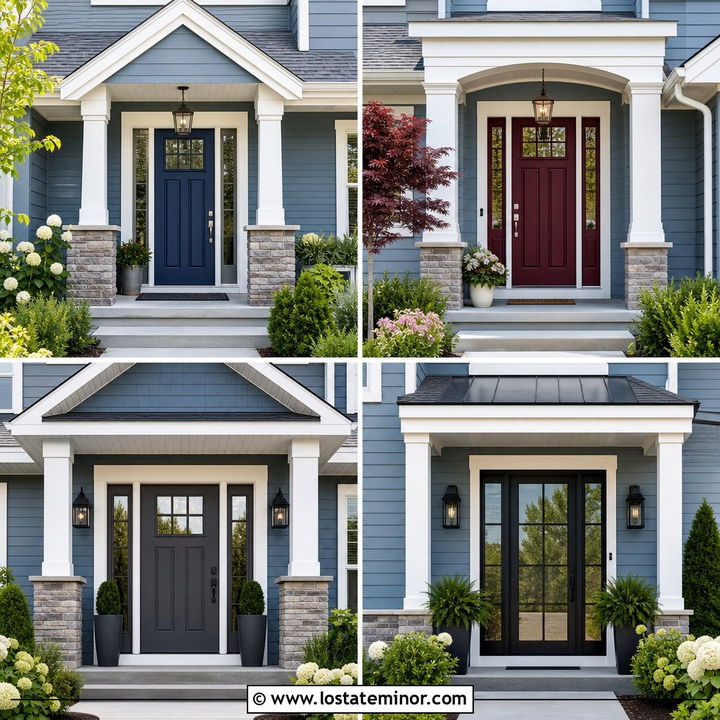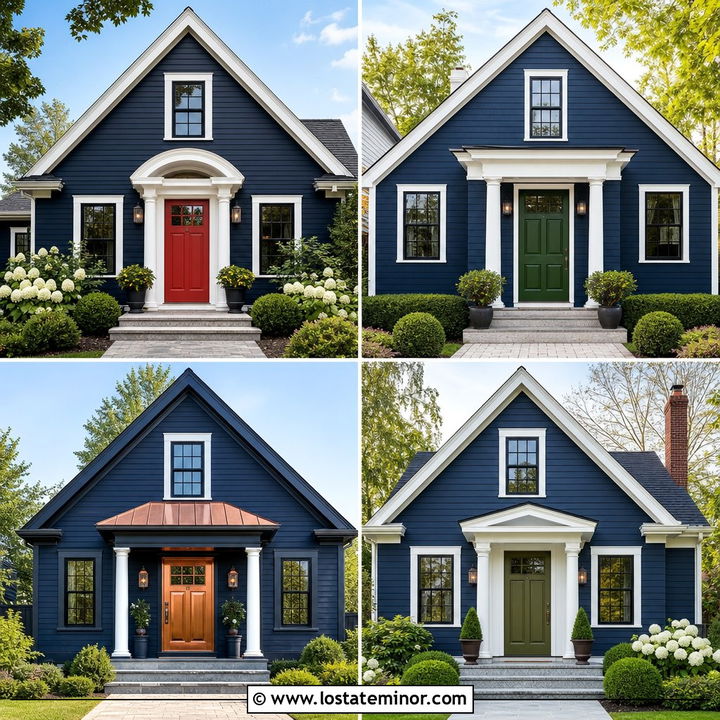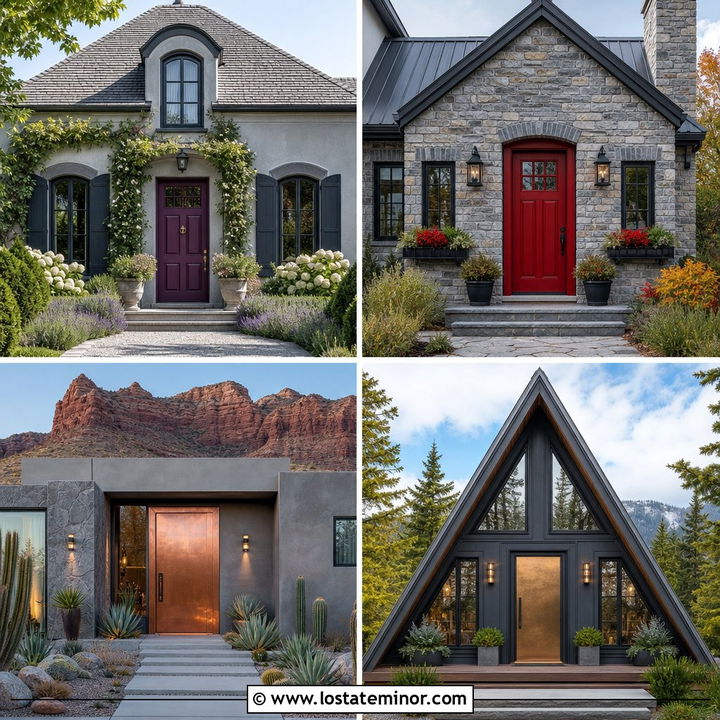
Stone brings natural texture, depth, and lasting character to a home, but the front door determines how welcoming the entire facade feels. The best 30 Stone House Design With Front Door Ideas coordinate the entrance with the stone’s undertones, roof color, trim, windows, and surrounding landscape. Warm limestone may call for stained oak or muted green, while cool gray ledgestone can support black, navy, or rich burgundy. Door shape matters too. Arched entries enhance traditional architecture, while wide glass or pivot doors sharpen modern homes. Current exterior inspiration also favors complete, nature-connected palettes rather than isolated color choices. () Use these complete exterior schemes to explore 30 Stone House Design With Front Door Ideas.
1. Gray Stone House With Black Front Door
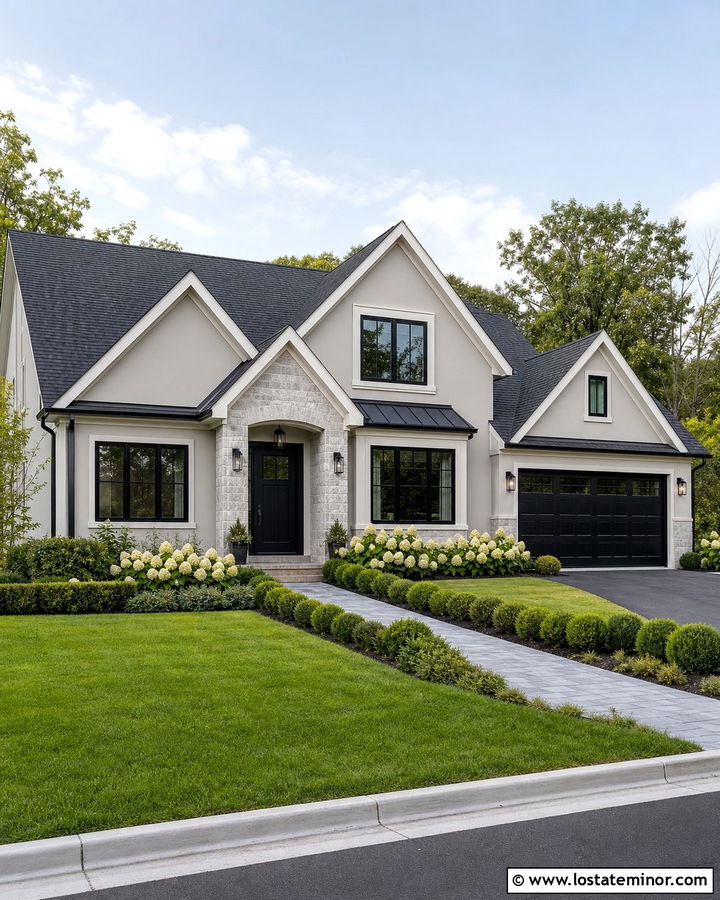
Cool gray stone and a black front door create a crisp exterior that feels polished without becoming overly formal. This scheme works especially well on a two-story transitional home with white trim, black-framed windows, and a charcoal architectural shingle roof. Choose a simple paneled door with narrow glass sidelights so the entrance remains visible against the textured masonry. Matte black lanterns can repeat the door color, while a medium-gray walkway connects the house to the curb. Keep the garage door close to the stone color instead of painting it black. That prevents the garage from competing with the entrance. Low boxwoods, white hydrangeas, and ornamental grasses soften the strong neutral palette and give the complete facade a balanced, welcoming finish.
2. Limestone House With Natural Wood Front Door
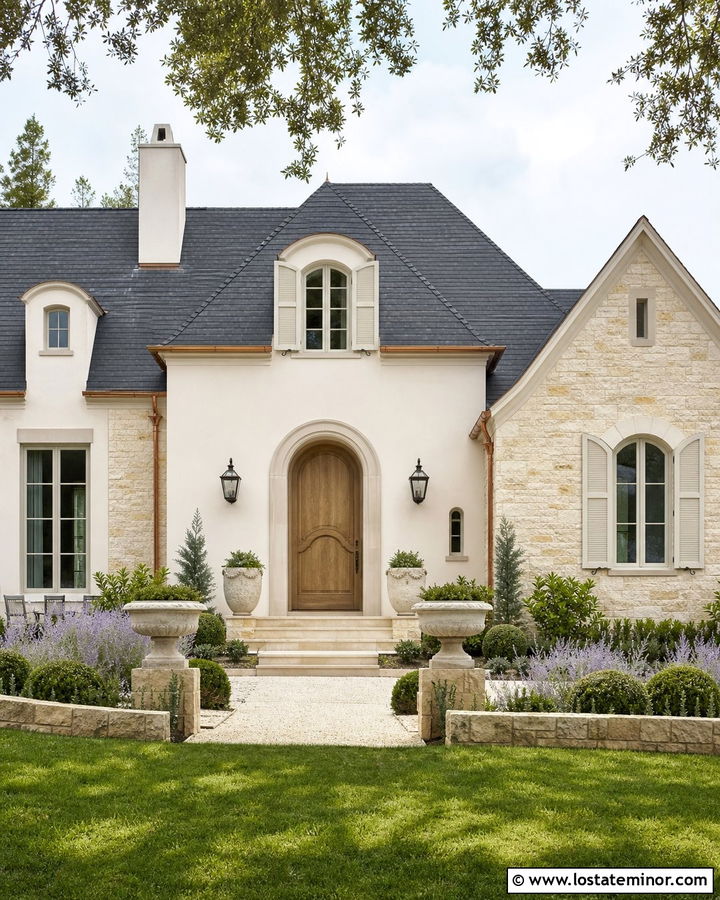
Sunlit limestone becomes warmer and more inviting when paired with a natural wood front door. White oak, cedar, and medium walnut stains all complement the sandy gold, cream, and taupe variations commonly found in limestone. A French country house can carry this combination beautifully with a steep charcoal roof, creamy trim, copper gutters, and an arched plank door. Select a stain that is darker than the lightest stone but not as deep as the roof. This creates definition without producing a harsh contrast. Black iron hardware and lanterns add structure around the entrance. Complete the exterior with pale gravel paths, clipped shrubs, lavender, and weathered stone planters. The result feels established, elegant, and connected to the surrounding landscape.
3. White Stone House With Navy Front Door
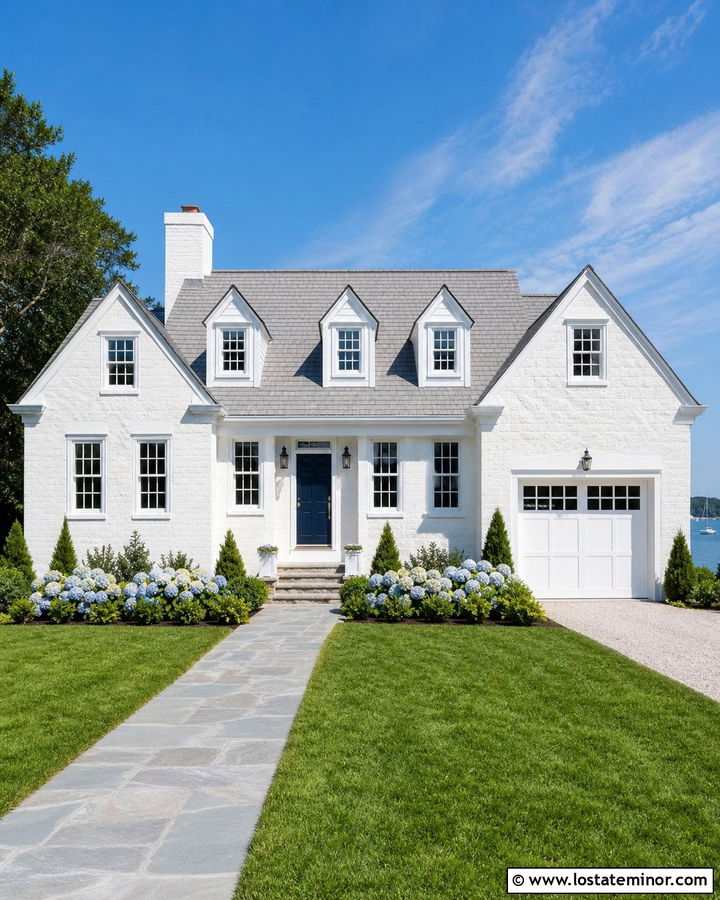
A navy front door gives a white stone house a confident focal point while preserving a bright, clean appearance. This complete scheme suits a Cape Cod or coastal-inspired home with white-painted stone, pale gray shingles, simple white trim, and divided-light windows. Choose a deep navy with subtle gray undertones rather than a highly saturated blue. It will look calmer beside the stone and remain compatible with a range of roof colors. Brushed nickel or polished chrome hardware can bring a light coastal detail to the entrance. Add navy shutters only when the facade needs more visual balance. Hydrangeas, evergreen foundation plants, and a bluestone walkway complete the palette. The blue door feels distinctive, but the white stone remains the main architectural feature.
4. Fieldstone House With Red Front Door
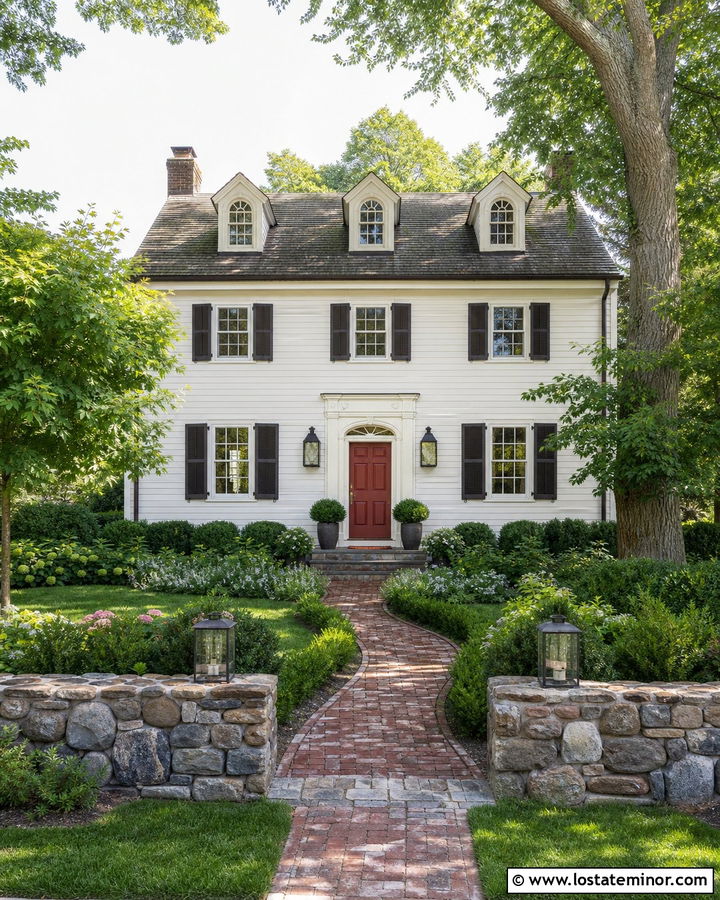
A red front door can energize a traditional fieldstone house when the shade relates to the masonry. Look for a muted brick red, oxblood, or warm cranberry rather than a bright primary red. These deeper hues connect naturally with rusty brown and burgundy minerals in the stone. On a Colonial house, combine the door with cream trim, dark bronze shutters, and a weathered charcoal roof. A rectangular six-panel door keeps the entrance historically grounded, while brass hardware provides a warm finishing touch. Allow the red to stand alone instead of repeating it across shutters or garage doors. A curved brick walkway can echo the door’s warmth. Mature trees, clipped hedges, and layered perennial beds create a classic setting around this strong but controlled exterior palette.
5. Ledgestone House With Sage Green Front Door
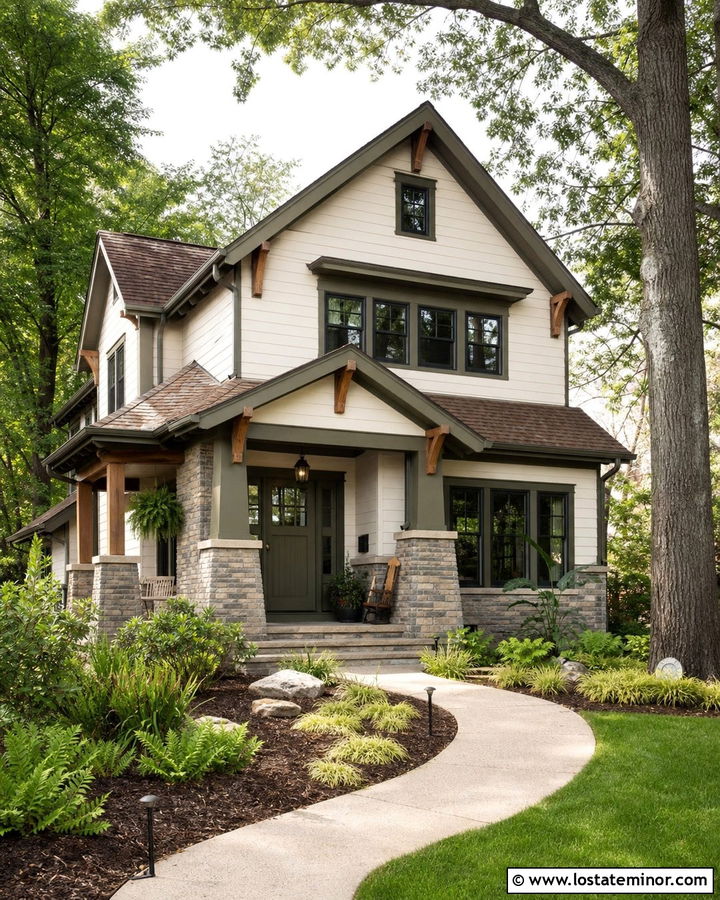
Sage green introduces soft color without fighting the layered texture of ledgestone. It works particularly well when the stone includes gray, beige, and mossy undertones. Use the combination on a craftsman house with warm white siding, deep olive trim, exposed wood brackets, and a medium-brown roof. A craftsman front door with three upper glass panes adds detail while maintaining privacy. Choose a subdued sage that appears slightly darker than the siding but lighter than the roof. Bronze hardware and aged copper lighting reinforce the earthy scheme. Carry the stone onto the porch columns to make the entrance feel integrated with the facade. Ferns, ornamental grasses, and natural mulch can continue the green and brown palette through the landscaping without making the house disappear into its surroundings.
6. Tan Stone House With Dark Brown Front Door
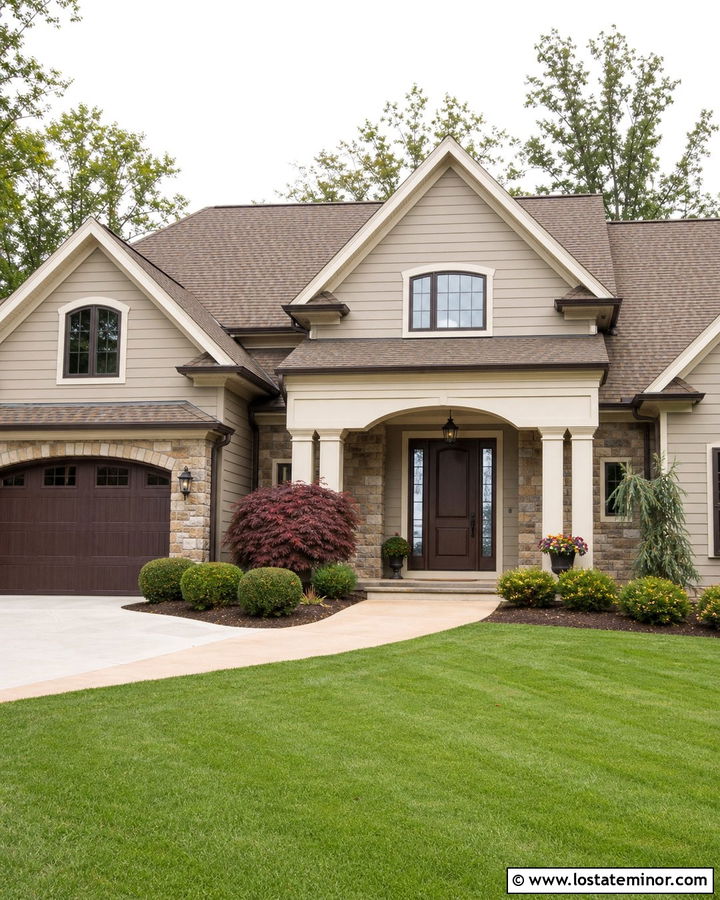
Rich brown creates a grounded entrance on a tan stone house, especially when the facade contains caramel, beige, and soft gold tones. For a traditional suburban home, pair the stone with light taupe siding, creamy trim, dark bronze gutters, and a variegated brown roof. The front door can be painted espresso or stained a deep walnut color. Choose a finish with enough warmth to coordinate with the masonry rather than a nearly black brown. Glass sidelights help separate the dark door from the shadowed porch. Repeat the brown on small details such as porch beams or window boxes, but keep the garage door closer to the siding color. A warm concrete walkway, rounded shrubs, and burgundy foliage give the complete exterior added depth and cohesion.
7. Stacked Stone House With Glass Front Door
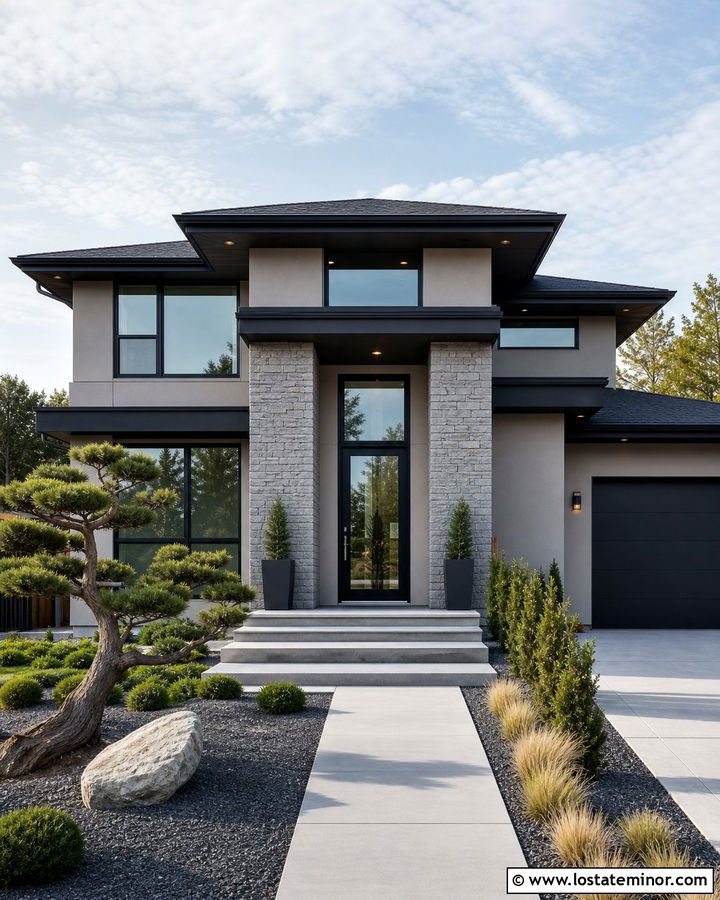
A broad glass front door can lighten the heavy appearance of stacked stone and create a more open modern entrance. This pairing works on a contemporary house with horizontal gray stone, warm greige stucco, black window frames, and a low charcoal roofline. Select a full-light door with a slim black or dark bronze frame. Reeded, frosted, or lightly tinted glass can provide privacy while allowing daylight into the foyer. Keep the surrounding trim minimal so the linear texture of the stone remains uninterrupted. Wide concrete steps and a straight walkway support the clean architecture. Add structured landscaping with ornamental grasses, compact evergreens, and a single sculptural tree. The transparent entrance provides visual relief, while the dark frame connects the door to the windows and roof.
8. River Rock House With Craftsman Front Door
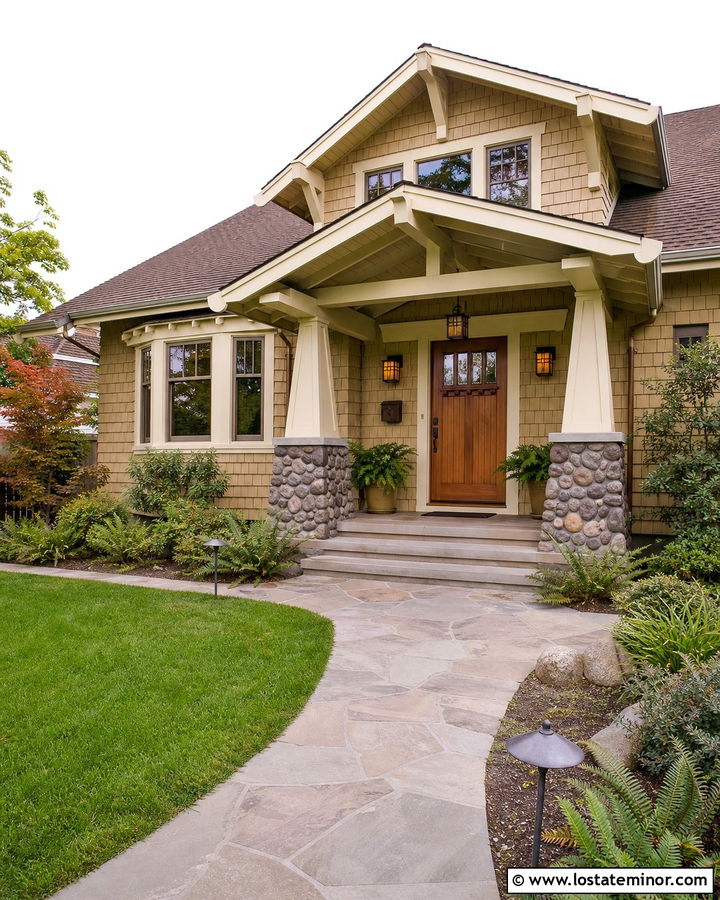
Rounded river rock has a relaxed, handcrafted quality that pairs naturally with a substantial craftsman front door. Use this combination on a bungalow with cedar shake siding, cream trim, tapered porch columns, and a brown shingle roof. A warm fir door with vertical panels and a row of small square windows fits the architecture without looking too decorative. Pull the stain color from the medium-brown rocks rather than the darkest stones. This keeps the entrance warm and visible beneath the porch. Hammered bronze hardware and mission-style lanterns add texture without distracting from the masonry. Extend river rock around the column bases and chimney for a complete look. Native shrubs, ferns, and an irregular flagstone path strengthen the comfortable, nature-inspired curb appeal.
9. Cream Stone House With Arched Wood Front Door
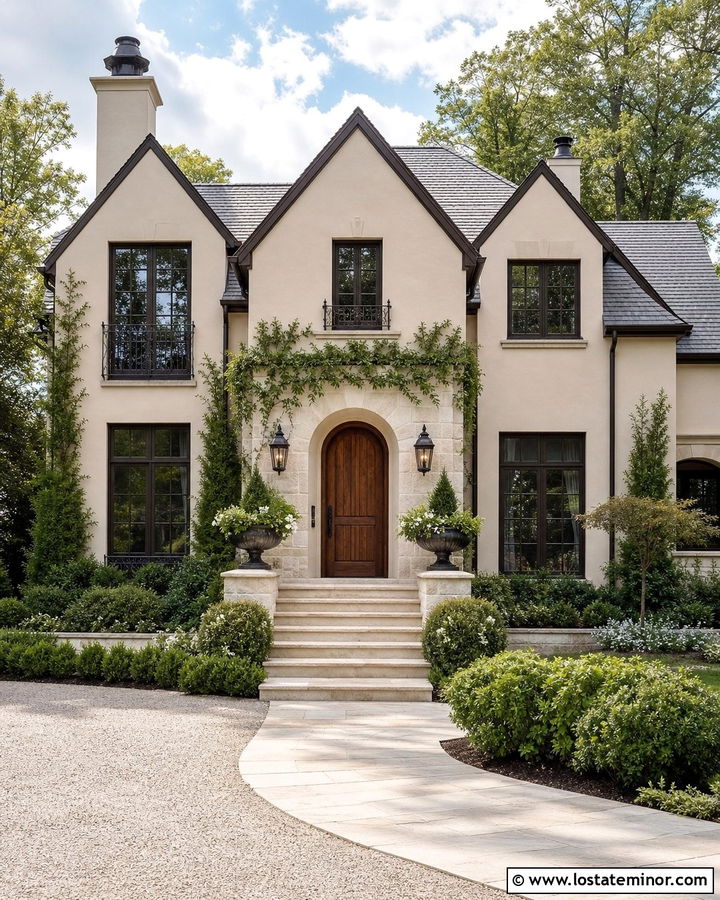
An arched wood front door brings graceful definition to a cream stone exterior. The combination is especially effective on a European-inspired house with limestone walls, a steep gray roof, dark bronze windows, and gently curved architectural details. Choose a medium walnut stain that reveals the wood grain and provides clear contrast against the pale masonry. An inset panel or small speakeasy window can add character, but avoid excessive carving that competes with the stone. Frame the entrance with a simple stone arch so the doorway feels structurally connected to the facade. Dark iron hinges, handles, and lanterns supply a traditional finishing layer. A wide stone stoop, symmetrical planters, climbing greenery, and a softly curved walkway create an entrance that feels elegant rather than imposing.
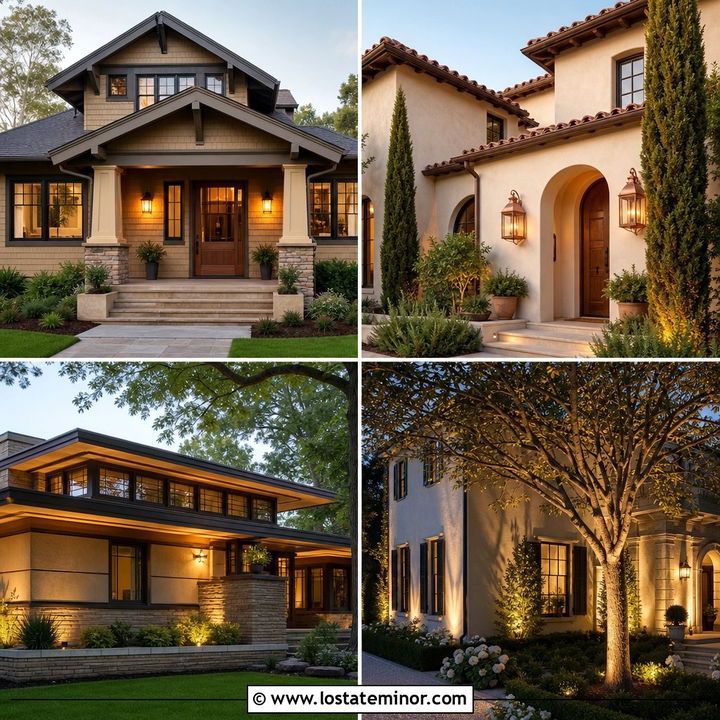
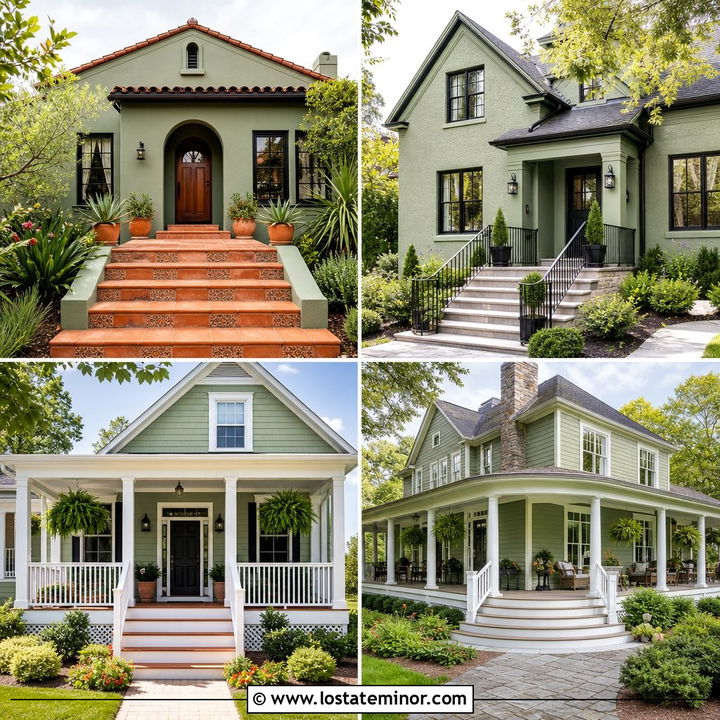
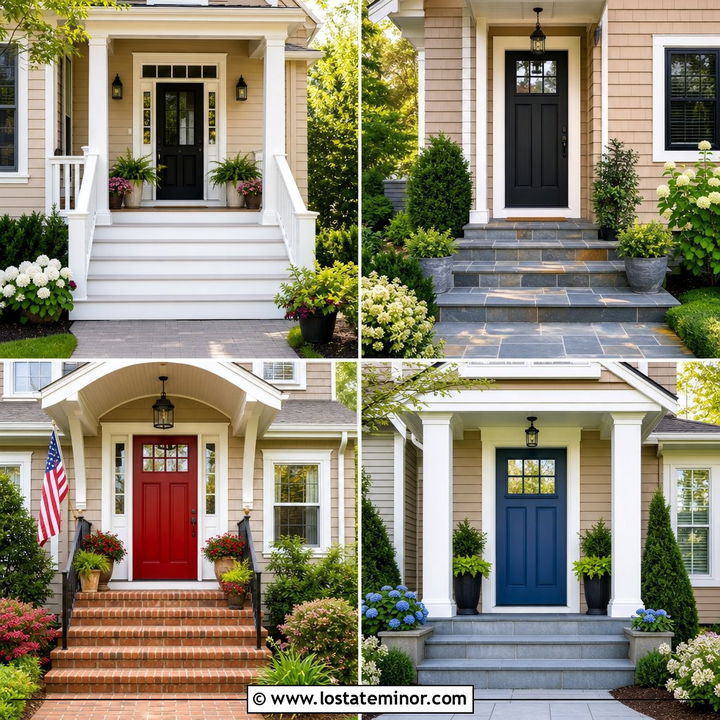
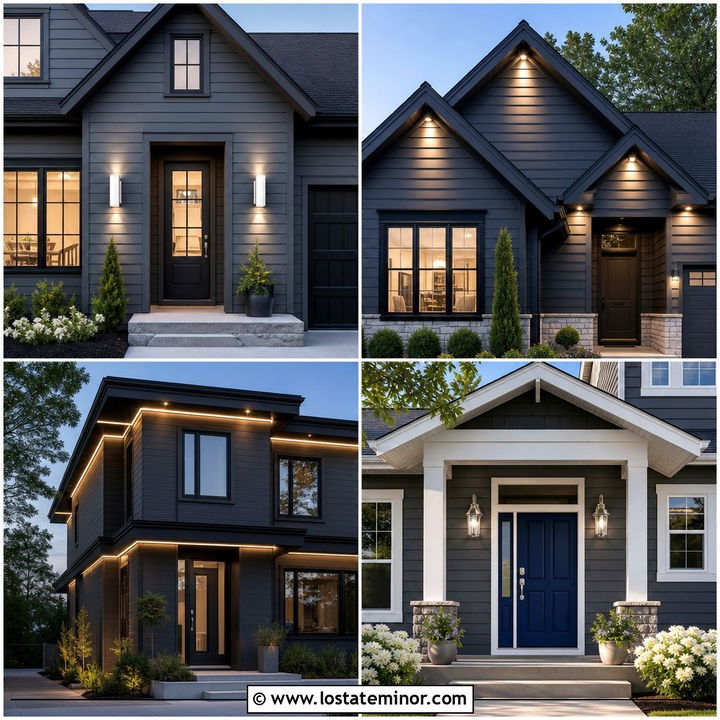
10. Charcoal Stone House With Wood Pivot Door
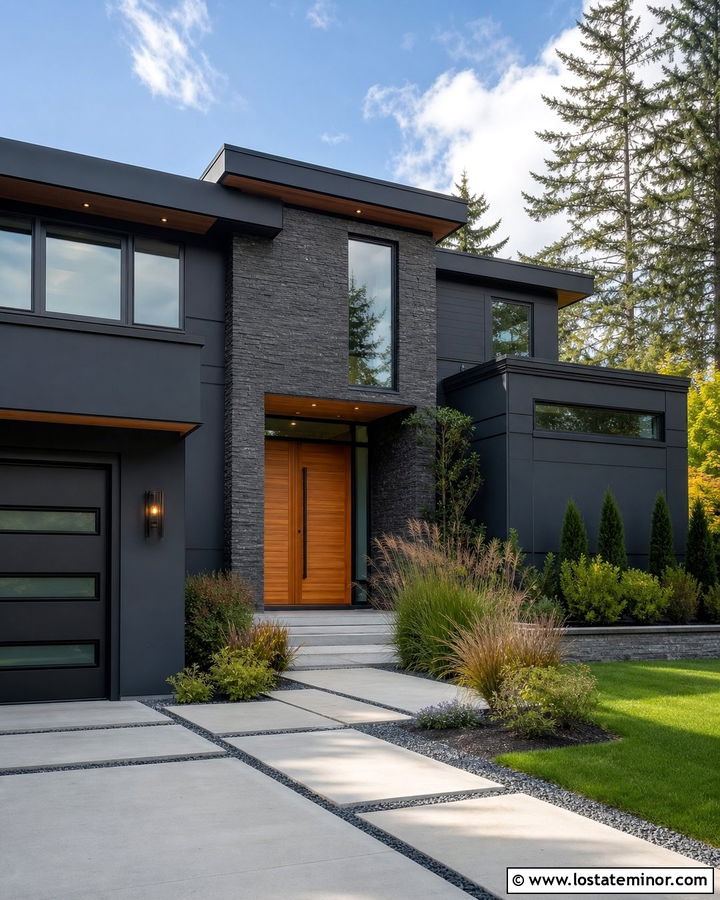
Dark charcoal stone can support an impressive wood pivot door when the remaining exterior stays streamlined. This scheme works on a modern house with flat roof sections, black-framed windows, smooth charcoal siding, and warm cedar soffits. Use a wide pivot door in white oak or teak to break up the darker surfaces. The natural wood becomes the visual center while keeping the palette earthy and sophisticated. A vertical door handle in matte black can connect the entrance to the window frames. Continue the door’s wood tone on one nearby ceiling or privacy screen, but avoid spreading it across every wall. Large concrete pavers, gravel joints, architectural grasses, and restrained foundation planting reinforce the modern composition. The result feels bold, balanced, and welcoming in daylight.
11. Mixed Stone House With Teal Front Door
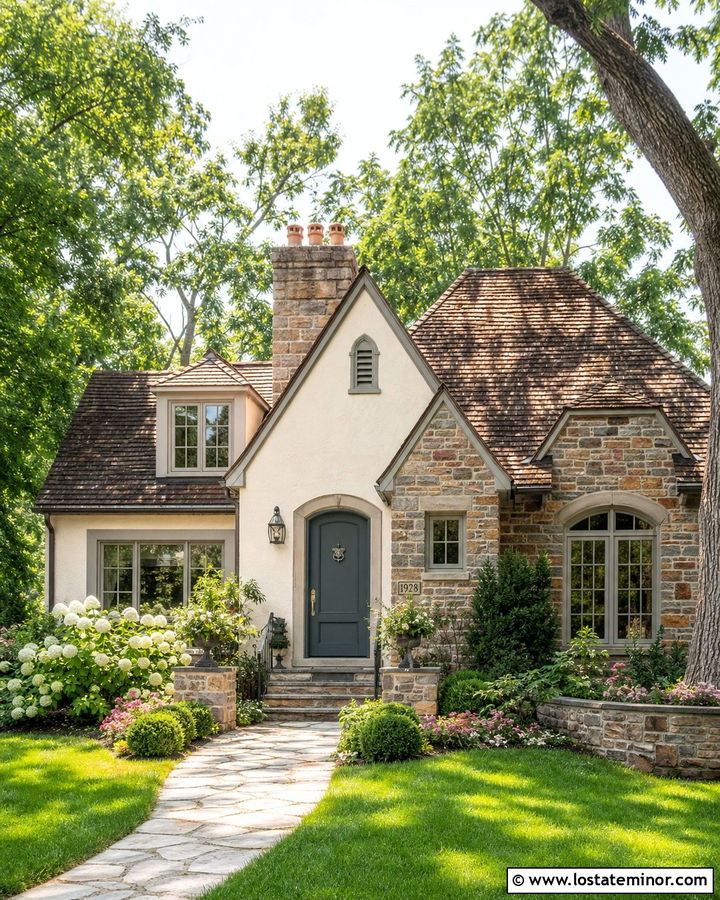
A muted teal front door can unite the varied colors in a mixed-stone facade. Look for a blue-green shade with gray undertones, especially when the masonry combines tan, rust, charcoal, and cream. On an eclectic cottage, pair the stone with warm ivory siding, soft gray trim, and a weathered brown roof. The teal door should offer color without appearing overly bright. A half-glass design with simple panels keeps the entrance casual and approachable. Antique brass hardware introduces warmth that relates to the golden stone. Use the teal only at the front door so it remains a clear destination from the sidewalk. A flagstone path, informal flowering plants, and soft evergreen mounds complete the exterior. This combination feels personal while still respecting the stone’s natural variation.
12. Whitewashed Stone House With Black Double Doors
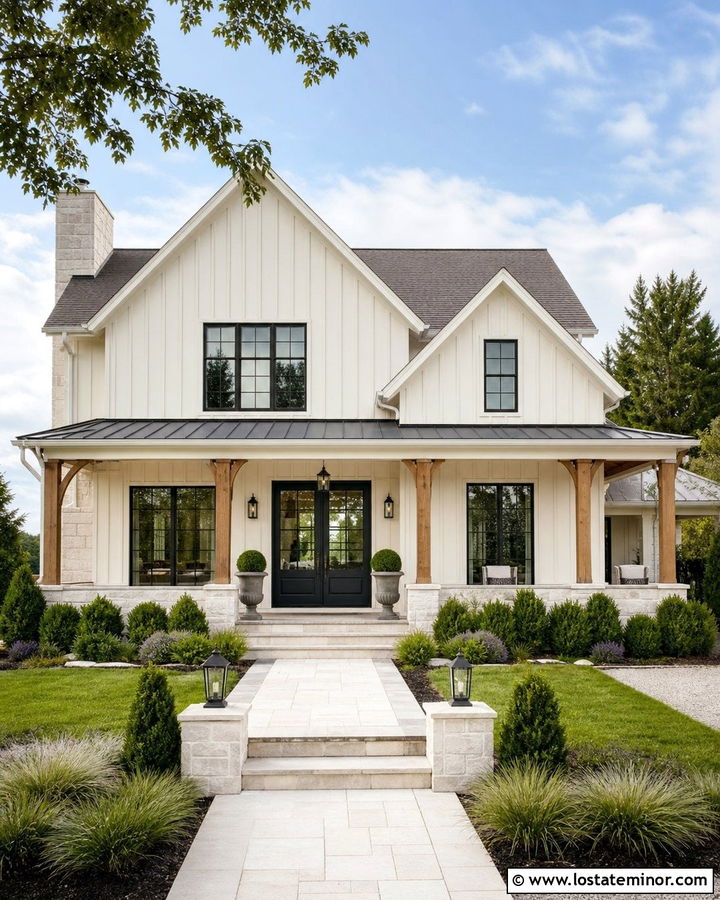
Black double doors provide strong structure against whitewashed stone and can make a broad entrance feel intentionally designed. The scheme suits a modern farmhouse with off-white board-and-batten siding, whitewashed masonry, black windows, and a charcoal metal porch roof. Choose doors with large glass panels and slim black frames to prevent the entrance from looking too heavy. The black should repeat selectively on lighting, gutters, and porch railings. Keep the main roof and garage door quieter so the front entry remains dominant. Natural wood porch ceilings or beams can add warmth between the black and white surfaces. Finish the curb appeal with a straight limestone walkway, symmetrical planters, clipped evergreens, and loose ornamental grasses. The overall look is clean, graphic, and comfortable rather than stark.
13. Rustic Stone House With Dutch Front Door
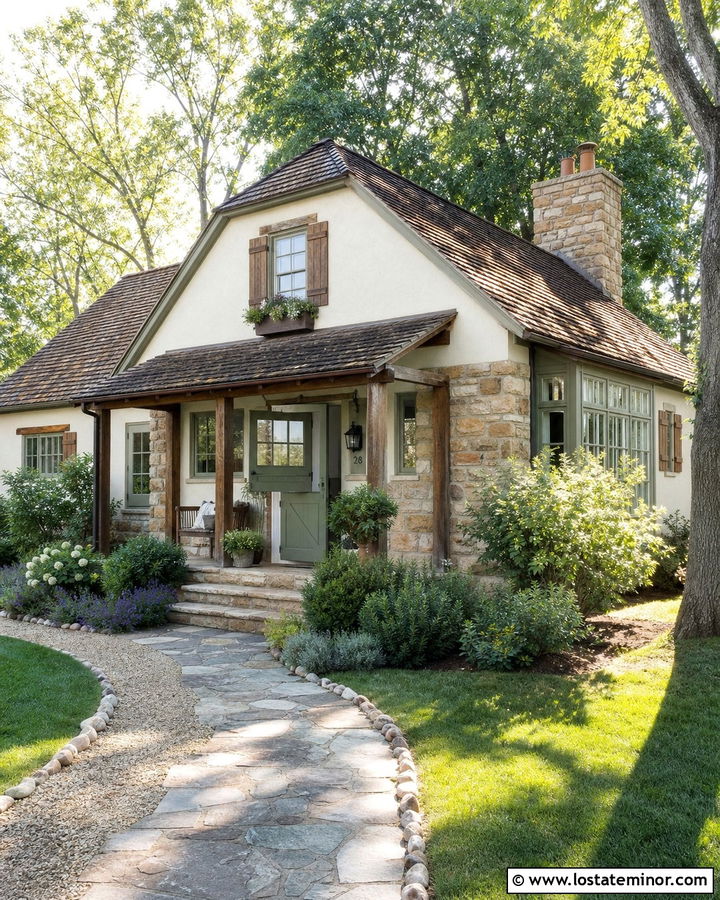
A Dutch front door adds practical charm to a rustic stone house and works particularly well on a country cottage. Pair warm fieldstone with cream-painted siding, muted green trim, cedar shutters, and a weathered brown roof. Paint the divided door a soft olive green or use a medium wood stain that connects with the shutters. The horizontal split adds character, so the panel design should remain simple. A small upper window can bring more light into the entry without changing the traditional appearance. Use dark bronze hardware and understated lanterns to complement the stone. A covered porch, rough timber columns, and stone steps complete the architecture. Informal herbs, flowering shrubs, and a gravel-edged walkway reinforce the relaxed setting while keeping the entrance easy to find.
14. Blue Gray Stone House With Cedar Front Door
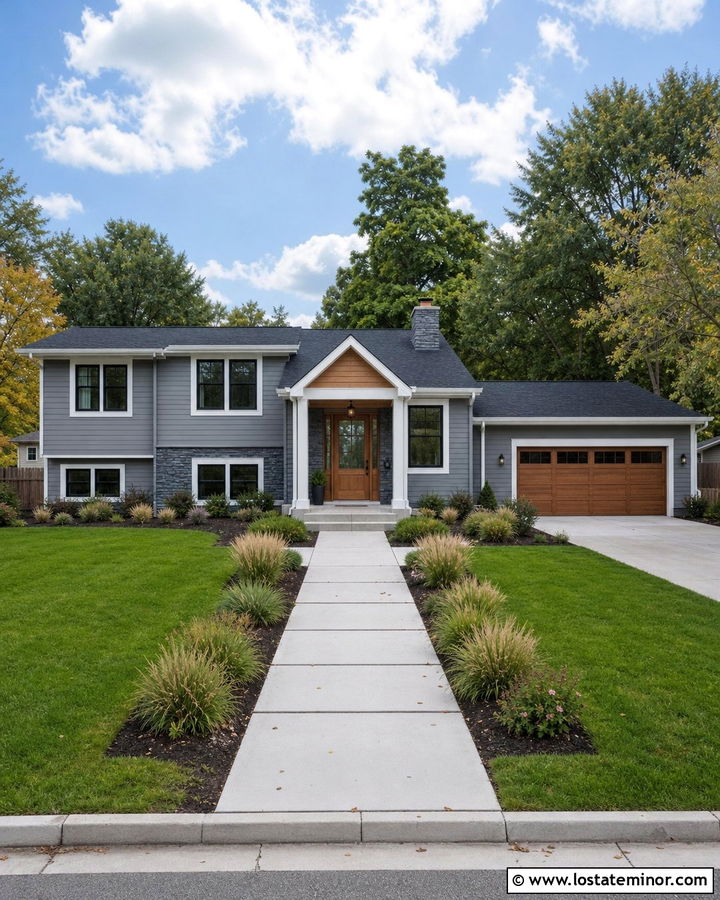
Cedar introduces warmth to blue-gray stone and prevents a cool exterior from feeling flat. Try this pairing on a split-level house with blue-gray siding, white trim, black windows, and a medium charcoal roof. A clean cedar slab door or simple horizontal-panel design can modernize the entrance without requiring major architectural changes. Choose a clear or lightly tinted stain that allows the reddish-gold wood grain to remain visible. Repeat cedar on a small porch ceiling, mailbox, or vertical screen to make the door feel connected to the facade. Black hardware provides a crisp outline and coordinates with the windows. A widened concrete walkway, fresh foundation beds, and low ornamental grasses help update the complete property. The door supplies a warm focal point against the cooler stone and siding.
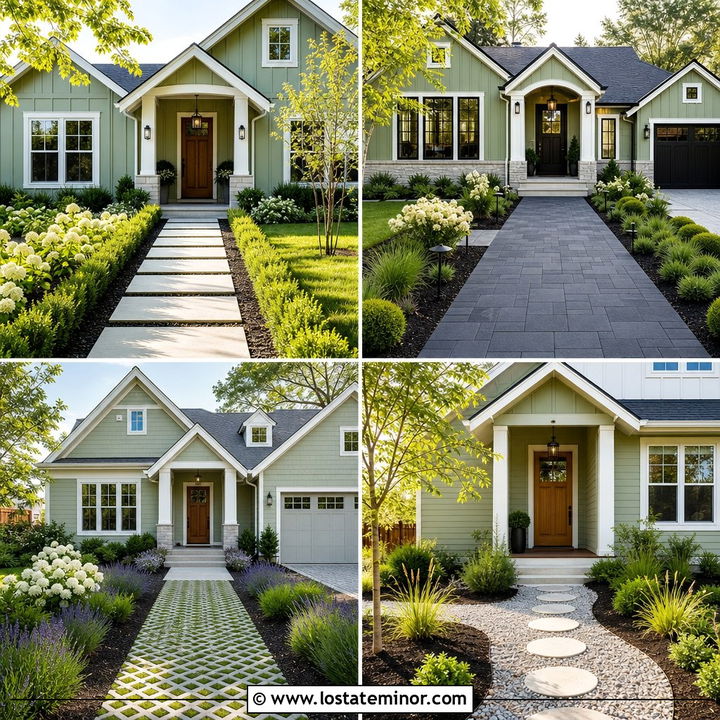
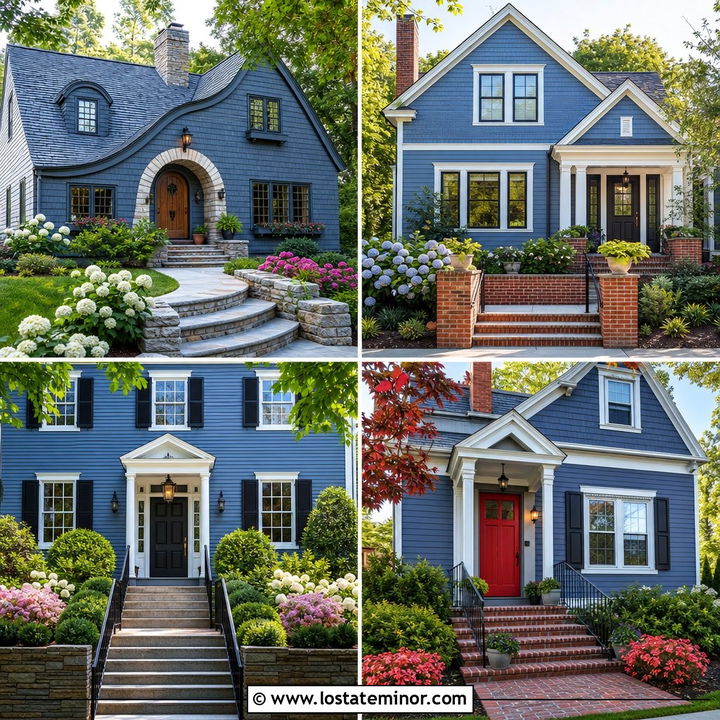
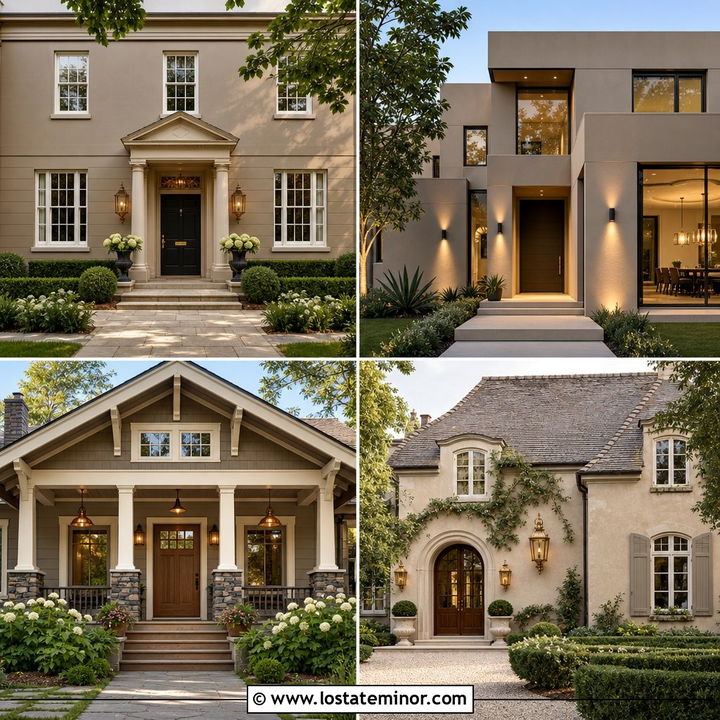
15. Beige Stone House With Olive Green Front Door
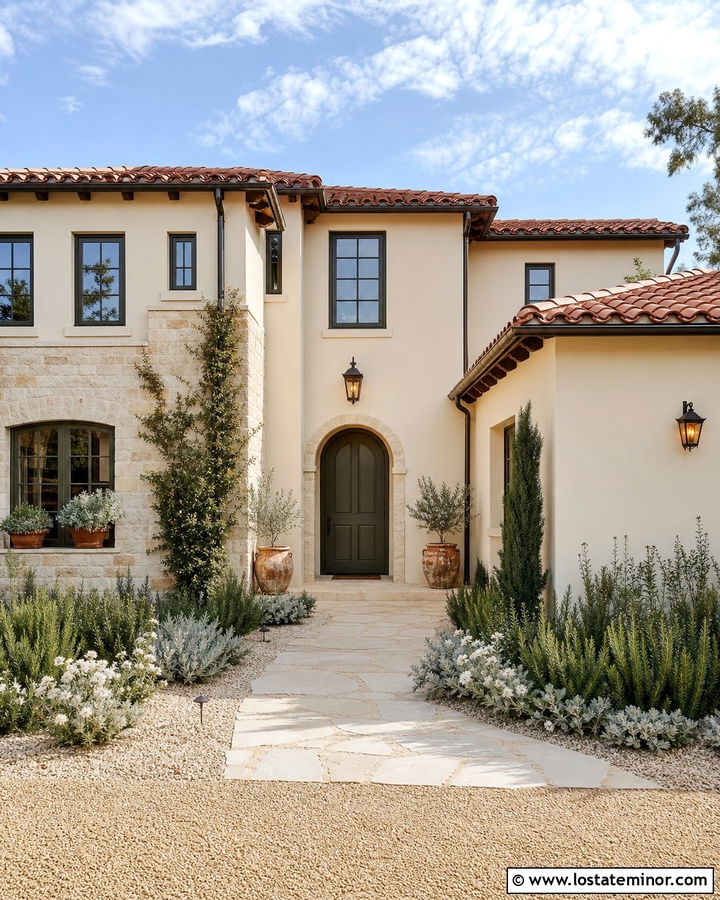
Olive green works beautifully with beige stone because both colors share warm, natural undertones. On a Mediterranean-influenced house, combine sandy stone with warm cream stucco, dark bronze windows, and a muted terracotta roof. A deep olive paneled door gives the entrance color while remaining quieter than emerald or forest green. Consider an arched top or decorative iron grille when it suits the existing architecture. Bronze hardware, aged copper lighting, and large clay planters reinforce the earthy palette. Keep the trim creamy rather than bright white, which can look sharp against the warm masonry. A patterned stone walkway, silvery foliage, rosemary, and drought-tolerant grasses complete the exterior. The green door feels connected to the landscape and gives the light-colored facade a clear center.
16. Granite Stone House With Burgundy Front Door
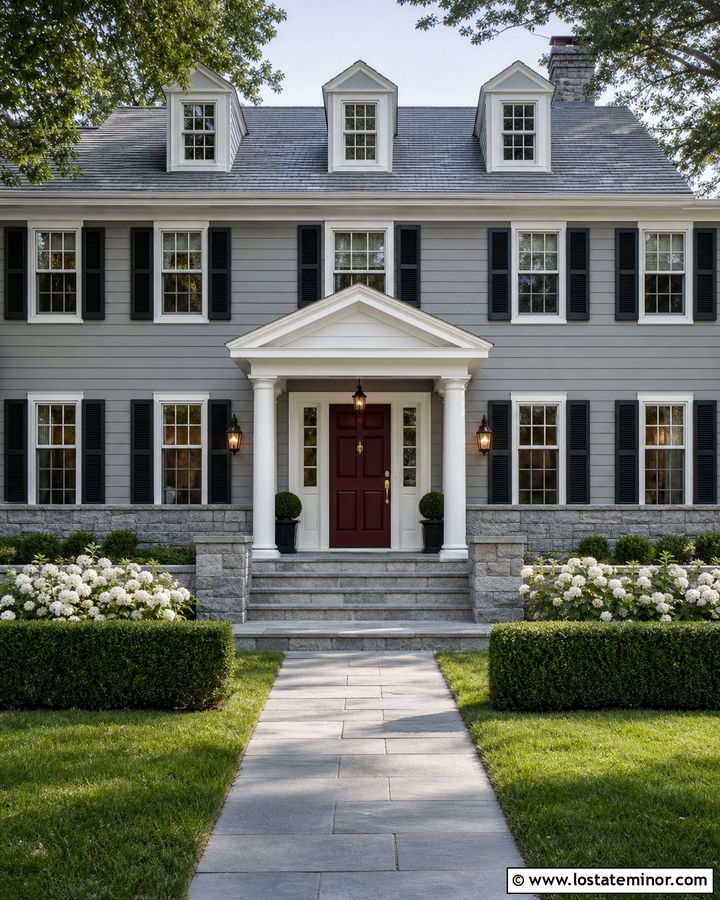
Granite often contains cool gray, black, silver, and occasional reddish mineral notes, making burgundy an unexpectedly compatible door color. Use this scheme on a substantial Colonial Revival house with gray granite walls, crisp white trim, black shutters, and a dark slate roof. Select a deep wine-red or oxblood door rather than a brighter cherry shade. The darker color feels appropriate beside the weight and texture of granite. A classic six-panel door with polished brass hardware keeps the entrance refined. Add a white portico or simple pediment to separate the door from the busy stone pattern. Symmetrical lanterns, granite steps, and a straight walkway reinforce the formal layout. Boxwoods and seasonal white flowers can soften the facade without weakening its strong architectural character.
17. Stone Cottage With Dusty Blue Front Door
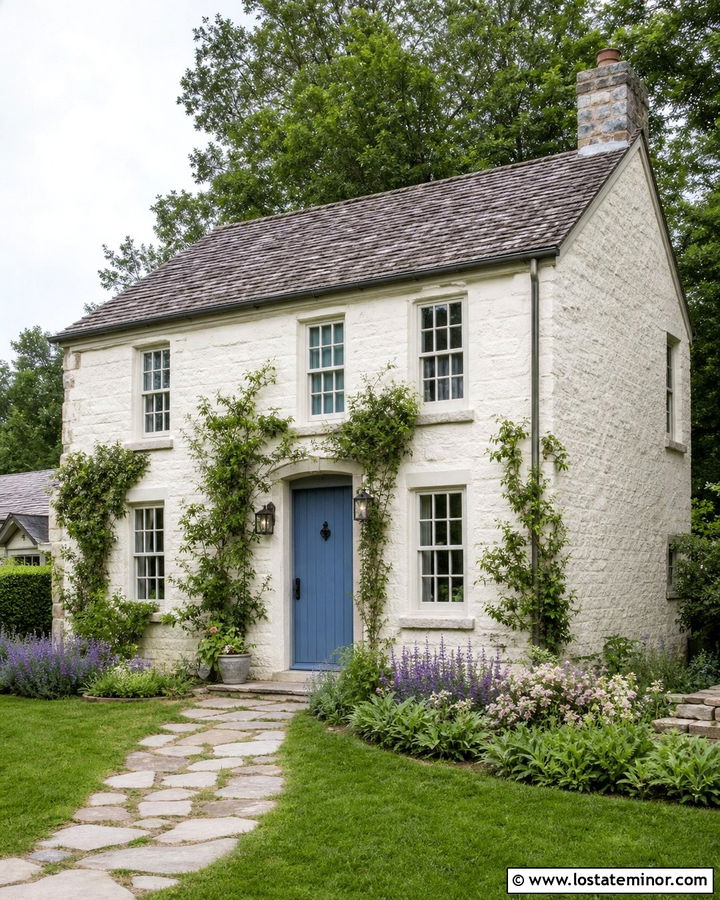
A dusty blue door gives a small stone cottage a gentle focal point that feels colorful but not overly playful. Pair warm gray rubble stone with soft cream trim, a weathered cedar or gray shingle roof, and compact divided-light windows. The best blue will contain enough gray to coordinate with the masonry. A vertically paneled door with a small upper window fits the cottage scale and allows the stone to remain prominent. Use aged brass or dark bronze hardware for warmth. If shutters are present, paint them a slightly deeper blue-gray rather than matching the door exactly. An irregular flagstone path, climbing vines, lavender, and loose perennial borders create an inviting transition from the yard. The complete exterior feels collected, natural, and pleasantly understated.
18. Stone Ranch House With Burnt Orange Front Door
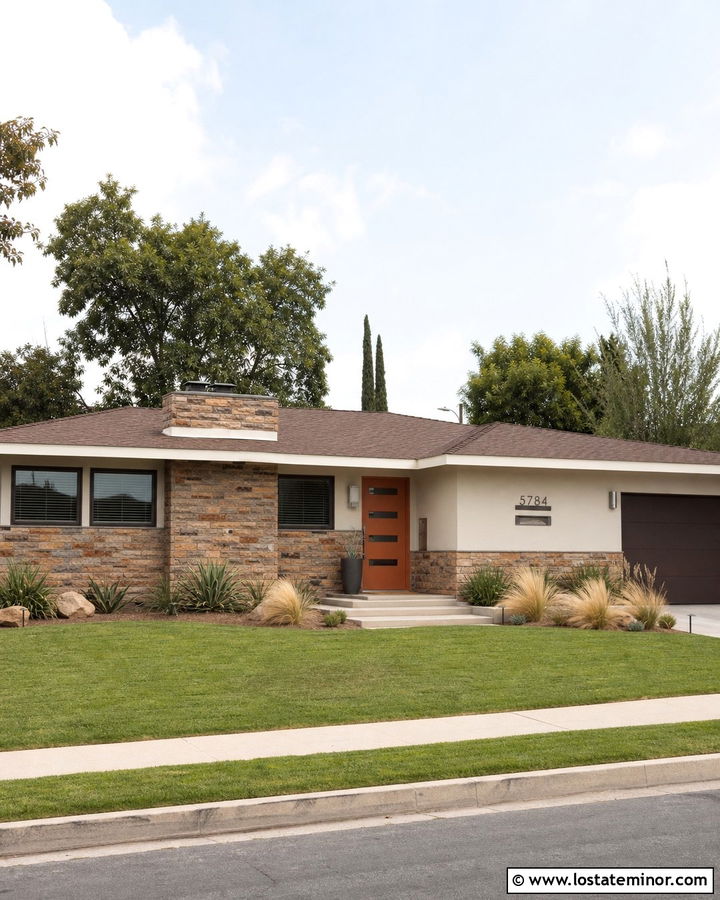
Burnt orange can refresh a low stone ranch house by bringing warmth and visibility to its long horizontal facade. Choose a muted clay or terracotta shade that relates to brown, rust, and gold tones in the stone. Combine it with warm greige siding, cream trim, bronze windows, and a medium-brown roof. A simple flush door with three narrow vertical windows gives the entrance a subtle midcentury influence. Repeat the orange only in small landscape details, such as clay planters or copper-toned grasses. Keeping the garage door close to the siding color will prevent it from overpowering the entry. Wide concrete steps, horizontal address numbers, and layered drought-tolerant planting complete the update. This warm door color adds personality while respecting the ranch home’s simple proportions.
19. Colonial Stone House With Forest Green Front Door
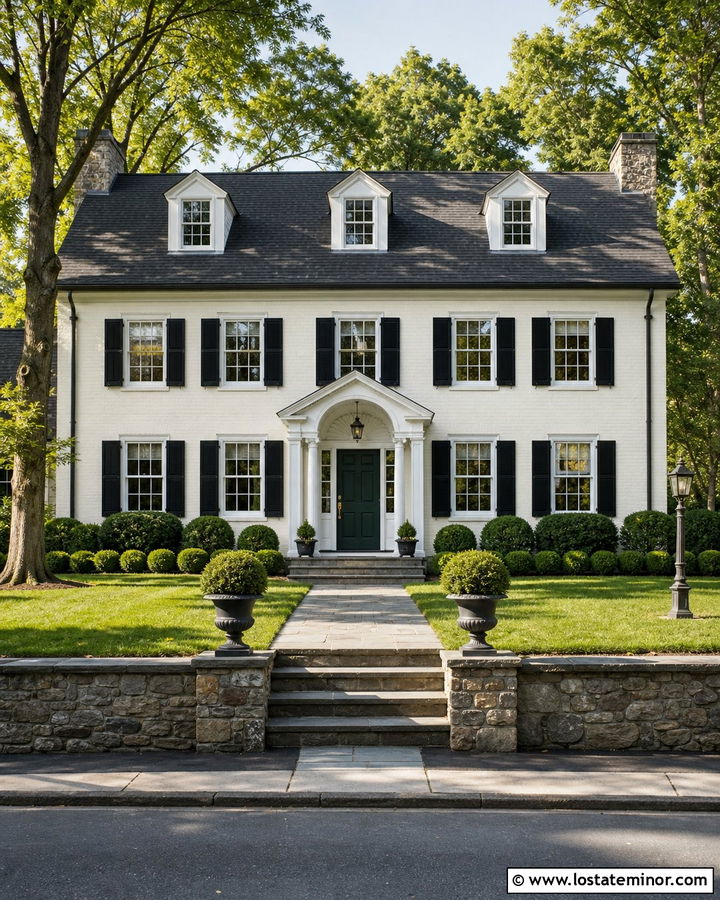
Forest green gives a Colonial stone house a traditional, settled appearance that works through every season. Use it with gray-brown fieldstone, warm white trim, black shutters, and a dark charcoal roof. The door can feature six raised panels, a brass knocker, and polished brass hardware for a historically inspired entrance. Choose a green deep enough to create contrast but not so dark that it reads as black beneath a porch. A white door surround or modest portico will help define the entry against irregular masonry. Keep other painted accents limited to black and white so the stone and green remain the focus. Brick or bluestone paths, clipped boxwoods, and symmetrical urns support the orderly architecture. The complete facade feels welcoming, balanced, and comfortably familiar.
20. Farmhouse Stone House With Warm Gray Front Door
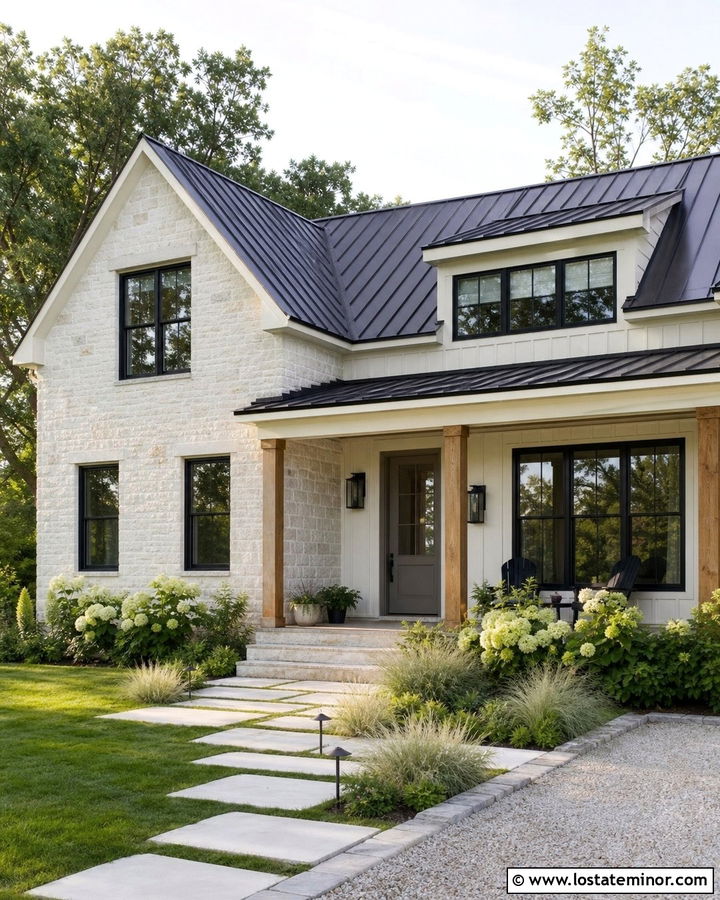
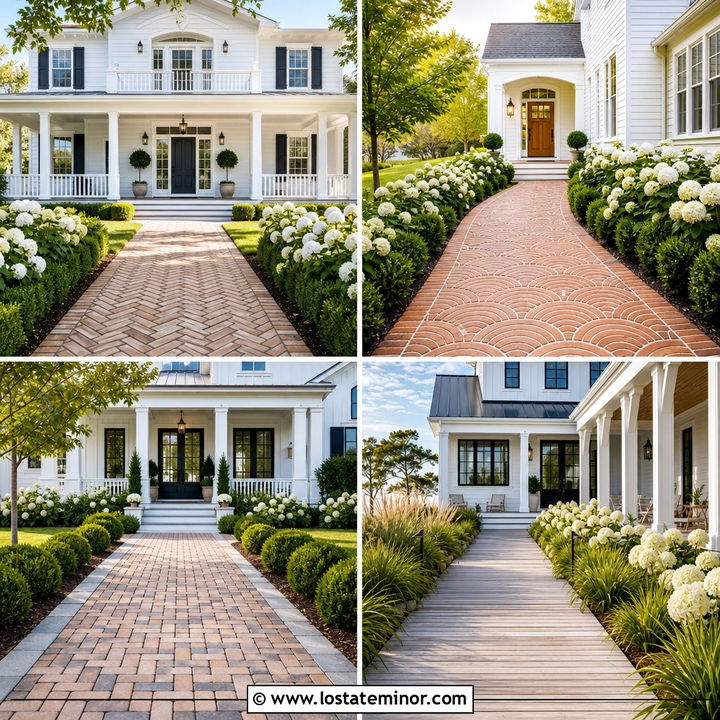
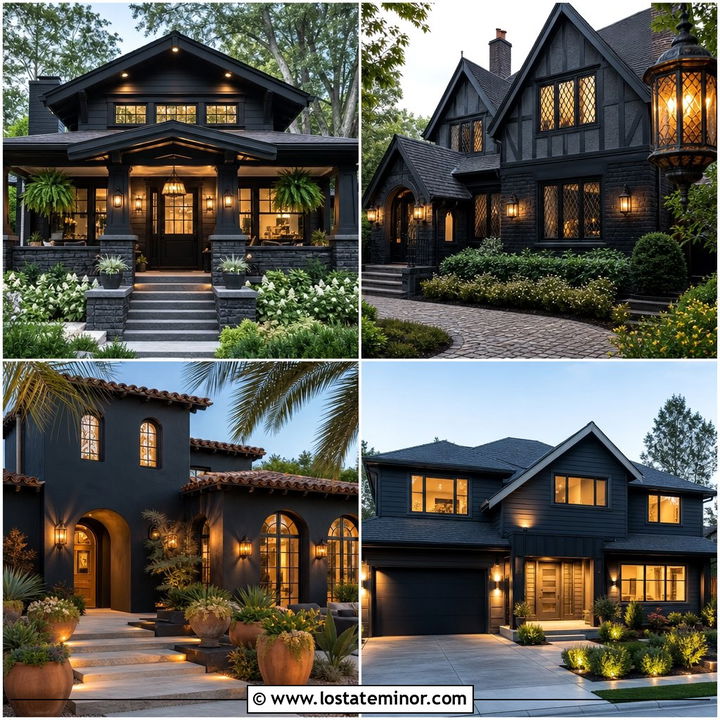
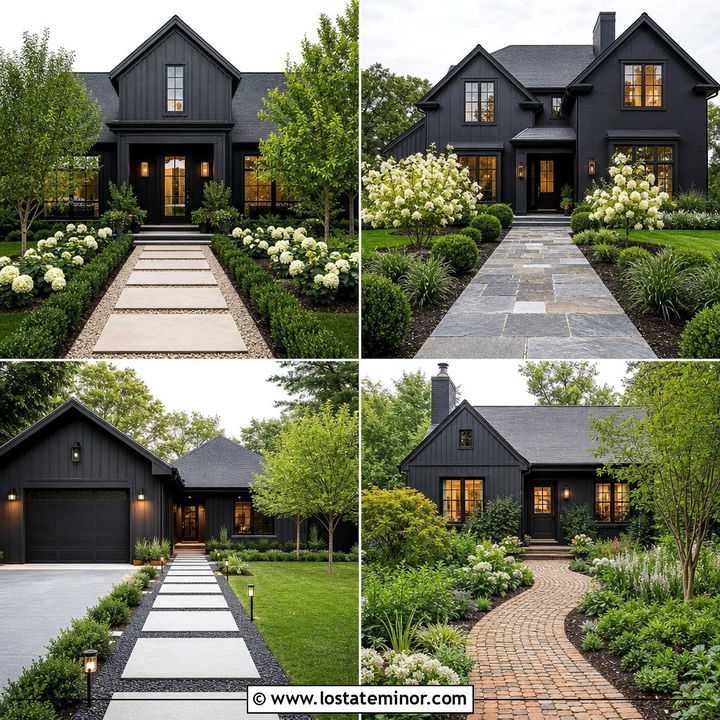
A warm gray front door creates a quiet, layered palette on a stone farmhouse without relying on bold contrast. Pair pale limestone or whitewashed stone with creamy board-and-batten siding, soft white trim, and a weathered charcoal metal roof. Select a medium greige-gray door that is clearly darker than the walls but warmer than the roof. A simple four-panel design with upper glass panes keeps the entry practical and unpretentious. Natural wood porch posts and a light oak ceiling can prevent the neutral scheme from feeling washed out. Use black only for thin window frames, lighting, and hardware. A gravel driveway, broad stepping-stone path, hydrangeas, and airy grasses complete the relaxed exterior. This restrained combination lets the texture of the stone provide most of the visual interest.
21. Modern Stone House With Bronze Front Door
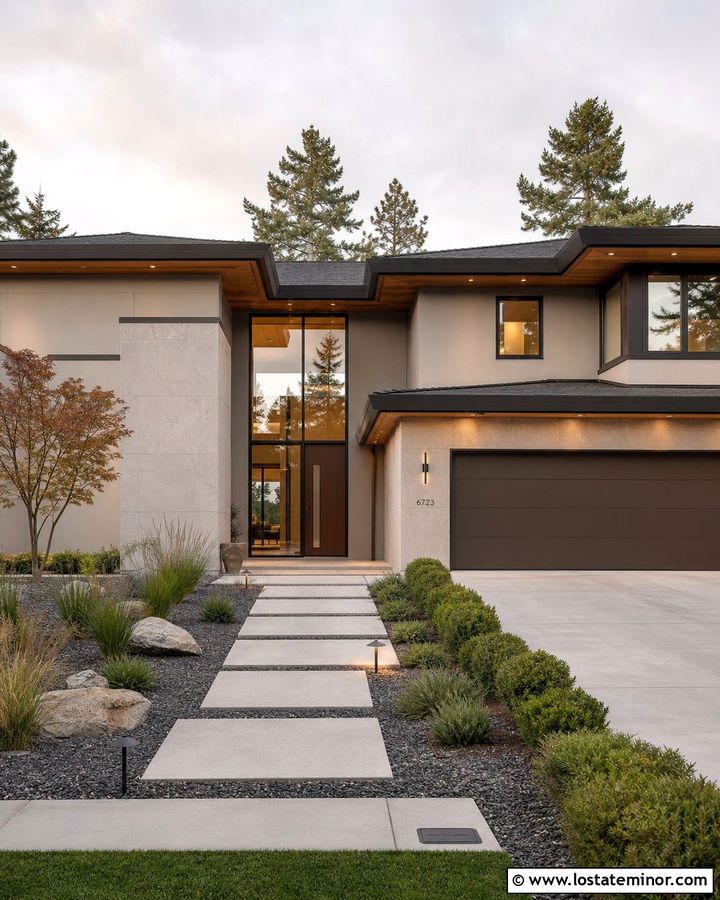
A bronze-colored front door offers a softer alternative to black on a modern stone house. It pairs especially well with large-format taupe stone, warm gray stucco, dark bronze windows, and a low charcoal roof. Choose a smooth metal door with a satin bronze finish and one narrow vertical glass panel. The subtle sheen can distinguish the entrance without producing a flashy effect. Continue the bronze finish on the handle, exterior sconces, and nearby address numbers for consistency. A recessed entry lined with wood soffits adds warmth and protection around the door. Large concrete slabs, dark gravel, clipped shrubs, and sculptural grasses reinforce the clean geometry. Together, the stone, bronze, and wood create a sophisticated facade that still feels connected to natural materials.
22. Mediterranean Stone House With Blue Front Door
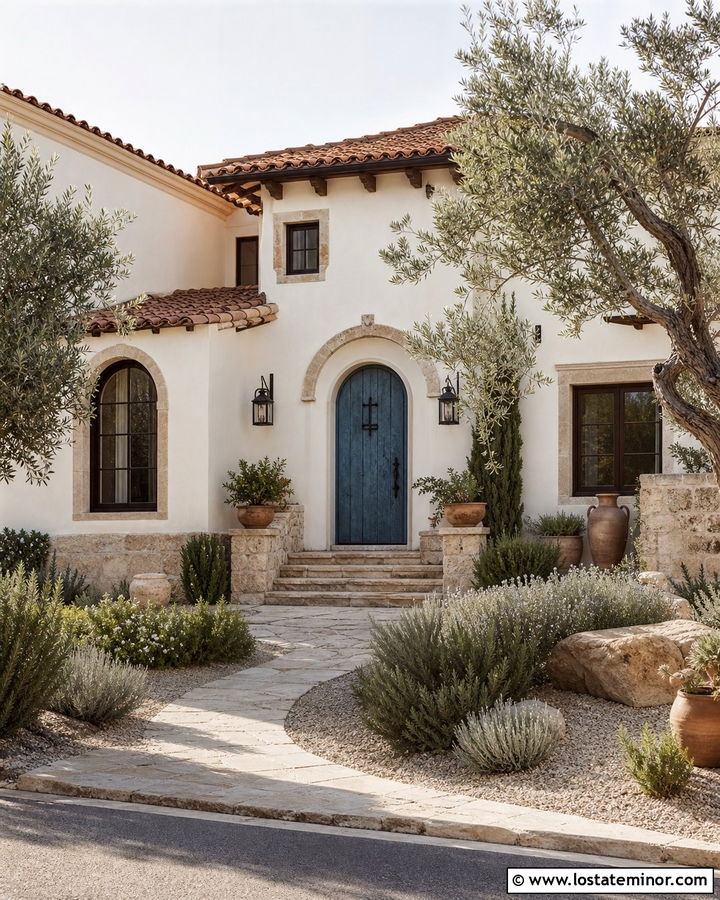
A weathered blue front door can cool the warm tones of a Mediterranean stone house while maintaining a relaxed, sun-washed character. Combine honey-colored stone with creamy stucco, dark brown window frames, and a muted terracotta tile roof. Choose a medium blue with a touch of gray or green rather than a bright coastal turquoise. An arched wood door with vertical planks and black iron hardware will fit the architecture naturally. Use blue sparingly so it remains a memorable feature instead of becoming a theme. Stone steps, clay pots, olive trees, rosemary, and pale gravel complete the landscape. The blue entrance provides refreshing contrast to the golden masonry and roof. At the same time, its muted finish keeps the full exterior grounded and regionally appropriate.
23. French Country Stone House With Black Arched Door
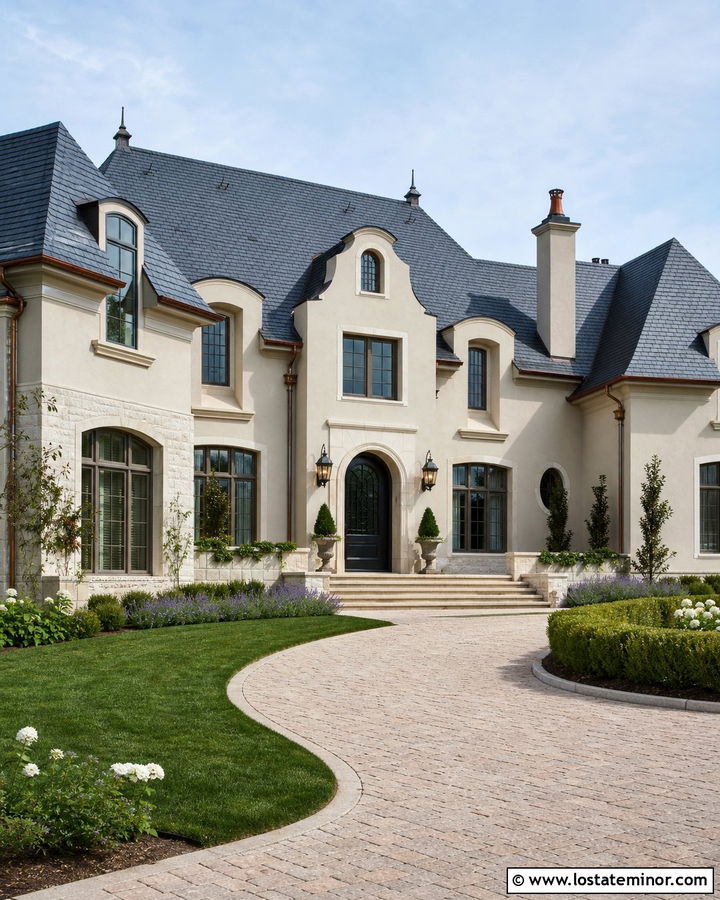
A black arched front door brings definition and elegance to a pale French country stone house. Pair creamy limestone with soft taupe stucco, warm white trim, dark bronze windows, and a steep charcoal roof. The door can be solid wood painted satin black, with restrained panels and narrow glass sidelights. A stone arch should follow the shape of the door and make the entrance feel built into the architecture. Use black again on lanterns and small metal details, but avoid oversized black shutters that could compete with the masonry. Copper gutters or a natural wood porch ceiling can add warmth to the neutral palette. Finish the exterior with a curved stone drive, clipped shrubs, lavender, and symmetrical planters for graceful, welcoming curb appeal.
24. Tudor Stone House With Oak Front Door
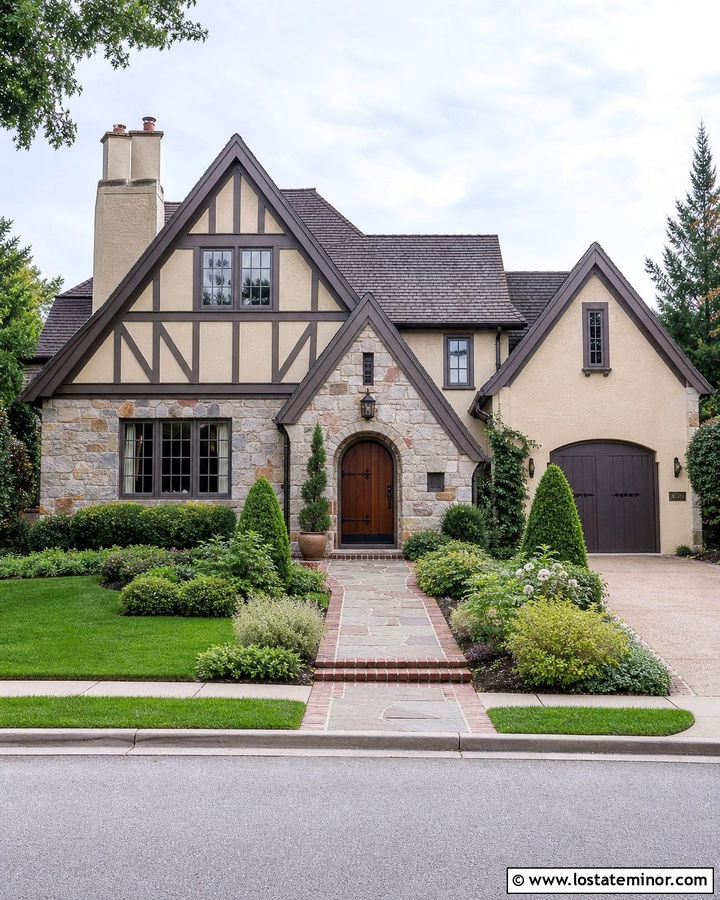
An oak front door naturally complements the timber, brick, and stone surfaces found on a Tudor house. Use a medium-dark stain that relates to exposed beams while remaining distinct from a deep brown roof. The surrounding stone may include gray, tan, and rusty tones, with cream stucco filling the upper gables. A heavy arched door with vertical planks, black strap hinges, and a small leaded-glass window suits the architecture. Keep the oak finish rich but not orange, since excessive warmth can clash with cooler stone. Continue the same wood tone on one porch beam or garage detail for balance. A brick-edged walkway, evergreen shrubs, climbing vines, and layered shade plants complete the established look. The entrance feels substantial, historic, and fully integrated.
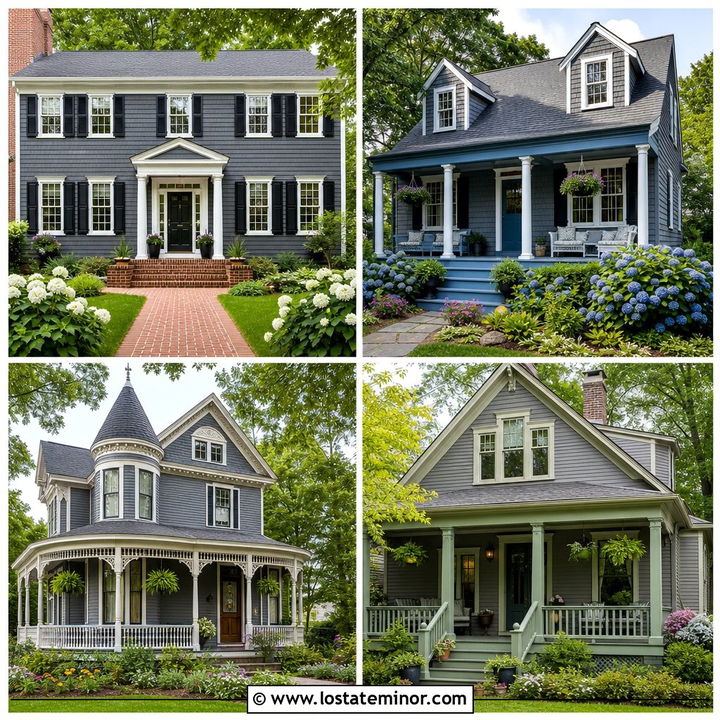
25. Mountain Stone House With Iron Front Door
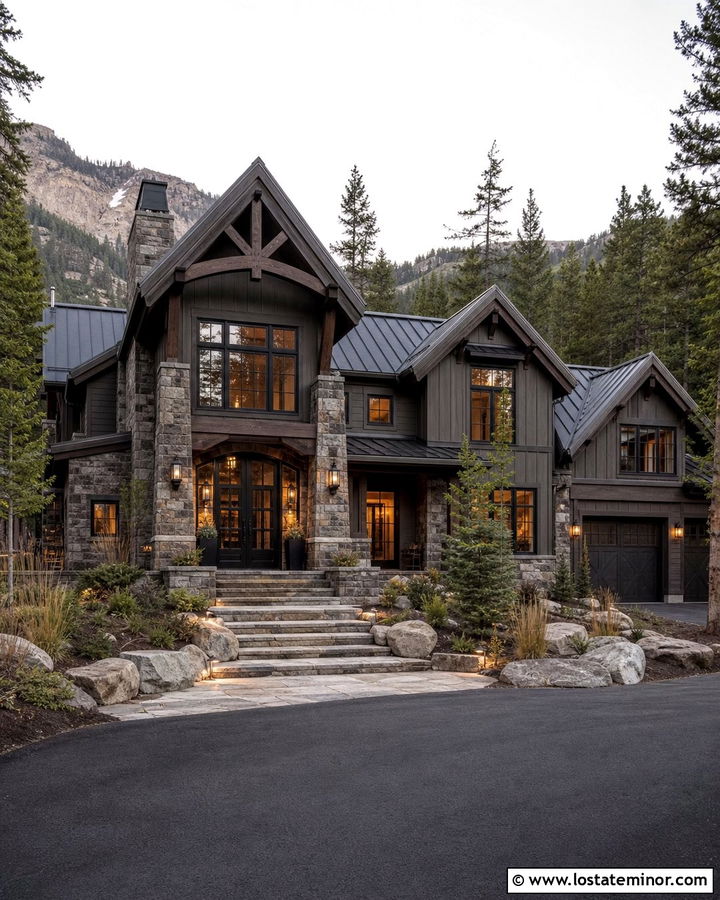
An iron front door can match the visual weight of a mountain stone house while opening the entry with generous glass. Pair rugged gray-brown stone with dark timber siding, black-framed windows, cedar beams, and a charcoal metal roof. Choose a double iron door with large clear or lightly textured glass panels. A simple grid pattern feels stronger and more timeless than intricate scrollwork. The black frame should connect with the windows and roof, while warm wood prevents the facade from becoming too dark. Carry stone onto the porch columns and chimney for an enveloping exterior composition. Broad stone steps, native evergreens, boulders, and natural grasses help the house settle into its setting. The glass-filled door provides lightness within an otherwise substantial material palette.
26. Coastal Stone House With Aqua Front Door
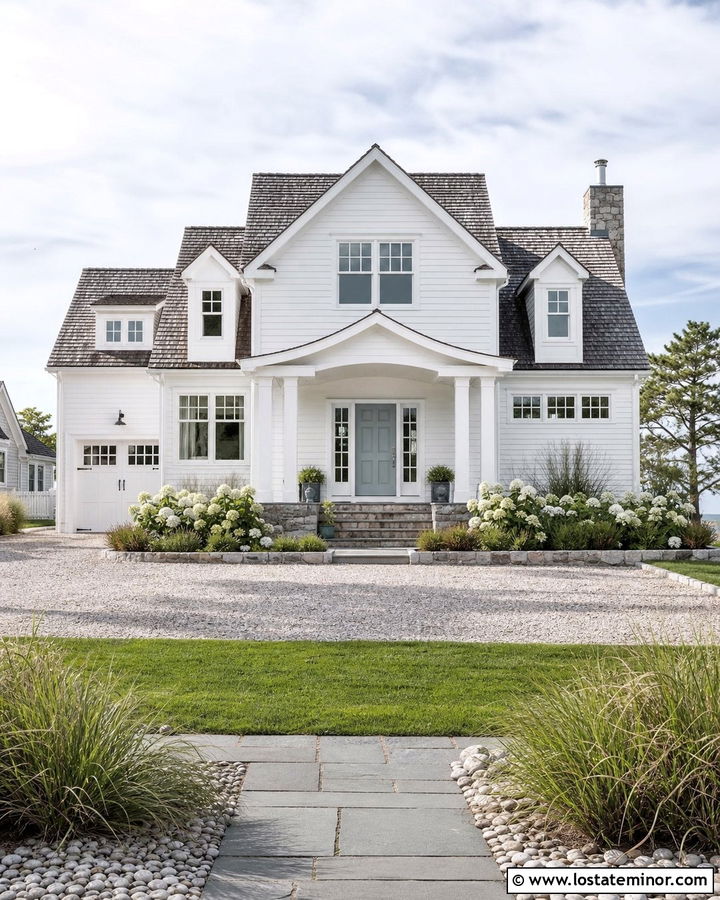
A subdued aqua door can brighten a coastal stone house while keeping the exterior sophisticated. Start with pale gray stone, crisp white siding, soft white trim, and a weathered gray shingle roof. Choose an aqua with noticeable gray undertones so it feels calm beside the masonry. A half-glass door with simple divided panes fits a breezy cottage or shingle-style house. Brushed nickel hardware and white lanterns maintain the light palette, while natural cedar details can add needed warmth. Avoid repeating aqua across large shutters or garage doors. Let it remain a cheerful marker at the entrance. Hydrangeas, beach grasses, pale gravel, and a bluestone walkway complete the curb view. The finished home feels fresh and colorful without looking themed or overly bright.
27. Split Level Stone House With Mustard Front Door
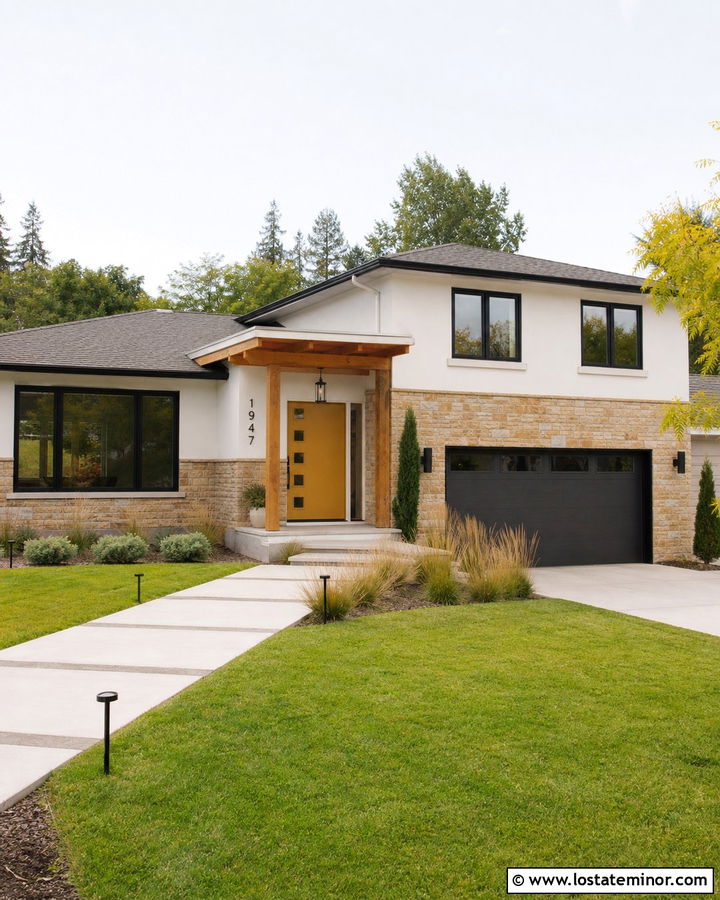
A muted mustard front door can bring new energy to a dated split-level stone exterior. This color works best when the masonry includes tan, ocher, brown, or rusty gold. Pair the stone with warm white siding, charcoal trim, black-framed windows, and a medium-gray roof. Choose a flat-panel door with a narrow vertical window for a clean retro-modern look. The mustard should be earthy and slightly brown rather than bright yellow. Black hardware and streamlined sconces sharpen the entrance. Add a cedar screen or small wood canopy to give the doorway greater architectural presence. A wider concrete path, modern house numbers, low evergreens, and ornamental grasses complete the update. The colorful door creates a strong destination without requiring the stone to be painted or covered.
28. Stone Bungalow With Plum Front Door
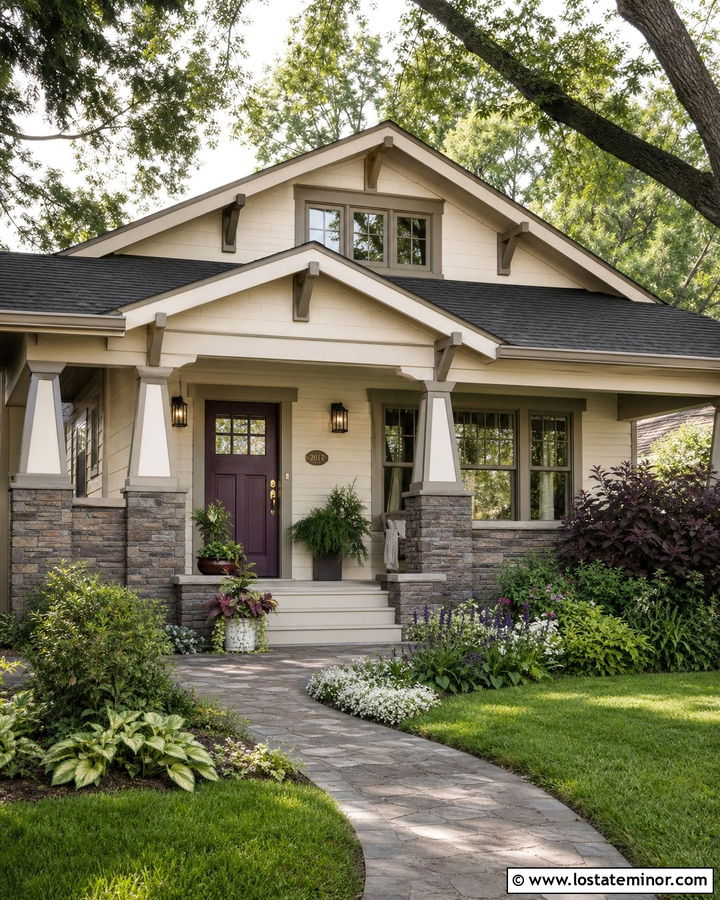
Plum offers rich color on a stone bungalow while remaining more subtle than bright purple. It works especially well with gray-brown stone, cream siding, taupe trim, and a weathered charcoal roof. Select a deep, muted plum with red or brown undertones so it feels grounded beside the natural masonry. A craftsman door with three small upper windows supports the bungalow architecture. Warm brass hardware and bronze lanterns can highlight the color’s warmer side. Repeat plum sparingly through dark-leaved plants rather than painted architectural elements. Stone porch piers, tapered wood columns, and a natural wood ceiling help frame the entrance. Complete the setting with a curved walkway and layered cottage planting. The resulting exterior feels distinctive, mature, and welcoming rather than overly colorful.
29. Stone House With Red Double Front Doors
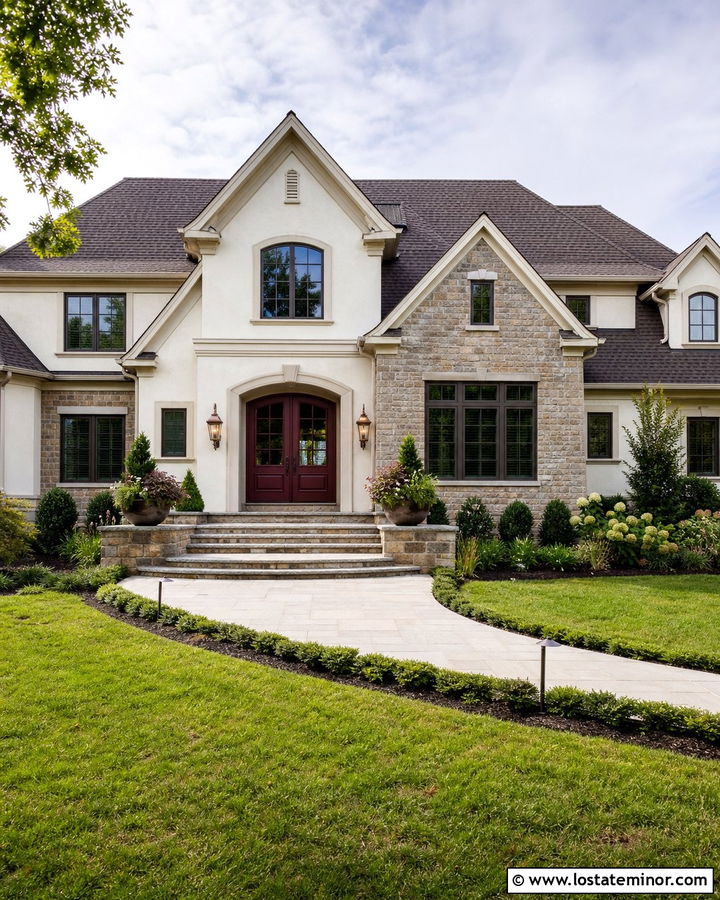
Red double doors can create an impressive entrance when a broad stone facade needs a clear center. Choose a deep barn red, brick red, or muted cranberry that connects with the warm minerals in tan and gray stone. On a large traditional house, pair the doors with creamy trim, dark bronze windows, and a charcoal-brown roof. Glass upper panels can reduce the visual weight of the doubled color. Frame the entry with a generous stone arch or covered portico so the doors feel proportionate to the house. Keep the garage doors neutral and avoid matching red shutters, which may dilute the focal point. Symmetrical lanterns, large planters, broad stone steps, and a gently curved walkway complete the formal but inviting curb-appeal scheme.
30. Monochrome Stone House With Taupe Front Door
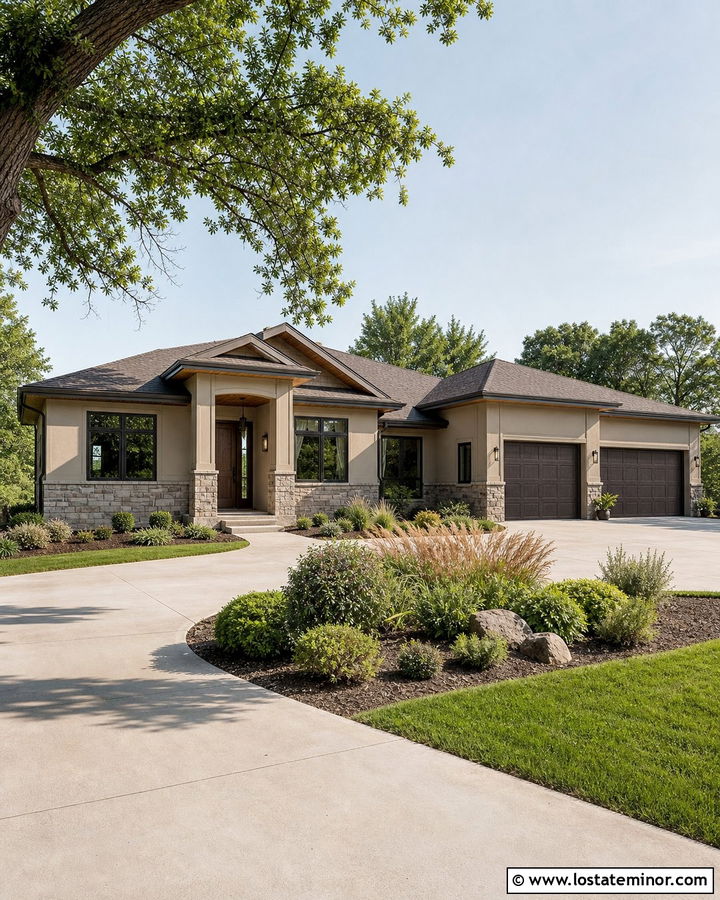
A monochrome stone exterior can feel calm and refined when the front door uses a deeper version of the masonry’s main color. Pair taupe ledgestone with warm greige siding, mushroom trim, bronze windows, and a charcoal-brown roof. Paint the door a rich brown-taupe that creates gentle definition without introducing a separate accent color. This approach works well on contemporary ranch, transitional, and prairie-inspired homes. Add vertical glass panels or sidelights so the understated entrance remains noticeable. Dark bronze hardware and lighting provide a clean outline. Varying the materials is essential in a low-contrast palette, so combine rough stone, smooth siding, warm wood soffits, and concrete paving. Layered green landscaping gives the neutral house freshness and prevents the facade from appearing flat.
Conclusion:
The strongest 30 Stone House Design With Front Door Ideas treat the doorway, masonry, roof, trim, and landscape as one connected composition. Begin by identifying whether the stone has warm, cool, or mixed undertones. Then choose a door color and material that either repeats those tones or creates controlled contrast. Natural wood, black, green, blue, red, and earthy accent colors can all work when they relate to the architecture. Door shape, glass, hardware, lighting, and surrounding stonework also influence the finished result. Before committing, test colors beside the stone in morning and afternoon light. A coordinated entrance will highlight the stone’s texture, guide attention toward the doorway, and give the entire property stronger curb appeal.

Related posts: