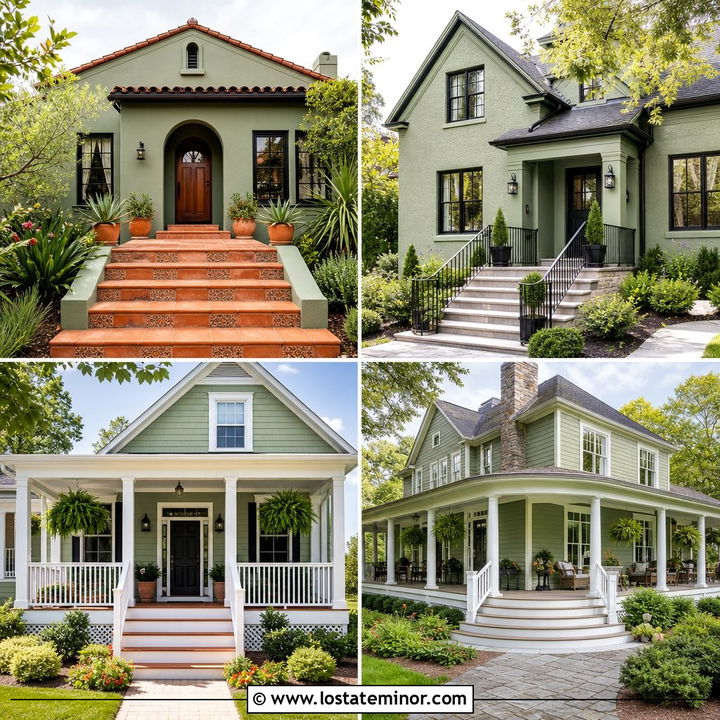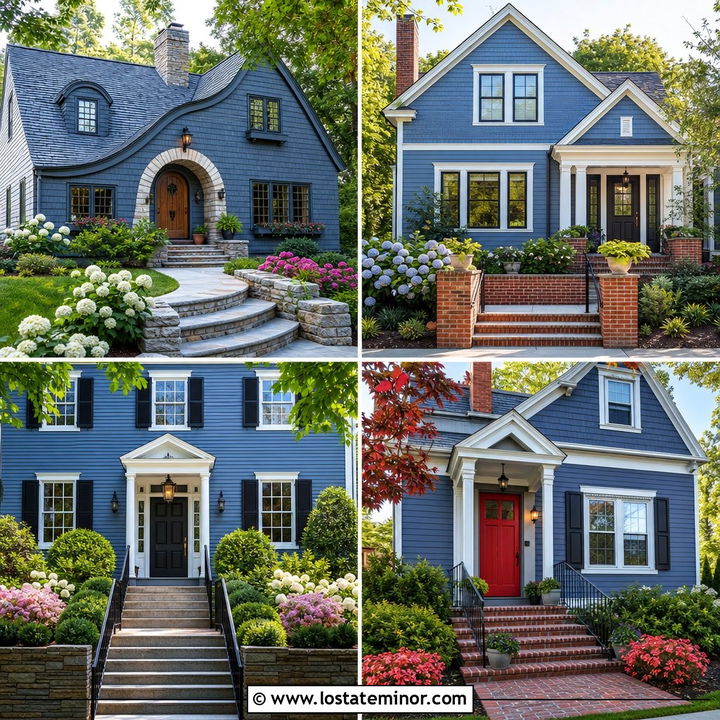
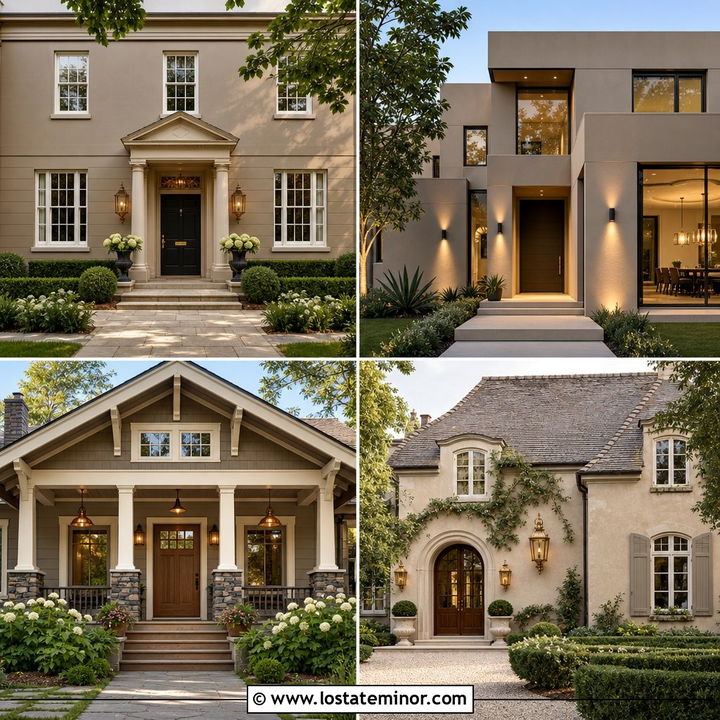
A tan exterior creates a warm, flexible backdrop, while well-designed front steps give the facade a clear focal point. These 30 Tan House Design With Steps Ideas explore complete exterior looks rather than treating the stairs as an afterthought. You will find brick, stone, concrete, tile, and wood steps paired with coordinated siding, trim, doors, railings, roofs, and landscaping. The collection also covers ranch homes, Craftsman houses, Colonials, cottages, split-levels, and modern builds. When choosing a look, consider the undertone of your tan exterior and repeat that warmth in the step material. Then add enough contrast to make the entrance easy to see. Use the following 30 Tan House Design With Steps Ideas to create a polished, welcoming approach.
1. Tan House With White Steps
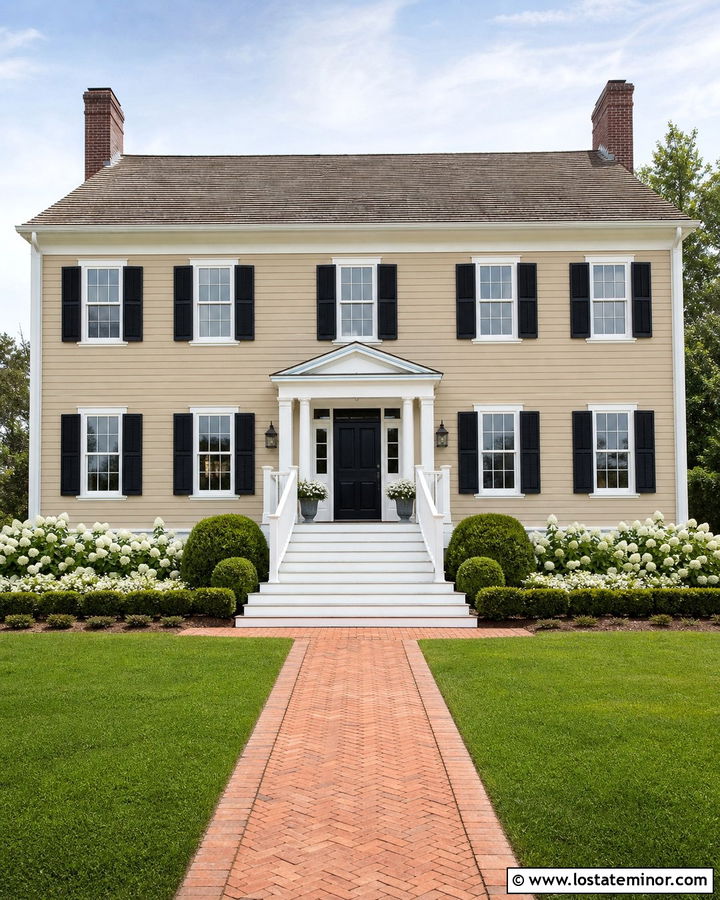
Clean white steps can make a warm tan house appear brighter and more defined from the street. This combination works especially well on a traditional Colonial with symmetrical windows, white trim, and a centered front entrance. Paint the stair risers and railings white, but use a slightly darker nonslip finish on the treads to hide everyday dirt. A black front door, black lanterns, and dark shutters introduce contrast without disrupting the classic palette. Wide steps will give the entrance a more generous appearance than a narrow staircase. Finish the full exterior with clipped shrubs, white flowers, and a straight brick walkway. Repeating white across the windows, columns, and steps connects the entire facade and keeps the tan siding from looking dull.
2. Tan House With Brick Steps
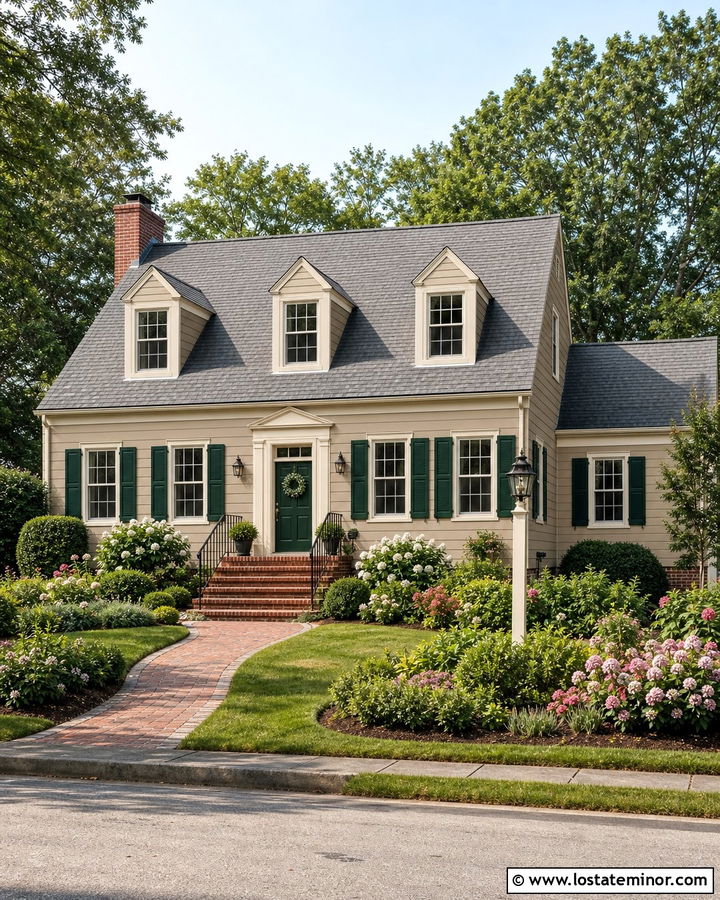
Red brick steps bring traditional warmth to tan siding and create an entrance that feels established. Choose brick with tan, brown, and muted red variations so the staircase relates naturally to the house color. This complete scheme suits a Cape Cod home with cream trim, dark green shutters, and a forest green front door. Continue the brick into the walkway or use a matching border around a concrete path. Simple black handrails can add safety without covering the masonry. If the roof is brown or weathered gray, select brick with similar darker flecks to tie everything together. Low boxwoods and cottage flowers will soften the strong lines. The finished facade feels layered, welcoming, and appropriate for both older homes and newer traditional construction.
3. Tan House With Natural Stone Steps
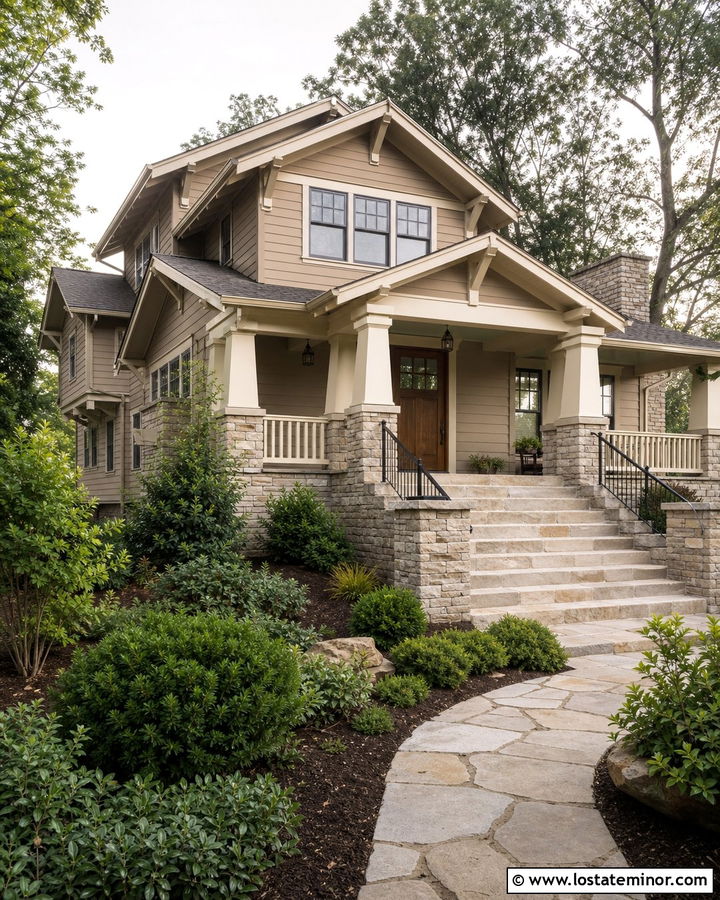
Natural stone steps give a tan exterior more texture and visual weight. On a Craftsman house, wide sandstone or limestone treads can connect tan lap siding with stone porch columns and a substantial wood front door. Select stone containing cream, taupe, brown, and soft gray tones rather than one flat color. These variations help the steps coordinate with the siding, foundation, and roof. Deep bronze railings and matching porch lights add contrast while maintaining the warm palette. A curved walkway made from the same stone can create a smooth transition from the lawn. Complete the design with ornamental grasses, evergreen shrubs, and natural mulch. The result is an earthy exterior where the staircase looks integrated into the architecture instead of added later.
4. Tan House With Black Steps
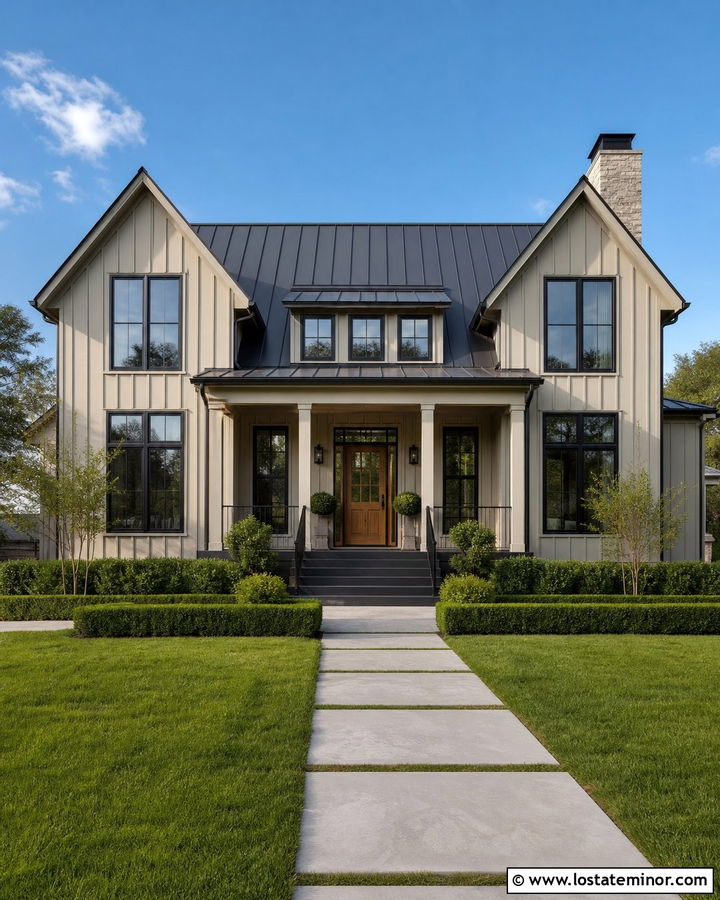
Black steps create sharp contrast against light tan siding and can update a simple facade quickly. This pairing looks especially polished on a modern farmhouse with vertical tan board-and-batten siding, black windows, and a black metal roof. Use charcoal-black treads with matching railings, then keep the risers tan or warm white to prevent the staircase from feeling too heavy. A stained wood door adds warmth between the neutral body and dark entrance details. Carry black onto the garage door hardware, gutters, and exterior lights for balance. Clean concrete pavers and structured green landscaping reinforce the modern look. Because dark surfaces can reveal dust and receive strong sunlight, a textured medium-charcoal finish may be more practical than a perfectly solid jet-black coating.
5. Tan House With Wood Steps
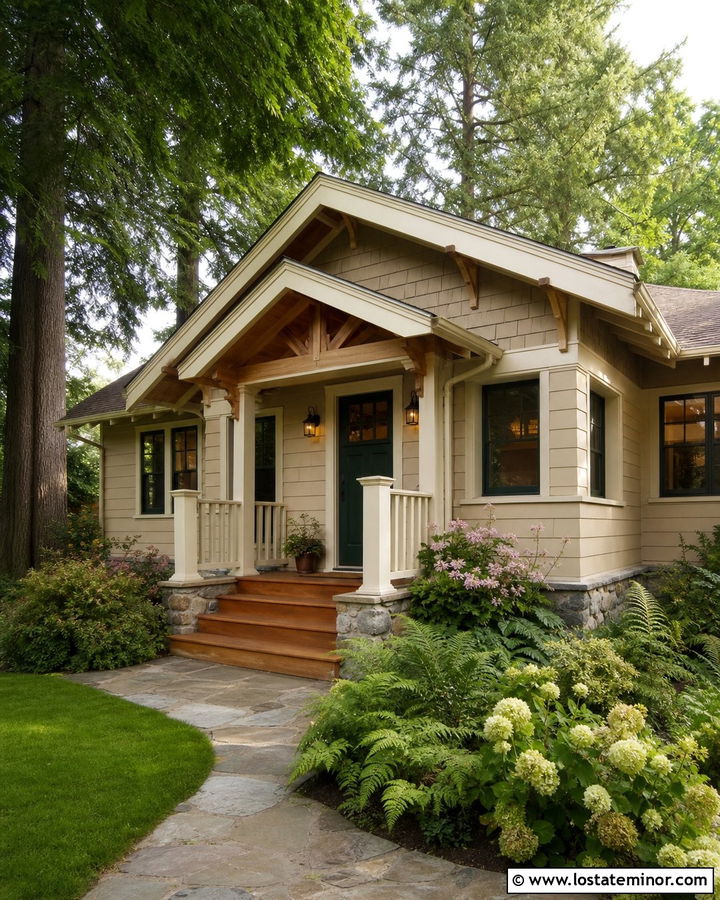
Natural wood steps make a tan house feel relaxed, warm, and approachable. They are a strong match for a bungalow with tan shingle siding, creamy trim, exposed rafters, and a covered front porch. Choose a medium cedar or walnut stain that is noticeably deeper than the siding. This creates definition while preserving an earthy color scheme. Repeat the wood tone on the front door, porch posts, or window boxes so the staircase does not look isolated. Black metal railings can provide a clean outline and prevent the exterior from becoming overly brown. Surround the entrance with ferns, flowering shrubs, and a casual flagstone path. A clear exterior-grade finish will help retain the wood character while creating a more durable surface for a frequently used entry.
6. Tan House With Gray Concrete Steps
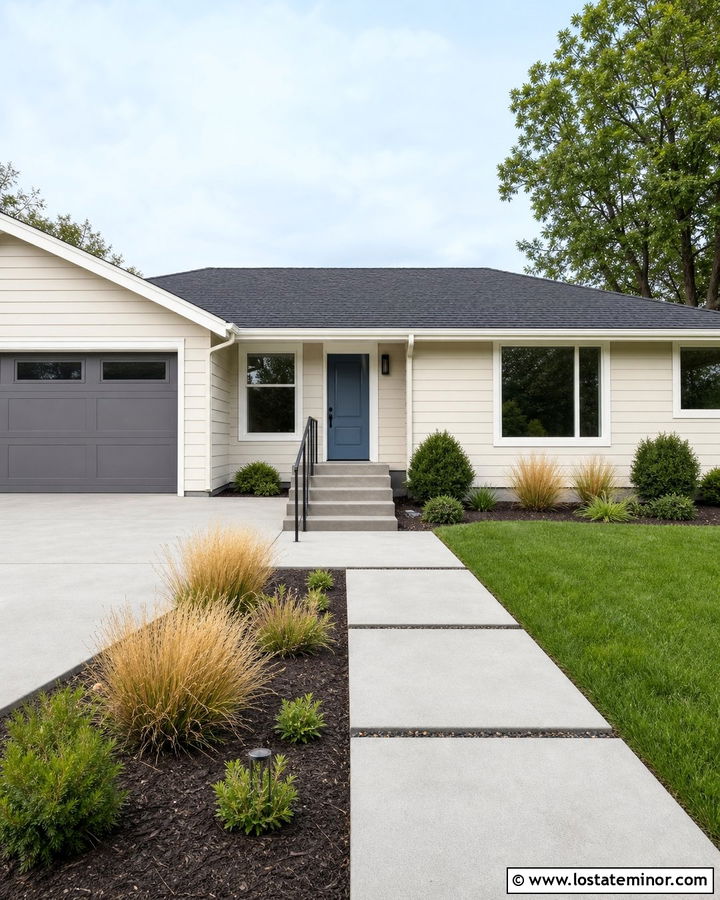
Smooth gray concrete steps offer a straightforward solution for a tan ranch house. The cool gray provides gentle contrast, while the simple shape complements a low roofline and horizontal siding. Use medium gray rather than blue-gray concrete to maintain a connection with the warm exterior. Charcoal railings, a dark gray roof, and a muted blue front door can complete the balanced palette. Consider extending the top step into a broad landing with room for two matching planters. A walkway made from large concrete slabs will visually lengthen the approach and give the small home a stronger entrance. Add layered foundation shrubs and decorative grasses to soften the hard surfaces. This design feels clean and updated without forcing a modest ranch house into an overly formal style.
7. Tan House With Wide Front Steps
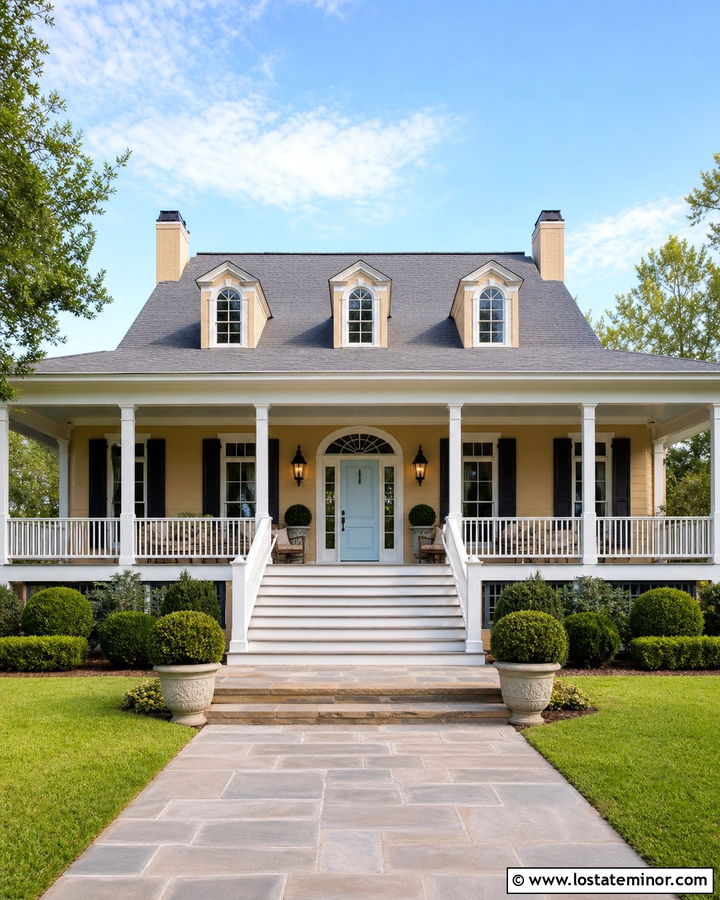
Wide front steps can make a tan home appear more welcoming and visually substantial. They work particularly well on a Southern-style house with a deep porch, white columns, and balanced windows. Build the steps nearly as wide as the main entrance section so they lead naturally toward the front door. Warm gray stone treads, white risers, and white railings will connect the staircase to the porch architecture. A pale blue door can introduce a soft accent without competing with the tan siding. Use large planters at the bottom rather than filling each tread with decorations. A broad walkway, symmetrical shrubs, and an open lawn will emphasize the generous proportions. The complete design creates a graceful transition between the yard, staircase, porch, and front entrance.
8. Tan House With Floating Concrete Steps
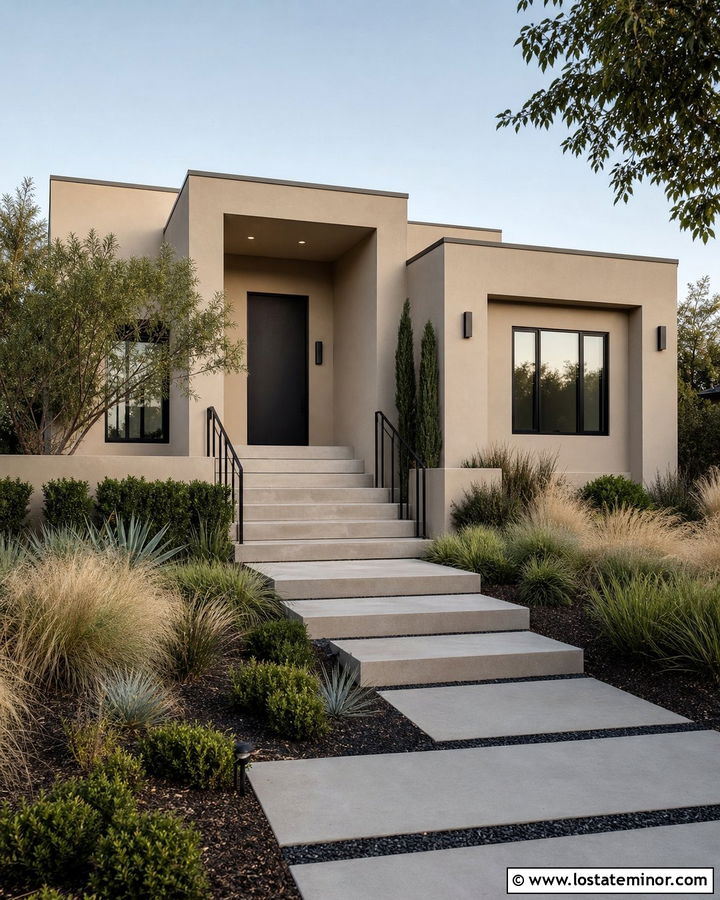
Floating concrete steps add modern structure to a tan stucco exterior. Use thick rectangular slabs separated by narrow shadow gaps to create a light, architectural effect. This approach suits a contemporary home with flat or low-sloped rooflines, black-framed windows, and a recessed entry. Choose warm gray concrete so it complements the tan stucco rather than appearing icy. Dark gravel between the slabs can define each step and improve the connection to surrounding landscape beds. A matte black front door, minimalist wall lights, and slim metal railings complete the streamlined scheme. Incorporate drought-tolerant grasses, sculptural shrubs, and a straight concrete walkway. Keeping the materials limited allows the floating staircase to become a focal point while the warm exterior prevents the modern design from feeling cold.
9. Tan House With Curved Stone Steps
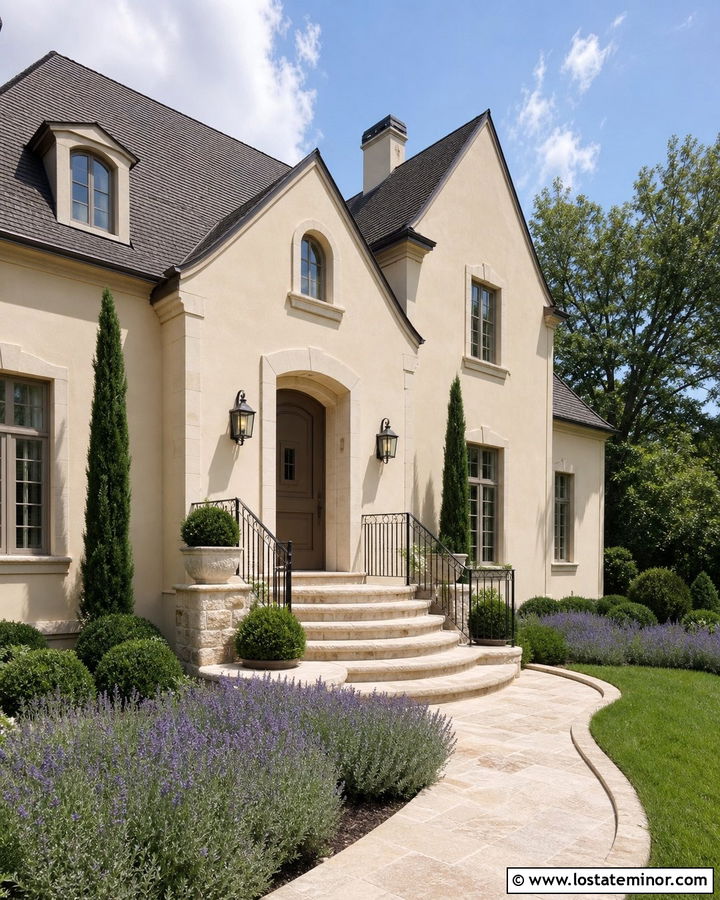
Curved steps can soften a large tan exterior and make a formal entrance feel more approachable. This treatment works beautifully on a French country house with tan stucco, an arched doorway, and steep rooflines. Use broad limestone or tumbled stone steps that gently widen toward the yard. Cream trim and a muted brown front door will maintain the warm, understated palette. Black iron railings with a simple curved profile can echo the staircase without introducing excessive ornament. Continue the natural stone into a curved walkway surrounded by lavender, clipped shrubs, and low flowering plants. The rounded shape directs attention toward the entrance while balancing strong roof peaks and masonry walls. It also creates a smooth visual transition between formal architecture and relaxed, organic landscaping.
10. Tan House With Navy Blue Steps
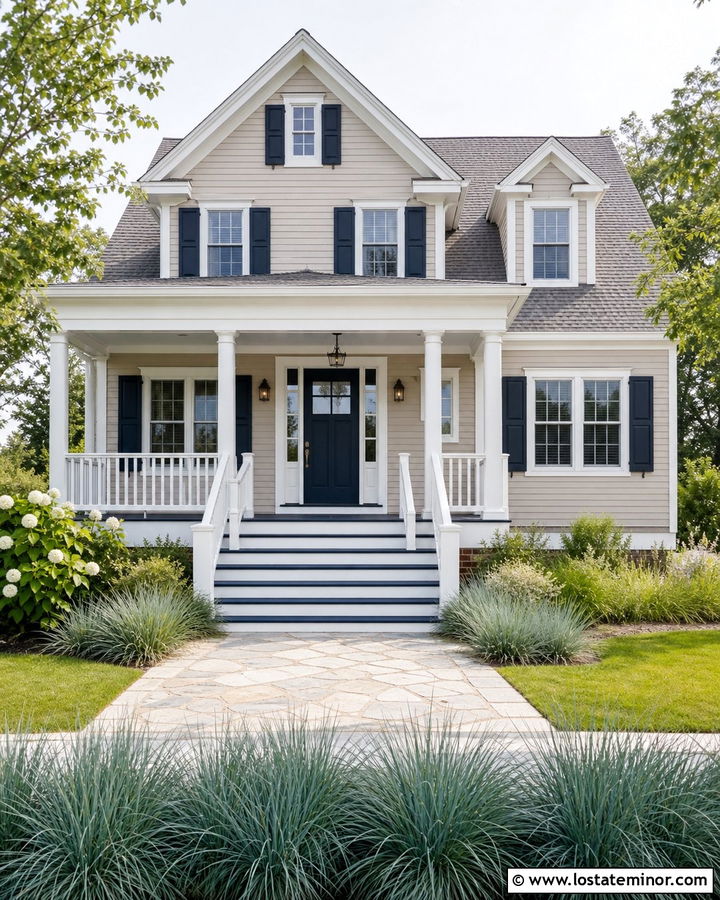
Navy blue steps can give a tan coastal house an unexpected but controlled dose of color. Use the blue on the stair treads, front door, and shutters, while keeping the risers and railings crisp white. This repeated placement makes the staircase part of a complete palette rather than a random painted feature. Light tan clapboard siding, a gray shingle roof, and white porch columns provide a fresh background. A small covered portico or full-width porch can strengthen the coastal character. Add natural rope-textured planters, blue-green grasses, and a pale stone walkway for subtle supporting details. Select a deep, slightly muted navy that offers contrast without looking overly bright. The finished house feels cheerful, balanced, and distinctive while remaining suitable for a suburban neighborhood.
11. Tan House With Dark Brown Steps
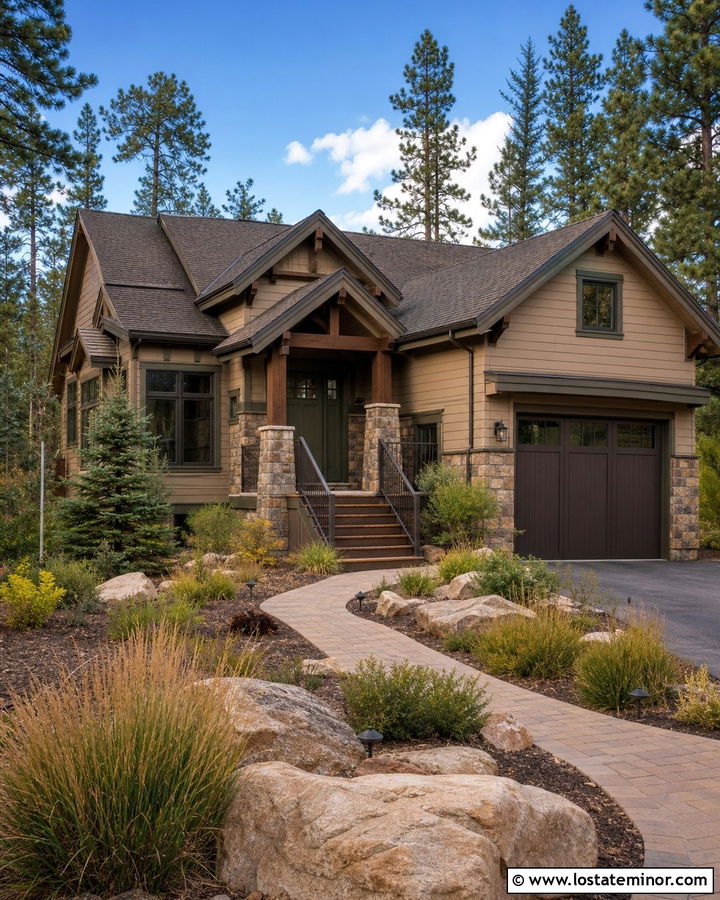
Dark brown steps provide rich contrast while keeping a tan exterior firmly within a warm color family. This scheme is ideal for a rustic lodge-style house with tan siding, stone accents, and a deep covered entry. Stain wood treads espresso brown and pair them with dark bronze railings. Repeat the brown on porch beams, the garage door, and window trim to distribute the deeper color across the facade. A muted olive front door can add a quiet natural accent. Choose a roof containing brown and charcoal tones to bridge the siding and staircase. Large boulders, evergreen trees, and native grasses will reinforce the grounded appearance. The result feels cohesive and substantial because every material shares earthy undertones, yet the darker steps still make the entrance clearly visible.
12. Tan House With White Risers And Wood Treads
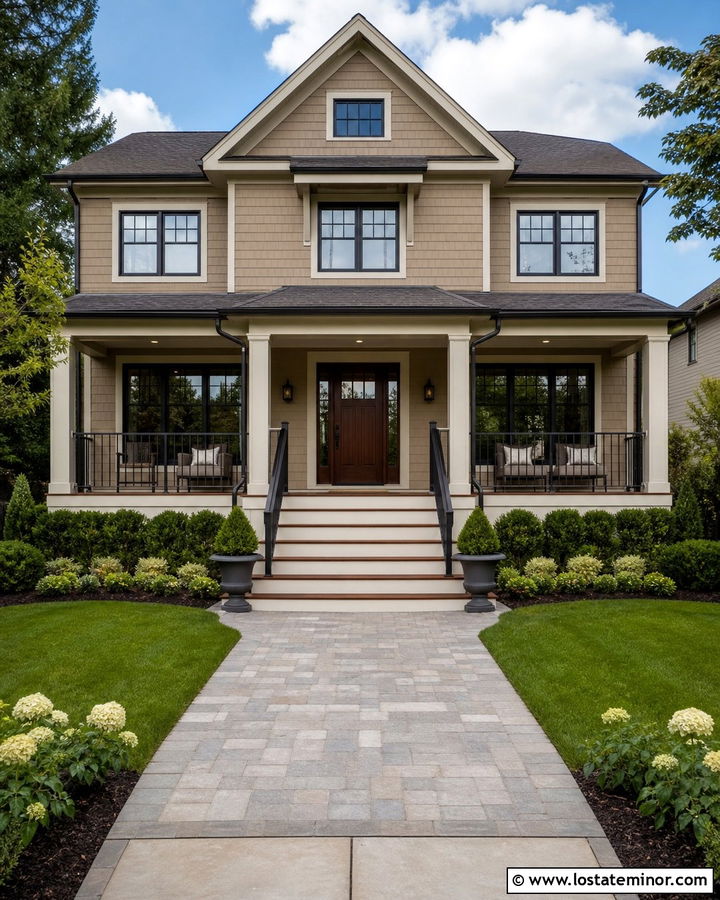
White risers paired with stained wood treads create a crisp, layered staircase for a tan home. The contrast works well on a transitional two-story house with cream trim, black windows, and a simple covered entry. Select a medium walnut stain for the treads so they coordinate with the front door. Carry the white from the risers onto the porch columns and railings, creating a continuous frame around the entrance. Black metal balusters can add definition without overwhelming the lighter colors. Keep the landing in the same wood tone as the treads for a finished appearance. A straight paver walkway, symmetrical planters, and neatly shaped shrubs will support the tailored design. This combination adds detail while remaining neutral enough to work with changing exterior decorations and landscaping.
13. Tan House With Black Risers And Stone Treads
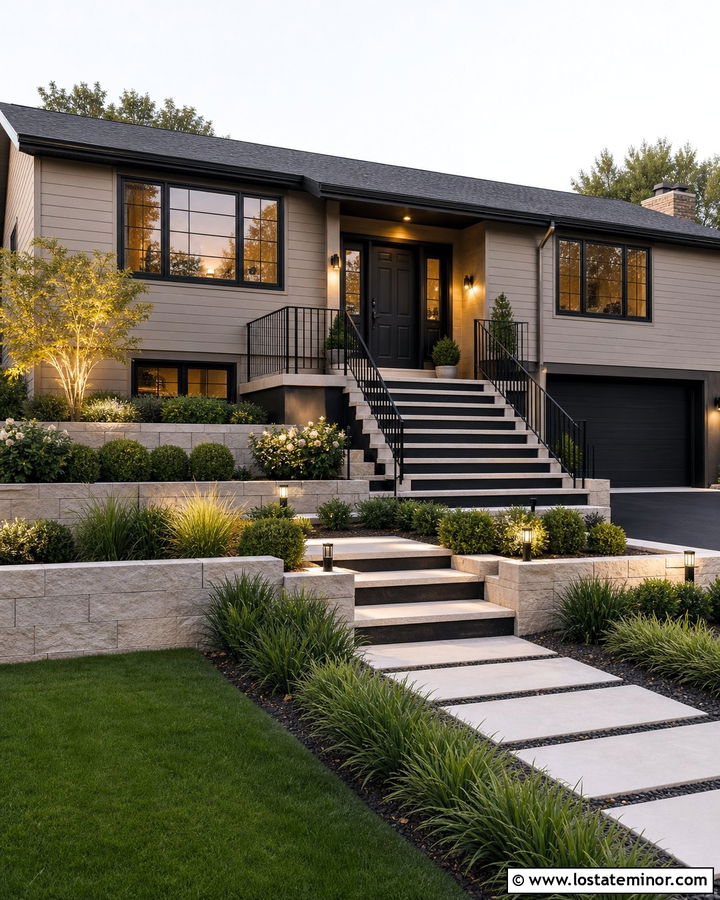
Black risers under pale stone treads create a strong horizontal pattern on a tan exterior. This modern combination suits a split-level home where the front staircase is highly visible from the street. Use warm limestone or concrete treads to relate to the siding, then paint the risers and railings charcoal black. Repeat black on the window frames, front door, and exterior lights. Tan horizontal siding and a dark gray roof will keep the overall palette simple. Build a generous landing at the top so the elevated entrance feels intentional rather than cramped. Layered retaining walls, low shrubs, and linear path lighting can integrate the staircase with a sloped yard. The dark risers visually separate each tread and give an older split-level facade a cleaner, more architectural appearance.
14. Tan House With Slate Tile Steps
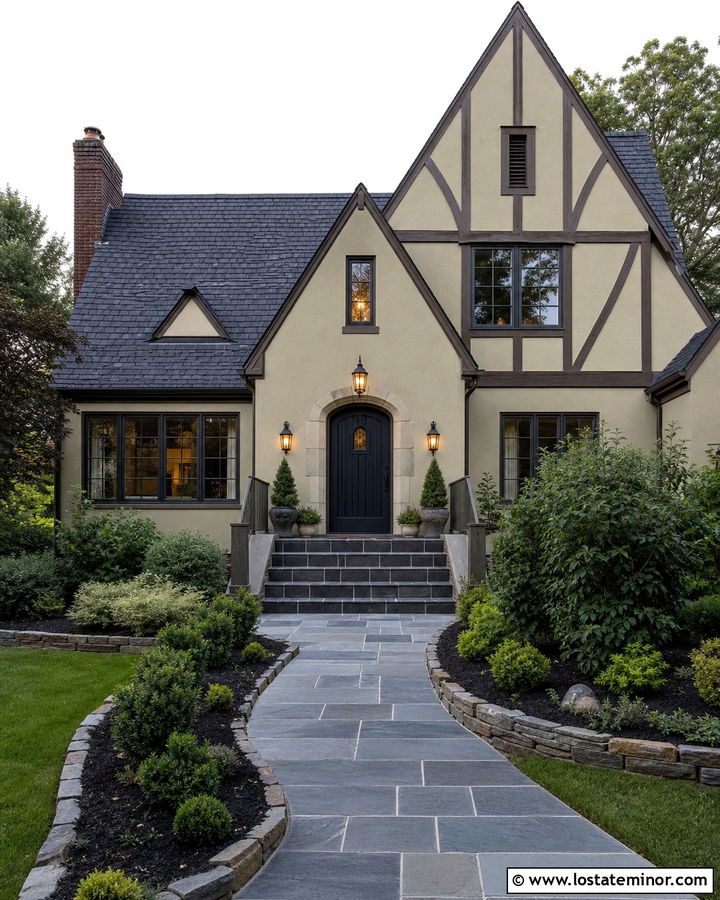
Slate tile steps introduce varied gray, blue, and earthy tones to a tan house. This material pairs especially well with a Tudor-inspired exterior featuring tan stucco, dark brown trim, and a steep charcoal roof. Use large slate pieces with subtle color variation rather than a busy patchwork. Dark grout will define the treads and make routine discoloration less noticeable. A deep blue-black front door can pull out the coolest notes in the slate, while copper lanterns restore warmth. Continue the tile across the small entry landing for a unified surface. Stone-edged garden beds, evergreen shrubs, and a gently curved walkway will complete the traditional setting. The layered materials create character, but the limited color palette prevents the facade from looking crowded or disconnected.
15. Tan House With Terracotta Tile Steps
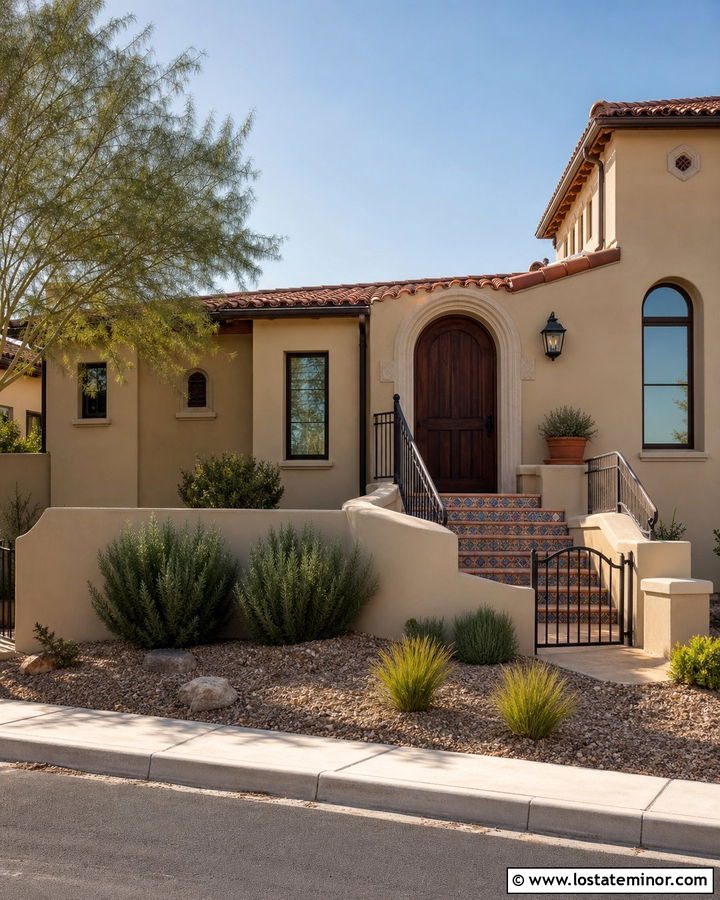
Terracotta tile steps bring sun-warmed color to a tan stucco house. This look feels natural on a Spanish-style home with an arched entry, clay tile roof, and dark wood front door. Choose muted rust and earthy red tiles rather than bright orange. Decorative patterned tiles can be used selectively on the risers, while plain terracotta covers the treads and landing. Black iron railings and lanterns add definition around the warm surfaces. Cream trim will gently outline windows without creating a harsh contrast. Complete the setting with gravel beds, rosemary, ornamental grasses, and a curved stucco wall. Repeating terracotta tones in the roof and staircase ties the top and bottom of the house together, giving the full exterior a deliberate and regionally inspired appearance.
16. Tan House With Bluestone Steps
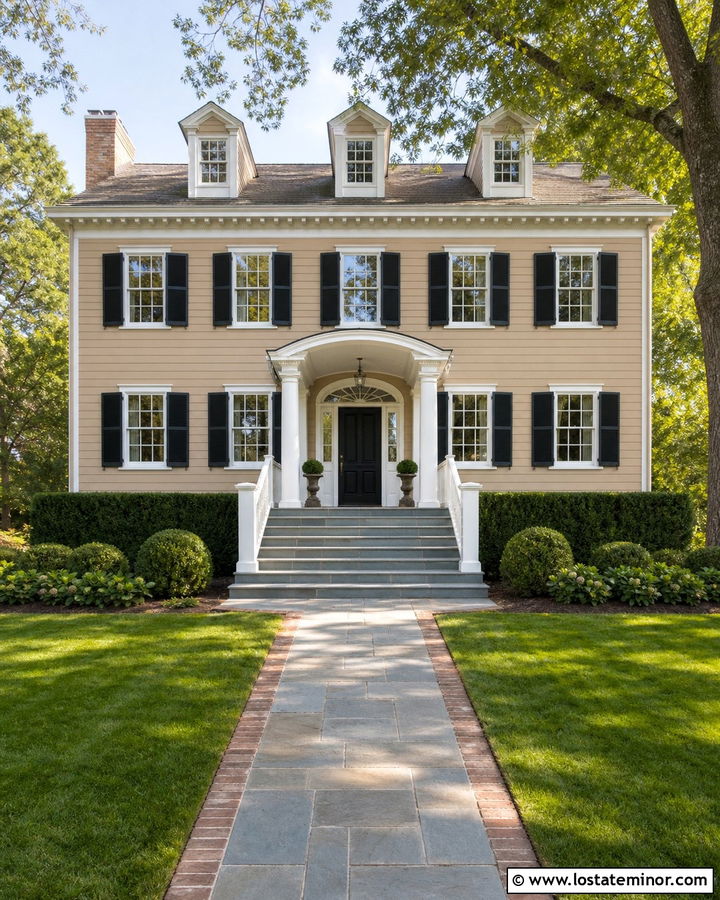
Bluestone steps offer a refined contrast to warm tan siding. Their blue-gray tone works particularly well on a Georgian or Federal-style home with white trim, black shutters, and a centered entrance. Use broad rectangular bluestone treads over painted white or natural stone risers. A glossy black front door can connect the steps to the shutters, while polished brass hardware adds restrained warmth. Keep the railings simple and symmetrical to support the formal architecture. A straight brick-edged walkway and evenly spaced foundation shrubs will reinforce the organized facade. Because bluestone naturally includes tonal variation, it creates more depth than plain gray concrete. The complete design remains classic, but the cooler staircase prevents the tan exterior from appearing overly yellow, brown, or one-dimensional.
17. Tan House With Red Front Door And Brick Steps
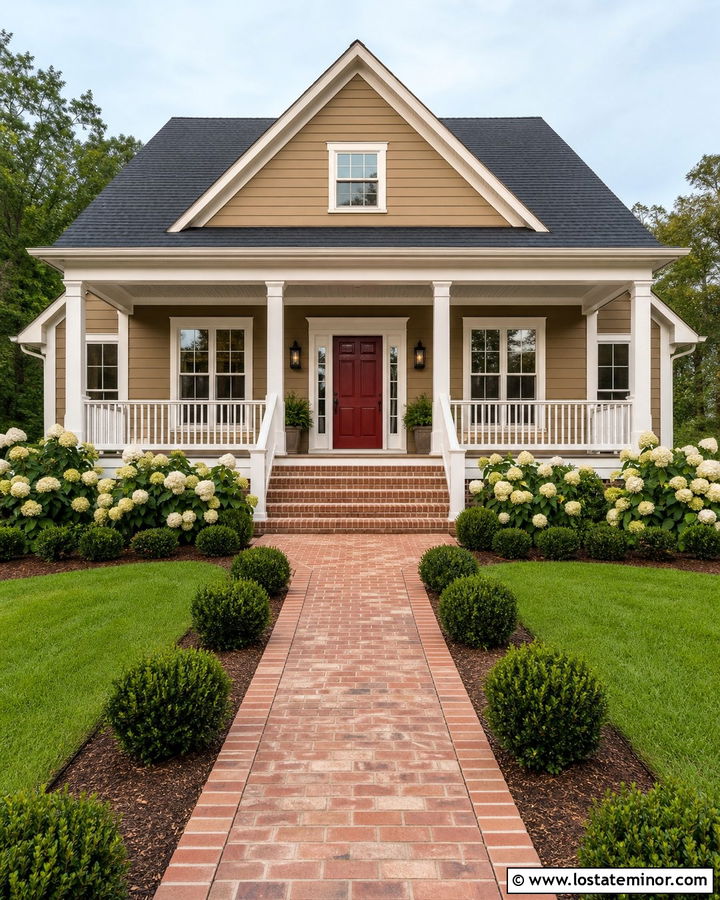
A red front door and brick steps create an inviting focal point on a tan house. This palette suits a classic American farmhouse with horizontal siding, white trim, and a simple gabled porch. Choose a deep barn red or muted heritage red rather than a bright primary shade. The door should relate to the darker tones in the brick without matching every color exactly. White columns and railings keep the entrance bright, while black lanterns and a charcoal roof add definition. Extend the brick into a narrow walkway border to connect the steps with the front yard. Hydrangeas, boxwoods, and seasonal flowers can soften the masonry. The finished exterior feels colorful but controlled because the strongest red is concentrated at the entrance and grounded by familiar natural materials.
18. Tan House With Green Door And Limestone Steps
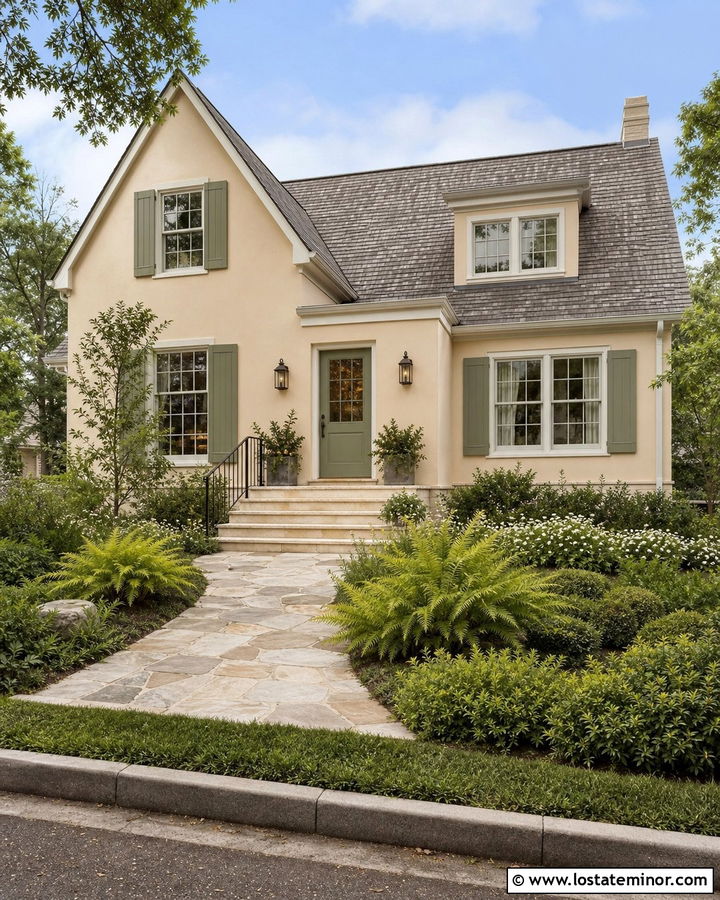
A muted green door gives a tan house a calm, nature-inspired entrance. Pair it with cream limestone steps for a cottage exterior that feels soft and collected. Light tan siding, warm white trim, and a weathered gray roof create a neutral foundation. Use sage, olive, or eucalyptus green on the door and repeat it lightly on shutters or window boxes. Cream railings will keep the staircase open, while aged bronze lights add subtle depth. Allow a flagstone path to curve through layered beds filled with ferns, white flowers, and low shrubs. Limestone contains warm variations that sit comfortably beside tan without disappearing into it. The green accent then provides just enough contrast to draw attention toward the entry while preserving the exterior’s peaceful, garden-focused character.
19. Tan House With Blue Door And Gray Steps
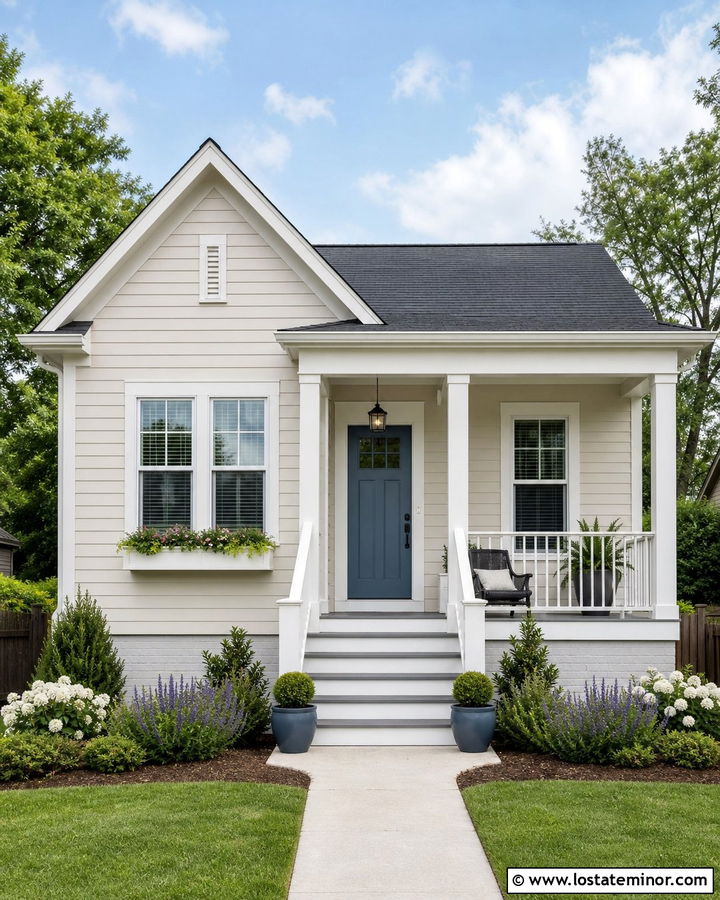
A dusty blue front door can refresh a tan exterior without making it feel overly colorful. Combine the door with medium-gray steps, white trim, and a charcoal roof on a compact suburban cottage. Paint the step risers white if you want a brighter entrance, or keep the entire staircase gray for a simpler design. The blue should contain a hint of gray so it connects naturally with the steps and roofing. White porch columns and railings will define the small entry. Add matching blue planters sparingly rather than repeating the accent everywhere. A concrete walkway, green lawn, and loose flowering borders provide a clean setting. This complete color scheme balances warm and cool tones, helping the tan siding look fresher while maintaining an approachable neighborhood appearance.
20. Tan House With Black Door And Concrete Steps
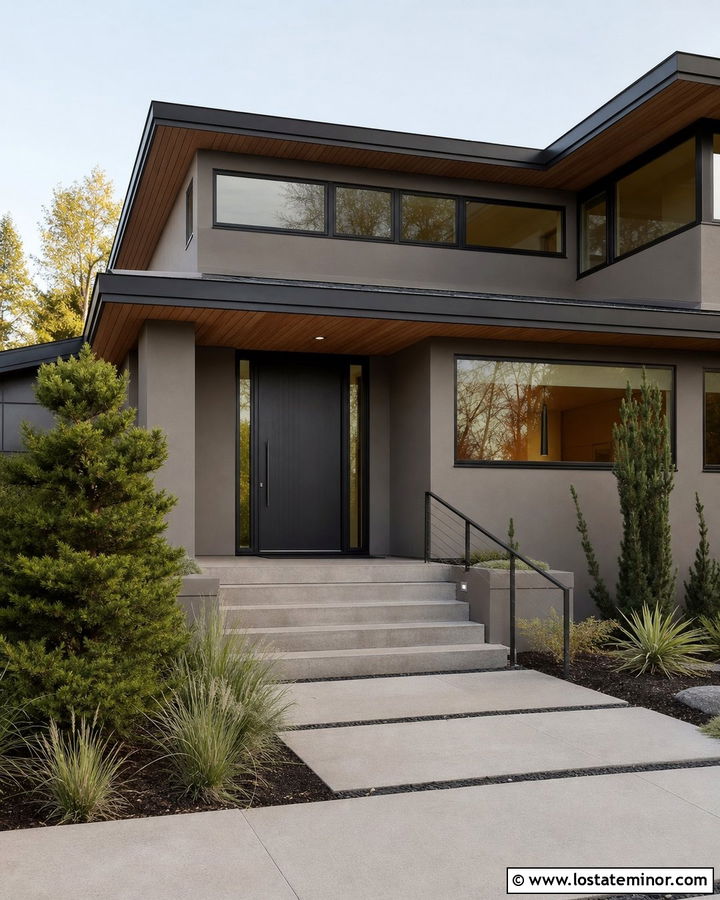
A black door can anchor a tan facade when it is supported by gray concrete steps and other dark details. This streamlined combination works well on a midcentury modern house with broad roof overhangs, horizontal windows, and mixed siding. Choose smooth warm-gray concrete for the steps and landing. Add a slim black handrail that echoes the door and window frames. Natural wood soffits or vertical slat accents can prevent the palette from feeling stark. Keep the tan exterior slightly muted, with greige undertones rather than strong yellow notes. Large rectangular pavers, ornamental grasses, and sculptural evergreens will reinforce the architecture. The finished design is simple but not plain because the materials, rooflines, and landscaping provide texture while the dark entrance creates a clear destination.
21. Tan House With Cedar Porch Steps
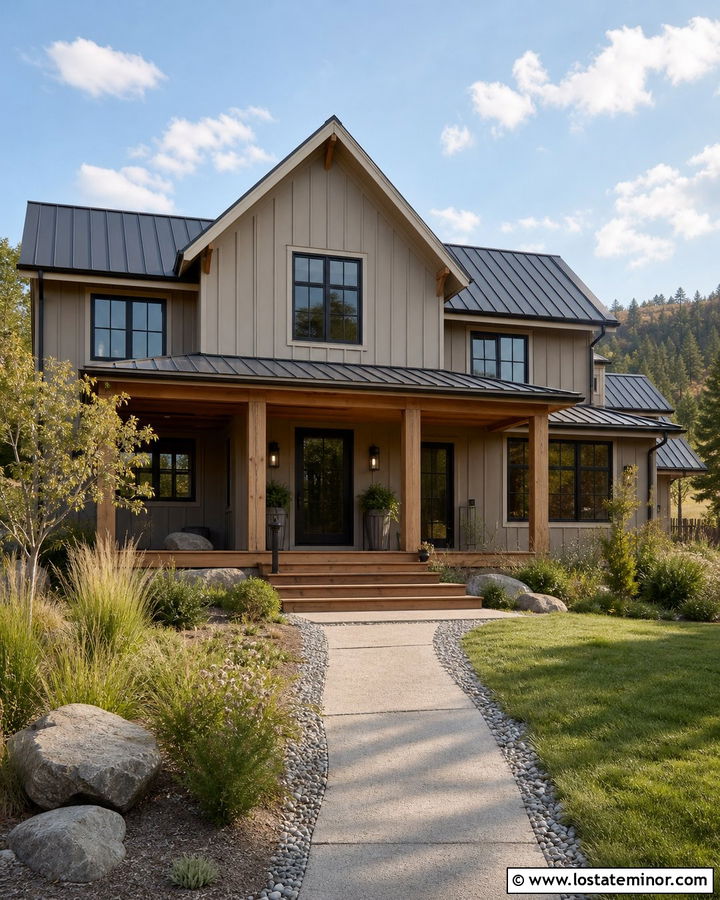
Cedar porch steps add organic color and character to a tan modern farmhouse. Use wide stained treads that lead to a covered porch with matching cedar posts and ceiling details. Warm tan board-and-batten siding will create a softer alternative to the typical white farmhouse exterior. Pair it with creamy trim, black windows, and a charcoal metal roof. A black front door can provide contrast, while galvanized or matte black lights support the simple rural-inspired look. Repeat cedar on porch swings, planters, or garage accents in limited amounts. A gravel-edged walkway and loose native landscaping will keep the setting relaxed. By distributing the wood tone across several architectural features, the steps become part of a complete exterior composition rather than the only rustic element.
22. Tan House With Painted Porch Steps
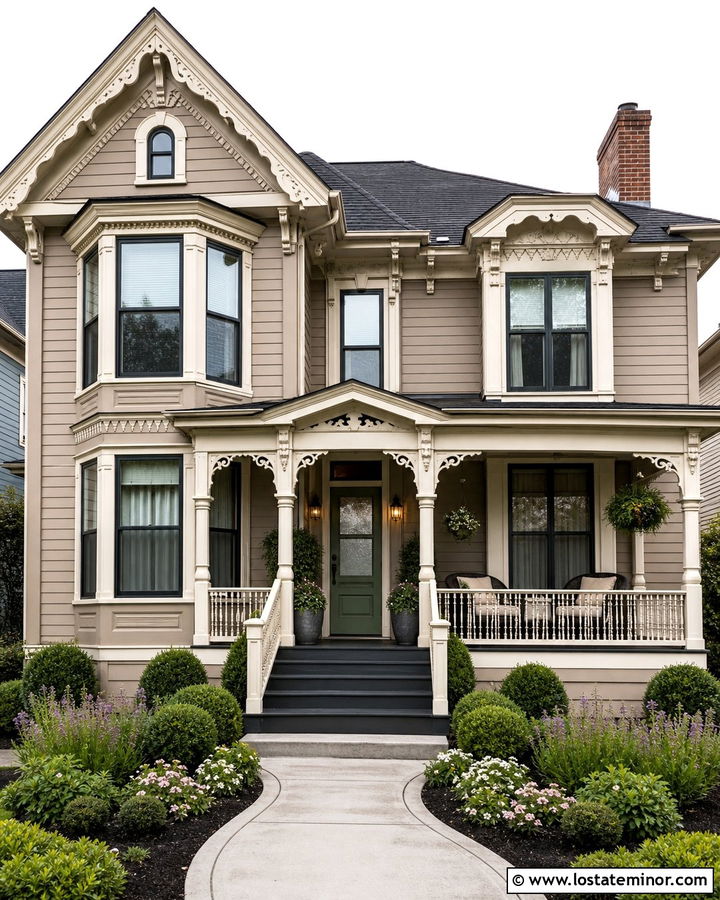
Painted porch steps allow a tan house to use a tailored color scheme without replacing the existing staircase. On a Victorian-inspired home, choose deep charcoal treads, cream risers, and cream railings to highlight decorative porch details. Soft tan siding can cover the main walls, while muted green appears on the front door and small trim accents. Limit the palette to three or four coordinated colors so ornate architecture remains readable. Continue charcoal across the porch floor to create a practical visual base. Tall planters and flowering borders can frame the entrance without hiding the steps. The darker walking surfaces add weight, while the lighter vertical surfaces brighten the staircase. This treatment creates depth and makes a detailed older facade feel cared for rather than visually busy.
23. Tan House With Paver Steps
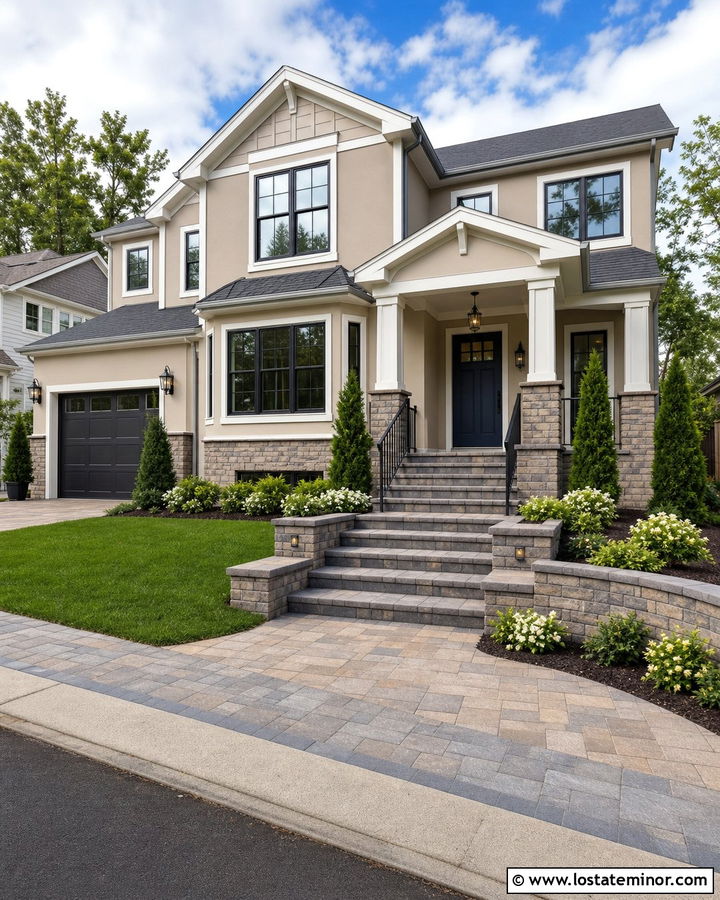
Paver steps create a neat connection between a tan suburban house and its front walkway. Select large pavers in blended taupe, beige, and charcoal tones so the hardscape coordinates with both the siding and roof. This approach is ideal for a two-story transitional home with warm white trim, a navy door, and dark bronze lights. Build low, broad steps with matching retaining walls to give the entrance more presence. Continue the same pavers along the walkway and driveway border for consistency. Black or bronze railings can outline the staircase without introducing another major color. Add compact evergreens, white flowers, and clean mulch beds around the hardscape. The varied paver tones conceal minor wear while making the entire path from sidewalk to front door feel planned and cohesive.
24. Tan House With Cobblestone Steps
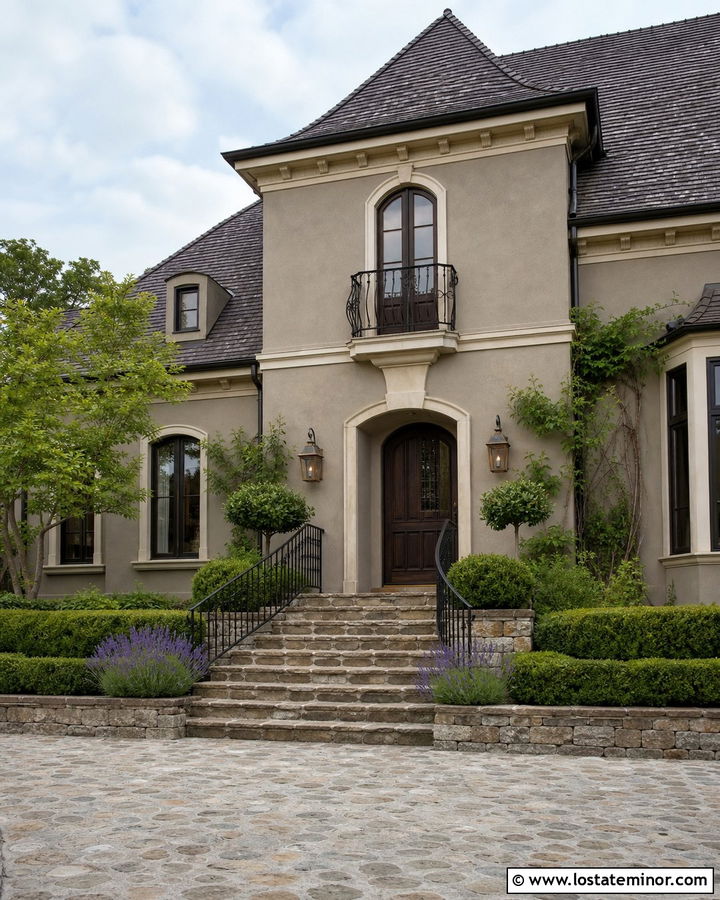
Cobblestone steps bring aged texture to a tan European-style exterior. Use stones containing muted brown, gray, and sandy beige tones to build shallow steps leading to an arched wood door. Tan stucco, cream window trim, and a weathered charcoal roof will create a warm architectural background. Simple black iron railings can add definition without competing with the irregular stone. Continue cobblestones into a small landing or walkway, but keep surrounding surfaces quieter so the exterior does not become too rustic. Soft hedges, climbing greenery, and lavender will complement the old-world character. A pair of understated lanterns can frame the entry. The complete look relies on texture rather than bold color, giving the tan facade depth while preserving a refined and welcoming curb presence.
25. Tan House With Symmetrical Double Steps
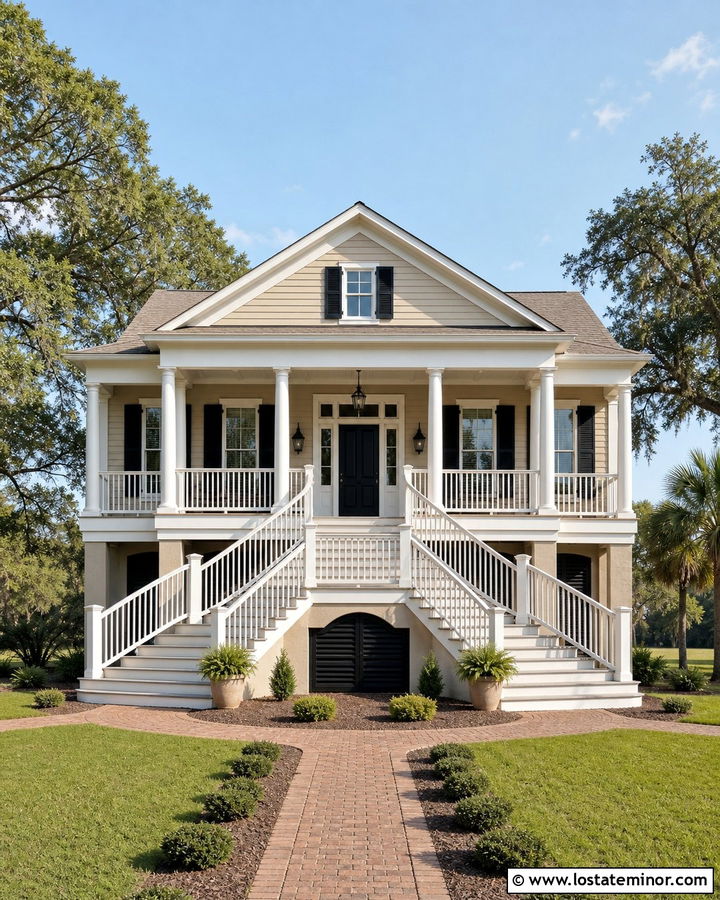
Symmetrical double steps can solve the entrance layout of a raised tan house while adding a formal focal point. Two short staircases approaching a central porch work well on an elevated Colonial or Lowcountry home. Use pale gray stone treads, white risers, and white railings to keep the raised structure visually light. Tan clapboard siding, black shutters, and a black front door will create a timeless palette. Place matching planters where the staircases meet the porch to emphasize balance. Brick or stone paths can branch cleanly toward each side. Keep the foundation landscaping low enough to reveal the staircase design. This arrangement makes the entrance feel generous and intentional, especially when a single narrow flight would appear too steep or undersized against the broad facade.
26. Tan House With Side Entry Steps
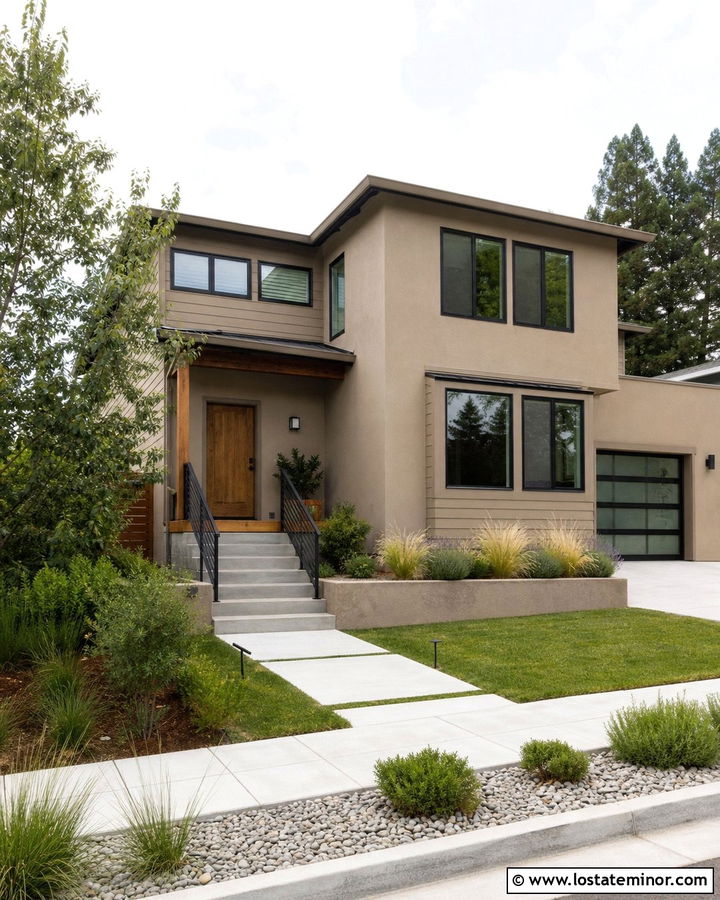
Side entry steps can preserve a clean front elevation on a tan contemporary house. Position a short staircase along the porch rather than directly in front of the door, then use landscaping to guide visitors toward it. Warm gray concrete treads, a black steel railing, and a natural wood landing create a balanced mix of materials. Carry tan stucco or lap siding across the main facade, with black windows and a wood front door for contrast. A linear walkway and low retaining wall can make the side approach feel deliberate. Use ornamental grasses and compact shrubs that do not block sightlines. This layout is particularly effective when the yard slopes or the entrance sits close to the driveway. The complete design feels open, practical, and architecturally organized.
27. Tan House With Split-Level Entry Steps
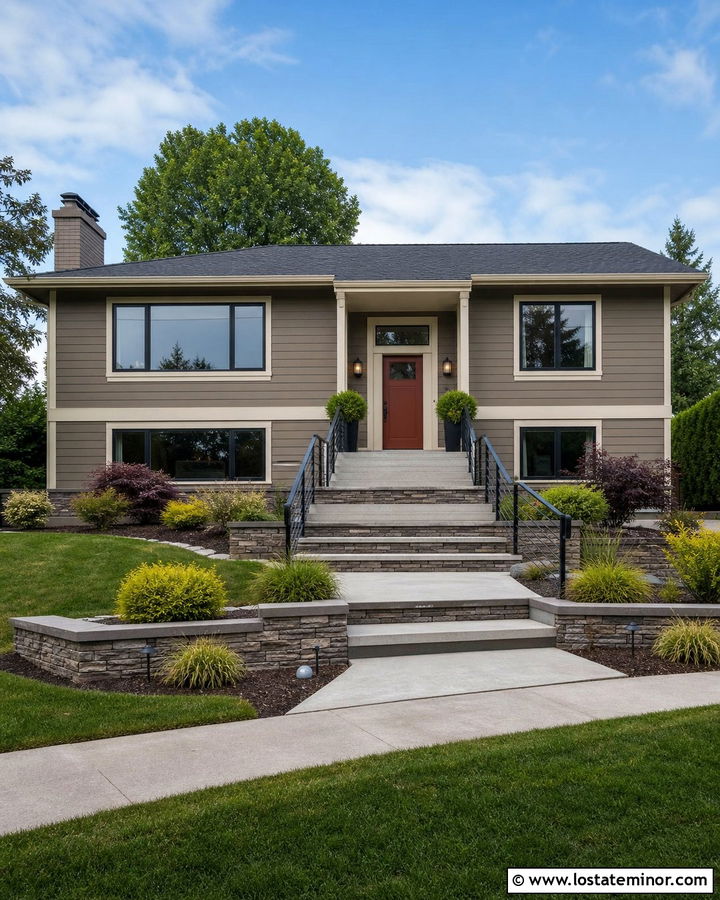
A split-level house often needs a staircase substantial enough to connect an elevated entrance with the lawn. Use broad concrete steps with intermediate landings rather than one steep, narrow run. Warm tan siding, cream trim, and charcoal window frames will update the exterior without ignoring its original architecture. Cover the concrete risers with thin stone veneer to add texture, then use smooth gray caps for the treads. A muted orange or rust front door can provide a warm focal point. Black railings will visually tie the staircase to the windows. Layer low retaining walls and shrubs along both sides to integrate the structure with the slope. The result turns a necessary set of steps into a strong design feature that gives the entire facade better proportion.
28. Tan House With Covered Porch Steps
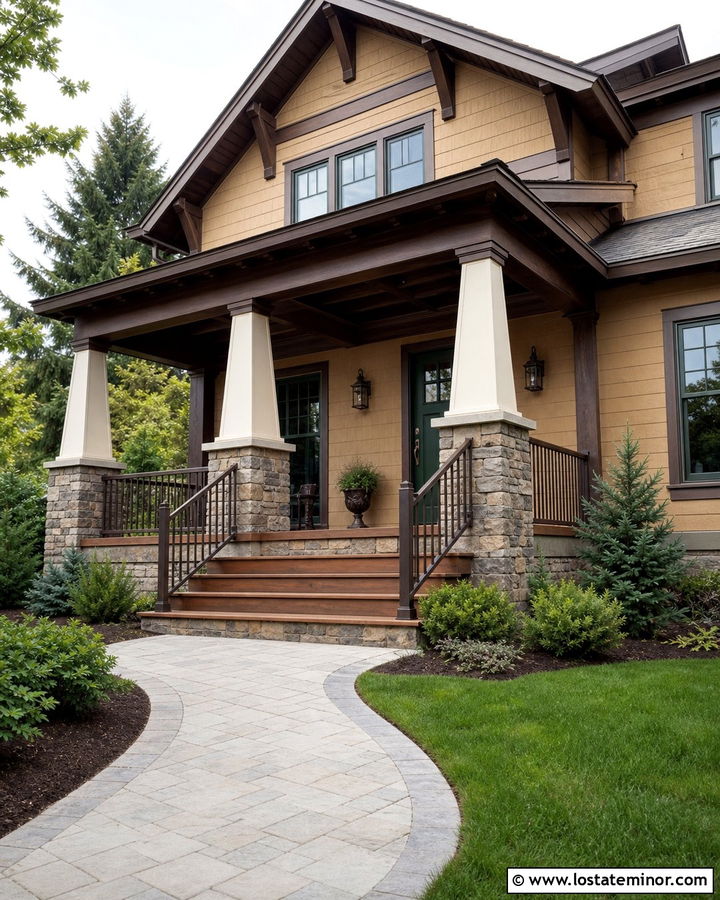
Covered porch steps create a sheltered and welcoming entrance for a tan Craftsman home. Build wide wood or composite treads beneath a gabled roof supported by tapered columns. Medium tan siding can be paired with creamy trim, dark brown beams, and a forest green door. Use warm gray stone around the column bases and repeat it on the stair risers. This material connection makes the porch and steps appear original to the house. Dark bronze railings and lanterns will add definition without introducing harsh black contrast. A gently curved walkway and layered evergreen landscaping can frame the entrance. The porch roof also creates deeper shadows, so choose a lighter tan body color that will remain warm and readable around the recessed front door.
29. Tan House With Stepped Garden Entrance
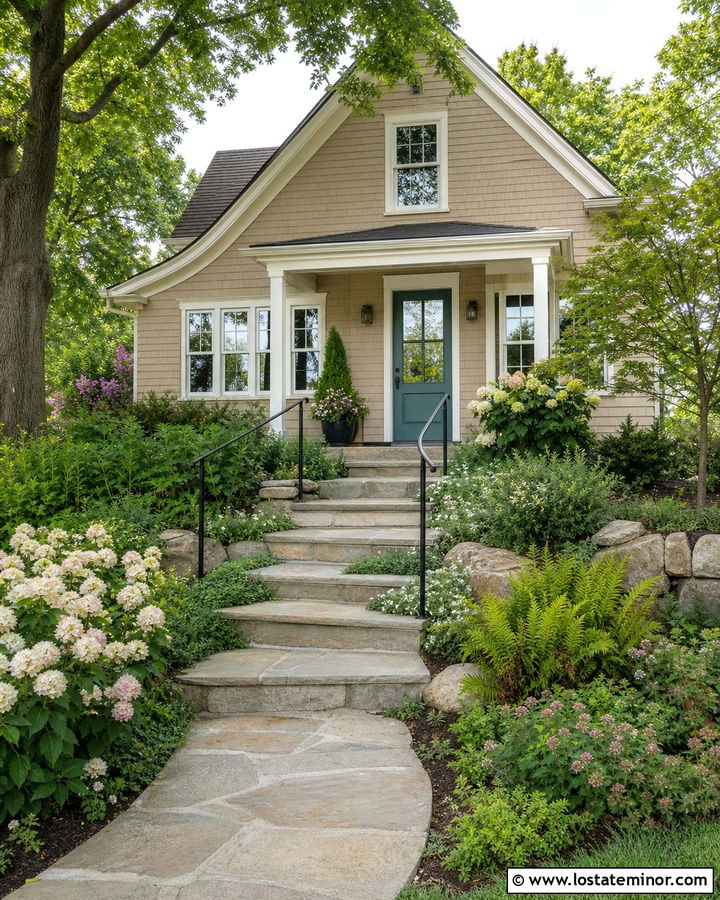
A stepped garden entrance can transform the approach to a tan cottage on a sloping lot. Instead of one long staircase, use a sequence of shallow stone steps separated by planted landings. Tan shingle siding, warm white trim, and a muted teal front door will create a charming color scheme. Choose irregular flagstone containing beige and gray notes to connect the house with the landscape. Plant thyme, low grasses, ferns, and small flowering shrubs around the edges without covering the walking surface. Simple black handrails may be added where the slope becomes steeper. A small porch with white posts provides a clear destination at the top. The layered approach slows the visual journey and makes the garden feel like a natural extension of the exterior architecture.
30. Tan House With Modern Entry Steps
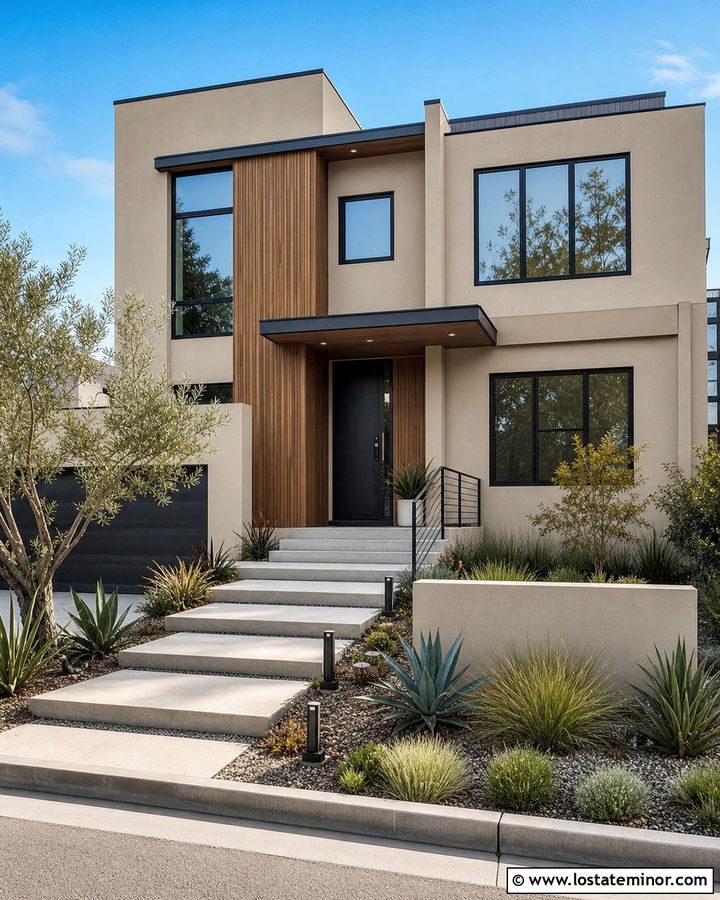
Modern entry steps give a tan house crisp curb appeal through clean shapes and carefully repeated materials. Use oversized warm-gray concrete slabs leading to a recessed entrance on a minimalist two-story home. Pair smooth tan stucco with vertical wood siding, black-framed windows, and a large matte black door. Add a narrow black railing only where needed so the steps retain their open appearance. Gravel joints, linear path lights, and low architectural plants can frame the approach. Repeat the concrete on the driveway border or low landscape wall to connect the entrance with the rest of the property. Bright natural landscaping prevents the facade from feeling severe. The final scheme combines warm color, dark contrast, natural wood, and simple masonry in a balanced exterior composition.
Conclusion:
The best 30 Tan House Design With Steps Ideas treat the staircase, facade, entrance, and landscaping as one connected design. Brick and natural stone create traditional warmth, while concrete, black finishes, and floating slabs produce a cleaner modern look. Wood steps add character, and painted risers offer an affordable way to refresh an existing entrance. Before selecting materials, compare them with the undertones in your tan siding, roof, trim, and foundation. Repeat key colors in at least two areas to create visual balance. Most importantly, choose step proportions and surfaces that suit the scale of the house. A coordinated entrance will make any tan exterior feel more polished, welcoming, and complete.

Related posts: