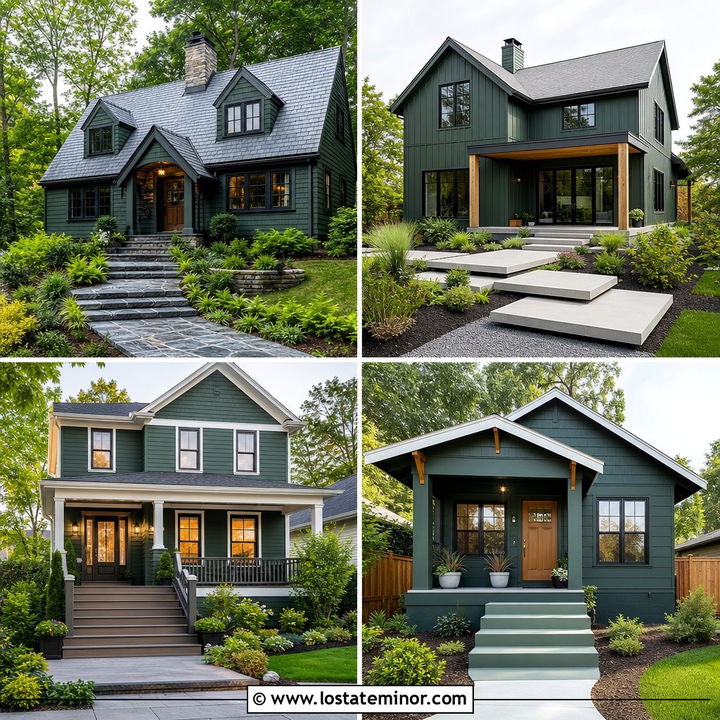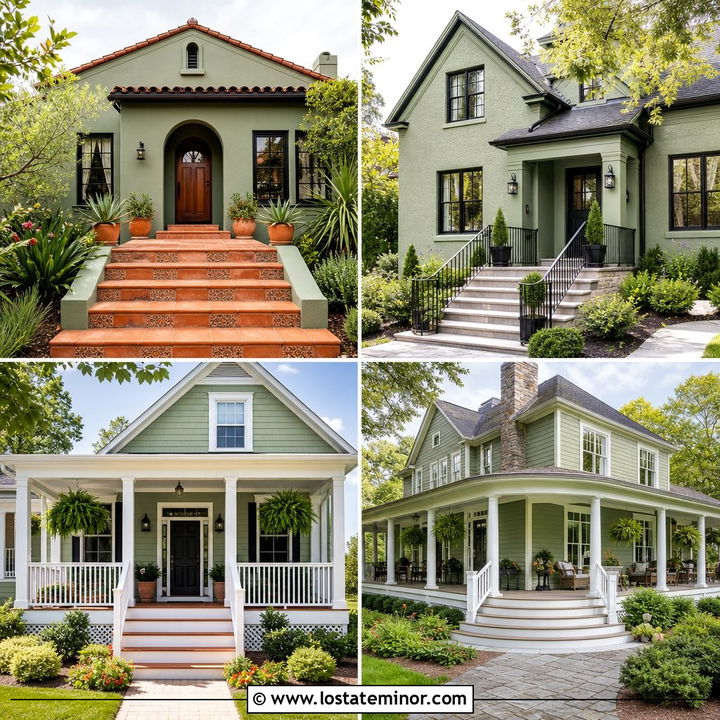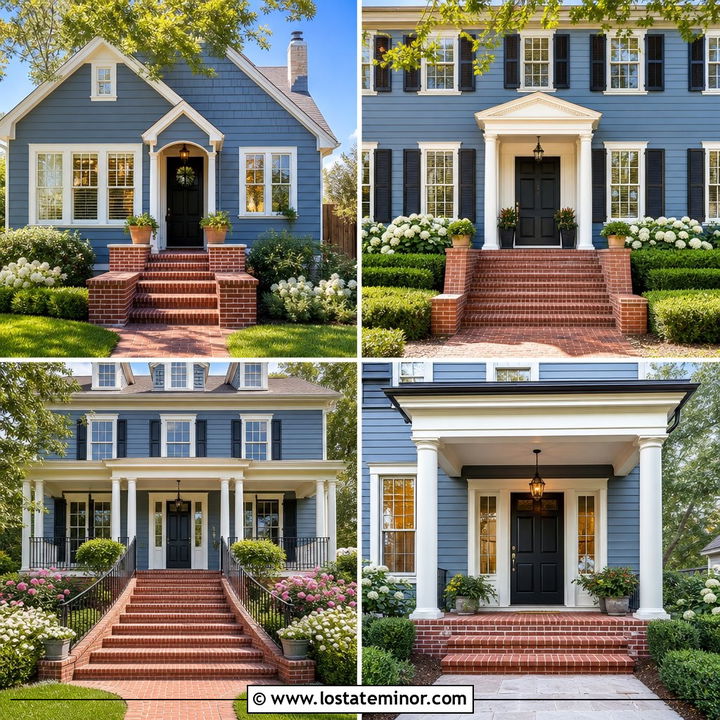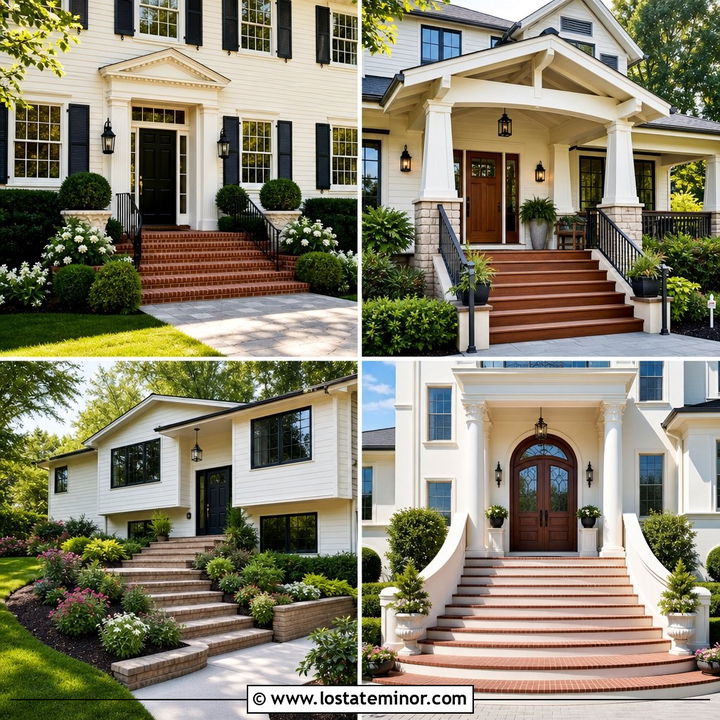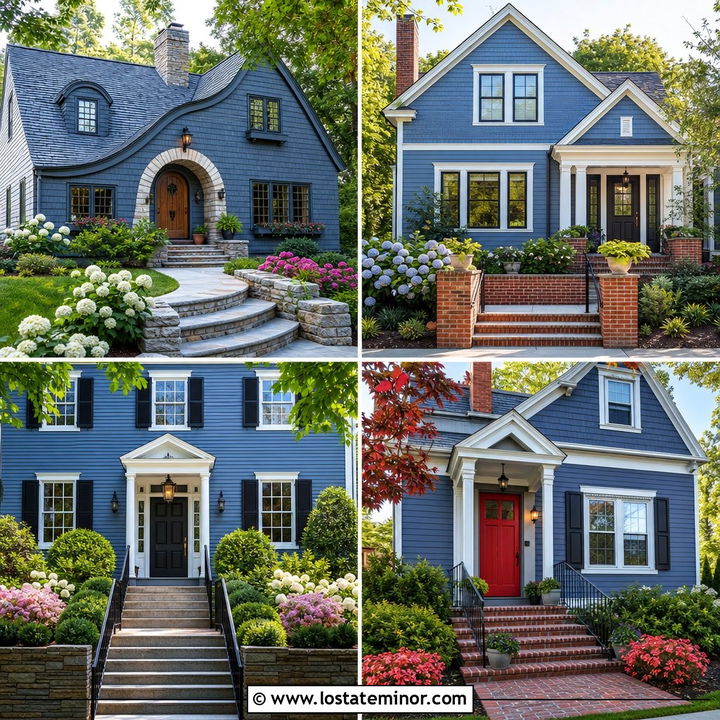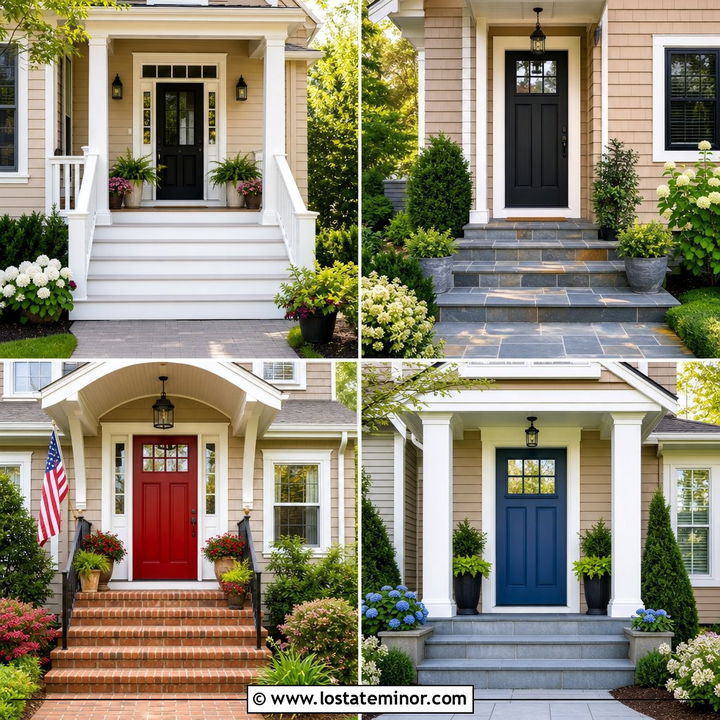
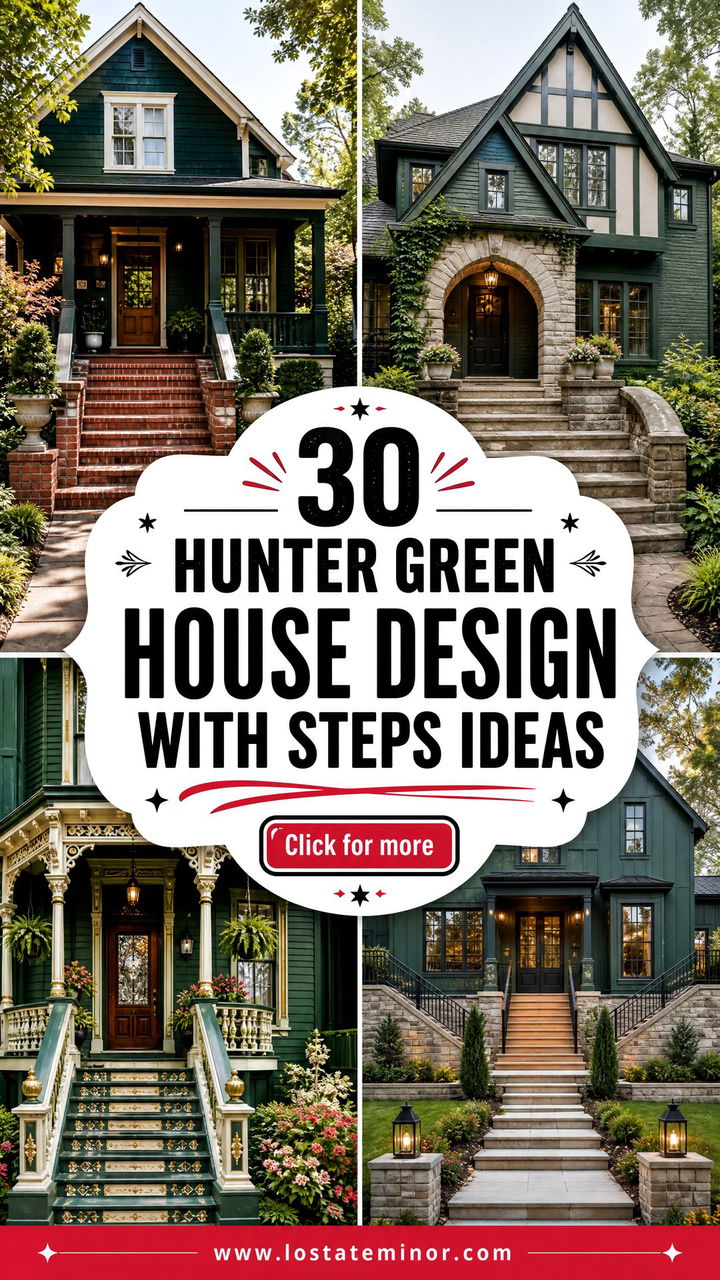
Hunter green gives a home exterior depth, character, and a strong connection to the landscape. These 30 Hunter Green House Design With Steps Ideas show how the color can work across traditional, rustic, and modern architecture. The key is treating the stairs as part of the full exterior scheme rather than a separate feature. Brick, stone, concrete, wood, and composite steps each create a different mood when paired with hunter green siding, coordinated trim, and thoughtful landscaping. You can also adjust the look through railings, porch columns, lighting, and front door colors. Whether you are planning a complete renovation or a smaller curb appeal update, explore these 30 Hunter Green House Design With Steps Ideas.
1. Hunter Green House With White Trim And Brick Steps
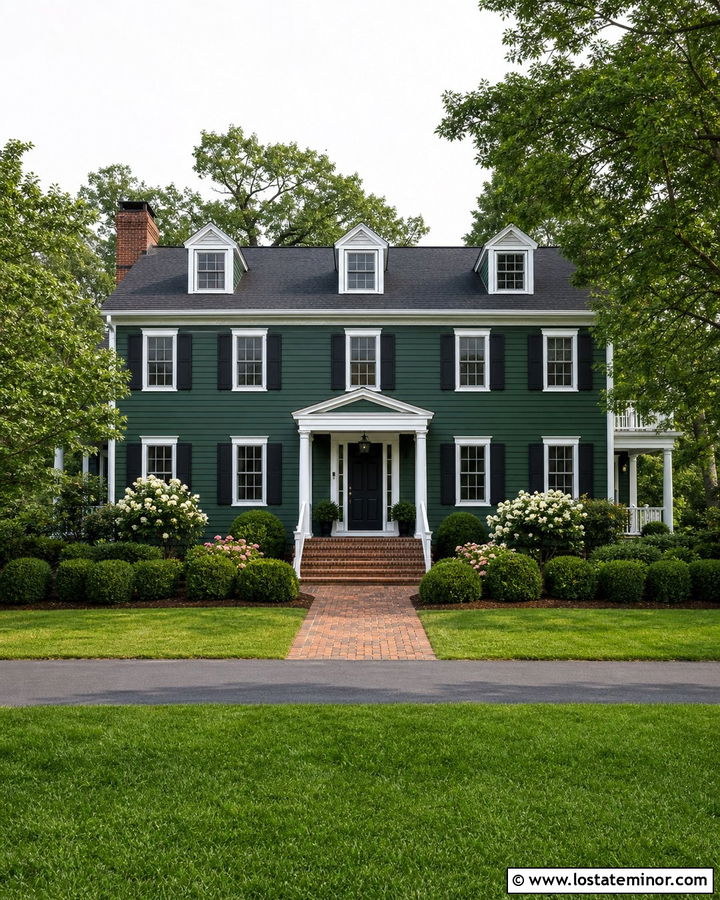
Crisp white trim gives a hunter green exterior a clean, traditional outline, while red brick steps add familiar warmth at the entrance. This combination works especially well on a Colonial or two-story clapboard home with symmetrical windows. Continue the brick along the front walkway so the steps feel connected to the yard. A black front door, black lanterns, and a charcoal shingle roof provide grounding contrast without competing with the green siding. Keep the porch railings white to repeat the window trim. Low boxwood hedges, flowering shrubs, and a simple lawn soften the formal architecture. The result is a complete exterior that feels established, welcoming, and easy to appreciate from the street.
2. Hunter Green House With Cream Trim And Fieldstone Steps
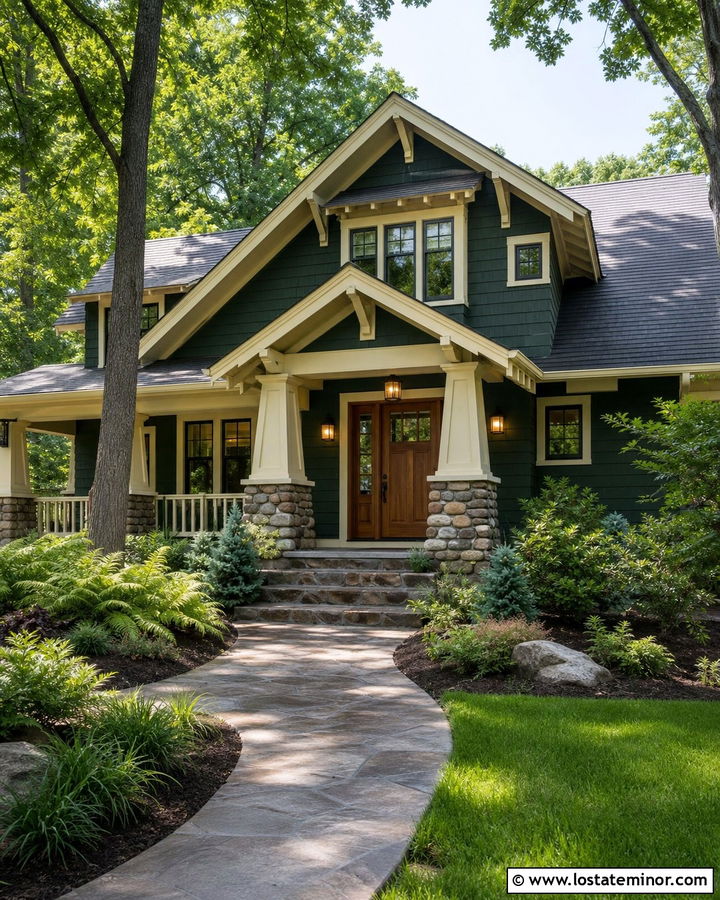
Warm cream trim creates a softer alternative to bright white around hunter green siding. Pair it with broad fieldstone steps for a natural exterior that suits a wooded Craftsman home. Select stones containing gray, tan, brown, and muted green tones to connect the steps with both the house and its surroundings. A medium-stained oak door brings warmth to the entry, while dark bronze lights and railings add definition. Carry the fieldstone onto the foundation, porch columns, or retaining walls for a balanced facade. Ferns, ornamental grasses, and layered evergreen shrubs can frame the walkway without hiding the masonry. This scheme feels relaxed and substantial, with every color and material reinforcing the home’s connection to nature.
3. Hunter Green House With Black Trim And Concrete Steps
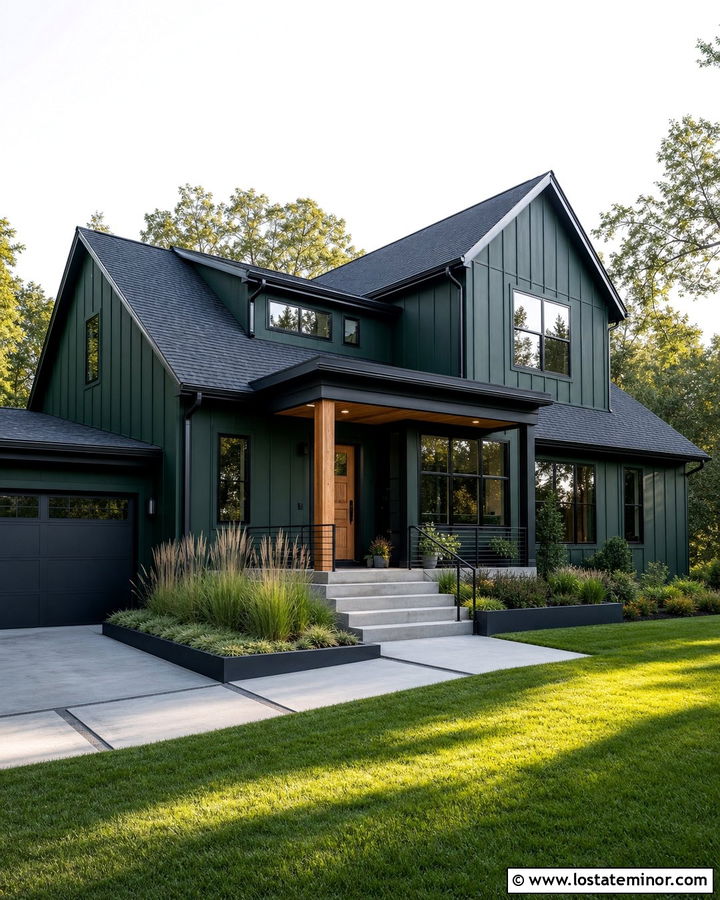
Are you looking for a sharper, more modern hunter green exterior? Black trim and smooth concrete steps create strong lines without introducing too many competing colors. Use this scheme on a contemporary home with vertical siding, large windows, and a simple roofline. Wide poured-concrete steps can lead to a natural wood front door, adding warmth to an otherwise streamlined palette. Matte black handrails, window frames, and exterior lights repeat the trim color across the facade. A charcoal roof completes the dark, cohesive look. Keep the landscaping controlled with rectangular planting beds, clipped grasses, and a straight concrete walkway. The finished house feels bold and current while remaining comfortable in a typical suburban setting.
4. Hunter Green House With Natural Cedar Steps
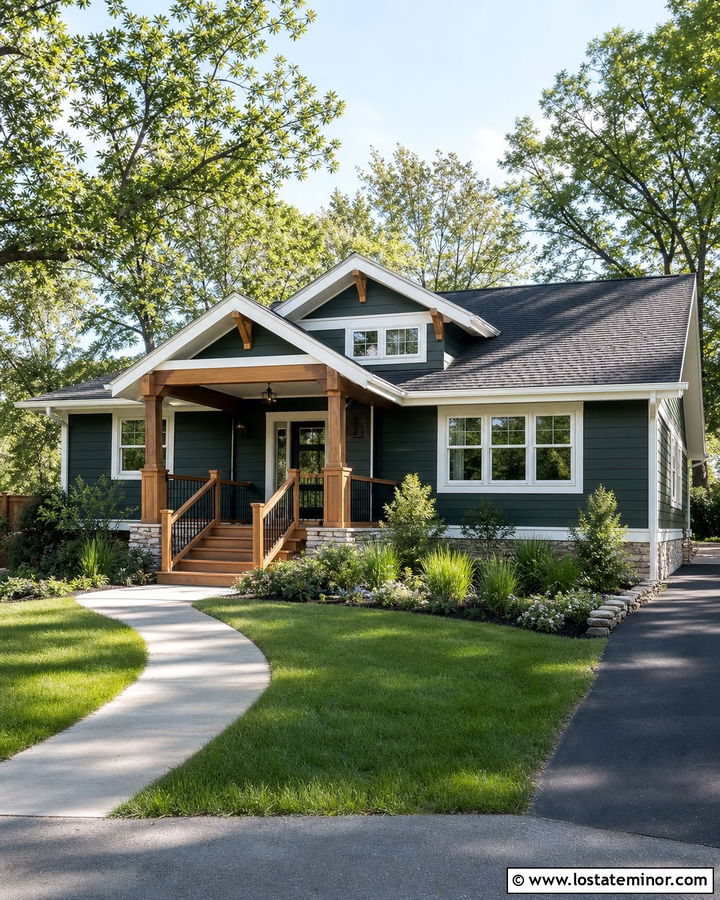
Natural cedar steps can immediately warm up a dark hunter green exterior. This pairing is particularly attractive on a bungalow with horizontal siding, exposed rafters, and a deep covered porch. Extend the cedar onto the porch floor, handrails, and selected gable details so the staircase does not appear isolated. Soft white trim around the windows keeps the facade bright, while a charcoal roof balances the deep green siding. Black metal balusters offer contrast without covering too much of the wood. Use clear or lightly tinted protection to preserve the cedar’s visible grain. A curved stone walkway, native grasses, and informal flower beds complete a welcoming exterior that feels handcrafted rather than overly polished.
5. Hunter Green House With Bluestone Front Steps
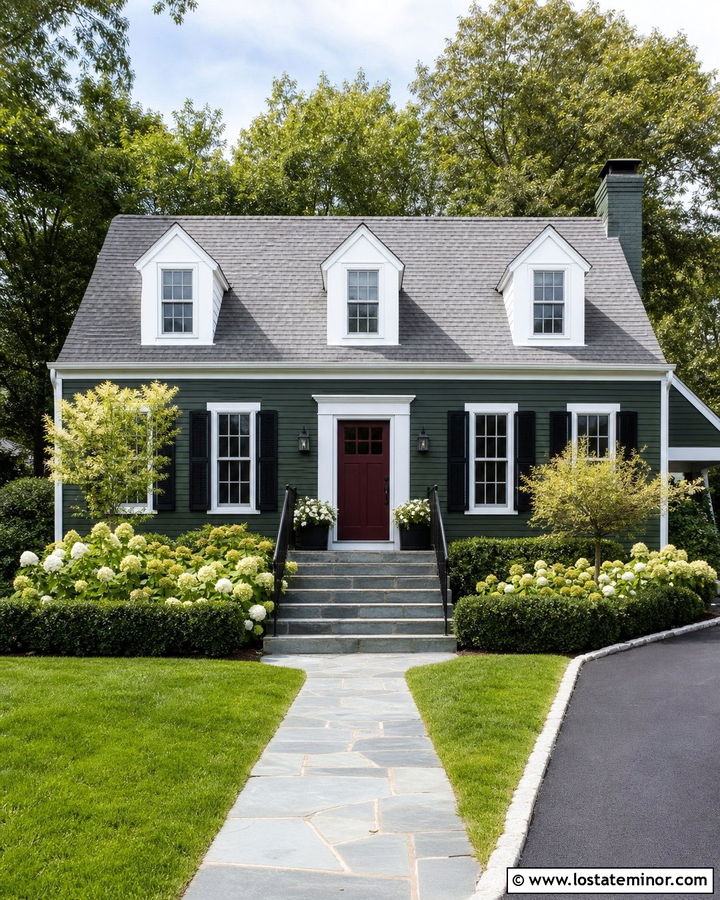
Bluestone steps introduce cool gray and blue undertones that look refined beside hunter green siding. On a Cape Cod home, use wide bluestone treads with lighter stone or painted risers to create a neat, layered entrance. White trim, white dormers, and a soft gray roof prevent the deep body color from overwhelming the smaller architecture. A burgundy or muted red front door can supply a controlled accent without turning the palette overly bright. Add black iron handrails for a slim, practical finishing detail. A bluestone walkway, hydrangeas, clipped hedges, and small ornamental trees help connect the entrance to the yard. This complete exterior has a classic East Coast character with strong curb appeal.
6. Hunter Green House With Red Brick Porch Steps
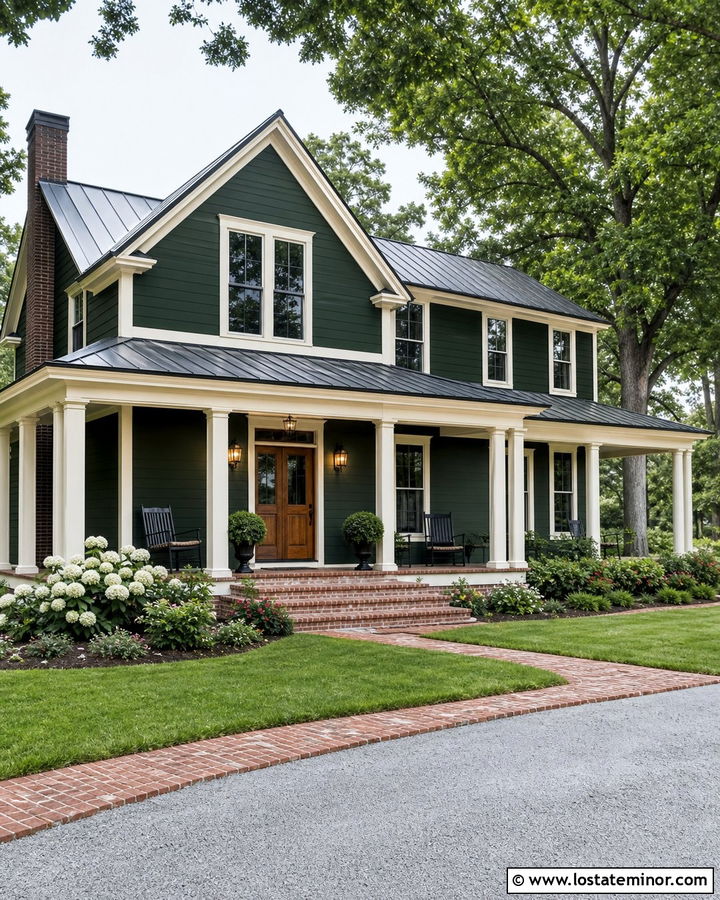
Red brick porch steps bring inviting color to a hunter green farmhouse without making the exterior feel busy. Choose brick with brown or weathered charcoal variation rather than a bright, uniform red. Cream trim and porch columns soften the contrast, while a warm wood front door connects visually with the brick. A dark gray metal porch roof can provide a practical focal point above the entrance. Repeat the brick in walkway edging, porch piers, or a low garden border to distribute its color across the property. Black rocking chairs and simple lanterns finish the porch without adding another major hue. Surrounded by lawn, shade trees, and loose cottage plantings, the house feels comfortable, grounded, and pleasantly collected.
7. Hunter Green House With Limestone Entry Steps
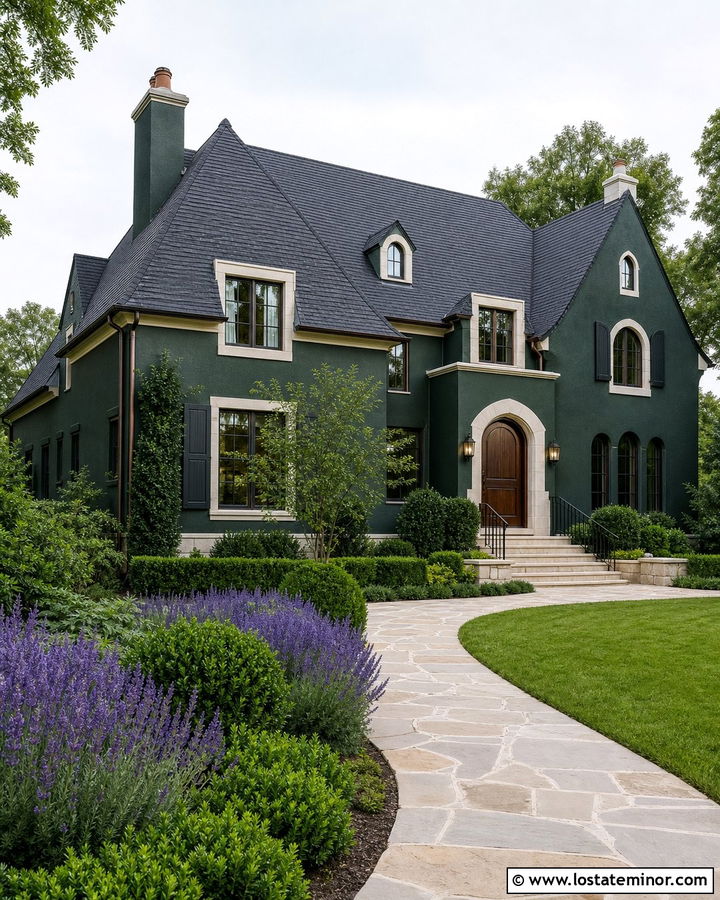
Pale limestone steps can brighten a hunter green exterior while maintaining a natural, high-quality appearance. The light stone creates enough contrast to make the entrance easy to see, especially on a shaded property. Use limestone on a French country home with hunter green stucco or painted masonry, warm white trim, and a steep charcoal roof. An arched walnut door adds richness at the center of the facade. Select antique bronze lights and simple dark railings to complement the traditional architecture. Matching limestone around the foundation or entry columns helps the stairway belong to the entire design. Lavender, clipped shrubs, and layered greenery can border the walkway, creating a polished exterior without distracting from the stonework.
8. Hunter Green House With Granite Steps And Black Railings
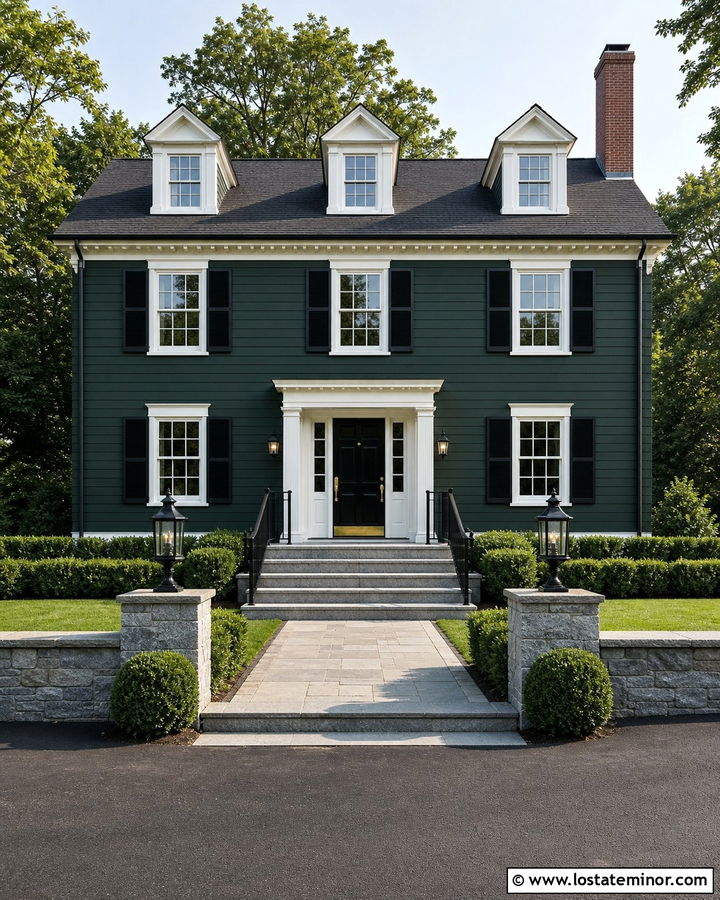
Granite steps give a hunter green Colonial exterior a sturdy, permanent-looking foundation. Medium gray granite works especially well because it bridges the deep siding color and a charcoal roof. Keep the trim bright white for a clear, symmetrical facade, then use black iron railings to outline the stairs without making them feel visually heavy. A glossy black front door can reinforce the railing color, while brass door hardware provides a small warm accent. Granite walkway pavers and low stone walls can extend the entry material into the landscape. Finish the design with matched lanterns, clipped boxwoods, and balanced foundation plantings. This combination creates a formal curb appeal look that feels structured, practical, and enduring.
9. Hunter Green House With Painted Wood Steps
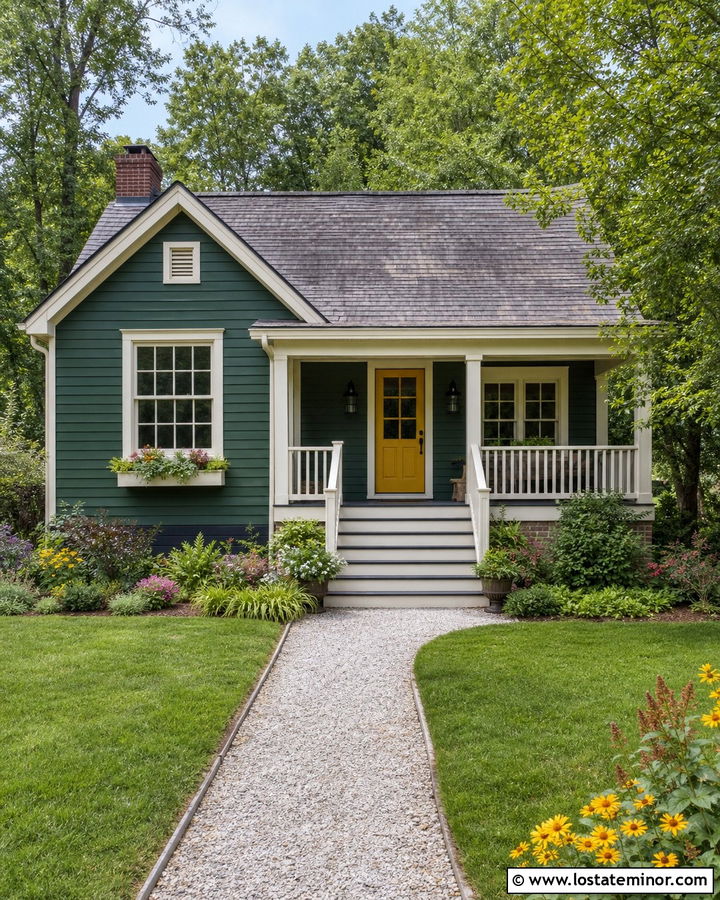
Painted wood steps offer an affordable way to coordinate a porch with hunter green siding. Instead of covering the entire staircase in green, use charcoal gray on the treads and warm white on the risers. This two-color approach creates visible definition and repeats colors found on the roof and trim. It works well on a modest cottage with a white porch railing and a cheerful mustard yellow front door. Keep the porch floor charcoal to connect it with the treads, then add simple black lights and natural fiber planters. A narrow gravel path and colorful perennial beds can frame the entrance. The finished exterior feels carefully coordinated while still retaining the relaxed personality expected from a small cottage home.
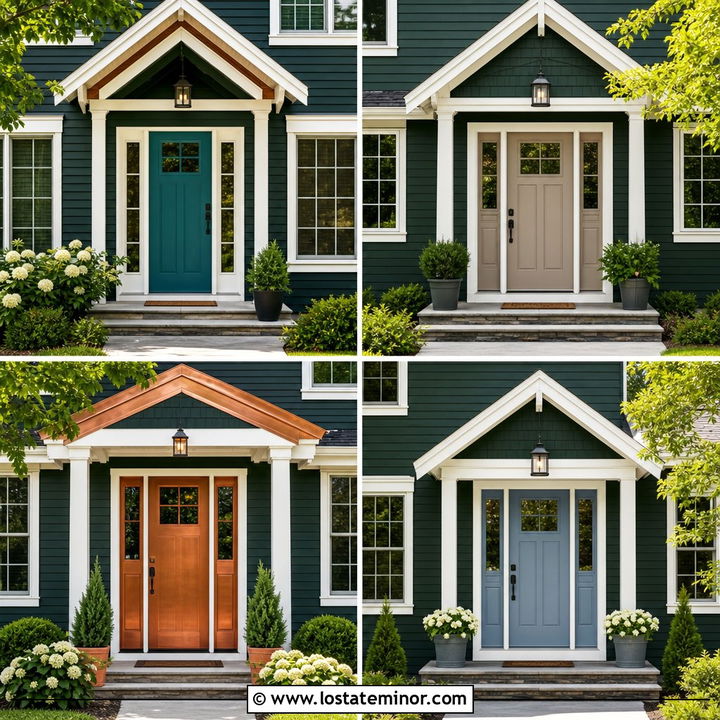
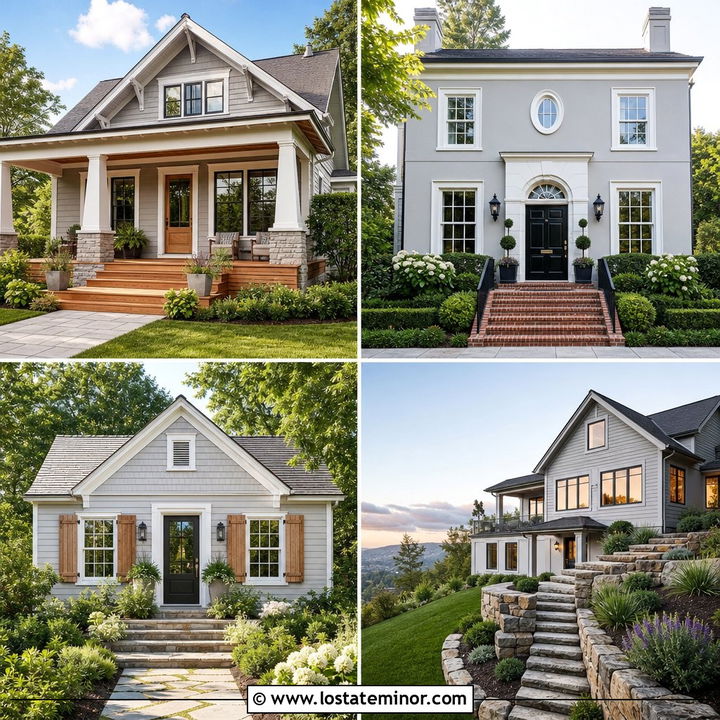
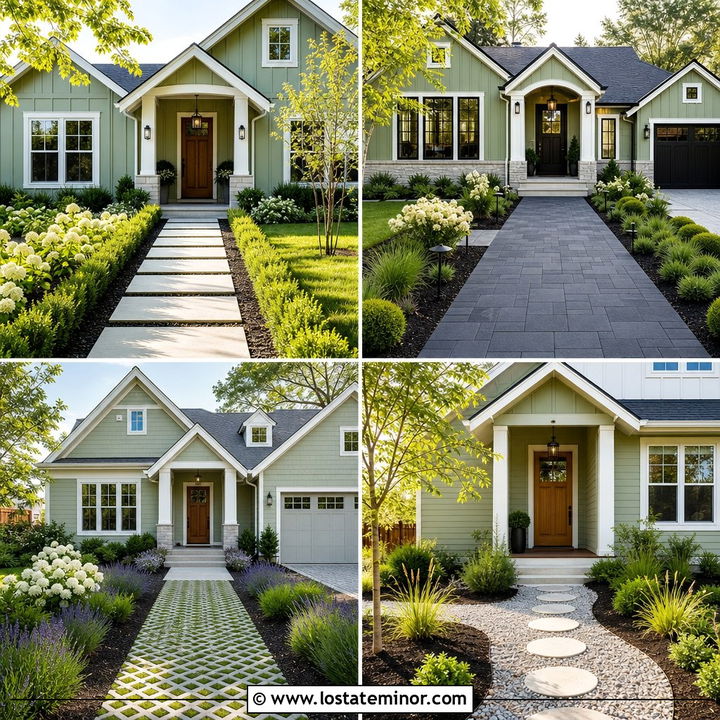
10. Hunter Green House With Composite Porch Steps
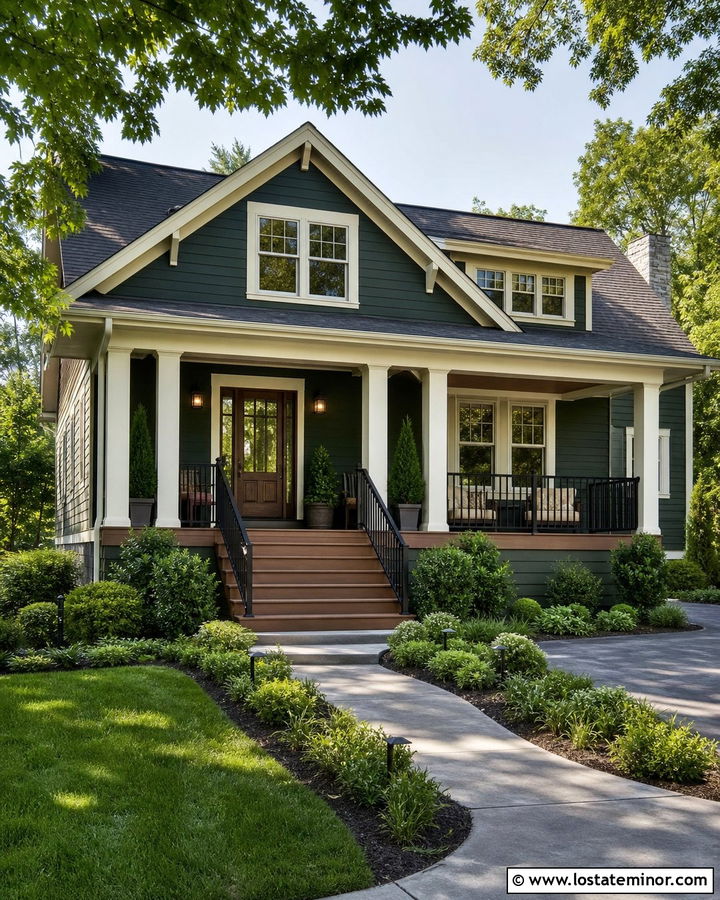
Composite porch steps provide a clean appearance for a hunter green home with a busy family entrance. Choose a medium brown wood-look finish that warms the green siding but does not appear orange. Use the same material across the porch floor and stair treads for a continuous design. White trim and square porch columns keep the facade bright, while black metal balusters add contrast and reduce visual bulk. A Craftsman-style wood door with divided glass can become the entry focal point. Match the roof and gutters in charcoal gray to complete the palette. Broad planting beds, walkway lighting, and durable evergreen shrubs help the exterior feel finished. The overall scheme is welcoming, practical, and visually balanced.
11. Hunter Green House With Wide Farmhouse Steps
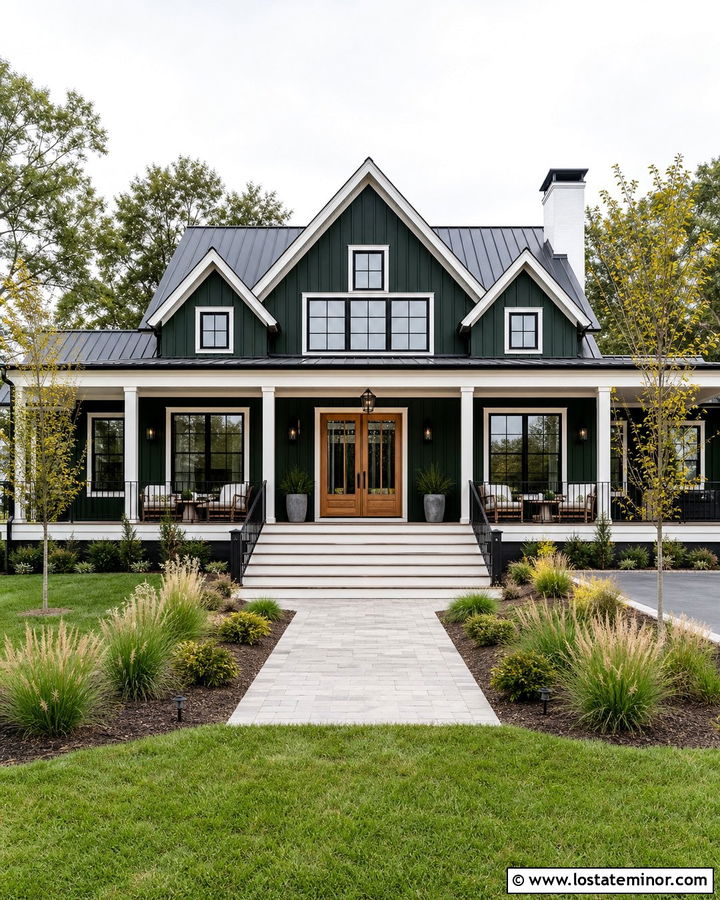
Wide front steps can make a hunter green modern farmhouse feel more generous and approachable. Run the staircase almost the full width of the central porch, using warm gray treads and white risers for a bright, layered effect. Hunter green board-and-batten siding provides the main color, while creamy white trim outlines the gables and windows. A natural oak double door adds warmth beneath the porch roof. Use black metal railings only where necessary so the entrance remains open and uncluttered. A charcoal standing-seam roof and matching gutters introduce modern contrast. Finish the curb appeal with a straight paver walkway, symmetrical planters, young shade trees, and low grasses that emphasize the broad horizontal entrance.
12. Hunter Green Craftsman With Stone Porch Steps
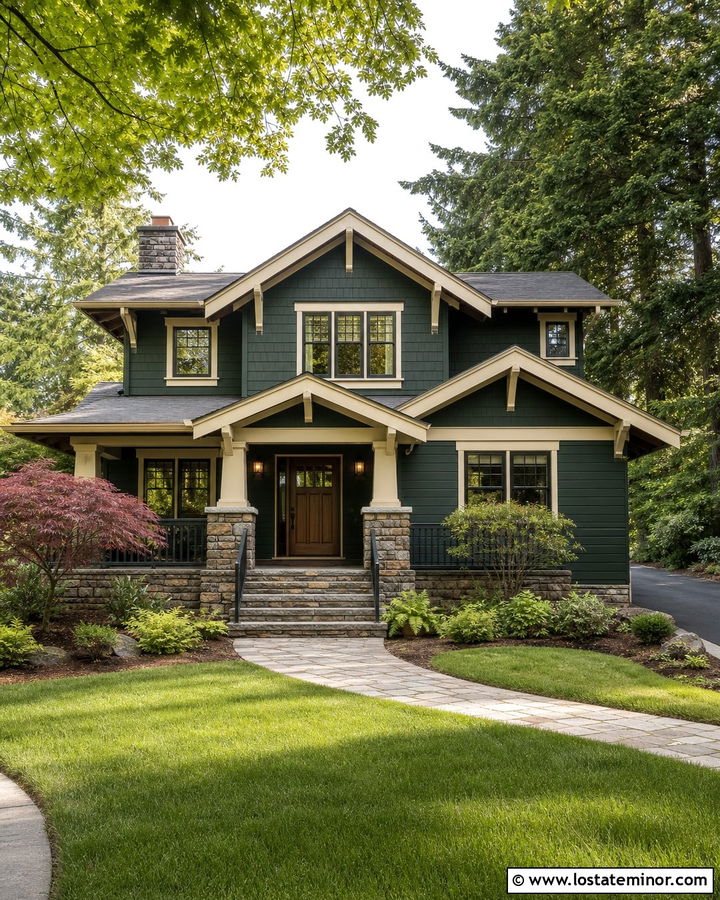
A Craftsman house naturally supports a rich mix of hunter green siding, substantial woodwork, and stone steps. Use deep green clapboard on the main walls and matching shingles in the upper gables. Cream trim can highlight the windows, rafters, and tapered porch columns. Build the stairs with rough-faced gray and brown stone, then repeat that material around the column bases and foundation. A dark-stained fir door and matching porch ceiling add warmth beneath the deep roof overhang. Black railings and bronze lights provide quiet contrast. Complete the scene with a curved walkway, Japanese maple, ferns, and low shrubs. Each feature feels connected, resulting in a layered exterior that respects the home’s handcrafted architectural character.
13. Hunter Green Colonial With Symmetrical Brick Steps
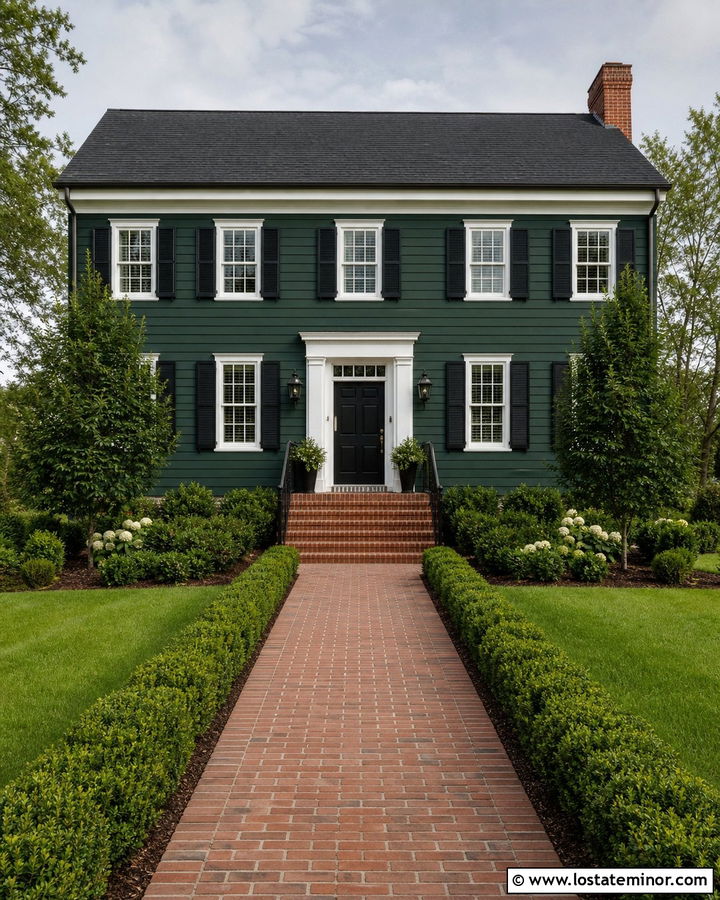
Symmetry is the defining feature of this hunter green Colonial scheme. Center a black six-panel front door between evenly spaced windows, then lead toward it with broad red-brown brick steps. White corner boards, window trim, and a modest entry surround create crisp contrast against the green clapboard. Black shutters and a charcoal roof add structure while repeating the front door color. Keep the stair railings slim and black so they do not disrupt the formal balance. Extend the brick into a straight walkway bordered by identical boxwood rows. Matching lanterns, planters, and small ornamental trees reinforce the organized layout. The entire exterior feels composed and traditional, with the steps acting as a clear visual path to the entrance.
14. Hunter Green Ranch With Low Concrete Steps
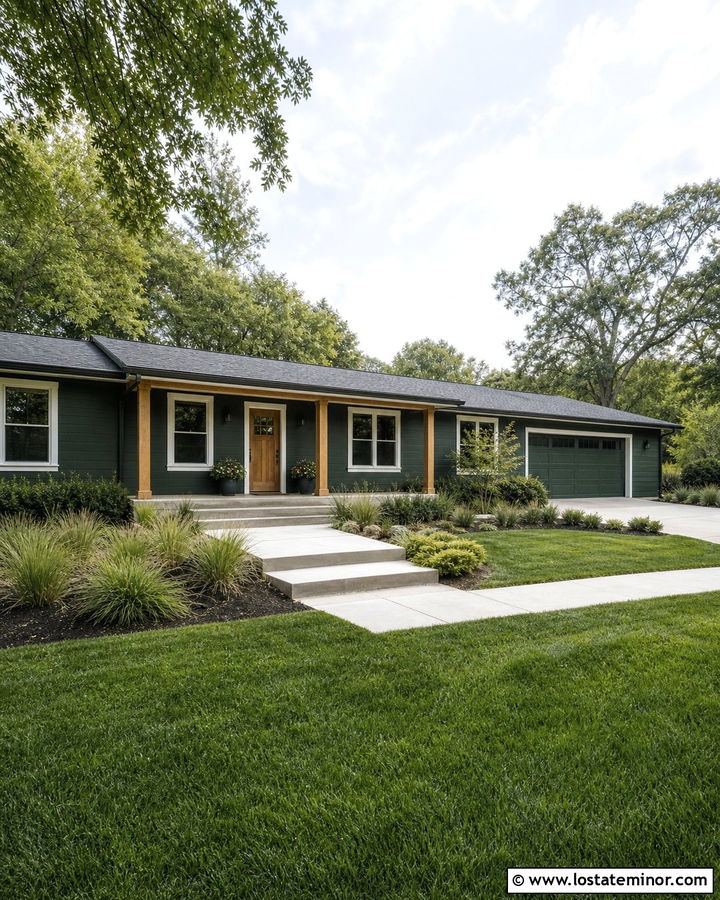
A single-story ranch benefits from entrance steps that emphasize width rather than height. Use two or three broad concrete steps leading to a shallow covered porch. Hunter green horizontal siding gives the long facade depth, while warm white trim brightens the roofline and windows. A cedar front door and matching wood porch posts introduce natural contrast. Paint the garage door hunter green so it blends into the body instead of dominating the house. Charcoal gutters, lights, and a low-slope roof complete the color scheme. Connect the steps to an extra-wide walkway surrounded by ornamental grasses and low foundation plants. This straightforward update can make a simple ranch feel more intentional, balanced, and welcoming from the curb.
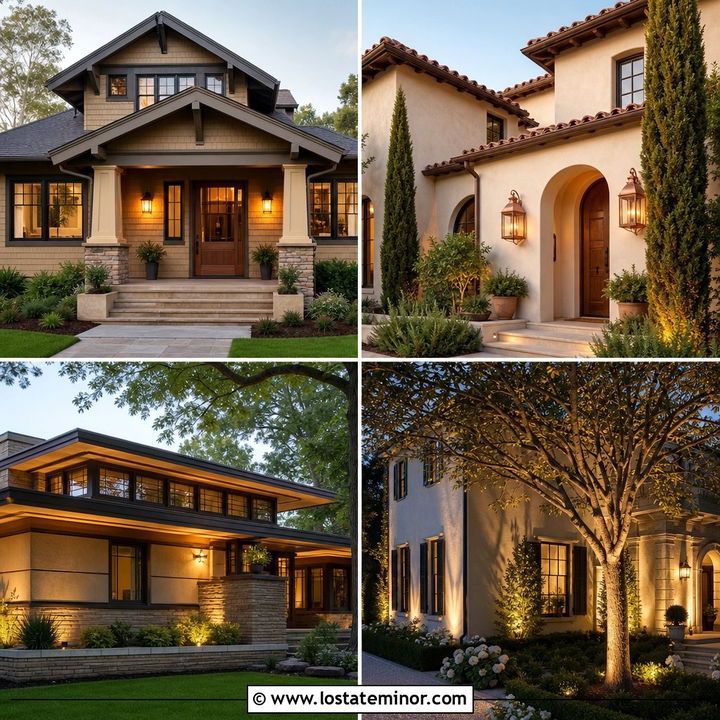
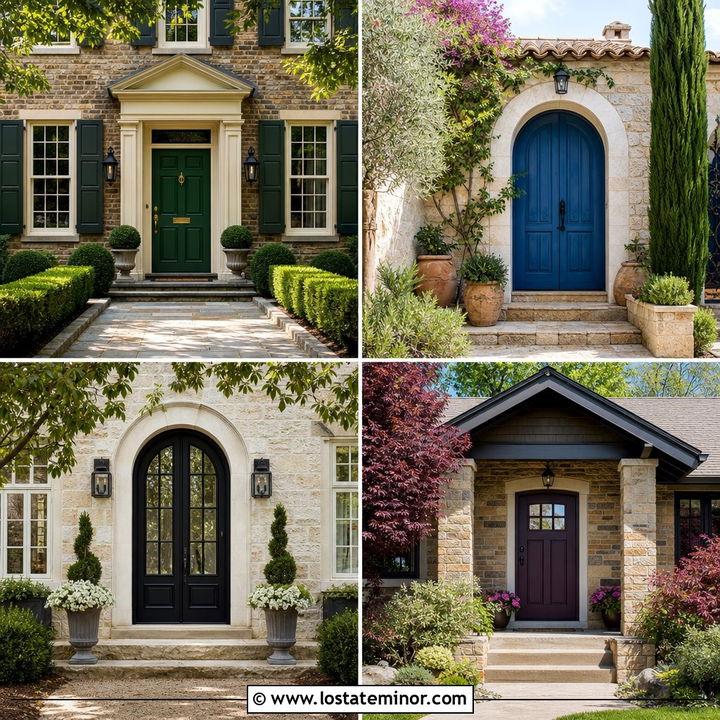
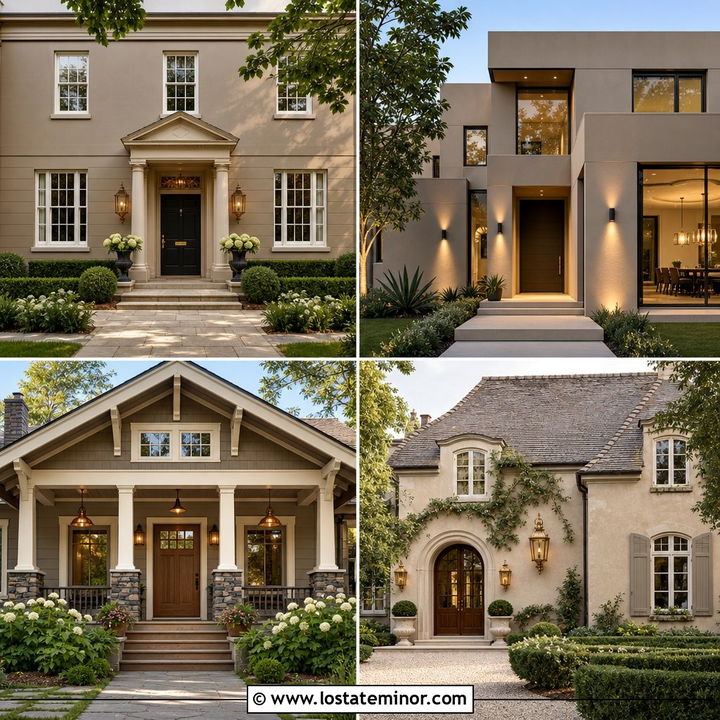
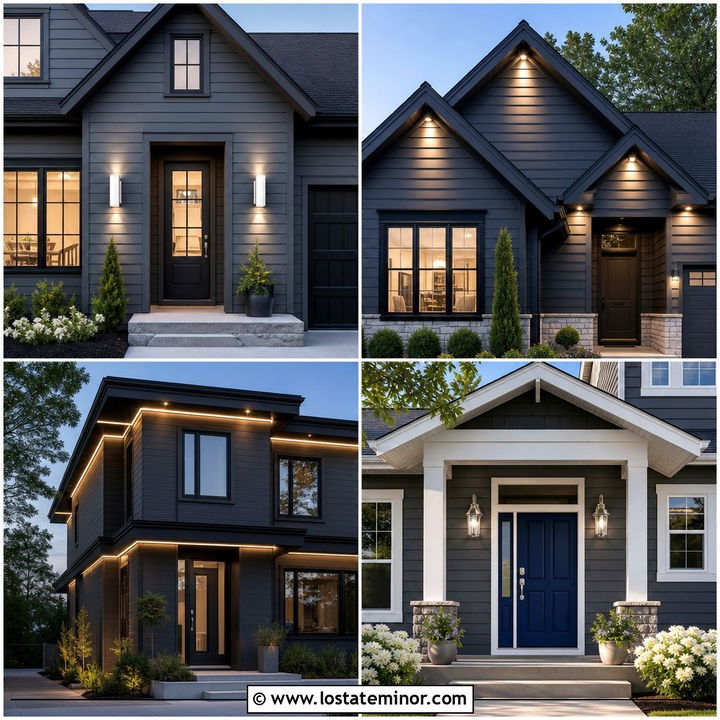
15. Hunter Green Cape Cod With Curved Stone Steps
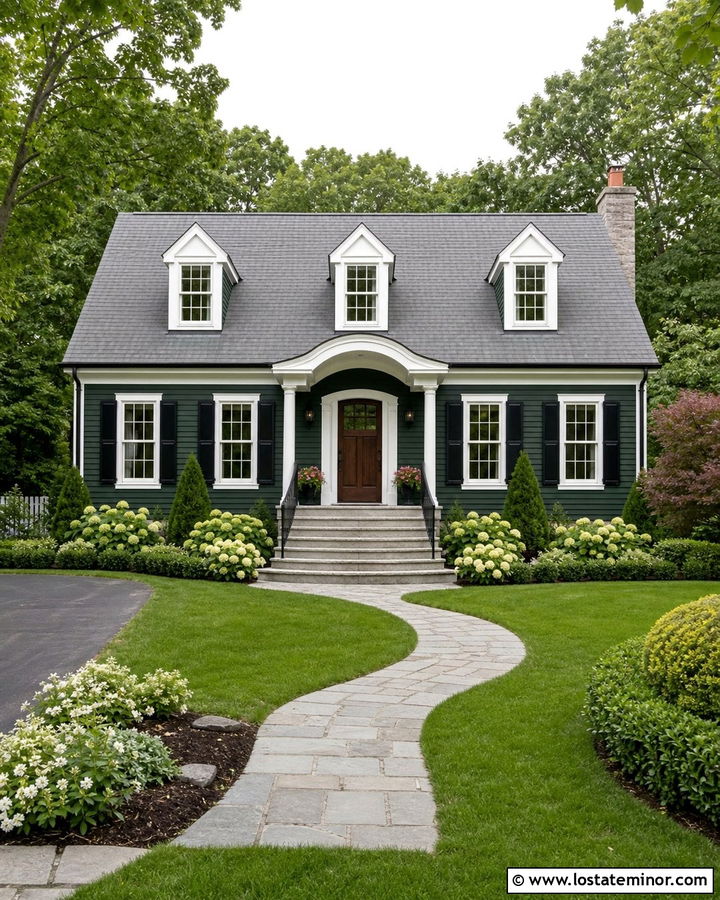
Curved stone steps soften the compact, symmetrical shape of a hunter green Cape Cod home. Use light gray stone treads that gently widen toward the walkway, creating a graceful entrance without becoming overly formal. Crisp white trim, white dormers, and a white entry surround provide the classic contrast associated with this architecture. A natural mahogany door gives the center of the facade a warmer focal point. Keep shutters black or very dark charcoal to coordinate with the shingle roof and iron handrails. Repeat the step stone in a curved garden path or low edging. Hydrangeas, clipped evergreens, and flowering groundcover can follow the rounded lines, helping the house feel settled into its landscape.
16. Hunter Green Bungalow With Porch Stairs
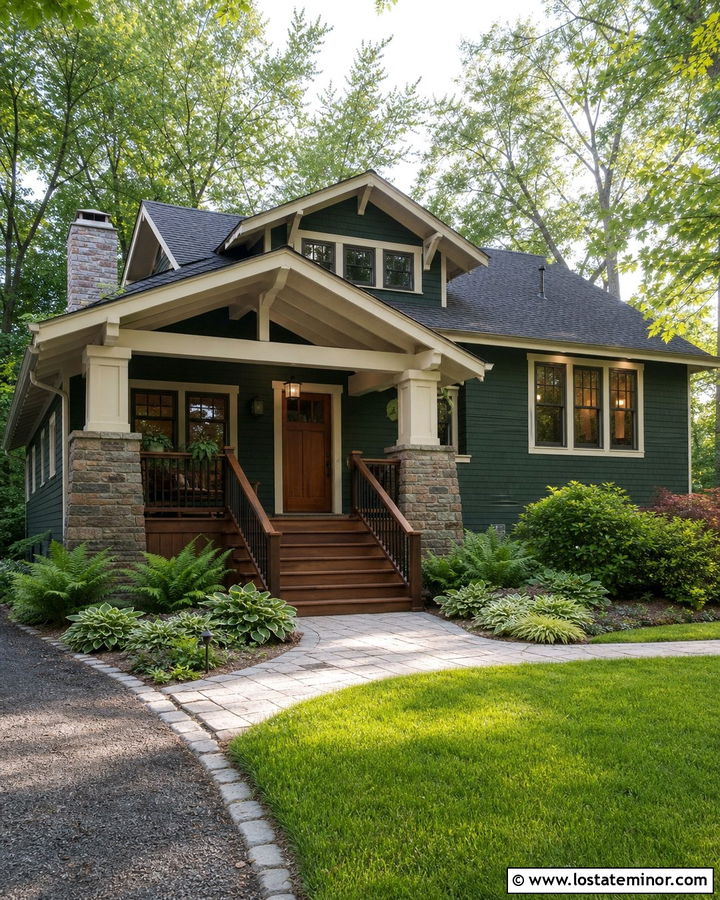
Picture a shaded bungalow with deep hunter green siding, a welcoming porch, and a short run of broad wooden stairs. Warm cream trim highlights the exposed rafters, windows, and sturdy square columns. Stain the porch floor and steps a medium walnut brown, then use black metal balusters beneath simple wood handrails. A craftsman front door in the same walnut tone unifies the entry. Stone column bases can introduce gray and tan texture near the ground. Add a charcoal roof to balance the dark siding without making the exterior monochromatic. Ferns, hostas, and layered shrubs suit the low porch and shaded yard. This combination produces comfortable curb appeal with a strong handcrafted quality.
17. Hunter Green Split-Level With Landing Steps
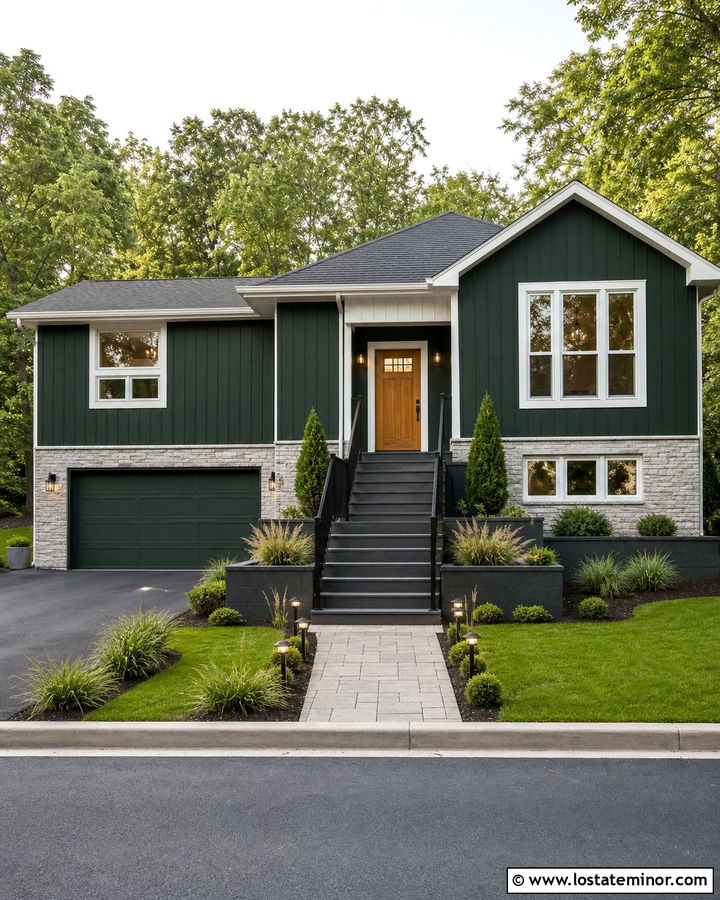
A split-level entrance often needs a clearer connection between the driveway and elevated front door. Create a generous stair landing with charcoal concrete steps, black railings, and integrated planter walls. Hunter green siding can cover the upper story, while light gray stone veneer anchors the lower level. Use warm white trim around the windows to maintain contrast and add a natural wood front door for warmth. Paint the garage door deep green to reduce its visual prominence. A straight paver walkway and low landscape lighting should guide visitors toward the landing. Finish with grasses and compact shrubs that do not obstruct the stairs. The redesigned facade feels organized, contemporary, and better proportioned from the street.
18. Hunter Green Tudor With Arched Stone Steps
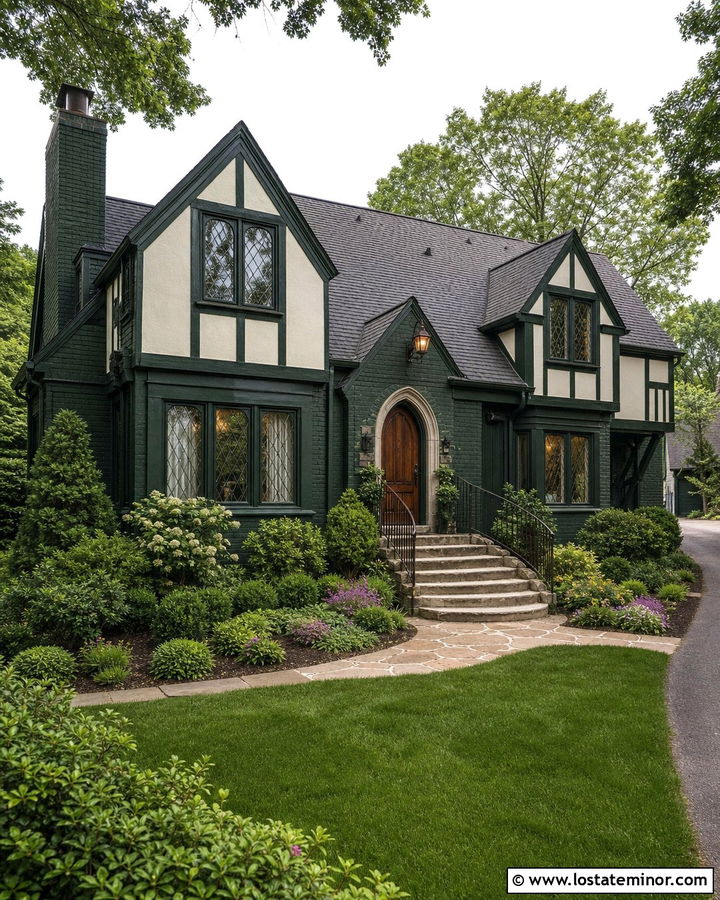
Hunter green can give a Tudor exterior an earthy update when it is paired with cream stucco, dark timber details, and arched stone steps. Use the green on lower siding sections, selected gables, or painted brick while preserving enough cream to define the architecture. A rounded wood door becomes the natural focal point beneath a small entry roof. Construct the steps from irregular gray-brown stone and shape the edges to follow the doorway’s curve. Dark bronze railings, leaded-look windows, and a charcoal roof complete the palette. Ivy should be controlled rather than allowed to cover architectural details. Layered shrubs, flowering perennials, and a winding stone path enhance the storybook character without making the complete exterior feel theatrical.
19. Hunter Green Victorian With Decorative Front Steps
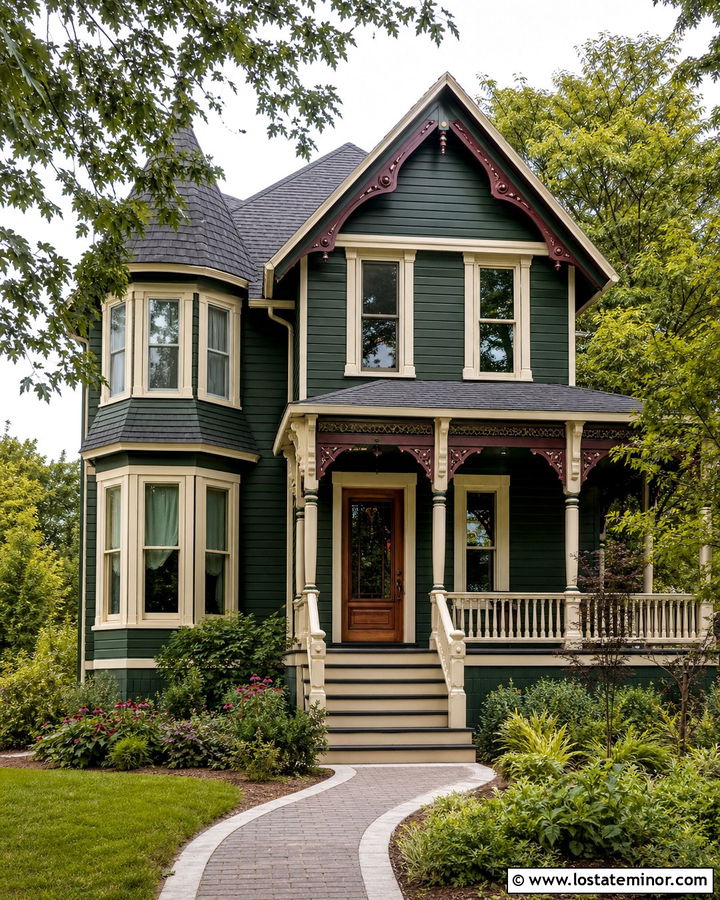
A Victorian exterior can carry hunter green beautifully when its many details are limited to a controlled palette. Use hunter green on the main clapboard, cream on the trim, and muted burgundy on selected brackets or window accents. Paint the wooden step treads charcoal and the risers cream to make the staircase easy to distinguish. Decorative cream railings and turned porch posts can then stand out against the dark siding. A stained wood front door prevents the scheme from feeling overly colorful. Keep the roof dark gray and repeat burgundy sparingly in planters or small architectural details. A curved walkway and layered cottage garden complete the house, creating charm and depth while allowing the historic ornament to remain readable.
20. Hunter Green Cabin With Timber Steps
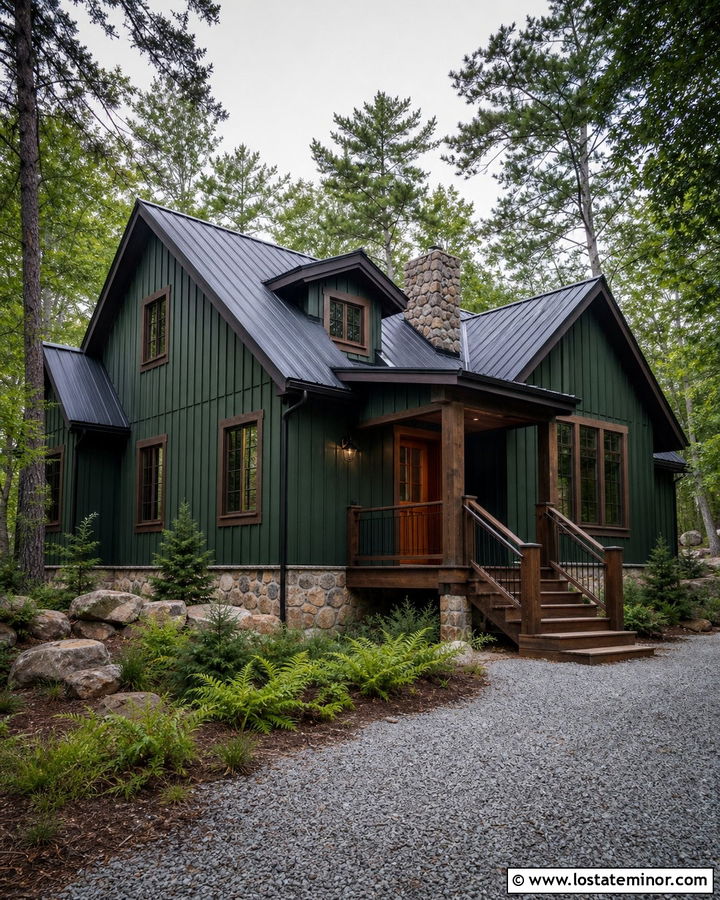
For a wooded cabin, hunter green siding and rough timber steps create a natural transition between the building and the surrounding trees. Use vertical board-and-batten siding with dark brown trim rather than bright white. Build the steps and porch from thick cedar or pressure-treated timber in a medium natural stain. Fieldstone around the foundation and chimney adds weight at ground level. A black metal roof and simple black railings provide durable-looking contrast. The front door can be stained to match the steps, keeping the palette quiet and cohesive. Gravel paths, boulders, ferns, and native shrubs work better than formal foundation beds. The complete exterior feels rustic and comfortable without appearing unfinished or overly themed.
21. Hunter Green Cottage With White Risers
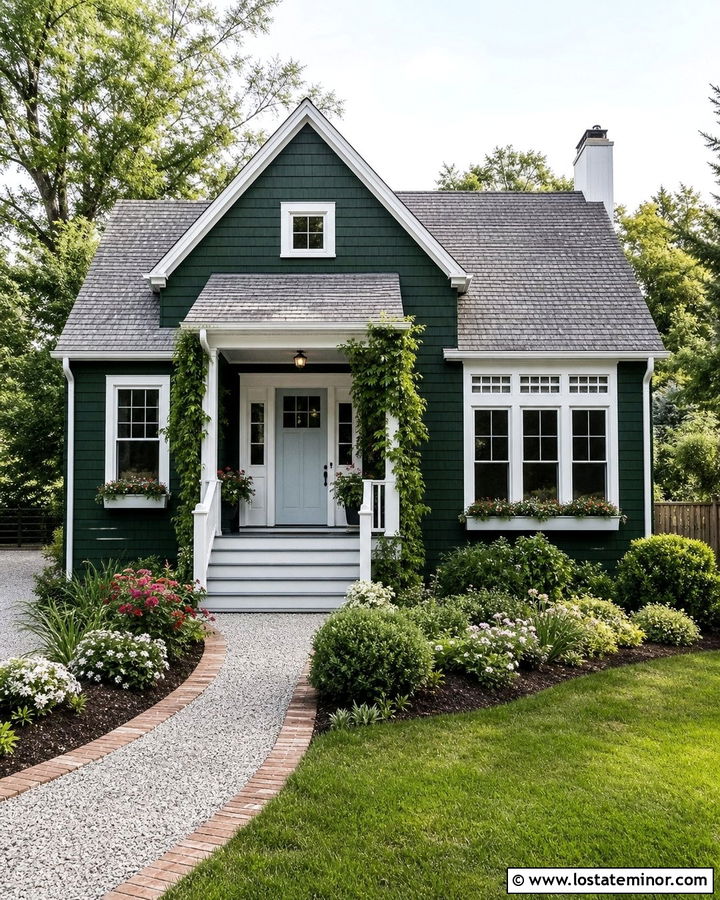
White stair risers can brighten the entrance of a small hunter green cottage and make every step visually distinct. Pair them with medium gray treads that relate to a weathered shingle roof. Continue the white across window trim, porch posts, and simple railings for a fresh outline. A pale blue front door adds a gentle accent while allowing the hunter green siding to remain dominant. Window boxes, climbing plants on a controlled trellis, and informal flower beds can provide cottage character. Keep the walkway material understated, such as gravel edged with brick or narrow concrete pavers. This full exterior scheme feels cheerful and detailed, yet the limited color palette prevents the compact facade from becoming cluttered or visually overwhelming.
22. Hunter Green House With Floating Concrete Steps
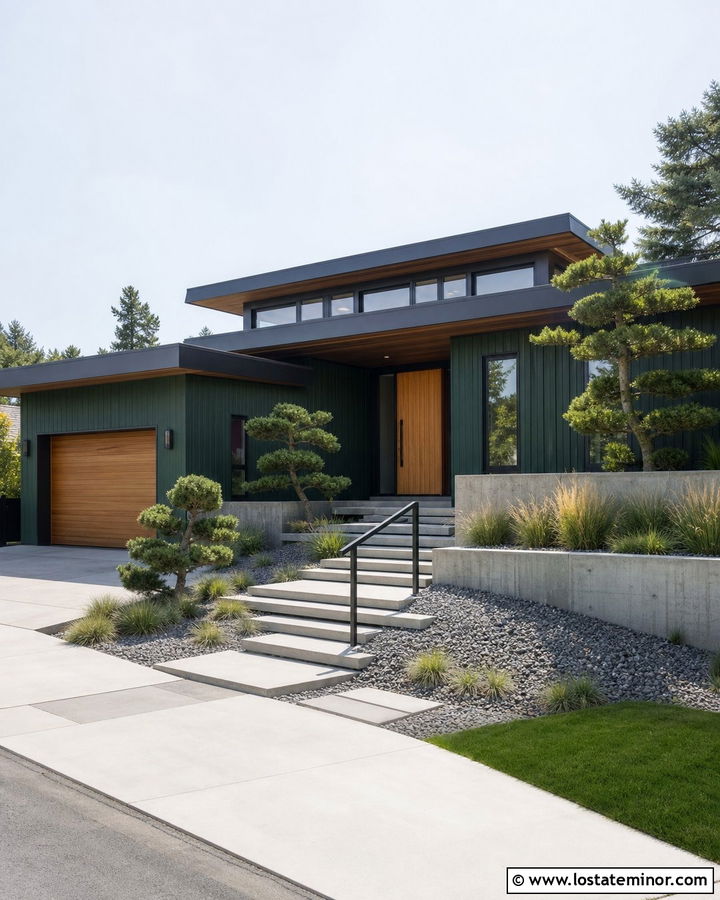
Floating concrete steps bring a strong architectural look to a contemporary hunter green home. Use thick rectangular slabs with narrow shadow gaps, set over gravel or low groundcover. Vertical hunter green siding reinforces the clean lines, while black window frames and a flat charcoal roof sharpen the facade. A wide pivot door in warm cedar introduces natural color at the entrance. Keep the railings minimal, using slim black metal where required. Repeat concrete in the driveway borders, retaining walls, or front walkway so the stairs belong to the overall landscape. Structured grasses and sculptural evergreen plants complement the modern geometry. The final exterior feels bold and carefully edited, with green preventing the concrete and black finishes from appearing cold.
23. Hunter Green House With Terraced Hillside Steps
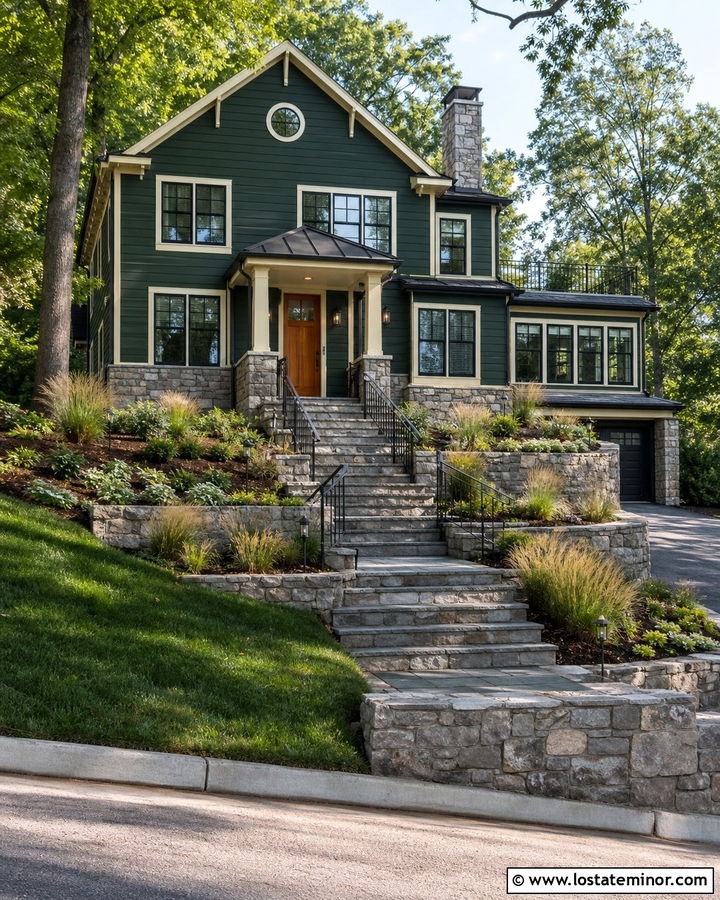
A sloped property offers room for an impressive sequence of terraced steps rather than one steep staircase. Pair hunter green siding with gray fieldstone retaining walls and wide stone landings. Each landing can hold simple planting pockets, pathway lights, or a small specimen shrub. Use cream trim and a medium brown front door to keep the house visible above the layered landscape. Black metal railings provide a consistent line from the sidewalk to the porch. Repeat the same stone around the foundation so the steps appear integrated with the architecture. Groundcover, ornamental grasses, and low native plants can soften the walls. This approach turns a difficult grade into a complete curb appeal feature with a clear, welcoming route.
24. Hunter Green House With Paver Steps And Walkway
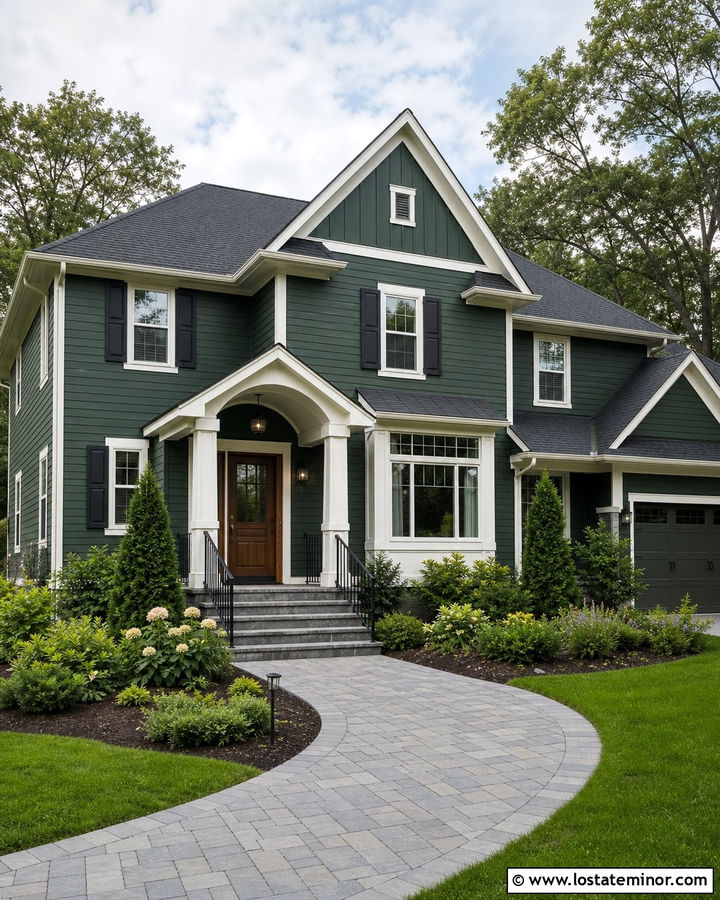
Matching paver steps and a front walkway create a smooth visual path toward a hunter green house. Select warm gray pavers with subtle tan variation so they complement both green siding and natural wood accents. On a suburban transitional home, use creamy white trim, a stained oak door, and charcoal shutters for a balanced palette. Build the steps with broad paver treads and slightly darker risers to define each level. Low black railings and modern lanterns can add contrast without making the entrance feel formal. Continue the pavers toward the driveway in a gentle curve. Layer evergreen shrubs, flowering perennials, and fresh lawn around the path to frame the house and emphasize the coordinated masonry.
25. Hunter Green Townhouse With Narrow Brick Steps
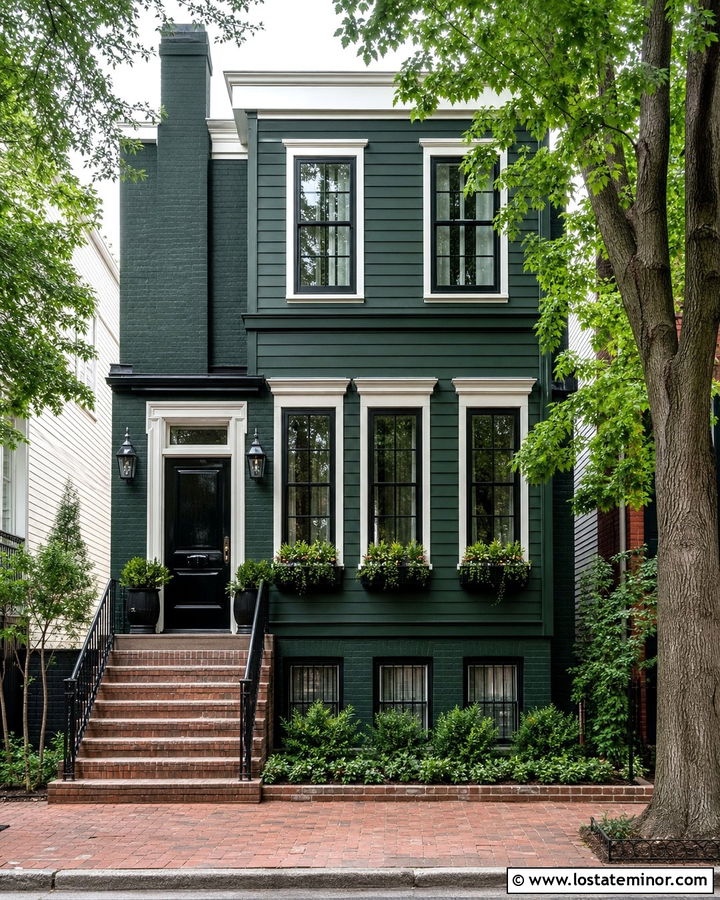
A narrow townhouse entrance requires careful color placement and simple materials. Cover the facade in hunter green painted brick or clapboard, then use warm white trim around tall windows and the front door. Traditional red-brown brick steps can climb toward a glossy black door, creating a compact but distinctive entry. Choose slim black iron railings that follow the staircase without blocking the architecture. Matching black lights and window boxes reinforce the vertical proportions. If space permits, place narrow planters beside the lowest step rather than crowding the landing. A brick sidewalk and small foundation bed connect the house with its urban setting. The finished exterior feels polished, practical, and full of character despite the limited frontage.
26. Hunter Green House With Side Entry Steps
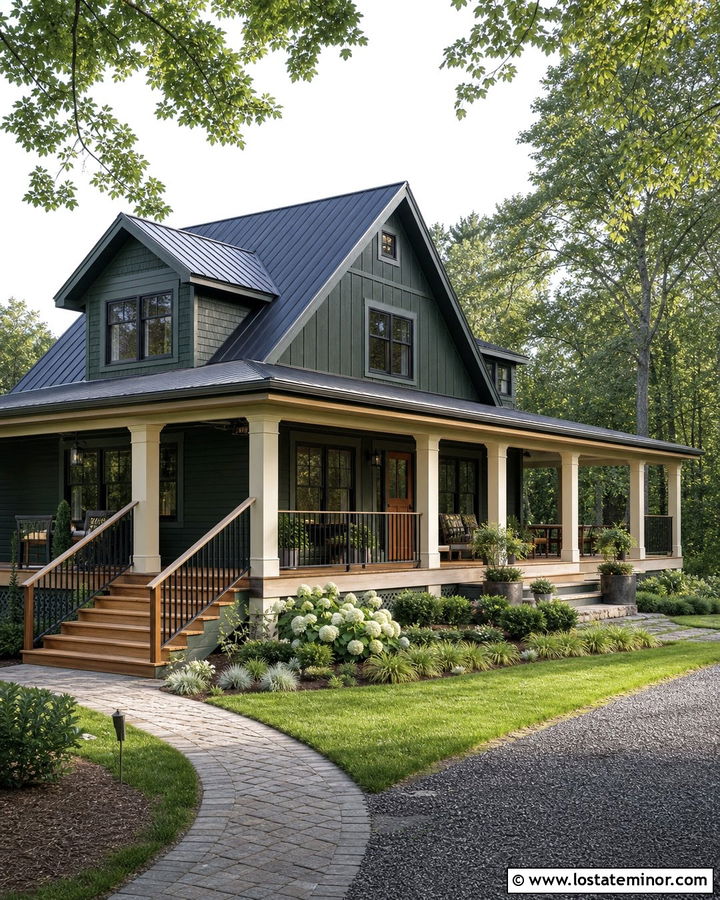
Side-facing steps can reduce the visual impact of a raised porch while preserving a broad, open front elevation. Use this arrangement on a hunter green farmhouse with cream trim, square porch columns, and a charcoal metal roof. Build the side stairs from natural cedar and connect them to a matching porch floor. Black metal balusters provide contrast and keep views toward the front door open. A warm wood door centered on the porch remains the main focal point from the street. Lead a curved paver walkway toward the side staircase so the route feels intentional. Hydrangeas, low grasses, and porch planters can soften the turn. The complete design looks welcoming without allowing a tall stair run to dominate the facade.
27. Hunter Green House With Double Staircase Entry
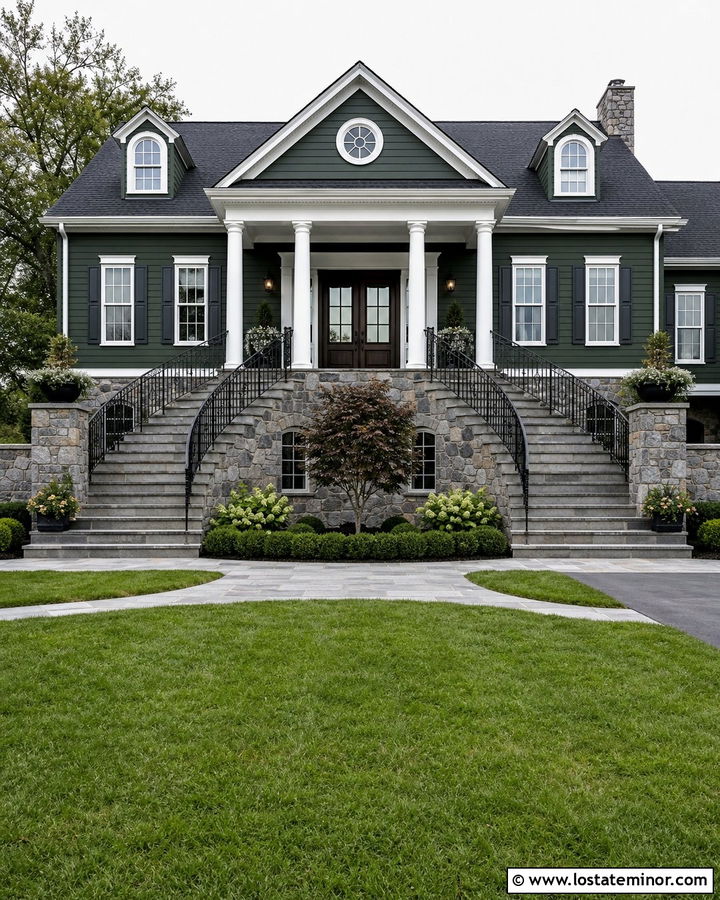
A double staircase creates a formal entrance for a wide hunter green home with an elevated central porch. Use mirrored stone stair runs that rise from both sides and meet at a generous landing. Cream trim, substantial white columns, and a dark wood double door can give the facade a balanced focal point. Choose medium gray stone with restrained color variation, then repeat it on the foundation and porch piers. Black iron railings emphasize the symmetry and connect with a charcoal roof. Place low shrubs beneath the stairs and matched planters near each starting point. A central garden bed or small ornamental tree can occupy the space between the staircases, completing a dramatic yet organized curb appeal design.
28. Hunter Green House With Covered Back Steps
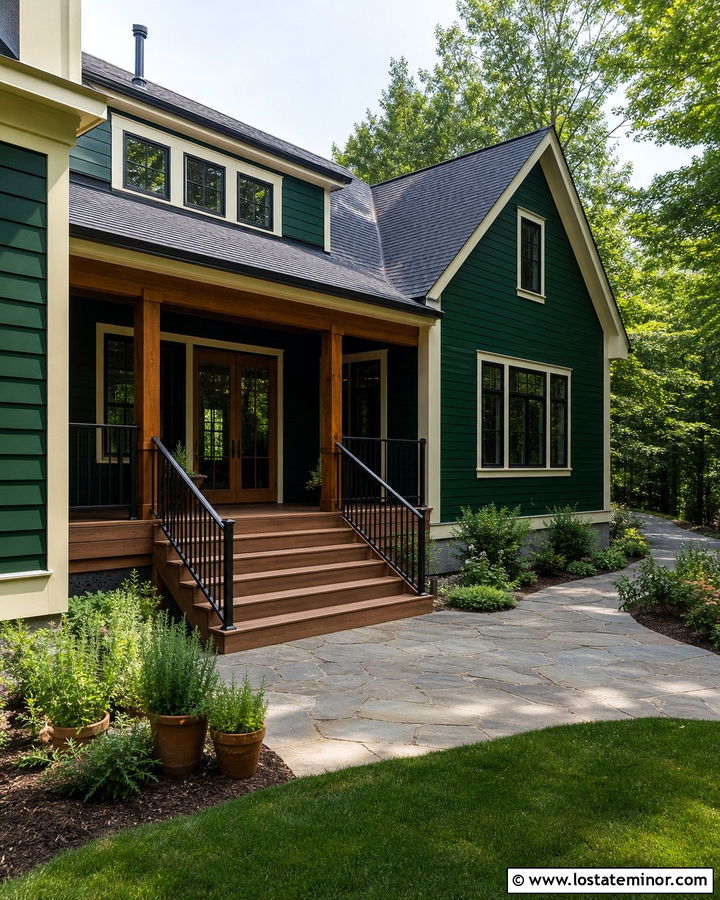
Back steps deserve the same coordinated treatment as the street-facing exterior, especially when they connect to a frequently used porch or patio. Use hunter green siding with cream trim and a small covered roof supported by natural wood posts. Build the steps from medium brown composite boards and add black metal railings for a durable, streamlined appearance. Continue the decking material across the landing so the entrance feels unified. A glass-paneled wood door can bring warmth and light to the facade. Connect the stairs to a stone patio, garden path, or neatly edged lawn. Planters, herbs, and low shrubs soften the practical area. The complete design feels polished while remaining appropriate for everyday outdoor living.
29. Hunter Green House With Wide Accessible Steps
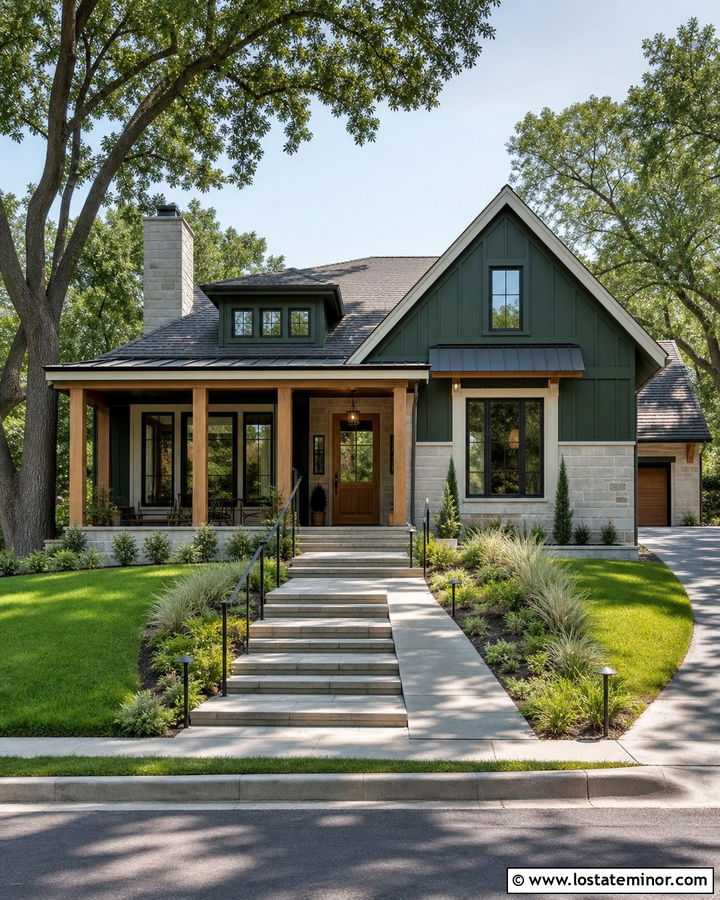
A comfortable entrance can combine broad steps with an integrated sloped walkway rather than treating accessibility as an afterthought. Use hunter green siding, warm white trim, and pale gray masonry to create a bright, cohesive facade. Low-rise stone steps can occupy one side of the entrance, while a gently sloped path follows the landscaping on the other. Repeat black metal handrails along both routes for visual consistency. A natural oak door and matching porch ceiling introduce warmth beneath the covered entry. Plant low grasses and groundcover beside the pathway so views remain open. By coordinating the masonry, rails, lighting, and landscape, the complete exterior looks deliberate, welcoming, and useful for visitors with different mobility needs.
30. Hunter Green House With Mixed Stone And Wood Steps
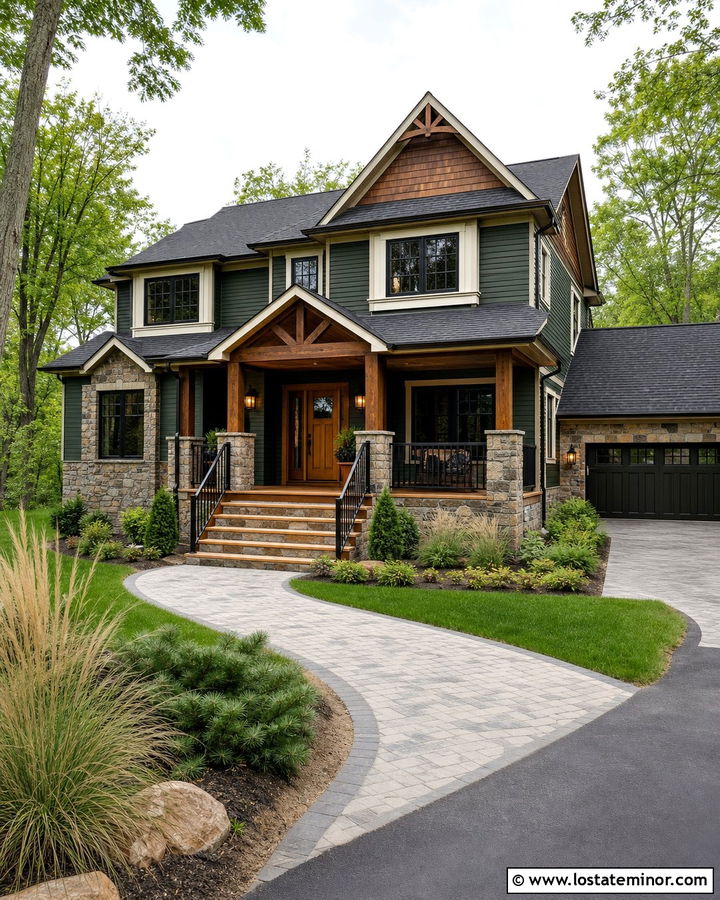
Mixing stone and wood can create a layered entrance that suits a large hunter green home. Begin with wide fieldstone steps at ground level, then transition to stained cedar stairs beneath the covered porch. Repeat the stone on foundation walls and column bases, while the cedar appears on the porch floor, front door, and gable accents. Cream trim keeps the dark green siding from feeling too heavy. Black metal railings, charcoal roofing, and bronze lighting provide restrained contrast. A broad walkway, mature trees, evergreen shrubs, and ornamental grasses complete the setting. Because each material appears in more than one location, the staircase feels integrated rather than pieced together. The result is rich, balanced curb appeal with noticeable natural texture.
Conclusion:
The strongest hunter green exterior is built around a complete, coordinated palette. Steps should relate to the siding, trim, roof, doorway, porch, and surrounding landscape instead of looking like a separate project. Brick can add traditional warmth, stone provides natural texture, and concrete creates a cleaner modern effect. Wood and composite stairs are equally useful when their tones repeat elsewhere on the facade. Before choosing materials, consider the home’s architecture, entrance height, walkway direction, and existing permanent finishes. Test exterior colors outdoors and view them from the street. These 30 Hunter Green House Design With Steps Ideas offer flexible starting points for creating an attractive, practical, and welcoming home.

Related posts: