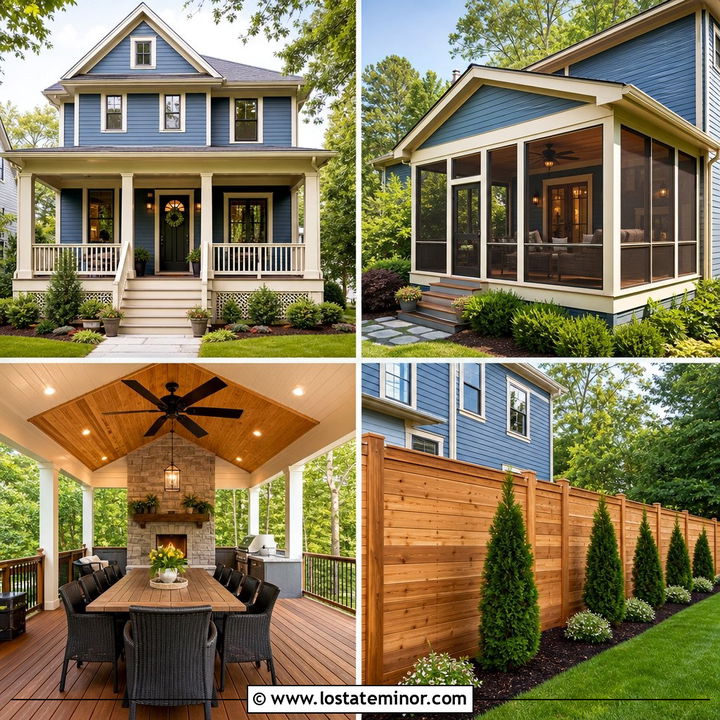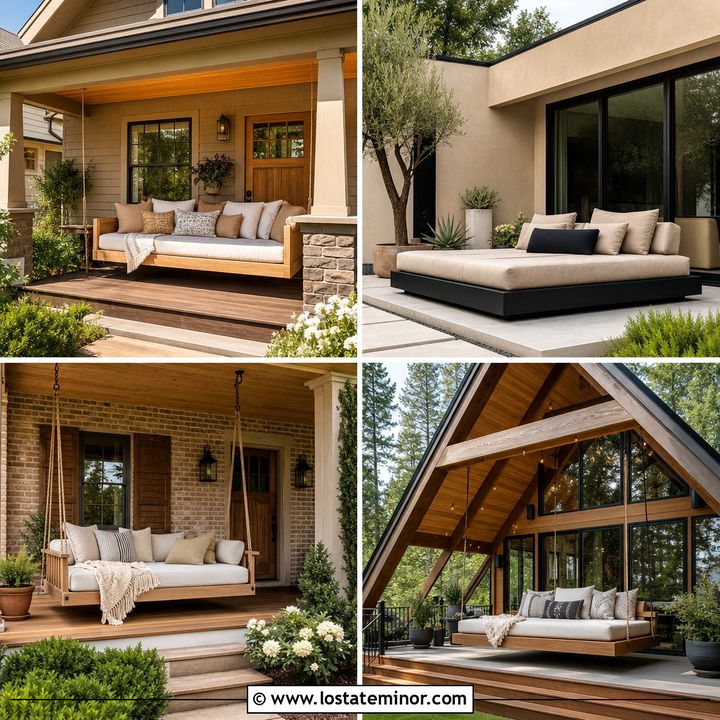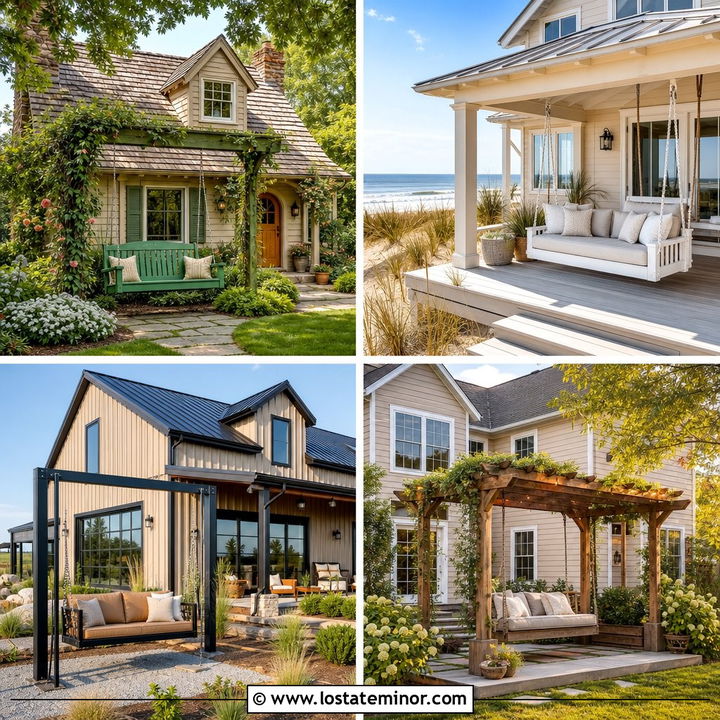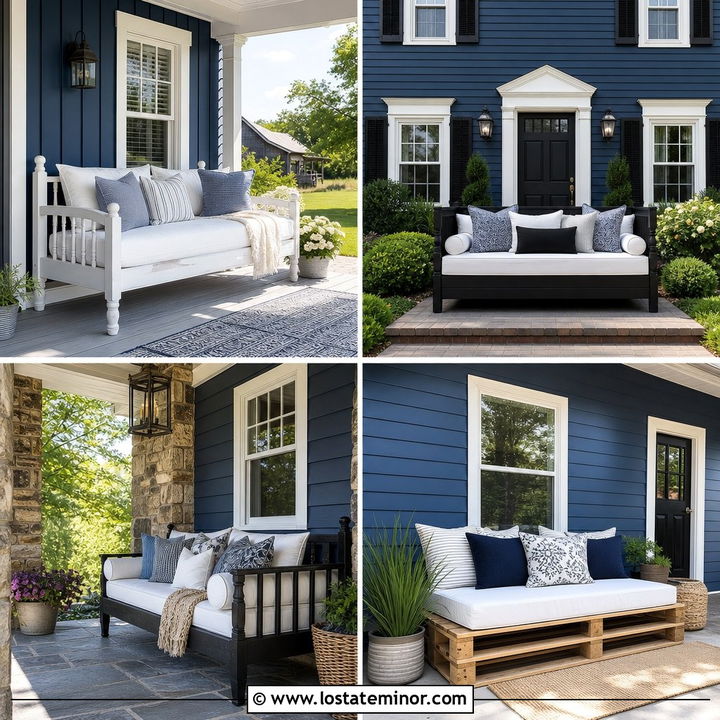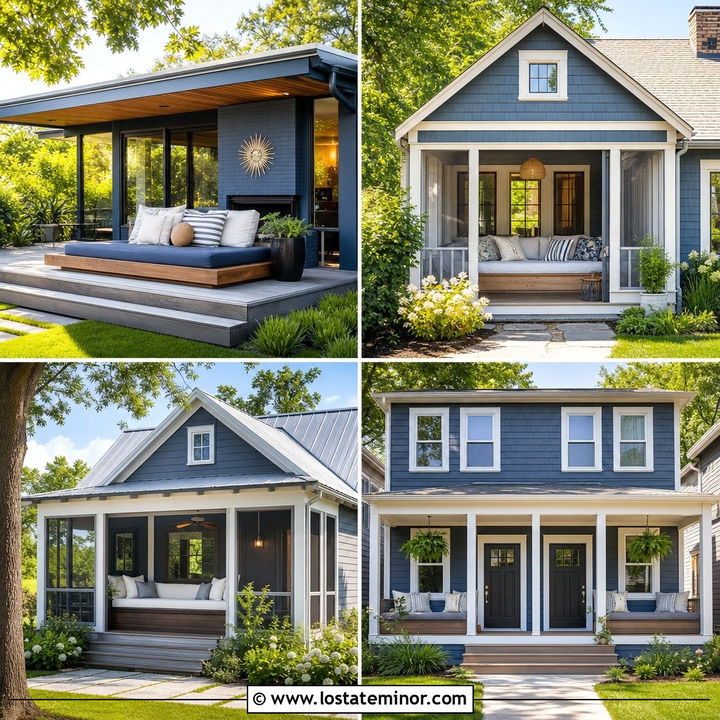
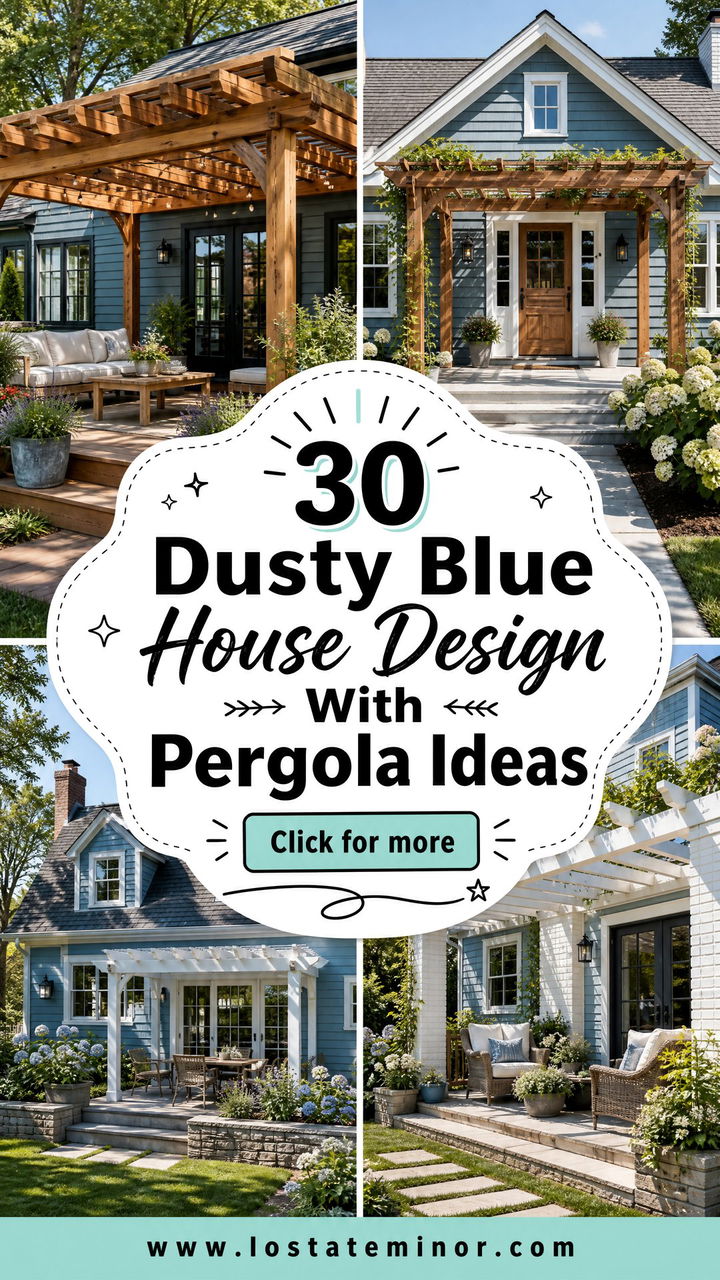
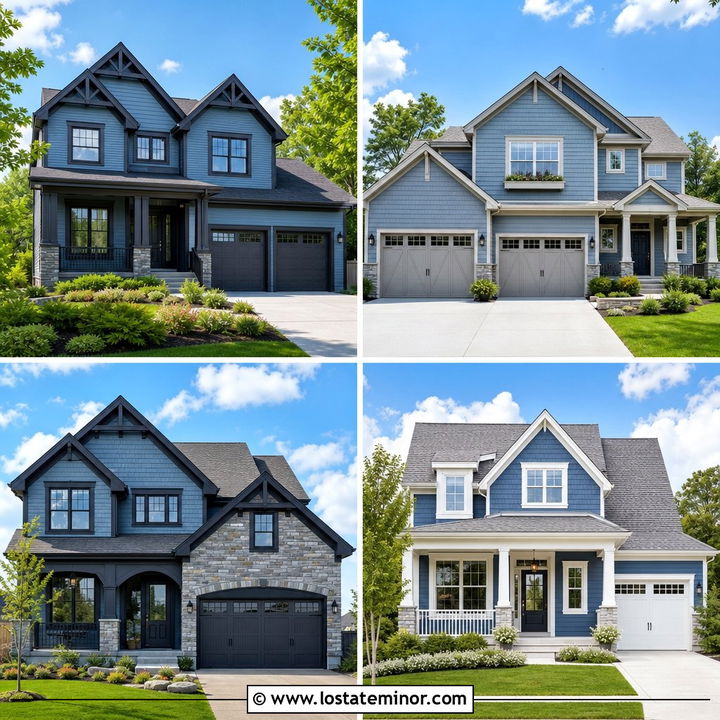
A dusty blue exterior brings a calm, welcoming character to a home, while a pergola adds depth, shade, and architectural structure. The best 30 Dusty Blue House Design With Pergola Ideas coordinate the entire facade rather than treating the pergola as an afterthought. White trim can create crisp contrast, while cedar, stone, brick, and black metal add warmth or definition. The right combination depends on the home’s architecture, roof color, existing materials, and outdoor space. A pergola may frame the entrance, extend a porch, cover a deck, or turn a plain patio into a finished living area. Explore the complete exterior schemes in these 30 Dusty Blue House Design With Pergola Ideas.
1. Dusty Blue House With White Pergola
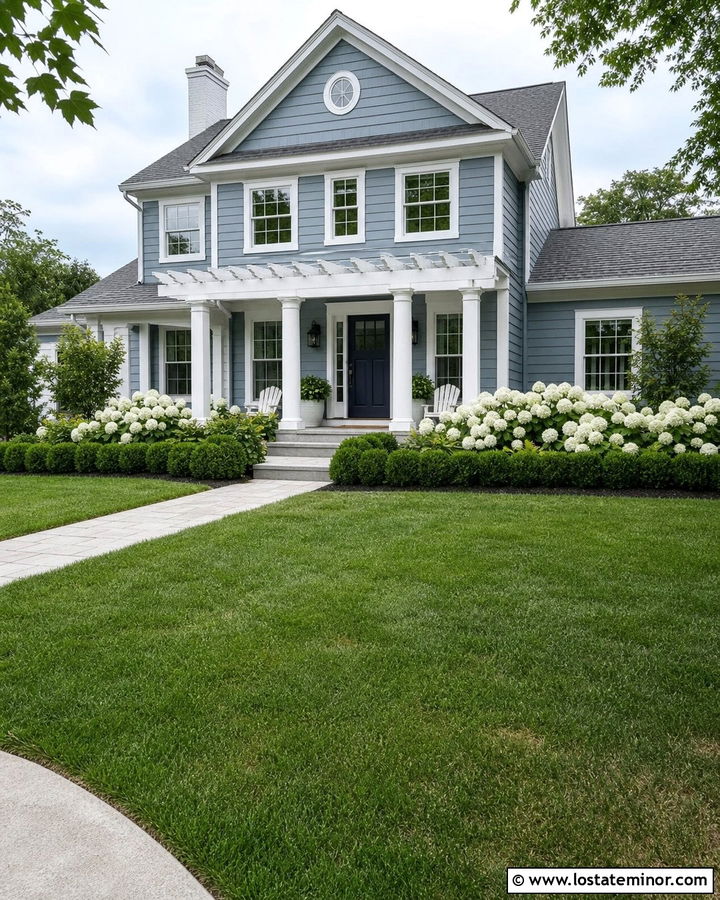
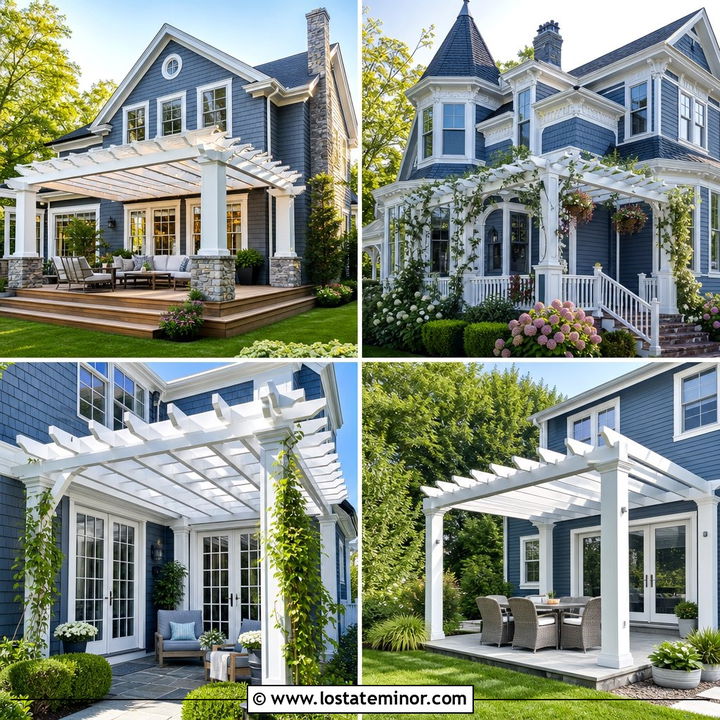
A bright white pergola creates clean contrast against muted dusty blue siding. This combination is especially effective on a traditional home with white window trim, simple porch railings, and a medium-gray shingle roof. Position the pergola over the front patio or directly beside the main entrance so it feels connected to the architecture. Square columns and evenly spaced rafters will keep the structure neat and balanced. Add a navy front door for depth, along with brushed nickel lighting and pale gray pavers. Low boxwoods, white hydrangeas, and ornamental grasses can soften the strong blue-and-white palette. The completed exterior feels fresh and polished without becoming overly coastal or formal.
2. Dusty Blue House With Cedar Pergola
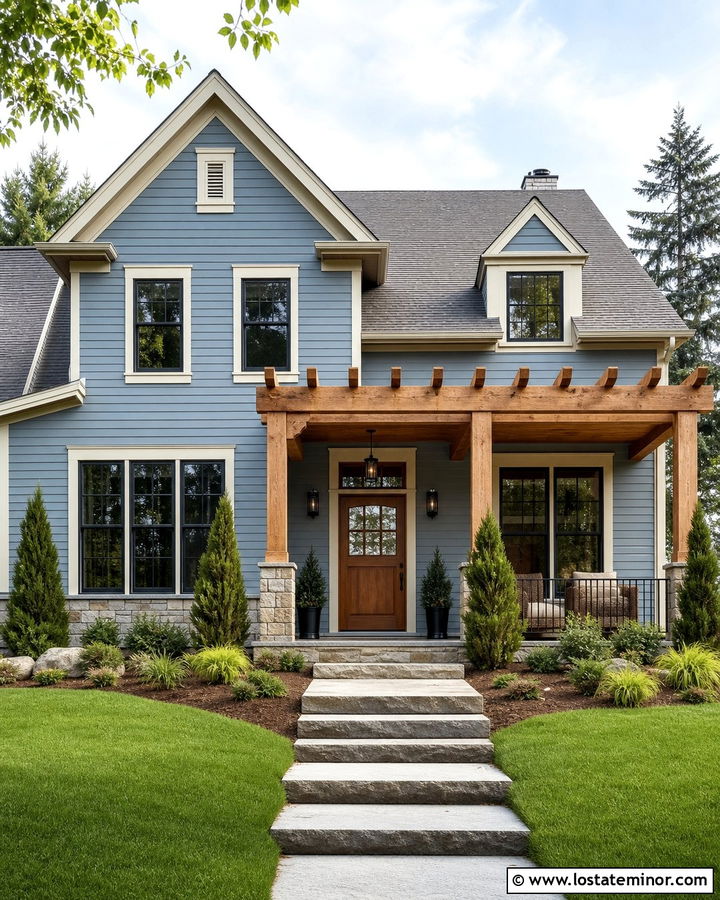
Warm cedar makes dusty blue siding feel friendlier and more grounded. Use a natural cedar pergola over a front porch, side patio, or attached deck, then repeat the same wood tone on the front door and porch ceiling. Cream trim offers a softer transition than brilliant white and works beautifully with a warm gray roof. For the foundation, choose tan fieldstone or light brown brick with subtle gray variation. Black sconces and dark bronze gutters can add definition without competing with the wood. Finish the look with broad stone steps, native grasses, and layered evergreen shrubs. Allowing the cedar to weather naturally can produce a softer, silvery finish that continues to complement the muted blue facade.
3. Dusty Blue House With Black Pergola
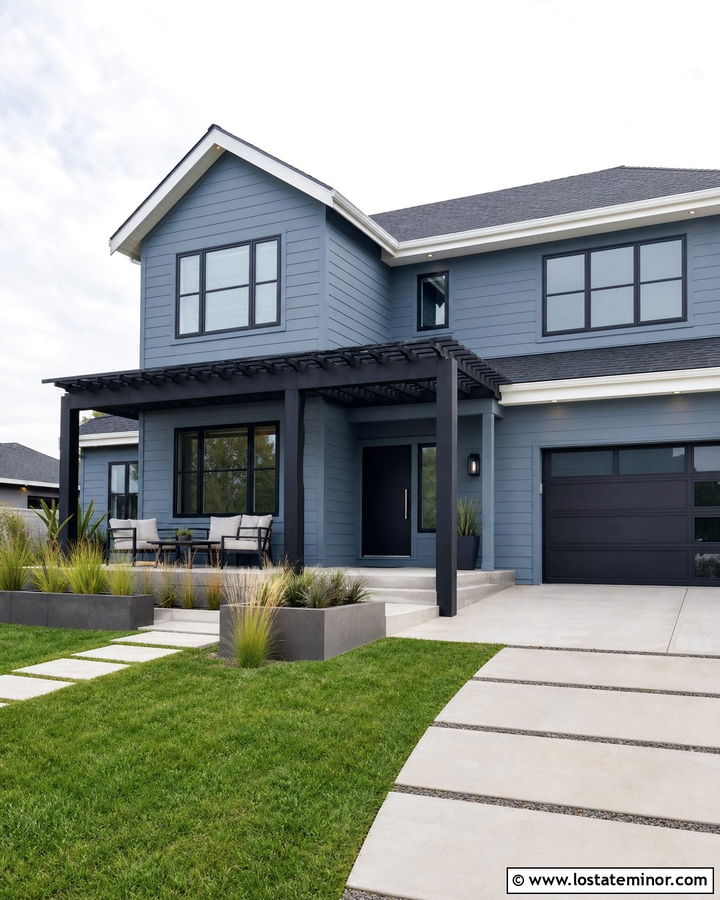
A matte black pergola gives a dusty blue exterior a sharp, modern outline. This scheme works well on homes with simple rooflines, wide windows, and minimal decorative trim. Match the pergola with black-framed windows, black gutters, and a charcoal front door to create a consistent accent color. Keep the fascia and soffits soft white so the exterior does not become too dark. A pale concrete patio beneath the pergola will brighten the outdoor area and emphasize its clean geometry. Add structured landscaping with clipped shrubs, upright grasses, and rectangular planters. Because black beams stand out clearly against blue siding, use a streamlined pergola design with balanced spacing and few unnecessary decorative details.
4. Dusty Blue House With Front Entry Pergola
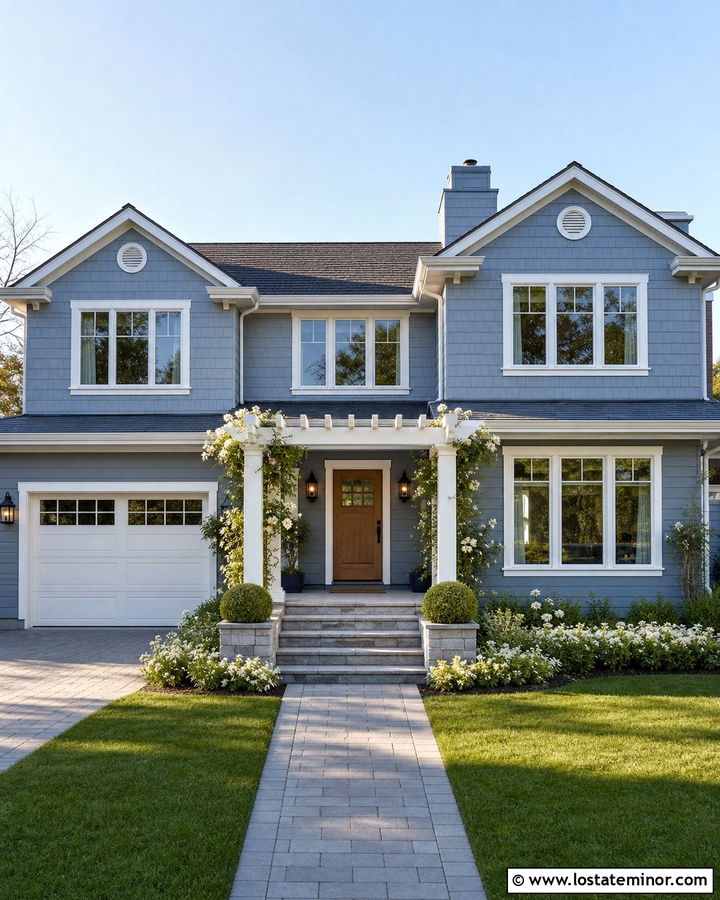
A front entry pergola can turn a flat dusty blue facade into a more dimensional and inviting exterior. Center the structure over the walkway and front door, making it wide enough to visually frame the entry without overwhelming nearby windows. Paint the pergola warm white to match the trim, or use stained wood for a more relaxed effect. A natural oak door, black lanterns, and gray stone steps provide a balanced mix of warm and cool tones. Continue the dusty blue across the siding and garage so the house remains visually unified. Climbing jasmine or a restrained flowering vine can soften the beams, while symmetrical planters and a direct paver path create a clear, welcoming approach.
5. Dusty Blue House With Garage Pergola
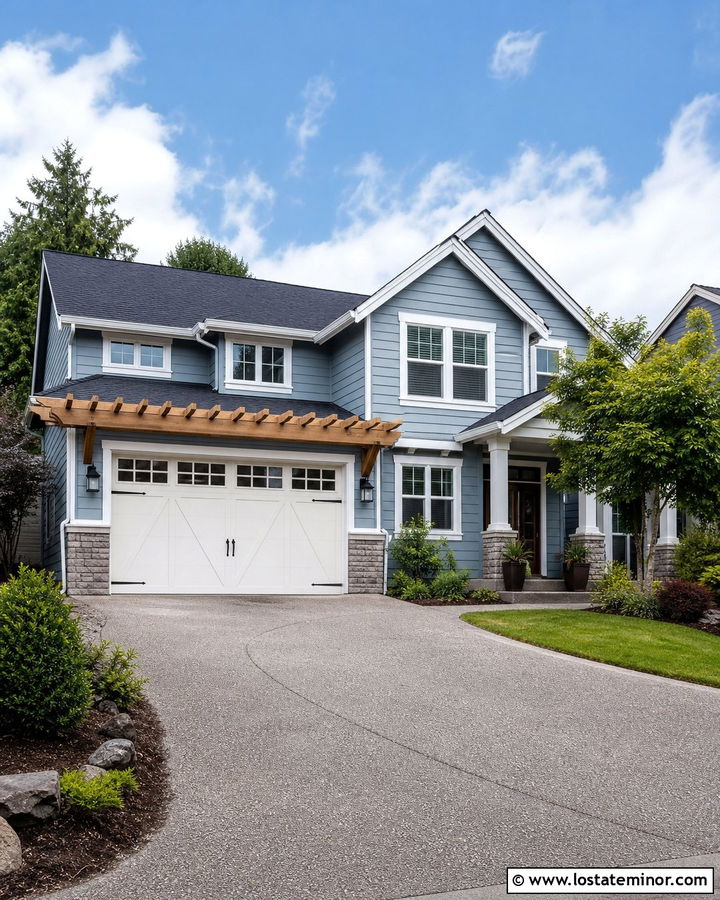
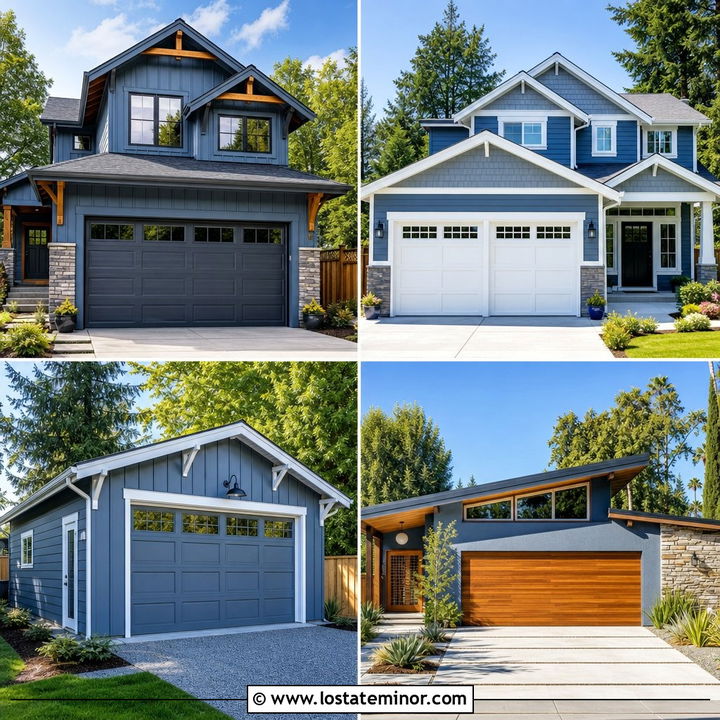
A pergola installed above the garage can break up a broad wall and make the garage door feel integrated with the home. Against dusty blue siding, a cedar or dark-stained wood structure creates a strong horizontal accent. Choose a carriage-style garage door in warm white, then coordinate its hardware with black exterior lights. White trim around the windows and roofline keeps the scheme crisp, while a charcoal shingle roof anchors the softer blue. Use stone veneer around the garage base or entry columns to add another natural texture. A curved driveway, narrow planting beds, and small ornamental trees can reduce the visual weight of the paved area. Keep the pergola shallow so it reads as architectural detail.
6. Dusty Blue House With Porch Pergola
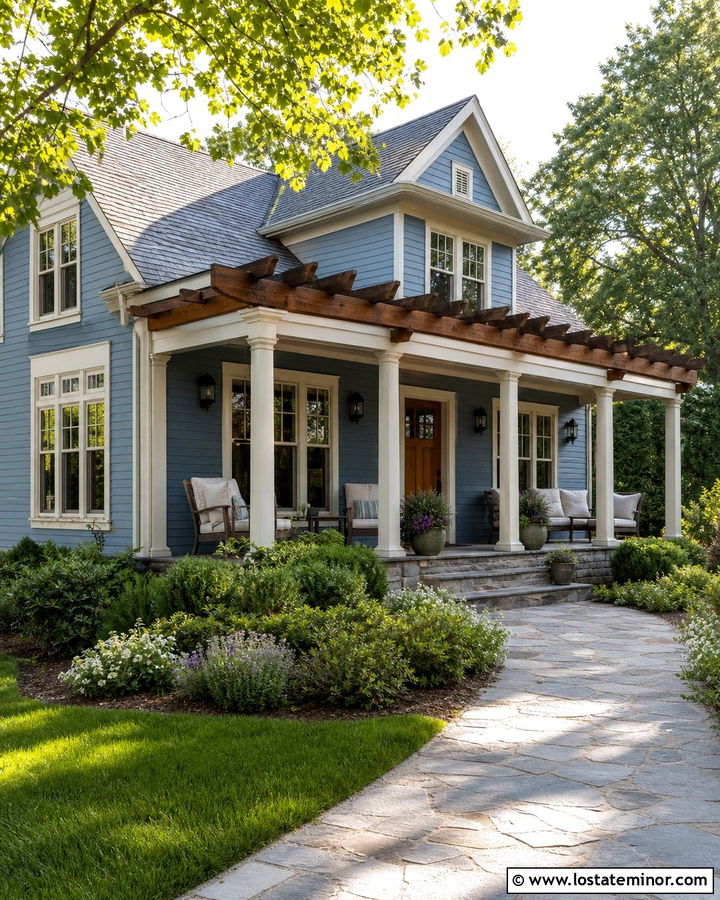
Extending a pergola across a porch creates a comfortable transition between the dusty blue house and the front yard. A stained wood structure can connect white porch columns, giving the facade more warmth and visual rhythm. Pair the blue siding with cream trim, a medium-brown front door, and a weathered gray roof. Use the same wood stain on porch rail caps, ceiling beams, or built-in benches for consistency. Flagstone flooring introduces natural color variation beneath the pergola. Complete the setting with layered shrubs, flowering perennials, and a wide walkway. Outdoor furniture should stay simple, using neutral cushions and wood frames so the architecture remains the focus. The result feels established, practical, and welcoming.
7. Dusty Blue House With Backyard Patio Pergola
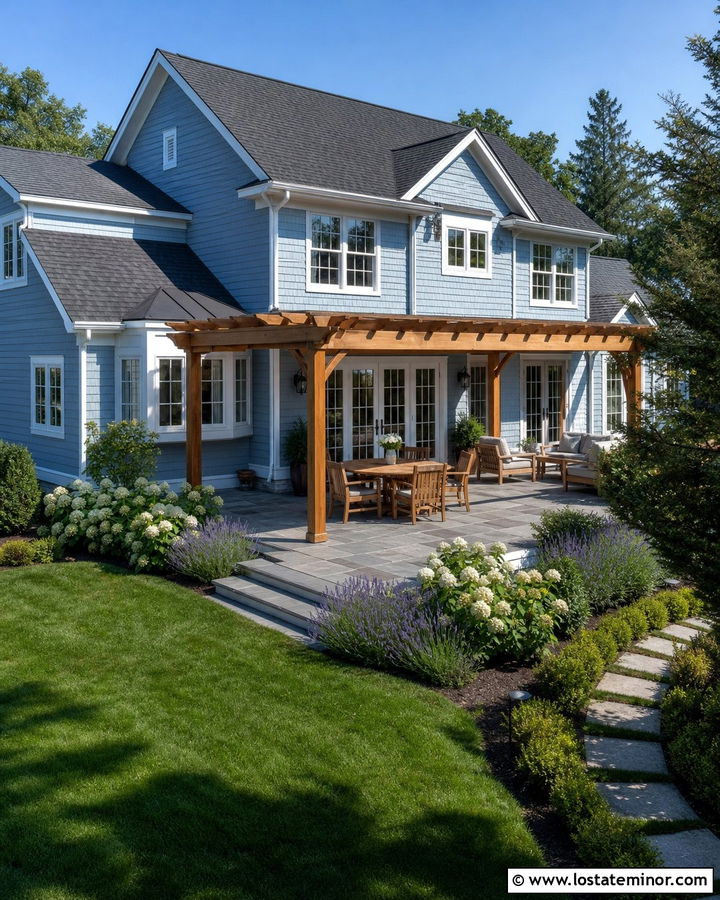
A backyard pergola can make a dusty blue house feel connected to its outdoor living space. Choose natural cedar beams supported by substantial posts, then position the structure outside large French or sliding doors. White window trim will brighten the blue facade, while a charcoal roof and black door hardware add contrast. Beneath the pergola, use gray concrete pavers or irregular bluestone to reinforce the cool exterior palette. Warm wood furniture, cream cushions, and terracotta planters prevent the space from feeling cold. Surround the patio with hydrangeas, lavender, and evergreen borders. Repeating dusty blue on a nearby garden shed or planter box can also help the entire backyard feel thoughtfully coordinated rather than assembled in separate stages.
8. Dusty Blue House With Deck Pergola
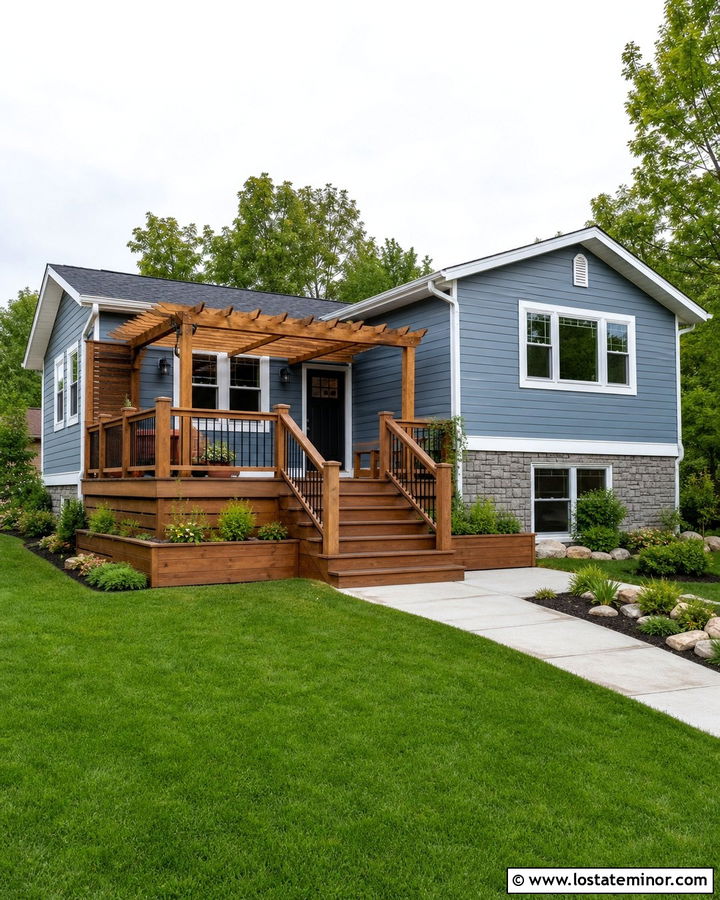
A raised wood deck paired with a pergola gives a dusty blue exterior both warmth and practical outdoor space. Use medium-toned cedar or pressure-treated wood with a natural brown stain. Carry that finish across the deck boards, pergola posts, stair rails, and privacy screens. Crisp white trim around windows and doors creates separation between the wood and blue siding. Black metal balusters can provide a lighter visual profile while connecting to dark exterior lights and door hardware. Add gray stone around the exposed foundation to make the deck feel anchored. Wide stairs leading to a green lawn improve the overall flow. Built-in planters filled with grasses and white flowers can finish the deck without crowding it.
9. Dusty Blue Modern Farmhouse With Pergola
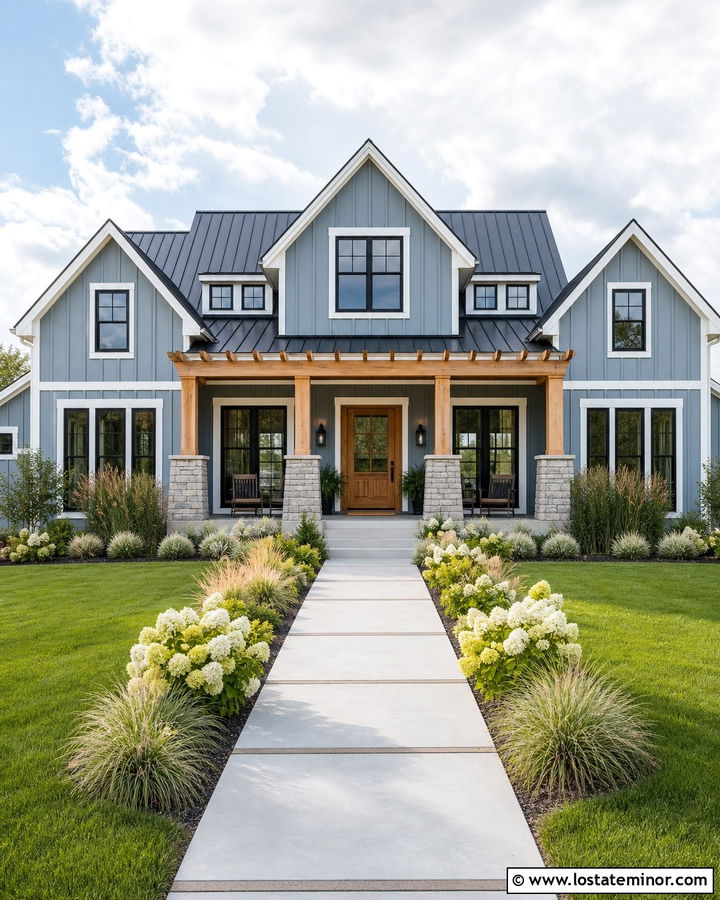
Dusty blue gives a modern farmhouse more individuality than the familiar all-white exterior. Apply the color to vertical board-and-batten siding, then use white trim around black-framed windows. A natural cedar pergola over the front porch introduces warmth and emphasizes the wide farmhouse facade. Choose a charcoal standing-seam metal roof, a medium-stained wood door, and simple black sconces. Stone porch columns or a low stone foundation can keep the home connected to its landscape. For a cohesive entrance, continue the cedar tone on porch brackets and ceiling details. A straight concrete walkway, broad lawn, and loose plantings of grasses and hydrangeas create an uncomplicated setting that complements the clean farmhouse architecture.
10. Dusty Blue Craftsman House With Pergola
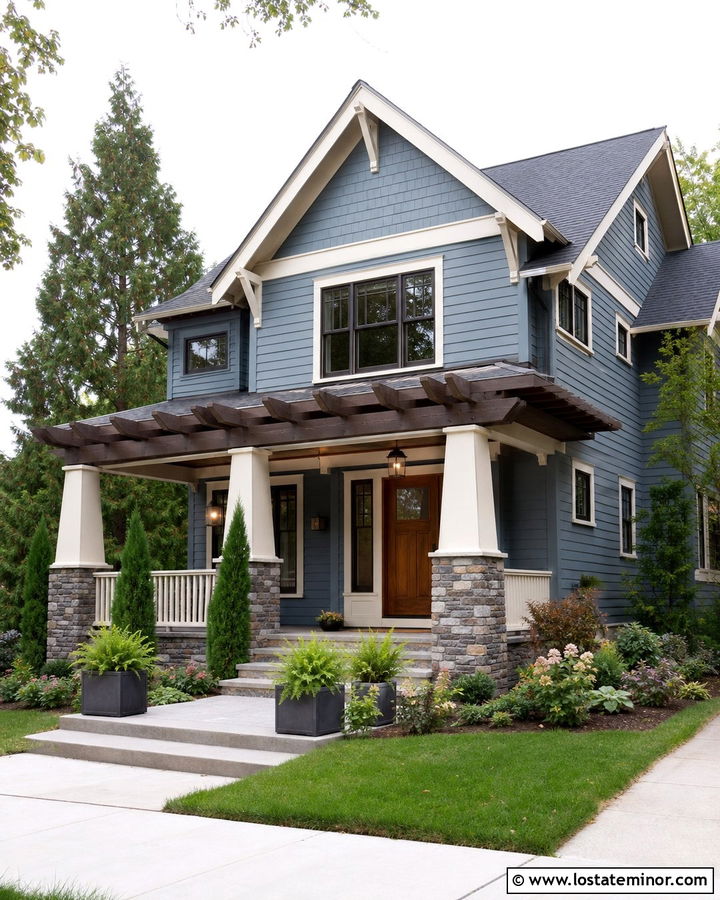
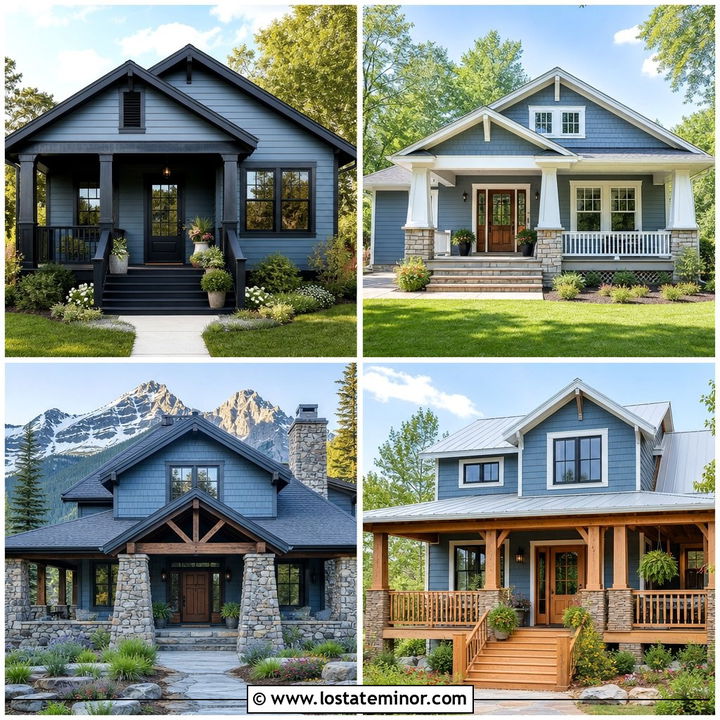
Craftsman architecture naturally supports the substantial beams and posts of a pergola. Use dusty blue lap siding with cream trim, tapered columns, and warm stone around the porch foundation. A dark walnut pergola can extend from the entry gable to create a shaded sitting area. Repeat the stain on the front door and visible roof brackets. Deep bronze windows, copper-toned lights, and a charcoal roof provide darker accents without looking harsh. Wide porch steps and square planters will reinforce the home’s grounded proportions. Choose landscaping with layered textures, including low evergreens, ferns, and flowering shrubs. The pergola should appear sturdy and integrated, with beam sizes that complement the Craftsman home’s heavier architectural details.
11. Dusty Blue Ranch House With Pergola
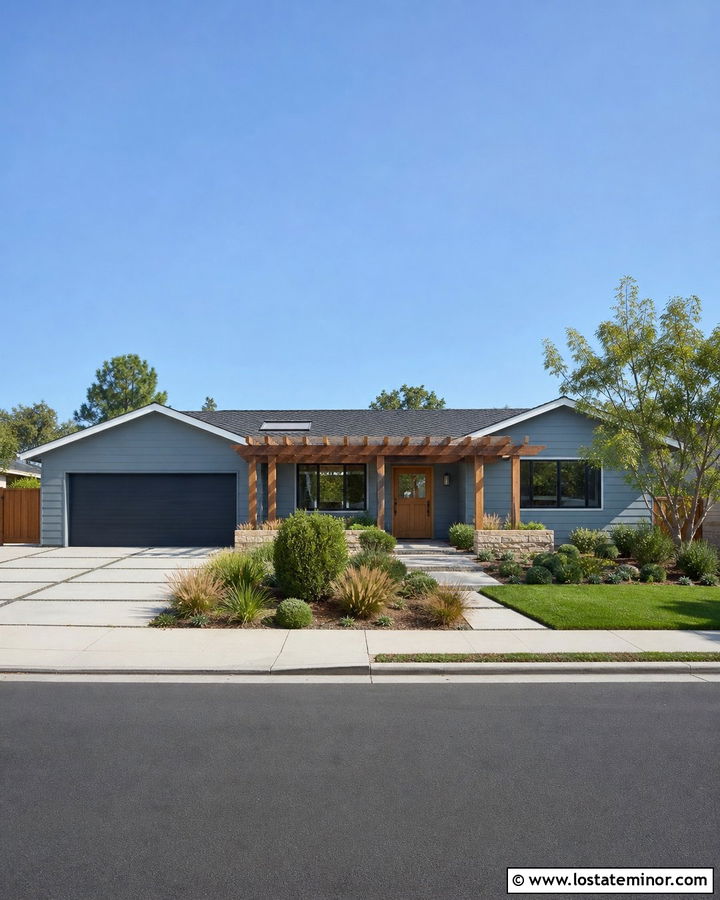
A pergola can bring much-needed height and definition to a low, horizontal ranch house. Paint the siding dusty blue and use warm white on the fascia, window frames, and garage door. Place a cedar pergola across the front patio, aligning its posts with major windows and the entry. A natural wood front door and tan stone planters can repeat the pergola’s warmth. Keep the roof medium charcoal to provide contrast without overpowering the one-story facade. Large concrete pavers separated by narrow gravel joints will create a clean patio surface. Finish the yard with low ornamental grasses, rounded shrubs, and a small shade tree. The completed design feels wider, brighter, and more intentionally proportioned.
12. Dusty Blue Colonial House With Pergola
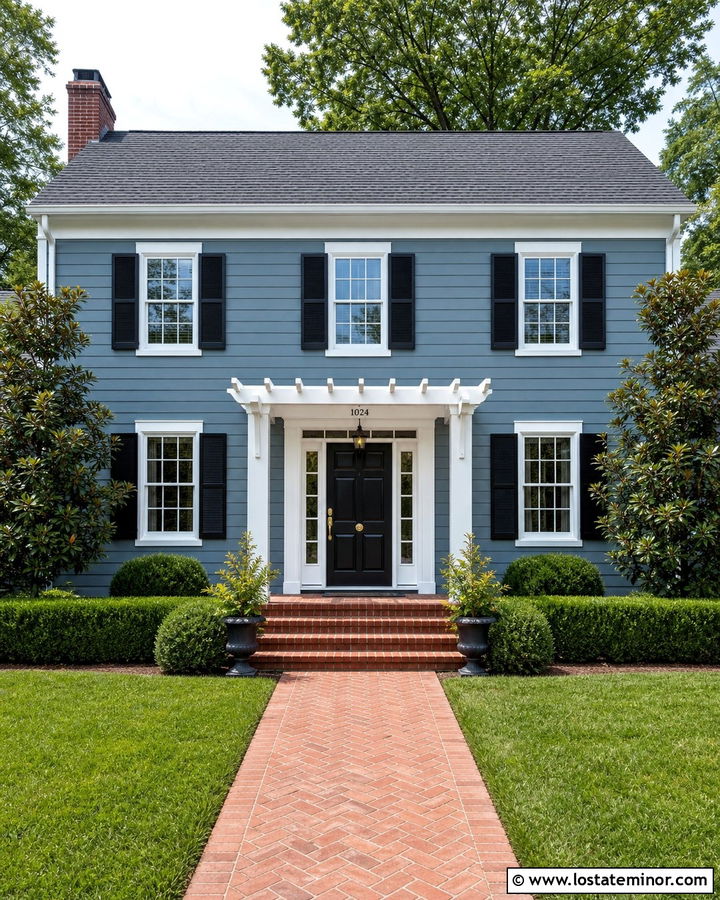
A symmetrical Colonial exterior benefits from a pergola that respects its formal proportions. Use dusty blue clapboard siding, bright white corner boards, and evenly spaced white-framed windows. Position a compact white pergola around the central front entrance, keeping its columns aligned with the doorway. Black shutters and a glossy black front door create traditional contrast, while a dark gray roof grounds the palette. Red brick steps can add warmth and connect the scheme to a matching walkway or chimney. Keep the landscaping balanced with paired planters, clipped hedges, and matching ornamental trees. Straight rafters and simple square posts are usually more appropriate than rustic beams, helping the pergola feel like an original architectural feature.
13. Dusty Blue Cape Cod House With Pergola
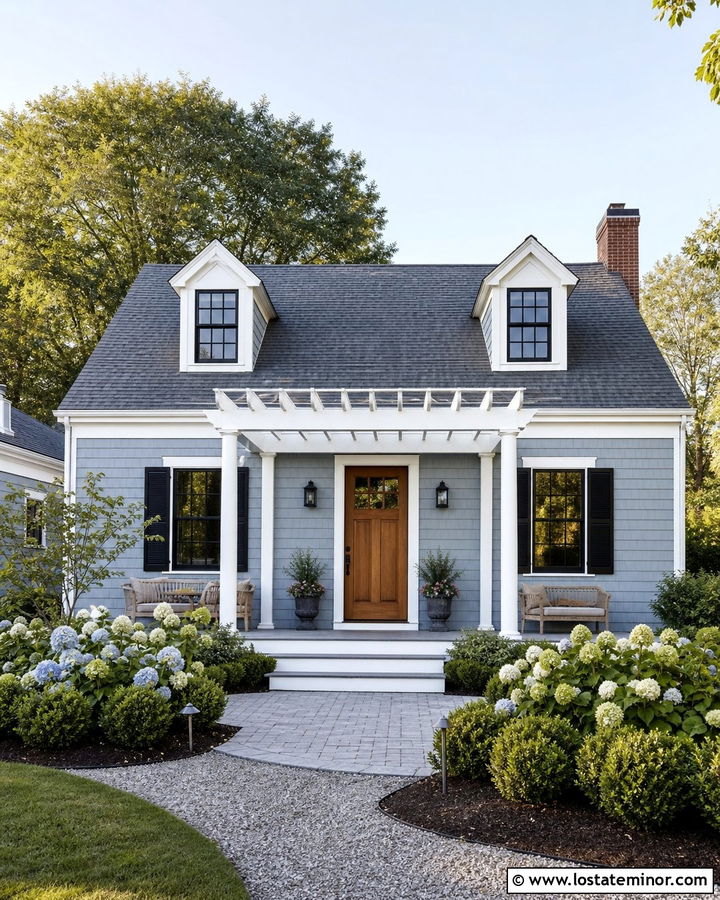
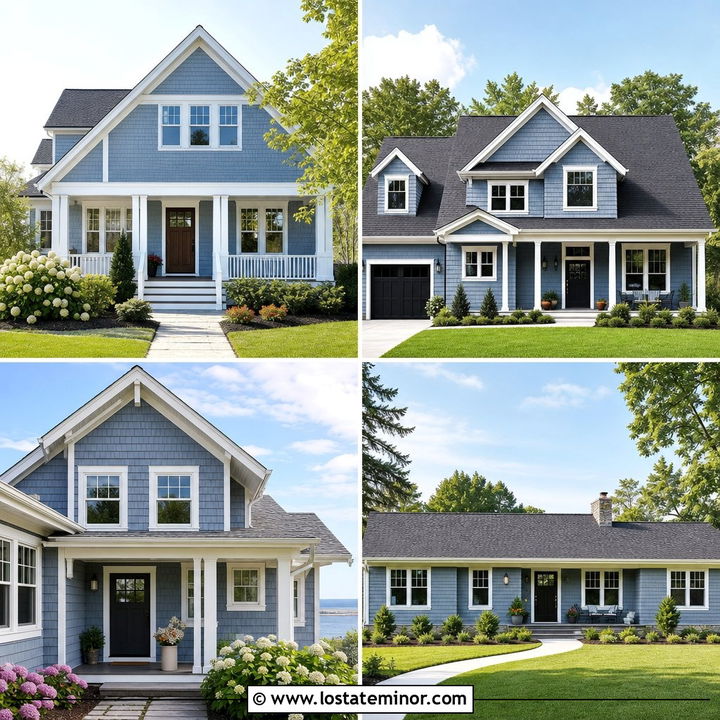
A dusty blue Cape Cod house looks charming with a white pergola extending over a small front terrace. Keep the siding softly muted and use clean white trim around dormers, windows, and roof edges. Weathered gray shingles or a medium-gray roof will reinforce the coastal character without making the home feel themed. Add a natural wood door for warmth and understated black shutters for definition. The pergola should have slim posts and modest rafters that suit the compact scale of the facade. Below it, use light gray brick pavers and simple wood seating. White hydrangeas, boxwoods, and a curved shell or gravel path can complete the relaxed exterior while preserving the Cape Cod home’s tidy proportions.
14. Dusty Blue Coastal House With Pergola
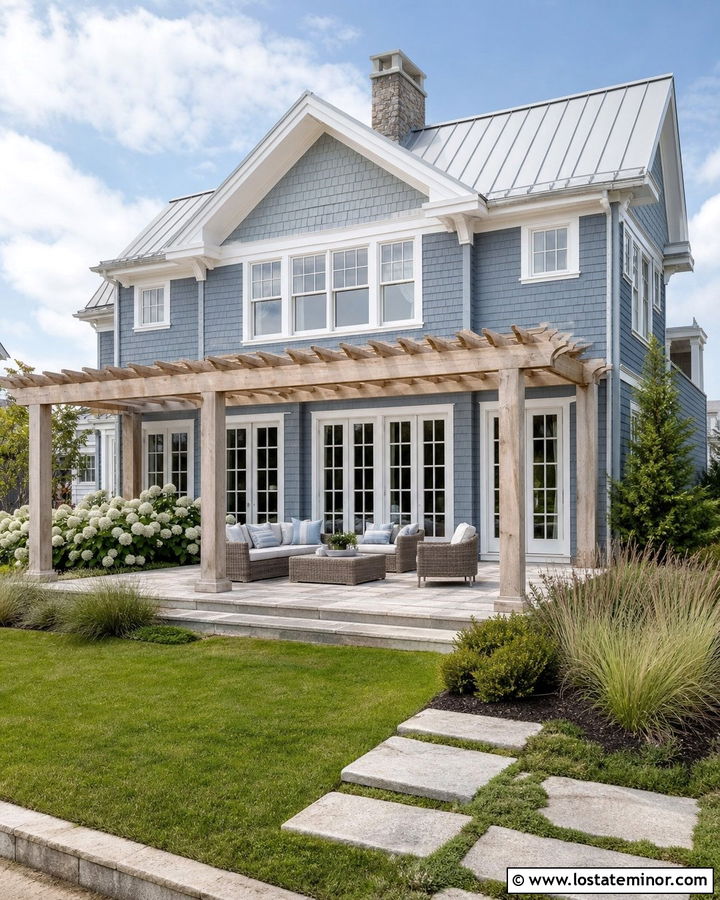
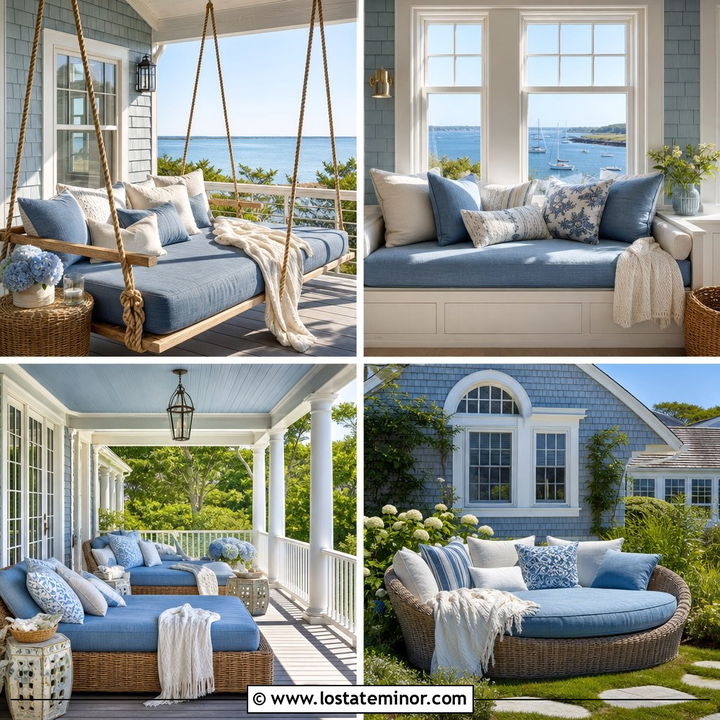
For a relaxed coastal exterior, combine dusty blue shingles with white trim and a pale natural wood pergola. The blue should feel softened by gray rather than bright or tropical. Use a light metal roof, large divided-light windows, and French doors opening onto a generous patio. The pergola can extend across the rear facade or frame a side courtyard overlooking the yard. Pale stone paving, woven outdoor furniture, and soft cream fabrics will keep the setting light. Add dune grasses, hydrangeas, and salt-tolerant shrubs where appropriate for the location. Limit dark accents to small details such as lanterns or door hardware. This creates a breezy scheme that still feels substantial and carefully finished.
15. Dusty Blue Bungalow With Pergola
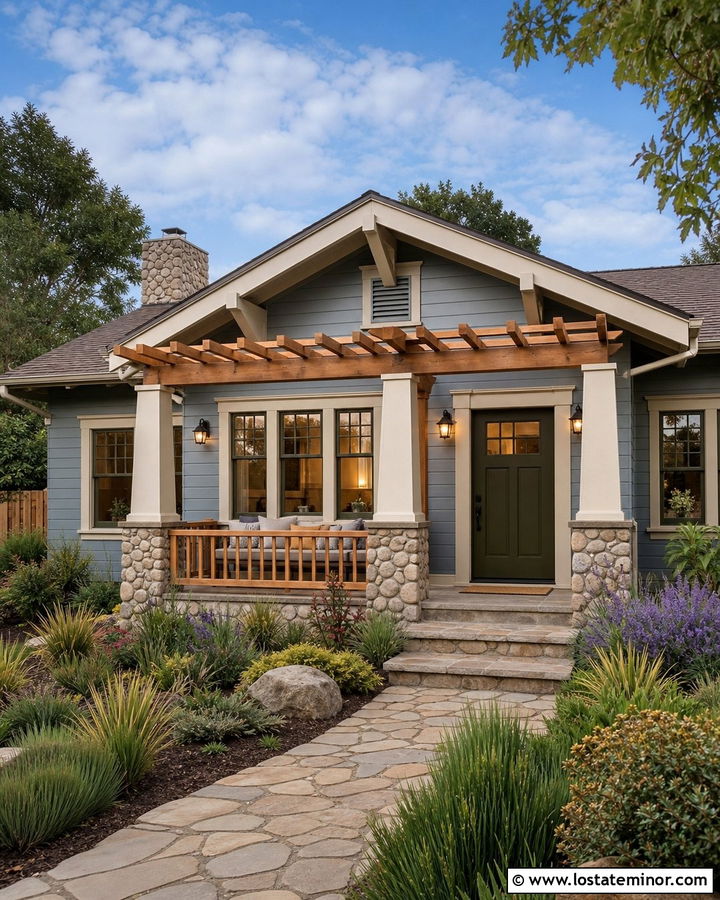
A compact bungalow can gain impressive curb appeal from a pergola integrated into its front porch. Use dusty blue lap siding with creamy white trim and exposed wood rafters. A warm cedar pergola can span the porch steps, connecting chunky columns and visually widening the entrance. Choose a deep olive or dark bronze front door to add earthy contrast. A brown-gray shingle roof and river-rock foundation will support the natural palette. Add a low wood railing, craftsman-style lights, and a brick or flagstone walkway. Because bungalow facades contain many details in a small area, avoid too many accent colors. Dusty blue, cream, cedar, stone, and one dark accent are enough to create a rich exterior.
16. Dusty Blue Split-Level House With Pergola
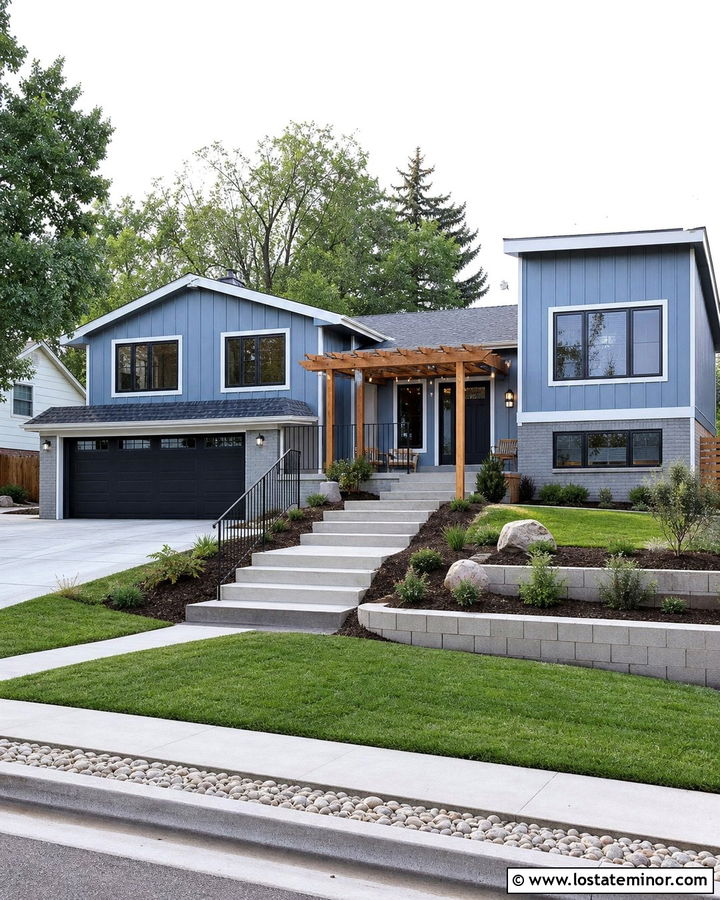
A split-level facade often needs a stronger connection between its uneven rooflines and separate exterior zones. Dusty blue siding can unify the upper and lower sections, while a cedar pergola defines the main entrance. Extend the structure toward an adjacent patio or garage to create a clear horizontal line. Use white trim, black-framed windows, and a charcoal garage door for modern contrast. If the lower level includes brick, consider limewashing it soft gray rather than introducing another strong color. Broad concrete steps and a simple metal railing can modernize the approach. Finish with tiered landscaping that follows the changing grade. The pergola becomes a visual bridge, helping the entire exterior read as one cohesive composition.
17. Dusty Blue Mid-Century House With Pergola
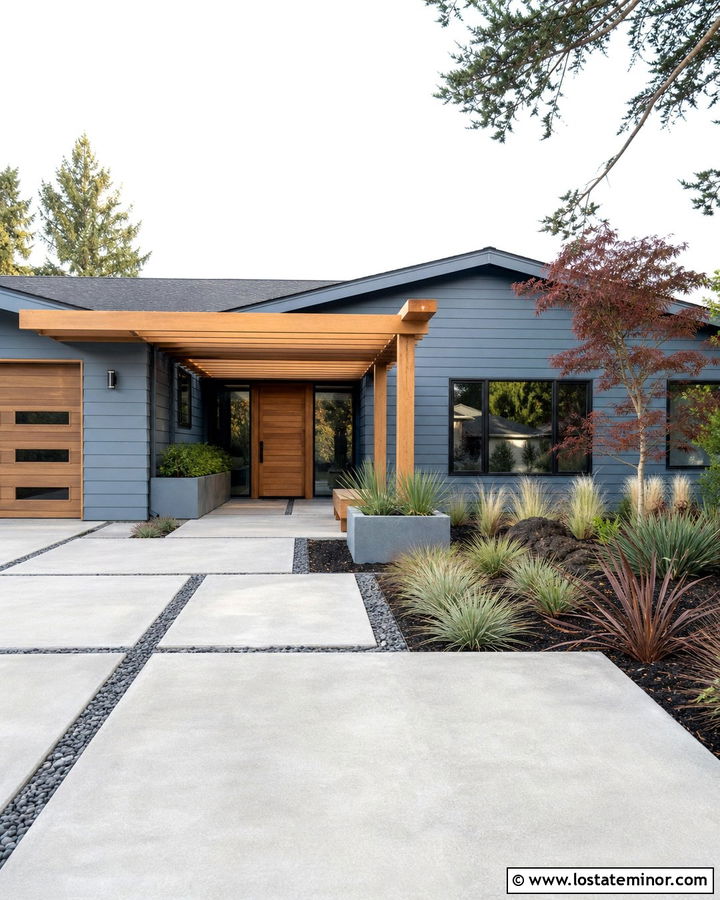
Clean lines make a pergola especially suitable for a dusty blue mid-century exterior. Apply muted blue to horizontal siding, then introduce warm wood across the front door, soffits, and pergola beams. A flat or low-slope pergola should extend from the entry toward a paved seating area. Choose charcoal window frames and a dark low-pitched roof to sharpen the structure’s silhouette. Large concrete slabs, gravel joints, and rectangular planting beds reinforce the home’s geometry. Use sculptural grasses, compact evergreens, and one ornamental tree rather than traditional foundation hedges. Avoid decorative brackets or curved pergola ends. Straight beams and slim posts will support the architectural style while giving the cool blue exterior a welcoming layer of natural warmth.
18. Dusty Blue Contemporary House With Pergola
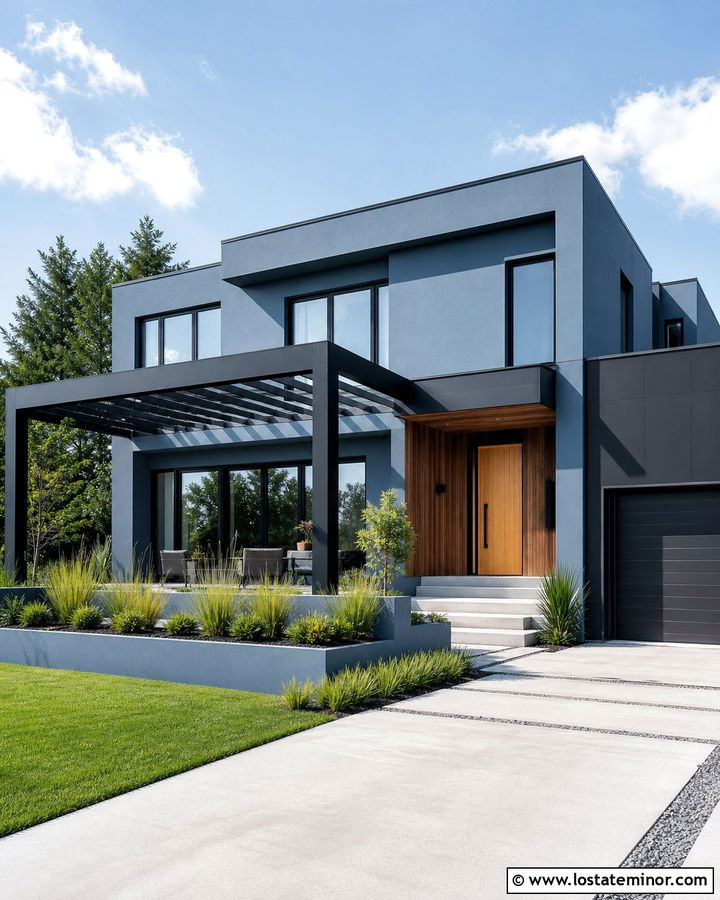
A contemporary dusty blue house can support a streamlined pergola with an aluminum or dark steel frame. Pair smooth blue-gray siding with charcoal panels, black windows, and warm cedar near the entrance. Position the pergola over a broad front terrace or an outdoor dining area visible from the curb. Narrow beams and a flat profile will complement simple rooflines and large glass openings. Use pale concrete for the walkway and patio so the darker accents remain balanced. Linear planters filled with grasses can echo the pergola’s shape. A pivot-style wood door adds warmth without disturbing the restrained palette. Every element should align carefully, creating a full exterior that feels modern, calm, and purposeful rather than overly stark.
19. Dusty Blue Victorian House With Pergola
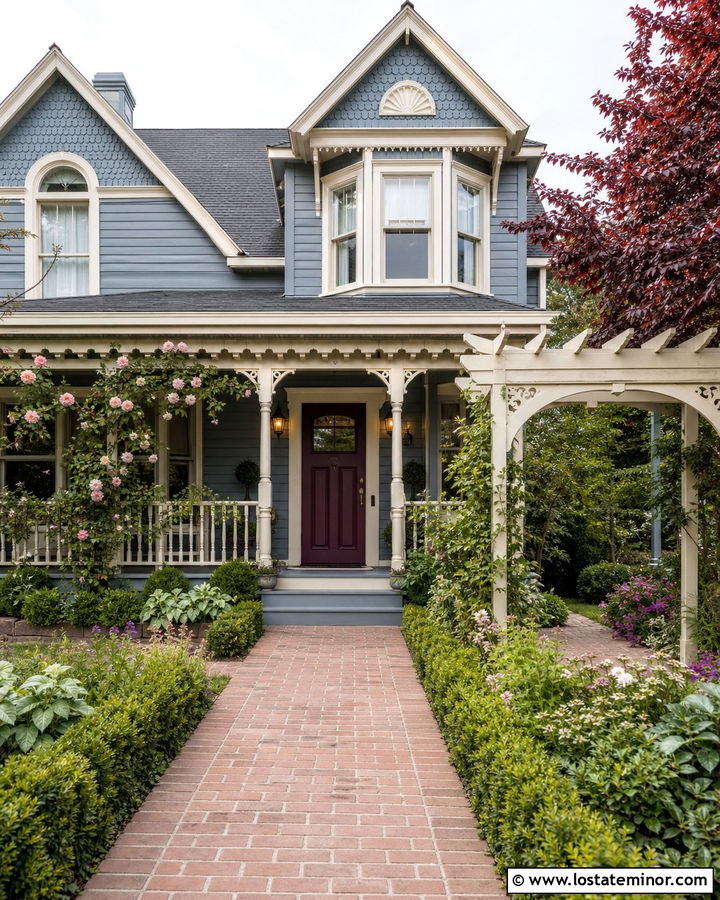
Dusty blue can highlight a Victorian home’s detailed trim without making the exterior look overly colorful. Use the blue across clapboard and decorative shingle siding, then paint brackets, window surrounds, and railings warm white. A cream pergola beside the porch can create an elegant garden sitting area. Introduce a muted burgundy or deep plum front door for historically inspired contrast, along with charcoal roof shingles and aged brass lighting. Keep the pergola detailed but not excessively ornate. Slender posts, shaped rafter ends, and climbing roses can connect it to the house’s decorative character. A brick path, layered flower beds, and a small ornamental tree complete a full exterior that feels romantic, balanced, and carefully restored.
20. Dusty Blue Cottage House With Pergola
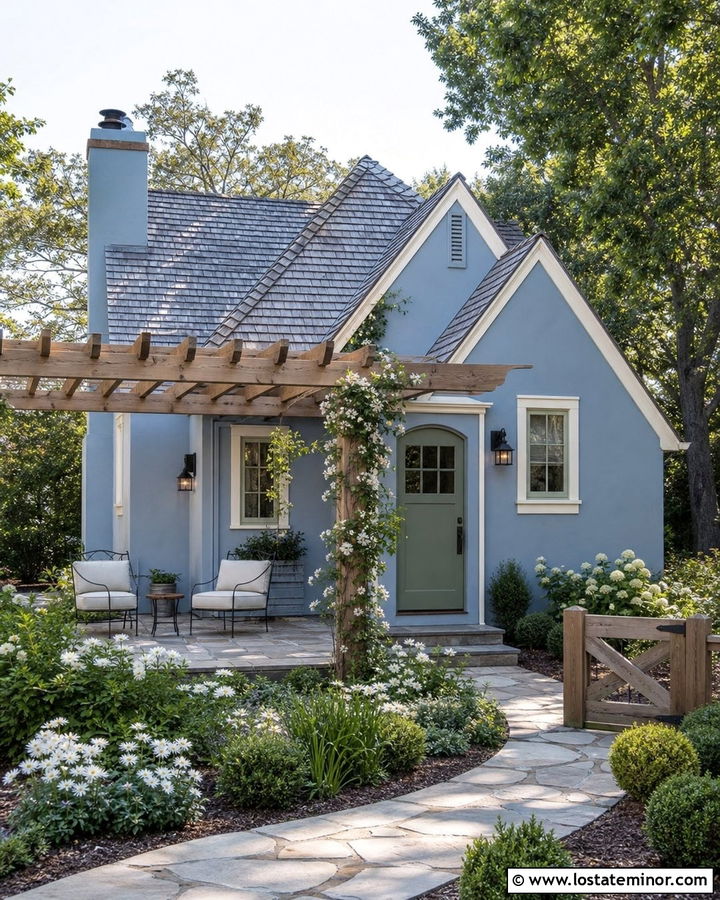
A cottage exterior feels naturally inviting when dusty blue siding is paired with a vine-covered wood pergola. Choose a soft, gray-influenced blue with creamy trim and a sage green front door. A lightly stained cedar pergola can frame a small stone patio near the entrance, creating an informal place for seating. Use irregular flagstone, white flowering plants, and loose garden borders to support the relaxed character. A weathered gray roof and small copper or bronze lights will add quiet contrast. Keep the pergola proportionate to the home, using slim beams rather than oversized posts. Repeating the dusty blue on window boxes or a garden gate can tie the complete property together without making every feature match exactly.
21. Dusty Blue House With Stone And Pergola
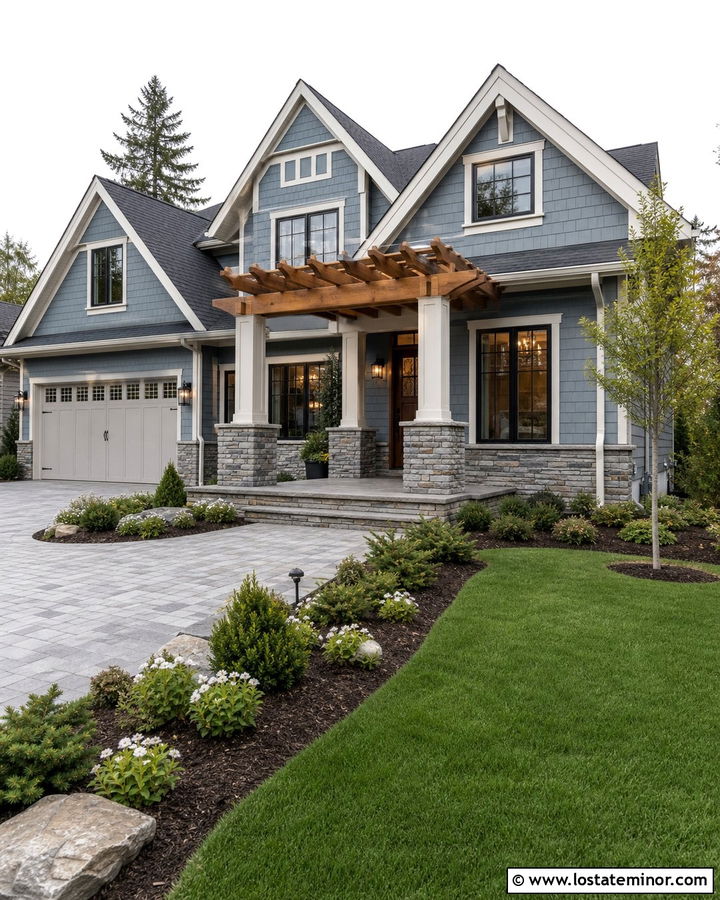
Stone accents give a dusty blue house more visual weight and help connect a pergola to the foundation. Choose gray and tan ledgestone with enough warmth to balance the cool siding. Use it around porch columns, along the lower facade, or on a prominent chimney. A medium cedar pergola can bridge the siding and stone because its natural color relates to both materials. Finish the scheme with cream trim, a dark brown front door, and a charcoal roof. Keep hardscaping simple by selecting pavers that repeat one of the stone’s lighter gray tones. Low evergreens and white flowers will frame the architecture without introducing competing colors. The overall exterior should feel layered but controlled.
22. Dusty Blue House With Red Brick And Pergola
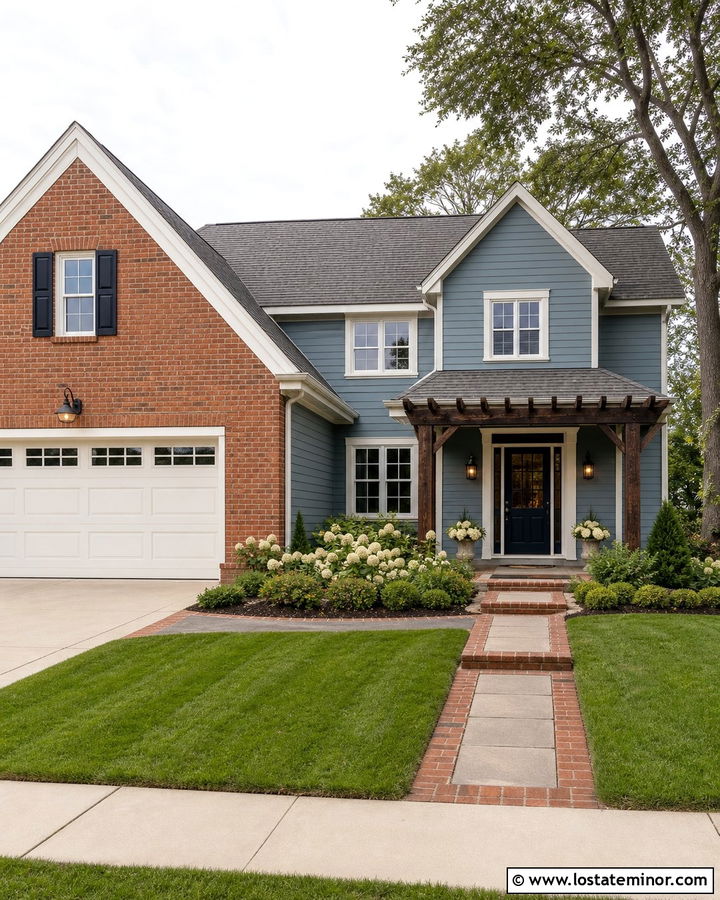
Existing red brick can work with dusty blue when the surrounding colors soften the contrast. Apply the blue to siding above or beside the brick, then use warm white trim to connect the two materials. A dark-stained wood pergola will echo the brick’s earthy character better than a stark black structure. Choose a front door in deep navy, walnut brown, or muted charcoal. If the brick is especially orange, repeat warmer tones through bronze lights and natural wood furniture. Gray roof shingles can balance the warmer lower facade. Add cream flowers, evergreen shrubs, and a brick-edged walkway. Avoid introducing additional bright colors, allowing the dusty blue, red brick, wood, and warm white to form the main palette.
23. Dusty Blue House With White Brick And Pergola
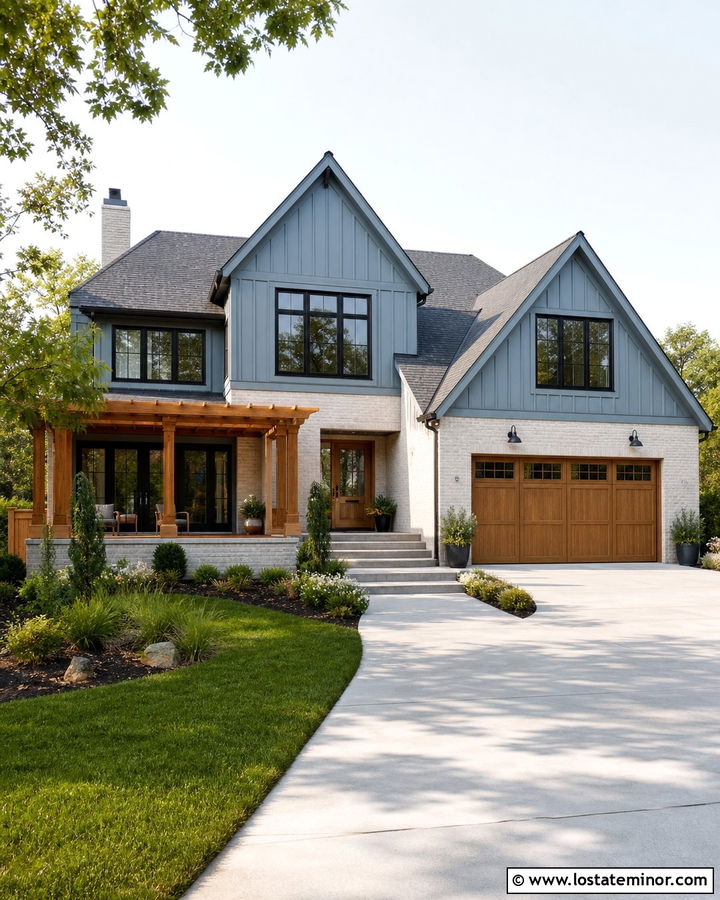
White brick creates a bright foundation for dusty blue siding and makes the entire exterior feel lighter. Use the blue on the upper story, gables, or board-and-batten sections, then keep the brick a soft warm white rather than a cold blue-white. A cedar pergola over the patio or front walk brings natural contrast to both materials. Repeat the wood on the front door, porch ceiling, and perhaps the garage detail. Black windows and sconces can outline the architecture, while a medium-gray roof keeps the palette balanced. Pale concrete paving and layered green landscaping complete the scheme. This combination is particularly useful when you want a blue house that feels modern but not dark or heavily saturated.
24. Dusty Blue House With Charcoal Roof And Pergola
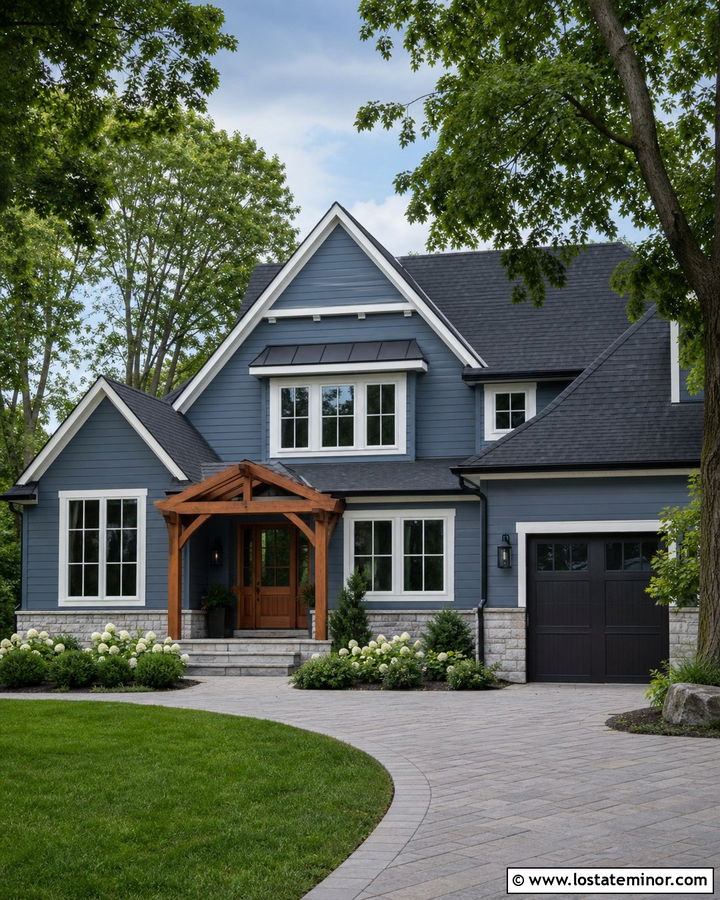
A charcoal roof creates a strong upper boundary that helps dusty blue siding appear richer. Use clean white trim along the fascia and windows to separate the two cool colors. A warm cedar pergola can then prevent the scheme from feeling too gray or reserved. Place it over the entrance or extend it across a sunny patio. Match the front door to the cedar or choose deep charcoal for a more streamlined finish. Black gutters can blend into the roof, while pale stone around the foundation adds texture. Keep the driveway and walkway in medium gray rather than dark asphalt where possible. Green shrubs, white blooms, and a healthy lawn will add natural brightness around this balanced exterior.
25. Dusty Blue House With Metal Roof And Pergola
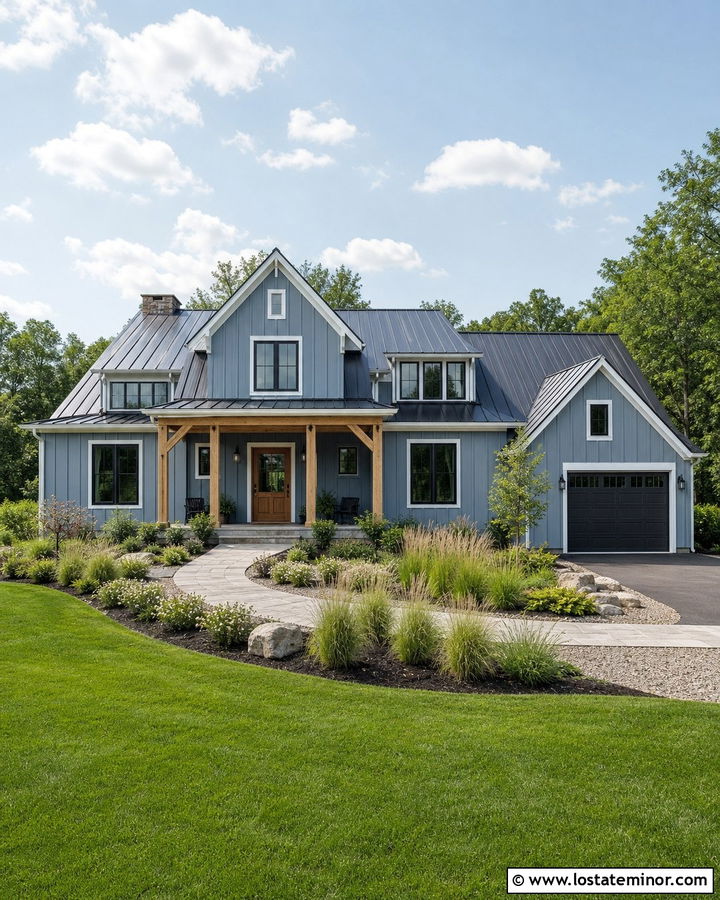
A standing-seam metal roof gives a dusty blue house a crisp, durable-looking profile. Charcoal or medium gray roofing works well with the muted siding, especially when paired with white trim. Add a natural timber pergola over the front porch to soften the metal and introduce warmth. The structure can feature simple beams that relate to a farmhouse, cabin, or contemporary home. Use a wood front door, black windows, and pale stone porch flooring to complete the palette. Where the roof reflects strong sunlight, test the dusty blue outdoors to ensure it maintains its intended gray undertone. Broad planting beds, ornamental grasses, and a gravel-edged walkway can create a relaxed setting around the more precise architectural materials.
26. Dusty Blue House With Black Windows And Pergola
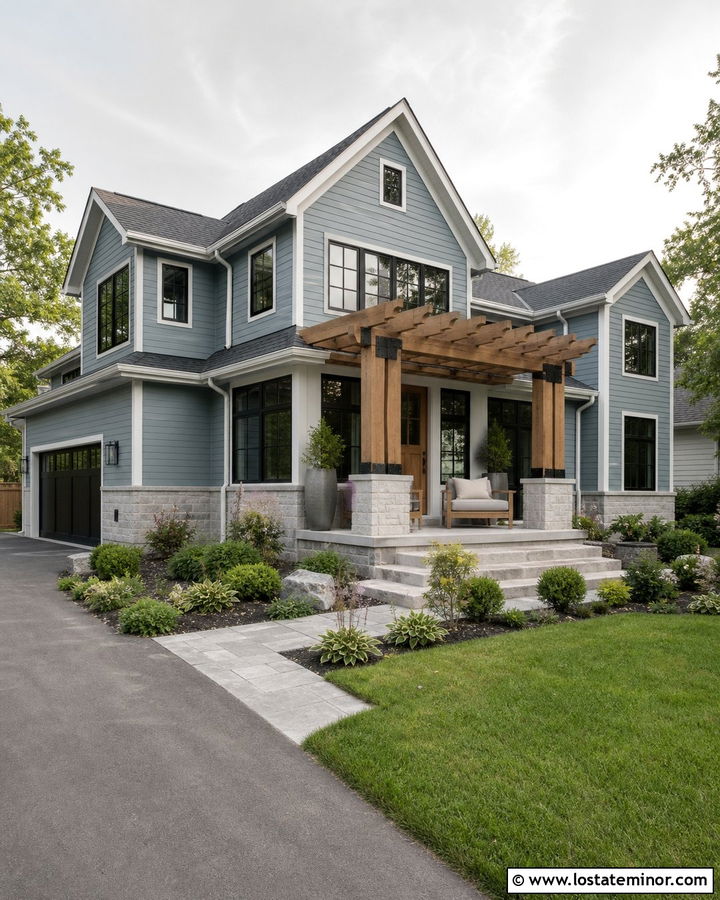
Black windows bring definition to dusty blue siding and can make a traditional exterior feel more current. Connect the windows to a slim black pergola or choose warm cedar beams with black metal brackets. Keep the main trim soft white so each window remains clearly framed. A light oak front door adds warmth, while a charcoal roof and black gutters continue the darker accents across the facade. Use pale gray stone or brick around the porch to prevent the lower exterior from feeling heavy. Beneath the pergola, simple neutral furniture and large planters will support a clean look. Repeating black carefully in lights, railings, and hardware creates cohesion without allowing the dark accents to dominate the soft blue house.
27. Dusty Blue House With White Shutters And Pergola
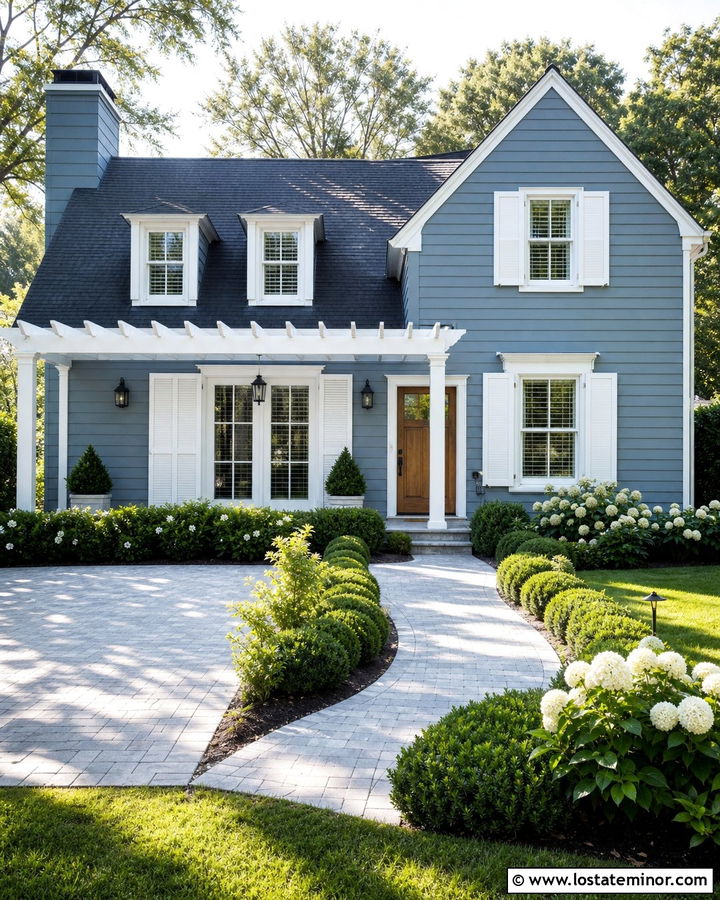
White shutters create a charming, traditional contrast on dusty blue siding. Match them with a white pergola, window trim, fascia, and porch railings for a unified appearance. To keep the exterior from feeling too predictable, use a natural wood front door and a medium charcoal roof. The pergola can cover a front terrace or create an open extension beside the porch. Choose functional-looking shutters sized to fit the windows, even when they remain decorative. Gray brick pavers and simple black lanterns add quiet definition. Complete the curb appeal with rounded shrubs, hydrangeas, and a gently curved walkway. The overall palette remains bright and approachable, with the wood entrance providing a warm focal point.
28. Dusty Blue House With Wood Door And Pergola
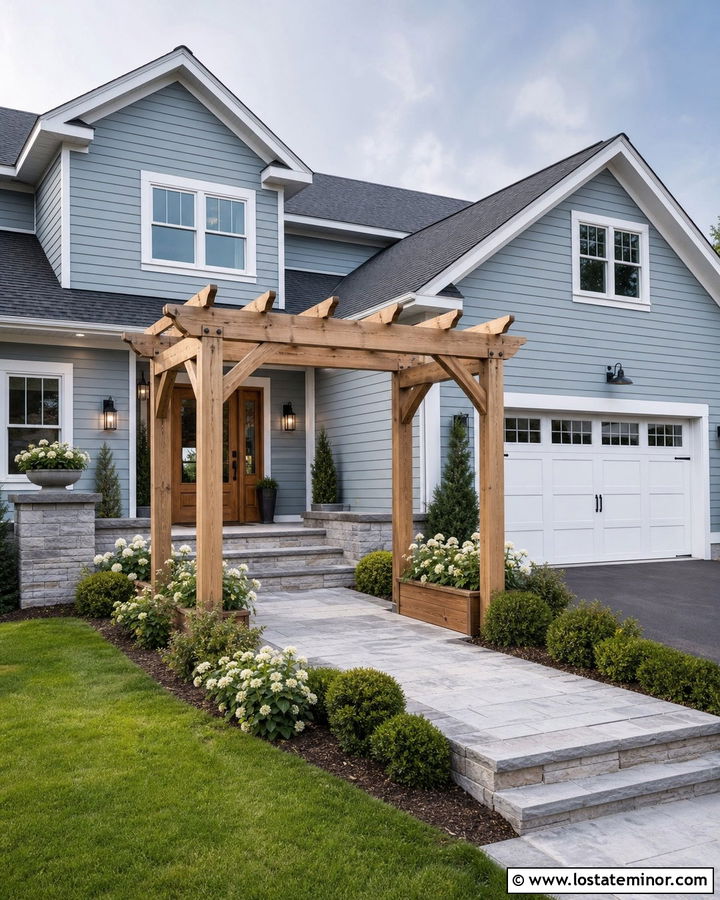
A natural wood door can become the warm focal point of a dusty blue facade. Select a medium oak, cedar, or walnut finish, then coordinate it with the pergola rather than attempting a perfect color match. White trim around the door and windows will keep the wood from blending into the blue siding. Add black lights, a charcoal roof, and pale gray stone steps for clear contrast. Position the pergola so its beams visually lead toward the entrance. A simple bench or pair of wood planters can repeat the natural finish without cluttering the porch. Finish with soft green landscaping and white flowers. This balanced scheme feels welcoming because the cool exterior is softened by wood where visitors naturally approach.
29. Small Dusty Blue House With Pergola
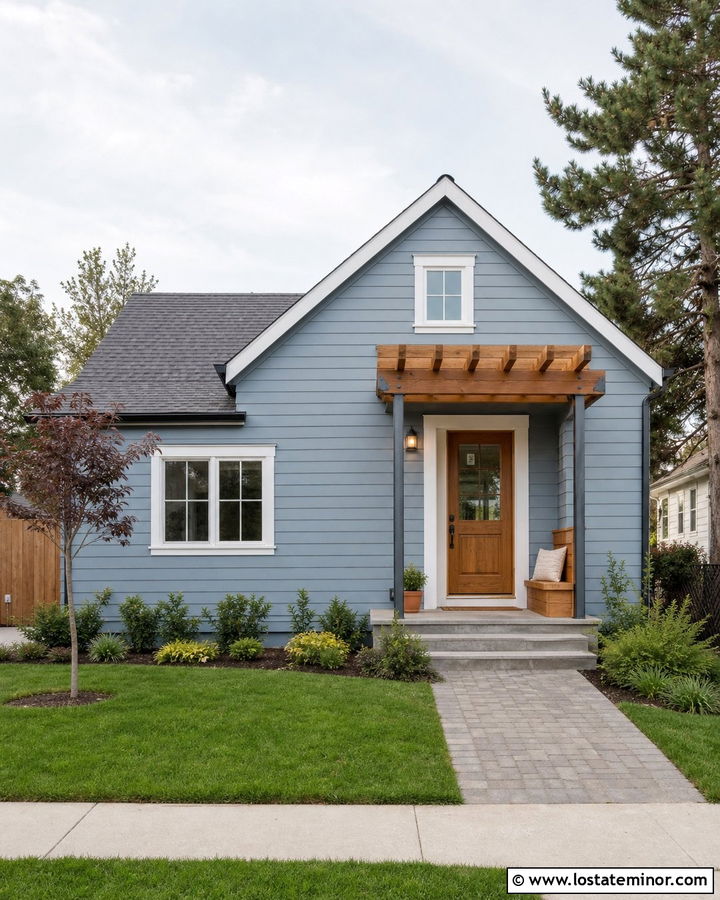
A small dusty blue house needs a pergola that adds character without hiding the facade. Use a compact structure over the entrance or a narrow side patio, keeping the posts slim and the roofline open. Warm white trim can visually enlarge the windows and sharpen the edges of the siding. Choose light cedar for the pergola and front door, then use medium-gray shingles above. Limit the exterior to these four main colors so the house does not appear busy. A short paver path, low foundation shrubs, and one ornamental tree can frame the building without overwhelming it. Built-in seating beneath the pergola may also save space while giving the small exterior a practical, finished outdoor area.
30. Two-Story Dusty Blue House With Pergola
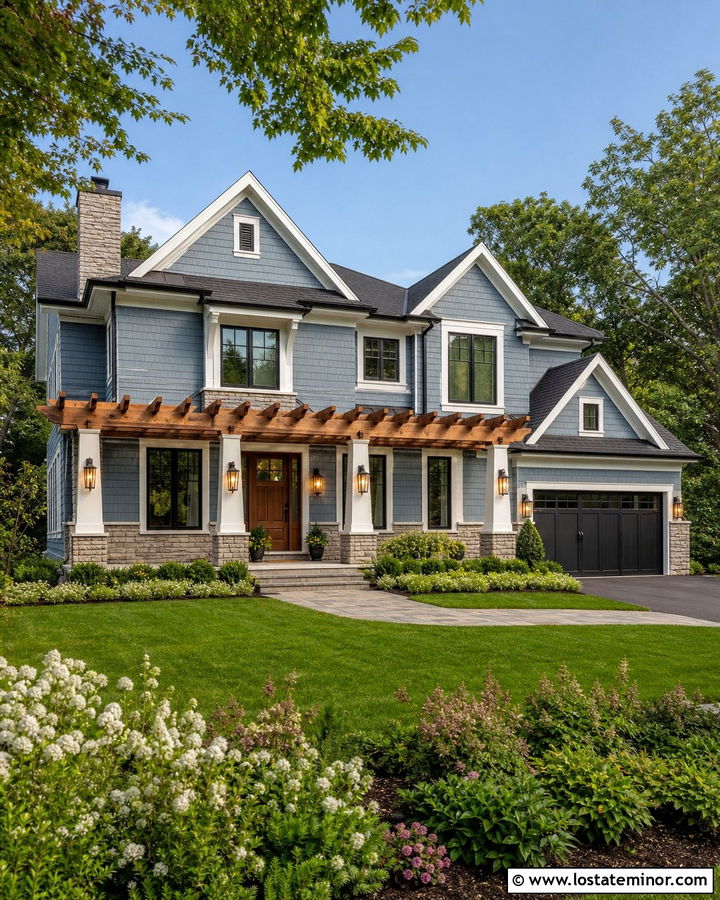
A two-story dusty blue house benefits from a broad pergola that balances the height of the facade. Extend a cedar structure across the front terrace, garage side, or rear entertaining area to establish a strong horizontal element. Use crisp white trim around both levels of windows, then add a charcoal roof and black gutters for definition. A stained wood front door should relate to the pergola, while stone around the lower story creates a grounded base. Tall porch lights and carefully scaled columns can connect the structure to the home’s larger proportions. Layer trees, shrubs, and flowering plants at different heights. This approach helps the pergola look substantial enough for the house while preserving an open, bright exterior.
Conclusion:
Dusty blue is flexible enough to complement traditional, coastal, farmhouse, Craftsman, and contemporary architecture. The key is coordinating the pergola with the roof, trim, doors, windows, masonry, and surrounding landscape. White pergolas create crisp contrast, cedar adds warmth, and black structures give the exterior a modern edge. Scale also matters. A compact entry pergola suits a cottage, while a broad deck or patio structure can balance a larger two-story facade. Before building, confirm structural requirements, property restrictions, and local permits. Use these 30 Dusty Blue House Design With Pergola Ideas to create a complete exterior that feels intentional, comfortable, and visually connected from the curb to the outdoor living areas.

Related posts: