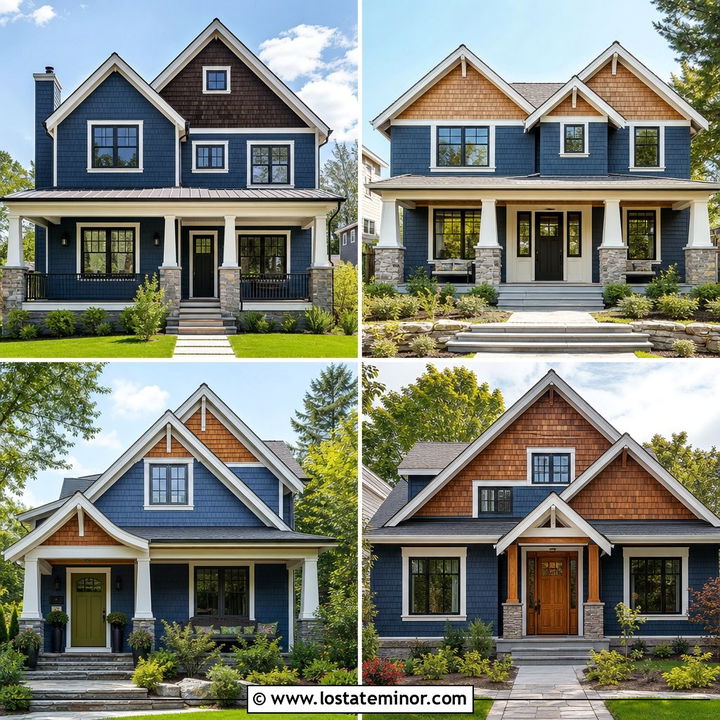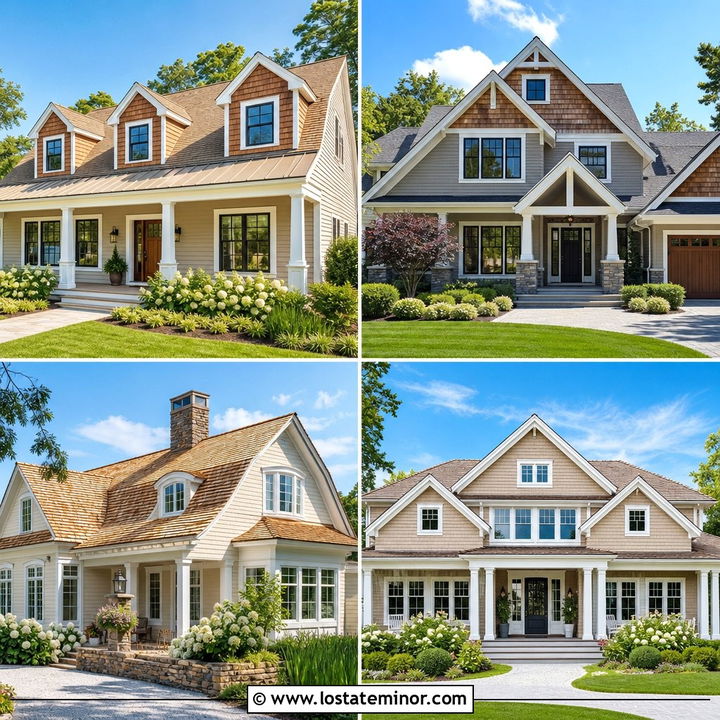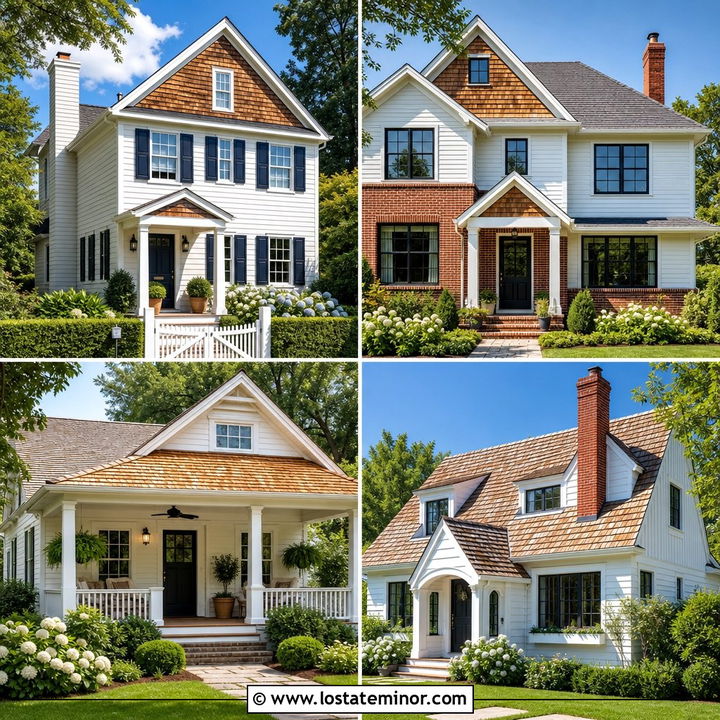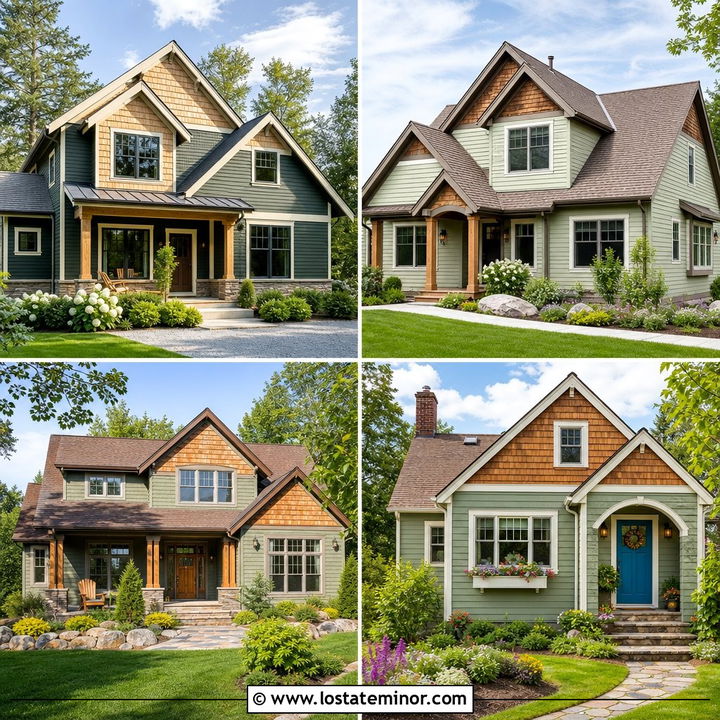
Choosing **30 Dusty Blue House Design With Cedar Shake Ideas** means balancing a soft, muted blue with the warmth and texture of wood. Dusty blue works across coastal cottages, Craftsman homes, modern farmhouses, ranch houses, and traditional facades. Cedar shake can cover entire walls, highlight gables, frame an entry, or connect the house to a wooded setting. White trim creates freshness, while charcoal, cream, stone, copper, and natural wood bring different levels of contrast. Current exterior inspiration also shows blue siding paired successfully with cedar, stone, dark roofing, and natural wood doors. () The complete schemes below make it easier to coordinate every visible feature. Explore these **30 Dusty Blue House Design With Cedar Shake Ideas** for a polished exterior.
1. Dusty Blue House With Natural Cedar Shake Gables
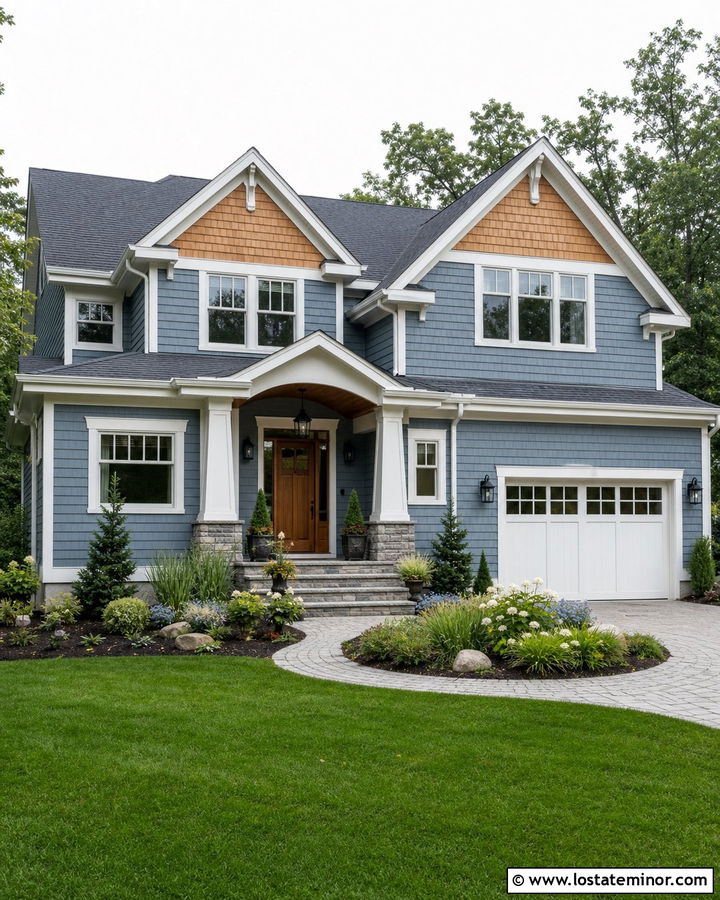
Natural cedar shake gables bring immediate warmth to a dusty blue house without covering the entire exterior in wood. Use dusty blue lap siding across the main walls, then place golden-brown cedar shakes inside the front-facing peaks. Crisp white trim gives both materials a clean boundary and highlights the roofline. A medium charcoal shingle roof keeps the palette grounded without looking overly dark. Complete the entry with a stained oak door, simple black lanterns, and stone steps in warm gray. This scheme works especially well on a two-story Craftsman or suburban home with several gables. Keep the cedar stain close to the front door color so the separate wood features feel intentional and connected.
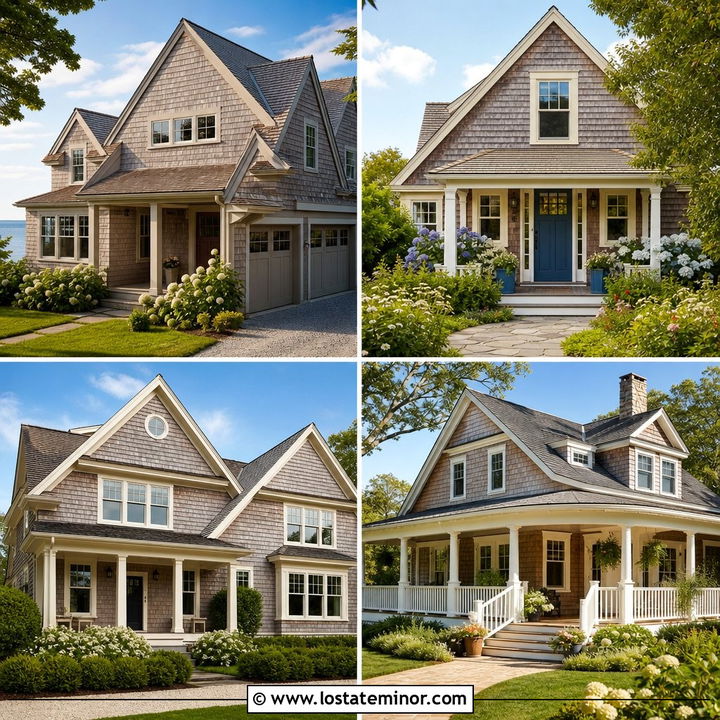
2. Dusty Blue Cedar Shake Cape Cod House
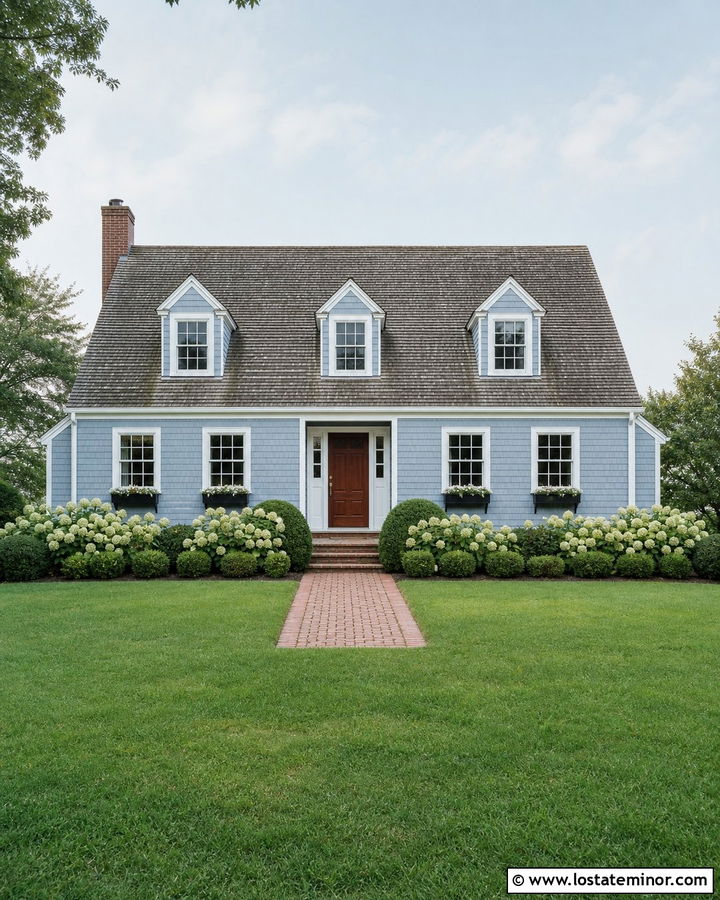
Picture a compact Cape Cod house wrapped in dusty blue cedar shake siding, with every shingle adding subtle shadow and coastal character. Bright white trim around the windows, eaves, and dormers creates the classic contrast associated with this house shape. Add a weathered gray roof to reinforce the relaxed palette, then introduce a natural mahogany front door for warmth. Small black lanterns and black window boxes provide definition without overwhelming the soft blue. A straight brick walkway, clipped shrubs, and blue hydrangeas complete the curb appeal. This look is especially effective when the cedar shakes are painted one consistent dusty blue, allowing their texture rather than additional colors to create visual interest across the facade.
3. Dusty Blue Craftsman With Cedar Shake Siding
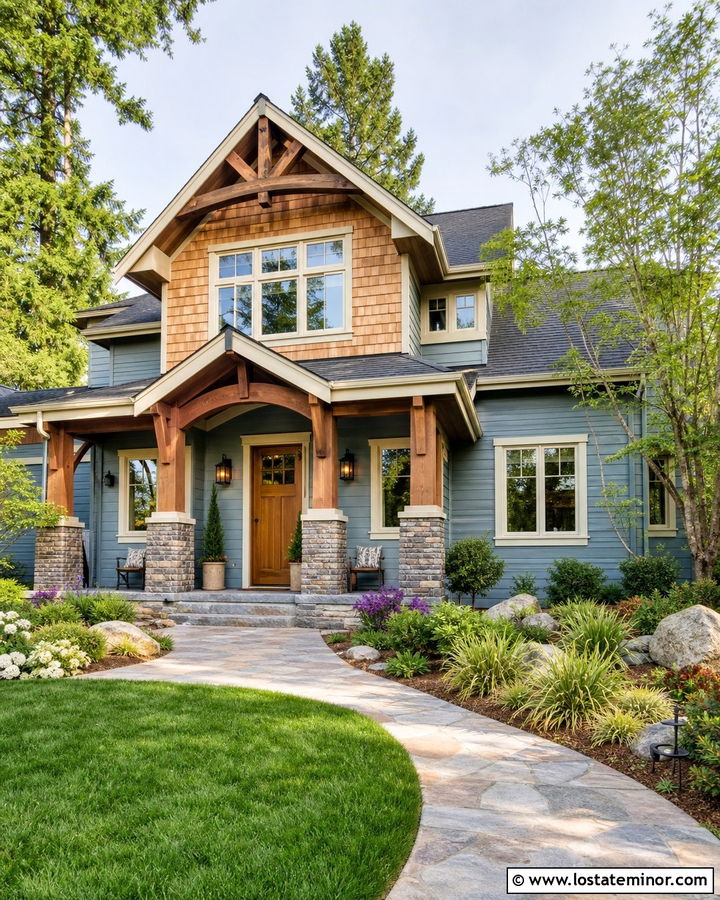
A Craftsman exterior gives dusty blue and cedar shake plenty of architectural detail to highlight. Cover the lower walls in dusty blue horizontal siding and use stained cedar shakes in the wide front gable. Cream trim feels softer than pure white and complements the warm wood tones. Stone porch columns in gray, taupe, and muted brown can visually anchor the facade. For continuity, repeat the cedar stain on the front door, porch ceiling, brackets, and exposed beams. A charcoal architectural roof adds enough depth to define the broad roofline. Finish with bronze lighting, tapered columns, layered shrubs, and a curved stone path. The result feels handcrafted and welcoming rather than overly colorful or busy.
4. Dusty Blue House With White Trim And Cedar Shake
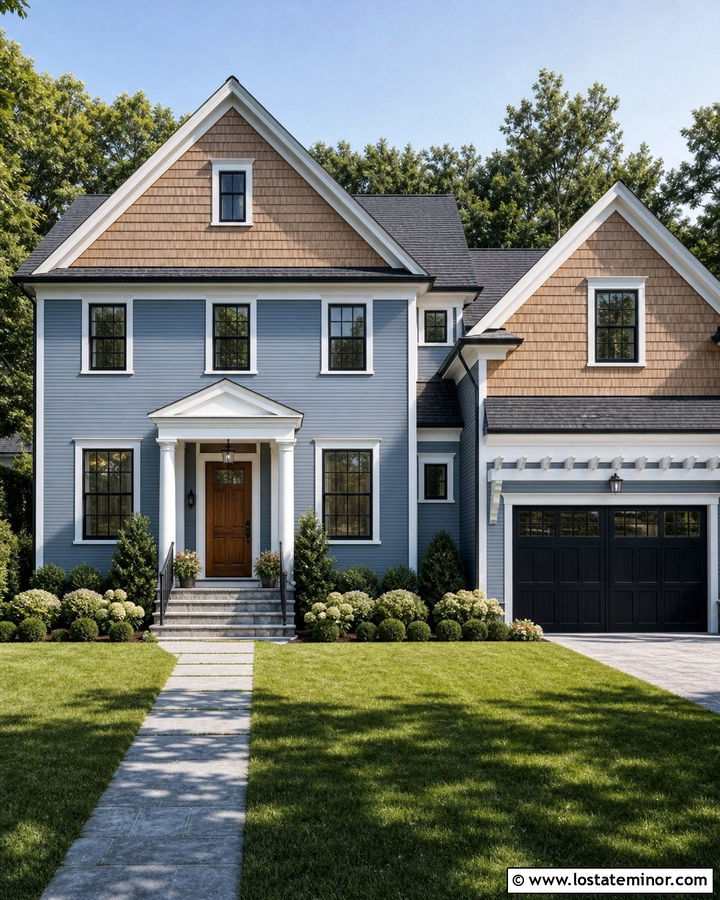
White trim is one of the simplest ways to sharpen a dusty blue and cedar shake exterior. Apply dusty blue to the primary lap siding, then use natural cedar shake on an upper story, dormer, or projecting front section. Choose a clear, bright white for fascia, window frames, corner boards, porch columns, and garage trim. Repeating white in several locations prevents the cedar from making the facade feel too heavy. A dark gray roof and black gutters add slim lines of contrast. Complete the scheme with a medium-stained wood door and a simple concrete or bluestone walkway. This combination suits Colonial, cottage, and transitional homes because its familiar structure allows the blue siding and textured cedar to stand out naturally.
5. Dusty Blue House With Cedar Shake And Stone
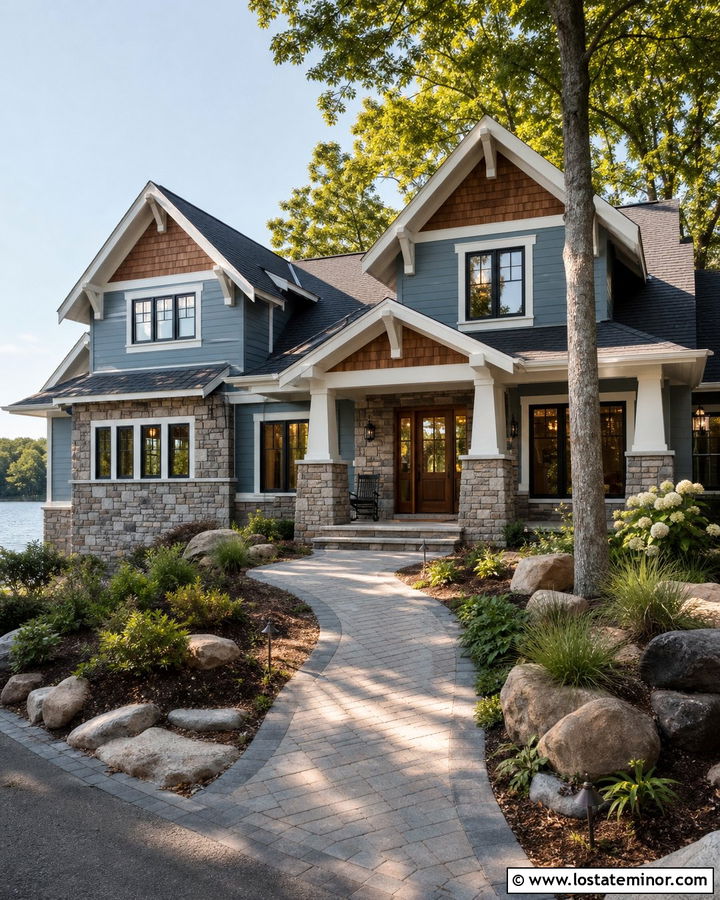
Could your dusty blue exterior use more depth at ground level? Combine dusty blue siding with cedar shake gables and a low stone veneer base. Select stone containing cool gray, soft beige, and muted brown so it bridges the blue body color and warm cedar. Keep the stone around the porch foundation, lower garage walls, or chimney instead of spreading it across every surface. Creamy white trim will soften the material transitions, while a charcoal roof provides a strong visual cap. Use a wood front door with a stain similar to the cedar shake. Deep bronze lights and gutters add understated contrast. This layered palette feels especially appropriate for a Craftsman, lake house, or mountain-inspired suburban home.
6. Dusty Blue Modern Farmhouse With Cedar Shake
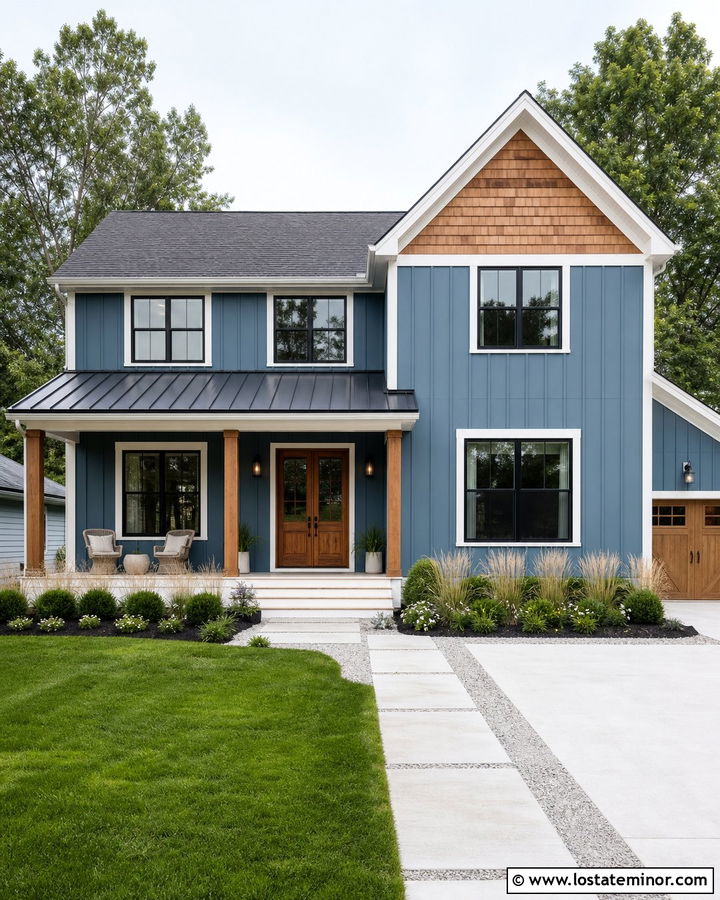
Dusty blue gives a modern farmhouse exterior more personality than an all-white palette. Use vertical dusty blue board-and-batten siding across the main facade and natural cedar shake in the tallest front gable. Wide white trim keeps the lines crisp, while black-framed windows introduce a modern edge. A black standing-seam metal porch roof works well beneath a dark charcoal main roof. Repeat the cedar tone on double front doors, porch posts, and a small garage accent. Avoid adding too many decorative shutters because the siding direction and wood texture already create interest. Simple foundation grasses, boxwoods, and a pale gravel walkway finish this complete look with clean structure and an inviting touch of natural warmth.
7. Dusty Blue Ranch House With Cedar Shake Accents
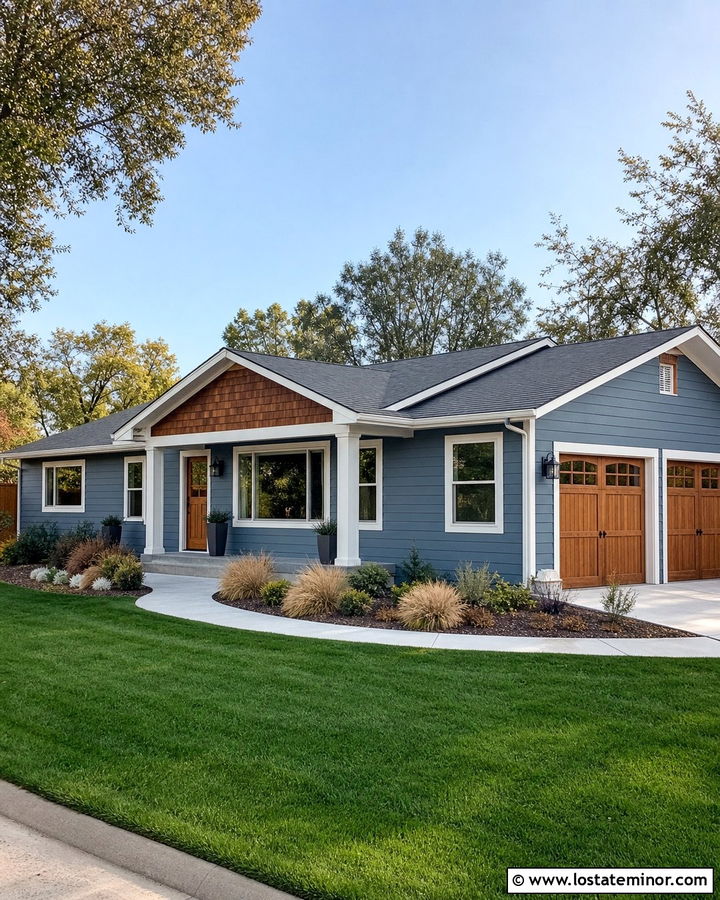
A long ranch facade can look flat when every wall has the same siding. Break up the horizontal shape with dusty blue lap siding and cedar shake accents around the entry or garage. A cedar-clad front gable helps mark the main door, while matching cedar garage panels carry the warm material across the house. Use warm white trim instead of stark white to make the single-story exterior feel relaxed. A medium gray roof offers gentle contrast and suits the low roofline. Add a wood door, black lighting, and charcoal planters for definition. Broad planting beds with ornamental grasses and low shrubs soften the foundation, while a wide walkway strengthens the entry as the visual center of the home.
8. Dusty Blue Colonial With Cedar Shake Dormers
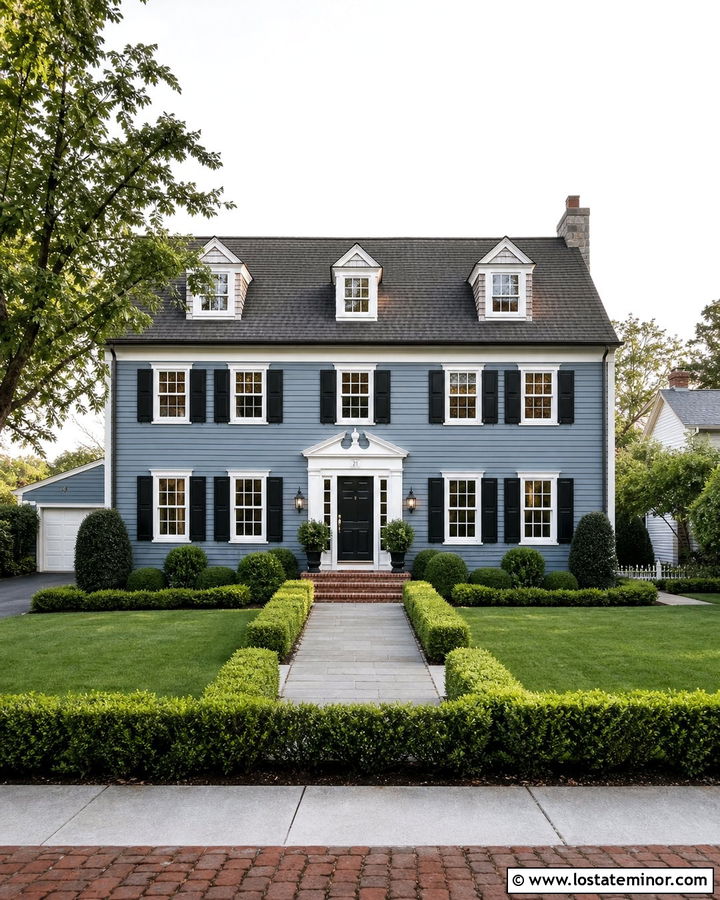
Traditional symmetry makes a dusty blue Colonial house feel orderly, while cedar shake dormers add texture above the main facade. Paint the clapboard siding a balanced dusty blue and use slightly weathered natural cedar on the dormer cheeks and upper faces. White window trim, corner boards, and a formal entry surround maintain the home’s classic character. Black shutters and a black front door create crisp contrast, although a stained wood door can produce a warmer result. Choose a dark gray roof that allows the cedar variations to remain visible. Brick steps, matching lanterns, clipped hedges, and a straight walkway reinforce the symmetrical design. Limit cedar to the upper details so the Colonial proportions remain clear and refined.
9. Dusty Blue Coastal House With Weathered Cedar Shake
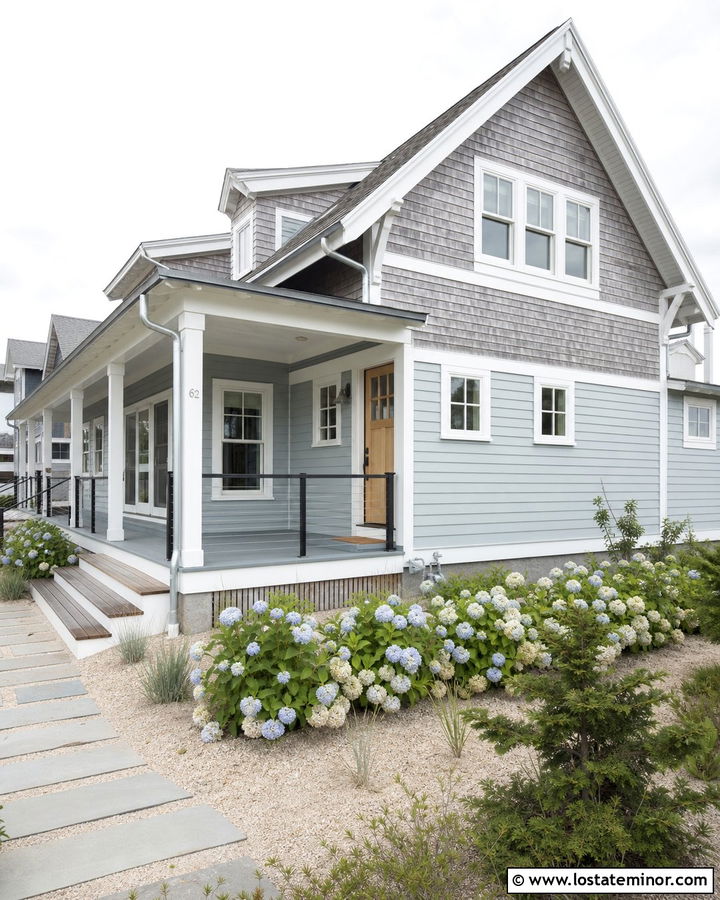
Salt-washed color and weathered texture come together naturally on a coastal dusty blue house. Use muted blue siding on the lower level and silvery cedar shake across the upper story or prominent gables. Soft white trim gives the facade a bright outline without creating harsh contrast. A weathered gray roof continues the relaxed tonal palette, while a light natural wood door introduces a warmer focal point. Consider pale blue-gray porch decking and stainless or black cable rails for a clean coastal finish. Dune grasses, hydrangeas, shell-colored gravel, and a light stone walkway complement the scheme. The cedar does not need to look perfectly uniform; controlled color variation helps the complete exterior feel established, casual, and connected to its surroundings.
10. Dusty Blue Bungalow With Cedar Shake Porch
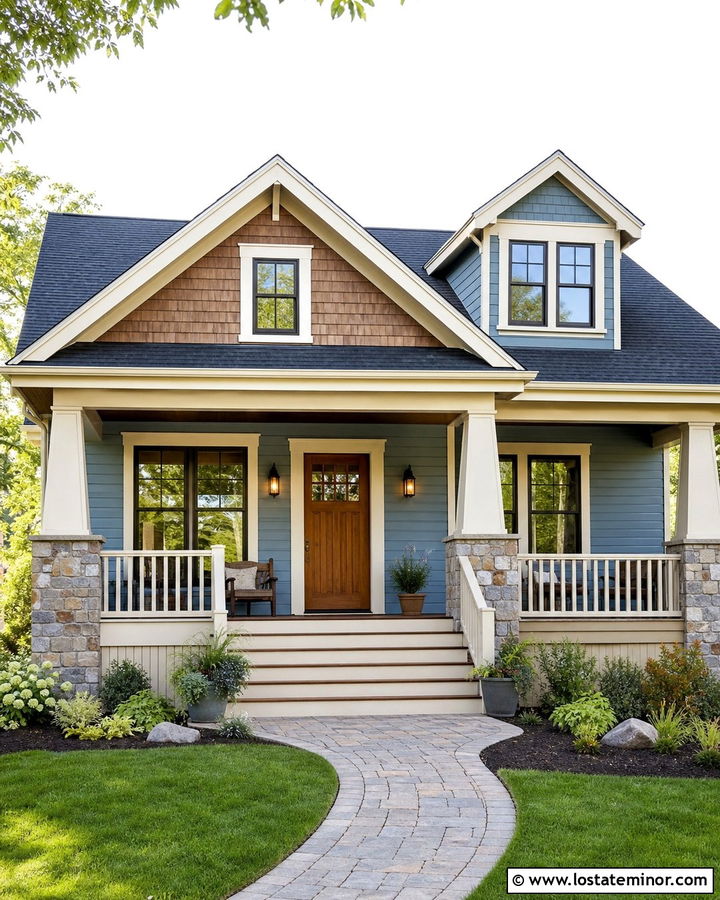
On a bungalow, the porch often controls the entire street view. Paint the main siding dusty blue, then use natural cedar shake inside the porch gable and on the side walls surrounding the entry. Cream trim highlights the low roofline, exposed rafters, and sturdy porch columns. Repeat the cedar stain on the front door and porch ceiling to create a warm, sheltered feeling. A dark brown or charcoal roof grounds the house and complements the wood. Stone column bases add another practical layer of texture, especially when they contain both gray and tan tones. Finish the design with bronze sconces, wide porch steps, low native plants, and a curved paver path that gently directs attention toward the entrance.
11. Dusty Blue Split-Level With Cedar Shake Entry
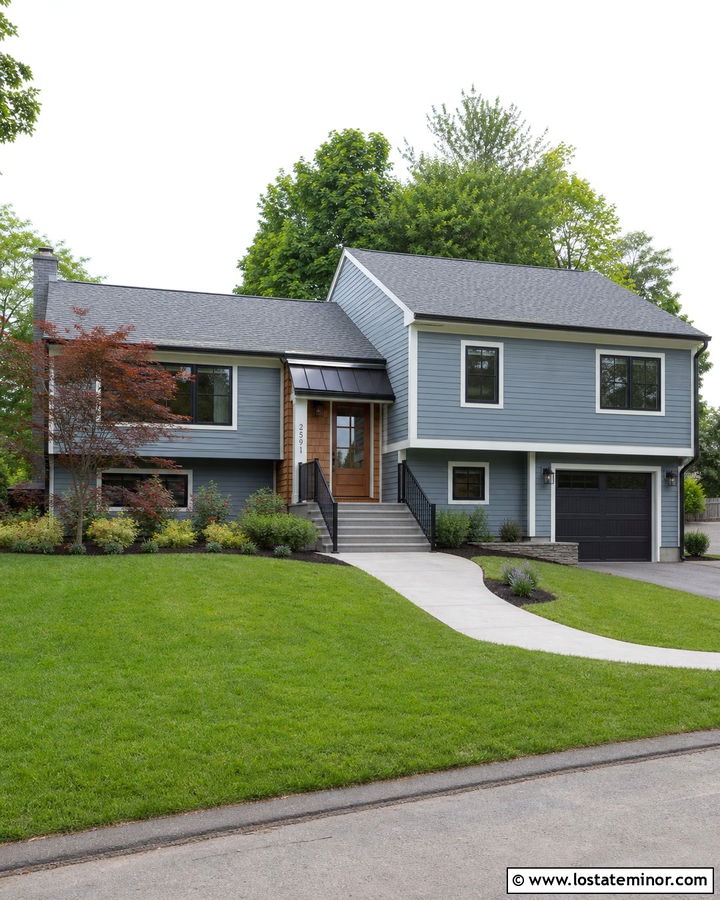
Updating a split-level exterior starts with creating a clear focal point. Cover the main walls in dusty blue siding, then wrap the projecting entry and its upper gable in cedar shake. The vertical wood feature will visually connect both levels and reduce the home’s segmented appearance. Use off-white trim around the windows and roof edges, with charcoal accents on the gutters, railings, and garage door hardware. A medium gray roof supports the cool body color without competing with the cedar. Choose a simple stained wood front door beneath a compact black metal awning. A broad concrete walkway, staggered planting beds, and a small ornamental tree can balance the asymmetrical architecture while keeping the full facade open and welcoming.
12. Dusty Blue House With Cedar Shake And Black Windows
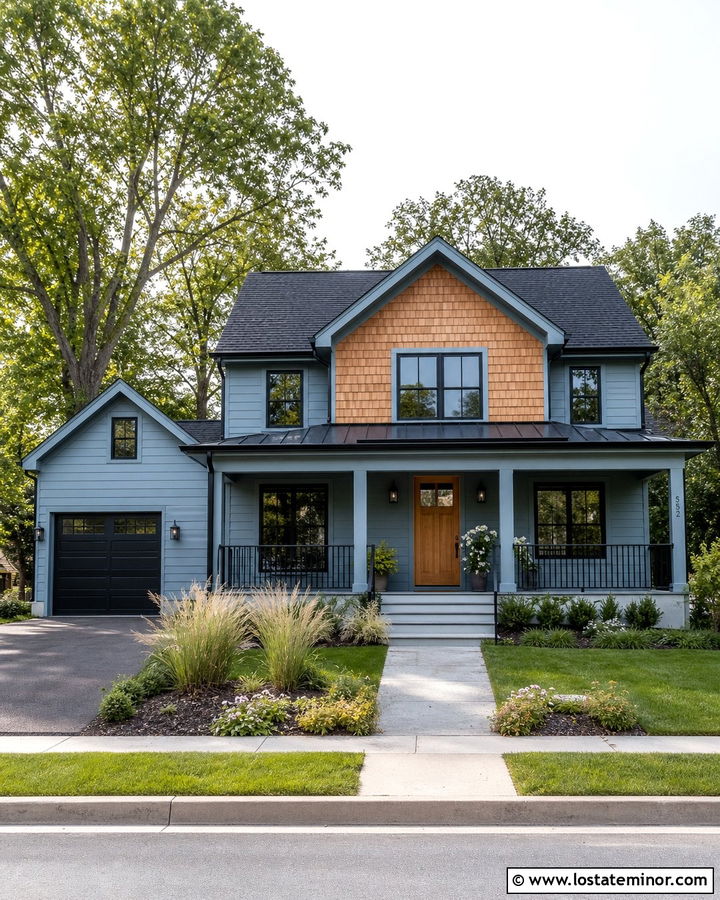
Black windows give a dusty blue and cedar shake exterior a clean contemporary outline. Use dusty blue board-and-batten or smooth lap siding on the primary walls, then introduce warm cedar shakes on a front gable or recessed upper level. Keep the trim color close to the dusty blue body so the black frames remain distinct. A charcoal roof, black gutters, and slim black porch railings will repeat the window color across the exterior. Add a clear-finished cedar front door to keep the scheme from feeling cold. This treatment suits transitional, modern Craftsman, and new suburban homes. Restrict black to narrow architectural details, allowing the softer blue and organic cedar texture to remain the dominant curb-appeal features.
13. Dusty Blue House With Cedar Shake And Cream Trim
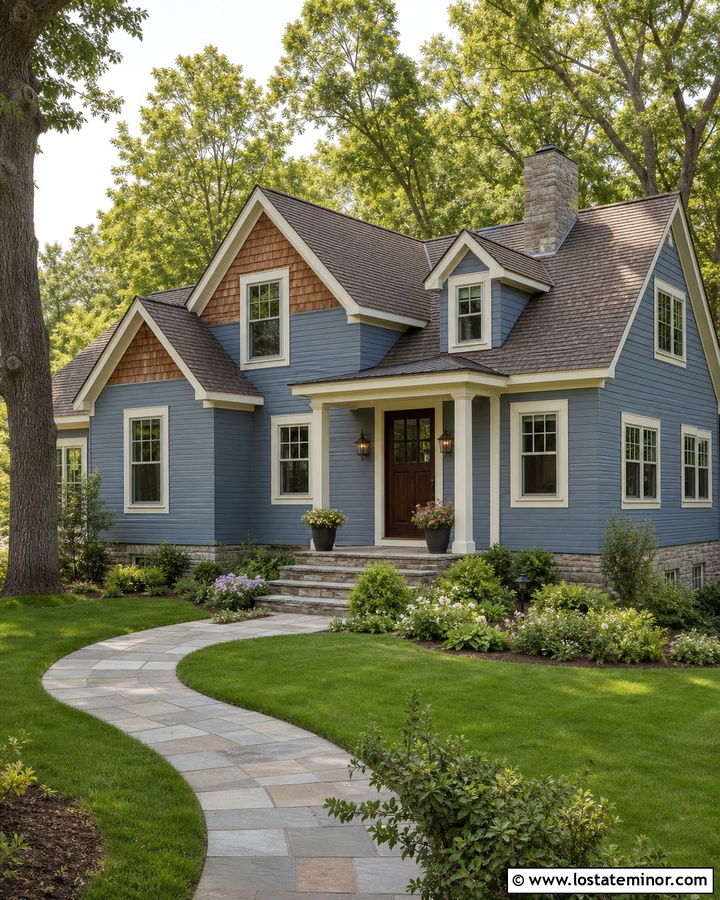
Cream trim creates a gentle transition between cool dusty blue siding and warm cedar shake. Choose a muted ivory with no strong yellow undertone for the windows, fascia, corner boards, and porch columns. Apply dusty blue to the main clapboard walls and medium cedar shake to the upper gables. A brown-gray roof brings the cream and cedar together more naturally than a blue-black roof might. Complete the entry with a deep brown wood door, bronze lanterns, and warm gray stone steps. This softer palette works beautifully on traditional cottages, Craftsman homes, and houses surrounded by mature trees. It also helps an older exterior feel refreshed without removing the warmth and character of its original wood details.
14. Dusty Blue House With Cedar Shake And Charcoal Roof
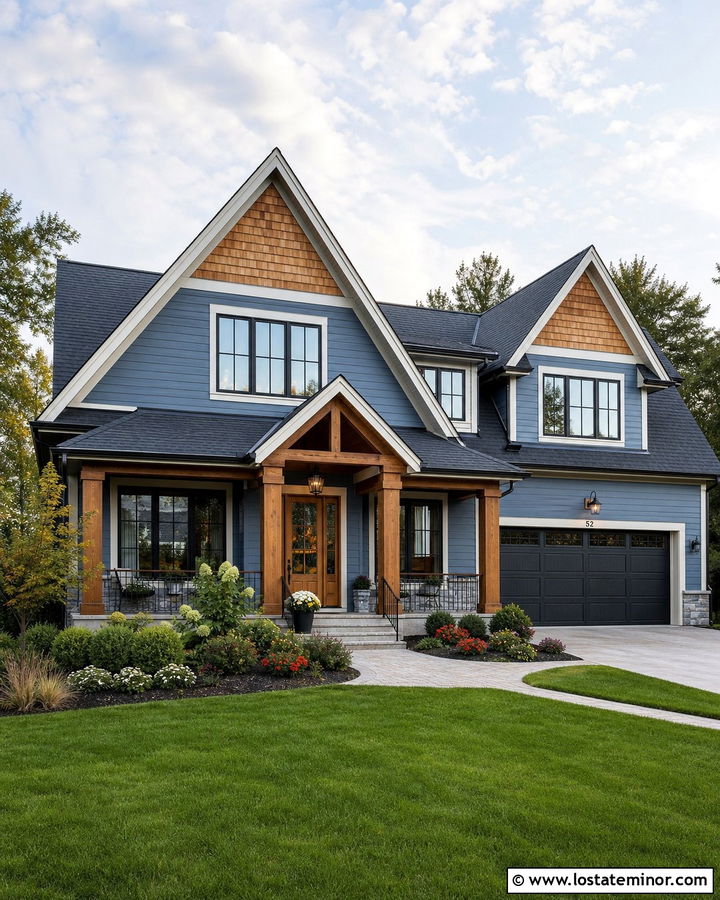
A charcoal roof provides a strong but adaptable foundation for dusty blue siding and cedar shake. Use medium dusty blue on the walls, natural cedar in the gables, and soft white on the trim. The dark roof will define the house from a distance, while the lighter body color prevents the facade from appearing heavy. Repeat charcoal on the gutters, porch railing, and garage door to create a balanced top-to-bottom connection. A cedar front door or matching wood porch posts will tie the shake accents into the lower level. This scheme is especially effective on homes with steep gables, because the roof becomes an important part of the composition. Keep landscaping bright and layered to soften the darker architectural lines.



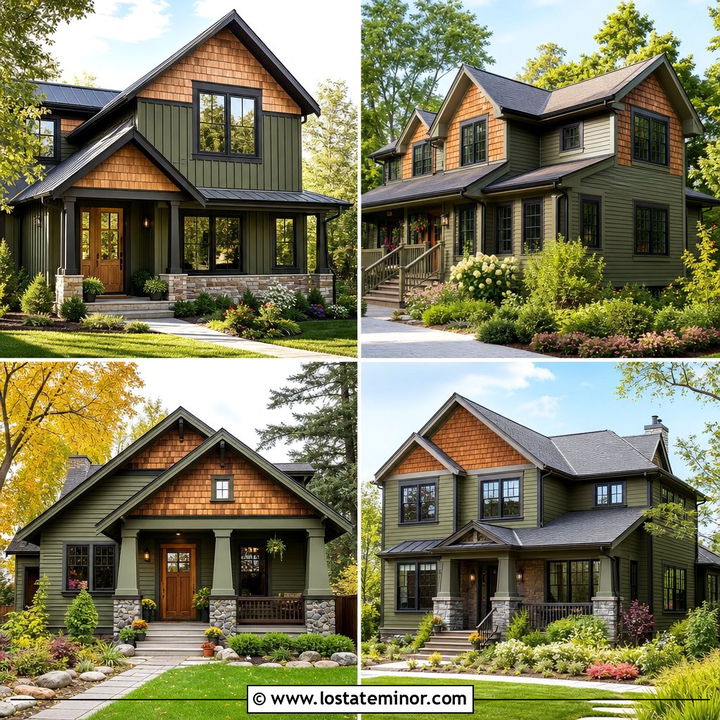
15. Dusty Blue House With Cedar Shake And Metal Roof
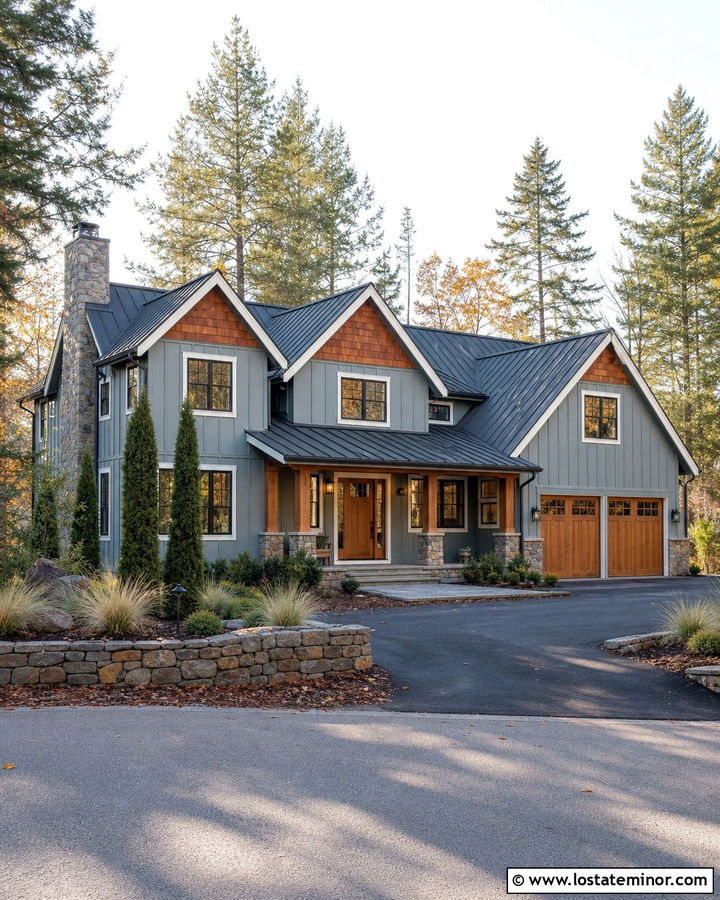
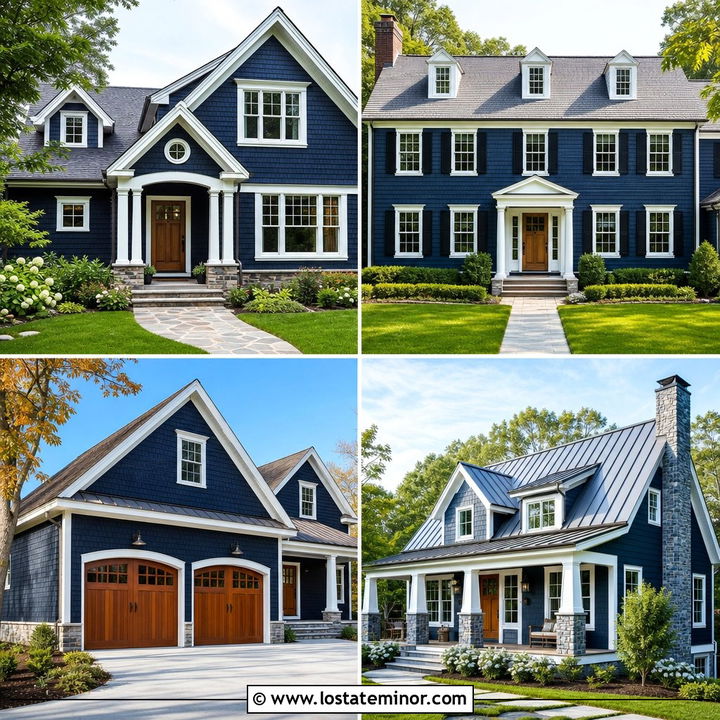
Metal roofing can give a dusty blue and cedar shake home a sharper, more updated profile. Use a matte charcoal standing-seam roof above dusty blue vertical siding and warm cedar shake gables. White trim around the windows and roof edges offers separation between the three strong materials. For a less industrial appearance, limit metal to the porch and smaller roof sections while using charcoal shingles on the main roof. Repeat cedar on the porch columns and front door to balance the cool metal surface. Black downspouts can blend neatly into the roofline. A modern farmhouse or woodland cottage benefits from this combination, particularly when simple grasses, stone paving, and structured evergreens surround the house.
16. Dusty Blue House With Cedar Shake Garage
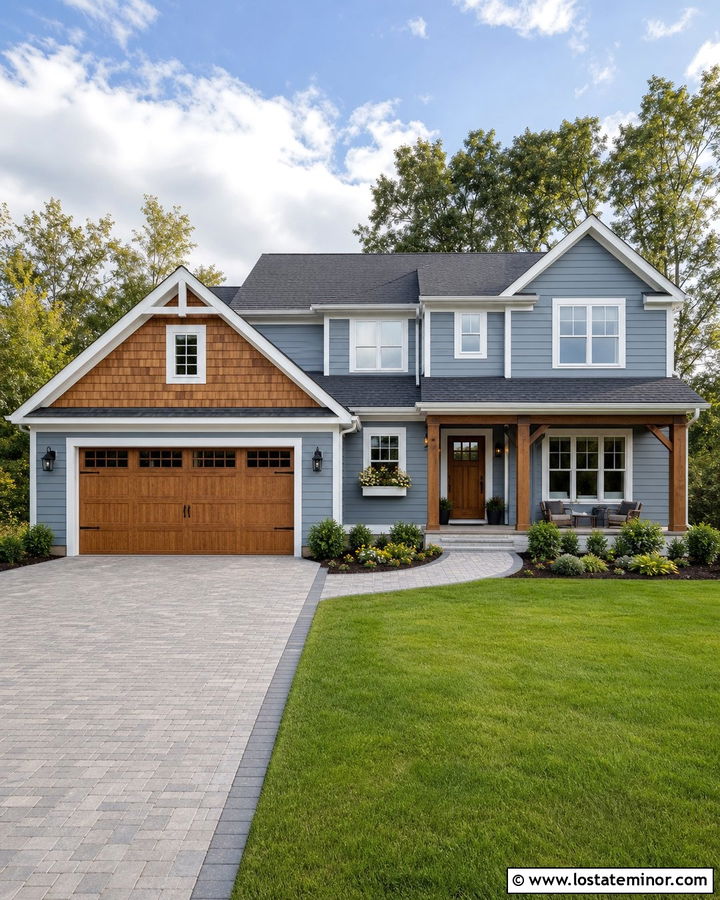
When the garage occupies much of the front elevation, cedar shake can turn it into part of the design rather than a blank feature. Paint the house dusty blue and use cedar shake in the gable above the garage doors. Select wood-look garage doors in a stain that closely matches the shakes. White trim will outline each opening and prevent the cedar tones from blending into one large brown area. A charcoal roof and black hardware add definition. Carry the wood stain to the front door or a porch beam so the garage does not feel disconnected from the entry. Neat foundation shrubs and a clean paver driveway complete a coordinated exterior that looks appealing from the curb.
17. Dusty Blue Cottage With Cedar Shake Roof
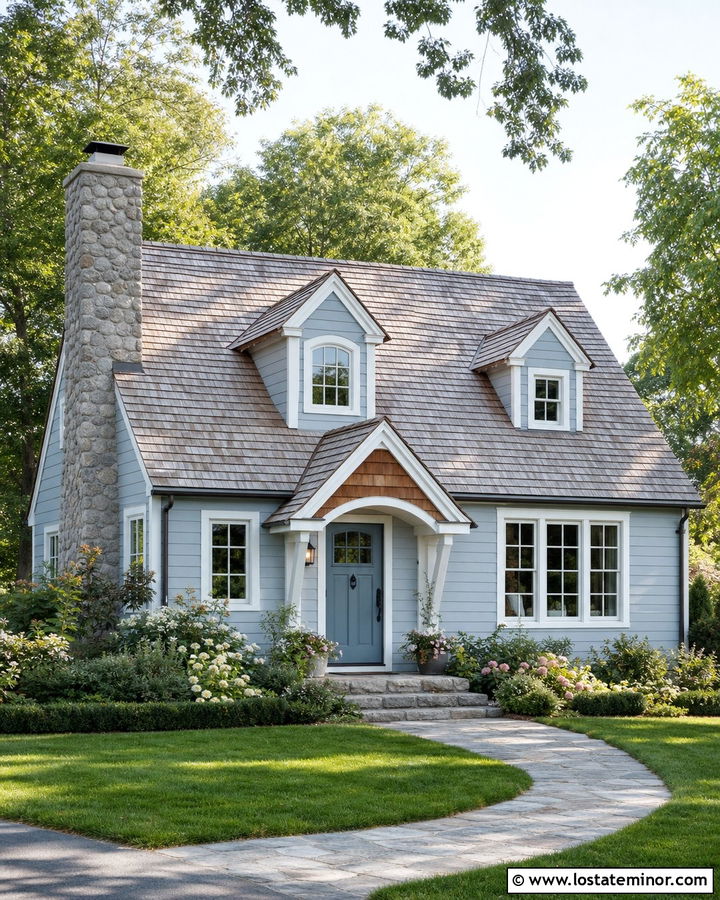
A genuine or cedar-look shake roof gives a dusty blue cottage an earthy, storybook quality. Keep the siding a soft dusty blue and choose warm white for the window trim, fascia, and porch posts. Because the roof already supplies extensive wood texture, use cedar accents sparingly on the front door, shutters, or a small gable. A muted green-gray or deep blue door can also work if you prefer less wood. Add a fieldstone chimney with gray and sandy tones to connect the siding with the roof. Cottage garden beds, curved paths, and low flowering shrubs fit the relaxed architecture. The overall palette should remain soft, allowing the textured roof and compact house shape to provide the strongest visual character.
18. Dusty Blue House With Painted Cedar Shake
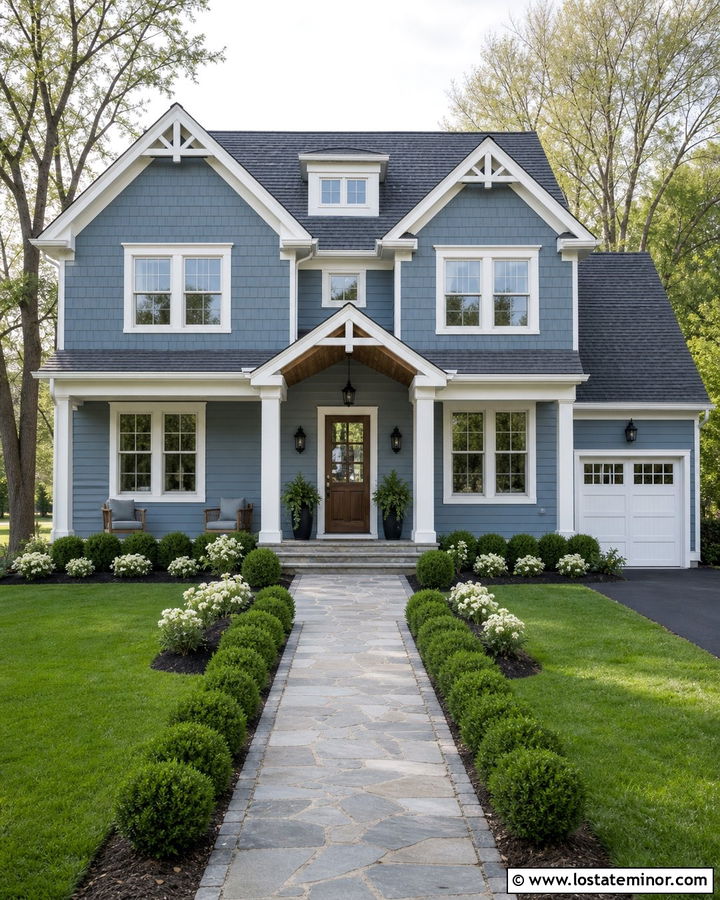
Painting cedar shake dusty blue produces a unified exterior while preserving the material’s rich surface texture. Cover the main level in dusty blue lap siding and paint the upper shake sections in the same color. The difference in shadow and siding profile will create dimension even without a second body color. Use crisp white trim to clearly frame windows, gables, and corners. Introduce warmth with a medium wood front door, cedar porch ceiling, or natural wood brackets. A dark gray roof and black lanterns give the pale facade structure. This approach suits homeowners who prefer a quiet palette or need to refresh previously painted shakes. Careful surface preparation is essential for a smooth, consistent, and durable finished appearance.
19. Dusty Blue House With Cedar Shake Shutters
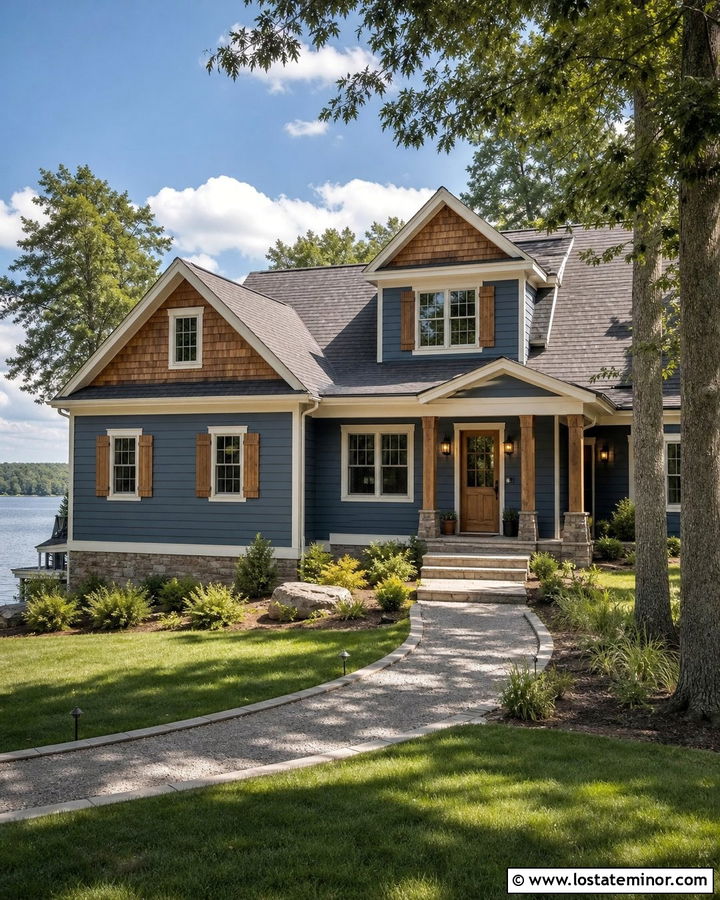
Cedar shake siding and wood shutters can work together when their scale and placement remain controlled. Use dusty blue clapboard across the body, natural cedar shakes in one or two gables, and simple cedar shutters beside selected front windows. Match the shutter stain to the shakes and front door so the wood reads as one coordinated accent. Cream trim adds separation between the blue wall and wooden features. A brown-charcoal roof supports the warm stain while keeping the exterior grounded. This treatment is well suited to a lake cottage, rustic ranch, or relaxed Colonial home. Use shutters only where they look proportionate to the windows, then finish the facade with bronze lights, stone steps, and informal greenery.
20. Dusty Blue House With Cedar Shake Front Door
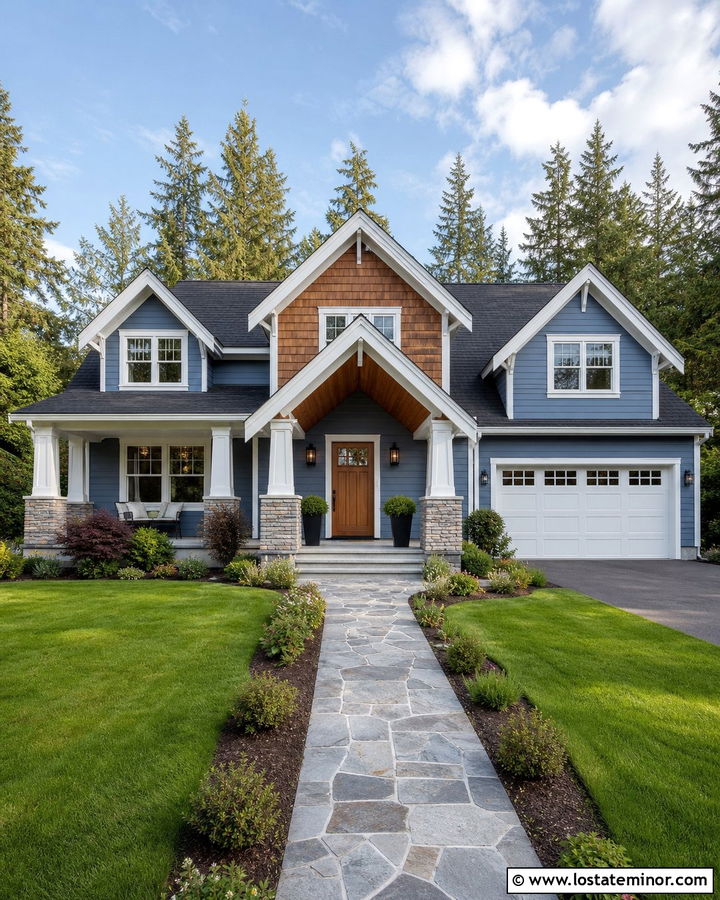
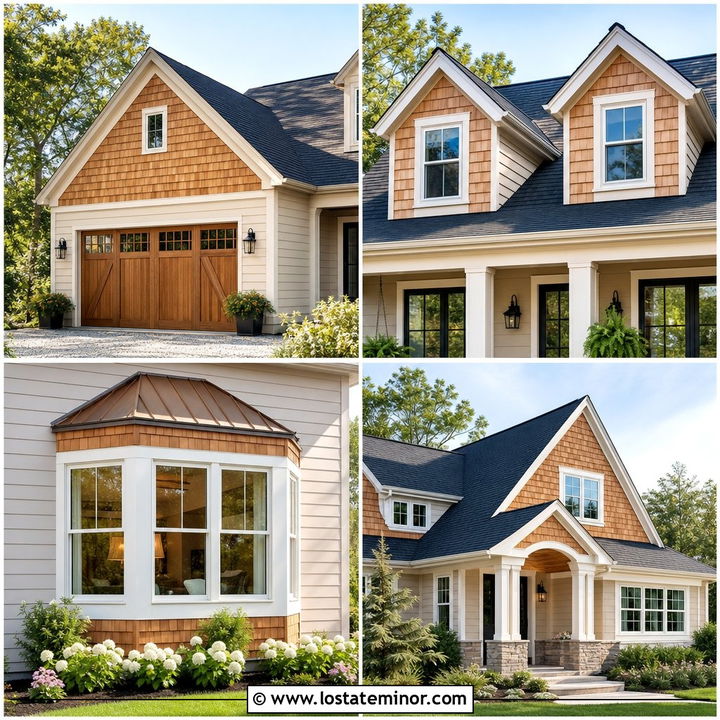
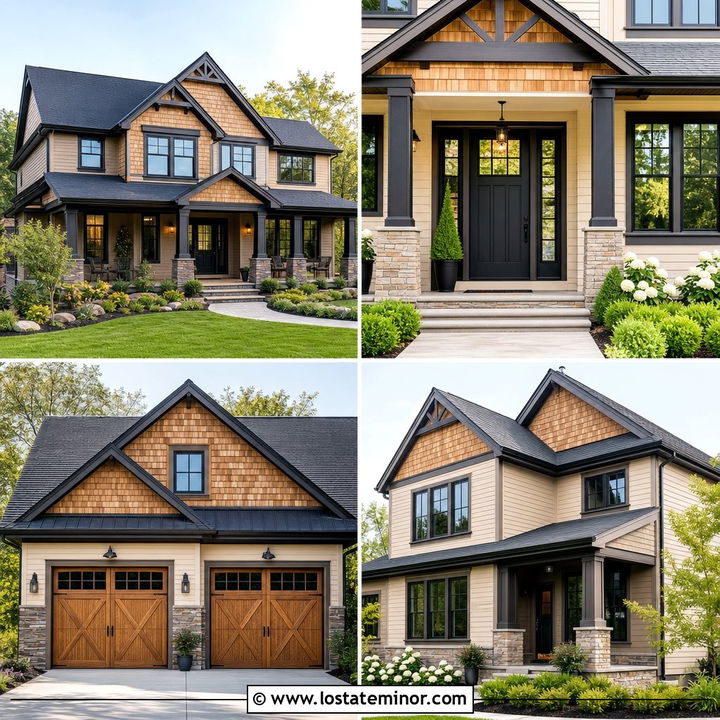
A cedar-toned front door makes an ideal focal point on a dusty blue exterior. Paint the main siding dusty blue and add natural cedar shake to the gable directly above the entrance. The matching wood tones will create a clear vertical path from the doorway to the roofline. White trim around the door, windows, and porch keeps the arrangement bright. Select a charcoal roof and black lanterns to add clean contrast around the warmer entry. If the house has a porch, repeat cedar on the ceiling or columns rather than introducing another material. A stone walkway and symmetrical planters can reinforce the focal point. This complete scheme works on Craftsman, cottage, farmhouse, and conventional suburban architecture.
21. Dusty Blue Lake House With Cedar Shake
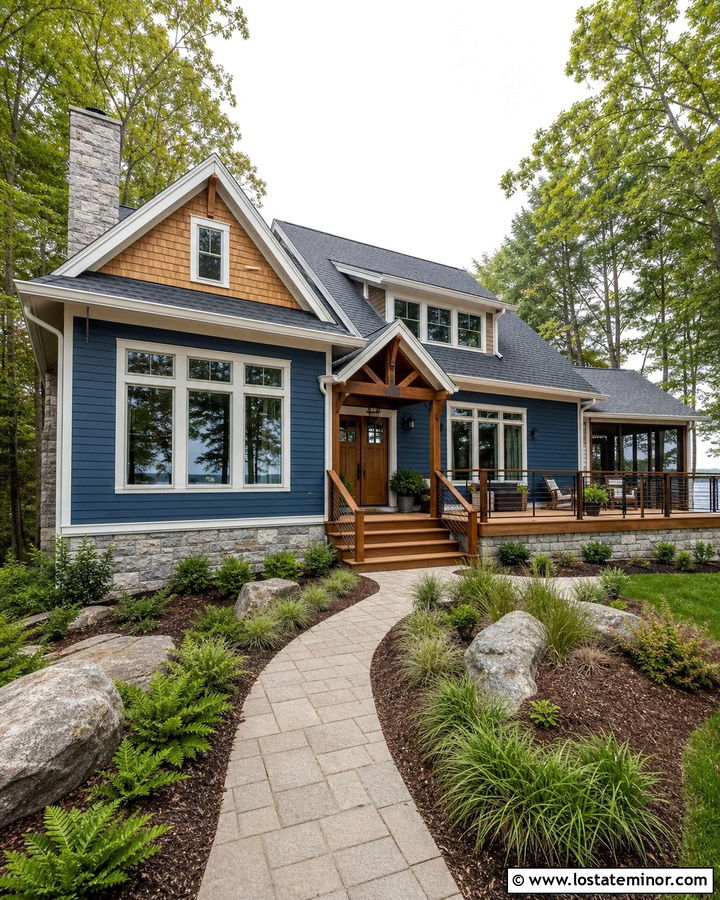
A lake house calls for materials that feel comfortable beside trees, stone, and water. Choose medium dusty blue siding, natural cedar shake gables, and warm white trim for a calm exterior that remains visible within a green landscape. Use a charcoal roof and gray stone around the foundation or chimney to add weight. A wide cedar deck can repeat the shake color and extend the living space outdoors. Black cable railing keeps views open and adds a small modern detail. Complete the front elevation with a wood door, simple sconces, and broad windows. Ferns, ornamental grasses, boulders, and a gently curving path make the architecture feel settled into the site rather than placed on top of it.
22. Dusty Blue Mountain House With Cedar Shake
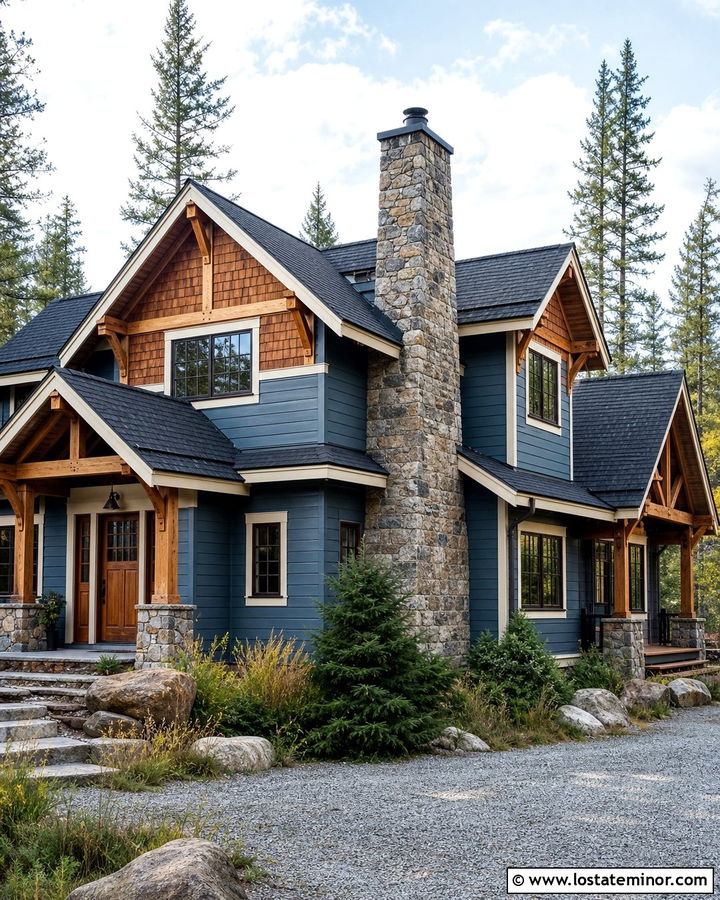
For a mountain setting, dusty blue should feel substantial enough to stand beside heavy stone and dark roofing. Select a medium-deep dusty blue for the primary siding and use richly stained cedar shake on upper gables. A tall stone chimney containing gray, brown, and charcoal tones can anchor the center of the facade. Choose cream trim for a warmer contrast and a near-black roof for clear definition. Exposed cedar beams, brackets, and a wide front door repeat the shake tone throughout the lower level. This palette suits steep rooflines and large windows particularly well. Native grasses, evergreen shrubs, rough stone steps, and a gravel-edged drive complete the rugged but carefully coordinated exterior composition.
23. Dusty Blue Victorian House With Cedar Shake
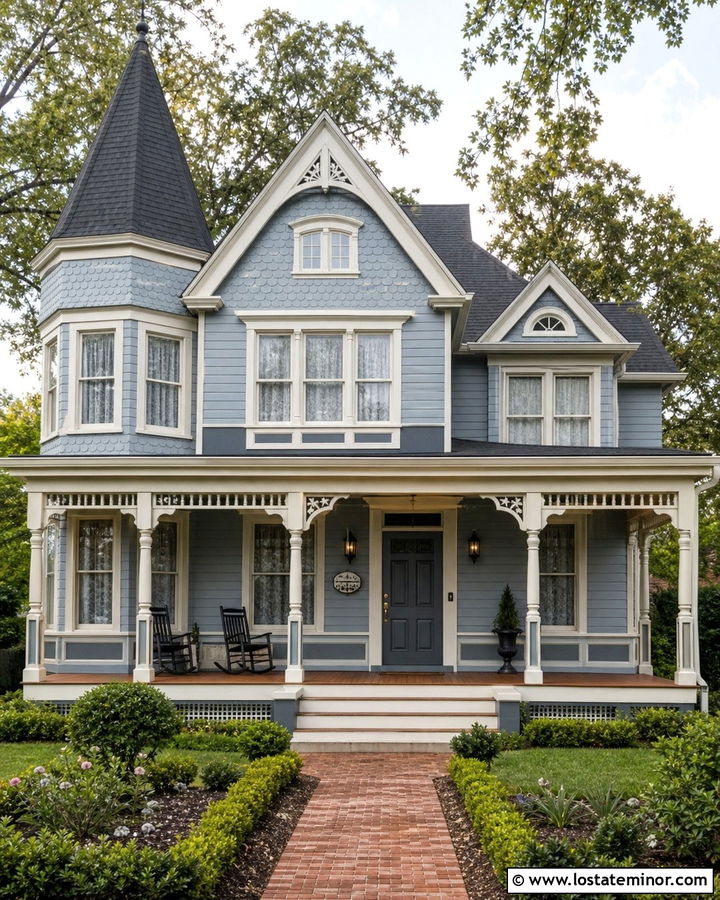
Victorian architecture can support dusty blue and cedar shake without requiring an overly complicated color scheme. Use dusty blue clapboard on the main walls and painted dusty blue shake siding in the upper tower or gables. Highlight decorative trim, porch spindles, window frames, and brackets in warm white. A deeper blue-gray can define selected panels or the front door, while natural cedar porch flooring introduces restrained warmth. Choose a charcoal roof to keep the elaborate facade grounded. Avoid outlining every small ornament in a different color; two blues, one white, and one wood tone are usually enough. Structured garden beds, a brick path, and period-inspired black lighting complete a polished exterior that honors the home’s details.
24. Dusty Blue Tudor House With Cedar Shake
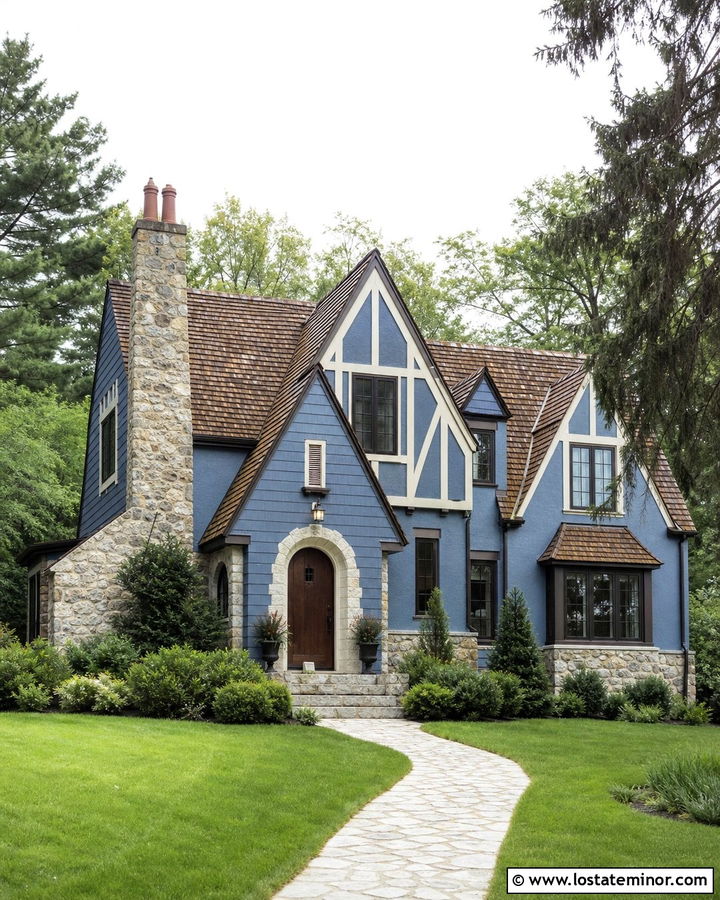
Dusty blue offers an unexpected way to lighten a Tudor-style exterior while preserving its strong rooflines. Use muted dusty blue stucco or lap siding between dark timber details, then introduce natural cedar shake inside the steepest gables. Choose deep brown rather than black for beams, gutters, and window accents so they coordinate with the cedar. Cream trim can brighten the entry and prevent the upper facade from appearing too shadowed. A brown-charcoal roof, arched wood door, and irregular stone base complete the traditional material mix. Keep landscaping structured but not formal, using evergreen shrubs and a curved stone path. The resulting home feels distinctive while maintaining the layered texture associated with Tudor architecture.
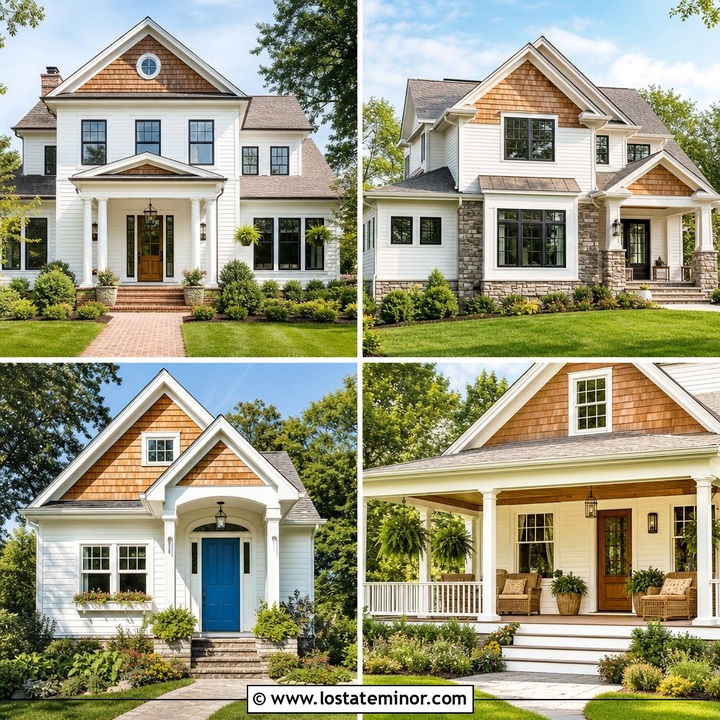
25. Dusty Blue Contemporary House With Cedar Shake
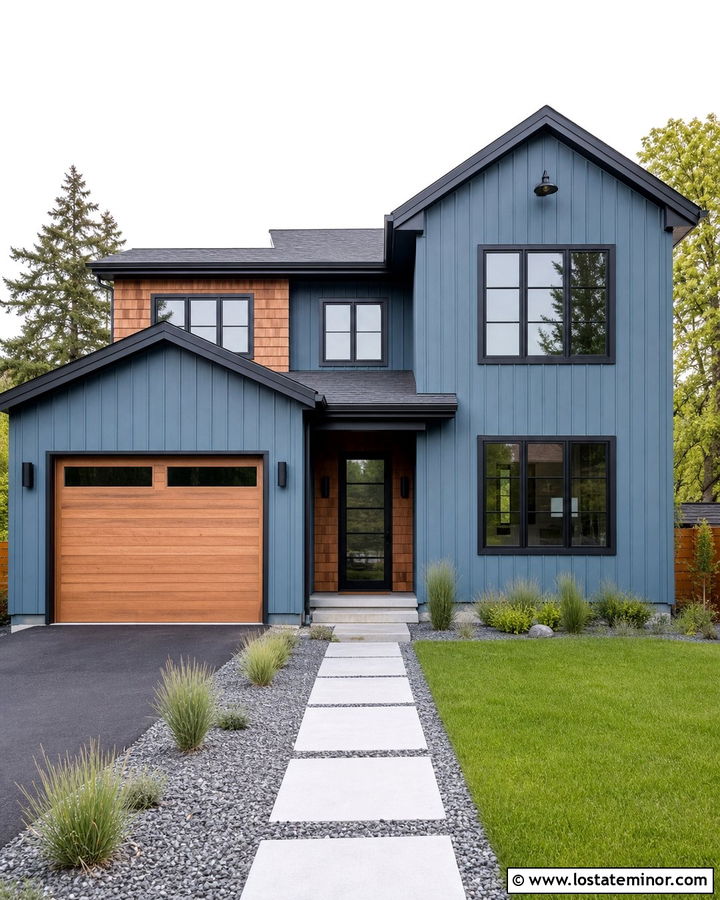
Clean architecture can make cedar shake feel surprisingly modern. Cover the primary rectangular volumes in dusty blue vertical siding and place natural cedar shake on one recessed section surrounding the entrance. Use black-framed windows, a flat or low-slope charcoal roof, and minimal trim. The wood-lined entry should provide warmth without disrupting the simple geometry. A matching cedar garage door can balance the facade if it is positioned on the opposite side. Large concrete pavers, ornamental grasses, and low gravel beds support the uncluttered design. Keep exterior lighting slim and black. The contrast between soft dusty blue, textured cedar, and precise dark lines produces a contemporary home that still feels approachable within a typical suburban or wooded setting.
26. Dusty Blue House With Cedar Shake And Red Brick
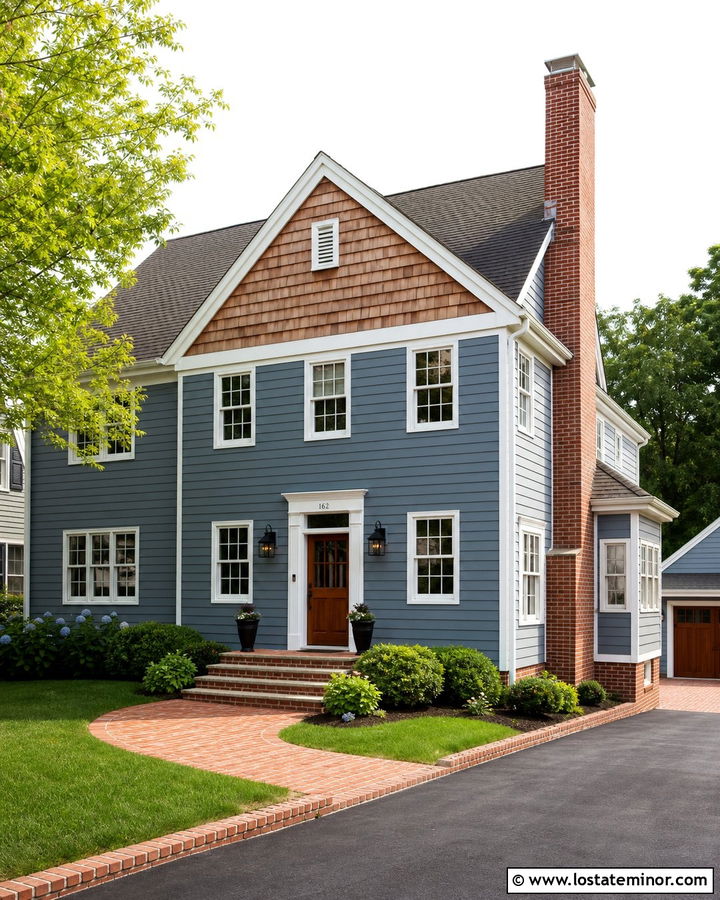
Existing red brick does not rule out dusty blue or cedar shake. Choose a subdued dusty blue with a slightly gray undertone so it complements rather than competes with the brick. Apply the blue to the main siding and add natural cedar shake to an upper gable. Use warm white trim to separate these surfaces and brighten the facade. Keep red brick around the foundation, chimney, or porch columns, then select a dark brown-gray roof that relates to both brick and cedar. A stained wood front door creates another useful bridge between the materials. Black lighting and planters add definition. This balanced scheme can update a traditional suburban home while retaining original masonry and its established character.
27. Dusty Blue House With Cedar Shake Wraparound Porch
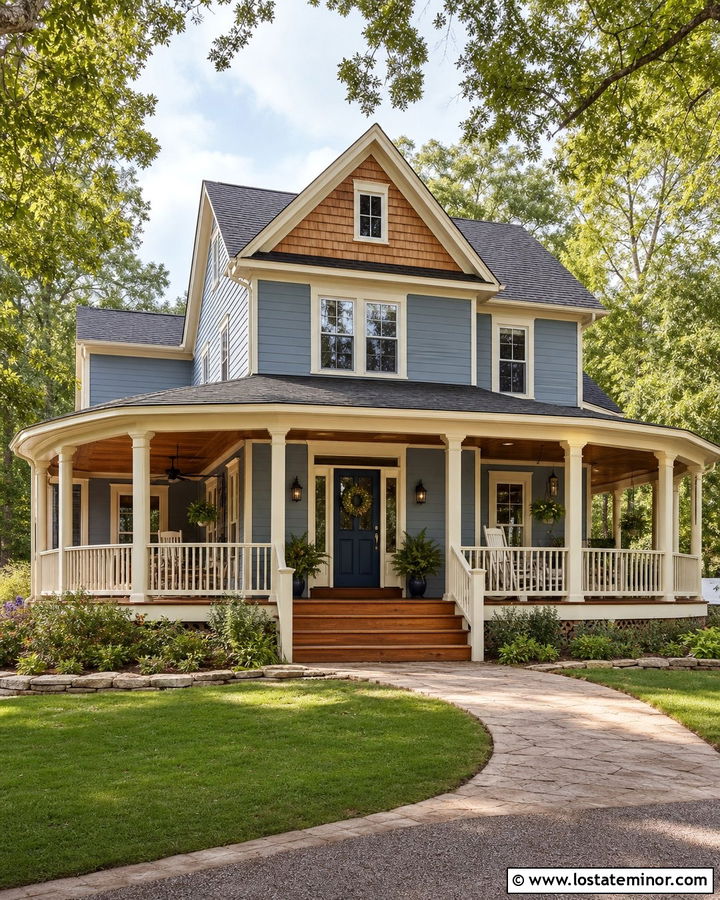
A wraparound porch creates a broad horizontal feature that can beautifully display dusty blue and cedar tones. Use dusty blue siding on the house, natural cedar shakes in the upper gables, and cream trim across the porch columns and railings. Stain the porch floor, steps, and ceiling in a medium cedar tone to connect the lower level with the gables. A charcoal roof keeps the full composition grounded and prevents the warm wood from becoming dominant. Add a deep blue or natural wood front door, depending on how much contrast you prefer. Comfortable black lighting, stone-edged planting beds, and a curved walkway enhance the welcoming effect. This scheme is ideal for farmhouse, Southern, and lake house architecture.
28. Dusty Blue House With Cedar Shake And Copper Accents
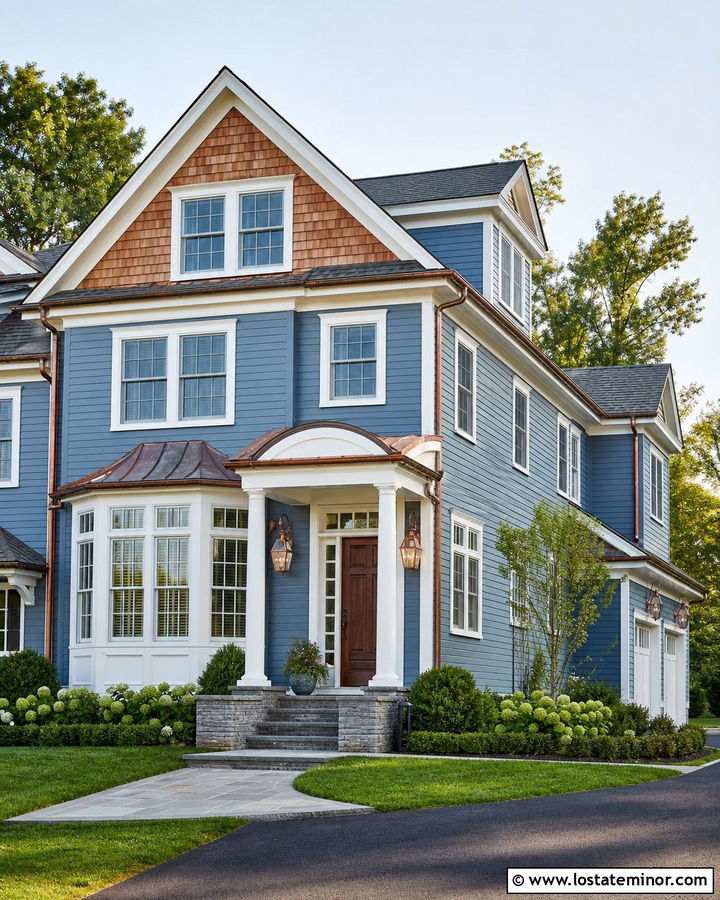
Copper accents introduce a rich finishing layer to dusty blue siding and cedar shake. Use dusty blue clapboard across the body, warm cedar shakes in the gables, and creamy white trim around windows and corners. Add copper gutters, porch flashing, or a small metal roof above a bay window. Fresh copper will appear brighter at first, while an aged finish feels softer and more established. Repeat warm metal on lanterns and door hardware, but avoid placing it on every exterior detail. A charcoal roof provides contrast and allows the copper to remain noticeable. Complete the look with a stained wood door, gray stone steps, and structured greenery. The full palette feels refined without relying on dramatic paint colors.
29. Dusty Blue House With Cedar Shake And Sage Door
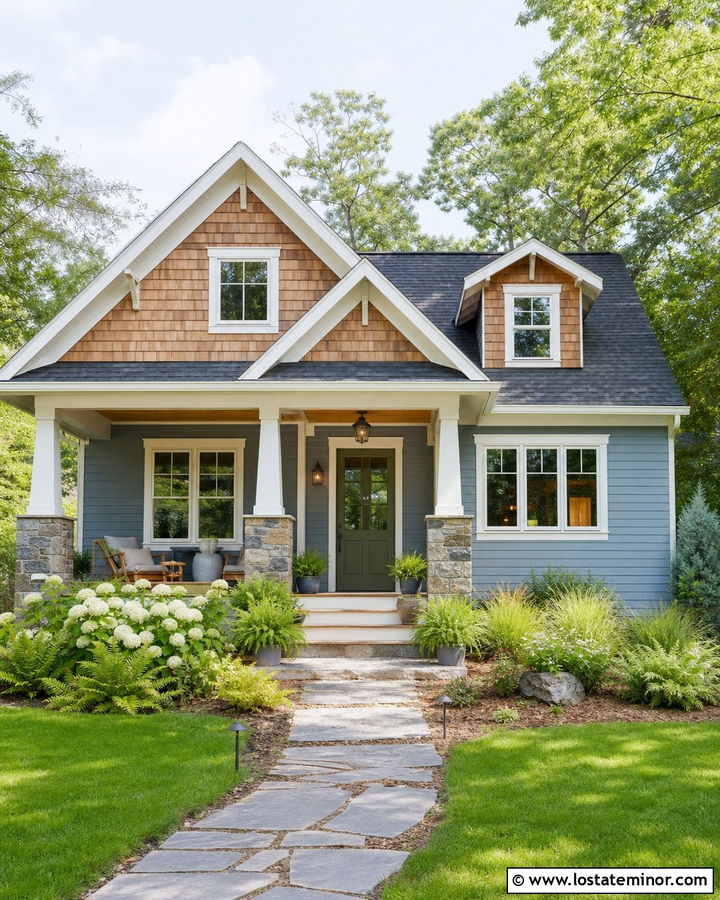
A sage green front door gives dusty blue siding and cedar shake a subtle nature-inspired accent. Choose a muted gray-green rather than a bright or yellow-green shade. Use dusty blue on the main walls, natural cedar shake in the gables, and warm white trim throughout the facade. The green door will connect visually with surrounding landscaping while remaining distinct against the blue. A charcoal roof and bronze lighting add depth, while a cedar porch ceiling repeats the gable material closer to eye level. This palette works especially well on cottages, bungalows, and Craftsman homes surrounded by mature plantings. Add ferns, soft grasses, hydrangeas, and natural stone paving to support the calm combination without making it overly themed.
30. Dusty Blue House With Cedar Shake And Yellow Door
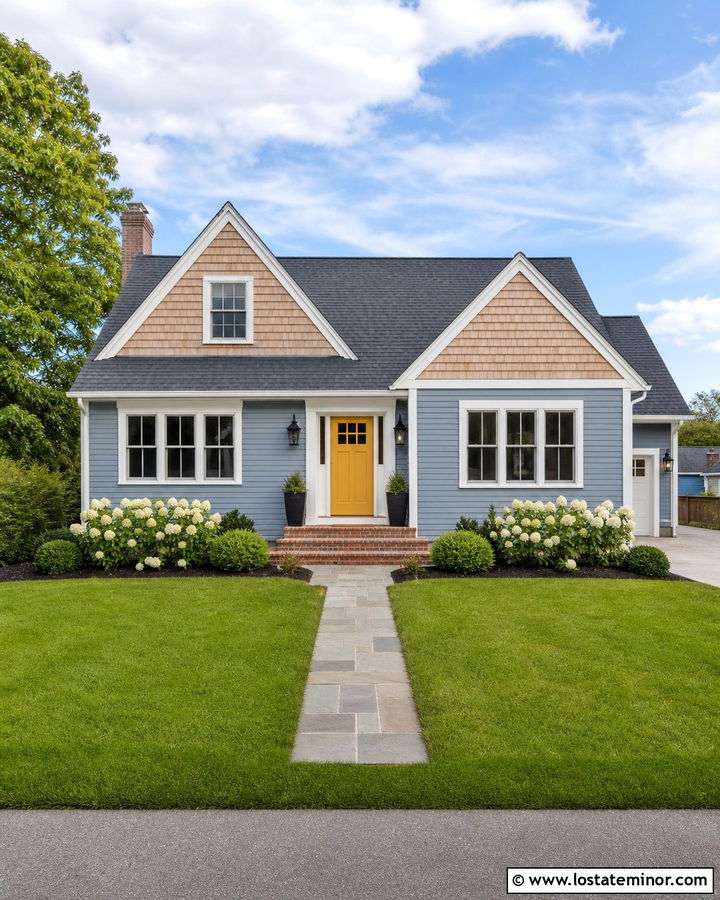
For a brighter final accent, pair dusty blue siding and cedar shake with a muted yellow front door. Choose ochre, goldenrod, or softened mustard instead of a sharp lemon yellow. The dusty blue body keeps the exterior calm, while cedar shake gables provide a warm transition toward the door color. Crisp white trim makes the full palette look clean and intentional. Add a charcoal roof, black lanterns, and simple dark planters to balance the cheerful entry. This combination is particularly successful on a compact cottage, Cape Cod, or updated ranch where the front door is clearly visible from the street. Keep the remaining features restrained so the yellow entrance becomes the natural focal point of the complete house.
Conclusion:
The best **30 Dusty Blue House Design With Cedar Shake Ideas** combine color, texture, and architectural details across the entire facade. Dusty blue provides a quiet foundation, while cedar shake adds warmth and dimension where the house needs emphasis. White or cream trim creates clarity. Charcoal roofing, natural doors, stone, brick, copper, and thoughtful landscaping complete the scheme. Before choosing materials, compare samples beside the existing roof, masonry, windows, and surrounding landscape. View them in direct sun and shade because exterior colors can shift throughout the day. Whether you prefer a coastal cottage, Craftsman, ranch, farmhouse, or contemporary home, a coordinated palette will make the finished exterior feel balanced, welcoming, and intentionally designed.

Related posts: