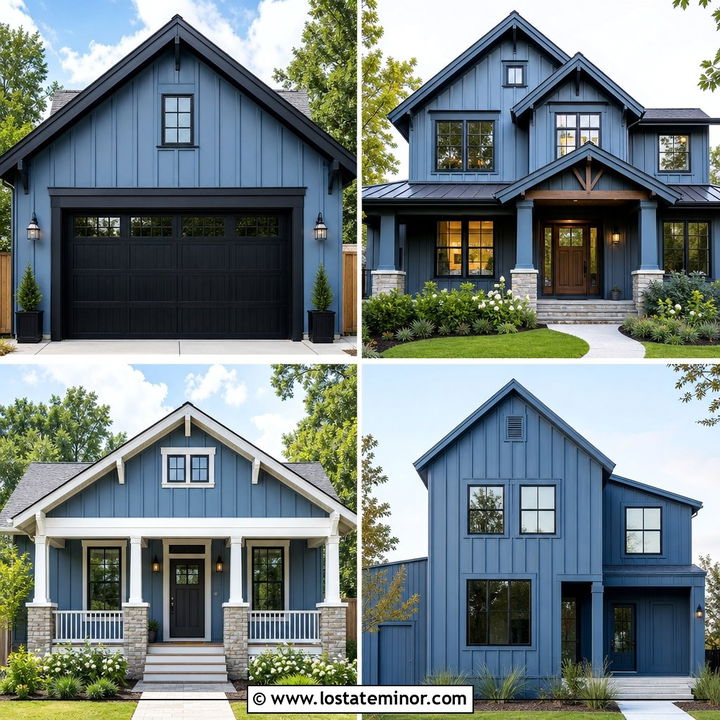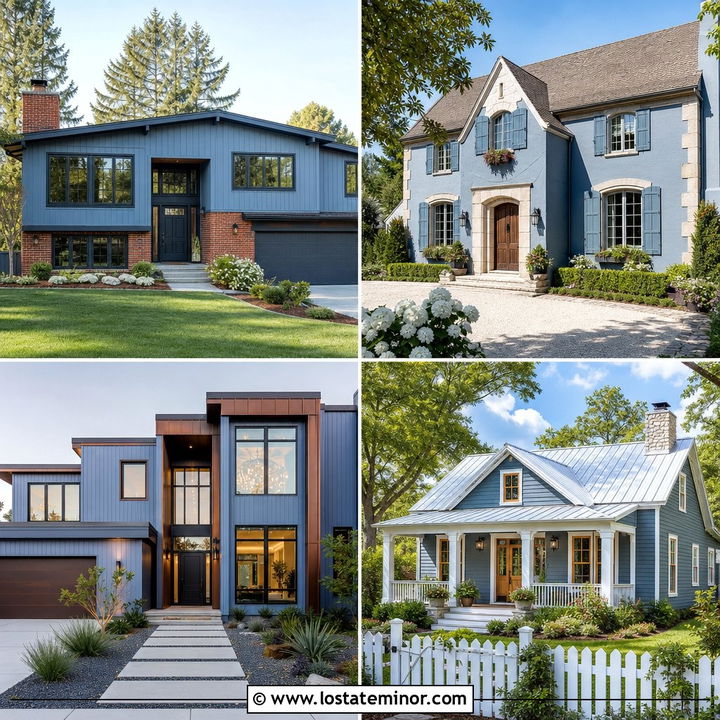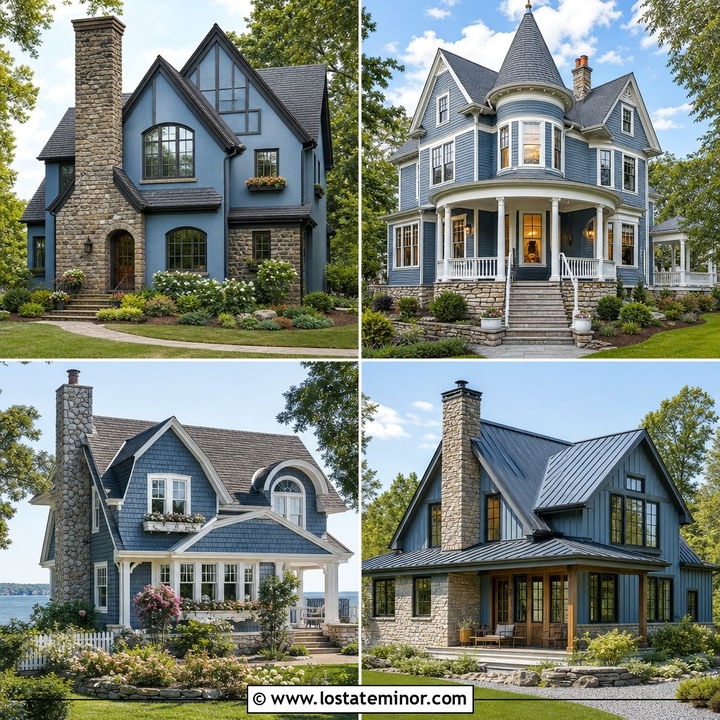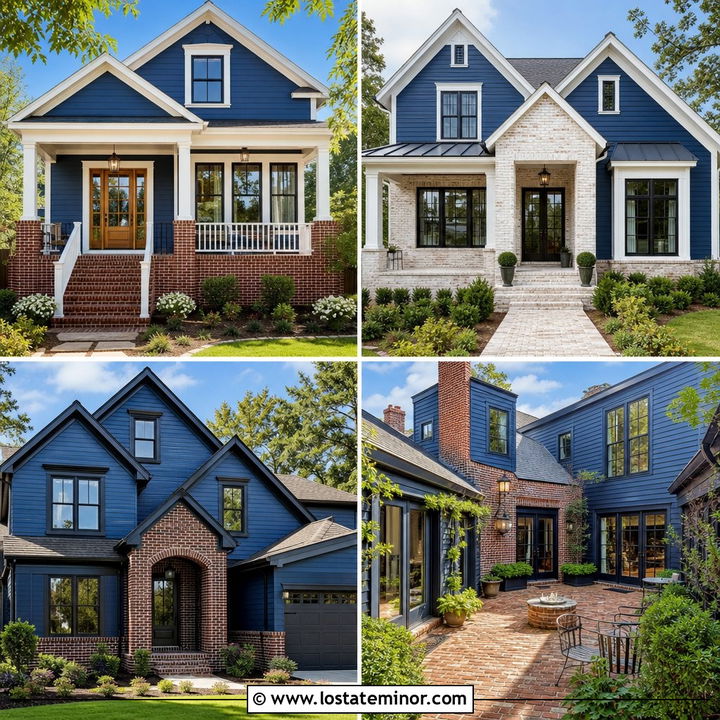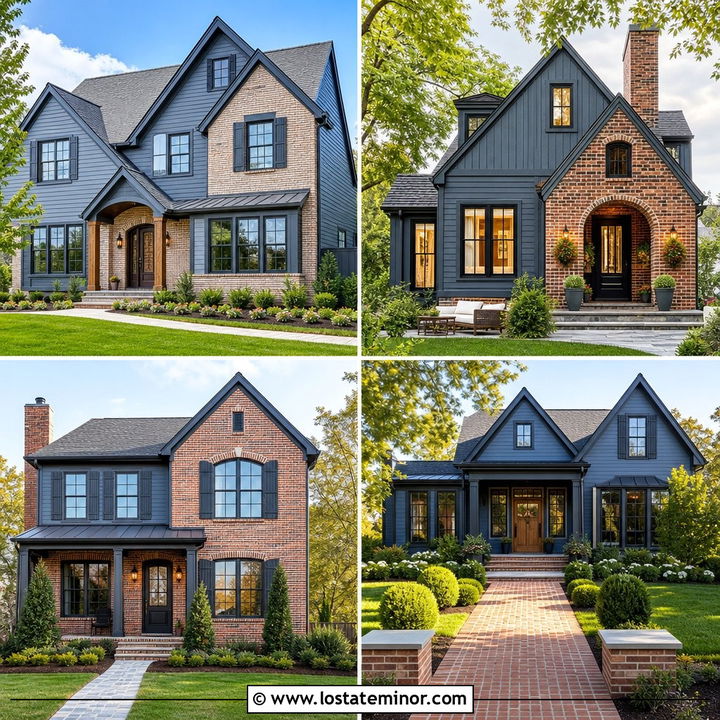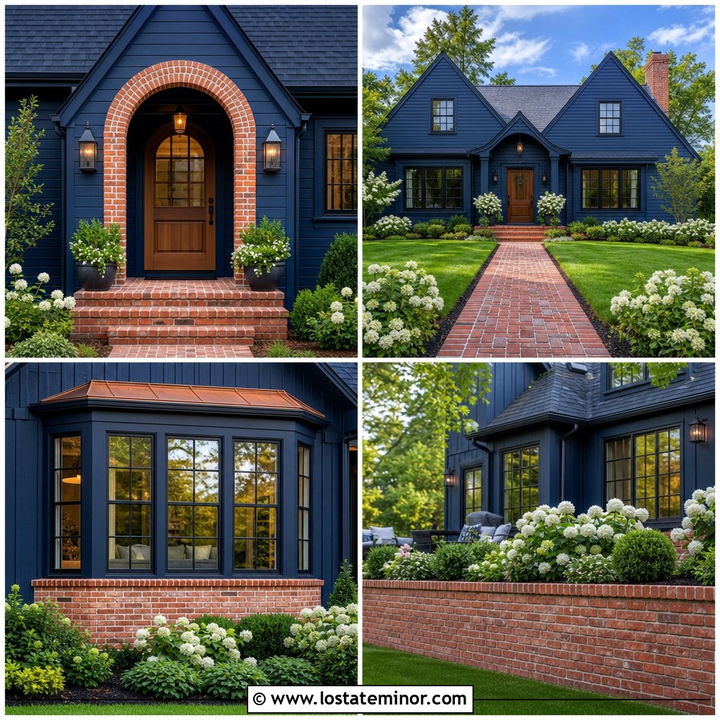
Dusty blue brings a calm, welcoming character to a home, while brick adds warmth, texture, and lasting architectural weight. The best 30 Dusty Blue House Design With Brick Accents Ideas treat siding, masonry, trim, roofing, doors, and landscaping as one connected palette. Some combinations preserve traditional red brick for contrast. Others use whitewashed, cream, gray, or charcoal brick for a softer and more updated appearance. Dusty blue also works across many architectural types, from low ranch homes to tall Victorians and clean-lined modern farmhouses. Before selecting paint, compare large samples beside the brick in morning and afternoon light. The complete exterior combinations below offer practical inspiration for planning 30 Dusty Blue House Design With Brick Accents Ideas.

1. Dusty Blue Ranch House With Red Brick
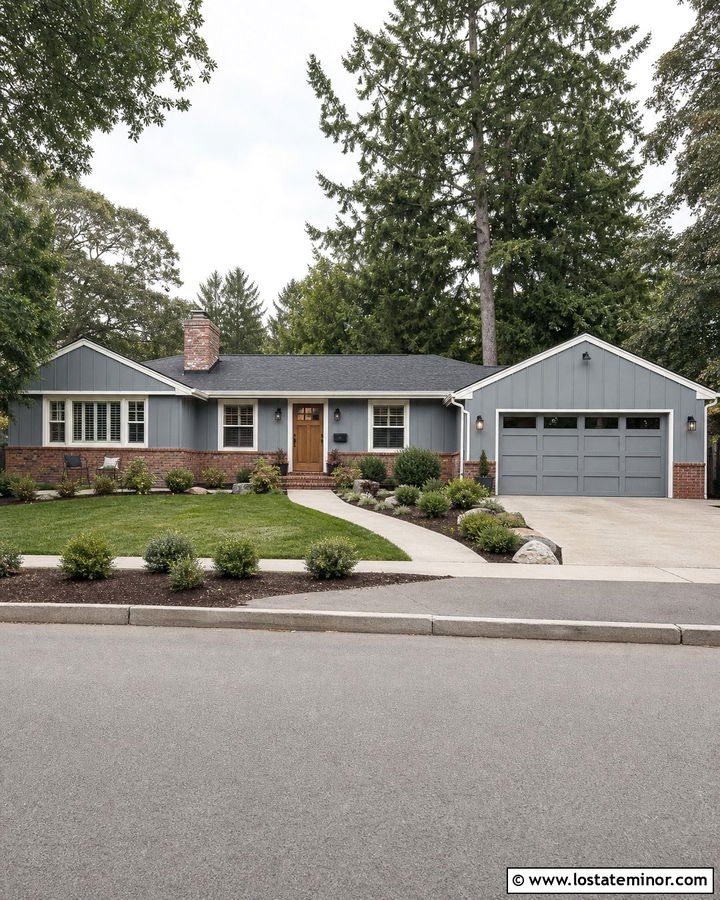
A one-story ranch becomes more inviting when dusty blue horizontal siding is paired with its original red brick foundation and chimney. Choose a blue with soft gray undertones so it balances the orange and brown variations commonly found in traditional brick. Warm white trim creates a clean transition without making the siding look overly cool. A medium-stained oak door reinforces the earthy palette, while charcoal roof shingles add definition above the low roofline. Keep the garage door dusty blue to prevent it from dominating the facade. Black lanterns and simple gutters provide controlled contrast. Finish the look with curved planting beds, evergreen shrubs, ornamental grasses, and a wide concrete walkway that complements the relaxed proportions of the ranch.
2. Dusty Blue Craftsman House With Brick Columns
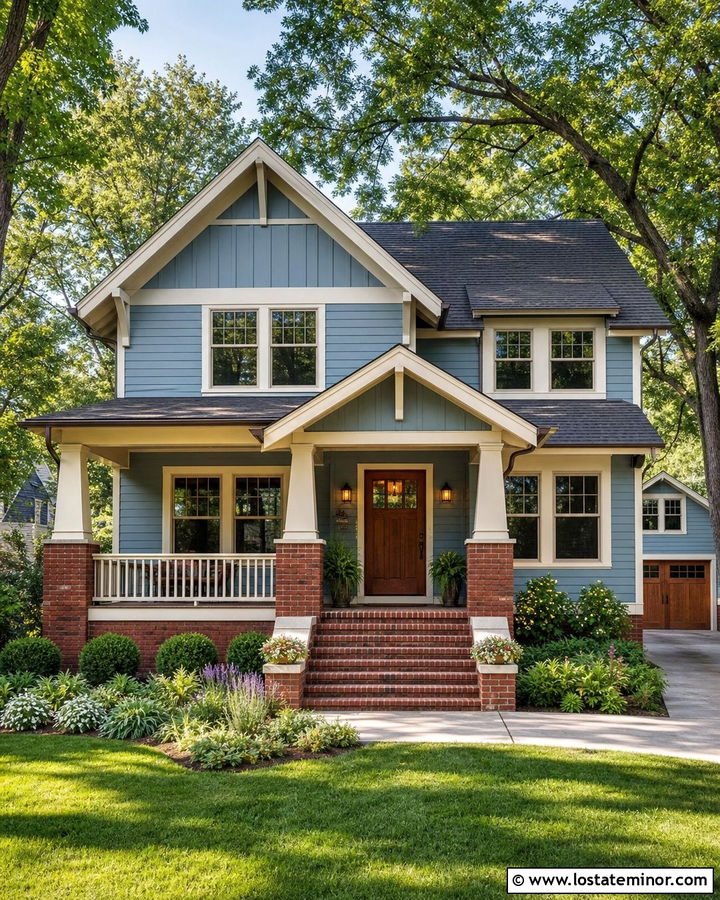
Brick porch columns give a dusty blue Craftsman house a strong, handcrafted foundation. Use muted blue lap siding across the main facade, then introduce matching board-and-batten panels within the front-facing gables. Medium red or brown brick bases can support tapered cream columns and connect the porch visually to the landscape. A stained fir door, exposed wood brackets, and a warm porch ceiling prevent the blue from appearing too formal. Select an architectural shingle roof that includes charcoal and subtle brown tones. Those mixed colors help unite the siding and masonry. Bronze lights, divided-light windows, and broad steps complete the Craftsman character. Low boxwoods and layered perennials soften the brick without hiding its attractive texture.
3. Dusty Blue Colonial House With Red Brick Chimney
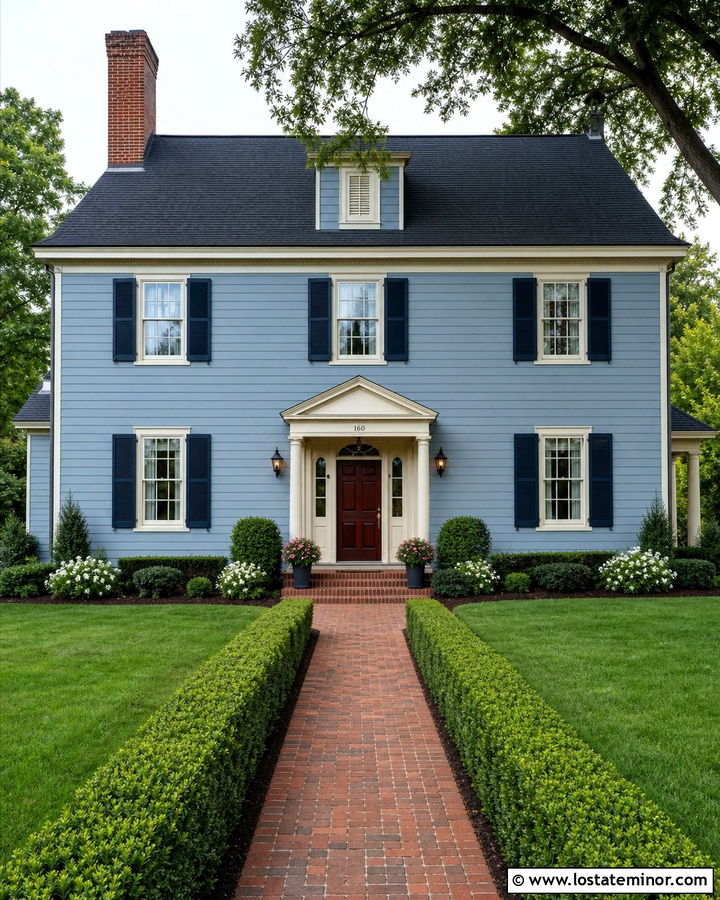
Symmetry makes a dusty blue Colonial exterior feel polished before decorative details are added. Cover the main facade in dusty blue clapboard siding and preserve a tall red brick chimney as a warm vertical accent. Crisp ivory trim around evenly spaced windows offers a gentler contrast than stark white. Deep navy shutters can frame the windows, while a burgundy or stained mahogany front door picks up the darkest tones in the brick. A dark charcoal roof keeps the palette grounded and historically appropriate. Use matching brass or aged bronze hardware at the centered entrance. Straight brick walkways, clipped hedges, and balanced foundation plantings support the orderly architecture. The result feels traditional, colorful, and carefully coordinated rather than overly patriotic.
4. Dusty Blue Farmhouse With Whitewashed Brick
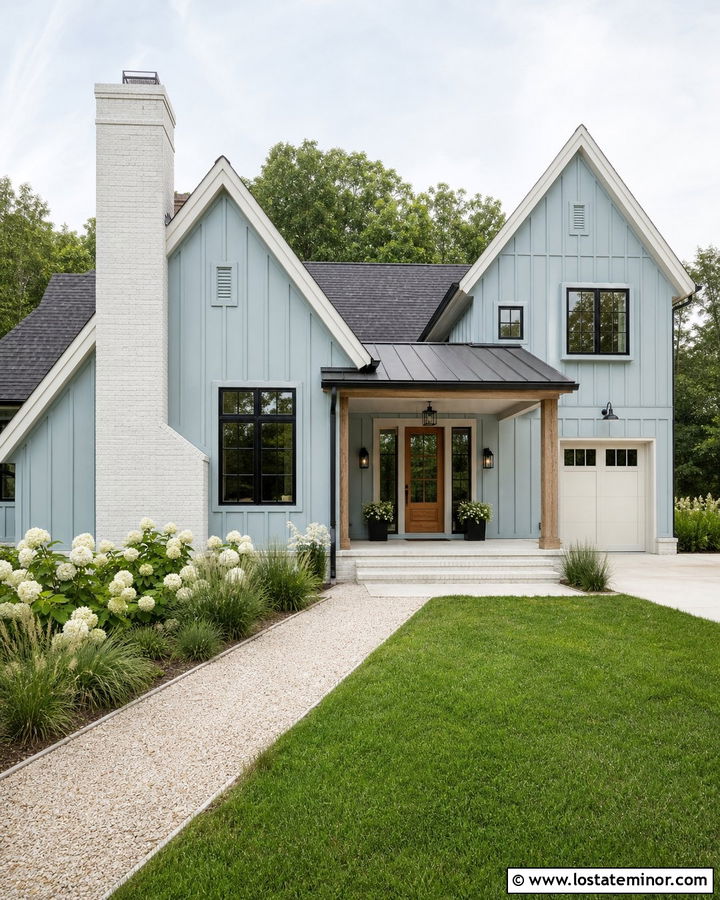
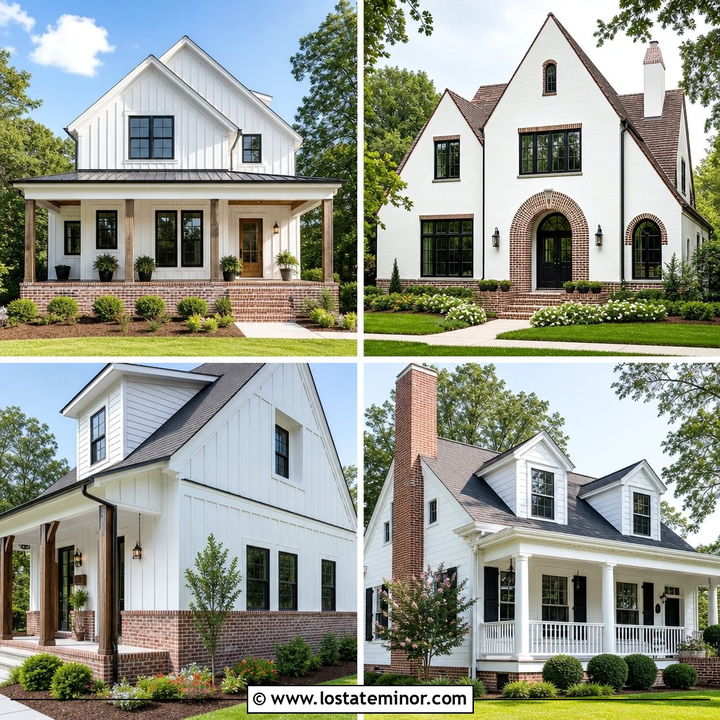
Soft whitewashed brick creates an easy bridge between dusty blue siding and the bright trim of a modern farmhouse. Apply dusty blue board-and-batten siding to the main walls and use lightly whitewashed brick around the porch foundation, chimney, or lower facade. The brick’s uneven color should remain visible to preserve texture and warmth. Choose creamy white for window frames, fascia, columns, and garage doors. A natural oak front door introduces an organic focal point, while matte black lights and gutters sharpen the relaxed palette. A charcoal standing-seam porch roof adds modern contrast without overwhelming the house. Wide steps, simple railings, hydrangeas, and a pale gravel walkway make the complete exterior feel fresh, comfortable, and suited to a suburban or rural setting.
5. Dusty Blue Cape Cod House With Brick Steps
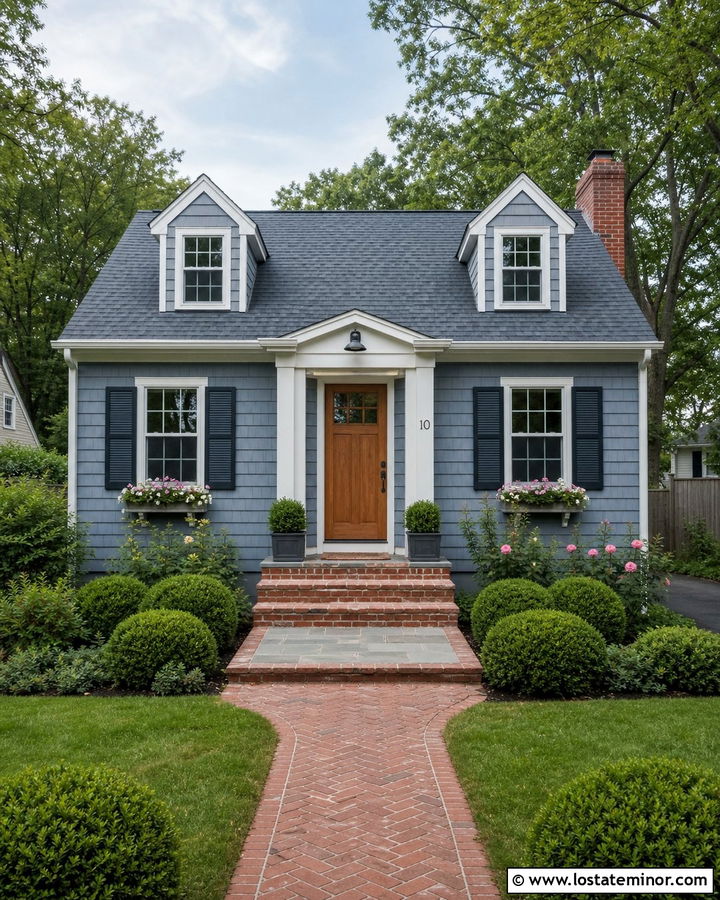
A compact Cape Cod gains depth when muted dusty blue shingles meet weathered red brick steps. Cover the symmetrical facade and dormers in blue-gray cedar shingles or shingle-look siding. Use soft white around the windows, roofline, and entry to emphasize the home’s simple geometry. The front steps should feature reclaimed-looking brick with a bluestone landing for a practical transition between warm and cool materials. Deep navy shutters add definition, while a cheerful natural wood door keeps the entry approachable. Choose dark gray roof shingles that echo the blue undertones without matching the siding exactly. Boxwoods, roses, and a narrow brick walkway reinforce the cottage character. This restrained scheme makes a smaller home look detailed without appearing crowded.
6. Dusty Blue Bungalow With Dark Brick Porch
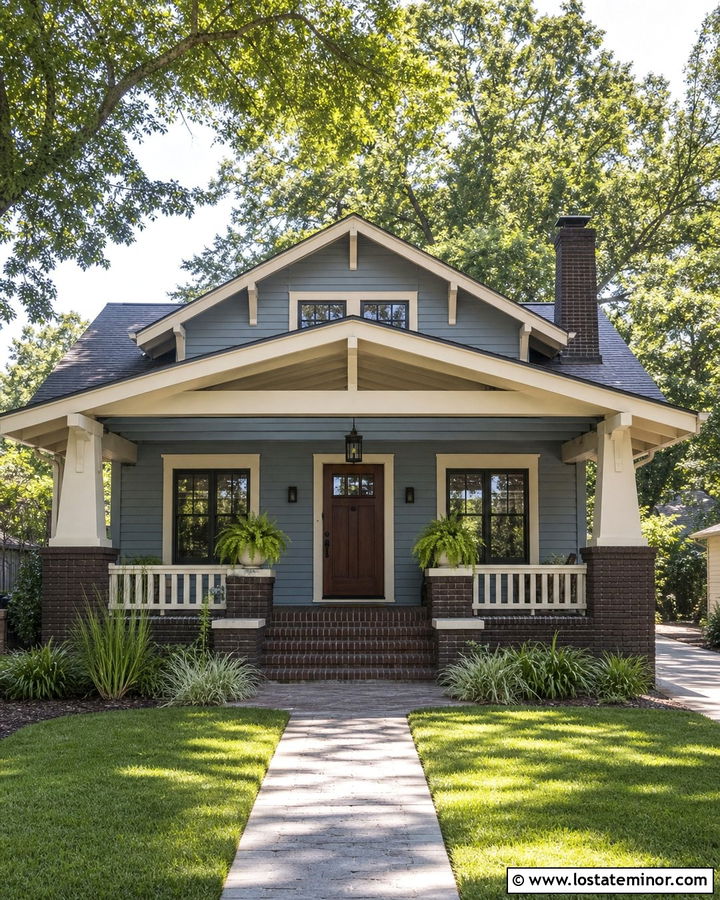
Imagine a shaded front porch framed by rich brown brick and quiet dusty blue siding. On a bungalow, that combination creates depth while preserving a cozy, grounded appearance. Use horizontal blue lap siding above dark brown brick porch piers and a matching brick foundation. Cream trim, tapered columns, and exposed rafter tails brighten the deep porch area. A Craftsman-style door in warm walnut adds another natural layer without competing with the brick. Select weathered charcoal roofing and dark bronze lighting for subtle contrast. Brick porch steps can extend into a straight walkway bordered by ferns and low grasses. Keep the planting design informal but controlled. The complete palette highlights the bungalow’s broad roof, handcrafted details, and welcoming relationship with the front yard.
7. Dusty Blue Split-Level House With Brick Garage
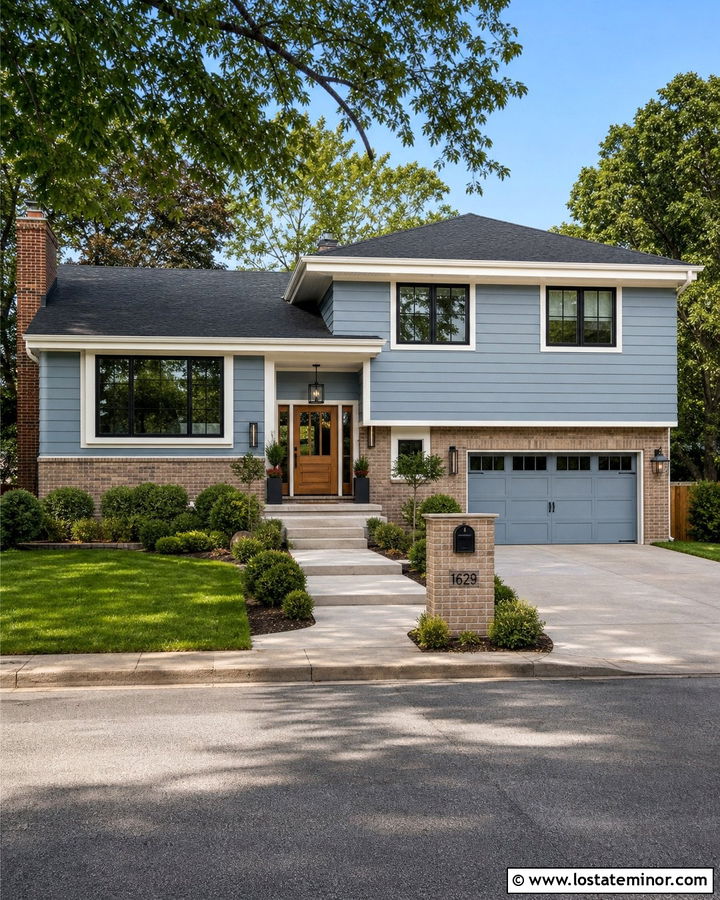
A split-level facade can appear disconnected when siding, brick, and garage doors compete for attention. Dusty blue siding helps unify the upper story while warm taupe brick grounds the garage level. Paint the garage door the same dusty blue as the siding so it blends into the architecture rather than becoming the largest visual feature. Use warm white trim and black window frames to add structure. A medium oak front door can mark the entrance, especially when it is partly recessed. Choose charcoal roofing with minimal color variation for a tidy finish. Repeat the brick in new steps or a low mailbox column. Layered shrubs, a widened walkway, and contemporary house numbers help the remodeled exterior look deliberate, balanced, and current.
8. Dusty Blue Tudor House With Mixed Brick
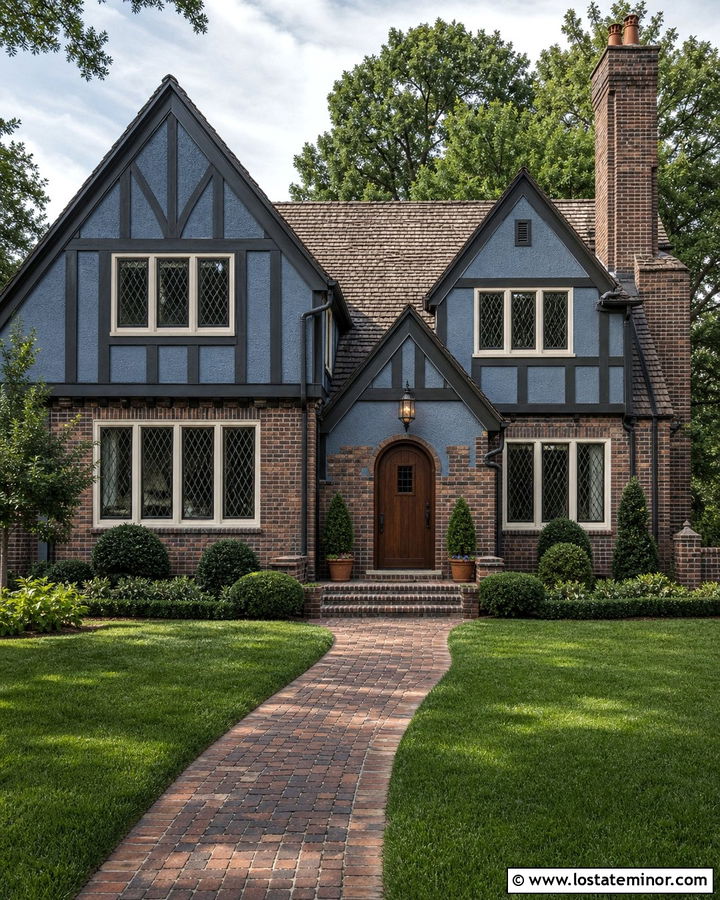
Dusty blue can refresh a Tudor home without erasing its traditional character. Use the color on stucco panels or siding between dark timber details, then preserve mixed red and brown brick around the lower walls, chimney, and arched entrance. A smoky blue with noticeable gray undertones works best because it feels established rather than playful. Paint the timbering deep charcoal instead of harsh black to create a softer outline. Cream window trim and a dark walnut arched door bring warmth to the front elevation. A roof with deep brown and charcoal shingles complements the variation in the masonry. Leaded windows, copper-toned lights, clipped shrubs, and a curved brick path complete a layered exterior that looks historically inspired but comfortably updated.
9. Dusty Blue Prairie House With Low Brick Walls
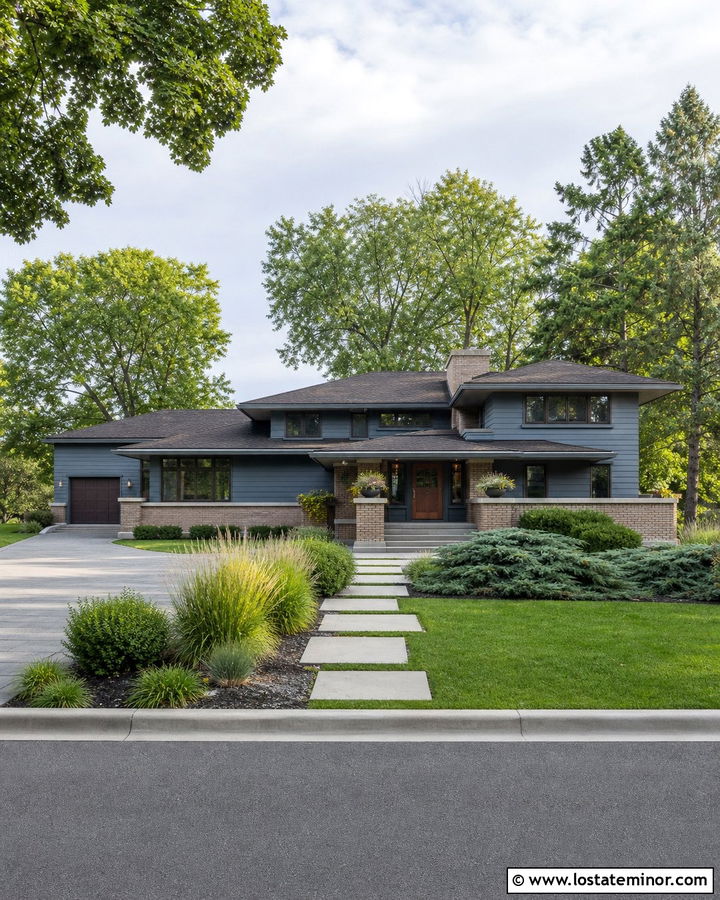
Strong horizontal lines define a Prairie house, so the color scheme should reinforce its low, grounded shape. Apply dusty blue stucco or lap siding to the upper walls and use long bands of tan brick beneath the windows. The brick can continue into low porch walls and planter boxes, visually extending the home across the lot. Choose warm cream for the soffits and restrained dark bronze for window frames, gutters, and lights. A wide walnut door fits naturally beneath the deep roof overhang. Medium charcoal-brown roof shingles link the cool siding to the warm masonry. Keep landscaping broad and architectural with ornamental grasses, spreading evergreens, and rectangular stepping stones. This complete scheme feels calm, substantial, and closely connected to the surrounding ground plane.
10. Dusty Blue Cottage With Painted Brick
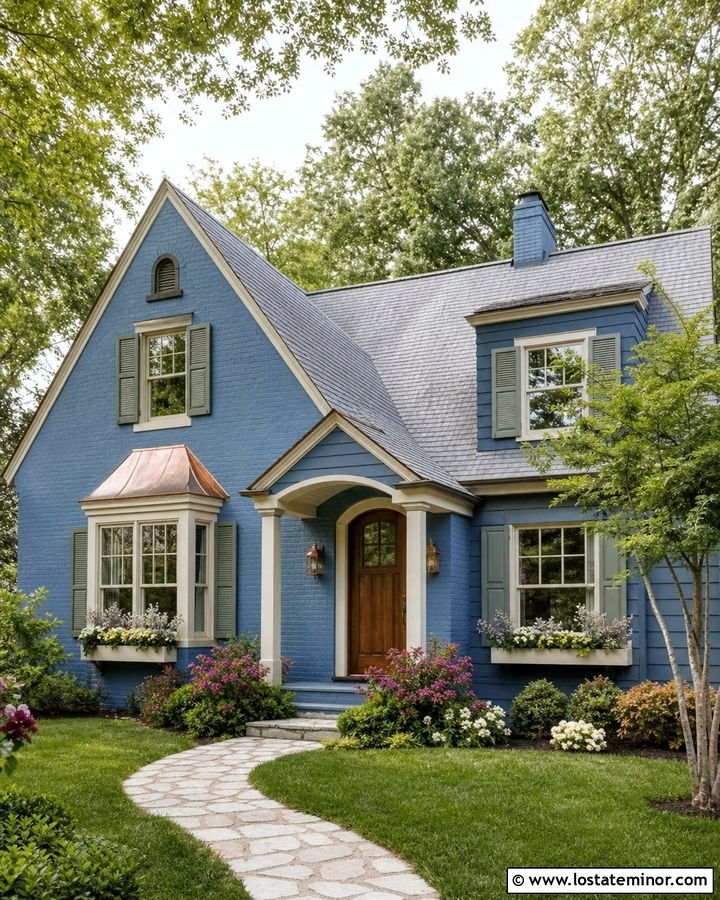
Painting existing brick dusty blue can give a small cottage a more unified appearance while allowing masonry texture to remain visible. Cover the brick facade and any attached siding in the same muted blue, using a masonry-safe coating where appropriate. Cream trim around the windows, eaves, and porch offers warmth and keeps the compact home from looking flat. Add sage green shutters for gentle contrast, then make a stained oak front door the central focal point. A medium gray roof and copper-toned porch lights complement the quiet palette. Keep decorative features simple because the painted brick already supplies plenty of texture. A curved stone path, flowering shrubs, window boxes, and a small covered entry complete the cozy exterior without making it feel overly themed.
11. Dusty Blue Two-Story House With Brick Skirt
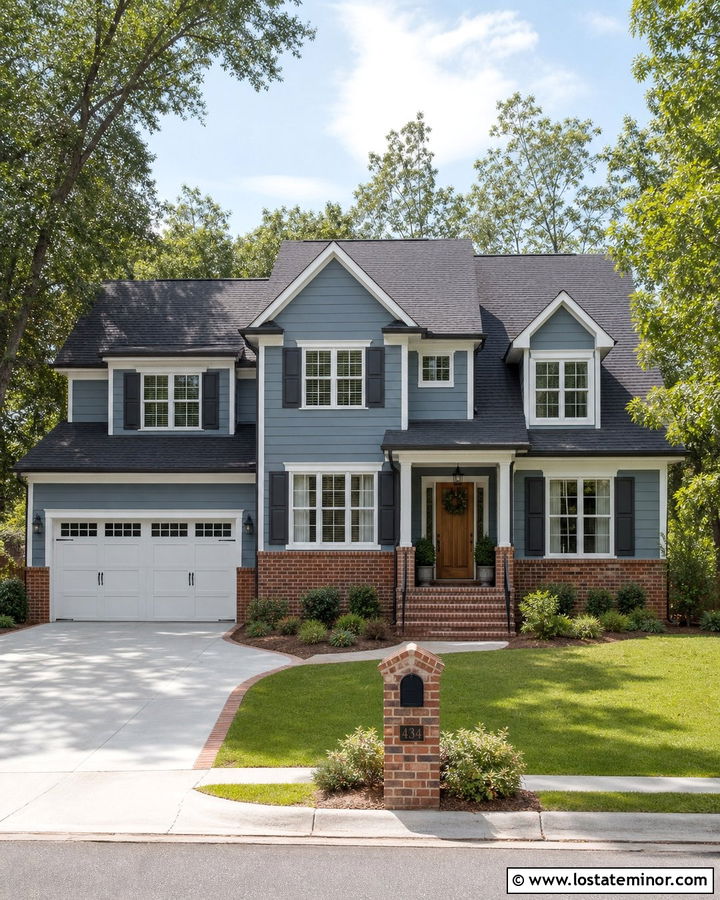
A brick skirt can make a tall two-story house feel better connected to its lot. Use dusty blue lap siding across both floors and carry warm red-brown brick around the lower three feet of the facade. The brick line should align with porch floors or lower window sills whenever possible for a clean transition. Soft white trim brightens the windows and corners, while charcoal shutters give the upper story needed definition. Choose a medium wood door to pull warm tones from the masonry. A black or dark gray roof caps the composition without adding another undertone. Repeat the brick on porch steps and mailbox details. Layered foundation shrubs should remain below the brick line so the material stays visible and the full exterior feels balanced.
12. Dusty Blue House With Cream Brick
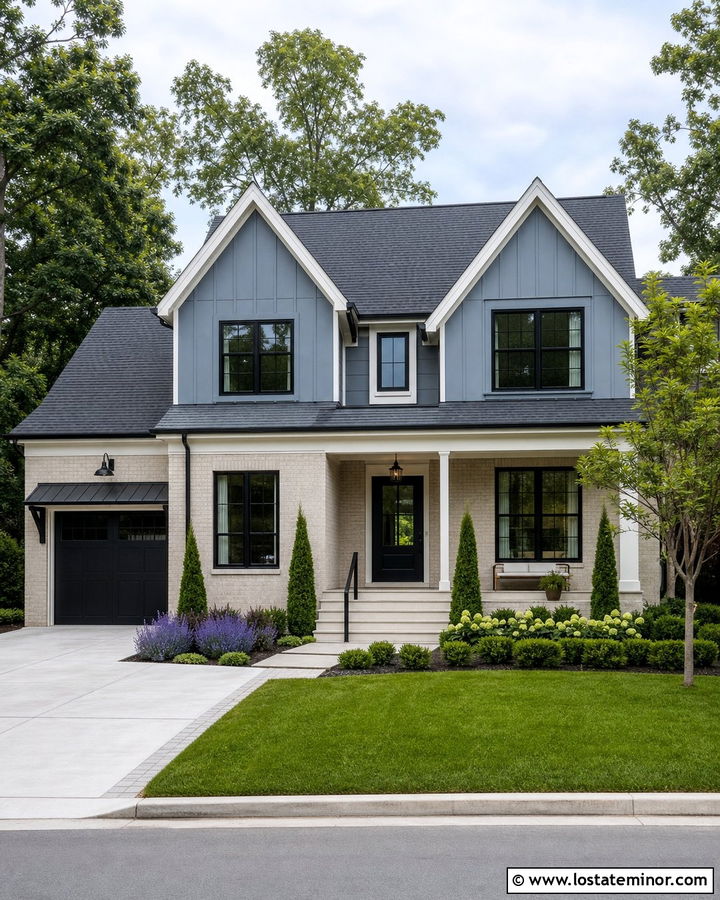
Cream brick and dusty blue siding create a light exterior that still has visible depth. This pairing works especially well on a transitional home with mixed siding, broad windows, and a simple gabled roof. Place creamy buff brick across the lower facade and around the entrance, then use dusty blue board-and-batten siding on the upper gables. Warm white trim maintains a soft transition between both finishes. Introduce black window frames and a black front door for a clean focal point, but limit dark accents to avoid overpowering the pale masonry. A charcoal roof adds necessary weight. Pale concrete steps, structured evergreens, and lavender-toned flowers complement the restrained colors. The finished home looks bright in direct sun without becoming washed out or visually plain.
13. Dusty Blue House With Gray Brick
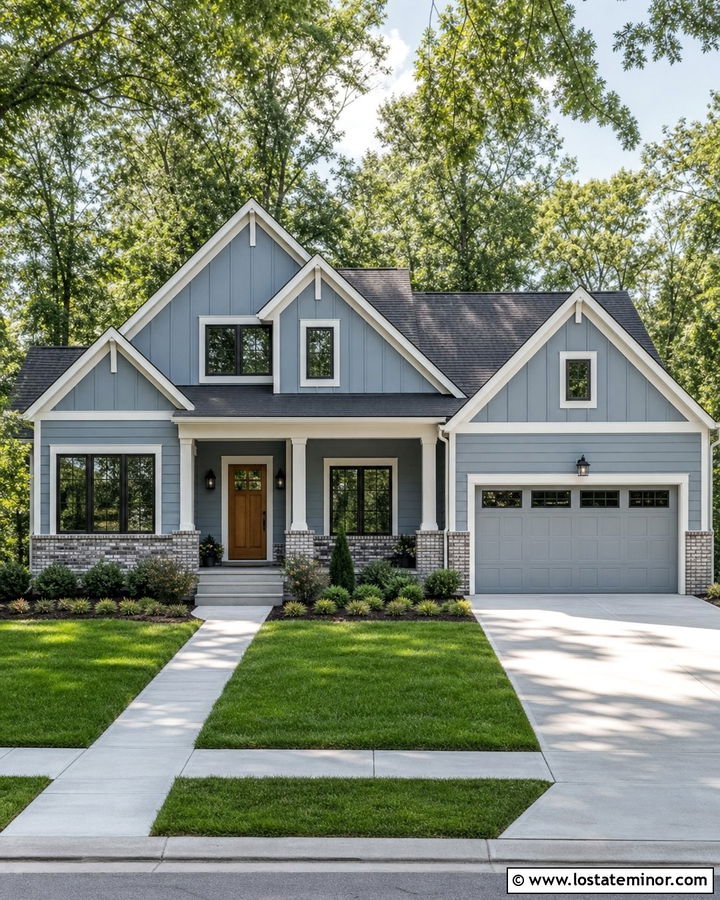
Gray brick creates a cooler, more tailored foundation for dusty blue siding. Select masonry containing a mix of light gray, charcoal, and occasional taupe so the exterior does not look monochromatic. Dusty blue horizontal siding can cover the primary walls, while vertical siding in the gables adds subtle texture. Use off-white trim to define the roofline and soften the cool palette. Black windows, gutters, and porch lights provide a crisp outline. A warm cedar door is especially useful because it introduces one natural color without disrupting the calm scheme. Choose a charcoal shingle roof that relates to the darkest bricks. A concrete walkway, clipped grasses, and layered green shrubs finish this adaptable combination, which suits both traditional and contemporary suburban architecture.
14. Dusty Blue House With Charcoal Brick
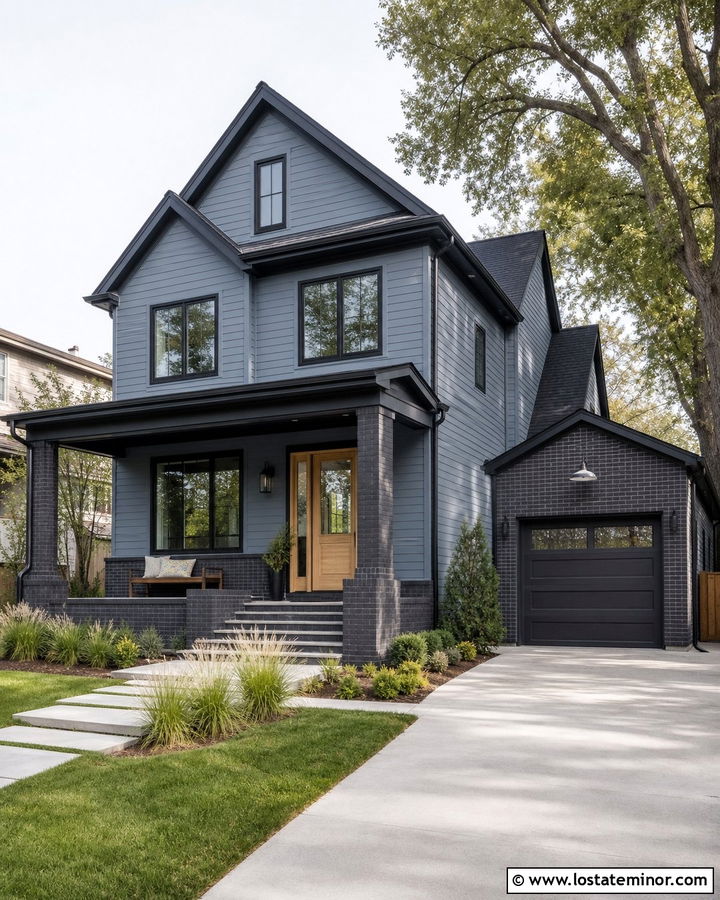
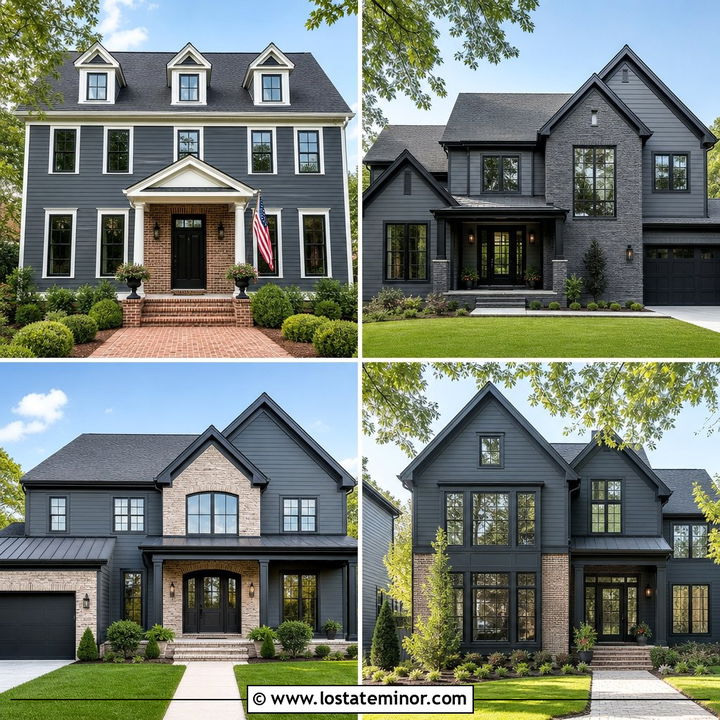
For a bolder exterior, pair medium dusty blue siding with charcoal brick across the foundation, porch, and garage wing. The dark masonry gives the soft blue more presence and can visually anchor a wide house. Use pale gray or warm white trim in narrow amounts around the windows and fascia. Black-framed windows will blend into the charcoal brick, creating a streamlined appearance. A natural white oak front door keeps the entrance from disappearing within the deeper colors. Continue the charcoal tone on the roof and gutters for a connected upper edge. Because the architecture already has strong contrast, choose restrained landscaping with green shrubs, ornamental grasses, and light concrete pavers. This scheme feels substantial and modern while remaining more approachable than a black-and-white exterior.
15. Dusty Blue House With Brown Brick
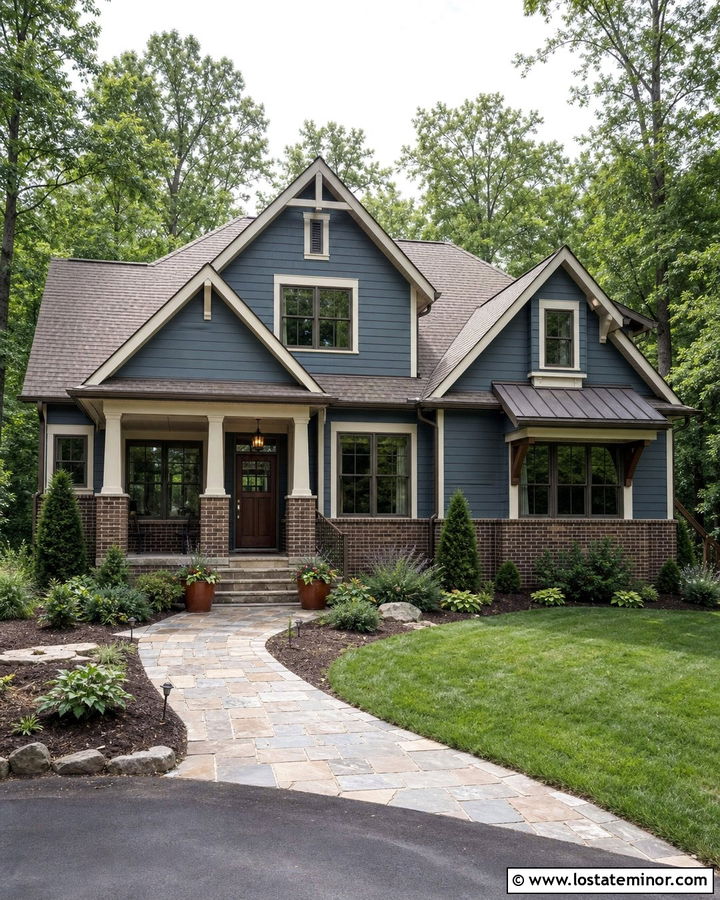
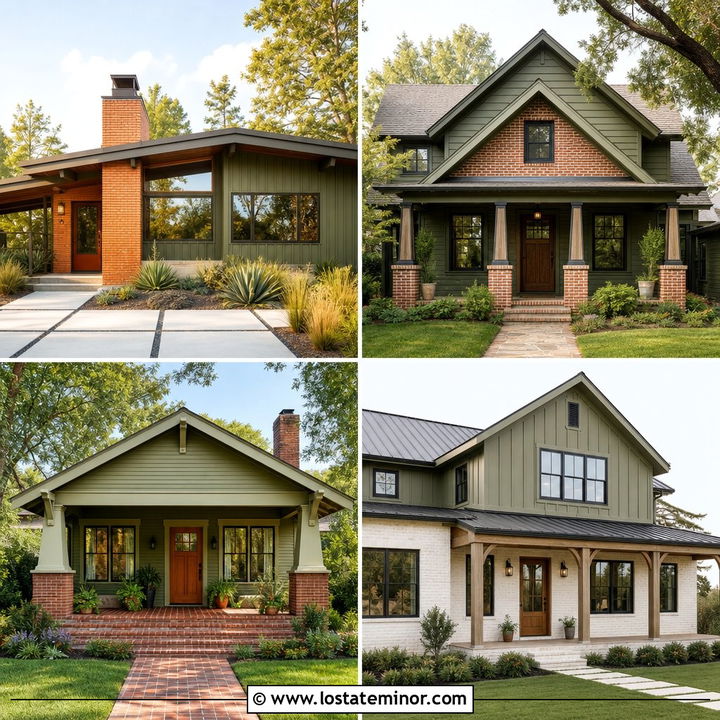
Brown brick brings out the warmer side of a dusty blue exterior. Look for masonry containing chocolate, tan, and muted red tones rather than strong orange coloration. Use the brick on the lower walls, porch piers, and chimney, with dusty blue siding above it. Cream trim helps the cool and warm finishes meet naturally. A walnut door, bronze gutters, and dark brown window frames deepen the earthy character. Choose weathered wood roof shingles containing both gray and brown granules to connect every part of the palette. Avoid adding too many bright colors around the facade. Instead, use deep green evergreens, rust-colored planters, and a simple stone walkway. The complete combination is relaxed, traditional, and especially flattering in wooded or established suburban neighborhoods.
16. Dusty Blue House With Painted White Brick
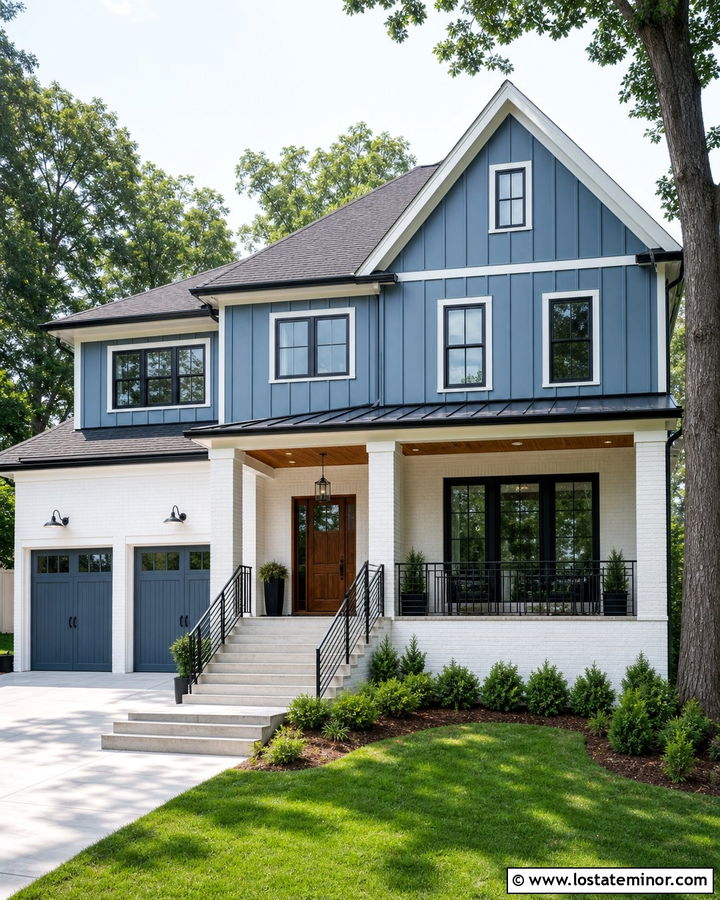
A dusty blue upper story over painted white brick creates a clean two-tone facade with clear architectural separation. Use soft white rather than a brilliant blue-white on the masonry, since a warmer shade sits more comfortably beside muted siding. Dusty blue board-and-batten panels can highlight the gables and upper floor, while matching blue garage doors connect the levels. Add black window frames and a charcoal roof for structure. A cedar front door and matching porch ceiling prevent the palette from feeling too cold. Preserve the brick texture by avoiding excessively thick or glossy finishes. Broad concrete steps, black railings, and neat evergreen beds complete the updated look. This combination is particularly effective when older brick has uneven repairs or unattractive color variation.
17. Dusty Blue Victorian House With Brick Foundation
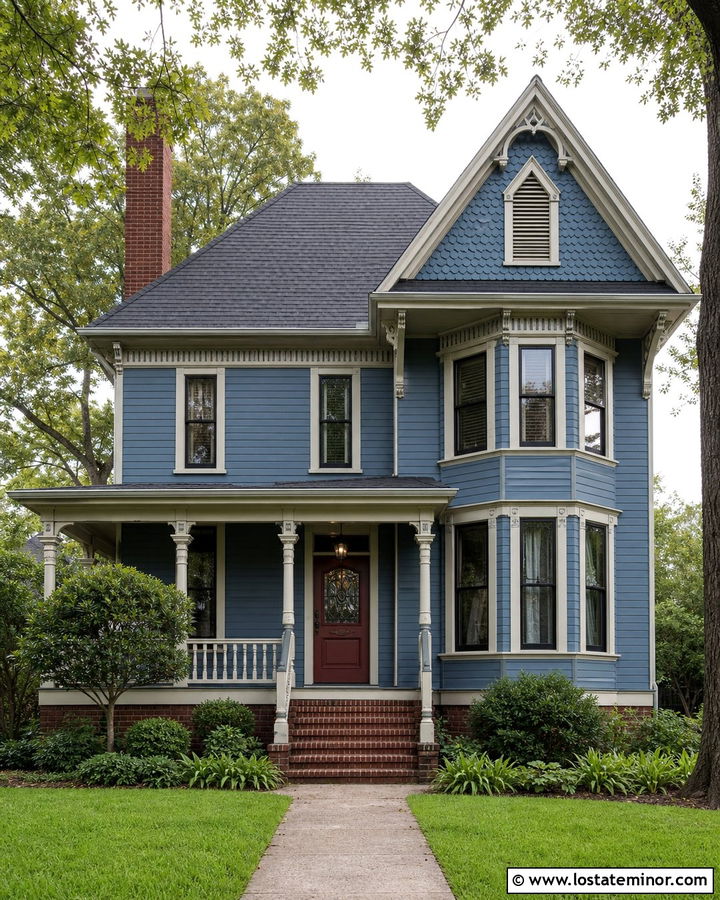
A Victorian exterior can support more detail than most homes, but the colors still need a clear hierarchy. Make dusty blue the dominant siding color and reserve muted cream for brackets, window trim, porch posts, and decorative panels. Use deep burgundy sparingly on the front door or small gable details. A traditional red brick foundation adds warmth and keeps the ornate facade grounded. If the home has a brick chimney, leave it natural to repeat that base color higher on the house. Dark gray roofing quiets the busier trim work. Brick steps, turned porch rails, and period-inspired lights strengthen the architectural character. Surround the home with layered greenery and a simple walkway so the elaborate facade remains the focus rather than competing with excessive yard decoration.
18. Dusty Blue Modern Farmhouse With Brick Porch
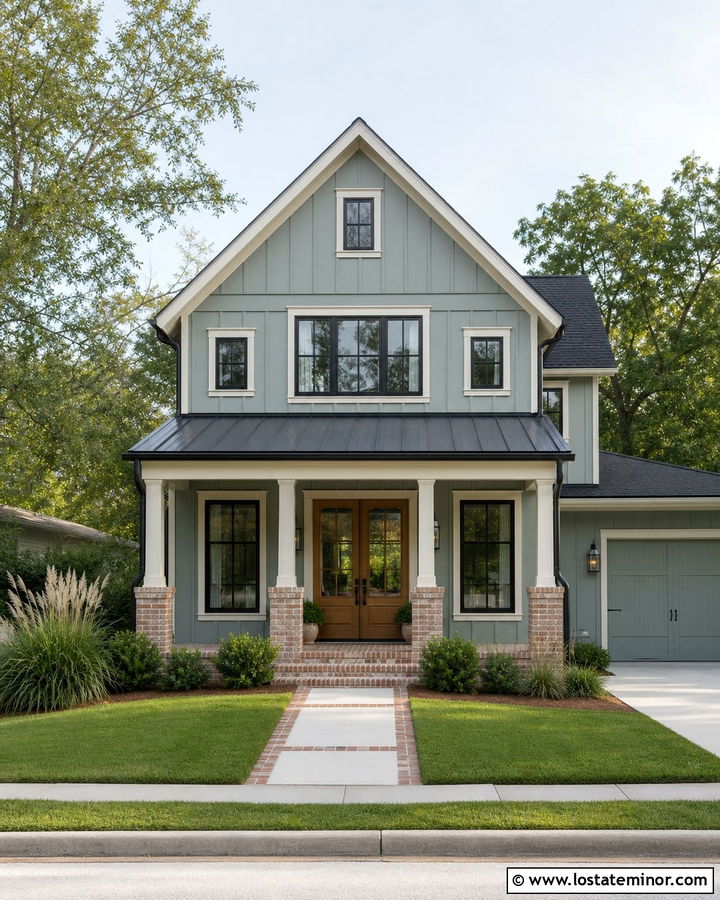
A modern farmhouse feels warmer when brick is concentrated around the porch instead of spread randomly across the facade. Use dusty blue vertical board-and-batten siding on the main house and cover the porch floor, steps, and column bases in softly weathered red brick. Creamy white trim keeps the blue muted, while black windows and a charcoal metal porch roof provide a modern outline. Select a double front door in natural oak to create a welcoming center beneath the covered entry. Keep garage doors dusty blue so they recede into the wall. Simple black sconces, square columns, and a straight concrete-and-brick walkway complete the composition. The masonry introduces age and texture, balancing the farmhouse’s newer materials and clean, simplified details.
19. Dusty Blue Mid-Century House With Brick Wall
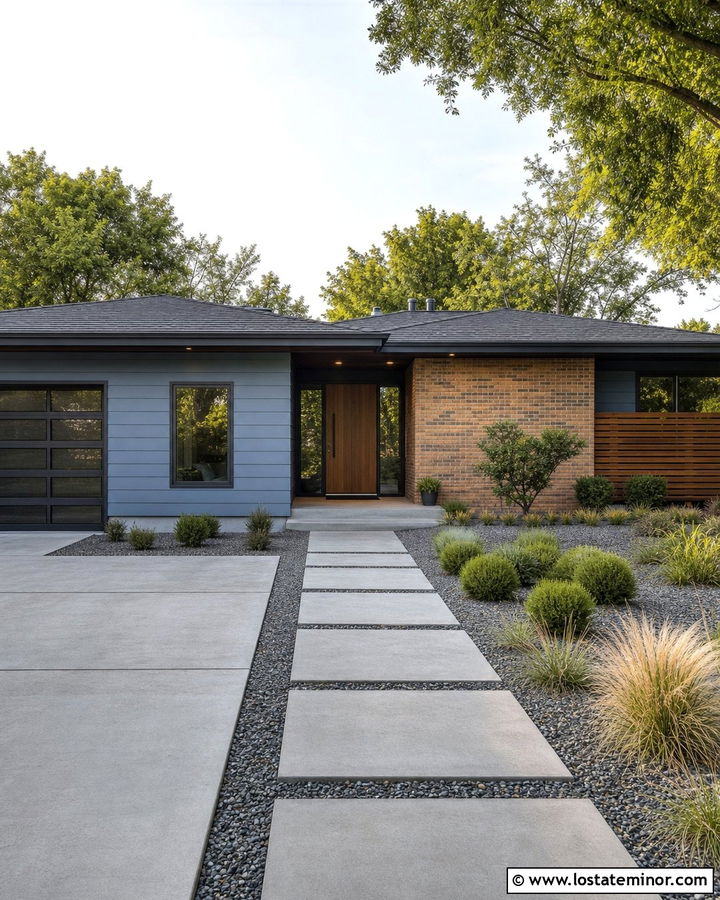
On a mid-century home, one substantial brick wall can act as the visual anchor for an otherwise streamlined dusty blue exterior. Use the brick around the entrance or living-room volume, selecting warm tan or deep red masonry with minimal color variation. Cover the remaining walls in horizontal dusty blue siding. Dark bronze window frames, a flat or low-slope charcoal roof, and a walnut slab door support the clean architecture. Keep trim narrow and close in color to the siding rather than outlining every edge in white. A breeze-block screen or simple wood slats can add privacy without introducing unnecessary decoration. Finish with rectangular concrete pavers, gravel beds, sculptural shrubs, and ornamental grasses. This scheme respects the home’s original simplicity while adding approachable color.
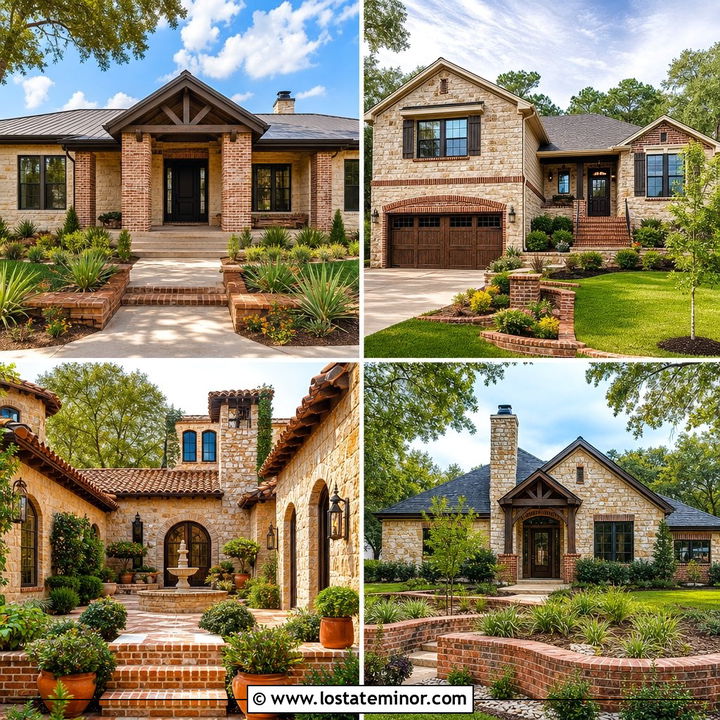
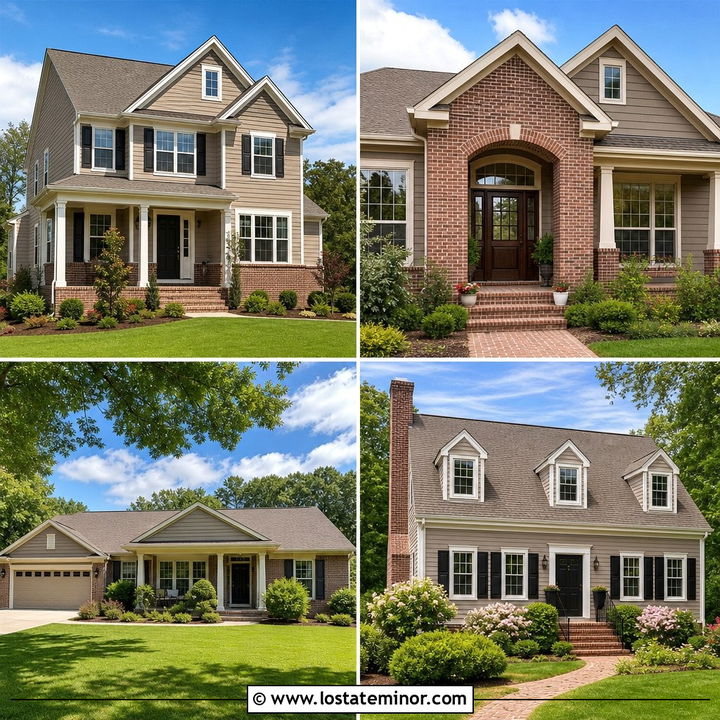
20. Dusty Blue Georgian House With Brick Entry
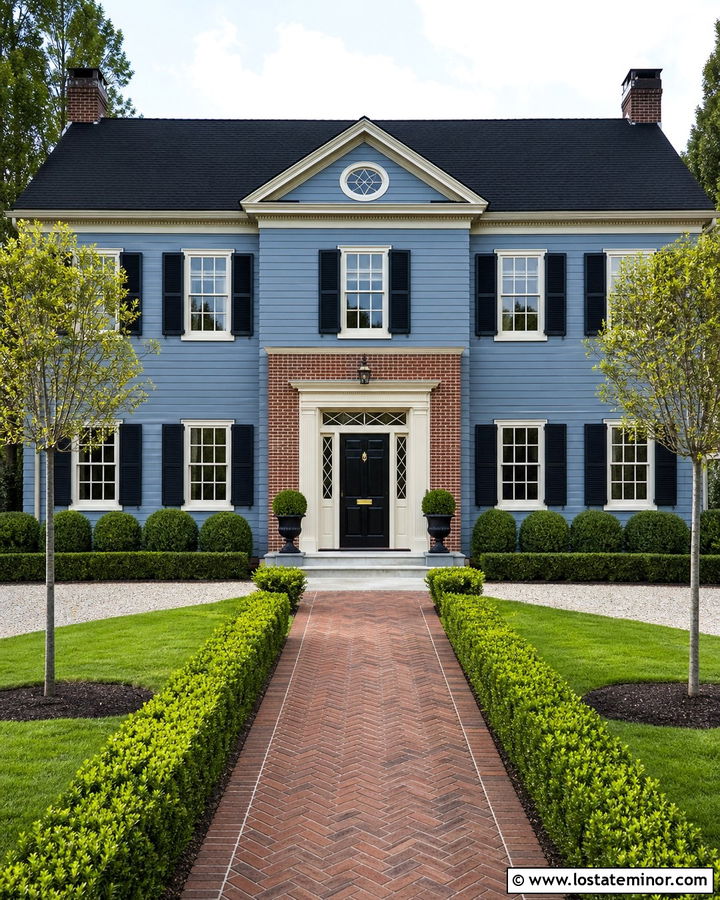
A formal Georgian house can use dusty blue siding and brick without losing its disciplined symmetry. Apply dusty blue clapboard across the main facade, then frame the centered entrance with a red brick surround or shallow projecting portico. Ivory window trim and dark navy shutters reinforce the orderly window pattern. Choose a glossy black front door with aged brass hardware to give the entry a precise focal point. A deep charcoal roof and matching gutters keep attention on the facade. Repeat the brick in a straight herringbone walkway leading from the sidewalk to the front steps. Paired planters, clipped hedges, and evenly spaced trees suit the architecture. The balanced materials and restrained colors create traditional curb appeal with a softer personality than standard white siding.
21. Dusty Blue Saltbox House With Brick Chimney
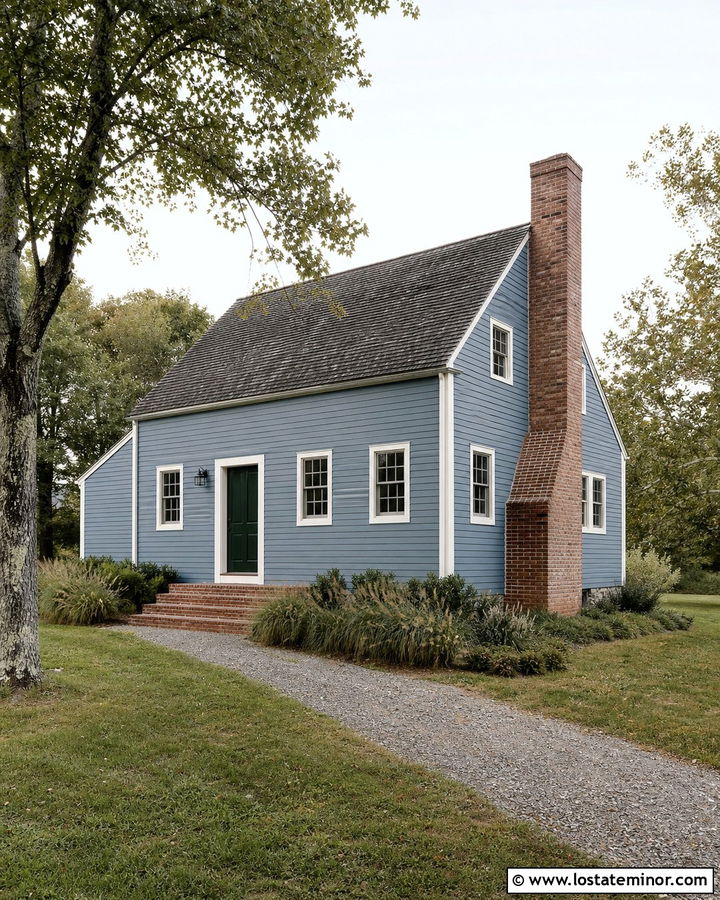
The sloping roof of a Saltbox house creates a memorable silhouette that pairs naturally with weathered dusty blue clapboard. Keep the siding matte and softly muted so it complements the simple historical form. A large red brick chimney should remain prominent, providing a warm counterpoint to the cool walls. Use antique white trim around small divided-light windows and paint the front door deep forest green for an understated accent. Dark gray cedar-look shingles work well with the long rear roof plane. Brick entry steps and a narrow gravel path maintain the unfussy character. Add low shrubs, native grasses, and one mature shade tree rather than formal foundation beds. The finished exterior feels authentic, practical, and comfortable within a rural or traditional neighborhood.
22. Dusty Blue American Foursquare With Brick Porch
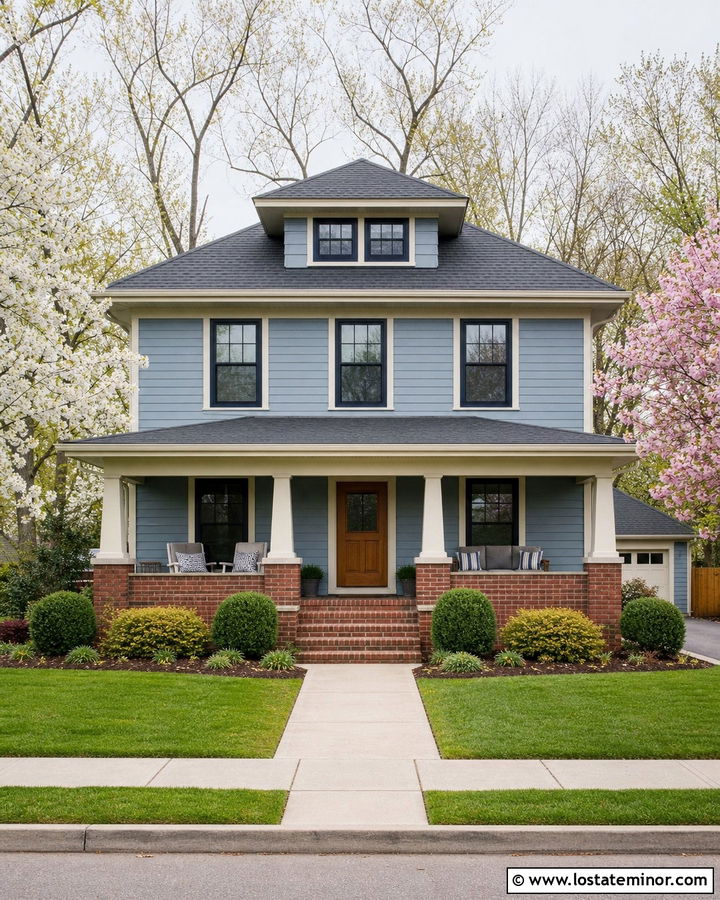
A full-width brick porch gives an American Foursquare the weight needed beneath its boxy upper floors. Use dusty blue lap siding across the main structure, with warm red-brown brick on the porch base, steps, and square column supports. Cream-painted columns and trim make the covered area feel brighter. Deep navy window sashes add definition without creating the sharpness of black. A quarter-sawn oak door fits the substantial architecture and relates beautifully to the brick. Select a charcoal hipped roof with broad eaves and matching gutters. Keep porch furniture simple and coordinated with the palette. A straight walkway, symmetrical shrubs, and small flowering trees reinforce the home’s balanced form. This complete treatment highlights the sturdy proportions while making the facade feel more welcoming.
23. Dusty Blue Coastal House With Sand Brick
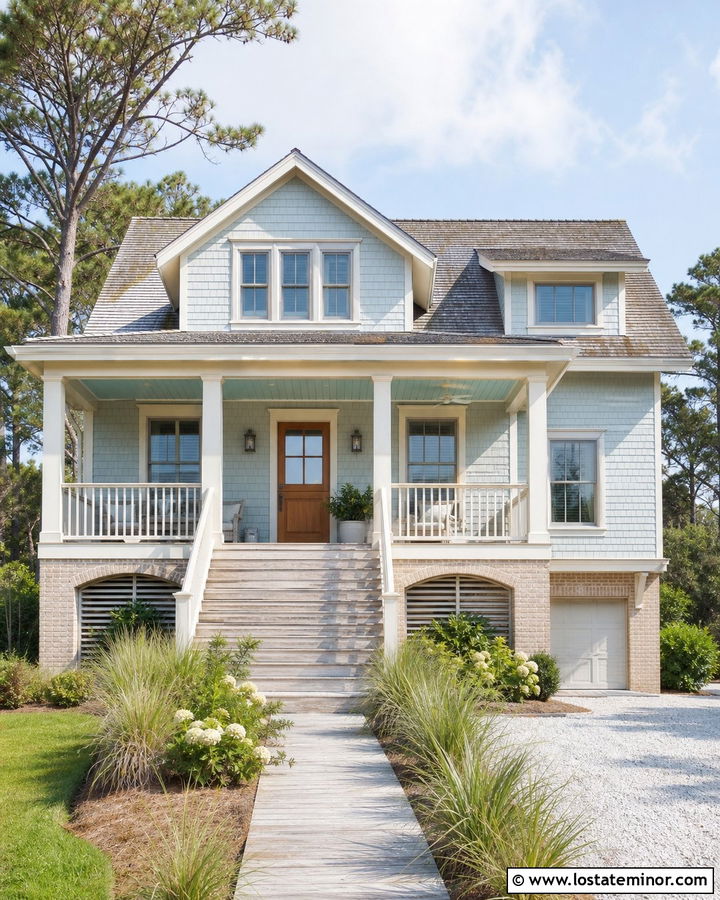
Dusty blue naturally suits a coastal exterior, but sand-colored brick keeps the result from becoming overly nautical. Apply pale dusty blue shingles or lap siding to a raised coastal cottage, then use sandy beige brick around the foundation, stairs, and lower porch supports. Bright but slightly warm white trim reflects light around windows and railings. Choose a natural teak or light oak front door for relaxed warmth. A weathered gray roof and pale blue porch ceiling extend the airy palette. Avoid heavy black accents; brushed nickel, muted bronze, or soft gray fixtures feel lighter. Dune grasses, hydrangeas, shell-colored gravel, and a wide boardwalk-style path complete the landscape. The blue and brick should appear sun-softened, casual, and cohesive from the curb.
24. Dusty Blue Southern House With Brick Porch
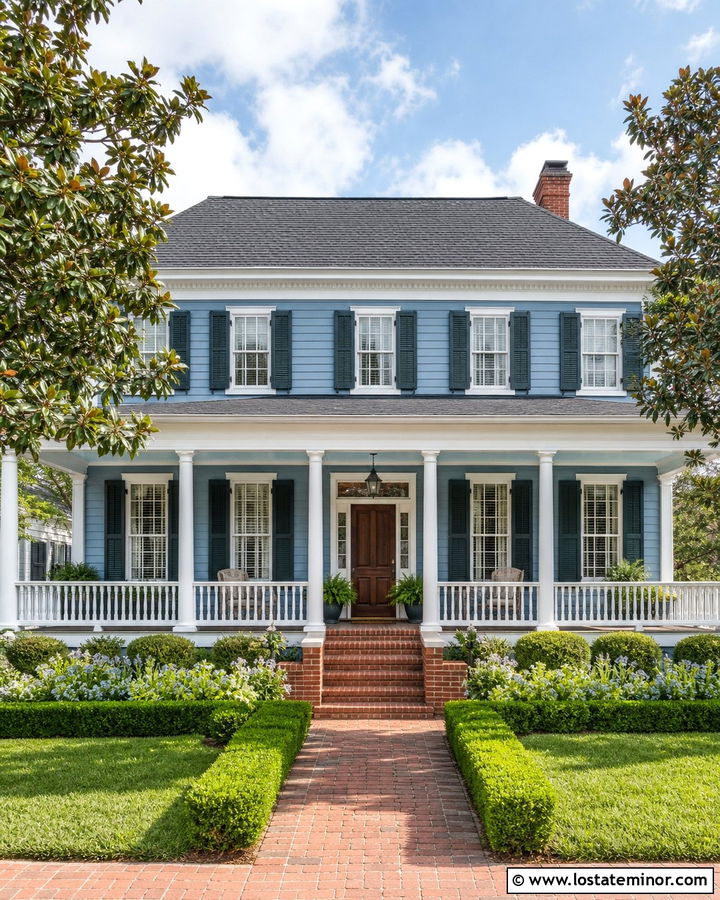
A broad Southern porch looks gracious when dusty blue siding is balanced by traditional brick flooring and steps. Use a medium dusty blue across the clapboard facade and warm white on tall columns, window trim, railings, and fascia. Red brick porch surfaces add durability and introduce a familiar earthy tone beneath the cool walls. Paint the porch ceiling a paler blue for a subtle layered effect. Deep green shutters and a stained mahogany door create rich but controlled accents. Choose dark charcoal shingles and classic black lanterns to frame the scheme. Brick walkways, magnolia trees, clipped boxwoods, and loose flowering borders enhance the welcoming frontage. The resulting exterior feels established and regional without relying on an overly formal all-white palette.
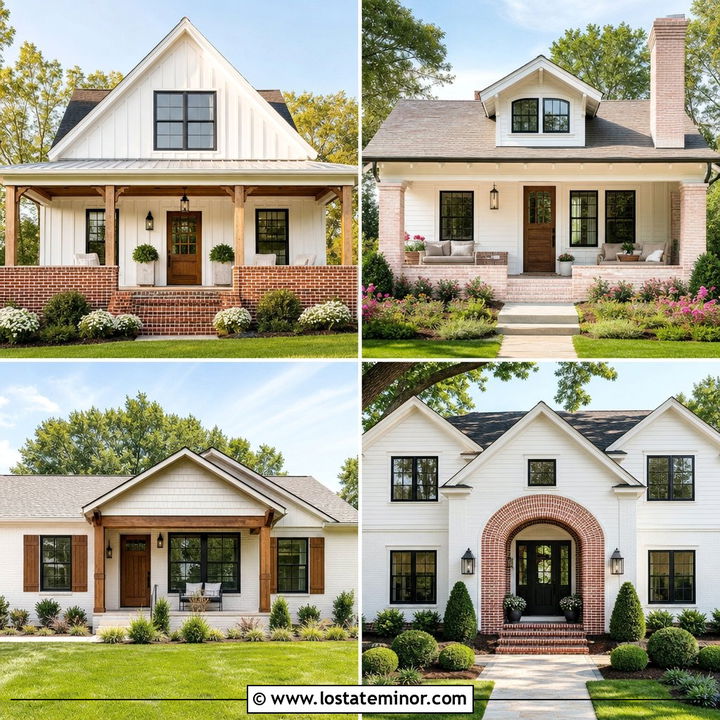
25. Dusty Blue Contemporary House With Stacked Brick
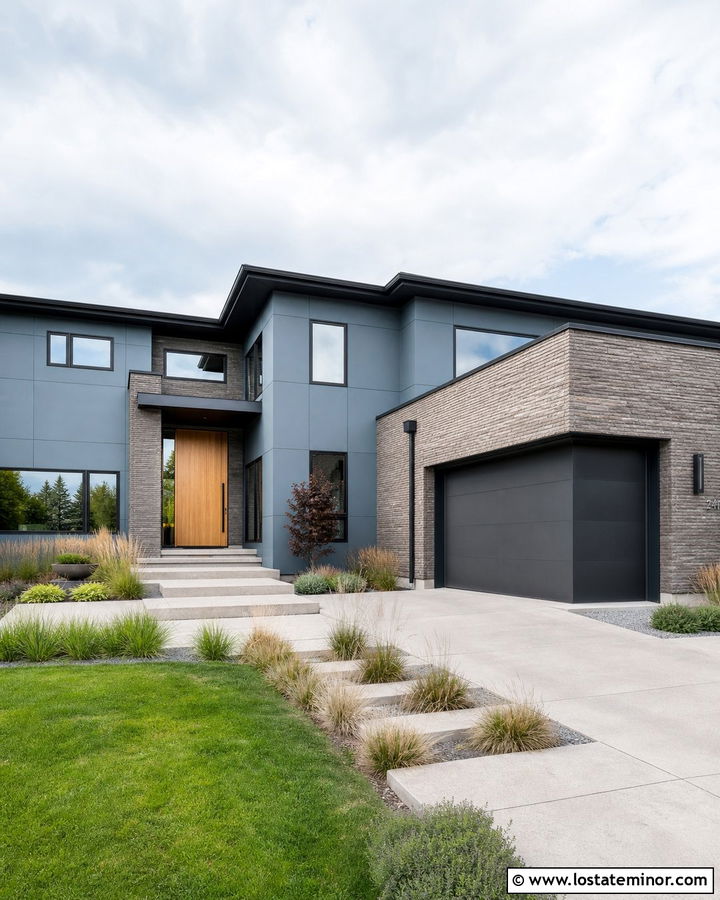
Contemporary architecture benefits from a limited material palette and clear blocks of color. Cover the primary volume in smooth dusty blue fiber-cement panels, then apply long, narrow gray-brown brick to the garage wing or recessed entrance. Install the brick in a stacked pattern to reinforce the home’s clean horizontal and vertical lines. Use charcoal window frames, fascia, and garage doors for contrast. A wide natural wood pivot door adds warmth at the entry. Keep the roof low and visually simple, with dark gray metal or membrane surfaces. Concrete pavers, gravel beds, clipped grasses, and low architectural shrubs should mirror the facade’s geometry. This complete exterior looks modern and precise, while the softened blue prevents the house from feeling severe or industrial.
26. Dusty Blue Cottage House With Reclaimed Brick
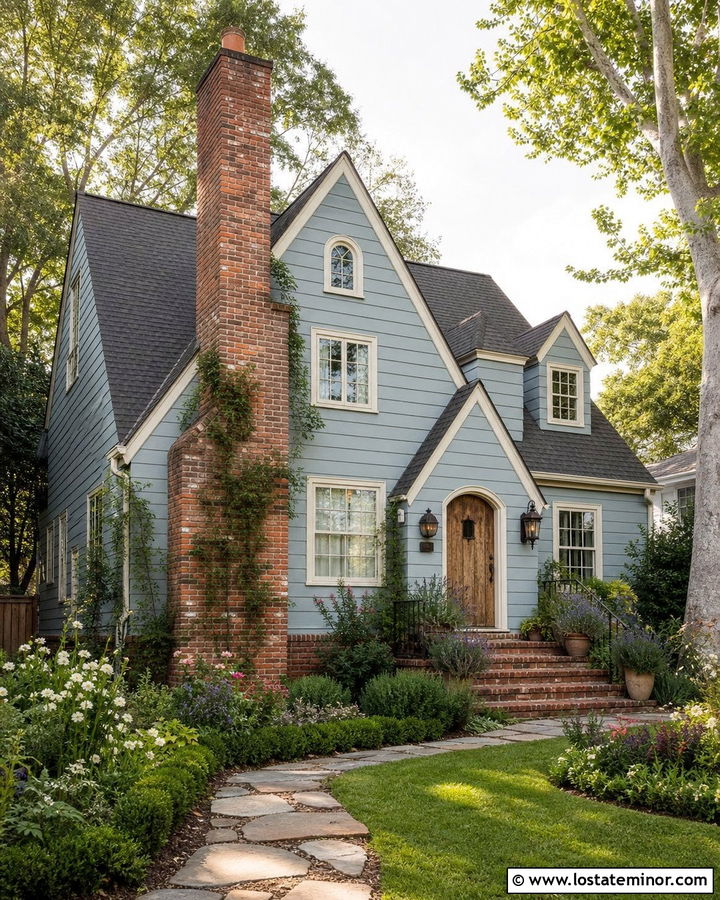
Reclaimed brick gives a dusty blue cottage the warmth and irregular character often missing from newer construction. Use the brick on the chimney, front steps, and a low skirt around the facade. Its varied red, brown, and faded cream tones will stand out beautifully against muted blue lap siding. Select warm ivory trim and a weathered wood door to maintain the collected appearance. A charcoal-gray roof provides a quiet backdrop, while aged bronze lights reinforce the traditional material mix. Avoid perfectly symmetrical landscaping, which may feel too formal for the rustic brick. Instead, use curving garden beds, climbing plants, herbs, and flowering shrubs along a narrow stone path. The exterior should look thoughtfully updated while still feeling comfortable, established, and slightly imperfect.
27. Dusty Blue House With Brick Archway
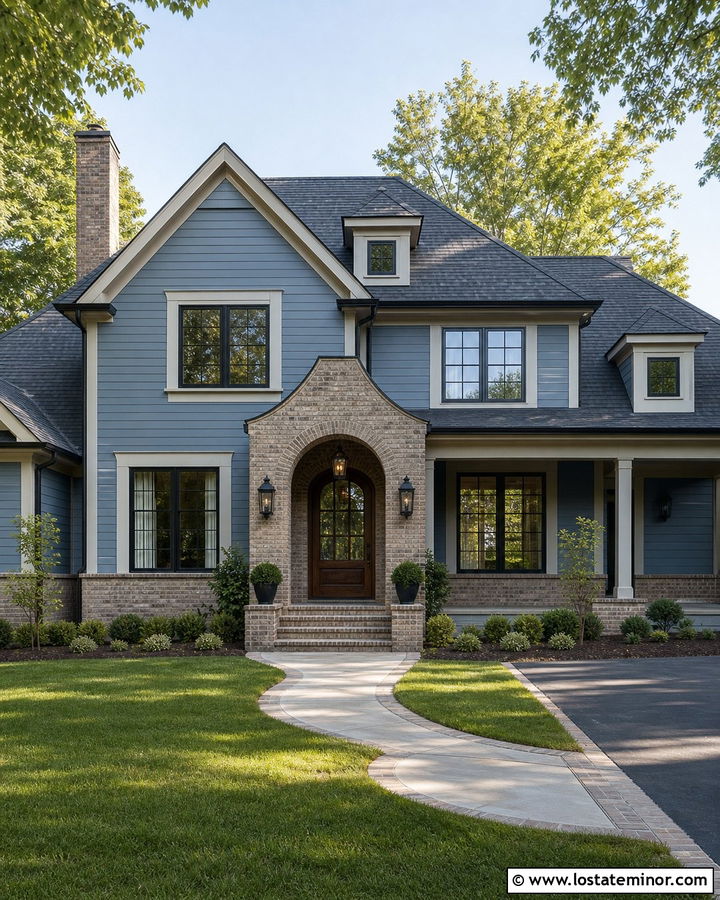
A brick archway can turn an ordinary entrance into the focal point of a dusty blue house. Surround the recessed front door with warm red or taupe brick, then repeat that masonry on the lower facade or porch steps. Dusty blue siding should cover the broader wall areas, allowing the arch to remain visually distinct. Use creamy white trim around the remaining windows and charcoal accents on the roof, gutters, and lights. A stained wood door fits naturally inside the brick opening and adds another layer of warmth. Keep nearby planting low so it does not conceal the architecture. A gently curved walkway can echo the arch, while matching brick edging ties the landscape to the house. The overall composition feels intentional, welcoming, and architecturally complete.
28. Dusty Blue House With Brick Garage
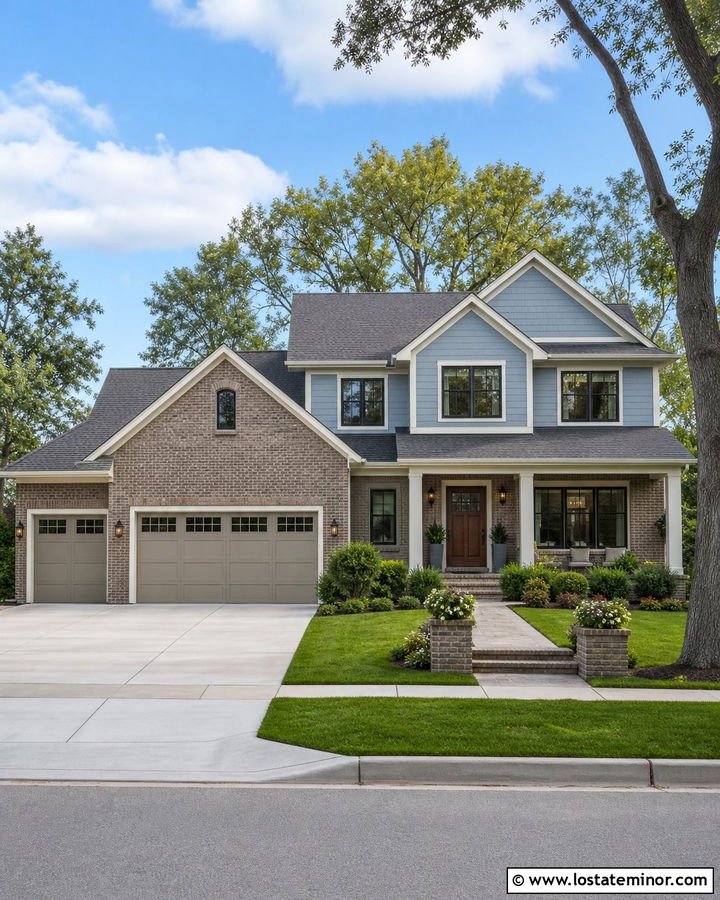
When a garage occupies much of the front elevation, brick can help it look integrated rather than oversized. Cover the garage wing in warm taupe brick and use dusty blue siding on the taller main house. Paint sectional garage doors a color close to the brick mortar so they visually recede. Cream trim connects the masonry and siding, while black windows add a consistent outline across both sections. Use a rich walnut front door to direct attention away from the garage and toward the entrance. A charcoal roof unifies the separate rooflines. Repeat dusty blue in a small gable above the garage for balance. Layered shrubs, a clearly marked walkway, and modest brick planters create a cohesive curb view despite the wide driveway.
29. Dusty Blue House With Brick Walkway
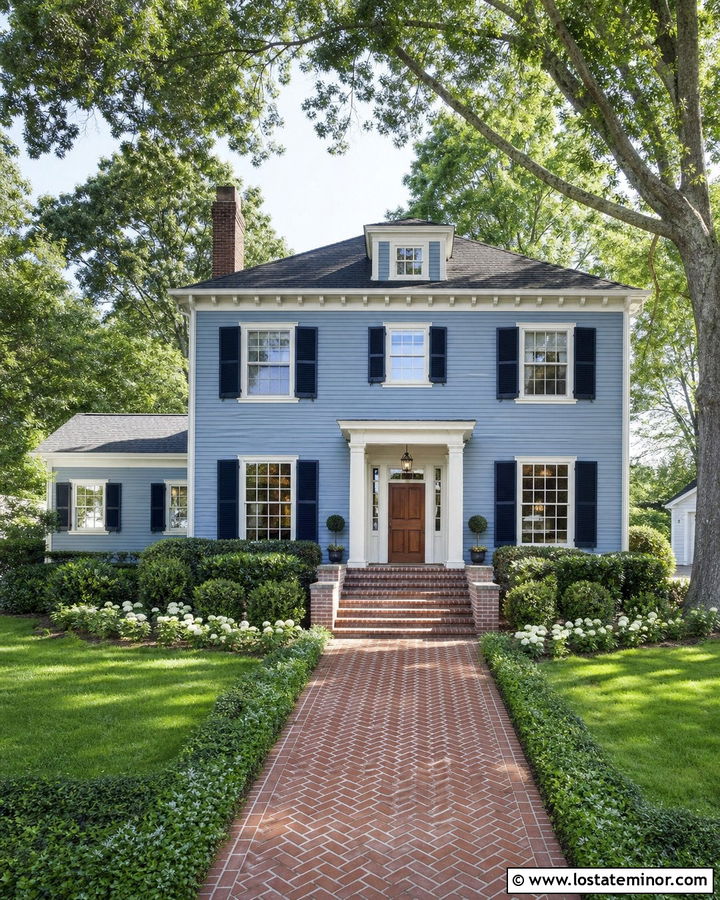
Brick does not have to cover a wall to influence the entire exterior palette. A generous red-brown brick walkway can introduce enough warmth to balance a full dusty blue facade. Use soft blue horizontal siding with cream trim, dark navy shutters, and a medium-stained wood front door. Carry the walkway from the sidewalk to broad brick steps, using a herringbone or running-bond pattern for subtle detail. A charcoal roof and dark bronze lights provide deeper accents without distracting from the path. Border the brick with green ground cover, clipped shrubs, and pale flowering plants. This approach is useful when the home has little existing masonry. The walkway becomes a functional brick accent that guides visitors while visually connecting the house to the landscape.
30. Dusty Blue House With Brick And Cedar Accents
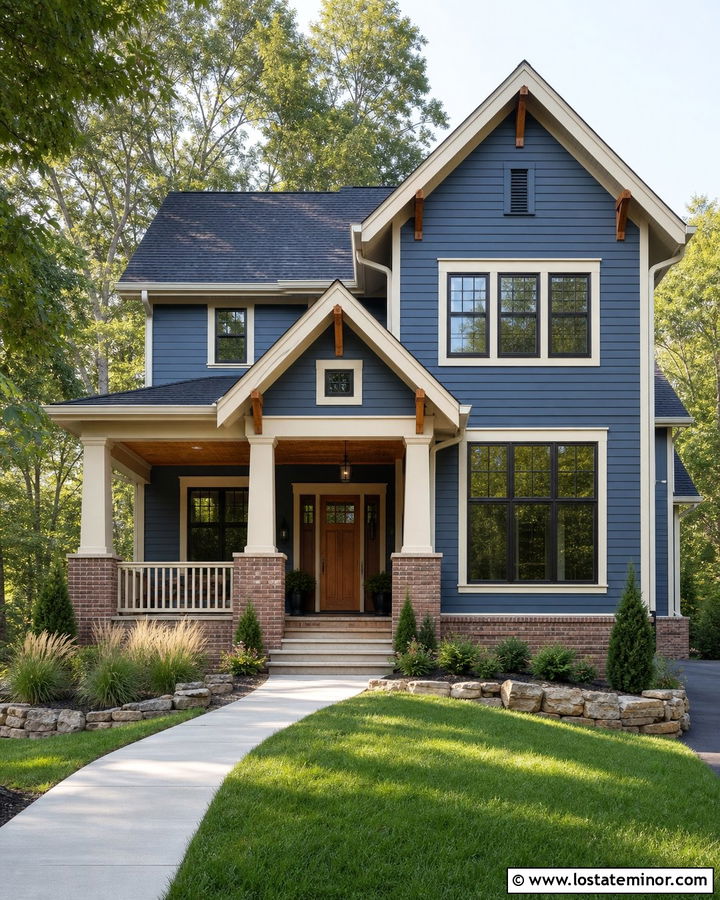
Dusty blue, brick, and cedar create a layered exterior with cool color, masonry texture, and natural warmth. Use dusty blue siding as the dominant finish, then place warm brown or red brick along the foundation and around the porch. Add cedar selectively through the front door, gable brackets, porch ceiling, or garage details. Too much wood can make the facade busy, so repeat the same stain on every cedar feature. Cream trim creates a gentle border, while a charcoal roof and black windows provide definition. The brick should share at least one warm undertone with the cedar stain. Finish with stone-edged beds, ornamental grasses, evergreen shrubs, and a clean concrete walkway. Each material then contributes to one coordinated and welcoming exterior.
Conclusion:
The strongest dusty blue and brick combinations balance temperature, texture, and visual weight across the entire facade. Warm red and brown brick make muted blue siding feel friendlier, while gray, cream, or whitewashed masonry creates a quieter contemporary effect. Trim, roofing, doors, and landscaping should connect those two dominant materials rather than introduce several unrelated colors. Always test dusty blue samples directly beside the existing brick, mortar, and roofing. View them at different times of day before committing. Whether your home is a ranch, Colonial, cottage, Craftsman, or modern farmhouse, these 30 Dusty Blue House Design With Brick Accents Ideas offer practical ways to build cohesive curb appeal around the architecture you already have.

Related posts: