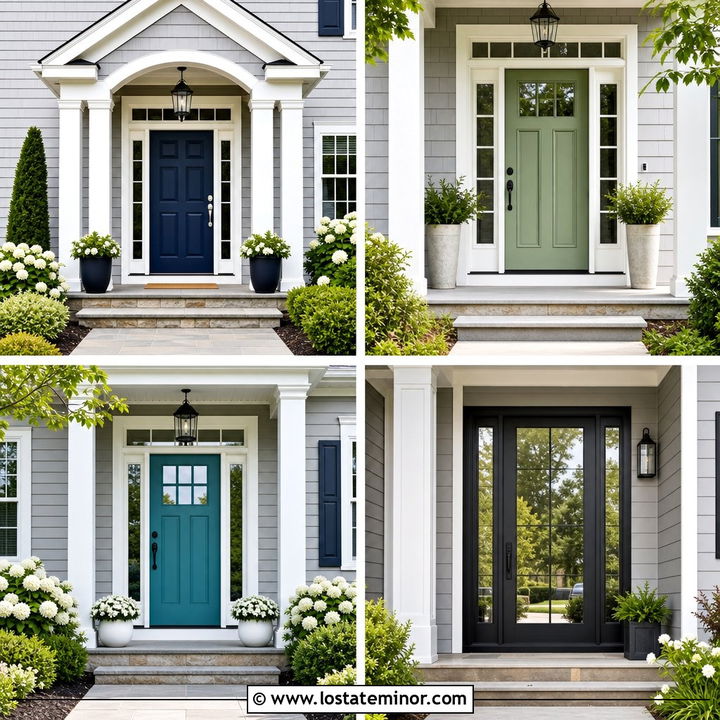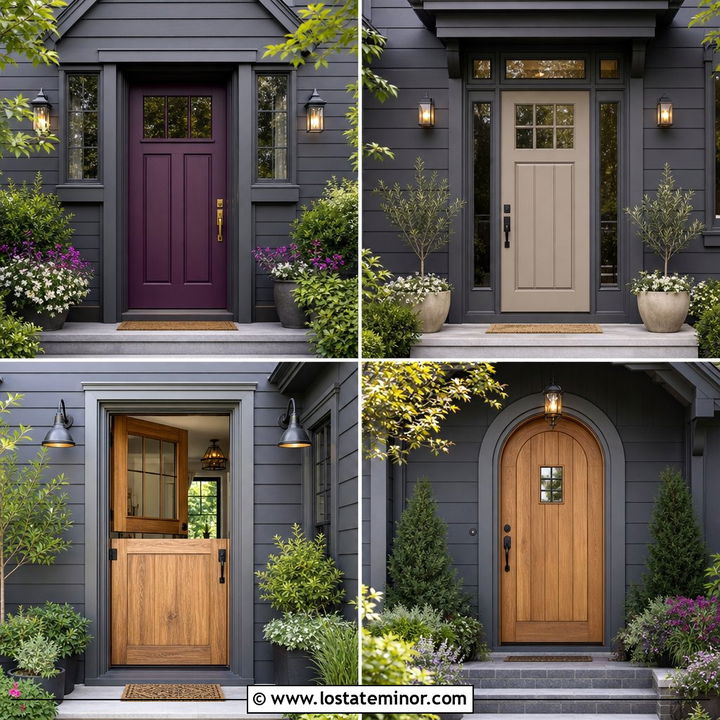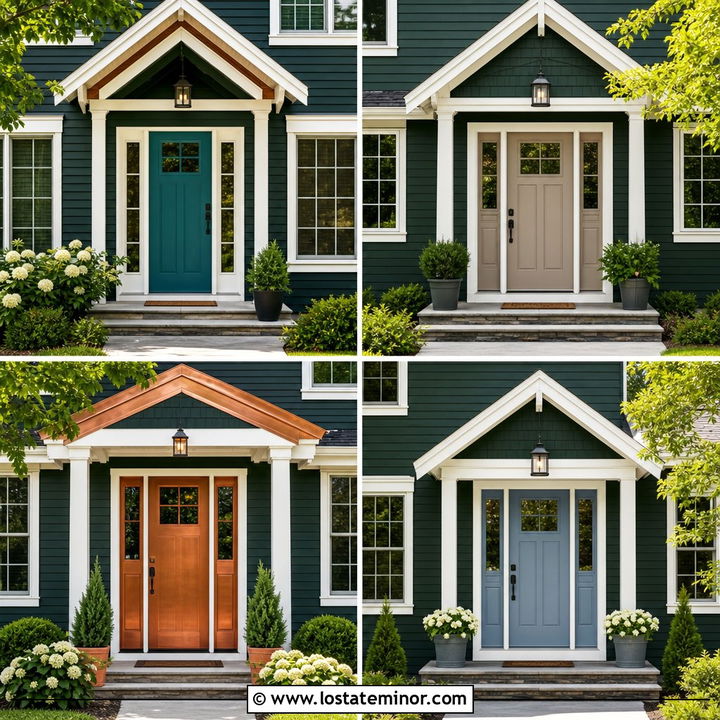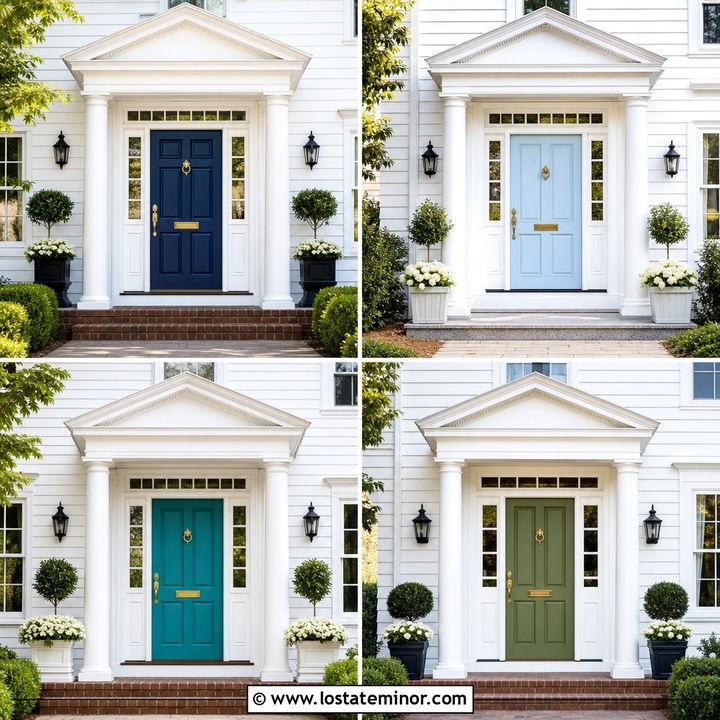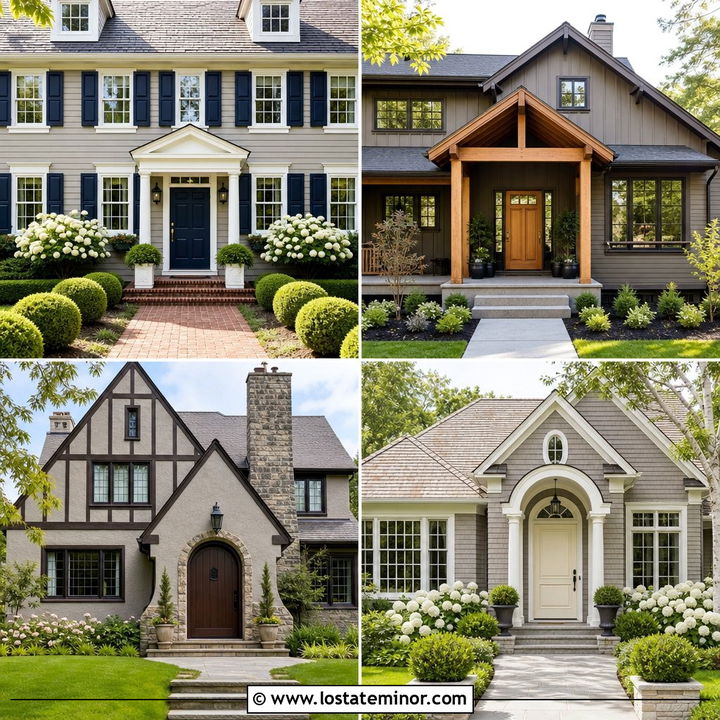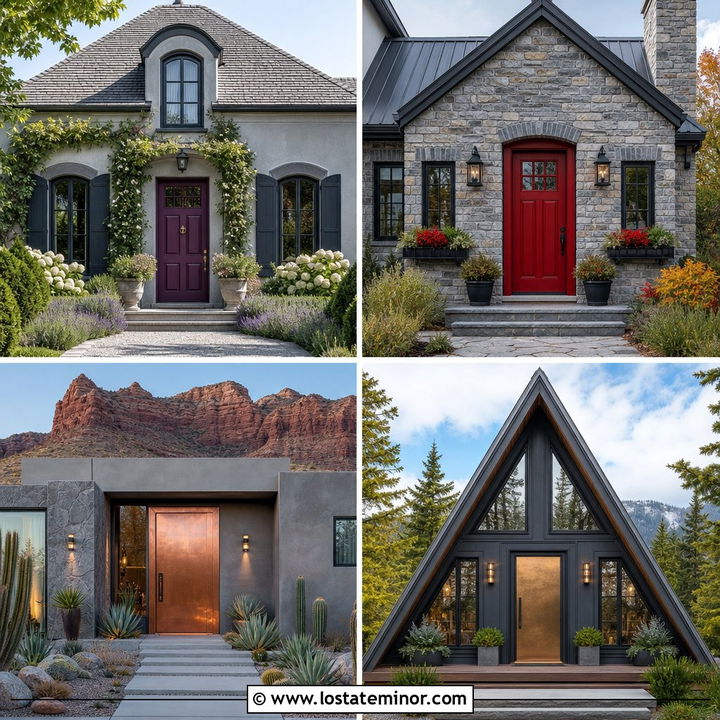
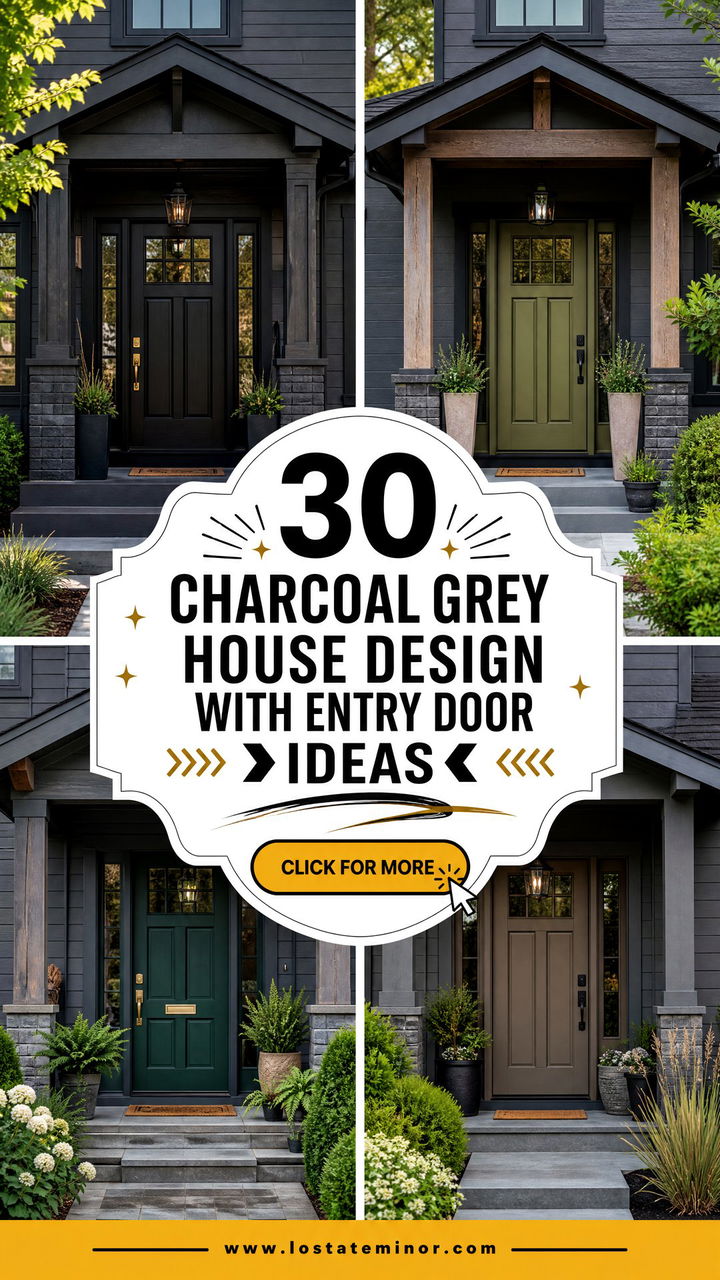
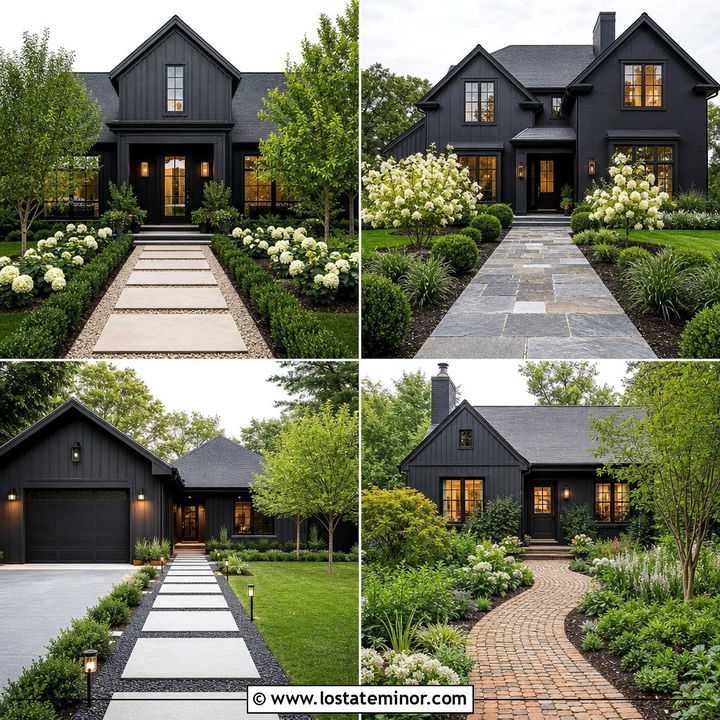
A charcoal grey exterior creates a strong, versatile backdrop for almost any entry color. The key is designing the entire facade as one coordinated palette rather than treating the door as an isolated accent. Roof color, trim, masonry, lighting, hardware, and landscaping all influence how the entrance looks from the street. These 30 Charcoal Grey House Design With Entry Door Ideas explore bold painted doors, warm wood finishes, quiet neutrals, and contemporary glass options. You will also find complete schemes for ranch, colonial, craftsman, farmhouse, bungalow, and modern homes. Each combination includes practical ways to balance the dark siding and improve curb appeal. Use these complete exterior looks to explore 30 Charcoal Grey House Design With Entry Door Ideas.
1. Charcoal Grey House With Black Entry Door
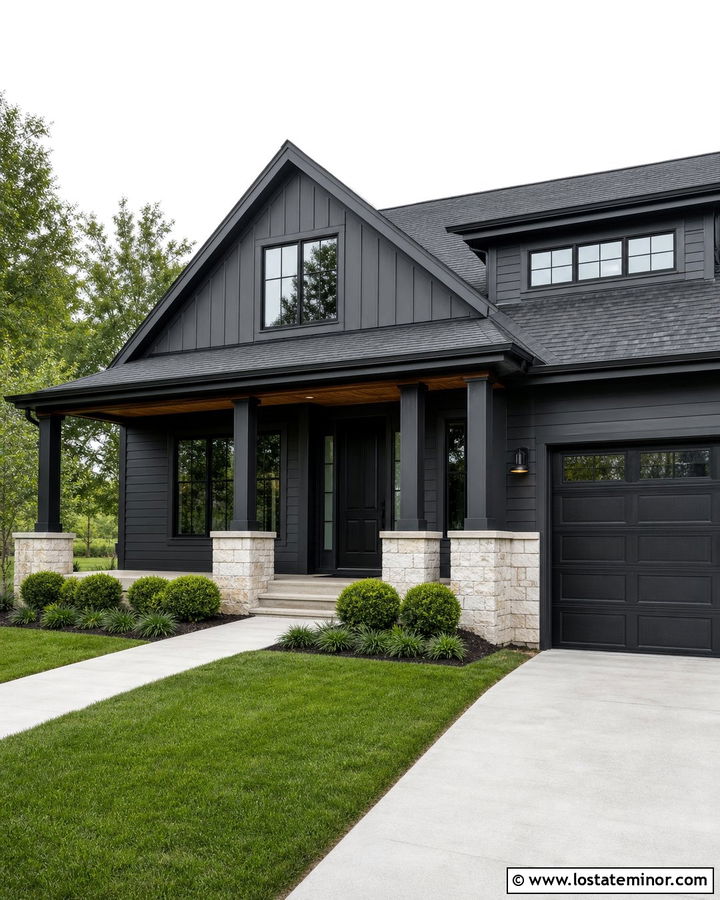
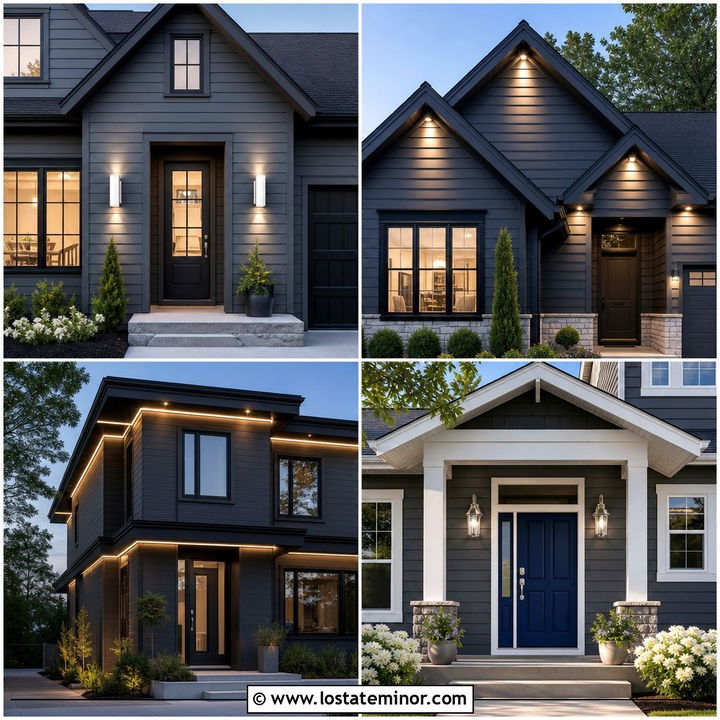
A black entry door gives a charcoal grey house a sleek, tone-on-tone appearance. The difference between the two dark colors should still be noticeable, so choose a true black with a satin or semi-gloss finish. Crisp white trim around the windows and door prevents the facade from looking flat. Black window frames, gutters, and porch lights can repeat the door color across the exterior. Add light limestone around the foundation or porch columns to create another layer of contrast. Warm cedar porch ceilings and planters will soften the cooler palette. This combination works especially well on modern farmhouses and contemporary homes with simple rooflines. Keep the garage door charcoal grey so the main entrance remains the strongest focal point.
2. Charcoal Grey House With Natural Wood Entry Door
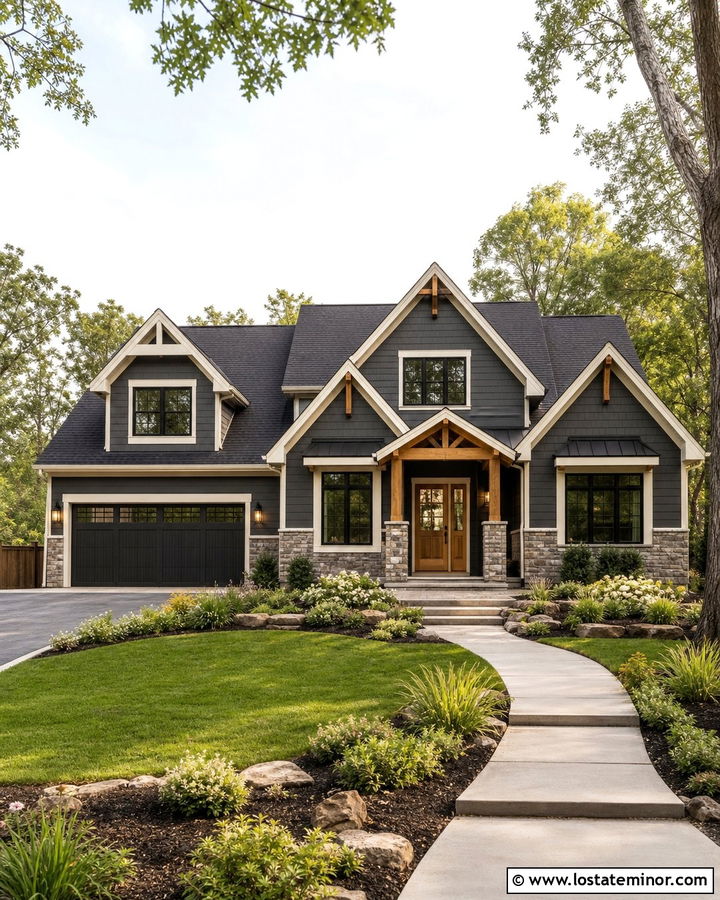
Natural wood brings instant warmth to a charcoal grey exterior. A medium-toned white oak, cedar, or mahogany door creates an inviting contrast without introducing a competing paint color. Select a visible grain and a matte protective finish for an organic, understated result. Creamy white trim works beautifully when you want a softer look, while black trim gives the facade a modern edge. Repeat the wood tone on porch beams, soffits, or a small section of vertical siding. Stone with tan, grey, and brown variation can connect the warm door to the dark exterior. Complete the scheme with black hardware and simple lanterns. This balanced combination suits craftsman homes, wooded cabins, modern ranch houses, and updated suburban exteriors.
3. Charcoal Grey House With White Entry Door
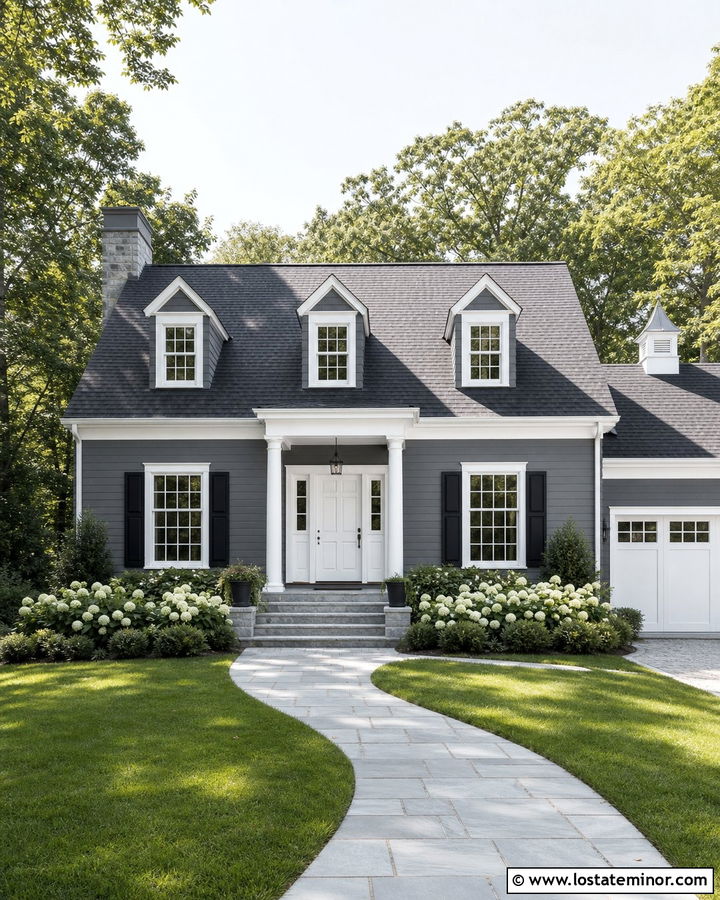
Can a white door hold its own against a dark exterior? On a charcoal grey house, it creates a bright, clearly defined entrance that feels clean and welcoming. Connect the door to wide white window trim, porch columns, fascia, and garage details for a unified palette. A light grey roof can soften the contrast, while a black roof makes the scheme more graphic. Consider a paneled door with upper glass inserts to add dimension without introducing another color. Brushed nickel or matte black hardware both work well. Pale stone steps and a concrete walkway keep the front approach light. This complete exterior scheme is particularly effective on Cape Cod, colonial, cottage, and traditional homes where symmetry and crisp architectural details deserve attention.
4. Charcoal Grey House With Navy Blue Entry Door
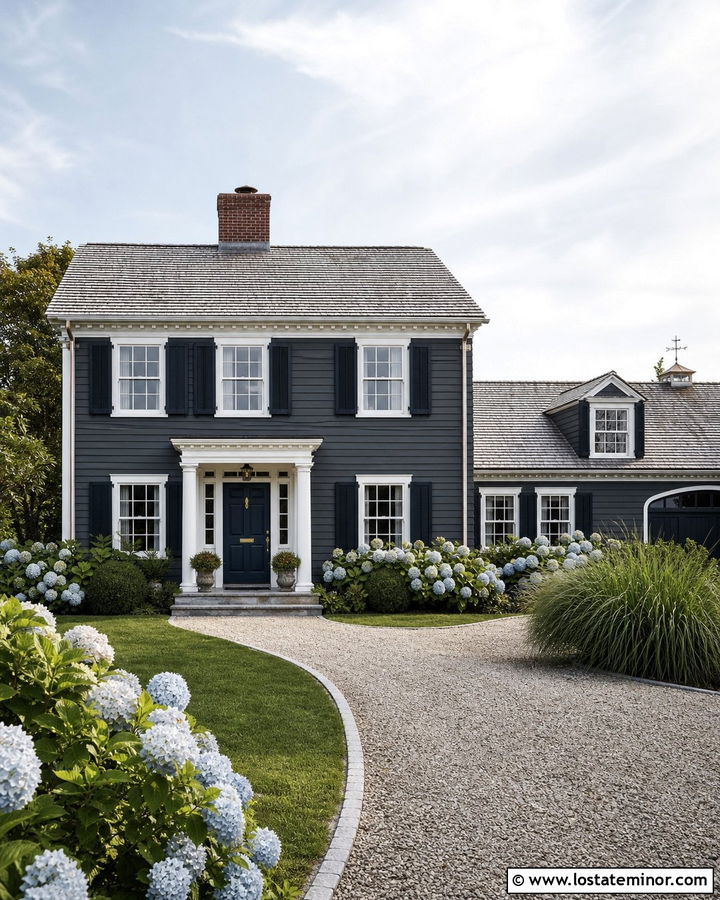
A navy blue entry door adds subtle color while preserving the sophisticated character of charcoal grey siding. Choose a deep navy that is clearly bluer than the exterior, especially when viewing the colors in shade. White trim provides a clean outline and stops the two dark shades from blending together. Antique brass hardware can warm the cool palette, while polished nickel creates a more coastal effect. Use natural stone with blue-grey variation around the porch or foundation. A weathered grey shingle roof and white garage door complete the balanced scheme. Navy works especially well on coastal colonials, shingle-style houses, and traditional two-story homes. Add hydrangeas, ornamental grasses, and pale gravel to reinforce the calm blue-grey color story.
5. Charcoal Grey House With Red Entry Door
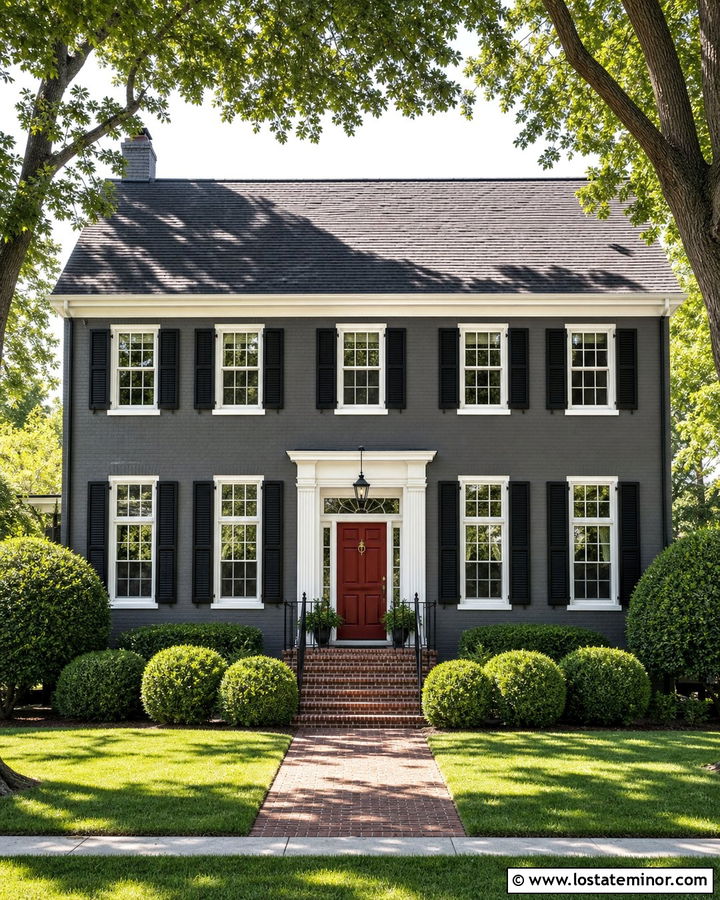
Few combinations feel as classic as a charcoal grey house with a red entry door. A deep heritage red offers warmth and character without looking overly bright. Pair it with white trim, black shutters, and a dark architectural shingle roof for a traditional exterior palette. Red brick steps can repeat the door color, but the brick should have muted undertones rather than strong orange variation. Black iron railings and lantern-style lights add definition around the porch. If the house includes a garage, keep its door charcoal or white so it does not compete with the entrance. This complete scheme looks especially natural on colonial, Georgian, and traditional ranch homes. Neatly clipped shrubs and a straight walkway support its orderly, timeless curb appeal.
6. Charcoal Grey House With Burgundy Entry Door
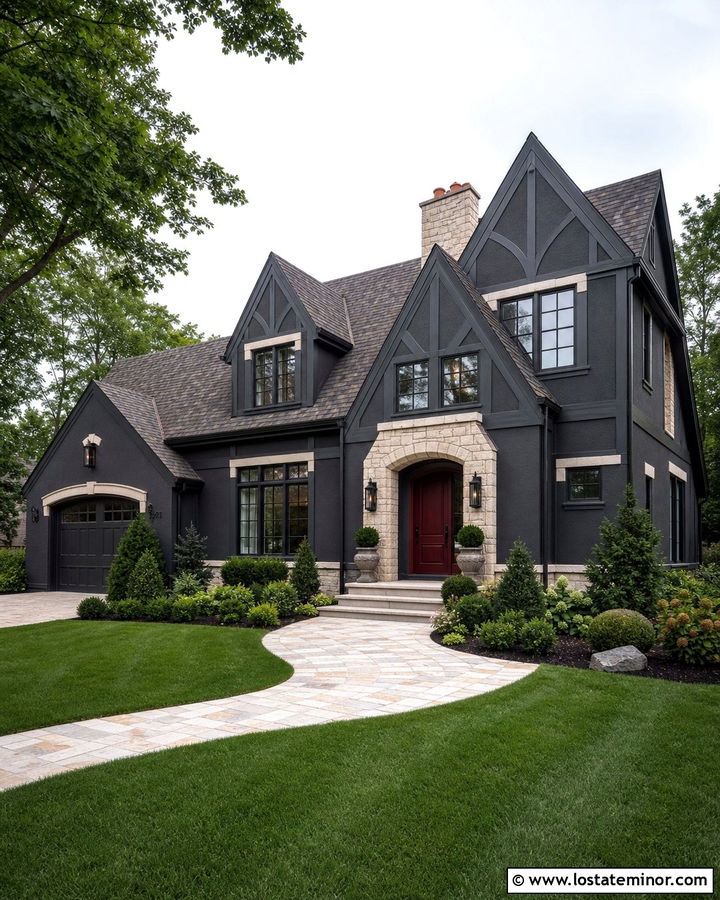
For a quieter alternative to bright red, consider a burgundy entry door. Its brown and purple undertones add richness to charcoal grey siding while maintaining a refined exterior. Warm off-white trim is usually softer than stark white and helps the burgundy feel grounded. Include dark bronze gutters, door hardware, porch fixtures, and railings to connect the colors. A weathered brown roof or mixed grey-brown shingles can further warm the house. Cream limestone or tumbled brick around the steps introduces lighter texture without weakening the dramatic palette. Burgundy doors are particularly attractive on Tudor, traditional, and brick-accented homes. Use evergreen landscaping and burgundy-leaf shrubs sparingly, allowing the entrance to remain the clearest source of color across the facade.
7. Charcoal Grey House With Yellow Entry Door
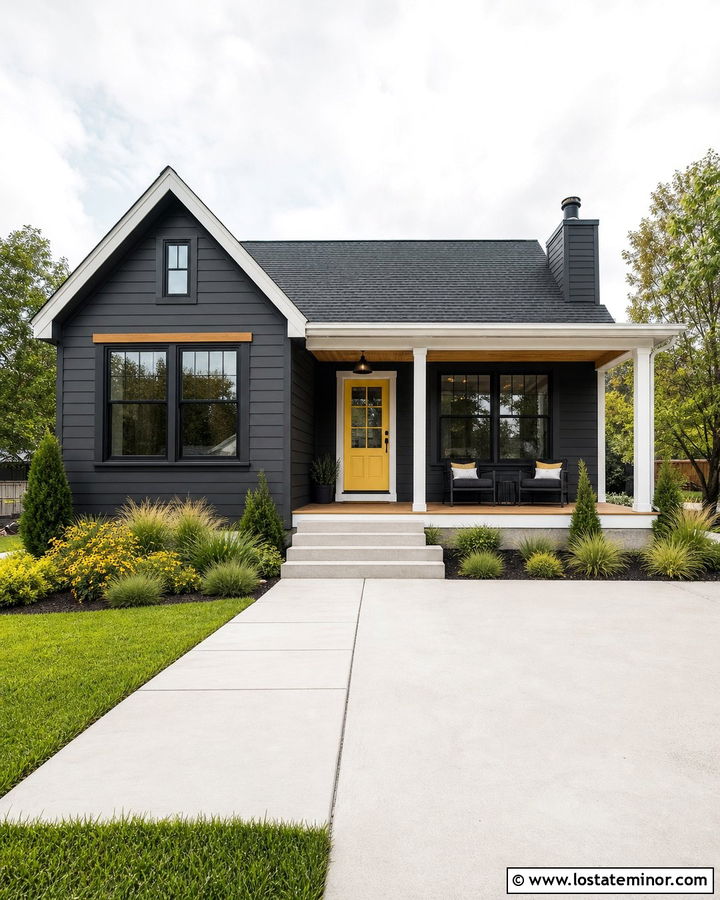
A yellow entry door can transform a dark charcoal grey house into a cheerful, highly visible home. Instead of neon yellow, try a warm golden or sunflower shade that feels substantial beside the deep siding. White trim creates a clean transition, while black window frames and porch lights maintain a contemporary edge. Repeat yellow only in small details, such as seasonal planters or subtle flowers, rather than across large architectural surfaces. Light concrete steps and a natural wood porch floor keep the entrance from appearing overly graphic. This color scheme is ideal for modern cottages, urban homes, and compact bungalows that benefit from a confident focal point. Keep the roof, garage door, and major accents neutral so the yellow door has room to shine.
8. Charcoal Grey House With Mustard Entry Door
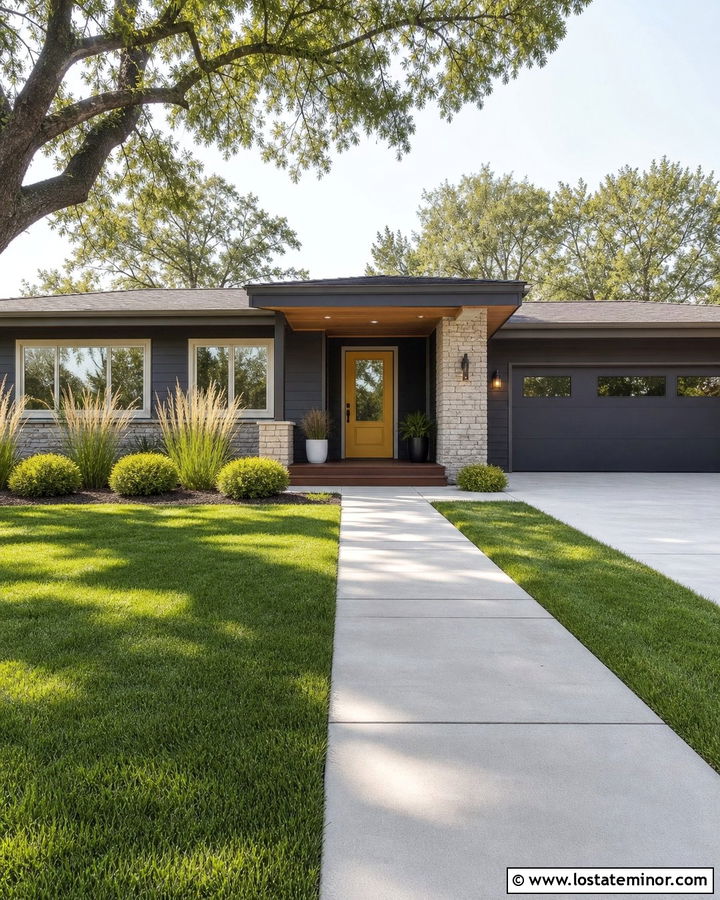
Mustard yellow offers the energy of a bright door with a more earthy, settled appearance. Against charcoal grey siding, it creates a warm focal point that pairs naturally with wood, brick, and aged metal. Use creamy trim instead of brilliant white to support the door’s golden undertones. A cedar porch ceiling, medium brown decking, and dark bronze hardware will make the palette feel intentional. If stone is present, choose a blend containing warm grey, beige, and muted gold. Mustard works well on mid-century ranch houses, craftsman bungalows, and contemporary homes with simple shapes. Keep surrounding landscaping relaxed with ornamental grasses and low evergreen shrubs. The completed exterior feels distinctive but still practical enough for an established residential neighborhood.
9. Charcoal Grey House With Teal Entry Door
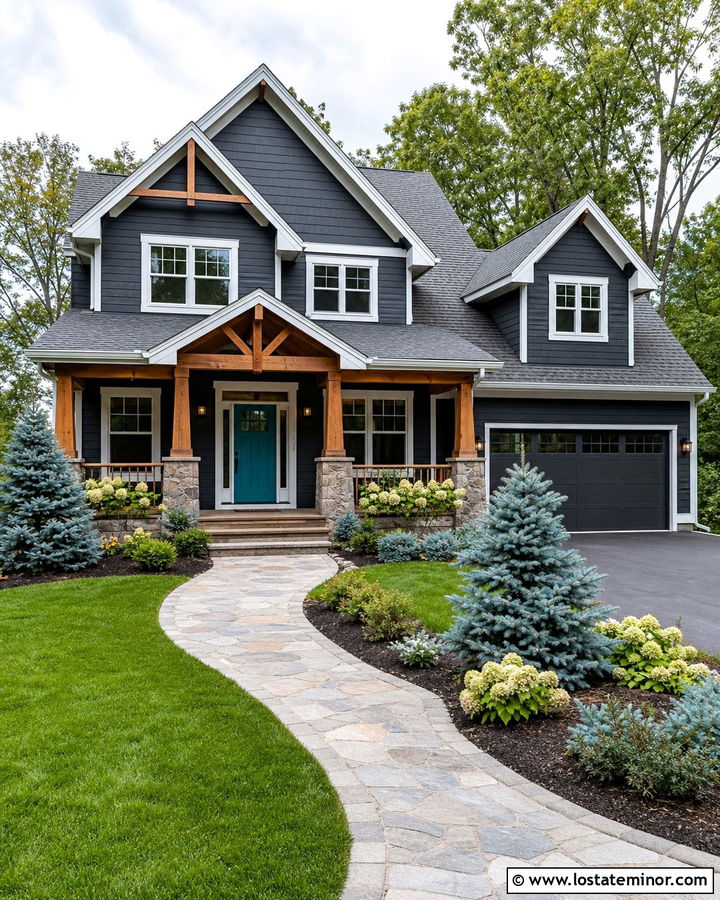
Teal gives a charcoal grey exterior a lively accent that remains deeper and more sophisticated than turquoise. A blue-green door can connect cool grey siding to warm wood or tan stone, making it especially useful on mixed-material facades. Frame the entrance in white trim to keep the teal crisp. Black hardware, window frames, and metal railings add structure. For a warmer approach, choose aged brass door hardware and cedar porch furniture. A medium grey roof maintains continuity without making the exterior too dark. This full-house combination works on craftsman, coastal, and updated split-level homes. Use simple landscaping with blue-green evergreens, pale flowering plants, and a curved stone walkway to help the colorful entrance settle naturally into the overall curb-appeal design.
10. Charcoal Grey House With Turquoise Entry Door
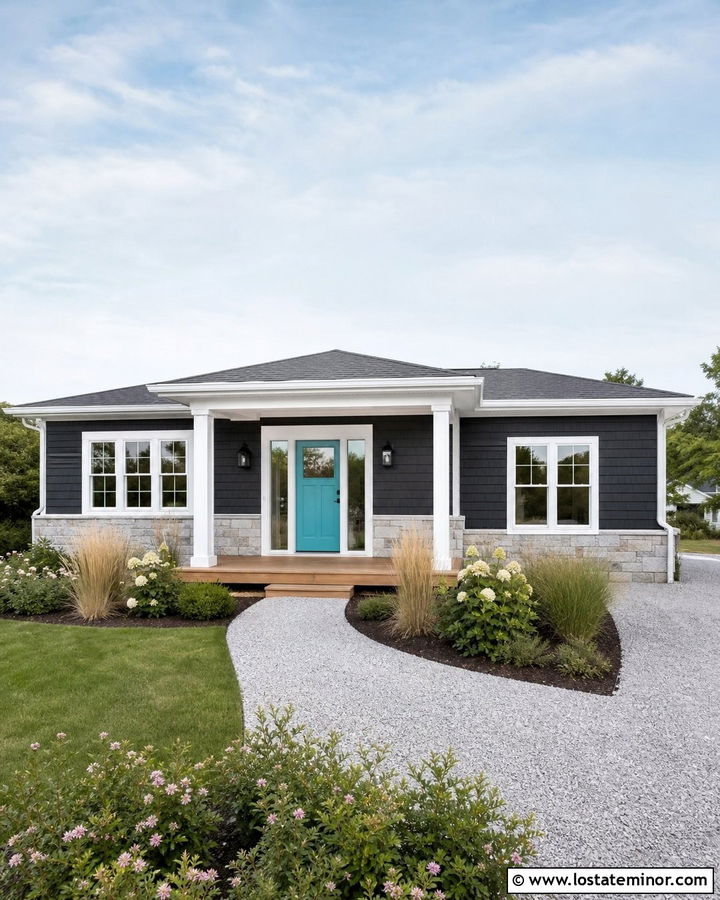
Imagine a vivid turquoise door framed by deep charcoal grey siding and bright white trim. The strong contrast makes the entrance easy to identify and gives the home an upbeat personality. Turquoise is most successful when the remaining exterior colors stay controlled. Use charcoal on the garage, white on the fascia and columns, and black for the lighting and hardware. Pale grey stone or smooth concrete can provide a neutral base around the porch. A natural wood bench or cedar planter adds enough warmth to prevent the palette from feeling cold. This combination is well suited to beach cottages, small ranch homes, and modern bungalows. Keep decorative accessories minimal, since the saturated door already supplies plenty of visual interest and curb appeal.
11. Charcoal Grey House With Sage Green Entry Door
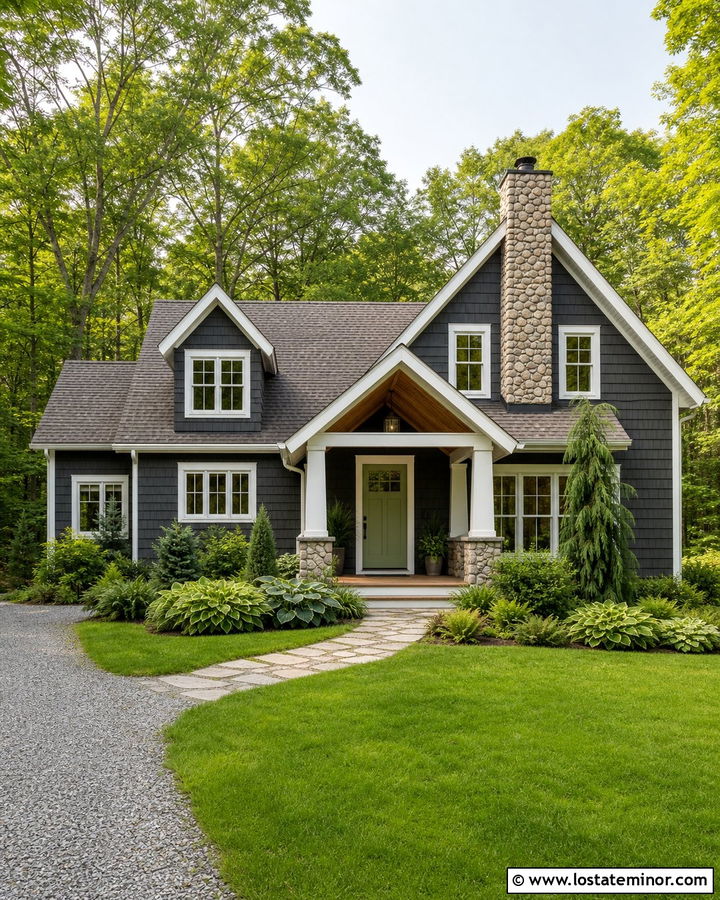
A sage green entry door creates a calm, nature-inspired transition into a charcoal grey home. The muted green is noticeable without becoming too bright, making it a useful choice for homeowners who prefer subtle color. Pair the scheme with warm white trim, natural stone, and a cedar or oak porch ceiling. Black door hardware gives the entrance definition, while aged brass provides a softer traditional finish. A grey-brown roof can bridge the cool siding and warmer architectural materials. Sage looks particularly comfortable on craftsman houses, cottages, and homes surrounded by mature trees. Layer the landscaping with ferns, hostas, ornamental grasses, and evergreen shrubs. These natural textures help the green door feel like an integrated part of the full exterior rather than an unrelated accent.
12. Charcoal Grey House With Olive Green Entry Door
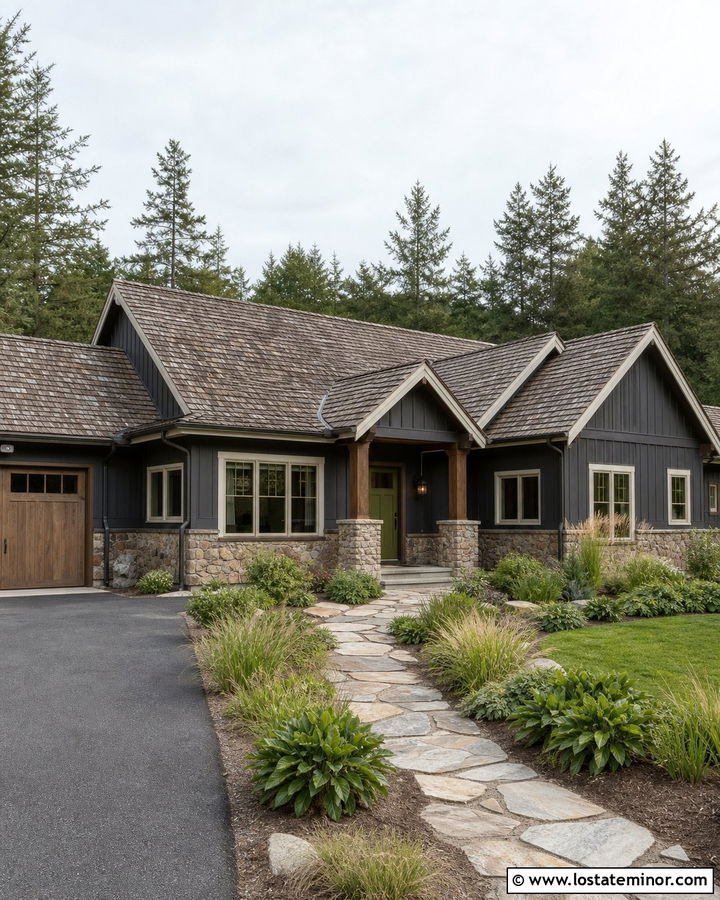
Olive green has enough warmth to soften charcoal grey siding while remaining deep enough for a substantial exterior door. It pairs especially well with bronze hardware, brown roof shingles, and stone containing mossy or earthy undertones. Use cream trim around the entry and windows to keep the palette warm and relaxed. Wooden porch posts or brackets can add craftsman character and connect the door to the surrounding landscape. If the home includes shutters, choose charcoal or dark bronze rather than matching them to the green door. This combination suits ranch, craftsman, and rustic contemporary houses. Complete the curb appeal with native grasses, broad-leaf evergreens, and a flagstone walkway. The result feels grounded, mature, and closely connected to natural outdoor materials.
13. Charcoal Grey House With Forest Green Entry Door
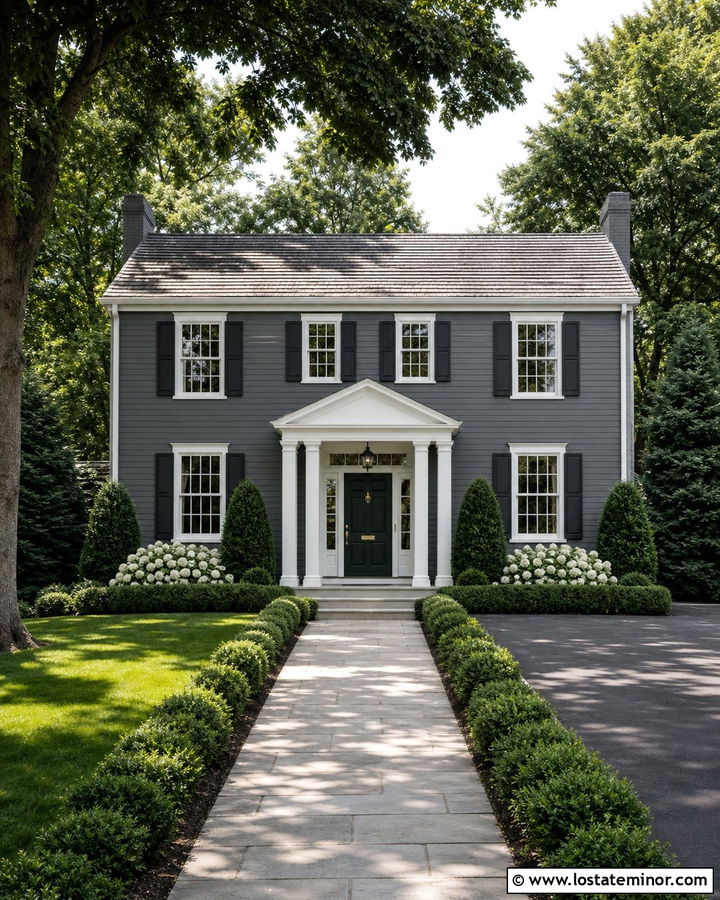
A forest green entry door creates rich, low-key color against a charcoal grey facade. Since both shades are dark, use light trim or stone around the entrance to maintain clear separation. Warm white window casings, pale limestone, and a light concrete porch are effective supporting elements. Brass hardware adds a welcoming glow, while black hardware delivers a more modern finish. Consider repeating forest green on small shutters only if the house has a traditional design and plenty of light trim. A medium brown or weathered grey roof can complete the palette. This exterior look fits Tudor homes, woodland cottages, colonials, and craftsman houses. Surround it with layered evergreen landscaping, but leave open space near the door so the entrance remains visible from the street.
14. Charcoal Grey House With Emerald Green Entry Door
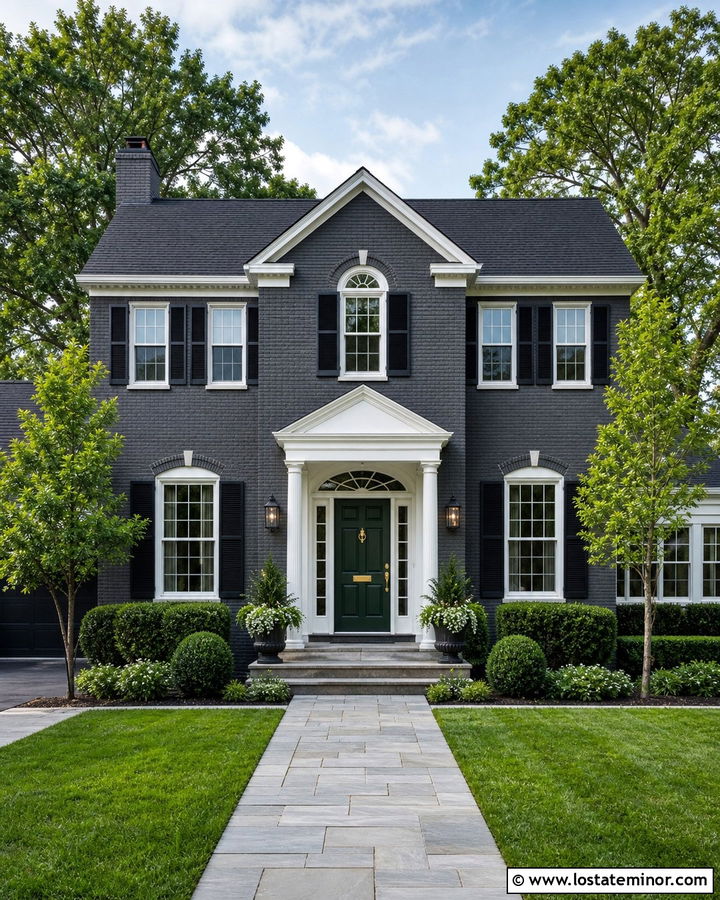
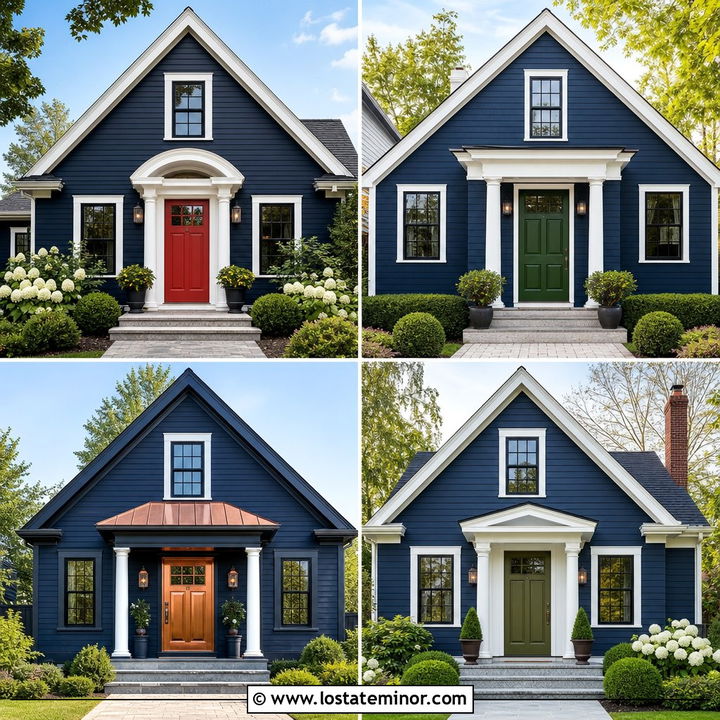
An emerald green door provides jewel-toned contrast for a charcoal grey house. The color is bolder than sage or olive, yet it retains a polished appearance when paired with simple architectural details. Use crisp white trim to frame the entrance and repeat black on windows, gutters, and porch fixtures. Polished brass hardware can bring out the richness of the green and make the door feel more formal. Keep masonry quiet with pale grey limestone or smooth concrete rather than busy multicolored stone. Emerald is particularly striking on symmetrical colonial homes and streamlined contemporary facades. A black roof gives the scheme a strong top edge. Balanced shrubs, a straight walkway, and matching planters reinforce the entrance without adding more competing colors to the exterior.
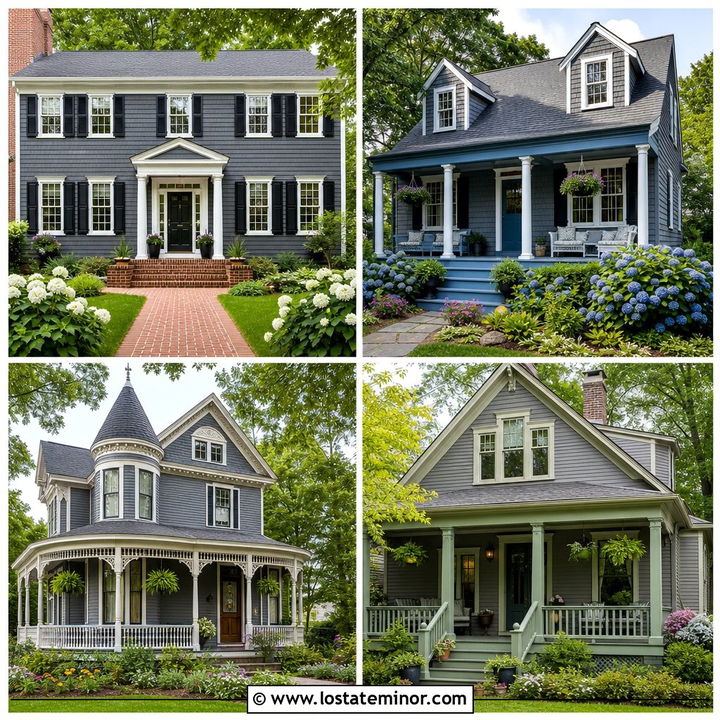
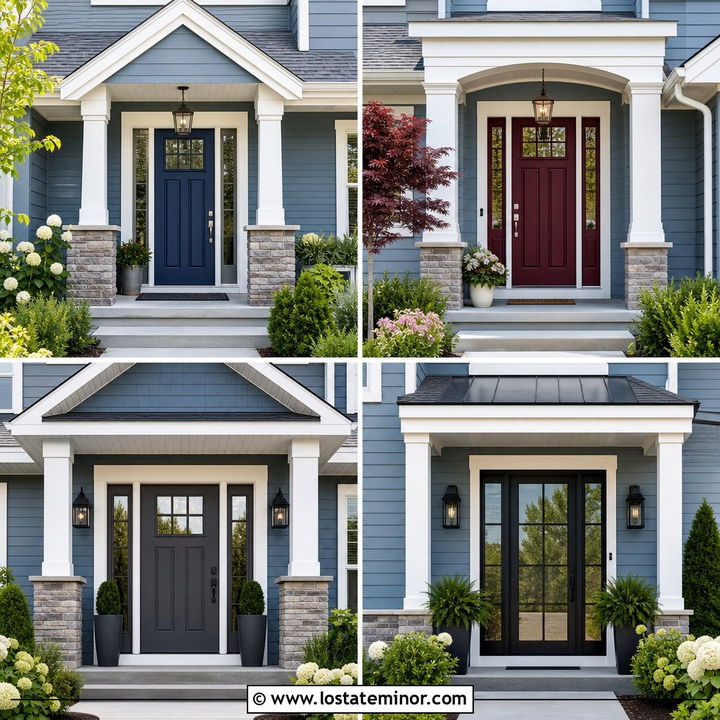
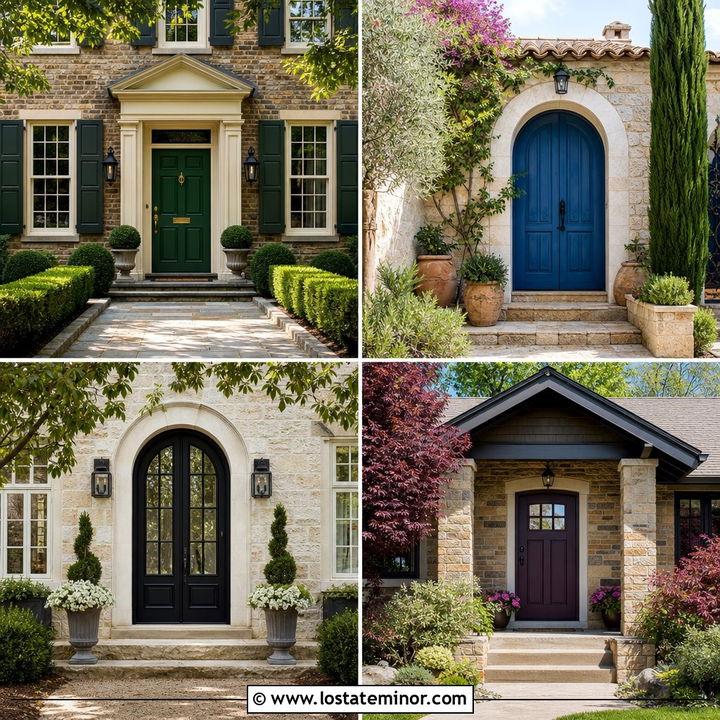
15. Charcoal Grey House With Cobalt Blue Entry Door
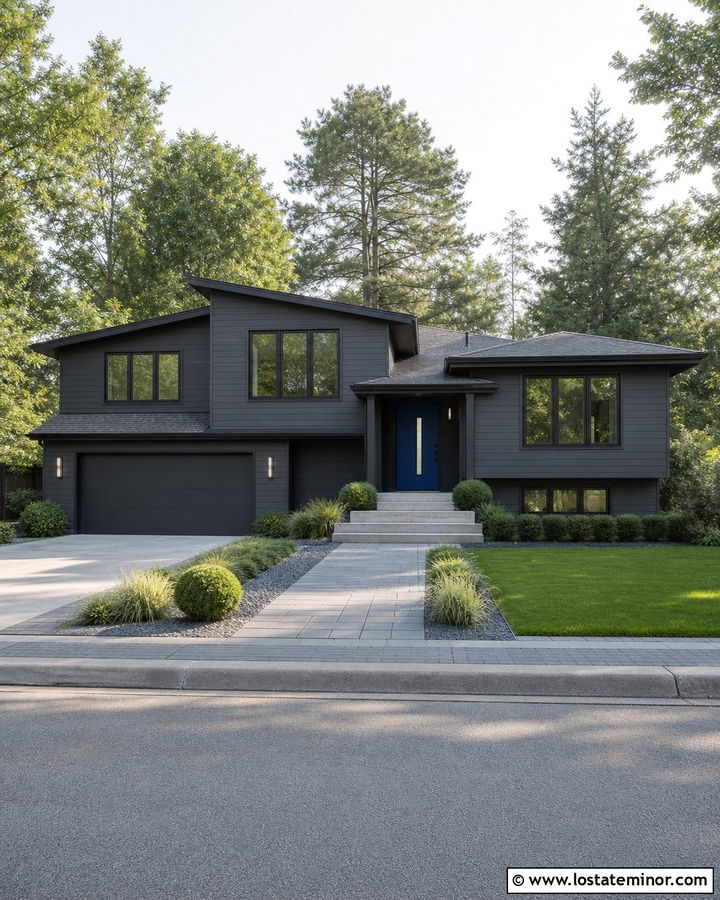
Cobalt blue creates a clear, energetic focal point without losing the cool character of charcoal grey siding. The combination looks best when white trim separates the two strong colors. Use black window frames and a charcoal roof to create visual continuity across the facade. Silver, chrome, or matte black hardware keeps the entry crisp, while warm brass can introduce contrast. On a modern home, consider a flat-panel cobalt door with a vertical glass insert. A traditional house may suit a six-panel door with simple sidelights. Light concrete steps, grey pavers, and restrained green landscaping support the scheme. Cobalt is especially useful on modern ranches, urban townhomes, and contemporary split-level houses where the architecture needs a confident but uncomplicated entry feature.
16. Charcoal Grey House With Powder Blue Entry Door
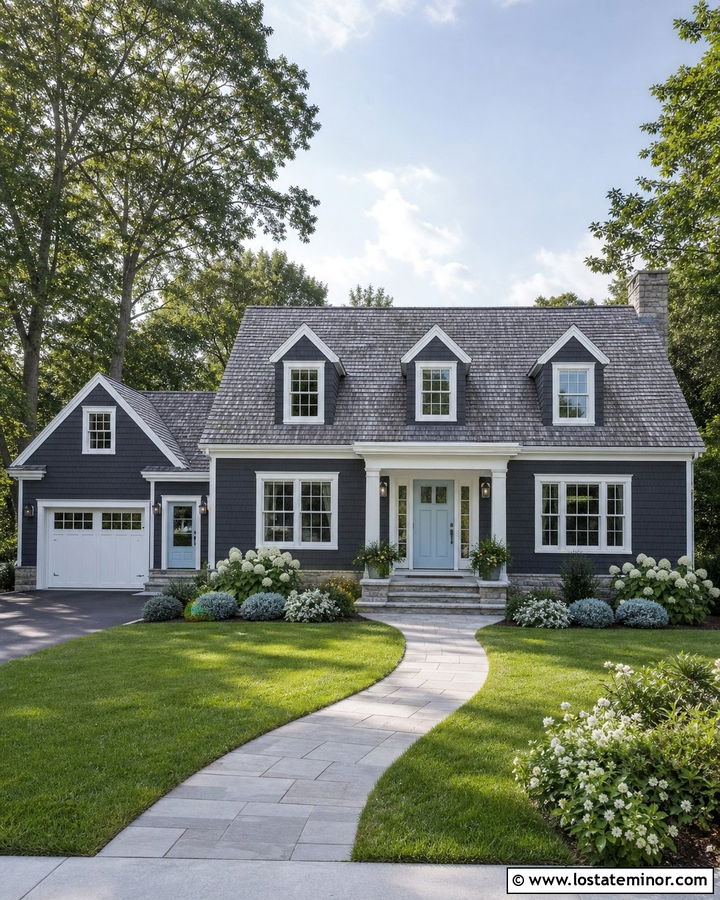
Powder blue brings a soft, airy quality to a deep charcoal grey exterior. Its light value makes the entrance easy to see, even beneath a covered porch. Pair it with white trim, pale grey stone, and a weathered grey roof for a relaxed coastal palette. Brushed nickel hardware and clear glass sidelights reinforce the light appearance. Natural wood decking can prevent the cool colors from feeling too sterile. This combination looks at home on Cape Cod houses, coastal cottages, and shingle-style homes, but it can also refresh a simple suburban ranch. Use hydrangeas, white flowers, and blue-green shrubs around the walkway. Keep shutters charcoal or white rather than powder blue, allowing the front door to remain the single delicate accent within the complete exterior scheme.
17. Charcoal Grey House With Coral Entry Door
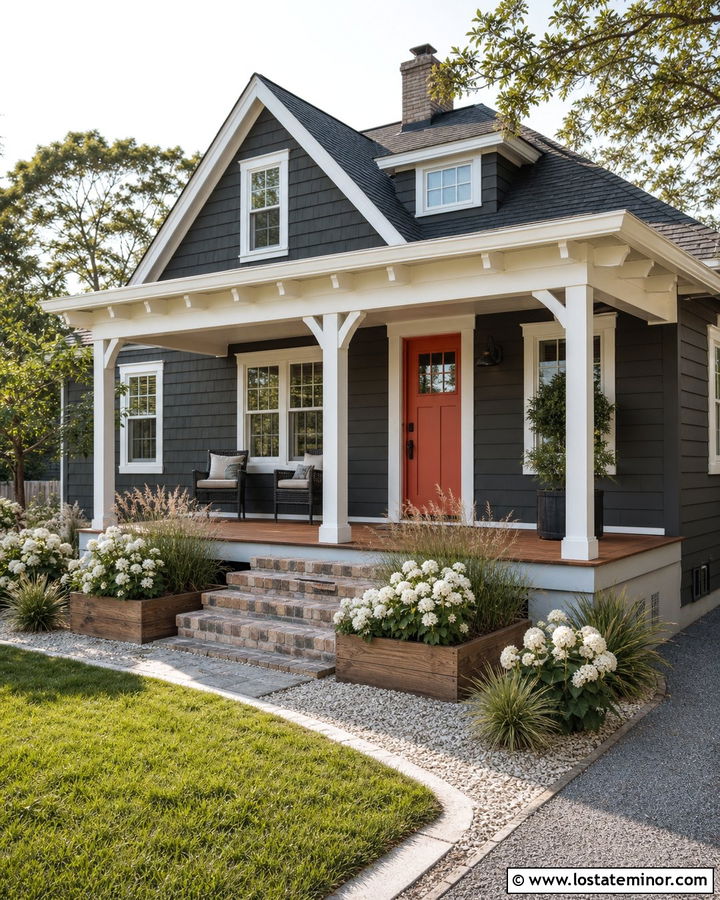
Coral introduces warmth, personality, and a slightly playful note to charcoal grey siding. A muted coral with terracotta undertones will generally feel more grounded than a bright pink-orange shade. Surround the door with creamy white trim and use natural wood or light brick on the porch. Dark bronze hardware complements the warm door while connecting it to a charcoal roof and gutters. This palette is especially appealing on small cottages, coastal bungalows, and mid-century homes with uncomplicated facades. Repeat coral through flowers rather than permanent painted accents. Pale gravel, ornamental grasses, and simple wood planters can frame the approach. By keeping the garage and secondary doors charcoal grey, the coral entry becomes an intentional centerpiece instead of one of several competing exterior features.
18. Charcoal Grey House With Terracotta Entry Door
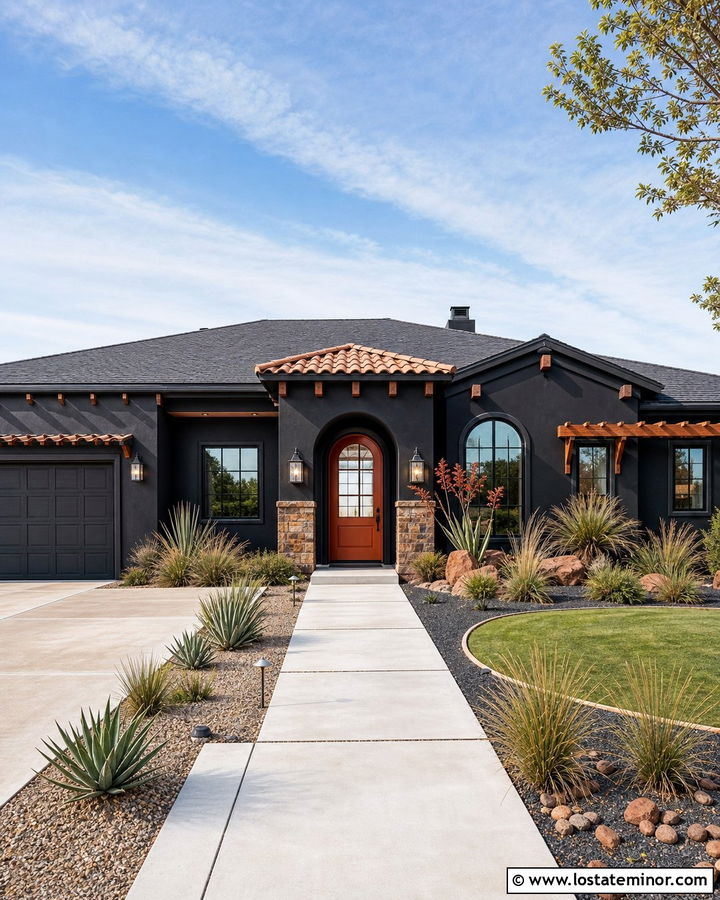
Terracotta gives a charcoal grey house a warm, earthy center. Its clay-like orange-brown color works naturally with brick steps, cedar accents, and stone containing rust or beige variation. Choose soft cream for the trim to support the warm undertones. Dark bronze lighting, gutters, and door hardware will feel more cohesive than bright silver finishes. A low-slope brown or charcoal roof can work, provided the roof does not introduce a strong red tone. Terracotta is particularly effective on Spanish-influenced homes, contemporary ranches, and modern houses with stucco or wood details. Add drought-tolerant landscaping, textured grasses, and a wide concrete walkway. The final palette balances cool and warm surfaces, giving the dark exterior a more welcoming and regionally flexible appearance.
19. Charcoal Grey House With Orange Entry Door
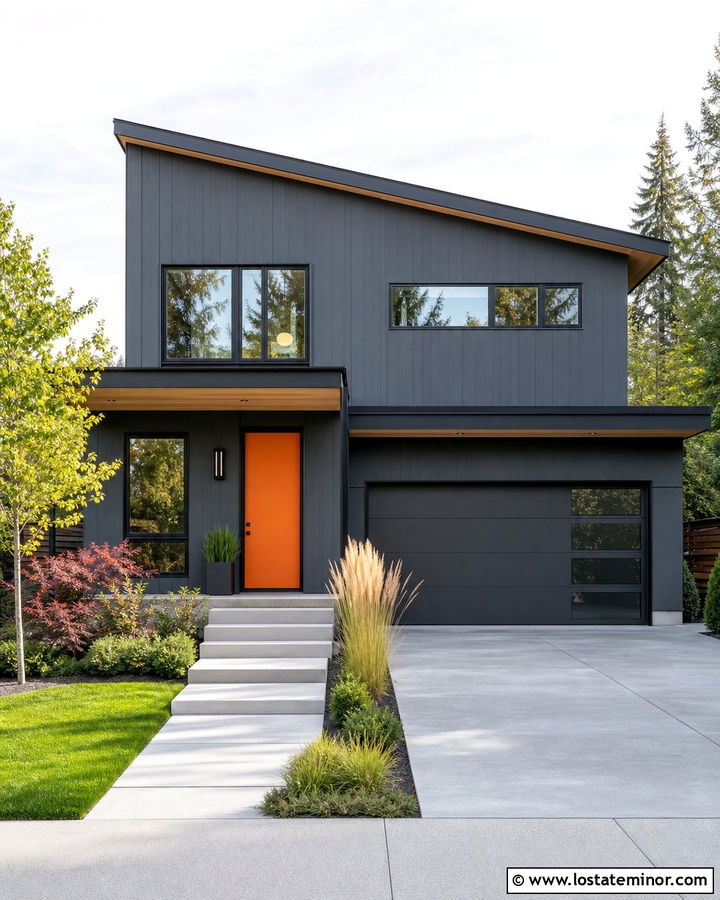
For a modern exterior with unmistakable energy, pair charcoal grey siding with a saturated orange entry door. Orange works as a strong contrast, so use it only at the main entrance. Black trim, windows, and lighting create a clean framework, while light concrete or pale wood prevents the facade from becoming too heavy. A flat or shed roof and vertical siding can make the combination feel especially contemporary. On a traditional house, select a slightly muted burnt orange instead. Keep the garage door charcoal grey to reduce its visual size. Low grasses, architectural shrubs, and rectangular pavers complement the bold geometry. This exterior scheme works best when decorative details are limited and every material supports the door as the clear focal point.
20. Charcoal Grey House With Blush Pink Entry Door
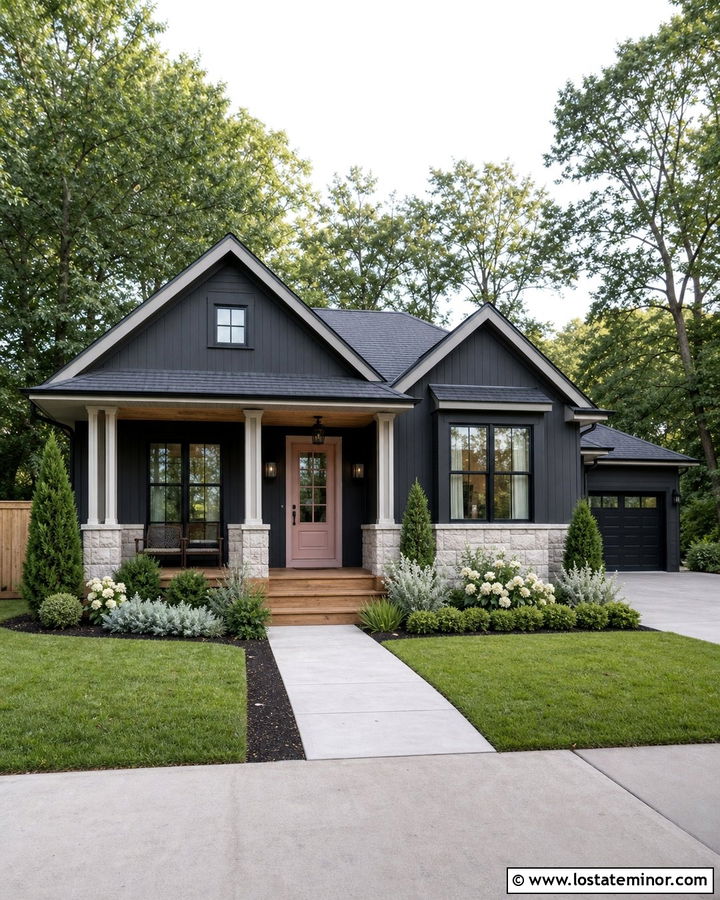
A blush pink entry door offers gentle contrast against a strong charcoal grey house. The pairing feels fresh when the pink has dusty, muted undertones rather than a sugary pastel quality. Use warm white trim and pale stone to create a smooth transition between the light door and dark siding. Black hardware, porch lights, and window frames prevent the scheme from becoming overly delicate. A natural oak porch floor or cedar ceiling adds warmth and texture. This complete look suits modern cottages, compact urban homes, and updated bungalows. Landscaping can include white flowers, silvery foliage, and structured evergreen shrubs. Avoid repeating pink on shutters or garage doors. A single blush entrance provides enough color while preserving the charcoal facade’s clean and sophisticated character.
21. Charcoal Grey House With Plum Entry Door
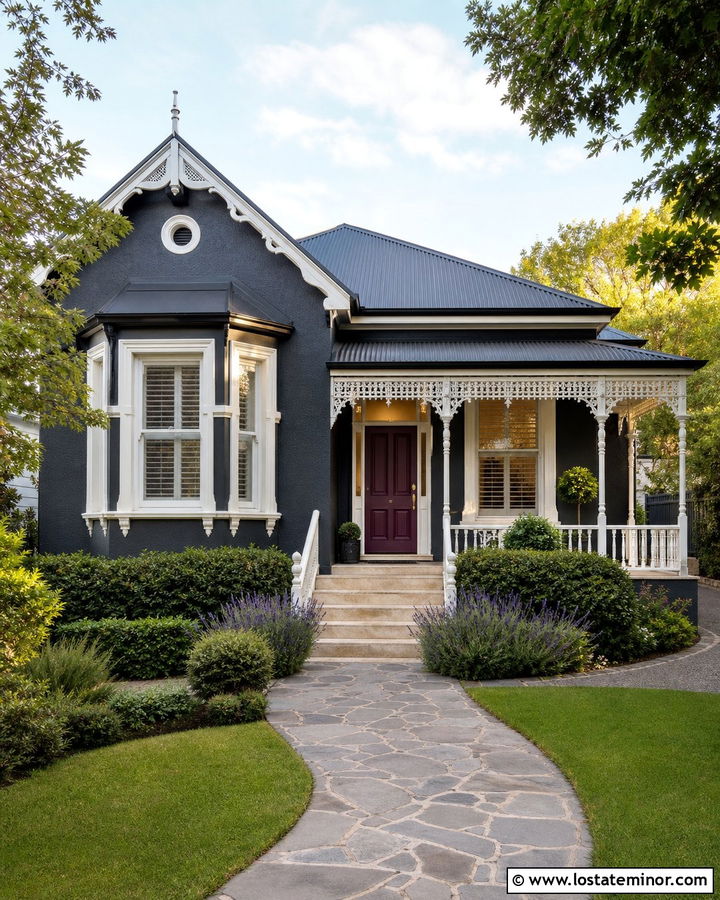
Plum creates an unexpected but elegant entry color for charcoal grey siding. Its red and violet undertones add depth without producing the sharp contrast of yellow or orange. Choose a medium-to-dark plum that remains visible against the exterior. Warm white trim and cream limestone can brighten the doorway, while aged brass hardware emphasizes the color’s richness. Use a charcoal roof and dark gutters to keep the upper facade cohesive. Plum is a natural match for Victorian homes, traditional cottages, and eclectic bungalows with detailed porch architecture. Keep other painted accents neutral so the color does not become overly decorative. Deep green shrubs, lavender plants, and a curved stone path can frame the entrance and support its sophisticated garden-inspired character.
22. Charcoal Grey House With Taupe Entry Door
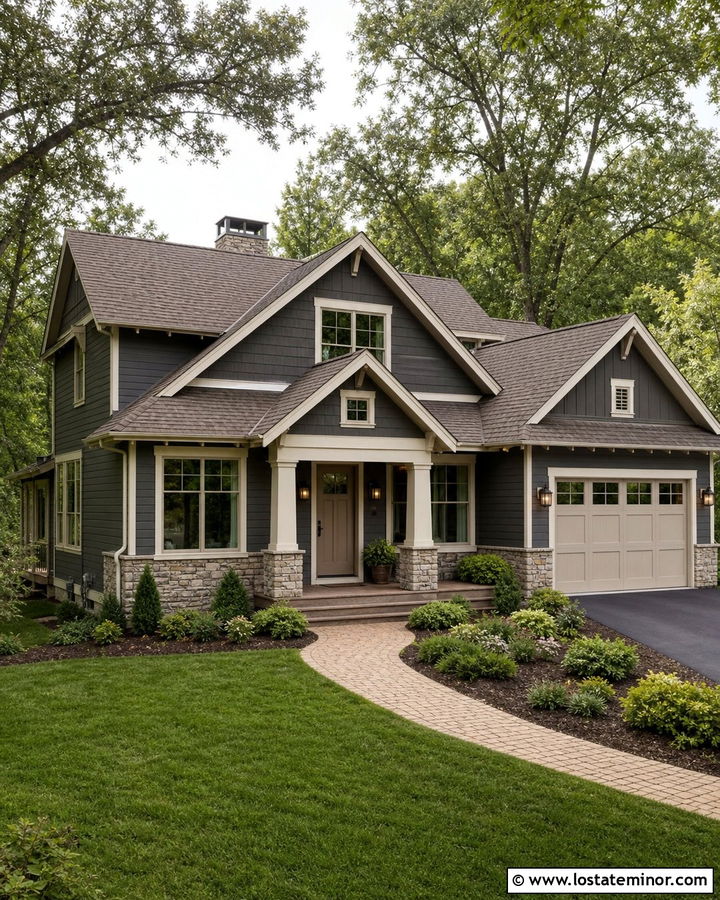
Taupe is a practical entry choice when you want to soften a charcoal grey exterior without adding obvious color. Look for a warm taupe with brown undertones so the door does not disappear into the siding. Cream trim, beige-grey stone, and a weathered wood porch floor build a comfortable neutral palette. Dark bronze hardware and lighting connect the warm door to the darker exterior. This combination is ideal for homeowners who want understated curb appeal or need to coordinate with an existing brown roof. It works well on ranch homes, craftsman houses, and traditional suburban facades. Add layered green landscaping and tan walkway pavers for subtle warmth. The resulting exterior is quiet but dimensional, with enough tonal contrast to make the entry feel carefully designed.
23. Charcoal Grey House With Greige Entry Door
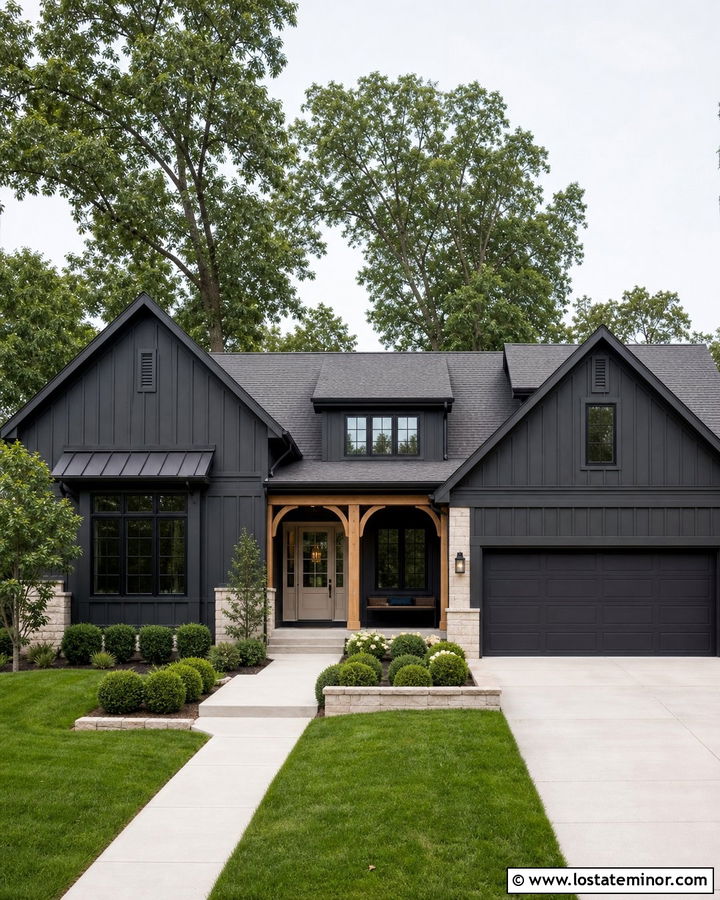
A greige entry door creates a smooth bridge between dark charcoal siding and warm exterior materials. Select a noticeably lighter greige so the entrance remains defined from the street. Pair it with off-white trim, limestone accents, and natural oak details for a soft contemporary palette. Black hardware and windows provide enough contrast to keep the neutrals from blending together. A light-to-medium grey roof works well, particularly when it includes mild brown variation. Greige doors fit modern farmhouses, transitional homes, and understated new builds. For a coordinated facade, paint the garage door charcoal rather than matching the lighter entrance. Use a clean concrete walkway, rounded shrubs, and warm exterior lighting fixtures. The complete look feels calm, balanced, and easy to maintain as surrounding trends change.
24. Charcoal Grey House With Bronze Entry Door
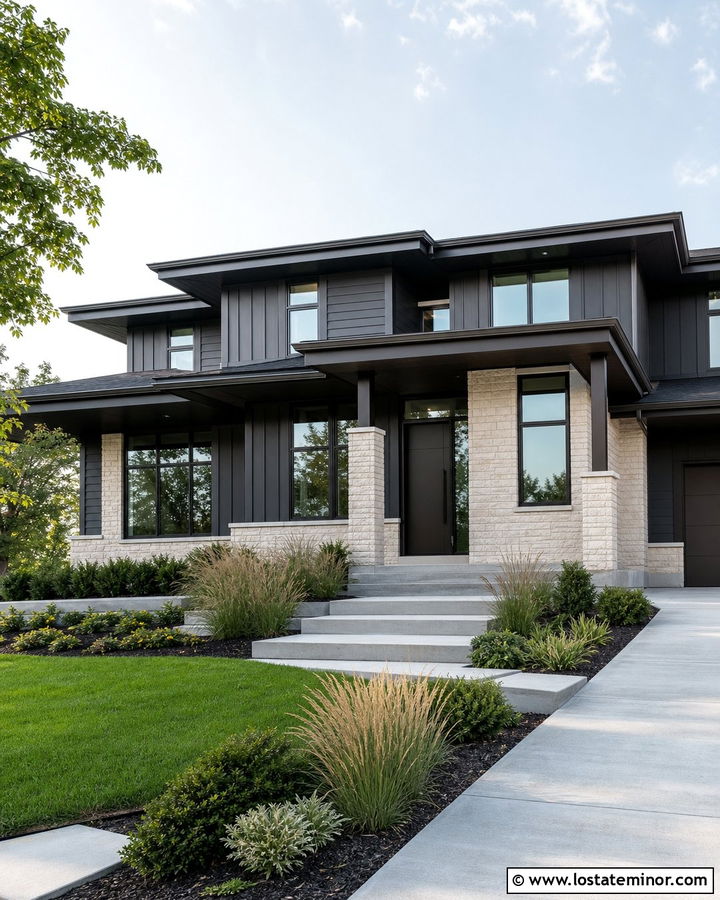
A bronze entry door adds metallic depth to a charcoal grey house without looking flashy. Choose a dark architectural bronze finish with warm brown undertones rather than a bright reflective surface. Match the door with bronze window frames, gutters, porch lights, and railings to create a consistent exterior framework. Cream limestone or warm grey brick can provide a lighter counterpoint. Vertical charcoal siding and a low-pitched roof make the palette feel contemporary, while divided-light windows can adapt it to a traditional home. Bronze works particularly well on modern prairie houses, upscale ranches, and mixed-material exteriors. Include ornamental grasses, broad concrete steps, and structured planting beds. The subtle sheen of the entrance will add dimension as natural light moves across the facade.
25. Charcoal Grey House With Dark Brown Entry Door
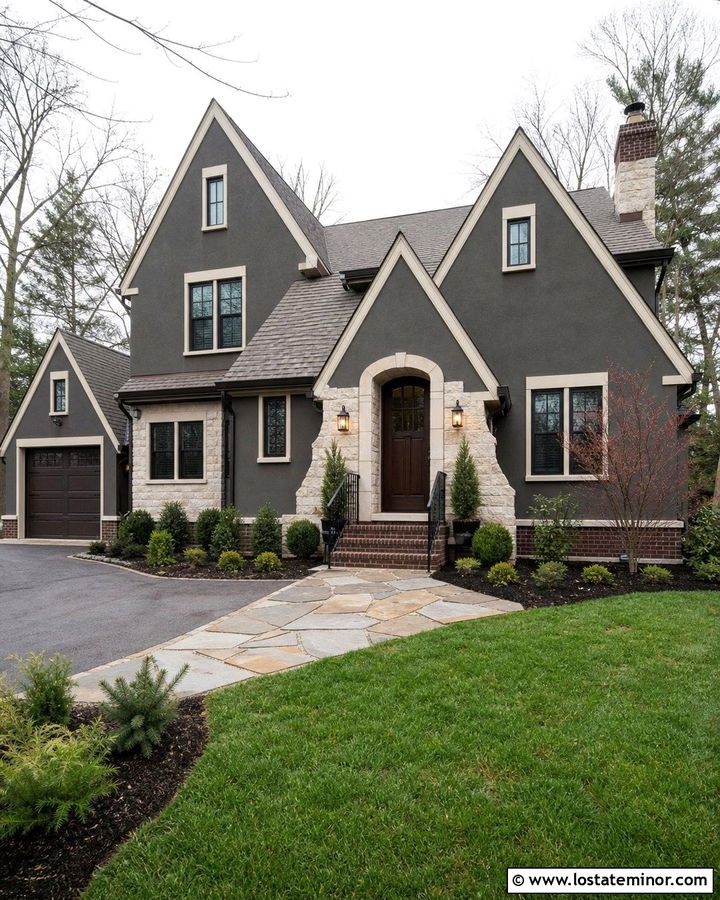
Dark brown provides a grounded, traditional alternative to black on a charcoal grey exterior. Because the colors have similar depth, choose a brown with clear chocolate or espresso undertones. Light cream trim and pale stone around the entry will prevent the door from blending into the siding. Oil-rubbed bronze hardware, warm porch lights, and a brown-grey shingle roof can reinforce the earthy direction. Dark brown also coordinates well with brick steps and stained wood railings. This scheme suits craftsman houses, Tudor-inspired homes, rustic colonials, and wooded suburban properties. Add evergreen foundation plants and a natural flagstone walkway for a complete look. Keep shutters charcoal or cream, allowing the brown door and supporting wood elements to supply controlled warmth across the facade.
26. Charcoal Grey House With Mahogany Double Entry Door
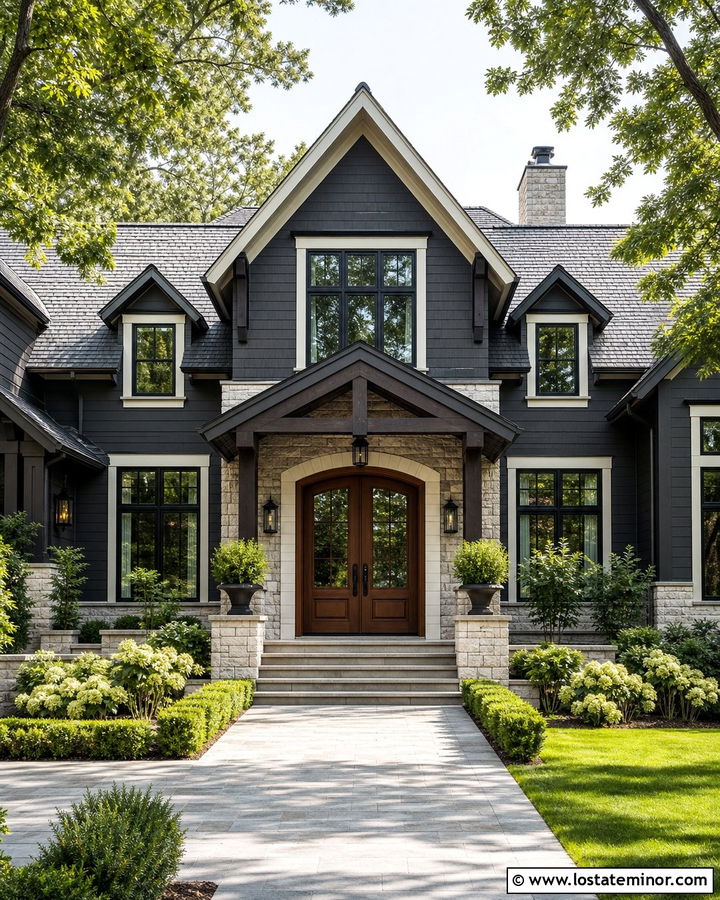
Mahogany double doors create a substantial, welcoming entrance on a larger charcoal grey home. Their reddish-brown grain adds warmth and natural variation to the dark facade. Frame the doors with cream trim or pale stone to emphasize their width and craftsmanship. Black or antique bronze hardware can connect the entry to dark windows, gutters, and roof details. Repeat mahogany selectively on porch beams or soffits, but avoid covering too much of the exterior in competing wood tones. This full scheme is especially effective on craftsman, lodge-inspired, transitional, and luxury suburban homes. Broad stone steps, symmetrical planters, and layered landscaping should match the scale of the entrance. The completed design feels impressive while remaining balanced, natural, and approachable from the curb.
27. Charcoal Grey House With Glass Entry Door
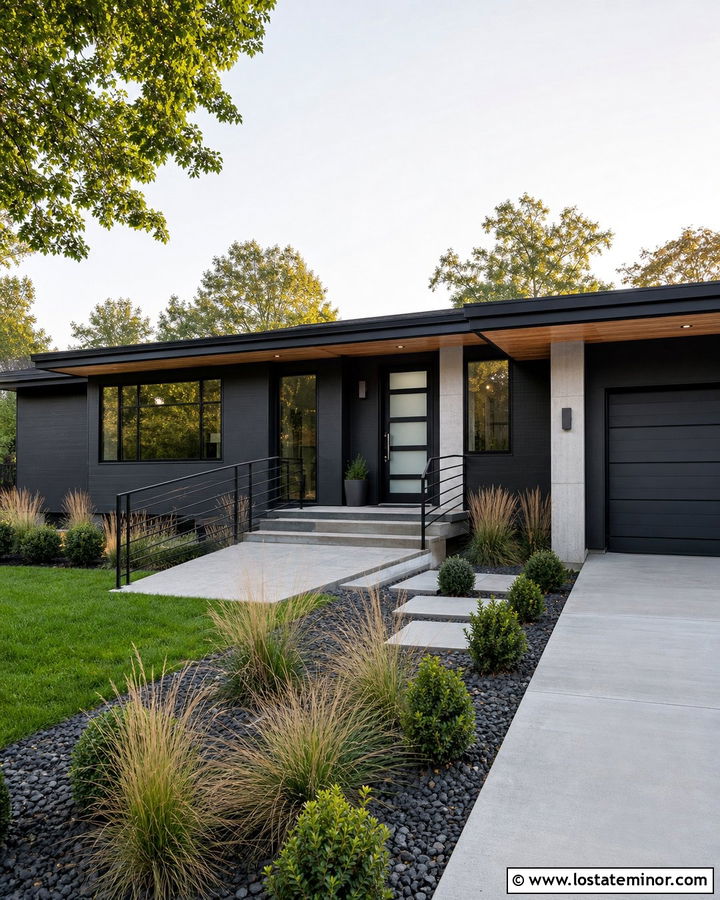
A glass entry door can lighten the appearance of a charcoal grey facade and bring a modern focus to the porch. Select a black-framed door with frosted, reeded, or lightly tinted glass for privacy. Black windows and simple metal railings will repeat the narrow frame around the exterior. Use warm wood on the porch ceiling or vertical accent siding to balance the cool grey and glass. Pale concrete, white trim, or light stone can brighten the lower facade. This approach works particularly well on modern, mid-century, and Scandinavian-inspired homes. Keep the landscaping architectural with grasses, low shrubs, and rectangular stepping stones. A charcoal garage door will blend into the main body, leaving the transparent entrance and warm wood details as the primary visual features.
28. Charcoal Grey House With Arched Wood Entry Door
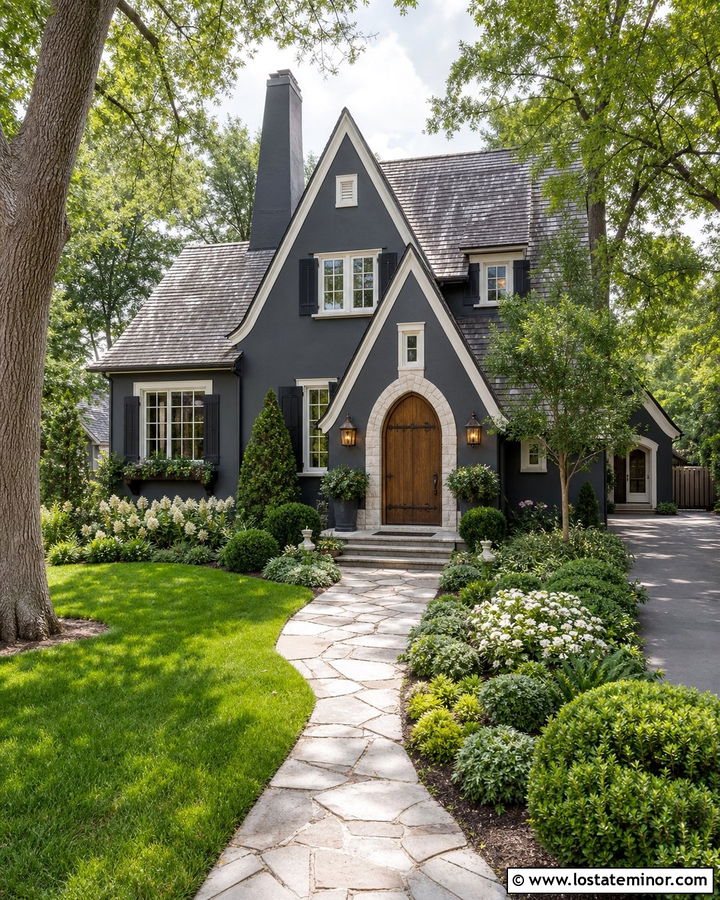
An arched wood entry door brings softness and traditional character to a charcoal grey exterior. Medium walnut or oak works beautifully because the warm grain contrasts with the cool siding. Surround the arch with cream stone or warm white trim so its curved shape remains clearly visible. Use dark bronze hinges, a substantial handle set, and lantern-style porch lights. Charcoal shutters and a weathered grey roof will keep the remaining palette quiet. This complete exterior look suits Tudor homes, European cottages, storybook houses, and traditional brick-and-siding combinations. Add an irregular flagstone walkway and layered garden beds to support the old-world architecture. Repeating the door’s arch in a porch opening or window helps the entrance feel integrated rather than applied as a separate decorative feature.
29. Charcoal Grey House With Craftsman Entry Door
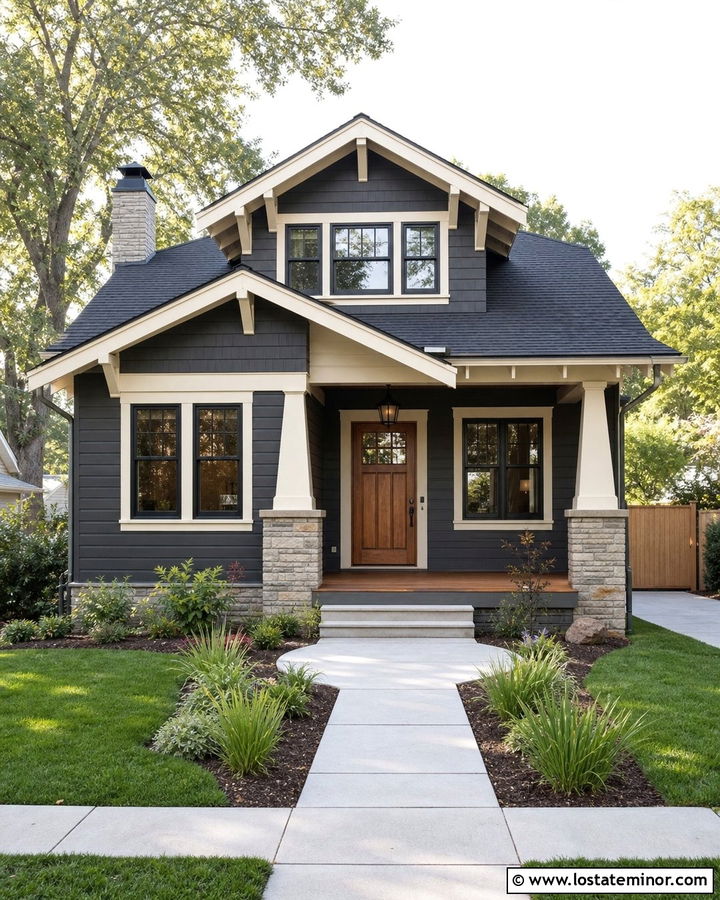
A craftsman entry door should feel solid, detailed, and connected to the house’s natural materials. Choose a stained fir or oak door with square glass panes across the upper section. Against charcoal grey lap siding, the warm wood creates an immediate focal point. Cream trim, tapered porch columns, and a stone foundation strengthen the traditional craftsman structure. Repeat black through the roof, window frames, railings, and door hardware. A wood porch floor can match the door, but use a slightly quieter stain to avoid making the entry too uniform. Complete the house with deep eaves, visible brackets, and layered native landscaping. The entire scheme feels handcrafted and welcoming, with the charcoal exterior providing a modern update to classic bungalow architecture.
30. Charcoal Grey House With Modern Pivot Entry Door
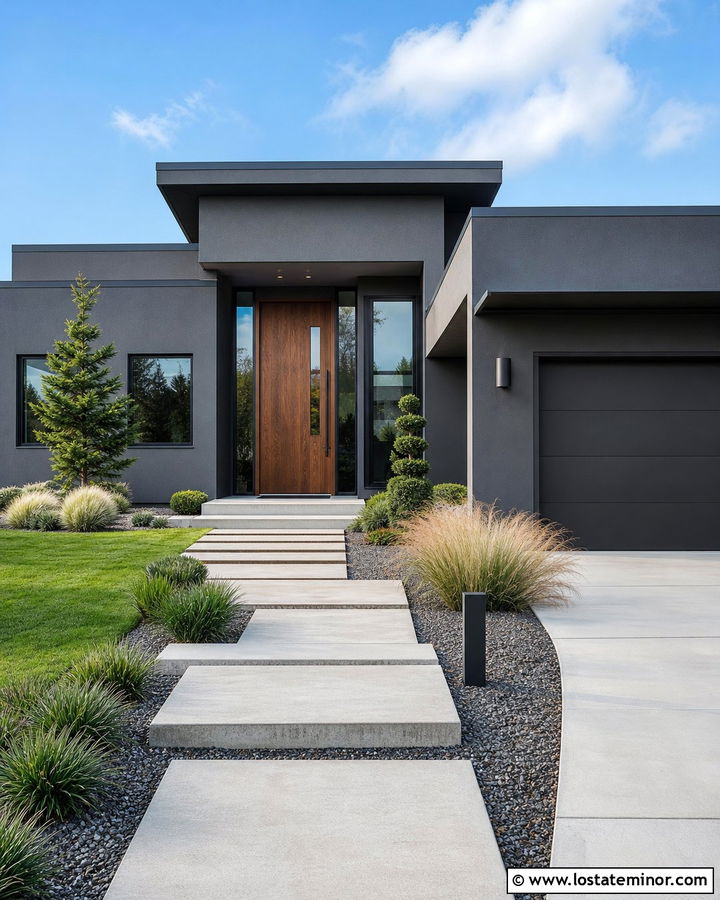
A pivot door gives a charcoal grey house a bold architectural entrance. Choose a wide natural oak or warm walnut door with a slim black handle and one vertical glass panel. Smooth charcoal stucco or vertical siding keeps the surrounding facade clean and emphasizes the door’s scale. Repeat black on flat-roof edging, windows, railings, and minimalist lighting. Large pale concrete slabs can form the porch and walkway, creating a lighter base beneath the dark house. Use gravel beds, sculptural grasses, and restrained evergreen planting instead of busy foundation landscaping. This complete scheme is most appropriate for contemporary, desert-modern, and minimalist homes. The warm door breaks up the charcoal exterior while its oversized proportions create a clear and memorable focal point from the street.
Conclusion:
The strongest 30 Charcoal Grey House Design With Entry Door Ideas treat siding, trim, roofing, masonry, and landscaping as parts of one coordinated exterior. Bright door colors create energy, while wood and muted neutrals offer a quieter, more natural finish. Before choosing, view exterior samples beside the charcoal siding in direct sun, shade, and cloudy light. Undertones can appear different as conditions change. Also consider whether you want the entrance to command attention or blend gently with the architecture. Repeat the door color or material in only a few small details for balance. With thoughtful contrast and supporting textures, charcoal grey can suit almost any house style while delivering polished, welcoming curb appeal.

Related posts: