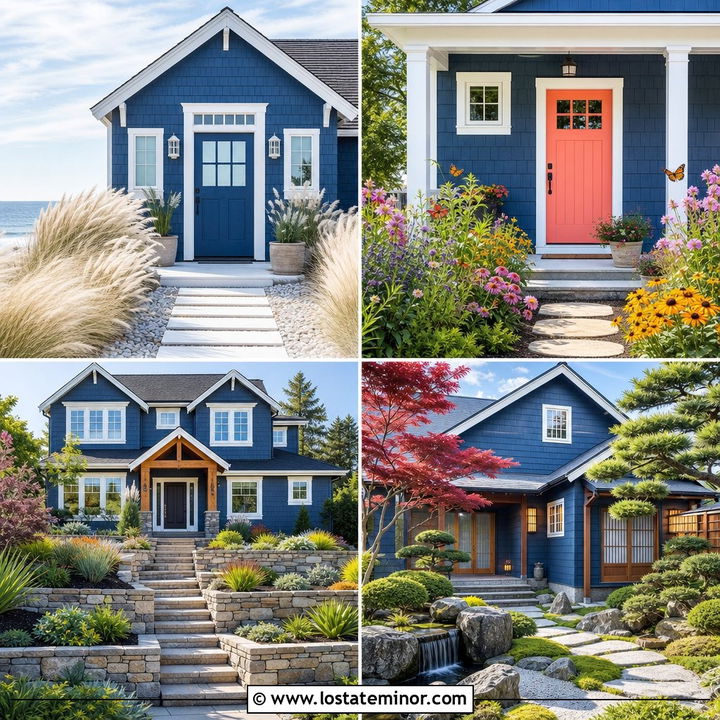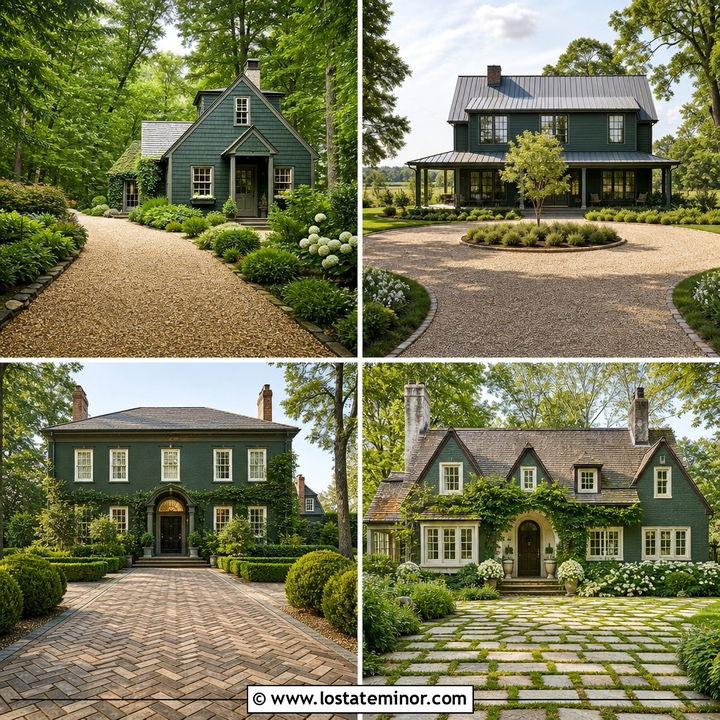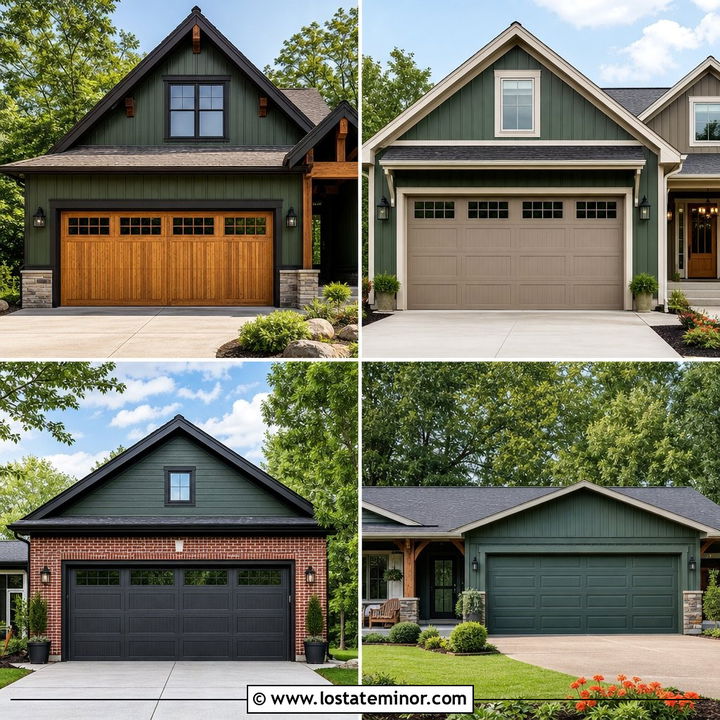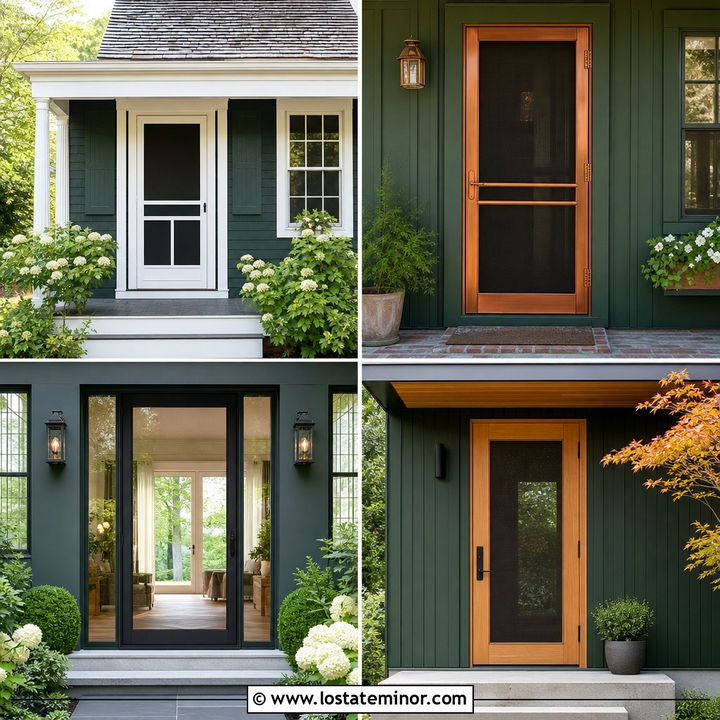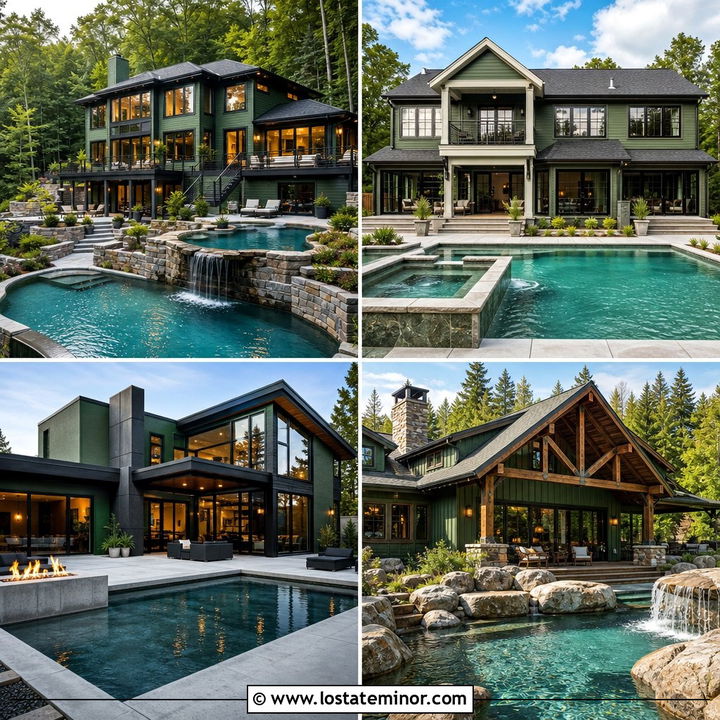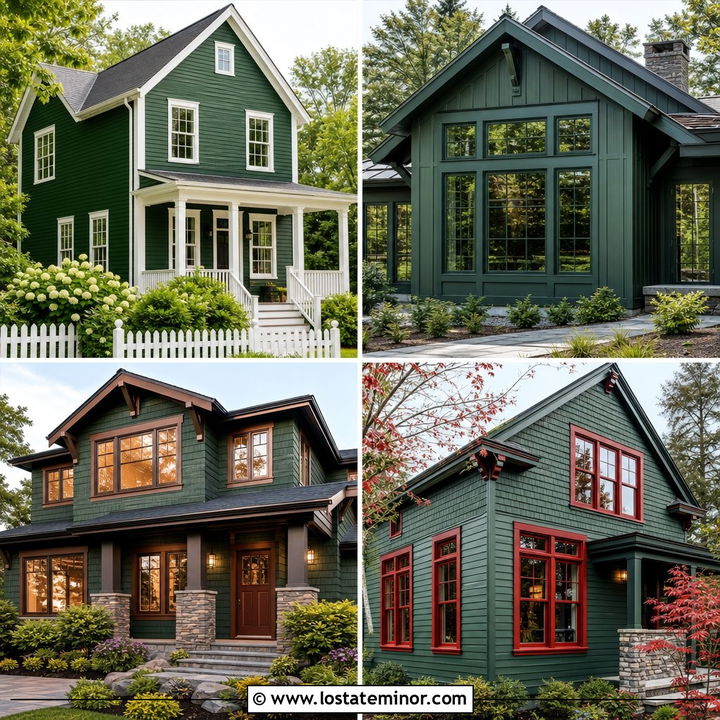
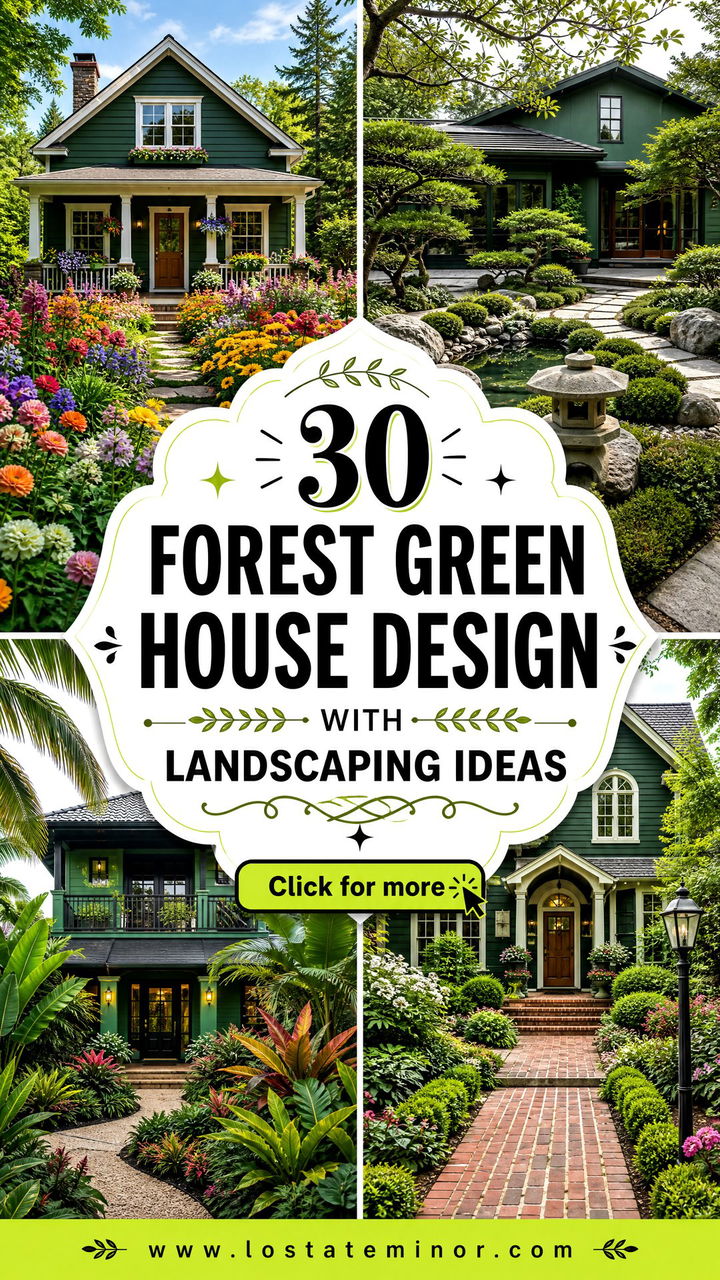
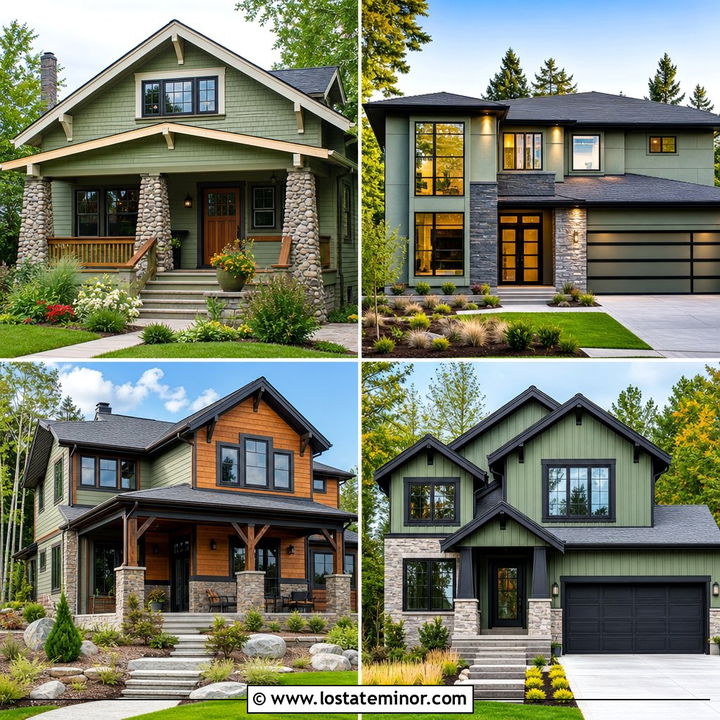
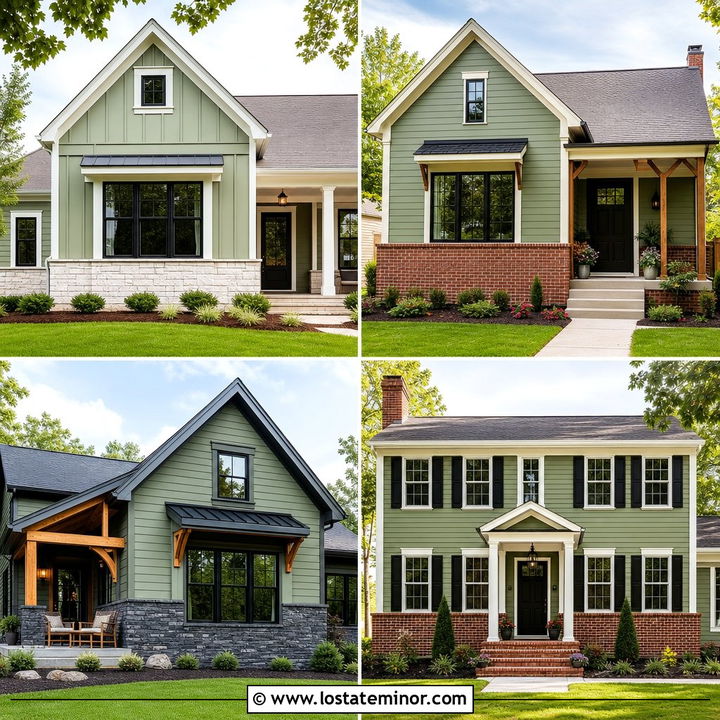
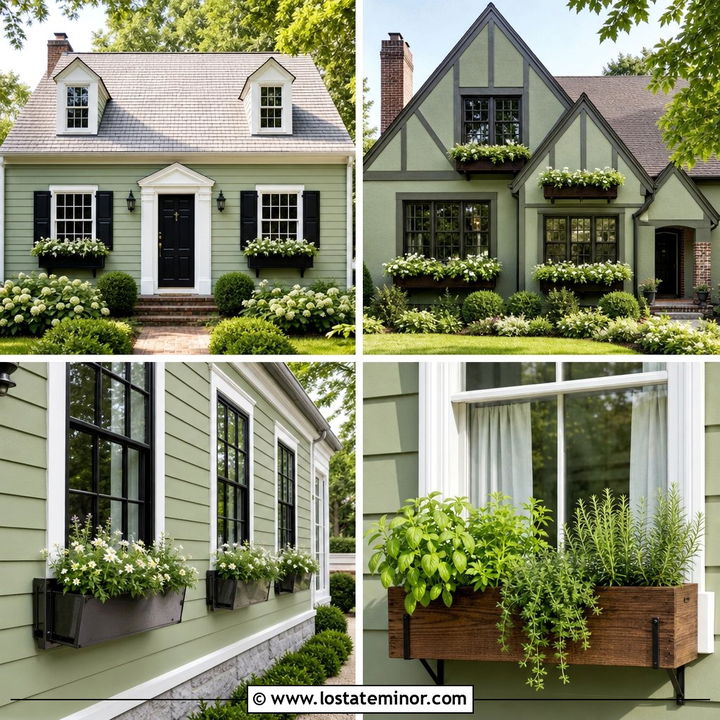
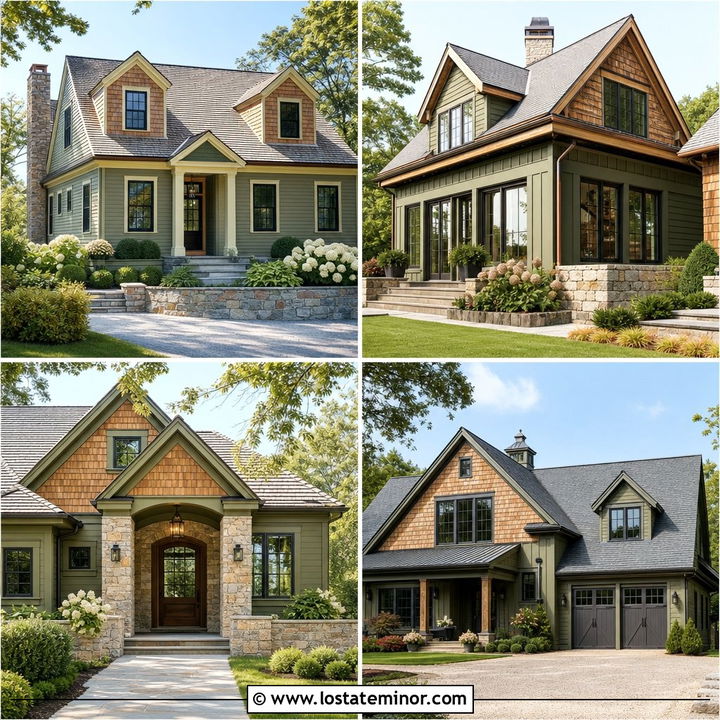
A forest green exterior can make a home feel grounded, distinctive, and closely connected to its surroundings. The key is planning the siding, trim, roof, hardscaping, and plants as one coordinated composition. Forest green works especially well with warm wood, pale stone, traditional brick, creamy white, and matte black accents. It can suit everything from a compact bungalow to a modern farmhouse or mountain retreat. Current exterior design coverage also favors deep nature-inspired greens paired with layered landscaping and authentic materials. () Each look below includes practical planting choices, balanced color pairings, and curb-appeal details you can adapt to different climates and budgets. Explore these 30 Forest Green House Design With Landscaping Ideas to create a complete exterior that feels welcoming and intentional.
1. Forest Green House With White Trim And Hydrangeas
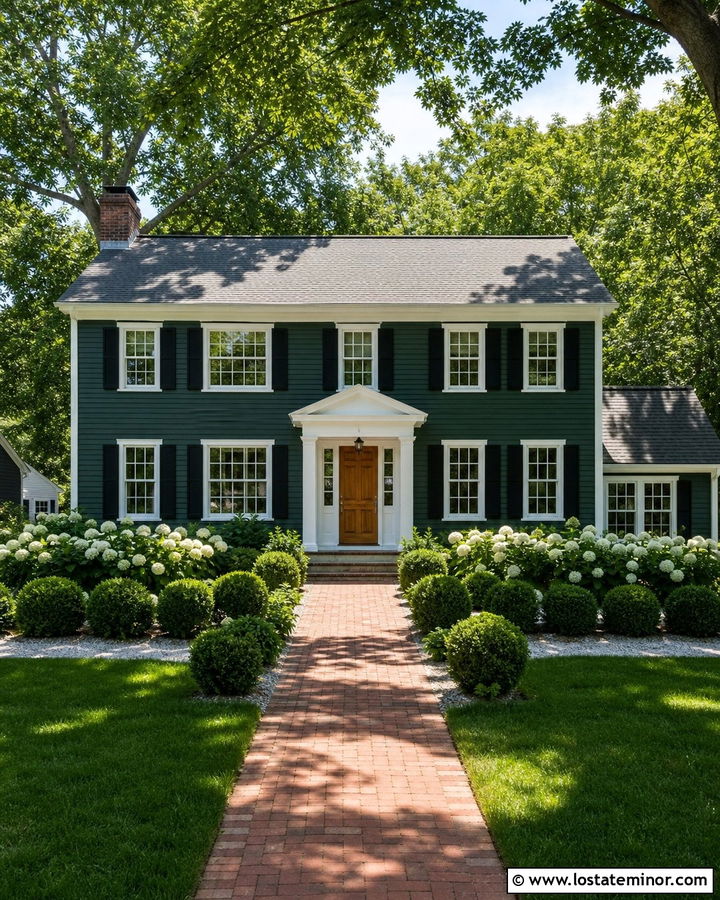
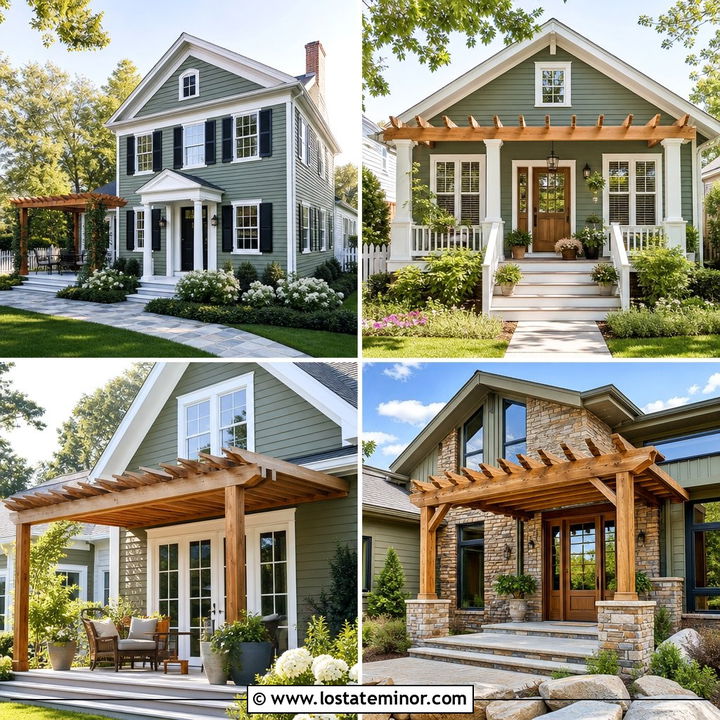
Crisp white trim gives a forest green house a clean, traditional outline without taking attention away from the rich siding. Use white around the windows, fascia, porch columns, and railings to brighten the entire facade. A medium-gray roof keeps the contrast comfortable rather than severe. Across the foundation, plant white hydrangeas in broad groups, leaving enough room for their mature size. Low boxwoods can provide winter structure, while pale gravel or light stone mulch prevents the planting beds from looking too dark. Finish the entrance with a warm oak door and a straight brick walkway. This balanced scheme works especially well on Colonial, Cape Cod, and traditional two-story homes with symmetrical windows and an orderly front yard.
2. Forest Green Craftsman House With Native Landscaping
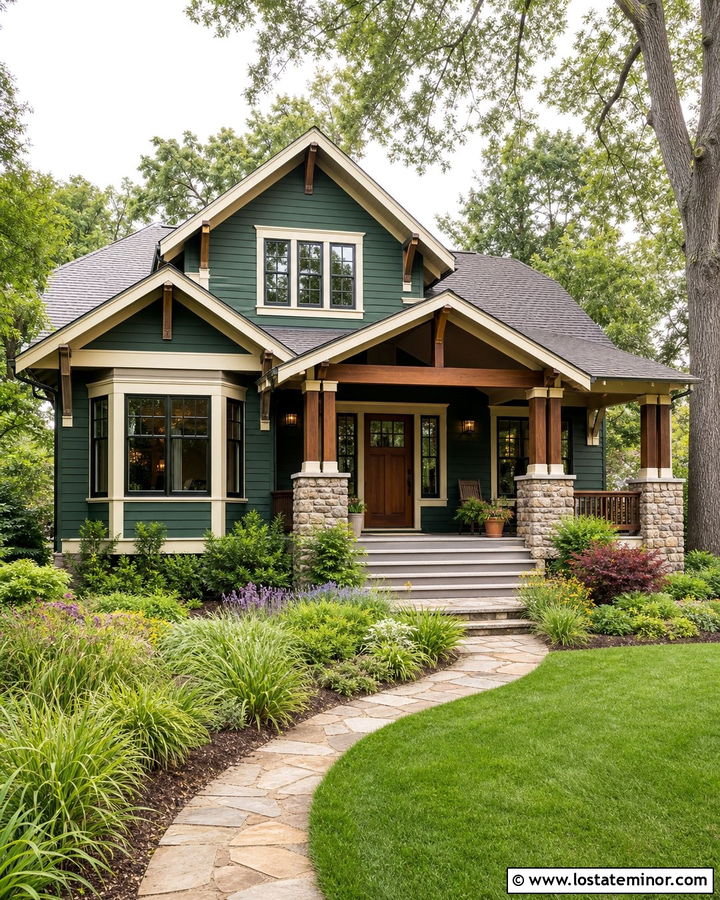
A Craftsman exterior feels naturally suited to forest green because its deep porches and visible woodwork already emphasize organic materials. Paint the horizontal siding forest green, then use warm cream on the window trim and tapered columns. Stained cedar beams, a medium-brown front door, and a stone porch foundation add texture without creating a busy palette. Surround the home with regionally appropriate native grasses, flowering perennials, and compact shrubs. Choose plants with different mature heights so the landscape rises gradually toward the porch. A slightly curved flagstone path can soften the strong rooflines and wide front steps. Native landscaping may also fit local growing conditions more comfortably than plants selected only for appearance, making this complete exterior easier to maintain.
3. Forest Green Farmhouse With White Roses
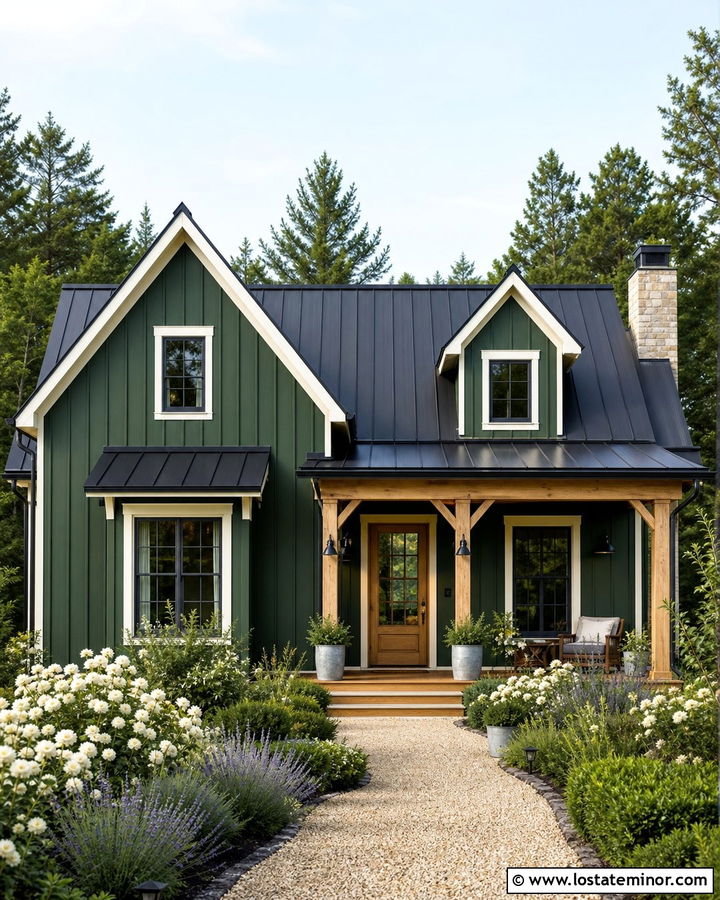
For a softer farmhouse look, combine forest green board-and-batten siding with creamy white trim and a welcoming natural-wood porch. The vertical siding makes the facade appear taller, while the dark green color keeps a large farmhouse from feeling overly stark. Use a charcoal metal roof and simple black lights for definition. Along the porch, plant white shrub roses with catmint, lavender, and low evergreen edging. Their pale flowers stand out clearly against the saturated siding. A pea-gravel path and galvanized planters can reinforce the rural character without making the yard look themed. Keep taller plants away from the windows, and repeat the same rose variety across the front. Repetition helps the landscaping feel calm, connected, and visible from the street.
4. Forest Green Ranch House With Ornamental Grasses
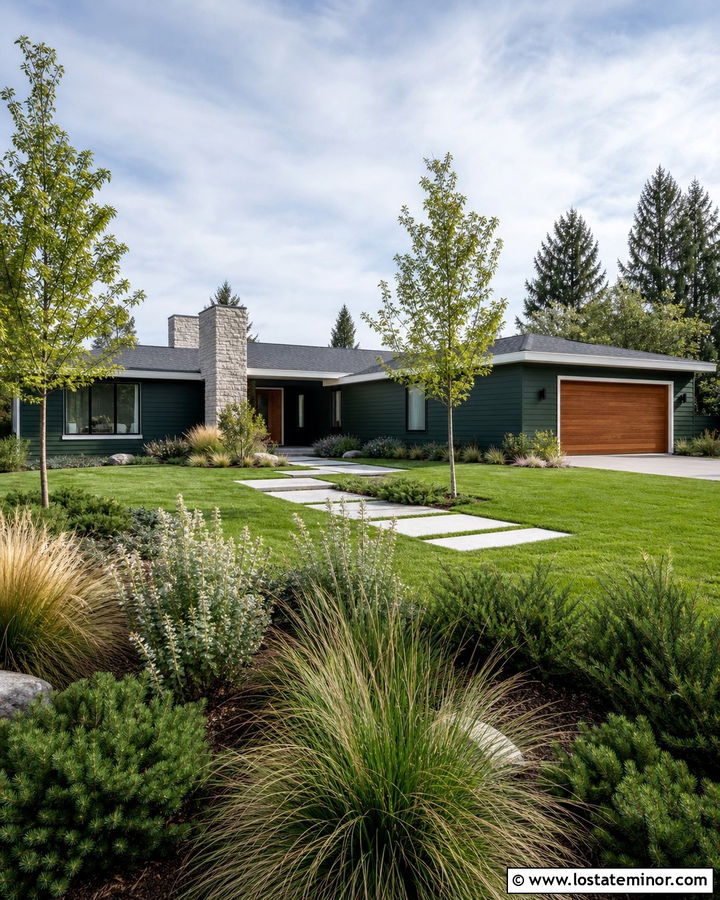
A long ranch facade benefits from landscaping that creates movement without hiding the windows. Forest green lap siding gives the low profile more visual weight, especially when paired with warm white trim and a light stone chimney. Add a cedar garage door or cedar entry panel to break up the horizontal expanse. In the planting beds, use flowing groups of ornamental grasses, dwarf evergreens, and pale flowering perennials. Position taller grasses near blank walls and shorter varieties below windows. A wide concrete walkway with rectangular stepping pads can bring a modern shape to the composition. Leave open spaces between plant groups so the yard remains easy to read. The finished exterior feels relaxed, updated, and appropriately scaled for a single-story suburban home.
5. Forest Green Cottage With A Colorful Flower Garden

A compact cottage can carry forest green beautifully when the surrounding garden includes clear areas of contrasting color. Use deep green shake or lap siding, soft ivory trim, and a cheerful muted yellow front door. A weathered brick chimney and cedar window boxes add warmth. Fill the front beds with layered pink coneflowers, purple salvia, white daisies, and silver-leaved ground cover. These colors remain visible against the dark facade instead of disappearing into it. Allow the planting layout to feel informal, but repeat several key flowers to prevent visual clutter. A curved brick path can lead through the garden to a small covered entry. This full exterior works best when plants frame the cottage rather than completely covering its windows, corners, or architectural details.
6. Forest Green Colonial House With Boxwood Landscaping
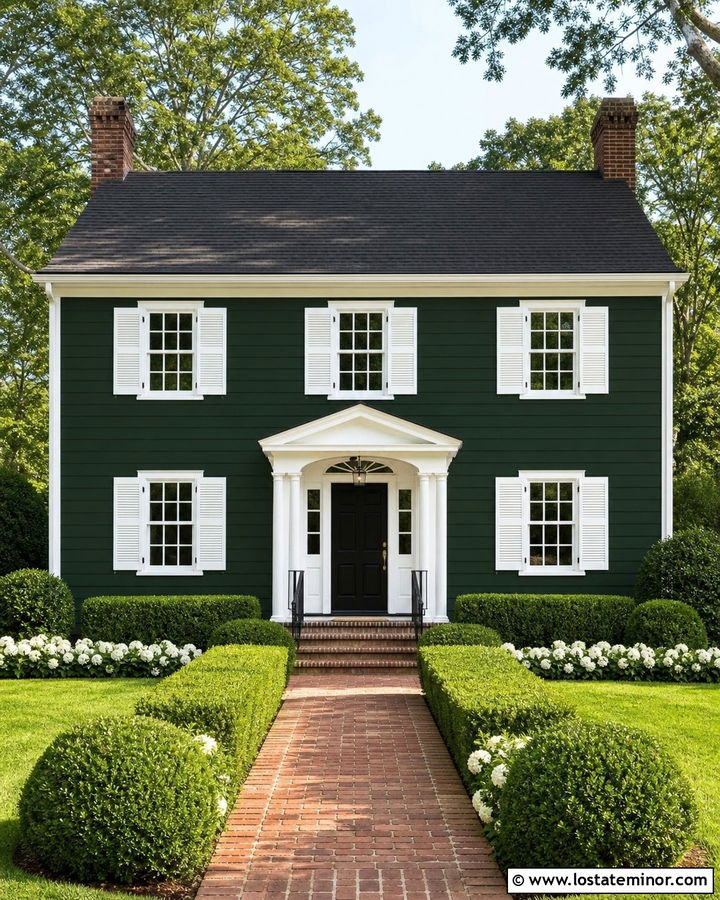
Symmetrical boxwood landscaping strengthens the formal character of a forest green Colonial house. Paint the main siding a classic forest green and use crisp white for the cornice, shutters, window frames, and entry surround. A black front door and dark roof create a polished central focal point. Line the front walkway with evenly spaced boxwoods, then place larger rounded shrubs near the outer corners of the house. White flowering plants can fill the gaps during spring and summer without weakening the structured layout. Choose brick or bluestone for the path to introduce a traditional material beneath the greenery. Keep every hedge below the windowsills and maintain generous spacing around the entrance. The result is orderly and elegant, yet the green-on-green palette still feels connected to nature.
7. Forest Green Bungalow With Fern Landscaping
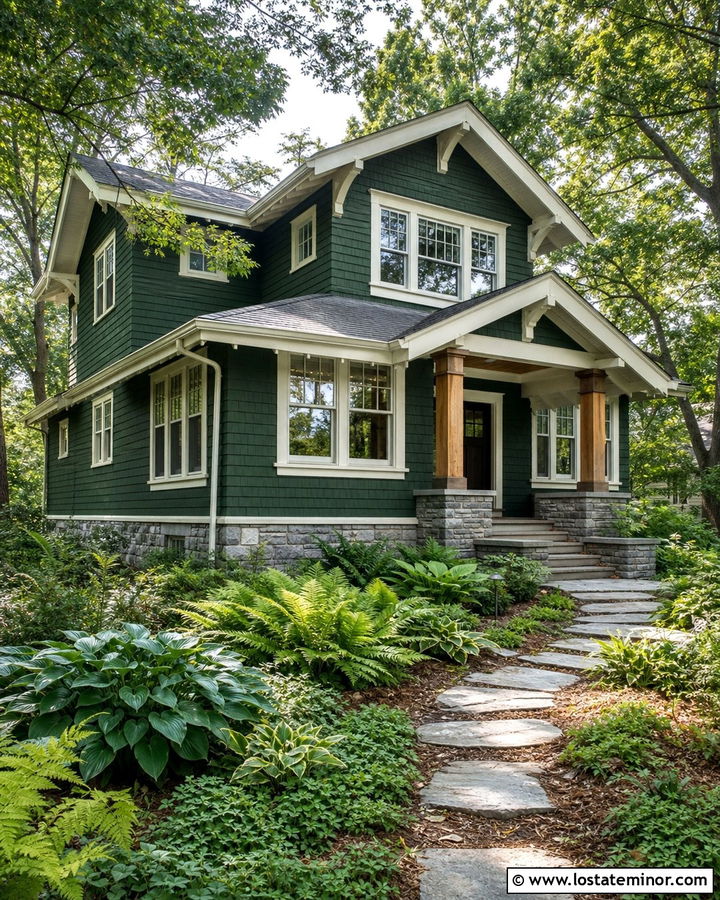
Lush ferns can make a forest green bungalow feel tucked into a peaceful woodland setting. Cover the facade in deep green lap siding, then use warm off-white trim to outline the low roof, exposed rafters, and divided-light windows. Natural cedar porch columns and a medium-gray stone foundation provide the necessary separation between the house and leafy plantings. Arrange shade-tolerant ferns in broad sweeps beneath existing trees, mixing them with hostas and low woodland ground covers. A stepping-stone walkway can weave gently through the planting rather than cutting across it in a rigid line. Keep the porch steps and front door clearly visible from the curb. This layered scheme is particularly useful for shaded lots where sun-loving foundation flowers would struggle.
8. Forest Green Modern House With Minimal Landscaping
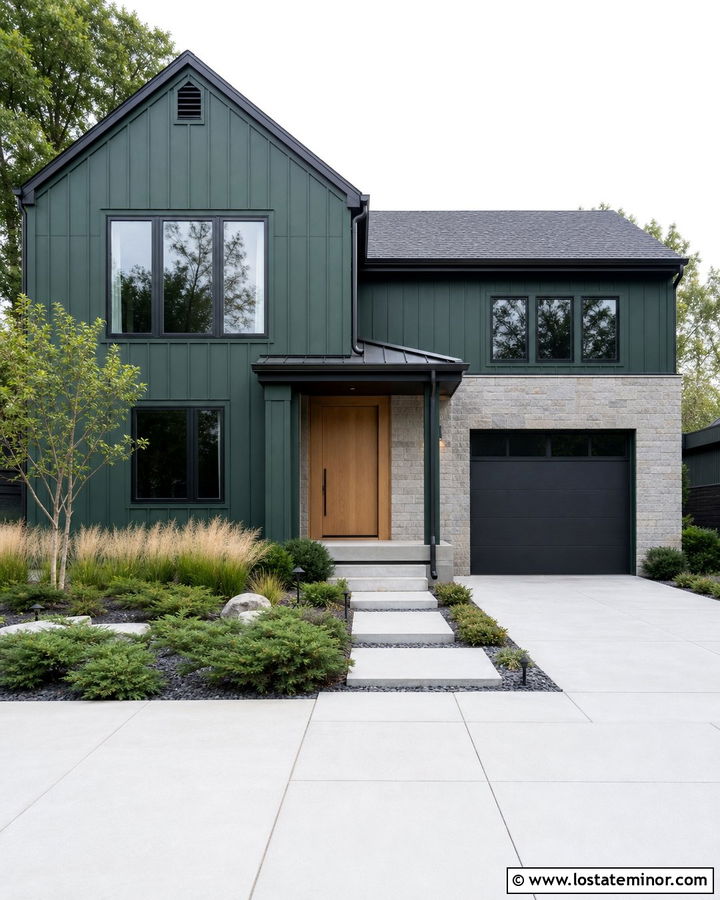
Clean architecture calls for landscaping with equally clear shapes. On a modern home, use forest green vertical siding with black window frames, matching dark gutters, and a natural-oak pivot door. Pale concrete and light-gray stone prevent the darker exterior from appearing heavy. Instead of filling every bed, select a limited plant palette such as feather reed grass, compact juniper, and one sculptural multi-stem tree. Arrange the plants in linear groups that follow the geometry of the windows and walkway. Large concrete pavers separated by gravel can connect the driveway to the entrance. Leave part of the facade open so the green color remains the primary feature. The combination feels bold and contemporary while still gaining softness from grasses, foliage, and natural wood.
9. Forest Green House With Red Brick Landscaping Borders
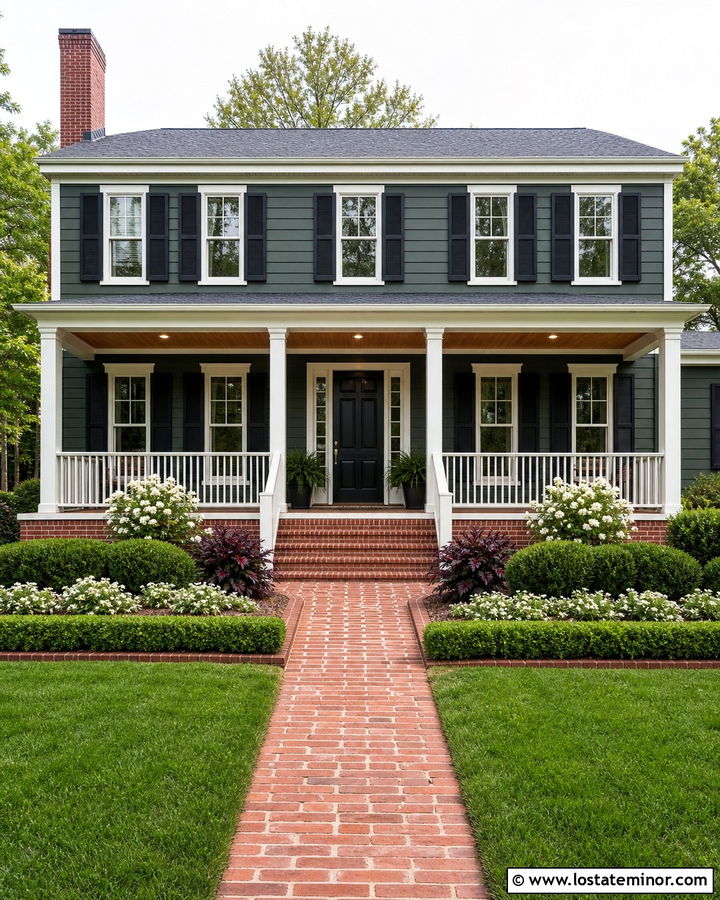
Existing red brick can become an asset beside forest green siding when its warm undertones are repeated carefully. Use forest green across the main body, cream on the trim, and black on the shutters or front door. Retain a red brick foundation or chimney, then echo that material in low garden borders and the front walkway. Plant deep green boxwoods, white flowering shrubs, and small touches of burgundy foliage to connect the brick with the garden. Avoid filling the entire landscape with red flowers, which may make the palette feel overly coordinated. A warm wood porch ceiling can soften the transition between the green siding and masonry. This complete scheme suits traditional homes that need updating without painting or removing their original brickwork.
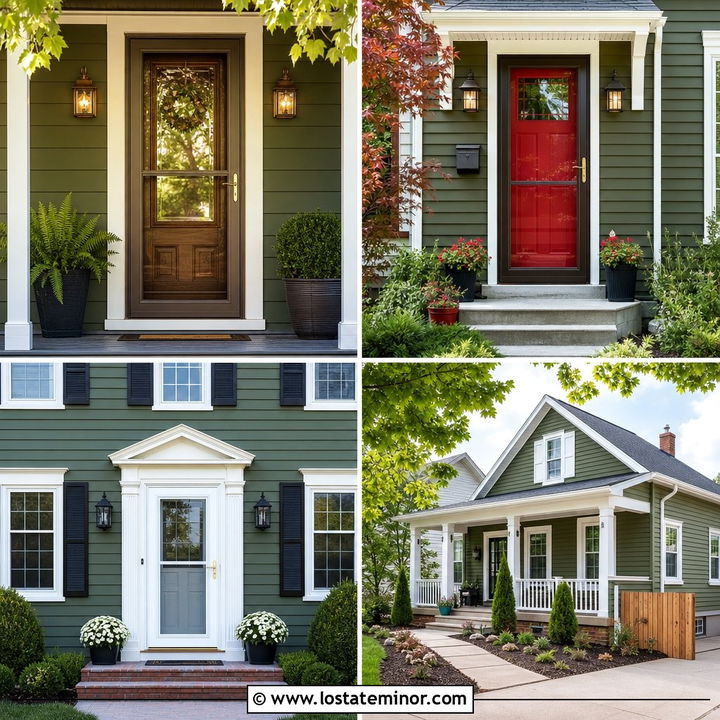
10. Forest Green House With Natural Stone Landscaping
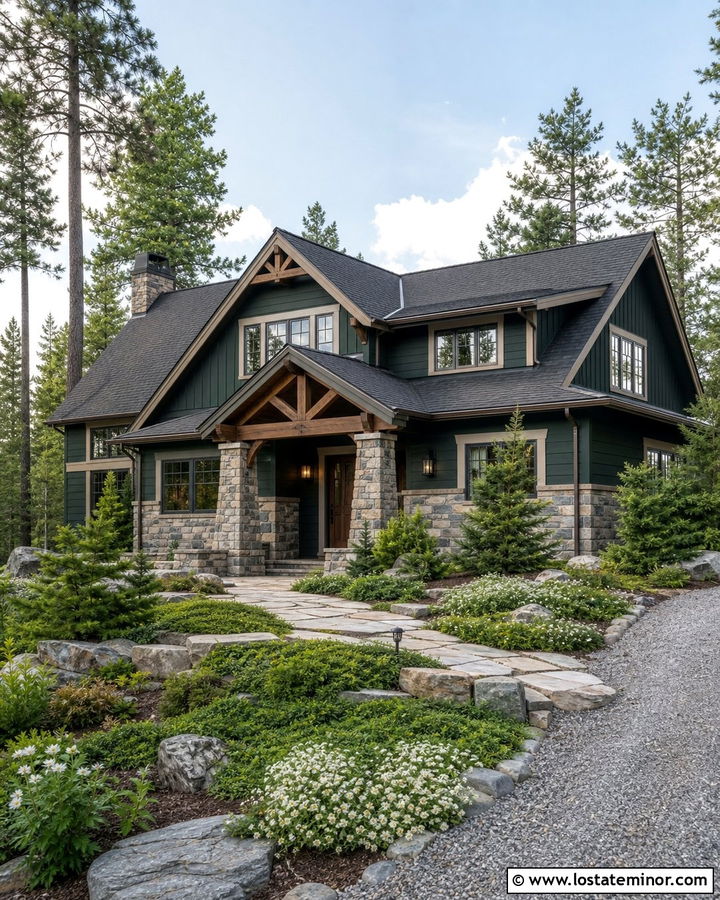
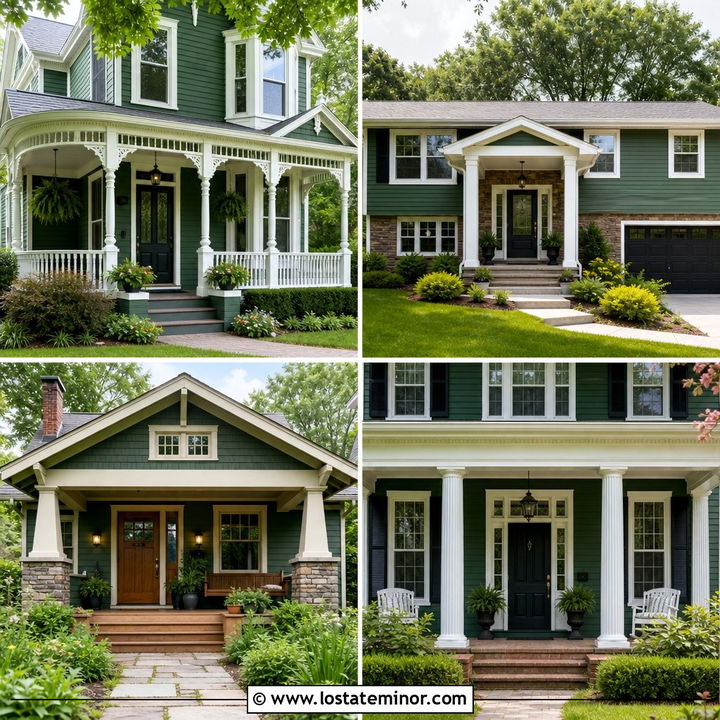
Rough natural stone gives a forest green exterior a sturdy, established appearance. Apply the green to lap siding or board-and-batten panels, then use the stone across the foundation, porch columns, or lower garage walls. Warm greige trim can connect the cooler siding with mixed beige and gray masonry. Extend the stone into low retaining walls or broad walkway steps so the house and landscape share a consistent material. Plant creeping ground cover around the stone edges, followed by dwarf conifers and loose groups of white flowers. Avoid using too many rock colors in one view. Select one dominant stone blend and repeat it. Natural materials like wood and stone are frequently paired with dark green exteriors because they support an earthy, cohesive facade. ()
11. Forest Green Split-Level House With Layered Shrubs
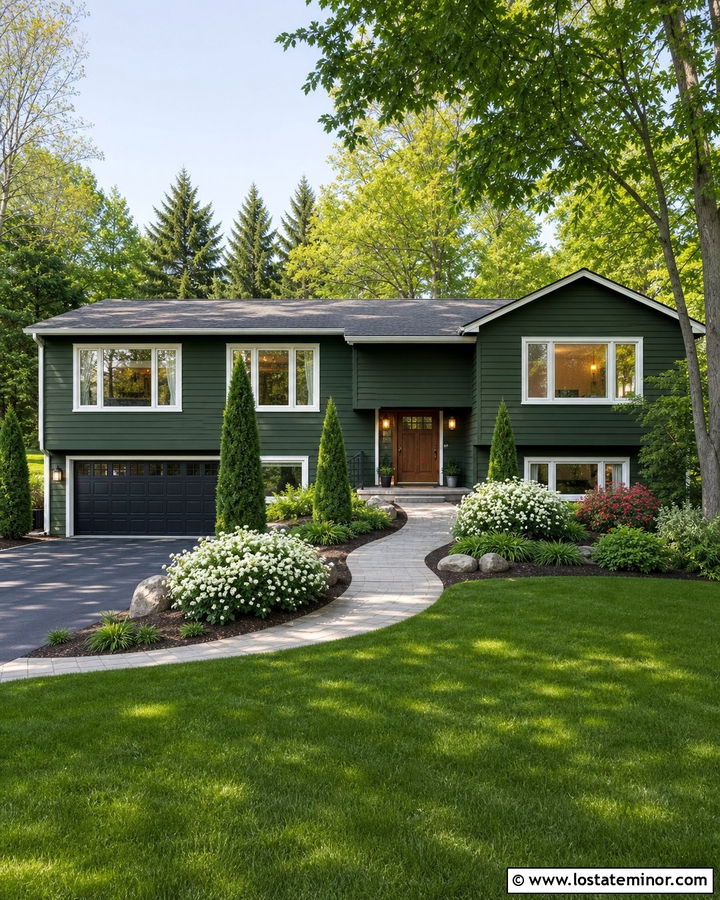
Thoughtful landscaping can help organize the uneven proportions of a split-level home. Paint both levels forest green to unify the structure, then use warm white around the windows and black on the garage door. A stained wood front door adds a clear destination near the recessed entrance. Build layered planting beds with low ground cover in front, rounded flowering shrubs in the middle, and narrow evergreens against tall blank walls. Keep shrubs away from lower-level windows so the home does not feel buried. A wider walkway with a gentle curve can guide attention toward the entry instead of the garage. Repeating one pale flowering shrub on both sides of the facade creates continuity. The complete design makes an older split-level feel more balanced and current.
12. Forest Green Cape Cod House With Coastal Landscaping
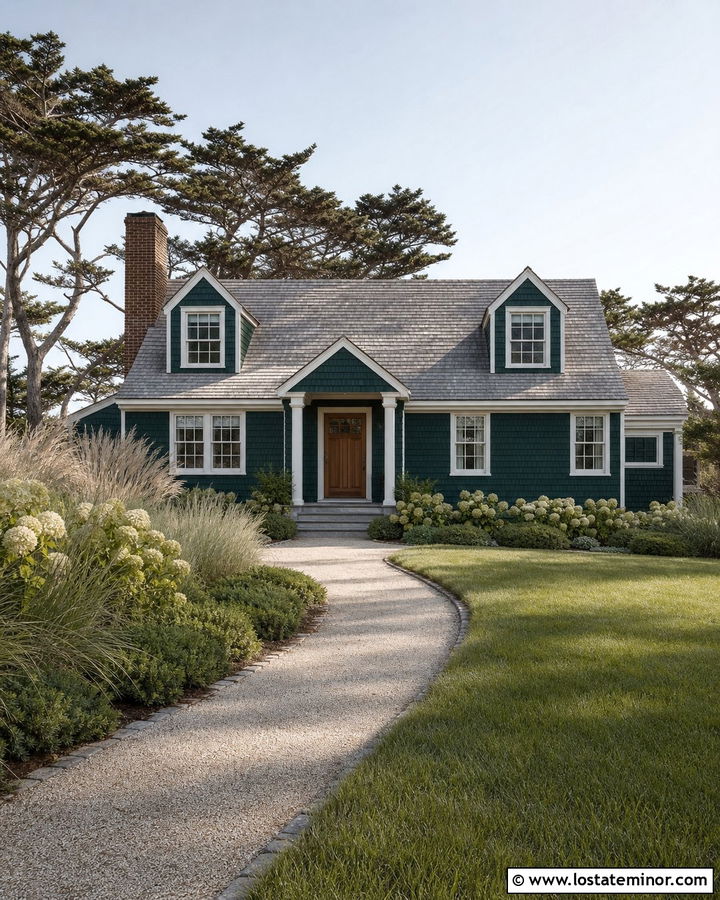
Forest green can work near the coast when it is balanced with bright trim and light, wind-tolerant landscaping. Use the green on cedar shingles or traditional lap siding, then outline the dormers, windows, and porch in soft white. A weathered gray roof and natural teak door introduce relaxed coastal tones without relying on predictable blue siding. Surround the house with beach grass, compact hydrangeas, low junipers, and plants suited to sandy or exposed conditions. A crushed-shell or pale-gravel path can brighten the foreground and complement the roof. Keep the planting low around the classic Cape Cod windows. This exterior feels rooted in the landscape while retaining the simple symmetry and uncluttered character associated with a traditional coastal home.
13. Forest Green Tudor House With English Garden Landscaping
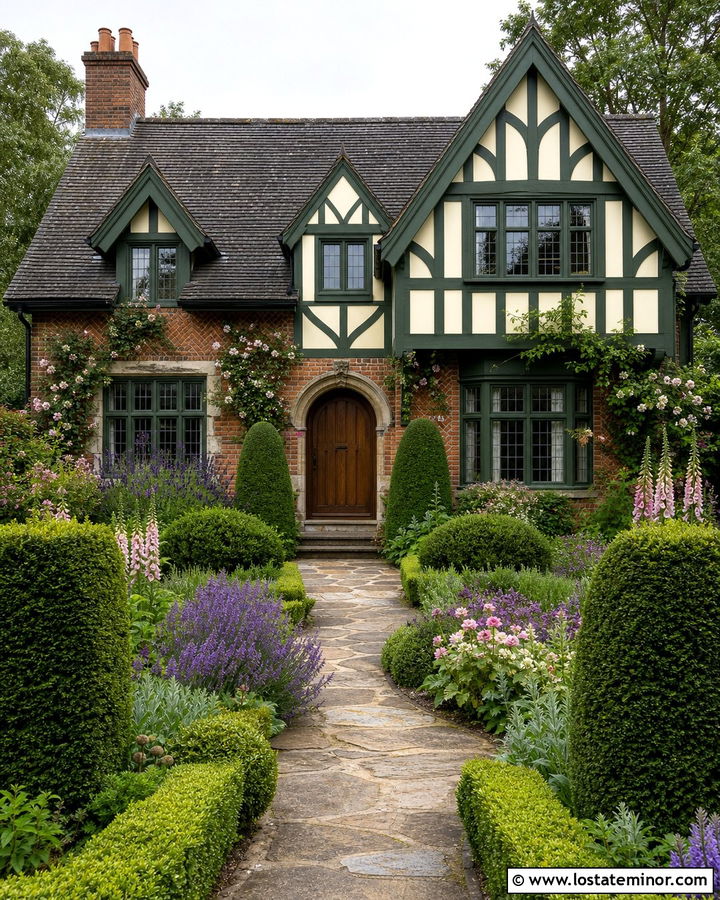
A Tudor facade gains depth from forest green when the color is used alongside warm masonry and dark structural details. Apply forest green to stucco panels or secondary siding, then retain brown timber accents, cream trim, and reddish brick around the chimney and lower walls. A dark oak arched door completes the old-world palette. In the landscape, combine clipped yew, climbing roses, lavender, foxglove, and loose perennial borders. Use brick or aged stone for a curved walkway that echoes the masonry on the house. Keep climbing plants controlled so they frame rather than damage or conceal the facade. The mix of formal evergreens and relaxed flowers gives the property an English garden character while keeping the deep green exterior visible throughout the growing season.
14. Forest Green House With Purple Flower Landscaping
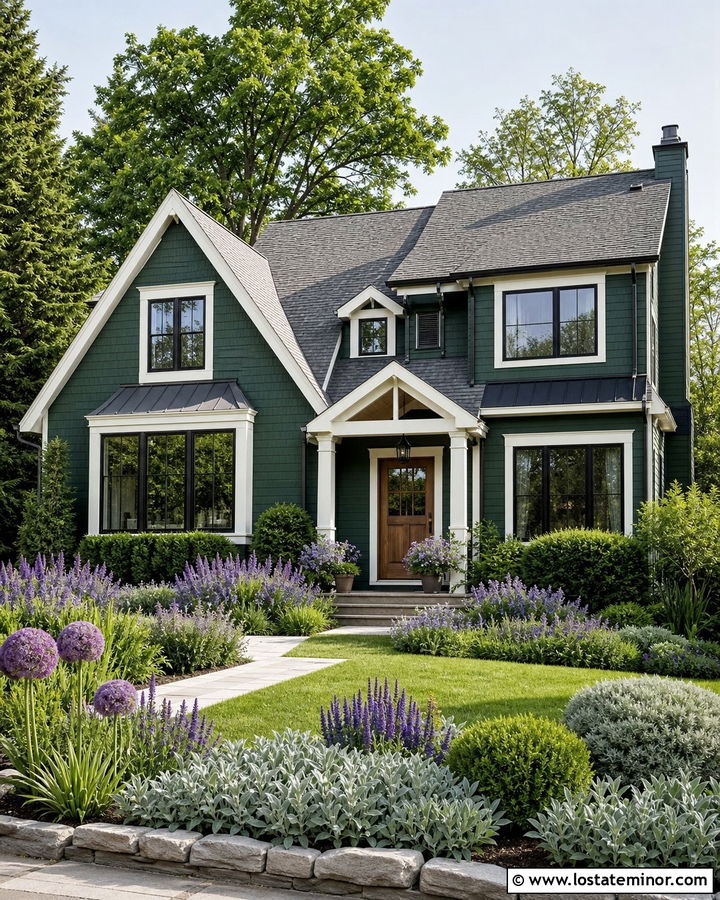
Purple flowers provide noticeable contrast against forest green without creating a harsh color clash. Choose deep green siding, warm ivory trim, and a medium wood front door for the house. Add lavender, catmint, purple salvia, and alliums in repeated clusters along the walkway and foundation. Silver foliage from lamb’s ear or artemisia can separate the purple blooms from the green background. For year-round structure, include compact evergreen shrubs and a few ornamental grasses. Use pale stone edging to give the colorful beds a clean boundary. Avoid mixing too many unrelated flower colors, especially across a small front yard. By limiting the planting palette to purple, white, silver, and green, the overall exterior looks intentional, vivid, and easy to appreciate from the curb.
15. Forest Green House With White Flower Landscaping
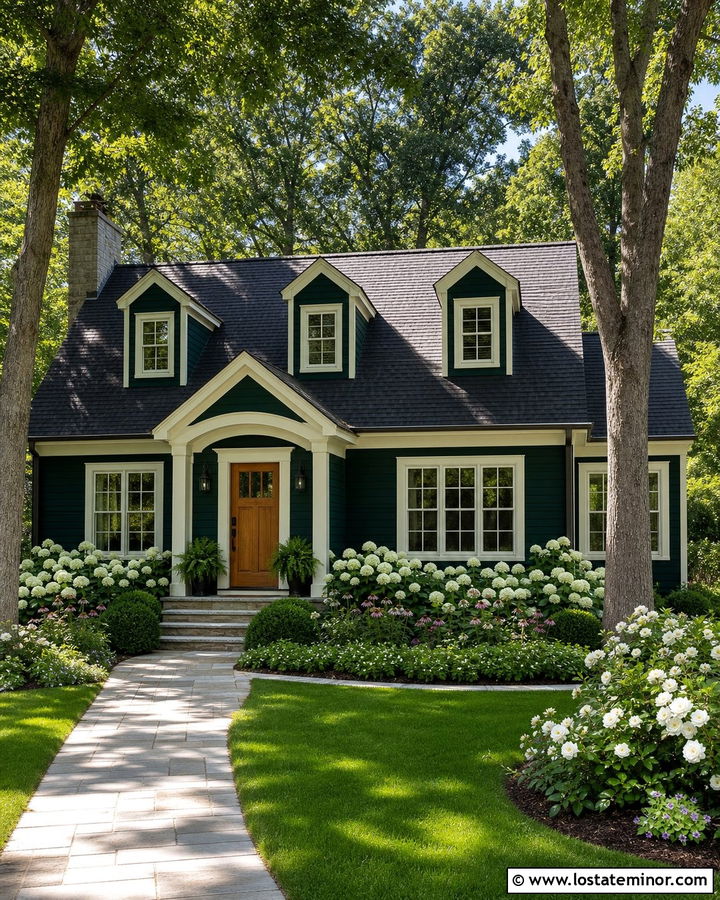
An all-white planting palette can brighten a forest green house from spring through fall. Start with saturated green siding, creamy trim, a charcoal roof, and a natural cedar door. Use white hydrangeas as the main flowering shrubs, then add white coneflowers, roses, and low annuals where the light conditions allow. Mix in glossy evergreen foliage so the beds remain structured outside the flowering season. A pale limestone walkway can further reflect light toward the facade. Place larger white blooms near darker walls, where their shapes will be clearly visible. Smaller flowers work better along the path and garden edges. This restrained palette feels fresh rather than plain because the flowers, wood, stone, and siding contribute different textures to the complete exterior.
16. Forest Green House With Low-Maintenance Landscaping
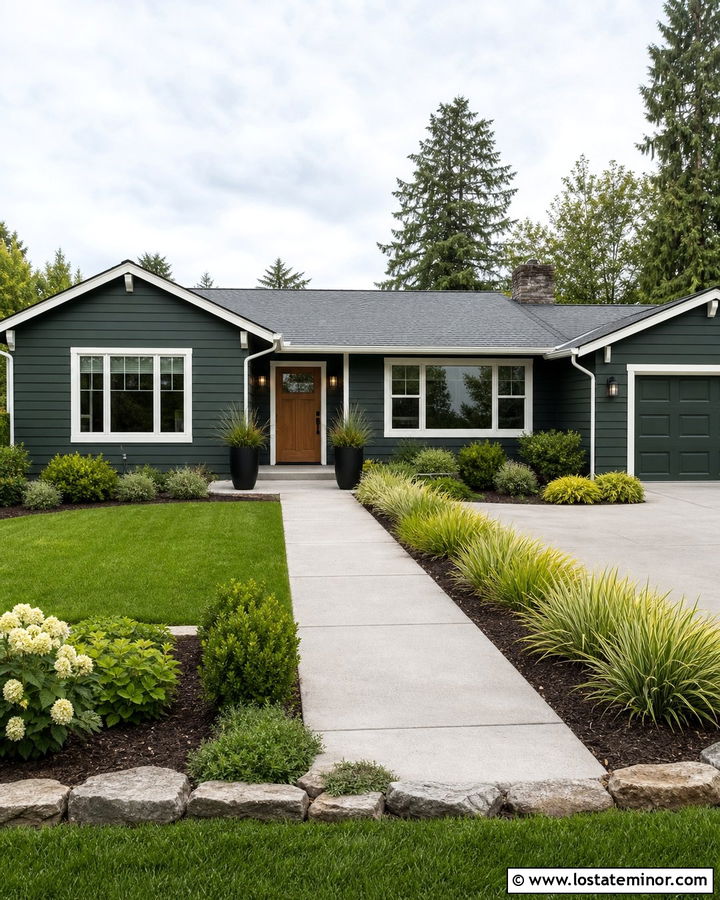
A polished forest green exterior does not require complicated flower beds. Pair the dark green siding with warm white trim, a medium-gray roof, and a simple wood door. Build the landscaping around durable evergreen shrubs, ornamental grasses, spreading ground covers, and locally suitable perennials. Use broad groups instead of individual plants scattered across the yard. This approach makes the design easier to understand and can simplify ongoing care. Add defined metal or stone edging to keep mulch away from the lawn. Drip irrigation beneath the mulch can support consistent watering where appropriate. A straight concrete path and two large planters near the entrance complete the look. Check mature plant sizes before installation so shrubs do not eventually block windows, vents, steps, or walkways.
17. Forest Green House With Evergreen Landscaping
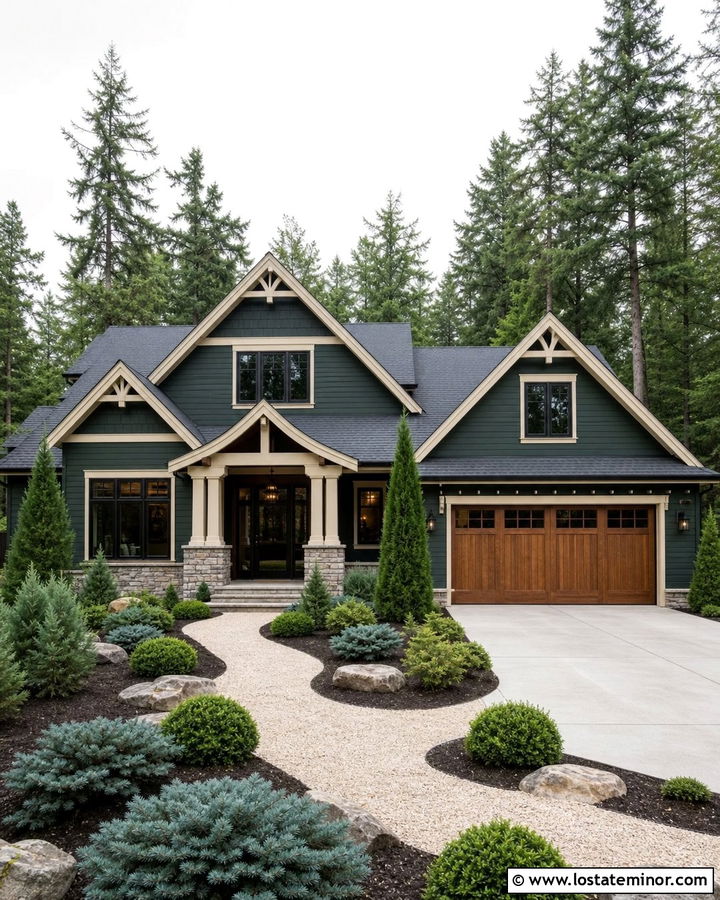
Evergreen landscaping creates a quiet, tonal setting around a forest green facade. To keep the house from disappearing into the plants, use creamy white trim, a cedar garage door, and light stone around the porch. Choose evergreens with clearly different shapes and shades. Upright conifers can anchor the outer corners, rounded shrubs can sit below windows, and blue-green ground covers can soften the front edge. Leave visible gaps between plants so each form remains distinct. A light gravel walkway or pale concrete driveway will provide additional contrast near the ground. This scheme is especially effective in regions with long winters because the foundation beds retain structure after seasonal flowers fade. The house and garden feel connected, but the lighter materials preserve architectural definition.
18. Forest Green House With Japanese-Inspired Landscaping
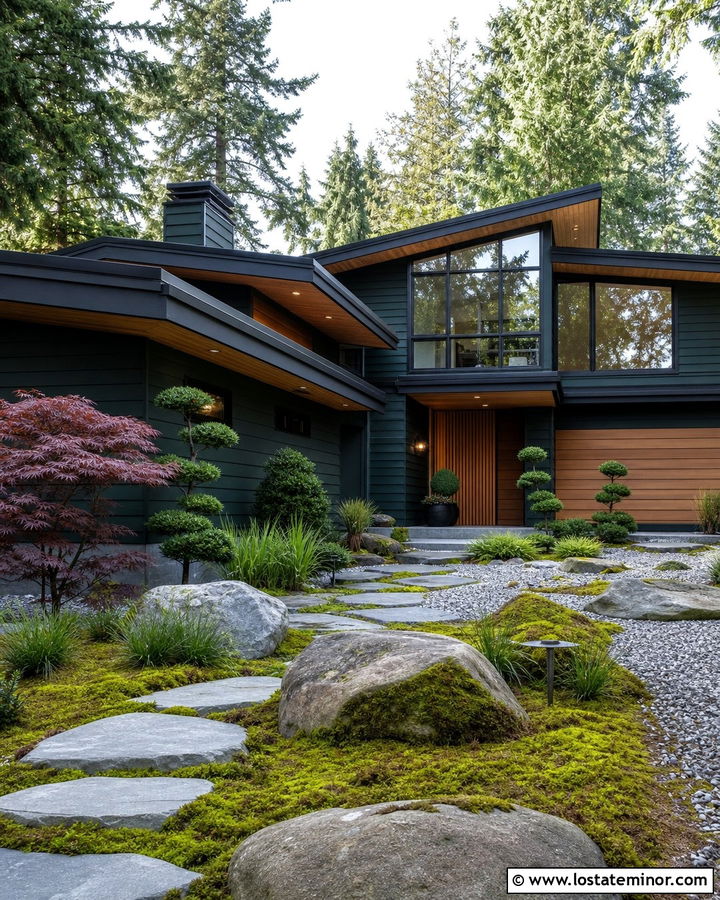
A Japanese-inspired front yard can bring calm structure to a forest green modern or mid-century home. Use deep green siding, black window frames, natural cedar soffits, and a charcoal roof. In the landscape, combine a sculptural Japanese maple with clipped evergreens, mossy ground cover, ornamental grass, and carefully placed boulders. A path of large flat stones should lead clearly to the entrance while allowing small areas of gravel between planting zones. Keep the plant palette limited and leave open space around the most distinctive tree. Avoid placing decorative objects everywhere; the materials and forms should carry the design. The forest green facade becomes a quiet background for burgundy leaves, pale stone, and finely textured foliage without losing its architectural presence.
19. Forest Green House With Desert Landscaping
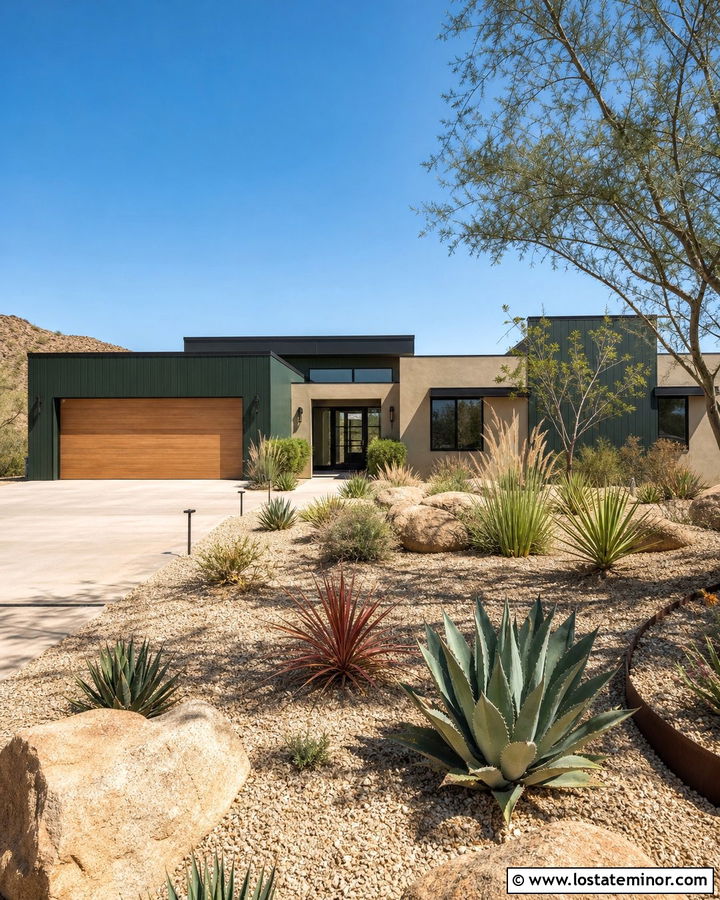
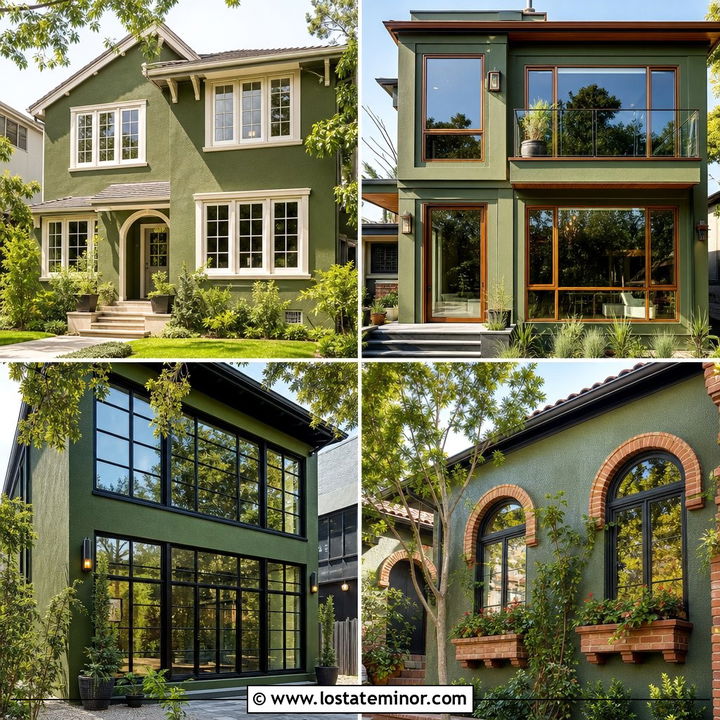
Forest green can create a dramatic backdrop for drought-conscious desert landscaping. Apply it to a modern stucco-and-siding exterior, then add warm sand-colored stucco, black window frames, and a natural wood garage door. Use gravel instead of thirsty lawn, selecting a pale tan or warm gray tone that contrasts with the house. Arrange agave, yucca, red yucca, ornamental grasses, and regionally suitable flowering plants in spacious groups. Large rocks can create elevation changes, while steel edging keeps the composition crisp. Leave clear sightlines to windows and entry steps. Before planting, confirm that each species is appropriate for the local climate and property conditions. The completed exterior blends a cool, shaded-looking house color with sun-washed materials and sculptural plants.
20. Forest Green House With Tropical Landscaping
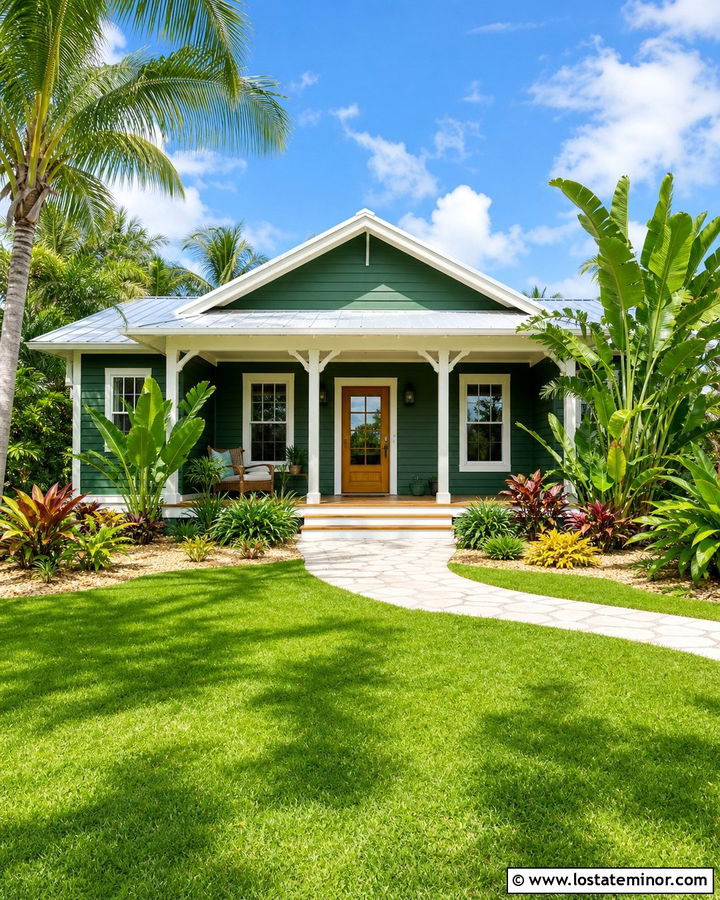
Broad leaves and vivid flowers can make a forest green exterior feel lush rather than overly dark. Use the color on a bungalow or low modern home, then add warm white trim, a light metal roof, and a honey-toned wood door. Build the landscaping with palms, bird-of-paradise, gingers, crotons, and other plants suitable for the local climate. Place brighter or variegated foliage near the house so individual leaves remain visible against the deep siding. A pale stone path and light gravel mulch can balance the abundant greenery. Keep large tropical plants away from windows, gutters, and foundations as they mature. This full scheme works best when the planting feels layered but controlled, with a clearly visible entrance and an open section of lawn or ground cover.
21. Forest Green House With Cottage Garden Landscaping
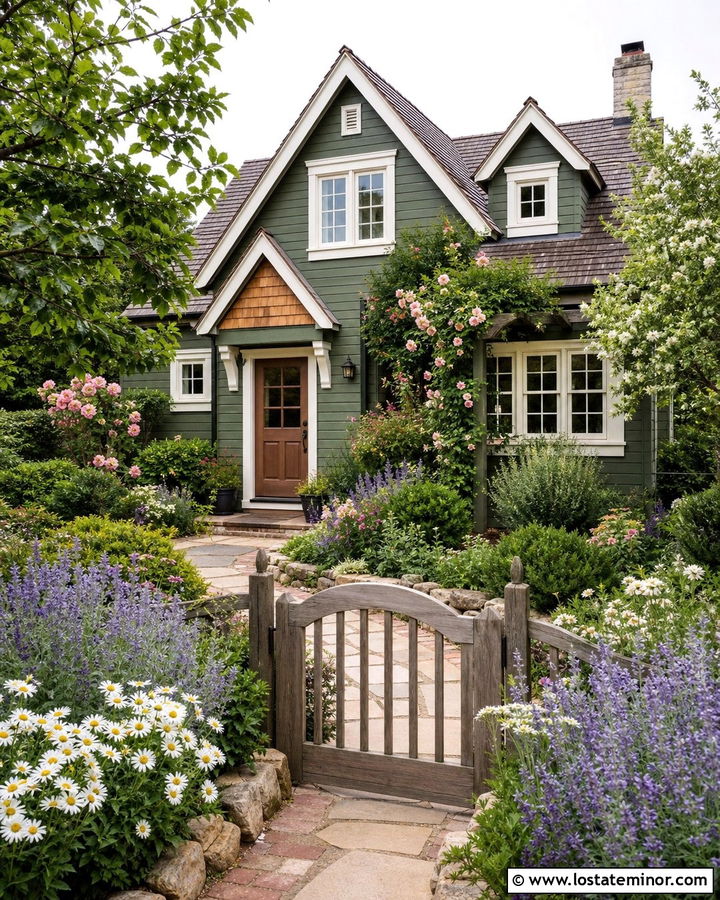
A cottage garden can soften a forest green home through layered flowers, winding paths, and relaxed plant shapes. Paint the siding a rich forest green, then use creamy white around the windows and soft brown on the front door. Create beds that include roses, daisies, salvia, nepeta, and flowering shrubs, with taller plants toward the back. Repeat several varieties across the yard so the planting feels abundant but not random. A narrow brick or flagstone path can curve gently toward a covered porch. Add a simple wood gate or low picket fence if the lot allows it. Maintain breathing room around the windows and steps. The deep siding acts as a steady visual background, allowing light flowers and varied foliage to remain the main landscape feature.
22. Forest Green House With Modern Concrete Landscaping
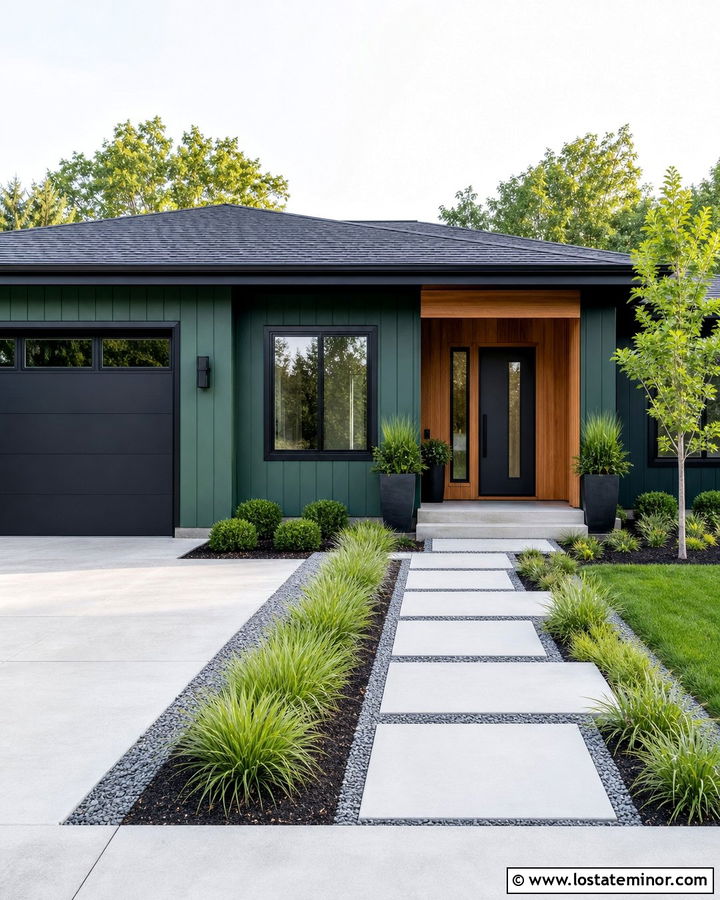
Concrete hardscaping gives a forest green house a sharper, more architectural appearance. Use vertical green siding with matte black trim, a flat or low-sloped charcoal roof, and warm wood at the entry. Install oversized rectangular concrete pavers across the walkway, leaving narrow gravel or ground-cover joints between them. Linear beds filled with ornamental grasses, compact shrubs, and one small tree will reinforce the home’s geometry. Keep the lawn edge straight and the plant selection restrained. Pale concrete is particularly useful because it visually lifts the darker body color and makes the entrance easy to locate. Black planters can repeat the window frames, while a cedar bench or screen adds warmth. The finished property feels contemporary, practical, and connected from facade to sidewalk.
23. Forest Green House With Brick Walkway Landscaping
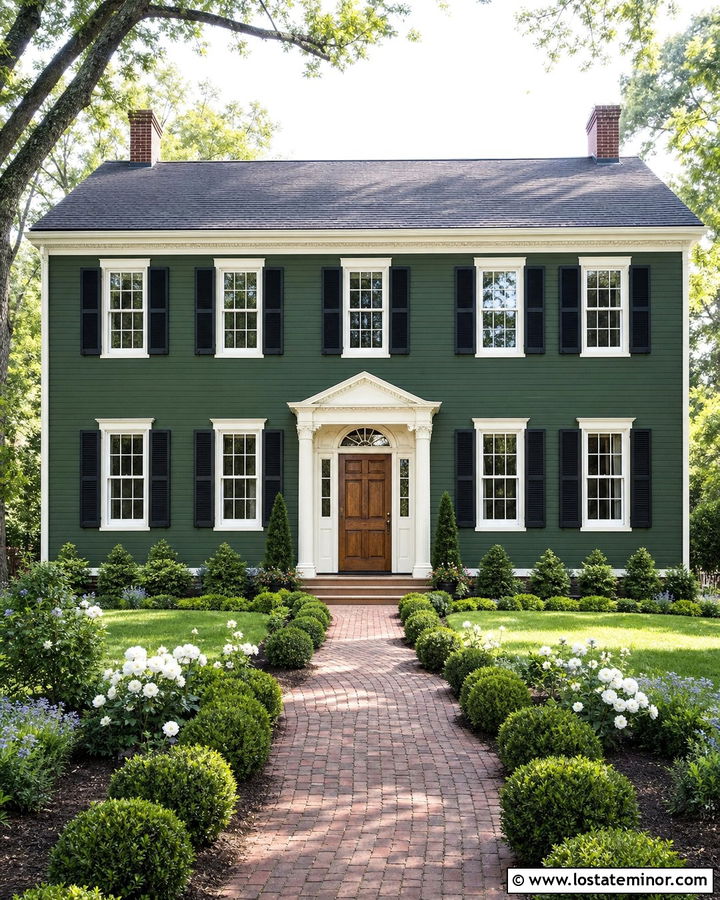
A brick walkway brings traditional warmth to a forest green house and establishes a strong approach to the front door. Pair the green siding with ivory trim, black shutters, and a stained wood entrance. Select brick with muted red and brown tones rather than an extremely bright orange finish. Curve the path gently through symmetrical beds of boxwood, white roses, and seasonal perennials. Low path lighting can be positioned along the outer edge without interrupting the planting rhythm. Repeat the walkway brick on the porch steps or garden borders to make the material feel intentional. The warm masonry and cool green siding balance one another, while white flowers add clarity. This scheme works especially well for Colonial Revival, Georgian, and traditional suburban architecture.
24. Forest Green House With Gravel Garden Landscaping
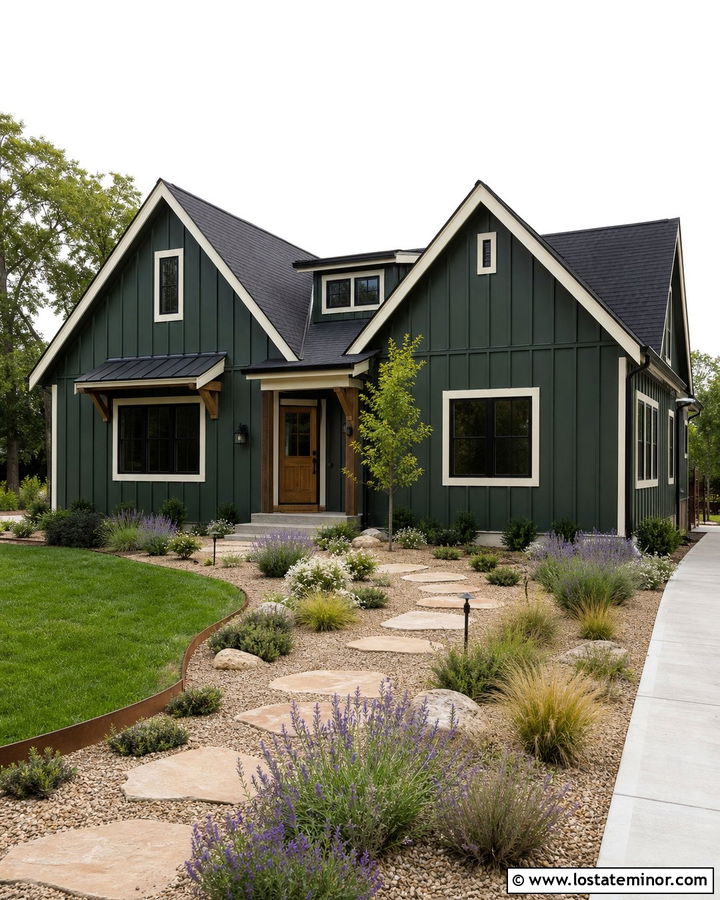
Gravel landscaping creates a neat, permeable-looking foreground for a forest green cottage, farmhouse, or modern ranch. Choose deep green siding, warm cream trim, a charcoal roof, and a cedar front door. Spread light-gray or buff gravel through defined garden areas, then place groups of lavender, ornamental grass, dwarf shrubs, and drought-tolerant perennials within it. Large stepping stones can form a practical route to the porch. Use steel, brick, or stone edging to stop gravel from migrating into the lawn. The open surface provides contrast around dark siding and makes individual plant shapes easier to see. Select the gravel size carefully so it remains comfortable underfoot and suitable for the intended path, drainage conditions, and maintenance routine.
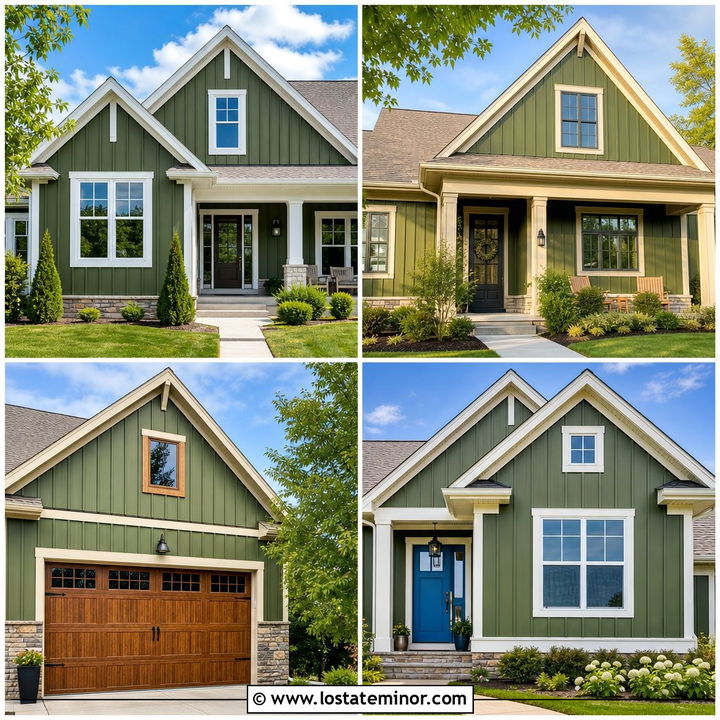
25. Forest Green House With Woodland Landscaping
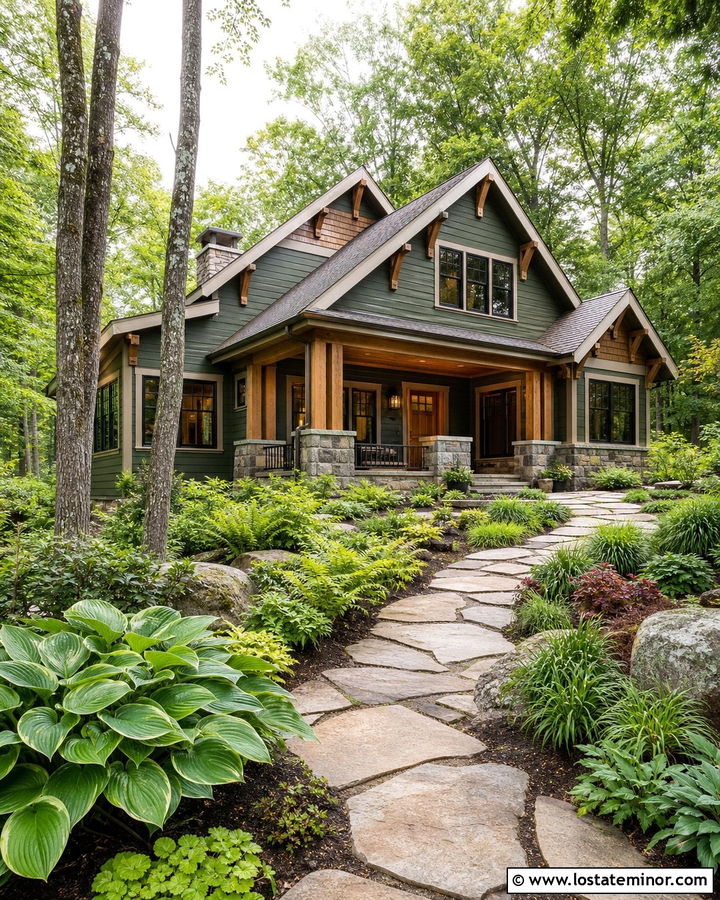
Mature trees provide an ideal setting for a forest green house, but the landscape still needs contrast and definition. Use the deep green siding with pale taupe trim, cedar accents, and a mixed gray stone foundation. Beneath the tree canopy, plant ferns, hostas, woodland sedges, heuchera, and flowering shrubs suited to available light. A natural stone path can curve between the planting groups and lead to a covered entry. Introduce foliage in lime, blue-green, silver, and burgundy so the yard does not become one flat mass of green. Keep tree trunks and major architectural features visible. Pale stones and wood details help separate the facade from the surrounding vegetation, creating a woodland home that feels integrated without being visually hidden.
26. Forest Green House With Raised Garden Beds
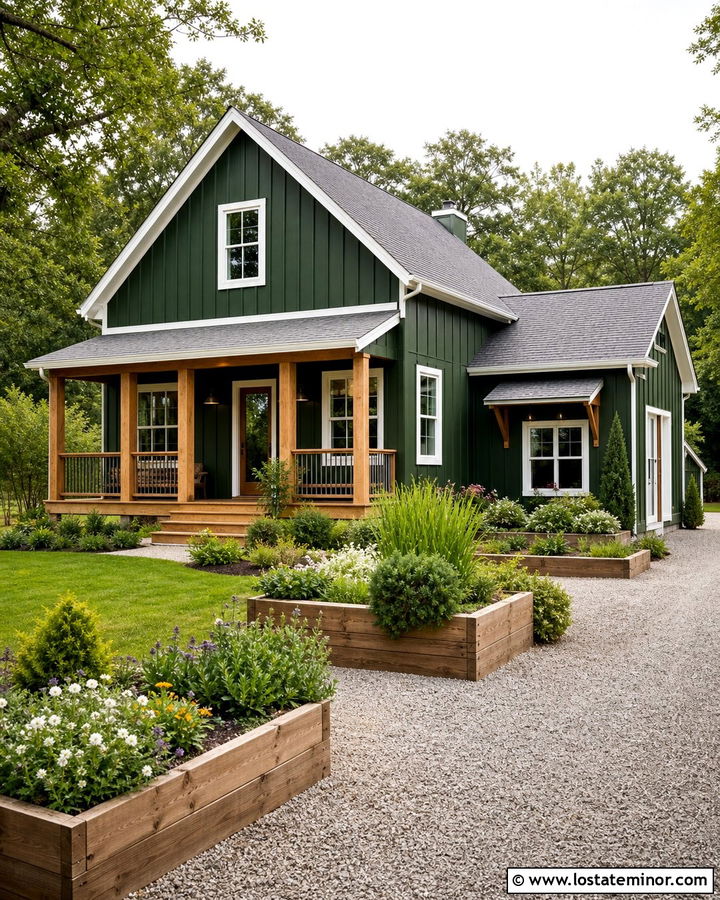
Raised beds can give a forest green house an organized landscape while improving the visibility of smaller plants. Use forest green board-and-batten siding, white trim, a natural wood porch, and a medium-gray roof. Build low beds from cedar, brick, or stone that complements the home’s existing materials. Fill them with compact flowering shrubs, herbs, ornamental grasses, and seasonal color rather than tall plants that block the facade. A gravel or paver path between the beds creates practical access and reinforces the tidy layout. Match the bed height across the front yard for continuity. If edible plants are included, keep the most decorative varieties closest to the street. The resulting design combines productive landscaping with a polished farmhouse or cottage exterior.
27. Forest Green House With Sloped Yard Landscaping
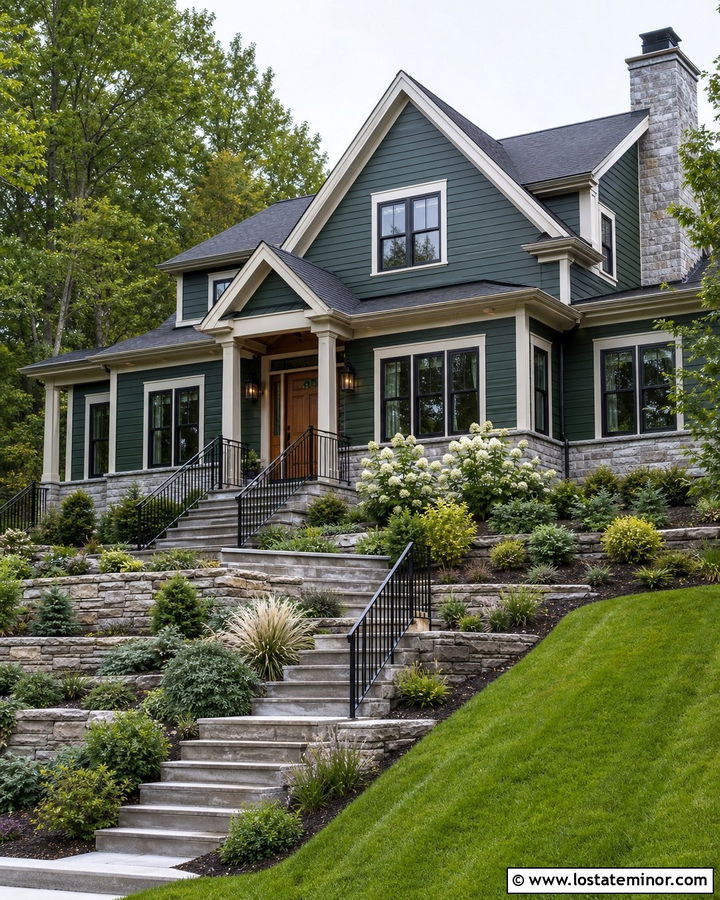
A sloped front yard needs strong transitions between the street, planting areas, and house. Forest green siding can anchor the home at the top of the grade, especially with light trim and a stone foundation. Build low retaining walls from the same stone used on the porch or chimney. Plant each terrace with spreading ground cover, ornamental grasses, flowering shrubs, and compact evergreens to reduce large empty areas. Broad steps should align clearly with the front door, while railings can repeat black window or roof accents. Avoid planting tall shrubs along the lower edge where they may hide the house. Layered terraces turn a difficult slope into an intentional feature, creating depth and giving the forest green facade a substantial, established presence.
28. Forest Green House With Front Porch Landscaping
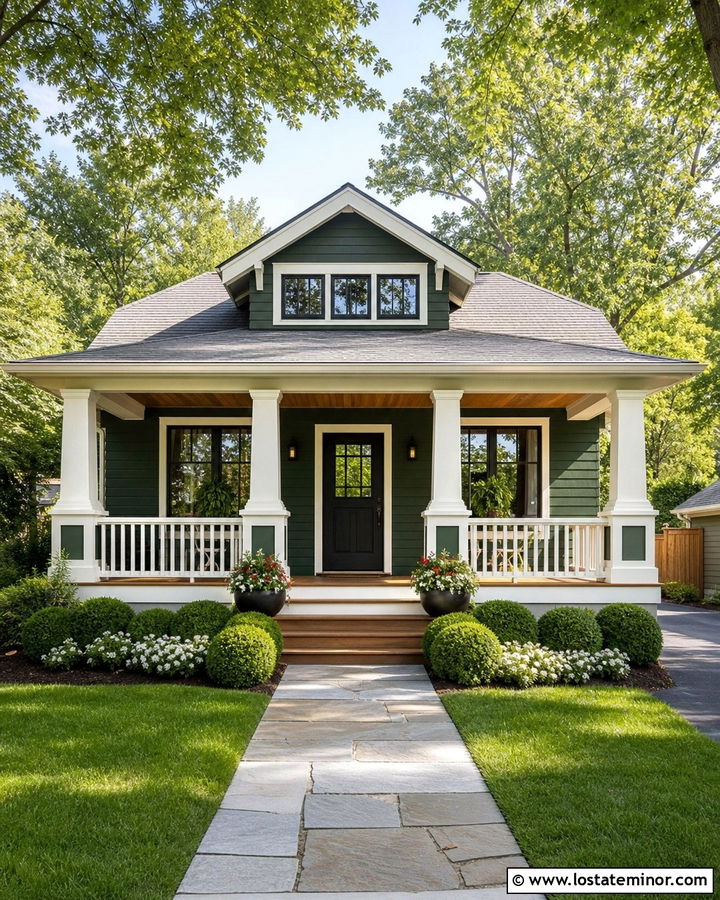
A welcoming porch can bridge the visual gap between forest green siding and a colorful front yard. Use warm white on the columns and railings, natural cedar on the porch floor or ceiling, and black for lighting and hardware. Position rounded shrubs near the porch corners, then use lower flowering plants along the steps. Two large planters beside the door can repeat colors from the garden without crowding the entrance. Keep plants below the railing wherever possible so the architecture remains visible. A wide stone walkway should connect the porch comfortably to the driveway or sidewalk. This arrangement works on farmhouse, bungalow, and traditional exteriors because it treats the porch, planting beds, and approach as one complete curb-appeal composition.
29. Forest Green House With Black Trim And Grasses
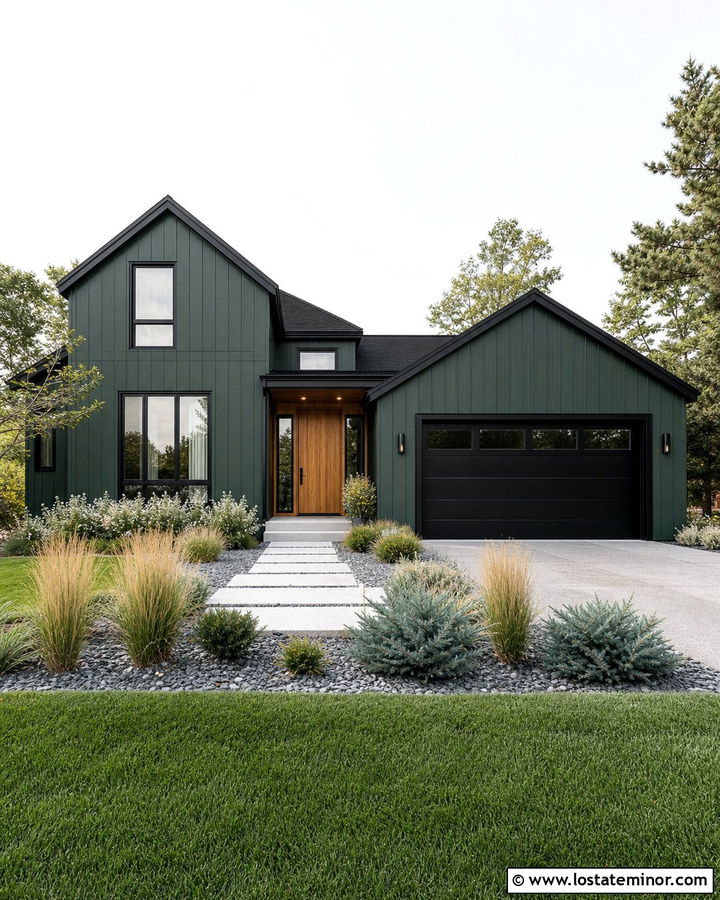
Black trim gives a forest green house a bold, low-contrast appearance that suits contemporary architecture. Use black around the windows, roof edges, garage door, and exterior lights, then introduce natural cedar at the front entrance to prevent the palette from becoming too cool. In the landscape, plant upright ornamental grasses, blue-green junipers, and pale flowering perennials in clean groups. Light concrete pavers and gray gravel can brighten the lower half of the view. Avoid dense dark shrubs directly against the siding, since they may disappear from a distance. Instead, select foliage with silver, blue, or lime undertones. Dark green and black create the architectural framework, while the grass movement, wood grain, and pale hardscaping make the overall exterior feel comfortable and livable.
30. Forest Green Mountain House With Pine Landscaping
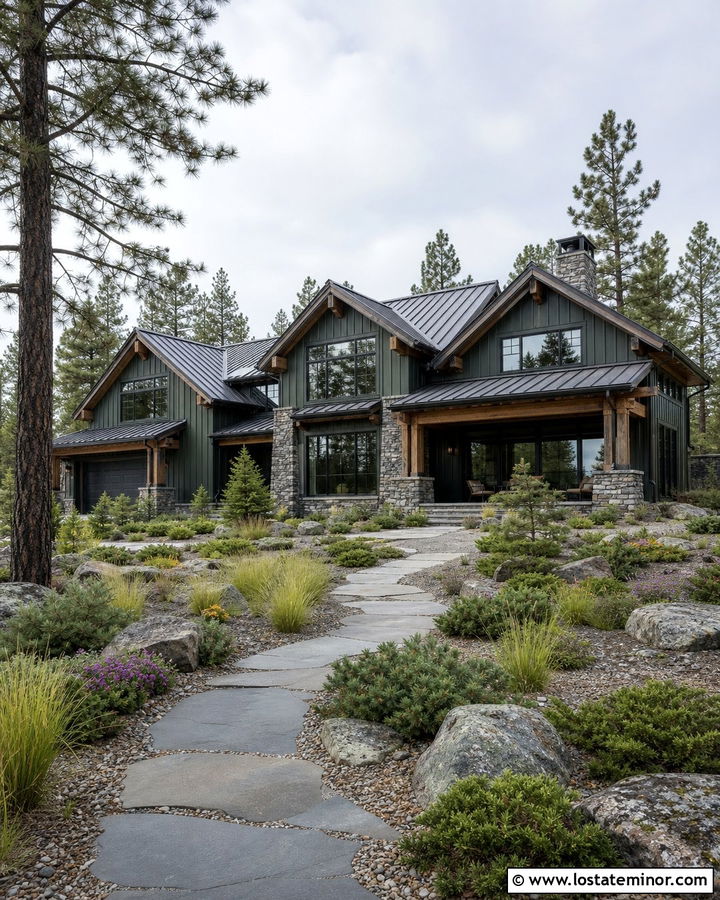
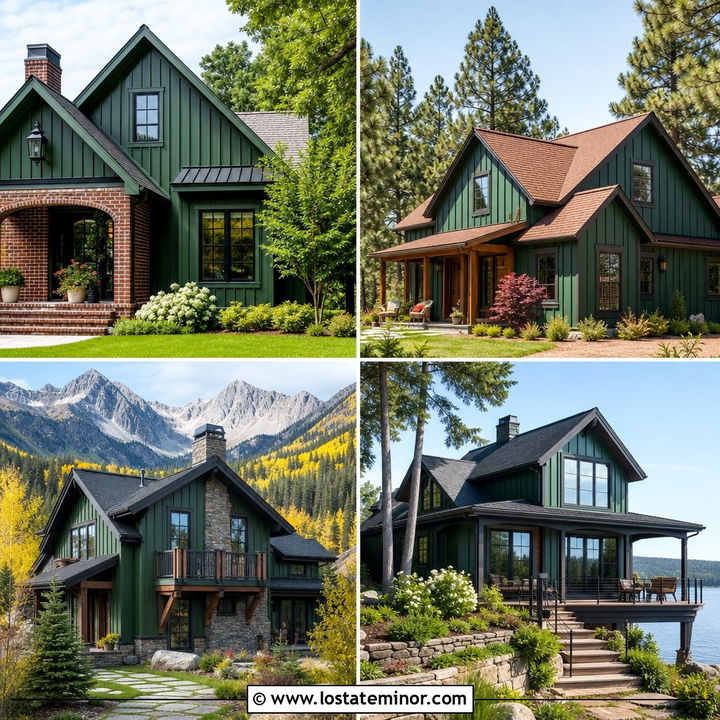
A mountain home can carry forest green across wide siding areas while still standing apart from surrounding pines. Combine the green with a substantial gray stone base, cedar beams, black-framed windows, and a dark metal roof. Near the house, use native grasses, low junipers, flowering ground covers, and carefully spaced young conifers. Leave a clear buffer around the foundation and follow local guidance for plant placement, drainage, and wildfire considerations. A broad stone path and gravel driveway can handle the rugged setting while repeating colors from the masonry. The forest green exterior connects the building to the wooded landscape, but warm timber and pale stone keep the architecture readable. Large windows complete the mountain-modern look and prevent the facade from feeling closed or overly rustic.
Conclusion:
Forest green offers more than a bold siding choice. It can become the foundation for a complete curb-appeal plan that connects architecture, hardscaping, and planting. White trim creates freshness, wood adds warmth, stone provides texture, and black accents sharpen modern facades. Landscaping can either blend with the green or contrast it through pale flowers, silver foliage, colorful perennials, and light pathways. Always consider sunlight, roof color, existing masonry, mature plant sizes, and local growing conditions before making final decisions. Test exterior colors on multiple walls and observe them throughout the day. With thoughtful planning, these 30 Forest Green House Design With Landscaping Ideas can inspire an exterior that looks balanced, welcoming, and naturally suited to its setting.

Related posts: