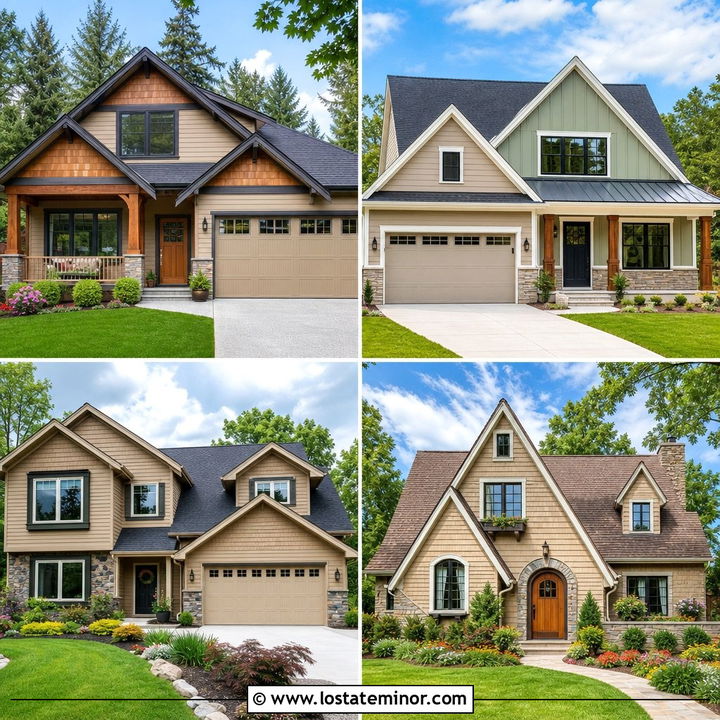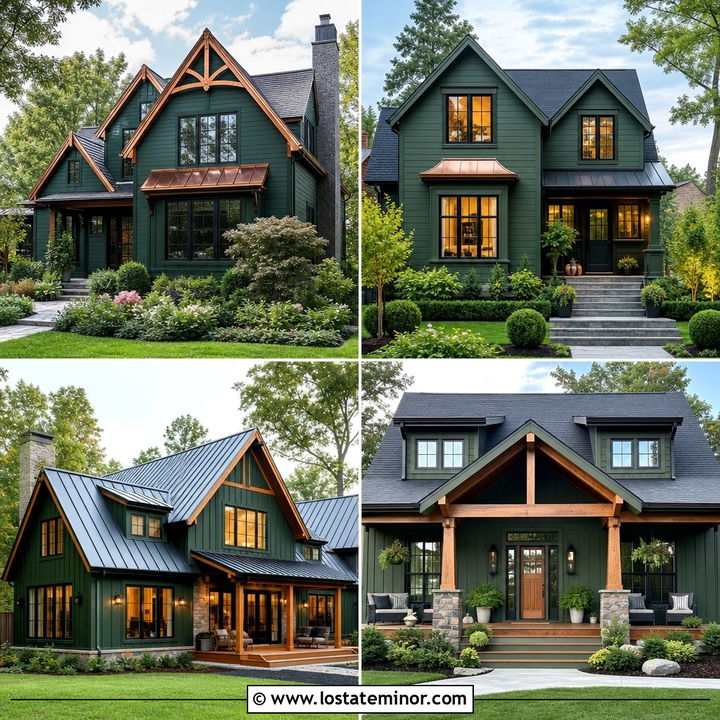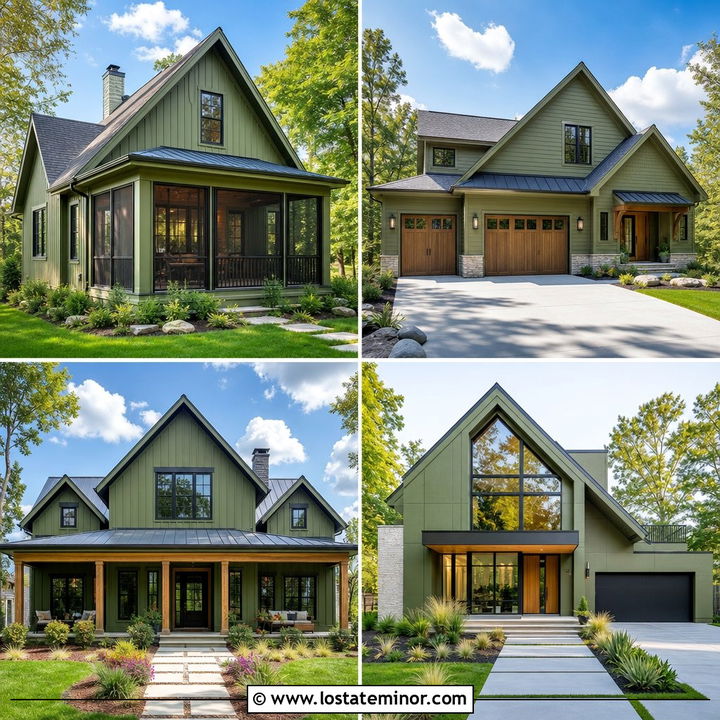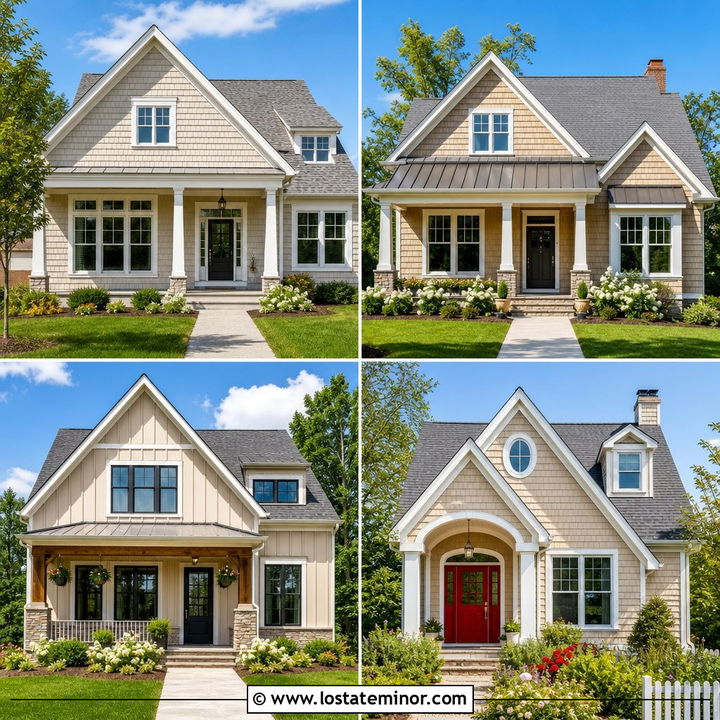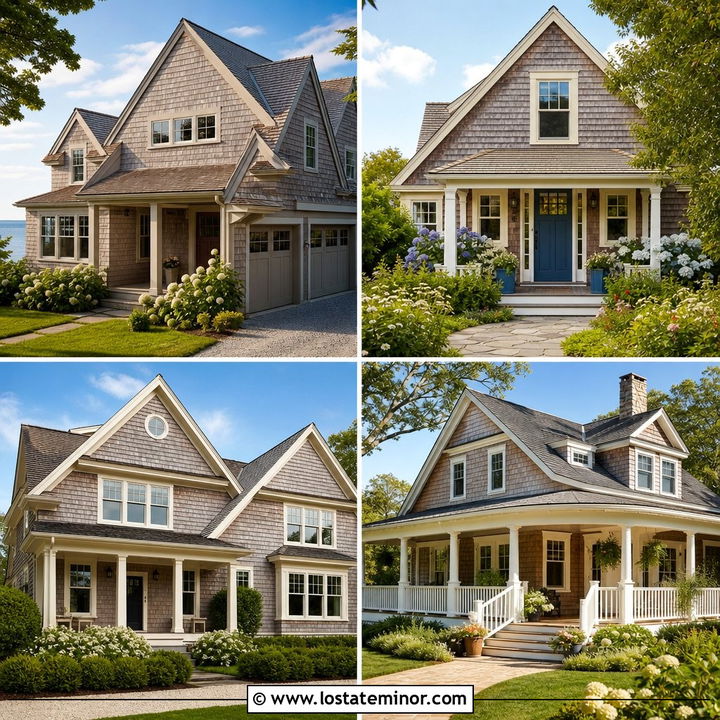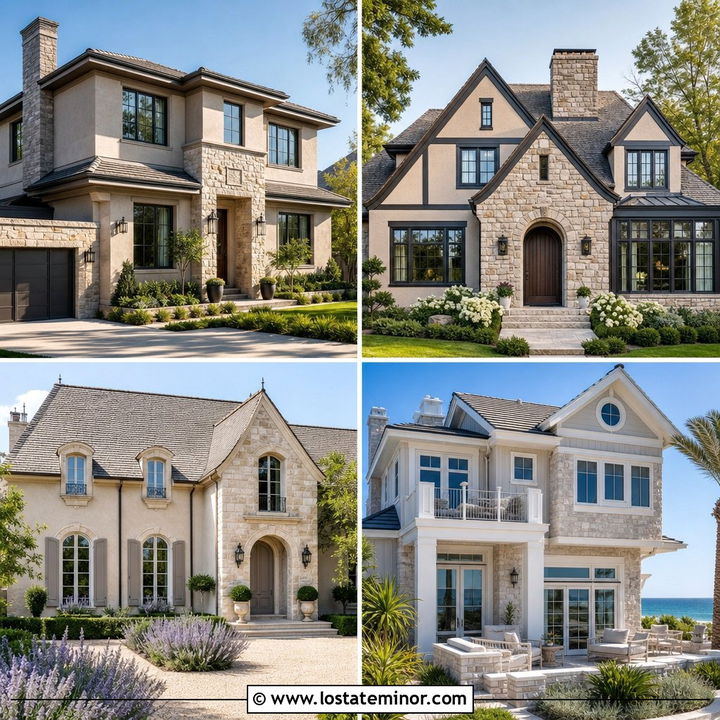
Taupe brings warmth, depth, and flexibility to gabled architecture without making the exterior feel plain. Its balanced brown and gray undertones can soften steep rooflines, connect mixed materials, and help decorative gables stand out naturally. The best results come from treating the facade as one complete palette. Siding, gable details, roofing, trim, masonry, doors, and landscaping should feel intentionally connected. Taupe can support everything from a relaxed cottage to a sharp contemporary home, depending on the contrast and materials around it. The following **30 Taupe House Design With Gables Ideas** explore practical color combinations, varied architectural styles, and distinctive curb-appeal details. Use these complete exterior looks to find the right direction for your own **30 Taupe House Design With Gables Ideas** inspiration.
1. Taupe Modern Farmhouse With Black Gables
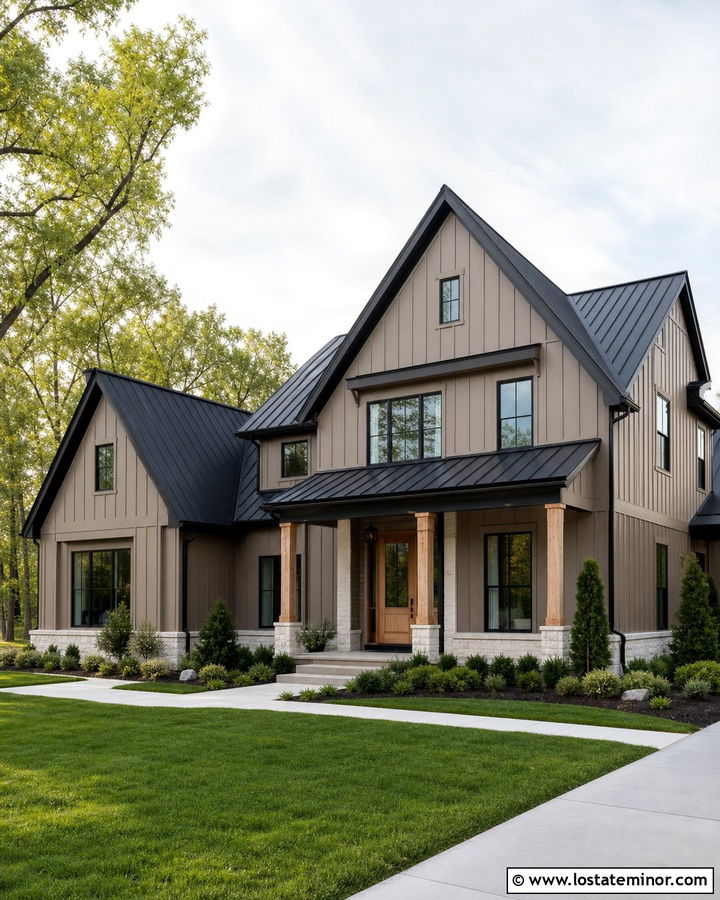
A medium taupe exterior gives the modern farmhouse a warmer alternative to bright white siding. Use vertical board-and-batten across the body and inside the front-facing gables to emphasize their height. Matte black fascia, window frames, gutters, and a standing-seam metal roof provide crisp definition without overwhelming the neutral color. A natural white oak front door prevents the scheme from looking too severe. Simple timber porch posts can repeat that warm wood finish and visually connect the entry to the gables. Complete the facade with pale limestone around the foundation and low green landscaping. This combination works especially well on a wide house with several overlapping gables because the limited palette keeps the busy roofline clean, balanced, and easy to understand.
2. Light Taupe Craftsman With Cedar Gable Shakes
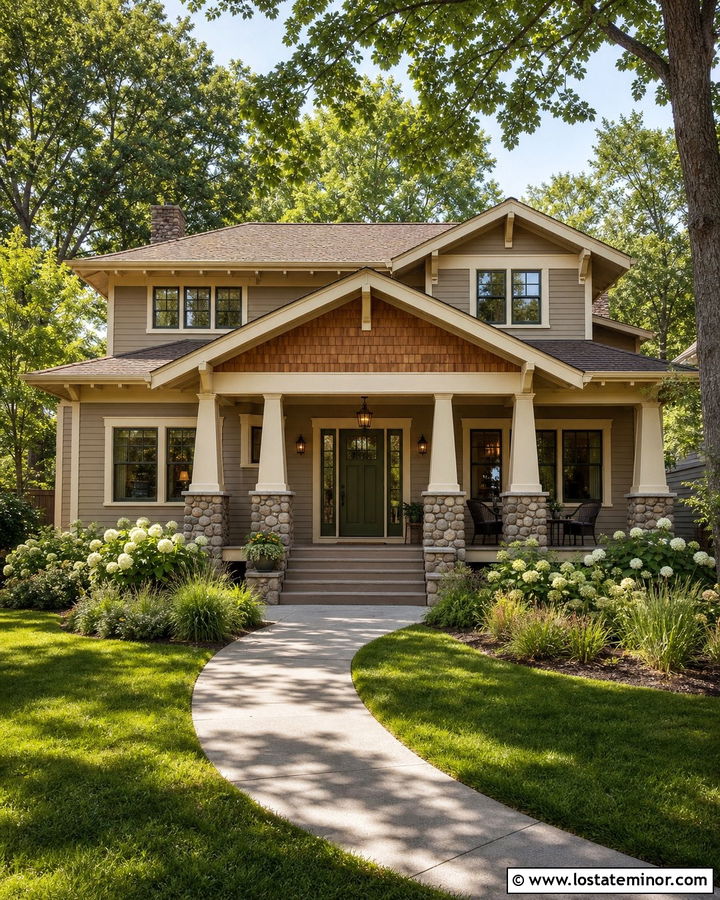
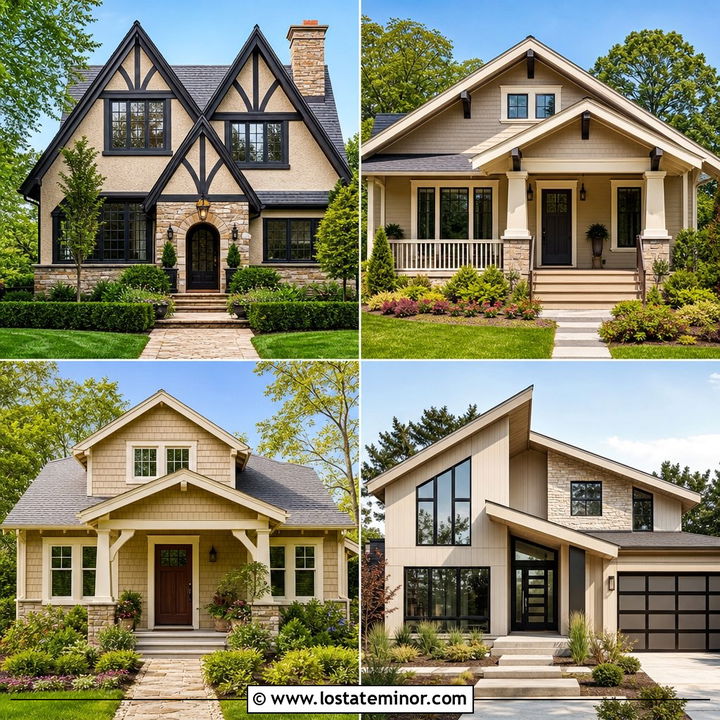
Can a neutral Craftsman exterior still display plenty of character? Light taupe lap siding creates a quiet background for cedar shake shingles placed inside the main porch gable. The natural wood introduces texture while highlighting the triangular shape above the entry. Cream trim around the windows, roof edges, and porch columns feels softer than stark white. Add a deep olive front door, dark bronze lighting, and warm brown roofing for an earthy finish. A stone porch base with mixed tan and gray tones can bridge the taupe siding and cedar details. Keep the front garden informal with ornamental grasses, hydrangeas, and a curved walkway. Every material contributes to the same warm palette, allowing the Craftsman details to look substantial without making the exterior appear crowded.
3. Dark Taupe House With White Gable Trim
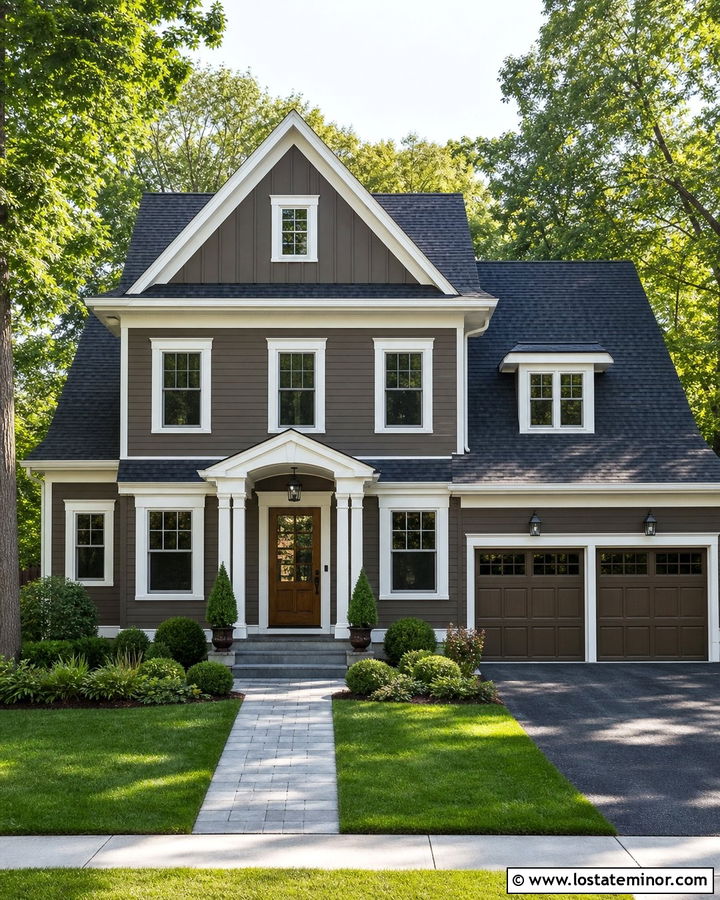
Dark taupe siding can make simple gables look deeper and more architectural. Choose a rich brown-gray body color and outline each roof edge with clean white fascia. White window frames, corner boards, and porch columns repeat that contrast across the entire facade. Inside the largest gable, use vertical siding to create a subtle texture change without introducing another color. A charcoal architectural-shingle roof grounds the palette, while a medium-stained wood door brings warmth to the entry. This look suits traditional two-story homes that need stronger definition from the street. Keep the garage door taupe so it blends into the body rather than becoming the main feature. Symmetrical foundation shrubs and a straight paved walkway reinforce the exterior’s polished, orderly appearance.
4. Taupe Ranch House With Front Gable Porch
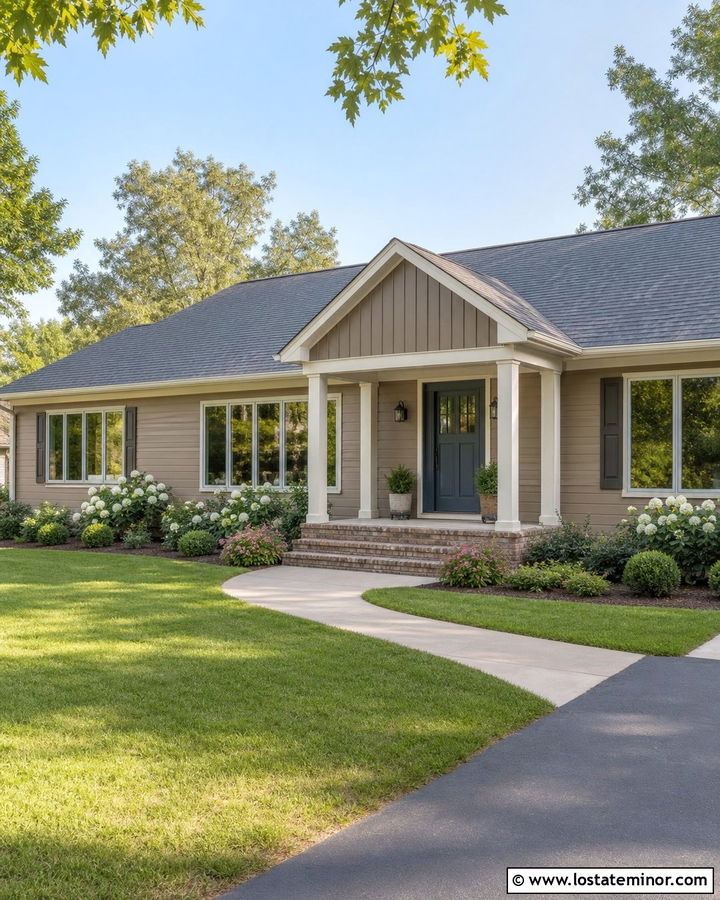
A front gable porch can give a low ranch house a much stronger focal point. Cover the exterior in warm taupe horizontal siding, then use a slightly darker taupe within the porch gable. Cream fascia and square columns soften the contrast while keeping the entry bright. A muted blue front door adds personality without competing with the neutral facade. Consider a medium-gray roof that relates to taupe’s cooler undertones. Brick porch steps in a weathered tan finish provide another warm layer and make the new structure feel established. Broad foundation beds, low evergreen shrubs, and an open lawn preserve the ranch home’s horizontal character. The gabled porch should be wide enough to feel proportional, but it should not rise above or visually overpower the main roofline.
5. Taupe Colonial House With Twin Gables
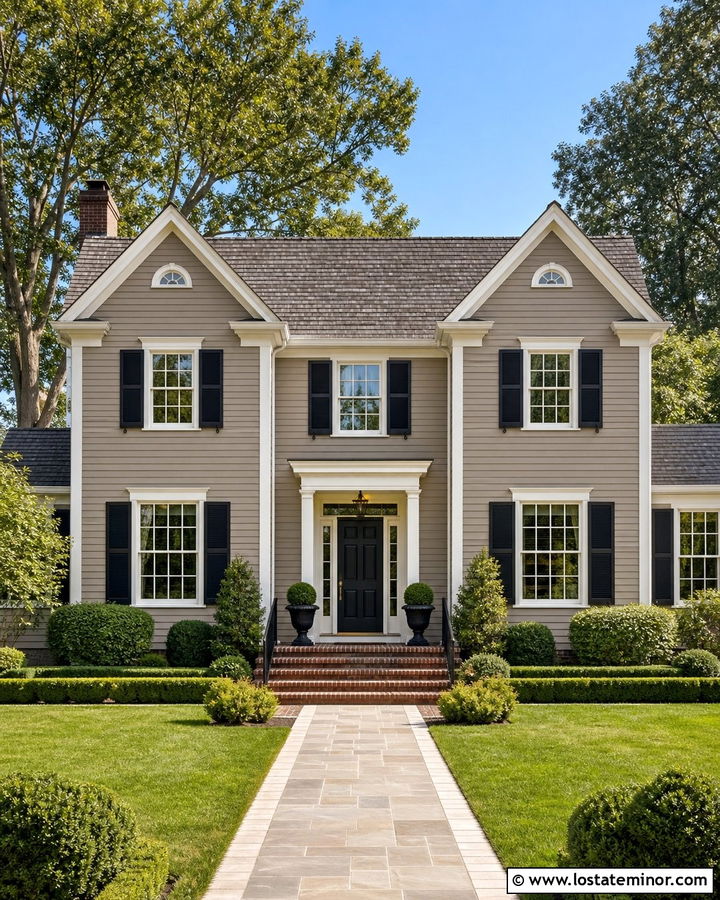
Twin gables can update a Colonial exterior while preserving its familiar symmetry. Use refined midtone taupe siding across both floors, paired with soft white window trim and substantial white corner boards. Matching gables positioned over the outer window bays bring height and rhythm to the facade. Dark charcoal shutters create definition around evenly spaced windows, while a black front door anchors the center. Choose a slate-look roof containing both warm gray and brown tones so it relates naturally to the taupe body. Red brick steps can remain if their color is muted and repeated in the walkway edging. Neatly clipped hedges, balanced planters, and matching sconces complete the formal presentation. The controlled color scheme keeps the added roof details elegant rather than overly decorative.
6. Warm Taupe Cottage With Steep Gables
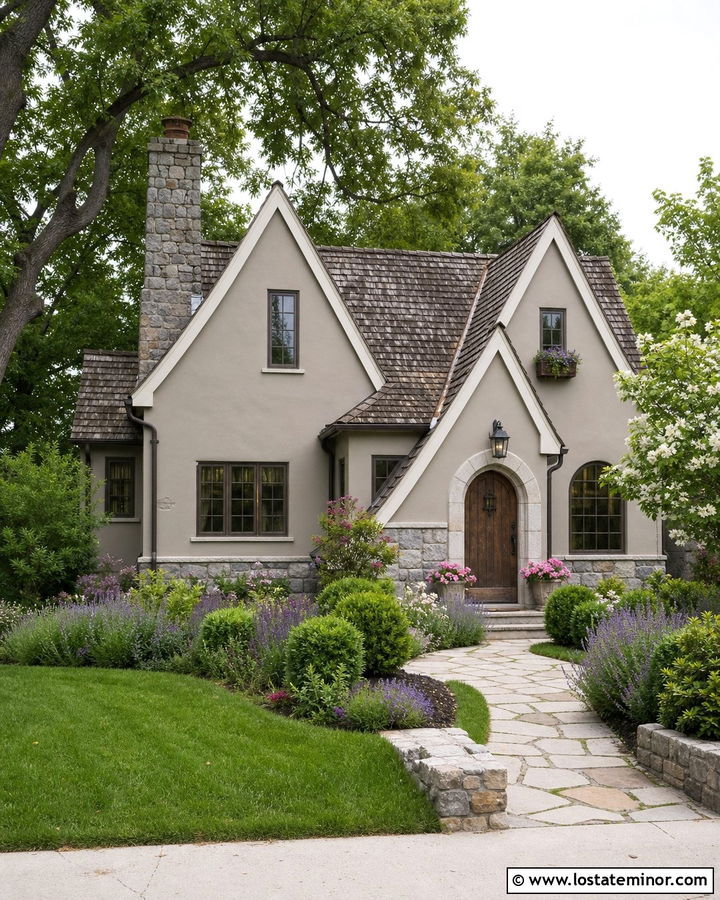
Picture a compact cottage with steep gables rising above a welcoming garden. Warm mushroom taupe stucco gives the walls a soft, established appearance, especially when paired with creamy off-white trim. Use weathered cedar or brown metal roofing to follow the sharp roof pitches without introducing harsh contrast. A rounded wood front door beneath the smallest entry gable reinforces the storybook character. Add irregular fieldstone around the chimney, porch base, and lower walls to provide texture and natural color variation. Divided-light windows in a muted bronze finish are gentler than bold black frames. Surround the home with lavender, boxwood, flowering shrubs, and a curved stone path. The landscaping should feel relaxed and layered, matching the cottage’s warm materials and intimate proportions.
7. Taupe Cape Cod With Gabled Dormers
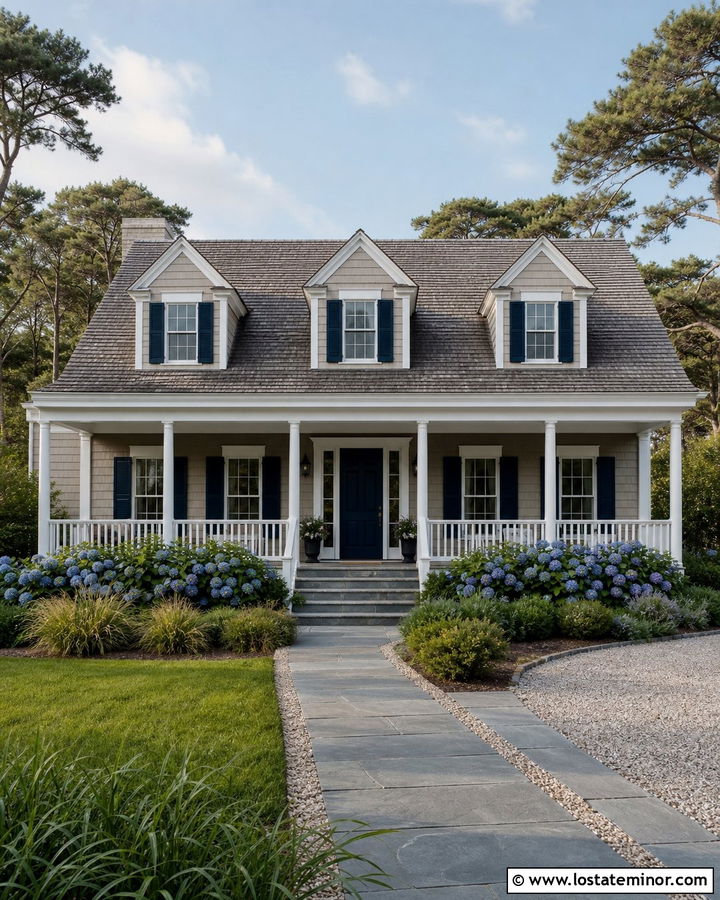
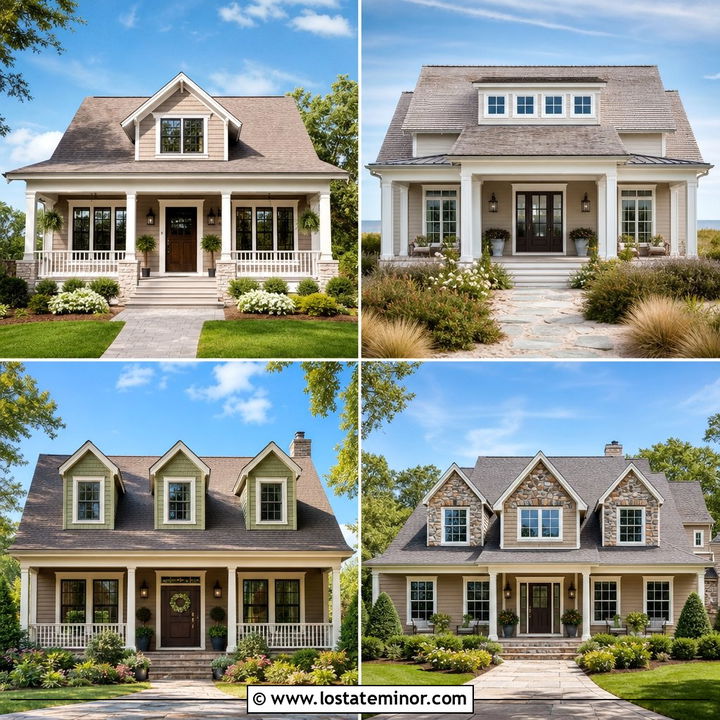
Gabled dormers naturally bring charm and usable visual height to a Cape Cod facade. Cover the main house in soft taupe cedar shingles or shake-style siding for subtle coastal texture. Paint the dormers, window casings, fascia, and corner boards a warm white that keeps the upper level light. Deep navy shutters and a matching front door offer classic contrast while maintaining a calm color palette. A weathered gray shingle roof supports the coastal character and prevents the dormers from looking top-heavy. Keep the porch simple with white railings and natural bluestone steps. Hydrangeas, beach grass, and a gravel-edged walkway complete the relaxed setting. Repeating the same trim width around every dormer helps the roofline appear balanced, even when the home has several windows above.
8. Taupe Tudor House With Cross Gables
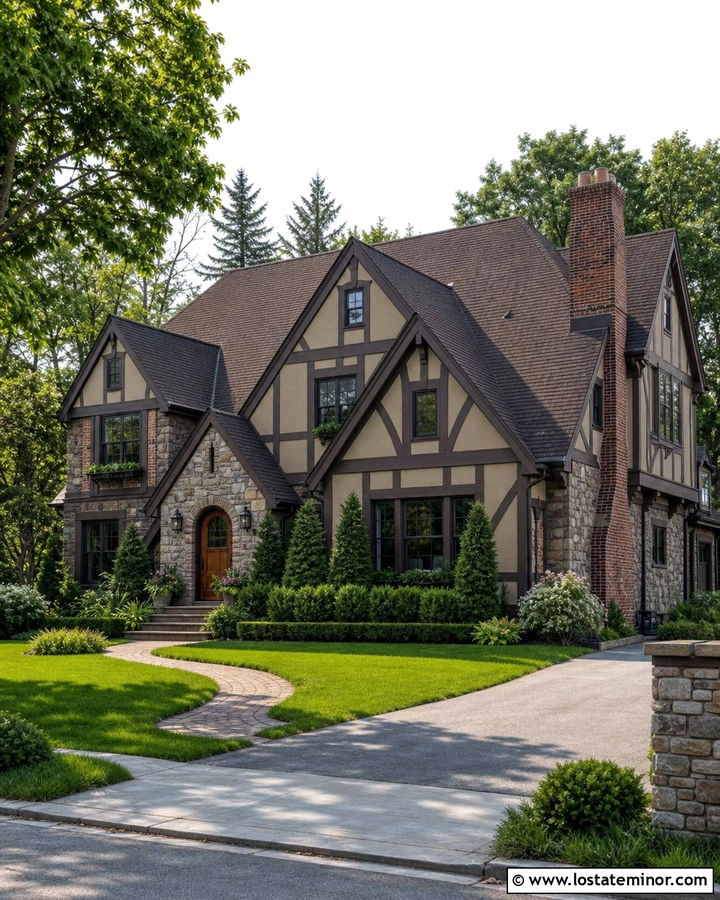
Cross gables give a Tudor house its recognizable layered silhouette, and taupe can modernize that shape without erasing its historic character. Apply warm taupe stucco between dark brown timber details. The darker wood should trace the gable outlines, upper wall panels, and entry arch in a consistent pattern. Use deep bronze window frames instead of bright white ones for a softer transition. A dark brown roof, aged brick chimney, and walnut-stained front door strengthen the old-world palette. If the facade includes stone, choose a blend with taupe, gray, and muted rust tones. Keep the garage doors close to the stucco color so they recede. Structured evergreens and a gently curved brick walkway provide an orderly landscape that complements the home’s detailed architecture.
9. Cool Taupe Contemporary House With Glass Gable
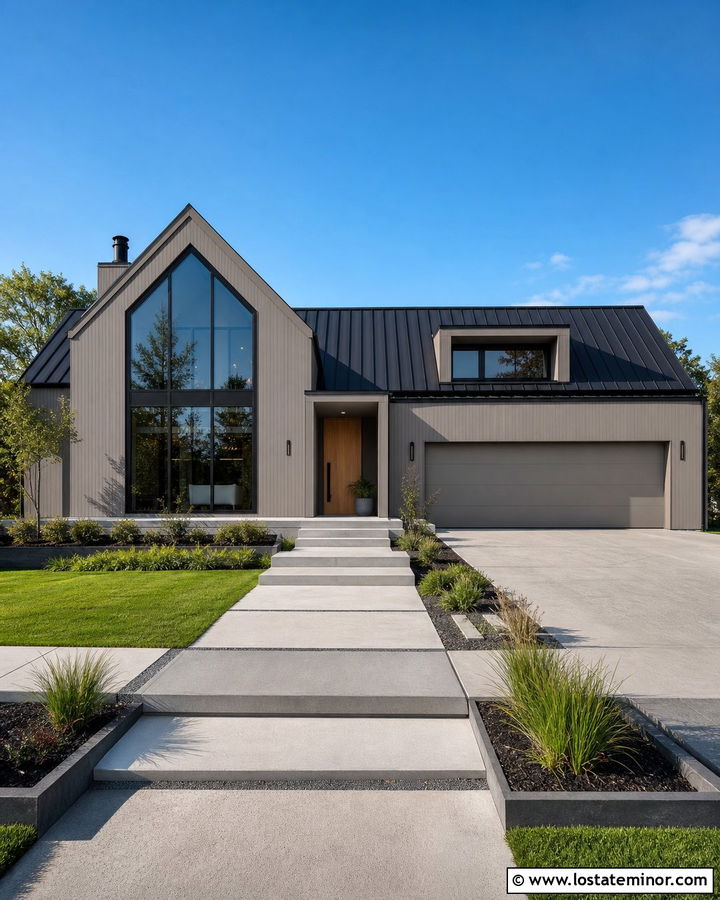
A large glass gable can transform a neutral contemporary house into a striking architectural statement. Select cool taupe vertical siding for the solid walls and surround the glazed section with slim charcoal metal framing. A dark standing-seam roof should follow the steep peak, creating a clean outline against the sky. Use smooth concrete steps and a recessed natural wood entry to balance the glass and metal surfaces. The garage can remain clad in the same taupe material to preserve a unified appearance. Limit extra trim so the gable shape stays clear and uncluttered. Linear planting beds, ornamental grasses, and a broad concrete walkway reinforce the modern geometry. Bright daylight will reveal the taupe’s gray undertones while the wood entry keeps the overall exterior from feeling cold.
10. Taupe Mountain House With Stone Gables
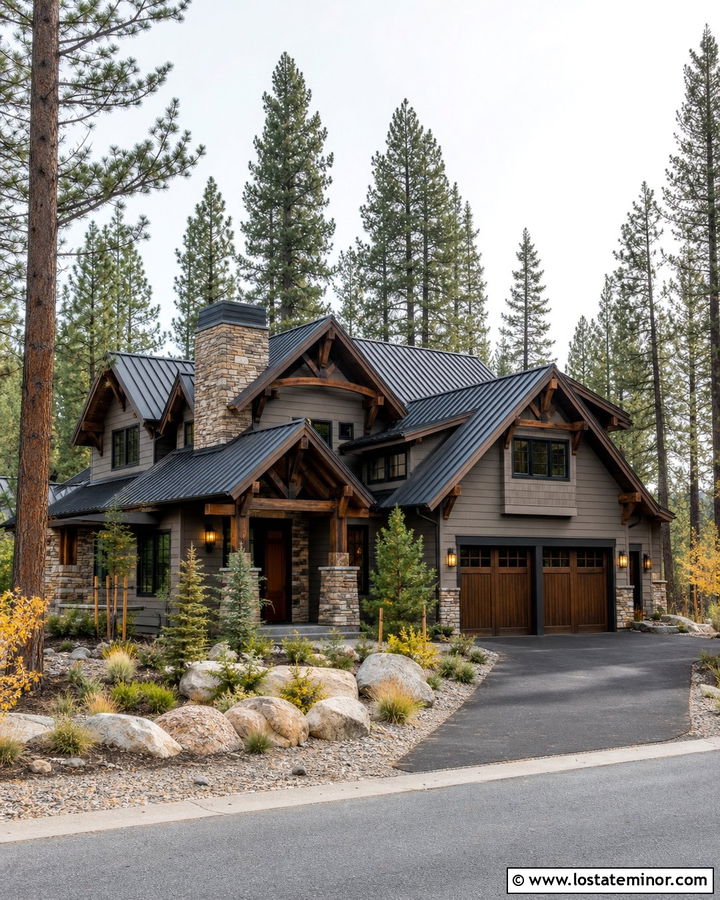
A taupe mountain home feels most convincing when its colors echo the surrounding rock and trees. Use deep taupe lap siding on the main walls and natural stacked stone across the lower portion of the projecting gables. Heavy timber trusses placed beneath the peaks add visible structure and warm contrast. Choose a charcoal metal roof that can visually hold its own against the substantial masonry. A dark-stained garage door and matching front door help the openings blend into the facade. Large black-framed windows introduce a contemporary edge without weakening the rustic character. Native evergreens, boulders, and gravel planting beds should frame the house rather than conceal it. Repeating stone at the chimney, porch columns, and gable bases makes the exterior feel cohesive from every curbside angle.
11. Taupe Coastal House With White Gables
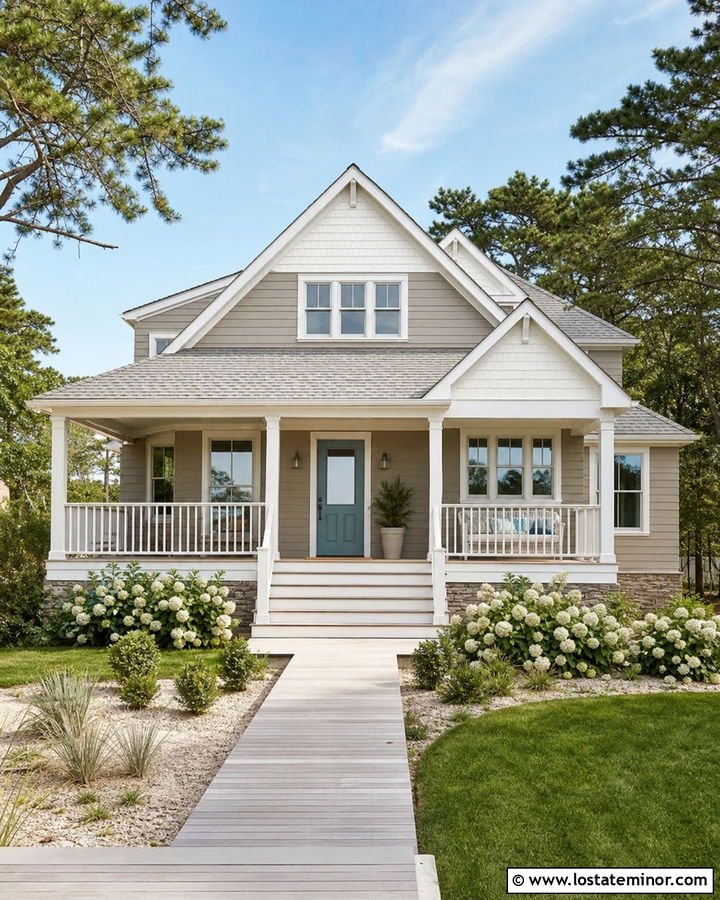
Soft taupe siding can give a coastal house warmth while preserving the light, open look associated with shoreline architecture. Use white shake siding inside the upper gables to create a gentle two-tone effect. Crisp white porch railings, window casings, and roof trim connect those gable sections to the lower facade. A muted sea-glass blue front door introduces color in a relaxed way. Select a pale gray roof that reflects the coastal palette rather than a heavy black material. Natural wood porch decking keeps the scheme from becoming too polished. Raised foundation details can be finished in light stone or white-painted brick. Complete the property with beach grass, hydrangeas, sandy gravel, and a simple boardwalk-style path. The finished house should feel bright, breezy, and carefully coordinated.
12. Taupe French Country House With Stone Gables
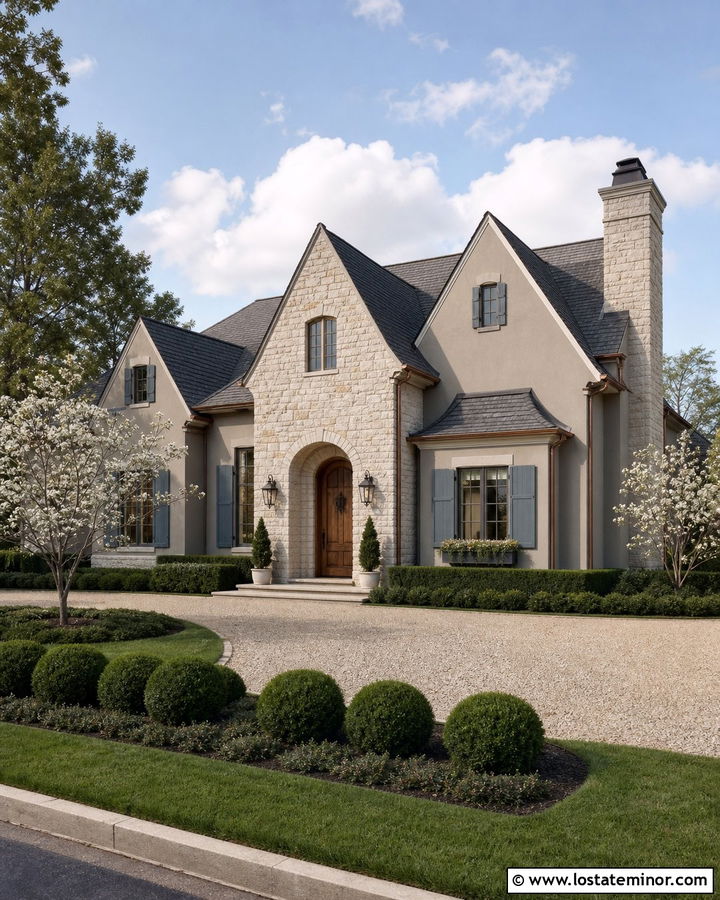
French country architecture benefits from colors that feel softened rather than freshly applied. Cover the main walls in a warm putty taupe stucco and use pale limestone across the front-facing gables, entry surround, and chimney. The stone should include gentle cream and gray variations that connect naturally to the wall color. A steep charcoal roof creates an elegant outline, while muted blue-gray shutters add understated color. Choose an arched medium-oak door with dark iron hardware for the central entrance. Copper gutters can develop a natural patina over time and enhance the European influence. Keep the landscaping formal but not rigid, using clipped boxwood, small flowering trees, and a pea-gravel walkway. The repeated masonry helps multiple gables read as one composed exterior instead of separate additions.
13. Taupe Bungalow With Decorative Front Gable
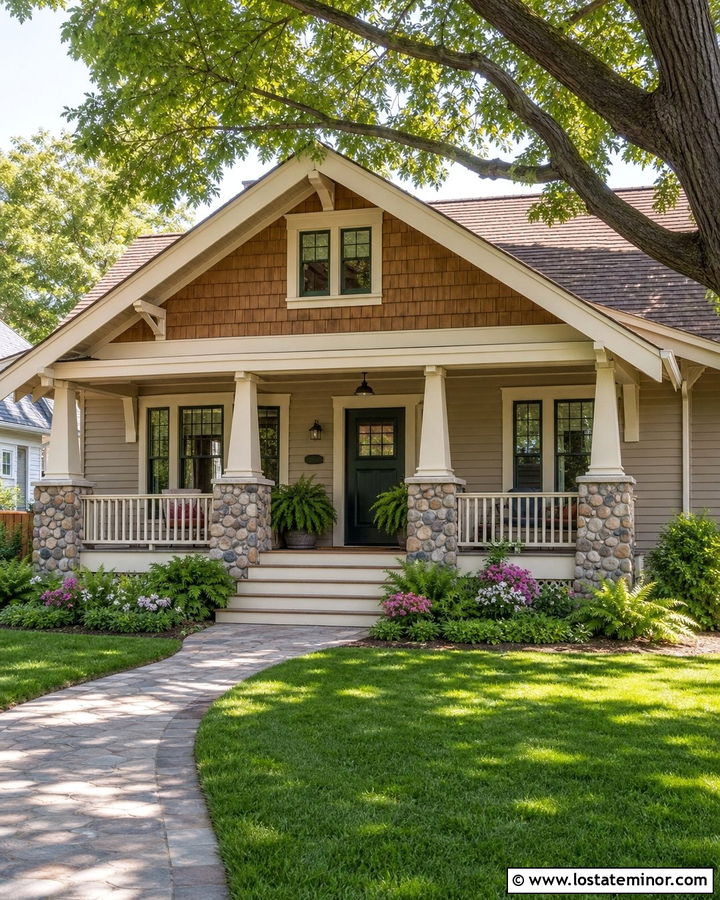
The front gable is often the most expressive part of a bungalow exterior. Paint the horizontal siding a welcoming midtone taupe, then fill the porch gable with cedar shakes or a simple geometric vent. Cream trim can outline the roof edges, tapered columns, window casings, and exposed rafter tails. A dark green front door works beautifully with taupe’s earthy undertones and nearby landscaping. Use river rock or fieldstone around the porch piers to add weight at ground level. A warm brown roof will maintain the home’s traditional character more effectively than a sharp black one. Wide porch steps, handcrafted railings, and amber-free bronze fixtures complete the composition. Plant ferns, flowering shrubs, and a small shade tree to create the settled, welcoming curb appeal bungalows do so well.
14. Taupe Split-Level House With Layered Gables
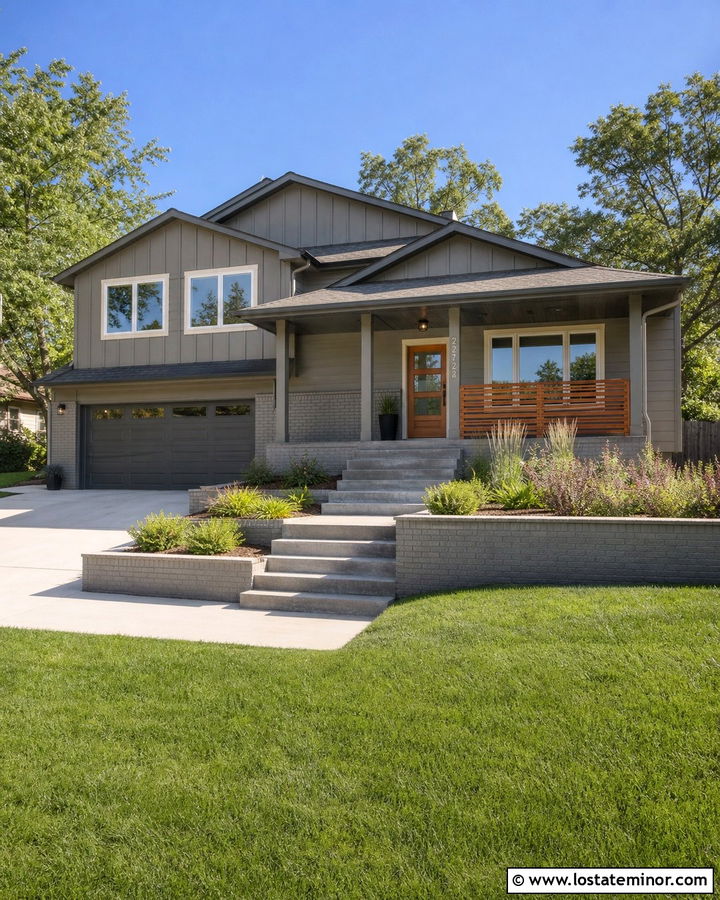
A split-level home can look disconnected when each section has a different material or roof height. Taupe helps visually unite those parts. Apply medium taupe siding across both levels, then use darker taupe vertical panels within the projecting gables. Cream trim around the roofline and windows provides enough separation to keep the architecture readable. Add charcoal garage doors that relate to the roof and minimize the visual width of the lower level. A cedar front door and matching horizontal railing warm the central entry. If existing brick remains, limewash or stain it in a subdued taupe-gray tone. Broad steps, tiered planting beds, and low retaining walls can follow the changing elevations. The result feels intentionally layered rather than like several competing exterior sections joined together.
15. Taupe Scandinavian House With Simple Gables
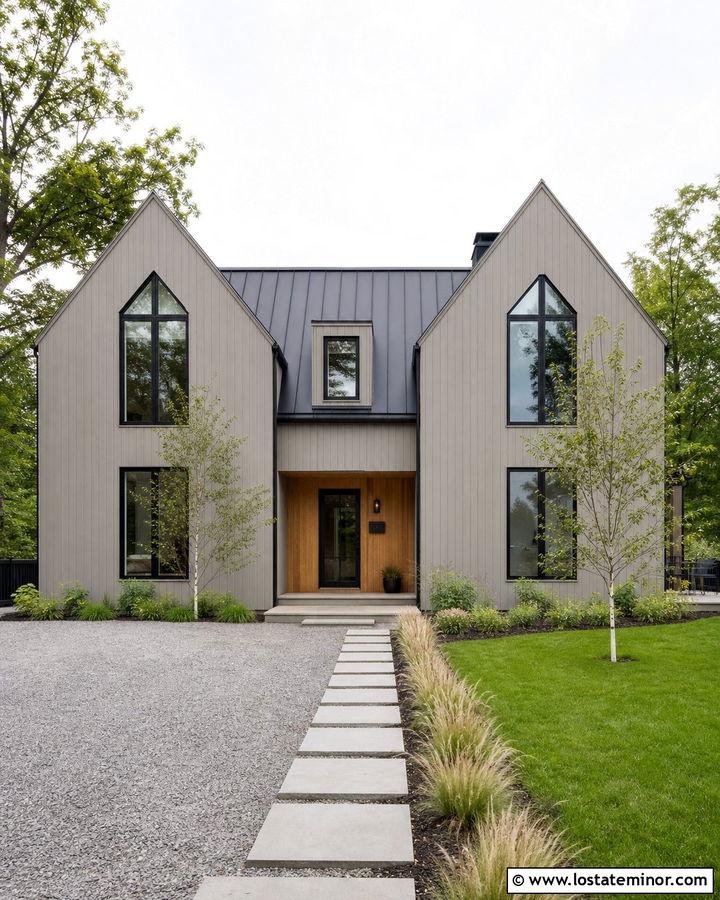
Clean materials and a limited palette make a taupe Scandinavian-inspired house feel calm and modern. Use light gray-taupe vertical wood siding across the entire exterior, including the tall front gables. Match the fascia closely to the siding instead of outlining every edge in white. Black window frames and a narrow black metal roof provide precise contrast. Add a recessed entry lined with pale natural wood to introduce warmth while maintaining the simple geometry. Large windows can extend toward the gable peaks, emphasizing height and bringing balance to the uncluttered walls. Skip shutters, decorative vents, and heavy moldings. A gravel driveway, rectangular pavers, young birch trees, and loose ornamental grasses complete the restrained landscape. Every detail should support the house’s clear silhouette and functional, welcoming simplicity.
16. Taupe Barndominium With Oversized Gables
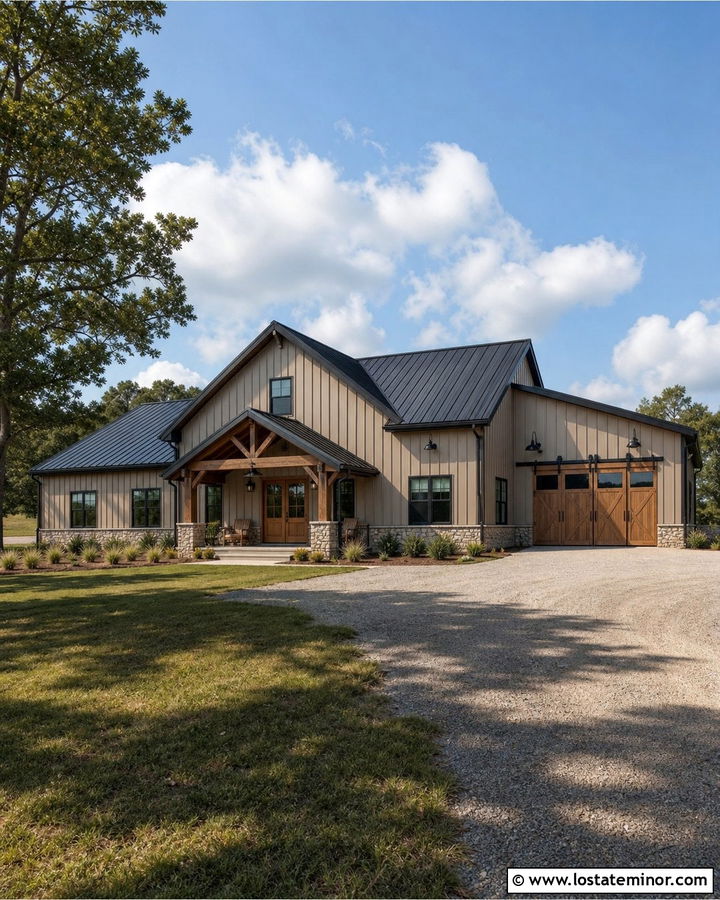
An oversized gable roof gives a barndominium its bold barnlike profile. Cover the facade in medium taupe board-and-batten siding, then frame the roof edges, windows, and sliding garage doors in matte black. A black standing-seam roof creates a durable-looking cap and makes the warm taupe appear richer. Place a broad timber-framed porch beneath the main gable to soften the large scale. Natural cedar posts, brackets, and double entry doors add warmth without introducing unnecessary ornament. Use a stone skirt along the foundation to ground the tall walls and connect the house to the landscape. A generous gravel driveway, simple lawn, and clusters of native grasses suit the rural setting. Balanced window placement is important because broad, uninterrupted walls can otherwise make this exterior feel overly industrial.
17. Taupe Brick House With Painted Gables
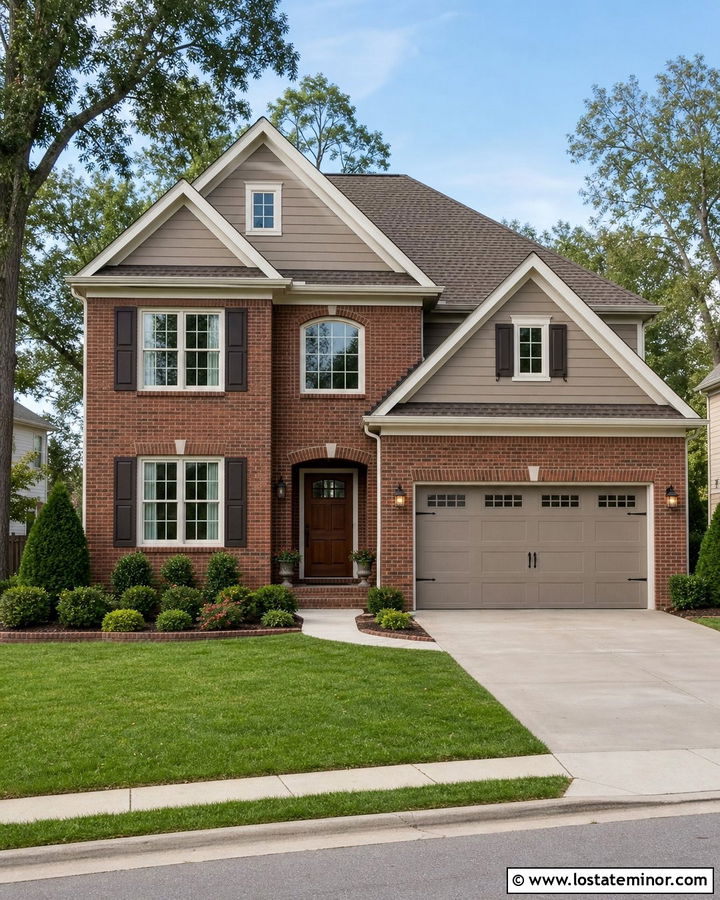
Existing brick does not need to be covered for taupe to become the primary exterior color. Keep muted red or brown brick across the first floor and paint the upper gables a medium earthy taupe. Choose a shade that repeats the brick’s mortar color so the two materials feel connected. Warm white fascia and window trim brighten the composition, while deep bronze shutters add structure. A walnut front door can bridge the reddish brick and brown undertones in the taupe siding. Select a dimensional roof containing charcoal and weathered brown. If the garage occupies much of the facade, paint its door taupe rather than white. Simple evergreen shrubs, brick-edged beds, and a clean concrete walkway complete this practical update without stripping away the home’s original texture.
18. Taupe Stucco House With Spanish Gables
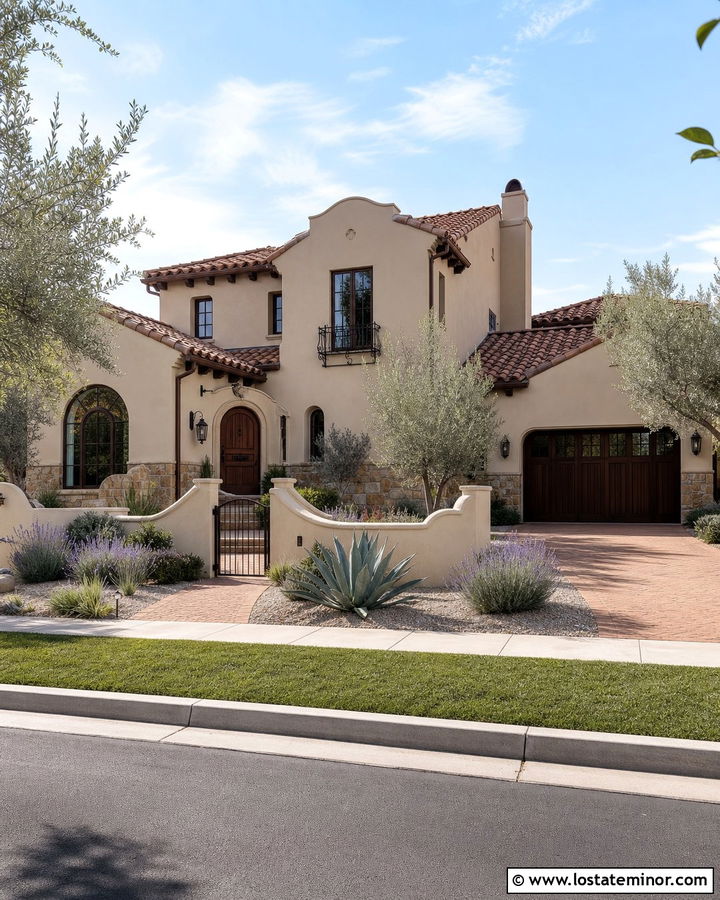
Taupe stucco offers a fresh direction for Spanish-influenced homes that typically use cream or yellow walls. Choose a warm sandy taupe and pair it with low, shaped gables capped by reddish-brown clay tile. Dark bronze windows, lanterns, and railings provide contrast without looking as sharp as black. A stained arched door can serve as the central focal point, especially beneath a smaller entry gable. Use natural stone around the lower walls or courtyard gate to deepen the earthy palette. Keep the trim close to the body color so the sculpted roofline remains the main architectural feature. Drought-tolerant landscaping with olive trees, agave, lavender, and pale gravel supports the warm facade. Curved stucco walls and a terracotta walkway can extend the complete scheme into the front yard.
19. Taupe Victorian House With Ornate Gables
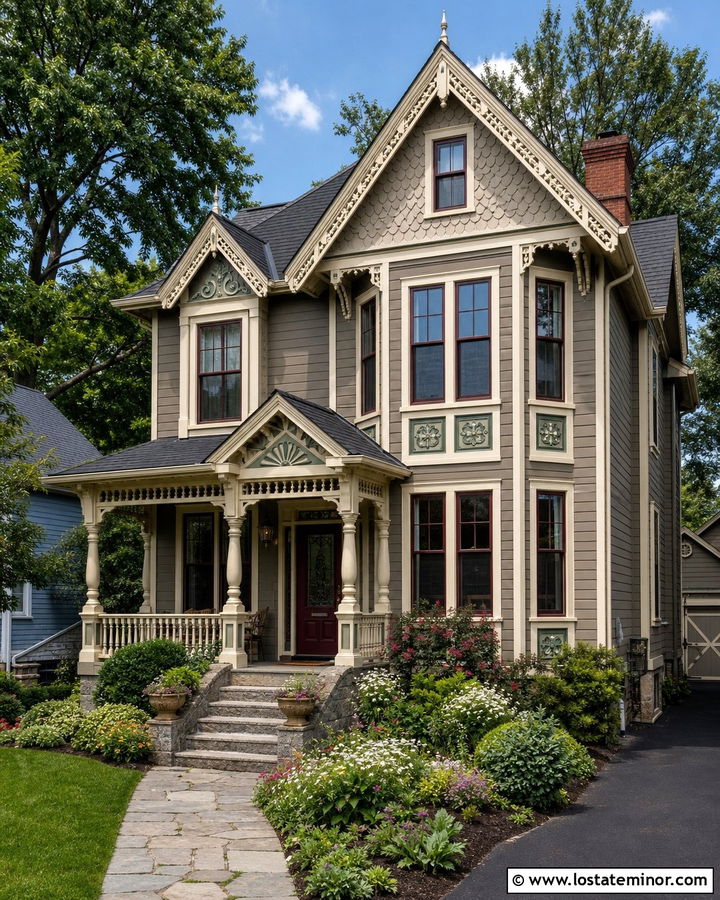
Taupe can quiet the visual complexity of a Victorian house while still celebrating its intricate gables. Use a balanced medium taupe for the primary clapboard siding and a lighter mushroom shade on patterned shingles inside the peaks. Cream trim should highlight bargeboards, brackets, porch spindles, and window casings. Add a restrained accent color, such as muted burgundy or dusty green, to the front door and selected decorative panels. Avoid applying every color to every detail, since that can make the facade difficult to read. A charcoal roof provides a neutral background for the ornament. Stone steps, traditional sconces, and layered cottage landscaping complete the exterior. The final palette should reveal the craftsmanship from the street while keeping multiple gables visually connected and comfortably balanced.
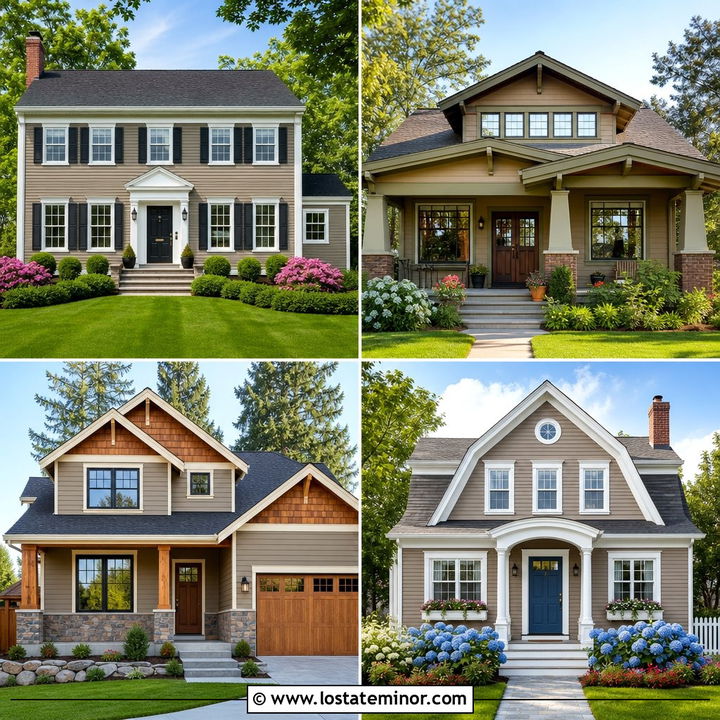
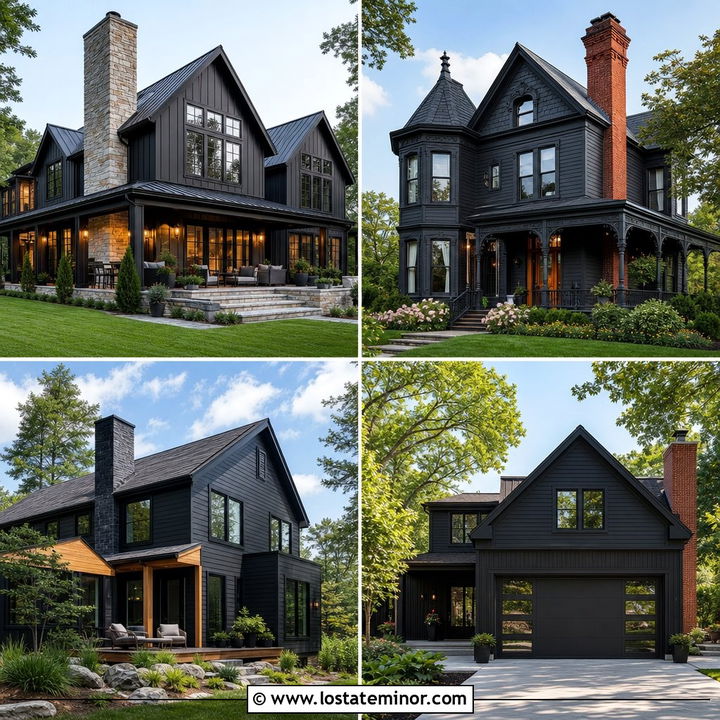
20. Taupe Craftsman House With Black Gable Windows
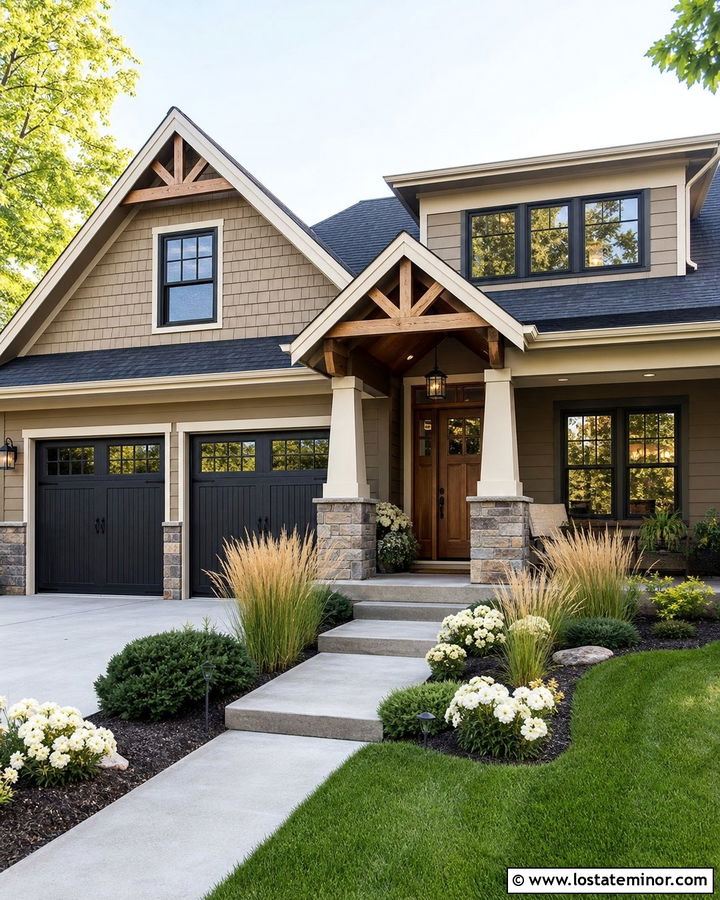
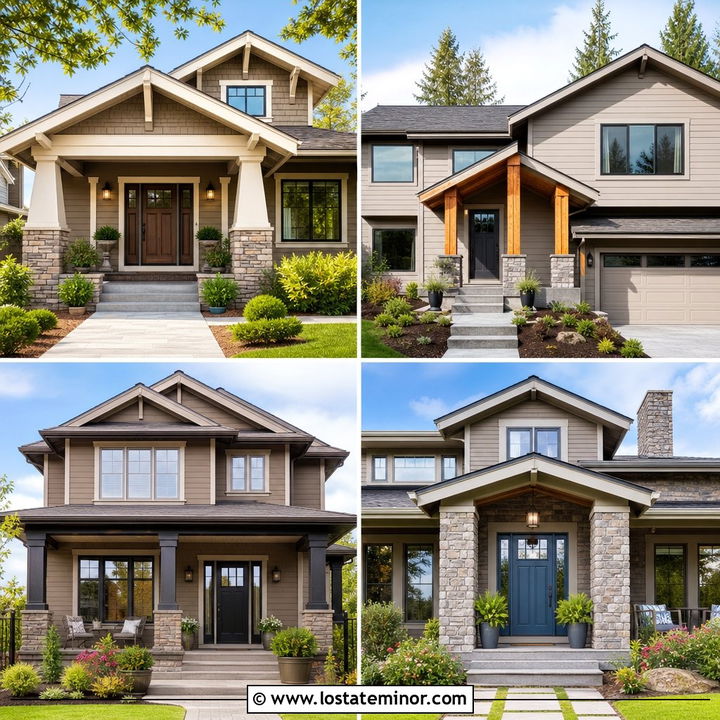
Black-framed windows placed high in the gables can give a Craftsman home a sharper, more current appearance. Choose warm taupe lap siding for the lower walls and matching shake siding within each peak. Cream fascia and tapered porch columns preserve the style’s inviting character. Beneath the gables, exposed cedar trusses create natural contrast and draw attention upward. Use black window frames, lighting, and metal railings in measured amounts so they read as intentional accents. A charcoal roof and dark garage doors will reinforce those features. Finish the porch with mixed gray-brown stone and a medium-stained entry door. Deep planting beds filled with ornamental grasses, white flowers, and compact evergreens soften the strong roofline while keeping the gables visible from the curb.
21. Taupe House With Green Gables
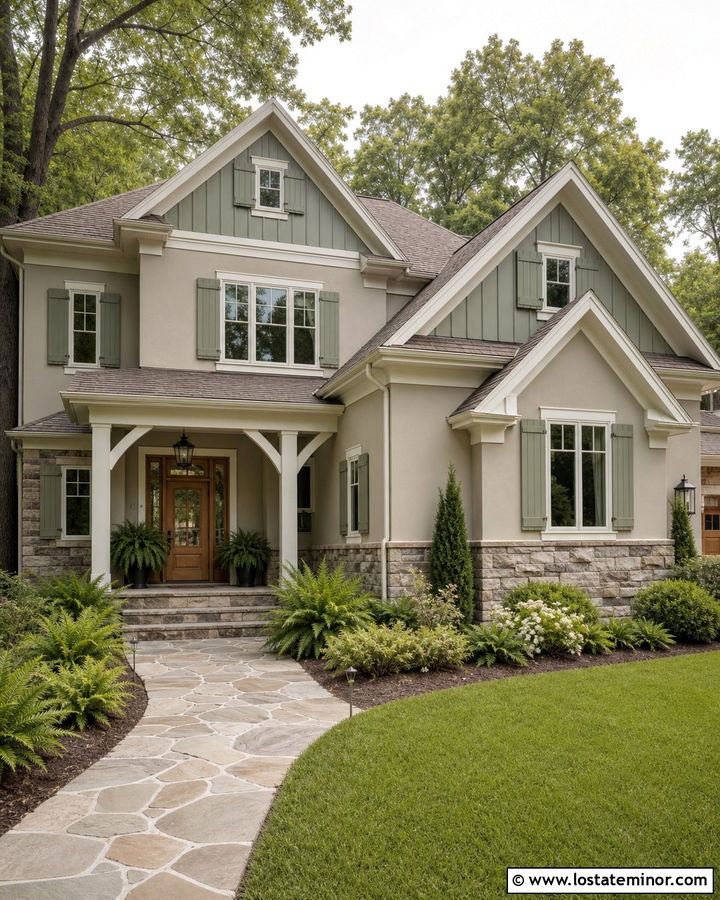
Using green in the gables creates an earthy two-tone exterior that feels connected to the landscape. Paint the main body a light warm taupe and apply muted sage green board-and-batten siding inside the front-facing peaks. Soft cream trim can outline both colors and maintain a gentle transition. Repeat the sage on the shutters or garage door, but keep the front door natural wood to avoid an overly matched appearance. A weathered brown roof supports the organic palette more effectively than solid black. Add a stone foundation containing beige, gray, and mossy tones for another visual link. Mature trees, fern-filled beds, and a flagstone walkway will strengthen the woodland character. This scheme works particularly well on transitional, Craftsman, and cottage homes with several clearly visible gables.
22. Taupe House With Charcoal Gable Accents
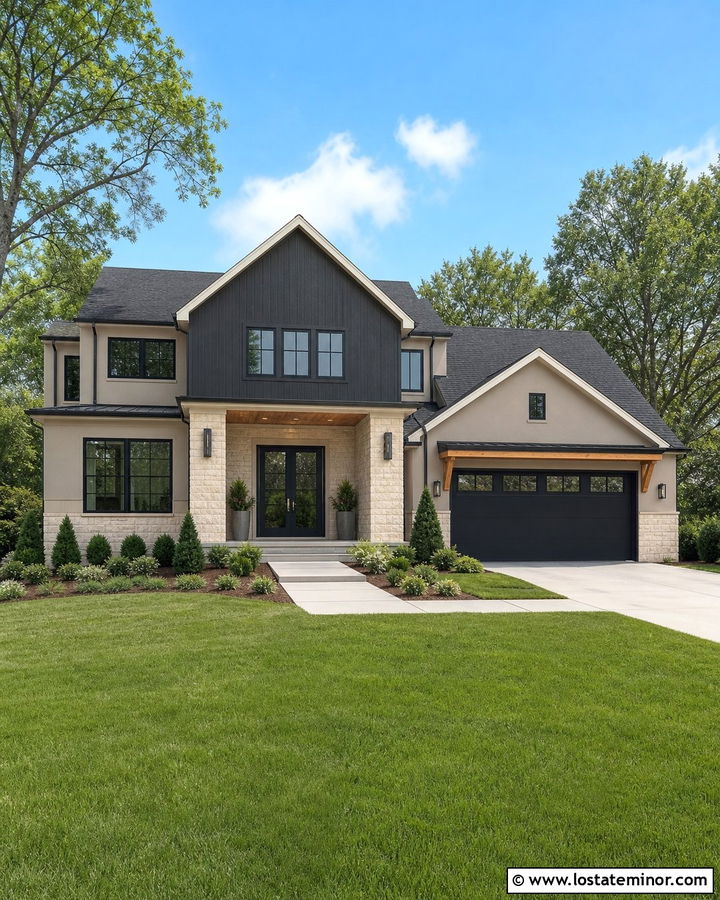
Charcoal accents can make shallow gables look more pronounced without requiring structural changes. Begin with midtone greige-taupe siding across the house. Apply charcoal vertical siding inside the largest gable and repeat the color on the front door, garage, and window frames. Keep the fascia a soft off-white to separate the dark gable from the roof. A medium charcoal shingle roof will connect the upper accent to the rest of the facade without producing one solid dark block. Introduce warm cedar at the porch ceiling or columns to balance the cooler colors. Pale limestone around the entry can brighten the ground level. Use a broad lawn, neat evergreen beds, and light concrete paving so the landscaping supports the graphic color blocking rather than competing with it.
23. Monochromatic Taupe House With Multiple Gables
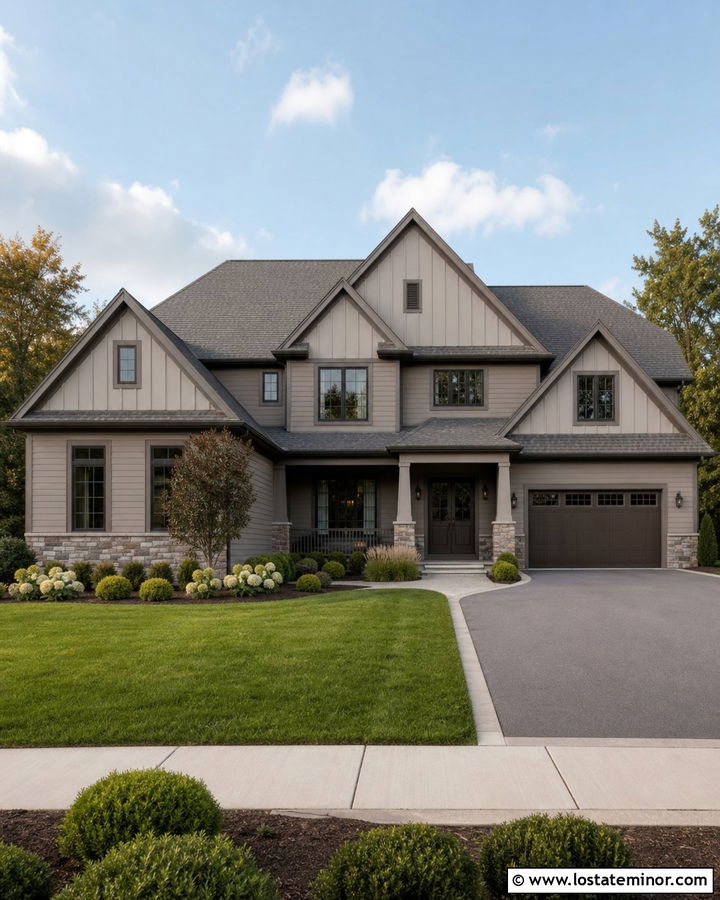
Multiple overlapping gables already create depth, so a monochromatic palette can prevent the facade from becoming too busy. Use three related taupe values: a medium shade on the main siding, a lighter shade inside the upper gables, and a deeper shade on doors and selected trim. Keep the undertones consistent across all three colors. Warm gray roofing and bronze window frames can continue the tonal effect without introducing stark contrast. Change siding direction between horizontal walls and vertical gable panels to add interest through texture. A subtle stone skirt in blended taupe and gray grounds the exterior. Landscaping should remain simple, with rounded shrubs, small trees, and an uncluttered walkway. The layered neutrals allow each gable to remain visible while giving the entire house one calm identity.
24. Taupe House With White Board-And-Batten Gables
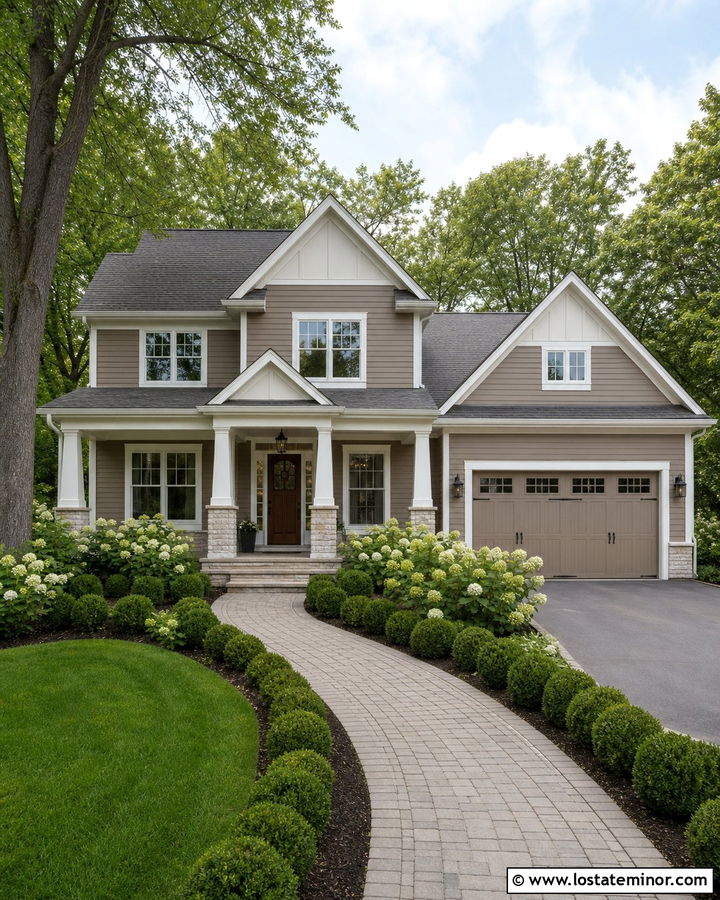
White board-and-batten panels can brighten the gables of a taupe house and create a lighter upper silhouette. Use medium warm taupe lap siding across the lower and central walls. Fill each front-facing peak with soft white vertical panels, then repeat that white on fascia, porch columns, and window trim. A medium-gray roof keeps the contrast comfortable and works with both colors. Choose a natural mahogany door as the main warm accent and add dark bronze fixtures for definition. The garage door should remain taupe to prevent too much white from collecting at ground level. Pale stone around the porch base can echo the gable panels. Hydrangeas, boxwood, and a curved paver path will complete this clean transitional exterior without pushing it fully into farmhouse territory.
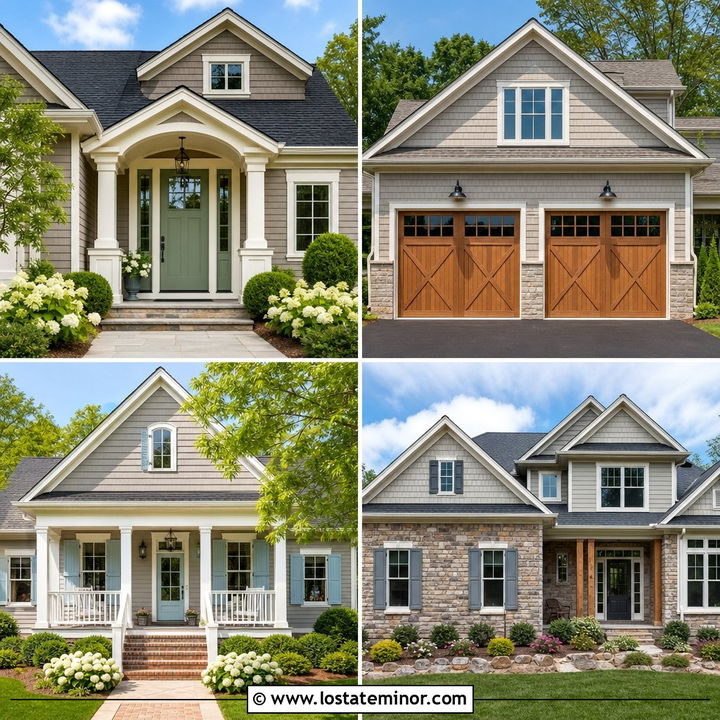
25. Taupe House With Cedar Gable Trusses
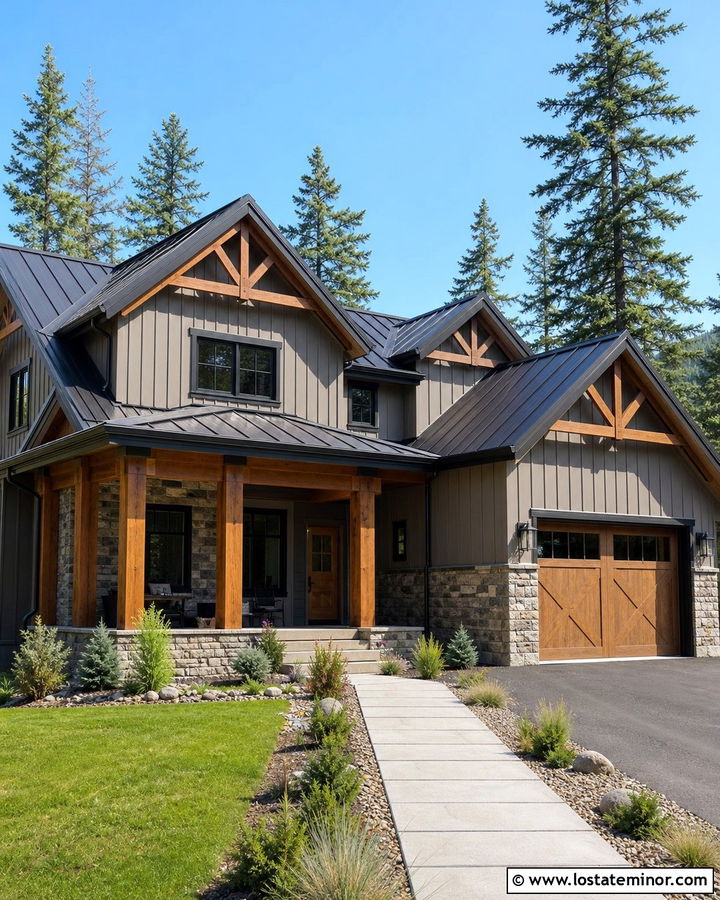
Exposed cedar trusses turn a simple gable into a strong architectural focal point. Cover the home in a cool medium taupe that allows the orange-brown wood grain to stand out. Use charcoal fascia, black-framed windows, and a dark metal roof for a crisp outline. Repeat cedar on the porch posts, front door, and garage details so the truss does not look like an isolated decoration. Stonework containing cool gray and warm tan can visually bridge the siding and wood. Keep the siding inside the gables taupe, preferably in a vertical profile that directs attention toward the peak. A wide walkway and low planting beds should preserve a clear view of the timber details. This complete palette suits mountain-modern, lake, and updated Craftsman homes especially well.
26. Taupe House With Clipped Gables
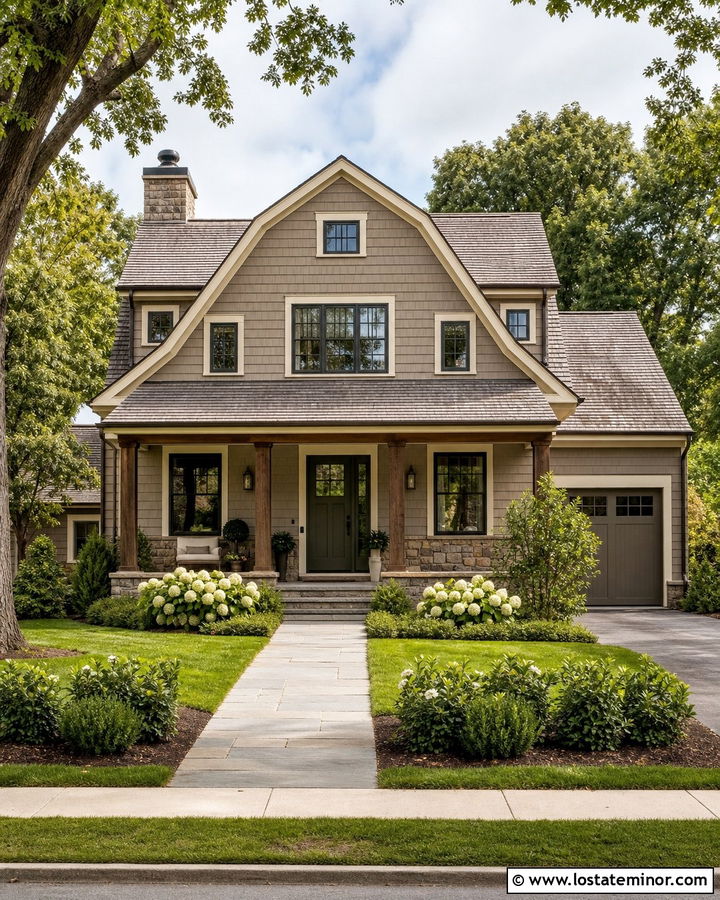
Clipped gables, sometimes called jerkinhead gables, create a distinctive roofline that blends sloped and peaked forms. A soft warm taupe exterior allows this unusual shape to remain clear without relying on strong colors. Use cream fascia to trace the clipped roof edges and dark bronze window frames for quiet definition. Weathered brown-gray shingles work well because they reinforce the home’s traditional character. Add a covered entry with sturdy wood posts and a deep olive front door. If masonry is included, choose understated fieldstone rather than highly contrasting brick. Symmetrical planting beds and a straight stone walkway can bring order to the less familiar roof shape. This scheme is a natural fit for European cottages, Craftsman homes, and transitional houses needing a subtle architectural signature.
27. Taupe House With Dutch Gables
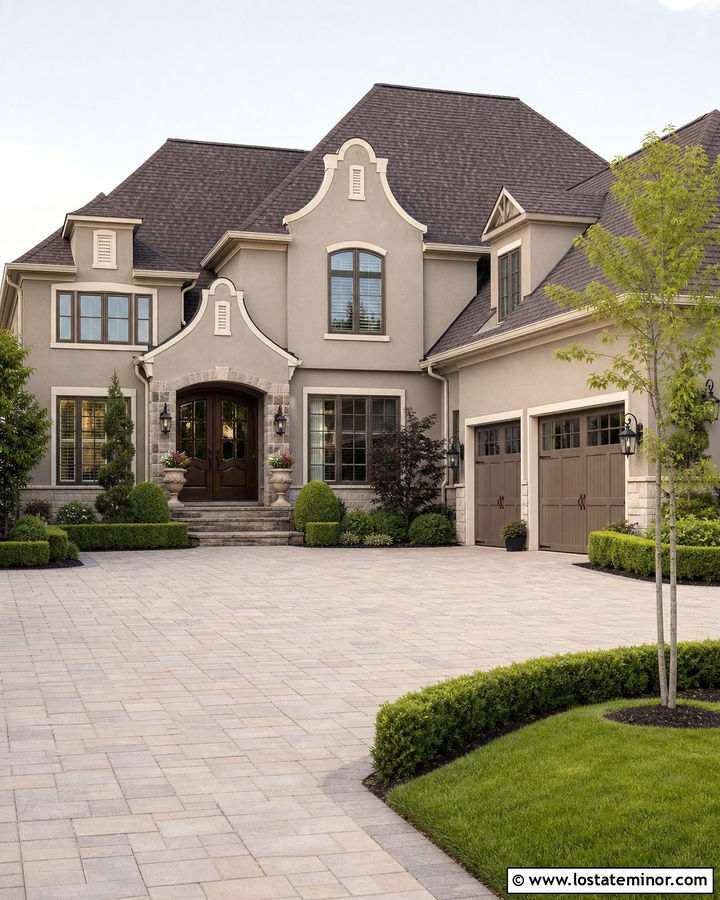
A Dutch gable combines the broad shape of a hipped roof with a smaller gable at the top, giving the exterior height and detail. Use medium mushroom taupe stucco or smooth siding across the walls, then highlight the upper gables with cream trim and simple decorative vents. A dark brown tile or dimensional-shingle roof will define the layered roofline. Choose bronze windows, a stained double front door, and understated stone around the entry. Avoid introducing too many accent colors because the roof construction already supplies visual complexity. Matching taupe garage doors can keep the lower facade quiet. Frame the home with clipped hedges, small ornamental trees, and a broad paver driveway. The balanced neutral palette lets the distinctive gables become the main curb-appeal feature.
28. Taupe House With Asymmetrical Gables
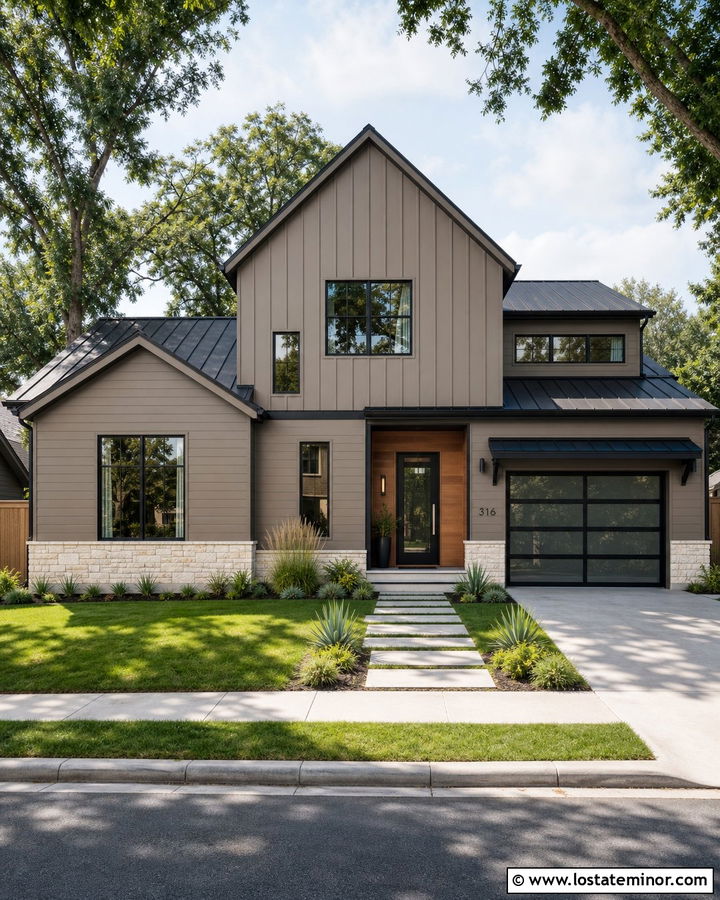
Asymmetrical gables can make a home feel dynamic, but they need a controlled material palette to avoid visual confusion. Apply medium taupe vertical siding across the largest gable and horizontal siding across the lower connecting volumes. Keep both materials the same color so the difference remains textural. Charcoal trim and a matching metal roof create a continuous outline around the varied peaks. Place warm wood at the recessed entrance to establish a clear focal point beneath the offset roofline. A pale concrete or limestone base can lighten the lower facade. Use windows in several sizes but align their frames with nearby architectural lines. Linear planting beds, a staggered paver path, and sculptural grasses complement the modern arrangement while preserving a bright, welcoming suburban appearance.
29. Two-Tone Taupe House With Gabled Garage
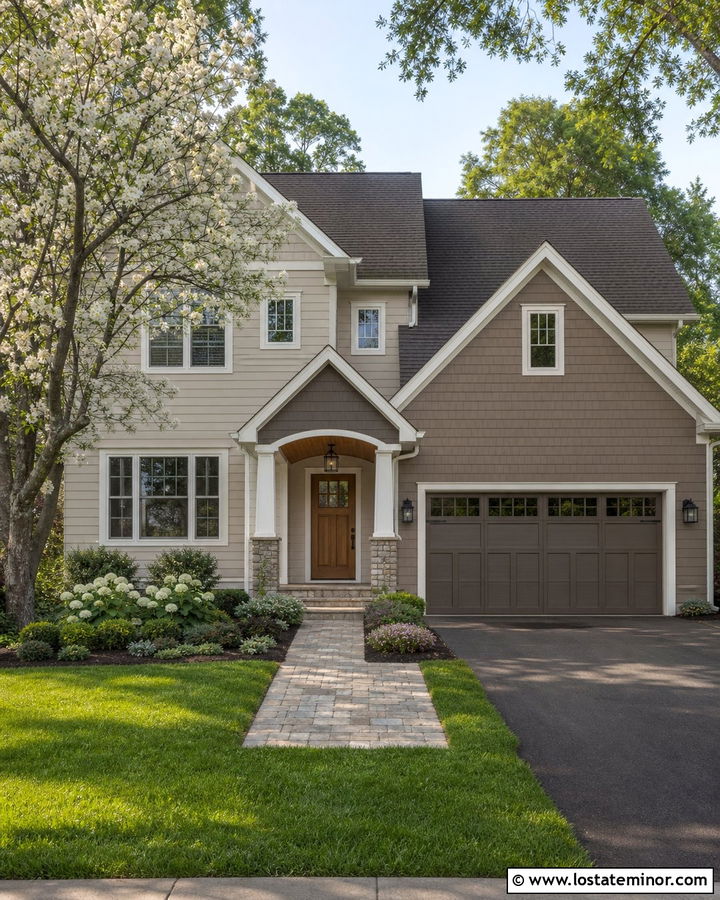
A forward-facing garage can dominate a home unless its gable is integrated into the complete color scheme. Paint the main body a light taupe and use a deeper brown-taupe on the garage gable, garage door, and nearby side wing. Soft white trim can outline the windows and roof edges, keeping the darker section from feeling heavy. Repeat the deep taupe in a smaller entry gable to create balance across the facade. A cedar front door and matching porch ceiling add warmth at the pedestrian entrance. Choose a charcoal-brown roof that relates to both taupe shades. Landscaping can redirect attention from the driveway with a flowering tree, layered foundation beds, and a defined walkway. The two-tone placement should clarify the architecture rather than divide the house into unrelated blocks.
30. Taupe Transitional House With Stone Entry Gable
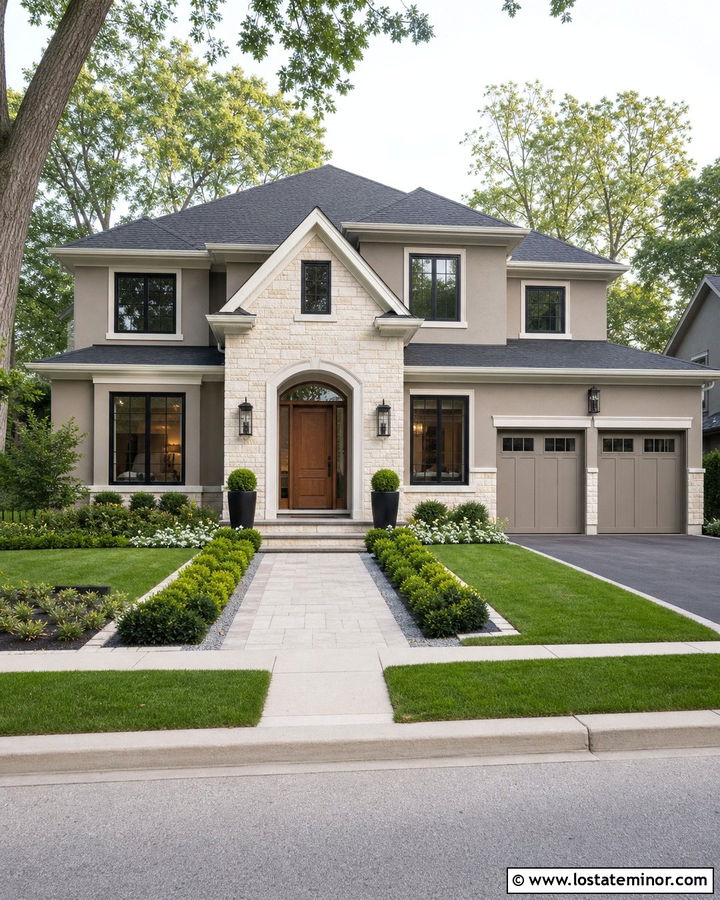
A stone entry gable creates a clear destination on a broad transitional facade. Use a refined gray-taupe siding color across the main house and cover the central projecting gable in pale limestone. Soft white fascia and window trim brighten both materials, while black window frames add a clean contemporary line. A medium oak front door should sit beneath the stone peak, creating a warm focal point at eye level. Repeat smaller amounts of limestone around the foundation or garage wing so the entry does not feel disconnected. Finish the roof in dimensional charcoal shingles and keep the garage doors close to the taupe body color. A straight paver path, balanced planters, and structured green beds reinforce the symmetry while maintaining an approachable, comfortable suburban character.
Conclusion:
The strongest taupe exteriors use gables as part of a complete, carefully balanced facade. Taupe siding can feel rustic with cedar, refined with limestone, traditional with cream trim, or modern with charcoal metal. Roof color, siding direction, masonry, doors, windows, and landscaping all influence how the neutral shade appears from the street. Before committing, compare large exterior samples in direct sun, shade, and changing weather beside permanent roof and stone materials. This will reveal whether the selected taupe leans warm, cool, brown, or gray. These **30 Taupe House Design With Gables Ideas** offer adaptable starting points for creating a layered exterior with clear architecture, welcoming contrast, and lasting curb appeal.

Related posts: