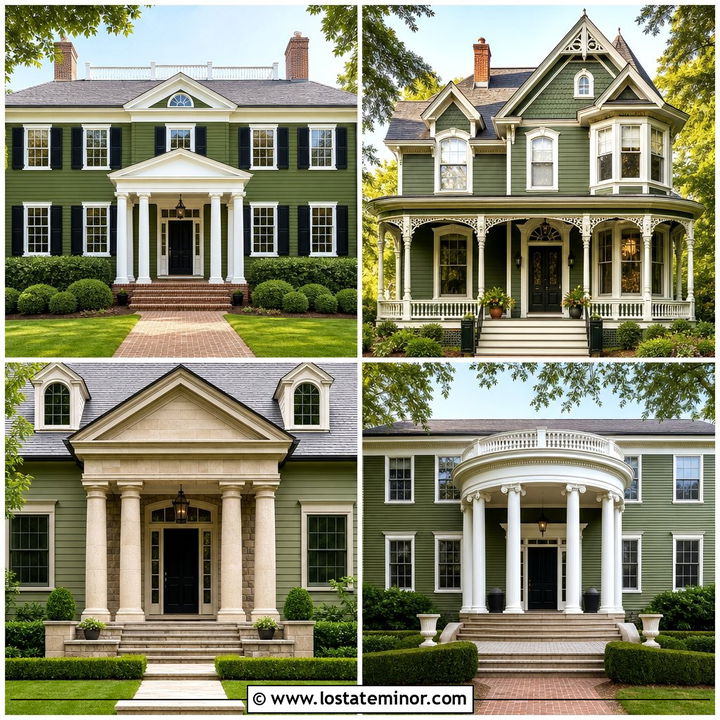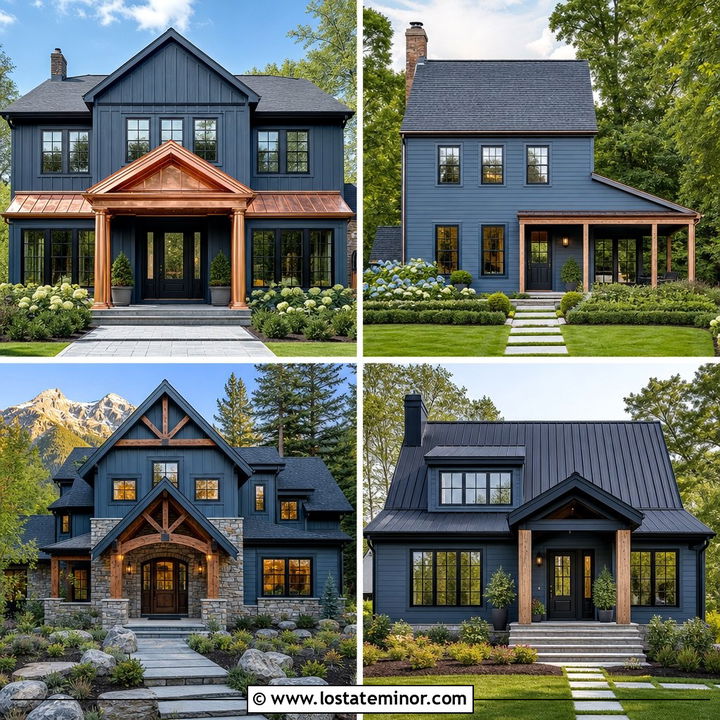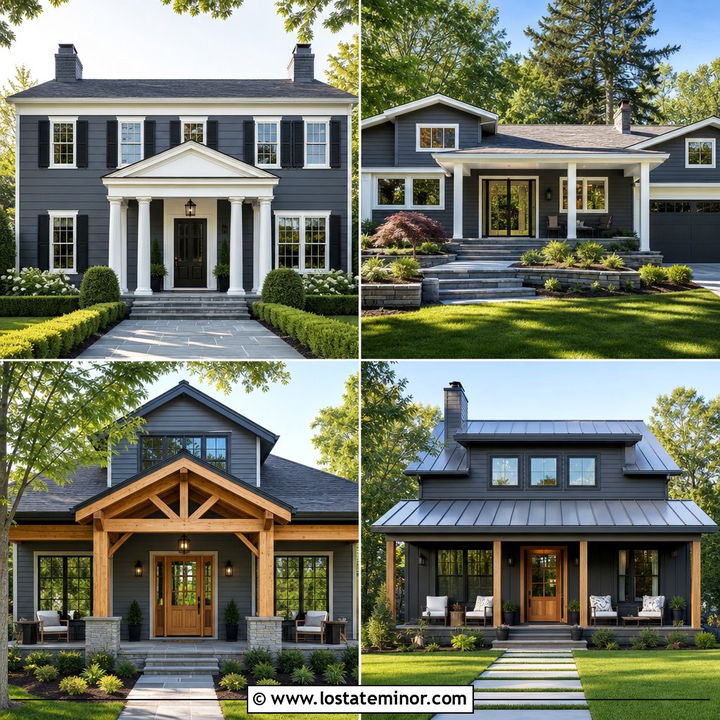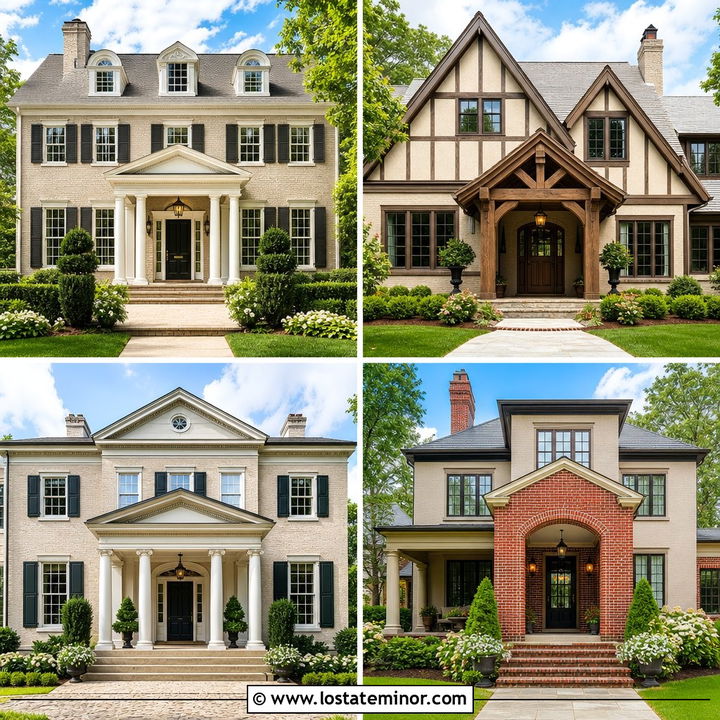
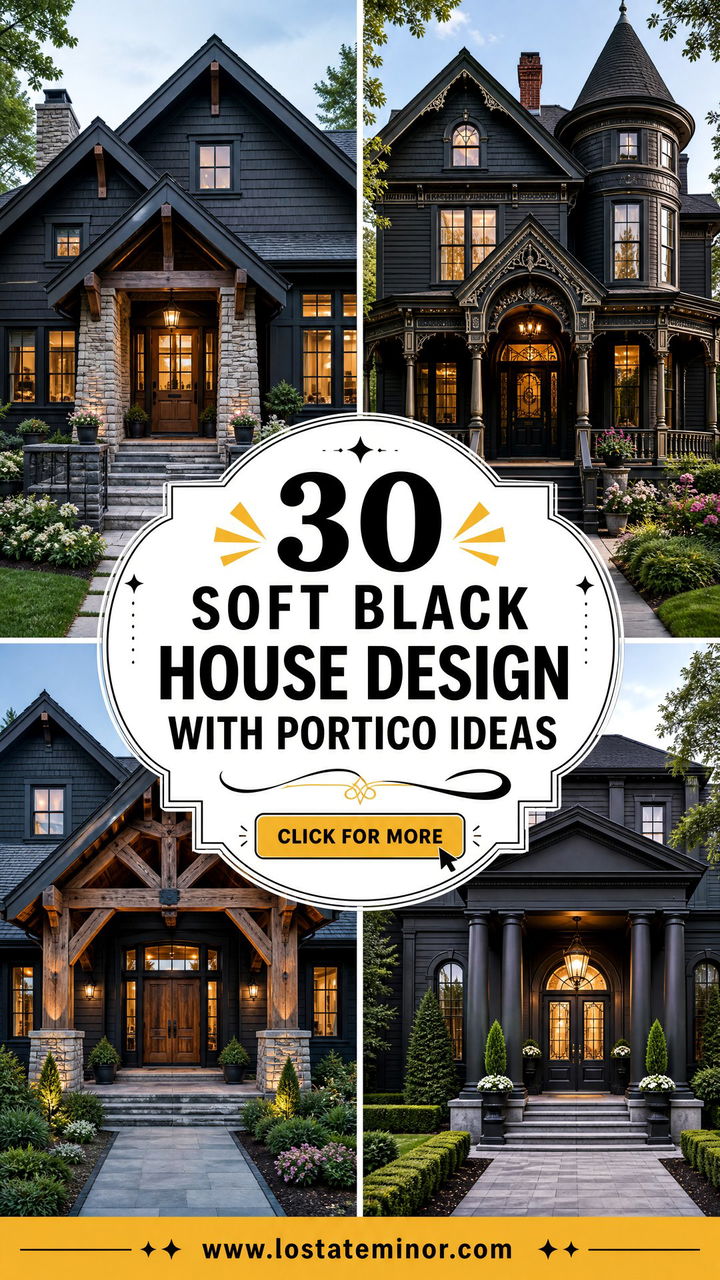
A soft black exterior brings depth and character to a home without the stark effect of a true jet black. Add a well-proportioned portico, and the facade gains shelter, architectural dimension, and a clear focal point. The most successful schemes balance dark siding with warmer materials, lighter trim, thoughtful landscaping, and an entry design that fits the home’s scale. Natural wood, creamy white paint, aged brick, stone, and metal roofing can all soften the palette while making the entrance easier to see from the street. Whether you are updating a ranch, colonial, cottage, or modern farmhouse, these **30 Soft Black House Design With Portico Ideas** offer complete exterior looks you can adapt to your architecture and budget.
1. Soft Black House With White Gable Portico
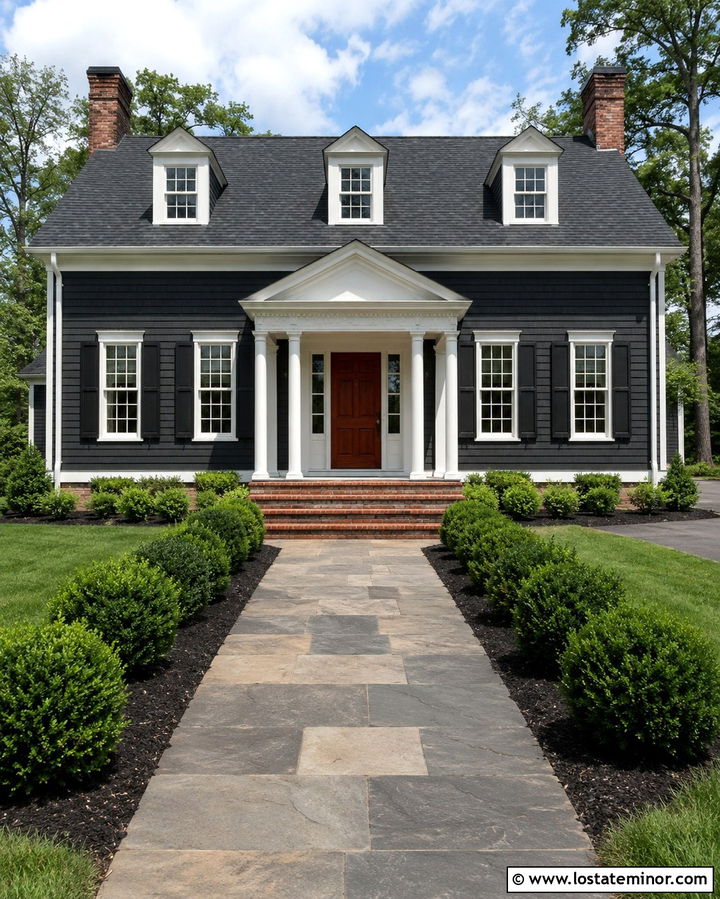
A crisp white gable portico creates a strong, welcoming focal point against soft black siding. This combination works especially well on a colonial or traditional two-story home with a symmetrical facade. Paint the fascia, columns, window trim, and portico ceiling a warm white rather than a bright blue-white. The subtle warmth prevents the contrast from feeling too severe. A medium-stained wood door introduces natural color, while black lanterns and charcoal roof shingles keep the exterior coordinated. Use simple square columns if the house has clean lines, or tapered round columns for a more formal appearance. A straight stone walkway and clipped evergreen shrubs reinforce the balanced architecture without competing with the dramatic body color.
2. Soft Black Modern Farmhouse With Timber Portico
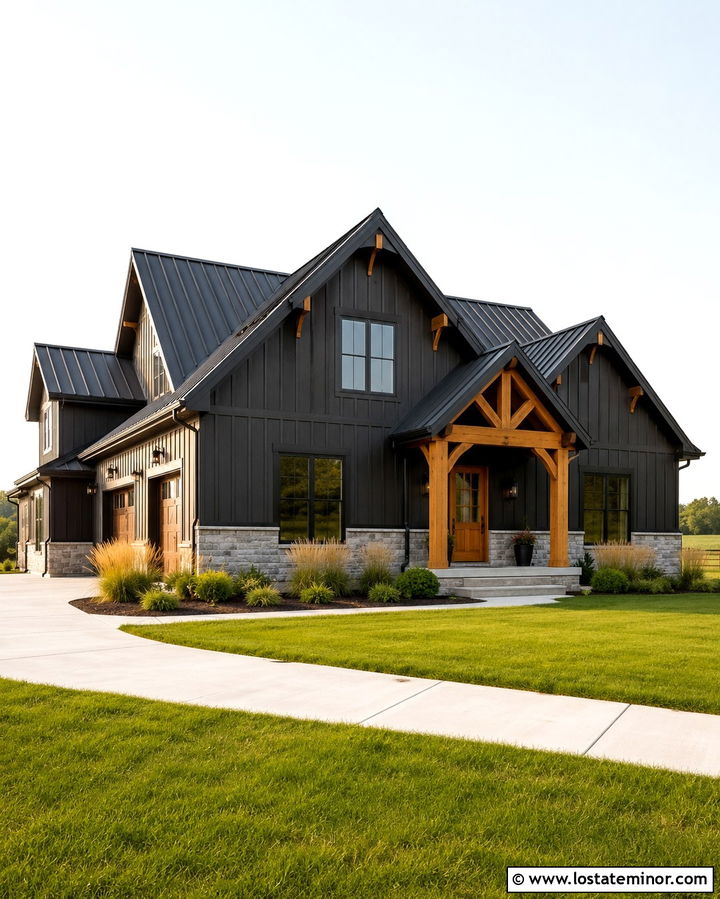
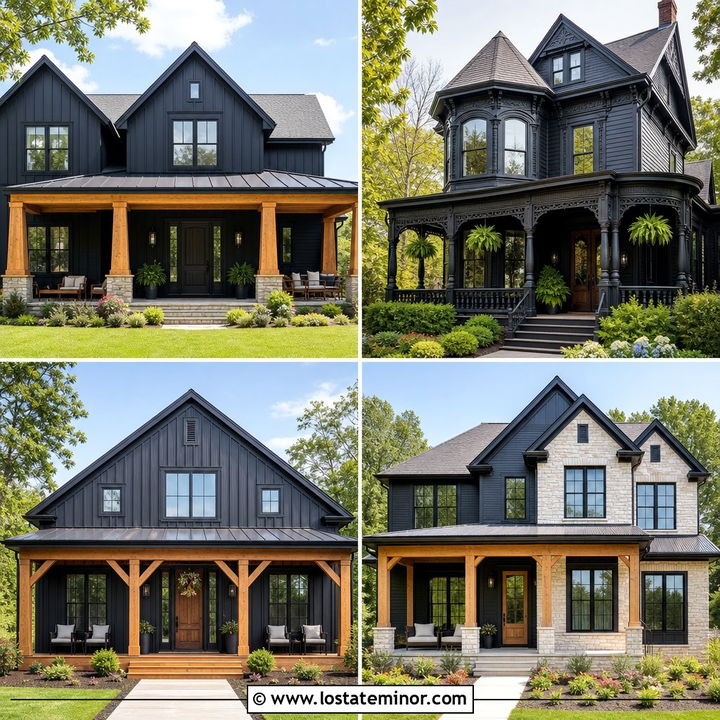
Warm timber is an effective way to make a soft black modern farmhouse look more inviting. Choose vertical board-and-batten siding for the main facade, then frame the entrance with a simple gabled portico supported by substantial cedar posts. Matching cedar brackets and a natural wood front door connect the entrance to the structural details. A black standing-seam portico roof can blend into the siding, allowing the timber to remain the focal point. Keep window frames and gutters black for a streamlined finish. Light gray stone around the foundation adds texture without introducing an unrelated color. Finish the setting with ornamental grasses, low shrubs, and a wide concrete path that complements the clean farmhouse lines.
3. Soft Black Colonial House With Column Portico
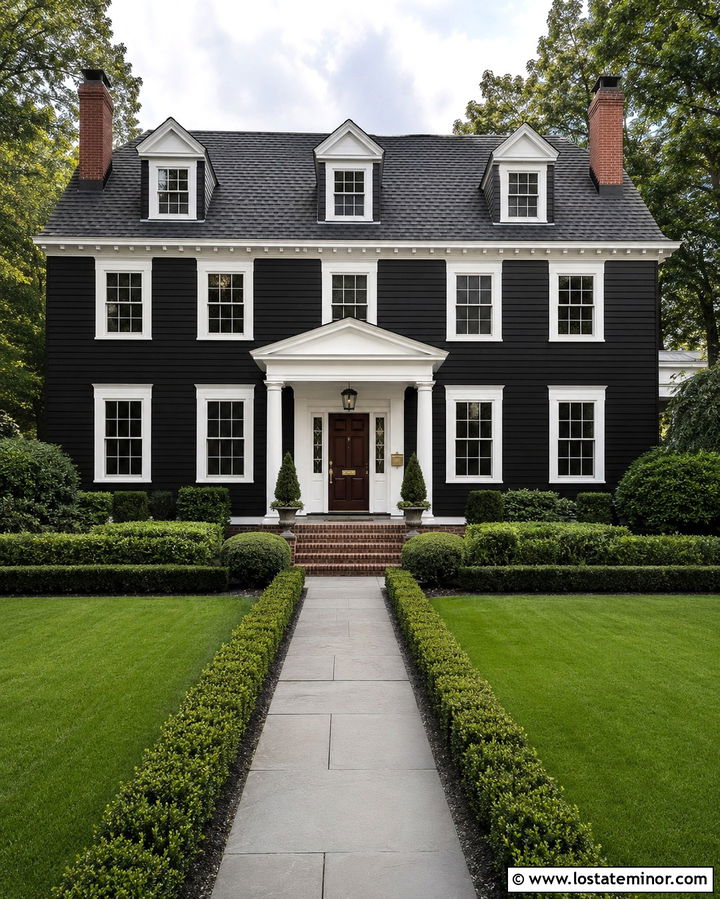
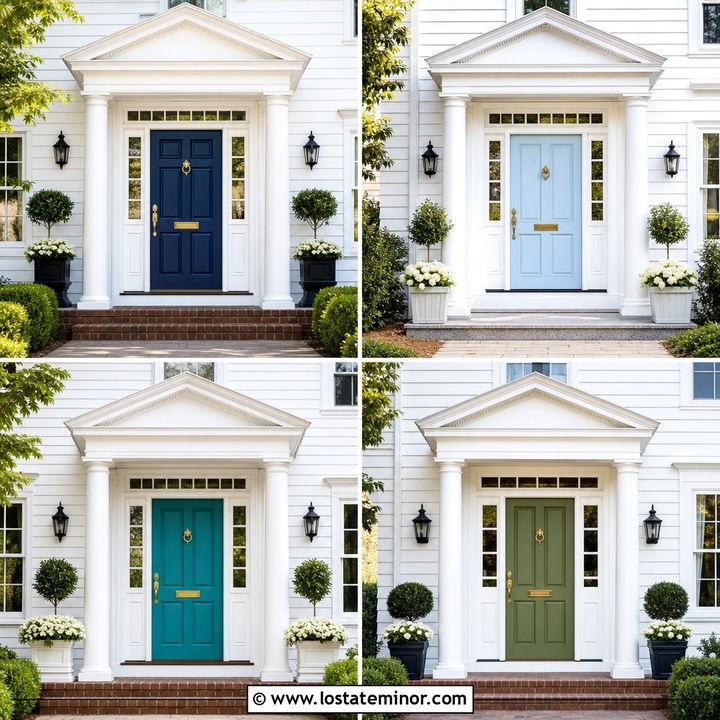
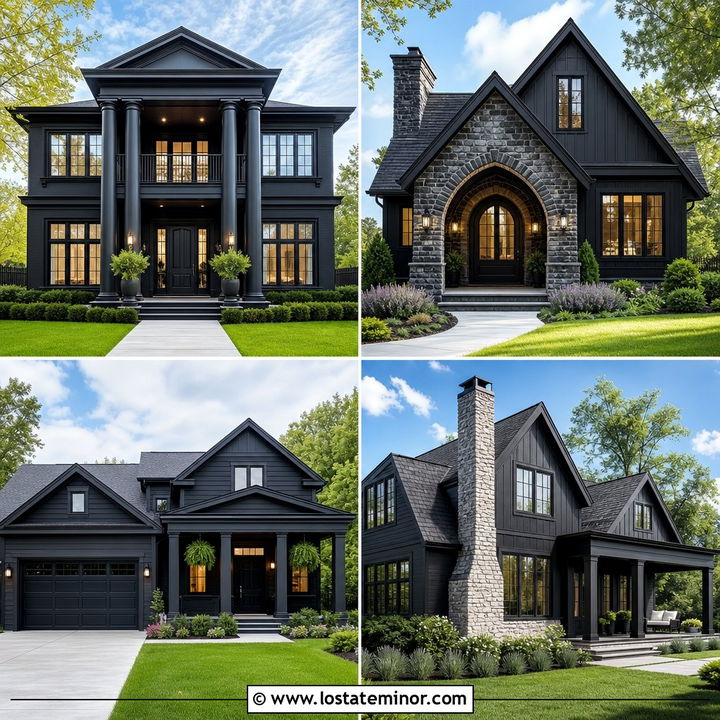
Imagine a classic colonial facade covered in muted black clapboard and centered around a graceful column portico. The symmetry already provides order, so the entry can be detailed without appearing excessive. Use four slender white columns, a shallow triangular pediment, and a white cornice that aligns with the home’s existing trim. A deep mahogany front door adds traditional warmth and can be accented with polished brass hardware. Keep shutters soft black or remove them if the windows have substantial white casing. Dark architectural shingles help the roof settle naturally into the color scheme. Boxwood borders, brick steps, and paired topiary planters complete the formal look while preserving a comfortable residential character.
4. Soft Black Ranch House With Low Portico
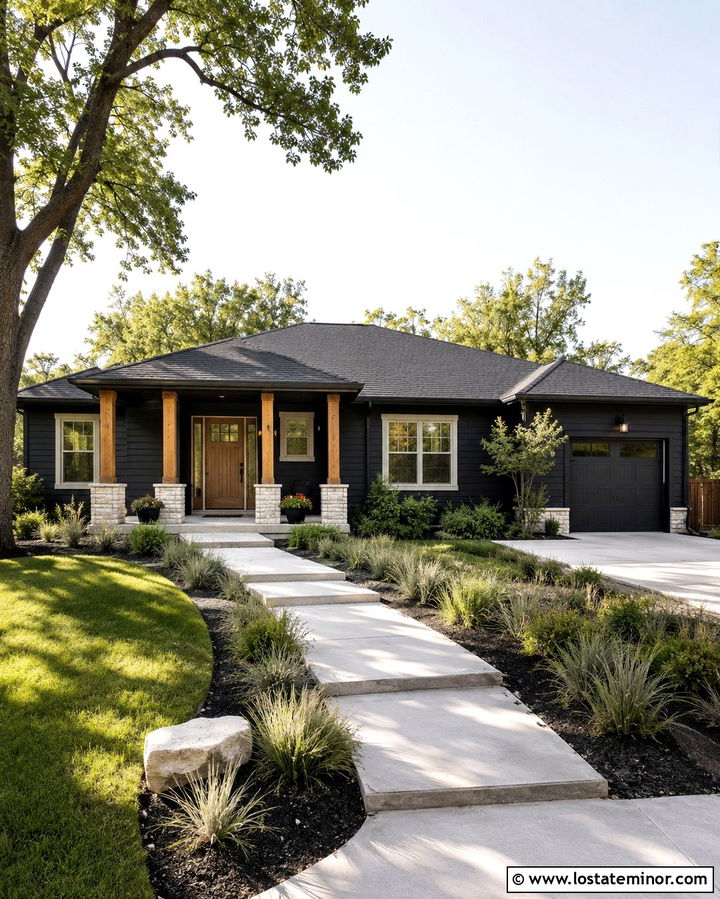
A low, broad portico can give a simple ranch house greater depth without fighting its horizontal proportions. Cover the exterior in soft black horizontal siding and select an understated hip-roof portico rather than a tall, steep gable. Square wood columns stained a medium oak tone bring warmth to the dark facade. Repeat that wood finish on the front door or a nearby slatted privacy screen. Cream trim around the windows provides gentle definition, while charcoal roof shingles maintain a cohesive roofline. Consider adding pale limestone to the column bases or lower facade for contrast and durability. Curved planting beds, layered grasses, and a wide stepping-stone walkway help soften the long footprint and guide attention toward the sheltered entrance.
5. Soft Black Craftsman House With Stone Portico
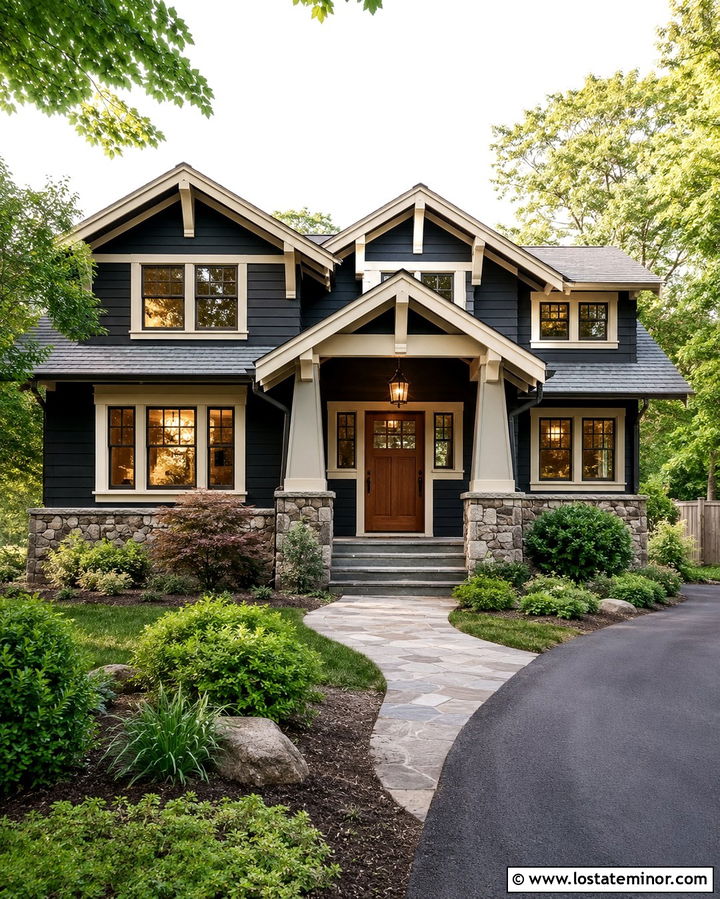
Craftsman architecture benefits from substantial materials, making a stone-based portico an excellent match for soft black siding. Use broad tapered columns resting on chunky fieldstone piers, then carry the same stone across the foundation or chimney. Creamy trim around the windows and roof edges brightens the facade while respecting the style’s warm character. A stained oak door with divided glass can echo exposed rafters or decorative brackets beneath the portico roof. Dark bronze lights and hardware often feel softer than glossy black fixtures. Choose landscaping with layered shrubs and spreading ground cover instead of overly formal hedges. The completed exterior feels grounded, textured, and welcoming, with the portico appearing like an original part of the house.
6. Soft Black Cape Cod With Arched Portico
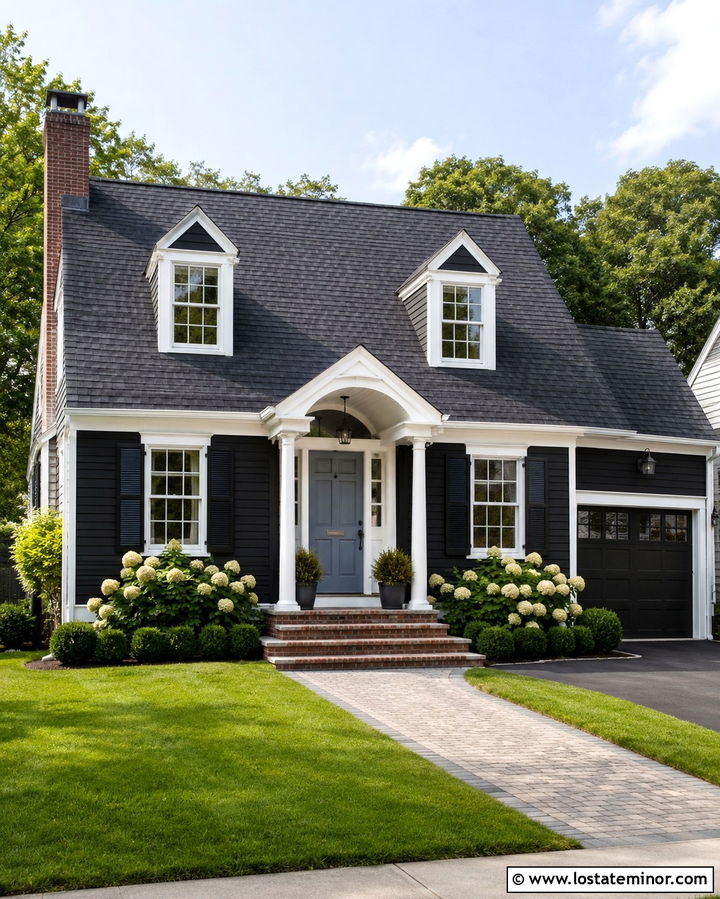
A small arched portico can add just enough distinction to a soft black Cape Cod without overwhelming its compact facade. Frame the front door with a shallow curved roof supported by slim white columns or pilasters. White window trim, dormers, and corner boards preserve the familiar Cape Cod contrast, while the black siding gives the house a more updated presence. A muted blue-gray door offers subtle coastal color and remains visible beneath the shaded entry. Use weathered gray shingles or dark slate-look roofing to complement the restrained palette. Brick steps and a narrow paver path add traditional texture. Hydrangeas, low boxwoods, and soft perennial borders keep the curb appeal relaxed rather than excessively formal.
7. Soft Black Cottage With Copper Portico
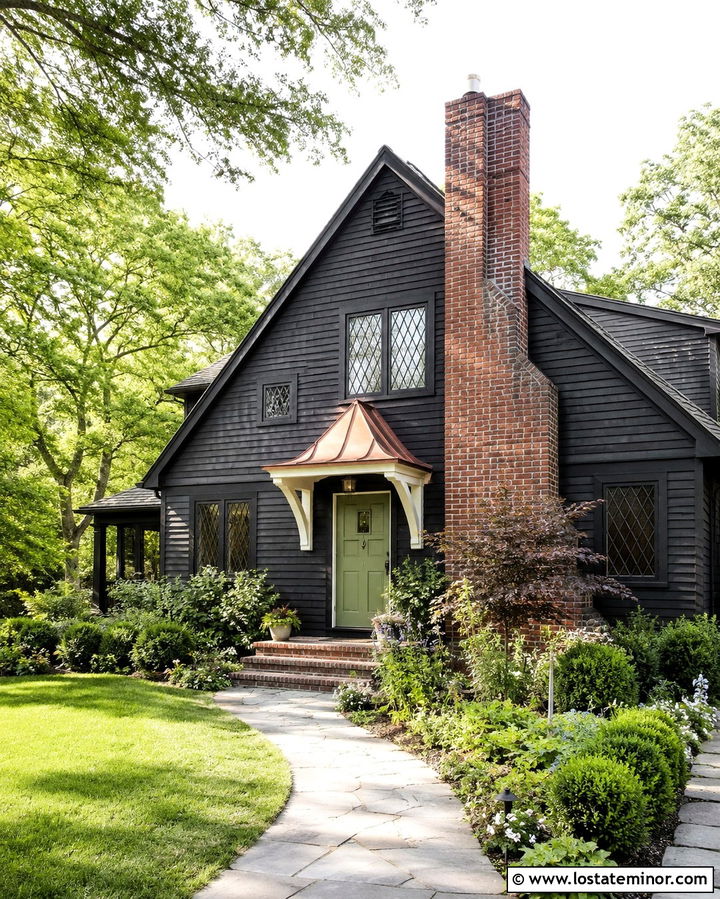
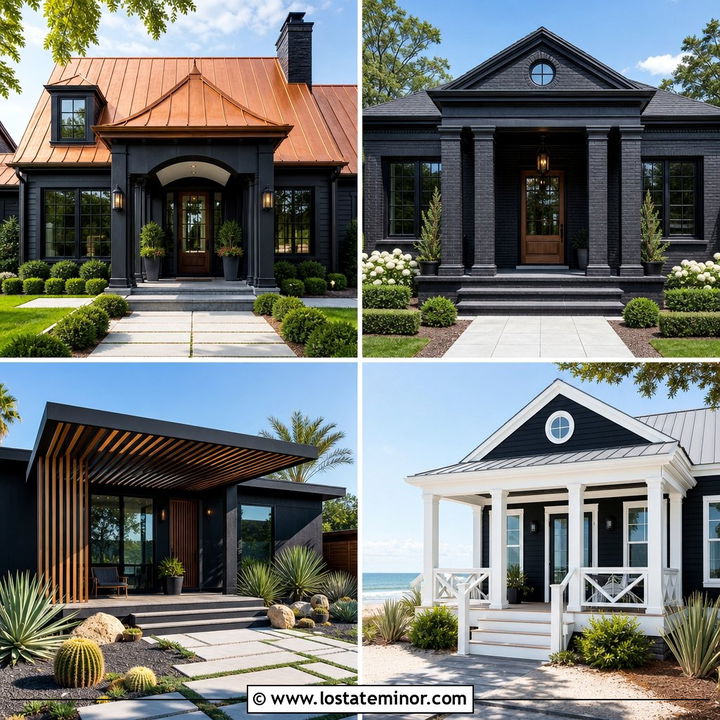
Copper brings changing color and refined warmth to a soft black cottage exterior. Place a petite copper-roof portico over the main door, choosing a shallow curve or simple gable that follows the cottage roofline. Cream-painted brackets and trim can outline the structure without making it appear too heavy. A warm sage green front door adds an earthy note that looks comfortable beside black siding and natural copper. If the home has brick steps or a brick chimney, leave those materials unpainted to strengthen the collected cottage character. Leaded windows, aged bronze hardware, and informal garden beds complete the design. As the copper naturally develops a patina, the entrance gains even more depth and personality.
8. Soft Black Bungalow With Wide Front Portico
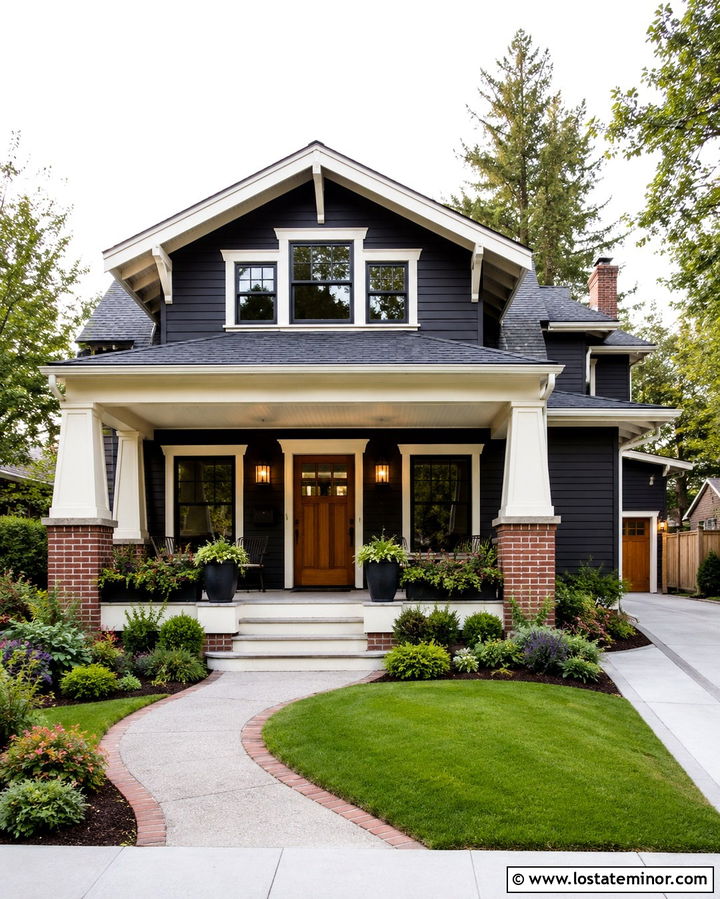
A wide front portico can visually expand a compact bungalow and create a comfortable transition between the yard and interior. Paint the lap siding soft black, then use warm white for the portico beams, exposed rafters, and window trim. Thick square columns on red brick bases provide the visual weight associated with bungalow architecture. A medium-toned craftsman door and stained beadboard ceiling bring warmth beneath the covered area. Keep the roof dark charcoal so it blends with the house instead of creating another strong dividing line. Low steps, broad planters, and a gently curved walkway make the entry approachable. This complete scheme emphasizes horizontal lines while giving the front elevation more dimension and everyday function.
9. Soft Black Brick House With Traditional Portico
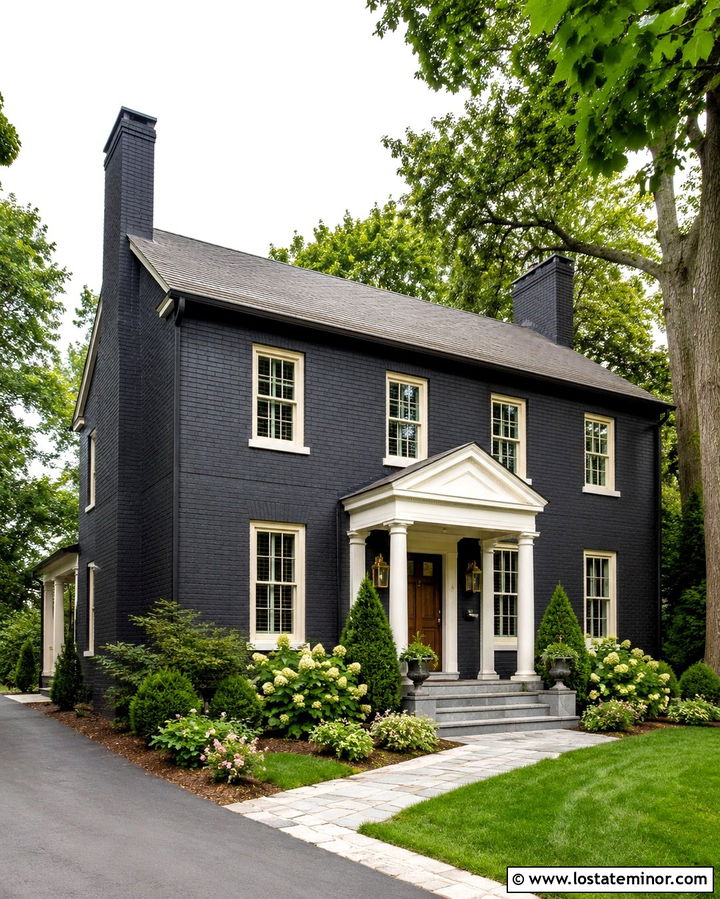
Painting an outdated brick exterior soft black can unify mismatched masonry while preserving the texture of the original facade. A traditional white portico keeps the entrance visible and introduces a familiar architectural frame. Select a simple pediment, clean cornice molding, and appropriately scaled columns rather than adding excessive ornament. A rich walnut door looks warm against the dark brick and can be paired with antique brass lights. Use off-white on the window trim to connect it to the portico. Existing concrete steps may be resurfaced with bluestone or pale limestone for a more finished appearance. Foundation shrubs, flowering perennials, and a light gravel or stone walkway prevent the overall exterior from becoming visually heavy.
10. Soft Black Tudor House With Timber Portico
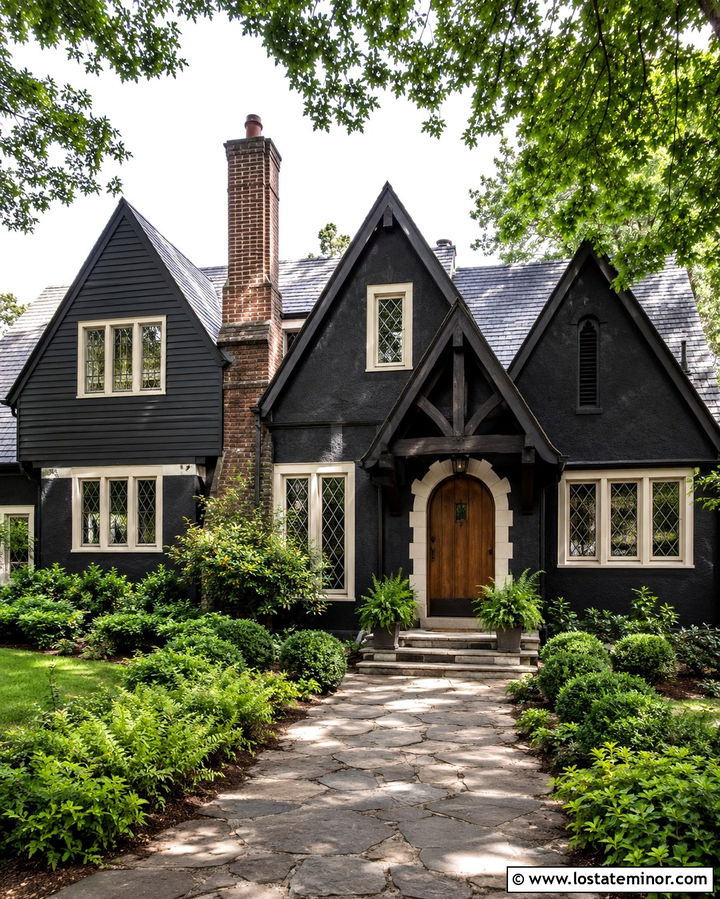
Tudor homes already combine strong rooflines and rich materials, so a restrained timber portico works better than a highly decorative addition. Use soft black paint on the stucco or siding while retaining natural brick around the chimney, lower walls, or window surrounds. A steeply pitched entry roof should echo the home’s primary gables and can be supported by dark-stained oak brackets. Choose a rounded wood door with black iron hardware to reinforce the architectural character. Warm cream trim offers definition around leaded or divided-light windows. Slate-gray roofing ties the dark surfaces together. Informal hedges, shade-tolerant ground cover, and an irregular stone path give the exterior the established, storybook quality associated with Tudor design.
11. Soft Black Split-Level With Flat Roof Portico
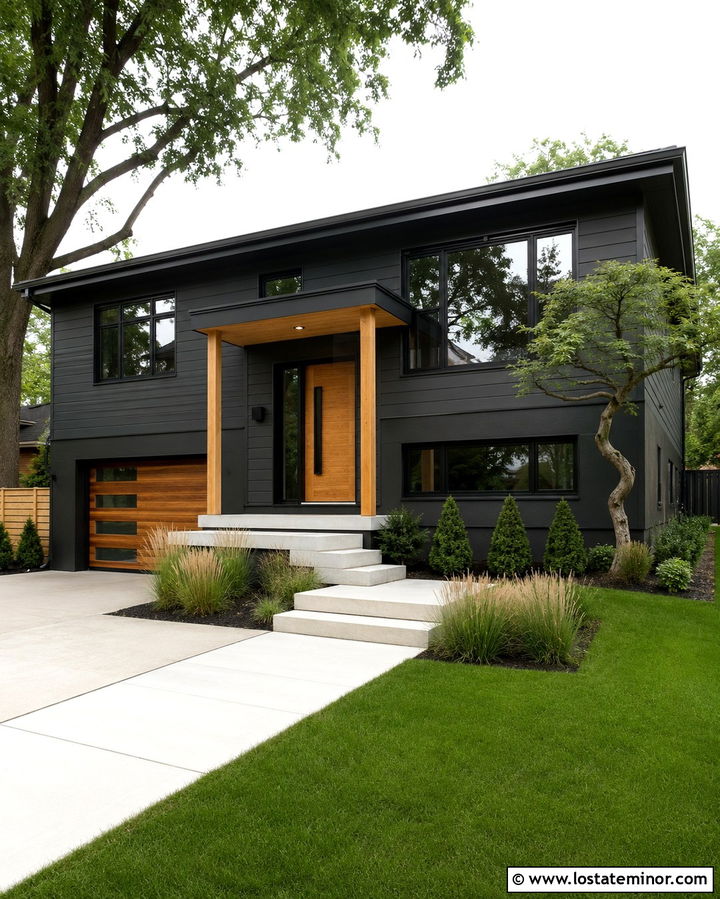
A clean flat-roof portico can update a split-level house while respecting its simple midcentury geometry. Cover the main exterior in a soft charcoal-black shade and use narrow horizontal siding to emphasize the building’s long lines. Support the portico with slim black steel posts or warm cedar uprights, depending on how much contrast you want. A natural wood door and matching garage door inserts help balance the dark color. Keep the soffit light wood to brighten the covered entry from below. Pale concrete steps and a broad walkway provide practical contrast at ground level. Structured grasses, compact evergreens, and one sculptural tree suit the architecture better than formal foundation hedges or ornate planters.
12. Soft Black Midcentury House With Slatted Portico
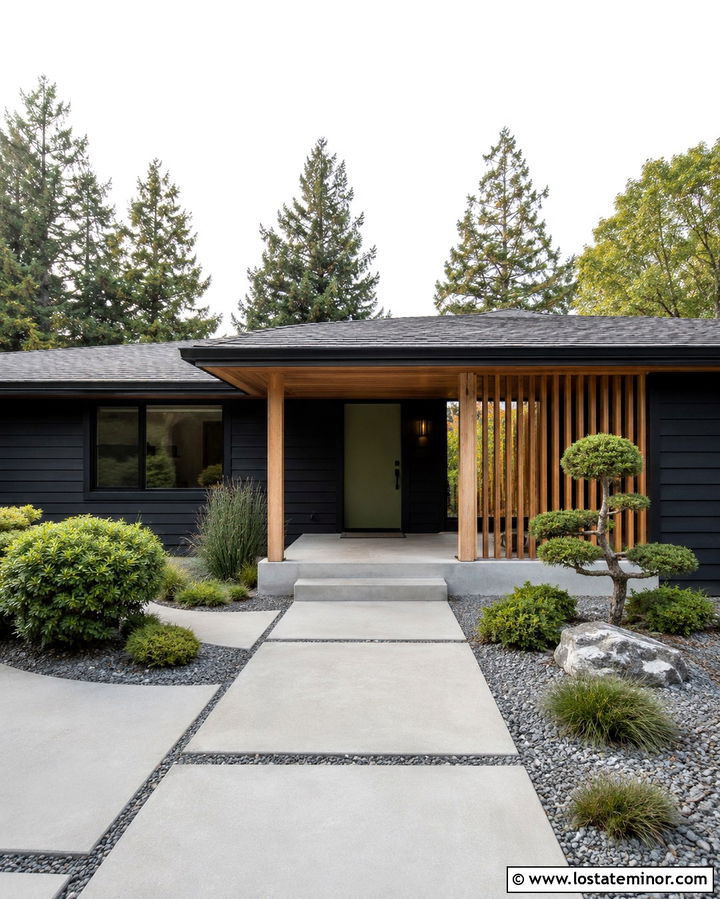
Could your midcentury exterior use more privacy without losing its open character? A soft black facade paired with a slatted wood portico provides shelter, warmth, and a subtle screen near the entry. Extend a low flat canopy from the roofline and support it with narrow timber posts. Vertical cedar slats can define one side while allowing light to pass through. Choose a mustard, olive, or muted orange front door for a period-inspired accent that remains sophisticated. Black-framed windows and a charcoal roof maintain the streamlined palette. Large concrete pavers, gravel beds, ornamental grasses, and sculptural shrubs reinforce the modern landscape. Keep decorative accessories minimal so the wood grain and architectural lines remain the main features.
13. Soft Black Victorian House With Decorative Portico
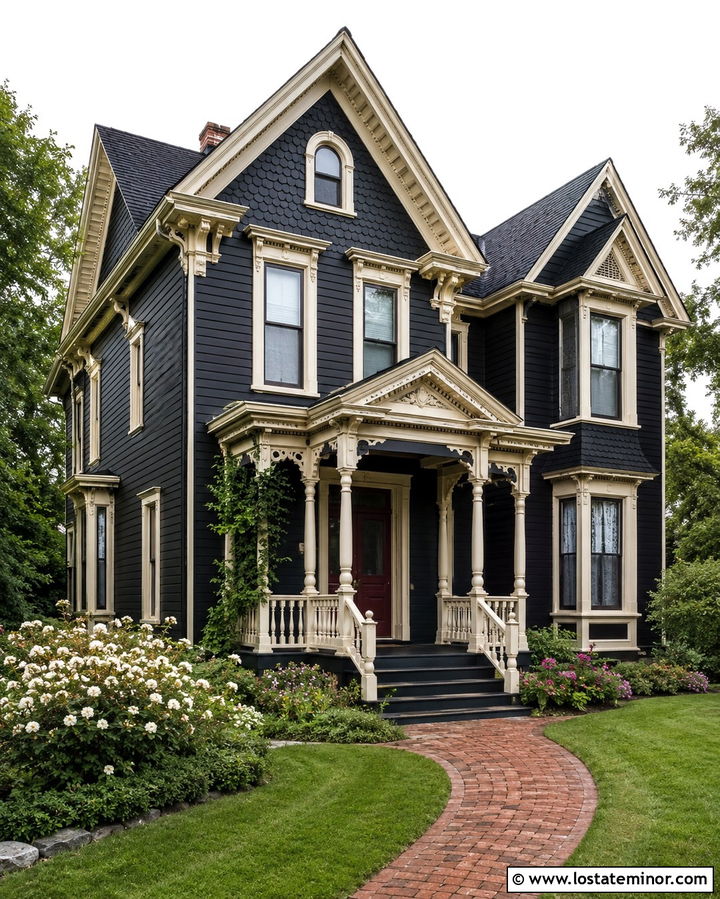
Soft black paint can highlight the intricate silhouette of a Victorian house when lighter colors are used strategically. Cover the primary siding in muted black, then select warm ivory for the decorative trim, turned columns, brackets, and portico railing. A dusty burgundy front door introduces a historically inspired accent without competing with the architectural details. Use the same burgundy sparingly on small trim sections or porch furniture for continuity. The portico roof can be finished with dark shingles or standing-seam metal, depending on the existing roof. Preserve any patterned shingles in the gables by painting them a slightly lighter charcoal. Flowering shrubs, climbing vines, and a brick walkway add softness to the high-contrast facade.
14. Soft Black Greek Revival With Pediment Portico
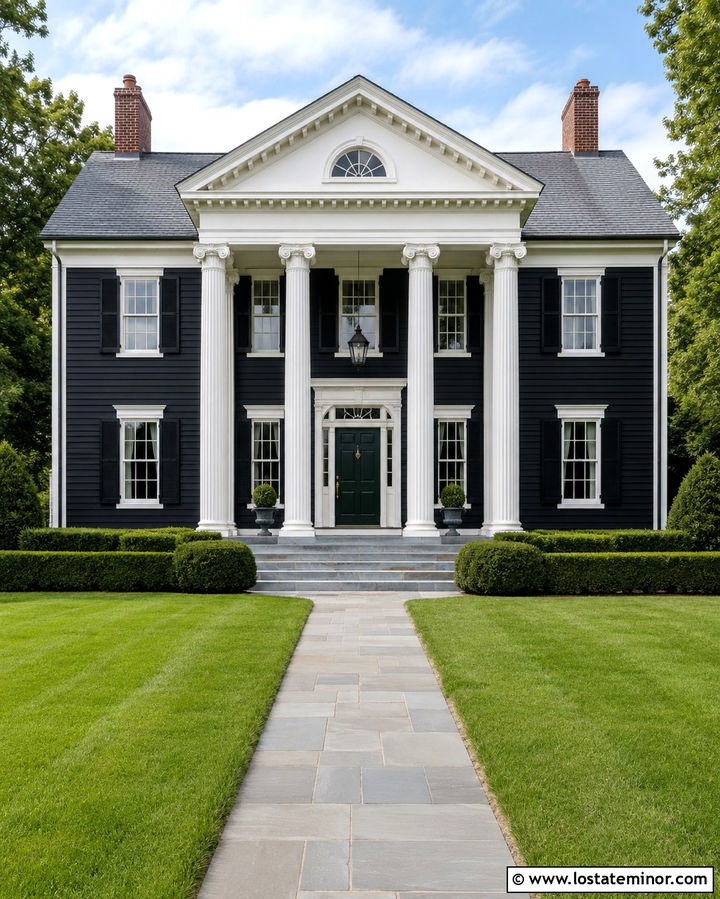
A Greek Revival home calls for a portico with clarity, symmetry, and confident proportions. Soft black clapboard siding gives the architecture a striking update, while a white pediment and tall classical columns preserve its formal identity. Keep the entablature and corner boards white so the vertical structure remains easy to read. A glossy black door may disappear into the facade, so consider stained mahogany or deep green instead. Brass hardware and traditional lanterns provide understated warmth. Match the portico’s roof pitch and molding details to the main house rather than introducing a competing shape. Brick or bluestone steps, clipped hedges, and a centered walkway strengthen the symmetry and give the dramatic color scheme a composed finish.
15. Soft Black Cottage With White Portico
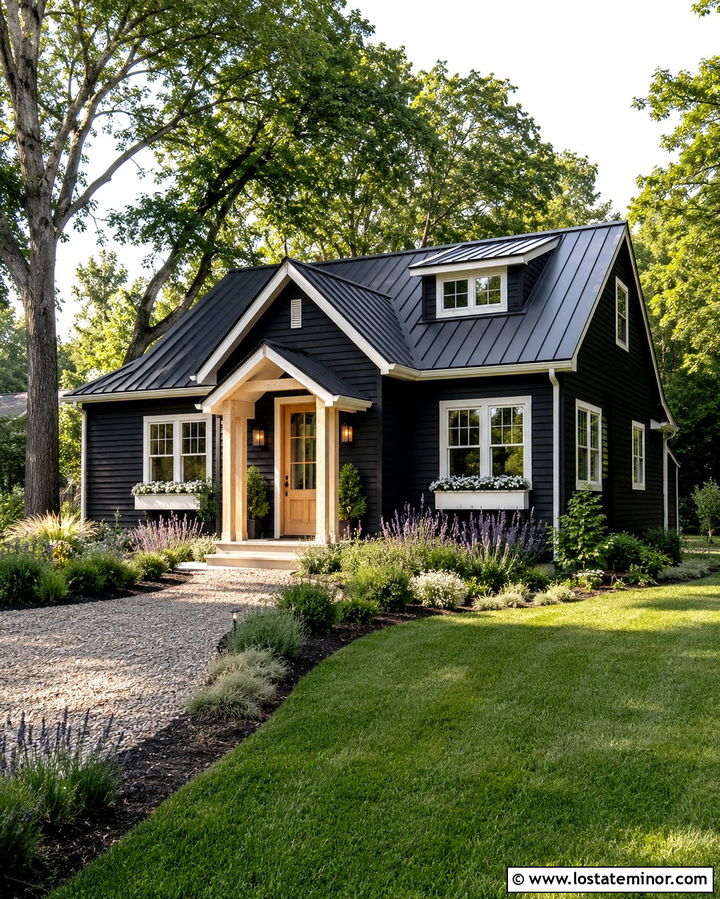
For a compact cottage, a white portico can make the entrance feel larger and brighter. Paint the siding a gentle soft black with slightly warm undertones, then use creamy white on the roof trim, columns, and window casings. A small gabled portico with open sides provides protection without covering too much of the facade. Introduce a pale natural wood door to keep the entry relaxed. White flower boxes can repeat the portico color, while dark metal roofing connects to the main siding. Gravel paths, lavender, native grasses, and loosely arranged shrubs support the cottage atmosphere. Avoid oversized columns or a deep roof projection, which can make a small home look top-heavy and block valuable daylight from the front windows.
16. Soft Black House With Cedar Gable Portico
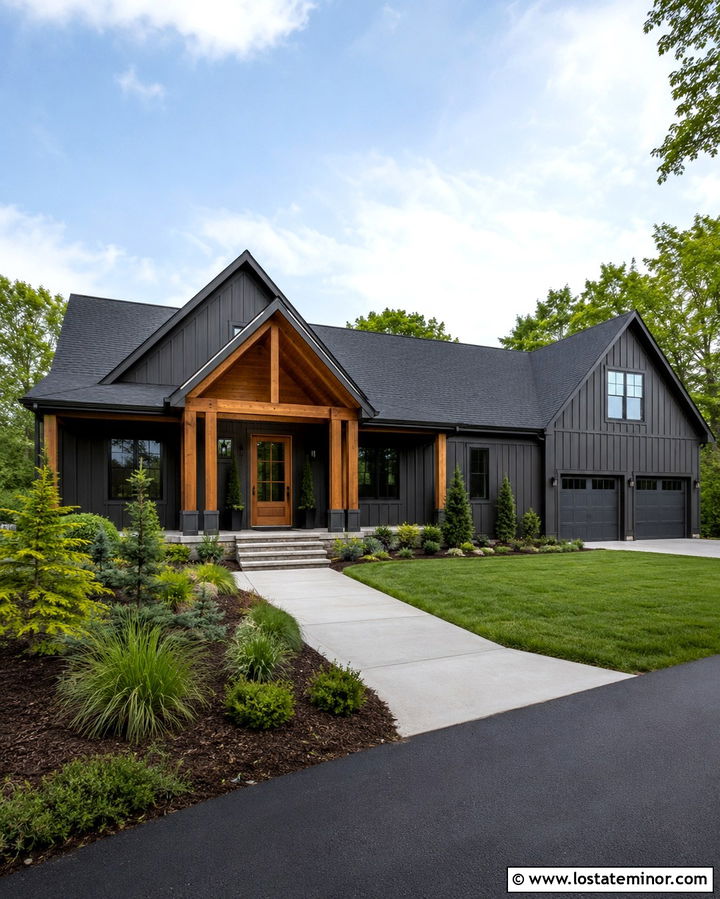
Cedar inside a gable portico adds warmth exactly where a soft black house needs it most. Keep the exterior siding dark and quiet, then cover the portico ceiling and triangular gable face in clear-sealed cedar planks. Stained timber posts can frame a matching wood door for a cohesive entrance. Use black window frames, gutters, and roof edging so those functional details recede into the body color. Light gray stone steps introduce contrast at ground level without interrupting the limited palette. This design fits transitional homes, contemporary cottages, and updated ranch houses. Simple evergreen plantings and a straight concrete walkway keep attention on the wood grain. Choose exterior-rated cedar and a suitable protective finish to maintain the intended appearance.
17. Soft Black House With Brick Column Portico
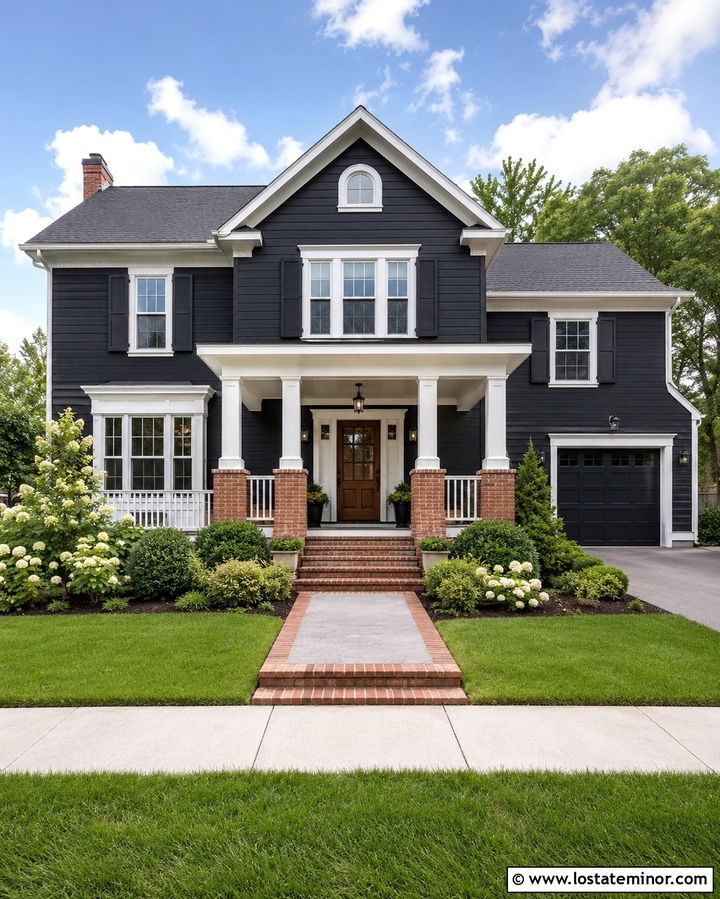
Brick columns can give a new portico the weight and permanence needed to balance a dark exterior. Select brick with muted red, brown, charcoal, and cream variation rather than a bright uniform finish. Paint the siding soft black and use warm white on the portico fascia and ceiling. Simple square posts can rise from the brick piers, visually connecting the roof to the foundation. A medium-stained front door works naturally with the masonry, while black lanterns repeat the body color. Consider extending the brick into the steps or walkway border so the columns do not feel isolated. Layered green shrubs and cream-flowering plants provide a fresh foreground that contrasts pleasantly with the soft black facade.
18. Soft Black House With Metal Roof Portico
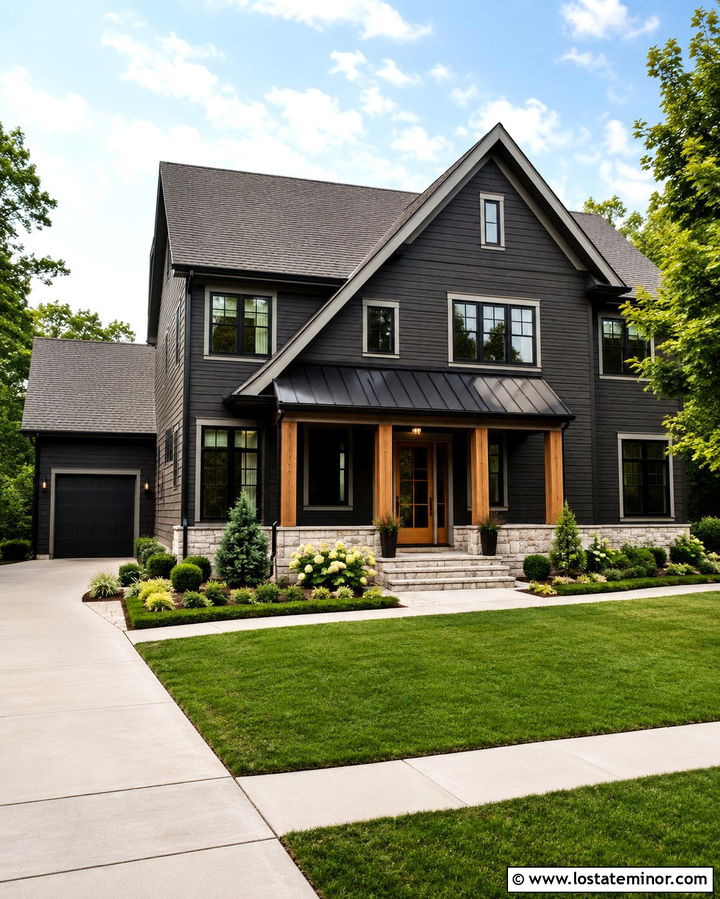
A standing-seam metal portico roof introduces a crisp finish and can suit both traditional and modern homes. Choose matte black metal for a seamless, monochromatic appearance, or weathered zinc for slightly more contrast. The house body should remain soft black, with light greige trim outlining the windows and roof edges. Support the portico with warm wood columns to prevent the scheme from feeling overly industrial. A simple glass-paneled wood door allows the sheltered entrance to look lighter during the day. Carry the metal finish onto gutters, downspouts, or a small garage awning for consistency. Pale stone steps and structured landscaping complete the exterior while allowing the roof’s clean seams and subtle reflection to stand out.
19. Soft Black House With Hip Roof Portico
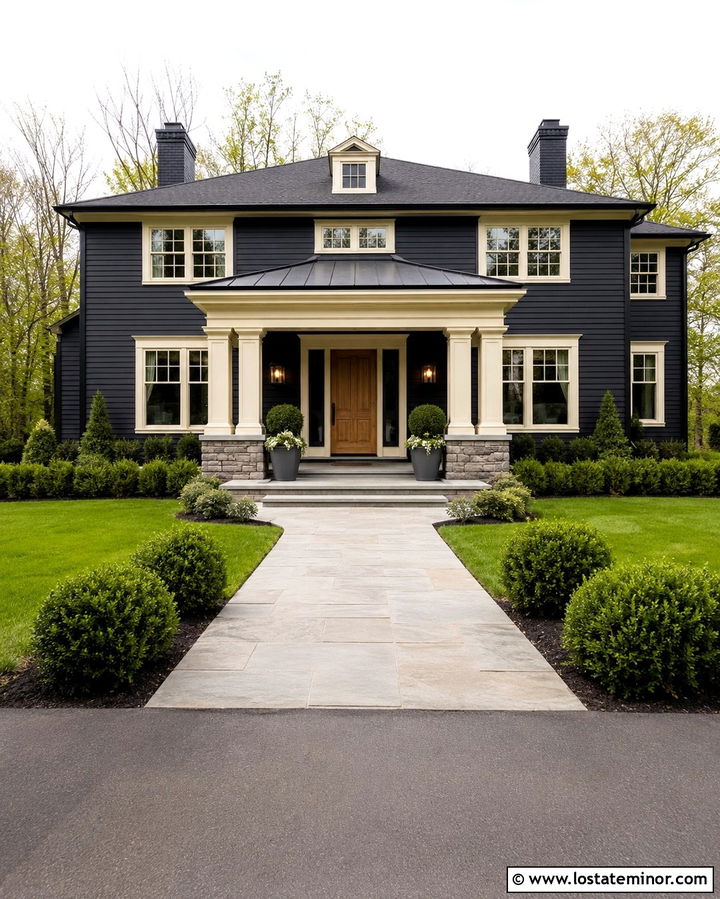
A hip roof portico offers a gentle, balanced shape that works well on ranch, Georgian, and transitional homes. Its sloping sides feel less pointed than a gable, making it a good fit when the main facade already has several roof peaks. Paint the home soft black and finish the portico columns and fascia in muted cream. A black shingle roof can connect the small structure to the main roof, while a natural oak door introduces a clear focal point. Use broad square columns on stone bases for a grounded appearance. Symmetrical planters and wall lanterns create order around the entrance. A walkway that widens near the steps makes the compact covered area feel more generous and welcoming from the street.
20. Soft Black House With Shed Roof Portico
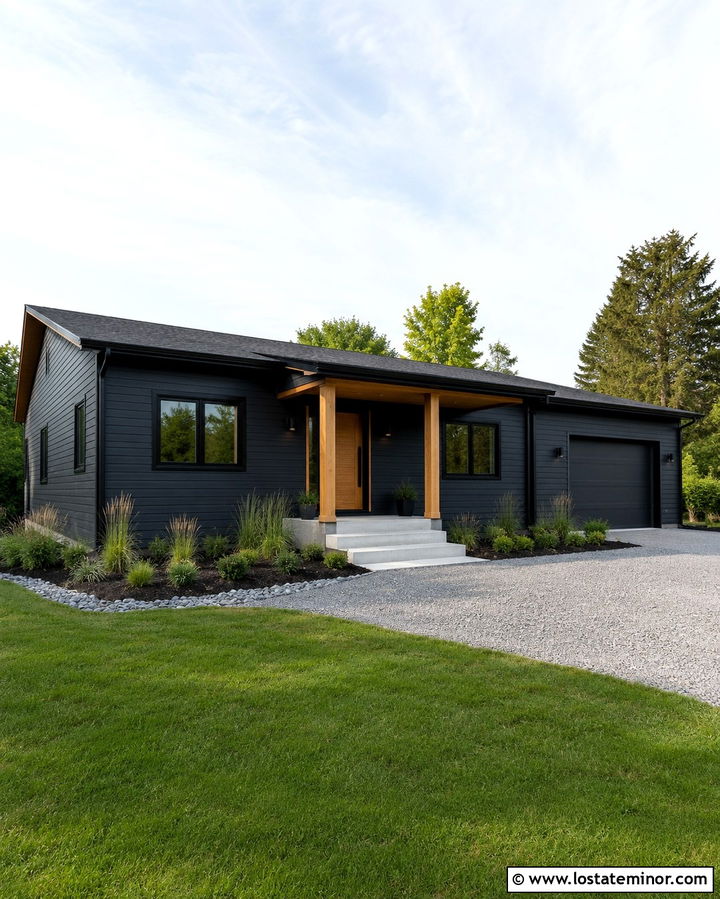
A shed roof portico gives a soft black exterior a simple, contemporary edge. The single-slope canopy works particularly well on modern ranches, cabins, and asymmetrical homes where a formal pediment would feel out of place. Use a slim black metal roof with a natural wood underside, supported by square cedar posts or understated steel brackets. Keep the front door wood-toned to repeat the ceiling material. Black-framed windows and matching gutters help the exterior read as one clean composition. Concrete steps, a gravel border, and linear planting beds reinforce the uncomplicated architecture. Ensure the canopy is wide enough to protect the doorway and sidelights, but not so deep that it darkens the interior entry hall.
21. Soft Black House With Curved Portico
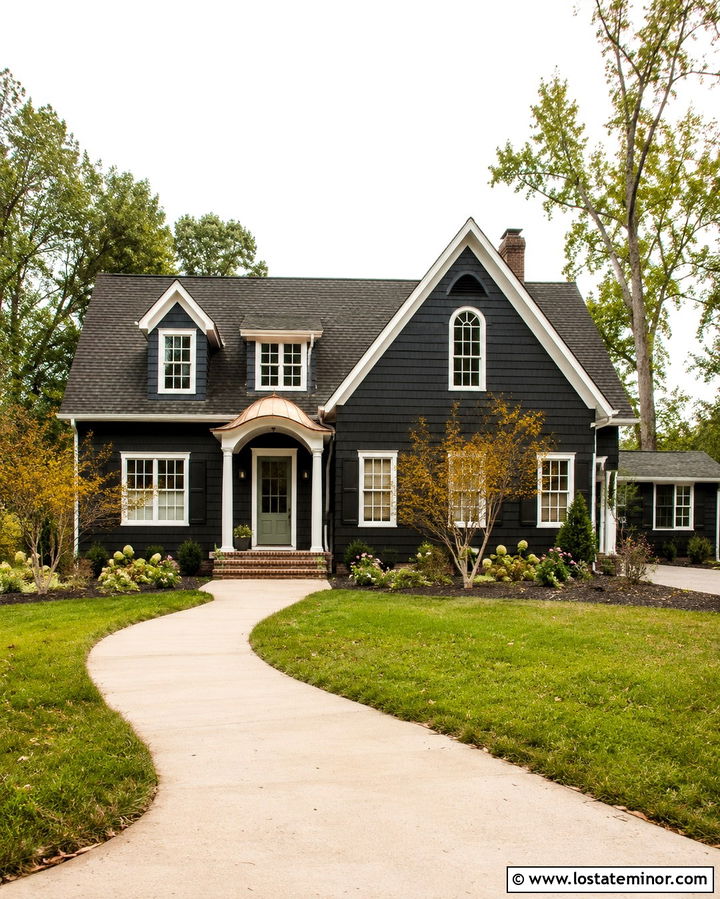
A curved portico roof softens the strong visual weight of a black exterior and introduces a graceful entry feature. This approach works beautifully on cottages, traditional homes, and compact urban houses. Paint the siding soft black and choose creamy white for the curved fascia, supporting columns, and doorway trim. A soft blue or eucalyptus-green door adds quiet color beneath the canopy. Copper or dark bronze roofing can emphasize the portico’s shape without looking overly flashy. Keep surrounding trim simple so the curve remains a deliberate focal point. Brick steps and loosely planted garden beds further relax the dark palette. Small ornamental trees can frame the house, but they should not hide the distinctive roofline or front entrance.
22. Soft Black House With Double Column Portico
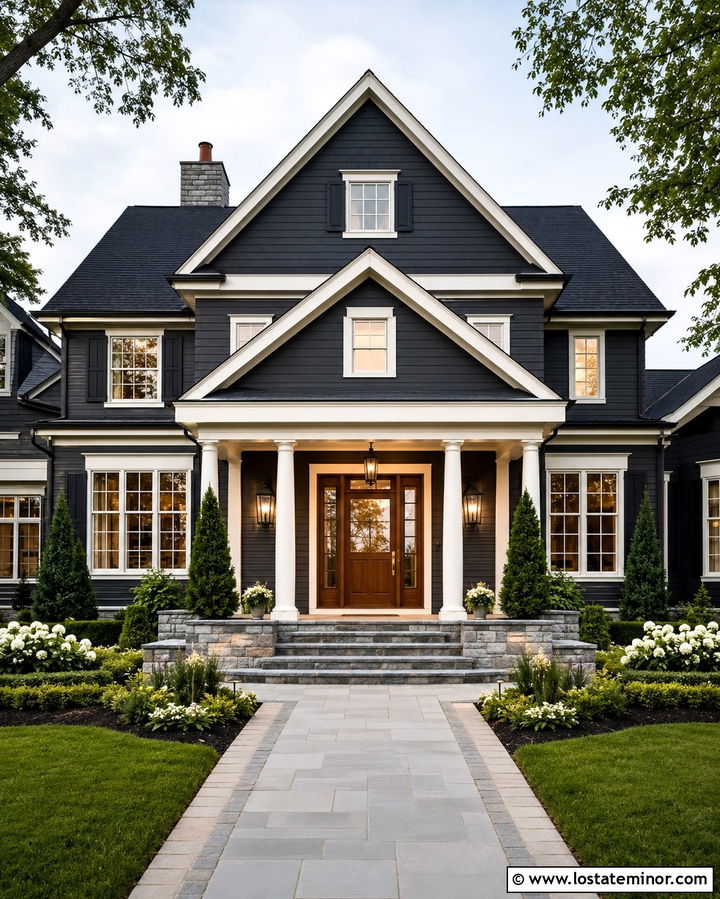
Two pairs of columns make a front portico feel substantial and can correct the scale of a wide or tall facade. On a soft black house, paint the columns warm white so their spacing and shape remain visible. A broad gabled or hip roof can span the door and sidelights, creating a more generous arrival point. Use a stained walnut door, brass hardware, and dark lanterns for a balanced mix of warm and cool finishes. If the house has white window trim, match it carefully to the portico rather than using several competing whites. Bluestone steps and low masonry walls can visually anchor the entrance. Keep the landscaping symmetrical but layered, using evergreens, grasses, and seasonal flowers for year-round structure.
23. Soft Black House With Stone Arch Portico
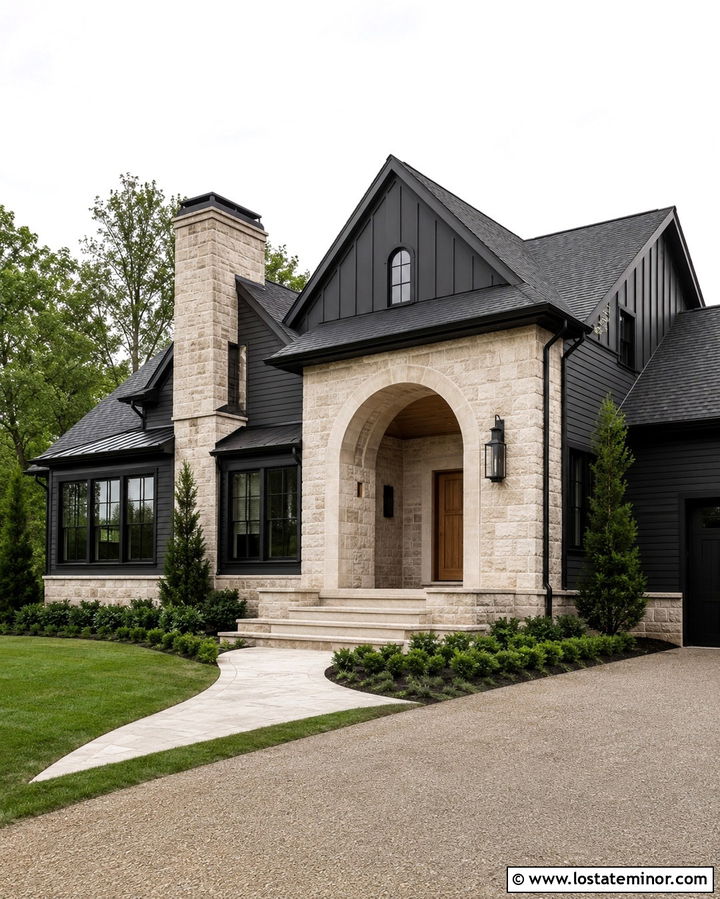
A stone arch portico creates a powerful architectural frame around a soft black facade. Choose limestone, fieldstone, or lightly weathered ledgestone with enough variation to remain visible against the dark siding. The stone should also appear elsewhere, perhaps around the foundation, chimney, or garage, so the entrance feels integrated. A recessed wood door adds warmth inside the arch, while a light tongue-and-groove ceiling reflects daylight. Black-framed windows and restrained trim let the masonry carry the visual detail. This treatment works particularly well on European-inspired, mountain, and transitional homes. Use broad stone steps, low evergreen plantings, and a gently curving walkway to reinforce the portico’s substantial shape and create an inviting approach.
24. Soft Black House With Minimal Steel Portico
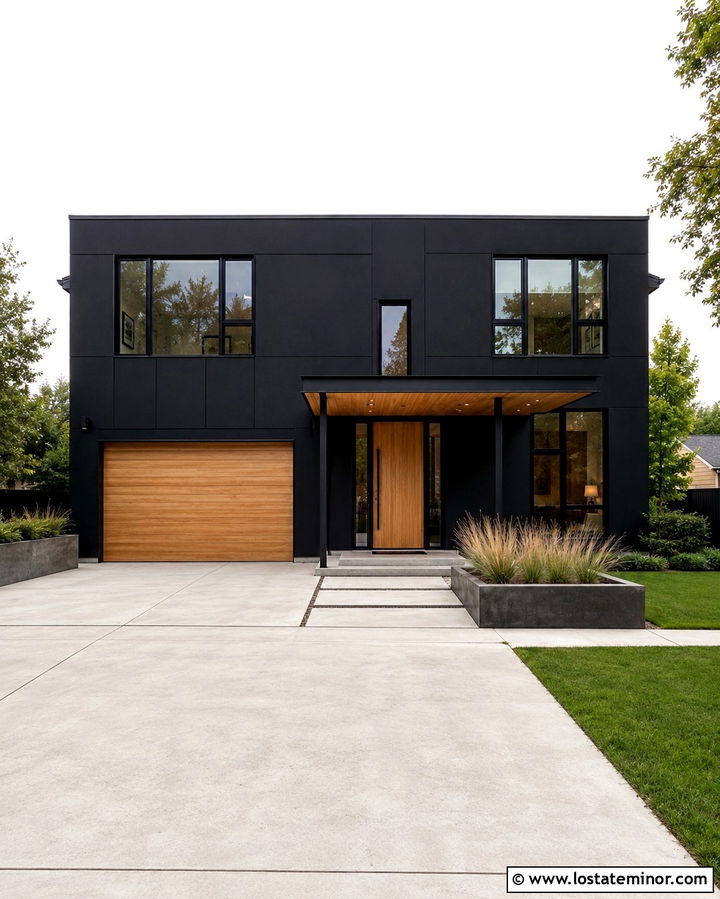
Slim steel framing can create an elegant portico without visually crowding a modern exterior. Paint the home a softened black and use a slightly darker matte black for the steel posts, fascia, and shallow canopy. The tonal difference should be subtle enough to maintain a unified facade. Warm the composition with a natural oak door, cedar soffit, or wood garage door. Large black-framed windows can balance the entrance on the opposite side of the house. Choose oversized concrete pavers and low, architectural landscaping instead of ornamental columns or decorative railings. Downlighting installed beneath the canopy improves visibility without adding bulky fixtures. The finished scheme feels crisp and modern, yet the soft body color prevents it from becoming cold or severe.
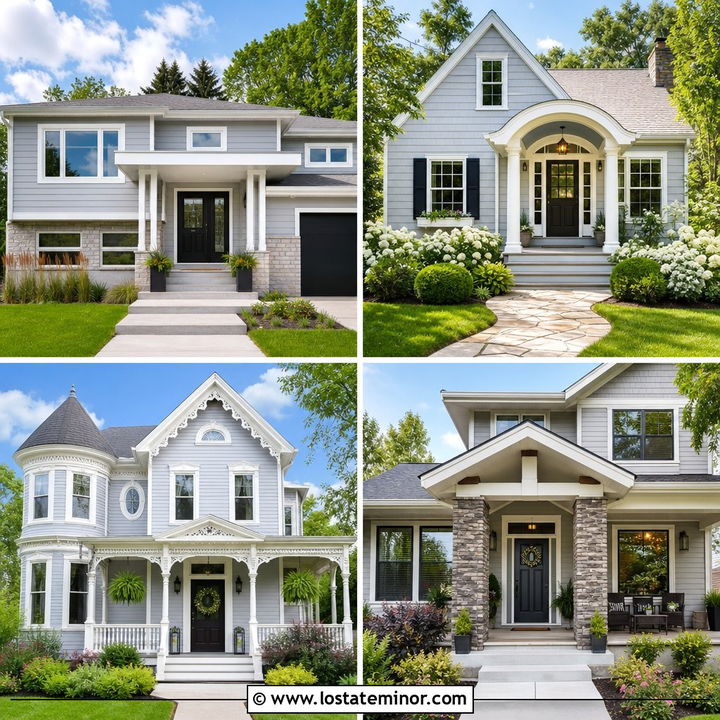
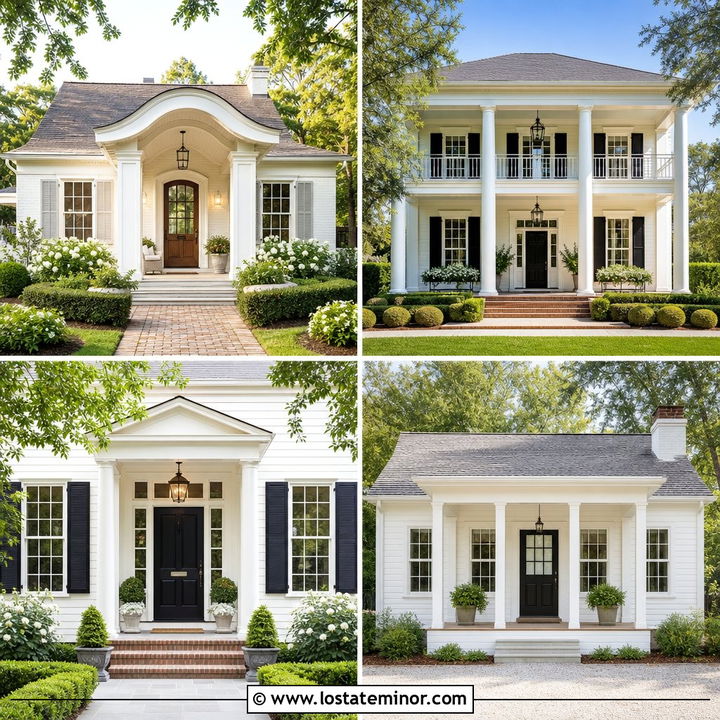
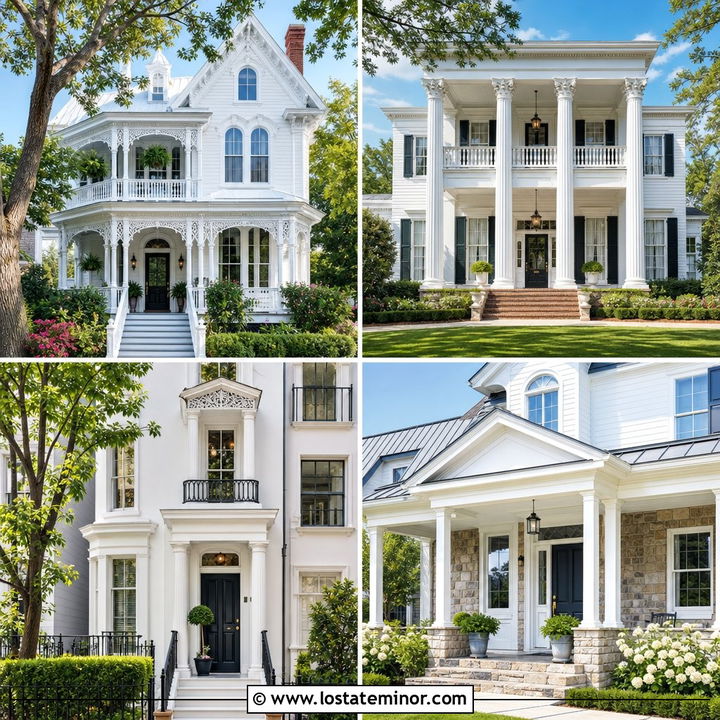
25. Soft Black House With Farmhouse Portico
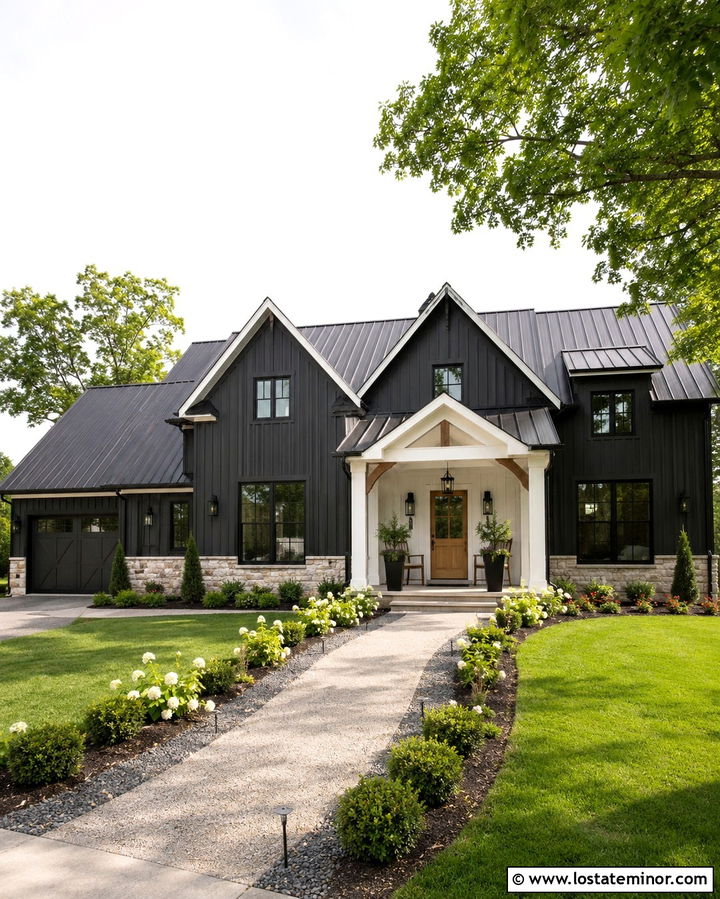
A farmhouse portico should appear practical, straightforward, and connected to the home’s roof structure. Pair soft black board-and-batten siding with a white gabled canopy and simple square columns. Add stained wood brackets inside the gable to introduce warmth and highlight the roof shape. A natural wood Dutch door or divided-light entry door reinforces the farmhouse character. Keep the roof matte black and use matching black gutters, windows, and exterior lights. A light stone foundation can prevent the dark siding from meeting the ground too abruptly. Complete the setting with a gravel-edged walkway, casual flowering shrubs, and galvanized or black planters. The restrained color palette allows the portico’s shape and handcrafted wood details to remain prominent.
26. Soft Black House With Coastal Portico
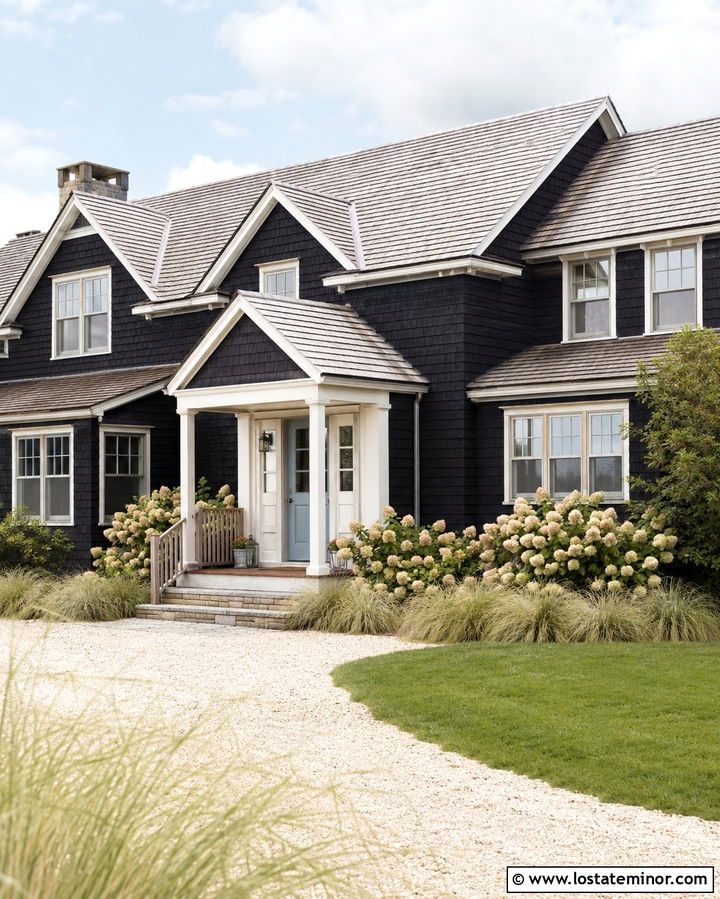
Soft black may be unexpected for a coastal home, but it can look fresh when paired with pale materials and an airy portico. Use dark shingle siding or narrow lap siding with bright warm-white trim. A small gabled portico supported by slim white posts keeps the entry open and uncomplicated. Choose a muted sea-glass blue door for recognizable coastal color without creating a themed appearance. Weathered gray roof shingles, light stone steps, and natural wood decking soften the contrast. Add dune grasses, hydrangeas, gravel, and a casual shell-toned walkway around the facade. Keep the exterior hardware matte black or brushed nickel. The result feels coastal through texture, planting, and light rather than predictable nautical decorations.
27. Soft Black House With Rustic Timber Portico
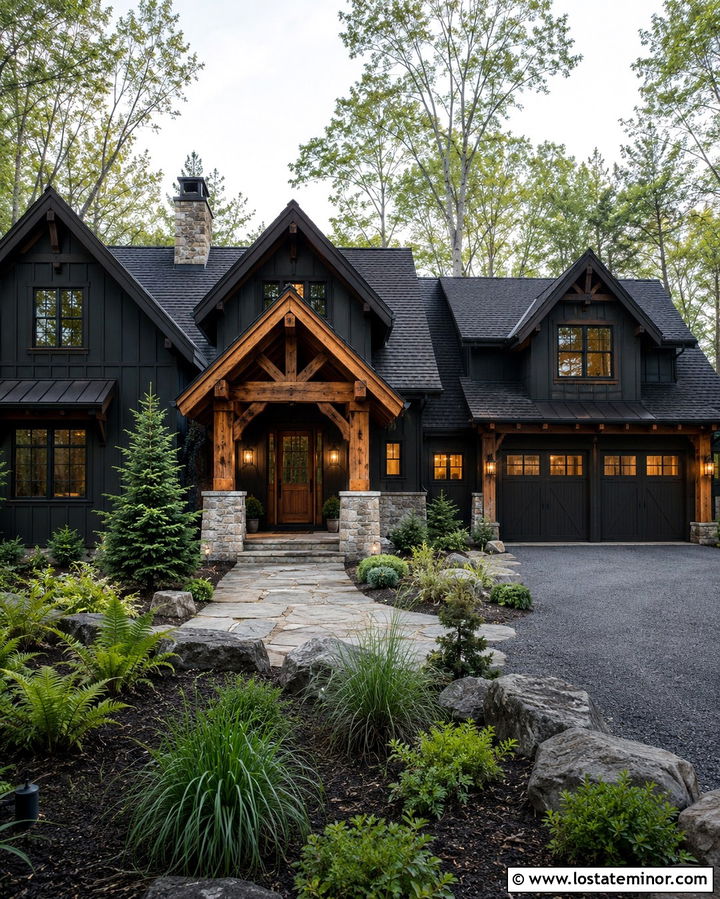
Heavy timber gives a soft black exterior the warmth and visual strength associated with rustic architecture. Use rough-sawn cedar or Douglas fir for the portico posts, beam, and exposed brackets. A steep gable roof works well on cabins, mountain homes, and wooded craftsman houses. Continue the soft black color across wood siding or vertical panels, then introduce natural stone along the lower walls and column bases. A stained plank door can blend with the structural wood, while black iron hardware adds definition. Dark roofing keeps the upper facade cohesive. Surround the home with native shrubs, ferns, ornamental grasses, and an irregular flagstone walkway. This combination feels substantial without relying on excessive decorative details or multiple accent colors.
28. Soft Black House With Glass Entry Portico
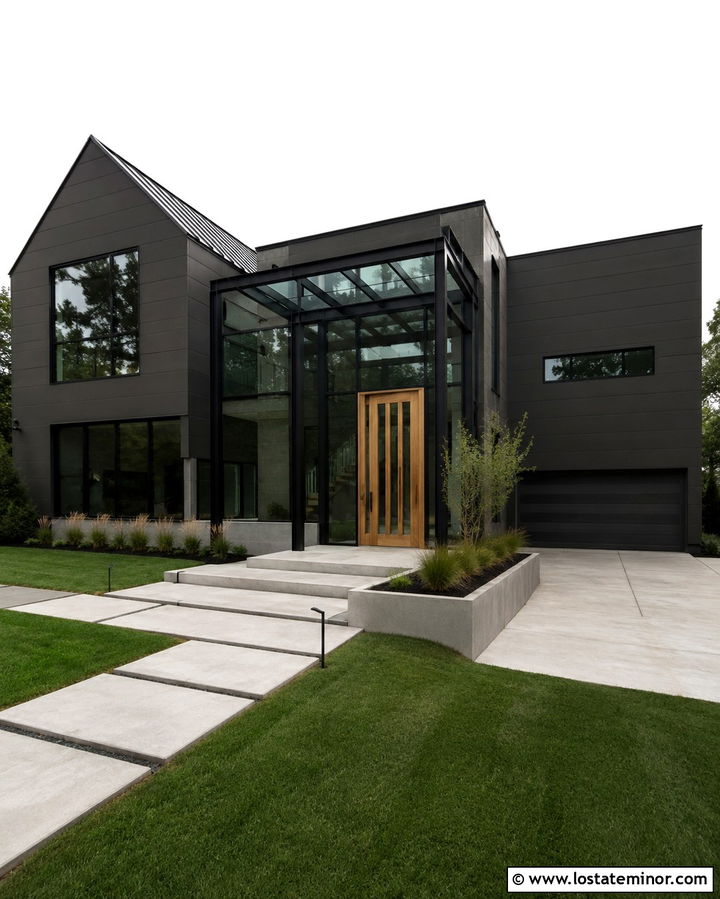
A glass-topped portico can protect the front entrance while preserving natural light on a soft black contemporary home. Use a clear laminated glass canopy supported by slim black steel framing. The transparent roof keeps the structure visually light and allows the body color and front door to remain visible. Choose a warm wood pivot door or a simple door with vertical glass panels. Black windows and minimal trim maintain the clean facade, while pale concrete steps create contrast below. A linear walkway, rectangular planters, and low evergreen grasses suit the modern composition. Keep drainage hardware discreet and coordinated with the frame. The complete design combines a practical covered entrance with an open appearance that does not hide the architecture.
29. Soft Black House With Small Entry Portico
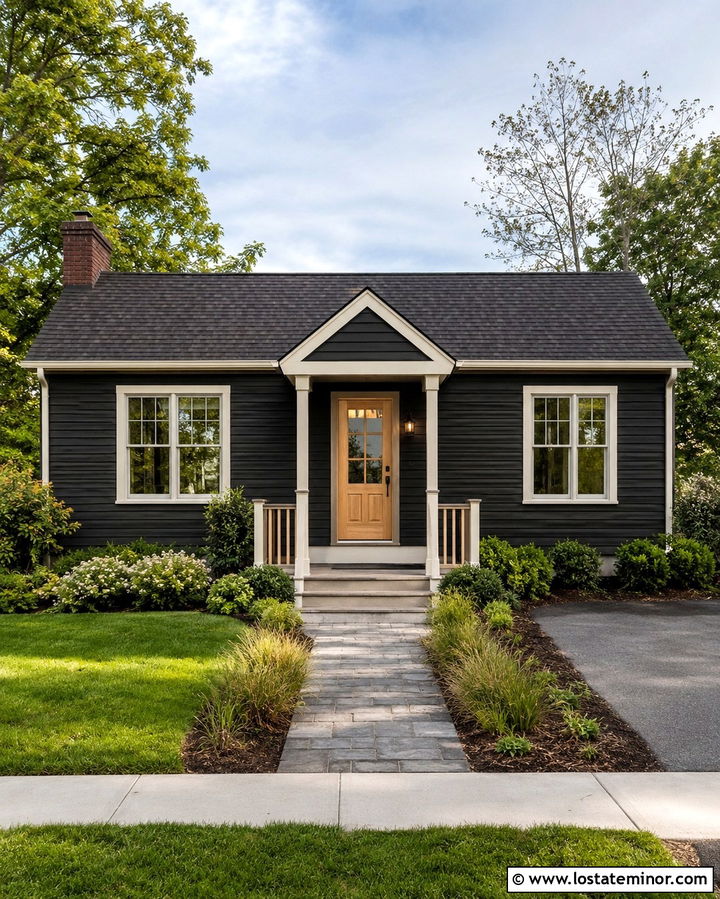
Even a narrow facade can accommodate a useful portico when every element is scaled carefully. Select a shallow gabled or shed roof that covers the doorway without extending across nearby windows. Paint the home soft black and use warm white trim to outline the compact structure. Slender square posts take up less visual and physical space than wide masonry columns. A light oak door helps the recessed entry remain noticeable. Add one wall lantern rather than forcing a symmetrical pair into a tight area. A small landing, simple railings, and a straight paver path keep circulation clear. Compact shrubs and upright grasses can frame the entrance without narrowing it further, creating practical curb appeal for a cottage, townhouse, or small ranch.
30. Soft Black House With Grand Portico
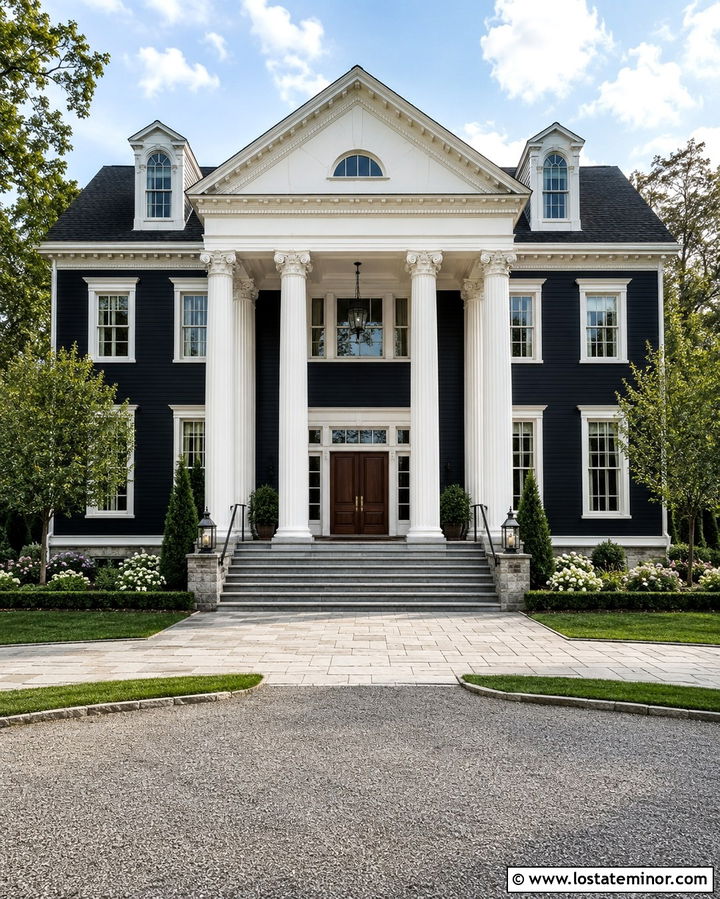
A grand portico can give a large soft black home presence while keeping the front entrance clearly defined. Use tall warm-white columns that rise to a deep pediment or second-story roofline. The portico should align with the center of the facade and relate to the spacing of the windows. A double mahogany door provides warmth and sufficient visual weight beneath the tall structure. Repeat white on the window trim and cornice, but allow the soft black siding to remain dominant. Dark roof shingles, traditional lanterns, and broad stone steps complete the formal composition. Balanced trees and layered foundation plantings soften the scale. A wide walkway or circular drive can create an appropriately generous approach without distracting from the architecture.
Conclusion:
The best soft black exterior does more than create drama. It uses the portico, trim, roofing, masonry, door, and landscaping to make the entire house feel balanced and welcoming. Warm wood can relax a modern facade, while white columns and traditional molding can sharpen a colonial or cottage. Stone and brick add texture, and carefully placed lighter surfaces help the entrance remain visible. Before building, compare the portico’s width, roof pitch, and column scale with the existing architecture. Test exterior paint in direct sun and shade as well. With thoughtful planning, these **30 Soft Black House Design With Portico Ideas** can inspire a distinctive exterior that still feels comfortable and connected to its surroundings.

Related posts: