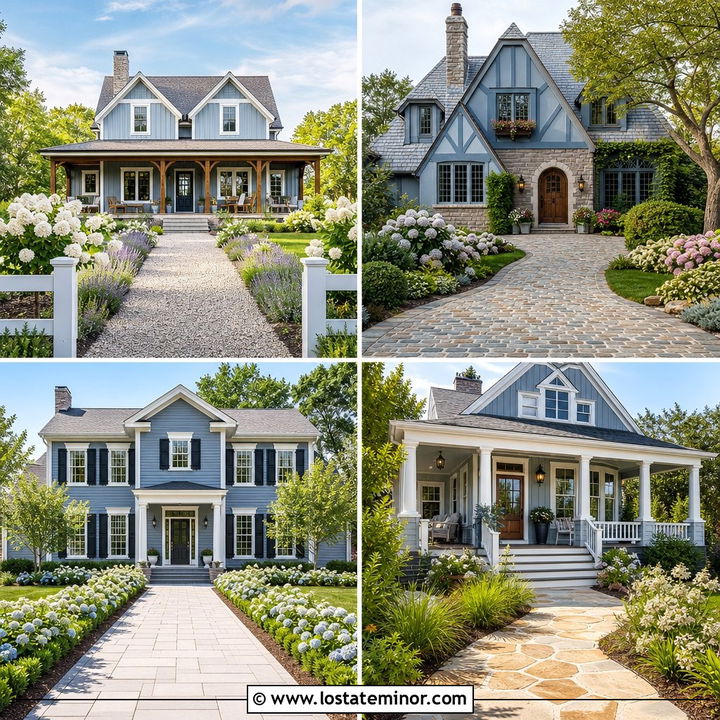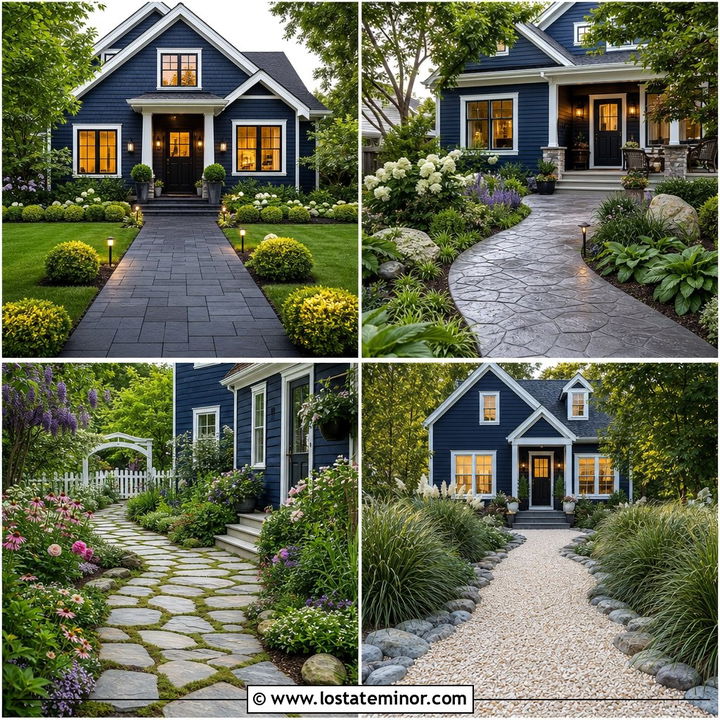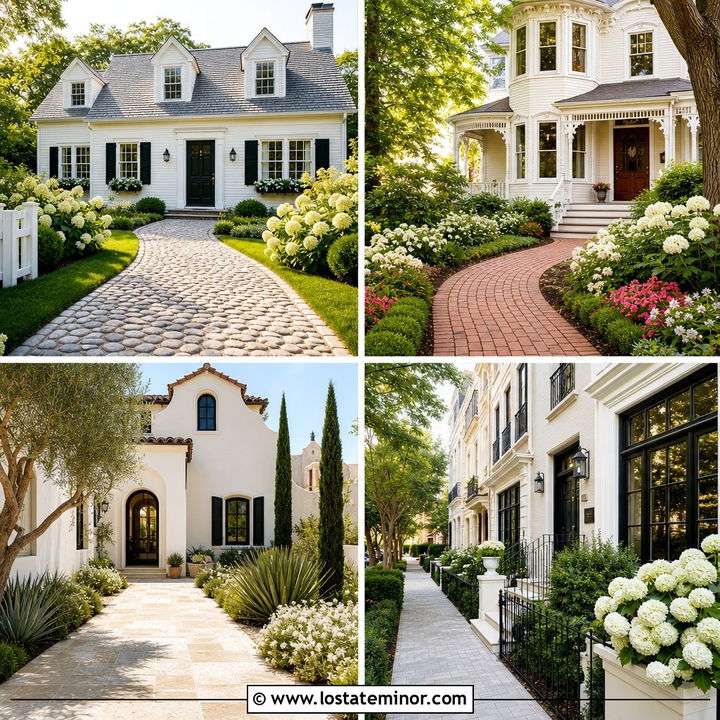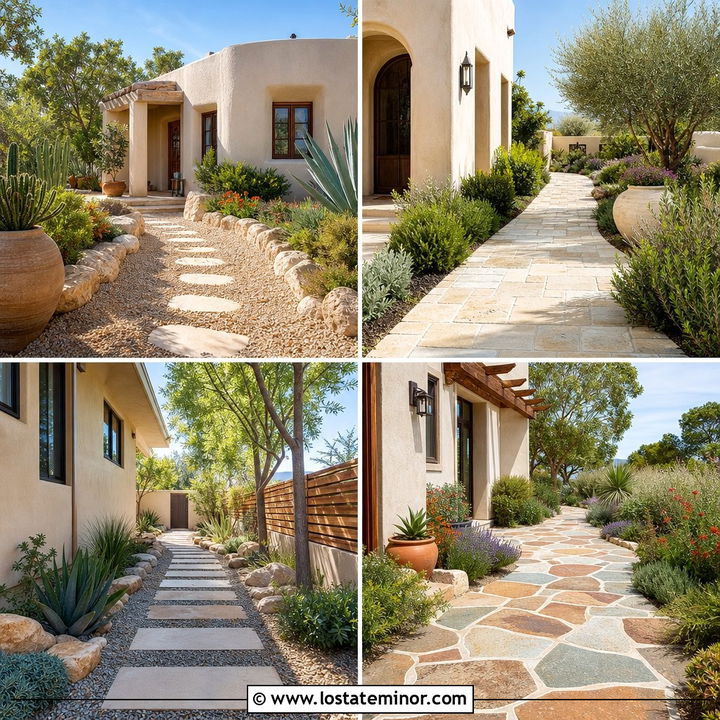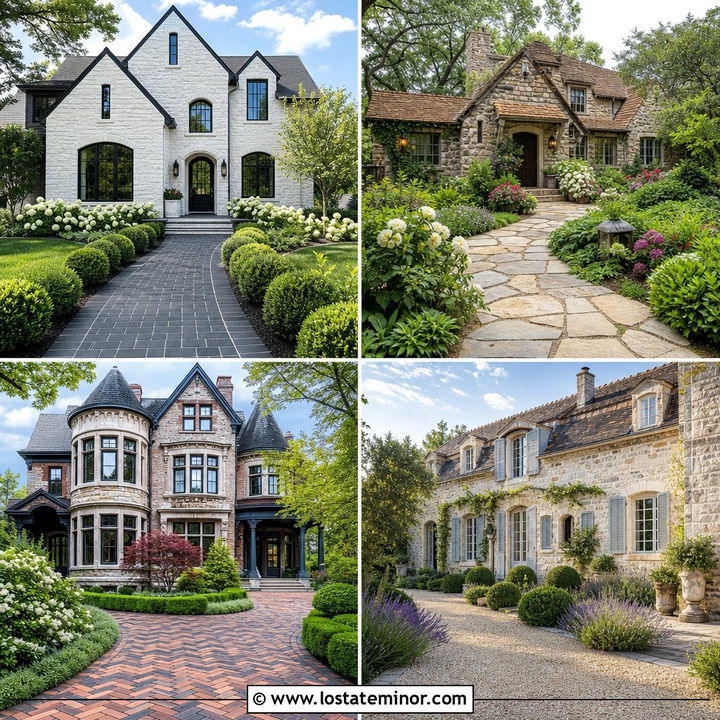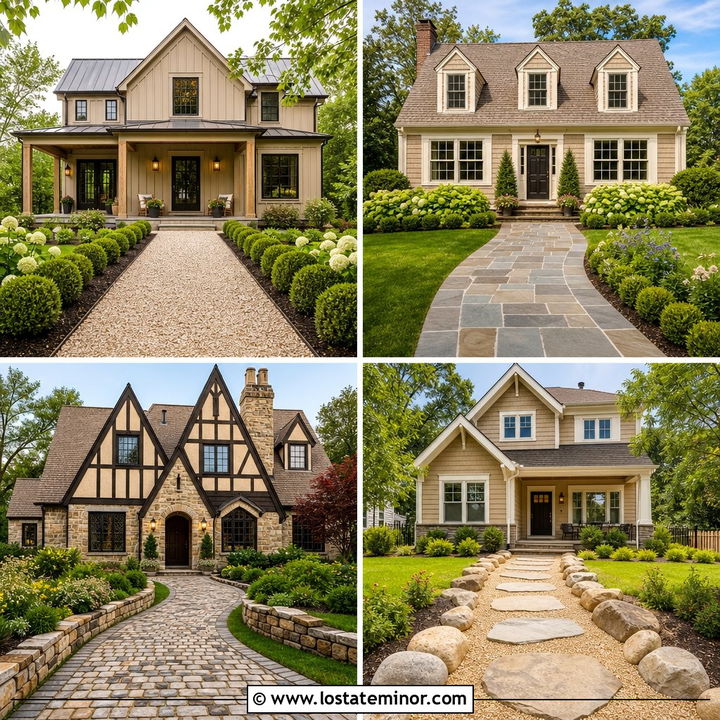
A thoughtfully planned walkway can make a dark blue exterior feel more welcoming, balanced, and connected to the landscape. These 30 Navy Blue House Design With Walkway Ideas explore complete curb-appeal schemes rather than treating the path as an afterthought. You will find navy siding paired with brick, bluestone, concrete, gravel, wood, and modern pavers. Each look also coordinates the trim, front door, roof, porch, masonry, and planting beds. Some designs suit traditional Colonials and Cape Cod homes, while others work for ranch houses, Craftsman bungalows, split-levels, and modern architecture. Whether you want an affordable update or a full exterior transformation, these 30 Navy Blue House Design With Walkway Ideas offer practical inspiration for creating a polished entrance.

1. Navy Blue House With Red Brick Walkway
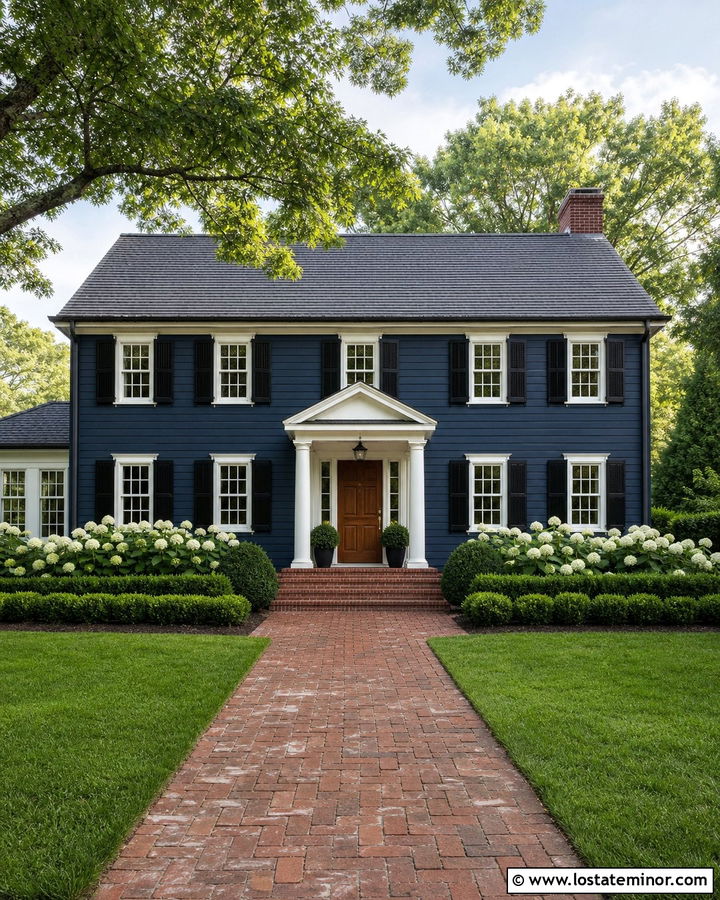
A red brick walkway brings warmth and traditional character to a navy blue house. This pairing works especially well on a Colonial with symmetrical windows, white trim, and a centered front entrance. Choose bricks with slightly weathered red, brown, and charcoal tones so the path feels established rather than overly bright. A white portico and warm wood front door can soften the strong contrast between the blue siding and red masonry. Use soldier-course brick edging to create a neat border along the path. Low boxwoods, white hydrangeas, and dark mulch reinforce the orderly architecture. Carry the same brick onto the front steps or porch foundation to make the walkway feel like an intentional part of the complete exterior.
2. Navy Blue House With Bluestone Walkway
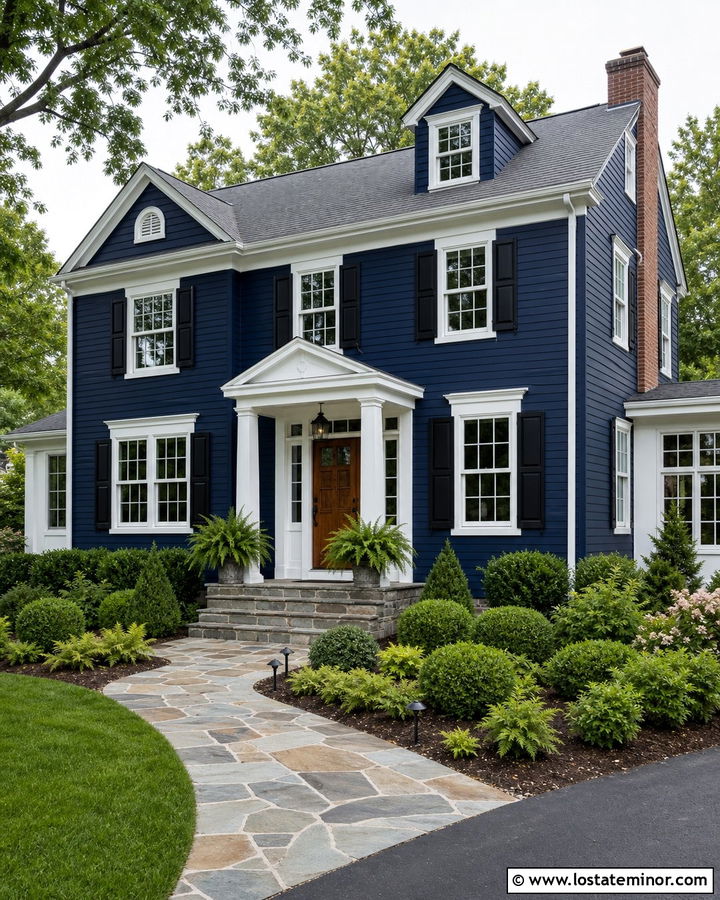
Bluestone creates a sophisticated, tonal connection with deep navy siding. Its blue-gray color supports the exterior without making the entire front yard look too dark. On a traditional two-story home, combine irregular bluestone slabs with crisp white trim, black shutters, and a medium-gray roof. A stained oak door adds warmth at the end of the cool-colored path. Keep the walkway wide enough to feel generous, and use a lightly textured finish for better traction in wet weather. Plant soft green ferns, dwarf evergreens, and white flowering perennials along the edges. Gray stone porch steps can repeat the material. This coordinated palette gives the house a calm, established appearance while allowing the front door and landscaping to stand out.
3. Navy Blue House With White Concrete Walkway
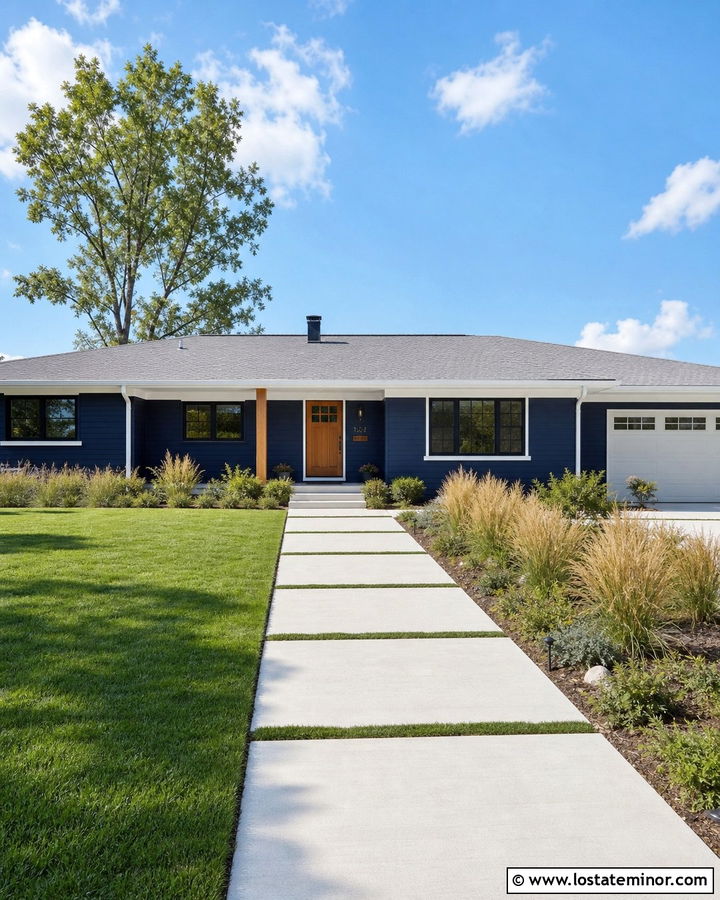
Fresh white concrete can brighten the approach to a navy blue exterior, especially on a compact ranch or midcentury home. Instead of one uninterrupted slab, use large rectangular sections separated by narrow strips of grass or gravel. The modern geometry makes the dark siding look cleaner and more intentional. Pair the navy body with warm white window trim, a natural wood door, and simple black exterior lights. A pale gray roof keeps the overall composition airy. Surround the walkway with ornamental grasses and low evergreen shrubs rather than dense foundation planting. The light pavement reflects daylight toward the facade and creates strong visual contrast. For a cohesive finish, repeat the concrete on the porch landing and use black metal planters beside the entrance.
4. Navy Blue House With Curved Paver Walkway
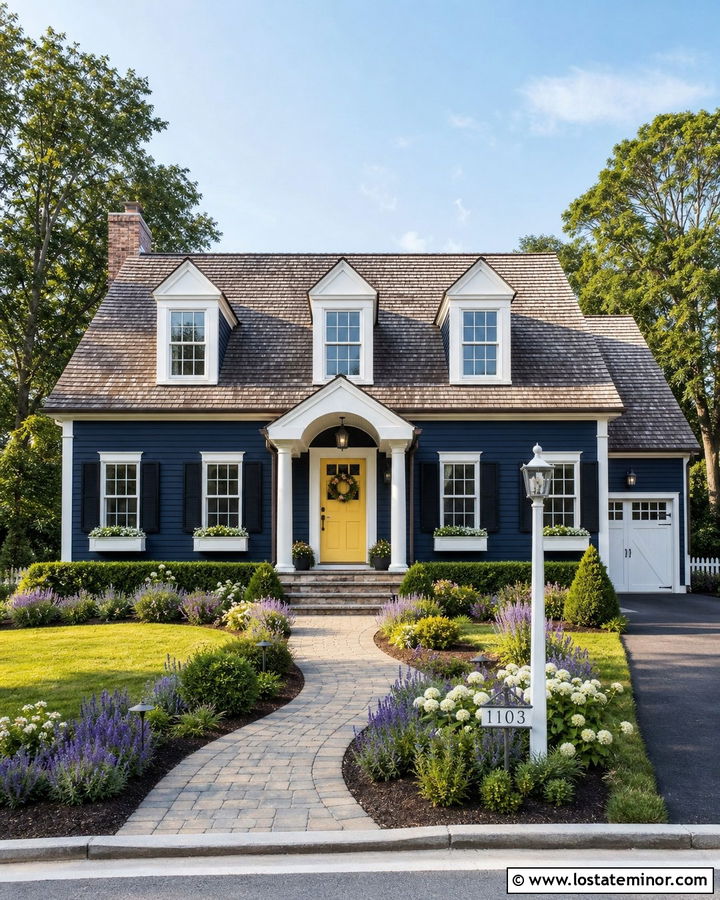
A gently curved walkway softens the straight lines of a navy blue house and creates a more relaxed arrival. This design suits a Cape Cod exterior with navy shingles, white dormers, a cedar roof, and a cheerful yellow front door. Choose warm gray or beige pavers that bridge the cool siding and natural roof color. The curve should feel purposeful, leading visitors through layered planting beds instead of wandering without direction. Border the path with lavender, catmint, white roses, and rounded boxwoods for cottage character. A matching paver apron at the porch prevents the entrance from appearing narrow. Keep shrubs low near the curve so the house remains visible from the street. The finished scheme feels charming, balanced, and easy to navigate.
5. Navy Blue House With Gravel Walkway
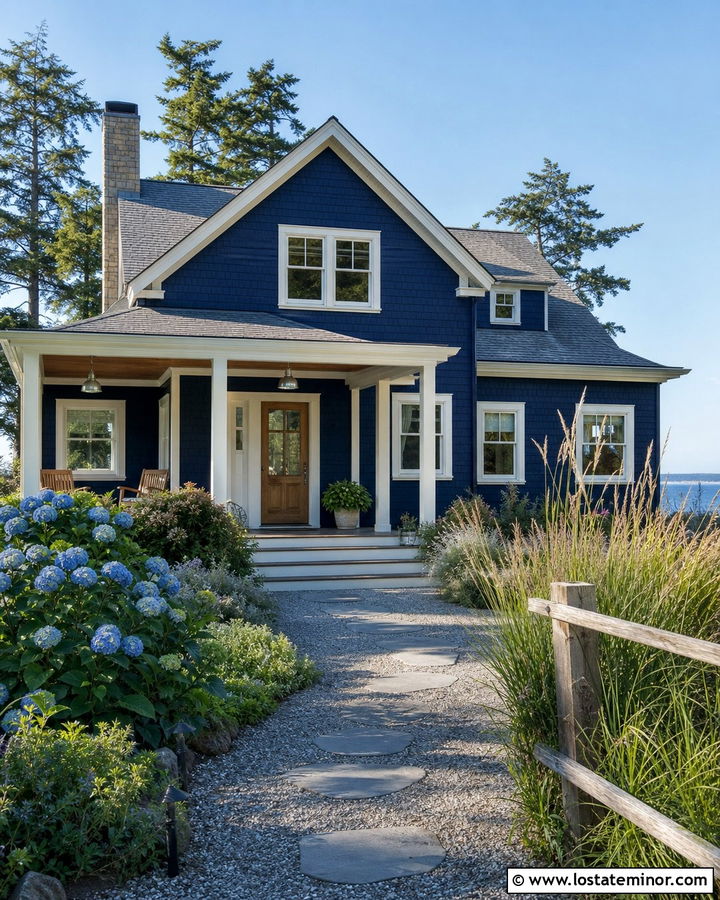
Gravel offers an affordable way to give a navy blue house a relaxed, established entrance. On a coastal cottage, use pale gray pea gravel with steel or stone edging to prevent the material from spreading into the lawn. Navy shake siding, creamy white trim, and a weathered wood door create a comfortable seaside palette. Add flat stepping stones through the gravel for a steadier walking surface and stronger visual rhythm. Wispy grasses, hydrangeas, and low junipers can frame the path without requiring rigid symmetry. A small cedar porch and galvanized exterior lights reinforce the casual look. Because gravel can shift underfoot, install a compacted base and keep the path relatively level. The light aggregate also prevents the dark facade from feeling visually heavy.
6. Navy Blue House With Flagstone Walkway
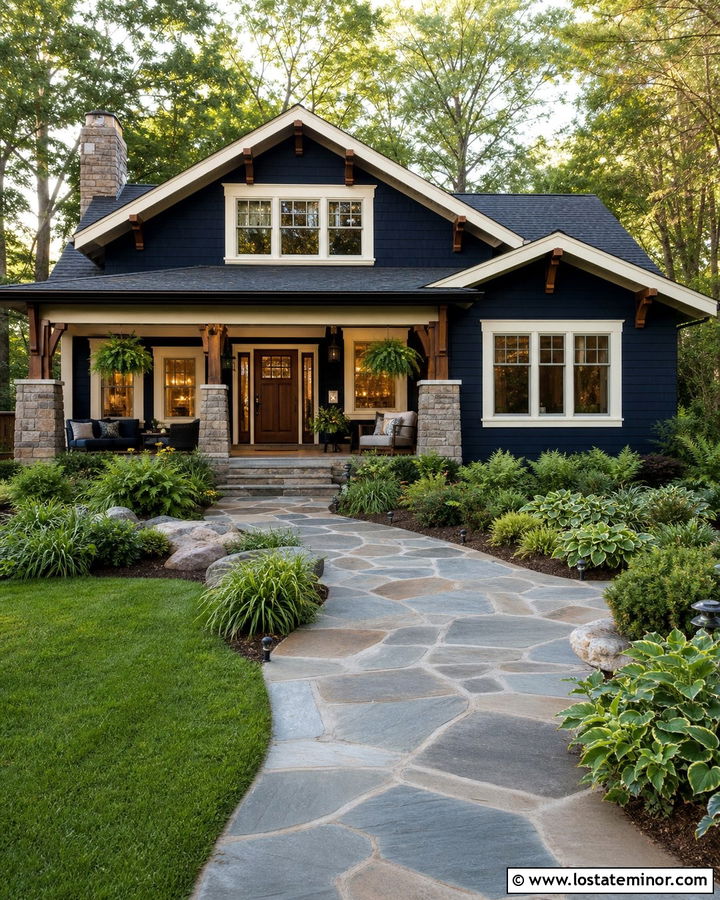
Irregular flagstone gives a navy blue Craftsman house a natural, handcrafted appearance. Select stones with gray, taupe, and muted brown variations to connect the siding with a wood front door and stone porch columns. Cream trim provides softer contrast than bright white, while a charcoal architectural-shingle roof grounds the exterior. Lay the flagstones close together for a practical front walk, filling narrow joints with stone dust or low-growing ground cover. Slightly uneven edges can blend naturally into planting beds filled with ferns, hostas, and ornamental grasses. Repeat the same stone around the porch base to unite the architecture and landscaping. This complete scheme is particularly effective on wooded properties, where rich navy siding can stand out clearly against mature trees and layered green foliage.
7. Navy Blue House With Black Paver Walkway
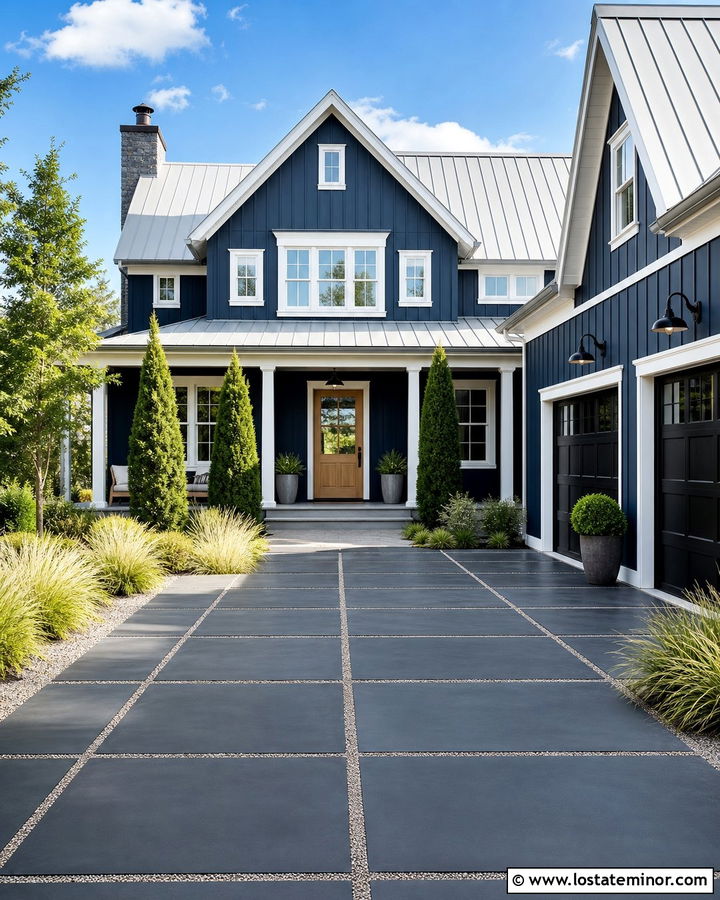
Black pavers create a bold, modern entrance when paired with navy blue siding. Since both colors are deep, introduce lighter elements to keep the house from appearing flat. A modern farmhouse can combine navy board-and-batten siding with wide white trim, a light oak front door, and a pale metal roof. Use large charcoal-black pavers with narrow gravel joints for a clean, graphic pathway. White concrete porch steps can provide a visual break before the entrance. Keep the landscaping restrained with clipped grasses, low hedges, and a few sculptural evergreens. Black garage doors and simple sconces can repeat the walkway color across the facade. In bright daylight, the subtle difference between navy and black adds depth while maintaining a streamlined, coordinated appearance.
8. Navy Blue House With Herringbone Brick Walkway
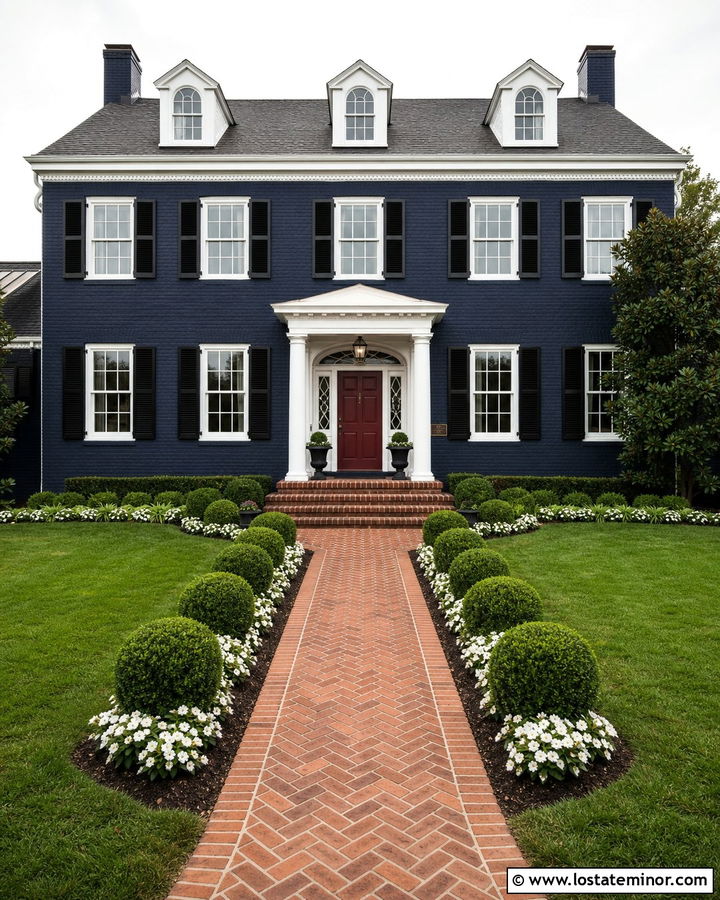
A herringbone brick pattern adds detail and movement to the entrance of a navy blue Georgian or Colonial house. Use warm red-brown brick inside a straight border so the walkway feels decorative but orderly. Deep navy clapboard siding, bright white trim, black shutters, and a glossy burgundy door create a rich traditional palette. The diagonal brick pattern naturally pulls the eye toward the centered entrance. Add matching brick steps and white columns to complete the formal composition. Symmetrical boxwoods, upright evergreens, and seasonal white flowers help frame the path without hiding its pattern. A wider landing near the porch provides room for planters and guests. This design works particularly well when the home already includes a brick chimney or foundation that can visually connect with the walkway.
9. Navy Blue House With Stepping Stone Walkway
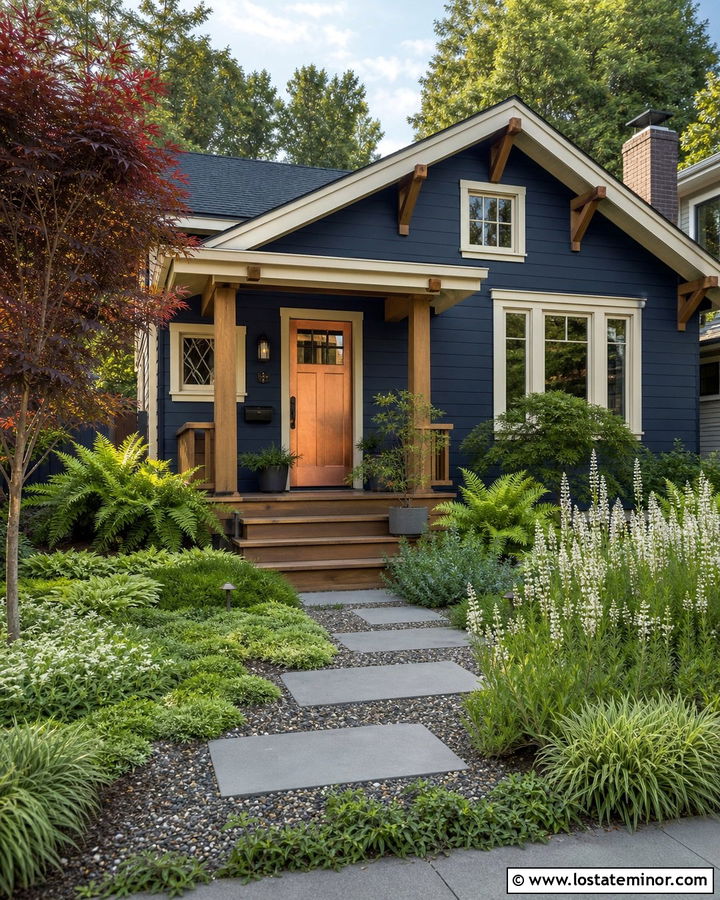
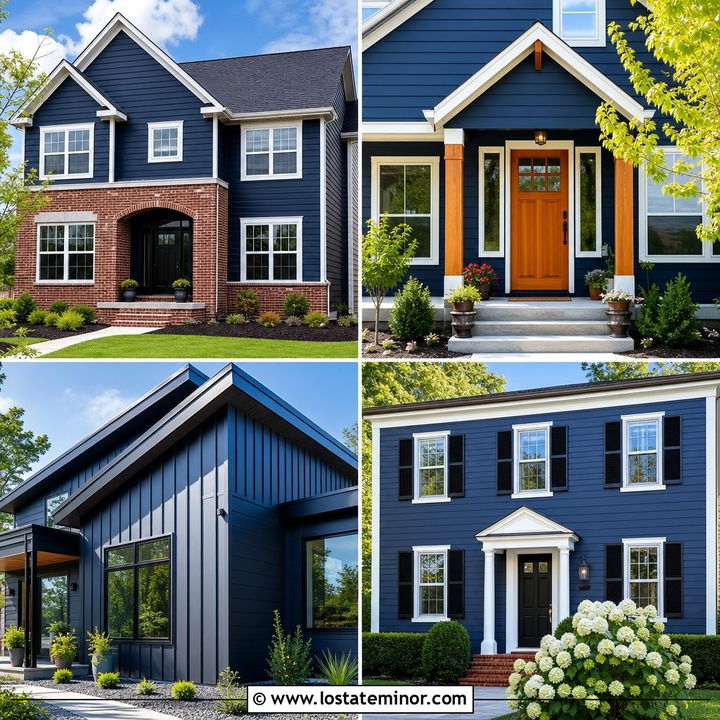
Large stepping stones can give a navy blue bungalow an inviting garden-focused entrance. Choose rectangular gray stones placed in fine gravel or low ground cover for a path that feels informal but still easy to follow. Navy lap siding, cream trim, exposed wood rafters, and a copper-colored front door support the bungalow’s handcrafted character. Use stones that are broad enough for a natural stride and set them on a stable, level base. Flowering plants can soften the edges, but they should not spill across the walking surface. Ferns, dwarf grasses, and white salvia look especially crisp against dark blue siding. Extend the stepping stones toward a small wood porch, then repeat gray stone around the foundation for a complete, connected exterior design.

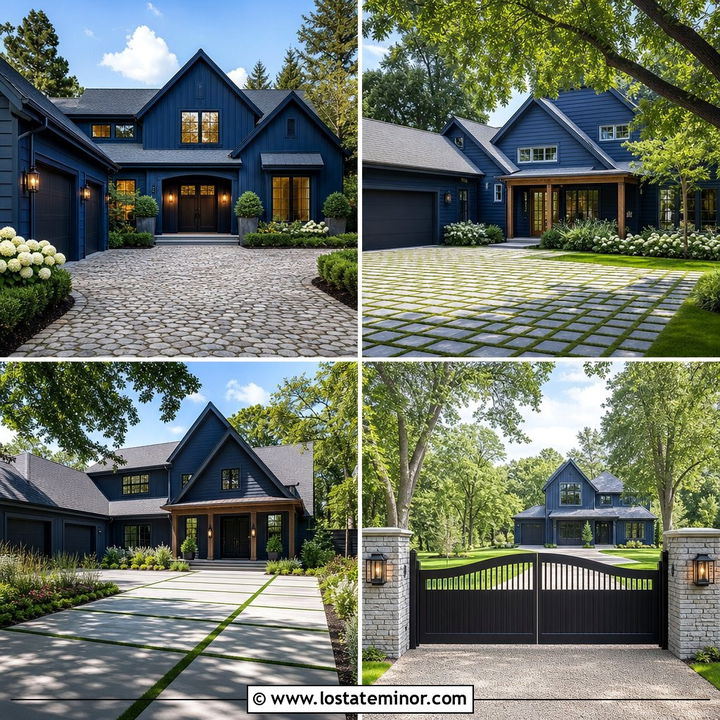
10. Navy Blue House With Cobblestone Walkway
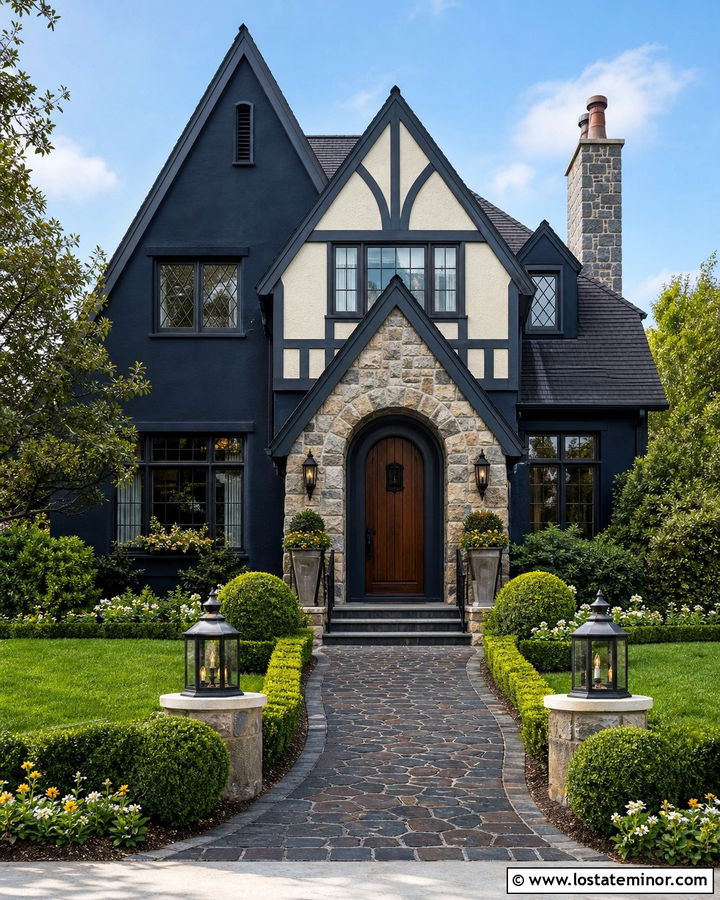
Cobblestone gives a navy blue Tudor-style house a substantial, old-world entrance. Use stones in mixed charcoal, gray, and brown tones to complement steep rooflines, creamy stucco accents, and dark wood details. The navy siding can cover the lower story or side wings, while stone around the doorway creates a strong architectural focal point. A rounded cobblestone walkway looks particularly appropriate beneath an arched front door. Because traditional cobbles can be uneven, choose a relatively flat product and install tight joints for safer daily use. Border the path with clipped hedges and simple white flowers to prevent the facade from becoming visually busy. Black iron lanterns and a stained walnut door complete the scheme, giving the entire property a refined and enduring presence.
11. Navy Blue House With Straight Concrete Walkway
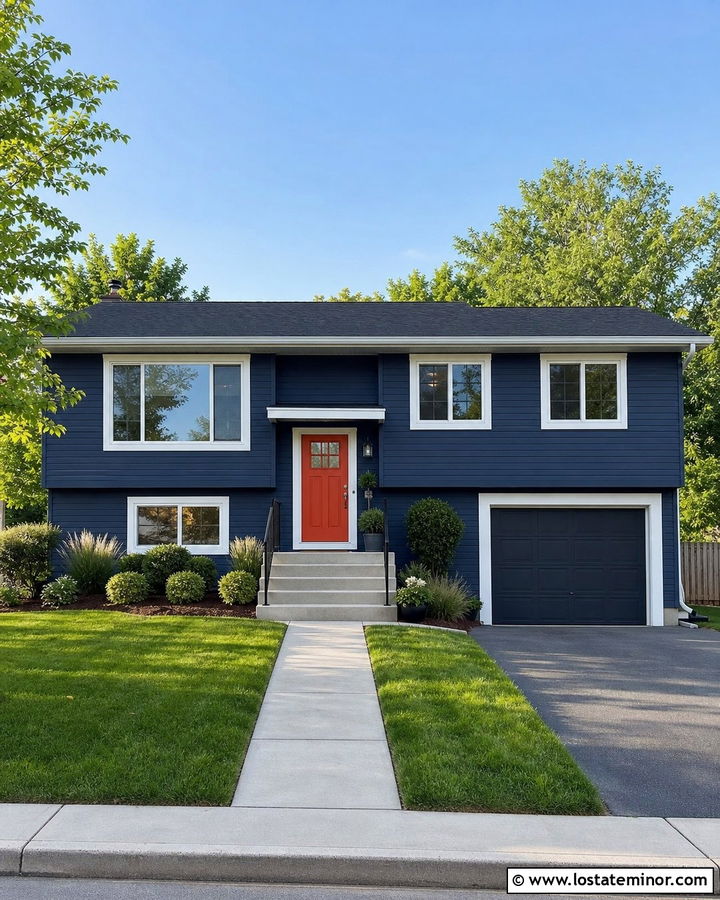
A straight concrete walkway emphasizes symmetry and provides a clean approach to a navy blue split-level house. Use medium-gray concrete rather than stark white to coordinate with the roof and foundation. Navy horizontal siding, white window trim, a red-orange front door, and black railings create a balanced exterior with a clear focal point. Widening the walkway where it meets the driveway makes the route more convenient and prevents the entry from feeling disconnected. Add narrow planting beds on both sides with compact shrubs, ornamental grasses, and repeating flowers. Concrete porch steps should share the same finish for visual continuity. This affordable design proves that a simple path can look polished when its width, alignment, landscaping, and relationship to the entrance are carefully considered.
12. Navy Blue House With Limestone Walkway
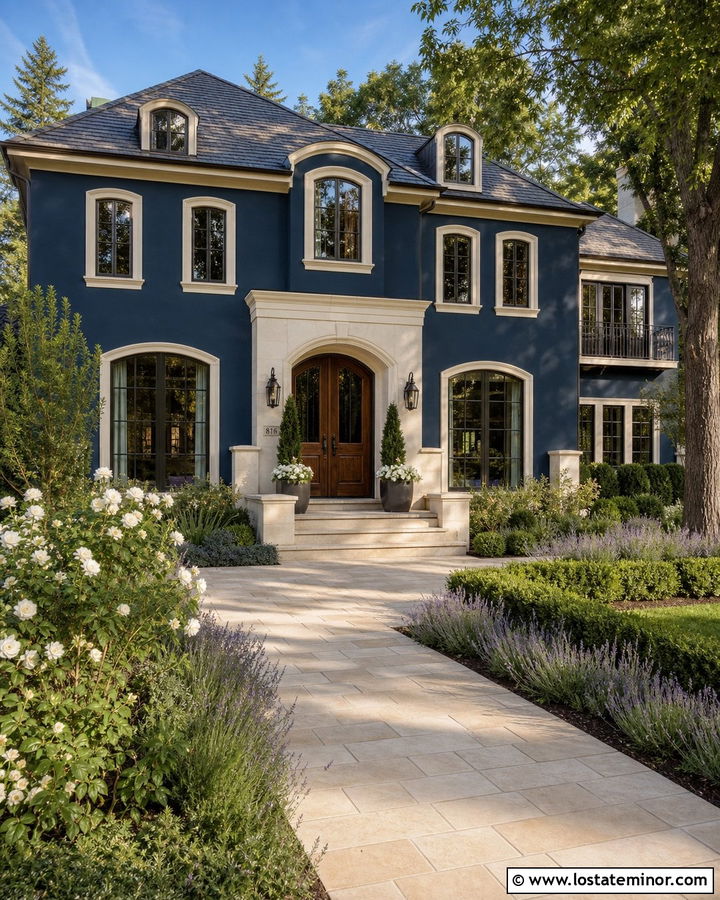
Light limestone creates elegant contrast against a deep navy blue exterior. Its creamy beige undertones work beautifully with warm white trim, bronze windows, and a medium-stained wood front door. On a French country-inspired home, use rectangular limestone slabs in a running-bond layout leading toward an arched porch. Repeat the stone on the foundation or lower columns so the walkway does not feel separate from the architecture. Soft green shrubs, white roses, and lavender can frame the pale path while introducing subtle color. Limestone may require sealing in certain climates, so choose an exterior-grade product suited to local weather. The finished palette feels lighter than a gray-stone scheme, making it useful for large navy houses that need warmth and visual relief around the entrance.
13. Navy Blue House With Sandstone Walkway
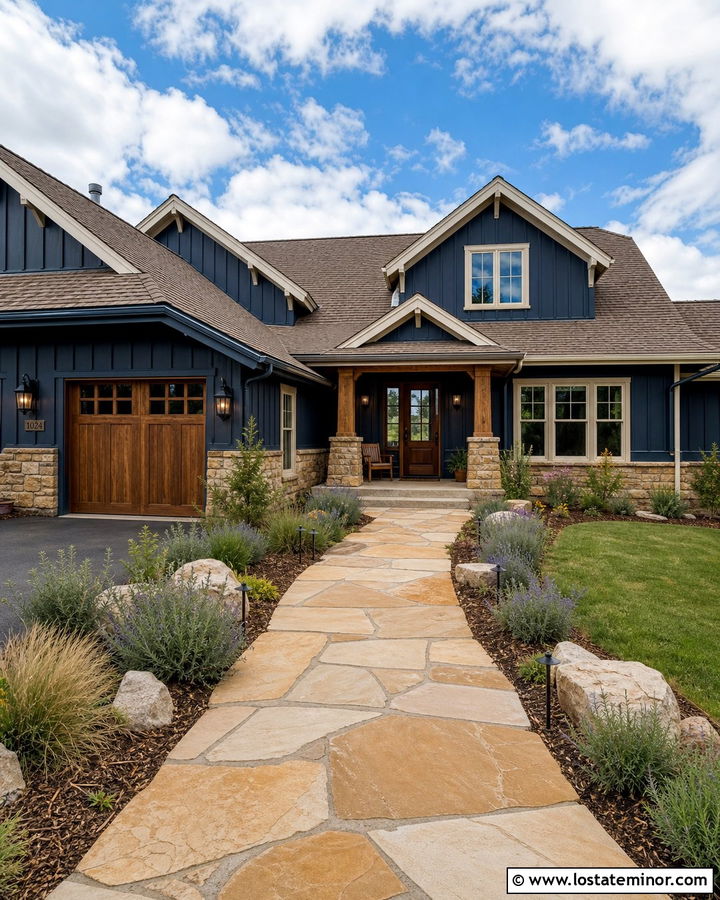
Sandstone introduces earthy gold and tan tones that warm up navy blue siding. This combination fits a rustic ranch house with cream trim, a cedar garage door, and a brown architectural-shingle roof. Use broad, lightly textured sandstone slabs in an informal pattern between the driveway and front porch. Carry the warm stone onto a low retaining wall or porch column base for a connected exterior. Drought-tolerant grasses, sage, and low flowering plants can reinforce the natural palette while keeping maintenance manageable. Avoid overly orange stone, which may compete with the blue body color. Muted buff, beige, and brown shades are easier to coordinate. The resulting walkway feels relaxed and grounded, while the navy exterior provides enough contrast to keep the home looking crisp from the street.
14. Navy Blue House With Slate Walkway
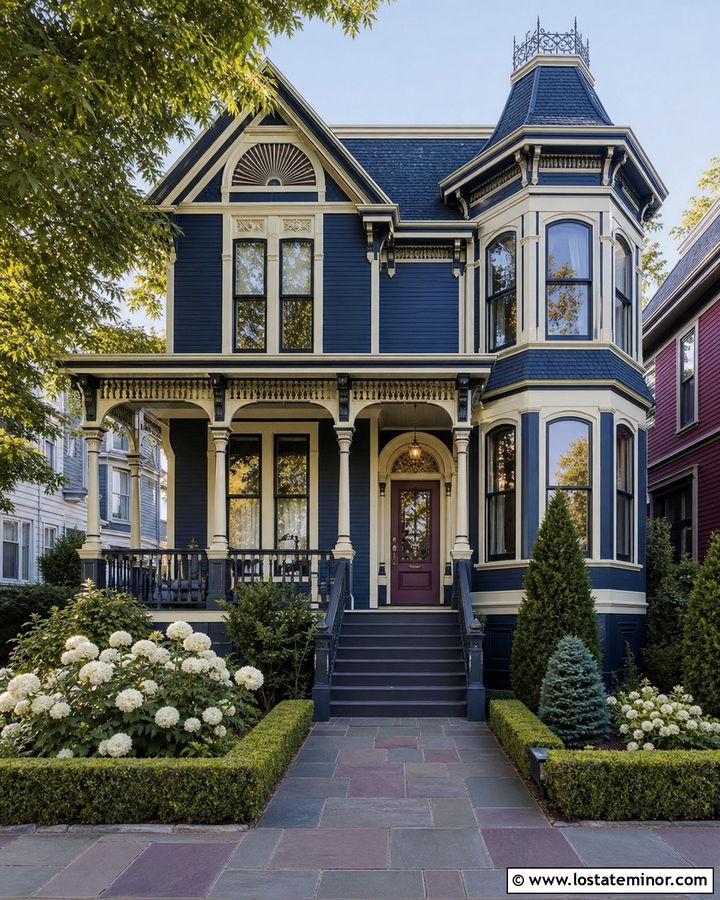
A slate walkway can make a navy blue Victorian house feel dramatic without losing its historic charm. Select a mixed slate containing blue-gray, green, and muted plum undertones rather than a completely black product. Pair the navy siding with ivory trim, a plum front door, and small charcoal accents on brackets or railings. A patterned slate path can echo the decorative complexity of the facade while remaining visually grounded. Use a formal border to keep irregular pieces looking intentional. Layered shrubs and white flowering plants should frame the route without covering ornate porch details. Because slate surfaces vary, choose textured exterior pieces and create proper drainage. Repeating slate on the porch steps helps tie the path to the architecture and gives the entire entrance a polished finish.



15. Navy Blue House With Permeable Paver Walkway
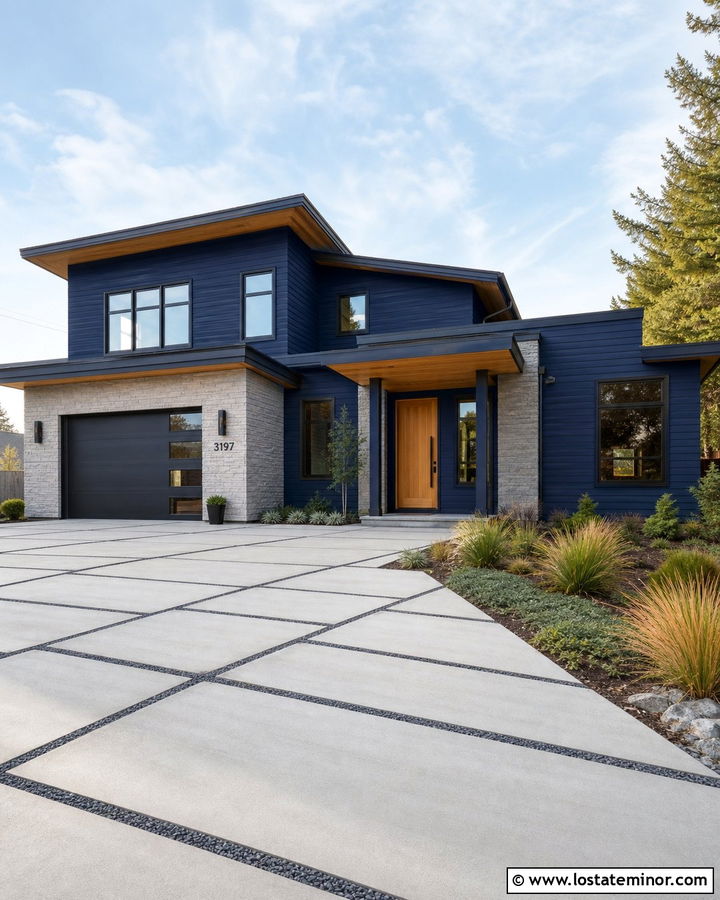
Permeable pavers offer a neat, contemporary approach to a navy blue house while allowing water to move through open joints. They are especially attractive on a modern suburban home with navy fiber-cement siding, black windows, and a warm wood entry. Choose light gray rectangular pavers filled with dark gravel for visible contrast and a strong linear pattern. Extend the walkway into a small front patio or driveway border so it becomes part of the larger hardscape plan. Low grasses, sedges, and evergreen ground cover can soften the edges without blocking drainage. A flat-roofed porch with cedar soffits reinforces the clean architecture. This complete design balances practical landscaping with a bold exterior palette, giving the dark blue facade a lighter and more spacious foreground.
16. Navy Blue House With Boardwalk Walkway
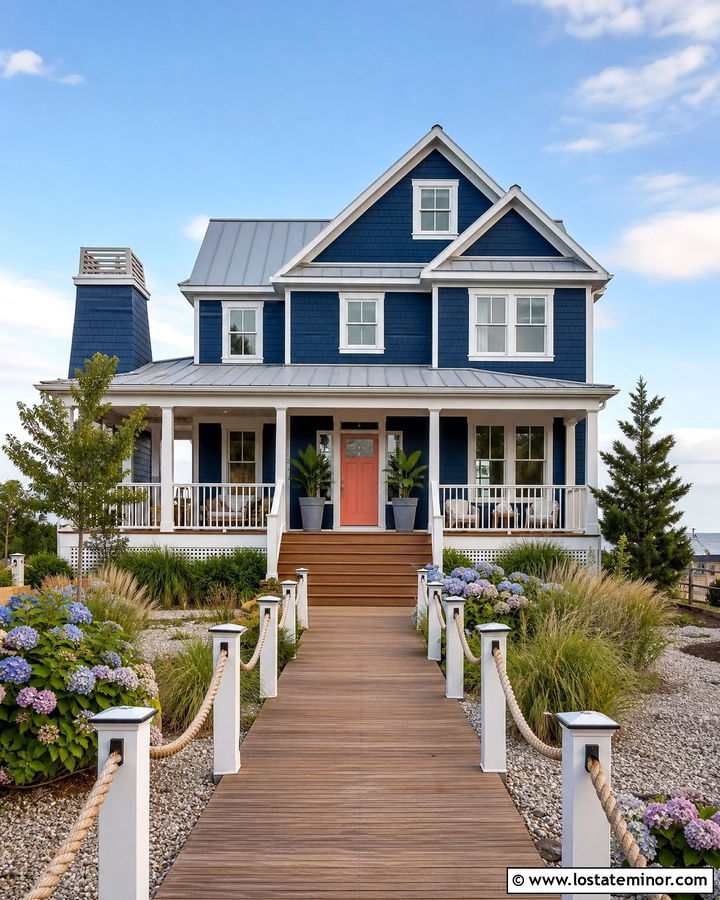
A wood boardwalk brings warmth and coastal character to a navy blue beach house. Use weather-resistant cedar or a wood-look composite in a natural honey-brown finish. The warm boards stand out clearly against deep navy shingle siding, white trim, and a pale gray metal roof. Keep the walkway low and wide, with simple railings only where the site requires them. Beach grasses, hydrangeas, gravel, and sandy planting beds can frame the approach without making it feel overly manicured. Continue the same material onto the porch decking to establish a smooth visual connection from the yard to the door. A coral or soft red entry adds one controlled accent. The result is casual and inviting while still presenting a coordinated, complete exterior from the street.
17. Navy Blue House With Raised Walkway
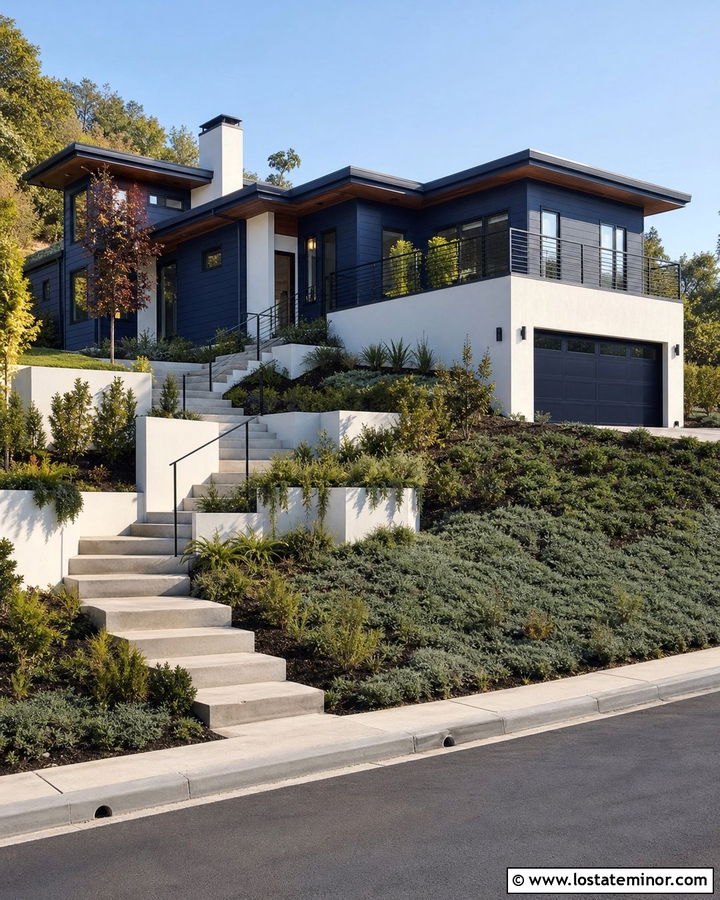
A raised walkway can turn a sloped front yard into a clear and welcoming approach. For a navy blue contemporary house, use broad concrete platforms with shallow risers and black metal handrails. The dark siding can be balanced with white stucco sections, natural wood soffits, and a light gray roof. Integrate the steps into layered retaining walls so the walkway appears built into the landscape rather than placed on top of it. Ornamental grasses, low junipers, and cascading ground cover can soften each level. Include generous landings where the path changes direction, making the route more comfortable and visually calm. Repeating concrete on the porch and driveway creates continuity. The resulting exterior feels architectural, practical, and appropriate for a challenging grade.
18. Navy Blue House With Circular Paver Walkway
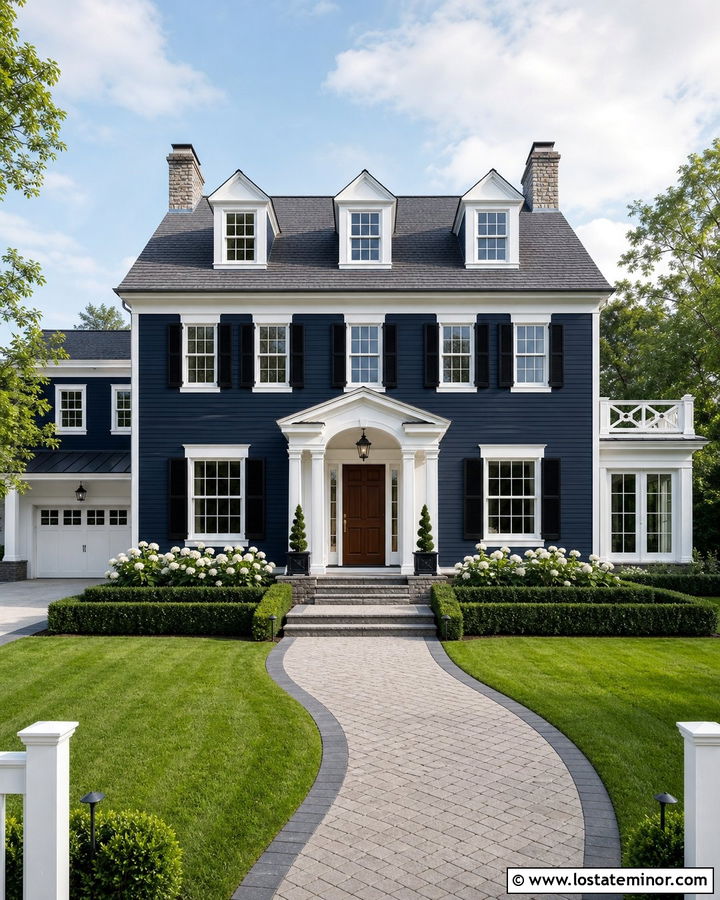
A circular paver detail can make the approach to a navy blue Colonial Revival house feel more generous. Begin with a straight walkway, then widen it into a round landing near the porch or at the center of the lawn. Use warm gray pavers with a charcoal border to coordinate with navy siding, white trim, black shutters, and a stained mahogany door. A small ornamental tree, planter, or symmetrical planting arrangement can define the circle without blocking movement. Repeat the pavers on the front steps for a cohesive transition. Neatly trimmed hedges reinforce the formal architecture, while white flowers brighten the dark facade. The circular section adds interest to a large front yard and prevents a long walkway from looking narrow or unfinished.
19. Navy Blue House With Brick Border Walkway
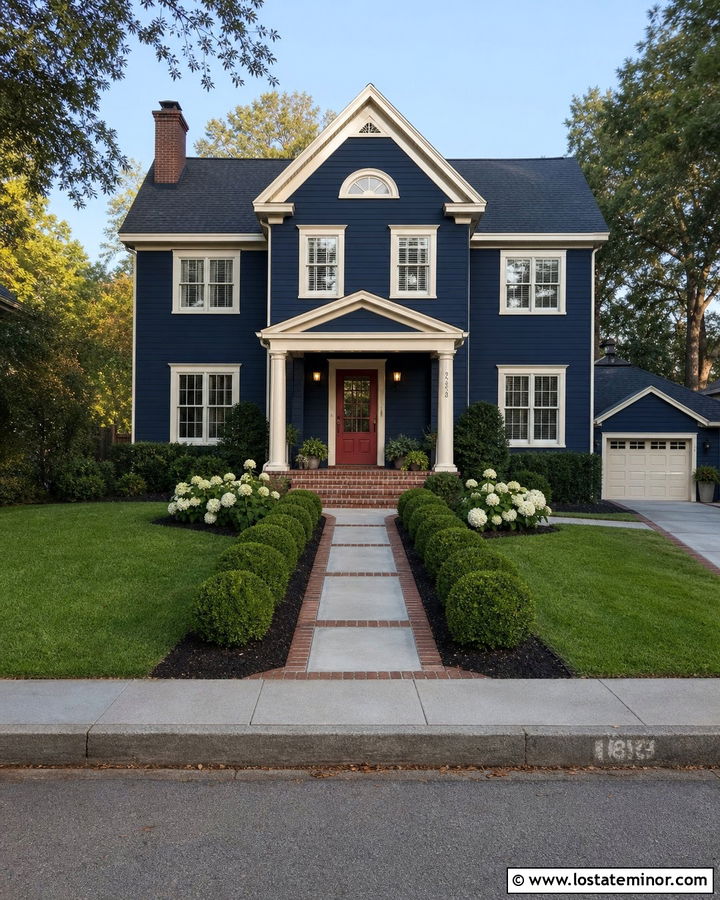
A brick border can upgrade a basic concrete walkway without requiring a complete hardscape replacement. This approach suits a navy blue two-story traditional house with cream trim, a red front door, and a charcoal roof. Frame the existing gray concrete with weathered red-brown bricks laid lengthwise. The warm edging creates a clear visual line while connecting the path to brick steps, a chimney, or a porch foundation. Add symmetrical planting beds with boxwoods, white hydrangeas, and dark mulch to sharpen the entrance. If the original path is narrow, a wider brick edge can improve its visual scale. The combination feels classic and carefully finished, yet it can be more budget-friendly than installing an entirely new brick walkway across the front yard.




20. Navy Blue House With Gravel And Paver Walkway
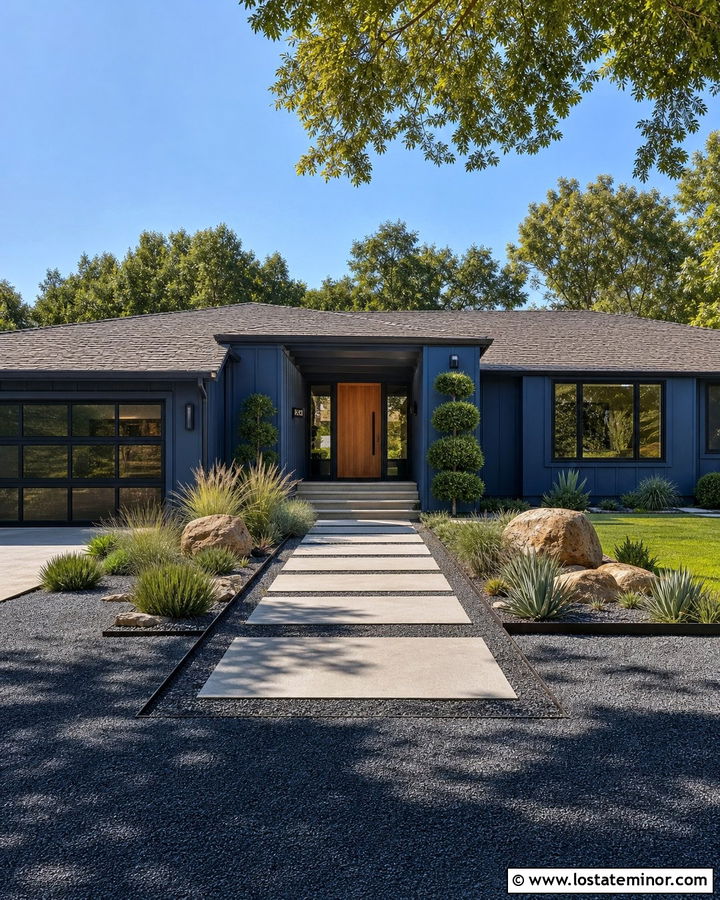
Combining gravel with large pavers creates texture without making a navy blue exterior feel overly traditional. On a modern ranch, place oversized light gray concrete slabs in dark charcoal gravel. The strong contrast supports navy horizontal siding, black-framed windows, a cedar front door, and a low charcoal roof. Keep the slabs evenly spaced and aligned with the front entrance for a clean, purposeful look. Steel edging can contain the gravel and produce a precise boundary against the lawn. Use drought-tolerant grasses, sculptural shrubs, and a few warm-toned boulders around the path. Repeating cedar on the garage door or porch ceiling ties the entrance together. This scheme delivers modern curb appeal while reducing the amount of solid paving across the front yard.
21. Navy Blue House With Garden Walkway
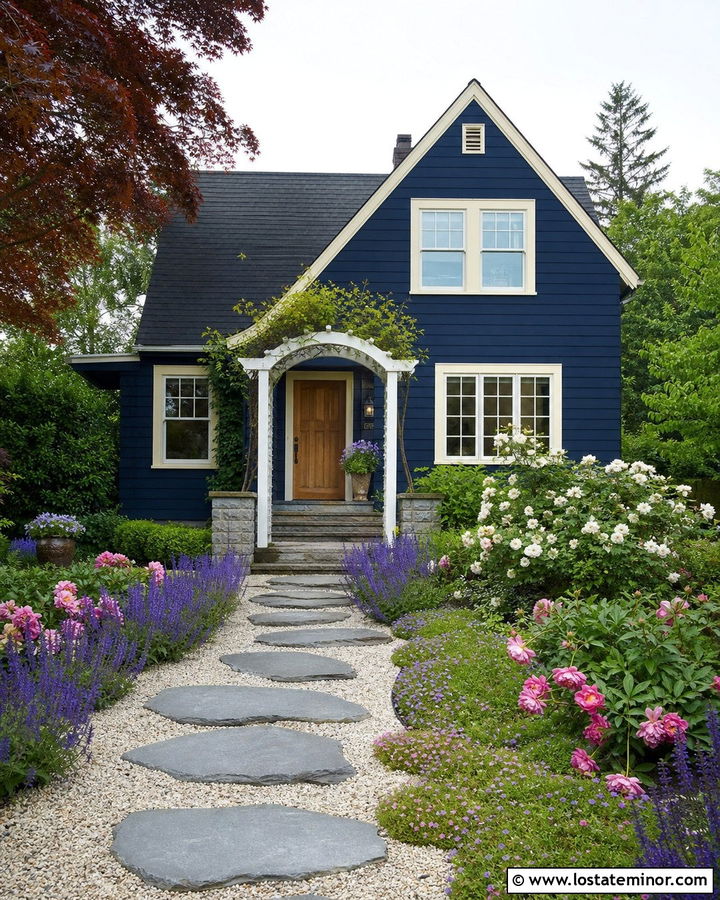
A garden walkway can soften the strong color of a navy blue cottage and create an entrance that changes through the seasons. Use irregular gray stepping stones set within fine gravel, then surround them with layered beds of white, pink, purple, and green plants. Navy clapboard siding, creamy trim, and a natural oak door provide a classic background without competing with the flowers. Keep mature plants farther from the walking surface and place compact ground covers near the edges. A small white arbor can mark the final stretch toward the porch. Repeat navy in planters or a garden gate for continuity. The pathway should still offer a clear, comfortable route, even when the garden is full. This balance prevents the charming landscape from becoming crowded or difficult to maintain.
22. Navy Blue House With Modern Floating Walkway
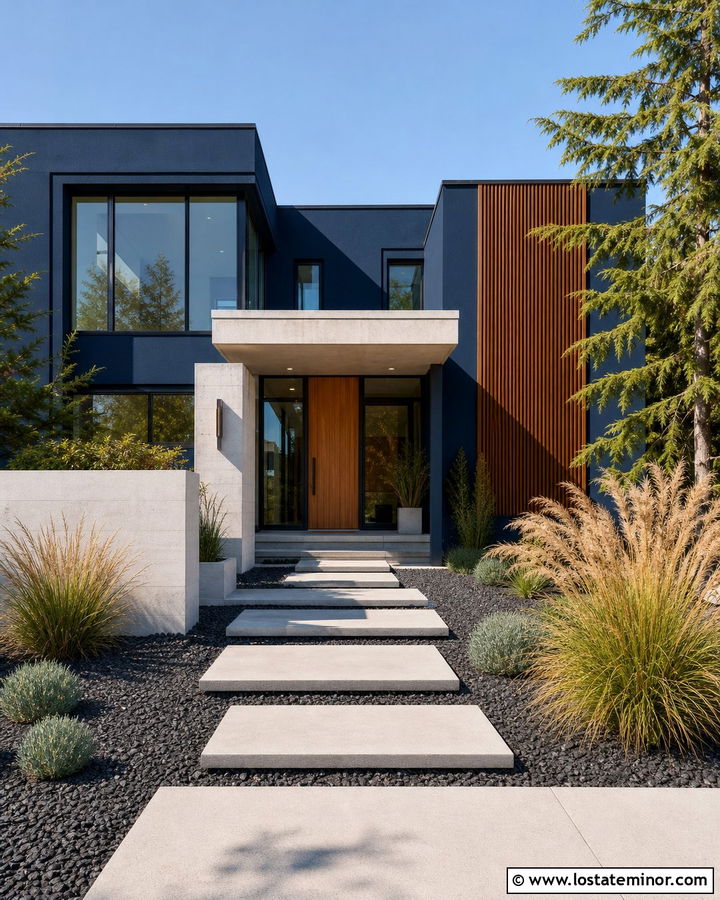
Floating concrete pads give a navy blue modern house a crisp, architectural entrance. Choose long rectangular slabs set slightly above black gravel or clipped grass. Align each pad with the width of the front door or nearby windows so the walkway relates directly to the facade. Dark navy stucco, black window frames, white concrete walls, and vertical cedar cladding create a layered contemporary palette. Minimal plantings such as feather reed grass, compact evergreens, and low succulents preserve the clean lines. Concealed drainage keeps the joints from collecting water and debris. A flat canopy above the wood front door can mirror the walkway’s geometry. This complete scheme uses repetition, contrast, and material consistency to make a simple approach feel intentional and visually striking.
23. Navy Blue House With Wide Paver Walkway
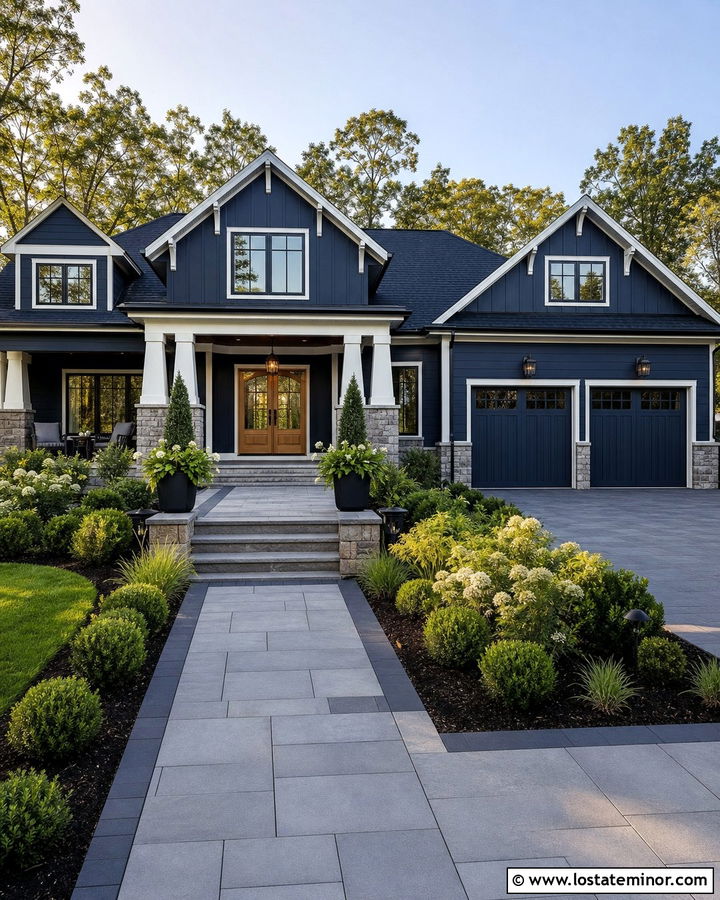
A wide walkway gives a large navy blue house the scale it needs. Narrow paths can look undersized in front of broad facades, double garages, or expansive porches. Use medium-gray rectangular pavers in a simple running-bond pattern, then add a darker border for definition. Navy board-and-batten siding, white trim, a natural wood double door, and stone porch columns create a substantial modern Craftsman exterior. Let the walkway widen near the porch to form an arrival court with room for matching planters. Layered shrubs should frame this area without narrowing the path. Continue the pavers toward the driveway for a smooth transition. The generous proportions make the entrance more functional while helping the hardscape, landscaping, and large facade feel balanced as one design.
24. Navy Blue House With Walkway Lighting
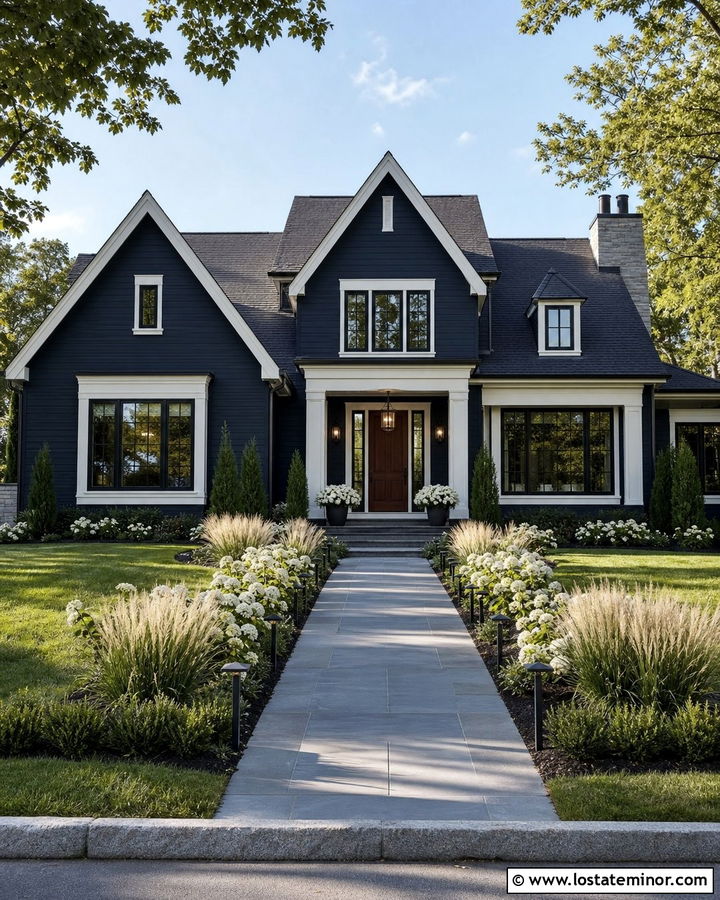
Path lighting makes a navy blue home’s entrance easier to follow while adding structure to the daytime landscape. For a transitional exterior, pair deep blue siding with white trim, black windows, a walnut door, and a straight bluestone walkway. Install low-profile black fixtures at consistent intervals, positioning them beside the path rather than directly within the walking area. Choose simple forms that coordinate with porch lanterns and garage lights. During the day, the dark fixtures blend naturally with mulch and evergreen planting beds. White flowers and pale ornamental grasses can brighten the walkway edges against the navy facade. Avoid overcrowding the route with too many fixtures. A restrained lighting plan supports the complete exterior and keeps attention focused on the house and front entrance.

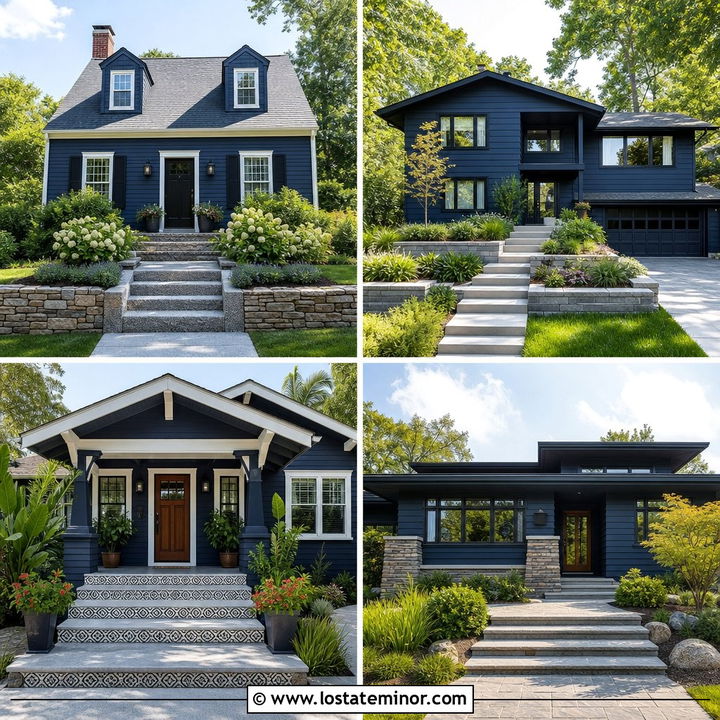
25. Navy Blue House With Accessible Walkway
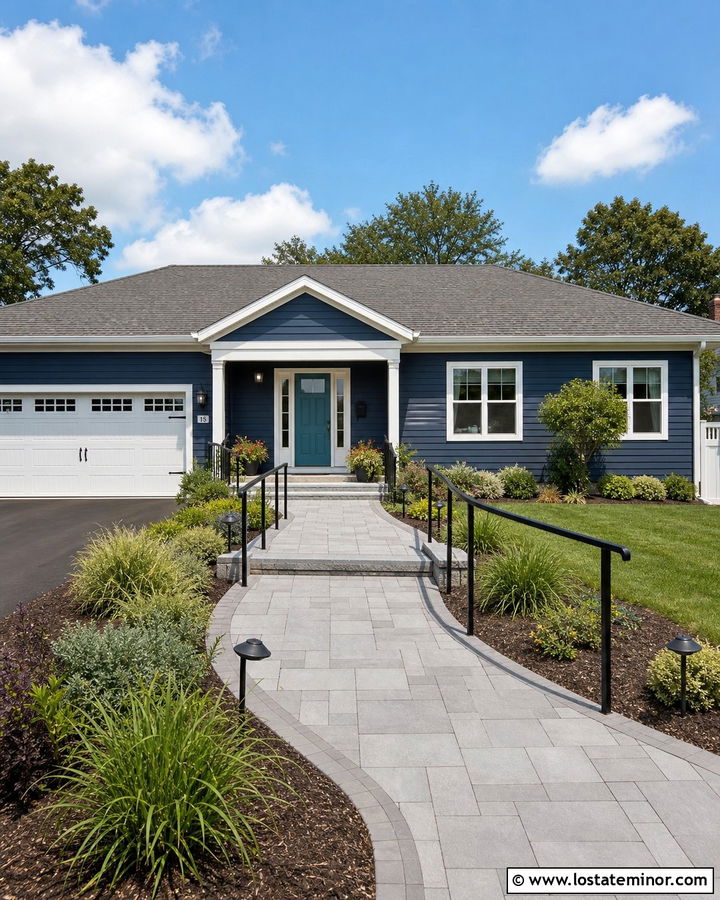
An accessible walkway can be attractive, comfortable, and fully integrated with a navy blue exterior. Use a broad, gently sloped concrete or smooth paver path with minimal joints and enough space for easy movement. On a single-story ranch, combine navy siding with warm white trim, a teal front door, and a medium-gray roof. Replace abrupt front steps with a gradual route that curves through low planting beds. If handrails are needed, choose slim black metal designs that coordinate with exterior lights and house numbers. Add level resting areas near the driveway and porch. Compact shrubs and ornamental grasses can conceal raised edges without intruding on the path. The finished entrance feels welcoming because practical circulation, landscaping, and architectural details are planned together from the beginning.
26. Navy Blue House With Stone And Brick Walkway
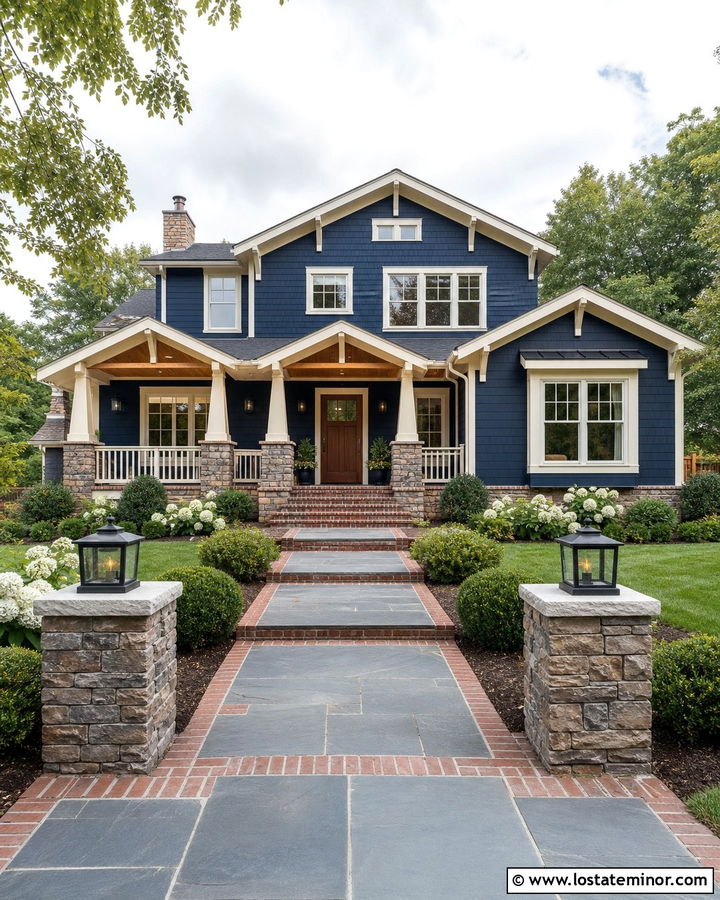
Mixing stone and brick can connect several exterior materials into one cohesive entrance. On a navy blue Craftsman, use rectangular bluestone slabs framed by warm red-brown brick. The gray stone relates to a charcoal roof, while the brick picks up the tones of a walnut door and cedar porch ceiling. Cream trim softens the contrast around windows and tapered porch columns. Keep the interior walkway pattern simple so the two materials do not look overly busy. Repeat the brick on step risers and use bluestone for the porch treads. Foundation plantings should remain restrained, with rounded evergreens and white flowers providing structure. This combination works best when both materials already appear elsewhere on the property, helping the walkway visually unite the house, porch, and landscape.
27. Navy Blue House With Driveway Walkway Connection
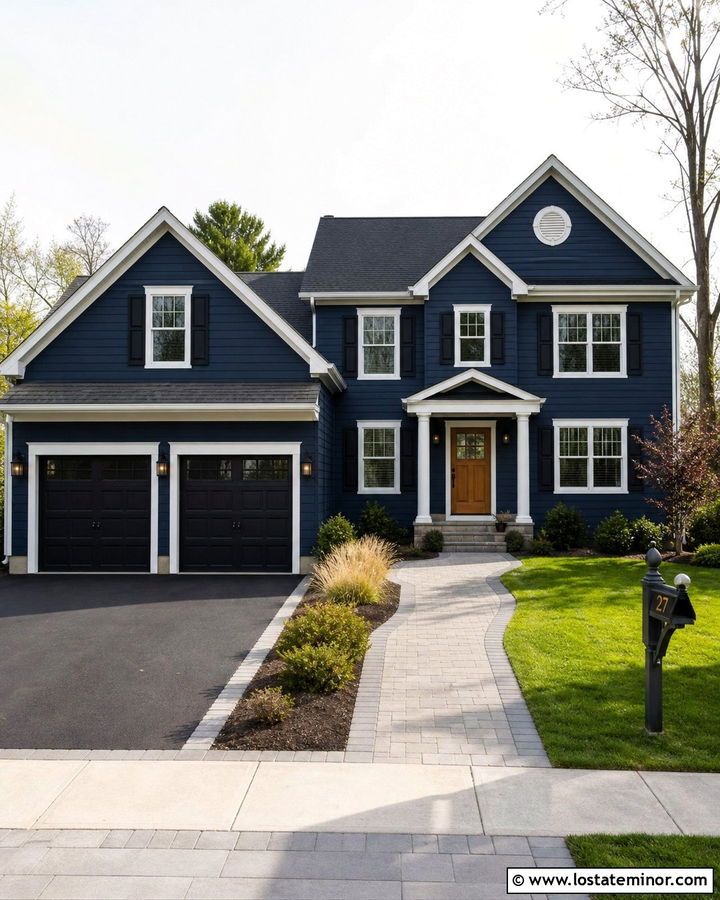
A smooth connection between the driveway and front walkway can improve both convenience and curb appeal. For a navy blue suburban home, use matching light gray pavers for the path and a narrow driveway border. A slightly wider entrance point makes the route visible even when the driveway is occupied. Pair navy lap siding with crisp white trim, black garage doors, a natural wood front door, and a charcoal roof. A planting strip between the walkway and driveway can prevent the hardscape from looking like one broad paved surface. Use low grasses or compact shrubs that will not block access. Repeat the pavers on the porch landing and steps. This coordinated treatment makes the garage, walkway, and entrance read as parts of one carefully organized exterior plan.
28. Navy Blue House With Porch Walkway
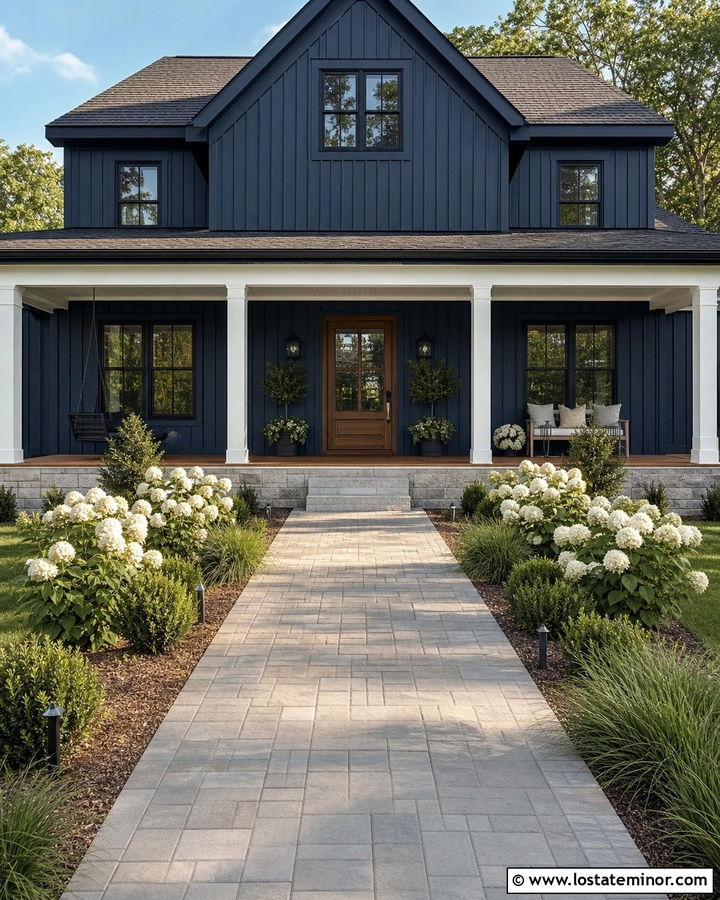
The best porch walkway feels like a natural extension of the home’s architecture. On a navy blue farmhouse, use warm gray pavers leading to a full-width white porch with natural wood decking. Navy board-and-batten siding, white columns, black windows, and a stained oak door create a familiar but polished palette. Center the walkway on the front door, or align it with the main porch steps when the entrance is slightly off-center. Widen the pavers at the base of the steps to create a comfortable transition. White hydrangeas, clipped shrubs, and soft grasses can frame the route while leaving the porch visible. Repeat the walkway’s gray tones in the roof and foundation stone so every exterior surface appears intentionally coordinated.
29. Navy Blue House With Coastal Shell Walkway
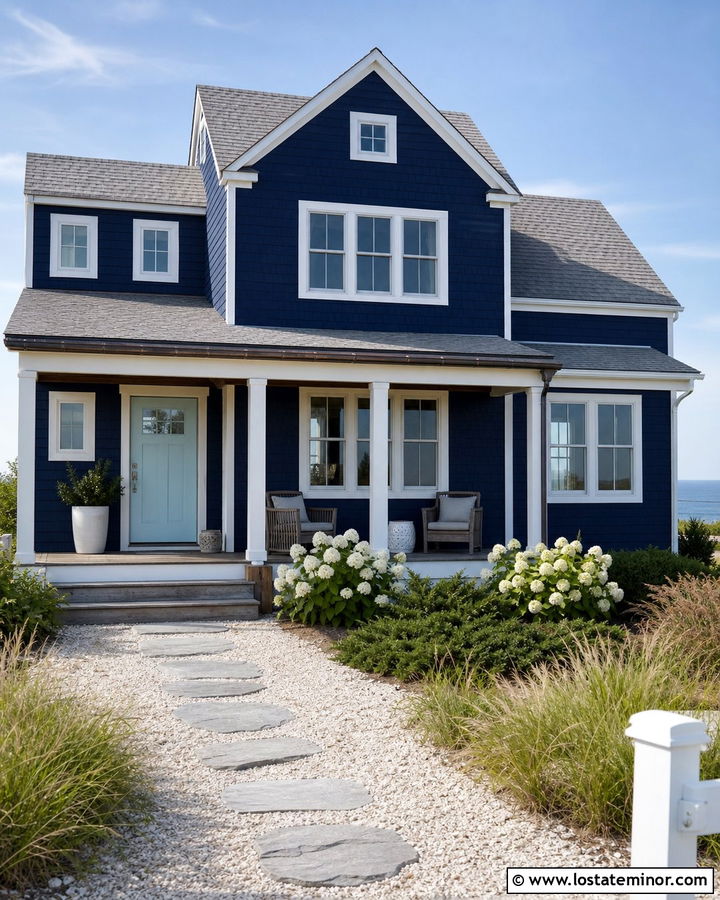
A crushed-shell walkway adds a bright, textural foreground to a navy blue coastal house. Use pale oyster shell or a shell-and-gravel blend contained by simple steel, brick, or stone edging. Navy shingle siding, white trim, a light blue front door, and a silver-gray roof maintain the breezy coastal palette. Place large flat stepping stones along the center to provide a stable route and reduce loose material near the porch. Beach grasses, white hydrangeas, and low evergreen shrubs can tolerate the relaxed landscape style. Continue the shell into small planting areas to visually widen the approach. The light pathway reflects daylight and keeps the rich blue facade from feeling heavy, while weathered wood porch details add warmth and natural character.
30. Navy Blue House With Low Maintenance Walkway
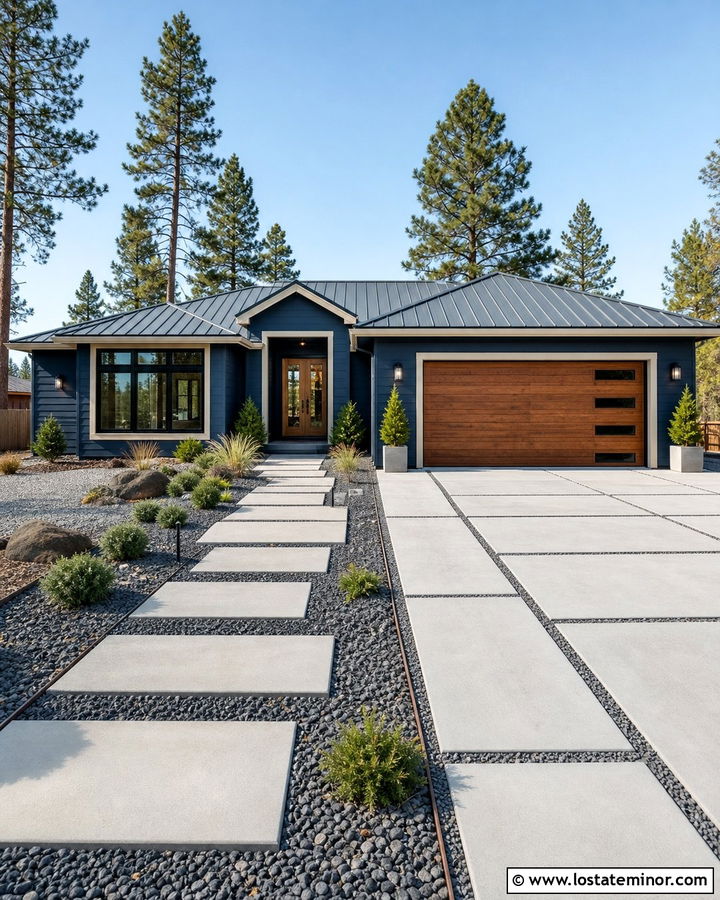
A low-maintenance walkway should combine durable paving, simple geometry, and restrained planting. For a navy blue contemporary ranch, use large concrete pavers surrounded by decorative gray gravel. Steel edging keeps the materials contained, while wide joints reduce the amount of continuous concrete. Pair the navy siding with off-white trim, black windows, a cedar garage door, and a medium-gray metal roof. Choose compact evergreen shrubs, ornamental grasses, and stone mulch instead of plants that require frequent pruning. Make the walkway broad, level, and direct so it remains practical throughout the year. Repeating the gray pavers on the porch landing ties everything together. This complete exterior looks polished without relying on elaborate masonry patterns, delicate plants, or high-maintenance garden borders.
Conclusion:
The most successful 30 Navy Blue House Design With Walkway Ideas treat the path, exterior palette, architecture, and landscaping as one connected composition. Red brick and cobblestone bring traditional warmth, while floating concrete pads and dark pavers create modern contrast. Bluestone, flagstone, and gravel offer natural texture that works with many American house types. Before choosing a walkway, consider your home’s scale, roof color, porch materials, drainage, climate, and daily access needs. Repeat at least one walkway color or material elsewhere on the facade for a more unified result. With thoughtful proportions and coordinated accents, a navy blue house can feel bold from the street yet warm, balanced, and welcoming at the front door.

Related posts: